
Image not available
Illustrative purposes only

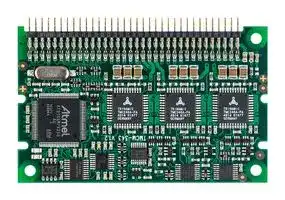
TMCM-343-V-CANOPEN
Stepper Motor Driver, 2-Phase, 3-Axis, 1.1A, 8V - 34V DC Output, CANOpen Firmware, Vertical Pins
⚠️ Reference pricing provided. In case of supply shortages, we will connect you with our trusted procurement partners to ensure your project's continuity.
- Manufacturer: TRINAMIC / ANALOG DEVICES
- Product type: Stepper Motor Drives
- Supply Voltage Min:7V; Supply Voltage Max:34V; No. of Phases:Two Phase; Power Rating:-; Output Voltage Max:-; Output Current:1.1A; Product Range:-; SVHC:No SVHC (27-Jun-2018)
- SVHC: No SVHC (04-Feb-2026)
- No. of Phases: Two Phase
- Product Range: TMCM StepRocker
- Output Current Max: 1.1A
- Supply Voltage Max: 34VDC
- Supply Voltage Min: 7VDC
- Control / Drive Type: 3-Axis Controller / Driver Module
| Delivery and price | |
|---|---|
| Units per pack | 1 |
| Price | 276.17 € |
| Current stock | 10+ |
| Lead time | 30 days |
Datasheet

**`MODULES FOR STEPPER MOTORS MODULES`**
## **V 1.07**
## **HARDWARE MANUAL**
**==> picture [268 x 175] intentionally omitted <==**
**----- Start of picture text -----**<br>
+ +<br>ef se sf aeA iS a) = etttt<br>‘age Oe dah 2° TT a. eS z= 2<br>jae ——- foe | Ll<br>ial a ee , ac_e ‘ m em & ; Ores i €4<br>e pepe peeeeeete<br>+ +<br>**----- End of picture text -----**<br>
## **TMCM-343**
**`3-axis stepper controller / driver 300mA up to 1.1A RMS nominal supply: 8V… 34V DC TMCL` ™** **`/ CANopen firmware`**
TRINAMIC Motion Control GmbH & Co. KG Hamburg, Germany
## **www.trinamic.com**
TMCM-343 Hardware Manual (V1.07 / 2011-JUN-08)
2
## **Table of contents**
|1|Life support policy ....................................................................................................................................................... 4|
|---|---|
|2|Features........................................................................................................................................................................... 5|
|4|Order codes .................................................................................................................................................................... 6|
|5|Electrical and mechanical interfacing ..................................................................................................................... 7|
||5.1<br>Dimensions ........................................................................................................................................................... 7|
||5.2<br>Connecting the module .................................................................................................................................... 8|
||5.3<br>Power supply requirements............................................................................................................................. 9|
|6|Operational ratings .................................................................................................................................................... 11|
|7|Functional description .............................................................................................................................................. 12|
||7.1<br>System architecture .......................................................................................................................................... 12|
||7.1.1<br>Microcontroller ........................................................................................................................................ 12|
||7.1.2<br>EEPROM ...................................................................................................................................................... 12|
||7.1.3<br>TMC428 motion controller ................................................................................................................... 13|
||7.1.4<br>Stepper motor drivers ........................................................................................................................... 13|
||7.2<br>Power supply ..................................................................................................................................................... 13|
||7.3<br>Motor connection .............................................................................................................................................. 13|
||7.4<br>Host communication ........................................................................................................................................ 14|
||7.4.1<br>CAN 2.0b .................................................................................................................................................... 14|
||7.4.2<br>RS232 .......................................................................................................................................................... 15|
||7.4.3<br>RS485 .......................................................................................................................................................... 15|
||7.5<br>stallGuard™ - sensorless motor stall detection ...................................................................................... 16|
||7.5.1<br>stallGuard™ adjusting tool ................................................................................................................. 16|
||7.5.2<br>stallGuard™ profiler .............................................................................................................................. 17|
||7.6<br>Reference switches ........................................................................................................................................... 18|
||7.6.1<br>Left and right limit switches .............................................................................................................. 18|
||7.6.2<br>Triple switch configuration ................................................................................................................. 18|
||7.6.3<br>One limit switch for circular systems .............................................................................................. 19|
||7.7<br>Serial peripheral interface (SPI) .................................................................................................................... 19|
||7.8<br>Additional inputs and outputs ...................................................................................................................... 19|
||7.9<br>Miscellaneous connections ............................................................................................................................ 19|
||7.10 Microstep resolution ........................................................................................................................................ 20|
|8|Putting the TMCM-343 into operation .................................................................................................................. 21|
|9|Migrating from the TMCM-303 to the TMCM-343 ............................................................................................... 22|
|10|TMCM-343 operational description ........................................................................................................................ 23|
||10.1 Calculation: Velocity and acceleration vs. microstep and fullstep frequency ................................. 23|
|11|TMCL™ ........................................................................................................................................................................... 25|
|12|CANopen ....................................................................................................................................................................... 25|
|13|Revision history .......................................................................................................................................................... 26|
||13.1 Document revision ........................................................................................................................................... 26|
||13.2 Hardware revision ............................................................................................................................................. 26|
||13.3 Firmware revision ............................................................................................................................................. 26|
|14|References .................................................................................................................................................................... 27|
Copyright © 2011, TRINAMIC Motion Control GmbH & Co. KG
TMCM-343 Hardware Manual (V1.07 / 2011-JUN-08)
3
## **List of figures**
Figure 4.1: Front view of TMCM-343 (all values in mm) ............................................................................................ 7 Figure 4.2: Ordering options for the connector ........................................................................................................... 7 Figure 4.3: Pin order of the connector ........................................................................................................................... 8 Figure 4.4: Power supply requirements for TMCM-343 .............................................................................................. 9 Figure 4.5: Power supply requirements for TRINAMIC modules in a bus system .......................................... 10 Figure 6.1: Main parts of the TMCM-343 ....................................................................................................................... 12 Figure 6.2: Connecting the motors ................................................................................................................................ 14 Figure 6.3: Connecting CAN ............................................................................................................................................. 14 Figure 6.4: Connecting RS232 .......................................................................................................................................... 15 Figure 6.5: Connecting RS485 .......................................................................................................................................... 15 Figure 6.6: stallGuard™ adjusting tool ......................................................................................................................... 16 Figure 6.7: The stallGuard™ profiler ............................................................................................................................. 17 Figure 6.8: Left and right limit switches ...................................................................................................................... 18 Figure 6.9: Limit switch and reference switch ........................................................................................................... 18 Figure 6.10: One reference switch ................................................................................................................................. 19
## **List of tables**
Table 3.1: Order codes ......................................................................................................................................................... 6 Table 4.1: Pinout of the 68-Pin connector ..................................................................................................................... 8 Table 5.1: Operational ratings ......................................................................................................................................... 11 Table 6.1: Pinning of power supply .............................................................................................................................. 13 Table 6.2: Pinout for motor connections ..................................................................................................................... 13 Table 6.3: Pinout for CAN connection ........................................................................................................................... 14 Table 6.4: Pin out for RS232 connection ...................................................................................................................... 15 Table 6.5: Pinout for RS485 connection ....................................................................................................................... 15 Table 6.6: stallGuard™ parameter SAP 205 ................................................................................................................. 16 Table 6.7: Pinout reference switches ............................................................................................................................ 18 Table 6.8: Pinout SPI .......................................................................................................................................................... 19 Table 6.9: Additional I/O pins ......................................................................................................................................... 19 Table 6.10: Miscellaneous connections ......................................................................................................................... 20 Table 6.11: Microstep resolution setting ...................................................................................................................... 20 Table 9.1: TMC428 velocity parameters ......................................................................................................................... 23 Table 12.1: Document revision ........................................................................................................................................ 26 Table 12.2: Hardware revision ......................................................................................................................................... 26 Table 12.3: Firmware revision ......................................................................................................................................... 26
Copyright © 2011, TRINAMIC Motion Control GmbH & Co. KG
TMCM-343 Hardware Manual (V1.07 / 2011-JUN-08)
4
## **1 Life support policy**
TRINAMIC Motion Control GmbH & Co. KG does not authorize or warrant any of its products for use in life support systems, without the specific written consent of TRINAMIC Motion Control GmbH & Co. KG.
Life support systems are equipment intended to support or sustain life, and whose failure to perform, when properly used in accordance with instructions provided, can be reasonably expected to result in personal injury or death.
© TRINAMIC Motion Control GmbH & Co. KG 2011
Information given in this data sheet is believed to be accurate and reliable. However neither responsibility is assumed for the consequences of its use nor for any infringement of patents or other rights of third parties, which may result from its use.
Specifications are subject to change without notice.
Copyright © 2011, TRINAMIC Motion Control GmbH & Co. KG
TMCM-343 Hardware Manual (V1.07 / 2011-JUN-08)
5
## **2 Features**
The TMCM-343 is a compact and versatile triple axis 2-phase stepper motor controller and driver module. It provides a complete motion control solution at a very small size for embedded applications. Using the integrated additional I/Os it even can do complete system control applications. The board can be connected to a baseboard or customized electronics with a pin connector. The TMCM-343 comes with the PC based software development environment TMCL-IDE. Using predefined TMCL™ (Trinamic Motion Control Language) high level commands like _move to position_ or _constant rotation_ rapid and fast development of motion control applications is guaranteed. Host communication is possible via the serial UART interface (e.g. using an RS232 or RS485 level shifter) or via CAN. All time critical operations, e.g. ramp calculation are performed onboard. A user TMCL™ program can be stored in the on board EEPROM for stand-alone operation. The firmware of the module can be updated via the serial interface. With the optional stallGuard[TM] feature it is possible to detect overload and stall of the motor.
## **Applications**
- Controller/driver board for control of up to 3 axes
- Versatile possibilities of applications in stand alone or PC controlled mode
## **Motor type**
- Coil current from 300mA to 1.1A RMS (1.5A peak)
- 8V to 34V nominal supply voltage
## **Highlights**
- Automatic ramp generation in hardware
- stallGuard[TM ] option for sensorless motor stall detection
- Full step frequencies up to 20kHz
- On the fly alteration of motion parameters (e.g. position, velocity, acceleration)
- Local reference move using sensorless stallGuard[TM] feature or reference switch
- Coil current adjustable by software
- Up to 64 times microstepping
- TRINAMIC driver technology: No heat sink required
- Adjustment possibilities. Therefore this module offers solutions for a great field of demands
## **Software**
- Stand-alone operation using TMCL™ or remote controlled operation
- TMCL™ program storage: 16 KByte EEPROM (2048 TMCL™ commands)
- PC-based application development software TMCL-IDE included
- Special firmware for CANopen protocol support also available
## **Other**
- 68 pin connector carries all signals
-
- RoHS compliant latest from 1 July 2006
- Size: 80 x 50mm²
Copyright © 2011, TRINAMIC Motion Control GmbH & Co. KG
TMCM-343 Hardware Manual (V1.07 / 2011-JUN-08)
6
## **4 Order codes**
|**Order code**|**Description**|**Dimensions**|
|---|---|---|
|TMCM-343 (-option)|3-axis controller/driver module1.1A, 34V|80x55x8mm3|
|**Products related to TMCM-343**|||
|BB-303 (-option)|Baseboard for TMCM-343|80 x 50 x 15 mm3|
|BB-323-03|Baseboardfor TMCM-343|96.5x79x60mm3|
|TMCM-323|3-axis encoder|80x53x8mm3|
|TMCM-EVAL|Evaluation baseboard|160 x 100 x 24 mm3|
|**Options for TMCM-343**|||
|-H|horizontal pin connector (standard)||
|-V|vertical pin connector (on request)||
## **Table 4.1: Order codes**
Copyright © 2011, TRINAMIC Motion Control GmbH & Co. KG
TMCM-343 Hardware Manual (V1.07 / 2011-JUN-08)
7
## **5 Electrical and mechanical interfacing**
## **5.1 Dimensions**
The 68 pin connector has a 2.0mm pitch.
**==> picture [392 x 200] intentionally omitted <==**
**----- Start of picture text -----**<br>
80<br>76<br>4 R1.6<br>BEE -: ar sey eyes Cen ee iiee| |<br>2.2<br>tes as = Te Mate Es $j Ea<br>on Ie Yer| ri.- id i be -.EeblB} ¢ pagedEF > aole PEPmy jsPPTuae oy R1.1<br>=.Saat ' eryepePhew Ber a rapeTWCR-45SP YLO‘Som + 7<br>CResstrrpavrert le a a ol diiiiias Dr =|L<br>1.2<br>39.1<br>50 46<br>> - r bay L 36.9<br>R1.25<br>9.2 5.4 4 +las‘ ~—aAbag osSS .. Se—_+. & SO< ee“= « sr preeubuy a“ 21.924.4<br>tt von.> 18999055)4 aces Ne . it.<br>a. i seeeeer<br>4<br>10<br>**----- End of picture text -----**<br>
**Figure 5.1: Front view of TMCM-343 (all values in mm)**
**==> picture [142 x 192] intentionally omitted <==**
**----- Start of picture text -----**<br>
6.7 9.7<br>50 50<br>53<br>Horizontal Header<br>connector connector<br>**----- End of picture text -----**<br>
**Figure 5.2: Ordering options for the connector (all values in mm)**
Copyright © 2011, TRINAMIC Motion Control GmbH & Co. KG
TMCM-343 Hardware Manual (V1.07 / 2011-JUN-08)
8
## **5.2 Connecting the module**
The 68-pin connector provides communication to a host, configuration of the EEPROM and connection of motors as well as connection of reference switches. Pin 1 of this connector is located in the lower left corner on the top site, while the connector is pointing towards the user.
|**Pin**|**Direction**|**Description**|**Pin**|**Direction**|**Description**|
|---|---|---|---|---|---|
|1|In|+5VDC (+/-5%)Imax=300mA|35|-|Reserved|
|2|In|GND|36|out|Motor2 A0|
|3|In|+5VDC (+/-5%)|37|-|Reserved|
|4|In|GND|38|out|Motor2 A1|
|5|In|V_Motor(+7 to 34VDC)|39|-|Reserved|
|6|In|GND|40|out|Motor2 B0|
|7|In|V_Motor(+7 to 34VDC)|41|-|Reserved|
|8|In|GND|42|out|Motor2 B1|
|9|In|V_Motor (+7 to 34VDC)|43|-|Reserved|
|10|In|GND|44|in|Shutdown|
|11|Out|SPISelect 0|45|in|General Purposeinput 0|
|12|Out|SPI Clock|46|out|General Purpose output 0|
|13|Out|SPISelect1|47|in|General Purposeinput1|
|14|In|SPI MISO|48|out|General Purpose output1|
|15|Out|SPI Select 2|49|in|General Purpose input 2|
|16|Out|SPI MOSI|50|out|General Purpose output2|
|17|In|Reset, activelow|51|in|General Purposeinput 3|
|18|Out|Alarm|52|out|General Purpose output 3|
|19|In|Reference Switch Motor0right|53|in|General Purposeinput 4|
|20|Out|Motor0A0|54|out|General Purpose output 4|
|21|In|Reference Switch Motor 0 left|55|in|General Purpose input 5|
|22|Out|Motor0A1|56|out|General Purpose output 5|
|23|In|Reference Switch Motor 1 right|57|in|General Purposeinput 6|
|24|Out|Motor0 B0|58|out|General Purpose output 6|
|25|In|Reference Switch Motor 1 left|59|in|General Purposeinput 7|
|26|Out|Motor0B1|60|out|General Purpose output 7|
|27|In|Reference Switch Motor 2 right|61|in|GND|
|28|Out|Motor1 A0|62|in|GND|
|29|In|Reference Switch Motor 2 left|63|-|Reserved|
|30|Out|Motor1 A1|64|out|RS485 Direction|
|31|-|Reserved|65|inand out|CAN -|
|32|Out|Motor1 B0|66|in|RS232 RxD|
|33|-|Reserved|67|in and out|CAN+|
|34|Out|Motor1 B1|68|out|RS232 TxD|
**Table 5.1: Pinout of the 68-Pin connector**
**==> picture [172 x 68] intentionally omitted <==**
**----- Start of picture text -----**<br>
2 68<br>1 67<br>PCB<br>**----- End of picture text -----**<br>
**Figure 5.3: Pin order of the connector**
Copyright © 2011, TRINAMIC Motion Control GmbH & Co. KG
TMCM-343 Hardware Manual (V1.07 / 2011-JUN-08)
9
## **5.3 Power supply requirements**
Two different power supplies have to be provided for the TMCM-343: +5VDC for the controller part and +7… 34VDC for the motor supply. Please connect all listed pins for the power supply inputs and ground in parallel. It is recommended to use capacitors of some 1000µF and a choke close to the module for the motor supply. This ensures a stable power supply and minimizes noise injected into the power supply cables. The choke especially becomes necessary in larger distributed systems using a common power supply.
**==> picture [390 x 154] intentionally omitted <==**
**----- Start of picture text -----**<br>
keep distance short<br>L<br>V_ Motor<br>+<br>(7...34V)<br>Local +5V +<br>TMCM-343 regulator C (> 1000µF) Power Supply<br>GND -<br>supply for further modules on<br>same base board<br>**----- End of picture text -----**<br>
**Figure 5.4: Power supply requirements for TMCM-343**
Especially in bus controlled systems (e.g. CAN or RS485) it is important to ensure a stable ground potential of all modules. The stepper driver modules draw peak currents of some ampere from the power supply. It has to be made sure, that this current does not cause a substantial voltage difference on the interface lines between the module and the master, as disturbed transmissions could result.
The following hints help avoiding transmission problems in larger systems:
- Use power supply filter capacitors of some 1000µF on the base board for each module in order to take over current spikes. A choke in the positive power supply line will prevent current spikes from changing the GND potential of the base board, especially when a central power supply is used.
- Optionally use an isolated power supply for the TMCM-Modules (no earth connection on the power supply, in case the CAN master is not optically decoupled)
- Do not supply modules which are mounted in a distance of more than a few meters with the same power supply.
- For modules working on the same power supply (especially the same power supply as the master) use a straight and thick, low-resistive GND connection.
- Use a local +5V regulator on each baseboard.
Copyright © 2011, TRINAMIC Motion Control GmbH & Co. KG
TMCM-343 Hardware Manual (V1.07 / 2011-JUN-08)
10
**==> picture [438 x 326] intentionally omitted <==**
**----- Start of picture text -----**<br>
keep distance short<br>V_Motor<br>CAN high (7...34V) L +<br>TMCM-343 +C Power supply<br>CAN low<br>GND -<br>CAN_GND<br>V_Motor<br>CAN high (7...34V) L<br>other devices on CAN +C<br>bus (incl. master)<br>CAN low<br>GND<br>CAN_GND<br>keep distance short<br>V_Motor<br>CAN high (7...34V) L<br>TMCM-343 +C<br>CAN low<br>GND<br>CAN_GND<br>keep distance below a few meters with a single power supply<br>**----- End of picture text -----**<br>
**Figure 5.5: Power supply requirements for TRINAMIC modules in a bus system**
- In large systems it may make sense to use an optically decoupled CAN bus for each number of nodes, e.g. for each base board with a number of TMCM-34x modules, especially when a centralized power supply is to be used.
- Be aware that different ground potentials of the CAN sender (e.g. a PC) and the power supply may damage the modules.
- Please make sure that the GND lines of the CAN sender and the module(s) and power supplies are connected by a cable.
Copyright © 2011, TRINAMIC Motion Control GmbH & Co. KG
TMCM-343 Hardware Manual (V1.07 / 2011-JUN-08)
11
## **6 Operational ratings**
The operational ratings show the intended or rather the characteristic range for the values and should be used as design values. In no case shall the maximum values be exceeded.
|**Symbol**|**Parameter**|**Min**|**Typ**|**Max**|**Unit**|
|---|---|---|---|---|---|
|VS|DC Power supply voltage for operation|7|12 … 28|34|V|
|V+5V|+5V DC input (max. 50mA / no OUT load)|4.8|5.0|5.2|V|
|ICOIL|Motor coil current for sine wave peak<br>(chopper<br>regulated,<br>adjustable<br>via<br>software)|0|0.3 … 1.5|1.5|A|
|||||||
|fCHOP|Motor chopper frequency||36.8||kHz|
|IS|Power supply current (per motor)||<< ICOIL|1.4 * ICOIL|A|
|VINPROT|Input voltage for StopL, StopR, GPI0<br>(internalprotection diodes)|-0.5|0 … 5|V+5V+0.5|V|
|||||||
|VANA|INx analog measurement range<br>(resolution: 10bit / range: 0..1023)||0 ... 5.5||V|
|||||||
|VINLO|INx, StopL, StopR low level input||0|0.9|V|
|VINHI|INx, StopL, StopR high level input<br>(integrated 10k pull-up to +5V for Stop)|2|5||V|
|||||||
|IOUTI|OUTx max +/- output current (CMOS<br>output) (sum for all outputs max. 50mA)|||+/-20|mA|
|||||||
|TENV|Environment temperature at rated current<br>(no cooling)|-40||+80|°C|
|||||||
**Table 6.1: Operational ratings**
Copyright © 2011, TRINAMIC Motion Control GmbH & Co. KG
TMCM-343 Hardware Manual (V1.07 / 2011-JUN-08)
12
## **7 Functional description**
In Figure 7.1 the main parts of the TMCM-343 module are shown. The module mainly consists of a processor, a TMC428 motion controller, three TMC246 stepper motor drivers, the TMCL™ program memory (EEPROM) and the host interfaces RS232, RS485 and CAN.
**==> picture [445 x 273] intentionally omitted <==**
**----- Start of picture text -----**<br>
Step<br>Please note,<br>TMCL High Power<br>that the USB<br>interface can Memory Driver<br>be offered TMC246<br>on demand.<br>Motor<br>CAN<br>progammable High Power Step<br>RS232 or UART Motion Driver<br>RS485 Controller<br>TMC246<br>additional 16 µC with TMC428<br>I/Os<br>Motor<br>Special option: High Power Step<br>Driver<br>USB<br>TMC246<br>+5V<br>7… 34V DC Motor<br>5V DC<br>TMCM-343 3x2 Stop<br>switches<br>**----- End of picture text -----**<br>
**Figure 7.1: Main parts of the TMCM-343**
## **7.1 System architecture**
The TMCM-343 integrates a microcontroller with the TMCL™ (Trinamic Motion Control Language) operating system. The motion control real-time tasks are realized by the TMC428.
## **7.1.1 Microcontroller**
On this module, the Atmel AT91SAM7X256 is used to run the TMCL™ operating system and to control the TMC428. The CPU has 256KB flash memory and a 64KB RAM. The microcontroller runs the TMCL™ (Trinamic Motion Control Language) operating system which makes it possible to execute TMCL™ commands that are sent to the module from the host via the RS232, RS485 and CAN interface. The microcontroller interprets the TMCL™ commands and controls the TMC428 which executes the motion commands.
The flash ROM of the microcontroller holds the TMCL™ operating system. The TMCL™ operating system can be updated via the RS232 interface or via the CAN interface. Use the TMCL-IDE to do this.
## **7.1.2 EEPROM**
To store TMCL™ programs for stand-alone operation the TMCM-343 module is equipped with a 16kByte EEPROM attached to the microcontroller. The EEPROM can store TMCL™ programs consisting of up to 2048 TMCL™ commands. The EEPROM is also used to store configuration data.
Copyright © 2011, TRINAMIC Motion Control GmbH & Co. KG
TMCM-343 Hardware Manual (V1.07 / 2011-JUN-08)
13
## **7.1.3 TMC428 motion controller**
The TMC428 is a high-performance stepper motor control IC and can control up to three 2-phasestepper-motors. Motion parameters like speed or acceleration are sent to the TMC428 via SPI by the microcontroller. Calculation of ramps and speed profiles are done internally by hardware based on the target motion parameters.
## **7.1.4 Stepper motor drivers**
On the TMCM-343 modules the TMCM246 chips are used. These chips have the stallGuard™ feature. As the power dissipation of TMC246 chips is very low no heat sink or cooling fan is needed. The temperature of the chips does not get high. The coils will be switched off automatically when the temperature or the current exceeds the limits and automatically switched on again when the values are within the limits again.
The TMCM-343 module is equipped with a circuit that extends the microstep resolution of the TMC246 chips to true 64 times microstepping. The maximum peak coil current of each stepper motor driver chip is 1500mA.
## **7.2 Power supply**
Two different power supplies have to be provided for the TMCM-343: +5VDC for the module functionality and +7… 34VDC for the motor supply. Please use all listed pins for the power supply inputs and ground parallel.
|**Pin**|**Function**|
|---|---|
|1, 3|+5V DC (+/-5%), Imax=50mA power supply|
|2, 4|Ground|
|5, 7, 9|+7…34V DCmotorpowersupply|
|6, 8, 10|Ground|
**Table 7.1: Pinning of power supply**
## **7.3 Motor connection**
_**Never connect or disconnect the motors while the TMCM-343 Module is switched on. Doing this will destroy the driver ICs!**_
The TMCM-343 controls up to three 2-phase stepper motors.
- Table 7.2 shows how to connect the three motors with the 68 pin connector:
|**Pin Number**|**Direction**|**Name**|**Motor Numbers and Coils**|
|---|---|---|---|
|20|out|Motor0_A0|Motor #0,Coil A0|
|22|out|Motor0_A1|Motor #0, Coil A1|
|24|out|Motor0_B0|Motor #0,Coil B0|
|26|out|Motor0_B1|Motor #0, Coil B1|
|28|out|Motor1_A0|Motor #1, Coil A0|
|30|out|Motor1_A1|Motor #1,Coil A1|
|32|out|Motor1_B0|Motor #1,Coil B0|
|34|out|Motor1_B1|Motor #1, Coil B1|
|36|out|Motor2_A0|Motor #2,Coil A0|
|38|out|Motor2_A1|Motor #2, Coil A1|
|40|out|Motor2_B0|Motor #2,Coil B0|
|42|out|Motor2_B1|Motor #2,Coil B1|
**Table 7.2: Pinout for motor connections**
Copyright © 2011, TRINAMIC Motion Control GmbH & Co. KG
TMCM-343 Hardware Manual (V1.07 / 2011-JUN-08)
14
**==> picture [339 x 283] intentionally omitted <==**
**----- Start of picture text -----**<br>
TMCM-343<br>Pin 68 Pin 67 B1<br>MOTOR<br>2<br>Pin 42<br>B0<br>Pin 40<br>A 1 A 0<br>Pin 38<br>Pin 36 B1<br>Pin 34 MOTOR<br>Pin 32 1<br>Pin 30 B0<br>Pin 28 A 1 A 0<br>Pin 26 B1<br>Pin 24 MOTOR<br>0<br>Pin 22<br>B0<br>Pin 20<br>A 1 A 0<br>Pin 2 Pin 1<br>**----- End of picture text -----**<br>
**Figure 7.2: Connecting the motors**
## **7.4 Host communication**
The communication to a host takes place via one or more of the onboard interfaces. The module provides a range of different interfaces, like CAN, RS232, and RS485. The following chapters explain how the interfaces are connected with the 68-pin connector.
## **7.4.1 CAN 2.0b**
|**Pin**|**Direction**|**Name**|**Limits**|**Description**|
|---|---|---|---|---|
|65|inand out|CAN -|-8… +18V|CAN input/output|
|67|Inand out|CAN +|-8… +18V|CAN input/output|
**Table 7.3: Pinout for CAN connection**
**==> picture [246 x 143] intentionally omitted <==**
**----- Start of picture text -----**<br>
68-Pin -Connector<br>Pin 67: CAN++ CAN+<br>Pin 65: CAN - CAN -<br>Host<br>TMCM-343 Pin 2 Pin 1<br>**----- End of picture text -----**<br>
**Figure 7.3: Connecting CAN**
Copyright © 2011, TRINAMIC Motion Control GmbH & Co. KG
TMCM-343 Hardware Manual (V1.07 / 2011-JUN-08)
15
## **7.4.2 RS232**
|**Pin**|**Direction**|**Name**|<br>**Limits**|**Description**|
|---|---|---|---|---|
|66|in|RxD|TTL|RS232 receive data|
|68|out|TxD|TTL|RS232transmit data|
|2, 4, 6, 8, 10|in|GND|0V|Connect to ground|
**Table 7.4: Pinout for RS232 connection**
_The module only provides a serial interface at TTL level. For using RS232 a suitable level shifter has to be added by the user (e.g. MAX202)._
**==> picture [258 x 144] intentionally omitted <==**
**----- Start of picture text -----**<br>
68-Pin -Connector level shifter<br>(e.g . MAX 202 )<br>Pin 68: RS232_TxD<br>TxD<br>Pin 66 : RS232_RxD TTL<br>RxD<br>GND<br>Pin61: GND Host<br>TMCM-343 Pin 2 Pin 1<br>**----- End of picture text -----**<br>
**Figure 7.4: Connecting RS232**
## **7.4.3 RS485**
|**Pin Number**|**Direction**|**Name**|**Limits**|**Description**|
|---|---|---|---|---|
||Out|RS485_DIR|TTL|Driver/receiver enable for RS485 transceiver.<br>0: receiver enable<br>1: driver enable|
|64|||||
||||||
|66|In|RxD|TTL|RS485receive data|
|68|Out|TxD|TTL|RS485 transmit data|
|2, 4, 6, 8, 10|In|GND|0V|Connect to ground|
## **Table 7.5: Pinout for RS485 connection**
_The TMCM-343 module only provides a serial interface at TTL level. To use RS485 a suitable RS485 transceiver (like MAX485) has to be added by the user._
**==> picture [452 x 126] intentionally omitted <==**
**----- Start of picture text -----**<br>
Transceiver Transceiver<br>68-Pin -Connector e .g . MAX 485 e. g . MAX 485 HOST<br>Pin 68: RS232_TxD TxD RS485+ RS485+ TxD TxD<br>Pin 66 : RS232_RxD RxD RS485- RS485- RxD RxD<br>Pin 64: RS485_ DIRECTION DIR GND GND<br>Pin 61: GND DIR DIR<br>GND<br>TMCM-343 Pin 2 Pin 1<br>**----- End of picture text -----**<br>
**Figure 7.5: Connecting RS485**
Copyright © 2011, TRINAMIC Motion Control GmbH & Co. KG
TMCM-343 Hardware Manual (V1.07 / 2011-JUN-08)
16
## **7.5 stallGuard™ - sensorless motor stall detection**
The TMCM-343 modules are equipped with the stallGuard™ feature. The stallGuard™ feature makes it possible to detect if the mechanical load on a stepper motor is too high or if the traveler has been obstructed. The load value can be read using a TMCL™ command or the module can be programmed so that the motor will be stopped automatically when it has been obstructed or the load has been too high.
stallGuard™ can also be used for finding the reference position without the need for a reference switch: Activate stallGuard™ and then let the traveler run against a mechanical obstacle that is placed at the end of the way. When the motor has stopped it is definitely at the end of its way, and this point can be used as the reference position.
For using stallGuard™ in an actual application, some manual tests should be done first, because the stallGuard™ level depends upon the motor velocities and on the occurrence of resonances.
_Mixed decay should be switched off while stallGuard is in use in order to get usable results._
|**Value**|**Description**|
|---|---|
|0|stallGuard™ function is deactivated (default)|
|1…7|MotorstopswhenstallGuard™ valueisreached and position isnot setzero.|
## **Table 7.6: stallGuard™ parameter SAP 205**
To activate the stallGuard™ feature use the TMCL™ command SAP 205 and set the stallGuard™ threshold value according to Table 7.6. The actual load value is given by GAP 206. The TMCL-IDE has some tools which let you try out and adjust the stallGuard™ function in an easy way. They can be found at _stallGuard™_ in the _Setup_ menu and are described in the following chapters. Please refer to the TMCM-341/342/343 TMCL™ Firmware Manual for further information about working with TMCL-IDE.
## **7.5.1 stallGuard™ adjusting tool**
The stallGuard™ adjusting tool helps to find the necessary motor parameters when stallGuard™ is to be used. This function can only be used when a module is connected that features stallGuard™. This is checked when the stallGuard™ adjusting tool is selected in the _Setup_ menu. After this has been successfully checked the stallGuard™ adjusting tool is displayed.
First, select the axis that is to be used in the _Motor_ area. Now you can enter a velocity and an acceleration value in the _Drive_ area and then click _Rotate Left_ or _Rotate Right_ . Clicking one of these buttons will send the necessary commands to the module so that the motor starts running. The red bar in the _stallGuard™_ area on the right side of the windows displays the actual load value. Use the slider to set the stallGuard™ threshold value. If the load value reaches this value the motor stops. Clicking the _Stop_ button also stops the motor.
**Figure 7.6: stallGuard™ adjusting tool**
All commands necessary to set the values entered in this dialogue are displayed in the _Commands_ area at the bottom of the window. There, they can be selected, copied and pasted into the TMCL™ editor.
Copyright © 2011, TRINAMIC Motion Control GmbH & Co. KG
TMCM-343 Hardware Manual (V1.07 / 2011-JUN-08)
17
## **7.5.2 stallGuard™ profiler**
The stallGuard™ profiler is a utility that helps you find the best parameters for using stall detection. It scans through given velocities and shows which velocities are the best ones. Similar to the stallGuard™ adjusting tool it can only be used together with a module that supports stallGuard™. This is checked right after the stallGuard™ profiler has been selected in the _Setup_ menu. After this has been successfully checked the stallGuard™ profiler window will be shown.
First, select the axis that is to be used. Then, enter the _Start velocity_ and the _End velocity_ . The start velocity is used at the beginning of the profile recording. The recording ends when the end velocity has been reached. Start velocity and end velocity must not be equal. After you have entered these parameters, click the _Start_ button to start the stallGuard™ profile recording. Depending on the range between start and end velocity this can take several minutes, as the load value for every velocity value is measured ten times. The _Actual velocity_ value shows the velocity that is currently being tested and so tells you the progress of the profile recording. You can also abort a profile recording by clicking the _Abort_ button. The result can also be exported to Excel or to a text file by using the _Export_ button.
**Figure 7.7: The stallGuard™ profiler**
## **7.5.2.1 The result of the stallGuard™ profiler**
The result is shown as a graphic in the stallGuard™ profiler window. After the profile recording has finished you can scroll through the profile graphic using the scroll bar below it. The scale on the vertical axis shows the load value: A higher value means a higher load. The scale on the horizontal axis is the velocity scale. The color of each line shows the standard deviation of the ten load values that have been measured for the velocity at that point. This is an indicator for the vibration of the motor at the given velocity.
There are three colors used:
- Green: The standard deviation is very low or zero. This means that there is effectively no vibration at this velocity.
- Yellow: This color means that there might be some low vibration at this velocity.
- Red: The red color means that there is high vibration at that velocity.
## **7.5.2.2 Interpreting the result**
In order to make effective use of the stallGuard™ feature you should choose a velocity where the load value is as low as possible and where the color is green. The very best velocity values are those where the load value is zero (areas that do not show any green, yellow or red line). Velocities shown in yellow can also be used, but with care as they might cause problems (maybe the motor stops even if it is not stalled).
Velocities shown in red should not be chosen. Because of vibration the load value is often unpredictable and so not usable to produce good results when using stall detection.
As it is very seldom that exactly the same result is produced when recording a profile with the same parameters a second time, always two or more profiles should be recorded and compared against each other.
Copyright © 2011, TRINAMIC Motion Control GmbH & Co. KG
TMCM-343 Hardware Manual (V1.07 / 2011-JUN-08)
18
## **7.6 Reference switches**
With reference switches, an interval for the movement of the motor or the zero point can be defined. Also a step loss of the system can be detected, e.g. due to overloading or manual interaction, by using a travel-switch.
|**Pin**|**Direction **|**Name**|**Limits**|**Description **|
|---|---|---|---|---|
|19|in|STOP0R|TTL|Right reference switch input for Motor #0|
|21|in|STOP0L|TTL|Leftreference switch inputfor Motor #0|
|23|in|STOP1R|TTL|Right reference switch input for Motor #1|
|25|in|STOP1L|TTL|Left reference switch input for Motor #1|
|27|in|STOP2R|TTL|Rightreference switch inputfor Motor #2|
|29|in|STOP2L|TTL|Leftreference switch inputfor Motor #2|
**Table 7.7: Pinout reference switches**
_10k pull-up resistors for reference switches are included on the module._
## **7.6.1 Left and right limit switches**
The TMCM-343 can be configured so that a motor has a left and a right limit switch (Figure 7.8).
_The motor stops when the traveler has reached one of the limit switches._
**==> picture [229 x 90] intentionally omitted <==**
**----- Start of picture text -----**<br>
REF_L_x REF_R_x<br>motor<br>left stop right stop<br>switch switch<br>traveler<br>**----- End of picture text -----**<br>
**Figure 7.8: Left and right limit switches**
## **7.6.2 Triple switch configuration**
It is possible to program a tolerance range around the reference switch position. This is useful for a triple switch configuration, as outlined in Figure 7.9. In that configuration two switches are used as automatic stop switches, and one additional switch is used as the reference switch between the left stop switch and the right stop switch. The left stop switch and the reference switch are wired together. The center switch (travel switch) allows for a monitoring of the axis in order to detect a step loss.
**==> picture [252 x 94] intentionally omitted <==**
**----- Start of picture text -----**<br>
REF_L_x REF_R_x<br>motor<br>left stop reference right stop<br>switch switch switch<br>traveler<br>**----- End of picture text -----**<br>
**Figure 7.9: Limit switch and reference switch**
Copyright © 2011, TRINAMIC Motion Control GmbH & Co. KG
TMCM-343 Hardware Manual (V1.07 / 2011-JUN-08)
19
## **7.6.3 One limit switch for circular systems**
If a circular system is used (Figure 7.10), only one reference switch is necessary, because there are no end-points in such a system.
**==> picture [114 x 79] intentionally omitted <==**
**----- Start of picture text -----**<br>
motor<br>REF _L_x<br>ref switch eccentric<br>**----- End of picture text -----**<br>
**Figure 7.10: One reference switch**
## **7.7 Serial peripheral interface (SPI)**
On-board communication is performed via the Serial Peripheral Interface (SPI). The microcontroller acts as master. For adaptation to user requirements, the user has access to this interface via the 68pin connector. Furthermore three chip select lines can be used for addressing of external devices.
|**Pin**|**Direction**|**Name**|**Limits**|**Description**|
|---|---|---|---|---|
|11|out<br>|SPI_SEL0|TTL|Chip SelectBit0|
|13|out<br>|SPI_SEL1|TTL|Chip Select Bit1|
|15|out<br>|SPI_SEL2|TTL|Chip Select Bit2|
|12|out<br>|SPI_CLK|TTL|SPIClock|
|14|in<br>|SPI_MISO|TTL|SPI Serial Data In|
|16|out<br>|SPI_MOSI|TTL|SPI Serial Data Out|
**Table 7.8: Pinout SPI**
## **7.8 Additional inputs and outputs**
The module is equipped with eight TTL input pins and eight TTL output pins, which are accessible via the 68-pin connector. The input pins can also be used as analogue inputs.
|**Pin**|**Direction**|**Name**|**Limits**|**Description**|
|---|---|---|---|---|
|45|in|INP_0|TTL|digital and analogue input pin 0, input|
|47|in|INP_1|TTL|digital and analogue input pin 1, input|
|49|in|INP_2|TTL|digitaland analogueinput pin 2,input|
|51|in|INP_3|TTL|digital and analogue input pin 3, input|
|53|in|INP_4|TTL|digital and analogue input pin 4, input|
|55|in|INP_5|TTL|digitaland analogueinput pin5,input|
|57|in|INP_6|TTL|digital and analogue input pin 6, input|
|59|in|INP_7|TTL|digital and analogue input pin 7, input|
|46|out|Out_0|TTL|digitaloutput pin0, output|
|48|out|Out_1|TTL|digital output pin 1, output|
|50|out|Out_2|TTL|digital output pin 2, output|
|52|out|Out_3|TTL|digitaloutput pin3, output|
|54|out|Out_4|TTL|digital output pin 4, output|
|56|out|Out_5|TTL|digital output pin 5, output|
|58|out|Out_6|TTL|digitaloutput pin6, output|
|60|out|Out_7|TTL|digital output pin 7, output|
**Table 7.9: Additional I/O pins**
## **7.9 Miscellaneous connections**
Copyright © 2011, TRINAMIC Motion Control GmbH & Co. KG
TMCM-343 Hardware Manual (V1.07 / 2011-JUN-08)
20
|**Pin**|**Direction**|**Name**|**Limits**|**Description**|
|---|---|---|---|---|
|17|in|Reset|TTL|Reset, activelow|
|18|out|Alarm|TTL|Alarm, activehigh|
|44|in|Shutdown|TTL|Emergency stop|
**Table 7.10: Miscellaneous connections**
The functionality of the shutdown pin is configurable using in TMCL™ with global parameter 80 (please see the TMCM-341/342/343 TMCL™ Firmware Manual for information on this).
## **7.10Microstep resolution**
The TMCM-343 supports a true 64 microstep resolution. To meet your needs, the microstep resolution can be set using the TMCL™ software. The default setting is 64 microsteps, which is the highest resolution. For setting the microstep resolution with the TMCL™ firmware use instruction 5: SAP, type 140: microstep resolution.
You can find the appropriate value in Table 7.11.
|**Value**|**microsteps **|
|---|---|
|0|Do not use: for fullstep please see_fullstep threshold_|
|1|2|
|2|4|
|3|8|
|4|16|
|5|32|
|6|64|
**Table 7.11: Microstep resolution setting**
Copyright © 2011, TRINAMIC Motion Control GmbH & Co. KG
TMCM-343 Hardware Manual (V1.07 / 2011-JUN-08)
21
## **8 Putting the TMCM-343 into operation**
On the basis of a small example it is shown step by step how the TMCM-343 is set into operation. Experienced users could skip this chapter and proceed to chapter 9.
Example: The following application is to implement with the TMCL-IDE Software development environment in the TMCM-343 module. For data transfer between the host PC and the module the RS232 interface is employed.
A formula how _speed_ is converted into a physical unit like rotations per seconds can be found in chapter _Calculation: Velocity and acceleration vs. microstep and fullstep_ frequency.
- Turn Motor 0 left with speed 500
- Turn Motor 1 right with speed 500
- Turn Motor 2 with speed 500, acceleration 5 and move between position +10000 and –10000.
Step 1: Connect the RS232 Interface as specified in 7.7.
Step 2: Connect the motors as specified in 7.3.
Step 3: Connect the power supply.
+5 VDC to pins 1 or 3
Ground to pins 2, 4, 6, 8 or 10
- Step 4: Connect the motor supply voltage
- +10 to 30 VDC to pins 5, 7, 9
Step 5: Switch on the power supply and the motor supply. An on-board LED should start to flash. This indicates the correct configuration of the microcontroller.
Step 6: Start the TMCL-IDE Software development environment. Open file test2.tmc. The following source code appears on the screen:
A description for the TMCL commands can be found in Appendix A.
```
//A simple example for using TMCL™ and TMCL-IDE
```
```
ROL 0, 500 //Rotate motor 0 with speed 500
WAIT TICKS, 0, 500
MST 0
ROR 1, 250 //Rotate motor 1 with 250
WAIT TICKS, 0, 500
MST 1
SAP 4, 2, 500 //Set max. Velocity
SAP 5, 2, 50 //Set max. Acceleration
Loop: MVP ABS, 2, 10000 //Move to Position 10000
WAIT POS, 2, 0 //Wait until position reached
MVP ABS, 2, -10000 //Move to Position -10000
WAIT POS, 2, 0 //Wait until position reached
JA Loop //Infinite Loop
```
Step 7: Click on Icon _Assemble_ to convert the TMCL™ into machine code. Then download the program to the TMCM-343 module via the Icon _Download_ . Step 8: Press Icon _Run_ . The desired program will be executed.
Please refer to the TMCM-341/342/343 TMCL™ Firmware Manual for further information about the commands.
The next chapter discusses additional operations to turn the TMCM-343 into a high performance motion control system.
Copyright © 2011, TRINAMIC Motion Control GmbH & Co. KG
TMCM-343 Hardware Manual (V1.07 / 2011-JUN-08)
22
## **9 Migrating from the TMCM-303 to the**
## **TMCM-343**
Migrating TMCM-303 applications to the TMCM-343 is easy, as the TMCM-343 can replace a TMCM-303 without problems. The connector of the TMCM-343 is identical to the connector of the TMCM-303, so that a TMCM-343 can just be plugged into the slot for a TMCM-303 (it can also use the same base boards as the TMCM-303). Also the TMCL™ firmware of the TMCM-343 is highly compatible with the TMCM-303.
However there are some slight differences that have to be observed (due to the fact that the TMCM343 has some enhancements compared to the TMCM-303):
- Speed of TMCL™ program execution: TMCL™ programs run up twenty times faster than on the TMCM-303 module. In general, the developer of a TMCL™ program should not make assumptions about command execution times.
- Axis parameters 6 and 7 (run current and stand by current): The range of these parameters is now 0… 255 and no longer 0… 1500. These parameter settings must be adapted.
- Axis parameters 194 and 195: The reference search speeds are now specified directly (1… 2047) and no longer as fractions of the maximum positioning speed. These settings have to be adapted.
- MVP COORD: The parameter of the MVP COORD command is different (to make it compatible with the six axis modules). Please see the TMCM-341/342/343 TMCL™ Firmware Manual for details. The usage of the MVP COORD command also has to be adapted.
- Default CAN bit rate: the default CAN bit rate of the TMCM-343 module (e.g. after resetting it to factory default settings) is 1000kBit/s (in contrast to 250kBit/s on the TMCM-303.
All other TMCL™ commands and parameters are the same as with the TMCM-303.
Copyright © 2011, TRINAMIC Motion Control GmbH & Co. KG
TMCM-343 Hardware Manual (V1.07 / 2011-JUN-08)
23
## **10 TMCM-343 operational description**
## **10.1 Calculation: Velocity and acceleration vs. microstep and fullstep frequency**
The values of the parameters sent to the TMC428 do not have typical motor values like rotations per second as velocity. But these values can be calculated from the TMC428-parameters as shown in this document.
The parameters for the TMC428 are:
|**Signal**|**Description**|**Range **|
|---|---|---|
|fCLK|clock-frequency|16MHz|
|velocity|-|0… 2047|
|a_max|maximum acceleration|0… 2047|
||divider for the velocity. The higher the value is, the less<br>is the maximum velocity<br>defaultvalue=0|0… 13|
|pulse_div|||
||||
||divider for the acceleration. The higher the value is, the<br>less is the maximum acceleration<br>default value=0|0… 13|
|ramp_div|||
||||
||microstep-resolution (microsteps per fullstep = 2usrs)|0… 7 (a value of 7 is<br>internally mapped to<br>6 by the TMC428)|
|Usrs|||
||||
**Table 10.1: TMC428 velocity parameters**
The _**microstep-frequency**_ of the stepper motor is calculated with
usf [Hz] 2fpulseCLK [_Hzdiv]2048velocit 32y with usf: microstep-frequency
To calculate the _**fullstep-frequency**_ from the microstep-frequency, the microstep-frequency must be divided by the number of microsteps per fullstep.
fsf [Hz] usf2usrs[Hz] with fsf: fullstep-frequency
The change in the pulse rate per time unit (pulse frequency change per second – the _**acceleration a** )_ is given by
2 a fCLK amax 2pulse_ divramp _ div29
This results in acceleration in fullsteps of:
|af|usrs<br>2<br>a<br>|with af: acceleration in fullsteps|
|---|---|---|
Copyright © 2011, TRINAMIC Motion Control GmbH & Co. KG
TMCM-343 Hardware Manual (V1.07 / 2011-JUN-08)
24
## **Example:**
|Signal|value|
|---|---|
|f_CLK|16 MHz|
|velocity|1000|
|a_max|1000|
|pulse_div|1|
|ramp_div|1|
|usrs|6|
**==> picture [159 x 24] intentionally omitted <==**
**==> picture [142 x 25] intentionally omitted <==**
**==> picture [146 x 83] intentionally omitted <==**
## **Calculation of the number of rotations:**
A stepper motor has e.g. 72 fullsteps per rotation.
**==> picture [232 x 66] intentionally omitted <==**
Copyright © 2011, TRINAMIC Motion Control GmbH & Co. KG
TMCM-343 Hardware Manual (V1.07 / 2011-JUN-08)
25
## **11 TMCL™**
TMCL™, the TRINAMIC Motion Control Language, is described in separate documentations, which refer to the specific products (e.g. TMCM-341/342/343 TMCL™ Firmware Manual). The manuals are provided on the TMC TechLibCD and on www.trinamic.com. Please refer to these sources for updated data sheets and application notes.
The TMC TechLibCD includes data sheets, application notes, and schematics of evaluation boards, software of evaluation boards, source code examples, parameter calculation spreadsheets, tools, and more.
## **12 CANopen**
The TMCM-343 module can also be used with the CANopen protocol. For this purpose, a special CANopen firmware has to be installed. To do that, download the latest version of the TMCM-343 CANopen firmware from the Trinamic website or use the version provided on the TechLib CD and install it using the firmware update function of the TMCL-IDE (Setup/Install OS). The TMCM-343 module is then ready to be used with CANopen. Please see the specific CANopen manual provided on the TRINAMIC website and on the TechLibCD on how to use the TMCM-343 module with the CANopen protocol.
Copyright © 2011, TRINAMIC Motion Control GmbH & Co. KG
TMCM-343 Hardware Manual (V1.07 / 2011-JUN-08)
26
## **13 Revision history**
## **13.1Document revision**
|**Version**|**Date**|**Author**|**Description**|
|---|---|---|---|
|1.00|2008-MAY-19|OK|Somefigures corrected|
|1.01|2009-DEC-15|OK|Migrationand CANopenchapters added|
|1.02|2009-MAY-08|OE|Dimension Figure extended|
|1.04|2009-JUN-12|OK|Chapter5.5.corrected|
|1.05|2010-FEB-24|SD|Dimensions corrected,minorchanges|
||2010-MAR-02|SD|New front page, analog measurement<br>rangeinchapter6 completed|
|1.06||||
|||||
|1.07|2011-JUN-08|SD|Minorchanges|
**Table 13.1: Document revision**
## **13.2Hardware revision**
|**Version**|**Comment**|**Description**|
|---|---|---|
|1.00|Initial release|First version of new generation TMCM-343|
|1.01|Actual version||
**Table 13.2: Hardware revision**
## **13.3Firmware revision**
|**Version **|**Comment**|**Description **|
|---|---|---|
|4.07|Initial release|Please refer to the TMCM-341/342/343 TMCL™<br>FirmwareManual|
||||
|4.20|Actual release||
**Table 13.3: Firmware revision**
Copyright © 2011, TRINAMIC Motion Control GmbH & Co. KG
TMCM-343 Hardware Manual (V1.07 / 2011-JUN-08)
27
## **14 References**
[TMCM-343] TMCM-343 Hardware Manual on www.trinamic.com [QSH-4218] QSH-4218 Manual on www.trinamic.com [TMCM-323] TMCM-323 Hardware Manual on www.trinamic.com [TMCM-EVAL] TMCM-EVAL Hardware Manual on www.trinamic.com
Copyright © 2011, TRINAMIC Motion Control GmbH & Co. KG
Updated at April 29, 2026
About Novapart
Novapart is a B2B electronic component broker specialising in stock shortages and cost reduction. We source hard-to-find parts and identify compliant alternatives across a catalogue of 410,000+ components from 500+ manufacturers.
Learn more →Stock Shortage Specialist
When a component is unavailable, discontinued or has an unacceptable lead time, we tap into our network of vetted European and Asian distributors to source what you need — without compromising on quality or traceability.
Request a quote →Compliant Alternatives
We identify pin-to-pin, electrically equivalent substitutes that meet the same certifications (RoHS, AEC-Q100, REACH) as your original specification — validated against datasheets, not just part numbers. Often at a lower cost.
BOM Analysis service →