
Image not available
Illustrative purposes only

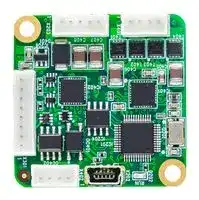
TMCM-1141
Stepper Motor Driver, 2-Phase, Single Axis, 1.1A, 24V DC Output, USB, RS485, S/D
⚠️ Reference pricing provided. In case of supply shortages, we will connect you with our trusted procurement partners to ensure your project's continuity.
- Manufacturer: TRINAMIC / ANALOG DEVICES
- Product type: Stepper Motor Drives
- Supply Voltage Min:9V; Supply Voltage Max:28V; No. of Phases:Two Phase; Power Rating:-; Output Voltage Max:24V; Output Current:1.1A; Product Range:-; SVHC:No SVHC (27-Jun-2018)
- SVHC: No SVHC (04-Feb-2026)
- No. of Phases: Two Phase
- Product Range: TMCM StepRocker
- Output Current Max: 2A
- Supply Voltage Max: 28VDC
- Supply Voltage Min: 9VDC
- Control / Drive Type: 1-Axis Controller / Driver Module
| Delivery and price | |
|---|---|
| Units per pack | 1 |
| Price | 118.35 € |
| Current stock | 50+ |
| Lead time | 30 days |
Datasheet

**`MECHATRONIC DRIVE WITH STEPPER MOTOR PANdrive`**
## **Hardware Version V1.2**
## **HARDWARE MANUAL**
+
+
## **PD-1141**
**`Stepper Motor with Controller / Driver 0.27 - 0.49 Nm / 24 V DC USB, RS485, and S/D Interface`**
+
+
## **UNIQUE FEATURES**
## stallGuard2™
TRINAMIC Motion Control GmbH & Co. KG Hamburg, Germany
## **www.trinamic.com**
PD-1141 Hardware Manual (Rev. 1.04 / 2013-JUL-23)
2
## **Table of Contents**
|1|Features ........................................................................................................................................................................... 3|
|---|---|
|2|Order Codes ................................................................................................................................................................... 5|
|3|Mechanical and Electrical Interfacing ..................................................................................................................... 6|
||3.1<br>Dimensions ........................................................................................................................................................... 6|
||3.2<br>Stepper Motor Specifications ........................................................................................................................... 7|
||3.3<br>Connectors of PD-1141 ....................................................................................................................................... 8|
||3.3.1<br>Power and RS485 Connector ..................................................................................................................... 9|
||3.3.1.1<br>Power Supply .......................................................................................................................................... 9|
||3.3.1.2<br>RS485 ....................................................................................................................................................... 10|
||3.3.2<br>Multipurpose I/O Connector ..................................................................................................................... 11|
||3.3.2.1<br>Digital Inputs IN_0, IN_1, IN_2 ........................................................................................................ 12|
||3.3.2.2<br>Analog Input AIN_1 ............................................................................................................................. 13|
||3.3.2.3<br>Outputs OUT_0, OUT_1 ........................................................................................................................ 13|
||3.3.3<br>Step/Direction Connector .......................................................................................................................... 14|
||3.3.3.1<br>Step / Direction / Enable inputs....................................................................................................... 14|
||3.3.4<br>Motor Connector .......................................................................................................................................... 15|
||3.3.5<br>Mini-USB Connector .................................................................................................................................... 16|
|4|Reset to Factory Defaults ......................................................................................................................................... 17|
|5|On-Board LED .............................................................................................................................................................. 17|
|6|Operational Ratings ................................................................................................................................................... 18|
|7|Torque Curves ............................................................................................................................................................. 19|
||7.1.1<br>PD42-1-1141 Torque Curves ...................................................................................................................... 19|
||7.1.2<br>PD42-2-1141 Torque Curves ...................................................................................................................... 19|
||7.1.3<br>PD42-3-1141 Torque Curves ...................................................................................................................... 20|
|8|Functional Description .............................................................................................................................................. 21|
|9|PD-1141 Operational Description ........................................................................................................................... 22|
||9.1<br>Calculation: Velocity and Acceleration vs. Microstep and Fullstep Frequency ................................ 22|
|10 Life Support Policy ..................................................................................................................................................... 24||
|11 Revision History .......................................................................................................................................................... 25||
||11.1<br>Document Revision ........................................................................................................................................... 25|
||11.2<br>Hardware Revision ............................................................................................................................................ 25|
|12 References .................................................................................................................................................................... 25||
www.trinamic.com
PD-1141 Hardware Manual (Rev. 1.04 / 2013-JUL-23)
3
## **1 Features**
The PANdrive™ PD-1141 is a full mechatronic solution with state of the art feature set. It is highly integrated and offers a convenient handling. The PD-1141 includes a stepper motor and controller/driver electronics. It can be used in many decentralized applications and has been designed for 0.27… 0.49 Nm max. holding torque and 24V DC nominal supply voltage. With its high energy efficiency from TRINAMICs coolStep technology cost for power consumption is kept down. The TMCL™ firmware allows for standalone operation and direct mode.
## **MAIN CHARACTERISTICS**
## **Motion controller**
- Motion profile calculation in real-time
-
- On the fly alteration of motor parameters (e.g. position, velocity, acceleration)
- High performance microcontroller for overall system control and serial communication protocol handling
## **Bipolar stepper motor driver**
- Up to 256 microsteps per full step
- High-efficient operation, low power dissipation
- Dynamic current control
- Integrated protection
- stallGuard2 feature for stall detection
- coolStep feature for reduced power consumption and heat dissipation
- - ready for dcStep
## **Interfaces**
- RS485 2-wire communication interface
- USB full speed (12Mbit/s) device interface
- Step/Direction/Enable interface (optically isolated) for external control of driver circuit
- 4 multipurpose inputs:
- 3x general-purpose digital inputs
- (Alternate functions: STOP_L / STOP_R / HOME switch inputs)
- 1x dedicated analog input
- 2 general purpose outputs
- 2x open-drain 100 mA max.
## **Software**
- TMCL: standalone operation or remote controlled operation, program memory (non volatile) for up to 1024 TMCL commands, and
PC-based application development software TMCL-IDE available for free.
## **Electrical and mechanical data**
- Supply voltage: +24 V DC nominal (9… 28 V DC)
- Motor current: up to 1.1 A RMS / 1.7 A peak (programmable)
- - 0.27… 0.49 Nm max. holding torque (depends on motor)
## _**Refer to separate TMCL Firmware Manual, too.**_
www.trinamic.com
PD-1141 Hardware Manual (Rev. 1.04 / 2013-JUL-23)
4
## **TRINAMICS UNIQUE FEATURES – EASY TO USE WITH TMCL**
**stallGuard2™** stallGuard2 is a high-precision sensorless load measurement using the back EMF on the coils. It can be used for stall detection as well as other uses at loads below those which stall the motor. The stallGuard2 measurement value changes linearly over a wide range of load, velocity, and current settings. At maximum motor load, the value goes to zero or near to zero. This is the most energy-efficient point of operation for the motor.
**==> picture [387 x 167] intentionally omitted <==**
**----- Start of picture text -----**<br>
Load stallGuard2<br>[Nm]<br>Initial stallGuard2<br>(SG) value: 100%<br>Max. load<br>stallGuard2 (SG) value: 0<br>Maximum load reached.<br>Motor close to stall.<br>Motor stalls<br>**----- End of picture text -----**<br>
**Figure 1.1 stallGuard2 load measurement SG as a function of load**
**coolStep™** coolStep is a load-adaptive automatic current scaling based on the load measurement via stallGuard2 adapting the required current to the load. Energy consumption can be reduced by as much as 75%. coolStep allows substantial energy savings, especially for motors which see varying loads or operate at a high duty cycle. Because a stepper motor application needs to work with a torque reserve of 30% to 50%, even a constant-load application allows significant energy savings because coolStep automatically enables torque reserve when required. Reducing power consumption keeps the system cooler, increases motor life, and allows reducing cost.
**==> picture [366 x 176] intentionally omitted <==**
**----- Start of picture text -----**<br>
0,9<br>Efficiency with coolStep<br>0,8 Efficiency with 50% torque reserve<br>0,7<br>0,6<br>0,5<br>Efficiency<br>0,4<br>0,3<br>0,2<br>0,1<br>0<br>0 50 100 150 200 250 300 350<br>Velocity [RPM]<br>**----- End of picture text -----**<br>
**Figure 1.2 Energy efficiency example with coolStep**
www.trinamic.com
PD-1141 Hardware Manual (Rev. 1.04 / 2013-JUL-23)
5
## **2 Order Codes**
The PD-1141 is currently available with three NEMA 17 stepper motors.
_The length of the PANdrives is specified without the length of the axis. For the overall length of the product please add 24 mm._
|**Order code**|**Description**|**Size (mm3) **|
|---|---|---|
|PD42-1-1141-_option_|PANdrive 0.27Nm max. holdingtorque|42 x 42 x 46.5|
|PD42-2-1141-_option_|PANdrive 0.35Nm max. holdingtorque|42 x 42 x 51|
|PD42-3-1141-_option_|PANdrive 0.49Nm max. holdingtorque|42 x 42 x 60|
## **Table 2.1 PD-1141 order codes**
The following options are available:
|**Firmware option**|**Description**|**Order code example:**|
|---|---|---|
|-TMCL|Modulepre-programmed with TMCL firmware|PD42-1-1141-_TMCL_|
## **Table 2.2 PD-1141 firmware options**
A cable loom set is available for this module:
|**Order code**|**Description**|
|---|---|
|PD-1141-CABLE|Cable loom for PD-1141:<br>-<br>1x cable loom for power and RS485 connector (length 200mm)<br>1x cable loom for multipurpose I/O connector (length 200mm)<br>-<br>1x cable loom for S/D connector (length 200mm)<br>-<br>1x USB type A connector to mini-USB type B connector cable(length 1.5m)|
|||
**Table 2.2 Cable loom order codes**
www.trinamic.com
PD-1141 Hardware Manual (Rev. 1.04 / 2013-JUL-23)
6
## **3 Mechanical and Electrical Interfacing**
## **3.1 Dimensions**
The PD-1141 includes the TMCM-1141 stepper motor controller/driver module and a NEMA17 bipolar stepper motor. Currently, there is a choice between three NEMA 17/42mm bipolar stepper motors with different lengths and different holding torques.
**==> picture [482 x 390] intentionally omitted <==**
**----- Start of picture text -----**<br>
24±1<br>20<br>4.5<br>22-0.05 42±1 37<br>5<br>Model Length of motor<br>PD42-1-1141 33.5±1 mm<br>2 PD42-2-1141 38±1 mm<br>Length 13 max PD42-3-1141 47±1 mm<br>22 34<br>3<br>2xM3<br>5<br>42±1 37 42±1<br>42±1 34<br>42±1<br>FRONT VIEW REAR VIEW<br>**----- End of picture text -----**<br>
**Figure 3.1 PD-1141 dimensions**
www.trinamic.com
PD-1141 Hardware Manual (Rev. 1.04 / 2013-JUL-23)
7
## **3.2 Stepper Motor Specifications**
**MAIN CHARACTERISTICS OF THREE DIFFERENT MOTORS AVAILABLE AS PART OF THE PD-1141**
||||**QSH4218**||
|---|---|---|---|---|
|**Specifications**|**Units**||||
|||**-35-10-027**|**-41-10-035**|**-51-10-049**|
||||||
|Rated Voltage|V|5.3|4.5|5.0|
|Rated Phase Current|A|1.0|1.0|1.0|
|Phase Resistance at 20°C|Ω|5.3|4.5|5.0|
|Phase Inductance (typ.)|mH|6.6|7.5|8.0|
||Ncm|27|35|49|
|Holding Torque (typ.)|||||
||oz in|38|50|69|
||||||
|Detent Torque|mNm|22|25|28|
|Rotor Inertia|gcm2|35|54|68|
|Weight (Mass)|Kg|0.22|0.28|0.35|
|Insulation Class||B|B|B|
|Dielectic Strength(for one minute)|VAC|500|500|500|
|Connection Wires|N°|4|4|4|
|StepAngle|°|1.8|1.8|1.8|
|Stepangle Accuracy (max.)|%|5|5|5|
|Flange Size (max.)|mm|42.3|42.3|42.3|
|Motor Length (max.)|mm|33.5|38|47|
|Rear shaft hole depth|mm|5.0|5.0|5.0|
|Rear shaft hole diameter|mm|3.0|3.0|3.0|
|Axis Diameter|mm|5.0|5.0|5.0|
|Axis Length(typ.)|mm|24|24|24|
|Axis D-cut (0.5mm depth)|mm|20|20|20|
|Maximum Radial Force<br>(20 mm from front flange)|N|28|28|28|
|Maximum Axial Force|N|10|10|10|
|Ambient temperature|°C|-20…+50|-20…+50|-20…+50|
|Related PANdrive||PD42-1-1141|PD42-2-1141|PD42-3-1141|
**Table 3.1 NEMA 17 / 42mm stepper motor technical data**
www.trinamic.com
PD-1141 Hardware Manual (Rev. 1.04 / 2013-JUL-23)
8
## **3.3 Connectors of PD-1141**
The controller/driver board of the PD-1141 offers five connectors including the motor connector which is used for attaching the motor coils to the electronics. Further, there is a connector for power and for the RS485 interface. The USB interface and the step/direction interface have their own connectors. The 8pin multipurpose I/O connector offers four multipurpose inputs and two general purpose outputs.
**==> picture [180 x 202] intentionally omitted <==**
**----- Start of picture text -----**<br>
Step /<br>USB Direction<br>Se RUN al<br>1 4<br>an |] que).<br>= NE = OSE TEU @ 1<br>$8 is Sih hii ree Multi-<br>purpose<br>ee TERE ees<br>A ees BNF i I/O<br>ea = tx aR 8<br>cada bkta 0d Pee pe OG es<br>NNW aaR, BAM BAA ~ c467 > c408 BRRI401<br>4 1 5 1<br>Motor Power and<br>RS485<br>**----- End of picture text -----**<br>
**Figure 3.2 Overview connectors**
|**Label**|**Connector type**|**Mating connector type**|
|---|---|---|
|Power and<br>RS485<br>Connector|CI0105P1VK0-LF<br>CVIlux CI01 series, 5 pins, 2mm pitch|Connector housing CVIlux: CI01055000-A<br>Contacts CVIlux: CI01T011PE0-A<br>_or_<br>Connector housing JST: PHR-5<br>Contacts JST: SPH-002T-P0.5S<br>Wire: 0.22mm2|
|Multi-purpose<br>I/O Connector|CI0108P1VK0-LF<br>CVIlux CI01 series, 8 pins, 2mm pitch|Connector housing CVIlux: CI01085000-A<br>Contacts CVIlux: CI01T011PE0-A<br>_or_<br>Connector housing JST: PHR-8<br>Contacts JST: SPH-002T-P0.5S<br>Wire: 0.22mm2|
|Step/Direction<br>Connector|CI0104P1VK0-LF<br>CVIlux CI01 series, 4 pins, 2mm pitch|Connector housing CVIlux: CI01045000-A<br>Contacts CVIlux: CI01T011PE0-A<br>_or_<br>Connector housing JST: PHR-4<br>Contacts JST: SPH-002T-P0.5S<br>Wire: 0.22mm2|
|Motor<br>Connector|CI0104P1VK0-LF<br>CVIlux CI01 series, 4 pins, 2mm pitch|Connector housing CVIlux: CI01045000-A<br>Contacts CVIlux: CI01T011PE0-A<br>_or_<br>Connector housing JST: PHR-4<br>Contacts JST: SPH-002T-P0.5S<br>Wire: 0.22mm2|
|Mini-USB<br>Connector|Molex 500075-1517<br>Mini USB Type B vertical receptacle|Any standard mini-USB plug|
**Table 3.1 Connectors and mating connectors, contacts and applicable wire**
www.trinamic.com
PD-1141 Hardware Manual (Rev. 1.04 / 2013-JUL-23)
9
## **3.3.1 Power and RS485 Connector**
A 5pin single row connector is used for power supply and RS485 serial communication.
**Pin Label Direction Description** 1 GND Power (GND) System and signal ground 1 5 2 VDD Power (Supply) VDD (+9 V… +28 V) 3 GND Power (GND) System and signal ground 4 RS485+ Bidirectional RS485 interface, diff. signal (non-inverting) ~~SSS~~ 5 RS485Bidirectional RS485 interface, diff. signal (inverting) **Table 3.2 Connector for power supply and RS485**
## **3.3.1.1 Power Supply**
For proper operation care has to be taken with regard to power supply concept and design. Due to space restrictions the PD-1141 includes about 40µF/35V of supply filter capacitors. These are ceramic capacitors which have been selected for high reliability and long life time. The module includes a 28V suppressor diode for over-voltage protection.
**CAUTION!** _**Add external power supply capacitors!**_ It is recommended to connect an electrolytic capacitor of significant size (e.g. 470µF/35V) to the power supply lines next to the PD-1141 especially if the distance to the power supply is large (i.e. more than 2-3m)! In larger systems a zener diode circuitry might be required in order to limit the maximum voltage when the motor is operated at high velocities. Rule of thumb for size of electrolytic capacitor: In addition to power stabilization (buffer) and filtering this added capacitor will also reduce any voltage spikes which might otherwise occur from a combination of high inductance power supply wires and the ceramic capacitors. In addition it will limit slewrate of power supply voltage at the module. The low ESR of ceramic-only filter capacitors ~~fo~~ may cause stability problems with some switching power supplies.
_**Do not connect or disconnect motor during operation!**_ Motor cable and motor inductivity might lead to voltage spikes when the motor is disconnected / connected while energized. These voltage spikes might exceed voltage limits of the driver MOSFETs and might permanently damage them. Therefore, always disconnect power supply before connecting / disconnecting the motor.
_**Keep the power supply voltage below the upper limit of 28V!**_ Otherwise the driver electronics will seriously be damaged! Especially, when the selected operating voltage is near the upper limit a regulated power supply is highly ~~o~~ recommended. Please see also chapter 6 (operating values). _**There is no reverse polarity protection!**_ The module will short any reversed supply voltage due to internal diodes of the driver transistors. ~~oo~~
www.trinamic.com
PD-1141 Hardware Manual (Rev. 1.04 / 2013-JUL-23)
10
## **3.3.1.2 RS485**
For remote control and communication with a host system the PD-1141 provides a two wire RS485 bus interface. For proper operation the following items should be taken into account when setting up an RS485 network:
1. _BUS STRUCTURE_ : The network topology should follow a bus structure as closely as possible. That is, the connection between each node and the bus itself should be as short as possible. Basically, it should be short compared to the length of the bus.
**==> picture [371 x 114] intentionally omitted <==**
**----- Start of picture text -----**<br>
Host<br>Slave Slave Slave<br>c:> node node node<br>1 n - 1 n<br>}<br>termination termination<br>resistor resistor<br>(120 Ohm) (120 Ohm)<br>RS485 keep distance as<br>short as possible<br>**----- End of picture text -----**<br>
**Figure 3.3 Bus structure**
## 2. _BUS TERMINATION_ :
Especially for longer busses and/or multiple nodes connected to the bus and/or high communication speeds, the bus should be properly terminated at both ends. The PD-1141 does not integrate any termination resistor. Therefore, 120 Ohm termination resistors at both ends of the bus have to be added externally.
## 3. _NUMBER OF NODES_ :
The RS485 electrical interface standard (EIA-485) allows up to 32 nodes to be connected to a single bus. The bus transceiver used on the PD-1141 units (SN65HVD3082ED) has just 1/8th of the standard bus load and allows a maximum of 256 units to be connected to a single RS485 bus.
4. _NO FLOATING BUS LINES:_
Avoid floating bus lines while neither the host/master nor one of the slaves along the bus line is transmitting data (all bus nodes switched to receive mode). Floating bus lines may lead to communication errors. In order to ensure valid signals on the bus it is recommended to use a resistor network connecting both bus lines to well defined logic levels. In contrast to the termination resistors this network is normally required just once per bus. Certain RS485 interface converters available for PCs already include these additional resistors (e.g. USB-2-485).
**==> picture [267 x 132] intentionally omitted <==**
**----- Start of picture text -----**<br>
Slave Slave<br>node node +5V<br>n - 1 n<br>pull-up (1k)<br>RS485+ / RS485A termination<br>resistor<br>RS485- / RS485B (120 Ohm)<br>pull-down (1k)<br>GND<br>**----- End of picture text -----**<br>
**Figure 3.4 Bus lines with resistor network**
www.trinamic.com
PD-1141 Hardware Manual (Rev. 1.04 / 2013-JUL-23)
11
## **3.3.2 Multipurpose I/O Connector**
An 8pin 2mm pitch single row connector is available for all multipurpose inputs and outputs.
|8<br>1<br>~~ee~~|**Pin**<br>~~a~~|**Label**<br>~~a~~|**Direction**<br>~~a~~|**Description**<br>~~a~~|
|---|---|---|---|---|
||1<br>~~a~~<br>~~a~~|GND<br>~~a~~<br>~~a~~<br>~~a~~|Power(GND)<br>~~a~~<br>~~a~~|System and signalground<br>~~a~~<br>~~a~~|
||2<br>~~a~~<br>~~e~~|VDD<br>~~a~~<br>~~a~~<br>~~ee~~|Power (Supply)<br>~~a~~|VDD, connected to VDD pin of the power and<br>RS485 connector<br>~~a~~|
||3<br>~~e~~<br>~~s~~|OUT_0<br>~~ee~~<br>~~se~~|Output<br>~~ee~~|Open-drain output (max. 100 mA)<br>Integrated freewheelingdiode to VDD<br>~~ee~~|
||4<br>~~s~~|OUT_1<br>~~se~~|Output<br>~~ee~~|Open-drain output (max. 100 mA)<br>Integrated freewheelingdiode to VDD<br>~~ee~~|
||5|IN_0|Input|Dedicated analog input,<br>Input voltage range: 0… +10V<br>Resolution: 12bit(0… 4095)|
||6<br>~~—~~|IN_1<br>~~—~~|Input<br>~~—~~|Generalpurpose digital input(+24 V compatible)<br>~~—~~|
|||||Alternate function: left stopswitch input<br>~~—~~|
||7<br>~~—~~<br>~~ep~~<br>~~ee~~|IN_2<br>~~—~~<br>~~ep~~<br>~~ee~~|Input<br>~~—~~<br>~~ep~~|Generalpurpose digital input(+24 V compatible)<br>~~—~~<br>~~ep~~|
|||||Alternate function: right stopswitch input<br>~~ep~~|
||8<br>~~ep~~<br>~~ee~~|IN_3<br>~~ep~~<br>~~ee~~|Input<br>~~ep~~|Generalpurpose digital input(+24 V compatible)<br>~~ep~~|
|||||Alternate function: home switch input|
## **Table 3.4 Multipurpose I/O connector**
## _Note_ :
- All inputs have resistor based voltage input dividers with protection diodes. These resistors also ensure a valid GND level when left unconnected.
- For all digital inputs (IN_1, IN_2, IN_3) a 1k pull-up resistor to +5V can be activated. Then these inputs have a default (unconnected) logic level of 1 and an external switch to GND can be connected. This might be especially interesting in case these inputs are used as stop and home switch inputs (alternate function).
www.trinamic.com
PD-1141 Hardware Manual (Rev. 1.04 / 2013-JUL-23)
12
## **3.3.2.1 Digital Inputs IN_1, IN_2, IN_3**
The eight pin connector of the PD-1141 provides three multi-purpose digital inputs IN_1, IN_2 and IN_3.
All three inputs accept up-to +24 V input signals. They are protected against these higher voltages using voltage resistor dividers together with limiting diodes against voltages below 0 V (GND) and above +3.3 V DC (see figure below).
**==> picture [300 x 240] intentionally omitted <==**
**----- Start of picture text -----**<br>
+5V common switch for all<br>three digital inputs<br>1k<br>IN_0 +3.3V<br>IN_1<br>IN_2<br>10k<br>microcontroller (all)<br>and TMC429 (IN_0, IN_1)<br>22k<br>1nf<br>GND GND GND<br>**----- End of picture text -----**<br>
**Figure 3.5 General purpose inputs (simplified input circuit)**
Refer to the PD-1141 TMCL Firmware Manual (SIO command) for further information about switching the pull-up resistors for all digital inputs on / off.
The three digital inputs have alternate functionality depending on configuration in software. The following functions are available:
|**Label**<br>**(pin)**||||
|---|---|---|---|
||**Default function**|**Alternate function 1**|**Alternate function 2**|
|||||
|IN_0 (6)|General purpose<br>digital input|STOP_L - left stop switch input<br>connected to processor and<br>TMC429 REF input (supporting<br>left<br>stop<br>functionality<br>in<br>hardware)|IN_0 (6)|
|||||
|IN_1 (7)|General purpose<br>digital input|STOP_R - right stop switch input<br>connected to processor and<br>TMC429 REF input (supporting<br>right stop switch functionality in<br>hardware)|IN_1 (7)|
|||||
|IN_2 (8)|General purpose<br>digital input|HOME - home switch input<br>(connected toprocessor)|IN_2 (8)|
|||||
**Table 3.7 Multipurpose inputs / alternate functions**
All three digital inputs are connected to the on-board processor and can be used as general purpose digital inputs (default).
www.trinamic.com
PD-1141 Hardware Manual (Rev. 1.04 / 2013-JUL-23)
13
## **3.3.2.2 Analog Input AIN_1**
The eight pin connector of the PD-1141 provides one dedicated analog input AIN_1.
This dedicated analog input offers a full scale input range of 0… +10V with a resolution of the internal analog-to-digital converter of the microcontroller of 12 bit (0… 4095).
The input is protected against higher voltages up-to +24 V using voltage resistor dividers together with limiting diodes against voltages below 0 V (GND) and above +3.3 V DC (see figure below).
**==> picture [314 x 139] intentionally omitted <==**
**----- Start of picture text -----**<br>
+3.3V<br>AIN_1<br>22k<br>ADC input<br>(microcontroller)<br>10k<br>10nF<br>GND GND GND<br>**----- End of picture text -----**<br>
**Figure 3.6 General purpose inputs (simplified input circuit)**
## **3.3.2.3 Outputs OUT_0, OUT_1**
The eight pin connector of the PD-1141 offers two general purpose outputs OUT_0 and OUT_1. These two outputs are open-drain outputs and can sink up to 100 mA each. The outputs of the N-channel MOSFET transistors are connected to freewheeling diodes each for protection against voltage spikes especially from inductive loads (relais etc.) above supply voltage (see figure below).
_Using free-wheeling diodes connected to VDD supply voltage: None of the two outputs should be connected to any voltage above supply voltage of the module._
**==> picture [322 x 128] intentionally omitted <==**
**----- Start of picture text -----**<br>
VDD<br>OUT_0,<br>OUT_1<br>microcontroller<br>GND<br>**----- End of picture text -----**<br>
**Figure 3.7 General purpose outputs**
www.trinamic.com
PD-1141 Hardware Manual (Rev. 1.04 / 2013-JUL-23)
14
## **3.3.3 Step/Direction Connector**
A 4pin 2mm pitch single row connector is available for the Step/Dir interface. This interface can be used for connecting an external motion controller to the on-board driver stage instead of the integrated motion controller.
|All three Step/Dir/Enable signals are optically isolated. Therefore, an additional supply input (COMMON) is<br>available which has to be connected to a supplyvoltage between +5 V and +24 V forproper operation.<br>~~Ce~~|All three Step/Dir/Enable signals are optically isolated. Therefore, an additional supply input (COMMON) is<br>available which has to be connected to a supplyvoltage between +5 V and +24 V forproper operation.<br>~~Ce~~|
|---|---|
|4<br>1<br>**Pin**<br>**Label**<br>**Direction**<br>**Description**<br>1<br>COMMON<br>Power<br>(Supply input)<br>Power supply input for the three Step / Direction<br>/ Enable signals. Accepts voltages between +5V<br>and +24V nom.<br>2<br>/ENABLE<br>Input<br>Enable input<br>(function depends on firmware)<br>3<br>STEP<br>Input<br>Step pulse input<br>(connected to stepinput of TMC262 driver IC)<br>4<br>DIRECTION Input<br>Direction input<br>(connected to direction input of TMC262 driver IC)<br>**Table 3.5: Step/Direction connector**<br>~~——~~<br>~~ee~~<br>~~ee~~<br>~~ee~~<br>~~ee eeee~~||
|**3.3.3.1 Step / Direction / Enable inputs**||
The inputs Step / Direction / Enable are electrically (optically) isolated from the power supply and all other signals of the PD-1141. These inputs have one common reference input COMMON (see Figure 3.7). The COMMON input should be connected to a positive supply voltage between +5V and +24V. Step / Direction / Enable signals might be driven either by open-collector / open-drain outputs or by push-pull outputs. In case of push-pull outputs the COMMON supply voltage should be equal / similar to the high signal voltage level of the push-pull drivers.
**==> picture [321 x 216] intentionally omitted <==**
**----- Start of picture text -----**<br>
+3.3V<br>Common<br>(5..24V)<br>= i microcontroller<br>8mA<br>Enable<br>TMC262<br>= f F O ||<br>8mA<br>Step<br>[FO ] TMC262<br>~<br>8mA<br>Direction<br>OQ ]<br>GND<br>**----- End of picture text -----**<br>
**Figure 3.8 Step/Dir/Enable inputs**
www.trinamic.com
PD-1141 Hardware Manual (Rev. 1.04 / 2013-JUL-23)
15
## **3.3.4 Motor Connector**
As motor connector a 4pin 2mm pitch single row connector is available. The motor connector is used for connecting the four motor wires of the two motor coils of the bipolar stepper motor to the electronics.
**Pin Label Direction Description** 1 4 1 OB2 Output Pin 2 of motor coil B 2 OB1 Output Pin 1 of motor coil B 3 OA2 Output Pin 2 of motor coil A ~~——_—_—_—_—~~ 4 OA1 Output Pin 1 of motor coil A
## **Table 3.5 Motor connector**
_Example for connecting the QSH4218 NEMA 17 / 42mm stepper motors:_
|**TMCM-1141**|**QS4218 Motor**|**QS4218 Motor**|**QS4218 Motor**|
|---|---|---|---|
|**Motor connector pin**|**Cable color**|**Coil**|**Description**|
|1|Red|B|Motor coil Bpin 1|
|2|Blue|B-|Motor coil Bpin 2|
|3|Green|A-|Motor coil Apin 2|
|4|Black|A|Motor coil Apin 1|
www.trinamic.com
PD-1141 Hardware Manual (Rev. 1.04 / 2013-JUL-23)
16
## **3.3.5 Mini-USB Connector**
A 5pin mini-USB connector is available on-board for serial communication (as alternative to the RS485 interface). This module supports USB 2.0 Full-Speed (12Mbit/s) connections.
|1<br>5<br>**Pin**<br>**Label**<br>**Direction**<br>**Description**<br>1<br>VBUS<br>Power<br>(supplyinput)<br>+5V supply from host<br>2<br>D-<br>Bidirectional<br>USB Data –<br>3<br>D+<br>Bidirectional<br>USB Data +<br>4<br>ID<br>Power(GND)<br>Connected to signal and systemground<br>5<br>GND<br>Power (GND)<br>Connected to signal and systemground<br>~~a~~<br>~~ee |e~~<br>~~ee~~<br>~~————~~||
|---|---|
|**Table 3.6 Connector for USB**||
|For remote control and communication with a host system the PD-1141 provides a USB 2.0 full-speed|For remote control and communication with a host system the PD-1141 provides a USB 2.0 full-speed|
|(12Mbit/s) interface (mini-USB connector). As soon as a USB host is connected the module will accept|(12Mbit/s) interface (mini-USB connector). As soon as a USB host is connected the module will accept|
|commands via USB.||
## **USB BUS POWERED OPERATION MODE**
The PD-1141 supports both, USB self powered operation (when an external power is supplied via the power supply connector) and USB bus powered operation, (no external power supply via power supply connector).
On-board digital core logic will be powered via USB in case no other supply is connected (USB bus powered operation). The digital core logic comprehends the microcontroller itself and also the EEPROM. The _USB bus powered operation mode_ has been implemented to enable configuration, parameter settings, read-outs, firmware updates, etc. by just connecting an USB cable between module and host PC. No additional cabling or external devices (e.g. power supply) are required.
Please note that the module might draw current from the USB +5V bus supply even in USB self powered operation depending on the voltage level of this supply.
Motor movements are not possible in this operation mode. Therefore, connect the power connector and change to _USB self powered operation mode_ . ~~Ce~~
www.trinamic.com
PD-1141 Hardware Manual (Rev. 1.04 / 2013-JUL-23)
17
## **4 Reset to Factory Defaults**
It is possible to reset the PD-1141 to factory default settings without establishing a communication link. This might be helpful in case communication parameters of the preferred interface have been set to unknown values or got accidentally lost.
For this procedure two pads on the bottom side of the board have to be shortened. Now, perform the following steps:
1. Power supply off and USB cable disconnected
2. Short two pads as marked in Figure 4.1
3. Power up board (power via USB is sufficient for this purpose)
4. Wait until the on-board red and green LEDs start flashing fast (this might take a while)
5. Power-off board (disconnect USB cable)
6. Remove short between pads
7. After switching on power-supply / connecting USB cable all permanent settings have been restored to factory defaults
**==> picture [86 x 9] intentionally omitted <==**
**----- Start of picture text -----**<br>
Short these two pads<br>**----- End of picture text -----**<br>
**Figure 4.1 Reset to factory default settings**
## **5 On-Board LED**
The board offers an LED in order to indicate board status. The function of the LED is dependent on the firmware version. With standard TMCL firmware the green LED should be flashing slowly during operation. When there is no valid firmware programmed into the board or during firmware update the green LED is permanently on.
**BEHAVIOR OF LEDS WITH STANDARD TMCL FIRMWARE**
|**Status**|**Label**|**Description**|
|---|---|---|
|Heartbeat|Run|This green LED flashes slowly during operation.|
**==> picture [45 x 9] intentionally omitted <==**
**----- Start of picture text -----**<br>
Green LED<br>**----- End of picture text -----**<br>
**Figure 5.1 On-board LED**
www.trinamic.com
PD-1141 Hardware Manual (Rev. 1.04 / 2013-JUL-23)
18
## **6 Operational Ratings**
The operational ratings show the intended or the characteristic ranges and should be used as design values.
## _**In no case shall the maximum values be exceeded!**_
## **GENERAL OPERATIONAL RATINGS**
|**Symbol**|**Parameter**|**Min**|**Typ**|**Max**|**Unit**|
|---|---|---|---|---|---|
|VDD|Power supplyvoltage for operation|9|12… 24|28|V|
|ICOILpeak|Motor coil current for sine wave peak<br>(chopper regulated,adjustable via software)|0||1.7|A|
|_||||||
|ICOIL RMS|Continuous motor current(RMS)|0||1.1|A|
|IDD|Power supplycurrent||<< ICOIL|1.4 * ICOIL|A|
|TENV|Environment temperature at rated current (no<br>forced coolingrequired)|Tbd||40|°C|
|||||||
## **Table 6.1 General operational ratings of module**
## **OPERATIONAL RATINGS OF MULTIPURPOSE I/OS**
|**Symbol**|**Parameter**|**Min**|**Typ**|**Max**|**Unit**|
|---|---|---|---|---|---|
|VOUT_0/1|Voltage at open drain output|0||+VDD|V|
|IOUT_0/1|Output sink current of open drain output|||100|mA|
|VIN_1/2/3|Input voltage for IN_1, IN_2, IN_3 (digital<br>inputs)|0||+VDD|V|
|||||||
|VIN_L 1/2/3|Low level voltage for IN_1, IN_2 and IN_3|0||1.2|V|
|VIN_H 1/2/3|High level voltage for IN_1, IN_2 and IN_3|4||+VDD|V|
|VIN_0|Measurement range for analog input IN_0|0||+10|V|
## **Table 6.2 Operational ratings of multipurpose I/Os**
## **OPERATIONAL RATINGS OF RS485 INTERFACE**
|**Symbol**|**Parameter**|**Min**|**Typ**|**Max**|**Unit**|
|---|---|---|---|---|---|
|NRS485|Number of nodes connected to single RS485<br>network|||256||
|||||||
## **Table 6.3: Operational ratings of RS485 interface**
www.trinamic.com
PD-1141 Hardware Manual (Rev. 1.04 / 2013-JUL-23)
19
## **7 Torque Curves**
The following paragraphs will show you the curves of each PANdrive.
## **7.1.1 PD42-1-1141 Torque Curves**
**==> picture [375 x 248] intentionally omitted <==**
**----- Start of picture text -----**<br>
PD42-1-1141 - 1.1A RMS Phase Current, 256 uSteps<br>0,35<br>0,30<br>0,25<br>0,20<br>0,15<br>0,10<br>0,05<br>0,00<br>10 100 1000 10000<br>speed[rpm]<br>torque[Nm]<br>**----- End of picture text -----**<br>
**Figure 7.1 PD42-1-1141 torque vs. velocity 24V / 1.1 A, 256µsteps**
## **7.1.2 PD42-2-1141 Torque Curves**
**==> picture [375 x 249] intentionally omitted <==**
**----- Start of picture text -----**<br>
PD42-2-1141 - 1.1A RMS Phase Current, 256 uSteps<br>0,50<br>0,45<br>0,40<br>0,35<br>0,30<br>0,25<br>0,20<br>0,15<br>0,10<br>0,05<br>0,00<br>10 100 1000 10000<br>speed[rpm]<br>torque[Nm]<br>**----- End of picture text -----**<br>
**Figure 7.2 PD42-2-1141 torque vs. velocity 24V / 1.1 A, 256µsteps**
www.trinamic.com
PD-1141 Hardware Manual (Rev. 1.04 / 2013-JUL-23)
20
## **7.1.3 PD42-3-1141 Torque Curves**
**==> picture [375 x 247] intentionally omitted <==**
**----- Start of picture text -----**<br>
PD42-3-1141 - 1.1A RMS Phase Current, 256 uSteps<br>0,70<br>0,60<br>0,50<br>0,40<br>0,30<br>0,20<br>0,10<br>0,00<br>10 100 1000 10000<br>speed[rpm]<br>torque[Nm]<br>**----- End of picture text -----**<br>
**Figure 7.3 PD42-3-1141 torque vs. velocity 24V / 1.1A, 256µsteps**
www.trinamic.com
PD-1141 Hardware Manual (Rev. 1.04 / 2013-JUL-23)
21
## **8 Functional Description**
The PD-1141 is a highly integrated mechatronic device which can be controlled via several serial interfaces. Communication traffic is kept low since all time critical operations, e.g. ramp calculations are performed on board. Nominal supply voltage of the unit is 24V DC. The PANdrive is designed for both: direct mode and standalone operation. Full remote control of device with feedback is possible. The firmware of the module can be updated via any of the serial interfaces.
In Figure 8.1 the main parts of the PD-1141 are shown:
-
- the microprocessor, which runs the TMCL operating system (connected to TMCL memory),
- the motion controller, which calculates ramps and speed profiles internally by hardware,
- the power driver with stallGuard2 and its energy efficient coolStep feature,
- the MOSFET driver stage,
- the QSH stepper motor, and
**==> picture [459 x 233] intentionally omitted <==**
**----- Start of picture text -----**<br>
TMCL™ PD-1141<br>Memory<br>SPI<br>SPI<br>USB<br>Step<br>RS485 Power MOSFET<br>SPI<br>6 Energy EfficientDriver Drive r<br>I/Os µC TMC429 DriverTMC262 Stage<br>Motion TMC262 with Motor<br>Controller<br> coolStep™<br>S/D<br>S/D<br>S/D<br>9… 28V DC Stop<br>TMCM-1141<br>switches<br>+5V<br>**----- End of picture text -----**<br>
**Figure 8.1 Main parts of the PD-1141**
_Remark: stop switches are an alternate function of two out of three digital inputs._
The PD-1141 comes with the PC based software development environment TMCL-IDE for the Trinamic Motion Control Language (TMCM). Using predefined TMCL high level commands like _move to position_ a rapid and fast development of motion control applications is guaranteed.
_Please refer to the PD-1141 Firmware Manual for more information about TMCL commands._
www.trinamic.com
PD-1141 Hardware Manual (Rev. 1.04 / 2013-JUL-23)
22
## **9 PD-1141 Operational Description**
## **9.1 Calculation: Velocity and Acceleration vs. Microstep and**
## **Fullstep Frequency**
The values of the parameters sent to the TMC429 do not have typical motor values like rotations per second as velocity. But these values can be calculated from the TMC429 parameters as shown in this section.
## **PARAMETERS OF TMC429**
|**Signal**|**Description**|**Range **|
|---|---|---|
|fCLK|clock-frequency|16 MHz|
|velocity|-|0… 2047|
|a_max|maximum acceleration|0… 2047|
||divider for the velocity. The higher the value is, the less is<br>the maximum velocity<br>default value = 0|<br>0… 13|
|pulse_div|||
||||
||divider for the acceleration. The higher the value is, the<br>less is the maximum acceleration<br>default value = 0|<br>0… 13|
|ramp_div|||
||||
||microstep-resolution (microsteps per fullstep = 2usrs)|0… 8 (a value of 7 or 8 is internally<br>mapped to 6 bythe TMC429)|
|Usrs|||
||||
## **Table 9.1 TMC429 velocity parameters**
## **MICROSTEP FREQUENCY**
The microstep frequency of the stepper motor is calculated with
**==> picture [275 x 24] intentionally omitted <==**
## **FULLSTEP FREQUENCY**
**==> picture [473 x 61] intentionally omitted <==**
The change in the pulse rate per time unit (pulse frequency change per second – the _**acceleration a** )_ is given by
**==> picture [101 x 26] intentionally omitted <==**
This results in acceleration in fullsteps of:
**==> picture [285 x 21] intentionally omitted <==**
www.trinamic.com
PD-1141 Hardware Manual (Rev. 1.04 / 2013-JUL-23)
23
## **EXAMPLE** :
|**Signal**|**value**|
|---|---|
|f_CLK|16 MHz|
|velocity|1000|
|a_max|1000|
|pulse_div|1|
|ramp_div|1|
|usrs|6|
16 _MHz_ 1000 _msf_ 21 2048 32 122070.31 _Hz_ 122070.31 _fsf_ [ _Hz_ ] 26 1907.34 _Hz_ (16 _Mhz_ ) 2 1000 _MHz a_ 119.21 1 1 29 2 _s MHz_ 119.21 _s MHz af_ 6 .1863 2 _s_
## **CALCULATION OF THE NUMBER OF ROTATIONS**
A stepper motor has e.g. 72 fullsteps per rotation.
**==> picture [219 x 62] intentionally omitted <==**
www.trinamic.com
PD-1141 Hardware Manual (Rev. 1.04 / 2013-JUL-23)
24
## **10 Life Support Policy**
TRINAMIC Motion Control GmbH & Co. KG does not authorize or warrant any of its products for use in life support systems, without the specific written consent of TRINAMIC Motion Control GmbH & Co. KG.
Life support systems are equipment intended to support or sustain life, and whose failure to perform, when properly used in accordance with instructions provided, can be reasonably expected to result in personal injury or death.
## © TRINAMIC Motion Control GmbH & Co. KG 2013
Information given in this data sheet is believed to be accurate and reliable. However neither responsibility is assumed for the consequences of its use nor for any infringement of patents or other rights of third parties, which may result from its use.
Specifications are subject to change without notice.
All trademarks used are property of their respective owners.
www.trinamic.com
PD-1141 Hardware Manual (Rev. 1.04 / 2013-JUL-23)
25
## **11 Revision History**
## **11.1 Document Revision**
|**Version**|**Date**|**Author**<br>GE - Göran Eggers<br>SD - Sonja Dwersteg|**Description**|
|---|---|---|---|
|||||
|0.90|2011-DEC-19|GE|Initial version|
|0.91|2011-DEC-23|GE|Connectorpin assignment corrected|
||2012-JUN-22|SD|First complete version including the following chapters:<br>-<br>Reset to factory defaults,<br>-<br>LEDs,<br>-<br>Torque curves|
|1.00||||
|||||
|1.01|2012-JUL-23|SD|Information about sensOstepdeleted.|
|1.02|2012-JUL-27|SD|Figure 3.5 corrected.|
||2013-MAR-05|SD|-<br>Names of inputs changed:<br>~~AIN_0~~<br> IN_0<br>~~IN_0~~<br> <br>IN_1<br>~~IN_1~~<br> <br>IN_2<br>~~IN_2~~<br> <br>IN_3<br>-<br>Names of outputs changed:<br>~~OUT_1~~<br> = OUT_0<br>~~OUT_0~~<br> = OUT_1|
|1.03||||
|||||
||20013-JUL-23|SD|-<br>Connector description updated<br>-<br>Information aboutpower supplyupdated|
|1.04||||
|||||
**Table 11.1 Document revision**
## **11.2Hardware Revision**
|**Version**|**Date**|**Description**|
|---|---|---|
|TMCM-1041_V10|2011-MAR-03|Initial version|
|TMCM-1141_V10|2011-AUG-12|-<br>Clock generation and distribution changed,<br>16Mhz crystal instead of 8MHz, TMC429 and<br>TMC262 running from 16Mhz clock signal from<br>processor<br>-<br>Resistor dividers at inputs changed, more<br>compact and optimized input protection circuit<br>-<br>Support of USBpowered operation|
||||
|TMCM-1141_V11|2011-NOV-23|-<br>Optimization and cost reduction for board<br>assembly after feedback from assembly house<br>(version 1.1 is 100% firmware compatible with<br>V1.0)|
||||
|TMCM-1141_V12|2011-DEC-12|-<br>Mountingholes connected to GND|
**Table 11.2 Hardware revision**
## **12 References**
|[PD-1141 TMCL]|PD-1141 TMCL Firmware Manual|
|---|---|
|[TMC262]|TMC262 Datasheet|
|[TMC429]|TMC429 Datasheet|
|[TMCL-IDE]|TMCL-IDE User Manual|
|[QSH4218]|QSH4218 Manual|
Please refer to www.trinamic.com.
www.trinamic.com
Updated at April 29, 2026
About Novapart
Novapart is a B2B electronic component broker specialising in stock shortages and cost reduction. We source hard-to-find parts and identify compliant alternatives across a catalogue of 410,000+ components from 500+ manufacturers.
Learn more →Stock Shortage Specialist
When a component is unavailable, discontinued or has an unacceptable lead time, we tap into our network of vetted European and Asian distributors to source what you need — without compromising on quality or traceability.
Request a quote →Compliant Alternatives
We identify pin-to-pin, electrically equivalent substitutes that meet the same certifications (RoHS, AEC-Q100, REACH) as your original specification — validated against datasheets, not just part numbers. Often at a lower cost.
BOM Analysis service →