
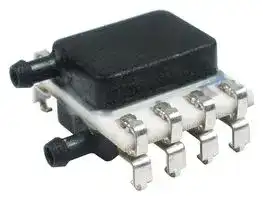


RSCMRRM005NGSE3
Pressure Sensor, Medical, 5 Inch-H2O, Digital, Gauge, 3.3 VDC, Dual Radial Barbed, 1.7 mA
- Manufacturer: HONEYWELL
- Product type: Pressure Transducers
- Port Style: Dual Radial Barbed
- Product Range: TruStability RSC Series
- Sensor Output: Digital
- Supply Current: 1.7mA
- Voltage Rating: 3.3VDC
- Operating Pressure Max: 5Inch-H2O
- Pressure Measurement Type: Gauge
| Delivery and price | |
|---|---|
| Units per pack | 100 |
| Price | 72.18 € |
| Current stock | 10+ |
| Lead time | 30 days |

**32321348** Issue B

**TruStability™ Board Mount Pressure Sensors** RSC Series—High Resolution, High Accuracy, Compensated ±1.6 mbar to ±10 bar | ±160 Pa to ±1 MPa | ±0.5 inH2O to ±150 psi 24-bit Digital SPI-Compatible Output

## **Datasheet**

## **FEATURES**

- Pressure range: ±1.6 mbar to ±10 bar | ±160 Pa to ±1 MPa | ±0.5 inH2O to ±150 psi; absolute range 1 bar to 8 bar | 15 psi to 150 psi

- Pressure types: Absolute: internal vacuum reference and an output value proportional to absolute pressure; Gage: referenced to atmospheric pressure and provide an output proportional to pressure variations from atmosphere; Differential: allows measurement of pressure between the two pressure ports

- Total Error Band: As low as ±0.25 %FSS depending on pressure range (after auto zero)

- Accuracy: ±0.1 %FSS BFSL (Full Scale Span Best Fit Straight Line)

- Compensated temperature range: -40 ºC to 85 ºC [-40 ºF to 185 ºF]

- Power consumption: Less than 10 mW, typ.

- Size: Miniature 10 mm x 12,5 mm [0.39 in x 0.49 in] package

## **DESCRIPTION**

The RSC Series is a piezoresistive silicon pressure sensor offering a digital output for reading pressure over the specified full scale pressure span and temperature range. It is calibrated and temperature compensated for sensor offset, sensitivity, temperature effects, and non-linearity using a 24-bit analog-todigital converter with integrated EEPROM. Pressure data may be acquired at rates between 20 and 2000 samples per second over an SPI interface. It is intended for use with non-corrosive, non-ionic gases, such as air and other dry gases, designed and manufactured according to ISO 9001 standards, and is REACH and RoHS compliant.

## **VALUE TO CUSTOMERS**

- Enhances performance: Output accelerates performance through reduced conversion requirements and direct interface to microprocessors. Proprietary Honeywell technology combines high sensitivity with high burst and over pressure while providing industry leading stability (performance factors difficult to achieve in the same sensor), providing flexibility in implementation and minimizing requirements for protecting the sensor without sacrificing ability to sense very small changes in pressure.

- Cost-effective, high volume solution with a variety of options.

- Enhances reliability: High burst pressures promote system reliability, minimize downtime, and can simplify design. High working pressures allow ultra-low sensors to be used continuously above the calibrated pressure range.

- Easy to design in: Package is small when compared to many similar sensors, occupying less area on the PCB. Port and housing options simplify integration. Wide pressure range simplifies use.

- Meets IPC/JEDEC J-STD-020D.1 Moisture Sensitivity Level 1 requirements: Allows avoidance of thermal and mechanical damage during solder reflow attachment and/or repair that lesser rated sensors would incur, allows unlimited floor life when stored as specified (simplifying storage and reducing scrap), eliminates lengthy bakes prior to reflow, and allows for lean manufacturing due to stability and usability shortly after reflow.

- Output: 24-bit digital SPI-compatible

- Meets IPC/JEDEC J-STD-020D.1 Moisture Sensitivity Level 1 requirements

## **DIFFERENTIATION**

- Industry-leading long-term stability: Minimizes system

- calibration needs and significantly reduces downtime.

- Industry-leading accuracy: Reduces software to correct system inaccuracies, which minimizes design time, helps improve efficiency, and often simplifies development.

- Industry-leading flexibility: Modular design with many package styles and options simplify integration.

- Total Error Band: Provides true performance over the compensated temperature range, which eliminates the need to test and calibrate every sensor, thereby reducing manufacturing cost. Improves system accuracy and offers ease of sensor interchangeability due to minimal part-to-part variation (see Figure 1 on page 3).

## **POTENTIAL APPLICATIONS**

- Medical: Airflow monitors, anesthesia machines, blood analysis machines, gas chromatography, gas flow instrumentation, hospital room air pressure, kidney dialysis machines, nebulizers, pneumatic controls, respiratory machines, sleep apnea equipment, spirometers, ventilators

- Industrial: Barometry, drones, flow calibrators, gas chromatography, gas flow instrumentation, HVAC clogged filter detection, HVAC systems, HVAC transmitters, indoor air quality, life sciences, pneumatic control, VAV (Variable Air Volume) control, weather balloons

## **PORTFOLIO**

Honeywell offers a variety of board mount pressure sensors for potential use in medical and industrial applications. Our categories of pressure sensor measurement include absolute, differential, gage or vacuum gage, with unamplified or amplified sensors and covering a wide pressure range.

- Energy efficient: Reduces system power requirements and enables extended battery life.

Safety and Productivity Solutions

**TruStability™ Board Mount Pressure Sensors** RSC Series

|**Table of Contents**|
|---|
|General Specifcations . . . . . . . . . . . . . . . . . . . . . . . . . . . . . . . . . . . . . . . . . . . . . . . . . . . . . . . . . . . . . . . . . . . . . . . . . . . . . . . . . . . . . 3-4|
|Nomenclature and Order Guide . . . . . . . . . . . . . . . . . . . . . . . . . . . . . . . . . . . . . . . . . . . . . . . . . . . . . . . . . . . . . . . . . . . . . . . . . . . . . . . .5|
|Pressure Range Specifcations|
|±1.6 mbar to ±10 bar  . . . . . . . . . . . . . . . . . . . . . . . . . . . . . . . . . . . . . . . . . . . . . . . . . . . . . . . . . . . . . . . . . . . . . . . . . . . . . . . . . . . . . . .6|
|±160 Pa to ±1 MPa  . . . . . . . . . . . . . . . . . . . . . . . . . . . . . . . . . . . . . . . . . . . . . . . . . . . . . . . . . . . . . . . . . . . . . . . . . . . . . . . . . . . . . . . . .7|
|±0.5 inH2O to ±150 psi . . . . . . . . . . . . . . . . . . . . . . . . . . . . . . . . . . . . . . . . . . . . . . . . . . . . . . . . . . . . . . . . . . . . . . . . . . . . . . . . . . . . . .8|
|Dimensional Drawings|
|DIP Packages  . . . . . . . . . . . . . . . . . . . . . . . . . . . . . . . . . . . . . . . . . . . . . . . . . . . . . . . . . . . . . . . . . . . . . . . . . . . . . . . . . . . . . . . . . 9-11|
|SMT Packages . . . . . . . . . . . . . . . . . . . . . . . . . . . . . . . . . . . . . . . . . . . . . . . . . . . . . . . . . . . . . . . . . . . . . . . . . . . . . . . . . . . . . . . . 11-13|
|Recommended PCB Pad Layouts . . . . . . . . . . . . . . . . . . . . . . . . . . . . . . . . . . . . . . . . . . . . . . . . . . . . . . . . . . . . . . . . . . . . . . . . . . . . . 13|
|Pinout  . . . . . . . . . . . . . . . . . . . . . . . . . . . . . . . . . . . . . . . . . . . . . . . . . . . . . . . . . . . . . . . . . . . . . . . . . . . . . . . . . . . . . . . . . . . . . . . . . . . 14|
|Recommended Circuit . . . . . . . . . . . . . . . . . . . . . . . . . . . . . . . . . . . . . . . . . . . . . . . . . . . . . . . . . . . . . . . . . . . . . . . . . . . . . . . . . . . . . . 14|
|1.0<br>System Overview . . . . . . . . . . . . . . . . . . . . . . . . . . . . . . . . . . . . . . . . . . . . . . . . . . . . . . . . . . . . . . . . . . . . . . . . . . . . . . . . . . . . . 15|
|1.1 Major System Blocks  . . . . . . . . . . . . . . . . . . . . . . . . . . . . . . . . . . . . . . . . . . . . . . . . . . . . . . . . . . . . . . . . . . . . . . . . . . . . . . 15|
|1.2 High-level Operating Sequence . . . . . . . . . . . . . . . . . . . . . . . . . . . . . . . . . . . . . . . . . . . . . . . . . . . . . . . . . . . . . . . . . . . . . 15|
|1.3 Compensation Mathematics. . . . . . . . . . . . . . . . . . . . . . . . . . . . . . . . . . . . . . . . . . . . . . . . . . . . . . . . . . . . . . . . . . . . . . . . 16|
|2.0<br>System Initialization – EEPROM  . . . . . . . . . . . . . . . . . . . . . . . . . . . . . . . . . . . . . . . . . . . . . . . . . . . . . . . . . . . . . . . . . . . . . . . . 17|
|2.1 EEPROM Contents  . . . . . . . . . . . . . . . . . . . . . . . . . . . . . . . . . . . . . . . . . . . . . . . . . . . . . . . . . . . . . . . . . . . . . . . . . . . . . 17-18|
|2.2 EEPROM Comunication  . . . . . . . . . . . . . . . . . . . . . . . . . . . . . . . . . . . . . . . . . . . . . . . . . . . . . . . . . . . . . . . . . . . . . . . . . 19-20|
|3.0<br>System Operation – ADC  . . . . . . . . . . . . . . . . . . . . . . . . . . . . . . . . . . . . . . . . . . . . . . . . . . . . . . . . . . . . . . . . . . . . . . . . . . . . . .20|
|3.1 ADC Communications and Initialization  . . . . . . . . . . . . . . . . . . . . . . . . . . . . . . . . . . . . . . . . . . . . . . . . . . . . . . . . . . . . . . .21|
|3.2 Programming the Data Rate and Pressure/Temperature Modes  . . . . . . . . . . . . . . . . . . . . . . . . . . . . . . . . . . . . . . . . . . . .21|
|3.3 ADC Reset Command  . . . . . . . . . . . . . . . . . . . . . . . . . . . . . . . . . . . . . . . . . . . . . . . . . . . . . . . . . . . . . . . . . . . . . . . . . . . . 21|
|3.4 ADC Programming Sequence – Power Up  . . . . . . . . . . . . . . . . . . . . . . . . . . . . . . . . . . . . . . . . . . . . . . . . . . . . . . . . . . . . .22|
|3.5 ADC Programming and Read Sequence – Temperature Reading  . . . . . . . . . . . . . . . . . . . . . . . . . . . . . . . . . . . . . . . . 22-23|
|3.6 ADC Programming and Read Sequence – Pressure Reading  . . . . . . . . . . . . . . . . . . . . . . . . . . . . . . . . . . . . . . . . . . . . . .23|
|4.0<br>Example Software  . . . . . . . . . . . . . . . . . . . . . . . . . . . . . . . . . . . . . . . . . . . . . . . . . . . . . . . . . . . . . . . . . . . . . . . . . . . . . . . . . . . . 24|
|4.1 Data Types  . . . . . . . . . . . . . . . . . . . . . . . . . . . . . . . . . . . . . . . . . . . . . . . . . . . . . . . . . . . . . . . . . . . . . . . . . . . . . . . . . . . . . 24|
|4.2 Function Descriptions – Pressure_Comp.c . . . . . . . . . . . . . . . . . . . . . . . . . . . . . . . . . . . . . . . . . . . . . . . . . . . . . . . . . . . . 24|
|4.3 Checksum Calculation . . . . . . . . . . . . . . . . . . . . . . . . . . . . . . . . . . . . . . . . . . . . . . . . . . . . . . . . . . . . . . . . . . . . . . . . . . . . 25|
|4.4 Compensation Sequence . . . . . . . . . . . . . . . . . . . . . . . . . . . . . . . . . . . . . . . . . . . . . . . . . . . . . . . . . . . . . . . . . . . . . . . . 25-26|
|4.5 Constraints . . . . . . . . . . . . . . . . . . . . . . . . . . . . . . . . . . . . . . . . . . . . . . . . . . . . . . . . . . . . . . . . . . . . . . . . . . . . . . . . . . . . . .26|
|5.0<br>Sensor Offset Zero Correction Procedure  . . . . . . . . . . . . . . . . . . . . . . . . . . . . . . . . . . . . . . . . . . . . . . . . . . . . . . . . . . . . . . . . 26|
|Additional Information . . . . . . . . . . . . . . . . . . . . . . . . . . . . . . . . . . . . . . . . . . . . . . . . . . . . . . . . . . . . . . . . . . . . . . . . . . . . . . . . . . . . . . .27|


**2** sensing.honeywell.com

**TruStability™ Board Mount Pressure Sensors** RSC Series

**Figure 1. TEB Components for TruStability™ Board Mount Pressure Sensors**

**==> picture [273 x 121] intentionally omitted <==**

**----- Start of picture text -----**<br>
All Possible Errors<br>Offset<br>Full Scale Span<br>Pressure Non-Linearity<br>Accuracy Total<br>Pressure Hysteresis BFSL Error<br>Pressure Non-Repeatability Band<br>Thermal Effect on Offset<br>Thermal Effect on Span<br>Thermal Hysteresis<br>**----- End of picture text -----**<br>


**Table 1. Absolute Maximum Ratings[1]**

**==> picture [542 x 120] intentionally omitted <==**

**----- Start of picture text -----**<br>
Characteristic Min. Max. Unit<br>Supply voltage (Vsupply) 2.7 6.0 Vdc<br>Voltage on any pin -0.3 Vsupply + 0.3 V<br>Digital interface clock frequency — 5 MHz<br>ESD susceptibility (human body model) — 2 kV<br>Storage temperature -40 [-40] 85 [185] °C [°F]<br>Soldering time and temperature:<br>   lead solder temperature (DIP) 4 s max. at 250 °C [482 °F]<br>peak reflow temperature (SMT) 15 s max. at 250 °C [482 °F]<br>**----- End of picture text -----**<br>


1Absolute maximum ratings are the extreme limits the device will withstand without damage.

## **Table 2. Environmental Specifications**

**==> picture [542 x 98] intentionally omitted <==**

**----- Start of picture text -----**<br>
Characteristic Parameter<br>Humidity (gases only) 0% to 95% RH, non-condensing<br>Vibration 15 g, 10 Hz to 2 Hz<br>Shock 100 g, 6 ms duration<br>Life [1] 1 million pressure cycles minimum<br>J-STD-020-D.1 Moisture Sensitivity Level 1<br>Solder reflow<br>(unlimited shelf life when stored at <30 °C/85 % RH)<br>**----- End of picture text -----**<br>


1Life may vary depending on specific application in which the sensor is utilized.

**Table 3. Wetted Materials[1]**

**==> picture [542 x 70] intentionally omitted <==**

**----- Start of picture text -----**<br>
Component Port 1 (Pressure Port) Port 2 (Reference Port)<br>Ports and covers high temperature polyamide high temperature polyamide<br>Substrate alumina ceramic alumina ceramic<br>Adhesives epoxy, silicone epoxy, silicone<br>Electronic components plastic, silicon, glass, solder silicon, glass, gold<br>**----- End of picture text -----**<br>


1Contact Honeywell Customer Service for detailed material information.

## **Table 4. Sensor Pressure Types**

**==> picture [542 x 56] intentionally omitted <==**

**----- Start of picture text -----**<br>
Pressure Type Description<br>Absolute Output is proportional to the difference between applied pressure and a built-in vacuum reference.<br>Differential Output is proportional to the difference between the pressures applied to each port (Port 1 – Port 2).<br>Gage Output is proportional to the difference between applied pressure and atmospheric (ambient) pressure.<br>**----- End of picture text -----**<br>


Safety and Productivity Solutions **3**

## **TruStability™ Board Mount Pressure Sensors** RSC Series

**Table 5. Digital Operating Specifications**

**==> picture [542 x 414] intentionally omitted <==**

**----- Start of picture text -----**<br>
Characteristic Min. Typ. Max. Unit<br>Supply voltage (Vsupply): [1, 2, 3]<br>   pressure ranges >60 mbar | 6 kPa | 1 psi:<br>      3.3 Vdc 3.0 3.3 3.6<br>      5.0 Vdc 4.75 5.0 5.25 Vdc<br>   pressure ranges <40 mbar | 4 kPa | 20 inH2O:<br>      3.3 Vdc 3.27 3.3 3.33<br>      5.0 Vdc 4.95 5.0 5.05<br>Supply current:<br>   3.3 Vdc:<br>      standby mode — 1.3 —<br>      active mode — 1.7 — mA<br>   5.0 Vdc:<br>      standby mode — 2.1 —<br>      active mode — 2.6 —<br>—<br>Operating temperature range [4] -40 [-40] 85 [185] °C [°F]<br>Compensated temperature range: [5]<br>   medical 0 [32] — 50 [122]<br>   industrial -20 [-4] — 85 [185] °C [°F]<br>   extended -40 [-40] — 85 [185]<br>Startup time (power up to data ready) — — 0.3 ms<br>20, 40, 45, 90, 175, 180, 330, 350, 600, 660,  samples per<br>Data rate<br>1000, 1200, 2000 second<br>SPI voltage level:<br>   low — — 20 %Vsupply<br>   high 80 — —<br>Pull up on MISO, SCLK, CS_ADC, CS_EE,  1 — — kOhm<br>MOSI<br>Accuracy [6] — — 0.1 %FSS BFSL [6]<br>Orientation sensitivity (±1 g): [7, 9]<br>   pressure ranges <40 mbar | 4 kPa | 20 inH2O — ±0.1 — %FSS [8]<br>   pressure ranges <2.5 mbar | 250 Pa | 1 inH2O — ±0.2 —<br>**----- End of picture text -----**<br>


1Sensors are either 3.3 Vdc or 5.0 Vdc based on the catalog listing selected.

2Ratiometricity of the sensor (the ability of the device output to scale to the supply voltage) is achieved within the specified operating voltage.

3The sensor is not reverse polarity protected. Incorrect application of supply voltage or ground to the wrong pin may cause electrical failure.

4Operating temperature range: The temperature range over which the sensor will produce an output proportional to pressure.

5Compensated temperature range: The temperature range over which the sensor will produce an output proportional to pressure within the specified performance limits (Total Error Band).

6Accuracy: The maximum deviation in output from a Best Fit Straight Line (BFSL) fitted to the output measured over the pressure range. Includes all errors due to pressure non-linearity, pressure hysteresis, and non-repeatability.

7Orientation sensitivity: The maximum change in offset of the sensor due to a change in position or orientation relative to Earth’s gravitational field.

8Full Scale Span (FSS): The algebraic difference between the output signal measured at the maximum (Pmax.) and minimum (Pmin.) limits of the pressure range. (See Figure 1 for ranges.)

9Insignificant for pressure ranges above 40 mbar | 4 kPa | 20 inH2O.

**4** sensing.honeywell.com

**TruStability™ Board Mount Pressure Sensors** RSC Series

## **Figure 2. Nomenclature and Order Guide** E

For example, **RSCDNNM150PGSE3** defines an RSC Series TruStability[™] Pressure Sensor, DIP package, NN pressure port, medical compensated temperature range,150 psi gage pressure range, SPI output type, external math transfer function, 3.3 Vdc supply voltage.

**R S C   D   N N    M    1 5 0 P G    S    E    3 Supply Voltage Product Series 3**[3.3 Vdc] **RSC**[High Resolution, High Accuracy,] **5**[5.0 Vdc] Compensated/Amplified **Transfer Function Package E** External math **D** DIP (Dual Inline Pin) **M** SMT (Surface Mount Technology) **Output Type** a ~~=~~ **S**[SPI] **Pressure Port** DIP SMT **Pressure Range[1] NN** No ports **NN** No ports ±1.6 mbar to ±10 bar ±160 Pa to ±1 MPa ±0.5 inH2O to ±150 psi _Absolute Absolute Absolute_ **AN** Single axial **AN** Single axial **001BA** 0 bar to 1 bar **100KA** 0 kPa to 100 kPa **015PA** 0 psi to 15 psi barbed port barbed port **1.6BA** 0 bar to 1.6 bar **160KA** 0 kPa to 160 kPa **030PA** 0 psi to 30 psi **2.5BA** 0 bar to 2.5 bar **250KA** 0 kPa to 250 kPa **060PA** 0 psi to 60 psi **LN** Single axial barbless port **LN** Single axial barbless port **004BA** 0 bar to 4 bar **400KA** 0 kPa to 400 kPa **100PA** 0 psi to 100 psi a si& **006BA** 0 bar to 6 bar ~~—a~~ **600KA** 0 kPa to 600 kPa ~~i~~ **150PA** 0 psi to 150 psi **RN2** Single radial **RN** 2 Single radial **010BA** 0 bar to 10 bar **001GA** 0 kPa to 1 MPa barbed port barbed port _Differential Differential Differential_ tif @ ~~a~~ **RR** 2 Dual radialbarbed ports,same side **RR** 2 Dual radialbarbed ports,same side **1.6MD2.5MD** ±1.6 mbar±2.5 mbar **160LD250LD** ±160 Pa±250 Pa **0.5ND001ND** ±0.5 inH±1 inH2O2O ‘iid if **004MD** ±4 mbar ~~—~~ **400LD** ±400 Pa **002ND** — ±2 inH2O **JN** Single radialbarbless port **JN** Single radialbarbless port **006MD** ±6 mbar **600LD** ±600 Pa **004ND** ±4 inH2O W @ **010MD** ±10 mbar = **001KD** ±1 kPa **005ND** ±5 inH a 2O Dual radial Dual radial **016MD** ±16 mbar **1.6KD** ±1.6 kPa **010ND** ±10 inH2O **JJ** barbless ports,same side **JJ** barbless ports,same side **025MD** ±25 mbar **2.5KD** ±2.5 kPa **020ND** ±20 inH2O =) == | **040MD** ±40 mbar ———=— **004KD** ±4 kPa **030ND** ±30 inH a 2O

|~~=~~|~~=~~|~~=~~|~~=~~|~~=~~|~~=~~|**E**<br>~~=~~|**Output Type**<br>**S**[SPI]<br>**E**<br>External math<br>~~=~~|
|---|---|---|---|---|---|---|---|
|**Pressure Range[1]**||||||||
|||±1.6 mbar to ±10 bar||±160 Pa to ±1 MPa|±160 Pa to ±1 MPa|±0.5 inH2O to ±150 psi2O to ±150 psiO to ±150 psi||
|||**001BA**<br>**1.6BA**<br>**2.5BA**<br>**004BA**<br>**006BA**|_Absolute_<br>**001BA**<br>**1.6BA**<br>**2.5BA**<br>**004BA**<br>**006BA**<br>0 bar to 1 bar<br>0 bar to 1.6 bar<br>0 bar to 2.5 bar<br>0 bar to 4 bar<br>0 bar to 6 bar|_Absolute_<br>**015PA**<br>**030PA**<br>**060PA**<br>**100PA**<br>**150PA**<br>_Absolute_<br>**100KA**<br>**160KA**<br>**250KA**<br>**400KA**<br>**600KA**<br>0 kPa to 100 kPa<br>0 kPa to 160 kPa<br>0 kPa to 250 kPa<br>0 kPa to 400 kPa<br>0 kPa to 600 kPa<br>0 psi to 15 psipsi to 15 psisi to 15 psipsisi<br>0 psi to 30 psi<br>0 psi to 60 psi<br>0 psi to 100 psi<br>0 psi to 150 psi<br>~~—a i~~<br>~~a~~||||
|||**010BA**<br>**1.6MD2.5MD**<br>**2.5MD**<br>**004MD**<br>**006MD**<br>**010MD**|**010BA**<br>_Differential_<br>**2.5MD**<br>**004MD**<br>**006MD**<br>**010MD**<br>0 bar to 10 bar<br>±1.6 mbar±2.5 mbar<br>±2.5 mbar<br>±4 mbar<br>±6 mbar<br>±10 mbar|_Differential_<br>**0.5ND001ND**<br>**001ND**<br>**002ND**<br>**004ND**<br>**005ND**<br>**001GA**<br>_Differential_<br>**160LD250LD**<br>**250LD**<br>**400LD**<br>**600LD**<br>**001KD**<br>0 kPa to 1 MPa<br>±160 Pa±250 Pa<br>±250 Pa<br>±400 Pa<br>±600 Pa<br>±1 kPa<br>±0.5 inH±1 inH2O2O2OO<br>±1 inH2O2O2O2OO2O<br>±2 inH2O2OO<br>±4 inH2O2OO<br>±5 inH2OO<br>~~a~~<br>~~—~~—<br>=<br>a||||
|||**016MD**<br>**025MD**<br>**040MD**|**016MD**<br>**025MD**<br>**040MD**<br>±16 mbar<br>±25 mbar<br>±40 mbar|**1.6KD**<br>**2.5KD**<br>**004KD**<br>±1.6 kPa<br>±2.5 kPa<br>±4 kPa<br>———=—||**010ND**<br>**020ND**<br>**030ND**|**020ND**<br>**030ND**<br>±10 inH2O2OO<br>±20 inH2O2OO<br>±30 inH2OO<br>a|
|||**060MD**|**060MD**<br>±60 mbar|**006KD**|±6 kPa|**001PD**|**001PD**<br>±1 psi|
|||**100MD**|**100MD**<br>±100 mbar|**010KD**|±10 kPa|**005PD**|**005PD**<br>±5 psi|
|||**160MD**|**160MD**<br>±160 mbar|**016KD**|±16 kPa|**015PD**|**015PD**<br>±15 psi|
|||**250MD**|**250MD**<br>±250 mbar|**025KD**|±25 kPa|**030PD**|**030PD**<br>±30 psi|
|||**400MD**<br>**600MD**<br>**001BD**|**400MD**<br>**600MD**<br>±400 mbar<br>±600 mbar<br>±1 bar|**040KD**<br>**060KD**<br>**100KD**|±40 kPa<br>±60 kPa<br>±100 kPa|**060PD**<br>**100PD**<br>**150PD**|±60 psi<br>±100 psi<br>±150 psi|
|||**1.6BD**|**1.6BD**<br>±1.6 bar|**160KD**|±160 kPa|||
|||**2.5BD**|**2.5BD**<br>±2.5 bar|**250KD**|±250 kPa|||
|||**004BD**|±4 bar|**400KD**|±400 kPa|||
|||**006BD**|±6 bar|**600KD**|±600 kPa|||
|||**010BD**|±10 bar|**001GD**|±1 MPa|||
||||_Gage_||_Gage_||_Gage_|
|||**2.5MG**|0 mbar to 2.5 mbar|**250LG**|0 Pa to 250 Pa|**001NG**|0 inH2O to 1 inH2O|
|||**004MG**|0 mbar to 4 mbar|**400LG**|0 Pa to 400 Pa|**002NG**|0 inH2O to 2 inH2O|
|||**006MG**|0 mbar to 6 mbar|**600LG**|0 Pa to 600 Pa|**004NG**|0 inH2O to 4 inH2O|
|||**010MG**|0 mbar to 10 mbar|**001KG**|0 kPa to 1 kPa|**005NG**|0 inH2O to 5 inH2O|
|||**016MG**|0 mbar to 16 mbar|**1.6KG**|0 kPa to 1.6 kPa|**010NG**|**010NG**<br>0 inH2O to 10 inH2O|
|||**025MG**|0 mbar to 25 mbar|**2.5KG**|0 kPa to 2.5 kPa|**020NG**|0 inH2O to 20 inH2O|
|||**040MG**|0 mbar to 40 mbar|**004KG**|0 kPa to 4 kPa|**030NG**|0 inH2O to 30 inH2O|
|||**060MG**|0 mbar to 60 mbar|**006KG**|0 kPa to 6 kPa|**001PG**|0 psi to 1 psi|
|||**100MG**|0 mbar to 100 mbar|**010KG**|0 kPa to 10 kPa|**005PG**|0 psi to 5 psi|
|||**160MG**|0 mbar to 160 mbar|**016KG**|0 kPa to 16 kPa|**015PG**|0 psi to 15 psi|
|||**250MG**|0 mbar to 250 mbar|**025KG**|0 kPa to 25 kPa|**030PG**|0 psi to 30 psi|
|||**400MG**|0 bar to 400 mbar|**040KG**|0 kPa to 40 kPa|**060PG**|0 psi to 60 psi|
|||**600MG**|0 bar to 600 mbar|**060KG**|0 kPa to 60 kPa|**100PG**|0 psi to 100 psi|
|||**001BG**|0 bar to 1 bar|**100KG**|0 kPa to 100 kPa|**150PG**|0 psi to 150 psi|
|||**1.6BG**|0 bar to 1.6 bar|**160KG**|0 kPa to 160 kPa|||
|||**2.5BG**|0 bar to 2.5 bar|**250KG**|0 kPa to 250 kPa|||
|||**004BG**|0 bar to 4 bar|**400KG**|0 kPa to 400 kPa|||
|||**006BG**|0 bar to 6 bar|**600KG**|0 kPa to 600 kPa|||
|||**010BG**|0 bar to 10 bar|**001GG**|0 kPa to 1 MPa|||


## **Compensated Temperature Range[1]**

**M** Medical (0 °C to 50 °C [32 °F to 122 °F]) **I** Industrial (-20 °C to 85 °C [-4 °F to 185 °F]) **E** Extended (-40 °C to 85 °C [-40 °F to 185 °F])

1Custom pressure and temperature ranges are available. Contact Honeywell Customer Service  for more information.

2RR and RN pressure ports: The maximum applied pressure is 60 psi.

**5**

Safety and Productivity Solutions

## **TruStability™ Board Mount Pressure Sensors** RSC Series

**Table 6. Pressure Range Specifications for ±1.6 mbar to ±10 bar**

**==> picture [542 x 545] intentionally omitted <==**

**----- Start of picture text -----**<br>
Pressure<br>Pressure  Total Error  Long-term  Effective<br>Range  Range Working  Over Burst  Common  Total Error  Band after  Stability Number of<br>Unit Mode  Band [5]<br>(see  Pressure [1]  Pressure [2] Pressure [3] Auto-Zero [6] 1000 hr, 25 °C Bits (ENOB)<br>Pressure [4] (%FSS)<br>Figure 2) (%FSS) (%FSS) at 20 SPS [7]<br>Absolute<br>001BA 0 1 bar — 2 4 — ±0.75 ±0.25 ±0.25 16<br>1.6BA 0 1.6 bar — 4 8 — ±0.75 ±0.25 ±0.25 16<br>2.5BA 0 2.5 bar — 6 8 — ±0.75 ±0.25 ±0.25 16<br>004BA 0 4 bar — 8 16 — ±0.75 ±0.25 ±0.25 16<br>006BA 0 6 bar — 17 17 — ±0.75 ±0.25 ±0.25 15<br>010BA 0 10 bar — 17 17 — ±0.75 ±0.25 ±0.25 16<br>Differential<br>1.6MD -1.6 1.6 mbar 335 675 1000 3450 ±3 ±0.5 ±0.5 16<br>2.5MD -2.5 2.5 mbar 335 675 1000 3450 ±2 ±0.5 ±0.35 14<br>004MD -4 4 mbar 335 675 1000 3450 ±2 ±0.5 ±0.35 15<br>006MD -6 6 mbar 335 675 1000 3450 ±2 ±0.5 ±0.35 16<br>010MD -10 10 mbar 375 750 1250 5450 ±0.75 ±0.25 ±0.25 16<br>016MD -16 16 mbar 375 750 1250 5450 ±1 ±0.25 ±0.25 17<br>025MD -25 25 mbar 435 850 1350 10450 ±1 ±0.25 ±0.25 18<br>040MD -40 40 mbar 435 850 1350 10450 ±0.75 ±0.25 ±0.25 15<br>060MD -60 60 mbar — 850 1000 10000 ±0.75 ±0.25 ±0.25 15<br>100MD -100 100 mbar — 1400 2500 10000 ±0.75 ±0.25 ±0.25 15<br>160MD -160 160 mbar — 1400 2500 10000 ±0.75 ±0.25 ±0.25 16<br>250MD -250 250 mbar — 1400 2500 10000 ±0.75 ±0.25 ±0.25 16<br>400MD -400 400 mbar — 2000 4000 10000 ±0.75 ±0.25 ±0.25 15<br>600MD -600 600 mbar — 2000 4000 10000 ±0.75 ±0.25 ±0.25 16<br>001BD -1 1 bar — 4 8 10 ±0.75 ±0.25 ±0.25 16<br>1.6BD -1.6 1.6 bar — 8 16 10 ±0.75 ±0.25 ±0.25 16<br>2.5BD -2.5 2.5 bar — 8 16 10 ±0.75 ±0.25 ±0.25 16<br>004BD -4.0 4.0 bar — 16 17 10 ±0.75 ±0.25 ±0.25 16<br>006BD -6 6 bar — 17 17 17 ±0.75 ±0.25 ±0.25 16<br>010BD -10 10 bar — 17 17 17 ±0.75 ±0.25 ±0.25 17<br>Gage<br>2.5MG 0 2.5 mbar 335 675 1000 3450 ±3 ±0.5 ±0.5 15<br>004MG 0 4 mbar 335 675 1000 3450 ±3 ±0.5 ±0.5 16<br>006MG 0 6 mbar 335 675 1000 3450 ±2 ±0.5 ±0.35 15<br>010MG 0 10 mbar 335 675 1000 3450 ±0.75 ±0.25 ±0.35 15<br>016MG 0 16 mbar 335 675 1000 3450 ±0.75 ±0.25 ±0.25 16<br>025MG 0 25 mbar 375 750 1250 5450 ±1 ±0.25 ±0.25 17<br>040MG 0 40 mbar 375 750 1250 5450 ±0.75 ±0.25 ±0.25 15<br>060MG 0 60 mbar — 850 1000 5450 ±0.75 ±0.25 ±0.25 14<br>100MG 0 100 mbar — 850 1000 10000 ±0.75 ±0.25 ±0.25 15<br>160MG 0 160 mbar — 850 1000 10000 ±0.75 ±0.25 ±0.25 16<br>250MG 0 250 mbar — 1400 2500 10000 ±0.75 ±0.25 ±0.25 15<br>400MG 0 400 mbar — 2000 4000 10000 ±0.75 ±0.25 ±0.25 14<br>600MG 0 600 mbar — 2000 4000 10000 ±0.75 ±0.25 ±0.25 15<br>001BG 0 1 bar — 2 4 10 ±0.75 ±0.25 ±0.25 16<br>1.6BG 0 1.6 bar — 4 8 10 ±0.75 ±0.25 ±0.25 16<br>2.5BG 0 2.5 bar — 8 16 10 ±0.75 ±0.25 ±0.25 15<br>004BG 0 4 bar — 8 16 16 ±0.75 ±0.25 ±0.25 16<br>006BG 0 6 bar — 17 17 17 ±0.75 ±0.25 ±0.25 15<br>010BG 0 10 bar — 17 17 17 ±0.75 ±0.25 ±0.25 16<br>Pmin. Pmax.<br>**----- End of picture text -----**<br>


1Working Pressure: The maximum pressure that may be applied to any port of the sensor in continuous use. This pressure may be outside the operating pressure range limits (Pmin. to Pmax.) in which case the sensor may not provide a valid output until presssure is returned to within the operating pressure range. Tested to 1 million cycles, minimum.

2Overpressure: The maximum pressure which may safely be applied to the product for it to remain in specification once pressure is returned to the operating pressure range. Exposure to higher pressures may cause permanent damage to the product. Unless otherwise specified this applies to all available pressure ports at any temperature with the operating temperature range.

> 3Burst Pressure: The maximum pressure that may be applied to any port of the product without causing escape of pressure media. Product should not be expected to function after exposure to any pressure beyond the burst pressure.

4Common Mode Pressure: The maximum pressure that can be applied simultaneously to both ports of a differential pressure sensor without causing changes in specified performance.

5Total Error Band: The maximum deviation from the ideal transfer function over the entire compensated temperature and pressure range. Includes all errors due to offset, full scale span, pressure non-linearity, pressure hysteresis, repeatability, thermal effect on offset, thermal effect on span, and thermal hysteresis (see Figure 1).

6Total Error Band after Auto-Zero: The maximum deviation from the ideal transfer function over the entire compensated pressure range for a minimum of 24 hours after an autozero operation. Includes all errors due to full scale span, pressure non-linearity, pressure hysteresis, and thermal effect on span.

7Effective Number of Bits (ENOB): A measure of the dynamic performance of an analog-to-digital converter (ADC) and its related circuitry. ENOB is defined for the RSC Series per the following equation: ENOB = log2 (Full Scale Span/Noise).

**6** sensing.honeywell.com

**TruStability™ Board Mount Pressure Sensors** RSC Series

**Table 7. Pressure Range Specifications for ±160 Pa to ±1 MPa**

**==> picture [542 x 544] intentionally omitted <==**

**----- Start of picture text -----**<br>
Pressure<br>Pressure  Range Common  Total Error  Total Error  Long-term  Effective<br>Range  Unit Working  Over Burst  Mode  Band [5] Band after  Stability Number of<br>Figure 2)(see  Pressure [1]  Pressure [2] Pressure [3] Pressure [4] (%FSS) Auto-Zero(%FSS) [6] 1000 hr, 25 °C(%FSS) Bits (ENOB) at 20 SPS [7]<br>Absolute<br>100KA 0 100 kPa — 200 400 — ±0.75 ±0.25 ±0.25 16<br>160KA 0 160 kPa — 400 800 — ±0.75 ±0.25 ±0.25 16<br>250KA 0 250 kPa — 600 800 — ±0.75 ±0.25 ±0.25 16<br>400KA 0 400 kPa — 800 1600 — ±0.75 ±0.25 ±0.25 16<br>600KA 0 600 kPa — 1700 1700 — ±0.75 ±0.25 ±0.25 15<br>001GA 0 1 MPa — 1700 1700 — ±0.75 ±0.25 ±0.25 16<br>Differential<br>160LD -160 160 Pa 33500 67500 100000 345000 ±3 ±0.5 ±0.5 16<br>250LD -250 250 Pa 33500 67500 100000 345000 ±2 ±0.5 ±0.35 14<br>400LD -400 400 Pa 33500 67500 100000 345000 ±2 ±0.5 ±0.35 15<br>600LD -600 600 Pa 33500 67500 100000 345000 ±2 ±0.5 ±0.35 16<br>001KD -1 1 kPa 37.5 75 125 545 ±0.75 ±0.25 ±0.25 16<br>1.6KD -1.6 1.6 kPa 37.5 75 125 545 ±1 ±0.25 ±0.25 17<br>2.5KD -2.5 2.5 kPa 43.5 85 135 1045 ±1 ±0.25 ±0.25 18<br>004KD -4 4 kPa 43.5 85 135 1045 ±0.75 ±0.25 ±0.25 15<br>006KD -6 6 kPa — 85 100 1000 ±0.75 ±0.25 ±0.25 15<br>010KD -10 10 kPa — 140 250 1000 ±0.75 ±0.25 ±0.25 16<br>016KD -16 16 kPa — 140 250 1000 ±0.75 ±0.25 ±0.25 17<br>025KD -25 25 kPa — 140 250 1000 ±0.75 ±0.25 ±0.25 16<br>040KD -40 40 kPa — 200 400 1000 ±0.75 ±0.25 ±0.25 17<br>060KD -60 60 kPa — 200 400 1000 ±0.75 ±0.25 ±0.25 16<br>100KD -100 100 kPa — 400 800 1000 ±0.75 ±0.25 ±0.25 16<br>160KD -160 160 kPa — 800 1600 1000 ±0.75 ±0.25 ±0.25 16<br>250KD -250 250 kPa — 800 1600 1000 ±0.75 ±0.25 ±0.25 16<br>400KD -400 400 kPa — 1600 1700 1000 ±0.75 ±0.25 ±0.25 16<br>600KD -600 600 kPa — 1700 1700 1700 ±0.75 ±0.25 ±0.25 16<br>001GD -1 1 MPa — 1.7 1.7 1.7 ±0.75 ±0.25 ±0.25 17<br>Gage<br>250LG 0 250 Pa 33500 67500 100000 345000 ±3 ±0.5 ±0.5 15<br>400LG 0 400 Pa 33500 67500 100000 345000 ±3 ±0.5 ±0.5 16<br>600LG 0 600 Pa 33500 67500 100000 345000 ±2 ±0.5 ±0.35 15<br>001KG 0 1 kPa 33.5 67.5 100 345 ±0.75 ±0.25 ±0.35 15<br>1.6KG 0 1.6 kPa 33.5 67.5 100 345 ±0.75 ±0.25 ±0.25 16<br>2.5KG 0 2.5 kPa 37.5 75 125 545 ±1 ±0.25 ±0.25 17<br>004KG 0 4 kPa 37.5 75 125 545 ±0.75 ±0.25 ±0.25 15<br>006KG 0 6 kPa — 85 100 545 ±0.75 ±0.25 ±0.25 14<br>010KG 0 10 kPa — 85 100 1000 ±0.75 ±0.25 ±0.25 15<br>016KG 0 16 kPa — 85 100 1000 ±0.75 ±0.25 ±0.25 16<br>025KG 0 25 kPa — 140 250 1000 ±0.75 ±0.25 ±0.25 15<br>040KG 0 40 kPa — 200 400 1000 ±0.75 ±0.25 ±0.25 14<br>060KG 0 60 kPa — 200 400 1000 ±0.75 ±0.25 ±0.25 15<br>100KG 0 100 kPa — 200 400 1000 ±0.75 ±0.25 ±0.25 16<br>160KG 0 160 kPa — 400 800 1000 ±0.75 ±0.25 ±0.25 16<br>250KG 0 250 kPa — 800 1600 1000 ±0.75 ±0.25 ±0.25 15<br>400KG 0 400 kPa — 800 1600 1600 ±0.75 ±0.25 ±0.25 16<br>600KG 0 600 kPa — 1700 1700 1700 ±0.75 ±0.25 ±0.25 15<br>001GG 0 1 MPa — 1.7 1.7 1.7 ±0.75 ±0.25 ±0.25 16<br>Pmin. Pmax.<br>**----- End of picture text -----**<br>


1Working Pressure: The maximum pressure that may be applied to any port of the sensor in continuous use. This pressure may be outside the operating pressure range limits (Pmin. to Pmax.) in which case the sensor may not provide a valid output until presssure is returned to within the operating pressure range. Tested to 1 million cycles, minimum.

2Overpressure: The maximum pressure which may safely be applied to the product for it to remain in specification once pressure is returned to the operating pressure range. Exposure to higher pressures may cause permanent damage to the product. Unless otherwise specified this applies to all available pressure ports at any temperature with the operating temperature range.

> 3Burst Pressure: The maximum pressure that may be applied to any port of the product without causing escape of pressure media. Product should not be expected to function after exposure to any pressure beyond the burst pressure. 4Common Mode Pressure: The maximum pressure that can be applied simultaneously to both ports of a differential pressure sensor without causing changes in specified performance.

5Total Error Band: The maximum deviation from the ideal transfer function over the entire compensated temperature and pressure range. Includes all errors due to offset, full scale span, pressure non-linearity, pressure hysteresis, repeatability, thermal effect on offset, thermal effect on span, and thermal hysteresis (see Figure 1).

6Total Error Band after Auto-Zero: The maximum deviation from the ideal transfer function over the entire compensated pressure range for a minimum of 24 hours after an autozero operation. Includes all errors due to full scale span, pressure non-linearity, pressure hysteresis, and thermal effect on span.

7Effective Number of Bits (ENOB): A measure of the dynamic performance of an analog-to-digital converter (ADC) and its related circuitry. ENOB is defined for the RSC Series per the following equation: ENOB = log2 (Full Scale Span/Noise).

**7**

Safety and Productivity Solutions

**TruStability™ Board Mount Pressure Sensors** RSC Series

## **Table 8. Pressure Range Specifications for ±0.5 inH2O to ±150 psi**

**==> picture [542 x 432] intentionally omitted <==**

**----- Start of picture text -----**<br>
Pressure<br>Pressure  Total Error  Long-term  Effective<br>Range  Range Working  Over Burst  Common  Total Error  Band after  Stability Number of<br>Unit Mode  Band [5]<br>(see  Pressure [1]  Pressure [2] Pressure [3] Auto-Zero [6] 1000 hr, 25 °C Bits (ENOB)<br>Pressure [4] (%FSS)<br>Figure 2) (%FSS) (%FSS) at 20 SPS [7]<br>Absolute<br>015PA 0 15 psi — 30 60 — ±0.75 ±0.25 ±0.25 16<br>030PA 0 30 psi — 60 120 — ±0.75 ±0.25 ±0.25 16<br>060PA 0 60 psi — 120 240 — ±0.75 ±0.25 ±0.25 16<br>100PA 0 100 psi — 250 250 — ±0.75 ±0.25 ±0.25 16<br>150PA 0 150 psi — 250 250 — ±0.75 ±0.25 ±0.25 16<br>Differential<br>0.5ND -0.5 0.5 inH2O 135 270 415 1400 ±3 ±0.5 ±0.5 16<br>001ND -1 1 inH2O 135 270 415 1400 ±2 ±0.5 ±0.35 15<br>002ND -2 2 inH2O 135 270 415 1400 ±2 ±0.5 ±0.35 16<br>004ND -4 4 inH2O 150 300 500 2200 ±0.75 ±0.25 ±0.25 17<br>005ND -5 5 inH2O 150 300 500 2200 ±3 ±0.5 ±0.25 19<br>010ND -10 10 inH2O 175 350 550 4200 ±1 ±0.25 ±0.25 19<br>020ND -20 20 inH 2 O 175 350 550 4200 ±0.75 ±0.25 ±0.25 16<br>030ND -30 30 inH2O 175 350 550 4200 ±0.75 ±0.25 ±0.25 16<br>001PD -1 1 psi — 10 15 150 ±0.75 ±0.25 ±0.25 15<br>005PD -5 5 psi — 30 40 150 ±0.75 ±0.25 ±0.25 17<br>015PD -15 15 psi — 60 120 150 ±0.75 ±0.25 ±0.25 17<br>030PD -30 30 psi — 120 240 150 ±0.75 ±0.25 ±0.25 17<br>060PD -60 60 psi — 250 250 250 ±0.75 ±0.25 ±0.25 17<br>100PD -100 100 psi — 250 250 250 ±0.75 ±0.25 ±0.25 17<br>150PD -150 150 psi — 250 250 250 ±0.75 ±0.25 ±0.25 17<br>Gage<br>001NG 0 1 inH2O 135 270 415 1400 ±3 ±0.5 ±0.5 16<br>002NG 0 2 inH2O 135 270 415 1400 ±2 ±0.5 ±0.35 15<br>004NG 0 4 inH2O 135 270 415 1400 ±0.75 ±0.25 ±0.35 16<br>005NG 0 5 inH2O 135 270 415 1400 ±0.75 ±0.25 ±0.25 16<br>010NG 0 10 inH2O 150 300 500 2200 ±1 ±0.25 ±0.25 18<br>020NG 0 20 inH2O 175 350 550 4200 ±0.75 ±0.25 ±0.25 15<br>030NG 0 30 inH2O 175 350 550 4200 ±0.75 ±0.25 ±0.25 15<br>001PG 0 1 psi — 10 15 150 ±0.75 ±0.25 ±0.25 14<br>005PG 0 5 psi — 30 40 150 ±0.75 ±0.25 ±0.25 16<br>015PG 0 15 psi — 30 60 150 ±0.75 ±0.25 ±0.25 16<br>030PG 0 30 psi — 60 120 150 ±0.75 ±0.25 ±0.25 16<br>060PG 0 60 psi — 120 240 250 ±0.75 ±0.25 ±0.25 16<br>100PG 0 100 psi — 250 250 250 ±0.75 ±0.25 ±0.25 16<br>150PG 0 150 psi — 250 250 250 ±0.75 ±0.25 ±0.25 16<br>Pmin. Pmax.<br>**----- End of picture text -----**<br>


1Working Pressure: The maximum pressure that may be applied to any port of the sensor in continuous use. This pressure may be outside the operating pressure range limits (Pmin. to Pmax.) in which case the sensor may not provide a valid output until presssure is returned to within the operating pressure range. Tested to 1 million cycles, minimum.

2Overpressure: The maximum pressure which may safely be applied to the product for it to remain in specification once pressure is returned to the operating pressure range. Exposure to higher pressures may cause permanent damage to the product. Unless otherwise specified this applies to all available pressure ports at any temperature with the operating temperature range.

> 3Burst Pressure: The maximum pressure that may be applied to any port of the product without causing escape of pressure media. Product should not be expected to function after exposure to any pressure beyond the burst pressure.

4Common Mode Pressure: The maximum pressure that can be applied simultaneously to both ports of a differential pressure sensor without causing changes in specified performance.

5Total Error Band: The maximum deviation from the ideal transfer function over the entire compensated temperature and pressure range. Includes all errors due to offset, full scale span, pressure non-linearity, pressure hysteresis, repeatability, thermal effect on offset, thermal effect on span, and thermal hysteresis (see Figure 1).

6Total Error Band after Auto-Zero: The maximum deviation from the ideal transfer function over the entire compensated pressure range for a minimum of 24 hours after an autozero operation. Includes all errors due to full scale span, pressure non-linearity, pressure hysteresis, and thermal effect on span.

7Effective Number of Bits (ENOB): A measure of the dynamic performance of an analog-to-digital converter (ADC) and its related circuitry. ENOB is defined for the RSC Series per the following equation: ENOB = log2 (Full Scale Span/Noise).

**8** sensing.honeywell.com

**TruStability™ Board Mount Pressure Sensors** RSC Series

## **Figure 3. DIP Package Dimensional Drawings (For reference only: mm [in].)**

**DIP NN:** No ports

**==> picture [481 x 621] intentionally omitted <==**

**----- Start of picture text -----**<br>
9,40 5,44 10,0<br>[0.370] [0.214] [0.39]<br>8 7 6 5      [0.087]2X 2,21 5 6 7 8<br>12,95<br>Port 1 Port 2 [0.510] [0.276]7,00<br>0,25<br>2,72 [0.010]<br>[0.107]<br>1 2 3 4 9,24 4 3 2 1<br>S         2,54 Typ. [0.364] =<br> [0.100] 10,85<br>3 1,14 a [0.427]<br>[0.045]<br>bi] ee o<br>8X 0,46 mm<br>     [0.018]<br>DIP AN:  SIngle axial barbed  [0.370]9,40 [0.541]13,75<br>port [0.20]5,0 [0.101]2,57 [0.087]2,21 [0.39]10,0<br>8 7 6 5 7,95 5 6 7 8<br>[0.313]<br>3,30<br>6,2 [0.130]<br>[0.25] stelle} Port 1 we Port 2 niaiaie<br>         [0.120]ø3,05 [0.510]12,95 [0.276]7,00<br>[0.107]2,72          [0.194]ø4,93 ø3,81 [0.010]0,25<br>         [0.150]<br>1 2 3 4 4 3 2 1<br>1,14 9,24<br>[0.045]         2,54 Typ. [0.364]<br>2  [0.100] S a [0.441]11,21 L6<br>NES ae cailcalcalea A lalate<br>8X 0,46 i<br>     [0.018]<br>DIP LN: port Single axial barbless  [0.370]9,40 [0.20]5,0 [0.101]2,57 [0.228]5,80 [0.087]2,21 [0.39]10,0<br>8 7 6 5 3,57 5 6 7 8<br>[0.141] q “a<br>[0.25]6,2          [0.097]ø2,47 Port 1 Port 2 [0.510]12,95 [0.276]7,00<br>0,25<br>2,73 [0.010]<br>[0.108]<br>1 2 3 4 9,24 4 3 2 1<br>         2,54 Typ. [0.364]<br>1,14 [0.100] 11,21<br>[0.045] 13,75 [0.441]<br>[0.541]<br>. | [0.274]6,95 <f<br>om          [0.236]ø a 6,00 y a P19 | [0.039]1,00 - EP petit dt)<br>8X 0,46 sai<br>    [0.018]<br>**----- End of picture text -----**<br>


**9**

Safety and Productivity Solutions

**TruStability™ Board Mount Pressure Sensors** RSC Series

## **Figure 3. DIP Package Dimensional Drawings (continued)**

**==> picture [510 x 343] intentionally omitted <==**

**----- Start of picture text -----**<br>
DIP RN:  Single radial barbed<br>2,93<br>port   [0.115] 1,91 5,80<br>   [0.076] ø1,93    [0.075]8 7 6 5          [0.101]2X 2,57 [0.228] [0.087]2,21 5 6 7 8 [0.05]1,4<br>   [0.060] ø1,53 lol lol lol lo| AiR 4,2<br>[0.17]<br>Port 1 Port 2<br>Port 1 7,00<br>12,95 [0.276]<br>ø1,52 [0.510]<br>    [0.060]<br>0,25<br>2,73 [0.010]<br>[0.107]<br>1 2 3 4 9,24 4 3 2 1<br>        2,54 Typ. [0.364]<br>1,14  [0.100] 11,21<br>[0.045] 9,40 [0.441]<br>[0.370]<br>“ han s<br>8X 0,46 fii<br>         [0.018]<br>DIP RR:  Dual radial barbed<br>ports, same side<br>10,0 6,16 9,40 2X 2,93<br>[0.39] [0.242] [0.370]          [0.115]<br>8 7 6 5 2X 2,57 5 6 7 8 2X 1,91<br>         [0.101]          [0.075]<br>4,2 2X ø1,53<br>Port 1 [0.17]          [0.060]<br>[0.16]4,0 [0.276]7,00 Port 1 Port 2 [0.510]12,95          [0.076]2X ø1,93<br>Port 2 [0.010]0,25 [0.107]2,73 [0.175]4,45<br>[0.045]1,14 1        2,54 Typ.2 3 4 [0.364]9,24 4 3 2 1          [0.060]2X ø1,52 [0.149]3,78<br> [0.100] 11,21<br>[0.441]<br>10,0<br>[0.39]<br>**----- End of picture text -----**<br>


8X 0,46 [0.018]

**==> picture [496 x 194] intentionally omitted <==**

**----- Start of picture text -----**<br>
DIP JN:  Single radial barbless<br>port [0.256]6,51 [0.39]10,0<br>[0.266]6,75 8 7 6 5 [0.129]3,28 [0.087]2,21 5 6 7 8 [0.07]1,9<br>        [0.092]ø2,34 Port 1 [0.16]4,1<br>12,95<br>[0.510]<br>Port 1 Port 2 [0.276]7,00<br>0,25<br>2,73 [0.010]<br>[0.107]<br>1 2 3 4 9,24 4 3 2 1<br>1,14 [0.364]<br>[0.045]  2,54 11,92<br> [0.100] [0.469]<br>9,40<br>[0.370]<br>6,70<br>[0.264]<br>     [0.018]8X 0,46 mm<br>**----- End of picture text -----**<br>


**10** sensing.honeywell.com

**TruStability™ Board Mount Pressure Sensors** RSC Series

**Figure 3. DIP Package Dimensional Drawings (continued)**

**==> picture [538 x 397] intentionally omitted <==**

**----- Start of picture text -----**<br>
DIP JJ:  Dual radial barbless<br>ports, same side          [0.266]2X 6,75 8 7 6 5 [0.129]3,28 [0.298]7,58 [0.129]3,28 5 [0.39]10,06 - 7 8 [0.187]4,76 [0.07]1,9<br>        [0.092]2X ø2,34 Port 1 [0.16]4,1<br>12,95<br>rf_ = RRRUFCTV Port 1 iti Port 2 [0.510] [0.276]7,00 iT eo [0.16]4,2<br>0,25 4,1<br>[0.010] [0.16]<br>2,73<br>[0.107] 1 2 3 4 9,24 4 3 2 1<br>1,14 [0.364]<br>[0.045]         2,54 11,92<br>        [0.100] [0.469]<br>9,401<br>[0.370]<br>f——"FLAA<br>1,94<br>[0.076]<br>8X 0,46 af<br>     [0.018]<br>Figure 4. SMT Package Dimensional Drawings (For reference only: mm [in].)<br>SMT NN:  No ports<br>9,40 5,44 10,0<br>[0.370] [0.214] [0.39]<br>8      7      6     5 2X 2,21 5     6     7     8<br>    [0.087]<br>12,95<br>[0.510]<br>2,73 Port 1 Port 2 [0.276]7,00<br>@~ ow [0.107] aayesiesies— YMOD-LL 8X 1,28 Perel<br>     [0.050]<br>4 @°tc<br>1,14 1      2      3      4 [0.189]4,80 4     3     2     1<br>[0.045] ee         2,54 Typ. [0.100] PS [0.252]6,41      [0.018]8X 0.46<br>**----- End of picture text -----**<br>


**Figure 4. SMT Package Dimensional Drawings (For reference only: mm [in].)**

**SMT AN:** Single axial barbed port

**==> picture [337 x 140] intentionally omitted <==**

**----- Start of picture text -----**<br>
9,40 13,75<br>[0.370] [0.541]<br>5,0 ; 2,57 10,0<br>[0.20] [0.101] [0.39]<br>7,95 2,21<br>8      7       6    5 [0.31] [0.087] 5 6 7 8<br>-<br>3,30<br>6,2 [0.130]<br>[0.25]<br>    [0.120] ø3,05 Port 2 [0.510]12,95 [0.276]7,0<br>Port 1<br>2,72  ø4,93<br>[0.107] fol)     [0.194] |<br> ø3,81<br>1      2      3      4     [0.150] 4,80 8X 1,28 4 3 2 1<br>        2,54 Typ. [0.189]      [0.050]<br> [0.100] 6,77<br>1,14 [0.266] 8X 0,46<br>[0.045]      [0.018]<br>**----- End of picture text -----**<br>


**11**

Safety and Productivity Solutions

**TruStability™ Board Mount Pressure Sensors** RSC Series

**Figure 4. SMT Package Dimensional Drawings (continued)**

**==> picture [501 x 380] intentionally omitted <==**

**----- Start of picture text -----**<br>
SMT LN: Single axial barbless<br>port<br>5,80<br>5,0 2,57 [0.228] 2,21 10,0<br>8 7 [0.20]6 5 3,57[0.101] [0.087] 5 [0.394]6 7 8<br>[0.141]<br>6,2  ø2,47<br>[0.25]     [0.097] Port 1<br>Port 2 12,95 [0.276]7,00<br>[0.510]<br>0,25<br>[0.108]2,73     [0.236] ø6,00 [0.010]<br>1,00<br>}. [0.045]1,14 O         2,54 Typ.1 r [0.100]3 4 =U [0.039][0.274]6,95 [0.266]6,77 [0.189]4,80      [0.018]8X 0,46 ies 4 3 2 1      [0.050]8X 1,28<br>aa [0.370]9,40 [0.541]13,75 =<br>SMT RN: Single radial barbed<br>port<br>2X 2,93<br>     [0.115]      [0.075]2X 1,91 [0.228]5,80 [0.39]10,0 [0.05]1,4<br>    [0.076] ø1,931 8     7      6      5 [0.101]2,57 [0.087]2,21 5     6     7     8<br>   [0.060] ø1,53 [0.17]4,2<br>Port 1 Port 1 Port 2 [0.276]7,00<br> ø1,52 12,95<br>    [0.060] [0.510]<br>2,73<br>[0.107]<br>1      2      3      4 [0.189]4,80 8X 1,28 4      3      2      1<br>[0.045]1,14         2,54 Typ. [0.100] [0.266]6,77      [0.050]      [0.018]8X 0,46<br>) [0.370]9,40 |<br>2<br>**----- End of picture text -----**<br>


**SMT RR** : Dual radial barbed ports, same side

**==> picture [310 x 124] intentionally omitted <==**

**----- Start of picture text -----**<br>
2X 2,93<br>     [0.115]<br>10,0 6,16 2X 1,91<br>[0.39] [0.242]      [0.075] 3,78<br>8      7     6     5      [0.101]2X 2,57 5     6     7      8 2X ø1,93 [0.149]<br>          [0.076]<br>Port 1 [0.17]4,2          [0.060]2X ø1,53<br>12,95<br>[0.16]4,0 [0.276]7,0 Port 1 Port 2 [0.510] 2,73<br>[0.107]<br>Port 2          [0.060]2X ø1,52 [0.18]4,7<br>1,14 1     2     3      4 4,80 8X 1,28 4      3      2      1<br>[0.045]         2,54 Typ. [0.100] 6,77[0.189]      [0.050]      [0.018]8X 0,46<br>[0.266]<br>9,40<br>[0.370]<br>**----- End of picture text -----**<br>


**12** sensing.honeywell.com

**TruStability™ Board Mount Pressure Sensors** RSC Series

**Figure 4. SMT Package Dimensional Drawings (continued)**

**==> picture [504 x 414] intentionally omitted <==**

**----- Start of picture text -----**<br>
SMT JN:  Single radial<br>barbless port 8 — 7 [0.390]69,91 5 [0.129]3,28 [0.256]6,51 [0.087]2,21 5 6 7 8 [0.266]6,75 [0.07]1,87<br>4,15<br>[0.163] L__frr “An erie) wi<br>Port 1 [0.275]6,98 Port 1 Port 2[0.510]12,95 [0.276]7,00     [0.092] ø2,34<br>2,72<br>[0.107]<br>——~ [0.045]1,14 lafata         2,54 Typ.1  [0.100]2 3 4 [0.294]7,48 in [0.189]4,80 , | Game      [0.018]48X 0,463 2 1      [0.050]8X 1,28 cal<br>9,40<br>[0.370]<br>5,38<br>[0.212]<br>Tee d<br>SMT JJ:  Dual radial barbless<br>ports, same side<br>9,91<br>[0.390] 7,58 4,76<br>8 7 6 5 [0.298] 5 6 7 8 2X 6,75 [0.187]<br>     [0.266]<br>3,28<br>[0.129]      2X ø2,34<br>Port 1 Mellel LE a en              [0.092]<br>Port 1 Port 2<br>[0.1639]4,162 Port 2 [0.275]6,981 [0.510]12,95<br>4,14<br>2,72 [0.163]<br>1,85 [0.107]<br>< A [0.073] Galle 1 2 3 4 i [0.224]5,68 | WG 4 3 2 1 8X 1,28<br>        2,54 Typ. 8X 0,46      [0.050]<br>1,14  [0.100] [0.329]8,36      [0.018]<br>ae [0.045] Ea 9,40 . cA<br>[0.370]<br>1,50<br>[0.059]<br>**----- End of picture text -----**<br>


## **Figure 5. Recommended PCB Pad Layouts**

**==> picture [370 x 99] intentionally omitted <==**

**----- Start of picture text -----**<br>
DIP SMT<br>1,143<br>[0.045]<br>       0,813<br>[0.032]<br>g oeey 13,08 2,032 beet,<br>[0.515] [0.080] 9,40<br>[0.370]<br>ooe e! 2,54 er e7 2,54<br>[0.100] [0.100]<br>**----- End of picture text -----**<br>


Safety and Productivity Solutions **13**

**TruStability™ Board Mount Pressure Sensors** RSC Series

**Table 9. Pinout**

**==> picture [542 x 167] intentionally omitted <==**

**----- Start of picture text -----**<br>
Pin Name Description<br>1 SCLK External Clock Source<br>2 DRDY Data Ready: Active Low<br>3 DIN Serial Data Input<br>4 CS_ADC ADC Chip Select: Active Low<br>5 GND Ground<br>6 VCC Positive Supply Voltage<br>7 CS_EE EEPROM Chip Select: Active Low<br>8 DOUT Serial Data Output<br>**----- End of picture text -----**<br>


**Figure 6. Recommended Circuit**

**==> picture [466 x 236] intentionally omitted <==**

**----- Start of picture text -----**<br>
VCC VCC VCC VCC VCC VCC<br>R5 R6<br>R4 R3 R2 R1<br>RSC Series Sensor DOUT<br>SCLK 1 SCLK DOUT 8<br>DRDY 2 DRDY CS_EE 7 CS_EE<br>DIN 3 DIN VCC 6 VCC<br>CS_ADC 4 CS_ADC GND 5<br>C1 C2<br>Pull-up resistors: R1 = R2 = R3 = R4 = R5 = R6 = 1 kOhm GND<br>Supply filter capacitors: C1 = 0.1 uF, C2 = 10 uF<br>GND GND<br>Note: R1, R2, R3, R5  are optional<br>**----- End of picture text -----**<br>


**14** sensing.honeywell.com

**TruStability™ Board Mount Pressure Sensors** RSC Series

## **1.0 SYSTEM OVERVIEW**

## **1.1 Major System Blocks (see Figure 1-1)**

- A piezoresistive Sense Element that provides a signal that changes when pressure is applied to the device.

- An Analog to Digital Converter (ADC) with an integrated amplifier that measures this signal. (Unlike many conventional sensors,

   - this digital signal is neither compensated nor calibrated.)

- An onboard EEPROM Memory that contains the coefficients for compensating equations that can be used to correct the raw signal and provide a fully temperature-compensated, pressure-calibrated value.

## **Figure 1-1. Block Diagram**

**==> picture [274 x 155] intentionally omitted <==**

**----- Start of picture text -----**<br>
RSC Series Sensor<br>VCC<br>CS-ADC<br>DRDY<br>PGA 24-bit ADC DIN<br>DOUT<br>SCLK<br>Sense Element<br>EEPROM<br>CS_EE<br>GND<br>**----- End of picture text -----**<br>


## **1.2 High-level Operating Sequence**

The following operating sequence is required to make the device function. Each step is discussed in detail in the following sections.

1. Read the ADC settings and the compensation values from EEPROM.

2. Initialize the ADC converter using the settings provided in EEPROM.

3. Adjust the ADC sample rate if desired.

4. Command the ADC to take a temperature reading, and store this reading.

5. Give Delay (Example: if sample rate is 330SPS delay for 3.03 ms [1/330 s]).

6. Command the ADC to take a pressure reading, and store this reading.

7. Apply the compensation formulae to the temperature and pressure readings in order to calculate a pressure value.

8. Repeat steps 4, 5 and 6 in a loop to take additional readings.

Safety and Productivity Solutions **15**

**TruStability™ Board Mount Pressure Sensors** RSC Series

It is not necessary to take a new temperature reading in conjunction with every pressure reading. If a fast response to pressure is required, it is possible to take several pressure readings in a row and use an earlier temperature reading to compensate. The exact timing of this will be application specific and depend on the rapidity of possible temperature changes. A temperature reading approximately every 100 ms should be adequate for most applications except those with rapid temperature transients. Longer

times between temperature readings may be possible for applications where rapid temperature changes are not possible. If multiple pressure readings for a single temperature reading are desired, the sequence of steps above becomes:

4. Command the ADC to take a temperature reading, and store this reading.

5. Command the ADC to take a pressure reading, and store this reading.

6. Apply the compensation formulae to the temperature and pressure readings in order to calculate a pressure value.

7. Repeat steps 5 and 6 in a loop to take additional pressure readings and compensate them.

8. After a pre-determined number of loops, repeat step 4.

## **1.3 Compensation Mathematics (see Table 1-1)**

This section gives a high-level overview of the compensation mathematics. Please refer to Section 2.0 for details on exact numeric formats and EEPROM addresses. It is assumed that all values have been correctly converted to a floating-point decimal format.

**Table 1-1. Coefficients Read from EEPROM**

|**Coeffcient**|**Description**|
|---|---|
|PRange|pressure range read from EEPROM|
|Pmin|pressure offset read from EEPROM|
|EngUnits|engineeringunits read from EEPROM|
|Praw|uncompensatedpressure readingfrom ADC|
|Traw|uncompensated temperature readingfrom ADC|
|Pint1|intermediate value in calculations|
|Pint2|intermediate value in calculations|
|PComp_FS|compensated outputpressure|
|PComp|compensated output pressure, in engineeringunits|


OffsetCoefficient3…OffsetCoefficient0 = Correction values from EEPROM SpanCoefficient3…SpanCoefficient0 = Correction values from EEPROM ShapeCoefficient3…ShapeCoefficient0 = Correction values from EEPROM

**Pint1 = Praw – (OffsetCoefficient3 * Traw[3 ] + OffsetCoefficient2 * Traw[2] + OffsetCoefficient1 * Traw + OffsetCoefficient0) Pint2 = Pint1 / (SpanCoefficient3 * Traw[3] + SpanCoefficient2 * Traw[2] + SpanCoefficient1 * Traw + SpanCoefficient0) PComp_FS = ShapeCoefficient3 * Pint2[3] + ShapeCoefficient2 * Pint2[2] + ShapeCoefficient1 * Pint2 + ShapeCoefficient0 PComp = (PComp_FS * PRange) + Pmin [Engineering Units]**

**16** sensing.honeywell.com

**TruStability™ Board Mount Pressure Sensors** RSC Series

## **2.0 SYSTEM INITIALIZATION – EEPROM**

The device on-board memory contains serialization, pressure range, ADC configuration and compensation information.

## **2.1 EEPROM Contents**

## **2.11 Serialization and pressure range information: Stored in bytes 0 to 40 (see Table 2-1).**

**Table 2-1. Serialization and Pressure Range Information**

|**Table 2-1. Serialization**|**and Pressure Range Information**||||
|---|---|---|---|---|
|**Relative Address**|**Item**|**Detail**|**Data Type**|**Byte Order**|
|0|sensor catalog listing||ASCII Char|MSB|
|1|||ASCII Char||
|2|||ASCII Char||
|3|||ASCII Char||
|4|||ASCII Char||
|5|||ASCII Char||
|6|||ASCII Char||
|7|||ASCII Char||
|8|||ASCII Char||
|9|||ASCII Char||
|10|||ASCII Char||
|11|||ASCII Char||
|12|||ASCII Char||
|13|||ASCII Char||
|14|||ASCII Char||
|15|||ASCII Char|LSB|
|16|serial number<br>(YYYYDDDXXXX)|YYYY|ASCII Char|MSB|
|17|||ASCII Char||
|18|||ASCII Char||
|19|||ASCII Char|LSB|
|20||DDD|ASCII Char|MSB|
|21|||ASCII Char||
|22|||ASCII Char|LSB|
|23||XXXX|ASCII Char|MSB|
|24|||ASCII Char||
|25|||ASCII Char||
|26|||ASCII Char|LSB|
|27|pressure range||Float|LSB|
|28|||||
|29|||||
|30||||MSB|
|31|pressure minimum||Float|LSB|
|32|||||
|33|||||
|34||||MSB|
|35|pressure unit||ASCII Char|MSB|
|36|||ASCII Char||
|37|||ASCII Char||
|38|||ASCII Char||
|39|||ASCII Char|LSB|
|40|pressure reference||ASCII Char||


Safety and Productivity Solutions **17**

**TruStability™ Board Mount Pressure Sensors** RSC Series

## **2.12 ADC Configuration Settings: Stored in bytes 61, 63, 65 and 67 (See Table 2-2).**

**Table 2-2. ADC Configuration Setttings**

|**Relative Address**|**Item**|**Detail**|**Data Type**|**Byte Order**|
|---|---|---|---|---|
|60|ADC confguration math||||
|61||ADC CONFIG_00|unsigned character|-|
|62|||||
|63||ADC CONFIG_00|unsigned character|-|
|64|||||
|65||ADC CONFIG_00|unsigned character|-|
|66|||||
|67||ADC CONFIG_00|unsigned character|-|


## **2.13 Polynomial coefficients: Stored in bytes 130 to 145 (see Table 2-3).**

**Table 2-3. Polynomial Coefficients**

|**Relative Address**|**Item**|**Detail**|**Data Type**|**Byte Order**|
|---|---|---|---|---|
|130|offset matrix|OffsetCoeffcient0|foat|LSB|
|131|||||
|132|||||
|133||||MSB|
|134||OffsetCoeffcient1|foat|LSB|
|135|||||
|136|||||
|137||||MSB|
|138||OffsetCoeffcient2|foat|LSB|
|139|||||
|140|||||
|141||||MSB|
|142||OffsetCoeffcient3|foat|LSB|
|143|||||
|144|||||
|145||||MSB|


## **2.14 Span coefficients: Stored in bytes 210 to 225 (see Table 2-4).**

**Table 2-4. Span Coefficients**

|**Relative Address**|**Item**|**Detail**|**Data Type**|**Byte Order**|
|---|---|---|---|---|
|210|span matrix|SpanCoeffcient0|foat|LSB|
|211|||||
|212|||||
|213||||MSB|
|214||SpanCoeffcient1|foat|LSB|
|215|||||
|216|||||
|217||||MSB|
|218||SpanCoeffcient2|foat|LSB|
|219|||||
|220|||||
|221||||MSB|
|222||SpanCoeffcient3|foat|LSB|
|223|||||
|224|||||
|225||||MSB|


**18** sensing.honeywell.com

**TruStability™ Board Mount Pressure Sensors** RSC Series

## **2.15 Shape Coefficients: Stored in bytes 290 to 305 (see Table 2-5).**

## **Table 2-5. Shape Coefficients**

|**Relative Address**|**Item**|**Detail**|**Data Type**|**Byte Order**|
|---|---|---|---|---|
|290|shape matrix|ShapeCoeffcient0|foat|LSB|
|291|||||
|292|||||
|293||||MSB|
|294||ShapeCoeffcient1|foat|LSB|
|295|||||
|296|||||
|297||||MSB|
|298||ShapeCoeffcient2|foat|LSB|
|299|||||
|300|||||
|301||||MSB|
|302||ShapeCoeffcient3|foat|LSB|
|303|||||
|304|||||
|305||||MSB|


## **2.16 Checksum address: Stored in byte 450 (see Table 2-6).**

**Table 2-6. Checksum Address**

|**Relative Address**|**Item**|**Detail**|**Data Type**|**Byte Order**|
|---|---|---|---|---|
|450|Checksum||unsigned short int|LSB|
|451||||MSB|


Any unspecified EEPROM addresses below address 451 are reserved for future enhancements.

## **2.2 EEPROM Communications**

The CS_EE pin of the sensor selects the EEPROM for SPI communication. When CS_EE is high, the EEPROM is in stand-by mode, and communications with the ADC are possible. When CS_EE is low, the EEPROM is enabled. CS_EE and CS_ADC must never be simultaneously low. EEPROM operates in SPI mode 0 where CPOL = 0 and CPHA = 0 (0,0) and mode 4 where CPOL = 1 and CPHA = 1 (1,1).

Each memory of EEPROM contains 8-bit data or one byte. To read from memory, the host sends an EAD_EEPROM instruction [0000 X011] followed by an 8-bit address. The ‘X’ bit in the read instruction is the ninth (MSB) address bit.

Example:

1. To read data at address 1, the command sequence is [0000 **0** 011] [0000 0001].

2. To read data at address 290, the command sequence is [0000 **1** 011] [0010 0010].

Safety and Productivity Solutions **19**

**TruStability™ Board Mount Pressure Sensors** RSC Series

After receiving the last address bit, the EEPROM responds by shifting out data on the DOUT pin, as shown in Figure 2-1. Sequentially stored data can be read out by simply continuing to run the clock. The internal address pointer is automatically incremented to the next higher address as data is shifted out. After reaching the highest memory address, the address counter “rolls over” to the lowest memory address, and the read cycle can be continued indefinitely. The read operation is terminated by taking CS_EE high.

## **Figure 2-1. EEPROM Communications**

**==> picture [364 x 112] intentionally omitted <==**

**----- Start of picture text -----**<br>
CS_EE<br>0 1 2 3 4 5 6 7 8 9 12 13 14 15 16 17 18 19 20 21 22<br>SCLK<br>Op Code Byte Address<br>DIN 0 0 0 0 X* 0 1 1 A7 A0<br>High Impedance<br>DOUT D7 D6 D5 D4 D3 D2 D1 D0<br>MSB<br>**----- End of picture text -----**<br>


## **3.0 SYSTEM OPERATION – ADC**

## **3.1 ADC Communications and Initialization**

The CS_ADC pin of the sensor selects the ADC for SPI communication. When CS_ADC is high, the ADC is in stand-by mode, and communications with the EEPROM are possible. When CS_ADC is low, the ADC is enabled. CS_EE and CS_ADC must never be simultaneously low. The ADC interface operates in SPI mode 1 where CPOL = 0 and CPHA = 1.

The ADC has four configuration registers. Three registers are ‘reserved’ and must be set to the default values contained in EEPROM. These registers contain setup values that are specific to the pressure sense element, and should not be changed. Configuration register 1 toggles the ADC between pressure and temperature readings and controls the data rate of the ADC.

To program a configuration register, the host sends a WREG command [0100 RRNN], where ‘RR’ is the register number and ‘NN’ is the number of bytes to be written –1.

Example: To write the single byte default configuration to register 3, the command is [0100 1100]. It is possible to write the default values to all configuration registers with a single command by setting the address to 0 and the number of bytes to (4 -1) = 3, followed by all four configuration bytes in sequence. The command for this is [0100 0011].

The ADC is capable of full-duplex operation, which means commands are decoded at the same time that conversion data are read. Commands may be sent on any 8-bit data boundary during a data read operation. This allows for faster toggling between pressure and temperature modes. A WREG command can be sent without corrupting an ongoing read operation. Figure 3-1 shows an example of sending a WREG command while reading conversion data. Note that after the command is clocked in (after the 32nd SCLK falling edge), the sensor changes settings and starts converting using the new register settings. The WREG command can be sent on any of the 8-bit boundaries – the first, ninth, 17th or 25th SCLK rising edges as shown in Figure 3-1.

**20** sensing.honeywell.com

**TruStability™ Board Mount Pressure Sensors** RSC Series

## **Figure 3-1. ADC Communciations and Initialization**

**==> picture [400 x 111] intentionally omitted <==**

**----- Start of picture text -----**<br>
CS_ADC<br>1 9 17 25<br>SCLK<br>Hi-Z<br>DOUT/DRDY DATA MSB DATA DATA LSB<br>DRDY Next Data Ready<br>2 * TMOD<br>DIN WREG REG_DATA REG_DATA<br>**----- End of picture text -----**<br>


## **3.2 Programming the Data Rate and Pressure/Temperature Modes**

The ADC configuration register 1 contains the settings for the data rate and determines whether the ADCS takes a pressure reading or a temperature reading. This register can be changed as shown in Table 3-1 by using a WREG command.

**Table 3-1. ADC Configuration Register**

|**ADC_CONFIG_01**<br>**[HEX]**|**Bit 7**|**Bit 6**|**Bit 5**|**Bit 4**|**Bit 3**|**Bit 2**|**Bit 1**|**Bit 0**|
|---|---|---|---|---|---|---|---|---|
|01h|DR[2:0]|||MODE[1:0]||1|TS|0|
||Data Rate<br>Normal Mode<br>000: 20 SPS (default)<br>001: 45 SPS<br>010: 90 SPS<br>011: 175 SPS<br>100: 330 SPS<br>101: 600 SPS<br>110: 1000 SPS<br>111: not used<br>Fast Mode<br>000: 40 SPS (default)<br>001: 90 SPS<br>010: 180 SPS<br>011: 350 SPS<br>100: 660 SPS<br>101: 1200 SPS<br>110: 2000 SPS<br>111: not used<br>Op<br>00:<br>mo<br>01:<br>10:<br>mo|||erating Mode<br>Normal Mode (256 kH<br>dulator clock) (default)<br>not used<br>Fast Mode (512 kHz<br>dulator clock)||z<br>set to 1|Temperature Sensor<br>Mode<br>0: Pressure (sense<br>element) reading<br>1: Temperature reading|set to 0|


## **3.3 ADC Reset Command**

The ADC reset command RESET [0000 0110] resets the ADC to the default values.

Safety and Productivity Solutions **21**

**TruStability™ Board Mount Pressure Sensors** RSC Series

## **3.4 ADC Programming Sequence – Power Up**

At power-up it is necessary to initialize all the ADC registers. The sequence is:

1. Set the CS_EE to high to disable EEPROM communication.

2. Set the CS_ADC to low to enable ADC communication.

3. Initialize all four configuration registers to the default values in the EEPROM’s Relative addresses 61, 63, 65 and 67 (see the MSB bytes in see Section 3.0) by sending a WREG command to address 0 [0100 0011] followed by the four bytes of data:

   - Send the the Reset command (06h) to make sure the ADC is properly reset after powerup

   - Write the respective register configuration using the WREG command (Example: 43h, 0Ah, 84h, 40h, and 00h)

Both a temperature and an uncompensated pressure reading are necessary to calculate a compensated value (see Section 3.5).

## **3.5 ADC Programming and Read Sequence – Temperature Reading (see Figure 3-2 and Table 3-2)**

1. Set the CS_ADC low to enable ADC communication.

2. Configure the sensor to temperature mode and the desired data rate by setting configuration register 1 by sending a WREG command to address 1, [0100 0100] followed by the single configuration byte. Bit 1 (TS) of the configuration register should be set to 1.

3. The sensor will start to output the requested data on DOUT at the first SCLK rising edge after the command byte is received.

**Figure 3-2. ADC Programming and Read Sequence – Temperature Reading**

**==> picture [386 x 109] intentionally omitted <==**

**----- Start of picture text -----**<br>
CS_ADC<br>1 9 17 25<br>SCLK<br>Hi-Z<br>DOUT DATA MSB DATA DATA LSB<br>DRDY Next Data Ready<br>DIN<br>**----- End of picture text -----**<br>


4. Interpret the data as follows: Temperature data are output starting with MSB. When reading 24 bits, the first 14 bits are used to indicate the temperature measurement result. The last 10 bits are random data and must be ignored. Negative temperature is represented in 2’s complement format. MSB = 0 indicates positive result, MSB = 1 indicates negative value.

To convert the digital value to a Celsius temperature, first check if the MSB is 0 or 1. If the MSB = 0, simply multiply the decimal code by 0.03125 °C to obtain the result. If the MSB = 1, subtract 1 from the result and complement all bits, multiply the result by -0.03125 °C.

**22** sensing.honeywell.com

**TruStability™ Board Mount Pressure Sensors** RSC Series

**Table 3-2. Data Interpretation Table**

|**Table 3-2. Data Interpretation Table**|||
|---|---|---|
|**Temperature (**°**C)**|**Digital Output (Binary)**|**Hex**|
|128|01 0000 0000 0000|1000|
|127.96875|00 1111 1111 1111|0FFF|
|100|00 1100 1000 0000|0C80|
|80|00 1010 0000 0000|0A00|
|75|00 1001 0110 0000|0960|
|50|00 0110 0100 0000|0640|
|25|00 0011 0010 0000|0320|
|0.25|00 0000 0000 1000|0008|
|0|01 0000 0000 0000|0000|
|-0.25|11 1111 1111 1000|3FF8|
|-25|11 1100 1110 0000|3CE0|
|-55|11 1001 0010 0000|3920|


Example 1: The ADC reads back 0960h: 0960h has an MSB = 0. (0960h) × (0.03125 °C) = (2400) × (0.03125 °C) = 75 °C Example 2: The ADC reads back: 3CE0h: 3CE0h has an MSB = 1. Complement the result: 3CE0h  = 0320h (0320h) × (–0.03125 °C) = (800) × (–0.03125 °C) = –25 °C

## **3.6 ADC Programming and Read Sequence – Pressure Reading (see Figure 3-3)**

1. Set the CS_ADC low to enable ADC communication.

2.  Configure the sensor to the pressure mode and the desired data rate by setting configuration register 1 by sending a WREG command to address 1, [0100 0100] followed by the single configuration byte. Bit 1 (TS) of the configuration register should be set to 0.

3. The sensor will start to output the requested data on DOUT at the first SCLK rising edge after the command byte is received.

**Figure 3-3. ADC Programming and Read Sequence – Pressure Reading**

**==> picture [386 x 111] intentionally omitted <==**

**----- Start of picture text -----**<br>
CS_ADC<br>1 9 17 25<br>SCLK<br>Hi-Z<br>DOUT DATA MSB DATA DATA LSB<br>DRDY Next Data Ready<br>DIN<br>**----- End of picture text -----**<br>


4. Interpret the data as shown in Table 3-3. Pressure data are output starting with MSB, in 24-bit 2’s complement format.

**Table 3-3. CompReturn_Struct**

|**Table 3-3. CompReturn_Struct**||
|---|---|
|**Input Signal, VIN (AINP-AINN)**|**DEAL OUTPUTCODE**|
|≥+FS(223- 1) / 223|7FFFFFh|
|+FS / 223|000001h|
|0|0|
|-FS / 223|FFFFFh|
|≤ -FS|800000h|


Safety and Productivity Solutions **23**

**TruStability™ Board Mount Pressure Sensors** RSC Series

## **4.0 EXAMPLE SOFTWARE**

## **4.1 Data Types**

Specific data types defined by the Pressure_Comp module defined in “Pressure_Comp.h” are needed while interacting with the pressure compensation function (see Table 4-1).

**Table 4-1. Data Types**

|**Table 4-1. Data Types**|||
|---|---|---|
|**Name**|**Description**||
|CompStatus_Enum|Provides an enumerated data type to hold the status of pressure compensation module; pressure<br>compensation states aregiven below:||
||COMPINIT_OK<br>COMPINIT_NOK<br>CRC_FAILURE<br>IP_PRESSURE_OUTOFRANGE<br>IP_TEMP_OUTOFRANGE<br>PRESSURE_VALID<br>PRESSURE_INVALID|Compensation init successful<br>Compensation init failure<br>CRC check failure<br>Input pressure out of range<br>Input temperature out of range<br>Output pressure is valid<br>Outputpressure is invalid|
|CompReturn_Struct|Provides structured a data type containing two elements such as f32PressureOutput and CompStatus;<br>details aregiven below:||
||f32PressureOutput<br>CompStatus|Provides output pressure of “foat” data type<br>Provides status of pressure compensation of “CompStatus_Enum”<br>data type|


## **4.2 Function Descriptions – Pressure_Comp.c**

“Pressure_Comp.c” provides the source code that provides functions to initialize the module by extracting all the coefficients from EEPROM after CRC validation and extracting the coefficients from it. This file also provides the function to compensate the pressure by having uncompensated raw pressure and temperature input. The “Pressure_Comp.h” file provides the interfaces to the functions implemented in the “Pressure_Comp.c” file that need to be included in the application where the pressure compensation is needed. Dependencies: “float.h”, “crc.h” (see Tables 4-2, 4-3 and 4-4 ).

**Table 4-2. Compensate_Pressure_Init()**

|**Entity**|**Name**|**Description**|
|---|---|---|
|Function|Compensate_Pressure_Init|Initializes the pressure compensation module|
|Parameter|u8EEPROM_ptr|Data Type: (unsigned char *)<br>Provides a pointer to the EEPROM image which is read byte-wise in a<br>contiguous memorybuffer|
|Return Type|CompStatus_Enum|Returns the status of compensation initialization (either of the<br>compensation states given below)<br>COMPINIT_OK        Compensation init successful<br>COMPINIT_NOK     Compensation init failure|


**24** sensing.honeywell.com

**TruStability™ Board Mount Pressure Sensors** RSC Series

**Table 4-3. Compensate_Pressure()**

|**Entity**|**Name**|**Description**|
|---|---|---|
|Function|Compensate_Pressure|Provides the compensated pressure based on the polynomial correction|
|Parameter|u32PressureInput|Data Type: (unsigned long int)<br>Inputs the uncompensatedpressure as read bythe  sensor|
||u32Temperature|Data Type: (unsigned long int)<br>Inputs the temperature as read bythe sensor|
|Return type|CompReturn_Struct.<br>CompStatus|Data Type: (CompStatus_Enum)<br>Provides the status of the compensation initialization|
||CompReturn_Struct.<br>f32PressureOutput|Data Type: (foat)<br>Returns the compensated pressure output in engineering units per the<br>sensor’s specifcation|


**Table 4-4. AutoZero_Pressure()**

|**Entity**|**Name**|**Description**|
|---|---|---|
|Function|Autozero_Pressure|Sets a known, preset pressure to 50% full scale pressure (this function<br>should only be used at a known preset pressure that has to be output as<br>50% full scale pressure)<br>The term “autozero” refers to 50% full scalepressure|
|Parameter|u32PressureZero|Data Type: (unsigned long int)<br>Inputs uncompensated pressure as read by the TSHUR sensor at preset<br>50% full scalepressure|
||u32TemperatureZero|Data Type: (unsigned long int)<br>Inputs temperature as read by the TSHUR sensor at preset 50% full scale<br>pressure|
|Return type|CompReturn_Struct.<br>CompStatus|Data Type: (CompStatus_Enum)<br>Returns the status of AutoZero Correction|


## **4.3 Checksum Calculation**

“crc.c” provides a source code which, in turn, provides the functions to compute the 16-bit CCITT CRC. “crc.h” is an interface file for “pressure_Comp.c” to get the interfaces to the functions which are implemented in the “crc.c”file (see Table 4-5).

**Table 4-5. CrcComputeCrc16()**

|**Entity**|**Name**|**Description**|
|---|---|---|
|Function|CrcComputeCrc16|Computes the 16-bit CRC-16-CCITT checksum<br>Uses a lookup table to compute the CRC-16-CCITT checksum with the<br>generatorpolynomial = 0x1021|
|Parameter|u8Data|Data Type: (unsigned char)<br>Provides the current datapassed to compute the CRC|
||u16CurrCrc|Data Type: (unsigned short int)<br>Provides thepreviouslycomputed CRC Checksum|
|Return type|unsigned short int|Returns the updated CCITT 16 bit CRC|


Safety and Productivity Solutions **25**

**TruStability™ Board Mount Pressure Sensors** RSC Series

## **4.4 Compensation Sequence**

1. Set the endianness of the processor/controller where the sample code is planned to be integrated in “Pressure_Comp.h” file Defines section (set only one of the following):

   - If little-endian, set “#define LITTLE_ENDIAN_FORMAT”

   - If big-endian, set “#define BIG_ENDIAN_FORMAT”

2. Include the four source files “Pressure_Comp.c”, “Pressure_Comp.h”, “crc.c”, “crc.h” into the project build directory structure.

3. Include the interface “#include “Pressure_Comp.h” in the source file where the pressure needs to be compensated.

4. Read and store the EEPROM contents in the application memory.

5. Initialize the “Pressure_Comp” module by calling the Compensate_Pressure_Init() function by passing the buffer pointer to the function. Check for the return status of type “CompStatus_Enum” ensure the same is “COMPINIT_OK”.

- 6 Set the reference pressure and temperature at which the AutoZero correction should happen. Read the raw pressure and temperature data from the sensor, pass the same as parameters to the AutoZero_Pressure() function. Check for the return status of type “CompStatus_Enum” to ensure it is the same as “COMPINIT_OK”.

7. Read the raw pressure and temperature data from the sensor, pass the same as parameters to the Compensate_Pressure() function. Check “CompReturn_Struct.CompStatus” returned is PRESSURE_VALID and get the compensated pressure data from “CompReturn_Struct. f32PressureOutput”.

## **NOTICE**

Initialization of the “Pressure_Comp” module is done by calling the Compensate_Pressure_Init() function prior to calling the Compensate_Pressure() function. If the initialization is not successful the same status is outputted from the Compensate_ Pressure() function. When the Compensate_Pressure() function returns any status other than the PRESSURE_VALID status, the output pressure data should be discarded and should not be processed further.

## **4.5 Constraints**

The following considerations must be met to ensure the compiler settings are set to achieve the data type sizes shown in Table 4-6.

- Ensure the “float” data type is as per the IEEE 754 single-precision binary floating-point format: binary32.

- Ensure the endianness of the microcontroller has been configured correctly in the “Pressure_Comp.h” function.

- Ensure the sample code has a minimum of 1 kB of RAM for its operation.

**Table 4-6. Data Type Sizes**

|**Data Type**|**Size**|
|---|---|
|Unsigned char 1|1 byte|
|Float|4 byte(IEEE754)|
|Unsigned short int|2 byte|
|Unsigned longint|4 byte|


**26** sensing.honeywell.com

**TruStability™ Board Mount Pressure Sensors** RSC Series

## **NOTICE**

The sample code provided has been tested on a limited number of microcontrollers and compliers to ensure proper functionality on a well defined/designed target system. The application developer needs to ensure compiler dependence as well as compatibility of the code with target environment.

## **5.0 SENSOR OFFSET ZERO CORRECTION PROCEDURE**

Offset correction is a compensation technique based on sampling the output at a known reference condition within the compensated temperature and compensated pressure range of the sensor. Typically, a zero pressure reference, such as atmospheric pressure (or equal pressures on both pressure ports for a differential device), is used to allow the external correction of the offset error. Use the following sequence:

1. Set the sensor to zero pressure.

2. Measure Praw and Traw at a known zero reference (Praw0, Traw0, for example).

3. Calculate Praw_AZero = (OffsetCoefficient3 * Traw0[3] + OffsetCoefficient2 * Traw0[2] + Offset Coefficient1 * Traw0 + OffsetCoefficient0) - Praw0.

4. Add the Praw_AZero value to all Praw values for use in the standard algorithm (see Section 1.3).

5. Calculate Pint1 and Pint2 as usual but use the modified Praw values.

Safety and Productivity Solutions **27**

## **ADDITIONAL INFORMATION**

The following associated literature is available on the Honeywell web site at sensing.honeywell.com:

The following associated literature is available at sensing.honeywell. com:

- Product line guide

- Product range guide

## **WARNING PERSONAL INJURY**

DO NOT USE these products as safety or emergency stop devices or in any other application where failure of the product could result in personal injury.

**Failure to comply with these instructions could result in death or serious injury.**

- Installation instructions

- Application information

A demo kit, software and user guide are available. Please contact your Honeywell sales associate.

## **WARNING**

## **MISUSE OF DOCUMENTATION**

- The information presented in this datasheet is for reference only. Do not use this document as a product installation guide.

- Complete installation, operation, and maintenance information is provided in the instructions supplied with each product.

**Failure to comply with these instructions could result in death or serious injury.**

## **Warranty/Remedy**

Honeywell warrants goods of its manufacture as being free of defective materials and faulty workmanship during the applicable warranty period. Honeywell’s standard product warranty applies unless agreed to otherwise by Honeywell in writing; please refer to your order acknowledgement or consult your local sales office for specific warranty details. If warranted goods are returned to Honeywell during the period of coverage, Honeywell will repair or replace, at its option, without charge those items that Honeywell, in its sole discretion, finds defective. **The foregoing is buyer’s sole remedy and is in lieu of all other warranties, expressed or implied, including those of merchantability and fitness for a particular purpose. In no event shall Honeywell be liable for consequential, special, or indirect damages.**

## **Find out more**

Honeywell serves its customers through a worldwide network of sales offices, representatives and distributors. For application assistance, current specifications, pricing or name of the nearest Authorized Distributor, contact your local sales office.

While Honeywell may provide application assistance personally, through our literature and the Honeywell web site, it is buyer’s sole responsibility to determine the suitability of the product in the application.

Specifications may change without notice. The information we supply is believed to be accurate and reliable as of this writing. However, Honeywell assumes no responsibility for its use.

To learn more about Honeywell Safety and Productivity Solutions’ products, call **+1-815-235-6847** or **1-800-537-6945,** visit **sensing.honeywell.com** , or e-mail inquiries to **info.sc@honeywell.com**

## **Honeywell Safety and Productivity Solutions**

9680 Old Bailes Road Fort Mill, SC 29707 honeywell.com

32321348-B-EN IL50 October 2016 © 2016 Honeywell International Inc. All rights reserved.
Updated at February 9, 2023
Honeywell is a globally recognized leader in the design and manufacture of advanced sensing and switching solutions. Renowned for engineering components that deliver enhanced precision and ruggedness, Honeywell provides essential technologies for demanding applications across critical healthcare, aerospace, and industrial equipment. With a comprehensive portfolio built to address both basic and complex design challenges, the company stands at the forefront of reliable electronic component manufacturing. The core of our Honeywell offering is an extensive selection of high-performance sensors and transducers. This includes a robust lineup of pressure sensors and transducers engineered for accurate fluid and gas measurement in challenging environments. Furthermore, we provide a wide array of temperature sensors and specialized temperature sensing NTC thermistors designed for stable thermal management, alongside precision current sensors and load cells that deliver critical feedback for control systems. Beyond advanced sensing technology, Honeywell’s expertise extends to essential circuit protection and electromechanical components. Our selection encompasses power relays, thermal magnetic circuit breakers, and standard terminal blocks, ensuring safe and efficient power distribution. Whether integrating core components or sourcing specialized accessories, design engineers can rely on Honeywell for uncompromising quality and operational excellence.
About Novapart
Novapart is a B2B electronic component broker specialising in stock shortages and cost reduction. We source hard-to-find parts and identify compliant alternatives across a catalogue of 410,000+ components from 500+ manufacturers.
Learn more →Stock Shortage Specialist
When a component is unavailable, discontinued or has an unacceptable lead time, we tap into our network of vetted European and Asian distributors to source what you need — without compromising on quality or traceability.
Request a quote →Compliant Alternatives
We identify pin-to-pin, electrically equivalent substitutes that meet the same certifications (RoHS, AEC-Q100, REACH) as your original specification — validated against datasheets, not just part numbers. Often at a lower cost.
BOM Analysis service →