
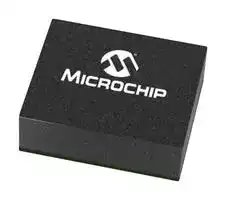


MCPF1412M06T-E/8FW
Non Isolated POL DC/DC Converter, ITE, 21.6 W, 600 mV, 1.8 V, 12 A
- Manufacturer: MICROCHIP
- Product type: DC / DC Non Isolated Board Mount Converters - Adjustable Output
- SVHC: No SVHC (04-Feb-2026)
- Depth: 5.8mm
- Width: 4.9mm
- Height: 1.6mm
- Product Range: -
- Output Power Max: 21.6W
- Output Current Max: 12A
- Output Voltage Max: 1.8V
- Output Voltage Min: 600mV
- Input Voltage DC Max: 16VDC
- Input Voltage DC Min: 4.5VDC
- Power Supply Applications: ITE
- DC / DC Converter Output Type: Adjustable
| Delivery and price | |
|---|---|
| Units per pack | 250 |
| Price | 7.46 € |
| Current stock | 200+ |
| Lead time | 30 days |

**MCPF1412M06**
## **16V, 12A Switching Buck Regulator Module**
## **Description**
The MCPF1412M06 is an easy-to-use, fully integrated and highly efficient Point-Of-Load (POL) 12A voltage regulator module. The on-chip Pulse-Width Modulation (PWM) controller and integrated MOSFETs, plus incorporated inductor and capacitors, result in an extremely compact and accurate regulator. The low-profile package is suitable for automated assembly using standard surface-mount equipment. This unique and optimized solution has yielded the highest density, full-featured 12A POL currently available.
The user can program aspects of the MCPF1412M06’s operation using I[2] C and PMBus[™] protocols. The built-in protection features include soft start protection, overvoltage protection, thermally compensated overcurrent protection with hiccup mode, and thermal shutdown with auto-recovery.
## **Features**
- POL Module with Output Inductor Included
- Small Size: 5.8 mm x 4.9 mm x 1.6 mm
- Continuous 12A Load Capability
- Wide Input Voltage Range: 4.5-16V
- Adjustable Output Voltage: 0.6-1.8V
- No External Compensation Required
- Programmable Operation Using I[2] C and PMBus[™]
- Enable Input, Programmable Undervoltage Lock-Out (UVLO) Circuit
- Power-Good Indicator
- Built-in Protection Features
- Operating Temperature from -40°C to +125°C
- Lead-Free and Halogen-Free
- Compliant with EU REACH and RoHS
## **Applications**
- Servers, Workstations and Cloud Computing
- Routers, Switches and Telecom Equipment
- Base Stations, Data Center Power Solutions
- High Power Density POL Conversion
Data Sheet
DS-60001885B - 1
© 2025 Microchip Technology Inc. and its subsidiaries
**MCPF1412M06**
## **Typical Application**
**==> picture [352 x 241] intentionally omitted <==**
**----- Start of picture text -----**<br>
VIN PVIN VOUT VOUT<br>VIN FB<br>PVCC<br>SDA VCC<br>SCL SALERT<br>ADDR PG<br>SYNC PGND<br>EN AGND<br>**----- End of picture text -----**<br>
## **Block Diagram**
**==> picture [488 x 285] intentionally omitted <==**
**----- Start of picture text -----**<br>
VIN VCC PVCC<br>fault VCC<br>VOUT PVIN<br>Internal LDO<br>Reference DAC Regulator<br>PVIN<br>PLL Pulse<br>SDA<br>Generator<br>CB<br>Soft PWM<br>SCL I2C & Start<br>Memory SW2<br>SALERT<br>HDrv1 HDrv1<br>Thermal VCC HDrv2<br>SYNC Gate Drive SW1<br>Shutdown HDrv2<br>Logic and Driver and<br>Deadtime Power Stage<br>Address LDrv1<br>ADDR Control VOUT<br>Detector fault fault<br>LDrv2<br>FB<br>EN<br>Control and<br>Fault Logic<br>PG PGND<br>SW1<br>SW2<br>AGND<br>**----- End of picture text -----**<br>
Data Sheet
DS-60001885B - 2
© 2025 Microchip Technology Inc. and its subsidiaries
**MCPF1412M06 Pin Configuration**
## **1. Pin Configuration**
|**Pin Number**|**Name**|**Description**|
|---|---|---|
|1|SW2|Test Pin|
|2|VIN|Input voltage and input to the LDO regulator.|
|3|EN|Enable pin. Turns the MCPF1412M06 ON and OFF. A resistor divider can be used on this pin to<br>create an external UVLO condition.|
|4|PVCC|Input supply for the driver circuits. Connect to VCC.|
|5|VCC|Supply voltage. This is used as either a bypass capacitor connection for the internal LDO or as<br>a connection point for an external bias voltage.|
|6|FB|Feedback voltage to the device. Connect the tap of a voltage divider across the output voltage<br>to this pin to set the output voltage value.|
|7, 22|AGND|Signal level ground for the converter and the internal control circuitry. Connect this to the<br>ground plane of the application.|
|8|VOUT|Output voltage of the regulator. Connect output flter capacitors and a 100Ω resistor from this<br>pin to PGND.|
|9|PG|Power Good status indicator. An open drain FET pulls this pin down when Power Good is not<br>asserted. Connect 49.9 kΩ from this pin to VCC or an external 5V rail.|
|10|ADDR|Address pin. Connect a resistor from this pin to AGND to set the I2C address of the part.|
|11|SYNC|Synchronization input to synchronize the switching to an external source. Connect to AGND if<br>not used.|
|12|SDA|I2C/PMBus data I/O pin. Pull this pin up to the bus voltage with 4.99 kΩ or connect to AGND if<br>not used.|
|13|SCL|I2C/PMBus clock pin. Pull this pin up to the bus voltage with 4.99 kΩ or connect to AGND if not<br>used.|
|14|SALERT|SMBAlert# line. Pull this up to bus voltage with a 4.99 kΩ resistor.|
|15|SW1|Optional connection for a capacitor to CB. A 0.1 to 1 μF, 16V or higher rated MLCC capacitor is<br>recommended.|
|16, 20, 21|PGND|Power Ground. This is a separate ground connection for the internal power devices. Connect<br>to the application power ground plane.|
|17|CB|An optional capacitor can be connected from this pin to SW1.|
|18, 19|PVIN|Power input terminal for the power switching stage.|
Data Sheet
DS-60001885B - 3
© 2025 Microchip Technology Inc. and its subsidiaries
**MCPF1412M06 Pin Configuration**
## **1.1. Package**
**Figure 1-1.** Pin Configuration 20-Lead 5.8 mm x 4.9 mm LGA (Top View)
Data Sheet
DS-60001885B - 4
© 2025 Microchip Technology Inc. and its subsidiaries
**MCPF1412M06 Functional Description**
## **2. Functional Description**
## **2.1. Overview**
The MCPF1412M06 is a user-friendly, fully integrated, and highly efficient DC/DC regulator. Its operation, including output voltage and system optimization parameters, can be programmed via the I[2] C/PMBus[™] protocol. It employs a proprietary modulator to ensure rapid transient response. The modulator features internal compensation, making it suitable for a wide range of applications with various types of output capacitors, without encountering loop stability issues.
The MCPF1412M06 is a versatile device that offers significant flexibility for configuration and system monitoring through the I[2] C/PMBus[™] interface. Additionally, it supports standalone operation without a digital interface, allowing designers to easily configure output voltages using simple resistor divider adjustments and monitor the system via the Power Good output.
## **2.2. Operation and Topology**
The MCPF1412M06 employs an interleaved buck converter design, which minimizes voltage stress on internal power components, leading to a more compact size but with switching losses similar to those of a conventional interleaved buck converter with the same rating. Additionally, it features an inherent current-sharing mechanism between the two phases.
## **2.3. Bias Voltage**
The MCPF1412M06 features an integrated Low Drop-Out (LDO) regulator that supplies the DC bias voltage for its internal circuitry, typically outputting 5.2V. For single-rail operation with internal bias, connect the VIN pin to the PVIN pin (see Figure 2-1). When using an external bias voltage, connect the VIN pin to the VCC pin to bypass the internal LDO regulator (see Figure 2-2). A separate pin (PVCC) is provided for driver bias and should be connected to VCC in the application circuit. The supply voltage, whether internal or external, increases with VIN and does not require enabling via the EN pin. Therefore, I[2] C/PMBus[™] communication can commence once the following conditions are met:
- The VCC_UVLO start threshold is surpassed
- Memory contents are loaded
- Initialization is complete
- The address offset is read
**Attention:** During initialization, a small leakage current (approximately 3.4 μA) may flow from the device to the output, potentially pre-biasing the output voltage in applications with prolonged VIN/VCC rise times. To mitigate this, connect a small load capable of sinking 3.4 μA in such applications.
The I[2] C bus can be pulled up to either VCC or a system I[2] C bus voltage. The MCPF1412M06 allows for two I[2] C bus voltage ranges, selectable via the user register bit Bus_voltage_sel, as shown below:
|**Register**|**Bits**|**Name/ Description**|
|---|---|---|
|0x7A|[2]|Bus_voltage_sel<br>0: 1.8-2.5V, 1: 3.3-5V|
Data Sheet
DS-60001885B - 5
© 2025 Microchip Technology Inc. and its subsidiaries
**MCPF1412M06 Functional Description**
**Figure 2-1.** Single Supply Configuration: Internal LDO Regulator and Adjustable PVIN Undervoltage Lockout (UVLO)
**==> picture [161 x 173] intentionally omitted <==**
**----- Start of picture text -----**<br>
PVIN<br>PVIN VIN<br>EN VCC<br>MCPF1412<br>PVCC<br>**----- End of picture text -----**<br>
**Figure 2-2.** Setup for Using an External Bias Voltage
**==> picture [150 x 151] intentionally omitted <==**
**----- Start of picture text -----**<br>
Ext VCC<br>PVIN<br>PVIN VIN<br>VCC<br>EN PVCC<br>MCPF1412<br>**----- End of picture text -----**<br>
## **2.4. I[2] C Base Address and Offsets**
The MCPF1412M06 features user-configurable registers to set its I[2] C and PMBus[™] base addresses. By default, the I[2] C base address is 0x08, and the PMBus[™] base address is 0x70. An offset ranging from 0 to 15 is determined by connecting the ADDR pin to the AGND pin, either directly or via a resistor. At startup, an address detector measures the resistance of this connection to set the offset, which is then added to the base I[2] C address to establish the address for I[2] C communication with the MCPF1412M06. The same offset is added to the base PMBus[™] address to set the PMBus[™] communication address.
To select offsets from 0 to 15, connect the pins as follows:
- 0 – 0Ω (short ADDR to AGND)
- +1 – 1.13 kΩ
- +2 – 1.87 kΩ
- +3 – 2.61 kΩ
- +4 – 3.4 kΩ
- +5 – 4.12 kΩ
- +6 – 4.87 kΩ
- +7 – 5.62 kΩ
- +8 – 6.34 kΩ
Data Sheet
DS-60001885B - 6
© 2025 Microchip Technology Inc. and its subsidiaries
**MCPF1412M06 Functional Description**
- +9 – 7.15 kΩ
- +10 – 7.87 kΩ
- +11 – 8.66 kΩ
- +12 – 9.31 kΩ
- +13 – 10.2 kΩ
- +14 – 11 kΩ
- +15 – 12.1 kΩ
**Note:** Avoid using the 7-bit address 0x0C, as it corresponds to the Alert Response Address in the SMBus[™] protocol.
## **2.5. Soft Start and Target Output Voltage**
The MCPF1412M06 features an internal digital soft start circuit designed to manage the output voltage rise-time and limit current surges during start-up. When VCC surpasses its start threshold (VCC_UVLO(START)), the MCPF1412M06 exits reset mode, initiating the loading of non-volatile memory contents into working registers and calculating the address offset as previously described. After initialization, the internal soft start ramps up towards the set reference voltage at a rate specified by the TON_RISE registers (associated with the TON_RISE command), provided the following conditions are met:
1. A valid enable signal is detected, as defined by the Enable pin, Operation register, ON_OFF_CONFIG register, input voltage PVIN, and PVIN UVLO threshold corresponding to the VIN_ON registers.
2. The internal pre-charge circuit ensures balanced PVIN/2 voltages across all FETs when the device begins switching.
During initial start-up, the MCPF1412M06 operates with minimal high-drive (HDrv) pulses until the output voltage increases (refer to Switching frequency and minimum values for ON-time, OFFtime). The ON time is increased until VOUT reaches the target value set by the VOUT_COMMAND registers. For optimal start-up performance, it is recommended to use a 100Ω resistor connected in parallel with the output capacitors (COUT). A minimum wait time of 600Ω × COUT is advised between successive power or Enable cycling operations. For instance, with a 100Ω resistor across four 47 μF output capacitors, a new Enable assertion should not occur until at least 78 ms (allowing the reduction of capacitance at a bias of 1V - see Design Example) after disabling the MCPF1412M06.
Data Sheet
DS-60001885B - 7
© 2025 Microchip Technology Inc. and its subsidiaries
**MCPF1412M06 Functional Description**
**Figure 2-3.** Soft Start Operation
**==> picture [109 x 205] intentionally omitted <==**
**----- Start of picture text -----**<br>
EN<br>Initialization complete<br>PG<br>Internal<br>Soft start<br>0.9*VOUT<br>VOUT<br> SS time<br>**----- End of picture text -----**<br>
Overcurrent Protection (OCP) and Overvoltage Protection (OVP) are active during soft start to safeguard the MCPF1412M06 from short circuits and excessive voltages.
A resistor divider can be utilized with a standard MCPF1412M06 device to set the desired output voltage (Figure 2-4). This provides system designers with the flexibility to configure all power rails in the system across the entire output voltage range (0.6–1.8V) using a single component.
**Figure 2-4.** Resistor Divider to Set Output Voltage
**==> picture [187 x 143] intentionally omitted <==**
**----- Start of picture text -----**<br>
VOUT PVIN<br>PVIN VIN<br>RTOP<br>FB VCC<br>MCPF1412<br>PVCC<br>RBOTTOM<br>**----- End of picture text -----**<br>
The following equation describes the appropriate resistor divider selection to set the output voltage using an MCPF1412M06 programmed to 0.6V:
**==> picture [244 x 23] intentionally omitted <==**
Where:
RTOP and RBOTTOM are in kΩ.
It is recommended that system designers place a capacitor (CFF in Figure 5-1) of 47 pF to 470 pF in parallel with RTOP. 4.12 kΩ is suggested as a value for RTOP. The recommended value for RBOTTOM
Data Sheet
DS-60001885B - 8
© 2025 Microchip Technology Inc. and its subsidiaries
**MCPF1412M06 Functional Description**
depends on the output voltage, as shown in the table below. Designers should validate these values in their specific applications.
|**VOUT (V)**|**RBOTTOM (kΩ)**|
|---|---|
|0.72|21|
|0.85|9.76|
|0.9|8.06|
|0.95|6.81|
|1|5.9|
|1.05|5.23|
|1.1|4.75|
|1.2|3.92|
|1.5|2.55|
|1.8|1.91|
Alternatively, the output voltage can be set using I[2] C/PMBus[™] commands (see PMBus Commands) or the corresponding user registers, instead of an external resistor divider. The table below lists VOUT_COMMAND codes to set the specified voltages. The MCPF1412M06 supports this command with a resolution of 1/256V.
|**VOUT (V)**|**VOUT_COMMAND**||**VOUT (V)**|**VOUT_COMMAND**|
|---|---|---|---|---|
|0.65|00A7||1.20|0134|
|0.70|00B4||1.25|0140|
|0.72|00B9||1.30|014E|
|0.75|00C0||1.35|015A|
|0.78|00C8||1.40|0167|
|0.80|00CD||1.45|0174|
|0.85|00DA||1.50|0180|
|0.88|00E2||1.55|018D|
|0.90|00E7||1.60|019A|
|0.95|00F4||1.65|01A7|
|1.00|0100||1.70|01B4|
|1.05|010D||1.75|01C0|
|1.10|011A||1.80|01CD|
|1.15|0127||||
## **2.6. Shutdown Mechanisms**
The MCPF1412M06 features two shutdown mechanisms:
## 1. **Hard Shutdown or Load-Dependent Decay** :
A valid hard-disable is detected based on the Enable pin, Operation register, ON_OFF_CONFIG register, input voltage PVIN, and PVIN UVLO threshold corresponding to the VIN_ON registers. Both drivers are immediately turned OFF, and the soft start is pulled down instantly.
2. **Soft-Stop or Controlled Ramp Down** :
A valid soft-OFF request is detected based on the Enable pin, Operation register, and ON_OFF_CONFIG register. After a delay defined by the TOFF_DELAY registers, the SS signal gradually decreases to 0 over a period specified by the TOFF_FALL registers. The drivers are disabled only when the SS signal reaches 0, causing the output voltage to follow the SS signal down to 0.
By default, the device is set for hard shutdown. Shutdown using PVIN is always a hard shutdown.
Data Sheet
DS-60001885B - 9
© 2025 Microchip Technology Inc. and its subsidiaries
**MCPF1412M06 Functional Description**
## **2.7. Switching Frequency, Minimum ON and OFF Time, PVIN**
The switching frequency of the MCPF1412M06 is influenced by the output voltage and can operate in one of two modes:
- Mode A: Pseudo constant-frequency COT mode (default)
- Mode B: PLL-modulated COT mode
For the default output voltage of 0.6V, the switching frequency is typically 470 kHz, and the device functions in Mode A. In this mode, if the output voltage is adjusted using an external resistor divider, the switching frequency automatically adapts to the correct value:
## VOUT FSW = 470 kHz ×
0.6
When the output voltage is configured via the VOUT_COMMAND user registers instead of an external resistor divider, Mode B should be selected. To implement this, the user must enable the Phase-Locked Loop (PLL), which is disabled by default, and toggle the Enable pin. This action automatically sets the switching frequency to the factory-programmed values listed in the table below. The PLL adjusts the ON-time to ensure a constant switching frequency regardless of the load.
|**VOUT Range (V)**|**FSW (MHz)**|
|---|---|
|< 0.65|0.5|
|0.65 to 1.1|1.00|
|1.1 to 1.32|1.25|
|1.32 to 1.8|1.5|
With either approach, system designers do not need to worry about selecting the switching frequency. When the input voltage is significantly higher than the target output voltage, the high side MOSFETs are switched ON for shorter durations. The shortest reliable ON-time is defined by the minimum ON-time (TON(MIN)). During start-up, when the output voltage is very low, the MCPF1412M06 operates with the minimum ON-time.
The maximum conversion ratio is influenced by two factors:
1. When the input voltage is low, relative to the target output voltage, the Control MOSFET is switched ON for longer durations. The shortest OFF-time is defined by the minimum OFFtime (TOFF(MIN)). During this period, the Synchronous MOSFET remains ON, and its current is monitored for overcurrent protection. This determines the minimum input voltage that can still allow the device to regulate its output at the target voltage.
2. To maintain balanced switching amplitudes in both phases, this topology requires no overlap between the high sides of the two phases, unlike a conventional buck topology. This imposes theoretical maximums of 50% on the duty cycle of each phase and 25% on the conversion ratio. In practice, considering circuit delays and dead-times, the conversion ratio should not exceed 16% at full load.
The maximum conversion ratio is influenced by both system efficiency and load transient requirements. It is recommended that system designers validate these values in their specific applications.
## **2.8. Sync Pin (SYNC)**
The switching of the part can be synchronized to an external clock. The external clock frequency must be more than twice the switching frequency calculated in the previous section. To use the SYNC function, the part must be operating in mode B: PLL-modulated constant-requency COT mode. To activate this mode, write 0 to bit[4] of the BUS_VOLTAGE (0x7A) register. The per phase switching frequency of the converter will be one half of the applied external clock, as the aggregate switching frequency is synchronized to the external clock. The maximum frequency is 2 MHz per phase or 4 MHz aggregate.
Data Sheet
DS-60001885B - 10
© 2025 Microchip Technology Inc. and its subsidiaries
**MCPF1412M06 Functional Description**
## **2.9. Enable Pin (EN)**
The Enable (EN) pin serves multiple purposes:
- By default, according to the ON_OFF_CONFIG command, it controls the power state of the MCPF1412M06. It features a precise threshold monitored by the UVLO circuit. If left unconnected, an internal 1 MΩ resistor pulls it down to prevent accidental activation of the MCPF1412M06.
- It can be utilized to establish a precise input voltage UVLO. The EN pin's input is derived from the PVIN voltage through a set of resistive dividers (Figure 2-1). Users can adjust the UVLO threshold voltage by selecting different resistor ratios, allowing for finer control over the PVIN UVLO voltage levels than the VIN_ON/VIN_OFF commands provide.
- It can also be used to monitor other power rails for specific power sequencing schemes (Figure 2-5).
**Figure 2-5.** EN Pin Used to Monitor a Second Rail for Startup
**==> picture [165 x 172] intentionally omitted <==**
**----- Start of picture text -----**<br>
RAIL #2 PVIN<br>PVIN VIN<br>EN VCC<br>MCPF1412<br>PVCC<br>**----- End of picture text -----**<br>
## **2.10. Overcurrent Protection (OCP)**
Overcurrent Protection (OCP) is achieved by monitoring the voltage across the channel RDS(ON) of the Synchronous MOSFET. When this surpasses the OCP threshold, a fault condition is triggered.
This approach offers several advantages:
- Ensures precise overcurrent protection without compromising converter efficiency (the current sensing is lossless)
- Lowers costs by eliminating the need for a current-sense resistor
- Minimizes layout-related noise issues
The OCP threshold is set by the IOUT_OC_FAULT_LIMIT command (or corresponding user registers) and can be programmed in 0.5A increments, up to a maximum of 16A. The recommended minimum overcurrent threshold is 10A. The OCP threshold is internally compensated to remain nearly constant across different ambient temperatures.
When the current exceeds the OCP threshold, the PG and SS signals are pulled low. The Synchronous MOSFET stays ON until the current drops to 0, after which the MCPF1412M06 enters hiccup. Both the Control MOSFET and the Synchronous MOSFET remain OFF during the hiccupblanking period. After this period, the MCPF1412M06 attempts to restart. If an overcurrent fault is still present, the previous actions are repeated. The MCPF1412M06 stays in hiccup mode until the overcurrent fault is resolved. The MCPF1412M06 can also be reprogrammed to enter a latched shutdown mode upon detecting an overcurrent fault.
Data Sheet
DS-60001885B - 11
© 2025 Microchip Technology Inc. and its subsidiaries
**MCPF1412M06 Functional Description**
**Figure 2-6.** Overcurrent Protection and Hiccup Operation
**==> picture [213 x 161] intentionally omitted <==**
**----- Start of picture text -----**<br>
Current limit<br> hiccup blanking time<br>HDrv<br>LDrv<br>PG<br>**----- End of picture text -----**<br>
## **2.11. Overvoltage Protection (OVP)**
Overvoltage Protection (OVP) is achieved by monitoring the voltage at the FB pin. If the FB pin voltage surpasses the output OVP threshold for more than the output OVP delay (typically 5 μs), a fault condition is triggered.
The OVP threshold is determined by the VOUT_OV_FAULT_LIMIT command (or the corresponding user registers). This command enables the overvoltage level to be set relative to the output voltage, with a resolution of 1/256V. Internally, these values are rounded to one of four settings, as indicated in the table below.
|**VOUT_OV_FAULT_LIMIT**<br>**(% of VOUT_COMMAND)**|**Actual VOUT OV Threshold**<br>**(% of VOUT_COMMAND)**|
|---|---|
|100 to 105.4|105|
|105.4 to 110.1|110|
|110.1 to 114.8|115|
|less than 100 or more than 114.8|120 (Default)|
The default setting is 120%. All MOSFETs are immediately switched OFF, and the PG pin is pulled low. The MOSFETs stay latched off until reset by cycling either VCC or EN. Figure 2-7 illustrates a timing diagram for overvoltage protection.
**Figure 2-7.** OVP Operation for Latched OVP
**==> picture [202 x 133] intentionally omitted <==**
**----- Start of picture text -----**<br>
HDrv<br>LDrv<br>120% VOUT<br>115% VOUT<br>90% VOUT<br>VOUT<br>PG<br>OVP delay = 5s<br>**----- End of picture text -----**<br>
Data Sheet
DS-60001885B - 12
© 2025 Microchip Technology Inc. and its subsidiaries
**MCPF1412M06 Functional Description**
The MCPF1412M06 issues warnings for output overvoltage and undervoltage, and provides protection against output undervoltage faults. These functions are controlled by three commands (or their corresponding user registers):
- VOUT_OV_WARN_LIMIT
- VOUT_UV_WARN_LIMIT
- VOUT_UV_FAULT_LIMIT
The threshold mechanism for these warnings differs from the overvoltage protection mechanism: the warnings use a digital comparison of the digitized and processed VOUT telemetry against the thresholds, while the overvoltage protection uses an all-analog signal path and an internal highspeed comparator.
## **2.12. Overtemperature Protection (OTP)**
The MCPF1412M06 includes an internal temperature sensing feature. The Overtemperature Protection (OTP) threshold is determined by a fixed internal threshold, set at 145°C. This threshold is monitored by an internal analog comparison. If the temperature exceeds this limit, the device halts switching and turns OFF all MOSFETs until the temperature falls below the threshold, at which point it automatically restarts.
## **2.13. Power Good (PG)**
Power Good (PG) behavior is defined through the PGControl register bits and the POWER_GOOD_ON command. When the PGControl bit is enabled, the PMBus[™] command can set the upper Power Good threshold relative to the output voltage with a resolution of 1/256V. Internally, these values are rounded to one of four settings, as illustrated in the table below.
|**POWER_GOOD_ON**<br>**(% of VOUT_COMMAND)**|**Actual Threshold**<br>**(% of VOUT_COMMAND)**|
|---|---|
|Above 96.1 or below 79.6|80|
|Above 79.6 to 85.1|85|
|Above 85.1 to 89.8|90 (default)|
|Above 89.8 to 96.1|95|
The default setting is 90%, meaning the PG signal will be activated when the voltage at the FB pin surpasses 90% of the VOUT_COMMAND setting (default 0.6V). A 5% hysteresis is applied, creating a lower threshold. If the voltage at the FB pin falls below this lower threshold, the PG signal will be deactivated.
Figure 2-8 illustrates the case where the PGControl bit is set to 1.
**Figure 2-8.** PG Operation With PGControl Bit Set to 1
**==> picture [306 x 104] intentionally omitted <==**
**----- Start of picture text -----**<br>
90% VOUT 85% VOUT 90% VOUT<br>VOUT<br>PG<br>**----- End of picture text -----**<br>
The behavior remains consistent during start-up and normal operation. The PG signal is asserted when:
Data Sheet
DS-60001885B - 13
© 2025 Microchip Technology Inc. and its subsidiaries
**MCPF1412M06 Functional Description**
- Both EN and VCC exceed their thresholds
- No faults are present (including overcurrent, overvoltage, and overtemperature)
- VOUT is within the target range (monitored continuously to ensure FB is above the PG threshold)
- With the PGControl bit set to ' `0` ' the operation is as shown in Figure 2-9.
**Figure 2-9.** PG Operation With PGControl Bit Set to ' `0` '
**==> picture [271 x 144] intentionally omitted <==**
**----- Start of picture text -----**<br>
90% VOUT 85% VOUT 90% VOUT<br>VOUT<br>98% of target VOUT<br>Int SS<br>PG<br>**----- End of picture text -----**<br>
During normal operation, the PG signal functions identically to when the PGControl bit is set to ' `1` '. However, at start-up, the PG signal is asserted once FB is within 2% of the target output voltage, rather than when FB surpasses the upper PG threshold. The MCPF1412M06 also includes an additional PMOS in parallel with the NMOS, internally connected to the PG pin (see Block Diagram). This PMOS ensures that the PG signal remains at a logic low level, even if VCC is low and the PG pin is pulled up to an external voltage other than VCC.
Data Sheet © 2025 Microchip Technology Inc. and its subsidiaries
DS-60001885B - 14
**MCPF1412M06 Electrical Characteristics**
## **3. Electrical Characteristics**
## **3.1. Absolute Maximum Ratings**
|**Electrical Characteristcs**<br>**Absolute Maximum Ratngs**||
|---|---|
|PVIN, VIN, EN to PGND, CB to SW1|-0.3V to 18V|
|VCC to PGND|-0.3V to 6V|
|SW1, SW2|-0.3V to 15V|
|FB, SYNC, ADDR, SCL, SDA, SALERT, to AGND|-0.3V to VCC|
|PG to AGND|-0.3V to VCC|
|PGND to AGND|-0.3V to 0.3V|
|ESD HBM JESD22-A114|Class 1C|
|Maximum Junction Temperature (TJ)|-40°C to 150°C|
|Storage Temperature (TS)|-55°C to 150°C|
|Moisture Sensitivity Rating (JEDEC, J-STD-020D)|MSL 3|
**Note:** Stresses above those listed under “Maximum Ratings” may cause permanent damage to the device. This is a stress rating only and functional operation of the device at those or any other conditions above those indicated in the operational sections of this specification is not intended. Exposure to maximum rating conditions for extended periods may affect device reliability.
## **3.2. Recommended Operating Ratings[(][1][)]**
|**Recommended Operatng Ratngs(1)**||
|---|---|
|Input Voltage Range with External VCC(2)(4), PVIN|6*VOUT to 16V|
|Input Voltage Range with Internal LDO(3)(4), PVIN|6*VOUT to 16V|
|Bias Input voltage Range(3), VIN|4.5V to 16V|
|Supply Voltage Range(5), VCC|4.5V to 5.5V|
|Output Voltage Range, VOUT|0.6V to 1.8V|
|Continuous Output Current Range, IO|0A to 12A|
|Operating Junction Temperature Range, TJ|-40°C to 125°C|
## **Notes:**
1. The device is not guaranteed to operate outside its operating ratings.
2. VIN is connected to VCC to bypass the internal Low Drop-Out (LDO) regulator.
3. VIN is connected to PVIN (for single-rail applications with PVIN = VIN = 4.5V – 16V).
4. Maximum switch node voltage should not exceed 15V.
5. Must not exceed 6V.
## **3.3. DC/AC Characteristics**
|**Electrical Characteristics: 6*VOUT < PVIN <16V, 4.5V < VIN < 16V, 0°C < TA < 125°C unless specifed otherwise, Typicals at**<br>**TA = 25°C**|**Electrical Characteristics: 6*VOUT < PVIN <16V, 4.5V < VIN < 16V, 0°C < TA < 125°C unless specifed otherwise, Typicals at**<br>**TA = 25°C**|**Electrical Characteristics: 6*VOUT < PVIN <16V, 4.5V < VIN < 16V, 0°C < TA < 125°C unless specifed otherwise, Typicals at**<br>**TA = 25°C**|**Electrical Characteristics: 6*VOUT < PVIN <16V, 4.5V < VIN < 16V, 0°C < TA < 125°C unless specifed otherwise, Typicals at**<br>**TA = 25°C**|**Electrical Characteristics: 6*VOUT < PVIN <16V, 4.5V < VIN < 16V, 0°C < TA < 125°C unless specifed otherwise, Typicals at**<br>**TA = 25°C**|**Electrical Characteristics: 6*VOUT < PVIN <16V, 4.5V < VIN < 16V, 0°C < TA < 125°C unless specifed otherwise, Typicals at**<br>**TA = 25°C**|**Electrical Characteristics: 6*VOUT < PVIN <16V, 4.5V < VIN < 16V, 0°C < TA < 125°C unless specifed otherwise, Typicals at**<br>**TA = 25°C**|
|---|---|---|---|---|---|---|
|**Parameter**|**Symbol**|**Min.**|**Typ.**|**Max.**|**Units**|**Conditions**|
|**Input Current**|||||||
|VIN Supply Current (Standby)|IIN(STANDBY)||7|8|mA|Enable low|
|VIN Supply Current (Dynamic)|IIN(DYN)||16|18|mA|Enable High, FSW= 470 kHz|
|**Soft Start**|||||||
|Soft Start Rate(1)|SSRATE|0.17|0.28|0.37|V/ms|Default VOUT = 0.6V,<br>TON_RISE= 2 ms|
|**Output Voltage**|||||||
Data Sheet
DS-60001885B - 15
© 2025 Microchip Technology Inc. and its subsidiaries
**MCPF1412M06 Electrical Characteristics**
## **DC/AC Characteristics** (continued)
|**DC/AC Characteristcs**(contnue|d)|d)|d)|d)|d)|d)|
|---|---|---|---|---|---|---|
|**Electrical Characteristics: 6*VOUT **<br>**TA = 25°C**|**< PVIN <16V, 4.5V < VIN < 16V, 0°C < TA < 125°C unless specifed otherwise, Typicals at**||||||
|**Parameter**|**Symbol**|**Min.**|**Typ.**|**Max.**|**Units**|**Conditions**|
|Output voltage Range|VOUT (default)||0.6||V||
||Range|0.6||1.8|V||
||Resolution||5||mV||
|Accuracy|||+/-0.75||%|TJ= 25°C, VOUT= 0.6V|
|||-1||+1|%|-40°C < TJ< 125°C(2)|
|**On-Time Timer Control**|||||||
|On Time|TON|185|211|235|ns|PVIN= 12V, VOUT= 0.6V, FSW<br>= 470 kHz|
|Minimum On Time(1)|TON(MIN)||50||ns||
|**Internal Low Drop Out Regulator (LDO**|||||||
|Regulator Output Voltage|VCC|4.89|5.2|5.4|V|5.5 < VIN< 16V, 0-40 mA|
|||4.19|4.26||V|4.5 < VIN< 5.5V, 0-40 mA|
|Load Regulation|VLD|||0.19|V|0-40 mA|
|**Thermal Shutdown**|||||||
|Thermal Shutdown(1)|||145||C||
|Hysteresis(1)|||25||C||
|**Undervoltage Lock Out**|||||||
|VCCStart Threshold|VCC_UVLO(START)|4.0|4.2|4.4|V|VCC rising|
|VCCStop Threshold|VCC_UVLO(STOP)|3.6|3.8|4.1|V|VCC falling|
|Enable Threshold|En(HIGH)|1.05|1.20|1.34|V|EN rising|
||En(LOW)|0.92|1.00|1.11|V|EN falling|
|Input Impedance|REN|500|1000|1500|kΩ||
|**Current Limit**|||||||
|Current Limit Threshold|IOC(default)|14.5|16|17.5|A|TJ= 25°C|
||IOC(range)|10||16|A||
|Hiccup Blanking Time|TBLK(HICCUP)||20||ms||
|**Over Voltage Protection (OVP)**|||||||
|OVP Threshold(1)|VOVP(default)|115|120|125|%||
||VOVP(range)|105||120|%||
||VOVP(resolution)||5||%||
|OVP Delay|TOVPDEL||5||μs||
|**Power Good**|||||||
|Upper Threshold|VPG(UPPER)(default)|85|90|95|%|VOUTrising|
|Hysteresis|VPG(LOWER)||7||%|VOUTfalling|
|Sink Current|IPG||9||mA|VPG= 0.5V, EN = 2V|
|**Telemetry**|||||||
|Input Voltage Reporting Accuracy|PVIN_report_err|-2||+2|%|PVIN = 12V, -40°C < TJ <<br>125°C|
|||-5||+5|%|5V < PVIN < 16V,<br>-40°C < TJ < 125°C|
|Output Voltage Reporting<br>Accuracy|VOUT_report_err|-18||+18|mV|VOUT = VFB = 0.6V, -40°C <<br>TJ < 125°C|
|Temperature Reporting<br>Accuracy(1)|T_report_err|-20||+20|°C|-40°C < TJ < 125°C|
Data Sheet
DS-60001885B - 16
© 2025 Microchip Technology Inc. and its subsidiaries
**MCPF1412M06 Electrical Characteristics**
## **DC/AC Characteristics** (continued)
|**DC/AC Characteristcs**(contnued)|**DC/AC Characteristcs**(contnued)|**DC/AC Characteristcs**(contnued)|**DC/AC Characteristcs**(contnued)|**DC/AC Characteristcs**(contnued)|**DC/AC Characteristcs**(contnued)|**DC/AC Characteristcs**(contnued)|
|---|---|---|---|---|---|---|
|**Electrical Characteristics: 6*VOUT < PVIN <16V, 4.5V < VIN < 16V, 0°C < TA < 125°C unless specifed otherwise, Typicals at**<br>**TA = 25°C**|||||||
|**Parameter**|**Symbol**|**Min.**|**Typ.**|**Max.**|**Units**|**Conditions**|
|**Notes:**<br>1.<br>Characterized parameter, not production tested.<br>2.<br>Hot and cold temperature performance is assured by correlation using statistical quality control, but not tested in<br>production; performance at 25°C is tested and guaranteed in production environment.|||||||
|**Electrical Characteristics: 6*VOUT < PVIN <16V, 4.5V < VIN < 16V, 0°C < TA < 125°C unless specifed otherwise, Typicals at TA**<br>**= 25°C**|**Electrical Characteristics: 6*VOUT < PVIN <16V, 4.5V < VIN < 16V, 0°C < TA < 125°C unless specifed otherwise, Typicals at TA**<br>**= 25°C**|**Electrical Characteristics: 6*VOUT < PVIN <16V, 4.5V < VIN < 16V, 0°C < TA < 125°C unless specifed otherwise, Typicals at TA**<br>**= 25°C**|**Electrical Characteristics: 6*VOUT < PVIN <16V, 4.5V < VIN < 16V, 0°C < TA < 125°C unless specifed otherwise, Typicals at TA**<br>**= 25°C**|**Electrical Characteristics: 6*VOUT < PVIN <16V, 4.5V < VIN < 16V, 0°C < TA < 125°C unless specifed otherwise, Typicals at TA**<br>**= 25°C**|**Electrical Characteristics: 6*VOUT < PVIN <16V, 4.5V < VIN < 16V, 0°C < TA < 125°C unless specifed otherwise, Typicals at TA**<br>**= 25°C**|**Electrical Characteristics: 6*VOUT < PVIN <16V, 4.5V < VIN < 16V, 0°C < TA < 125°C unless specifed otherwise, Typicals at TA**<br>**= 25°C**|**Electrical Characteristics: 6*VOUT < PVIN <16V, 4.5V < VIN < 16V, 0°C < TA < 125°C unless specifed otherwise, Typicals at TA**<br>**= 25°C**|
|---|---|---|---|---|---|---|---|
|**Parameter(1 – all**<br>**parameters)**|**Symbol**|**Fast-mode**||**Fast-mode Plus**||**Unit**|**Conditions**|
|||**Min.**|**Max.**|**Min.**|**Max.**|||
|**I2C Parameters**||||||||
|I2C Bus Voltage|VBUS|1.8|5.5|1.8|5.5|V||
|Vin Low|VIL|-0.5|0.3*VBUS|-0.5|0.3*VBUS|V||
|Vin High|VIH|0.7*VBUS||0.7*VBUS||V||
|Input Hysteresis|VHYS|0.05*VBUS||0.05*VBUS||V||
|Low Level Output<br>Voltage 1||0|0.4|0|0.4|V|3 mA sink current,<br>VCC> 2V|
|Low Level Output<br>Voltage 2|VOL2|0|0.2* VBUS|0|0.2* VBUS||2 mA sink current,<br>VCC< 2V|
|Low level sink|IOL|3||3||mA|VOL= 0.4V|
|Current||6||6||mA|VOL= 0.6V|
|Output Fall Time|TOF|20*(VBUS/5.5)|250|20*(VBUS/5.5)|125|ns||
|Max Noise Spike<br>Width|TSP|0|50|0|50|ns||
|Input Current|IIN|-10|10|-10|10|mA||
|Input Capacitance|CI|-|10|-|10|pF||
|SCL Frequency|FSCL|0|400|0|1000|kHz||
|Repeated Start Hold<br>Time|THD;STA|0.6|-|0.26|-|μs||
|SCL Low Time|TLOW|1.3|-|0.5|-|μs||
|SCL High Time|THIGH|0.6|-|0.26|-|μs||
|Repeated Start<br>Setup Time|TSU;STA|0.6|-|0.26|-|μs||
|Data Hold Time|THD;DAT|0|-|0|-|μs||
|Data Setup Time|TSU;DAT|100|-|50|-|ns||
|SDA, SCL Rise Time|TR|20|300|-|120|ns||
|SDA, SCL Fall Time|TF|20*(VDD/5)|300|20*(VBUS/5)|120|ns||
|STOP setup Time|TSU;STO|0.6|-|0.26|-|μs||
|Bus Free Time<br>between STOP and<br>START|TBUF|1.3|-|0.5|-|μs||
|Bus Capacitive Load|CBUS|-|400|-|550|pF||
|Data Valid Time|TVD;DAT|-|0.9|-|0.45|μs||
|Data Valid ACK Time|TVD;ACK|-|0.9|-|0.45|μs||
|Noise Margin at<br>LOW Level|VNL|0.1*VDD|-|0.1*VDD|-|V||
|Noise Margin at<br>HIGH Level|VNH|0.2*VDD|-|0.2*VDD|-|V||
Data Sheet
DS-60001885B - 17
© 2025 Microchip Technology Inc. and its subsidiaries
**MCPF1412M06 Electrical Characteristics**
## **DC/AC Characteristics** (continued)
|**DC/AC Characteristcs**(contnued)|**DC/AC Characteristcs**(contnued)|**DC/AC Characteristcs**(contnued)|**DC/AC Characteristcs**(contnued)|**DC/AC Characteristcs**(contnued)|**DC/AC Characteristcs**(contnued)|**DC/AC Characteristcs**(contnued)|**DC/AC Characteristcs**(contnued)|
|---|---|---|---|---|---|---|---|
|**Electrical Characteristics: 6*VOUT < PVIN <16V, 4.5V < VIN < 16V, 0°C < TA < 125°C unless specifed otherwise, Typicals at TA**<br>**= 25°C**||||||||
|**Parameter(1 – all**<br>**parameters)**|**Symbol**|**Fast-mode**||**Fast-mode Plus**||**Unit**|**Conditions**|
|||**Min.**|**Max.**|**Min.**|**Max.**|||
|SDA Timeout|TTO|200||200||μs||
|**Note:**<br>1.<br>Characterized parameter, not production tested.||||||||
**Table 3-1.** Package Thermal Characteristics
|**Parameter**|**Symbol**|**Min.**|**Typ.**|**Max.**|**Units**|**Conditions**|
|---|---|---|---|---|---|---|
|Junction to Ambient Thermal<br>Resistance|RθJA|—|20.5|—|°C/W|JEDEC JESD 51-2A|
|Junction to PCB Thermal<br>Resistance|RθJ-PCB|—|5.5|—|°C/W|JEDEC JESD 51-8|
Data Sheet © 2025 Microchip Technology Inc. and its subsidiaries
DS-60001885B - 18
**MCPF1412M06 Typical Performance Curves**
## **4. Typical Performance Curves**
The graphs and tables provided in this section are a statistical summary based on a limited number of samples and are provided for informational purposes only. The performance characteristics listed herein are not tested or guaranteed. In some graphs or tables, the data presented may be outside the specified operating range (e.g., outside specified power supply range) and therefore outside the warranted range.
**Important:** Unless otherwise stated, test conditions are 12V input, 1.2V output, mode A operation, using a voltage divider to set the output voltage.
**Figure 4-1.** Load Regulation vs. Temperature
**==> picture [506 x 377] intentionally omitted <==**
**----- Start of picture text -----**<br>
0.64<br>0.63<br>0.62<br>0.61<br>0.6<br>0.59<br>0.58 0A Load<br>5A Load<br>0.57<br>12A Load<br>0.56<br>-40 -20 0 20 40 60 80 100 120<br>Temperature (°C)<br>Figure 4-2. Enable Start Threshold vs. Temperature Figure 4-3. Enable Stop Threshold vs. Temperature<br>1.22 1.04<br>1.21 1.03<br>1.20 1.02<br>1.19 1.01<br>1.00<br>1.18 -40 -20 0 20 40 60 80 100 120 140<br>-40 -20 0 20 40 60 80 100 120 140<br>Temperature (°C) Temperature (°C)<br> (V)<br>OUT<br>V<br>EN Stop Threshold (V)<br>EN Start Threshold (V)<br>**----- End of picture text -----**<br>
Data Sheet
DS-60001885B - 19
© 2025 Microchip Technology Inc. and its subsidiaries
**MCPF1412M06 Typical Performance Curves**
**Figure 4-4.** VCC Start Threshold vs. Temperature
**Figure 4-5.** VCC Stop Threshold vs. Temperature
**==> picture [506 x 595] intentionally omitted <==**
**----- Start of picture text -----**<br>
4.3<br>3.88<br>3.86<br>4.25<br>3.84<br>4.2 3.82<br>3.8<br>4.15<br>3.78<br>3.76<br>4.1<br>-40 -20 0 20 40 60 80 100 120 140<br>3.74<br>Temperature (°C) -40 -20 0 20 40 60 80 100 120 140<br>Temperature (°C)<br>Figure 4-6. ON Time vs. Temperature Figure 4-7. OFF Time vs. Temperature<br>216<br>1230<br>215<br>214 1220<br>213<br>1210<br>212<br>1200<br>211<br>210 1190<br>209<br>1180<br>208<br>1170<br>207<br>206 1160<br>-40 -20 0 20 40 60 80 100 120 140 -40 -20 0 20 40 60 80 100 120 140<br>Temperature (°C) Temperature (°C)<br>Figure 4-8. Soft Start Rate vs. Temperature Figure 4-9. Dynamic Input Current vs. Temperature<br>0.32 18<br>17.5<br>0.3<br>17<br>16.5<br>0.28<br>16<br>0.26<br>15.5<br>15<br>0.24<br>14.5<br>0.22 14<br>-40 -20 0 20 40 60 80 100 120 140 -40 -20 0 20 40 60 80 100 120 140<br>Temperature (°C) Temperature (°C)<br>VCC UVLO Start Thold. (V)<br>VCC UVLO Stop Thold. (V)<br>On Time (ns) Off Time (ns)<br>Soft Start Rate (mV/µs)<br>Dynamic Input Current (mA)<br>**----- End of picture text -----**<br>
Data Sheet
DS-60001885B - 20
© 2025 Microchip Technology Inc. and its subsidiaries
**MCPF1412M06 Typical Performance Curves**
**Figure 4-10.** Typical Efficiency (PVIN = 12V, VOUT = 1.0V)
**Figure 4-11.** Typical Power Loss (PVIN = 12V, VOUT = 1.0V)
**==> picture [506 x 405] intentionally omitted <==**
**----- Start of picture text -----**<br>
90% 3.5<br>3<br>85%<br>2.5<br>80%<br>2<br>75%<br>1.5<br>70%<br>1<br>65% 0.5<br>60% 0<br>0 2 4 6 8 10 12 0 2 4 6 8 10 12<br>Load Current (A) Load Current (A)<br>Figure 4-12. Typical Load Regulation (PVIN = 12V, VOUT = 1.0V, Figure 4-13. Typical Efficiency (PVIN = 12V, VOUT = 1.8V,<br>IOUT = 0-12A, Room Temeperature, No Air Flow, All Loses External VCC Source Applied)<br>Included)<br>95%<br>0.0%<br>90%<br>-0.1%<br>85%<br>-0.2%<br>80%<br>-0.3%<br>-0.4% 75%<br>-0.5% 70%<br>-0.6% 65%<br>-0.7%<br>60%<br>0 2 4 6 8 10 12<br>-0.8%<br>0 2 4 6 8 10 12 Load Current (A)<br>Load Current (A)<br>Efficiency (%)<br>Power Loss (W)<br>Efficiency (%)<br>Load Regulation (%)<br>**----- End of picture text -----**<br>
Data Sheet © 2025 Microchip Technology Inc. and its subsidiaries
DS-60001885B - 21
**MCPF1412M06 Typical Performance Curves**
**Figure 4-14.** Typical Power Loss (PVIN = 12V, VOUT = 1.8V, External VCC Source Applied)
**Figure 4-15.** Typical Load Regulation (PVIN = 12V, VOUT = 1.8V, External VCC Source Applied)
**==> picture [502 x 161] intentionally omitted <==**
**----- Start of picture text -----**<br>
3.5 0.00%<br>3 “TPTPTTrT) -0.10% ROLL LL,<br>2.5<br>-0.20%<br>pf fp PP A ENE<br>2<br>ee -0.30% NN<br>1.5 i<br>-0.40%<br>1<br>es a<br>-0.50%<br>0.5 ee<br>0 -0.60%<br>0 Sart 2 4 6 rprrtl 8 10 12 0 CETTE. 2 4 6 8 10 12<br>Load Current (A) Load Current (A)<br>Power Loss (W)<br>Load Regulation (%)<br>**----- End of picture text -----**<br>
**Figure 4-16.** Startup (No Load)
**Figure 4-17.** Startup (12A Load)
**==> picture [498 x 112] intentionally omitted <==**
**----- Start of picture text -----**<br>
ENABLE: 1V/div ENABLE: 1V/div<br>| | | | | | | | eee<br>P|Pt |hee LUee eee<br>VCC: 2V/div VCC: 2V/div<br>eeift | tt tt Et PE<br>ee eeee eeeeeeee<br>ee<br>VOUT: 500 mV/div VOUT: 500 mV/div<br>P|Pt PG: 2V/div tT | ee 1 ms/div eee Ed PG: 2V/div 1 ms/div eee<br>a a tT a| ftOe| et tT ct rE tee e e<br>**----- End of picture text -----**<br>
**Figure 4-18.** Shutdown via EN De-assertion (No Load)
**Figure 4-19.** Shutdown via EN De-assertion (12A Load)
**==> picture [506 x 138] intentionally omitted <==**
**----- Start of picture text -----**<br>
ENABLE: 1V/div ENABLE: 1V/div<br>te eH<br>a aee OO<br>2 VCC: 2V/div VCC: 2V/div<br>Po<br>Pf VOUT: 500 mV/div tp tp pe VOUT: 500 mV/div<br>et | EE | | le Se|<br>Pt PG: 2V/div | AY et PG: 2V/div<br>at |et eee<br>eeee ee Oe ee Od Qe OO OO<br>500 ms/div 1 ms/div<br>A | |bef EE<br>**----- End of picture text -----**<br>
Data Sheet
DS-60001885B - 22
© 2025 Microchip Technology Inc. and its subsidiaries
**MCPF1412M06 Typical Performance Curves**
**Figure 4-20.** Switching Waveforms (No Load)
**Figure 4-21.** Switching Waveforms (12A Load)
**==> picture [499 x 128] intentionally omitted <==**
**----- Start of picture text -----**<br>
fF SW1: 5V/div [| | | | | Ff] | | [ | |] Eee SW1: 5V/div | ft tt Et Tf<br>ph h fob YP ey PP ee RR AL TR IA RR AP RTA KR RON AI<br>ee ee<br>IOUT: 2A/div<br>PF —E fF fF — Ff ft ft ft | ft ol) ce<br>r SW2: 5V/div | | | | | bt tt tt] Le SW2: 5V/div<br>PRT RT RTARTA IR RITA TR TR TR TR |] LATA IR RN ARERR I RN AP ATA<br>ele! beens baler! Sole! fol he lL<br>ee| IOUT: 2A/div | | [| | ee 1 μs/div ft | ee| | tf ft eeyt eerteettee 1 μs/div rE eee ee<br>**----- End of picture text -----**<br>
**Figure 4-22.** VOUT Ripple - Persistent
**Figure 4-23.** VOUT Ripple
**==> picture [498 x 90] intentionally omitted <==**
**----- Start of picture text -----**<br>
VOUT: 10 mV/div VOUT: 10 mV/div<br>| | | | | tb | ft | ft ty} eee Er<br>IOUT: 5A/div IOUT: 5A/div<br>pf | | | f | | f f ft ft jf; ft ft ff ft ef tt tt<br>A SSEEETEEE SNEED REEDED CDUUIUENING DUUTEINIIING ENISUOINUNING SUUTEIIOIS (SUDUINEUUNG EIN [UDINE UENO<br>r | | CS| [| | 500 ns/div ftSQ| tf | tf ft GGyt SPtt SOG 500 ns/div<br>**----- End of picture text -----**<br>
**Figure 4-24.** Transient Response - Persistent
**Figure 4-25.** Transient Response
**==> picture [383 x 102] intentionally omitted <==**
**----- Start of picture text -----**<br>
| [| | | | t tpe | | | | Ett VOUT: 20 mV/div tc<br>VOUT: 20 mV/div<br>IRINA ee ttnon rene nnn see ol alla wens ne mene in AN CU<br>[Tt | | | ti ft ft | ct tl] Ee<br>a{fta a ie ee ee ee ee ee<br>[it | || ft| ft t teit ft| tf| fFtl}| tL e c mrp tr<br>IOUT: 2A/div 5 μs/div IOUT: 2A/div 5 μs/div<br>**----- End of picture text -----**<br>
Data Sheet © 2025 Microchip Technology Inc. and its subsidiaries
DS-60001885B - 23
**MCPF1412M06 Design Example**
## **5. Design Example**
For this example, the specifications are:
- PVIN = VIN = 12V
- VOUT = 1.0V
- IOUT = 12A
- FSW = 800 kHz
- COUT = 4 x 47 μF
- CIN = 3 × 22 μF
- Ripple Voltage = ±1% × VOUT
- ΔVOUT(MAX) = ±3% × VOUT (for 50% load transient @ 40 A/μs)
## **Input Capacitor**
The input capacitor chosen for this design must:
- Accommodate the peak and RMS input currents required by the MCPF1412M06
- Possess low equivalent series resistance (ESR) and inductance (ESL) to minimize input voltage ripple
MLCCs (multi-layer ceramic capacitors) are ideal for this purpose. Typically, in an 0805 case size, they can handle 2A RMS current with less than a 5°C temperature rise. For the MCPF1412M06 converter topology operating at duty cycle D and output current IOUT, the RMS value of the input current is:
IRMS = 0.5 × IOUT × D × 1 – D
In this application IOUT is 12A and D is 2 × VOUT/VIN (aggregate duty for a 2 phase converter) or 0.167. Thus, the input capacitor IRMS is 2.23A, and we can choose three 22 μF 25V ceramic capacitors for the input capacitors (C2012X5R1E226M125AC from TDK). If the MCPF1412M06 is not positioned near the 12V power supply, an additional bulk capacitor (68–330 μF) may be used alongside the ceramic capacitors.
For VIN, which serves as the input to the LDO, it is recommended to place a 1 μF capacitor very close to the pin. The VIN pin should be connected to PVIN via a 2.7Ω resistor and a 1 μF capacitor at the PVIN pin, to help filter noise on PVIN.
## **Output Voltage and Output Capacitor**
The MCPF1412M06 is factory-calibrated to deliver a 0.6V output in a closed-loop configuration. When opting for a resistor divider instead of using I[2] C/PMBus[™] , as illustrated in the application example, resistor values should be selected based on the guidelines provided in Section 2.5. Consequently, RTOP is set to 4.12 kΩ, RBOTTOM to 5.9 kΩ, and CFF to 220 pF. The design necessitates minimal output capacitance to achieve the desired output voltage ripple and maximum output voltage deviation during load transients. For the MCPF1412M06, the minimum number of output capacitors needed to meet the target peak-to-peak VOUT ripple is:
**==> picture [279 x 32] intentionally omitted <==**
∆VOUT ripple p −p
Where:
- NMIN is the minimum number of output capacitors required
- C is the equivalent capacitance of each capacitor
- FSW is the switching frequency
Data Sheet
DS-60001885B - 24
© 2025 Microchip Technology Inc. and its subsidiaries
**MCPF1412M06 Design Example**
- ESR is the equivalent series resistance of each output capacitor
- ELS is the equivalent series inductance of each capacitor
- ΔVOUTripple(p-p) is the maximum peak to peak output ripple allowed
This design uses the TDK C2012X5R0J476M125AC, a 47 μF MLCC with an 0805 case size and a 6.3V rating. Considering DC bias and AC ripple derating at 1.0V, its equivalent capacitance is 33 μF. The equivalent series resistance (ESR) is 3 mΩ, and the equivalent series inductance (ESL) is 0.44 nH. Using these parameters in the equation results in:
NMIN = 2.27
To achieve the maximum voltage deviation Δ _VOmax_ during a Δ _IO_ load transient, the minimum number of output capacitors needed is:
0.196 × ∆I[2] NMIN = 4 × ∆VOmax × FSW × C
Where:
- ΔI is the load step
- ΔVOmax is the maximum voltage deviation allowed
- FSW is the switching frequency
- C is the capacitance of each capacitor
Using a capacitance of 33 μF, it is determined that a minimum of 2.22 output capacitors are needed. For our design, which is intended for space-constrained applications, we have chosen to use four C2012X5R0J476M125AC capacitors.
It is important to note that the calculation for the minimum number of output capacitors under a load transient is based on several assumptions:
- No Equivalent Series Resistance (ESR) or Equivalent Series Inductance (ESL) – (a)
- The converter can instantly saturate its duty cycle – (b)
- No latency – (c)
- Step load with an infinite slew rate – (d)
Assumptions (a), (b), and (c) are optimistic, while assumption (d) is conservative. Therefore, in practical applications, additional capacitance may be necessary to meet transient requirements, and this should be carefully evaluated by the system designer.
Even without a specified target VOUT ripple or maximum voltage deviation under load transient, a minimum of one 22 μF capacitor is necessary to ensure stable operation without excessive jitter. Up to eight 47 μF capacitors can be used in the design. If additional capacitance is needed, it is advisable to use a high-value capacitor with a relatively high ESR (>3 mΩ).
## **VCC and PVCC Capacitors**
The MCPF1412M06 incorporates on-package capacitors for both VCC and PVCC to ensure efficient high-frequency bypassing. However, for applications utilizing an external VCC supply, it is advisable for system designers to place 2.2 μF/0603/X7R/10V capacitors on the application board as close as possible to the VCC and PVCC pins (see Figure 5-1).
Data Sheet
DS-60001885B - 25
© 2025 Microchip Technology Inc. and its subsidiaries
**MCPF1412M06 Design Example**
**Figure 5-1.** Application Circuit Design for PVIN = 12V, VOUT = 1.0V and IOUT = 12A
**==> picture [421 x 221] intentionally omitted <==**
**----- Start of picture text -----**<br>
VIN VOUT<br>PVIN VOUT<br>(12V) (1.0V)<br>RTOP<br>VIN CFF<br>CIN1 CIN2 2.7 Ω COUT<br>FB<br>RBOT<br>VCC SALERT<br>PVCC ADDR<br>CVCC SDA<br>CPVCC<br>SCL<br>EN<br>SYNC<br>PG<br>PGND<br>CB<br>AGND<br>**----- End of picture text -----**<br>
**Table 5-1.** Application Circuit Design Components
|CIN1|68 μF, 25V (optional)|
|---|---|
|CIN2|2 x 22 μF, 16V, 0805, X5R|
|CVCC|2.2 μF, 10V, 0603, X5R (optional)|
|CPVCC|2.2 μF, 10V, 0603, X5R (optional)|
|CFF|220 pF|
|RTOP|4.12 kΩ|
|RBOT|5.9 kΩ|
|COUT|4 x 47 μF, 6.3V, 0805, X5R|
Data Sheet © 2025 Microchip Technology Inc. and its subsidiaries
DS-60001885B - 26
**MCPF1412M06 Layout Recommendations**
## **6. Layout Recommendations**
## **General**
The MCPF1412M06 is a highly integrated device requiring minimal external components, which simplifies PCB layout. However, to ensure optimal performance, adhere to these general PCB design guidelines:
- Place bypass capacitors, including input/output capacitors and the VCC bypass capacitor (if used), as close as possible to the MCPF1412M06 pins.
- Sense the output voltage with a separate trace directly from the output capacitor.
- For thermal dissipation, connect the PGND pad to the power ground plane using vias. Copperfilled vias are preferred, but plated-through-hole vias are acceptable if not covered with solder mask. VIPPO techniques are also acceptable.
- Use an adequate number of vias to connect between layers, especially for power traces.
- Connect AGND pins to the PGND copper layer using vias.
- To minimize power losses and improve thermal dissipation, use wide copper polygons for input and output power connections.
## **Thermal**
The MCPF1412M06 has undergone thermal testing and modeling in line with JEDEC standards JESD 51-2A and JESD 51-8. Testing was conducted using a 4-layer application PCB, featuring thermal vias beneath the device to aid in cooling.
The MCPF1412M06 has two main heat sources:
- The power MOSFET section of the IC
- The inductor
The IC is effectively coupled to the PCB, which serves as its primary cooling pathway. While the inductor is also connected to the PCB, its main cooling mechanism is through convection. Ultimately though, both heat sources dissipate heat through convection. The PCB functions as a heat spreader or, to some extent, a heat sink.
**Figure 6-1.** Heat Sources in the MCPF1412M06
Figure 6-2 illustrates the thermal resistances in the MCPF1412M06, described as follows:
- θJA represents the measure of natural convection from the assembled test sample within a confined enclosure of approximately 30 x 30 x 30 cm. The air in this environment is passive, with movement occurring solely due to convection from the device under test.
- θJCbottom indicates the heat flow from the IC to the bottom of the package, where it is wellcoupled. The testing method follows the procedure outlined in JESD 51-8, with the test PCB clamped between cold plates at specified distances from the device.
Data Sheet
DS-60001885B - 27
© 2025 Microchip Technology Inc. and its subsidiaries
**MCPF1412M06 Layout Recommendations**
- θJCtop theoretically represents the heat flow from the IC to the top of the package. However, this is not applicable to the MCPF1412M06 for two reasons: firstly, it is not the primary conduction path of the IC, and more importantly, the inductor is positioned directly over the IC. Since the inductor generates a similar amount of heat as the IC, a meaningful value for junction-to-case (top) cannot be determined.
**Figure 6-2.** Thermal Resistances of the MCPF1412M06. Internal on the Left, External on the Right
The thermal resistance values are as follows:
- θ = 20.5°C/W JA
- θ = 5.5°C/W JCbottom
While these values provide a comparison of the MCPF1412M06 with similar POL products under identical conditions and specifications, they are not sufficient for predicting overall thermal performance. For precise modeling of the device’s interaction with its environment, Computational Fluid Dynamics (CFD) simulation software is required to simultaneously calculate the combined effects of conduction and convection.
**Note:** All tests assume passive or static airflow; applications using forced air may achieve better cooling.
Data Sheet © 2025 Microchip Technology Inc. and its subsidiaries
DS-60001885B - 28
**MCPF1412M06 PMBus Commands**
## **7. PMBus Commands**
**Table 7-1.** PMBus Commands List
|**No. **|**Name**|**Adr.**|**No. **|**Name**|**Adr.**|**No. **|**Name**|**Adr.**|
|---|---|---|---|---|---|---|---|---|
|1|OPERATION|0x01|18|VOUT_OV_FAULT_RESPONSE|0x41|35|STATUS_BYTE|0x78|
|2|ON_OFF_CONFIG|0x02|19|VOUT_OV_WARN_LIMIT|0x42|36|STATUS_WORD|0x79|
|3|CLEAR_FAULTS|0x03|20|VOUT_UV_WARN_LIMIT|0x43|37|STATUS_VOUT|0x7A|
|4|WRITE_PROTECT|0x10|21|VOUT_UV_FAULT_LIMIT|0x44|38|STATUS_IOUT|0x7B|
|5|STORE_USER_ALL|0x15|22|VOUT_UV_FAULT_RESPONSE|0x45|39|STATUS_INPUT|0x7C|
|6|RESTORE_USER_ALL|0x16|23|IOUT_OC_FAULT_LIMIT|0x46|40|STATUS_TEMPERATURE|0x7D|
|7|CAPABILITY|0x19|24|IOUT_OC_FAULT_RESPONSE|0x47|41|STATUS_CML|0x7E|
|8|SMBALERT_MASK|0x1B|25|VIN_OV_FAULT_LIMIT|0x55|42|READ_VIN|0x88|
|9|VOUT_MODE|0x20|26|VIN_OV_FAULT_RESPONSE|0x56|43|READ_VOUT|0x8B|
|10|VOUT_COMMAND|0x21|27|VIN_UV_WARN_LIMIT|0x58|44|READ_TEMPERATURE|0x8D|
|11|VOUT_MAX|0x24|28|POWER_GOOD_ON|0x5E|45|PMBUS_REVISION|0x98|
|12|VOUT_MARGIN_HIGH|0x25|29|TON_DELAY|0x60|46|MFR_ID|0x99|
|13|VOUT_MARGIN_LOW|0x26|30|TON_RISE|0x61|47|MFR_MODEL|0x9A|
|14|VOUT_TRANSITION_RATE|0x27|31|TON_MAX_FAULT_LIMIT|0x62|48|MFR_REVISION|0x9B|
|15|VIN_ON|0x35|32|TON_MAX_FAULT_RESPONSE|0x63|49|IC_DEVICE_ID|0xAD|
|16|VIN_OFF|0x36|33|TOFF_DELAY|0x64|50|IC_DEVICE_REV|0xAE|
|17|VOUT_OV_FAULT_LIMIT|0x40|34|TOFF_FALL|0x65||||
## **OPERATION (0x01)**
The OPERATION command is used to turn the device output ON or OFF. It is also used to set the output voltage to the upper or lower MARGIN voltages.
|<br>output voltage to|<br>the upper or lower MARGIN voltages.|<br>the upper or lower MARGIN voltages.|<br>the upper or lower MARGIN voltages.|<br>the upper or lower MARGIN voltages.|<br>the upper or lower MARGIN voltages.|<br>the upper or lower MARGIN voltages.|<br>the upper or lower MARGIN voltages.|<br>the upper or lower MARGIN voltages.|
|---|---|---|---|---|---|---|---|---|
|COMMAND|OPERATION||||||||
|Bit|7|6|5|4|3|2|1|0|
|Access|R/W||||||||
|Default #|1|0|0|0|0|0|0|0|
Bit [7]: Controls if PMBus device output is ON or OFF
- 0 : Output is OFF
- 1 : Output is ON
Bit [6]: Controls the power down behavior
- 0 : Output is turned OFF immediately
- 1 : The device is powered down following the values set in the TOFF_DELAY command
Bit [5:4]: Voltage command source
- 00 : The nominal output voltage is set by the PMBus VOUT_COMMAND data
- 01 : The nominal output voltage is set by the PMBus VOUT_MARGIN_LOW data
- 10 : The nominal output voltage is set by the PMBus VOUT_MARGIN_HIGH data
- 11 : AVS Bus (AVS Bus not supported)
Bit [3:2]: Margin fault response
- 00 : Invalid
- 01 : The faults caused by VOUT_MARGIN_HIGH or VOUT_MARGIN_LOW are ignored
Data Sheet
DS-60001885B - 29
© 2025 Microchip Technology Inc. and its subsidiaries
**MCPF1412M06 PMBus Commands**
- 10 : The faults caused by VOUT_MARGIN_HIGH or VOUT_MARGIN_LOW are acted upon
- 11 : Invalid
Bit [1]: Transition control (AVS Bus not implemented)
Bit [0]: Reserved
## **ON_OFF_CONFIG (0x02)**
|COMMAND|ON_OFF_CONFIG|ON_OFF_CONFIG|ON_OFF_CONFIG|ON_OFF_CONFIG|ON_OFF_CONFIG|ON_OFF_CONFIG|ON_OFF_CONFIG|ON_OFF_CONFIG|
|---|---|---|---|---|---|---|---|---|
|Bit|7|6|5|4|3|2|1|0|
|Access|R/W||||||||
|Default #|0|0|0|1|1|1|1|1|
Bit [7:5]: Reserved
Bit [4]: Sets the default to either operate when power is present or for the ON/OFF to be controlled by serial bus commands
- 0 : Device powers up when the power is present
- 1 : Device does not power up until commanded by the OPERATION command
Bit [3]: Controls how the unit responds to commands received via the serial bus
- 0 : Device ignores the ON/OFF portion of the OPERATION command from serial bus
- 1 : Device requires the ON/OFF portion of the OPERATION command
Bit [2]: Controls how the unit responds to the EN pin
- 0 : Unit ignores the EN pin (ON/OFF controlled only the OPERATION command)
- 1 : Unit requires the EN pin to be asserted to start the unit
Bit [1]: Polarity of the EN pin
- 0 : Active low
- 1 : Active high
Bit [0]: EN pin action
- 0 : Use the programmed turn OFF delay and fall time
- 1 : Turn OFF the output and stop transferring energy to the output as fast as possible
## **CLEAR_FAULTS (0x03)**
The CLEAR_FAULTS command is used to clear any fault bits that have been set. This command clears all bits in all status registers simultaneously. At the same time, the device releases its SMBALERT signal output if the device is asserting the SMBALERT signal. The CLEAR_FAULTS command does not cause a unit that has latched off for a fault condition to restart. If the fault is still present when the bit is cleared, the fault bit is immediately reset and the host notified by the usual means.
## **WRITE_PROTECT (0x10)**
|COMMAND|WRITE_PROTECT|WRITE_PROTECT|WRITE_PROTECT|WRITE_PROTECT|WRITE_PROTECT|WRITE_PROTECT|WRITE_PROTECT|WRITE_PROTECT|
|---|---|---|---|---|---|---|---|---|
|Bit|7|6|5|4|3|2|1|0|
|Access|R/W||||||||
|Default #|0|0|0|0|0|0|0|0|
Bit [7]: Control writing to the PMBus device for protection against accidental changes
- 0 : Enable all writes as permitted in bit 5 or bit 6
- 1 : Disable all writes except the WRITE_PROTECT command (bit 5 and bit 6 must be 0)
Data Sheet
DS-60001885B - 30
© 2025 Microchip Technology Inc. and its subsidiaries
**MCPF1412M06 PMBus Commands**
Bit [6]: Control writing to the PMBus device for protection against accidental changes
- 0 : Enable all writes as permitted in bit 5 or bit 7
- 1 : Disable all writes except for the WRITE_PROTECT, and OPERATION commands (bit 5 and bit 7 must be 0)
Bit [5]: Control writing to the PMBus device for protection against accidental changes
- 0 : Enable all writes as permitted in bit 6 or bit 7
- 1 : Disable all writes except the WRITE_PROTECT, OPERATION, ON_OFF_CONFIG, and VOUT_COMMAND. (bit 6 and bit 7 must be 0)
Bit [4:0]: Reserved
## **STORE_USER_ALL (0x15)**
The STORE_USER_ALL command stores all of the current storable register settings in the EEPROM memory as the new defaults on power up. It is permissible to use this command while the device is switching. To use this command:
1. Set all settings to the desired power up configuration.
2. Pull EN low to disable switching.
3. Apply 7.5 ± 0.25V to the VIN pin
4. Execute the command.
5. Execute a RESTORE_USRE_ALL command..
6. Compare the settings in the part values with the expected settings. If they differ, repeat this procedure. If the settings differ a second time, discard the part.
## **RESTORE_USER_ALL (0x16)**
The RESTORE_USER_ALL command restores all of the storable register settings from EEPROM memory to those registers which are unprotected. This command should not be used while the part is converting power.
## **CAPABILITY (0x19)**
|COMMAND|CAPABILITY|CAPABILITY|CAPABILITY|CAPABILITY|CAPABILITY|CAPABILITY|CAPABILITY|CAPABILITY|
|---|---|---|---|---|---|---|---|---|
|Bit|7|6|5|4|3|2|1|0|
|Access|R||||||||
|Default #|0|0|1|1|0|0|0|0|
Bit [7]: Packet Error Checking
- 0 : Packet Error Checking not supported
Bit [6:5]: Maximum Bus Speed
- 01 : Maximum supported bus speed is 400 kHz
Bit [4]: SMBALERT#
- 1 : Enable the SMBus Alert Response protocol
Bit [3]: Numeric Format
- 0 : Numeric data is in LINEAR11, ULINEAR16, SLINEAR16
Bit [2]: AVSBus Support
- 0 : AVSBus not supported
Bit [1:0]: Reserved
Data Sheet
DS-60001885B - 31
© 2025 Microchip Technology Inc. and its subsidiaries
**MCPF1412M06 PMBus Commands**
## **SMBALERT_MASK (0x1B)**
The SMBALERT_MASK command may be used to prevent a warning or fault condition from asserting the SMBALERT# signal. The bits in the mask byte align with the bits in the corresponding status register. For example if the STATUS_TEMPERATURE command code were sent with the mask byte 01000000b, then an Overtemperature Warning condition would be blocked from asserting SMBALERT#. This command cannot be used with STATUS_BYTE or STATUS_WORD. Since these commands are the logical or of underlying status registers, use the underlying status commands as the status command code sent to set a mask value. The access mode is a write word transaction for the write and a block write block read transaction for reading. Refer to the SMBus specification for details on this transaction.
## **VOUT_MODE (0x20)**
The data byte for the VOUT_MODE command is one byte that consists of bit [7:5] as Mode and bit[4:0] as Exponent Parameter. The three-bit Mode sets whether the device uses the ULINEAR16, Half-precision IEEE 754 floating point, VID or DIRECT modes for output voltage related commands. The five-bit Parameter provides more information about the selected mode.
|COMMAND|VOUT_MODE|VOUT_MODE|VOUT_MODE|VOUT_MODE|VOUT_MODE|VOUT_MODE|VOUT_MODE|VOUT_MODE|
|---|---|---|---|---|---|---|---|---|
|Bit|7|6|5|4|3|2|1|0|
|Access|R||||||||
|Default #|1|0|0|1|1|0|0|0|
Bit [7]: Data type
- 1 : Device supports relative mode
Bit [6:5]: Data type
- 00 : Five bit two’s complement exponent for the mantissa delivered as the data bytes for an output voltage related command
Bit [4:0]: Exponent parameter
## **VOUT_COMMAND (0x21)**
The VOUT_COMMAND command sets the output voltage in volts
|COMMAND|VOUT_COMMAND|VOUT_COMMAND|VOUT_COMMAND|VOUT_COMMAND|VOUT_COMMAND|VOUT_COMMAND|VOUT_COMMAND|VOUT_COMMAND|VOUT_COMMAND|VOUT_COMMAND|VOUT_COMMAND|VOUT_COMMAND|VOUT_COMMAND|VOUT_COMMAND|VOUT_COMMAND|VOUT_COMMAND|
|---|---|---|---|---|---|---|---|---|---|---|---|---|---|---|---|---|
|Bit|15|14|13|12|11|10|9|8|7|6|5|4|3|2|1|0|
|Access|R/W, Linear 16 format||||||||||||||||
|Default #|0|0|0|0|0|0|0|0|1|0|0|1|1|0|1|0|
Bit [15:0]: Two linear16 data bytes
Note that this part does not use VOUT_SCALE_LOOP. The value provided via the VOUT_COMMAND command is the voltage that the part will regulate the FB pin to. Any voltage divider used on that pin will need to be accounted for by the user when using VOUT_COMMAND.
## **VOUT_MAX (0x24)**
The VOUT_MAX command sets the maximum output voltage. The purpose is to protect the devices on the output rail supplied by this device from a higher than acceptable output voltage
|COMMAND|VOUT_MAX|VOUT_MAX|VOUT_MAX|VOUT_MAX|VOUT_MAX|VOUT_MAX|VOUT_MAX|VOUT_MAX|VOUT_MAX|VOUT_MAX|VOUT_MAX|VOUT_MAX|VOUT_MAX|VOUT_MAX|VOUT_MAX|VOUT_MAX|
|---|---|---|---|---|---|---|---|---|---|---|---|---|---|---|---|---|
|Bit|15|14|13|12|11|10|9|8|7|6|5|4|3|2|1|0|
|Access|R/W, Linear 16 format||||||||||||||||
|Default #|0|0|0|0|0|0|1|1|0|0|0|0|0|0|0|0|
Bit [15:0]: Two linear 16 data bytes
Data Sheet
DS-60001885B - 32
© 2025 Microchip Technology Inc. and its subsidiaries
**MCPF1412M06 PMBus Commands**
## **VOUT_MARGIN_HIGH (0x25)**
This VOUT_MARGIN_HIGH command loads the unit with the voltage to which the output is to be changed when the OPERATION command is set to “Margin High.”
|COMMAND|VOUT_MARGIN_HIGH|VOUT_MARGIN_HIGH|VOUT_MARGIN_HIGH|VOUT_MARGIN_HIGH|VOUT_MARGIN_HIGH|VOUT_MARGIN_HIGH|VOUT_MARGIN_HIGH|VOUT_MARGIN_HIGH|VOUT_MARGIN_HIGH|VOUT_MARGIN_HIGH|VOUT_MARGIN_HIGH|VOUT_MARGIN_HIGH|VOUT_MARGIN_HIGH|VOUT_MARGIN_HIGH|VOUT_MARGIN_HIGH|VOUT_MARGIN_HIGH|
|---|---|---|---|---|---|---|---|---|---|---|---|---|---|---|---|---|
|Bit|15|14|13|12|11|10|9|8|7|6|5|4|3|2|1|0|
|Access|R/W, Linear 16 format||||||||||||||||
|Default #|0|0|0|0|0|0|0|1|0|0|0|1|1|0|0|1|
Bit [15:0]: Two linear 16 data bytes
## **VOUT_MARGIN_LOW (0x26)**
This VOUT_MARGIN_LOW command loads the unit with the voltage to which the output is to be changed when the OPERATION command is set to “Margin Low.”
|COMMAND|VOUT_MARGIN_LOW|VOUT_MARGIN_LOW|VOUT_MARGIN_LOW|VOUT_MARGIN_LOW|VOUT_MARGIN_LOW|VOUT_MARGIN_LOW|VOUT_MARGIN_LOW|VOUT_MARGIN_LOW|VOUT_MARGIN_LOW|VOUT_MARGIN_LOW|VOUT_MARGIN_LOW|VOUT_MARGIN_LOW|VOUT_MARGIN_LOW|VOUT_MARGIN_LOW|VOUT_MARGIN_LOW|VOUT_MARGIN_LOW|
|---|---|---|---|---|---|---|---|---|---|---|---|---|---|---|---|---|
|Bit|15|14|13|12|11|10|9|8|7|6|5|4|3|2|1|0|
|Access|R/W, Linear 16 format||||||||||||||||
|Default #|0|0|0|0|0|0|0|0|1|1|1|0|0|1|1|0|
Bit [15:0]: Two linear 16 data bytes
## **VOUT_TRANSITION_RATE (0x27)**
VOUT_TRANSITION_RATE command sets the rate in mV/μs at which the output should change voltage.
|<br>voltage.|||||||||||||||||
|---|---|---|---|---|---|---|---|---|---|---|---|---|---|---|---|---|
|COMMAND|VIN_ON||||||||||||||||
|Bit|15|14|13|12|11|10|9|8|7|6|5|4|3|2|1|0|
|Access|R/W, Linear 11 format||||||||||||||||
|Default #|1|1|1|1|0|0|0|0|0|0|0|0|0|0|0|1|
Bits [15:11]: A 5 bit, two’s complement exponent for the calculation, fixed at -2
Bits [10:0]: An 11 bit, two’s complement mantissa for the calculation
Valid range: 0 to 31.75 mV/ms
## **VIN_ON (0x35)**
The VIN_ON command sets the value of the input voltage, in Volts, at which the unit should start power conversion.
|COMMAND|VIN_ON|VIN_ON|VIN_ON|VIN_ON|VIN_ON|VIN_ON|VIN_ON|VIN_ON|VIN_ON|VIN_ON|VIN_ON|VIN_ON|VIN_ON|VIN_ON|VIN_ON|VIN_ON|
|---|---|---|---|---|---|---|---|---|---|---|---|---|---|---|---|---|
|Bit|15|14|13|12|11|10|9|8|7|6|5|4|3|2|1|0|
|Access|R/W, Linear 11 format||||||||||||||||
|Default #|1|1|1|1|1|0|0|0|0|0|0|0|1|0|0|0|
Bits [15:11]: A 5 bit, two’s complement exponent, fixed at -1. Bits [10:0]: An 11 bit, two’s complement mantissa
Valid range: 0V to 15.5V
Data Sheet
DS-60001885B - 33
© 2025 Microchip Technology Inc. and its subsidiaries
**MCPF1412M06 PMBus Commands**
## **VIN_OFF (0x36)**
The VIN_OFF command sets the value of the input voltage, in Volts, at which the unit, once operation has started, should stop power conversion.
|<br>has started,|<br>should stop power conversion.|<br>should stop power conversion.|<br>should stop power conversion.|<br>should stop power conversion.|<br>should stop power conversion.|<br>should stop power conversion.|<br>should stop power conversion.|<br>should stop power conversion.|<br>should stop power conversion.|<br>should stop power conversion.|<br>should stop power conversion.|<br>should stop power conversion.|<br>should stop power conversion.|<br>should stop power conversion.|<br>should stop power conversion.|<br>should stop power conversion.|
|---|---|---|---|---|---|---|---|---|---|---|---|---|---|---|---|---|
|COMMAND|VIN_OFF||||||||||||||||
|Bit|15|14|13|12|11|10|9|8|7|6|5|4|3|2|1|0|
|Access|R/W, Linear 11 format||||||||||||||||
|Default #|1|1|1|1|1|0|0|0|0|0|0|0|0|1|0|1|
Bits [15:11]: A 5 bit, two’s complement exponent, fixed at -1
Bit [10:0]: An 11 bit, two’s complement mantissa
Valid range: 0V to 15.5V
## **VOUT_OV_FAULT_LIMIT (0x40)**
The VOUT_OV_FAULT_LIMIT command sets the value of the output voltage measured at the sense or output pins that causes an output overvoltage fault.
|COMMAND|VOUT_OV_FAULT_LIMIT|VOUT_OV_FAULT_LIMIT|VOUT_OV_FAULT_LIMIT|VOUT_OV_FAULT_LIMIT|VOUT_OV_FAULT_LIMIT|VOUT_OV_FAULT_LIMIT|VOUT_OV_FAULT_LIMIT|VOUT_OV_FAULT_LIMIT|VOUT_OV_FAULT_LIMIT|VOUT_OV_FAULT_LIMIT|VOUT_OV_FAULT_LIMIT|VOUT_OV_FAULT_LIMIT|VOUT_OV_FAULT_LIMIT|VOUT_OV_FAULT_LIMIT|VOUT_OV_FAULT_LIMIT|VOUT_OV_FAULT_LIMIT|
|---|---|---|---|---|---|---|---|---|---|---|---|---|---|---|---|---|
|Bit|15|14|13|12|11|10|9|8|7|6|5|4|3|2|1|0|
|Access|R/W, Linear 16 relative format||||||||||||||||
|Default #|0|0|0|0|0|0|0|1|0|0|1|1|0|0|1|1|
Bit [15:0]: A 16 bit, two’s complement integer
## **VOUT_OV_FAULT_RESPONSE (0x41)**
The VOUT_OV_FAULT_RESPONSE command instructs the device on what action to take in response to an output overvoltage fault
|COMMAND|VOUT_OV_FAULT_RESPONSE|VOUT_OV_FAULT_RESPONSE|VOUT_OV_FAULT_RESPONSE|VOUT_OV_FAULT_RESPONSE|VOUT_OV_FAULT_RESPONSE|VOUT_OV_FAULT_RESPONSE|VOUT_OV_FAULT_RESPONSE|VOUT_OV_FAULT_RESPONSE|
|---|---|---|---|---|---|---|---|---|
|Bit|7|6|5|4|3|2|1|0|
|Access|R/W||||||||
|Default #|1|0|0|0|0|0|0|0|
Valid values:
0x00: Continue without interruption
0x80: Shuts down and does not attempt to restart
0xC0: Shuts down and attempts to restart when the fault condition is no longer present
## **VOUT_OV_WARN_LIMIT (0x42)**
The VOUT_OV_WARN_LIMIT command sets the value of the output voltage at the sense or output pins that causes an output voltage high warning. This value is typically less than the output overvoltage threshold.
|<br>overvoltage|<br>threshold.|<br>threshold.|<br>threshold.|<br>threshold.|<br>threshold.|<br>threshold.|<br>threshold.|<br>threshold.|<br>threshold.|<br>threshold.|<br>threshold.|<br>threshold.|<br>threshold.|<br>threshold.|<br>threshold.|<br>threshold.|
|---|---|---|---|---|---|---|---|---|---|---|---|---|---|---|---|---|
|COMMAND|VOUT_OV_WARN_LIMIT||||||||||||||||
|Bit|15|14|13|12|11|10|9|8|7|6|5|4|3|2|1|0|
|Access|R/W, Linear 16 relative format||||||||||||||||
|Default #|0|0|0|0|0|0|0|1|0|0|1|0|0|1|1|0|
Bit [15:0]: A 16 bit, two’s complement integer
Data Sheet
DS-60001885B - 34
© 2025 Microchip Technology Inc. and its subsidiaries
**MCPF1412M06 PMBus Commands**
## **VOUT_UV_WARN_LIMIT (0x43)**
The VOUT_UV_WARN_LIMIT command sets the value of the output voltage at the sense or output pins that causes an output voltage low warning. This value is typically greater than the output undervoltage fault threshold.
|COMMAND|VOUT_UV_WARN_LIMIT|VOUT_UV_WARN_LIMIT|VOUT_UV_WARN_LIMIT|VOUT_UV_WARN_LIMIT|VOUT_UV_WARN_LIMIT|VOUT_UV_WARN_LIMIT|VOUT_UV_WARN_LIMIT|VOUT_UV_WARN_LIMIT|VOUT_UV_WARN_LIMIT|VOUT_UV_WARN_LIMIT|VOUT_UV_WARN_LIMIT|VOUT_UV_WARN_LIMIT|VOUT_UV_WARN_LIMIT|VOUT_UV_WARN_LIMIT|VOUT_UV_WARN_LIMIT|VOUT_UV_WARN_LIMIT|
|---|---|---|---|---|---|---|---|---|---|---|---|---|---|---|---|---|
|Bit|15|14|13|12|11|10|9|8|7|6|5|4|3|2|1|0|
|Access|R/W, Linear 16 relative format||||||||||||||||
|Default #|0|0|0|0|0|0|0|0|1|1|0|1|1|0|0|1|
Bit [15:0]: A 16 bit, two’s complement integer
## **VOUT_UV_FAULT_LIMIT (0x44)**
The VOUT_UV_FAULT_LIMIT command sets the value of the output voltage at the sense or output pins that causes an output undervoltage fault. This fault is masked until the unit reaches the programmed output voltage. This fault is also masked when the unit is disabled.
|COMMAND|VOUT_UV_FAULT_LIMIT|VOUT_UV_FAULT_LIMIT|VOUT_UV_FAULT_LIMIT|VOUT_UV_FAULT_LIMIT|VOUT_UV_FAULT_LIMIT|VOUT_UV_FAULT_LIMIT|VOUT_UV_FAULT_LIMIT|VOUT_UV_FAULT_LIMIT|VOUT_UV_FAULT_LIMIT|VOUT_UV_FAULT_LIMIT|VOUT_UV_FAULT_LIMIT|VOUT_UV_FAULT_LIMIT|VOUT_UV_FAULT_LIMIT|VOUT_UV_FAULT_LIMIT|VOUT_UV_FAULT_LIMIT|VOUT_UV_FAULT_LIMIT|
|---|---|---|---|---|---|---|---|---|---|---|---|---|---|---|---|---|
|Bit|15|14|13|12|11|10|9|8|7|6|5|4|3|2|1|0|
|Access|R/W, Linear 16 relative format||||||||||||||||
|Default #|0|0|0|0|0|0|0|0|1|1|0|0|1|1|0|0|
Bit [15:0]: A 16 bit, two’s complement integer
## **VOUT_UV_FAULT_RESPONSE (0x45)**
The VOUT_UV_FAULT_RESPONSE command instructs the device on what action to take in response to an output undervoltage fault
|COMMAND|VOUT_UV_FAULT_RESPONSE|VOUT_UV_FAULT_RESPONSE|VOUT_UV_FAULT_RESPONSE|VOUT_UV_FAULT_RESPONSE|VOUT_UV_FAULT_RESPONSE|VOUT_UV_FAULT_RESPONSE|VOUT_UV_FAULT_RESPONSE|VOUT_UV_FAULT_RESPONSE|
|---|---|---|---|---|---|---|---|---|
|Bit|7|6|5|4|3|2|1|0|
|Access|R/W||||||||
|Default #|0|0|0|0|0|0|0|0|
Valid values:
0x00: Continue without interruption
0x80: Shuts down and does not attempt to restart
## **IOUT_OC_FAULT_LIMIT (0x46)**
The IOUT_OC_FAULT_LIMIT command sets the value of the output current, in Amperes, that causes the overcurrent detector to indicate an overcurrent fault condition
|COMMAND|IOUT_OC_FAULT_LIMIT|IOUT_OC_FAULT_LIMIT|IOUT_OC_FAULT_LIMIT|IOUT_OC_FAULT_LIMIT|IOUT_OC_FAULT_LIMIT|IOUT_OC_FAULT_LIMIT|IOUT_OC_FAULT_LIMIT|IOUT_OC_FAULT_LIMIT|IOUT_OC_FAULT_LIMIT|IOUT_OC_FAULT_LIMIT|IOUT_OC_FAULT_LIMIT|IOUT_OC_FAULT_LIMIT|IOUT_OC_FAULT_LIMIT|IOUT_OC_FAULT_LIMIT|IOUT_OC_FAULT_LIMIT|IOUT_OC_FAULT_LIMIT|
|---|---|---|---|---|---|---|---|---|---|---|---|---|---|---|---|---|
|Bit|15|14|13|12|11|10|9|8|7|6|5|4|3|2|1|0|
|Access|R/W, Linear 11 format||||||||||||||||
|Default #|1|1|1|1|1|0|0|0|0|0|1|0|0|0|0|0|
Bits [15:11]: A 5 bit, two’s complement exponent, fixed at -1
Bits [10:0]: An 11 bit, two’s complement mantissa
Valid range: 4.5 to 20 A
Data Sheet
DS-60001885B - 35
© 2025 Microchip Technology Inc. and its subsidiaries
**MCPF1412M06 PMBus Commands**
## **IOUT_OC_FAULT_RESPONSE (0x47)**
The IOUT_OC_FAULT_RESPONSE command instructs the device on what action to take in response to an output overcurrent fault.
|COMMAND|IOUT_OC_FAULT_RESPONSE|IOUT_OC_FAULT_RESPONSE|IOUT_OC_FAULT_RESPONSE|IOUT_OC_FAULT_RESPONSE|IOUT_OC_FAULT_RESPONSE|IOUT_OC_FAULT_RESPONSE|IOUT_OC_FAULT_RESPONSE|IOUT_OC_FAULT_RESPONSE|
|---|---|---|---|---|---|---|---|---|
|Bit|7|6|5|4|3|2|1|0|
|Access|R/W||||||||
|Default #|1|1|1|1|1|0|0|0|
Valid values:
0xC0: Shuts down and does not attempt to restart
0xF8: Shuts down and attempts to restart continuously
## **VIN_OV_FAULT_LIMIT (0x55)**
The VIN_OV_FAULT_LIMIT command sets the value of the input voltage that causes an Input Overvoltage Fault.
|<br>Overvoltage|<br>Fault.|<br>Fault.|<br>Fault.|<br>Fault.|<br>Fault.|<br>Fault.|<br>Fault.|<br>Fault.|<br>Fault.|<br>Fault.|<br>Fault.|<br>Fault.|<br>Fault.|<br>Fault.|<br>Fault.|<br>Fault.|
|---|---|---|---|---|---|---|---|---|---|---|---|---|---|---|---|---|
|COMMAND|VIN_OV_FAULT_LIMIT||||||||||||||||
|Bit|15|14|13|12|11|10|9|8|7|6|5|4|3|2|1|0|
|Access|R/W, Linear 11 format||||||||||||||||
|Default #|0|0|0|0|0|0|0|0|0|0|0|1|0|0|1|0|
Bit [15:11]: A 5 bit, two’s complement exponent, fixed at 0.
Bit [10:0]: An 11 bit, two’s complement mantissa
Maximum value: 18V
## **VIN_OV_FAULT_RESPONSE (0x56)**
The VIN_OV_FAULT_RESPONSE command instructs the device on what action to take in response to an Input Overvoltage Fault.
|COMMAND|VIN_OV_FAULT_RESPONSE|VIN_OV_FAULT_RESPONSE|VIN_OV_FAULT_RESPONSE|VIN_OV_FAULT_RESPONSE|VIN_OV_FAULT_RESPONSE|VIN_OV_FAULT_RESPONSE|VIN_OV_FAULT_RESPONSE|VIN_OV_FAULT_RESPONSE|
|---|---|---|---|---|---|---|---|---|
|Bit|7|6|5|4|3|2|1|0|
|Access|R/W||||||||
|Default #|0|0|0|0|0|0|0|0|
Valid values:
0x00: Continue without interruption
0x80: Shuts down and does not attempt to restart
## **VIN_UV_WARN_LIMIT (0x58)**
The VIN_UV_WARN_LIMIT command sets the value of the input voltage that causes an input voltage low warning. This value is typically greater than the Input Undervoltage Fault threshold, VIN_UV_FAULT_LIMIT
|COMMAND|VIN_UV_WARN_LIMIT|VIN_UV_WARN_LIMIT|VIN_UV_WARN_LIMIT|VIN_UV_WARN_LIMIT|VIN_UV_WARN_LIMIT|VIN_UV_WARN_LIMIT|VIN_UV_WARN_LIMIT|VIN_UV_WARN_LIMIT|VIN_UV_WARN_LIMIT|VIN_UV_WARN_LIMIT|VIN_UV_WARN_LIMIT|VIN_UV_WARN_LIMIT|VIN_UV_WARN_LIMIT|VIN_UV_WARN_LIMIT|VIN_UV_WARN_LIMIT|VIN_UV_WARN_LIMIT|
|---|---|---|---|---|---|---|---|---|---|---|---|---|---|---|---|---|
|Bit|15|14|13|12|11|10|9|8|7|6|5|4|3|2|1|0|
|Access|R/W, Linear 11 format||||||||||||||||
|Default #|1|1|1|1|1|0|0|0|0|0|0|0|0|1|1|0|
Bit [15:11]: A 5 bit, two’s complement exponent, fixed at -1
Bit [10:0]: An 11 bit, two’s complement mantissa
Data Sheet
DS-60001885B - 36
© 2025 Microchip Technology Inc. and its subsidiaries
**MCPF1412M06 PMBus Commands**
Valid range: 0V to 15.5V
## **POWER_GOOD_ON (0x5E)**
The POWER_GOOD_ON command sets the output voltage at which an optional POWER_GOOD signal should be asserted, indicating that the output voltage is valid. Note that depending on the choice of the device manufacturer that a device may drive a POWER_GOOD signal high or low to indicate that the signal is asserted.
|<br>the signal is|<br>asserted.|<br>asserted.|<br>asserted.|<br>asserted.|<br>asserted.|<br>asserted.|<br>asserted.|<br>asserted.|<br>asserted.|<br>asserted.|<br>asserted.|<br>asserted.|<br>asserted.|<br>asserted.|<br>asserted.|<br>asserted.|
|---|---|---|---|---|---|---|---|---|---|---|---|---|---|---|---|---|
|COMMAND|POWER_GOOD_ON||||||||||||||||
|Bit|15|14|13|12|11|10|9|8|7|6|5|4|3|2|1|0|
|Access|R/W, Linear 16 relative format||||||||||||||||
|Default #|0|0|0|0|0|0|0|0|1|1|1|0|0|1|1|0|
Bit [15:0]: Two linear16 data bytes
## **TON_DELAY (0x60)**
The TON_DELAY command sets the time, in milliseconds, from when a start condition is received until the output voltage starts to rise.
|COMMAND|TON_DELAY|TON_DELAY|TON_DELAY|TON_DELAY|TON_DELAY|TON_DELAY|TON_DELAY|TON_DELAY|TON_DELAY|TON_DELAY|TON_DELAY|TON_DELAY|TON_DELAY|TON_DELAY|TON_DELAY|TON_DELAY|
|---|---|---|---|---|---|---|---|---|---|---|---|---|---|---|---|---|
|Bit|15|14|13|12|11|10|9|8|7|6|5|4|3|2|1|0|
|Access|R/W, Linear 11 format||||||||||||||||
|Default #|1|1|1|1|1|0|0|0|0|0|0|0|0|0|0|0|
Bit [15:11]: A 5 bit, two’s complement exponent, fixed at -1
Bit [10:0]: An 11 bit, two’s complement mantissa
Valid range: 0 to 127.5ms
## **TON_RISE (0x61)**
The TON_RISE command sets the time, in milliseconds, from when the output starts to rise until the voltage has entered the regulation band. A value of 0 milliseconds instructs the unit to bring its output voltage to the programmed regulation value as quickly as possible.
|COMMAND|TON_RISE|TON_RISE|TON_RISE|TON_RISE|TON_RISE|TON_RISE|TON_RISE|TON_RISE|TON_RISE|TON_RISE|TON_RISE|TON_RISE|TON_RISE|TON_RISE|TON_RISE|TON_RISE|
|---|---|---|---|---|---|---|---|---|---|---|---|---|---|---|---|---|
|Bit|15|14|13|12|11|10|9|8|7|6|5|4|3|2|1|0|
|Access|R/W, Linear 11 format||||||||||||||||
|Default #|1|1|1|1|0|0|0|0|0|0|0|0|1|0|0|0|
Bit [15:11]: A 5 bit, two’s complement exponent, fixed at -2
Bit [10:0]: An 11 bit, two’s complement mantissa
Valid range: 0 to 127.75ms
## **TON_MAX_FAULT_LIMIT (0x62)**
The TON_MAX_FAULT_LIMIT command sets an upper limit, in milliseconds, on how long the unit can attempt to power up the output without reaching the output undervoltage fault limit. A value of 0 milliseconds means that there is no limit and that the unit can attempt to bring up the output voltage indefinitely.
|COMMAND|TON_MAX_FAULT_LIMIT|TON_MAX_FAULT_LIMIT|TON_MAX_FAULT_LIMIT|TON_MAX_FAULT_LIMIT|TON_MAX_FAULT_LIMIT|TON_MAX_FAULT_LIMIT|TON_MAX_FAULT_LIMIT|TON_MAX_FAULT_LIMIT|TON_MAX_FAULT_LIMIT|TON_MAX_FAULT_LIMIT|TON_MAX_FAULT_LIMIT|TON_MAX_FAULT_LIMIT|TON_MAX_FAULT_LIMIT|TON_MAX_FAULT_LIMIT|TON_MAX_FAULT_LIMIT|TON_MAX_FAULT_LIMIT|
|---|---|---|---|---|---|---|---|---|---|---|---|---|---|---|---|---|
|Bit|15|14|13|12|11|10|9|8|7|6|5|4|3|2|1|0|
|Access|R/W, Linear 11 format||||||||||||||||
|Default #|1|1|1|1|0|0|0|0|0|0|0|0|0|0|0|0|
Bit [15:11]: A 5 bit, two’s complement exponent, fixed at -2
Data Sheet
DS-60001885B - 37
© 2025 Microchip Technology Inc. and its subsidiaries
**MCPF1412M06 PMBus Commands**
Bit [10:0]: An 11 bit, two’s complement mantissa
Valid range: 0 to 127.75ms
## **TON_MAX_FAULT_RESPONSE (0x63)**
The TON_MAX_FAULT_RESPONSE command instructs the device on what action to take in response to a TON_MAX fault.
|COMMAND|TON_MAX_FAULT_RESPONSE|TON_MAX_FAULT_RESPONSE|TON_MAX_FAULT_RESPONSE|TON_MAX_FAULT_RESPONSE|TON_MAX_FAULT_RESPONSE|TON_MAX_FAULT_RESPONSE|TON_MAX_FAULT_RESPONSE|TON_MAX_FAULT_RESPONSE|
|---|---|---|---|---|---|---|---|---|
|Bit|7|6|5|4|3|2|1|0|
|Access|R/W||||||||
|Default #|0|0|0|0|0|0|0|0|
Valid values:
0x00: Continue without interruption
0x80: Shuts down and does not attempt to restart
**Note:** When writing to this command, the write must be performed twice in succession for the data to become effective.
## **TOFF_DELAY (0x64)**
The TOFF_DELAY command sets the time, in milliseconds, from when a stop condition is received (as programmed by the ON_OFF_CONFIG command) until the unit stops transferring energy to the output.
|<br>output.|||||||||||||||||
|---|---|---|---|---|---|---|---|---|---|---|---|---|---|---|---|---|
|COMMAND|TOFF_DELAY||||||||||||||||
|Bit|15|14|13|12|11|10|9|8|7|6|5|4|3|2|1|0|
|Access|R/W, Linear 11 format||||||||||||||||
|Default #|1|1|1|1|1|0|0|0|0|0|0|0|0|0|0|0|
Bit [15:11]: A 5 bit, two’s complement exponent, fixed at -1
Bit [10:0]: An 11 bit, two’s complement mantissa
Valid range: 0 to 127.5ms
## **TOFF_FALL (0x65)**
The TOFF_FALL command sets the time, in milliseconds, from the end of the turn-OFF delay time until the voltage is commanded to zero. A value of 0 milliseconds means that the device should ramp the output voltage down as fast as it can.
|COMMAND|TOFF_FALL|TOFF_FALL|TOFF_FALL|TOFF_FALL|TOFF_FALL|TOFF_FALL|TOFF_FALL|TOFF_FALL|TOFF_FALL|TOFF_FALL|TOFF_FALL|TOFF_FALL|TOFF_FALL|TOFF_FALL|TOFF_FALL|TOFF_FALL|
|---|---|---|---|---|---|---|---|---|---|---|---|---|---|---|---|---|
|Bit|15|14|13|12|11|10|9|8|7|6|5|4|3|2|1|0|
|Access|R/W, Linear 11 format||||||||||||||||
|Default #|1|1|1|1|0|0|0|0|0|0|0|0|1|0|0|0|
Bit [15:11]: A 5 bit, two’s complement exponent, fixed at -2
Bit [10:0]: An 11 bit, two’s complement mantissa
Valid range: 0 to 127.75ms
Data Sheet
DS-60001885B - 38
© 2025 Microchip Technology Inc. and its subsidiaries
**MCPF1412M06 PMBus Commands**
## **STATUS_BYTE (0x78)**
The STATUS_BYTE command returns one byte of information with a summary of the most critical faults.
|<br>faults.|||||||||
|---|---|---|---|---|---|---|---|---|
|COMMAND|STATUS_BYTE (LOW BYTE of STATUS_WORD)||||||||
|Bit|7|6|5|4|3|2|1|0|
|Access|R||||||||
|Default #|0|0|0|0|0|0|0|0|
Bit [7]: A fault was declared because the device was busy and unable to respond
Bit [6]: This bit is asserted if the unit is not providing power to the output, regardless of the reason, including simply not being enabled
Bit [5]: An output overvoltage fault has occurred
Bit [4]: An output overcurrent fault has occurred
Bit [3]: An input undervoltage fault has occurred
Bit [2]: A temperature fault or warning has occurred
Bit [1]: A communications, memory or logic fault has occurred
Bit [0]: A fault or warning not listed in bits [7:1] has occurred
## **STATUS_WORD (0x79)**
The STATUS_WORD command returns two bytes of information with a summary of the unit’s fault condition. Based on the information in these bytes, the host can get more information by reading the appropriate status registers. The low byte of the STATUS_WORD is the same register as the STATUS_BYTE command.
|COMMAND|STATUS_WORD (HIGH BYTE of STATUS_WORD)|STATUS_WORD (HIGH BYTE of STATUS_WORD)|STATUS_WORD (HIGH BYTE of STATUS_WORD)|STATUS_WORD (HIGH BYTE of STATUS_WORD)|STATUS_WORD (HIGH BYTE of STATUS_WORD)|STATUS_WORD (HIGH BYTE of STATUS_WORD)|STATUS_WORD (HIGH BYTE of STATUS_WORD)|STATUS_WORD (HIGH BYTE of STATUS_WORD)|
|---|---|---|---|---|---|---|---|---|
|Bit|7|6|5|4|3|2|1|0|
|Access|R||||||||
|Default #|0|0|0|0|0|0|0|0|
Bit [7]: An output voltage fault or warning has occurred
Bit [6]: An output current fault or warning has occurred.
Bit [5]: An input voltage fault or warning has occurred
Bit [4]: A manufacturer specific fault or warning has occurred
Bit [3]: The POWER_GOOD signal, if present, is negated
Bit [2]: A fan or airflow fault or warning has occurred (not used)
Bit [1]: A bit in STATUS_OTHER is set
Bit [0]: A fault type not given in bits [15:1] of the STATUS_WORD has been detected
Data Sheet
DS-60001885B - 39
© 2025 Microchip Technology Inc. and its subsidiaries
**MCPF1412M06 PMBus Commands**
## **STATUS_VOUT (0x7A)**
The STATUS_VOUT command returns one byte of information relating to the status of the converter's output voltage related faults
|COMMAND|STATUS_VOUT|STATUS_VOUT|STATUS_VOUT|STATUS_VOUT|STATUS_VOUT|STATUS_VOUT|STATUS_VOUT|STATUS_VOUT|
|---|---|---|---|---|---|---|---|---|
|Bit|7|6|5|4|3|2|1|0|
|Access|R||||||||
|Default #|0|0|0|0|0|0|0|0|
Bit [7]: OUT_OV_FAULT
Bit [6]: VOUT_OV_WARNING Bit [5]: VOUT_UV_WARNING
Bit [4]: VOUT_UV_FAULT
Bit [3]: VOUT_MAX_MIN Warning Bit [2]: TON_MAX_FAULT Bit [1]: TOFF_MAX_WARNING
Bit [0]: VOUT Tracking Error (not used)
## **STATUS_IOUT (0x7B)**
The STATUS_IOUT command returns one byte of information relating to the status of the converter’s output current related faults.
|COMMAND|STATUS_IOUT|STATUS_IOUT|STATUS_IOUT|STATUS_IOUT|STATUS_IOUT|STATUS_IOUT|STATUS_IOUT|STATUS_IOUT|
|---|---|---|---|---|---|---|---|---|
|Bit|7|6|5|4|3|2|1|0|
|Access|R||||||||
|Default #|0|0|0|0|0|0|0|0|
Bit [7]: OUT_OC_FAULT Bit [6]: IOUT_OC_LV_FAULT Bit [5]: IOUT_OC_WARNING
Bit [4]: IOUT_UC_FAULT (not used)
Bit [3]: Current Share Fault (not used)
Bit [2]: In Power Limiting Mode (not used)
Bit [1]: POUT_OP_FAULT (not used)
Bit [0]: POUT_OP_WARNING (not used)
## **STATUS_INPUT (0x7C)**
The STATUS_INPUT command returns one byte of information relating to the status of the inputrelated faults of the converter.
|COMMAND|STATUS_INPUT|STATUS_INPUT|STATUS_INPUT|STATUS_INPUT|STATUS_INPUT|STATUS_INPUT|STATUS_INPUT|STATUS_INPUT|
|---|---|---|---|---|---|---|---|---|
|Bit|7|6|5|4|3|2|1|0|
|Access|R||||||||
|Default #|0|0|0|0|0|0|0|0|
Bit [7]: VIN_OV_FAULT
Bit [6]: VIN_OV_WARNING
Data Sheet
DS-60001885B - 40
© 2025 Microchip Technology Inc. and its subsidiaries
**MCPF1412M06 PMBus Commands**
Bit [5]: VIN_UV_WARNING
Bit [4]: VIN_UV_FAULT
Bit [3]: Unit OFF For Insufficient Input Voltage
Bit [2]: IIN_OC_FAULT (not used)
Bit [1]: IIN_OC_WARNING (not used)
Bit [0]: PIN_OP_WARNING (not used)
## **STATUS_TEMPERATURE (0x7D)**
The STATUS_TEMPERATURE command returns one byte of information relating to the status of the external temperature related faults.
|COMMAND|STATUS_TEMPERATURE|STATUS_TEMPERATURE|STATUS_TEMPERATURE|STATUS_TEMPERATURE|STATUS_TEMPERATURE|STATUS_TEMPERATURE|STATUS_TEMPERATURE|STATUS_TEMPERATURE|
|---|---|---|---|---|---|---|---|---|
|Bit|7|6|5|4|3|2|1|0|
|Access|R||||||||
|Default #|0|0|0|0|0|0|0|0|
Bit [7]: OT_FAULT
Bit [6]: OT_WARNING
Bit [5]: UT_WARNING (not used)
Bit [4]: UT_FAULT (not used)
Bit [3:0]: Reserved
## **STATUS_CML (0x7E)**
The STATUS_CML command returns one byte of information relating to the status of the communication-related faults of the converter.
|COMMAND|STATUS_CML|STATUS_CML|STATUS_CML|STATUS_CML|STATUS_CML|STATUS_CML|STATUS_CML|STATUS_CML|
|---|---|---|---|---|---|---|---|---|
|Bit|7|6|5|4|3|2|1|0|
|Access|R||||||||
|Default #|0|0|0|0|0|0|0|0|
Bit [7]: Invalid or unsupported command received
Bit [6]: Invalid or unsupported data received
Bit [5]: Packet error check failed (not used)
Bit [4]: Memory fault detected
Bit [3]: Processor fault detected
Bit [2]: Reserved
Bit [1]: A communication fault other than the ones listed in this table has occurred
Bit [0]: Other memory or logic fault has occurred
Data Sheet
DS-60001885B - 41
© 2025 Microchip Technology Inc. and its subsidiaries
**MCPF1412M06 PMBus Commands**
## **READ_VIN (0x88)**
The READ_VIN command returns two bytes of data in the linear data format that represent the input voltage of the converter.
|COMMAND|READ_VIN|READ_VIN|READ_VIN|READ_VIN|READ_VIN|READ_VIN|READ_VIN|READ_VIN|READ_VIN|READ_VIN|READ_VIN|READ_VIN|READ_VIN|READ_VIN|READ_VIN|READ_VIN|
|---|---|---|---|---|---|---|---|---|---|---|---|---|---|---|---|---|
|Bit|15|14|13|12|11|10|9|8|7|6|5|4|3|2|1|0|
|Access|R, Linear 11 format||||||||||||||||
Bits [15:11]: A two’s complement exponent, -4
Bits [10:0]: An 11 bit two’s complement mantissa
## **READ_VOUT (0x8B)**
The READ_VOUT command returns two bytes of data in the linear data format that represent the output voltage of the converter.
|COMMAND|READ_VOUT|READ_VOUT|READ_VOUT|READ_VOUT|READ_VOUT|READ_VOUT|READ_VOUT|READ_VOUT|READ_VOUT|READ_VOUT|READ_VOUT|READ_VOUT|READ_VOUT|READ_VOUT|READ_VOUT|READ_VOUT|
|---|---|---|---|---|---|---|---|---|---|---|---|---|---|---|---|---|
|Bit|15|14|13|12|11|10|9|8|7|6|5|4|3|2|1|0|
|Access|R, Linear 16 format||||||||||||||||
|Bits [15:0]: A two’s complement mantissa for use with the exponent from VOUT_MODE, -8<br>**READ_TEMPERATURE (0x8D)**<br>The READ_TEMPERATURE command returns the external temperature in degrees Celsius.|||||||||||||||||
|COMMAND|READ_TEMPERATURE||||||||||||||||
|Bit|15|14|13|12|11|10|9|8|7|6|5|4|3|2|1|0|
|Access|R, Linear 11 format||||||||||||||||
Bits [15:11]: A two’s complement exponent, 0
Bits [10:0]: An 11 bit two’s complement mantissa
## **PMBUS_REVISION (0x98)**
PMBUS_REVISION command stores or reads the revision of the PMBus to which the device is compliant.
|COMMAND|PMBUS_REVISION|PMBUS_REVISION|PMBUS_REVISION|PMBUS_REVISION|PMBUS_REVISION|PMBUS_REVISION|PMBUS_REVISION|PMBUS_REVISION|
|---|---|---|---|---|---|---|---|---|
|Bit|7|6|5|4|3|2|1|0|
|Access|R||||||||
|Default #|0|0|1|1|0|0|1|1|
Bit [7:4]: Indicate the revision of PMBus specification Part I to which the device is compliant Bit [3:0]: Indicate the revision of PMBus specification Part II to which the device is compliant
Data Sheet
DS-60001885B - 42
© 2025 Microchip Technology Inc. and its subsidiaries
**MCPF1412M06 PMBus Commands**
## **MFR_ID (0x99)**
The MFR_ID command is used to either set or read the manufacturer’s ID (name, abbreviation or symbol that identifies the unit’s manufacturer). The actual data for this command is 3 bytes. The high order byte here is the byte count in the SMBus block read and block write transactions.
|COMMAND|MFR_ID|MFR_ID|MFR_ID|MFR_ID|MFR_ID|MFR_ID|MFR_ID|MFR_ID|MFR_ID|MFR_ID|MFR_ID|MFR_ID|MFR_ID|MFR_ID|MFR_ID|MFR_ID|
|---|---|---|---|---|---|---|---|---|---|---|---|---|---|---|---|---|
|Bit|31|30|29|28|27|26|25|24|23|22|21|20|19|18|17|16|
|Access|Block R/W, 4 bytes||||||||||||||||
|Default #|||||||||||||||||
||||||||||||||||||
|COMMAND|MFR_ID, 4 bytes||||||||||||||||
|Bit|15|14|13|12|11|10|9|8|7|6|5|4|3|2|1|0|
|Access|Block R/W||||||||||||||||
|Default #|||||||||||||||||
## **MFR_MODEL (0x9A)**
The MFR_MODEL command is used to either set or read the manufacturer’s model number. The actual data for this command is 1 byte. The high order byte here is the byte count in the SMBus block read and block write transactions.
|COMMAND|MFR_MODEL|MFR_MODEL|MFR_MODEL|MFR_MODEL|MFR_MODEL|MFR_MODEL|MFR_MODEL|MFR_MODEL|MFR_MODEL|MFR_MODEL|MFR_MODEL|MFR_MODEL|MFR_MODEL|MFR_MODEL|MFR_MODEL|MFR_MODEL|
|---|---|---|---|---|---|---|---|---|---|---|---|---|---|---|---|---|
|Bit|15|14|13|12|11|10|9|8|7|6|5|4|3|2|1|0|
|Access|Block R/W, 2 bytes||||||||||||||||
|Default #|||||||||||||||||
|**MFR_REVISION (0x9B)**<br>The MFR_REVISION command is used to either set or read the manufacturer’s revision number. The<br>actual data for this command is 1 byte. The high order byte here is the byte count in the SMBus<br>block read and block write transactions.|||||||||||||||||
|COMMAND|MFR_REVISION||||||||||||||||
|Bit|15|14|13|12|11|10|9|8|7|6|5|4|3|2|1|0|
|Access|Block R, 2 bytes||||||||||||||||
|Default #|||||||||||||||||
|**IC_DEVICE_ID (0xAD)**<br>Th IC_DEVICE_ID command is a read-only block-read command that returns 2 bytes with the unique<br>device-code identifer for the device. The actual data for this command is 1 byte. The high order byte<br>here is the byte count in the SMBus block read and block write transactions.|||||||||||||||||
|COMMAND|IC_DEVICE_ID||||||||||||||||
|Bit|15|14|13|12|11|10|9|8|7|6|5|4|3|2|1|0|
|Access|Block R, 2 bytes||||||||||||||||
|Default #|||||||||||||||||
Data Sheet
DS-60001885B - 43
© 2025 Microchip Technology Inc. and its subsidiaries
**MCPF1412M06 PMBus Commands**
## **IC_DEVICE_REV (0xAE)**
The IC_DEVICE_REV command is used to read the revision of the IC. The actual data for this command is 1 byte. The high order byte here is the byte count in the SMBus block read and block write transactions.
|COMMAND|IC_DEVICE_ID|IC_DEVICE_ID|IC_DEVICE_ID|IC_DEVICE_ID|IC_DEVICE_ID|IC_DEVICE_ID|IC_DEVICE_ID|IC_DEVICE_ID|IC_DEVICE_ID|IC_DEVICE_ID|IC_DEVICE_ID|IC_DEVICE_ID|IC_DEVICE_ID|IC_DEVICE_ID|IC_DEVICE_ID|IC_DEVICE_ID|
|---|---|---|---|---|---|---|---|---|---|---|---|---|---|---|---|---|
|Bit|15|14|13|12|11|10|9|8|7|6|5|4|3|2|1|0|
|Access|Block R, 2 bytes||||||||||||||||
|Default #|||||||||||||||||
Data Sheet
DS-60001885B - 44
© 2025 Microchip Technology Inc. and its subsidiaries
**MCPF1412M06 List of Registers**
## **8. List of Registers**
**Table 8-1.** Register List
|**No. **|**Name**|**Name**|**Name**|**Adr.**|**No. **|**Name**|**Name**|**Name**|**Adr.**|**Adr.**|**No. **|**Name**|**Name**|**Name**|**Adr.**|
|---|---|---|---|---|---|---|---|---|---|---|---|---|---|---|---|
|1|I2C_BASE|||0x20|29|VOUT<br>_OV_WARN_LIMIT_LOWER|||0x41||57|MFR_ID_COUNT|||0x66|
|2|PMBUS_BASE|||0x21|30|VOUT _OV_WARN_LIMIT_UPPER|||0x42||58|MFR_ID_1|||0x67|
|3|OPERATION|||0x22|31|VOUT<br>_UV_WARN_LIMIT_LOWER|||0x43||59|MFR_ID_2|||0x68|
|4|ON_OFF_CONFIG|||0x23|32|VOUT _UV_WARN_LIMIT_UPPER|||0x44||60|MFR_ID_3|||0x69|
|5|WRITE_PROTECT|||0x24|33|VOUT<br>_UV_FAULT_LIMIT_LOWER|||0x45||61|MFR_MODEL_COUNT|||0x6A|
|6|MASK_BYTE_VOUT|||0x25|34|VOUT _UV_FAULT_LIMIT_UPPER|||0x46||62|MFR_MODEL|||0x6B|
|7|MASK_BYTE_IOUT|||0x26|35|VOUT _UV_FAULT_RESPONSE|||0x47||63|MFR_REVISION_COUNT|||0x6C|
|8|MASK_BYTE_INPUT|||0x27|36|IOUT_OC_FAULT_LIMIT_LOWER|||0x48||64|MFR_REVISION|||0x6D|
|9|MASK_BYTE_TEMP|||0x28|37|IOUT_OC_FAULT_LIMIT_UPPER|||0x49||65|CAPABILITY|||0x6E|
|10|MASK_BYTE_CML|||0x29|38|IOUT_OC_FAULT_RESPONSE|||0x4A||66|BUS_VOLTAGE|||0x7A|
|11|VOUT_MODE|||0x2B|39|VIN_OV_FAULT_LIMIT_LOWER|||0x52||67|OTP_ON|||0x89|
|12|VOUT_COMMAND_LOWER|||0x2C|40|VIN_OV_FAULT_LIMIT_UPPER|||0x53||68|CLEAR_STATUS|||0x8C|
|13|VOUT_COMMAND_UPPER|||0x2D|41|VIN_OV_FAULT_RESPONSE|||0x54||69|USER_OTP_POINTER|||0x92|
|14|VOUT_MAX_LOWER|||0x2E|42|VIN_UV_WARN_LIMIT_LOWER|||0x55||70|STATUS|||0x93|
|15|VOUT_MAX_UPPER|||0x2F|43|VIN_UV_WARN_LIMIT_UPPER|||0x56||71|IC_REV_BYTE_COUNT|||0x94|
|16|VOUT_MARGIN_HIGH_LOWER|||0x30|44|POWER_GOOD_ON_LOWER|||0x57||72|IC_REV|||0x95|
|17|VOUT_MARGIN_HIGH_UPPER|||0x31|45|POWER_GOOD_ON_UPPER|||0x58||73|IC_DEV_ID_COUNT|||0x96|
|18|VOUT_MARGIN_LOW_LOWER|||0x32|46|TON_DELAY_LOWER|||0x5B||74|IC_DEV_ID|||0x97|
|19|VOUT_MARGIN_LOW_UPPER|||0x33|47|TON_DELAY_UPPER|||0x5C||75|PVIN_REPORT_LOWER|||0x9A|
|20|VOUT_TRANSITION_RATE_LOWER|||0x34|48|TON_RISE_LOWER|||0x5D||76|PVIN_REPORT_UPPER|||0x9B|
|21|VOUT_TRANSITION_RATE _UPPER|||0x35|49|TON_RISE_UPPER|||0x5E||77|VOUT_REPORT_LOWER|||0xA0|
|22|VIN_ON_LOWER|||0x38|50|TON_MAX_FAULT_LIMIT_LOWER|||0x5F||78|VOUT_REPORT_UPPER|||0xA1|
|23|VIN_ON _UPPER|||0x39|51|TON_MAX_FAULT_LIMIT_UPPER|||0x60||79|TEMP_REPORT_LOWER|||0xA2|
|24|VIN_OFF_LOWER|||0x3A|52|TON_MAX_FAULT_RESPONSE|||0x61||80|TEMP_REPORT_UPPER|||0xA3|
|25|VIN_OFF _UPPER|||0x3B|53|TOFF_DELAY_LOWER|||0x62||81|VCC_REPORT_LOWER|||0xA4|
|26|VOUT_OV_FAULT_LIMIT_LOWER|||0x3E|54|TOFF_DELAY_UPPER|||0x63||82|VCC_REPORT_UPPER|||0xA5|
|27|VOUT _OV_FAULT_LIMIT_UPPER|||0x3F|55|TOFF_FALL_LOWER|||0x64||83|ADDR_REPORT_LOWER|||0xA6|
|28|VOUT _OV_FAULT_RESPONSE|||0x40|56|TOFF_FALL_UPPER|||0x65||84|ADDR_REPORT_UPPER|||0xA7|
|**I2C_BASE (0x20)**|||||||||||1<br>0<br>0<br>0|||||
|Use||I2C Base address||||||||||||||
|Bit||7|6||5||4|3||2|||1|0||
|Access|||R/W|||||||||||||
|Default #||X|0||0||0|1||0|||0|0||
Bit [7]: Not used
Bits [6:0]: Base address for register level I2C access
Data Sheet
DS-60001885B - 45
© 2025 Microchip Technology Inc. and its subsidiaries
**MCPF1412M06 List of Registers**
## **PMBUS_BASE (0x21)**
|Use|PMBus Base address|PMBus Base address|PMBus Base address|PMBus Base address|PMBus Base address|PMBus Base address|PMBus Base address|PMBus Base address|
|---|---|---|---|---|---|---|---|---|
|Bit|7|6|5|4|3|2|1|0|
|Access||R/W|||||||
|Default #|X|1|1|1|0|0|0|0|
Bit [7]: Not used
Bits [6:0]: Base address for PMBUS access
## **OPERATION (0x22)**
For a description of this register contents, see the OPERATION command in the PMBus Commands section.
## **ON_OFF_CONFIG (0x23)**
For a description of this register content, see the ON_OFF_CONFIG command in the PMBus Commands section.
## **WRITE_PROTECT (0x24)**
For a description of this register contents, see the WRITE_PROTECT command in the PMBus Commands section. Note that the protections in this register only apply to PMBus access. All access is always available via the direct register level I2C access.
## **MASK_BYTE_VOUT (0x25)**
This register contains the mask byte applied to the STATUS_VOUT register using the SMBALERT_MASK command.
## **MASK_BYTE_IOUT (0x26)**
This register contains the mask byte applied to the STATUS_IOUT register using the SMBALERT_MASK command.
## **MASK_BYTE_INPUT (0x27)**
This register contains the mask byte applied to the STATUS_INPUT register using the SMBALERT_MASK command.
## **MASK_BYTE_TEMP (0x28)**
This register contains the mask byte applied to the STATUS_TEMP register using the SMBALERT_MASK command.
## **MASK_BYTE_CML (0x29)**
This register contains the mask byte applied to the STATUS_CML register using the SMBALERT_MASK command.
## **VOUT_MODE (0x2B)**
For a description of this register contents, see the VOUT_MODE command in the PMBus Commands section.
## **VOUT_COMMAND_LOWER (0x2C)**
For a description of this register contents, see the VOUT_COMMAND command in the PMBus Commands section. This register contains the low byte of the data for that command.
## **VOUT_COMMAND_UPPER (0x2D)**
For a description of this register contents, see the VOUT_COMMAND command in the PMBus Commands section. This register contains the high byte of the data for that command.
Data Sheet
DS-60001885B - 46
© 2025 Microchip Technology Inc. and its subsidiaries
**MCPF1412M06 List of Registers**
## **VOUT_MAX_LOWER (0x2E)**
For a description of this register contents, see the VOUT_MAX command in the PMBus Commands section. This register contains the low byte of the data for that command.
## **VOUT_MAX_UPPER (0x2F)**
For a description of this register contents, see the VOUT_MAX command in the PMBus Commands section. This register contains the high byte of the data for that command.
## **VOUT_MARGIN_HIGH_LOWER (0x30)**
For a description of this register contents, see the VOUT_MARGIN_HIGH command in the PMBus Commands section. This register contains the low byte of the data for that command.
## **VOUT_MARGIN_HIGH_UPPER (0x31)**
For a description of this register contents, see the VOUT_MARGIN_HIGH command in the PMBus Commands section. This register contains the high byte of the data for that command.
## **VOUT_MARGIN_LOW_LOWER (0x32)**
For a description of this register contents, see the VOUT_MARGIN_LOW command in the PMBus Commands section. This register contains the low byte of the data for that command.
## **VOUT_MARGIN_LOW_UPPER (0x33)**
For a description of this register contents, see the VOUT_MARGIN_LOW command in the PMBus Commands section. This register contains the high byte of the data for that command.
## **VOUT_TRANSITION_RATE_LOWER (0x34)**
For a description of this register contents, see the VOUT_TRANSITION_RATE command in the PMBus Commands section. This register contains the low byte of the data for that command.
## **VOUT_TRANSITION_RATE _UPPER (0x35)**
For a description of this register contents, see the VOUT_ TRANSITION_RATE command in the PMBus Commands section. This register contains the high byte of the data for that command.
## **VIN_ON_LOWER (0x38)**
For a description of this register contents, see the VIN_ON command in the PMBus Commands section. This register contains the low byte of the data for that command.
## **VIN_ON _UPPER (0x39)**
For a description of this register contents, see the VIN_ON command in the PMBus Commands section. This register contains the high byte of the data for that command.
## **VIN_OFF_LOWER (0x3A)**
For a description of this register contents, see the VIN_OFF command in the PMBus Commands section. This register contains the low byte of the data for that command.
## **VIN_OFF _UPPER (0x3B)**
For a description of this register contents, see the VIN_OFF command in the PMBus Commands section. This register contains the high byte of the data for that command.
## **VOUT_OV_FAULT_LIMIT_LOWER (0x3E)**
For a description of this register contents, see the VOUT_OV_FAULT_LIMIT command in the PMBus Commands section. This register contains the low byte of the data for that command.
## **VOUT _OV_FAULT_LIMIT_UPPER (0x3F)**
For a description of this register contents, see the VOUT_OV_FAULT_LIMIT command in the PMBus Commands section. This register contains the high byte of the data for that command.
Data Sheet
DS-60001885B - 47
© 2025 Microchip Technology Inc. and its subsidiaries
**MCPF1412M06 List of Registers**
## **VOUT _OV_FAULT_RESPONSE (0x40)**
For a description of this register contents, see the VOUT_OV_FAULT_RESPONSE command in the PMBus Commands section.
## **VOUT _OV_WARN_LIMIT_LOWER (0x41)**
For a description of this register contents, see the VOUT_OV_WARN_LIMIT command in the PMBus Commands section. This register contains the low byte of the data for that command.
## **VOUT _OV_WARN_LIMIT_UPPER (0x42)**
For a description of this register contents, see the VOUT_ OV_WARN_LIMIT command in the PMBus Commands section. This register contains the high byte of the data for that command.
## **VOUT _UV_WARN_LIMIT_LOWER (0x43)**
For a description of this register contents, see the VOUT_UV_WARN_LIMIT command in the PMBus Commands section. This register contains the low byte of the data for that command.
## **VOUT _UV_WARN_LIMIT_UPPER (0x44)**
For a description of this register contents, see the VOUT_ UV_WARN_LIMIT command in the PMBus Commands section. This register contains the high byte of the data for that command.
## **VOUT _UV_FAULT_LIMIT_LOWER (0x45)**
For a description of this register contents, see the VOUT_UV_FAULT_LIMIT command in the PMBus Commands section. This register contains the low byte of the data for that command.
## **VOUT _UV_FAULT_LIMIT_UPPER (0x46)**
For a description of this register contents, see the VOUT_ UV_FAULT_LIMIT command in the PMBus Commands section. This register contains the high byte of the data for that command.
## **VOUT _UV_FAULT_RESPONSE (0x47)**
For a description of this register contents, see the VOUT_UV_FAULT_RESPONSE command in the PMBus Commands section.
## **IOUT_OC_FAULT_LIMIT_LOWER (0x48)**
For a description of this register contents, see the IOUT_OC_FAULT_LIMIT command in the PMBus Commands section. This register contains the low byte of the data for that command.
## **IOUT_OC_FAULT_LIMIT_UPPER (0x49)**
For a description of this register contents, see the IOUT_OC_FAULT_LIMIT command in the PMBus Commands section. This register contains the high byte of the data for that command.
## **IOUT_OC_FAULT_RESPONSE (0x4A)**
For a description of this register contents, see the IOUT_OC_FAULT_RESPONSE command in the PMBus Commands section.
## **VIN_OV_FAULT_LIMIT_LOWER (0x52)**
For a description of this register contents, see the VIN_OV_FAULT_LIMIT command in the PMBus Commands section. This register contains the low byte of the data for that command.
## **VIN_OV_FAULT_LIMIT_UPPER (0x53)**
For a description of this register contents, see the VIN_OV_FAULT_LIMIT command in the PMBus Commands section. This register contains the high byte of the data for that command.
## **VIN_OV_FAULT_RESPONSE (0x54)**
For a description of this register contents, see the VIN_OV_FAULT_RESPONSE command in the PMBus Commands section.
Data Sheet
DS-60001885B - 48
© 2025 Microchip Technology Inc. and its subsidiaries
**MCPF1412M06 List of Registers**
## **VIN_UV_WARN_LIMIT_LOWER (0x55)**
For a description of this register contents, see the VIN_UV_WARN_LIMIT command in the PMBus Commands section. This register contains the low byte of the data for that command.
## **VIN_UV_WARN_LIMIT_UPPER (0x56)**
For a description of this register contents, see the VIN_UV_WARN_LIMIT command in the PMBus Commands section. This register contains the high byte of the data for that command.
## **POWER_GOOD_ON_LOWER (0x57)**
For a description of this register contents, see the POWER_GOOD_ON command in the PMBus Commands section. This register contains the low byte of the data for that command.
## **POWER_GOOD_ON_UPPER (0x58)**
For a description of this register contents, see the POWER_GOOD_ON command in the PMBus Commands section. This register contains the high byte of the data for that command.
## **TON_DELAY_LOWER (0x5B)**
For a description of this register contents, see the TON_DELAY command in the PMBus Commands section. This register contains the low byte of the data for that command.
## **TON_DELAY_UPPER (0x5C)**
For a description of this register contents, see the TON_DELAY command in the PMBus Commands section. This register contains the high byte of the data for that command.
## **TON_RISE_LOWER (0x5D)**
For a description of this register contents, see the TON_RISE command in the PMBus Commands section. This register contains the low byte of the data for that command.
## **TON_RISE_UPPER (0x5E)**
For a description of this register contents, see the TON_RISE command in the PMBus Commands section. This register contains the high byte of the data for that command.
## **TON_MAX_FAULT_LIMIT_LOWER (0x5F)**
For a description of this register contents, see the TON_MAX_FAULT_LIMIT command in the PMBus Commands section. This register contains the low byte of the data for that command.
## **TON_MAX_FAULT_LIMIT_UPPER (0x60)**
For a description of this register contents, see the TON_MAX_FAULT_LIMIT command in the PMBus Commands section. This register contains the high byte of the data for that command.
## **TON_MAX_FAULT_RESPONSE (0x61)**
For a description of this register contents, see the TON_MAX_FAULT_RESPONSE command in the PMBus Commands section.
**Note:** When writing to this register, the write must be performed twice in succession for the data to become effective.
## **TOFF_DELAY_LOWER (0x62)**
For a description of this register contents, see the TOFF_DELAY command in the PMBus Commands section. This register contains the low byte of the data for that command.
## **TOFF_DELAY_UPPER (0x63)**
For a description of this register contents, see the TOFF_DELAY command in the PMBus Commands section. This register contains the high byte of the data for that command.
Data Sheet
DS-60001885B - 49
© 2025 Microchip Technology Inc. and its subsidiaries
**MCPF1412M06 List of Registers**
## **TOFF_FALL_LOWER (0x64)**
For a description of this register contents, see the TOFF_FALL command in the PMBus Commands section. This register contains the low byte of the data for that command.
## **TOFF_FALL_UPPER (0x65)**
For a description of this register contents, see the TOFF_FALL command in the PMBus Commands section. This register contains the high byte of the data for that command.
## **MFR_ID_COUNT (0x66)**
|COMMAND|MFD_ID_COUNT|MFD_ID_COUNT|MFD_ID_COUNT|MFD_ID_COUNT|MFD_ID_COUNT|MFD_ID_COUNT|MFD_ID_COUNT|MFD_ID_COUNT|
|---|---|---|---|---|---|---|---|---|
|Bit|7|6|5|4|3|2|1|0|
|Access|R/W||||||||
|Default #|0|0|0|0|0|0|1|1|
This register does not have a direct PMBus counterpart but is used in the PMBus MFR_ID command. This command is a SMBus block read or a SMBus block write command. This register holds the byte count for these SMBus transactions. Note that there are only 3 data bytes available for the MFR_ID command.
## **MFR_ID_1 (0x67)**
This register contains the first byte used in the PMBus MFR_ID command.
## **MFR_ID_2 (0x68)**
This register contains the second byte (if used) in the PMBus MFR_ID command.
## **MFR_ID_3 (0x69)**
This register contains the third byte (if used) in the PMBus MFR_ID command.
## **MFR_MODEL_COUNT (0x6A)**
|COMMAND|MFR_MODEL_COUNT|MFR_MODEL_COUNT|MFR_MODEL_COUNT|MFR_MODEL_COUNT|MFR_MODEL_COUNT|MFR_MODEL_COUNT|MFR_MODEL_COUNT|MFR_MODEL_COUNT|
|---|---|---|---|---|---|---|---|---|
|Bit|7|6|5|4|3|2|1|0|
|Access|R/W||||||||
|Default #|0|0|0|0|0|0|0|1|
This register does not have a direct PMBus counterpart but is used in the PMBus MFR_ID command. This command is a SMBus block read or a SMBus block write command. This register holds the byte count for these SMBus transactions. Note that there is only 1 data byte available for the MFR_MODEL command.
## **MFR_MODEL (0x6B)**
This register contains the byte used in the PMBus MFR_MODEL command.
## **MFR_REVISION_COUNT (0x6C)**
|COMMAND|MFR_REVISION_COUNT|MFR_REVISION_COUNT|MFR_REVISION_COUNT|MFR_REVISION_COUNT|MFR_REVISION_COUNT|MFR_REVISION_COUNT|MFR_REVISION_COUNT|MFR_REVISION_COUNT|
|---|---|---|---|---|---|---|---|---|
|Bit|7|6|5|4|3|2|1|0|
|Access|R/W||||||||
|Default #|0|0|0|0|0|0|0|1|
This register does not have a direct PMBus counterpart but is used in the PMBus MFR_REVISION command. This command is a SMBus block read or a SMBus block write command. This register holds the byte count for these SMBus transactions. Note that there is only 1 data byte available for the MFR_MODEL command.
Data Sheet
DS-60001885B - 50
© 2025 Microchip Technology Inc. and its subsidiaries
**MCPF1412M06 List of Registers**
## **MFR_REVISION (0x6D)**
This register contains the byte used in the PMBus MFR_REVISION command.
## **CAPABILITY (0x6E)**
For a description of this register contents, see the CAPABILITY command in the PMBus Commands section. This register contains the low byte of the data for that command.
## **BUS_VOLTAGE (0x7A)**
**Attention:** When writing to this register, the write must be performed twice in succession for the data to become effective.
|COMMAND|BUS_VOLTAGE|BUS_VOLTAGE|BUS_VOLTAGE|BUS_VOLTAGE|BUS_VOLTAGE|BUS_VOLTAGE|BUS_VOLTAGE|BUS_VOLTAGE|
|---|---|---|---|---|---|---|---|---|
|Bit|7|6|5|4|3|2|1|0|
|Access|Reserved|Reserved|Reserved|R/W|R/W|R/W|Reserved|Reserved|
|Default #|1|1|1|1|1|1|0|0|
This register sets the bus voltage for the I[2] C bus.
Bit [4]:
- 0: Enable PLL, Mode B
- 1: Disable PLL, Mode A (default)
Bit [3]:
- 0: Power Good based on POWER_GOOD_ON command value
- 1: Power Good based on DAC (Default)
Bit [2]:
0: 1.8V to 2.5V
- 1: 3.3V to 5V
All other bits are reserved.
## **OTP_ON (0x89)**
|COMMAND|OTP_ON|OTP_ON|OTP_ON|OTP_ON|OTP_ON|OTP_ON|OTP_ON|OTP_ON|
|---|---|---|---|---|---|---|---|---|
|Bit|7|6|5|4|3|2|1|0|
|Access|Reserved|Reserved|Reserved|Reserved|Reserved|Reserved|R/W|Reserved|
|Default #|1|1|1|1|1|1|0|0|
This register sets the bus voltage for the I[2] C bus.
Bit [1]:
- 0: Do not initiate write of user memory
- 1: Initiate write of user memory
Bit [0] is reserved.
All other bits are unused.
## **CLEAR_STATUS (0x8C)**
|COMMAND|OTP_ON|OTP_ON|OTP_ON|OTP_ON|OTP_ON|OTP_ON|OTP_ON|OTP_ON|
|---|---|---|---|---|---|---|---|---|
|Bit|7|6|5|4|3|2|1|0|
Data Sheet
DS-60001885B - 51
© 2025 Microchip Technology Inc. and its subsidiaries
**MCPF1412M06 List of Registers**
|Access|Reserved|Unused|Unused|Unused|Unused|Reserved|Reserved|R/W|
|---|---|---|---|---|---|---|---|---|
|Default #|1|1|1|1|1|1|0|0|
This register sets the bus voltage for the I[2] C bus.
Bit [0]:
0: Do not clear status flags
1: Clear status flags Bits [7] and [2] are reserved.
All other bits are unused.
## **USER_OTP_POINTER (0x92)**
|COMMAND|USER_OTP_POINTER|USER_OTP_POINTER|USER_OTP_POINTER|USER_OTP_POINTER|USER_OTP_POINTER|USER_OTP_POINTER|USER_OTP_POINTER|USER_OTP_POINTER|
|---|---|---|---|---|---|---|---|---|
|Bit|7|6|5|4|3|2|1|0|
|Access|R|R|R|R|Unused|Unused|Unused|Unused|
|Default #|0|0|1|0|||||
This register shows the number of remaining write allowed to the user NVM area.
Bits [7:4]: 0001: 9 writes remaining
0010: 8 writes remaining (default after factory trimming and initial setup)
0011: 7 writes remaining 0100: 6 writes remaining 0101: 5 writes remaining 0110: 4 writes remaining 0111: 3 writes remaining 1000: 2 writes remaining 1001: 1 write remaining 1010: 0 writes remaining Bits [3:0] are unused.
## **STATUS (0x93)**
|**STATUS (0x93)**|||||||||
|---|---|---|---|---|---|---|---|---|
|COMMAND|STATUS||||||||
|Bit|7|6|5|4|3|2|1|0|
|Access|R|R|R|R|R|R|R|R|
|Default #|||||||||
This register shows the status flags for the part. Bit [7]: Power Good status Bit [6]: Overvoltage status Bit [5]: Overcurrent status Bit [4]: Temperature status Bit [3]: Enable pin status
Data Sheet
DS-60001885B - 52
© 2025 Microchip Technology Inc. and its subsidiaries
**MCPF1412M06 List of Registers**
Bit [2]: Not used
Bit [1]: User NVM write status
Bit [0]: Status cleared indicator. This is a mirror of register 0x8C, bit 0.
## **IC_REV_BYTE_COUNT (0x94)**
|COMMAND|IC_REV_BYTE_COUNT|IC_REV_BYTE_COUNT|IC_REV_BYTE_COUNT|IC_REV_BYTE_COUNT|IC_REV_BYTE_COUNT|IC_REV_BYTE_COUNT|IC_REV_BYTE_COUNT|IC_REV_BYTE_COUNT|
|---|---|---|---|---|---|---|---|---|
|Bit|7|6|5|4|3|2|1|0|
|Access|R|R|R|R|R|R|R|R|
|Default #|0|0|0|0|0|0|0|1|
This register does not have a direct PMBus counterpart but is used in the PMBus IC_DEVICE_REV command. This command is a SMBus block read or a SMBus block write command. This register holds the byte count for these SMBus transactions. Note that there is only 1 data byte available for the IC_DEVICE_REV command.
## **IC_REV (0x95)**
This register contains the byte used in the PMBus IC_DEVICE_REV command.
## **IC_DEV_ID_COUNT (0x96)**
|COMMAND|IC_DEV_ID_COUNT|IC_DEV_ID_COUNT|IC_DEV_ID_COUNT|IC_DEV_ID_COUNT|IC_DEV_ID_COUNT|IC_DEV_ID_COUNT|IC_DEV_ID_COUNT|IC_DEV_ID_COUNT|
|---|---|---|---|---|---|---|---|---|
|Bit|7|6|5|4|3|2|1|0|
|Access|R|R|R|R|R|R|R|R|
|Default #|0|0|0|0|0|0|0|1|
This register does not have a direct PMBus counterpart but is used in the PMBus IC_DEVICE_ID command. This command is a SMBus block read or a SMBus block write command. This register holds the byte count for these SMBus transactions. Note that there is only 1 data byte available for the IC_DEVICE_REV command.
## **IC_DEV_ID (0x97)**
This register contains the byte used in the PMBus IC_DEVICE_ID command.
## **PVIN_REPORT_LOWER (0x9A)**
For a description of this register contents, see the READ_VIN command in the PMBus Commands section. This register contains the low byte of the data for that command.
## **PVIN_REPORT_UPPER (0x9B)**
For a description of this register contents, see the READ_VIN command in the PMBus Commands section. This register contains the high byte of the data for that command.
## **VOUT_REPORT_LOWER (0xA0)**
For a description of this register contents, see the READ_VOUT command in the PMBus Commands section. This register contains the low byte of the data for that command.
## **VOUT_REPORT_UPPER (0xA1)**
For a description of this register contents, see the READ_VOUT command in the PMBus Commands section. This register contains the high byte of the data for that command.
## **TEMP_REPORT_LOWER (0xA2)**
For a description of this register contents, see the READ_TEMPERATURE command in the PMBus Commands section. This register contains the low byte of the data for that command.
Data Sheet
DS-60001885B - 53
© 2025 Microchip Technology Inc. and its subsidiaries
**MCPF1412M06 List of Registers**
## **TEMP_REPORT_UPPER (0xA3)**
For a description of this register contents, see the READ_TEMPERATURE command in the PMBus Commands section. This register contains the high byte of the data for that command.
## **VCC_REPORT_LOWER (0xA4)**
|COMMAND|VCC_REPORT_LOWER|VCC_REPORT_LOWER|VCC_REPORT_LOWER|VCC_REPORT_LOWER|VCC_REPORT_LOWER|VCC_REPORT_LOWER|VCC_REPORT_LOWER|VCC_REPORT_LOWER|
|---|---|---|---|---|---|---|---|---|
|Bit|7|6|5|4|3|2|1|0|
|Access|R|R|R|R|R|R|R|R|
|Default #|||||||||
This register contains the low byte of a linear 11 format representation of the VCC voltage of the part.
## **VCC_REPORT_UPPER (0xA5)**
|COMMAND|VCC_REPORT_UPPER|VCC_REPORT_UPPER|VCC_REPORT_UPPER|VCC_REPORT_UPPER|VCC_REPORT_UPPER|VCC_REPORT_UPPER|VCC_REPORT_UPPER|VCC_REPORT_UPPER|
|---|---|---|---|---|---|---|---|---|
|Bit|7|6|5|4|3|2|1|0|
|Access|R|R|R|R|R|R|R|R|
|Default #|1|1|0|1|1||||
This register contains the high byte of a linear 11 format representation of the VCC voltage of the part. The exponent for this calculation, with a value of -5, is in bits [7:3].
## **ADDR_REPORT_LOWER (0xA6)**
|COMMAND|ADDR_REPORT_LOWER|ADDR_REPORT_LOWER|ADDR_REPORT_LOWER|ADDR_REPORT_LOWER|ADDR_REPORT_LOWER|ADDR_REPORT_LOWER|ADDR_REPORT_LOWER|ADDR_REPORT_LOWER|
|---|---|---|---|---|---|---|---|---|
|Bit|7|6|5|4|3|2|1|0|
|Access|R|R|R|R|R|R|R|R|
|Default #|0|0|0|0|0|0|0|0|
This register contains the low byte of the result of the ADC converter that looks at the ADDR pin for determining the address offset to apply to the base addresses for both PMBus and direct register access.
## **ADDR_REPORT_UPPER (0xA7)**
|COMMAND|ADDR_REPORT_UPPER|ADDR_REPORT_UPPER|ADDR_REPORT_UPPER|ADDR_REPORT_UPPER|ADDR_REPORT_UPPER|ADDR_REPORT_UPPER|ADDR_REPORT_UPPER|ADDR_REPORT_UPPER|
|---|---|---|---|---|---|---|---|---|
|Bit|7|6|5|4|3|2|1|0|
|Access|R|R|R|R|R|R|R|R|
|Default #|0|0|0|0|0|0|0|0|
This register contains the high byte of the result of the ADC converter that looks at the ADDR pin for determining the address offset to apply to the base addresses for both PMBus and direct register access.
Data Sheet
DS-60001885B - 54
© 2025 Microchip Technology Inc. and its subsidiaries
**MCPF1412M06 Programming the OTP**
## **9. Programming the OTP**
In order to program the OTP, complete the following steps:
1. Pull EN low to disable switching.
2. Write and verify that all registers contain the desired values.
3. Read register 0x92 [7:4] to determine the number of remaining user banks available for writing:
|**Register0x92 [7:4] Value **|**Remaining Writes**|
|---|---|
|0001|9|
|0010|8|
|0011|7|
|0100|6|
|0101|5|
|0110|4|
|0111|3|
|1000|2|
|1001|1|
|1010|0|
4. If there is an available bank, apply 7.5V (±250 mV) to the VIN pin. If not, stop. The part cannot have the OTP burned with new values.
5. Write 0 then 1 to register 0x89 [1].
6. Read register 0x93 and check bit [2]. If it is set, the write was successful. If not, the write failed.
7. If the write was successful, power cycle VIN.
8. Read all registers and compare with expected values.
9. If steps 5 or 7 fail, repeat steps 1 through 4.
10. If there is another failure of steps 5 or 7, discard the part.
Data Sheet
DS-60001885B - 55
© 2025 Microchip Technology Inc. and its subsidiaries
**MCPF1412M06 Package Information**
## **10. Package Information**
## **Package Marking Information**
22-Pin LGA 5.8 mm x 4.9 mm: Example:
## YYWWLL XXXXXXXX
## 2518K5 MCPF1412
**Note:** The MCPF1412M06 is engineered for compatibility with standard surface-mount technology (SMT) assembly methods. It features a raised footprint, with pads elevated above the surrounding substrate. The pads are finished with ENEPIG (Electroless Nickel Electroless Palladium Immersion Gold). Due to these characteristics, the MCPF1412M06 performs exceptionally well in lead-free environments. The surface wets easily, and the raised footprint accommodates processing variations.
**Legend:** XX...X Product Code or Customer-specific information YY Year code (last 2 digits of calendar year) WW Week code (week of January 1 is week ‘01’) LL Lot run number Microchip Technology Inc. logo and Pin 1 indicator 2D matrix code
**Note** : In the event the full Microchip part number cannot be marked on one line, it will be carried over to the next line, thus limiting the number of available characters for customer-specific information. Package may or not include the corporate logo.
Data Sheet
DS-60001885B - 56
© 2025 Microchip Technology Inc. and its subsidiaries
**MCPF1412M06 Package Information**
## **Package Outline Drawing**
## **22-Lead Land Grid Array 5.8x4.9x1.71mm (8FW) [LGA] - System in Package [SIP]**
**Note:** For the most current package drawings, please see the Microchip Packaging Specification located at http://www.microchip.com/packaging
**==> picture [400 x 467] intentionally omitted <==**
**----- Start of picture text -----**<br>
22X<br>0.08 C<br>0.10 C<br>E A<br>B<br>NOTE1<br>D<br>(DATUM B)<br>(DATUM A)<br>2X<br>0.10 C<br>2X<br>0.10 C TOP VIEW<br>A<br>(E1) SEATING<br>2.20x0.95 3.60x0.70 PLANE C<br>1.30<br>SIDE VIEW<br>0.70 L<br>1.00x0.95<br>8<br>2.00<br>0.775 22 21<br>(D1) 14X b<br>0.85 0.10 C A B<br>0.05 C<br>2 19 20<br>e<br>NOTE 1 1<br>18<br>0.70 2.20x1.50<br>e1 e1<br>2X 1.00x0.35<br>1.00x1.50<br>BOTTOM VIEW 0.80x0.35<br>**----- End of picture text -----**<br>
Microchip Technology Drawing C04-00660 Rev B Sheet 1 of 2
Data Sheet
DS-60001885B - 57
© 2025 Microchip Technology Inc. and its subsidiaries
**MCPF1412M06 Package Information**
## **22-Lead Land Grid Array 5.8x4.9x1.71mm (8FW) [LGA] - System in Package [SIP]**
**Note:** For the most current package drawings, please see the Microchip Packaging Specification located at http://www.microchip.com/packaging
|Units|Units|MILLIMETERS|MILLIMETERS|MILLIMETERS|
|---|---|---|---|---|
|Dimension Limits||MIN|NOM|MAX|
|Number of Terminals|N|22|||
|Pitch|e|0.725 BSC|||
|Pitch|e1|1.300 BSC|||
|Overall Height|A|1.41|1.56|1.71|
|Overall Length|D|4.90 BSC|||
|Lead Pad Length Pitch|D1|4.35 REF|||
|Overall Width|E|5.80 BSC|||
|Lead Pad Width Pitch|E1|5.00 REF|||
|Terminal Width|b|0.30|0.35|0.40|
|Terminal Length|L|0.55|0.60|0.65|
Notes:
1. The Pin 1 visual index feature may vary, but it must be located within the hatched area. 2. The package is saw singulated. 3. Dimensioning and tolerancing per ASME Y14.5M BSC: Basic Dimension. Theoretically exact value shown without tolerances. REF: Reference Dimension, usually without tolerances, for information purposes only.
Microchip Technology Drawing C04-00660 Rev B Sheet 2 of 2
Data Sheet
DS-60001885B - 58
© 2025 Microchip Technology Inc. and its subsidiaries
**MCPF1412M06 Package Information**
## **22-Lead Land Grid Array 5.8x4.9x1.71mm (8FW) [LGA] - System in Package [SIP]**
**Note:** For the most current package drawings, please see the Microchip Packaging Specification located at http://www.microchip.com/packaging
**==> picture [369 x 259] intentionally omitted <==**
**----- Start of picture text -----**<br>
0.95x0.60 1.15x0.60<br>C1<br>2.550 2.550<br>1.15x2.50 2.35x1.65<br>1.300 1.300<br>0.700<br>1 15<br>2<br>E 2.225<br>1.275<br>19 20 0.850<br>X1<br>C2<br>0.775<br>2.050 22 21<br>9<br>1.15x1.10<br>8<br>2.35x1.10 0.700<br>Y1<br>3.75x0.95<br>SILK SCREEN<br>**----- End of picture text -----**<br>
## RECOMMENDED LAND PATTERN
|Units|Units|MILLIMETERS|MILLIMETERS|MILLIMETERS|
|---|---|---|---|---|
|Dimension Limits||MIN|NOM|MAX|
|Contact Pitch|E|0.725 BSC|||
|Contact Pad Spacing|C1||5.10||
|Contact Pad Spacing|C2||4.35||
|Contact Pad Width(X14)|X1|||0.50|
|Contact Pad Length(X14)|Y1|||0.85|
Notes:
1. Dimensioning and tolerancing per ASME Y14.5M BSC: Basic Dimension. Theoretically exact value shown without tolerances.
2. For best soldering results, pleease refer to current industry standard IPC-7093.
Microchip Technology Drawing C04-02660 Rev B
Data Sheet
DS-60001885B - 59
© 2025 Microchip Technology Inc. and its subsidiaries
**MCPF1412M06 Revision History**
## **11. Revision History**
|**Doc. Rev. **|**Date**|**Section **|**Comments**|
|---|---|---|---|
|A|April 2025||Initial release of this document.|
|B|June 2025||Added SectionSync Pin (SYNC)toFunctional Description.<br>UpdatedPMBus Commands,List of RegistersandPackage Marking Informationto better<br>describe the product.|
Data Sheet
DS-60001885B - 60
© 2025 Microchip Technology Inc. and its subsidiaries
**MCPF1412M06**
## **Product Identification System**
To order or obtain information, e.g., on pricing or delivery, refer to the factory or the listed sales office.
**PART NO. [T][(1)] –X /XXX Device Tape and Reel Temperature Package Range**
|**Device:**|MCPF1412M06: 16V, 12A Switching Buck Regulator Module|MCPF1412M06: 16V, 12A Switching Buck Regulator Module|
|---|---|---|
|**Tape & Reel Option(1):**|Blank|= Tube|
||T|= Tape & Reel|
|**Temperature Range:**|E|= -40°C to +125°C (Extended)|
|**Package:**|8FW|= Low-Profle Land Grid Array (LGA), 22-Pin, 5.8 x 4.9 x 1.71 mm|
Examples:
- MCPF1412M06T-E/8FW : 16V, 12A Switching Buck Regulator Module, Tape and Reel, Extended temperature, LGA 22-Pin package
## **Notes:**
1. Tape and Reel identifier only appears in the catalog part number description. This identifier is used for ordering purposes and is not printed on the device package. Check with your Microchip Sales Office for package availability with the Tape and Reel option.
2. Small form-factor packaging options may be available. Please check www.microchip.com/ packaging for small-form factor package availability, or contact your local Sales Office.
## **Product Change Notification Service**
Microchip’s product change notification service helps keep customers current on Microchip products. Subscribers will receive email notification whenever there are changes, updates, revisions or errata related to a specified product family or development tool of interest.
To register, go to www.microchip.com/pcn and follow the registration instructions.
## **Microchip Information**
**==> picture [44 x 41] intentionally omitted <==**
## **Trademarks**
The “Microchip” name and logo, the “M” logo, and other names, logos, and brands are registered and unregistered trademarks of Microchip Technology Incorporated or its affiliates and/or subsidiaries in the United States and/or other countries (“Microchip Trademarks”). Information regarding Microchip Trademarks can be found at https://www.microchip.com/en-us/about/legalinformation/microchip-trademarks.
ISBN: 979-8-3371-1448-4
## **Legal Notice**
This publication and the information herein may be used only with Microchip products, including to design, test, and integrate Microchip products with your application. Use of this information in any other manner violates these terms. Information regarding device applications is provided only for your convenience and may be superseded by updates. It is your responsibility to ensure that your application meets with your specifications. Contact your local Microchip sales office for additional support or, obtain additional support at www.microchip.com/en-us/support/design-help/ client-support-services.
Data Sheet
DS-60001885B - 61
© 2025 Microchip Technology Inc. and its subsidiaries
**MCPF1412M06**
THIS INFORMATION IS PROVIDED BY MICROCHIP “AS IS”. MICROCHIP MAKES NO REPRESENTATIONS OR WARRANTIES OF ANY KIND WHETHER EXPRESS OR IMPLIED, WRITTEN OR ORAL, STATUTORY OR OTHERWISE, RELATED TO THE INFORMATION INCLUDING BUT NOT LIMITED TO ANY IMPLIED WARRANTIES OF NON-INFRINGEMENT, MERCHANTABILITY, AND FITNESS FOR A PARTICULAR PURPOSE, OR WARRANTIES RELATED TO ITS CONDITION, QUALITY, OR PERFORMANCE.
IN NO EVENT WILL MICROCHIP BE LIABLE FOR ANY INDIRECT, SPECIAL, PUNITIVE, INCIDENTAL, OR CONSEQUENTIAL LOSS, DAMAGE, COST, OR EXPENSE OF ANY KIND WHATSOEVER RELATED TO THE INFORMATION OR ITS USE, HOWEVER CAUSED, EVEN IF MICROCHIP HAS BEEN ADVISED OF THE POSSIBILITY OR THE DAMAGES ARE FORESEEABLE. TO THE FULLEST EXTENT ALLOWED BY LAW, MICROCHIP’S TOTAL LIABILITY ON ALL CLAIMS IN ANY WAY RELATED TO THE INFORMATION OR ITS USE WILL NOT EXCEED THE AMOUNT OF FEES, IF ANY, THAT YOU HAVE PAID DIRECTLY TO MICROCHIP FOR THE INFORMATION.
Use of Microchip devices in life support and/or safety applications is entirely at the buyer’s risk, and the buyer agrees to defend, indemnify and hold harmless Microchip from any and all damages, claims, suits, or expenses resulting from such use. No licenses are conveyed, implicitly or otherwise, under any Microchip intellectual property rights unless otherwise stated.
## **Microchip Devices Code Protection Feature**
Note the following details of the code protection feature on Microchip products:
- Microchip products meet the specifications contained in their particular Microchip Data Sheet.
- Microchip believes that its family of products is secure when used in the intended manner, within operating specifications, and under normal conditions.
- Microchip values and aggressively protects its intellectual property rights. Attempts to breach the code protection features of Microchip products are strictly prohibited and may violate the Digital Millennium Copyright Act.
- Neither Microchip nor any other semiconductor manufacturer can guarantee the security of its code. Code protection does not mean that we are guaranteeing the product is “unbreakable”. Code protection is constantly evolving. Microchip is committed to continuously improving the code protection features of our products.
Data Sheet © 2025 Microchip Technology Inc. and its subsidiaries
DS-60001885B - 62
Updated at April 10, 2026
Microchip Technology Inc. is a leading global provider of smart, connected, and secure embedded control solutions. Known for enabling engineers to design with confidence, the company delivers a comprehensive product portfolio that reduces total system costs and accelerates time to market across the industrial, automotive, communications, and computing sectors. Our extensive selection of Microchip components highlights the manufacturer's strength in both discrete semiconductors and advanced wireless connectivity. We carry a robust lineup of highly efficient single MOSFETs and Schottky diodes tailored for demanding power management and switching applications. Alongside these essential discretes, engineers can source a wide array of ready-to-use networking modules, prominently featuring Bluetooth and WLAN adapters that streamline the development of modern IoT and connected devices. Rounding out the offering is a diverse range of Microchip integrated circuits and specialized components. This includes versatile I/O expanders for simplified system integration, precision timing solutions such as MEMS oscillators and pulse generators, as well as AC/DC LED driver ICs and sub-2.4GHz RF transceivers. Backed by Microchip's renowned commitment to exceptional quality and reliable performance, these components provide scalable, dependable building blocks for complex electronic designs.
About Novapart
Novapart is a B2B electronic component broker specialising in stock shortages and cost reduction. We source hard-to-find parts and identify compliant alternatives across a catalogue of 410,000+ components from 500+ manufacturers.
Learn more →Stock Shortage Specialist
When a component is unavailable, discontinued or has an unacceptable lead time, we tap into our network of vetted European and Asian distributors to source what you need — without compromising on quality or traceability.
Request a quote →Compliant Alternatives
We identify pin-to-pin, electrically equivalent substitutes that meet the same certifications (RoHS, AEC-Q100, REACH) as your original specification — validated against datasheets, not just part numbers. Often at a lower cost.
BOM Analysis service →