
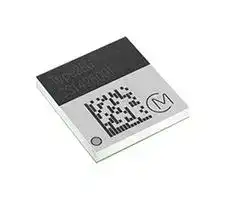


LBCA1HN2EG-917
Bluetooth Module, BLE 5.2, 1 Mbps, -96 dBm, 1.71 to 3.46 V, -40 °C to 85 °C
- Manufacturer: MURATA
- Product type: Bluetooth Modules & Adaptors
- SVHC: No SVHC (04-Feb-2026)
- Interfaces: I2C, SPI, UART
- Product Range: -
- Certifications: ETSI, FCC, ISED
- Bluetooth Class: -
- Bluetooth Version: Bluetooth 5.2
- Supply Voltage Range: 1.71 V to 3.46 V
- Receiver Sensitivity Rx: -96 dBm
- Operating Temperature Range: -40 °C to 85 °C
| Delivery and price | |
|---|---|
| Units per pack | 250 |
| Price | 6.29 € |
| Current stock | 1000+ |
| Lead time | 30 days |

_Datasheet_

## Bluetooth[®] 5.2 Wireless Module Data Sheet

onsemi RSL15 Bluetooth 5.2 SoC

▪ Design Name: Type 2EG ▪ P/N: LBCA1HN2EG-917

Bluetooth 5.2 Wireless Module Data Sheet

## Table of Contents

About This Guide ........................................................................................................................ 4 Audience & Purpose ............................................................................................................. 4 Document Conventions ......................................................................................................... 4 1 Product Information/General Information ................................................................................. 5 1.1 Scope .............................................................................................................................. 5 1.2 Key features .................................................................................................................... 5 1.3 Ordering Information ....................................................................................................... 5 1.4 Block Diagram ................................................................................................................. 7 1.5 Reference ....................................................................................................................... 7 2 Certification Information ........................................................................................................... 8 2.1 Radio Certification ........................................................................................................... 8 2.2 FCC Notice (USA) ........................................................................................................... 8 2.3 FCC Labeling Requirements ........................................................................................... 9 2.4 ISED Notice (Canada) ................................................................................................... 10 2.5 IC Labeling Requirements ............................................................................................. 11 2.6 ESTI compliance (Europe) ............................................................................................ 11 2.7 Bluetooth Qualification .................................................................................................. 11 3 Dimensions, Marking and Terminal Configurations ................................................................ 13 3.1 Structure ....................................................................................................................... 14 4 Module Pin Descriptions ........................................................................................................ 15 4.1 Pin Assignments ........................................................................................................... 15 4.2 Pin Descriptions ............................................................................................................ 16 5 Absolute Maximum Ratings ................................................................................................... 17 6 Operating Conditions ............................................................................................................. 17 6.1 General Operating Conditions ....................................................................................... 17 6.2 Digital I/O Requirements ............................................................................................... 18 7 DC/RF Characteristics ........................................................................................................... 19 7.1 Typical Power Consumption .......................................................................................... 19 7.2 RF Characteristics ......................................................................................................... 20 8 Power Sequence ................................................................................................................... 21 9 Application Information .......................................................................................................... 21 9.1 Recommended PCB Landing Pattern ............................................................................ 21 9.2 Host PCB Layout Recommendations ............................................................................ 22 9.3 Layout Guidance for Using Internal PCB Antenna ......................................................... 22 9.4 Layout Guidance for Microstrip Design and External Antenna ....................................... 24

©2022 by Murata Manufacturing Co., Ltd. ● May 09, 2023 ● SP-HN2EG-C ● Rev. C ● www.murata.com

1

Bluetooth 5.2 Wireless Module Data Sheet

9.5 Reference Circuit .......................................................................................................... 26 10 Tape and Reel Packing ........................................................................................................ 27 10.1 Dimensions of Tape (Plastic tape) ............................................................................... 27 10.2 Dimensions of Reel ..................................................................................................... 27 10.3 Taping Diagrams ......................................................................................................... 28 10.4 Leader and Tail Tape .................................................................................................. 29 10.5 Packaging (Humidity Proof Packing) ........................................................................... 30 11 Notice .................................................................................................................................. 31 11.1 Storage Conditions ...................................................................................................... 31 11.2 Handling Conditions .................................................................................................... 31 11.3 Standard PCB Design (Land Pattern and Dimensions) ............................................... 31 11.4 Notice for Chip Placer ................................................................................................. 32 11.5 Soldering Conditions ................................................................................................... 32 11.6 Cleaning ...................................................................................................................... 32 11.7 Operational Environment Conditions ........................................................................... 33 12 Preconditions to Use Our Products ...................................................................................... 34 Appendix................................................................................................................................... 36 Revision History ........................................................................................................................ 37

## Figures

Figure 1: Type 2EG Block Diagram............................................................................................. 7 Figure 2: Type 2EG Dimensions, Marking and Terminal Configurations ................................... 13 Figure 3: Type 2EG Structure ................................................................................................... 14 Figure 4: Top View .................................................................................................................... 15 Figure 5: Type 2EG Land Patterns............................................................................................ 21 Figure 6: Host PCB Layout Recommendation, top view ............................................................ 22 Figure 7: Layout Guide for Antenna Performance (1) ................................................................ 23 Figure 8: Layout Guide for Antenna Performance (2) ................................................................ 23 Figure 9: Layout Guide for External Antenna (1) ....................................................................... 24 Figure 10: Layout Guide for External Antenna (2) ..................................................................... 25 Figure 11: Dimensions of Tape (Plastic Tape) .......................................................................... 27 Figure 12: Dimension of Reel.................................................................................................... 27 Figure 13: Taping Diagrams...................................................................................................... 28 Figure 15: Taping Specifications ............................................................................................... 28 Figure 15: Taping Diagrams (Close Up) .................................................................................... 28 Figure 16: Leader and Tail Tape ............................................................................................... 29 Figure 17: Peeling Off Force ..................................................................................................... 29

©2022 by Murata Manufacturing Co., Ltd. ● May 09, 2023 ● SP-HN2EG-C ● Rev. C ● www.murata.com

2

Bluetooth 5.2 Wireless Module Data Sheet

|Figure 18: Packaging ................................................................................................................ 30|Figure 18: Packaging ................................................................................................................ 30|
|---|---|
|Figure 19: Reflow soldering standard conditions (Example) ...................................................... 32|Figure 19: Reflow soldering standard conditions (Example) ...................................................... 32|


## Tables

|Table 1: Document Conventions ................................................................................................. 4|Table 1: Document Conventions ................................................................................................. 4|
|---|---|
|Table 2: Ordering Information ..................................................................................................... 5|Table 2: Ordering Information ..................................................................................................... 5|
|Table 3: Radio Certification ......................................................................................................... 8|Table 3: Radio Certification ......................................................................................................... 8|
|Table 4: External Antenna to comply with FCC and ISED ........................................................... 8|Table 4: External Antenna to comply with FCC and ISED ........................................................... 8|
|Table 5: External Antenna to comply with ISED ........................................................................ 10|Table 5: External Antenna to comply with ISED ........................................................................ 10|
|Table 6: External Antenna to comply with ETSI ........................................................................ 11|Table 6: External Antenna to comply with ETSI ........................................................................ 11|
|Table 7: Type 2EG Markings .................................................................................................... 13|Table 7: Type 2EG Markings .................................................................................................... 13|
|Table 8: Type 2EG Dimensions ................................................................................................ 13|Table 8: Type 2EG Dimensions ................................................................................................ 13|
|Table 9: Type 2EG Pin Names ................................................................................................. 15|Table 9: Type 2EG Pin Names ................................................................................................. 15|
|Table 10: Type 2EG Pin Descriptions ....................................................................................... 16|Table 10: Type 2EG Pin Descriptions ....................................................................................... 16|
|Table 11: Type 2EG Absolute Maximum Ratings ...................................................................... 17|Table 11: Type 2EG Absolute Maximum Ratings ...................................................................... 17|
|Table 12: Type 2EG Operating Conditions ................................................................................ 17|Table 12: Type 2EG Operating Conditions ................................................................................ 17|
|Table 13: Type 2EG Digital I/O Requirements .......................................................................... 18|Table 13: Type 2EG Digital I/O Requirements .......................................................................... 18|
|Table 14: RF Current Consumption .......................................................................................... 19|Table 14: RF Current Consumption .......................................................................................... 19|
|Table 15: Sleep Mode Current Consumption ............................................................................ 19|Table 15: Sleep Mode Current Consumption ............................................................................ 19|
|Table 16: Type 2EG RF Characteristics .................................................................................... 20|Table 16: Type 2EG RF Characteristics .................................................................................... 20|


©2022 by Murata Manufacturing Co., Ltd. ● May 09, 2023 ● SP-HN2EG-C ● Rev. C ● www.murata.com

3

Bluetooth 5.2 Wireless Module Data Sheet

## About This Guide

This data sheet summarizes the performance and other characteristics of Murata’s Type 2EG. This specification is applied to the Type 2EG Bluetooth® 5.2 module.

## Audience & Purpose

The audience of this guide is the developer who wants to integrate the Type 2EG module in their systems.

## Document Conventions

## **Table 1** describes the document conventions.

## **Table 1: Document Conventions**

|**Conventions**|**Description**|
|---|---|
||**Attention/Warning Note**<br>Indicates very important note. Users are strongly recommended to review.|
||**Informational Note**<br>Intended for informational purposes. Users should review.|
|Irs|**Menu item**<br>Indicates menu navigation instructions.<br>**Example**:  Insert➔Tables➔Quick Tables➔Save Selection to Gallery<br>Irs|
|Console input/output or<br>code snippet|This text style denotes a console input/output or code snippet.|
|_# Console I/O comment_|This text style denotes a console input/output comment. This is for informational<br>purposes only and does not denote actual console input/output.|
|_// Code snippet comment_|This text style denotes a code snippet comment. This comment may exist in the<br>original code.|
||**External Hyperlink**<br>This symbol indicates a hyperlink to an external document or website.<br>**Example**:Embedded Artists AB<br>Click on the text to open the external link.|
||**Internal Hyperlink**<br>This symbol indicates a hyperlink within the document.<br>**Example**:Introduction<br>Click on the text to jump to the hyperlinked page and/or section.|


©2022 by Murata Manufacturing Co., Ltd. ● May 09, 2023 ● SP-HN2EG-C ● Rev. C ● www.murata.com

4

Bluetooth 5.2 Wireless Module Data Sheet

## 1 Product Information/General Information

## 1.1 Scope

This specification is applied to the Type 2EG Bluetooth 5.2 wireless module.

## 1.2 Key features

- | Bluetooth® v5.2

   - 6 Higher throughput

   - | Increased broadcast capacity

   - 6 Improved channel co-existence algorithm (SCA)

   - | Long range

   - 6 Proximity

- 6 onsemi RSL15 SoC

- | Built-in ARM Cortex M33 core with 80kB RAM (including 64kB user RAM) and 512kB Flash

- 6 Dimension 7.4 mm x 7.0 mm x 1.0 (max.) mm

- | Packaging: LGA

- 6 Antenna Configuration:

   - | Built-in PCB antenna

   - 6 Optional external antenna from pin pad

- | Max. transmit power: 6 dBm

- 6 Receive sensitivity: -96 dBm @ 1Mbps

- 6 Ultra-low power

   - 6 TX 4.3 mA @ 0dBm

   - 6 RX 2.7 mA @ 1Mbps

   - | Sleep mode 36nA @3V VBAT

- 6 Host interface: UART, SPI

| Peripheral interfaces: 15 GPIO, ADC, DAC, PWM, I2C, UART, SPI (QSPI), PCM and Debug SWD

- | Operating temperature range: -40 ºC to 85 ºC

- 6 RoHS compliant

- | MSL Level 3 in accordance with JEDEC J-STD-020

- 6 Regulatory certificates: FCC, ISED, ETSI, TELEC

## 1.3 Ordering Information

**Table 2: Ordering Information**

©2022 by Murata Manufacturing Co., Ltd. ● May 09, 2023 ● SP-HN2EG-C ● Rev. C ● www.murata.com

5

Bluetooth 5.2 Wireless Module Data Sheet

|**Ordering Part Number**|**Description**|
|---|---|
|LBCA1HN2EG-917|Module|
|LBCA1HN2EG-SMP|Sample|
|LBCA1HN2EG-EVK|Evaluation kit|


“Type 2EG” is design name of this module. Design name may be used in certification test report.

©2022 by Murata Manufacturing Co., Ltd. ● May 09, 2023 ● SP-HN2EG-C ● Rev. C ● www.murata.com

6

Bluetooth 5.2 Wireless Module Data Sheet

## 1.4 Block Diagram

## **Figure 1: Type 2EG Block Diagram**

**==> picture [324 x 182] intentionally omitted <==**

**----- Start of picture text -----**<br>
Antenna<br>48MHz X’tal<br> VBAT<br>onsemi  VDDO<br> VDDA<br>J rut  Reset<br>NCH-RSL15-512-<br>To external or  Matching  SWD<br>101WC40-ABG<br>on-board  UART/SPI/GPIO<br>antenna<br>32KHz X’tal<br>Inductor for<br>Lo y! ey DCDC<br>**----- End of picture text -----**<br>


## 1.5 Reference

[1] onsemi Bluetooth® 5.2 Wireless MCU RSL15 Data Sheet, RSL15/D, Rev.1 May 2022 [2] Murata Type 2EG EVK Schematic

©2022 by Murata Manufacturing Co., Ltd. ● May 09, 2023 ● SP-HN2EG-C ● Rev. C ● www.murata.com 7 ~~i~~

Bluetooth 5.2 Wireless Module Data Sheet

## 2 Certification Information

## 2.1 Radio Certification

## **Table 3: Radio Certification**

|**Country**|**Standard**|**Certification ID**|
|---|---|---|
|USA (FCC)|FCC Part 15 C|HSW2EG|
|Canada (ISED)|ISED RSS-247|4492A-2EG|
|Europe|EN300 328, Ver. 2.2.2||
|Japan|MIC Radio equipment for Article 2-1-19 of<br>Certification Ordinance|201-220888|


This radio transmitter has been approved by FCC and ISED to operate with the antenna types listed below with the maximum permissible gain indicated. Antenna types are included in this list, having a gain greater than the maximum gain indicated for that type, are strictly prohibited for use with this device.

In the end product, the transmitter must be installed to provide a separation distance of at least 20cm with the Monopole Antenna and at 5mm with the PCB Antenna from all persons and must not be co-located or operation in conjunction with any other antenna or transmitter except in accordance with FCC multi-transmitter product procedures. User and installers must be provided with antenna installation instructions and transmitter operating conditions for satisfying the RF exposure compliance.

**Table 4: Antenna to comply with FCC and ISED**

|**Part Number**|**Vendor**|**Gain (dBi)**|**Type**|**Connector**|**Remarks**|
|---|---|---|---|---|---|
|GW26.0152|Taoglas|1.8|Monopole|SMA|Necessary for FCC/ISED<br>compliance only.|
|||-3.0|PCB||Necessary for FCC/ISED<br>compliance only.|


To be compliant with RED Directive while using TYPE 2EG module with external antenna, the total EIRP including the antenna gain should be less than or equal to 10dBm.

## 2.2 FCC Notice (USA)

Warning: Changes or modifications to this device not expressly approved by Murata could void the user’s authority to operate the equipment.

This device complies with Part 15 of the FCC rules. Operation is subject to the following two conditions: (1) this device may not cause harmful interference, and (2) this device must accept any interference received, including interference that may cause undesired operation.

This transmitter must not be co-located or operating in conjunction with any other antenna or transmitter.

This device complies with below part 15 of the FCC Rules. Part 15 Subpart C.

The FCC requires the OEM to be notified that any changes or modifications not expressly approved by Murata may void the user’s authority to operate the equipment. While an application of the TYPE 2EG module in a

©2022 by Murata Manufacturing Co., Ltd. ● May 09, 2023 ● SP-HN2EG-C ● Rev. C ● www.murata.com

8

Bluetooth 5.2 Wireless Module Data Sheet

product is not required to obtain a new FCC authorization for the module, this does not preclude the possibility that some other form of authorization or testing may be required for that end product.

## **Additional testing, Part 15 Subpart B disclaimer**

The modular transmitter is only FCC authorized for the specific rule parts (i.e., FCC transmitter rules) listed on the grant, and that the host product manufacturer is responsible for compliance to any other FCC rules that apply to the host not covered by the modular transmitter grant of certification.

The final host product still requires Part 15 Subpart B compliance testing with the modular transmitter installed.

This module has been tested and found to comply with the following requirements for Modular Approval.

- Part 15.247 - Operation within the bands 902-928 MHz, 2400-2483.5 MHz, and 5725-5850 MHz.

## **Test Modes**

This device uses various test mode programs for test set up which operate separate from production firmware. Host integrators should contact the grantee for assistance with test modes needed for module/host compliance test requirements.

The OEM integrator has to be aware not to provide information to the end user regarding how to install or remove this RF module in the user’s manual of the end product which integrates this module. The end user manual shall include all required regulatory information/warning as shown in User manual.

## 2.3 FCC Labeling Requirements

When integrating the TYPE 2EG into a product the FCC labeling requirements must be met. This includes a clearly visible label on the outside of the finished product specifying the TYPE 2EG FCC identifier (FCC ID: HSW2EG) as well as the notice above. The exterior label can use wording such as “Contains Transmitter Module FCC ID: HSW2EG” or “Contains FCC ID: HSW2EG” although any similar wording that expresses the same meaning may be used.

The following information must be indicated on the host device of this module.

## _FCC Compliance Information_

_This device complies with part 15 of the FCC Rules. Operation is subject to the following two conditions: (1) This device may not cause harmful interference, and (2) this device must accept any interference received, including interference that may cause undesired operation._

*If it is difficult to describe this statement on the host device due to the size, please describe in the user's manual and also either describe on the device packaging or on a removable label attached to the device.

The following statements must be described on the user manual of the host device of this module.

## _FCC CAUTION_

_Changes or modifications not expressly approved by the party responsible for compliance could void the user’s authority to operate the equipment._

_This transmitter must not be co-located or operated in conjunction with any other antenna or transmitter._

©2022 by Murata Manufacturing Co., Ltd. ● May 09, 2023 ● SP-HN2EG-C ● Rev. C ● www.murata.com

9

Bluetooth 5.2 Wireless Module Data Sheet

_This equipment complies with FCC radiation exposure limits set forth for an uncontrolled environment and meets the FCC radio frequency (RF) Exposure Guidelines as this equipment has very low levels of RF energy_ _**.  [*]**_

[*]But it is desirable that it should be installed and operated keeping the radiator at least 20cm or more away from person's body.

## 2.4 ISED Notice (Canada)

This radio transmitter has been approved by FCC and ISED to operate with the antenna types listed below with the maximum permissible gain indicated. Antenna types not included in this list, having a gain greater than the maximum gain indicated for that type, are strictly prohibited for use with this device.

_Cet émetteur radio a été approuvé par la FCC et ISED pour fonctionner avec les types d'antennes répertoriés ci-dessous avec le gain maximal autorisé indiqué. Les types d'antennes non inclus dans cette liste, ayant un gain supérieur au gain maximum indiqué pour ce type, sont strictement interdits pour une utilisation avec cet appareil._

This device contains licence-exempt transmitter(s)/receiver(s) that comply with Innovation, Science and Economic Development Canada’s licence-exempt RSS(s).  Operation is subject to the following two conditions: (1) this device may not cause interference, and (2) this device must accept any interference, including interference that may cause undesired operation of the device.

_L’émetteur/récepteur exempt de licence contenu dans le présent appareil est conforme aux CNR d’Innovation, Sciences et Développement économique Canada applicables aux appareils radio exempts de licence. L’exploitation est autorisée aux deux conditions suivantes: (1) L’appareil ne doit pas produire de brouillage; (2) L’appareil doit accepter tout brouillage radioélectrique subi, même si le brouillage est susceptible d’en compromettre le fonctionnement._

This radio transmitter (4492A-2EG) has been approved by Innovation, Science and Economic Development Canada to operate with the antenna types listed below, with the maximum permissible gain indicated.

Antenna types not included in this list that have a gain greater than the maximum gain indicated for any type listed are strictly prohibited for use with this device.

_Le présent émetteur radio (_ 4492A-2EG _) a été approuvé par Innovation, Sciences et Développement économique Canada pour fonctionner avec les types d'antenne énumérés ci-dessous et ayant un gain admissible maximal._

_Les types d'antenne non inclus dans cette liste, et dont le gain est supérieur au gain maximal indiqué pour tout type figurant sur la liste, sont strictement interdits pour l'exploitation de l'émetteur._

## **Table 5: Antenna to comply with ISED**

**Part Number Vendor Gain (dBi) Type Connector Remarks** ~~L al il il il j~~ Necessary for FCC/ISED GW26.0152 Taoglas 1.8 Monopole SMA ~~ff~~ compliance only. Necessary for FCC/ISED -3.0 PCB compliance only. ~~fF |ft~~

©2022 by Murata Manufacturing Co., Ltd. ● May 09, 2023 ● SP-HN2EG-C ● Rev. C ● www.murata.com 10 ~~Te~~ |

Bluetooth 5.2 Wireless Module Data Sheet

## 2.5 ISED Labeling Requirements

The host device should be properly labeled to identify the module within the host device.  The Industry Canada certification label of a module shall be clearly visible at all times when installed in the host device, otherwise the host device must be labeled to display the Industry Canada certification number of the module, preceded by the words “Contains transmitter module”, or the word “Contains”, or similar wording expressing the same meaning, as follows:

Contains transmitter module IC: 4492A-2EG, where 4492A-2EG is the module’s certification number.

The following statements must be described on the user manual of the host device of this module.

“This equipment complies with ISED radiation exposure limits set forth for an uncontrolled environment and meets RSS-102 of the ISED radio frequency (RF) Exposure rules as this equipment has very low levels of RF energy. (*1)

_Cet équipement est conforme aux limites d’exposition aux rayonnements énoncées pour un environnement non contrôlé et respecte les règles d’exposition aux fréquences radioélectriques (RF) CNR-102 de l’ISDE puisque cet appareil a une niveau tres bas d'energie RF.  (*2)”_

* In case of the Mobile equipment : Please add the following text.

(*1) But it is desirable that it should be installed and operated keeping the radiator at least 20cm or more away from person's body.

(*2) Cependant, il est souhaitable qu'il devrait être installé et utilisé en gardant une distance de 20 cm ou plus entre le radiateur et le corps humain.

## 2.6 ESTI compliance (Europe)

This device has been tested for use in the European Union. Both TYPE 2EG comply with the following regulation test.

ETSI EN300 328, Ver. 2.2.2

## **Table 6: External Antenna to comply with ETSI**

|**Part Number**|**Vendor**|**Gain (dBi)**|**Type**|**Connector**|**Remarks**|
|---|---|---|---|---|---|
|S181XX-2450S|Nearson|2.1|Dipole|SMA|Necessary for FCC/ISED<br>compliance only.|


If this device is used in a product, the OEM has responsibility to verify compliance of the final product to the EU standards.  A Declaration of Conformity must be issued and kept on file as described in Annex II of the Radio and Telecommunications Terminal Equipment Directive.

## 2.7 TELEC Notice (Japan)

The following conditions are applicable:

## _Radio Module_

©2022 by Murata Manufacturing Co., Ltd. ● May 09, 2023 ● SP-HN2EG-C ● Rev. C ● www.murata.com

11

Bluetooth 5.2 Wireless Module Data Sheet

_Antennas for Bluetooth: Dipole antenna, max gain of 2 dBi at 2.4 GHz PCB antenna, max gain of -3 dBi at 2.4 GHz_

## 2.8 Bluetooth Qualification

QDID: 164014 – End Product

©2022 by Murata Manufacturing Co., Ltd. ● May 09, 2023 ● SP-HN2EG-C ● Rev. C ● www.murata.com

12

Bluetooth 5.2 Wireless Module Data Sheet

## 3 Dimensions, Marking and Terminal Configurations

## **Figure 2: Type 2EG Dimensions, Marking and Terminal Configurations**

**==> picture [187 x 139] intentionally omitted <==**

**----- Start of picture text -----**<br>
A<br>Type2EG<br>B SS1234567<br>C<br>2D code<br>D<br>a M<br>E<br>**----- End of picture text -----**<br>


**Table 7: Type 2EG Markings**

|**Marking**|**Meaning**|
|---|---|
|A|Module Type|
|B|Inspection Number|
|C|2D code|
|D|Murata Logo|
|E|Pin 1 Marking|


**Table 8: Type 2EG Dimensions**

|**Mark**|**Dimensions (mm)**|**Mark**|**Dimensions (mm)**|**Mark**|**Dimensions (mm)**|
|---|---|---|---|---|---|
|L|7.0 +/- 0.20|W|7.4 +/- 0.20|T|1.0 max.|
|a1|0.30 +/- 0.10|a2|0.60 +/- 0.10|b1|0.30 +/- 0.20|
|b2|1.25 +/- 0.20|b3|2.20 +/- 0.20|b4|0.425 +/- 0.20|
|b5|3.30 +/- 0.20|b6|4.725 +/- 0.20|b7|0.30 +/- 0.20|
|b8|0.60 +/- 0.10|c1|0.60 +/- 0.10|c2|0.30 +/- 0.10|
|e1|0.40 +/- 0.10|e2|0.35 +/- 0.10|e3|0.40 +/- 0.10|


T dimension does not include height of solder bumps if there is any.

©2022 by Murata Manufacturing Co., Ltd. ● May 09, 2023 ● SP-HN2EG-C ● Rev. C ● www.murata.com

13

Bluetooth 5.2 Wireless Module Data Sheet

## 3.1 Structure

## **Figure 3: Type 2EG Structure**

**==> picture [304 x 134] intentionally omitted <==**

**----- Start of picture text -----**<br>
Other Resin<br>SMD  Inductor  Crystal  Crystal  RSL15  Mold<br>Shield<br>PWB<br>Substrate<br>**----- End of picture text -----**<br>


©2022 by Murata Manufacturing Co., Ltd. ● May 09, 2023 ● SP-HN2EG-C ● Rev. C ● www.murata.com

14

Bluetooth 5.2 Wireless Module Data Sheet

## 4 Module Pin Descriptions

## 4.1 Pin Assignments

**Figure 4: Top View**

**Table 9: Type 2EG Pin Names**

|**No**<br>~~a~~|**Pin name**<br>~~se~~|**No**<br>~~se~~|**Pin name**<br>~~rs~~|**No**<br>~~es GO~~|**Pin name**<br>~~GO~~|**No**|**Pin name**|
|---|---|---|---|---|---|---|---|
|1<br>~~a~~<br>~~a~~|GPIO13<br>~~se~~<br>~~es~~|10<br>~~se~~<br>~~ee~~|GPIO11<br>~~rs~~<br>~~es~~|19<br>~~es GO~~<br>~~ts Os~~|GND<br>~~GO~~<br>~~Os~~|28|GND|
|2<br>~~a~~<br>~~a~~<br>~~a~~|GPIO12<br>~~se~~<br>~~es~~|11<br>~~se~~<br>~~ee~~|GPIO4<br>~~rs ~~<br>~~es~~|20<br> ~~es GO~~<br>~~ts Os~~<br>~~ts~~|ANT<br>~~GO~~<br>~~Os~~|29|GND|
|3<br>~~a~~<br>~~a~~<br>~~a~~<br>~~a~~|GPIO7<br>~~es ~~<br>~~es~~<br>~~es~~<br>|12<br> ~~ee ~~<br>~~es~~<br>~~ee es~~<br>|GPIO2<br> ~~es ~~<br>~~es~~<br>~~es ts~~<br>|21<br> ~~ts Os~~<br>~~es~~<br>~~ts~~<br>~~ts~~<br>|RF<br>~~Os~~<br>~~es~~<br>~~Os~~<br>|30<br>~~es~~<br>|GND<br>~~es~~<br>|
|4<br>~~a~~<br>~~a~~<br>~~a~~|JTMS<br>~~es~~<br>|13<br>~~ee es~~<br>|NRST<br>~~es ts~~<br>|22<br>~~ts~~<br>~~ts~~<br><br>~~ts~~|GND<br>~~Os~~<br>|31<br>|GND<br>|
|5<br>~~a~~<br>~~a~~<br>~~a~~|JTCK<br>~~es~~ <br>~~es~~<br>~~es ee~~|14<br> ~~ee es~~<br>~~es~~<br>~~ee~~|GPIO10<br>~~es ts~~<br>~~es~~<br>~~Rs ts~~|23<br>~~ts~~<br>~~es~~<br>~~ts~~<br>~~ts~~|VBAT<br>~~Os~~<br>~~es~~<br>~~GD ts~~|32<br>~~es~~<br>~~ts~~|GND<br>~~es~~|
|6<br>~~a~~<br>~~a~~|VDDO<br>~~es ee~~<br>~~se~~|15<br>~~ee~~<br>~~se~~|GPIO1<br>~~Rs ts~~<br>~~es~~|24<br>~~ts~~<br>~~ts~~<br>~~ts~~|GND<br>~~GD ts~~|33<br>~~ts~~|NC|
|7<br>~~a~~|GPIO14<br>~~es ee~~<br>~~se~~|16<br>~~ee~~<br>~~se~~|GPIO0<br>~~Rs ts~~<br>~~es~~|25<br>~~ts~~<br>~~ts~~|VDDA<br>~~GD ts~~|34<br>~~ts~~|NC|


> ©2022 by Murata Manufacturing Co., Ltd. ● May 09, 2023 ● SP-HN2EG-C ● Rev. C ● www.murata.com

15

Bluetooth 5.2 Wireless Module Data Sheet

|**No**|**Pin name**|**No**|**Pin name**|**No**|**Pin name**|**No**|**Pin name**|
|---|---|---|---|---|---|---|---|
|8|GPIO8|17|GPIO3|26|GPIO5|||
|9|GPIO6|18|GPIO9|27|GND|||


## 4.2 Pin Descriptions

## **Table 10: Type 2EG Pin Descriptions**

|**No.**|**Pin name**|**Type**|**Connection to**<br>**RSL15 pin name**|**Description**|
|---|---|---|---|---|
|1|GPIO13|I/O|"C4"|General purpose I/O|
|2|GPIO12|I/O|"B4"|General purpose I/O|
|3|GPIO7|I/O|"B5"|General purpose I/O|
|4|SWDIO|I/O|"B6"|Serial Wire Debug I/O|
|5|SWCLK|I/O|"B7"|Serial Wire Debug clock|
|6|VDDO|PWR|"A7"|Module I/O voltage supply|
|7|GPIO14|I/O|"A6"|General purpose I/O|
|8|GPIO8|I/O|"A5"|General purpose I/O|
|9|GPIO6|I/O|"A4"|General purpose I/O|
|10|GPIO11|I/O|"A3"|General purpose I/O|
|11|GPIO4|I/O|"B3"|General purpose I/O|
|12|GPIO2|I/O|"A2"|General purpose I/O|
|13|NRST|I/O|"D1"|Reset|
|14|GPIO10|I/O|"A1"|General purpose I/O|
|15|GPIO1|I/O|"B1"|General purpose I/O|
|16|GPIO0|I/O|"C1"|General purpose I/O|
|17|GPIO3|I/O|"B2"|General purpose I/O|
|18|GPIO9|I/O|"C2"|General purpose I/O|
|19|GND|GND|||
|20|ANT|RF||Connection to integrated antenna|
|21|RF|RF||RF signal from/to IC|
|22|GND|GND|||
|23|VBAT|PWR|"G2"|Module core & RF voltage supply|
|24|GND|GND|||
|25|VDDA|PWR|"G3"|Charge pump output for analog and flash supplies|
|26|GPIO5|I/O|"C3"|General purpose I/O|
|27|GND|GND|||
|28|GND|GND|||
|29|GND|GND|||


©2022 by Murata Manufacturing Co., Ltd. ● May 09, 2023 ● SP-HN2EG-C ● Rev. C ● www.murata.com

16

Bluetooth 5.2 Wireless Module Data Sheet

||||**Connection to**||
|---|---|---|---|---|
|**No.**|**Pin name**|**Type**|**RSL15 pin name**|**Description**|
|30|GND|GND|||
|31|GND|GND|||
|32|GND|GND|||
|33|NC|NC||NC|
|34|NC|NC||NC|


## 5 Absolute Maximum Ratings

**Table 11: Type 2EG Absolute Maximum Ratings**

|**Parameter**|**Minimum**|**Maximum**|**Unit**|
|---|---|---|---|
|Storage Temperature|-40|+85|Degree C|
|Operating Temperature|-40|+85|Degree C|
|VBAT||3.63|V|
|VDDO||3.63|V|
|Vin|0|VDDO+0.3|V|
|RF input level||18|dBm|


Stresses in excess of the absolute ratings may cause permanent damage. Functional operation is not implied under these conditions. Exposure to absolute ratings for extended periods of time may adversely affect reliability. No damage assuming only one parameter is set at limit at a time with all other parameters are set within operating condition.

## 6 Operating Conditions

## 6.1 General Operating Conditions

## **Table 12: Type 2EG Operating Conditions**

|**Parameter**|**Symbol**|**Note**|**Min**|**Typ.**|**Max**|**Unit**|
|---|---|---|---|---|---|---|
|Operating Temperature|||-40|25|+85|Degree C|
|VBAT supply rise time||Maximum rate of voltage rise|||0.1|V/us|
|DC-DC Convert Input<br>Voltage|VBAT|Buck Mode|1.4||3.6|V|
|||LDO Mode|1.2||3.6|V|
|Digital I/O Supply Input|VDDO||1.2||3.6|V|


©2022 by Murata Manufacturing Co., Ltd. ● May 09, 2023 ● SP-HN2EG-C ● Rev. C ● www.murata.com

17

Bluetooth 5.2 Wireless Module Data Sheet

Operation beyond the recommended operating conditions is neither recommended nor guaranteed.

## 6.2 Digital I/O Requirements

**Table 13: Type 2EG Digital I/O Requirements**

|**Symbol**<br>~~|~~|**Parameter**<br>~~|~~<br>~~|~~|**Condition**<br>~~|~~<br>~~|~~<br>~~|~~|~~|~~<br>~~|~~<br>~~|~~<br>~~|~~|**Min**<br>~~|~~<br>~~|~~<br>~~|~~<br>~~|~~<br>~~|~~|**Typ.**<br>~~|~~<br>~~|~~<br>~~|~~<br>~~|~~<br>~~|~~<br>~~|~~|**Max**<br>~~|~~<br>~~|~~<br>~~|~~<br>~~|~~<br>~~|~~<br>~~|~~<br>~~|~~|**Unit**<br>~~|~~<br>~~|~~<br>~~|~~<br>~~|~~<br>~~|~~<br>~~|~~<br>~~|~~|
|---|---|---|---|---|---|---|---|
|VIH<br>~~|~~<br>~~a~~|Input high voltage<br>~~|~~<br>~~|~~<br>~~a~~|-<br>~~|~~<br>~~|~~<br>~~|~~<br>~~|~~<br>~~a~~||0.75 *<br>VDDO<br>~~|~~<br>~~|~~<br>~~|~~<br>~~|~~<br>~~|~~<br>~~a~~|-<br>~~|~~<br>~~|~~<br>~~|~~<br>~~|~~<br>~~|~~<br>~~|~~<br>~~a~~|VDDO +<br>0.3<br>~~|~~<br>~~|~~<br>~~|~~<br>~~|~~<br>~~|~~<br>~~|~~<br>~~|~~<br>~~a~~|V<br>~~|~~<br>~~|~~<br>~~|~~<br>~~|~~<br>~~|~~<br>~~|~~<br>~~|~~<br>~~a~~|
|VIL<br>~~a~~<br>~~Te~~|Input low voltage<br>~~a~~<br>~~Te~~|-<br>~~a~~||-0.3<br>~~a~~|-<br>~~a~~<br>~~LL~~|0.25 *<br>VDDO1<br>~~a~~<br>~~LL~~|V<br>~~a~~<br>~~LL~~|
|VOH<br>~~Te~~<br>~~a~~|Output high voltage<br>~~Te~~<br>~~a~~|-||VDDO -<br>0.4|-<br>~~LL~~|0.35 *<br>VDDO<br>~~LL~~|V<br>~~LL~~|
|VOL<br>~~a~~<br>~~a~~|Output low voltage<br>~~a~~<br>~~ars~~|-<br>~~rs~~||-<br>~~rs~~|-<br>~~rs~~|0.4<br>~~rs~~|V<br>~~rs~~|
|~~Te~~|Weak Pull−up<br>Resistor<br>~~Te~~|~~Te~~||~~Te~~|250<br>~~Te~~|~~Te~~|kΩ<br>~~Te~~|
|~~Te~~<br>~~a~~<br>~~a~~|Strong Pull−up<br>Resistor<br>~~Te~~<br>~~a ~~<br>~~ee~~|~~Te~~<br> ~~OG~~<br>~~nr~~||~~Te~~<br>~~OG~~|10<br>~~Te~~<br>~~OG~~|~~Te~~<br>~~OG~~|kΩ<br>~~Te~~<br>~~OG~~|
|~~a~~|Pull−down Resistor<br>~~ee~~|~~nr~~|||250||kΩ|


©2022 by Murata Manufacturing Co., Ltd. ● May 09, 2023 ● SP-HN2EG-C ● Rev. C ● www.murata.com 18 ~~Te~~ |

Bluetooth 5.2 Wireless Module Data Sheet

## 7 DC/RF Characteristics

## 7.1 Typical Power Consumption

Conditions: 25deg.C, VBAT=VDDO=3.0V

## **Table 14: RF Current Consumption**

|**Operating Condition**|**VBAT**|**DC Conversion**|**Min**|**Typ.**|**Max**|**Unit**|
|---|---|---|---|---|---|---|
|Radio Receive Mode<br>Rx @ 1 Mbps, 2.4 GHz<br>8 MHz system clock<br>Cortex−M33 running BLE baseband only<br>All Peripherals Disabled<br>64 kB RAM enabled|3.0|Buck Mode||2.7||mA|
||1.25|LDO Mode||5.8|||
|Radio Transmit Mode<br>Tx @ 1 Mbps, 2.4 GHz, 0 dBm<br>8 MHz system clock<br>Cortex−M33 running BLE baseband only<br>All Peripherals Disabled<br>64 kB RAM enabled|3.0|Buck Mode||4.3||mA|
||1.25|LDO Mode||9.1|||
|Radio Transmit Mode<br>Tx @ 1 Mbps, 2.4 GHz, 6 dBm<br>8 MHz system clock<br>Cortex−M33 running BLE baseband only<br>All Peripherals Disabled<br>64 kB RAM enabled|3.0|Buck Mode||11.4||mA|
||1.25|LDO Mode||24.1|||


## **Table 15: Sleep Mode Current Consumption**

|**Operating Condition**|**Wakeup**<br>**Source**|**VBAT**|**DC Conversion**|**Min**|**Typ.**|**Max**|**Unit**|
|---|---|---|---|---|---|---|---|
|Clocks stopped<br>All peripherals disabled<br>**No RAM retained**<br>32 kHz RC32 inactive<br>32 kHz XTAL32K inactive|GPIO|3.0|Buck Mode||36||nA|


©2022 by Murata Manufacturing Co., Ltd. ● May 09, 2023 ● SP-HN2EG-C ● Rev. C ● www.murata.com

19

Bluetooth 5.2 Wireless Module Data Sheet

## 7.2 RF Characteristics

Conditions: 25deg.C, VBAT=VDDO=3.0V

## **Table 16: Type 2EG RF Characteristics**

|**RF Characteristics**|**RF Characteristics**|**Min**|**Typ.**|**Max**|**Unit**|
|---|---|---|---|---|---|
|Center frequency||2402|-|2480|MHz|
|Channel Spacing||-|2|-|MHz|
|Number of RF Channels||-|40|-|-|
|Max output power *|DCDC mode|-|6|-|dBm|
||LDO mode||6||dBm|
|Modulation Characteristics||||||
|Δf1avg||225|-|275|kHz|
|Δf2max(at 99.9%)||185|-|-|kHz|
|Δf2avg/ Δf1avg||0.8|-|-|-|
|Carrier frequency offset and drift||||||
|1) Frequency offset: | fn– fTX|||-|-|150|kHz|
|2) Frequency drift: | f0– fn|||-|-|50|kHz|
|3) Drift rate #0: | f1– f0|||-|-|20|kHz|
|4) Drift rate #n: | fn– fn-5|||-|-|20|kHz|
|Receiver sensitivity (PER < 30.8%)|DCDC mode|-|-96|-70|dBm|
||LDO mode|-|-96|-70|dBm|
|Maximum input signal level (PER < 30.8%)||-10|-|-|dBm|


©2022 by Murata Manufacturing Co., Ltd. ● May 09, 2023 ● SP-HN2EG-C ● Rev. C ● www.murata.com

20

Bluetooth 5.2 Wireless Module Data Sheet

## 8 Power Sequence

For device start up sequence, please refer to onsemi RSL15 datasheet [1].

## 9 Application Information

## 9.1 Recommended PCB Landing Pattern

We recommend the host PCB land pattern be the same as the module pin pad pattern.

**Figure 5: Type 2EG Land Patterns**

©2022 by Murata Manufacturing Co., Ltd. ● May 09, 2023 ● SP-HN2EG-C ● Rev. C ● www.murata.com 21 ~~nn~~

Bluetooth 5.2 Wireless Module Data Sheet

## 9.2 Host PCB Layout Recommendations

**Figure 6: Host PCB Layout Recommendation, top view**

## 9.3 Layout Guidance for Using Internal PCB Antenna

The TYPE 2EG module is certified with an internal PCB antenna physically located on the module. For optimum EIRP (Effectively Isotropically Radiated Power) when use the on-board antenna, please follow the following recommendations in the customer host circuit board design.

- A. The module is recommended is be placed on top left corner of the host circuit board.

- B. Around the antenna area, all layers of the customer circuit board should be free of any metal objects. Specifically, there should be no ground plane, traces, or metal shield case

- C. Host circuit PCB length is longer than 40mm to get optimal performance by using ground plane.

- D. Right side of antenna area also should be free of grounds.

- E. Metal and plastic materials should be away from the module. (More than 3mm)

©2022 by Murata Manufacturing Co., Ltd. ● May 09, 2023 ● SP-HN2EG-C ● Rev. C ● www.murata.com

22

Bluetooth 5.2 Wireless Module Data Sheet

- F. To use this internal antenna, the integrator must provide a simple two-component matching circuit between pins 20 and 21 of the module. This circuit will connect the RF I/O of the module directly to the PCB antenna. The picture below shows the location of pins 20 and 21.

**Figure 7: Layout Guide for Antenna Performance (1)**

**Figure 8: Layout Guide for Antenna Performance (2)**

©2022 by Murata Manufacturing Co., Ltd. ● May 09, 2023 ● SP-HN2EG-C ● Rev. C ● www.murata.com

23

Bluetooth 5.2 Wireless Module Data Sheet

The Integrator must place the matching circuit shown below between Pins 20 and 21 of the Module to duplicate the structure used during FCC/ISED testing of the Type2EG module. Use the exact PNs provided for L1 and C15 and C16 to meet regulatory requirements.

On the integrator’s support board, place L1 (1.6pF) between Pin 20 and Pin 21 of the Module. Place C16 adjacent to Pin 21. The other side of C16 should be attached to RF Ground.

## 9.4 Layout Guidance for Microstrip Design and External Antenna

The TYPE 2EG module is certified with an internal PCB antenna and two external antennae, a 2.1 dBi omni antenna.

The omni antenna should be connected to the Type2EG module using 50ohm microstrip RF trace and a U.FL RF connector as shown below. The microstrip RF trace and U.FL connector are placed on the customer’s PCB and are external to the Type2EG module. The omni antenna is then connected to this UFL Connector via a 50ohm RF adapter cable.

**Figure 9: Layout Guide for External Antenna (1)**

The design of the 50ohm microstrip RF trace on the customer’s PCB is crucially important. Compliant operation of the Type2EG module is dependent on proper construction of this 50ohm line and the following guidelines must be followed to ensure legal operation of the product.

The diagram below shows the required microstrip structure to be routed between module pin 21 and the UFL connector.

The top PCB trace carries the RF energy from module to UFL connector. The Layer2 ground plane provides a return path for the circuit. The Dielectric material (along with the dimensions of the microstrip structures) determines the characteristic impedance of the microstrip transmission line.

©2022 by Murata Manufacturing Co., Ltd. ● May 09, 2023 ● SP-HN2EG-C ● Rev. C ● www.murata.com

24

Bluetooth 5.2 Wireless Module Data Sheet

## **Figure 10: Layout Guide for External Antenna (2)**

Note the representative dimensions shown in the drawing above. It is imperative that the module customer (the integrator) use the exact dimensions we recommend to ensure a 50-ohm impedance for this transmission line.

The following dimensions and/or ratios should be used to set the microstrip impedance to 50 ohms.

**Dielectric (PCB) Material** – We recommend standard FR-4 PCB material. Other dielectrics will work but will require recalculation of microstrip dimensions. The following guidance is predicated on the use of FR-4 Dielectric. If FR-4 is not used for PCB material, please contact Murata Electronics at (678) 684-2009 to determine new dimensions for microstrip structure.

**H (Dielectric Height)** – this is the thickness of dielectric between the trace layer (layer 1) and the ground plane on layer 2. Note that layer 2 must be electrical ground. We recommend a dielectric thickness of 8-15 mils. This range provides the customer with some flexibility in board construction.

**t (trace thickness)** – Microstrip impedance is not severely affected by the thickness dimension. Standard 1oz or 2oz copper deposition is recommended. Equivalent thickness is 1-2 mils.

**W (trace width)** – this is the crucial dimension. This width must be set correctly to obtain the desired 50 ohms impedance. When using FR-4 dielectric, the width (W) of the microstrip trace should be set to:

## **W = H * 1.8**

Where W is microstrip trace width and H is Dielectric height. Note that both values must be measured in identical units (mils or mm)

Example:

H = 12 mils,  W = 12 * 1.8 = 21.6 mils

H = 0.4 mm W = 0.4 * 1.8 = 0.72 mm

l (trace length) – the impedance of the microstrip line is not dependent on its length. However, regulatory and performance limitations practically determine the actual length to be used by the customer (integrator). The length of this microstrip line must be longer than 7 mm to mimic the length used during FCC/ISED certification of the TYPE 2EG module. Lengths longer than 7 mm are acceptable although additional signal loss will occur as a result. Given these restrictions, Murata recommends microstrip trace lengths between 7 mm and 25 mm.

In any event, the microstrip line must operate over the same Dielectric-Ground Plane configuration shown above to act as a 50-ohm transmission line. Do not run the microstrip trace through sections of PCB that do not have the Dielectric-Ground plane configuration shown above.

©2022 by Murata Manufacturing Co., Ltd. ● May 09, 2023 ● SP-HN2EG-C ● Rev. C ● www.murata.com

25

Bluetooth 5.2 Wireless Module Data Sheet

A reliable 50-ohm transmission line will be produced if the above guidance is closely followed. Any deviations from the guidance above may cause the module to operate in noncompliant manner. Any implementation questions or concerns should be directed to Murata module technical support.

## 9.5 Reference Circuit

Please refer to Type 2EG EVK schematics [2].

©2022 by Murata Manufacturing Co., Ltd. ● May 09, 2023 ● SP-HN2EG-C ● Rev. C ● www.murata.com

26

Bluetooth 5.2 Wireless Module Data Sheet

## 10 Tape and Reel Packing

## 10.1 Dimensions of Tape (Plastic tape)

## **Figure 11: Dimensions of Tape (Plastic Tape)**

Cumulative tolerance of max. 40.0 ± 0.15 every 10 pitches

## 10.2 Dimensions of Reel

## **Figure 12: Dimension of Reel**

©2022 by Murata Manufacturing Co., Ltd. ● May 09, 2023 ● SP-HN2EG-C ● Rev. C ● www.murata.com

27

Bluetooth 5.2 Wireless Module Data Sheet

## 10.3 Taping Diagrams

**Figure 13: Taping Diagrams** DON ~~S~~

**==> picture [78 x 150] intentionally omitted <==**

**----- Start of picture text -----**<br>
[3]<br>[1]<br>[2]<br>[3]<br>[4]<br>**----- End of picture text -----**<br>


## **Figure 14: Taping Specifications**

|**Mark**|**Description**|
|---|---|
|1|Feeding hole. As specified inDimensions of Tape (Plastic tape)<br>.|
|2|Hole for Chip. As specified inDimensions of Tape (Plastic tape)<br>.|
|3<br>~~re~~|Cover tape. 62 μM in thickness.<br>~~re~~|
|4<br>~~re~~|Base tape. As specified inDimensions of Tape (Plastic tape)<br>.<br>~~re~~|


## **Figure 15: Taping Diagrams (Close Up)**

**==> picture [488 x 225] intentionally omitted <==**

**----- Start of picture text -----**<br>
Feeding Hole<br>ononene<br>Feeding Direction<br>Pin 1 Marking<br>Chip<br>Yal—I<br>©2022 by Murata Manufacturing Co., Ltd. ● May 09, 2023 ● SP-HN2EG-C ● Rev. C ● www.murata.com<br>28<br>..<br>**----- End of picture text -----**<br>


Bluetooth 5.2 Wireless Module Data Sheet

## 10.4 Leader and Tail Tape

**Figure 16: Leader and Tail Tape**

## Feeding direction

**==> picture [419 x 34] intentionally omitted <==**

**----- Start of picture text -----**<br>
Tail tape  Components  No components  Leader tape<br>(Cover tape alone)<br>**----- End of picture text -----**<br>


**==> picture [80 x 10] intentionally omitted <==**

**----- Start of picture text -----**<br>
(No components)<br>**----- End of picture text -----**<br>


- 6 The tape for chips is wound clockwise, the feeding holes to the right side as the tape is pulled toward the user.

- 6 The cover tape and base tape are not adhered at no components area for 250mm min.

- 6 Tear off strength against pulling of cover tape: 5N min.

- 6 Packaging unit: 1000pcs. / reel

- 6 Material

   - 6 Base tape: Plastic

   - 6 Real: Plastic

   - 6 Cover tape, cavity tape and reel are made the anti-static processing.

- 6 Peeling of force: 1.3N max. in the direction of peeling as shown below.

## **Figure 17: Peeling Off Force**

**==> picture [279 x 126] intentionally omitted <==**

**----- Start of picture text -----**<br>
1.3 N max.<br>2LT<br>a<br>165 to 180 °<br>Cover tape<br>NY a -<br>/ _ =<br>/ y c<br>wa<br>Base tape<br>**----- End of picture text -----**<br>


©2022 by Murata Manufacturing Co., Ltd. ● May 09, 2023 ● SP-HN2EG-C ● Rev. C ● www.murata.com

29

Bluetooth 5.2 Wireless Module Data Sheet

## 10.5 Packaging (Humidity Proof Packing)

**Figure 18: Packaging**

**==> picture [309 x 210] intentionally omitted <==**

**----- Start of picture text -----**<br>
Label<br>Desiccant<br>Humidity<br>Indicator<br>god ||<br>表示ラベルLabel<br>Anti-humidity<br>Plastic Bag<br>**----- End of picture text -----**<br>


Tape and reel must be sealed with the anti-humidity plastic bag. The bag contains the desiccant and the humidity indicator.

©2022 by Murata Manufacturing Co., Ltd. ● May 09, 2023 ● SP-HN2EG-C ● Rev. C ● www.murata.com 30 ~~nn~~

Bluetooth 5.2 Wireless Module Data Sheet

## 11 Notice

## 11.1 Storage Conditions

Please use this product within 6month after receipt.

- The product shall be stored without opening the packing under the ambient temperature from 5 to 35 °C and humidity from 20 ~ 70 %RH.

(Packing materials, in particular, may be deformed at the temperature over 40 °C)

- The product left more than 6months after reception, it needs to be confirmed the solderability before used.

- The product shall be stored in noncorrosive gas (Cl2, NH3, SO2, NOx, etc.).

- Any excess mechanical shock including, but not limited to, sticking the packing materials by sharp object, and dropping the product, shall not be applied in order not to damage the packing materials.

This product is applicable to MSL3 (Based on IPC/JEDEC J-STD-020)

- After the packing opened, the product shall be stored at <30 °C / <60 %RH and the product shall be used within 168 hours.

- When the color of the indicator in the packing changed, the product shall be baked before soldering.

Baking condition: 125 +5/-0 °C, 24 hours, 1 time

The products shall be baked on the heat-resistant tray because the material (Base Tape, Reel Tape and Cover Tape) is not heat-resistant.

## 11.2 Handling Conditions

Be careful in handling or transporting products because excessive stress or mechanical shock may break products.

Handle with care if products may have cracks or damages on their terminals, the characteristics of products may change. Do not touch products with bare hands that may result in poor solder ability and destroy by static electrical charge.

## 11.3 Standard PCB Design (Land Pattern and Dimensions)

All the ground terminals should be connected to the ground patterns. Furthermore, the ground pattern should be provided between IN and OUT terminals. Please refer to the specifications for the standard land dimensions.

The recommended land pattern and dimensions is as Murata's standard. The characteristics of products may vary depending on the pattern drawing method, grounding method, land dimensions, land forming method of the NC terminals and the PCB material and thickness. Therefore, be sure to verify the characteristics in the actual set. When using non-standard lands, contact Murata beforehand.

©2022 by Murata Manufacturing Co., Ltd. ● May 09, 2023 ● SP-HN2EG-C ● Rev. C ● www.murata.com

31

Bluetooth 5.2 Wireless Module Data Sheet

## 11.4 Notice for Chip Placer

When placing products on the PCB, products may be stressed and broken by uneven forces from a worn-out chucking locating claw or a suction nozzle. To prevent products from damages, be sure to follow the specifications for the maintenance of the chip placer being used. For the positioning of products on the PCB, be aware that mechanical chucking may damage products.

## 11.5 Soldering Conditions

The recommendation conditions of soldering are as in the following figure.

Soldering must be carried out by the above-mentioned conditions to prevent products from damage. Set up the highest temperature of reflow within 260 °C. Contact Murata before use if concerning other soldering conditions.

## **Figure 19: Reflow soldering standard conditions (Example)**

**==> picture [349 x 228] intentionally omitted <==**

**----- Start of picture text -----**<br>
Within 10s<br>250 deg.C Tpeak-5deg.C<br>Pre-heating  a<br>220 deg.C<br>180 deg.C a Cooling down Sl l<br>150 deg.C —yw u aith<br>a n<br>time(s)<br>Within 120s  Within 60s<br>**----- End of picture text -----**<br>


Please use the reflow within 2 times.

Use rosin type flux or weakly active flux with a chlorine content of 0.2 wt. % or less.

## 11.6 Cleaning

Since this Product is Moisture Sensitive, any cleaning is not recommended. If any cleaning process is done the customer is responsible for any issues or failures caused by the cleaning process.

©2022 by Murata Manufacturing Co., Ltd. ● May 09, 2023 ● SP-HN2EG-C ● Rev. C ● www.murata.com 32 ~~Te~~

Bluetooth 5.2 Wireless Module Data Sheet

## 11.7 Operational Environment Conditions

Products are designed to work for electronic products under normal environmental conditions (ambient temperature, humidity and pressure). Therefore, products have no problems to be used under the similar conditions to the above-mentioned. However, if products are used under the following circumstances, it may damage products and leakage of electricity and abnormal temperature may occur.

- In an atmosphere containing corrosive gas (Cl2, NH3, SOx, NOx, etc.).

- In an atmosphere containing combustible and volatile gases.

- Dusty place.

- Direct sunlight place.

- Water splashing place.

- Humid place where water condenses.

- Freezing place.

If there are possibilities for products to be used under the preceding clause, consult with Murata before actual use.

As it might be a cause of degradation or destruction to apply static electricity to products, do not apply static electricity or excessive voltage while assembling and measuring.

©2022 by Murata Manufacturing Co., Ltd. ● May 09, 2023 ● SP-HN2EG-C ● Rev. C ● www.murata.com

33

Bluetooth 5.2 Wireless Module Data Sheet

## 12 Preconditions to Use Our Products

PLEASE READ THIS NOTICE BEFORE USING OUR PRODUCTS.

Please make sure that your product has been evaluated and confirmed from the aspect of the fitness for the specifications of our product when our product is mounted to your product.

All the items and parameters in this product specification/datasheet/catalog have been prescribed on the premise that our product is used for the purpose, under the condition and in the environment specified in this specification. You are requested not to use our product deviating from the condition and the environment specified in this specification.

Please note that the only warranty that we provide regarding the products is its conformance to the specifications provided herein. Accordingly, we shall not be responsible for any defects in products or equipment incorporating such products, which are caused under the conditions other than those specified in this specification.

WE HEREBY DISCLAIMS ALL OTHER WARRANTIES REGARDING THE PRODUCTS, EXPRESS OR IMPLIED, INCLUDING WITHOUT LIMITATION ANY WARRANTY OF FITNESS FOR A PARTICULAR PURPOSE, THAT THEY ARE DEFECT-FREE, OR AGAINST INFRINGEMENT OF INTELLECTUAL PROPERTY RIGHTS.

You agree that you will use any and all software or program code (including but not limited to hcd, firmware, NVRAM, and blob) we may provide or to be embedded into our product (“Software”) provided that you use the Software bundled with our product. YOU AGREE THAT THE SOFTWARE SHALL BE PROVIDED TO YOU “AS- IS” BASIS, MURATA MAKES NO REPRESENTATIONS OR WARRANTIES THAT THE SOFTWARE IS ERROR-FREE OR WILL OPERATE WITHOUT INTERRUPTION. AND MORE, MURATA MAKES NO REPRESENTATIONS OR WARRANTIES OF ANY KIND WHETHER EXPRESS OR IMPLIED WITH RESPECT TO THE SOFTWARE. MURATA EXPRESSLY DISCLAIM ANY AND ALL WARRANTIES OR CONDITIONS OF MERCHANTABILITY, FITNESS FOR A PARTICULAR PURPOSE NOR THE WARRANTY OF TITLE OR NON-INFRINGEMENT OF INTELLECTUAL PROPERTY RIGHTS.

You shall indemnify and hold harmless us, our affiliates and our licensor from and against any and all claims, costs, expenses and liabilities (including attorney’s fees), which arise in connection with the using the Software.

The product shall not be used in any application listed below which requires especially high reliability for the prevention of such defect as may directly cause damage to the third party's life, body or property. You acknowledge and agree that, if you use our products in such applications, we will not be responsible for any failure to meet such requirements. Furthermore, YOU AGREE TO INDEMNIFY AND DEFEND US AND OUR AFFILIATES AGAINST ALL CLAIMS, DAMAGES, COSTS, AND EXPENSES THAT MAY BE INCURRED, INCLUDING WITHOUT LIMITATION, ATTORNEY FEES AND COSTS, DUE TO THE USE OF OUR PRODUCTS AND THE SOFTWARE IN SUCH APPLICATIONS.

- Aircraft equipment.

- Power plant control equipment

- Burning / explosion control equipment

- Aerospace equipment

- Undersea equipment.

- Medical equipment.

©2022 by Murata Manufacturing Co., Ltd. ● May 09, 2023 ● SP-HN2EG-C ● Rev. C ● www.murata.com

34

Bluetooth 5.2 Wireless Module Data Sheet

- Traffic signal equipment.

- Disaster prevention / crime prevention equipment.

- Transportation equipment (vehicles, trains, ships, elevator, etc.).

- Application of similar complexity and/ or reliability requirements to the applications listed in the above.

We expressly prohibit you from analyzing, breaking, reverse-engineering, remodeling altering, and reproducing our product. Our product cannot be used for the product which is prohibited from being manufactured, used, and sold by the regulations and laws in the world.

We do not warrant or represent that any license, either express or implied, is granted under any our patent right, copyright, mask work right, or our other intellectual property right relating to any combination, machine, or process in which our products or services are used. Information provided by us regarding third-party products or services does not constitute a license from us to use such products or services or a warranty or endorsement thereof. Use of such information may require a license from a third party under the patents or other intellectual property of the third party, or a license from us under our patents or other intellectual property.

Please do not use our products, our technical information and other data provided by us for the purpose of developing of mass-destruction weapons and the purpose of military use.

Moreover, you must comply with "foreign exchange and foreign trade law", the "U.S. export administration regulations", etc.

Please note that we may discontinue the manufacture of our products, due to reasons such as end of supply of materials and/or components from our suppliers.

By signing on specification sheet or approval sheet, you acknowledge that you are the legal representative for your company and that you understand and accept the validity of the contents herein. When you are not able to return the signed version of specification sheet or approval sheet within 30 days from receiving date of specification sheet or approval sheet, it shall be deemed to be your consent on the content of specification sheet or approval sheet. Customer acknowledges that engineering samples may deviate from specifications and may contain defects due to their development status. We reject any liability or product warranty for engineering samples. In particular we disclaim liability for damages caused by

- the use of the engineering sample other than for evaluation purposes, particularly the installation or integration in the product to be sold by you,

- deviation or lapse in function of engineering sample,

- improper use of engineering samples.

We disclaim any liability for consequential and incidental damages.

If you can’t agree the above contents, you should inquire our sales.

©2022 by Murata Manufacturing Co., Ltd. ● May 09, 2023 ● SP-HN2EG-C ● Rev. C ● www.murata.com

35

Bluetooth 5.2 Wireless Module Data Sheet

## Appendix

©2022 by Murata Manufacturing Co., Ltd. ● May 09, 2023 ● SP-HN2EG-C ● Rev. C ● www.murata.com

36

Bluetooth 5.2 Wireless Module Data Sheet

## Revision History

|**Revision**|**Date**|**Description**|**Comments**|
|---|---|---|---|
|-|Aug 10, 2022|-|First issue.|
|0.1|Aug 18, 2022||- Added DC and RF Spec|
|0.4|11/22/2022|Updated the FCC and ISED notice wording||
|0.5|12/28/2022|Updated the certification information<br>(FCC/ISED ID)||
|||1. Updated TELEC certificate information.||
|A|12/30/2022|2. Updated the datasheet file name and|Applied doc control # SP-HN2EG-A and rev A|
|||revision.||
|B|2/27/2023|Updated the UDID in Section 2.||
|C|5/09/2023|Updated the Key Feature section|Regulatory Certificate: Removed “(Plan)” and added<br>TELEC|


©2022 by Murata Manufacturing Co., Ltd. ● May 09, 2023 ● SP-HN2EG-C ● Rev. C ● www.murata.com

37

Bluetooth 5.2 Wireless Module Data Sheet

Copyright © Murata Manufacturing Co., Ltd. All rights reserved. The information and content in this document are provided “as-is” with no warranties of any kind and are for informational purpose only. Data and information have been carefully checked and are believed to be accurate; however, no liability or responsibility for any errors, omissions, or inaccuracies is assumed.

Wi-Fi[®] is a registered trademark of Wi-Fi Alliance. The Bluetooth[®] word mark and logos are registered trademarks owned by Bluetooth SIG, Inc. Other brand and product names are trademarks or registered trademarks of their respective owners.

Specifications are subject to change without notice.

©2022 by Murata Manufacturing Co., Ltd. ● May 09, 2023 ● SP-HN2EG-C ● Rev. C ● www.murata.com

38
Updated at April 28, 2026
Established in Kyoto in 1944, Murata has grown into a global leader in the design and manufacture of advanced electronic components, specializing in ceramic passive components, wireless connectivity modules, and power conversion technologies. Renowned for its foundational work in materials science and process innovation, Murata delivers solutions that drive the evolution of modern electronics across telecommunications, mobility, industrial, and healthcare applications. This extensive portfolio is anchored by a broad selection of high-performance passive components, heavily focused on inductive solutions. Engineers can choose from hundreds of specialized RF inductors and power inductors engineered for exceptional reliability, efficiency, and miniaturization. The range also features robust EMC and RFI suppression solutions, highlighted by industry-leading common mode chokes and power line filters designed to ensure signal integrity and strict regulatory compliance in demanding circuit environments. Beyond inductive and filtering components, the offering encompasses a comprehensive array of critical circuit protection, timing, and power devices. Murata's precision NTC and PTC thermistors provide essential temperature sensing and thermal management, while its robust lineup of ceramic resonators and quartz crystals ensures highly accurate frequency control. Supported by premium non-rechargeable batteries, polymer capacitors, and advanced sensing transducers, Murata equips designers with the versatile building blocks required for next-generation technological development.
About Novapart
Novapart is a B2B electronic component broker specialising in stock shortages and cost reduction. We source hard-to-find parts and identify compliant alternatives across a catalogue of 410,000+ components from 500+ manufacturers.
Learn more →Stock Shortage Specialist
When a component is unavailable, discontinued or has an unacceptable lead time, we tap into our network of vetted European and Asian distributors to source what you need — without compromising on quality or traceability.
Request a quote →Compliant Alternatives
We identify pin-to-pin, electrically equivalent substitutes that meet the same certifications (RoHS, AEC-Q100, REACH) as your original specification — validated against datasheets, not just part numbers. Often at a lower cost.
BOM Analysis service →