
Image not available
Illustrative purposes only

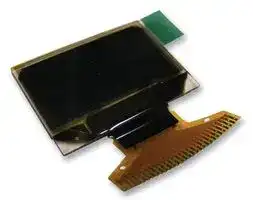
DD-12864WE-4A
Graphic OLED, 128 x 64, White on Black, 2.8V, I2C, Parallel, SPI, 26.7mm x 19.3mm, -30 °C
⚠️ Reference pricing provided. In case of supply shortages, we will connect you with our trusted procurement partners to ensure your project's continuity.
- Manufacturer: DENSITRON
- Product type: Graphic OLED Displays
- Resolution: 128 x 64
- Module Size: 26.7mm x 19.3mm
- Logic Voltage: 2.8V
- Interface Type: I2C, Parallel, SPI
- Display Appearance: White on Black
- Display Construction: TAB
- Operating Temperature Max: 70°C
- Operating Temperature Min: -30°C
| Delivery and price | |
|---|---|
| Units per pack | 250 |
| Price | 11.03 € |
| Current stock | 10+ |
| Lead time | 30 days |
Datasheet

## **OLED DISPLAY MODULE**

## **Product Specification**

|**CUSTOMER**|**Standard**|**Standard**|
|---|---|---|
|**PRODUCT**<br>**NUMBER**|**DD-12864WE-4A**||
|**CUSTOMER**<br>**APPROVAL**||**Date**|


|INTERNAL APPROVALS|INTERNAL APPROVALS|INTERNAL APPROVALS|
|---|---|---|
|Product Mgr|Doc. Control|Electr. Eng|
|**Bazile**<br>**Peter**|**Anthony**<br>**Perkins**|**Rekha**<br>**Mani**|
|Date: 20/10/09|Date: 20/10/09|Date: 20/10/09|


Copyright ©2009 DENSITRON TECHNOLOGIES plc. All rights reserved. – Proprietary Data

## **TABLE OF CONTENTS**

|**1**|**MAIN FEATURES .......................................................................................................... 4**|**MAIN FEATURES .......................................................................................................... 4**|
|---|---|---|
|**2**|**MECHANICAL SPECIFICATION............................................................................... 5**||
||2.1|MECHANICAL CHARACTERISTICS.................................................................... 5|
||2.2|MECHANICAL DRAWING..................................................................................... 6|
|**3**|**ELECTRICAL SPECIFICATION................................................................................. 7**||
||3.1|ABSOLUTE MAXIMUM RATINGS ....................................................................... 7|
||3.2|ELECTRICAL CHARACTERISTICS ...................................................................... 8|
||3.3|INTERFACE PIN ASSIGNMENT............................................................................ 9|
||3.4|BLOCK DIAGRAM ................................................................................................ 11|
||3.5|AC CHARACTERISTICS....................................................................................... 13|
|**4**|**OPTICAL SPECIFICATION....................................................................................... 18**||
||4.1|OPTICAL CHARACTERISTICS............................................................................ 18|
|**5**|**FUNCTIONAL SPECIFICATION .............................................................................. 19**||
||5.1|COMMANDS .......................................................................................................... 19|
||5.2|POWER UP/DOWN SEQUENCE........................................................................... 19|
||5.3|RESET CIRCUIT..................................................................................................... 19|
||5.4|ACTUAL APPLICATION EXAMPLE................................................................... 20|
|**6**|**PACKAGING AND LABELLING SPECIFICATION.............................................. 21**||
||6.1|LABELLING & MARKING.................................................................................... 22|
|**7**|**QUALITY ASSURANCE SPECIFICATION............................................................. 22**||
||7.1|CONFORMITY ....................................................................................................... 22|
||7.2|DELIVERY ASSURANCE ..................................................................................... 22|
||7.3|DEALING WITH CUSTOMER COMPLAINTS.................................................... 26|
|**8**|**RELIABILITY SPECIFICATION .............................................................................. 27**||
||8.1|RELIABILITY TESTS ............................................................................................ 27|
||8.2|LIFE TIME............................................................................................................... 27|
||8.3|FAILURECHECKSTANDARD..................................................................................... 27|
|**9**|**PRECAUTIONS............................................................................................................. 28**||
||9.1|HANDLING................................................................................................................. 28|
||9.2|STORAGE ............................................................................................................... 29|
||9.3|DESIGNING............................................................................................................ 29|
||9.4|DISPOSING................................................................................................................. 29|
||9.5|OTHER....................................................................................................................... 30|


DD-12864WE-4A REV. A Product No. Page ~~ee eee |[[|]]~~ Copyright ©2009 DENSITRON TECHNOLOGIES plc. All rights reserved. – Proprietary Data

Page 2 / 30 ~~|[[|]]~~

## REVISION RECORD

**Rev. Date Page Chapt. Comment ECR no.** ~~i~~ A 20 October 09 First Issue ~~a spot TP spot TP Pot a |eppP o~~ ~~**t** ttTPt[tf]~~ DD-12864WE-4A REV. A Product No. Page 3 / 30 ~~ee |[|]~~ Copyright ©2009 DENSITRON TECHNOLOGIES plc. All rights reserved. – Proprietary Data

## **1 MAIN FEATURES**

|**1 MAIN FEATURES**||
|---|---|
|**ITEM**<br>~~a~~|**CONTENTS**|
|Display Format<br>~~ee~~|128 x 64  Dots<br>~~ee~~|
|Overall Dimensions(W*H*T)<br>~~ee~~<br>~~es~~|26.70×19.26× 1.45 mm<br>~~ee~~<br>~~es~~|
|Active Area(W*H)<br>~~es~~|21.744×10.864 mm<br>~~es~~|
|Viewing Area(W*H)<br>~~a~~<br>~~es~~|23.744 x 12.864 mm<br>~~ee~~|
|Display  Mode<br>~~a~~<br>~~es~~|Passive Matrix (0.96”)<br>~~ee~~|
|Display Colour<br>~~es~~<br>~~ee~~|White Colour<br>~~ee~~<br>~~ee~~|
|Driving Method<br>~~ee~~|1 / 64 duty<br>~~ee~~|
|Driver IC<br>~~ee~~<br>~~ee~~|SSD1306<br>~~ee~~<br>~~ee~~|
|Operating temperature<br>~~ee~~|-30<br>~ +70<br>~~ee~~|
|Storage temperature|-40<br>~ +80|


DD-12864WE-4A

REV. A

Page 4 / 30

Product No. ~~2~~

Copyright ©2009 DENSITRON TECHNOLOGIES plc. All rights reserved. – Proprietary Data

## **2 MECHANICAL SPECIFICATION**

## _**2.1 MECHANICAL CHARACTERISTICS**_

|**ITEM**|**CHARACTERISTIC**|**UNIT**|
|---|---|---|
|Display Format|128 x 64|Dots|
|Overall Dimensions|26.70×19.26× 1.45|mm|
|Viewing Area|23.744 x 12.864|mm|
|Active Area|21.744×10.864|mm|
|Dot Size|0.154×0.154|mm|
|Dot Pitch|0.17×0.17|mm|
|Weight|1.54|g|
|IC Controller/Driver|SSD1306||


DD-12864WE-4A REV. A Product No. Page 5 / 30 ~~ee eee |[|]~~ Copyright ©2009 DENSITRON TECHNOLOGIES plc. All rights reserved. – Proprietary Data

## _**2.2  MECHANICAL DRAWING**_

**==> picture [408 x 15] intentionally omitted <==**

**----- Start of picture text -----**<br>
DD-12864WE-4A  REV. A<br>Product No.  Page  6 / 30<br>**----- End of picture text -----**<br>


Copyright ©2009 DENSITRON TECHNOLOGIES plc. All rights reserved. – Proprietary Data

## **3 ELECTRICAL SPECIFICATION**

## _**3.1 ABSOLUTE MAXIMUM RATINGS**_

|**Item**|**Symbol**|**Min**|**Max**|**Unit**|**Note**|
|---|---|---|---|---|---|
|Supply Voltage for Operation|VDD|-0.3|4|V|Note 1, 2|
|Supply Voltage for Display|VCC|0|11|V||
|Operating Temperature|Top|-30|70|°C||
|Storage Temperature|Tstg|-40|80|°C||
|Static Electricity|Be sure that you are grounded when handling displays.|||||


- Note 1: All the above voltages are on the basis of “VSS=0V”.

- Note 2: When this module is used beyond above absolute maximum ratings, permanent damage to the module may occur. Also for normal operations it’s desirable to use this module under the conditions according to Section 3.2 “Electrical Characteristics” and section 4 “optical characteristic. If this module is used beyond these conditions the module may malfunction and the reliability could deteriorate.

Copyright ©2009 DENSITRON TECHNOLOGIES plc. All rights reserved. – Proprietary Data

## _**3.2 ELECTRICAL CHARACTERISTICS**_

## **3.2.1 DC Characteristics**

|**Characteristics**<br>~~aO~~|**Symbol**<br>~~aO~~|**Conditions**<br>~~aO~~|**Min**<br>~~aO~~|**Typ**|**Max**|**Unit**|
|---|---|---|---|---|---|---|
|Supply Voltage for Logic<br>~~a~~|VDD<br>~~a~~||1.65|2.8|3.3|V|
|Supply Voltage for<br>Display<br>~~a~~<br>~~a~~|VCC<br>~~a~~<br>~~a~~|Note 3|8.5|9|9.5|V|
|Supply Voltage for<br>DC/DC<br>~~ee~~|VBAT<br>~~ee~~|Internal DC/DC<br>~~ee~~|3.5<br>~~ee~~|-<br>~~ee~~|4.2<br>~~ee~~|V<br>~~ee~~|
|Supply Voltage for<br>Display (Generated by<br>Internal DC/DC)<br>~~ee~~|VCC<br>~~ee~~|Note 4<br>~~ee~~|7<br>~~ee~~|7.35<br>~~ee~~|7.5<br>~~ee~~|V<br>~~ee~~|
|High Level Input<br>~~a~~|VIH<br>~~a~~|-<br>~~a~~|0.8xVDD<br>~~a~~|-<br>~~a~~|VDD<br>~~a~~|V<br>~~a~~|
|Low Level Input<br>~~a~~|VIL<br>~~a~~|-<br>~~a~~|0<br>~~a~~|-<br>~~a~~|0.2xVDD<br>~~a~~|V<br>~~a~~|
|High Level Output<br>~~ee~~|VOH<br>~~ee~~|Iout=100μA,3.3<br>MHz<br>~~ee~~|0.9xVDD<br>~~ee~~|-<br>~~ee~~|VDD<br>~~ee~~|V<br>~~ee~~|
|Low Level Output<br>~~a~~|VOL|Iout=100μA,3.3<br>MHz|0|-|0.1xVDD|V|
|Operating Current for<br>VDD<br>~~a~~<br>~~a~~|IDD<br>~~ee~~|-<br>~~ee~~|-<br>~~ee~~|180<br>~~ee~~|300<br>~~ee~~|µA<br>~~ee~~|
|Operating Current for<br>VCC<br>~~|~~<br>~~a~~|ICC<br>|Note 1<br>~~ee~~<br>~~a~~<br>|-<br>~~ee~~<br>~~e~~~~**e**~~<br>|6<br>~~ee~~<br>~~ee~~<br>|7.5<br>~~ee~~<br>~~ee~~<br>|mA<br>~~ee~~<br>~~ee~~<br>|
|||Note 2<br>~~ee~~<br>~~a~~<br>|-<br>~~ee~~<br>~~e~~~~**e**~~<br>|10.8<br>~~ee~~<br>~~ee~~<br>|13.5<br>~~ee~~<br>~~ee~~<br>|mA<br>~~ee~~<br>~~ee~~<br>|
|Operating Current for<br>VBAT(VCC Generated by<br>Internal DC/DC)<br>~~a ~~<br>~~a~~|IBAT<br> ~~eee~~<br>~~ee~~<br>|Note 5<br>~~a~~<br>~~eee~~|-<br>~~e~~~~**e**~~<br>~~eee~~<br>~~ee~~|11.6<br>~~ee~~<br>~~eee~~<br>~~eee~~|14.5<br>~~ee~~<br>~~eee~~<br>~~eee~~|mA<br>~~ee~~<br>~~eee~~<br>~~eee~~|
|||Note 2<br>~~a~~<br>~~eee~~<br>~~e~~<br>~~ee~~<br>|-<br>~~e~~~~**e**~~<br>~~eee~~<br>~~e~~<br>~~ee~~<br>~~**e**e~~<br>|20.9<br>~~ee~~<br>~~eee~~<br>~~eee~~<br>|26.1<br>~~ee~~<br>~~eee~~<br>~~eee~~<br>~~ee~~|mA<br>~~ee~~<br>~~eee~~<br>~~eee~~<br>~~ee~~|
|Sleep Mode Current for<br>VCI<br>~~ee~~<br>~~a~~|IDD, SLEEP<br>~~ee~~<br>~~ee~~<br>|-<br>~~ee~~<br>~~ee~~<br>|-<br>~~ee ~~<br>~~ee~~<br>~~**e**e~~<br>|1<br> ~~eee~~<br>~~ee~~<br>|5<br>~~eee~~<br>~~ee~~<br>~~ee~~|µA<br>~~eee~~<br>~~ee~~<br>~~ee~~|
|Sleep Mode Current for<br>VCC<br>~~a~~|ICC, SLEEP<br>~~ee~~<br>~~e~~|-<br>~~ee~~<br>~~e~~|-<br>~~**e**e~~<br>~~e~~|1<br>|5<br>~~ee~~|µA<br>~~ee~~|


_**3.3 INTERFACE PIN ASSIGNMENT**_

|**_3.3 INTERFACE PIN ASSIGNMENT_**|**_3.3 INTERFACE PIN ASSIGNMENT_**|**_3.3 INTERFACE PIN ASSIGNMENT_**|**_3.3 INTERFACE PIN ASSIGNMENT_**|
|---|---|---|---|
|||||
|**No.**<br>~~ee~~|**Symbol**<br>~~ee~~|**I/O**<br>~~ee~~|**Function**<br>~~ee~~|
|1<br>~~ee~~|N.C. (GND)<br>~~ee~~|-<br>~~ee~~|Reserved Pin (Supporting Pin)<br>The supporting pins can reduce the influences from stresses on<br>the function pins. These pins must be connected to external<br>ground.<br>~~ee~~|
|2<br>~~tf]~~|C2P<br>~~tf]~~|I<br>~~tf]~~|Positive Terminal of the Flying Inverting Capacitor<br>Negative Terminal of the Flying Boost Capacitor<br>The charge-pump capacitors are required between the terminals.<br>They must be floated when the converter is not used.<br>~~a~~|
|3<br>~~fo~~|C2N<br>~~fo~~|I<br>~~fo~~||
|4<br>~~tf]~~|C1P<br>~~tf]~~|I<br>~~tf]~~||
|5<br>~~a~~|C1N<br>~~a~~|I<br>~~a~~||
|6<br>~~a~~|VBAT<br>~~a~~|P<br>~~a~~|Power Supply for DC/DC Converter Circuit<br>This is the power supply pin for the internal buffer of the<br>DC/DC voltage converter. It must be connected to external<br>source when the converter is used. It should be connected to<br>VDDwhen the converter isnotused.<br>~~a~~|
|7<br>~~a~~|N.C.<br>~~a~~|-<br>~~a~~|Reserved Pin<br>The NC pins between function pins are reserved for compatible<br>and flexible design.<br>~~a~~|
|8<br>~~=p~~|VSS<br>~~=p~~|P<br>~~=p~~|Ground of Logic Circuit<br>This is a ground pin. It acts as a reference for the logic pins. It<br>must be connected to external ground.<br>~~=p~~|
|9<br>~~=p~~|VDD<br>~~=p~~|P<br>~~=p~~|Power Supply for Logic<br>This is a voltage supply pin. It must be connected to<br>external source<br>~~=p~~|
|10<br>~~=p~~<br>~~|~~|BS0<br>~~=p~~<br>~~|~~|I<br>~~=p~~<br>~~==~~|Communicating Protocol Select<br>These pins are MCU interface selection input. See the<br>following table:<br>BS0<br>BS1<br>BS2<br>I2C<br>0<br>1<br>0<br>3-wire SPI<br>1<br>0<br>0<br>4-wire SPI<br>0<br>0<br>0<br>68XX-parallel<br>0<br>0<br>1<br>80XX-parallel<br>0<br>1<br>1<br>~~=p~~<br>~~==~~|
|11<br>~~==~~|BS1<br>~~==~~|||
|12<br>~~==~~|BS2<br>~~==~~|||
|13<br>~~Pf~~|CS#<br>~~Pf~~<br>~~|~~|I|Chip Select<br>This pin is the chip select input. The chip is enabled for MCU<br>communication only when CS# is pulled low.|
|14<br>~~Pf~~|RES#<br>~~Pf~~<br>~~|~~|I|Power Reset for Controller and Driver<br>This pin is reset signal input.. When the pin is low, initialization<br>of the chip is executed.|


Copyright ©2009 DENSITRON TECHNOLOGIES plc. All rights reserved. – Proprietary Data

|**No.**|**Symbol**|**I/O**|**Function**|
|---|---|---|---|
|15|D/C#|I|Data/Command Control<br>This pin is Data/Command control pin. When the pin is pulled<br>high, the input at D7~D0 is treated as display data.<br>When the pin is pulled low, the input at D7~D0 will be<br>transferred to the command register. For detail<br>relationship to MCU interface signals, please refer to the<br>Timing Characteristics Diagrams.<br>When the pin is pulled high and serial interface mode is selected,<br>the data at SDIN is treated as data. When it is pulled low, the data<br>at SDIN will be transferred to the command register. In I2C<br>mode, this pinacts as SA0forslave address selection.|
|16|R/W#|I|Read/Write Select or Write<br>This pin is MCU interface input. When interfacing to a<br>68XX-series microprocessor, this pin will be used as<br>Read/Write (R/W#) selection input. Pull this pin to<br>“High” for read mode and pull it to “Low” for write mode.<br>When 80XX interface mode is selected, this pin will be the Write<br>(WR#) input. Data write operation is initiated when this pin is<br>pulledlowandthe CS#is pulledlow.|
|17|E/RD#|I|Read/Write Enable or Read<br>This pin is MCU interface input. When interfacing to a<br>68XX-series microprocessor, this pin will be used as the<br>Enable (E) signal. Read/write operation is initiated when this pin<br>is pulled high and the CS# is pulled low.<br>When connecting to an 80XX-microprocessor, this pin receives<br>the Read (RD#) signal. Data read operation is initiated when this<br>pin is pulledlow and CS#is pulledlow.|
|18~25|D7~D0|I/O|Host Data Input/output Bus<br>These pins are 8-bit bi-directional data bus to be connected to the<br>microprocessor’s data bus. When serial mode is selected, D1 will<br>be the serial data input SDIN and D0 will be the serial clock<br>input SCLK. When I2C mode is selected, D2 & D1 should be<br>tired together and serve as SDAout & SDAin in application and<br>D0isthe serialclock inputSCL.|
|26|IREF|I|Current Reference for Brightness Adjustment<br>This pin is segment current reference pin. A resistor should be<br>connected between this pin and VSS. Set the current lower than<br>12.5μA.|
|27|VCOMH|O|Voltage Output High Level for COM Signal<br>This pin is the input pin for the voltage output high level for<br>COM signals. A capacitor should be connected between this pin<br>and VSS.|
|28|VCC|P|Power Supply for OEL Panel<br>This is the most positive voltage supply pin of the chip. A<br>stabilization capacitor should be connected between this pin and<br>VSS when the converter is used. It must be connected to external<br>source whenthe converter isnot used.|
|29|VLSS||Ground of Analogue Circuit<br>This is an analogue ground pin. It should be connected to VSS<br>externally.|
|30|N.C. (GND)|-|Reserved Pin (Supporting Pin)<br>The supporting pins can reduce the influences from stresses on<br>the function pins. These pins must be connected to external<br>ground.|


Copyright ©2009 DENSITRON TECHNOLOGIES plc. All rights reserved. – Proprietary Data

## _**3.4 BLOCK DIAGRAM**_

## **3.4.1 VCC SUPPLIED EXTERNAL**

MCU Interface Selection: BS0, BS1 and BS2 Pins connected to MCU interface: CS#, RES#, D/C#, R/W#, E/RD#, and D0~D7

C1, C3: 0.1μF C2, C4, C5: 4.7μF R1: 560k Ω , R1 = (Voltage at IREF – VSS) / IREF

DD-12864WE-4A REV. A Product No. Page 11 / 30 ~~| | _— | |~~

Copyright ©2009 DENSITRON TECHNOLOGIES plc. All rights reserved. – Proprietary Data

## **3.4.1 VCC SUPPLIED using internal DC/DC**

MCU Interface Selection: BS0, BS1 and BS2 Pins connected to MCU interface: CS#, RES#, D/C#, R/W#, E/RD#, and D0~D7

C1, C2, C5, C6: 1μF C3, C4: 4.7μF R1: 390kΩ, R1 = (Voltage at IREF – VSS) / IREF

DD-12864WE-4A REV. A Product No. Page 12 / 30 ~~EE — —— | |~~

Copyright ©2009 DENSITRON TECHNOLOGIES plc. All rights reserved. – Proprietary Data

## _**3.5 AC CHARACTERISTICS**_

## **3.5.1 68XX-Series MPU Parallel Interface Timing Characteristics**

**==> picture [440 x 317] intentionally omitted <==**

**----- Start of picture text -----**<br>
||||||
|---|---|---|---|---|
|Characteristics|Symbol|Min|Max|Unit|
|Clock Cycle Time|tcycle|300|-|ns|
|ee|
|Address Setup Time|tAS|0|-|ns|
|eeee|
|Address Hold Time|tAH|0|-|ns|
|ee|
|Write Data Setup Time|tDSW|40|-|ns|
|eeee|
|Write Data Hold Time|tDHW|7|-|ns|
|ee|
|Read Data Hold Time|tDHR|20|-|ns|
|eeee|
|Output Disable Time|tOH|-|70|ns|
|ee|
|Access Time|tACC|-|140|ns|
|Chip Select Low Pulse Width (Read)|120|
|Chip Select Low Pulse Width (Write)|PWCSL|60|-|ns|
|ee|ee|e|ee|
|Chip Select High Pulse Width (Read)|60|
|Chip Select High Pulse Width (Write)|PWCSH|60|-|ns|
|Rise Time|tR|-|40|ns|
|eeee|ee|
|Fall Time|tF|-|40|ns|
|eeee|ee|
|(VDD - VSS = 1.65V, VCI = 2.8V, Ta = 25°C)|

**----- End of picture text -----**<br>


**==> picture [410 x 15] intentionally omitted <==**

**----- Start of picture text -----**<br>
||||
|---|---|---|
|DD-12864WE-4A|REV. A|
|Product No.|Page|13 / 30|

**----- End of picture text -----**<br>


Copyright ©2009 DENSITRON TECHNOLOGIES plc. All rights reserved. – Proprietary Data

## **3.5.2 8080-Series MPU Parallel Interface Timing Characteristics**

**==> picture [421 x 367] intentionally omitted <==**

**----- Start of picture text -----**<br>
||||||
|---|---|---|---|---|
|Characteristics|Symbol|Min|Max|Unit|
|Clock Cycle Time|tcycle|300|-|ns|
|Address Setup Time|tAS|10|-|ns|
|Address Hold Time|tAH|0|-|ns|
|Write Data Setup Time|tDSW|40|-|ns|
|Write Data Hold Time|tDHW|7|-|ns|
|Read Data Hold Time|tDHR|20|-|ns|
|Output Disable Time|tOH|-|70|ns|
|Access Time|tACC|-|140|ns|
|Read Low Time|tPWLR|120|-|ns|
|Write Low Time|tPWLW|60|-|ns|
|Read High Time|tPWHR|60|-|ns|
|Write High Time|tPWHW|60|-|ns|
|Chip Select Setup Time|tCS|0|-|ns|
|Chip Select Hold Time to Read Signal|tCSH|0|-|ns|
|Chip Select Hold Time|tCSF|20|-|ns|
|Rise Time|tR|-|40|ns|
|Fall Time|tF|-|40|ns|

**----- End of picture text -----**<br>


(VDD - VSS 1.65V to 2.8V, Ta = 25°C)

**==> picture [410 x 15] intentionally omitted <==**

**----- Start of picture text -----**<br>
||||
|---|---|---|
|DD-12864WE-4A|REV. A|
|Product No.|Page|14 / 30|

**----- End of picture text -----**<br>


Copyright ©2009 DENSITRON TECHNOLOGIES plc. All rights reserved. – Proprietary Data

## **3.5.3 Serial Interface Timing Characteristics (4-wire SPI)**

|**Characteristics**|**Symbol**|**Min**|**Max**|**Unit**|
|---|---|---|---|---|
|Clock Cycle Time|tcycle|100|-|ns|
|Address Setup Time|tAS|15|-|ns|
|Address Hold Time|tAH|15|-|ns|
|Chip Select Setup Time|tCSS|20|-|ns|
|Chip Select Hold Time|tCSH|10|-|ns|
|Write Data Setup Time|tDSW|15|-|ns|
|Write Data Hold Time|tDHW|15|-|ns|
|Clock Low Time|tCLKL|20|-|ns|
|Clock High Time|tCLKH|20||ns|
|Rise Time|tR|-|15|ns|
|Fall Time|tF|-|15|ns|


(VDD – VSS = 1.65V to 3.3V, Ta = 25°C)

**==> picture [410 x 15] intentionally omitted <==**

**----- Start of picture text -----**<br>
DD-12864WE-4A  REV. A<br>Product No.  Page  15 / 30<br>**----- End of picture text -----**<br>


Copyright ©2009 DENSITRON TECHNOLOGIES plc. All rights reserved. – Proprietary Data

## **3.5.4 Serial Interface Timing Characteristics (3-wire SPI)**

**==> picture [421 x 206] intentionally omitted <==**

**----- Start of picture text -----**<br>
||||||
|---|---|---|---|---|
|Characteristics|Symbol|Min|Max|Unit|
|Clock Cycle Time|tcycle|100|-|ns|
|Chip Select Setup Time|tCSS|20|-|ns|
|Chip Select Hold Time|tCSH|10|-|ns|
|Write Data Setup Time|tDSW|15|-|ns|
|Write Data Hold Time|tDHW|15|-|ns|
|Clock Low Time|tCLKL|20|-|ns|
|Clock High Time|tCLKH|20|ns|
|Rise Time|tR|-|40|ns|
|Fall Time|tF|-|40|ns|

**----- End of picture text -----**<br>


(VDD – VSS = 1.65V to 3.3, Ta = 25°C)

**==> picture [410 x 15] intentionally omitted <==**

**----- Start of picture text -----**<br>
||||
|---|---|---|
|DD-12864WE-4A|REV. A|
|Product No.|Page|16 / 30|

**----- End of picture text -----**<br>


Copyright ©2009 DENSITRON TECHNOLOGIES plc. All rights reserved. – Proprietary Data

## **3.5.1 I2C Timing Characteristics**

**==> picture [440 x 269] intentionally omitted <==**

**----- Start of picture text -----**<br>
||||||
|---|---|---|---|---|
|Characteristics|Symbol|Min|Max|Unit|
|Clock Cycle Time|tcycle|2.5|-|us|
|ee|
|Start Condition Hold Time|tHSTART|0.6|-|us|
|A|
|Data Hold Time (for “SDAOUT” Pin)|0|
|tHD|-|us|
|Data Hold Time (for “SDAIN” Pin)|300|
|——a|
|Data Setup Time|tSD|100|-|us|
|Start Condition Setup Time|
|(Only relevant for a repeated Start|tSSTART|0.6|-|us|
|condition)|
|Stop Condition Setup Time|tSSTOP|0.6|-|us|
|Rise Time for Data and Clock Pin|tR|-|300|ns|
|Fall Time for Data and Clock Pin|tF|-|300|ns|
|Idle Time before a New Transmission|
|tIDLE|1.3|us|
|can Start|
|a|

**----- End of picture text -----**<br>


(VDD – VSS = 1.65V to 3.3, Ta = 25°C)

**==> picture [410 x 15] intentionally omitted <==**

**----- Start of picture text -----**<br>
||||
|---|---|---|
|DD-12864WE-4A|REV. A|
|Product No.|Page|17 / 30|

**----- End of picture text -----**<br>


Copyright ©2009 DENSITRON TECHNOLOGIES plc. All rights reserved. – Proprietary Data

## **4 OPTICAL SPECIFICATION**

## _**4.1 OPTICAL CHARACTERISTICS**_

**==> picture [425 x 227] intentionally omitted <==**

**----- Start of picture text -----**<br>
Characteristics  Symbol  Condition  Min  Typ  Max  Unit<br>— Brightness (Vcc  | | |<br>With Polarizer<br>Supplied  Lbr 80  100  -  cd/m [2]<br>Note 1<br>pt Externally)<br>Brightness (Vcc  |<br>With Polarizer<br>Generated  Lbr Note 2  50  60  -  cd/m [2]<br>pt internally)  |<br>(X)  0.28  0.32  0.36<br>C.I.E.(White)  Without Polarizer  -<br>(Y)  0.29  0.33  0.37<br>soe= |<br>Dark Room<br>CR  -  >2000:1  -  -<br>Contrast<br>| | ff<br>— |<br>Viewing Angle  >160  -  -  degree<br>a ee<br>**----- End of picture text -----**<br>


Optical measurement taken at VDD = 2.8V, VCC = 9V & 7.35V Software configuration follows Section 5.4 Initialization.

DD-12864WE-4A REV. A Product No. Page 18 / 30 ~~ee eee |[|]~~

Copyright ©2009 DENSITRON TECHNOLOGIES plc. All rights reserved. – Proprietary Data

## **5 FUNCTIONAL SPECIFICATION**

## _**5.1 COMMANDS**_

Please refer to the Technical Manual for the SSD1306

## _**5.2 POWER UP/DOWN SEQUENCE**_

To protect panel and extend the panel lifetime, the driver IC power up/down routine should include a delay period between high voltage and low voltage power sources during turn on/off. It gives the panel enough time to complete the action of charge and discharge before/after the operation.

## **5.2.1 POWER UP SEQUENCE**

- VDD ON VCC ON Display On

- 1. Power up VDD

2. Send Display off command                                VCC

3. Initialization

   4. Clear Screen

5. Power up VCC

6. Delay 100ms                                                VCI/VDDIO

- (When VCC  is stable)

7. Send Display on command                     VSS/Ground

## **5.2.2 POWER DOWN SEQUENCE**

Display off   VCC off VDD off

1. Send Display off command

2. Power down VCC                                                VCC

3. Delay 100ms

- (When VCC is reach 0 and panel is

completely discharges)                             VDDIO

4. Power down VDDIO VSS/Ground

## _**5.3 RESET CIRCUIT**_

When RES# input is low, the chip is initialized with the following status:

1. Display is OFF

2. 128×64 Display Mode

3. Normal segment and display data column and row address mapping (SEG0 mapped to column address 00h and COM0 mapped to row address 00h)

4. Shift register data clear in serial interface

5. Display start line is set at display RAM address 0

6. Column address counter is set at 0

7. Normal scan direction of the COM outputs

8. Contrast control register is set at 7Fh

9. Normal display mode (Equivalent to A4h command) DD-12864WE-4A REV. A Product No. Page 19 / 30 ~~ee eee |[|]~~

Copyright ©2009 DENSITRON TECHNOLOGIES plc. All rights reserved. – Proprietary Data

## _**5.4 ACTUAL APPLICATION EXAMPLE**_

Command usage and explanation of an actual example

Written Value for Parameters

- (1) VCC Supplied Externally

- (2) VCC Generated by Internal DC/DC Circuit

If the noise is accidentally occurred at the displaying window during the operation, please reset the display in order to recover the display function.

DD-12864WE-4A REV. A Product No.

**==> picture [68 x 9] intentionally omitted <==**

**----- Start of picture text -----**<br>
Page  20 / 30<br>**----- End of picture text -----**<br>


Copyright ©2009 DENSITRON TECHNOLOGIES plc. All rights reserved. – Proprietary Data

## **6 PACKAGING AND LABELLING SPECIFICATION**

**==> picture [410 x 15] intentionally omitted <==**

**----- Start of picture text -----**<br>
||||
|---|---|---|
|DD-12864WE-4A|REV. A|
|Product No.|Page|21 / 30|

**----- End of picture text -----**<br>


Copyright ©2009 DENSITRON TECHNOLOGIES plc. All rights reserved. – Proprietary Data

## _**6.1 LABELLING & MARKING**_

DENSITRON DD-12864WE-4A TW YY MM

## **7 QUALITY ASSURANCE SPECIFICATION**

## _**7.1 CONFORMITY**_

The performance, function and reliability of the shipped products conform to the Product Specification.

## _**7.2 DELIVERY ASSURANCE**_

## **7.2.1 DELIVERY INSPECTION STANDARDS**

IPC-AA610, class 2 electronic assembly’s standard

## **7.2.2 Zone definition**

**==> picture [85 x 52] intentionally omitted <==**

**----- Start of picture text -----**<br>
A   Active<br>B   Outside Active<br>**----- End of picture text -----**<br>


## **7.2.3 Visual inspection**

Test and measurement to be conducted under following conditions

Temperature: 23±5 ℃ Humidity: 55±15%RH Fluorescent lamp: 30 W Distance between the Panel & Eyes of the Inspector: ≧ 30cm Distance between the Panel & the lamp: ≧ 50cm DD-12864WE-4A REV. A Product No. Page 22 / 30 ~~ee eee |[|]~~

Copyright ©2009 DENSITRON TECHNOLOGIES plc. All rights reserved. – Proprietary Data

## **7.2.4 Standard of appearance inspection**

Units: mm

**Class Item Criteria** ~~ee~~ Minor Packing & Outside & inside package Presence of product no., lot no., quantity Critical Label Product must not be mixed with others and quantity must not be different from ~~A~~ that indicated on the label ~~a~~ Major Dimension Product dimensions must be according to specification and drawing Major Electrical Product electrical characteristics must be according to specification Critical OLED Missing lines, short circuits or wrong patterns on OLED display are not ~~a~~ Display allowed Minor Black spot, Round type: as per following drawing white spot, ∅ = (X+Y)/2 dust Acceptable quantity Size Zone A Zone B ∅ <0.1 Any number Y 0.1< ∅ <0.2 3 Any number 0.2< ∅ <0.25 1 X ~~ae~~ 0.25< ∅ 0 Line type: as per following drawing Acceptable quantity W Length Width Zone A Zone B - - W≤0.05 Any number L≤2.0 W≤0.1 3 Any number L>2.0 0 ~~——— a~~ L Total acceptable quantity: 3 Minor Polariser Scratch on protective film is permitted ~~a~~ scratch Scratch on polariser: same as No. 1 Minor Polariser ∅ = (X+Y)/2 bubble Acceptable quantity Size Zone A Zone B ∅ <0.5 Any number Any number Y ∅ >0.5 0 X

DD-12864WE-4A REV. A Product No. Page 23 / 30 ~~ee~~

Copyright ©2009 DENSITRON TECHNOLOGIES plc. All rights reserved. – Proprietary Data

|||||||||||||||||
|---|---|---|---|---|---|---|---|---|---|---|---|---|---|---|---|
|~~a~~|**Class**<br>~~a~~||**Item**<br>~~a~~|**Criteria**||||||||||||
|Minor|Minor||Segment<br>deformation|1b. Pin hole on dot matrix display<br>Acceptable quantity<br>Size<br>a,b<<br>(a+b)/2≤0.1<br>0.5<∅<<br>Total acceptable quantity: 7<br>2. Segments / dots with different width||||||||||||
||||||2. Segments / dots with different width|||||||||||
||||||||||Acceptable|||||||
|||||Acceptable<br>a≥b<br>a<b<br>3. Alignment layer defect<br>∅= (a+b)/2<br>Acceptable<br>Size<br> ∅≤0.4<br>0.4<∅≤1.0<br>1.0<∅≤1.5<br>1.5<∅≤2.0<br>Total acceptable quantity: 7|Acceptable<br>a≥b<br>a<b<br>3. Alignment layer defect||||Acceptable<br>a≥b||Acceptable|Acceptable<br>a/b≤4/3||a/b≤4/3||
||||||||||a<b|||a/b||a/b>4/3||
|||||||||||||||||
||||||||||Acceptable||tablequantity|||||
||||||||||Size|||||||
||||||||||∅≤0.4|||Anynumber||||
||||||||||0.4<∅≤1.0|||5||||
||||||||||∅|||3||||
|||||||1.0<∅≤1.5<br>1.5<∅≤2.0<br>Total acceptable quantity: 7|||1.0<∅≤1.5|||3||||
||||||||||1.5<∅≤2.0|||2||||
||||||||||||Total acceptable quantity: 7|||||
|Minor||Minor|Panel|||||||||||||
||||Chipping|X ≤ 1/6 Panel length<br>Y ≤ 1<br>Z ≤ T||||||||||||
|||||||||||||||||
|Minor|||Panel<br>Cracking|Cracks not allowed||Cracks not allowed||||||||||
||||||||Cracks not allowed|||||||||
||||||||Cracks not allowed|||||||||
|Minor<br>~~i~~|||Cupper<br>exposed<br>(pin or film)<br>~~i~~|Not allowed if visible by eye inspection<br>|||Not allowed if visible by eye inspection<br>|||||||||
|Minor<br>~~ee~~|||Film or<br>Trace<br>Damage<br>~~ee~~|Not allowed if affect electrical function<br>~~ee~~||||||||||||


Copyright ©2009 DENSITRON TECHNOLOGIES plc. All rights reserved. – Proprietary Data

**==> picture [426 x 457] intentionally omitted <==**

**----- Start of picture text -----**<br>
||||||||
|---|---|---|---|---|---|---|
|Class|Item|Criteria|
|Minor|Contact|
|Lead Twist|Not allowed|1\ii|¢/|‘/a|SSvi\/x‘—n,iN:11|TwisteD|Leap|
|\\TR‘‘|._|y,|y;|///|
|Minor|Contact|
|eo|
|Lead|Not allowed|y;“|“A.|_BROKEN|LEAD|
|Broken|Hri4f/|‘‘\(|
|H'|J\|
|\\|i;|
|\|J’|
|Sa|a|
|Minor|Contact|
|Lead Bent|Not allowed if bent lead causes|ii(Fo.//y|voLenn|SHoRTIN|\|sy\\\.\\|
|short circuit|1|\|'|
|\|!|
|‘‘‘|NS|S|7y//;|
|Not allowed if bent lead extends horizontally more than 50% of its width|{i\I‘i\/\/‘éa/“.|SNaw,oy’71\y/\/1\1i\|
|_|ue|”|
|Minor|Colour|Level of sample for approval set as limit sample|
|uniformity|
|Major|PCB|No unmelted solder paste should be present on PCB|
|Critical|Cold solder joints, missing solder connections, or oxidation are not allowed|
|Minor|No residue or solder balls on PCB are allowed|
|Critical|Short circuits on components are not allowed|
|Minor|Tray|Size|Quantity|
|particles|∅|<0.2|Any number|
|On tray|
|∅|>0.25|4|
|∅≥|0.25|2|
|On display|L = 3|1|

**----- End of picture text -----**<br>


**==> picture [232 x 13] intentionally omitted <==**

**----- Start of picture text -----**<br>
|||
|---|---|
|DD-12864WE-4A|REV. A|
|Product No.|

**----- End of picture text -----**<br>


Page 25 / 30

Copyright ©2009 DENSITRON TECHNOLOGIES plc. All rights reserved. – Proprietary Data

## _**7.3 DEALING WITH CUSTOMER COMPLAINTS**_

## **7.3.1 Non-conforming analysis**

Purchaser should supply Densitron with detailed data of non-conforming sample. After accepting it, Densitron should complete the analysis in two weeks from receiving the sample.

If the analysis cannot be completed on time, Densitron must inform the purchaser.

## **7.3.2 Handling of non-conforming displays**

If any non-conforming displays are found during customer acceptance inspection which Densitron is clearly responsible for, return them to Densitron.

Both Densitron and customer should analyse the reason and discuss the handling of nonconforming displays when the reason is not clear.

Equally, both sides should discuss and come to agreement for issues pertaining to modification of Densitron quality assurance standard.

DD-12864WE-4A REV. A Product No. ~~ee eee~~

Page 26 / 30 ~~|[|]~~

Copyright ©2009 DENSITRON TECHNOLOGIES plc. All rights reserved. – Proprietary Data

## **8 RELIABILITY SPECIFICATION**

## _**8.1 RELIABILITY TESTS**_

|**_8.1 RELIABILITY TESTS_**|**_8.1 RELIABILITY TESTS_**|**_8.1 RELIABILITY TESTS_**|
|---|---|---|
||||
|**Test Item**|**Test Condition**|**Evaluation and assessment**|
|High Temperature Operation|70°C±2, 240 hours|The operational functions<br>work|
|Low Temperature Operation|-30°C±2, 240 hours||
|High Temperature Storage|80°C±2, 240 hours||
|Low Temperature Storage|-40°C±2, 240 hours||
|High Temperature & High<br>Humidity Storage(Operation)|60°C±2, 90%RH, 120 hours||
|Thermal Shock|-40°C to<br>85°C, 24 cycles 1 Hour||


- The samples used for above tests do not include polarizer.

- No moisture condensation is observed during tests.

## **8.1.1 FAILURE CHECK STANDARD**

After the completion of the described reliability test, the samples were left at room temperature for 2 hrs prior to conducting the failure teat at 23±5 °C;55±15% RH

## _**8.2 LIFE TIME**_

|**_8.2 LIFE TIME_**|**_8.2 LIFE TIME_**|
|---|---|
|||
|**Item**|**Description**|
|1|Function, performance, appearance, etc. shall be free from remarkable deterioration<br>more than 10,000 hours under ordinary operating  conditions of room temperature<br>(25±10 °C), normal humidity (50% RH), and in area not exposed to direct sunlight.<br>Storage Life time is 20,000 hr under room temperature (25±10 °C), normal humidity<br>(50% RH)|
|2|End of lifetime is specified as 50% of initial brightness.|


## _**8.3 Failure Check Standard**_

After the completion of the described reliability test, the samples were left at room temperature for 2 hrs prior to conducting the failure test at 23±5°C; 55±15% RH.

DD-12864WE-4A REV. A Product No. Page 27 / 30 ~~ee eee |[|]~~

Copyright ©2009 DENSITRON TECHNOLOGIES plc. All rights reserved. – Proprietary Data

## **9 PRECAUTIONS**

## _**9.1 Handling**_

## _Safety_

If the panel breaks, be careful not to get the organic substance in your mouth or in your eyes. If the organic substance touches your skin or clothes, wash it off immediately using soap and plenty of water.

## _Mounting and Design_

Place a transparent plate (e.g. acrylic, polycarbonate or glass) on the display surface to protect the display from external pressure. Leave a small gap between the transparent plate and the display surface.

Design the system so that no input signal is given unless the power supply voltage is applied.

## _Caution during OLED cleaning_

Lightly wipe the display surface with a soft cloth soaked with Isopropyl alcohol, Ethyl alcohol or Trichlorotriflorothane.

Do not wipe the display surface with dry or hard materials that will damage the polariser surface. Do not use aromatic solvents (toluene and xylene), or ketonic solvents (ketone and acetone).

## _Caution against static charge_

As the display uses C-MOS LSI drivers, connect any unused input terminal to VDD or VSS. Do not input any signals before power is turned on.

Also, ground your body, work/assembly table and assembly equipment to protect against static electricity.

## _Packaging_

Displays use OLED elements, and must be treated as such. Avoid strong shock and drop from a height.

To prevent displays from degradation, do not operate or store them exposed directly to sunshine or high temperature/humidity.

## _Caution during operation_

It is indispensable to drive the display within the specified voltage limit since excessive voltage shortens its life.

## _Other Precautions_

When a display module is operated for a long of time with fixed pattern may remain as an after image or slight contrast deviation may occur.

Nonetheless, if the operation is interrupted and left unused for a while, normal state can be restored. Also, there will be no problem in the reliability of the module.

## _Storage_

Store the display in a dark place where the temperature is 25°C ± 10°C and the humidity below 50%RH.

Store the display in a clean environment, free from dust, organic solvents and corrosive gases. Do not crash, shake or jolt the display (including accessories).

DD-12864WE-4A REV. A Product No. Page 28 / 30 ~~ee eee |[|]~~

Copyright ©2009 DENSITRON TECHNOLOGIES plc. All rights reserved. – Proprietary Data

## _**9.2 STORAGE**_

When storing OEL display modules, put them in static electricity preventive bags avoiding exposure to direct sun light nor to lights of fluorescent lamps, etc. and, also, avoiding high temperature and high humidity environments or low temperature (less than 0°C) environments. (We recommend you to store these modules in the packaged state when they were shipped from Factory.)

At that time, be careful not to let water drops adhere to the packages or bags nor let dewing occur with them.

If electric current is applied when water drops are adhering to the surface of the OEL display module, when the OEL display module is being dewed or when it is placed under high humidity environments, the electrodes may be corroded and be careful about the above.

## _**9.3 DESIGNING**_

The absolute maximum ratings are the ratings which cannot be exceeded for OEL display module, and if these values are exceeded, panel damage may be happen.

To prevent occurrence of malfunctioning by noise: pay attention to satisfy the VIL and VIH specifications and, at the same time, to make the signal line cable as short as possible.

We recommend you to install excess current preventive unit (fuses, etc.) to the power circuit (VCI). (Recommend value: 0.5A)

Pay sufficient attention to avoid occurrence of mutual noise interference with the neighbouring devices.

As for EMI, take necessary measures on the equipment side basically.

When fastening the OEL display module, fasten the external plastic housingsection.

If power supply to the OEL display module is forcibly shut down by such errors as taking out the main battery while the OEL display panel is in operation, we cannot guarantee the quality of this OEL display module.

The electric potential to be connected to the rear face of the IC chip should be as follows: SSD1351 * Connection (contact) to any other potential than the above may lead to rupture of the IC.

## _**9.4 Disposing**_

Request the qualified companies to handle industrial wastes when disposing of the OEL display modules. Or, when burning them, be sure to observe the environmental and hygienic laws and regulations.

DD-12864WE-4A REV. A Product No. Page 29 / 30 ~~ee eee |[|]~~

Copyright ©2009 DENSITRON TECHNOLOGIES plc. All rights reserved. – Proprietary Data

## _**9.5 Other**_

When an OEL display module is operated for a long of time with fixed pattern may remain as an after image or slight contrast deviation may occur. Nonetheless, if the operation is interrupted and left unused for a while, normal state can be restored. Also, there will be no problem in the reliability of the module.

To protect OEL display modules from performance drops by static electricity rapture, etc., do not touch the following sections whenever possible while handling the OEL display modules.

* Pins and electrodes

* Pattern layouts such as the COF

With this OEL display module, the OEL driver is being exposed. Generally speaking, semiconductor elements change their characteristics when light is radiated according to the principle of the solar battery. Consequently, if this OEL driver is exposed to light, malfunctioning may occur.

* Design the product and installation method so that the OEL driver may be shielded from light in actual usage.

* Design the product and installation method so that the OEL driver may be shielded from light during the inspection processes.

Although this OEL display module stores the operation state data by the commands and the indication data, when excessive external noise, etc. enters into the module, the internal status may be changed. It therefore is necessary to take appropriate measures to suppress noise generation or to protect from influences of noise on the system design.

We recommend you to construct its software to make periodical refreshment of the operation statuses (re-setting of the commands and re-transference of the display data) to cope with catastrophic noise.

DD-12864WE-4A REV. A Product No. ~~ee eee~~

Page 30 / 30 ~~|[|]~~

Copyright ©2009 DENSITRON TECHNOLOGIES plc. All rights reserved. – Proprietary Data
Updated at February 9, 2023
About Novapart
Novapart is a B2B electronic component broker specialising in stock shortages and cost reduction. We source hard-to-find parts and identify compliant alternatives across a catalogue of 410,000+ components from 500+ manufacturers.
Learn more →Stock Shortage Specialist
When a component is unavailable, discontinued or has an unacceptable lead time, we tap into our network of vetted European and Asian distributors to source what you need — without compromising on quality or traceability.
Request a quote →Compliant Alternatives
We identify pin-to-pin, electrically equivalent substitutes that meet the same certifications (RoHS, AEC-Q100, REACH) as your original specification — validated against datasheets, not just part numbers. Often at a lower cost.
BOM Analysis service →