
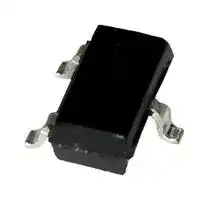


BC817-25W,115
Bipolar (BJT) Single Transistor, NPN, 45 V, 500 mA, 200 mW, SOT-323, Surface Mount
- Manufacturer: NEXPERIA
- Product type:
- Transistor Polarity:NPN; Collector Emitter Voltage V(br)ceo:45V; Transition Frequency ft:100MHz; Power Dissipation Pd:200mW; DC Collector Current:500mA; DC Current Gain hFE:160hFE; T
- MSL: MSL 1 - Unlimited
- SVHC: No SVHC (25-Jun-2025)
- No. of Pins: 3Pins
- Product Range: BC817W Series
- Qualification: -
- Power Dissipation: 200mW
- Transistor Mounting: Surface Mount
- Transistor Polarity: NPN
- Transition Frequency: 100MHz
- Transistor Case Style: SOT-323
- DC Current Gain hFE Min: 160hFE
- Operating Temperature Max: 150°C
- Continuous Collector Current: 500mA
- Collector Emitter Voltage Max: 45V
| Delivery and price | |
|---|---|
| Units per pack | 1500 |
| Price | 0.042 € |
| Current stock | 10+ |
| Lead time | 30 days |

**Application note**

**==> picture [66 x 66] intentionally omitted <==**

## **AN10393**

**BISS transistors and MEGA Schottky rectifiers - improved technologies for discrete semiconductors**

**Rev. 01.00 — 01 September 2005**

## **Document information**

|**Info**|**Content**|
|---|---|
|**Keywords**|BISS transistor, MEGA Schottky rectifier, DC/DC converter, Loadswitch,|
||Blocking diode, Medium power, PBSS4240V, PBSS4350T, PBSS4320T,|
||PMEG2010AEJ, PMEG1020EJ, PMEG6010AED, SOD323F, SOT666|
|**Abstract**|This application note provides detailed information on recent product|
||developments in the area of bipolar transistors and Schottky rectifiers|
||which enable the designer to save cost and to improve the performance|
||of electronic circuits.|


**AN10393**

## **Philips Semiconductors**

**BISS transistors and MEGA Schottky rectifiers - improved technologies for discrete semiconductors**

|**Revision**|**history**||
|---|---|---|
|**Rev**|**Date**|**Description**|
|01|20050901|Initial document|


## **Contact information**

For additional information, please visit: http://www.semiconductors.philips.com

For sales office addresses, please send an email to: sales.addresses@www.semiconductors.philips.com

© Koninklijke Philips Electronics N.V. 2005. All rights reserved.

<12NC> **Application note**

**Rev. 01.00 — 01 September 2005**

**2 of 15**

**AN10393**

## **Philips Semiconductors**

**BISS transistors and MEGA Schottky rectifiers - improved technologies for discrete semiconductors**

## **1. Introduction**

Compared to integrated circuits, progresses in the development of discrete semiconductors are not well known. Optimized design results in lower loss and considerably improved thermal conductivity with discrete devices, as is demonstrated in the example of transistors with low collector-emitter saturation voltage and Schottky rectifiers with very low forward voltage drop.

The collector power dissipation PC = VCEsat x IC is a major contributor to losses in bipolar transistors. Since the collector current IC is predefined by the application, the device manufacturer has only the option to reduce the losses in the transistor by reducing the collector-emitter saturation voltage VCEsat. With so-called low VCEsat transistors, this is essentially achieved by the use of the mesh-emitter technology.

With the mesh-emitter design, the emitter series resistance is reduced by spreading the emitter region over a much larger area and by contacting it from the base as a mesh. This results in an evenly driven base, providing a more efficient use of the active emitter area on the die and thus a significantly lower collector-emitter saturation voltage (Fig 1).

**==> picture [74 x 16] intentionally omitted <==**

**----- Start of picture text -----**<br>
| Berto OeeAO ene<br>**----- End of picture text -----**<br>


a. b.

**Fig 1. The die layout of a mesh-emitter transistor (a.) clearly shows the characteristic finger structure. Compared to the typical die layout of a conventional transistor (b.), a mesh-emitter transistor’s finger structure and base contact holes provide a much larger active area.**

Enlarging the die area within the limits provided by the respective package allows a further reduction of the occurring losses. The development of new lead frames and the use of 6pin packages (e.g. SOT457, SOT666) also allow a better heat dissipation (Fig 2).

**==> picture [485 x 114] intentionally omitted <==**

**----- Start of picture text -----**<br>
pemm |sd S e ececesee e aredred SSE,Pee pe e recictcieeearaacaestr e s,<br>be e e CaeSe fermeescaes fk nerereSeS e re:sol Se e eccicentsg Soon. p ishctceghstatiraeieare cied<br>Paes earl ae pee ses eT eetatatetets statatatatatats<br>Bee 4se ipecececes pravanat| eeii e teleiesec e giestt-e- eitietereceeereseereseceelSoSH<br>BESO | ss PIE<br>a.   b.   c.<br>Fig 2. The standard lead frame of the SOT23 package (a.) limits the silicon area to about 0.5 mm [2] . The lead<br>frame of the SOT23 MaxSi (b.) permits to double the die area, and the SOT457 (c.) even provides a usable<br>Si area of 1.85 mm [2] .<br>**----- End of picture text -----**<br>


© Koninklijke Philips Electronics N.V. 2005. All rights reserved. **3 of 15**

<12NC> **Application note**

**Rev. 01.00 — 01 September 2005**

**AN10393**

## **Philips Semiconductors**

**BISS transistors and MEGA Schottky rectifiers - improved technologies for discrete semiconductors**

## **2. Higher-performance transistors in smaller packages**

The mesh-emitter technology has enabled the development of more powerful and, at the same time, smaller transistors that Philips identifies by the abbreviation BISS (Breakthrough In Small Signal). The comparison between the conventional 500 mA transistor BC817-40 in a SOT23 package and the BISS transistor PBSS4240V in a SOT666 package (Table 1:) clearly shows the advantages of the new design: smaller mounting surface, higher maximum collector current IC max, higher maximum power dissipation Ptot, lower saturation voltage VCEsat and higher current gain hFE even at high collector current.

**Table 1: The BISS transistors have a smaller footprint – with a 42 % smaller package size – while providing improved characteristics due to the mesh-emitter technology.**

|||
|---|---|
|**BC817-40**<br>**PBSS4240V**||
|Package<br>SOT23<br>SOT666||
|Mounting area<br>8.2 mm²<br>4.8 mm²||
|IC max<br>0.5 A<br>2 A||
|VCEO max<br>45 V<br>40 V||
|Ptot<br>0.25 W<br>0.3 W||
|VCEsat maxat IC= 0.5 A; IB= 50 mA<br>700 mV<br>100 mV||
|VCEsat maxat IC= 2 A; IB= 200 mA<br>–<br>400 mV||
|hFE minat IC= 0.5 A<br>40<br>300||


These improved characteristics of the mesh-emitter transistor PBSS4240V are the result of the combination and optimization of all parameters that were mentioned in the previous paragraph. For example, the voltage drop at IC = 0.5 A is only 80 mV for the PBSS4240V, compared to 200 mV for the BC817 (Fig 3). Multiplication of these values by the collector current yields values for the collector dissipation of PC = 40 mW compared to PC = 100 mW, i.e. a reduction by 60 % due to the mesh-emitter design. The difference is even greater for the resulting temperature increase (∆T = 17 K compared to ∆T = 50 K), since the lower heat transfer resistance Rth of the SOT666 package adds to the effect (∆T = PC x Rth).

Users can operate the BISS transistor at a higher ambient temperature without exceeding the maximum allowable die temperature of 150 °C, or they can benefit from the lower heat generation on the board. The lower power dissipation of the transistor also helps extend the operating time of battery-powered devices. To further reduce the power dissipation, transistors with lower VCE0 (e.g. 20 V) can be used, which provide an even lower collector-emitter saturation voltage (e.g. PBSS4320T).

Typical for bipolar transistors is the current gain drop at high collector currents. With mesh-emitter transistors, this characteristic is only present at significantly higher currents, due to their higher collector current capability. Fig 4 illustrates this in a comparison of the types mentioned above. At a collector current of IC = 0.5 A, the current gain of the BC817-40 is already reduced to 34 % of its original value, while that of the much smaller PBSS4240V is still at 75 %. If the PBSS4350T is used (same package as BC817-40) the current gain is only reduced to 90 %.

© Koninklijke Philips Electronics N.V. 2005. All rights reserved.

<12NC>

**Rev. 01.00 — 01 September 2005**

**Application note**

**4 of 15**

**AN10393**

## **Philips Semiconductors**

**BISS transistors and MEGA Schottky rectifiers - improved technologies for discrete semiconductors**

**==> picture [497 x 624] intentionally omitted <==**

**----- Start of picture text -----**<br>
500<br>100<br>BC817-40<br>T  = 25 °C PBSS4240V<br>j<br>I  / I  = 10<br>C B<br>typical values<br>10<br>5<br>1 10 100 1000 3000<br>IC [mA]<br>Fig 3. The reduced saturation voltage VCEsat and the high collector current capability of the mesh-emitter transi-<br>stor (PBSS4240V) as compared to a conventional transistor (BC817-40) enables 2 A continuous collector<br>current and 70 mV collector-emitter saturation voltage in a SOT666 package comparable to 0603 resistors.<br>120<br>100<br>80<br>PBSS4240V<br>60<br>BC817-40<br>40 Tj = 25 °C<br>V  = 1 V<br>CE<br>typical values<br>20<br>1 10 100 500 1000 3000<br>IC [mA]<br>Fig 4. Mesh-emitter transistors (PBSS4240V) provide a higher current gain than conventional transistors<br>(BC817-40).<br> [mV]<br>CEsat<br>V<br> [%]<br>FE<br>normalised h<br>**----- End of picture text -----**<br>


© Koninklijke Philips Electronics N.V. 2005. All rights reserved.

<12NC> **Application note**

**Rev. 01.00 — 01 September 2005**

**5 of 15**

**AN10393**

**Philips Semiconductors**

**BISS transistors and MEGA Schottky rectifiers - improved technologies for discrete semiconductors**

## **3. BISS transistors in SOT23 package are comparable to medium power transistors**

With conventional transistor designs, the die size that is often required for the necessary collector current limits further miniaturization. For example, transistors with collector currents > 0.5 A are not feasible in a SOT23 package using the traditional design. If, on the other hand, the mesh-emitter technology is used, transistors in this package can already provide collector currents of more than 2 A. Therefore, a mesh-emitter transistor (SOT23) can replace a much larger transistor in an SOT223 package at comparable or sometimes even better characteristics. Table 2: compares the BISS transistors PBSS4350T and PBSS4320T with a medium-power transistor BDP31.

**Table 2: The much smaller BISS transistors in SOT23 packages can replace conventional medium power transistors whose package is more than five times larger (SOT223).**

||**BDP31**|**PBSS4350T**|**PBSS4320T**|
|---|---|---|---|
|Package|SOT223 (SC-73)|SOT23|SOT23|
|Mounting area|46 mm²|8.2 mm²|8.2 mm²|
|IC max|3 A|2 A|2 A|
|ICRP|–|3 A|3 A|
|VCEO max|45 V|50 V|20 V|
|Ptot|1.35 W|0.3 W|0.3 W|
|VCEsat maxat IC= 0.5 A; IB= 50 mA|300 mV|80 mV|70 mV|
|VCEsat maxat IC= 2 A; IB= 200 mA|700 mV|260 mV|210 mV|
|hFEmin at IC= 2 A|20|200|200|


A detailed curve of the collector-emitter saturation voltage of the three transistors is shown in Fig 5. The saturation voltage of the mesh-emitter transistors at a collector current of 1 A is about 40 % to 50 % lower than with a conventional transistor although it is driven only with 50 mA (IC / IB = 20) instead of 100 mA (IC / IB = 10). An SOT23 transistor requires less than 20 % board space than a SOT223 type. Mounted on a ceramic substrate, the power dissipation of a transistor in a SOT23 package can even be increased to 625 mW. Suitable alternatives are transistors in 6pin packages (e.g. SOT457) that can withstand a maximum power dissipation of 600 mW with a collector heatsink area of 1 cm².

© Koninklijke Philips Electronics N.V. 2005. All rights reserved.

<12NC>

**Rev. 01.00 — 01 September 2005**

**Application note**

**6 of 15**

**AN10393**

## **Philips Semiconductors**

**BISS transistors and MEGA Schottky rectifiers - improved technologies for discrete semiconductors**

**==> picture [482 x 313] intentionally omitted <==**

**----- Start of picture text -----**<br>
300<br>100<br>50<br>BDP31  ( I C/ I B = 10)<br>10<br>PBSS4350T  ( I C/ I B = 20)<br>T  = 27 °C<br>a<br>PBSS4320T  ( I C/ I B = 20) typical values<br>3<br>1 10 100 1000 3000<br>IC [mA]<br>Fig 5. The reduced saturation voltage VCEsat of the mesh-emitter transistor (PBSS-types) as compared to a con-<br>ventional transistor (BC817) significantly reduces the collector power dissipation. Mesh-emitter transistors<br>produce less heat, allow high collector currents and can therefore replace medium power transistors.<br> [mV]<br>CEsat<br>V<br>**----- End of picture text -----**<br>


## **4. Transistors with low saturation voltage cost less**

Since the overall costs of a transistor are largely influenced by the costs of its package, a transistor in a SOT23 package costs much less than a transistor in a bulkier SOT223 package. Users can further reduce costs by replacing expensive MOSFETs with meshemitter transistors. However, this will require some further considerations:

The resistance RCEsat, which is obtained by dividing VCEsat by IC, is directly comparable to the on resistance RDS(on) of the MOSFET. But, a significant difference becomes obvious when comparing the drive modes: Bipolar transistors are current-controlled while MOSFETs are voltage-controlled, which results in some additional base power dissipation for the former ones. An advantage is the lower base-emitter saturation voltage of about 1 V, which is especially effective in the widely used circuits with supply voltages below 3.3 V. MOSFETs exhibit a higher RDS(on) at low gate-source voltages.

© Koninklijke Philips Electronics N.V. 2005. All rights reserved.

<12NC>

**Rev. 01.00 — 01 September 2005**

**Application note**

**7 of 15**

**AN10393**

## **Philips Semiconductors**

**BISS transistors and MEGA Schottky rectifiers - improved technologies for discrete semiconductors**

## **5. Application: Low-side switch**

The advantages of higher efficiency, reduced temperature increase and available output voltage are demonstrated in the example of the low-side switch shown in Fig 6. The supply voltage VCC is 3.3 V, the load current is ILoad = IC = 0.5 A. The conventional transistor BC817 with the mesh-emitter transistor PBSS4320T, both in a SOT23 package are compared. The transistors are characterized by the values given in Table 1: and Table 2:.

**==> picture [142 x 106] intentionally omitted <==**

**----- Start of picture text -----**<br>
VCC<br>RLoad VLoad<br>S1 RB ILoad<br>Tr1<br>IB<br>VBEsat<br>**----- End of picture text -----**<br>


**Fig 6. A smaller package, lower power dissipation, higher efficiency: BISS transistors offer advantages over the conventional transistors, as can be illustrated with this simple switch application.**

The temperature increase ∆T is calculated from the total power dissipation Ptot and the heat transfer resistance Rth:

- ∆T = Ptot x Rth = (PC + PB) x Rth

   - = (VCEsat x IC + VBEsat x IB) x Rth

∆T is calculated as 202 K for the transistor BC817 and as 38 K for the BISS transistor PBSS4320T, assuming standard mounting conditions without additional heatsink areas. At an ambient temperature of 25 °C, this means that the transistor BC817 cannot be used under these conditions because the maximum permitted junction temperature of 150 °C would be exceeded. While a larger collector heatsink area or the use of a medium-power transistor would solve the problem, it would also increase the costs. Thus, the better choice is the BISS transistor.

It is important for a number of applications that the available output voltage VLoad matches the supply voltage as closely as possible. VLoad is calculated as the difference between the supply voltage VCC and the collector-emitter saturation voltage VCEsat at only 2.6 V for the standard transistor BC817, compared to 3.23 V for the mesh-emitter transistor PBSS4320T.

The efficiency h results from the ratio of the load power PLoad and the supply voltage PCC:

**==> picture [184 x 23] intentionally omitted <==**

While only a circuit efficiency of 72 % can be achieved using the standard transistor BC817, this increases to 89 % for the mesh-emitter transistor PBSS4320T. This very simple example shows how the use of transistors with low saturation voltage can improve key circuit parameters.

© Koninklijke Philips Electronics N.V. 2005. All rights reserved.

<12NC>

**Rev. 01.00 — 01 September 2005**

**Application note**

**8 of 15**

**AN10393**

## **Philips Semiconductors**

**BISS transistors and MEGA Schottky rectifiers - improved technologies for discrete semiconductors**

## **6. Less loss in Schottky rectifiers combined with reduced device size**

With diodes, the forward power dissipation PF = IF x VF is a major contributor to the overall loss. Since the diode current IF is predetermined by the application, the diode manufacturer can only reduce the power dissipation by reducing the forward voltage drop (VF). For Schottky rectifiers, the forward voltage VF depends on the barrier level of the metal used and of the active area.

Reducing the forward voltage VF by enlarging the active area conflicts with the requirement of miniaturization and increases the circuit losses due to the increased diode capacitance CD. It should also be considered that the reverse current IR will increase when the forward voltage decreases. For the development of its so-called MEGA (Maximum Efficiency General Application) Schottky rectifiers, Philips has therefore chosen the barrier so that either the forward voltage is minimized or the reverse current is minimized at a still low forward voltage level. Further, the die size area could be reduced to mount these rectifiers in advanced, very small low-signal packages (e.g. SOD323F, SOD523).

In order to further reduce the forward voltage, the thickness of the silicon die was reduced, and the ratio of die area and lead frame area was optimized.

## **7. Smaller package, same performance**

Today, Schottky rectifiers in large packages such as SMA, SMB and SOD123 still dominate the market for currents between 0.5 A and 3 A. These are unreasonably bulky for applications such as Point-of-Load DC/DC converters. Now, the MEGA technology enables the development of rectifiers in smaller packages (SOD323F and SOD523) with forward currents of 0.5 A to 2 A.

Table 3: compares the key characteristics of the widely used diodes SS12 or SS14, respectively, to the new MEGA Schottky rectifiers PMEG1020EJ and PMEG2010EJ. The smaller SOD323F rectifiers either have a forward voltage that is similar to that of the SMA diode (PMEG2010EJ) or is significantly reduced (PMEG1020EJ). A comparison of the reverse currents is only possible to a limited degree because these are published  for different reverse voltages, but still provides an impression of the order of magnitude.

**Table 3: Despite providing similar characteristics as common Schottky diodes, the MEGA Schottky rectifiers require much smaller packages.**

|||
|---|---|
|SS12 / SS14<br>PMEG2010AEJ<br>PMEG1020EJ<br>PMEG6010AED||
|Package<br>SMA<br>SOD323F<br>(SC-90)<br>SOD323F<br>(SC-90)<br>SOT457<br>(SC-74)||
|Mounting area<br>18.3 mm²<br>4.4 mm²<br>4.4 mm²<br>10.7 mm²||
|IF max<br>1 A<br>1 A<br>2 A<br>1 A||
|VR max<br>20 V / 40 V<br>20 V<br>10 V<br>60 V||
|VF maxat IF= 1 A<br>500 mV<br>550 mV<br>350 mV<br>650 mV||
|IR max<br>200 µA<br>at VR= VR max<br>50 µA<br>at VR= 15 V<br>3000 µA<br>at VR= 10 V<br>350 µA<br>at VR= 60 V||


© Koninklijke Philips Electronics N.V. 2005. All rights reserved.

<12NC> **Application note**

**Rev. 01.00 — 01 September 2005**

**9 of 15**

**AN10393**

## **Philips Semiconductors**

**BISS transistors and MEGA Schottky rectifiers - improved technologies for discrete semiconductors**

**==> picture [497 x 624] intentionally omitted <==**

**----- Start of picture text -----**<br>
2000 SS14<br>SMA<br>1000<br>PMEG1020EJ PMEG2010AEJ PMEG6010AED<br>100 SOD323F (SC-90) SOD323F (SC-90) SOT457 (SC-74)<br>10<br>1<br>0 100 200 300 400 500 600<br>VF [mV]<br>Fig 7. MEGA Schottky rectifiers (PMEG-types) are much smaller (SOD323F, SOT457) than conventional Schottky<br>diodes (SS14 in SMA). The forward voltage VF is equivalent or even lower.<br>2000<br>1000<br>PMEG1020EJ<br>SOD323F (SC-90)<br>100<br>PMEG2010AEJ<br>SOD323F (SC-90)<br>SS14<br>10<br>SMA<br>PMEG6010AED<br>SOT457 (SC-74)<br>1<br>0 10 20 30 40<br>VR [V]<br>Fig 8. The reverse current IR of the MEGA Schottky rectifier (PMEG-types) is in the same order of magnitude as<br>with conventional Schottky rectifiers (SS14). Applications in which the reverse current is less critical can<br>benefit from devices with extremely low forward voltage (PMEG1020EJ).<br> [mA]<br>IF<br> [µA]<br>IR<br>**----- End of picture text -----**<br>


© Koninklijke Philips Electronics N.V. 2005. All rights reserved.

<12NC> **Application note**

**Rev. 01.00 — 01 September 2005**

**10 of 15**

**AN10393**

## **Philips Semiconductors**

**BISS transistors and MEGA Schottky rectifiers - improved technologies for discrete semiconductors**

The characteristics in Fig 7 and Fig 8 show the typical forward and reverse behavior. The forward voltage VF and the reverse current IR of the PMEG2010EJ rectifier are similar to those of the SS12 and SS14 diodes. If an application requires an even lower forward voltage drop the MEGA Schottky rectifier PMEG1020EJ provides it, but at the expense of a higher reverse current. This makes this type attractive for applications with a relatively high duty cycle, i.e. a long on-time.

Some applications such as battery chargers require diodes with a reverse current that is as low as possible in order to prevent the battery from discharging via the charger when this is not connected to power. At the same time, losses in charging mode should be as low as possible. During the development of the PMEG6010AED rectifier, care was therefore taken to minimize the reverse current at a low forward voltage. Although this diode is mounted in the smaller SOT457 package, the forward voltage and the reverse current are equivalent to those of the SS12 and SS14 diodes in the SMA package (Table 3:).

## **8. Application: Reverse polarity protection diode and OR’ing**

This simple circuit example of a reverse voltage protection diode in a battery-powered device compares a MEGA Schottky diode (PMEG1020EJ and PMEG2010AEJ) to a standard Schottky diode of the SS12 or SS14 type with respect to temperature increase, voltage drop and efficiency. It is assumed that the battery voltage in this example is 3 V, and the device’s current consumption is 1 A.

**==> picture [113 x 40] intentionally omitted <==**

**----- Start of picture text -----**<br>
VBat VCC<br>**----- End of picture text -----**<br>


**Fig 9. A MEGA Schottky rectifier offers the same performance than a SMA rectifier on 25 % board space.**

The internal temperature rise ∆T is calculated by multiplying the forward power dissipation PF by the  thermal resistance Rth j-s. The resulting values are about 17 K for the SS12, 19 K for the PMEG1020EJ and 30 K for the PMEG2010EJ.

Although the PMEG1020EJ rectifier is mounted in a much smaller package, its temperature increase is about the same to that of the much larger SMA diode, which is due to the lower forward voltage. The relatively high temperature increase of the PMEG2010AEJ is caused by the higher forward voltage combined with the higher thermal resistance of the much smaller package but is still admissible.

To use as much of the full battery voltage as possible, the voltage drop across the reverse polarity protection diode should be minimized. When the PMEG1020EJ rectifier is used, 2.65 V are available to supply the circuits, while about 2.5 V are available when the SS12 or PMEG2010AEJ rectifiers are used. The efficiency is calculated from the ratio of the operating voltage VCC and the battery voltage VBat and is 88 % for the PMEG1020EJ, compared to about 82 % for the SS12 and PMEG2010AEJ rectifiers.

© Koninklijke Philips Electronics N.V. 2005. All rights reserved.

<12NC>

**Rev. 01.00 — 01 September 2005**

**Application note**

**11 of 15**

**AN10393**

## **Philips Semiconductors**

**BISS transistors and MEGA Schottky rectifiers - improved technologies for discrete semiconductors**

If several DC/DC converters shall be connected in series, these must be decoupled via diodes (OR’ing diodes). The above statements for reverse voltage protection diodes also apply to this application. In addition, the failure case “short-circuit on output” of a DC/DC converter should be considered: The associated diode will now operate under reverse conditions after heating up in forward direction. The resulting higher junction temperature significantly increases the reverse current. If, after making the switch, the reverse power dissipation PR = VR x IR causes an additional temperature increase, the diode will be damaged due to thermal runaway. This can be prevented by reducing the thermal resistance Rth through the use of larger solder pads or by choosing a diode with a lower reverse current but with higher forward voltage. Therefore, the selection of the “right” diode – here PMEG1020 or PMEG2010 – will depend upon the decision whether the reverse current is still acceptable in a specific application.

**==> picture [372 x 101] intentionally omitted <==**

**----- Start of picture text -----**<br>
DC/DC-converter 1 Electronic circuit<br>DC/DC-converter 2<br>Fig 10. Using the lowest possible forward voltage drop requires careful observation of<br>the resulting reverse current.<br>**----- End of picture text -----**<br>


The MEGA Schottky rectifier diodes meet or even exceed the characteristics of much larger rectifiers. Users benefit from a better efficiency of the device due to lower losses and from a more space-efficient design due to the use of smaller packages.

## **9. Summary**

Advances in design and improved packages made it possible to develop optimized discrete semiconductor devices, such as transistors with low saturation voltage and Schottky rectifiers with very low forward voltage, that meet today’s increased requirements for end products in terms of heat generation, efficiency, space and costs. They are preferred solutions for use in portable, battery-powered devices (e.g. notebook PCs, digital cameras) as well as in automotive applications for load switching and in power supply systems.

© Koninklijke Philips Electronics N.V. 2005. All rights reserved.

<12NC>

**Rev. 01.00 — 01 September 2005**

**Application note**

**12 of 15**

**AN10393**

## **Philips Semiconductors**

**BISS transistors and MEGA Schottky rectifiers - improved technologies for discrete semiconductors**

## **10. Annex**

## Structure of a bipolar transistor

A bipolar transistor is built up from three different layers: a highly doped emitter layer, the medium doped base area and a low doped collector area. The entire transistor is built in the epitaxial layer. The highly doped substrate serves as a lead frame and lowimpedance conductor. During the assembly process of the die in the lead frame, it must be noted that the backside is electrically active, contrary to ICs. The die is connected to the lead frame by eutectic soldering or conductive gluing. Bond wires connect the base and emitter contacts to the corresponding leads (Fig 11).

## Saturation

A bipolar transistor is saturated when the collector-emitter voltage VCE is lower than or equal to the base-emitter voltage VBE. The condition of VCE < VBE can be easily met in the emitter circuit but not in the collector circuit due to the fact that the base voltage can usually not exceed the collector voltage, which is equal to the supply voltage. The current gain IC / IB that is forced by the external circuitry is lower than the DC current gain hFE. The collector current IC will only increase slightly with a higher base current IB. The deeper the saturation, i.e. the smaller the ratio IC / IB, the lower will the collector-emitter saturation voltage VCEsat be. A disadvantage is that the base power dissipation PB = VCEsat x IB and the turn-off time toff of the transistor will increase.

## Structure of a Schottky diode

The Schottky diode consists of a medium doped epitaxial layer with a metallization. The resulting metal-to-silicon junction is characterized by a low forward voltage VF and a short reverse recovery time trr. The guard ring forms a parasitic PN diode to prevent local magnification of field strength, significantly improving the forward breakdown performance. The highly doped substrate serves as lead frame and low-impedance conductor. Contrary to integrated circuits, the backside is electrically active, which requires a low-impedance connection between the die and the lead frame. This is implemented either by eutectic soldering or gluing. A bond wire connects the anode to the lead frame (Fig 12).

**==> picture [491 x 135] intentionally omitted <==**

**----- Start of picture text -----**<br>
Emitter Base Guard-Ring  Anode<br>Epitaxial-Layer: n+ Metallisation: 1 to 2 µm<br>≈20 µm n- p Epitaxial-Layer:2 to 6 µm  p n-<br>Substrate: ≈ n+ ≈ Substrate:  ≈ n+ ≈<br>150 to 200 µm 150 to 200 µm<br>Collector Cathode<br>Fig 11. Bipolar transistor cross-section: The transistor  Fig 12. Schottky diode cross-section: The comprises of<br>is located in the epitaxial layer. As for diodes the  a metal alloy on a thin epitaxial layer. As for<br>much thicker substrate serves as carrier only.  transistors the reverse side is electrically active.<br>**----- End of picture text -----**<br>


© Koninklijke Philips Electronics N.V. 2005. All rights reserved.

<12NC> **Application note**

**Rev. 01.00 — 01 September 2005**

**13 of 15**

**AN10393**

## **Philips Semiconductors**

**BISS transistors and MEGA Schottky rectifiers - improved technologies for discrete semiconductors**

## **11. Disclaimers**

**Life support —** These products are not designed for use in life support appliances, devices, or systems where malfunction of these products can reasonably be expected to result in personal injury. Philips Semiconductors customers using or selling these products for use in such applications do so at their own risk and agree to fully indemnify Philips Semiconductors for any damages resulting from such application.

**Right to make changes —** Philips Semiconductors reserves the right to make changes in the products - including circuits, standard cells, and/or software - described or contained herein in order to improve design and/or performance. When the product is in full production (status ‘Production’), relevant changes will be communicated via a Customer Product/Process

Change Notification (CPCN). Philips Semiconductors assumes no responsibility or liability for the use of any of these products, conveys no licence or title under any patent, copyright, or mask work right to these products, and makes no representations or warranties that these products are free from patent, copyright, or mask work right infringement, unless otherwise specified.

**Application information —** Applications that are described herein for any of these products are for illustrative purposes only. Philips Semiconductors make no representation or warranty that such applications will be suitable for the specified use without further testing or modification.

© Koninklijke Philips Electronics N.V. 2005. All rights reserved.

<12NC>

**Rev. 01.00 — 01 September 2005**

**Application note**

**14 of 15**

**AN10393**

## **Philips Semiconductors**

**BISS transistors and MEGA Schottky rectifiers - improved technologies for discrete semiconductors**

## **12. Contents**

|**12.**|**Contents**|
|---|---|
|**1.**|**Introduction .........................................................3**|
|**2.**|**Higher-performance transistors in smaller**|
||**packages..............................................................4**|
|**3.**|**BISS transistors in SOT23 package are**|
||**comparable to medium power transistors ........6**|
|**4.**|**Transistors with low saturation voltage cost**|
||**less .......................................................................7**|
|**5.**|**Application: Low-side switch.............................8**|
|**6.**|**Less loss in Schottky rectifiers combined with**|
||**reduced device size ............................................9**|
|**7.**|**Smaller package, same performance ................9**|
|**8.**|**Application: Reverse polarity protection diode**|
||**and OR’ing .........................................................11**|
|**9.**|**Summary............................................................12**|
|**10.**|**Annex .................................................................13**|
|**11.**|**Disclaimers ........................................................14**|
|**12.**|**Contents.............................................................15**|


## **© Koninklijke Philips Electronics N.V. 2005**

All rights are reserved. Reproduction in whole or in part is prohibited without the prior written consent of the copyright owner. The information presented in this document does not form part of any quotation or contract, is believed to be accurate and reliable and may be changed without notice. No liability will be accepted by the publisher for any consequence of its use. Publication thereof does not convey nor imply any license under patent- or other industrial or intellectual property rights.

**Published in Germany**

**Date of release:01 September 2005 Document number: <12NC>**
Updated at June 1, 2026
Nexperia is a dedicated global leader in discretes, logic, and MOSFET devices. Built on over half a century of semiconductor expertise and operating independently since 2017, the company produces consistently reliable components at an exceptional volume of 85 billion units annually. With its own manufacturing facilities, Nexperia delivers industry-leading small packages that combine power and thermal efficiency with best-in-class quality, meeting the rigorous standards of the automotive sector. Our extensive Nexperia portfolio is heavily focused on discrete semiconductors, providing engineers with a robust selection of core building blocks. This includes a comprehensive range of diodes and rectifiers, featuring a vast selection of Zener single diodes and Schottky diodes designed for precise voltage regulation and efficient power routing. Additionally, we offer an expansive array of bipolar transistors and single MOSFETs tailored for reliable switching and amplification in demanding applications. Beyond these primary offerings, the lineup extends into specialized circuit protection and passive components. This includes transient voltage suppressor (TVS) diodes, Zener array diodes, and small signal diodes, alongside dual MOSFETs and fast recovery rectifiers. For comprehensive design needs, the selection also encompasses integrated passive filters, common mode chokes, and precision timers and oscillators, ensuring a complete solution for high-performance electronic systems.
About Novapart
Novapart is a B2B electronic component broker specialising in stock shortages and cost reduction. We source hard-to-find parts and identify compliant alternatives across a catalogue of 410,000+ components from 500+ manufacturers.
Learn more →Stock Shortage Specialist
When a component is unavailable, discontinued or has an unacceptable lead time, we tap into our network of vetted European and Asian distributors to source what you need — without compromising on quality or traceability.
Request a quote →Compliant Alternatives
We identify pin-to-pin, electrically equivalent substitutes that meet the same certifications (RoHS, AEC-Q100, REACH) as your original specification — validated against datasheets, not just part numbers. Often at a lower cost.
BOM Analysis service →