
Image not available
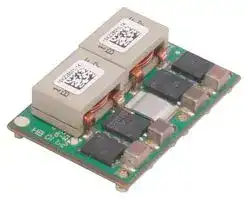
Illustrative purposes only

APTS050A0X3-SRPHZ
Non Isolated POL DC/DC Converter, GigaTLynx, ITE, 100 W, 700 mV, 2 V, 50 A, Adjustable
⚠️ Reference pricing provided. In case of supply shortages, we will connect you with our trusted procurement partners to ensure your project's continuity.
- Manufacturer: GE CRITICAL POWER
- Product type: DC / DC Non Isolated Board Mount Converters - Adjustable Output
- Depth: 33mm
- Width: 22.9mm
- Height: 10mm
- Output Power Max: 100W
- Output Current Max: 50A
- Output Voltage Max: 2V
- Output Voltage Min: 700mV
- Input Voltage DC Max: 14V
- Input Voltage DC Min: 4.5V
- Power Supply Approvals: ITE
- DC / DC Converter Output Type: Adjustable
| Delivery and price | |
|---|---|
| Units per pack | 25 |
| Price | 29.04 € |
| Current stock | 10+ |
| Lead time | 30 days |
Datasheet

**Data Sheet September 7, 2011**

**GigaTLynx[TM] Non-isolated Power Modules:**

**4.5Vdc – 14Vdc input; 0.7Vdc to 2Vdc, 50A Output**

## ~~oo~~

## **Features**

- Compliant to RoHS EU Directive 2002/95/EC (-Z versions)

- Compliant to RoHS EU Directive 2002/95/EC with lead solder exemption (non-Z versions)

- Input voltage from 4.5Vdc to 14Vdc

- Output voltage programmable from 0.7 Vdc to 2.0Vdc via external resistor

- Output current up to 50A

- Tunable control loop for fast transient response

- True differential remote sense

## **Applications**

- Distributed power architectures

- Intermediate bus voltage applications

- Industrial applications

- Telecommunications equipment

- Negative remote On/Off logic

- Output voltage sequencing (EZ-SEQUENCE[TM] )

- Output over current protection (non-latching)

- Over temperature protection

- Monotonic startup under pre-bias conditions

- Parallel operation with active current sharing

- Small size and low profile:

**==> picture [184 x 87] intentionally omitted <==**

**----- Start of picture text -----**<br>
Vin+ Vout+<br>VIN VOUT<br>SENSE+<br>PGOOD<br>RTUNE<br>SEQ<br>+ CI2 CI1 MODULE CO1 + CO2<br>CTUNE<br>ON/OFF TRIM+<br>RTrim<br>TRIM-<br>GND SENSE- SENSE-<br>**----- End of picture text -----**<br>


   - 33 mm x 22.9 mm x 10 mm (max.)

   - (1.3 in x 0.9 in x 0.393 in (max.))

- Wide operating temperature range [-40°C to 105°C(Ruggedized: -D), 85°C(Regular)]

- _UL_ * 60950-1, 2[nd] Ed. Recognized, _CSA_[†] C22.2 No. 60950-1-07 Certified, and _VDE_[‡] (EN60950-1, 2[nd] Ed.) Licensed

- ISO** 9001 and ISO 14001 certified manufacturing facilities

## **Description**

The GigaTLynx[TM] series of power modules are non-isolated dc-dc converters that can deliver up to 50A of output current.  These modules operate over a wide range of input voltage (VIN = 4.5Vdc-14Vdc) and provide a precisely regulated output voltage from 0.7Vdc to 2.0Vdc, programmable via an external resistor.  Features include remote On/Off, adjustable output voltage, over current and over temperature protection, output voltage sequencing and paralleling.   The Ruggedized version (-D) is capable of operation up to 105°C and withstand high levels of shock and vibration. The Tunable Loop[TM ] feature, allows the user to optimize the dynamic response of the converter to match the load with reduced amount of output capacitance leading to savings on cost and PWB area.

> * _UL_ is a registered trademark of Underwriters Laboratories, Inc.

> † _CSA_ is a registered trademark of Canadian Standards Association.

> ‡ _VDE_ is a trademark of Verband Deutscher Elektrotechniker e.V.

> ** ISO is a registered trademark of the International Organization of Standards

Document No: DS010-005 ver. 1.23 PDF name: APTS050A0X_ds.pdf

**GigaTLynx[TM ] SMT Non-isolated Power Modules: 4.5 – 14Vdc input; 0.7Vdc to 2.0Vdc, 50A Output**

**Data Sheet September 7, 2011**

## **Absolute Maximum Ratings**

Stresses in excess of the absolute maximum ratings can cause permanent damage to the device. These are absolute stress ratings only, functional operation of the device is not implied at these or any other conditions in excess of those given in the operations sections of the data sheet. Exposure to absolute maximum ratings for extended periods can adversely affect the device reliability.

|**Parameter**|**Device**|**Symbol**|**Min**|**Max**|**Unit**|
|---|---|---|---|---|---|
|Input Voltage<br>Continuous|All|VIN|-0.3|14|Vdc|
|Sequencing pin voltage|All|VsEQ|-0.3|4|Vdc|
|Operating Ambient Temperature<br>(see Thermal Considerations section)|All<br>-D version|TA<br>TA|-40<br>-40|85<br>105|°C<br>°C|
|Storage Temperature|All|Tstg|-55|125|°C|


## **Electrical Specifications**

Unless otherwise indicated, specifications apply over all operating input voltage, resistive load, and temperature conditions.

|**Parameter**|**Device**|**Symbol**|**Min**|**Typ**|**Max**|**Unit**|
|---|---|---|---|---|---|---|
|Operating Input Voltage|Vo,set≤ 2.0|VIN|4.5|⎯|14|Vdc|
|Maximum Input Current<br>(VIN= VIN, minto VIN, max, IO=IO, max)|All|IIN,max|||26|Adc|
|Inrush Transient|All|I2 t|||1|A2 s|
|Input No Load Current<br>(VIN =VIN, nom, Io=0, module enabled)|VO,set= 0.7Vdc<br>VO,set =1.8Vdc|IIN,No load<br>IIN,No load||73.4<br>136||mA<br>mA|
|Input Stand-by Current<br>(VIN =VIN, nom, module disabled)|All|IIN,stand-by||1.3||mA|
|Input Reflected Ripple Current, peak-to-peak<br>(5Hz to 20MHz, 1μH source impedance; VIN, minto<br>VIN, max,IO= IOmax; See Test configuration section)|All||||73|mAp-p|
|Input Ripple Rejection (120Hz)|All|||50||dB|


## **CAUTION: This power module is not internally fused. An input line fuse must always be used.**

This power module can be used in a wide variety of applications, ranging from simple standalone operation to an integrated part of sophisticated power architecture. To preserve maximum flexibility, internal fusing is not included; however, to achieve maximum safety and system protection, always use an input line fuse. The safety agencies require a surface mount, fast acting fuse (ie. Littelfuse 456030 series) with a maximum rating of 30 A (see Safety Considerations section). Based on the information provided in this data sheet on inrush energy and maximum dc input current, the same type of fuse with a lower rating can be used. Refer to the fuse manufacturer’s data sheet for further information.

**LINEAGE POWER**

2

**GigaTLynx[TM ] SMT Non-isolated Power Modules: 4.5 – 14Vdc input; 0.7Vdc to 2.0Vdc, 50A Output**

**Data Sheet September 7, 2011**

## **Electrical Specifications** (continued)

|**Parameter**|**Device**|**Symbol**|**Min**|**Typ**|**Max**|**Unit**|
|---|---|---|---|---|---|---|
|Output Voltage Set-point<br>(VIN=VIN,nom, IO=IO, nom, Tref=25°C)|All|VO, set|-1.0|⎯|+1.0|% VO, set|
|Output Voltage<br>(Over all operating input voltage, resistive load,<br>and temperature conditions until end of life)|All|VO, set|-2.0|⎯|+2.0|% VO, set|
|Adjustment Range<br>Selected by an external resistor|All|VO|0.7||2.0|Vdc|
|Output Regulation<br>Line (VIN=VIN, minto VIN, max)<br>Load (IO=IO, minto IO, max)<br>Temperature (Tref=TA, minto TA, max)|All<br>All<br>All||⎯<br>⎯<br>⎯||5<br>8<br>8|mV<br>mV<br>mV|
|Remote Sense Range|All||||0.5|Vdc|
|Output Ripple and Noise on nominal output<br>(VIN=VIN, nomand IO=IO, minto IO, max<br>Cout = 1μF ceramic//2x10μF ceramic<br>capacitors)<br>Peak-to-Peak (5Hz to 20MHz bandwidth)|All||⎯||50|mVpk-pk|
|External Capacitance<br>1<br>Without the Tunable Loop<br>TM<br>ESR ≥ 1 mΩ<br>ESR ≥ 10 mΩ|All<br>All|CO, max<br>CO, max|⎯<br>⎯|⎯<br>⎯|1200<br>10000|μF<br>μF|
|With the Tunable Loop<br>ESR ≥ 1 mΩ<br>ESR ≥ 10 mΩ|All<br>All|CO, max<br>CO, max|⎯<br>⎯|⎯<br>⎯|20000<br>20000|μF<br>μF|
|Output Current|All|Io|0||50A|Adc|
|Output Current Limit Inception (Hiccup Mode )|All|IO, lim|⎯|180|⎯|% Io|
|Output Short-Circuit Current<br>(VO≤250mV) ( Hiccup Mode )|All|IO, s/c|⎯|5.5|⎯|Adc|
|Efficiency<br>VIN= 12V, TA=25°C<br>IO=IO, max ,VO= VO,set|VO, set= 0.7Vdc<br>VO,set= 1.2Vdc<br>VO,set= 1.8Vdc|η<br>η<br>η||81.1<br>87.0<br>90.1||%<br>%<br>%|
|Switching Frequency|All|fsw|⎯|260|⎯|kHz|


## **General Specifications**

|**Parameter**|**Min**|**Typ**|**Max**|**Unit**|
|---|---|---|---|---|
|Telcordia Issue 2, Method I, Case 3, Calculated MTBF (IO=IO, max,<br>TA=40°C)||4,755,661||Hours|
|Weight|⎯|14.22 (0.5)||g (oz.)|


**__________________________________**

**External capacitors may require using the new Tunable LoopTM  feature to ensure that the module is stable as well as getting the best transient response. See the Tunable LoopTM section for details.**

**LINEAGE POWER**

3

**GigaTLynx[TM ] SMT Non-isolated Power Modules: 4.5 – 14Vdc input; 0.7Vdc to 2.0Vdc, 50A Output**

**Data Sheet September 7, 2011**

## **Feature Specifications**

Unless otherwise indicated, specifications apply over all operating input voltage, resistive load, and temperature conditions. See Feature Descriptions for additional information.

|**Parameter**|**Device**|**Symbol**|**Min**|**Typ**|**Max**|**Unit**|
|---|---|---|---|---|---|---|
|On/Off Signal Interface<br>(VIN=VIN, minto VIN, max; open collector or equivalent,<br>Signal referenced to GND)<br>Logic High (On/Off pin open – Module OFF)<br>Input High Current<br>Input High Voltage<br>Logic Low (Module ON)<br>Input Low Current<br>Input Low Voltage|All<br>All<br>All<br>All|IIH<br>VIH<br>IIL<br>VIL|0.5<br>3.0<br>⎯<br>-0.3|⎯<br>⎯<br>⎯<br>⎯|3.3<br>VIN, max<br>200<br>0.6|mA<br>V<br>µA<br>V|
|Turn-On Delay and Rise Times<br>(IO=IO, max ,VIN= VIN, nom,TA= 25<br>oC, )<br>Case 1: On/Off input is set to Logic Low (Module<br>ON) and then input power is applied (delay from<br>instant at  which VIN=VIN, minuntil Vo=10% of Vo,set)<br>Case 2: Input power is applied for at least one second<br>and then the On/Off input is set to logic Low (delay from<br>instant at which Von/Off=0.3V until Vo=10% of Vo, set)<br>Output voltage Rise time (time for Vo to rise from 10%<br>of Vo,setto 90% of Vo, set)|All<br>All<br>All|Tdelay<br>Tdelay<br>Trise|―<br>―<br>―|4.8<br>4.8<br>3.6|―<br>―<br>―|msec<br>msec<br>msec|
|Output voltage overshoot – Startup<br>IO= IO, max; VIN= 4.5 to 14Vdc, TA= 25<br>oC||||―|3.0|% VO, set|
|Over Temperature Protection<br>(See Thermal Consideration section)|All|Tref|⎯|125|⎯|°C|
|Sequencing Slew rate capability<br> (VIN, minto VIN, max; IO, minto IO, maxVSEQ < Vo)|All|dVSEQ/dt||—|2|V/msec|
|Sequencing Delay time (Delay from VIN, min<br>to application of voltage on SEQ pin)|All|TsEQ-delay|10|||msec|
|Tracking Accuracy                            Power-up (2V/ms)<br>Power-down (1V/ms)<br>(VIN, minto VIN, max; IO, min- IO, maxVSEQ < Vo)|All|VSEQ–Vo<br>VSEQ–Vo||100<br>200|200<br>400|mV<br>mV|
|Input Undervoltage Lockout<br>Turn-on Threshold<br>Turn-off Threshold<br>Hysteresis|All<br>All<br>All|||4.26<br>4.04<br>0.22||V<br>V<br>Vdc|
|Forced Load Share Accuracy|All||⎯|10||% Io|
|Number of units in Parallel|All||||5||
|PGOOD (Power Good)<br>Internal pull-up, VPGOOD<br>Overvoltage threshold for PGOOD<br>Undervoltage threshold for PGOOD|All<br>All<br>All|||5<br>112.5<br>87.5||V<br>%VO, set<br>%VO, set|


**LINEAGE POWER**

4

**GigaTLynx[TM ] SMT Non-isolated Power Modules: 4.5 – 14Vdc input; 0.7Vdc to 2.0Vdc, 50A Output**

**Data Sheet September 7, 2011**

## **Characteristic Curves**

The following figures provide typical characteristics for the 12V Giga TLynx[TM] 50A at 0.7Vo and at 25[o] C.

**==> picture [446 x 383] intentionally omitted <==**

**----- Start of picture text -----**<br>
95 55<br>50<br>90<br>45<br>oe eTES |e<br>85 40 NC 0.5m/s<br>(100LFM)<br>35<br>Vin=12V 1m/s<br>80 30 (200LFM) 1.5m/s<br>A Vin=4.5V i Vin=14V IN (300LFM)<br>25 Standard Part  2m/s<br>75 (85 C) (400LFM)<br>20<br>Ruggedized (D)<br>70 eefo 15 =ON Part (105 C) =<br>0 10 20 30 40 50 45 55 65 75 85 95 105<br>OUTPUT CURRENT, IO (A)  AMBIENT TEMPERATURE, TA OC<br>Figure 2. Derating Output Current versus Ambient<br>Figure 1. Converter Efficiency versus Output Current.<br>Temperature and Airflow.<br>ee vos<br>ee en aaa<br>eee a TeretT yyy<br>\VRYUMVAaaRawVeyfh TsRP ecdosscbeecdeeleeBaodlLETbe ttetoytto<br>a ee ee eo ee<br>po — pee ee ee fe see eee eee<br>TIME, t (1 μ s/div)  TIME, t (0.2ms /div)<br>Figure 3. Typical output ripple and noise (VIN = 12V, Io = IN = 12V, Io =  = 12V, Io = o =  =  Figure 4. Transient Response to Dynamic Load<br>o,max). ).  Change from 50% to 100% at 12Vin, Cext =5x47uF+<br>+22x330uFpolymer,CTune=330nF,RTune=100ohms<br>  (%)<br>η<br>EFFICIENCY,<br>OUTPUT CURRENT, Io  (A)<br> (V) (10mV/div)<br> (V) (10mV/div)  O<br>O<br> V<br>OUTPUT VOLTAGE<br> (A)  (20Adiv)             V<br>O<br>              I<br>         OUTPUT CURRENT      OUTPUT VOLTAGE<br>**----- End of picture text -----**<br>


**Figure 1. Converter Efficiency versus Output Current.**

**Figure 3. Typical output ripple and noise (VIN = 12V, Io = IN = 12V, Io =  = 12V, Io = o =  = Io,max). ).**

**==> picture [158 x 156] intentionally omitted <==**

**----- Start of picture text -----**<br>
TIME, t (2ms/div)<br> (V) (5V/div)<br>ON/OFF<br> (V) (200mV/div)           V<br>O<br>         OUTPUT VOLTAGE        ON/OFF VOLTAGE             V<br>**----- End of picture text -----**<br>


**==> picture [151 x 154] intentionally omitted <==**

**----- Start of picture text -----**<br>
TIME, t (2ms/div)<br> (V) (5V/div)<br>IN<br> (V) (200mV/div)           V<br>O<br>          OUTPUT VOLTAGE         INPUT VOLTAGE              V<br>**----- End of picture text -----**<br>


**Figure 5. Typical Start-up Using On/Off Voltage (Io = Io,max).**

**Figure 6. Typical Start-up Using Input Voltage (VIN = 12V, Io = Io,max).**

**LINEAGE POWER**

5

**GigaTLynx[TM ] SMT Non-isolated Power Modules: 4.5 – 14Vdc input; 0.7Vdc to 2.0Vdc, 50A Output**

**Data Sheet September 7, 2011**

## **Characteristic Curves**

The following figures provide typical characteristics for the 12V Giga TLynx[TM] 50A at 1.2 Vo and at 25[o] C.

**==> picture [444 x 548] intentionally omitted <==**

**----- Start of picture text -----**<br>
95 55<br>— 50 ee<br>90 2 ee ee<br>eee 45 ——<br>85 Vin=12V 40 NC 0.5m/s<br>(100LFM)<br>Vin=14V 35 1m/s<br>80 Tf Vin=4.5V Xt 30 a (200LFM) SSR<br>Standard Part  1.5m/s<br>25 (85 C) (300LFM)<br>75 HE | = Ruggedized (D)  2m/s XN<br>| 20 == Part (105 C) (400LFM) ~~<br>70 |e 15 _ SN<br>0 10 20 30 40 50 45 55 65 75 85 95 105<br>OUTPUT CURRENT, IO (A)  AMBIENT TEMPERATURE, TA OC<br>Figure 8. Derating Output Current versus Ambient<br>Figure 7. Converter Efficiency versus Output Current.<br>Temperature and Airflow.<br>STE an<br>rr re<br>NyApeAn fioeERWEEEEEEE<br>VV ese ere<br>ee eee ss ee<br>_ —|) GERCEErere<br>TIME, t (1 μ s/div)  TIME, t (0.1ms /div)<br>Figure 9. Typical output ripple and noise (VIN = 12V, Io = IN = 12V, Io =  = 12V, Io = o =  =  Figure 10. Transient Response to Dynamic Load<br>Change from 50% to 100% at 12Vin, Cext =5x47uF+<br>o,max). ).<br>+13x330uFpolymer,CTune=120nF,RTune=180ohms<br>TIME, t (2 ms/div)  TIME, t (2 ms/div)<br>  (%)<br>η<br>EFFICIENCY,<br>OUTPUT CURRENT, Io  (A)<br> (V) (10mV/div)<br>O<br> (V) (10mV/div)<br>O<br> V<br>OUTPUT VOLTAGE<br> (A)  (20Adiv)             V<br>O<br>          I<br>          OUTPUT CURRENT,     OUTPUT VOLTAGE<br> (V) (5V/div)<br> (V) (5V/div)<br>ON/OFF IN<br> (V) (500mV/div)             VOO  (V) (500mV/div)            VO<br>       V         OUTPUT VOLTAGE         INPUT VOLTAGE            V<br>**----- End of picture text -----**<br>


**Figure 7. Converter Efficiency versus Output Current.**

**Figure 9. Typical output ripple and noise (VIN = 12V, Io = IN = 12V, Io =  = 12V, Io = o =  = Io,max). ).**

**==> picture [164 x 156] intentionally omitted <==**

**----- Start of picture text -----**<br>
TIME, t (2 ms/div)<br> (V) (5V/div)<br>ON/OFF<br> (V) (500mV/div)             VOO<br>       OUTPUT VOLTAGE          ON/OFF VOLTAGE           V<br>**----- End of picture text -----**<br>


**Figure 11. Typical Start-up Using On/Off Voltage (Io = Io,max).**

**Figure 12. Typical Start-up Using Input Voltage (VIN = 12V, Io = Io,max).**

**LINEAGE POWER**

6

**GigaTLynx[TM ] SMT Non-isolated Power Modules: 4.5 – 14Vdc input; 0.7Vdc to 2.0Vdc, 50A Output**

**Data Sheet September 7, 2011**

## **Characteristic Curves**

The following figures provide typical characteristics for the 12V Giga TLynx[TM] 50A at 1.8 Vo and at 25[o] C.

**==> picture [446 x 356] intentionally omitted <==**

**----- Start of picture text -----**<br>
100 55<br>Vin=12V Output Voltageset to 2V for thermal derating curve<br>50<br>95<br>45<br>S T Psi<br>90 | = —— 40 R NC SNK SS<br>35 0.5m/s<br>85 [Z/4 x (100LFM) 1m/s ACh<br>Vin=14V 30 (200LFM)<br>80 {[ Vin=4.5V = 25 1.5m/s XSSa<br>Standard Part  (300LFM)<br>20 (85 C) 2m/s<br>75 || | To Ruggedized (D)  (400LFM) AN<br>15 Part (105 C)<br>70 | i| fp 10 =| _ _\_\<br>0 10 20 30 40 50 35 45 55 65 75 85 95 105<br>OUTPUT CURRENT, IO (A)  AMBIENT TEMPERATURE, TA OC<br>Figure 14. Derating Output Current versus Ambient<br>Figure 13. Converter Efficiency versus Output Current.<br>Temperature and Airflow.<br>eee ett Tye yyy yy<br>ON NN nA, |eeTL<br>hE MA DA LY. et td de TL tt<br>VON VOY FERRE<br>po ecbcnMod RESS<br>ee SERRE<br>TIME, t (1 μ s/div)  TIME, t (0.1ms /div)<br>  (%)<br>η<br>EFFICIENCY,<br>OUTPUT CURRENT, Io  (A)<br> (V) (20mV/div)<br>O<br> (V) (10mV/div)<br>O<br> V<br>OUTPUT VOLTAGE<br> (A)  (20Adiv)              V<br>O<br>      I<br>         OUTPUT CURRENT,     OUTPUT VOLTAGE<br>**----- End of picture text -----**<br>


**Figure 14. Derating Output Current versus Ambient Temperature and Airflow.**

**Figure 13. Converter Efficiency versus Output Current.**

**Figure 16. Transient Response to Dynamic Load Change from 50% to 100% at 12Vin, Cext =5x47uF+ +8x330uFpolymer,CTune=47nF,RTune=220ohms**

**Figure 15. Typical output ripple and noise (VIN = 12V, Io = Io,max).**

**==> picture [164 x 156] intentionally omitted <==**

**----- Start of picture text -----**<br>
TIME, t (2 ms/div)<br> (V) (5V/div)<br>ON/OFF<br>(V) (500mV/div)          V<br>O<br>         OUTPUT VOLTAGE        ON/OFF VOLTAGE             V<br>**----- End of picture text -----**<br>


**==> picture [157 x 154] intentionally omitted <==**

**----- Start of picture text -----**<br>
TIME, t (2 ms/div)<br> (V) (5V/div)<br>IN<br> (V) (500mV/div)            V<br>O<br>          OUTPUT VOLTAGE         INPUT VOLTAGE              V<br>**----- End of picture text -----**<br>


**Figure 17. Typical Start-up Using On/Off Voltage (Io = Io,max).**

**Figure 18. Typical Start-up Using Input Voltage (VIN = 12V, Io = Io,max).**

**LINEAGE POWER**

7

**GigaTLynx[TM ] SMT Non-isolated Power Modules: 4.5 – 14Vdc input; 0.7Vdc to 2.0Vdc, 50A Output**

**Data Sheet September 7, 2011**

## **Test Configurations**

**==> picture [193 x 108] intentionally omitted <==**

**----- Start of picture text -----**<br>
TO OSCILLOSCOPE  CURRENT PROBE<br>LTEST<br>VIN(+)<br>1μH<br>CS  1000μF  CIN<br>Electrolytic<br>2x100μF<br>E.S.R.<0.1 Ω Tantalum<br>@ 20°C 100kHz<br>COM<br>BATTERY<br>**----- End of picture text -----**<br>


NOTE: Measure input reflected ripple current with a simulated source inductance (LTEST) of 1μH. Capacitor CS offsets possible battery impedance. Measure current as shown above.

**Figure 19. Input Reflected Ripple Current Test Setup.**

**==> picture [193 x 134] intentionally omitted <==**

**----- Start of picture text -----**<br>
COPPER STRIP<br>Vo+ RESISTIVELOAD<br>0.1uF 10uF<br>COM<br>SCOPE USING<br>BNC SOCKET<br>GROUND PLANE<br>NOTE: All voltage measurements to be taken at the module<br>terminals, as shown above. If sockets are used then<br>Kelvin connections are required at the module terminals<br>to avoid measurement errors due to socket contact<br>resistance.<br>**----- End of picture text -----**<br>


**Figure 20. Output Ripple and Noise Test Setup.**

**==> picture [173 x 126] intentionally omitted <==**

**----- Start of picture text -----**<br>
Rdistribution  Rcontact  Rcontact Rdistribution<br>VIN(+)  VO<br>VIN  VO  RLOAD<br>Rdistribution  Rcontact  Rcontact Rdistribution<br>COM  COM<br>NOTE: All voltage measurements to be taken at the module<br>terminals, as shown above. If sockets are used then<br>Kelvin connections are required at the module terminals<br>to avoid measurement errors due to socket contact<br>resistance.<br>**----- End of picture text -----**<br>


**Figure 21.  Output Voltage and Efficiency Test Setup.**

VO. IO Efficiency η = VIN. IIN x 100 %

## **Design Considerations**

## **Input Filtering**

The Giga TLynx[TM] module should be connected to a low ac-impedance source.  A highly inductive source can affect the stability of the module.  An input capacitance must be placed directly adjacent to the input pin of the module, to minimize input ripple voltage and ensure module stability.

To minimize input voltage ripple, ceramic capacitors are recommended at the input of the module. Figure 22 shows the input ripple voltage for various output voltages at maximum load current with 2x22 µF or 4x22 µF or 4x47 µF ceramic capacitors and an input of 12V.

**==> picture [207 x 151] intentionally omitted <==**

**----- Start of picture text -----**<br>
250<br>2x22uF<br>225 4x22uF<br>200 4x47uF<br>175<br>150<br>125<br>100<br>75<br>50<br>1 1.25 1.5 1.75 2<br>Output Voltage (Vdc)<br>Input Ripple Voltage (mVp-p)<br>**----- End of picture text -----**<br>


**Figure 22.  Input ripple voltage for various output voltages  with 2x22 µF, 4x22 µF or 4x47 µF ceramic capacitors at the input (maximum load). Input voltage is 12V**

## **Output Filtering**

The Giga TLynx[TM] modules are designed for low output ripple voltage and will meet the maximum output ripple specification with 0.1 µF ceramic and 10 µF ceramic capacitors at the output of the module.  However, additional output filtering may be required by the system designer for a number of reasons.  First, there may be a need to further reduce the output ripple and noise of the module.  Second, the dynamic response characteristics may need to be customized to a particular load step change.

To reduce the output ripple and improve the dynamic response to a step load change, additional capacitance at the output can be used. Low ESR polymer and ceramic capacitors are recommended to improve the dynamic response of the module. Figure 23 provides output ripple information for different external capacitance values at various Vo and for full load currents. For stable operation of the module, limit the capacitance to less than the maximum output capacitance as specified in the electrical specification table.  Optimal performance of the module can be achieved by using the Tunable Loop feature described later in this data sheet.

**LINEAGE POWER**

8

**GigaTLynx[TM ] SMT Non-isolated Power Modules: 4.5 – 14Vdc input; 0.7Vdc to 2.0Vdc, 50A Output**

**Data Sheet September 7, 2011**

## **Feature Descriptions**

**==> picture [183 x 145] intentionally omitted <==**

**----- Start of picture text -----**<br>
80<br>2x10uF Ext Cap<br>70 2x47uF Ext Cap<br>4x47uF Ext Cap<br>60<br>8x47uF Ext Cap<br>50<br>40<br>30<br>20<br>10<br>0<br>0.6 0.8 1 1.2 1.4 1.6 1.8 2<br>Output Voltage(Volts)<br>Ripple (mVp-p)<br>**----- End of picture text -----**<br>


**Figure 23.  Output ripple voltage for various output voltages with external 2x10 µF, 2x47 µF, 4x47 µF or 8x47 µF ceramic capacitors at the output (50A load). Input voltage is 12V.**

## **Safety Considerations**

For safety agency approval the power module must be installed in compliance with the spacing and separation requirements of the end-use safety agency standards, i.e., UL 60950-1 2nd, CSA C22.2 No. 60950-1-07, DIN EN 60950-1:2006 + A11 (VDE0805 Teil 1 + A11):200911; EN 60950-1:2006 + A11:2009-03.

For the converter output to be considered meeting the requirements of safety extra-low voltage (SELV), the input must meet SELV requirements.  The power module has extra-low voltage (ELV) outputs when all inputs are ELV. The input to these units is to be provided with a surface mount, fast acting fuse (ie. Littelfuse 456030 series) with a maximum rating of 30A in the positive input lead.

## **Remote On/Off**

The GigaTLynx[TM] SMT power modules feature a On/Off pin for remote On/Off operation. If not using the On/Off pin, connect the pin to ground (the module will be ON). The On/Off signal (Von/off) is referenced to ground. The circuit configuration for remote On/Off operation of the module using the On/Off pin is shown in Figure 24.

During a Logic High on the On/Off pin (transistor Q1 is OFF), the module remains OFF. The external resistor R1 should be chosen to maintain 3.0V minimum on the On/Off pin to ensure that the module is OFF when transistor Q1 is in the OFF state.   Suitable values for R1 are 4.7K for input voltage of 12V and 3K for 5Vin. During Logic-Low when Q1 is turned ON, the module is turned ON.

The On/Off pin can also be used to synchronize the output voltage start-up and shutdown of multiple modules in parallel.  By connecting On/Off pins of multiple modules, the output start-up can be synchronized (please refer to characterization curves).

## **Overcurrent Protection**

To provide protection in a fault (output overload) condition, the unit should be equipped with internal current-limiting circuitry and can endure current limiting continuously. At the point of current-limit inception, the unit enters hiccup mode. The unit should operate normally once the output current is brought back into its specified range.

**==> picture [192 x 142] intentionally omitted <==**

**----- Start of picture text -----**<br>
VIN+<br>MODULE<br>R1<br>PWM Enable<br>I ON/OFF<br>ON/OFF<br>+ 5.11K<br>VON/OFF<br>Q1<br>5.11K<br>GND _<br>**----- End of picture text -----**<br>


**Figure 24.  Remote On/Off Implementation using ON/OFF .**

## **Overtemperature Protection**

To provide protection in a fault condition, the unit is equipped with a thermal shutdown circuit. The unit will shutdown if the overtemperature threshold of 125[o] C is exceeded at the thermal reference point Tref . The thermal shutdown is not intended as a guarantee that the unit will survive temperatures beyond its rating.  Once the unit goes into thermal shutdown it will then wait to cool before attempting to restart.

## **Input Undervoltage Lockout**

At input voltages below the input undervoltage lockout limit, module operation will be disabled.  The module will begin to operate at an input voltage above the undervoltage lockout turn-on threshold.

## **Output Voltage Programming**

The output voltage of the GigaTLynx[TM] can be programmable to any voltage from 0.7 Vdc  to 2.0Vdc by connecting a single resistor (shown as Rtrim in Figure 25) between the TRIM+ and TRIM pins of the module.  The following equation will be used to set the output voltage of the module:

**==> picture [93 x 29] intentionally omitted <==**

By using a ±0.5% tolerance trim resistor with a TC of ±100ppm, a set point tolerance of ±1.5% can be achieved as specified in the electrical specification.  Table 1 provides Rtrim values required for some common output

9

**LINEAGE POWER**

**GigaTLynx[TM ] SMT Non-isolated Power Modules: 4.5 – 14Vdc input; 0.7Vdc to 2.0Vdc, 50A Output**

**Data Sheet September 7, 2011**

voltages. The POL Programming Tool, available at www.lineagepower.com under the Design Tools section, helps determine the required external trim resistor needed for a specific output voltage.

**Table 1**

|**VO, set (V)**|**_Rtrim(_KΩ)**|
|---|---|
|0.7|Open|
|1.0|46.6|
|1.2|28|
|1.5|17.5|
|1.8|12.7|


**==> picture [200 x 109] intentionally omitted <==**

**----- Start of picture text -----**<br>
Vout<br>VIN(+) VO(+)<br>ON/OFF TRIM+<br>LOAD<br>Rtrim<br>TRIM −<br>GND<br>**----- End of picture text -----**<br>


**Figure 25.  Circuit configuration to program output voltage using an external resistor.**

## **Remote Sense**

The GigaTLynx[TM] SMT power modules have differential Remote Sense to minimize the effects of distribution losses by regulating the voltage at the Remote Sense pin. The voltage between the SENSE pin and VOUT pin must not exceed 0.5V. Note that the output voltage of the module cannot exceed the specified maximum value. This includes the voltage drop between the SENSE and Vout pins.  When the Remote Sense feature is not being used, connect the SENSE pin to the VOUT pin **.**

## **Voltage Margining**

Output voltage margining can be implemented in the Giga TLynx[TM] modules by connecting a resistor, Rmargin-up, from the Trim pin to the ground pin for margining-up the output voltage and by connecting a resistor, Rmargin-down, from the Trim pin to output pin for margining-down.  Figure 26 shows the circuit configuration for output voltage margining.  The POL Programming Tool, available at www.lineagepower.com under the Design Tools section, also calculates the values of Rmargin-up and Rmargin-down for a specific output voltage and % margin.   Please consult your local Lineage Power technical representative for additional details.

## **Monotonic Start-up and Shutdown**

The Giga TLynx[TM] modules have monotonic start-up and shutdown behavior for any combination of rated input voltage, output current and operating temperature range.

## **Startup into Pre-biased Output**

The Giga TLynx[TM] modules can start into a prebiased output as long as the prebias voltage is 0.5V less than the set output voltage. Note that prebias operation is not supported when output voltage sequencing is used.

**==> picture [135 x 145] intentionally omitted <==**

**----- Start of picture text -----**<br>
Vo<br>Rmargin-down<br>MODULE<br>Q2<br>TRIM+<br>Rmargin-up<br>Rtrim<br>Q1<br>TRIM–<br>**----- End of picture text -----**<br>


**Figure 26.  Circuit Configuration for margining Output voltage.**

## **Output Voltage Sequencing**

The Giga TLynx[TM] modules include a sequencing feature, EZ-SEQUENCE[TM] that enables users to implement various types of output voltage sequencing in their applications.  This is accomplished via an additional sequencing pin.  When not using the sequencing feature, leave it unconnected.

When an analog voltage is applied to the SEQ pin, the output voltage tracks this voltage until the output reaches the set-point voltage.  The final value of the SEQ voltage must be set higher than the set-point voltage of the module.  The output voltage follows the voltage on the SEQ pin on a one-to-one basis. By connecting multiple modules together, multiple modules can track their output voltages to the voltage applied on the SEQ pin.

For proper voltage sequencing, first, input voltage is applied to the module. The On/Off pin of the module is left unconnected or tied to GND so that the module is ON by default.  After applying input voltage to the module, a minimum 10msec delay is required before applying voltage on the SEQ pin. Alternatively, input voltage can be applied while the unit is OFF and then the unit can be enabled. In this case the SEQ signal must be applied 10ms after the unit is enabled. This delay gives the module enough time to complete its internal power-up soft-start cycle. During the delay time, the SEQ pin may be held to ground.

After the 10msec delay, an analog voltage is applied to the SEQ pin and the output voltage of the module will track this voltage on a one-to-one volt bases until the

**LINEAGE POWER**

10

**GigaTLynx[TM ] SMT Non-isolated Power Modules: 4.5 – 14Vdc input; 0.7Vdc to 2.0Vdc, 50A Output**

**Data Sheet September 7, 2011**

output reaches the set-point voltage.  To initiate simultaneous shutdown of the modules, the SEQ pin voltage is lowered in a controlled manner.  The output voltage of the modules tracks the voltages below their set-point voltages on a one-to-one basis.  A valid input voltage must be maintained until the tracking and output voltages reach ground potential.

When using the EZ-SEQUENCE[TM] feature to control start-up of the module, pre-bias immunity during start-up is disabled.  The pre-bias immunity feature of the module relies on the module being in the diode-mode during start-up.  When using the EZ-SEQUENCE[TM] feature, modules goes through an internal set-up time of 10msec, and will be in synchronous rectification mode when the voltage at the SEQ pin is applied.  This will result in the module sinking current if a pre-bias voltage is present at the output of the module.  When pre-bias immunity during start-up is required, the EZ-SEQUENCE[TM] feature must be disabled.   For additional guidelines on using the EZSEQUENCE[TM] feature please contact the Lineage Power technical representative for additional information.

condition. To ensure that all modules come up simultaneously, the on/off pins of all paralleled converters should be tied together and the converters enabled and disabled using the on/off pin.

- The share bus is not designed for redundant operation and the system will be non-functional upon failure of one of the unit when multiple units are in parallel. In particular, if one of the converters shuts down during operation, the other converters may also shut down due to their outputs hitting current limit. In such a situation, unless a coordinated restart is ensured, the system may never properly restart since different converters will try to restart at different times causing an overload condition and subsequent shutdown. This situation can be avoided by having an external output voltage monitor circuit that detects a shutdown condition and forces all converters to shut down and restart together.

When not using the active load share feature, share pins should be left unconnected.

## **Active Load Sharing (-P Option)**

For additional power requirements, the Giga TLynx[TM] power module is also available with a parallel option.  Up to five modules can be configured, in parallel, with active load sharing.

Good layout techniques should be observed when using multiple units in parallel.  To implement forced load sharing, the following connections should be made:

- The share pins of all units in parallel must be connected together.  The path of these connections should be as direct as possible.

- All remote-sense pins should be connected to the power bus at the same point, i.e., connect all the SENSE(+) pins to the (+) side of the bus.  Close proximity and directness are necessary for good noise immunity

Some special considerations apply for design of converters in parallel operation:

- When sizing the number of modules required for parallel operation, take note of the fact that current sharing has some tolerance. In addition, under transient conditions such as a dynamic load change and during startup, all converter output currents will not be equal. To allow for such variation and avoid the likelihood of a converter shutting off due to a current overload, the total capacity of the paralleled system should be no more than 90% of the sum of the individual converters. As an example, for a system of four Giga TLynx[TM] converters in parallel, the total current drawn should be less that 90% of (4 x 50A) , i.e. less than 180A.

- All modules should be turned on and off together. This is so that all modules come up at the same time avoiding the problem of one converter sourcing current into the other leading to an overcurrent trip

## **Power Good**

The Giga TLynx[TM] modules provide a Power Good (PGOOD) signal to indicate that the output voltage is within the regulation limits of the power module. The PGOOD signal will be de-asserted to a low state if any condition such as overtemperature, overcurrent or loss of regulation occurs that would result in the output voltage going ±12.5% outside the setpoint value. The PGOOD terminal is internally pulled-up and provides a voltage of ~5V, when asserted, thus eliminating the need for an external source and pull-up resistor. Additional external drive capability can be provided to the PGOOD terminal by using a source less than 5V and a suitable pull-up resistor to keep the overall external current below 4.5mA

## **Tunable Loop**

The Giga TLynx[TM] modules have a new feature that optimizes transient response of the module called Tunable Loop[TM] .

External capacitors are usually added to the output of the module for two reasons:  to reduce output ripple and noise (see Fig. 23) and to reduce output voltage deviations from the steady-state value in the presence of dynamic load current changes. Adding external capacitance however affects the voltage control loop of the module, typically causing the loop to slow down with sluggish response.  Larger values of external capacitance could also cause the module to become unstable.

The Tunable Loop[TM] allows the user to externally adjust the voltage control loop to match the filter network connected to the output of the module. The Tunable Loop[TM] is implemented by connecting a series R-C between the SENSE and TRIM+ pins of the module, as shown in Fig. 28. This R-C allows the user to externally

**LINEAGE POWER**

11

**GigaTLynx[TM ] SMT Non-isolated Power Modules: 4.5 – 14Vdc input; 0.7Vdc to 2.0Vdc, 50A Output**

**Data Sheet September 7, 2011**

adjust the voltage loop feedback compensation of the module.

**==> picture [150 x 151] intentionally omitted <==**

**----- Start of picture text -----**<br>
VOUT<br>SENSE+<br>RTUNE<br>MODULE<br>CO1<br>CTUNE<br>TRIM+<br>RTrim<br>TRIM-<br>GND SENSE-<br>**----- End of picture text -----**<br>


**Table 3. Recommended values of RTUNE and CTUNE  to obtain transient deviation of** ≤ **2% of Vout for a 25A step load with Vin=12V.**

|**VO**|**1.8V**|**1.2V**|**0.7V**|
|---|---|---|---|
|**CO**|5x47uF +<br>8x330uF<br>polymer|5x47uF +<br>13x330uF<br>polymer|5x47uF +<br>22x330uF<br>polymer|
|**RTUNE**|220|180|100|
|**CTUNE**|47nF|120nF|330nF|
|Δ**V**|35mV|23mV|14mV|


## **Figure. 28. Circuit diagram showing connection of RTUME and CTUNE  to tune the control loop of the module.**

Recommended values of RTUNE and CTUNE for different output capacitor combinations are given in Tables 2 and 3. Table 2 shows the recommended values of RTUNE and CTUNE for different values of ceramic output capacitors up to 2000uF that might be needed for an application to meet output ripple and noise requirements. Selecting RTUNE and CTUNE according to Table 2 will ensure stable operation of the module.

In applications with tight output voltage limits in the presence of dynamic current loading, additional output capacitance will be required. Table 3 lists recommended values of  RTUNE and CTUNE in order to meet 2% output voltage deviation limits for some common output voltages in the presence of a 25A to 50A step change (50% of full load), with an input voltage of 12V.

Please contact your Lineage Power technical representative to obtain more details of this feature as well as for guidelines on how to select the right value of external R-C to tune the module for best transient performance and stable operation for other output capacitance values or input voltages other than 12V.

**Table 2. General recommended values of of RTUNE and CTUNE  for Vin=12V and various external ceramic capacitor combinations.**

|**CO**|**1 x 47uF**|**2x47uF**|**4x47uF**|**6x47uF**|**10 x 47uF**|**20 x 47uF**|
|---|---|---|---|---|---|---|
|**RTUNE**|330|330|330|330|270|270|
|**CTUNE**|330pF|560pF|1200pF|1800pF|2200pF|5600pF|


**LINEAGE POWER**

12

**GigaTLynx[TM ] SMT Non-isolated Power Modules: 4.5 – 14Vdc input; 0.7Vdc to 2.0Vdc, 50A Output**

**Data Sheet September 7, 2011**

## **Thermal Considerations**

Power modules operate in a variety of thermal environments; however, sufficient cooling should always be provided to help ensure reliable operation.

Considerations include ambient temperature, airflow, module power dissipation, and the need for increased reliability. A reduction in the operating temperature of the module will result in an increase in reliability.  The thermal data presented here is based on physical measurements taken in a wind tunnel.  The test set-up is shown in Figure 29.  Note that the airflow is parallel to the short axis of the module as shown in Figure 30.  The derating data applies to airflow in either direction of the module’s short axis.

**==> picture [187 x 190] intentionally omitted <==**

**----- Start of picture text -----**<br>
25.4_<br>Wind Tunnel (1.0)<br>PWBs<br>Power Module<br>76.2_<br>(3.0)<br>x<br>Probe Location<br>“ v s for measuring<br>12.7_ airflow and<br>(0.50) ambient<br>temperature<br>Air<br> flow<br>**----- End of picture text -----**<br>


The thermal reference points, Tref used in the specifications is shown in Figure 30. For reliable operation the temperatures at this point should not exceed 125[o] C. The output power of the module should not exceed the rated power of the module (Vo,set x Io,max).

Please refer to the Application Note “Thermal Characterization Process For Open-Frame BoardMounted Power Modules” for a detailed discussion of

thermal aspects including maximum device temperatures.

**Figure 30. Preferred airflow direction and location of hot-spot of the module (Tref).**

**Figure 29. Thermal Test Setup.**

13

**LINEAGE POWER**

**Data Sheet GigaTLynx[TM ] SMT Non-isolated Power Modules: September 7, 2011 4.5 – 14Vdc input; 0.7Vdc to 2.0Vdc, 50A Output**

## **Shock and Vibration**

The ruggedized (-D version) of the modules are designed to withstand elevated levels of shock and vibration to be able to operate in harsh environments. The ruggedized modules have been successfully tested to the following conditions:

## **Non operating random vibration:**

Random vibration tests conducted at 25C, 10 to 2000Hz, for 30 minutes each level, starting from 30Grms (Z axis) and up to 50Grms (Z axis). The units were then subjected to two more tests of 50Grms at 30 minutes each for a total of 90 minutes.

## **Operating shock to 40G per Mil Std. 810F, Method 516.4 Procedure I:**

The modules were tested in opposing directions along each of three orthogonal axes, with waveform and amplitude of the shock impulse characteristics as follows:

All shocks were half sine pulses, 11 milliseconds (ms) in duration in all 3 axes.

Units were tested to the Functional Shock Test of MIL-STD-810, Method 516.4, Procedure I - Figure 516.4-4. A shock magnitude of 40G was utilized. The operational units were subjected to three shocks in each direction along three axes for a total of eighteen shocks.

## **Operating vibration per Mil Std 810F, Method 514.5 Procedure I:**

The ruggedized (-D version) modules are designed and tested to vibration levels as outlined in MIL-STD-810F, Method 514.5, and Procedure 1, using the Power Spectral Density (PSD) profiles as shown in Table 4 and Table 5 for all axes. Full compliance with performance specifications was required during the performance test. No damage was allowed to the module and full compliance to performance specifications was required when the endurance environment was removed. The module was tested per MIL-STD-810, Method 514.5, Procedure I, for functional (performance) and endurance random vibration using the performance and endurance levels shown in Table 4 and Table 5 for all axes. The performance test has been split, with one half accomplished before the endurance test and one half after the endurance test (in each axis). The duration of the performance test was at least 16 minutes total per axis and at least 120 minutes total per axis for the endurance test. The endurance test period was 2 hours minimum per axis.

**Table 4: Performance Vibration Qualification - All Axes**

|**Frequency**<br>**(Hz)**|**PSD Level**<br>**(G2/Hz)**|**Frequency**<br>**(Hz)**|**PSD Level**<br>**(G2/Hz)**|**Frequency**<br>**(Hz)**|**PSD Level**<br>**(G2/Hz)**|
|---|---|---|---|---|---|
|10|1.14E-03|170|2.54E-03|690|1.03E-03|
|30|5.96E-03|230|3.70E-03|800|7.29E-03|
|40|9.53E-04|290|7.99E-04|890|1.00E-03|
|50|2.08E-03|340|1.12E-02|1070|2.67E-03|
|90|2.08E-03|370|1.12E-02|1240|1.08E-03|
|110|7.05E-04|430|8.84E-04|1550|2.54E-03|
|130|5.00E-03|490|1.54E-03|1780|2.88E-03|
|140|8.20E-04|560|5.62E-04|2000|5.62E-04|


**Table 5: Endurance Vibration Qualification - All Axes**

|**Frequency**<br>**(Hz)**|**PSD Level**<br>**(G2/Hz)**|**Frequency**<br>**(Hz)**|**PSD Level**<br>**(G2/Hz)**|**Frequency**<br>**(Hz)**|**PSD Level**<br>**(G2/Hz)**|
|---|---|---|---|---|---|
|10|0.00803|170|0.01795|690|0.00727|
|30|0.04216|230|0.02616|800|0.05155|
|40|0.00674|290|0.00565|890|0.00709|
|50|0.01468|340|0.07901|1070|0.01887|
|90|0.01468|370|0.07901|1240|0.00764|
|110|0.00498|430|0.00625|1550|0.01795|
|130|0.03536|490|0.01086|1780|0.02035|
|140|0.0058|560|0.00398|2000|0.00398|


**LINEAGE POWER**

14

**GigaTLynx[TM ] SMT Non-isolated Power Modules: 4.5 – 14Vdc input; 0.7Vdc to 2.0Vdc, 50A Output**

**Data Sheet September 7, 2011**

## **Example Application Circuit**

**Requirements:**

**Vin: 12V Vout: 1.8V Iout: 37.5A max., worst case load transient is from 25A to 37.5A** Δ **Vout: 1.5% of Vout (27mV) for worst case load transient Vin, ripple 1.5% of Vin (180mV, p-p)**

**==> picture [348 x 178] intentionally omitted <==**

**----- Start of picture text -----**<br>
Vin+  Vout+<br>VIN VOUT<br>SENSE+<br>PGOOD<br>RTUNE<br>SEQ<br>+<br>+ CI2 CI1 MODULE CO1 CO2<br>CTUNE<br>ON/OFF TRIM+<br>RTrim<br>TRIM-<br>GND SENSE- SENSE-<br>**----- End of picture text -----**<br>


CI1 4x22 μ F/16V ceramic capacitor (e.g. Murata GRM32ER61C226KE20) CI2 200 μ F/16V bulk electrolytic CO1 5 x 47 μ F/6.3V ceramic capacitor (e.g. Murata GRM31CR60J476ME19) CO2 8 x 330 μ F/6.3V Polymer (e.g. Sanyo Poscap) CTune 47nF ceramic capacitor (can be 1206, 0805 or 0603 size) RTune 220 ohms SMT resistor (can be 1206, 0805 or 0603 size) RTrim 12.7k Ω SMT resistor (can be 1206, 0805 or 0603 size, recommended tolerance of 0.1%)

15

**LINEAGE POWER**

**GigaTLynx[TM ] SMT Non-isolated Power Modules: 4.5 – 14Vdc input; 0.7Vdc to 2.0Vdc, 50A Output**

**Data Sheet September 7, 2011**

## **Mechanical Outline of Module**

Dimensions are in millimeters and (inches).

Tolerances: x.x mm ± 0.5 mm (x.xx in. ± 0.02 in.) [unless otherwise indicated]

x.xx mm ± 0.25 mm (x.xxx in ± 0.010 in.)

**==> picture [71 x 174] intentionally omitted <==**

**----- Start of picture text -----**<br>
PIN  FUNCTION<br>1  VIN<br>2  GND<br>3  VOUT<br>4  VOUT<br>5  GND<br>6  VIN<br>7  SEQ<br>8  PGOOD<br>9  ON/OFF<br>10  VS-<br>11  VS+<br>12  +TRIM<br>13  –TRIM<br>14  SHARE<br>**----- End of picture text -----**<br>


**LINEAGE POWER**

16

**GigaTLynx[TM ] SMT Non-isolated Power Modules: 4.5 – 14Vdc input; 0.7Vdc to 2.0Vdc, 50A Output**

**Data Sheet September 7, 2011**

## **Mechanical Outline**

Dimensions are in inches and (millimeters).

Tolerances: x.xx in. ± 0.02 in. (x.x mm ± 0.5 mm) [unless otherwise indicated] x.xxx in ± 0.010 in. (x.xx mm ± 0.25 mm)

|**PIN**|**FUNCTION **|
|---|---|
|1|VIN|
|2|GND|
|3|VOUT|
|4|VOUT|
|5|GND|
|6|VIN|
|7|SEQ|
|8|PGOOD|
|9|ON/OFF|
|10|VS-|
|11|VS+|
|12|+TRIM|
|13|–TRIM|
|14|SHARE|


17

**LINEAGE POWER**

**GigaTLynx[TM ] SMT Non-isolated Power Modules: 4.5 – 14Vdc input; 0.7Vdc to 2.0Vdc, 50A Output**

**Data Sheet September 7, 2011**

## **Packaging Details**

The Giga TLynx[TM] SMT modules are supplied in tape & reel as standard.  Modules are shipped in quantities of 140 modules per reel.

All Dimensions are in millimeters and (in inches).

## **Reel Dimensions**

Outside diameter:        330.2 (13.0) Inside diameter:           177.8 (7.0) Tape Width: 56.0 (2.20)

**LINEAGE POWER**

18

**GigaTLynx[TM ] SMT Non-isolated Power Modules: 4.5 – 14Vdc input; 0.7Vdc to 2.0Vdc, 50A Output**

**Data Sheet September 7, 2011**

## **Surface Mount Information**

contact Lineage Power for special manufacturing process instructions.

## **Pick and Place**

The Giga TLynx[TM] SMT modules use an open frame construction and are designed for a fully automated assembly process.  The modules are fitted with a label designed to provide a large surface area for pick and place operations.  The label meets all the requirements for surface mount processing, as well as safety standards, and is able to withstand reflow temperatures of up to 300[o] C.  The label also carries product information such as product code, serial number and location of manufacture.

## **Lead-free (Pb-free) Soldering**

The –Z version Giga TLynx modules are lead-free (Pb-free) and RoHS compliant and are both forward and backward compatible in a Pb-free and a SnPb soldering process.  Failure to observe the instructions below may result in the failure of or cause damage to the modules and can adversely affect long-term reliability.

## **Pb-free Reflow Profile**

Power Systems will comply with J-STD-020 Rev. C (Moisture/Reflow Sensitivity Classification for Nonhermetic Solid State Surface Mount Devices) for both Pb-free solder profiles and MSL classification procedures.  This standard provides a recommended forced-air-convection reflow profile based on the volume and thickness of the package (table 5-2).  The suggested Pb-free solder paste is Sn/Ag/Cu (SAC).

Recommended linear reflow profile using Sn/Ag/Cu solder:

**Figure 31.  Pick and Place Location.**

## **Nozzle Recommendations**

The module weight has been kept to a minimum by using open frame construction.  Even so, these modules have a relatively large mass when compared to conventional SMT components.  Variables such as nozzle size, tip style, vacuum pressure and pick & placement speed should be considered to optimize this process.  The minimum recommended inside nozzle diameter for reliable operation is 3mm. The maximum nozzle outer diameter, which will safely fit within the allowable component spacing, is 5 mm max.

## **Bottom Side Assembly**

This module is not recommended for assembly on the bottom side of a customer board. If such an assembly is attempted, components may fall off the module during the second reflow process. If assembly on the bottom side is planned, please

**NOTE:** Soldering outside of the recommended profile requires testing to verify results and performance.

## **Tin Lead Soldering**

The Giga TLynx[TM] SMT power modules are lead free modules and can be soldered either in a lead-free solder process or in a conventional Tin/Lead (Sn/Pb) process.  It is recommended that the customer review data sheets in order to customize the solder reflow profile for each application board assembly.  The following instructions must be observed when soldering these units.  Failure to observe these instructions may result in the failure of or cause damage to the modules, and can adversely affect long-term reliability.

**LINEAGE POWER**

19

**GigaTLynx[TM ] SMT Non-isolated Power Modules: 4.5 – 14Vdc input; 0.7Vdc to 2.0Vdc, 50A Output**

**Data Sheet September 7, 2011**

In a conventional Tin/Lead (Sn/Pb) solder process peak reflow temperatures are limited to less than 235[o] C.  Typically, the eutectic solder melts at 183[o] C, wets the land, and subsequently wicks the device connection.  Sufficient time must be allowed to fuse the plating on the connection to ensure a reliable solder joint.  There are several types of SMT reflow technologies currently used in the industry.  These surface mount power modules can be reliably soldered using natural forced convection, IR (radiant infrared), or a combination of convection/IR.  For reliable soldering the solder reflow profile should be established by accurately measuring the modules CP connector temperatures.

**==> picture [199 x 135] intentionally omitted <==**

**----- Start of picture text -----**<br>
300<br>Peak Temp 235 [o] C<br>250<br>Cooling<br>Heat zone zone<br>200 max 4 [o] Cs [-1] 1-4 [o] Cs [-1]<br>150<br>Soak zone<br>100 30-240s T lim  above<br>205 [o] C<br>50 Preheat zone<br>max 4 [o] Cs [-1]<br>0<br>REFLOW TEMP (C)  °<br>**----- End of picture text -----**<br>


REFLOW TIME (S)

**Figure 32.  Reflow Profile for Tin/Lead (Sn/Pb) process.**

## **MSL Rating**

The Giga TLynx[TM] SMT modules have a MSL rating of 2.

## **Storage and Handling**

The recommended storage environment and handling procedures for moisture-sensitive surface mount packages is detailed in J-STD-033 Rev. B (Handling, Packing, Shipping and Use of Moisture/Reflow Sensitive Surface Mount Devices).  Moisture barrier bags (MBB) with desiccant are required for MSL ratings of 2 or greater.  These sealed packages should not be broken until time of use.  Once the original package is broken, the floor life of the product at conditions of <= 30°C and 60% relative humidity varies according to the MSL rating (see J-STD-033A). The shelf life for dry packed SMT packages will be a minimum of 12 months from the bag seal date, when stored at the following conditions:  < 40° C, < 90% relative humidity.

## **Post Solder Cleaning and Drying Considerations**

Post solder cleaning is usually the final circuit-board assembly process prior to electrical board testing. The result of inadequate cleaning and drying can affect both the reliability of a power module and the testability of the finished circuit-board assembly. For guidance on appropriate soldering, cleaning and drying procedures, refer to _Board Mounted Power Modules: Soldering and Cleaning_ Application Note (AN04-001).

**==> picture [201 x 133] intentionally omitted <==**

**----- Start of picture text -----**<br>
240<br>235<br>230<br>225<br>220<br>215<br>210<br>205<br>200<br>0 10 20 30 40 50 60<br>MAX TEMP SOLDER (C)  °<br>**----- End of picture text -----**<br>


**Figure 33. Time Limit Curve Above 205[o] C Reflow for Tin Lead (Sn/Pb) process.**

**LINEAGE POWER**

20

**GigaTLynx[TM ] SMT Non-isolated Power Modules: 4.5 – 14Vdc input; 0.7Vdc to 2.0Vdc, 50A Output**

**Data Sheet September 7, 2011**

## **Ordering Information**

Please contact your Lineage Power Sales Representative for pricing, availability and optional features.

## **Table 6. Device Codes**

|**Device Code**|**Input**<br>**Voltage**<br>**Range**|**Output**<br>**Voltage**|**Output**<br>**Current**|On/Off<br>Logic|**Sequencing**|**Comcodes**|
|---|---|---|---|---|---|---|
|APTS050A0X3-SRPHZ|4.5 – 14Vdc|0.7 – 2.0Vdc|50A|Negative|Yes|CC109155314|
|APTS050A0X3-SRPHDZ|4.5 – 14Vdc|0.7 – 2.0Vdc|50A|Negative|Yes|CC109170585|


## **Table 7. Coding Scheme**

|**TLynx**<br>**family**|**Sequencing**<br>**feature.**|**Input**<br>**voltage**<br>**range**|**Output**<br>**current**|**Output**<br>**voltage**|**On/Off**<br>**logic**|**Remote**<br>**Sense**|**Options**|**ROHS**<br>**Compliance**|
|---|---|---|---|---|---|---|---|---|
|**AP**|**T**|**S**|**050A0**|**X**||**3**|**-SRPHD**|**Z**|
||T = with Seq.|S = 4.5 -<br>14V|50A|X =<br>programm<br>able output|No entry<br>=<br>negative<br>4 =<br>positive|3 =<br>Remote<br>Sense|S = Surface<br>Mount<br>R = Tape&Reel<br>P = Paralleling<br>H=2 ground<br>pins<br>D = 105°C<br>operating<br>ambient, 40G<br>operating<br>shock as per<br>MIL Std 810F|R = Tape&Reel<br>Z = ROHS6|


**Asia-Pacific Headquarters** Tel: +86.021.54279977*808 **Europe, Middle-East and Africa Headquarters** Tel: +49.89.878067-280

**World Wide Headquarters** Tel: +49.89.878067-280 **Lineage Power Corporation** 601 Shiloh Road, Plano, TX 75074, USA **+1-888-LINEAGE(546-3243)** (Outside U.S.A.: **+1-972-244-WATT(9288)** ) **India Headquarters www.lineagepower.com** Tel: +91.80.28411633 **e-mail: techsupport1@lineagepower.com**

Lineage Power reserves the right to make changes to the product(s) or information contained herein without notice. No liability is assumed as a result of their use or application. No rights under any patent accompany the sale of any such product(s) or information.

Lineage Power DC-DC products are protected under various patents. Information on these patents is available at www.lineagepower.com/patents.

© 2011 Lineage Power Corporation, (Plano, Texas) All International Rights Reserved.

**LINEAGE POWER**

21

Document No: DS10-005 ver. 1.23 PDF name: APTS050A0X_ds.pdf
Updated at February 9, 2023
About Novapart
Novapart is a B2B electronic component broker specialising in stock shortages and cost reduction. We source hard-to-find parts and identify compliant alternatives across a catalogue of 410,000+ components from 500+ manufacturers.
Learn more →Stock Shortage Specialist
When a component is unavailable, discontinued or has an unacceptable lead time, we tap into our network of vetted European and Asian distributors to source what you need — without compromising on quality or traceability.
Request a quote →Compliant Alternatives
We identify pin-to-pin, electrically equivalent substitutes that meet the same certifications (RoHS, AEC-Q100, REACH) as your original specification — validated against datasheets, not just part numbers. Often at a lower cost.
BOM Analysis service →