
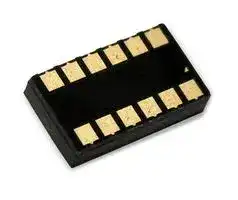


ADXL366BCCZ-RL
MEMS Accelerometer, ± 2g, ± 4g, ± 8g, X, Y, Z, I2C, SPI, LGA, 12 Pins
- Manufacturer: ANALOG DEVICES
- Product type: MEMS Accelerometers
- SVHC: No SVHC (04-Feb-2026)
- No. of Pins: 12Pins
- Sensing Axis: X, Y, Z
- Product Range: -
- Qualification: -
- Sensitivity Typ: 4000LSB/g, 2000LSB/g, 1000LSB/g
- Output Interface: I2C, SPI
- Supply Voltage Max: 3.6V
- Supply Voltage Min: 1.1V
- Sensor Case / Package: LGA
- Operating Temperature Max: 85°C
- Operating Temperature Min: -40°C
- Sensing Range - Accelerometer: ± 2g, ± 4g, ± 8g
| Delivery and price | |
|---|---|
| Units per pack | 5000 |
| Price | 1.8 € |
| Current stock | 10+ |
| Lead time | 30 days |

Data Sheet

**ADXL366**

**==> picture [111 x 32] intentionally omitted <==**

## Micropower, 3-Axis, ±2 _g_ /±4 _g_ /±8 _g_ Digital Output MEMS Accelerometer

## **FEATURES**

## **FUNCTIONAL BLOCK DIAGRAM**

- Power supply output voltage range

- 1.1V to 3.6V, allowing single cell battery operation

- Internal power supply regulation for high PSRR

- Ultralow power

- 0.96µA at 100Hz ODR (50Hz bandwidth), 2.0V supply

- 191nA current consumption in wake-up mode

- 47nA current consumption in standby mode

- High sensitivity: 0.25m _g_ /LSB

- Built-in features for system-level power savings

- Step counter with only 120nA of added current

- Single-tap and double-tap detection with only 35nA of added current

- Adjustable threshold sleep and wake-up modes for motion activation

- Autonomous interrupt processing

- Deep 512 sample embedded FIFO minimizes host processor load

- Awake state output enables implementation of motion activated switch

- Noise density of 130µ _g_ /√Hz for ultra-low noise mode, 2 _g_ range and 100Hz ODR

- Acceleration sample synchronization via external trigger

- On-chip temperature sensor

- Internal 2-pole anti-aliasing filter

- SPI (4-wire) and I[2] C digital interfaces

- Small and thin, 2.2 mm × 2.3 mm × 0.87 mm, 12-terminal LGA package

## **APPLICATIONS**

- 24/7 sensing

- Hearing aids

- Vital signs monitoring devices

- Motion-enabled power save switches

- Motion-enabled metering devices

- Smart watch with single-cell operation

- Smart home

**==> picture [221 x 94] intentionally omitted <==**

_**Figure 1. Functional Block Diagram**_

## **GENERAL DESCRIPTION**

The ADXL366 is an ultra-low power, 3-axis microelectromechanical systems (MEMS) accelerometer that consumes only 0.96µA at a 100Hz output data rate (ODR) and 191nA when in motion-triggered wake-up mode. Unlike accelerometers that use power duty cycling to achieve low power consumption, the ADXL366 does not alias input signals by undersampling but samples the full bandwidth of the sensor at all data rates.

The ADXL366 provides 14-bit output resolution. When a lower resolution is sufficient, 8-bit formatted data is also offered for more efficient single-byte transfers. In addition, for ADXL362 design compatibility, 12-bit formatted data is also provided. Measurement ranges of ±2 _g_ , ±4 _g_ , and ±8 _g_ are available, with a resolution of 0.25m _g_ /LSB on the ±2 _g_ range.

In addition to its ultra-low power consumption, the ADXL366 has many features to enable true system-level power reduction. The device includes a configurable step counter, a deep multimode output first in, first out (FIFO), a built-in micropower temperature sensor, an internal analog-to-digital converter (ADC) for synchronous conversion of an additional analog input with interrupt capability, single-tap and double-tap detection that can operate at any output data rate with only an added 35nA of current, and a state machine to prevent false triggering. In addition, the ADXL366 has provisions for external control of the sampling time and/or an external clock.

The ADXL366 operates on a wide 1.1V to 3.6V power supply operating voltage range and can interface, if necessary, to a host operating on a separate supply voltage. The ADXL366 is available in a 2.2mm × 2.3mm × 0.87mm footprint, 12-terminal LGA package and is pin compatible with the ADXL367.

**Rev. 0**

Information furnished by Analog Devices is believed to be accurate and reliable "as is". However, no responsibility is assumed by Analog Devices for its use, nor for any infringements of patents or other rights of third parties that may result from its use. Specifications subject to change without notice. No license is granted by implication or otherwise under any patent or patent rights of Analog Devices. Trademarks and registered trademarks are the property of their respective owners. All Analog Devices products contained herein are subject to release and availability.

**DOCUMENT FEEDBACK TECHNICAL SUPPORT**

Data Sheet

**ADXL366**

## **TABLE OF CONTENTS**

Features................................................................ 1 Applications........................................................... 1 Functional Block Diagram......................................1 General Description...............................................1 Specifications........................................................ 4 Timing Specifications......................................... 7 Absolute Maximum Ratings ................................12 Thermal Resistance......................................... 12 Electrostatic Discharge (ESD) Ratings.............12 Recommended Soldering Profile......................12 ESD Caution.....................................................12 Pin Configuration and Function Descriptions...... 13 Typical Performance Characteristics...................14 Theory of Operation.............................................18 Mechanical Device Operation.......................... 18 Operating Modes..............................................18 Selectable Measurement Ranges.................... 19 Selectable Output Data Rates..........................19 Power and Noise Trade-Off..............................19 Temperature Sensor.........................................19 External ADC....................................................20 Power Savings Features..................................... 21 Ultra-Low Power Consumption in All Modes....21 Pedometer .......................................................21 External ADC Interrupt..................................... 22 Motion Detection.............................................. 22 FIFO................................................................. 25 Communications...............................................26 Additional Features..............................................27 Brownout Recovery..........................................27 Z-Axis Nonlinearity Compensation ..................27 Free Fall Detection...........................................27 Tap Detection................................................... 27 External Clock.................................................. 28 External Trigger ...............................................28 Self Test............................................................28 User Register Protection.................................. 28 Serial Communications........................................29 SPI Commands................................................ 29 Multibyte Transfers...........................................29 Invalid Addresses and Address Aliasing.......... 29 Latency Restrictions.........................................29 Invalid Commands............................................29 SPI Bus Sharing...............................................30 I[2] C.................................................................... 30 Register Map....................................................... 31 Register Details................................................... 34 ADI Device ID Register.................................... 34 MEMS Device ID Register................................34

Part ID Register................................................34 Revision ID Register.........................................34 XID Registers................................................... 35 X-Data Bits[13:6] Register................................35 Y-Data Bits[13:6] Register................................35 Z-Data Bits[13:6] Register................................36 Status Register.................................................36 FIFO Entries Bits[7:0] Register.........................37 FIFO Entries Bits[9:8] Register.........................37 X-Data Bits[13:6] Register................................37 X-Data Bits[5:0] Register..................................38 Y-Data Bits[13:6] Register................................38 Y-Data Bits[5:0] Register..................................38 Z-Data Bits[13:6] Register................................38 Z-Data Bits[5:0] Register..................................39 Temperate Data Bits[13:6] Register................. 39 Temperate Data Bits[5:0] Register................... 39 ADC Data Bits[13:6] Register...........................39 ADC Data Bits[5:0] Register.............................40 I[2] C FIFO Data Register....................................40 Soft Reset Register.......................................... 40 Threshold Activity Bits[12:6] Register...............40 Threshold Activity Bits[5:0] Register.................41 Timed Activity Register.....................................41 Threshold Inactivity Bits[12:6] Register............41 Threshold Inactivity Bits[5:0] Register..............42 Timed Inactivity Bits[15:8] Register.................. 42 Timed Inactivity Bits[7:0] Register.................... 42 Activity Inactivity Control Register....................43 FIFO Control Register...................................... 43 FIFO Sample Register......................................45 Interrupt Pin 1 Enables (Lower) Register......... 45 Interrupt Pin 2 Enables (Lower) Register......... 46 Filter Control Register...................................... 46 Power Control Register.................................... 47 User Self Test Register.....................................47 Tap Threshold Register.................................... 48 Tap Duration Register.......................................48 Tap Latency Register........................................48 Tap Window Register....................................... 49 X-Axis User Offset Register............................. 49 Y-Axis User Offset Register..............................49 Z-Axis User Offset Register..............................49 X-Axis User Sensitivity Register.......................50 Y-Axis User Sensitivity Register....................... 50 Z-Axis User Sensitivity Register.......................50 Timer Control Register..................................... 51 Interrupt Pin 1 Enables (Upper) Register......... 51 Interrupt Pin 2 Enables (Upper) Register......... 52

**Rev. 0 | 2 of 71**

**analog.com**

Data Sheet

**ADXL366**

## **TABLE OF CONTENTS**

ADC Control Register.......................................53 Temperature Configuration Register................ 54 TEMP_ADC_ACT_THRSH_HIGH Register.....54 TEMP_ADC_ACT_THRSH_LOW Register......54 TEMP_ADC_INACT_THRSH_HIGH Register..........................................................55 TEMP_ADC_INACT_THRSH_LOW Register..55 Temperature Activity Inactivity Timer Register..........................................................55 Axis Mask Register...........................................56 Status Copy Register....................................... 56 Status 2 Register..............................................57 Status 3 Register..............................................57 Pedometer Step Count High Register..............58 Pedometer Step Count Low Register...............58 Pedometer Control Register.............................58 Pedometer Threshold High Register................58 Pedometer Threshold Low Register.................59 Pedometer Sensitivity Bits[14:8] Register........ 59

Pedometer Sensitivity Bits[7:0] Register.......... 59 Applications Information...................................... 60 Application Examples.......................................60 Power Supply Requirements............................63 FIFO Modes..................................................... 64 FIFO Configuration...........................................64 Interrupts.......................................................... 66 Using External Trigger......................................67 Using an External Clock...................................68 Using Self Test ................................................ 68 Operation at Voltages Other Than 2.0V........... 69 Sensitivity Dependency with ODR....................69 Sensitivity Dependency with Power Mode ...... 69 Mechanical Considerations for Mounting......... 69 Layout and Design Recommendations............ 70 Axes of Acceleration Sensitivity....................... 70 Outline Dimensions............................................. 71 Ordering Guide.................................................71 Evaluation Boards............................................ 71

## **REVISION HISTORY**

## **4/2025—Revision 0: Initial Version**

**Rev. 0 | 3 of 71**

**analog.com**

Data Sheet

**ADXL366**

## **SPECIFICATIONS**

TA = 25°C, VS = 2.0V, VDDIO = 2.0V, 100Hz ODR, ±2 _g_ range, acceleration = 0 _g_ , and default settings for other registers, unless otherwise noted.

_**Table 1. Specifications**_

|**_Table 1. Specifications_**|**_Table 1. Specifications_**|**_Table 1. Specifications_**|**_Table 1. Specifications_**|
|---|---|---|---|
|**Parameter1**<br>**Test Conditions/Comments**<br>**Min**<br>**Typ**<br>**Max**<br>**Unit**||||
|SENSOR INPUT<br>Measurement Range<br>Nonlinearity<br>X-Axis and Y-Axis<br>Z-Axis<br>X-Axis and Y−Axis<br>Z-Axis<br>X-Axis and Y-Axis<br>Z-Axis<br>Sensor Resonant Frequency<br>Cross Axis Sensitivity4<br>YX<br>XY<br>ZY<br>YZ<br>XZ<br>ZX|Each axis<br>User selectable<br>Percentage of full-scale range (FSR)<br>FSR = 2_g_<br>FSR = 2_g_, nonlinearity compensation enabled<br>FSR = 2_g_, nonlinearity compensation disabled<br>FSR = 4_g_<br>FSR = 4_g_, nonlinearity compensation enabled<br>FSR = 4_g_, nonlinearity compensation disabled<br>FSR = 8_g_<br>FSR = 8_g_, nonlinearity compensation enabled<br>FSR = 8_g_, nonlinearity compensation disabled<br>X-axis and y−axis2<br>Z-axis3<br>Values represented as: mean (± standard<br>deviation)|±2, ±4, ±8<br>0.51<br>0.51<br>1.88<br>0.77<br>0.53<br>3.82<br>3.36<br>1.66<br>8.34<br>2130<br>3000<br>+0.2 (±0.6)<br>−0.7 (±0.6)<br>+0.1 (±0.3)<br>−0.1 (±0.3)<br>+0.2 (±0.3)<br>−0.3 (±0.3)|_g_<br>%<br>%<br>%<br>%<br>%<br>%<br>%<br>%<br>%<br>Hz<br>Hz<br>%<br>%<br>%<br>%<br>%<br>%|
|OUTPUT RESOLUTION<br>All_g_Ranges|Each axis|14|Bits|
|SENSITIVITY<br>Scale Factor<br>Sensitivity<br>Sensitivity Trim Accuracy<br>Sensitivity Change vs. Voltage Supply<br>Sensitivity Change Due to Temperature5|Each axis<br>2_g_range<br>4_g_range<br>8_g_range<br>2_g_range<br>4_g_range<br>8_g_range<br>All ranges|0.25<br>0.5<br>1<br>4000<br>2000<br>1000<br>±5<br>0.45<br>±0.07|m_g_/LSB<br>m_g_/LSB<br>m_g_/LSB<br>LSB/_g_<br>LSB/_g_<br>LSB/_g_<br>% of typical<br>sensitivity<br>%/V<br>%/°C|
|0_g_OFFSET<br>0_g_Output<br>0_g_Offset vs. Temperature6<br>0_g_Offset vs. Power Supply Voltage7section.<br>X-Axis and Y-Axis<br>Z-Axis<br>0_g_Offset vs. Measurement Range<br>±3σ of 0_g_Offset Change from 2_g_to 4_g_Range<br>±3σ of 0_g_Offset Change from 2_g_to 8_g_Range|Each axis<br>X-axis output (XOUT) and Y-axis output (YOUT)<br>Z-axis output (ZOUT)<br>2_g_range<br>4_g_range<br>8_g_range|−150<br>±25<br>+150<br>−250<br>±50<br>+250<br>±0.4<br>±0.6<br>±1.0<br>3<br>14<br>±30<br>±80|m_g_<br>m_g_<br>m_g_/°C<br>m_g_/°C<br>m_g_/°C<br>m_g_/V<br>m_g_/V<br>m_g_<br>m_g_|


**Rev. 0 | 4 of 71**

**analog.com**

Data Sheet

**ADXL366**

## **SPECIFICATIONS**

_**Table 1. Specifications (Continued)**_

|**_Table 1. Specifications(Continued)_**|**_Table 1. Specifications(Continued)_**|**_Table 1. Specifications(Continued)_**|**_Table 1. Specifications(Continued)_**|
|---|---|---|---|
|**Parameter1**<br>**Test Conditions/Comments**<br>**Min**<br>**Typ**<br>**Max**<br>**Unit**||||
|NOISE PERFORMANCE<br>Noise Density<br>Normal Operation (Ultra-Low Power)<br>Low Noise Mode<br>Ultra-Low Noise Mode|2_g_range, 100Hz ODR<br>8_g_range, 100Hz ODR<br>2_g_range, 100Hz ODR<br>2_g_range, 400 ODR<br>8_g_range, 100Hz ODR<br>2_g_range, 100Hz ODR<br>2_g_range, 400Hz ODR<br>8_g_range, 100Hz ODR|345<br>980<br>194<br>162<br>531<br>130<br>132<br>343|µ_g_/√Hz<br>µ_g_/√Hz<br>µ_g_/√Hz<br>µ_g_/√Hz<br>µ_g_/√Hz<br>µ_g_/√Hz<br>µ_g_/√Hz<br>µ_g_/√Hz|
|BANDWIDTH<br>Low Pass (Antialiasing) Filter, −3 dB Corner<br>Output Data Rate (ODR)|2-pole filter<br>User selectable in 8 steps|ODR/2<br>12.5<br>400|Hz<br>Hz|
|SELF TEST<br>Output Change8|Measured on XOUT; limits are applicable over the<br>full temperature range|133<br>180<br>222|m_g_|
|POWER SUPPLY<br>Operating Voltage Range (VS)<br>Input and Output Voltage Range (VDDIO)<br>Supply Reset Threshold (VRESET)<br>Supply Current9<br>Measurement Mode10<br>Normal Operation<br>Low Noise Mode<br>Ultra-Low Noise Mode<br>Wake-Up Mode11<br>Standby Mode<br>Power Supply Rejection Ratio (PSRR)<br>Input Frequency<br>100 Hz to 1 kHz<br>1 kHz to 250 kHz<br>Turn-On Time13<br>Power-Up to Standby<br>Hold Time<br>Rise Time<br>Measurement Mode Instruction to Settled Output|100Hz ODR (50Hz bandwidth)<br>External capacitors removed, ODR = 400Hz,<br>VDDIO= 2V, VS= 2V + 0.25V × sin(2π × f ×<br>t), PSSR calculated from fast Fourier transform<br>(FFT)<br>100Hz ODR (50Hz bandwidth)<br>0 V to 90% of VS<br>Output value reached at least 98% of the settled<br>value|1.1<br>2.0<br>3.6<br>1.1<br>2.0<br>3.6<br>50<br>0.96<br>1.89<br>5.5<br>191<br>47<br>−40<br>−3012.<br>9<br>300<br>4<br>100|V<br>V<br>mV<br>µA<br>µA<br>µA<br>nA<br>nA<br>dB<br>dB<br>ms<br>ms<br>ms<br>ms|
|TEMPERATURE SENSOR<br>Bias Average<br>Standard Deviation<br>Sensitivity Average<br>Standard Deviation<br>Resolution|At 25°C|−160<br>80<br>53<br>1.2<br>14|LSB<br>LSB<br>LSB/°C<br>LSB/°C<br>Bits|


**Rev. 0 | 5 of 71**

**analog.com**

Data Sheet

**ADXL366**

## **SPECIFICATIONS**

_**Table 1. Specifications (Continued)**_

|**_Table 1. Specifications(Continued)_**|**_Table 1. Specifications(Continued)_**|**_Table 1. Specifications(Continued)_**|**_Table 1. Specifications(Continued)_**|
|---|---|---|---|
|**Parameter1**<br>**Test Conditions/Comments**<br>**Min**<br>**Typ**<br>**Max**<br>**Unit**||||
|EXTERNAL ADC INPUT<br>Input Range<br>Bias14<br>Gain<br>Noise RMS<br>Signal-to-Noise Ration (SNR)|ODR = 100Hz|0 (GND)<br>VREG_OUT<br>−8030<br>15,301<br>3<br>70|V<br>LSB<br>LSB/V<br>LSB<br>dB|
|ENVIRONMENTAL<br>Operating Temperature Range||−40<br>+85|°C|


- 1 All minimum and maximum specifications are guaranteed. Typical specifications may not be guaranteed.

- 2 Typical value based on characterization, not tested in production.

- 3 Typical value defined based on design and simulation. It is not tested in production.

- 4 Cross axis sensitivity is defined as coupling between any two axes. Typical value based on characterization, not tested in production.

- 5 Change from ambient (0°C to 25°C or 25°C to 60°C).

- 6 Change from ambient (−40°C to +25°C or +25°C to +85°C).

- 7 See the Operation at Voltages Other Than 2.0V

- 8 Self test change is defined as the output change in _g_ when self test is asserted. Different supplies and _g_ ranges cause different self test changes.

- 9 The supply current may increase when temperature sensor, FIFO, or external ADC are enabled.

- 10 Tested under 2.0V VS and VDDIO.

> 11 The wake-up mode current consumption when sampling at 1.5625SPS, which can be configured in the WAKEUP_RATE bits (Bits[7:6]) in Register 0x39.

- 12 This value reflects the maximum peak on the FFT, which is at 1.6kHz

- 13 Refer to the Power Supply Requirements section for the minimum supply rise time requirements.

- 14 The ADC data format is signed, and the input signal is single ended with respective to VREG_OUT/2; therefore, the code equal to 0LSB is approximately 0.53V.

**Rev. 0 | 6 of 71**

**analog.com**

Data Sheet

**ADXL366**

## **SPECIFICATIONS**

## **TIMING SPECIFICATIONS**

_**Table 2. Serial Peripheral Interface (SPI) Digital Input and Output**_

|**_Table 2. Serial Peripheral Interface(SPI) Digital Input and Output_**|**_Table 2. Serial Peripheral Interface(SPI) Digital Input and Output_**|||
|---|---|---|---|
|**Parameter**<br>**Test Conditions/Comments**||**Limit1**<br>**Unit**<br>**Min**<br>**Max**||
|Digital Input<br>Low Level Input Voltage (VIL)<br>High Level Input Voltage (VIH)<br>Low Level Input Current (IIL)<br>High Level Input Current (IIH)<br>Digital Output<br>Low Level Output Voltage (VOL)<br>High Level Output Voltage (VOH)<br>Low Level Output Current (IOL)<br>High Level Output Current (IOH)|Input voltage (VIN) = VDDIO<br>VIN= 0V<br>IOL= 10mA<br>IOH= −4mA<br>VOL= VOL, MAX<br>VOH= VOH, MIN|0.3 × VDDIO<br>0.7 × VDDIO<br>0.1<br>−0.1<br>0.2 × VDDIO<br>0.8 × VDDIO<br>102<br>−43|V<br>V<br>µA<br>µA<br>V<br>V<br>mA<br>mA|


> 1 Limits based on characterization results, not production tested.

> 2 For VDDIO ≤ 1.4V, the minimum IOL is 2mA.

> 3 For VDDIO ≤ 1.4V, the minimum IOH is −2mA.

_**Table 3. SPI Timing (TA = 25°C, VS = 2V, VDDIO = 2V, Capacitive Load (CLOAD) ≤ 240pF)**_

|**Parameter**|**Limit1**<br>**Unit**<br>**Description**<br>**Min**<br>**Max**|**Limit1**<br>**Unit**<br>**Description**<br>**Min**<br>**Max**|**Limit1**<br>**Unit**<br>**Description**<br>**Min**<br>**Max**|
|---|---|---|---|
|fCLK<br>tCSS<br>tCSH<br>tCSD<br>tSU<br>tHD<br>tHIGH<br>tLOW<br>tCLE<br>tV<br>tDIS|0.1<br>82<br>100<br>0.02<br>1000<br>20<br>20<br>35<br>50<br>50<br>60<br>0<br>603<br>0<br>40|MHz<br>ns<br>µs<br>ns<br>ns<br>ns<br>ns<br>ns<br>ns<br>ns<br>ns|Clock frequency<br>CS setup time<br>CS hold time<br>CS disable time<br>Data setup time<br>Data hold time<br>Clock high time<br>Clock low time<br>Clock enable time<br>Output valid from clock low<br>Output disable time|


> 1 Limits based on characterization results, not production tested

> 2 For 1.2V < VDDIO < 1.4V and 1.1V < VDDIO < 1.2V, the SPI speed is up to 5MHz and 2.5MHz, respectively.

> 3 For 1.2V < VDDIO < 1.4V, the tV limit is 100ns, and for 1.1V < VDDIO < 1.2V, the tV limit is 200ns.

_**Table 4. I[2] C Timing (TA = 25°C, VS = 2.0V, VDDIO = 2.0V, CLOAD ≤ 120pF)**_

|**_Table 4. I2C Timing (TA = 25°C, VS = 2.0V, VDDIO = 2.0V, CLOAD ≤ 120pF)_**|**_Table 4. I2C Timing (TA = 25°C, VS = 2.0V, VDDIO = 2.0V, CLOAD ≤ 120pF)_**|**_Table 4. I2C Timing (TA = 25°C, VS = 2.0V, VDDIO = 2.0V, CLOAD ≤ 120pF)_**||||
|---|---|---|---|---|---|
|**Parameter**<br>**Symbol**<br>**Test Conditions/**<br>**Comments**|||**I2C_HS = 0 (Fast Mode Plus)**<br>**I2C_HS = 1 (High Speed Mode)**<br>**Unit**<br>**Min**<br>**Typ**<br>**Max**<br>**Min**<br>**Typ**<br>**Max**|||
|DC INPUT LEVELS<br>Input Voltage<br>Low Level<br>High Level<br>Hysteresis of Schmitt<br>Trigger Inputs<br>Input Current|VIL<br>VIH<br>VHYS<br>IIL|0.1 × VDDIO< VIN< 0.9 ×<br>VDDIO|0.3 × VDDIO<br>0.7 × VDDIO<br>0.05 × VDDIO<br>−10<br>+10|0.3 × VDDIO<br>0.7 × VDDIO<br>0.1 × VDDIO|V<br>V<br>µA<br>µA|


**Rev. 0 | 7 of 71**

**analog.com**

Data Sheet

**ADXL366**

## **SPECIFICATIONS**

_**Table 4. I[2] C Timing (TA = 25°C, VS = 2.0V, VDDIO = 2.0V, CLOAD ≤ 120pF) (Continued)**_

|**Parameter**<br>**Symbol**<br>**Test Conditions/**<br>**Comments**|**Parameter**<br>**Symbol**<br>**Test Conditions/**<br>**Comments**|**Parameter**<br>**Symbol**<br>**Test Conditions/**<br>**Comments**|**I2C_HS = 0 (Fast Mode Plus)**<br>**I2C_HS = 1 (High Speed Mode)**<br>**Unit**<br>**Min**<br>**Typ**<br>**Max**<br>**Min**<br>**Typ**<br>**Max**|**I2C_HS = 0 (Fast Mode Plus)**<br>**I2C_HS = 1 (High Speed Mode)**<br>**Unit**<br>**Min**<br>**Typ**<br>**Max**<br>**Min**<br>**Typ**<br>**Max**|**I2C_HS = 0 (Fast Mode Plus)**<br>**I2C_HS = 1 (High Speed Mode)**<br>**Unit**<br>**Min**<br>**Typ**<br>**Max**<br>**Min**<br>**Typ**<br>**Max**|
|---|---|---|---|---|---|
|DC OUTPUT LEVELS<br>Output Voltage<br>Low Level<br>Output Current<br>Low Level|VOL1<br>VOL2<br>IOL|IOL= 7mA<br>VDDIO> 2V<br>VDDIO≤ 2V<br>VOL= 0.4V<br>VOL= 0.6V|0.4<br>0.2 × VDDIO<br>20<br>6||V<br>V<br>mA<br>mA|
|AC INPUT LEVELS<br>SCLK Frequency<br>SCL High Time<br>SCL Low Time<br>Start Setup Time<br>Start Hold Time<br>SDA Setup Time<br>SDA Hold Time<br>Stop Setup Time<br>Bus Free Time<br>SCL Input Rise Time<br>SCL Input Fall Time<br>SDA Input Rise Time<br>SDA Input Fall Time<br>Width of Spikes to<br>Suppress|tHIGH<br>tLOW<br>tSUSTA<br>tHDSTA<br>tSUDAT<br>tHDDAT<br>tSUSTO<br>tBUF<br>tRCL<br>tFCL<br>tRDA<br>tFDA<br>tSP|Not shown inFigure 15|0<br>1<br>260<br>500<br>260<br>260<br>50<br>0<br>260<br>500<br>120<br>120<br>120<br>120<br>50|0<br>3.4<br>60<br>160<br>160<br>160<br>40<br>0<br>160<br>80<br>80<br>160<br>160<br>10|MHz<br>ns<br>ns<br>ns<br>ns<br>ns<br>ns<br>ns<br>ns<br>ns<br>ns<br>ns<br>ns<br>ns|
|AC OUTPUT LEVELS<br>Propagation Delay<br>Data<br>Acknowledge<br>Output Fall Time|tVDDAT<br>tVDACK<br>tF|CLOAD= 500pF<br>Not shown inFigure 15|97<br>450<br>450<br>20 × (VDDIO/5.5)<br>120|27<br>135|ns<br>ns<br>ns|


**==> picture [95 x 93] intentionally omitted <==**

_**Figure 2. Register Read**_

_**Figure 3. Register Write (Receive Instruction Only)**_

**Rev. 0 | 8 of 71**

**analog.com**

Data Sheet

**ADXL366**

## **SPECIFICATIONS**

**==> picture [82 x 92] intentionally omitted <==**

**==> picture [83 x 92] intentionally omitted <==**

_**Figure 4. Burst Read**_

_**Figure 5. Burst Write (Receive Instruction Only)**_

**==> picture [101 x 92] intentionally omitted <==**

_**Figure 6. FIFO Read**_

**==> picture [381 x 34] intentionally omitted <==**

_**Figure 7. SPI FIFO Read (N 16-Bit Words)**_

**==> picture [385 x 40] intentionally omitted <==**

_**Figure 8. SPI FIFO Read (N 12-Bit Packed Words)**_

**Rev. 0 | 9 of 71**

**analog.com**

Data Sheet

**ADXL366**

## **SPECIFICATIONS**

**==> picture [385 x 44] intentionally omitted <==**

_**Figure 9. SPI FIFO Read (N 8-Bit Packed Words)**_

_**Figure 10. Timing Diagram for SPI Receive Instructions**_

_**Figure 11. Timing Diagram for SPI Send Instructions**_

_**Figure 12. I[2] C FIFO Read (N 16-Bit Words); Sub Stands for Subordinate**_

_**Figure 13. I[2] C FIFO Read (N 8-Bit Words); Sub Stands for Subordinate**_

**==> picture [191 x 54] intentionally omitted <==**

**==> picture [103 x 54] intentionally omitted <==**

_**Figure 14. I[2] C FIFO Read (N 12-Bit Words); Sub Stands for Subordinate**_

**Rev. 0 | 10 of 71**

**analog.com**

Data Sheet

**ADXL366**

## **SPECIFICATIONS**

_**Figure 15. I[2] C Interface Timing Diagram**_

**Rev. 0 | 11 of 71**

**analog.com**

Data Sheet

**ADXL366**

## **ABSOLUTE MAXIMUM RATINGS**

_**Table 5. Absolute Maximum Ratings**_

|**_Table 5. Absolute Maximum Ratings_**|**_Table 5. Absolute Maximum Ratings_**|
|---|---|
|**Parameter**<br>**Rating**||
|Acceleration (Any Axis, Unpowered)<br>Acceleration (Any Axis, Powered)<br>VS<br>VDDIO<br>All Other Pins<br>Output Short-Circuit Duration (Any Pin to<br>Ground)<br>Temperature Range (Storage)|5000_g_, 0.1ms pulse width<br>5000_g_, 0.1ms pulse width<br>−0.3V to +4.0V<br>−0.3V to +4.0V<br>−0.3V to VDDIO<br>Indefinite<br>−50°C to +150°C|


Stresses at or above those listed under Absolute Maximum Ratings may cause permanent damage to the product. This is a stress rating only; functional operation of the product at these or any other conditions above those indicated in the operational section of this specification is not implied. Operation beyond the maximum operating conditions for extended periods may affect product reliability.

## **THERMAL RESISTANCE**

Overall thermal performance is directly linked to the printed circuit board (PCB) design and operating environment. Careful attention to PCB thermal design is required.

Thermal resistance values specified in Table 6 are simulated based on JEDEC specifications, unless specified otherwise, and must be used in compliance with JESD51-12.

θJA is the natural convection, junction to ambient thermal resistance measured in a one cubic foot sealed enclosure, θJC is the channel-to-case thermal resistance (channel to exposed metal ground paddle/pad on the underside of the device), ΨJT refers to the junction-to-top of package, thermal characterization number, and ΨJB refers to the junction-to-board thermal characterization number.

_**Table 6. Thermal Resistance**_

|**Package**<br>**Type**<br>**θJA**<br>**θJC**<br>**ΨJT**<br>**ΨJB**<br>**Device**<br>**Weight**|**Package**<br>**Type**<br>**θJA**<br>**θJC**<br>**ΨJT**<br>**ΨJB**<br>**Device**<br>**Weight**|**Package**<br>**Type**<br>**θJA**<br>**θJC**<br>**ΨJT**<br>**ΨJB**<br>**Device**<br>**Weight**|**Package**<br>**Type**<br>**θJA**<br>**θJC**<br>**ΨJT**<br>**ΨJB**<br>**Device**<br>**Weight**|**Package**<br>**Type**<br>**θJA**<br>**θJC**<br>**ΨJT**<br>**ΨJB**<br>**Device**<br>**Weight**|**Package**<br>**Type**<br>**θJA**<br>**θJC**<br>**ΨJT**<br>**ΨJB**<br>**Device**<br>**Weight**|
|---|---|---|---|---|---|
|CC-12-4|177.8°C/W|116.7°C/W|11.1°C/W|127.8°C/W|9.04m_g_|


## **ELECTROSTATIC DISCHARGE (ESD) RATINGS**

The following ESD information is provided for handling of ESD-sensitive devices in an ESD protected area only.

Human body model (HBM) per ANSI/ESDA/JEDEC JS-001.

Charged device model (CDM) per ANSI/ESDA/JEDEC JS-002.

## **RECOMMENDED SOLDERING PROFILE**

Table 8 provides details about the recommended soldering profile.

**==> picture [205 x 116] intentionally omitted <==**

_**Figure 16. Recommended Soldering Profile**_

_**Table 8. Recommended Soldering Profile**_

|**Profile Feature**|**Condition**|**Condition**|
|---|---|---|
||**Sn63/Pb37**<br>**Pb-Free**||
|Average Ramp Rate (TLto TP)<br>Preheat<br>Minimum Soldering Temperature<br>(TSMIN)<br>Maximum Soldering Temperature<br>(TSMAX)<br>Soldering Time (TSMINto TSMAX)(tS)<br>TSMAXto TLRamp-Up Rate<br>Time Maintained Above Liquidous<br>Temperature (TL)<br>Liquidous Temperature (TL)<br>Liquidous Time (tL)<br>Peak Temperature (TP)<br>Time Within 5°C of Actual Peak<br>Temperature (tP)<br>Ramp-Down Rate<br>Time at 25°C to Peak Temperature|3°C/sec max<br>100°C<br>150°C<br>60 sec to 120 sec<br>3°C/sec maximum<br>183°C<br>60 sec to 150 sec<br>240 + 0°C/−5°C<br>10 sec to 30 sec<br>6°C/sec maximum<br>6 minutes<br>maximum|3°C/sec max<br>150°C<br>200°C<br>60 sec to 180 sec<br>3°C/sec maximum<br>217°C<br>60 sec to 150 sec<br>260 + 0°C/−5°C<br>20 sec to 40 sec<br>6°C/sec maximum<br>8 minutes maximum|


## **ESD CAUTION**

**ESD (electrostatic discharge) sensitive device** . Charged devices and circuit boards can discharge without detection. Although this product features patented or proprietary protection circuitry, damage may occur on devices subjected to high energy ESD. Therefore, proper ESD precautions should be taken to avoid performance degradation or loss of functionality.

## **ESD Ratings for ADXL366**

_**Table 7. ADXL366, 12-Terminal LGA**_

|**_Table 7. ADXL366, 12-Terminal LGA_**|**_Table 7. ADXL366, 12-Terminal LGA_**|**_Table 7. ADXL366, 12-Terminal LGA_**|
|---|---|---|
|**ESD Model**<br>**Withstand Threshold (V)**<br>**Class**|||
|HBM<br>CDM|2000<br>1250|2<br>C3|


**Rev. 0 | 12 of 71**

**analog.com**

Data Sheet

**ADXL366**

## **PIN CONFIGURATION AND FUNCTION DESCRIPTIONS**

**==> picture [148 x 118] intentionally omitted <==**

_**Figure 17. Pin Configuration**_

_**Table 9. Pin Function Descriptions**_

|**_Table 9. Pin Function Descriptions_**|**_Table 9. Pin Function Descriptions_**|**_Table 9. Pin Function Descriptions_**|
|---|---|---|
|**Pin No.**<br>**Mnemonic**<br>**Description**|||
|1<br>2<br>3<br>4<br>5<br>6<br>7<br>8<br>9<br>10<br>11<br>12|SCLK<br>MOSI/SDA<br>MISO/ASEL<br>CS/SCL<br>INT1<br>INT2<br>GND<br>ADC_IN<br>VREG_OUT<br>1<br>VS<br>GND<br>VDDIO|SPI Communication Clock. Tied low for I2C.<br>Main Output, Subordinate Input (MOSI), or I2C Serial Data (SDA).<br>Main Input, Subordinate Output (MISO), or I2C Address Select (ASEL).<br>SPI Chip Select, Active Low (<br>CS), or I2C Clock (SCL).<br>Interrupt 1 Output. INT1 also serves as an input for external clocking.<br>Interrupt 2 Output. INT2 also serves as an input for synchronized sampling.<br>Ground. The GND pin must be grounded.<br>ADC Input Pin. The ADC_IN pin can be left unconnected or can be connected to Pin 7 (GND) and/or Pin 11 (GND).<br>Internally Regulated Voltage.<br>Supply Voltage.<br>Ground. The GND pin must be grounded.<br>Supply Voltage for Digital Input and Output.|


> 1 The VREG_OUT pin is used as an internal supply decoupling pin, and an external 0.2μF capacitor is also required.

**Rev. 0 | 13 of 71**

**analog.com**

Data Sheet

**ADXL366**

## **TYPICAL PERFORMANCE CHARACTERISTICS**

TA = 25°C, VS = 2.0V, VDDIO = 2.0V, 100Hz ODR, ±2 _g_ range, acceleration = 0 _g_ , and default settings for other registers, unless otherwise noted.

**==> picture [202 x 163] intentionally omitted <==**

_**Figure 18. X-Axis Zero g Offset at 25°C, VS = 2V**_

**==> picture [197 x 163] intentionally omitted <==**

_**Figure 21. X-Axis Sensitivity at 25°C, VS = 2V, ±2g Range**_

**==> picture [198 x 163] intentionally omitted <==**

_**Figure 19. Y-Axis Zero g Offset at 25°C, VS = 2V**_

**==> picture [198 x 165] intentionally omitted <==**

_**Figure 22. Y-Axis Sensitivity at 25°C, VS = 2V, ±2g Range**_

**==> picture [197 x 163] intentionally omitted <==**

_**Figure 20. Z-Axis Zero g Offset at 25°C, VS = 2V**_

**==> picture [197 x 163] intentionally omitted <==**

_**Figure 23. Z-Axis Sensitivity at 25°C, VS = 2V, ±2g Range**_

**Rev. 0 | 14 of 71**

**analog.com**

Data Sheet

**ADXL366**

## **TYPICAL PERFORMANCE CHARACTERISTICS**

**==> picture [200 x 164] intentionally omitted <==**

_**Figure 24. X-Axis 0g Offset Temperature Coefficient, VS = 2V**_

**==> picture [198 x 165] intentionally omitted <==**

_**Figure 25. Y-Axis 0g Offset Temperature Coefficient, VS = 2V**_

**==> picture [197 x 165] intentionally omitted <==**

_**Figure 26. Z-Axis 0g Offset Temperature Coefficient, VS = 2V**_

**==> picture [202 x 163] intentionally omitted <==**

_**Figure 27. X-Axis Offset Normalized vs. Temperature, 16 ADXL366 Devices Soldered to PCB, ODR = 100Hz, VS = 2V**_

**==> picture [204 x 163] intentionally omitted <==**

_**Figure 28. Y-Axis Offset Normalized vs. Temperature, 16 ADXL366 Devices Soldered to PCB, ODR = 100Hz, VS = 2V**_

**==> picture [205 x 162] intentionally omitted <==**

_**Figure 29. Z-Axis Offset Normalized vs. Temperature, 16 ADXL366 Devices Soldered to PCB, ODR = 100Hz, VS = 2V**_

**Rev. 0 | 15 of 71**

**analog.com**

Data Sheet

**ADXL366**

## **TYPICAL PERFORMANCE CHARACTERISTICS**

**==> picture [202 x 163] intentionally omitted <==**

_**Figure 30. Sensitivity Deviation from 25°C vs. Temperature, 16 ADXL366 Devices Soldered to PCB, ODR = 100Hz, VS = 2V, X-Axis**_

**==> picture [202 x 163] intentionally omitted <==**

_**Figure 31. Sensitivity Deviation from 25°C vs. Temperature, 16 ADXL366 Devices Soldered to PCB, ODR = 100Hz, VS = 2V, Y-Axis**_

**==> picture [202 x 163] intentionally omitted <==**

_**Figure 32. Sensitivity Deviation from 25°C vs. Temperature, 16 ADXL366 Devices Soldered to PCB, ODR = 100Hz, VS = 2V, Z-Axis**_

**==> picture [202 x 164] intentionally omitted <==**

_**Figure 33. X-Axis Self Test Delta at 25°C, VS = 2V**_

**==> picture [197 x 163] intentionally omitted <==**

_**Figure 34. Current Consumption at 25°C, Standby Mode, ODR = 100Hz, VS = 2V**_

**==> picture [197 x 163] intentionally omitted <==**

_**Figure 35. Current Consumption at 25°C, Normal Mode, ODR = 100Hz, VS = 2V**_

**Rev. 0 | 16 of 71**

**analog.com**

Data Sheet

**ADXL366**

## **TYPICAL PERFORMANCE CHARACTERISTICS**

**==> picture [197 x 163] intentionally omitted <==**

_**Figure 36. Current Consumption at 25°C, Low Noise Mode, ODR = 100Hz, VS = 2V**_

**==> picture [197 x 163] intentionally omitted <==**

_**Figure 37. Current Consumption at 25°C, Ultra-Low Noise Mode, VS = 2V**_

**==> picture [198 x 163] intentionally omitted <==**

_**Figure 39. Temperature Sensor Sensitivity at 25°C, VS = 2V**_

**==> picture [198 x 163] intentionally omitted <==**

_**Figure 40. Clock Frequency Deviation from Ideal at 25°C, VS = 2V**_

**==> picture [198 x 163] intentionally omitted <==**

_**Figure 38. Temperature Sensor Bias at 25°C, VS = 2V**_

**Rev. 0 | 17 of 71**

**analog.com**

Data Sheet

**ADXL366**

## **THEORY OF OPERATION**

The ADXL366 is a complete 3-axis acceleration measurement system that operates at extremely low power consumption levels. The ADXL366 measures both dynamic acceleration, resulting from motion or shock, and static acceleration, such as tilt. Acceleration is reported digitally, and the device communicates via either the SPI or the I[2] C protocol. Built-in digital logic enables autonomous operation and implements functionality that enhances system level power savings.

distinguish between the presence and absence of motion, but it can also be used as a live data stream.

The ADXL366 offers four user-selectable wake-up rates ranging from approximately 12.5SPS to approximately 1.5SPS. In wake-up mode, acceleration is measured at regular intervals. Between samples, the accelerometer electronics are in a lower power state (see Figure 41).

## **MECHANICAL DEVICE OPERATION**

The moving component of the sensor is a polysilicon surface-micromachined structure that is built on top of a silicon wafer. Polysilicon springs suspend the structure over the surface of the wafer and provide a resistance against acceleration forces.

Deflection of the structure is measured using differential capacitors that consist of independent fixed plates and plates attached to the moving mass. Acceleration deflects the structure and unbalances the differential capacitor, resulting in a sensor output whose amplitude is proportional to acceleration. Phase sensitive demodulation determines the magnitude and polarity of the acceleration.

## **OPERATING MODES**

The ADXL366 has the following three operating modes:

- Measurement mode for continuous, wide bandwidth sensing

- Wake-up mode for limited bandwidth activity detection

- Standby mode for power conservation

## **Measurement Mode**

Measurement mode is the normal operating mode of the ADXL366. In this mode, acceleration data is read continuously, and the accelerometer consumes less than 1.3µA across its entire range of output data rates of up to 400Hz (normal mode at 25°C). All features described in this data sheet are available when operating the ADXL366 in this mode.

The ADXL366 is a true ultra-low power accelerometer because its supply current is 0.96µA at 100Hz ODR. Other accelerometers derive low current by using a specific low power mode that power cycles acceleration sensing. The resulting undersampling can lead to aliasing of the input acceleration. The ADXL366 does not undersample the input signal at any of its output data rates when in measurement mode.

Note that after entering measurement mode, a 100ms wait time must be observed before reading acceleration data to allow the output time to settle after entering measurement mode.

## **Wake-Up Mode**

Wake-up mode reduces current consumption to a low level by sampling the input periodically and turning the accelerometer electronics off between measurements. This mode is often used to

_**Figure 41. Acceleration Sampling**_

Wake-up mode is ideal for implementation of a motion-activated on or off switch. For many systems, a few measurements per second are sufficient to detect movements that can wake up the system. After the system is awake, it can switch into a higher data-rate mode for more precise motion measurements. Note that the time duration for the first wake-up is longer than the subsequent wake-ups.

In wake-up mode, if motion is detected, the accelerometer can respond in any of the following ways:

- Remain in wake-up mode and continue to sample data, when activity interrupt is not triggered

- Switch into full bandwidth measurement mode, when activity interrupt is triggered

- Signal an interrupt to a microcontroller

- Wake-up downstream circuitry, depending on the configuration

The response of the accelerometer is configurable via register settings. Note that the time duration for the first wake-up data point is up to 10ms slower than the subsequent data points. Wake-up mode is not supported in low noise mode and ultra-low noise mode.

## **Standby Mode**

Placing the ADXL366 in standby mode suspends measurement and reduces current consumption to 47nA (typical). Pending interrupts and data are preserved, and no new interrupts are generated.

The ADXL366 powers up in standby mode with all sensor functions turned off. Note that any changes to the registers before the POWER_CTL register (Register 0x00 to Register 0x2D) must be made with the device in standby mode. If changes are made while the ADXL366 is in measurement mode, these changes may be effective for only part of a measurement. Ensure that the change of the data capture configuration only occurs in standby mode.

**Rev. 0 | 18 of 71**

**analog.com**

Data Sheet

**ADXL366**

## **THEORY OF OPERATION**

## **SELECTABLE MEASUREMENT RANGES**

The ADXL366 has selectable measurement ranges of ±2 _g_ , ±4 _g_ , and ±8 _g_ . Acceleration samples are always converted by a 14-bit ADC. Therefore, sensitivity scales with _g_ range. Ranges and corresponding sensitivity values are listed in Table 1. When the input exceeds the full-scale range, the output data may not be accurate temporarily. The sensor is not damaged as long as the acceleration remains below the absolute maximum rating. Table 5 lists the absolute maximum ratings for acceleration, indicating the acceleration level that can cause permanent damage to the device.

## **SELECTABLE OUTPUT DATA RATES**

The ADXL366 can report acceleration data at various data rates ranging from 12.5Hz to 400Hz. The internal low-pass filter corner is automatically set to ensure the Nyquist sampling criterion is met and no aliasing occurs.

Current consumption varies with output data rate, as shown in Figure 42, remaining less than 1.3µA over the entire range of data rates and operating voltages.

**==> picture [204 x 164] intentionally omitted <==**

_**Figure 42. Normal Operation Mode Current Consumption vs. Output Data Rate at Several Supply Voltages**_

## **Anti-Aliasing**

The ADC of the ADXL366 samples at the user-selected output data rate. Without a proper anti-alias filter, input signals more than half the data rate are aliased into the signal band. To mitigate this, a 2-pole low-pass filter is provided at the input of the ADC. The 2-pole filter is set to ODR/2 for optimum bandwidth and anti-aliasing for the user-selected output data rate.

and desired resolution. For cases where lower noise is required, the ADXL366 provides a lower noise operating mode that trades reduced noise for higher current consumption.

Note that when switching from normal operation to ultra-low noise mode, there is a 2% (typical) sensitivity reduction. For example, for the 2 _g_ range and ultra-low power mode, the typical sensitivity is 4000LSB/ _g_ , as shown in Table 1, whereas for the 2 _g_ range and ultra-low noise mode, the typical sensitivity is reduced to 3920LSB/ _g_ .

Table 10 lists the current consumption and noise densities obtained for normal operation and low noise mode at a typical 2.0V supply.

_**Table 10. Noise and Current Consumption: Normal Operation and Low Noise Mode at VS = 2.0V, ODR = 100Hz**_

|**_Mode at VS = 2.0V, ODR = 100Hz_**|**_Mode at VS = 2.0V, ODR = 100Hz_**|**_Mode at VS = 2.0V, ODR = 100Hz_**|
|---|---|---|
|**Mode**<br>**Noise (µg/√Hz)**<br>**Typical**<br>**Current Consumption (µA)**<br>**Typical**|||
|Normal Operation<br>Low Noise<br>Ultra-Low Noise|345<br>194<br>130|0.96<br>1.89<br>5.5|


For low noise and ultra-low noise modes at 400Hz ODR, the bandwidth is approximately 150Hz. For all other ODRs, the bandwidth is approximately ODR/2.

## **TEMPERATURE SENSOR**

The ADXL366 includes an integrated 14-bit temperature sensor, which the system designer can use to monitor internal system temperature or to improve the temperature stability of the device via calibration. For example, acceleration outputs vary with the temperature at a rate of ±0.5m _g_ /°C (typical), but the relationship of the outputs to temperature is repeatable, and the designer can, therefore, use the temperature sensor output to calibrate the acceleration temperature drift.

To use the temperature sensor for calibration of the acceleration signal, it is sufficient to correlate acceleration to temperature sensor output. In this case, it is not necessary to convert the temperature reading to an absolute temperature. Therefore, calibration of the initial bias is not required. To get absolute temperature accuracy, the user can measure and calibrate its initial bias at some known temperature in mass production.

The designer can configure the device to save data from the temperature sensor in the FIFO. Temperature samples, whether read from the output registers or from the FIFO, update concurrently with acceleration (and ADC) samples unless they are turned off.

## **POWER AND NOISE TRADE-OFF**

The ADXL366 offers two options for decreasing noise at the expense of only a small increase in current consumption.

The noise performance of the ADXL366 in normal operation, typically 11LSB RMS (±2 _g_ mode) at 100Hz ODR (50Hz bandwidth), is adequate for most applications, depending on the bandwidth

**Rev. 0 | 19 of 71**

**analog.com**

Data Sheet

**ADXL366**

## **THEORY OF OPERATION**

## **EXTERNAL ADC**

In addition to a built-in accelerometer and temperature sensor, the ADXL366 incorporates an additional 14-bit ADC input for digitization of any external analog signal. This additional ADC input is sampled at the same ODR as the acceleration and temperature data.

Use of the ADC adds approximately 50nA to the total current consumption when operating at 100Hz ODR. The ADXL366 enables the user to power down the ADC to save power when it is not required.

The external ADC specification can be found in Table 1.

## **Analog Inputs**

The ADXL366 ADC can convert analog inputs ranging from 0V (GND) to VREG_OUT, and the input range of the external ADC is limited to a maximum of 1V by the internally regulated voltage.

Figure 43 shows the typical ADC output vs. input voltage. Notice that the ADC data format is signed and the input signal is single ended with respective to VREG_OUT/2; therefore, the code equal to 0LSB is approximately 0.53V.

**==> picture [212 x 162] intentionally omitted <==**

Figure 44 shows an equivalent circuit of the input structure of the ADXL366. The two diodes, D1 and D2, provide ESD protection for ADC_IN.

During the acquisition phase, the impedance of ADC_IN can be modeled by the series connection of input resistance (RIN) and input capacitance (CIN). RIN is typically 20kΩ and is a lumped component made up of some serial resistors and the on resistance of the switches. CIN is typically 650fF and is mainly the ADC sampling capacitor.

To calculate the acquisition time (tACQ) required use the following formula:

_tACQ_ = 10 × (( _RSOURCE_ + _RIN_ ) _CIN_ )

(1)

where _RSOURCE_ is the source impedance.

For 14-bit settling, tACQ must be less than 15µs. tACQ) sets an upper limit on RSOURCE of approximately 2MΩ. RIN and CIN make a 1-pole, low-pass filter that reduces undesirable aliasing effects and limits the noise.

**==> picture [47 x 61] intentionally omitted <==**

_**Figure 44. Equivalent Analog Input Circuit**_

_**Figure 43. External ADC Output vs. Voltage Input**_

**Rev. 0 | 20 of 71**

**analog.com**

Data Sheet

**ADXL366**

## **POWER SAVINGS FEATURES**

Designed for the most power conscious applications, the ADXL366 includes several features for enabling power savings at the system level, as well as at the device level.

## **ULTRA-LOW POWER CONSUMPTION IN ALL MODES**

At the device level, the most obvious power saving feature of the ADXL366 is its ultra-low current consumption in all configurations. The ADXL366 consumes between 0.96µA (typical) and 1.3µA (typical) across all data rates up to 400Hz and all supply voltages up to 3.6V (see Figure 42). At an even lower power of 191nA (typical), a motion triggered wake-up mode is provided for simple motion detection applications that require a power consumption lower than 0.2µA.

At these current levels, the accelerometer consumes less power in full operation than the standby currents of many other system components, and is, therefore, optimal for applications that require continuous acceleration monitoring and long battery life. Because the accelerometer is always on, it can act as a motion activation switch. The accelerometer signals to the rest of the system when to turn on, thereby managing power at the system level.

As important as its low operating current, the 47nA (typical) standby current of the ADXL366 contributes to a much longer battery life in applications that spend most of their time in a sleep state and wake-up via an external trigger.

## **PEDOMETER**

The ADXL366 has a built-in step counting feature that, when enabled, only adds 120nA (typical) of current consumption. The step counter feature estimates the number of steps taken based on the peak detection analysis of the vector of acceleration produced by a step, over a predefined time window. To reduce false positives, the step counter only considers steps as valid if eight or more steps are detected, ensuring that the step count only increments when the user is actively walking or running, as shown in the Figure 45.

**==> picture [213 x 153] intentionally omitted <==**

_**Figure 45. Acceleration Profile of Person Walking 10 Steps in One Direction and Then Turning Around and Walking 10 Steps More; The Step Count Is Shown as Black Lines**_

Figure 46 shows, graphically, how the acceleration data is interpreted and analyzed by the step counting feature. In Figure 46, within the first second, the pedometer captured that a single step is first taken, and the person then rests in place. The possible step count increases to one after the first detected minimum; however, because the second maximum does not meet the algorithm condition to be considered a possible step, the possible step count is reset to zero. The person starts walking again at approximately 1.4sec. At approximately 6.5sec, the possible step count reaches eight, and thus all eight possible steps and consecutive possible steps are certified as valid steps and added to the pedometer step count output registers.

**==> picture [215 x 157] intentionally omitted <==**

_**Figure 46. Step Counter Acceleration Signal Processing**_

The step counter can be enabled by setting to 1 the PEDOMETER_EN bit of PEDOMETER_CTL (Register 0x49), and the current steps counted can be accessed by reading the PEDOMETER_STEP_CNT_H register (Register 0x47) and PEDOMETER_STEP_CNT_L register (Register 0x48).

The two user-configurable parameters include the following:

- The pedometer initial threshold is the initial offset that is fed to the step counter when enabled. Its default value is 4000LSB, and it can be modified by the user by writing the desired value to the PEDOMETER_TRHES_H register (Register 0x4A) and PEDOMETER_TRHES_L register (Register 0x4B). The scale factor for these registers is 4000LSB/ _g_ . Internally, the threshold is dynamically updated during operation every time the difference between a pair of maximum and a minimum peaks is greater than the pedometer sensitivity setting.

- Pedometer sensitivity. defines a zone near the dynamic threshold amplitude that helps to discard signals that are most likely due to undesired motion. For a pair of maximum and minimum peaks to be considered as a possible step, the following conditions must be satisfied:

- Maximum Peak > (Dynamic Threshold + Pedometer Sensitivity/2)

- Minimum Peak < (Dynamic Threshold – Pedometer Sensitivity/2)

**Rev. 0 | 21 of 71**

**analog.com**

Data Sheet

**ADXL366**

## **POWER SAVINGS FEATURES**

The pedometer sensitivity default value is 400LSB, and it can be modified by the user by writing the desired value to the PEDOMETER_SENS_H register (Register 0x4C) and PEDOMETER_SENS_L register (Register 0x4D). The scale factor for these registers is 4000LSB/ _g_ .

## **EXTERNAL ADC INTERRUPT**

The ADXL366 incorporates a 14-bit ADC for digitization of an external analog input. An interrupt can be generated based on a user set threshold of the external system battery supply, and the ADC can be used to monitor the supply voltage. If the supply voltage falls to less than the specified threshold, an interrupt can be generated to alert the end user to charge or change the battery. By using this function, the host processor does not need to use another ADC to check the power supply periodically.

## **MOTION DETECTION**

The ADXL366 features built-in logic that detects activity (presence of acceleration greater than a threshold) and inactivity (lack of acceleration greater than a threshold). Activity and inactivity events can be used as triggers to manage the accelerometer mode of operation or trigger an interrupt to a host processor.

Detection of an activity or inactivity event is indicated in the status register and can be configured to generate an interrupt. In addition, the activity status of the device, whether it is moving or stationary, is indicated by the AWAKE bit (Bit 6 of the STATUS_COPY register, Register 0x44) as described in the Using the AWAKE Bit section.

Activity and inactivity detection can be used when the accelerometer is in either measurement mode or wake-up mode.

## **Activity Detection**

An activity event is detected when acceleration remains greater than a specified threshold for a specified time period on any of the axes. If any axis exceeds the threshold, an activity event occurs (unless that axis is disabled).

## **Referenced and Absolute Configurations**

Activity detection can be configured as referenced or absolute.

When using absolute activity detection, acceleration samples are compared to a user set threshold to determine whether motion is present. For example, if a threshold of 0.5 _g_ is set and the acceleration on the z-axis is 1 _g_ for longer than the user defined activity time, the activity status asserts.

In many applications, it is advantageous for activity detection to be based not on an absolute threshold, but on a deviation from a reference point or orientation, which is particularly useful because it removes the effect on activity detection of the static 1 _g_ imposed by gravity. When an accelerometer is stationary, its output can reach 1 _g_ , even when it is not moving. In absolute activity, when the

threshold is set to less than 1 _g_ , activity is immediately detected in this case.

The ADXL366 is in a referenced configuration when one or both of the activity and inactivity enables are set to referenced mode (INACT_EN = 11 or ACT_EN = 11 in Register 0x27). In a referenced configuration, activity is detected when acceleration samples are at least a user set amount greater than an internally defined reference for the user defined amount of time, as described in Equation 2.

## _ABS_ ( _Acceleration_ − _Reference_ ) > _Threshold_

(2)

Consequently, activity is detected only when the acceleration has deviated sufficiently from the initial orientation. The reference for activity detection is calculated when activity detection is engaged in the following scenarios:

- When the activity function is turned on and measurement mode is engaged

- If link mode is enabled, when inactivity is detected, and activity detection begins

- If link mode is not enabled, when activity is detected, and activity detection repeats

The referenced configuration results in a sensitive activity detection that detects even the most subtle motion events.

When using the referenced configuration, it is important to note that the device still uses the absolute thresholds when it first enters measurement mode, which becomes important if an inactivity threshold of <1 _g_ is desired. In this case, the device must enter measurement mode with a threshold of greater than 1 _g_ . The inactivity threshold can then be lowered to the desired level (while still in measurement mode), which allows the device to set the thresholds around the 1 _g_ offset on the z-axis.

When in referenced mode, the activity reference values can be read by properly setting the REF_READBACK bits (Bits[7:6]) in the ACT_INACT_CTL register (Register 0x27):

**1.** Write b'01 to the REF_READBACK bits in the ACT_INACT_CTL register.

**2.** On the next ODR read, the activity reference values from the XDATA_H register (Register 0x0E) to ZDATA_L register (Register 0x13).

## **Fewer False Positives**

Ideally, the intent of activity detection is to wake-up a system only when motion is intentional, ignoring noise or small, unintentional movements. In addition to being sensitive to subtle motion events, the ADXL366 activity detection algorithm is designed to be robust in filtering out undesired triggers.

The ADXL366 activity detection functionality includes a timer to filter out unwanted motion and ensure that only sustained motion is recognized as activity. The duration of this timer, as well as the

**Rev. 0 | 22 of 71**

**analog.com**

Data Sheet

**ADXL366**

## **POWER SAVINGS FEATURES**

acceleration threshold, are user adjustable from one sample (that is, no timer) to up to 20sec of motion.

Note that the activity timer is operational in measurement mode and wake-up mode. In wake-up mode, one sample activity detection is used.

## **Inactivity Detection**

An inactivity event is detected when acceleration remains less than a specified threshold for a specified time on all the axes. All three axes (if enabled) must be less than the inactivity thresholds for an inactivity event to occur. Inactivity detection is also configurable as referenced or absolute.

When using absolute inactivity detection, acceleration samples are compared to a user set threshold for the user set time to determine the absence of motion. Inactivity is detected when enough consecutive samples are all less than the threshold. The absolute configuration of inactivity must be used for implementing free fall detection.

Referenced inactivity, like referenced activity, is particularly useful for eliminating the effects of the static acceleration due to gravity. With absolute inactivity, if the inactivity threshold is set lower than 1 _g_ , a device resting motionless may never detect inactivity. With referenced inactivity, the same device under the same configuration detects inactivity.

When using referenced inactivity detection, inactivity is detected when acceleration samples are within a user specified amount of an internally defined reference (as described by Equation 3) for a user defined amount of time.

## _ABS_ ( _Acceleration_ − _Reference_ ) < _Threshold_

(3)

timer expires. In dynamic environments, the reference not updating until the timer expires can lead to the device becoming stuck in a state where it is looking for inactivity, but the acceleration is outside the threshold limits, which applies for all modes of operation: default, linked, and looped mode.

The following settings prove an example for enabling referenced inactivity in default mode:

- 2 _g_ , ODR = 100Hz

- Referenced inactivity threshold = 250m _g_

- Inactivity timer = 100 samples

For the example, the device updates the inactivity reference once every second because the ODR is 100Hz and the timer is 100 samples (see Figure 47).

**==> picture [127 x 40] intentionally omitted <==**

_**Figure 47. Referenced Inactivity Thresholds, Slow Change in Acceleration**_

In Figure 48, the acceleration exceeds the inactivity threshold before the time expires. Therefore, inactivity is not detected. However, this now means that the reference thresholds are not updated. If the acceleration stays more than the thresholds, the device is stuck in a loop of searching for inactivity; however, acceleration is outside of the limits. Even though the device may not be moving, inactivity is not detected.

The reference for inactivity detection is calculated when either of the following events occurs:

- The inactivity function is turned on, and the device enters measurement mode.

- An inactivity event is detected.

When in referenced mode, the inactivity reference values can be read by properly setting the REF_READBACK bits (Bits[7:6]) in the ACT_INACT_CTL register (Register 0x27):

**1.** Write b'10 to REF_READBACK bits ion ACT_INACT_CTL register.

**2.** On the next ODR read, the inactivity reference values from the XDATA_H register (Register 0x0E) to ZDATA_L register (Register 0x13).

_**Figure 48. Referenced Inactivity Thresholds, Fast Change in Acceleration**_

Notice that in linked and looped mode, the inactivity event detection is linked sequentially to activity, which means that the inactivity threshold cannot be continuously updated as in default mode (see Figure 47).

A requirement for inactivity detection is that for whatever period of time the inactivity timer has been configured, the accelerometer detects inactivity only when it has been stationary for that amount of time. The inactivity timer can be set anywhere from 2.5ms (a single sample at 400Hz ODR) to almost 90 minutes (65,535 samples at 12.5Hz ODR) of inactivity. The reference is not updated until the

**Rev. 0 | 23 of 71**

**analog.com**

Data Sheet

**ADXL366**

## **POWER SAVINGS FEATURES**

## **Linking Activity and Inactivity Detection**

The activity and inactivity detection functions can be used concurrently and processed manually by a host processor, or they can be configured to interact in several other ways, shown in the Default Mode section, Linked Mode section, Loop Mode section, and Autosleep section.

## **Default Mode**

The user must enable the activity and inactivity functions because these functions are not automatically enabled by default. After the user enables the activity and inactivity functions, both activity and inactivity detection remain enabled and all interrupts must be serviced by a host processor, that is, a processor must read each interrupt before it is cleared and can be used again.

Default mode operation is shown in the flowchart in Figure 49.

**==> picture [69 x 45] intentionally omitted <==**

**==> picture [95 x 74] intentionally omitted <==**

**==> picture [193 x 99] intentionally omitted <==**

_**Figure 49. Flowchart Illustrating Activity and Inactivity Operation in Default Mode**_

## **Linked Mode**

In linked mode, activity and inactivity detection are linked to each other in a way so that only one of the functions is enabled at any given time. As soon as activity is detected, the device is assumed to be moving (or awake) and stops looking for activity. Inactivity is expected as the next event. Therefore, only inactivity detection operates.

Similarly, when inactivity is detected, the device is assumed to be stationary (or asleep). Therefore, activity is expected as the next event and only activity detection operates.

In linked mode, activity interrupt is enabled first after power-up. Each interrupt must be serviced by a host processor before the next interrupt is enabled.

Note that the AWAKE bit is defined as follows:

- On power-up, AWAKE = 1.

- If inactivity is detected and inactivity interrupt is cleared, AWAKE = 0.

- If activity is detected and activity interrupt is cleared, AWAKE = 1.

It is important to note that in linked mode, the host processor must read the status register to update the activity and inactivity thresholds in referenced mode. Otherwise, the thresholds do not update as the acceleration changes.

Linked mode operation is shown in the flowchart in Figure 50.

**==> picture [213 x 82] intentionally omitted <==**

_**Figure 50. Flowchart Illustrating Activity and Inactivity Operation in Linked Mode**_

## **Loop Mode**

In loop mode, motion detection operates as described in the Linked Mode section, but interrupts do not need to be serviced by a host processor. This configuration simplifies the implementation of commonly used motion detection and enhances power savings by reducing the amount of power used in bus communication.

Similar to linked mode, activity interrupt is enabled first after powerup in loop mode. Loop mode operation is shown in the flowchart in Figure 51.

**==> picture [51 x 38] intentionally omitted <==**

**==> picture [55 x 38] intentionally omitted <==**

_**Figure 51. Flowchart Illustrating Activity and Inactivity Operation in Loop Mode**_

## **Looped Mode Start-Up Routine**

When using loop mode, it is important to note that the AWAKE bit is always asserted when the device first enters measurement mode. The device is currently waiting for an activity event. Therefore, this AWAKE bit remains asserted until activity is detected and an inactivity event is detected. To avoid this, the device must enter measurement mode with an activity threshold less than the noise level of the ADXL366 and an inactivity threshold greater than 1 _g_ , which allows the device to de-assert the AWAKE bit immediately after entering measurement mode. The activity threshold can then be raised to the desired level (while still in measurement mode). The

**Rev. 0 | 24 of 71**

**analog.com**

Data Sheet

**ADXL366**

## **POWER SAVINGS FEATURES**

steps that follow detail an example of the loop mode initialization routine:

**1.** Set the activity threshold to less than the noise level of the accelerometer, for example, 1LSB, by doing the following:

   - **a.** Write 0x00 to the THRESH_ACT_H register (Register 0x20).

   - **b.** Write 0x04 to the THRESH_ACT_L register (Register 0x21).

**2.** Set the activity timer to zero by doing the following:

   - **a.** Write 0x00 to the TIMER_ACT register (Register 0x22).

**3.** Set the inactivity threshold greater than 1 _g_ , for example, FSR, by doing the following:

   - **a.** Write 0x7F to the THRESH_INACT_H register (Register 0x23).

   - **b.** Write 0xFC to the THRESH_INACT_L register (Register 0x24).

**4.** Set the inactivity timer to zero by doing the following:

   - **a.** Write 0x00 to the TIMER_INACT_H register (Register 0x25).

   - **b.** Write 0x00 to the TIMER_INACT_L register (Register 0x26).

**5.** Enable the activity and inactivity in referenced mode and looped mode by writing 0x3F to the ACT_INACT_CTL register (Register 0x27).

**6.** Ability to update other customer settings.

**7.** Enter to measurement mode and auto-sleep mode by writing 0x07 to the POWER_CTL register (Register 0x2D).

**8.** Wait for the AWAKE bit to go low, which happens in approximately 100ms + 1/ODR, and is the time it takes to the first data sample when switching from standby to measurement mode, as specified on Table 1.

**9.** Reconfigure the activity and inactivity thresholds and timers to the desired values, Register 0x20 to Register 0x26.

## **Autosleep**

When in linked mode or loop mode, enabling autosleep causes the device to enter wake-up mode autonomously (see the Wake-Up Mode section) when inactivity is detected while interrupt is serviced and to re-enter measurement mode when activity is detected and interrupt is serviced.

The autosleep configuration is active only if linked mode or loop mode are enabled. In the default mode, the autosleep setting is ignored. Autosleep mode is not supported in low noise mode.

## **Using the AWAKE Bit**

The AWAKE bit is a status bit that indicates whether the ADXL366 is awake or asleep. The device is awake when it has experienced an activity condition, and it is asleep when it has experienced an inactivity condition.

The awake signal can be mapped to the INT1 pin or INT2 pin, allowing the pin to serve as a status output to connect or disconnect power to downstream circuitry based on the awake status of the accelerometer. Used in conjunction with loop mode, this configuration implements a trivial motion activated switch, as shown in Figure 59.

This motion switch configuration can save significant system level power by eliminating the standby current consumption of the remainder of the application.

## **FIFO**

The ADXL366 includes a deep 512-sample FIFO buffer. The FIFO provides benefits primarily in two ways, system level power savings and data recording/event context.

## **System Level Power Savings**

Appropriate use of the FIFO enables system level power savings by enabling the host processor to sleep for extended periods of time while the accelerometer collects data. Alternatively, using the FIFO to collect data can unburden the host while it tends to other tasks.

## **Data Recording and Event Context**

The FIFO can be used in a triggered mode to record all data leading up to an activity detection event, thereby providing context for the event. For example, in the case of a system that identifies impact events, the accelerometer can keep the entire system off while it stores acceleration data in its FIFO and looks for an activity event. When the impact event occurs, data that was collected prior to the event is frozen in the FIFO. The accelerometer can then wake the rest of the system and transfer this data to the host processor, thereby providing context for the impact event.

Generally, the more context available, the more intelligent decisions a system can achieve, making a deep FIFO especially useful. The ADXL366 FIFO can store up to more than 13 seconds of data, providing a clear picture of events prior to an activity trigger.

All FIFO modes of operation, as well as the structure of the FIFO and instructions for retrieving data from it, are described in further detail in the FIFO Modes section. Note that when retrieving data from the FIFO, all axes of interest must be read in a burst (or multiple byte) read operation to avoid data loss or misalignment.

The FIFO is not supported in wake-up and autosleep mode.

**Rev. 0 | 25 of 71**

**analog.com**

Data Sheet

**ADXL366**

## **POWER SAVINGS FEATURES**

## **COMMUNICATIONS**

## **Bus Keepers**

## **SPI Instructions**

The digital interface of the ADXL366 is implemented with system level power savings in mind. The following features enhance power savings:

- Burst reads and writes reduce the number of SPI communication cycles required to configure the device and retrieve data.

- Concurrent operation of activity and inactivity detection enables motion activated operation that requires minimal input from the processor. Loop mode further reduces communications power by enabling the clearing of interrupts without processor intervention.

- The FIFO is implemented in a way so that consecutive samples can be read continuously via a multibyte read of unlimited length. Therefore, one read FIFO instruction can clear the entire contents of the FIFO. In many other accelerometers, each read instruction retrieves a single sample only.

## **I[2] C Interface**

The ADXL366 also offers an I[2] C interface for the platforms with limited general-purpose input and output (GPIO) resources. The ADXL366 conforms to the _UM10204 I[2] C-bus specification and user manual_ , Rev. 03—19 June 2007, available from NXP Semiconductor.

The ADXL366 includes bus keepers on the SCLK, INT1, and INT2 pins that may be configured as digital inputs. Bus keepers are used to prevent tristate bus lines from floating when nothing is driving them, preventing through current in any gate inputs that are on the bus.

## **MSB Registers**

Acceleration and temperature measurements are converted to 14bit values and transmitted via the SPI or I[2] C interface using two registers per measurement. To read a full sample set of 3-axis acceleration data, six registers must be read.

Many applications do not require the accuracy that 14-bit data provides and prefer, instead, to save system level power. The MSB registers, XDATA, YDATA, and ZDATA (Register 0x08, Register 0x09, and Register 0x0A, repectively), enable this trade-off. These registers contain the eight MSBs of the x-axis, y-axis, and z-axis acceleration data. Reading these registers effectively provides 8-bit acceleration values. Importantly, only three (consecutive) registers must be read to retrieve a full data set, significantly reducing the time during which the SPI or I[2] C bus is active and drawing current.

14-bit, 12-bit, and 8-bit data are available simultaneously so that all data formats can be used in a single application, depending on the requirements of the application at a given time. For example, the processor can read 14-bit data when higher resolution is required and switch to 8-bit data (simply by reading a different set of registers) when application requirements change.

**Rev. 0 | 26 of 71**

**analog.com**

Data Sheet

**ADXL366**

## **ADDITIONAL FEATURES**

## **BROWNOUT RECOVERY**

In the event of a brownout condition, the ADXL366 is capable to recovering with a simple software reset command, which mean that there is no need to perform a full hardware reset on either the SPI or I[2] C mode. To perform a software reset, write 0x52 to the SOFT_RESET register, Register 0x1F, as described in Soft Reset Register.

## **Z-AXIS NONLINEARITY COMPENSATION**

The ADXL366 out-of-plane (Z-axis output) response is dominated by second-order nonlinearity due to its trampoline nature, and its nonlinearity is usually much larger than the X-axis and Y axis nonlinearities.

The ADXL366 counts with a digital feature that, if enabled, applies a second-order correction to the Z-axis acceleration signal path that can improve the nonlinearity by approximately 8×. The compensation function is as follows:

**==> picture [127 x 15] intentionally omitted <==**

**==> picture [10 x 11] intentionally omitted <==**

where:

A is the linearized acceleration in the Z-axis. Z, LIN AZ, BC is the acceleration in the Z-axis before compensation. k is the compensation coefficient.

Detection section for more details, including suggested threshold and timing values.

## **TAP DETECTION**

The tap interrupt function is capable of detecting either single tap or double tap events while only increasing the current consumption by 35nA when enabled. The following parameters are shown in Figure 53 for a valid single and valid double tap event:

- The tap detection threshold is defined by the THRESH_TAP register (Register 0x2F).

- The maximum tap duration time is defined by the TAP_DUR register (Register 0x30).

- The tap latency time is defined by the TAP_LATENT register (Register 0x31) and is the waiting period from the end of the first tap until the start of the time window when a second tap can be detected, which is determined by the value in the TAP_WINDOW register (Register 0x32).

- The interval after the latency time (set by the TAP_LATENT register) is defined by the window register. Although a second tap must begin after the latency time has expired, it does not have to finish before the end of the time defined by the TAP_WINDOW register.

To enable the Z-axis nonlinearity compensation feature, set the NL_COMP_EN bit (Bit 7) to high in Register TEMP_CTL (Register 0x3D).

Notice that the nonlinearity compensation feature does not apply for the X-axis, Y-axis, and temperature data. Figure 52 shows an example of the linearity improvement for the 2 _g_ range.

**==> picture [201 x 166] intentionally omitted <==**

_**Figure 52. Compensated vs. Noncompensated Z-Axis Nonlinearity, 2g Range, Sample Size = 10**_

**==> picture [120 x 68] intentionally omitted <==**

_**Figure 53. Tap Interrupt Function with Valid Single and Double Taps**_

If only the single tap function is in use, the single tap interrupt is triggered when the acceleration goes to less than the threshold, as long as the value of the time stored in the TAP_DUR register was not exceeded. If both single tap and double tap functions are in use, the single tap interrupt is triggered when the double tap event is either validated or invalidated, and the single tap events must be cleared (by reading the STATUS2 register) to allow the next tap (double tap) events to be detected.

Note that when using a tap threshold (the THRESH_TAP register) less than 1 _g_ , tilting the device may also result in a tap event.

## **FREE FALL DETECTION**

Many digital output accelerometers include a built-in free fall detection feature. In the ADXL366, this function can be implemented using the inactivity interrupt. Refer to the Implementing Free Fall

**Rev. 0 | 27 of 71**

**analog.com**

Data Sheet

**ADXL366**

## **ADDITIONAL FEATURES**

## **EXTERNAL CLOCK**

The ADXL366 has a built-in 102.4kHz (typical) clock that, by default, serves as the time base for internal operations.

The ODR and bandwidth scale proportionally with the clock. The ADXL366 provides a discrete number of options for the ODR, such as 100Hz, 50Hz, and 25Hz, in factors of 2. To achieve data rates other than those provided, an external clock can be used at the appropriate clock frequency. The output data rate scales with the clock frequency, as shown in Equation 5.

f ODRACTUAL = ODRSELECTED × 102 . 4kHz (5)

For example, to achieve an 80Hz ODR, select the 100Hz ODR setting and provide a clock frequency that is 80% of nominal, or 81.92kHz.

The ADXL366 can operate with external clock frequencies ranging from the nominal 102.4kHz down to 51.2kHz to allow the user to achieve any desired output data rate.

Alternatively, an external clock can be used to improve clock frequency accuracy. To achieve tighter tolerances, a more accurate clock can be provided externally.

Power consumption also scales with clock frequency. Higher clock rates increase power consumption. Figure 54 shows how power consumption varies with clock rate.

Note that the external clock must only be configured when in standby mode and be running before the measurement mode command is issued.

**==> picture [204 x 162] intentionally omitted <==**

## **EXTERNAL TRIGGER**

For applications that require a precisely timed acceleration measurement, the ADXL366 features an option to synchronize acceleration sampling to an external trigger. Note that synchronized data sampling (external trigger) is not supported in the ADXL366 when in wake-up mode.

Refer to the Using External Trigger section for more information.

## **SELF TEST**

The ADXL366 incorporates a self test feature that effectively tests its mechanical and electronic systems simultaneously. When the self test function is invoked, an electrostatic force is applied to the mechanical sensor. This electrostatic force moves the mechanical sensing element in the same manner as acceleration, and it is additive to the acceleration experienced by the device. This added electrostatic force results in an output change only on x-axis channel. Any reading made on the y-axis channel and z-axis channel during self test is invalid.

## **USER REGISTER PROTECTION**

The ADXL366 includes user register protection for single event upsets (SEUs). An SEU is a change of state caused by ions or electromagnetic radiation striking a sensitive node in a microelectronic device. The state change is a result of the free charge created by ionization in or close to an important node of a logic element (for example, a memory bit). The SEU, itself, is not considered permanently damaging to transistor or circuit functionality, but it can create erroneous register values. The ADXL366 registers that are protected from SEU are Register 0x00 to Register 0x43 with a 242-bit checker.

SEU protection is implemented via a 99-bit error correcting (Hamming-type) code that detects both single-bit and double-bit errors. The check bits are recomputed any time a write to any of the protected registers occurs. At any time, if the stored version of the check bits is not in agreement with the current check bit calculation, the ERR_USER_REGS status bit (Bit 7) is set in the status registers (Register 0x0B and Register 0x44).

The ERR_USER_REGS bit in the status registers is set on powerup prior to device configuration. This bit clears on the first register write to that device.

_**Figure 54. Current Consumption vs. External Clock Rate**_

**Rev. 0 | 28 of 71**

**analog.com**

Data Sheet

**ADXL366**

## **SERIAL COMMUNICATIONS**

The ADXL366 communicates via a 4-wire SPI or I[2] C interface and operates as a subordinate. Ignore data that is transmitted from the ADXL366 to the main device during writes to the ADXL366.

As shown in Figure 2 to Figure 7, the MISO pin is in a high impedance state (held by a bus keeper) except when the ADXL366 is sending read data, which is done to conserve bus power.

Wire the ADXL366 for SPI communication, as shown in the connection diagram in Figure 55. The recommended SPI clock speeds are 1MHz to 8MHz, with a 12pF maximum loading.

The ADXL366 uses an SPI mode with a clock polarity (CPOL) of zero and a clock phase (CPHA) of zero.

For correct operation of the device, the logic thresholds and timing parameters in Table 2 and Table 3 must be met at all times. Refer to Figure 10 and Figure 11 for visual diagrams of the timing parameters.

**==> picture [224 x 82] intentionally omitted <==**

_**Figure 55. 4-Wire SPI Connection Diagram**_

## **SPI COMMANDS**

The SPI port uses a multibyte structure where the first byte is a command. The ADXL366 command set is as follows:

- 0x0A: write register

- 0x0B: read register

- 0x0D: read FIFO

## **Read and Write Register Commands**

The command structure for the read register and write register commands is **</CS down> <command byte (0x0A or 0x0B)> <address byte> <data byte> <additional data bytes for multi-byte> … </CS up>.**

The read and write register commands support multibyte (burst) read/write access. The waveform diagrams for multibyte read and write commands are shown in Figure 2 and Figure 3.

## **Read FIFO Command**

Reading from the FIFO buffer is a command structure that does not have an address, **</CS down> <command byte (0x0D)> <data byte> <data byte> … </CS up>.**

out of synchronization. Data is presented most significant byte first, followed by the least significant byte.

## **MULTIBYTE TRANSFERS**

Multibyte transfers, also known as burst transfers, are supported for all SPI commands (register read, register write, and FIFO read commands). It is recommended that data be read using multibyte transfers to ensure that a concurrent and complete set of x-axis, y-axis, and z-axis acceleration (and temperature, where applicable) data is read.

The FIFO runs on the serial port clock during FIFO reads and can sustain bursting at the SPI clock rate as long as the SPI clock is fast enough to pop data faster than it is being written to the FIFO (depends on ODR).

## **Register Read/Write Auto-Increment**

A register read or write command begins with the address specified in the command and auto-increments for each additional byte in the transfer. Register 0x00 to Register 0x45 are user accessible. A multibyte register read that extends past Register 0x45 gives valid data only up to Register 0x45. Any attempt to read a higher register may result in invalid data.

## **INVALID ADDRESSES AND ADDRESS ALIASING**

The ADXL366 has a 7-bit address bus, mapping only 128 registers in the possible 256 register address space. Register 0x00 to Register 0x45 are for customer access, as described in Table 11. Register 0x4E to Register 0x7F are reserved for factory use. Any attempt to read beyond Register 0x7F results in invalid data.

## **LATENCY RESTRICTIONS**

Reading any of the data registers (Register 0x08 to Register 0x0A or Register 0x0E to Register 0x17) clears the data ready interrupt. There can be as much as a 120µs delay from reading a register to the clearing of the data ready interrupt. This delay can increase to 420μs in wake-up mode. Same delay applies to clear any other interrupt on STATUS, STATUS_COPY, and STATUS_2 registers.

Other register reads, register writes, and FIFO reads have no latency restrictions.

## **INVALID COMMANDS**

There are only three valid SPI commands for the ADXL366, 0x0A, 0x0B, and 0x0D. All other commands are invalid and must be avoided. When not receiving a valid command, the MISO output remains in a high impedance state, and the bus keeper holds the MISO line at its last value.

It is recommended that a full sample set be read (using a multibyte transaction). If a full sample set is not read using a multibyte transaction, FIFO can get discarded and the channel ID can slip

**Rev. 0 | 29 of 71**

**analog.com**

Data Sheet

**ADXL366**

## **SERIAL COMMUNICATIONS**

## **SPI BUS SHARING**

When using the ADXL366 on the same SPI bus as another sensor, additional protection may be needed to maintain ultra-low noise performance, which is especially important if the other devices use an SPI clock of 15MHz or greater. Use a gated buffer on the SCLK line for the ADXL366 device. This gated SCLK allows the clock signal through only when the chip select (CS) line is low. See Figure 56 for the example circuit that provides this type of protection.

**==> picture [62 x 87] intentionally omitted <==**

**==> picture [132 x 89] intentionally omitted <==**

_**Figure 56. SCLK Protection Example**_

## **I[2] C**

With SCLK tied low to ground, the ADXL366 is in I[2] C mode, requiring a 2-wire connection, as shown in Figure 57. The ADXL366 conforms to the _UM10204 I[2] C-bus specification and user manual_ , Rev. 03—19 June 2007, available from NXP Semiconductor. The ADXL366 meets this standard with the exception that it does not support dynamic switching into high speed mode. The device supports standard (100kHz) and fast (400kHz) data transfer modes if the bus parameters detailed in Table 4 are met.

With the ASEL pin high, the 7-bit I[2] C address for the device is 0x53, followed by the R/W bit, as shown in Figure 57, which translates to 0xA6 for a write and 0xA7 for a read. An alternate I[2] C address

of 0x1D (followed by the R/W bit) can be chosen by grounding the ASEL pin, which translates to 0x3A for a write and 0x3B for a read.

Single-byte or multiple-byte reads and writes are supported, as shown in Figure 58. More detailed FIFO read protocol information is shown in Figure 12.

There are no internal pull-up or pull-down resistors for any unused pins. Therefore, there is no known state or default state for the ASEL pin if it is left floating or unconnected. It is required that the ASEL pin be connected to either VDDIO or ground when using the I[2] C interface.

**==> picture [202 x 129] intentionally omitted <==**

_**Figure 57. I[2] C Connection Diagram (Address 0x53)**_

If other devices are connected to the same I[2] C bus, the nominal operating voltage level of these other devices cannot exceed VDDIO by more than 0.3V. External pull-up resistors (RP) are necessary for proper I[2] C operation. Refer to the _UM10204 I[2] C-bus specification and user manual_ , Rev. 03—19 June 2007, when selecting pull-up resistor values to ensure proper operation.

**==> picture [481 x 127] intentionally omitted <==**

_**Figure 58. I[2] C Device Addressing (Read from Data Registers)**_

**Rev. 0 | 30 of 71**

**analog.com**

Data Sheet

**ADXL366**

## **REGISTER MAP**

_**Table 11. Register Map**_

|**_Table 11. Register Map_**|**_Table 11. Register Map_**|**_Table 11. Register Map_**|**_Table 11. Register Map_**|**_Table 11. Register Map_**|**_Table 11. Register Map_**|**_Table 11. Register Map_**|**_Table 11. Register Map_**|**_Table 11. Register Map_**|**_Table 11. Register Map_**|**_Table 11. Register Map_**|**_Table 11. Register Map_**|**_Table 11. Register Map_**|
|---|---|---|---|---|---|---|---|---|---|---|---|---|
|**Reg**<br>**Addr**<br>**Name**<br>**Bits**<br>**Bit 7**<br>**Bit 6**<br>**Bit 5**<br>**Bit 4**<br>**Bit 3**<br>**Bit 2**<br>**Bit 1**<br>**Bit 0**<br>**Reset**<br>**R/W**|||||||||||||
|0x00|DEVID_AD|[7:0]|DEVID_AD||||||||0xAD|R|
|0x01|DEVID_MST|[7:0]|DEVID_MST||||||||0x1D|R|
|0x02|PART_ID|[7:0]|PART_ID||||||||0xF7|R|
|0x03|REV_ID|[7:0]|REV_ID||||||||0x05|R|
|0x04|RESERVED|[7:0]|RESERVED||||||||0x00|R|
|0x05|SERIAL_NUMBE<br>R_2|[7:0]|RESERVED|||||||SERIAL_N<br>UMBER[16<br>]|0x00|R|
|0x06|SERIAL_NUMBE<br>R_1|[7:0]|SERIAL_NUMBER[15:8]||||||||0x00|R|
|0x07|SERIAL_NUMBE<br>R_0|[7:0]|SERIAL_NUMBER[7:0]||||||||0x00|R|
|0x08|XDATA|[7:0]|XDATA_H||||||||0x00|R|
|0x09|YDATA|[7:0]|YDATA_H||||||||0x00|R|
|0x0A|ZDATA|[7:0]|ZDATA_H||||||||0x00|R|
|0x0B|STATUS|[7:0]|ERR_US<br>ER_RE<br>GS|AWAKE|INACT|ACT|FIFO_OVER_<br>RUN|FIFO_WATER<br>_MARK|FIFO_REA<br>DY|DATA_RE<br>ADY|0x40|R|
|0x0C|FIFO_ENTRIES_<br>L|[7:0]|FIFO_ENTRIES[7:0]||||||||0x00|R|
|0x0D|FIFO_ENTRIES_<br>H|[7:0]|RESERVED||||||FIFO_ENTRIES[9:8]||0x00|R|
|0x0E|XDATA_H|[7:0]|XDATA[13:6]||||||||0x00|R|
|0x0F|XDATA_L|[7:0]|XDATA[5:0]||||||RESERVED||0x00|R|
|0x10|YDATA_H|[7:0]|YDATA[13:6]||||||||0x00|R|
|0x11|YDATA_L|[7:0]|YDATA[5:0]||||||RESERVED||0x00|R|
|0x12|ZDATA_H|[7:0]|ZDATA[13:6]||||||||0x00|R|
|0x13|ZDATA_L|[7:0]|ZDATA[5:0]||||||RESERVED||0x00|R|
|0x14|TEMP_H|[7:0]|TEMP_DATA[13:6]||||||||0x00|R|
|0x15|TEMP_L|[7:0]|TEMP_DATA[5:0]||||||RESERVED||0x00|R|
|0x16|EX_ADC_H|[7:0]|EX_ADC_DATA[13:6]||||||||0x00|R|
|0x17|EX_ADC_L|[7:0]|EX_ADC_DATA[5:0]||||||RESERVED||0x00|R|
|0x18|I2C_FIFO_DATA|[7:0]|I2C_FIFO_DATA||||||||0x00|R|
|0x1F|SOFT_RESET|[7:0]|RESERVED||||||SOFT_RE<br>SET|RESERVE<br>D|0x00|W|
|0x20|THRESH_ACT_<br>H|[7:0]|RESER<br>VED|THRESH_ACT[12:6]|||||||0x00|R/W|
|0x21|THRESH_ACT_L|[7:0]|THRESH_ACT[5:0]||||||RESERVED||0x00|R/W|
|0x22|TIME_ACT|[7:0]|TIME_ACT||||||||0x00|R/W|
|0x23|THRESH_INACT<br>_H|[7:0]|RESER<br>VED|THRESH_INACT[12:6]|||||||0x00|R/W|
|0x24|THRESH_INACT<br>_L|[7:0]|THRESH_INACT[5:0]||||||RESERVED||0x00|R/W|
|0x25|TIME_INACT_H|[7:0]|TIME_INACT[15:8]||||||||0x00|R/W|
|0x26|TIME_INACT_L|[7:0]|TIME_INACT[7:0]||||||||0x00|R/W|
|0x27|ACT_INACT_CT<br>L|[7:0]|REF_READBACK||LINKLOOP||INACT_EN||ACT_EN||0x00|R/W|
|0x28|FIFO_CONTROL|[7:0]|RESER<br>VED|CHANNEL_SELECT||||FIFO_SAMPL<br>ES[8]|FIFO_MODE||0x00|R/W|


**Rev. 0 | 31 of 71**

**analog.com**

Data Sheet

**ADXL366**

## **REGISTER MAP**

_**Table 11. Register Map (Continued)**_

|**_Table 11. Register Map(Continued)_**|**_Table 11. Register Map(Continued)_**|**_Table 11. Register Map(Continued)_**|**_Table 11. Register Map(Continued)_**|**_Table 11. Register Map(Continued)_**|**_Table 11. Register Map(Continued)_**|**_Table 11. Register Map(Continued)_**|**_Table 11. Register Map(Continued)_**|**_Table 11. Register Map(Continued)_**|**_Table 11. Register Map(Continued)_**|**_Table 11. Register Map(Continued)_**|**_Table 11. Register Map(Continued)_**|**_Table 11. Register Map(Continued)_**|
|---|---|---|---|---|---|---|---|---|---|---|---|---|
|**Reg**<br>**Addr**<br>**Name**<br>**Bits**<br>**Bit 7**<br>**Bit 6**<br>**Bit 5**<br>**Bit 4**<br>**Bit 3**<br>**Bit 2**<br>**Bit 1**<br>**Bit 0**<br>**Reset**<br>**R/W**|||||||||||||
|0x29|FIFO_SAMPLES|[7:0]|FIFO_SAMPLES[7:0]||||||||0x80|R/W|
|0x2A|INTMAP1_LOWE<br>R|[7:0]|INT_LO<br>W_INT1|AWAKE_INT1|INACT_INT1|ACT_INT1|FIFO_OVERR<br>UN_INT1|FIFO_WATER<br>MARK_INT1|FIFO_RDY<br>_INT1|DATA_RD<br>Y_INT1|0x00|R/W|
|0x2B|INTMAP2_LOWE<br>R|[7:0]|INT_LO<br>W_INT2|AWAKE_INT2|INACT_INT2|ACT_INT2|FIFO_OVERR<br>UN_INT2|FIFO_WATER<br>MARK_INT2|FIFO_RDY<br>_INT2|DATA_RD<br>Y_INT2|0x00|R/W|
|0x2C|FILTER_CTL|[7:0]|RANGE||I2C_HS|RESERVED|EXT_SAMPL<br>E|ODR|||0x23|R/W|
|0x2D|POWER_CTL|[7:0]|RESER<br>VED|EXT_CLK|NOISE||WAKEUP|AUTOSLEEP|MEASURE||0x00|R/W|
|0x2E|SELF_TEST|[7:0]|RESERVED||||||ST_FORC<br>E|ST|0x00|R/W|
|0x2F|TAP_THRESH|[7:0]|TAP_THRESH||||||||0x00|R/W|
|0x30|TAP_DUR|[7:0]|TAP_DUR||||||||0x00|R/W|
|0x31|TAP_LATENT|[7:0]|TAP_LATENT||||||||0x00|R/W|
|0x32|TAP_WINDOW|[7:0]|TAP_WINDOW||||||||0x00|R/W|
|0x33|X_OFFSET|[7:0]|RESERVED|||X_USER_OFFSET|||||0x00|R/W|
|0x34|Y_OFFSET|[7:0]|RESERVED|||Y_USER_OFFSET|||||0x00|R/W|
|0x35|Z_OFFSET|[7:0]|RESERVED|||Z_USER_OFFSET|||||0x00|R/W|
|0x36|X_SENS|[7:0]|RESERVED||X_USER_SENS||||||0x00|R/W|
|0x37|Y_SENS|[7:0]|RESERVED||Y_USER_SENS||||||0x00|R/W|
|0x38|Z_SENS|[7:0]|RESERVED||Z_USER_SENS||||||0x00|R/W|
|0x39|TIMER_CTL|[7:0]|WAKEUP_RATE||RESERVED|TIMER_KEEP_ALIVE|||||0x00|R/W|
|0x3A|INTMAP1_UPPE<br>R|[7:0]|ERR_FU<br>SE_INT1|ERR_USER_R<br>EGS_INT1|RESERVED|KPALV_TIME<br>R_INT1|TEMP_ADC_<br>HI_INT1|TEMP_ADC_L<br>OW_INT1|TAP_TWO<br>_INT1|TAP_ONE<br>_INT1|0x00|R/W|
|0x3B|INTMAP2_UPPE<br>R|[7:0]|ERR_FU<br>SE_INT2|ERR_USER_R<br>EGS_INT2|RESERVED|KPALV_TIME<br>R_INT2|TEMP_ADC_<br>HI_INT2|TEMP_ADC_L<br>OW_INT2|TAP_TWO<br>_INT2|TAP_ONE<br>_INT2|0x00|R/W|
|0x3C|ADC_CTL|[7:0]|FIFO_8_12BIT||RESERVED||ADC_INACT_<br>EN|RESERVED|ADC_ACT<br>_EN|ADC_EN|0xC0|R/W|
|0x3D|TEMP_CTL|[7:0]|NL_CO<br>MP_EN|RESERVED|||TEMP_INACT<br>_EN|RESERVED|TEMP_AC<br>T_EN|TEMP_EN|0x00|R/W|
|0x3E|TEMP_ADC_OV<br>ER_THRSH_H|[7:0]|RESER<br>VED|TEMP_ADC_THRESH_HIGH[12:6]|||||||0x00|R/W|
|0x3F|TEMP_ADC_OV<br>ER_THRSH_L|[7:0]|TEMP_ADC_THRESH_HIGH[5:0]||||||RESERVED||0x00|R/W|
|0x40|TEMP_ADC_UN<br>DER_THRSH_H|[7:0]|RESER<br>VED|TEMP_ADC_THRESH_LOW[12:6]|||||||0x00|R/W|
|0x41|TEMP_ADC_UN<br>DER_THRSH_L|[7:0]|TEMP_ADC_THRESH_LOW[5:0]||||||RESERVED||0x00|R/W|
|0x42|TEMP_ADC_TIM<br>ER|[7:0]|TIMER_TEMP_ADC_INACT||||TIMER_TEMP_ADC_ACT||||0x00|R/W|
|0x43|AXIS_MASK|[7:0]|RESERVED||TAP_AXIS||RESERVED|ACT_INACT_<br>Z|ACT_INAC<br>T_Y|ACT_INAC<br>T_X|0x00|R/W|
|0x44|STATUS_COPY|[7:0]|ERR_US<br>ER_RE<br>GS|AWAKE|INACT|ACT|FIFO_OVER_<br>RUN|FIFO_WATER<br>_MARK|FIFO_REA<br>DY|DATA_RE<br>ADY|0x40|R|
|0x45|STATUS_2|[7:0]|ERR_FU<br>SE_REG<br>S|FUSE_REFRE<br>SH|RESERVED|TIMER|TEMP_ADC_<br>HI|TEMP_ADC_L<br>OW|TAP_TWO|TAP_ONE|0x00|R|


**Rev. 0 | 32 of 71**

**analog.com**

Data Sheet

**ADXL366**

## **REGISTER MAP**

_**Table 11. Register Map (Continued)**_

|**_Table 11. Register Map(Continued)_**|**_Table 11. Register Map(Continued)_**|**_Table 11. Register Map(Continued)_**|**_Table 11. Register Map(Continued)_**|**_Table 11. Register Map(Continued)_**|**_Table 11. Register Map(Continued)_**|**_Table 11. Register Map(Continued)_**|**_Table 11. Register Map(Continued)_**|**_Table 11. Register Map(Continued)_**|**_Table 11. Register Map(Continued)_**|
|---|---|---|---|---|---|---|---|---|---|
|**Reg**<br>**Addr**<br>**Name**<br>**Bits**<br>**Bit 7**<br>**Bit 6**<br>**Bit 5**<br>**Bit 4**<br>**Bit 3**<br>**Bit 2**<br>**Bit 1**<br>**Bit 0**<br>**Reset**<br>**R/W**||||||||||
|0x46|STATUS_3|[7:0]|RESERVED||||PEDOMET<br>ER_OVER<br>FLOW|0x00|R|
|0x47|PEDOMETER_S<br>TEP_CNT_H|[7:0]|PEDOMETER_STEP_CNT[15:8]|||||0x00|R|
|0x48|PEDOMETER_S<br>TEP_CNT_L|[7:0]|PEDOMETER_STEP_CNT[7:0]|||||0x00|R|
|0x49|PEDOMETER_C<br>TL|[7:0]|RESERVED||PEDOMETER<br>_RESET_STE<br>P|PEDOMET<br>ER_RESE<br>T_OF|PEDOMET<br>ER_EN|0x00|R/W|
|0x4A|PEDOMETER_T<br>HRES_H|[7:0]|RESER<br>VED|PEDOMETER_THRESHOLD[14:8]||||0x0F|R/W|
|0x4B|PEDOMETER_T<br>HRES_L|[7:0]|PEDOMETER_THRESHOLD[7:0]|||||0xA0|R/W|
|0x4C|PEDOMETER_S<br>ENS_H|[7:0]|RESER<br>VED|PEDOMETER_SENSITIVITY[14:8]||||0x01|R/W|
|0x4D|PEDOMETER_S<br>ENS_L|[7:0]|PEDOMETER_SENSITIVITY[7:0]|||||0x90|R/W|


**Rev. 0 | 33 of 71**

**analog.com**

Data Sheet

**ADXL366**

## **REGISTER DETAILS**

This section describes the functions of the ADXL366 registers. The ADXL366 powers up with the default register values as shown in the reset column of Table 11.

Note that any changes to the registers before the POWER_CTL register (Register 0x00 to Register 0x2C) must be made with the device in standby. If changes are made while the ADXL366 is in measurement mode, these changes may be effective for only part of a measurement.

In the following register sections, the term Address is synonymous to Register.

## **ADI DEVICE ID REGISTER**

**Address: 0x00, Reset: 0xAD, Name: DEVID_AD**

|**_Table 12. Bit Descriptions for DEVID_AD_**|**_Table 12. Bit Descriptions for DEVID_AD_**|**_Table 12. Bit Descriptions for DEVID_AD_**|**_Table 12. Bit Descriptions for DEVID_AD_**|**_Table 12. Bit Descriptions for DEVID_AD_**|**_Table 12. Bit Descriptions for DEVID_AD_**|
|---|---|---|---|---|---|
|**Bits**<br>**Bit Name**<br>**Settings**<br>**Description**<br>**Reset**<br>**Access**||||||
|[7:0]|DEVID_AD||This register contains the Analog Devices device ID.|0xAD|R|


## **MEMS DEVICE ID REGISTER**

**Address: 0x01, Reset: 0x1D, Name: DEVID_MST**

## _**Table 13. Bit Descriptions for DEVID_MST**_

|**_Table 13. Bit Descriptions for DEVID_MST_**|**_Table 13. Bit Descriptions for DEVID_MST_**|**_Table 13. Bit Descriptions for DEVID_MST_**|**_Table 13. Bit Descriptions for DEVID_MST_**|**_Table 13. Bit Descriptions for DEVID_MST_**|**_Table 13. Bit Descriptions for DEVID_MST_**|
|---|---|---|---|---|---|
|**Bits**<br>**Bit Name**<br>**Settings**<br>**Description**<br>**Reset**<br>**Access**||||||
|[7:0]|DEVID_MST||This register contains the Analog Devices MEMS device ID.|0x1D|R|


## **PART ID REGISTER**

**Address: 0x02, Reset: 0xF7, Name: PART_ID**

|**_Table 14. Bit Descriptions for PART_ID_**|**_Table 14. Bit Descriptions for PART_ID_**|**_Table 14. Bit Descriptions for PART_ID_**|**_Table 14. Bit Descriptions for PART_ID_**|**_Table 14. Bit Descriptions for PART_ID_**|**_Table 14. Bit Descriptions for PART_ID_**|
|---|---|---|---|---|---|
|**Bits**<br>**Bit Name**<br>**Settings**<br>**Description**<br>**Reset**<br>**Access**||||||
|[7:0]|PART_ID||This register contains the device ID.|0xF7|R|


## **REVISION ID REGISTER**

**Address: 0x03, Reset: 0x03, Name: REV_ID**

|**_Table 15. Bit Descriptions for REV_ID_**|**_Table 15. Bit Descriptions for REV_ID_**|**_Table 15. Bit Descriptions for REV_ID_**|**_Table 15. Bit Descriptions for REV_ID_**|**_Table 15. Bit Descriptions for REV_ID_**|**_Table 15. Bit Descriptions for REV_ID_**|
|---|---|---|---|---|---|
|**Bits**<br>**Bit Name**<br>**Settings**<br>**Description**<br>**Reset**<br>**Access**||||||
|[7:0]|REV_ID||This register contains the product revision ID.|0x05|R|


**Rev. 0 | 34 of 71**

**analog.com**

Data Sheet

**ADXL366**

## **REGISTER DETAILS**

## **XID REGISTERS**

## **Address: 0x05, Reset: 0x00, Name: SERIAL_NUMBER_2**

**==> picture [525 x 104] intentionally omitted <==**

**----- Start of picture text -----**<br>
7 6 5 4 3 2 1 0<br>0 0 0 0 0 0 0 0<br>[7:1] RESERVED [0] SERIAL_NUMBER[16] (R)<br>Table 16. Bit Descriptions for SERIAL_NUMBER_2<br>Bits Bit Name Settings Description Reset Access<br>[7:1] RESERVED Reserved. 0x0 R<br>[0] SERIAL_NUMBER[16] This register contains Bit 16 of the product serial number. 0x0 R<br>**----- End of picture text -----**<br>


**Address: 0x06, Reset: 0x00, Name: SERIAL_NUMBER_1**

**==> picture [213 x 35] intentionally omitted <==**

## _**Table 17. Bit Descriptions for SERIAL_NUMBER_1**_

|**_Table 17. Bit Descriptions for SERIAL_NUMBER_1_**|**_Table 17. Bit Descriptions for SERIAL_NUMBER_1_**|**_Table 17. Bit Descriptions for SERIAL_NUMBER_1_**|**_Table 17. Bit Descriptions for SERIAL_NUMBER_1_**|**_Table 17. Bit Descriptions for SERIAL_NUMBER_1_**|**_Table 17. Bit Descriptions for SERIAL_NUMBER_1_**|
|---|---|---|---|---|---|
|**Bits**<br>**Bit Name**<br>**Settings**<br>**Description**<br>**Reset**<br>**Access**||||||
|[7:0]|SERIAL_NUMBER[15:8]|This regi|ster contains Bits[15:8] of the product serial number.|0x0|R|


**Address: 0x07, Reset: 0x00, Name: SERIAL_NUMBER_0**

**==> picture [208 x 36] intentionally omitted <==**

## _**Table 18. Bit Descriptions for SERIAL_NUMBER_0**_

|**_Table 18. Bit Descriptions for SERIAL_NUMBER_0_**|**_Table 18. Bit Descriptions for SERIAL_NUMBER_0_**|**_Table 18. Bit Descriptions for SERIAL_NUMBER_0_**|**_Table 18. Bit Descriptions for SERIAL_NUMBER_0_**|**_Table 18. Bit Descriptions for SERIAL_NUMBER_0_**|**_Table 18. Bit Descriptions for SERIAL_NUMBER_0_**|
|---|---|---|---|---|---|
|**Bits**<br>**Bit Name**<br>**Settings**<br>**Description**<br>**Reset**<br>**Access**||||||
|[7:0]|SERIAL_NUMBER[7:0]|This regist|er contains Bits[7:0] of the product serial number.|0x0|R|


**X-DATA BITS[13:6] REGISTER**

**Address: 0x08, Reset: 0x00, Name: XDATA**

**==> picture [163 x 35] intentionally omitted <==**

## _**Table 19. Bit Descriptions for XDATA**_

|**_Table 19. Bit Descriptions for XDATA_**|**_Table 19. Bit Descriptions for XDATA_**|**_Table 19. Bit Descriptions for XDATA_**|**_Table 19. Bit Descriptions for XDATA_**|**_Table 19. Bit Descriptions for XDATA_**|**_Table 19. Bit Descriptions for XDATA_**|
|---|---|---|---|---|---|
|**Bits**<br>**Bit Name**<br>**Settings**<br>**Description**<br>**Reset**<br>**Access**||||||
|[7:0]|XDATA_H||This register holds the eight most significant bits of the x-axis acceleration data. This limited resolution<br>data register is used in power conscious applications where eight bits of data are sufficient: energy can<br>be conserved by reading only one byte of data per axis, rather than two.|0x0|R|


**Y-DATA BITS[13:6] REGISTER**

**Address: 0x09, Reset: 0x00, Name: YDATA**

**==> picture [163 x 36] intentionally omitted <==**

**Rev. 0 | 35 of 71**

**analog.com**

Data Sheet

**ADXL366**

## **REGISTER DETAILS**

_**Table 20. Bit Descriptions for YDATA**_

|**_Table 20. Bit Descriptions for YDATA_**|**_Table 20. Bit Descriptions for YDATA_**|**_Table 20. Bit Descriptions for YDATA_**|**_Table 20. Bit Descriptions for YDATA_**|**_Table 20. Bit Descriptions for YDATA_**|**_Table 20. Bit Descriptions for YDATA_**|
|---|---|---|---|---|---|
|**Bits**<br>**Bit Name**<br>**Settings**<br>**Description**<br>**Reset**<br>**Access**||||||
|[7:0]|YDATA_H|<br> <br>|This register holds the eight most significant bits of the y-axis acceleration data. This limited resolution<br>data register is used in power conscious applications where eight bits of data are sufficient: energy can<br>be conserved by reading only one byte of data per axis, rather than two.|0x0|R|


## **Z-DATA BITS[13:6] REGISTER**

## **Address: 0x0A, Reset: 0x00, Name: ZDATA**

**==> picture [163 x 35] intentionally omitted <==**

## _**Table 21. Bit Descriptions for ZDATA**_

|**_Table 21. Bit Descriptions for ZDATA_**|**_Table 21. Bit Descriptions for ZDATA_**|**_Table 21. Bit Descriptions for ZDATA_**|**_Table 21. Bit Descriptions for ZDATA_**|**_Table 21. Bit Descriptions for ZDATA_**|**_Table 21. Bit Descriptions for ZDATA_**|
|---|---|---|---|---|---|
|**Bits**<br>**Bit Name**<br>**Settings**<br>**Description**<br>**Reset**<br>**Access**||||||
|[7:0]|ZDATA_H|<br> <br>|This register holds the eight most significant bits of the z-axis acceleration data. This limited resolution<br>data register is used in power conscious applications where eight bits of data are sufficient: energy can<br>be conserved by reading only one byte of data per axis, rather than two.|0x0|R|


## **STATUS REGISTER**

**Address: 0x0B, Reset: 0x40, Name: STATUS**

**==> picture [279 x 74] intentionally omitted <==**

_**Table 22. Bit Descriptions for STATUS**_

|**Bits**<br>**Bit Name**<br>**Description**<br>**Reset**<br>**Access**|**Bits**<br>**Bit Name**<br>**Description**<br>**Reset**<br>**Access**|**Bits**<br>**Bit Name**<br>**Description**<br>**Reset**<br>**Access**|**Bits**<br>**Bit Name**<br>**Description**<br>**Reset**<br>**Access**|**Bits**<br>**Bit Name**<br>**Description**<br>**Reset**<br>**Access**|
|---|---|---|---|---|
|7|ERR_USER_REGS|SEU Error Detect. A 1 indicates one of two conditions: either an SEU event, such as an alpha particle<br>of a power glitch, has disturbed a user register setting, or the ADXL366 is not configured. This bit<br>is high on both start-up and soft reset and resets as soon as any register write commands are<br>performed.|0x0|R|
|6|AWAKE|Indicates whether the accelerometer is in an active (AWAKE = 1) or inactive (AWAKE = 0) state, based<br>on the activity and inactivity functionality. To enable autosleep, activity and inactivity detection must<br>be in linked mode or loop mode (LINKLOOP bits in the ACT_INACT_CTL register). Otherwise, this bit<br>defaults to 1 and must be ignored.<br>0: device is inactive.<br>1: device is active (reset state).|0x1|R|
|5|INACT|Inactivity. A 1 indicates that the inactivity detection function has detected an inactivity or a free fall<br>condition.|0x0|R|
|4|ACT|Activity. A 1 indicates that the activity detection function has detected an overthreshold condition.|0x0|R|
|3|FIFO_OVER_RUN|FIFO Overrun. A 1 indicates that the FIFO has overrun or overflowed. No new data is written to the<br>FIFO until a FIFO read has occurred to free up some space for new data. FIFO_OVER_RUN is only<br>available when FIFO_MODE = oldest saved mode.|0x0|R|
|2|FIFO_WATER_MARK|FIFO Watermark. A 1 indicates that the FIFO contains at least the desired number of samples, as set<br>in the FIFO_SAMPLES register. FIFO_WATER_MARK is asserted when the next sample (greater than<br>the value) is written to the FIFO.|0x0|R|
|1|FIFO_READY|FIFO Ready. A 1 indicates that there is at least one sample available in the FIFO output buffer.|0x0|R|
|0|DATA_READY|Data Ready. A 1 indicates that a new valid sample is available to be read. This bit clears when a data<br>read is performed. DATA_READY is set when new valid data is available, and it is cleared when no|0x0|R|


**Rev. 0 | 36 of 71**

**analog.com**

Data Sheet

**ADXL366**

## **REGISTER DETAILS**

_**Table 22. Bit Descriptions for STATUS (Continued)**_

|**_Table 22. Bit Descriptions for STATUS(Continued)_**|**_Table 22. Bit Descriptions for STATUS(Continued)_**|**_Table 22. Bit Descriptions for STATUS(Continued)_**|**_Table 22. Bit Descriptions for STATUS(Continued)_**|**_Table 22. Bit Descriptions for STATUS(Continued)_**|
|---|---|---|---|---|
|**Bits**<br>**Bit Name**<br>**Description**<br>**Reset**<br>**Access**|||||
|||new data is available. The DATA_READY bit is not set while any of the data registers, Address 0x08<br>to Address 0x0A and Address 0x0E to Address 0x17, are being read. If DATA_READY = 0 prior to a<br>register read, and new data becomes available during the register read, DATA_READY remains at 0<br>until the read is complete and, only then, is set to 1. If DATA_READY = 1 prior to a register read, it<br>is cleared at the start of the register read. If DATA_READY = 1 prior to a register read, and new data<br>becomes available during the register read, DATA_READY is cleared to 0 at the start of the register<br>read and remains at 0 throughout the read. When the read is complete, DATA_READY is set to 1.|||


## **FIFO ENTRIES BITS[7:0] REGISTER**

## **Address: 0x0C, Reset: 0x00, Name: FIFO_ENTRIES_L**

**==> picture [199 x 35] intentionally omitted <==**

_**Table 23. Bit Descriptions for FIFO_ENTRIES_L**_

|**_Table 23. Bit Descriptions for FIFO_ENTRIES_L_**|**_Table 23. Bit Descriptions for FIFO_ENTRIES_L_**|**_Table 23. Bit Descriptions for FIFO_ENTRIES_L_**|**_Table 23. Bit Descriptions for FIFO_ENTRIES_L_**|**_Table 23. Bit Descriptions for FIFO_ENTRIES_L_**|**_Table 23. Bit Descriptions for FIFO_ENTRIES_L_**|
|---|---|---|---|---|---|
|**Bits**<br>**Bit Name**<br>**Settings**<br>**Description**<br>**Reset**<br>**Access**||||||
|[7:0]|FIFO_ENTRIES[7:0]|T<br>T<br>s<br>F|hese registers indicate the number of valid data samples present in the FIFO buffer.<br>his number ranges from 0 to 512 or 0x00 to 0x200. FIFO_ENTRIES_L contains the least<br>ignificant byte. FIFO_ENTRIES_H contains the two most significant bits. Bits[15:10] of<br>IFO_ENTRIES_H are unused (represented as X = don’t care)|0x0|R|


## **FIFO ENTRIES BITS[9:8] REGISTER**

## **Address: 0x0D, Reset: 0x00, Name: FIFO_ENTRIES_H**

**==> picture [254 x 35] intentionally omitted <==**

_**Table 24. Bit Descriptions for FIFO_ENTRIES_H**_

|**_Table 24. Bit Descriptions for FIFO_ENTRIES_H_**|**_Table 24. Bit Descriptions for FIFO_ENTRIES_H_**|**_Table 24. Bit Descriptions for FIFO_ENTRIES_H_**|**_Table 24. Bit Descriptions for FIFO_ENTRIES_H_**|**_Table 24. Bit Descriptions for FIFO_ENTRIES_H_**|**_Table 24. Bit Descriptions for FIFO_ENTRIES_H_**|
|---|---|---|---|---|---|
|**Bits**<br>**Bit Name**<br>**Settings**<br>**Description**<br>**Reset**<br>**Access**||||||
|[7:2]|RESERVED|R|eserved.|0x0|R|
|[1:0]|FIFO_ENTRIES[9:8]|T<br>T<br>s<br>F|hese registers indicate the number of valid data samples present in the FIFO buffer.<br>his number ranges from 0 to 512 or 0x00 to 0x200. FIFO_ENTRIES_L contains the least<br>ignificant byte. FIFO_ENTRIES_H contains the two most significant bits. Bits[15:10] of<br>IFO_ENTRIES_H are unused (represented as X = don’t care)|0x0|R|


## **X-DATA BITS[13:6] REGISTER**

## **Address: 0x0E, Reset: 0x00, Name: XDATA_H**

**==> picture [177 x 35] intentionally omitted <==**

_**Table 25. Bit Descriptions for XDATA_H**_

|**_Table 25. Bit Descriptions for XDATA_H_**|**_Table 25. Bit Descriptions for XDATA_H_**|**_Table 25. Bit Descriptions for XDATA_H_**|**_Table 25. Bit Descriptions for XDATA_H_**|**_Table 25. Bit Descriptions for XDATA_H_**|**_Table 25. Bit Descriptions for XDATA_H_**|
|---|---|---|---|---|---|
|**Bits**<br>**Bit Name**<br>**Settings**<br>**Description**<br>**Reset**<br>**Access**||||||
|[7:0]|XDATA[13:6]||These two registers contain the sign extended (X) x-axis acceleration data. XDATA_H contains the<br>eight most significant bits (MSBs), and XDATA_L contains the six least significant bits (LSBs) of the<br>14-bit value. Note that Register 0x0F must always be read immediately after this register to clear data<br>ready. If 8-bit data is desired, read Register 0x08.|0x0|R|


**Rev. 0 | 37 of 71**

**analog.com**

Data Sheet

**ADXL366**

## **REGISTER DETAILS**

## **X-DATA BITS[5:0] REGISTER**

## **Address: 0x0F, Reset: 0x00, Name: XDATA_L**

**==> picture [228 x 36] intentionally omitted <==**

## _**Table 26. Bit Descriptions for XDATA_L**_

|**_Table 26. Bit Descriptions for XDATA_L_**|**_Table 26. Bit Descriptions for XDATA_L_**|**_Table 26. Bit Descriptions for XDATA_L_**|**_Table 26. Bit Descriptions for XDATA_L_**|**_Table 26. Bit Descriptions for XDATA_L_**|**_Table 26. Bit Descriptions for XDATA_L_**|
|---|---|---|---|---|---|
|**Bits**<br>**Bit Name**<br>**Settings**<br>**Description**<br>**Reset**<br>**Access**||||||
|[7:2]|XDATA[5:0]||These two registers contain the sign extended (X) x-axis acceleration data. XDATA_H contains the<br>eight MSBs, and XDATA_L contains the six LSBs of the 14-bit value.|0x0|R|
|[1:0]|RESERVED||Reserved.|0x0|R|


## **Y-DATA BITS[13:6] REGISTER**

## **Address: 0x10, Reset: 0x00, Name: YDATA_H**

**==> picture [177 x 35] intentionally omitted <==**

_**Table 27. Bit Descriptions for YDATA_H**_

|**_Table 27. Bit Descriptions for YDATA_H_**|**_Table 27. Bit Descriptions for YDATA_H_**|**_Table 27. Bit Descriptions for YDATA_H_**|**_Table 27. Bit Descriptions for YDATA_H_**|**_Table 27. Bit Descriptions for YDATA_H_**|**_Table 27. Bit Descriptions for YDATA_H_**|
|---|---|---|---|---|---|
|**Bits**<br>**Bit Name**<br>**Settings**<br>**Description**<br>**Reset**<br>**Access**||||||
|[7:0]|YDATA[13:6]||These two registers contain the sign extended (Y) y-axis acceleration data. YDATA_H contains the<br>eight MSBs, and YDATA_L contains the six LSBs of the 14-bit value. Note that Register 0x11 must<br>always be read immediately after this register to clear data ready. If 8-bit data is desired, read Register<br>0x09.|0x0|R|


## **Y-DATA BITS[5:0] REGISTER**

## **Address: 0x11, Reset: 0x00, Name: YDATA_L**

**==> picture [229 x 35] intentionally omitted <==**

_**Table 28. Bit Descriptions for YDATA_L**_

|**_Table 28. Bit Descriptions for YDATA_L_**|**_Table 28. Bit Descriptions for YDATA_L_**|**_Table 28. Bit Descriptions for YDATA_L_**|**_Table 28. Bit Descriptions for YDATA_L_**|**_Table 28. Bit Descriptions for YDATA_L_**|**_Table 28. Bit Descriptions for YDATA_L_**|
|---|---|---|---|---|---|
|**Bits**<br>**Bit Name**<br>**Settings**<br>**Description**<br>**Reset**<br>**Access**||||||
|[7:2]|YDATA[5:0]||These two registers contain the sign extended (Y) y-axis acceleration data. YDATA_H contains the eight<br>MSBs, and YDATA_L contains the six LSBs of the 14-bit value.|0x0|R|
|[1:0]|RESERVED||Reserved.|0x0|R|


## **Z-DATA BITS[13:6] REGISTER**

**Address: 0x12, Reset: 0x00, Name: ZDATA_H**

**==> picture [177 x 35] intentionally omitted <==**

## _**Table 29. Bit Descriptions for ZDATA_H**_

|**_Table 29. Bit Descriptions for ZDATA_H_**|**_Table 29. Bit Descriptions for ZDATA_H_**|**_Table 29. Bit Descriptions for ZDATA_H_**|**_Table 29. Bit Descriptions for ZDATA_H_**|**_Table 29. Bit Descriptions for ZDATA_H_**|**_Table 29. Bit Descriptions for ZDATA_H_**|
|---|---|---|---|---|---|
|**Bits**<br>**Bit Name**<br>**Settings**<br>**Description**<br>**Reset**<br>**Access**||||||
|[7:0]|ZDATA[13:6]||These two registers contain the sign extended (Z) z-axis acceleration data. ZDATA_H contains the<br>eight MSBs, and ZDATA_L contains the six LSBs of the 14-bit value. Note that Register 0x13 must<br>always be read immediately after this register to clear data ready. If 8-bit data is desired, read Register<br>0x0A.|0x0|R|


**Rev. 0 | 38 of 71**

**analog.com**

Data Sheet

**ADXL366**

## **REGISTER DETAILS**

## **Z-DATA BITS[5:0] REGISTER**

## **Address: 0x13, Reset: 0x00, Name: ZDATA_L**

**==> picture [228 x 36] intentionally omitted <==**

|**_Table 30. Bit Descriptions for ZDATA_L_**|**_Table 30. Bit Descriptions for ZDATA_L_**|**_Table 30. Bit Descriptions for ZDATA_L_**|**_Table 30. Bit Descriptions for ZDATA_L_**|**_Table 30. Bit Descriptions for ZDATA_L_**|**_Table 30. Bit Descriptions for ZDATA_L_**|
|---|---|---|---|---|---|
|**Bits**<br>**Bit Name**<br>**Settings**<br>**Description**<br>**Reset**<br>**Access**||||||
|[7:2]|ZDATA[5:0]||These two registers contain the sign extended (Z) z-axis acceleration data. ZDATA_H contains the eight<br>MSBs, and ZDATA_L contains the six LSBs of the 14-bit value.|0x0|R|
|[1:0]|RESERVED||Reserved.|0x0|R|
|**TEMPERATE DATA BITS[13:6] REGISTER**<br>**Address: 0x14, Reset: 0x00, Name: TEMP_H**||||||


**==> picture [197 x 35] intentionally omitted <==**

## _**Table 31. Bit Descriptions for TEMP_H**_

|**_Table 31. Bit Descriptions for TEMP_H_**|**_Table 31. Bit Descriptions for TEMP_H_**|**_Table 31. Bit Descriptions for TEMP_H_**|**_Table 31. Bit Descriptions for TEMP_H_**|**_Table 31. Bit Descriptions for TEMP_H_**|**_Table 31. Bit Descriptions for TEMP_H_**|
|---|---|---|---|---|---|
|**Bits**<br>**Bit Name**<br>**Settings**<br>**Description**<br>**Reset**<br>**Access**||||||
|[7:0]|TEMP_DATA[13:6]|Thes<br>MSB|e two registers contain the sign extended (T) temperate data. TEMP_H contains the eight<br>s, and TEMP_L contains the six LSBs of the 14-bit value.|0x0|R|
|**TEMPERATE DATA BITS[5:0] REGISTER**<br>**Address: 0x15, Reset: 0x00, Name: TEMP_L**||||||


**==> picture [249 x 35] intentionally omitted <==**

_**Table 32. Bit Descriptions for TEMP_L**_

|**_Table 32. Bit Descriptions for TEMP_L_**|**_Table 32. Bit Descriptions for TEMP_L_**|**_Table 32. Bit Descriptions for TEMP_L_**|**_Table 32. Bit Descriptions for TEMP_L_**|**_Table 32. Bit Descriptions for TEMP_L_**|**_Table 32. Bit Descriptions for TEMP_L_**|
|---|---|---|---|---|---|
|**Bits**<br>**Bit Name**<br>**Settings**<br>**Description**<br>**Reset**<br>**Access**||||||
|[7:2]|TEMP_DATA[5:0]|These<br>MSBs,|two registers contain the sign extended (T) temperate data. TEMP_H contains the eight<br>and TEMP_L contains the six LSBs of the 14-bit value.|0x0|R|
|[1:0]|RESERVED|Reser|ved.|0x0|R|
|**ADC DATA BITS[13:6] REGISTER**<br>**Address: 0x16, Reset: 0x00, Name: EX_ADC_H**||||||


**==> picture [204 x 36] intentionally omitted <==**

_**Table 33. Bit Descriptions for EX_ADC_H**_

|**_Table 33. Bit Descriptions for EX_ADC_H_**|**_Table 33. Bit Descriptions for EX_ADC_H_**|**_Table 33. Bit Descriptions for EX_ADC_H_**|**_Table 33. Bit Descriptions for EX_ADC_H_**|**_Table 33. Bit Descriptions for EX_ADC_H_**|**_Table 33. Bit Descriptions for EX_ADC_H_**|
|---|---|---|---|---|---|
|**Bits**<br>**Bit Name**<br>**Settings**<br>**Description**<br>**Reset**<br>**Access**||||||
|[7:0]|EX_ADC_DATA[13:6]|T<br>E<br>v|hese two registers contain the sign extended (ADC) external connected input ADC data.<br>X_ADC_H contains the eight MSBs, and EX_ADC_L contains the six LSBs of the 14-bit<br>alue.|0x0|R|


**Rev. 0 | 39 of 71**

**analog.com**

Data Sheet

**ADXL366**

## **REGISTER DETAILS**

## **ADC DATA BITS[5:0] REGISTER**

## **Address: 0x17, Reset: 0x00, Name: EX_ADC_L**

**==> picture [256 x 36] intentionally omitted <==**

_**Table 34. Bit Descriptions for EX_ADC_L**_

|**_Table 34. Bit Descriptions for EX_ADC_L_**|**_Table 34. Bit Descriptions for EX_ADC_L_**|**_Table 34. Bit Descriptions for EX_ADC_L_**|**_Table 34. Bit Descriptions for EX_ADC_L_**|**_Table 34. Bit Descriptions for EX_ADC_L_**|**_Table 34. Bit Descriptions for EX_ADC_L_**|
|---|---|---|---|---|---|
|**Bits**<br>**Bit Name**<br>**Settings**<br>**Description**<br>**Reset**<br>**Access**||||||
|[7:2]|EX_ADC_DATA[5:0]||These two registers contain the sign extended (ADC) external connected input ADC data.<br>EX_ADC_H contains the eight MSBs, and EX_ADC_L contains the six LSBs of the 14-bit<br>value.|0x0|R|
|[1:0]|RESERVED||Reserved.|0x0|R|


## **I[2] C FIFO DATA REGISTER**

**Address: 0x18, Reset: 0x00, Name: I2C_FIFO_DATA**

**==> picture [185 x 35] intentionally omitted <==**

_**Table 35. Bit Descriptions for I2C_FIFO_DATA**_

|**_Table 35. Bit Descriptions for I2C_FIFO_DATA_**|**_Table 35. Bit Descriptions for I2C_FIFO_DATA_**|**_Table 35. Bit Descriptions for I2C_FIFO_DATA_**|**_Table 35. Bit Descriptions for I2C_FIFO_DATA_**|**_Table 35. Bit Descriptions for I2C_FIFO_DATA_**|**_Table 35. Bit Descriptions for I2C_FIFO_DATA_**|
|---|---|---|---|---|---|
|**Bits**<br>**Bit Name**<br>**Settings**<br>**Description**<br>**Reset**<br>**Access**||||||
|[7:0]|I2C_FIFO_DATA||I2C FIFO Data Read Address. A read to this address pops an effective words of axis data from the<br>FIFO. Two subsequent reads or a multibyte read completes the transaction of this data onto the<br>interface. Continued reading or a sustained multibyte read of this field continues to pop the FIFO.<br>Multibyte reads to this address do not increment the address pointer. If this address is read due to<br>an auto-increment from the previous address, it does not pop the FIFO. Instead, it skips over this<br>address.|0x0|R|


## **SOFT RESET REGISTER**

**Address: 0x1F, Reset: 0x00, Name: SOFT_RESET**

**==> picture [202 x 47] intentionally omitted <==**

_**Table 36. Bit Descriptions for SOFT_RESET**_

|**_Table 36. Bit Descriptions for SOFT_RESET_**|**_Table 36. Bit Descriptions for SOFT_RESET_**|**_Table 36. Bit Descriptions for SOFT_RESET_**|**_Table 36. Bit Descriptions for SOFT_RESET_**|**_Table 36. Bit Descriptions for SOFT_RESET_**|**_Table 36. Bit Descriptions for SOFT_RESET_**|
|---|---|---|---|---|---|
|**Bits**<br>**Bit Name**<br>**Settings**<br>**Description**<br>**Reset**<br>**Access**||||||
|[7:2]|RESERVED||Reserved.|0x0|R|
|1|SOFT_RESET||Writing Code 0x52 (representing the letter R in ASCII or unicode) to this register immediately resets<br>the ADXL366. All register settings are cleared, and the sensor is placed in standby. Interrupt pins are<br>configured to a high output impedance mode and held to a valid state by bus keepers when not being<br>internally driven.t is recommended to perform a software reset to come out of scan mode if a user<br>accidentally went int Io scan mode during a brownout, and power cycling did not help. Note that this<br>is a write-only register. If read, data in it is always 0x00. A latency of 20ms is required after a software<br>reset.|0x0|W|
|0|RESERVED||Reserved.|0x0|R|


**THRESHOLD ACTIVITY BITS[12:6] REGISTER**

**Address: 0x20, Reset: 0x00, Name: THRESH_ACT_H**

**Rev. 0 | 40 of 71**

**analog.com**

Data Sheet

**ADXL366**

## **REGISTER DETAILS**

**==> picture [257 x 35] intentionally omitted <==**

_**Table 37. Bit Descriptions for THRESH_ACT_H**_

|**_Table 37. Bit Descriptions for THRESH_ACT_H_**|**_Table 37. Bit Descriptions for THRESH_ACT_H_**|**_Table 37. Bit Descriptions for THRESH_ACT_H_**|**_Table 37. Bit Descriptions for THRESH_ACT_H_**|**_Table 37. Bit Descriptions for THRESH_ACT_H_**|**_Table 37. Bit Descriptions for THRESH_ACT_H_**|
|---|---|---|---|---|---|
|**Bits**<br>**Bit Name**<br>**Settings**<br>**Description**<br>**Reset**<br>**Access**||||||
|7|RESERVED|Res|erved.|0x0|R|
|[6:0]|THRESH_ACT[12:6]|To d<br>acce<br>secti<br>13-b<br>LSB<br>(THR<br>mea|etect activity, the ADXL366 compares the absolute value of the 14-bit (signed)<br>leration data with the 13-bit (unsigned) THRESH_ACT value. See theMotion Detection<br>on for more information on activity detection. The term, THRESH_ACT, refers to an<br>it unsigned value comprised of the THRESH_ACT_L register, which holds its six<br>s (THRESH_ACT[5:0]), and the THRESH_ACT_H register, which holds its seven MSBs<br>ESH_ACT[12:6]). THRESH_ACT is set in codes. The value in_g_depends on the<br>surement range setting that is selected.|0x0|R/W|


## **THRESHOLD ACTIVITY BITS[5:0] REGISTER**

**Address: 0x21, Reset: 0x00, Name: THRESH_ACT_L**

**==> picture [262 x 35] intentionally omitted <==**

_**Table 38. Bit Descriptions for THRESH_ACT_L**_

|**_Table 38. Bit Descriptions for THRESH_ACT_L_**|**_Table 38. Bit Descriptions for THRESH_ACT_L_**|**_Table 38. Bit Descriptions for THRESH_ACT_L_**|**_Table 38. Bit Descriptions for THRESH_ACT_L_**|**_Table 38. Bit Descriptions for THRESH_ACT_L_**|**_Table 38. Bit Descriptions for THRESH_ACT_L_**|
|---|---|---|---|---|---|
|**Bits**<br>**Bit Name**<br>**Settings**<br>**Description**<br>**Reset**<br>**Access**||||||
|[7:2]|THRESH_ACT[5:0]|To det<br>data w<br>for mo<br>unsign<br>(THRE<br>(THRE<br>measu|ect activity, the ADXL366 compares the absolute value of the 14-bit (signed) acceleration<br>ith the 13-bit (unsigned) THRESH_ACT value. See theMotion Detectionsection<br>re information on activity detection. The term, THRESH_ACT, refers to a 13-bit<br>ed value comprised of the THRESH_ACT_L register, which holds its six LSBs<br>SH_ACT[5:0]), and the THRESH_ACT_H register, which holds its seven MSBs<br>SH_ACT[12:6]). THRESH_ACT is set in codes. The value in_g_depends on the<br>rement range setting that is selected.|0x0|R/W|
|[1:0]|RESERVED|Reser|ved.|0x0|R|


## **TIMED ACTIVITY REGISTER**

**Address: 0x22, Reset: 0x00, Name: TIME_ACT**

**==> picture [175 x 35] intentionally omitted <==**

_**Table 39. Bit Descriptions for TIME_ACT**_

|**_Table 39. Bit Descriptions for TIME_ACT_**|**_Table 39. Bit Descriptions for TIME_ACT_**|**_Table 39. Bit Descriptions for TIME_ACT_**|**_Table 39. Bit Descriptions for TIME_ACT_**|**_Table 39. Bit Descriptions for TIME_ACT_**|**_Table 39. Bit Descriptions for TIME_ACT_**|
|---|---|---|---|---|---|
|**Bits**<br>**Bit Name**<br>**Settings**<br>**Description**<br>**Reset**<br>**Access**||||||
|[7:0]|TIME_ACT|The activity time<br>When the timer i<br>Positivessection<br>samples that mu<br>activity event to|r implements a robust activity detection that minimizes false positive motion triggers.<br>s used, only sustained motion can trigger activity detection. Refer to theFewer False<br>for additional information. The value in this register sets the number of consecutive<br>st have at least one axis greater than the activity threshold (set by THRESH_ACT) for an<br>be detected.|0x0|R/W|


## **THRESHOLD INACTIVITY BITS[12:6] REGISTER**

**Address: 0x23, Reset: 0x00, Name: THRESH_INACT_H**

**==> picture [264 x 36] intentionally omitted <==**

**Rev. 0 | 41 of 71**

**analog.com**

Data Sheet

**ADXL366**

## **REGISTER DETAILS**

_**Table 40. Bit Descriptions for THRESH_INACT_H**_

|**_Table 40. Bit Descriptions for THRESH_INACT_H_**|**_Table 40. Bit Descriptions for THRESH_INACT_H_**|**_Table 40. Bit Descriptions for THRESH_INACT_H_**|**_Table 40. Bit Descriptions for THRESH_INACT_H_**|**_Table 40. Bit Descriptions for THRESH_INACT_H_**|**_Table 40. Bit Descriptions for THRESH_INACT_H_**|**_Table 40. Bit Descriptions for THRESH_INACT_H_**|**_Table 40. Bit Descriptions for THRESH_INACT_H_**|
|---|---|---|---|---|---|---|---|
|**Bits**<br>**Bit Name**<br>**Settings**<br>**Description**<br>**Reset**<br>**Access**||||||||
|7|RESERVED||R||eserved.|0x0|R|
|[6:0]|THRESH_INACT[12:6]||T<br>th<br>th<br>1<br>L<br>M||o detect inactivity, the absolute value of the 14-bit acceleration data is compared with<br>e 13-bit (unsigned) THRESH_INACT value, inactivity = acceleration < acceleration. See<br>eMotion Detectionsection for more information. The term, THRESH_INACT, refers to a<br>3-bit unsigned value comprised of the THRESH_INACT_L registers, which holds its six<br>SBs (THRESH_INACT[5:0]) and the THRESH_INACT_H register, which holds its seven<br>SBs (THRESH_INACT[12:6]).|0x0|R/W|
|**THRESHOLD INACTIVITY BITS[5:0] REGISTER**<br>**Address: 0x24, Reset: 0x00, Name: THRESH_INACT_L**<br>**_Table 41. Bit Descriptions for THRESH_INACT_L_**||||||||
|**Bits**<br>**Bit Name**<br>**Settings**<br>**Description**<br>**Reset**<br>**Access**||||||||
|[7:2]|THRESH_INACT[5:0]|||To detect inactivity, the absolute value of the 14-bit acceleration data is compared with the<br>13-bit (unsigned) THRESH_INACT value, inactivity = acceleration < acceleration. See the<br>Motion Detectionsection for more information. The term, THRESH_INACT, refers to a 13-bit<br>unsigned value comprised of the THRESH_INACT_L register, which holds its six LSBs<br>(THRESH_INACT[5:0]) and the THRESH_INACT_H register, which holds its seven MSBs<br>(THRESH_INACT[12:6]).||0x0|R/W|
|[1:0]|RESERVED|||Reserved.||0x0|R|


## **TIMED INACTIVITY BITS[15:8] REGISTER**

## **Address: 0x25, Reset: 0x00, Name: TIME_INACT_H**

**==> picture [206 x 35] intentionally omitted <==**

_**Table 42. Bit Descriptions for TIME_INACT_H**_

|**_Table 42. Bit Descriptions for TIME_INACT_H_**|**_Table 42. Bit Descriptions for TIME_INACT_H_**|**_Table 42. Bit Descriptions for TIME_INACT_H_**|**_Table 42. Bit Descriptions for TIME_INACT_H_**|**_Table 42. Bit Descriptions for TIME_INACT_H_**|**_Table 42. Bit Descriptions for TIME_INACT_H_**|
|---|---|---|---|---|---|
|**Bits**<br>**Bit Name**<br>**Settings**<br>**Description**<br>**Reset**<br>**Access**||||||
|[7:0]|TIME_INACT[15:8]|<br> <br>|The 16-bit value in these registers sets the number of consecutive samples that must have all<br>axes lower than the inactivity threshold (set by THRESH_INACT) for an inactivity event to be<br>detected.|0x0|R/W|


## **TIMED INACTIVITY BITS[7:0] REGISTER**

## **Address: 0x26, Reset: 0x00, Name: TIME_INACT_L**

_**Table 43. Bit Descriptions for TIME_INACT_L**_

|**_Table 43. Bit Descriptions for TIME_INACT_L_**|**_Table 43. Bit Descriptions for TIME_INACT_L_**|**_Table 43. Bit Descriptions for TIME_INACT_L_**|**_Table 43. Bit Descriptions for TIME_INACT_L_**|**_Table 43. Bit Descriptions for TIME_INACT_L_**|**_Table 43. Bit Descriptions for TIME_INACT_L_**|
|---|---|---|---|---|---|
|**Bits**<br>**Bit Name**<br>**Settings**<br>**Description**<br>**Reset**<br>**Access**||||||
|[7:0]|TIME_INACT[7:0]||The 16-bit value in these registers sets the number of consecutive samples that must have all<br>axes lower than the inactivity threshold (set by THRESH_INACT) for an inactivity event to be<br>detected.|0x0|R/W|


**Rev. 0 | 42 of 71**

**analog.com**

Data Sheet

**ADXL366**

## **REGISTER DETAILS**

## **ACTIVITY INACTIVITY CONTROL REGISTER**

## **Address: 0x27, Reset: 0x00, Name: ACT_INACT_CTL**

**==> picture [205 x 36] intentionally omitted <==**

## _**Table 44. Bit Descriptions for ACT_INACT_CTL**_

|**Bits**<br>**Bit Name**<br>**Description**<br>**Reset**<br>**Access**|**Bits**<br>**Bit Name**<br>**Description**<br>**Reset**<br>**Access**|**Bits**<br>**Bit Name**<br>**Description**<br>**Reset**<br>**Access**|**Bits**<br>**Bit Name**<br>**Description**<br>**Reset**<br>**Access**|**Bits**<br>**Bit Name**<br>**Description**<br>**Reset**<br>**Access**|
|---|---|---|---|---|
|[7:6]|REF_READBAC<br>K|Activity and Inactivity Reference Readback Configuration.<br>00: Normal. The XDATA, YDATA, and ZDATA registers contain XL data.<br>01: ACT_DATA. The XDATA, YDATA, and ZDATA registers contain respective activity reference values.<br>10: INACT_DATA. The XDATA, YDATA, and ZDATA registers contain respective inactivity reference values.<br>11: reserved.|0x0|R/W|
|[5:4]|LINKLOOP|Enable and configuration settings for linking or looping detection modes as well as host microcontroller interrupt<br>handling.<br>00: default mode. Activity and inactivity detection are both enabled, and their interrupts (if mapped) must be<br>acknowledged by the host processor by reading the STATUS register. Note that autosleep is disabled in this mode.<br>Use this mode for free fall detection applications. Activity on temperature or the ADC is only supported in this mode.<br>01: linked mode. Activity and inactivity detection are linked sequentially so that only one is enabled at a time. Their<br>interrupts (if mapped) must be acknowledged by the host processor by reading the STATUS register. This setting<br>only affects X-channel, Y-channel, and Z-channel configurations, it has no effect on temperature or the ADC.<br>10: default mode. Activity and inactivity detection are both enabled, and their interrupts (if mapped) must be<br>acknowledged by the host processor by reading the STATUS register. Note that autosleep is disabled in this mode.<br>Use this mode for free fall detection applications. Activity on temperature or the ADC is only supported in this mode.<br>11: looped mode. Activity and inactivity detection are linked sequentially so that only one is enabled at a time, and<br>their interrupts are internally acknowledged (do not need to be serviced by the host processor). To use either linked<br>or looped mode, both ACT_EN (Bits[1:0]) and INACT_EN (Bits[3:2]) must be set to 1. Otherwise, the default mode<br>is used. For additional information, refer to theLinking Activity and Inactivity Detectionsection. This setting only<br>effects X-channel, Y-channel, and Z-channel configurations, it has no effect on temperature or ADC.|0x0|R/W|
|[3:2]|INACT_EN|Referenced or Absolute (Default) Inactivity Mode Enable.<br>00: no inactivity detection enabled.<br>01: inactivity enable.<br>10: no inactivity detection enabled.<br>11: referenced inactivity enable.|0x0|R/W|
|[1:0]|ACT_EN|Activity Enable.<br>00: no activity detection.<br>01: activity enable.<br>10: no activity detection.<br>11: referenced activity enable.|0x0|R/W|


## **FIFO CONTROL REGISTER**

**Address: 0x28, Reset: 0x00, Name: FIFO_CONTROL**

**==> picture [254 x 45] intentionally omitted <==**

**----- Start of picture text -----**<br>
7 6 5 4 3 2 1 0<br>0 0 0 0 0 0 0 0<br>[7] RESERVED [1:0] FIFO_MODE (R/W)<br>[6:3] CHANNEL_SELECT (R/W) [2] FIFO_SAMPLES[8] (R/W)<br>**----- End of picture text -----**<br>


**Rev. 0 | 43 of 71**

**analog.com**

Data Sheet

**ADXL366**

## **REGISTER DETAILS**

_**Table 45. Bit Descriptions for FIFO_CONTROL**_

|**_Table 45. Bit Descriptions for FIFO_CONTROL_**|**_Table 45. Bit Descriptions for FIFO_CONTROL_**|**_Table 45. Bit Descriptions for FIFO_CONTROL_**|**_Table 45. Bit Descriptions for FIFO_CONTROL_**|**_Table 45. Bit Descriptions for FIFO_CONTROL_**|
|---|---|---|---|---|
|**Bits**<br>**Bit Name**<br>**Description**<br>**Reset**<br>**Access**|||||
|7|RESERVED|Reserved.|0x0|R/W|
|[6:3]|CHANNEL_SELECT|Enables Selectable Axis Conversions.<br>0000: converts all three axis (x, y, z), which is the default mode.<br>0001: only x-axis data is converted.<br>0010: only y-axis data is converted.<br>0011: only z-axis data is converted.<br>0100: the x-axis, y-axis, and z-axis data along with the temperature is converted. The TEMP_EN bit (BIt<br>0, Register 0x3D) must be set to enable the temperature measurement.<br>0101: the x-axis data along with the temperature is converted. The TEMP_EN bit must be set to enable<br>the temperature measurement.<br>0110: the y-axis data along with the temperature is converted. The TEMP_EN bit must be set to enable<br>the temperature measurement.<br>0111: the z-axis data along with the temperature is converted. The TEMP_EN bit must be set to enable<br>the temperature measurement.<br>1000: the x-axis, y-axis, and z-axis data along with the external ADC is converted. The ADC_EN bit (Bit<br>0, Register 0x3C) must be set to enable the external ADC measurement.<br>1001: the x-axis data along with the external ADC is converted. The ADC_EN bit must be set to enable<br>the external ADC measurement.<br>1010: the y-axis data along with the external ADC is converted. The ADC_EN bit must be set to enable<br>the external ADC measurement.<br>1011: the z-axis data along with the external ADC is converted. The ADC_EN bit must be set to enable<br>the external ADC measurement.<br>1100: do not use this setting.<br>1101: do not use this setting.<br>1110: do not use this setting.<br>1111: do not use this setting.|0x0|R/W|
|2|FIFO_SAMPLES[8]|The value in this register specifies the number of samples set to store in the FIFO. If the x-axis, y-axis,<br>and z-axis are configured to be stored in the FIFO and a value of 2 is written to the FIFO samples, 6<br>samples are written into the FIFO. The full range of the FIFO samples is 0 to 511. The default value of<br>this register is 0x80 to avoid triggering the FIFO watermark interrupt.|0x0|R/W|
|[1:0]|FIFO_MODE|FIFO Mode Settings. Any changes to these settings must be made in standby mode only. To change from<br>one mode to another, it is strongly recommended to go to FIFO_MODE = 00 (FIFO disabled) between<br>modes to ensure no partial resets or samples occur.<br>00: FIFO disabled.<br>01: in oldest saved mode, the FIFO accumulates data until it is full and then stops. Additional data is<br>collected only when space is made available by reading samples out of the FIFO buffer (this mode of<br>operation is sometimes referred to as first N).<br>10: in stream mode, the FIFO always contains the most recent data. The oldest sample is discarded<br>when space is needed to make room for a newer sample (this mode of operation is sometimes<br>referred to as last N). Stream mode is useful for unburdening a host processor. The processor tends<br>to other tasks while data is being collected in the FIFO. When the FIFO fills to a certain number of<br>samples (specified by the FIFO_SAMPLES register along with the FIFO_SAMPLES[8] bit (Bit 2) in the<br>FIFO_CONTROL register), it triggers a FIFO watermark interrupt (if this interrupt is enabled). At this<br>point, the host processor can read the contents of the entire FIFO and then return to its other tasks as the<br>FIFO fills again.<br>11: in triggered mode, the FIFO saves samples surrounding an activity event. The operation is similar to a<br>one time run trigger on an oscilloscope. The number of samples to be saved prior to the activity event is<br>specified in the FIFO_SAMPLES register, along with the FIFO_SAMPLES[8] bit in this FIFO_CONTROL<br>register. When an activity event triggers the FIFO to start filling, the desired number of samples are<br>stored, and the FIFO_WATERMARK_INTx is activated (if mapped to one fo the interrupt pins), a FIFO<br>read must be taken before another interrupt can be activated.|0x0|R/W|


**Rev. 0 | 44 of 71**

**analog.com**

Data Sheet

**ADXL366**

## **REGISTER DETAILS**

## **FIFO SAMPLE REGISTER**

## **Address: 0x29, Reset: 0x80, Name: FIFO_SAMPLES**

**==> picture [213 x 36] intentionally omitted <==**

_**Table 46. Bit Descriptions for FIFO_SAMPLES**_

|**_Table 46. Bit Descriptions for FIFO_SAMPLES_**|**_Table 46. Bit Descriptions for FIFO_SAMPLES_**|**_Table 46. Bit Descriptions for FIFO_SAMPLES_**|**_Table 46. Bit Descriptions for FIFO_SAMPLES_**|**_Table 46. Bit Descriptions for FIFO_SAMPLES_**|
|---|---|---|---|---|
|**Bits**<br>**Bit Name**<br>**Settings**<br>**Description**<br>**Reset**<br>**Access**|||||
|[7:0]|FIFO_SAMPLES[7:0]|The value in this register specifies the number of samples sets to store in the FIFO. If the<br>x-axis, y-axis, and z-axis are configured to be stored in the FIFO and a value of 2 is written to<br>the FIFO samples, then 6 samples are written into the FIFO. The full range of FIFO samples<br>is 0 to 511. The default value of this register is 0x80 to avoid triggering the FIFO watermark<br>interrupt.|0x80|R/W|


## **INTERRUPT PIN 1 ENABLES (LOWER) REGISTER**

## **Address: 0x2A, Reset: 0x00, Name: INTMAP1_LOWER**

**==> picture [308 x 75] intentionally omitted <==**

_**Table 47. Bit Descriptions for INTMAP1_LOWER**_

|**_Table 47. Bit Descriptions for INTMAP1_LOWER_**|**_Table 47. Bit Descriptions for INTMAP1_LOWER_**|**_Table 47. Bit Descriptions for INTMAP1_LOWER_**|**_Table 47. Bit Descriptions for INTMAP1_LOWER_**|**_Table 47. Bit Descriptions for INTMAP1_LOWER_**|
|---|---|---|---|---|
|**Bits**<br>**Bit Name**<br>**Description**<br>**Reset**<br>**Access**|||||
|7|INT_LOW_INT1|Configures whether the pin operates in active high (Bit 7 low) or active low (Bit 7 high) mode.<br>1: interrupt enabled.<br>0: interrupt disabled.|0x0|R/W|
|6|AWAKE_INT1|1 = maps the awake status to the INT1 pin.<br>1: interrupt enabled.<br>0: interrupt disabled.|0x0|R/W|
|5|INACT_INT1|1 = maps the inactivity status to the INT1 pin.<br>1: interrupt enabled.<br>0: interrupt disabled.|0x0|R/W|
|4|ACT_INT1|Enable the activity detected interrupt to the INT1 pin.<br>1: interrupt enabled.<br>0: interrupt disabled.|0x0|R/W|
|3|FIFO_OVERRUN_INT1|1 = maps the FIFO overrun status to the INT1 pin.<br>1: interrupt enabled.<br>0: interrupt disabled.|0x0|R/W|
|2|FIFO_WATERMARK_INT1|1 = maps the FIFO watermark status to the INT1 pin.<br>1: interrupt enabled.<br>0: interrupt disabled.|0x0|R/W|
|1|FIFO_RDY_INT1|1 = maps the FIFO ready status to the INT1 pin.<br>1: interrupt enabled.<br>0: interrupt disabled.|0x0|R/W|
|0|DATA_RDY_INT1|Set to 1 to map the DATA_READY bit (Register 0x0B and Register 0x44) to the INT1 pin.<br>1: interrupt enabled.<br>0: interrupt disabled.|0x0|R/W|


**Rev. 0 | 45 of 71**

**analog.com**

Data Sheet

**ADXL366**

## **REGISTER DETAILS**

## **INTERRUPT PIN 2 ENABLES (LOWER) REGISTER**

## **Address: 0x2B, Reset: 0x00, Name: INTMAP2_LOWER**

**==> picture [308 x 75] intentionally omitted <==**

_**Table 48. Bit Descriptions for INTMAP2_LOWER**_

|**Bits**<br>**Bit Name**<br>**Description**<br>**Reset**<br>**Access**|**Bits**<br>**Bit Name**<br>**Description**<br>**Reset**<br>**Access**|**Bits**<br>**Bit Name**<br>**Description**<br>**Reset**<br>**Access**|**Bits**<br>**Bit Name**<br>**Description**<br>**Reset**<br>**Access**|**Bits**<br>**Bit Name**<br>**Description**<br>**Reset**<br>**Access**|
|---|---|---|---|---|
|7|INT_LOW_INT2<br>Confi<br>1: int<br>0: int|gures whether the pin operates in active high (Bit 7 low) or active low (Bit 7 high) mode.<br>errupt enabled.<br>errupt disabled.|0x0|R/W|
|6|AWAKE_INT2<br>Set t<br>1: int<br>0: int|o 1 to map awake mode to the INT2 pin.<br>errupt enabled.<br>errupt disabled.|0x0|R/W|
|5|INACT_INT2<br>Set t<br>1: int<br>0: int|o 1 to map the inactivity status to the INT2 pin.<br>errupt enabled.<br>errupt disabled.|0x0|R/W|
|4|ACT_INT2<br>Enab<br>1: int<br>0: int|le activity detected interrupt to the INT2 pin.<br>errupt enabled.<br>errupt disabled.|0x0|R/W|
|3|FIFO_OVERRUN_INT2<br>Set t<br>1: int<br>0: int|o 1 to map the FIFO overrun status to the INT2 pin.<br>errupt enabled.<br>errupt disabled.|0x0|R/W|
|2|FIFO_WATERMARK_INT2<br>1 = m<br>1: int<br>0: int|aps the FIFO watermark status to the INT2 pin.<br>errupt enabled.<br>errupt disabled.|0x0|R/W|
|1|FIFO_RDY_INT2<br>Set t<br>1: int<br>0: int|o 1 to map the FIFO ready status to the INT2 pin.<br>errupt enabled.<br>errupt disabled.|0x0|R/W|
|0|DATA_RDY_INT2<br>Set t<br>1: int<br>0: int|o 1 to map the DATA_READY bit (Register 0x0B and Register 0x44) to the INT2 pin.<br>errupt enabled.<br>errupt disabled.|0x0|R/W|


## **FILTER CONTROL REGISTER**

## **Address: 0x2C, Reset: 0x23, Name: FILTER_CTL**

**==> picture [245 x 61] intentionally omitted <==**

_**Table 49. Bit Descriptions for FILTER_CTL**_

|**_Table 49. Bit Descriptions for FILTER_CTL_**|**_Table 49. Bit Descriptions for FILTER_CTL_**|**_Table 49. Bit Descriptions for FILTER_CTL_**|**_Table 49. Bit Descriptions for FILTER_CTL_**|**_Table 49. Bit Descriptions for FILTER_CTL_**|
|---|---|---|---|---|
|**Bits**<br>**Bit Name**<br>**Description**<br>**Reset**<br>**Access**|||||
|[7:6]|RANGE|00: ±2_g_(reset default).<br>01: ±4_g_.|0x0|R/W|


**Rev. 0 | 46 of 71**

**analog.com**

Data Sheet

**ADXL366**

## **REGISTER DETAILS**

_**Table 49. Bit Descriptions for FILTER_CTL (Continued)**_

|**_Table 49. Bit Descriptions for FILTER_CTL(Continued)_**|**_Table 49. Bit Descriptions for FILTER_CTL(Continued)_**|**_Table 49. Bit Descriptions for FILTER_CTL(Continued)_**|**_Table 49. Bit Descriptions for FILTER_CTL(Continued)_**|**_Table 49. Bit Descriptions for FILTER_CTL(Continued)_**|
|---|---|---|---|---|
|**Bits**<br>**Bit Name**<br>**Description**<br>**Reset**<br>**Access**|||||
|||10: ±8_g_.<br>11: reserved.|||
|5|I2C_HS|High Speed I2C Mode. Default is on and its only recommended to change this bit from 1 to 0 (in standby mode).<br>A soft reset or POR must be used to switch back to high speed mode. The ADXL366 does not comply with one<br>of the I2C specifications (the 00001XXX command for switching from standard mode to high speed mode is not<br>recognized).|0x1|R/W|
|4|RESERVED|Reserved.|0x0|R|
|3|EXT_SAMPLE|External Sampling Trigger. 1 = the INT2 pin is used for external conversion timing control. Refer to theUsing<br>External Triggersection for more information.|0x0|R/W|
|[2:0]|ODR|Sets output data and configures internal filter to ODR/2.<br>000: 12.5Hz ODR.<br>001: 25Hz ODR.<br>010: 50Hz ODR.<br>011: 100Hz ODR.<br>100: 200Hz ODR.<br>101: 400Hz ODR.|0x3|R/W|


## **POWER CONTROL REGISTER**

## **Address: 0x2D, Reset: 0x00, Name: POWER_CTL**

**==> picture [229 x 61] intentionally omitted <==**

_**Table 50. Bit Descriptions for POWER_CTL**_

|**_Table 50. Bit Descriptions for POWER_CTL_**|**_Table 50. Bit Descriptions for POWER_CTL_**|**_Table 50. Bit Descriptions for POWER_CTL_**|**_Table 50. Bit Descriptions for POWER_CTL_**|**_Table 50. Bit Descriptions for POWER_CTL_**|
|---|---|---|---|---|
|**Bits**<br>**Bit Name**<br>**Description**<br>**Reset**<br>**Access**|||||
|7|RESERVED|Reserved.|0x0|R|
|6|EXT_CLK|External Clock. See theUsing an External Clocksection for additional details.|0x0|R/W|
|[5:4]|NOISE|Noise Mode Configuration.<br>00: normal operation low power operation mode (reset default).<br>01: reserved.<br>10: ultra-low noise (see thePower and Noise Trade-Offsection for more information).<br>11: low noise mode (see thePower and Noise Trade-Offsection for more information).|0x0|R/W|
|3|WAKEUP|Wake-Up Mode. See theOperating Modessection for a detailed description of wake-up mode.|0x0|R/W|
|2|AUTOSLEEP|Autosleep. Activity and inactivity detection must be in linked mode or loop mode (LINKLOOP bits in<br>ACT_INACT_CTL register) to enable autosleep. Otherwise, the bit is ignored. See theMotion Detectionsection<br>for details.|0x0|R/W|
|[1:0]|MEASURE|Configures device into standby or measurement operating mode.<br>00: standby mode.<br>01: reserved.<br>10: measurement mode.<br>11: reserved.|0x0|R/W|


## **USER SELF TEST REGISTER**

**Address: 0x2E, Reset: 0x00, Name: SELF_TEST**

**Rev. 0 | 47 of 71**

**analog.com**

Data Sheet

**ADXL366**

## **REGISTER DETAILS**

**==> picture [196 x 49] intentionally omitted <==**

_**Table 51. Bit Descriptions for SELF_TEST**_

|**_Table 51. Bit Descriptions for SELF_TEST_**|**_Table 51. Bit Descriptions for SELF_TEST_**|**_Table 51. Bit Descriptions for SELF_TEST_**|**_Table 51. Bit Descriptions for SELF_TEST_**|**_Table 51. Bit Descriptions for SELF_TEST_**|
|---|---|---|---|---|
|**Bits**<br>**Bit Name**<br>**Description**<br>**Reset**<br>**Access**|||||
|[7:2]|RESERVED|Reserved.|0x0|R|
|1|ST_FORCE|Force Self Test.|0x0|R/W|
|0|ST|Self Test.|0x0|R/W|


## **TAP THRESHOLD REGISTER**

## **Address: 0x2F, Reset: 0x00, Name: TAP_THRESH**

**==> picture [80 x 18] intentionally omitted <==**

**----- Start of picture text -----**<br>
7 6 5 4 3 2 1 0<br>0 0 0 0 0 0 0 0<br>**----- End of picture text -----**<br>


**==> picture [81 x 7] intentionally omitted <==**

**----- Start of picture text -----**<br>
[7:0] TAP_THRESH (R/W)<br>**----- End of picture text -----**<br>


_**Table 52. Bit Descriptions for TAP_THRESH**_

|**_Table 52. Bit Descriptions for TAP_THRESH_**|**_Table 52. Bit Descriptions for TAP_THRESH_**|**_Table 52. Bit Descriptions for TAP_THRESH_**|**_Table 52. Bit Descriptions for TAP_THRESH_**|**_Table 52. Bit Descriptions for TAP_THRESH_**|**_Table 52. Bit Descriptions for TAP_THRESH_**|
|---|---|---|---|---|---|
|**Bits**<br>**Bit Name**<br>**Settings**<br>**Description**<br>**Reset**<br>**Access**||||||
|[7:0]|TAP_THRESH|T<br>in<br>c<br>s<br>a<br>t<br>a<br>d|he TAP_THRESH register is eight bits and holds the threshold value for tap<br>terrupts. The data format is unsigned. Therefore, the magnitude of the tap event is<br>ompared with the value in TAP_THRESH for normal tap detection. The tap threshold<br>cale factor is 31.25m_g_/LSB (that is, 0xFF = 8_g_). Note that for 4_g_, Bit 7 is ignored,<br>nd for the 2_g_range, Bits [7:6] are ignored. For example, for the 4_g_range, if the tap<br>hreshold is set to 5_g_(TAP_THRESH = 0xA0), the sensor ignores the value of Bit 7<br>nd interprets the value as TAP_THRESH = 0x20, which is equal to 1_g_. A value of 0<br>isables both tap and double tap detection.|0x0|R/W|


## **TAP DURATION REGISTER**

**Address: 0x30, Reset: 0x00, Name: TAP_DUR**

**==> picture [172 x 35] intentionally omitted <==**

_**Table 53. Bit Descriptions for TAP_DUR**_

|**_Table 53. Bit Descriptions for TAP_DUR_**|**_Table 53. Bit Descriptions for TAP_DUR_**|**_Table 53. Bit Descriptions for TAP_DUR_**|**_Table 53. Bit Descriptions for TAP_DUR_**|**_Table 53. Bit Descriptions for TAP_DUR_**|**_Table 53. Bit Descriptions for TAP_DUR_**|
|---|---|---|---|---|---|
|**Bits**<br>**Bit Name**<br>**Settings**<br>**Description**<br>**Reset**<br>**Access**||||||
|[7:0]|TAP_DUR||The TAP_DUR register is 8 bits and contains an unsigned time value representing the maximum time<br>that an event must be more than the TAP_THRESH threshold to qualify as a tap event. The scale factor<br>is 625μs/LSB.|0x0|R/W|


## **TAP LATENCY REGISTER**

**Address: 0x31, Reset: 0x00, Name: TAP_LATENT**

**==> picture [187 x 35] intentionally omitted <==**

_**Table 54. Bit Descriptions for TAP_LATENT**_

|**_Table 54. Bit Descriptions for TAP_LATENT_**|**_Table 54. Bit Descriptions for TAP_LATENT_**|**_Table 54. Bit Descriptions for TAP_LATENT_**|**_Table 54. Bit Descriptions for TAP_LATENT_**|**_Table 54. Bit Descriptions for TAP_LATENT_**|**_Table 54. Bit Descriptions for TAP_LATENT_**|
|---|---|---|---|---|---|
|**Bits**<br>**Bit Name**<br>**Settings**<br>**Description**<br>**Reset**<br>**Access**||||||
|[7:0]|TAP_LATENT||The TAP_LATENT register is 8 bits and contains an unsigned time value representing the wait time<br>from the detection of a tap event to the start of the time window (defined by the tap window register),|0x0|R/W|


**Rev. 0 | 48 of 71**

**analog.com**

Data Sheet

**ADXL366**

## **REGISTER DETAILS**

_**Table 54. Bit Descriptions for TAP_LATENT (Continued)**_

|**_Table 54. Bit Descriptions for TAP_LATENT(Continued)_**|**_Table 54. Bit Descriptions for TAP_LATENT(Continued)_**|**_Table 54. Bit Descriptions for TAP_LATENT(Continued)_**|**_Table 54. Bit Descriptions for TAP_LATENT(Continued)_**|**_Table 54. Bit Descriptions for TAP_LATENT(Continued)_**|**_Table 54. Bit Descriptions for TAP_LATENT(Continued)_**|
|---|---|---|---|---|---|
|**Bits**<br>**Bit Name**<br>**Settings**<br>**Description**<br>**Reset**<br>**Access**||||||
||||during which a possible second tap event can be detected. The scale factor is 1.25ms/LSB. A value of<br>0 disables the double tap function.|||


## **TAP WINDOW REGISTER**

## **Address: 0x32, Reset: 0x00, Name: TAP_WINDOW**

**==> picture [190 x 35] intentionally omitted <==**

_**Table 55. Bit Descriptions for TAP_WINDOW**_

|**_Table 55. Bit Descriptions for TAP_WINDOW_**|**_Table 55. Bit Descriptions for TAP_WINDOW_**|**_Table 55. Bit Descriptions for TAP_WINDOW_**|**_Table 55. Bit Descriptions for TAP_WINDOW_**|**_Table 55. Bit Descriptions for TAP_WINDOW_**|**_Table 55. Bit Descriptions for TAP_WINDOW_**|
|---|---|---|---|---|---|
|**Bits**<br>**Bit Name**<br>**Settings**<br>**Description**<br>**Reset**<br>**Access**||||||
|[7:0]|TAP_WINDOW||The TAP_WINDOW register is 8 bits and contains an unsigned time value representing the amount<br>of time after the expiration of the latency time (determined by the latent register) during which a<br>second valid second tap (double tap) must occur to be considered a valid double tap. The scale<br>factor is 1.25ms/LSB.|0x0|R/W|


## **X-AXIS USER OFFSET REGISTER**

**Address: 0x33, Reset: 0x00, Name: X_OFFSET**

**==> picture [253 x 35] intentionally omitted <==**

_**Table 56. Bit Descriptions for X_OFFSET**_

|**_Table 56. Bit Descriptions for X_OFFSET_**|**_Table 56. Bit Descriptions for X_OFFSET_**|**_Table 56. Bit Descriptions for X_OFFSET_**|**_Table 56. Bit Descriptions for X_OFFSET_**|**_Table 56. Bit Descriptions for X_OFFSET_**|**_Table 56. Bit Descriptions for X_OFFSET_**|
|---|---|---|---|---|---|
|**Bits**<br>**Bit Name**<br>**Settings**<br>**Description**<br>**Reset**<br>**Access**||||||
|[7:5]|RESERVED||Reserved.|0x0|R|
|[4:0]|X_USER_OFFSET||User X-Axis Offset Calibration That Uses a 15m_g_/LSB Scale Factor. This calibration is in a twos<br>complement format where Bit 4 is the sign bit. These bits can be used to shift the offset of the<br>device. Note that this trim setting shares the same headroom as the factory trim setting. In other<br>words, a device with a high offset may have less room available for the user to trim.|0x0|R/W|


## **Y-AXIS USER OFFSET REGISTER**

**Address: 0x34, Reset: 0x00, Name: Y_OFFSET**

**==> picture [253 x 35] intentionally omitted <==**

_**Table 57. Bit Descriptions for Y_OFFSET**_

|**_Table 57. Bit Descriptions for Y_OFFSET_**|**_Table 57. Bit Descriptions for Y_OFFSET_**|**_Table 57. Bit Descriptions for Y_OFFSET_**|**_Table 57. Bit Descriptions for Y_OFFSET_**|**_Table 57. Bit Descriptions for Y_OFFSET_**|**_Table 57. Bit Descriptions for Y_OFFSET_**|
|---|---|---|---|---|---|
|**Bits**<br>**Bit Name**<br>**Settings**<br>**Description**<br>**Reset**<br>**Access**||||||
|[7:5]|RESERVED||Reserved.|0x0|R|
|[4:0]|Y_USER_OFFSET||User Y-Axis Offset Calibration that Uses a 15m_g_/LSB Scale Factor. This calibration is in a twos<br>complement format where Bit 4 is the sign bit. These bits can be used to shift the offset of the<br>device. Note that this trim setting shares the same headroom as the factory trim setting. In other<br>words, a device with a high offset may have less room available for the user to trim.|0x0|R/W|


## **Z-AXIS USER OFFSET REGISTER**

**Address: 0x35, Reset: 0x00, Name: Z_OFFSET**

**Rev. 0 | 49 of 71**

**analog.com**

Data Sheet

**ADXL366**

## **REGISTER DETAILS**

**==> picture [253 x 35] intentionally omitted <==**

## _**Table 58. Bit Descriptions for Z_OFFSET**_

|**_Table 58. Bit Descriptions for Z_OFFSET_**|**_Table 58. Bit Descriptions for Z_OFFSET_**|**_Table 58. Bit Descriptions for Z_OFFSET_**|**_Table 58. Bit Descriptions for Z_OFFSET_**|**_Table 58. Bit Descriptions for Z_OFFSET_**|**_Table 58. Bit Descriptions for Z_OFFSET_**|
|---|---|---|---|---|---|
|**Bits**<br>**Bit Name**<br>**Settings**<br>**Description**<br>**Reset**<br>**Access**||||||
|[7:5]|RESERVED||Reserved.|0x0|R|
|[4:0]|Z_USER_OFFSET||User Z-Axis Offset Calibration That Uses a 15m_g_/LSB Scale Factor. This calbration is in a twos<br>complement format where Bit 4 is the sign bit. These bits can be used to shift the offset of the<br>device. Note that this trim setting shares the same headroom as the factory trim setting. In other<br>words, a device with a high offset may have less room available for the user to trim.|0x0|R/W|


## **X-AXIS USER SENSITIVITY REGISTER**

## **Address: 0x36, Reset: 0x00, Name: X_SENS**

**==> picture [243 x 36] intentionally omitted <==**

_**Table 59. Bit Descriptions for X_SENS**_

|**_Table 59. Bit Descriptions for X_SENS_**|**_Table 59. Bit Descriptions for X_SENS_**|**_Table 59. Bit Descriptions for X_SENS_**|**_Table 59. Bit Descriptions for X_SENS_**|**_Table 59. Bit Descriptions for X_SENS_**|**_Table 59. Bit Descriptions for X_SENS_**|
|---|---|---|---|---|---|
|**Bits**<br>**Bit Name**<br>**Settings**<br>**Description**<br>**Reset**<br>**Access**||||||
|[7:6]|RESERVED||Reserved.|0x0|R|
|[5:0]|X_USER_SENS|<br>c<br>t<br>|User X-Axis Gain Calibration That Uses a 1.56%/LSB Scale Factor. This calibration is in a twos<br>omplement format where Bit 5 is the sign bit. These bits can be used to adjust the sensitivity of<br>he device. Note that this trim setting shares the same headroom as the factory trim setting. In other<br>words, a device with a high sensitivity may have less room available for the user to trim.|0x0|R/W|


## **Y-AXIS USER SENSITIVITY REGISTER**

## **Address: 0x37, Reset: 0x00, Name: Y_SENS**

**==> picture [243 x 35] intentionally omitted <==**

_**Table 60. Bit Descriptions for Y_SENS**_

|**_Table 60. Bit Descriptions for Y_SENS_**|**_Table 60. Bit Descriptions for Y_SENS_**|**_Table 60. Bit Descriptions for Y_SENS_**|**_Table 60. Bit Descriptions for Y_SENS_**|**_Table 60. Bit Descriptions for Y_SENS_**|**_Table 60. Bit Descriptions for Y_SENS_**|
|---|---|---|---|---|---|
|**Bits**<br>**Bit Name**<br>**Settings**<br>**Description**<br>**Reset**<br>**Access**||||||
|[7:6]|RESERVED||Reserved.|0x0|R|
|[5:0]|Y_USER_SENS|<br>c<br>t<br>|User Y-axis Gain Calibration That Uses a 1.56%/LSB Scale Factor. This calibration is in a twos<br>omplement format where Bit 5 is the sign bit. These bits can be used to adjust the sensitivity of<br>he device. Note that this trim setting shares the same headroom as the factory trim setting. In other<br>words, a part with a high sensitivity may have less room available for the user to trim.|0x0|R/W|


## **Z-AXIS USER SENSITIVITY REGISTER**

**Address: 0x38, Reset: 0x00, Name: Z_SENS**

**==> picture [243 x 35] intentionally omitted <==**

_**Table 61. Bit Descriptions for Z_SENS**_

|**_Table 61. Bit Descriptions for Z_SENS_**|**_Table 61. Bit Descriptions for Z_SENS_**|**_Table 61. Bit Descriptions for Z_SENS_**|**_Table 61. Bit Descriptions for Z_SENS_**|**_Table 61. Bit Descriptions for Z_SENS_**|**_Table 61. Bit Descriptions for Z_SENS_**|
|---|---|---|---|---|---|
|**Bits**<br>**Bit Name**<br>**Settings**<br>**Description**<br>**Reset**<br>**Access**||||||
|[7:6]|RESERVED||Reserved.|0x0|R|


**Rev. 0 | 50 of 71**

**analog.com**

Data Sheet

**ADXL366**

## **REGISTER DETAILS**

_**Table 61. Bit Descriptions for Z_SENS (Continued)**_

|**_Table 61. Bit Descriptions for Z_SENS(Continued)_**|**_Table 61. Bit Descriptions for Z_SENS(Continued)_**|**_Table 61. Bit Descriptions for Z_SENS(Continued)_**|**_Table 61. Bit Descriptions for Z_SENS(Continued)_**|**_Table 61. Bit Descriptions for Z_SENS(Continued)_**|**_Table 61. Bit Descriptions for Z_SENS(Continued)_**|
|---|---|---|---|---|---|
|**Bits**<br>**Bit Name**<br>**Settings**<br>**Description**<br>**Reset**<br>**Access**||||||
|[5:0]|Z_USER_SENS||User Z-Axis Gain Calibration That Uses a 1.56%/LSB Scale Factor. This calibration is in a twos<br>complement format where Bit 5 is the sign bit. These bits can be used to adjust the sensitivity of<br>the device. Note that this trim setting shares the same headroom as the factory trim setting. In other<br>words, a device with a high sensitivity may have less room available for the user to trim.|0x0|R/W|


## **TIMER CONTROL REGISTER**

## **Address: 0x39, Reset: 0x00, Name: TIMER_CTL**

**==> picture [304 x 48] intentionally omitted <==**

_**Table 62. Bit Descriptions for TIMER_CTL**_

|**_Table 62. Bit Descriptions for TIMER_CTL_**|**_Table 62. Bit Descriptions for TIMER_CTL_**|**_Table 62. Bit Descriptions for TIMER_CTL_**|**_Table 62. Bit Descriptions for TIMER_CTL_**|**_Table 62. Bit Descriptions for TIMER_CTL_**|
|---|---|---|---|---|
|**Bits**<br>**Bit Name**<br>**Description**<br>**Reset**<br>**Access**|||||
|[7:6]|WAKEUP_RATE|Indicates when the wake-up ADXL366 timer expires.<br>00: 12 samples per second and 80ms between samples (reset default).<br>01: 6 samples per second and 160ms between samples.<br>10: 3 samples per second and 320ms between samples.<br>11: 1.5 samples per second and 640ms between samples.|0x0|R/W|
|5|RESERVED|Reserved.|0x0|R/W|
|[4:0]|TIMER_KEEP_ALIVE|When the timer expires, Bit 4 of the STATUS_2 register is set and a read of STATUS_2 clears this bit.<br>This status is also mappable to either interrupt pin.<br>00000: timer is off.<br>00001: timer expires after 160ms.<br>00010: timer expires after 320ms.<br>00011: timer expires after 640ms.<br>00100: timer expires after 1.28sec.<br>00101: timer expires after 2.56sec.<br>00110: timer expires after 5.12sec.<br>00111: timer expires after 10.24sec.<br>01000: timer expires after 20.48sec.<br>01001: timer expires after 40.96sec.<br>01010: timer expires after 81.92sec.<br>01011: timer expires after 163.9sec.<br>01100: timer expires after 5.45minutes.<br>01101: timer expires after 11minutes.<br>01110: timer expires after 21.8minutes.<br>01111: timer expires after 43.7minutes.<br>10000: timer expires after 1.45hours.<br>10001: timer expires after 3hours.<br>10010: timer expires after 5.83hours.<br>10011: timer expires after 11.65hours.<br>10100: timer expires after 23.2hours.|0x0|R/W|


## **INTERRUPT PIN 1 ENABLES (UPPER) REGISTER**

## **Address: 0x3A, Reset: 0x00, Name: INTMAP1_UPPER**

Maps interrupts to INT1 pin.

**Rev. 0 | 51 of 71**

**analog.com**

Data Sheet

**ADXL366**

## **REGISTER DETAILS**

**==> picture [317 x 74] intentionally omitted <==**

_**Table 63. Bit Descriptions for INTMAP1_UPPER**_

|**_Table 63. Bit Descriptions for INTMAP1_UPPER_**|**_Table 63. Bit Descriptions for INTMAP1_UPPER_**|**_Table 63. Bit Descriptions for INTMAP1_UPPER_**|**_Table 63. Bit Descriptions for INTMAP1_UPPER_**|**_Table 63. Bit Descriptions for INTMAP1_UPPER_**|
|---|---|---|---|---|
|**Bits**<br>**Bit Name**<br>**Description**<br>**Reset**<br>**Access**|||||
|7|ERR_FUSE_INT1|Configures whether fuse error is mapped to the INT1 pin.<br>1: interrupt enabled.<br>0: interrupt disabled.|0x0|R/W|
|6|ERR_USER_REGS_INT1|Configures whether user register error is mapped to the INT1 pin.<br>1: interrupt enabled.<br>0: interrupt disabled.|0x0|R/W|
|5|RESERVED|Reserved.|0x0|R|
|4|KPALV_TIMER_INT1|A setting of 1 maps the keep alive timer to the INT1 pin. A setting of 0 does not map this interrupt<br>to the INT1 pin.<br>1: interrupt enabled.<br>0: interrupt disabled.|0x0|R/W|
|3|TEMP_ADC_HI_INT1|A setting of 1 maps the temperature activity detection to the INT1 pin. A setting of 0 does not map<br>this interrupt to the INT1 pin.<br>1: interrupt enabled.<br>0: interrupt disabled.|0x0|R/W|
|2|TEMP_ADC_LOW_INT1|A setting of 1 maps the temperature inactivity to the INT1 pin. A setting of 0 does not map this<br>interrupt to the INT1 pin.<br>1: interrupt enabled.<br>0: interrupt disabled.|0x0|R/W|
|1|TAP_TWO_INT1|A setting of 1 maps double tap detection to the INT1 pin. A setting of 0 does not map this interrupt<br>to the INT1 pin.<br>1: interrupt enabled.<br>0: interrupt disabled.|0x0|R/W|
|0|TAP_ONE_INT1|A setting of 1 maps tap detection to the INT1 pin. A setting of 0 does not map this interrupt to the<br>INT1 pin.<br>1: interrupt enabled.<br>0: interrupt disabled.|0x0|R/W|


## **INTERRUPT PIN 2 ENABLES (UPPER) REGISTER**

## **Address: 0x3B, Reset: 0x00, Name: INTMAP2_UPPER**

Maps interrupts to INT2 pin.

**==> picture [317 x 75] intentionally omitted <==**

_**Table 64. Bit Descriptions for INTMAP2_UPPER**_

|**_Table 64. Bit Descriptions for INTMAP2_UPPER_**|**_Table 64. Bit Descriptions for INTMAP2_UPPER_**|**_Table 64. Bit Descriptions for INTMAP2_UPPER_**|**_Table 64. Bit Descriptions for INTMAP2_UPPER_**|**_Table 64. Bit Descriptions for INTMAP2_UPPER_**|
|---|---|---|---|---|
|**Bits**<br>**Bit Name**<br>**Description**<br>**Reset**<br>**Access**|||||
|7|ERR_FUSE_INT2|Configures whether the fuse error is mapped to an INT2 pin.|0x0|R/W|


**Rev. 0 | 52 of 71**

**analog.com**

Data Sheet

**ADXL366**

## **REGISTER DETAILS**

_**Table 64. Bit Descriptions for INTMAP2_UPPER (Continued)**_

|**_Table 64. Bit Descriptions for INTMAP2_UPPER(Continued)_**|**_Table 64. Bit Descriptions for INTMAP2_UPPER(Continued)_**|**_Table 64. Bit Descriptions for INTMAP2_UPPER(Continued)_**|**_Table 64. Bit Descriptions for INTMAP2_UPPER(Continued)_**|**_Table 64. Bit Descriptions for INTMAP2_UPPER(Continued)_**|
|---|---|---|---|---|
|**Bits**<br>**Bit Name**<br>**Description**<br>**Reset**<br>**Access**|||||
|||1: interrupt enabled.<br>0: interrupt disabled.|||
|6|ERR_USER_REGS_INT2|Configures whether user register error is mapped to INT2 pin.<br>1: interrupt enabled.<br>0: interrupt disabled.|0x0|R/W|
|5|RESERVED|Reserved.|0x0|R|
|4|KPALV_TIMER_INT2|A setting of 1 maps the keep alive timer to the INT2 pin. A setting of 0 does not map this interrupt<br>to the INT2 pin.<br>1: interrupt enabled.<br>0: interrupt disabled.|0x0|R/W|
|3|TEMP_ADC_HI_INT2|A setting of 1 maps the temperature activity detection to the INT2 pin. A setting of 0 does not map<br>this interrupt to the INT2 pin.<br>1: interrupt enabled.<br>0: interrupt disabled.|0x0|R/W|
|2|TEMP_ADC_LOW_INT2|A setting of 1 maps temperature inactivity to the INT2 pin. A setting of 0 does not map this<br>interrupt to the INT2 pin.<br>1: interrupt enabled.<br>0: interrupt disabled.|0x0|R/W|
|1|TAP_TWO_INT2|A setting of 1 maps double tap detection to the INT2 pin. A setting of 0 does not map this interrupt<br>to the INT2 pin.<br>1: interrupt enabled.<br>0: interrupt disabled.|0x0|R/W|
|0|TAP_ONE_INT2|A setting of 1 maps tap detection to the INT2 pin. A setting of 0 does not map this interrupt to the<br>INT2 pin.<br>1: interrupt enabled.<br>0: interrupt disabled.|0x0|R/W|


## **ADC CONTROL REGISTER**

## **Address: 0x3C, Reset: 0xC0, Name: ADC_CTL**

**==> picture [268 x 60] intentionally omitted <==**

_**Table 65. Bit Descriptions for ADC_CTL**_

|**_Table 65. Bit Descriptions for ADC_CTL_**|**_Table 65. Bit Descriptions for ADC_CTL_**|**_Table 65. Bit Descriptions for ADC_CTL_**|**_Table 65. Bit Descriptions for ADC_CTL_**|**_Table 65. Bit Descriptions for ADC_CTL_**|
|---|---|---|---|---|
|**Bits**<br>**Bit Name**<br>**Description**<br>**Reset**<br>**Access**|||||
|[7:6]|FIFO_8_12BIT|This 2-bit field defines how data is read out of the FIFO. The data is written into the FIFO in full 14-bit mode<br>and the read out mode is determined by these bits.<br>00: FIFO dataADXL362standard.<br>01: 8-bit FIFO data (no channel ID, upper 8 bits of data sent out).<br>10: 12-bit FIFO data (no channel ID, upper 12 bits of data sent out).<br>11: FIFO data default (14 bits + channel ID).|0x3|R/W|
|[5:4]|RESERVED|Reserved.|0x0|R|
|3|ADC_INACT_EN|Inactivity detection enabled on external ADC channel.|0x0|R/W|
|2|RESERVED|Reserved.|0x0|R/W|
|1|ADC_ACT_EN|Activity detection enabled on external ADC channel.|0x0|R/W|


**Rev. 0 | 53 of 71**

**analog.com**

Data Sheet

**ADXL366**

## **REGISTER DETAILS**

_**Table 65. Bit Descriptions for ADC_CTL (Continued)**_

|**_Table 65. Bit Descriptions for ADC_CTL(Continued)_**|**_Table 65. Bit Descriptions for ADC_CTL(Continued)_**|**_Table 65. Bit Descriptions for ADC_CTL(Continued)_**|**_Table 65. Bit Descriptions for ADC_CTL(Continued)_**|**_Table 65. Bit Descriptions for ADC_CTL(Continued)_**|
|---|---|---|---|---|
|**Bits**<br>**Bit Name**<br>**Description**<br>**Reset**<br>**Access**|||||
|0|ADC_EN<br>E<br>ha|nable External ADC. If the TEMP_EN bit (Bit 0, Register 0x3D) = 1, the ADC is not enabled and this bit<br>s no effect.|0x0|R/W|


## **TEMPERATURE CONFIGURATION REGISTER**

## **Address: 0x3D, Reset: 0x00, Name: TEMP_CTL**

**==> picture [324 x 76] intentionally omitted <==**

**----- Start of picture text -----**<br>
7 6 5 4 3 2 1 0<br>0 0 0 0 0 0 0 0<br>[7] NL_COMP_EN (R/W) [0] TEMP_EN (R/W)<br>[6:4] RESERVED [1] TEMP_ACT_EN (R/W)<br>[3] TEMP_INACT_EN (R/W) [2] RESERVED<br>**----- End of picture text -----**<br>


_**Table 66. Bit Descriptions for TEMP_CTL**_

|**_Table 66. Bit Descriptions for TEMP_CTL_**|**_Table 66. Bit Descriptions for TEMP_CTL_**|**_Table 66. Bit Descriptions for TEMP_CTL_**|**_Table 66. Bit Descriptions for TEMP_CTL_**|**_Table 66. Bit Descriptions for TEMP_CTL_**|
|---|---|---|---|---|
|**Bits**<br>**Bit Name**<br>**Description**<br>**Reset**<br>**Access**|||||
|7|NL_COMP_EN<br> <br>|A setting of 1 in the NL_COMP_EN bit enables the Z-axis nonlinearity compensation. A setting of 0<br>disables this feature.|0x0|R/W|
|[6:4]|RESERVED<br>|Reserved.|0x0|R|
|3|TEMP_INACT_EN<br> <br>|A setting of 1 in the TEMP_INACT_EN bit enables inactivity detection on the temperature channel. A<br>setting of 0 disables this feature.|0x0|R/W|
|2|RESERVED<br>|Reserved.|0x0|R/W|
|1|TEMP_ACT_EN<br> <br>|A setting of 1 in the TEMP_ACT_EN bit enables activity detection on the temperature channel. A setting<br>of 0 disables this feature.|0x0|R/W|
|0|TEMP_EN<br> <br>t|A setting of 1 in the TEMP_EN bit enables a temperature conversion to occur along with acceleration at<br>he ODR setting. A setting of 0 disables this feature.|0x0|R/W|


## **TEMP_ADC_ACT_THRSH_HIGH REGISTER**

## **Address: 0x3E, Reset: 0x00, Name: TEMP_ADC_OVER_THRSH_H**

**==> picture [306 x 35] intentionally omitted <==**

_**Table 67. Bit Descriptions for TEMP_ADC_OVER_THRSH_H**_

|**_Table 67. Bit Descriptions for TEMP_ADC_OVER_THRSH_H_**|**_Table 67. Bit Descriptions for TEMP_ADC_OVER_THRSH_H_**|**_Table 67. Bit Descriptions for TEMP_ADC_OVER_THRSH_H_**|**_Table 67. Bit Descriptions for TEMP_ADC_OVER_THRSH_H_**|**_Table 67. Bit Descriptions for TEMP_ADC_OVER_THRSH_H_**|**_Table 67. Bit Descriptions for TEMP_ADC_OVER_THRSH_H_**|
|---|---|---|---|---|---|
|**Bits**<br>**Bit Name**<br>**Settings**<br>**Description**<br>**Reset**<br>**Access**||||||
|7|RESERVED||Reserved.|0x0|R|
|[6:0]|TEMP_ADC_THRESH_HIGH[12:6]||To detect activity on the external ADC or temperature channel,<br>the ADXL366 compares the absolute value of the 14-bit (signed)<br>data with the 13-bit (unsigned) TEMP_ADC_THRESH_HIGH value.<br>TEMP_ADC_THRESH_HIGH is set in codes (1 LSB = 1 code). The value<br>in_g_depends on the measurement range setting that is selected.|0x0|R/W|


## **TEMP_ADC_ACT_THRSH_LOW REGISTER**

## **Address: 0x3F, Reset: 0x00, Name: TEMP_ADC_OVER_THRSH_L**

**==> picture [310 x 35] intentionally omitted <==**

**Rev. 0 | 54 of 71**

**analog.com**

Data Sheet

**ADXL366**

## **REGISTER DETAILS**

_**Table 68. Bit Descriptions for TEMP_ADC_OVER_THRSH_L**_

|**_Table 68. Bit Descriptions for TEMP_ADC_OVER_THRSH_L_**|**_Table 68. Bit Descriptions for TEMP_ADC_OVER_THRSH_L_**|**_Table 68. Bit Descriptions for TEMP_ADC_OVER_THRSH_L_**|**_Table 68. Bit Descriptions for TEMP_ADC_OVER_THRSH_L_**|**_Table 68. Bit Descriptions for TEMP_ADC_OVER_THRSH_L_**|**_Table 68. Bit Descriptions for TEMP_ADC_OVER_THRSH_L_**|
|---|---|---|---|---|---|
|**Bits**<br>**Bit Name**<br>**Settings**<br>**Description**<br>**Reset**<br>**Access**||||||
|[7:2]|TEMP_ADC_THRESH_HIGH[5:0]||To detect activity on the external ADC Or temperature channel,<br>the ADXL366 compares the absolute value of the 14-bit (signed)<br>data with the 13-bit (unsigned) TEMP_ADC_THRESH_HIGH value.<br>TEMP_ADC_THRESH_HIGH is set in codes (1 LSB = 1 code). The value in<br>_g_depends on the measurement range setting that is selected.|0x0|R/W|
|[1:0]|RESERVED||Reserved.|0x0|R|


## **TEMP_ADC_INACT_THRSH_HIGH REGISTER**

## **Address: 0x40, Reset: 0x00, Name: TEMP_ADC_UNDER_THRSH_H**

**==> picture [303 x 35] intentionally omitted <==**

_**Table 69. Bit Descriptions for TEMP_ADC_UNDER_THRSH_H**_

|**_Table 69. Bit Descriptions for TEMP_ADC_UNDER_THRSH_H_**|**_Table 69. Bit Descriptions for TEMP_ADC_UNDER_THRSH_H_**|**_Table 69. Bit Descriptions for TEMP_ADC_UNDER_THRSH_H_**|**_Table 69. Bit Descriptions for TEMP_ADC_UNDER_THRSH_H_**|**_Table 69. Bit Descriptions for TEMP_ADC_UNDER_THRSH_H_**|**_Table 69. Bit Descriptions for TEMP_ADC_UNDER_THRSH_H_**|
|---|---|---|---|---|---|
|**Bits**<br>**Bit Name**<br>**Settings**<br>**Description**<br>**Reset**<br>**Access**||||||
|7|RESERVED||Reserved.|0x0|R|
|[6:0]|TEMP_ADC_THRESH_LOW[12:6]||To detect inactivity on the external ADC or temperature channel,<br>the ADXL366 compares the absolute value of the 14-bit (signed)<br>data with the 13-bit (unsigned) TEMP_ADC_THRESH_HIGH value.<br>TEMP_ADC_THRESH_LOW is set in codes (1 LSB = 1 code). The value in<br>_g_depends on the measurement range setting that is selected.|0x0|R/W|


## **TEMP_ADC_INACT_THRSH_LOW REGISTER**

## **Address: 0x41, Reset: 0x00, Name: TEMP_ADC_UNDER_THRSH_L**

**==> picture [309 x 35] intentionally omitted <==**

_**Table 70. Bit Descriptions for TEMP_ADC_UNDER_THRSH_L**_

|**_Table 70. Bit Descriptions for TEMP_ADC_UNDER_THRSH_L_**|**_Table 70. Bit Descriptions for TEMP_ADC_UNDER_THRSH_L_**|**_Table 70. Bit Descriptions for TEMP_ADC_UNDER_THRSH_L_**|**_Table 70. Bit Descriptions for TEMP_ADC_UNDER_THRSH_L_**|**_Table 70. Bit Descriptions for TEMP_ADC_UNDER_THRSH_L_**|**_Table 70. Bit Descriptions for TEMP_ADC_UNDER_THRSH_L_**|
|---|---|---|---|---|---|
|**Bits**<br>**Bit Name**<br>**Settings**<br>**Description**<br>**Reset**<br>**Access**||||||
|[7:2]|TEMP_ADC_THRESH_LOW[5:0]||To detect inactivity on the external ADC or temperature channel,<br>the ADXL366 compares the absolute value of the 14-bit (signed)<br>data with the 13-bit (unsigned) TEMP_ADC_THRESH_HIGH value.<br>TEMP_ADC_THRESH_LOW is set in codes (1 LSB = 1 code). The value<br>in_g_depends on the measurement range setting that is selected.|0x0|R/W|
|[1:0]|RESERVED||Reserved.|0x0|R|


## **TEMPERATURE ACTIVITY INACTIVITY TIMER REGISTER**

## **Address: 0x42, Reset: 0x00, Name: TEMP_ADC_TIMER**

**==> picture [356 x 35] intentionally omitted <==**

_**Table 71. Bit Descriptions for TEMP_ADC_TIMER**_

|**_Table 71. Bit Descriptions for TEMP_ADC_TIMER_**|**_Table 71. Bit Descriptions for TEMP_ADC_TIMER_**|**_Table 71. Bit Descriptions for TEMP_ADC_TIMER_**|**_Table 71. Bit Descriptions for TEMP_ADC_TIMER_**|**_Table 71. Bit Descriptions for TEMP_ADC_TIMER_**|**_Table 71. Bit Descriptions for TEMP_ADC_TIMER_**|
|---|---|---|---|---|---|
|**Bits**<br>**Bit Name**<br>**Settings**<br>**Description**<br>**Reset**<br>**Access**||||||
|[7:4]|TIMER_TEMP_ADC_INACT||The value in this bit field sets the number of consecutive samples that must have<br>a value less than the activity threshold (set by TEMP_ADC_THRESH_LOW) for an<br>inactivity event to be detected.|0x0|R/W|


**Rev. 0 | 55 of 71**

**analog.com**

Data Sheet

**ADXL366**

## **REGISTER DETAILS**

_**Table 71. Bit Descriptions for TEMP_ADC_TIMER (Continued)**_

|**_Table 71. Bit Descriptions for TEMP_ADC_TIMER(Continued)_**|**_Table 71. Bit Descriptions for TEMP_ADC_TIMER(Continued)_**|**_Table 71. Bit Descriptions for TEMP_ADC_TIMER(Continued)_**|**_Table 71. Bit Descriptions for TEMP_ADC_TIMER(Continued)_**|**_Table 71. Bit Descriptions for TEMP_ADC_TIMER(Continued)_**|**_Table 71. Bit Descriptions for TEMP_ADC_TIMER(Continued)_**|
|---|---|---|---|---|---|
|**Bits**<br>**Bit Name**<br>**Settings**<br>**Description**<br>**Reset**<br>**Access**||||||
|[3:0]|TIMER_TEMP_ADC_ACT|The value in th<br>a value greate<br>activity event t|is bit field sets the number of consecutive samples that must have<br>r than the activity threshold (set by TEMP_ADC_THRESH_HI) for an<br>o be detected.|0x0|R/W|


## **AXIS MASK REGISTER**

## **Address: 0x43, Reset: 0x00, Name: AXIS_MASK**

**==> picture [235 x 62] intentionally omitted <==**

## _**Table 72. Bit Descriptions for AXIS_MASK**_

|**_Table 72. Bit Descriptions for AXIS_MASK_**|**_Table 72. Bit Descriptions for AXIS_MASK_**|**_Table 72. Bit Descriptions for AXIS_MASK_**|**_Table 72. Bit Descriptions for AXIS_MASK_**|**_Table 72. Bit Descriptions for AXIS_MASK_**|
|---|---|---|---|---|
|**Bits**<br>**Bit Name**<br>**Description**<br>**Reset**<br>**Access**|||||
|[7:6]|RESERVED|Reserved.|0x0|R|
|[5:4]|TAP_AXIS|Select which axis to be looked at for tap detection.<br>00: x-axis<br>01: y-axis<br>10: Z-axis|0x0|R/W|
|3|RESERVED|Reserved.|0x0|R|
|2|ACT_INACT_Z|Set to 1 to block activity and inactivity checking on the z-axis, checking on by default.|0x0|R/W|
|1|ACT_INACT_Y|Set to 1 to block activity and inactivity checking on the y-axis, checking on by default.|0x0|R/W|
|0|ACT_INACT_X|Set to 1 to block activity and inactivity checking on the x-axis, checking on by default.|0x0|R/W|


## **STATUS COPY REGISTER**

## **Address: 0x44, Reset: 0x40, Name: STATUS_COPY**

**==> picture [279 x 74] intentionally omitted <==**

## _**Table 73. Bit Descriptions for STATUS_COPY**_

|**_Table 73. Bit Descriptions for STATUS_COPY_**|**_Table 73. Bit Descriptions for STATUS_COPY_**|**_Table 73. Bit Descriptions for STATUS_COPY_**|**_Table 73. Bit Descriptions for STATUS_COPY_**|**_Table 73. Bit Descriptions for STATUS_COPY_**|
|---|---|---|---|---|
|**Bits**<br>**Bit Name**<br>**Description**<br>**Reset**<br>**Access**|||||
|7|ERR_USER_REGS<br>SEU<br>a pow<br>on bo|Error Detect. 1 indicates one of two conditions: either an SEU event, such as an alpha particle of<br>er glitch, has disturbed a user register setting or the ADXL366 is not configured. This bit is high<br>th startup and soft reset, and resets as soon as any register write commands are performed.|0x0|R|
|6|AWAKE<br>Indica<br>on th<br>be in<br>defau<br>0: de<br>1: de|tes whether the accelerometer is in an active (AWAKE = 1) or inactive (AWAKE = 0) state, based<br>e activity and inactivity functionality. To enable autosleep, activity and inactivity detection must<br>linked mode or loop mode (LINKLOOP bits in the ACT_INACT_CTL register). Otherwise, this bit<br>lts to 1 and must be ignored.<br>vice is inactive.<br>vice is active (reset state).|0x1|R|
|5|INACT<br>Inacti<br>condi|vity. 1 indicates that the inactivity detection function has detected an inactivity or a free fall<br>tion.|0x0|R|
|4|ACT<br>Activi|ty. 1 indicates that the activity detection function has detected an overthreshold condition.|0x0|R|


**Rev. 0 | 56 of 71**

**analog.com**

Data Sheet

**ADXL366**

## **REGISTER DETAILS**

_**Table 73. Bit Descriptions for STATUS_COPY (Continued)**_

|**_Table 73. Bit Descriptions for STATUS_COPY(Continued)_**|**_Table 73. Bit Descriptions for STATUS_COPY(Continued)_**|**_Table 73. Bit Descriptions for STATUS_COPY(Continued)_**|**_Table 73. Bit Descriptions for STATUS_COPY(Continued)_**|**_Table 73. Bit Descriptions for STATUS_COPY(Continued)_**|
|---|---|---|---|---|
|**Bits**<br>**Bit Name**<br>**Description**<br>**Reset**<br>**Access**|||||
|3|FIFO_OVER_RUN|FIFO Overrun. 1 indicates that the FIFO has overrun or overflowed. No new data is written to the<br>FIFO until a FIFO read has occurred to free up some space for new data. FIFO_OVER_RUN is only<br>available in FIFO_MODE = oldest saved mode.|0x0|R|
|2|FIFO_WATER_MARK|FIFO Watermark. 1 indicates that the FIFO contains at least the desired number of samples, as set in<br>the FIFO_SAMPLES register. FIFO_WATER_MARK is asserted when the next sample (greater than<br>the value) is written to the FIFO.|0x0|R|
|1|FIFO_READY|FIFO Ready. 1 indicates that there is at least one sample available in the FIFO output buffer.|0x0|R|
|0|DATA_READY|Data Ready. 1 indicates that a new valid sample is available to be read. This bit clears when a DATA<br>read is performed. DATA_READY is set when new valid data is available. It is cleared when no new<br>data is available. The DATA_READY bit is not set while any of the data registers, Address 0x08 to<br>Address 0x0A and Address 0x0E to Address 0x17, are being read. If DATA_READY = 0 prior to a<br>register read and new data becomes available during the register read, DATA_READY remains at 0<br>until the read is complete and, only then, is set to 1. If DATA_READY = 1 prior to a register read, it<br>is cleared at the start of the register read. If DATA_READY = 1 prior to a register read and new data<br>becomes available during the register read, DATA_READY is cleared to 0 at the start of the register<br>read and remains at 0 throughout the read. When the read is complete, DATA_READY is set to 1.|0x0|R|


## **STATUS 2 REGISTER**

**Address: 0x45, Reset: 0x00, Name: STATUS_2**

**==> picture [209 x 60] intentionally omitted <==**

_**Table 74. Bit Descriptions for STATUS_2**_

|**_Table 74. Bit Descriptions for STATUS_2_**|**_Table 74. Bit Descriptions for STATUS_2_**|**_Table 74. Bit Descriptions for STATUS_2_**|**_Table 74. Bit Descriptions for STATUS_2_**|**_Table 74. Bit Descriptions for STATUS_2_**|**_Table 74. Bit Descriptions for STATUS_2_**|
|---|---|---|---|---|---|
|**Bits**<br>**Bit Name**<br>**Settings**<br>**Description**<br>**Reset**<br>**Access**||||||
|7|ERR_FUSE_REGS||Fuse Error Detect. A 1 indicates that multiple fuses have been corrupted and the correction<br>engine cannot repair them.|0x0|R|
|6|FUSE_REFRESH||A 1 indicates that the nonvolatile memory (NVM) has had to reload. A software or hardware<br>reset is recommended. Reading the STATUS_2 register clears this bit.|0x0|R|
|5|RESERVED||Reserved.|0x0|R|
|4|TIMER||A 1 indicates that the keep alive timer has expired. Reading the STATUS_2 register clears the<br>timer interrupt and reset timer.|0x0|R|
|3|TEMP_ADC_HI||Over threshold is detected on either the temperature or external ADC channel. If TEMP_EN = 1,<br>this bit indicates that a temperature over threshold event has been detected.|0x0|R|
|2|TEMP_ADC_LOW||Under threshold is detected on either the temperature sensor or external ADC. If TEMP_EN = 1,<br>this bit indicates that a temperature under threshold event has been detected.|0x0|R|
|1|TAP_TWO||The TAP_TWO bit is set when two acceleration events that are greater than the value in the<br>THRESH_TAP register occur for less time than is specified in the TAP_DUR register. The<br>second tap starts after the time specified by the TAP_LATENCY register; however, within the<br>time specified in the TAP_WINDOW register.|0x0|R|
|0|TAP_ONE||The TAP_ONE bit is set when a single acceleration event that is greater than the value in the<br>THRESH_TAP register occurs for less time than is specified in the TAP_DUR register.|0x0|R|


## **STATUS 3 REGISTER**

**Address: 0x46, Reset: 0x00, Name: STATUS_3**

**Rev. 0 | 57 of 71**

**analog.com**

Data Sheet

**ADXL366**

## **REGISTER DETAILS**

_**Table 75. Bit Descriptions for USER_RO2_STATUS3**_

|**_Table 75. Bit Descriptions for USER_RO2_STATUS3_**|**_Table 75. Bit Descriptions for USER_RO2_STATUS3_**|**_Table 75. Bit Descriptions for USER_RO2_STATUS3_**|**_Table 75. Bit Descriptions for USER_RO2_STATUS3_**|**_Table 75. Bit Descriptions for USER_RO2_STATUS3_**|
|---|---|---|---|---|
|**Bits**<br>**Bit Name**<br>**Description**<br>**Reset**<br>**Access**|||||
|[7:1]|RESERVED|Reserved.|0x00|R|
|[0]|PEDOMETER_OVERFLOW|Pedometer Overflow. A 1 indicates that there is at least one sample overflow the<br>pedometer counter.|0x00|R|


## **PEDOMETER STEP COUNT HIGH REGISTER**

**Address: 0x47, Reset: 0x00, Name: PEDOMETER_STEP_CNT_H**

|0<br>1<br>2<br>3<br>4<br>5<br>6<br>7|0<br>1<br>2<br>3<br>4<br>5<br>6<br>7|0<br>1<br>2<br>3<br>4<br>5<br>6<br>7|0<br>1<br>2<br>3<br>4<br>5<br>6<br>7|0<br>1<br>2<br>3<br>4<br>5<br>6<br>7|0<br>1<br>2<br>3<br>4<br>5<br>6<br>7|0<br>1<br>2<br>3<br>4<br>5<br>6<br>7|0<br>1<br>2<br>3<br>4<br>5<br>6<br>7|
|---|---|---|---|---|---|---|---|
|0|0|0|0|0|0|0|0|
|||||||||
|||||||||


## **[7:0] PEDOMETER_STEP_CNT[15:8] (R)**

_**Table 76. Bit Descriptions for PEDOMETER_STEP_CNT_H**_

|**_Table 76. Bit Descriptions for PEDOMETER_STEP_CNT_H_**|**_Table 76. Bit Descriptions for PEDOMETER_STEP_CNT_H_**|**_Table 76. Bit Descriptions for PEDOMETER_STEP_CNT_H_**|**_Table 76. Bit Descriptions for PEDOMETER_STEP_CNT_H_**|**_Table 76. Bit Descriptions for PEDOMETER_STEP_CNT_H_**|
|---|---|---|---|---|
|**Bits**<br>**Bit Name**<br>**Description**<br>**Reset**<br>**Access**|||||
|[7:0]|PEDOMETER_STEP_CNT[15:8]|Pedometer Step Count.|0x0|R|
|**PEDOMETER STEP COUNT LOW REGISTER**<br>**Address: 0x48, Reset: 0x00, Name: PEDOMETER_STEP_CNT_L**<br>0<br>0<br>1<br>0<br>2<br>0<br>3<br>0<br>4<br>0<br>5<br>0<br>6<br>0<br>7<br>0|||||


## **[7:0] PEDOMETER_STEP_CNT[7:0] (R)**

_**Table 77. Bit Descriptions for PEDOMETER_STEP_CNT_L**_

|**_Table 77. Bit Descriptions for PEDOMETER_STEP_CNT_L_**|**_Table 77. Bit Descriptions for PEDOMETER_STEP_CNT_L_**|**_Table 77. Bit Descriptions for PEDOMETER_STEP_CNT_L_**|**_Table 77. Bit Descriptions for PEDOMETER_STEP_CNT_L_**|**_Table 77. Bit Descriptions for PEDOMETER_STEP_CNT_L_**|
|---|---|---|---|---|
|**Bits**<br>**Bit Name**<br>**Description**<br>**Reset**<br>**Access**|||||
|[7:0]|PEDOMETER_STEP_CNT[7:0]|Pedometer Step Count.|0x0|R|
|**PEDOMETER CONTROL REGISTER**<br>**Address: 0x49, Reset: 0x00, Name: PEDOMETER_CTL**<br>0<br>0<br>1<br>0<br>2<br>0<br>3<br>0<br>4<br>0<br>5<br>0<br>6<br>0<br>7<br>0<br>**[7:3] RESERVED**<br>**[0] PEDOMETER_EN (R/W)**<br>**[2] PEDOMETER_RESET_STEP (R/W)**<br>**[1] PEDOMETER_RESET_OF (R/W)**|||||


_**Table 78. Bit Descriptions for PEDOMETER_CTL**_

|**_Table 78. Bit Descriptions for PEDOMETER_CTL_**|**_Table 78. Bit Descriptions for PEDOMETER_CTL_**|**_Table 78. Bit Descriptions for PEDOMETER_CTL_**|**_Table 78. Bit Descriptions for PEDOMETER_CTL_**|**_Table 78. Bit Descriptions for PEDOMETER_CTL_**|
|---|---|---|---|---|
|**Bits**<br>**Bit Name**<br>**Description**<br>**Reset**<br>**Access**|||||
|[7:3]|RESERVED|Reserved.|0x00|R|
|2|PEDOMETER_RESET_STEP|Pedometer Reset Step.|0x00|R/W|
|1|PEDOMETER_RESET_OF|Pedometer Reset Overflow.|0x00|R/W|
|0|PEDOMETER_EN|Pedometer Enable.|0x00|R/W|


## **PEDOMETER THRESHOLD HIGH REGISTER**

**Address: 0x4A, Reset: 0x0F, Name: PEDOMETER_THRES_H**

**Rev. 0 | 58 of 71**

**analog.com**

Data Sheet

**ADXL366**

## **REGISTER DETAILS**

**==> picture [107 x 23] intentionally omitted <==**

**----- Start of picture text -----**<br>
7 6 5 4 3 2 1 0<br>0 0 0 0 1 1 1 1<br>**----- End of picture text -----**<br>


## **[7] RESERVED [6:0] PEDOMETER_THRESHOLD[14:8] (R/W)**

_**Table 79. Bit Descriptions for PEDOMETER_THRES_H**_

|**_Table 79. Bit Descriptions for PEDOMETER_THRES_H_**|**_Table 79. Bit Descriptions for PEDOMETER_THRES_H_**|**_Table 79. Bit Descriptions for PEDOMETER_THRES_H_**|**_Table 79. Bit Descriptions for PEDOMETER_THRES_H_**|**_Table 79. Bit Descriptions for PEDOMETER_THRES_H_**|
|---|---|---|---|---|
|**Bits**<br>**Bit Name**<br>**Description**<br>**Reset**<br>**Access**|||||
|7|RESERVED|Reserved.|0x0|R|
|[6:0]|PEDOMETER_THRESHOLD[14:8]|Pedometer Threshold Level. The value in_g_depends on the measurement range<br>setting that is selected.|0xF|R/W|


## **PEDOMETER THRESHOLD LOW REGISTER**

**Address: 0x4B, Reset: 0xA0, Name: PEDOMETER_THRES_L**

**==> picture [107 x 23] intentionally omitted <==**

**----- Start of picture text -----**<br>
7 6 5 4 3 2 1 0<br>1 0 1 0 0 0 0 0<br>**----- End of picture text -----**<br>


## **[7:0] PEDOMETER_THRESHOLD[7:0] (R/W)**

_**Table 80. Bit Descriptions for PEDOMETER_THRES_L**_

|**_Table 80. Bit Descriptions for PEDOMETER_THRES_L_**|**_Table 80. Bit Descriptions for PEDOMETER_THRES_L_**|**_Table 80. Bit Descriptions for PEDOMETER_THRES_L_**|**_Table 80. Bit Descriptions for PEDOMETER_THRES_L_**|**_Table 80. Bit Descriptions for PEDOMETER_THRES_L_**|
|---|---|---|---|---|
|**Bits**<br>**Bit Name**<br>**Description**<br>**Reset**<br>**Access**|||||
|[7:0]|PEDOMETER_THRESHOLD[7:0]|Pedometer Threshold Level. The value in_g_depends on the measurement range<br>setting that is selected.|0xA0|R/W|


**PEDOMETER SENSITIVITY BITS[14:8] REGISTER Address: 0x4C, Reset: 0x01, Name: PEDOMETER_SENS_HI**

**==> picture [370 x 43] intentionally omitted <==**

**----- Start of picture text -----**<br>
7 6 5 4 3 2 1 0<br>0 0 0 0 0 0 0 1<br>[7] RESERVED [6:0] PEDOMETER_SENSITIVITY[14:8] (R/W)<br>**----- End of picture text -----**<br>


_**Table 81. Bit Descriptions for PEDOMETER_SENS_HI**_

|**_Table 81. Bit Descriptions for PEDOMETER_SENS_HI_**|**_Table 81. Bit Descriptions for PEDOMETER_SENS_HI_**|**_Table 81. Bit Descriptions for PEDOMETER_SENS_HI_**|**_Table 81. Bit Descriptions for PEDOMETER_SENS_HI_**|**_Table 81. Bit Descriptions for PEDOMETER_SENS_HI_**|
|---|---|---|---|---|
|**Bits**<br>**Bit Name**<br>**Description**<br>**Reset**<br>**Access**|||||
|7|RESERVED|Reserved.|0x0|R|
|[6:0]|PEDOMETER_SENSITIVITY[14:8]|Pedometer Sensitivity Level. The value in_g_depends on the measurement range<br>setting that is selected.|0x1|R/W|


**PEDOMETER SENSITIVITY BITS[7:0] REGISTER Address: 0x4D, Reset: 0x90, Name: PEDOMETER_SENS_L**

**==> picture [107 x 23] intentionally omitted <==**

**----- Start of picture text -----**<br>
7 6 5 4 3 2 1 0<br>1 0 0 1 0 0 0 0<br>**----- End of picture text -----**<br>


**[7:0] PEDOMETER_SENSITIVITY[7:0] (R/W)**

_**Table 82. Bit Descriptions for PEDOMETER_SENS_HI**_

|**_Table 82. Bit Descriptions for PEDOMETER_SENS_HI_**|**_Table 82. Bit Descriptions for PEDOMETER_SENS_HI_**|**_Table 82. Bit Descriptions for PEDOMETER_SENS_HI_**|**_Table 82. Bit Descriptions for PEDOMETER_SENS_HI_**|**_Table 82. Bit Descriptions for PEDOMETER_SENS_HI_**|
|---|---|---|---|---|
|**Bits**<br>**Bit Name**<br>**Description**<br>**Reset**<br>**Access**|||||
|[7:0]|PEDOMETER_SENSITIVITY[7:0]|Pedometer Sensitivity Level. The value in_g_depends on the measurement range<br>setting that is selected.|0x90|R/W|


**Rev. 0 | 59 of 71**

**analog.com**

Data Sheet

**ADXL366**

## **APPLICATIONS INFORMATION**

## **APPLICATION EXAMPLES**

The Device Configuration section, Motion Switch section, Using External Timing Triggers section, and Implementing Free Fall Detection section include a few application circuits, highlighting useful features of the ADXL366.

## **Device Configuration**

This section outlines the procedure for configuring the device and acquiring data. In general, the procedure follows the sequence of the register map, starting with Register 0x20 (THRESH_ACT_H). The following is a general sequence for configuration:

**1.** Set activity and inactivity thresholds and timers by writing to Register 0x20 to Register 0x26. To minimize false positive motion triggers, set the TIME_ACT register greater than 1.

**2.** Configure activity and inactivity functions by writing to Register 0x27.

**3.** Configure FIFO by writing to Register 0x28 and Register 0x29.

**4.** Map the interrupts by writing to Register 0x2A and Register 0x2B.

**5.** Configure general device settings by writing to Register 0x2C.

**6.** Enter measurement mode by writing 10 to the MEASURE bit field in Register 0x2D.

Settings for each of the registers vary based on application requirements. For more information, see the Register Details section.

## **Motion Switch**

The ultra-low power of the ADXL366, combined with the auto-sleep feature, makes it ideal for use as a motion switch, allowing the host processor to intelligently manage system power when no motion is detected. In the example in Figure 59, in the presence of motion, the ADXL366 AWAKE signal (mapped to the INT1 pin) wakes up the host processor to control power to the downstream circuitry by driving the ADP195 high-side power switch.

**==> picture [197 x 108] intentionally omitted <==**

**==> picture [152 x 97] intentionally omitted <==**

_**Figure 59. Awake Signal to Control Power to Downstream Circuitry**_

The flow diagram of Figure 60 shows a logic implementation example of the motion switch.

The flow diagram assumes a ±2 _g_ measurement range, operation in looped mode, and the AWAKE bit mapped to INT1 (as shown in Figure 59) activity and inactivity in referenced mode. The following sequence is an example routine to configure the ADXL366 as a motion switch; however, note that the threshold settings depend on the specific application use case:

**1.** Follow the looped start-up routing as described on the Looped Mode Start-Up Routine section.

**2.** At this point, the host processor is asleep, and the accelerometer is looking for a motion event to occur.

**3.** When the motion event exceeds the activity thresholds, the ADXL366 AWAKE bit toggles to a Logic 1, which means that INT1 is now high, waking up the host processor.

**4.** The host processor must immediately execute the following routine that forces the activity and inactivity references to update:

   - **a.** Set the activity threshold below the noise level of the accelerometer, for example, 1LSB, as follows:

      **1.** Write 0x00 to the THRESH_ACT_H register (Register 0x20).

      **2.** Write 0x04 to the THRESH_ACT_L register (Register 0x21).

   - **b.** Set the activity timer to zero by writing 0x00 to the TIMER_ACT register (Register 0x22).

   - **c.** Set the inactivity threshold greater than 1g, for example, FSR, as follows:

      **1.** Write 0x7F to the THRESH_INACT_H register (Register 0x23).

**Rev. 0 | 60 of 71**

**analog.com**

Data Sheet

**ADXL366**

## **APPLICATIONS INFORMATION**

      **2.** Write 0xFC to the THRESH_INACT_L register (Register 0x24).

   - **d.** Set the inactivity timer to zero as follows:

      **1.** Write 0x00 to the TIMER_INACT_H register (Register 0x25).

      **2.** Write 0x00 to the TIMER_INACT_L register (Register 0x26).

   - **e.** Wait for the inactivity and activity event to be detected, which ensures the activity and inactivity references are updated, which takes 1/ODR seconds because the timers for activity and inactivity are set to 0, and the thresholds previously set always trigger the interrupt. Another way to implement this detection is as follows:

      **1.** While AWAKE == 1 (do nothing).

      **2.** While AWAKE == 0 (do nothing).

   - **f.** Reconfigure the activity and inactivity thresholds and timers to the desired values (Register 0x20 to Register 0x26). Notice that this step must be performed on a AWAKE = high condition.

**5.** Customer code executes until the ADXL366 detects inactivity. The host processor goes back to sleep.

**==> picture [104 x 41] intentionally omitted <==**

**==> picture [153 x 156] intentionally omitted <==**

**==> picture [188 x 108] intentionally omitted <==**

_**Figure 60. Motion Switch Flow Diagram Example**_

**Rev. 0 | 61 of 71**

**analog.com**

Data Sheet

**ADXL366**

## **APPLICATIONS INFORMATION**

## **Using External Timing Triggers**

Figure 61 shows an application diagram for using the INT1 pin as the input for an external clock. In this mode, the external clock determines all accelerometer timing, including the output data rate and bandwidth.

To enable this feature, during configuration (while in standby mode), set the EXT_CLK bit (Bit 6) in the POWER_CTL register. For example, write 0x42 to the POWER_CTL register to enable the use of an external clock and place the accelerometer into measurement mode.

**==> picture [126 x 130] intentionally omitted <==**

**==> picture [36 x 36] intentionally omitted <==**

_**Figure 61. INT1 Pin as the Input for the External Clock**_

Figure 62 is an application circuit to use the INT2 pin as a trigger for synchronized sampling. In ultra-low power mode, acceleration samples are produced every time this trigger is activated. To enable this feature, near the end of the desired start-up routine, set the EXT_SAMPLE bit (Bit 3) in the FILTER_CTL register. For example, write 0x6B to the FILTER_CTL register to enable the trigger and configure the accelerometer for a ±4 _g_ measurement range and 100Hz ODR. See the Using External Trigger section for mode details.

**==> picture [126 x 129] intentionally omitted <==**

**==> picture [36 x 34] intentionally omitted <==**

_**Figure 62. Using the INT2 Pin to Trigger Synchronized Sampling**_

When an object is in true free fall, acceleration on all axes is 0 _g_ . Therefore, free fall detection is achieved by looking for acceleration on all axes to fall to less than a certain threshold (close to 0 _g_ ) for a certain amount of time. The inactivity detection functionality, when used in absolute mode, monitors the acceleration to watch for all three axes to drop to 0 _g_ .

To use inactivity to implement free fall detection, set the value in the THRESH_INACT bits (Register 0x23 and Register 0x24) to the desired free fall threshold. Values between 300m _g_ and 600m _g_ are recommended. The register setting for these values varies based on the _g_ range setting of the device, as shown in Equation 6.

_THRESH_INACT_ = _Threshold Value_ ( _g_ ) × _Scale Factor_ (LSB (6) per _g_ )

Set the value in the TIME_INACT bits (Register 0x25 and Register 0x26) to implement the minimum amount of time that the acceleration on all axes must be less than the free fall threshold to generate a free fall condition. Values between 100ms and 350ms are recommended. The register setting for free fall detection varies based on the output data rate. Equation 7 dictates which TIME_INACT bits the user must choose to set. In Equation 7, _Time_ represents the time that all acceleration axes must be less than the inactivity threshold for free fall to be detected.

_TIME_INACT_ = _Time_ (sec) × _Data Rate_ (Hz)

(7)

When a free fall condition is detected, the inactivity status is set to 1 and, if the function is mapped to an interrupt pin, an inactivity interrupt triggers on that pin.

## **Free Fall Start-Up Routine**

The following start-up routine configures the ADXL366 for a typical free fall application. This routine assumes a ±8 _g_ measurement range and 100Hz output data rate. Thresholds and timing values can be modified to suit particular application needs. Use the following procedure for start-up:

**1.** Write 0x18 to Register 0x24 and write 0x09 to Register 0x23, to set the free fall threshold to 600m _g_ .

**2.** Write 0x03 to Register 0x26 to set the free fall time to 30ms.

**3.** Write 0x04 to Register 0x27 to enable absolute inactivity detection.

**4.** Write 0x20 to Register 0x2A or Register 0x2B to map the inactivity interrupt to the INT1 pin or INT2 pin, respectively.

**5.** Write 0x83 to Register 0x2C to configure the accelerometer to the ±8 _g_ range and 100Hz ODR.

**6.** Write 0x02 to Register 0x2D: enter measurement mode. Note that a 100ms wait time must be observed before the acceleration data becomes valid.

## **Implementing Free Fall Detection**

Many digital output accelerometers include a built-in free fall detection feature. In the ADXL366, implement this function by using the inactivity interrupt.

**Rev. 0 | 62 of 71**

**analog.com**

Data Sheet

**ADXL366**

## **APPLICATIONS INFORMATION**

## **POWER SUPPLY REQUIREMENTS**

The ADXL366 operates using supply voltage rails ranging from 1.1V to 3.6V. The operating voltage (VS) range specified in Table 1 ranges from 1.1V to 3.6V to account for inaccuracies and transients of up to ±10% on the supply voltage. Although the run time supply current is much lower, during power-up or software reset, the supply current must be greater than 250μA, which ensures that the internal fuses are loaded correctly. When power cycling the ADXL366, it is highly recommended to fully discharge the device to ground level (VS = 0V) on each power cycle. If this is not possible, care must be taken regarding the following specifications:

- Supply reset threshold (VRESET)

## **Power Supply Decoupling**

Figure 64 shows the recommended bypass capacitors for use with the ADXL366.

**==> picture [78 x 82] intentionally omitted <==**

_**Figure 64. Recommended Bypass Capacitors**_

- Hold time

- Rise time

## **Supply Reset Threshold**

During start-up or power cycling of the ADXL366, VS must be increased from its previous value, which was less than VRESET. When the device is in operation, any time power is removed from the ADXL366 or falls to less than 1.1V, VS must be discharged to a value less than VRESET.

## **Hold Time**

To ensure a successful power-on reset, VS must be held at a value that is less than VRESET for at least 300ms before reapplying the supply to the device (see Figure 63).

## **Rise Time**

The supply voltage rise time is defined as the time from 0V to 90% of VS, which is true regardless of what VS is used (see the Power Supply Requirements section).

A 0.1µF ceramic capacitor (named CS) at the VS pin and a 0.1µF ceramic capacitor (named CIO) at the VDDIO pin are placed as close as possible to the ADXL366. Supply pins are recommended to adequately decouple the accelerometer from noise on the power supply. It is also recommended that VS and VDDIO be separate supplies to minimize digital clocking noise on VS. If this is not possible, additional filtering of the supplies may be necessary. When using separate supplies, power VDDIO and VS simultaneously to avoid a possible current surge (up to 1mA) on the internal power on reset circuitry.

If additional decoupling is necessary, place a resistor or ferrite bead, no larger than 100Ω, in series with VS. Additionally, increasing the bypass capacitance on VS to a 1µF tantalum capacitor in parallel with a 0.1µF ceramic capacitor may also improve noise. Note that increasing the resistor and capacitor values increases the RC time constant, which affects the reset time of the device and means the user requires a longer reset time. Note that the turn-on time may also be slower.

Ensure that the connection from the ADXL366 ground to the power supply ground has low impedance because noise transmitted through ground has an effect similar to noise transmitted through VS.

For a single-supply condition, the decoupling schematics, as shown in Figure 65, can be considered if additional decoupling is necessary. The resistance between VS and VDDIO must be no greater than 10Ω.

_**Figure 63. Power Supply Reset and Start-Up Requirements**_

To enable supply discharge, it is recommended to power the device from a microcontroller GPIO, connect a shutdown discharge switch to the supply, or use a voltage regulator with a shutdown discharge feature.

**==> picture [100 x 61] intentionally omitted <==**

_**Figure 65. Recommended Decoupling Schematics for Single Supply**_

Following power-on reset, the output requires 100ms to settle after entering measurement mode.

**Rev. 0 | 63 of 71**

**analog.com**

Data Sheet

**ADXL366**

## **APPLICATIONS INFORMATION**

## **FIFO MODES**

The FIFO is a 512-sample memory buffer that can be used to save power, unburden the host processor, and autonomously record data. Note that to guarantee inertial data from the same sample, the user must read a complete set of data (for example, x-channel, y-channel, z-channel, temperature) consecutively. If the channels are not read consecutively, there is a chance of missing data.

The FIFO operates in one of the four modes described in the FIFO Disabled section, Oldest Saved Mode section, Stream Mode section, and Triggered Mode section.

## **FIFO Disabled**

When the FIFO is disabled, no data is stored in it and any data already stored in it is cleared.

The FIFO is disabled by setting the FIFO_MODE bits in the FIFO_CONTROL register (Address 0x28) to the Binary Value 0b00.

with the FIFO_SAMPLES[8] bit in the FIFO_CONTROL register, Address 0x28).

Place the FIFO into triggered mode by setting the FIFO_MODE bits in the FIFO_CONTROL register (Address 0x28) to Binary Value 0b11.

## **FIFO CONFIGURATION**

The FIFO mode is configured via Register 0x28 and Register 0x29. The FIFO data structure is configured via Register 0x3C. Settings are described in detail in the Register Details section.

## **FIFO Interrupts**

The FIFO can generate interrupts to indicate when samples are available, when a specified number of samples has been collected, and when the FIFO overflows and samples are lost. See the Using FIFO Interrupts section for more information.

## **Retrieving Data from FIFO**

## **Oldest Saved Mode**

In oldest saved mode, the FIFO accumulates data until it is full and then stops. Additional data is collected only when space is made available by reading samples out of the FIFO buffer (this mode of operation is sometimes referred to as first N)

The FIFO is placed into oldest saved mode by setting the FIFO_MODE bits in the FIFO_CONTROL register (Address 0x28) to Binary Value 0b01.

## **Stream Mode**

In stream mode, the FIFO always contains the most recent data. The oldest sample is discarded when space is needed to make room for a newer sample (this mode of operation is sometimes referred to as last N).

Stream mode is useful for unburdening a host processor. The processor can tend to other tasks while data is being collected in the FIFO. When the FIFO fills to a certain number of samples (specified by the FIFO_SAMPLES register along with the FIFO_SAMPLES[8] bit in the FIFO_CONTROL register), it triggers a FIFO watermark interrupt (if this interrupt is enabled). At this point, the host processor can read the contents of the entire FIFO and then return to its other tasks as the FIFO fills again.

The FIFO is placed into stream mode by setting the FIFO_MODE bits in the FIFO_CONTROL register (Address 0x28) to Binary Value 0b10.

## **Triggered Mode**

In triggered mode, the FIFO saves samples surrounding an activity detection event. The operation is similar to a one-time run trigger on an oscilloscope. The number of samples to be saved prior to the activity event is specified in FIFO_SAMPLES (Register 0x29, along

FIFO data is read by issuing a FIFO read command, described in the Serial Communications section. The ADXL366 FIFO can support 14 bits or 12 bits with data type information available, as shown in Table 83 and Table 84.

_**Table 83. 14-Bit Data**_

|**_Table 83. 14-Bit Data_**|**_Table 83. 14-Bit Data_**|**_Table 83. 14-Bit Data_**|
|---|---|---|
|**Bits**<br>**Bit Name**<br>**Settings**|||
|D[15:14]|Data Type|00: x-axis<br>01: y-axis<br>10: z-axis<br>11: temperature/external ADC|
|D13|MSB||
|D[12:1]|Data||
|D0|LSB||
|**_Table 84. 12-Bit Data_**|||
|**Bits**<br>**Bit Name**<br>**Settings**|||
|D[15:8]<br>D[7:6]|Data[7:LSB]<br>Channel ID|00: x-axis<br>01: y-axis<br>10: z-axis<br>11: temperature/external ADC|
|D[5:4]|Sign extension||
|D[3:0]|Data[MSB:8]||


The ADXL366 also supports data packed mode to increase data throughput and save system power. An 8-bit data-word is provided for readback. In 8-bit mode, only the upper 8 bits of a sample are sent out, and no channel ID is prepended. Therefore, the user can get the most efficient data transfer, just 8 bits per stored sample (at the cost of full data resolution). A 12-bit data-word is provided for readback. In 12-bit mode, only the upper 12 bits of a sample are sent out, no channel ID is prepended. Therefore, the user can get a more efficient data transfer, 2 words (24 bits) into 3 bytes. There

**Rev. 0 | 64 of 71**

**analog.com**

Data Sheet

**ADXL366**

## **APPLICATIONS INFORMATION**

is still a resolution cost associated because only 12 bits per stored sample are being sent. The data format for the packed modes is shown in Table 85 and Table 86.

_**Table 85. 8-Bit Packed Format**_

|**_Table 85. 8-Bit Packed Format_**|**_Table 85. 8-Bit Packed Format_**|**_Table 85. 8-Bit Packed Format_**|**_Table 85. 8-Bit Packed Format_**|
|---|---|---|---|
|**Byte**<br>**Byte Name**<br>**Number of Bits**||||
|Byte 1|Sample 1||8|
|Byte 0|Sample 0||8|
|**_Table 86. 12-Bit Packed Format_**||||
|**Byte**<br>**Byte Name**||||
|Byte 2||Sample 1, [11:4]||
|Byte 1, [7:4]||Sample 1, [3:0]||
|Byte 1, [3:0]||Sample 0, [11:8]||
|Byte 0||Sample 0, [7:0]||


The FIFO can store up to 513 data entries. There is a 512-sample memory buffer plus one data holding register, which are divided into repeating data sets. A data set contains one sample of data

for each selected measurement. The measurements include the following:

- Acceleration: any one axis or all three axes can be stored in the FIFO. This selection is made in the FIFO_CONTROL register.

- Temperature: temperature can either be stored in the FIFO or not, as specified in the FIFO_CONTROL register.

- ADC: ADC can either be stored in the FIFO or not, as specified in the FIFO_CONTROL register.

The 513 FIFO samples can be allocated in several ways, such as the following:

- 513 sample sets of single-axis data

- 256 sample sets of concurrent 2-channel data

- 171 sample sets of concurrent 3-channel data

- 128 sample sets of concurrent 4-channel data

- Note that the FIFO conversion channel must be configured in standby mode.

_**Table 87. FIFO Data Structure**_

|**_Table 87. FIFO Data Structure_**|**_Table 87. FIFO Data Structure_**|**_Table 87. FIFO Data Structure_**|
|---|---|---|
|**CHANNEL_SELECT Value**<br>**Sample Set Size (Channels)**<br>**Sample Set Stored in FIFO (Axis Acceleration Channels)**|||
|0000 (Default)<br>0001<br>0010<br>0011<br>01001<br>01011<br>01101<br>01111<br>10001<br>10011<br>10101<br>10111<br>11xx|3<br>1<br>1<br>1<br>4<br>2<br>2<br>2<br>4<br>2<br>2<br>2<br>x|X, y, and z<br>_Only x-axis data is converted_<br>_Only y-axis data is converted_<br>_Only z-axis data is converted_<br>X, y, z, and temperature<br>X, temperature<br>Y, temperature<br>Z, temperature<br>X, y, z, and external ADC<br>X, external ADC<br>Y, external ADC<br>Z, external ADC<br>Not used|


- 1 To allow for data to be stored in the FIFO, the corresponding feature must be enabled using bit fields in separate control registers (ADC_EN bits in the ADC_CTL register and the TEMP_EN bits in the TEMP_CTL register, respectively).

**Rev. 0 | 65 of 71**

**analog.com**

Data Sheet

**ADXL366**

## **APPLICATIONS INFORMATION**

## **INTERRUPTS**

Several of the built-in functions of the ADXL366 can trigger interrupts to alert the host processor of certain status conditions. The Interrupt Pins section, Alternate Functions of Interrupt Pins section, Activity and Inactivity Interrupts section, External ADC Interrupt section, and Data Ready Interrupt section describes the functionality of these interrupts.

## **Interrupt Pins**

Interrupts can be mapped to either (or both) of two designated output pins, INT1 and INT2, by setting the appropriate bits in the INTMAP1_LOWER, INTMAP1_UPPER, INTMAP2_LOWER, and INTMAP2_UPPER registers, respectively. All functions can be used simultaneously. If multiple interrupts are mapped to one pin, the OR combination of the interrupts determines the status of the pin.

If no functions are mapped to an interrupt pin, that pin is automatically configured to a high impedance (high-Z) state. The pins are also placed in the high-Z state on a reset.

When a certain status condition is detected, the pin that condition is mapped to is activated. The configuration of the pin is active high by default so that when it is activated, the pin goes high. However, this configuration can be switched to active low by setting the INT_LOW_INx bit in the appropriate INTMAP1_LOWER and INTMAP2_LOWER registers.

The INTx pins can be connected to the interrupt input of a host processor where interrupts are responded to with an interrupt routine. Because multiple functions can be mapped to the same pin, the STATUS register can be used to determine which condition caused the interrupt to trigger.

The latency to clear any interrupt is typically 120µs. Clear interrupts in one of the following ways:

- Reading the STATUS or STATUS_COPY registers clears activity and inactivity interrupts.

- Reading the STATUS_2 register clears tap and double interrupts.

- Reading from the data registers, Address 0x08 to Address 0x0A or Address 0x0E to Address 0x13, clears the data ready interrupt.

- Reading enough data from the FIFO buffer so that interrupt conditions are no longer met clears the FIFO ready, FIFO watermark, and FIFO overrun interrupts.

Both interrupt pins are push and pull low impedance pins with an output impedance of 50Ω (typical at VDDIO = 2V) when being driven and following the digital output specifications, as detailed in Table 88. Both pins have bus keepers when the pins are not internally driven.

To prevent interrupts from being falsely triggered during configuration, disable interrupts while their settings, such as thresholds, timings, or other values, are configured.

_**Table 88. Interrupt Pin Digital Output**_

|**_Table 88. Interrupt Pin Digital Output_**|**_Table 88. Interrupt Pin Digital Output_**|||
|---|---|---|---|
|**Parameter**<br>**Test Conditions**||**Limit1**<br>**Unit**<br>**Min**<br>**Max**||
|Digital Output<br>Low Level Output Voltage (VOL)<br>High Level Output Voltage (VOH)<br>Low Level Output Current (IOL)<br>High Level Output Current (IOH)|IOL= 500µA<br>IOH= −300µA<br>VOL= VOL, MAX<br>VOH= VOH, MIN|0.1 × VDDIO<br>0.9 × VDDIO<br>500<br>−300|V<br>V<br>µA<br>µA|


> 1 Limits based on design, not production tested.

**Rev. 0 | 66 of 71**

**analog.com**

Data Sheet

**ADXL366**

## **APPLICATIONS INFORMATION**

## **Alternate Functions of Interrupt Pins**

The INT1 pin and INT2 pin can be configured for use as input pins instead of for signaling interrupts. INT1 is used as an external clock input when the EXT_CLK bit (Bit 6) in the POWER_CTL register (Address 0x2D) is set. INT2 is used as the trigger input for synchronized sampling when the EXT_SAMPLE bit (Bit 3) in the FILTER_CTL register (Address 0x2C) is set. One or both of these alternate functions can be used concurrently. However, if an alternate function of an interrupt pin is used, the interrupt pin cannot simultaneously be used for its primary function, to signal interrupts.

External clocking and data synchronization are described in the Applications Information section.

## **Activity and Inactivity Interrupts**

The ACT bit (Bit 4) and INACT bit (Bit 5) in the STATUS register are set when activity and inactivity are detected, respectively. Detection procedures and criteria are described in the Motion Detection section.

## **External ADC Interrupt**

The ADXL366 incorporates a 14-bit ADC for digitization of an external analog input. An interrupt can be generated based on the user set threshold of the external ADC. For the battery powered device, the external ADC can be used to monitor the supply voltage. After the supply voltage is lower than the specified threshold, an interrupt can be generated to alert the end user to charge/change the battery. By using this function, the host processor does not have to use one more ADC to check the power supply periodically.

## **Data Ready Interrupt**

The DATA_READY bit (Register 0x0B, Bit 0) is set when new valid data is available, and it is cleared when no new data is available.

The DATA_READY bit is not set while any of the data registers, Address 0x08 to Address 0x0A and Address 0x0E to Address 0x15, are being read. If DATA_READY = 0 prior to a register read and new data becomes available during the register read, DATA_READY remains at 0 until the read is complete and, only then, is set to 1.

If DATA_READY = 1 prior to a register read, it is cleared at the start of the register read.

If DATA_READY = 1 prior to a register read and new data becomes available during the register read, DATA_READY is cleared to 0 at the start of the register read and remains at 0 throughout the read. When the read is complete, DATA_READY is set to 1.

## **Using FIFO Interrupts**

## **FIFO Watermark**

The FIFO_WATERMARK bit (Register 0x0B, Bit 2) is set when the number of samples stored in the FIFO is equal to or exceeds the number of samples specified in the FIFO_SAMPLES register (Address 0x29) together with the FIFO_SAMPLES bit in the FIFO_CONTROL register (Bit 2, Address 0x28). The FIFO_WATERMARK bit is cleared automatically when enough samples are read from the FIFO so that the number of samples remaining is lower than the value set by the user in the FIFO_SAMPLES bit field.

If the number of FIFO samples is set to 0, the FIFO watermark interrupt is set. To avoid unexpectedly triggering this interrupt, the default value of the FIFO_SAMPLES register is 0x80.

## **FIFO Ready**

The FIFO_READY bit (Register 0x44, Bit 1) is set when there is at least one valid sample available in the FIFO output buffer. This bit is cleared when no valid data is available in the FIFO.

## **Overrun**

The FIFO_OVERRUN bit (Register 0x44, Bit 3) is set when the FIFO has overrun or overflowed, indicating that new data has replaced unread data. This may indicate a full FIFO that has not yet been emptied or a clocking error caused by a slow SPI transaction. If the FIFO is configured to oldest saved mode, an overrun event indicates that there is insufficient space available for a new sample.

The FIFO_OVERRUN bit is cleared automatically when the contents of the FIFO are read. Likewise, when the FIFO is disabled, the FIFO_OVERRUN bit is cleared.

## **USING EXTERNAL TRIGGER**

For applications that require a precisely timed acceleration measurement, the ADXL366 features an option to synchronize acceleration sampling to an external trigger. The EXT_SAMPLE bit (Bit 3) in the FILTER_CTL register (Address 0x2C) enables this feature. When the EXT_SAMPLE bit is set to 1, the INT2 pin is automatically reconfigured for use as the synchronization trigger input. Note that the external trigger only works in measurement mode.

When external triggering is enabled, it is up to the system designer to ensure that the sampling frequency meets system requirements. Sampling too infrequently causes aliasing. Noise can be lowered by oversampling. However, sampling at too high frequency may not allow enough time for the accelerometer to process the acceleration data and convert it to valid digital output.

When Nyquist criteria are met, signal integrity is maintained. An internal anti-aliasing filter is available in the ADXL366 and can assist the system designer in maintaining signal integrity. To prevent aliasing, set the filter bandwidth to a frequency no greater than ½

**Rev. 0 | 67 of 71**

**analog.com**

Data Sheet

**ADXL366**

## **APPLICATIONS INFORMATION**

the sampling rate. For example, when sampling at 100 Hz, set the filter pole to no higher than 50Hz. The filter pole is set via the ODR bits in the FILTER_CTL register (Bits[2:0], Address 0x2C). The filter bandwidth is set to ½ the ODR and is set via the ODR bits. Even though ODR is ignored (because the data rate is set by the external trigger), the filter is still applied at the specified bandwidth.

Because of internal timing requirements, the trigger signal applied to the INT2 pin must meet the following criteria:

- The trigger signal is active high.

- The pulse width of the trigger signal must be at least 80µs.

- The trigger must be de-asserted for at least 120µs before it is reasserted.

- The maximum sampling frequency that is supported is 625Hz (typical).

- The minimum sampling frequency is set only by system requirements. Samples do not have to be polled at any minimum rate. However, if samples are polled at a rate lower than the bandwidth set by the anti-aliasing filter, aliasing may occur.

Note that for the low noise and ultra-low noise modes, the external trigger frequency is internally decimated and that for the ultra-low noise mode, in particular, the decimation rate is dependent on the ODR setting, as show in Table 89.

_**Table 89. External Trigger Oversampling Rate vs. Noise Mode**_

|**Noise Mode**|**ODR Setting**|**ODR Setting**|**ODR Setting**|
|---|---|---|---|
||**≤100Hz**<br>**200 Hz**<br>**400 Hz**|||
|Ultra-Low Power<br>Low Noise<br>Ultra-Low Noise|1<br>4<br>16|1<br>4<br>8|1<br>4<br>4|


## **USING AN EXTERNAL CLOCK**

The ADXL366 has a built-in clock that, by default, is used for clocked internal operations. If desired, an external clock can be provided and used.

To use an external clock, the EXT_CLK bit (Bit 6) in the POWER_CTL register (Address 0x2D) must be set. Setting this bit reconfigures the INT1 pin to an input pin on which the clock can be provided. The external clock must operate between 51.2 kHz and 102.4 kHz. Further information is provided in the External Clock section.

## **USING SELF TEST**

The ADXL366 has a two-step process to correctly record the self test signal levels. The self test function, described in the Self Test section, is enabled via the ST and ST_FORCE bits in the SELF_TEST register (Address 0x2E). The recommended procedure for using the self test functionality is as follows:

**1.** Enter measurement mode and wait 100ms for output to settle.

**2.** Enable self test mode by setting the ST bit in the SELF_TEST register (Address 0x2E).

**3.** Wait 4/ODR for the output to settle to its new value.

**4.** Read acceleration data for the x-axis.

**5.** Apply self test force by setting the ST_FORCE bit in the SELF_TEST register (Address 0x2E).

**6.** Wait 4/ODR for the output to settle to its new value.

**7.** Read acceleration data for the x-axis.

**8.** Compare to the values from Step 3, and convert the difference from LSB to m _g_ by multiplying by the sensitivity. If the observed difference falls within the self test output change specification listed in Table 1, the device passes self test and is deemed operational.

**9.** Disable self test by clearing the ST and ST_FORCE bits in the SELF_TEST register (Address 0x2E).

The self test output change specification shown in Table 1 is only given for VS = 2.0V and the test conditions listed in the Specifications section. Self test response in _g_ is not proportional to the supply voltage because of the internal 1V regulator. Due to the low supply voltage of the device, the x-axis self test force is approximately 0.17 _g_ and a more robust ST reading can be made by averaging the x-axis output readings to lower the noise. It is recommended to average 4 samples to 16 samples to get the acceleration for self test force on and self test force off to alleviate the influence from noise. The self test reading in LSB varies with measurement range (±2 _g_ , ±4 _g_ , ±8 _g_ ) but does not vary significantly with the operation mode (normal operation or low noise mode) and bandwidth setting (ODR).

Note that self test is most accurate in the ±2 _g_ range and is recommended to be used. Anything other than the ±2 _g_ range may be inaccurate due to the low signal levels.

**Rev. 0 | 68 of 71**

**analog.com**

Data Sheet

**ADXL366**

## **APPLICATIONS INFORMATION**

## **OPERATION AT VOLTAGES OTHER THAN 2.0V**

The ADXL366 is tested and specified at a supply voltage of VS = 2.0V. However, the ADXL366 can be powered with a VS as high as 3.6V or as low as 1.1V. Some performance parameters change as the supply voltage changes, including the supply current (see Figure 42), noise (see Table 10 and Table 2), offset, sensitivity, and self test output change.

Figure 66 shows the potential effect on 0 _g_ offset at varying supply voltages. Data for Figure 66 was calibrated to show 0m _g_ offset at 2.0V.

**==> picture [203 x 161] intentionally omitted <==**

_**Figure 66. 0 g Offset vs. VS**_

## **SENSITIVITY DEPENDENCY WITH ODR**

The output sensitivity changes slightly with the ODR setting. Figure 67 shows the typical sensitivity change with the ODR for each axis for 2 _g_ range.

**==> picture [207 x 165] intentionally omitted <==**

## **SENSITIVITY DEPENDENCY WITH POWER MODE**

The output sensitivity changes slightly with the power mode setting. For example, switching from normal operation mode to ultra-low noise mode there is a ~2% sensitivity reduction, as shown in the Figure 68.

**==> picture [211 x 164] intentionally omitted <==**

_**Figure 68. Sensitivity vs. Power Mode, Normalized to Normal Operation Mode**_

## **MECHANICAL CONSIDERATIONS FOR MOUNTING**

Mount the ADXL366 on the PCB in a location close to a hard mounting point of the PCB to the case. Mounting the ADXL366 at an unsupported PCB location, as shown in Figure 69, can result in large, apparent measurement errors due to undampened PCB vibration. Locating the accelerometer near a hard mounting point ensures that any PCB vibration at the accelerometer is greater than the mechanical sensor resonant frequency of the accelerometer and, therefore, effectively invisible to the accelerometer. Multiple mounting points, close to the sensor, and/or a thicker PCB also help to reduce the effect of system resonance on the performance of the sensor.

**==> picture [82 x 76] intentionally omitted <==**

_**Figure 69. Incorrectly Placed Accelerometers**_

_**Figure 67. Sensitivity Change vs. ODR Normalized to 100Hz ODR, 2g Range**_

**Rev. 0 | 69 of 71**

**analog.com**

Data Sheet

**ADXL366**

## **APPLICATIONS INFORMATION**

## **LAYOUT AND DESIGN RECOMMENDATIONS**

## **AXES OF ACCELERATION SENSITIVITY**

Figure 70 shows the recommended PCB land pattern.

**==> picture [224 x 102] intentionally omitted <==**

_**Figure 70. Recommended PCB Land Pattern**_

_**Figure 71. Axes of Acceleration Sensitivity (Corresponding Output Increases When Accelerated Along the Sensitive Axis)**_

**==> picture [88 x 85] intentionally omitted <==**

_**Figure 72. Output Response vs. Orientation to Gravity**_

**Rev. 0 | 70 of 71**

**analog.com**

Data Sheet

**ADXL366**

## **OUTLINE DIMENSIONS**

|**Package Drawing (Option)**<br>**Package Type**<br>**Package Description**|**Package Drawing (Option)**<br>**Package Type**<br>**Package Description**|**Package Drawing (Option)**<br>**Package Type**<br>**Package Description**|
|---|---|---|
|CC-12-4|LGA|12-Terminal Land Grid Array|


For the latest package outline information and land patterns (footprints), go to Package Index.

## **ORDERING GUIDE**

|**ORDERING GUIDE**|**ORDERING GUIDE**|**ORDERING GUIDE**|**ORDERING GUIDE**|**ORDERING GUIDE**|
|---|---|---|---|---|
|**Model1**<br>**Temperature Range**<br>**Package Description**<br>**Packing Quantity**<br>**Package Option**|||||
|ADXL366BCCZ-RL<br>ADXL366BCCZ-RL7|−40°C to +85°C<br>−40°C to +85°C|12-Terminal Land Grid Array<br>12-Terminal Land Grid Array|Reel, 5000<br>Reel, 1500|CC-12-4<br>CC-12-4|


> 1 Z = RoHS Compliant Part.

## **EVALUATION BOARDS**

|**EVALUATION BOARDS**|**EVALUATION BOARDS**|
|---|---|
|**Evaluation Board1**<br>**Description**||
|EVAL-ADXL366Z|Breakout Board|


> 1 Z = RoHS Compliant Part.

**==> picture [111 x 32] intentionally omitted <==**

©2025 Analog Devices, Inc. All rights reserved. Trademarks and registered trademarks are the property of their respective owners. One Analog Way, Wilmington, MA 01887-2356, U.S.A.

**Rev. 0 | 71 of 71**
Updated at April 28, 2026
Since its inception in 1965, Analog Devices has established itself as a global leader in the design and manufacturing of high-performance analog, mixed-signal, and digital signal processing (DSP) integrated circuits. The company is renowned for solving complex engineering challenges by providing critical technologies that seamlessly convert real-world phenomena into precise electrical signals for the industrial, automotive, communications, and consumer markets. Within its extensive portfolio, Analog Devices provides highly reliable clock, timing, and frequency management solutions, featuring a comprehensive array of precision timers, oscillators, and pulse generators. Complementing this core lineup is a robust offering of driver and interface ICs, particularly high-performance I/O expanders that enable seamless connectivity and streamline complex electronic system architectures. Beyond these foundational integrated circuits, Analog Devices leads the industry in sensor innovation, delivering advanced MEMS accelerometers and integrated MEMS modules designed for exceptional precision in motion sensing. To support complete hardware designs, the company's specialized offerings also encompass discrete bipolar transistors, sub-2.4GHz RF transceivers, temperature-compensated oscillators, and dedicated power management components such as DC/DC converters and LED driver ICs.
About Novapart
Novapart is a B2B electronic component broker specialising in stock shortages and cost reduction. We source hard-to-find parts and identify compliant alternatives across a catalogue of 410,000+ components from 500+ manufacturers.
Learn more →Stock Shortage Specialist
When a component is unavailable, discontinued or has an unacceptable lead time, we tap into our network of vetted European and Asian distributors to source what you need — without compromising on quality or traceability.
Request a quote →Compliant Alternatives
We identify pin-to-pin, electrically equivalent substitutes that meet the same certifications (RoHS, AEC-Q100, REACH) as your original specification — validated against datasheets, not just part numbers. Often at a lower cost.
BOM Analysis service →