
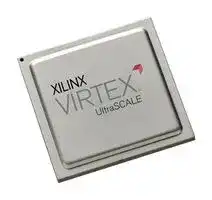
Image not available
Illustrative purposes only


XCVU190-2FLGC2104E
FPGA, Virtex UltraScale, MMCM, PLL, 416 I/O's, 725 MHz, 2349900 Cells, 922-979 mV, FCBGA-2104, NCNR
⚠️ Reference pricing provided. In case of supply shortages, we will connect you with our trusted procurement partners to ensure your project's continuity.
- Manufacturer: AMD
- Product type: FPGAs
- No. of Logic Blocks:1074240; No. of Macrocells:2349900; FPGA Family:Virtex UltraScale Series; Logic Case Style:FCBGA; No. of Pins:2104Pins; No. of Speed Grades:2; Total RAM Bits:13609
- MSL: -
- SVHC: No SVHC (15-Jan-2018)
- FPGA Type: -
- FPGA Family: Virtex UltraScale Series
- IC Mounting: Surface Mount
- No. of Pins: 2104Pins
- Speed Grade: 2
- No. of I/O's: 416I/O's
- Product Range: Virtex UltraScale XCVU190
- Qualification: -
- Total RAM Bits: 136090Kbit
- No.of User I/Os: 416I/O's
- Clock Management: MMCM, PLL
- Logic Case Style: FCBGA
- IC Case / Package: FCBGA
- No. of Macrocells: 2349900Macrocells
- I/O Supply Voltage: 3.3V
- No. of Logic Cells: 2349900Logic Cells
- Process Technology: -
- No. of Logic Blocks: 2349900
- No. of Speed Grades: 2
- Core Supply Voltage Max: 979mV
- Core Supply Voltage Min: 922mV
- Operating Frequency Max: 725MHz
- Operating Temperature Max: 100°C
- Operating Temperature Min: 0°C
| Delivery and price | |
|---|---|
| Units per pack | 1 |
| Price | 32228.28 € |
| Current stock | 10+ |
| Lead time | 30 days |
Datasheet

**==> picture [164 x 47] intentionally omitted <==**

## **UltraScale Architecture and Product Data Sheet: Overview**

DS890 (v3.1) November 15, 2017

**Preliminary Product Specification**

## **General Description**

Xilinx® UltraScale™ architecture comprises high-performance FPGA, MPSoC, and RFSoC families that address a vast spectrum of system requirements with a focus on lowering total power consumption through numerous innovative technological advancements.

**Kintex® UltraScale FPGAs:** High-performance FPGAs with a focus on price/performance, using both monolithic and next-generation stacked silicon interconnect (SSI) technology. High DSP and block RAM-to-logic ratios and next-generation transceivers, combined with low-cost packaging, enable an optimum blend of capability and cost.

**Kintex UltraScale+™ FPGAs:** Increased performance and on-chip UltraRAM memory to reduce BOM cost. The ideal mix of high-performance peripherals and cost-effective system implementation. Kintex UltraScale+ FPGAs have numerous power options that deliver the optimal balance between the required system performance and the smallest power envelope.

**Virtex® UltraScale FPGAs:** High-capacity, high-performance FPGAs enabled using both monolithic and next-generation SSI technology. Virtex UltraScale devices achieve the highest system capacity, bandwidth, and performance to address key market and application requirements through integration of various system-level functions.

**Virtex UltraScale+ FPGAs:** The highest transceiver bandwidth, highest DSP count, and highest on-chip and in-package memory available in the UltraScale architecture. Virtex UltraScale+ FPGAs also provide numerous power options that deliver the optimal balance between the required system performance and the smallest power envelope.

**Zynq® UltraScale+ MPSoCs:** Combine the ARM® v8-based Cortex®-A53 high-performance energy-efficient 64-bit application processor with the ARM Cortex-R5 real-time processor and the UltraScale architecture to create the industry's first All Programmable MPSoCs. Provide unprecedented power savings, heterogeneous processing, and programmable acceleration.

**Zynq® UltraScale+ RFSoCs:** Combine RF data converter subsystem and forward error correction with industry-leading programmable logic and heterogeneous processing capability. Integrated RF-ADCs, RF-DACs, and soft-decision FECs (SD-FEC) provide the key subsystems for multiband, multi-mode cellular radios and cable infrastructure.

## **Family Comparisons**

_Table  1:_ **Device Resources**

||**Kintex**<br>**UltraScale**<br>**FPGA**|**Kintex**<br>**UltraScale+**<br>**FPGA**|**Virtex**<br>**UltraScale**<br>**FPGA**|**Virtex**<br>**UltraScale+**<br>**FPGA**|**Zynq**<br>**UltraScale+**<br>**MPSoC**|**Zynq**<br>**UltraScale+**<br>**RFSoC**|
|---|---|---|---|---|---|---|
|MPSoC Processing System|||||✓|✓|
|RF-ADC/DAC||||||✓|
|SD-FEC||||||✓|
|System Logic Cells (K)|318–1,451|356–1,143|783–5,541|862–3,780|103–1,143|678–930|
|Block Memory (Mb)|12.7–75.9|12.7–34.6|44.3–132.9|23.6–94.5|4.5–34.6|27.8–38.0|
|UltraRAM (Mb)||0–36||90–360|0–36|13.5–22.5|
|HBM DRAM (GB)||||0–8|||
|DSP (Slices)|768–5,520|1,368–3,528|600–2,880|2,280–12,288|240–3,528|3,145–4,272|
|DSP Performance (GMAC/s)|8,180|6,287|4,268|21,897|6,287|7,613|
|Transceivers|12–64|16–76|36–120|32–128|0–72|8–16|
|Max. Transceiver Speed (Gb/s)|16.3|32.75|30.5|32.75|32.75|32.75|
|Max. Serial Bandwidth (full duplex) (Gb/s)|2,086|3,268|5,616|8,384|3,268|1,048|
|Memory Interface Performance (Mb/s)|2,400|2,666|2,400|2,666|2,666|2,666|
|I/O Pins|312–832|280–668|338–1,456|208–832|82–668|280–408|


© Copyright 2013–2017 Xilinx, Inc., Xilinx, the Xilinx logo, Artix, ISE, Kintex, Spartan, UltraScale, Virtex, Vivado, Zynq, and other designated brands included herein are trademarks of Xilinx in the United States and other countries. AMBA, AMBA Designer, ARM, ARM1176JZ-S, CoreSight, Cortex, and PrimeCell are trademarks of ARM in the EU and other countries. PCI, PCIe, and PCI Express are trademarks of PCI-SIG and used under license. All other trademarks are the property of their respective owners.

DS890 (v3.1) November 15, 2017 **Preliminary Product Specification**

www.xilinx.com

1

**UltraScale Architecture and Product Data Sheet: Overview**

## **Summary of Features**

## **RF Data Converter Subsystem Overview**

Most Zynq UltraScale+ RFSoCs include an RF data converter subsystem, which contains multiple radio frequency analog to digital converters (RF-ADCs) and multiple radio frequency digital to analog converters (RF-DACs). The high-precision, high-speed, power efficient RF-ADCs and RF-DACs can be individually configured for real data or can be configured in pairs for real and imaginary I/Q data. The 12-bit RF-ADCs support sample rates up to 2GSPS or 4GSPS, depending on the selected device. The 14-bit RF-DACs support sample rates up to 6.4GSPS.

## **Soft Decision Forward Error Correction (SD-FEC) Overview**

Some Zynq UltraScale+ RFSoCs include highly flexible soft-decision FEC blocks for decoding and encoding data as a means to control errors in data transmission over unreliable or noisy communication channels. The SD-FEC blocks support low-density parity check (LDPC) decode/encode and Turbo decode for use in 5G wireless, backhaul, DOCSIS, and LTE applications.

## **Processing System Overview**

Zynq UltraScale+ MPSoCs and RFSoCs feature dual and quad core variants of the ARM Cortex-A53 (APU) with dual-core ARM Cortex-R5 (RPU) processing system (PS). Some devices also include a dedicated ARM Mali™-400 MP2 graphics processing unit (GPU). See Table 2.

_Table  2:_ **Zynq UltraScale+ MPSoC and RFSoC Device Features**

||**MPSoC**|**MPSoC**|**MPSoC**|**RFSoC**|
|---|---|---|---|---|
||**CG Devices**|**EG Devices**|**EV Devices**|**DR Devices**|
|APU|Dual-core ARM Cortex-A53|Quad-core ARM Cortex-A53|Quad-core ARM Cortex-A53|Quad-core ARM Cortex-A53|
|RPU|Dual-core ARM Cortex-R5|Dual-core ARM Cortex-R5|Dual-core ARM Cortex-R5|Dual-core ARM Cortex-R5|
|GPU|–|Mali-400MP2|Mali-400MP2|–|
|VCU|–|–|H.264/H.265|–|


To support the processors' functionality, a number of peripherals with dedicated functions are included in the PS. For interfacing to external memories for data or configuration storage, the PS includes a multi-protocol dynamic memory controller, a DMA controller, a NAND controller, an SD/eMMC controller and a Quad SPI controller. In addition to interfacing to external memories, the APU also includes a Level-1 (L1) and Level-2 (L2) cache hierarchy; the RPU includes an L1 cache and Tightly Coupled memory subsystem. Each has access to a 256KB on-chip memory.

For high-speed interfacing, the PS includes 4 channels of transmit (TX) and receive (RX) pairs of transceivers, called PS-GTR transceivers, supporting data rates of up to 6.0Gb/s. These transceivers can interface to the high-speed peripheral blocks to support PCIe Gen2 root complex or end point in x1, x2, or x4 configurations; Serial-ATA (SATA) at 1.5Gb/s, 3.0Gb/s, or 6.0Gb/s data rates; and up to two lanes of Display Port at 1.62Gb/s, 2.7Gb/s, or 5.4Gb/s data rates. The PS-GTR transceivers can also interface to components over USB 3.0 and Serial Gigabit Media Independent Interface (SGMII).

DS890 (v3.1) November 15, 2017 **Preliminary Product Specification**

www.xilinx.com

2

**UltraScale Architecture and Product Data Sheet: Overview**

For general connectivity, the PS includes: a pair of USB 2.0 controllers, which can be configured as host, device, or On-The-Go (OTG); an I2C controller; a UART; and a CAN2.0B controller that conforms to ISO11898-1. There are also four triple speed Ethernet MACs and 128 bits of GPIO, of which 78 bits are available through the MIO and 96 through the EMIO.

High-bandwidth connectivity based on the ARM AMBA® AXI4 protocol connects the processing units with the peripherals and provides interface between the PS and the programmable logic (PL).

For additional information, go to: DS891, _Zynq UltraScale+ MPSoC Overview_ .

## **I/O, Transceiver, PCIe, 100G Ethernet, and 150G Interlaken**

Data is transported on and off chip through a combination of the high-performance parallel SelectIO™ interface and high-speed serial transceiver connectivity. I/O blocks provide support for cutting-edge memory interface and network protocols through flexible I/O standard and voltage support. The serial transceivers in the UltraScale architecture-based devices transfer data up to 32.75Gb/s, enabling 25G+ backplane designs with dramatically lower power per bit than previous generation transceivers. All transceivers, except the PS-GTR, support the required data rates for PCIe Gen3, and Gen4 (rev 0.5), and integrated blocks for PCIe enable UltraScale devices to support up to Gen4 x8 and Gen3 x16 Endpoint and Root Port designs. Integrated blocks for 150Gb/s Interlaken and 100Gb/s Ethernet (100G MAC/PCS) extend the capabilities of UltraScale devices, enabling simple, reliable support for Nx100G switch and bridge applications. Virtex UltraScale+ HBM devices include Cache Coherent Interconnect for Accelerators (CCIX) ports for coherently sharing data with different processors.

## **Clocks and Memory Interfaces**

UltraScale devices contain powerful clock management circuitry, including clock synthesis, buffering, and routing components that together provide a highly capable framework to meet design requirements. The clock network allows for extremely flexible distribution of clocks to minimize the skew, power consumption, and delay associated with clock signals. The clock management technology is tightly integrated with dedicated memory interface circuitry to enable support for high-performance external memories, including DDR4. In addition to parallel memory interfaces, UltraScale devices support serial memories, such as hybrid memory cube (HMC).

## **Routing, SSI, Logic, Storage, and Signal Processing**

Configurable Logic Blocks (CLBs) containing 6-input look-up tables (LUTs) and flip-flops, DSP slices with 27x18 multipliers, 36Kb block RAMs with built-in FIFO and ECC support, and 4Kx72 UltraRAM blocks (in UltraScale+ devices) are all connected with an abundance of high-performance, low-latency interconnect. In addition to logical functions, the CLB provides shift register, multiplexer, and carry logic functionality as well as the ability to configure the LUTs as distributed memory to complement the highly capable and configurable block RAMs. The DSP slice, with its 96-bit-wide XOR functionality, 27-bit pre-adder, and 30-bit A input, performs numerous independent functions including multiply accumulate, multiply add, and pattern detect. In addition to the device interconnect, in devices using SSI technology, signals can cross between super-logic regions (SLRs) using dedicated, low-latency interface tiles. These combined routing resources enable easy support for next-generation bus data widths. Virtex UltraScale+ HBM devices include up to 8GB of high bandwidth memory.

DS890 (v3.1) November 15, 2017 **Preliminary Product Specification**

www.xilinx.com

3

**UltraScale Architecture and Product Data Sheet: Overview**

## **Configuration, Encryption, and System Monitoring**

The configuration and encryption block performs numerous device-level functions critical to the successful operation of the FPGA, MPSoC, or RFSoC. This high-performance configuration block enables device configuration from external media through various protocols, including PCIe, often with no requirement to use multi-function I/O pins during configuration. The configuration block also provides 256-bit AES-GCM decryption capability at the same performance as unencrypted configuration. Additional features include SEU detection and correction, partial reconfiguration support, and battery-backed RAM or eFUSE technology for AES key storage to provide additional security. The System Monitor enables the monitoring of the physical environment via on-chip temperature and supply sensors and can also monitor up to 17 external analog inputs. With Zynq UltraScale+ MPSoCs and RFSoCs, the device is booted via the Configuration and Security Unit (CSU), which supports secure boot via the 256-bit AES-GCM and SHA/384 blocks. The cryptographic engines in the CSU can be used after boot for user encryption.

## **Migrating Devices**

UltraScale and UltraScale+ families provide footprint compatibility to enable users to migrate designs from one device or family to another. Any two packages with the same footprint identifier code are footprint compatible. For example, Kintex UltraScale devices in the A1156 packages are footprint compatible with Kintex UltraScale+ devices in the A1156 packages. Likewise, Virtex UltraScale devices in the B2104 packages are compatible with Virtex UltraScale+ devices and Kintex UltraScale devices in the B2104 packages. All valid device/package combinations are provided in the Device-Package Combinations and Maximum I/Os tables in this document. Refer to UG583, _UltraScale Architecture PCB Design User Guide_ for more detail on migrating between UltraScale and UltraScale+ devices and packages.

DS890 (v3.1) November 15, 2017 **Preliminary Product Specification**

www.xilinx.com

4

**UltraScale Architecture and Product Data Sheet: Overview**

## **Kintex UltraScale FPGA Feature Summary**

_Table  3:_ **Kintex UltraScale FPGA Feature Summary**

||**KU025(1)**|**KU035**|**KU040**|**KU060**|**KU085**|**KU095**|**KU115**|
|---|---|---|---|---|---|---|---|
|System Logic Cells|318,150|444,343|530,250|725,550|1,088,325|1,176,000|1,451,100|
|CLB Flip-Flops|290,880|406,256|484,800|663,360|995,040|1,075,200|1,326,720|
|CLB LUTs|145,440|203,128|242,400|331,680|497,520|537,600|663,360|
|Maximum Distributed RAM (Mb)|4.1|5.9|7.0|9.1|13.4|4.7|18.3|
|Block RAM Blocks|360|540|600|1,080|1,620|1,680|2,160|
|Block RAM (Mb)|12.7|19.0|21.1|38.0|56.9|59.1|75.9|
|CMTs (1 MMCM, 2 PLLs)|6|10|10|12|22|16|24|
|I/O DLLs|24|40|40|48|56|64|64|
|Maximum HP I/Os(2)|208|416|416|520|572|650|676|
|Maximum HR I/Os(3)|104|104|104|104|104|52|156|
|DSP Slices|1,152|1,700|1,920|2,760|4,100|768|5,520|
|System Monitor|1|1|1|1|2|1|2|
|PCIe Gen3 x8|1|2|3|3|4|4|6|
|150G Interlaken|0|0|0|0|0|2|0|
|100G Ethernet|0|0|0|0|0|2|0|
|GTH 16.3Gb/s Transceivers(4)|12|16|20|32|56|32|64|
|GTY 16.3Gb/s Transceivers(5)|0|0|0|0|0|32|0|
|Transceiver Fractional PLLs|0|0|0|0|0|16|0|


## **Notes:**

1. Certain advanced configuration features are not supported in the KU025. Refer to the Configuring FPGAs section for details.

2. HP = High-performance I/O with support for I/O voltage from 1.0V to 1.8V.

3. HR = High-range I/O with support for I/O voltage from 1.2V to 3.3V.

4. GTH transceivers in SF/FB packages support data rates up to 12.5Gb/s. See Table 4.

5. GTY transceivers in Kintex UltraScale devices support data rates up to 16.3Gb/s. See Table 4.

DS890 (v3.1) November 15, 2017 **Preliminary Product Specification**

www.xilinx.com

5

**UltraScale Architecture and Product Data Sheet: Overview**

## **Kintex UltraScale Device-Package Combinations and Maximum I/Os**

_Table  4:_ **Kintex UltraScale Device-Package Combinations and Maximum I/Os**

|**Package**<br>**(1)(2)(3)**|**Package**<br>**Dimensions**<br>**(mm)**|**KU025**|**KU035**|**KU040**|**KU060**|**KU085**|**KU095**|**KU115**|
|---|---|---|---|---|---|---|---|---|
|||**HR, HP**<br>**GTH**|**HR, HP**<br>**GTH**|**HR, HP**<br>**GTH**|**HR, HP**<br>**GTH**|**HR, HP**<br>**GTH**|**HR, HP**<br>**GTH, GTY(4)**|**HR, HP**<br>**GTH**|
|SFVA784(5)|23x23||104, 364<br>8|104, 364<br>8|||||
|FBVA676(5)|27x27||104, 208<br>16|104, 208<br>16|||||
|FBVA900(5)|31x31||104, 364<br>16|104, 364<br>16|||||
|FFVA1156|35x35|104, 208<br>12|104, 416<br>16|104, 416<br>20|104, 416<br>28||52, 468<br>20, 8||
|FFVA1517|40x40||||104, 520<br>32||||
|FLVA1517|40x40|||||104, 520<br>48||104, 520<br>48|
|FFVC1517|40x40||||||52, 468<br>20, 20||
|FLVD1517|40x40|||||||104, 234<br>64|
|FFVB1760|42.5x42.5||||||52, 650<br>32, 16||
|FLVB1760|42.5x42.5|||||104, 572<br>44||104, 598<br>52|
|FLVD1924|45x45|||||||156, 676<br>52|
|FLVF1924|45x45|||||104, 520<br>56||104, 624<br>64|
|FLVA2104|47.5x47.5|||||||156, 676<br>52|
|FFVB2104|47.5x47.5||||||52, 650<br>32, 32||
|FLVB2104|47.5x47.5|||||||104, 598<br>64|


## **Notes:**

1. Go to Ordering Information for package designation details.

2. FB/FF/FL packages have 1.0mm ball pitch. SF packages have 0.8mm ball pitch.

3. Packages with the same last letter and number sequence, e.g., A2104, are footprint compatible with all other UltraScale architecture-based devices with the same sequence. The footprint compatible devices within this family are outlined. See the UltraScale Architecture Product Selection Guide for details on inter-family migration.

4. GTY transceivers in Kintex UltraScale devices support data rates up to 16.3Gb/s.

5. GTH transceivers in SF/FB packages support data rates up to 12.5Gb/s.

DS890 (v3.1) November 15, 2017 **Preliminary Product Specification**

www.xilinx.com

6

**UltraScale Architecture and Product Data Sheet: Overview**

## **Kintex UltraScale+ FPGA Feature Summary**

_Table  5:_ **Kintex UltraScale+ FPGA Feature Summary**

||**KU3P**|**KU5P**|**KU9P**|**KU11P**|**KU13P**|**KU15P**|
|---|---|---|---|---|---|---|
|System Logic Cells|355,950|474,600|599,550|653,100|746,550|1,143,450|
|CLB Flip-Flops|325,440|433,920|548,160|597,120|682,560|1,045,440|
|CLB LUTs|162,720|216,960|274,080|298,560|341,280|522,720|
|Max. Distributed RAM (Mb)|4.7|6.1|8.8|9.1|11.3|9.8|
|Block RAM Blocks|360|480|912|600|744|984|
|Block RAM (Mb)|12.7|16.9|32.1|21.1|26.2|34.6|
|UltraRAM Blocks|48|64|0|80|112|128|
|UltraRAM (Mb)|13.5|18.0|0|22.5|31.5|36.0|
|CMTs (1 MMCM and 2 PLLs)|4|4|4|8|4|11|
|Max. HP I/O(1)|208|208|208|416|208|572|
|Max. HD I/O(2)|96|96|96|96|96|96|
|DSP Slices|1,368|1,824|2,520|2,928|3,528|1,968|
|System Monitor|1|1|1|1|1|1|
|GTH Transceiver 16.3Gb/s|0|0|28|32|28|44|
|GTY Transceivers 32.75Gb/s(3)|16|16|0|20|0|32|
|Transceiver Fractional PLLs|8|8|14|26|14|38|
|PCIe Gen3 x16 and Gen4 x8|1|1|0|4|0|5|
|150G Interlaken|0|0|0|1|0|4|
|100G Ethernet w/RS-FEC|0|1|0|2|0|4|


## **Notes:**

1. HP = High-performance I/O with support for I/O voltage from 1.0V to 1.8V.

2. HD = High-density I/O with support for I/O voltage from 1.2V to 3.3V.

3. GTY transceiver line rates are package limited: SFVB784 to 12.5Gb/s; FFVA676, FFVD900, and FFVA1156 to 16.3Gb/s. See Table 6.

DS890 (v3.1) November 15, 2017 **Preliminary Product Specification**

www.xilinx.com

7

**UltraScale Architecture and Product Data Sheet: Overview**

## **Kintex UltraScale+ Device-Package Combinations and Maximum I/Os**

_Table  6:_ **Kintex UltraScale+ Device-Package Combinations and Maximum I/Os**

|**Package**<br>**(1)(2)(4)**|**Package**<br>**Dimensions**<br>**(mm)**|**KU3P**|**KU5P**|**KU9P**|**KU11P**|**KU13P**|**KU15P**|
|---|---|---|---|---|---|---|---|
|||<br>**HD, HP**<br>**GTH, GTY**|**HD, HP**<br>**GTH, GTY**|**HD, HP**<br>**GTH, GTY**|**HD, HP**<br>**GTH, GTY**|**HD, HP**<br>**GTH, GTY**|**HD, HP**<br>**GTH, GTY**|
|SFVB784(3)|23x23|96, 208<br>0, 16|96, 208<br>0, 16|||||
|FFVA676(3)|27x27|48, 208<br>0, 16|48, 208<br>0, 16|||||
|FFVB676|27x27|72, 208<br>0, 16|72, 208<br>0, 16|||||
|FFVD900(3)|31x31|96, 208<br>0, 16|96, 208<br>0, 16||96, 312<br>16, 0|||
|FFVE900|31x31|||96, 208<br>28, 0||96, 208<br>28, 0||
|FFVA1156(3)|35x35||||48, 416<br>20, 8||48, 468<br>20, 8|
|FFVE1517|40x40||||96, 416<br>32, 20||96, 416<br>32, 24|
|FFVA1760|42.5x42.5||||||96, 416<br>44, 32|
|FFVE1760|42.5x42.5||||||96, 572<br>32, 24|


## **Notes:**

1. Go to Ordering Information for package designation details.

2. FF packages have 1.0mm ball pitch. SF packages have 0.8mm ball pitch.

3. GTY transceiver line rates are package limited: SFVB784 to 12.5Gb/s; FFVA676, FFVD900, and FFVA1156 to 16.3Gb/s.

4. Packages with the same last letter and number sequence, e.g., A676, are footprint compatible with all other UltraScale architecture-based devices with the same sequence. The footprint compatible devices within this family are outlined. See the UltraScale Architecture Product Selection Guide for details on inter-family migration.

DS890 (v3.1) November 15, 2017 **Preliminary Product Specification**

www.xilinx.com

8

**UltraScale Architecture and Product Data Sheet: Overview**

## **Virtex UltraScale FPGA Feature Summary**

_Table  7:_ **Virtex UltraScale FPGA Feature Summary**

||**VU065**|**VU080**|**VU095**|**VU125**|**VU160**|**VU190**|**VU440**|
|---|---|---|---|---|---|---|---|
|System Logic Cells|783,300|975,000|1,176,000|1,566,600|2,026,500|2,349,900|5,540,850|
|CLB Flip-Flops|716,160|891,424|1,075,200|1,432,320|1,852,800|2,148,480|5,065,920|
|CLB LUTs|358,080|445,712|537,600|716,160|926,400|1,074,240|2,532,960|
|Maximum Distributed RAM (Mb)|4.8|3.9|4.8|9.7|12.7|14.5|28.7|
|Block RAM Blocks|1,260|1,421|1,728|2,520|3,276|3,780|2,520|
|Block RAM (Mb)|44.3|50.0|60.8|88.6|115.2|132.9|88.6|
|CMT (1 MMCM, 2 PLLs)|10|16|16|20|28|30|30|
|I/O DLLs|40|64|64|80|120|120|120|
|Maximum HP I/Os(1)|468|780|780|780|650|650|1,404|
|Maximum HR I/Os(2)|52|52|52|104|52|52|52|
|DSP Slices|600|672|768|1,200|1,560|1,800|2,880|
|System Monitor|1|1|1|2|3|3|3|
|PCIe Gen3 x8|2|4|4|4|4|6|6|
|150G Interlaken|3|6|6|6|8|9|0|
|100G Ethernet|3|4|4|6|9|9|3|
|GTH 16.3Gb/s Transceivers|20|32|32|40|52|60|48|
|GTY 30.5Gb/s Transceivers|20|32|32|40|52|60|0|
|Transceiver Fractional PLLs|10|16|16|20|26|30|0|


## **Notes:**

1. HP = High-performance I/O with support for I/O voltage from 1.0V to 1.8V.

2. HR = High-range I/O with support for I/O voltage from 1.2V to 3.3V.

DS890 (v3.1) November 15, 2017 **Preliminary Product Specification**

www.xilinx.com

9

**UltraScale Architecture and Product Data Sheet: Overview**

## **Virtex UltraScale Device-Package Combinations and Maximum I/Os**

_Table  8:_ **Virtex UltraScale Device-Package Combinations and Maximum I/Os**

|**Package(1)(2)(3)**|**Package**<br>**Dimensions**<br>**(mm)**|**VU065**|**VU080**|**VU095**|**VU125**|**VU160**|**VU190**|**VU440**|
|---|---|---|---|---|---|---|---|---|
|||**HR, HP**<br>**GTH, GTY**|**HR, HP**<br>**GTH, GTY**|**HR, HP**<br>**GTH, GTY**|**HR, HP**<br>**GTH, GTY**|**HR, HP**<br>**GTH, GTY**|**HR, HP**<br>**GTH, GTY**|**HR, HP**<br>**GTH, GTY**|
|FFVC1517|40x40|52, 468<br>20, 20|52, 468<br>20, 20|52, 468<br>20, 20|||||
|FFVD1517|40x40||52, 286<br>32, 32|52, 286<br>32, 32|||||
|FLVD1517|40x40||||52, 286<br>40, 32||||
|FFVB1760|42.5x42.5||52, 650<br>32, 16|52, 650<br>32, 16|||||
|FLVB1760|42.5x42.5||||52, 650<br>36, 16||||
|FFVA2104|47.5x47.5||52, 780<br>28, 24|52, 780<br>28, 24|||||
|FLVA2104|47.5x47.5||||52, 780<br>28, 24||||
|FFVB2104|47.5x47.5||52, 650<br>32, 32|52, 650<br>32, 32|||||
|FLVB2104|47.5x47.5||||52, 650<br>40, 36||||
|FLGB2104|47.5x47.5|||||52, 650<br>40, 36|52, 650<br>40, 36||
|FFVC2104|47.5x47.5|||52, 364<br>32, 32|||||
|FLVC2104|47.5x47.5||||52, 364<br>40, 40||||
|FLGC2104|47.5x47.5|||||52, 364<br>52, 52|52, 364<br>52, 52||
|FLGB2377|50x50|||||||52, 1248<br>36, 0|
|FLGA2577|52.5x52.5||||||0, 448<br>60, 60||
|FLGA2892|55x55|||||||52, 1404<br>48, 0|


## **Notes:**

1. Go to Ordering Information for package designation details.

2. All packages have 1.0mm ball pitch.

3. Packages with the same last letter and number sequence, e.g., A2104, are footprint compatible with all other UltraScale architecture-based devices with the same sequence. The footprint compatible devices within this family are outlined. See the UltraScale Architecture Product Selection Guide for details on inter-family migration.

DS890 (v3.1) November 15, 2017 **Preliminary Product Specification**

www.xilinx.com

10

**UltraScale Architecture and Product Data Sheet: Overview**

## **Virtex UltraScale+ FPGA Feature Summary**

_Table  9:_ **Virtex UltraScale+ FPGA Feature Summary**

||**VU3P**|**VU5P**|**VU7P**|**VU9P**|**VU11P**|**VU13P**|**VU31P**|**VU33P**|**VU35P**|**VU37P**|
|---|---|---|---|---|---|---|---|---|---|---|
|System Logic Cells|862,050|1,313,763|1,724,100|2,586,150|2,835,000|3,780,000|961,800|961,800|1,906,800|2,851,800|
|CLB Flip-Flops|788,160|1,201,154|1,576,320|2,364,480|2,592,000|3,456,000|879,360|879,360|1,743,360|2,607,360|
|CLB LUTs|394,080|600,577|788,160|1,182,240|1,296,000|1,728,000|439,680|439,680|871,680|1,303,680|
|Max. Distributed RAM (Mb)|12.0|18.3|24.1|36.1|36.2|48.3|12.5|12.5|24.6|36.7|
|Block RAM Blocks|720|1,024|1,440|2,160|2,016|2,688|672|672|1,344|2,016|
|Block RAM (Mb)|25.3|36.0|50.6|75.9|70.9|94.5|23.6|23.6|47.3|70.9|
|UltraRAM Blocks|320|470|640|960|960|1,280|320|320|640|960|
|UltraRAM (Mb)|90.0|132.2|180.0|270.0|270.0|360.0|90.0|90.0|180.0|270.0|
|HBM DRAM (GB)|–|–|–|–|–|–|4|8|8|8|
|CMTs (1 MMCM and 2 PLLs)|10|20|20|30|12|16|4|4|8|12|
|Max. HP I/O(1)|520|832|832|832|624|832|208|208|416|624|
|DSP Slices|2,280|3,474|4,560|6,840|9,216|12,288|2,880|2,880|5,952|9,024|
|System Monitor|1|2|2|3|3|4|1|1|2|3|
|GTY Transceivers 32.75Gb/s(2)|40|80|80|120|96|128|32|32|64|96|
|Transceiver Fractional PLLs|20|40|40|60|48|64|16|16|32|48|
|PCIe Gen3 x16 and Gen4 x8|2|4|4|6|3|4|4|4|5|6|
|CCIX Ports(3)|–|–|–|–|–|–|4|4|4|4|
|150G Interlaken|3|4|6|9|6|8|0|0|2|4|
|100G Ethernet w/RS-FEC|3|4|6|9|9|12|2|2|5|8|


## **Notes:**

1. HP = High-performance I/O with support for I/O voltage from 1.0V to 1.8V.

2. GTY transceivers in the FLGF1924 package support data rates up to 16.3Gb/s. See Table 10.

3. A CCIX port requires the use of a PCIe Gen3 x16 / Gen4 x8 block.

DS890 (v3.1) November 15, 2017 **Preliminary Product Specification**

www.xilinx.com

11

**UltraScale Architecture and Product Data Sheet: Overview**

## **Virtex UltraScale+ Device-Package Combinations and Maximum I/Os**

_Table  10:_ **Virtex UltraScale+ Device-Package Combinations and Maximum I/Os**

|**Package**<br>**(1)(2)(3)**|**Package**<br>**Dimensions**<br>**(mm)**|**VU3P**|**VU5P**|**VU7P**|**VU9P**|**VU11P**|**VU13P**|**VU31P**|**VU33P**|**VU35P**|**VU37P**|
|---|---|---|---|---|---|---|---|---|---|---|---|
|||**HP, GTY**|**HP, GTY**|**HP, GTY**|**HP, GTY**|**HP, GTY**|**HP, GTY**|**HP, GTY**|**HP, GTY**|**HP, GTY**|**HP, GTY**|
|FFVC1517|40x40|520, 40||||||||||
|FLGF1924(4)|45x45|||||624, 64||||||
|FLVA2104|47.5x47.5||832, 52|832, 52||||||||
|FLGA2104|47.5x47.5||||832, 52|||||||
|FHGA2104|52.5x52.5(5)||||||832, 52|||||
|FLVB2104|47.5x47.5||702, 76|702, 76||||||||
|FLGB2104|47.5x47.5||||702, 76|572, 76||||||
|FHGB2104|52.5x52.5(5)||||||702, 76|||||
|FLVC2104|47.5x47.5||416, 80|416, 80||||||||
|FLGC2104|47.5x47.5||||416, 104|416, 96||||||
|FHGC2104|52.5x52.5(5)||||||416, 104|||||
|FSGD2104|47.5x47.5||||676, 76|572, 76||||||
|FIGD2104|52.5x52.5(5)||||||676, 76|||||
|FLGA2577|52.5x52.5||||448, 120|448, 96|448, 128|||||
|FSVH1924|45x45|||||||208, 32||||
|FSVH2104|47.5x47.5||||||||208, 32|416, 64||
|FSVH2892|55x55|||||||||416, 64|624, 96|


## **Notes:**

1. Go to Ordering Information for package designation details.

2. All packages have 1.0mm ball pitch.

3. Packages with the same last letter and number sequence, e.g., A2104, are footprint compatible with all other UltraScale architecture-based devices with the same sequence. The footprint compatible devices within this family are outlined. See the UltraScale Architecture Product Selection Guide for details on inter-family migration.

4. GTY transceivers in the FLGF1924 package support data rates up to 16.3Gb/s.

5. These 52.5x52.5mm overhang packages have the same PCB ball footprint as the corresponding 47.5x47.5mm packages (i.e., the same last letter and number sequence) and are footprint compatible.

DS890 (v3.1) November 15, 2017 **Preliminary Product Specification**

www.xilinx.com

12

**UltraScale Architecture and Product Data Sheet: Overview**

## **Zynq UltraScale+ MPSoC: CG Device Feature Summary**

## (3) _Table  11:_ **Zynq UltraScale+ MPSoC: CG Device Feature Summary**

||**ZU2CG**|**ZU3CG**|**ZU4CG**|**ZU5CG**|**ZU6CG**|**ZU7CG**|**ZU9CG**|
|---|---|---|---|---|---|---|---|
|Application Processing Unit|Dual-core ARM Cortex-A53 MPCore with CoreSight; NEON & Single/Double Precision Floating Point;<br>32KB/32KB L1 Cache, 1MB L2 Cache|||||||
|Real-Time Processing Unit|Dual-core ARM Cortex-R5 with CoreSight; Single/Double Precision Floating Point;<br>32KB/32KB L1 Cache, and TCM|||||||
|Embedded and External<br>Memory|256KB On-Chip Memory w/ECC; External DDR4; DDR3; DDR3L; LPDDR4; LPDDR3;<br>External Quad-SPI; NAND; eMMC|||||||
|General Connectivity|214 PS I/O; UART; CAN; USB 2.0; I2C; SPI; 32b GPIO; Real Time Clock; WatchDog Timers; Triple<br>Timer Counters|||||||
|High-Speed Connectivity|4 PS-GTR; PCIe Gen1/2; Serial ATA 3.1; DisplayPort 1.2a; USB 3.0; SGMII|||||||
|System Logic Cells|103,320|154,350|192,150|256,200|469,446|504,000|599,550|
|CLB Flip-Flops|94,464|141,120|175,680|234,240|429,208|460,800|548,160|
|CLB LUTs|47,232|70,560|87,840|117,120|214,604|230,400|274,080|
|Distributed RAM (Mb)|1.2|1.8|2.6|3.5|6.9|6.2|8.8|
|Block RAM Blocks|150|216|128|144|714|312|912|
|Block RAM (Mb)|5.3|7.6|4.5|5.1|25.1|11.0|32.1|
|UltraRAM Blocks|0|0|48|64|0|96|0|
|UltraRAM (Mb)|0|0|13.5|18.0|0|27.0|0|
|DSP Slices|240|360|728|1,248|1,973|1,728|2,520|
|CMTs|3|3|4|4|4|8|4|
|Max. HP I/O(1)|156|156|156|156|208|416|208|
|Max. HD I/O(2)|96|96|96|96|120|48|120|
|System Monitor|2|2|2|2|2|2|2|
|GTH Transceiver 16.3Gb/s(3)|0|0|16|16|24|24|24|
|GTY Transceivers 32.75Gb/s|0|0|0|0|0|0|0|
|Transceiver Fractional PLLs|0|0|8|8|12|12|12|
|PCIe Gen3 x16 and Gen4 x8|0|0|2|2|0|2|0|
|150G Interlaken|0|0|0|0|0|0|0|
|100G Ethernet w/ RS-FEC|0|0|0|0|0|0|0|


## **Notes:**

1. HP = High-performance I/O with support for I/O voltage from 1.0V to 1.8V.

2. HD = High-density I/O with support for I/O voltage from 1.2V to 3.3V.

3. GTH transceivers in the SFVC784 package support data rates up to 12.5Gb/s. See Table 12.

DS890 (v3.1) November 15, 2017 **Preliminary Product Specification**

www.xilinx.com

13

**UltraScale Architecture and Product Data Sheet: Overview**

## **Zynq UltraScale+: CG Device-Package Combinations and Maximum I/Os**

_Table  12:_ **Zynq UltraScale+ MPSoC: CG Device-Package Combinations and Maximum I/Os**

|**Package**<br>**(1)(2)(3)(4)(5)**|**Package**<br>**Dimensions**<br>**(mm)**|**ZU2CG**|**ZU3CG**|**ZU4CG**|**ZU5CG**|**ZU6CG**|**ZU7CG**|**ZU9CG**|
|---|---|---|---|---|---|---|---|---|
|||<br>**HD, HP**<br>**GTH, GTY**|**HD, HP**<br>**GTH, GTY**|**HD, HP**<br>**GTH, GTY**|**HD, HP**<br>**GTH, GTY**|**HD, HP**<br>**GTH, GTY**|**HD, HP**<br>**GTH, GTY**|**HD, HP**<br>**GTH, GTY**|
|SBVA484(6)|19x19|24, 58<br>0, 0|24, 58<br>0, 0||||||
|SFVA625|21x21|24, 156<br>0, 0|24, 156<br>0, 0||||||
|SFVC784(7)|23x23|96, 156<br>0, 0|96, 156<br>0, 0|96, 156<br>4, 0|96, 156<br>4, 0||||
|FBVB900|31x31|||48, 156<br>16, 0|48, 156<br>16, 0||48, 156<br>16, 0||
|FFVC900|31x31|||||48, 156<br>16, 0||48, 156<br>16, 0|
|FFVB1156|35x35|||||120, 208<br>24, 0||120, 208<br>24, 0|
|FFVC1156|35x35||||||48, 312<br>20, 0||
|FFVF1517|40x40||||||48, 416<br>24, 0||


## **Notes:**

1. Go to Ordering Information for package designation details.

2. FB/FF packages have 1.0mm ball pitch. SB/SF packages have 0.8mm ball pitch.

3. All device package combinations bond out 4 PS-GTR transceivers.

4. All device package combinations bond out 214 PS I/O except ZU2CG and ZU3CG in the SBVA484 and SFVA625 packages, which bond out 170 PS I/Os.

5. Packages with the same last letter and number sequence, e.g., A484, are footprint compatible with all other UltraScale architecture-based devices with the same sequence. The footprint compatible devices within this family are outlined.

6. All 58 HP I/O pins are powered by the same VCCO supply.

7. GTH transceivers in the SFVC784 package support data rates up to 12.5Gb/s.

DS890 (v3.1) November 15, 2017 **Preliminary Product Specification**

www.xilinx.com

14

**UltraScale Architecture and Product Data Sheet: Overview**

## **Zynq UltraScale+ MPSoC: EG Device Feature Summary**

_Table  13:_ **Zynq UltraScale+ MPSoC: EG Device Feature Summary**

||**ZU2EG**|**ZU3EG**|**ZU4EG**|**ZU5EG**|**ZU6EG**|**ZU7EG**|**ZU9EG**|**ZU11EG**|**ZU15EG**|**ZU17EG**|**ZU19EG**|
|---|---|---|---|---|---|---|---|---|---|---|---|
|Application Processing Unit|Quad-core ARM Cortex-A53 MPCore with CoreSight; NEON & Single/Double Precision Floating Point; 32KB/32KB L1 Cache, 1MB L2 Cache|||||||||||
|Real-Time Processing Unit|Dual-core ARM Cortex-R5 with CoreSight; Single/Double Precision Floating Point; 32KB/32KB L1 Cache, and TCM|||||||||||
|Embedded and External<br>Memory|256KB On-Chip Memory w/ECC; External DDR4; DDR3; DDR3L; LPDDR4; LPDDR3;<br>External Quad-SPI; NAND; eMMC|||||||||||
|General Connectivity|214 PS I/O; UART; CAN; USB 2.0; I2C; SPI; 32b GPIO; Real Time Clock; WatchDog Timers; Triple Timer Counters|||||||||||
|High-Speed Connectivity|4 PS-GTR; PCIe Gen1/2; Serial ATA 3.1; DisplayPort 1.2a; USB 3.0; SGMII|||||||||||
|Graphic Processing Unit|ARM Mali-400 MP2; 64KB L2 Cache|||||||||||
|System Logic Cells|103,320|154,350|192,150|256,200|469,446|504,000|599,550|653,100|746,550|926,194|1,143,450|
|CLB Flip-Flops|94,464|141,120|175,680|234,240|429,208|460,800|548,160|597,120|682,560|846,806|1,045,440|
|CLB LUTs|47,232|70,560|87,840|117,120|214,604|230,400|274,080|298,560|341,280|423,403|522,720|
|Distributed RAM (Mb)|1.2|1.8|2.6|3.5|6.9|6.2|8.8|9.1|11.3|8.0|9.8|
|Block RAM Blocks|150|216|128|144|714|312|912|600|744|796|984|
|Block RAM (Mb)|5.3|7.6|4.5|5.1|25.1|11.0|32.1|21.1|26.2|28.0|34.6|
|UltraRAM Blocks|0|0|48|64|0|96|0|80|112|102|128|
|UltraRAM (Mb)|0|0|13.5|18.0|0|27.0|0|22.5|31.5|28.7|36.0|
|DSP Slices|240|360|728|1,248|1,973|1,728|2,520|2,928|3,528|1,590|1,968|
|CMTs|3|3|4|4|4|8|4|8|4|11|11|
|Max. HP I/O(1)|156|156|156|156|208|416|208|416|208|572|572|
|Max. HD I/O(2)|96|96|96|96|120|48|120|96|120|96|96|
|System Monitor|2|2|2|2|2|2|2|2|2|2|2|
|GTH Transceiver 16.3Gb/s(3)|0|0|16|16|24|24|24|32|24|44|44|
|GTY Transceivers 32.75Gb/s|0|0|0|0|0|0|0|16|0|28|28|
|Transceiver Fractional PLLs|0|0|8|8|12|12|12|24|12|36|36|
|PCIe Gen3 x16 and Gen4 x8|0|0|2|2|0|2|0|4|0|4|5|
|150G Interlaken|0|0|0|0|0|0|0|1|0|2|4|
|100G Ethernet w/ RS-FEC|0|0|0|0|0|0|0|2|0|2|4|


## **Notes:**

1. HP = High-performance I/O with support for I/O voltage from 1.0V to 1.8V.

2. HD = High-density I/O with support for I/O voltage from 1.2V to 3.3V.

3. GTH transceivers in the SFVC784 package support data rates up to 12.5Gb/s. See Table 14.

DS890 (v3.1) November 15, 2017 **Preliminary Product Specification**

www.xilinx.com

15

**UltraScale Architecture and Product Data Sheet: Overview**

## **Zynq UltraScale+ MPSoC: EG Device-Package Combinations and Maximum I/Os**

_Table  14:_ **Zynq UltraScale+ MPSoC: EG Device-Package Combinations and Maximum I/Os**

|**Package**<br>**(1)(2)(3)(4)(5)**|**Package**<br>**Dimensions**<br>**(mm)**|**ZU2EG**|**ZU3EG**|**ZU4EG**|**ZU5EG**|**ZU6EG**|**ZU7EG**|**ZU9EG**|**ZU11EG**|**ZU15EG**|**ZU17EG**|**ZU19EG**|
|---|---|---|---|---|---|---|---|---|---|---|---|---|
|||<br>**HD, HP**<br>**GTH, GTY**|**HD, HP**<br>**GTH, GTY**|**HD, HP**<br>**GTH, GTY**|**HD, HP**<br>**GTH, GTY**|**HD, HP**<br>**GTH, GTY**|**HD, HP**<br>**GTH, GTY**|**HD, HP**<br>**GTH, GTY**|**HD, HP**<br>**GTH, GTY**|**HD, HP**<br>**GTH, GTY**|**HD, HP**<br>**GTH, GTY**|**HD, HP**<br>**GTH, GTY**|
|SBVA484(6)|19x19|24, 58<br>0, 0|24, 58<br>0, 0||||||||||
|SFVA625|21x21|24, 156<br>0, 0|24, 156<br>0, 0||||||||||
|SFVC784(7)|23x23|96, 156<br>0, 0|96, 156<br>0, 0|96, 156<br>4, 0|96, 156<br>4, 0||||||||
|FBVB900|31x31|||48, 156<br>16, 0|48, 156<br>16, 0||48, 156<br>16, 0||||||
|FFVC900|31x31|||||48, 156<br>16, 0||48, 156<br>16, 0||48, 156<br>16, 0|||
|FFVB1156|35x35|||||120, 208<br>24, 0||120, 208<br>24, 0||120, 208<br>24, 0|||
|FFVC1156|35x35||||||48, 312<br>20, 0||48, 312<br>20, 0||||
|FFVB1517|40x40||||||||72, 416<br>16, 0||72, 572<br>16, 0|72, 572<br>16, 0|
|FFVF1517|40x40||||||48, 416<br>24, 0||48, 416<br>32, 0||||
|FFVC1760|42.5x42.5||||||||96, 416<br>32, 16||96, 416<br>32, 16|96, 416<br>32, 16|
|FFVD1760|42.5x42.5||||||||||48, 260<br>44, 28|48, 260<br>44, 28|
|FFVE1924|45x45||||||||||96, 572<br>44, 0|96, 572<br>44, 0|


## **Notes:**

1. Go to Ordering Information for package designation details.

2. FB/FF packages have 1.0mm ball pitch. SB/SF packages have 0.8mm ball pitch.

3. All device package combinations bond out 4 PS-GTR transceivers.

4. All device package combinations bond out 214 PS I/O except ZU2EG and ZU3EG in the SBVA484 and SFVA625 packages, which bond out 170 PS I/Os.

5. Packages with the same last letter and number sequence, e.g., A484, are footprint compatible with all other UltraScale architecture-based devices with the same sequence. The footprint compatible devices within this family are outlined.

6. All 58 HP I/O pins are powered by the same VCCO supply.

7. GTH transceivers in the SFVC784 package support data rates up to 12.5Gb/s.

DS890 (v3.1) November 15, 2017 **Preliminary Product Specification**

www.xilinx.com

16

**UltraScale Architecture and Product Data Sheet: Overview**

## **Zynq UltraScale+ MPSoC: EV Device Feature Summary**

_Table  15:_ **Zynq UltraScale+ MPSoC: EV Device Feature Summary**

||**ZU4EV**|**ZU5EV**|**ZU7EV**|
|---|---|---|---|
|Application Processing Unit|Quad-core ARM Cortex-A53 MPCore with CoreSight; NEON & Single/Double Precision Floating Point;<br>32KB/32KB L1 Cache, 1MB L2 Cache|||
|Real-Time Processing Unit|Dual-core ARM Cortex-R5 with CoreSight; Single/Double Precision Floating Point;<br>32KB/32KB L1 Cache, and TCM|||
|Embedded and External<br>Memory|256KB On-Chip Memory w/ECC; External DDR4; DDR3; DDR3L; LPDDR4; LPDDR3;<br>External Quad-SPI; NAND; eMMC|||
|General Connectivity|214 PS I/O; UART; CAN; USB 2.0; I2C; SPI; 32b GPIO; Real Time Clock; WatchDog Timers; Triple<br>Timer Counters|||
|High-Speed Connectivity|4 PS-GTR; PCIe Gen1/2; Serial ATA 3.1; DisplayPort 1.2a; USB 3.0; SGMII|||
|Graphic Processing Unit|ARM Mali-400 MP2; 64KB L2 Cache|||
|Video Codec|1|1|1|
|System Logic Cells|192,150|256,200|504,000|
|CLB Flip-Flops|175,680|234,240|460,800|
|CLB LUTs|87,840|117,120|230,400|
|Distributed RAM (Mb)|2.6|3.5|6.2|
|Block RAM Blocks|128|144|312|
|Block RAM (Mb)|4.5|5.1|11.0|
|UltraRAM Blocks|48|64|96|
|UltraRAM (Mb)|13.5|18.0|27.0|
|DSP Slices|728|1,248|1,728|
|CMTs|4|4|8|
|Max. HP I/O(1)|156|156|416|
|Max. HD I/O(2)|96|96|48|
|System Monitor|2|2|2|
|GTH Transceiver 16.3Gb/s(3)|16|16|24|
|GTY Transceivers 32.75Gb/s|0|0|0|
|Transceiver Fractional PLLs|8|8|12|
|PCIe Gen3 x16 and Gen4 x8|2|2|2|
|150G Interlaken|0|0|0|
|100G Ethernet w/ RS-FEC|0|0|0|


## **Notes:**

1. HP = High-performance I/O with support for I/O voltage from 1.0V to 1.8V.

2. HD = High-density I/O with support for I/O voltage from 1.2V to 3.3V.

3. GTH transceivers in the SFVC784 package support data rates up to 12.5Gb/s. See Table 16.

DS890 (v3.1) November 15, 2017 **Preliminary Product Specification**

www.xilinx.com

17

**UltraScale Architecture and Product Data Sheet: Overview**

## **Zynq UltraScale+: EV Device-Package Combinations and Maximum I/Os**

_Table  16:_ **Zynq UltraScale+ MPSoC: EV Device-Package Combinations and Maximum I/Os**

|**Package**<br>**(1)(2)(3)**<br>**(4)**|**Package**<br>**Dimensions**<br>**(mm)**|**ZU4EV**|**ZU5EV**|**ZU7EV**|
|---|---|---|---|---|
|||<br>**HD, HP**<br>**GTH, GTY**|**HD, HP**<br>**GTH, GTY**|**HD, HP**<br>**GTH, GTY**|
|SFVC784(5)|23x23|96, 156<br>4, 0|96, 156<br>4, 0||
|FBVB900|31x31|48, 156<br>16, 0|48, 156<br>16, 0|48, 156<br>16, 0|
|FFVC1156|35x35|||48, 312<br>20, 0|
|FFVF1517|40x40|||48, 416<br>24, 0|


## **Notes:**

1. Go to Ordering Information for package designation details.

2. FB/FF packages have 1.0mm ball pitch. SF packages have 0.8mm ball pitch.

3. All device package combinations bond out 4 PS-GTR transceivers.

4. GTH transceivers in the SFVC784 package support data rates up to 12.5Gb/s.

5. Packages with the same last letter and number sequence, e.g., B900, are footprint compatible with all other UltraScale architecture-based devices with the same sequence. The footprint compatible devices within this family are outlined.

DS890 (v3.1) November 15, 2017 **Preliminary Product Specification**

www.xilinx.com

18

**UltraScale Architecture and Product Data Sheet: Overview**

## **Zynq UltraScale+ RFSoC: Device Feature Summary**

_Table  17:_ **Zynq UltraScale+ RFSoC Feature Summary**

||**XCZU21DR**|**XCZU25DR**|**XCZU27DR**|**XCZU28DR**|**XCZU29DR**|
|---|---|---|---|---|---|
|12-bit, 4GSPS RF-ADC w/ DDC|0|8|8|8|0|
|12-bit, 2GSPS RF-ADC w/ DDC|0|0|0|0|16|
|14-bit, 6.4GSPS RF-DAC w/ DUC|0|8|8|8|16|
|SD-FEC|8|0|0|8|0|
|Application Processing Unit|Quad-core ARM Cortex-A53 MPCore with CoreSight™; NEON and Single/Double Precision Floating<br>Point; 32KB/32KB L1 Cache, 1MB L2 Cache|||||
|Real-Time Processing Unit|Dual-core ARM Cortex-R5 with CoreSight; Single/Double Precision Floating Point; 32KB/32KB L1<br>Cache, and TCM|||||
|Embedded and External Memory|256KB On-Chip Memory w/ECC; External DDR4; DDR3; DDR3L; LPDDR4; LPDDR3; External<br>Quad-SPI; NAND; eMMC|||||
|General Connectivity|214 PS I/O; UART; CAN; USB 2.0; I2C; SPI; 32b GPIO; Real Time Clock; Watchdog Timers; Triple<br>Timer Counters|||||
|High-Speed Connectivity|4 PS-GTR; PCIe® Gen1/2; Serial ATA 3.1; DisplayPort 1.2a; USB 3.0; SGMII|||||
|System Logic Cells|930,300|678,318|930,300|930,300|930,300|
|CLB Flip-Flops|850,560|620,176|850,560|850,560|850,560|
|CLB LUTs|425,280|310,088|425,280|425,280|425,280|
|Distributed RAM (Mb)|13.0|9.6|13.0|13.0|13.0|
|Block RAM Blocks|1,080|792|1,080|1,080|1,080|
|Block RAM (Mb)|38.0|27.8|38.0|38.0|38.0|
|UltraRAM Blocks|80|48|80|80|80|
|UltraRAM (Mb)|22.5|13.5|22.5|22.5|22.5|
|DSP Slices|4,272|3,145|4,272|4,272|4,272|
|CMTs|8|6|8|8|8|
|Maximum HP I/O|208|299|299|299|312|
|Maximum HD I/O|72|48|48|48|96|
|System Monitor|1|1|1|1|1|
|GTY Transceivers|16|8|16|16|16|
|Transceivers Fractional PLLs|8|4|8|8|8|
|PCIe Gen3 x16 and Gen4 x8|2|1|2|2|2|
|150G Interlaken|1|1|1|1|1|
|100G Ethernet w/ RS-FEC|2|1|2|2|2|


DS890 (v3.1) November 15, 2017 **Preliminary Product Specification**

www.xilinx.com

19

**UltraScale Architecture and Product Data Sheet: Overview**

_Table  18:_ **Zynq UltraScale+ RFSoC Device-Package Combinations and Maximum I/Os**

|**Package(1)**|**Dimensions**|**XCZU21DR**|**XCZU25DR**|**XCZU27DR**|**XCZU28DR**|**XCZU29DR**|
|---|---|---|---|---|---|---|
||||**PSIO, HDIO, HPIO,**<br>**PS-GTR, GTY, RF-ADC, RF-DAC**||||
|FFVD1156|35x35|214, 72, 208<br>4, 16, 0, 0|||||
|FFVE1156|35x35||214, 48, 104<br>4, 8, 8, 8|214, 48, 104<br>4, 8, 8, 8|214, 48, 104<br>4, 8, 8, 8||
|FSVE1156|35x35||214, 48, 104<br>4, 8, 8, 8|214, 48, 104<br>4, 8, 8, 8|214, 48, 104<br>4, 8, 8, 8||
|FFVG1517|40x40||214, 48, 299<br>4, 8, 8, 8|214, 48, 299<br>4, 16, 8, 8|214, 48, 299<br>4, 16, 8, 8||
|FSVG1517|40x40||214, 48, 299<br>4, 8, 8, 8|214, 48, 299<br>4, 16, 8, 8|214, 48, 299<br>4, 16, 8, 8||
|FFVF1760|42.5x42.5|||||214, 96, 312<br>4, 16, 16, 16|
|FSVF1760|42.5x42.5|||||214, 96, 312<br>4, 16, 16, 16|


## **Notes:**

1. Packages with the same last letter and number sequence, e.g., B900, are footprint compatible with all other UltraScale architecture-based devices with the same sequence. The footprint compatible devices within this family are outlined.

## **Device Layout**

UltraScale devices are arranged in a column-and-grid layout. Columns of resources are combined in different ratios to provide the optimum capability for the device density, target market or application, and device cost. At the core of Zynq UltraScale+ MPSoCs and RFSoCs is the processing system that displaces some of the full or partial columns of programmable logic resources. Figure 1 shows a device-level view with resources grouped together. For simplicity, certain resources such as the processing system, integrated blocks for PCIe, configuration logic, and System Monitor are not shown.

**==> picture [216 x 155] intentionally omitted <==**

**----- Start of picture text -----**<br>
DS890_01_101712<br>Transceivers Transceivers<br>CLB, DSP, Block RAM CLB, DSP, Block RAM CLB, DSP, Block RAM<br>I/O, Clocking, Memory Interface Logic I/O, Clocking, Memory Interface Logic<br>**----- End of picture text -----**<br>


_Figure 1:_ **FPGA with Columnar Resources**

Resources within the device are divided into segmented clock regions. The height of a clock region is 60 CLBs. A bank of 52 I/Os, 24 DSP slices, 12 block RAMs, or 4 transceiver channels also matches the height of a clock region. The width of a clock region is essentially the same in all cases, regardless of device size or the mix of resources in the region, enabling repeatable timing results. Each segmented clock region contains vertical and horizontal clock routing that span its full height and width. These horizontal and

DS890 (v3.1) November 15, 2017 **Preliminary Product Specification**

www.xilinx.com

20

**UltraScale Architecture and Product Data Sheet: Overview**

vertical clock routes can be segmented at the clock region boundary to provide a flexible, high-performance, low-power clock distribution architecture. Figure 2 is a representation of an FPGA divided into regions.

**==> picture [206 x 154] intentionally omitted <==**

**----- Start of picture text -----**<br>
Clock Region Width<br>Clock<br>Region<br>Height<br>For graphical representation only, does not represent a real device.<br>DS890_02_121014<br>**----- End of picture text -----**<br>


_Figure 2:_ **Column-Based FPGA Divided into Clock Regions**

## **RF Data Converter Subsystem**

Zynq UltraScale+ RFSoCs contain an RF data converter subsystem consisting of multiple RF-ADCs and RF-DACs.

## **RF-ADCs**

12-bit RF-ADCs are arranged in tiles with each tile consisting of multiple RF-ADC instances. There are two types of RF-ADCs in Zynq UltraScale+ RFSoCs. With the first type, used by most family members, an RF-ADC tile contains two 4GSPS converters. These converters can be configured individually for real input signals or as a pair for I/Q input signals. With the second type, used by the ZU29DR device, an RF-ADC tile contains four 2GSPS converters arranged in two pairs. Each of these converters can be configured individually for real input signals or as a pair for I/Q input signals. The RF-ADC tile has one PLL and a clocking instance. Decimation filters in the RF-ADCs can operate at 1X (therefore acting as a bypass filter), 2X, 4X, or 8X at 80% of Nyquist bandwidth with 89dB stop-band attenuation. Each RF-ADC contains a 48-bit numerically controlled oscillator (NCO) and a dedicated high-speed, high-performance, differential input buffer with on-chip calibrated 100 Ω termination.

## **RF-DACs**

14-bit RF-DACs are arranged in tiles of four RF-DACs per tile. Each RF-DAC runs at a data rate up to 6.4GSPS. Each of these converters can be configured individually for real outputs or as a pair for I/Q output signal generation. The RF-DAC tile has one PLL and a clocking instance. Interpolation filters in the RF-DACs can operate at 1X (therefore acting as a bypass filter), 2X, 4X, or 8X at 80% of Nyquist bandwidth with 89dB stop-band attenuation. Each RF-DAC contains a 48-bit NCO.

DS890 (v3.1) November 15, 2017 **Preliminary Product Specification**

www.xilinx.com

21

**UltraScale Architecture and Product Data Sheet: Overview**

## **Soft-Decision Forward Error Correction (SD-FEC)**

Some members of the Zynq UltraScale+ RFSoC family contain integrated SD-FEC blocks capable of encoding and decoding using LDPC codes and decoding using Turbo codes.

## **LDPC Decoding/Encoding**

A range of quasi-cyclic codes can be configured over an AXI4-Lite interface. Code parameter memory can be shared across up to 128 codes. Codes can be selected on a block-by-block basis with the encoder able to reuse suitable decoder codes. The SD-FEC uses a normalized min-sum decoding algorithm with a normalization factor programmable from 0.0625 to 1 in increments of 0.0625. There can be between 1 and 63 iterations for each codeword. Early termination is specified for each codeword to be none, one, or both of the following:

- Parity check passes

- No change in hard information or parity bits since last operation

Soft or hard outputs are specified for each codeword to include information and optional parity with 6-bit soft log-likelihood ratio (LLR) on inputs and 8-bit LLR on outputs.

## **Turbo Decoding**

In Turbo mode, the SD-FEC can use the Max, Max Scale, or Max Star algorithms. When using the Max Scale algorithm, the scale factor is programmable from 0.0625 to 1 in increments of 0.0625. There can be between 1 and 63 iterations for each codeword, specified using the AXI4-Stream control interface. Early termination is specified for each codeword to be none, one, or both of the following:

- CRC passes

- No change in hard decision since last iteration

Soft or hard outputs are specified for each codeword to include systematic and optionally parity 0 and parity 1 with 8-bit soft LLR on inputs and outputs.

DS890 (v3.1) November 15, 2017 **Preliminary Product Specification**

www.xilinx.com

22

**UltraScale Architecture and Product Data Sheet: Overview**

## **Processing System (PS)**

Zynq UltraScale+ MPSoCs and RFSoCs consist of a PS coupled with programmable logic. The contents of the PS varies between the different Zynq UltraScale+ devices. All devices contain an APU, an RPU, and many peripherals for connecting the multiple processing engines to external components. The EG and EV devices contain a GPU and the EV devices contain a video codec unit (VCU). The components of the PS are connected together and to the PL through a multi-layered ARM AMBA AXI non-blocking interconnect that supports multiple simultaneous master-slave transactions. Traffic through the interconnect can be regulated by the quality of service (QoS) block in the interconnect. Twelve dedicated AXI 32-bit, 64-bit, or 128-bit ports connect the PL to high-speed interconnect and DDR in the PS via a FIFO interface.

There are four independently controllable power domains: the PL plus three within the PS (full power, lower power, and battery power domains). Additionally, many peripherals support clock gating and power gating to further reduce dynamic and static power consumption.

## **Application Processing Unit (APU)**

The APU has a feature-rich dual-core or quad-core ARM Cortex-A53 processor. Cortex-A53 cores are 32-bit/64-bit application processors based on ARM-v8A architecture, offering the best performance-to-power ratio. The ARMv8 architecture supports hardware virtualization. Each of the Cortex-A53 cores has: 32KB of instruction and data L1 caches, with parity and ECC protection respectively; a NEON SIMD engine; and a single and double precision floating point unit. In addition to these blocks, the APU consists of a snoop control unit and a 1MB L2 cache with ECC protection to enhance system-level performance. The snoop control unit keeps the L1 caches coherent thus eliminating the need of spending software bandwidth for coherency. The APU also has a built-in interrupt controller supporting virtual interrupts. The APU communicates to the rest of the PS through 128-bit AXI coherent extension (ACE) port via Cache Coherent Interconnect (CCI) block, using the System Memory Management Unit (SMMU). The APU is also connected to the Programmable Logic (PL), through the 128-bit accelerator coherency port (ACP), providing a low latency coherent port for accelerators in the PL. To support real-time debug and trace, each core also has an Embedded Trace Macrocell (ETM) that communicates with the ARM CoreSight™ Debug System.

## **Real-Time Processing Unit (RPU)**

The RPU in the PS contains a dual-core ARM Cortex-R5 PS. Cortex-R5 cores are 32-bit real-time processor cores based on ARM-v7R architecture. Each of the Cortex-R5 cores has 32KB of level-1 (L1) instruction and data cache with ECC protection. In addition to the L1 caches, each of the Cortex-R5 cores also has a 128KB tightly coupled memory (TCM) interface for real-time single cycle access. The RPU also has a dedicated interrupt controller. The RPU can operate in either split or lock-step mode. In split mode, both processors run independently of each other. In lock-step mode, they run in parallel with each other, with integrated comparator logic, and the TCMs are used as 256KB unified memory. The RPU communicates with the rest of the PS via the 128-bit AXI-4 ports connected to the low power domain switch. It also communicates directly with the PL through 128-bit low latency AXI-4 ports. To support real-time debug and trace each core also has an embedded trace macrocell (ETM) that communicates with the ARM CoreSight Debug System.

DS890 (v3.1) November 15, 2017 **Preliminary Product Specification**

www.xilinx.com

23

**UltraScale Architecture and Product Data Sheet: Overview**

## **External Memory**

The PS can interface to many types of external memories through dedicated memory controllers. The dynamic memory controller supports DDR3, DDR3L, DDR4, LPDDR3, and LPDDR4 memories. The multi-protocol DDR memory controller can be configured to access a 2GB address space in 32-bit addressing mode and up to 32GB in 64-bit addressing mode using a single or dual rank configuration of 8-bit, 16-bit, or 32-bit DRAM memories. Both 32-bit and 64-bit bus access modes are protected by ECC using extra bits.

The SD/eMMC controller supports 1 and 4 bit data interfaces at low, default, high-speed, and ultra-high-speed (UHS) clock rates. This controller also supports 1-, 4-, or 8-bit-wide eMMC interfaces that are compliant to the eMMC 4.51 specification. eMMC is one of the primary boot and configuration modes for Zynq UltraScale+ MPSoCs and RFSoCs and supports boot from managed NAND devices. The controller has a built-in DMA for enhanced performance.

The Quad-SPI controller is one of the primary boot and configuration devices. It supports 4-byte and 3-byte addressing modes. In both addressing modes, single, dual-stacked, and dual-parallel configurations are supported. Single mode supports a quad serial NOR flash memory, while in double stacked and double parallel modes, it supports two quad serial NOR flash memories.

The NAND controller is based on ONFI3.1 specification. It has an 8-pin interface and provides 200Mb/s of bandwidth in synchronous mode. It supports 24 bits of ECC thus enabling support for SLC NAND memories. It has two chip-selects to support deeper memory and a built-in DMA for enhanced performance.

## **General Connectivity**

There are many peripherals in the PS for connecting to external devices over industry standard protocols, including CAN2.0B, USB, Ethernet, I2C, and UART. Many of the peripherals support clock gating and power gating modes to reduce dynamic and static power consumption.

## _**USB 3.0/2.0**_

The pair of USB controllers can be configured as host, device, or On-The-Go (OTG). The core is compliant to USB 3.0 specification and supports super, high, full, and low speed modes in all configurations. In host mode, the USB controller is compliant with the Intel XHCI specification. In device mode, it supports up to 12 end points. While operating in USB 3.0 mode, the controller uses the serial transceiver and operates up to 5.0Gb/s. In USB 2.0 mode, the Universal Low Peripheral Interface (ULPI) is used to connect the controller to an external PHY operating up to 480Mb/s. The ULPI is also connected in USB 3.0 mode to support high-speed operations.

## _**Ethernet MAC**_

The four tri-speed ethernet MACs support 10Mb/s, 100Mb/s, and 1Gb/s operations. The MACs support jumbo frames and time stamping through the interfaces based on IEEE Std 1588v2. The ethernet MACs can be connected through the serial transceivers (SGMII), the MIO (RGMII), or through EMIO (GMII). The GMII interface can be converted to a different interface within the PL.

DS890 (v3.1) November 15, 2017 **Preliminary Product Specification**

www.xilinx.com

24

**UltraScale Architecture and Product Data Sheet: Overview**

## **High-Speed Connectivity**

The PS includes four PS-GTR transceivers (transmit and receive), supporting data rates up to 6.0Gb/s and can interface to the peripherals for communication over PCIe, SATA, USB 3.0, SGMII, and DisplayPort.

## _**PCIe**_

The integrated block for PCIe is compliant with PCI Express base specification 2.1 and supports x1, x2, and x4 configurations as root complex or end point, compliant to transaction ordering rules in both configurations. It has built-in DMA, supports one virtual channel and provides fully configurable base address registers.

## _**SATA**_

Users can connect up to two external devices using the two SATA host port interfaces compliant to the SATA 3.1 specification. The SATA interfaces can operate at 1.5Gb/s, 3.0Gb/s, or 6.0Gb/s data rates and are compliant with advanced host controller interface (AHCI) version 1.3 supporting partial and slumber power modes.

## _**DisplayPort**_

The DisplayPort controller supports up to two lanes of source-only DisplayPort compliant with VESA DisplayPort v1.2a specification (source only) at 1.62Gb/s, 2.7Gb/s, and 5.4Gb/s data rates. The controller supports single stream transport (SST); video resolution up to 4Kx2K at a 30Hz frame rate; video formats Y-only, YCbCr444, YCbCr422, YCbCr420, RGB, YUV444, YUV422, xvYCC, and pixel color depth of 6, 8, 10, and 12 bits per color component.

## **Graphics Processing Unit (GPU)**

The dedicated ARM Mali-400 MP2 GPU in the PS supports 2D and 3D graphics acceleration up to 1080p resolution. The Mali-400 supports OpenGL ES 1.1 and 2.0 for 3D graphics and Open VG 1.1 standards for 2D vector graphics. It has a geometry processor (GP) and 2 pixel processors to perform tile rendering operations in parallel. It has dedicated Memory management units for GP and pixel processors, which supports 4 KB page size. The GPU also has 64KB level-2 (L2) read-only cache. It supports 4X and 16X Full scene Anti-Aliasing (FSAA). It is fully autonomous, enabling maximum parallelization between APU and GPU. It has built-in hardware texture decompression, allowing the texture to remain compressed (in ETC format) in graphics hardware and decompress the required samples on the fly. It also supports efficient alpha blending of multiple layers in hardware without additional bandwidth consumption. It has a pixel fill rate of 2Mpixel/sec/MHz and a triangle rate of 0.1Mvertex/sec/MHz. The GPU supports extensive texture format for RGBA 8888, 565, and 1556 in Mono 8, 16, and YUV formats. For power sensitive applications, the GPU supports clock and power gating for each GP, pixel processors, and L2 cache. During power gating, GPU does not consume any static or dynamic power; during clock gating, it only consumes static power.

## **Video Codec Unit (VCU)**

The video codec unit (VCU) provides multi-standard video encoding and decoding capabilities, including: High Efficiency Video Coding (HEVC), i.e., H.265; and Advanced Video Coding (AVC), i.e., H.264 standards. The VCU is capable of simultaneous encode and decode at rates up to 4Kx2K at 60 frames per second (fps) (approx. 600Mpixel/sec) or 8Kx4K at a reduced frame rate (~15fps).

DS890 (v3.1) November 15, 2017 **Preliminary Product Specification**

www.xilinx.com

25

**UltraScale Architecture and Product Data Sheet: Overview**

## **Input/Output**

All UltraScale devices, whether FPGA, MPSoC, or RFSoCs, have I/O pins for communicating to external components. In addition, in the PS, there are another 78 I/Os that the I/O peripherals use to communicate to external components, referred to as multiplexed I/O (MIO). If more than 78 pins are required by the I/O peripherals, the I/O pins in the PL can be used to extend the MPSoC or RFSoC interfacing capability, referred to as extended MIO (EMIO).

The number of I/O pins in UltraScale FPGAs and in the programmable logic of Zynq UltraScale+ MPSoCs and RFSoCs varies depending on device and package. Each I/O is configurable and can comply with a large number of I/O standards. The I/Os are classed as high-range (HR), high-performance (HP), or high-density (HD). The HR I/Os offer the widest range of voltage support, from 1.2V to 3.3V. The HP I/Os are optimized for highest performance operation, from 1.0V to 1.8V. The HD I/Os are reduced-feature I/Os organized in banks of 24, providing voltage support from 1.2V to 3.3V.

All I/O pins are organized in banks, with 52 HP or HR pins per bank or 24 HD pins per bank. Each bank has one common VCCO output buffer power supply, which also powers certain input buffers. In addition, HR banks can be split into two half-banks, each with their own VCCO supply. Some single-ended input buffers require an internally generated or an externally applied reference voltage (VREF). VREF pins can be driven directly from the PCB or internally generated using the internal VREF generator circuitry present in each bank.

## **I/O Electrical Characteristics**

Single-ended outputs use a conventional CMOS push/pull output structure driving High towards VCCO or Low towards ground, and can be put into a high-Z state. The system designer can specify the slew rate and the output strength. The input is always active but is usually ignored while the output is active. Each pin can optionally have a weak pull-up or a weak pull-down resistor.

Most signal pin pairs can be configured as differential input pairs or output pairs. Differential input pin pairs can optionally be terminated with a 100 Ω internal resistor. All UltraScale devices support differential standards beyond LVDS, including RSDS, BLVDS, differential SSTL, and differential HSTL. Each of the I/Os supports memory I/O standards, such as single-ended and differential HSTL as well as single-ended and differential SSTL. UltraScale+ families add support for MIPI with a dedicated D-PHY in the I/O bank.

## _**3-State Digitally Controlled Impedance and Low Power I/O Features**_

The 3-state Digitally Controlled Impedance (T_DCI) can control the output drive impedance (series termination) or can provide parallel termination of an input signal to VCCO or split (Thevenin) termination to VCCO/2. This allows users to eliminate off-chip termination for signals using T_DCI. In addition to board space savings, the termination automatically turns off when in output mode or when 3-stated, saving considerable power compared to off-chip termination. The I/Os also have low power modes for IBUF and IDELAY to provide further power savings, especially when used to implement memory interfaces.

DS890 (v3.1) November 15, 2017 **Preliminary Product Specification**

www.xilinx.com

26

**UltraScale Architecture and Product Data Sheet: Overview**

## **I/O Logic**

## _**Input and Output Delay**_

All inputs and outputs can be configured as either combinatorial or registered. Double data rate (DDR) is supported by all inputs and outputs. Any input or output can be individually delayed by up to 1,250ps of delay with a resolution of 5–15ps. Such delays are implemented as IDELAY and ODELAY. The number of delay steps can be set by configuration and can also be incremented or decremented while in use. The IDELAY and ODELAY can be cascaded together to double the amount of delay in a single direction.

## _**ISERDES and OSERDES**_

Many applications combine high-speed, bit-serial I/O with slower parallel operation inside the device. This requires a serializer and deserializer (SerDes) inside the I/O logic. Each I/O pin possesses an IOSERDES (ISERDES and OSERDES) capable of performing serial-to-parallel or parallel-to-serial conversions with programmable widths of 2, 4, or 8 bits. These I/O logic features enable high-performance interfaces, such as Gigabit Ethernet/1000BaseX/SGMII, to be moved from the transceivers to the SelectIO interface.

## **High-Speed Serial Transceivers**

Serial data transmission between devices on the same PCB, over backplanes, and across even longer distances is becoming increasingly important for scaling to 100Gb/s and 400Gb/s line cards. Specialized dedicated on-chip circuitry and differential I/O capable of coping with the signal integrity issues are required at these high data rates.

Three types of transceivers are used in the UltraScale architecture: GTH and GTY in FPGAs and in the PL in MPSoCs and RFSoCs, and PS-GTR in the PS of MPSoCs and RFSoCs. All transceivers are arranged in groups of four, known as a transceiver Quad. Each serial transceiver is a combined transmitter and receiver. Table 19 compares the available transceivers.

_Table  19:_ **Transceiver Information**

||**Kintex UltraScale**|**Kintex UltraScale**|**Kintex**<br>**UltraScale+**|**Kintex**<br>**UltraScale+**|**Virtex UltraScale**|**Virtex UltraScale**|**Virtex**<br>**UltraScale+**|**Zynq UltraScale+**<br>**MPSoCs and RFSoCs**|**Zynq UltraScale+**<br>**MPSoCs and RFSoCs**|**Zynq UltraScale+**<br>**MPSoCs and RFSoCs**|
|---|---|---|---|---|---|---|---|---|---|---|
|Type|GTH|GTY|GTH|GTY|GTH|GTY|GTY|PS-GTR|GTH|GTY|
|Qty|16–64|0–32|20–60|0–60|20–60|0–60|40–128|4|0–44|0–28|
|Max.<br>Data<br>Rate|16.3Gb/s|16.3Gb/s|16.3Gb/s|32.75Gb/s|16.3Gb/s|30.5Gb/s|32.75Gb/s|6.0Gb/s|16.3Gb/s|32.75Gb/s|
|Min.<br>Data<br>Rate|0.5Gb/s|0.5Gb/s|0.5Gb/s|0.5Gb/s|0.5Gb/s|0.5Gb/s|0.5Gb/s|1.25Gb/s|0.5Gb/s|0.5Gb/s|
|Key<br>Apps|• Backplane<br>• PCIe<br>Gen4<br>• HMC|• Backplane<br>• PCIe<br>Gen4<br>• HMC|• Backplane<br>• PCIe<br>Gen4<br>• HMC|• 100G+ Optics<br>• Chip-to-Chip<br>• 25G+<br>Backplane<br>• HMC|• Backplane<br>• PCIe Gen4<br>• HMC|• 100G+ Optics<br>• Chip-to-Chip<br>• 25G+<br>Backplane<br>• HMC|• 100G+ Optics<br>• Chip-to-Chip<br>• 25G+<br>Backplane<br>• HMC|• PCIe<br>Gen2<br>• USB<br>• Ethernet|• Backplane<br>• PCIe<br>Gen4<br>• HMC|• 100G+<br>Optics<br>• Chip-to-<br>Chip<br>• 25G+<br>Backplane<br>• HMC|


DS890 (v3.1) November 15, 2017 **Preliminary Product Specification**

www.xilinx.com

27

**UltraScale Architecture and Product Data Sheet: Overview**

The following information in this section pertains to the GTH and GTY only.

The serial transmitter and receiver are independent circuits that use an advanced phase-locked loop (PLL) architecture to multiply the reference frequency input by certain programmable numbers between 4 and 25 to become the bit-serial data clock. Each transceiver has a large number of user-definable features and parameters. All of these can be defined during device configuration, and many can also be modified during operation.

## **Transmitter**

The transmitter is fundamentally a parallel-to-serial converter with a conversion ratio of 16, 20, 32, 40, 64, or 80 for the GTH and 16, 20, 32, 40, 64, 80, 128, or 160 for the GTY. This allows the designer to trade off datapath width against timing margin in high-performance designs. These transmitter outputs drive the PC board with a single-channel differential output signal. TXOUTCLK is the appropriately divided serial data clock and can be used directly to register the parallel data coming from the internal logic. The incoming parallel data is fed through an optional FIFO and has additional hardware support for the 8B/10B, 64B/66B, or 64B/67B encoding schemes to provide a sufficient number of transitions. The bit-serial output signal drives two package pins with differential signals. This output signal pair has programmable signal swing as well as programmable pre- and post-emphasis to compensate for PC board losses and other interconnect characteristics. For shorter channels, the swing can be reduced to reduce power consumption.

## **Receiver**

The receiver is fundamentally a serial-to-parallel converter, changing the incoming bit-serial differential signal into a parallel stream of words, each 16, 20, 32, 40, 64, or 80 bits in the GTH or 16, 20, 32, 40, 64, 80, 128, or 160 for the GTY. This allows the designer to trade off internal datapath width against logic timing margin. The receiver takes the incoming differential data stream, feeds it through programmable DC automatic gain control, linear and decision feedback equalizers (to compensate for PC board, cable, optical and other interconnect characteristics), and uses the reference clock input to initiate clock recognition. There is no need for a separate clock line. The data pattern uses non-return-to-zero (NRZ) encoding and optionally ensures sufficient data transitions by using the selected encoding scheme. Parallel data is then transferred into the device logic using the RXUSRCLK clock. For short channels, the transceivers offer a special low-power mode (LPM) to reduce power consumption by approximately 30%. The receiver DC automatic gain control and linear and decision feedback equalizers can optionally “auto-adapt” to automatically learn and compensate for different interconnect characteristics. This enables even more margin for 10G+ and 25G+ backplanes.

## **Out-of-Band Signaling**

The transceivers provide out-of-band (OOB) signaling, often used to send low-speed signals from the transmitter to the receiver while high-speed serial data transmission is not active. This is typically done when the link is in a powered-down state or has not yet been initialized. This benefits PCIe and SATA/SAS and QPI applications.

DS890 (v3.1) November 15, 2017 **Preliminary Product Specification**

www.xilinx.com

28

**UltraScale Architecture and Product Data Sheet: Overview**

## **Integrated Interface Blocks for PCI Express Designs**

The UltraScale architecture includes integrated blocks for PCIe technology that can be configured as an Endpoint or Root Port. UltraScale devices are compliant to the PCI Express Base Specification Revision 3.0. UltraScale+ devices are compliant to the PCI Express Base Specification Revision 3.1 for Gen3 and lower data rates, and compatible with the PCI Express Base Specification Revision 4.0 (rev 0.5) for Gen4 data rates.

The Root Port can be used to build the basis for a compatible Root Complex, to allow custom chip-to-chip communication via the PCI Express protocol, and to attach ASSP Endpoint devices, such as Ethernet Controllers or Fibre Channel HBAs, to the FPGA, MPSoC, or RFSoC.

This block is highly configurable to system design requirements and can operate up to the maximum lane widths and data rates listed in Table 20.

_Table  20:_ **PCIe Maximum Configurations**

||**Kintex**<br>**UltraScale**|**Kintex**<br>**UltraScale+**|**Virtex**<br>**UltraScale**|**Virtex**<br>**UltraScale+**|**Zynq**<br>**UltraScale+**|
|---|---|---|---|---|---|
|Gen1 (2.5Gb/s)|x8|x16|x8|x16|x16|
|Gen2 (5Gb/s)|x8|x16|x8|x16|x16|
|Gen3 (8Gb/s)|x8|x16|x8|x16|x16|
|Gen4 (16Gb/s)(1)||x8||x8|x8|


## **Notes:**

1. Transceivers in Kintex UltraScale and Virtex UltraScale devices are capable of operating at Gen4 data rates.

For high-performance applications, advanced buffering techniques of the block offer a flexible maximum payload size of up to 1,024 bytes. The integrated block interfaces to the integrated high-speed transceivers for serial connectivity and to block RAMs for data buffering. Combined, these elements implement the Physical Layer, Data Link Layer, and Transaction Layer of the PCI Express protocol.

Xilinx provides a light-weight, configurable, easy-to-use LogiCORE™ IP wrapper that ties the various building blocks (the integrated block for PCIe, the transceivers, block RAM, and clocking resources) into an Endpoint or Root Port solution. The system designer has control over many configurable parameters: link width and speed, maximum payload size, FPGA, MPSoC, or RFSoC logic interface speeds, reference clock frequency, and base address register decoding and filtering.

DS890 (v3.1) November 15, 2017 **Preliminary Product Specification**

www.xilinx.com

29

**UltraScale Architecture and Product Data Sheet: Overview**

## **Cache Coherent Interconnect for Accelerators (CCIX)**

CCIX is a chip-to-chip interconnect operating at data rates up to 25Gb/s that allows two or more devices to share memory in a cache coherent manner. Using PCIe for the transport layer, CCIX can operate at several standard data rates (2.5, 5, 8, and 16Gb/s) with an additional high-speed 25Gb/s option. The specification employs a subset of full coherency protocols and ensures that FPGAs used as accelerators can coherently share data with processors using different instruction set architectures.

Virtex UltraScale+ HBM devices support CCIX data rates up to 16Gb/s and contain four CCIX ports and at least four integrated blocks for PCIe. Each CCIX port requires the use of one integrated block for PCIe. If not used with a CCIX port, the integrated blocks for PCIe can still be used for PCIe communication.

## **Integrated Block for Interlaken**

Some UltraScale architecture-based devices include integrated blocks for Interlaken. Interlaken is a scalable chip-to-chip interconnect protocol designed to enable transmission speeds from 10Gb/s to 150Gb/s. The Interlaken integrated block in the UltraScale architecture is compliant to revision 1.2 of the Interlaken specification with data striping and de-striping across 1 to 12 lanes. Permitted configurations are: 1 to 12 lanes at up to 12.5Gb/s and 1 to 6 lanes at up to 25.78125Gb/s, enabling flexible support for up to 150Gb/s per integrated block. With multiple Interlaken blocks, certain UltraScale devices enable easy, reliable Interlaken switches and bridges.

## **Integrated Block for 100G Ethernet**

Compliant to the IEEE Std 802.3ba, the 100G Ethernet integrated blocks in the UltraScale architecture provide low latency 100Gb/s Ethernet ports with a wide range of user customization and statistics gathering. With support for 10 x 10.3125Gb/s (CAUI) and 4 x 25.78125Gb/s (CAUI-4) configurations, the integrated block includes both the 100G MAC and PCS logic with support for IEEE Std 1588v2 1-step and 2-step hardware timestamping.

In UltraScale+ devices, the 100G Ethernet blocks contain a Reed Solomon Forward Error Correction (RS-FEC) block, compliant to IEEE Std 802.3bj, that can be used with the Ethernet block or stand alone in user applications. These families also support OTN mapping mode in which the PCS can be operated without using the MAC.

DS890 (v3.1) November 15, 2017 **Preliminary Product Specification**

www.xilinx.com

30

**UltraScale Architecture and Product Data Sheet: Overview**

## **Stacked Silicon Interconnect (SSI) Technology**

Many challenges associated with creating high-capacity devices are addressed by Xilinx with the second generation of the pioneering 3D SSI technology. SSI technology enables multiple super-logic regions (SLRs) to be combined on a passive interposer layer, using proven manufacturing and assembly techniques from industry leaders, to create a single device with more than 20,000 low-power inter-SLR connections. Dedicated interface tiles within the SLRs provide ultra-high bandwidth, low latency connectivity to other SLRs. Table 21 shows the number of SLRs in devices that use SSI technology and their dimensions.

_Table  21:_ **UltraScale and UltraScale+ 3D IC SLR Count and Dimensions**

||**Kintex**<br>**UltraScale**|**Kintex**<br>**UltraScale**|**Virtex**<br>**UltraScale**|**Virtex**<br>**UltraScale**|**Virtex**<br>**UltraScale**|**Virtex**<br>**UltraScale**|**Virtex**<br>**UltraScale+**|**Virtex**<br>**UltraScale+**|**Virtex**<br>**UltraScale+**|**Virtex**<br>**UltraScale+**|**Virtex**<br>**UltraScale+**|**Virtex**<br>**UltraScale+**|**Virtex**<br>**UltraScale+**|**Virtex**<br>**UltraScale+**|**Virtex**<br>**UltraScale+**|
|---|---|---|---|---|---|---|---|---|---|---|---|---|---|---|---|
|Device|KU085|KU115|VU125|VU160|VU190|VU440|VU5P|VU7P|VU9P|VU11P|VU13P|VU31P|VU33P|VU35P|VU37P|
|# SLRs|2|2|2|3|3|3|2|2|3|3|4|1|1|2|3|
|SLR Width<br>(in regions)|6|6|6|6|6|9|6|6|6|8|8|8|8|8|8|
|SLR Height<br>(in regions)|5|5|5|5|5|5|5|5|5|4|4|4|4|4|4|


## **Clock Management**

The clock generation and distribution components in UltraScale devices are located adjacent to the columns that contain the memory interface and input and output circuitry. This tight coupling of clocking and I/O provides low-latency clocking to the I/O for memory interfaces and other I/O protocols. Within every clock management tile (CMT) resides one mixed-mode clock manager (MMCM), two PLLs, clock distribution buffers and routing, and dedicated circuitry for implementing external memory interfaces.

## **Mixed-Mode Clock Manager**

The mixed-mode clock manager (MMCM) can serve as a frequency synthesizer for a wide range of frequencies and as a jitter filter for incoming clocks. At the center of the MMCM is a voltage-controlled oscillator (VCO), which speeds up and slows down depending on the input voltage it receives from the phase frequency detector (PFD).

There are three sets of programmable frequency dividers (D, M, and O) that are programmable by configuration and during normal operation via the Dynamic Reconfiguration Port (DRP). The pre-divider D reduces the input frequency and feeds one input of the phase/frequency comparator. The feedback divider M acts as a multiplier because it divides the VCO output frequency before feeding the other input of the phase comparator. D and M must be chosen appropriately to keep the VCO within its specified frequency range. The VCO has eight equally-spaced output phases (0°, 45°, 90°, 135°, 180°, 225°, 270°, and 315°). Each phase can be selected to drive one of the output dividers, and each divider is programmable by configuration to divide by any integer from 1 to 128.

The MMCM has three input-jitter filter options: low bandwidth, high bandwidth, or optimized mode. Low-Bandwidth mode has the best jitter attenuation. High-Bandwidth mode has the best phase offset. Optimized mode allows the tools to find the best setting.

DS890 (v3.1) November 15, 2017 **Preliminary Product Specification**

www.xilinx.com

31

**UltraScale Architecture and Product Data Sheet: Overview**

The MMCM can have a fractional counter in either the feedback path (acting as a multiplier) or in one output path. Fractional counters allow non-integer increments of 1/8 and can thus increase frequency synthesis capabilities by a factor of 8. The MMCM can also provide fixed or dynamic phase shift in small increments that depend on the VCO frequency. At 1,600MHz, the phase-shift timing increment is 11.2ps.

## **PLL**

With fewer features than the MMCM, the two PLLs in a clock management tile are primarily present to provide the necessary clocks to the dedicated memory interface circuitry. The circuit at the center of the PLLs is similar to the MMCM, with PFD feeding a VCO and programmable M, D, and O counters. There are two divided outputs to the device fabric per PLL as well as one clock plus one enable signal to the memory interface circuitry.

Zynq UltraScale+ MPSoCs and RFSoCs are equipped with five additional PLLs in the PS for independently configuring the four primary clock domains with the PS: the APU, the RPU, the DDR controller, and the I/O peripherals.

## **Clock Distribution**

Clocks are distributed throughout UltraScale devices via buffers that drive a number of vertical and horizontal tracks. There are 24 horizontal clock routes per clock region and 24 vertical clock routes per clock region with 24 additional vertical clock routes adjacent to the MMCM and PLL. Within a clock region, clock signals are routed to the device logic (CLBs, etc.) via 16 gateable leaf clocks.

Several types of clock buffers are available. The BUFGCE and BUFCE_LEAF buffers provide clock gating at the global and leaf levels, respectively. BUFGCTRL provides glitchless clock muxing and gating capability. BUFGCE_DIV has clock gating capability and can divide a clock by 1 to 8. BUFG_GT performs clock division from 1 to 8 for the transceiver clocks. In MPSoCs and RFSoCs, clocks can be transferred from the PS to the PL using dedicated buffers.

## **Memory Interfaces**

Memory interface data rates continue to increase, driving the need for dedicated circuitry that enables high performance, reliable interfacing to current and next-generation memory technologies. Every UltraScale device includes dedicated physical interfaces (PHY) blocks located between the CMT and I/O columns that support implementation of high-performance PHY blocks to external memories such as DDR4, DDR3, QDRII+, and RLDRAM3. The PHY blocks in each I/O bank generate the address/control and data bus signaling protocols as well as the precision clock/data alignment required to reliably communicate with a variety of high-performance memory standards. Multiple I/O banks can be used to create wider memory interfaces.

As well as external parallel memory interfaces, UltraScale architecture-based devices can communicate to external serial memories, such as Hybrid Memory Cube (HMC), via the high-speed serial transceivers. All transceivers in the UltraScale architecture support the HMC protocol, up to 15Gb/s line rates. UltraScale devices support the highest bandwidth HMC configuration of 64 lanes with a single FPGA.

DS890 (v3.1) November 15, 2017 **Preliminary Product Specification**

www.xilinx.com

32

**UltraScale Architecture and Product Data Sheet: Overview**

## **Block RAM**

Every UltraScale architecture-based device contains a number of 36 Kb block RAMs, each with two completely independent ports that share only the stored data. Each block RAM can be configured as one 36Kb RAM or two independent 18Kb RAMs. Each memory access, read or write, is controlled by the clock. Connections in every block RAM column enable signals to be cascaded between vertically adjacent block RAMs, providing an easy method to create large, fast memory arrays, and FIFOs with greatly reduced power consumption.

All inputs, data, address, clock enables, and write enables are registered. The input address is always clocked (unless address latching is turned off), retaining data until the next operation. An optional output data pipeline register allows higher clock rates at the cost of an extra cycle of latency. During a write operation, the data output can reflect either the previously stored data or the newly written data, or it can remain unchanged. Block RAM sites that remain unused in the user design are automatically powered down to reduce total power consumption. There is an additional pin on every block RAM to control the dynamic power gating feature.

## **Programmable Data Width**

Each port can be configured as 32K × 1; 16K × 2; 8K × 4; 4K × 9 (or 8); 2K × 18 (or 16); 1K × 36 (or 32); or 512 × 72 (or 64). Whether configured as block RAM or FIFO, the two ports can have different aspect ratios without any constraints. Each block RAM can be divided into two completely independent 18Kb block RAMs that can each be configured to any aspect ratio from 16K × 1 to 512 × 36. Everything described previously for the full 36Kb block RAM also applies to each of the smaller 18Kb block RAMs. Only in simple dual-port (SDP) mode can data widths of greater than 18bits (18Kb RAM) or 36 bits (36Kb RAM) be accessed. In this mode, one port is dedicated to read operation, the other to write operation. In SDP mode, one side (read or write) can be variable, while the other is fixed to 32/36 or 64/72. Both sides of the dual-port 36Kb RAM can be of variable width.

## **Error Detection and Correction**

Each 64-bit-wide block RAM can generate, store, and utilize eight additional Hamming code bits and perform single-bit error correction and double-bit error detection (ECC) during the read process. The ECC logic can also be used when writing to or reading from external 64- to 72-bit-wide memories.

## **FIFO Controller**

Each block RAM can be configured as a 36Kb FIFO or an 18Kb FIFO. The built-in FIFO controller for single-clock (synchronous) or dual-clock (asynchronous or multirate) operation increments the internal addresses and provides four handshaking flags: full, empty, programmable full, and programmable empty. The programmable flags allow the user to specify the FIFO counter values that make these flags go active. The FIFO width and depth are programmable with support for different read port and write port widths on a single FIFO. A dedicated cascade path allows for easy creation of deeper FIFOs.

DS890 (v3.1) November 15, 2017 **Preliminary Product Specification**

www.xilinx.com

33

**UltraScale Architecture and Product Data Sheet: Overview**

## **UltraRAM**

UltraRAM is a high-density, dual-port, synchronous memory block available in UltraScale+ devices. Both of the ports share the same clock and can address all of the 4K x 72 bits. Each port can independently read from or write to the memory array. UltraRAM supports two types of write enable schemes. The first mode is consistent with the block RAM byte write enable mode. The second mode allows gating the data and parity byte writes separately. UltraRAM blocks can be connected together to create larger memory arrays. Dedicated routing in the UltraRAM column enables the entire column height to be connected together. If additional density is required, all the UltraRAM columns in an SLR can be connected together with a few fabric resources to create single instances of RAM approximately 100Mb in size. This makes UltraRAM an ideal solution for replacing external memories such as SRAM. Cascadable anywhere from 288Kb to 100Mb, UltraRAM provides the flexibility to fulfill many different memory requirements.

## **Error Detection and Correction**

Each 64-bit-wide UltraRAM can generate, store and utilize eight additional Hamming code bits and perform single-bit error correction and double-bit error detection (ECC) during the read process.

## **High Bandwidth Memory (HBM)**

Virtex UltraScale+ HBM devices incorporate 4GB HBM stacks adjacent to the FPGA die. Using stacked silicon interconnect technology, the FPGA communicates to the HBM stacks through memory controllers that connect to dedicated low-inductance interconnect in the silicon interposer. Each Virtex UltraScale+ HBM FPGA contains one or two HBM stacks, resulting in up to 8GB of HBM per FPGA.

The FPGA has 32 HBM AXI interfaces used to communicate with the HBM. Through a built-in switch mechanism, any of the 32 HBM AXI interfaces can access any memory address on either one or both of the HBM stacks due to the flexible addressing feature. This flexible connection between the FPGA and the HBM stacks results in easy floorplanning and timing closure. The memory controllers perform read and write reordering to improve bus efficiency. Data integrity is ensured through error checking and correction (ECC) circuitry.

## **Configurable Logic Block**

Every Configurable Logic Block (CLB) in the UltraScale architecture contains 8 LUTs and 16 flip-flops. The LUTs can be configured as either one 6-input LUT with one output, or as two 5-input LUTs with separate outputs but common inputs. Each LUT can optionally be registered in a flip-flop. In addition to the LUTs and flip-flops, the CLB contains arithmetic carry logic and multiplexers to create wider logic functions.

Each CLB contains one slice. There are two types of slices: SLICEL and SLICEM. LUTs in the SLICEM can be configured as 64-bit RAM, as 32-bit shift registers (SRL32), or as two SRL16s. CLBs in the UltraScale architecture have increased routing and connectivity compared to CLBs in previous-generation Xilinx devices. They also have additional control signals to enable superior register packing, resulting in overall higher device utilization.

DS890 (v3.1) November 15, 2017 **Preliminary Product Specification**

www.xilinx.com

34

**UltraScale Architecture and Product Data Sheet: Overview**

## **Interconnect**

Various length vertical and horizontal routing resources in the UltraScale architecture that span 1, 2, 4, 5, 12, or 16 CLBs ensure that all signals can be transported from source to destination with ease, providing support for the next generation of wide data buses to be routed across even the highest capacity devices while simultaneously improving quality of results and software run time.

## **Digital Signal Processing**

DSP applications use many binary multipliers and accumulators, best implemented in dedicated DSP slices. All UltraScale devices have many dedicated, low-power DSP slices, combining high speed with small size while retaining system design flexibility.

Each DSP slice fundamentally consists of a dedicated 27 × 18 bit twos complement multiplier and a 48-bit accumulator. The multiplier can be dynamically bypassed, and two 48-bit inputs can feed a single-instruction-multiple-data (SIMD) arithmetic unit (dual 24-bit add/subtract/accumulate or quad 12-bit add/subtract/accumulate), or a logic unit that can generate any one of ten different logic functions of the two operands.

The DSP includes an additional pre-adder, typically used in symmetrical filters. This pre-adder improves performance in densely packed designs and reduces the DSP slice count by up to 50%. The 96-bit-wide XOR function, programmable to 12, 24, 48, or 96-bit widths, enables performance improvements when implementing forward error correction and cyclic redundancy checking algorithms.

The DSP also includes a 48-bit-wide pattern detector that can be used for convergent or symmetric rounding. The pattern detector is also capable of implementing 96-bit-wide logic functions when used in conjunction with the logic unit.

The DSP slice provides extensive pipelining and extension capabilities that enhance the speed and efficiency of many applications beyond digital signal processing, such as wide dynamic bus shifters, memory address generators, wide bus multiplexers, and memory-mapped I/O register files. The accumulator can also be used as a synchronous up/down counter.

## **System Monitor**

The System Monitor blocks in the UltraScale architecture are used to enhance the overall safety, security, and reliability of the system by monitoring the physical environment via on-chip power supply and temperature sensors and external channels to the ADC.

All UltraScale architecture-based devices contain at least one System Monitor. The System Monitor in UltraScale+ FPGAs and the PL of Zynq UltraScale+ MPSoCs and RFSoCs is similar to the Kintex UltraScale and Virtex UltraScale devices but with additional features including a PMBus interface.

DS890 (v3.1) November 15, 2017 **Preliminary Product Specification**

www.xilinx.com

35

**UltraScale Architecture and Product Data Sheet: Overview**

Zynq UltraScale+ MPSoCs contain an additional System Monitor block in the PS. See Table 22.

_Table  22:_ **Key System Monitor Features**

||**Kintex UltraScale**<br>**Virtex UltraScale**|**Kintex UltraScale+**<br>**Virtex UltraScale+**<br>**Zynq UltraScale+ PL**|**Zynq UltraScale+ PS**|
|---|---|---|---|
|ADC|10-bit 200kSPS|10-bit 200kSPS|10-bit 1MSPS|
|Interfaces|JTAG, I2C, DRP|JTAG, I2C, DRP, PMBus|APB|


In FPGAs and the PL of the MPSoCs and RFSoCs, sensor outputs and up to 17 user-allocated external analog inputs are digitized using a 10-bit 200 kilo-sample-per-second (kSPS) ADC, and the measurements are stored in registers that can be accessed via internal FPGA (DRP), JTAG, PMBus, or I2C interfaces. The I2C interface and PMBus allow the on-chip monitoring to be easily accessed by the System Manager/Host before and after device configuration.

The System Monitor in the PS MPSoC and RFSoC uses a 10-bit, 1 mega-sample-per-second (MSPS) ADC to digitize the sensor outputs. The measurements are stored in registers and are accessed via the Advanced Peripheral Bus (APB) interface by the processors and the platform management unit (PMU) in the PS.

## **Configuration**

The UltraScale architecture-based devices store their customized configuration in SRAM-type internal latches. The configuration storage is volatile and must be reloaded whenever the device is powered up. This storage can also be reloaded at any time. Several methods and data formats for loading configuration are available, determined by the mode pins, with more dedicated configuration datapath pins to simplify the configuration process.

UltraScale architecture-based devices support secure and non-secure boot with optional Advanced Encryption Standard - Galois/Counter Mode (AES-GCM) decryption and authentication logic. If only authentication is required, the UltraScale architecture provides an alternative form of authentication in the form of RSA algorithms. For RSA authentication support in the Kintex UltraScale and Virtex UltraScale families, go to UG570, _UltraScale Architecture Configuration User Guide_ .

UltraScale architecture-based devices also have the ability to select between multiple configurations, and support robust field-update methodologies. This is especially useful for updates to a design after the end product has been shipped. Designers can release their product with an early version of the design, thus getting their product to market faster. This feature allows designers to keep their customers current with the most up-to-date design while the product is already deployed in the field.

## **Booting MPSoCs and RFSoCs**

Zynq UltraScale+ MPSoCs and RFSoCs use a multi-stage boot process that supports both a non-secure and a secure boot. The PS is the master of the boot and configuration process. For a secure boot, the AES-GCM, SHA-3/384 decryption/authentication, and 4096-bit RSA blocks decrypt and authenticate the image.

DS890 (v3.1) November 15, 2017 **Preliminary Product Specification**

www.xilinx.com

36

**UltraScale Architecture and Product Data Sheet: Overview**

Upon reset, the device mode pins are read to determine the primary boot device to be used: NAND, Quad-SPI, SD, eMMC, or JTAG. JTAG can only be used as a non-secure boot source and is intended for debugging purposes. One of the CPUs, Cortex-A53 or Cortex-R5, executes code out of on-chip ROM and copies the first stage boot loader (FSBL) from the boot device to the on-chip memory (OCM).

After copying the FSBL to OCM, the processor executes the FSBL. Xilinx supplies example FSBLs or users can create their own. The FSBL initiates the boot of the PS and can load and configure the PL, or configuration of the PL can be deferred to a later stage. The FSBL typically loads either a user application or an optional second stage boot loader (SSBL) such as U-Boot. Users obtain example SSBL from Xilinx or a third party, or they can create their own SSBL. The SSBL continues the boot process by loading code from any of the primary boot devices or from other sources such as USB, Ethernet, etc. If the FSBL did not configure the PL, the SSBL can do so, or again, the configuration can be deferred to a later stage.

The static memory interface controller (NAND, eMMC, or Quad-SPI) is configured using default settings. To improve device configuration speed, these settings can be modified by information provided in the boot image header. The ROM boot image is not user readable or executable after boot.

## **Configuring FPGAs**

The SPI (serial NOR) interface (x1, x2, x4, and dual x4 modes) and the BPI (parallel NOR) interface (x8 and x16 modes) are two common methods used for configuring the FPGA. Users can directly connect an SPI or BPI flash to the FPGA, and the FPGA's internal configuration logic reads the bitstream out of the flash and configures itself, eliminating the need for an external controller. The FPGA automatically detects the bus width on the fly, eliminating the need for any external controls or switches. Bus widths supported are x1, x2, x4, and dual x4 for SPI, and x8 and x16 for BPI. The larger bus widths increase configuration speed and reduce the amount of time it takes for the FPGA to start up after power-on.

In master mode, the FPGA can drive the configuration clock from an internally generated clock, or for higher speed configuration, the FPGA can use an external configuration clock source. This allows high-speed configuration with the ease of use characteristic of master mode. Slave modes up to 32 bits wide that are especially useful for processor-driven configuration are also supported by the FPGA. In addition, the new media configuration access port (MCAP) provides a direct connection between the integrated block for PCIe and the configuration logic to simplify configuration over PCIe.

SEU detection and mitigation (SEM) IP, RSA authentication, post-configuration CRC, and Security Monitor (SecMon) IP are not supported in the KU025 FPGA.

## **Packaging**

The UltraScale devices are available in a variety of organic flip-chip and lidless flip-chip packages supporting different quantities of I/Os and transceivers. Maximum supported performance can depend on the style of package and its material. Always refer to the specific device data sheet for performance specifications by package type.

In flip-chip packages, the silicon device is attached to the package substrate using a high-performance flip-chip process. Decoupling capacitors are mounted on the package substrate to optimize signal integrity under simultaneous switching of outputs (SSO) conditions.

DS890 (v3.1) November 15, 2017 **Preliminary Product Specification**

www.xilinx.com

37

**UltraScale Architecture and Product Data Sheet: Overview**

## **Ordering Information**

Table 23 shows the speed and temperature grades available in the different device families. VCCINT supply voltage is listed in parentheses.

_Table  23:_ **Speed Grade and Temperature Grade**

|**Device**<br>**Family**|**Devices**|**Speed Grade and Temperature Grade**|**Speed Grade and Temperature Grade**|**Speed Grade and Temperature Grade**|**Speed Grade and Temperature Grade**|
|---|---|---|---|---|---|
|||**Commercial**<br>**(C)**|**Extended**<br>**(E)**||**Industrial**<br>**(I)**|
|||**0°C to +85°C**|**0°C to +100°C**|**0°C to +110°C**|**–40°C to +100°C**|
|Kintex<br>UltraScale|All||-3E(1)(1.0V)|||
||||-2E (0.95V)||-2I (0.95V)|
|||-1C (0.95V)|||-1I (0.95V)|
||||||-1LI(1)(0.95V or 0.90V)|
|Kintex<br>UltraScale+|All||-3E (0.90V)|||
||||-2E (0.85V)||-2I (0.85V)|
|||||-2LE(2)(0.85V or 0.72V)||
||||-1E (0.85V)||-1I (0.85V)|
||||||-1LI (0.85V or 0.72V)|
|Virtex<br>UltraScale|VU065<br>VU080<br>VU095<br>VU125<br>VU160<br>VU190||-3E (1.0V)|||
||||-2E (0.95V)||-2I (0.95V)|
||||-1HE (0.95V or 1.0V)||-1I (0.95V)|
||VU440||-3E (1.0V)|||
||||-2E (0.95V)||-2I (0.95V)|
|||-1C (0.95V)|||-1I (0.95V)|
|Virtex<br>UltraScale+|VU3P<br>VU5P<br>VU7P<br>VU9P<br>VU11P<br>VU13P||-3E (0.90V)|||
||||-2E (0.85V)||-2I (0.85V)|
|||||-2LE(2)(0.85V or 0.72V)||
||||-1E (0.85V)||-1I (0.85V)|
||VU31P<br>VU33P<br>VU35P<br>VU37P||-3E (0.90V)|||
||||-2E (0.85V)|||
|||||-2LE(2)(0.85V or 0.72V)||
||||-1E (0.85V)|||


DS890 (v3.1) November 15, 2017 **Preliminary Product Specification**

www.xilinx.com

38

**UltraScale Architecture and Product Data Sheet: Overview**

_Table  23:_ **Speed Grade and Temperature Grade** _**(Cont’d)**_

|**Device**<br>**Family**|**Devices**|**Speed Grade and Temperature Grade**|**Speed Grade and Temperature Grade**|**Speed Grade and Temperature Grade**|**Speed Grade and Temperature Grade**|
|---|---|---|---|---|---|
|||**Commercial**<br>**(C)**|**Extended**<br>**(E)**||**Industrial**<br>**(I)**|
|||**0°C to +85°C**|**0°C to +100°C**|**0°C to +110°C**|**–40°C to +100°C**|
|Zynq<br>UltraScale+|CG<br>Devices||-2E (0.85V)||-2I (0.85V)|
|||||-2LE(2)(3)(0.85V or 0.72V)||
||||-1E (0.85V)||-1I (0.85V)|
||||||-1LI(3)(0.85V or 0.72V)|
||ZU2EG<br>ZU3EG||-2E (0.85V)||-2I (0.85V)|
|||||-2LE(2)(3)(0.85V or 0.72V)||
||||-1E (0.85V)||-1I (0.85V)|
||||||-1LI(3)(0.85V or 0.72V)|
||ZU4EG<br>ZU5EG<br>ZU6EG<br>ZU7EG<br>ZU9EG<br>ZU11EG<br>ZU15EG<br>ZU17EG<br>ZU19EG||-3E (0.90V)|||
||||-2E (0.85V)||-2I (0.85V)|
|||||-2LE(2)(3)(0.85V or 0.72V)||
||||-1E (0.85V)||-1I (0.85V)|
||||||-1LI(3)(0.85V or 0.72V)|
||EV<br>Devices||-3E (0.90V)|||
||||-2E (0.85V)||-2I (0.85V)|
|||||-2LE(2)(3)(0.85V or 0.72V)||
||||-1E (0.85V)||-1I (0.85V)|
||||||-1LI(3)(0.85V or 0.72V)|
||ZU21DR<br>ZU28DR||-2E (0.85V)||-2I (0.85V)|
|||||-2LE(2)(3)(0.85V or 0.72V)||
||||-1E (0.85V)||-1I (0.85V)|
||||||-1LI(3)(0.85V or 0.72V)|
||ZU25DR<br>ZU27DR<br>ZU29DR||-3E (0.90V)|||
||||-2E (0.85V)||-2I (0.85V)|
|||||-2LE(2)(3)(0.85V or 0.72V)||
||||-1E (0.85V)||-1I (0.85V)|
||||||-1LI(3)(0.85V or 0.72V)|


## **Notes:**

1. KU025 and KU095 are not available in -3E or -1LI speed/temperature grades.

2. In -2LE speed/temperature grade, devices can operate for a limited time with junction temperature of 110°C. Timing parameters adhere to the same speed file at 110°C as they do below 110°C, regardless of operating voltage (nominal at 0.85V or low voltage at 0.72V). Operation at 110°C Tj is limited to 1% of the device lifetime and can occur sequentially or at regular intervals as long as the total time does not exceed 1% of device lifetime.

3. In Zynq UltraScale+ MPSoCs and RFSoCs, when operating the PL at low voltage (0.72V), the PS operates at nominal voltage (0.85V).

DS890 (v3.1) November 15, 2017 **Preliminary Product Specification**

www.xilinx.com

39

**UltraScale Architecture and Product Data Sheet: Overview**

The ordering information shown in Figure 3 applies to all packages in the Kintex UltraScale and Virtex UltraScale FPGAs. Refer to the Package Marking section of UG575, _UltraScale and UltraScale+ FPGAs Packaging and Pinouts User Guide_ for a more detailed explanation of the device markings.

**==> picture [316 x 171] intentionally omitted <==**

**----- Start of picture text -----**<br>
Example: XC KU 040 -1 F F V A1156 C<br>Temperature Grade<br>Xilinx Commercial   C: Commercial<br>  E: Extended<br>KU: Kintex UltraScale   I: Industrial<br>VU: Virtex UltraScale<br>Package Designator and Pin Count<br>Value Index (Footprint Identifier)<br>V: RoHS 6/6<br>Speed Grade: G: RoHS 6/6 with Exemption 15<br>-1: Slowest F: Lid<br>-L1: Low Power L: Lid SSI<br>-H1: Slowest or Mid B: Bare-die<br>-2: Mid<br>-3: Fastest F: Flip-chip with 1.0mm Ball Pitch<br>S: Flip-chip with 0.8mm Ball Pitch<br>1) -L1 and -H1 are the ordering codes for the -1L and -1H speed grades, respectively.<br>2) See UG575:  UltraScale and UltraScale+ FPGAs Packaging and Pinouts User Guide  for more information.<br>DS890_03_092917<br>**----- End of picture text -----**<br>


_Figure 3:_ **Kintex UltraScale and Virtex UltraScale FPGA Ordering Information**

DS890 (v3.1) November 15, 2017 **Preliminary Product Specification**

www.xilinx.com

40

**UltraScale Architecture and Product Data Sheet: Overview**

The ordering information shown in Figure 4 applies to all packages in the Kintex UltraScale+ and Virtex UltraScale+ FPGAs, and Figure 5 applies to Zynq UltraScale+MPSoCs and RFSoCs.

The -1L and -2L speed grades in the UltraScale+ families can run at one of two different VCCINT operating voltages. At 0.72V, they operate at similar performance to the Kintex UltraScale and Virtex UltraScale devices with up to 30% reduction in power consumption. At 0.85V, they consume similar power to the Kintex UltraScale and Virtex UltraScale devices, but operate over 30% faster.

For UltraScale+ devices, the information in this document is pre-release, provided ahead of silicon ordering availability. Please contact your Xilinx sales representative for more information on Early Access Programs.

**==> picture [303 x 170] intentionally omitted <==**

**----- Start of picture text -----**<br>
Example: XC VU 7 P -1 F L V A2104 E<br>Temperature Grade<br>Xilinx Commercial   E: Extended<br>KU: Kintex UltraScale   I: Industrial<br>VU: Virtex UltraScale<br>Value Index<br>Package Designator and Pin Count<br>+ (Plus) (Footprint Identifier)<br>Speed Grade: V: RoHS 6/6<br>-1: Slowest G: RoHS 6/6 with Exemption 15<br>F: Lid<br>-L1: Low Power<br>L: Lid SSI<br>-2: Mid<br>B: Bare-die<br>-L2: Low Power<br>S: Lidless Stiffener<br>-3: Fastest<br>H: Overhang SSI<br>I: Overhang Lidless Stiffener<br>F: Flip-chip with 1.0mm Ball Pitch<br>S: Flip-chip with 0.8mm Ball Pitch<br>**----- End of picture text -----**<br>


**==> picture [253 x 7] intentionally omitted <==**

**----- Start of picture text -----**<br>
1) -L1 and -L2 are the ordering codes for the low power -1L and -2L speed grades, respectively.<br>**----- End of picture text -----**<br>


**==> picture [44 x 5] intentionally omitted <==**

**----- Start of picture text -----**<br>
DS890_04_092917<br>**----- End of picture text -----**<br>


_Figure 4:_ **UltraScale+ FPGA Ordering Information**

**==> picture [320 x 203] intentionally omitted <==**

**----- Start of picture text -----**<br>
Example: XC ZU 7 E V -1 F F V C1156 E<br>Temperature Grade<br>Xilinx Commercial   E: Extended<br>ZU: Zynq UltraScale+   I: Industrial<br>Value Index<br>Package Designator and Pin Count<br>Processor System Identifier<br>(Footprint Identifier)<br>C: Dual APU, Dual RPU<br>D: Quad APU; Dual RPU  V: RoHS 6/6<br>E: Quad APU, Dual RPU, Single GPU<br>F: Lid<br>Engine Type<br>S: Lidless Stiffener<br>G: General Purpose<br>B: Bare-die<br>R: RF Signal<br>V: Video<br>F: Flip-chip with 1.0mm Ball Pitch<br>Speed Grade<br>-1: Slowest S: Flip-chip with 0.8mm Ball Pitch<br>-L1: Low Power<br>-2: Mid<br>-L2: Low Power<br>-3: Fastest<br>1) -L1 and -L2 are the ordering codes for the low power -1L and -2L speed grades, respectively. DS890_05_103017<br>**----- End of picture text -----**<br>


_Figure 5:_ **Zynq UltraScale+ MPSoC and RFSoC Ordering Information**

DS890 (v3.1) November 15, 2017 **Preliminary Product Specification**

www.xilinx.com

41

**UltraScale Architecture and Product Data Sheet: Overview**

## **Revision History**

The following table shows the revision history for this document:

|**Date**|**Version**|**Description of Revisions**|
|---|---|---|
|11/15/2017|3.1|UpdatedTable 18with FSVE1156, FSVG1517, and FSVF1760 packages. Updated<br>Figure 5.|
|10/03/2017|3.0|Added Zynq UltraScale+ RFSoC information throughout document. UpdatedGeneral<br>Description,Table 1,RF Data Converter Subsystem Overview,Soft Decision Forward Error<br>Correction (SD-FEC) Overview,Processing System Overview (including Table 2),<br>Configuration, Encryption, and System Monitoring,Table 21,Table 23, andFigure 5.<br>Updated UltraRAM ZU4CG/ZU4EG/ZU4EV values inTable 11,Table 13,Table 15.<br>AddedTable 17,Table 18,RF Data Converter Subsystem Overview, andSoft Decision<br>Forward Error Correction (SD-FEC) Overview.<br>UpdatedFigure 3,Figure 4, andFigure 5.|
|02/15/2017|2.11|UpdatedTable 1,Table 9: Converted HBM from Gb to GB. UpdatedTable 11,Table 13, and<br>Table 15: Updated DSP count for Zynq UltraScale+ MPSoCs. UpdatedCache Coherent<br>Interconnect for Accelerators (CCIX). UpdatedHigh Bandwidth Memory (HBM). Updated<br>Table 23: Added-2E speed grade to all UltraScale+ devices. Removed -3E from XCZU2<br>and XCZU3.|
|11/09/2016|2.10|UpdatedTable 1. Added HBM devices toTable 9,Table 10,Table 21and newHigh<br>Bandwidth Memory (HBM) section. AddedCache Coherent Interconnect for Accelerators<br>(CCIX) section.|
|09/27/2016|2.9|UpdatedTable 5,Table 12,Table 13, andTable 14.|
|06/03/2016|2.8|Added Zynq UltraScale+ MPSoC CG devices: AddedTable 2. UpdatedTable 11,Table 12,<br>Table 23, andFigure 5. Created separate tables for EG and EV devices:Table 13,<br>Table 14,Table 15, andTable 16.<br>UpdatedTable 1,Table 3,Table 5 and notes,Table 6 and notes, Table 7,Table 9,Table 10,<br>Processing System Overview, andProcessing System (PS)details.|
|02/17/2016|2.7|AddedMigrating Devices. UpdatedTable 4,Table 5,Table 6,Table 10,Table 11,Table 12,<br>andFigure 4.|
|12/15/2015|2.6|UpdatedTable 1,Table 5,Table 6,Table 9,Table 12, andConfiguration.|
|11/24/2015|2.5|UpdatedConfiguration, Encryption, and System Monitoring,Table 5,Table 9,Table 11,<br>andTable 23.|
|10/15/2015|2.4|UpdatedTable 1,Table 3,Table 5,Table 7,Table 9, andTable 11with System Logic Cells.<br>UpdatedFigure 3. UpdatedTable 21.|
|09/29/2015|2.3|Added A1156 to KU095 inTable 4.Updated Table 5.Updated Max. Distributed RAM in<br>Table 9. Updated Distributed RAM inTable 11. AddedTable 21. UpdatedTable 23.<br>UpdatedFigure 3.|
|08/14/2015|2.2|UpdatedTable 1.Added XCKU025 toTable 3,Table 4, andTable 23.UpdatedTable 7,<br>Table 9,Table 11,Table 12,Table 20. UpdatedSystem Monitor. Added voltage<br>information toTable 23.|
|04/27/2015|2.1|UpdatedTable 1,Table 3,Table 4,Table 5,Table 6,Table 7,Table 10,Table 11,Table 12,<br>Table 19,I/O, Transceiver, PCIe, 100G Ethernet, and 150G Interlaken,Integrated<br>Interface Blocks for PCI Express Designs,USB 3.0/2.0,Clock Management,System<br>Monitor, andFigure 3.|
|02/23/2015|2.0|UltraScale+ device information (Kintex UltraScale+ FPGA, Virtex UltraScale+ FPGA, and<br>Zynq UltraScale+ MPSoC) added throughout document.|
|12/16/2014|1.6|UpdatedTable 1;I/O, Transceiver, PCIe, 100G Ethernet, and 150G Interlaken;Table 3,<br>Table 7;Table 8; andTable 19.|
|11/17/2014|1.5|UpdatedI/O, Transceiver, PCIe, 100G Ethernet, and 150G Interlaken;Table 1;Table 4;<br>Table 7;Table 8;Table 19;Input/Output; andFigure 3.|


DS890 (v3.1) November 15, 2017 **Preliminary Product Specification**

www.xilinx.com

42

**UltraScale Architecture and Product Data Sheet: Overview**

|**Date**|**Version**|**Description of Revisions**|
|---|---|---|
|09/16/2014|1.4|Updated Logic Cell information inTable 1. UpdatedTable 3;I/O, Transceiver, PCIe, 100G<br>Ethernet, and 150G Interlaken;Table 7;Table 8;Integrated Block for 100G Ethernet; and<br>Figure 3.|
|05/20/2014|1.3|UpdatedTable 8.|
|05/13/2014|1.2|AddedOrdering Information. UpdatedTable 1,Clocks and Memory Interfaces,Table 3,<br>Table 7 (removed XCVU145; added XCVU190),Table 8 (removed XCVU145; removed<br>FLVD1924 from XCVU160; added XCVU190; updated Table Notes),Table 19,Integrated<br>Interface Blocks for PCI Express Designs,and Integrated Block for Interlaken,and<br>Memory Interfaces.|
|02/06/2014|1.1|Updated PCIe information inTable 1andTable 3. Added FFVJ1924 packageto Table 8.|
|12/10/2013|1.0|Initial Xilinx release.|


DS890 (v3.1) November 15, 2017 **Preliminary Product Specification**

www.xilinx.com

43

**UltraScale Architecture and Product Data Sheet: Overview**

## **Disclaimer**

The information disclosed to you hereunder (the “Materials”) is provided solely for the selection and use of Xilinx products. To the maximum extent permitted by applicable law: (1) Materials are made available “AS IS” and with all faults, Xilinx hereby DISCLAIMS ALL WARRANTIES AND CONDITIONS, EXPRESS, IMPLIED, OR STATUTORY, INCLUDING BUT NOT LIMITED TO WARRANTIES OF MERCHANTABILITY, NON-INFRINGEMENT, OR FITNESS FOR ANY PARTICULAR PURPOSE; and (2) Xilinx shall not be liable (whether in contract or tort, including negligence, or under any other theory of liability) for any loss or damage of any kind or nature related to, arising under, or in connection with, the Materials (including your use of the Materials), including for any direct, indirect, special, incidental, or consequential loss or damage (including loss of data, profits, goodwill, or any type of loss or damage suffered as a result of any action brought by a third party) even if such damage or loss was reasonably foreseeable or Xilinx had been advised of the possibility of the same. Xilinx assumes no obligation to correct any errors contained in the Materials or to notify you of updates to the Materials or to product specifications. You may not reproduce, modify, distribute, or publicly display the Materials without prior written consent. Certain products are subject to the terms and conditions of Xilinx’s limited warranty, please refer to Xilinx’s Terms of Sale which can be viewed at http://www.xilinx.com/legal.htm#tos; IP cores may be subject to warranty and support terms contained in a license issued to you by Xilinx. Xilinx products are not designed or intended to be fail-safe or for use in any application requiring fail-safe performance; you assume sole risk and liability for use of Xilinx products in such critical applications, please refer to Xilinx’s Terms of Sale which can be viewed at http://www.xilinx.com/ legal.htm#tos.

This document contains preliminary information and is subject to change without notice. Information provided herein relates to products and/or services not yet available for sale, and provided solely for information purposes and are not intended, or to be construed, as an offer for sale or an attempted commercialization of the products and/or services referred to herein.

## **Automotive Applications Disclaimer**

AUTOMOTIVE PRODUCTS (IDENTIFIED AS "XA" IN THE PART NUMBER) ARE NOT WARRANTED FOR USE IN THE DEPLOYMENT OF AIRBAGS OR FOR USE IN APPLICATIONS THAT AFFECT CONTROL OF A VEHICLE ("SAFETY APPLICATION") UNLESS THERE IS A SAFETY CONCEPT OR REDUNDANCY FEATURE CONSISTENT WITH THE ISO 26262 AUTOMOTIVE SAFETY STANDARD ("SAFETY DESIGN"). CUSTOMER SHALL, PRIOR TO USING OR DISTRIBUTING ANY SYSTEMS THAT INCORPORATE PRODUCTS, THOROUGHLY TEST SUCH SYSTEMS FOR SAFETY PURPOSES. USE OF PRODUCTS IN A SAFETY APPLICATION WITHOUT A SAFETY DESIGN IS FULLY AT THE RISK OF CUSTOMER, SUBJECT ONLY TO APPLICABLE LAWS AND REGULATIONS GOVERNING LIMITATIONS ON PRODUCT LIABILITY.

## **Export Control Disclaimer**

The Materials may contain technical data that is subject to certain controls on its export, reexport, or transfer (in-country) under applicable provisions of the U.S. Export Administration Regulations ("EAR") administered by the U.S. Department of Commerce's Bureau of Industry and Security and local trade regulations. The Materials may not be exported, reexported, or transferred (in-country) to any other person or company without first obtaining an export license or other approval that may be required under applicable provisions of the EAR and local trade regulations. With respect to any controlled technical data you receive from Xilinx, Xilinx will provide reasonable assistance to you in connection with the classification of any controlled technical data on the Commerce Control List of the EAR, but you are solely responsible for the classification per any local trade regulations, filing any applications, and obtaining any licenses or other approvals, that may be required in order for you to export, reexport, or transfer (in-country) of any such controlled technical data.

DS890 (v3.1) November 15, 2017 **Preliminary Product Specification**

www.xilinx.com

44
Updated at June 5, 2026
About Novapart
Novapart is a B2B electronic component broker specialising in stock shortages and cost reduction. We source hard-to-find parts and identify compliant alternatives across a catalogue of 410,000+ components from 500+ manufacturers.
Learn more →Stock Shortage Specialist
When a component is unavailable, discontinued or has an unacceptable lead time, we tap into our network of vetted European and Asian distributors to source what you need — without compromising on quality or traceability.
Request a quote →Compliant Alternatives
We identify pin-to-pin, electrically equivalent substitutes that meet the same certifications (RoHS, AEC-Q100, REACH) as your original specification — validated against datasheets, not just part numbers. Often at a lower cost.
BOM Analysis service →