
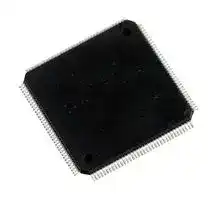
Image not available
Illustrative purposes only


XC3S50A-4TQG144C
FPGA, Spartan-3A, DLL, 108 I/O's, 250 MHz, 1584 Cells, 1.14 V to 1.26 V, TQFP-144, NCNR
⚠️ Reference pricing provided. In case of supply shortages, we will connect you with our trusted procurement partners to ensure your project's continuity.
- Manufacturer: AMD
- Product type: FPGAs
- No. of Logic Blocks:1584; No. of Macrocells:1584; FPGA Family:Spartan-3A; Logic Case Style:TQFP; No. of Pins:144Pins; No. of Speed Grades:4; Tota; Available until stocks are exhausted
- MSL: -
- SVHC: No SVHC (15-Jan-2018)
- FPGA Type: -
- FPGA Family: Spartan-3A
- IC Mounting: Surface Mount
- No. of Pins: 144Pins
- Speed Grade: 4
- No. of I/O's: 108I/O's
- Product Range: Spartan-3A XC3S50A
- Qualification: -
- Total RAM Bits: 54Kbit
- No.of User I/Os: 108I/O's
- Clock Management: DLL
- Logic Case Style: TQFP
- IC Case / Package: TQFP
- No. of Macrocells: 1584Macrocells
- I/O Supply Voltage: 3.6V
- No. of Logic Cells: 1584Logic Cells
- Process Technology: 90nm
- No. of Logic Blocks: 1584
- No. of Speed Grades: 4
- Core Supply Voltage Max: 1.26V
- Core Supply Voltage Min: 1.14V
- Operating Frequency Max: 250MHz
- Operating Temperature Max: 85°C
- Operating Temperature Min: 0°C
| Delivery and price | |
|---|---|
| Units per pack | 1 |
| Price | 21.52 € |
| Current stock | 200+ |
| Lead time | 30 days |
Datasheet

**==> picture [144 x 46] intentionally omitted <==**

DS529 August 19, 2010

## **Spartan-3A FPGA Family: Data Sheet**

## **Product Specification**

## **Module 1:**

## **Introduction and Ordering Information DS529-1 (v2.0) August 19, 2010**

- Introduction

- Features

- Architectural and Configuration Overview

- General I/O Capabilities

- Production Status

- Supported Packages and Package Marking

- Ordering Information

## **Module 2: Spartan-3A FPGA Family: Functional Description**

## **DS529-2 (v2.0) August 19, 2010**

The functionality of the Spartan®-3A FPGA family is described in the following documents.

- UG331 **:** _Spartan-3 Generation FPGA User Guide_

   - Clocking Resources

   - Digital Clock Managers (DCMs)

   - Block RAM

   - Configurable Logic Blocks (CLBs)

      - Distributed RAM

## **Module 3:**

## **DC and Switching Characteristics DS529-3 (v2.0) August 19, 2010**

- DC Electrical Characteristics

   - Absolute Maximum Ratings

   - Supply Voltage Specifications

   - Recommended Operating Conditions

- Switching Characteristics

   - I/O Timing

   - Configurable Logic Block (CLB) Timing

   - • Multiplier Timing

   - Block RAM Timing

   - Digital Clock Manager (DCM) Timing

   - • Suspend Mode Timing

   - Device DNA Timing

   - Configuration and JTAG Timing

## **Module 4: Pinout Descriptions**

## **DS529-4 (v2.0) August 19, 2010**

      - Pin Descriptions

      - Package Overview

      - Pinout Tables

      - Footprint Diagrams

   - SRL16 Shift Registers

   - Carry and Arithmetic Logic

- I/O Resources

- Embedded Multiplier Blocks

For more information on the Spartan-3A FPGA family, go to www.xilinx.com/spartan3a

   - Programmable Interconnect

   - ISE® Design Tools and IP Cores

   - Embedded Processing and Control Solutions

   - Pin Types and Package Overview

   - Package Drawings

   - Powering FPGAs

   - Power Management

- UG332: _Spartan-3 Generation Configuration User Guide_

   - Configuration Overview

   - Configuration Pins and Behavior

   - Bitstream Sizes

   - Detailed Descriptions by Mode

      - Master Serial Mode using Platform Flash PROM

|**Spartan-3A FPGA**|**Status**|
|---|---|
|XC3S50A|Production|
|XC3S200A|Production|
|XC3S400A|Production|
|XC3S700A|Production|
|XC3S1400A|Production|


      - Master SPI Mode using Commodity Serial Flash

      - Master BPI Mode using Commodity Parallel Flash

      - Slave Parallel (SelectMAP) using a Processor

      - Slave Serial using a Processor

      - JTAG Mode

   - ISE iMPACT Programming Examples

   - MultiBoot Reconfiguration

   - Design Authentication using Device DNA

- UG334: _Spartan-3A/3AN FPGA Starter Kit User Guide_

© Copyright 2006–2010 Xilinx, Inc. XILINX, the Xilinx logo, Virtex, Spartan, ISE, and other designated brands included herein are trademarks of Xilinx in the United States and other countries. PCI is a registered trademark of the PCI-SIG. All other trademarks are the property of their respective owners.

DS529 August 19, 2010 **Product Specification**

www.xilinx.com

1

**Spartan-3A FPGA Family: Data Sheet**

DS529 August 19, 2010 **Product Specification**

www.xilinx.com

2

**==> picture [144 x 46] intentionally omitted <==**

DS529-1 (v2.0) August 19, 2010

## **Spartan-3A FPGA Family: Introduction and Ordering Information**

**Product Specification**

## **Introduction**

The Spartan®-3A family of Field-Programmable Gate Arrays (FPGAs) solves the design challenges in most high-volume, cost-sensitive, I/O-intensive electronic applications. The five-member family offers densities ranging from 50,000 to 1.4 million system gates, as shown in Table 1.

The Spartan-3A FPGAs are part of the Extended Spartan-3A family, which also include the non-volatile Spartan-3AN and the higher density Spartan-3A DSP FPGAs. The Spartan-3A family builds on the success of the earlier Spartan-3E and Spartan-3 FPGA families. New features improve system performance and reduce the cost of configuration. These Spartan-3A family enhancements, combined with proven 90 nm process technology, deliver more functionality and bandwidth per dollar than ever before, setting the new standard in the programmable logic industry.

Because of their exceptionally low cost, Spartan-3A FPGAs are ideally suited to a wide range of consumer electronics applications, including broadband access, home networking, display/projection, and digital television equipment.

The Spartan-3A family is a superior alternative to mask programmed ASICs. FPGAs avoid the high initial cost, lengthy development cycles, and the inherent inflexibility of conventional ASICs, and permit field design upgrades.

## **Features**

- Very low cost, high-performance logic solution for high-volume, cost-conscious applications

- Dual-range VCCAUX supply simplifies 3.3V-only design

- Suspend, Hibernate modes reduce system power

- Multi-voltage, multi-standard SelectIO™ interface pins

   - Up to 502 I/O pins or 227 differential signal pairs

   - LVCMOS, LVTTL, HSTL, and SSTL single-ended I/O

   - 3.3V, 2.5V, 1.8V, 1.5V, and 1.2V signaling

   - Selectable output drive, up to 24 mA per pin

   - QUIETIO standard reduces I/O switching noise

      - 640+ Mb/s data transfer rate per differential I/O

      - LVDS, RSDS, mini-LVDS, HSTL/SSTL differential I/O with integrated differential termination resistors

      - Enhanced Double Data Rate (DDR) support

      - DDR/DDR2 SDRAM support up to 400 Mb/s

      - • Fully compliant 32-/64-bit, 33/66 MHz PCI® technology support

   - Abundant, flexible logic resources

      - Densities up to 25,344 logic cells, including optional shift register or distributed RAM support

      - Efficient wide multiplexers, wide logic

      - Fast look-ahead carry logic

      - Enhanced 18 x 18 multipliers with optional pipeline

      - IEEE 1149.1/1532 JTAG programming/debug port

   - Hierarchical SelectRAM™ memory architecture

      - Up to 576 Kbits of fast block RAM with byte write enables for processor applications

      - Up to 176 Kbits of efficient distributed RAM

   - Up to eight Digital Clock Managers (DCMs)

      - Clock skew elimination (delay locked loop)

      - Frequency synthesis, multiplication, division

      - High-resolution phase shifting

      - Wide frequency range (5 MHz to over 320 MHz)

   - Eight low-skew global clock networks, eight additional clocks per half device, plus abundant low-skew routing

   - • Configuration interface to industry-standard PROMs

      - Low-cost, space-saving SPI serial Flash PROM

      - x8 or x8/x16 BPI parallel NOR Flash PROM

      - Low-cost Xilinx® Platform Flash with JTAG

      - Unique Device DNA identifier for design authentication

      - • Load multiple bitstreams under FPGA control • Post-configuration CRC checking

   - Complete Xilinx ISE® and WebPACK™ development system software support plus Spartan-3A Starter Kit

   - MicroBlaze™ and PicoBlaze ™ embedded processors

   - • Low-cost QFP and BGA packaging, Pb-free options

      - Common footprints support easy density migration

      - • Compatible with select Spartan-3AN nonvolatile FPGAs • Compatible with higher density Spartan-3A DSP FPGAs

   - XA Automotive version available

- Full 3.3V ± 10% compatibility and hot swap compliance

## _Table  1:_ **Summary of Spartan-3A FPGA Attributes**

|**Device**|**System**<br>**Gates**|**Equivalent**<br>**Logic Cells**|**CLB Array**<br>**(One CLB = Four Slices)**|**CLB Array**<br>**(One CLB = Four Slices)**|**CLB Array**<br>**(One CLB = Four Slices)**|**CLB Array**<br>**(One CLB = Four Slices)**|**Distributed**<br>**RAM bits(1)**|**Block**<br>**RAM**<br>**bits(1)**|**Dedicated**<br>**Multipliers**|**DCMs**|**Maximum**<br>**User I/O**|**Maximum**<br>**Differential**<br>**I/O Pairs**|
|---|---|---|---|---|---|---|---|---|---|---|---|---|
||||**Rows**|**Columns**|**CLBs**|**Slices**|||||||
|XC3S50A|50K|1,584|16|12|176|704|11K|54K|3|2|144|64|
|XC3S200A|200K|4,032|32|16|448|1,792|28K|288K|16|4|248|112|
|XC3S400A|400K|8,064|40|24|896|3,584|56K|360K|20|4|311|142|
|XC3S700A|700K|13,248|48|32|1,472|5,888|92K|360K|20|8|372|165|
|XC3S1400A|1400K|25,344|72|40|2,816|11,264|176K|576K|32|8|502|227|


## **Notes:**

1. By convention, one Kb is equivalent to 1,024 bits.

© Copyright 2006–2010 Xilinx, Inc. XILINX, the Xilinx logo, Virtex, Spartan, ISE, and other designated brands included herein are trademarks of Xilinx in the United States and other countries. PCI is a registered trademark of the PCI-SIG. All other trademarks are the property of their respective owners.

DS529-1 (v2.0) August 19, 2010

www.xilinx.com

3

**Introduction and Ordering Information**

## **Architectural Overview**

The Spartan-3A family architecture consists of five fundamental programmable functional elements:

- **Configurable Logic Blocks (CLBs)** contain flexible Look-Up Tables (LUTs) that implement logic plus storage elements used as flip-flops or latches. CLBs perform a wide variety of logical functions as well as store data.

- **Input/Output Blocks (IOBs)** control the flow of data between the I/O pins and the internal logic of the device. IOBs support bidirectional data flow plus 3-state operation. Supports a variety of signal standards, including several high-performance differential standards. Double Data-Rate (DDR) registers are included.

- **Block RAM** provides data storage in the form of 18-Kbit dual-port blocks.

- **Multiplier Blocks** accept two 18-bit binary numbers as inputs and calculate the product.

- **Digital Clock Manager (DCM) Blocks** provide self-calibrating, fully digital solutions for distributing, delaying, multiplying, dividing, and phase-shifting clock signals.

These elements are organized as shown in Figure 1. A dual ring of staggered IOBs surrounds a regular array of CLBs. Each device has two columns of block RAM except for the XC3S50A, which has one column. Each RAM column consists of several 18-Kbit RAM blocks. Each block RAM is associated with a dedicated multiplier. The DCMs are positioned in the center with two at the top and two at the bottom of the device. The XC3S50A has DCMs only at the top, while the XC3S700A and XC3S1400A add two DCMs in the middle of the two columns of block RAM and multipliers.

The Spartan-3A family features a rich network of routing that interconnect all five functional elements, transmitting signals among them. Each functional element has an associated switch matrix that permits multiple connections to the routing.

**==> picture [444 x 337] intentionally omitted <==**

**----- Start of picture text -----**<br>
IOBs<br>CLB<br>DCM<br>I OBs<br>DCM<br>CLBs<br>DCM<br>IOBs<br>DS312-1_01_032606<br>Multiplier<br>Block RAM<br>IOBs IOBs<br>Block RAM / Multiplier<br>**----- End of picture text -----**<br>


## **Notes:**

1. The XC3S700A and XC3S1400A have two additional DCMs on both the left and right sides as indicated by the dashed lines. The XC3S50A has only two DCMs at the top and only one Block RAM/Multiplier column.

_Figure 1:_ **Spartan-3A FPGA Architecture**

DS529-1 (v2.0) August 19, 2010

www.xilinx.com

4

**Introduction and Ordering Information**

## **Configuration**

Spartan-3A FPGAs are programmed by loading configuration data into robust, reprogrammable, static CMOS configuration latches (CCLs) that collectively control all functional elements and routing resources. The FPGA’s configuration data is stored externally in a PROM or some other non-volatile medium, either on or off the board. After applying power, the configuration data is written to the FPGA using any of seven different modes:

- Master Serial from a Xilinx Platform Flash PROM

- Serial Peripheral Interface (SPI) from an industry-standard SPI serial Flash

- Byte Peripheral Interface (BPI) Up from an industry-standard x8 or x8/x16 parallel NOR Flash

- Slave Serial, typically downloaded from a processor

- Slave Parallel, typically downloaded from a processor

- Boundary Scan (JTAG), typically downloaded from a processor or system tester

Furthermore, Spartan-3A FPGAs support MultiBoot configuration, allowing two or more FPGA configuration bitstreams to be stored in a single SPI serial Flash or a BPI parallel NOR Flash. The FPGA application controls which configuration to load next and when to load it.

Additionally, each Spartan-3A FPGA contains a unique, factory-programmed Device DNA identifier useful for tracking purposes, anti-cloning designs, or IP protection.

## **I/O Capabilities**

The Spartan-3A FPGA SelectIO interface supports many popular single-ended and differential standards. Table 2 shows the number of user I/Os as well as the number of differential I/O pairs available for each device/package combination. Some of the user I/Os are unidirectional input-only pins as indicated in Table 2.

Spartan-3A FPGAs support the following single-ended standards:

- 3.3V low-voltage TTL (LVTTL)

- Low-voltage CMOS (LVCMOS) at 3.3V, 2.5V, 1.8V, 1.5V, or 1.2V

- 3.3V PCI at 33 MHz or 66 MHz

- HSTL I, II, and III at 1.5V and 1.8V, commonly used in memory applications

- SSTL I and II at 1.8V, 2.5V, and 3.3V, commonly used for memory applications

Spartan-3A FPGAs support the following differential standards:

- LVDS, mini-LVDS, RSDS, and PPDS I/O at 2.5V or 3.3V

- Bus LVDS I/O at 2.5V

- TMDS I/O at 3.3V

- Differential HSTL and SSTL I/O

- LVPECL inputs at 2.5V or 3.3V

_Table  2:_ **Available User I/Os and Differential (Diff) I/O Pairs**

|**Package**<br>**Body Size**<br>**(mm)**<br>**Device**|**VQ100**<br>**VQG100**|**VQ100**<br>**VQG100**|**TQ144**<br>**TQG144**|**TQ144**<br>**TQG144**|**FT256**<br>**FTG256**|**FT256**<br>**FTG256**|**FG320**<br>**FGG320**|**FG320**<br>**FGG320**|**FG400**<br>**FGG400**|**FG400**<br>**FGG400**|**FG484**<br>**FGG484**|**FG484**<br>**FGG484**|**FG676**<br>**FGG676**|**FG676**<br>**FGG676**|
|---|---|---|---|---|---|---|---|---|---|---|---|---|---|---|
||**14 x 14**(2)||**20 x 20**(2)||**17 x 17**||**19 x 19**||**21 x 21**||**23 x 23**||**27 x 27**||
||**User**|**Diff**|**User**|**Diff**|**User**|**Diff**|**User**|**Diff**|**User**|**Diff**|**User**|**Diff**|**User**|**Diff**|
|XC3S50A|**68**<br>_(13)_|**60**<br>_(24)_|**108**<br>_(7)_|**50**<br>_(24)_|**144**<br>_(32)_|**64**<br>_(32)_|-|-|-|-|-|-|-|-|
|XC3S200A|**68**<br>_(13)_|**60**<br>_(24)_|-|-|**195**<br>_(35)_|**90**<br>_(50)_|**248**<br>_(56)_|**112**<br>_(64)_|-|-|-|-|-|-|
|XC3S400A|-|-|-|-|**195**<br>_(35)_|**90**<br>_(50)_|**251**<br>_(59)_|**112**<br>_(64)_|**311**<br>_(63)_|**142**<br>_(78)_|-|-|-|-|
|XC3S700A|-|-|-|-|**161**<br>_(13)_|**74**<br>_(36)_|-|-|**311**<br>_(63)_|**142**<br>_(78)_|**372**<br>_(84)_|**165**<br>_(93)_|-|-|
|XC3S1400A|-|-|-|-|**161**<br>_(13)_|**74**<br>_(36)_|-|-|-|-|**375**<br>_(87)_|**165**<br>_(93)_|**502**<br>_(94)_|**227**<br>_(131)_|


## **Notes:**

1. The number shown in **bold** indicates the maximum number of I/O and input-only pins. The number shown in ( _italics_ ) indicates the number of input-only pins. The differential (Diff) input-only pin count includes both differential pairs on input-only pins and differential pairs on I/O pins within I/O banks that are restricted to differential inputs.

2. The footprints for the VQ/TQ packages are larger than the package body.  See the Package Drawings for details.

DS529-1 (v2.0) August 19, 2010

www.xilinx.com

5

**Introduction and Ordering Information**

## **Production Status**

Table 3 indicates the production status of each Spartan-3A FPGA by temperature range and speed grade. The table also lists the earliest speed file version required for creating

a production configuration bitstream. Later versions are also supported.

_Table  3:_ **Spartan-3A FPGA Production Status (Production Speed File)**

||**Temperature Range**|**Commercial (C)**|**Commercial (C)**|**Industrial**|
|---|---|---|---|---|
||**Speed Grade**|**Standard (–4)**|**High-Performance (–5)**|**Standard (–4)**|
|**Part Number**|**XC3S50A**|**Production**<br>(v1.35)|**Production**<br>(v1.35)|**Production**<br>(v1.35)|
||**XC3S200A**|**Production**<br>(v1.35)|**Production**<br>(v1.35)|**Production**<br>(v1.35)|
||**XC3S400A**|**Production**<br>(v1.36)|**Production**<br>(v1.36)|**Production**<br>(v1.36)|
||**XC3S700A**|**Production**<br>(v1.34)|**Production**<br>(v1.35)|**Production**<br>(v1.34)|
||**XC3S1400A**|**Production**<br>(v1.34)|**Production**<br>(v1.35)|**Production**<br>(v1.34)|


## **Package Marking**

Figure 2 provides a top marking example for Spartan-3A FPGAs in the quad-flat packages. Figure 3 shows the top marking for Spartan-3A FPGAs in BGA packages. The markings for the BGA packages are nearly identical to those for the quad-flat packages, except that the marking is rotated with respect to the ball A1 indicator.

The “5C” and “4I” Speed Grade/Temperature Range part combinations may be dual marked as “5C/4I”. Devices with a single mark are only guaranteed for the marked speed grade and temperature range.

**==> picture [308 x 138] intentionally omitted <==**

**----- Start of picture text -----**<br>
Mask Revision Code<br>R Fabrication Code<br>SPARTAN R Process Technology<br>Device Type XC3S50ATM<br>Package TQ144AGQ0625 Date Code<br>D1234567A<br>Speed Grade 4C Lot Code<br>Temperature Range<br>Pin P1 DS529-1_03_080406<br>**----- End of picture text -----**<br>


_Figure 2:_ **Spartan-3A QFP Package Marking Example**

**==> picture [290 x 112] intentionally omitted <==**

**----- Start of picture text -----**<br>
Mask Revision Code<br>BGA Ball A1 R<br>SPARTAN R Fabrication CodeProcess Code<br>Device Type XC3S50ATM<br>Package FT256 AGQ0625 Date Code<br>D1234567A<br>4C Lot Code<br>Speed Grade<br>Temperature Range<br>DS529-1_02_021206<br>**----- End of picture text -----**<br>


_Figure 3:_ **Spartan-3A BGA Package Marking Example**

DS529-1 (v2.0) August 19, 2010

www.xilinx.com

6

**Introduction and Ordering Information**

## **Ordering Information**

Spartan-3A FPGAs are available in both standard and Pb-free packaging options for all device/package combinations. The Pb-free packages include a ‘G’ character in the ordering code.

||Device Type<br>Speed Grade<br>Package Type/Number of Pins<br>**Example:**|Device Type<br>Speed Grade<br>Package Type/Number of Pins<br>**Example:**|Device Type<br>Speed Grade<br>Package Type/Number of Pins<br>**Example:**|Device Type<br>Speed Grade<br>Package Type/Number of Pins<br>**Example:**|Device Type<br>Speed Grade<br>Package Type/Number of Pins<br>**Example:**|**XC3S50A**<br>**-4 **|**FT 256 C**<br>Temperature<br>DS529-1|**FT 256 C**<br>Temperature<br>DS529-1|Range<br>_05_011309|Range<br>_05_011309|
|---|---|---|---|---|---|---|---|---|---|---|
||||||||||||
||||||||||||
||||||||||||
||||||||||||
||||||||||||
|**Device**|**Speed Grade**||**Package Type / Number of Pins(1)**||||||**Temperature Range ( TJ )**||
|XC3S50A|–4|Standard Performance|VQ100/<br>VQG100|100-pin Very Thin Quad Flat Pack (VQFP)|||||C|Commercial (0°C to 85°C)|
|XC3S200A|–5|High Performance<br>(Commercial only)|TQ144/<br>TQG144|144-pin Thin Quad Flat Pack (TQFP)|||||I|Industrial (–40°C to 100°C)|
|XC3S400A|||FT256/<br>FTG256|256-ball Fine-Pitch Thin Ball Grid Array (FTBGA)|||||||
|XC3S700A|||FG320/<br>FGG320|320-ball Fine-Pitch Ball Grid Array (FBGA)|||||||
|XC3S1400A|||FG400/<br>FGG400|400-ball Fine-Pitch Ball Grid Array (FBGA)|||||||
||||FG484/<br>FGG484|484-ball Fine-Pitch Ball Grid Array (FBGA)|||||||
||||FG676<br>FGG676|676-ball Fine-Pitch Ball Grid Array (FBGA)|||||||


## **Notes:**

1. See Table 2 for specific device/package combinations.

2. See DS681 for the XA Automotive Spartan-3A FPGAs.

## **Revision History**

The following table shows the revision history for this document.

|**Date**|**Version**|**Revision**|
|---|---|---|
|12/05/06|1.0|Initial release.|
|02/02/07|1.1|Promoted to Preliminary status. Updated maximum differential I/O count for XC3S50A inTable 1.<br>Updated differential input-only pin counts inTable 2.|
|03/16/07|1.2|Minor formatting updates.|
|04/23/07|1.3|Added"Production Status"section.|
|05/08/07|1.4|Updated XC3S400A to Production.|
|07/10/07|1.4.1|Minor updates.|
|04/15/08|1.6|Added VQ100 for XC3S50A and XC3S200A and extended FT256 to XC3S700A and XC3S1400A<br>Added reference to SCD 4103 for 750 Mbps performance.|
|05/28/08|1.7|Added reference toXA Automotive<br> version.|
|03/06/09|1.8|Simplified Ordering Information. Added references to Extended Spartan-3A Family.<br>Removed reference to SCD 4103.|
|08/19/10|2.0|UpdatedTable 2to clarify TQ/VQ size.|


DS529-1 (v2.0) August 19, 2010

www.xilinx.com

7

**Introduction and Ordering Information**

DS529-1 (v2.0) August 19, 2010

www.xilinx.com

8

**==> picture [144 x 46] intentionally omitted <==**

DS529-2 (v2.0) August 19, 2010

## **Spartan-3A FPGA Family: Functional Description**

**Product Specification**

## **Spartan-3A FPGA Design Documentation**

The functionality of the Spartan®-3A FPGA Family is described in the following documents. The topics covered in each guide is listed below.

- **DS706: Extended Spartan-3A Family Overview** www.xilinx.com/support/documentation/ data_sheets/ds706.pdf

- **UG331: Spartan-3 Generation FPGA User Guide** www.xilinx.com/support/documentation/ user_guides/ug331.pdf

   - Clocking Resources

   - Digital Clock Managers (DCMs)

   - Block RAM

   - Configurable Logic Blocks (CLBs)

      - Distributed RAM

      - SRL16 Shift Registers

      - Carry and Arithmetic Logic

   - I/O Resources

   - Embedded Multiplier Blocks

   - Programmable Interconnect

   - ISE® Software Design Tools

   - IP Cores

   - Embedded Processing and Control Solutions

   - Pin Types and Package Overview

   - Package Drawings

   - Powering FPGAs

   - Power Management

## • **UG332: Spartan-3 Generation Configuration User Guide**

www.xilinx.com/support/documentation/ user_guides/ug332.pdf

- Configuration Overview

   - Configuration Pins and Behavior

   - Bitstream Sizes

- Detailed Descriptions by Mode

   - Master Serial Mode using Xilinx® Platform Flash PROM

   - Master SPI Mode using Commodity SPI Serial Flash PROM

   - Master BPI Mode using Commodity Parallel NOR Flash PROM

   - Slave Parallel (SelectMAP) using a Processor

   - Slave Serial using a Processor

   - JTAG Mode

- ISE iMPACT Programming Examples

- MultiBoot Reconfiguration

- Design Authentication using Device DNA

For application examples, see the Spartan-3A FPGA application notes.

- **Spartan-3A FPGA Application Notes**

www.xilinx.com/support/documentation/ - spartan 3a_application_notes.htm

For specific hardware examples, please see the Spartan-3A FPGA Starter Kit board web page, which has links to various design examples and the user guide.

- **Spartan-3A/3AN FPGA Starter Kit Board Page** www.xilinx.com/s3astarter

## • **UG334: Spartan-3A/3AN FPGA Starter Kit User Guide**

www.xilinx.com/support/documentation/ boards_and_kits/ug334.pdf

For information on the XA Automotive version of the Spartan-3A family, see the following data sheet.

- XA Spartan-3A Automotive FPGA Family Data Sheet www.xilinx.com/support/documentation/data_sheets/ ds681.pdf

Create a Xilinx user account and sign up to receive automatic e-mail notification whenever this data sheet or the associated user guides are updated.

- Sign Up for Alerts

www.xilinx.com/support/answers/18683.htm

© Copyright 2006–2010 Xilinx, Inc. XILINX, the Xilinx logo, Virtex, Spartan, ISE, and other designated brands included herein are trademarks of Xilinx in the United States and other countries. PCI is a registered trademark of the PCI-SIG. All other trademarks are the property of their respective owners.

DS529-2 (v2.0) August 19, 2010

www.xilinx.com

9

**Spartan-3A FPGA Family: Functional Description**

## **Related Product Families**

The Spartan-3AN nonvolatile FPGA family is architecturally identical to the Spartan-3A FPGA family, except that it has in-system flash memory and is offered in select pin-compatible package options.

- **DS557: Spartan-3AN Family Data Sheet** www.xilinx.com/support/documentation/ data_sheets/ds557.pdf

The compatible Spartan-3A DSP FPGA family replaces the 18-bit multiplier with the DSP48A block, while also increasing the block RAM capability and quantity. The two members of the Spartan-3A DSP FPGA family extend the Spartan-3A density range up to 37,440 and 53,712 logic cells.

- **DS610: Spartan-3A DSP FPGA Family Data Sheet** www.xilinx.com/support/documentation/ data_sheets/ds610.pdf

- **UG431: XtremeDSP DSP48A for Spartan-3A DSP FPGAs** www.xilinx.com/support/documentation/ user_guides/ug431.pdf

## **Revision History**

The following table shows the revision history for this document.

|**Date**|**Version**|**Revision**|
|---|---|---|
|12/05/06|1.0|Initial release.|
|02/02/07|1.1|Promoted to Preliminary status.|
|03/16/07|1.2|Added cross-reference to nonvolatile Spartan-3AN FPGA family.|
|04/23/07|1.3|Added cross-reference to compatible Spartan-3A DSP family.|
|07/10/07|1.4|Updated Starter Kit reference to new UG334.|
|04/15/08|1.6|Updated trademarks.|
|05/28/08|1.7|Added reference toXA Automotive<br> version.|
|03/06/09|1.8|Added link to DS706 on Extended Spartan-3A family.|
|08/19/10|2.0|Updated link to sign up for Alerts.|


DS529-2 (v2.0) August 19, 2010

www.xilinx.com

10

**Product Specification**

**==> picture [144 x 46] intentionally omitted <==**

## **Spartan-3A FPGA Family: DC and Switching Characteristics**

DS529-3 (v2.0) August 19, 2010

## **DC Electrical Characteristics**

In this section, specifications may be designated as Advance, Preliminary, or Production. These terms are defined as follows:

**Advance:** Initial estimates are based on simulation, early characterization, and/or extrapolation from the characteristics of other families. Values are subject to change. Use as estimates, not for production.

**Preliminary:** Based on characterization. Further changes are not expected.

**Production:** These specifications are approved once the silicon has been characterized over numerous production lots. Parameter values are considered stable with no future changes expected.

All parameter limits are representative of worst-case supply voltage and junction temperature conditions. **Unless otherwise noted, the published parameter values apply to all Spartan®-3A devices. AC and DC characteristics are specified using the same numbers for both commercial and industrial grades.**

## **Absolute Maximum Ratings**

Stresses beyond those listed under Table 4: Absolute Maximum Ratings may cause permanent damage to the device. These are stress ratings only; functional operation of the device at these or any other conditions beyond those listed under the Recommended Operating Conditions is not implied. Exposure to absolute maximum conditions for extended periods of time adversely affects device reliability.

_Table  4:_ **Absolute Maximum Ratings**

|**Symbol**|**Description**|**Conditions**|**Min**|**Max**|**Units**|
|---|---|---|---|---|---|
|VCCINT|Internal supply voltage||–0.5|1.32|V|
|VCCAUX|Auxiliary supply voltage||–0.5|3.75|V|
|VCCO|Output driver supply voltage||–0.5|3.75|V|
|VREF|Input reference voltage||–0.5|VCCO+ 0.5|V|
|VIN|Voltage applied to all User I/O pins and<br>dual-purpose pins|Driver in a high-impedance state|–0.95|4.6|V|
||Voltage applied to all Dedicated pins||–0.5|4.6|V|
|IIK|Input clamp current per I/O pin|–0.5V < VIN< (VCCO+ 0.5V)(1)|–|±100|mA|
|VESD|Electrostatic Discharge Voltage|Human body model|–|±2000|V|
|||Charged device model|–|±500|V|
|||Machine model|–|±200|V|
|TJ|Junction temperature||–|125|°C|
|TSTG|Storage temperature||–65|150|°C|


## **Notes:**

1. Upper clamp applies only when using PCI IOSTANDARDs.

2. For soldering guidelines, see UG112: _Device Packaging and Thermal Characteristics_ and XAPP427: _Implementation and Solder Reflow Guidelines for Pb-Free Packages_ .

© Copyright 2006–2010 Xilinx, Inc. XILINX, the Xilinx logo, Virtex, Spartan, ISE, and other designated brands included herein are trademarks of Xilinx in the United States and other countries. PCI is a registered trademark of the PCI-SIG. All other trademarks are the property of their respective owners.

DS529-3 (v2.0) August 19, 2010

www.xilinx.com

11

**DC and Switching Characteristics**

## **Power Supply Specifications**

_Table  5:_ **Supply Voltage Thresholds for Power-On Reset**

|**Symbol**|**Description**|**Min**|**Max**|**Units**|
|---|---|---|---|---|
|VCCINTT|Threshold for the VCCINTsupply|0.4|1.0|V|
|VCCAUXT|Threshold for the VCCAUXsupply|1.0|2.0|V|
|VCCO2T|Threshold for the VCCOBank 2 supply|1.0|2.0|V|


## **Notes:**

1. VCCINT, VCCAUX, and VCCO supplies to the FPGA can be applied in any order. However, the FPGA’s configuration source (Platform Flash, SPI Flash, parallel NOR Flash, microcontroller) might have specific requirements. Check the data sheet for the attached configuration source. Apply VCCINT last for lowest overall power consumption (see UG331 chapter “Powering Spartan-3 Generation FPGAs” for more information).

2. To ensure successful power-on, VCCINT, VCCO Bank 2, and VCCAUX supplies must rise through their respective threshold-voltage ranges with no dips at any point.

_Table  6:_ **Supply Voltage Ramp Rate**

|**Symbol**|**Description**|**Min**|**Max**|**Units**|
|---|---|---|---|---|
|VCCINTR|Ramp rate from GND to valid VCCINTsupply level|0.2|100|ms|
|VCCAUXR|Ramp rate from GND to valid VCCAUXsupply level|0.2|100|ms|
|VCCO2R|Ramp rate from GND to valid VCCOBank 2 supply level|0.2|100|ms|


## **Notes:**

1. VCCINT, VCCAUX, and VCCO supplies to the FPGA can be applied in any order. However, the FPGA’s configuration source (Platform Flash, SPI Flash, parallel NOR Flash, microcontroller) might have specific requirements. Check the data sheet for the attached configuration source. Apply VCCINT last for lowest overall power consumption (see UG331 chapter "Powering Spartan-3 Generation FPGAs" for more information).

2. To ensure successful power-on, VCCINT, VCCO Bank 2, and VCCAUX supplies must rise through their respective threshold-voltage ranges with no dips at any point.

## _Table  7:_ **Supply Voltage Levels Necessary for Preserving CMOS Configuration Latch (CCL) Contents and RAM Data**

|**Data**||||
|---|---|---|---|
|**Symbol**|**Description**|**Min**|**Units**|
|VDRINT|VCCINTlevel required to retain CMOS Configuration Latch (CCL) and RAM data|1.0|V|
|VDRAUX|VCCAUXlevel required to retain CMOS Configuration Latch (CCL) and RAM data|2.0|V|


DS529-3 (v2.0) August 19, 2010

www.xilinx.com

12

**DC and Switching Characteristics**

## **General Recommended Operating Conditions**

_Table  8:_ **General Recommended Operating Conditions**

|**Symbol**|**Description**|**Description**|**Description**|**Min**|**Nominal**|**Max**|**Units**|
|---|---|---|---|---|---|---|---|
|TJ|Junction temperature|Commercial||0|–|85|°C|
|||Industrial||–40|–|100|°C|
|VCCINT|Internal supply voltage|||1.14|1.20|1.26|V|
|VCCO (1)|Output driver supply voltage|||1.10|–|3.60|V|
|VCCAUX|Auxiliary supply voltage(2)|VCCAUX= 2.5||2.25|2.50|2.75|V|
|||VCCAUX= 3.3||3.00|3.30|3.60|V|
|VIN|Input voltage(3)|PCI IOSTANDARD||–0.5|–|VCCO+0.5|V|
|||All other<br>IOSTANDARDs|IP or IO_#|–0.5|–|4.10|V|
||||IO_Lxxy_#(4)|–0.5|–|4.10|V|
|TIN|Input signal transition time(5)|||–|–|500|ns|


## **Notes:**

1. This VCCO range spans the lowest and highest operating voltages for all supported I/O standards. Table 11 lists the recommended VCCO range specific to each of the single-ended I/O standards, and Table 13 lists that specific to the differential standards.

2. Define VCCAUX selection using CONFIG VCCAUX constraint.

3. See XAPP459, “Eliminating I/O Coupling Effects when Interfacing Large-Swing Single-Ended Signals to User I/O Pins.”

4. For single-ended signals that are placed on a differential-capable I/O, VIN of –0.2V to –0.5V is supported but can cause increased leakage between the two pins. See _Parasitic Leakage_ in UG331, _Spartan-3 Generation FPGA User Guide_ .

5. Measured between 10% and 90% VCCO. Follow Signal Integrity recommendations.

DS529-3 (v2.0) August 19, 2010

www.xilinx.com

13

**DC and Switching Characteristics**

## **General DC Characteristics for I/O Pins**

_Table  9:_ **General DC Characteristics of User I/O, Dual-Purpose, and Dedicated Pins**[ (1)]

|**Symbol**|**Description**|**Test Conditions**|**Test Conditions**|**Min**|**Typ**|**Max**|**Units**|
|---|---|---|---|---|---|---|---|
|IL(2)|Leakage current at User I/O,<br>input-only, dual-purpose, and<br>dedicated pins, FPGA powered|Driver is in a high-impedance state,<br>VIN= 0V or VCCOmax, sample-tested||–10|–|+10|µA|
|IHS|Leakage current on pins during<br>hot socketing, FPGA unpowered|All pins except INIT_B, PROG_B, DONE, and JTAG<br>pins when PUDC_B = 1.||–10|–|+10|µA|
|||INIT_B, PROG_B, DONE, and JTAG pins or other<br>pins when PUDC_B = 0.||Add IHS+ IRPU|||µA|
|IRPU(3)|Current through pull-up resistor<br>at User I/O, dual-purpose,<br>input-only, and dedicated pins.<br>Dedicated pins are powered by<br>VCCAUX.|VIN= GND|VCCOor VCCAUX=<br>3.0V to 3.6V|–151|–315|–710|µA|
||||VCCOor VCCAUX=<br>2.3V to 2.7V|–82|–182|–437|µA|
||||VCCO= 1.7V to 1.9V|–36|–88|–226|µA|
||||VCCO= 1.4V to 1.6V|–22|–56|–148|µA|
||||VCCO= 1.14V to 1.26V|–11|–31|–83|µA|
|RPU(3)|Equivalent pull-up resistor value<br>at User I/O, dual-purpose,<br>input-only, and dedicated pins<br>(based on IRPUper Note 3)|VIN= GND|VCCO= 3.0V to 3.6V|5.1|11.4|23.9|kΩ|
||||VCCO= 2.3V to 2.7V|6.2|14.8|33.1|kΩ|
||||VCCO= 1.7V to 1.9V|8.4|21.6|52.6|kΩ|
||||VCCO= 1.4V to 1.6V|10.8|28.4|74.0|kΩ|
||||VCCO= 1.14V to 1.26V|15.3|41.1|119.4|kΩ|
|IRPD(3)|Current through pull-down<br>resistor at User I/O,<br>dual-purpose, input-only, and<br>dedicated pins. Dedicated pins<br>are powered by VCCAUX.|VIN= VCCO|VCCAUX= 3.0V to 3.6V|167|346|659|µA|
||||VCCAUX= 2.25V to 2.75V|100|225|457|µA|
|RPD(3)|Equivalent pull-down resistor<br>value at User I/O, dual-purpose,<br>input-only, and dedicated pins<br>(based on IRPDper Note 3)|VCCAUX= 3.0V to 3.6V|VIN= 3.0V to 3.6V|5.5|10.4|20.8|kΩ|
||||VIN= 2.3V to 2.7V|4.1|7.8|15.7|kΩ|
||||VIN= 1.7V to 1.9V|3.0|5.7|11.1|kΩ|
||||VIN= 1.4V to 1.6V|2.7|5.1|9.6|kΩ|
||||VIN= 1.14V to 1.26V|2.4|4.5|8.1|kΩ|
|||VCCAUX= 2.25V to 2.75V|VIN= 3.0V to 3.6V|7.9|16.0|35.0|kΩ|
||||VIN= 2.3V to 2.7V|5.9|12.0|26.3|kΩ|
||||VIN= 1.7V to 1.9V|4.2|8.5|18.6|kΩ|
||||VIN= 1.4V to 1.6V|3.6|7.2|15.7|kΩ|
||||VIN= 1.14V to 1.26V|3.0|6.0|12.5|kΩ|
|IREF|VREFcurrent per pin|All VCCOlevels||–10|–|+10|µA|
|CIN|Input capacitance|–||–|–|10|pF|
|RDT|Resistance of optional differential<br>termination circuit within a<br>differential I/O pair. Not available<br>on Input-only pairs.|VCCO= 3.3V ± 10%|LVDS_33,<br>MINI_LVDS_33,<br>RSDS_33|90|100|115|Ω|
|||VCCO= 2.5V ± 10%|LVDS_25,<br>MINI_LVDS_25,<br>RSDS_25|90|110|–|Ω|


## **Notes:**

1. The numbers in this table are based on the conditions set forth in Table 8.

2. For single-ended signals that are placed on a differential-capable I/O, VIN of –0.2V to –0.5V is supported but can cause increased leakage between the two pins. See "Parasitic Leakage" in UG331, _Spartan-3 Generation FPGA User Guide_ .

3. This parameter is based on characterization. The pull-up resistance RPU = VCCO / IRPU. The pull-down resistance RPD = VIN / IRPD.

DS529-3 (v2.0) August 19, 2010

www.xilinx.com

14

**DC and Switching Characteristics**

## **Quiescent Current Requirements**

_Table  10:_ **Quiescent Supply Current Characteristics**

|**Symbol**|**Description**|**Device**|**Typical(2)**|**Commercial**<br>**Maximum(2)**|**Industrial**<br>**Maximum(2)**|**Units**|
|---|---|---|---|---|---|---|
|ICCINTQ|Quiescent VCCINTsupply current|XC3S50A|2|20|30|mA|
|||XC3S200A|7|50|70|mA|
|||XC3S400A|10|85|125|mA|
|||XC3S700A|13|120|185|mA|
|||XC3S1400A|24|220|310|mA|
|ICCOQ|Quiescent VCCOsupply current|XC3S50A|0.2|2|3|mA|
|||XC3S200A|0.2|2|3|mA|
|||XC3S400A|0.3|3|4|mA|
|||XC3S700A|0.3|3|4|mA|
|||XC3S1400A|0.3|3|4|mA|
|ICCAUXQ|Quiescent VCCAUXsupply current|XC3S50A|3|8|10|mA|
|||XC3S200A|5|12|15|mA|
|||XC3S400A|5|18|24|mA|
|||XC3S700A|6|28|34|mA|
|||XC3S1400A|10|50|58|mA|


## **Notes:**

1. The numbers in this table are based on the conditions set forth in Table 8.

2. Quiescent supply current is measured with all I/O drivers in a high-impedance state and with all pull-up/pull-down resistors at the I/O pads disabled. Typical values are characterized using typical devices at room temperature (TJ of 25°C at VCCINT = 1.2V, VCCO = 3.3V, and VCCAUX = 2.5V). The maximum limits are tested for each device at the respective maximum specified junction temperature and at maximum voltage limits with VCCINT = 1.26V, VCCO = 3.6V, and VCCAUX = 3.6V. The FPGA is programmed with a “blank” configuration data file (that is, a design with no functional elements instantiated). For conditions other than those described above (for example, a design including functional elements), measured quiescent current levels will be different than the values in the table.

3. For more accurate estimates for a specific design, use the Xilinx XPower tools. There are two recommended ways to estimate the total power consumption (quiescent plus dynamic) for a specific design: a) The Spartan-3A FPGA XPower Estimator provides quick, approximate, typical estimates, and does not require a netlist of the design. b) XPower Analyzer uses a netlist as input to provide maximum estimates as well as more accurate typical estimates.

4. The maximum numbers in this table indicate the minimum current each power rail requires in order for the FPGA to power-on successfully. 5. For information on the power-saving Suspend mode, see XAPP480: _Using Suspend Mode in Spartan-3 Generation FPGAs_ . Suspend mode typically saves 40% total power consumption compared to quiescent current.

DS529-3 (v2.0) August 19, 2010

www.xilinx.com

15

**DC and Switching Characteristics**

## **Single-Ended I/O Standards**

_Table  11:_ **Recommended Operating Conditions for User I/Os Using Single-Ended Standards**

|**IOSTANDARD**<br>**Attribute**|**VCCO for Drivers(2)**|**VCCO for Drivers(2)**|**VCCO for Drivers(2)**|**VREF**|**VREF**|**VREF**|**VIL**|**VIH**|
|---|---|---|---|---|---|---|---|---|
||**Min (V)**|**Nom (V)**|**Max (V)**|**Min (V)**|**Nom (V)**|**Max (V)**|**Max (V)**|**Min (V)**|
|LVTTL|3.0|3.3|3.6|VREFis not used for<br>these I/O standards|||0.8|2.0|
|LVCMOS33(4)|3.0|3.3|3.6||||0.8|2.0|
|LVCMOS25(4,5)|2.3|2.5|2.7||||0.7|1.7|
|LVCMOS18|1.65|1.8|1.95||||0.4|0.8|
|LVCMOS15|1.4|1.5|1.6||||0.4|0.8|
|LVCMOS12|1.1|1.2|1.3||||0.4|0.7|
|PCI33_3(6)|3.0|3.3|3.6||||0.3•VCCO|0.5•VCCO|
|PCI66_3(6)|3.0|3.3|3.6||||0.3•VCCO|0.5•VCCO|
|HSTL_I|1.4|1.5|1.6|0.68|0.75|0.9|VREF– 0.1|VREF+ 0.1|
|HSTL_III|1.4|1.5|1.6|–|0.9|-|VREF– 0.1|VREF+ 0.1|
|HSTL_I_18|1.7|1.8|1.9|0.8|0.9|1.1|VREF– 0.1|VREF+ 0.1|
|HSTL_II_18|1.7|1.8|1.9|–|0.9|–|VREF– 0.1|VREF+ 0.1|
|HSTL_III_18|1.7|1.8|1.9|–|1.1|–|VREF– 0.1|VREF+ 0.1|
|SSTL18_I|1.7|1.8|1.9|0.833|0.900|0.969|VREF– 0.125|VREF+ 0.125|
|SSTL18_II|1.7|1.8|1.9|0.833|0.900|0.969|VREF– 0.125|VREF+ 0.125|
|SSTL2_I|2.3|2.5|2.7|1.13|1.25|1.38|VREF– 0.150|VREF+ 0.150|
|SSTL2_II|2.3|2.5|2.7|1.13|1.25|1.38|VREF– 0.150|VREF+ 0.150|
|SSTL3_I|3.0|3.3|3.6|1.3|1.5|1.7|VREF– 0.2|VREF+ 0.2|
|SSTL3_II|3.0|3.3|3.6|1.3|1.5|1.7|VREF– 0.2|VREF+ 0.2|


## **Notes:**

1. Descriptions of the symbols used in this table are as follows: VCCO – the supply voltage for output drivers VREF – the reference voltage for setting the input switching threshold VIL – the input voltage that indicates a Low logic level

   - VIH – the input voltage that indicates a High logic level

2. In general, the VCCO rails supply only output drivers, not input circuits. The exceptions are for LVCMOS25 inputs when VCCAUX = 3.3V range and for PCI I/O standards.

3. For device operation, the maximum signal voltage (VIH max) can be as high as VIN max. See Table 8.

4. There is approximately 100 mV of hysteresis on inputs using LVCMOS33 and LVCMOS25 I/O standards.

5. All Dedicated pins (PROG_B, DONE, SUSPEND, TCK, TDI, TDO, and TMS) draw power from the VCCAUX rail and use the LVCMOS25 or LVCMOS33 standard depending on VCCAUX. The dual-purpose configuration pins use the LVCMOS standard before the User mode. When using these pins as part of a standard 2.5V configuration interface, apply 2.5V to the VCCO lines of Banks 0, 1, and 2 at power-on as well as throughout configuration.

6. For information on PCI IP solutions, see www.xilinx.com/pci. The PCI IOSTANDARD is not supported on input-only pins. The PCIX IOSTANDARD is available and has equivalent characteristics but no PCI-X IP is supported.

DS529-3 (v2.0) August 19, 2010

www.xilinx.com

16

**DC and Switching Characteristics**

## _Table  12:_ **DC Characteristics of User I/Os Using Single-Ended Standards**

|**IOSTANDARD**<br>**Attribute**|**IOSTANDARD**<br>**Attribute**|**Test**<br>**Conditions**|**Test**<br>**Conditions**|**Logic Level**<br>**Characteristics**|**Logic Level**<br>**Characteristics**|
|---|---|---|---|---|---|
|||**IOL**<br>**(mA)**|**IOH**<br>**(mA)**|**VOL**<br>**Max (V)**|**VOH**<br>**Min (V)**|
|LVTTL(3)|2|2|–2|0.4|2.4|
||4|4|–4|||
||6|6|–6|||
||8|8|–8|||
||12|12|–12|||
||16|16|–16|||
||24|24|–24|||
|LVCMOS33(3)|2|2|–2|0.4|VCCO –0.4|
||4|4|–4|||
||6|6|–6|||
||8|8|–8|||
||12|12|–12|||
||16|16|–16|||
||24(4)|24|–24|||
|LVCMOS25(3)|2|2|–2|0.4|VCCO –0.4|
||4|4|–4|||
||6|6|–6|||
||8|8|–8|||
||12|12|–12|||
||16(4)|16|–16|||
||24(4)|24|–24|||
|LVCMOS18(3)|2|2|–2|0.4|VCCO –0.4|
||4|4|–4|||
||6|6|–6|||
||8|8|–8|||
||12(4)|12|–12|||
||16(4)|16|–16|||
|LVCMOS15(3)|2|2|–2|0.4|VCCO –0.4|
||4|4|–4|||
||6|6|–6|||
||8(4)|8|–8|||
||12(4)|12|–12|||
|LVCMOS12(3)|2|2|–2|0.4|VCCO –0.4|
||4(4)|4|–4|||
||6(4)|6|–6|||


_Table  12:_ **DC Characteristics of User I/Os Using Single-Ended Standards** _**(Continued)**_

|**IOSTANDARD**<br>**Attribute**|**Test**<br>**Conditions**|**Test**<br>**Conditions**|**Logic Level**<br>**Characteristics**|**Logic Level**<br>**Characteristics**|
|---|---|---|---|---|
||**IOL**<br>**(mA)**|**IOH**<br>**(mA)**|**VOL**<br>**Max (V)**|**VOH**<br>**Min (V)**|
|PCI33_3(5)|1.5|–0.5|10% VCCO|90% VCCO|
|PCI66_3(5)|1.5|–0.5|10% VCCO|90% VCCO|
|HSTL_I(4)|8|–8|0.4|VCCO- 0.4|
|HSTL_III(4)|24|–8|0.4|VCCO- 0.4|
|HSTL_I_18|8|–8|0.4|VCCO- 0.4|
|HSTL_II_18(4)|16|–16|0.4|VCCO- 0.4|
|HSTL_III_18|24|–8|0.4|VCCO- 0.4|
|SSTL18_I|6.7|–6.7|VTT– 0.475|VTT+ 0.475|
|SSTL18_II(4)|13.4|–13.4|VTT– 0.603|VTT+ 0.603|
|SSTL2_I|8.1|–8.1|VTT– 0.61|VTT+ 0.61|
|SSTL2_II(4)|16.2|–16.2|VTT– 0.81|VTT+ 0.81|
|SSTL3_I|8|–8|VTT– 0.6|VTT+ 0.6|
|SSTL3_II|16|–16|VTT– 0.8|VTT+ 0.8|


## **Notes:**

1. The numbers in this table are based on the conditions set forth in Table 8 and Table 11.

2. Descriptions of the symbols used in this table are as follows: IOL – the output current condition under which VOL is tested IOH – the output current condition under which VOH is tested VOL – the output voltage that indicates a Low logic level VOH – the output voltage that indicates a High logic level VCCO – the supply voltage for output drivers

   - VTT – the voltage applied to a resistor termination

3. For the LVCMOS and LVTTL standards: the same VOL and VOH limits apply for the Fast, Slow, and QUIETIO slew attributes.

4. These higher-drive output standards are supported only on FPGA banks 1 and 3. Inputs are unrestricted. See the chapter "Using I/O Resources" in UG331.

5. Tested according to the relevant PCI specifications. For information on PCI IP solutions, see www.xilinx.com/pci. The PCIX IOSTANDARD is available and has equivalent characteristics but no PCI-X IP is supported.

DS529-3 (v2.0) August 19, 2010

www.xilinx.com

17

**DC and Switching Characteristics**

## **Differential I/O Standards**

## **Differential Input Pairs**

**==> picture [297 x 180] intentionally omitted <==**

**----- Start of picture text -----**<br>
V<br>INP<br>P Differential<br>Internal N I/O Pair Pins<br>V<br>Logic INN<br>V<br>INN<br>V 50% VID<br>INP<br>V<br>ICM<br>GND level<br>V<br>INP + VINN<br>VICM = Input common mode voltage =<br>2<br>V V<br>ID = Differential input voltage = INP - VINN  DS529-3_10_012907<br>**----- End of picture text -----**<br>


## _Figure 4:_ **Differential Input Voltages**

_Table  13:_ **Recommended Operating Conditions for User I/Os Using Differential Signal Standards**

|**IOSTANDARD Attribute**|**VCCO for Drivers(1)**|**VCCO for Drivers(1)**|**VCCO for Drivers(1)**|**VID**|**VID**|**VID**|**VICM(2)**|**VICM(2)**|**VICM(2)**|
|---|---|---|---|---|---|---|---|---|---|
||**Min (V)**|**Nom (V)**|**Max (V)**|**Min (mV)**|**Nom (mV)**|**Max (mV)**|**Min (V)**|**Nom (V)**|**Max (V)**|
|LVDS_25(3)|2.25|2.5|2.75|100|350|600|0.3|1.25|2.35|
|LVDS_33(3)|3.0|3.3|3.6|100|350|600|0.3|1.25|2.35|
|BLVDS_25(4)|2.25|2.5|2.75|100|300|–|0.3|1.3|2.35|
|MINI_LVDS_25(3)|2.25|2.5|2.75|200|–|600|0.3|1.2|1.95|
|MINI_LVDS_33(3)|3.0|3.3|3.6|200|–|600|0.3|1.2|1.95|
|LVPECL_25(5)|Inputs Only|||100|800|1000|0.3|1.2|1.95|
|LVPECL_33(5)|Inputs Only|||100|800|1000|0.3|1.2|2.8(6)|
|RSDS_25(3)|2.25|2.5|2.75|100|200|–|0.3|1.2|1.5|
|RSDS_33(3)|3.0|3.3|3.6|100|200|–|0.3|1.2|1.5|
|TMDS_33(3, 4, 7)|3.14|3.3|3.47|150|–|1200|2.7|–|3.23|
|PPDS_25(3)|2.25|2.5|2.75|100|–|400|0.2|–|2.3|
|PPDS_33(3)|3.0|3.3|3.6|100|–|400|0.2|–|2.3|
|DIFF_HSTL_I_18|1.7|1.8|1.9|100|–|–|0.8|–|1.1|
|DIFF_HSTL_II_18(8)|1.7|1.8|1.9|100|–|–|0.8|–|1.1|
|DIFF_HSTL_III_18|1.7|1.8|1.9|100|–|–|0.8|–|1.1|
|DIFF_HSTL_I|1.4|1.5|1.6|100|–|–|0.68||0.9|
|DIFF_HSTL_III|1.4|1.5|1.6|100|–|–|–|0.9|–|
|DIFF_SSTL18_I|1.7|1.8|1.9|100|–|–|0.7|–|1.1|
|DIFF_SSTL18_II(8)|1.7|1.8|1.9|100|–|–|0.7|–|1.1|
|DIFF_SSTL2_I|2.3|2.5|2.7|100|–|–|1.0|–|1.5|
|DIFF_SSTL2_II(8)|2.3|2.5|2.7|100|–|–|1.0|–|1.5|
|DIFF_SSTL3_I|3.0|3.3|3.6|100|–|–|1.1|–|1.9|
|DIFF_SSTL3_II|3.0|3.3|3.6|100|–|–|1.1|–|1.9|


## **Notes:**

1. The VCCO rails supply only differential output drivers, not input circuits.

2. VICM must be less than VCCAUX.

3. These true differential output standards are supported only on FPGA banks 0 and 2. Inputs are unrestricted. See the chapter "Using I/O Resources" in UG331.

4. See "External Termination Requirements for Differential I/O," page 20.

5. LVPECL is supported on inputs only, not outputs. LVPECL_33 requires VCCAUX=3.3V ± 10%.

6. LVPECL_33 maximum VICM = the lower of 2.8V or VCCAUX – (VID / 2)

7. Requires VCCAUX = 3.3V ± 10% for inputs. (VCCAUX – 300 mV) ≤ VICM ≤ (VCCAUX – 37 mV)

8. These higher-drive output standards are supported only on FPGA banks 1 and 3. Inputs are unrestricted. See the chapter "Using I/O Resources" in UG331.

9. All standards except for LVPECL and TMDS can have VCCAUX at either 2.5V or 3.3V. Define your VCCAUX level using the CONFIG VCCAUX constraint.

DS529-3 (v2.0) August 19, 2010

www.xilinx.com

18

**DC and Switching Characteristics**

## **Differential Output Pairs**

**==> picture [302 x 221] intentionally omitted <==**

**----- Start of picture text -----**<br>
V<br>OUTP<br>P Differential<br>Internal N I/O Pair Pins<br>V<br>Logic OUTN<br>V<br>V OH<br>OUTN<br>V 50% VOD<br>OUTP<br>V<br>V OL<br>OCM<br>GND level<br>VOUTP + VOUTN<br>VOCM = Output common mode voltage =<br>2<br>VOD = Output differential voltage = VOUTP - VOUTN<br>VOH = Output voltage indicating a High logic level<br>VOL [= Output voltage indicating a Low logic level] DS529-3_11_012907<br>**----- End of picture text -----**<br>


_Figure 5:_ **Differential Output Voltages**

_Table  14:_ **DC Characteristics of User I/Os Using Differential Signal Standards**

|**IOSTANDARD Attribute**|**VOD**|**VOD**|**VOD**|**VOCM**|**VOCM**|**VOCM**|**VOH**|**VOL**|
|---|---|---|---|---|---|---|---|---|
||**Min (mV)**|**Typ**<br>**(mV)**|**Max (mV)**|**Min (V)**|**Typ (V)**|**Max (V)**|**Min (V)**|**Max (V)**|
|LVDS_25|247|350|454|1.125|–|1.375|–|–|
|LVDS_33|247|350|454|1.125|–|1.375|–|–|
|BLVDS_25|240|350|460|–|1.30|–|–|–|
|MINI_LVDS_25|300|–|600|1.0|–|1.4|–|–|
|MINI_LVDS_33|300|–|600|1.0|–|1.4|–|–|
|RSDS_25|100|–|400|1.0|–|1.4|–|–|
|RSDS_33|100|–|400|1.0|–|1.4|–|–|
|TMDS_33|400|–|800|VCCO– 0.405|–|VCCO– 0.190|–|–|
|PPDS_25|100|–|400|0.5|0.8|1.4|–|–|
|PPDS_33|100|–|400|0.5|0.8|1.4|–|–|
|DIFF_HSTL_I_18|–|–|–|–|–|–|VCCO– 0.4|0.4|
|DIFF_HSTL_II_18|–|–|–|–|–|–|VCCO– 0.4|0.4|
|DIFF_HSTL_III_18|–|–|–|–|–|–|VCCO– 0.4|0.4|
|DIFF_HSTL_I|–|–|–|–|–|–|VCCO– 0.4|0.4|
|DIFF_HSTL_III|–|–|–|–|–|–|VCCO– 0.4|0.4|
|DIFF_SSTL18_I|–|–|–|–|–|–|VTT+ 0.475|VTT– 0.475|
|DIFF_SSTL18_II|–|–|–|–|–|–|VTT+ 0.603|VTT– 0.603|
|DIFF_SSTL2_I|–|–|–|–|–|–|VTT+ 0.61|VTT– 0.61|
|DIFF_SSTL2_II|–|–|–|–|–|–|VTT+ 0.81|VTT– 0.81|
|DIFF_SSTL3_I|–|–|–|–|–|–|VTT+ 0.6|VTT– 0.6|
|DIFF_SSTL3_II|–|–|–|–|–|–|VTT+ 0.8|VTT– 0.8|


## **Notes:**

1. The numbers in this table are based on the conditions set forth in Table 8 and Table 13.

2. See "External Termination Requirements for Differential I/O," page 20.

3. Output voltage measurements for all differential standards are made with a termination resistor (RT) of 100 Ω across the N and P pins of the differential signal pair.

4. At any given time, no more than two of the following differential output standards can be assigned to an I/O bank: LVDS_25, RSDS_25, MINI_LVDS_25, PPDS_25 when VCCO=2.5V, or LVDS_33, RSDS_33, MINI_LVDS_33, TMDS_33, PPDS_33 when VCCO = 3.3V

DS529-3 (v2.0) August 19, 2010

www.xilinx.com

19

**DC and Switching Characteristics**

## **External Termination Requirements for Differential I/O**

## _**LVDS, RSDS, MINI_LVDS, and PPDS I/O Standards**_

**==> picture [399 x 203] intentionally omitted <==**

**----- Start of picture text -----**<br>
Bank 0 and 2 Any Bank<br>Bank 0 Bank 0<br>14 /  th of Bourns No VCCO Restrictions<br>Part Number LVDS_33, LVDS_25,<br>Bank 2 Z0 = 50Ω CAT16-PT4F4 Bank 2 MINI_LVDS_33,<br>MINI_LVDS_25,<br>VCCO = 3.3V VCCO = 2.5V RSDS_33, RSDS_25,<br>PPDS_33, PPDS_25<br>LVDS_33,  LVDS_25,<br>MINI_LVDS_33, MINI_LVDS_25, Z0 = 50Ω 100Ω<br>RSDS_33,  RSDS_25,<br>PPDS_33  PPDS_25<br>DIFF_TERM=No<br>a) Input-only differential pairs or pairs not using DIFF_TERM=Yes constraint<br>VCCO = 3.3V VCCO = 2.5V<br>Z0 = 50Ω<br>LVDS_33,  LVDS_25,<br>VCCO = 3.3V VCCO = 2.5V MINI_LVDS_33, MINI_LVDS_25,<br>RSDS_33,  RSDS_25,<br>LVDS_33,  LVDS_25,  PPDS_33  PPDS_25<br>MINI_LVDS_33, MINI_LVDS_25, Z0 = 50Ω RDT<br>RSDS_33,  RSDS_25,<br>PPDS_33  PPDS_25<br>DIFF_TERM=Yes<br>b) Differential pairs using DIFF_TERM=Yes constraint DS529-3_09_020107<br>Bank 3 Bank 1<br>**----- End of picture text -----**<br>


_Figure 6:_ **External Input Termination for LVDS, RSDS, MINI_LVDS, and PPDS I/O Standards**

## _**BLVDS_25 I/O Standard**_

**==> picture [323 x 127] intentionally omitted <==**

**----- Start of picture text -----**<br>
Any Bank Any Bank<br>Bank 0 Bank 0<br>14 /  th of Bourns 14 /  th of Bourns<br>Part Number Part Number<br>Bank 2 CAT16-LV4F12 CAT16-PT4F4 Bank 2<br>VCCO = 2.5V 165Ω Z0 = 50Ω No VCCO Requirement<br>BLVDS_25 140Ω Z0 = 50Ω 100Ω BLVDS_25<br>165Ω<br>DS529-3_07_020107<br>Bank 3 Bank 1 Bank 3 Bank 1<br>**----- End of picture text -----**<br>


_Figure 7:_ **External Output and Input Termination Resistors for BLVDS_25 I/O Standard**

_**TMDS_33 I/O Standard**_

**==> picture [220 x 119] intentionally omitted <==**

**----- Start of picture text -----**<br>
Bank 0 and 2 Any Bank<br>Bank 0 Bank 0<br>3.3V<br>Bank 2 50Ω 50Ω Bank 2<br>VCCO = 3.3V VCCAUX = 3.3V<br>TMDS_33 TMDS_33<br>DVI/HDMI cable DS529-3_08_020107<br>Bank 3 Bank 1<br>**----- End of picture text -----**<br>


_Figure 8:_ **External Input Resistors Required for TMDS_33 I/O Standard**

## **Device DNA Read Endurance**

_Table  15:_ **Device DNA Identifier Memory Characteristics**

|**Symbol**|**Description**|**Minimum**|**Units**|
|---|---|---|---|
|DNA_CYCLES|Number of READ operations or JTAG ISC_DNA read operations. Unaffected by<br>HOLD or SHIFT operations.|30,000,000|Read<br>cycles|


DS529-3 (v2.0) August 19, 2010

www.xilinx.com

20

**DC and Switching Characteristics**

## **Switching Characteristics**

All Spartan-3A FPGAs ship in two speed grades: –4 and the higher performance –5. Switching characteristics in this document are designated as Advance, Preliminary, or Production, as shown in Table 16. Each category is defined as follows:

**Advance** : These specifications are based on simulations only and are typically available soon after establishing FPGA specifications. Although speed grades with this designation are considered relatively stable and conservative, some under-reporting might still occur.

**Preliminary** : These specifications are based on complete early silicon characterization. Devices and speed grades with this designation are intended to give a better indication of the expected performance of production silicon. The probability of under-reporting preliminary delays is greatly reduced compared to Advance data.

**Production** : These specifications are approved once enough production silicon of a particular device has been characterized to provide full correlation between speed files and devices over numerous production lots. There is no under-reporting of delays, and customers receive formal notification of any subsequent changes. Typically, the slowest speed grades transition to Production before faster speed grades.

## **Software Version Requirements**

Production-quality systems must use FPGA designs compiled using a speed file designated as PRODUCTION status. FPGA designs using a less mature speed file designation should only be used during system prototyping or pre-production qualification. FPGA designs with speed files designated as Advance or Preliminary should not be used in a production-quality system.

Whenever a speed file designation changes, as a device matures toward Production status, rerun the latest Xilinx® ISE® software on the FPGA design to ensure that the FPGA design incorporates the latest timing information and software updates.

All parameter limits are representative of worst-case supply voltage and junction temperature conditions. **Unless otherwise noted, the published parameter values apply to all Spartan-3A devices. AC and DC characteristics are specified using the same numbers for both commercial and industrial grades.**

To create a Xilinx user account and sign up for automatic E-mail notification whenever this data sheet is updated:

- **Sign Up for Alerts** www.xilinx.com/support/answers/18683.htm

Timing parameters and their representative values are selected for inclusion below either because they are important as general design requirements or they indicate fundamental device performance characteristics. The Spartan-3A FPGA speed files (v1.41), part of the Xilinx Development Software, are the original source for many but not all of the values. The speed grade designations for these files are shown in Table 16. For more complete, more precise, and worst-case data, use the values reported by the Xilinx static timing analyzer (TRACE in the Xilinx development software) and back-annotated to the simulation netlist.

_Table  16:_ **Spartan-3A v1.41 Speed Grade Designation**

|**Device**|**Advance**|**Preliminary**|**Production**|
|---|---|---|---|
|XC3S50A|||-4,-5|
|XC3S200A|||-4,-5|
|XC3S400A|||-4,-5|
|XC3S700A|||-4,-5|
|XC3S1400A|||-4,-5|


Table 17 provides the recent history of the Spartan-3A FPGA speed files.

_Table  17:_ **Spartan-3A Speed File Version History**

|**Version**|**ISE**<br>**Release**|**Description**|
|---|---|---|
|1.41|ISE 10.1.03|Updated Automotive output delays|
|1.40|ISE 10.1.02|Updated Automotive input delays.|
|1.39|ISE 10.1.01|Added Automotive<br>parts.|
|1.38|ISE 9.2.03i|Added Absolute Minimum values.|
|1.37|ISE 9.2.01i|Updated pin-to-pin setup and hold<br>times (Table 19), TMDS output<br>adjustment (Table 26) multiplier<br>setup/hold times (Table 34), and block<br>RAM clock width (Table 35).|
|1.36|ISE 9.2i;<br>previously<br>available via<br>Answer<br>Record<br>AR24992|XC3S400A, all speed grades and all<br>temperature grades, upgraded to<br>Production|
|1.35|Answer<br>Record<br>AR24992|XC3S50A, XC3S200A, XC3S700A,<br>XC3S1400A, all speed grades and all<br>temperature grades, upgraded to<br>Production.|
|1.34|ISE 9.1.03i|XC3S700A and XC3S1400A -4 speed<br>grade upgraded to Production. Updated<br>pin-to-pin timing numbers.|


DS529-3 (v2.0) August 19, 2010

www.xilinx.com

21

**DC and Switching Characteristics**

## **I/O Timing**

## **Pin-to-Pin Clock-to-Output Times**

_Table  18:_ **Pin-to-Pin Clock-to-Output Times for the IOB Output Path**

|**Symbol**|**Description**|**Conditions**|**Device**|**Speed Grade**|**Speed Grade**|**Units**|
|---|---|---|---|---|---|---|
|||||**-5**|**-4**||
|||||**Max**|**Max**||
|**Clock-to-Output Times**|||||||
|TICKOFDCM|When reading from the Output<br>Flip-Flop (OFF), the time from the<br>active transition on the Global<br>Clock pin to data appearing at the<br>Output pin. The DCM is in use.|LVCMOS25(2),   12mA<br>output drive, Fast slew<br>rate, with DCM(3)|XC3S50A|3.18|3.42|ns|
||||XC3S200A|3.21|3.27|ns|
||||XC3S400A|2.97|3.33|ns|
||||XC3S700A|3.39|3.50|ns|
||||XC3S1400A|3.51|3.99|ns|
|TICKOF|When reading from OFF, the time<br>from the active transition on the<br>Global Clock pin to data appearing<br>at the Output pin. The DCM is not<br>in use.|LVCMOS25(2),   12mA<br>output drive, Fast slew<br>rate, without DCM|XC3S50A|4.59|5.02|ns|
||||XC3S200A|4.88|5.24|ns|
||||XC3S400A|4.68|5.12|ns|
||||XC3S700A|4.97|5.34|ns|
||||XC3S1400A|5.06|5.69|ns|


## **Notes:**

1. The numbers in this table are tested using the methodology presented in Table 27 and are based on the operating conditions set forth in Table 8 and Table 11.

2. This clock-to-output time requires adjustment whenever a signal standard other than LVCMOS25 is assigned to the Global Clock Input or a standard other than LVCMOS25 with 12 mA drive and Fast slew rate is assigned to the data Output. If the former is true, _add_ the appropriate Input adjustment from Table 23. If the latter is true, _add_ the appropriate Output adjustment from Table 26.

3. DCM output jitter is included in all measurements.

DS529-3 (v2.0) August 19, 2010

www.xilinx.com

22

**DC and Switching Characteristics**

## **Pin-to-Pin Setup and Hold Times**

_Table  19:_ **Pin-to-Pin Setup and Hold Times for the IOB Input Path (System Synchronous)**

|**Symbol**|**Description**|**Conditions**|**Device**|**Speed Grade**|**Speed Grade**|**Units**|
|---|---|---|---|---|---|---|
|||||**-5**|**-4**||
|||||**Min**|**Min**||
|**Setup Times**|||||||
|TPSDCM|When writing to the Input<br>Flip-Flop (IFF), the time from the<br>setup of data at the Input pin to<br>the active transition at a Global<br>Clock pin. The DCM is in use. No<br>Input Delay is programmed.|LVCMOS25(2),<br>IFD_DELAY_VALUE = 0,<br>with DCM(4)|XC3S50A|2.45|2.68|ns|
||||XC3S200A|2.59|2.84|ns|
||||XC3S400A|2.38|2.68|ns|
||||XC3S700A|2.38|2.57|ns|
||||XC3S1400A|1.91|2.17|ns|
|TPSFD|When writing to IFF, the time from<br>the setup of data at the Input pin<br>to an active transition at the<br>Global Clock pin. The DCM is not<br>in use. The Input Delay is<br>programmed.|LVCMOS25(2),<br>IFD_DELAY_VALUE = 5,<br>without DCM|XC3S50A|2.55|2.76|ns|
||||XC3S200A|2.32|2.76|ns|
||||XC3S400A|2.21|2.60|ns|
||||XC3S700A|2.28|2.63|ns|
||||XC3S1400A|2.33|2.41|ns|
|**Hold Times**|||||||
|TPHDCM|When writing to IFF, the time from<br>the active transition at the Global<br>Clock pin to the point when data<br>must be held at the Input pin. The<br>DCM is in use. No Input Delay is<br>programmed.|LVCMOS25(3),<br>IFD_DELAY_VALUE = 0,<br>with DCM(4)|XC3S50A|-0.36|-0.36|ns|
||||XC3S200A|-0.52|-0.52|ns|
||||XC3S400A|-0.33|-0.29|ns|
||||XC3S700A|-0.17|-0.12|ns|
||||XC3S1400A|-0.07|0.00|ns|
|TPHFD|When writing to IFF, the time from<br>the active transition at the Global<br>Clock pin to the point when data<br>must be held at the Input pin. The<br>DCM is not in use. The Input<br>Delay is programmed.|LVCMOS25(3),<br>IFD_DELAY_VALUE = 5,<br>without DCM|XC3S50A|-0.63|-0.58|ns|
||||XC3S200A|-0.56|-0.56|ns|
||||XC3S400A|-0.42|-0.42|ns|
||||XC3S700A|-0.80|-0.75|ns|
||||XC3S1400A|-0.69|-0.69|ns|


## **Notes:**

1. The numbers in this table are tested using the methodology presented in Table 27 and are based on the operating conditions set forth in Table 8 and Table 11.

2. This setup time requires adjustment whenever a signal standard other than LVCMOS25 is assigned to the Global Clock Input or the data Input. If this is true of the Global Clock Input, subtract the appropriate adjustment from Table 23. If this is true of the data Input, add the appropriate Input adjustment from the same table.

3. This hold time requires adjustment whenever a signal standard other than LVCMOS25 is assigned to the Global Clock Input or the data Input. If this is true of the Global Clock Input, add the appropriate Input adjustment from Table 23. If this is true of the data Input, subtract the appropriate Input adjustment from the same table. When the hold time is negative, it is possible to change the data before the clock’s active edge.

4. DCM output jitter is included in all measurements.

DS529-3 (v2.0) August 19, 2010

www.xilinx.com

23

**DC and Switching Characteristics**

## **Input Setup and Hold Times**

_Table  20:_ **Setup and Hold Times for the IOB Input Path**

|**Symbol**|**Description**|**Conditions**|**IFD_**<br>**DELAY_**<br>**VALUE**|**Device**|**Speed Grade**|**Speed Grade**|**Units**|
|---|---|---|---|---|---|---|---|
||||||**-5**|**-4**||
||||||**Min**|**Min**||
|**Setup Times**||||||||
|TIOPICK|Time from the setup of data at the<br>Input pin to the active transition at the<br>ICLK input of the Input Flip-Flop (IFF).<br>No Input Delay is programmed.|LVCMOS25(2)|0|XC3S50A|1.56|1.58|ns|
|||||XC3S200A|1.71|1.81|ns|
|||||XC3S400A|1.30|1.51|ns|
|||||XC3S700A|1.34|1.51|ns|
|||||XC3S1400A|1.36|1.74|ns|
|TIOPICKD|Time from the setup of data at the<br>Input pin to the active transition at the<br>ICLK input of the Input Flip-Flop (IFF).<br>The Input Delay is programmed.|LVCMOS25(2)|1|XC3S50A|2.16|2.18|ns|
||||2||3.10|3.12|ns|
||||3||3.51|3.76|ns|
||||4||4.04|4.32|ns|
||||5||3.88|4.24|ns|
||||6||4.72|5.09|ns|
||||7||5.47|5.94|ns|
||||8||5.97|6.52|ns|
||||1|XC3S200A|2.05|2.20|ns|
||||2||2.72|2.93|ns|
||||3||3.38|3.78|ns|
||||4||3.88|4.37|ns|
||||5||3.69|4.20|ns|
||||6||4.56|5.23|ns|
||||7||5.34|6.11|ns|
||||8||5.85|6.71|ns|
||||1|XC3S400A|1.79|2.02|ns|
||||2||2.43|2.67|ns|
||||3||3.02|3.43|ns|
||||4||3.49|3.96|ns|
||||5||3.41|3.95|ns|
||||6||4.20|4.81|ns|
||||7||4.96|5.66|ns|
||||8||5.44|6.19|ns|


DS529-3 (v2.0) August 19, 2010

www.xilinx.com

24

**DC and Switching Characteristics**

_Table  20:_ **Setup and Hold Times for the IOB Input Path** _**(Continued)**_

|**Symbol**|**Description**|**Conditions**|**IFD_**<br>**DELAY_**<br>**VALUE**|**Device**|**Speed Grade**|**Speed Grade**|**Units**|
|---|---|---|---|---|---|---|---|
||||||**-5**|**-4**||
||||||**Min**|**Min**||
|TIOPICKD|Time from the setup of data at the<br>Input pin to the active transition at the<br>ICLK input of the Input Flip-Flop (IFF).<br>The Input Delay is programmed.|LVCMOS25(2)|1|XC3S700A|1.82|1.95|ns|
||||2||2.62|2.83|ns|
||||3||3.32|3.72|ns|
||||4||3.83|4.31|ns|
||||5||3.69|4.14|ns|
||||6||4.60|5.19|ns|
||||7||5.39|6.10|ns|
||||8||5.92|6.73|ns|
||||1|XC3S1400A|1.79|2.17|ns|
||||2||2.55|2.92|ns|
||||3||3.38|3.76|ns|
||||4||3.75|4.32|ns|
||||5||3.81|4.19|ns|
||||6||4.39|5.09|ns|
||||7||5.16|5.98|ns|
||||8||5.69|6.57|ns|
|**Hold Times**||||||||
|TIOICKP|Time from the active transition at the<br>ICLK input of the Input Flip-Flop (IFF)<br>to the point where data must be held<br>at the Input pin. No Input Delay is<br>programmed.|LVCMOS25(3)|0|XC3S50A|–0.66|–0.64|ns|
|||||XC3S200A|–0.85|–0.65|ns|
|||||XC3S400A|–0.42|–0.42|ns|
|||||XC3S700A|–0.81|–0.67|ns|
|||||XC3S1400A|–0.71|–0.71|ns|
|TIOICKPD|Time from the active transition at the<br>ICLK input of the Input Flip-Flop (IFF)<br>to the point where data must be held<br>at the Input pin. The Input Delay is<br>programmed.|LVCMOS25(3)|1|XC3S50A|–0.88|–0.88|ns|
||||2||–1.33|–1.33|ns|
||||3||–2.05|–2.05|ns|
||||4||–2.43|–2.43|ns|
||||5||–2.34|–2.34|ns|
||||6||–2.81|–2.81|ns|
||||7||–3.03|–3.03|ns|
||||8||–3.83|–3.57|ns|
||||1|XC3S200A|–1.51|–1.51|ns|
||||2||–2.09|–2.09|ns|
||||3||–2.40|–2.40|ns|
||||4||–2.68|–2.68|ns|
||||5||–2.56|–2.56|ns|
||||6||–2.99|–2.99|ns|
||||7||–3.29|–3.29|ns|
||||8||–3.61|–3.61|ns|


DS529-3 (v2.0) August 19, 2010

www.xilinx.com

25

**DC and Switching Characteristics**

_Table  20:_ **Setup and Hold Times for the IOB Input Path** _**(Continued)**_

|**Symbol**|**Description**|**Conditions**|**IFD_**<br>**DELAY_**<br>**VALUE**|**Device**|**Speed Grade**|**Speed Grade**|**Units**|
|---|---|---|---|---|---|---|---|
||||||**-5**|**-4**||
||||||**Min**|**Min**||
|TIOICKPD|Time from the active transition at the<br>ICLK input of the Input Flip-Flop (IFF)<br>to the point where data must be held<br>at the Input pin. The Input Delay is<br>programmed.|LVCMOS25(3)|1|XC3S400A|–1.12|–1.12|ns|
||||2||–1.70|–1.70|ns|
||||3||–2.08|–2.08|ns|
||||4||–2.38|–2.38|ns|
||||5||–2.23|–2.23|ns|
||||6||–2.69|–2.69|ns|
||||7||–3.08|–3.08|ns|
||||8||–3.35|–3.35|ns|
||||1|XC3S700A|–1.67|–1.67|ns|
||||2||–2.27|–2.27|ns|
||||3||–2.59|–2.59|ns|
||||4||–2.92|–2.92|ns|
||||5||–2.89|–2.89|ns|
||||6||–3.22|–3.22|ns|
||||7||–3.52|–3.52|ns|
||||8||–3.81|–3.81|ns|
||||1|XC3S1400A|–1.60|–1.60|ns|
||||2||–2.06|–2.06|ns|
||||3||–2.46|–2.46|ns|
||||4||–2.86|–2.86|ns|
||||5||–2.88|–2.88|ns|
||||6||–3.24|–3.24|ns|
||||7||–3.55|–3.55|ns|
||||8||–3.89|–3.89|ns|
|**Set/Reset Pulse Width**||||||||
|TRPW_IOB|Minimum pulse width to SR control<br>input on IOB|-|-|All|1.33|1.61|ns|


## **Notes:**

1. The numbers in this table are tested using the methodology presented in Table 27 and are based on the operating conditions set forth in Table 8 and Table 11.

2. This setup time requires adjustment whenever a signal standard other than LVCMOS25 is assigned to the data Input. If this is true, add the appropriate Input adjustment from Table 23.

3. These hold times require adjustment whenever a signal standard other than LVCMOS25 is assigned to the data Input. If this is true, subtract the appropriate Input adjustment from Table 23. When the hold time is negative, it is possible to change the data before the clock’s active edge.

_Table  21:_ **Sample Window (Source Synchronous)**

|**Symbol**|**Description**|**Max**|**Units**|
|---|---|---|---|
|TSAMP|Setup and hold<br>capture window of<br>an IOB flip-flop.|The input capture sample window value is highly specific to a particular application, device,<br>package, I/O standard, I/O placement, DCM usage, and clock buffer. Please consult the<br>appropriate Xilinx Answer Record for application-specific values.<br>•<br>Answer Record30879|ps|


DS529-3 (v2.0) August 19, 2010

www.xilinx.com

26

**DC and Switching Characteristics**

## **Input Propagation Times**

_Table  22:_ **Propagation Times for the IOB Input Path**

|**Symbol**|**Description**|**Conditions**|**DELAY_VALUE**|**Device**|**Speed Grade**|**Speed Grade**|**Units**|
|---|---|---|---|---|---|---|---|
||||||**-5**|**-4**||
||||||**Max**|**Max**||
|**Propagation Times**||||||||
|TIOPI|The time it takes for data to travel<br>from the Input pin to the I output with<br>no input delay programmed|LVCMOS25(2)|IBUF_DELAY_VALUE=0|XC3S50A|1.04|1.12|ns|
|||||XC3S200A|0.87|0.87|ns|
|||||XC3S400A|0.65|0.72|ns|
|||||XC3S700A|0.92|0.92|ns|
|||||XC3S1400A|0.96|1.21|ns|
|TIOPID|The time it takes for data to travel<br>from the Input pin to the I output with<br>the input delay programmed|LVCMOS25(2)|1|XC3S50A|1.79|2.07|ns|
||||2||2.13|2.46|ns|
||||3||2.36|2.71|ns|
||||4||2.88|3.21|ns|
||||5||3.11|3.46|ns|
||||6||3.45|3.84|ns|
||||7||3.75|4.19|ns|
||||8||4.00|4.47|ns|
||||9||3.61|4.11|ns|
||||10||3.95|4.50|ns|
||||11||4.18|4.67|ns|
||||12||4.75|5.20|ns|
||||13||4.98|5.44|ns|
||||14||5.31|5.95|ns|
||||15||5.62|6.28|ns|
||||16||5.86|6.57|ns|
||||1|XC3S200A|1.57|1.65|ns|
||||2||1.87|1.97|ns|
||||3||2.16|2.33|ns|
||||4||2.68|2.96|ns|
||||5||2.87|3.19|ns|
||||6||3.20|3.60|ns|
||||7||3.57|4.02|ns|
||||8||3.79|4.26|ns|
||||9||3.42|3.86|ns|
||||10||3.79|4.25|ns|
||||11||4.02|4.55|ns|
||||12||4.62|5.24|ns|
||||13||4.86|5.53|ns|
||||14||5.18|5.94|ns|


DS529-3 (v2.0) August 19, 2010

www.xilinx.com

27

**DC and Switching Characteristics**

_Table  22:_ **Propagation Times for the IOB Input Path** _**(Continued)**_

|**Symbol**|**Description**|**Conditions**|**DELAY_VALUE**|**Device**|**Speed Grade**|**Speed Grade**|**Units**|
|---|---|---|---|---|---|---|---|
||||||**-5**|**-4**||
||||||**Max**|**Max**||
|TIOPID|The time it takes for data to travel<br>from the Input pin to the I output with<br>the input delay programmed|LVCMOS25(2)|15|XC3S200A|5.43|6.24|ns|
||||16||5.75|6.59|ns|
||||1|XC3S400A|1.32|1.43|ns|
||||2||1.67|1.83|ns|
||||3||1.90|2.07|ns|
||||4||2.33|2.52|ns|
||||5||2.60|2.91|ns|
||||6||2.94|3.20|ns|
||||7||3.23|3.51|ns|
||||8||3.50|3.85|ns|
||||9||3.18|3.55|ns|
||||10||3.53|3.95|ns|
||||11||3.76|4.20|ns|
||||12||4.26|4.67|ns|
||||13||4.51|4.97|ns|
||||14||4.85|5.32|ns|
||||15||5.14|5.64|ns|
||||16||5.40|5.95|ns|
||||1|XC3S700A|1.84|1.87|ns|
||||2||2.20|2.27|ns|
||||3||2.46|2.60|ns|
||||4||2.93|3.15|ns|
||||5||3.21|3.45|ns|
||||6||3.54|3.80|ns|
||||7||3.86|4.16|ns|
||||8||4.13|4.48|ns|
||||9||3.82|4.19|ns|
||||10||4.17|4.58|ns|
||||11||4.43|4.89|ns|
||||12||4.95|5.49|ns|
||||13||5.22|5.83|ns|
||||14||5.57|6.21|ns|
||||15||5.89|6.55|ns|
||||16||6.16|6.89|ns|
||||1|XC3S1400A|1.95|2.18|ns|
||||2||2.29|2.59|ns|
||||3||2.54|2.84|ns|
||||4||2.96|3.30|ns|


DS529-3 (v2.0) August 19, 2010

www.xilinx.com

28

**DC and Switching Characteristics**

_Table  22:_ **Propagation Times for the IOB Input Path** _**(Continued)**_

|**Symbol**|**Description**|**Conditions**|**DELAY_VALUE**|**Device**|**Speed Grade**|**Speed Grade**|**Units**|
|---|---|---|---|---|---|---|---|
||||||**-5**|**-4**||
||||||**Max**|**Max**||
|TIOPID|The time it takes for data to travel<br>from the Input pin to the I output with<br>the input delay programmed|LVCMOS25(2)|5|XC3S1400A|3.17|3.52|ns|
||||6||3.52|3.92|ns|
||||7||3.82|4.18|ns|
||||8||4.10|4.57|ns|
||||9||3.84|4.31|ns|
||||10||4.20|4.79|ns|
||||11||4.46|5.06|ns|
||||12||4.87|5.51|ns|
||||13||5.07|5.73|ns|
||||14||5.43|6.08|ns|
||||15||5.73|6.33|ns|
||||16||6.01|6.77|ns|
|TIOPLI|The time it takes for data to travel<br>from the Input pin through the IFF<br>latch to the I output with no input<br>delay programmed|LVCMOS25(2)|IFD_DELAY_VALUE=0|XC3S50A|1.70|1.81|ns|
|||||XC3S200A|1.85|2.04|ns|
|||||XC3S400A|1.44|1.74|ns|
|||||XC3S700A|1.48|1.74|ns|
|||||XC3S1400A|1.50|1.97|ns|
|TIOPLID|The time it takes for data to travel<br>from the Input pin through the IFF<br>latch to the I output with the input<br>delay programmed|LVCMOS25(2)|1|XC3S50A|2.30|2.41|ns|
||||2||3.24|3.35|ns|
||||3||3.65|3.98|ns|
||||4||4.18|4.55|ns|
||||5||4.02|4.47|ns|
||||6||4.86|5.32|ns|
||||7||5.61|6.17|ns|
||||8||6.11|6.75|ns|
||||1|XC3S200A|2.19|2.43|ns|
||||2||2.86|3.16|ns|
||||3||3.52|4.01|ns|
||||4||4.02|4.60|ns|
||||5||3.83|4.43|ns|
||||6||4.70|5.46|ns|
||||7||5.48|6.33|ns|
||||8||5.99|6.94|ns|
||||1|XC3S400A|1.93|2.25|ns|
||||2||2.57|2.90|ns|
||||3||3.16|3.66|ns|
||||4||3.63|4.19|ns|


DS529-3 (v2.0) August 19, 2010

www.xilinx.com

29

**DC and Switching Characteristics**

_Table  22:_ **Propagation Times for the IOB Input Path** _**(Continued)**_

|**Symbol**|**Description**|**Conditions**|**DELAY_VALUE**|**Device**|**Speed Grade**|**Speed Grade**|**Units**|
|---|---|---|---|---|---|---|---|
||||||**-5**|**-4**||
||||||**Max**|**Max**||
|TIOPLID|The time it takes for data to travel<br>from the Input pin through the IFF<br>latch to the I output with the input<br>delay programmed|LVCMOS25(2)|5|XC3S400A|3.55|4.18|ns|
||||6||4.34|5.03|ns|
||||7||5.09|5.88|ns|
||||8||5.58|6.42|ns|
||||1|XC3S700A|1.96|2.18|ns|
||||2||2.76|3.06|ns|
||||3||3.45|3.95|ns|
||||4||3.97|4.54|ns|
||||5||3.83|4.37|ns|
||||6||4.74|5.42|ns|
||||7||5.53|6.33|ns|
||||8||6.06|6.96|ns|
||||1|XC3S1400A|1.93|2.40|ns|
||||2||2.69|3.15|ns|
||||3||3.52|3.99|ns|
||||4||3.89|4.55|ns|
||||5||3.95|4.42|ns|
||||6||4.53|5.32|ns|
||||7||5.30|6.21|ns|
||||8||5.83|6.80|ns|


## **Notes:**

1. The numbers in this table are tested using the methodology presented in Table 27 and are based on the operating conditions set forth in Table 8 and Table 11.

2. This propagation time requires adjustment whenever a signal standard other than LVCMOS25 is assigned to the data Input. When this is true, _add_ the appropriate Input adjustment from Table 23.

DS529-3 (v2.0) August 19, 2010

www.xilinx.com

30

**DC and Switching Characteristics**

## **Input Timing Adjustments**

_Table  23:_ **Input Timing Adjustments by IOSTANDARD**

|**Convert Input Time from**<br>**LVCMOS25 to the Following**<br>**Signal Standard**<br>**(IOSTANDARD)**|**Add the**<br>**Adjustment Below**|**Add the**<br>**Adjustment Below**|**Units**|
|---|---|---|---|
||**Speed Grade**|||
||**-5**|**-4**||
|**Single-Ended Standards**||||
|LVTTL|0.62|0.62|ns|
|LVCMOS33|0.54|0.54|ns|
|LVCMOS25|0|0|ns|
|LVCMOS18|0.83|0.83|ns|
|LVCMOS15|0.60|0.60|ns|
|LVCMOS12|0.31|0.31|ns|
|PCI33_3|0.41|0.41|ns|
|PCI66_3|0.41|0.41|ns|
|HSTL_I|0.72|0.72|ns|
|HSTL_III|0.77|0.77|ns|
|HSTL_I_18|0.69|0.69|ns|
|HSTL_II_18|0.69|0.69|ns|
|HSTL_III_18|0.79|0.79|ns|
|SSTL18_I|0.71|0.71|ns|
|SSTL18_II|0.71|0.71|ns|
|SSTL2_I|0.68|0.68|ns|
|SSTL2_II|0.68|0.68|ns|
|SSTL3_I|0.78|0.78|ns|
|SSTL3_II|0.78|0.78|ns|


_Table  23:_ **Input Timing Adjustments by IOSTANDARD** _**(Continued)**_

|**Convert Input Time from**<br>**LVCMOS25 to the Following**<br>**Signal Standard**<br>**(IOSTANDARD)**|**Add the**<br>**Adjustment Below**|**Add the**<br>**Adjustment Below**|**Units**|
|---|---|---|---|
||**Speed Grade**|||
||**-5**|**-4**||
|**Differential Standards**||||
|LVDS_25|0.76|0.76|ns|
|LVDS_33|0.79|0.79|ns|
|BLVDS_25|0.79|0.79|ns|
|MINI_LVDS_25|0.78|0.78|ns|
|MINI_LVDS_33|0.79|0.79|ns|
|LVPECL_25|0.78|0.78|ns|
|LVPECL_33|0.79|0.79|ns|
|RSDS_25|0.79|0.79|ns|
|RSDS_33|0.77|0.77|ns|
|TMDS_33|0.79|0.79|ns|
|PPDS_25|0.79|0.79|ns|
|PPDS_33|0.79|0.79|ns|
|DIFF_HSTL_I_18|0.74|0.74|ns|
|DIFF_HSTL_II_18|0.72|0.72|ns|
|DIFF_HSTL_III_18|1.05|1.05|ns|
|DIFF_HSTL_I|0.72|0.72|ns|
|DIFF_HSTL_III|1.05|1.05|ns|
|DIFF_SSTL18_I|0.71|0.71|ns|
|DIFF_SSTL18_II|0.71|0.71|ns|
|DIFF_SSTL2_I|0.74|0.74|ns|
|DIFF_SSTL2_II|0.75|0.75|ns|
|DIFF_SSTL3_I|1.06|1.06|ns|
|DIFF_SSTL3_II|1.06|1.06|ns|


## **Notes:**

1. The numbers in this table are tested using the methodology presented in Table 27 and are based on the operating conditions set forth in Table 8, Table 11, and Table 13.

2. These adjustments are used to convert input path times originally specified for the LVCMOS25 standard to times that correspond to other signal standards.

DS529-3 (v2.0) August 19, 2010

www.xilinx.com

31

**DC and Switching Characteristics**

## **Output Propagation Times**

_Table  24:_ **Timing for the IOB Output Path**

|**Symbol**|**Description**|**Conditions**|**Device**|**Speed Grade**|**Speed Grade**|**Units**|
|---|---|---|---|---|---|---|
|||||**-5**|**-4**||
|||||**Max**|**Max**||
|**Clock-to-Output Times**|||||||
|TIOCKP|When reading from the Output Flip-Flop (OFF),<br>the time from the active transition at the OCLK<br>input to data appearing at the Output pin|LVCMOS25(2), 12 mA output<br>drive, Fast slew rate|All|2.87|3.13|ns|
|**Propagation Times**|||||||
|TIOOP|The time it takes for data to travel from the IOB’s<br>O input to the Output pin|LVCMOS25(2), 12 mA output<br>drive, Fast slew rate|All|2.78|2.91|ns|
|**Set/Reset Times**|||||||
|TIOSRP|Time from asserting the OFF’s SR input to<br>setting/resetting data at the Output pin|LVCMOS25(2), 12 mA output<br>drive, Fast slew rate|All|3.63|3.89|ns|
|TIOGSRQ|Time from asserting the Global Set Reset (GSR)<br>input on the STARTUP_SPARTAN3A primitive to<br>setting/resetting data at the Output pin|||8.62|9.65|ns|


## **Notes:**

1. The numbers in this table are tested using the methodology presented in Table 27 and are based on the operating conditions set forth in Table 8 and Table 11.

2. This time requires adjustment whenever a signal standard other than LVCMOS25 with 12 mA drive and Fast slew rate is assigned to the data Output. When this is true, _add_ the appropriate Output adjustment from Table 26.

## **Three-State Output Propagation Times**

_Table  25:_ **Timing for the IOB Three-State Path**

|**Symbol**|**Description**|**Conditions**|**Device**|**Speed Grade**|**Speed Grade**|**Units**|
|---|---|---|---|---|---|---|
|||||**-5**|**-4**||
|||||**Max**|**Max**||
|**Synchronous Output Enable/Disable Times**|||||||
|TIOCKHZ|Time from the active transition at the OTCLK input of<br>the Three-state Flip-Flop (TFF) to when the Output<br>pin enters the high-impedance state|LVCMOS25, 12 mA<br>output drive, Fast slew<br>rate|All|0.63|0.76|ns|
|TIOCKON(2)|Time from the active transition at TFF’s OTCLK input<br>to when the Output pin drives valid data||All|2.80|3.06|ns|
|**Asynchronous Output Enable/Disable Times**|||||||
|TGTS|Time from asserting the Global Three State (GTS)<br>input on the STARTUP_SPARTAN3A primitive to<br>when the Output pin enters the high-impedance<br>state|LVCMOS25, 12 mA<br>output drive, Fast slew<br>rate|All|9.47|10.36|ns|
|**Set/Reset Times**|||||||
|TIOSRHZ|Time from asserting TFF’s SR input to when the<br>Output pin enters a high-impedance state|LVCMOS25, 12 mA<br>output drive, Fast slew<br>rate|All|1.61|1.86|ns|
|TIOSRON(2)|Time from asserting TFF’s SR input at TFF to when<br>the Output pin drives valid data||All|3.57|3.82|ns|


## **Notes:**

1. The numbers in this table are tested using the methodology presented in Table 27 and are based on the operating conditions set forth in Table 8 and Table 11.

2. This time requires adjustment whenever a signal standard other than LVCMOS25 with 12 mA drive and Fast slew rate is assigned to the data Output. When this is true, _add_ the appropriate Output adjustment from Table 26.

DS529-3 (v2.0) August 19, 2010

www.xilinx.com

32

**DC and Switching Characteristics**

## **Output Timing Adjustments**

_Table  26:_ **Output Timing Adjustments for IOB**

_Table  26:_ **Output Timing Adjustments for IOB** _**(Continued)**_

|**Convert Output Time from**<br>**LVCMOS25 with 12mA Drive and**<br>**Fast Slew Rate to the Following**<br>**Signal Standard (IOSTANDARD)**|**Convert Output Time from**<br>**LVCMOS25 with 12mA Drive and**<br>**Fast Slew Rate to the Following**<br>**Signal Standard (IOSTANDARD)**|**Convert Output Time from**<br>**LVCMOS25 with 12mA Drive and**<br>**Fast Slew Rate to the Following**<br>**Signal Standard (IOSTANDARD)**|**Add the**<br>**Adjustment**<br>**Below**|**Add the**<br>**Adjustment**<br>**Below**|**Units**||**Convert Output Time from**<br>**LVCMOS25 with 12mA Drive and**<br>**Fast Slew Rate to the Following**<br>**Signal Standard (IOSTANDARD)**|**Convert Output Time from**<br>**LVCMOS25 with 12mA Drive and**<br>**Fast Slew Rate to the Following**<br>**Signal Standard (IOSTANDARD)**|**Convert Output Time from**<br>**LVCMOS25 with 12mA Drive and**<br>**Fast Slew Rate to the Following**<br>**Signal Standard (IOSTANDARD)**|**Add the**<br>**Adjustment**<br>**Below**|**Add the**<br>**Adjustment**<br>**Below**|**Units**|
|---|---|---|---|---|---|---|---|---|---|---|---|---|
||||**Speed Grade**|||||||**Speed Grade**|||
||||**-5**|**-4**||||||**-5**|**-4**||
|**Single-Ended**|**Standards**||||||LVCMOS33|Slow|2 mA|5.58|5.58|ns|
|LVTTL|Slow|2 mA|5.58|5.58|ns||||4 mA|3.17|3.17|ns|
|||4 mA|3.16|3.16|ns||||6 mA|3.17|3.17|ns|
|||6 mA|3.17|3.17|ns||||8 mA|2.09|2.09|ns|
|||8 mA|2.09|2.09|ns||||12 mA|1.24|1.24|ns|
|||12 mA|1.62|1.62|ns||||16 mA|1.15|1.15|ns|
|||16 mA|1.24|1.24|ns||||24 mA|2.55(3)|2.55(3)|ns|
|||24 mA|2.74(3)|2.74(3)|ns|||Fast|2 mA|3.02|3.02|ns|
||Fast|2 mA|3.03|3.03|ns||||4 mA|1.71|1.71|ns|
|||4 mA|1.71|1.71|ns||||6 mA|1.72|1.72|ns|
|||6 mA|1.71|1.71|ns||||8 mA|0.53|0.53|ns|
|||8 mA|0.53|0.53|ns||||12 mA|0.59|0.59|ns|
|||12 mA|0.53|0.53|ns||||16 mA|0.59|0.59|ns|
|||16 mA|0.59|0.59|ns||||24 mA|0.51|0.51|ns|
|||24 mA|0.60|0.60|ns|||QuietIO|2 mA|27.67|27.67|ns|
||QuietIO|2 mA|27.67|27.67|ns||||4 mA|27.67|27.67|ns|
|||4 mA|27.67|27.67|ns||||6 mA|27.67|27.67|ns|
|||6 mA|27.67|27.67|ns||||8 mA|16.71|16.71|ns|
|||8 mA|16.71|16.71|ns||||12 mA|16.29|16.29|ns|
|||12 mA|16.67|16.67|ns||||16 mA|16.18|16.18|ns|
|||16 mA|16.22|16.22|ns||||24 mA|12.11|12.11|ns|
|||24 mA|12.11|12.11|ns||||||||


DS529-3 (v2.0) August 19, 2010

www.xilinx.com

33

**DC and Switching Characteristics**

_Table  26:_ **Output Timing Adjustments for IOB** _**(Continued)**_

|**Convert Output Time from**<br>**LVCMOS25 with 12mA Drive and**<br>**Fast Slew Rate to the Following**<br>**Signal Standard (IOSTANDARD)**|**Convert Output Time from**<br>**LVCMOS25 with 12mA Drive and**<br>**Fast Slew Rate to the Following**<br>**Signal Standard (IOSTANDARD)**|**Convert Output Time from**<br>**LVCMOS25 with 12mA Drive and**<br>**Fast Slew Rate to the Following**<br>**Signal Standard (IOSTANDARD)**|**Add the**<br>**Adjustment**<br>**Below**|**Add the**<br>**Adjustment**<br>**Below**|**Units**|
|---|---|---|---|---|---|
||||**Speed Grade**|||
||||**-5**|**-4**||
|LVCMOS25|Slow|2 mA|5.33|5.33|ns|
|||4 mA|2.81|2.81|ns|
|||6 mA|2.82|2.82|ns|
|||8 mA|1.14|1.14|ns|
|||12 mA|1.10|1.10|ns|
|||16 mA|0.83|0.83|ns|
|||24 mA|2.26(3)|2.26(3)|ns|
||Fast|2 mA|4.36|4.36|ns|
|||4 mA|1.76|1.76|ns|
|||6 mA|1.25|1.25|ns|
|||8 mA|0.38|0.38|ns|
|||12 mA|0|0|ns|
|||16 mA|0.01|0.01|ns|
|||24 mA|0.01|0.01|ns|
||QuietIO|2 mA|25.92|25.92|ns|
|||4 mA|25.92|25.92|ns|
|||6 mA|25.92|25.92|ns|
|||8 mA|15.57|15.57|ns|
|||12 mA|15.59|15.59|ns|
|||16 mA|14.27|14.27|ns|
|||24 mA|11.37|11.37|ns|
|LVCMOS18|Slow|2 mA|4.48|4.48|ns|
|||4 mA|3.69|3.69|ns|
|||6 mA|2.91|2.91|ns|
|||8 mA|1.99|1.99|ns|
|||12 mA|1.57|1.57|ns|
|||16 mA|1.19|1.19|ns|
||Fast|2 mA|3.96|3.96|ns|
|||4 mA|2.57|2.57|ns|
|||6 mA|1.90|1.90|ns|
|||8 mA|1.06|1.06|ns|
|||12 mA|0.83|0.83|ns|
|||16 mA|0.63|0.63|ns|
||QuietIO|2 mA|24.97|24.97|ns|
|||4 mA|24.97|24.97|ns|
|||6 mA|24.08|24.08|ns|
|||8 mA|16.43|16.43|ns|
|||12 mA|14.52|14.52|ns|
|||16 mA|13.41|13.41|ns|


_Table  26:_ **Output Timing Adjustments for IOB** _**(Continued)**_

|**Convert Output Time from**<br>**LVCMOS25 with 12mA Drive and**<br>**Fast Slew Rate to the Following**<br>**Signal Standard (IOSTANDARD)**|**Convert Output Time from**<br>**LVCMOS25 with 12mA Drive and**<br>**Fast Slew Rate to the Following**<br>**Signal Standard (IOSTANDARD)**|**Convert Output Time from**<br>**LVCMOS25 with 12mA Drive and**<br>**Fast Slew Rate to the Following**<br>**Signal Standard (IOSTANDARD)**|**Add the**<br>**Adjustment**<br>**Below**|**Add the**<br>**Adjustment**<br>**Below**|**Units**|
|---|---|---|---|---|---|
||||**Speed Grade**|||
||||**-5**|**-4**||
|LVCMOS15|Slow|2 mA|5.82|5.82|ns|
|||4 mA|3.97|3.97|ns|
|||6 mA|3.21|3.21|ns|
|||8 mA|2.53|2.53|ns|
|||12 mA|2.06|2.06|ns|
||Fast|2 mA|5.23|5.23|ns|
|||4 mA|3.05|3.05|ns|
|||6 mA|1.95|1.95|ns|
|||8 mA|1.60|1.60|ns|
|||12 mA|1.30|1.30|ns|
||QuietIO|2 mA|34.11|34.11|ns|
|||4 mA|25.66|25.66|ns|
|||6 mA|24.64|24.64|ns|
|||8 mA|22.06|22.06|ns|
|||12 mA|20.64|20.64|ns|
|LVCMOS12|Slow|2 mA|7.14|7.14|ns|
|||4 mA|4.87|4.87|ns|
|||6 mA|5.67|5.67|ns|
||Fast|2 mA|6.77|6.77|ns|
|||4 mA|5.02|5.02|ns|
|||6 mA|4.09|4.09|ns|
||QuietIO|2 mA|50.76|50.76|ns|
|||4 mA|43.17|43.17|ns|
|||6 mA|37.31|37.31|ns|
|PCI33_3|||0.34|0.34|ns|
|PCI66_3|||0.34|0.34|ns|
|HSTL_I|||0.78|0.78|ns|
|HSTL_III|||1.16|1.16|ns|
|HSTL_I_18|||0.35|0.35|ns|
|HSTL_II_18|||0.30|0.30|ns|
|HSTL_III_18|||0.47|0.47|ns|
|SSTL18_I|||0.40|0.40|ns|
|SSTL18_II|||0.30|0.30|ns|
|SSTL2_I|||0|0|ns|
|SSTL2_II|||–0.05|–0.05|ns|
|SSTL3_I|||0|0|ns|
|SSTL3_II|||0.17|0.17|ns|


DS529-3 (v2.0) August 19, 2010

www.xilinx.com

34

**DC and Switching Characteristics**

_Table  26:_ **Output Timing Adjustments for IOB** _**(Continued)**_

|**Convert Output Time from**<br>**LVCMOS25 with 12mA Drive and**<br>**Fast Slew Rate to the Following**<br>**Signal Standard (IOSTANDARD)**|**Add the**<br>**Adjustment**<br>**Below**|**Add the**<br>**Adjustment**<br>**Below**|**Units**|
|---|---|---|---|
||**Speed Grade**|||
||**-5**|**-4**||
|**Differential Standards**||||
|LVDS_25|1.16|1.16|ns|
|LVDS_33|0.46|0.46|ns|
|BLVDS_25|0.11|0.11|ns|
|MINI_LVDS_25|0.75|0.75|ns|
|MINI_LVDS_33|0.40|0.40|ns|
|LVPECL_25|Input Only|||
|LVPECL_33||||
|RSDS_25|1.42|1.42|ns|
|RSDS_33|0.58|0.58|ns|
|TMDS_33|0.46|0.46|ns|
|PPDS_25|1.07|1.07|ns|
|PPDS_33|0.63|0.63|ns|
|DIFF_HSTL_I_18|0.43|0.43|ns|
|DIFF_HSTL_II_18|0.41|0.41|ns|
|DIFF_HSTL_III_18|0.36|0.36|ns|
|DIFF_HSTL_I|1.01|1.01|ns|
|DIFF_HSTL_III|0.54|0.54|ns|
|DIFF_SSTL18_I|0.49|0.49|ns|
|DIFF_SSTL18_II|0.41|0.41|ns|
|DIFF_SSTL2_I|0.82|0.82|ns|
|DIFF_SSTL2_II|0.09|0.09|ns|
|DIFF_SSTL3_I|1.16|1.16|ns|
|DIFF_SSTL3_II|0.28|0.28|ns|


## **Notes:**

1. The numbers in this table are tested using the methodology presented in Table 27 and are based on the operating conditions set forth in Table 8, Table 11, and Table 13.

2. These adjustments are used to convert output- and three-state-path times originally specified for the LVCMOS25 standard with 12 mA drive and Fast slew rate to times that correspond to other signal standards. Do not adjust times that measure when outputs go into a high-impedance state.

3. Note that 16 mA drive is faster than 24 mA drive for the Slow slew rate.

DS529-3 (v2.0) August 19, 2010

www.xilinx.com

35

**DC and Switching Characteristics**

## **Timing Measurement Methodology**

When measuring timing parameters at the programmable I/Os, different signal standards call for different test conditions. Table 27 lists the conditions to use for each standard.

The method for measuring Input timing is as follows: A signal that swings between a Low logic level of VL and a High logic level of VH is applied to the Input under test. Some standards also require the application of a bias voltage to the VREF pins of a given bank to properly set the input-switching threshold. The measurement point of the Input signal (VM) is commonly located halfway between VL and VH.

The Output test setup is shown in Figure 9. A termination voltage VT is applied to the termination resistor RT, the other end of which is connected to the Output. For each standard, RT and VT generally take on the standard values recommended for minimizing signal reflections. If the standard does not ordinarily use terminations (for example,

LVCMOS, LVTTL), then RT is set to 1M Ω to indicate an open connection, and VT is set to zero. The same measurement point (VM) that was used at the Input is also used at the Output.

**==> picture [167 x 123] intentionally omitted <==**

**----- Start of picture text -----**<br>
VT (VREF)<br>FPGA Output<br>RT (RREF)<br>VM (VMEAS)<br>CL (CREF)<br>DS312-3_04_102406<br>Notes:<br>**----- End of picture text -----**<br>


1. The names shown in parentheses are used in the IBIS file.

_Figure 9:_ **Output Test Setup**

_Table  27:_ **Test Methods for Timing Measurement at I/Os**

|**Signal Standard**<br>**(IOSTANDARD)**|**Signal Standard**<br>**(IOSTANDARD)**|**Inputs**|**Inputs**|**Inputs**|**Outputs**|**Outputs**|**Inputs and**<br>**Outputs**|
|---|---|---|---|---|---|---|---|
|||**VREF (V)**|**VL (V)**|**VH (V)**|**RT (**Ω**)**|**VT (V)**|**VM (V)**|
|**Single-Ended**||||||||
|LVTTL||-|0|3.3|1M|0|1.4|
|LVCMOS33||-|0|3.3|1M|0|1.65|
|LVCMOS25||-|0|2.5|1M|0|1.25|
|LVCMOS18||-|0|1.8|1M|0|0.9|
|LVCMOS15||-|0|1.5|1M|0|0.75|
|LVCMOS12||-|0|1.2|1M|0|0.6|
|PCI33_3|Rising|-|Note 3|Note 3|25|0|0.94|
||Falling||||25|3.3|2.03|
|PCI66_3|Rising|-|Note 3|Note 3|25|0|0.94|
||Falling||||25|3.3|2.03|
|HSTL_I||0.75|VREF– 0.5|VREF+ 0.5|50|0.75|VREF|
|HSTL_III||0.9|VREF– 0.5|VREF+ 0.5|50|1.5|VREF|
|HSTL_I_18||0.9|VREF– 0.5|VREF+ 0.5|50|0.9|VREF|
|HSTL_II_18||0.9|VREF– 0.5|VREF+ 0.5|25|0.9|VREF|
|HSTL_III_18||1.1|VREF– 0.5|VREF+ 0.5|50|1.8|VREF|
|SSTL18_I||0.9|VREF– 0.5|VREF+ 0.5|50|0.9|VREF|
|SSTL18_II||0.9|VREF– 0.5|VREF+ 0.5|25|0.9|VREF|
|SSTL2_I||1.25|VREF– 0.75|VREF+ 0.75|50|1.25|VREF|
|SSTL2_II||1.25|VREF– 0.75|VREF+ 0.75|25|1.25|VREF|
|SSTL3_I||1.5|VREF– 0.75|VREF+ 0.75|50|1.5|VREF|
|SSTL3_II||1.5|VREF– 0.75|VREF+ 0.75|25|1.5|VREF|


DS529-3 (v2.0) August 19, 2010

www.xilinx.com

36

**DC and Switching Characteristics**

_Table  27:_ **Test Methods for Timing Measurement at I/Os** _**(Continued)**_

|**Signal Standard**<br>**(IOSTANDARD)**|**Inputs**|**Inputs**|**Inputs**|**Outputs**|**Outputs**|**Inputs and**<br>**Outputs**|
|---|---|---|---|---|---|---|
||**VREF (V)**|**VL (V)**|**VH (V)**|**RT (**Ω**)**|**VT (V)**|**VM (V)**|
|**Differential**|||||||
|LVDS_25|-|VICM– 0.125|VICM+ 0.125|50|1.2|VICM|
|LVDS_33|-|VICM– 0.125|VICM+ 0.125|50|1.2|VICM|
|BLVDS_25|-|VICM– 0.125|VICM+ 0.125|1M|0|VICM|
|MINI_LVDS_25|-|VICM– 0.125|VICM+ 0.125|50|1.2|VICM|
|MINI_LVDS_33|-|VICM– 0.125|VICM+ 0.125|50|1.2|VICM|
|LVPECL_25|-|VICM– 0.3|VICM+ 0.3|N/A|N/A|VICM|
|LVPECL_33|-|VICM– 0.3|VICM+ 0.3|N/A|N/A|VICM|
|RSDS_25|-|VICM– 0.1|VICM+ 0.1|50|1.2|VICM|
|RSDS_33|-|VICM– 0.1|VICM+ 0.1|50|1.2|VICM|
|TMDS_33|-|VICM– 0.1|VICM+ 0.1|50|3.3|VICM|
|PPDS_25|-|VICM– 0.1|VICM+ 0.1|50|0.8|VICM|
|PPDS_33|-|VICM– 0.1|VICM+ 0.1|50|0.8|VICM|
|DIFF_HSTL_I|-|VICM– 0.5|VICM+ 0.5|50|0.75|VICM|
|DIFF_HSTL_III|-|VICM– 0.5|VICM+ 0.5|50|1.5|VICM|
|DIFF_HSTL_I_18|-|VICM– 0.5|VICM+ 0.5|50|0.9|VICM|
|DIFF_HSTL_II_18|-|VICM– 0.5|VICM+ 0.5|50|0.9|VICM|
|DIFF_HSTL_III_18|-|VICM– 0.5|VICM+ 0.5|50|1.8|VICM|
|DIFF_SSTL18_I|-|VICM– 0.5|VICM+ 0.5|50|0.9|VICM|
|DIFF_SSTL18_II|-|VICM– 0.5|VICM+ 0.5|50|0.9|VICM|
|DIFF_SSTL2_I|-|VICM– 0.5|VICM+ 0.5|50|1.25|VICM|
|DIFF_SSTL2_II|-|VICM– 0.5|VICM+ 0.5|50|1.25|VICM|
|DIFF_SSTL3_I|-|VICM– 0.5|VICM+ 0.5|50|1.5|VICM|
|DIFF_SSTL3_II|-|VICM– 0.5|VICM+ 0.5|50|1.5|VICM|


## **Notes:**

1. Descriptions of the relevant symbols are as follows: VREF – The reference voltage for setting the input switching threshold

   - VICM – The common mode input voltage

   - VM – Voltage of measurement point on signal transition

   - VL – Low-level test voltage at Input pin

   - VH – High-level test voltage at Input pin

   - RT – Effective termination resistance, which takes on a value of 1 M Ω when no parallel termination is required VT – Termination voltage

2. The load capacitance (CL) at the Output pin is 0 pF for all signal standards.

3. According to the PCI specification.

The capacitive load (CL) is connected between the output and GND. _The Output timing for all standards, as published in the speed files and the data sheet, is always based on a CL value of zero._ High-impedance probes (less than 1 pF) are used for all measurements. Any delay that the test fixture might contribute to test measurements is subtracted from those measurements to produce the final timing numbers as published in the speed files and data sheet.

DS529-3 (v2.0) August 19, 2010

www.xilinx.com

37

**DC and Switching Characteristics**

## **Using IBIS Models to Simulate Load Conditions in Application**

IBIS models permit the most accurate prediction of timing delays for a given application. The parameters found in the IBIS model (VREF, RREF, and VMEAS) correspond directly with the parameters used in Table 27 (VT, RT, and VM). Do not confuse VREF (the termination voltage) from the IBIS model with VREF (the input-switching threshold) from the table. A fourth parameter, CREF, is always zero. The four parameters describe all relevant output test conditions. IBIS models are found in the Xilinx development software as well as at the following link:

## www.xilinx.com/support/download/index.htm

Delays for a given application are simulated according to its specific load conditions as follows:

1. Simulate the desired signal standard with the output driver connected to the test setup shown in Figure 9. Use parameter values VT, RT, and VM from Table 27. CREF is zero.

2. Record the time to VM.

3. Simulate the same signal standard with the output driver connected to the PCB trace with load. Use the appropriate IBIS model (including VREF, RREF, CREF, and VMEAS values) or capacitive value to represent the load.

4. Record the time to VMEAS.

5. Compare the results of steps 2 and 4. Add (or subtract) the increase (or decrease) in delay to (or from) the appropriate Output standard adjustment (Table 26) to yield the worst-case delay of the PCB trace.

## **Simultaneously Switching Output Guidelines**

This section provides guidelines for the recommended maximum allowable number of Simultaneous Switching Outputs (SSOs). These guidelines describe the maximum number of user I/O pins of a given output signal standard that should simultaneously switch in the same direction, while maintaining a safe level of switching noise. Meeting these guidelines for the stated test conditions ensures that the FPGA operates free from the adverse effects of ground and power bounce.

Ground or power bounce occurs when a large number of outputs simultaneously switch in the same direction. The output drive transistors all conduct current to a common voltage rail. Low-to-High transitions conduct to the VCCO rail; High-to-Low transitions conduct to the GND rail. The resulting cumulative current transient induces a voltage difference across the inductance that exists between the die pad and the power supply or ground return. The inductance is associated with bonding wires, the package lead frame, and any other signal routing inside the package. Other variables contribute to SSO noise levels, including stray inductance on the PCB as well as capacitive loading at receivers. Any SSO-induced voltage consequently affects internal switching noise margins and ultimately signal quality.

Table 28 and Table 29 provide the essential SSO guidelines. For each device/package combination, Table 28 provides the number of equivalent VCCO/GND pairs. The equivalent number of pairs is based on characterization and may not match the physical number of pairs. For each output signal standard and drive strength, Table 29 recommends the maximum number of SSOs, switching in the same direction, allowed per VCCO/GND pair within an I/O bank. The guidelines in Table 29 are categorized by package style, slew rate, and output drive current. Furthermore, the number of SSOs is specified by I/O bank. Generally, the left and right I/O banks (Banks 1 and 3) support higher output drive current.

Multiply the appropriate numbers from Table 28 and Table 29 to calculate the maximum number of SSOs allowed within an I/O bank. Exceeding these SSO guidelines might result in increased power or ground bounce, degraded signal integrity, or increased system jitter.

SSOMAX/IO Bank = Table 28 x Table 29

The recommended maximum SSO values assume that the FPGA is soldered on the printed circuit board and that the board uses sound design practices. The SSO values do not apply for FPGAs mounted in sockets, due to the lead inductance introduced by the socket.

The SSO values assume that the VCCAUX is powered at 3.3V. Setting VCCAUX to 2.5V provides better SSO characteristics.

The number of SSOs allowed for quad-flat packages (VQ/TQ) is lower than for ball grid array packages (FG) due to the larger lead inductance of the quad-flat packages. Ball grid array packages are recommended for applications with a large number of simultaneously switching outputs.

DS529-3 (v2.0) August 19, 2010

www.xilinx.com

38

**DC and Switching Characteristics**

_Table  28:_ **Equivalent VCCO/GND Pairs per Bank**

|_ae  :_**quv**|**enCCO ars per an**|**enCCO ars per an**|**enCCO ars per an**|**enCCO ars per an**|**enCCO ars per an**|**enCCO ars per an**|**enCCO ars per an**|
|---|---|---|---|---|---|---|---|
|**Device**|**Package Style****_(including Pb-free)_**|||||||
||**VQ100**|**TQ144**|**FT256**|**FG320**|**FG400**|**FG484**|**FG676**|
|XC3S50A|1|2|3|–|–|–|–|
|XC3S200A|1|–|4|4|–|–|–|
|XC3S400A|–|–|4|4|5|–|–|
|XC3S700A|–|–|4|–|5|5|–|
|XC3S1400A|–|–|4|–|–|6|9|


_Table  29:_ **Recommended Number of Simultaneously Switching Outputs per VCCO-GND Pair (VCCAUX=3.3V)**

|**Signal Standard**<br>**(IOSTANDARD)**|**Signal Standard**<br>**(IOSTANDARD)**|**Signal Standard**<br>**(IOSTANDARD)**|**Package Type**|**Package Type**|**Package Type**|**Package Type**|
|---|---|---|---|---|---|---|
||||**VQ100, TQ144**||**FT256, FG320,**<br>**FG400, FG484,**<br>**FG676**||
||||**Top,**<br>**Bottom**<br>**(Banks**<br>**0,2)**|**Left,**<br>**Right**<br>**(Banks**<br>**1,3)**|**Top,**<br>**Bottom**<br>**(Banks**<br>**0,2)**|**Left,**<br>**Right**<br>**(Banks**<br>**1,3)**|
|**Single-Ended Standards**|||||||
|LVTTL|Slow|2|20|20|60|60|
|||4|10|10|41|41|
|||6|10|10|29|29|
|||8|6|6|22|22|
|||12|6|6|13|13|
|||16|5|5|11|11|
|||24|4|4|9|9|
||Fast|2|10|10|10|10|
|||4|6|6|6|6|
|||6|5|5|5|5|
|||8|3|3|3|3|
|||12|3|3|3|3|
|||16|3|3|3|3|
|||24|2|2|2|2|
||QuietIO|2|40|40|80|80|
|||4|24|24|48|48|
|||6|20|20|36|36|
|||8|16|16|27|27|
|||12|12|12|16|16|
|||16|9|9|13|13|
|||24|9|9|12|12|


_Table  29:_ **Recommended Number of Simultaneously Switching Outputs per VCCO-GND Pair (VCCAUX=3.3V)** _**(Continued)**_

|**Outputs per VCCO-GND Pair (V**|**Outputs per VCCO-GND Pair (V**|**Outputs per VCCO-GND Pair (V**|**CCAUX=3.3V)****_(Continued)_**|**CCAUX=3.3V)****_(Continued)_**|**CCAUX=3.3V)****_(Continued)_**|**CCAUX=3.3V)****_(Continued)_**|
|---|---|---|---|---|---|---|
|**Signal Standard**<br>**(IOSTANDARD)**|||**Package Type**||||
||||**VQ100, TQ144**||**FT256, FG320,**<br>**FG400, FG484,**<br>**FG676**||
||||**Top,**<br>**Bottom**<br>**(Banks**<br>**0,2)**|**Left,**<br>**Right**<br>**(Banks**<br>**1,3)**|**Top,**<br>**Bottom**<br>**(Banks**<br>**0,2)**|**Left,**<br>**Right**<br>**(Banks**<br>**1,3)**|
|LVCMOS33|Slow|2|24|24|76|76|
|||4|14|14|46|46|
|||6|11|11|27|27|
|||8|10|10|20|20|
|||12|9|9|13|13|
|||16|8|8|10|10|
|||24|–|8|–|9|
||Fast|2|10|10|10|10|
|||4|8|8|8|8|
|||6|5|5|5|5|
|||8|4|4|4|4|
|||12|4|4|4|4|
|||16|2|2|2|2|
|||24|–|2|–|2|
||QuietIO|2|36|36|76|76|
|||4|32|32|46|46|
|||6|24|24|32|32|
|||8|16|16|26|26|
|||12|16|16|18|18|
|||16|12|12|14|14|
|||24|–|10|–|10|


DS529-3 (v2.0) August 19, 2010

www.xilinx.com

39

**DC and Switching Characteristics**

_Table  29:_ **Recommended Number of Simultaneously Switching Outputs per VCCO-GND Pair (VCCAUX=3.3V)** _**(Continued)**_

_Table  29:_ **Recommended Number of Simultaneously Switching Outputs per VCCO-GND Pair (VCCAUX=3.3V)** _**(Continued)**_

|**Signal Standard**<br>**(IOSTANDARD)**|**Signal Standard**<br>**(IOSTANDARD)**|**Signal Standard**<br>**(IOSTANDARD)**|**Package Type**|**Package Type**|**Package Type**|**Package Type**||**Signal Standard**<br>**(IOSTANDARD)**|**Signal Standard**<br>**(IOSTANDARD)**|**Signal Standard**<br>**(IOSTANDARD)**|**Package Type**|**Package Type**|**Package Type**|**Package Type**|
|---|---|---|---|---|---|---|---|---|---|---|---|---|---|---|
||||**VQ100, TQ144**||**FT256, FG320,**<br>**FG400, FG484,**<br>**FG676**||||||**VQ100, TQ144**||**FT256, FG320,**<br>**FG400, FG484,**<br>**FG676**||
||||**Top,**<br>**Bottom**<br>**(Banks**<br>**0,2)**|**Left,**<br>**Right**<br>**(Banks**<br>**1,3)**|**Top,**<br>**Bottom**<br>**(Banks**<br>**0,2)**|**Left,**<br>**Right**<br>**(Banks**<br>**1,3)**|||||**Top,**<br>**Bottom**<br>**(Banks**<br>**0,2)**|**Left,**<br>**Right**<br>**(Banks**<br>**1,3)**|**Top,**<br>**Bottom**<br>**(Banks**<br>**0,2)**|**Left,**<br>**Right**<br>**(Banks**<br>**1,3)**|
|LVCMOS25|Slow|2|16|16|76|76||LVCMOS15|Slow|2|12|12|55|55|
|||4|10|10|46|46||||4|7|7|31|31|
|||6|8|8|33|33||||6|7|7|18|18|
|||8|7|7|24|24||||8|–|6|–|15|
|||12|6|6|18|18||||12|–|5|–|10|
|||16|–|6|–|11|||Fast|2|10|10|25|25|
|||24|–|5|–|7||||4|7|7|10|10|
||Fast|2|12|12|18|18||||6|6|6|6|6|
|||4|10|10|14|14||||8|–|4|–|4|
|||6|8|8|6|6||||12|–|3|–|3|
|||8|6|6|6|6|||QuietIO|2|30|30|70|70|
|||12|3|3|3|3||||4|21|21|40|40|
|||16|–|3|–|3||||6|18|18|31|31|
|||24|–|2|–|2||||8|–|12|–|31|
||QuietIO|2|36|36|76|76||||12|–|12|–|20|
|||4|30|30|60|60||LVCMOS12|Slow|2|17|17|40|40|
|||6|24|24|48|48||||4|–|13|–|25|
|||8|20|20|36|36||||6|–|10|–|18|
|||12|12|12|36|36|||Fast|2|12|9|31|31|
|||16|–|12|–|36||||4|–|9|–|13|
|||24|–|8|–|8||||6|–|9|–|9|
|LVCMOS18|Slow|2|13|13|64|64|||QuietIO|2|36|36|55|55|
|||4|8|8|34|34||||4|–|33|–|36|
|||6|8|8|22|22||||6|–|27|–|36|
|||8|7|7|18|18||PCI33_3|||9|9|16|16|
|||12|–|5|–|13||PCI66_3|||–|9|–|13|
|||16|–|5|–|10||HSTL_I|||–|11|–|20|
||Fast|2|13|13|18|18||HSTL_III|||–|7|–|8|
|||4|8|8|9|9||HSTL_I_18|||13|13|17|17|
|||6|7|7|7|7||HSTL_II_18|||–|5|–|5|
|||8|4|4|4|4||HSTL_III_18|||8|8|10|8|
|||12|–|4|–|4||SSTL18_I|||7|13|7|15|
|||16|–|3|–|3||SSTL18_II|||–|9|–|9|
||QuietIO|2|30|30|64|64||SSTL2_I|||10|10|18|18|
|||4|24|24|64|64||SSTL2_II|||–|6|–|9|
|||6|20|20|48|48||SSTL3_I|||7|8|8|10|
|||8|16|16|36|36||SSTL3_II|||5|6|6|7|
|||12|–|12|–|36|||||||||
|||16|–|12|–|24|||||||||


DS529-3 (v2.0) August 19, 2010

www.xilinx.com

40

**DC and Switching Characteristics**

_Table  29:_ **Recommended Number of Simultaneously Switching Outputs per VCCO-GND Pair (VCCAUX=3.3V)** _**(Continued)**_

|**Outputs per VCCO-GND Pair (V**|**CCAUX=3.3V)****_(Continued)_**|**CCAUX=3.3V)****_(Continued)_**|**CCAUX=3.3V)****_(Continued)_**|**CCAUX=3.3V)****_(Continued)_**|**CCAUX=3.3V)****_(Continued)_**|
|---|---|---|---|---|---|
|**Signal Standard**<br>**(IOSTANDARD)**|**Package Type**|||||
||**VQ100, TQ144**|||**FT256, FG320,**<br>**FG400, FG484,**<br>**FG676**||
||**Top,**<br>**Bottom**<br>**(Banks**<br>**0,2)**|**Left,**<br>**Right**<br>**(Banks**<br>**1,3)**||**Top,**<br>**Bottom**<br>**(Banks**<br>**0,2)**|**Left,**<br>**Right**<br>**(Banks**<br>**1,3)**|
|**Differential Standards (Number of I/O**|||**_Pairs_**<br> **or Channels)**|||
|LVDS_25|8||–|22|–|
|LVDS_33|8||–|27|–|
|BLVDS_25|1||1|4|4|
|MINI_LVDS_25|8||–|22|–|
|MINI_LVDS_33|8||–|27|–|
|LVPECL_25|||Input Only|||
|LVPECL_33|||Input Only|||
|RSDS_25|8||–|22|–|
|RSDS_33|8||–|27|–|
|TMDS_33|8||–|27|–|
|PPDS_25|8||–|22|–|
|PPDS_33|8||–|27|–|
|DIFF_HSTL_I|–||5|–|10|
|DIFF_HSTL_III|–||3|–|4|
|DIFF_HSTL_I_18|6||6|8|8|
|DIFF_HSTL_II_18|–||2|–|2|
|DIFF_HSTL_III_18|4||4|5|4|
|DIFF_SSTL18_I|3||6|3|7|
|DIFF_SSTL18_II|–||4|–|4|
|DIFF_SSTL2_I|5||5|9|9|
|DIFF_SSTL2_II|–||3|–|4|
|DIFF_SSTL3_I|3||4|4|5|
|DIFF_SSTL3_II|2||3|3|3|


## **Notes:**

1. Not all I/O standards are supported on all I/O banks. The left and right banks (I/O banks 1 and 3) support higher output drive current than the top and bottom banks (I/O banks 0 and 2). Similarly, true differential output standards, such as LVDS, RSDS, PPDS, miniLVDS, and TMDS, are only supported in top or bottom banks (I/O banks 0 and 2). Refer to UG331: _Spartan-3 Generation FPGA User Guide_ for additional information.

2. The numbers in this table are recommendations that assume sound board lay out practice. Test limits are the VIL/VIH voltage limits for the respective I/O standard.

3. If more than one signal standard is assigned to the I/Os of a given bank, refer to XAPP689: _Managing Ground Bounce in Large FPGAs_ for information on how to perform weighted average SSO calculations.

DS529-3 (v2.0) August 19, 2010

www.xilinx.com

41

**DC and Switching Characteristics**

## **Configurable Logic Block (CLB) Timing**

## _Table  30:_ **CLB (SLICEM) Timing**

|**Symbol**|**Description**|**Speed Grade**|**Speed Grade**|**Speed Grade**|**Speed Grade**|**Units**|
|---|---|---|---|---|---|---|
|||**-5**||**-4**|||
|||**Min**|**Max**|**Min**|**Max**||
|**Clock-to-Output Times**|||||||
|TCKO|When reading from the FFX (FFY) Flip-Flop, the time<br>from the active transition at the CLK input to data<br>appearing at the XQ (YQ) output|–|0.60|–|0.68|ns|
|**Setup Times**|||||||
|TAS|Time from the setup of data at the F or G input to the<br>active transition at the CLK input of the CLB|0.18|–|0.36|–|ns|
|TDICK|Time from the setup of data at the BX or BY input to<br>the active transition at the CLK input of the CLB|1.58|–|1.88|–|ns|
|**Hold Times**|||||||
|TAH|Time from the active transition at the CLK input to the<br>point where data is last held at the F or G input|0|–|0|–|ns|
|TCKDI|Time from the active transition at the CLK input to the<br>point where data is last held at the BX or BY input|0|–|0|–|ns|
|**Clock Timing**|||||||
|TCH|The High pulse width of the CLB’s CLK signal|0.63|–|0.75|–|ns|
|TCL|The Low pulse width of the CLK signal|0.63|–|0.75|–|ns|
|FTOG|Toggle frequency (for export control)|0|770|0|667|MHz|
|**Propagation Times**|||||||
|TILO|The time it takes for data to travel from the CLB’s F<br>(G) input to the X (Y) output|–|0.62|–|0.71|ns|
|**Set/Reset Pulse Width**|||||||
|TRPW_CLB|The minimum allowable pulse width, High or Low, to<br>the CLB’s SR input|1.33|–|1.61|–|ns|


## **Notes:**

1. The numbers in this table are based on the operating conditions set forth in Table 8.

DS529-3 (v2.0) August 19, 2010

www.xilinx.com

42

**DC and Switching Characteristics**

_Table  31:_ **CLB Distributed RAM Switching Characteristics**

|**Symbol**|**Description**|**-5**|**-5**|**-4**|**-4**|**Units**|
|---|---|---|---|---|---|---|
|||**Min**|**Max**|**Min**|**Max**||
|**Clock-to-Output Times**|||||||
|TSHCKO|Time from the active edge at the CLK input to data appearing on<br>the distributed RAM output|–|1.69|–|2.01|ns|
|**Setup Times**|||||||
|TDS|Setup time of data at the BX or BY input before the active<br>transition at the CLK input of the distributed RAM|–0.07|–|–0.02|–|ns|
|TAS|Setup time of the F/G address inputs before the active transition<br>at the CLK input of the distributed RAM|0.18|–|0.36|–|ns|
|TWS|Setup time of the write enable input before the active transition at<br>the CLK input of the distributed RAM|0.30|–|0.59|–|ns|
|**Hold Times**|||||||
|TDH|Hold time of the BX and BY data inputs after the active transition<br>at the CLK input of the distributed RAM|0.13|–|0.13|–|ns|
|TAH,TWH|Hold time of the F/G address inputs or the write enable input after<br>the active transition at the CLK input of the distributed RAM|0.01|–|0.01|–|ns|
|**Clock Pulse Width**|||||||
|TWPH, TWPL|Minimum High or Low pulse width at CLK input|0.88|–|1.01|–|ns|


## **Notes:**

1. The numbers in this table are based on the operating conditions set forth in Table 8.

_Table  32:_ **CLB Shift Register Switching Characteristics**

|**Symbol**|**Description**|**-5**|**-5**|**-4**|**-4**|**Units**|
|---|---|---|---|---|---|---|
|||**Min**|**Max**|**Min**|**Max**||
|**Clock-to-Output Times**|||||||
|TREG|Time from the active edge at the CLK input to data appearing on<br>the shift register output|–|4.11|–|4.82|ns|
|**Setup Times**|||||||
|TSRLDS|Setup time of data at the BX or BY input before the active<br>transition at the CLK input of the shift register|0.13|–|0.18|–|ns|
|**Hold Times**|||||||
|TSRLDH|Hold time of the BX or BY data input after the active transition at<br>the CLK input of the shift register|0.16|–|0.16|–|ns|
|**Clock Pulse Width**|||||||
|TWPH, TWPL|Minimum High or Low pulse width at CLK input|0.90|–|1.01|–|ns|


## **Notes:**

1. The numbers in this table are based on the operating conditions set forth in Table 8.

DS529-3 (v2.0) August 19, 2010

www.xilinx.com

43

**DC and Switching Characteristics**

## **Clock Buffer/Multiplexer Switching Characteristics**

_Table  33:_ **Clock Distribution Switching Characteristics**

|_Table  33:_**Clock Distribution Switching Characteristics**||||||
|---|---|---|---|---|---|
|**Description**|**Symbol**|**Minimum**|**Maximum**||**Units**|
||||**Speed Grade**|||
||||**-5**|**-4**||
|Global clock buffer (BUFG, BUFGMUX, BUFGCE) I input to<br>O-output delay|TGIO|–|0.22|0.23|ns|
|Global clock multiplexer (BUFGMUX) select S-input setup to I0 and<br>I1 inputs. Same as BUFGCE enable CE-input|TGSI|–|0.56|0.63|ns|
|Frequency of signals distributed on global buffers (all sides)|FBUFG|0|350|334|MHz|


## **Notes:**

1. The numbers in this table are based on the operating conditions set forth in Table 8.

DS529-3 (v2.0) August 19, 2010

www.xilinx.com

44

**DC and Switching Characteristics**

## **18 x 18 Embedded Multiplier Timing**

_Table  34:_ **18 x 18 Embedded Multiplier Timing**

|**Symbol**|**Description**|**Speed Grade**|**Speed Grade**|**Speed Grade**|**Speed Grade**|**Units**|
|---|---|---|---|---|---|---|
|||**-5**||**-4**|||
|||**Min**|**Max**|**Min**|**Max**||
|**Combinatorial Delay**|||||||
|TMULT|Combinational multiplier propagation delay from the A and B inputs<br>to the P outputs, assuming 18-bit inputs and a 36-bit product<br>(AREG, BREG, and PREG registers unused)|–|4.36|–|4.88|ns|
|**Clock-to-Output Times**|||||||
|TMSCKP_P|Clock-to-output delay from the active transition of the CLK input to<br>valid data appearing on the P outputs when using the PREG<br>register(2,3)|–|0.84|–|1.30|ns|
|TMSCKP_A<br>TMSCKP_B|Clock-to-output delay from the active transition of the CLK input to<br>valid data appearing on the P outputs when using either the AREG<br>or BREG register(2,4)|–|4.44|–|4.97|ns|
|**Setup Times**|||||||
|TMSDCK_P|Data setup time at the A or B input before the active transition at the<br>CLK when using only the PREG output register (AREG, BREG<br>registers unused)(3)|3.56|–|3.98|–|ns|
|TMSDCK_A|Data setup time at the A input before the active transition at the CLK<br>when using the AREG input register(4)|0.00|–|0.00|–|ns|
|TMSDCK_B|Data setup time at the B input before the active transition at the CLK<br>when using the BREG input register(4)|0.00|–|0.00|–|ns|
|**Hold Times**|||||||
|TMSCKD_P|Data hold time at the A or B input after the active transition at the<br>CLK when using only the PREG output register (AREG, BREG<br>registers unused)(3)|0.00|–|0.00|–|ns|
|TMSCKD_A|Data hold time at the A input after the active transition at the CLK<br>when using the AREG input register(4)|0.35|–|0.45|–|ns|
|TMSCKD_B|Data hold time at the B input after the active transition at the CLK<br>when using the BREG input register(4)|0.35|–|0.45|–|ns|
|**Clock Frequency**|||||||
|FMULT|Internal operating frequency for a two-stage 18x18 multiplier using<br>the AREG and BREG input registers and the PREG output<br>register(1)|0|280|0|250|MHz|


## **Notes:**

1. Combinational delay is less and pipelined performance is higher when multiplying input data with less than 18 bits.

2. The PREG register is typically used in both single-stage and two-stage pipelined multiplier implementations.

3. The PREG register is typically used when inferring a single-stage multiplier.

4. Input registers AREG or BREG are typically used when inferring a two-stage multiplier.

5. The numbers in this table are based on the operating conditions set forth in Table 8.

DS529-3 (v2.0) August 19, 2010

www.xilinx.com

45

**DC and Switching Characteristics**

## **Block RAM Timing**

_Table  35:_ **Block RAM Timing**

|**Symbol**|**Description**|**Speed Grade**|**Speed Grade**|**Speed Grade**|**Speed Grade**|**Units**|
|---|---|---|---|---|---|---|
|||**-5**||**-4**|||
|||**Min**|**Max**|**Min**|**Max**||
|**Clock-to-Output Times**|||||||
|TRCKO|When reading from block RAM, the delay from the active<br>transition at the CLK input to data appearing at the DOUT<br>output|–|2.06|–|2.49|ns|
|**Setup Times**|||||||
|TRCCK_ADDR|Setup time for the ADDR inputs before the active transition at<br>the CLK input of the block RAM|0.32|–|0.36|–|ns|
|TRDCK_DIB|Setup time for data at the DIN inputs before the active<br>transition at the CLK input of the block RAM|0.28|–|0.31|–|ns|
|TRCCK_ENB|Setup time for the EN input before the active transition at the<br>CLK input of the block RAM|0.69|–|0.77|–|ns|
|TRCCK_WEB|Setup time for the WE input before the active transition at the<br>CLK input of the block RAM|1.12|–|1.26|–|ns|
|**Hold Times**|||||||
|TRCKC_ADDR|Hold time on the ADDR inputs after the active transition at the<br>CLK input|0|–|0|–|ns|
|TRCKD_DIB|Hold time on the DIN inputs after the active transition at the<br>CLK input|0|–|0|–|ns|
|TRCKC_ENB|Hold time on the EN input after the active transition at the CLK<br>input|0|–|0|–|ns|
|TRCKC_WEB|Hold time on the WE input after the active transition at the CLK<br>input|0|–|0|–|ns|
|**Clock Timing**|||||||
|TBPWH|High pulse width of the CLK signal|1.56|–|1.79|–|ns|
|TBPWL|Low pulse width of the CLK signal|1.56|–|1.79|–|ns|
|**Clock Frequency**|||||||
|FBRAM|Block RAM clock frequency|0|320|0|280|MHz|


## **Notes:**

1. The numbers in this table are based on the operating conditions set forth in Table 8.

DS529-3 (v2.0) August 19, 2010

www.xilinx.com

46

**DC and Switching Characteristics**

## **Digital Clock Manager (DCM) Timing**

For specification purposes, the DCM consists of three key components: the Delay-Locked Loop (DLL), the Digital Frequency Synthesizer (DFS), and the Phase Shifter (PS).

Aspects of DLL operation play a role in all DCM applications. All such applications inevitably use the CLKIN and the CLKFB inputs connected to either the CLK0 or the CLK2X feedback, respectively. Thus, specifications in the DLL tables (Table 36 and Table 37) apply to any application that only employs the DLL component. When the DFS and/or the PS components are used together with the DLL, then the specifications listed in the DFS and PS tables (Table 38 through Table 41) supersede any corresponding ones in the DLL tables. DLL specifications that do not change with the addition of DFS or PS functions are presented in Table 36 and Table 37.

Period jitter is the worst-case deviation from the ideal clock period over a collection of millions of samples. In a histogram of period jitter, the mean value is the clock period.

Cycle-cycle jitter is the worst-case difference in clock period between adjacent clock cycles in the collection of clock periods sampled. In a histogram of cycle-cycle jitter, the mean value is zero.

## **Spread Spectrum**

DCMs accept typical spread spectrum clocks as long as they meet the input requirements. The DLL will track the frequency changes created by the spread spectrum clock to drive the global clocks to the FPGA logic. See XAPP469, _Spread-Spectrum Clocking Reception for Displays_ for details.

Period jitter and cycle-cycle jitter are two of many different ways of specifying clock jitter. Both specifications describe statistical variation from a mean value.

## **Delay-Locked Loop (DLL)**

_Table  36:_ **Recommended Operating Conditions for the DLL**

|**Symbol**|**Symbol**|**Description**|**Description**|**Speed Grade**|**Speed Grade**|**Speed Grade**|**Speed Grade**|**Units**|
|---|---|---|---|---|---|---|---|---|
|||||**-5**||**-4**|||
|||||**Min**|**Max**|**Min**|**Max**||
|**Input Frequency Ranges**|||||||||
|FCLKIN|CLKIN_FREQ_DLL|Frequency of the CLKIN clock input||5(2)|280(3)|5(2)|250(3)|MHz|
|**Input Pulse Requirements**|||||||||
|CLKIN_PULSE||CLKIN pulse width as a<br>percentage of the CLKIN<br>period|FCLKIN<<br> 150 MHz|40%|60%|40%|60%|–|
||||FCLKIN> 150 MHz|45%|55%|45%|55%|–|
|**Input Clock Jitter Tolerance and Delay Path Variation(4)**|||||||||
|CLKIN_CYC_JITT_DLL_LF||Cycle-to-cycle jitter at the<br>CLKIN input|FCLKIN<<br> 150 MHz|–|±300|–|±300|ps|
|CLKIN_CYC_JITT_DLL_HF|||FCLKIN> 150 MHz|–|±150|–|±150|ps|
|CLKIN_PER_JITT_DLL||Period jitter at the CLKIN input||–|±1|–|±1|ns|
|CLKFB_DELAY_VAR_EXT||Allowable variation of off-chip feedback delay<br>from the DCM output to the CLKFB input||–|±1|–|±1|ns|


## **Notes:**

1. DLL specifications apply when any of the DLL outputs (CLK0, CLK90, CLK180, CLK270, CLK2X, CLK2X180, or CLKDV) are in use.

2. The DFS, when operating independently of the DLL, supports lower FCLKIN frequencies. See Table 38.

3. To support double the maximum effective FCLKIN limit, set the CLKIN_DIVIDE_BY_2 attribute to TRUE. This attribute divides the incoming clock frequency by two as it enters the DCM. The CLK2X output reproduces the clock frequency provided on the CLKIN input.

4. CLKIN input jitter beyond these limits might cause the DCM to lose lock.

5. The DCM specifications are guaranteed when both adjacent DCMs are locked.

DS529-3 (v2.0) August 19, 2010

www.xilinx.com

47

**DC and Switching Characteristics**

_Table  37:_ **Switching Characteristics for the DLL**

|**Symbol**|**Description**|**Description**|**Device**|**Speed Grade**|**Speed Grade**|**Speed Grade**|**Speed Grade**|**Units**|
|---|---|---|---|---|---|---|---|---|
|||||**-5**||**-4**|||
|||||**Min**|**Max**|**Min**|**Max**||
|**Output Frequency Ranges**|||||||||
|CLKOUT_FREQ_CLK0|Frequency for the CLK0 and CLK180 outputs||All|5|280|5|250|MHz|
|CLKOUT_FREQ_CLK90|Frequency for the CLK90 and CLK270 outputs|||5|200|5|200|MHz|
|CLKOUT_FREQ_2X|Frequency for the CLK2X and CLK2X180 outputs|||10|334|10|334|MHz|
|CLKOUT_FREQ_DV|Frequency for the CLKDV output|||0.3125|186|0.3125|166|MHz|
|**Output Clock Jitter(2,3,4)**|||||||||
|CLKOUT_PER_JITT_0|Period jitter at the CLK0 output||All|–|±100|–|±100|ps|
|CLKOUT_PER_JITT_90|Period jitter at the CLK90 output|||–|±150|–|±150|ps|
|CLKOUT_PER_JITT_180|Period jitter at the CLK180 output|||–|±150|–|±150|ps|
|CLKOUT_PER_JITT_270|Period jitter at the CLK270 output|||–|±150|–|±150|ps|
|CLKOUT_PER_JITT_2X|Period jitter at the CLK2X and CLK2X180 outputs|||–|±[0.5%<br>of CLKIN<br>period<br>+ 100]|–|±[0.5%<br>of CLKIN<br>period<br>+ 100]|ps|
|CLKOUT_PER_JITT_DV1|Period jitter at the CLKDV output when performing integer<br>division|||–|±150|–|±150|ps|
|CLKOUT_PER_JITT_DV2|Period jitter at the CLKDV output when performing non-integer<br>division|||–|±[0.5%<br>of CLKIN<br>period<br>+ 100]|–|±[0.5%<br>of CLKIN<br>period<br>+ 100]|ps|
|**Duty Cycle(4)**|||||||||
|CLKOUT_DUTY_CYCLE_DLL|Duty cycle variation for the CLK0, CLK90, CLK180, CLK270,<br>CLK2X, CLK2X180, and CLKDV outputs, including the<br>BUFGMUX and clock tree duty-cycle distortion||All|–|±[1% of<br>CLKIN<br>period<br>+ 350]|–|±[1% of<br>CLKIN<br>period<br>+ 350]|ps|
|**Phase Alignment(4)**|||||||||
|CLKIN_CLKFB_PHASE|Phase offset between the CLKIN and CLKFB inputs||All|–|±150|–|±150|ps|
|CLKOUT_PHASE_DLL|Phase offset between DLL outputs|CLK0 to CLK2X<br>(not CLK2X180)||–|±[1% of<br>CLKIN<br>period<br>+ 100]|–|±[1% of<br>CLKIN<br>period<br>+ 100]|ps|
|||All others||–|±[1% of<br>CLKIN<br>period<br>+ 150]|–|±[1% of<br>CLKIN<br>period<br>+ 150]|ps|
|**Lock Time**|||||||||
|LOCK_DLL(3)|When using the DLL alone: The<br>time from deassertion at the DCM’s<br>Reset input to the rising transition<br>at its LOCKED output. When the<br>DCM is locked, the CLKIN and<br>CLKFB signals are in phase|5 MHz<<br> FCLKIN<<br> 15 MHz|All|–|5|–|5|ms|
|||FCLKIN> 15 MHz||–|600|–|600|µs|
|**Delay Lines**|||||||||
|DCM_DELAY_STEP(5)|Finest delay resolution, averaged ov|er all steps|All|15|35|15|35|ps|


## **Notes:**

1. The numbers in this table are based on the operating conditions set forth in Table 8 and Table 36.

2. Indicates the maximum amount of output jitter that the DCM adds to the jitter on the CLKIN input.

3. For optimal jitter tolerance and faster lock time, use the CLKIN_PERIOD attribute.

4. Some jitter and duty-cycle specifications include 1% of input clock period or 0.01 UI. For example, the data sheet specifies a maximum jitter of “±[1% of CLKIN period + 150]”. Assume the CLKIN frequency is 100 MHz. The equivalent CLKIN period is 10 ns and 1% of 10 ns is 0.1 ns or 100 ps. According to the data sheet, the maximum jitter is ±[100 ps + 150 ps] = ±250ps.

5. The typical delay step size is 23 ps.

DS529-3 (v2.0) August 19, 2010

www.xilinx.com

48

**DC and Switching Characteristics**

## **Digital Frequency Synthesizer (DFS)**

_Table  38:_ **Recommended Operating Conditions for the DFS**

|**Symbol**|**Symbol**|**Description**|**Description**|**Speed Grade**|**Speed Grade**|**Speed Grade**|**Speed Grade**|**Units**|
|---|---|---|---|---|---|---|---|---|
|||||**-5**||**-4**|||
|||||**Min**|**Max**|**Min**|**Max**||
|**Input Frequency Ranges(2)**|||||||||
|FCLKIN|CLKIN_FREQ_FX|Frequency for the CLKIN input||0.200|333(4)|0.200|333(4)|MHz|
|**Input Clock Jitter Tolerance(3)**|||||||||
|CLKIN_CYC_JITT_FX_LF||Cycle-to-cycle jitter at the CLKIN<br>input, based on CLKFX output<br>frequency|FCLKFX<<br> 150 MHz|–|±300|–|±300|ps|
|CLKIN_CYC_JITT_FX_HF|||FCLKFX> 150 MHz|–|±150|–|±150|ps|
|CLKIN_PER_JITT_FX||Period jitter at the CLKIN input||–|±1|–|±1|ns|


## **Notes:**

1. DFS specifications apply when either of the DFS outputs (CLKFX or CLKFX180) are used.

2. If both DFS and DLL outputs are used on the same DCM, follow the more restrictive CLKIN_FREQ_DLL specifications in Table 36.

3. CLKIN input jitter beyond these limits may cause the DCM to lose lock.

4. To support double the maximum effective FCLKIN limit, set the CLKIN_DIVIDE_BY_2 attribute to TRUE. This attribute divides the incoming clock frequency by two as it enters the DCM.

_Table  39:_ **Switching Characteristics for the DFS**

|**Symbol**|**Description**|**Description**|**Device**|**Speed Grade**|**Speed Grade**|**Speed Grade**|**Speed Grade**|**Units**|
|---|---|---|---|---|---|---|---|---|
|||||**-5**||**-4**|||
|||||**Min**|**Max**|**Min**|**Max**||
|**Output Frequency Ranges**|||||||||
|CLKOUT_FREQ_FX(2)|Frequency for the CLKFX and CLKFX180 outputs||All|5|350|5|320|MHz|
|**Output Clock Jitter(3,4)**|||||||||
|CLKOUT_PER_JITT_FX|Period jitter at the CLKFX and CLKFX180<br>outputs.|CLKIN<br>≤20 MHz<br>CLKIN<br>> 20 MHz|All|**Typ**|**Max**|**Typ**|**Max**||
|||||Use the Spartan-3A Jitter Calculator:<br>www.xilinx.com/support/documentatio<br>n/data_sheets/s3a_jitter_calc.zip||||ps|
|||||±[1% of<br>CLKFX<br>period<br>+ 100]|±[1% of<br>CLKFX<br>period<br>+ 200]|±[1% of<br>CLKFX<br>period<br>+ 100]|±[1% of<br>CLKFX<br>period<br>+ 200]|ps|
|**Duty Cycle(5,6)**|||||||||
|CLKOUT_DUTY_CYCLE_FX|Duty cycle precision for the CLKFX and CLKFX180 outputs,<br>including the BUFGMUX and clock tree duty-cycle distortion||All|–|±[1% of<br>CLKFX<br>period<br>+ 350]|–|±[1% of<br>CLKFX<br>period<br>+ 350]|ps|
|**Phase Alignment(6)**|||||||||
|CLKOUT_PHASE_FX|Phase offset between the DFS CLKFX output and the DLL<br>CLK0 output when both the DFS and DLL are used||All|–|±200|–|±200|ps|
|CLKOUT_PHASE_FX180|Phase offset between the DFS CLKFX180 output and the DLL<br>CLK0 output when both the DFS and DLL are used||All|–|±[1% of<br>CLKFX<br>period<br>+ 200]|–|±[1% of<br>CLKFX<br>period<br>+ 200]|ps|


DS529-3 (v2.0) August 19, 2010

www.xilinx.com

49

**DC and Switching Characteristics**

_Table  39:_ **Switching Characteristics for the DFS** _**(Continued)**_

|**Symbol**|**Description**||**Device**|**Speed Grade**|**Speed Grade**|**Speed Grade**|**Speed Grade**|**Units**|
|---|---|---|---|---|---|---|---|---|
|||||**-5**||**-4**|||
|||||**Min**|**Max**|**Min**|**Max**||
|**Lock Time**|||||||||
|LOCK_FX(2, 3)|The time from deassertion at the DCM’s<br>Reset input to the rising transition at its<br>LOCKED output. The DFS asserts<br>LOCKED when the CLKFX and CLKFX180<br>signals are valid. If using both the DLL and<br>the DFS, use the longer locking time.|5 MHz<<br>FCLKIN<br><<br> 15 MHz|All|–|5|–|5|ms|
|||FCLKIN><br>15 MHz||–|450|–|450|µs|


## **Notes:**

1. The numbers in this table are based on the operating conditions set forth in Table 8 and Table 38.

2. DFS performance requires the additional logic automatically added by ISE 9.1i and later software revisions.

3. For optimal jitter tolerance and faster lock time, use the CLKIN_PERIOD attribute.

4. Maximum output jitter is characterized within a reasonable noise environment (150 ps input period jitter, 40 SSOs and 25% CLB switching) on an XC3S1400A FPGA. Output jitter strongly depends on the environment, including the number of SSOs, the output drive strength, CLB utilization, CLB switching activities, switching frequency, power supply and PCB design. The actual maximum output jitter depends on the system application.

5. The CLKFX and CLKFX180 outputs always have an approximate 50% duty cycle.

6. Some duty-cycle and alignment specifications include a percentage of the CLKFX output period. For example, the data sheet specifies a maximum CLKFX jitter of “±[1% of CLKFX period + 200]”. Assume the CLKFX output frequency is 100 MHz. The equivalent CLKFX period is 10 ns and 1% of 10 ns is 0.1 ns or 100 ps. According to the data sheet, the maximum jitter is ±[100 ps + 200 ps] = ±300 ps.

DS529-3 (v2.0) August 19, 2010

www.xilinx.com

50

**DC and Switching Characteristics**

## **Phase Shifter (PS)**

_Table  40:_ **Recommended Operating Conditions for the PS in Variable Phase Mode**

|**Symbol**|**Description**|**Speed Grade**|**Speed Grade**|**Speed Grade**|**Speed Grade**|**Units**|
|---|---|---|---|---|---|---|
|||**-5**||**-4**|||
|||**Min**|**Max**|**Min**|**Max**||
|**Operating Frequency Ranges**|||||||
|PSCLK_FREQ<br>(FPSCLK)|Frequency for the PSCLK input|1|167|1|167|MHz|
|**Input Pulse Requirements**|||||||
|PSCLK_PULSE|PSCLK pulse width as a percentage of the PSCLK period|40%|60%|40%|60%|-|


_Table  41:_ **Switching Characteristics for the PS in Variable Phase Mode**

|**Symbol**|**Description**||**Phase Shift Amount**|**Units**|
|---|---|---|---|---|
|**Phase Shifting Range**|||||
|MAX_STEPS(2)|Maximum allowed number of<br>DCM_DELAY_STEP steps for a<br>given CLKIN clock period, where<br>T = CLKIN clock period in ns. If using<br>CLKIN_DIVIDE_BY_2 = TRUE,<br>double the clock effective clock<br>period.|CLKIN < 60<br>MHz|±[INTEGER(10•(TCLKIN– 3 ns))]|steps|
|||CLKIN≥60<br>MHz|±[INTEGER(15•(TCLKIN– 3 ns))]||
|FINE_SHIFT_RANGE_MIN|Minimum guaranteed delay for variable phase shifting||±[MAX_STEPS•<br>DCM_DELAY_STEP_MIN]|ns|
|FINE_SHIFT_RANGE_MAX|Maximum guaranteed delay for variable phase shifting||±[MAX_STEPS•<br>DCM_DELAY_STEP_MAX]|ns|


## **Notes:**

1. The numbers in this table are based on the operating conditions set forth in Table 8 and Table 40.

2. The maximum variable phase shift range, MAX_STEPS, is only valid when the DCM is has no initial fixed phase shifting, that is, the PHASE_SHIFT attribute is set to 0.

3. The DCM_DELAY_STEP values are provided at the bottom of Table 37.

DS529-3 (v2.0) August 19, 2010

www.xilinx.com

51

**DC and Switching Characteristics**

## **Miscellaneous DCM Timing**

_Table  42:_ **Miscellaneous DCM Timing**

|_Table  42:_**Miscellaneous DCM**|**Timing**||||
|---|---|---|---|---|
|**Symbol**|**Description**|**Min**|**Max**|**Units**|
|DCM_RST_PW_MIN|Minimum duration of a RST pulse width|3|–|CLKIN<br>cycles|
|DCM_RST_PW_MAX(2)|Maximum duration of a RST pulse width|N/A|N/A|seconds|
|||N/A|N/A|seconds|
|DCM_CONFIG_LAG_TIME(3)|Maximum duration from VCCINTapplied to FPGA configuration<br>successfully completed (DONE pin goes High) and clocks<br>applied to DCM DLL|N/A|N/A|minutes|
|||N/A|N/A|minutes|


## **Notes:**

1. This limit only applies to applications that use the DCM DLL outputs (CLK0, CLK90, CLK180, CLK270, CLK2X, CLK2X180, and CLKDV). The DCM DFS outputs (CLKFX, CLKFX180) are unaffected.

2. This specification is equivalent to the Virtex®-4 DCM_RESET specification. This specification does not apply for Spartan-3A FPGAs.

3. This specification is equivalent to the Virtex-4 TCONFIG specification. This specification does not apply for Spartan-3A FPGAs.

## **DNA Port Timing**

_Table  43:_ **DNA_PORT Interface Timing**

|**Symbol**|**Description**|**Min**|**Max**|**Units**|
|---|---|---|---|---|
|TDNASSU|Setup time on SHIFT before the rising edge of CLK|1.0|–|ns|
|TDNASH|Hold time on SHIFT after the rising edge of CLK|0.5|–|ns|
|TDNADSU|Setup time on DIN before the rising edge of CLK|1.0|–|ns|
|TDNADH|Hold time on DIN after the rising edge of CLK|0.5|–|ns|
|TDNARSU|Setup time on READ before the rising edge of CLK|5.0|10,000|ns|
|TDNARH|Hold time on READ after the rising edge of CLK|0|–|ns|
|TDNADCKO|Clock-to-output delay on DOUT after rising edge of CLK|0.5|1.5|ns|
|TDNACLKF|CLK frequency|0|100|MHz|
|TDNACLKH|CLK High time|1.0|∞|ns|
|TDNACLKL|CLK Low time|1.0|∞|ns|


## **Notes:**

1. The minimum READ pulse width is 5 ns, the maximum READ pulse width is 10 µs.

2. The numbers in this table are based on the operating conditions set forth in Table 8.

DS529-3 (v2.0) August 19, 2010

www.xilinx.com

52

**DC and Switching Characteristics**

## **Suspend Mode Timing**

**==> picture [478 x 227] intentionally omitted <==**

**----- Start of picture text -----**<br>
Entering Suspend Mode Exiting Suspend Mode<br>sw_gwe_cycle<br>sw_gts_cycle<br>SUSPEND Input<br>t t<br>SUSPENDHIGH_AWAKE SUSPENDLOW_AWAKE<br>AWAKE Output<br>tSUSPEND_GWE tAWAKE_GWE<br>Flip-Flops, Block RAM,<br>Write Protected<br>Distributed RAM<br>t t<br>SUSPEND_GTS AWAKE_GTS<br>FPGA Outputs Defined by SUSPEND constraint<br>t t<br>SUSPEND_DISABLE SUSPEND_ENABLE<br>FPGA Inputs,<br>Blocked<br>Interconnect<br>DS610-3_08_061207<br>**----- End of picture text -----**<br>


_Figure 10:_ **Suspend Mode Timing**

_Table  44:_ **Suspend Mode Timing Parameters**

|**Symbol**|**Description**|**Min**|**Typ**|**Max**|**Units**|
|---|---|---|---|---|---|
|**Entering Suspend Mode**||||||
|TSUSPENDHIGH_AWAKE|Rising edge of SUSPEND pin to falling edge of AWAKE pin without glitch filter<br>(**_suspend_filter:No_**)|–|7|–|ns|
|TSUSPENDFILTER|Adjustment to SUSPEND pin rising edge parameters when glitch filter<br>enabled (**_suspend_filter:Yes_**)|+160|+300|+600|ns|
|TSUSPEND_GTS|Rising edge of SUSPEND pin until FPGA output pins drive their defined<br>SUSPEND constraint behavior|–|10|–|ns|
|TSUSPEND_GWE|Rising edge of SUSPEND pin to write-protect lock on all writable clocked<br>elements|–|<5|–|ns|
|TSUSPEND_DISABLE|Rising edge of the SUSPEND pin to FPGA input pins and interconnect<br>disabled|–|340|–|ns|
|**Exiting Suspend Mode**||||||
|TSUSPENDLOW_AWAKE|Falling edge of the SUSPEND pin to rising edge of the AWAKE pin. Does not<br>include DCM lock time.|–|4 to 108|–|µs|
|TSUSPEND_ENABLE|Falling edge of the SUSPEND pin to FPGA input pins and interconnect<br>re-enabled|–|3.7 to 109|–|µs|
|TAWAKE_GWE1|Rising edge of the AWAKE pin until write-protect lock released on all writable<br>clocked elements, using**_sw_clk:InternalClock_**and**_sw_gwe_cycle:1_**.|–|67|–|ns|
|TAWAKE_GWE512|Rising edge of the AWAKE pin until write-protect lock released on all writable<br>clocked elements, using**_sw_clk:InternalClock_**and**_sw_gwe_cycle:512_**.|–|14|–|µs|
|TAWAKE_GTS1|Rising edge of the AWAKE pin until outputs return to the behavior described<br>in the FPGA application, using**_sw_clk:InternalClock_**and**_sw_gts_cycle:1_**.|–|57|–|ns|
|TAWAKE_GTS512|Rising edge of the AWAKE pin until outputs return to the behavior described<br>in the FPGA application, using**_sw_clk:InternalClock_**and<br>**_sw_gts_cycle:512_**.|–|14|–|µs|


## **Notes:**

1. These parameters based on characterization.

2. For information on using the Spartan-3A Suspend feature, see XAPP480: _Using Suspend Mode in Spartan-3 Generation FPGAs_ .

DS529-3 (v2.0) August 19, 2010

www.xilinx.com

53

**DC and Switching Characteristics**

## **Configuration and JTAG Timing**

## **General Configuration Power-On/Reconfigure Timing**

**==> picture [462 x 184] intentionally omitted <==**

**----- Start of picture text -----**<br>
VCCINT 1.2V<br>(Supply) 1.0V<br>VCCAUX 2.5V<br>(Supply) 2.0V 3.3V or<br>VCCO Bank 2 2.5V<br>(Supply) 2.0V 3.3V or<br>T<br>POR<br>PROG_B<br>(Input)<br>TPROG TPL<br>INIT_B<br>(Open-Drain)<br>T<br>ICCK<br>CCLK<br>(Output)<br>DS529-3_01_052708<br>**----- End of picture text -----**<br>


## **Notes:**

1. The VCCINT, VCCAUX, and VCCO supplies can be applied in any order.

2. The Low-going pulse on PROG_B is optional after power-on but necessary for reconfiguration without a power cycle.

3. The rising edge of INIT_B samples the voltage levels applied to the mode pins (M0 - M2).

## _Figure 11:_ **Waveforms for Power-On and the Beginning of Configuration**

_Table  45:_ **Power-On Timing and the Beginning of Configuration**

|**Symbol**|**Description**|**Device**|**All Speed Grades**|**All Speed Grades**|**Units**|
|---|---|---|---|---|---|
||||**Min**|**Max**||
|TPOR(2)|The time from the application of VCCINT, VCCAUX, and VCCO<br>Bank 2 supply voltage ramps (whichever occurs last) to the<br>rising transition of the INIT_B pin|All|–|18|ms|
|TPROG|The width of the low-going pulse on the PROG_B pin|All|0.5|-|µs|
|TPL(2)|The time from the rising edge of the PROG_B pin to the<br>rising transition on the INIT_B pin|XC3S50A|–|0.5|ms|
|||XC3S200A|–|0.5|ms|
|||XC3S400A|–|1|ms|
|||XC3S700A|–|2|ms|
|||XC3S1400A|–|2|ms|
|TINIT|Minimum Low pulse width on INIT_B output|All|250|–|ns|
|TICCK(3)|The time from the rising edge of the INIT_B pin to the<br>generation of the configuration clock signal at the CCLK<br>output pin|All|0.5|4|µs|


## **Notes:**

1. The numbers in this table are based on the operating conditions set forth in Table 8. This means power must be applied to all VCCINT, VCCO, and VCCAUX lines.

2. Power-on reset and the clearing of configuration memory occurs during this period.

3. This specification applies only to the Master Serial, SPI, and BPI modes.

4. For details on configuration, see UG332 _Spartan-3 Generation Configuration User Guide_ .

DS529-3 (v2.0) August 19, 2010

www.xilinx.com

54

**DC and Switching Characteristics**

## **Configuration Clock (CCLK) Characteristics**

_Table  46:_ **Master Mode CCLK Output Period by** _**ConfigRate**_ **Opti0on Setting**

|**Symbol**|**Description**|**_ConfigRate_**<br>**Setting**|**Temperature**<br>**Range**|**Minimum**|**Maximum**|**Units**|
|---|---|---|---|---|---|---|
|TCCLK1|CCLK clock period by<br>**_ConfigRate_**setting|1<br>_(power-on value)_|Commercial|1,254|2,500|ns|
||||Industrial|1,180||ns|
|TCCLK3||3|Commercial|413|833|ns|
||||Industrial|390||ns|
|TCCLK6||6 (default)|Commercial|207|417|ns|
||||Industrial|195||ns|
|TCCLK7||7|Commercial|178|357|ns|
||||Industrial|168||ns|
|TCCLK8||8|Commercial|156|313|ns|
||||Industrial|147||ns|
|TCCLK10||10|Commercial|123|250|ns|
||||Industrial|116||ns|
|TCCLK12||12|Commercial|103|208|ns|
||||Industrial|97||ns|
|TCCLK13||13|Commercial|93|192|ns|
||||Industrial|88||ns|
|TCCLK17||17|Commercial|72|147|ns|
||||Industrial|68||ns|
|TCCLK22||22|Commercial|54|114|ns|
||||Industrial|51||ns|
|TCCLK25||25|Commercial|47|100|ns|
||||Industrial|45||ns|
|TCCLK27||27|Commercial|44|93|ns|
||||Industrial|42||ns|
|TCCLK33||33|Commercial|36|76|ns|
||||Industrial|34||ns|
|TCCLK44||44|Commercial|26|57|ns|
||||Industrial|25||ns|
|TCCLK50||50|Commercial|22|50|ns|
||||Industrial|21||ns|
|TCCLK100||100|Commercial|11.2|25|ns|
||||Industrial|10.6||ns|


## **Notes:**

1. Set the _**ConfigRate**_ option value when generating a configuration bitstream.

DS529-3 (v2.0) August 19, 2010

www.xilinx.com

55

**DC and Switching Characteristics**

_Table  47:_ **Master Mode CCLK Output Frequency by** _**ConfigRate**_ **Option Setting**

|**Symbol**|**Description**|**_ConfigRate_**<br>**Setting**|**Temperature**<br>**Range**|**Minimum**|**Maximum**|**Units**|
|---|---|---|---|---|---|---|
|FCCLK1|Equivalent CCLK clock frequency<br>by**_ConfigRate_**setting|1<br>_(power-on value)_|Commercial|0.400|0.797|MHz|
||||Industrial||0.847|MHz|
|FCCLK3||3|Commercial|1.20|2.42|MHz|
||||Industrial||2.57|MHz|
|FCCLK6||6<br>(default)|Commercial|2.40|4.83|MHz|
||||Industrial||5.13|MHz|
|FCCLK7||7|Commercial|2.80|5.61|MHz|
||||Industrial||5.96|MHz|
|FCCLK8||8|Commercial|3.20|6.41|MHz|
||||Industrial||6.81|MHz|
|FCCLK10||10|Commercial|4.00|8.12|MHz|
||||Industrial||8.63|MHz|
|FCCLK12||12|Commercial|4.80|9.70|MHz|
||||Industrial||10.31|MHz|
|FCCLK13||13|Commercial|5.20|10.69|MHz|
||||Industrial||11.37|MHz|
|FCCLK17||17|Commercial|6.80|13.74|MHz|
||||Industrial||14.61|MHz|
|FCCLK22||22|Commercial|8.80|18.44|MHz|
||||Industrial||19.61|MHz|
|FCCLK25||25|Commercial|10.00|20.90|MHz|
||||Industrial||22.23|MHz|
|FCCLK27||27|Commercial|10.80|22.39|MHz|
||||Industrial||23.81|MHz|
|FCCLK33||33|Commercial|13.20|27.48|MHz|
||||Industrial||29.23|MHz|
|FCCLK44||44|Commercial|17.60|37.60|MHz|
||||Industrial||40.00|MHz|
|FCCLK50||50|Commercial|20.00|44.80|MHz|
||||Industrial||47.66|MHz|
|FCCLK100||100|Commercial|40.00|88.68|MHz|
||||Industrial||94.34|MHz|


## _Table  48:_ **Master Mode CCLK Output Minimum Low and High Time**

|**Symbol**|**Description**|**Description**|**_ConfigRate_ Setting**|**_ConfigRate_ Setting**|**_ConfigRate_ Setting**|**_ConfigRate_ Setting**|**_ConfigRate_ Setting**|**_ConfigRate_ Setting**|**_ConfigRate_ Setting**|**_ConfigRate_ Setting**|**_ConfigRate_ Setting**|**_ConfigRate_ Setting**|**_ConfigRate_ Setting**|**_ConfigRate_ Setting**|**_ConfigRate_ Setting**|**_ConfigRate_ Setting**|**_ConfigRate_ Setting**|**_ConfigRate_ Setting**|**Units**|
|---|---|---|---|---|---|---|---|---|---|---|---|---|---|---|---|---|---|---|---|
||||**1**|**3**|**6**|**7**|**8**|**10**|**12**|**13**|**17**|**22**|**25**|**27**|**33**|**44**|**50**|**100**||
|TMCCL,<br>TMCCH|Master Mode<br>CCLK<br>Minimum Low<br>and High Time|Commercial|595|196|98.3|84.5|74.1|58.4|48.9|44.1|34.2|25.6|22.3|20.9|17.1|12.3|10.4|5.3|ns|
|||Industrial|560|185|92.6|79.8|69.8|55.0|46.0|41.8|32.3|24.2|21.4|20.0|16.2|11.9|10.0|5.0|ns|


## _Table  49:_ **Slave Mode CCLK Input Low and High Time**

|**Symbol**|**Description**|**Min**|**Max**|**Units**|
|---|---|---|---|---|
|TSCCL,<br>TSCCH|CCLK Low and High time|5|∞|ns|


DS529-3 (v2.0) August 19, 2010

www.xilinx.com

56

**DC and Switching Characteristics**

## **Master Serial and Slave Serial Mode Timing**

|_Figure 12:_**Waveforms for Master Serial and Slave Serial Configuration**<br>_Table  50:_**Timing for the Master Serial and Slave Serial Configuration Modes**<br>DS312-3_05_103105<br>Bit 0<br>Bit 1<br>Bit n<br>Bit n+1<br>Bit n-64<br>Bit n-63<br>1/FCCSER<br>TSCCL<br>TDCC<br>TCCD<br>TSCCH<br>TCCO<br>**PROG_B**<br>(Input)<br>**DIN**<br>(Input)<br>**DOUT**<br>(Output)<br>(Open-Drain)<br>**INIT_B**<br>(Input/Output)<br>**CCLK**<br>TMCCL<br>TMCCH|Bit 0<br>Bit 1<br>TDCC<br>TCCD|Bit 0<br>Bit 1<br>TDCC<br>TCCD|||T<br>TMCCH|T<br>TMCCH|T<br>TMCCH|T<br>TMCCH|
|---|---|---|---|---|---|---|---|---|
||||T<br>TMCCL||||||
||||Bit n<br>Bit n+1<br>Bit n-64<br>Bit n-63<br>1/FCCSER<br>SCCL<br>SCCH<br>TCCO||||||
||||DS312-3_05_103105||||||
|**Symbol**|**Description**|||**Slave/**<br>**Master**||**All Speed Grades**||**Units**|
|||||||**Min**|**Max**||
|**Clock-to-Output Times**|||||||||
|TCCO|The time from the falling transition on the CCLK pin to data appearing at the<br>DOUT pin|||Both||1.5|10|ns|
|**Setup Times**|||||||||
|TDCC|The time from the setup of data at the DIN pin to the rising transition at the<br>CCLK pin|||Both||7|–|ns|
|**Hold Times**|||||||||
|TCCD|The time from the rising transition at the CCLK pin to the point when data is<br>last held at the DIN pin|||Master||0|–|ns|
|||||Slave||1.0|||
|**Clock Timing**|||||||||
|TCCH|High pulse width at the CCLK input pin|||Master||SeeTable 48|||
|||||Slave||SeeTable 49|||
|TCCL|Low pulse width at the CCLK input pin|||Master||SeeTable 48|||
|||||Slave||SeeTable 49|||
|FCCSER|Frequency of the clock signal at the<br>CCLK input pin|No bitstream compression||Slave||0|100|MHz|
|||With bitstream compression||||0|100|MHz|


## **Notes:**

1. The numbers in this table are based on the operating conditions set forth in Table 8.

2. For serial configuration with a daisy-chain of multiple FPGAs, the maximum limit is 25 MHz.

DS529-3 (v2.0) August 19, 2010

www.xilinx.com

57

**DC and Switching Characteristics**

## **Slave Parallel Mode Timing**

**==> picture [538 x 253] intentionally omitted <==**

**----- Start of picture text -----**<br>
PROG_B<br>(Input)<br>INIT_B<br>(Open-Drain)<br>TSMCSCC TSMCCCS<br>CSI_B<br>(Input)<br>T<br>SMCCW T<br>SMWCC<br>RDWR_B<br>(Input)<br>TMCCH TMCCL<br>TSCCH TSCCL<br>CCLK<br>(Input)<br>TSMDCC TSMCCD 1/FCCPAR<br>D0 - D7<br>Byte 0 Byte 1 Byte n Byte n+1<br>(Inputs)<br>DS529-3_02_051607<br>**----- End of picture text -----**<br>


## **Notes:**

1. It is possible to abort configuration by pulling CSI_B Low in a given CCLK cycle, then switching RDWR_B Low or High in any subsequent cycle for which CSI_B remains Low. The RDWR_B pin asynchronously controls the driver impedance of the D0 - D7 bus. When RDWR_B switches High, be careful to avoid contention on the D0 - D7 bus.

2. To pause configuration, pause CCLK instead of de-asserting CSI_B. See UG332 Chapter 7 section “Non-Continuous SelectMAP Data Loading” for more details.

## _Figure 13:_ **Waveforms for Slave Parallel Configuration**

_Table  51:_ **Timing for the Slave Parallel Configuration Mode**

|**Symbol**|**Description**|**Description**|**All Speed Grades**|**All Speed Grades**|**Units**|
|---|---|---|---|---|---|
||||**Min**|**Max**||
|**Setup Times**||||||
|TSMDCC(2)|The time from the setup of data at the D0-D7 pins to the rising transition at the CCLK pin||7|–|ns|
|TSMCSCC|Setup time on the CSI_B pin before the rising transition at the CCLK pin||7|–|ns|
|TSMCCW|Setup time on the RDWR_B pin before the rising transition at the CCLK pin||15|–|ns|
|**Hold Times**||||||
|TSMCCD|The time from the rising transition at the CCLK pin to the point when data is last held at<br>the D0-D7 pins||1.0|–|ns|
|TSMCCCS|The time from the rising transition at the CCLK pin to the point when a logic level is last<br>held at the CSO_B pin||0|–|ns|
|TSMWCC|The time from the rising transition at the CCLK pin to the point when a logic level is last<br>held at the RDWR_B pin||0|–|ns|
|**Clock Timing**||||||
|TCCH|The High pulse width at the CCLK input pin||5|–|ns|
|TCCL|The Low pulse width at the CCLK input pin||5|–|ns|
|FCCPAR|Frequency of the clock signal<br>at the CCLK input pin|No bitstream compression|0|80|MHz|
|||With bitstream compression|0|80|MHz|


## **Notes:**

1. The numbers in this table are based on the operating conditions set forth in Table 8.

2. Some Xilinx documents refer to Parallel modes as “SelectMAP” modes.

DS529-3 (v2.0) August 19, 2010

www.xilinx.com

58

**DC and Switching Characteristics**

## **Serial Peripheral Interface (SPI) Configuration Timing**

**==> picture [542 x 592] intentionally omitted <==**

**----- Start of picture text -----**<br>
PROG_B<br>(Input)<br>PUDC_B PUDC_B must be stable before INIT_B goes High and constant throughout the configuration process.<br>(Input)<br>VS[2:0] <1:1:1><br>(Input) Mode input pins M[2:0] and variant select input pins VS[2:0] are sampled when INIT_B<br>goes High.  After this point, input values do not matter until DONE goes High, at which<br>point these pins become user-I/O pins.<br>M[2:0] <0:0:1><br>(Input)<br>T T<br>MINIT INITM<br>INIT_B<br>(Open-Drain) New  ConfigRate  active<br>T T TMCCL n TCCLK n<br>TCCLK1 MCCL1 MCCH1 TCCLK1 TMCCH n<br>CCLK<br>TV<br>DIN<br>Data Data Data Data<br>(Input)<br>TCSS<br>TDCC<br>CSO_B TCCD<br>TCCO<br>Command Command<br>MOSI (msb) (msb-1)<br>TDSU TDH<br>Pin initially pulled High by internal pull-up resistor if PUDC_B input is Low.<br>Pin initially high-impedance (Hi-Z) if PUDC_B input is High. External pull-up resistor required on CSO_B.<br>Shaded values indicate specifications on attached SPI Flash PROM. DS529-3_06_102506<br>Figure 14:   Waveforms for Serial Peripheral Interface (SPI) Configuration<br>Table  52:   Timing for Serial Peripheral Interface (SPI) Configuration Mode<br>Symbol Description Minimum Maximum Units<br>TCCLK1 Initial CCLK clock period See Table 46<br>TCCLK n CCLK clock period after FPGA loads  ConfigRate  bitstream option setting See Table 46<br>TMINIT Setup time on VS[2:0] variant-select pins and M[2:0] mode pins before the  50 – ns<br>rising edge of INIT_B<br>TINITM Hold time on VS[2:0] variant-select pins and M[2:0] mode pins after the  0 – ns<br>rising edge of INIT_B<br>TCCO MOSI output valid delay after CCLK falling clock edge See Table 50<br>TDCC Setup time on the DIN data input before CCLK rising clock edge See Table 50<br>TCCD Hold time on the DIN data input after CCLK rising clock edge See Table 50<br>**----- End of picture text -----**<br>


DS529-3 (v2.0) August 19, 2010

www.xilinx.com

59

**DC and Switching Characteristics**

_Table  53:_ **Configuration Timing Requirements for Attached SPI Serial Flash**

|**Symbol**|**Description**|**Requirement**|**Units**|
|---|---|---|---|
|TCCS|SPI serial Flash PROM chip-select time|_TCCS_<br>_TMCCL_1<br>_TCCO_<br>–<br>≤|ns|
|TDSU|SPI serial Flash PROM data input setup time|_TDSU_<br>_TMCCL_1<br>_TCCO_<br>–<br>≤|ns|
|TDH|SPI serial Flash PROM data input hold time|_TDH_<br>_TMCCH_1<br>≤|ns|
|TV|SPI serial Flash PROM data clock-to-output time|_TV_<br>_TMCCLn_<br>_TDCC_<br>–<br>≤|ns|
|fCor fR|Maximum SPI serial Flash PROM clock frequency (also depends on<br>specific read command used)|_fC_<br>1<br>_TCCLKn min_<br>(<br>)<br>-------------------------------**-**<br>≥|MHz|


## **Notes:**

1. These requirements are for successful FPGA configuration in SPI mode, where the FPGA generates the CCLK signal. The post-configuration timing can be different to support the specific needs of the application loaded into the FPGA.

2. Subtract additional printed circuit board routing delay as required by the application.

DS529-3 (v2.0) August 19, 2010

www.xilinx.com

60

**DC and Switching Characteristics**

## **Byte Peripheral Interface (BPI) Configuration Timing**

**==> picture [542 x 366] intentionally omitted <==**

**----- Start of picture text -----**<br>
PROG_B<br>(Input)<br>PUDC_B PUDC_B must be stable before INIT_B goes High and constant throughout the configuration process.<br>(Input)<br>Mode input pins M[2:0] are sampled when INIT_B goes High.  After this point,<br>M[2:0]<br><0:1:0> input values do not matter until DONE goes High, at which point the mode pins<br>(Input)<br>become user-I/O pins.<br>TMINIT TINITM<br>INIT_B<br>Open-Drain)<br>Pin initially pulled High by internal pull-up resistor if PUDC_B input is Low.<br>Pin initially high-impedance (Hi-Z) if PUDC_B input is High.<br>LDC[2:0]<br>HDC<br>CSO_B New  ConfigRate  active<br>TINITADDR TCCLK1 TCCLK n<br>T<br>CCLK1<br>CCLK<br>TCCO<br>A[25:0] 000_0000 000_0001 Address Address Address<br>TAVQV TDCC TCCD<br>D[7:0] Byte 0 Byte 1 Data Data Data Data<br>(Input)<br>Shaded values indicate specifications on attached parallel NOR Flash PROM.<br>DS529-3_05_021009<br>**----- End of picture text -----**<br>


_Figure 15:_ **Waveforms for Byte-wide Peripheral Interface (BPI) Configuration**

_Table  54:_ **Timing for Byte-wide Peripheral Interface (BPI) Configuration Mode**

|**Symbol**|**Description**|**Minimum**|**Maximum**|**Units**|
|---|---|---|---|---|
|TCCLK1|Initial CCLK clock period|SeeTable 46|||
|TCCLK_n_|CCLK clock period after FPGA loads ConfigRate setting|SeeTable 46|||
|TMINIT|Setup time on M[2:0] mode pins before the rising edge of INIT_B|50|–|ns|
|TINITM|Hold time on M[2:0] mode pins after the rising edge of INIT_B|0|–|ns|
|TINITADDR|Minimum period of initial A[25:0] address cycle; LDC[2:0] and HDC are asserted<br>and valid|5|5|TCCLK1<br>cycles|
|TCCO|Address A[25:0] outputs valid after CCLK falling edge|SeeTable 50|||
|TDCC|Setup time on D[7:0] data inputs before CCLK rising edge|See TSMDCCinTable 51|||
|TCCD|Hold time on D[7:0] data inputs after CCLK rising edge|0|–|ns|


DS529-3 (v2.0) August 19, 2010

www.xilinx.com

61

**DC and Switching Characteristics**

_Table  55:_ **Configuration Timing Requirements for Attached Parallel NOR BPI Flash**

|**Symbol**|**Description**|**Requirement**|**Units**|
|---|---|---|---|
|TCE<br>(tELQV)|Parallel NOR Flash PROM chip-select time|_TCE_<br>_TINITADDR_<br>≤|ns|
|TOE<br>(tGLQV)|Parallel NOR Flash PROM output-enable time|_TOE_<br>_TINITADDR_<br>≤|ns|
|TACC<br>(tAVQV)|Parallel NOR Flash PROM read access time|_TACC_<br>50%_TCCLKn min_<br>(<br>)<br>_TCCO_<br>_TDCC_<br>_PCB_<br>–<br>–<br>–<br>≤|ns|
|TBYTE<br>(tFLQV,tFHQV)|For x8/x16 PROMs only: BYTE# to output valid time(3)|_TBYTE_<br>_TINITADDR_<br>≤|ns|


## **Notes:**

1. These requirements are for successful FPGA configuration in BPI mode, where the FPGA generates the CCLK signal. The post-configuration timing can be different to support the specific needs of the application loaded into the FPGA.

2. Subtract additional printed circuit board routing delay as required by the application.

3. The initial BYTE# timing can be extended using an external, appropriately sized pull-down resistor on the FPGA’s LDC2 pin. The resistor value also depends on whether the FPGA’s PUDC_B pin is High or Low.

DS529-3 (v2.0) August 19, 2010

www.xilinx.com

62

**DC and Switching Characteristics**

## **IEEE 1149.1/1532 JTAG Test Access Port Timing**

**==> picture [541 x 208] intentionally omitted <==**

**----- Start of picture text -----**<br>
TCCH TCCL<br>TCK<br>(Input)<br>TTMSTCK TTCKTMS 1/FTCK<br>TMS<br>(Input)<br>TTDITCK TTCKTDI<br>TDI<br>(Input)<br>TTCKTDO<br>TDO<br>(Output)<br>DS099_06_020709<br>**----- End of picture text -----**<br>


_Figure 16:_ **JTAG Waveforms**

_Table  56:_ **Timing for the JTAG Test Access Port**

|_Table  56:_|**Timing for the JTAG Test Access Port**|**Timing for the JTAG Test Access Port**||||
|---|---|---|---|---|---|
|**Symbol**|**Description**||**All Speed**<br>**Grades**||**Units**|
||||**Min**|**Max**||
|**Clock-to-Output Times**||||||
|TTCKTDO|The time from the falling transition on the TCK pin to data appearing at the TDO pin||1.0|11.0|ns|
|**Setup Times**||||||
|TTDITCK|The time from the setup of data at the<br>TDI pin to the rising transition at the<br>TCK pin|All devices and functions except those shown below|7.0|–|ns|
|||Boundary scan commands (INTEST, EXTEST,<br>SAMPLE) on XC3S700A and XC3S1400A FPGAs|11.0|||
|TTMSTCK|The time from the setup of a logic level at the TMS pin to the rising transition at the TCK pin||7.0|–|ns|
|**Hold Times**||||||
|TTCKTDI|The time from the rising transition at<br>the TCK pin to the point when data is<br>last held at the TDI pin|All functions except those shown below|0|–|ns|
|||Configuration commands (CFG_IN, ISC_PROGRAM)|2.0|||
|TTCKTMS|The time from the rising transition at the TCK pin to the point when a logic level is last held at the<br>TMS pin||0|–|ns|
|**Clock Timing**||||||
|TCCH|The High pulse width at the TCK pin|All functions except ISC_DNA command|5|–|ns|
|TCCL|The Low pulse width at the TCK pin||5|–|ns|
|TCCHDNA|The High pulse width at the TCK pin|During ISC_DNA command|10|10,000|ns|
|TCCLDNA|The Low pulse width at the TCK pin||10|10,000|ns|
|FTCK|Frequency of the TCK signal|All operations on XC3S50A, XC3S200A, and<br>XC3S400A FPGAs and for BYPASS or HIGHZ<br>instructions on all FPGAs|0|33|MHz|
|||All operations on XC3S700A and XC3S1400A FPGAs,<br>except for BYPASS or HIGHZ instructions||20||


## **Notes:**

1. The numbers in this table are based on the operating conditions set forth in Table 8.

2. For details on JTAG see Chapter 9 “JTAG Configuration Mode and Boundary-Scan” in UG332 _Spartan-3 Generation Configuration User Guide_ .

DS529-3 (v2.0) August 19, 2010

www.xilinx.com

63

**DC and Switching Characteristics**

## **Revision History**

The following table shows the revision history for this document.

|**Date**|**Version**|**Revision**|
|---|---|---|
|12/05/06|1.0|Initial release.|
|02/02/07|1.1|Promoted to Preliminary status. MovedTable 15to under"DC Electrical Characteristics"section. Updated all<br>timing specifications for the v1.32 speed files. Added recommended Simultaneous Switching Output (SSO)<br>limits inTable 29. Set a 10 µs maximum pulse width for the DNA_PORT READ signal and the JTAG clock<br>input during the ISC_DNA command, affecting bothTable 43andTable 56. Described"External Termination<br>Requirements for Differential I/O."Added separate DIN hold time for Slave mode inTable 50. Corrected<br>wording inTable 52andTable 54; no specifications affected.|
|03/16/07|1.2|Updated all AC timing specifications to the v1.34 speeds file. Promoted the XC3S700A and XC3S1400A<br>FPGAs offered in the -4 speed grade to Production status, as shown inTable 16. Added Note 2 toTable 39<br>regarding the extra logic (one LUT) automatically added by ISE 9.1i and later software revisions for any DCM<br>application that leverages the Digital Frequency Synthesizer (DFS). Separated some JTAG specifications by<br>array size or function, as shown inTable 56. Updated quiescent current limits inTable 10.|
|04/23/07|1.3|Updated all AC timing specifications to the v1.35 speeds file. Promoted all devices except the XC3S400A to<br>Production status, as shown inTable 16.|
|05/08/07|1.4|Updated XC3S400A to Production and v1.36 speeds file. Added banking rules and other explanatory<br>footnotes toTable 12andTable 13. Corrected DIFF_SSTL3_II VOLMax inTable 14. Improved XC3S400A<br>Pin-to-Pin Clock-to-Output times inTable 18. Updated XC3S400A Pin-to-Pin Setup Times inTable 19.<br>Updated TIOICKPD for -5 inTable 20. Added SSO numbers toTable 28andTable 29. Removed invalid<br>Embedded Multiplier Hold Times inTable 34. Improved CLKOUT_FREQ_CLK90 inTable 37. Improved<br>TTDITCKand FTCKperformance for XC3S400A inTable 56.|
|07/10/07|1.5|Added DIFF_HSTL_I and DIFF_HSTL_III toTable 13,Table 14,Table 27, andTable 29. Updated TMDS DC<br>characteristics inTable 14. Updated for speed file v1.37 in ISE 9.2.01i as shown inTable 17. Updated<br>pin-to-pin setup and hold times inTable 19. Updated TMDS output adjustment inTable 26. Updated I/O Test<br>Method values inTable 27. Added BLVDS SSO numbers inTable 29. For Multiplier block, updated setup times<br>and added hold times toTable 34. Updated block RAM clock width inTable 35. Updated<br>CLKOUT_PER_JITT_2X and CLKOUT_PER_JITT_DV2 inTable 37. Added CCLK specifications for<br>Commercial inTable 46throughTable 48.|
|04/15/08|1.6|Added VINto Recommended Operating Conditions inTable 8and added reference to XAPP459<br>,“Eliminating<br>I/O Coupling Effects when Interfacing Large-Swing Single-Ended Signals to User I/O Pins.” Reduced typical<br>ICCINTQand ICCAUXQquiescent current values by 12%-58% inTable 10. Increased VILmax to 0.4V for<br>LVCMOS12/15/18 and improved VIHmin to 0.7V for LVCMOS12 inTable 11. Changed VOLmax to 0.4V and<br>VOHmin to VCCO-0.4V for LVCMOS15/18 inTable 12. Noted latest speed file v1.39 in ISE 10.1 software in<br>Table 16. Added new packages to SSO limits inTable 28andTable 29. Improved SSTL18_II SSO limit for<br>FG packages inTable 29. Improved FBUFGfor -4 to 334 MHz inTable 33. Added references to 375 MHz<br>performance via SCD 4103 inTable 33,Table 38,Table 39, andTable 40. Restored Units column toTable 44.<br>Updated CCLK output maximum period inTable 46to match minimum frequency inTable 47. Corrected BPI<br>active clock edge inFigure 15andTable 54.|
|05/28/08|1.7|Improved VCCAUXTand VCCO2TPOR minimum inTable 5and updated VCCOPOR levels inFigure 11.<br>Clarified recommended VINinTable 8. Added reference to VCCAUXin"Simultaneously Switching Output<br>Guidelines". Added reference to Sample Window inTable 21. Removed DNA_RETENTION limit of 10 years<br>inTable 15since number of Read cycles is the only unique limit. Added references to UG332.|
|03/06/09|1.8|Changed typical quiescent current temperature from ambient to junction. Updated BPI configuration<br>waveforms inFigure 15and updatedTable 55. Updated selected I/O standard DC characteristics. Added<br>TIOPI and TIOPID inTable 22.<br>Removed references to SCD 4103.|
|08/19/10|2.0|Added IIKtoTable 4.  Updated VINinTable 8and footnoted ILinTable 9to note potential leakage between<br>pins of a differential pair.  Clarified LVPECL notes toTable 13.  Corrected symbols for TSUSPEND_GTS and<br>TSUSPEND_GWE inTable 44.|


DS529-3 (v2.0) August 19, 2010

www.xilinx.com

64

**Product Specification**

**==> picture [144 x 46] intentionally omitted <==**

## **Spartan-3A FPGA Family: Pinout Descriptions**

DS529-4 (v2.0) August 19, 2010

## **Introduction**

This section describes how the various pins on a Spartan®-3A FPGA connect within the supported component packages, and provides device-specific thermal characteristics. For general information on the pin functions and the package characteristics, see the Packaging section of UG331: _Spartan-3 Generation FPGA User Guide_ .

- **UG331: Spartan-3 Generation FPGA User Guide** www.xilinx.com/support/documentation /user_guides/ug331.pdf

Spartan-3A FPGAs are available in both standard and Pb-free, RoHS versions of each package, with the Pb-free version adding a “G” to the middle of the package code.

Except for the thermal characteristics, all information for the standard package applies equally to the Pb-free package.

## **Pin Types**

Most pins on a Spartan-3A FPGA are general-purpose, user-defined I/O pins. There are, however, up to 12 different functional types of pins on Spartan-3A FPGA packages, as outlined in Table 57. In the package footprint drawings that follow, the individual pins are color-coded according to pin type as in the table.

_Table  57:_ **Types of Pins on Spartan-3A FPGAs**

|**Type / Color**<br>**Code**|**Description**|**Pin Name(s) in Type**|
|---|---|---|
|I/O|Unrestricted, general-purpose user-I/O pin. Most pins can be paired together to form<br>differential I/Os.|IO_#<br>IO_Lxxy_#|
|INPUT|Unrestricted, general-purpose input-only pin. This pin does not have an output structure,<br>differential termination resistor, or PCI clamp diode.|IP_#<br>IP_Lxxy_#|
|DUAL|Dual-purpose pin used in some configuration modes during the configuration process and<br>then usually available as a user I/O after configuration. If the pin is not used during<br>configuration, this pin behaves as an I/O-type pin. SeeUG332<br>: _Spartan-3 Generation_<br>_Configuration User Guide_for additional information on these signals.|M[2:0]<br>PUDC_B<br>CCLK<br>MOSI/CSI_B<br>D[7:1]<br>D0/DIN<br>DOUT<br>CSO_B<br>RDWR_B<br>INIT_B<br>A[25:0]<br>VS[2:0]<br>LDC[2:0]<br>HDC|
|VREF|Dual-purpose pin that is either a user-I/O pin or Input-only pin, or, along with all other<br>VREF pins in the same bank, provides a reference voltage input for certain I/O standards.<br>If used for a reference voltage within a bank, all VREF pins within the bank must be<br>connected.|IP/VREF_#<br>IP_Lxxy_#/VREF_#<br>IO/VREF_#<br>IO_Lxxy_#/VREF_#|
|CLK|Either a user-I/O pin or an input to a specific clock buffer driver. Most packages have 16<br>global clock inputs that optionally clock the entire device. The exceptions are the TQ144<br>and the XC3S50A in the FT256 package). The RHCLK inputs optionally clock the right half<br>of the device. The LHCLK inputs optionally clock the left half of the device. See the Using<br>Global Clock Resources chapter inUG331<br>: _Spartan-3 Generation FPGA User Guide_for<br>additional information on these signals.|IO_Lxxy_#/GCLK[15:0],<br>IO_Lxxy_#/LHCLK[7:0],<br>IO_Lxxy_#/RHCLK[7:0]|
|CONFIG|Dedicated configuration pin, two per device. Not available as a user-I/O pin. Every<br>package has two dedicated configuration pins. These pins are powered by VCCAUX. See<br>the UG332<br>: _Spartan-3 Generation Configuration User Guide_for additional information on<br>the DONE and PROG_B signals.|DONE, PROG_B|


© Copyright 2006–2010 Xilinx, Inc. XILINX, the Xilinx logo, Virtex, Spartan, ISE, and other designated brands included herein are trademarks of Xilinx in the United States and other countries. PCI is a registered trademark of the PCI-SIG. All other trademarks are the property of their respective owners.

DS529-4 (v2.0) August 19, 2010

www.xilinx.com

65

**Pinout Descriptions**

_Table  57:_ **Types of Pins on Spartan-3A FPGAs** _**(Continued)**_

|**Type / Color**<br>**Code**|**Description**|**Pin Name(s) in Type**|
|---|---|---|
|PWR<br>MGMT|Control and status pins for the power-saving Suspend mode. SUSPEND is a dedicated<br>pin and is powered by VCCAUX. AWAKE is a dual-purpose pin. Unless Suspend mode is<br>enabled in the application, AWAKE is available as a user-I/O pin.|SUSPEND, AWAKE|
|JTAG|Dedicated JTAG pin - 4 per device. Not available as a user-I/O pin. Every package has<br>four dedicated JTAG pins. These pins are powered by VCCAUX.|TDI, TMS, TCK, TDO|
|GND|Dedicated ground pin. The number of GND pins depends on the package used. All must<br>be connected.|GND|
|VCCAUX|Dedicated auxiliary power supply pin. The number of VCCAUX pins depends on the<br>package used. All must be connected. VCCAUXcan be either 2.5V or 3.3V. Set on board<br>and using CONFIG VCCAUX constraint.|VCCAUX|
|VCCINT|Dedicated internal core logic power supply pin. The number of VCCINT pins depends on<br>the package used. All must be connected to +1.2V.|VCCINT|
|VCCO|Along with all the other VCCO pins in the same bank, this pin supplies power to the output<br>buffers within the I/O bank and sets the input threshold voltage for some I/O standards. All<br>must be connected.|VCCO_#|
|N.C.|This package pin is not connected in this specific device/package combination but may be<br>connected in larger devices in the same package.|N.C.|


## **Notes:**

1. # = I/O bank number, an integer between 0 and 3.

## **Package Pins by Type**

Each package has three separate voltage supply inputs—VCCINT, VCCAUX, and VCCO—and a common ground return, GND. The numbers of pins dedicated to these functions vary by package, as shown in Table 58.

_Table  58:_ **Power and Ground Supply Pins by Package**

|**Package**|**VCCINT**|**VCCAUX**|**VCCO**|**GND**|
|---|---|---|---|---|
|VQ100|4|3|6|13|
|TQ144|4|4|8|13|
|FT256 (50A/200A/400A)|6|4|16|28|
|FT256 (700A/1400A)|15|10|13|50|
|FG320|6|8|16|32|
|FG400|9|8|22|43|
|FG484|15|10|24|53|
|FG676|23|14|36|77|


A majority of package pins are user-defined I/O or input pins. However, the numbers and characteristics of these I/O depend on the device type and the package in which it is available, as shown in Table 59. The table shows the maximum number of single-ended I/O pins available, assuming that all I/O-, INPUT-, DUAL-, VREF-, and CLK-type pins are used as general-purpose I/O. AWAKE is counted here as a dual-purpose I/O pin. Likewise, the table shows the maximum number of differential pin-pairs available on the package. Finally, the table shows how the total maximum user-I/Os are distributed by pin type, including the number of unconnected—N.C.—pins on the device.

Not all I/O standards are supported on all I/O banks. The left and right banks (I/O banks 1 and 3) support higher output drive current than the top and bottom banks (I/O banks 0 and 2). Similarly, true differential output standards, such as LVDS, RSDS, PPDS, miniLVDS, and TMDS, are only supported in the top or bottom banks (I/O banks 0 and 2). Inputs are unrestricted. For more details, see the chapter “ _Using I/O Resources_ ” in UG331.

DS529-4 (v2.0) August 19, 2010

www.xilinx.com

66

**Pinout Descriptions**

.

_Table  59:_ **Maximum User I/O by Package**

|**Device**|**Package**|**Maximum**<br>**User I/Os**<br>**and**<br>**Input-Only**|**Maximum**<br>**Input-**<br>**Only**|**Maximum**<br>**Differential**<br>**Pairs**|**All Possible I/Os by Type**|**All Possible I/Os by Type**|**All Possible I/Os by Type**|**All Possible I/Os by Type**|**All Possible I/Os by Type**|**All Possible I/Os by Type**|
|---|---|---|---|---|---|---|---|---|---|---|
||||||**I/O**|**INPUT**|**DUAL**|**VREF**|**CLK**|**N.C.**|
|XC3S50A|VQ100|68|6|60|17|2|20|6|23|0|
|XC3S200A||68|6|60|17|2|20|6|23|0|
|XC3S50A|TQ144|108|7|50|42|2|26|8|30|0|
|XC3S50A|FT256|144|32|64|53|20|26|15|30|51|
|XC3S200A||195|35|90|69|21|52|21|32|0|
|XC3S400A||195|35|90|69|21|52|21|32|0|
|XC3S700A||161|13|60|59|2|52|18|30|0|
|XC3S1400A||161|13|60|59|2|52|18|30|0|
|XC3S200A|FG320|248|56|112|101|40|52|23|32|3|
|XC3S400A||251|59|112|101|42|52|24|32|0|
|XC3S400A|FG400|311|63|142|155|46|52|26|32|0|
|XC3S700A||311|63|142|155|46|52|26|32|0|
|XC3S700A|FG484|372|84|165|194|61|52|33|32|3|
|XC3S1400A||375|87|165|195|62|52|34|32|0|
|XC3S1400A|FG676|502|94|227|313|67|52|38|32|17|


## **Notes:**

1. Some VREFs are on INPUT pins. See pinout tables for details.

Electronic versions of the package pinout tables and footprints are available for download from the Xilinx website. Using a spreadsheet program, the data can be sorted and reformatted according to any specific needs. Similarly, the ASCII-text file is easily parsed by most scripting programs.

http://www.xilinx.com/support/documentation/data_sheets/ s3a_pin.zip

DS529-4 (v2.0) August 19, 2010

www.xilinx.com

67

**Pinout Descriptions**

## **Package Overview**

Table 60 shows the six low-cost, space-saving production package styles for the Spartan-3A family.

_Table  60:_ **Spartan-3A Family Package Options**

|**Package**|**Leads**|**Type**|**Maximum**<br>**I/O**|**Lead Pitch**<br>**(mm)**|**Body Area**<br>**(mm)**|**Height**<br>**(mm)**|**Mass(1)**<br>**(g)**|
|---|---|---|---|---|---|---|---|
|VQ100 / VQG100|100|Very Thin Quad Flat Pack (VQFP)|68|0.5|14 x 14|1.20|0.6|
|TQ144 / TQG144|144|Thin Quad Flat Pack (TQFP)|108|0.5|20 x 20|1.60|1.4|
|FT256 / FTG256|256|Fine-pitch Thin Ball Grid Array (FBGA)|195|1.0|17 x 17|1.55|0.9|
|FG320 / FGG320|320|Fine-pitch Ball Grid Array (FBGA)|251|1.0|19 x 19|2.00|1.4|
|FG400 / FGG400|400|Fine-pitch Ball Grid Array (FBGA)|311|1.0|21 x 21|2.43|2.2|
|FG484 / FGG484|484|Fine-pitch Ball Grid Array (FBGA)|375|1.0|23 x 23|2.60|2.2|
|FG676 / FGG676|676|Fine-pitch Ball Grid Array (FBGA)|502|1.0|27 x 27|2.60|3.4|


## **Notes:**

1. Package mass is ± 10%.

Each package style is available in an environmentally friendly lead-free (Pb-free) option. The Pb-free packages include an extra ‘G’ in the package style name. For example, the standard “CS484” package becomes “CSG484” when ordered as the Pb-free option. The mechanical dimensions of the standard and Pb-free packages are similar, as shown in the mechanical drawings provided in Table 61.

For additional package information, see UG112: _Device Package User Guide_ .

## **Mechanical Drawings**

Detailed mechanical drawings for each package type are available from the Xilinx web site at the specified location in Table 61.

Material Declaration Data Sheets (MDDS) are also available on the **Xilinx web site** for each package.

_Table  61:_ **Xilinx Package Documentation**

|**Package**|**Drawing**|**MDDS**|
|---|---|---|
|VQ100|Package Drawing|PK<br>173_VQ100|
|VQG100||PK<br>130_VQG100|
|TQ144|Package Drawing|PK<br>169_TQ144|
|TQG144||PK<br>126_TQG144|
|FT256|Package Drawing|PK<br>158_FT256|
|FTG256||PK<br>115_FTG256|
|FG320|Package Drawing|PK1<br>52_<br>FG<br>320|
|FGG320||PK106_FGG320|
|FG400|Package Drawing|PK1<br>82_<br>FG<br>400|
|FGG400||PK108_FGG400|
|FG484|Package Drawing|PK1<br>83_<br>FG<br>484|
|FGG484||PK110_FGG484|
|FG676|Package Drawing|PK155_FG676|
|FGG676||PK11<br>1_<br>FGG<br>676|


DS529-4 (v2.0) August 19, 2010

www.xilinx.com

68

**Pinout Descriptions**

## **Package Thermal Characteristics**

The power dissipated by an FPGA application has implications on package selection and system design. The power consumed by a Spartan-3A FPGA is reported using either the XPower Power Estimator or the XPower Analyzer calculator integrated in the Xilinx® ISE® development software. Table 62 provides the thermal characteristics for the various Spartan-3A FPGA package offerings. This information is also available using the Thermal Query tool on xilinx.com (www.xilinx.com/cgi-bin/thermal/thermal.pl).

The junction-to-case thermal resistance ( θ JC) indicates the difference between the temperature measured on the package body (case) and the die junction temperature per watt of power consumption. The junction-to-board ( θ JB) value similarly reports the difference between the board and junction temperature. The junction-to-ambient ( θ JA) value reports the temperature difference between the ambient environment and the junction temperature. The θ JA value is reported at different air velocities, measured in linear feet per minute (LFM). The “Still Air (0 LFM)” column shows the θ JA value in a system without a fan. The thermal resistance drops with increasing air flow.

_Table  62:_ **Spartan-3A Package Thermal Characteristics**

|**Package**|**Device**|**Junction-to-Case**<br>**(**θ**JC)**|**Junction-to-**<br>**Board (**θ**JB)**|**Junction-to-Ambient (**θ**JA) **<br>**at Different Air Flows**|**Junction-to-Ambient (**θ**JA) **<br>**at Different Air Flows**|**Junction-to-Ambient (**θ**JA) **<br>**at Different Air Flows**|**Junction-to-Ambient (**θ**JA) **<br>**at Different Air Flows**|**Units**|
|---|---|---|---|---|---|---|---|---|
|||||**Still Air**<br>**(0 LFM)**|**250 LFM**|**500 LFM**|**750 LFM**||
|VQ100<br>VQG100|XC3S50A|12.9|30.1|48.5|40.4|37.6|36.6|°C/Watt|
||XC3S200A|10.9|25.7|42.9|35.7|33.2|32.4|°C/Watt|
|TQ144<br>TQG144|XC3S50A|16.5|32.0|42.4|36.3|35.8|34.9|°C/Watt|
|FT256<br>FTG256|XC3S50A|16.0|33.5|42.3|35.6|35.5|34.5|°C/Watt|
||XC3S200A|10.3|23.8|32.7|26.6|26.1|25.2|°C/Watt|
||XC3S400A|8.4|19.3|29.9|24.9|23.0|22.3|°C/Watt|
||XC3S700A|7.8|18.6|28.1|22.3|21.2|20.7|°C/Watt|
||XC3S1400A|5.4|14.1|24.2|18.7|17.5|17.0|°C/Watt|
|FG320<br>FGG320|XC3S200A|11.7|18.5|27.8|22.3|21.1|20.3|°C/Watt|
||XC3S400A|9.9|15.4|25.2|19.8|18.6|17.8|°C/Watt|
|FG400<br>FGG400|XC3S400A|9.8|15.5|25.6|19.2|18.0|17.3|°C/Watt|
||XC3S700A|8.2|13.0|23.1|17.9|16.7|16.0|°C/Watt|
|FG484<br>FGG484|XC3S700A|7.9|12.8|22.3|17.4|16.2|15.5|°C/Watt|
||XC3S1400A|6.0|9.9|19.5|14.7|13.5|12.8|°C/Watt|
|FG676<br>FGG676|XC3S1400A|5.8|9.4|17.8|13.5|12.4|11.8|°C/Watt|


DS529-4 (v2.0) August 19, 2010

www.xilinx.com

69

**Pinout Descriptions**

## **VQ100: 100-lead Very Thin Quad Flat Package**

The XC3S50A and XC3S200 are available in the 100-lead very thin quad flat package, VQ100.

Table 63 lists all the package pins. They are sorted by bank number and then by pin name. Pins that form a differential I/O pair appear together in the table. The table also shows the pin number for each pin and the pin type, as defined earlier.

The VQ100 does not support Suspend mode (SUSPEND and AWAKE are not connected), the address output pins for the Byte-wide Peripheral Interface (BPI) configuration mode, or daisy chain configuration (DOUT is not connected).

Table 63 also indicates that some differential I/O pairs have different assignments between the XC3S50A and the XC3S200A, highlighted in light blue. See "Footprint Migration Differences," page 72 for additional information.

An electronic version of this package pinout table and footprint diagram is available for download from the Xilinx website at

www.xilinx.com/support/documentation/data_sheets/ s3a_pin.zip.

## **Pinout Table**

_Table  63:_ **Spartan-3A VQ100 Pinout**

|**Bank**|**Pin Name**|**Pin**|**Type**|
|---|---|---|---|
|0|IO_0/GCLK11|P90|CLK|
|0|IO_L01N_0|P78|IO|
|0|IO_L01P_0/VREF_0|P77|VREF|
|0|IO_L02N_0/GCLK5|P84|CLK|
|0|IO_L02P_0/GCLK4|P83|CLK|
|0|IO_L03N_0/GCLK7|P86|CLK|
|0|IO_L03P_0/GCLK6|P85|CLK|
|0|IO_L04N_0/GCLK9|P89|CLK|
|0|IO_L04P_0/GCLK8|P88|CLK|
|0|IO_L05N_0|P94|IO|
|0|IO_L05P_0|P93|IO|
|0|IO_L06N_0/PUDC_B|P99|DUAL|
|0|IO_L06P_0/VREF_0|P98|VREF|
|0|IP_0|P97|IP|
|0|IP_0/VREF_0|P82|VREF|
|0|VCCO_0|P79|VCCO|
|0|VCCO_0|P96|VCCO|
|1|IO_L01N_1|P57|IO|
|1|IO_L01P_1|P56|IO|
|1|IO_L02N_1/RHCLK1|P60|CLK|


_Table  63:_ **Spartan-3A VQ100 Pinout** _**(Continued)**_

|1|IO_L02P_1/RHCLK0|P59|CLK|
|---|---|---|---|
|1|IO_L03N_1/TRDY1/RHCLK3|P62|CLK|
|1|IO_L03P_1/RHCLK2|P61|CLK|
|1|IO_L04N_1/RHCLK7|P65|CLK|
|1|IO_L04P_1/IRDY1/RHCLK6|P64|CLK|
|1|IO_L05N_1|P71|IO|
|1|IO_L05P_1|P70|IO|
|1|IO_L06N_1|P73|IO|
|1|IO_L06P_1|P72|IO|
|1|IP_1/VREF_1|P68|VREF|
|1|VCCO_1|P67|VCCO|
|2|IO_2/MOSI/CSI_B|P46|DUAL|
|2|IO_L01N_2/M0|P25|DUAL|
|2|IO_L01P_2/M1|P23|DUAL|
|2|IO_L02N_2/CSO_B|P27|DUAL|
|2|IO_L02P_2/M2|P24|DUAL|
|2|IO_L03N_2/VS1 (3S50A)<br>IO_L04P_2/VS1 (3S200A)|P30|DUAL|
|2|IO_L03P_2/RDWR_B|P28|DUAL|
|2|IO_L04N_2/VS0|P31|DUAL|
|2|IO_L04P_2/VS2 (3S50A)<br>IO_L03N_2/VS2 (3S200A)|P29|DUAL|
|2|IO_L05N_2/D7 (3S50A)<br>IO_L06P_2/D7 (3S200A)|P34|DUAL|
|2|IO_L05P_2|P32|IO|
|2|IO_L06N_2/D6|P35|DUAL|
|2|IO_L06P_2 (3S50A)<br>IO_L05N_2 (3S200A)|P33|IO|
|2|IO_L07N_2/D4|P37|DUAL|
|2|IO_L07P_2/D5|P36|DUAL|
|2|IO_L08N_2/GCLK15|P41|CLK|
|2|IO_L08P_2/GCLK14|P40|CLK|
|2|IO_L09N_2/GCLK1|P44|CLK|
|2|IO_L09P_2/GCLK0|P43|CLK|
|2|IO_L10N_2/D3|P49|DUAL|
|2|IO_L10P_2/INIT_B|P48|DUAL|
|2|IO_L11N_2/D0/DIN/MISO<br>(3S50A)<br>IO_L12P_2/D0/DIN/MISO<br>(3S200A)|P51|DUAL|
|2|IO_L11P_2/D2|P50|DUAL|
|2|IO_L12N_2/CCLK|P53|DUAL|


DS529-4 (v2.0) August 19, 2010

www.xilinx.com

70

**Pinout Descriptions**

_Table  63:_ **Spartan-3A VQ100 Pinout** _**(Continued)**_

|2|IO_L12P_2/D1 (3S50A)<br>IO_L11N_2/D1 (3S200A)|P52|DUAL|
|---|---|---|---|
|2|IP_2/VREF_2|P39|VREF|
|2|VCCO_2|P26|VCCO|
|2|VCCO_2|P45|VCCO|
|3|IO_L01N_3|P4|IO|
|3|IO_L01P_3|P3|IO|
|3|IO_L02N_3|P6|IO|
|3|IO_L02P_3|P5|IO|
|3|IO_L03N_3/LHCLK1|P10|CLK|
|3|IO_L03P_3/LHCLK0|P9|CLK|
|3|IO_L04N_3/IRDY2/LHCLK3|P13|CLK|
|3|IO_L04P_3/LHCLK2|P12|CLK|
|3|IO_L05N_3/LHCLK7|P16|CLK|
|3|IO_L05P_3/TRDY2/LHCLK6|P15|CLK|
|3|IO_L06N_3|P20|IO|
|3|IO_L06P_3|P19|IO|
|3|IP_3|P21|IP|
|3|IP_3/VREF_3|P7|VREF|
|3|VCCO_3|P11|VCCO|
|GND|GND|P14|GND|
|GND|GND|P18|GND|
|GND|GND|P42|GND|
|GND|GND|P47|GND|
|GND|GND|P58|GND|
|GND|GND|P63|GND|
|GND|GND|P69|GND|
|GND|GND|P74|GND|
|GND|GND|P8|GND|
|GND|GND|P80|GND|
|GND|GND|P87|GND|
|GND|GND|P91|GND|
|GND|GND|P95|GND|
|VCCAUX|DONE|P54|CONFIG|
|VCCAUX|PROG_B|P100|CONFIG|
|VCCAUX|TCK|P76|JTAG|
|VCCAUX|TDI|P2|JTAG|
|VCCAUX|TDO|P75|JTAG|
|VCCAUX|TMS|P1|JTAG|
|VCCAUX|VCCAUX|P22|VCCAUX|
|VCCAUX|VCCAUX|P55|VCCAUX|
|VCCAUX|VCCAUX|P92|VCCAUX|


_Table  63:_ **Spartan-3A VQ100 Pinout** _**(Continued)**_

|VCCINT|VCCINT|P17|VCCINT|
|---|---|---|---|
|VCCINT|VCCINT|P38|VCCINT|
|VCCINT|VCCINT|P66|VCCINT|
|VCCINT|VCCINT|P81|VCCINT|


DS529-4 (v2.0) August 19, 2010

www.xilinx.com

71

**Pinout Descriptions**

## **User I/Os by Bank**

Table 64 indicates how the 68 available user-I/O pins are distributed between the four I/O banks on the VQ100 package.

_Table  64:_ **User I/Os Per Bank for the XC3S50A and XC3S200A in the VQ100 Package**

|**Package**<br>**Edge**|**I/O Bank**|**Maximum I/O**|**All Possible I/O Pins by Type**|**All Possible I/O Pins by Type**|**All Possible I/O Pins by Type**|**All Possible I/O Pins by Type**|**All Possible I/O Pins by Type**|
|---|---|---|---|---|---|---|---|
||||**I/O**|**INPUT**|**DUAL**|**VREF**|**CLK**|
|Top|0|15|3|1|1|3|7|
|Right|1|13|6|0|0|1|6|
|Bottom|2|26|2|0|19|1|4|
|Left|3|14|6|1|0|1|6|
|**TOTAL**||**68**|**17**|**2**|**20**|**6**|**23**|


## **Footprint Migration Differences**

The XC3S50A and XC3S200 have common VQ100 pinouts except for some differences in alignment of differential I/O pairs.

## **Differential I/O Alignment Differences**

Some differential I/O pairs in the VQ100 on the XC3S50A FPGA are aligned differently than the corresponding pairs on the XC3S200A FPGAs, as shown in Table 65. All the mismatched pairs are in I/O Bank 2. These differences are indicated with the black diamond character ( � ) in the footprint diagrams Figure 17 and Figure 18.

_Table  65:_ **Differential I/O Differences in VQ100**

|**VQ100 Pin**|**Bank**|**XC3S50A**|**XC3S200A**|
|---|---|---|---|
|P29|2|IIO_L04P_2/VS2|IO_L03N_2/VS2|
|P30||IO_L03N_2/VS1|IO_L04P_2/VS1|
|P33||IO_L06P_2|IO_L05N_2|
|P34||IO_L05N_2/D7|IO_L06P_2/D7|
|P51||IO_L11N_2/D0/DIN/<br>MISO|IO_L12P_2/D0/DIN/<br>MISO|
|P52||IO_L12P_2/D1|IO_L11N_2/D1|


DS529-4 (v2.0) August 19, 2010

www.xilinx.com

72

**Pinout Descriptions**

## **VQ100 Footprint (XC3S50A)**

Note pin 1 indicator in top-left corner and logo orientation.

**==> picture [498 x 451] intentionally omitted <==**

**----- Start of picture text -----**<br>
a|<br>TMS a 1 Bank 0  _ 75 TDO<br>TDI || 2 || 74 GND<br>IO_L01P_3 [] 3 [] 73 IO_L06N_1<br>IO_L01N_3 [] 4 LC] 72 IO_L06P_1<br>IO_L02P_3 [] 5 [] 71 IO_L05N_1<br>IO_L02N_3 L] 6 L] 70 IO_L05P_1<br>IP_3/VREF_3 yy 7 || 69 GND<br>GND 8 68 IP_1/VREF_1<br>IO_L03P_3/LHCLK0 : 9 iw : 67 VCCO_1<br>IO_L03N_3/LHCLK1 10 66 VCCINT<br>VCCO_3 11 65 IO_L04N_1/RHCLK7<br>IO_L04P_3/LHCLK2 = 12 x E 64 IO_L04P_1/IRDY1/RHCLK6<br>IO_L04N_3/IRDY2/LHCLK3 i 13 P| || 63 GND<br>GND 14 62 IO_L03N_1/TRDY1/RHCLK3<br>IO_L05P_3/TRDY2/LHCLK6 15 61 IO_L03P_1/RHCLK2<br>IO_L05N_3/LHCLK7 16 60 IO_L02N_1/RHCLK1<br>VCCINT = 17 P| = 59 IO_L02P_1/RHCLK0<br>GND 18 58 GND<br>IO_L06P_3 19 57 IO_L01N_1<br>IO_L06N_3 20 56 IO_L01P_1<br>IP_3 21 | 55 VCCAUX<br>=4 SZ =<br>VCCAUX 22 54 DONE<br>IO_L01P_2/M1 23 53 IO_L12N_2/CCLK<br>am ® =<br>IO_L02P_2/M2 | 24 | 52 IO_L12P_2/D1(◆)<br>IO_L01N_2/M0 25 Bank 2 51 IO_L11N_2/D0/DIN/MISO (◆)<br>=| |\__________|<br>eeeT ey<br>PROG_B IO_L06N_0/PUDC_B IO_L06P_0/VREF_0 IP_0 VCCO_0 GND IO_L05N_0 IO_L05P_0 VCCAUX GND IO_0/GCLK11 IO_L04N_0/GCLK9 IO_L04P_0/GCLK8 GND IO_L03N_0/GCLK7 IO_L03P_0/GCLK6 IO_L02N_0/GCLK5 IO_L02P_0/GCLK4 IP_0/VREF_0 VCCINT GND VCCO_0 IO_L01N_0 IO_L01P_0/VREF_0 TCK<br>100 99 98 97 96 95 94 93 92 91 90 89 88 87 86 85 84 83 82 81 80 79 78 77 76<br>Bank 1<br>Bank 3<br>26 27 28 29 30 31 32 33 34 35 36 37 38 39 40 41 42 43 44 45 46 47 48 49 50<br>VCCO_2 )◆ )◆ IO_L05P_2 IO_L06P_2 ()◆ )◆ IO_L06N_2/D6 IO_L07P_2/D5 IO_L07N_2/D4 VCCINT IP_2/VREF_2 GND VCCO_2 GND IO_L10N_2/D3 IO_L11P_2/D2<br>IO_L02N_2/CSO_B IO_L03P_2/RDWR_B IO_L04P_2/VS2 ( IO_L03N_2/VS1 ( IO_L04N_2/VS0 IO_L05N_2/D7 ( IO_L08P_2/GCLK14 IO_L08N_2/GCLK15 IO_L09P_2/GCLK0 IO_L09N_2/GCLK1 IO_2/MOSI/CSI_B IO_L10P_2/INIT_B<br>**----- End of picture text -----**<br>


_Figure 17:_ **VQ100 Package Footprint - XC3S50A (Top View)**

17 **I/O:** Unrestricted, general-purpose 20 **DUAL:** Configuration pins, then user I/O possible user I/O 2 **INPUT:** Unrestricted, 23 **CLK:** User I/O, input, or global general-purpose input pin buffer input 2 **CONFIG:** Dedicated configuration 4 **JTAG:** Dedicated JTAG port pins pins 0 **N.C.:** Not connected 13 **GND:** Ground ~~[|~~

**VREF:** User I/O or input voltage 6 reference for bank **VCCO:** Output voltage supply for 6 bank 4 **VCCINT:** Internal core supply voltage (+1.2V) 3 **VCCAUX:** Auxiliary supply voltage ~~L |~~

DS529-4 (v2.0) August 19, 2010

www.xilinx.com

73

**Pinout Descriptions**

## **VQ100 Footprint (XC3S200A)**

Note pin 1 indicator in top-left corner and logo orientation.

**==> picture [498 x 451] intentionally omitted <==**

**----- Start of picture text -----**<br>
aea<br>TMS 1 Bank 0 75 TDO<br>TDI o 2 O; i(‘“‘qU 74 GND<br>|| ma<br>IO_L01P_3 C] 3 [] 73 IO_L06N_1<br>IO_L01N_3 LC] 4 [] 72 IO_L06P_1<br>IO_L02P_3 LC 5 L] 71 IO_L05N_1<br>6 70 IO_L05P_1<br>IO_L02N_3<br>IP_3/VREF_3 ; 7 69 GND<br>GND 8 Co 68 IP_1/VREF_1<br>IO_L03P_3/LHCLK0 ma 9 mn - 67 VCCO_1<br>IO_L03N_3/LHCLK1 10 66 VCCINT<br>VCCO_3 11 65 IO_L04N_1/RHCLK7<br>IO_L04P_3/LHCLK2 = 12 64 IO_L04P_1/IRDY1/RHCLK6<br>IO_L04N_3/IRDY2/LHCLK3 || 13 >pt ||ann 63 GND<br>GND 14 62 IO_L03N_1/TRDY1/RHCLK3<br>IO_L05P_3/TRDY2/LHCLK6 = 15 — |\5 61 IO_L03P_1/RHCLK2<br>IO_L05N_3/LHCLK7 16 60 IO_L02N_1/RHCLK1<br>VCCINT = 17 P| = 59 IO_L02P_1/RHCLK0<br>GND 18 58 GND<br>IO_L06P_3 19 57 IO_L01N_1<br>IO_L06N_3 . 20 o. . 56 IO_L01P_1<br>IP_3 21 55 VCCAUX<br>VCCAUX 22 54 DONE<br>= ss<br>IO_L01P_2/M1 yy 23 Sy 53 IO_L12N_2/CCLK<br>IO_L02P_2/M2 24 52 IO_L11N_2/D1(◆)<br>IO_L01N_2/M0 25 Bank 2 51 IO_L12P_2/D0/DIN/MISO (◆)<br>sgee|__________J/a bs 200A<br>PROG_B IO_L06N_0/PUDC_B IO_L06P_0/VREF_0 IP_0 VCCO_0 GND IO_L05N_0 IO_L05P_0 VCCAUX GND IO_0/GCLK11 IO_L04N_0/GCLK9 IO_L04P_0/GCLK8 GND IO_L03N_0/GCLK7 IO_L03P_0/GCLK6 IO_L02N_0/GCLK5 IO_L02P_0/GCLK4 IP_0/VREF_0 VCCINT GND VCCO_0 IO_L01N_0 IO_L01P_0/VREF_0 TCK<br>100 99 98 97 96 95 94 93 92 91 90 89 88 87 86 85 84 83 82 81 80 79 78 77 76<br>Bank 1<br>Bank 3<br>26 27 28 29 30 31 32 33 34 35 36 37 38 39 40 41 42 43 44 45 46 47 48 49 50<br>VCCO_2 IO_L02N_2/CSO_B IO_L03P_2/RDWR_B IO_L03N_2/VS2 ()◆ IO_L04P_2/VS1()◆ IO_L04N_2/VS0 IO_L05P_2 IO_L05N_2 ()◆ IO_L06P_2/D7 ()◆ IO_L06N_2/D6 IO_L07P_2/D5 IO_L07N_2/D4 VCCINT IP_2/VREF_2 IO_L08P_2/GCLK14 IO_L08N_2/GCLK15 GND IO_L09P_2/GCLK0 IO_L09N_2/GCLK1 VCCO_2 IO_2/MOSI/CSI_B GND IO_L10P_2/INIT_B IO_L10N_2/D3 IO_L11P_2/D2<br>**----- End of picture text -----**<br>


_Figure 18:_ **VQ100 Package Footprint - XC3S200A (Top View)**

**I/O:** Unrestricted, general-purpose **DUAL:** Configuration pins, then **VREF:** User I/O or input voltage 17 20 6 user I/O possible user I/O reference for bank **INPUT:** Unrestricted, **CLK:** User I/O, input, or global **VCCO:** Output voltage supply for 2 23 6 general-purpose input pin buffer input bank **CONFIG:** Dedicated configuration **JTAG:** Dedicated JTAG port pins **VCCINT:** Internal core supply 2 4 4 pins voltage (+1.2V) 0 **N.C.:** Not connected 13 **GND:** Ground 3 **VCCAUX:** Auxiliary supply voltage ~~] CC [_]~~

DS529-4 (v2.0) August 19, 2010

www.xilinx.com

74

**Pinout Descriptions**

## **TQ144: 144-lead Thin Quad Flat Package**

The XC3S50A is available in the 144-lead thin quad flat package, TQ144.

Table 66 lists all the package pins. They are sorted by bank number and then by pin name. Pins that form a differential I/O pair appear together in the table. The table also shows the pin number for each pin and the pin type, as defined earlier.

The XC3S50A does not support the address output pins for the Byte-wide Peripheral Interface (BPI) configuration mode.

An electronic version of this package pinout table and footprint diagram is available for download from the Xilinx website at

www.xilinx.com/support/documentation/data_sheets/ s3a_pin.zip.

## **Pinout Table**

_Table  66:_ **Spartan-3A TQ144 Pinout**

|_Table  66:_|**Spartan-3A TQ144 Pinout**|||
|---|---|---|---|
|**Bank**|**Pin Name**|**Pin**|**Type**|
|0|IO_0|P142|I/O|
|0|IO_L01N_0|P111|I/O|
|0|IO_L01P_0|P110|I/O|
|0|IO_L02N_0|P113|I/O|
|0|IO_L02P_0/VREF_0|P112|VREF|
|0|IO_L03N_0|P117|I/O|
|0|IO_L03P_0|P115|I/O|
|0|IO_L04N_0|P116|I/O|
|0|IO_L04P_0|P114|I/O|
|0|IO_L05N_0|P121|I/O|
|0|IO_L05P_0|P120|I/O|
|0|IO_L06N_0/GCLK5|P126|GCLK|
|0|IO_L06P_0/GCLK4|P124|GCLK|
|0|IO_L07N_0/GCLK7|P127|GCLK|
|0|IO_L07P_0/GCLK6|P125|GCLK|
|0|IO_L08N_0/GCLK9|P131|GCLK|
|0|IO_L08P_0/GCLK8|P129|GCLK|
|0|IO_L09N_0/GCLK11|P132|GCLK|
|0|IO_L09P_0/GCLK10|P130|GCLK|
|0|IO_L10N_0|P135|I/O|
|0|IO_L10P_0|P134|I/O|
|0|IO_L11N_0|P139|I/O|
|0|IO_L11P_0|P138|I/O|
|0|IO_L12N_0/PUDC_B|P143|DUAL|
|0|IO_L12P_0/VREF_0|P141|VREF|
|0|IP_0|P140|INPUT|


_Table  66:_ **Spartan-3A TQ144 Pinout** _**(Continued)**_

|**Bank**|**Pin Name**|**Pin**|**Type**|
|---|---|---|---|
|0|IP_0/VREF_0|P123|VREF|
|0|VCCO_0|P119|VCCO|
|0|VCCO_0|P136|VCCO|
|1|IO_1|P79|I/O|
|1|IO_L01N_1/LDC2|P78|DUAL|
|1|IO_L01P_1/HDC|P76|DUAL|
|1|IO_L02N_1/LDC0|P77|DUAL|
|1|IO_L02P_1/LDC1|P75|DUAL|
|1|IO_L03N_1|P84|I/O|
|1|IO_L03P_1|P82|I/O|
|1|IO_L04N_1/RHCLK1|P85|RHCLK|
|1|IO_L04P_1/RHCLK0|P83|RHCLK|
|1|IO_L05N_1/TRDY1/RHCLK3|P88|RHCLK|
|1|IO_L05P_1/RHCLK2|P87|RHCLK|
|1|IO_L06N_1/RHCLK5|P92|RHCLK|
|1|IO_L06P_1/RHCLK4|P90|RHCLK|
|1|IO_L07N_1/RHCLK7|P93|RHCLK|
|1|IO_L07P_1/IRDY1/RHCLK6|P91|RHCLK|
|1|IO_L08N_1|P98|I/O|
|1|IO_L08P_1|P96|I/O|
|1|IO_L09N_1|P101|I/O|
|1|IO_L09P_1|P99|I/O|
|1|IO_L10N_1|P104|I/O|
|1|IO_L10P_1|P102|I/O|
|1|IO_L11N_1|P105|I/O|
|1|IO_L11P_1|P103|I/O|
|1|IP_1/VREF_1|P80|VREF|
|1|IP_1/VREF_1|P97|VREF|
|1|VCCO_1|P86|VCCO|
|1|VCCO_1|P95|VCCO|
|2|IO_2/MOSI/CSI_B|P62|DUAL|
|2|IO_L01N_2/M0|P38|DUAL|
|2|IO_L01P_2/M1|P37|DUAL|
|2|IO_L02N_2/CSO_B|P41|DUAL|
|2|IO_L02P_2/M2|P39|DUAL|
|2|IO_L03N_2/VS1|P44|DUAL|
|2|IO_L03P_2/RDWR_B|P42|DUAL|
|2|IO_L04N_2/VS0|P45|DUAL|
|2|IO_L04P_2/VS2|P43|DUAL|
|2|IO_L05N_2/D7|P48|DUAL|


DS529-4 (v2.0) August 19, 2010

www.xilinx.com

75

**Pinout Descriptions**

_Table  66:_ **Spartan-3A TQ144 Pinout** _**(Continued)**_

|**Bank**|**Pin Name**|**Pin**|**Type**|
|---|---|---|---|
|2|IO_L05P_2|P46|I/O|
|2|IO_L06N_2/D6|P49|DUAL|
|2|IO_L06P_2|P47|I/O|
|2|IO_L07N_2/D4|P51|DUAL|
|2|IO_L07P_2/D5|P50|DUAL|
|2|IO_L08N_2/GCLK15|P55|GCLK|
|2|IO_L08P_2/GCLK14|P54|GCLK|
|2|IO_L09N_2/GCLK1|P59|GCLK|
|2|IO_L09P_2/GCLK0|P57|GCLK|
|2|IO_L10N_2/GCLK3|P60|GCLK|
|2|IO_L10P_2/GCLK2|P58|GCLK|
|2|IO_L11N_2/DOUT|P64|DUAL|
|2|IO_L11P_2/AWAKE|P63|PWR<br>MGMT|
|2|IO_L12N_2/D3|P68|DUAL|
|2|IO_L12P_2/INIT_B|P67|DUAL|
|2|IO_L13N_2/D0/DIN/MISO|P71|DUAL|
|2|IO_L13P_2/D2|P69|DUAL|
|2|IO_L14N_2/CCLK|P72|DUAL|
|2|IO_L14P_2/D1|P70|DUAL|
|2|IP_2/VREF_2|P53|VREF|
|2|VCCO_2|P40|VCCO|
|2|VCCO_2|P61|VCCO|
|3|IO_L01N_3|P6|I/O|
|3|IO_L01P_3|P4|I/O|
|3|IO_L02N_3|P5|I/O|
|3|IO_L02P_3|P3|I/O|
|3|IO_L03N_3|P8|I/O|
|3|IO_L03P_3|P7|I/O|
|3|IO_L04N_3/VREF_3|P11|VREF|
|3|IO_L04P_3|P10|I/O|
|3|IO_L05N_3/LHCLK1|P13|LHCLK|
|3|IO_L05P_3/LHCLK0|P12|LHCLK|
|3|IO_L06N_3/IRDY2/LHCLK3|P16|LHCLK|
|3|IO_L06P_3/LHCLK2|P15|LHCLK|
|3|IO_L07N_3/LHCLK5|P20|LHCLK|
|3|IO_L07P_3/LHCLK4|P18|LHCLK|
|3|IO_L08N_3/LHCLK7|P21|LHCLK|
|3|IO_L08P_3/TRDY2/LHCLK6|P19|LHCLK|
|3|IO_L09N_3|P25|I/O|
|3|IO_L09P_3|P24|I/O|
|3|IO_L10N_3|P29|I/O|


_Table  66:_ **Spartan-3A TQ144 Pinout** _**(Continued)**_

|**Bank**|**Pin Name**|**Pin**|**Type**|
|---|---|---|---|
|3|IO_L10P_3|P27|I/O|
|3|IO_L11N_3|P30|I/O|
|3|IO_L11P_3|P28|I/O|
|3|IO_L12N_3|P32|I/O|
|3|IO_L12P_3|P31|I/O|
|3|IP_L13N_3/VREF_3|P35|VREF|
|3|IP_L13P_3|P33|INPUT|
|3|VCCO_3|P14|VCCO|
|3|VCCO_3|P23|VCCO|
|GND|GND|P9|GND|
|GND|GND|P17|GND|
|GND|GND|P26|GND|
|GND|GND|P34|GND|
|GND|GND|P56|GND|
|GND|GND|P65|GND|
|GND|GND|P81|GND|
|GND|GND|P89|GND|
|GND|GND|P100|GND|
|GND|GND|P106|GND|
|GND|GND|P118|GND|
|GND|GND|P128|GND|
|GND|GND|P137|GND|
|VCCAUX|SUSPEND|P74|PWR<br>MGMT|
|VCCAUX|DONE|P73|CONFIG|
|VCCAUX|PROG_B|P144|CONFIG|
|VCCAUX|TCK|P109|JTAG|
|VCCAUX|TDI|P2|JTAG|
|VCCAUX|TDO|P107|JTAG|
|VCCAUX|TMS|P1|JTAG|
|VCCAUX|VCCAUX|P36|VCCAUX|
|VCCAUX|VCCAUX|P66|VCCAUX|
|VCCAUX|VCCAUX|P108|VCCAUX|
|VCCAUX|VCCAUX|P133|VCCAUX|
|VCCINT|VCCINT|P22|VCCINT|
|VCCINT|VCCINT|P52|VCCINT|
|VCCINT|VCCINT|P94|VCCINT|
|VCCINT|VCCINT|P122|VCCINT|


DS529-4 (v2.0) August 19, 2010

www.xilinx.com

76

**Pinout Descriptions**

## **User I/Os by Bank**

Table 67 indicates how the 108 available user-I/O pins are distributed between the four I/O banks on the TQ144 package. The AWAKE pin is counted as a dual-purpose I/O.

_Table  67:_ **User I/Os Per Bank for the XC3S50A in the TQ144 Package**

|**Package**<br>**Edge**|**I/O Bank**|**Maximum I/O**|**All Possible I/O Pins by Type**|**All Possible I/O Pins by Type**|**All Possible I/O Pins by Type**|**All Possible I/O Pins by Type**|**All Possible I/O Pins by Type**|
|---|---|---|---|---|---|---|---|
||||**I/O**|**INPUT**|**DUAL**|**VREF**|**CLK**|
|Top|0|27|14|1|1|3|8|
|Right|1|25|11|0|4|2|8|
|Bottom|2|30|2|0|21|1|6|
|Left|3|26|15|1|0|2|8|
|**TOTAL**||**108**|**42**|**2**|**26**|**8**|**30**|


## **Footprint Migration Differences**

The XC3S50A FPGA is the only Spartan-3A device offered in the TQ144 package.

DS529-4 (v2.0) August 19, 2010

www.xilinx.com

77

**Pinout Descriptions**

## **TQ144 Footprint**

Note pin 1 indicator in top-left corner and logo orientation.

**==> picture [483 x 485] intentionally omitted <==**

**----- Start of picture text -----**<br>
tl Be)<br>TMS 1 108 VCCAUX<br>TDI 2 Bank 0 107 TDO<br>IO_L02P_3 ~ 3 106 GND<br>IO_L01P_3 4 X 10⁵ IO_L11N_1<br>IO_L02N_3 5 104 IO_L10N_1<br>IO_L01N_3 6 103 IO_L11P_1<br>IO_L03P_3 7 102 IO_L10P_1<br>IO_L03N_3 8 101 IO_L09N_1<br>GND 9 100 GND<br>IO_L04P_3 10 99 IO_L09P_1<br>IO_L04N_3/VREF_3 11 98 IO_L08N_1<br>IO_L05P_3/LHCLK0 12 97 IP_1/VREF_1<br>IO_L05N_3/LHCLK1 13 96 IO_L08P_1<br>VCCO_3 14 95 VCCO_1<br>IO_L06P_3/LHCLK2 15 94 VCCINT<br>IO_L06N_3/LHCLK3 16 93 IO_L07N_1/RHCLK7<br>GND 17 92 IO_L06N_1/RHCLK5<br>IO_L07P_3/LHCLK4 18 91 IO_L07P_1/RHCLK6<br>IO_L08P_3/LHCLK6 19 ~x< 90 IO_L06P_1/RHCLK4<br>IO_L07N_3/LHCLK5 20 89 GND<br>IO_L08N_3/LHCLK7 21 88 IO_L05N_1/RHCLK3<br>VCCINT 22 87 IO_L05P_1/RHCLK2<br>—<br>VCCO_3 23 86 VCCO_1<br>IO_L09P_3 24 85 IO_L04N_1/RHCLK1<br>IO_L09N_3 25 84 IO_L03N_1<br>GND : 26 JZ \- 83 IO_L04P_1/RHCLK0<br>IO_L10P_3 27 82 IO_L03P_1<br>IO_L11P_3 28 81 GND<br>IO_L10N_3 29 80 IP_1/VREF_1<br>IO_L11N_3 30 79 IO_1<br>IO_L12P_3 31 78 IO_L01N_1/LDC2<br>IO_L12N_3 32 77 IO_L02N_1/LDC0<br>IP_L13P_3 33 76 IO_L01P_1/HDC<br>GND 34 75 IO_L02P_1/LDC1<br>IP_L13N_3/VREF_3 35 74 SUSPEND<br>VCCAUX 36 Bank 2 73 DONE<br>DS529-4_10_031207<br>PROG_B IO_L12N_0/PUDC_B IO_0 IO_L12P_0/VREF_0 IP_0 IO_L11N_0 IO_L11P_0 GND VCCO_0 IO_L10N_0 IO_L10P_0 VCCAUX IO_L09N_0/GCLK11 IO_L08N_0/GCLK9 IO_L09P_0/GCLK10 IO_L08P_0/GCLK8 GND IO_L07N_0/GCLK7 IO_L06N_0/GCLK5 IO_L07P_0/GCLK6 IO_L06P_0/GCLK4 IP_0/VREF_0 VCCINT IO_L05N_0 IO_L05P_0 VCCO_0 GND IO_L03N_0 IO_L04N_0 IO_L03P_0 IO_L04P_0 IO_L02N_0 IO_L02P_0/VREF_0 IO_L01N_0 IO_L01P_0 TCK<br>144 143 142 141 140 139 138 137 136 135 134 133 132 131 130 129 128 127 126 125 124 123 122 121 120 119 118 117 116 115 114 113 112 111 110 109<br>Bank 3<br>Bank 1<br>37 38 39 40 41 42 43 44 45 46 47 48 49 50 51 52 53 54 55 56 57 58 59 60 61 62 63 64 65 66 67 68 69 70 71 72<br>IO_L01P_2/M1 IO_L01N_2/M0 IO_L02P_2/M2 VCCO_2 IO_L02N_2/CSO_B IO_L03P_2/RDWR_B IO_L04P_2/VS2 IO_L03N_2/VS1 IO_L04N_2/VS0 IO_L05P_2 IO_L06P_2 IO_L05N_2/D7 IO_L06N_2/D6 IO_L07P_2/D5 IO_L07N_2/D4 VCCINT IP_2/VREF_2 IO_L08P_2/GCLK14 IO_L08N_2/GCLK15 GND IO_L09P_2/GCLK0 IO_L10P_2/GCLK2 IO_L09N_2/GCLK1 IO_L10N_2/GCLK3 VCCO_2 IO_2/MOSI/CSI_B IO_L11P_2/AWAKE IO_L11N_2/DOUT GND VCCAUX IO_L12P_2/INIT_B IO_L12N_2/D3 IO_L13P_2/D2 IO_L14P_2/D1 IO_L13N_2/D0/DIN/MISO IO_L14N_2/CCLK<br>**----- End of picture text -----**<br>


_Figure 19:_ **TQ144 Package Footprint (Top View)**

**I/O:** Unrestricted, general-purpose **DUAL:** Configuration pins, then **VREF:** User I/O or input voltage 42 25 8 user I/O possible user I/O reference for bank ~~| || ||~~ **INPUT:** Unrestricted, **CLK:** User I/O, input, or global **VCCO:** Output voltage supply for 2 30 8 general-purpose input pin buffer input bank ~~| i ||~~ **CONFIG:** Dedicated configuration **JTAG:** Dedicated JTAG port pins **VCCINT:** Internal core supply 2 4 4 pins voltage (+1.2V) ~~| | _~~ 0 **N.C.:** Not connected 13 **GND:** Ground 4 **VCCAUX:** Auxiliary supply voltage ~~[| [| [|~~ **SUSPEND:** Dedicated SUSPEND 2 and dual-purpose AWAKE Power Management pins ~~me~~

DS529-4 (v2.0) August 19, 2010

www.xilinx.com

78

**Pinout Descriptions**

## **FT256: 256-ball Fine-pitch, Thin Ball Grid Array**

The 256-ball fine-pitch, thin ball grid array package, FT256, supports all five Spartan-3A FPGAs. The XC3S200A and XC3S400A have identical footprints, and the XC3S700A and XC3S1400A have identical footprints. The XC3S50A is compatible with the XC3S200A/XC3S400A but has 51 unconnected balls. The XC3S200A/XC3S400A is similar to the XC3S700A/XC3S1400A, but the XC3S700A/ XC3S1400A adds more power and ground pins and therefore is not compatible.

Table 68 lists all the package pins for the XC3S50A, XC3S200A, and XC3S400A. They are sorted by bank number and then by pin name of the largest device. Pins that form a differential I/O pair appear together in the table. The table also shows the pin number for each pin and the pin type, as defined earlier.

The highlighted rows indicate pinout differences between the XC3S50A, the XC3S200A, and the XC3S400A FPGAs. The XC3S50A has 51 unconnected balls, indicated as N.C. (No Connection) in Table 68 and Figure 20 and with the black diamond character ( � ) in Table 68. Figure 21 provides the common footprint for the XC3S200A and XC3S400A.

Table 68 also indicates that some differential I/O pairs have different assignments between the XC3S50A and the XC3S200A/XC3S400A, highlighted in light blue. See "Footprint Migration Differences," page 99 for additional information.

All other balls have nearly identical functionality on all three devices. Table 73 summarizes the XC3S50A FPGA footprint migration differences for the FT256 package.

The XC3S50A does not support the address output pins for the Byte-wide Peripheral Interface (BPI) configuration mode.

Table 69 lists all the package pins for the XC3S700A and XC3S1400A. They are sorted by bank number and then by pin name. Pins that form a differential I/O pair appear together in the table. The table also shows the pin number for each pin and the pin type, as defined earlier. Figure 22 provides the common footprint for the XC3S200A and XC3S400A.

An electronic version of this package pinout table and footprint diagram is available for download from the Xilinx website at

www.xilinx.com/support/documentation/data_sheets/ s3a_pin.zip.

## **Pinout Table**

_Table  68:_ **Spartan-3A FT256 Pinout (XC3S50A, XC3S200A, XC3S400)**

|**Bank**|**XC3S50A**|**XC3S200A**<br>**XC3S400A**|**FT256**<br>**Ball**|**Type**|
|---|---|---|---|---|
|0|IO_L01N_0|IO_L01N_0|C13|I/O|
|0|IO_L01P_0|IO_L01P_0|D13|I/O|
|0|IO_L02N_0|IO_L02N_0|B14|I/O|
|0|IO_L02P_0/<br>VREF_0|IO_L02P_0/<br>VREF_0|B15|VREF|
|0|IO_L03N_0|IO_L03N_0|D11|I/O|
|0|IO_L03P_0|IO_L03P_0|C12|I/O|
|0|IO_L04N_0|IO_L04N_0|A13|I/O|
|0|IO_L04P_0|IO_L04P_0|A14|I/O|
|0|N.C. (◆)|IO_L05N_0|A12|I/O|
|0|IP_0|IO_L05P_0|B12|I/O|
|0|N.C. (◆)|IO_L06N_0/<br>VREF_0|E10|VREF|
|0|N.C. (◆)|IO_L06P_0|D10|I/O|
|0|IO_L07N_0|IO_L07N_0|A11|I/O|
|0|IO_L07P_0|IO_L07P_0|C11|I/O|
|0|IO_L08N_0|IO_L08N_0|A10|I/O|
|0|IO_L08P_0|IO_L08P_0|B10|I/O|
|0|IO_L09N_0/<br>GCLK5|IO_L09N_0/<br>GCLK5|D9|GCLK|
|0|IO_L09P_0/<br>GCLK4|IO_L09P_0/<br>GCLK4|C10|GCLK|
|0|IO_L10N_0/<br>GCLK7|IO_L10N_0/<br>GCLK7|A9|GCLK|
|0|IO_L10P_0/<br>GCLK6|IO_L10P_0/<br>GCLK6|C9|GCLK|
|0|IO_L11N_0/<br>GCLK9|IO_L11N_0/<br>GCLK9|D8|GCLK|
|0|IO_L11P_0/<br>GCLK8|IO_L11P_0/<br>GCLK8|C8|GCLK|
|0|IO_L12N_0/<br>GCLK11|IO_L12N_0/<br>GCLK11|B8|GCLK|
|0|IO_L12P_0/<br>GCLK10|IO_L12P_0/<br>GCLK10|A8|GCLK|
|0|N.C. (◆)|IO_L13N_0|C7|I/O|
|0|N.C. (◆)|IO_L13P_0|A7|I/O|
|0|N.C. (◆)|IO_L14N_0/<br>VREF_0|E7|VREF|
|0|N.C. (◆)|IO_L14P_0|F8|I/O|
|0|IO_L15N_0|IO_L15N_0|B6|I/O|
|0|IO_L15P_0|IO_L15P_0|A6|I/O|
|0|IO_L16N_0|IO_L16N_0|C6|I/O|
|0|IO_L16P_0|IO_L16P_0|D7|I/O|
|0|IO_L17N_0|IO_L17N_0|C5|I/O|


DS529-4 (v2.0) August 19, 2010

www.xilinx.com

79

**Pinout Descriptions**

_Table  68:_ **Spartan-3A FT256 Pinout (XC3S50A, XC3S200A, XC3S400)** _**(Continued)**_

|**Bank**|**XC3S50A**|**XC3S200A**<br>**XC3S400A**|**FT256**<br>**Ball**|**Type**|
|---|---|---|---|---|
|0|IO_L17P_0|IO_L17P_0|A5|I/O|
|0|IO_L18N_0|IO_L18N_0|B4|I/O|
|0|IO_L18P_0|IO_L18P_0|A4|I/O|
|0|IO_L19N_0|IO_L19N_0|B3|I/O|
|0|IO_L19P_0|IO_L19P_0|A3|I/O|
|0|IO_L20N_0/<br>PUDC_B|IO_L20N_0/<br>PUDC_B|D5|DUAL|
|0|IO_L20P_0/<br>VREF_0|IO_L20P_0/<br>VREF_0|C4|VREF|
|0|IP_0|IP_0|D6|INPUT|
|0|IP_0|IP_0|D12|INPUT|
|0|IP_0|IP_0|E6|INPUT|
|0|IP_0|IP_0|F7|INPUT|
|0|IP_0|IP_0|F9|INPUT|
|0|IP_0|IP_0|F10|INPUT|
|0|IP_0/VREF_0|IP_0/VREF_0|E9|VREF|
|0|VCCO_0|VCCO_0|B5|VCCO|
|0|VCCO_0|VCCO_0|B9|VCCO|
|0|VCCO_0|VCCO_0|B13|VCCO|
|0|VCCO_0|VCCO_0|E8|VCCO|
|1|IO_L01N_1/<br>LDC2|IO_L01N_1/<br>LDC2|N14|DUAL|
|1|IO_L01P_1/<br>HDC|IO_L01P_1/<br>HDC|N13|DUAL|
|1|IO_L02N_1/<br>LDC0|IO_L02N_1/<br>LDC0|P15|DUAL|
|1|IO_L02P_1/<br>LDC1|IO_L02P_1/<br>LDC1|R15|DUAL|
|1|IO_L03N_1|IO_L03N_1/A1|N16|DUAL|
|1|IO_L03P_1|IO_L03P_1/A0|P16|DUAL|
|1|N.C. (◆)|IO_L05N_1/<br>VREF_1|M14|VREF|
|1|N.C. (◆)|IO_L05P_1|M13|I/O|
|1|N.C. (◆)|IO_L06N_1/A3|K13|DUAL|
|1|N.C. (◆)|IO_L06P_1/A2|L13|DUAL|
|1|N.C. (◆)|IO_L07N_1/A5|M16|DUAL|
|1|N.C. (◆)|IO_L07P_1/A4|M15|DUAL|
|1|N.C. (◆)|IO_L08N_1/A7|L16|DUAL|
|1|N.C. (◆)|IO_L08P_1/A6|L14|DUAL|
|1|IO_L10N_1|IO_L10N_1/A9|J13|DUAL|
|1|IO_L10P_1|IO_L10P_1/A8|J12|DUAL|
|1|IO_L11N_1/<br>RHCLK1|IO_L11N_1/<br>RHCLK1|K14|RHCLK|
|1|IO_L11P_1/<br>RHCLK0|IO_L11P_1/<br>RHCLK0|K15|RHCLK|


_Table  68:_ **Spartan-3A FT256 Pinout (XC3S50A, XC3S200A, XC3S400)** _**(Continued)**_

|**Bank**|**XC3S50A**|**XC3S200A**<br>**XC3S400A**|**FT256**<br>**Ball**|**Type**|
|---|---|---|---|---|
|1|IO_L12N_1/<br>TRDY1/RHCLK3|IO_L12N_1/<br>TRDY1/RHCLK3|J16|RHCLK|
|1|IO_L12P_1/<br>RHCLK2|IO_L12P_1/<br>RHCLK2|K16|RHCLK|
|1|IO_L14N_1/<br>RHCLK5|IO_L14N_1/<br>RHCLK5|H14|RHCLK|
|1|IO_L14P_1/<br>RHCLK4|IO_L14P_1/<br>RHCLK4|J14|RHCLK|
|1|IO_L15N_1/<br>RHCLK7|IO_L15N_1/<br>RHCLK7|H16|RHCLK|
|1|IO_L15P_1/<br>IRDY1/RHCLK6|IO_L15P_1/<br>IRDY1/RHCLK6|H15|RHCLK|
|1|N.C. (◆)|IO_L16N_1/A11|F16|DUAL|
|1|N.C. (◆)|IO_L16P_1/A10|G16|DUAL|
|1|N.C. (◆)|IO_L17N_1/A13|G14|DUAL|
|1|N.C. (◆)|IO_L17P_1/A12|H13|DUAL|
|1|N.C. (◆)|IO_L18N_1/A15|F15|DUAL|
|1|N.C. (◆)|IO_L18P_1/A14|E16|DUAL|
|1|N.C. (◆)|IO_L19N_1/A17|F14|DUAL|
|1|N.C. (◆)|IO_L19P_1/A16|G13|DUAL|
|1|IO_L20N_1|IO_L20N_1/A19|F13|DUAL|
|1|IO_L20P_1|IO_L20P_1/A18|E14|DUAL|
|1|IO_L22N_1|IO_L22N_1/A21|D15|DUAL|
|1|IO_L22P_1|IO_L22P_1/A20|D16|DUAL|
|1|IO_L23N_1|IO_L23N_1/A23|D14|DUAL|
|1|IO_L23P_1|IO_L23P_1/A22|E13|DUAL|
|1|IO_L24N_1|IO_L24N_1/A25|C15|DUAL|
|1|IO_L24P_1|IO_L24P_1/A24|C16|DUAL|
|1|IP_L04N_1/<br>VREF_1|IP_L04N_1/<br>VREF_1|K12|VREF|
|1|IP_L04P_1|IP_L04P_1|K11|INPUT|
|1|N.C. (◆)|IP_L09N_1|J11|INPUT|
|1|N.C. (◆)|IP_L09P_1/<br>VREF_1|J10|VREF|
|1|IP_L13N_1|IP_L13N_1|H11|INPUT|
|1|IP_L13P_1|IP_L13P_1|H10|INPUT|
|1|IP_L21N_1|IP_L21N_1|G11|INPUT|
|1|IP_L21P_1/<br>VREF_1|IP_L21P_1/<br>VREF_1|G12|VREF|
|1|IP_L25N_1|IP_L25N_1|F11|INPUT|
|1|IP_L25P_1/<br>VREF_1|IP_L25P_1/<br>VREF_1|F12|VREF|
|1|VCCO_1|VCCO_1|E15|VCCO|
|1|VCCO_1|VCCO_1|H12|VCCO|
|1|VCCO_1|VCCO_1|J15|VCCO|
|1|VCCO_1|VCCO_1|N15|VCCO|


DS529-4 (v2.0) August 19, 2010

www.xilinx.com

80

**Pinout Descriptions**

_Table  68:_ **Spartan-3A FT256 Pinout (XC3S50A, XC3S200A, XC3S400)** _**(Continued)**_

_Table  68:_ **Spartan-3A FT256 Pinout (XC3S50A, XC3S200A, XC3S400)** _**(Continued)**_

|||**XC3S200A**|**FT256**|||||**XC3S200A**|**FT256**||
|---|---|---|---|---|---|---|---|---|---|---|
|**Bank**|**XC3S50A**|**XC3S400A**|**Ball**|**Type**||**Bank**|**XC3S50A**|**XC3S400A**|**Ball**|**Type**|
|2|IO_L01N_2/M0|IO_L01N_2/M0|P4|DUAL||2|IO_L20P_2/D1|IO_L18N_2/D1|R13|DUAL|
|2|IO_L01P_2/M1|IO_L01P_2/M1|N4|DUAL||2|IO_L18P_2/D2|IO_L18P_2/D2|T13|DUAL|
|2<br>2<br>2|IO_L02N_2/<br>CSO_B<br>IO_L02P_2/M2<br>IO_L04P_2/VS2|IO_L02N_2/<br>CSO_B<br>IO_L02P_2/M2<br>IO_L03N_2/VS2|T2<br>R2<br>T3|DUAL<br>DUAL<br>DUAL||2<br>2<br>2|N.C. (◆)<br>N.C. (◆)<br>IO_L20N_2/<br>CCLK|IO_L19N_2<br>IO_L19P_2<br>IO_L20N_2/<br>CCLK|P13<br>N12<br>R14|I/O<br>I/O<br>DUAL|
|2|IO_L03P_2/<br>RDWR_B|IO_L03P_2/<br>RDWR_B|R3|DUAL||2|IO_L18N_2/D0/<br>DIN/MISO|IO_L20P_2/D0/<br>DIN/MISO|T14|DUAL|
|2|IO_L04N_2/VS0|IO_L04N_2/VS0|P5|DUAL||2|IP_2|IP_2|L7|INPUT|
|2|IO_L03N_2/VS1|IO_L04P_2/VS1|N6|DUAL||2|IP_2|IP_2|L8|INPUT|
|2|IO_L06P_2|IO_L05N_2|R5|I/O||2|IP_2/VREF_2|IP_2/VREF_2|L9|VREF|
|2|IO_L05P_2|IO_L05P_2|T4|I/O||2|IP_2/VREF_2|IP_2/VREF_2|L10|VREF|
|2|IO_L06N_2/D6|IO_L06N_2/D6|T6|DUAL||2|IP_2/VREF_2|IP_2/VREF_2|M7|VREF|
|2|IO_L05N_2/D7|IO_L06P_2/D7|T5|DUAL||2|IP_2/VREF_2|IP_2/VREF_2|M8|VREF|
|2|N.C. (◆)|IO_L07N_2|P6|I/O||2|IP_2/VREF_2|IP_2/VREF_2|M11|VREF|
|2|N.C. (◆)|IO_L07P_2|N7|I/O||2|IP_2/VREF_2|IP_2/VREF_2|N5|VREF|
|2|IO_L08N_2/D4|IO_L08N_2/D4|N8|DUAL||2|VCCO_2|VCCO_2|M9|VCCO|
|2|IO_L08P_2/D5|IO_L08P_2/D5|P7|DUAL||2|VCCO_2|VCCO_2|R4|VCCO|
|2|N.C. (◆)|IO_L09N_2/<br>GCLK13|T7|GCLK||2|VCCO_2|VCCO_2|R8|VCCO|
|||||||2|VCCO_2|VCCO_2|R12|VCCO|
|2|N.C. (◆)|IO_L09P_2/<br>GCLK12|R7|GCLK||3|IO_L01N_3|IO_L01N_3|C1|I/O|
|2|IO_L10N_2/<br>GCLK15|IO_L10N_2/<br>GCLK15|T8|GCLK||3<br>3|IO_L01P_3<br>IO_L02N_3|IO_L01P_3<br>IO_L02N_3|C2<br>D3|I/O<br>I/O|
|2|IO_L10P_2/<br>GCLK14|IO_L10P_2/<br>GCLK14|P8|GCLK||3|IO_L02P_3|IO_L02P_3|D4|I/O|
|2|IO_L11N_2/<br>GCLK1|IO_L11N_2/<br>GCLK1|P9|GCLK||3<br>3|IO_L03N_3<br>IO_L03P_3|IO_L03N_3<br>IO_L03P_3|E1<br>D1|I/O<br>I/O|
|2|IO_L11P_2/<br>GCLK0|IO_L11P_2/<br>GCLK0|N9|GCLK||3|N.C. (◆)|IO_L05N_3|E2|I/O|
||||||||||||
|2|IO_L12N_2/<br>GCLK3|IO_L12N_2/<br>GCLK3|T9|GCLK||3<br>3|N.C. (◆)<br>N.C. (◆)|IO_L05P_3<br>IO_L07N_3|E3<br>G4|I/O<br>I/O|
|2|IO_L12P_2/<br>GCLK2|IO_L12P_2/<br>GCLK2|R9|GCLK||3|N.C. (◆)|IO_L07P_3|F3|I/O|
|2|N.C. (◆)|IO_L13N_2|M10|I/O||3|IO_L08N_3/<br>VREF_3|IO_L08N_3/<br>VREF_3|G1|VREF|
|2|N.C. (◆)|IO_L13P_2|N10|I/O||3|IO_L08P_3|IO_L08P_3|F1|I/O|
|2|IO_L14P_2/<br>MOSI/CSI_B|IO_L14N_2/<br>MOSI/CSI_B|P10|DUAL||3|N.C. (◆)|IO_L09N_3|H4|I/O|
|2|IO_L14N_2|IO_L14P_2|T10|I/O||3|N.C. (◆)|IO_L09P_3|G3|I/O|
|2|IO_L15N_2/<br>DOUT|IO_L15N_2/<br>DOUT|R11|DUAL||3<br>3|N.C. (◆)<br>N.C. (◆)|IO_L10N_3<br>IO_L10P_3|H5<br>H6|I/O<br>I/O|
|2|IO_L15P_2/<br>AWAKE|IO_L15P_2/<br>AWAKE|T11|PWR<br>MGMT||3|IO_L11N_3/<br>LHCLK1|IO_L11N_3/<br>LHCLK1|H1|LHCLK|
||||||||||||
|2<br>2|IO_L16N_2<br>IO_L16P_2|IO_L16N_2<br>IO_L16P_2|N11<br>P11|I/O<br>I/O||3|IO_L11P_3/<br>LHCLK0|IO_L11P_3/<br>LHCLK0|G2|LHCLK|
|2|IO_L17N_2/D3|IO_L17N_2/D3|P12|DUAL||3|IO_L12N_3/<br>IRDY2/LHCLK3|IO_L12N_3/<br>IRDY2/LHCLK3|J3|LHCLK|
|2|IO_L17P_2/<br>INIT_B|IO_L17P_2/<br>INIT_B|T12|DUAL||3|IO_L12P_3/<br>LHCLK2|IO_L12P_3/<br>LHCLK2|H3|LHCLK|
||||||||||||


DS529-4 (v2.0) August 19, 2010

www.xilinx.com

81

**Pinout Descriptions**

_Table  68:_ **Spartan-3A FT256 Pinout (XC3S50A, XC3S200A, XC3S400)** _**(Continued)**_

|**Bank**|**XC3S50A**|**XC3S200A**<br>**XC3S400A**|**FT256**<br>**Ball**|**Type**|
|---|---|---|---|---|
|3|IO_L14N_3/<br>LHCLK5|IO_L14N_3/<br>LHCLK5|J1|LHCLK|
|3|IO_L14P_3/<br>LHCLK4|IO_L14P_3/<br>LHCLK4|J2|LHCLK|
|3|IO_L15N_3/<br>LHCLK7|IO_L15N_3/<br>LHCLK7|K1|LHCLK|
|3|IO_L15P_3/<br>TRDY2/LHCLK6|IO_L15P_3/<br>TRDY2/LHCLK6|K3|LHCLK|
|3|N.C. (◆)|IO_L16N_3|L2|I/O|
|3|N.C. (◆)|IO_L16P_3/<br>VREF_3|L1|VREF|
|3|N.C. (◆)|IO_L17N_3|J6|I/O|
|3|N.C. (◆)|IO_L17P_3|J4|I/O|
|3|N.C. (◆)|IO_L18N_3|L3|I/O|
|3|N.C. (◆)|IO_L18P_3|K4|I/O|
|3|N.C. (◆)|IO_L19N_3|L4|I/O|
|3|N.C. (◆)|IO_L19P_3|M3|I/O|
|3|IO_L20N_3|IO_L20N_3|N1|I/O|
|3|IO_L20P_3|IO_L20P_3|M1|I/O|
|3|IO_L22N_3|IO_L22N_3|P1|I/O|
|3|IO_L22P_3|IO_L22P_3|N2|I/O|
|3|IO_L23N_3|IO_L23N_3|P2|I/O|
|3|IO_L23P_3|IO_L23P_3|R1|I/O|
|3|IO_L24N_3|IO_L24N_3|M4|I/O|
|3|IO_L24P_3|IO_L24P_3|N3|I/O|
|3|IP_L04N_3/<br>VREF_3|IP_L04N_3/<br>VREF_3|F4|VREF|
|3|IP_L04P_3|IP_L04P_3|E4|INPUT|
|3|N.C. (◆)|IP_L06N_3/<br>VREF_3|G5|VREF|
|3|N.C. (◆)|IP_L06P_3|G6|INPUT|
|3|IP_L13N_3|IP_L13N_3|J7|INPUT|
|3|IP_L13P_3|IP_L13P_3|H7|INPUT|
|3|IP_L21N_3|IP_L21N_3|K6|INPUT|
|3|IP_L21P_3|IP_L21P_3|K5|INPUT|
|3|IP_L25N_3/<br>VREF_3|IP_L25N_3/<br>VREF_3|L6|VREF|
|3|IP_L25P_3|IP_L25P_3|L5|INPUT|
|3|VCCO_3|VCCO_3|D2|VCCO|
|3|VCCO_3|VCCO_3|H2|VCCO|
|3|VCCO_3|VCCO_3|J5|VCCO|
|3|VCCO_3|VCCO_3|M2|VCCO|
|GND|GND|GND|A1|GND|
|GND|GND|GND|A16|GND|
|GND|GND|GND|B7|GND|


_Table  68:_ **Spartan-3A FT256 Pinout (XC3S50A, XC3S200A, XC3S400)** _**(Continued)**_

|**Bank**|**XC3S50A**|**XC3S200A**<br>**XC3S400A**|**FT256**<br>**Ball**|**Type**|
|---|---|---|---|---|
|GND|GND|GND|B11|GND|
|GND|GND|GND|C3|GND|
|GND|GND|GND|C14|GND|
|GND|GND|GND|E5|GND|
|GND|GND|GND|E12|GND|
|GND|GND|GND|F2|GND|
|GND|GND|GND|F6|GND|
|GND|GND|GND|G8|GND|
|GND|GND|GND|G10|GND|
|GND|GND|GND|G15|GND|
|GND|GND|GND|H9|GND|
|GND|GND|GND|J8|GND|
|GND|GND|GND|K2|GND|
|GND|GND|GND|K7|GND|
|GND|GND|GND|K9|GND|
|GND|GND|GND|L11|GND|
|GND|GND|GND|L15|GND|
|GND|GND|GND|M5|GND|
|GND|GND|GND|M12|GND|
|GND|GND|GND|P3|GND|
|GND|GND|GND|P14|GND|
|GND|GND|GND|R6|GND|
|GND|GND|GND|R10|GND|
|GND|GND|GND|T1|GND|
|GND|GND|GND|T16|GND|
|VCCAUX|SUSPEND|SUSPEND|R16|PWR<br>MGMT|
|VCCAUX|DONE|DONE|T15|CONFIG|
|VCCAUX|PROG_B|PROG_B|A2|CONFIG|
|VCCAUX|TCK|TCK|A15|JTAG|
|VCCAUX|TDI|TDI|B1|JTAG|
|VCCAUX|TDO|TDO|B16|JTAG|
|VCCAUX|TMS|TMS|B2|JTAG|
|VCCAUX|VCCAUX|VCCAUX|E11|VCCAUX|
|VCCAUX|VCCAUX|VCCAUX|F5|VCCAUX|
|VCCAUX|VCCAUX|VCCAUX|L12|VCCAUX|
|VCCAUX|VCCAUX|VCCAUX|M6|VCCAUX|
|VCCINT|VCCINT|VCCINT|G7|VCCINT|
|VCCINT|VCCINT|VCCINT|G9|VCCINT|
|VCCINT|VCCINT|VCCINT|H8|VCCINT|
|VCCINT|VCCINT|VCCINT|J9|VCCINT|


DS529-4 (v2.0) August 19, 2010

www.xilinx.com

82

**Pinout Descriptions**

_Table  68:_ **Spartan-3A FT256 Pinout (XC3S50A, XC3S200A, XC3S400)** _**(Continued)**_

|**Bank**|**XC3S50A**|**XC3S200A**<br>**XC3S400A**|**FT256**<br>**Ball**|**Type**|
|---|---|---|---|---|
|VCCINT|VCCINT|VCCINT|K8|VCCINT|
|VCCINT|VCCINT|VCCINT|K10|VCCINT|


_Table  69:_ **Spartan-3A FT256 Pinout (XC3S700A, XC3S1400A)**

|**Bank**|**XC3S700A**<br>**XC3S1400A**|**FT256**<br>**Ball**|**Type**|
|---|---|---|---|
|0|IO_L01N_0|C13|I/O|
|0|IO_L01P_0|D13|I/O|
|0|IO_L02N_0|B14|I/O|
|0|IO_L02P_0/VREF_0|B15|VREF|
|0|IO_L03N_0|D12|I/O|
|0|IO_L03P_0|C12|I/O|
|0|IO_L04N_0|A13|I/O|
|0|IO_L04P_0|A14|I/O|
|0|IO_L05N_0|A12|I/O|
|0|IO_L05P_0|B12|I/O|
|0|IO_L06N_0/VREF_0|D10|VREF|
|0|IO_L06P_0|D11|I/O|
|0|IO_L07N_0|A11|I/O|
|0|IO_L07P_0|C11|I/O|
|0|IO_L08N_0|A10|I/O|
|0|IO_L08P_0|B10|I/O|
|0|IO_L09N_0/GCLK5|D9|GCLK|
|0|IO_L09P_0/GCLK4|C10|GCLK|
|0|IO_L10N_0/GCLK7|A9|GCLK|
|0|IO_L10P_0/GCLK6|C9|GCLK|
|0|IO_L11N_0/GCLK9|D8|GCLK|
|0|IO_L11P_0/GCLK8|C8|GCLK|
|0|IO_L12N_0/GCLK11|B8|GCLK|
|0|IO_L12P_0/GCLK10|A8|GCLK|
|0|IO_L13N_0|C7|I/O|
|0|IO_L13P_0|A7|I/O|
|0|IO_L14N_0/VREF_0|E7|VREF|
|0|IO_L14P_0|E9|I/O|
|0|IO_L15N_0|B6|I/O|
|0|IO_L15P_0|A6|I/O|
|0|IO_L16N_0|C6|I/O|
|0|IO_L16P_0|D7|I/O|
|0|IO_L17N_0|C5|I/O|
|0|IO_L17P_0|A5|I/O|


_Table  69:_ **Spartan-3A FT256 Pinout (XC3S700A,**

|**Bank**|**XC3S700A**<br>**XC3S1400A**|**FT256**<br>**Ball**|**Type**|
|---|---|---|---|
|0|IO_L18N_0|B4|I/O|
|0|IO_L18P_0|A4|I/O|
|0|IO_L19N_0|B3|I/O|
|0|IO_L19P_0|A3|I/O|
|0|IO_L20N_0/PUDC_B|D5|DUAL|
|0|IO_L20P_0/VREF_0|C4|VREF|
|0|IP_0|E6|INPUT|
|0|VCCO_0|B13|VCCO|
|0|VCCO_0|B5|VCCO|
|0|VCCO_0|B9|VCCO|
|0|VCCO_0|E8|VCCO|
|1|IO_L01N_1/LDC2|N14|DUAL|
|1|IO_L01P_1/HDC|N13|DUAL|
|1|IO_L02N_1/LDC0|P15|DUAL|
|1|IO_L02P_1/LDC1|R15|DUAL|
|1|IO_L03N_1/A1|N16|DUAL|
|1|IO_L03P_1/A0|P16|DUAL|
|1|IO_L06N_1/A3|K13|DUAL|
|1|IO_L06P_1/A2|L13|DUAL|
|1|IO_L07N_1/A5|M16|DUAL|
|1|IO_L07P_1/A4|M15|DUAL|
|1|IO_L08N_1/A7|L16|DUAL|
|1|IO_L08P_1/A6|L14|DUAL|
|1|IO_L10N_1/A9|J13|DUAL|
|1|IO_L10P_1/A8|J12|DUAL|
|1|IO_L11N_1/RHCLK1|K14|RHCLK|
|1|IO_L11P_1/RHCLK0|K15|RHCLK|
|1|IO_L12N_1/TRDY1/RHCLK3|J16|RHCLK|
|1|IO_L12P_1/RHCLK2|K16|RHCLK|
|1|IO_L15N_1/RHCLK7|H16|RHCLK|
|1|IO_L15P_1/IRDY1/RHCLK6|H15|RHCLK|
|1|IO_L16N_1/A11|F16|DUAL|
|1|IO_L16P_1/A10|G16|DUAL|
|1|IO_L17N_1/A13|G14|DUAL|
|1|IO_L17P_1/A12|H13|DUAL|
|1|IO_L18N_1/A15|F15|DUAL|
|1|IO_L18P_1/A14|E16|DUAL|
|1|IO_L19N_1/A17|F14|DUAL|
|1|IO_L19P_1/A16|G13|DUAL|
|1|IO_L20N_1/A19|F13|DUAL|


DS529-4 (v2.0) August 19, 2010

www.xilinx.com

83

**Pinout Descriptions**

_Table  69:_ **Spartan-3A FT256 Pinout (XC3S700A,**

_Table  69:_ **Spartan-3A FT256 Pinout (XC3S700A,**

|**Bank**|**XC3S700A**<br>**XC3S1400A**|**FT256**<br>**Ball**|**Type**||**Bank**|**XC3S700A**<br>**XC3S1400A**|**FT256**<br>**Ball**|**Type**|
|---|---|---|---|---|---|---|---|---|
|1|IO_L20P_1/A18|E14|DUAL||2|IO_L16N_2|N11|I/O|
|1|IO_L22N_1/A21|D15|DUAL||2|IO_L16P_2|P11|I/O|
|1|IO_L22P_1/A20|D16|DUAL||2|IO_L17N_2/D3|P12|DUAL|
|1|IO_L23N_1/A23|D14|DUAL||2|IO_L17P_2/INIT_B|T12|DUAL|
|1|IO_L23P_1/A22|E13|DUAL||2|IO_L18N_2/D1|R13|DUAL|
|1|IO_L24N_1/A25|C15|DUAL||2|IO_L18P_2/D2|T13|DUAL|
|1|IO_L24P_1/A24|C16|DUAL||2|IO_L19N_2|P13|I/O|
|1|IP_1/VREF_1|H12|VREF||2|IO_L19P_2|N12|I/O|
|1|IP_1/VREF_1|J14|VREF||2|IO_L20N_2/CCLK|R14|DUAL|
|1|IP_1/VREF_1|M13|VREF||2|IO_L20P_2/D0/DIN/MISO|T14|DUAL|
|1|IP_1/VREF_1|M14|VREF||2|IP_2/VREF_2|M11|VREF|
|1|VCCO_1|E15|VCCO||2|IP_2/VREF_2|M7|VREF|
|1|VCCO_1|J15|VCCO||2|IP_2/VREF_2|M9|VREF|
|1|VCCO_1|N15|VCCO||2|IP_2/VREF_2|N5|VREF|
|2|IO_L01N_2/M0|P4|DUAL||2|IP_2/VREF_2|P6|VREF|
|2|IO_L01P_2/M1|N4|DUAL||2|VCCO_2|R12|VCCO|
|2|IO_L02N_2/CSO_B|T2|DUAL||2|VCCO_2|R4|VCCO|
|2|IO_L02P_2/M2|R2|DUAL||2|VCCO_2|R8|VCCO|
|2|IO_L03N_2/VS2|T3|DUAL||3|IO_L01N_3|C1|I/O|
|2|IO_L03P_2/RDWR_B|R3|DUAL||3|IO_L01P_3|C2|I/O|
|2|IO_L04N_2/VS0|P5|DUAL||3|IO_L02N_3|D3|I/O|
|2|IO_L04P_2/VS1|N6|DUAL||3|IO_L02P_3|D4|I/O|
|2|IO_L05N_2|R5|I/O||3|IO_L03N_3|E1|I/O|
|2|IO_L05P_2|T4|I/O||3|IO_L03P_3|D1|I/O|
|2|IO_L06N_2/D6|T6|DUAL||3|IO_L04N_3|F4|I/O|
|2|IO_L06P_2/D7|T5|DUAL||3|IO_L04P_3|E4|I/O|
|2|IO_L08N_2/D4|N8|DUAL||3|IO_L05N_3|E2|I/O|
|2|IO_L08P_2/D5|P7|DUAL||3|IO_L05P_3|E3|I/O|
|2|IO_L09N_2/GCLK13|T7|GCLK||3|IO_L07N_3|G3|I/O|
|2|IO_L09P_2/GCLK12|R7|GCLK||3|IO_L07P_3|F3|I/O|
|2|IO_L10N_2/GCLK15|T8|GCLK||3|IO_L08N_3/VREF_3|G1|VREF|
|2|IO_L10P_2/GCLK14|P8|GCLK||3|IO_L08P_3|F1|I/O|
|2|IO_L11N_2/GCLK1|P9|GCLK||3|IO_L11N_3/LHCLK1|H1|LHCLK|
|2|IO_L11P_2/GCLK0|N9|GCLK||3|IO_L11P_3/LHCLK0|G2|LHCLK|
|2|IO_L12N_2/GCLK3|T9|GCLK||3|IO_L12N_3/IRDY2/LHCLK3|J3|LHCLK|
|2|IO_L12P_2/GCLK2|R9|GCLK||3|IO_L12P_3/LHCLK2|H3|LHCLK|
|2|IO_L14N_2/MOSI/CSI_B|P10|DUAL||3|IO_L14N_3/LHCLK5|J1|LHCLK|
|2|IO_L14P_2|T10|I/O||3|IO_L14P_3/LHCLK4|J2|LHCLK|
|2|IO_L15N_2/DOUT|R11|DUAL||3|IO_L15N_3/LHCLK7|K1|LHCLK|
|2|IO_L15P_2/AWAKE|T11|PWRMGT||3|IO_L15P_3/TRDY2/LHCLK6|K3|LHCLK|


DS529-4 (v2.0) August 19, 2010

www.xilinx.com

84

**Pinout Descriptions**

_Table  69:_ **Spartan-3A FT256 Pinout (XC3S700A,**

_Table  69:_ **Spartan-3A FT256 Pinout (XC3S700A,**

|**Bank**|**XC3S700A**<br>**XC3S1400A**|**FT256**<br>**Ball**|**Type**||**Bank**|**XC3S700A**<br>**XC3S1400A**|**FT256**<br>**Ball**|**Type**|
|---|---|---|---|---|---|---|---|---|
|3|IO_L16N_3|L2|I/O||GND|GND|G8|GND|
|3|IO_L16P_3/VREF_3|L1|VREF||GND|GND|H11|GND|
|3|IO_L18N_3|L3|I/O||GND|GND|H5|GND|
|3|IO_L18P_3|K4|I/O||GND|GND|H7|GND|
|3|IO_L19N_3|L4|I/O||GND|GND|H9|GND|
|3|IO_L19P_3|M3|I/O||GND|GND|J10|GND|
|3|IO_L20N_3|N1|I/O||GND|GND|J6|GND|
|3|IO_L20P_3|M1|I/O||GND|GND|J8|GND|
|3|IO_L22N_3|P1|I/O||GND|GND|K11|GND|
|3|IO_L22P_3/VREF_3|N2|VREF||GND|GND|K12|GND|
|3|IO_L23N_3|P2|I/O||GND|GND|K2|GND|
|3|IO_L23P_3|R1|I/O||GND|GND|K5|GND|
|3|IO_L24N_3|M4|I/O||GND|GND|K7|GND|
|3|IO_L24P_3|N3|I/O||GND|GND|K9|GND|
|3|IP_3|J4|INPUT||GND|GND|L10|GND|
|3|IP_3/VREF_3|G4|VREF||GND|GND|L11|GND|
|3|IP_3/VREF_3|J5|VREF||GND|GND|L15|GND|
|3|VCCO_3|D2|VCCO||GND|GND|L6|GND|
|3|VCCO_3|H2|VCCO||GND|GND|L8|GND|
|3|VCCO_3|M2|VCCO||GND|GND|M12|GND|
|GND|GND|A1|GND||GND|GND|M5|GND|
|GND|GND|A16|GND||GND|GND|M8|GND|
|GND|GND|B11|GND||GND|GND|N10|GND|
|GND|GND|B7|GND||GND|GND|N7|GND|
|GND|GND|C14|GND||GND|GND|P14|GND|
|GND|GND|C3|GND||GND|GND|P3|GND|
|GND|GND|E10|GND||GND|GND|R10|GND|
|GND|GND|E12|GND||GND|GND|R6|GND|
|GND|GND|E5|GND||GND|GND|T1|GND|
|GND|GND|F11|GND||GND|GND|T16|GND|
|GND|GND|F2|GND||VCCAUX|SUSPEND|R16|PWRMGT|
|GND|GND|F6|GND||VCCAUX|DONE|T15|CONFIG|
|GND|GND|F7|GND||VCCAUX|PROG_B|A2|CONFIG|
|GND|GND|F8|GND||VCCAUX|TCK|A15|JTAG|
|GND|GND|F9|GND||VCCAUX|TDI|B1|JTAG|
|GND|GND|G10|GND||VCCAUX|TDO|B16|JTAG|
|GND|GND|G12|GND||VCCAUX|TMS|B2|JTAG|
|GND|GND|G15|GND||VCCAUX|VCCAUX|D6|VCCAUX|
|GND|GND|G5|GND||VCCAUX|VCCAUX|E11|VCCAUX|
|GND|GND|G6|GND||VCCAUX|VCCAUX|F12|VCCAUX|


DS529-4 (v2.0) August 19, 2010

www.xilinx.com

85

**Pinout Descriptions**

_Table  69:_ **Spartan-3A FT256 Pinout (XC3S700A,**

|**Bank**|**XC3S700A**<br>**XC3S1400A**|**FT256**<br>**Ball**|**Type**|
|---|---|---|---|
|VCCAUX|VCCAUX|F5|VCCAUX|
|VCCAUX|VCCAUX|H14|VCCAUX|
|VCCAUX|VCCAUX|H4|VCCAUX|
|VCCAUX|VCCAUX|L12|VCCAUX|
|VCCAUX|VCCAUX|L5|VCCAUX|
|VCCAUX|VCCAUX|M10|VCCAUX|
|VCCAUX|VCCAUX|M6|VCCAUX|
|VCCINT|VCCINT|F10|VCCINT|
|VCCINT|VCCINT|G11|VCCINT|
|VCCINT|VCCINT|G7|VCCINT|
|VCCINT|VCCINT|G9|VCCINT|
|VCCINT|VCCINT|H10|VCCINT|
|VCCINT|VCCINT|H6|VCCINT|
|VCCINT|VCCINT|H8|VCCINT|
|VCCINT|VCCINT|J11|VCCINT|
|VCCINT|VCCINT|J7|VCCINT|
|VCCINT|VCCINT|J9|VCCINT|
|VCCINT|VCCINT|K10|VCCINT|
|VCCINT|VCCINT|K6|VCCINT|
|VCCINT|VCCINT|K8|VCCINT|
|VCCINT|VCCINT|L7|VCCINT|
|VCCINT|VCCINT|L9|VCCINT|


DS529-4 (v2.0) August 19, 2010

www.xilinx.com

86

**Pinout Descriptions**

## **User I/Os by Bank**

Table 70, Table 71, and Table 72 indicate how the available user-I/O pins are distributed between the four I/O banks on the FT256 package. The AWAKE pin is counted as a dual-purpose I/O.

The XC3S50A FPGA in the FT256 package has 51 unconnected balls, labeled with an “N.C.” type. These pins are also indicated in Figure 20.

_Table  70:_ **User I/Os Per Bank on XC3S50A in the FT256 Package**

|**Package**<br>**Edge**|**I/O Bank**|**Maximum I/O**|**All Possible I/O Pins by Type**|**All Possible I/O Pins by Type**|**All Possible I/O Pins by Type**|**All Possible I/O Pins by Type**|**All Possible I/O Pins by Type**|
|---|---|---|---|---|---|---|---|
||||**I/O**|**INPUT**|**DUAL**|**VREF**|**CLK**|
|Top|0|40|21|7|1|3|8|
|Right|1|32|12|5|4|3|8|
|Bottom|2|40|5|2|21|6|6|
|Left|3|32|15|6|0|3|8|
|**TOTAL**||**144**|**53**|**20**|**26**|**15**|**30**|


> . _Table  71:_ **User I/Os Per Bank on XC3S200A and XC3S400A in the FT256 Package**

|**Package**<br>**Edge**|**I/O Bank**|**Maximum I/O**|**All Possible I/O Pins by Type**|**All Possible I/O Pins by Type**|**All Possible I/O Pins by Type**|**All Possible I/O Pins by Type**|**All Possible I/O Pins by Type**|
|---|---|---|---|---|---|---|---|
||||**I/O**|**INPUT**|**DUAL**|**VREF**|**CLK**|
|Top|0|47|27|6|1|5|8|
|Right|1|50|1|6|30|5|8|
|Bottom|2|48|11|2|21|6|8|
|Left|3|50|30|7|0|5|8|
|**TOTAL**||**195**|**69**|**21**|**52**|**21**|**32**|


_Table  72:_ **User I/Os Per Bank on XC3S700A and XC3S1400A in the FT256 Package**

|**Package**<br>**Edge**|**I/O Bank**|**Maximum I/O**|**All Possible I/O Pins by Type**|**All Possible I/O Pins by Type**|**All Possible I/O Pins by Type**|**All Possible I/O Pins by Type**|**All Possible I/O Pins by Type**|
|---|---|---|---|---|---|---|---|
||||**I/O**|**INPUT**|**DUAL**|**VREF**|**CLK**|
|Top|0|41|27|1|1|4|8|
|Right|1|40|0|0|30|4|6|
|Bottom|2|41|7|0|21|5|8|
|Left|3|39|25|1|0|5|8|
|**TOTAL**||**161**|**59**|**2**|**52**|**18**|**30**|


DS529-4 (v2.0) August 19, 2010

www.xilinx.com

87

**Pinout Descriptions**

## **Footprint Migration Differences**

## **Unconnected Balls on XC3S50A**

Table 73 summarizes any footprint and functionality differences between the XC3S50A and the XC3S200A or XC3S400A FPGAs that might affect easy migration between these devices in the FT256 package. The XC3S200A and XC3S400A have identical pinouts. The XC3S50A pinout is compatible, but there are 52 balls that are different. Generally, designs easily migrate upward from the XC3S50A to either the XC3S200A or XC3S400A. If using differential I/O, see Table 74. If using the BPI configuration mode (parallel Flash), see Table 75.

_Table  73:_ **FT256 XC3S50A Footprint Migration Difference**

|**FT256**<br>**Ball**|**Bank**|**XC3S50A**<br>**Type**|**Migration**|**XC3S200A/**<br>**XC3S400A**<br>**Type**|
|---|---|---|---|---|
|A7|0|N.C.|�|I/O|
|A12|0|N.C.|�|I/O|
|B12|0|INPUT|�|I/O|
|C7|0|N.C.|�|I/O|
|D10|0|N.C.|�|I/O|
|E2|3|N.C.|�|I/O|
|E3|3|N.C.|�|I/O|
|E7|0|N.C.|�|I/O|
|E10|0|N.C.|�|I/O|
|E16|1|N.C.|�|I/O|
|F3|3|N.C.|�|I/O|
|F8|0|N.C.|�|I/O|
|F14|1|N.C.|�|I/O|
|F15|1|N.C.|�|I/O|
|F16|1|N.C.|�|I/O|
|G3|3|N.C.|�|I/O|
|G4|3|N.C.|�|I/O|
|G5|3|N.C.|�|INPUT|
|G6|3|N.C.|�|INPUT|
|G13|1|N.C.|�|I/O|
|G14|1|N.C.|�|I/O|
|G16|1|N.C.|�|I/O|
|H4|3|N.C.|�|I/O|
|H5|3|N.C.|�|I/O|
|H6|3|N.C.|�|I/O|
|H13|1|N.C.|�|I/O|
|J4|3|N.C.|�|I/O|
|J6|3|N.C.|�|I/O|
|J10|1|N.C.|�|INPUT|
|J11|1|N.C.|�|INPUT|


## _Table  73:_ **FT256 XC3S50A Footprint Migration**

|**FT256**<br>**Ball**|**Bank**|**XC3S50A**<br>**Type**|**Migration**|**XC3S200A/**<br>**XC3S400A**<br>**Type**|
|---|---|---|---|---|
|K4|3|N.C.|�|I/O|
|K13|1|N.C.|�|I/O|
|L1|3|N.C.|�|I/O|
|L2|3|N.C.|�|I/O|
|L3|3|N.C.|�|I/O|
|L4|3|N.C.|�|I/O|
|L13|1|N.C.|�|I/O|
|L14|1|N.C.|�|I/O|
|L16|1|N.C.|�|I/O|
|M3|3|N.C.|�|I/O|
|M10|2|N.C.|�|I/O|
|M13|1|N.C.|�|I/O|
|M14|1|N.C.|�|I/O|
|M15|1|N.C.|�|I/O|
|M16|1|N.C.|�|I/O|
|N7|2|N.C.|�|I/O|
|N10|2|N.C.|�|I/O|
|N12|2|N.C.|�|I/O|
|P6|2|N.C.|�|I/O|
|P13|2|N.C.|�|I/O|
|R7|2|N.C.|�|I/O|
|T7|2|N.C.|�|I/O|
|**DIFFERENCES**|||**52**||


Legend:

This pin can unconditionally migrate from the device on the left to the device on the right. Migration in the other direction is possible depending on how the pin is configured for the device on the right.

�

DS529-4 (v2.0) August 19, 2010

www.xilinx.com

88

**Pinout Descriptions**

## **XC3S50A Differential I/O Alignment Differences**

Also, some differential I/O pairs on the XC3S50A FPGA are aligned differently than the corresponding pairs on the XC3S200A or XC3S400A FPGAs, as shown in Table 74. All the mismatched pairs are in I/O Bank 2. The shading highlights the N side of each pair.

_Table  74:_ **Differential I/O Differences in FT256**

|**FT256**<br>**Ball**|**Bank**|**XC3S50A**|**XC3S200A**<br>**XC3S400A**|
|---|---|---|---|
|T3|2|IO_L04P_2/VS2|IO_L03N_2/VS2|
|N6||IO_L03N_2/VS1|IO_L04P_2/VS1|
|R5||IO_L06P_2|IO_L05N_2|
|T5||IO_L05N_2/D7|IO_L06P_2/D7|
|P10||IO_L14P_2/MOSI<br>/CSI_B|IO_L14N_2/MOSI<br>/CSI_B|
|T10||IO_L14N_2|IO_L14P_2|
|R13||IO_L20P_2|IO_L18N_2|
|T14||IO_L18N_2|IO_L20P_2|


## **XC3S50A Does Not Have BPI Mode Address Outputs**

The XC3S50A FPGA does not generate the BPI-mode address pins during configuration. Table 75 summarizes these differences.

_Table  75:_ **XC3S50A BPI Functional Differences**

|**FT256**<br>**Ball**|**Bank**|**XC3S50A**|**XC3S200A**<br>**XC3S400A**|
|---|---|---|---|
|N16|1|IO_L03N_1|IO_L03N_1/A1|
|P16||IO_L03P_1|IO_L03P_1/A0|
|J13||IO_L10N_1|IO_L10N_1/A9|
|J12||IO_L10P_1|IO_L10P_1/A8|
|F13||IO_L20N_1|IO_L20N_1/A19|
|E14||IO_L20P_1|IO_L20P_1/A18|
|D15||IO_L22N_1|IO_L22N_1/A21|
|D16||IO_L22P_1|IO_L22P_1/A20|
|D14||IO_L23N_1|IO_L23N_1/A23|
|E13||IO_L23P_1|IO_L23P_1/A22|
|C15||IO_L24N_1|IO_L24N_1/A25|
|C16||IO_L24P_1|IO_L24P_1/A24|


DS529-4 (v2.0) August 19, 2010

www.xilinx.com

89

**Pinout Descriptions**

## **Differences Between XC3S200A/XC3S400A and XC3S700A/XC3S1400A**

The XC3S700A and XC3S1400A FPGAs have several additional power and ground pins as compared to the XC3S200A and XC3S400A. Table 76 summarizes all the differences. All dedicated and dual-purpose configuration pins are in the same location.

## _Table  76:_ **Differences Between XC3S200A/XC3S400A and XC3S700A/XC3S1400A**

|**FT256**<br>**Ball**|**Bank**|**XC3S200A**<br>**XC3S400A**|**XC3S200A**<br>**XC3S400A**|**XC3S700A**<br>**XC3S1400A**|**XC3S700A**<br>**XC3S1400A**|
|---|---|---|---|---|---|
|||**Pin Name**|**Type**|**Pin Name**|**Type**|
|F8|0|IO_L14P_0|I/O|GND|GND|
|D11|0|IO_L03N_0|I/O|IO_L06P_0|I/O|
|D10|0|IO_L06P_0|I/O|IO_L06N_0/<br>VREF_0|VREF|
|F7|0|IP_0|INPUT|GND|GND|
|F9|0|IP_0|INPUT|GND|GND|
|D12|0|IP_0|INPUT|IO_L03N_0|I/O|
|E9|0|IP_0/<br>VREF_0|INPUT|IO_L14P_0|I/O|
|D6|0|IP_0|INPUT|VCCAUX|VCCAUX|
|F10|0|IP_0|INPUT|VCCINT|VCCINT|
|E10|0|IO_L06N_0/<br>VREF_0|VREF|GND|GND|
|M13|1|IO_L05P_1|I/O|IP_1/<br>VREF_1|VREF|
|F11|1|IP_L25N_1|INPUT|GND|GND|
|H11|1|IP_L13N_1|INPUT|GND|GND|
|K11|1|IP_L04P_1|INPUT|GND|GND|
|G11|1|IP_L21N_1|INPUT|VCCINT|VCCINT|
|H10|1|IP_L13P_1|INPUT|VCCINT|VCCINT|
|J11|1|IP_L09N_1|INPUT|VCCINT|VCCINT|
|H14|1|IO_L14N_1/<br>RHCLK5|RHCLK|VCCAUX|VCCAUX|
|J14|1|IO_L14P_1/<br>RHCLK4|RHCLK|IP_1/<br>VREF_1|VREF|
|H12|1|VCCO_1|VCCO|IP_1/<br>VREF_1|VREF|
|G12|1|IP_L21P_1/<br>VREF_1|VREF|GND|GND|
|J10|1|IP_L09P_1/<br>VREF_1|VREF|GND|GND|
|K12|1|IP_L04N_1/<br>VREF_1|VREF|GND|GND|
|F12|1|IP_L25P_1/<br>VREF_1|VREF|VCCAUX|VCCAUX|
|M14|1|IO_L05N_1/<br>VREF_1|VREF|IP_1/<br>VREF_1|VREF|
|N7|2|IO_L07P_2|I/O|GND|GND|


_Table  76:_ **Differences Between XC3S200A/XC3S400A and XC3S700A/XC3S1400A** _**(Continued)**_

|**FT256**<br>**Ball**|**Bank**|**XC3S200A**<br>**XC3S400A**|**XC3S200A**<br>**XC3S400A**|**XC3S700A**<br>**XC3S1400A**|**XC3S700A**<br>**XC3S1400A**|
|---|---|---|---|---|---|
|||**Pin Name**|**Type**|**Pin Name**|**Type**|
|N10|2|IO_L13P_2|I/O|GND|GND|
|M10|2|IO_L13N_2|I/O|VCCAUX|VCCAUX|
|P6|2|IO_L07N_2|I/O|IP_2/<br>VREF_2|VREF|
|L8|2|IP_2|INPUT|GND|GND|
|L7|2|IP_2|INPUT|VCCINT|VCCINT|
|M9|2|VCCO_2|VCCO|IP_2/<br>VREF_2|VREF|
|L10|2|IP_2/<br>VREF_2|VREF|GND|GND|
|M8|2|IP_2/<br>VREF_2|VREF|GND|GND|
|L9|2|IP_2/<br>VREF_2|VREF|VCCINT|VCCINT|
|H5|3|IO_L10N_3|I/O|GND|GND|
|J6|3|IO_L17N_3|I/O|GND|GND|
|G3|3|IO_L09P_3|I/O|IO_L07N_3|I/O|
|J4|3|IO_L17P_3|I/O|IP_3|IP|
|H4|3|IO_L09N_3|I/O|VCCAUX|VCCAUX|
|H6|3|IO_L10P_3|I/O|VCCINT|VCCINT|
|N2|3|IO_L22P_3|I/O|IO_L22P_3/<br>VREF_3|VREF|
|G4|3|IO_L07N_3|I/O|IP_3/<br>VREF_3|VREF|
|G6|3|IP_L06P_3|INPUT|GND|GND|
|H7|3|IP_L13P_3|INPUT|GND|GND|
|K5|3|IP_L21P_3|INPUT|GND|GND|
|E4|3|IP_L04P_3|INPUT|IO_L04P_3|I/O|
|L5|3|IP_L25P_3|INPUT|VCCAUX|VCCAUX|
|J7|3|IP_L13N_3|INPUT|VCCINT|VCCINT|
|K6|3|IP_L21N_3|INPUT|VCCINT|VCCINT|
|J5|3|VCCO_3|VCCO|IP_3/<br>VREF_3|VREF|
|G5|3|IP_L06N_3/<br>VREF_3|VREF|GND|GND|
|L6|3|IP_L25N_3/<br>VREF_3|VREF|GND|GND|
|F4|3|IP_L04N_3/<br>VREF_3|VREF|IO_L04N_3|I/O|


DS529-4 (v2.0) August 19, 2010

www.xilinx.com

90

**Pinout Descriptions**

## **FT256 Footprint (XC3S50A)**

|||**A**<br>**B**<br>**C**<br>**D**<br>**E**<br>**F**<br>**G**<br>**H**<br>**J**<br>**K**<br>**L**<br>**M**<br>**N**<br>**P**<br>**R**<br>**T**<br>**Bank 3**<br>**(High Output Drive)**<br>**(High Output Drive)**|**1**|**2**|**3**|**4**<br>**5**<br>**6**<br>**7**<br>**(Differential Outputs)**|**4**<br>**5**<br>**6**<br>**7**<br>**(Differential Outputs)**|**4**<br>**5**<br>**6**<br>**7**<br>**(Differential Outputs)**|**4**<br>**5**<br>**6**<br>**7**<br>**(Differential Outputs)**|**4**<br>**5**<br>**6**<br>**7**<br>**(Differential Outputs)**|**8**<br>**9**<br>**10**<br>**11**<br>**12**<br>**13**<br>**Bank 0**<br>**(Differential Outputs)**|**8**<br>**9**<br>**10**<br>**11**<br>**12**<br>**13**<br>**Bank 0**<br>**(Differential Outputs)**|**8**<br>**9**<br>**10**<br>**11**<br>**12**<br>**13**<br>**Bank 0**<br>**(Differential Outputs)**|**8**<br>**9**<br>**10**<br>**11**<br>**12**<br>**13**<br>**Bank 0**<br>**(Differential Outputs)**|**8**<br>**9**<br>**10**<br>**11**<br>**12**<br>**13**<br>**Bank 0**<br>**(Differential Outputs)**|**8**<br>**9**<br>**10**<br>**11**<br>**12**<br>**13**<br>**Bank 0**<br>**(Differential Outputs)**|**8**<br>**9**<br>**10**<br>**11**<br>**12**<br>**13**<br>**Bank 0**<br>**(Differential Outputs)**|**8**<br>**9**<br>**10**<br>**11**<br>**12**<br>**13**<br>**Bank 0**<br>**(Differential Outputs)**|**14**|**15**|529-4_09_012009<br>**16**<br>**GND**<br>**TDO**<br>**I/O**<br>L24P_1<br>**I/O**<br>L22P_1<br>**N.C.**<br>**N.C.**<br>**N.C.**<br>**I/O**<br>L15N_1<br>RHCLK7<br>**I/O**<br>L12N_1<br>TRDY1<br>RHCLK3<br>**I/O**<br>L12P_1<br>RHCLK2<br>**N.C.**<br>**N.C.**<br>**I/O**<br>L03N_1<br>**I/O**<br>L03P_1<br>SUSPEND<br>**GND**<br>**Bank 1**<br>**(High Output Drive)**<br>**(High Output Drive)**|
|---|---|---|---|---|---|---|---|---|---|---|---|---|---|---|---|---|---|---|---|---|---|
||||**GND**|**PROG_B**|**I/O**<br>L19P_0|**I/O**<br>L18P_0||**I/O**<br>L17P_0|**I/O**<br>L15P_0|**N.C.**|**I/O**<br>L12P_0<br>GCLK10||**I/O**<br>L10N_0<br>GCLK7||**I/O**<br>L08N_0|**I/O**<br>L07N_0|**N.C.**|**I/O**<br>L04N_0|**I/O**<br>L04P_0|**TCK**|**GND**|
||||**TDI**|**TMS**|**I/O**<br>L19N_0|**I/O**<br>L18N_0||VCCO_0|**I/O**<br>L15N_0|**GND**|**I/O**<br>L12N_0<br>GCLK11||VCCO_0||**I/O**<br>L08P_0|**GND**|**INPUT**|VCCO_0|**I/O**<br>L02N_0|**I/O**<br>L02P_0<br>VREF_0|**TDO**|
||||**I/O**<br>L01N_3|**I/O**<br>L01P_3|**GND**|**I/O**<br>L20P_0<br>VREF_0||**I/O**<br>L17N_0|**I/O**<br>L16N_0|**N.C.**|**I/O**<br>L11P_0<br>GCLK8||**I/O**<br>L10P_0<br>GCLK6||**I/O**<br>L09P_0<br>GCLK4|**I/O**<br>L07P_0|**I/O**<br>L03P_0|**I/O**<br>L01N_0|**GND**|**I/O**<br>L24N_1|**I/O**<br>L24P_1|
||||**I/O**<br>L03P_3|VCCO_3|**I/O**<br>L02N_3|**I/O**<br>L02P_3||**I/O**<br>L20N_0<br>PUDC_B|**INPUT**|**I/O**<br>L16P_0|**I/O**<br>L11N_0<br>GCLK9||**I/O**<br>L09N_0<br>GCLK5||**N.C.**|**I/O**<br>L03N_0|**INPUT**|**I/O**<br>L01P_0|**I/O**<br>L23N_1|**I/O**<br>L22N_1|**I/O**<br>L22P_1|
||||**I/O**<br>L03N_3|**N.C.**|**N.C.**|**INPUT**<br>L04P_3||**GND**|**INPUT**|**N.C.**|VCCO_0||**INPUT**<br>VREF_0||**N.C.**|VCCAUX|**GND**|**I/O**<br>L23P_1|**I/O**<br>L20P_1|VCCO_1|**N.C.**|
||||**I/O**<br>L08P_3|**GND**|**N.C.**|**INPUT**<br>L04N_3<br>VREF_3||VCCAUX|**GND**|**INPUT**|**N.C.**||**INPUT**||**INPUT**|**INPUT**<br>L25N_1|**INPUT**<br>L25P_1<br>VREF_1|**I/O**<br>L20N_1|**N.C.**|**N.C.**|**N.C.**|
||||**I/O**<br>L08N_3<br>VREF_3|**I/O**<br>L11P_3<br>LHCLK0|**N.C.**|**N.C.**||**N.C.**|**N.C.**|**VCCINT**|**GND**||**VCCINT**||**GND**|**INPUT**<br>L21N_1|**INPUT**<br>L21P_1<br>VREF_1|**N.C.**|**N.C.**|**GND**|**N.C.**|
||||**I/O**<br>L11N_3<br>LHCLK1|VCCO_3|**I/O**<br>L12P_3<br>LHCLK2|**N.C.**||**N.C.**|**N.C.**|**INPUT**<br>L13P_3|**VCCINT**||**GND**||**INPUT**<br>L13P_1|**INPUT**<br>L13N_1|VCCO_1|**N.C.**|**I/O**<br>L14N_1<br>RHCLK5|**I/O**<br>L15P_1<br>IRDY1<br>RHCLK6|**I/O**<br>L15N_1<br>RHCLK7|
||||**I/O**<br>L14N_3<br>LHCLK5|**I/O**<br>L14P_3<br>LHCLK4|**I/O**<br>L12N_3<br>IRDY2<br>LHCLK3|**N.C.**||VCCO_3|**N.C.**|**INPUT**<br>L13N_3|**GND**||**VCCINT**||**N.C.**|**N.C.**|**I/O**<br>L10P_1|**I/O**<br>L10N_1|**I/O**<br>L14P_1<br>RHCLK4|VCCO_1|**I/O**<br>L12N_1<br>TRDY1<br>RHCLK3|
||||**I/O**<br>L15N_3<br>LHCLK7|**GND**|**I/O**<br>L15P_3<br>TRDY2<br>LHCLK6|**N.C.**||**INPUT**<br>L21P_3|**INPUT**<br>L21N_3|**GND**|**VCCINT**||**GND**||**VCCINT**|**INPUT**<br>L04P_1|**INPUT**<br>L04N_1<br>VREF_1|**N.C.**|**I/O**<br>L11N_1<br>RHCLK1|**I/O**<br>L11P_1<br>RHCLK0|**I/O**<br>L12P_1<br>RHCLK2|
||||**N.C.**|**N.C.**|**N.C.**|**N.C.**||**INPUT**<br>L25P_3|**INPUT**<br>L25N_3<br>VREF_3|**INPUT**|**INPUT**||**INPUT**<br>VREF_2||**INPUT**<br>VREF_2|**GND**|VCCAUX|**N.C.**|**N.C.**|**GND**|**N.C.**|
||||**I/O**<br>L20P_3|VCCO_3|**N.C.**|**I/O**<br>L24N_3||**GND**|VCCAUX|**INPUT**<br>VREF_2|**INPUT**<br>VREF_2||VCCO_2||**N.C.**|**INPUT**<br>VREF_2|**GND**|**N.C.**|**N.C.**|**N.C.**|**N.C.**|
||||**I/O**<br>L20N_3|**I/O**<br>L22P_3|**I/O**<br>L24P_3|**I/O**<br>L01P_2<br>M1||**INPUT**<br>VREF_2|**I/O**<br>L03N_2<br>VS1|**N.C.**|**I/O**<br>L08N_2<br>D4||**I/O**<br>L11P_2<br>GCLK0||**N.C.**|**I/O**<br>L16N_2|**N.C.**|**I/O**<br>L01P_1<br>HDC|**I/O**<br>L01N_1<br>LDC2|VCCO_1|**I/O**<br>L03N_1|
||||**I/O**<br>L22N_3|**I/O**<br>L23N_3|**GND**|**I/O**<br>L01N_2<br>M0||**I/O**<br>L04N_2<br>VS0|**N.C.**|**I/O**<br>L08P_2<br>D5|**I/O**<br>L10P_2<br>GCLK14||**I/O**<br>L11N_2<br>GCLK1||**I/O**<br>L14P_2<br>MOSI<br>CSI_B|**I/O**<br>L16P_2|**I/O**<br>L17N_2<br>D3|**N.C.**|**GND**|**I/O**<br>L02N_1<br>LDC0|**I/O**<br>L03P_1|
||||**I/O**<br>L23P_3|**I/O**<br>L02P_2<br>M2|**I/O**<br>L03P_2<br>RDWR_B|VCCO_2||**I/O**<br>L06P_2|**GND**|**N.C.**|VCCO_2||**I/O**<br>L12P_2<br>GCLK2||**GND**|**I/O**<br>L15N_2<br>DOUT|VCCO_2|**I/O**<br>L20P_2<br>D1|**I/O**<br>L20N_2<br>CCLK|**I/O**<br>L02P_1<br>LDC1|SUSPEND|
||||**GND**|**I/O**<br>L02N_2<br>CSO_B|**I/O**<br>L04P_2<br>VS2|**I/O**<br>L05P_2||**I/O**<br>L05N_2<br>D7|**I/O**<br>L06N_2<br>D6|**N.C.**|**I/O**<br>L10N_2<br>GCLK15||**I/O**<br>L12N_2<br>GCLK3||**I/O**<br>L14N_2|**I/O**<br>L15P_2<br>AWAKE|**I/O**<br>L17P_2<br>INIT_B|**I/O**<br>L18P_2<br>D2|**I/O**<br>L18N_2<br>D0<br>DIN/MISO|**DONE**|**GND**|
||||||**(Differential Outputs)**||||||**Bank 2**<br>**(Differential Outputs)**|||||||||DS||
|||||||_Figure 20:_**XC3S50A FT256 Package Footprint (Top View)**||||||||||||||||
|53|**I/O:**Unrestricted,<br>general-purpose user||||I/O|25|**DUAL:**Configuration pins,<br>then possible user I/O|||||15||**VREF:**User I/O or input<br>voltage reference for bank|||||2|||
|||||||||||||||||||||||
|20|**INPUT:**Unrestricted,<br>general-purpose input pin|||||30|**CLK:**User I/O, input, or<br>global buffer input|||||16||**VCCO:**Output voltage<br>supply for bank||||||||
|||||||||||||||||||||||
|2|**CONFIG:**Dedicated<br>configuration pins|||||4|**JTAG:**Dedicated JTAG<br>port pins|||||6||**VCCINT:**Internal core<br>supply voltage (+1.2V)||||||||
|||||||||||||||||||||||
|51|**N.C.:**Not connected<br>(XC3S50A only)|||||28|**GND:**Ground|||||4||**VCCAUX:**Auxiliary supply<br>voltage||||||||


DS529-4 (v2.0) August 19, 2010

www.xilinx.com

91

**Pinout Descriptions**

## **FT256 Footprint (XC3S200A, XC3S400A)**

|**A**<br>**B**<br>**C**<br>**D**<br>**E**<br>**F**<br>**G**<br>**H**<br>**J**<br>**K**<br>**L**<br>**M**<br>**N**<br>**P**<br>**R**<br>**T**<br>**Bank 3**|**1**|**2**|**3**|**4**|**5**|**6**|**7**|**8**<br>**9**<br>**10**<br>**Bank 0**|**8**<br>**9**<br>**10**<br>**Bank 0**|**8**<br>**9**<br>**10**<br>**Bank 0**|**11**|**12**|**13**|**14**|**15**|**16**<br>**GND**<br>**TDO**<br>**I/O**<br>L24P_1<br>A24<br>**I/O**<br>L22P_1<br>A20<br>**I/O**<br>L18P_1<br>A14<br>**I/O**<br>L16N_1<br>A11<br>**I/O**<br>L16P_1<br>A10<br>**I/O**<br>L15N_1<br>RHCLK7<br>**I/O**<br>L12N_1<br>TRDY1<br>RHCLK3<br>**I/O**<br>L12P_1<br>RHCLK2<br>**I/O**<br>L08N_1<br>A7<br>**I/O**<br>L07N_1<br>A5<br>**I/O**<br>L03N_1<br>A1<br>**I/O**<br>L03P_1<br>A0<br>SUSPEND<br>**GND**<br>**Bank 1**<br>529-4_06_012009|
|---|---|---|---|---|---|---|---|---|---|---|---|---|---|---|---|---|
||**GND**|**PROG_B**|**I/O**<br>L19P_0|**I/O**<br>L18P_0|**I/O**<br>L17P_0|**I/O**<br>L15P_0|**I/O**<br>L13P_0|**I/O**<br>L12P_0<br>GCLK10|**I/O**<br>L10N_0<br>GCLK7|**I/O**<br>L08N_0|**I/O**<br>L07N_0|**I/O**<br>L05N_0|**I/O**<br>L04N_0|**I/O**<br>L04P_0|**TCK**|**GND**|
||**TDI**|**TMS**|**I/O**<br>L19N_0|**I/O**<br>L18N_0|VCCO_0|**I/O**<br>L15N_0|**GND**|**I/O**<br>L12N_0<br>GCLK11|VCCO_0|**I/O**<br>L08P_0|**GND**|**I/O**<br>L05P_0|VCCO_0|**I/O**<br>L02N_0|**I/O**<br>L02P_0<br>VREF_0|**TDO**|
||**I/O**<br>L01N_3|**I/O**<br>L01P_3|**GND**|**I/O**<br>L20P_0<br>VREF_0|**I/O**<br>L17N_0|**I/O**<br>L16N_0|**I/O**<br>L13N_0|**I/O**<br>L11P_0<br>GCLK8|**I/O**<br>L10P_0<br>GCLK6|**I/O**<br>L09P_0<br>GCLK4|**I/O**<br>L07P_0|**I/O**<br>L03P_0|**I/O**<br>L01N_0|**GND**|**I/O**<br>L24N_1<br>A25|**I/O**<br>L24P_1<br>A24|
||**I/O**<br>L03P_3|VCCO_3|**I/O**<br>L02N_3|**I/O**<br>L02P_3|**I/O**<br>L20N_0<br>PUDC_B|**INPUT**|**I/O**<br>L16P_0|**I/O**<br>L11N_0<br>GCLK9|**I/O**<br>L09N_0<br>GCLK5|**I/O**<br>L06P_0|**I/O**<br>L03N_0|**INPUT**|**I/O**<br>L01P_0|**I/O**<br>L23N_1<br>A23|**I/O**<br>L22N_1<br>A21|**I/O**<br>L22P_1<br>A20|
||**I/O**<br>L03N_3|**I/O**<br>L05N_3|**I/O**<br>L05P_3|**INPUT**<br>L04P_3|**GND**|**INPUT**|**I/O**<br>L14N_0<br>VREF_0|VCCO_0|**INPUT**<br>VREF_0|**I/O**<br>L06N_0<br>VREF_0|VCCAUX|**GND**|**I/O**<br>L23P_1<br>A22|**I/O**<br>L20P_1<br>A18|VCCO_1|**I/O**<br>L18P_1<br>A14|
||**I/O**<br>L08P_3|**GND**|**I/O**<br>L07P_3|**INPUT**<br>L04N_3<br>VREF_3|VCCAUX|**GND**|**INPUT**|**I/O**<br>L14P_0|**INPUT**|**INPUT**|**INPUT**<br>L25N_1|**INPUT**<br>L25P_1<br>VREF_1|**I/O**<br>L20N_1<br>A19|**I/O**<br>L19N_1<br>A17|**I/O**<br>L18N_1<br>A15|**I/O**<br>L16N_1<br>A11|
||**I/O**<br>L08N_3<br>VREF_3|**I/O**<br>L11P_3<br>LHCLK0|**I/O**<br>L09P_3|**I/O**<br>L07N_3|**INPUT**<br>L06N_3<br>VREF_3|**INPUT**<br>L06P_3|**VCCINT**|**GND**|**VCCINT**|**GND**|**INPUT**<br>L21N_1|**INPUT**<br>L21P_1<br>VREF_1|**I/O**<br>L19P_1<br>A16|**I/O**<br>L17N_1<br>A13|**GND**|**I/O**<br>L16P_1<br>A10|
||**I/O**<br>L11N_3<br>LHCLK1|VCCO_3|**I/O**<br>L12P_3<br>LHCLK2|**I/O**<br>L09N_3|**I/O**<br>L10N_3|**I/O**<br>L10P_3|**INPUT**<br>L13P_3|**VCCINT**|**GND**|**INPUT**<br>L13P_1|**INPUT**<br>L13N_1|VCCO_1|**I/O**<br>L17P_1<br>A12|**I/O**<br>L14N_1<br>RHCLK5|**I/O**<br>L15P_1<br>IRDY1<br>RHCLK6|**I/O**<br>L15N_1<br>RHCLK7|
||**I/O**<br>L14N_3<br>LHCLK5|**I/O**<br>L14P_3<br>LHCLK4|**I/O**<br>L12N_3<br>IRDY2<br>LHCLK3|**I/O**<br>L17P_3|VCCO_3|**I/O**<br>L17N_3|**INPUT**<br>L13N_3|**GND**|**VCCINT**|**INPUT**<br>L09P_1<br>VREF_1|**INPUT**<br>L09N_1|**I/O**<br>L10P_1<br>A8|**I/O**<br>L10N_1<br>A9|**I/O**<br>L14P_1<br>RHCLK4|VCCO_1|**I/O**<br>L12N_1<br>TRDY1<br>RHCLK3|
||**I/O**<br>L15N_3<br>LHCLK7|**GND**|**I/O**<br>L15P_3<br>TRDY2<br>LHCLK6|**I/O**<br>L18P_3|**INPUT**<br>L21P_3|**INPUT**<br>L21N_3|**GND**|**VCCINT**|**GND**|**VCCINT**|**INPUT**<br>L04P_1|**INPUT**<br>L04N_1<br>VREF_1|**I/O**<br>L06N_1<br>A3|**I/O**<br>L11N_1<br>RHCLK1|**I/O**<br>L11P_1<br>RHCLK0|**I/O**<br>L12P_1<br>RHCLK2|
||**I/O**<br>L16P_3<br>VREF_3|**I/O**<br>L16N_3|**I/O**<br>L18N_3|**I/O**<br>L19N_3|**INPUT**<br>L25P_3|**INPUT**<br>L25N_3<br>VREF_3|**INPUT**|**INPUT**|**INPUT**<br>VREF_2|**INPUT**<br>VREF_2|**GND**|VCCAUX|**I/O**<br>L06P_1<br>A2|**I/O**<br>L08P_1<br>A6|**GND**|**I/O**<br>L08N_1<br>A7|
||**I/O**<br>L20P_3|VCCO_3|**I/O**<br>L19P_3|**I/O**<br>L24N_3|**GND**|VCCAUX|**INPUT**<br>VREF_2|**INPUT**<br>VREF_2|VCCO_2|**I/O**<br>L13N_2|**INPUT**<br>VREF_2|**GND**|**I/O**<br>L05P_1|**I/O**<br>L05N_1<br>VREF_1|**I/O**<br>L07P_1<br>A4|**I/O**<br>L07N_1<br>A5|
||**I/O**<br>L20N_3|**I/O**<br>L22P_3|**I/O**<br>L24P_3|**I/O**<br>L01P_2<br>M1|**INPUT**<br>VREF_2|**I/O**<br>L04P_2<br>VS1|**I/O**<br>L07P_2|**I/O**<br>L08N_2<br>D4|**I/O**<br>L11P_2<br>GCLK0|**I/O**<br>L13P_2|**I/O**<br>L16N_2|**I/O**<br>L19P_2|**I/O**<br>L01P_1<br>HDC|**I/O**<br>L01N_1<br>LDC2|VCCO_1|**I/O**<br>L03N_1<br>A1|
||**I/O**<br>L22N_3|**I/O**<br>L23N_3|**GND**|**I/O**<br>L01N_2<br>M0|**I/O**<br>L04N_2<br>VS0|**I/O**<br>L07N_2|**I/O**<br>L08P_2<br>D5|**I/O**<br>L10P_2<br>GCLK14|**I/O**<br>L11N_2<br>GCLK1|**I/O**<br>L14N_2<br>MOSI<br>CSI_B|**I/O**<br>L16P_2|**I/O**<br>L17N_2<br>D3|**I/O**<br>L19N_2|**GND**|**I/O**<br>L02N_1<br>LDC0|**I/O**<br>L03P_1<br>A0|
||**I/O**<br>L23P_3|**I/O**<br>L02P_2<br>M2|**I/O**<br>L03P_2<br>RDWR_B|VCCO_2|**I/O**<br>L05N_2|**GND**|**I/O**<br>L09P_2<br>GCLK12|VCCO_2|**I/O**<br>L12P_2<br>GCLK2|**GND**|**I/O**<br>L15N_2<br>DOUT|VCCO_2|**I/O**<br>L18N_2<br>D1|**I/O**<br>L20N_2<br>CCLK|**I/O**<br>L02P_1<br>LDC1|SUSPEND|
||**GND**|**I/O**<br>L02N_2<br>CSO_B|**I/O**<br>L03N_2<br>VS2|**I/O**<br>L05P_2|**I/O**<br>L06P_2<br>D7|**I/O**<br>L06N_2<br>D6|**I/O**<br>L09N_2<br>GCLK13|**I/O**<br>L10N_2<br>GCLK15|**I/O**<br>L12N_2<br>GCLK3|**I/O**<br>L14P_2|**I/O**<br>L15P_2<br>AWAKE|**I/O**<br>L17P_2<br>INIT_B|**I/O**<br>L18P_2<br>D2|**I/O**<br>L20P_2<br>D0<br>DIN/MISO|**DONE**|**GND**|
|||||||||**Bank 2**|||||||DS||
|||_Figure 21:_||**XC3S200A and XC3S400A FT256 Package Footprint (Top View)**|||||||||||||


**I/O:** Unrestricted, **DUAL:** Configuration pins, **VREF:** User I/O or input **SUSPEND:** Dedicated 69 51 21 2 general-purpose user I/O then possible user I/O voltage reference for bank SUSPEND and dual-purpose AWAKE **INPUT:** Unrestricted, **CLK:** User I/O, input, or **VCCO:** Output voltage Power Management pins 21 32 16 general-purpose input pin global buffer input supply for bank **CONFIG:** Dedicated **JTAG:** Dedicated JTAG **VCCINT:** Internal core 2 4 6 configuration pins port pins supply voltage (+1.2V) **N.C.:** Not connected **GND:** Ground **VCCAUX:** Auxiliary supply 0 28 4 voltage

DS529-4 (v2.0) August 19, 2010

www.xilinx.com

92

**Pinout Descriptions**

## **FT256 Footprint (XC3S700A, XC3S1400A)**

|**A**<br>**B**|**2**<br>**1**|**2**<br>**1**|**14**<br>**13**<br>**12**<br>**11**<br>**10**<br>**9**<br>**8**<br>**7**<br>**6**<br>**5**<br>**4**<br>**3**<br>**Bank 0**|**14**<br>**13**<br>**12**<br>**11**<br>**10**<br>**9**<br>**8**<br>**7**<br>**6**<br>**5**<br>**4**<br>**3**<br>**Bank 0**|**14**<br>**13**<br>**12**<br>**11**<br>**10**<br>**9**<br>**8**<br>**7**<br>**6**<br>**5**<br>**4**<br>**3**<br>**Bank 0**|**14**<br>**13**<br>**12**<br>**11**<br>**10**<br>**9**<br>**8**<br>**7**<br>**6**<br>**5**<br>**4**<br>**3**<br>**Bank 0**|**14**<br>**13**<br>**12**<br>**11**<br>**10**<br>**9**<br>**8**<br>**7**<br>**6**<br>**5**<br>**4**<br>**3**<br>**Bank 0**|**14**<br>**13**<br>**12**<br>**11**<br>**10**<br>**9**<br>**8**<br>**7**<br>**6**<br>**5**<br>**4**<br>**3**<br>**Bank 0**|**14**<br>**13**<br>**12**<br>**11**<br>**10**<br>**9**<br>**8**<br>**7**<br>**6**<br>**5**<br>**4**<br>**3**<br>**Bank 0**|**14**<br>**13**<br>**12**<br>**11**<br>**10**<br>**9**<br>**8**<br>**7**<br>**6**<br>**5**<br>**4**<br>**3**<br>**Bank 0**|**14**<br>**13**<br>**12**<br>**11**<br>**10**<br>**9**<br>**8**<br>**7**<br>**6**<br>**5**<br>**4**<br>**3**<br>**Bank 0**|**14**<br>**13**<br>**12**<br>**11**<br>**10**<br>**9**<br>**8**<br>**7**<br>**6**<br>**5**<br>**4**<br>**3**<br>**Bank 0**|**14**<br>**13**<br>**12**<br>**11**<br>**10**<br>**9**<br>**8**<br>**7**<br>**6**<br>**5**<br>**4**<br>**3**<br>**Bank 0**|**14**<br>**13**<br>**12**<br>**11**<br>**10**<br>**9**<br>**8**<br>**7**<br>**6**<br>**5**<br>**4**<br>**3**<br>**Bank 0**|**16**<br>**15**|**16**<br>**15**||
|---|---|---|---|---|---|---|---|---|---|---|---|---|---|---|---|---|---|
||**GND**|**PROG_B**|**I/O**<br>L19P_0|**I/O**<br>L18P_0|**I/O**<br>L17P_0|**I/O**<br>L15P_0|**I/O**<br>L13P_0|**I/O**<br>L12P_0<br>GCLK10|L10N_0<br>GCLK7<br>**I/O**|**I/O**<br>L08N_0|**I/O**<br>L07N_0|**I/O**<br>L05N_0|**I/O**<br>L04N_0|**I/O**<br>L04P_0|**TCK**|**GND**||
||**TDI**|**TMS**|**I/O**<br>L19N_0|**I/O**<br>L18N_0|**VCCO_0**|**I/O**<br>L15N_0|**GND**|**I/O**<br>L12N_0<br>GCLK11|**VCCO_0**|**I/O**<br>L08P_0|**GND**|**I/O**<br>L05P_0|**VCCO_0**|**I/O**<br>L02N_0|**I/O**<br>L02P_0<br>VREF_0|**TDO**||
|**C**<br>**D**<br>**E**<br>**F**<br>**G**<br>**H**<br>**N**<br>**P**<br>**R**<br>**J**<br>**K**<br>**L**<br>**M**<br>**Bank 3**|**I/O**<br>L01N_3|**I/O**<br>L01P_3|**GND**|**I/O**<br>L20P_0<br>VREF_0|**I/O**<br>L17N_0|**I/O**<br>L16N_0|**I/O**<br>L13N_0|**I/O**<br>L11P_0<br>GCLK8|**I/O**<br>L10P_0<br>GCLK6|**I/O**<br>L09P_0<br>GCLK4|**I/O**<br>L07P_0|**I/O**<br>L03P_0|**I/O**<br>L01N_0|**GND**|**I/O**<br>L24N_1<br>A25|**I/O**<br>L24P_1<br>A24|**Bank 1**|
||**I/O**<br>L03P_3|**VCCO_3**|**I/O**<br>L02N_3|**I/O**<br>L02P_3|**I/O**<br>L20N_0<br>PUDC_B|**VCCAUX**|**I/O**<br>L16P_0|**I/O**<br>L11N_0<br>GCLK9|**I/O**<br>L09N_0<br>GCLK5|**I/O**<br>L06N_0<br>VREF_0|**I/O**<br>L06P_0|**I/O**<br>L03N_0|**I/O**<br>L01P_0|**I/O**<br>L23N_1<br>A23|**I/O**<br>L22N_1<br>A21|**I/O**<br>L22P_1<br>A20||
||**I/O**<br>L03N_3|L05N_3<br>**I/O**|**I/O**<br>L05P_3|**I/O**<br>L04P_3|**GND**|**INPUT**|**I/O**<br>L14N_0<br>VREF_0|**VCCO_0**|**I/O**<br>L14P_0|**GND**|**VCCAUX**|**GND**|**I/O**<br>L23P_1<br>A22|**I/O**<br>L20P_1<br>A18|**VCCO_1**|**I/O**<br>L18P_1<br>A14||
||**I/O**<br>L08P_3|**GND**|L07P_3<br>**I/O**|**I/O**<br>L04N_3|**VCCAUX**|**GND**|**GND**|**GND**|**GND**|**VCCINT**|**GND**|**VCCAUX**|**I/O**<br>L20N_1<br>A19|**I/O**<br>L19N_1<br>A17|**I/O**<br>L18N_1<br>A15|**I/O**<br>L16N_1<br>A11||
||**I/O**<br>L08N_3<br>VREF_3|**I/O**<br>L11P_3<br>LHCLK0|**I/O**<br>L07N_3|**INPUT**<br>VREF_3|**GND**|**GND**|**VCCINT**|**GND**|**VCCINT**|**GND**|**VCCINT**|**GND**|**I/O**<br>L19P_1<br>A16|**I/O**<br>L17N_1<br>A13|**GND**|**I/O**<br>L16P_1<br>A10||
||**I/O**<br>L11N_3<br>LHCLK1|**VCCO_3**|**I/O**<br>L12P_3<br>LHCLK2<br>|**VCCAUX**|**GND**|**VCCINT**|**GND**|**VCCINT**|**GND**|**VCCINT**|**GND**|**INPUT**<br>VREF_1|**I/O**<br>L17P_1<br>A12|VCCAUX|**I/O**<br>L15P_1<br>IRDY1<br>RHCLK6|**I/O**<br>L15N_1<br>RHCLK7||
||**I/O**<br>L14N_3<br>LHCLK5|**I/O**<br>L14P_3<br>LHCLK4|**I/O**<br>L12N_3<br>IRDY2<br>LHCLK3|**INPUT**|**INPUT**<br>VREF_3|**GND**|**VCCINT**|**GND**|**VCCINT**|**GND**|**VCCINT**|**I/O**<br>L10P_1<br>A8|**I/O**<br>L10N_1<br>A9|**INPUT**<br>VREF_1|**VCCO_1**|**I/O**<br>L12N_1<br>TRDY1<br>RHCLK3||
||**I/O**<br>L15N_3<br>LHCLK7|**GND**|**I/O**<br>L15P_3<br>TRDY2<br>LHCLK6|**I/O**<br>L18P_3|**GND**|**VCCINT**|**GND**|**VCCINT**|**GND**|**VCCINT**|**GND**|**GND**|**I/O**<br>L06N_1<br>A3|**I/O**<br>L11N_1<br>RHCLK1|**I/O**<br>L11P_1<br>RHCLK0|**I/O**<br>L12P_1<br>RHCLK2||
||**I/O**<br>L16P_3<br>VREF_3|**I/O**<br>L16N_3|**I/O**<br>L18N_3|**I/O**<br>L19N_3|**VCCAUX**|**GND**|**VCCINT**|**GND**|**VCCINT**|**GND**|**GND**|**VCCAUX**|**I/O**<br>L06P_1<br>A2|**I/O**<br>L08P_1<br>A6|**GND**|**I/O**<br>L08N_1<br>A7||
||**I/O**<br>L20P_3|**VCCO_3**|**I/O**<br>L19P_3|**I/O**<br>L24N_3|**GND**|**VCCAUX **|**INPUT**<br>VREF_2|**GND**|**INPUT**<br>VREF_2|**VCCAUX**|**INPUT**<br>VREF_2|**GND**|**INPUT**<br>VREF_1|**INPUT**<br>VREF_1|**I/O**<br>L07P_1<br>A4|**I/O**<br>L07N_1<br>A5||
||**I/O**<br>L20N_3|**I/O**<br>L22P_3<br>VREF_3|**I/O**<br>L24P_3|**I/O**<br>L01P_2<br>M1|**INPUT**<br>VREF_2|**I/O**<br>L04P_2<br>VS1|**GND**|**I/O**<br>L08N_2<br>D4|**I/O**<br>L11P_2<br>GCLK0|**GND**|**I/O**<br>L16N_2|**I/O**<br>L19P_2|**I/O**<br>L01P_1<br>HDC|**I/O**<br>L01N_1<br>LDC2|**VCCO_1**|**I/O**<br>L03N_1<br>A1||
||**I/O**<br>L22N_3|**I/O**<br>L23N_3|**GND**|**I/O**<br>L01N_2<br>M0|**I/O**<br>L04N_2<br>VS0|**INPUT**<br>VREF_2|**I/O**<br>L08P_2<br>D5|**I/O**<br>L10P_2<br>GCLK14|**I/O**<br>L11N_2<br>GCLK1|**I/O**<br>L14N_2<br>MOSI<br>CSI_B|**I/O**<br>L16P_2|**I/O**<br>L17N_2<br>D3|**I/O**<br>L19N_2|**GND**|**I/O**<br>L02N_1<br>LDC0|**I/O**<br>L03P_1<br>A0||
||**I/O**<br>L23P_3|**I/O**<br>L02P_2<br>M2|**I/O**<br>L03P_2<br>RDWR_B<br>|**VCCO_2**|**I/O**<br>L05N_2|**GND**|**I/O**<br>L09P_2<br>GCLK12|**VCCO_2**|**I/O**<br>L12P_2<br>GCLK2|**GND**|**I/O**<br>L15N_2<br>DOUT|**VCCO_2**|**I/O**<br>L18N_2<br>D1|**I/O**<br>L20N_2<br>CCLK|**I/O**<br>L02P_1<br>LDC1|**SUSPEND**||
|**T**|**GND**|**I/O**<br>L02N_2<br>CSO_B|**I/O**<br>L03N_2<br>VS2|**I/O**<br>L05P_2|**I/O**<br>L06P_2<br>D7|**I/O**<br>L06N_2<br>D6|**I/O**<br>L09N_2<br>GCLK13|**I/O**<br>L10N_2<br>GCLK15|**I/O**<br>L12N_2<br>GCLK3|**I/O**<br>L14P_2|**I/O**<br>L15P_2<br>AWAKE|**I/O**<br>L17P_2<br>INIT_B|**I/O**<br>L18P_2<br>D2|**I/O**<br>L20P_2<br>D0/DIN<br>MISO|**DONE**|**GND**|**9-4_012009**|
|||**Bank 2**|||||||||||||**DS52**|||


_Figure 22:_ **XC3S700A and XC3S1400A FT256 Package Footprint (Top View)**

59 **I/O:** Unrestricted, 51 **DUAL:** Configuration, then 18 **VREF:** User I/O or input 2 **SUSPEND:** Dedicated general-purpose user I/O possible user I/O voltage reference for bank SUSPEND and dual-purpose AWAKE **INPUT:** Unrestricted, **CLK:** User I/O, input, or **VCCO:** Output voltage Power Management pins 2 30 13 general-purpose input pin global buffer input supply for bank **CONFIG:** Dedicated **JTAG:** Dedicated JTAG **VCCINT:** Internal core 2 4 15 configuration pins port pins supply voltage (+1.2V) **N.C.:** Not connected **GND:** Ground **VCCAUX:** Auxiliary supply 0 50 10 voltage

DS529-4 (v2.0) August 19, 2010

www.xilinx.com

93

**Pinout Descriptions**

## **FG320: 320-ball Fine-pitch Ball Grid Array**

The 320-ball fine-pitch ball grid array package, FG320, supports two Spartan-3A FPGAs, the XC3S200A and the XC3S400A, as shown in Table 77 and Figure 23.

The FG320 package is an 18 x 18 array of solder balls minus the four center balls.

Table 77 lists all the package pins. They are sorted by bank number and then by pin name of the largest device. Pins that form a differential I/O pair appear together in the table. The table also shows the pin number for each pin and the pin type, as defined earlier.

The shaded rows indicate pinout differences between the XC3S200A and the XC3S400A FPGAs. The XC3S200A has three unconnected balls, indicated as N.C. (No Connection) in Table 77 and with the black diamond character ( � ) in Table 77 and Figure 23.

All other balls have nearly identical functionality on all three devices. Table 80 summarizes the Spartan-3A FPGA footprint migration differences for the FG320 package.

An electronic version of this package pinout table and footprint diagram is available for download from the Xilinx website at

www.xilinx.com/support/documentation/data_sheets/ s3a_pin.zip.

## **Pinout Table**

_Table  77:_ **Spartan-3A FG320 Pinout**

|**Bank**|**Pin Name**|**FG320**<br>**Ball**|**Type**|
|---|---|---|---|
|0|IO_L01N_0|C15|I/O|
|0|IO_L01P_0|C16|I/O|
|0|IO_L02N_0|A16|I/O|
|0|IO_L02P_0/VREF_0|B16|VREF|
|0|IO_L03N_0|A14|I/O|
|0|IO_L03P_0|A15|I/O|
|0|IO_L04N_0|C14|I/O|
|0|IO_L04P_0|B15|I/O|
|0|IO_L05N_0|D12|I/O|
|0|IO_L05P_0|C13|I/O|
|0|IO_L06N_0/VREF_0|A13|VREF|
|0|IO_L06P_0|B13|I/O|
|0|IO_L07N_0|B12|I/O|
|0|IO_L07P_0|C12|I/O|
|0|IO_L08N_0|F11|I/O|
|0|IO_L08P_0|E11|I/O|
|0|IO_L09N_0|A11|I/O|


_Table  77:_ **Spartan-3A FG320 Pinout** _**(Continued)**_

|**Bank**|**Pin Name**|**FG320**<br>**Ball**|<br>**Type**|
|---|---|---|---|
|0|IO_L09P_0|B11|I/O|
|0|IO_L10N_0|D10|I/O|
|0|IO_L10P_0|C11|I/O|
|0|IO_L11N_0/GCLK5|C9|GCLK|
|0|IO_L11P_0/GCLK4|B10|GCLK|
|0|IO_L12N_0/GCLK7|B9|GCLK|
|0|IO_L12P_0/GCLK6|A10|GCLK|
|0|IO_L13N_0/GCLK9|B7|GCLK|
|0|IO_L13P_0/GCLK8|A8|GCLK|
|0|IO_L14N_0/GCLK11|C8|GCLK|
|0|IO_L14P_0/GCLK10|B8|GCLK|
|0|IO_L15N_0|C7|I/O|
|0|IO_L15P_0|D8|I/O|
|0|IO_L16N_0|E9|I/O|
|0|IO_L16P_0|D9|I/O|
|0|IO_L17N_0|B6|I/O|
|0|IO_L17P_0|A6|I/O|
|0|IO_L18N_0/VREF_0|A4|VREF|
|0|IO_L18P_0|A5|I/O|
|0|IO_L19N_0|E7|I/O|
|0|IO_L19P_0|F8|I/O|
|0|IO_L20N_0|D6|I/O|
|0|IO_L20P_0|C6|I/O|
|0|IO_L21N_0|A3|I/O|
|0|IO_L21P_0|B4|I/O|
|0|IO_L22N_0|D5|I/O|
|0|IO_L22P_0|C5|I/O|
|0|IO_L23N_0|A2|I/O|
|0|IO_L23P_0|B3|I/O|
|0|IO_L24N_0/PUDC_B|E5|DUAL|
|0|IO_L24P_0/VREF_0|E6|VREF|
|0|IP_0|D13|INPUT|
|0|IP_0|D14|INPUT|
|0|IP_0|E12|INPUT|
|0|**_XC3S400A:_**IP_0<br>**_XC3S200A:_**N.C. (◆)|E13|INPUT|
|0|IP_0|F7|INPUT|
|0|IP_0|F9|INPUT|
|0|IP_0|F10|INPUT|


DS529-4 (v2.0) August 19, 2010

www.xilinx.com

94

**Pinout Descriptions**

_Table  77:_ **Spartan-3A FG320 Pinout** _**(Continued)**_

_Table  77:_ **Spartan-3A FG320 Pinout** _**(Continued)**_

|**Bank**|**Pin Name**|**FG320**<br>**Ball**|**Type**||**Bank**|**Pin Name**|**FG320**<br>**Ball**|**Type**|
|---|---|---|---|---|---|---|---|---|
|0|IP_0|F12|INPUT||1|IO_L21N_1|F17|I/O|
|0|IP_0|G7|INPUT||1|IO_L21P_1|G17|I/O|
|0|IP_0|G8|INPUT||1|IO_L22N_1/A13|E18|DUAL|
|0|IP_0|G9|INPUT||1|IO_L22P_1/A12|F18|DUAL|
|0|IP_0|G11|INPUT||1|IO_L23N_1/A15|H15|DUAL|
|0|IP_0/VREF_0|E10|VREF||1|IO_L23P_1/A14|J14|DUAL|
|0|VCCO_0|B5|VCCO||1|IO_L25N_1|D17|I/O|
|0|VCCO_0|B14|VCCO||1|IO_L25P_1|D18|I/O|
|0|VCCO_0|D11|VCCO||1|IO_L26N_1/A17|E16|DUAL|
|0|VCCO_0|E8|VCCO||1|IO_L26P_1/A16|F16|DUAL|
|1|IO_L01N_1/LDC2|T17|DUAL||1|IO_L27N_1/A19|F15|DUAL|
|1|IO_L01P_1/HDC|R16|DUAL||1|IO_L27P_1/A18|G15|DUAL|
|1|IO_L02N_1/LDC0|U18|DUAL||1|IO_L29N_1/A21|E15|DUAL|
|1|IO_L02P_1/LDC1|U17|DUAL||1|IO_L29P_1/A20|D16|DUAL|
|1|IO_L03N_1/A1|R17|DUAL||1|IO_L30N_1/A23|B18|DUAL|
|1|IO_L03P_1/A0|T18|DUAL||1|IO_L30P_1/A22|C18|DUAL|
|1|IO_L05N_1|N16|I/O||1|IO_L31N_1/A25|B17|DUAL|
|1|IO_L05P_1|P16|I/O||1|IO_L31P_1/A24|C17|DUAL|
|1|IO_L06N_1|M14|I/O||1|IP_L04N_1/VREF_1|N14|VREF|
|1|IO_L06P_1|N15|I/O||1|IP_L04P_1|P15|INPUT|
|1|IO_L07N_1/VREF_1|P18|VREF||1|IP_L08N_1/VREF_1|L14|VREF|
|1|IO_L07P_1|R18|I/O||1|IP_L08P_1|M13|INPUT|
|1|IO_L09N_1/A3|M17|DUAL||1|IP_L12N_1|L16|INPUT|
|1|IO_L09P_1/A2|M16|DUAL||1|IP_L12P_1/VREF_1|M15|VREF|
|1|IO_L10N_1/A5|N18|DUAL||1|IP_L16N_1|K14|INPUT|
|1|IO_L10P_1/A4|N17|DUAL||1|IP_L16P_1|K13|INPUT|
|1|IO_L11N_1/A7|L12|DUAL||1|IP_L20N_1|J13|INPUT|
|1|IO_L11P_1/A6|L13|DUAL||1|IP_L20P_1/VREF_1|K12|VREF|
|1|IO_L13N_1/A9|K16|DUAL||1|IP_L24N_1|G14|INPUT|
|1|IO_L13P_1/A8|L17|DUAL||1|IP_L24P_1|H13|INPUT|
|1|IO_L14N_1/RHCLK1|K17|RHCLK||1|IP_L28N_1|G13|INPUT|
|1|IO_L14P_1/RHCLK0|L18|RHCLK||1|IP_L28P_1/VREF_1|H12|VREF|
|1|IO_L15N_1/TRDY1/RHCLK3|J17|RHCLK||1|IP_L32N_1|F13|INPUT|
|1|IO_L15P_1/RHCLK2|K18|RHCLK||1|IP_L32P_1/VREF_1|F14|VREF|
|1|IO_L17N_1/RHCLK5|K15|RHCLK||1|VCCO_1|E17|VCCO|
|1|IO_L17P_1/RHCLK4|J16|RHCLK||1|VCCO_1|H14|VCCO|
|1|IO_L18N_1/RHCLK7|H17|RHCLK||1|VCCO_1|L15|VCCO|
|1|IO_L18P_1/IRDY1/RHCLK6|H18|RHCLK||1|VCCO_1|P17|VCCO|
|1|IO_L19N_1/A11|G16|DUAL||2|IO_L01N_2/M0|U3|DUAL|
|1|IO_L19P_1/A10|H16|DUAL||2|IO_L01P_2/M1|T3|DUAL|


DS529-4 (v2.0) August 19, 2010

www.xilinx.com

95

**Pinout Descriptions**

_Table  77:_ **Spartan-3A FG320 Pinout** _**(Continued)**_

_Table  77:_ **Spartan-3A FG320 Pinout** _**(Continued)**_

|||**FG320**|||||**FG320**||
|---|---|---|---|---|---|---|---|---|
|**Bank**|**Pin Name**|**Ball**|**Type**||**Bank**|**Pin Name**|**Ball**|**Type**|
|2|IO_L02N_2/CSO_B|V3|DUAL||2|IO_L21P_2|V14|I/O|
|2|IO_L02P_2/M2|V2|DUAL||2|IO_L22N_2/D1|U15|DUAL|
|2|IO_L03N_2/VS2|U4|DUAL||2|IO_L22P_2/D2|V15|DUAL|
|2|IO_L03P_2/RDWR_B|T4|DUAL||2|IO_L23N_2|T15|I/O|
|2|IO_L04N_2|T5|I/O||2|IO_L23P_2|R14|I/O|
|2|IO_L04P_2|R5|I/O||2|IO_L24N_2/CCLK|U16|DUAL|
|2|IO_L05N_2/VS0|V5|DUAL||2|IO_L24P_2/D0/DIN/MISO|V16|DUAL|
|2|IO_L05P_2/VS1|V4|DUAL||2|IP_2|M8|INPUT|
|2|IO_L06N_2|U6|I/O||2|IP_2|M9|INPUT|
|2|IO_L06P_2|T6|I/O||2|IP_2|M12|INPUT|
|2<br>2|IO_L07N_2<br>IO_L07P_2|P8<br>N8|I/O<br>I/O||2|**_XC3S400A:_**IP_2<br>**_XC3S200A:_**N.C. (◆)|N7|INPUT|
|2|IO_L08N_2/D6|T7|DUAL||2|IP_2|N9|INPUT|
|2|IO_L08P_2/D7|R7|DUAL||2|IP_2|N11|INPUT|
|2|IO_L09N_2|R9|I/O||2|IP_2|R6|INPUT|
|2|IO_L09P_2|T8|I/O||2|IP_2/VREF_2|M11|VREF|
|2|IO_L10N_2/D4|V6|DUAL||2|IP_2/VREF_2|N10|VREF|
|2|IO_L10P_2/D5|U7|DUAL||2|IP_2/VREF_2|P6|VREF|
|2|IO_L11N_2/GCLK13|V8|GCLK||2|IP_2/VREF_2|P7|VREF|
|2|IO_L11P_2/GCLK12|U8|GCLK||2|IP_2/VREF_2|P9|VREF|
|2|IO_L12N_2/GCLK15|V9|GCLK||2|IP_2/VREF_2|P13|VREF|
|2|IO_L12P_2/GCLK14|U9|GCLK||2|**_XC3S400A:_**IP_2/VREF_2<br>**_XC3S200A:_**N.C. (◆)|P14|VREF|
|2|IO_L13N_2/GCLK1|T10|GCLK||2|VCCO_2|P11|VCCO|
|2|IO_L13P_2/GCLK0|U10|GCLK||2|VCCO_2|R8|VCCO|
|2|IO_L14N_2/GCLK3|U11|GCLK||2|VCCO_2|U5|VCCO|
|2|IO_L14P_2/GCLK2|V11|GCLK||2|VCCO_2|U14|VCCO|
|2|IO_L15N_2|R10|I/O||3|IO_L01N_3|C1|I/O|
|2|IO_L15P_2|P10|I/O||3|IO_L01P_3|C2|I/O|
|2|IO_L16N_2/MOSI/CSI_B|T11|DUAL||3|IO_L02N_3|B1|I/O|
|2|IO_L16P_2|R11|I/O||3|IO_L02P_3|B2|I/O|
|2|IO_L17N_2|V13|I/O||3|IO_L03N_3|D2|I/O|
|2|IO_L17P_2|U12|I/O||3|IO_L03P_3|D3|I/O|
|2|IO_L18N_2/DOUT|U13|DUAL||3|IO_L05N_3|G5|I/O|
|2|IO_L18P_2/AWAKE|T12|PWR<br>MGMT||3|IO_L05P_3|F5|I/O|
|2|IO_L19N_2|P12|I/O||3|IO_L06N_3|E3|I/O|
|2|IO_L19P_2|N12|I/O||3|IO_L06P_3|F4|I/O|
|2|IO_L20N_2/D3|R13|DUAL||3|IO_L07N_3|E1|I/O|
|2|IO_L20P_2/INIT_B|T13|DUAL||3|IO_L07P_3|D1|I/O|
|2|IO_L21N_2|T14|I/O||3|IO_L09N_3|G4|I/O|
||||||3|IO_L09P_3|F3|I/O|


DS529-4 (v2.0) August 19, 2010

www.xilinx.com

96

**Pinout Descriptions**

_Table  77:_ **Spartan-3A FG320 Pinout** _**(Continued)**_

_Table  77:_ **Spartan-3A FG320 Pinout** _**(Continued)**_

|**Bank**|**Pin Name**|**FG320**<br>**Ball**|**Type**||**Bank**|**Pin Name**|**FG320**<br>**Ball**|**Type**|
|---|---|---|---|---|---|---|---|---|
|3|IO_L10N_3/VREF_3|F1|VREF||3|IP_L16N_3|K6|INPUT|
|3|IO_L10P_3|F2|I/O||3|IP_L16P_3|J5|INPUT|
|3|IO_L11N_3|J6|I/O||3|IP_L20N_3|L6|INPUT|
|3|IO_L11P_3|J7|I/O||3|IP_L20P_3|L7|INPUT|
|3|IO_L13N_3|H1|I/O||3|IP_L24N_3|M4|INPUT|
|3|IO_L13P_3|H2|I/O||3|IP_L24P_3|M3|INPUT|
|3|IO_L14N_3/LHCLK1|J3|LHCLK||3|IP_L28N_3|M5|INPUT|
|3|IO_L14P_3/LHCLK0|H3|LHCLK||3|IP_L28P_3|M6|INPUT|
|3|IO_L15N_3/IRDY2/LHCLK3|J1|LHCLK||3|IP_L32N_3/VREF_3|P4|VREF|
|3|IO_L15P_3/LHCLK2|J2|LHCLK||3|IP_L32P_3|P5|INPUT|
|3|IO_L17N_3/LHCLK5|K5|LHCLK||3|VCCO_3|E2|VCCO|
|3|IO_L17P_3/LHCLK4|J4|LHCLK||3|VCCO_3|H4|VCCO|
|3|IO_L18N_3/LHCLK7|K3|LHCLK||3|VCCO_3|L5|VCCO|
|3|IO_L18P_3/TRDY2/LHCLK6|K2|LHCLK||3|VCCO_3|P2|VCCO|
|3|IO_L19N_3|L2|I/O||GND|GND|A1|GND|
|3|IO_L19P_3/VREF_3|L1|VREF||GND|GND|A7|GND|
|3|IO_L21N_3|M2|I/O||GND|GND|A12|GND|
|3|IO_L21P_3|N1|I/O||GND|GND|A18|GND|
|3|IO_L22N_3|N2|I/O||GND|GND|C10|GND|
|3|IO_L22P_3|P1|I/O||GND|GND|D4|GND|
|3|IO_L23N_3|L4|I/O||GND|GND|D7|GND|
|3|IO_L23P_3|L3|I/O||GND|GND|D15|GND|
|3|IO_L25N_3|R2|I/O||GND|GND|F6|GND|
|3|IO_L25P_3|R1|I/O||GND|GND|G1|GND|
|3|IO_L26N_3|N4|I/O||GND|GND|G12|GND|
|3|IO_L26P_3|N3|I/O||GND|GND|G18|GND|
|3|IO_L27N_3|T2|I/O||GND|GND|H8|GND|
|3|IO_L27P_3|T1|I/O||GND|GND|H10|GND|
|3|IO_L29N_3|N6|I/O||GND|GND|J11|GND|
|3|IO_L29P_3|N5|I/O||GND|GND|J15|GND|
|3|IO_L30N_3|R3|I/O||GND|GND|K4|GND|
|3|IO_L30P_3|P3|I/O||GND|GND|K8|GND|
|3|IO_L31N_3|U2|I/O||GND|GND|L9|GND|
|3|IO_L31P_3|U1|I/O||GND|GND|L11|GND|
|3|IP_L04N_3/VREF_3|H7|VREF||GND|GND|M1|GND|
|3|IP_L04P_3|G6|INPUT||GND|GND|M7|GND|
|3|IP_L08N_3/VREF_3|H5|VREF||GND|GND|M18|GND|
|3|IP_L08P_3|H6|INPUT||GND|GND|N13|GND|
|3|IP_L12N_3|G2|INPUT||GND|GND|R4|GND|
|3|IP_L12P_3|G3|INPUT||GND|GND|R12|GND|


DS529-4 (v2.0) August 19, 2010

www.xilinx.com

97

**Pinout Descriptions**

_Table  77:_ **Spartan-3A FG320 Pinout** _**(Continued)**_

|**Bank**|**Pin Name**|**FG320**<br>**Ball**|**Type**|
|---|---|---|---|
|GND|GND|R15|GND|
|GND|GND|T9|GND|
|GND|GND|V1|GND|
|GND|GND|V7|GND|
|GND|GND|V12|GND|
|GND|GND|V18|GND|
|VCCAUX|SUSPEND|T16|PWR<br>MGMT|
|VCCAUX|DONE|V17|CONFIG|
|VCCAUX|PROG_B|C4|CONFIG|
|VCCAUX|TCK|A17|JTAG|
|VCCAUX|TDI|E4|JTAG|
|VCCAUX|TDO|E14|JTAG|
|VCCAUX|TMS|C3|JTAG|
|VCCAUX|VCCAUX|A9|VCCAUX|
|VCCAUX|VCCAUX|G10|VCCAUX|
|VCCAUX|VCCAUX|J12|VCCAUX|
|VCCAUX|VCCAUX|J18|VCCAUX|
|VCCAUX|VCCAUX|K1|VCCAUX|
|VCCAUX|VCCAUX|K7|VCCAUX|
|VCCAUX|VCCAUX|M10|VCCAUX|
|VCCAUX|VCCAUX|V10|VCCAUX|
|VCCINT|VCCINT|H9|VCCINT|
|VCCINT|VCCINT|H11|VCCINT|
|VCCINT|VCCINT|J8|VCCINT|
|VCCINT|VCCINT|K11|VCCINT|
|VCCINT|VCCINT|L8|VCCINT|
|VCCINT|VCCINT|L10|VCCINT|


DS529-4 (v2.0) August 19, 2010

www.xilinx.com

98

**Pinout Descriptions**

## **User I/Os by Bank**

Table 78 and Table 79 indicate how the available user-I/O pins are distributed between the four I/O banks on the FG320 package. The AWAKE pin is counted as a dual-purpose I/O.

_Table  78:_ **User I/Os Per Bank for XC3S200A in the FG320 Package**

|**Package**<br>**Edge**|**I/O Bank**|**Maximum I/O**|**All Possible I/O Pins by Type**|**All Possible I/O Pins by Type**|**All Possible I/O Pins by Type**|**All Possible I/O Pins by Type**|**All Possible I/O Pins by Type**|
|---|---|---|---|---|---|---|---|
||||**I/O**|**INPUT**|**DUAL**|**VREF**|**CLK**|
|Top|0|60|35|11|1|5|8|
|Right|1|64|9|10|30|7|8|
|Bottom|2|60|19|6|21|6|8|
|Left|3|64|38|13|0|5|8|
|**TOTAL**||**248**|**101**|**40**|**52**|**23**|**32**|


_Table  79:_ **User I/Os Per Bank for XC3S400A in the FG320 Package**

|**Package**<br>**Edge**|**I/O Bank**|**Maximum I/O**|**All Possible I/O Pins by Type**|**All Possible I/O Pins by Type**|**All Possible I/O Pins by Type**|**All Possible I/O Pins by Type**|**All Possible I/O Pins by Type**|
|---|---|---|---|---|---|---|---|
||||**I/O**|**INPUT**|**DUAL**|**VREF**|**CLK**|
|Top|0|61|35|12|1|5|8|
|Right|1|64|9|10|30|7|8|
|Bottom|2|62|19|7|21|7|8|
|Left|3|64|38|13|0|5|8|
|**TOTAL**||**251**|**101**|**42**|**52**|**24**|**32**|


## **Footprint Migration Differences**

Table 80 summarizes any footprint and functionality differences between the XC3S200A and the XC3S400A FPGAs that might affect easy migration between devices available in the FG320 package. There are three such balls. All other pins not listed in Table 80 unconditionally migrate between Spartan-3A devices available in the FG320 package.

The arrows indicate the direction for easy migration.

_Table  80:_ **FG320 Footprint Migration Differences**

|**Pin**|**Bank**|**XC3S200A**|**Migration**|**XC3S400A**|
|---|---|---|---|---|
|E13|0|N.C.|�|INPUT|
|N7|2|N.C.|�|INPUT|
|P14|2|N.C.|�|INPUT/VREF|
|**DIFFERENCES**|||**3**||
|Legend:|||||


� This pin can unconditionally migrate from the device on the left to the device on the right. Migration in the other direction is possible depending on how the pin is configured for the device on the right.

DS529-4 (v2.0) August 19, 2010

www.xilinx.com

99

**Pinout Descriptions**

## **FG320 Footprint**

|**A**<br>**B**<br>**C**<br>**D**<br>**E**<br>**F**<br>**G**<br>**H**<br>**J**<br>**K**<br>**L**<br>**M**<br>**N**<br>**P**<br>**R**<br>**T**<br>**U**<br>**V**<br>**Bank 3**|**1**|**2**|**3**|**4**|**5**|**6**|**7**|**8**<br>**9**<br>**10**<br>**Bank 0**|**8**<br>**9**<br>**10**<br>**Bank 0**|**8**<br>**9**<br>**10**<br>**Bank 0**|**11**<br>**12**|**11**<br>**12**|**13**|**14**|**15**|**16**|**17**<br>**18**<br>**TCK**<br>**GND**<br>**I/O**<br>L31N_1<br>A25<br>**I/O**<br>L30N_1<br>A23<br>**I/O**<br>L31P_1<br>A24<br>**I/O**<br>L30P_1<br>A22<br>**I/O**<br>L25N_1<br>**I/O**<br>L25P_1<br>VCCO_1<br>**I/O**<br>L22N_1<br>A13<br>**I/O**<br>L21N_1<br>**I/O**<br>L22P_1<br>A12<br>**I/O**<br>L21P_1<br>**GND**<br>**I/O**<br>L18N_1<br>RHCLK7<br>**I/O**<br>L18P_1<br>IRDY1<br>RHCLK6<br>**I/O**<br>L15N_1<br>TRDY1<br>RHCLK3<br>VCCAUX<br>**I/O**<br>L14N_1<br>RHCLK1<br>**I/O**<br>L15P_1<br>RHCLK2<br>**I/O**<br>L13P_1<br>A8<br>**I/O**<br>L14P_1<br>RHCLK0<br>**I/O**<br>L09N_1<br>A3<br>**GND**<br>**I/O**<br>L10P_1<br>A4<br>**I/O**<br>L10N_1<br>A5<br>VCCO_1<br>**I/O**<br>L07N_1<br>VREF_1<br>**I/O**<br>L03N_1<br>A1<br>**I/O**<br>L07P_1<br>**I/O**<br>L01N_1<br>LDC2<br>**I/O**<br>L03P_1<br>A0<br>**I/O**<br>L02P_1<br>LDC1<br>**I/O**<br>L02N_1<br>LDC0<br>**DONE**<br>**GND**<br>**Bank 1**<br>DS529-4_05_012009|**17**<br>**18**<br>**TCK**<br>**GND**<br>**I/O**<br>L31N_1<br>A25<br>**I/O**<br>L30N_1<br>A23<br>**I/O**<br>L31P_1<br>A24<br>**I/O**<br>L30P_1<br>A22<br>**I/O**<br>L25N_1<br>**I/O**<br>L25P_1<br>VCCO_1<br>**I/O**<br>L22N_1<br>A13<br>**I/O**<br>L21N_1<br>**I/O**<br>L22P_1<br>A12<br>**I/O**<br>L21P_1<br>**GND**<br>**I/O**<br>L18N_1<br>RHCLK7<br>**I/O**<br>L18P_1<br>IRDY1<br>RHCLK6<br>**I/O**<br>L15N_1<br>TRDY1<br>RHCLK3<br>VCCAUX<br>**I/O**<br>L14N_1<br>RHCLK1<br>**I/O**<br>L15P_1<br>RHCLK2<br>**I/O**<br>L13P_1<br>A8<br>**I/O**<br>L14P_1<br>RHCLK0<br>**I/O**<br>L09N_1<br>A3<br>**GND**<br>**I/O**<br>L10P_1<br>A4<br>**I/O**<br>L10N_1<br>A5<br>VCCO_1<br>**I/O**<br>L07N_1<br>VREF_1<br>**I/O**<br>L03N_1<br>A1<br>**I/O**<br>L07P_1<br>**I/O**<br>L01N_1<br>LDC2<br>**I/O**<br>L03P_1<br>A0<br>**I/O**<br>L02P_1<br>LDC1<br>**I/O**<br>L02N_1<br>LDC0<br>**DONE**<br>**GND**<br>**Bank 1**<br>DS529-4_05_012009|
|---|---|---|---|---|---|---|---|---|---|---|---|---|---|---|---|---|---|---|
||**GND**|**I/O**<br>L23N_0|**I/O**<br>L21N_0|**I/O**<br>L18N_0<br>VREF_0|**I/O**<br>L18P_0|**I/O**<br>L17P_0|**GND**|**I/O**<br>L13P_0<br>GCLK8|VCCAUX|**I/O**<br>L12P_0<br>GCLK6|**I/O**<br>L09N_0|**GND**|**I/O**<br>L06N_0<br>VREF_0|**I/O**<br>L03N_0|**I/O**<br>L03P_0|**I/O**<br>L02N_0|**TCK**|**GND**|
||**I/O**<br>L02N_3|**I/O**<br>L02P_3|**I/O**<br>L23P_0|**I/O**<br>L21P_0|VCCO_0|**I/O**<br>L17N_0|**I/O**<br>L13N_0<br>GCLK9|**I/O**<br>L14P_0<br>GCLK10|**I/O**<br>L12N_0<br>GCLK7|**I/O**<br>L11P_0<br>GCLK4|**I/O**<br>L09P_0|**I/O**<br>L07N_0|**I/O**<br>L06P_0|VCCO_0|**I/O**<br>L04P_0|**I/O**<br>L02P_0<br>VREF_0|**I/O**<br>L31N_1<br>A25|**I/O**<br>L30N_1<br>A23|
||**I/O**<br>L01N_3|**I/O**<br>L01P_3|**TMS**|**PROG_B**|**I/O**<br>L22P_0|**I/O**<br>L20P_0|**I/O**<br>L15N_0|**I/O**<br>L14N_0<br>GCLK11|**I/O**<br>L11N_0<br>GCLK5|**GND**|**I/O**<br>L10P_0|**I/O**<br>L07P_0|**I/O**<br>L05P_0|**I/O**<br>L04N_0|**I/O**<br>L01N_0|**I/O**<br>L01P_0|**I/O**<br>L31P_1<br>A24|**I/O**<br>L30P_1<br>A22|
||**I/O**<br>L07P_3|**I/O**<br>L03N_3|**I/O**<br>L03P_3|**GND**|**I/O**<br>L22N_0|**I/O**<br>L20N_0|**GND**|**I/O**<br>L15P_0|**I/O**<br>L16P_0|**I/O**<br>L10N_0|VCCO_0|**I/O**<br>L05N_0|**INPUT**|**INPUT**|**GND**|**I/O**<br>L29P_1<br>A20|**I/O**<br>L25N_1|**I/O**<br>L25P_1|
||**I/O**<br>L07N_3|VCCO_3|**I/O**<br>L06N_3|**TDI**|**I/O**<br>L24N_0<br>PUDC_B|**I/O**<br>L24P_0<br>VREF_0|**I/O**<br>L19N_0|VCCO_0|**I/O**<br>L16N_0|**INPUT**<br>VREF_0|**I/O**<br>L08P_0|**INPUT**|**INPUT**<br>◆|**TDO**|**I/O**<br>L29N_1<br>A21|**I/O**<br>L26N_1<br>A17|VCCO_1|**I/O**<br>L22N_1<br>A13|
||**I/O**<br>L10N_3<br>VREF_3|**I/O**<br>L10P_3|**I/O**<br>L09P_3|**I/O**<br>L06P_3|**I/O**<br>L05P_3|**GND**|**INPUT**|**I/O**<br>L19P_0|**INPUT**|**INPUT**|**I/O**<br>L08N_0|**INPUT**|**INPUT**<br>L32N_1|**INPUT**<br>L32P_1<br>VREF_1|**I/O**<br>L27N_1<br>A19|**I/O**<br>L26P_1<br>A16|**I/O**<br>L21N_1|**I/O**<br>L22P_1<br>A12|
||**GND**|**INPUT**<br>L12N_3|**INPUT**<br>L12P_3|**I/O**<br>L09N_3|**I/O**<br>L05N_3|**INPUT**<br>L04P_3|**INPUT**|**INPUT**|**INPUT**|VCCAUX|**INPUT**|**GND**|**INPUT**<br>L28N_1|**INPUT**<br>L24N_1|**I/O**<br>L27P_1<br>A18|**I/O**<br>L19N_1<br>A11|**I/O**<br>L21P_1|**GND**|
||**I/O**<br>L13N_3|**I/O**<br>L13P_3|**I/O**<br>L14P_3<br>LHCLK0|VCCO_3|**INPUT**<br>L08N_3<br>VREF_3|**INPUT**<br>L08P_3|**INPUT**<br>L04N_3<br>VREF_3|**GND**|**VCCINT**|**GND**|**VCCINT**|**INPUT**<br>L28P_1<br>VREF_1|**INPUT**<br>L24P_1|VCCO_1|**I/O**<br>L23N_1<br>A15|**I/O**<br>L19P_1<br>A10|**I/O**<br>L18N_1<br>RHCLK7|**I/O**<br>L18P_1<br>IRDY1<br>RHCLK6|
||**I/O**<br>L15N_3<br>IRDY2<br>LHCLK3|**I/O**<br>L15P_3<br>LHCLK2|**I/O**<br>L14N_3<br>LHCLK1|**I/O**<br>L17P_3<br>LHCLK4|**INPUT**<br>L16P_3|**I/O**<br>L11N_3|**I/O**<br>L11P_3|**T**<br>**N**<br>**I**<br>**C**<br>**C**<br>**V**|||**D**<br>**N**<br>**G**|VCCAUX|**INPUT**<br>L20N_1|**I/O**<br>L23P_1<br>A14|**GND**|**I/O**<br>L17P_1<br>RHCLK4|**I/O**<br>L15N_1<br>TRDY1<br>RHCLK3|VCCAUX|
||VCCAUX|**I/O**<br>L18P_3<br>TRDY2<br>LHCLK6|**I/O**<br>L18N_3<br>LHCLK7|**GND**|**I/O**<br>L17N_3<br>LHCLK5|**INPUT**<br>L16N_3|VCCAUX|**D**<br>**N**<br>**G**|||**T**<br>**N**<br>**I**<br>**C**<br>**C**<br>**V**|**INPUT**<br>L20P_1<br>VREF_1|**INPUT**<br>L16P_1|**INPUT**<br>L16N_1|**I/O**<br>L17N_1<br>RHCLK5|**I/O**<br>L13N_1<br>A9|**I/O**<br>L14N_1<br>RHCLK1|**I/O**<br>L15P_1<br>RHCLK2|
||**I/O**<br>L19P_3<br>VREF_3|**I/O**<br>L19N_3|**I/O**<br>L23P_3|**I/O**<br>L23N_3|VCCO_3|**INPUT**<br>L20N_3|**INPUT**<br>L20P_3|**VCCINT**|**GND**|**VCCINT**|**GND**|**I/O**<br>L11N_1<br>A7|**I/O**<br>L11P_1<br>A6|**INPUT**<br>L08N_1<br>VREF_1|VCCO_1|**INPUT**<br>L12N_1|**I/O**<br>L13P_1<br>A8|**I/O**<br>L14P_1<br>RHCLK0|
||**GND**|**I/O**<br>L21N_3|**INPUT**<br>L24P_3|**INPUT**<br>L24N_3|**INPUT**<br>L28N_3|**INPUT**<br>L28P_3|**GND**|**INPUT**|**INPUT**|VCCAUX|**INPUT**<br>VREF_2|**INPUT**|**INPUT**<br>L08P_1|**I/O**<br>L06N_1|**INPUT**<br>L12P_1<br>VREF_1|**I/O**<br>L09P_1<br>A2|**I/O**<br>L09N_1<br>A3|**GND**|
||**I/O**<br>L21P_3|**I/O**<br>L22N_3|**I/O**<br>L26P_3|**I/O**<br>L26N_3|**I/O**<br>L29P_3|**I/O**<br>L29N_3|**INPUT**<br>◆|**I/O**<br>L07P_2|**INPUT**|**INPUT**<br>VREF_2|**INPUT**|**I/O**<br>L19P_2|**GND**|**INPUT**<br>L04N_1<br>VREF_1|**I/O**<br>L06P_1|**I/O**<br>L05N_1|**I/O**<br>L10P_1<br>A4|**I/O**<br>L10N_1<br>A5|
||**I/O**<br>L22P_3|VCCO_3|**I/O**<br>L30P_3|**INPUT**<br>L32N_3<br>VREF_3|**INPUT**<br>L32P_3|**INPUT**<br>VREF_2|**INPUT**<br>VREF_2|**I/O**<br>L07N_2|**INPUT**<br>VREF_2|**I/O**<br>L15P_2|VCCO_2|**I/O**<br>L19N_2|**INPUT**<br>VREF_2|**INPUT**<br>VREF_2<br>◆|**INPUT**<br>L04P_1|**I/O**<br>L05P_1|VCCO_1|**I/O**<br>L07N_1<br>VREF_1|
||**I/O**<br>L25P_3|**I/O**<br>L25N_3|**I/O**<br>L30N_3|**GND**|**I/O**<br>L04P_2|**INPUT**|**I/O**<br>L08P_2<br>D7|VCCO_2|**I/O**<br>L09N_2|**I/O**<br>L15N_2|**I/O**<br>L16P_2|**GND**|**I/O**<br>L20N_2<br>D3|**I/O**<br>L23P_2|**GND**|**I/O**<br>L01P_1<br>HDC|**I/O**<br>L03N_1<br>A1|**I/O**<br>L07P_1|
||**I/O**<br>L27P_3|**I/O**<br>L27N_3|**I/O**<br>L01P_2<br>M1|**I/O**<br>L03P_2<br>RDWR_B|**I/O**<br>L04N_2|**I/O**<br>L06P_2|**I/O**<br>L08N_2<br>D6|**I/O**<br>L09P_2|**GND**|**I/O**<br>L13N_2<br>GCLK1|**I/O**<br>L16N_2<br>MOSI<br>CSI_B|**I/O**<br>L18P_2<br>AWAKE|**I/O**<br>L20P_2<br>INIT_B|**I/O**<br>L21N_2|**I/O**<br>L23N_2|SUSPEND|**I/O**<br>L01N_1<br>LDC2|**I/O**<br>L03P_1<br>A0|
||**I/O**<br>L31P_3|**I/O**<br>L31N_3|**I/O**<br>L01N_2<br>M0|**I/O**<br>L03N_2<br>VS2|VCCO_2|**I/O**<br>L06N_2|**I/O**<br>L10P_2<br>D5|**I/O**<br>L11P_2<br>GCLK12|**I/O**<br>L12P_2<br>GCLK14|**I/O**<br>L13P_2<br>GCLK0|**I/O**<br>L14N_2<br>GCLK3|**I/O**<br>L17P_2|**I/O**<br>L18N_2<br>DOUT|VCCO_2|**I/O**<br>L22N_2<br>D1|**I/O**<br>L24N_2<br>CCLK|**I/O**<br>L02P_1<br>LDC1|**I/O**<br>L02N_1<br>LDC0|
||**GND**|**I/O**<br>L02P_2<br>M2|**I/O**<br>L02N_2<br>CSO_B|**I/O**<br>L05P_2<br>VS1|**I/O**<br>L05N_2<br>VS0|**I/O**<br>L10N_2<br>D4|**GND**|**I/O**<br>L11N_2<br>GCLK13|**I/O**<br>L12N_2<br>GCLK15|VCCAUX|**I/O**<br>L14P_2<br>GCLK2|**GND**|**I/O**<br>L17N_2|**I/O**<br>L21P_2|**I/O**<br>L22P_2<br>D2|**I/O**<br>L24P_2<br>D0<br>DIN/MISO|**DONE**|**GND**|
|||||||||**Bank 2**|||||||||||
||||||_Figure 23:_**FG320 Package Footprint (Top View)**||||||||||||||


**I/O:** Unrestricted, **DUAL:** Configuration 23 - **VREF:** User I/O or input **SUSPEND:** Dedicated 101 general-purpose user I/O 51 pins, then possible voltage reference for 2 SUSPEND and user-I/O 24 bank dual-purpose AWAKE Power Management pins 40 - **INPUT:** Unrestricted, **CLK:** User I/O, input, or **VCCO:** Output voltage general-purpose input 32 global buffer input 16 supply for bank 42 pin **CONFIG:** Dedicated **JTAG:** Dedicated JTAG **VCCINT:** Internal core 2 4 6 configuration pins port pins supply voltage (+1.2V) **N.C.:** Not connected. **GND:** Ground **VCCAUX:** Auxiliary 3 Only the XC3S200A has 32 8 supply voltage these pins ( � ).

DS529-4 (v2.0) August 19, 2010

www.xilinx.com

100

**Pinout Descriptions**

## **FG400: 400-ball Fine-pitch Ball Grid Array**

The 400-ball fine-pitch ball grid array, FG400, supports two different Spartan-3A FPGAs, the XC3S400A and the XC3S700A. Both devices share a common footprint for this package as shown in Table 81 and Figure 24.

Table 81 lists all the FG400 package pins. They are sorted by bank number and then by pin name. Pairs of pins that form a differential I/O pair appear together in the table. The table also shows the pin number for each pin and the pin type, as defined earlier.

An electronic version of this package pinout table and footprint diagram is available for download from the Xilinx website at

www.xilinx.com/support/documentation/data_sheets/ s3a_pin.zip.

## **Pinout Table**

_Table  81:_ **Spartan-3A FG400 Pinout**

|_Table  81:_|**Spartan-3A FG400 Pinout**|||
|---|---|---|---|
|**Bank**|**Pin Name**|**FG400**<br>**Ball**|**Type**|
|0|IO_L01N_0|A18|I/O|
|0|IO_L01P_0|B18|I/O|
|0|IO_L02N_0|C17|I/O|
|0|IO_L02P_0/VREF_0|D17|VREF|
|0|IO_L03N_0|E15|I/O|
|0|IO_L03P_0|D16|I/O|
|0|IO_L04N_0|A17|I/O|
|0|IO_L04P_0/VREF_0|B17|VREF|
|0|IO_L05N_0|A16|I/O|
|0|IO_L05P_0|C16|I/O|
|0|IO_L06N_0|C15|I/O|
|0|IO_L06P_0|D15|I/O|
|0|IO_L07N_0|A14|I/O|
|0|IO_L07P_0|C14|I/O|
|0|IO_L08N_0|A15|I/O|
|0|IO_L08P_0|B15|I/O|
|0|IO_L09N_0|F13|I/O|
|0|IO_L09P_0|E13|I/O|
|0|IO_L10N_0/VREF_0|C13|VREF|
|0|IO_L10P_0|D14|I/O|
|0|IO_L11N_0|C12|I/O|
|0|IO_L11P_0|B13|I/O|
|0|IO_L12N_0|F12|I/O|
|0|IO_L12P_0|D12|I/O|
|0|IO_L13N_0|A12|I/O|


_Table  81:_ **Spartan-3A FG400 Pinout** _**(Continued)**_

|**Bank**|**Pin Name**|**FG400**<br>**Ball**|**Type**|
|---|---|---|---|
|0|IO_L13P_0|B12|I/O|
|0|IO_L14N_0|C11|I/O|
|0|IO_L14P_0|B11|I/O|
|0|IO_L15N_0/GCLK5|E11|GCLK|
|0|IO_L15P_0/GCLK4|D11|GCLK|
|0|IO_L16N_0/GCLK7|C10|GCLK|
|0|IO_L16P_0/GCLK6|A10|GCLK|
|0|IO_L17N_0/GCLK9|E10|GCLK|
|0|IO_L17P_0/GCLK8|D10|GCLK|
|0|IO_L18N_0/GCLK11|A8|GCLK|
|0|IO_L18P_0/GCLK10|A9|GCLK|
|0|IO_L19N_0|C9|I/O|
|0|IO_L19P_0|B9|I/O|
|0|IO_L20N_0|C8|I/O|
|0|IO_L20P_0|B8|I/O|
|0|IO_L21N_0|D8|I/O|
|0|IO_L21P_0|C7|I/O|
|0|IO_L22N_0/VREF_0|F9|VREF|
|0|IO_L22P_0|E9|I/O|
|0|IO_L23N_0|F8|I/O|
|0|IO_L23P_0|E8|I/O|
|0|IO_L24N_0|A7|I/O|
|0|IO_L24P_0|B7|I/O|
|0|IO_L25N_0|C6|I/O|
|0|IO_L25P_0|A6|I/O|
|0|IO_L26N_0|B5|I/O|
|0|IO_L26P_0|A5|I/O|
|0|IO_L27N_0|F7|I/O|
|0|IO_L27P_0|E7|I/O|
|0|IO_L28N_0|D6|I/O|
|0|IO_L28P_0|C5|I/O|
|0|IO_L29N_0|C4|I/O|
|0|IO_L29P_0|A4|I/O|
|0|IO_L30N_0|B3|I/O|
|0|IO_L30P_0|A3|I/O|
|0|IO_L31N_0|F6|I/O|
|0|IO_L31P_0|E6|I/O|
|0|IO_L32N_0/PUDC_B|B2|DUAL|


DS529-4 (v2.0) August 19, 2010

www.xilinx.com

101

**Pinout Descriptions**

_Table  81:_ **Spartan-3A FG400 Pinout** _**(Continued)**_

|**Bank**|**Pin Name**|**FG400**<br>**Ball**|**Type**|
|---|---|---|---|
|0|IO_L32P_0/VREF_0|A2|VREF|
|0|IP_0|E14|INPUT|
|0|IP_0|F11|INPUT|
|0|IP_0|F14|INPUT|
|0|IP_0|G8|INPUT|
|0|IP_0|G9|INPUT|
|0|IP_0|G10|INPUT|
|0|IP_0|G12|INPUT|
|0|IP_0|G13|INPUT|
|0|IP_0|H9|INPUT|
|0|IP_0|H10|INPUT|
|0|IP_0|H11|INPUT|
|0|IP_0|H12|INPUT|
|0|IP_0/VREF_0|G11|VREF|
|0|VCCO_0|B4|VCCO|
|0|VCCO_0|B10|VCCO|
|0|VCCO_0|B16|VCCO|
|0|VCCO_0|D7|VCCO|
|0|VCCO_0|D13|VCCO|
|0|VCCO_0|F10|VCCO|
|1|IO_L01N_1/LDC2|V20|DUAL|
|1|IO_L01P_1/HDC|W20|DUAL|
|1|IO_L02N_1/LDC0|U18|DUAL|
|1|IO_L02P_1/LDC1|V19|DUAL|
|1|IO_L03N_1/A1|R16|DUAL|
|1|IO_L03P_1/A0|T17|DUAL|
|1|IO_L05N_1|T20|I/O|
|1|IO_L05P_1|T18|I/O|
|1|IO_L06N_1|U20|I/O|
|1|IO_L06P_1|U19|I/O|
|1|IO_L07N_1|P17|I/O|
|1|IO_L07P_1|P16|I/O|
|1|IO_L08N_1|R17|I/O|
|1|IO_L08P_1|R18|I/O|
|1|IO_L09N_1|R20|I/O|
|1|IO_L09P_1|R19|I/O|
|1|IO_L10N_1/VREF_1|P20|VREF|
|1|IO_L10P_1|P18|I/O|
|1|IO_L12N_1/A3|N17|DUAL|
|1|IO_L12P_1/A2|N15|DUAL|


_Table  81:_ **Spartan-3A FG400 Pinout** _**(Continued)**_

|**Bank**|**Pin Name**|**FG400**<br>**Ball**|**Type**|
|---|---|---|---|
|1|IO_L13N_1/A5|N19|DUAL|
|1|IO_L13P_1/A4|N18|DUAL|
|1|IO_L14N_1/A7|M18|DUAL|
|1|IO_L14P_1/A6|M17|DUAL|
|1|IO_L16N_1/A9|L16|DUAL|
|1|IO_L16P_1/A8|L15|DUAL|
|1|IO_L17N_1/RHCLK1|M20|RHCLK|
|1|IO_L17P_1/RHCLK0|M19|RHCLK|
|1|IO_L18N_1/TRDY1/RHCLK3|L18|RHCLK|
|1|IO_L18P_1/RHCLK2|L19|RHCLK|
|1|IO_L20N_1/RHCLK5|L17|RHCLK|
|1|IO_L20P_1/RHCLK4|K18|RHCLK|
|1|IO_L21N_1/RHCLK7|J20|RHCLK|
|1|IO_L21P_1/IRDY1/RHCLK6|K20|RHCLK|
|1|IO_L22N_1/A11|J18|DUAL|
|1|IO_L22P_1/A10|J19|DUAL|
|1|IO_L24N_1|K16|I/O|
|1|IO_L24P_1|J17|I/O|
|1|IO_L25N_1/A13|H18|DUAL|
|1|IO_L25P_1/A12|H19|DUAL|
|1|IO_L26N_1/A15|G20|DUAL|
|1|IO_L26P_1/A14|H20|DUAL|
|1|IO_L28N_1|H17|I/O|
|1|IO_L28P_1|G18|I/O|
|1|IO_L29N_1/A17|F19|DUAL|
|1|IO_L29P_1/A16|F20|DUAL|
|1|IO_L30N_1/A19|F18|DUAL|
|1|IO_L30P_1/A18|G17|DUAL|
|1|IO_L32N_1|E19|I/O|
|1|IO_L32P_1|E20|I/O|
|1|IO_L33N_1|F17|I/O|
|1|IO_L33P_1|E18|I/O|
|1|IO_L34N_1|D18|I/O|
|1|IO_L34P_1|D20|I/O|
|1|IO_L36N_1/A21|F16|DUAL|
|1|IO_L36P_1/A20|G16|DUAL|
|1|IO_L37N_1/A23|C19|DUAL|
|1|IO_L37P_1/A22|C20|DUAL|
|1|IO_L38N_1/A25|B19|DUAL|
|1|IO_L38P_1/A24|B20|DUAL|


DS529-4 (v2.0) August 19, 2010

www.xilinx.com

102

**Pinout Descriptions**

_Table  81:_ **Spartan-3A FG400 Pinout** _**(Continued)**_

_Table  81:_ **Spartan-3A FG400 Pinout** _**(Continued)**_

|**Bank**|**Pin Name**|**FG400**<br>**Ball**|**Type**||**Bank**|**Pin Name**|**FG400**<br>**Ball**|**Type**|
|---|---|---|---|---|---|---|---|---|
|1|IP_1/VREF_1|N14|VREF||2|IO_L09N_2/VS0|W6|DUAL|
|1|IP_L04N_1/VREF_1|P15|VREF||2|IO_L09P_2/VS1|V6|DUAL|
|1|IP_L04P_1|P14|INPUT||2|IO_L10N_2|Y7|I/O|
|1|IP_L11N_1/VREF_1|M15|VREF||2|IO_L10P_2|Y6|I/O|
|1|IP_L11P_1|M16|INPUT||2|IO_L11N_2|U9|I/O|
|1|IP_L15N_1|M13|INPUT||2|IO_L11P_2|T9|I/O|
|1|IP_L15P_1/VREF_1|M14|VREF||2|IO_L12N_2/D6|W8|DUAL|
|1|IP_L19N_1|L13|INPUT||2|IO_L12P_2/D7|V7|DUAL|
|1|IP_L19P_1|L14|INPUT||2|IO_L13N_2|V9|I/O|
|1|IP_L23N_1|K14|INPUT||2|IO_L13P_2|V8|I/O|
|1|IP_L23P_1/VREF_1|K15|VREF||2|IO_L14N_2/D4|T10|DUAL|
|1|IP_L27N_1|J15|INPUT||2|IO_L14P_2/D5|U10|DUAL|
|1|IP_L27P_1|J16|INPUT||2|IO_L15N_2/GCLK13|Y9|GCLK|
|1|IP_L31N_1|J13|INPUT||2|IO_L15P_2/GCLK12|W9|GCLK|
|1|IP_L31P_1/VREF_1|J14|VREF||2|IO_L16N_2/GCLK15|W10|GCLK|
|1|IP_L35N_1|H14|INPUT||2|IO_L16P_2/GCLK14|V10|GCLK|
|1|IP_L35P_1|H15|INPUT||2|IO_L17N_2/GCLK1|V11|GCLK|
|1|IP_L39N_1|G14|INPUT||2|IO_L17P_2/GCLK0|Y11|GCLK|
|1|IP_L39P_1/VREF_1|G15|VREF||2|IO_L18N_2/GCLK3|V12|GCLK|
|1|VCCO_1|D19|VCCO||2|IO_L18P_2/GCLK2|U11|GCLK|
|1|VCCO_1|H16|VCCO||2|IO_L19N_2|R12|I/O|
|1|VCCO_1|K19|VCCO||2|IO_L19P_2|T12|I/O|
|1|VCCO_1|N16|VCCO||2|IO_L20N_2/MOSI/CSI_B|W12|DUAL|
|1|VCCO_1|T19|VCCO||2|IO_L20P_2|Y12|I/O|
|2|IO_L01N_2/M0|V4|DUAL||2|IO_L21N_2|W13|I/O|
|2|IO_L01P_2/M1|U4|DUAL||2|IO_L21P_2|Y13|I/O|
|2|IO_L02N_2/CSO_B|Y2|DUAL||2|IO_L22N_2/DOUT|V13|DUAL|
|2|IO_L02P_2/M2|W3|DUAL||2|IO_L22P_2/AWAKE|U13|PWR<br>MGMT|
|2|IO_L03N_2|W4|I/O||||||
||||||2|IO_L23N_2|R13|I/O|
|2|IO_L03P_2|Y3|I/O||||||
||||||2|IO_L23P_2|T13|I/O|
|2|IO_L04N_2|R7|I/O||||||
||||||2|IO_L24N_2/D3|W14|DUAL|
|2|IO_L04P_2|T6|I/O||||||
||||||2|IO_L24P_2/INIT_B|Y14|DUAL|
|2|IO_L05N_2|U5|I/O||||||
||||||2|IO_L25N_2|T14|I/O|
|2|IO_L05P_2|V5|I/O||||||
||||||2|IO_L25P_2|V14|I/O|
|2|IO_L06N_2|U6|I/O||||||
||||||2|IO_L26N_2/D1|V15|DUAL|
|2|IO_L06P_2|T7|I/O||||||
||||||2|IO_L26P_2/D2|Y15|DUAL|
|2|IO_L07N_2/VS2|U7|DUAL||||||
||||||2|IO_L27N_2|T15|I/O|
|2|IO_L07P_2/RDWR_B|T8|DUAL||||||
||||||2|IO_L27P_2|U15|I/O|
|2|IO_L08N_2|Y5|I/O||||||
||||||2|IO_L28N_2|W16|I/O|
|2|IO_L08P_2|Y4|I/O||||||
||||||||||


DS529-4 (v2.0) August 19, 2010

www.xilinx.com

103

**Pinout Descriptions**

_Table  81:_ **Spartan-3A FG400 Pinout** _**(Continued)**_

_Table  81:_ **Spartan-3A FG400 Pinout** _**(Continued)**_

|**Bank**|**Pin Name**|**FG400**<br>**Ball**|**Type**||**Bank**|**Pin Name**|**FG400**<br>**Ball**|**Type**|
|---|---|---|---|---|---|---|---|---|
|2|IO_L28P_2|Y16|I/O||3|IO_L08P_3|H6|I/O|
|2|IO_L29N_2|U16|I/O||3|IO_L09N_3|G4|I/O|
|2|IO_L29P_2|V16|I/O||3|IO_L09P_3|F3|I/O|
|2|IO_L30N_2|Y18|I/O||3|IO_L10N_3|F2|I/O|
|2|IO_L30P_2|Y17|I/O||3|IO_L10P_3|E3|I/O|
|2|IO_L31N_2|U17|I/O||3|IO_L12N_3|H2|I/O|
|2|IO_L31P_2|V17|I/O||3|IO_L12P_3|G3|I/O|
|2|IO_L32N_2/CCLK|Y19|DUAL||3|IO_L13N_3/VREF_3|G1|VREF|
|2|IO_L32P_2/D0/DIN/MISO|W18|DUAL||3|IO_L13P_3|F1|I/O|
|2|IP_2|P9|INPUT||3|IO_L14N_3|H3|I/O|
|2|IP_2|P12|INPUT||3|IO_L14P_3|J4|I/O|
|2|IP_2|P13|INPUT||3|IO_L16N_3|J2|I/O|
|2|IP_2|R8|INPUT||3|IO_L16P_3|J3|I/O|
|2|IP_2|R10|INPUT||3|IO_L17N_3/LHCLK1|K2|LHCLK|
|2|IP_2|T11|INPUT||3|IO_L17P_3/LHCLK0|J1|LHCLK|
|2|IP_2/VREF_2|N9|VREF||3|IO_L18N_3/IRDY2/LHCLK3|L3|LHCLK|
|2|IP_2/VREF_2|N12|VREF||3|IO_L18P_3/LHCLK2|K3|LHCLK|
|2|IP_2/VREF_2|P8|VREF||3|IO_L20N_3/LHCLK5|L5|LHCLK|
|2|IP_2/VREF_2|P10|VREF||3|IO_L20P_3/LHCLK4|K4|LHCLK|
|2|IP_2/VREF_2|P11|VREF||3|IO_L21N_3/LHCLK7|M1|LHCLK|
|2|IP_2/VREF_2|R14|VREF||3|IO_L21P_3/TRDY2/LHCLK6|L1|LHCLK|
|2|VCCO_2|R11|VCCO||3|IO_L22N_3|M3|I/O|
|2|VCCO_2|U8|VCCO||3|IO_L22P_3/VREF_3|M2|VREF|
|2|VCCO_2|U14|VCCO||3|IO_L24N_3|M5|I/O|
|2|VCCO_2|W5|VCCO||3|IO_L24P_3|M4|I/O|
|2|VCCO_2|W11|VCCO||3|IO_L25N_3|N2|I/O|
|2|VCCO_2|W17|VCCO||3|IO_L25P_3|N1|I/O|
|3|IO_L01N_3|D3|I/O||3|IO_L26N_3|N4|I/O|
|3|IO_L01P_3|D4|I/O||3|IO_L26P_3|N3|I/O|
|3|IO_L02N_3|C2|I/O||3|IO_L28N_3|R1|I/O|
|3|IO_L02P_3|B1|I/O||3|IO_L28P_3|P1|I/O|
|3|IO_L03N_3|D2|I/O||3|IO_L29N_3|P4|I/O|
|3|IO_L03P_3|C1|I/O||3|IO_L29P_3|P3|I/O|
|3|IO_L05N_3|E1|I/O||3|IO_L30N_3|R3|I/O|
|3|IO_L05P_3|D1|I/O||3|IO_L30P_3|R2|I/O|
|3|IO_L06N_3|G5|I/O||3|IO_L32N_3|T2|I/O|
|3|IO_L06P_3|F4|I/O||3|IO_L32P_3/VREF_3|T1|VREF|
|3|IO_L07N_3|J5|I/O||3|IO_L33N_3|R4|I/O|
|3|IO_L07P_3|J6|I/O||3|IO_L33P_3|T3|I/O|
|3|IO_L08N_3|H4|I/O||3|IO_L34N_3|U3|I/O|


DS529-4 (v2.0) August 19, 2010

www.xilinx.com

104

**Pinout Descriptions**

_Table  81:_ **Spartan-3A FG400 Pinout** _**(Continued)**_

_Table  81:_ **Spartan-3A FG400 Pinout** _**(Continued)**_

|**Bank**|**Pin Name**|**FG400**<br>**Ball**|**Type**||**Bank**|**Pin Name**|**FG400**<br>**Ball**|**Type**|
|---|---|---|---|---|---|---|---|---|
|3|IO_L34P_3|U1|I/O||GND|GND|E12|GND|
|3|IO_L36N_3|T4|I/O||GND|GND|F15|GND|
|3|IO_L36P_3|R5|I/O||GND|GND|G2|GND|
|3|IO_L37N_3|V2|I/O||GND|GND|G19|GND|
|3|IO_L37P_3|V1|I/O||GND|GND|H8|GND|
|3|IO_L38N_3|W2|I/O||GND|GND|H13|GND|
|3|IO_L38P_3|W1|I/O||GND|GND|J9|GND|
|3|IP_3|H7|INPUT||GND|GND|J11|GND|
|3|IP_L04N_3/VREF_3|G6|VREF||GND|GND|K1|GND|
|3|IP_L04P_3|G7|INPUT||GND|GND|K10|GND|
|3|IP_L11N_3/VREF_3|J7|VREF||GND|GND|K12|GND|
|3|IP_L11P_3|J8|INPUT||GND|GND|K17|GND|
|3|IP_L15N_3|K7|INPUT||GND|GND|L4|GND|
|3|IP_L15P_3|K8|INPUT||GND|GND|L9|GND|
|3|IP_L19N_3|K5|INPUT||GND|GND|L11|GND|
|3|IP_L19P_3|K6|INPUT||GND|GND|L20|GND|
|3|IP_L23N_3|L6|INPUT||GND|GND|M10|GND|
|3|IP_L23P_3|L7|INPUT||GND|GND|M12|GND|
|3|IP_L27N_3|M7|INPUT||GND|GND|N8|GND|
|3|IP_L27P_3|M8|INPUT||GND|GND|N11|GND|
|3|IP_L31N_3|N7|INPUT||GND|GND|N13|GND|
|3|IP_L31P_3|M6|INPUT||GND|GND|P2|GND|
|3|IP_L35N_3|N6|INPUT||GND|GND|P19|GND|
|3|IP_L35P_3|P5|INPUT||GND|GND|R6|GND|
|3|IP_L39N_3/VREF_3|P7|VREF||GND|GND|R9|GND|
|3|IP_L39P_3|P6|INPUT||GND|GND|T16|GND|
|3|VCCO_3|E2|VCCO||GND|GND|U12|GND|
|3|VCCO_3|H5|VCCO||GND|GND|V3|GND|
|3|VCCO_3|L2|VCCO||GND|GND|V18|GND|
|3|VCCO_3|N5|VCCO||GND|GND|W7|GND|
|3|VCCO_3|U2|VCCO||GND|GND|W15|GND|
|GND|GND|A1|GND||GND|GND|Y1|GND|
|GND|GND|A11|GND||GND|GND|Y10|GND|
|GND|GND|A20|GND||GND|GND|Y20|GND|
|GND|GND|B6|GND||VCCAUX|SUSPEND|R15|PWR<br>MGMT|
|GND|GND|B14|GND||||||
||||||VCCAUX|DONE|W19|CONFIG|
|GND|GND|C3|GND||||||
||||||VCCAUX|PROG_B|D5|CONFIG|
|GND|GND|C18|GND||||||
||||||VCCAUX|TCK|A19|JTAG|
|GND|GND|D9|GND||||||
||||||VCCAUX|TDI|F5|JTAG|
|GND|GND|E5|GND||||||
||||||||||


DS529-4 (v2.0) August 19, 2010

www.xilinx.com

105

**Pinout Descriptions**

_Table  81:_ **Spartan-3A FG400 Pinout** _**(Continued)**_

|**Bank**|**Pin Name**|**FG400**<br>**Ball**|**Type**|
|---|---|---|---|
|VCCAUX|TDO|E17|JTAG|
|VCCAUX|TMS|E4|JTAG|
|VCCAUX|VCCAUX|A13|VCCAUX|
|VCCAUX|VCCAUX|E16|VCCAUX|
|VCCAUX|VCCAUX|H1|VCCAUX|
|VCCAUX|VCCAUX|K13|VCCAUX|
|VCCAUX|VCCAUX|L8|VCCAUX|
|VCCAUX|VCCAUX|N20|VCCAUX|
|VCCAUX|VCCAUX|T5|VCCAUX|
|VCCAUX|VCCAUX|Y8|VCCAUX|
|VCCINT|VCCINT|J10|VCCINT|
|VCCINT|VCCINT|J12|VCCINT|
|VCCINT|VCCINT|K9|VCCINT|
|VCCINT|VCCINT|K11|VCCINT|
|VCCINT|VCCINT|L10|VCCINT|
|VCCINT|VCCINT|L12|VCCINT|
|VCCINT|VCCINT|M9|VCCINT|
|VCCINT|VCCINT|M11|VCCINT|
|VCCINT|VCCINT|N10|VCCINT|


## **User I/Os by Bank**

Table 82 indicates how the 311 available user-I/O pins are distributed between the four I/O banks on the FG400 package. The AWAKE pin is counted as a dual-purpose I/O.

_Table  82:_ **User I/Os Per Bank for the XC3S400A and XC3S700A in the FG400 Package**

|**Package**<br>**Edge**|**I/O Bank**|**Maximum I/O**|**All Possible I/O Pins by Type**|**All Possible I/O Pins by Type**|**All Possible I/O Pins by Type**|**All Possible I/O Pins by Type**|**All Possible I/O Pins by Type**|
|---|---|---|---|---|---|---|---|
||||**I/O**|**INPUT**|**DUAL**|**VREF**|**CLK**|
|Top|0|77|50|12|1|6|8|
|Right|1|79|21|12|30|8|8|
|Bottom|2|76|35|6|21|6|8|
|Left|3|79|49|16|0|6|8|
|**TOTAL**||**311**|**155**|**46**|**52**|**26**|**32**|


## **Footprint Migration Differences**

The XC3S400A and XC3S700A FPGAs have identical footprints in the FG400 package. Designs can migrate between the XC3S400A and XC3S700A FPGAs without further consideration.

DS529-4 (v2.0) August 19, 2010

www.xilinx.com

106

**Pinout Descriptions**

## **FG400 Footprint**

## **Left Half of FG400 Package (Top View)**

**I/O:** Unrestricted, 155 general-purpose user I/O

**INPUT:** Unrestricted, 46 general-purpose input pin

51 **DUAL:** Configuration pins, then possible user I/O

**VREF:** User I/O or input 26 voltage reference for bank

**CLK:** User I/O, input, or 32 clock buffer input

**CONFIG:** Dedicated 2 configuration pins

**JTAG:** Dedicated JTAG 4 port pins

**SUSPEND:** Dedicated SUSPEND and 2 dual-purpose AWAKE Power Management pins **GND:** Ground 43

**VCCO:** Output voltage 22 supply for bank

**VCCINT:** Internal core 9 supply voltage (+1.2V) **VCCAUX:** Auxiliary supply 8 voltage

**==> picture [101 x 37] intentionally omitted <==**

|**A**<br>**B**<br>**C**<br>**D**<br>**E**<br>**F**<br>**G**<br>**H**<br>**J**<br>**K**<br>**L**<br>**M**<br>**N**<br>**P**<br>**R**<br>**T**<br>**U**<br>**V**<br>**W**<br>**Y**<br>**Bank 3**|**1**|**2**|**3**|**4**|**5**<br>**6**<br>**7**<br>**Bank 0**|**5**<br>**6**<br>**7**<br>**Bank 0**|**5**<br>**6**<br>**7**<br>**Bank 0**|**8**|**9**|**10**|
|---|---|---|---|---|---|---|---|---|---|---|
||**GND**|**I/O**<br>L32P_0<br>VREF_0|**I/O**<br>L30P_0|**I/O**<br>L29P_0|**I/O**<br>L26P_0|**I/O**<br>L25P_0|**I/O**<br>L24N_0|**I/O**<br>L18N_0<br>GCLK11|**I/O**<br>L18P_0<br>GCLK10|**I/O**<br>L16P_0<br>GCLK6|
||**I/O**<br>L02P_3|**I/O**<br>L32N_0<br>PUDC_B|**I/O**<br>L30N_0|VCCO_0|**I/O**<br>L26N_0|**GND**|**I/O**<br>L24P_0|**I/O**<br>L20P_0|**I/O**<br>L19P_0|VCCO_0|
||**I/O**<br>L03P_3|**I/O**<br>L02N_3|**GND**|**I/O**<br>L29N_0|**I/O**<br>L28P_0|**I/O**<br>L25N_0|**I/O**<br>L21P_0|**I/O**<br>L20N_0|**I/O**<br>L19N_0|**I/O**<br>L16N_0<br>GCLK7|
||**I/O**<br>L05P_3|**I/O**<br>L03N_3|**I/O**<br>L01N_3|**I/O**<br>L01P_3|**PROG_B**|**I/O**<br>L28N_0|VCCO_0|**I/O**<br>L21N_0|**GND**|**I/O**<br>L17P_0<br>GCLK8|
||**I/O**<br>L05N_3|VCCO_3|**I/O**<br>L10P_3|**TMS**|**GND**|**I/O**<br>L31P_0|**I/O**<br>L27P_0|**I/O**<br>L23P_0|**I/O**<br>L22P_0|**I/O**<br>L17N_0<br>GCLK9|
||**I/O**<br>L13P_3|**I/O**<br>L10N_3|**I/O**<br>L09P_3|**I/O**<br>L06P_3|**TDI**|**I/O**<br>L31N_0|**I/O**<br>L27N_0|**I/O**<br>L23N_0|**I/O**<br>L22N_0<br>VREF_0|VCCO_0|
||**I/O**<br>L13N_3<br>VREF_3|**GND**|**I/O**<br>L12P_3|**I/O**<br>L09N_3|**I/O**<br>L06N_3|**INPUT**<br>L04N_3<br>VREF_3|**INPUT**<br>L04P_3|**INPUT**|**INPUT**|**INPUT**|
||VCCAUX|**I/O**<br>L12N_3|**I/O**<br>L14N_3|**I/O**<br>L08N_3|VCCO_3|**I/O**<br>L08P_3|**INPUT**|**GND**|**INPUT**|**INPUT**|
||**I/O**<br>L17P_3<br>LHCLK0|**I/O**<br>L16N_3|**I/O**<br>L16P_3|**I/O**<br>L14P_3|**I/O**<br>L07N_3|**I/O**<br>L07P_3|**INPUT**<br>L11N_3<br>VREF_3|**INPUT**<br>L11P_3|**GND**|**VCCINT**|
||**GND**|**I/O**<br>L17N_3<br>LHCLK1|**I/O**<br>L18P_3<br>LHCLK2|**I/O**<br>L20P_3<br>LHCLK4|**INPUT**<br>L19N_3|**INPUT**<br>L19P_3|**INPUT**<br>L15N_3|**INPUT**<br>L15P_3|**VCCINT**|**GND**|
||**I/O**<br>L21P_3<br>TRDY2<br>LHCLK6|VCCO_3|**I/O**<br>L18N_3<br>IRDY2<br>LHCLK3|**GND**|**I/O**<br>L20N_3<br>LHCLK5|**INPUT**<br>L23N_3|**INPUT**<br>L23P_3|VCCAUX|**GND**|**VCCINT**|
||**I/O**<br>L21N_3<br>LHCLK7|**I/O**<br>L22P_3<br>VREF_3|**I/O**<br>L22N_3|**I/O**<br>L24P_3|**I/O**<br>L24N_3|**INPUT**<br>L31P_3|**INPUT**<br>L27N_3|**INPUT**<br>L27P_3|**VCCINT**|**GND**|
||**I/O**<br>L25P_3|**I/O**<br>L25N_3|**I/O**<br>L26P_3|**I/O**<br>L26N_3|VCCO_3|**INPUT**<br>L35N_3|**INPUT**<br>L31N_3|**GND**|**INPUT**<br>VREF_2|**VCCINT**|
||**I/O**<br>L28P_3|**GND**|**I/O**<br>L29P_3|**I/O**<br>L29N_3|**INPUT**<br>L35P_3|**INPUT**<br>L39P_3|**INPUT**<br>L39N_3<br>VREF_3|**INPUT**<br>VREF_2|**INPUT**|**INPUT**<br>VREF_2|
||**I/O**<br>L28N_3|**I/O**<br>L30P_3|**I/O**<br>L30N_3|**I/O**<br>L33N_3|**I/O**<br>L36P_3|**GND**|**I/O**<br>L04N_2|**INPUT**|**GND**|**INPUT**|
||**I/O**<br>L32P_3<br>VREF_3|**I/O**<br>L32N_3|**I/O**<br>L33P_3|**I/O**<br>L36N_3|VCCAUX|**I/O**<br>L04P_2|**I/O**<br>L06P_2|**I/O**<br>L07P_2<br>RDWR_B|**I/O**<br>L11P_2|**I/O**<br>L14N_2<br>D4|
||**I/O**<br>L34P_3|VCCO_3|**I/O**<br>L34N_3|**I/O**<br>L01P_2<br>M1|**I/O**<br>L05N_2|**I/O**<br>L06N_2|**I/O**<br>L07N_2<br>VS2|VCCO_2|**I/O**<br>L11N_2|**I/O**<br>L14P_2<br>D5|
||**I/O**<br>L37P_3|**I/O**<br>L37N_3|**GND**|**I/O**<br>L01N_2<br>M0|**I/O**<br>L05P_2|**I/O**<br>L09P_2<br>VS1|**I/O**<br>L12P_2<br>D7|**I/O**<br>L13P_2|**I/O**<br>L13N_2|**I/O**<br>L16P_2<br>GCLK14|
||**I/O**<br>L38P_3|**I/O**<br>L38N_3|**I/O**<br>L02P_2<br>M2|**I/O**<br>L03N_2|VCCO_2|**I/O**<br>L09N_2<br>VS0|**GND**|**I/O**<br>L12N_2<br>D6|**I/O**<br>L15P_2<br>GCLK12|**I/O**<br>L16N_2<br>GCLK15|
||**GND**|**I/O**<br>L02N_2<br>CSO_B|**I/O**<br>L03P_2|**I/O**<br>L08P_2|**I/O**<br>L08N_2|**I/O**<br>L10P_2|**I/O**<br>L10N_2|VCCAUX|**I/O**<br>L15N_2<br>GCLK13|**GND**|
||||||**Bank 2**||||DS529-|4_03_011608|


_Figure 24:_ **FG400 Package Footprint (Top View)**

DS529-4 (v2.0) August 19, 2010

www.xilinx.com

107

**Pinout Descriptions**

|**11**|**12**|**13**|**14**<br>**15**<br>**Bank 0**|**14**<br>**15**<br>**Bank 0**|**16**|**17**|**18**|**19**|**20**<br>**GND**<br>**A**<br>**I/O**<br>L38P_1<br>A24<br>**B**<br>**I/O**<br>L37P_1<br>A22<br>**C**<br>**I/O**<br>L34P_1<br>**D**<br>**I/O**<br>L32P_1<br>**E**<br>**I/O**<br>L29P_1<br>A16<br>**F**<br>**I/O**<br>L26N_1<br>A15<br>**G**<br>**I/O**<br>L26P_1<br>A14<br>**H**<br>**I/O**<br>L21N_1<br>RHCLK7<br>**J**<br>**I/O**<br>L21P_1<br>IRDY1<br>RHCLK6<br>**K**<br>**GND**<br>**L**<br>**I/O**<br>L17N_1<br>RHCLK1<br>**M**<br>VCCAUX **N**<br>**I/O**<br>L10N_1<br>VREF_1<br>**P**<br>**I/O**<br>L09N_1<br>**R**<br>**I/O**<br>L05N_1<br>**T**<br>**I/O**<br>L06N_1<br>**U**<br>**I/O**<br>L01N_1<br>LDC2<br>**V**<br>**I/O**<br>L01P_1<br>HDC<br>**W**<br>**GND**<br>**Y**<br>**Bank 1**<br>DS529-4_04_012009|
|---|---|---|---|---|---|---|---|---|---|
|**GND**|**I/O**<br>L13N_0|VCCAUX|**I/O**<br>L07N_0|**I/O**<br>L08N_0|**I/O**<br>L05N_0|**I/O**<br>L04N_0|**I/O**<br>L01N_0|**TCK**|**GND**|
|**I/O**<br>L14P_0|**I/O**<br>L13P_0|**I/O**<br>L11P_0|**GND**|**I/O**<br>L08P_0|VCCO_0|**I/O**<br>L04P_0<br>VREF_0|**I/O**<br>L01P_0|**I/O**<br>L38N_1<br>A25|**I/O**<br>L38P_1<br>A24|
|**I/O**<br>L14N_0|**I/O**<br>L11N_0|**I/O**<br>L10N_0<br>VREF_0|**I/O**<br>L07P_0|**I/O**<br>L06N_0|**I/O**<br>L05P_0|**I/O**<br>L02N_0|**GND**|**I/O**<br>L37N_1<br>A23|**I/O**<br>L37P_1<br>A22|
|**I/O**<br>L15P_0<br>GCLK4|**I/O**<br>L12P_0|VCCO_0|**I/O**<br>L10P_0|**I/O**<br>L06P_0|**I/O**<br>L03P_0|**I/O**<br>L02P_0<br>VREF_0|**I/O**<br>L34N_1|VCCO_1|**I/O**<br>L34P_1|
|**I/O**<br>L15N_0<br>GCLK5|**GND**|**I/O**<br>L09P_0|**INPUT**|**I/O**<br>L03N_0|VCCAUX|**TDO**|**I/O**<br>L33P_1|**I/O**<br>L32N_1|**I/O**<br>L32P_1|
|**INPUT**|**I/O**<br>L12N_0|**I/O**<br>L09N_0|**INPUT**|**GND**|**I/O**<br>L36N_1<br>A21|**I/O**<br>L33N_1|**I/O**<br>L30N_1<br>A19|**I/O**<br>L29N_1<br>A17|**I/O**<br>L29P_1<br>A16|
|**INPUT**<br>VREF_0|**INPUT**|**INPUT**|**INPUT**<br>L39N_1|**INPUT**<br>L39P_1<br>VREF_1|**I/O**<br>L36P_1<br>A20|**I/O**<br>L30P_1<br>A18|**I/O**<br>L28P_1|**GND**|**I/O**<br>L26N_1<br>A15|
|**INPUT**|**INPUT**|**GND**|**INPUT**<br>L35N_1|**INPUT**<br>L35P_1|VCCO_1|**I/O**<br>L28N_1|**I/O**<br>L25N_1<br>A13|**I/O**<br>L25P_1<br>A12|**I/O**<br>L26P_1<br>A14|
|**GND**|**VCCINT**|**INPUT**<br>L31N_1|**INPUT**<br>L31P_1<br>VREF_1|**INPUT**<br>L27N_1|**INPUT**<br>L27P_1|**I/O**<br>L24P_1|**I/O**<br>L22N_1<br>A11|**I/O**<br>L22P_1<br>A10|**I/O**<br>L21N_1<br>RHCLK7|
|**VCCINT**|**GND**|VCCAUX|**INPUT**<br>L23N_1|**INPUT**<br>L23P_1<br>VREF_1|**I/O**<br>L24N_1|**GND**|**I/O**<br>L20P_1<br>RHCLK4|VCCO_1|**I/O**<br>L21P_1<br>IRDY1<br>RHCLK6|
|**GND**|**VCCINT**|**INPUT**<br>L19N_1|**INPUT**<br>L19P_1|**I/O**<br>L16P_1<br>A8|**I/O**<br>L16N_1<br>A9|**I/O**<br>L20N_1<br>RHCLK5|**I/O**<br>L18N_1<br>TRDY1<br>RHCLK3|**I/O**<br>L18P_1<br>RHCLK2|**GND**|
|**VCCINT**|**GND**|**INPUT**<br>L15N_1|**INPUT**<br>L15P_1<br>VREF_1|**INPUT**<br>L11N_1<br>VREF_1|**INPUT**<br>L11P_1|**I/O**<br>L14P_1<br>A6|**I/O**<br>L14N_1<br>A7|**I/O**<br>L17P_1<br>RHCLK0|**I/O**<br>L17N_1<br>RHCLK1|
|**GND**|**INPUT**<br>VREF_2|**GND**|**INPUT**<br>VREF_1|**I/O**<br>L12P_1<br>A2|VCCO_1|**I/O**<br>L12N_1<br>A3|**I/O**<br>L13P_1<br>A4|**I/O**<br>L13N_1<br>A5|VCCAUX|
|**INPUT**<br>VREF_2|**INPUT**|**INPUT**|**INPUT**<br>L04P_1|**INPUT**<br>L04N_1<br>VREF_1|**I/O**<br>L07P_1|**I/O**<br>L07N_1|**I/O**<br>L10P_1|**GND**|**I/O**<br>L10N_1<br>VREF_1|
|VCCO_2|**I/O**<br>L19N_2|**I/O**<br>L23N_2|**INPUT**<br>VREF_2|SUSPEND|**I/O**<br>L03N_1<br>A1|**I/O**<br>L08N_1|**I/O**<br>L08P_1|**I/O**<br>L09P_1|**I/O**<br>L09N_1|
|**INPUT**|**I/O**<br>L19P_2|**I/O**<br>L23P_2|**I/O**<br>L25N_2|**I/O**<br>L27N_2|**GND**|**I/O**<br>L03P_1<br>A0|**I/O**<br>L05P_1|VCCO_1|**I/O**<br>L05N_1|
|**I/O**<br>L18P_2<br>GCLK2|**GND**|**I/O**<br>L22P_2<br>AWAKE|VCCO_2|**I/O**<br>L27P_2|**I/O**<br>L29N_2|**I/O**<br>L31N_2|**I/O**<br>L02N_1<br>LDC0|**I/O**<br>L06P_1|**I/O**<br>L06N_1|
|**I/O**<br>L17N_2<br>GCLK1|**I/O**<br>L18N_2<br>GCLK3|**I/O**<br>L22N_2<br>DOUT|**I/O**<br>L25P_2|**I/O**<br>L26N_2<br>D1|**I/O**<br>L29P_2|**I/O**<br>L31P_2|**GND**|**I/O**<br>L02P_1<br>LDC1|**I/O**<br>L01N_1<br>LDC2|
|VCCO_2|**I/O**<br>L20N_2<br>MOSI<br>CSI_B|**I/O**<br>L21N_2|**I/O**<br>L24N_2<br>D3|**GND**|**I/O**<br>L28N_2|VCCO_2|**I/O**<br>L32P_2<br>D0<br>DIN/MISO|**DONE**|**I/O**<br>L01P_1<br>HDC|
|**I/O**<br>L17P_2<br>GCLK0|**I/O**<br>L20P_2|**I/O**<br>L21P_2|**I/O**<br>L24P_2<br>INIT_B|**I/O**<br>L26P_2<br>D2|**I/O**<br>L28P_2|**I/O**<br>L30P_2|**I/O**<br>L30N_2|**I/O**<br>L32N_2<br>CCLK|**GND**|
||||**Bank 2**|||||||


## **Right Half of FG400 Package (Top View)**

DS529-4 (v2.0) August 19, 2010

www.xilinx.com

108

**Pinout Descriptions**

## **FG484: 484-ball Fine-pitch Ball Grid Array**

The 484-ball fine-pitch ball grid array, FG484, supports both the XC3S700A and the XC3S1400A FPGAs. There are three pinout differences, as described in Table 86.

Table 83 lists all the FG484 package pins. They are sorted by bank number and then by pin name. Pairs of pins that form a differential I/O pair appear together in the table. The table also shows the pin number for each pin and the pin type, as defined earlier.

The shaded rows indicate pinout differences between the XC3S700A and the XC3S1400A FPGAs. The XC3S700A has three unconnected balls, indicated as N.C. (No Connection) in Table 83 and with the black diamond character ( � ) in Table 83 and Figure 25.

An electronic version of this package pinout table and footprint diagram is available for download from the Xilinx website at

www.xilinx.com/support/documentation/data_sheets/ s3a_pin.zip.

## **Pinout Table**

_Table  83:_ **Spartan-3A FG484 Pinout**

|_Table  83:_|**Spartan-3A FG484 Pinout**|||
|---|---|---|---|
|**Bank**|**Pin Name**|**FG484**<br>**Ball**|**Type**|
|0|IO_L01N_0|D18|I/O|
|0|IO_L01P_0|E17|I/O|
|0|IO_L02N_0|C19|I/O|
|0|IO_L02P_0/VREF_0|D19|VREF|
|0|IO_L03N_0|A20|I/O|
|0|IO_L03P_0|B20|I/O|
|0|IO_L04N_0|F15|I/O|
|0|IO_L04P_0|E15|I/O|
|0|IO_L05N_0|A18|I/O|
|0|IO_L05P_0|C18|I/O|
|0|IO_L06N_0|A19|I/O|
|0|IO_L06P_0/VREF_0|B19|VREF|
|0|IO_L07N_0|C17|I/O|
|0|IO_L07P_0|D17|I/O|
|0|IO_L08N_0|C16|I/O|
|0|IO_L08P_0|D16|I/O|
|0|IO_L09N_0|E14|I/O|
|0|IO_L09P_0|C14|I/O|
|0|IO_L10N_0|A17|I/O|
|0|IO_L10P_0|B17|I/O|
|0|IO_L11N_0|C15|I/O|


_Table  83:_ **Spartan-3A FG484 Pinout** _**(Continued)**_

|**Bank**|**Pin Name**|**FG484**<br>**Ball**|**Type**|
|---|---|---|---|
|0|IO_L11P_0|D15|I/O|
|0|IO_L12N_0/VREF_0|A15|VREF|
|0|IO_L12P_0|A16|I/O|
|0|IO_L13N_0|A14|I/O|
|0|IO_L13P_0|B15|I/O|
|0|IO_L14N_0|E13|I/O|
|0|IO_L14P_0|F13|I/O|
|0|IO_L15N_0|C13|I/O|
|0|IO_L15P_0|D13|I/O|
|0|IO_L16N_0|A13|I/O|
|0|IO_L16P_0|B13|I/O|
|0|IO_L17N_0/GCLK5|E12|GCLK|
|0|IO_L17P_0/GCLK4|C12|GCLK|
|0|IO_L18N_0/GCLK7|A11|GCLK|
|0|IO_L18P_0/GCLK6|A12|GCLK|
|0|IO_L19N_0/GCLK9|C11|GCLK|
|0|IO_L19P_0/GCLK8|B11|GCLK|
|0|IO_L20N_0/GCLK11|E11|GCLK|
|0|IO_L20P_0/GCLK10|D11|GCLK|
|0|IO_L21N_0|C10|I/O|
|0|IO_L21P_0|A10|I/O|
|0|IO_L22N_0|A8|I/O|
|0|IO_L22P_0|A9|I/O|
|0|IO_L23N_0|E10|I/O|
|0|IO_L23P_0|D10|I/O|
|0|IO_L24N_0/VREF_0|C9|VREF|
|0|IO_L24P_0|B9|I/O|
|0|IO_L25N_0|C8|I/O|
|0|IO_L25P_0|B8|I/O|
|0|IO_L26N_0|A6|I/O|
|0|IO_L26P_0|A7|I/O|
|0|IO_L27N_0|C7|I/O|
|0|IO_L27P_0|D7|I/O|
|0|IO_L28N_0|A5|I/O|
|0|IO_L28P_0|B6|I/O|
|0|IO_L29N_0|D6|I/O|
|0|IO_L29P_0|C6|I/O|
|0|IO_L30N_0|D8|I/O|


DS529-4 (v2.0) August 19, 2010

www.xilinx.com

109

**Pinout Descriptions**

_Table  83:_ **Spartan-3A FG484 Pinout** _**(Continued)**_

_Table  83:_ **Spartan-3A FG484 Pinout** _**(Continued)**_

|**Bank**|**Pin Name**|**FG484**<br>**Ball**|**Type**||**Bank**|**Pin Name**|**FG484**<br>**Ball**|**Type**|
|---|---|---|---|---|---|---|---|---|
|0|IO_L30P_0|E9|I/O||1|IO_L01P_1/HDC|AA22|DUAL|
|0|IO_L31N_0|B4|I/O||1|IO_L02N_1/LDC0|W20|DUAL|
|0|IO_L31P_0|A4|I/O||1|IO_L02P_1/LDC1|W19|DUAL|
|0|IO_L32N_0|D5|I/O||1|IO_L03N_1/A1|T18|DUAL|
|0|IO_L32P_0|C5|I/O||1|IO_L03P_1/A0|T17|DUAL|
|0|IO_L33N_0|B3|I/O||1|IO_L05N_1|W21|I/O|
|0|IO_L33P_0|A3|I/O||1|IO_L05P_1|Y22|I/O|
|0|IO_L34N_0|F8|I/O||1|IO_L06N_1|V20|I/O|
|0|IO_L34P_0|E7|I/O||1|IO_L06P_1|V19|I/O|
|0|IO_L35N_0|E6|I/O||1|IO_L07N_1|V22|I/O|
|0|IO_L35P_0|F7|I/O||1|IO_L07P_1|W22|I/O|
|0|IO_L36N_0/PUDC_B|A2|DUAL||1|IO_L09N_1|U21|I/O|
|0|IO_L36P_0/VREF_0|B2|VREF||1|IO_L09P_1|U22|I/O|
|0|IP_0|E16|INPUT||1|IO_L10N_1|U19|I/O|
|0|IP_0|E8|INPUT||1|IO_L10P_1|U20|I/O|
|0|IP_0|F10|INPUT||1|IO_L11N_1|T22|I/O|
|0|IP_0|F12|INPUT||1|IO_L11P_1|T20|I/O|
|0|IP_0|F16|INPUT||1|IO_L13N_1|T19|I/O|
|0|IP_0|G10|INPUT||1|IO_L13P_1|R20|I/O|
|0|IP_0|G11|INPUT||1|IO_L14N_1|R22|I/O|
|0|IP_0|G12|INPUT||1|IO_L14P_1|R21|I/O|
|0|IP_0|G13|INPUT||1|IO_L15N_1/VREF_1|P22|VREF|
|0|IP_0|G14|INPUT||1|IO_L15P_1|P20|I/O|
|0|IP_0|G15|INPUT||1|IO_L17N_1/A3|P18|DUAL|
|0|IP_0|G16|INPUT||1|IO_L17P_1/A2|R19|DUAL|
|0|IP_0|G7|INPUT||1|IO_L18N_1/A5|N21|DUAL|
|0|IP_0|G9|INPUT||1|IO_L18P_1/A4|N22|DUAL|
|0|IP_0|H10|INPUT||1|IO_L19N_1/A7|N19|DUAL|
|0|IP_0|H13|INPUT||1|IO_L19P_1/A6|N20|DUAL|
|0|IP_0|H14|INPUT||1|IO_L20N_1/A9|N17|DUAL|
|0|IP_0/VREF_0|G8|VREF||1|IO_L20P_1/A8|N18|DUAL|
|0|IP_0/VREF_0|H12|VREF||1|IO_L21N_1/RHCLK1|L22|RHCLK|
|0|IP_0/VREF_0|H9|VREF||1|IO_L21P_1/RHCLK0|M22|RHCLK|
|0|VCCO_0|B10|VCCO||1|IO_L22N_1/TRDY1/RHCLK3|L20|RHCLK|
|0|VCCO_0|B14|VCCO||1|IO_L22P_1/RHCLK2|L21|RHCLK|
|0|VCCO_0|B18|VCCO||1|IO_L24N_1/RHCLK5|M20|RHCLK|
|0|VCCO_0|B5|VCCO||1|IO_L24P_1/RHCLK4|M18|RHCLK|
|0|VCCO_0|F14|VCCO||1|IO_L25N_1/RHCLK7|K19|RHCLK|
|0|VCCO_0|F9|VCCO||1|IO_L25P_1/IRDY1/RHCLK6|K20|RHCLK|
|1|IO_L01N_1/LDC2|Y21|DUAL||1|IO_L26N_1/A11|J22|DUAL|


DS529-4 (v2.0) August 19, 2010

www.xilinx.com

110

**Pinout Descriptions**

_Table  83:_ **Spartan-3A FG484 Pinout** _**(Continued)**_

|**Bank**|**Pin Name**|**FG484**<br>**Ball**|**Type**|
|---|---|---|---|
|1|IO_L26P_1/A10|K22|DUAL|
|1|IO_L28N_1|L19|I/O|
|1|IO_L28P_1|L18|I/O|
|1|IO_L29N_1/A13|J20|DUAL|
|1|IO_L29P_1/A12|J21|DUAL|
|1|IO_L30N_1/A15|G22|DUAL|
|1|IO_L30P_1/A14|H22|DUAL|
|1|IO_L32N_1|K18|I/O|
|1|IO_L32P_1|K17|I/O|
|1|IO_L33N_1/A17|H20|DUAL|
|1|IO_L33P_1/A16|H21|DUAL|
|1|IO_L34N_1/A19|F21|DUAL|
|1|IO_L34P_1/A18|F22|DUAL|
|1|IO_L36N_1|G20|I/O|
|1|IO_L36P_1|G19|I/O|
|1|IO_L37N_1|H19|I/O|
|1|IO_L37P_1|J18|I/O|
|1|IO_L38N_1|F20|I/O|
|1|IO_L38P_1|E20|I/O|
|1|IO_L40N_1|F18|I/O|
|1|IO_L40P_1|F19|I/O|
|1|IO_L41N_1|D22|I/O|
|1|IO_L41P_1|E22|I/O|
|1|IO_L42N_1|D20|I/O|
|1|IO_L42P_1|D21|I/O|
|1|IO_L44N_1/A21|C21|DUAL|
|1|IO_L44P_1/A20|C22|DUAL|
|1|IO_L45N_1/A23|B21|DUAL|
|1|IO_L45P_1/A22|B22|DUAL|
|1|IO_L46N_1/A25|G17|DUAL|
|1|IO_L46P_1/A24|G18|DUAL|
|1|IP_L04N_1/VREF_1|R16|VREF|
|1|IP_L04P_1|R15|INPUT|
|1|IP_L08N_1|P16|INPUT|
|1|IP_L08P_1|P15|INPUT|
|1|IP_L12N_1/VREF_1|R18|VREF|
|1|IP_L12P_1|R17|INPUT|
|1|IP_L16N_1/VREF_1|N16|VREF|
|1|IP_L16P_1|N15|INPUT|
|1|IP_L23N_1|M16|INPUT|


_Table  83:_ **Spartan-3A FG484 Pinout** _**(Continued)**_

|**Bank**|**Pin Name**|**FG484**<br>**Ball**|**Type**|
|---|---|---|---|
|1|IP_L23P_1|M17|INPUT|
|1|IP_L27N_1|L16|INPUT|
|1|IP_L27P_1/VREF_1|M15|VREF|
|1|IP_L31N_1|K16|INPUT|
|1|IP_L31P_1|L15|INPUT|
|1|IP_L35N_1|K15|INPUT|
|1|IP_L35P_1/VREF_1|K14|VREF|
|1|IP_L39N_1|H18|INPUT|
|1|IP_L39P_1|H17|INPUT|
|1|IP_L43N_1/VREF_1|J15|VREF|
|1|IP_L43P_1|J16|INPUT|
|1|IP_L47N_1|H15|INPUT|
|1|IP_L47P_1/VREF_1|H16|VREF|
|VCCAUX|SUSPEND|U18|PWR<br>MGMT|
|1|VCCO_1|E21|VCCO|
|1|VCCO_1|J17|VCCO|
|1|VCCO_1|K21|VCCO|
|1|VCCO_1|P17|VCCO|
|1|VCCO_1|P21|VCCO|
|1|VCCO_1|V21|VCCO|
|2|IO_L01N_2/M0|W5|DUAL|
|2|IO_L01P_2/M1|V6|DUAL|
|2|IO_L02N_2/CSO_B|Y4|DUAL|
|2|IO_L02P_2/M2|W4|DUAL|
|2|IO_L03N_2|AA3|I/O|
|2|IO_L03P_2|AB2|I/O|
|2|IO_L04N_2|AA4|I/O|
|2|IO_L04P_2|AB3|I/O|
|2|IO_L05N_2|Y5|I/O|
|2|IO_L05P_2|W6|I/O|
|2|IO_L06N_2|AB5|I/O|
|2|IO_L06P_2|AB4|I/O|
|2|IO_L07N_2|Y6|I/O|
|2|IO_L07P_2|W7|I/O|
|2|IO_L08N_2|AB6|I/O|
|2|IO_L08P_2|AA6|I/O|
|2|IO_L09N_2/VS2|W9|DUAL|
|2|IO_L09P_2/RDWR_B|V9|DUAL|
|2|IO_L10N_2|AB7|I/O|


DS529-4 (v2.0) August 19, 2010

www.xilinx.com

111

**Pinout Descriptions**

_Table  83:_ **Spartan-3A FG484 Pinout** _**(Continued)**_

_Table  83:_ **Spartan-3A FG484 Pinout** _**(Continued)**_

|**Bank**|**Pin Name**|**FG484**<br>**Ball**|**Type**||**Bank**|**Pin Name**|**FG484**<br>**Ball**|**Type**|
|---|---|---|---|---|---|---|---|---|
|2|IO_L10P_2|Y7|I/O||2|IO_L30N_2|V15|I/O|
|2|IO_L11N_2/VS0|Y8|DUAL||2|IO_L30P_2|V14|I/O|
|2|IO_L11P_2/VS1|W8|DUAL||2|IO_L31N_2|V16|I/O|
|2|IO_L12N_2|AB8|I/O||2|IO_L31P_2|W16|I/O|
|2|IO_L12P_2|AA8|I/O||2|IO_L32N_2|AA19|I/O|
|2|IO_L13N_2|Y10|I/O||2|IO_L32P_2|AB19|I/O|
|2|IO_L13P_2|V10|I/O||2|IO_L33N_2|V17|I/O|
|2|IO_L14N_2/D6|AB9|DUAL||2|IO_L33P_2|W18|I/O|
|2|IO_L14P_2/D7|Y9|DUAL||2|IO_L34N_2|W17|I/O|
|2|IO_L15N_2|AB10|I/O||2|IO_L34P_2|Y18|I/O|
|2|IO_L15P_2|AA10|I/O||2|IO_L35N_2|AA21|I/O|
|2|IO_L16N_2/D4|AB11|DUAL||2|IO_L35P_2|AB21|I/O|
|2|IO_L16P_2/D5|Y11|DUAL||2|IO_L36N_2/CCLK|AA20|DUAL|
|2|IO_L17N_2/GCLK13|V11|GCLK||2|IO_L36P_2/D0/DIN/MISO|AB20|DUAL|
|2|IO_L17P_2/GCLK12|U11|GCLK||2|IP_2|P12|INPUT|
|2|IO_L18N_2/GCLK15|Y12|GCLK||2|IP_2|R10|INPUT|
|2|IO_L18P_2/GCLK14|W12|GCLK||2|IP_2|R11|INPUT|
|2|IO_L19N_2/GCLK1|AB12|GCLK||2|IP_2|R9|INPUT|
|2|IO_L19P_2/GCLK0|AA12|GCLK||2|IP_2|T13|INPUT|
|2|IO_L20N_2/GCLK3|U12|GCLK||2|IP_2|T14|INPUT|
|2|IO_L20P_2/GCLK2|V12|GCLK||2|IP_2|T9|INPUT|
|2|IO_L21N_2|Y13|I/O||2|IP_2|U10|INPUT|
|2|IO_L21P_2|AB13|I/O||2|IP_2|U15|INPUT|
|2|IO_L22N_2/MOSI/CSI_B|AB14|DUAL||2|**_XC3S1400A:_**IP_2<br>**_XC3S700A:_**N.C. (◆)|U16|INPUT|
|2|IO_L22P_2|AA14|I/O||||||
||||||2|**_XC3S1400A:_**IP_2<br>**_XC3S700A:_**N.C. (◆)|U7|INPUT|
|2|IO_L23N_2|Y14|I/O||||||
|2|IO_L23P_2|W13|I/O||||||
||||||2|IP_2|U8|INPUT|
|2|IO_L24N_2/<br>DOUT|AA15|DUAL||||||
||||||2|IP_2|V7|INPUT|
|2|IO_L24P_2/AWAKE|AB15|PWR<br>MGMT||2|IP_2/VREF_2|R12|VREF|
||||||2|IP_2/VREF_2|R13|VREF|
|2|IO_L25N_2|Y15|I/O||||||
||||||2|IP_2/VREF_2|R14|VREF|
|2|IO_L25P_2|W15|I/O||||||
||||||2|IP_2/VREF_2|T10|VREF|
|2|IO_L26N_2/D3|U13|DUAL||||||
||||||2|IP_2/VREF_2|T11|VREF|
|2|IO_L26P_2/INIT_B|V13|DUAL||||||
||||||2|IP_2/VREF_2|T15|VREF|
|2|IO_L27N_2|Y16|I/O||||||
||||||2|IP_2/VREF_2|T16|VREF|
|2|IO_L27P_2|AB16|I/O||||||
||||||2|IP_2/VREF_2|T7|VREF|
|2|IO_L28N_2/D1|Y17|DUAL||||||
||||||2|**_XC3S1400A:_**IP_2/VREF_2<br>**_XC3S700A:_**N.C. (◆)|T8|VREF|
|2|IO_L28P_2/D2|AA17|DUAL||||||
|2|IO_L29N_2|AB18|I/O||2|IP_2/VREF_2|V8|VREF|
|2|IO_L29P_2|AB17|I/O||2|VCCO_2|AA13|VCCO|


DS529-4 (v2.0) August 19, 2010

www.xilinx.com

112

**Pinout Descriptions**

_Table  83:_ **Spartan-3A FG484 Pinout** _**(Continued)**_

_Table  83:_ **Spartan-3A FG484 Pinout** _**(Continued)**_

|**Bank**|**Pin Name**|**FG484**<br>**Ball**|**Type**||**Bank**|**Pin Name**|**FG484**<br>**Ball**|**Type**|
|---|---|---|---|---|---|---|---|---|
|2|VCCO_2|AA18|VCCO||3|IO_L22P_3/LHCLK2|K1|LHCLK|
|2|VCCO_2|AA5|VCCO||3|IO_L24N_3/LHCLK5|M2|LHCLK|
|2|VCCO_2|AA9|VCCO||3|IO_L24P_3/LHCLK4|M1|LHCLK|
|2|VCCO_2|U14|VCCO||3|IO_L25N_3/LHCLK7|M4|LHCLK|
|2|VCCO_2|U9|VCCO||3|IO_L25P_3/TRDY2/LHCLK6|M3|LHCLK|
|3|IO_L01N_3|D2|I/O||3|IO_L26N_3|N3|I/O|
|3|IO_L01P_3|C1|I/O||3|IO_L26P_3/VREF_3|N1|VREF|
|3|IO_L02N_3|C2|I/O||3|IO_L28N_3|P2|I/O|
|3|IO_L02P_3|B1|I/O||3|IO_L28P_3|P1|I/O|
|3|IO_L03N_3|E4|I/O||3|IO_L29N_3|P5|I/O|
|3|IO_L03P_3|D3|I/O||3|IO_L29P_3|P3|I/O|
|3|IO_L05N_3|G5|I/O||3|IO_L30N_3|N4|I/O|
|3|IO_L05P_3|G6|I/O||3|IO_L30P_3|M5|I/O|
|3|IO_L06N_3|E1|I/O||3|IO_L32N_3|R2|I/O|
|3|IO_L06P_3|D1|I/O||3|IO_L32P_3|R1|I/O|
|3|IO_L07N_3|E3|I/O||3|IO_L33N_3|R4|I/O|
|3|IO_L07P_3|F4|I/O||3|IO_L33P_3|R3|I/O|
|3|IO_L08N_3|G4|I/O||3|IO_L34N_3|T4|I/O|
|3|IO_L08P_3|F3|I/O||3|IO_L34P_3|R5|I/O|
|3|IO_L09N_3|H6|I/O||3|IO_L36N_3|T3|I/O|
|3|IO_L09P_3|H5|I/O||3|IO_L36P_3/VREF_3|T1|VREF|
|3|IO_L10N_3|J5|I/O||3|IO_L37N_3|U2|I/O|
|3|IO_L10P_3|K6|I/O||3|IO_L37P_3|U1|I/O|
|3|IO_L12N_3|F1|I/O||3|IO_L38N_3|V3|I/O|
|3|IO_L12P_3|F2|I/O||3|IO_L38P_3|V1|I/O|
|3|IO_L13N_3|G1|I/O||3|IO_L40N_3|U5|I/O|
|3|IO_L13P_3|G3|I/O||3|IO_L40P_3|T5|I/O|
|3|IO_L14N_3|H3|I/O||3|IO_L41N_3|U4|I/O|
|3|IO_L14P_3|H4|I/O||3|IO_L41P_3|U3|I/O|
|3|IO_L16N_3|H1|I/O||3|IO_L42N_3|W2|I/O|
|3|IO_L16P_3|H2|I/O||3|IO_L42P_3|W1|I/O|
|3|IO_L17N_3/VREF_3|J1|VREF||3|IO_L43N_3|W3|I/O|
|3|IO_L17P_3|J3|I/O||3|IO_L43P_3|V4|I/O|
|3|IO_L18N_3|K4|I/O||3|IO_L44N_3|Y2|I/O|
|3|IO_L18P_3|K5|I/O||3|IO_L44P_3|Y1|I/O|
|3|IO_L20N_3|K2|I/O||3|IO_L45N_3|AA2|I/O|
|3|IO_L20P_3|K3|I/O||3|IO_L45P_3|AA1|I/O|
|3|IO_L21N_3/LHCLK1|L3|LHCLK||3|IP_3/VREF_3|J8|VREF|
|3|IO_L21P_3/LHCLK0|L5|LHCLK||3|IP_3/VREF_3|R6|VREF|
|3|IO_L22N_3/IRDY2/LHCLK3|L1|LHCLK||3|IP_L04N_3/VREF_3|H7|VREF|


DS529-4 (v2.0) August 19, 2010

www.xilinx.com

113

**Pinout Descriptions**

_Table  83:_ **Spartan-3A FG484 Pinout** _**(Continued)**_

_Table  83:_ **Spartan-3A FG484 Pinout** _**(Continued)**_

|**Bank**|**Pin Name**|**FG484**<br>**Ball**|**Type**||**Bank**|**Pin Name**|**FG484**<br>**Ball**|**Type**|
|---|---|---|---|---|---|---|---|---|
|3|IP_L04P_3|H8|INPUT||GND|GND|F17|GND|
|3|IP_L11N_3|K8|INPUT||GND|GND|F6|GND|
|3|IP_L11P_3|J7|INPUT||GND|GND|G2|GND|
|3|IP_L15N_3/VREF_3|L8|VREF||GND|GND|G21|GND|
|3|IP_L15P_3|K7|INPUT||GND|GND|J11|GND|
|3|IP_L19N_3|M8|INPUT||GND|GND|J13|GND|
|3|IP_L19P_3|L7|INPUT||GND|GND|J14|GND|
|3|IP_L23N_3|M6|INPUT||GND|GND|J19|GND|
|3|IP_L23P_3|M7|INPUT||GND|GND|J4|GND|
|3|IP_L27N_3|N9|INPUT||GND|GND|J9|GND|
|3|IP_L27P_3|N8|INPUT||GND|GND|K10|GND|
|3|IP_L31N_3|N5|INPUT||GND|GND|K12|GND|
|3|IP_L31P_3|N6|INPUT||GND|GND|L11|GND|
|3|IP_L35N_3|P8|INPUT||GND|GND|L13|GND|
|3|IP_L35P_3|N7|INPUT||GND|GND|L17|GND|
|3|IP_L39N_3|R8|INPUT||GND|GND|L2|GND|
|3|IP_L39P_3|P7|INPUT||GND|GND|L6|GND|
|3|IP_L46N_3/VREF_3|T6|VREF||GND|GND|L9|GND|
|3|IP_L46P_3|R7|INPUT||GND|GND|M10|GND|
|3|VCCO_3|E2|VCCO||GND|GND|M12|GND|
|3|VCCO_3|J2|VCCO||GND|GND|M14|GND|
|3|VCCO_3|J6|VCCO||GND|GND|M21|GND|
|3|VCCO_3|N2|VCCO||GND|GND|N11|GND|
|3|VCCO_3|P6|VCCO||GND|GND|N13|GND|
|3|VCCO_3|V2|VCCO||GND|GND|P10|GND|
|GND|GND|A1|GND||GND|GND|P14|GND|
|GND|GND|A22|GND||GND|GND|P19|GND|
|GND|GND|AA11|GND||GND|GND|P4|GND|
|GND|GND|AA16|GND||GND|GND|P9|GND|
|GND|GND|AA7|GND||GND|GND|T12|GND|
|GND|GND|AB1|GND||GND|GND|T2|GND|
|GND|GND|AB22|GND||GND|GND|T21|GND|
|GND|GND|B12|GND||GND|GND|U17|GND|
|GND|GND|B16|GND||GND|GND|U6|GND|
|GND|GND|B7|GND||GND|GND|W10|GND|
|GND|GND|C20|GND||GND|GND|W14|GND|
|GND|GND|C3|GND||GND|GND|Y20|GND|
|GND|GND|D14|GND||GND|GND|Y3|GND|
|GND|GND|D9|GND||VCCAUX|SUSPEND|U18|PWR<br>MGMT|
|GND|GND|F11|GND||||||
||||||||||


DS529-4 (v2.0) August 19, 2010

www.xilinx.com

114

**Pinout Descriptions**

_Table  83:_ **Spartan-3A FG484 Pinout** _**(Continued)**_

|**Bank**|**Pin Name**|**FG484**<br>**Ball**|**Type**|
|---|---|---|---|
|VCCAUX|DONE|Y19|CONFIG|
|VCCAUX|PROG_B|C4|CONFIG|
|VCCAUX|TCK|A21|JTAG|
|VCCAUX|TDI|F5|JTAG|
|VCCAUX|TDO|E19|JTAG|
|VCCAUX|TMS|D4|JTAG|
|VCCAUX|VCCAUX|D12|VCCAUX|
|VCCAUX|VCCAUX|E18|VCCAUX|
|VCCAUX|VCCAUX|E5|VCCAUX|
|VCCAUX|VCCAUX|H11|VCCAUX|
|VCCAUX|VCCAUX|L4|VCCAUX|
|VCCAUX|VCCAUX|M19|VCCAUX|
|VCCAUX|VCCAUX|P11|VCCAUX|
|VCCAUX|VCCAUX|V18|VCCAUX|
|VCCAUX|VCCAUX|V5|VCCAUX|
|VCCAUX|VCCAUX|W11|VCCAUX|
|VCCINT|VCCINT|J10|VCCINT|
|VCCINT|VCCINT|J12|VCCINT|
|VCCINT|VCCINT|K11|VCCINT|
|VCCINT|VCCINT|K13|VCCINT|
|VCCINT|VCCINT|K9|VCCINT|
|VCCINT|VCCINT|L10|VCCINT|
|VCCINT|VCCINT|L12|VCCINT|
|VCCINT|VCCINT|L14|VCCINT|
|VCCINT|VCCINT|M11|VCCINT|
|VCCINT|VCCINT|M13|VCCINT|
|VCCINT|VCCINT|M9|VCCINT|
|VCCINT|VCCINT|N10|VCCINT|
|VCCINT|VCCINT|N12|VCCINT|
|VCCINT|VCCINT|N14|VCCINT|
|VCCINT|VCCINT|P13|VCCINT|


DS529-4 (v2.0) August 19, 2010

www.xilinx.com

115

**Pinout Descriptions**

## **User I/Os by Bank**

Table 84 and Table 85 indicate how the user-I/O pins are distributed between the four I/O banks on the FG484 package. The AWAKE pin is counted as a dual-purpose I/O.

_Table  84:_ **User I/Os Per Bank for the XC3S700A in the FG484 Package**

|**Package**<br>**Edge**|**I/O Bank**|**Maximum I/O**|**All Possible I/O Pins by Type**|**All Possible I/O Pins by Type**|**All Possible I/O Pins by Type**|**All Possible I/O Pins by Type**|**All Possible I/O Pins by Type**|
|---|---|---|---|---|---|---|---|
||||**I/O**|**INPUT**|**DUAL**|**VREF**|**CLK**|
|Top|0|92|58|17|1|8|8|
|Right|1|94|33|15|30|8|8|
|Bottom|2|92|43|11|21|9|8|
|Left|3|94|61|17|0|8|8|
|**TOTAL**||**372**|**195**|**60**|**52**|**33**|**32**|


_Table  85:_ **User I/Os Per Bank for the XC3S1400A in the FG484 Package**

|**Package**<br>**Edge**|**I/O Bank**|**Maximum I/O**|**All Possible I/O Pins by Type**|**All Possible I/O Pins by Type**|**All Possible I/O Pins by Type**|**All Possible I/O Pins by Type**|**All Possible I/O Pins by Type**|
|---|---|---|---|---|---|---|---|
||||**I/O**|**INPUT**|**DUAL**|**VREF**|**CLK**|
|Top|0|92|58|17|1|8|8|
|Right|1|94|33|15|30|8|8|
|Bottom|2|95|43|13|21|10|8|
|Left|3|94|61|17|0|8|8|
|**TOTAL**||**375**|**195**|**62**|**52**|**34**|**32**|


## **Footprint Migration Differences**

Table 86 summarizes any footprint and functionality differences between the XC3S700A and the XC3S1400A FPGAs that might affect easy migration between devices available in the FG484 package. There are three such balls. All other pins not listed in Table 86 unconditionally migrate between Spartan-3A devices available in the FG484 package.

The arrows indicate the direction for easy migration.

_Table  86:_ **FG484 Footprint Migration Differences**

|**Pin**|**Bank**|**XC3S700A**|**Migration**|**XC3S1400A**|
|---|---|---|---|---|
|T8|2|N.C.|�|INPUT/VREF|
|U7|2|N.C.|�|INPUT|
|U16|2|N.C.|�|INPUT|
|**DIFFERENCES**|||**3**||


Legend:

� This pin can unconditionally migrate from the device on the left to the device on the right. Migration in the other direction is possible depending on how the pin is configured for the device on the right.

DS529-4 (v2.0) August 19, 2010

www.xilinx.com

116

**Pinout Descriptions**

## **FG484 Footprint**

## **Left Half of FG484 Package (Top View)**

**I/O:** Unrestricted, 195 general-purpose user I/O

**INPUT:** Unrestricted, 60general-purpose input pin 62

51 **DUAL:** Configuration pins, then possible user I/O

**VREF:** User I/O or input 33voltage reference for bank 34

**CLK:** User I/O, input, or 32 clock buffer input

**SUSPEND:** Dedicated SUSPEND and 2 dual-purpose AWAKE Power Management pins

**CONFIG:** Dedicated 2 configuration pins

**JTAG:** Dedicated JTAG port 4 pins

**GND:** Ground 53

**VCCO:** Output voltage 24 supply for bank

**VCCINT:** Internal core 15 supply voltage (+1.2V)

**VCCAUX:** Auxiliary supply 10 voltage

**N.C.:** Not connected 3 (XC3S700A only) ◆

|**A**<br>**B**<br>**C**<br>**D**<br>**E**<br>**F**<br>**G**<br>**H**<br>**J**<br>**K**<br>**L**<br>**M**<br>**N**<br>**P**<br>**R**<br>**T**<br>**U**<br>**V**<br>**W**<br>**Y**<br>**A**<br>**A**<br>**A**<br>**B**<br>**Bank 3**|**1**|**2**|**3**|**4**|**5**|**6**<br>**7**<br>**Bank 0**|**6**<br>**7**<br>**Bank 0**|**8**|**9**|**10**|**11**|
|---|---|---|---|---|---|---|---|---|---|---|---|
||**GND**|**I/O**<br>L36N_0<br>PUDC_B|**I/O**<br>L33P_0|**I/O**<br>L31P_0|**I/O**<br>L28N_0|**I/O**<br>L26N_0|**I/O**<br>L26P_0|**I/O**<br>L22N_0|**I/O**<br>L22P_0|**I/O**<br>L21P_0|**I/O**<br>L18N_0<br>GCLK7|
||**I/O**<br>L02P_3|**I/O**<br>L36P_0<br>VREF_0|**I/O**<br>L33N_0|**I/O**<br>L31N_0|VCCO_0|**I/O**<br>L28P_0|**GND**|**I/O**<br>L25P_0|**I/O**<br>L24P_0|VCCO_0|**I/O**<br>L19P_0<br>GCLK8|
||**I/O**<br>L01P_3|**I/O**<br>L02N_3|**GND**|**PROG_B**|**I/O**<br>L32P_0|**I/O**<br>L29P_0|**I/O**<br>L27N_0|**I/O**<br>L25N_0|**I/O**<br>L24N_0<br>VREF_0|**I/O**<br>L21N_0|**I/O**<br>L19N_0<br>GCLK9|
||**I/O**<br>L06P_3|**I/O**<br>L01N_3|**I/O**<br>L03P_3|**TMS**|**I/O**<br>L32N_0|**I/O**<br>L29N_0|**I/O**<br>L27P_0|**I/O**<br>L30N_0|**GND**|**I/O**<br>L23P_0|**I/O**<br>L20P_0<br>GCLK10|
||**I/O**<br>L06N_3|VCCO_3|**I/O**<br>L07N_3|**I/O**<br>L03N_3|VCCAUX|**I/O**<br>L35N_0|**I/O**<br>L34P_0|**INPUT**|**I/O**<br>L30P_0|**I/O**<br>L23N_0|**I/O**<br>L20N_0<br>GCLK11|
||**I/O**<br>L12N_3|**I/O**<br>L12P_3|**I/O**<br>L08P_3|**I/O**<br>L07P_3|**TDI**|**GND**|**I/O**<br>L35P_0|**I/O**<br>L34N_0|VCCO_0|**INPUT**|**GND**|
||**I/O**<br>L13N_3|**GND**|**I/O**<br>L13P_3|**I/O**<br>L08N_3|**I/O**<br>L05N_3|**I/O**<br>L05P_3|**INPUT**|**INPUT**<br>VREF_0|**INPUT**|**INPUT**|**INPUT**|
||**I/O**<br>L16N_3|**I/O**<br>L16P_3|**I/O**<br>L14N_3|**I/O**<br>L14P_3|**I/O**<br>L09P_3|**I/O**<br>L09N_3|**INPUT**<br>L04N_3<br>VREF_3|**INPUT**<br>L04P_3|**INPUT**<br>VREF_0|**INPUT**|VCCAUX|
||**I/O**<br>L17N_3<br>VREF_3|VCCO_3|**I/O**<br>L17P_3|**GND**|**I/O**<br>L10N_3|VCCO_3|**INPUT**<br>L11P_3|**INPUT**<br>VREF_3|**GND**|**VCCINT**|**GND**|
||**I/O**<br>L22P_3<br>LHCLK2|**I/O**<br>L20N_3|**I/O**<br>L20P_3|**I/O**<br>L18N_3|**I/O**<br>L18P_3|**I/O**<br>L10P_3|**INPUT**<br>L15P_3|**INPUT**<br>L11N_3|**VCCINT**|**GND**|**VCCINT**|
||**I/O**<br>L22N_3<br>IRDY2<br>LHCLK3|**GND**|**I/O**<br>L21N_3<br>LHCLK1|VCCAUX|**I/O**<br>L21P_3<br>LHCLK0|**GND**|**INPUT**<br>L19P_3|**INPUT**<br>L15N_3<br>VREF_3|**GND**|**VCCINT**|**GND**|
||**I/O**<br>L24P_3<br>LHCLK4|**I/O**<br>L24N_3<br>LHCLK5|**I/O**<br>L25P_3<br>TRDY2<br>LHCLK6|**I/O**<br>L25N_3<br>LHCLK7|**I/O**<br>L30P_3|**INPUT**<br>L23N_3|**INPUT**<br>L23P_3|**INPUT**<br>L19N_3|**VCCINT**|**GND**|**VCCINT**|
||**I/O**<br>L26P_3<br>VREF_3|VCCO_3|**I/O**<br>L26N_3|**I/O**<br>L30N_3|**INPUT**<br>L31N_3|**INPUT**<br>L31P_3|**INPUT**<br>L35P_3|**INPUT**<br>L27P_3|**INPUT**<br>L27N_3|**VCCINT**|**GND**|
||**I/O**<br>L28P_3|**I/O**<br>L28N_3|**I/O**<br>L29P_3|**GND**|**I/O**<br>L29N_3|VCCO_3|**INPUT**<br>L39P_3|**INPUT**<br>L35N_3|**GND**|**GND**|VCCAUX|
||**I/O**<br>L32P_3|**I/O**<br>L32N_3|**I/O**<br>L33P_3|**I/O**<br>L33N_3|**I/O**<br>L34P_3|**INPUT**<br>VREF_3|**INPUT**<br>L46P_3|**INPUT**<br>L39N_3|**INPUT**|**INPUT**|**INPUT**|
||**I/O**<br>L36P_3<br>VREF_3|**GND**|**I/O**<br>L36N_3|**I/O**<br>L34N_3|**I/O**<br>L40P_3|**INPUT**<br>L46N_3<br>VREF_3|**INPUT**<br>VREF_2|**INPUT**<br>VREF_2<br>◆|**INPUT**|**INPUT**<br>VREF_2|**INPUT**<br>VREF_2|
||**I/O**<br>L37P_3|**I/O**<br>L37N_3|**I/O**<br>L41P_3|**I/O**<br>L41N_3|**I/O**<br>L40N_3|**GND**|**INPUT**<br>◆|**INPUT**|VCCO_2|**INPUT**|**I/O**<br>L17P_2<br>GCLK12|
||**I/O**<br>L38P_3|VCCO_3|**I/O**<br>L38N_3|**I/O**<br>L43P_3|VCCAUX|**I/O**<br>L01P_2<br>M1|**INPUT**|**INPUT**<br>VREF_2|**I/O**<br>L09P_2<br>RDWR_B|**I/O**<br>L13P_2|**I/O**<br>L17N_2<br>GCLK13|
||**I/O**<br>L42P_3|**I/O**<br>L42N_3|**I/O**<br>L43N_3|**I/O**<br>L02P_2<br>M2|**I/O**<br>L01N_2<br>M0|**I/O**<br>L05P_2|**I/O**<br>L07P_2|**I/O**<br>L11P_2<br>VS1|**I/O**<br>L09N_2<br>VS2|**GND**|VCCAUX|
||**I/O**<br>L44P_3|**I/O**<br>L44N_3|**GND**|**I/O**<br>L02N_2<br>CSO_B|**I/O**<br>L05N_2|**I/O**<br>L07N_2|**I/O**<br>L10P_2|**I/O**<br>L11N_2<br>VS0|**I/O**<br>L14P_2<br>D7|**I/O**<br>L13N_2|**I/O**<br>L16P_2<br>D5|
||**I/O**<br>L45P_3|**I/O**<br>L45N_3|**I/O**<br>L03N_2|**I/O**<br>L04N_2|VCCO_2|**I/O**<br>L08P_2|**GND**|**I/O**<br>L12P_2|VCCO_2|**I/O**<br>L15P_2|**GND**|
||**GND**|**I/O**<br>L03P_2|**I/O**<br>L04P_2|**I/O**<br>L06P_2|**I/O**<br>L06N_2|**I/O**<br>L08N_2|**I/O**<br>L10N_2|**I/O**<br>L12N_2|**I/O**<br>L14N_2<br>D6|**I/O**<br>L15N_2|**I/O**<br>L16N_2<br>D4|


**Bank 2** DS529-4 01 101106

_Figure 25:_ **FG484 Package Footprint (Top View)**

DS529-4 (v2.0) August 19, 2010

www.xilinx.com

117

**Pinout Descriptions**

|**12**|**13**<br>**14**|**13**<br>**14**|**15**<br>**16**<br>**17**<br>**Bank 0**|**15**<br>**16**<br>**17**<br>**Bank 0**|**15**<br>**16**<br>**17**<br>**Bank 0**|**18**<br>**19**|**18**<br>**19**|**20**|**21**|**22**<br>**GND**<br>**A**<br>**I/O**<br>L45P_1<br>A22<br>**B**<br>**I/O**<br>L44P_1<br>A20<br>**C**<br>**I/O**<br>L41N_1<br>**D**<br>**I/O**<br>L41P_1<br>**E**<br>**I/O**<br>L34P_1<br>A18<br>**F**<br>**I/O**<br>L30N_1<br>A15<br>**G**<br>**I/O**<br>L30P_1<br>A14<br>**H**<br>**I/O**<br>L26N_1<br>A11<br>**J**<br>**I/O**<br>L26P_1<br>A10<br>**K**<br>**I/O**<br>L21N_1<br>RHCLK1<br>**L**<br>**I/O**<br>L21P_1<br>RHCLK0<br>**M**<br>**I/O**<br>L18P_1<br>A4<br>**N**<br>**I/O**<br>L15N_1<br>VREF_1<br>**P**<br>**I/O**<br>L14N_1<br>**R**<br>**I/O**<br>L11N_1<br>**T**<br>**I/O**<br>L09P_1<br>**U**<br>**I/O**<br>L07N_1<br>**V**<br>**I/O**<br>L07P_1<br>**W**<br>**I/O**<br>L05P_1<br>**Y**<br>**I/O**<br>L01P_1<br>HDC<br>**A**<br>**A**<br>**GND**<br>**A**<br>**B**<br>**Bank 1**<br>DS529-4_02_012009|
|---|---|---|---|---|---|---|---|---|---|---|
|**I/O**<br>L18P_0<br>GCLK6|**I/O**<br>L16N_0|**I/O**<br>L13N_0|**I/O**<br>L12N_0<br>VREF_0|**I/O**<br>L12P_0|**I/O**<br>L10N_0|**I/O**<br>L05N_0|**I/O**<br>L06N_0|**I/O**<br>L03N_0|**TCK**|**GND**|
|**GND**|**I/O**<br>L16P_0|VCCO_0|**I/O**<br>L13P_0|GND|**I/O**<br>L10P_0|VCCO_0|**I/O**<br>L06P_0<br>VREF_0|**I/O**<br>L03P_0|**I/O**<br>L45N_1<br>A23|**I/O**<br>L45P_1<br>A22|
|**I/O**<br>L17P_0<br>GCLK4|**I/O**<br>L15N_0|**I/O**<br>L09P_0|**I/O**<br>L11N_0|**I/O**<br>L08N_0|**I/O**<br>L07N_0|**I/O**<br>L05P_0|**I/O**<br>L02N_0|**GND**|**I/O**<br>L44N_1<br>A21|**I/O**<br>L44P_1<br>A20|
|VCCAUX|**I/O**<br>L15P_0|**GND**|**I/O**<br>L11P_0|**I/O**<br>L08P_0|**I/O**<br>L07P_0|**I/O**<br>L01N_0|**I/O**<br>L02P_0<br>VREF_0|**I/O**<br>L42N_1|**I/O**<br>L42P_1|**I/O**<br>L41N_1|
|**I/O**<br>L17N_0<br>GCLK5|**I/O**<br>L14N_0|**I/O**<br>L09N_0|**I/O**<br>L04P_0|**INPUT**|**I/O**<br>L01P_0|VCCAUX|**TDO**|**I/O**<br>L38P_1|VCCO_1|**I/O**<br>L41P_1|
|**INPUT**|**I/O**<br>L14P_0|VCCO_0|**I/O**<br>L04N_0|**INPUT**|**GND**|**I/O**<br>L40N_1|**I/O**<br>L40P_1|**I/O**<br>L38N_1|**I/O**<br>L34N_1<br>A19|**I/O**<br>L34P_1<br>A18|
|**INPUT**|**INPUT**|**INPUT**|**INPUT**|**INPUT**|**I/O**<br>L46N_1<br>A25|**I/O**<br>L46P_1<br>A24|**I/O**<br>L36P_1|**I/O**<br>L36N_1|**GND**|**I/O**<br>L30N_1<br>A15|
|**INPUT**<br>VREF_0|**INPUT**|**INPUT**|**INPUT**<br>L47N_1|**INPUT**<br>L47P_1<br>VREF_1|**INPUT**<br>L39P_1|**INPUT**<br>L39N_1|**I/O**<br>L37N_1|**I/O**<br>L33N_1<br>A17|**I/O**<br>L33P_1<br>A16|**I/O**<br>L30P_1<br>A14|
|**VCCINT**|**GND**|**GND**|**INPUT**<br>L43N_1<br>VREF_1|**INPUT**<br>L43P_1|VCCO_1|**I/O**<br>L37P_1|**GND**|**I/O**<br>L29N_1<br>A13|**I/O**<br>L29P_1<br>A12|**I/O**<br>L26N_1<br>A11|
|**GND**|**VCCINT**|**INPUT**<br>L35P_1<br>VREF_1|**INPUT**<br>L35N_1|**INPUT**<br>L31N_1|**I/O**<br>L32P_1|**I/O**<br>L32N_1|**I/O**<br>L25N_1<br>RHCLK7|**I/O**<br>L25P_1<br>IRDY1<br>RHCLK6|VCCO_1|**I/O**<br>L26P_1<br>A10|
|**VCCINT**|**GND**|**VCCINT **|**INPUT**<br>L31P_1|**INPUT**<br>L27N_1|**GND**|**I/O**<br>L28P_1|**I/O**<br>L28N_1|**I/O**<br>L22N_1<br>TRDY1<br>RHCLK3|**I/O**<br>L22P_1<br>RHCLK2|**I/O**<br>L21N_1<br>RHCLK1|
|**GND**|**VCCINT**|**GND**|**INPUT**<br>L27P_1<br>VREF_1|**INPUT**<br>L23N_1|**INPUT**<br>L23P_1|**I/O**<br>L24P_1<br>RHCLK4|VCCAUX|**I/O**<br>L24N_1<br>RHCLK5|**GND**|**I/O**<br>L21P_1<br>RHCLK0|
|**VCCINT**|**GND**|**VCCINT **|**INPUT**<br>L16P_1|**INPUT**<br>L16N_1<br>VREF_1|**I/O**<br>L20N_1<br>A9|**I/O**<br>L20P_1<br>A8|**I/O**<br>L19N_1<br>A7|**I/O**<br>L19P_1<br>A6|**I/O**<br>L18N_1<br>A5|**I/O**<br>L18P_1<br>A4|
|**INPUT**|**VCCINT**|**GND**|**INPUT**<br>L08P_1|**INPUT**<br>L08N_1|VCCO_1|**I/O**<br>L17N_1<br>A3|**GND**|**I/O**<br>L15P_1|VCCO_1|**I/O**<br>L15N_1<br>VREF_1|
|**INPUT**<br>VREF_2|**INPUT**<br>VREF_2|**INPUT**<br>VREF_2|**INPUT**<br>L04P_1|**INPUT**<br>L04N_1<br>VREF_1|**INPUT**<br>L12P_1|**INPUT**<br>L12N_1<br>VREF_1|**I/O**<br>L17P_1<br>A2|**I/O**<br>L13P_1|**I/O**<br>L14P_1|**I/O**<br>L14N_1|
|**GND**|**INPUT**|**INPUT**|**INPUT**<br>VREF_2|**INPUT**<br>VREF_2|**I/O**<br>L03P_1<br>A0|**I/O**<br>L03N_1<br>A1|**I/O**<br>L13N_1|**I/O**<br>L11P_1|**GND**|**I/O**<br>L11N_1|
|**I/O**<br>L20N_2<br>GCLK3|**I/O**<br>L26N_2<br>D3|VCCO_2|**INPUT**|**INPUT**<br>◆|**GND**|**SUSPEND**|**I/O**<br>L10N_1|**I/O**<br>L10P_1|**I/O**<br>L09N_1|**I/O**<br>L09P_1|
|**I/O**<br>L20P_2<br>GCLK2|**I/O**<br>L26P_2<br>INIT_B|**I/O**<br>L30P_2|**I/O**<br>L30N_2|**I/O**<br>L31N_2|**I/O**<br>L33N_2|VCCAUX|**I/O**<br>L06P_1|**I/O**<br>L06N_1|VCCO_1|**I/O**<br>L07N_1|
|**I/O**<br>L18P_2<br>GCLK14|**I/O**<br>L23P_2|**GND**|**I/O**<br>L25P_2|**I/O**<br>L31P_2|**I/O**<br>L34N_2|**I/O**<br>L33P_2|**I/O**<br>L02P_1<br>LDC1|**I/O**<br>L02N_1<br>LDC0|**I/O**<br>L05N_1|**I/O**<br>L07P_1|
|**I/O**<br>L18N_2<br>GCLK15|**I/O**<br>L21N_2|**I/O**<br>L23N_2|**I/O**<br>L25N_2|**I/O**<br>L27N_2|**I/O**<br>L28N_2<br>D1|**I/O**<br>L34P_2|**DONE**|**GND**|**I/O**<br>L01N_1<br>LDC2|**I/O**<br>L05P_1|
|**I/O**<br>L19P_2<br>GCLK0|VCCO_2|**I/O**<br>L22P_2|**I/O**<br>L24N_2<br>DOUT|**GND**|**I/O**<br>L28P_2<br>D2|VCCO_2|**I/O**<br>L32N_2|**I/O**<br>L36N_2<br>CCLK|**I/O**<br>L35N_2|**I/O**<br>L01P_1<br>HDC|
|**I/O**<br>L19N_2<br>GCLK1|**I/O**<br>L21P_2|**I/O**<br>L22N_2<br>MOSI<br>CSI_B|**I/O**<br>L24P_2<br>AWAKE|**I/O**<br>L27P_2|**I/O**<br>L29P_2|**I/O**<br>L29N_2|**I/O**<br>L32P_2|**I/O**<br>L36P_2<br>D0<br>DIN/MISO|**I/O**<br>L35P_2|**GND**|
||||**Bank 2**||||||||


## **Right Half of FG484 Package (Top View)**

**Figure 26:**

DS529-4 (v2.0) August 19, 2010

www.xilinx.com

118

**Pinout Descriptions**

## **FG676: 676-ball Fine-pitch Ball Grid Array**

The 676-ball fine-pitch ball grid array, FG676, supports the XC3S1400A FPGA.

Table 87 lists all the FG676 package pins. They are sorted by bank number and then by pin name. Pairs of pins that form a differential I/O pair appear together in the table. The table also shows the pin number for each pin and the pin type, as defined earlier.

The XC3S1400A has 17 unconnected balls, indicated as N.C. (No Connection) in Table 87 and with the black diamond character ( � ) in Table 87 and Figure 27.

An electronic version of this package pinout table and footprint diagram is available for download from the Xilinx website at:

www.xilinx.com/support/documentation/data_sheets/ s3a_pin.zip.

## **Pinout Table**

_Table  87:_ **Spartan-3A FG676 Pinout**

|_Table  87:_|**Spartan-3A FG676 Pinout**|||
|---|---|---|---|
|**Bank**|**Pin Name**|**FG676**<br>**Ball**|**Type**|
|0|IO_L01N_0|F20|I/O|
|0|IO_L01P_0|G20|I/O|
|0|IO_L02N_0|F19|I/O|
|0|IO_L02P_0/VREF_0|G19|VREF|
|0|IO_L05N_0|C22|I/O|
|0|IO_L05P_0|D22|I/O|
|0|IO_L06N_0|C23|I/O|
|0|IO_L06P_0|D23|I/O|
|0|IO_L07N_0|A22|I/O|
|0|IO_L07P_0|B23|I/O|
|0|IO_L08N_0|G17|I/O|
|0|IO_L08P_0|H17|I/O|
|0|IO_L09N_0|B21|I/O|
|0|IO_L09P_0|C21|I/O|
|0|IO_L10N_0|D21|I/O|
|0|IO_L10P_0|E21|I/O|
|0|IO_L11N_0|C20|I/O|
|0|IO_L11P_0|D20|I/O|
|0|IO_L12N_0|K16|I/O|
|0|IO_L12P_0|J16|I/O|
|0|IO_L13N_0|E17|I/O|
|0|IO_L13P_0|F17|I/O|
|0|IO_L14N_0|A20|I/O|
|0|IO_L14P_0/VREF_0|B20|VREF|


_Table  87:_ **Spartan-3A FG676 Pinout** _**(Continued)**_

|**Bank**|**Pin Name**|**FG676**<br>**Ball**|**Type**|
|---|---|---|---|
|0|IO_L15N_0|A19|I/O|
|0|IO_L15P_0|B19|I/O|
|0|IO_L16N_0|H15|I/O|
|0|IO_L16P_0|G15|I/O|
|0|IO_L17N_0|C18|I/O|
|0|IO_L17P_0|D18|I/O|
|0|IO_L18N_0|A18|I/O|
|0|IO_L18P_0|B18|I/O|
|0|IO_L19N_0|B17|I/O|
|0|IO_L19P_0|C17|I/O|
|0|IO_L20N_0/VREF_0|E15|VREF|
|0|IO_L20P_0|F15|I/O|
|0|IO_L21N_0|C16|I/O|
|0|IO_L21P_0|D17|I/O|
|0|IO_L22N_0|C15|I/O|
|0|IO_L22P_0|D16|I/O|
|0|IO_L23N_0|A15|I/O|
|0|IO_L23P_0|B15|I/O|
|0|IO_L24N_0|F14|I/O|
|0|IO_L24P_0|E14|I/O|
|0|IO_L25N_0/GCLK5|J14|GCLK|
|0|IO_L25P_0/GCLK4|K14|GCLK|
|0|IO_L26N_0/GCLK7|A14|GCLK|
|0|IO_L26P_0/GCLK6|B14|GCLK|
|0|IO_L27N_0/GCLK9|G13|GCLK|
|0|IO_L27P_0/GCLK8|F13|GCLK|
|0|IO_L28N_0/GCLK11|C13|GCLK|
|0|IO_L28P_0/GCLK10|B13|GCLK|
|0|IO_L29N_0|B12|I/O|
|0|IO_L29P_0|A12|I/O|
|0|IO_L30N_0|C12|I/O|
|0|IO_L30P_0|D13|I/O|
|0|IO_L31N_0|F12|I/O|
|0|IO_L31P_0|E12|I/O|
|0|IO_L32N_0/VREF_0|D11|VREF|
|0|IO_L32P_0|C11|I/O|
|0|IO_L33N_0|B10|I/O|
|0|IO_L33P_0|A10|I/O|


DS529-4 (v2.0) August 19, 2010

www.xilinx.com

119

**Pinout Descriptions**

_Table  87:_ **Spartan-3A FG676 Pinout** _**(Continued)**_

_Table  87:_ **Spartan-3A FG676 Pinout** _**(Continued)**_

|**Bank**|**Pin Name**|**FG676**<br>**Ball**|**Type**||**Bank**|**Pin Name**|**FG676**<br>**Ball**|**Type**|
|---|---|---|---|---|---|---|---|---|
|0|IO_L34N_0|D10|I/O||0|IP_0|D12|INPUT|
|0|IO_L34P_0|C10|I/O||0|IP_0|D15|INPUT|
|0|IO_L35N_0|H12|I/O||0|IP_0|D19|INPUT|
|0|IO_L35P_0|G12|I/O||0|IP_0|E11|INPUT|
|0|IO_L36N_0|B9|I/O||0|IP_0|E18|INPUT|
|0|IO_L36P_0|A9|I/O||0|IP_0|E20|INPUT|
|0|IO_L37N_0|D9|I/O||0|IP_0|F10|INPUT|
|0|IO_L37P_0|E10|I/O||0|IP_0|G14|INPUT|
|0|IO_L38N_0|B8|I/O||0|IP_0|G16|INPUT|
|0|IO_L38P_0|A8|I/O||0|IP_0|H13|INPUT|
|0|IO_L39N_0|K12|I/O||0|IP_0|H18|INPUT|
|0|IO_L39P_0|J12|I/O||0|IP_0|J10|INPUT|
|0|IO_L40N_0|D8|I/O||0|IP_0|J13|INPUT|
|0|IO_L40P_0|C8|I/O||0|IP_0|J15|INPUT|
|0|IO_L41N_0|C6|I/O||0|IP_0/VREF_0|D7|VREF|
|0|IO_L41P_0|B6|I/O||0|IP_0/VREF_0|D14|VREF|
|0|IO_L42N_0|C7|I/O||0|IP_0/VREF_0|G11|VREF|
|0|IO_L42P_0|B7|I/O||0|IP_0/VREF_0|J17|VREF|
|0|IO_L43N_0|K11|I/O||0|N.C. (◆)|A24|N.C.|
|0|IO_L43P_0|J11|I/O||0|N.C. (◆)|B24|N.C.|
|0|IO_L44N_0|D6|I/O||0|N.C. (◆)|D5|N.C.|
|0|IO_L44P_0|C5|I/O||0|N.C. (◆)|E9|N.C.|
|0|IO_L45N_0|B4|I/O||0|N.C. (◆)|F18|N.C.|
|0|IO_L45P_0|A4|I/O||0|N.C. (◆)|E6|N.C.|
|0|IO_L46N_0|H10|I/O||0|N.C. (◆)|F9|N.C.|
|0|IO_L46P_0|G10|I/O||0|N.C. (◆)|G18|N.C.|
|0|IO_L47N_0|H9|I/O||0|VCCO_0|B5|VCCO|
|0|IO_L47P_0|G9|I/O||0|VCCO_0|B11|VCCO|
|0|IO_L48N_0|E7|I/O||0|VCCO_0|B16|VCCO|
|0|IO_L48P_0|F7|I/O||0|VCCO_0|B22|VCCO|
|0|IO_L51N_0|B3|I/O||0|VCCO_0|E8|VCCO|
|0|IO_L51P_0|A3|I/O||0|VCCO_0|E13|VCCO|
|0|IO_L52N_0/PUDC_B|G8|DUAL||0|VCCO_0|E19|VCCO|
|0|IO_L52P_0/VREF_0|F8|VREF||0|VCCO_0|H11|VCCO|
|0|IP_0|A5|INPUT||0|VCCO_0|H16|VCCO|
|0|IP_0|A7|INPUT||1|IO_L01N_1/LDC2|Y21|DUAL|
|0|IP_0|A13|INPUT||1|IO_L01P_1/HDC|Y20|DUAL|
|0|IP_0|A17|INPUT||1|IO_L02N_1/LDC0|AD25|DUAL|
|0|IP_0|A23|INPUT||1|IO_L02P_1/LDC1|AE26|DUAL|
|0|IP_0|C4|INPUT||1|IO_L03N_1/A1|AC24|DUAL|


DS529-4 (v2.0) August 19, 2010

www.xilinx.com

120

**Pinout Descriptions**

_Table  87:_ **Spartan-3A FG676 Pinout** _**(Continued)**_

_Table  87:_ **Spartan-3A FG676 Pinout** _**(Continued)**_

|**Bank**|**Pin Name**|**FG676**<br>**Ball**|**Type**||**Bank**|**Pin Name**|**FG676**<br>**Ball**|**Type**|
|---|---|---|---|---|---|---|---|---|
|1|IO_L03P_1/A0|AC23|DUAL||1|IO_L26P_1/A4|T23|DUAL|
|1|IO_L04N_1|W21|I/O||1|IO_L27N_1/A7|R17|DUAL|
|1|IO_L04P_1|W20|I/O||1|IO_L27P_1/A6|R18|DUAL|
|1|IO_L05N_1|AC25|I/O||1|IO_L29N_1/A9|R26|DUAL|
|1|IO_L05P_1|AD26|I/O||1|IO_L29P_1/A8|R25|DUAL|
|1|IO_L06N_1|AB26|I/O||1|IO_L30N_1/RHCLK1|P20|RHCLK|
|1|IO_L06P_1|AC26|I/O||1|IO_L30P_1/RHCLK0|P21|RHCLK|
|1|IO_L07N_1/VREF_1|AB24|VREF||1|IO_L31N_1/TRDY1/RHCLK3|P25|RHCLK|
|1|IO_L07P_1|AB23|I/O||1|IO_L31P_1/RHCLK2|P26|RHCLK|
|1|IO_L08N_1|V19|I/O||1|IO_L33N_1/RHCLK5|N24|RHCLK|
|1|IO_L08P_1|V18|I/O||1|IO_L33P_1/RHCLK4|P23|RHCLK|
|1|IO_L09N_1|AA23|I/O||1|IO_L34N_1/RHCLK7|N19|RHCLK|
|1|IO_L09P_1|AA22|I/O||1|IO_L34P_1/IRDY1/RHCLK6|P18|RHCLK|
|1|IO_L10N_1|U20|I/O||1|IO_L35N_1/A11|M25|DUAL|
|1|IO_L10P_1|V21|I/O||1|IO_L35P_1/A10|M26|DUAL|
|1|IO_L11N_1|AA25|I/O||1|IO_L37N_1|N21|I/O|
|1|IO_L11P_1|AA24|I/O||1|IO_L37P_1|P22|I/O|
|1|IO_L12N_1|U18|I/O||1|IO_L38N_1/A13|M23|DUAL|
|1|IO_L12P_1|U19|I/O||1|IO_L38P_1/A12|L24|DUAL|
|1|IO_L13N_1|Y23|I/O||1|IO_L39N_1/A15|N17|DUAL|
|1|IO_L13P_1|Y22|I/O||1|IO_L39P_1/A14|N18|DUAL|
|1|IO_L14N_1|T20|I/O||1|IO_L41N_1|K26|I/O|
|1|IO_L14P_1|U21|I/O||1|IO_L41P_1|K25|I/O|
|1|IO_L15N_1|Y25|I/O||1|IO_L42N_1/A17|M20|DUAL|
|1|IO_L15P_1|Y24|I/O||1|IO_L42P_1/A16|N20|DUAL|
|1|IO_L17N_1|T17|I/O||1|IO_L43N_1/A19|J25|DUAL|
|1|IO_L17P_1|T18|I/O||1|IO_L43P_1/A18|J26|DUAL|
|1|IO_L18N_1|V22|I/O||1|IO_L45N_1|M22|I/O|
|1|IO_L18P_1|W23|I/O||1|IO_L45P_1|M21|I/O|
|1|IO_L19N_1|V25|I/O||1|IO_L46N_1|K22|I/O|
|1|IO_L19P_1|V24|I/O||1|IO_L46P_1|K23|I/O|
|1|IO_L21N_1|U22|I/O||1|IO_L47N_1|M18|I/O|
|1|IO_L21P_1|V23|I/O||1|IO_L47P_1|M19|I/O|
|1|IO_L22N_1|R20|I/O||1|IO_L49N_1|J22|I/O|
|1|IO_L22P_1|R19|I/O||1|IO_L49P_1|J23|I/O|
|1|IO_L23N_1/VREF_1|U24|VREF||1|IO_L50N_1|K21|I/O|
|1|IO_L23P_1|U23|I/O||1|IO_L50P_1|L22|I/O|
|1|IO_L25N_1/A3|R22|DUAL||1|IO_L51N_1|G24|I/O|
|1|IO_L25P_1/A2|R21|DUAL||1|IO_L51P_1|G23|I/O|
|1|IO_L26N_1/A5|T24|DUAL||1|IO_L53N_1|K20|I/O|


DS529-4 (v2.0) August 19, 2010

www.xilinx.com

121

**Pinout Descriptions**

_Table  87:_ **Spartan-3A FG676 Pinout** _**(Continued)**_

_Table  87:_ **Spartan-3A FG676 Pinout** _**(Continued)**_

|**Bank**|**Pin Name**|**FG676**<br>**Ball**|**Type**||**Bank**|**Pin Name**|**FG676**<br>**Ball**|**Type**|
|---|---|---|---|---|---|---|---|---|
|1|IO_L53P_1|L20|I/O||1|IP_L48P_1|H23|INPUT|
|1|IO_L54N_1|F24|I/O||1|IP_L52N_1/VREF_1|G25|VREF|
|1|IO_L54P_1|F25|I/O||1|IP_L52P_1|G26|INPUT|
|1|IO_L55N_1|L17|I/O||1|IP_L65N_1|B25|INPUT|
|1|IO_L55P_1|L18|I/O||1|IP_L65P_1/VREF_1|B26|VREF|
|1|IO_L56N_1|F23|I/O||1|VCCO_1|AB25|VCCO|
|1|IO_L56P_1|E24|I/O||1|VCCO_1|E25|VCCO|
|1|IO_L57N_1|K18|I/O||1|VCCO_1|H22|VCCO|
|1|IO_L57P_1|K19|I/O||1|VCCO_1|L19|VCCO|
|1|IO_L58N_1|G22|I/O||1|VCCO_1|L25|VCCO|
|1|IO_L58P_1/VREF_1|F22|VREF||1|VCCO_1|N22|VCCO|
|1|IO_L59N_1|J20|I/O||1|VCCO_1|T19|VCCO|
|1|IO_L59P_1|J19|I/O||1|VCCO_1|T25|VCCO|
|1|IO_L60N_1|D26|I/O||1|VCCO_1|W22|VCCO|
|1|IO_L60P_1|E26|I/O||2|IO_L01N_2/M0|AD4|DUAL|
|1|IO_L61N_1|D24|I/O||2|IO_L01P_2/M1|AC4|DUAL|
|1|IO_L61P_1|D25|I/O||2|IO_L02N_2/CSO_B|AA7|DUAL|
|1|IO_L62N_1/A21|H21|DUAL||2|IO_L02P_2/M2|Y7|DUAL|
|1|IO_L62P_1/A20|J21|DUAL||2|IO_L05N_2|Y9|I/O|
|1|IO_L63N_1/A23|C25|DUAL||2|IO_L05P_2|W9|I/O|
|1|IO_L63P_1/A22|C26|DUAL||2|IO_L06N_2|AF3|I/O|
|1|IO_L64N_1/A25|G21|DUAL||2|IO_L06P_2|AE3|I/O|
|1|IO_L64P_1/A24|H20|DUAL||2|IO_L07N_2|AF4|I/O|
|1|IP_L16N_1|Y26|INPUT||2|IO_L07P_2|AE4|I/O|
|1|IP_L16P_1|W25|INPUT||2|IO_L08N_2|AD6|I/O|
|1|IP_L20N_1/VREF_1|V26|VREF||2|IO_L08P_2|AC6|I/O|
|1|IP_L20P_1|W26|INPUT||2|IO_L09N_2|W10|I/O|
|1|IP_L24N_1/VREF_1|U26|VREF||2|IO_L09P_2|V10|I/O|
|1|IP_L24P_1|U25|INPUT||2|IO_L10N_2|AE6|I/O|
|1|IP_L28N_1|R24|INPUT||2|IO_L10P_2|AF5|I/O|
|1|IP_L28P_1/VREF_1|R23|VREF||2|IO_L11N_2|AE7|I/O|
|1|IP_L32N_1|N25|INPUT||2|IO_L11P_2|AD7|I/O|
|1|IP_L32P_1|N26|INPUT||2|IO_L12N_2|AA10|I/O|
|1|IP_L36N_1|N23|INPUT||2|IO_L12P_2|Y10|I/O|
|1|IP_L36P_1/VREF_1|M24|VREF||2|IO_L13N_2|U11|I/O|
|1|IP_L40N_1|L23|INPUT||2|IO_L13P_2|V11|I/O|
|1|IP_L40P_1|K24|INPUT||2|IO_L14N_2|AB7|I/O|
|1|IP_L44N_1|H25|INPUT||2|IO_L14P_2|AC8|I/O|
|1|IP_L44P_1/VREF_1|H26|VREF||2|IO_L15N_2|AC9|I/O|
|1|IP_L48N_1|H24|INPUT||2|IO_L15P_2|AB9|I/O|


DS529-4 (v2.0) August 19, 2010

www.xilinx.com

122

**Pinout Descriptions**

_Table  87:_ **Spartan-3A FG676 Pinout** _**(Continued)**_

|**Bank**|**Pin Name**|**FG676**<br>**Ball**|**Type**|
|---|---|---|---|
|2|IO_L16N_2|W12|I/O|
|2|IO_L16P_2|V12|I/O|
|2|IO_L17N_2/VS2|AA12|DUAL|
|2|IO_L17P_2/RDWR_B|Y12|DUAL|
|2|IO_L18N_2|AF8|I/O|
|2|IO_L18P_2|AE8|I/O|
|2|IO_L19N_2/VS0|AF9|DUAL|
|2|IO_L19P_2/VS1|AE9|DUAL|
|2|IO_L20N_2|W13|I/O|
|2|IO_L20P_2|V13|I/O|
|2|IO_L21N_2|AC12|I/O|
|2|IO_L21P_2|AB12|I/O|
|2|IO_L22N_2/D6|AF10|DUAL|
|2|IO_L22P_2/D7|AE10|DUAL|
|2|IO_L23N_2|AC11|I/O|
|2|IO_L23P_2|AD11|I/O|
|2|IO_L24N_2/D4|AE12|DUAL|
|2|IO_L24P_2/D5|AF12|DUAL|
|2|IO_L25N_2/GCLK13|Y13|GCLK|
|2|IO_L25P_2/GCLK12|AA13|GCLK|
|2|IO_L26N_2/GCLK15|AE13|GCLK|
|2|IO_L26P_2/GCLK14|AF13|GCLK|
|2|IO_L27N_2/GCLK1|AA14|GCLK|
|2|IO_L27P_2/GCLK0|Y14|GCLK|
|2|IO_L28N_2/GCLK3|AE14|GCLK|
|2|IO_L28P_2/GCLK2|AF14|GCLK|
|2|IO_L29N_2|AC14|I/O|
|2|IO_L29P_2|AD14|I/O|
|2|IO_L30N_2/MOSI/CSI_B|AB15|DUAL|
|2|IO_L30P_2|AC15|I/O|
|2|IO_L31N_2|W15|I/O|
|2|IO_L31P_2|V14|I/O|
|2|IO_L32N_2/DOUT|AE15|DUAL|
|2|IO_L32P_2/AWAKE|AD15|PWR<br>MGMT|
|2|IO_L33N_2|AD17|I/O|
|2|IO_L33P_2|AE17|I/O|
|2|IO_L34N_2/D3|Y15|DUAL|
|2|IO_L34P_2/INIT_B|AA15|DUAL|
|2|IO_L35N_2|U15|I/O|


_Table  87:_ **Spartan-3A FG676 Pinout** _**(Continued)**_

|**Bank**|**Pin Name**|**FG676**<br>**Ball**|**Type**|
|---|---|---|---|
|2|IO_L35P_2|V15|I/O|
|2|IO_L36N_2/D1|AE18|DUAL|
|2|IO_L36P_2/D2|AF18|DUAL|
|2|IO_L37N_2|AE19|I/O|
|2|IO_L37P_2|AF19|I/O|
|2|IO_L38N_2|AB16|I/O|
|2|IO_L38P_2|AC16|I/O|
|2|IO_L39N_2|AE20|I/O|
|2|IO_L39P_2|AF20|I/O|
|2|IO_L40N_2|AC19|I/O|
|2|IO_L40P_2|AD19|I/O|
|2|IO_L41N_2|AC20|I/O|
|2|IO_L41P_2|AD20|I/O|
|2|IO_L42N_2|U16|I/O|
|2|IO_L42P_2|V16|I/O|
|2|IO_L43N_2|Y17|I/O|
|2|IO_L43P_2|AA17|I/O|
|2|IO_L44N_2|AD21|I/O|
|2|IO_L44P_2|AE21|I/O|
|2|IO_L45N_2|AC21|I/O|
|2|IO_L45P_2|AD22|I/O|
|2|IO_L46N_2|V17|I/O|
|2|IO_L46P_2|W17|I/O|
|2|IO_L47N_2|AA18|I/O|
|2|IO_L47P_2|AB18|I/O|
|2|IO_L48N_2|AE23|I/O|
|2|IO_L48P_2|AF23|I/O|
|2|IO_L51N_2|AE25|I/O|
|2|IO_L51P_2|AF25|I/O|
|2|IO_L52N_2/CCLK|AE24|DUAL|
|2|IO_L52P_2/D0/DIN/MISO|AF24|DUAL|
|2|IP_2|AA19|INPUT|
|2|IP_2|AB13|INPUT|
|2|IP_2|AB17|INPUT|
|2|IP_2|AB20|INPUT|
|2|IP_2|AC7|INPUT|
|2|IP_2|AC13|INPUT|
|2|IP_2|AC17|INPUT|
|2|IP_2|AC18|INPUT|
|2|IP_2|AD9|INPUT|


DS529-4 (v2.0) August 19, 2010

www.xilinx.com

123

**Pinout Descriptions**

_Table  87:_ **Spartan-3A FG676 Pinout** _**(Continued)**_

_Table  87:_ **Spartan-3A FG676 Pinout** _**(Continued)**_

|**Bank**|**Pin Name**|**FG676**<br>**Ball**|**Type**||**Bank**|**Pin Name**|**FG676**<br>**Ball**|**Type**|
|---|---|---|---|---|---|---|---|---|
|2|IP_2|AD10|INPUT||3|IO_L05P_3|K9|I/O|
|2|IP_2|AD16|INPUT||3|IO_L06N_3|E4|I/O|
|2|IP_2|AF2|INPUT||3|IO_L06P_3|D3|I/O|
|2|IP_2|AF7|INPUT||3|IO_L07N_3|F4|I/O|
|2|IP_2|Y11|INPUT||3|IO_L07P_3|E3|I/O|
|2|IP_2/VREF_2|AA9|VREF||3|IO_L09N_3|G4|I/O|
|2|IP_2/VREF_2|AA20|VREF||3|IO_L09P_3|F5|I/O|
|2|IP_2/VREF_2|AB6|VREF||3|IO_L10N_3|H6|I/O|
|2|IP_2/VREF_2|AB10|VREF||3|IO_L10P_3|J7|I/O|
|2|IP_2/VREF_2|AC10|VREF||3|IO_L11N_3|F2|I/O|
|2|IP_2/VREF_2|AD12|VREF||3|IO_L11P_3|E1|I/O|
|2|IP_2/VREF_2|AF15|VREF||3|IO_L13N_3|J6|I/O|
|2|IP_2/VREF_2|AF17|VREF||3|IO_L13P_3|K7|I/O|
|2|IP_2/VREF_2|AF22|VREF||3|IO_L14N_3|F3|I/O|
|2|IP_2/VREF_2|Y16|VREF||3|IO_L14P_3|G3|I/O|
|2|N.C. (◆)|AA8|N.C.||3|IO_L15N_3|L9|I/O|
|2|N.C. (◆)|AC5|N.C.||3|IO_L15P_3|L10|I/O|
|2|N.C. (◆)|AC22|N.C.||3|IO_L17N_3|H1|I/O|
|2|N.C. (◆)|AD5|N.C.||3|IO_L17P_3|H2|I/O|
|2|N.C. (◆)|Y18|N.C.||3|IO_L18N_3|L7|I/O|
|2|N.C. (◆)|Y19|N.C.||3|IO_L18P_3|K6|I/O|
|2|N.C. (◆)|AD23|N.C.||3|IO_L19N_3|J4|I/O|
|2|N.C. (◆)|W18|N.C.||3|IO_L19P_3|J5|I/O|
|2|N.C. (◆)|Y8|N.C.||3|IO_L21N_3|M9|I/O|
|2|VCCO_2|AB8|VCCO||3|IO_L21P_3|M10|I/O|
|2|VCCO_2|AB14|VCCO||3|IO_L22N_3|K4|I/O|
|2|VCCO_2|AB19|VCCO||3|IO_L22P_3|K5|I/O|
|2|VCCO_2|AE5|VCCO||3|IO_L23N_3|K2|I/O|
|2|VCCO_2|AE11|VCCO||3|IO_L23P_3|K3|I/O|
|2|VCCO_2|AE16|VCCO||3|IO_L25N_3|L3|I/O|
|2|VCCO_2|AE22|VCCO||3|IO_L25P_3|L4|I/O|
|2|VCCO_2|W11|VCCO||3|IO_L26N_3|M7|I/O|
|2|VCCO_2|W16|VCCO||3|IO_L26P_3|M8|I/O|
|3|IO_L01N_3|J9|I/O||3|IO_L27N_3|M3|I/O|
|3|IO_L01P_3|J8|I/O||3|IO_L27P_3|M4|I/O|
|3|IO_L02N_3|B1|I/O||3|IO_L28N_3|M6|I/O|
|3|IO_L02P_3|B2|I/O||3|IO_L28P_3|M5|I/O|
|3|IO_L03N_3|H7|I/O||3|IO_L29N_3/VREF_3|M1|VREF|
|3|IO_L03P_3|G6|I/O||3|IO_L29P_3|M2|I/O|
|3|IO_L05N_3|K8|I/O||3|IO_L30N_3|N4|I/O|


DS529-4 (v2.0) August 19, 2010

www.xilinx.com

124

**Pinout Descriptions**

_Table  87:_ **Spartan-3A FG676 Pinout** _**(Continued)**_

_Table  87:_ **Spartan-3A FG676 Pinout** _**(Continued)**_

|**Bank**|**Pin Name**|**FG676**<br>**Ball**|**Type**||**Bank**|**Pin Name**|**FG676**<br>**Ball**|**Type**|
|---|---|---|---|---|---|---|---|---|
|3|IO_L30P_3|N5|I/O||3|IO_L52P_3|W3|I/O|
|3|IO_L31N_3|N2|I/O||3|IO_L53N_3|Y2|I/O|
|3|IO_L31P_3|N1|I/O||3|IO_L53P_3|Y1|I/O|
|3|IO_L32N_3/LHCLK1|N7|LHCLK||3|IO_L55N_3|AA3|I/O|
|3|IO_L32P_3/LHCLK0|N6|LHCLK||3|IO_L55P_3|AA2|I/O|
|3|IO_L33N_3/IRDY2/LHCLK3|P2|LHCLK||3|IO_L56N_3|U8|I/O|
|3|IO_L33P_3/LHCLK2|P1|LHCLK||3|IO_L56P_3|U7|I/O|
|3|IO_L34N_3/LHCLK5|P3|LHCLK||3|IO_L57N_3|Y6|I/O|
|3|IO_L34P_3/LHCLK4|P4|LHCLK||3|IO_L57P_3|Y5|I/O|
|3|IO_L35N_3/LHCLK7|P10|LHCLK||3|IO_L59N_3|V6|I/O|
|3|IO_L35P_3/TRDY2/LHCLK6|N9|LHCLK||3|IO_L59P_3|V7|I/O|
|3|IO_L36N_3|R2|I/O||3|IO_L60N_3|AC1|I/O|
|3|IO_L36P_3/VREF_3|R1|VREF||3|IO_L60P_3|AB1|I/O|
|3|IO_L37N_3|R4|I/O||3|IO_L61N_3|V8|I/O|
|3|IO_L37P_3|R3|I/O||3|IO_L61P_3|U9|I/O|
|3|IO_L38N_3|T4|I/O||3|IO_L63N_3|W6|I/O|
|3|IO_L38P_3|T3|I/O||3|IO_L63P_3|W7|I/O|
|3|IO_L39N_3|P6|I/O||3|IO_L64N_3|AC3|I/O|
|3|IO_L39P_3|P7|I/O||3|IO_L64P_3|AC2|I/O|
|3|IO_L40N_3|R6|I/O||3|IO_L65N_3|AD2|I/O|
|3|IO_L40P_3|R5|I/O||3|IO_L65P_3|AD1|I/O|
|3|IO_L41N_3|P9|I/O||3|IP_L04N_3/VREF_3|C1|VREF|
|3|IO_L41P_3|P8|I/O||3|IP_L04P_3|C2|INPUT|
|3|IO_L42N_3|U4|I/O||3|IP_L08N_3|D1|INPUT|
|3|IO_L42P_3|T5|I/O||3|IP_L08P_3|D2|INPUT|
|3|IO_L43N_3|R9|I/O||3|IP_L12N_3/VREF_3|H4|VREF|
|3|IO_L43P_3/VREF_3|R10|VREF||3|IP_L12P_3|G5|INPUT|
|3|IO_L44N_3|U2|I/O||3|IP_L16N_3|G1|INPUT|
|3|IO_L44P_3|U1|I/O||3|IP_L16P_3|G2|INPUT|
|3|IO_L45N_3|R7|I/O||3|IP_L20N_3/VREF_3|J2|VREF|
|3|IO_L45P_3|R8|I/O||3|IP_L20P_3|J3|INPUT|
|3|IO_L47N_3|V2|I/O||3|IP_L24N_3|K1|INPUT|
|3|IO_L47P_3|V1|I/O||3|IP_L24P_3|J1|INPUT|
|3|IO_L48N_3|T9|I/O||3|IP_L46N_3|V4|INPUT|
|3|IO_L48P_3|T10|I/O||3|IP_L46P_3|U3|INPUT|
|3|IO_L49N_3|V5|I/O||3|IP_L50N_3/VREF_3|W2|VREF|
|3|IO_L49P_3|U5|I/O||3|IP_L50P_3|W1|INPUT|
|3|IO_L51N_3|U6|I/O||3|IP_L54N_3|Y4|INPUT|
|3|IO_L51P_3|T7|I/O||3|IP_L54P_3|Y3|INPUT|
|3|IO_L52N_3|W4|I/O||3|IP_L58N_3/VREF_3|AA5|VREF|


DS529-4 (v2.0) August 19, 2010

www.xilinx.com

125

**Pinout Descriptions**

_Table  87:_ **Spartan-3A FG676 Pinout** _**(Continued)**_

_Table  87:_ **Spartan-3A FG676 Pinout** _**(Continued)**_

|**Bank**|**Pin Name**|**FG676**<br>**Ball**|**Type**||**Bank**|**Pin Name**|**FG676**<br>**Ball**|**Type**|
|---|---|---|---|---|---|---|---|---|
|3|IP_L58P_3|AA4|INPUT||GND|GND|C19|GND|
|3|IP_L62N_3|AB4|INPUT||GND|GND|C24|GND|
|3|IP_L62P_3|AB3|INPUT||GND|GND|F1|GND|
|3|IP_L66N_3/VREF_3|AE2|VREF||GND|GND|F6|GND|
|3|IP_L66P_3|AE1|INPUT||GND|GND|F11|GND|
|3|VCCO_3|AB2|VCCO||GND|GND|F16|GND|
|3|VCCO_3|E2|VCCO||GND|GND|F21|GND|
|3|VCCO_3|H5|VCCO||GND|GND|F26|GND|
|3|VCCO_3|L2|VCCO||GND|GND|H3|GND|
|3|VCCO_3|L8|VCCO||GND|GND|H8|GND|
|3|VCCO_3|P5|VCCO||GND|GND|H14|GND|
|3|VCCO_3|T2|VCCO||GND|GND|H19|GND|
|3|VCCO_3|T8|VCCO||GND|GND|J24|GND|
|3|VCCO_3|W5|VCCO||GND|GND|K10|GND|
|GND|GND|A1|GND||GND|GND|K17|GND|
|GND|GND|A6|GND||GND|GND|L1|GND|
|GND|GND|A11|GND||GND|GND|L6|GND|
|GND|GND|A16|GND||GND|GND|L11|GND|
|GND|GND|A21|GND||GND|GND|L13|GND|
|GND|GND|A26|GND||GND|GND|L15|GND|
|GND|GND|AA1|GND||GND|GND|L21|GND|
|GND|GND|AA6|GND||GND|GND|L26|GND|
|GND|GND|AA11|GND||GND|GND|M12|GND|
|GND|GND|AA16|GND||GND|GND|M14|GND|
|GND|GND|AA21|GND||GND|GND|M16|GND|
|GND|GND|AA26|GND||GND|GND|N3|GND|
|GND|GND|AD3|GND||GND|GND|N8|GND|
|GND|GND|AD8|GND||GND|GND|N11|GND|
|GND|GND|AD13|GND||GND|GND|N15|GND|
|GND|GND|AD18|GND||GND|GND|P12|GND|
|GND|GND|AD24|GND||GND|GND|P16|GND|
|GND|GND|AF1|GND||GND|GND|P19|GND|
|GND|GND|AF6|GND||GND|GND|P24|GND|
|GND|GND|AF11|GND||GND|GND|R11|GND|
|GND|GND|AF16|GND||GND|GND|R13|GND|
|GND|GND|AF21|GND||GND|GND|R15|GND|
|GND|GND|AF26|GND||GND|GND|T1|GND|
|GND|GND|C3|GND||GND|GND|T6|GND|
|GND|GND|C9|GND||GND|GND|T12|GND|
|GND|GND|C14|GND||GND|GND|T14|GND|


DS529-4 (v2.0) August 19, 2010

www.xilinx.com

126

**Pinout Descriptions**

_Table  87:_ **Spartan-3A FG676 Pinout** _**(Continued)**_

|**Bank**|**Pin Name**|**FG676**<br>**Ball**|**Type**|
|---|---|---|---|
|GND|GND|T16|GND|
|GND|GND|T21|GND|
|GND|GND|T26|GND|
|GND|GND|U10|GND|
|GND|GND|U13|GND|
|GND|GND|U17|GND|
|GND|GND|V3|GND|
|GND|GND|W8|GND|
|GND|GND|W14|GND|
|GND|GND|W19|GND|
|GND|GND|W24|GND|
|VCCAUX|SUSPEND|V20|PWR<br>MGMT|
|VCCAUX|DONE|AB21|CONFIG|
|VCCAUX|PROG_B|A2|CONFIG|
|VCCAUX|TCK|A25|JTAG|
|VCCAUX|TDI|G7|JTAG|
|VCCAUX|TDO|E23|JTAG|
|VCCAUX|TMS|D4|JTAG|
|VCCAUX|VCCAUX|AB5|VCCAUX|
|VCCAUX|VCCAUX|AB11|VCCAUX|
|VCCAUX|VCCAUX|AB22|VCCAUX|
|VCCAUX|VCCAUX|E5|VCCAUX|
|VCCAUX|VCCAUX|E16|VCCAUX|
|VCCAUX|VCCAUX|E22|VCCAUX|
|VCCAUX|VCCAUX|J18|VCCAUX|
|VCCAUX|VCCAUX|K13|VCCAUX|
|VCCAUX|VCCAUX|L5|VCCAUX|
|VCCAUX|VCCAUX|N10|VCCAUX|
|VCCAUX|VCCAUX|P17|VCCAUX|
|VCCAUX|VCCAUX|T22|VCCAUX|
|VCCAUX|VCCAUX|U14|VCCAUX|
|VCCAUX|VCCAUX|V9|VCCAUX|
|VCCINT|VCCINT|K15|VCCINT|
|VCCINT|VCCINT|L12|VCCINT|
|VCCINT|VCCINT|L14|VCCINT|
|VCCINT|VCCINT|L16|VCCINT|
|VCCINT|VCCINT|M11|VCCINT|
|VCCINT|VCCINT|M13|VCCINT|
|VCCINT|VCCINT|M15|VCCINT|


_Table  87:_ **Spartan-3A FG676 Pinout** _**(Continued)**_

|**Bank**|**Pin Name**|**FG676**<br>**Ball**|**Type**|
|---|---|---|---|
|VCCINT|VCCINT|M17|VCCINT|
|VCCINT|VCCINT|N12|VCCINT|
|VCCINT|VCCINT|N13|VCCINT|
|VCCINT|VCCINT|N14|VCCINT|
|VCCINT|VCCINT|N16|VCCINT|
|VCCINT|VCCINT|P11|VCCINT|
|VCCINT|VCCINT|P13|VCCINT|
|VCCINT|VCCINT|P14|VCCINT|
|VCCINT|VCCINT|P15|VCCINT|
|VCCINT|VCCINT|R12|VCCINT|
|VCCINT|VCCINT|R14|VCCINT|
|VCCINT|VCCINT|R16|VCCINT|
|VCCINT|VCCINT|T11|VCCINT|
|VCCINT|VCCINT|T13|VCCINT|
|VCCINT|VCCINT|T15|VCCINT|
|VCCINT|VCCINT|U12|VCCINT|


DS529-4 (v2.0) August 19, 2010

www.xilinx.com

127

**Pinout Descriptions**

## **User I/Os by Bank**

Table 88 indicates how the 502 available user-I/O pins are distributed between the four I/O banks on the FG676 package. The AWAKE pin is counted as a dual-purpose I/O.

_Table  88:_ **User I/Os Per Bank for the XC3S1400A in the FG676 Package**

|**Package**<br>**Edge**|**I/O Bank**|**Maximum I/O**|**All Possible I/O Pins by Type**|**All Possible I/O Pins by Type**|**All Possible I/O Pins by Type**|**All Possible I/O Pins by Type**|**All Possible I/O Pins by Type**|
|---|---|---|---|---|---|---|---|
||||**I/O**|**INPUT**|**DUAL**|**VREF**|**CLK**|
|Top|0|120|82|20|1|9|8|
|Right|1|130|67|15|30|10|8|
|Bottom|2|120|67|14|21|10|8|
|Left|3|132|97|18|0|9|8|
|**TOTAL**||**502**|**313**|**67**|**52**|**38**|**32**|


## **Footprint Migration Differences**

The XC3S1400A FPGA is the only Spartan-3A device offered in the FG676 package. However, Table 89 summarizes footprint and functionality differences between the XC3S1400A and the XC3SD1800A in the Spartan-3A DSP family. There are 17 unconnected balls in the XC3S1400A that become 16 input-only pins and one I/O pin in the XC3SD1800A. All other pins not listed in Table 89 unconditionally migrate between the Spartan-3A devices and the Spartan-3A DSP devices available in the FG676 package. The arrows indicate the direction for easy migration. For more details on the Spartan-3A DSP family and pinouts, and additional differences in the FG676 pinout for the XC3SD3400A device, see DS610.

_Table  89:_ **FG676 Footprint Differences**

|**Pin**|**Bank**|**XC3S1400A**|**Migration**|**XC3SD1800A**|
|---|---|---|---|---|
|A24|0|N.C.|�|INPUT|
|B24|0|N.C.|�|INPUT|
|D5|0|N.C.|�|INPUT|
|E6|0|N.C.|�|VREF (INPUT)|
|E9|0|N.C.|�|INPUT|
|F9|0|N.C.|�|VREF (INPUT)|
|F18|0|N.C.|�|INPUT|
|G18|0|N.C.|�|VREF (INPUT)|
|W18|2|N.C.|�|VREF (INPUT)|
|Y8|2|N.C.|�|VREF (INPUT)|
|Y18|2|N.C.|�|INPUT|
|Y19|2|N.C.|�|INPUT|
|AA8|2|N.C.|�|INPUT|
|AC5|2|N.C.|�|INPUT|
|AC22|2|N.C.|�|I/O|
|AD5|2|N.C.|�|INPUT|
|AD23|2|N.C.|�|VREF(INPUT)|
|**DIFFERENCES**|||**17**||


Legend:

� This pin can unconditionally migrate from the device on the left to the device on the right. Migration in the other direction is possible depending on how the pin is configured for the device on the right.

DS529-4 (v2.0) August 19, 2010

www.xilinx.com

128

**Pinout Descriptions**

## **FG676 Footprint**

## **Left Half of FG676 Package (Top View)**

**I/O:** Unrestricted, 313 general-purpose user I/O **INPUT:** Unrestricted, 67 general-purpose input pin

51 **DUAL:** Configuration pins, then possible user I/O

**SUSPEND:** Dedicated SUSPEND and 2 dual-purpose AWAKE Power Management pins

38 **VREF:** User I/O or input voltage reference for bank

32 **CLK:** User I/O, input, or clock buffer input **CONFIG:** Dedicated 2 configuration pins **JTAG:** Dedicated JTAG 4 port pins **GND:** Ground 77 36 **VCCO:** Output voltage supply for bank

**VCCINT:** Internal core 23 supply voltage (+1.2V)

14 **VCCAUX:** Auxiliary supply voltage

17 **N.C.:** Not connected ◆

|**A**<br>**B**<br>**C**<br>**D**<br>**E**<br>**F**<br>**G**<br>**H**<br>**J**<br>**K**<br>**L**<br>**M**<br>**N**<br>**P**<br>**R**<br>**T**<br>**U**<br>**V**<br>**W**<br>**Y**<br>**A**<br>**A**<br>**A**<br>**B**<br>**A**<br>**C**<br>**A**<br>**D**<br>**A**<br>**E**<br>**A**<br>**F**<br>**Bank 3**|**1**|**2**|**3**|**4**|**5**|**6**|**7**<br>**8**<br>**9**<br>**Bank 0**|**7**<br>**8**<br>**9**<br>**Bank 0**|**7**<br>**8**<br>**9**<br>**Bank 0**|**10**|**11**|**12**|**13**|
|---|---|---|---|---|---|---|---|---|---|---|---|---|---|
||**GND**|**PROG_B**|**I/O**<br>L51P_0|**I/O**<br>L45P_0|**INPUT**|**GND**|**INPUT**|**I/O**<br>L38P_0|**I/O**<br>L36P_0|**I/O**<br>L33P_0|**GND**|**I/O**<br>L29P_0|**INPUT**|
||**I/O**<br>L02N_3|**I/O**<br>L02P_3|**I/O**<br>L51N_0|**I/O**<br>L45N_0|VCCO_0|**I/O**<br>L41P_0|**I/O**<br>L42P_0|**I/O**<br>L38N_0|**I/O**<br>L36N_0|**I/O**<br>L33N_0|VCCO_0|**I/O**<br>L29N_0|**I/O**<br>L28P_0<br>GCLK10|
||**INPUT**<br>L04N_3<br>VREF_3|**INPUT**<br>L04P_3|**GND**|**INPUT**|**I/O**<br>L44P_0|**I/O**<br>L41N_0|**I/O**<br>L42N_0|**I/O**<br>L40P_0|**GND**|**I/O**<br>L34P_0|**I/O**<br>L32P_0|**I/O**<br>L30N_0|**I/O**<br>L28N_0<br>GCLK11|
||**INPUT**<br>L08N_3|**INPUT**<br>L08P_3|**I/O**<br>L06P_3|**TMS**|**N.C.**|**I/O**<br>L44N_0|**INPUT**<br>VREF_0|**I/O**<br>L40N_0|**I/O**<br>L37N_0|**I/O**<br>L34N_0|**I/O**<br>L32N_0<br>VREF_0|**INPUT**|**I/O**<br>L30P_0|
||**I/O**<br>L11P_3|VCCO_3|**I/O**<br>L07P_3|**I/O**<br>L06N_3|VCCAUX|**N.C.**|**I/O**<br>L48N_0|VCCO_0|**N.C.**|**I/O**<br>L37P_0|**INPUT**|**I/O**<br>L31P_0|VCCO_0|
||**GND**|**I/O**<br>L11N_3|**I/O**<br>L14N_3|**I/O**<br>L07N_3|**I/O**<br>L09P_3|**GND**|**I/O**<br>L48P_0|**I/O**<br>L52P_0<br>VREF_0|**N.C.**|**INPUT**|**GND**|**I/O**<br>L31N_0|**I/O**<br>L27P_0<br>GCLK8|
||**INPUT**<br>L16N_3|**INPUT**<br>L16P_3|**I/O**<br>L14P_3|**I/O**<br>L09N_3|**INPUT**<br>L12P_3|**I/O**<br>L03P_3|**TDI**|**I/O**<br>L52N_0<br>PUDC_B|**I/O**<br>L47P_0|**I/O**<br>L46P_0|**INPUT**<br>VREF_0|**I/O**<br>L35P_0|**I/O**<br>L27N_0<br>GCLK9|
||**I/O**<br>L17N_3|**I/O**<br>L17P_3|**GND**|**INPUT**<br>L12N_3<br>VREF_3|VCCO_3|**I/O**<br>L10N_3|**I/O**<br>L03N_3|**GND**|**I/O**<br>L47N_0|**I/O**<br>L46N_0|VCCO_0|**I/O**<br>L35N_0|**INPUT**|
||**INPUT**<br>L24P_3|**INPUT**<br>L20N_3<br>VREF_3|**INPUT**<br>L20P_3|**I/O**<br>L19N_3|**I/O**<br>L19P_3|**I/O**<br>L13N_3|**I/O**<br>L10P_3|**I/O**<br>L01P_3|**I/O**<br>L01N_3|**INPUT**|**I/O**<br>L43P_0|**I/O**<br>L39P_0|**INPUT**|
||**INPUT**<br>L24N_3|**I/O**<br>L23N_3|**I/O**<br>L23P_3|**I/O**<br>L22N_3|**I/O**<br>L22P_3|**I/O**<br>L18P_3|**I/O**<br>L13P_3|**I/O**<br>L05N_3|**I/O**<br>L05P_3|**GND**|**I/O**<br>L43N_0|**I/O**<br>L39N_0|VCCAUX|
||**GND**|VCCO_3|**I/O**<br>L25N_3|**I/O**<br>L25P_3|VCCAUX|**GND**|**I/O**<br>L18N_3|VCCO_3|**I/O**<br>L15N_3|**I/O**<br>L15P_3|**GND**|**VCCINT**|**GND**|
||**I/O**<br>L29N_3<br>VREF_3|**I/O**<br>L29P_3|**I/O**<br>L27N_3|**I/O**<br>L27P_3|**I/O**<br>L28P_3|**I/O**<br>L28N_3|**I/O**<br>L26N_3|**I/O**<br>L26P_3|**I/O**<br>L21N_3|**I/O**<br>L21P_3|**VCCINT**|**GND**|**VCCINT**|
||**I/O**<br>L31P_3|**I/O**<br>L31N_3|**GND**|**I/O**<br>L30N_3|**I/O**<br>L30P_3|**I/O**<br>L32P_3<br>LHCLK0|**I/O**<br>L32N_3<br>LHCLK1|**GND**|**I/O**<br>L35P_3<br>TRDY2<br>LHCLK6|VCCAUX|**GND**|**VCCINT **|**VCCINT**|
||**I/O**<br>L33P_3<br>LHCLK2|**I/O**<br>L33N_3<br>IRDY2<br>LHCLK3|**I/O**<br>L34N_3<br>LHCLK5|**I/O**<br>L34P_3<br>LHCLK4|VCCO_3|**I/O**<br>L39N_3|**I/O**<br>L39P_3|**I/O**<br>L41P_3|**I/O**<br>L41N_3|**I/O**<br>L35N_3<br>LHCLK7|**VCCINT**|**GND**|**VCCINT**|
||**I/O**<br>L36P_3<br>VREF_3|**I/O**<br>L36N_3|**I/O**<br>L37P_3|**I/O**<br>L37N_3|**I/O**<br>L40P_3|**I/O**<br>L40N_3|**I/O**<br>L45N_3|**I/O**<br>L45P_3|**I/O**<br>L43N_3|**I/O**<br>L43P_3<br>VREF_3|**GND**|**VCCINT**|**GND**|
||**GND**|VCCO_3|**I/O**<br>L38P_3|**I/O**<br>L38N_3|**I/O**<br>L42P_3|**GND**|**I/O**<br>L51P_3|VCCO_3|**I/O**<br>L48N_3|**I/O**<br>L48P_3|**VCCINT**|**GND**|**VCCINT**|
||**I/O**<br>L44P_3|**I/O**<br>L44N_3|**INPUT**<br>L46P_3|**I/O**<br>L42N_3|**I/O**<br>L49P_3|**I/O**<br>L51N_3|**I/O**<br>L56P_3|**I/O**<br>L56N_3|**I/O**<br>L61P_3|**GND**|**I/O**<br>L13N_2|**VCCINT**|**GND**|
||**I/O**<br>L47P_3|**I/O**<br>L47N_3|**GND**|**INPUT**<br>L46N_3|**I/O**<br>L49N_3|**I/O**<br>L59N_3|**I/O**<br>L59P_3|**I/O**<br>L61N_3|VCCAUX|**I/O**<br>L09P_2|**I/O**<br>L13P_2|**I/O**<br>L16P_2|**I/O**<br>L20P_2|
||**INPUT**<br>L50P_3|**INPUT**<br>L50N_3<br>VREF_3|**I/O**<br>L52P_3|**I/O**<br>L52N_3|VCCO_3|**I/O**<br>L63N_3|**I/O**<br>L63P_3|**GND**|**I/O**<br>L05P_2|**I/O**<br>L09N_2|VCCO_2|**I/O**<br>L16N_2|**I/O**<br>L20N_2|
||**I/O**<br>L53P_3|**I/O**<br>L53N_3|**INPUT**<br>L54P_3|**INPUT**<br>L54N_3|**I/O**<br>L57P_3|**I/O**<br>L57N_3|**I/O**<br>L02P_2<br>M2|**N.C.**|**I/O**<br>L05N_2|**I/O**<br>L12P_2|**INPUT**|**I/O**<br>L17P_2<br>RDWR_B|**I/O**<br>L25N_2<br>GCLK13|
||**GND**|**I/O**<br>L55P_3|**I/O**<br>L55N_3|**INPUT**<br>L58P_3|**INPUT**<br>L58N_3<br>VREF_3|**GND**|**I/O**<br>L02N_2<br>CSO_B|**N.C.**|**INPUT**<br>VREF_2|**I/O**<br>L12N_2|**GND**|**I/O**<br>L17N_2<br>VS2|**I/O**<br>L25P_2<br>GCLK12|
||**I/O**<br>L60P_3|VCCO_3|**INPUT**<br>L62P_3|**INPUT**<br>L62N_3|VCCAUX|**INPUT**<br>VREF_2|**I/O**<br>L14N_2|VCCO_2|**I/O**<br>L15P_2|**INPUT**<br>VREF_2|VCCAUX|**I/O**<br>L21P_2|**INPUT**|
||**I/O**<br>L60N_3|**I/O**<br>L64P_3|**I/O**<br>L64N_3|**I/O**<br>L01P_2<br>M1|**N.C.**|**I/O**<br>L08P_2|**INPUT**|**I/O**<br>L14P_2|**I/O**<br>L15N_2|**INPUT**<br>VREF_2|**I/O**<br>L23N_2|**I/O**<br>L21N_2|**INPUT**|
||**I/O**<br>L65P_3|**I/O**<br>L65N_3|**GND**|**I/O**<br>L01N_2<br>M0|**N.C.**|**I/O**<br>L08N_2|**I/O**<br>L11P_2|**GND**|**INPUT**|**INPUT**|**I/O**<br>L23P_2|**INPUT**<br>VREF_2|**GND**|
||**INPUT**<br>L66P_3|**INPUT**<br>L66N_3<br>VREF_3|**I/O**<br>L06P_2|**I/O**<br>L07P_2|VCCO_2|**I/O**<br>L10N_2|**I/O**<br>L11N_2|**I/O**<br>L18P_2|**I/O**<br>L19P_2<br>VS1|**I/O**<br>L22P_2<br>D7|VCCO_2|**I/O**<br>L24N_2<br>D4|**I/O**<br>L26N_2<br>GCLK15|
||**GND**|**INPUT**|**I/O**<br>L06N_2|**I/O**<br>L07N_2|**I/O**<br>L10P_2|**GND**|**INPUT**|**I/O**<br>L18N_2|**I/O**<br>L19N_2<br>VS0|**I/O**<br>L22N_2<br>D6|**GND**|**I/O**<br>L24P_2<br>D5|**I/O**<br>L26P_2<br>GCLK14|
||||||||**Bank 2**|||||DS529-4_|07_102506|


_Figure 27:_ **FG676 Package Footprint (Top View)**

DS529-4 (v2.0) August 19, 2010

www.xilinx.com

129

**Pinout Descriptions**

|**14**|**15**|**16**|**17**|**18**<br>**19**<br>**Bank 0**|**18**<br>**19**<br>**Bank 0**|**20**|**21**|**22**|**23**|**24**|**25**|**26**<br>**GND**<br>**A**<br>**INPUT**<br>L65P_1<br>VREF_1<br>**B**<br>**I/O**<br>L63P_1<br>A22<br>**C**<br>**I/O**<br>L60N_1<br>**D**<br>**I/O**<br>L60P_1<br>**E**<br>**GND**<br>**F**<br>**INPUT**<br>L52P_1<br>**G**<br>**INPUT**<br>L44P_1<br>VREF_1<br>**H**<br>**I/O**<br>L43P_1<br>A18<br>**J**<br>**I/O**<br>L41N_1<br>**K**<br>**GND**<br>**L**<br>**I/O**<br>L35P_1<br>A10<br>**M**<br>**INPUT**<br>L32P_1<br>**N**<br>**I/O**<br>L31P_1<br>RHCLK2<br>**P**<br>**I/O**<br>L29N_1<br>A9<br>**R**<br>**GND**<br>**T**<br>**INPUT**<br>L24N_1<br>VREF_1<br>**U**<br>**INPUT**<br>L20N_1<br>VREF_1<br>**V**<br>**INPUT**<br>L20P_1<br>**W**<br>**INPUT**<br>L16N_1<br>**Y**<br>**GND**<br>**A**<br>**A**<br>**I/O**<br>L06N_1<br>**A**<br>**B**<br>**I/O**<br>L06P_1<br>**A**<br>**C**<br>**I/O**<br>L05P_1<br>**A**<br>**D**<br>**I/O**<br>L02P_1<br>LDC1<br>**A**<br>**E**<br>**GND**<br>**A**<br>**F**<br>**Bank 1**|
|---|---|---|---|---|---|---|---|---|---|---|---|---|
|**I/O**<br>L26N_0<br>GCLK7|**I/O**<br>L23N_0|**GND**|**INPUT**|**I/O**<br>L18N_0|**I/O**<br>L15N_0|**I/O**<br>L14N_0|**GND**|**I/O**<br>L07N_0|**INPUT**|**N.C.**|**TCK**|**GND**|
|**I/O**<br>L26P_0<br>GCLK6|**I/O**<br>L23P_0|VCCO_0|**I/O**<br>L19N_0|**I/O**<br>L18P_0|**I/O**<br>L15P_0|**I/O**<br>L14P_0<br>VREF_0|**I/O**<br>L09N_0|VCCO_0|**I/O**<br>L07P_0|**N.C.**|**INPUT**<br>L65N_1|**INPUT**<br>L65P_1<br>VREF_1|
|**GND**|**I/O**<br>L22N_0|**I/O**<br>L21N_0|**I/O**<br>L19P_0|**I/O**<br>L17N_0|**GND**|**I/O**<br>L11N_0|**I/O**<br>L09P_0|**I/O**<br>L05N_0|**I/O**<br>L06N_0|**GND**|**I/O**<br>L63N_1<br>A23|**I/O**<br>L63P_1<br>A22|
|**INPUT**<br>VREF_0|**INPUT**|**I/O**<br>L22P_0|**I/O**<br>L21P_0|**I/O**<br>L17P_0|**INPUT**|**I/O**<br>L11P_0|**I/O**<br>L10N_0|**I/O**<br>L05P_0|**I/O**<br>L06P_0|**I/O**<br>L61N_1|**I/O**<br>L61P_1|**I/O**<br>L60N_1|
|**I/O**<br>L24P_0|**I/O**<br>L20N_0<br>VREF_0|VCCAUX|**I/O**<br>L13N_0|**INPUT**|VCCO_0|**INPUT**|**I/O**<br>L10P_0|VCCAUX|**TDO**|**I/O**<br>L56P_1|VCCO_1|**I/O**<br>L60P_1|
|**I/O**<br>L24N_0|**I/O**<br>L20P_0|**GND**|**I/O**<br>L13P_0|**N.C.**|**I/O**<br>L02N_0|**I/O**<br>L01N_0|**GND**|**I/O**<br>L58P_1<br>VREF_1|**I/O**<br>L56N_1|**I/O**<br>L54N_1|**I/O**<br>L54P_1|**GND**|
|**INPUT**|**I/O**<br>L16P_0|**INPUT**|**I/O**<br>L08N_0|**N.C.**|**I/O**<br>L02P_0<br>VREF_0|**I/O**<br>L01P_0|**I/O**<br>L64N_1<br>A25|**I/O**<br>L58N_1|**I/O**<br>L51P_1|**I/O**<br>L51N_1|**INPUT**<br>L52N_1<br>VREF_1|**INPUT**<br>L52P_1|
|**GND**|**I/O**<br>L16N_0|VCCO_0|**I/O**<br>L08P_0|**INPUT**|**GND**|**I/O**<br>L64P_1<br>A24|**I/O**<br>L62N_1<br>A21|VCCO_1|**INPUT**<br>L48P_1|**INPUT**<br>L48N_1|**INPUT**<br>L44N_1|**INPUT**<br>L44P_1<br>VREF_1|
|**I/O**<br>L25N_0<br>GCLK5|**INPUT**|**I/O**<br>L12P_0|**INPUT**<br>VREF_0|VCCAUX|**I/O**<br>L59P_1|**I/O**<br>L59N_1|**I/O**<br>L62P_1<br>A20|**I/O**<br>L49N_1|**I/O**<br>L49P_1|**GND**|**I/O**<br>L43N_1<br>A19|**I/O**<br>L43P_1<br>A18|
|**I/O**<br>L25P_0<br>GCLK4|**VCCINT**|**I/O**<br>L12N_0|**GND**|**I/O**<br>L57N_1|**I/O**<br>L57P_1|**I/O**<br>L53N_1|**I/O**<br>L50N_1|**I/O**<br>L46N_1|**I/O**<br>L46P_1|**INPUT**<br>L40P_1|**I/O**<br>L41P_1|**I/O**<br>L41N_1|
|**VCCINT**|**GND**|**VCCINT**|**I/O**<br>L55N_1|**I/O**<br>L55P_1|VCCO_1|**I/O**<br>L53P_1|**GND**|**I/O**<br>L50P_1|**INPUT**<br>L40N_1|**I/O**<br>L38P_1<br>A12|VCCO_1|**GND**|
|**GND**|**VCCINT**|**GND**|**VCCINT**|**I/O**<br>L47N_1|**I/O**<br>L47P_1|**I/O**<br>L42N_1<br>A17|**I/O**<br>L45P_1|**I/O**<br>L45N_1|**I/O**<br>L38N_1<br>A13|**INPUT**<br>L36P_1<br>VREF_1|**I/O**<br>L35N_1<br>A11|**I/O**<br>L35P_1<br>A10|
|**VCCINT**|**GND**|**VCCINT**|**I/O**<br>L39N_1<br>A15|**I/O**<br>L39P_1<br>A14|**I/O**<br>L34N_1<br>RHCLK7|**I/O**<br>L42P_1<br>A16|**I/O**<br>L37N_1|VCCO_1|**INPUT**<br>L36N_1|**I/O**<br>L33N_1<br>RHCLK5|**INPUT**<br>L32N_1|**INPUT**<br>L32P_1|
|**VCCINT **|**VCCINT**|**GND**|VCCAUX|**I/O**<br>L34P_1<br>IRDY1<br>RHCLK6|**GND**|**I/O**<br>L30N_1<br>RHCLK1|**I/O**<br>L30P_1<br>RHCLK0|**I/O**<br>L37P_1|**I/O**<br>L33P_1<br>RHCLK4|**GND**|**I/O**<br>L31N_1<br>TRDY1<br>RHCLK3|**I/O**<br>L31P_1<br>RHCLK2|
|**VCCINT**|**GND**|**VCCINT**|**I/O**<br>L27N_1<br>A7|**I/O**<br>L27P_1<br>A6|**I/O**<br>L22P_1|**I/O**<br>L22N_1|**I/O**<br>L25P_1<br>A2|**I/O**<br>L25N_1<br>A3|**INPUT**<br>L28P_1<br>VREF_1|**INPUT**<br>L28N_1|**I/O**<br>L29P_1<br>A8|**I/O**<br>L29N_1<br>A9|
|**GND**|**VCCINT**|**GND**|**I/O**<br>L17N_1|**I/O**<br>L17P_1|VCCO_1|**I/O**<br>L14N_1|**GND**|VCCAUX|**I/O**<br>L26P_1<br>A4|**I/O**<br>L26N_1<br>A5|VCCO_1|**GND**|
|VCCAUX|**I/O**<br>L35N_2|**I/O**<br>L42N_2|**GND**|**I/O**<br>L12N_1|**I/O**<br>L12P_1|**I/O**<br>L10N_1|**I/O**<br>L14P_1|**I/O**<br>L21N_1|**I/O**<br>L23P_1|**I/O**<br>L23N_1<br>VREF_1|**INPUT**<br>L24P_1|**INPUT**<br>L24N_1<br>VREF_1|
|**I/O**<br>L31P_2|**I/O**<br>L35P_2|**I/O**<br>L42P_2|**I/O**<br>L46N_2|**I/O**<br>L08P_1|**I/O**<br>L08N_1|**SUSPEND**|**I/O**<br>L10P_1|**I/O**<br>L18N_1|**I/O**<br>L21P_1|**I/O**<br>L19P_1|**I/O**<br>L19N_1|**INPUT**<br>L20N_1<br>VREF_1|
|**GND**|**I/O**<br>L31N_2|VCCO_2|**I/O**<br>L46P_2|**N.C.**|**GND**|**I/O**<br>L04P_1|**I/O**<br>L04N_1|VCCO_1|**I/O**<br>L18P_1|**GND**|**INPUT**<br>L16P_1|**INPUT**<br>L20P_1|
|**I/O**<br>L27P_2<br>GCLK0|**I/O**<br>L34N_2<br>D3|**INPUT**<br>2<br>VREF_2|**I/O**<br>L43N_2|**N.C.**|**N.C.**|**I/O**<br>L01P_1<br>HDC|**I/O**<br>L01N_1<br>LDC2|**I/O**<br>L13P_1|**I/O**<br>L13N_1|**I/O**<br>L15P_1|**I/O**<br>L15N_1|**INPUT**<br>L16N_1|
|**I/O**<br>L27N_2<br>GCLK1|**I/O**<br>L34P_2<br>INIT_B|**GND**|**I/O**<br>L43P_2|**I/O**<br>L47N_2|**INPUT**|**INPUT**<br>VREF_2|**GND**|**I/O**<br>L09P_1|**I/O**<br>L09N_1|**I/O**<br>L11P_1|**I/O**<br>L11N_1|**GND**|
|VCCO_2|**I/O**<br>L30N_2<br>MOSI<br>CSI_B|**I/O**<br>L38N_2|**INPUT**|**I/O**<br>L47P_2|VCCO_2|**INPUT**|**DONE**|VCCAUX|**I/O**<br>L07P_1|**I/O**<br>L07N_1<br>VREF_1|VCCO_1|**I/O**<br>L06N_1|
|**I/O**<br>L29N_2|**I/O**<br>L30P_2|**I/O**<br>L38P_2|**INPUT**|**INPUT**|**I/O**<br>L40N_2|**I/O**<br>L41N_2|**I/O**<br>L45N_2|**N.C.**|**I/O**<br>L03P_1<br>A0|**I/O**<br>L03N_1<br>A1|**I/O**<br>L05N_1|**I/O**<br>L06P_1|
|**I/O**<br>L29P_2|**I/O**<br>L32P_2<br>AWAKE|**INPUT**|**I/O**<br>L33N_2|**GND**|**I/O**<br>L40P_2|**I/O**<br>L41P_2|**I/O**<br>L44N_2|**I/O**<br>L45P_2|**N.C.**|**GND**|**I/O**<br>L02N_1<br>LDC0|**I/O**<br>L05P_1|
|**I/O**<br>L28N_2<br>GCLK3|**I/O**<br>L32N_2<br>DOUT|VCCO_2|**I/O**<br>L33P_2|**I/O**<br>L36N_2<br>D1|**I/O**<br>L37N_2|**I/O**<br>L39N_2|**I/O**<br>L44P_2|VCCO_2|**I/O**<br>L48N_2|**I/O**<br>L52N_2<br>CCLK|**I/O**<br>L51N_2|**I/O**<br>L02P_1<br>LDC1|
|**I/O**<br>L28P_2<br>GCLK2|**INPUT**<br>VREF_2|**GND**|**INPUT**<br>VREF_2|**I/O**<br>L36P_2<br>D2|**I/O**<br>L37P_2|**I/O**<br>L39P_2|**GND**|**INPUT**<br>VREF_2|**I/O**<br>L48P_2|**I/O**<br>L52P_2<br>D0<br>DIN/MISO|**I/O**<br>L51P_2|**GND**|


**Bank 2**

DS529-4_08_012009

**Right Half of FG676 Package (Top View)**

DS529-4 (v2.0) August 19, 2010

www.xilinx.com

130

**Pinout Descriptions**

## **Revision History**

The following table shows the revision history for this document.

|**Date**|**Version**|**Revision**|
|---|---|---|
|12/05/06|1.0|Initial release.|
|02/02/07|1.1|Promoted to Preliminary status. Added DOUT pin to DUAL-type pins inTable 57. Corrected counts for<br>DUAL pins and differential pairs inTable 59. Corrected minor typographical error on pin names for pin<br>numbers P24 and P25 inTable 66. Highlighted the differences in differential I/O pairs between the<br>XC3S50A and XC3S200A in the FT256 package, shown inTable 68and addedTable 74andTable 75<br>to summarize the differences.|
|03/16/07|1.2|Corrected minor typographical error inFigure 19.|
|04/23/07|1.3|Added reference to compatible Spartan-3A DSP family.|
|05/08/07|1.4|Added note regarding banking rules.|
|07/10/07|1.5|Updated Thermal Characteristics inTable 62.|
|04/15/08|1.6|Added VQ100 for XC3S50A and XC3S200A and added FT256 for XC3S700A and XCS1400A to<br>Table 58,Table 59, andTable 62. Updated Thermal Characteristics with latest data inTable 62.<br>Corrected bank for T8 and type for U16 inTable 86. Removed VREF name on 6 unconnected N.C. pins<br>for XC3S1400A FG676 inTable 87andFigure 27. These pins are noted as VREF if migrating up to the<br>XC3SD1800A inTable 89.|
|05/28/08|1.7|Added"Package Overview"section.|
|03/06/09|1.8|Corrected bank designation for SUSPEND to VCCAUX. Corrected bank designation for JTAG pins in<br>XC3S700A and XC3S1400A FT256 to VCCAUX.|
|08/19/10|2.0|Corrected pin 36 number inFigure 17andFigure 18.  Noted difference in FT256 P10/T10 function<br>between XC3S50A and larger devices inTable 68andTable 74.|


DS529-4 (v2.0) August 19, 2010

www.xilinx.com

131

**Pinout Descriptions**

DS529-4 (v2.0) August 19, 2010

www.xilinx.com

132
Updated at June 5, 2026
About Novapart
Novapart is a B2B electronic component broker specialising in stock shortages and cost reduction. We source hard-to-find parts and identify compliant alternatives across a catalogue of 410,000+ components from 500+ manufacturers.
Learn more →Stock Shortage Specialist
When a component is unavailable, discontinued or has an unacceptable lead time, we tap into our network of vetted European and Asian distributors to source what you need — without compromising on quality or traceability.
Request a quote →Compliant Alternatives
We identify pin-to-pin, electrically equivalent substitutes that meet the same certifications (RoHS, AEC-Q100, REACH) as your original specification — validated against datasheets, not just part numbers. Often at a lower cost.
BOM Analysis service →