
Image not available
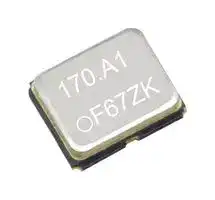
Illustrative purposes only

X1G0051810024
Oscillator, 50 MHz, 20 ppm, SMD, 2.5mm x 2mm, CMOS, SG-8101 Series
⚠️ Reference pricing provided. In case of supply shortages, we will connect you with our trusted procurement partners to ensure your project's continuity.
- Manufacturer: EPSON
- Product type: Standard Oscillators
- Frequency Nom:50MHz; Frequency Stability + / -:20ppm; Oscillator Case:SMD, 2.5mm x 2mm; Supply Voltage Nom:3.3V; Product Range:-; Operating Temperature Min:-40°C; Operating Temperatu
- SVHC: No SVHC (16-Jul-2019)
- Frequency Nom: 50MHz
- Product Range: -
- Supply Voltage Nom: 3.3V
- Frequency Stability + / -: 20ppm
- Operating Temperature Max: 105°C
- Operating Temperature Min: -40°C
- Oscillator Case / Package: SMD, 2.5mm x 2mm
- Oscillator Output Compatibility: CMOS
| Delivery and price | |
|---|---|
| Units per pack | 500 |
| Price | 1.15 € |
| Current stock | 10+ |
| Lead time | 30 days |
Datasheet

**Crystal oscillator** //—,

x0 epson conPoRarion

## CRYSTAL OSCILLATOR (Programmable) OUTPUT: CMOS

## **SG – 8101** series

- Frequency range **:** 0.67 MHz ~ 170 MHz (1 ppm Step)

- Supply voltage

   - **:** 1.62 V ~ 3.63 V

   - **:** Output enable (OE) or Standby (ST¯ ¯ )

- Function

Product Number (please contact us) **SG-8101CA: X1G00519xxxxx00 SG-8101CB: X1G00520xxxxx00 SG-8101CE: X1G00521xxxxx00 SG-8101CG: X1G00518xxxxx00**

- Frequency tolerance, operating temperature **:**

   - ±15 ppm (-40 ºC ~ +85 ºC)

   - ±20 ppm, ±50 ppm (-40 ºC ~ +105 ºC)

- Package 2.5 x 2.0, 3.2 x 2.5, 5.0 x 3.2, 7.0 x 5.0 (mm)

- PLL technology to enable short lead time

• Available field oscillator programmer “SG-Writer II”

**==> picture [177 x 7] intentionally omitted <==**

**----- Start of picture text -----**<br>
CG CE   CB   CA<br>**----- End of picture text -----**<br>


~~SE~~ Specifications (characteristics) ~~EEE EEE a eee~~ Item Symbol Specifications Conditions/Remarks Supply voltage VCC 1.80 V Typ. 2.50 V Typ. 3.30 V Typ. **-** ~~a~~ 1.62 V ~ 1.98 V 1.98 V ~ 2.20 V 2.20 V ~ 2.80 V 2.70 V ~ 3.63 V Output frequency range fO ~~a~~ 0.67 MHz ~ 170 MHz ~~df SF eG~~ Storage temperature T_stg -40 ºC ~ +125 ºC Storage as single product. ~~a~~ -40 ºC ~ +85 ºC **-** Operating temperature T_use ~~I~~ -40 ºC ~ +105 ºC **-** ~~a~~ B: ±15 × 10[-6] T_use = -40 ºC ~ +85 ºC Frequency tolerance[*1] f_tol ~~cn~~ C: ±20 × 10[-6] T_use = -40 ºC ~ +105 ºC J: ±50 × 10[-6] T_use =  -40 ºC ~ +105 ºC ~~A~~ Current consumption ICC ~~Rsee~~ 3.2 mA Max.2.7 mA T3.3 mA Max.yp. 3.4 mA Max.2.9 mA Typ. 3.5 mA Max.3.0 mA Typ. TT__use = +105 ºCuse = +25 ºC No load, fO = 20 MHz ~~ee~~ 5.5 mA Max.4.7 mA T5.8 mA Max.yp. 6.7 mA Max.5.7 mA Typ. 8.1 mA Max.6.8 mA T ~~ee~~ yp. TT__use = +105 ºCuse = +25 ºC ~~ee~~ No load, fO = 170 MHz Output disable current I_dis 3.2 mA Max. 3.2 mA Max. 3.3 mA Max. 3.5 mA Max. OE = GND, fO = 170 MHz ~~po es~~ 0.9 µ A Max. 1.0 µ A Max. 1.5 µ A Max. 2.5 µ A Max. T_use = +105 ºC Standby current I_std ST¯ ¯ = GND ~~eea~~ 0.3 µ A Typ. 0.4 µ A Typ. 0.5 µ A Typ. 1.1 µ A Typ. T_use = +25 ºC ~~ee~~ Symmetry SYM 45 % ~ 55 % 50 % VCC Level IOH/IOL Conditions [mA] Rise/Fall time VCC *A *B *C *D VOH 90 % VCC Min. Default (fO > 40 MHz), IOH -2.5 -3.5 -4.0 -5.0 Fast IOL 2.5 3.5 4.0 5.0 Output voltage -1.5 -2.0 -2.5 -3.0 Default (fO ≤ 40 MHz)[I][OH] (DC characteristics) IOL 1.5 2.0 2.5 3.0 Slow IOH -1.0 -1.5 -2.0 -2.5 VOL 10 % VCC Max. IOL 1.0 1.5 2.0 2.5 *A: 1.62 V ~ 1.98 V, *B: 1.98 V ~ 2.20 V, *C: 2.20 V ~ 2.80 V, *D: 2.70 V ~ 3.63 V ~~oe ed~~ Output load condition L_CMOS 15 pF Max. **-** VIH 70 % VCC Min. Input voltage OE or ST¯ ¯ ~~a~~ VIL 30 % VCC Max. ~~po~~ Default ~~PO——~~ 3.0 ns Max.                        fO > 40 MHz Rise and Fall tr/tf 6.0 ns Max.                        fO ≤ 40 MHz 20 % - 80 % VCC, time Fast 3.0 ns Max.                        fO = 0.67 MHz ~ 170 MHz L_CMOS = 15 pF ~~Po PY~~ Slow ~~ee~~ 10.0 ns Max.                        fO = 0.67 MHz ~ 20 MHz Disable Time t_stp 1 µ s Max.[Measured from the time OE or ST] VCC ¯ ¯ pin crosses 30 % ~~De~~ Enable Time ~~re~~ t_sta ~~GO~~ 1 µ s Max.                        Measured from the time OE pin crosses 70 % VCC ~~——~~ Resume Time ~~a~~ t_res 3 ms Max.                        Measured from the time ST¯ ¯ pin crosses 70 % VCC Start-up time t_str 3 ms Max.[Measured from the time V][CC][ reaches its rated ] minimum value, 1.62 V ~~De eG~~ Frequency aging f_aging This is included in frequency tolerance specification. +25 °C, first year ~~Re eG~~ *1 Frequency tolerance includes initial frequency tolerance, temperature variation, supply voltage variation, reflow drift, load drift and aging (+25 ºC, 1 year).

~~SSS~~ Pin description

|Pin|Name|I/O type|Function|Function|
|---|---|---|---|---|
|1|OE|Input|Output enable|High:Specifiedfrequency outputfromOUTpin|
|||||Low: Out pin islow(weakpulldown), only output driver is disabled.|
||ST<br>¯ ¯|Input|Standby|High:  Specified frequencyoutput from OUTpin|
|||||Low:  Out pin is low (weak pull down),<br>Device goes to standbymode.Supply currentreduces to theleast asI_std.|
|2|GND|Power|Ground||
|3|OUT|Output|Clock output||
|4|VCC|Power|Power supply||


**==> picture [532 x 733] intentionally omitted <==**

**----- Start of picture text -----**<br>
Crystal oscillator<br>Product Name<br>Vj: —— SEIKO EPSON CORPORATION<br>a SG-8101CG 170.000000MHz T C H P A<br>® © @ es CA: 7.0 mm x 5.0 mm   po T: 1.8 V ~ 3.3 V Typ.  0 G: -40 °C ~ +85 °C  A: Default<br>CB: 5.0 mm x 3.2 mm  H: -40 °C ~ +105 °C  B: Fast<br>@Model, po CE: 3.2 mm x 2.5 mm  ee C: Slow<br>@Package type, po | [sd]<br>CG: 2.5 mm x 2.0 mm B: 15 x 10 [-6]<br>@Frequency, ®Supply voltage, ee | eee<br>©Frequency tolerance, ©Operating temperature, PF C: 20 x 10 [-6] PF P: Output Enable<br>@Function, @Rise/Fall time ee J: 50 x 10 [-6] S: Standby<br>GO Available combination  CA: 7.0 mm x 5.0 mm CB: 5.0 mm x 3.2 mm CE: 3.2 mm x 2.5 mm CG: 2.5 mm x 2.0 mm<br>B:  C:  J:  B:  C:  J:  B:  C:  J:  B:  C:  J:<br>Frequency tolerance 15 x 10 [-6] 20 x 10 [-6] 50 x 10 [-6] 15 x 10 [-6] 20 x 10 [-6] 50 x 10 [-6] 15 x 10 [-6] 20 x 10 [-6] 50 x 10 [-6] 15 x 10 [-6] 20 x 10 [-6] 50 x 10 [-6]<br>Operating  G: -40 °C ~ +85 °C<br>Poe Te ve ff<br>temperature H: -40 °C ~ +105 °C<br>PO ee Pe te pw |e Ee | Tv<br>Ls External dimensions (Unit: mm) S,,,,,,,,,., Footprint (Recommended) (Unit: mm)<br>SG-8101CG SG-8101CG<br>2. 5+0 .15<br># 4 # 3 # 3 # 4<br>#1 # 2 # 2 09 | 08 |<br>rq<br>ol:<br>SG-8101CE SG-8101CE<br># 4  —— # 3 _ 5 _, # 4 1.4<br>i e we is loss “ul ~<br>SG-8101CB SG-8101CB<br>Y<br>lw v w‘ | : ‘ 1.34 1 2.54<br>SG-8101CA SG-8101CA<br>7,040.2 1.8<br>=<br>_f )) | S<br>lloS ] (f :<br>_ a | — — _la NY<br>°*.<br>.wl 5.08<br>**----- End of picture text -----**<br>


## **Notes:**

In order to achieve optimum jitter performance, the 0.1 µ F capacitor between VCC and GND should be placed. It is also recommended that the capacitors are placed on the device side of the PCB, as close to the device as possible and connected together with short wiring pattern.

**Crystal oscillator** ja

SEIKO EPSON CORPORATION

## rr ~~Oc~~ Specification Graph Typical supplemental specification. Unless otherwise specified T_use = 25 , L_CMOS = 15pF Current Consumption

Output disable current

Standby current

Notes:

SEIKO EPSON CORPORATION EPSON CORPORATION

**==> picture [529 x 708] intentionally omitted <==**

**----- Start of picture text -----**<br>
Crystal oscillator<br>ja SEIKO EPSON CORPORATION EPSON CORPORATION<br>| co Specification Graph Typical supplemental specification. Unless otherwise specified T_use = 25  , L_CMOS = 15pF<br>Phase Jitter RMS  Phase Jitter RMS<br>� �<br>( Integration bandwidth 12 k _ 20 MHz ) ( Integration bandwidth 1.8 M _ 20 MHz )<br>80 50<br>Vcc = 3.3 V Vcc = 3.3 V<br>Vcc = 2.5 V Vcc = 2.5 V<br>70 Vcc = 1.8 V 40 Vcc = 1.8 V<br>TO E  | | Co E<br>60 tL e o 30 Sat i e<br>50 20<br>RA, '<br>Ae See Saaa e eeee<br>40 10<br>HA Y ) Ne hene~ e e ee<br>30 TELE LEE 0 i Oe<br>0 20 40 60 80 100 120 140 160 180 0 20 40 60 80 100 120 140 160 180<br>fo (MHz) fo (MHz)<br>Period Jitter RMS<br>40 40 40<br>Vcc = 1.8 V Vcc = 2.5 V Vcc = 3.3 V<br>= Rise/Fall time = Default Rise/Fall time = Default Rise/Fall time = Default<br>30 Rise/Fall time = Fast | sd 30 i l Rise/Fall time = Fast 30 —_ Rise/Fall time = Fast |__|<br>Rise/Fall time = Slow Rise/Fall time = Slow Rise/Fall time = Slow<br>20 eo 20 jo o 20 | a<br>10 10 10<br>0 | RoSetters 0 PPSS 0 ~.<br>0 20 40 60 80 100 120 140 160 180 0 20 40 60 80 100 120 140 160 180 0 20 40 60 80 100 120 140 160 180<br>fo (MHz) fo (MHz) fo (MHz)<br>Period Jitter Peak-Peak<br>300 300 300<br>Vcc = 3.3 V 1 8 Vcc = 3.3 V 2 5 Vcc = 3.3 V<br>280 280 280<br>260 Rise/Fall time = Default 260 Rise/Fall time = Default 260 Rise/Fall time = Default<br>240 a Rise/Fall time = Fast 240 a Rise/Fall time = Fast 240 Rise/Fall time = Fast oe<br>220200 Rise/Fall time = Slow 220200 Rise/Fall time = Slow 220200 Rise/Fall time = Slow<br>180 180 180<br>160 j t = Jt] 160 7 = I ] 160 y [=] p [e]<br>140 140 140<br>120 120 120<br>100 100 100<br>80 80 80<br>60 60 60<br>40 40 40<br>20 20 20<br>0 Re | 0 So |  A 0<br>0 20 40 60 80 100 120 140 160 180 0 20 40 60 80 100 120 140 160 180 0 20 40 60 80 100 120 140 160 180<br>fo (MHz) fo (MHz) fo (MHz)<br>Cycle-to-Cycle Jitter Peak-Peak<br>200 200 200<br>Vcc = 1.8 V Vcc = 2.5 V Vcc = 3.3 V<br>180 Rise/Fall time = Default 180 Rise/Fall time = Default 180 Rise/Fall time = Default<br>160 Rise/Fall time = Fast 160 Rise/Fall time = Fast 160 Rise/Fall time = Fast<br>140 P e Rise/Fall time = Slow =]. 140 e >7 Rise/Fall time = Slow 140 0c Rise/Fall time = Slow<br>120 120 120<br>100 ha o 100 1A CCEL e e 100 o | i =Ee 1<br>80 80 80<br>60 60 60<br>40 40 40<br>20 Ae | 20 20<br>0 Ferre 0 i 0 ed en<br>0 20 40 60 80 100 120 140 160 180 0 20 40 60 80 100 120 140 160 180 0 20 40 60 80 100 120 140 160 180<br>fo (MHz) fo (MHz) fo (MHz)<br>Notes:<br>Phase Jitter-RMS (ps) Phase Jitter-RMS (ps)<br>Period Jitter RMS (ps) Period Jitter RMS (ps) Period Jitter RMS (ps)<br>Period Jitter Peak - Peak (ps) Period Jitter Peak - Peak (ps) Period Jitter Peak - Peak (ps)<br>Cycle to Cycle Jitter Peak - Peak (ps) Cycle to Cycle Jitter Peak - Peak (ps) Cycle to Cycle Jitter Peak - Peak (ps)<br>**----- End of picture text -----**<br>


**Crystal oscillator** ja

SEIKO EPSON CORPORATION

## | ~~©~~ Specification Graph Typical supplemental specification. Unless otherwise specified T_use = 25 , L_CMOS = 15pF Rise/Fall Time (fo = 20 MHz)

**==> picture [372 x 366] intentionally omitted <==**

**----- Start of picture text -----**<br>
5 Rise time  L_CMOS = 5 pF 5 Fall time  L_CMOS = 5 pF<br>4.5 Pe Tr/Tf mode = SlowTr/Tf mode = Default l 4.5 aa; Tr/Tf mode = SlowTr/Tf mode = Default l<br>4 a ee Tr/Tf mode = Fast l 4 | | Tr/Tf mode = Fast l<br>3.5 ee ee ee 3.5 ee e e<br>3 ee 3 ee<br>2.5 ee ee ee 2.5 ee eeee<br>2 ee ee ee 2 ee ee ee ee<br>1.5 ee ee ee ee 1.5 ee ee ee<br>1 i ee ee 1 e e ee ee<br>0.5 ee ee e 0.5 e e ee e<br>0 ee e ese aese e ee 0 iSS<br>1.5 2.0 2.5 3.0 3.5 1.5 2.0 2.5 3.0 3.5<br>Vcc (V) Vcc (V)<br>5 Rise time  L_CMOS = 15 pF 5 Fall time  L_CMOS = 15 pF<br>Tr/Tf mode = Slow Tr/Tf mode = Slow<br>4.54 t—_™NS Tr/Tf mode = DefaultTr/Tf mode = Fast | 4.54 tS Tr/Tf mode = DefaultTr/Tf mode = Fast |<br>3.5 _ a | N | * P| 3.5 eea ae e eeeI<br>2.53 a a ee ee eee 2.53 i eee eee<br>2 ee eeee eee e 2 i eeee ee ee e<br>1.5 ee 1.5 e e e<br>1 —_}ee ee ee 1 ee ee ee eee<br>0.5 ee | [| 0.5 ee ee ee ee<br>0 ee ee eeeeee 0 | af ff<br>1.5 2.0 2.5 3.0 3.5 1.5 2.0 2.5 3.0 3.5<br>Vcc (V) Vcc (V)<br>Notes:<br>frequency slow  default fast<br>0.67 M – 20 M  See Slow See Default See Fast<br>20 M – 40 M  -  See Default See Fast<br>40 M – 170 M  -  See Fast  See Fast<br>Rise Time(ns) Fall Time(ns)<br>Rise Time(ns) Fall Time(ns)<br>**----- End of picture text -----**<br>


## Harmonics spectrum ( fo = 20 MHz )

**==> picture [235 x 123] intentionally omitted <==**

**----- Start of picture text -----**<br>
20<br>10 Po, | J Jf | J Jf fT yy<br>0 |) 2?) @® , | |)<br>-10 Peevey ey eo<br>-20 rT TTT Ty ery yp a<br>-30 rT Te Tee ey EEE TEE TT<br>-40 Te typ di ta da ta ta a Pa<br>-50 TTT TTT TTT TTT TT TT TT<br>-60-70 TETETETTT TTTTTPAT<br>-80 FFU TTTSA aTSaPFPUPaa araTT eaeeT gy SS<br>0 40 80 120 160 200 240 280 320 360 400<br>frequency (MHz)<br>Power (dBm)<br>**----- End of picture text -----**<br>


## Harmonics comparison

Normalize to Vcc = 3.3V. Normalize to Vcc = 3.3V. Normalize to Rise/Fall time = “Fast”. [| fT

Notes:

**Crystal oscillator** ja SEIKO EPSON CORPORATION EPSON CORPORATION ~~meee~~ ESD Rating

SEIKO EPSON CORPORATION EPSON CORPORATION

|Test items|Breakdown voltage|
|---|---|
|Human BodyModel(HBM)|2000V|
|Machine Model (MM)|250V|
|ChargedDeviceModel(CDM)|750V|


**==> picture [526 x 318] intentionally omitted <==**

**----- Start of picture text -----**<br>
ne Device Marking (Standard specification)<br>Model Factory Programmed Part Marking Field Programmable Part Marking<br>(Blank Samples)<br>Frequency Product code Product code<br>170.A1 Al<br>SG-8101CG<br>(OA2“S30 SK | OA23DK |<br>ipin mark Lot No. ipinmark Lot No.<br>Frequency (—\ Product co de =) Product co de<br>| 170.0A1 | Al<br>SG-8101CE<br>|  o A23DK o A23DK<br>1pin mark —— Lot No. 1pin mark Lot No.<br>Frequency (- ~} Product co de a >] Product co de<br>SG-8101CB  | 170. 0 41 | ) AL)<br>o A23DK | o A23DK |<br>tpin mark — — Lot No. ipin mark —————— Lot No.<br>Frequency ~)| Product co de ~ ~y] Product co de<br>SG-8101CA<br>/170.00 a 1 ) { Al |<br>**----- End of picture text -----**<br>


~~ee~~ Simulation Model

- IBIS Model is available upon request. Please contact us. Information Required: Oscillator operating condition (i.e. Power Supply, Rise/Fall Time, Temperature)

**Crystal oscillator** ja SEIKO EPSON CORPORATION EPSON CORPORATION ~~a~~ Device Material & Environmental Information

SEIKO EPSON CORPORATION EPSON CORPORATION

|Model<br>~~ee~~|Package<br>Dimensions<br>~~es~~|# of<br>Pins<br>~~rs re~~|Reference<br>Weight<br>(Typ.)<br>~~re~~|Terminal<br>Material<br>~~rs~~|Terminal<br>Plating<br>~~Ds~~|Complies<br>With EU<br>RoHS<br>~~Ds~~|Pb<br>Free<br>~~(UD~~|MSL<br>Rating|Peak<br>Temp.<br>(Max)|
|---|---|---|---|---|---|---|---|---|---|
|SG-8101CG<br>~~ee~~<br>~~ee~~|2.5 x 2.0 x 0.7 mm<br>~~es~~<br>~~es~~|4<br>~~rs re~~<br>~~rs re~~|13 mg<br>~~re~~<br>~~re~~|W<br>~~rs~~<br>~~rs~~|Au<br>~~Ds~~<br>~~Ds~~|Yes<br>~~Ds~~<br>~~Ds~~|Yes<br>~~(UD~~<br>~~(UD~~|1|260°C|
|SG-8101CE<br>~~ee~~<br>~~ee~~<br>~~ee~~|3.2 x 2.5 x 1.0 mm<br>~~es ~~<br>~~es~~<br>~~es~~|4<br> ~~rs re~~<br>~~rs re~~<br>~~rs re~~|25 mg<br>~~re~~<br>~~re~~<br>~~re~~|W<br>~~rs ~~<br>~~rs~~<br>~~rs~~|Au<br> ~~Ds~~<br>~~Ds~~<br>~~Ds~~|Yes<br>~~Ds~~<br>~~Ds~~<br>~~Ds~~|Yes<br>~~(UD~~<br>~~(UD~~<br>~~(UD~~|1|260°C|
|SG-8101CB<br>~~ee~~<br>~~ee~~<br>~~ee~~|5.0 x 3.2 x 1.1 mm<br>~~es ~~<br>~~es~~<br>~~rr~~|4<br> ~~rs re~~<br>~~rs re~~<br>~~rs~~|51 mg<br>~~re~~<br>~~re~~<br>~~rs~~|W<br>~~rs ~~<br>~~rs~~<br>~~rs~~|Au<br> ~~Ds~~<br>~~Ds~~<br>~~rr~~|Yes<br>~~Ds~~<br>~~Ds~~<br>~~rs~~|Yes<br>~~(UD~~<br>~~(UD~~<br>~~(~~|1|260°C|
|SG-8101CA<br>~~ee~~<br>~~ee~~|7.0 x 5.0 x 1.3 mm<br>~~es ~~<br>~~rr~~|4<br> ~~rs re~~<br>~~rs~~|143 mg<br>~~re~~<br>~~rs~~|W<br>~~rs ~~<br>~~rs~~|Au<br> ~~Ds~~<br>~~rr~~|Yes<br>~~Ds~~<br>~~rs~~|Yes<br>~~(UD~~<br>~~(~~|1|260°C|


SMD products Reflow profile(example)

The availability of the heat resistance for reflow conditions of JEDEC-STD-020D.01 is judged individually. Please inquire.

**==> picture [505 x 410] intentionally omitted <==**

**----- Start of picture text -----**<br>
Temperature [ °C ]<br>300 TP ; +260 °C  [OVER]<br>         +255 °C<br>tp ; at least 30 s<br>250 Ramp-up rate<br>TL       ; +217 °C  +3 °C/s Max.  A tL Ramp-down rate<br>Ts max  ; +200 °C  -6 °C/s Max.<br>200 60 s to 150<br>Ts min ; +150 °C  ts<br>150<br>60 s to 120 s<br>100<br>50<br>Time +25 °C to Peak<br>+t  ——<br>oN.<br>0 60 120 180 240 300 360 420 480 540 600 660 720 780<br>Time [ s ]<br>Pb<br>Pb free.<br>e@ Complies with EU RoHS directive.<br>About the products without the Pb-free mark.<br>Contains Pb in products exempted by EU RoHS directive.<br>Compliant<br>(Contains Pb in sealing glass, high melting temperature type solder or other.)<br>OE Standard Packing Specification  _____________<br>SMD products are packed in the shipping carton as below table in accordance with taping standards EIA-481 and IEC-60286  ~ 200r1.2 :<br>of feed<br>\_/ $15 |_|,40 __==_——-_—«CODDirection<br>PaiPari<br>aXie [<\] a ORfnlieicarce0D OO 00000 °<br>Marking  Marking<br>**----- End of picture text -----**<br>


## ~~at~~ Standard Packing Quantity & Dimension(Unit mm)

|Model<br>~~ee ee~~|Quantity<br>(pcs/Reel)<br>~~ee~~|Reel Dimension|Reel Dimension|Reel Dimension|Career Tape Dimension|Career Tape Dimension|Career Tape Dimension|Career Tape Dimension|Direction of<br>Feed (L= Left<br>Direction)|
|---|---|---|---|---|---|---|---|---|---|
|||a<br>~~rs~~|b<br>~~rs~~|W<br>~~rs~~|A<br>~~(OD~~|B<br>~~(OD~~|C<br>~~(OD~~|D<br>~~I~~||
|SG-8101CG<br>~~ee ee~~<br>~~ee ee~~|3000<br>~~ee~~<br>~~ee~~|Φ180<br>~~rs~~<br>~~rs~~|Φ60<br>~~rs~~<br>~~rs~~|9<br>~~rs~~<br>~~rs~~|4<br>~~(OD~~<br>~~(OD~~|5.25<br>~~(OD~~<br>~~(OD~~|8<br>~~(OD~~<br>~~(OD~~|1.15<br>~~I~~<br>~~I~~|L|
|SG-8101CE<br>~~ee ee~~<br>~~ee ee~~<br>~~ee ee~~|2000<br>~~ee~~<br>~~ee~~<br>~~ee~~|Φ180<br>~~rs~~<br>~~rs~~<br>~~rs~~|Φ60<br>~~rs~~<br>~~rs~~<br>~~rs~~|9<br>~~rs~~<br>~~rs~~<br>~~rs~~|4<br>~~(OD~~<br>~~(OD~~<br>~~(OD~~|5.25<br>~~(OD~~<br>~~(OD~~<br>~~(OD~~|8<br>~~(OD ~~<br>~~(OD~~<br>~~(OD~~|1.4<br> ~~I~~<br>~~I~~<br>~~I~~|L|
|SG-8101CB<br>~~ee ee~~<br>~~ee ee~~<br>~~a~~|1000<br>~~ee~~<br>~~ee~~<br>~~es~~|Φ180<br>~~rs~~<br>~~rs~~<br>~~es~~|Φ60<br>~~rs~~<br>~~rs~~<br>~~rs~~|13<br>~~rs~~<br>~~rs~~<br>~~rd~~|8<br>~~(OD~~<br>~~(OD~~<br>~~rd~~|7.25<br>~~(OD~~<br>~~(OD~~<br>~~OY~~|12<br>~~(OD ~~<br>~~(OD~~<br>~~(OD~~|1.4<br> ~~I~~<br>~~I~~<br>~~I~~|L|
|SG-8101CA<br>~~ee ee~~<br>~~a~~|1000<br>~~ee~~<br>~~es~~|Φ254<br>~~rs~~<br>~~es~~|Φ100<br>~~rs~~<br>~~rs~~|17.5<br>~~rs~~<br>~~rd~~|8<br>~~(OD~~<br>~~rd~~|9.25<br>~~(OD~~<br>~~OY~~|16<br>~~(OD ~~<br>~~(OD~~|2.3<br> ~~I~~<br>~~I~~|L|


## **PROMOTION OF ENVIRONMENTAL MANAGEMENT SYSTEM CONFORMING TO INTERNATIONAL STANDARDS**

At Seiko Epson, all environmental initiatives operate under the Plan-Do-Check-Action (PDCA) cycle designed to achieve continuous improvements. The environmental management system (EMS) operates under the ISO 14001 environmental management standard. All of our major manufacturing and non-manufacturing sites, in Japan and overseas, completed the acquisition of ISO 14001 certification.

## **WORKING FOR HIGH QUALITY**

In order provide high quality and reliable products and services than meet customer needs,

Seiko Epson made early efforts towards obtaining ISO9000 series certification and has acquired ISO9001 for all business establishments in Japan and abroad. We have also acquired ISO/TS 16949 certification that is requested strongly by major automotive manufacturers as standard.

ISO 14000 is an international standard for environmental management that was established by the International Standards Organization in 1996 against the background of growing concern regarding global warming, destruction of the ozone layer, and global deforestation. wit/£' ISO/TS16949 is the international standard that added the sector-specific supplemental requirements for automotive industry based on ISO9001.

**► Explanation of the mark that are using it for the catalog**

► Pb free.

- Complies with EU RoHS directive.

- *About the products without the Pb-free mark. Contains Pb in products exempted by EU RoHS directive. (Contains Pb in sealing glass, high melting temperature type solder or other.)

- Designed for automotive applications such as Car Multimedia, Body Electronics, Remote Keyless Entry etc.

- ► Designed for automotive applications related to driving safety (Engine Control Unit, Air Bag, ESC etc ).

## Notice

- This material is subject to change without notice.

- Any part of this material may not be reproduced or duplicated in any form or any means without the written permission of Seiko Epson.

- • The information about applied data, circuitry, software, usage, etc. written in this material is intended for reference only. Seiko Epson does not assume any liability for the occurrence of customer damage or infringing on any patent or copyright of a third party. This material does not authorize the licensing for any patent or intellectual copyrights.

- When exporting the products or technology described in this material, you should comply with the applicable export control laws and regulations and follow the procedures required by such laws and regulations.

- You are requested not to use the products (and any technical information furnished, if any) for the development and/or manufacture of weapon of mass destruction or for other military purposes. You are also requested that you would not make the products available to any third party who may use the products for such prohibited purposes.

- These products are intended for general use in electronic equipment. When using them in specific applications that require extremely high reliability, such as the applications stated below, you must obtain permission from Seiko Epson in advance.

   - / Space equipment (artificial satellites, rockets, etc.) / Transportation vehicles and related (automobiles, aircraft, trains, vessels, etc.) / Medical instruments to sustain life / Submarine transmitters / Power stations and related / Fire work equipment and security equipment / traffic control equipment / and others requiring equivalent reliability.

- All brands or product names mentioned herein are trademarks and/or registered trademarks of their respective.

Seiko Epson Corporation
Updated at April 25, 2026
About Novapart
Novapart is a B2B electronic component broker specialising in stock shortages and cost reduction. We source hard-to-find parts and identify compliant alternatives across a catalogue of 410,000+ components from 500+ manufacturers.
Learn more →Stock Shortage Specialist
When a component is unavailable, discontinued or has an unacceptable lead time, we tap into our network of vetted European and Asian distributors to source what you need — without compromising on quality or traceability.
Request a quote →Compliant Alternatives
We identify pin-to-pin, electrically equivalent substitutes that meet the same certifications (RoHS, AEC-Q100, REACH) as your original specification — validated against datasheets, not just part numbers. Often at a lower cost.
BOM Analysis service →