
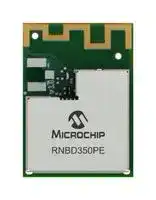


WILCS02UE-I/100
Wi-Fi Module, U.FL Connector, Link Controller, 2.4 GHz, ADC, DAC, GPIO, PTA, SDIO, SPI, UART
- Manufacturer: MICROCHIP
- Product type:
- SVHC: No SVHC (04-Feb-2026)
- Frequency RF: 2.4GHz
- Product Range: WILCS02 Series
- Module Interface: ADC, DAC, GPIO, PTA, SDIO, SPI, UART
- Module Applications: Smart Factories/CCTV/Lighting/Smart Locks/Computing/Wi-Fi Dongles/Prtcl Bridging/IoT/Remote Control
| Delivery and price | |
|---|---|
| Units per pack | 490 |
| Price | 3.18 € |
| Current stock | 100+ |
| Lead time | 30 days |

## **WILCS02 Family Data Sheet WILCS02IC and WILCS02 Family**

## **Introduction**

The WILCS02IC is a single chip 2.4 GHz and IEEE[®] 802.11b/g/n-compliant solution with integrated High Power Amplifier (HPA), Low-Noise Amplifier (LNA) and Radio Frequency (RF) switches for TX/RX control. It is a Link Controller IC with a hardware-based security accelerator.

The WILCS02 is a fully RF and Wi-Fi Alliance[™] -certified wireless module based on the WILCS02IC. The device provides Secure Digital Input Output (SDIO) or Serial Peripheral Interface (SPI) to interface with the host controller.

The WILCS02IC and WILCS02 Module operates at a single supply voltage VDD and VDDIO (3.3V typical).

The WILCS02 Module is available with either an on-board Printed Circuit Board (PCB) antenna or U.FL connector for an external antenna.

**Note:** The WILCS02IC must be programmed with the appropriate Link Controller firmware version to meet the specification described in the data sheet.

## **WILCS02IC and WILCS02 Module Features**

- Compliant with IEEE[®] 802.11b/g/n Single Spatial Stream of 20 MHz Channel Bandwidth

- Protected Management Frame (PMF) Handled in Hardware, WPA3 Support

- Integrated Power Amplifier (PA), TX/RX Switch and Power Management

- Internal Flash Memory (Up to 2 MB) to Store Firmware

- Immutable Secure Boot with Hardware Root of Trust

- Supports Host-Assisted Firmware Side-Loading

- Hardware-Based IEEE 802.15.2 Compliant Three-Wire Packet Traffic Arbitration (PTA) Interface for Wi-Fi[®] / Bluetooth[®] Coexistence

- SDIO/SPI Host Interface on a Supported Linux Host System

- Secure Device Firmware Upgrade (DFU)

## **Security**

- Hardware-Accelerated Security Modes (CryptoMaster) with Built-in Direct Memory Access (DMA) Support

   - Encryption engines (Advanced Encryption Standard (AES) and Triple Data Encryption Standard (TDES) with different NIST modes of operation):

      - Modes – Electronic Code Book (ECB), Cypher Block Chaining (CBC), Counter Mode (CTR), Cypher Feedback Mode (CFB) and Output Feedback Mode (OFB)

      - AES key sizes: 128b, 192b and 256b

   - Authentication engines:

      - SHA-1 and SHA-2

      - AES GCM (Galois/Counter mode)

      - HMAC and AES CMAC

   - On-chip oscillator for Non Deterministic Random Number Generator (NDRNG)

Preliminary Data Sheet © 2024 Microchip Technology Inc. and its subsidiaries

DS70005557B - 1

**WILCS02IC and WILCS02 Family**

- Multi-Purpose Public Key Crypto Engine Supporting the Following Algorithms:

   - Elliptic-Curve Cryptography (ECC)/ECDH/ECDSA with standard NIST prime curves up to 521-bit, Curve25519 and Ed25519

   - RSA up to 2048-bit keys

## **Operating Conditions**

- **WILCS02IC**

Operating Voltage VDD, VDDIO: 3.0-3.6V (3.3V Typical)

Operating Temperature: -40°C to 105°C

- **WILCS02 Module**

Operating Voltage VDD, VDDIO: 3.0-3.6V (3.3V Typical) Operating Temperature: -40°C to 85°C

## **Module Variants**

- PCB Antenna:

   - WILCS02PE

- U.FL Connector for External Antenna:

   - WILCS02UE

## **Package**

- **WILCS02IC**

48-pin Very Thin Quad Flat No-lead (VQFN)

Size: 7 mm x 7 mm x 0.9 mm

- **WILCS02 Module**

28-pin Surface Mount Device (SMD) Package with RF Shield on Top

Size: 21.7 mm x 14.7 mm x 2.1 mm

## **Applications**

- Smart Factories/Control Devices

- Security Systems, CCTV

- Smart Homes/Lighting, Smart Locks

- Computing, Wi-Fi Dongles, Protocol Bridging

- Remote Control

- Wearable Smart Devices

- Industrial Control

## **Certifications**

- WILCS02 Module Certified to FCC, ISED, UKCA and CE Radio Regulations and Wi-Fi Alliance[™]

- RoHS and REACH Compliant

## **Note:**

1. For more details about the latest supported features and current Linux driver release notes for all available features, refer to the WILCS02 Application Developer's Guide

Preliminary Data Sheet © 2024 Microchip Technology Inc. and its subsidiaries

DS70005557B - 2

**WILCS02IC and WILCS02 Family**

## **Table of Contents**

|**Table of Contents**|**Table of Contents**|
|---|---|
|Introduction...........................................................................................................................................................................1||
|WILCS02IC and WILCS02 Module Features........................................................................................................................1||
|1.|Ordering Information................................................................................................................................................... 4|
||1.1.<br>WILCS02IC Ordering Information.....................................................................................................................4|
||1.2.<br>WILCS02 Module Ordering Information..........................................................................................................5|
|2.|Device Overview............................................................................................................................................................ 6|
||2.1.<br>Pin Details of WILCS02IC................................................................................................................................... 7|
||2.2.<br>Pin Details of WILCS02 Module...................................................................................................................... 11|
||2.3.<br>Basic Connection Requirement......................................................................................................................14|
||2.4.<br>WILCS02 Module Placement Guidelines....................................................................................................... 16|
||2.5.<br>WILCS02 Module Routing Guidelines............................................................................................................ 18|
||2.6.<br>WILCS02 Module RF Considerations............................................................................................................. 19|
||2.7.<br>WILCS02 Module Antenna Considerations...................................................................................................19|
||2.8.<br>WILCS02 Module Refow Profle Information............................................................................................... 26|
||2.9.<br>WILCS02 Module Assembly Considerations.................................................................................................27|
|3.|Electrical Specifcations.............................................................................................................................................. 28|
||3.1.<br>WILCS02IC Electrical Specifcations............................................................................................................... 28|
||3.2.<br>WILCS02 Module Electrical Specifcations.....................................................................................................42|
|4.|Packaging Information............................................................................................................................................... 52|
||4.1.<br>WILCS02IC Packaging Information.................................................................................................................52|
||4.2.<br>WILCS02 Module Packaging Information......................................................................................................56|
|5.|Appendix A: Regulatory Approval............................................................................................................................. 60|
||5.1.<br>United States.................................................................................................................................................... 60|
||5.2.<br>Canada.............................................................................................................................................................. 62|
||5.3.<br>Europe...............................................................................................................................................................63|
||5.4.<br>UKCA (UK Conformity Assessed)....................................................................................................................64|
||5.5.<br>Other Regulatory Information........................................................................................................................65|
|6.|Appendix B: Acronyms and Abbreviations...............................................................................................................66|
|7.|Document Revision History....................................................................................................................................... 68|
|Microchip Information....................................................................................................................................................... 71||
||The Microchip Website............................................................................................................................................... 71|
||Product Change Notifcation Service........................................................................................................................ 71|
||Customer Support.......................................................................................................................................................71|
||Microchip Devices Code Protection Feature............................................................................................................71|
||Legal Notice..................................................................................................................................................................71|
||Trademarks..................................................................................................................................................................72|
||Quality Management System.....................................................................................................................................73|
||Worldwide Sales and Service..................................................................................................................................... 74|


Preliminary Data Sheet

DS70005557B - 3

© 2024 Microchip Technology Inc. and its subsidiaries

**WILCS02IC and WILCS02 Family Ordering Information**

## **1. Ordering Information**

This chapter provides the ordering information of the WILCS02IC and the WILCS02 Modules.

## **1.1 WILCS02IC Ordering Information**

This section provides the ordering information of the WILCS02IC.

**Table 1-1.** WILCS02IC Ordering Details

|SoC Name|Pin and Package|Description|Ordering Code|
|---|---|---|---|
|WILCS02IC|48-pin VQFN|32-bit Link Controller IC with Wireless Local Area Network (WLAN)<br>|WILCS02IC-I/ZZX|
||(7 mm x 7 mm x 0.9 mm)|connectivity and hardware-based security accelerator with 2 MB<br>stacked Flash|WILCS02ICT-I/ZZX|
||||WILCS02IC-V/ZZX|
||||WILCS02ICT-V/ZZX|


The following figure illustrates the details of the WILCS02IC ordering information.

**Figure 1-1.** WILCS02IC Ordering Information

**==> picture [403 x 111] intentionally omitted <==**

**----- Start of picture text -----**<br>
WI LC S 02 IC T - I/V /ZZX<br>Wi-Fi [®]<br>Link Controller<br>Stacked Flash<br>**----- End of picture text -----**<br>


Flash Memory Size 02 = 2 MB Flash

Chip

Packing **(1)** T = Tape & Reel

Temperature Range I = Industrial (-40°C to 85°C) V = Various (-40°C to 105°C) Package Code

## **Notes:**

1. By default, the WILCS02IC comes with Tray packing

2. The WILCS02IC must be programmed with the appropriate Link Controller firmware version to meet the specification described in the data sheet.

Preliminary Data Sheet © 2024 Microchip Technology Inc. and its subsidiaries

DS70005557B - 4

**WILCS02IC and WILCS02 Family Ordering Information**

## **1.2 WILCS02 Module Ordering Information**

This chapter provides the ordering information of the WILCS02 Module.

**Table 1-2.** WILCS02 Module Ordering Details

|Module Name|Description|Ordering Code|
|---|---|---|
|WILCS02PE|Wi-Fi®Link Controller module with PCB Antenna|WILCS02PE-I/XXX|
|WILCS02UE|Wi-Fi Link Controller module with U.FL connector for external Antenna|WILCS02UE-I/XXX|


The following figure illustrates the details of the WILCS02 Module ordering information.

**Figure 1-2.** WILCS02 Module Ordering Information

**==> picture [458 x 269] intentionally omitted <==**

**----- Start of picture text -----**<br>
WI LC S 02 P/U E T -I /XXX<br>Wi-Fi [®]<br>Link Controller<br>Stacked Flash<br>Flash Memory Size<br>02 = 2 MB Flash<br>Antenna<br>    P = PCB Antenna<br>U = U.FL Connector<br>Encryption<br>E – No Encryption<br>Packing (1)<br>T = Tape & Reel<br>Temperature Range<br>I = Industrial (-40°C to 85°C)<br>Firmware Version<br>**----- End of picture text -----**<br>


## **Note:**

1. By default, the WILCS02 Module comes with Tray packing

Preliminary Data Sheet © 2024 Microchip Technology Inc. and its subsidiaries

DS70005557B - 5

**WILCS02IC and WILCS02 Family Device Overview**

## **2. Device Overview**

The WILCS02IC is a single chip 2.4 GHz and IEEE[®] 802.11b/g/n-compliant solution with integrated - high-power PA, LNA and RF switches for TX/RX control. The WILCS02 is a fully RF and Wi-Fi Alliance[™] certified module based on WILCS02IC available with the following antenna variants:

- PCB antenna (WILCS02PE)

- U.FL connector (WILCS02UE) for external antenna

The following figure illustrates the WILCS02IC and WILCS02 Module block diagram and various peripherals supported by these devices.

**Figure 2-1.** WILCS02 Module Block Diagram

**==> picture [458 x 197] intentionally omitted <==**

**----- Start of picture text -----**<br>
MCLR WILCS02 Module<br>SDIO/SPI VDD, VDDIO 40 MHz PCB Antenna<br>           or<br>UART2_TX  SDIO/SPI, PTA WILCS02IC U.FL Connector<br>(Debug Log) PMU POSC<br>Interfaces<br>PTA/RTCC<br>VDD<br>CRYPTO FLASHMemoryRAM CPU WLANMAC BasebandPhy ADC/DAC RF RF MatchingCircuit<br>VDDIO<br>DFU_RX/STRAP1<br>System Bus<br>DFU_TX/STRAP2<br>INTOUT<br>**----- End of picture text -----**<br>


Preliminary Data Sheet © 2024 Microchip Technology Inc. and its subsidiaries

DS70005557B - 6

**WILCS02IC and WILCS02 Family Device Overview**

## **2.1 Pin Details of WILCS02IC**

This section provides details on pin diagrams and the pinout table of WILCS02IC.

**Figure 2-2.** WILCS02IC Pin Diagram

**==> picture [304 x 320] intentionally omitted <==**

**----- Start of picture text -----**<br>
48 47 46 45 44 43 42 41 40 39 38 37<br>PMU_VDDIO/PMU_VDDC 1 36 MCLR<br>VDD15 2 35 DFU_TX/STRAP2<br>SD_CMD/SCK1 3 WILCS02IC 34 DFU_RX/STRAP1<br>SD_CLK/UART1_RX 4 33 MSB_EXTRA_48K<br>SD_DATA0/SDO1 5 54 32 BB_VDD15<br>SD_DATA1/CS1 6 31 TXR_UMX_VDD15<br>VDDIO 7 49(1) 30 TXR_PPA_VDD33<br>SD_DATA2/SDI1 8 29 TXR_HPA_VDD33<br>SD_DATA3/UART1_TX 9 28 TXR_HPA_VDD33<br>INTOUT 10 27 TRS_RF<br>UART2_TX 11 26 RXR_LNA1_VDD15<br>Reserved 12 25 RXR_LNA2_VDD15<br>13 14 15 16 17 18 19 20 21 22 23 24<br>PMU_BK_LX PMU_VDDP PMU_MLDO_OUT VDD33 Reserved PTA_WLAN_ACTIVE PTA_BT_PRIO VDD33 RTCC_OSC_IN/PTA_BT_ACTIVE RTCC_OSC_OUT Reserved AVDD<br>Reserved VDD33 SPI_VDD15 AFE_VDD15 XTL_VDD15 XTL_IN XTL_OUT SYN_SD_VDD15 SYN_PLL_VDD15 SYN_VCO_VDD15 SPI_FE_VDD15 RXR_RIQ_VDD15<br>**----- End of picture text -----**<br>


## **Note:**

1. Thermal Ground Pad is located on the opposite side (bottom view).

**Table 2-1.** WILCS02IC Pinout Table

|Pin Number|Pin Name|Pin Type|Description|
|---|---|---|---|
|1|PMU_VDDIO/ PMU_VDDC|P|Input power supply to the on-chip PMU I/O and PMU Core<br>section (3.0-3.6V, 3.3V typical)|
|2|VDD15|P|1.5V input supply voltage<br>Connect to 1.5V on-chip PMU output|
|3|SD_CMD/SCK1|I|SDIO, Command<br>Connect to the SDIO command of the host device|
||||SPI1, Serial Clock<br>Connect to the SPI Clock of the host device|
|4|SD_CLK/UART1_RX(5)|I|SDIO, Clock<br>Connect to the SDIO clock of the host device|
||||Used for external antenna calibration<br>Connect this signal to a test point or a pin header|


Preliminary Data Sheet © 2024 Microchip Technology Inc. and its subsidiaries

DS70005557B - 7

**WILCS02IC and WILCS02 Family Device Overview**

|...........continued|...........continued|||
|---|---|---|---|
|Pin Number|Pin Name|Pin Type|Description|
|5|SD_DATA0/SDO1|I/O|SDIO, Data0<br>Connect to the SDIO data0 of the host device|
|||O|SPI1, Serial Data Out<br>Connect to the Serial Data In of the host device|
|6|SD_DATA1/<br>CS1|I/O|SDIO Data 1<br>Connect to the SDIO data1 of the host device|
|||I|SPI1 Chip Select (Active-low)<br>Connect to the Chip Select of the host device|
|7|VDDIO|P|Input supply voltage to I/O Port (3.0-3.6V, 3.3V typical)|
|8|SD_DATA2/SDI1|I|SDIO, Data 2<br>Connect to the SDIO data2 of the host device|
||||SPI1, Serial Data In<br>Connect to Serial Data Out of the host device|
|9|SD_DATA3/UART1_TX(5)|I/O|SDIO Data 3<br>Connect to the SDIO data3 of the host device|
|||O|Used for external antenna calibration<br>Connect this signal to a test point or a pin header|
|10|INTOUT|O|Interrupt request (Active-low) from the Wi-Fi®device|
|11|UART2_TX|O|UART2 Transmit signal to print the frmware debug log|
|12|Reserved|I/O|Reserved pin, do not connect|
|13|Reserved|I/O|Reserved pin, do not connect|
|14|VDD33|P|Input supply voltage for the Main Power Domain (3.0-3.6V,<br>3.3V typical)|
|15|SPI_VDD15|P|1.5V input supply voltage to the RF internal SPI logic block<br>Connect to 1.5V on-chip PMU output|
|16|AFE_VDD15|P|1.5V input supply voltage to RF Analog Front-End<br>Connect to 1.5V on-chip PMU output|
|17|XTL_VDD15|P|1.5V input supply voltage to primary oscillator section<br>Connect to 1.5V on-chip PMU output|
|18|XTL_IN|I|40 MHz primary oscillator crystal input|
|19|XTL_OUT|O|40 MHz primary oscillator crystal output|
|20|SYN_SD_VDD15|P|1.5V input supply voltage to RF Synthesizer/SD<br>Connect to 1.5V on-chip PMU output|
|21|SYN_PLL_VDD15|P|1.5V Input supply voltage to RF Synthesizer/PLL<br>Connect to 1.5V on-chip PMU output|
|22|SYN_VCO_VDD15|P|1.5V input supply voltage to RF Synthesizer/VCO<br>Connect to 1.5V on-chip PMU output|
|23|SPI_FE_VDD15|P|1.5V input supply voltage to the RFIP Front-End and internal<br>SPI logic block<br>Connect to 1.5V on-chip PMU output|
|24|RXR_RIQ_VDD15|P|1.5V input supply voltage to RF IQ Mixer/RXR<br>Connect to 1.5V on-chip PMU output|
|25|RXR_LNA2_VDD15|P|1.5V input supply voltage to LNA stage-2<br>Connect to 1.5V on-chip PMU output|


Preliminary Data Sheet © 2024 Microchip Technology Inc. and its subsidiaries

DS70005557B - 8

**WILCS02IC and WILCS02 Family Device Overview**

|...........continued|...........continued|...........continued||
|---|---|---|---|
|Pin Number|Pin Name|Pin Type|Description|
|26|RXR_LNA1_VDD15|P|1.5V input supply voltage to LNA stage-1<br>Connect to 1.5V on-chip PMU output|
|27|TRS_RF|I/O|RF transmit/receive|
|28|TXR_HPA_VDD33|P|Input power supply to High-Power Amplifer (HPA) on the<br>|
|29|TXR_HPA_VDD33|P|Transmitter (3.0-3.6V, 3.3V typical)|
|30|TXR_PPA_VDD33|P|Input power supply to Pre-Power Amplifer (PPA) on the<br>Transmitter (3.0-3.6V, 3.3V typical)|
|31|TXR_UMX_VDD15|P|1.5V input supply voltage to RF Upconvertor Mixer/TXR<br>Connect to 1.5V on-chip PMU output|
|32|BB_VDD15|P|1.5V input supply voltage to RF Base Band section<br>Connect to 1.5V on-chip PMU output|
|33|MSB_EXTRA_48K|O|RF calibration resistor, connect a pull-down resistor of 48.7K<br>with 1% tolerance|
|34|DFU_RX/STRAP1|I/O|Device Firmware Update, receive signal|
||||Host interface confguration strapping1 pin. Connect to a<br>pulled-low resistor of 100K for the SDIO interface or pulled-<br>high resistor of 10K for the SPI.|
|35|DFU_TX/STRAP2|I/O|Device Firmware Update, transmit signal|
||||Host interface confguration strapping2 pin. Connect to a<br>pulled-high resistor of 10K for future upgrades.|
|36|MCLR|I|Master Clear Reset Input (Active low)|
|37|AVDD|P|Input power supply to Analog Block (3.0-3.6V, 3.3V typical)|
|38|Reserved(6)|I/O|Reserved pin<br>Connect to an I/O pin (tri-stated) of a host device or to an<br>external switch for future use.|
|39|RTCC_OSC_OUT(4)|O|32.768 KHz RTCC oscillator output|
|40|RTCC_OSC_IN/<br>|I|32.768 KHz RTCC Oscillator input|
||PTA_BT_ACTIVE(3)(4)||PTA interface, Bluetooth®Coexistence device active indication<br>input to WILCS02IC|
|41|VDD33|P|Input supply voltage for the Main Power Domain (3.0-3.6V,<br>3.3V typical)|
|42|PTA_BT_PRIO|I|PTA interface, Bluetooth Coexistence device priority<br>indication input to WILCS02IC.|
|43|PTA_WLAN_ACTIVE|O|PTA interface, WILCS02IC WLAN active indication output to<br>Bluetooth Coexistence device|
|44|Reserved|I/O|Reserved pin<br>Do not connect.|
|45|VDD33|P|Input supply voltage for the Main Power Domain (3.0-3.6V,<br>3.3V typical)|
|46|PMU_MLDO_OUT(2)|P|1.5V output of on-chip PMU MLDO|
|47|PMU_VDDP|P|Input power supply to the on-chip PMU (3.0-3.6V, 3.3V typical)|
|48|PMU_BK_LX|P|1.5V output of on-chip PMU Buck Regulator<br>Connect to an external LC flter (L = 4.7 uH and C = 10 uF)|
|49|GND|P|Thermal ground paddle|


Preliminary Data Sheet © 2024 Microchip Technology Inc. and its subsidiaries

DS70005557B - 9

**WILCS02IC and WILCS02 Family Device Overview**

|...........continued|...........continued|...........continued|...........continued|
|---|---|---|---|
|Pin Number|Pin Name|Pin Type|Description|
|**Notes:**<br>1.<br>Refer to the reference design package for exact pin mapping and signal connection.<br>2.<br>Do not connect any signal to source the voltage as this is for internal purposes only.<br>3.<br>The WILCS02IC can support either RTCC_OSC_IN or PTA_BT_ACTIVE functionality at a time, so either RTCC or PTA feature<br>can be used.<br>4.<br>Current frmware does not support the Real Time Clock Calendar (RTCC) Oscillator function; it is recommended to have<br>an option to mount the RTCC Oscillator in the design to upgrade with the future version of frmware releases.<br>5.<br>For more details, refer to the WILCS02 Module External Antenna Calibration Guide (DS50003751).<br>6.<br>Do not leave this pin unconnected. Follow as described in the Pin Description column for future upgrade.||||


Preliminary Data Sheet © 2024 Microchip Technology Inc. and its subsidiaries

DS70005557B - 10

**WILCS02IC and WILCS02 Family Device Overview**

## **2.2 Pin Details of WILCS02 Module**

This section provides details on pin diagrams and the pinout table of the WILCS02 Module.

**Figure 2-3.** WILCS02 Module Pin Diagram

**==> picture [446 x 518] intentionally omitted <==**

**----- Start of picture text -----**<br>
9 GND<br>8 NC<br>WILCS02<br>DFU_RX/Strap1 10 7 Reserved<br>Reserved 11 6 PTA_BT_PRIO<br>GND 12<br>INTOUT 13 5 PTA_WLAN_ACTIVE<br>SD_DATA3/UART1_TX 14<br>SD_DATA2/SDI1 15<br>SD_DATA1/CS1 16<br>SD_DATA0/SDO1 17 29 4 MCLR<br>SD_CMD/SCK1 18 3 Reserved<br>SD_CLK/UART1_RX 19 2 Reserved<br>1 NC<br>20 21 22 23 24 25 26 27 28<br>VDD RTCC_OSC_IN/PTA_BT_ACTIVE RTCC_OSC_OUT VDDIO TP NC DFU_TX/Starp2 UART2_TX GND<br>**----- End of picture text -----**<br>


## **Table 2-2. WILCS02 Module Pinout Table**

|Pin Number|Pin Name|Pin Type|Pin Description|
|---|---|---|---|
|1|NC|—|No connection|


Preliminary Data Sheet © 2024 Microchip Technology Inc. and its subsidiaries

DS70005557B - 11

**WILCS02IC and WILCS02 Family Device Overview**

|...........continued|...........continued|||
|---|---|---|---|
|Pin Number|Pin Name|Pin Type|Pin Description|
|2|Reserved|I/O|Reserved pin<br>Do not connect.|
|3|Reserved|I/O|Reserved pin<br>Do not connect.|
|4|MCLR|I|Master Clear Reset Input (Active low)|
|5|PTA_WLAN_ACTIVE|O|PTA interface, WLAN Active indication output to Bluetooth®<br>Coexistence device|
|6|PTA_BT_PRIO|I|PTA interface, Bluetooth Coexistence device priority<br>indication input to WILCS02|
|7|Reserved|I/O|Reserved pin<br>Do not connect.|
|8|NC|—|No connection.|
|9|GND|P|Ground|
|10|DFU_RX/STRAP1|I/O|Device Firmware Update, receive signal|
||||Host interface confguration, Strapping1 pin. Connect to a<br>pulled-low resistor of 100K for the SDIO interface or a pulled-<br>high resistor of 10K for the SPI.|
|11|Reserved(5)|—|Reserved pin<br>Connect to an I/O pin (tri-stated) of a host device or to an<br>external switch for future use.|
|12|GND|P|Ground|
|13|INTOUT|O|Interrupt request (Active-low) from the Wi-Fi®module|
|14|SD_DATA3/UART1_TX(4)|I/O|SDIO, Data3<br>Connect to the SDIO data3 of the host device.|
|||O|Used for external antenna calibration<br>Connect this signal to a test point or a pin header.|
|15|SD_DATA2/SDI1|I/O|SDIO, Data2<br>Connect to the SDIO data2 of the host device.|
|||I|SPI1, Serial Data In<br>Connect to Serial Data Out of the host device.|
|16|SD_DATA1/<br>CS1|I/O|SDIO, Data1<br>Connect to the SDIO data1 of the host device.|
|||I|SPI1, Chip Select (Active-low)<br>Connect to the Chip Select of the host device.|
|17|SD_DATA0/SDO1|I/O|SDIO, Data0<br>Connect to the SDIO data0 of the host device.|
|||O|SPI1, Serial Data Out<br>Connect to the Serial Data In of the host device.|
|18|SD_CMD/SCK1|I|SDIO, command<br>Connect to the SDIO command of the host device.|
||||SPI1, Serial Clock<br>Connect to the SPI Clock of the host device.|


Preliminary Data Sheet © 2024 Microchip Technology Inc. and its subsidiaries

DS70005557B - 12

**WILCS02IC and WILCS02 Family Device Overview**

|...........continued|...........continued|...........continued||
|---|---|---|---|
|Pin Number|Pin Name|Pin Type|Pin Description|
|19|SD_CLK/UART1_RX(4)|I|SDIO, Clock<br>Connect to the SDIO clock of the host device.|
||||Used for external antenna calibration<br>Connect this signal to a test point or a pin header.|
|20|VDD|P|VDD power supply (3.0-3.6V)|
|21|RTCC_OSC_IN/<br>|I|32.768 KHz RTCC Oscillator input|
||PTA_BT_ACTIVE(1)(3)||PTA interface, Bluetooth Coexistence device active indication<br>input to WILCS02|
|22|RTCC_OSC_OUT(3)|O|32.768 KHz RTCC Oscillator output|
|23|VDDIO|P|I/O power supply (3.0-3.3V)|
|24|TP|P|Test point: 1.5V(2)|
|25|NC|—|No connection|
|26|DFU_TX/STRAP2|I/O|Device Firmware Update, transmit signal|
||||Host interface confguration, Strapping2 pin. Connect to a<br>pulled-high resistor of 10K for future upgrades.|
|27|UART2_TX|I/O|UART2 transmit signal for the frmware log.<br>UART setting: 460,800 baud, 8N1 and no fow control|
|28|GND|P|Ground|
|29|GND Paddle|P|Thermal ground paddle|
|**Notes:**<br>1.<br>The WILCS02 Module can support either RTCC_OSC_IN or PTA_BT_ACTIVE functionality at a time, so, either the RTCC or<br>PTA feature can be used.<br>2.<br>Do not connect any signal to source the voltage as it is for internal purposes only.<br>3.<br>Current frmware does not support the RTCC Oscillator function; it is recommended to have an option to mount the<br>RTCC Oscillator in the design to upgrade with the future version of frmware releases.<br>4.<br>For more details, refer to the WILCS02 Module External Antenna Calibration Guide (DS50003751)<br>5.<br>Do not leave this pin unconnected. Follow as described in the Pin Description column for future upgrades.||||


Preliminary Data Sheet © 2024 Microchip Technology Inc. and its subsidiaries

DS70005557B - 13

**WILCS02IC and WILCS02 Family Device Overview**

## **2.3 Basic Connection Requirement**

The WILCS02 Module requires attention to a minimal set of device pin connections before proceeding with development.

**Figure 2-4.** WILCS02 Module Basic Connection and Interface Diagram

**==> picture [193 x 165] intentionally omitted <==**

**==> picture [245 x 222] intentionally omitted <==**

**==> picture [90 x 60] intentionally omitted <==**

## **2.3.1 Power Supply Pin**

It is recommended to add a bulk and a decoupling capacitor at the input supply Pin 20 (VDD), Pin 23 (VDDIO) and GND of the WILCS02 Module.

**Figure 2-5.** Recommended Module Power Supply Connections

**==> picture [172 x 63] intentionally omitted <==**

**----- Start of picture text -----**<br>
VDDIO<br>VDD<br>C3 C1 C2 WILCS02<br>0.1 µF 4.7 µF 0.1 µF<br>GND GND GND<br>**----- End of picture text -----**<br>


The value of the C1, C2 and C3 capacitors may vary based on the application requirements and source of supply voltage. The C1, C2 and C3 capacitors must be placed close to the pin.

Preliminary Data Sheet

DS70005557B - 14

© 2024 Microchip Technology Inc. and its subsidiaries

**WILCS02IC and WILCS02 Family Device Overview**

## **2.3.2 Master Clear (MCLR) Pin**

The MCLR pin works as a device Reset.

Pulling the MCLR pin low generates a device Reset. The basic connection and interface diagram of the module illustrates a typical MCLR circuit. See the Module Basic Connection and Interface Diagram in the Basic Connection Requirement from Related Links.

**Figure 2-6.** Example of MCLR Pin Connections

**==> picture [158 x 105] intentionally omitted <==**

**----- Start of picture text -----**<br>
VDD<br>R 10k R1 WILCS02<br>MCLR<br>0R<br>0.1 µF [(1)] C<br>**----- End of picture text -----**<br>


## **Note:**

1. The capacitor can be sized to prevent unintentional Resets from brief glitches or to extend the device Reset period during Power-on Reset (POR).

## Related Links

Basic Connection Requirement

## **2.3.3 Device Firmware Update**

The WILCS02 Module is available for purchase with pre-programmed firmware. Microchip periodically releases the firmware to fix reported issues or to implement the latest feature support. There are two ways to perform a regular firmware update:

1. Serial DFU command-based update over UART

2. Firmware Sideloader

**Note:** For the serial DFU and Firmware Sideloader programming guidance, refer to the WILCS02 Module Application Developer’s Guide.

**Figure 2-7.** Basic Connection Diagram of DFU

**==> picture [210 x 70] intentionally omitted <==**

**----- Start of picture text -----**<br>
R12 0R DFU_TX/STRAP2 26<br>MCLR 4<br>WILCS02<br>R11 0R DFU_RX/STRAP1 10<br>GND<br>1<br>2<br>3<br>4<br>**----- End of picture text -----**<br>


## **2.3.4 Interface with Host Microcontroller**

The WILCS02 Module can be interfaced with the host microcontroller through the SDIO/SPI signals along with additional signals.

Preliminary Data Sheet © 2024 Microchip Technology Inc. and its subsidiaries

DS70005557B - 15

**WILCS02IC and WILCS02 Family Device Overview**

**Figure 2-8.** WILCS02 Module SDIO Host Interface Diagram

**==> picture [334 x 171] intentionally omitted <==**

**----- Start of picture text -----**<br>
SD_CMD<br>SD_CLK<br>SD_DATA0<br>SD_DATA1<br>HOST MCU WILCS02<br>SD_DATA2<br>SD_DATA3<br>MCLR<br>INTOUT<br>**----- End of picture text -----**<br>


**Figure 2-9.** WILCS02 Module SPI Host Interface Diagram

**==> picture [334 x 172] intentionally omitted <==**

**----- Start of picture text -----**<br>
SDI SDI1 SDO<br>SDO SDO1 SDI<br>CS CS1 CS<br>WILCS02 HOST MCU<br>SCK SCK1 SCK<br>MCLR<br>INTOUT<br>**----- End of picture text -----**<br>


## **2.4 WILCS02 Module Placement Guidelines**

- For any Wi-Fi[®] product, the antenna placement affects the performance of the whole system. The antenna requires free space to radiate RF signals, and it must not be surrounded by the ground plane. Thus, for the best PCB antenna performance, it is recommended that the WILCS02PE Module is placed at the edge of the host board.

- The WILCS02PE Module ground outline edge must be aligned with the edge of the host board ground plane as illustrated in the following figure.

- A low-impedance ground plane for the WILCS02 Module ensures the best radio performance (best range and lowest noise). The ground plane can be extended beyond the minimum recommendation as required for the host board Electro-Magnetic Compatibility (EMC) and noise reduction.

- For the best performance, keep metal structures and components (such as mechanical spacers, bump-on and so on) at least 31.75 mm away from the PCB trace antenna as illustrated in the following figure.

- The antenna on the WILCS02 Module must not be placed in direct contact with or in close proximity to plastic casing or objects. Keep a minimum clearance of 10 mm in all directions

Preliminary Data Sheet © 2024 Microchip Technology Inc. and its subsidiaries

DS70005557B - 16

**WILCS02IC and WILCS02 Family Device Overview**

around the PCB antenna as illustrated in the following figure. Keeping metallic and plastic objects close to the antenna can detune the antenna and reduce the performance of the device.

- Exposed GND pads on the bottom of the WILCS02 Module must be soldered to the host board (see the Example of Host Board on Top Layer figure in the WILCS02 Module Routing Guidelines from Related Links).

- A PCB cutout or a copper keepout is required under the RF test point (see WILCS02 Module Packaging Information from Related Links).

- Copper keepout areas are required on the top layer under voltage test points (see WILCS02 Module Packaging Information from Related Links).

- Alternatively, the entire region, except the exposed ground paddle, can be solder-masked.

The following figure illustrates the examples of WILCS02 Module placement on a host board with a ground plane. Refer to the following figure for placement-specific guidance.

**Figure 2-10.** Module Placement Guidelines

**==> picture [433 x 178] intentionally omitted <==**

**----- Start of picture text -----**<br>
31.75 mm (keepout clearance region)<br>Module PCB Edge for all metallic and plastic structures<br>around the antenna. Refer to antenna-<br>specific details of the respective antenna.<br>No Copper Region<br>15.73 mm<br>5.3 mm<br>Edge of Host PCB Ground Plane<br>Host PCB Ground Plane<br>**----- End of picture text -----**<br>


The following figure illustrates the examples of the WILCS02 Module placement on a host board with a ground plane. Refer to Figure 2-10 for placement-specific guidance.

Preliminary Data Sheet

DS70005557B - 17

© 2024 Microchip Technology Inc. and its subsidiaries

**WILCS02IC and WILCS02 Family Device Overview**

**Figure 2-11.** WILCS02 Module Placement

## Related Links

WILCS02 Module Packaging Information

## **2.5 WILCS02 Module Routing Guidelines**

- Use the multi-layer host board for routing signals on the inner layer and the bottom layer.

- The top layer (underneath the module) of the host board must be ground with as many GND vias as possible, as illustrated in the following figure.

- Avoid fan-out of the signals under the module or antenna area. Use a via to fan-out signals to the edge of the WILCS02 Module.

- For a better GND connection to the WILCS02 Module, solder the exposed GND pads of the WILCS02 Module on the host board.

- For the module GND pad, use a GND via of a minimum 10 mil (hole diameter) for good ground to all the layers and thermal conduction path.

- Having a series resistor on the host board for all reserved pins and digital interface pins is recommended. These resistors must be placed close to the WILCS02 Module.

Preliminary Data Sheet © 2024 Microchip Technology Inc. and its subsidiaries

DS70005557B - 18

**WILCS02IC and WILCS02 Family Device Overview**

**Figure 2-12.** Example of Host Board on Top Layer

**==> picture [442 x 201] intentionally omitted <==**

**----- Start of picture text -----**<br>
Host Board Outline Module Outline<br>Copper Keepout Copper Keepout<br>GND Plane on Host Board<br>a / eo jo ovo<br>-b-j ee © 0° Oo ee 7 0 ©<br>@@o © © o© © Wego<br>@ © © o@ 0® 9 o oo a<br>@>- “@ © © ORK = -<br>@-=" a In oe ne)<br>Exposed GND Pad<br>Underneath Module<br>Module Footprint<br>**----- End of picture text -----**<br>


## **2.6 WILCS02 Module RF Considerations**

The overall performance of the system is significantly affected by the product design, environment and application. The product designer must ensure system-level shielding (if required) and verify the performance of the product features and applications.

Consider the following guidelines for optimal RF performance:

- The WILCS02 Module must be positioned in a noise-free RF environment and must be kept far away from high-frequency clock signals and any other sources of RF energy.

- The antenna must not be shielded by any metal objects.

- The power supply must be clean and noise-free.

- Make sure that the width of the traces routed to GND, VDD rails are sufficiently large for handling peak TX current consumption.

**Note:** The WILCS02 Module includes RF shielding on top of the board as a standard feature.

## **2.7 WILCS02 Module Antenna Considerations**

## **2.7.1 PCB Antenna**

For the WILCS02PE Module, the PCB antenna is fabricated on the top copper layer. The layers below the antenna do not have a copper trace. It is recommended that the module be mounted on the edge of the host board and to have no PCB material below the antenna structure of the module and no copper traces or planes on the host board in that area.

The following table lists the technical specification of the PCB antenna when tested with the WILCS02 Module mounted on the WILCS02 Wi-Fi[®] Link Controller SD Board.

Preliminary Data Sheet

DS70005557B - 19

© 2024 Microchip Technology Inc. and its subsidiaries

**WILCS02IC and WILCS02 Family Device Overview**

**Table 2-3.** PCB Antenna Specification for WILCS02 Module

|Parameter|Specification|
|---|---|
|Operating frequency|2400-2485 MHz|
|Peak gain|1.18 dBi at 2445 MHz|
|Efficiency (average)|68.83%1|


## **Note:**

1. The size of the WILCS02 Wi-Fi[®] Link Controller SD Board is 85 mm x 40 mm. The antenna efficiency will improve with larger ground plane baseboards. If the best case routing guidelines are followed on a larger ground plane application board, the efficiency will be better.

## **PCB Antenna Radiation Pattern**

The following figure illustrates the module orientation in the measurement system for the PCB antenna radiation pattern.

**Figure 2-13.** Module Orientation for Radiation Pattern Measurement

**==> picture [458 x 211] intentionally omitted <==**

**----- Start of picture text -----**<br>
Z+<br>Vertical Cut at<br> Phi = +90°<br>& Bis : 7 Ow ;<br>Y+<br>Vertical Cut at<br>Jags | She<br> Phi = 0°<br>X+<br>Horizontal Cut at<br> Theta = 90°<br>**----- End of picture text -----**<br>


## **3D Antenna Radiation Pattern**

The following figures illustrate the 3D cross section of the antenna radiation pattern.

Preliminary Data Sheet © 2024 Microchip Technology Inc. and its subsidiaries

DS70005557B - 20

**WILCS02IC and WILCS02 Family Device Overview**

**Figure 2-14.** 3D Antenna Radiation Pattern (Slant View)

**==> picture [73 x 83] intentionally omitted <==**

**----- Start of picture text -----**<br>
Z<br>X<br>Y<br>**----- End of picture text -----**<br>


Preliminary Data Sheet © 2024 Microchip Technology Inc. and its subsidiaries

DS70005557B - 21

**WILCS02IC and WILCS02 Family Device Overview**

**Figure 2-15.** 3D Antenna Radiation Pattern (XY View)

**==> picture [65 x 66] intentionally omitted <==**

**----- Start of picture text -----**<br>
Y<br>X<br>**----- End of picture text -----**<br>


**Figure 2-16.** 3D Antenna Radiation Pattern (XZ View)

**==> picture [60 x 62] intentionally omitted <==**

**----- Start of picture text -----**<br>
Z<br>X<br>**----- End of picture text -----**<br>


Preliminary Data Sheet

DS70005557B - 22

© 2024 Microchip Technology Inc. and its subsidiaries

**WILCS02IC and WILCS02 Family Device Overview**

**Figure 2-17.** 3D Antenna Radiation Pattern (YZ View)

**==> picture [66 x 67] intentionally omitted <==**

**----- Start of picture text -----**<br>
Z<br>Y<br>**----- End of picture text -----**<br>


## **2D Antenna Radiation Pattern**

The following figures illustrate the 2D cross section of the antenna radiation pattern.

**Figure 2-18.** Antenna Radiation Azimuth Plane Pattern @ Theta = 90°

90° 2400.00 MHz Polar H 90° 2400.00 MHz Polar V

**==> picture [41 x 9] intentionally omitted <==**

**----- Start of picture text -----**<br>
Azimuth (°)<br>**----- End of picture text -----**<br>


Preliminary Data Sheet

DS70005557B - 23

© 2024 Microchip Technology Inc. and its subsidiaries

**WILCS02IC and WILCS02 Family Device Overview**

**Figure 2-19.** Antenna Radiation Elevated Plane Pattern @ Phi = 0°

**==> picture [89 x 25] intentionally omitted <==**

**----- Start of picture text -----**<br>
0° 2400.00 MHz Polar H<br>0° 2400.00 MHz Polar V<br>**----- End of picture text -----**<br>


**==> picture [45 x 9] intentionally omitted <==**

**----- Start of picture text -----**<br>
Elevation (°)<br>**----- End of picture text -----**<br>


**Figure 2-20.** Antenna Radiation Elevated Plane Pattern @ Phi = 90°

**==> picture [209 x 269] intentionally omitted <==**

**----- Start of picture text -----**<br>
90° 2400.00 MHz Polar H  0<br>90° 2400.00 MHz Polar V  “20<br>-60<br>-90<br>120<br>-150<br>-180<br>Elevation (°)<br>**----- End of picture text -----**<br>


Preliminary Data Sheet

DS70005557B - 24

© 2024 Microchip Technology Inc. and its subsidiaries

**WILCS02IC and WILCS02 Family Device Overview**

## **2.7.2 External Antenna Placement Recommendations**

The user must ensure the following for the placement of the antenna and its cable:

- Do not route the antenna cable over circuits generating electrical noise on the host board or alongside or underneath the module. The recommendation is to route the cable straight out of the module.

- Do not place the antenna in direct contact or in close proximity of the plastic casing/objects.

- Do not enclose the antenna within a metal shield.

- The user must keep any components capable of radiating noise, signals or harmonics in the 2.4-2.5 GHz frequency range away from the antenna and, if feasible, provide shielding for such components. Any noise radiated from the host board in this frequency band degrades the sensitivity of the module.

- Place the antenna at a distance greater than 5 cm away from the module. The following figure illustrates the antenna keepout area (do not place the antenna in this area). This recommendation is based on an open-air measurement and does not take into account any metal shielding of the customer end product. When a metal enclosure is used, the antenna can be located closer to the WILCS02 Module.

The following figure illustrates how the antenna cable must be routed depending on the location of the antenna with respect to the WILCS02 PCB. There are two possible options for the optimum routing of the cable.

**Figure 2-21.** WILCS02 Module Antenna Placement Guidelines

**==> picture [372 x 199] intentionally omitted <==**

**----- Start of picture text -----**<br>
Preferred Antenna<br>Cable Routing Direction<br>5 cm from Board Edge<br>5 cm from Board Edge<br>**----- End of picture text -----**<br>


**Note:** These are generic guidelines and the recommendation is that customers can check and fine-tune the antenna positioning in the final host product based on RF performance.

Preliminary Data Sheet

DS70005557B - 25

© 2024 Microchip Technology Inc. and its subsidiaries

**WILCS02IC and WILCS02 Family Device Overview**

## **2.7.2.1 External Antennas**

The WILCS02UE Module has an ultra-small surface mount U.FL connector for an external antenna connection. The choice of antenna is limited to the antenna types that the module is tested and approved for.

The WILCS02UE Module is approved to use with the antennas listed in the following table. It is permissible to use a different antenna provided it is the same antenna type, has the same antenna gain (equal or less than) and similar in-band and out-of-band characteristics are present (refer to the antenna specification sheet for cutoff frequencies).

If other antenna types are used, the Original Equipment Manufacturer (OEM) installer must conduct the necessary assessments and authorize the antenna with the respective regulatory agencies and ensure compliance.

**Table 2-4.** WILCS02 Module Approved External Antenna List with Antenna Gain

|Antenna<br>No.|Part Number|Manufacturer|Antenna<br>Gain (dBi)|Antenna<br>Type|Regulatory Certifcation|Regulatory Certifcation|
|---|---|---|---|---|---|---|
||||||FCC/ISED(2)<br>(3)|CE|
|1|WXE2400|TE Connectivity/Laird External<br>Antennas|3|Dipole|x|x|
|2|ANT-2.4-CW-RCL-RPS|TE Connectivity/Linx<br>Technologies|2.3|Dipole|x|x|
|3|RFA-02-C2M2-D034|Alead|2|Dipole|x|x|
|4|RFA-02-L2H1(5)|Aristotle|2|Dipole|x|x|
|5|RFA-02-C2H1-D034(5)|Alead|2|Dipole|x|x|
|6|RFA-02-D3(5)|Aristotle|2|Dipole|x|x|
|7|RFDPA870920IMLB301(5)|Walsin|1.84|Dipole|x|x|
|8|RFDPA870920IMAB302(5)|Walsin|1.82|Dipole|x|x|
|9|RFDPA870920IMAB305(5)|Walsin|1.82|Dipole|x|x|
|10|RFDPA870910IMAB308(5)|Walsin|2|Dipole|x|x|
|11|RFA-02-C2M2(5)|Aristotle|2|Dipole|x|x|
|12|RN-SMA-S-RP(5)|Microchip|0.56|Dipole|x|x|
|13|W1049B030(5)|Pulse|2|Dipole|x|x|
|14|RN-SMA4-RP(5)|Microchip|2.2|Dipole|x|x|
|**Notes:**<br>1.<br>‘x’ denotes the antennas covered under the certifcation.<br>2.<br>If the end product using the module is designed to have an antenna port that is accessible to the end user, a<br>unique (non-standard) antenna connector (as permissible by FCC) must be used (for example, Reverse Polarity (RP))-<br>SubMiniature version A Connector (SMA) socket).<br>3.<br>If an RF coaxial cable is used between the module RF output and the enclosure, a unique (non-standard) antenna<br>connector must be used in the enclosure wall to interface with the antenna.<br>4.<br>Contact the antenna vendor for detailed antenna specifcations to review the suitability to the end product operating<br>environment and to identify alternatives.<br>5.<br>If any external antenna is used other than the recommended antennas in the list, it may need an extra step of<br>post-calibration on the customer's application board. For more details, refer to the WILCS02 Module External Antenna<br>Calibration Guide (DS50003751).|||||||


## **2.8 WILCS02 Module Reflow Profile Information**

The WILCS02 Module was assembled using the IPC/JEDEC J-STD-020 standard lead-free reflow profile. The WILCS02 Module can be soldered to the host board using standard leaded or lead-free solder reflow profiles. To avoid damaging the module, adhere to the following recommendations:

- For solder reflow recommendations, refer to the AN233 Solder Reflow Recommendation Application Note (DS00233).

Preliminary Data Sheet © 2024 Microchip Technology Inc. and its subsidiaries

DS70005557B - 26

**WILCS02IC and WILCS02 Family Device Overview**

- Do not exceed a peak temperature (TP) of 250°C.

- For specific reflow profile recommendations from the vendor, refer to the Solder Paste Data Sheet.

- Use no-clean flux solder paste.

- Do not wash as moisture can be trapped under the shield.

- Use only one flow. If the PCB requires multiple flows, apply the module on the final flow.

## **2.8.1**

## **Cleaning**

The exposed GND pad helps to self-align the module, avoiding pad misalignment. The recommendation is to use the no clean solder pastes. Ensure full drying of no-clean paste fluxes as a result of the reflow process. As per the recommendation by the solder paste vendor, this requires longer reflow profiles and/or peak temperatures toward the high end of the process window. The uncured flux residues can lead to corrosion and/or shorting in accelerated testing and possibly the field.

## **2.9 WILCS02 Module Assembly Considerations**

The WILCS02 Module is assembled with an Electro-Magnetic Interference (EMI) shield to ensure compliance with EMI emission and immunity rules. The EMI shield is made of a tin-plated steel (SPTE) and is not hermetically sealed. Solutions like IPA and similar solvents can be used to clean the WILCS02 Module. However, do not use the cleaning solutions that contain acid on the module.

## **2.9.1 Conformal Coating**

The modules are not intended for use with a conformal coating, and the customer assumes all risks (such as the module reliability, performance degradation and so on) if a conformal coating is applied to the modules.

Preliminary Data Sheet © 2024 Microchip Technology Inc. and its subsidiaries

DS70005557B - 27

**WILCS02IC and WILCS02 Family Electrical Specifications**

## **3.**

## **Electrical Specifications**

This chapter provides the electrical specifications and the characteristics of the WILCS02IC and the WILCS02 Module across the operating temperature range of the product.

## **3.1 WILCS02IC Electrical Specifications**

This section provides the electrical specifications and the characteristics of the WILCS02IC.

## **3.1.1 WILCS02IC Absolute Maximum Ratings**

The following table provides details about the list of absolute maximum ratings for the WILCS02IC device. Exposure to these maximum rating conditions for extended periods can affect device reliability. Functional operation of the device at these or any other conditions above the parameters indicated in the operation listings of this specification is not implied.

**Table 3-1.** Absolute Maximum Ratings

|Parameter|Value|
|---|---|
|Ambient temperature under bias(1,2)|-40°C to +105°C|
|Storage temperature|-65°C to +150°C|
|Voltage on VDDwith respect to GND|-0.3V to +4.0V|
|Voltage on any pin(s), with respect to GND|-0.3V to (VDD+0.3V)|
|Voltage on any pin, with respect to GND|-0.3V to (VDDIO+0.3V)|
|Maximum current out of GND pins|300 mA|
|Maximum current into VDDpins(2)|300 mA|
|Maximum current sunk by all ports|150 mA|
|Maximum current sourced by all ports(2)|150 mA|
|**ESD Qualifcation**||
|Human Body Model (HBM) per JESD22-A114|±2000V|
|Charged Device Model (CDM) (ANSI/ESD STM 5.3.1) (All pins / Corner pins)|±500V|
|**Notes:**<br>1.<br>The preceding table provides the list of stresses that can cause permanent damage to the device. This is a stress rating<br>only and functional operation of the device at those or any other conditions above those indicated in the operation<br>listings of this specifcation is not implied.<br>2.<br>Maximum allowable current is a function of the device's maximum power dissipation.||


## **3.1.2 Thermal Specifications**

**Table 3-2.** Thermal Operating Conditions

|Rating|Symbol|Min.|Typ|Max.|Unit|
|---|---|---|---|---|---|
|**Industrial Temperature Devices:**||||||
|Operating ambient temperature range|TA|-40|—|+85|°C|
|Operating junction temperature range|TJ|-40|—|+125|°C|
|**Various Temperature Devices:**||||||
|Operating ambient temperature range|TA|-40|—|+105|°C|
|Operating junction temperature range(1)|TJ|-40|—|+125|°C|
|**Power Dissipation:**||||||
|Internal chip power dissipation:<br>PINT= (VDDIOx x (IDD –∑ IOH)) + (VDD x IDD)|PD|PINT+ PI/O|||W|
|Maximum allowed power dissipation|PDMAX|(TJ– TA)/ϴJA|||W|


Preliminary Data Sheet © 2024 Microchip Technology Inc. and its subsidiaries

DS70005557B - 28

**WILCS02IC and WILCS02 Family Electrical Specifications**

|...........continued|...........continued|...........continued|...........continued|...........continued|...........continued|
|---|---|---|---|---|---|
|Rating|Symbol|Min.|Typ|Max.|Unit|
|**Note:**<br>1.<br>Junction temperature can exceed 125°C under these ambient conditions.||||||


## **Table 3-3.** Thermal Packaging Characteristics

|Characteristics|Symbol|Typ|Max.|Unit|
|---|---|---|---|---|
|Thermal resistance, 48-pin VQFN (7 mm x 7 mm x 0.9 mm) package|ϴJA|21|—|°C/W|
|**Note:**Junction-to-ambient thermal resistance,ϴJAnumbers are based on JEDEC 2S2P achieved by package simulations.|||||


**Table 3-4.** Recommended Operating Voltages

|Param.<br>No.|Symbol|Characteristics|Min.|Typ.|Max.|Unit|Conditions|
|---|---|---|---|---|---|---|---|
|DC_1|VDD|VDDvoltage range|3|3.3|3.6|V|—|
|DC_4|VDDIO|VDDIOvoltage range|3|3.3|3.6|V|—|
|DC_7|GND|Common EDP ground<br>reference|VSS|VSS|VSS|V|—|


## **3.1.3 Maximum Clock Frequencies AC Electrical Specifications**

**Table 3-5.** Maximum Clock Frequencies AC Electrical Specifications

|AC Characteristics|AC Characteristics|AC Characteristics|Standard Operating Conditions: VDD=<br>VDDIO= 3.0V to 3.6V (unless otherwise<br>stated)<br>Operating Temperature:<br>-40°C ≤ TA≤ +85°C for Industrial<br>-40°C ≤ TA≤ +105°C for V-temp|Standard Operating Conditions: VDD=<br>VDDIO= 3.0V to 3.6V (unless otherwise<br>stated)<br>Operating Temperature:<br>-40°C ≤ TA≤ +85°C for Industrial<br>-40°C ≤ TA≤ +105°C for V-temp|
|---|---|---|---|---|
|Param. No.|Symbol|Characteristics|Max.|Units|
|FCLK_1|FCY|Frequency of system clock|80|MHz|
|**Note:**By default, the device runs at maximum frequency.|||||


## **3.1.4 WILCS02IC DC Characteristics**

## **3.1.4.1 I/O Pin DC Electrical Specifications**

**Table 3-6.** I/O Pin DC Electrical Specifications

|DC Characteristics|DC Characteristics|DC Characteristics|Standard Operating Conditions: VDD= VDDIO= 3.0V to 3.6V (unless otherwise<br>stated)<br>Operating Temperature:<br>-40°C ≤ TA≤ +85°C for Industrial<br>-40°C ≤ TA≤ +105°C for V-temp|Standard Operating Conditions: VDD= VDDIO= 3.0V to 3.6V (unless otherwise<br>stated)<br>Operating Temperature:<br>-40°C ≤ TA≤ +85°C for Industrial<br>-40°C ≤ TA≤ +105°C for V-temp|Standard Operating Conditions: VDD= VDDIO= 3.0V to 3.6V (unless otherwise<br>stated)<br>Operating Temperature:<br>-40°C ≤ TA≤ +85°C for Industrial<br>-40°C ≤ TA≤ +105°C for V-temp|Standard Operating Conditions: VDD= VDDIO= 3.0V to 3.6V (unless otherwise<br>stated)<br>Operating Temperature:<br>-40°C ≤ TA≤ +85°C for Industrial<br>-40°C ≤ TA≤ +105°C for V-temp|Standard Operating Conditions: VDD= VDDIO= 3.0V to 3.6V (unless otherwise<br>stated)<br>Operating Temperature:<br>-40°C ≤ TA≤ +85°C for Industrial<br>-40°C ≤ TA≤ +105°C for V-temp|
|---|---|---|---|---|---|---|---|
|Param. No.|Symbol|Characteristics|Min.|Typ.<br>(1)|Max.|Units|Conditions|
|DI_1|VIL|Input low voltage I/O<br>pins|GND|—|0.2*VDDIO|V|—|
|DI_3|VIH|Input high voltage<br>non-5V tolerant I/O<br>pins|0.8*VDDIO|—|VDDIO|V|—|
|DI_5|VOL|Output low voltage|—|—|0.4|V|VDDIO= 3.3V at IOL ≦10 mA|
|DI_9|VOH|Output high voltage|2.4|—|—|V|VDDIO= 3.3V at IOH ≦10 mA|


Preliminary Data Sheet © 2024 Microchip Technology Inc. and its subsidiaries

DS70005557B - 29

**WILCS02IC and WILCS02 Family Electrical Specifications**

|...........continued|...........continued|...........continued|...........continued|...........continued|...........continued|...........continued|...........continued|
|---|---|---|---|---|---|---|---|
|DC Characteristics|||Standard Operating Conditions: VDD= VDDIO= 3.0V to 3.6V (unless otherwise<br>stated)<br>Operating Temperature:<br>-40°C ≤ TA≤ +85°C for Industrial<br>-40°C ≤ TA≤ +105°C for V-temp|||||
|Param. No.|Symbol|Characteristics|Min.|Typ.<br>(1)|Max.|Units|Conditions|
|DI_13|IIL|Input pin leakage<br>current|-1|—|+1|µA|—|
|**Note:**<br>1.<br>This parameter is characterized but not tested in manufacturing.||||||||


## **3.1.4.2 WILCS02IC Wi-Fi[®] Current Consumption**

**Table 3-7.** Wi-Fi[®] Current Consumption DC Electrical Specifications

|DC Characteristics(1)(2)|DC Characteristics(1)(2)|DC Characteristics(1)(2)||Standard Operating Conditions: VDD=VDDIO= 3.0V to 3.6V<br>(unless otherwise stated)<br>Operating Temperature:<br>-40°C ≤ TA≤ +85°C for Industrial<br>-40°C ≤ TA≤ +105°C for V-temp|Standard Operating Conditions: VDD=VDDIO= 3.0V to 3.6V<br>(unless otherwise stated)<br>Operating Temperature:<br>-40°C ≤ TA≤ +85°C for Industrial<br>-40°C ≤ TA≤ +105°C for V-temp|Standard Operating Conditions: VDD=VDDIO= 3.0V to 3.6V<br>(unless otherwise stated)<br>Operating Temperature:<br>-40°C ≤ TA≤ +85°C for Industrial<br>-40°C ≤ TA≤ +105°C for V-temp|Standard Operating Conditions: VDD=VDDIO= 3.0V to 3.6V<br>(unless otherwise stated)<br>Operating Temperature:<br>-40°C ≤ TA≤ +85°C for Industrial<br>-40°C ≤ TA≤ +105°C for V-temp|Standard Operating Conditions: VDD=VDDIO= 3.0V to 3.6V<br>(unless otherwise stated)<br>Operating Temperature:<br>-40°C ≤ TA≤ +85°C for Industrial<br>-40°C ≤ TA≤ +105°C for V-temp|
|---|---|---|---|---|---|---|---|---|
|Param.<br>No.|Symbol|Device States|Code Rate|Output<br>Power<br>(Typ.)<br>(dBm)|Current<br>(Typ.) (mA)|Max.|Units|Conditions|
|IWF_TX|IDD|On_Transmit|802.11b 1 Mbps|19|288|—|mA|VDD= VDDIO= 3.3V|
||||802.11b 1 Mbps|13|263|—|||
||||802.11b 11 Mbps|20|289|—|||
||||802.11g 6 Mbps|19|287|—|||
||||802.11g 54 Mbps|17|263|—|||
||||802.11n MCS0|18|279|—|||
||||802.11n MCS7|17|262|—|||
||||802.11n MCS7|11|249|—|||
|IWF_RX|IDD|On_Receive|802.11b 1 Mbps|—|88|—|||
||||802.11n MCS7|—|94||||
|**Notes:**<br>1.<br>Tested on channel 7 using an internal test frmware that provides manual control of the data rate. In the Application<br>mode frmware, the data rate is selected automatically based on the RSSI and other variables.<br>2.<br>Data in the “Typ.” column is at 3.3V, 25°C unless otherwise stated.<br>3.<br>These parameters are characterized but not tested in manufacturing.|||||||||


Preliminary Data Sheet © 2024 Microchip Technology Inc. and its subsidiaries

DS70005557B - 30

**WILCS02IC and WILCS02 Family Electrical Specifications**

## **3.1.5 WILCS02IC AC Characteristics**

## **3.1.5.1 External XTAL POSC 40 MHz AC Electrical Specifications**

**Table 3-8.** External XTAL POSC 40 MHz AC Electrical Specifications

|AC Characteristics|AC Characteristics|AC Characteristics|Standard Operating Conditions: VDD= VDDIO= 3.0V to<br>3.6V (unless otherwise stated)<br>Operating Temperature:<br>-40°C ≤ TA≤ +85°C for Industrial<br>-40°C ≤ TA≤ +105°C for V-temp|Standard Operating Conditions: VDD= VDDIO= 3.0V to<br>3.6V (unless otherwise stated)<br>Operating Temperature:<br>-40°C ≤ TA≤ +85°C for Industrial<br>-40°C ≤ TA≤ +105°C for V-temp|Standard Operating Conditions: VDD= VDDIO= 3.0V to<br>3.6V (unless otherwise stated)<br>Operating Temperature:<br>-40°C ≤ TA≤ +85°C for Industrial<br>-40°C ≤ TA≤ +105°C for V-temp|Standard Operating Conditions: VDD= VDDIO= 3.0V to<br>3.6V (unless otherwise stated)<br>Operating Temperature:<br>-40°C ≤ TA≤ +85°C for Industrial<br>-40°C ≤ TA≤ +105°C for V-temp|Standard Operating Conditions: VDD= VDDIO= 3.0V to<br>3.6V (unless otherwise stated)<br>Operating Temperature:<br>-40°C ≤ TA≤ +85°C for Industrial<br>-40°C ≤ TA≤ +105°C for V-temp|
|---|---|---|---|---|---|---|---|
|Param. No.|Symbol(1)|Characteristics|Min.|Typ|Max.|Units|Conditions|
|XOSC_1|FOSC_XOSC|XOSC crystal frequency|—|40|—|MHz|XIN, XOUT primary<br>oscillator|
|XOSC_1A|TOSC|TOSC = 1/FOSC_XOSC|—|—|—|ns|See parameter XOSC_1 for<br>FOSC_XOSC value|
|**Note:**<br>1.<br>This parameter is characterized but not tested in manufacturing.||||||||


## **3.1.5.2 SPI Electrical Specifications**

**Figure 3-1.** SPI Client CPHA=0 Timing Diagram

SPI CLIENT MODE (CPHA = 0)

**==> picture [446 x 178] intentionally omitted <==**

**----- Start of picture text -----**<br>
SSP_1 SSP_5 SSP_9 SSP_7<br>SCK<br>CPOL=0<br>SCK<br>CPOL=1<br>SSP_15 SSP_3<br>SSP_17<br>SDI<br>MSB ●●●● ●●●● LSB<br>SDO<br>MSB ●●●● ●●●● LSB<br>SSP_11<br>SSP_19 SSP_21<br>SS__<br>**----- End of picture text -----**<br>


Preliminary Data Sheet © 2024 Microchip Technology Inc. and its subsidiaries

DS70005557B - 31

**WILCS02IC and WILCS02 Family Electrical Specifications**

## **Figure 3-2.** SPI Client CPHA=1 Timing Diagram

**==> picture [143 x 12] intentionally omitted <==**

**----- Start of picture text -----**<br>
SPI CLIENT MODE (CPHA = 1)<br>**----- End of picture text -----**<br>


**==> picture [388 x 171] intentionally omitted <==**

**----- Start of picture text -----**<br>
SSP_1 SSP_5 SSP_9 SSP_7<br>SCK<br>CPOL=0<br>SCK<br>CPOL=1<br>SSP_15 SSP_3<br>SSP_17<br>SDI MSB ●●●● ●●●● LSB<br>SDO<br>MSB ●●●● ●●●● LSB<br>SSP_11<br>SSP_21<br>SSP_19<br>SS__<br>**----- End of picture text -----**<br>


**Table 3-9.** SPI Client Mode Electrical Specifications

|AC Characteristics|AC Characteristics|AC Characteristics|Standard Operating Conditions: VDD= VDDIO= 3.0V to 3.6V (unless<br>otherwise stated)<br>Operating Temperature:<br>-40°C ≤ TA≤ +85°C for Industrial<br>-40°C ≤ TA≤ +105°C for V-temp|Standard Operating Conditions: VDD= VDDIO= 3.0V to 3.6V (unless<br>otherwise stated)<br>Operating Temperature:<br>-40°C ≤ TA≤ +85°C for Industrial<br>-40°C ≤ TA≤ +105°C for V-temp|Standard Operating Conditions: VDD= VDDIO= 3.0V to 3.6V (unless<br>otherwise stated)<br>Operating Temperature:<br>-40°C ≤ TA≤ +85°C for Industrial<br>-40°C ≤ TA≤ +105°C for V-temp|Standard Operating Conditions: VDD= VDDIO= 3.0V to 3.6V (unless<br>otherwise stated)<br>Operating Temperature:<br>-40°C ≤ TA≤ +85°C for Industrial<br>-40°C ≤ TA≤ +105°C for V-temp|Standard Operating Conditions: VDD= VDDIO= 3.0V to 3.6V (unless<br>otherwise stated)<br>Operating Temperature:<br>-40°C ≤ TA≤ +85°C for Industrial<br>-40°C ≤ TA≤ +105°C for V-temp|
|---|---|---|---|---|---|---|---|
|Param. No.|Symbol|Characteristics|Min.|Typ|Max.|Units|Conditions|
|SSP_1|FSCK|SCK frequency|—|—|40|MHz|Receiver mode,<br>CLOAD=15 pf(MAX).|
|SSP_3|TSCL|SCK output low time|8.5|—|—|ns|—|
|SSP_5|TSCH|SCK output high time|8.5|—|—|ns|—|
|SSP_7|TSCF|SCK and SDO output<br>fall time|—|—|10|ns|—|
|SSP_9|TSCR|SCK and SDO output<br>rise time|—|—|10|ns|—|
|SSP_11|TSOV|SDO data output valid<br>after SCK|3|—|13|ns|VDDIOx= 3.3V, CLOAD=<br>15 pF(MAX)|
|SSP_15|TSIS|SDI setup time of data<br>input to SCK|6|—|—|ns||
|SSP_17|TSIH|SDI hold time of data<br>input to SCK|1|—|—|ns||
|SSP_19|TSSS|SS setup to SCK|6|—|—|ns||
|SSP_21|TSSH|SS hold after SCK Client|1|—|—|ns||
|**Notes:**<br>1.<br>Assumes VDDIOx(min) and 15 pF external load on all SPIx pins unless otherwise noted.<br>2.<br>CPHA=0<br>3.<br>CPHA=1<br>4.<br>These parameters are characterized but not tested in manufacturing.||||||||


Preliminary Data Sheet © 2024 Microchip Technology Inc. and its subsidiaries

DS70005557B - 32

**WILCS02IC and WILCS02 Family Electrical Specifications**

## **3.1.5.3 SDIO Controller AC Timing Specifications**

**Figure 3-3.** SDIO Controller AC Timing Diagram

**Table 3-10.** SDIO Controller AC Timing Specifications

|AC Characteristics<br>a<br>eses|AC Characteristics<br>a<br>eses|AC Characteristics<br>a<br>eses|Standard Operating Conditions: VDD= VDDIO= 3.0V to 3.6V (unless<br>otherwise stated)<br>Operating Temperature:<br>-40°C ≤ TA≤ +85°C for Industrial<br>-40°C ≤ TA≤ +105°C for V-temp<br>rs<br>~~r~~s|Standard Operating Conditions: VDD= VDDIO= 3.0V to 3.6V (unless<br>otherwise stated)<br>Operating Temperature:<br>-40°C ≤ TA≤ +85°C for Industrial<br>-40°C ≤ TA≤ +105°C for V-temp<br>rs<br>~~r~~s|Standard Operating Conditions: VDD= VDDIO= 3.0V to 3.6V (unless<br>otherwise stated)<br>Operating Temperature:<br>-40°C ≤ TA≤ +85°C for Industrial<br>-40°C ≤ TA≤ +105°C for V-temp<br>rs<br>~~r~~s|Standard Operating Conditions: VDD= VDDIO= 3.0V to 3.6V (unless<br>otherwise stated)<br>Operating Temperature:<br>-40°C ≤ TA≤ +85°C for Industrial<br>-40°C ≤ TA≤ +105°C for V-temp<br>rs<br>~~r~~s|Standard Operating Conditions: VDD= VDDIO= 3.0V to 3.6V (unless<br>otherwise stated)<br>Operating Temperature:<br>-40°C ≤ TA≤ +85°C for Industrial<br>-40°C ≤ TA≤ +105°C for V-temp<br>rs<br>~~r~~s|
|---|---|---|---|---|---|---|---|
|Param. No.<br>a|Symbol<br>es|Characteristics<br>es|Min.<br>rs|Typ<br>~~r~~|Max.<br>~~r~~s|Units|Conditions(1)|
|SD_5<br>a|tSDCK<br>es|Clock frequency<br>es|0<br> rs|—<br>~~r~~|50<br>~~r~~s|MHz||
|SD_7|tDUTY|Duty cycle|—|50|—|%|—|
|SD_9|tHIGH|Clock high time|8.5|—|—|ns|—|
|SD_11|tLOW|Clock low time|8.5|—|—|ns|—|
|SD_13|tRISE|Clock rise time|—|—|5|—|—|
|SD_15|tFALL|Clock fall time|—|—|5|—|—|
|SD_17|tIN_SETUP|Input setup time|6|—|—|ns|—|
|SD_19|tIN_HOLD|Input hold time|1|—|—|ns|—|
|SD_21|tOUT_DLY|Output delay time|3|—|13|ns|VDDIO = 3.3V, CLOAD= 15 pF (Max)|
|**Notes:**<br>1.<br>All output pins with 15 pF load<br>2.<br>The maximum clock frequency specified is limited by the SDIO Host interface internal design; actual maximum clock<br>frequency can be lower and depends on the specific PCB layout.||||||||


1. All output pins with 15 pF load 2. The maximum clock frequency specified is limited by the SDIO Host interface internal design; actual maximum clock frequency can be lower and depends on the specific PCB layout.

## **3.1.5.4 Power-on Reset AC Electrical Specifications**

**Table 3-11.** Power on Reset AC Electrical Specifications

|AC Characteristics<br>a<br>es~~es~~|AC Characteristics<br>a<br>es~~es~~|AC Characteristics<br>a<br>es~~es~~|Standard Operating Conditions: VDD= VDDIO=<br>3.0V to 3.6V (unless otherwise stated)<br>Operating Temperature:<br>-40°C ≤ TA≤ +85°C for Industrial<br>~~es~~<br>es<br>esee|Standard Operating Conditions: VDD= VDDIO=<br>3.0V to 3.6V (unless otherwise stated)<br>Operating Temperature:<br>-40°C ≤ TA≤ +85°C for Industrial<br>~~es~~<br>es<br>esee|Standard Operating Conditions: VDD= VDDIO=<br>3.0V to 3.6V (unless otherwise stated)<br>Operating Temperature:<br>-40°C ≤ TA≤ +85°C for Industrial<br>~~es~~<br>es<br>esee|Standard Operating Conditions: VDD= VDDIO=<br>3.0V to 3.6V (unless otherwise stated)<br>Operating Temperature:<br>-40°C ≤ TA≤ +85°C for Industrial<br>~~es~~<br>es<br>esee|Standard Operating Conditions: VDD= VDDIO=<br>3.0V to 3.6V (unless otherwise stated)<br>Operating Temperature:<br>-40°C ≤ TA≤ +85°C for Industrial<br>~~es~~<br>es<br>esee|
|---|---|---|---|---|---|---|---|
|Param. No.<br>a|Symbol<br>es|Characteristics<br>~~es~~|Min.<br>~~es~~<br>es|Typ.<br>~~es~~|Max.<br>~~es~~<br>es|Units<br>~~es~~<br>ee|Conditions<br>~~es~~|
|DC_11<br>a|VPOR<br>es|VDDstart voltage to ensure internal POR signal<br>~~es~~|1.45<br>~~es~~<br>es|—<br>~~es~~|1.65<br>~~es~~<br>es|V<br>~~es~~<br> ee|—<br>~~es~~|
|DC_12|SVDD|VDDrise rate to ensure internal POR signal|0.03|—|0.115|V/ms|0-3.0V in 0.1s|
|DC_13|T(nRST)|External Reset valid active pulse width|3|—|—|us|—|


Preliminary Data Sheet

DS70005557B - 33

© 2024 Microchip Technology Inc. and its subsidiaries

**WILCS02IC and WILCS02 Family Electrical Specifications**

## **3.1.6 WILCS02IC Radio Specifications**

**Table 3-12.** WILCS02IC Radio Specifications

|Feature|Description|
|---|---|
|WLAN standards|IEEE®802.11b, IEEE 802.11g and IEEE 802.11n|
|Frequency range|2.412 GHz ~ 2.472 GHz (2400 ~ 2483.5 MHz ISM band)|
|Number of channels|11 for North America and 13 for Europe and Japan|


## **3.1.6.1 WILCS02IC Receiver Performance**

**Table 3-13.** WILCS02IC Receiver Performance Characteristics[(1)]

|RF Characteristics|RF Characteristics||Standard Operating Conditions:<br>VDD=VDDIO= 3.0V to 3.6V (unless<br>otherwise stated)<br>Operating Temperature:<br>-40°C ≤ TA≤ +85°C for Industrial<br>-40°C ≤ TA≤ +105°C for V-temp|Standard Operating Conditions:<br>VDD=VDDIO= 3.0V to 3.6V (unless<br>otherwise stated)<br>Operating Temperature:<br>-40°C ≤ TA≤ +85°C for Industrial<br>-40°C ≤ TA≤ +105°C for V-temp|Standard Operating Conditions:<br>VDD=VDDIO= 3.0V to 3.6V (unless<br>otherwise stated)<br>Operating Temperature:<br>-40°C ≤ TA≤ +85°C for Industrial<br>-40°C ≤ TA≤ +105°C for V-temp|Standard Operating Conditions:<br>VDD=VDDIO= 3.0V to 3.6V (unless<br>otherwise stated)<br>Operating Temperature:<br>-40°C ≤ TA≤ +85°C for Industrial<br>-40°C ≤ TA≤ +105°C for V-temp|
|---|---|---|---|---|---|---|
|Param. No.|Characteristics|Description(5)|Min.|Typ|Max.|Units|
|WF_RX_1|Frequency|—|2412|—|2472|MHz|
|WF_RX_2|Sensitivity 802.11b|1 Mbps DSSS|—|-97|—|dBm|
|||2 Mbps DSSS|—|-94|—||
|||5.5 Mbps CCK|—|-93|—||
|||11 Mbps CCK(6)|—|-89|—||
|WF_RX_3|Sensitivity 802.11g|6 Mbps OFDM|—|-92|—|dBm|
|||9 Mbps OFDM|—|-91|—||
|||12 Mbps OFDM|—|-89|—||
|||18 Mbps OFDM|—|-87|—||
|||24 Mbps OFDM|—|-84|—||
|||36 Mbps OFDM|—|-81|—||
|||48 Mbps OFDM|—|-76|—||
|||54 Mbps OFDM(6)|—|-75|—||
|WF_RX_4|Sensitivity 802.11n (Bandwidth at<br>|MCS 0|—|-90|—|dBm|
||20 MHz) (Both long GI and short<br>GI)|MCS 1|—|-87|—||
|||MCS 2|—|-85|—||
|||MCS 3|—|-82|—||
|||MCS 4|—|-79|—||
|||MCS 5|—|-74|—||
|||MCS 6|—|-73|—||
|||MCS 7(6)|—|-71|—||
|WF_RX_5|Maximum receive signal level|1, 2 Mbps DSSS|-3|—|—|dBm|
|||5.5, 11 Mbps CCK|-3|—|—||
|||6 Mbps OFDM|-3|—|—||
|||54 Mbps OFDM|-7.2|—|—||
|||MCS 0|-3|—|—||
|||MCS 7|-7|—|—||


Preliminary Data Sheet © 2024 Microchip Technology Inc. and its subsidiaries

DS70005557B - 34

**WILCS02IC and WILCS02 Family Electrical Specifications**

|...........continued|...........continued||||||
|---|---|---|---|---|---|---|
|RF Characteristics|||Standard Operating Conditions:<br>VDD=VDDIO= 3.0V to 3.6V (unless<br>otherwise stated)<br>Operating Temperature:<br>-40°C ≤ TA≤ +85°C for Industrial<br>-40°C ≤ TA≤ +105°C for V-temp||||
|Param. No.|Characteristics|Description(5)|Min.|Typ|Max.|Units|
|WF_RX_6|Adjacent channel rejection|1 Mbps DSSS (30 MHz ofset)|43.5|—|—|dB|
|||11 Mbps CCK (25 MHz ofset)|39.5|—|—||
|||6 Mbps OFDM (25 MHz ofset)|39.5|—|—||
|||54 Mbps OFDM (25 MHz ofset)|21.5|—|—||
|||MCS 0 – 20 MHz Bandwidth (25<br>MHz ofset)|38.5|—|—||
|||MCS 7 – 20 MHz Bandwidth (25<br>MHz ofset)|19.5|—|—||
|WF_RX_7|RSSI accuracy|—|-5|—|5|dB|
|**Notes:**<br>1.<br>Measured after RF matching network (assume 50Ω impedance)<br>2.<br>RF performance is ensured at 3.3V, 25°C, with a 2-3 dB change at boundary conditions.<br>3.<br>The availability of some specifc channels and/or operational frequency bands are country-dependent and must be<br>programmed in the host product at the factory to match the intended destination. Regulatory bodies prohibit exposing<br>the settings to the end user. This requirement needs to be taken care of via host implementation.<br>4.<br>The host product manufacturer must ensure that the RF behavior adheres to the certifcation (for example, FCC, ISED)<br>requirements when the module is installed in the fnal host product.<br>5.<br>This parameter is characterized but not tested in manufacturing.<br>6.<br>This parameter is characterized and tested in manufacturing.|||||||


## **3.1.6.2 WILCS02IC Transmitter Performance**

**Table 3-14.** WILCS02IC Transmitter Performance Characteristics

|RF Characteristics|RF Characteristics||Standard Operating Conditions: VDD=VDDIO= 3.0V to<br>3.6V (unless otherwise stated)<br>Operating Temperature:<br>-40°C ≤ TA≤ +85°C for Industrial|Standard Operating Conditions: VDD=VDDIO= 3.0V to<br>3.6V (unless otherwise stated)<br>Operating Temperature:<br>-40°C ≤ TA≤ +85°C for Industrial|Standard Operating Conditions: VDD=VDDIO= 3.0V to<br>3.6V (unless otherwise stated)<br>Operating Temperature:<br>-40°C ≤ TA≤ +85°C for Industrial|Standard Operating Conditions: VDD=VDDIO= 3.0V to<br>3.6V (unless otherwise stated)<br>Operating Temperature:<br>-40°C ≤ TA≤ +85°C for Industrial|
|---|---|---|---|---|---|---|
|Param.<br>No.|Characteristics|Description(8)|Min.|Typ(3)|Max.|Units|
|WF_TX_1|Frequency|—|2412|—|2472|MHz|
|WF_TX_2|Output power(1)(2)802.11b|1 Mbps DSSS(9)|—|19|—|dBm|
|||2 Mbps DSSS|—|19|—||
|||5.5 Mbps CCK|—|20|—||
|||11 Mbps CCK|—|20|—||
|WF_TX_3|Output power(1)(2)802.11g|6 Mbps OFDM|—|19|—|dBm|
|||9 Mbps OFDM|—|19|—||
|||12 Mbps OFDM|—|19|—||
|||18 Mbps OFDM|—|19|—||
|||24 Mbps OFDM|—|19|—||
|||36 Mbps OFDM|—|18|—||
|||48 Mbps OFDM|—|17.5|—||
|||54 Mbps OFDM(9)|—|17|—||


Preliminary Data Sheet © 2024 Microchip Technology Inc. and its subsidiaries

DS70005557B - 35

**WILCS02IC and WILCS02 Family Electrical Specifications**

|...........continued|...........continued||||||
|---|---|---|---|---|---|---|
|RF Characteristics|||Standard Operating Conditions: VDD=VDDIO= 3.0V to<br>3.6V (unless otherwise stated)<br>Operating Temperature:<br>-40°C ≤ TA≤ +85°C for Industrial||||
|Param.<br>No.|Characteristics|Description(8)|Min.|Typ(3)|Max.|Units|
|WF_TX_4|Output power(1)(2)802.11n<br>|MCS 0|—|18|—|dBm|
||(Bandwidth at 20 MHz)|MCS 1|—|18|—||
|||MCS 2|—|18|—||
|||MCS 3|—|17.5|—||
|||MCS 4|—|17.5|—||
|||MCS 5|—|17|—||
|||MCS 6|—|17|—||
|||MCS 7(9)|—|17|—||
|WF_TX_5|Transmit Power Control (TPC)<br>accuracy|—|—|±2(2)|—|dB|
|WF_TX_6|Harmonic output power<br>|2nd|—|42|74(7)|dBuV/m|
||(Radiated, Regulatory mode)|3rd|—|Below noise foor|74(7)||
|**Notes:**<br>1.<br>Measured at IEEE®802.11 specifcation compliant EVM/Spectral mask<br>2.<br>Measured after RF matching network (assume 50Ω impedance)<br>3.<br>RF performance is ensured at 3.3V, 25°C, with a 2-3 dB change at boundary conditions.<br>4.<br>With respect to TX power, diferent (higher/lower) RF output power settings can be used for specifc antennas and/or<br>enclosures, in which case, recertifcation can be required. Program the custom gain table to control the transmit power<br>using the MCHPRT3 tool.<br>5.<br>The availability of some specifc channels and/or operational frequency bands are country-dependent and must be<br>programmed in the host product at the factory to match the intended destination. Regulatory bodies prohibit exposing<br>the settings to the end user. This requirement needs to be taken care of via host implementation.<br>6.<br>The host product manufacturer must ensure that the RF behavior adheres to the certifcation (for example, FCC, ISED)<br>requirements when the module is installed in the fnal host product.<br>7.<br>FCC Radiated Emission limits (Restricted Band)<br>8.<br>This parameter is characterized but not tested in manufacturing.<br>9.<br>This parameter is characterized and tested in manufacturing.|||||||


## **3.1.6.3 WILCS02IC Receiver and Transmitter Characteristics Graphs**

**Figure 3-4.** Receive Current vs Temperature, MCS7, Channel 7, 3.3V

**==> picture [457 x 136] intentionally omitted <==**

**----- Start of picture text -----**<br>
120<br>100<br>80<br>60<br>40<br>20<br>0<br>-40 -20 0 25 45 65 85<br>Temperature (°C)<br>Receive Current (mA)<br>**----- End of picture text -----**<br>


Preliminary Data Sheet © 2024 Microchip Technology Inc. and its subsidiaries

DS70005557B - 36

**WILCS02IC and WILCS02 Family Electrical Specifications**

**Figure 3-5.** Receive Current vs Receive Signal Power, MCS7, Channel 7, 3.3V, 25 ℃

**==> picture [438 x 190] intentionally omitted <==**

**----- Start of picture text -----**<br>
110<br>100<br>pf fff<br>90<br>80<br>70<br>60<br>50<br>40<br>30<br>20<br>10<br>0<br>-70 -65 -60 -55 -50 -45 -40 -35 -30<br>Receive Signal Power (dBm)<br>Current (mA)<br>**----- End of picture text -----**<br>


**Figure 3-6.** Transmit Current vs Temperature, MCS7, Channel 7, 3.3V

**==> picture [259 x 137] intentionally omitted <==**

**----- Start of picture text -----**<br>
200<br>150<br>100<br>50<br>0<br>-40 -15 10<br>Temperature( ℃)<br>Current (mA)<br>**----- End of picture text -----**<br>


Preliminary Data Sheet © 2024 Microchip Technology Inc. and its subsidiaries

DS70005557B - 37

**WILCS02IC and WILCS02 Family Electrical Specifications**

**Figure 3-7.** Transmit Current vs Transmit Output Power, MCS7, Channel 7, 3.3V, 25 ℃

**==> picture [442 x 188] intentionally omitted <==**

**----- Start of picture text -----**<br>
300<br>250<br>200<br>150<br>100<br>50<br>0<br>11 12 13 14 15 16 17<br>Tx Output Power (dBm)<br>Current (mA)<br>**----- End of picture text -----**<br>


**Figure 3-8.** Transmit Power vs Voltage, 11b, 1Mbps, Channel 7, 25 ℃

**==> picture [458 x 238] intentionally omitted <==**

**----- Start of picture text -----**<br>
25<br>20<br>15<br>10<br>5<br>0<br>3 3.1 3.2 3.3 3.4 3.5 3.6<br>Voltage (V)<br>Transmit Power (dBm)<br>**----- End of picture text -----**<br>


Preliminary Data Sheet © 2024 Microchip Technology Inc. and its subsidiaries

DS70005557B - 38

**WILCS02IC and WILCS02 Family Electrical Specifications**

**Figure 3-9.** Transmit Power vs Temperature, 11b, 1Mbps, Channel 7, 3.3V, 25 ℃

**==> picture [458 x 239] intentionally omitted <==**

**----- Start of picture text -----**<br>
25<br>20<br>15<br>10<br>5<br>0<br>-40 -20 0 25 45 65 85 105<br>Temperature (°C)<br>Transmit Power (dBm)<br>**----- End of picture text -----**<br>


**Figure 3-10.** Transmit Power vs Channel, 1Mbps, 3.3V, 25 ℃

**==> picture [458 x 207] intentionally omitted <==**

**----- Start of picture text -----**<br>
25<br>20<br>15<br>10<br>5<br>0<br>1 3 5 7 9 11 13<br>Channel<br>Transmit Power (dBm)<br>**----- End of picture text -----**<br>


Preliminary Data Sheet © 2024 Microchip Technology Inc. and its subsidiaries

DS70005557B - 39

**WILCS02IC and WILCS02 Family Electrical Specifications**

## **Figure 3-11.** RSSI vs Received Signal Power, MCS7, Channel7, 3.3V, 25 ℃

**==> picture [458 x 189] intentionally omitted <==**

**----- Start of picture text -----**<br>
-5<br>-10<br>-15<br>-20<br>-25<br>-30<br>-35<br>-40<br>-45<br>-50<br>-55<br>-60<br>-65<br>-70<br>-75<br>-72 -67.5 -62 -57 -52.5 -46.5 -41.5 -36.5 -31 -27 -22 -17 -12 -7<br>Received Signal Power<br>RSSI<br>**----- End of picture text -----**<br>


**Figure 3-12.** RX Sensitivity vs Channel, MCS7, 3.3V, 25 ℃

**==> picture [458 x 156] intentionally omitted <==**

**----- Start of picture text -----**<br>
-10<br>-20<br>-30<br>-40<br>-50<br>-60<br>-70<br>-80<br>1 2 3 4 5 6 7 8 9 10 11 12 13<br>Channel<br>RX Sensitity (dBm)<br>**----- End of picture text -----**<br>


Preliminary Data Sheet © 2024 Microchip Technology Inc. and its subsidiaries

DS70005557B - 40

**WILCS02IC and WILCS02 Family Electrical Specifications**

## **Figure 3-13.** RX Sensitivity vs Temperature, MCS7, Channel 7, 3.3V

**==> picture [458 x 232] intentionally omitted <==**

**----- Start of picture text -----**<br>
0<br>-10<br>-20<br>-30<br>-40<br>-50<br>-60<br>-70<br>-80<br>-40 25 85 105<br>Temperature (°C)<br>RX Sensitity (dBm)<br>**----- End of picture text -----**<br>


Preliminary Data Sheet © 2024 Microchip Technology Inc. and its subsidiaries

DS70005557B - 41

**WILCS02IC and WILCS02 Family Electrical Specifications**

## **3.2 WILCS02 Module Electrical Specifications**

This chapter provides the electrical specifications and the characteristics of the WILCS02 Module across the operating temperature range of the product.

## **3.2.1 WILCS02 Module Absolute Maximum Ratings**

The following table provides details about the list of absolute maximum ratings for the WILCS02 Module. Exposure to these maximum rating conditions for extended periods can affect the device’s reliability. Functional operation of the device at these or any other conditions above the parameters indicated in the operation listings of this specification is not implied.

**Table 3-15.** Absolute Maximum Ratings

|Parameter|Value|
|---|---|
|Ambient temperature under bias(1)|-40°C to +85°C|
|Storage temperature|-65°C to +150°C|
|Voltage on VDDwith respect to GND|-0.3V to +4.0V|
|Voltage on any pin(s) with respect to GND|-0.3V to (VDD+0.3V)|
|Voltage on (Pin 13-19 and 27) with respect to GND|-0.3V to (VDDIO+0.3V)|
|Maximum current out of GND pins(2)|500 mA|
|Maximum current into VDDpins(2)|500 mA|
|**ESD Qualifcation**||
|Human Body Model (HBM) per JESD22-A114|±2000V|
|Charged Device Model (CDM) (ANSI/ESD STM 5.3.1)|±500V|
|**Notes:**<br>1.<br>The preceding table provides the list of stresses that can cause permanent damage to the device. This is a stress rating<br>only and functional operation of the device at those or any other conditions above those indicated in the operation<br>listings of this specifcation is not implied.<br>2.<br>Maximum allowable current is a function of the device's maximum power dissipation.||


## **3.2.2 Thermal Specifications**

**Table 3-16.** Thermal Operating Conditions

|Rating|Symbol|Min.|Typ|Max.|Unit|
|---|---|---|---|---|---|
|**Industrial Temperature Devices:**||||||
|Operating ambient temperature range|TA|-40|—|+85|°C|
|Operating junction temperature range|TJ|-40|—|+125|°C|


**Table 3-17.** Recommended Operating Voltages

|Param.<br>No.|Symbol|Characteristics|Min.|Typ.|Max.|Unit|Conditions|
|---|---|---|---|---|---|---|---|
|DC_1|VDD|VDDvoltage range|3|3.3|3.6|V|—|
|DC_4|VDDIO|VDDIOvoltage range|3|3.3|3.6|V|—|
|DC_7|GNDDB|Common EDP ground reference|VSS|VSS|VSS|V|—|


Preliminary Data Sheet © 2024 Microchip Technology Inc. and its subsidiaries

DS70005557B - 42

**WILCS02IC and WILCS02 Family Electrical Specifications**

## **3.2.3 WILCS02 Module AC and DC Characteristics**

For WILCS02 Module AC and DC Electrical Characteristics, refer to WILCS02IC Electrical Specifications.

## **3.2.3.1 Wi-Fi[®] Current Consumption**

**Table 3-18.** Wi-Fi[®] Current Consumption DC Electrical Specifications

|DC Characteristics(1)(2)|DC Characteristics(1)(2)|DC Characteristics(1)(2)||Standard Operating Conditions: VDD=VDDIO= 3.0V to 3.6V<br>(unless otherwise stated)<br>Operating Temperature:<br>-40°C ≤ TA≤ +85°C for Industrial|Standard Operating Conditions: VDD=VDDIO= 3.0V to 3.6V<br>(unless otherwise stated)<br>Operating Temperature:<br>-40°C ≤ TA≤ +85°C for Industrial|Standard Operating Conditions: VDD=VDDIO= 3.0V to 3.6V<br>(unless otherwise stated)<br>Operating Temperature:<br>-40°C ≤ TA≤ +85°C for Industrial|Standard Operating Conditions: VDD=VDDIO= 3.0V to 3.6V<br>(unless otherwise stated)<br>Operating Temperature:<br>-40°C ≤ TA≤ +85°C for Industrial|Standard Operating Conditions: VDD=VDDIO= 3.0V to 3.6V<br>(unless otherwise stated)<br>Operating Temperature:<br>-40°C ≤ TA≤ +85°C for Industrial|
|---|---|---|---|---|---|---|---|---|
|Param.<br>No.|Symbol|Device States|Code Rate|Output<br>Power<br>(Typ.)<br>(dBm)|Current<br>(Typ.) (mA)(2)|Max.|Units|Conditions|
|IWF_TX|IDD|On_Transmit|802.11b 1 Mbps(4)|19|304|—|mA|VDD= VDDIO= 3.3V|
||||802.11b 1 Mbps(4)|13|270|—|||
||||802.11b 11 Mbps(3)|20|311|—|||
||||802.11g 6 Mbps(4)|19|310|—|||
||||802.11g 54 Mbps(3)|17|274|—|||
||||802.11n MCS0(4)|18|300|—|||
||||802.11n MCS7(3)|17|273|—|||
||||802.11n MCS7(4)|11|252|—|||
|IWF_RX|IDD|On_Receive|802.11b 1 Mbps(4)|—|92|—|||
||||802.11n MCS7(3)|—|98||||
|**Notes:**<br>1.<br>Tested on channel 7 using an internal test frmware that provides manual control of data rate. In the Application mode<br>frmware, the data rate is selected automatically based on the RSSI and other variables.<br>2.<br>Data in the “Typ.” column is at 3.3V, 25°C unless otherwise stated.<br>3.<br>These parameters are tested in manufacturing.<br>4.<br>These parameters are characterized but not tested in manufacturing.|||||||||


## **3.2.4 WILCS02 Module Radio Specifications**

**Table 3-19.** WILCS02 Module Radio Specifications

|Feature|Feature|Feature|Description|Description|Description|Description|Description|
|---|---|---|---|---|---|---|---|
|WLAN standards|||IEEE®802.11b, IEEE 802.11g, and IEEE 802.11n|||||
|Frequency range|||2.412 GHz ~ 2.472 GHz (2400 ~ 2483.5 MHz ISM band)|||||
|Number of channels|||11 for North America and 13 for Europe and Japan|||||
|**WILCS02 Module Receiver Performance**<br>**Table 3-20.**WILCS02 Module Receiver Performance Characteristcs(1)||||||||
|RF Characteristics||||Standard Operating Conditions: VDD=VDDIO= 3.0V to<br>3.6V (unless otherwise stated)<br>Operating Temperature:<br>-40°C ≤ TA≤ +85°C for Industrial||||
|Param. No.|Characteristics|Description(5)||Min.|Typ|Max.|Units|
|WF_RX_1|Frequency|—||2412|—|2472|MHz|


## **3.2.4.1 WILCS02 Module Receiver Performance**

Preliminary Data Sheet © 2024 Microchip Technology Inc. and its subsidiaries

DS70005557B - 43

**WILCS02IC and WILCS02 Family Electrical Specifications**

|...........continued|...........continued||||||
|---|---|---|---|---|---|---|
|RF Characteristics|||Standard Operating Conditions: VDD=VDDIO= 3.0V to<br>3.6V (unless otherwise stated)<br>Operating Temperature:<br>-40°C ≤ TA≤ +85°C for Industrial||||
|Param. No.|Characteristics|Description(5)|Min.|Typ|Max.|Units|
|WF_RX_2|Sensitivity 802.11b|1 Mbps DSSS|—|-97|—|dBm|
|||2 Mbps DSSS|—|-93|—||
|||5.5 Mbps CCK|—|-92|—||
|||11 Mbps CCK(6)|—|-88|—||
|WF_RX_3|Sensitivity 802.11g|6 Mbps OFDM|—|-91|—|dBm|
|||9 Mbps OFDM|—|-90|—||
|||12 Mbps OFDM|—|-88|—||
|||18 Mbps OFDM|—|-86|—||
|||24 Mbps OFDM|—|-83|—||
|||36 Mbps OFDM|—|-80|—||
|||48 Mbps OFDM|—|-75|—||
|||54 Mbps OFDM(6)|—|-74|—||
|WF_RX_4|Sensitivity 802.11n<br>|MCS 0|—|-89|—|dBm|
||(Bandwidth at 20 MHz)<br>(Both long GI and<br>short GI)|MCS 1|—|-86|—||
|||MCS 2|—|-84|—||
|||MCS 3|—|-81|—||
|||MCS 4|—|-78|—||
|||MCS 5|—|-74|—||
|||MCS 6|—|-72|—||
|||MCS 7(6)|—|-70|—||
|WF_RX_5|Maximum receive<br>|1, 2 Mbps DSSS|-3|—|—|dBm|
||signal level|5.5, 11 Mbps CCK|-3|—|—||
|||6 Mbps OFDM|-3|—|—||
|||54 Mbps OFDM|-8.5|—|—||
|||MCS 0|-3|—|—||
|||MCS 7|-8.5|—|—||
|WF_RX_6|Adjacent channel<br>|1 Mbps DSSS|43.5|—|—|dB|
||rejection|(30 MHz ofset)|||||
|||11 Mbps CCK|38.5|—|—||
|||(25 MHz ofset)|||||
|||6 Mbps OFDM|46.5|—|—||
|||(25 MHz ofset)|||||
|||54 Mbps OFDM|28.5|—|—||
|||(25 MHz ofset)|||||
|||MCS 0 – 20 MHz Bandwidth<br>(25 MHz ofset)|45.5|—|—||
|||MCS 7 – 20 MHz Bandwidth<br>(25 MHz ofset)|25.5|—|—||
|WF_RX_7|RSSI accuracy|—|-5|—|5|dB|


Preliminary Data Sheet © 2024 Microchip Technology Inc. and its subsidiaries

DS70005557B - 44

**WILCS02IC and WILCS02 Family Electrical Specifications**

|...........continued|...........continued|...........continued|...........continued|...........continued|...........continued|...........continued|
|---|---|---|---|---|---|---|
|RF Characteristics|||Standard Operating Conditions: VDD=VDDIO= 3.0V to<br>3.6V (unless otherwise stated)<br>Operating Temperature:<br>-40°C ≤ TA≤ +85°C for Industrial||||
|Param. No.|Characteristics|Description(5)|Min.|Typ|Max.|Units|
|**Notes:**<br>1.<br>Measured after RF matching network (assume 50Ω impedance)<br>2.<br>RF performance is ensured at 3.3V, 25°C, with a 2-3 dB change at boundary conditions.<br>3.<br>The availability of some specifc channels and/or operational frequency bands are country-dependent and must be<br>programmed in the host product at the factory to match the intended destination. Regulatory bodies prohibit exposing<br>the settings to the end user. This requirement needs to be taken care of via host implementation.<br>4.<br>The host product manufacturer must ensure that the RF behavior adheres to the certifcation (for example, FCC, ISED)<br>requirements when the module is installed in the fnal host product.<br>5.<br>This parameter is characterized but not tested in manufacturing.<br>6.<br>This parameter is characterized and tested in manufacturing.|||||||


## **3.2.4.2 WILCS02 Module Transmitter Performance**

**Table 3-21.** WILCS02 Module Transmitter Performance Characteristics

|RF Characteristics|RF Characteristics||Standard Operating Conditions: VDD=VDDIO= 3.0V to<br>3.6V (unless otherwise stated)<br>Operating Temperature:<br>-40°C ≤ TA≤ +85°C for Industrial|Standard Operating Conditions: VDD=VDDIO= 3.0V to<br>3.6V (unless otherwise stated)<br>Operating Temperature:<br>-40°C ≤ TA≤ +85°C for Industrial|Standard Operating Conditions: VDD=VDDIO= 3.0V to<br>3.6V (unless otherwise stated)<br>Operating Temperature:<br>-40°C ≤ TA≤ +85°C for Industrial|Standard Operating Conditions: VDD=VDDIO= 3.0V to<br>3.6V (unless otherwise stated)<br>Operating Temperature:<br>-40°C ≤ TA≤ +85°C for Industrial|
|---|---|---|---|---|---|---|
|Param.<br>No.|Characteristics|Description(8)|Min.|Typ(3)|Max.|Units|
|WF_TX_1|Frequency|—|2412|—|2472|MHz|
|WF_TX_2|Output power(1)(2)802.11b|1 Mbps DSSS(9)|—|19|—|dBm|
|||2 Mbps DSSS|—|19|—||
|||5.5 Mbps CCK|—|20|—||
|||11 Mbps CCK|—|20|—||
|WF_TX_3|Output power(1)(2)802.11g|6 Mbps OFDM|—|19|—|dBm|
|||9 Mbps OFDM|—|19|—||
|||12 Mbps OFDM|—|19|—||
|||18 Mbps OFDM|—|19|—||
|||24 Mbps OFDM|—|19|—||
|||36 Mbps OFDM|—|18|—||
|||48 Mbps OFDM|—|17.5|—||
|||54 Mbps OFDM(9)|—|17|—||
|WF_TX_4|Output power(1)(2)802.11n<br>|MCS 0|—|18|—|dBm|
||(Bandwidth at 20 MHz)|MCS 1|—|18|—||
|||MCS 2|—|18|—||
|||MCS 3|—|17.5|—||
|||MCS 4|—|17.5|—||
|||MCS 5|—|17|—||
|||MCS 6|—|17|—||
|||MCS 7(9)|—|17|—||
|WF_TX_5|Transmit Power Control (TPC)<br>accuracy|—|—|±2(2)|—|dB|


Preliminary Data Sheet © 2024 Microchip Technology Inc. and its subsidiaries

DS70005557B - 45

**WILCS02IC and WILCS02 Family Electrical Specifications**

|...........continued|...........continued||||||
|---|---|---|---|---|---|---|
|RF Characteristics|||Standard Operating Conditions: VDD=VDDIO= 3.0V to<br>3.6V (unless otherwise stated)<br>Operating Temperature:<br>-40°C ≤ TA≤ +85°C for Industrial||||
|Param.<br>No.|Characteristics|Description(8)|Min.|Typ(3)|Max.|Units|
|WF_TX_6|Harmonic output power<br>|2nd|—|42|74(7)|dBuV/m|
||(Radiated, Regulatory mode)|3rd|—|Below noise foor|74(7)||
|**Notes:**<br>1.<br>Measured at IEEE®802.11 specifcation compliant Error Vector Magnitude (EVM)/Spectral mask<br>2.<br>Measured after RF matching network (assume 50Ω impedance)<br>3.<br>RF performance is ensured at 3.3V, 25°C, with a 2-3 dB change at boundary conditions.<br>4.<br>With respect to TX power, diferent (higher/lower) RF output power settings can be used for specifc antennas and/or<br>enclosures, in which case, re-certifcation can be required. Program the custom gain table to control the transmit power<br>using the MCHPRT3 tool.<br>5.<br>The availability of some specifc channels and/or operational frequency bands are country-dependent and must be<br>programmed in the host product at the factory to match the intended destination. Regulatory bodies prohibit exposing<br>the settings to the end user. This requirement needs to be taken care of via host implementation.<br>6.<br>The host product manufacturer must ensure that the RF behavior adheres to the certifcation (for example, FCC, ISED)<br>requirements when the module is installed in the fnal host product.<br>7.<br>FCC Radiated Emission limits (Restricted Band)<br>8.<br>This parameter is characterized but not tested in manufacturing.<br>9.<br>This parameter is characterized and tested in manufacturing.|||||||


## **3.2.4.3 WILCS02 Module Receiver and Transmitter Characteristics Graphs**

**Figure 3-14.** Receive Current vs Temperature, MCS7, Channel 7, 3.3V

**==> picture [457 x 136] intentionally omitted <==**

**----- Start of picture text -----**<br>
120<br>100<br>80<br>60<br>40<br>20<br>0<br>-40 -20 0 25 45 65 85<br>Temperature (°C)<br>Receive Current (mA)<br>**----- End of picture text -----**<br>


Preliminary Data Sheet © 2024 Microchip Technology Inc. and its subsidiaries

DS70005557B - 46

**WILCS02IC and WILCS02 Family Electrical Specifications**

**Figure 3-15.** Receive Current vs Receive Signal Power, MCS7, Channel 7, 3.3V, 25 ℃

**==> picture [438 x 190] intentionally omitted <==**

**----- Start of picture text -----**<br>
110<br>100<br>rreee<br>90<br>80<br>70<br>60<br>50<br>40<br>30<br>20<br>10<br>0<br>-70 -65 -60 -55 -50 -45 -40 -35 -30<br>Receive Signal Power (dBm)<br>Current (mA)<br>**----- End of picture text -----**<br>


**Figure 3-16.** Transmit Current vs Temperature, MCS7, Channel 7, 3.3V

**==> picture [259 x 137] intentionally omitted <==**

**----- Start of picture text -----**<br>
200<br>150<br>100<br>50<br>0<br>-40 -15 10<br>Temperature( ℃)<br>Current (mA)<br>**----- End of picture text -----**<br>


Preliminary Data Sheet © 2024 Microchip Technology Inc. and its subsidiaries

DS70005557B - 47

**WILCS02IC and WILCS02 Family Electrical Specifications**

**Figure 3-17.** Transmit Current vs Transmit Output Power, MCS7, Channel 7, 3.3V, 25 ℃

**==> picture [442 x 188] intentionally omitted <==**

**----- Start of picture text -----**<br>
300<br>250<br>200<br>150<br>100<br>50<br>0<br>11 12 13 14 15 16 17<br>Tx Output Power (dBm)<br>Current (mA)<br>**----- End of picture text -----**<br>


**Figure 3-18.** Transmit Power vs Voltage, 1M, Channel 7, 3.3V, 25 ℃

**==> picture [458 x 240] intentionally omitted <==**

**----- Start of picture text -----**<br>
25.00<br>20.00<br>15.00<br>10.00<br>5.00<br>0.00<br>3 3.1 3.2 3.3 3.4 3.5 3.6<br>Voltage (V)<br>Transmit Power (dBm)<br>**----- End of picture text -----**<br>


Preliminary Data Sheet © 2024 Microchip Technology Inc. and its subsidiaries

DS70005557B - 48

**WILCS02IC and WILCS02 Family Electrical Specifications**

**Figure 3-19.** Transmit Power vs Temperature, 1M, Channel 7, 3.3V

**==> picture [458 x 240] intentionally omitted <==**

**----- Start of picture text -----**<br>
25.00<br>20.00<br>15.00<br>10.00<br>5.00<br>0.00<br>-40 -20 0 25 45 65 85<br>Temperature(°C)<br>Transmit Power (dBm)<br>**----- End of picture text -----**<br>


**Figure 3-20.** Transmit Power vs Channel, 1M, Channel 7, 3.3V, 25 ℃

**==> picture [458 x 238] intentionally omitted <==**

**----- Start of picture text -----**<br>
25.00<br>20.00<br>15.00<br>10.00<br>5.00<br>0.00<br>1 3 5 7 9 11 13<br>Channel<br>Transmit Power (dBm)<br>**----- End of picture text -----**<br>


Preliminary Data Sheet © 2024 Microchip Technology Inc. and its subsidiaries

DS70005557B - 49

**WILCS02IC and WILCS02 Family Electrical Specifications**

## **Figure 3-21.** RX RSSI vs RX Input Power, MCS7, 3.3V, 25 ℃

**==> picture [458 x 241] intentionally omitted <==**

**----- Start of picture text -----**<br>
-18.00<br>-23.00<br>-28.00<br>-33.00<br>-38.00<br>-43.00<br>-48.00<br>-53.00<br>-58.00<br>-63.00<br>-68.00<br>-73.00<br>-73 -68 -63 -58 -53 -48 -43 -38 -33 -28 -23 -18<br>RX Input Power<br>RSSI<br>**----- End of picture text -----**<br>


## **Figure 3-22.** RX Sensitivity vs Channel, MCS7, 3.3V, 25 ℃

**==> picture [458 x 239] intentionally omitted <==**

**----- Start of picture text -----**<br>
-20.00<br>-30.00<br>-40.00<br>-50.00<br>-60.00<br>-70.00<br>-80.00<br>-90.00<br>-100.00<br>1 2 3 4 5 6 7 8 9 10 11 12 13<br>Channel<br>Sensitivity (dBm)<br>**----- End of picture text -----**<br>


Preliminary Data Sheet © 2024 Microchip Technology Inc. and its subsidiaries

DS70005557B - 50

**WILCS02IC and WILCS02 Family Electrical Specifications**

## **Figure 3-23.** Receive Sensitivity vs Voltage, MCS7, Channel 7, 3.3V, 25 ℃

**==> picture [458 x 526] intentionally omitted <==**

**----- Start of picture text -----**<br>
-20<br>-30<br>-40<br>-50<br>-60<br>-70<br>-80<br>-90<br>-100<br>3 3.1 3.2 3.3 3.4 3.5 3.6<br>Voltage (V)<br>Figure 3-24.  Receive Sensitivity vs Temperature, MCS7, Channel 7, 3.3V<br>-20.00<br>-30.00<br>-40.00<br>-50.00<br>-60.00<br>-70.00<br>-80.00<br>-90.00<br>-100.00<br>-40 25 85<br>Temperature(°C)<br>Receive Sensitivity (dBm)<br>Receive Sensitivity (dBm)<br>**----- End of picture text -----**<br>


**Figure 3-24.** Receive Sensitivity vs Temperature, MCS7, Channel 7, 3.3V

Preliminary Data Sheet © 2024 Microchip Technology Inc. and its subsidiaries

DS70005557B - 51

**WILCS02IC and WILCS02 Family Packaging Information**

## **4. Packaging Information**

This chapter provides information on package markings, dimension and footprint of the WILCS02IC and the WILCS02 Module.

## **4.1 WILCS02IC Packaging Information**

For the most current package drawings, see the Microchip Packaging Specification available at www.microchip.com/en-us/support/package-drawings.

## **4.1.1 WILCS02IC Package Marking**

**Figure 4-1.** WILCS02IC Package Marking

**==> picture [288 x 205] intentionally omitted <==**

**----- Start of picture text -----**<br>
48L VQFN 7x7x0.9 mm Example<br>PIN 1 ® er |<br>Legend: XX...X Customer-specific information<br>Year code (last digit of calendar year)<br>YY Year code (last 2 digits of calendar year)<br>WW Week code (week of January 1 is week '01')<br>NNN Alphanumeric traceability code<br>Pb-free JEDEC designator for Matte Tin (Sn)<br>This package is Pb-free. The Pb-free JEDEC designator<br>can be found on the outer packaging for this package.<br>Note:<br>In the event the full Microchip part number cannot be marked on one line, it will<br>**----- End of picture text -----**<br>


## **4.1.2 WILCS02IC Packaging Dimension**

This section provides the package dimension details of WILCS02IC.

Preliminary Data Sheet

DS70005557B - 52

© 2024 Microchip Technology Inc. and its subsidiaries

**WILCS02IC and WILCS02 Family Packaging Information**

## **48-Lead Very Thin Plastic Quad Flat, No Lead Package (ZZX) - 7x7 mm Body [VQFN] With 5.3 mm Exposed Pad**

**Note:** For the most current package drawings, please see the Microchip Packaging Specification located at http://www.microchip.com/packaging

**==> picture [420 x 482] intentionally omitted <==**

**----- Start of picture text -----**<br>
48X<br>0.08 C<br>D A<br>NOTE1 E 0.10 C<br>4 B<br>N<br>E 1<br>4<br>2<br>E<br>(DATUM B)<br>(DATUM A)<br>2X<br>0.10 C<br>2X<br>TOP VIEW A1<br>0.10 C<br>(A3)<br>0.10 C A B<br>D2 A<br>SEATING<br>(K) 0.45 C<br>PLANE<br>SIDE VIEW<br>L<br>E2<br>e<br>2<br>2 0.10 C A B<br>1<br>N<br>NOTE 1<br>48X b<br>e 0.10 C A B<br>0.05 C<br>BOTTOM VIEW<br>**----- End of picture text -----**<br>


Microchip Technology Drawing C04-535 Rev A Sheet 1 of 2

Preliminary Data Sheet © 2024 Microchip Technology Inc. and its subsidiaries

DS70005557B - 53

**WILCS02IC and WILCS02 Family Packaging Information**

## **48-Lead Very Thin Plastic Quad Flat, No Lead Package (ZZX) - 7x7 mm Body [VQFN] With 5.3 mm Exposed Pad**

**Note:** For the most current package drawings, please see the Microchip Packaging Specification located at http://www.microchip.com/packaging

**==> picture [205 x 122] intentionally omitted <==**

**==> picture [184 x 61] intentionally omitted <==**

Notes:

|Units|Units|MILLIMETERS|MILLIMETERS|MILLIMETERS|
|---|---|---|---|---|
|Dimension Limits||MIN|NOM|MAX|
|Number of Terminals|N|48|||
|Pitch|e|0.50 BSC|||
|Overall Height|A|0.80|0.85|0.90|
|Standoff|A1|0.00|0.035|0.05|
|Terminal Thickness|A3|0.203 REF|||
|Overall Length|D|7.00 BSC|||
|Exposed Pad Length|D2|5.20|5.30|5.40|
|Overall Width|E|7.00 BSC|||
|Exposed Pad Width|E2|5.20|5.30|5.40|
|Terminal Width|b|0.20|0.25|0.30|
|Terminal Length|L|0.30|0.40|0.50|
|Terminal-to-Exposed-Pad|K|0.45 REF|||


1. Pin 1 visual index feature may vary, but must be located within the hatched area.

2. Package is saw singulated 3. Dimensioning and tolerancing per ASME Y14.5M BSC: Basic Dimension. Theoretically exact value shown without tolerances. REF: Reference Dimension, usually without tolerance, for information purposes only.

Microchip Technology Drawing C04-535 Rev A Sheet 2 of 2

Preliminary Data Sheet © 2024 Microchip Technology Inc. and its subsidiaries

DS70005557B - 54

**WILCS02IC and WILCS02 Family Packaging Information**

## **48-Lead Very Thin Plastic Quad Flat, No Lead Package (ZZX) - 7x7 mm Body [VQFN] With 5.3 mm Exposed Pad**

**Note:** For the most current package drawings, please see the Microchip Packaging Specification located at http://www.microchip.com/packaging

**==> picture [315 x 261] intentionally omitted <==**

**----- Start of picture text -----**<br>
C1<br>X2<br>EV<br>ØV<br>EV<br>G2<br>C2 Y2<br>G1<br>Y1<br>SILK SCREEN X1<br>E<br>**----- End of picture text -----**<br>


## RECOMMENDED LAND PATTERN

Notes:

|Units|Units|MILLIMETERS|MILLIMETERS|MILLIMETERS|
|---|---|---|---|---|
|Dimension Limits||MIN|NOM|MAX|
|Contact Pitch|E|0.50 BSC|||
|Center Pad Width|X2|||5.40|
|Center Pad Length|Y2|||5.40|
|Contact Pad Spacing|C1||6.90||
|Contact Pad Spacing|C2||6.90||
|Contact Pad Width (X48)|X1|||0.30|
|Contact Pad Length (X48)|Y1|||0.85|
|Contact Pad to Center Pad(X48)|G1|0.33|||
|Contact Pad to Contact Pad(X44)|G2|0.20|||
|Thermal Via Diameter|V||0.33||
|Thermal Via Pitch|EV||1.20||


1. Dimensioning and tolerancing per ASME Y14.5M BSC: Basic Dimension. Theoretically exact value shown without tolerances.

2. For best soldering results, thermal vias, if used, should be filled or tented to avoid solder loss during reflow process

Microchip Technology Drawing C04-2535 Rev A

- © 2021 Microchip Technology Inc.

Preliminary Data Sheet

DS70005557B - 55

© 2024 Microchip Technology Inc. and its subsidiaries

**WILCS02IC and WILCS02 Family Packaging Information**

## **4.2 WILCS02 Module Packaging Information**

## **4.2.1 WILCS02 Module Packaging Marking**

**Figure 4-2.** WILCS02 Module Packaging Marking

**==> picture [346 x 136] intentionally omitted <==**

**----- Start of picture text -----**<br>
XXXXXXXXXXXXXXXXX WILCS02PE WILCS02UE<br>XXXXXXXXXXXXXXXXX FCC ID: 2ADHKWIXCS02 FCC ID: 2ADHKWIXCS02U<br>XXXXXXXXXXXXXXXXX IC: 20266-WIXCS02 IC: 20266-WIXCS02U<br>XXXXXXXXXXXXXXXXX YYWWNNN YYWWNNN<br>YYWWNNN<br>XX XX<br>Legend:<br>XX....X  Module part number and version and regulatory designator<br>YY:  Year code (last 2 digits of calendar year)<br>WW Week code (week of January 1 is week "01")<br>NNN Alphanumeric traceability code<br>**----- End of picture text -----**<br>


## **4.2.2 WILCS02 Module Packaging Dimension**

This section provides the package dimension details of the WILCS02 Module.

Preliminary Data Sheet

DS70005557B - 56

© 2024 Microchip Technology Inc. and its subsidiaries

**WILCS02IC and WILCS02 Family Packaging Information**

## **28-Lead PCB Module (TEC) - 14.73x21.72x2.1 mm Body [MODULE] With Metal Shield and Coaxial Connector**

**Note:** For the most current package drawings, please see the Microchip Packaging Specification located at http://www.microchip.com/packaging

**==> picture [375 x 465] intentionally omitted <==**

**----- Start of picture text -----**<br>
1.64 A4<br>THERMAL<br> RELIEF 5.95<br>HOLES 10X<br>9<br>10 8 7 COAXIAL<br>11 6 CONNECTOR<br>12 E<br>13 5<br>14<br>E1 15<br>16 Ø 0.80 10X E2<br>17 4<br>18 3<br>19 2<br>1<br>20 21 22 23 24 25 26 27 28<br>METAL<br>D1 SHIELD<br>A2<br>D<br>A3<br>6.88<br>A<br>0.65 28X 0.80<br>20 21 22 23 24 25 26 27 28<br>28X 0.60 SEATING C<br>0.20 PLANE<br>6.27 0.80 1918 1.301.30 12 3 SIDE VIEW<br>17 4<br>16<br>15 1.016<br>14<br>9X 0.90 13 5<br>12 9X<br>11 0.90 6<br>10 Ø2.7 7<br>O.D. 89<br>8.86<br>Ø1.7<br>5.82 0.80 I.D. 5.992<br>0.80 1.91<br>5.06<br>6.95<br>**----- End of picture text -----**<br>


Microchip Technology Drawing C04-21567 Rev C Sheet 1 of 2

Preliminary Data Sheet © 2024 Microchip Technology Inc. and its subsidiaries

DS70005557B - 57

**WILCS02IC and WILCS02 Family Packaging Information**

## **28-Lead PCB Module (TEC) - 14.73x21.72x2.1 mm Body [MODULE] With Metal Shield and Coaxial Connector**

**Note:** For the most current package drawings, please see the Microchip Packaging Specification located at http://www.microchip.com/packaging

**==> picture [60 x 36] intentionally omitted <==**

|Units|Units|MILLIMETERS|MILLIMETERS|MILLIMETERS|
|---|---|---|---|---|
|Dimension Limits||MIN|NOM|MAX|
|Number of Terminals|N|28|||
|Overall Height|A|1.90|2.10|2.30|
|PCB Thickness|A2|0.70|0.80|0.90|
|Shield Height|A3|1.30 REF|||
|UFL Connector Height|A4|1.25 REF|||
|Overall Length|D|14.73 BSC|||
|Overall Width|E|21.72 BSC|||
|Shield Length|D1|13.53|13.63|13.73|
|Shield Width|E1|15.36|15.46|15.56|
|Terminal Width|b|0.50|0.60|0.70|
|Terminal Length|L|0.70|0.80|0.90|
|Shield Width 2|E2|12.30|12.40|12.50|


## Notes:

1. All dimensions are in millimeters.

Microchip Technology Drawing C04-21567 Rev C Sheet 2 of 2

Preliminary Data Sheet © 2024 Microchip Technology Inc. and its subsidiaries

DS70005557B - 58

**WILCS02IC and WILCS02 Family Packaging Information**

## **28-Lead PCB Module (TEC) - 14.73x21.72x2.1 mm Body [MODULE] With Metal Shield and Coaxial Connector**

**Note:** For the most current package drawings, please see the Microchip Packaging Specification located at http://www.microchip.com/packaging

**==> picture [328 x 329] intentionally omitted <==**

**----- Start of picture text -----**<br>
14.73<br>28X 1.90<br>PCB EDGE<br>9.67<br>5.992<br>Ø2.80 6.861<br>0.216<br>9<br>8<br>10 7<br>11<br>6<br>21.72 12 2.032<br>5<br>13<br>3.70<br>14<br>15 4.064<br>1.016<br>28x 0.80<br>16<br>3.70<br>17 4<br>18 3<br>19 2<br>1.905 1<br>6.27 3.68<br>2.667<br>20 21 2223 24 25 26 27 28<br>6.882 2.667 SILKSCREEN<br>**----- End of picture text -----**<br>


COPPER KEEPOUT ZONE

## RECOMMENDED LAND PATTERN

Notes:

1. All dimensions are in millimeters. 2. Keep these areas free from routes and exposed copper.  Ground fill with solder mask may be placed here.

Microchip Technology Drawing C04-23567 Rev C

Preliminary Data Sheet

DS70005557B - 59

© 2024 Microchip Technology Inc. and its subsidiaries

**WILCS02IC and WILCS02 Family Appendix A: Regulatory Approval**

## **5.**

## **Appendix A: Regulatory Approval**

The WILCS02PE module has received regulatory approval for the following countries:

- United States/FCC ID: 2ADHKWIXCS02

- Canada/ISED:

   - IC: 20266-WIXCS02

   - HVIN: WILCS02PE

   - PMN:Wireless MCU Module with IEEE[®] 802.11 b/g/n

- Europe/CE

- Great Britain/UKCA

The WILCS02UE module has received regulatory approval for the following countries:

- United States/FCC ID: 2ADHKWIXCS02U

- Canada/ISED:

   - IC: 20266-WIXCS02U

   - HVIN: WILCS02UE

   - PMN:Wireless MCU Module with IEEE[®] 802.11 b/g/n

- Europe/CE

- Great Britain/UKCA

## **5.1**

## **United States**

The WILCS02PE/WILCS02UE modules have received Federal Communications Commission (FCC) CFR47 Telecommunications, Part 15 Subpart C “Intentional Radiators” single-modular approval in accordance with Part 15.212 Modular Transmitter approval. Single-modular transmitter approval is defined as a complete RF transmission sub-assembly, designed to be incorporated into another device, that must demonstrate compliance with FCC rules and policies independent of any host. A transmitter with a modular grant can be installed in different end-use products (referred to as a host, host product or host device) by the grantee or other equipment manufacturer, then the host product may not require additional testing or equipment authorization for the transmitter function provided by that specific module or limited module device.

The user must comply with all of the instructions provided by the Grantee, which indicate installation and/or operating conditions necessary for compliance.

A host product itself is required to comply with all other applicable FCC equipment authorization regulations, requirements, and equipment functions that are not associated with the transmitter module portion. For example, compliance must be demonstrated: to regulations for other transmitter components within a host product; to requirements for unintentional radiators (Part 15 Subpart B), such as digital devices, computer peripherals, radio receivers, etc.; and to additional authorization requirements for the non-transmitter functions on the transmitter module (i.e., Suppliers Declaration of Conformity (SDoC) or certification) as appropriate (e.g., Bluetooth and Wi-Fi transmitter modules may also contain digital logic functions).

## **5.1.1 Labeling and User Information Requirements**

The WILCS02PE/WILCS02UE modules have been labeled with its own FCC ID number, and if the FCC ID is not visible when the module is installed inside another device, then the outside of the finished product into which the module is installed must display a label referring to the enclosed module. This exterior label must use the following wording:

Preliminary Data Sheet © 2024 Microchip Technology Inc. and its subsidiaries

DS70005557B - 60

**WILCS02IC and WILCS02 Family Appendix A: Regulatory Approval**

For the WILCS02PE module Contains Transmitter Module FCC ID: 2ADHKWIXCS02 or Contains FCC ID: 2ADHKWIXCS02 **This device complies with Part 15 of the FCC Rules. Operation is subject to the following two conditions: (1) this device may not cause harmful interference, and (2) this device must accept any interference received, including interference that may cause undesired operation** . For the WILCS02UE module Contains Transmitter Module FCC ID: 2ADHKWIXCS02U or Contains FCC ID: 2ADHKWIXCS02U **This device complies with Part 15 of the FCC Rules. Operation is subject to the following two conditions: (1) this device may not cause harmful interference, and (2) this device must accept any interference received, including interference that may cause undesired operation** .

The user's manual for the finished product must include the following statement:

This equipment has been tested and found to comply with the limits for a Class B digital device, pursuant to part 15 of the FCC Rules. These limits are designed to provide reasonable protection against harmful interference in a residential installation. This equipment generates, uses and can radiate radio frequency energy, and if not installed and used in accordance with the instructions, may cause harmful interference to radio communications. However, there is no guarantee that interference will not occur in a particular installation. If this equipment does cause harmful interference to radio or television reception, which can be determined by turning the equipment off and on, the user is encouraged to try to correct the interference by one or more of the following measures:

- Reorient or relocate the receiving antenna

- Increase the separation between the equipment and receiver

- Connect the equipment into an outlet on a circuit different from that to which the receiver is connected

- Consult the dealer or an experienced radio/TV technician for help

Additional information on labeling and user information requirements for Part 15 devices can be found in KDB Publication 784748, which is available at the FCC Office of Engineering and Technology (OET) Laboratory Division Knowledge Database (KDB) apps.fcc.gov/oetcf/kdb/index.cfm.

## **5.1.2 RF Exposure**

All transmitters regulated by FCC must comply with RF exposure requirements. KDB 447498 General RF Exposure Guidance provides guidance in determining whether proposed or existing transmitting facilities, operations or devices comply with limits for human exposure to Radio Frequency (RF) fields adopted by the Federal Communications Commission (FCC).

From the FCC Grant: Output power listed is conducted. This grant is valid only when the module is sold to OEM integrators and must be installed by the OEM or OEM integrators. This transmitter is restricted for use with the specific antenna(s) tested in this application for Certification and must not be co-located or operating in conjunction with any other antenna or transmitters within a host device, except in accordance with FCC multi-transmitter product procedures.

WILCS02PE/WILCS02UE: These modules are approved for installation into mobile or/and portable host platforms.

## **5.1.3 Approved Antenna Types**

To maintain modular approval in the United States, only the tested antenna types are used. It is permissible to use different antenna, provided the same antenna type, antenna gain (equal to or less than), with similar in-band and out-of band characteristics (refer to specification sheet for cutoff frequencies).

For the WILCS02PE, the approval is received using the integral PCB antenna.

Preliminary Data Sheet

DS70005557B - 61

© 2024 Microchip Technology Inc. and its subsidiaries

**WILCS02IC and WILCS02 Family Appendix A: Regulatory Approval**

For the WILCS02UE, approved antennas are listed in the WILCS02 Module Approved External Antenna.

## **5.1.4 Helpful Web Sites**

- Federal Communications Commission (FCC): www.fcc.gov.

- FCC Office of Engineering and Technology (OET) Laboratory Division Knowledge Database (KDB) apps.fcc.gov/oetcf/kdb/index.cfm.

## **5.2**

## **Canada**

The WILCS02PE/WILCS02UE modules have been certified for use in Canada under Innovation, Science and Economic Development Canada (ISED, formerly Industry Canada) Radio Standards Procedure (RSP) RSP-100, Radio Standards Specification (RSS) RSS-Gen and RSS-247. Modular approval permits the installation of a module in a host device without the need to recertify the device.

## **5.2.1 Labeling and User Information Requirements**

Labeling Requirements (from RSP-100 - Issue 12, Section 5): The host product shall be properly labeled to identify the module within the host device.

The Innovation, Science and Economic Development Canada certification label of a module shall be clearly visible at all times when installed in the host device; otherwise, the host product must be labeled to display the Innovation, Science and Economic Development Canada certification number of the module, preceded by the word “Contains” or similar wording expressing the same meaning, as follows:

For the WILCS02PE module **Contains IC: 20266-WIXCS02** For the WILCS02UE module **Contains IC: 20266-WIXCS02U**

User Manual Notice for License-Exempt Radio Apparatus (from Section 8.4 RSS-Gen, Issue 5, February 2021): User manuals for license-exempt radio apparatus shall contain the following or equivalent notice in a conspicuous location in the user manual or alternatively on the device or both:

**This device contains license-exempt transmitter(s)/receiver(s) that comply with Innovation, Science and Economic Development Canada’s license-exempt RSS(s). Operation is subject to the following two conditions:**

**(1) This device may not cause interference;**

**(2) This device must accept any interference, including interference that may cause undesired operation of the device.**

**L’émetteur/récepteur exempt de licence contenu dans le présent appareil est conforme aux CNR d’Innovation, Sciences et Développement économique Canada applicables aux appareils radio exempts de licence. L’exploitation est autorisée aux deux conditions suivantes:**

**1. L’appareil ne doit pas produire de brouillage;**

**2. L’appareil doit accepter tout brouillage radioélectrique subi, même si le brouillage est susceptible d’en compromettre le fonctionnement.**

Transmitter Antenna (From Section 6.8 RSS-GEN, Issue 5, February 2021): User manuals, for transmitters shall display the following notice in a conspicuous location:

**This radio transmitter IC: 20266-WIXCS02 and IC: 20266-WIXCS02U have been approved by Innovation, Science and Economic Development Canada to operate with the antenna types listed below, with the maximum permissible gain indicated. Antenna types not included in this list that have a gain greater than the maximum gain indicated for any type listed are strictly prohibited for use with this device.**

**Le présent émetteur radio IC: 20266-WIXCS02 and IC: 20266-WIXCS02U a été approuvé par Innovation, Sciences et Développement économique Canada pour fonctionner avec les types d'antenne énumérés cidessous et ayant un gain admissible maximal. Les types d'antenne non inclus dans cette liste, et dont le gain est supérieur au gain maximal indiqué pour tout type figurant sur la liste, sont strictement interdits pour l'exploitation de l'émetteur.**

Preliminary Data Sheet

DS70005557B - 62

© 2024 Microchip Technology Inc. and its subsidiaries

**WILCS02IC and WILCS02 Family Appendix A: Regulatory Approval**

Immediately following the above notice, the manufacturer shall provide a list of all antenna types approved for use with the transmitter, indicating the maximum permissible antenna gain (in dBi) and required impedance for each.

## **5.2.2 RF Exposure**

All transmitters regulated by Innovation, Science and Economic Development Canada (ISED) must comply with RF exposure requirements listed in RSS-102 - Radio Frequency (RF) Exposure Compliance of Radiocommunication Apparatus (All Frequency Bands).

This transmitter is restricted for use with a specific antenna tested in this application for certification, and must not be co-located or operating in conjunction with any other antenna or transmitters within a host device, except in accordance with Canada multi-transmitter product procedures.

WILCS02PE/WILCS02UE: The device operates at an output power level which is within the ISED SAR test exemption limits at any user distance.

## **Exposition aux RF**

Tous les émetteurs réglementés par Innovation, Sciences et Développement économique Canada (ISDE) doivent se conformer à l'exposition aux RF. exigences énumérées dans RSS-102 - Conformité à l'exposition aux radiofréquences (RF) des appareils de radiocommunication (toutes les bandes de fréquences).

Cet émetteur est limité à une utilisation avec une antenne spécifique testée dans cette application pour la certification, et ne doit pas être colocalisé ou fonctionner conjointement avec une autre antenne ou émetteur au sein d'un appareil hôte, sauf conformément avec les procédures canadiennes relatives aux produits multi-transmetteurs.

Les appareils fonctionnent à un niveau de puissance de sortie qui se situe dans les limites du DAS ISED. tester les limites d’exemption à toute distance d’utilisateur supérieure à 20 cm.

## **5.2.3 Approved Antenna Types**

For the WILCS02PE, approval was received using the integral PCB antenna.

For the WILCS02UE, approved antennas are listed in the WILCS02 Module Approved External Antenna.

## **5.2.4 Helpful Web Sites**

Innovation, Science and Economic Development Canada (ISED): www.ic.gc.ca/.

## **5.3 Europe**

The WILCS02PE/WILCS02UE modules are a Radio Equipment Directive (RED) assessed radio module that is CE marked and has been manufactured and tested with the intention of being integrated into a final product.

The WILCS02PE/WILCS02UE modules have been tested to RED 2014/53/EU Essential Requirements mentioned in the following European Compliance table.

**Table 5-1.** European Compliance Information

|Certifcation|Standard|Article|
|---|---|---|
|Safety|EN 62368|31|
|Health|EN 62311|.a|
|EMC|EN 301 489-1|31b|
||EN 301 489-17|.|
|Radio|EN 300 328|3.2|


Preliminary Data Sheet

DS70005557B - 63

© 2024 Microchip Technology Inc. and its subsidiaries

**WILCS02IC and WILCS02 Family Appendix A: Regulatory Approval**

The ETSI provides guidance on modular devices in the “Guide to the application of harmonised standards covering articles 3.1b and 3.2 of the RED 2014/53/EU (RED) to multi-radio and combined radio and non-radio equipment” document available at http://www.etsi.org/deliver/ etsi_eg/203300_203399/20 3367/01.01.01_60/eg_203367v010101p.pdf.

**Note:** To maintain conformance to the standards listed in the preceding European Compliance table, the module shall be installed in accordance with the installation instructions in this data sheet and shall not be modified. When integrating a radio module into a completed product, the integrator becomes the manufacturer of the final product and is therefore responsible for demonstrating compliance of the final product with the essential requirements against the RED.

## **5.3.1 Labeling and User Information Requirements**

The label on the final product that contains the WILCS02PE/WILCS02UE modules must follow CE marking requirements.

## **5.3.2 Conformity Assessment**

From ETSI Guidance Note EG 203367, section 6.1, when non-radio products are combined with a radio product:

If the manufacturer of the combined equipment installs the radio product in a host non-radio product in equivalent assessment conditions (i.e. host equivalent to the one used for the assessment of the radio product) and according to the installation instructions for the radio product, then no additional assessment of the combined equipment against article 3.2 of the RED is required.

## **5.3.2.1 Simplified EU Declaration of Conformity**

Hereby, Microchip Technology Inc. declares that the radio equipment type WILCS02PE/WILCS02UE modules are in compliance with Directive 2014/53/EU.

The full text of the EU declaration of conformity, for this product, is available at www.microchip.com/ design-centers/wireless-connectivity/.

## **5.3.3 Approved Antenna Types**

For the WILCS02PE, approval was received using the integral PCB antenna.

For the WILCS02UE, approved antennas are listed in the WILCS02 Module Approved External Antenna.

## **5.3.4**

## **Helpful Websites**

A document that can be used as a starting point in understanding the use of Short Range Devices (SRD) in Europe is the European Radio Communications Committee (ERC) Recommendation 70-03 E, which can be downloaded from the European Communications Committee (ECC) at: docdb.cept.org/.

Additional helpful web sites are:

- Radio Equipment Directive (2014/53/EU):

   - https://ec.europa.eu/growth/single-market/european-standards/harmonised-standards/red_en

- European Conference of Postal and Telecommunications Administrations (CEPT): http://www.cept.org

- European Telecommunications Standards Institute (ETSI): http://www.etsi.org

- The Radio Equipment Directive Compliance Association (REDCA): http://www.redca.eu/

## **5.4 UKCA (UK Conformity Assessed)**

The WILCS02PE/WILCS02UE Module is a UK conformity assessed radio module that meets all the essential requirements according to CE RED requirements.

Preliminary Data Sheet

DS70005557B - 64

© 2024 Microchip Technology Inc. and its subsidiaries

**WILCS02IC and WILCS02 Family Appendix A: Regulatory Approval**

## **5.4.1 Labeling Requirements for Module and User’s Requirements**

The label on the final product that contains the WILCS02PE/WILCS02UE Module must follow UKCA marking requirements.

The UKCA mark above is printed on the module itself or on the packing label.

Additional details for the label requirement are available at:

https://www.gov.uk/guidance/using-the-ukca-marking#check-whether-you-need-to-use-the-newukca-marking.

## **5.4.2 UKCA Declaration of Conformity**

Hereby, Microchip Technology Inc. declares that the radio equipment type the WILCS02PE/ WILCS02UE modules are in compliance with the Radio Equipment Regulations 2017. The full text of the UKCA declaration of conformity for this product is available (under Documents > Certifications) at: www.microchip.com/en-us/product/WILCS02.

## **5.4.3 Approved Antennas**

The testing of the WILCS02PE/WILCS02UE Module was performed with the antennas listed in WILCS02 Module Approved External Antenna.

## **5.4.4 Helpful Websites**

For more information on the UKCA regulatory approvals, refer to the www.gov.uk/guidance/placingmanufactured-goods-on-the-market-in-great-britain.

## **5.5 Other Regulatory Information**

- For information about other countries' jurisdictions not covered here, refer to the www.microchip.com/design-centers/wireless-connectivity/certifications.

- Should other regulatory jurisdiction certification be required by the customer, or the customer needs to recertify the module for other reasons, contact Microchip for the required utilities and documentation.

Preliminary Data Sheet

DS70005557B - 65

© 2024 Microchip Technology Inc. and its subsidiaries

**WILCS02IC and WILCS02 Family Appendix B: Acronyms and Abbreviations**

## **6. Appendix B: Acronyms and Abbreviations**

**Table 6-1.** Acronyms and Abbreviations

|Acronyms and Abbreviations|Description|
|---|---|
|ADC|Analog-to-Digital Converter|
|AES|Advanced Encryption Standard|
|CBC|Cypher Block Chaining|
|CDM|Charged Device Model|
|CFB|Cypher Feedback Mode|
|CLK|Clock|
|CMD|Command|
|CPU|Central Processing Unit|
|CTR|Counter Mode|
|DAC|Digital-to-Analog Converter|
|DC|Direct Current|
|DFU|Device Firmware Update|
|DMA|Direct Memory Access|
|ECB|Electronic Code Book|
|ECC|Elliptic-Curve Cryptography|
|ECDH|Elliptic-curve Dife–Hellman|
|ECDSA|Elliptic Curve Digital Signature|
|EMC|Electro-Magnetic Compatibility|
|EMI|Electro-Magnetic Interference|
|ESD|Electrostatic Discharge|
|EVM|Error Vector Magnitude|
|FCC|Federal Communications Commission|
|GND|Ground|
|GPIO|General Purpose I/O|
|HBM|Human Body Model|
|HPA|High Power Amplifer|
|I/O|Input Output|
|IP|Internet Protocol|
|IRQ|Interrupt Request (active-low)|
|ISED|Innovation, Science and Economic Development|
|ISM|International Safety Management Certifcation|
|LNA|Low Noise Amplifer|
|MCLR|Master Clear Input Active Low|
|MSB|Most Signifcant Bit|
|NC|No Connection|
|NDRNG|Non Deterministic Random Number Generator|
|NIST|National Institute of Standards and Technology|
|OEM|Original Equipment Manufacturer|
|OFB|Output Feedback Mode|
|OFDM|Orthogonal Frequency Division Multiplexing|
|PA|Power Amplifer|
|PCB|Printed Circuit Board|


Preliminary Data Sheet

DS70005557B - 66

© 2024 Microchip Technology Inc. and its subsidiaries

**WILCS02IC and WILCS02 Family Appendix B: Acronyms and Abbreviations**

|...........continued|...........continued|
|---|---|
|Acronyms and Abbreviations|Description|
|PMF|Protected Management Frame|
|PMU|Power Management Unit|
|POR|Power-on Reset|
|POSC|Primary Oscillator|
|PRIO|Priority|
|PTA|Packet Trafc Arbitration|
|REACH|Registration, Evaluation, Authorisation and restriction of<br>Chemicals.|
|RF|Radio Frequency|
|RoHS|Restriction of Hazardous Substances in Electrical and<br>Electronic Equipment|
|RP|Reverse Polarity|
|RSSI|Receive Signal Strength Indication|
|RTC|Real Time Counter|
|RTCC|Real Time Clock Calendar|
|RX|Receive|
|SDIO|Secure Digital Input Output|
|SMA|SubMiniature version A Connector|
|SMD|Surface Mount Device|
|SPI|Serial Peripheral Interface|
|SRAM|Static Random Access Memory|
|STM|Standard Test Method|
|TDES|Triple Data Encryption Standard|
|TP|Test Point|
|TPC|Transmit Power Control|
|TX|Transmit|
|UART|Universal Asynchronous Receiver/Transmitter|
|VQFN|Very Thin Quad Flat No-lead|
|WLAN|Wireless Local Area Network|
|WPA|Wi-Fi Protected Access|
|XDS|Extreme Deep Sleep|
|XOSC|Crystal Oscillator|


Preliminary Data Sheet © 2024 Microchip Technology Inc. and its subsidiaries

DS70005557B - 67

**WILCS02IC and WILCS02 Family Document Revision History**

## **7. Document Revision History**

The revision history describes the changes that were implemented in the document. The changes are listed by revision, starting with the most current publication.

**Table 7-1.** Document Revision History

|Revision|Date|Section|Description|
|---|---|---|---|
|B|09/2024|Document|Updated document title as<br>“WILCS02 Family Data Sheet”|
|||Introduction|•<br>Removed support for the<br>voltage range of 1.8-3.6V<br>•<br>Editorial updates|
|||WILCS02IC and WILCS02<br>Module Features|•<br>Removed hardware based<br>low power modes<br>•<br>Removed 1.8-3.6V<br>operating voltage for IC<br>and Module<br>•<br>Editorial updates|
|||WILCS02IC Ordering<br>Information|•<br>Added note for Tray<br>packing<br>•<br>UpdatedFigure 1-1<br>for packaging Tray/<br>Tape&Reel|
|||WILCS02 Module Ordering<br>Information|•<br>Updated ordering code in<br>Table 1-2<br>•<br>UpdatedFigure 1-2<br>for packaging Tray/<br>Tape&Reel<br>•<br>Added note for Tray<br>packing|
|||Device Overview|•<br>UpdatedFigure 2-1|
|||Pin Details of WILCS02IC|•<br>UpdatedFigure 2-2to top<br>view<br>•<br>UpdatedTable 2-1<br>•<br>UpdatedTable 2-1notes|
|||Pin Details of WILCS02<br>Module|•<br>UpdatedFigure 2-3<br>•<br>UpdatedTable 2-2<br>•<br>UpdatedTable 2-2notes|
|||Basic Connection<br>Requirement|•<br>UpdatedFigure 2-4<br>•<br>Removed Confguration<br>Details table|
|||Power Supply Pin|•<br>UpdatedFigure 2-5<br>•<br>Updated content as per<br>the modifedFigure 2-5|
|||Device Firmware Update|UpdatedFigure 2-7|


Preliminary Data Sheet © 2024 Microchip Technology Inc. and its subsidiaries

DS70005557B - 68

**WILCS02IC and WILCS02 Family Document Revision History**

|...........continued|...........continued|||
|---|---|---|---|
|Revision|Date|Section|Description|
|||Interface with Host<br>Microcontroller|•<br>UpdatedFigure 2-8<br>•<br>AddedFigure 2-9|
|||Master Clear (MCLR) Pin|•<br>UpdatedFigure 2-6<br>•<br>Removed note referenced<br>for the previous image|
|||WILCS02 Module Routing<br>Guidelines|UpdatedFigure 2-12|
|||External Antennas|•<br>UpdatedTable 2-4<br>•<br>Added a note to refer the<br>calibration guide for post-<br>calibration steps|
|||WILCS02IC Absolute<br>Maximum Ratings|UpdatedTable 3-1|
|||Thermal Specifcations|•<br>Updated Thermal<br>Operating Conditions<br>•<br>Updated Recommended<br>Operating Voltages|
|||I/O Pin DC Electrical<br>Specifcations|UpdatedTable 3-6|
|||WILCS02IC Wi-Fi Current<br>Consumption|UpdatedTable 3-7|
|||External XTAL POSC 40 MHz<br>AC Electrical Specifcations|UpdatedTable 3-8|
|||SPI Electrical Specifcations|•<br>UpdatedFigure 3-1<br>•<br>UpdatedFigure 3-2<br>•<br>UpdatedTable 3-9|
|||SDIO Controller AC Timing<br>Specifcations|UpdatedTable 3-10|
|||Power-on Reset AC Electrical<br>Specifcations|Modifed the symbol TRST to<br>T(nRST)|
|||Extreme Deep Sleep (XDS)<br>Current Consumption|Removed this section|
|||WILCS02IC Receiver and<br>Transmitter Characteristics<br>Graphs|Updated frst four plots.|
|||Thermal Specifcations|Updated VDDIOvoltage range<br>and conditions|
|||Wi-Fi Current Consumption|UpdatedTable 3-18|
|||WILCS02 Module<br>Receiver and Transmitter<br>Characteristics Graphs|Updated the plots|
|||WILCS02IC Package Marking|UpdatedFigure 4-1|


Preliminary Data Sheet © 2024 Microchip Technology Inc. and its subsidiaries

DS70005557B - 69

**WILCS02IC and WILCS02 Family Document Revision History**

|...........continued|...........continued|||
|---|---|---|---|
|Revision|Date|Section|Description|
|||WILCS02 Module Packaging<br>Marking|•<br>Added FCC and IC ID<br>details<br>•<br>UpdatedFigure 4-2|
|||WILCS02 Module Packaging<br>Dimension|Updated package dimension|
|||Appendix A: Regulatory<br>Approval|Updated Great Britain/UKCA<br>to the list|
|||I/O Pin DC Electrical<br>Specifcations|UpdatedTable 3-6|
|||Appendix A: Regulatory<br>Approval|Added Regulatory Chapter|
|A|03/2024|Document|Initial Revision|


Preliminary Data Sheet © 2024 Microchip Technology Inc. and its subsidiaries

DS70005557B - 70

**WILCS02IC and WILCS02 Family**

## **Microchip Information**

**==> picture [44 x 40] intentionally omitted <==**

## **The Microchip Website**

Microchip provides online support via our website at www.microchip.com/. This website is used to make files and information easily available to customers. Some of the content available includes:

- **Product Support** – Data sheets and errata, application notes and sample programs, design resources, user’s guides and hardware support documents, latest software releases and archived software

- **General Technical Support** – Frequently Asked Questions (FAQs), technical support requests, online discussion groups, Microchip design partner program member listing

- **Business of Microchip** – Product selector and ordering guides, latest Microchip press releases, listing of seminars and events, listings of Microchip sales offices, distributors and factory representatives

## **Product Change Notification Service**

Microchip’s product change notification service helps keep customers current on Microchip products. Subscribers will receive email notification whenever there are changes, updates, revisions or errata related to a specified product family or development tool of interest.

To register, go to www.microchip.com/pcn and follow the registration instructions.

## **Customer Support**

Users of Microchip products can receive assistance through several channels:

- Distributor or Representative

- Local Sales Office

- Embedded Solutions Engineer (ESE)

- Technical Support

Customers should contact their distributor, representative or ESE for support. Local sales offices are also available to help customers. A listing of sales offices and locations is included in this document.

Technical support is available through the website at: www.microchip.com/support

## **Microchip Devices Code Protection Feature**

Note the following details of the code protection feature on Microchip products:

- Microchip products meet the specifications contained in their particular Microchip Data Sheet.

- Microchip believes that its family of products is secure when used in the intended manner, within operating specifications, and under normal conditions.

- Microchip values and aggressively protects its intellectual property rights. Attempts to breach the code protection features of Microchip product is strictly prohibited and may violate the Digital Millennium Copyright Act.

- Neither Microchip nor any other semiconductor manufacturer can guarantee the security of its code. Code protection does not mean that we are guaranteeing the product is “unbreakable”. Code protection is constantly evolving. Microchip is committed to continuously improving the code protection features of our products.

## **Legal Notice**

This publication and the information herein may be used only with Microchip products, including to design, test, and integrate Microchip products with your application. Use of this information in any other manner violates these terms. Information regarding device applications is provided only for your convenience and may be superseded by updates. It is your responsibility to ensure

Preliminary Data Sheet © 2024 Microchip Technology Inc. and its subsidiaries

DS70005557B - 71

**WILCS02IC and WILCS02 Family**

that your application meets with your specifications. Contact your local Microchip sales office for additional support or, obtain additional support at www.microchip.com/en-us/support/design-help/ client-support-services.

THIS INFORMATION IS PROVIDED BY MICROCHIP “AS IS”. MICROCHIP MAKES NO REPRESENTATIONS OR WARRANTIES OF ANY KIND WHETHER EXPRESS OR IMPLIED, WRITTEN OR ORAL, STATUTORY OR OTHERWISE, RELATED TO THE INFORMATION INCLUDING BUT NOT LIMITED TO ANY IMPLIED WARRANTIES OF NON-INFRINGEMENT, MERCHANTABILITY, AND FITNESS FOR A PARTICULAR PURPOSE, OR WARRANTIES RELATED TO ITS CONDITION, QUALITY, OR PERFORMANCE.

IN NO EVENT WILL MICROCHIP BE LIABLE FOR ANY INDIRECT, SPECIAL, PUNITIVE, INCIDENTAL, OR CONSEQUENTIAL LOSS, DAMAGE, COST, OR EXPENSE OF ANY KIND WHATSOEVER RELATED TO THE INFORMATION OR ITS USE, HOWEVER CAUSED, EVEN IF MICROCHIP HAS BEEN ADVISED OF THE POSSIBILITY OR THE DAMAGES ARE FORESEEABLE. TO THE FULLEST EXTENT ALLOWED BY LAW, MICROCHIP’S TOTAL LIABILITY ON ALL CLAIMS IN ANY WAY RELATED TO THE INFORMATION OR ITS USE WILL NOT EXCEED THE AMOUNT OF FEES, IF ANY, THAT YOU HAVE PAID DIRECTLY TO MICROCHIP FOR THE INFORMATION.

Use of Microchip devices in life support and/or safety applications is entirely at the buyer’s risk, and the buyer agrees to defend, indemnify and hold harmless Microchip from any and all damages, claims, suits, or expenses resulting from such use. No licenses are conveyed, implicitly or otherwise, under any Microchip intellectual property rights unless otherwise stated.

## **Trademarks**

The Microchip name and logo, the Microchip logo, Adaptec, AVR, AVR logo, AVR Freaks, BesTime, BitCloud, CryptoMemory, CryptoRF, dsPIC, flexPWR, HELDO, IGLOO, JukeBlox, KeeLoq, Kleer, LANCheck, LinkMD, maXStylus, maXTouch, MediaLB, megaAVR, Microsemi, Microsemi logo, MOST, MOST logo, MPLAB, OptoLyzer, PIC, picoPower, PICSTART, PIC32 logo, PolarFire, Prochip Designer, QTouch, SAM-BA, SenGenuity, SpyNIC, SST, SST Logo, SuperFlash, Symmetricom, SyncServer, Tachyon, TimeSource, tinyAVR, UNI/O, Vectron, and XMEGA are registered trademarks of Microchip Technology Incorporated in the U.S.A. and other countries.

AgileSwitch, ClockWorks, The Embedded Control Solutions Company, EtherSynch, Flashtec, Hyper Speed Control, HyperLight Load, Libero, motorBench, mTouch, Powermite 3, Precision Edge, ProASIC, ProASIC Plus, ProASIC Plus logo, Quiet-Wire, SmartFusion, SyncWorld, TimeCesium, TimeHub, TimePictra, TimeProvider, and ZL are registered trademarks of Microchip Technology Incorporated in the U.S.A.

Adjacent Key Suppression, AKS, Analog-for-the-Digital Age, Any Capacitor, AnyIn, AnyOut, Augmented Switching, BlueSky, BodyCom, Clockstudio, CodeGuard, CryptoAuthentication, CryptoAutomotive, CryptoCompanion, CryptoController, dsPICDEM, dsPICDEM.net, Dynamic Average Matching, DAM, ECAN, Espresso T1S, EtherGREEN, EyeOpen, GridTime, IdealBridge, IGaT, In-Circuit Serial Programming, ICSP, INICnet, Intelligent Paralleling, IntelliMOS, Inter-Chip Connectivity, JitterBlocker, Knob-on-Display, MarginLink, maxCrypto, maxView, memBrain, Mindi, MiWi, MPASM, MPF, MPLAB Certified logo, MPLIB, MPLINK, mSiC, MultiTRAK, NetDetach, Omniscient Code Generation, PICDEM, PICDEM.net, PICkit, PICtail, Power MOS IV, Power MOS 7, PowerSmart, PureSilicon, QMatrix, REAL ICE, Ripple Blocker, RTAX, RTG4, SAM-ICE, Serial Quad I/O, simpleMAP, SimpliPHY, SmartBuffer, SmartHLS, SMART-I.S., storClad, SQI, SuperSwitcher, SuperSwitcher II, Switchtec, SynchroPHY, Total Endurance, Trusted Time, TSHARC, Turing, USBCheck, VariSense, VectorBlox, VeriPHY, ViewSpan, WiperLock, XpressConnect, and ZENA are trademarks of Microchip Technology Incorporated in the U.S.A. and other countries.

SQTP is a service mark of Microchip Technology Incorporated in the U.S.A.

The Adaptec logo, Frequency on Demand, Silicon Storage Technology, and Symmcom are registered trademarks of Microchip Technology Inc. in other countries.

GestIC is a registered trademark of Microchip Technology Germany II GmbH & Co. KG, a subsidiary of Microchip Technology Inc., in other countries.

Preliminary Data Sheet

DS70005557B - 72

© 2024 Microchip Technology Inc. and its subsidiaries

**WILCS02IC and WILCS02 Family**

All other trademarks mentioned herein are property of their respective companies.

© 2024, Microchip Technology Incorporated and its subsidiaries. All Rights Reserved.

ISBN: 978-1-6683-0269-9

## **Quality Management System**

For information regarding Microchip’s Quality Management Systems, please visit www.microchip.com/quality.

Preliminary Data Sheet © 2024 Microchip Technology Inc. and its subsidiaries

DS70005557B - 73

## **Worldwide Sales and Service**

AMERICAS ASIA/PACIFIC ASIA/PACIFIC EUROPE **Corporate Office Australia - Sydney India - Bangalore Austria - Wels** 2355 West Chandler Blvd. Tel: 61-2-9868-6733 Tel: 91-80-3090-4444 Chandler, AZ 85224-6199 **China - Beijing India - New Delhi** Tel: 480-792-7200 Tel: 86-10-8569-7000 Tel: 91-11-4160-8631 Fax: 480-792-7277 **China - Chengdu India - Pune** Tel: 45-4485-5910 Technical Support: Fax: 45-4485-2829 Tel: 86-28-8665-5511 Tel: 91-20-4121-0141 www.microchip.com/support **Finland - Espoo** Web Address: **China - Chongqing Japan - Osaka** www.microchip.com Tel: 86-23-8980-9588 Tel: 81-6-6152-7160 **France - Paris Atlanta China - Dongguan Japan - Tokyo** Duluth, GA Tel: 86-769-8702-9880 Tel: 81-3-6880- 3770 Tel: 678-957-9614 **China - Guangzhou Korea - Daegu** Fax: 678-957-1455 Tel: 86-20-8755-8029 Tel: 82-53-744-4301 Tel: 49-8931-9700 **Austin, TX China - Hangzhou Korea - Seoul** Tel: 512-257-3370 Tel: 86-571-8792-8115 Tel: 82-2-554-7200 **Germany - Haan**

Tel: 43-7242-2244-39 Fax: 43-7242-2244-393

**Denmark - Copenhagen** Tel: 45-4485-5910 Fax: 45-4485-2829

**Finland - Espoo** Tel: 358-9-4520-820 **France - Paris** Tel: 33-1-69-53-63-20 Fax: 33-1-69-30-90-79

**Germany - Garching** Tel: 49-8931-9700 **Germany - Haan** Tel: 49-2129-3766400

**Boston**

**China - Hong Kong SAR** Tel: 852-2943-5100

**Malaysia - Kuala Lumpur** Tel: 60-3-7651-7906 **Malaysia - Penang** Tel: 60-4-227-8870 **Philippines - Manila** Tel: 63-2-634-9065 **Singapore** Tel: 65-6334-8870

**Germany - Heilbronn** Tel: 49-7131-72400

Westborough, MA Tel: 774-760-0087 Fax: 774-760-0088

**China - Nanjing** Tel: 86-25-8473-2460

**Germany - Karlsruhe** Tel: 49-721-625370

**Chicago** Itasca, IL Tel: 630-285-0071 Fax: 630-285-0075

**China - Qingdao** Tel: 86-532-8502-7355

**Germany - Munich** Tel: 49-89-627-144-0 Fax: 49-89-627-144-44

Fax: 630-285-0075 **China - Shanghai Dallas** Tel: 86-21-3326-8000 Addison, TX **China - Shenyang** Tel: 972-818-7423 Tel: 86-24-2334-2829 Fax: 972-818-2924 **China - Shenzhen Detroit** Tel: 86-755-8864-2200 Novi, MI **China - Suzhou** Tel: 248-848-4000 Tel: 86-186-6233-1526 **Houston, TX China - Wuhan** Tel: 281-894-5983 Tel: 86-27-5980-5300

**Germany - Rosenheim** Tel: 49-8031-354-560

**Taiwan - Hsin Chu** Tel: 886-3-577-8366 **Taiwan - Kaohsiung** Tel: 886-7-213-7830 **Taiwan - Taipei** Tel: 886-2-2508-8600

**Israel - Hod Hasharon** Tel: 972-9-775-5100

**Italy - Milan** Tel: 39-0331-742611 Fax: 39-0331-466781

**Thailand - Bangkok** Tel: 66-2-694-1351 **Vietnam - Ho Chi Minh** Tel: 84-28-5448-2100

**Italy - Padova** Tel: 39-049-7625286

**Indianapolis**

**China - Xian** Tel: 86-29-8833-7252

**Netherlands - Drunen** Tel: 31-416-690399 Fax: 31-416-690340

Noblesville, IN Tel: 317-773-8323 Fax: 317-773-5453 Tel: 317-536-2380

**China - Xiamen** Tel: 86-592-2388138

**Norway - Trondheim** Tel: 47-72884388

**China - Zhuhai**

**Los Angeles**

Tel: 86-756-3210040

**Poland - Warsaw** Tel: 48-22-3325737

Mission Viejo, CA Tel: 949-462-9523 Fax: 949-462-9608 Tel: 951-273-7800

**Romania - Bucharest** Tel: 40-21-407-87-50

**Raleigh, NC** Tel: 919-844-7510

**Spain - Madrid** Tel: 34-91-708-08-90 Fax: 34-91-708-08-91

**New York, NY** Tel: 631-435-6000

**Sweden - Gothenberg** Tel: 46-31-704-60-40

**San Jose, CA** Tel: 408-735-9110 Tel: 408-436-4270

**Sweden - Stockholm** Tel: 46-8-5090-4654

**Canada - Toronto** Tel: 905-695-1980 Fax: 905-695-2078

**UK - Wokingham** Tel: 44-118-921-5800 Fax: 44-118-921-5820

Preliminary Data Sheet © 2024 Microchip Technology Inc. and its subsidiaries

DS70005557B - 74
Updated at March 31, 2026
Microchip Technology Inc. is a leading global provider of smart, connected, and secure embedded control solutions. Known for enabling engineers to design with confidence, the company delivers a comprehensive product portfolio that reduces total system costs and accelerates time to market across the industrial, automotive, communications, and computing sectors. Our extensive selection of Microchip components highlights the manufacturer's strength in both discrete semiconductors and advanced wireless connectivity. We carry a robust lineup of highly efficient single MOSFETs and Schottky diodes tailored for demanding power management and switching applications. Alongside these essential discretes, engineers can source a wide array of ready-to-use networking modules, prominently featuring Bluetooth and WLAN adapters that streamline the development of modern IoT and connected devices. Rounding out the offering is a diverse range of Microchip integrated circuits and specialized components. This includes versatile I/O expanders for simplified system integration, precision timing solutions such as MEMS oscillators and pulse generators, as well as AC/DC LED driver ICs and sub-2.4GHz RF transceivers. Backed by Microchip's renowned commitment to exceptional quality and reliable performance, these components provide scalable, dependable building blocks for complex electronic designs.
About Novapart
Novapart is a B2B electronic component broker specialising in stock shortages and cost reduction. We source hard-to-find parts and identify compliant alternatives across a catalogue of 410,000+ components from 500+ manufacturers.
Learn more →Stock Shortage Specialist
When a component is unavailable, discontinued or has an unacceptable lead time, we tap into our network of vetted European and Asian distributors to source what you need — without compromising on quality or traceability.
Request a quote →Compliant Alternatives
We identify pin-to-pin, electrically equivalent substitutes that meet the same certifications (RoHS, AEC-Q100, REACH) as your original specification — validated against datasheets, not just part numbers. Often at a lower cost.
BOM Analysis service →