
Image not available
Illustrative purposes only

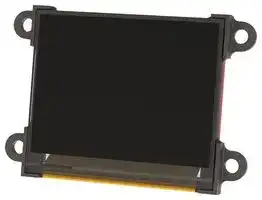
UOLED-160-P2
Graphic OLED, 4 to 5.5V, 160 x 128 Pixels, SPI, TTL, UART, 52.1mm x 36mm x 13.8mm, -10 °C
⚠️ Reference pricing provided. In case of supply shortages, we will connect you with our trusted procurement partners to ensure your project's continuity.
- Manufacturer: 4D SYSTEMS
- Product type: Graphic OLED Displays
- SVHC: No SVHC (25-Jun-2025)
- Resolution: 160 x 128 Pixels
- Module Size: 52.1mm x 36mm x 13.8mm
- Logic Voltage: -
- Product Range: -
- Interface Type: SPI, TTL, UART
- Display Appearance: -
- Display Construction: Module
- Operating Temperature Max: 60°C
- Operating Temperature Min: -10°C
| Delivery and price | |
|---|---|
| Units per pack | 50 |
| Price | 56.32 € |
| Current stock | 10+ |
| Lead time | 30 days |
Datasheet

## uOLED-160P2

## Datasheet

Revision 1.0

Copyright © 2025 4D Systems

Content may change at any time. Please refer to the resource centre for latest documentation.

## Contents

**==> picture [497 x 647] intentionally omitted <==**

**----- Start of picture text -----**<br>
1. Description 4<br>2. Features 5<br>3. Pin Configuration and Summary 7<br>4. Hardware Interface - Pins 8<br>4.1. Serial Ports -- TTL Level 8<br>5. General Purpose I/O 10<br>5.1. System Pins 14<br>6. Module Features 15<br>6.1. Display - 1.7" PMOLED 15<br>6.2. PIXXI-28 Processor 15<br>6.3. microSD / Flash Memory 16<br>6.4. SD/SDHC Memory Cards 17<br>6.5. FAT16 18<br>7. OLED Screen Precautions 19<br>8. Hardware Tools 20<br>8.1. 4D Programming Cable/Adaptor 20<br>9. Programming Language 21<br>10. Workshop4 IDE 22<br>10.1. PmmC Programming 23<br>10.2. File Transfer 25<br>11. Display Module Part Numbers 26<br>12. Starter Kit 27<br>13. Mechanical Details 28<br>14. Schematic Diagram - REV 2.0 29<br>15. Specifications 30<br>16. Revision History 32<br>17. Legal Notice 33<br>17.1. Proprietary Information 33<br>**----- End of picture text -----**<br>


**DATASHEET**

4D Systems

Page 2 of 33

17.2. Disclaimer of Warranties & Limitations of Liabilities

33

**DATASHEET**

4D Systems

Page 3 of 33

Description

uOLED-160P2

## **1. Description**

The uOLED-160P2 is an impressive PIXXI-28 OLED display module in the 4D Systems micro OLED graphics display range, and an upgrade to the original Goldelox based uOLED-160G2. Combining a resolution of 1.7" 160x128 pixels with 65K True-to-Life colours, this display module is perfect for animations, slideshows and other multimedia presentations. It is the ideal size for attractive embedded display applications.

This module is a compact and cost-effective Intelligent Display Module using the latest state-of-the-art Passive Matrix OLED (PMOLED) technology. Driving the module and its peripherals is the PIXXI-28 processor, a very capable chip that provides impressive graphics power, programmed with 4D Systems Workshop4 IDE Software. 4D Systems Workshop4 IDE enables graphic solutions to be constructed rapidly and with ease due to its design being solely for 4D graphics controllers.

The uOLED-160P2 has a modest but comprehensive range of features suited for an application requiring a bright eye-catching display, an analog input, Dallas 1-wire sensor capability, audio generation, or simply digital I/O. This is truly an impressive little module.

Some of the significant upgrades from the Goldelox version of this module include, FAT file system capability, uSD or Flash storage, considerably more processor Flash and RAM, Faster Processor with more features, and ViSiGenie capability, all of which improve on what was available with the original Goldelox modules.

**DATASHEET**

4D Systems

Page 4 of 33

uOLED-160P2

Features

## **2. Features**

- Low-cost 1.7" OLED display graphics user interface solution.

- 160 x 128 resolution, RGB 65K true to life colours, PMOLED Screen, non-Touch only.

- No backlighting with a nearly 180° viewing angle.

- Easy 10 pin interface to any host device: 3.3Vout, IO2, GND, IO1, RESET, GND, RX, TX, +5V, 5V OUT

- Powered by the 4D-Labs PIXXI-28 processor.

- 32KB of flash memory for user code storage and 14KB of RAM for user variables.

- Asynchronous hardware serial UART port with auto-baud, TTL interface, with 300 to 2.1M baud

- 2 x General Purpose I/O pins, IO7 and IO8 on the PIXXI-28.

- IO7 supports:

   - Analog Input with 12 bit resolution

   - Dallas 1-Wire

   - Digital Input/Output

   - Frequency Output for driving things like a Piezo buzzer/speaker with a pure square wave

   - RTTTL tune engine for driving a speaker with audio tunes

- IO8 supports:

   - Dallas 1-Wire

   - Digital Input/Output

   - Frequency Output for driving things like a Piezo buzzer/speaker with a pure square wave

   - RTTTL tune engine for driving a speaker with audio tunes

   - Audio generation for driving a speaker with WAV files

- Onboard micro-SD memory card adaptor (on selected model) for multimedia storage and data logging purposes. HC memory card support is also available for cards larger than 4GB.

- 16MB Serial Flash memory (on selected model) for multimedia storage, data files, fonts, or for holding extra code functions (to expand the code storage of the processor).

- Built-in extensive 4DGL graphics and system library functions.

- Display full colour images, animations, icons and video clips.

- Supports all available Windows fonts and characters.

- 4.0V to 5.5V range operation (single supply), nominal 5.0V.

- Module dimensions: 52.1 x 36.0 x 13.8 mm (including mounting tabs), 4 x 2 mm holes.

- Weight ~ 13g

-

**DATASHEET**

4D Systems

Page 5 of 33

uOLED-160P2

Features

- Display Viewing Area: 33.6 x 27.0 mm

- RoHS and REACH Compliant.

- PCB is UL 94V-0 Flammability Rated

**DATASHEET**

4D Systems

Page 6 of 33

Pin Configuration and Summary

uOLED-160P2

## **3. Pin Configuration and Summary**

**==> picture [514 x 369] intentionally omitted <==**

**----- Start of picture text -----**<br>
|||||
|---|---|---|---|
|Interface/Programming Header|
|Pin|Symbol|I/O|Description|
|Main Voltage Supply +ve input pin. Reverse polarity protected. The range is 4.0V to|
|1|+5V|P|
|5.5V, nominal 5.0V.|
|5V OUT provides approximately 0.3V less than +5V due to being through a|
|2|5V (OUT)|P|
|protection diode.|
|Asynchronous Serial Transmit pin. Output data is at TTL voltage levels. Connect this|
|3|TX|O|pin to the external device Serial Receive (Rx) signal. This pin is tolerant up to 5.0V|
|levels.|
|4|IO8|I/O|General purpose IO8 pin. See the General Purpose I/O section for more detail.|
|Asynchronous Serial Receive pin. Connect this pin to the external device Serial|
|5|RX|I|
|Transmit (Tx) signal. This pin is tolerant up to 5.0V levels.|
|6|IO7|I/O/A|General purpose IO7 pin. See the General Purpose I/O section for more detail.|
|7|GND|P|Supply Ground.|
|8|GND|P|Supply Ground.|
|Master Reset signal. Internally pulled up to 3.3V via a 10K resistor. An active Low|
|pulse greater than 2.0μs will reset the module. If the module needs to be reset|
|9|RESET|I|externally, only use open collector-type circuits. This pin is not driven low by any|
|internal conditions. The host should control this pin via one of its port pins using an|
|open collector/drain arrangement.|
|Regulated 3.3 Volts output, maximum available current 500mA to power external|
|10|3.3V|P|
|circuitry.|
|Note|

**----- End of picture text -----**<br>


**I** = Input, **O** = Output, **P** = Power, **A** = Analog Input

**DATASHEET**

4D Systems

Page 7 of 33

Hardware Interface - Pins

uOLED-160P2

## **4. Hardware Interface - Pins**

The uOLED-160P2 provides both a hardware and software interface. This section describes in detail the hardware interface pins of the device.

## **4.1. Serial Ports -- TTL Level**

The PIXXI-28 Processor has a single hardware asynchronous serial port (COM0), with fixed pins TX/RX. The PIXXI-28's serial port can be used to communicate with external serial devices and is also used for programming the PIXXI-28 itself.

The primary features are:

- Full-Duplex 8-bit data transmission and reception.

- Data format: 8 bits, No Parity, 1 Stop bit.

- Independent Baud rates from 300 baud up to 2187500 baud.

- Single byte transmits and receives a fully buffered service. The buffered service feature runs in the background capturing and buffering serial data without the user application having to constantly poll any of the serial ports. This frees up the application to service other tasks.

A single-byte serial transmission consists of the start bit, 8 bits of data followed by the stop bit. The start bit is always 0, while a stop bit is always 1. The LSB (Least Significant Bit, Bit 0) is sent out first following the start bit.

**DATASHEET**

Page 8 of 33

4D Systems

Serial Ports -- TTL Level

uOLED-160P2

The figure below shows a single-byte transmission timing diagram.

COM0 is the programming interface for User program downloads and PmmC programming. Once the compiled 4DGL application program (EVE byte-code) is downloaded and the user code starts executing, the serial port is then available to the user application.

## **TX pin 3 (Serial Transmit):**

Dedicated Asynchronous Serial port COM0 transmit pin, TX. Connect this pin to an external serial device receive (RX) signal. This pin outputs at 3.3V levels.

## **Rx pin 5 (Serial Receive):**

Dedicated Asynchronous Serial port COM0 receive pin, RX. Connect this pin to an external serial device transmit (TX) signal. This pin is 5.0V tolerant.

## **Note**

Serial port outputs at the level of TTL 3.3V, however, are 5V tolerant, so can accept communications from 5V devices.

**DATASHEET**

4D Systems

Page 9 of 33

uOLED-160P2

General Purpose I/O

## **5. General Purpose I/O**

There are 2 GPIO pins available, IO7 and IO8. Each GPIO has a multitude of high-level functions associated with it and these can be selected within 4DGL user application code.

Refer to the Pixxi Internal Functions Manual manual for a complete set of built-in 4DGL library functions.

## **IO7 pin 6 (General Purpose IO):**

General purpose IO7 pin. The following table lists the available GPIO functions and features.

## **IO8 pin 4 (General Purpose IO):**

General purpose IO8 pin. The following tables list the available GPIO functions and features.

## **Note**

1. Digital GPIO pins are 5.0V tolerant, Digital Output at TTL 3.3V level

2. Analog Input is 0 - 3.3V level only, 12-bit resolution

**==> picture [539 x 180] intentionally omitted <==**

**----- Start of picture text -----**<br>
GPIO Functions and Features<br>Function IO7 IO8<br>Digital Input Yes Yes<br>Digital Output Yes Yes<br>Analog Input 12 bits Yes No<br>Joystick - 5 position multi-switch Yes No<br>Dallas 1-Wire support Yes Yes<br>Sound Generation, RTTTL Tune Yes Yes<br>Sound Generation, Frequency Yes Yes<br>Sound Generation, WAV/Audio No Yes<br>**----- End of picture text -----**<br>


**DATASHEET**

Page 10 of 33

4D Systems

uOLED-160P2

General Purpose I/O

## **Digital Input/Output:**

Both IO7 and IO8 pins can be programmed to be Digital Inputs or Outputs. The diagram below shows a LED connected to IO7 (programmed as an output) and a button connected to IO8 (programmed as an input).

## **Joystick - Multi Switch:**

Multiple buttons or a multi-switch Joystick can be connected to the IO7 pin on the uOLED-160P2 module. Up to five buttons or a 5-position multi-switch joystick connects to a junction of a resistor ladder network that forms a voltage divider. The A/D converter of the IO7 pin internally reads the analog value and decodes it accordingly. This feature is supported by dedicated 4DGL library functions. The following diagrams indicate how to connect up to five individual buttons or a multi-switch joystick to the IO7 pin.

Unused buttons do not need resistors to be connected to the circuit. The table below lists the buttons and corresponding resistor values. **GPIO Functions and Features Number of Buttons Button Number Resistor Value** 1 SW1 22K 2 SW2 10K 3 SW3 4.7K 4 SW4 2.2K 5 SW5 1.2K ~~Bn~~ 4D Systems **DATASHEET**

Page 11 of 33

uOLED-160P2

General Purpose I/O

## **Analog to Digital Converter:**

The IO7 pin can be programmed as a 12-bit Analog Input. The diagram below is a circuit of a Light Dependent Resistor (LDR) connected to IO7 to measure and record changes in ambient light.

## **Dallas 1-Wire:**

The Dallas 1-Wire protocol is a form of serial communication designed to operate over a single data line plus ground reference. Multiple 1 Wire devices can be attached to the same shared data line to network many devices. One wire device support is available on both the IO7 and the IO8 pins on the uOLED-160P2 module.

The following diagram depicts a typical 1-Wire temperature sensor interface.

**DATASHEET**

4D Systems

Page 12 of 33

uOLED-160P2

General Purpose I/O

## **Sound Output:**

The uOLED-160P2 module is capable of generating complex sounds and RTTL tunes from its IO7 and IO8 pins. A simple speaker circuit as shown below can be used.

Both IO7 and IO8 are capable of RTTTL Tunes and Frequency Tones, and IO8 is also capable of WAV Audio playback.

**DATASHEET**

4D Systems

Page 13 of 33

System Pins

uOLED-160P2

## **5.1. System Pins**

## **+5V (Module Voltage Input):**

## **Pin 1:**

Module supply voltage input pin. This pin must be connected to a regulated supply voltage in the range of 4.0 Volts to 5.5 Volts DC. The nominal operating voltage is 5.0 Volts.

## **5V (Out):**

## **Pin 2:**

External circuitry that requires approximately a 5V supply can be powered up via this pin. The voltage at this pin will be approximately 0.3V lower than the +5V input pin, due to the protection diode. The maximum available current is approximately 200 mA, due to the protection diode being shared with the rest of the system.

## **GND (Module Ground):**

## **Pins 7, 8:**

Device ground pins. These pins must be connected to the ground

## **RESET (Module Master Reset):**

## **Pin 9:**

Module Master Reset pin. An active low pulse of greater than 2 microseconds will reset the module. Internally

pulled up to 3.3V via a 4.7K resistor. Only use open collector-type circuits to reset the device if an external reset is required.

## **3.3 Vout (3.3V Regulated Output):**

## **Pin 10:**

External circuitry that requires a regulated 3.3 V supply can be powered up via this pin. The maximum available current is 500mA, due to the 3.3V output being shared with the rest of the internal components.

**DATASHEET**

4D Systems

Page 14 of 33

uOLED-160P2

Module Features

## **6. Module Features**

The uOLED-160P2 module is designed to accommodate most applications. Some of the main features of the module are listed below.

## **6.1. Display - 1.7" PMOLED**

The uOLED-160P2 is equipped with a full-colour PMOLED screen. Some of the features of the screen are:

- Screen Size: 1.7" diagonal

- 160 x 128 Resolution PMOLED display

- Screen Dimensions: 40.0 x 33.5 mm.

- Active Area: 33.6 x 27.0 mm

- 65K true-to-life colours

- Brightness: 100 cd/m2

- Contrast Ratio: 5000:1

- Viewing Angle: > 160 degrees

- No Backlighting due to OLED technology

-

## **Note**

The Displays used are the highest-rated 'Grade A' Displays, which allow for 0-4 defective pixels. A defective pixel could be solid Black (Dead), White, Red, Green or Blue

## **6.2. PIXXI-28 Processor**

The module is designed around the PIXXI-28 Graphics Processor from 4D-Labs.

The PIXXI-28 is a custom-embedded graphics processor designed to interface with many popular OLED and LCD panels. Powerful graphics, text, images, animation and countless more features are built right inside the chip. It offers a simple plug-andplay interface to many 8-bit MCU 8080 Series colour LCD and OLED displays, as well as 3 or 4 wire SPI displays.

The uOLED-160P2 is utilising the 8-bit MCU 8080 interface to the PMOLED display, which provides 2 GPIO for the User.

Refer to the PIXXI-28 Processor datasheet for more information.

**DATASHEET**

4D Systems

Page 15 of 33

microSD / Flash Memory

uOLED-160P2

## **6.3. microSD / Flash Memory**

The uOLED-160P2 display module is available in 2 versions. One utilises a microSD connector for microSD card storage, while the other utilises SPi Serial Flash memory.

## **Note**

The correct PmmC must be loaded in the display when choosing the memory device ( **-u** for the _**uSD memory**_ and **-f** for the _**serial flash memory**_ ). The correct PmmC will be loaded from factory, however if performing manual updates in the future, ensure the correct one is loaded for the module type you have.

The Flash Memory device is used for all multimedia file retrieval such as images, animations and movie clips, data files, and fonts, or for holding extra code functions (to expand the code storage of the processor)

The SD memory card can also be used as general-purpose storage for data logging applications (RAW and FAT16 format support).

Support is available for either an SD memory card (SD with up to 2GB or SDHC starting from 4GB and above) or the Serial Flash memory chip (16MB).

The dedicated SPI port is clocked at 35 MHz

With microSD storage of 4GB, the uOLED-160P2 can store over 100K full screen images. This is a huge amount of storage and would typically never be completely filled for any normal application.

With Serial Flash Memory of 16MB, the uOLED-160P2 can store approximately 409 full screen images in Flash. This is perfect for many applications, and it also caters for applications where a microSD card is impractical or not allowed to be used. Serial Flash memory is slightly faster in performance than microSD card also, so there is a little performance gain from this option.

Storage is also used for other things, such as Fonts, Audio and other Files, but it is a good indication on what the storage options are capable of in this module.

**DATASHEET**

4D Systems

Page 16 of 33

uOLED-160P2

SD/SDHC Memory Cards

## **6.4. SD/SDHC Memory Cards**

The PIXXI-28 processor uses off-the-shelf standard SDHC/SD/microSD memory cards with up to 2GB capacity usable with FAT16 formatting. For any FAT file-related operations, before the memory card can be used it must first be formatted to FAT16. The formatting of the card can be done on any PC system with a card reader. Select the appropriate drive and choose the FAT16 (or just FAT in some systems) option when formatting. The card is now ready to be used in the PIXXI-28 based application.

The PIXXI-28 processor also supports high-capacity HC memory cards (4GB and above). The available capacity of SD-HC cards varies according to the way the card is partitioned and the commands used to access it.

The FAT partition is always first (if it exists) and can be up to the maximum size permitted by FAT16. Windows 7 will format FAT16 up to 4GB. Windows XP will format FAT16 up to 2GB and the Windows XP command prompt will format FAT16 up to 4GB.

RMPET, a 4D Systems Tool found in the Workshop4 IDE, is capable of repartitioning and formatting microSD cards to be the appropriate type and format for 4D Systems processors. This tool should be used for all cards.

## **Note**

1. An SPI Compatible SDHC/SD/microSD card MUST be used. PIXXI-28 along with other 4D Systems Processors requires SPI mode to communicate with the SD card. If a non-SPI compatible SD card is used, then the processor will not be able to mount the card.

2. Read disturbance is a well-known issue with flash memory devices, such as microSD cards, where reading data from a flash cell can cause the nearby cells in the same memory block to change over time. This issue can be prevented by using industrial-grade microSD cards with read disturb protection. Industrial-grade microSD cards have firmware that actively monitors the read operation and refreshes areas of memory that have high traffic and even move data around to prevent read disturb error from occurring. Furthermore, manufacturers may choose to implement read disturb protection on a specific part of the flash memory only, such that the beginning part of the memory might not be protected. The RMPET utility in Workshop4 is designed to create the first partition at an offset from the start of the microSD card to account for this situation. It is therefore recommended to always partition and format an industrial microSD card using the RMPET utility before using it with 4D Systems processors.

**DATASHEET**

4D Systems

Page 17 of 33

uOLED-160P2

FAT16

## **6.5. FAT16**

All 4D Systems displays featuring 4D Systems processors use off-the-shelf standard/micro SDHC/SD memory cards (SPI Compatible Only) with up to 4GB capacity usable with FAT16 formatting.

For any FAT file-related operations, before the memory card can be used it must first be formatted correctly. Built into Workshop4 is a tool created by 4D, called RMPET. RMPET allows the User to easily partition and format microSD cards, to make their file system ready to be used with 4D Systems displays. The formatting of the card can be done on any PC system with a card reader.

The PIXXI-28 processor also supports high-capacity HC memory cards (4GB and above). The available capacity of SD-HC cards varies according to the way the card is partitioned and the commands used to access it.

The FAT16 file system can utilize a maximum capacity of 4GB. The FAT partition is always first (if it exists). Any space larger than 4GB will be RAW, and can still be utilized by your 4D Systems module, using different functions. For more information, refer to Application Notes.

**DATASHEET**

Page 18 of 33

4D Systems

OLED Screen Precautions

uOLED-160P2

## **7. OLED Screen Precautions**

- Avoid having a White Background. The more pixels that are lit up, the more the display module will consume current. A full white screen will have the highest power consumption.

- Avoid displaying objects or text on White Backgrounds. This will cause a smearing effect which is inherent to all PMOLED displays. Instead, try a shaded mixed colour as the background or better still a black background. Ideally have mixed coloured objects/text/icons on a black background.

- Avoid having to display the same image/object on the screen for lengthy periods. This will cause a burn-in which is a common problem with all types of display technologies. Blank the screen after a while or dim it very low by adjusting the contrast. Better still; implement a screen saver feature.

- The display can be easily scratched. The soft polarisation film on the glass surface may be damaged if rubbed by hard objects. Handle with care to avoid scratching the display.

- Moisture and water can damage the display. Moisture on the surface of a powered display will cause the electrodes to corrode. Wipe off any moisture gently or let the display dry before usage.

- Dirt from fingerprint oil and fat can easily stain the surface of the display. Gently wipe off any stains with a soft lint-free cloth.

- The performance of the display will degrade under high temperatures and humidity. Avoid such conditions when storing.

- Displays are susceptible to mechanical shock and any force exerted on the module may result in deformed zebra strips and cracks.

- Always use the mounting holes on the module's printed circuit board to mount the display.

**DATASHEET**

4D Systems

Page 19 of 33

uOLED-160P2

Hardware Tools

## **8. Hardware Tools**

The following hardware tools are required for full control of the uOLED-160P2 module.

## **8.1. 4D Programming Cable/Adaptor**

The 4D Programming Cable and uUSB-PA5-II Programming Adaptor are essential hardware tools to program, customise and test the PIXXI-28 Processor.

Either the 4D Programming Cable or the uUSB-PA5-II Programming Adaptor can be used.

The 4D programming interfaces are used to program a new Firmware/PmmC, Display Driver and for downloading compiled 4DGL code into the processor. They even serve as an interface for communicating serial data to the PC. The 4D Programming Cable and uUSB-PA5-II Programming Adaptor are available from the 4D Systems website. Using a non-4D programming interface could damage your processor, and **void your Warranty** .

_4D Programming Cable_

_uUSB-PA5-II Programming Adaptor_

**DATASHEET**

Page 20 of 33

4D Systems

Programming Language

uOLED-160P2

## **9. Programming Language**

The PIXXI-28 processor belongs to a family of processors powered by a highly optimised soft-core virtual engine called EVE (Extensible Virtual Engine). EVE was designed and created by 4D Systems in the early 2000s.

EVE is a proprietary, high-performance virtual machine with an extensive byte-code instruction set optimised to execute compiled 4DGL programs.

4DGL (4D Graphics Language) was specifically developed from the ground up for the EVE engine core. It is a highlevel language that is easy to learn and simple to understand yet powerful enough to tackle many embedded graphics applications.

4DGL is a graphics-oriented language allowing rapid application development, and the syntax structure was designed using elements of popular languages such as C, Basic, Pascal and others.

Programmers familiar with these languages will feel right at home with 4DGL. It includes many familiar instructions such as `IF..ELSE..ENDIF, WHILE..WEND, REPEAT..UNTIL, GOSUB..ENDSUB, GOTO, PRINT` as well as some specialised instructions `SERIN, SEROUT, GFX_LINE, GFX_CIRCLE` and many more. For detailed information about the 4DGL language, please refer to the following documents:

- 4DGL Programmers Reference Manual

- Pixxi Internal Functions Manual

To assist with the development of 4DGL applications, the Workshop4 IDE combines a full-featured editor, a compiler, a linker and a downloader into a single PC-based application. It's all you need to code, test and run your applications.

4DGL is available to be written in two of the four environments offered by Workshop4 IDE, Designer and ViSi. The other two environments, Serial and ViSi-Genie do not directly use 4DGL by the User (Except in Workshop4 Pro, for ViSi-Genie), however, it is present in the background. Serial is an application that runs, and that is written in 4DGL. ViSi-Genie automatically generates 4DGL itself based on what is configured in the GUI.

**DATASHEET**

4D Systems

Page 21 of 33

uOLED-160P2

Workshop4 IDE

## **10. Workshop4 IDE**

Workshop4 is a comprehensive software IDE that provides an integrated software development platform for all of the 4D family of processors and modules. The IDE combines the Editor, Compiler, Linker and Downloader to develop complete 4DGL application code. All user application code is developed within the Workshop4 IDE.

The Workshop4 IDE supports multiple development environments for the user, to cater to different user requirements and skill levels.

- The **Designer** environment enables the user to write 4DGL code in its natural form to program the range of 4D Systems' intelligent displays.

- A visual programming experience, suitably called **ViSi** , enables drag-and-drop type placement of objects to assist with 4DGL code generation and allows the user to visualise how the display will look while being developed.

- An advanced environment called **ViSi-Genie** doesn't require any 4DGL coding at all, it is all done automatically for you. Simply lay the display out with the objects you want, set the events to drive them and the code is written for you automatically. This can be extended with additional features when a Workshop4 PRO license is purchased from the 4D Systems website. Extended Advanced features for Visi-Genie are available in the PRO version of WS4. Further details are explained under the Visi Genie section of the Workshop4 documentation.

- A **Serial** environment (aka SPE 'Serial Platform Environment') is also provided to transform the display module into a slave serial module, allowing the user to control the display from any host microcontroller or device with a serial port using predefined serial commands.

For more information regarding these environments, refer to the Workshop4 manuals. The Workshop 4 IDE is available from the 4D Systems website.

**DATASHEET**

4D Systems

Page 22 of 33

PmmC Programming

uOLED-160P2

## **10.1. PmmC Programming**

The PIXXI-28 processor is a custom graphics processor. All functionality including the high-level commands is built into the chip. This chip-level configuration is available as a PmmC (Personality-module-micro-Code) file, which can be likened to traditional Firmware.

A PmmC file contains all of the low-level micro-code information (analogy of that of a soft silicon) which defines the characteristics and functionality of the device. The ability of programming the device with a PmmC file provides an extremely flexible method of customising as well as upgrading it with future enhancements.

The Display Driver is located inside the PmmC for PIXXI-28 and contains the initialisation and parameters associated with the particular display that is to be connected to the PIXXI-28 processor, along with productspecific settings and parameters that are required over and above what is found in the PmmC.

The PmmC file can only be programmed into the device with the aid of Workshop 4, the 4D Systems IDE software, or its supporting tools.

Solutions, which remove the need to use Workshop4 to program the display, are available for commercial customers requiring batch programming or production line programming. These solutions are practical for production staff to minimize the chance of unwanted or unauthorised modifications on the production line. Three solutions come with the Workshop4 IDE, which can be separated for production line computers if required, **ScriptC** , **PmmC Loader** and **Program Loader** .

**ScriptC** is a command line interface that can be controlled from a Batch Script or similar, useful for repetitive loading or when controlled from an external application. Example scripts are provided, showing how to load PmmC, Display Drivers and Applications using a batch script.

**Program Loader** is a GUI interface designed to download Applications to either Flash or RAM, useful for testing or production loading, without the need for Workshop4 itself.

**DATASHEET**

4D Systems

Page 23 of 33

PmmC Programming

uOLED-160P2

**PmmC Loader** is a GUI interface designed to download PmmC's and Drivers to 4D Systems Processors. It can automatically update existing PmmC's and Drivers present on a module or manually change or force download to a blank processor or module, overwriting anything written in previously.

Please contact our Support Team for more information on what we can provide. Some solutions also exist for external processor-based loading, if there is a requirement for that. This solution is available under NDA. Using a non-4D programming interface could damage your module, and **void your Warranty** .

**DATASHEET**

4D Systems

Page 24 of 33

File Transfer

uOLED-160P2

## **10.2. File Transfer**

The PIXXI-28 processor is capable of transferring files over the serial UART from the PC. This is used when the SPI Serial Flash Memory is loaded by Workshop4, but it can also be used to load the micro-SD card if desired.

The process of loading a micro-SD card can take some time, depending on the size of the files needing to be transferred, and it is often faster to remove the micro-SD card from the display module, place it into your PC using a Media/Card reader, and copying the files directly. However in cases where this is not possible, transferring over the serial UART is available.

Additional to Workshop4 natively using File Transfer during its programming phase, File Transfer can also be run manually by opening the File Transfer application from the Windows Start Menu, or from the /DEP folder inside the Workshop4 installation folder.

When loading content on to the SPI Serial Flash Memory manually, you must erase the memory before writing new files.

File Transfer can be used for loading SPI Serial Flash Memory or the micro-SD card. When actioning the programming process from Workshop4, the appropriate one will be loaded based on your hardware and software settings.

If using the 4D Programming Cable, some software modifications to the USB chip inside the cable are required in order to transfer at full speed. Please refer to this **post** on the 4D Systems Forum, for details on the change. When using the uUSB-PA5 or uUSB-PA5-II, this is not required, it only relates to the **4D Programming Cable** .

**DATASHEET**

4D Systems

Page 25 of 33

Display Module Part Numbers

uOLED-160P2

## **11. Display Module Part Numbers**

The following is a breakdown of the part numbers and what they mean.

## **Modules**

- uOLED-160P2 (uSD)

- uOLED-160P2 (Flash)

_where:_

uOLED - microOLED Display Family

96 - Display size (0.96") P2 - PIXXI-28 Processor

uSD - microSD Card version

Flash - SPI Serial Flash version

**DATASHEET**

4D Systems

Page 26 of 33

Starter Kit

uOLED-160P2

## **12. Starter Kit**

4D Systems highly recommends all first-time buyers of 4D Systems' displays, to purchase the Starter Kit when purchasing their first 4D Systems display solution.

The Starter Kit provides all the hardware that is required to get the User up and running.

Not all development environments and features will be needed by every User. However, purchasing the display solution in a Starter Kit allows you to take full advantage of all of the features of the 4D Systems Display Solution and try out each of the 4D Woskshop4 Environments before settling with the preferred feature set.

Starter Kits typically include:

- uOLED-160P2 Display Module

- uUSB-PA5-II Programming Adaptor

- 4GB micro-SD Card

- 5-way Male to Male adaptor (for converting the Female-Female cable to be Male-Female)

- 150mm 5-way Female-Female jumper cable, for quick connection to another device or breadboard

- Quick Start Guide

Please refer to the 4D Systems website for the current components included in the Starter Kit.

Simply select the Starter Kit option when purchasing the chosen display module on the 4D Systems shopping cart, or from your local distributor.

**DATASHEET**

4D Systems

Page 27 of 33

Mechanical Details

uOLED-160P2

## **13. Mechanical Details**

**DATASHEET**

Page 28 of 33

4D Systems

Schematic Diagram - REV 2.0

uOLED-160P2 **14. Schematic Diagram - REV 2.0**

> 4D Systems **DATASHEET**

Page 29 of 33

Specifications

uOLED-160P2

## **15. Specifications**

## **Absolute Maximum Ratings**

|Operating ambient temperature|-35°C to +75°C|
|---|---|
|Storage temperature|-40°C to +80°C|
|Voltage on VCC with respect to GND|-0.3V to 6.0V|
|Maximum current sunk/sourced by any pin|15mA|


## **Note**

Stresses above those listed here may cause permanent damage to the device. This is a stress rating only and functional operation of the device at those or any other conditions above those indicated in the recommended operation listings of this specification is not implied. Exposure to maximum rating conditions for extended periods may affect device reliability.

## **Recommended Operating Conditions**

**==> picture [536 x 152] intentionally omitted <==**

**----- Start of picture text -----**<br>
Parameter Conditions Min Typ Max Units<br>Supply Voltage (VCC) Stable external supply required 4.0 5.0 5.5 V<br>Processor voltage (VP) -- 3.3 -- V<br>Operating Temperature -10 -- +60 °C<br>Input Low Voltage (VIL) all pins GND -- 0.2VP V<br>Input High Voltage (VIH) non 5V tolerant pins 0.8VP -- 3.3 V<br>Input High Voltage (VIH) 5V Tolerant Pins, RX pin 0.8VP -- 5.5 V<br>Reset Pulse External Open Collector 2.0 -- -- µs<br>Operational Delay Power-Up or External Reset 500 -- 3000 ms<br>**----- End of picture text -----**<br>


## **Global Characteristics Based on Operating Conditions**

|**Parameter**|**Conditions**|**Min**|**Typ**|**Max**|**Units**|
|---|---|---|---|---|---|
|Supply Current (ICC)|5V Supply - uOLED-160P2|-|TBD|-|mA|
|A/D Converter Resolution|IO7 Pin|-|-|12|bits|
|Flash Memory Endurance|PmmC/4DGL Programming|-|10000|-|E/W|


## **Optical Characteristics**

|**Parameter**|**Conditions**|**Min**|**Typ**|**Max**|**Units**|
|---|---|---|---|---|---|
|Luminance (L)|VCC = 5.0V|70|100|-|cd/m2|
|Viewing Angle (VA)|VCC = 5.0V|160|-|-|degree|
|Contrast Ratio (CR)|VCC = 5.0V|2000:1|5000:1|-|-|
|Operational Lifetime (LT)|50% checker board pattern. 90 cd/m2. The<br>end of lifetime is 50% initial intensity.|10000|15000|-|hours|
|Storage Lifetime (ST)|Ta = 25°C, 50% RH|20000|-|-|hours|


**DATASHEET**

Page 30 of 33

4D Systems

Specifications

uOLED-160P2

## **Ordering Information**

**Order Code** : uOLED-160P2 (uSD) or uOLED-160P2 (Flash) **Package** : 65mm x 50mm x 30mm **Packaging** : Module sealed in antistatic foam padded 4D Systems Box

**DATASHEET**

4D Systems

Page 31 of 33

Revision History

uOLED-160P2

## **16. Revision History**

**==> picture [539 x 143] intentionally omitted <==**

**----- Start of picture text -----**<br>
Hardware Revision<br>Revision Number Date Description<br>1.0 10/10/2023 Initial Public Release Version<br>Datasheet Revision<br>Revision Number Date Description<br>1.0 29/11/2023 Initial Public Release Version<br>1.1 06/02/2025 Minor formatting changes<br>**----- End of picture text -----**<br>


**DATASHEET**

4D Systems

Page 32 of 33

Legal Notice

uOLED-160P2

## **17. Legal Notice**

## **17.1. Proprietary Information**

The information contained in this document is the property of 4D Systems Pty. Ltd. and may be the subject of patents pending or granted, and must not be copied or disclosed without prior written permission. 4D Systems endeavours to ensure that the information in this document is correct and fairly stated but does not accept liability for any error or omission. The development of 4D Systems products and services is continuous and published information may not be up to date. It is important to check the current position with 4D Systems. 4D Systems reserves the right to modify, update or makes changes to Specifications or written material without prior notice at any time.

All trademarks belong to their respective owners and are recognised and acknowledged.

## **17.2. Disclaimer of Warranties & Limitations of Liabilities**

4D Systems makes no warranty, either expressed or implied with respect to any product, and specifically disclaims all other warranties, including, without limitation, warranties for merchantability, non-infringement and fitness for any particular purpose.

Information contained in this publication regarding device applications and the like is provided only for your convenience and may be superseded by updates. It is your responsibility to ensure that your application meets with your specifications.

Images and graphics used throughout this document are for illustrative purposes only. All images and graphics used are possible to be displayed on the 4D Systems range of products, however the quality may vary.

In no event shall 4D Systems be liable to the buyer or to any third party for any indirect, incidental, special, consequential, punitive or exemplary damages (including without limitation lost profits, lost savings, or loss of business opportunity) arising out of or relating to any product or service provided or to be provided by 4D Systems, or the use or inability to use the same, even if 4D Systems has been advised of the possibility of such damages.

4D Systems products are not fault tolerant nor designed, manufactured or intended for use or resale as on line control equipment in hazardous environments requiring fail - safe performance, such as in the operation of nuclear facilities, aircraft navigation or communication systems, air traffic control, direct life support machines or weapons systems in which the failure of the product could lead directly to death, personal injury or severe physical or environmental damage ('High Risk Activities'). 4D Systems and its suppliers specifically disclaim any expressed or implied warranty of fitness for High Risk Activities.

Use of 4D Systems' products and devices in 'High Risk Activities' and in any other application is entirely at the buyer's risk, and the buyer agrees to defend, indemnify and hold harmless 4D Systems from any and all damages, claims, suits, or expenses resulting from such use. No licenses are conveyed, implicitly or otherwise, under any 4D Systems intellectual property rights.

**DATASHEET**

4D Systems

Page 33 of 33
Updated at April 27, 2026
About Novapart
Novapart is a B2B electronic component broker specialising in stock shortages and cost reduction. We source hard-to-find parts and identify compliant alternatives across a catalogue of 410,000+ components from 500+ manufacturers.
Learn more →Stock Shortage Specialist
When a component is unavailable, discontinued or has an unacceptable lead time, we tap into our network of vetted European and Asian distributors to source what you need — without compromising on quality or traceability.
Request a quote →Compliant Alternatives
We identify pin-to-pin, electrically equivalent substitutes that meet the same certifications (RoHS, AEC-Q100, REACH) as your original specification — validated against datasheets, not just part numbers. Often at a lower cost.
BOM Analysis service →