
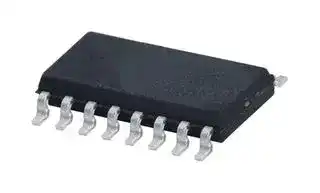


SSL2101T/N1,518
Led Driver, Buck, Flyback, PWM Dimming, 8.5V-40V in, 100kHz switch, 900mA out, SOIC-16
- Manufacturer: NXP
- Product type: AC / DC LED Driver ICs
- Device Topology:Buck, Flyback; Input Voltage Min:8.5V; Input Voltage Max:40V; Output Voltage Max:-; Output Current Max:900mA; Switching Frequency:100kHz; No. of Outputs:1Outputs; IC Mounting:
- MSL: MSL 3 - 168 hours
- SVHC: No SVHC (17-Dec-2015)
- Topology: Buck, Flyback
- IC Mounting: Surface Mount
- No. of Pins: 16Pins
- Product Range: -
- Qualification: -
- No. of Outputs: 1Outputs
- Device Topology: Buck, Flyback
- LED Driver Type: -
- Driver Case Style: SOIC
- IC Case / Package: SOIC
- Input Voltage Max: 40V
- Input Voltage Min: 8.5V
- Output Current Max: 900mA
- Output Voltage Max: -
- Switching Frequency: 100kHz
- Switching Frequency Typ: 100kHz
- Operating Temperature Max: 100°C
- Operating Temperature Min: -40°C
- Automotive Qualification Standard: -
| Delivery and price | |
|---|---|
| Units per pack | 1500 |
| Price | 0.757 € |
| Current stock | 10+ |
| Lead time | 30 days |

## **SSL2101** ## **Dimmable GreenChip driver for LED lighting** **Rev. 4.1 — 5 December 2011** **Product data sheet** ## **1. General description** The SSL2101 is a Switched Mode Power Supply (SMPS) driver IC that operates in combination with a phase cut dimmer directly from the rectified mains. It is designed to drive LED devices. The device includes a high-voltage power switch, a circuit to allow start-up directly from the rectified mains voltage and a high-voltage circuitry to supply the phase cut dimmer. For dimmer applications, an integrated dedicated circuitry optimizes the dimming curve. - SSL2101: fully integrated LED driver for lamps up to 10 W - SSL2102: fully integrated LED driver for lamps up to 25 W - SSL2103: gives the application designer flexibility to: - Use an external power switch to allow the IC to provide any power - Use external bleeder transistors to provide extended dimmer interoperability ## **2. Features and benefits** - Easy migration to existing lighting control infrastructure - Supports most available dimming solutions - Optimized efficiency with valley switching managed by a built-in circuitry - Demagnetization detection - OverTemperature Protection (OTP) - Short-Winding Protection (SWP) and OverCurrent Protection (OCP) - Internal VCC generation allowing start-up from the rectified mains voltage - Natural dimming curve by logarithmic correction, down to 1 % - Limited external components required because of the high integration level - Thermal enhanced SO16 wide body package - Suitable for flyback and buck applications ## **3. Applications** - SSL applications below 15 W - Retro-fit lamps (for example, GU10, E27) - LED modules such as LED spots, down-lights - LED strings suitable for retail displays, etc. **SSL2101** **NXP Semiconductors** **Dimmable Greenchip driver for LED lighting** ## **4. Quick reference data** **Table 1: Quick reference data** |**Symbol**<br>**Parameter**|**Conditions**<br>**Min**<br>**Typ**<br>**Max**<br>**Unit**| |---|---| |RDSon<br>drain-source on-state<br>resistance|power switch; ISOURCE=0.50 A| ||Tj= 25C<br>4.5<br>6.5<br>7.5<br>| ||Isource=0.20 A| ||Tj= 125C<br>-<br>9.5<br>10<br>| |VCC<br>supply voltage|8.5<br>-<br>40<br>V| |fosc<br>oscillator frequency|10<br>100<br>200<br>kHz| |IDRAIN<br>current on pin DRAIN|VDRAIN> 60 V;<br>no auxiliary supply<br>-<br>-<br>2.2<br>mA| ||VDRAIN> 60 V;<br>with auxiliary supply<br>-<br>30<br>125<br>A| |VDRAIN<br>voltage on pin DRAIN|40<br>-<br>600<br>V| |min<br>minimum duty factor|-<br>0<br>-<br>%| |max<br>maximum duty cycle|f = 100 kHz<br>-<br>75<br>-<br>%| |Tamb<br>ambient temperature|40<br>-<br>+100 C| ## **5. Ordering information** **Table 2: Ordering information** |**Type number**|**Package**|**Package**|**Package**| |---|---|---|---| ||**Name**|**Description**|**Version**| |SSL2101T|SO16<br>plastic small outline package; 16 leads; body width 3.9 mm<br>SOT109-1||| © NXP B.V. 2011. All rights reserved. SSL2101 **Product data sheet** All information provided in this document is subject to legal disclaimers. **Rev. 4.1 — 5 December 2011** **2 of 23** **SSL2101** **NXP Semiconductors** **Dimmable Greenchip driver for LED lighting** ## **6. Block diagram** **==> picture [449 x 339] intentionally omitted <==** **----- Start of picture text -----**<br> ISENSE SBLEED WBLEED<br>10 1 2<br>BLEEDER<br>3 16<br>VCC SUPPLY DRAIN<br>VALLEY<br>11<br>AUX<br>4, 5,13, LOGIC<br>GND 14, 15 100 mV<br>Stop<br>RC 8 OSCILLATOR<br>12<br>SOURCE<br>Low freq<br>Blank<br>THERMAL<br>SHUTDOWN<br>PROTECTION<br>BRIGHTNESS 6 FREQUENCY POWER - UPRESET LOGIC 0.5 V<br>REDUCTION<br>RC2 7 CIRCUIT<br>1.5 V<br>Overcurrent<br>PWM<br>PWMLIMIT 9 LIMIT<br>CIRCUIT Short-winding protection<br>**----- End of picture text -----**<br> **==> picture [28 x 5] intentionally omitted <==** **----- Start of picture text -----**<br> 014aaa567<br>**----- End of picture text -----**<br> **Fig 1. Block diagram** © NXP B.V. 2011. All rights reserved. SSL2101 All information provided in this document is subject to legal disclaimers. **Product data sheet** **Rev. 4.1 — 5 December 2011** **3 of 23** **SSL2101** **NXP Semiconductors** **Dimmable Greenchip driver for LED lighting** ## **7. Pinning information** ## **7.1 Pinning** **==> picture [173 x 153] intentionally omitted <==** **----- Start of picture text -----**<br> SBLEED 1 16 DRAIN<br>WBLEED 2 15 GND<br>VCC 3 14 GND<br>GND 4 13 GND<br>SSL2101<br>GND 5 12 SOURCE<br>BRIGHTNESS 6 11 AUX<br>RC2 7 10 ISENSE<br>RC 8 9 PWMLIMIT<br>014aaa568<br>**----- End of picture text -----**<br> **Fig 2. Pin configuration SO16** ## **7.2 Pin description** **Table 3: Pin description** |**Symbol**|**Pin**|**Description**| |---|---|---| |SBLEED|1|drain of internal strong bleeder switch| |WBLEED|2|drain of internal weak bleeder switch| |VCC|3|supply voltage| |GND|4|ground| |GND|5|ground| |BRIGHTNESS|6|brightness input| |RC2|7|setting for frequency reduction| |RC|8|frequency setting| |PWMLIMIT|9|PWM limit input| |ISENSE|10|current sense input for WBLEED| |AUX|11|Input for voltage from auxiliary winding for timing| |||(demagnetization)| |SOURCE|12|source of internal power switch| |GND|13|ground| |GND|14|ground| |GND|15|ground| |DRAIN|16|drain of internal power switch; input for start-up current and valley| |||sensing| © NXP B.V. 2011. All rights reserved. SSL2101 **Product data sheet** All information provided in this document is subject to legal disclaimers. **Rev. 4.1 — 5 December 2011** **4 of 23** **SSL2101** **NXP Semiconductors** **Dimmable Greenchip driver for LED lighting** ## **8. Functional description** The SSL2101 is an LED driver IC that operates directly from the rectified mains. The SSL2101 uses on-time mode control and frequency control to control the LED brightness. The BRIGHTNESS and PWMLIMIT input of the IC can be used to control the LED light output in combination with an external dimmer. The PWMLIMIT input can also be used for Thermal Lumen Management (TLM) and for precision LED current control. ## **8.1 Start-up and UnderVoltage LockOut (UVLO)** Initially, the IC is self-supplying from the rectified mains voltage. The IC starts switching as soon as the voltage on pin VCC passes the VCC(startup) level. The supply can be taken over by the auxiliary winding of the transformer as soon as VCC is high enough and the supply from the line is stopped for high efficiency operation. Alternatively the IC can be supplied via a bleeder resistor connected to a high voltage. Note however the maximum VCC voltage rating of the IC. If for some reason the auxiliary supply is not sufficient, the high-voltage supply can also supply the IC. As soon as the voltage on pin VCC drops below the VCC(UVLO) level, the IC stops switching and will restart from the rectified mains voltage, if the internal current delivered is sufficient. ## **8.2 Oscillator** An internal oscillator inside the IC provides the timing for the switching converter logic. The frequency of the oscillator is set by the external resistors and the capacitor on pin RC and pin RC2. The external capacitor is charged rapidly to the VRC(max) level and, starting from a new primary stroke, it discharges to the VRC(min) level. Because the discharge is exponential, the relative sensitivity of the duty factor to the regulation voltage at low duty factor is almost equal to the sensitivity at high duty factors. This results in a more constant gain over the duty factor range compared to Phase Width Modulated (PWM) systems with a linear sawtooth oscillator. Stable operation at low duty factors is easily realized. The frequency of the converter when VBRIGHTNESS is high can be estimated using Equation 1: **==> picture [394 x 23] intentionally omitted <==** R equals the parallel resistance of both oscillator resistors. C is the capacitor connected at the RC pin (pin 8). The BRIGHTNESS input controls the frequency reduction mode. Figure 3 shows that the oscillator switches over from an RC curve with R1 in parallel with R2 to R1 only. A low BRIGHTNESS voltage will reduce the switching frequency. © NXP B.V. 2011. All rights reserved. SSL2101 All information provided in this document is subject to legal disclaimers. **Product data sheet** **Rev. 4.1 — 5 December 2011** **5 of 23** **SSL2101** **NXP Semiconductors** **Dimmable Greenchip driver for LED lighting** **==> picture [381 x 198] intentionally omitted <==** **----- Start of picture text -----**<br> 5 V<br>STARplug<br>24 μ A OSCILLATOR RC<br>R2 R1<br>10 k Ω 220 k Ω<br>BRIGHTNESS<br>Comparator C1<br>330 pF<br>RC2<br>V V rc_threshold<br>014aaa574<br>Fig 3. Brightness control block<br>**----- End of picture text -----**<br> A typical RC waveform is given in Figure 4. The RC switch-over threshold is controlled by the BRIGHTNESS pin. To ensure that the capacitor can be charged within the charge time, the value of the oscillator capacitor should be limited to 1 nF. Due to leakage current, the value of the resistor connected between the RC pin and the ground should be limited to a maximum of 220 k. **==> picture [359 x 134] intentionally omitted <==** **----- Start of picture text -----**<br> Voltage<br>(mV)<br>RC voltage<br>rc_threshhold<br>75 mV<br>time 014aaa582<br>Fig 4. Brightness timing waveform<br>**----- End of picture text -----**<br> ## **8.3 Duty factor control** The duty factor is controlled by an internally regulated voltage and the oscillator signal on pin RC. The internal regulation voltage is set by the voltage on the PWMLIMIT pin. A low PWMLIMIT voltage will results in a low on-time for the internal power switch. The minimum duty factor of the switched mode power supply can be set to 0 %. The maximum duty factor is set to 75 %. © NXP B.V. 2011. All rights reserved. SSL2101 All information provided in this document is subject to legal disclaimers. **Product data sheet** **Rev. 4.1 — 5 December 2011** **6 of 23** **SSL2101** **NXP Semiconductors** **Dimmable Greenchip driver for LED lighting** ## **8.4 Bleeder for dimming applications** The SSL2101 IC contains some circuitry intended for mains dimmer compatibility. This circuit contains two current sinks that are called bleeders. A strong bleeder is used for zero-cross reset of the dimmer and triac latching. A weak bleeder is added to maintain the hold current through the dimmer. The strong bleeder switch is switched on when the maximum voltage on pin WBLEED and SBLEED is below the Vth(SBLEED) level (52 V typically). The weak bleeder switch is switched on as soon as the voltage on pin ISENSE exceeds the Vth(high)(ISENSE) level ( 100 mV typically). The weak bleeder switch is switched off when the ISENSE voltage drops below the Vth(low)(ISENSE) level ( 250 mV typically). The weak bleeder switch is also switched off when the strong bleeder switch is switched on. See Figure 5. **==> picture [307 x 217] intentionally omitted <==** **----- Start of picture text -----**<br> WBLEED SBLEED<br>D2 D3 Integrated<br>I1<br>20 μ A<br>B1<br>M2 LOW V DETECT M1<br>Q<br>S R<br>− 0.1 V OR<br>− 0.25 V<br>ISENSE GND<br>014aaa571<br>Fig 5. Bleeder circuit<br>**----- End of picture text -----**<br> ## **8.5 Valley switching** A new cycle is started when the primary switch is switched on (see Figure 6). After a time determined by the oscillator voltage, RC and the internal regulation level, the switch is turned off and the secondary stroke starts. The internal regulation level is determined by the voltage on pin PWMLIMIT. After the secondary stroke, the drain voltage shows an oscillation with a frequency of approximately: **==> picture [78 x 27] intentionally omitted <==** **==> picture [14 x 10] intentionally omitted <==** where: **==> picture [124 x 11] intentionally omitted <==** Cp = parasitic capacitance on drain node © NXP B.V. 2011. All rights reserved. SSL2101 All information provided in this document is subject to legal disclaimers. **Product data sheet** **Rev. 4.1 — 5 December 2011** **7 of 23** **SSL2101** **NXP Semiconductors** **Dimmable Greenchip driver for LED lighting** As soon as the oscillator voltage is high again and the secondary stroke has ended, the circuit waits for a low drain voltage before starting a new primary stroke. Figure 6 shows the drain voltage together with the valley signal, the signal indicating the secondary stroke and the RC voltage. The primary stroke starts some time before the actual valley at low ringing frequencies, and some time after the actual valley at high ringing frequencies. **==> picture [286 x 264] intentionally omitted <==** **----- Start of picture text -----**<br> primary secondary secondary<br>stroke stroke ringing<br>drain<br>valley<br>secondary<br>stroke<br>A<br>RC regulation level B<br>oscillator<br>014aaa572<br>A: Start of new cycle with valley switching.<br>B: Start of new cycle in a classical PWM system.<br>**----- End of picture text -----**<br> **Fig 6. Signals for valley switching, flyback configuration** Figure 7 shows a typical curve for a reflected output voltage N at an output voltage of 80 V. This voltage is the output voltage transferred to the primary side of the transformer with the factor N (determined by the turns ratio of the transformer). It shows that the system switches exactly at minimum drain voltage for ringing frequencies of 480 kHz, thus reducing the switch-on losses to a minimum. At 200 kHz, the next primary stroke is started at 33 before the valley. The switch-on losses are still reduced significantly. © NXP B.V. 2011. All rights reserved. SSL2101 **Product data sheet** All information provided in this document is subject to legal disclaimers. **Rev. 4.1 — 5 December 2011** **8 of 23** **SSL2101** **NXP Semiconductors** **Dimmable Greenchip driver for LED lighting** **==> picture [234 x 190] intentionally omitted <==** **----- Start of picture text -----**<br> 014aaa573<br>40<br>phase<br>( ° )<br>20<br>0<br>− 20<br>− 40<br>0 200 400 600 800<br>f (kHz)<br>**----- End of picture text -----**<br> **Fig 7. Typical phase of drain ringing at switch-on (at N** **Vo = 80 V)** ## **8.6 Demagnetization** The system operates in discontinuous conduction mode if the AUX pin is connected. As long as the secondary stroke has not ended, the oscillator will not start a new primary stroke. During the first tsup(xfmr_ring) seconds, demagnetization recognition is suppressed. This suppression may be necessary in applications where the transformer has a large leakage inductance and at low output voltages. ## **8.7 Overcurrent protection** The cycle-by-cycle peak drain current limit circuit uses the external source resistor RSENSE to measure the current. The circuit is activated after the leading edge blanking time tleb. The protection circuit limits the source voltage over the RSENSE[1] resistor to Vth(ocp)SOURCE, and thus limits the primary peak current. ## **8.8 Short-winding protection** The short-winding protection circuit is also activated after the leading edge blanking time. If the source voltage exceeds the short-winding protection threshold voltage Vth(swp)SOURCE, the IC stops switching. Only a power-on reset will restart normal operation. The short-winding protection also protects in case of a secondary diode short circuit. ## **8.9 Overtemperature protection** Accurate temperature protection is provided in the device. When the junction temperature exceeds the thermal shut-down temperature, the IC stops switching. During thermal protection, the IC current is lowered to the start-up current. The IC continues normal operation as soon as the overtemperature situation has disappeared. 1. RSENSE is the resistor between the SOURCE pin and GND © NXP B.V. 2011. All rights reserved. SSL2101 All information provided in this document is subject to legal disclaimers. **Product data sheet** **Rev. 4.1 — 5 December 2011** **9 of 23** **SSL2101** **NXP Semiconductors** **Dimmable Greenchip driver for LED lighting** ## **9. Limiting values** ## **Table 4: Limiting values** _In accordance with the Absolute Maximum Rating System (IEC 60134). All voltages are measured with respect to ground; positive currents flow into the device; pins VCC and RC cannot be current driven. Pins ISENSE and AUX cannot be voltage driven._ |**Symbol**<br>**Parameter**|**Conditions**<br>**Min**<br>**Max**<br>**Unit**| |---|---| |**Voltages**|| |VCC<br>supply voltage|continuous<br>0.4<br>+40<br>V| |VRC<br>voltage on pin RC|0.4<br>+3<br>V| |VRC2<br>voltage on pin RC2|0.4<br>+3<br>V| |VBRIGHTNESS<br>voltage on pin BRIGHTNESS|0.4<br>+5<br>V| |VPWMLIMIT<br>voltage on pin PWMLIMIT|0.4<br>+5<br>V| |VSOURCE<br>voltage on pin SOURCE|0.4<br>+5<br>V| |VDRAIN<br>voltage on pin DRAIN|DMOS power<br>transistor;<br>Tamb= 25C<br>0.4<br>+600<br>V| |VSBLEED<br>voltage on pin SBLEED|off-state;<br>Tj= 125C<br>0.4<br>+600<br>V| ||on-state;<br>VVCC> 8.5 V;<br>Tj< 125C<br>0.4<br>+16<br>V| |VWBLEED<br>voltage on pin WBLEED|off-state;<br>Tj< 125C<br>0.4<br>+600<br>V| ||on-state;<br>VVCC> 8.5 V;<br>Tj< 125C<br>0.4<br>+12<br>V| |**Currents**|| |IISENSE<br>current on pin ISENSE|20<br>+5<br>mA| |IAUX<br>current on pin AUX|10<br>+5<br>mA| |ISOURCE<br>current on pin SOURCE|2<br>+2<br>A| |IDRAIN<br>current on pin DRAIN|2<br>+2<br>A| |**General**|| |Ptot<br>total power dissipation|Tamb= 70C<br>-<br>1<br>W| |Tstg<br>storage temperature|55<br>+150<br>C| |Tamb<br>ambient temperature|40<br>+100<br>C| |Tj<br>junction temperature|40<br>+150<br>C| © NXP B.V. 2011. All rights reserved. SSL2101 All information provided in this document is subject to legal disclaimers. **Product data sheet** **Rev. 4.1 — 5 December 2011** **10 of 23** **SSL2101** **NXP Semiconductors** **Dimmable Greenchip driver for LED lighting** **Table 4: Limiting values** _…continued_ _In accordance with the Absolute Maximum Rating System (IEC 60134). All voltages are measured with respect to ground; positive currents flow into the device; pins VCC and RC cannot be current driven. Pins ISENSE and AUX cannot be voltage driven._ |**Symbol**<br>**Parameter**|**Conditions**<br>**Min**<br>**Max**<br>**Unit**| |---|---| |VESD<br>electrostatic discharge voltage|human body<br>model;<br>[1]| ||Pins 16, 1, 2<br>1000<br>+1000<br>V| ||All other pins<br>2000<br>+2000<br>V| ||machine model<br>[2]<br>200<br>+200<br>V| ||charged device<br>model<br>[3]<br>500<br>+500<br>V| - [1] Human body model: equivalent to discharging a 100 pF capacitor through a 1.5 k series resistor. - [2] Machine model: equivalent to discharging a 200 pF capacitor through a 0.75 H coil and a 10 series resistor. [3] Charged device model: equivalent to charging the IC up to 1 kV and the subsequent discharging of each pin down to 0 V over a 1 resistor. ## **10. Thermal characteristics** The heat sink in the application with the SSL2101 is made with the copper on the Printed-Circuit Board (PCB). The SSL2101 uses thermal leads (pins 4, 5, 13, 14 and 15) for heat transfer from die to PCB. Enhanced thermal lead connection may drastically reduce thermal resistance. The following equation shows the relationship between the maximum allowable power dissipation P and the thermal resistance from junction to ambient. _Rth_ _j_ – _a_ = _Tj_ _max_ – _Tamb_ _P_ Where: Rth(j-a) = thermal resistance from junction to ambient Tj(max) = maximum junction temperature Tamb = ambient temperature P = power dissipation The thermal resistance as a function of the PCB area (Board: 0.8 mm thickness, 2 layers, Bottom Cu coverage 90 %, Cu thickness 70 m (390 W/mK), Core material conductivity: 0.5 W/mK, 10 vias dia 0.3 mm) is shown in Figure 8 © NXP B.V. 2011. All rights reserved. SSL2101 All information provided in this document is subject to legal disclaimers. **Product data sheet** **Rev. 4.1 — 5 December 2011** **11 of 23** **SSL2101** **NXP Semiconductors** ## **Dimmable Greenchip driver for LED lighting** **==> picture [372 x 251] intentionally omitted <==** **----- Start of picture text -----**<br> 014aaa811<br>120<br>Rth(j-a)<br>( ° C/W)<br>100<br>80<br>60 (1)<br>40<br>(3)<br>20<br>0 2000 4000 6000 8000 10000<br>PCB area (mm [2] )<br>(1) Top Cu coverage 20 %<br>(2) Top Cu coverage 50 %<br>(3) Top Cu coverage 100 %<br>Fig 8. SSL2101 core material conductivity<br>(2)<br>**----- End of picture text -----**<br> |**Table 5:**|**Thermal characteristics**|||| |---|---|---|---|---| |**Symbol**|**Parameter**|**Conditions**|**Typ**|**Unit**| |Rth(j-a)|thermal resistance from junction to ambient|[1]|90|KW| |[1]<br>Measured on a JEDEC test board (standard EIA/JESD 51-3) in free air with natural convection.||||| ## **11. Characteristics** **Table 6: Characteristics** _Tamb = 25_ _C; no overtemperature; all voltages are measured with respect to ground; currents are positive when flowing into the IC and PWMLIMIT and BRIGHTNESS pins are disconnected unless otherwise specified. Typical frequency 100 kHz._ |**Symbol**|**Parameter**|**Conditions**|**Min**|**Typ**|**Max**|**Unit**| |---|---|---|---|---|---|---| |**Supply**||||||| |ICC|supply current|normal operation;|-|1.7|2|mA| |||VDRAIN= 60 V;||||| |||VCC= 20 V||||| |ICC(ch)|charge supply|VDRAIN> 60 V;|-6|4.5|-|mA| ||current|VCC= 0 V||||| |VCC|supply voltage||8.5|-|40|V| |VCC(startup)|start-up supply||9.75|10.25|10.75|V| ||voltage|||||| |VCC(UVLO)|undervoltage|L|7.9|8.2|8.5|V| ||lockout supply|||||| ||voltage|||||| © NXP B.V. 2011. All rights reserved. SSL2101 All information provided in this document is subject to legal disclaimers. **Product data sheet** **Rev. 4.1 — 5 December 2011** **12 of 23** **SSL2101** **NXP Semiconductors** **Dimmable Greenchip driver for LED lighting** ## **Table 6: Characteristics** _…continued_ _Tamb = 25_ _C; no overtemperature; all voltages are measured with respect to ground; currents are positive when flowing into the IC and PWMLIMIT and BRIGHTNESS pins are disconnected unless otherwise specified. Typical frequency 100 kHz._ |**Symbol**<br>**Parameter**|**Conditions**<br>**Min**<br>**Typ**<br>**Max**<br>**Unit**| |---|---| |IDRAIN<br>current on pin<br>DRAIN|VDRAIN> 60 V;<br>no auxiliary supply<br>-<br>-<br>2.2<br>mA| ||VDRAIN> 60 V;<br>with auxiliary supply<br>-<br>30<br>125<br>A| |VDRAIN<br>voltage on pin<br>DRAIN|40<br>-<br>600<br>V| |**Pulse width modulator**|| |min<br>minimum duty<br>factor|-<br>0<br>-<br>%| |max<br>maximum duty<br>cycle|f = 100 kHz<br>-<br>75<br>-<br>%| |**SOPS**|| |Vdet(demag)<br>demagnetization<br>detection voltage|50<br>100<br>150<br>mV| |tsup(xfmr_ring)<br>transformer<br>ringing<br>suppression time|at start of secondary<br>stroke<br>1.0<br>1.5<br>2.0<br>s| |**RC oscillator**|| |VRC(min)<br>minimum voltage<br>on pin RC|60<br>75<br>90<br>mV| |VRC(max)<br>maximum voltage<br>on pin RC|2.4<br>2.5<br>2.6<br>V| |tch(RC)<br>charge time on pin<br>RC|-<br>1<br>-<br>s| |VBRIGHTNESS<br>voltage on pin<br>BRIGHTNESS|2.5 V RC2 trip level<br>-<br>0.5<br>-<br>V| ||180 mV RC2 trip level<br>-<br>1.25<br>-<br>V| ||75 mV RC2 trip level<br>-<br>2.3<br>-<br>V| |fosc<br>oscillator<br>frequency|10<br>100<br>200<br>kHz| |IBRIGHTNESS<br>current on pin<br>BRIGHTNESS|VBRIGHTNESS= 0 V<br>20<br>24<br>28<br>A| |**Bleeder**|| |Vth(SBLEED)<br>threshold voltage<br>on pin SBLEED|46<br>52<br>56<br>V| |Vth(low)ISENSE<br>low threshold<br>voltage on pin<br>ISENSE|-<br>250<br>-<br>mV| |Vth(high)ISENSE<br>high threshold<br>voltage on pin<br>ISENSE|-<br>100<br>-<br>mV| |RDSon(SBLEED)<br>drain-source<br>on-state<br>resistance on pin<br>SBLEED|ISBLEED= 25 mA| ||Tj= 25C<br>140<br>170<br>200<br>| ||Tj= 125C<br>220<br>270<br>320<br>| All information provided in this document is subject to legal disclaimers. © NXP B.V. 2011. All rights reserved. SSL2101 **Product data sheet** **Rev. 4.1 — 5 December 2011** **13 of 23** **SSL2101** **NXP Semiconductors** **Dimmable Greenchip driver for LED lighting** **Table 6: Characteristics** _…continued_ _Tamb = 25_ _C; no overtemperature; all voltages are measured with respect to ground; currents are positive when flowing into the IC and PWMLIMIT and BRIGHTNESS pins are disconnected unless otherwise specified. Typical frequency 100 kHz._ |**Symbol**<br>**Parameter**|**Conditions**<br>**Min**<br>**Typ**<br>**Max**<br>**Unit**| |---|---| |RDSon(WBLEED)<br>drain-source<br>on-state<br>resistance on pin<br>WBLEED|IWBLEED= 10 mA| ||Tj= 25C<br>250<br>310<br>350<br>| ||Tj= 125C<br>400<br>500<br>600<br>| |**Duty factor regulator: pin PWMLIMIT**|| |IPWMLIMIT<br>current on pin<br>PWMLIMIT|25<br>-<br>18<br>A| |VPWMLIMIT<br>voltage on pin<br>PWMLIMIT|maximum duty cycle =<br>3 V<br>-<br>3<br>-<br>V| ||minimum duty factor<br>threshold<br>-<br>0.45<br>-<br>V| |**Valley switching**|| |(V/t)vrec<br>valley recognition<br>voltage change<br>with time|minimum absolute<br>value<br>[1]<br>-<br>100<br>-<br>V/s| |fring<br>ringing frequency|NVO= 100 V<br>200<br>550<br>800<br>kHz| |td(vrec-swon)<br>valley recognition<br>to switch-on delay<br>time|-<br>150<br>-<br>ns| |**Current and short circuit winding protection**|| |Vth(ocp)SOURCE<br>overcurrent<br>protection<br>threshold voltage<br>on pin SOURCE|dV/dt = 0.1 V/s<br>0.47<br>0.50<br>0.53<br>V| |Vth(swp)SOURCE<br>short-winding<br>protection<br>threshold voltage<br>on pin SOURCE|dV/dt = 0.1 V/s<br>-<br>1.5<br>-<br>V| |td(ocp-swoff)<br>delay time from<br>overcurrent<br>protection to<br>switch-off|dV/dt = 0.5 V/s<br>-<br>160<br>185<br>ns| |tleb<br>leading edge<br>blanking time|250<br>350<br>450<br>ns| |**FET output stage**|| |IL(DRAIN)<br>leakage current on<br>pin DRAIN|VDRAIN= 600 V<br>-<br>-<br>125<br>A| |VBR(DRAIN)<br>breakdown<br>voltage on pin<br>DRAIN|Tamb= 25C<br>600<br>-<br>-<br>V| |RDSon<br>drain-source<br>on-state<br>resistance|power switch;<br>ISOURCE=0.50 A| ||Tj= 25C<br>4.50<br>6.5<br>7.5<br>| ||ISOURCE=0.20 A| ||Tj= 125C<br>-<br>9.5<br>10<br>| All information provided in this document is subject to legal disclaimers. © NXP B.V. 2011. All rights reserved. SSL2101 **Product data sheet** **Rev. 4.1 — 5 December 2011** **14 of 23** **SSL2101** **NXP Semiconductors** **Dimmable Greenchip driver for LED lighting** **Table 6: Characteristics** _…continued Tamb = 25_ _C; no overtemperature; all voltages are measured with respect to ground; currents are positive when flowing into the IC and PWMLIMIT and BRIGHTNESS pins are disconnected unless otherwise specified. Typical frequency 100 kHz._ |**Symbol**|**Parameter**|**Conditions**|**Min**|**Typ**|**Max**|**Unit**| |---|---|---|---|---|---|---| |tf(DRAIN)|fall time on pin|input voltage: 300 V;|-|75|-|ns| ||DRAIN|no external capacitor at||||| |||drain||||| |**Temperature**|**protection**|||||| |Totp|overtemperature|junction temperature|150|160|170|C| ||protection trip|||||| |Totp(hys)|overtemperature|junction temperature|-|2|-|C| ||protection trip|||||| ||hysteresis|||||| [1] Voltage change in time for valley recognition. **==> picture [321 x 194] intentionally omitted <==** **----- Start of picture text -----**<br> 100<br>fmax<br>80<br>60<br>fosc<br>(kHz)<br>40<br>20<br>fmin<br>0<br>0 1 2 3<br>VBRIGHTNESS (V)<br>014aaa664<br>**----- End of picture text -----**<br> **Fig 9. Typical frequency as a function of voltage on pin BRIGHTNESS** © NXP B.V. 2011. All rights reserved. SSL2101 **Product data sheet** All information provided in this document is subject to legal disclaimers. **Rev. 4.1 — 5 December 2011** **15 of 23** **SSL2101** **NXP Semiconductors** **Dimmable Greenchip driver for LED lighting** **==> picture [319 x 217] intentionally omitted <==** **----- Start of picture text -----**<br> 12<br>ton ( μ s)<br>8<br>4<br>0<br>0 1 2 3<br>VPWMLIMIT (V)<br>014aaa665<br>VBRIGHTNESS = 3 V<br>**----- End of picture text -----**<br> **==> picture [271 x 10] intentionally omitted <==** **----- Start of picture text -----**<br> Fig 10. Turn-on time as a function of voltage on pin PWMLIMIT<br>**----- End of picture text -----**<br> **==> picture [347 x 232] intentionally omitted <==** **----- Start of picture text -----**<br> 120<br>ton<br>( μ s)<br>80<br>40<br>0<br>0 1 2 3<br>VPWMLIMIT (V)<br>014aaa666<br>VBRIGHTNESS = 1 V<br>Fig 11. Turn-on time as a function of voltage on pin PWMLIMIT<br>**----- End of picture text -----**<br> © NXP B.V. 2011. All rights reserved. SSL2101 **Product data sheet** All information provided in this document is subject to legal disclaimers. **Rev. 4.1 — 5 December 2011** **16 of 23** **SSL2101** **NXP Semiconductors** **Dimmable Greenchip driver for LED lighting** ## **12. Application information** **==> picture [479 x 311] intentionally omitted <==** **----- Start of picture text -----**<br> MAINS<br>VCC<br>VCC<br>WBLEED SBLEED<br>VCC DRAIN<br>TLM<br>GND SRC<br>RC SSL2101 AUX VCC<br>RC2 ISENSE<br>BRIGHTNESS<br>PWMLIMIT<br>Dim range<br>014aaa569<br>**----- End of picture text -----**<br> **Fig 12. Buck configuration for SSL2101** © NXP B.V. 2011. All rights reserved. SSL2101 All information provided in this document is subject to legal disclaimers. **Product data sheet** **Rev. 4.1 — 5 December 2011** **17 of 23** **SSL2101** **NXP Semiconductors** **Dimmable Greenchip driver for LED lighting** **==> picture [474 x 292] intentionally omitted <==** **----- Start of picture text -----**<br> Mains<br>WBLEED SBLEED<br>VCC DRAIN<br>GND SRC<br>RC SSL2101 AUX<br>RC2 ISENSE<br>BRIGHTNESS<br>PWMLIMIT<br>Precision current 014aaa570<br>**----- End of picture text -----**<br> **Fig 13. Flyback configuration for SSL2101** Further application information can be found in the SSL2101 application notes. © NXP B.V. 2011. All rights reserved. SSL2101 All information provided in this document is subject to legal disclaimers. **Product data sheet** **Rev. 4.1 — 5 December 2011** **18 of 23** **SSL2101** **NXP Semiconductors** **Dimmable Greenchip driver for LED lighting** ## **13. Package outline** ## **SO16: plastic small outline package; 16 leads; body width 3.9 mm** ## **SOT109-1** **==> picture [479 x 570] intentionally omitted <==** **----- Start of picture text -----**<br> D E A<br>X<br>c<br>y HE v M A<br>Z<br>16 9<br>Q<br>A2 A1 (A )3 A<br>pin 1 index<br>θ<br>L p<br>1 8 L<br>e w M detail X<br>b p<br>0 2.5 5 mm<br>scale<br>DIMENSIONS (inch dimensions are derived from the original mm dimensions)<br>A<br>UNIT max. A1 A2 A3 bp c D [(1)] E [(1)] e HE L Lp Q v w y Z (1) θ<br>0.25 1.45 0.49 0.25 10.0 4.0 6.2 1.0 0.7 0.7<br>mm 1.75 0.10 1.25 0.25 0.36 0.19 9.8 3.8 1.27 5.8 1.05 0.4 0.6 0.25 0.25 0.1 0.3 8o<br>0.010 0.057 0.019 0.0100 0.39 0.16 0.244 0.039 0.028 0.028 0o<br>inches 0.069 0.01 0.05 0.041 0.01 0.01 0.004<br>0.004 0.049 0.014 0.0075 0.38 0.15 0.228 0.016 0.020 0.012<br>Note<br>1. Plastic or metal protrusions of 0.15 mm (0.006 inch) maximum per side are not included.<br>OUTLINE REFERENCES EUROPEAN<br>ISSUE DATE<br>VERSION IEC JEDEC JEITA PROJECTION<br>99-12-27<br> SOT109-1 076E07 MS-012<br>03-02-19<br>**----- End of picture text -----**<br> ## **Fig 14. Package outline SOT109-1 (SO16)** SSL2101 All information provided in this document is subject to legal disclaimers. © NXP B.V. 2011. All rights reserved. **Product data sheet** **Rev. 4.1 — 5 December 2011** **19 of 23** **SSL2101** **NXP Semiconductors** **Dimmable Greenchip driver for LED lighting** ## **14. Revision history** **Table 7: Revision history** |**Document ID**|**Release date**|**Data sheet status**||**Change notice**|**Supersedes**| |---|---|---|---|---|---| |SSL2101 v.4.1|20111205|Product data sheet||-|SSL2101 v.4| |Modifications:|**•** GreenChip trademark has been added.||||| ||**•** Section 1“<br>General description<br>”<br> has been updated.||||| ||**•** Section 2“<br>Features and benefits<br>”<br>||has been updated.||| ||**•** Section 3“<br>Applications<br>”<br> has been||updated.||| ||||||| |SSL2101 v.4|20090828|Product data sheet||-|SSL2101 v.3| |SSL2101 v.3|20090525|Product data sheet||-|SSL2101 v.2| |SSL2101 v.2|20090511|Preliminary data sheet||-|SSL2101 v.1| |SSL2101 v.1|20090109|Preliminary data sheet||-|-| © NXP B.V. 2011. All rights reserved. SSL2101 All information provided in this document is subject to legal disclaimers. **Rev. 4.1 — 5 December 2011** **Product data sheet** **20 of 23** **SSL2101** **NXP Semiconductors** **Dimmable Greenchip driver for LED lighting** ## **15. Legal information** ## **15.1 Data sheet status** |**Document status[1]**<br>**[2]**|**Product statu**~~**s**~~**[3]**|**Definition**| |---|---|---| |Objective [short] data sheet|Development|This document contains data from the objective specification for product development.| |Preliminary [short] data sheet|Qualification|This document contains data from the preliminary specification.| |Product [short] data sheet|Production|This document contains the product specification.| [1] Please consult the most recently issued document before initiating or completing a design. [2] The term ‘short data sheet’ is explained in section “Definitions”. [3] The product status of device(s) described in this document may have changed since this document was published and may differ in case of multiple devices. The latest product status information is available on the Internet at URL http://www.nxp.com. ## **15.2 Definitions** **Draft —** The document is a draft version only. The content is still under internal review and subject to formal approval, which may result in modifications or additions. NXP Semiconductors does not give any representations or warranties as to the accuracy or completeness of information included herein and shall have no liability for the consequences of use of such information. **Short data sheet —** A short data sheet is an extract from a full data sheet with the same product type number(s) and title. A short data sheet is intended for quick reference only and should not be relied upon to contain detailed and full information. For detailed and full information see the relevant full data sheet, which is available on request via the local NXP Semiconductors sales office. In case of any inconsistency or conflict with the short data sheet, the full data sheet shall prevail. **Product specification —** The information and data provided in a Product data sheet shall define the specification of the product as agreed between NXP Semiconductors and its customer, unless NXP Semiconductors and customer have explicitly agreed otherwise in writing. In no event however, shall an agreement be valid in which the NXP Semiconductors product is deemed to offer functions and qualities beyond those described in the Product data sheet. ## **15.3 Disclaimers** **Limited warranty and liability —** Information in this document is believed to be accurate and reliable. However, NXP Semiconductors does not give any representations or warranties, expressed or implied, as to the accuracy or completeness of such information and shall have no liability for the consequences of use of such information. In no event shall NXP Semiconductors be liable for any indirect, incidental, punitive, special or consequential damages (including - without limitation - lost profits, lost savings, business interruption, costs related to the removal or replacement of any products or rework charges) whether or not such damages are based on tort (including negligence), warranty, breach of contract or any other legal theory. Notwithstanding any damages that customer might incur for any reason whatsoever, NXP Semiconductors’ aggregate and cumulative liability towards customer for the products described herein shall be limited in accordance with the _Terms and conditions of commercial sale_ of NXP Semiconductors. **Right to make changes —** NXP Semiconductors reserves the right to make changes to information published in this document, including without limitation specifications and product descriptions, at any time and without notice. This document supersedes and replaces all information supplied prior to the publication hereof. **Suitability for use —** NXP Semiconductors products are not designed, authorized or warranted to be suitable for use in life support, life-critical or safety-critical systems or equipment, nor in applications where failure or malfunction of an NXP Semiconductors product can reasonably be expected to result in personal injury, death or severe property or environmental damage. NXP Semiconductors accepts no liability for inclusion and/or use of NXP Semiconductors products in such equipment or applications and therefore such inclusion and/or use is at the customer’s own risk. **Applications —** Applications that are described herein for any of these products are for illustrative purposes only. NXP Semiconductors makes no representation or warranty that such applications will be suitable for the specified use without further testing or modification. Customers are responsible for the design and operation of their applications and products using NXP Semiconductors products, and NXP Semiconductors accepts no liability for any assistance with applications or customer product design. It is customer’s sole responsibility to determine whether the NXP Semiconductors product is suitable and fit for the customer’s applications and products planned, as well as for the planned application and use of customer’s third party customer(s). Customers should provide appropriate design and operating safeguards to minimize the risks associated with their applications and products. NXP Semiconductors does not accept any liability related to any default, damage, costs or problem which is based on any weakness or default in the customer’s applications or products, or the application or use by customer’s third party customer(s). Customer is responsible for doing all necessary testing for the customer’s applications and products using NXP Semiconductors products in order to avoid a default of the applications and the products or of the application or use by customer’s third party customer(s). NXP does not accept any liability in this respect. **Limiting values —** Stress above one or more limiting values (as defined in the Absolute Maximum Ratings System of IEC 60134) will cause permanent damage to the device. Limiting values are stress ratings only and (proper) operation of the device at these or any other conditions above those given in the Recommended operating conditions section (if present) or the Characteristics sections of this document is not warranted. Constant or repeated exposure to limiting values will permanently and irreversibly affect the quality and reliability of the device. **Terms and conditions of commercial sale —** NXP Semiconductors products are sold subject to the general terms and conditions of commercial sale, as published at http://www.nxp.com/profile/terms, unless otherwise agreed in a valid written individual agreement. In case an individual agreement is concluded only the terms and conditions of the respective agreement shall apply. NXP Semiconductors hereby expressly objects to applying the customer’s general terms and conditions with regard to the purchase of NXP Semiconductors products by customer. **No offer to sell or license —** Nothing in this document may be interpreted or construed as an offer to sell products that is open for acceptance or the grant, conveyance or implication of any license under any copyrights, patents or other industrial or intellectual property rights. **Export control —** This document as well as the item(s) described herein may be subject to export control regulations. Export might require a prior authorization from competent authorities. SSL2101 All information provided in this document is subject to legal disclaimers. **Product data sheet Rev. 4.1 — 5 December 2011** © NXP B.V. 2011. All rights reserved. **21 of 23** **SSL2101** **NXP Semiconductors** **Dimmable Greenchip driver for LED lighting** **Quick reference data —** The Quick reference data is an extract of the product data given in the Limiting values and Characteristics sections of this document, and as such is not complete, exhaustive or legally binding. **Non-automotive qualified products —** Unless this data sheet expressly states that this specific NXP Semiconductors product is automotive qualified, the product is not suitable for automotive use. It is neither qualified nor tested in accordance with automotive testing or application requirements. NXP Semiconductors accepts no liability for inclusion and/or use of non-automotive qualified products in automotive equipment or applications. In the event that customer uses the product for design-in and use in automotive applications to automotive specifications and standards, customer (a) shall use the product without NXP Semiconductors’ warranty of the product for such automotive applications, use and specifications, and (b) whenever customer uses the product for automotive applications beyond NXP Semiconductors’ specifications such use shall be solely at customer’s own risk, and (c) customer fully indemnifies NXP Semiconductors for any liability, damages or failed product claims resulting from customer design and use of the product for automotive applications beyond NXP Semiconductors’ standard warranty and NXP Semiconductors’ product specifications. ## **15.4 Trademarks** Notice: All referenced brands, product names, service names and trademarks are the property of their respective owners. **GreenChip —** is a trademark of NXP B.V. ## **16. Contact information** For more information, please visit: **http://www.nxp.com** For sales office addresses, please send an email to: **salesaddresses@nxp.com** © NXP B.V. 2011. All rights reserved. SSL2101 All information provided in this document is subject to legal disclaimers. **Product data sheet** **Rev. 4.1 — 5 December 2011** **22 of 23** **SSL2101** **NXP Semiconductors** **Dimmable Greenchip driver for LED lighting** ## **17. Contents** |**1**|**General description . . . . . . . . . . . . . . . . . . . . . . 1**| |---|---| |**2**|**Features and benefits . . . . . . . . . . . . . . . . . . . . 1**| |**3**|**Applications . . . . . . . . . . . . . . . . . . . . . . . . . . . . 1**| |**4**|**Quick reference data . . . . . . . . . . . . . . . . . . . . . 2**| |**5**|**Ordering information. . . . . . . . . . . . . . . . . . . . . 2**| |**6**|**Block diagram . . . . . . . . . . . . . . . . . . . . . . . . . . 3**| |**7**|**Pinning information. . . . . . . . . . . . . . . . . . . . . . 4**| |7.1|Pinning . . . . . . . . . . . . . . . . . . . . . . . . . . . . . . . 4| |7.2|Pin description . . . . . . . . . . . . . . . . . . . . . . . . . 4| |**8**|**Functional description . . . . . . . . . . . . . . . . . . . 5**| |8.1|Start-up and UnderVoltage LockOut (UVLO) . . 5| |8.2|Oscillator. . . . . . . . . . . . . . . . . . . . . . . . . . . . . . 5| |8.3|Duty factor control . . . . . . . . . . . . . . . . . . . . . . 6| |8.4|Bleeder for dimming applications . . . . . . . . . . . 7| |8.5|Valley switching . . . . . . . . . . . . . . . . . . . . . . . . 7| |8.6|Demagnetization. . . . . . . . . . . . . . . . . . . . . . . . 9| |8.7|Overcurrent protection . . . . . . . . . . . . . . . . . . . 9| |8.8|Short-winding protection. . . . . . . . . . . . . . . . . . 9| |8.9|Overtemperature protection . . . . . . . . . . . . . . . 9| |**9**|**Limiting values. . . . . . . . . . . . . . . . . . . . . . . . . 10**| |**10**|**Thermal characteristics . . . . . . . . . . . . . . . . . 11**| |**11**|**Characteristics. . . . . . . . . . . . . . . . . . . . . . . . . 12**| |**12**|**Application information. . . . . . . . . . . . . . . . . . 17**| |**13**|**Package outline . . . . . . . . . . . . . . . . . . . . . . . . 19**| |**14**|**Revision history. . . . . . . . . . . . . . . . . . . . . . . . 20**| |**15**|**Legal information. . . . . . . . . . . . . . . . . . . . . . . 21**| |15.1|Data sheet status . . . . . . . . . . . . . . . . . . . . . . 21| |15.2|Definitions. . . . . . . . . . . . . . . . . . . . . . . . . . . . 21| |15.3|Disclaimers . . . . . . . . . . . . . . . . . . . . . . . . . . . 21| |15.4|Trademarks. . . . . . . . . . . . . . . . . . . . . . . . . . . 22| |**16**|**Contact information. . . . . . . . . . . . . . . . . . . . . 22**| |**17**|**Contents . . . . . . . . . . . . . . . . . . . . . . . . . . . . . . 23**| Please be aware that important notices concerning this document and the product(s) described herein, have been included in section ‘Legal information’. **© NXP B.V. 2011.** **All rights reserved.** For more information, please visit: http://www.nxp.com For sales office addresses, please send an email to: salesaddresses@nxp.com **Date of release: 5 December 2011 Document identifier: SSL2101**
Updated at March 24, 2026
NXP Semiconductors is a global leader in secure connectivity solutions, driving innovation across the automotive, industrial, IoT, mobile, and communications infrastructure markets. By developing advanced, purpose-built technologies, NXP enables devices to sense, think, connect, and act intelligently, delivering rigorously tested components that make the connected world safer and more efficient. Within the semiconductor space, NXP is highly regarded for its extensive range of high-performance integrated circuits and discrete devices. The brand's portfolio excels in drivers and interfaces, featuring a comprehensive selection of I/O expanders designed to streamline complex system architectures. For demanding high-frequency and wireless applications, NXP provides industry-leading RF FETs and RF/PIN diodes engineered to deliver exceptional signal integrity, efficiency, and reliability. The NXP product lineup further extends to essential discrete components, including versatile bipolar transistors, JFETs, and small signal diodes optimized for precision switching and amplification. Additionally, the portfolio supports advanced automation and smart applications with precision IC sensors, such as MEMS accelerometers, alongside specialized power management solutions like AC/DC LED driver ICs and single MOSFETs for cutting-edge electronics design.
About Novapart
Novapart is a B2B electronic component broker specialising in stock shortages and cost reduction. We source hard-to-find parts and identify compliant alternatives across a catalogue of 410,000+ components from 500+ manufacturers.
Learn more →Stock Shortage Specialist
When a component is unavailable, discontinued or has an unacceptable lead time, we tap into our network of vetted European and Asian distributors to source what you need — without compromising on quality or traceability.
Request a quote →Compliant Alternatives
We identify pin-to-pin, electrically equivalent substitutes that meet the same certifications (RoHS, AEC-Q100, REACH) as your original specification — validated against datasheets, not just part numbers. Often at a lower cost.
BOM Analysis service →