
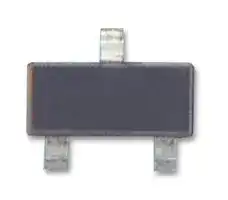


SI2333CDS-T1-E3
MOSFET, P CHANNEL, -12V, -7.1A, TO-236-3
- Manufacturer: VISHAY
- Product type: Single MOSFETs
- Channel Type:P Channel; Drain Source Voltage Vds:12V; Continuous Drain Current Id:7.1A; Transistor Mounting:Surface Mount; Rds(on) Test Voltage:4.5V; Gate Source Threshold Voltag
- MSL: -
- SVHC: No SVHC (25-Jun-2025)
- No. of Pins: 3Pins
- Channel Type: P Channel
- Product Range: -
- Qualification: -
- Power Dissipation: 2.5W
- Transistor Mounting: Surface Mount
- Rds(on) Test Voltage: 4.5V
- Transistor Case Style: SOT-23
- Drain Source Voltage Vds: 12V
- Operating Temperature Max: 150°C
- Continuous Drain Current Id: 7.1A
- Drain Source On State Resistance: 35mohm
- Gate Source Threshold Voltage Max: 400mV
| Delivery and price | |
|---|---|
| Units per pack | 250 |
| Price | 0.347 € |
| Current stock | 1000+ |
| Lead time | 7 days |

**Si2333CDS**

Vishay Siliconix

**==> picture [59 x 48] intentionally omitted <==**

## **P-Channel 12-V (D-S) MOSFET**

|**MOSFET PRODUCT SUMMARY**|**MOSFET PRODUCT SUMMARY**|**MOSFET PRODUCT SUMMARY**|**MOSFET PRODUCT SUMMARY**|
|---|---|---|---|
|**VDS (V)**|**RDS(on) (**Ω**)**|**ID (A)a**|**Qg (Typ.)**|
|- 12|0.035 at VGS= - 4.5 V|- 5.1|9 nC|
||0.045 at VGS= - 2.5 V|- 4.5||
||0.059 at VGS= - 1.8 V|- 3.9||


## **FEATURES**

- **Halogen-free According to IEC 61249-2-21 Definition**

- • TrenchFET[®] Power MOSFET • Compliant to RoHS Directive 2002/95/EC

## **APPLICATIONS**

**==> picture [37 x 84] intentionally omitted <==**

- Load Switch

- PA Switch

**==> picture [99 x 119] intentionally omitted <==**

**----- Start of picture text -----**<br>
TO-236<br>(SOT-23)<br>G 1<br>3 D<br>S 2<br>Top View<br>Si2333CDS (O3)*<br>**----- End of picture text -----**<br>


* Marking Code

**Ordering Information:** Si2333CDS-T1-E3 (Lead (Pb)-free) Si2333CDS-T1-GE3 (Lead (Pb)-free and Halogen-free)

|**ABSOLUTE MAXIMUM RATINGS**TA= 25 °C, unless otherwise noted|**ABSOLUTE MAXIMUM RATINGS**TA= 25 °C, unless otherwise noted|**ABSOLUTE MAXIMUM RATINGS**TA= 25 °C, unless otherwise noted|||
|---|---|---|---|---|
|**Parameter**||**Symbol**|**Limit**|**Unit**|
|Drain-Source Voltage||VDS|- 12|V|
|Gate-Source Voltage||VGS|± 8||
|Continuous Drain Current (TJ= 150 °C)|TC= 25 °C|ID|- 7.1|A|
||TC= 70 °C||- 5.7||
||TA= 25 °C||-5.1b, c||
||TA= 70 °C||-4.0b, c||
|Pulsed Drain Current||IDM|- 20||
|Continuous Source-Drain Diode Current|TC= 25 °C|IS|- 1.0||
||TA= 25 °C||-0.63b, c||
|Maximum Power Dissipation|TC= 25 °C|PD|2.5|W|
||TC= 70 °C||1.6||
||TA= 25 °C||1.25b, c||
||TA= 70 °C||0.8b, c||
|Operating Junction and Storage Temperature Range||TJ, Tstg|- 55 to 150|°C|


|**THERMAL RESISTANCE RATINGS**|**THERMAL RESISTANCE RATINGS**|**THERMAL RESISTANCE RATINGS**||||
|---|---|---|---|---|---|
|**Parameter**||**Symbol**|**Typical**|**Maximum**|**Unit**|
|Maximum Junction-to-Ambientb, d|≤5 s|RthJA|75|100|°C/W|
|Maximum Junction-to-Foot(Drain)|Steady State|RthJF|40|50||


Notes:

- a. Based on TC = 25 °C.

- b. Surface Mounted on 1" x 1" FR4 board.

- c.  t = 5 s.

- d.  Maximum under Steady State conditions is 166 °C/W.

Document Number: 68717 S09-2433-Rev. C, 16-Nov-09

www.vishay.com

1

**Si2333CDS**

## Vishay Siliconix

**==> picture [59 x 48] intentionally omitted <==**

|**MOSFET SPECIFICATIONS**TJ= 25 °C, unless otherwise noted|**MOSFET SPECIFICATIONS**TJ= 25 °C, unless otherwise noted|**MOSFET SPECIFICATIONS**TJ= 25 °C, unless otherwise noted|||||
|---|---|---|---|---|---|---|
|**Parameter**|**Symbol**|**Test Conditions**|**Min.**|**Typ.**|**Max.**|**Unit**|
|**Static**|||||||
|Drain-Source Breakdown Voltage|VDS|VDS= 0 V, ID= - 250 µA|- 12|||V|
|VDSTemperature Coefficient|ΔVDS/TJ|ID= - 250 µA||- 13||mV/°C|
|VGS(th)Temperature Coefficient|ΔVGS(th)/TJ|||2.6|||
|Gate-Source Threshold Voltage|VGS(th)|VDS= VGS, ID= - 250 µA|- 0.4||- 1|V|
|Gate-Source Leakage|IGSS|VDS= 0 V, VGS= ± 8 V|||± 100|nA|
|Zero Gate Voltage Drain Current|IDSS|VDS= - 12 V, VGS= 0 V|||- 1|µA|
|||VDS= - 12 V, VGS= 0 V, TJ= 55 °C|||- 10||
|On-State Drain Currenta|ID(on)|VDS≤- 5 V, VGS= - 4.5 V|- 20|||A|
|Drain-Source On-State Resistancea|RDS(on)|VGS= - 4.5 V, ID= - 5.1 A||0.0285|0.035|Ω|
|||VGS= - 2.5 V, ID= - 4.5 A||0.036|0.045||
|||VGS= - 1.8 V, ID= - 2.0 A||0.046|0.059||
|Forward Transconductancea|gfs|VDS= - 5 V, ID= - 5.3 A||18.5||S|
|**Dynamicb**|||||||
|Input Capacitance|Ciss|VDS= - 6 V, VGS= 0 V, f = 1 MHz||1225||pF|
|Output Capacitance|Coss|||315|||
|Reverse Transfer Capacitance|Crss|||260|||
|Total Gate Charge|Qg|VDS= - 6 V, VGS= - 4.5 V, ID= - 5.1 A||15|25|nC|
|||VDS= - 6 V, VGS= - 2.5 V, ID= - 5.1 A||9|15||
|Gate-Source Charge|Qgs|||1.9|||
|Gate-Drain Charge|Qgd|||3.8|||
|Gate Resistance|Rg|f = 1 MHz||4.0||Ω|
|Turn-On Delay Time|td(on)|VDD= - 6 V, RL= 6Ω<br>ID= - 1 A, VGEN= - 4.5 V, RG= 1Ω||13|20|ns|
|Rise Time|tr|||35|60||
|Turn-Off Delay Time|td(off)|||45|70||
|Fall Time|tf|||12|20||
|**Drain-Source Body Diode Characteristics**|||||||
|Continuous Source-Drain Diode Current|IS|TC= 25 °C|||- 1.0|A|
|Pulse Diode Forward Currenta|ISM||||- 20||
|Body Diode Voltage|VSD|IS= - 1.0 A||- 0.7|- 1.2|V|
|Body Diode Reverse Recovery Time|trr|IF= - 1.0 A, dI/dt = 100 A/µs, TJ= 25 °C||32|50|ns|
|Body Diode Reverse Recovery Charge|Qrr|||20|40|nC|
|Reverse Recovery Fall Time|ta|||16||ns|
|Reverse Recovery Rise Time|tb|||16|||


Notes:

a. Pulse test; pulse width ≤ 300 µs, duty cycle ≤ 2 %.

b. Guaranteed by design, not subject to production testing.

_Stresses beyond those listed under “Absolute Maximum Ratings” may cause permanent damage to the device. These are stress ratings only, and functional operation of the device at these or any other conditions beyond those indicated in the operational sections of the specifications is not implied. Exposure to absolute maximum rating conditions for extended periods may affect device reliability._

www.vishay.com 2

Document Number: 68717 S09-2433-Rev. C, 16-Nov-09

**Si2333CDS**

Vishay Siliconix

**==> picture [59 x 48] intentionally omitted <==**

## **TYPICAL CHARACTERISTICS** 25 °C, unless otherwise noted

**==> picture [218 x 398] intentionally omitted <==**

**----- Start of picture text -----**<br>
20<br>VGS = 5 V thru 2.5 V<br>VGS = 2 V<br>15<br>10<br>VGS = 1.5 V<br>5<br>VGS = 1 V<br>0<br>0.0 0.5 1.0 1.5 2.0<br>VDS - Drain-to-Source Voltage (V)<br>Output Characteristics<br>0.10<br>0.08<br>0.06<br>VGS = 1.8 V<br>VGS = 2.5 V<br>0.04<br>0.02 VGS = 4.5 V<br>0.00<br>0 5 10 15 20<br>ID - Drain Current (A)<br>- Drain Current (A)<br>I D<br>)Ω<br>- On-Resistance (<br>DS(on)<br>R<br>**----- End of picture text -----**<br>


**==> picture [192 x 9] intentionally omitted <==**

**----- Start of picture text -----**<br>
On-Resistance vs. Drain Current and Gate Voltage<br>**----- End of picture text -----**<br>


**==> picture [218 x 199] intentionally omitted <==**

**----- Start of picture text -----**<br>
8<br>ID = 5.1 A<br>VDS = 3 V<br>6<br>VDS = 6 V<br>4 VDS = 9 V<br>2<br>0<br>0 5 10 15 20 25<br>Qg - Total Gate Charge (nC)<br>Gate Charge<br>- Gate-to-Source Voltage (V)<br>GS<br>V<br>**----- End of picture text -----**<br>


**==> picture [217 x 187] intentionally omitted <==**

**----- Start of picture text -----**<br>
2.0<br>1.5<br>TC = 25 °C<br>1.0<br>0.5<br>TC = 125 °C<br>TC = - 55 °C<br>0.0<br>0.0 0.3 0.6 0.9 1.2 1.5<br>VGS - Gate-to-Source Voltage (V)<br>- Drain Current (A)<br>I D<br>**----- End of picture text -----**<br>


**==> picture [93 x 7] intentionally omitted <==**

**----- Start of picture text -----**<br>
Transfer Characteristics<br>**----- End of picture text -----**<br>


**==> picture [215 x 199] intentionally omitted <==**

**----- Start of picture text -----**<br>
2400<br>1800<br>Ciss<br>1200<br>600 Coss<br>Crss<br>0<br>0 3 6 9 12<br>VDS - Drain-to-Source Voltage (V)<br>Capacitance<br>C - Capacitance (pF)<br>**----- End of picture text -----**<br>


**==> picture [222 x 198] intentionally omitted <==**

**----- Start of picture text -----**<br>
1.6<br>ID = 5.1 A<br>1.4 VGS = 2.5 V<br>1.2<br>VGS = 4.5 V<br>1.0<br>0.8<br>0.6<br>- 50 - 25 0 25 50 75 100 125 150<br>TJ - Junction Temperature (°C)<br>  On-Resistance vs. Junction Temperature<br>- On-Resistance<br>(Normalized)<br>DS(on)<br>R<br>**----- End of picture text -----**<br>


Document Number: 68717 S09-2433-Rev. C, 16-Nov-09

www.vishay.com

3

**Si2333CDS**

## Vishay Siliconix

**==> picture [59 x 48] intentionally omitted <==**

## **TYPICAL CHARACTERISTICS** 25 °C, unless otherwise noted

**==> picture [485 x 404] intentionally omitted <==**

**----- Start of picture text -----**<br>
100 0.14<br>ID = 5.1 A<br>0.12<br>10 TJ = 150 °C<br>0.10<br>1<br>TJ = 25 °C 0.08<br>0.06<br>0.1<br>TJ = 125 °C<br>0.04<br>TJ = - 55 °C<br>0.01<br>0.02 TJ = 25 °C<br>0.001 0.00<br>0.0 0.2 0.4 0.6 0.8 1.0 1.2 0 1 2 3 4 5<br>VSD - Source-to-Drain Voltage (V) VGS - Gate-to-Source Voltage (V)<br> Source-Drain Diode Forward Voltage On-Resistance vs. Gate-to-Source Voltage<br>0.4 10<br>0.3<br>8<br>ID = 250 µA<br>0.2<br>6<br>ID = 1 mA<br>0.1<br>4<br>0.0<br>- 0.1 2 TA = 25 °C<br>- 0.2 0<br>- 50 - 25 0 25 50 75 100 125 150 0.01 0.1 1 10 100 1000<br>TJ - Temperature (°C) Time (s)<br>             Threshold Voltage             Single Pulse Power<br>)Ω<br>- Source Current (A) - On-Resistance (<br>I S<br>DS(on)<br>R<br>Variance (V)<br>Power (W)<br>GS(th)<br>V<br>**----- End of picture text -----**<br>


**==> picture [213 x 193] intentionally omitted <==**

**----- Start of picture text -----**<br>
100<br>Limited by RDS(on)*<br>100 µs<br>10<br>1 ms<br>1 10 ms<br>100 ms<br>0.1 1 s, 10 s<br>TA = 25 °C 100 s, DC<br>Single Pulse BVDSS<br>Limited<br>0.01<br>0.1 1 10 100<br>VDS - Drain-to-Source Voltage (V)<br>* VGS > minimum VGS at which RDS(on) is specified<br>Drain Current (A)<br>-<br>ID<br>**----- End of picture text -----**<br>


**==> picture [78 x 9] intentionally omitted <==**

**----- Start of picture text -----**<br>
Safe Operating Area<br>**----- End of picture text -----**<br>


www.vishay.com 4

Document Number: 68717 S09-2433-Rev. C, 16-Nov-09

**Si2333CDS**

**==> picture [59 x 48] intentionally omitted <==**

Vishay Siliconix

## **TYPICAL CHARACTERISTICS** 25 °C, unless otherwise noted

**==> picture [472 x 399] intentionally omitted <==**

**----- Start of picture text -----**<br>
1<br>Duty Cycle = 0.5<br>0.2<br>0.1<br>0.1<br>0.05<br>0.02<br>Single Pulse<br>0.01<br>10 [-4] 10 [-3] 10 [-2] 10 [-1] 1 10 100 1000<br>Square Wave Pulse Duration (s)<br>Normalized Thermal Transient Impedance, Junction-to-Ambient<br>1<br>Duty Cycle = 0.5<br>0.2<br>0.1 Notes:<br>0.1 PDM<br>0.05 t1<br>0.02 1. Duty Cycle, D =t2 tt12<br>2. Per Unit Base = RthJF = 50 °C/W<br>3. TJM - TA = PDMZthJA [(t)]<br>Single Pulse 4. Surface Mounted<br>0.01<br>10 [-4] 10 [-3] 10 [-2] 10 [-1] 1 10<br>Square Wave Pulse Duration (s)<br>Normalized Thermal Transient Impedance, Junction-to-Foot<br>Thermal Impedance<br>Normalized Effective Transient<br>Thermal Impedance<br>Normalized Effective Transient<br>**----- End of picture text -----**<br>


_Vishay Siliconix maintains worldwide manufacturing capability. Products may be manufactured at one of several qualified locations. Reliability data for Silicon Technology and Package Reliability represent a composite of all qualified locations. For related documents such as package/tape drawings, part marking, and reliability data, see www.vishay.com/ppg?68717._

Document Number: 68717 S09-2433-Rev. C, 16-Nov-09

www.vishay.com

5

**==> picture [59 x 49] intentionally omitted <==**

## **Package Information**

## Vishay Siliconix

## **SOT-23 (TO-236): 3-LEAD**

**==> picture [439 x 259] intentionally omitted <==**

**----- Start of picture text -----**<br>
b<br>3<br>E1 E<br>1 2<br>S e<br>e1<br>D<br>0.10 mm<br>C<br>0.004" C 0.25 mm<br>A A2 q<br>Gauge Plane<br>Seating Plane Seating Plane<br>A1 C L<br>L1<br>**----- End of picture text -----**<br>


|**Dim**|**MILLIMETERS**|**MILLIMETERS**|**INCHES**|**INCHES**|
|---|---|---|---|---|
||**Min**|**Max**|**Min**|**Max**|
|**A**|0.89|1.12|0.035|0.044|
|**A1**|0.01|0.10|0.0004|0.004|
|**A2**|0.88|1.02|0.0346|0.040|
|**b**|0.35|0.50|0.014|0.020|
|**c**|0.085|0.18|0.003|0.007|
|**D**|2.80|3.04|0.110|0.120|
|**E**|2.10|2.64|0.083|0.104|
|**E1**|1.20|1.40|0.047|0.055|
|**e**|0.95 BSC||0.0374 Ref||
|**e1**|1.90 BSC||0.0748 Ref||
|**L**|0.40|0.60|0.016|0.024|
|**L1**|0.64 Ref||0.025 Ref||
|**S**|0.50 Ref||0.020 Ref||
|**q**|3°|8°|3°|8°|
|ECN: S-03946-Rev. K, 09-Jul-01<br>DWG: 5479|||||


Document Number: 71196 09-Jul-01

www.vishay.com

1

**AN807** ~~So~~ **Vishay Siliconix**

## **Mounting LITTLE FOOT SOT-23 Power MOSFETs**

## _Wharton McDaniel_

Surface-mounted LITTLE FOOT power MOSFETs use integrated circuit and small-signal packages which have been been modified to provide the heat transfer capabilities required by power devices. Leadframe materials and design, molding compounds, and die attach materials have been changed, while the footprint of the packages remains the same.

See Application Note 826, _Recommended Minimum Pad Patterns With Outline Drawing Access for Vishay Siliconix MOSFET_ s, (http://www.vishay.com/doc?72286), for the basis of the pad design for a LITTLE FOOT SOT-23 power MOSFET footprint .  In converting this footprint to the pad set for a power device, designers must make two connections: an electrical connection and a thermal connection, to draw heat away from the package.

ambient air.  This pattern uses all the available area underneath the body for this purpose.

**==> picture [152 x 130] intentionally omitted <==**

**----- Start of picture text -----**<br>
0.114<br>2.9<br>0.081<br>2.05<br>0.150<br>3.8<br>0.059<br>1.5<br>0.0394 0.037<br>1.0 0.95<br>**----- End of picture text -----**<br>


**FIGURE 1.** Footprint With Copper Spreading

The electrical connections for the SOT-23 are very simple.  Pin 1 is the gate, pin 2 is the source, and pin 3 is the drain.  As in the other LITTLE FOOT packages, the drain pin serves the additional function of providing the thermal connection from the package to the PC board.  The total cross section of a copper trace connected to the drain may be adequate to carry the current required for the application, but it may be inadequate thermally.  Also, heat spreads in a circular fashion from the heat source.  In this case the drain pin is the heat source when looking at heat spread on the PC board.

Since surface-mounted packages are small, and reflow soldering is the most common way in which these are affixed to the PC board, “thermal” connections from the planar copper to the pads have not been used.  Even if additional planar copper area is used, there should be no problems in the soldering process.  The actual solder connections are defined by the solder mask openings.  By combining the basic footprint with the copper plane on the drain pins, the solder mask generation occurs automatically.

Figure 1 shows the  footprint with copper spreading for the SOT-23 package.  This pattern shows the starting point for utilizing the board area available for the heat spreading copper.  To create this pattern, a plane of copper overlies the drain pin and provides planar copper to draw heat from the drain lead and start the process of spreading the heat so it can be dissipated into the

A final item to keep in mind is the width of the power traces.  The absolute minimum power trace width must be determined by the amount of current it has to carry.  For thermal reasons, this minimum width should be at least 0.020 inches.  The use of wide traces connected to the drain plane provides a low-impedance path for heat to move away from the device.

Document Number:  70739 26-Nov-03

www.vishay.com

**1**

**Application Note 826**

**==> picture [60 x 50] intentionally omitted <==**

## Vishay Siliconix

## **RECOMMENDED MINIMUM PADS FOR SOT-23**

**==> picture [231 x 303] intentionally omitted <==**

**----- Start of picture text -----**<br>
0.037 0.022<br>(0.950) (0.559)<br>0.053<br>(1.341)<br>0.097<br>(2.459)<br>Recommended Minimum Pads<br>Dimensions in Inches/(mm)<br>0.106 (2.692) 0.049 (1.245)<br>0.029 (0.724)<br>**----- End of picture text -----**<br>


> Return to Index Return to Index

Document Number: 72609 Revision: 21-Jan-08

www.vishay.com 25

**Legal Disclaimer Notice** Vishay

www.vishay.com

**==> picture [59 x 48] intentionally omitted <==**

## **Disclaimer**

ALL PRODUCT, PRODUCT SPECIFICATIONS AND DATA ARE SUBJECT TO CHANGE WITHOUT NOTICE TO IMPROVE RELIABILITY, FUNCTION OR DESIGN OR OTHERWISE.

Vishay Intertechnology, Inc., its affiliates, agents, and employees, and all persons acting on its or their behalf (collectively, “Vishay”), disclaim any and all liability for any errors, inaccuracies or incompleteness contained in any datasheet or in any other disclosure relating to any product.

Vishay makes no warranty, representation or guarantee regarding the suitability of the products for any particular purpose or the continuing production of any product.  To the maximum extent permitted by applicable law, Vishay disclaims (i) any and all liability arising out of the application or use of any product, (ii) any and all liability, including without limitation special, consequential or incidental damages, and (iii) any and all implied warranties, including warranties of fitness for particular purpose, non-infringement and merchantability.

Statements regarding the suitability of products for certain types of applications are based on Vishay’s knowledge of typical requirements that are often placed on Vishay products in generic applications.  Such statements are not binding statements about the suitability of products for a particular application.  It is the customer’s responsibility to validate that a particular product with the properties described in the product specification is suitable for use in a particular application.  Parameters provided in datasheets and/or specifications may vary in different applications and performance may vary over time.  All operating parameters, including typical parameters, must be validated for each customer application by the customer’s technical experts. Product specifications do not expand or otherwise modify Vishay’s terms and conditions of purchase, including but not limited to the warranty expressed therein.

Except as expressly indicated in writing, Vishay products are not designed for use in medical, life-saving, or life-sustaining applications or for any other application in which the failure of the Vishay product could result in personal injury or death. Customers using or selling Vishay products not expressly indicated for use in such applications do so at their own risk.  Please contact authorized Vishay personnel to obtain written terms and conditions regarding products designed for such applications.

No license, express or implied, by estoppel or otherwise, to any intellectual property rights is granted by this document or by any conduct of Vishay.  Product names and markings noted herein may be trademarks of their respective owners.

## **Material Category Policy**

**Vishay Intertechnology, Inc. hereby certifies that all its products that are identified as RoHS-Compliant fulfill the definitions and restrictions defined under Directive 2011/65/EU of The European Parliament and of the Council of June 8, 2011 on the restriction of the use of certain hazardous substances in electrical and electronic equipment (EEE) - recast, unless otherwise specified as non-compliant.**

**Please note that some Vishay documentation may still make reference to RoHS Directive 2002/95/EC. We confirm that all the products identified as being compliant to Directive 2002/95/EC conform to Directive 2011/65/EU.**

**Vishay Intertechnology, Inc. hereby certifies that all its products that are identified as Halogen-Free follow Halogen-Free requirements as per JEDEC JS709A standards.  Please note that some Vishay documentation may still make reference to the IEC 61249-2-21 definition.  We confirm that all the products identified as being compliant to IEC 61249-2-21 conform to JEDEC JS709A standards.**

Revision: 02-Oct-12

Document Number: 91000

**1**
Updated at March 15, 2026
Vishay is a global leader in the manufacturing of discrete semiconductors and passive electronic components. Renowned for its exceptional quality and engineering expertise, the company produces highly reliable solutions that drive innovation across the industrial, automotive, telecommunications, and consumer electronics markets. From advanced factory automation to vehicle electrification, Vishay components provide the foundational building blocks for modern electronic design. The company's expansive portfolio is heavily focused on efficient power management, signal routing, and energy storage. Within its passive component lineup, Vishay is recognized for its extensive array of high-performance capacitors, including robust aluminium electrolytic, film, and polymer variants, alongside highly efficient power inductors. In the realm of discrete semiconductors, Vishay is a premier manufacturer of single and dual MOSFETs, as well as a vast selection of Schottky, Zener, and fast-recovery rectifier diodes designed for demanding power applications. Furthermore, Vishay delivers industry-leading circuit protection and thermal management solutions. With a broad offering of transient voltage suppressors (TVS diodes) and temperature-sensing NTC thermistors, these components are engineered to safeguard sensitive circuitry against both electrical and thermal overstress. By combining this vital mix of advanced discretes and passives, Vishay enables engineers to develop robust, space-saving, and highly resilient electronic systems.
About Novapart
Novapart is a B2B electronic component broker specialising in stock shortages and cost reduction. We source hard-to-find parts and identify compliant alternatives across a catalogue of 410,000+ components from 500+ manufacturers.
Learn more →Stock Shortage Specialist
When a component is unavailable, discontinued or has an unacceptable lead time, we tap into our network of vetted European and Asian distributors to source what you need — without compromising on quality or traceability.
Request a quote →Compliant Alternatives
We identify pin-to-pin, electrically equivalent substitutes that meet the same certifications (RoHS, AEC-Q100, REACH) as your original specification — validated against datasheets, not just part numbers. Often at a lower cost.
BOM Analysis service →