
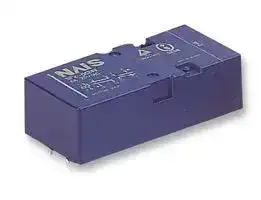


SF2-DC12V
Safety Relay, 12 VDC, DPST-NO, DPST-NC, SF Series, Through Hole, 6 A, Solder
- Manufacturer: PANASONIC
- Product type: Safety Relays
- Coil Voltage:12VDC; Contact Configuration:DPST-NO, DPST-NC; Product Range:SF Series; Relay Mounting:Through Hole; Contact Current:6A; Relay Terminals:Solder; Contact Voltage AC Nom
- SVHC: No SVHC (07-Jul-2017)
- IP Rating: -
- Coil Voltage: 12VDC
- Product Range: SF Series
- Relay Mounting: Through Hole
- Contact Current: 6A
- Relay Terminals: Solder
- Contact Material: Silver Tin Oxide
- Contact Configuration: DPST-NO, DPST-NC
- Contact Voltage AC Nom: 250V
- Contact Voltage DC Nom: -
| Delivery and price | |
|---|---|
| Units per pack | 1 |
| Price | 12.48 € |
| Current stock | 10+ |
| Lead time | 30 days |

SF

(SF3 pending) (SF3 pending) (SF3 pending)

## **POLARISED, MONOSTABLE SAFETY RELAY with (mechanical linked) forced contacts operation** ~~oe~~

## **FEATURES**

**==> picture [161 x 165] intentionally omitted <==**

**----- Start of picture text -----**<br>
π 25.0<br>53.3±0.3 NN .984<br>2.098±.012<br>16.5±0.3<br>oN — = .650±.012<br>25.0<br>53.3±0.3 NN .984<br>2.098±.012<br>16.5±0.3<br>.650±.012<br>FF<br>53.3±0.3 Ns 331.299±0.3±.012<br>2.098±.012<br>16.5±0.3<br>.650±.012<br>mm inch<br>**----- End of picture text -----**<br>


## **• Forced operation contacts (2 Form A**

## **2 Form B, 3 Form A  1 Form B)**

N.O. and N.C. side contacts are

connected through a card so that one interacts with the other in movement. In case of a contact welding, the other keeps a min. 0.5mm .020inch contact gap.

## **• Independent operation contacts**

## **(4 Form A  4 Form B)**

Each pair of contacts is free from the main armature and is independent from each other. So if a N.O. pair of contacts are welded, the other 3 N.O. contacts are not effected (operate properly)  That

## SF-RELAYS

enables to plan a circuit to detect welding or go back to the beginning condition.

**• Separated chamber structure (2 Form A  2 Form B, 3 Form A  1 Form B,**

**4 Form A  4 Form B)**

N.O. and N.C. side contacts are put in each own space surrounded with a card and a body-separater. That prevents short circuit between contacts, which is caused by their springs welding or damaged.

- **UL/CSA, TÜV, SEV approved**

(UL/CSA, SEV of SF3 pending)

## **SPECIFICATIONS**

## **Contact**

|**SPECIFICATIONS**||=||
|---|---|---|---|
||SF2|SF3<br>=|SF4|
|Arrangement|2 Form A<br>2 Form B|3 Form A<br>1 Form B<br>=|4 Form A<br>4 Form B|
|Initial contact resistance, max.<br>(By voltage drop 6 V DC 1 A)|30 m<br>Ω<br>Gold-flashed silver alloy|||
|Contact material|Gold-flashed silver alloy|||
|Nominal switching<br>capacity<br>—~—ST|6 A 250 V AC, 6 A 30 V DC|||
|Max. switching power<br>—~—ST|1,500 VA, 180 W|||
|Max. switching voltage<br>———<br>—~—ST|30 V DC, 440 V AC|||
|Max. carrying current<br>———|6 A DC, AC|||
|Mechanical (at 180<br>cpm) (resistive)<br>———<br>ee|10<br>7|||
|Electrical (at 20 cpm)<br>ee|3<br>×<br>10<br>4<br>*<br>1||10<br>5|
|(at 25°C77°F)<br>ee<br>a||||
|Nominal operating power<br>a|500 mW|||


## **Coil** (at 25°C 77°F) Nominal operating power **Remarks** a

*1 More than 105 operations when applying the nominal switching capacity to one side of contact pairs of each Form A contact and Form B contact

- *2 Measurement at same location as " Initial breakdown voltage " section

- *3 Detection current: 10mA

- *4 Excluding contact bounce time

*5 Half-wave pulse of sine wave: 11ms; detection time: 10µs

- *6 Half-wave pulse of sine wave: 6ms

*7 Detection time: 10µs *8 Refer to 5. Conditions for operation, transport and storage mentioned in AMBIENT ENVIRONMENT (Page 61).

|**Characteristics**<br>(at 25°C77°F|77°F, 50% Relative humidity)<br>ee|, 50% Relative humidity)|, 50% Relative humidity)|
|---|---|---|---|
||SF2<br>ee|SF3|SF4|
|Max. operating speed|180 cpm (at nominal voltage)<br>ee|||
|Initial insulation resistance*<br>2|Min. 1,000 M<br>Ω<br>at 500 V DC<br>ee|||
|Between con-<br>tact sets|2,500 Vrms|||
|Between open<br>contacts<br>||2,500 Vrms|||
|Between con-<br>tact and coil<br>|<br>Pe|2,500 Vrms<br>Pe|||
|(at nominal voltage)<br>|<br>Pe<br>fF|Approx. 17 ms<br>Pe<br>fF||Approx. 18 ms|
|Release time (without diode)*<br>4<br>(at nominal voltage)<br>Pe<br>fF|Approx. 7 ms<br>Pe<br>fF||Approx. 6 ms|
|Temperature rise<br>(at nominal voltage)<br>fF|Max. 45<br>°<br>C with nominal coil voltage<br>and at 6 A switching current<br>fF|||
|Functional*<br>5<br>rtCi=sd|Min. 294 m/s<br>2<br>{30 G}|||
|Destructive*<br>5<br>—|Min. 980 m/s<br>2<br>{100 G}|||
|Functional*<br>7<br>—|117.6 m/s<br>2<br>{12 G}, 10 to 55 Hz<br>at double amplitude of 2 mm|||
|Destructive|117.6 m/s<br>2<br>{12 G}, 10 to 55 Hz<br>at double amplitude of 2 mm|||
|Ambient<br>temp.|–40<br>°<br>C to +70<br>°<br>C–40°F to +158°F|||
|Humidity|5 to 85% R.H.|||
||37 g1.31 oz<br>pT||47 g1.66 oz|


## **ORDERING INFORMATION**

|**ORDERING INFORMATION**|**ORDERING INFORMATION**|
|---|---|
|Ex.  SF<br>2<br>DC 12 V||
|Contact arrangement|Coil voltage|
|2: 2 Form A 2 Form B<br>3: 3 Form A 1 Form B<br>4: 4 Form A 4 Form B|DC 5, 9, 12, 18, 21,<br>24, 36, 48, 60 V|


## **TYPICAL APPLICATIONS**

- **Signal**

- **Escalator**

- **Elevator**

- **Medical Instruments**

- **Railway**

- **Factory Automation**

258

SF

## **TYPES AND COIL DATA (at 20°C 68°F)**

|Part No.<br>es|Nominal<br>voltage, V DC<br>es|Nominal<br>voltage, V DC<br>Pick-up<br>voltage, VDC<br>(max.)<br>es|Drop-out<br>voltage, V DC<br>(min.)|Coil<br>resistance<br>Ω<br>(<br>±<br>10%)|Coil<br>resistance<br>Nominal<br>operating<br>current,<br>mA(<br>±<br>10%)|Nominal<br>operating<br>power, mW|Max. allowable<br>voltage, V DC|
|---|---|---|---|---|---|---|---|
|SF2-DC5V<br>es<br>es|5<br>es<br>ee|3.75<br>es<br>eeen|0.5|50|100|500|6|
|SF2-DC9V<br>es<br>es<br>Rs|9<br>es<br>ee<br>ee|6.75<br>es<br>eeen<br>ee|0.9|||500|10.8|
|SF2-DC12V<br>es <br>Rs<br>a|12<br> ee<br>ee<br>es|9<br>eeen<br>ee<br>es|1.2|288|41.7|500|14.4|
|SF2-DC18V<br>Rs <br>a<br>a|18<br> ee<br>es<br>ee|13.5<br>ee<br>es<br>ee|1.8|||500|21.6|
|SF2-DC21V<br>a<br>a<br>es|21<br>es<br>ee<br>ee|15.75<br>es<br>ee<br>ee|2.1|||500|25.2|
|SF2-DC24V<br>a<br>es<br>es|24<br>ee<br>ee<br>es|14.4<br>ee<br>ee<br>es|2.4|1.152|20.8|500|28.8|
|SF2-DC36V<br>es <br>es<br>es|36<br> ee<br>es<br>ee|27<br>ee<br>es<br>eeen|3.6|||500|43.2|
|SF2-DC48V<br>es<br>es<br>Rs|48<br>es<br>ee<br>ee|36<br>es<br>eeen<br>ee|4.8|4.608|10.4|500|57.6|
|SF2-DC60V<br>es <br>Rs|60<br> ee<br>ee|45<br>eeen<br>ee|6.0|7.200|8.3|500|72|
|SF3-DC5V<br>Rs <br>a<br>a|5<br> ee<br>en<br>ee|3.75<br>ee<br>en<br>ee|0.5|50|100|500|6|
|SF3-DC9V<br>a<br>es|9<br>ee<br>es|6.75<br>ee<br>esen|0.9|||500|10.8|
|SF3-DC12V<br>a<br>es<br>es|12<br>ee<br>es<br>es|9<br>ee<br>esen<br>es|1.2|288|41.7|500|14.4|
|SF3-DC18V<br>es <br>es<br>es|18<br> es<br>es<br>ee|13.5<br>esen<br>es<br>eeen|1.8|||500|21.6|
|SF3-DC21V<br>es<br>es<br>Rs|21<br>es<br>ee<br>ee|15.75<br>es<br>eeen<br>ee|2.1|||500|25.2|
|SF3-DC24V<br>es <br>Rs<br>a|24<br> ee<br>ee<br>es|14.4<br>eeen<br>ee<br>es|2.4|1.152|20.8|500|28.8|
|SF3-DC36V<br>Rs <br>a<br>a|36<br> ee<br>es<br>ee|27<br>ee<br>es<br>ee|3.6|||500|43.2|
|SF3-DC48V<br>a<br>a<br>es|48<br>es<br>ee<br>es en|36<br>es<br>ee<br>es en|4.8|4.608|10.4|500|57.6|
|SF3-DC60V<br>a<br>es<br>es|60<br>ee<br>es en<br>es|45<br>ee<br>es en<br>es|6.0|7.200|8.3|500|72|
|SF4-DC5V<br>es<br>es<br>es|5<br>es en<br>es<br>ee|3.75<br>es en<br>es<br>eeen|0.75|50|100|500|6|
|SF4-DC9V<br>es<br>es<br>Rs|9<br>es<br>ee<br>ee|6.75<br>es<br>eeen<br>ee|0.9|||500|10.8|
|SF4-DC12V<br>es <br>Rs<br>a|12<br> ee<br>ee<br>es|9<br>eeen<br>ee<br>es|1.8|288|41.7|500|14.4|
|SF4-DC18V<br>Rs <br>a<br>a|18<br> ee<br>es<br>ee|13.5<br>ee<br>es<br>ee|1.8|||500|21.6|
|SF4-DC21V<br>a<br>a<br>es|21<br>es<br>ee<br>ee|15.75<br>es<br>ee<br>ee|2.1|||500|25.2|
|SF4-DC24V<br>a<br>es<br>es|24<br>ee<br>ee<br>es|14.4<br>ee<br>ee<br>es|3.6|1.152|20.8|500|28.8|
|SF4-DC36V<br>es <br>es<br>es|36<br> ee<br>es<br>ee|27<br>ee<br>es<br>eeen|3.6|||500|43.2|
|SF4-DC48V<br>es<br>es<br>ne|48<br>es<br>ee<br>en|36<br>es<br>eeen<br>en|7.2|4.608|10.4|500|57.6|
|SF4-DC60V<br>es <br>ne|60<br> ee<br>en|45<br>eeen<br>en|9.0|7.200|8.3|500|72|


## **DIMENSIONS**

1) SF2

**==> picture [404 x 212] intentionally omitted <==**

**----- Start of picture text -----**<br>
mm inch<br>Schematic (Bottom view)<br>5 6 7 8<br>1<br>16±0.3<br>.630±.012<br>UJ LLU mi ‘ TP LP<br>2<br>0.5 9 10 11 12<br>.020<br>5.08.200 12.7 .500 12.7 .500 12.7 .500 .1383.5±.012±0.3 PC board pattern (Bottom view)<br>53.3±0.3<br>2.098±.012 2.54.100 10-.055 DIA. HOLES10-1.4 DIA. HOLES<br>5 6 7 8 2.54<br>25.0 — —S .100 scr<br>.984 [ 1 ee ESSE SEE EEUEEEEEELSS<br>7.62 12.7<br>.300 .500<br>2 LATY ETT TY ere<br>aPo~ - - - | EEREDeereEEE EEE EEE BE<br>9 10 11 12<br>4 C100 | REEEERErere eeeEEEeeEH<br>[YTLT  ATTATTTTALTTTTAL<br>General tolerance: ±0.3 ±.012 CyLT typeTTTtT eeeyyyeeeeye y yyyeyeyysyy<br>CTT [TTPTTTTT] TTT rt Tyee<br>Tolerance: ±0.1 ± .004<br>**----- End of picture text -----**<br>


259

SF

## 2) SF3

**==> picture [403 x 213] intentionally omitted <==**

**----- Start of picture text -----**<br>
mm inch<br>Schematic (Bottom view)<br>5 6 7 8<br>1<br>16±0.3<br>.630±.012<br>2<br>ky 0.5 is 9 10 11 12<br>.020<br>5.08.200 12.7 .500 12.7 .500 12.7 .500 .1383.5±.012±0.3 PC board pattern (Bottom view)<br>53.3±0.3<br>2.098±.012 2.54.100 10-.055 DIA. HOLES10-1.4 DIA. HOLES<br>= = 5 6 7 1 8 2.54 —_<br>25.0 .100<br>.984 1<br>7.62 12.7<br>.300 .500<br>2<br>a= 9 10 S 11 12 = fii tty yeyee<br>ET aeereneee seers<br>General tolerance: ±0.3 ±.012 FEREEEEEEEEE<br>EEEEEEEEEEEEEEEEEEH<br>Tolerance: ±0.1 ±.004<br>**----- End of picture text -----**<br>


## 3) SF4

**==> picture [401 x 242] intentionally omitted <==**

**----- Start of picture text -----**<br>
Schematic (Bottom view)<br>Wy | 16±0.3 2 13 14 15 oe 16<br>.630±.012 1<br>5 6 7 8<br>0.3 9 10 11 12<br>.012<br>2<br>3.5±0.3<br>5.08 12.7 .500 12.7 .500 12.7 .500 .138±.012<br>.200 17 18 19 20<br>53.3±0.3<br>2.098±.012<br>[| —__<br>13 14 15 16 7.62<br>1.29933± | ±0.3.012 1 [(coe] a 5 5 6 7 8 ] .300 PC board pattern (Bottom view)<br>7.62.300 2 12.7.500 2.54.100 18-.055 DIA. HOLES18-1.4 DIA. HOLES<br>(| 17 a 9 1018 a 1119 a 1220 o 7.62.300 2.54.100 HELTT ATT ITS Tp ETT<br>CoP TeTey<br>EEEEEEEEE<br>General tolerance: ±0.3 ±.012 Ree<br>EEREREE<br>Tolerance: ±0.1 ±.004<br>**----- End of picture text -----**<br>


## **REFERENCE DATA**

## 1. Operate/release time

## 2. Coil temperature rise

Coil applied voltage: 120%V Contact switching current: 6A

3. Ambient temperature characteristics Tested sample: SF4-DC12V Quantity: n = 6

**==> picture [492 x 135] intentionally omitted <==**

**----- Start of picture text -----**<br>
50 60 100<br>Drop-out<br>40 50 voltage<br>PEL ET He 50 -Ey<br>40 Pick-up<br>30 voltage<br>-40 -20 0<br>Saaea Operate time e 30 Inside the coil te 20 40 60 80<br>20 a an Max. 20 a= Ambienttemperature, °C<br>Min. x Contact -50<br>10<br>I SS Release time Max. 10 PEcoae eE P<br>x<br>Min.<br>0 0 -100<br>80 90 100 110 120 30 50 70<br>Coil applied voltage, %V Ambient temperature, °C<br>CTemperature rise, ° Rate of change, %<br>Operate/release time, ms<br>**----- End of picture text -----**<br>


260

SF

## **SAFETY STRUCTURE OF SF RELAYS**

This SF relay design ensures that subsequent operations shut down and can automatically return to a safe state when the SF relay suffers overloading and other circuit abnormalities (unforeseen

externally caused circuit or device breakdowns, end of life incidents, and noise, surge, and environmental influences) owing to contact welding, spring fusion or, in the worst-case

scenario, relay breakdown (coil rupture, faulty operation, faulty return, and fatigue and breakage of the operating spring and return spring), and even in the event of end of life.

|SF|SF|SF|SF|SF|
|---|---|---|---|---|
|**SAFETY STRUCTURE OF SF RELAYS**<br>This SF relay design ensures that<br>subsequent operations shut down and can<br>automatically return to a safe state when<br>the SF relay suffers overloading and other<br>circuit abnormalities (unforeseen<br>externally caused circuit or device<br>breakdowns, end of life incidents, and<br>noise, surge, and environmental<br>infuences) owing to contact welding,<br>spring fusion or, in the worst-case<br>scenario, relay breakdown (coil rupture,<br>faulty operation, faulty return, and fatigue<br>and breakage of the operating spring and<br>return spring), and even in the event of<br>end of life.|||||
||||Structure|Operation|
|1. Forced operation method<br>(2a2b, 3a1b, 4a4b types)|The two contacts “a” and “b” are coupled with the same<br>card. The operation of each contact is regulated by the<br>movement of the other contact.<br>Min. 0.5 mm.020 inch<br>Contact a<br>Card<br>Weld<br>Contact b|||Even when one contact is welded closed,<br>the other maintains a gap of greater than<br>0.5 mm.020 inch.<br>In the diagram on the left, the lower<br>contact "b" have welded but the upper con-<br>tact "a" maintain at a gap of greater than<br>0.5 mm.020 inch.<br>Subsequent contact movement is<br>suspended and the weld can be detected|
||||||
||||||
|||Card|||
|2. Independent operation method<br>(4a4b type)|None of four contacts are held in position by the armature.<br>Even though one of the external N.O. contacts has<br>welded, the other three contacts have returned owing to<br>the de-energizing of the coil.<br>Return<br>Return<br>External NO<br>contact weld<br>Return|||Enables design of safety circuits that allow<br>weld detection and return at an early stage.<br>As shown at the top right of the diagram on<br>the left, if the external N.O. contact welds, a<br>0.5 mm.020 inchgap is maintained.<br>Each of the other contacts returns to N.O.<br>because the coil is no longer energized.|
|3. Separate chamber method<br>(2a2b, 3a1b, 4a4b types)|In independent chambers, the contacts "a" and "b" are<br>kept apart by a body/card separator or by the card itself.<br>Case separator<br>Card<br>Contact a<br>Body<br>separator<br>Contact b<br>1<br>2|||Prevents shorting and fusing of springs and<br>spring failure owing to short-circuit current.<br>As shown on the diagram on the left, even<br>if the operating springs numbered 1 and 2<br>there is no shorting between "a" and "b"<br>contacts.|
|4. High-effciency 4-gap balanced<br>armature structure<br>(2a2b, 3a1b, 4a4b types)|The use of high-effciency magnetically polarized circuits<br>and 4-gap balanced armature structure means that<br>springs are not required.|||Does away with return faults due to fatigue<br>or breakage of the return spring, especially<br>stoppage during contact states.|
|5. 2a2b contact<br>3a1b contact<br>4a4b contact|Structure with independent COM contact of (2a2b),<br>(3a1b), (4a4b) contacts.|||Independent COM enables differing pole<br>circuit confgurations. This makes it<br>possible to design various kinds of control<br>circuits and safety circuits.|
||||||


261

SF

## **THE OPERATION OF SF RELAYS (when contacts are welded)**

**SF relays work to maintain a normal operating state even when overloading or short-circuit currents occur. It is also easy to include weld detection circuits and safety circuits in the design to ensure safety even if contacts weld.**

## **1) 2a2b Type**

## Form “b” Contact Weld

If the form “b” contacts (Nos. 1 and 3) weld, the armature becomes non-operational and the contact gap of the two form “a” contacts is maintained at greater than 0.5 mm .020 inch. Reliable isolation is thus ensured.

**==> picture [521 x 115] intentionally omitted <==**

**----- Start of picture text -----**<br>
No.4 No.1 No.4 No.1 If the No. 1 contact welds.<br>A gap of greater than 0.5 mm .020 inch is main-<br>tained at each of the two form "a" contacts (Nos.<br>2 and 4).<br>No.3 No.2 No.3 No.2<br>Non-energized Energized (when no. 1 contact is welded)<br>**----- End of picture text -----**<br>


## Form “a” Contact Weld

If the two form “a” contacts (Nos. 2 and 4) weld, the armature becomes non-operational and the gap between the two form "b" contacts is maintained at greater than 0.5 mm .020 inch. Reliable isolation is thus ensured.

**==> picture [521 x 116] intentionally omitted <==**

**----- Start of picture text -----**<br>
No.4 No.1 No.4 No.1 If the No. 2 contact welds.<br>Each of the two form "b" contacts (Nos. 1 and 3)<br>maintains a gap of greater than 0.5 mm .020 inch.<br>No.3 No.2 No.3 No.2<br>Energized Non-energized (when no. 2 contact is welded)<br>**----- End of picture text -----**<br>


## Contact Operation Table

The table below shows the state of the other contacts when the current through the welded form “a” contact is 0 V and the rated voltage is applied through the form “b” contact.

**==> picture [531 x 115] intentionally omitted <==**

**----- Start of picture text -----**<br>
Contact No. State of other contacts<br>Contact No. 1 2 3 4<br>No.4 No.1<br>1 >0.5 >0.5<br>Welded  2 >0.5 >0.5  >0.5: contact gap is kept at min. 0.5 mm .020 inch<br>No.3 No.2 terminal No. 3 >0.5 >0.5 Empty cells: either closed or open<br>4 >0.5 >0.5<br>Note: Contact gaps are shown at the initial state.<br>Contact No. No.1 No.2 No.3 No.4 If the contacts change state owing to loading/breaking<br>Terminal No. 11–12 7–8 5–6 9–10 it is necessary to check the actual loading.<br>**----- End of picture text -----**<br>


262

SF

## **2) 3a1b Type**

## Form “b” Contact Weld

If the form “b” contact (No. 3) welds, the armature becomes non-operational, the contact gaps at the three form “a” contacts are maintained at greater than 0.5 mm .020 inch. Reliable isolation is thus ensured

**==> picture [519 x 115] intentionally omitted <==**

**----- Start of picture text -----**<br>
No.4 No.1 No.4 No.1 If the No. 3 contact welds.<br>Each of the two form “a” contacts (Nos. 1, 2, and<br>4) maintain a gap of greater than 0.5 mm .020<br>inch.<br>No.3 No.2 No.3 No.2<br>Non-energized Energized  (when no. 3 contact is welded)<br>**----- End of picture text -----**<br>


## Form “a” Contact Weld

When the form “a” contacts (nos. 1, 2, and 4) weld, the armature remains in a non-returned state and the contact gap at the single form “b” contact is maintained at greater than 0.5 mm .020 inch. Reliable isolation is thus ensured.

**==> picture [513 x 116] intentionally omitted <==**

**----- Start of picture text -----**<br>
No.4 No.1 No.4 No.1 If the No. 2 contact welds.<br>The single form “b” contact (No. 3) maintains a<br>gap of greater than 0.5 mm .020 inch.<br>No.3 No.2 No.3 No.2<br>Energized Non-energized (when no. 2 contact is welded)<br>**----- End of picture text -----**<br>


## Contact Operation Table

The table below shows the state of the other contacts when the current through the welded form “a” contact is 0 V and the rated voltage is applied through the form “b” contact.

**==> picture [158 x 115] intentionally omitted <==**

**----- Start of picture text -----**<br>
No.4 No.1<br>No.3 No.2<br>Contact No. No.1 No.2 No.3 No.4<br>Terminal No. 11–12 7–8 5–6 9–10<br>**----- End of picture text -----**<br>


**==> picture [349 x 93] intentionally omitted <==**

**----- Start of picture text -----**<br>
Contact No. State of other contacts<br>Contact No. 1 2 3 4<br>1 >0.5<br>Welded  2 >0.5  >0.5: contact gap is kept at min. 0.5 mm .020 inch<br>terminal No. 3 >0.5 >0.5 >0.5 Empty cells: either closed or open<br>4 >0.5<br>Note: Contact gaps are shown at the initial state.<br>If the contacts change state owing to loading/breaking<br>it is necessary to check the actual loading.<br>**----- End of picture text -----**<br>


263

SF

## **3) 4a4b Type**

## Internal Contacts Weld

If the internal contacts (nos. 2, 3, 6, and 7) weld, the armature becomes non-operational and the contact gaps of each of the four form “a” contacts are maintained at greater than 0.5 mm .020 inch. Reliable isolation is thus ensured.

**==> picture [515 x 116] intentionally omitted <==**

**----- Start of picture text -----**<br>
No.8 No.1 No.8 No.1<br>No.7 No.2 No.7 No.2<br>If the No. 2 contact welds.<br>Each of the four form "a" contacts (Nos. 1, 3, 5,<br>and 7) maintains a gap of greater than 0.5 mm<br>No.6 No.3 No.6 No.3 .020 inch.<br>No.5 No.4 No.5 No.4<br>Non-energized Energized  (when no. 2 contact is welded)<br>**----- End of picture text -----**<br>


## External Contacts Weld

If the external contacts (nos. 1, 4, 5, and 8) weld, gaps of greater than 0.5 mm .020 inch are maintained between adjacent contacts and the coil returns to an non-energized state.

**==> picture [522 x 184] intentionally omitted <==**

**----- Start of picture text -----**<br>
No.8 No.1 No.8 No.1 If the No. 1 contact welds.<br>The adjacent No. 2 contact maintains a gap of<br>No.7 No.2 No.7 No.2 greater than 0.5 mm .020 inch. The other con-<br>tacts, because the coil is not energized, return to<br>their normal return state; each of form “a” con-<br>No.6 No.3 No.6 No.3 tacts (nos. 3, 5, and 7) maintains a contact gap of<br>greater than 0.5 mm .020 inch; each of the form<br>No.5 No.4 No.5 No.4 “b” contacts (nos. 4, 6, and 8) return to a closed<br>state.<br>Energized Non-energized (when no. 1 contact is welded)<br>If external connections are made in series. Weld<br>Even if one of the contacts welds, because the<br>other contacts operate independently, the contact  Energized<br>gaps are maintained at greater than 0.5 mm .020<br>Contact gap<br>inch. min 0.5 mm .020 inch<br>Non-energized<br>**----- End of picture text -----**<br>


## Contact Operation Table

The table below shows the state of the other contacts when the current through the welded form “a” contact is 0 V and the rated voltage is applied through the form “b” contact.

**==> picture [530 x 130] intentionally omitted <==**

**----- Start of picture text -----**<br>
Contact No. State of other contacts<br>No.8 No.1 Contact No. 1 2 3 4 5 6 7 8<br>No.7 No.2 1 >0.5 >0.5 ≠ >0.5 ≠ >0.5 ≠<br>2 >0.5 >0.5 >0.5 >0.5 >0.5: contact gap<br>3 >0.5 >0.5 >0.5 >0.5 is kept at min. 0.5<br>mm .020 inch<br>No.6 No.3 terminal Welded  4 ≠ >0.5 >0.5 ≠ >0.5 ≠ >0.5 ≠: contact closed<br>No.5 No.4 No. 5 >0.5 ≠ >0.5 ≠ >0.5 >0.5 ≠ Empty cells: either<br>6 >0.5 >0.5 >0.5 >0.5 closed or open<br>Contact No. No.1 No.2 No.3 No.4 No.5 No.6 No.7 No.8 7 >0.5 >0.5 >0.5 >0.5<br>Terminal No. 13–14 5–6 9–10 17–18 19–20 11–12 7–8 15–16 8 ≠ >0.5 ≠ >0.5 ≠ >0.5 >0.5<br>Note: Contact gaps are shown at the initial state.<br>If the contacts change state owing to loading/breaking it is necessary to check the actual loading.<br>**----- End of picture text -----**<br>


## **For Cautions for Use, see Relay Technical Information (Page 48 to 76).**

9/1/2000264

All Rights Reserved, © Copyright Matsushita Electric Works, Ltd.

**Go To Online Catalog**
Updated at April 23, 2026
Panasonic Industry is a global leader in the design and manufacture of high-quality electronic components. Renowned for a commitment to continuous innovation, the company provides the essential building blocks that empower modern engineering. From industrial automation to consumer electronics, Panasonic's components are trusted worldwide for their outstanding reliability, efficiency, and long-term performance. The extensive portfolio is anchored by a massive selection of passive components, featuring an industry-leading range of aluminium electrolytic, film, and polymer capacitors. Alongside these advanced capacitance solutions, engineers rely on Panasonic's robust power inductors and a highly versatile array of electromechanical devices, including solid-state, power, and signal relays engineered to excel in demanding environments. Beyond core passives and switching solutions, the offering encompasses critical circuit protection devices such as TVS varistors and NTC thermistors, as well as sophisticated thermal management materials. Panasonic also delivers precision light and motion sensors, highly reliable batteries, and advanced Bluetooth and WLAN connectivity modules, providing a comprehensive ecosystem of components to support next-generation technological design.
About Novapart
Novapart is a B2B electronic component broker specialising in stock shortages and cost reduction. We source hard-to-find parts and identify compliant alternatives across a catalogue of 410,000+ components from 500+ manufacturers.
Learn more →Stock Shortage Specialist
When a component is unavailable, discontinued or has an unacceptable lead time, we tap into our network of vetted European and Asian distributors to source what you need — without compromising on quality or traceability.
Request a quote →Compliant Alternatives
We identify pin-to-pin, electrically equivalent substitutes that meet the same certifications (RoHS, AEC-Q100, REACH) as your original specification — validated against datasheets, not just part numbers. Often at a lower cost.
BOM Analysis service →