
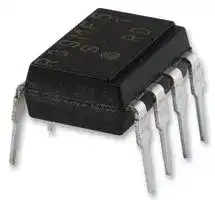
Image not available
Illustrative purposes only

PR39MF21NSZF
Solid State Relay, PR39MF2xNSZ Series, Zero Cross, 900 mA, PCB, Through Hole, Zero Crossing
⚠️ Reference pricing provided. In case of supply shortages, we will connect you with our trusted procurement partners to ensure your project's continuity.
- Manufacturer: SHARP
- Product type:
- Contact Configuration:-; Load Current:900mA; Operating Voltage Max:-; Relay Mounting:PCB; Relay Terminals:Through Hole; Switching Mode:Zero Crossing; Operating Voltage Min:-; Control Voltage Min:-; Co
- Load Current: 900mA
- Product Range: -
- Relay Mounting: PCB
- Switching Mode: Zero Crossing
- Relay Terminals: Through Hole
- Control Voltage Max: -
- Control Voltage Min: -
- Contact Configuration: -
- Operating Voltage Max: -
- Operating Voltage Min: -
| Delivery and price | |
|---|---|
| Units per pack | 150 |
| Price | 0.714 € |
| Current stock | 10+ |
| Lead time | 30 days |
Datasheet

**PR29MF21NSZ Series PR39MF2xNSZ Series**

## **PR29MF21NSZ Series PR39MF2xNSZ Series**

## **IT(rms)** ≤ **0.9A, Zero Cross type DIP 8pin Triac output SSR**

∗Non-zero cross type is also available. ( **PR29MF1xNSZ Series/PR39MF1xNSZ Series** )

## ■ **Description**

**PR29MF21NSZ Series** and **PR39MF2xNSZ Series** Solid State Relays (SSR) are an integration of an infrared emitting diode (IRED), a Phototriac Detector and a main output Triac. These devices are ideally suited for controlling high voltage AC loads with solid state reliability while providing 4.0kV isolation (Viso(rms)) from input to output.

## ■ **Agency approvals/Compliance**

1. Recognized by UL508, file No. E94758 (as model No. **R29MF2** / **R39MF2** )

2. Approved by CSA 22.2 No.14, file No. LR63705 (as model No. **R29MF2** / **R39MF2** )

3. Optionary available VDE approved[(][∗][)] (DIN EN 60747-52), file No. 40008898 (only for **PR39MF2xNSZ Series** as model No. **R39MF2** )

4. Package resin : UL flammability grade (94V-0)

## ■ **Features**

1. Output current, IT(rms)≤0.9A

2. Zero crossing functionary (VOX : MAX. 35V)

      - (∗) DIN EN60747-5-2 : successor standard of DIN VDE0884. Up to Date code "RD" (December 2003), approval of DIN VDE0884. From Date code "S1" (January 2004), approval of DIN EN60747-5-2.

3. 8 pin DIP package (SMT gullwing also available)

4. High repetitive peak off-state voltage

   - (VDRM : 600V, **PR39MF2xNSZ Series** )

   - (VDRM : 400V, **PR29MF21NSZ Series** )

5. I FT ranks available (see Model Line-up in this datasheet)

6. Superior noise immunity (dV/dt : MIN. 100V/µs)

7. Response time, ton : MAX. 50µs

8. Lead-free terminal components are also available (see Model Line-up section in this datasheet)

## ■ **Applications**

   1. Isolated interface between high voltage AC devices and lower voltage DC control circuitry.

   2. Switching motors, fans, heaters, solenoids, and valves.

   3. Power control in applications such as lighting and temperature control equipment.

9. High isolation voltage between input and output (Viso(rms) : 4.0kV)

CO

Notice The content of data sheet is subject to change without prior notice. In the absence of confirmation by device specification sheets, SHARP takes no responsibility for any defects that may occur in equipment using any SHARP devices shown in catalogs, data books, etc. Contact SHARP in order to obtain the latest device specification sheets before using any SHARP device.

Sheet No.: D4-A00701EN Date Mar. 31. 2004 © SHARP Corporation

1

**PR29MF21NSZ Series PR39MF2xNSZ Series**

## ■ **Internal Connection Diagram**

**==> picture [206 x 78] intentionally omitted <==**

**----- Start of picture text -----**<br>
8 6 5<br>1 Cathode 5 Gate<br>2 Anode 6 Output (T1)<br>3 Cathode 8 Output (T2)<br>4 Cathode<br>Zero Crossing Circuit<br>1 2 3 4<br>**----- End of picture text -----**<br>


## ■ **Outline Dimensions**

(Unit : mm)

**==> picture [518 x 517] intentionally omitted <==**

**----- Start of picture text -----**<br>
1. Through-Hole [ex.  PR29MF21NSZF ] 2. SMT Gullwing Lead-Form [ex.  PR29MF21NIPF ]<br>1.2 [±][0.3] 1.2 [±][0.3]<br>1.05 [±][0.2] 1.05 [±][0.2]<br>SHARPmark 8 6 5 Model No. SHARPmark 8 6 5 Model No.<br>"S" R 2 9 M F 2 "S" R 2 9 M F 2<br>CSA mark Rank mark CSA mark Rank mark<br>1 2 3 4<br>Anode  Date code (2 digit) 1 2 3 4<br>mark Factory identification mark Anode  Date code (2 digit)<br>mark Factory identification mark<br>9.66 [±][0.5] 7.62 [±][0.3]<br>9.66 [±][0.5] 7.62 [±][0.3]<br>Epoxy resin<br>2.54 [±][0.25] 0.26 [±][0.1] 2.54 [±][0.25] 1.0− [+][0.4] 0 Epoxy resin 1.0− [+][0.4] 0<br>0.5 [±][0.1]<br>θ θ:0 to 13˚ θ 10.0− [+][0] 0.5<br>Product mass : approx. 0.56g Product mass : approx. 0.54g<br>3. Through-Hole [ex.  PR39MF21NSZF ] 4. SMT Gullwing Lead-Form [ex.  PR39MF21NIPF ]<br>1.2 [±][0.3] 1.2 [±][0.3]<br>1.05 [±][0.2] 1.05 [±][0.2]<br>SHARPmark 8 6 5 Model No. SHARPmark 8 6 5 Model No.<br>"S" R 3 9 M F 2 "S" R 3 9 M F 2<br>CSA mark Rank mark CSA mark Rank mark<br>1 2 3 4<br>Anode  Date code (2 digit) 1 2 3 4<br>mark Factory identification mark Anode  Date code (2 digit)<br>mark Factory identification mark<br>9.66 [±][0.5] 7.62 [±][0.3]<br>9.66 [±][0.5] 7.62 [±][0.3]<br>Epoxy resin<br>2.54 [±][0.25] 0.26 [±][0.1] 2.54 [±][0.25] 1.0− [+][0.4] 0 Epoxy resin 1.0− [+][0.4] 0<br>0.5 [±][0.1]<br>θ θ:0 to 13˚ θ 10.0− [+][0] 0.5<br>Product mass : approx. 0.56g Product mass : approx. 0.54g<br>0.5± 0.5<br>6.5 ±<br>6.5<br>0.5±3.5 0.1± 0.25±<br>0.5± 0.26 0.35<br>TYP.<br>0.5<br>3.25 0.5 ±<br>3.5<br>0.5± 0.5<br>6.5 ±<br>6.5<br>0.5±3.5 0.1± 0.25±<br>0.5± 0.26 0.35<br>TYP.<br>0.5<br>3.25 0.5 ±<br>3.5<br>**----- End of picture text -----**<br>


Sheet No.: D4-A00701EN

2

**PR29MF21NSZ Series PR39MF2xNSZ Series**

## ■ **Outline Dimensions**

(Unit : mm)

**==> picture [501 x 258] intentionally omitted <==**

**----- Start of picture text -----**<br>
5. Through-Hole VDE option [ex.  PR39MF21YSZF ] 6. SMT Gullwing Lead-Form VDE option [ex.SMT Gullwing Lead-Form VDE option [ex.  PR39MF21YIPF<br>1.2 [±][0.3] 1.2 [±][0.3]<br>1.05 [±][0.2] 1.05 [±][0.2]<br>SHARPmark 8 6 5 Model No. SHARPmark 8 6 5 Model No.<br>"S" R 3 9 M F 2 "S" R 3 9 M F 2<br>4 4<br>CSA mark Rank mark CSA mark Rank mark<br>1 2 3 4 VDE identification mark VDE identification mark<br>Anode  Date code (2 digit) 1 2 3 4<br>mark Factory identification mark Anode  Date code (2 digit)<br>mark Factory identification mark<br>9.66 [±][0.5] 7.62 [±][0.3]<br>9.66 [±][0.5] 7.62 [±][0.3]<br>Epoxy resin<br>2.54 [±][0.25] 0.26 [±][0.1] 2.54 [±][0.25] 1.0− [+][0.4] 0 Epoxy resin 1.0− [+][0.4] 0<br>0.5 [±][0.1]<br>θ θ:0 to 13˚ θ 10.0− [+][0] 0.5<br>Product mass : approx. 0.56g Product mass : approx. 0.54g<br>0.5± 0.5<br>6.5 ±<br>6.5<br>0.5± 0.1± 0.25±<br>3.5<br>0.5± 0.26 0.35<br>TYP.<br>0.5<br>3.25 0.5 ±<br>3.5<br>**----- End of picture text -----**<br>


6. SMT Gullwing Lead-Form VDE option [ex.SMT Gullwing Lead-Form VDE option [ex. **PR39MF21YIPF** ]

Sheet No.: D4-A00701EN

3

**PR29MF21NSZ Series PR39MF2xNSZ Series**

## Date code (2 digit)

|Date code (2 digit)|Date code (2 digit)|Date code (2 digit)|Date code (2 digit)|||
|---|---|---|---|---|---|
|1st digit||||2nd digit||
|Year ofproduction||||Month ofproduction||
|A.D.|Mark|A.D|Mark|Month|Mark|
|1990|A|2002|P|January|1|
|1991|B|2003|R|February|2|
|1992|C|2004|S|March|3|
|1993|D|2005|T|April|4|
|1994|E|2006|U|May|5|
|1995|F|2007|V|June|6|
|1996|H|2008|W|July|7|
|1997|J|2009|X|August|8|
|1998|K|2010|A|September|9|
|1999|L|2011|B|October|O|
|2000|M|2012|C|November|N|
|2001|N|···|···|December|D|


repeats in a 20 year cycle

## Factory identification mark

|Factory identification Mark|Country of origin|
|---|---|
|no mark||
||Japan|


* This factory marking is for identification purpose only. Please contact the local SHARP sales representative to see the actural status of the production.

## Rank mark

Please refer to the Model Line-up table.

Sheet No.: D4-A00701EN

4

**PR29MF21NSZ Series PR39MF2xNSZ Series**

## ■ **Absolute Maximum Ratings**

(Ta=25˚C)

||Parameter|Parameter|Symbol|Rating|Unit|
|---|---|---|---|---|---|
|Input|Forward current||IF|*3<br>50|mA|
||Reverse voltage||VR|6|V|
|Output|RMS ON-state current||IT(rms)|*3<br>0.9|A|
||Peak one cycle surge current||Isurge|*4<br>9|A|
||Repetitive<br>peak OFF-state voltage|**PR29MF21NSZ**|VDRM|400|V|
|||**PR39MF2xNSZ**||600||
|<br>Isolation voltage<br>*1|||Viso(rms)|4.0|kV|
|Operating temperature|||Topr|−30to+85|˚C|
|Storage temperature|||Tstg|−40 to+125|˚C|
|Solderingtemperature<br>*2|||Tsol|*5<br>270|˚C|


**==> picture [74 x 62] intentionally omitted <==**

**----- Start of picture text -----**<br>
Soldering area<br>1mm<br>**----- End of picture text -----**<br>


*1 40 to 60%RH, AC for 1minute, f=60Hz

*2 For 10s

*3 Refer to Fig.1, Fig.2

*4 f=50Hz sine wave

*5 Lead solder plating models: 260˚C

## ■ **Electro-optical Characteristics**

(Ta=25˚C)

||Parameter|Parameter|Symbol|Conditions|MIN.|TYP.|MAX.|Unit|
|---|---|---|---|---|---|---|---|---|
|Input|Forward voltage||VF|IF=20mA|−|1.2|1.4|V|
||Reverse current||IR|VR=3V|−|−|10|µA|
|Output|Repetitive peak OFF-state current||IDRM|VD=VDRM|−|−|100|µA|
||ON-state voltage||VT|IT=0.9A|−|−|3.0|V|
||Holding current||IH|VD=6V|−|−|25|mA|
||Critical rate of rise of OFF-state voltage||dV/dt|VD=1/√−2·VDRM|100|−|−|V/µs|
||Zero cross voltage|Rank 1|VOX|IF=15mA, Resistance load|−|−|35|V|
|||Rank 2||IF=10mA, Resistance load|||||
|Transfer<br>charac-<br>teristics|Minimum trigger current|Rank 1|IFT|VD=6V, RL=100Ω|−|−|10|mA|
|||Rank 2|||−|−|5||
||Isolation resistance||RISO|DC500V,40 to 60%RH|5×10¹⁰|1011|−|Ω|
||Turn-on time|Rank 1|ton|IF=20mA, VD=6V, RL=100Ω|−|−|50|µs|
|||Rank 2||IF=10mA, VD=6V, RL=100Ω|||||


Sheet No.: D4-A00701EN

5

**PR29MF21NSZ Series PR39MF2xNSZ Series**

## ■ **Model Line-up (1) (Lead-free terminal components)**

|Lead Form|Through-Hole|Through-Hole|SMT Gullwing|SMT Gullwing|VDRM<br>[V]|Rank mark|IFT[mA]<br>(VD=6V,<br>RL=100Ω)|
|---|---|---|---|---|---|---|---|
|Shipping Package|Sleeve||Taping|||||
||50pcs/sleeve||1 000pcs/reel|||||
|DIN<br>EN60747-5-2|-|Approved|-|Approved||||
|Model No.|**PR39MF21NSZF**|**PR39MF21YSZF **|**PR39MF21NIPF**|**PR39MF21YIPF**|600|1|MAX.10|
||**PR39MF22NSZF**|**PR39MF22YSZF**|**PR39MF22NIPF**|**PR39MF22YIPF**||2|MAX.5|
||**PR29MF21NSZF**|-|**PR29MF21NIPF**|-|400|1|MAX.10|


## ■ **Model Line-up (2) (Lead solder plating components)**

|Lead Form|Through-Hole|Through-Hole|SMT Gullwing|SMT Gullwing|VDRM<br>[V]|Rank mark|IFT[mA]<br>(VD=6V,<br>RL=100Ω)|
|---|---|---|---|---|---|---|---|
|Shipping Package|Sleeve||Taping|||||
||50pcs/sleeve||1 000pcs/reel|||||
|DIN<br>EN60747-5-2|-|Approved|-|Approved||||
|Model No.|**PR39MF21NSZ**|**PR39MF21YSZ**|-|-|600|1|MAX.10|
||**PR39MF22NSZ**|**PR39MF22YSZ**|-|-||2|MAX.5|
||**PR29MF21NSZ**|-|-|-|400|1|MAX.10|


Please contact a local SHARP sales representative to see the actual status of the production.

Sheet No.: D4-A00701EN

6

**PR29MF21NSZ Series PR39MF2xNSZ Series**

**==> picture [201 x 27] intentionally omitted <==**

**----- Start of picture text -----**<br>
Fig.1 Forward Current vs. Ambient<br>Temperature<br>**----- End of picture text -----**<br>


**==> picture [199 x 189] intentionally omitted <==**

**----- Start of picture text -----**<br>
70<br>60<br>50<br>40<br>30<br>20<br>10<br>0<br>−30 0 50 100<br>Ambient temperature Ta (˚C)<br>Forward current I (mA)F<br>**----- End of picture text -----**<br>


**Fig.3-a Forward Current vs. Forward Voltage (Rank 1)**

**==> picture [202 x 422] intentionally omitted <==**

**----- Start of picture text -----**<br>
25˚C 0˚C<br>100<br>Ta=75˚C<br>50<br>−25˚C<br>50˚C<br>10<br>5<br>1<br>0 0.5 1 1.5 2 2.5 3<br>Forward voltage VF (V)<br>Fig.4-a Minimum Trigger Current vs.<br>Ambient Temperature (Rank 1)<br>7<br>VD=6V<br>RL=100Ω<br>6<br>5<br>4<br>3<br>2<br>1<br>0<br>−30 0 50 100<br>°<br>Ambient temperature Ta ( C)<br>Forward current I (mA)F<br> (mA)<br>FT<br>Minimum trigger current I<br>**----- End of picture text -----**<br>


**Fig.4-a Minimum Trigger Current vs. Ambient Temperature (Rank 1)**

## **Fig.2 RMS ON-state Current vs.**

**Ambient Temperature**

**==> picture [201 x 660] intentionally omitted <==**

**----- Start of picture text -----**<br>
1<br>0.8<br>0.6<br>0.4<br>0.2<br>0<br>−30 0 50 100<br>Ambient temperature Ta (˚C)<br>Fig.3-b Forward Current vs.<br>Forward Voltage (Rank 2)<br>100<br>Ta=75˚C<br>50<br>50˚C<br>25˚C 0˚C<br>10<br>5<br>−25˚C<br>1<br>0.9 1 1.1 1.2 1.3 1.4 1.5<br>Forward voltage VF (V)<br>Fig.4-b Minimum Trigger Current vs.<br>Ambient Temperature (Rank 2)<br>6<br>VD=6V<br>RL=100Ω<br>5<br>4<br>3<br>2<br>1<br>0<br>−30 0 50 100<br>°<br>Ambient temperature Ta ( C)<br>(rms) (A)<br>T<br>RMS ON-state current I<br>Forward current I (mA)F<br> (mA)<br>FT<br>Minimum trigger current I<br>**----- End of picture text -----**<br>


**Fig.3-b Forward Current vs. Forward Voltage (Rank 2)**

**Fig.4-b Minimum Trigger Current vs. Ambient Temperature (Rank 2)**

Sheet No.: D4-A00701EN

7

**PR29MF21NSZ Series PR39MF2xNSZ Series**

## **Fig.5 ON-state Voltage vs. Ambient Temperature**

**==> picture [200 x 650] intentionally omitted <==**

**----- Start of picture text -----**<br>
1.2<br>IT=0.9A<br>1.1<br>1<br>0.9<br>0.8<br>0.7<br>0.6<br>−30 0 20 40 60 80 100<br>Ambient temperature Ta (˚C)<br>Fig.7 Zero-cross Voltage vs.<br>Ambient Temperature<br>Resistance load,<br>IF=15mA : Rank 1<br>15 IF=10mA : Rank 2<br>10<br>5<br>0<br>−30 0 50 100<br>Ambient temperature Ta (˚C)<br>Fig.9-a Turn-on Time vs.<br>Forward Current (Rank 1)<br>100<br>VD=6V<br>RL=100Ω<br>Ta=25˚C<br>10<br>1<br>10 20 30 40 50 100<br>Forward current IF (mA)<br> (V)<br>T<br>ON-state voltage V<br> (V)<br>OX<br>Zero-cross voltage V<br>s)<br>µ<br> (<br>ON<br>Turn-on time t<br>**----- End of picture text -----**<br>


## **Fig.7 Zero-cross Voltage vs. Ambient Temperature**

## **Fig.9-a Turn-on Time vs.**

## **Fig.6 Relative Holding Current vs. Ambient Temperature**

**==> picture [201 x 647] intentionally omitted <==**

**----- Start of picture text -----**<br>
1 000<br>VD=6V<br>100<br>10<br>−30 0 20 40 60 80 100<br>Ambient temperature Ta (˚C)<br>Fig.8 ON-state Current vs. ON-state Voltage<br>1.5<br>IF=20mA<br>Ta=25˚C<br>1.2<br>0.9<br>0.6<br>0.3<br>0<br>0 0.5 1.0 1.5<br>ON-state voltage VT (V)<br>Fig.9-b Turn-on Time vs.<br>Forward Current (Rank 2)<br>100<br>VD=6V<br>RL=100Ω<br>Ta=25˚C<br>10<br>1<br>1 10 100<br>Forward current IF (mA)<br>100%<br>×<br> (25˚C)<br>H<br> (t˚C) / I<br>H<br>Relative holding current I<br> (A)<br>T<br>ON-state current I<br>s)<br>µ<br> (<br>ON<br>Turn-on time t<br>**----- End of picture text -----**<br>


## **Fig.8 ON-state Current vs. ON-state Voltage**

## **Fig.9-b Turn-on Time vs.**

Remarks : Please be aware that all data in the graph are just for reference.

Sheet No.: D4-A00701EN

8

**PR29MF21NSZ Series PR39MF2xNSZ Series**

## ■ **Design Considerations**

## ● **Recommended Operating Conditions**

||Parameter|Parameter||Symbol|Conditions|MIN.|MAX.|Unit|
|---|---|---|---|---|---|---|---|---|
|Input|Input signal current<br>at ON state||Rank 1|IF(ON)|−|20|25|mA|
||||Rank 2|||10|15||
||Input signal current at OFF state|||IF(OFF)|−|0|0.1|mA|
|Output|Load supply voltage|**PR29MF21NSZ**||VOUT(rms)|−|−|120|V|
|||**PR39MF2xNSZ**|||||240||
||Load supply current|||IOUT(rms)|Locate snubber circuit between output terminals<br>(Cs=0.022µF, Rs=47Ω)|<br>−|IT(rms)×80%(∗)|mA|
||Frequency|||f|−|50|60|Hz|
|Operatingtemperature||||Topr|−|−20|80|˚C|


([∗] ) See Fig.2 about derating curve (IT(rms) vs. ambient temperature).

## ● **Design guide**

In order for the SSR to turn off, the triggering current (IF) must be 0.1mA or less.

Particular attention needs to be paid when utilizing SSRs that incorporate zero crossing circuitry. If the phase difference between the voltage and the current at the output pins is large enough, zero crossing type SSRs cannot be used. The result, if zero crossing SSRs are used under this condition, is that the SSR may not turn on and off irregardless of the input current. In this case, only a non zero cross type SSR should be used in combination with the above mentioned snubber circuit selection process.

When the input current (IF) is below 0.1mA, the output Triac will be in the open circuit mode. However, if the voltage across the Triac, VD, increases faster than rated dV/dt, the Triac may turn on. To avoid this situation, please incorporate a snubber circuit. Due to the many different types of load that can be driven, we can merely recommend some circuit values to start with : Cs=0.022µF and Rs=47Ω. The operation of the SSR and snubber circuit should be tested and if unintentional switching occurs, please adjust the snubber circuit component values accordingly.

When making the transition from On to Off state, a snubber circuit should be used ensure that sudden drops in current are not accompanied by large instantaneous changes in voltage across the Triac. This fast change in voltage is brought about by the phase difference between current and voltage. Primarily, this is experienced in driving loads which are inductive such as motors and solenods. Following the procedure outlined above should provide sufficient results.

For over voltage protection, a Varistor may be used.

Any snubber or Varistor used for the above mentioned scenarios should be located as close to the main output triac as possible.

All pins shall be used by soldering on the board. (Socket and others shall not be used.)

## ● **Degradation**

In general, the emission of the IRED used in SSR will degrade over time.

In the case where long term operation and / or constant extreme temperature fluctuations will be applied to the devices, please allow for a worst case scenario of 50% degradation over 5years.

Therefore in order to maintain proper operation, a design implementing these SSRs should provide at least twice the minimum required triggering current from initial operation.

Sheet No.: D4-A00701EN

9

**PR29MF21NSZ Series PR39MF2xNSZ Series**

## ● **Recommended Foot Print (reference)**

## SMT Gullwing Lead-form

**==> picture [305 x 299] intentionally omitted <==**

**----- Start of picture text -----**<br>
8.2<br>2.2<br>(Unit : mm)<br>R1<br>+VCC 2 8 Load<br>D1 SSR ZS<br>AC Line<br>V1 3 6<br>Tr1<br>ZS : Surge absorption circuit (Snubber circuit)<br>2.54<br>2.54<br>2.54<br>1.7<br>**----- End of picture text -----**<br>


## ● **Standard Circuit**

✩ For additional design  assistance, please review our corresponding Optoelectronic Application Notes.

Sheet No.: D4-A00701EN

10

**PR29MF21NSZ Series PR39MF2xNSZ Series**

## ■ **Manufacturing Guidelines**

## ● **Soldering Method**

## Reflow Soldering:

Reflow soldering should follow the temperature profile shown below. Soldering should not exceed the curve of temperature profile and time. Please don't solder more than twice.

**==> picture [395 x 220] intentionally omitted <==**

**----- Start of picture text -----**<br>
(˚C)<br>300<br>Terminal : 260˚C peak<br>( package surface : 250˚C peak)<br>200<br>Reflow<br>220˚C or more, 60s or less<br>Preheat<br>100<br>150 to 180˚C, 120s or less<br>0 0 1 2 3 4 (min)<br>**----- End of picture text -----**<br>


## Flow Soldering :

Flow soldering should be completed below 270˚C and within 10s. Preheating is within the bounds of 100 to 150˚C and 30 to 80s. Please don't solder more than twice.

## Hand soldering

Hand soldering should be completed within 3s when the point of solder iron is below 400˚C. Please don't solder more than twice.

## Other notices

Please test the soldering method in actual condition and make sure the soldering works fine, since the impact on the junction between the device and PCB varies depending on the tooling and soldering conditions.

Sheet No.: D4-A00701EN

11

**PR29MF21NSZ Series PR39MF2xNSZ Series**

## ● **Cleaning instructions**

## Solvent cleaning :

Solvent temperature should be 45˚C or below. Immersion time should be 3minutes or less.

## Ultrasonic cleaning :

The impact on the device varies depending on the size of the cleaning bath, ultrasonic output, cleaning time, size of PCB and mounting method of the device.

Therefore, please make sure the device withstands the ultrasonic cleaning in actual conditions in advance of mass production.

## Recommended solvent materials :

Ethyl alcohol, Methyl alcohol and Isopropyl alcohol.

In case the other type of solvent materials are intended to be used, please make sure they work fine in actual using conditions since some materials may erode the packaging resin.

## ● **Presence of ODC**

This product shall not contain the following materials.

And they are not used in the production process for this device.

Regulation substances : CFCs, Halon, Carbon tetrachloride, 1.1.1-Trichloroethane (Methylchloroform) Specific brominated flame retardants such as the PBBOs and PBBs are not used in this product at all.

Sheet No.: D4-A00701EN

12

**PR29MF21NSZ Series PR39MF2xNSZ Series**

## ■ **Package specification**

## ● **Sleeve package Through-Hole** Package materials

Sleeve : HIPS (with anti-static material) Stopper : Styrene-Elastomer

## Package method

MAX. 50pcs of products shall be packaged in a sleeve.

Both ends shall be closed by tabbed and tabless stoppers.

The product shall be arranged in the sleeve with its anode mark on the tabless stopper side. MAX. 20 sleeves in one case.

## Sleeve outline dimensions

**==> picture [145 x 150] intentionally omitted <==**

**----- Start of picture text -----**<br>
12.0<br>6.7<br>10.8<br>5.8<br>**----- End of picture text -----**<br>


**==> picture [241 x 113] intentionally omitted <==**

**----- Start of picture text -----**<br>
(Unit : mm)<br>520±2<br>**----- End of picture text -----**<br>


Sheet No.: D4-A00701EN

13

**PR29MF21NSZ Series PR39MF2xNSZ Series**

## ● **Tape and Reel package SMT Gullwing**

## Package materials

Carrier tape : A-PET (with anti-static material) Cover tape : PET (three layer system) Reel : PS

## Carrier tape structure and Dimensions

|F<br>K<br>E<br>D<br>Dimensions List<br>H|F<br>K<br>E<br>D<br>Dimensions List<br>H||F|F|F|D|D|D|||||||||||
|---|---|---|---|---|---|---|---|---|---|---|---|---|---|---|---|---|---|---|
|||||||E|||||||||I<br>G<br>B<br>H<br>A<br>C<br>5˚MAX.|I|||
||||||||||||||||C||||
||||||||||||||||B||||
|||||||H|||||||||||||
||||||||H||||||||||||
||||||||||||||||||||
||||||||||||||||||||
||||||||||||||||||||
||||||||||||||||||||
||||||||||||||||||||
||||||||||||||||||||
||||||||||||||||||||
|||||||||||||||||5˚MAX.|||
||||K||||||||||||||||
||||||||||||||||||||
|A|||B|||C||||D|||E||F|||G|
|16.0±0.3|||7.5±0.1|||1.75±0.1|||12.0±0.1||||2.0±0.1||4.0±0.1|||φ1.5+0.1<br> −0|
|H|||I|||J|||K||||||||||
|10.4±0.1<br>|||0.4±0.05|||4.2±0.1|||10.2±0.1||||||||||


## Reel structure and Dimensions

**==> picture [192 x 132] intentionally omitted <==**

**----- Start of picture text -----**<br>
e d<br>g<br>f<br>a b<br>c<br>**----- End of picture text -----**<br>


Dimensions List

(Unit : mm)

|Dimensions List<br>(Unit : mm)|Dimensions List<br>(Unit : mm)|Dimensions List<br>(Unit : mm)|Dimensions List<br>(Unit : mm)|
|---|---|---|---|
|<br> <br>a<br>b<br>c<br>d||||
|330|17.5±1.5|100±1.0|13±0.5|
|e|f|g||
|23±1.0|2.0±0.5|2.0±0.5||


## Direction of product insertion

**==> picture [113 x 113] intentionally omitted <==**

## Pull-out direction

**==> picture [115 x 69] intentionally omitted <==**

[Packing : 1 000pcs/reel]

Sheet No.: D4-A00701EN

14

**PR29MF21NSZ Series PR39MF2xNSZ Series**

## ■ **Important Notices**

· The circuit application examples in this publication are provided to explain representative applications of SHARP devices and are not intended to guarantee any circuit design or license any intellectual property rights. SHARP takes no responsibility for any problems related to any intellectual property right of a third party resulting from the use of SHARP's devices.

· Contact SHARP in order to obtain the latest device specification sheets before using any SHARP device. SHARP reserves the right to make changes in the specifications, characteristics, data, materials, structure, and other contents described herein at any time without notice in order to improve design or reliability. Manufacturing locations are also subject to change without notice.

· Observe the following points when using any devices in this publication. SHARP takes no responsibility for damage caused by improper use of the devices which does not meet the conditions and absolute maximum ratings to be used specified in the relevant specification sheet nor meet the following conditions:

(i) The devices in this publication are designed for use in general electronic equipment designs such as:

- --- Personal computers

- --- Office automation equipment

- --- Telecommunication equipment [terminal]

- --- Test and measurement equipment

- --- Industrial control

- with equipment that requires higher reliability such as:

- --- Transportation control and safety equipment (i.e., aircraft, trains, automobiles, etc.)

- --- Traffic signals

- --- Gas leakage sensor breakers

- --- Alarm equipment

- --- Various safety devices, etc.

(iii) SHARP devices shall not be used for or in connection with equipment that requires an extremely high level of reliability and safety such as:

- --- Space applications

- --- Telecommunication equipment [trunk lines]

- --- Nuclear power control equipment

- --- Medical and other life support equipment (e.g., scuba).

· If the SHARP devices listed in this publication fall within the scope of strategic products described in the Foreign Exchange and Foreign Trade Law of Japan, it is necessary to obtain approval to export such SHARP devices.

· This publication is the proprietary product of SHARP and is copyrighted, with all rights reserved. Under the copyright laws, no part of this publication may be reproduced or transmitted in any form or by any means, electronic or mechanical, for any purpose, in whole or in part, without the express written permission of SHARP. Express written permission is also required before any use of this publication may be made by a third party.

- --- Audio visual equipment

- --- Consumer electronics

(ii) Measures such as fail-safe function and redundant design should be taken to ensure reliability and safety when SHARP devices are used for or in connection

· Contact and consult with a SHARP representative if there are any questions about the contents of this publication.

Sheet No.: D4-A00701EN

15
Updated at June 10, 2026
About Novapart
Novapart is a B2B electronic component broker specialising in stock shortages and cost reduction. We source hard-to-find parts and identify compliant alternatives across a catalogue of 410,000+ components from 500+ manufacturers.
Learn more →Stock Shortage Specialist
When a component is unavailable, discontinued or has an unacceptable lead time, we tap into our network of vetted European and Asian distributors to source what you need — without compromising on quality or traceability.
Request a quote →Compliant Alternatives
We identify pin-to-pin, electrically equivalent substitutes that meet the same certifications (RoHS, AEC-Q100, REACH) as your original specification — validated against datasheets, not just part numbers. Often at a lower cost.
BOM Analysis service →