
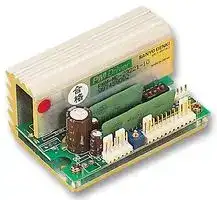


PMM-MD-23221-10
Stepper Motor Driver, Unipolar, Two Phase, 2 A, 32.4 Vdc to 39.6 Vdc, CMOS Input
- Manufacturer: SANYO DENKI
- Product type: Stepper Motor Drives
- Supply Voltage Min:32.4VDC; Supply Voltage Max:39.6VDC; No. of Phases:Two Phase; Power Rating:-; Output Voltage Max:36VDC; Output Current:2A; Product Range:-; SVHC:No SVHC (15-Jun-2015);
- SVHC: No SVHC (25-Jun-2025)
- No. of Phases: Two Phase
- Product Range: -
- Output Current Max: 2A
- Supply Voltage Max: 39.6VDC
- Supply Voltage Min: 32.4VDC
- Control / Drive Type: -
| Delivery and price | |
|---|---|
| Units per pack | 1 |
| Price | 211.44 € |
| Current stock | 10+ |
| Lead time | 30 days |

**==> picture [31 x 24] intentionally omitted <==**

**----- Start of picture text -----**<br>
42<br>**----- End of picture text -----**<br>


**==> picture [30 x 24] intentionally omitted <==**

**----- Start of picture text -----**<br>
50<br>**----- End of picture text -----**<br>


**==> picture [31 x 24] intentionally omitted <==**

**----- Start of picture text -----**<br>
56<br>**----- End of picture text -----**<br>


**==> picture [31 x 24] intentionally omitted <==**

**----- Start of picture text -----**<br>
60<br>**----- End of picture text -----**<br>


**==> picture [68 x 24] intentionally omitted <==**

**----- Start of picture text -----**<br>
ø86 ø106<br>**----- End of picture text -----**<br>


**==> picture [38 x 37] intentionally omitted <==**

## **Pulse Rate-Torque Characteristics/Pulse Rate-Power Current Characteristics**

fs: No load maximum starting pulse rate.  ■ Full-step  ■ Half-step

## **PMM-UA-4304-1**

## **●103H8222-09□□:100V**

## **●103H8223-09□□:100V**

**==> picture [435 x 402] intentionally omitted <==**

**----- Start of picture text -----**<br>
700 50 5 10 1400 100 10 10<br>9 9<br>600 40 4 8 1200 80 8 8<br>500 7 1000 7<br>30 3 6 60 6 6<br>400 800<br>5 5<br>300 20 2 4 600 40 4 4<br>3 3<br>200 400<br>10 1 2 20 2 2<br>100 200<br>1 1<br>fs fs fs fs<br>0 0 0 0 0 0 0 0<br>0.1 1 10 100 0.1 1 10 100<br>Pulse rate (kpulse/s) Pulse rate (kpulse/s)<br>Full-step 100 1000 2000 3000 5000 Full-step 100 1000 2000 3000 5000<br>Half-step 100 1000 2000 3000 5000 Half-step 100 1000 2000 3000 5000<br>Number of rotations (min [-1] ) Number of rotations (min [-1] )<br>Source voltage: AC100V, Operating current : 4A/phase Source voltage: AC100V, Operating current : 4A/phase<br>Pull-Out torque [JL1=15.3x10L1=15.3x10=15.3x10 [[-4]] kg·m [[2 ]] (83.65 oz·in [[2]] )Use the rubber coupling] Pull-Out torque [JL1=15.3x10JL1=15.3x10L1=15.3x10=15.3x10 [[-4]] kg·m [[2 ]] (83.65 oz·in [[2]] ) Use the rubber couplingUse the rubber coupling]<br>Source current (TL=MAX),  L=MAX),  =MAX),   Source current (TL=0)L=0)=0) Source current (TL=MAX), L=MAX), =MAX),  Source current (TL=0)L=0)=0)<br>●103H89222-09□□:100V103H89222-09□□:100V□□:100V100V ●103H89223-09□□:100V<br>1400 100 10 10 200 20 10<br>9 9<br>2500<br>1200 80 8 8 160 16 8<br>1000 7 2000 7<br>60 6 6 120 12 6<br>800<br>5 1500 5<br>600 40 4 4 80 8 4<br>1000<br>3 3<br>400<br>20 2 2 40 4 2<br>500<br>200<br>1 1<br>fs fs fs fs<br>0 0 0 0 0 0 0 0<br>0.1 1 10 100 0.1 1 10 100<br>Pulse rate (kpulse/s) Pulse rate (kpulse/s)<br>Full-step 100 1000 2000 3000 5000 Full-step 100 1000 2000 3000 5000<br>Half-step 100 1000 2000 3000 5000 Half-step 100 1000 2000 3000 5000<br>Number of rotations (min [-1] ) Number of rotations (min [-1] )<br>in.)· in.)·<br>Torque(oz Torque (kgf-cm) Torque (N-m) Source current (A) Torque(oz Torque (kgf-cm) Torque (N-m) Source current (A)<br>in.)· in.)·<br>Torque(oz Torque (kgf-cm) Torque (N-m) Source current (A) Torque(oz Torque (kgf-cm) Torque (N-m) Source current (A)<br>**----- End of picture text -----**<br>


Source voltage: AC100V, Operating current : 4A/phase Pull-Out torque [JL1=15.3x10L1=15.3x10=15.3x10[[-4]] kg·m[[2 ]] (83.65 oz·in[[2]] )Use the rubber coupling] Source current (TL=MAX),  L=MAX),  =MAX), Source current (TL=0)L=0)=0)

Pull-Out torque [JL1=15.3x10JL1=15.3x10L1=15.3x10=15.3x10[[-4]] kg·m[[2 ]] (83.65 oz·in[[2]] ) Use the rubber couplingUse the rubber coupling] Source current (TL=MAX), L=MAX), =MAX), Source current (TL=0)L=0)=0)

## **●103H89222-09□□:100V103H89222-09□□:100V□□:100V100V**

Source voltage: AC100V, Operating current : 4A/phase Pull-Out torque [JL1=43x10[-4] kg·m[2 ] (235.10 oz·in[2] ) Use the rubber coupling] Source current (TL=MAX), Source current (TL=0)

Source voltage: AC100V,Operating current  4A/phase

Pull-Out torque [JL1=43x10[-4] kg·m[2 ] (235.10 oz·in[2] ) Use the rubber coupling] Source current (TL=MAX), Source current (TL=0)

## **Options**

## ●Terminal board cover

## **PMM-UA-4303-1**

Model No. PM-AP-018

## **PMM-UA-4304-1**

Model No. PM-AP-019

26

## **2-phase Stepping Driver**

## **DC24V/36V Unipolar type**

**(Applicable motor rated current 1.2A/phase, 2A/phase)**

**Micro-step (200 X 1~8 divisions) (Smooth operation and low vibration even at low speeds.)**

**PMM-MD-23210-10 (Photo coupler input method) PMM-MD-23211-10 (CMOS input method) PMM-MD-23220-21 (Photo coupler input method) PMM-MD-23221-21 (CMOS input method) PMM-MD-23220-10 (Photo coupler input method) PMM-MD-23221-10 (CMOS input method)**

**==> picture [139 x 128] intentionally omitted <==**

**----- Start of picture text -----**<br>
●Applicable motor<br>28<br>|<br>●Applicable motor<br>35 56<br>●Applicable motor<br>50 56 60 ø86<br>mo a |<br>**----- End of picture text -----**<br>


## **Standard combined stepping motors**

## **PMM-MD-23210-10,PMM-MD-23211-10**

|Dimensions of<br>stepping motor|Stepping motor model number|Stepping motor model number|Rated current<br>[A/phase]|Holding torque<br>[N·m(oz·in)]|Rotor inertia<br>[x 10-4kg·m2(oz·in2)]|Mass(Weight)<br>[kg(lbs)]|Page|
|---|---|---|---|---|---|---|---|
||Single shaft|Double shaft||||||
|□28mm(1.10inch)|103H3215-5240|103H3215-5210|1|0.062(8.78)|0.016(0.09)|0.22(0.49)|65Page|


## **PMM-MD-23220-21,PMM-MD-23221-21**

|Dimensions of<br>stepping motor|Stepping motor model number|Stepping motor model number|Rated current<br>[A/phase]|Holding torque<br>[N·m(oz·in)]|Rotor inertia<br>[x 10-4kg·m2(oz·in2)]|Mass(Weight)<br>[kg(lbs)]|Page|
|---|---|---|---|---|---|---|---|
||Single shaft|Double shaft||||||
|□35mm|SH3533-12U40<br>SH3537-12U40<br>SH3552-12U40|SH3533-12U10<br>SH3537-12U10<br>SH3552-12U10|1.2<br>1.2<br>1.2|0.12(16.99)<br>0.15(21.24)<br>0.24(33.99)|0.02(1.09)<br>0.025(1.37)<br>0.043(2.35)|0.17(0.37)       61<br>0.2(0.44)<br>0.3(0.66)|0.17(0.37)       61<br>Page|
|□42mm<br>(1.65inch)|103H5205-0440<br>103H5208-0440<br>103H5209-0440<br>103H5210-0440|103H5205-0410<br>103H5208-0410<br>103H5209-0410<br>103H5210-0410|1.2<br>1.2<br>1.2<br>1.2|0.2(28.32)<br>0.3(42.48)<br>0.32(45.31)<br>0.37(52.39)|0.036(0.20)<br>0.056(0.31)<br>0.062(0.34)<br>0.074(0.40)|0.23(0.51)<br>0.29(0.64)       64<br>0.31(0.68)<br>0.37(0.82)|0.29(0.64)       64<br>Page|


## **PMM-MD-23220-10,PMM-MD-23221-10**

|Dimensions of<br>stepping motor|Stepping motor model number|Stepping motor model number|Rated current<br>[A/phase]|Holding torque<br>[N·m(oz·in)]|Rotor inertia<br>[x 10-4kg·m2(oz·in2)]|Mass(Weight)<br>[kg(lbs)]|Page|
|---|---|---|---|---|---|---|---|
||Single shaft|Double shaft||||||
|□50mm<br>(1.97inch)|103H6701-0440<br>103H6703-0440<br>103H6704-0440|103H6701-0410<br>103H6703-0410<br>103H6704-0410|2<br>2<br>2|0.28(39.6)<br>0.49(69.4)<br>0.52(73.6)|0.057(0.31)<br>0.118(0.65)<br>0.14(0.77)|0.35(0.77)<br>0.5(1.10)<br>0.5(1.10)|75<br>Page|
|□56mm<br>(2.20inch)|103H7121-0440<br>103H7123-0440<br>103H7124-0440<br>103H7126-0440|103H7121-0410<br>103H7123-0410<br>103H7124-0410<br>103H7126-0410|2<br>2<br>2<br>2|0.39(55.2)<br>0.83(117.5)<br>0.98(138.8)<br>1.27(179.8)|0.1(0.55)<br>0.21(1.15)<br>0.245(1.34)<br>0.36(1.97)|0.47(1.04)<br>0.65(1.43)<br>0.8(1.76)<br>0.98(2.16)|79<br>Page|
|□60mm<br>(2.36inch)|103H7821-0440<br>103H7822-0440<br>103H7823-0440|103H7821-0410<br>103H7822-0410<br>103H7823-0410|2<br>2<br>2|0.78(110.5)<br>1.17(165.7)<br>2.1(297.4)|0.275(1.50)<br>0.4(2.19)<br>0.84(4.59)|0.6(1.32)<br>0.77(1.70)<br>1.34(2.95)|87<br>Page|
|ø86mm<br>(3.39inch)|103H8221-0441<br>103H8222-0441<br>103H8223-0441|103H8221-0411<br>103H8222-0411<br>103H8223-0411|2<br>2<br>2|2.15(304.5)<br>4.13(584.8)<br>6.27(887.9)|1.45(7.93)<br>2.9(15.86)<br>4.4(24.06)|1.5(3.31)<br>2.5(5.51)<br>3.5(7.72)|91<br>Page|


• For information about the general specifications and dimensions of each stepping motor, refer to its page.

27

**==> picture [219 x 24] intentionally omitted <==**

**----- Start of picture text -----**<br>
28 42 50 56 60 ø86<br>**----- End of picture text -----**<br>


**==> picture [38 x 37] intentionally omitted <==**

## **Specifications of PM Driver**

**==> picture [454 x 625] intentionally omitted <==**

**----- Start of picture text -----**<br>
Photo coupler input method CMOS input method<br>Item PMM-MD- PMM-MD- PMM-MD- PMM-MD- PMM-MD- PMM-MD-<br>23210-10 23220-21 23220-10 23211-10 23221-21 23221-10<br>Main power DC24V/36V±10%<br>Input source<br>Control power ----- DC5V±5%<br>Getaway Main power 2A 2A 3A 2A 2A 3A<br>torque Control power ----- 0.5A<br>Rated current 1A/phase 1.2A/phase 2A/phase 1A/phase 1.2A/phase 2A/phase<br>Operating ambient temperature 0~+50˚C<br>Conservation temperature - 20~+70˚C<br>Operating ambient humidity 35~85% RH (no condensation)<br>Conservation humidity 10~90% RH (no condensation)<br>Vibration resistance 4.9m/s [2] Frequency range 10~55Hz, Direction: along X,Y and Z axes, for 2 hours each.<br>Impact resistance Considering the NDS-C-0110 standard section 3.2.2 division “C”, not influenced.<br>Withstand voltage Not influenced when AC500V is applied between power input terminal and cabinet for one minute.<br>Insulation resistance 10MΩ MIN. when measured with DC500V megohmmeter between input terminal and cabinet.<br>Mass(Weight) 0.18kg(0.4lbs)<br>Pulse input mode selection-- DIP switches enables selection of Pulse and direction and 2-input mode.<br>Resolution setting-- DIP switches enables 4 divisions ranging from 1~8 resolution.<br>Selection, setting Power down --- External signal input enables to turn off the current that flows through the stepping motor.<br>function Automatic current down selection-- Automatic current down function can be selected.<br>Resolution selection--- External signal input enables to select 1 division (Full-step) and 2 divisions (Half-step)<br>(Resolution selection function is only for photo coupler input method type)<br>Signal Name  Pin No. (CN1)<br>(Brevity code) Photo couplerinput method CMOS inputmethod<br>CW pulse  1 7 In the 2-input mode, inputs driving pulses to rotate in CW direction.<br>Input signal (CW) 2<br>In the Pulse and direction mode, inputs driving pulse train to rotate the step motor rotation.<br>(CK)<br>Photo coupler input method, input resistance 330Ω CMOS input method<br>Input signal voltage: H = 4.0 to 5.5V, L = 0 to 0.5V  Input signal voltage: H = 4.0 to 5.5V, L = 0 to 0.5V<br>Maximum input frequency:20kpulse/s Maximum input frequency:20kpulse/s.<br>CCW pulse Input 3 8 In the 2-input mode, inputs driving pulses to rotate in CCW direction.<br>signal (CCW) 4<br>In the Pulse and direction mode, inputs rotation direction signals to the stepping motor.<br>(U/D)<br>Internal photo coupler ON (CMOS type: “H” level:) --- CW direction<br>Internal photo coupler OFF (CMOS type: "L" level)--- CCW direction.<br>Photo coupler input method, input resistance 330Ω CMOS input method<br>Input signal voltage: H = 4.0 to 5.5V, L = 0 to 0.5V  Input signal voltage: H = 4.0 to 5.5V, L = 0 to 0.5V<br>Maximum input frequency:20kpulse/s Maximum input frequency:20kpulse/s.<br>Inputs PD signal to turn off the current that flows through the stepping motor.<br>Power<br>down 5 9 Internal photo coupler ON  (CMOS type: “L” level input) --- Power down function is enabled.<br>6<br>input Photo coupler input method, input resistance 330Ω CMOS input method<br>signal (PD)<br>Input signal voltage: H = 4.0 to 5.5V, L = 0 to 0.5V  Input signal voltage: H = 4.0 to 5.5V, L = 0 to 0.5V<br>By the input S or SEL signal, the step angle of<br>Step angle full-step or half-step is selected.<br>selection ----- 10 “H” level: --- Half-step “L” level --- Full-step<br>input<br>(S. SEL)  CMOS input method<br>Input signal voltage: H = 4.0 to 5.5V, L = 0 to 0.5V<br>Indicates ON when the exciting phase is at the origin position.<br>Phase origin<br>monitor 7 In the full-step, outputs once for every 4 pulses. In the half-step, outputs once for every 8 pulse<br>11<br>output signal 8 From the photo coupler by the open collector output (ON at the phase origin). From the transistor by the open collector output (ON at the phase origin).<br>(MON)<br>Output specification: Vceo=30V MAX. Ic=5mA MAX. Output specification: Vceo=30V MAX. Ic=5mA MAX.<br>Basic specifications<br>Environment<br>Function<br>I/O signals<br>**----- End of picture text -----**<br>


- Stepping motor rotation in the CW direction means clockwise rotation when facing the output shaft (the flange side) of the stepping motor. CCW direction means counterclockwise rotation when facing the same side.

- Set the DIP switch as follows when using the step angle selection function by signal input.

**==> picture [129 x 25] intentionally omitted <==**

**----- Start of picture text -----**<br>
EX1 EX2 EX3<br>OFF ON ON<br>**----- End of picture text -----**<br>


- When the half-step is selected by the step angle selection signal, its torque ought to be 70% of that for the full-step.

28

## **Operation, Connection, and Function**

**PMM-MD-23210-10(Photo coupler input method) PMM-MD-23220-21(Photo coupler input method) PMM-MD-23220-10(Photo coupler input method)**

- ●Input circuit configuration (CW, CCW)

**==> picture [144 x 58] intentionally omitted <==**

**----- Start of picture text -----**<br>
1(3) 330Ω Photo coupler<br>+5V<br>Approx.15mA<br>Input signal 2(4)<br>R PM driver<br>**----- End of picture text -----**<br>


- Pulse duty 50% MAX.

## **PMM-MD-23211-10(CMOS input method) PMM-MD-23221-21(CMOS input method) PMM-MD-23221-10(CMOS input method)**

- ●Input circuit configuration (CW, CCW)

**==> picture [142 x 58] intentionally omitted <==**

**----- Start of picture text -----**<br>
Input signal 7     (8) 1kΩ<br>CMOS<br>10kΩ<br>Controller 6<br>5G 5G 5G<br>PM driver<br>**----- End of picture text -----**<br>


   - Pulse duty 50% MAX.

- When the crest value of the input signal is 5V, the external limit resistance R must be 0Ω. When the crest value of the input signal exceeds 5V, use the external limit resistance R to limit the input current to approximately 15mA.

## Input signal specifications

**==> picture [137 x 78] intentionally omitted <==**

**----- Start of picture text -----**<br>
20µs MIN.<br>4.0~5.5V<br>90%<br>50%<br>Rotation<br>10%<br>0~0.5V<br>5µs  MAX. 5µs MAX.<br>**----- End of picture text -----**<br>


**==> picture [94 x 8] intentionally omitted <==**

**----- Start of picture text -----**<br>
Timing of command pulse<br>**----- End of picture text -----**<br>


**==> picture [93 x 8] intentionally omitted <==**

**----- Start of picture text -----**<br>
Input signal specifications<br>**----- End of picture text -----**<br>


**==> picture [135 x 80] intentionally omitted <==**

**----- Start of picture text -----**<br>
20µs MIN.<br>4.0~5.5V<br>90%<br>Rotation<br>50%<br>10%<br>0~0.5V<br>5µs MAX. 5µs MAX.<br>**----- End of picture text -----**<br>


**==> picture [94 x 8] intentionally omitted <==**

**----- Start of picture text -----**<br>
Timing of command pulse<br>**----- End of picture text -----**<br>


   - 2-input mode (CW, CCW)

- 2-input mode (CW, CCW)

**==> picture [121 x 43] intentionally omitted <==**

**----- Start of picture text -----**<br>
CW<br>CCW<br>50µs MIN.<br>**----- End of picture text -----**<br>


- The internal photo coupler turns ON within the and, at its rising edge to ON, the internal circuit (stepping motor) is activated.

- When applying the pulse to CW, turn OFF the CCW side internal photo coupler.

**==> picture [120 x 43] intentionally omitted <==**

**----- Start of picture text -----**<br>
CW<br>CCW<br>50µs MIN.<br>**----- End of picture text -----**<br>


   - The “H” level is input at and, at its rising edge to “H” level, the internal circuit (stepping motor) is activated.

   - • When applying the pulse to CW, turn OFF the CCW side internal photo coupler.

   - When applying the pulse to CCW, turn OFF the CW side internal photo coupler.

- When applying the pulse to CCW, turn OFF the CW side internal photo coupler.

   - Pulse and direction mode (CK,U/D)

- Pulse and direction mode (CK,U/D)

**==> picture [123 x 44] intentionally omitted <==**

**----- Start of picture text -----**<br>
CK<br>10µs MIN.<br>U/D<br>**----- End of picture text -----**<br>


- The internal photo coupler turns ON within the and, at the rising edge to ON of the CK photo coupler, the internal circuit (stepping motor) is activated.

**==> picture [123 x 45] intentionally omitted <==**

**----- Start of picture text -----**<br>
CK<br>10µs MIN.<br>U/D<br>**----- End of picture text -----**<br>


   - The "H" level is input for and, at its rising edge to “H” level, the internal circuit (stepping motor) is activated.

   - Switching the input signal U/D should be performed while the input level on the CK side is “L”.

- Switching the input signal U/D shall be performed while the internal photo coupler on the CK side is OFF.

29

**28**

**50 56**

**==> picture [30 x 24] intentionally omitted <==**

**----- Start of picture text -----**<br>
42<br>**----- End of picture text -----**<br>


**==> picture [68 x 24] intentionally omitted <==**

**----- Start of picture text -----**<br>
60 ø86<br>**----- End of picture text -----**<br>


**==> picture [38 x 37] intentionally omitted <==**

## **Operation, Connection, and Function**

**PMM-MD-23210-10(Photo coupler input method) PMM-MD-23220-21(Photo coupler input method) PMM-MD-23220-10(Photo coupler input method)**

## ●Input circuit configuration (PD)

**==> picture [145 x 59] intentionally omitted <==**

**----- Start of picture text -----**<br>
5 330Ω Photo coupler<br>+5V<br>Approx.15mA<br>Input signal 6<br>R PM driver<br>**----- End of picture text -----**<br>


- When the crest value of the input signal is 5V, the external limit resistance R must be 0Ω. When the crest value of the input signal exceeds 5V, use the external limit resistance R to limit the input current to approximately 15mA.

## ●Output circuit configuration (MON)

**==> picture [165 x 60] intentionally omitted <==**

**----- Start of picture text -----**<br>
7 MAX. 5mA Photo coupler<br>Phase origin monitor output signal MAX. 30V<br>8<br>PM driver<br>**----- End of picture text -----**<br>


- Phase origin monitor output signal Contact mode: Open collector output of the photo coupler Contact capacity: DC30V 5mA MAX.

Timing of MON output (in 1-division setting)

**==> picture [86 x 33] intentionally omitted <==**

**==> picture [31 x 30] intentionally omitted <==**

**----- Start of picture text -----**<br>
CW pulse<br>CCW pulse<br>MON output<br>**----- End of picture text -----**<br>


- The internal photo coupler or transistor turns ON at .

**PMM-MD-23211-10(CMOS input method) PMM-MD-23221-21(CMOS input method) PMM-MD-23221-10(CMOS input method)**

- ●Input circuit configuration (PD, S, SEL)

**==> picture [182 x 85] intentionally omitted <==**

**----- Start of picture text -----**<br>
10kΩ<br>5V<br>Input signal 9     (10)<br>CMOS<br>1kΩ<br>Controller 6<br>5G<br>5G 5G<br>PM driver<br>**----- End of picture text -----**<br>


## ●Output circuit configuration (MON)

**==> picture [164 x 84] intentionally omitted <==**

**----- Start of picture text -----**<br>
11 MAX. 5mA Transistor<br>Phase origin monitor  MAX. 30V<br>output signal<br>6<br>5G<br>5G<br>PM driver<br>**----- End of picture text -----**<br>


- Phase origin monitor output signal Contact mode: Open collector output by the transistor Contact capacity: DC30V 5mA MAX.

Timing of MON output (in 1-division setting)

**==> picture [86 x 33] intentionally omitted <==**

**==> picture [31 x 30] intentionally omitted <==**

**----- Start of picture text -----**<br>
CW pulse<br>CCW pulse<br>MON output<br>**----- End of picture text -----**<br>


**==> picture [172 x 8] intentionally omitted <==**

**----- Start of picture text -----**<br>
• The internal photo coupler or transistor turns ON at  .<br>**----- End of picture text -----**<br>


30

## **Operation, Connection, and Function**

## ●PM deriver component names

**PMM-MD-23210-10(Photo coupler input method) PMM-MD-23220-21(Photo coupler input method) PMM-MD-23220-10(Photo coupler input method)**

**PMM-MD-23211-10(CMOS input method) PMM-MD-23221-21(CMOS input method) PMM-MD-23221-10(CMOS input method)**

**==> picture [392 x 128] intentionally omitted <==**

**----- Start of picture text -----**<br>
1 1<br>DWS1 DWS1<br>CN3 1 CN2 VRI1 CN1A CN2 VRI1 CN1B<br>5 3 2 4 3 2 6<br>1 2 3 4 5 1 2 3 4 5<br>SL F/R EX1 EX2 EX3 SL F/R EX1 EX2 EX3<br>CH SL IS OV5V CH SL IS OV5V<br>**----- End of picture text -----**<br>


- 1Function selection DIP switch pack --- All models in common

**==> picture [306 x 69] intentionally omitted <==**

**----- Start of picture text -----**<br>
1 2 3 4 5 1 SL (Auto current down selection)<br>SL F/R EX1 EX2 EX3 Select Auto current down function<br>ON selection.<br>SL Auto current down<br>ON ON OFF ON OFF ON Approx 50% of current rating when stopped<br>**----- End of picture text -----**<br>


|SL|SL|Auto current down|
|---|---|---|
||ON|Approx 50% of current rating when stopped|
||OFF|100% of current rating when stopped|


- The factory setting is shown in the figure above.

   - The temperature increase in the motor driver can be controlled by setting SL to On(approx.50% of the rated current).

- Turn off the power supply to the PM driver before changing DIP switch setting.

- The output torque when SL is On(approx. 50% of the rated current) is approx.50% of the that when SL is Off (100% of the rated current).

2F/R (Pulse-input method selection)

Select the pulse-input method.

**==> picture [134 x 38] intentionally omitted <==**

**----- Start of picture text -----**<br>
F/R Pulse-input mode<br>ON 2-input mode (CW, CCW)<br>OFF Pulse and direction mode (CK, U/D)<br>**----- End of picture text -----**<br>


345 EX1, EX2, EX3 (Step angle setting selection)

Enables selection of division numbers of

basic step angles when micro step is driven.

**==> picture [134 x 61] intentionally omitted <==**

**----- Start of picture text -----**<br>
EX1 EX2 EX3 Number of divisions<br>ON ON ON 1 (Full step)<br>OFF ON OFF 2 (Half step)<br>ON OFF OFF 4<br>OFF OFF OFF 8<br>**----- End of picture text -----**<br>


- 2Operating-current adjustment controller (VR1) --- All models in common

- The controller is to adjust operating-current of the stepping motor. The factory setting is at the rated current of standard combined stepping motor.

- 3Connector (CN2) --- All models in common

Connects motor power line

- 4Connector (CN1A) --- Photo coupler input method

Connects I/O line

- 5Connector (CN3) --- Photo coupler input method

Connects DC power line

- 6Connector (CN1B) --- CMOS input method

Connect I/O line and DC power line

31

**28**

**50**

**56**

**Operation, Connection, and Function**

**==> picture [30 x 24] intentionally omitted <==**

**----- Start of picture text -----**<br>
42<br>**----- End of picture text -----**<br>


**==> picture [30 x 24] intentionally omitted <==**

**----- Start of picture text -----**<br>
60<br>**----- End of picture text -----**<br>


**==> picture [31 x 24] intentionally omitted <==**

**----- Start of picture text -----**<br>
ø86<br>**----- End of picture text -----**<br>


## ●External wiring diagram

## Note 3)

**==> picture [456 x 324] intentionally omitted <==**

**----- Start of picture text -----**<br>
When motor output is connector type<br>PMM-MD-23210-10(Photo coupler input method)<br>PMM-MD-23220-21(Photo coupler input method) CN2 Connector<br>PMM-MD-23220-10(Photo coupler input method) 1 6<br>2 1<br>3 4<br>CN3 M<br>4 2<br>DC24V/36V 2 5 5<br>DC24G/36G 1 6 3<br>Note 3)<br>CN1A<br>When motor output is lead wire type<br>1 CN2<br>Note 2) CW pulse input 2 1 White<br>3 2 Black CN2 Connector<br>Note 2) CCW pulse inputPower down input 456 345 OrangeBlueRed M 123 162 M<br>7 Yellow 4 3<br>Phase origin monitor output 8 6 5 5<br>6 4<br>Note 1)<br>● Connectors used CN2 Connector<br>1 1<br>PM Diver side 2 6<br>Use Model number Corresponding connector model number Maker 3 2<br>M<br>For I/O signal Corresponding housing: 5051-08 4 3<br>(CN1A) 5045-08AG Corresponding contact: 2759PBG Molex 5 4<br>6 5<br>For stepping motor Corresponding housing: 5051-06<br>5045-06A Molex<br>(CN2) Corresponding contact: 5159PBT<br>For DC power source Corresponding housing: 5195-02<br>5273-02A Molex<br>(CN3) Corresponding contact: 5194PBT<br>**----- End of picture text -----**<br>


**==> picture [38 x 37] intentionally omitted <==**

- For the applicable connector, the client is requested to procure or place orders with us from the optional connector sets or the connector cables we offer. (Refer to the page 41.)

**==> picture [456 x 308] intentionally omitted <==**

**----- Start of picture text -----**<br>
Note 3)<br>PMM-MD-23211-10(CMOS input method) When motor output is connector type<br>PMM-MD-23221-21(CMOS input method)<br>PMM-MD-23221-10(CMOS input method)<br>CN2 Connector<br>1 6<br>CN1B 2 1<br>1 3 4 M<br>DC24/36V 2 4 2<br>3 Note 3) 5 5<br>6 3<br>DC24/36G 4 When motor output is lead wire type<br>DC5V 5 CN2<br>DC5G 6 1 White<br>Note 2) CW pulse input 7 2 Black<br>Note 2) CCW pulse inputPower down input 89 34 OrangeBlue M CN21 1 Connector<br>Step angle selection input 10 5 Red 2 6<br>Phase origin monitor output 11 6 Yellow 3 2<br>Note 1) NC 12 4 3 M<br>5 5<br>6 4<br>● Connectors used<br>PM Diver side<br>Corresponding connector model number Maker CN2 Connector<br>Use Model number<br>1 1<br>For DC power source and I/O signals Corresponding housing: 5051-12 2 6<br>5045-12AG Molex<br>(CN1B) Corresponding contact: 2759PBG 3 2<br>M<br>For stepping motor Corresponding housing: 5051-06 4 3<br>(CN2) 5045-06A Corresponding contact: 5159PBT Molex 5 4<br>6 5<br>• For the applicable connector, the client is requested to procure or place orders with us from the optional connector sets or the connector cables we offer. (Refer to the page 41.)<br>Note 1) Use twist pair shielded cables.<br>**----- End of picture text -----**<br>


Note 2) Selection is possible between “2-input mode (CW, CCW)” and “Pulse and direction mode (CK, U/D)” by the function selection switch F/R. Note 3) Motor output of stepping motor models 103H3215, 103H52 □□ , 103H782 □ are connector type.

Motor side pin number and driver side connector(CN2) pin number is not match. So please be careful when connecting.

32

## **Dimensions [Unit:mm(inch)]**

**PMM-MD-23210-10(Photo coupler input method) PMM-MD-23220-21(Photo coupler input method) PMM-MD-23220-10(Photo coupler input method)**

**==> picture [290 x 216] intentionally omitted <==**

**----- Start of picture text -----**<br>
DSW1<br>CN3 1 CN2 VRI1 CN1A<br>5 73(2.87) 5<br>(.20) 83(3.27) (.20)<br>2-ø4(2-ø.16)<br>Screw holes<br>31<br>(1.22)<br>1 2 3 4 5<br>55.5 (2.19)<br>SL F/R EX1 EX2 EX3 10<br>(.39)<br>CH SL IS OV5V<br>14.5 (.57)<br>42<br>(1.65)<br>**----- End of picture text -----**<br>


**PMM-MD-23211-10(CMOS input method) PMM-MD-23221-21(CMOS input method) PMM-MD-23221-10(CMOS input method)**

**==> picture [292 x 217] intentionally omitted <==**

**----- Start of picture text -----**<br>
DWS1<br>CN2 VRI1 CN1B<br>5 73(2.87) 5<br>(.20) 83(3.27) (0.20)<br>2-ø4(2-ø.16)<br>Screw holes<br>31<br>(1.22)<br>1 2 3 4 5<br>55.5 (2.19)<br>SL F/R EX1 EX2 EX3 10<br>(.39)<br>CH SL IS OV5V<br>14.5 (.57)<br>42<br>(1.65)<br>**----- End of picture text -----**<br>


## **Mounting direction and mounting position**

**==> picture [178 x 109] intentionally omitted <==**

**----- Start of picture text -----**<br>
M3<br>**----- End of picture text -----**<br>


- Install the PM driver vertically.

- As shown in the figure, fix the PM driver by using the M3 screws through two fitting holes (2-φ4) on the bottom surface of PM driver(no fitting metals are necessary).

33

**==> picture [31 x 24] intentionally omitted <==**

**----- Start of picture text -----**<br>
28<br>**----- End of picture text -----**<br>


**==> picture [30 x 24] intentionally omitted <==**

**----- Start of picture text -----**<br>
42<br>**----- End of picture text -----**<br>


**==> picture [31 x 24] intentionally omitted <==**

**----- Start of picture text -----**<br>
50<br>**----- End of picture text -----**<br>


**==> picture [31 x 24] intentionally omitted <==**

**----- Start of picture text -----**<br>
56<br>**----- End of picture text -----**<br>


**==> picture [68 x 24] intentionally omitted <==**

**----- Start of picture text -----**<br>
60 ø86<br>**----- End of picture text -----**<br>


**==> picture [38 x 37] intentionally omitted <==**

## **Pulse Rate-Torque Characteristics/Pulse Rate-Power Current Characteristics**

fs: No load maximum starting pulse rate.  ■ 1-division is specified  ■ 2-division is specified

## **PMM-MD-23220-21 PMM-MD-23221-21**

## **●103H5209-04□□:24V**

## **●103H5209-04□□:36V**

**==> picture [437 x 638] intentionally omitted <==**

**----- Start of picture text -----**<br>
70 5 0.5 10 70 5 0.5 10<br>9 9<br>60 4 0.4 8 60 4 0.4 8<br>50 7 50 7<br>3 0.3 6 3 0.3 6<br>40 40<br>5 5<br>30 2 0.2 4 30 2 0.2 4<br>3 3<br>20 20<br>1 0.1 2 1 0.1 2<br>10 10<br>1 1<br>fs fs fs fs<br>0 0 0 0 0 0 0 0<br>0.1 1 10 100 0.1 1 10 100<br>Pulse rate (kpulse/s) Pulse rate (kpulse/s)<br>1-division 1-division<br>100 1000 2000 3000 5000 100 1000 2000 3000 5000<br>2-division 2-division<br>100 1000 2000 3000 5000 100 1000 2000 3000 5000<br>Number of rotations (min [-1] ) Number of rotations (min [-1] )<br>Source voltage: DC24V, Operating current :1.2A/phase Source voltage: DC36V, Operating current :1.2A/phase<br>Pull-Out torque [JL1=0.94x10 [-4] kg·m [2 ] (5.14 oz·in [2] ) Use the rubber coupling] Pull-Out torque [JL1=0.94x10L1=0.94x10=0.94x10 [[-4]] kg·m [[2 ]] (5.14 oz·in·in [[2]] ) Use the rubber coupling]<br>Source current (TL=MAX),  Source current (TL=0) Source current (TL=MAX),  Source current (TL=0)<br>●103H5210-04□□:24V ●103H5210-04□□:36V<br>70 5 0.5 10 70 5 0.5 10<br>9 9<br>60 4 0.4 8 60 4 0.4 8<br>50 7 50 7<br>3 0.3 6 3 0.3 6<br>40 40<br>5 5<br>30 2 0.2 4 30 2 0.2 4<br>3 3<br>20 20<br>1 0.1 2 1 0.1 2<br>10 10<br>1 1<br>fs fs fs fs<br>0 0 0 0 0 0 0 0<br>0.1 1 10 100 0.1 1 10 100<br>Pulse rate (kpulse/s) Pulse rate (kpulse/s)<br>1-division 1-division<br>100 1000 2000 3000 5000 100 1000 2000 3000 5000<br>2-division 2-division<br>100 1000 2000 3000 5000 100 1000 2000 3000 5000<br>Number of rotations (min [-1] ) Number of rotations (min [-1] )<br>Source voltage: DC24V, Operating current :1.2A/phase Source voltage: DC36V, Operating current :1.2A/phase<br>Pull-Out torque [JL1=0.94x10 [-4] kg·m [2 ] (5.14 oz·in [2] ) Use the rubber coupling] Pull-Out torque [JL1=0.94x10L1=0.94x10=0.94x10 [[-4]] kg·m [[2 ]] (5.14 oz·in·in [[2]] ) Use the rubber coupling]<br>Source current (TL=MAX),  Source current (TL=0) Source current (TL=MAX),  Source current (TL=0)<br>PMM-MD-23220-10 PMM-MD-23221-10<br>●103H6701-04□□:24V ●103H6701-04□□:36V<br>70 5 0.5 10 70 5 0.5 10<br>9 9<br>60 4 0.4 8 60 4 0.4 8<br>50 7 50 7<br>3 0.3 6 3 0.3 6<br>40 40<br>5 5<br>30 2 0.2 4 30 2 0.2 4<br>3 3<br>20 20<br>1 0.1 2 1 0.1 2<br>10 10<br>1 1<br>fs fs fs fs<br>0 0 0 0 0 0 0 0<br>0.1 1 10 100 0.1 1 10 100<br>Pulse rate (kpulse/s) Pulse rate (kpulse/s)<br>1-division 1-division<br>100 1000 2000 3000 5000 100 1000 2000 3000 5000<br>2-division 2-division<br>100 1000 2000 3000 5000 100 1000 2000 3000 5000<br>Number of rotations (min [-1] ) Number of rotations (min [-1] )<br>Torque(oz·in.) Torque (kgf-cm) Torque (N-m) Source current (A) Torque(oz·in.) Torque (kgf-cm) Torque (N-m) Source current (A)<br>Torque(oz·in.) Torque (kgf-cm) Torque (N-m) Source current (A) Torque(oz·in.) Torque (kgf-cm) Torque (N-m) Source current (A)<br>Torque(oz·in.) Torque (kgf-cm) Torque (N-m) Source current (A) Torque(oz·in.) Torque (kgf-cm) Torque (N-m) Source current (A)<br>**----- End of picture text -----**<br>


Pull-Out torque [JL1=0.94x10L1=0.94x10=0.94x10[[-4]] kg·m[[2 ]] (5.14 oz·in·in[[2]] ) Use the rubber coupling] Source current (TL=MAX), Source current (TL=0)

Pull-Out torque [JL1=0.94x10L1=0.94x10=0.94x10[[-4]] kg·m[[2 ]] (5.14 oz·in·in[[2]] ) Use the rubber coupling] Source current (TL=MAX), Source current (TL=0)

Source voltage: DC24V, Operating current :1.2A/phase Pull-Out torque [JL1=0.94x10[-4] kg·m[2 ] (5.14 oz·in[2] ) Use the rubber coupling] Source current (TL=MAX), Source current (TL=0)

Source voltage: DC36V, Operating current :1.2A/phase

Pull-Out torque [JL1=0.94x10[-4] kg·m[2 ] (5.14 oz·in[2] ) Use the rubber coupling] Source current (TL=MAX), Source current (TL=0)

36

## **Pulse Rate-Torque Characteristics/Pulse Rate-Power Current Characteristics**

fs: No load maximum starting pulse rate.  ■ 1-division is specified  ■ 2-division is specified

## **PMM-MD-23220-10 PMM-MD-23221-10**

## **●103H6703-04□□:24V**

## **●103H6703-04□□:36V**

**==> picture [435 x 620] intentionally omitted <==**

**----- Start of picture text -----**<br>
140 10 1.0 10 140 10 1.0 10<br>9 9<br>120 8 0.8 8 120 8 0.8 8<br>100 7 100 7<br>6 0.6 6 6 0.6 6<br>80 80<br>5 5<br>60 4 0.4 4 60 4 0.4 4<br>3 3<br>40 40<br>2 0.2 2 2 0.2 2<br>20 20<br>1 1<br>fs fs fs fs<br>0 0 0 0 0 0 0 0<br>0.1 1 10 100 0.1 1 10 100<br>Pulse rate (kpulse/s) Pulse rate (kpulse/s)<br>1-division 1-division<br>100 1000 2000 3000 5000 100 1000 2000 3000 5000<br>2-division 2-division<br>100 1000 2000 3000 5000 100 1000 2000 3000 5000<br>Number of rotations (min [-1] ) Number of rotations (min [-1] )<br>Source voltage: DC24V, Operating current : 2A/phase Source voltage: DC36V, Operating current : 2A/phase<br>Pull-Out torque [JL1=0.94x10 [-4] kg·m [2 ] (5.14 oz·in [2] ) Use the rubber coupling] Pull-Out torque [JL1=0.94x10L1=0.94x10=0.94x10 [[-4]] kg·m [[2 ]] (5.14 oz·in·in [[2]] )Use the rubber coupling]<br>Source current (TL=MAX),  Source current (TL=0) Source current (TL=MAX),  Source current (TL=0)<br>●103H6704-04□□:24V ●103H6704-04□□:36V<br>140 10 1.0 10 140 10 1.0 10<br>9 9<br>120 8 0.8 8 120 8 0.8 8<br>100 7 100 7<br>6 0.6 6 6 0.6 6<br>80 80<br>5 5<br>60 4 0.4 4 60 4 0.4 4<br>3 3<br>40 40<br>2 0.2 2 0.2 2<br>20 20<br>1<br>fs fs fs fs<br>0 0 0 0 0 0 0<br>0.1 1 10 100 0.1 1 10 100<br>Pulse rate (kpulse/s) Pulse rate (kpulse/s)<br>1-division 1-division<br>100 1000 2000 3000 5000 100 1000 2000 3000 5000<br>2-division 2-division<br>100 1000 2000 3000 5000 100 1000 2000 3000 5000<br>Number of rotations (min [-1] ) Number of rotations (min [-1] )<br>Source voltage: DC24V, Operating current : 2A/phase Source voltage: DC36V, Operating current : 2A/phase<br>Pull-Out torque [JL1=0.94x10 [-4] kg·m [2 ] (5.14 oz·in [2] ) Use the rubber coupling] Pull-Out torque [JL1=0.94x10L1=0.94x10=0.94x10 [[-4]] kg·m [[2 ]] (5.14 oz·in·in [[2]] ) Use the rubber coupling]<br>Source current (TL=MAX),  Source current (TL=0) Source current (TL=MAX),  Source current (TL=0)<br>●103H7121-04□□:24V ●103H7121-04□□:36V<br>70 5 0.5 10 70 5 0.5 10<br>9 9<br>60 4 0.4 8 60 4 0.4 8<br>50 7 50 7<br>3 0.3 6 3 0.3 6<br>40 40<br>5 5<br>30 2 0.2 4 30 2 0.2 4<br>3 3<br>20 20<br>1 0.1 2 1 0.1 2<br>10 10<br>1 1<br>fs fs fs fs<br>0 0 0 0 0 0 0 0<br>0.1 1 10 100 0.1 1 10 100<br>Pulse rate (kpulse/s) Pulse rate (kpulse/s)<br>1-division 1-division<br>100 1000 2000 3000 5000 100 1000 2000 3000 5000<br>2-division 2-division<br>100 1000 2000 3000 5000 100 1000 2000 3000 5000<br>Number of rotations (min [-1] ) Number of rotations (min [-1] )<br>in.)· in.)·<br>Torque(oz Torque (kgf-cm) Torque (N-m) Source current (A) Torque(oz Torque (kgf-cm) Torque (N-m) Source current (A)<br>in.)· in.)·<br>Torque(oz Torque (kgf-cm) Torque (N-m) Source current (A) Torque(oz Torque (kgf-cm) Torque (N-m) Source current (A)<br>in.)· in.)·<br>Torque(oz Torque (kgf-cm) Torque (N-m) Source current (A) Torque(oz Torque (kgf-cm) Torque (N-m) Source current (A)<br>**----- End of picture text -----**<br>


Pull-Out torque [JL1=0.94x10L1=0.94x10=0.94x10[[-4]] kg·m[[2 ]] (5.14 oz·in·in[[2]] )Use the rubber coupling] Source current (TL=MAX), Source current (TL=0)

Pull-Out torque [JL1=0.94x10L1=0.94x10=0.94x10[[-4]] kg·m[[2 ]] (5.14 oz·in·in[[2]] ) Use the rubber coupling] Source current (TL=MAX), Source current (TL=0)

Source voltage: DC24V, Operating current : 2A/phase Pull-Out torque [JL1=0.94x10[-4] kg·m[2 ] (5.14 oz·in[2] ) Use the rubber coupling] Source current (TL=MAX), Source current (TL=0)

Source voltage: DC36V, Operating current : 2A/phase Pull-Out torque [JL1=0.94x10[-4] kg·m[2 ] (5.14 oz·in[2] ) Use the rubber coupling] Source current (TL=MAX), Source current (TL=0)

37

**==> picture [31 x 24] intentionally omitted <==**

**----- Start of picture text -----**<br>
28<br>**----- End of picture text -----**<br>


**==> picture [30 x 24] intentionally omitted <==**

**----- Start of picture text -----**<br>
42<br>**----- End of picture text -----**<br>


**==> picture [31 x 24] intentionally omitted <==**

**----- Start of picture text -----**<br>
50<br>**----- End of picture text -----**<br>


**==> picture [31 x 24] intentionally omitted <==**

**----- Start of picture text -----**<br>
56<br>**----- End of picture text -----**<br>


**==> picture [68 x 24] intentionally omitted <==**

**----- Start of picture text -----**<br>
60 ø86<br>**----- End of picture text -----**<br>


**==> picture [38 x 37] intentionally omitted <==**

## **Pulse Rate-Torque Characteristics/Pulse Rate-Power Current Characteristics**

fs: No load maximum starting pulse rate.  ■ 1-division is specified  ■ 2-division is specified

## **PMM-MD-23220-10 PMM-MD-23221-10**

## **●103H7123-04□□:24V**

## **●103H7123-04□□:36V**

**==> picture [441 x 638] intentionally omitted <==**

**----- Start of picture text -----**<br>
140 10 1.0 10 140 10 1.0 10<br>9 9<br>120 8 0.8 8 120 8 0.8 8<br>100 7 100 7<br>6 0.6 6 6 0.6 6<br>80 80<br>5 5<br>60 4 0.4 4 60 4 0.4 4<br>3 3<br>40 40<br>2 0.2 2 2 0.2 2<br>20 20<br>1 1<br>fs fs fs fs<br>0 0 0 0 0 0 0 0<br>0.1 1 10 100 0.1 1 10 100<br>Pulse rate (kpulse/s) Pulse rate (kpulse/s)<br>1-division 1-division<br>100 1000 2000 3000 5000 100 1000 2000 3000 5000<br>2-division 2-division<br>100 1000 2000 3000 5000 100 1000 2000 3000 5000<br>Number of rotations (min [-1] ) Number of rotations (min [-1] )<br>Source voltage: DC24V, Operating current : 2A/phase Source voltage: DC24V, Operating current : 2A/phase<br>Pull-Out torque [JL1=2.6x10 [-4] kg·m [2 ] (14.22 oz·in [2] ) Use the rubber coupling] Pull-Out torque [JL1=2.6x10L1=2.6x10=2.6x10 [[-4]] kg·m [[2 ]] (14.22 oz·in·in [[2]] ) Use the rubber coupling]<br>Source current (TL=MAX),  Source current (TL=0) Source current (TL=MAX),  Source current (TL=0)<br>●103H7124-04□□:24V103H7124-04□□:24V□□:24V24V ●103H7124-04□□:36V<br>20 2 10 20 2 10<br>9 9<br>250 250<br>16 1.6 8 16 1.6 8<br>200 7 200 7<br>12 1.2 6 12 1.2 6<br>150 5 150 5<br>8 0.8 4 8 0.8 4<br>100 100<br>3 3<br>50 4 0.4 2 50 4 0.4 2<br>1 1<br>fs fs fs fs<br>0 0 0 0 0 0 0 0<br>0.1 1 10 100 0.1 1 10 100<br>Pulse rate (kpulse/s) Pulse rate (kpulse/s)<br>1-division 1-division<br>100 1000 2000 3000 5000 100 1000 2000 3000 5000<br>2-division 2-division<br>100 1000 2000 3000 5000 100 1000 2000 3000 5000<br>Number of rotations (min [-1] ) Number of rotations (min [-1] )<br>Source voltage: DC24V, Operating current : 2A/phase Source voltage: DC24V, Operating current : 2A/phase<br>Pull-Out torque [JL1=2.6x10 [-4] kg·m [2 ] (14.22 oz·in [2] ) Use the rubber coupling] Pull-Out torque [JL1=2.6x10L1=2.6x10=2.6x10 [[-4]] kg·m [[2 ]] (14.22 oz·in·in [[2]] ) Use the rubber coupling]<br>Source current (TL=MAX),  Source current (TL=0) Source current (TL=MAX),  Source current (TL=0)<br>●103H7126-04□□:24V103H7126-04□□:24V□□:24V24V ●103H7126-04□□:36V<br>20 2 10 20 2 10<br>9 9<br>250 250<br>16 1.6 8 16 1.6 8<br>200 7 200 7<br>12 1.2 6 12 1.2 6<br>150 5 150 5<br>8 0.8 4 8 0.8 4<br>100 100<br>3 3<br>50 4 0.4 2 50 4 0.4 2<br>1 1<br>fs fs fs fs<br>0 0 0 0 0 0 0 0<br>0.1 1 10 100 0.1 1 10 100<br>Pulse rate (kpulse/s) Pulse rate (kpulse/s)<br>1-division 1-division<br>100 1000 2000 3000 5000 100 1000 2000 3000 5000<br>2-division 2-division<br>100 1000 2000 3000 5000 100 1000 2000 3000 5000<br>Number of rotations (min [-1] ) Number of rotations (min [-1] )<br>in.)· in.)·<br>Torque(oz Torque (kgf-cm) Torque (N-m) Source current (A) Torque(oz Torque (kgf-cm) Torque (N-m) Source current (A)<br>in.)· in.)·<br>Torque(oz Torque (kgf-cm) Torque (N-m) Source current (A) Torque(oz Torque (kgf-cm) Torque (N-m) Source current (A)<br>in.)· in.)·<br>Torque(oz Torque (kgf-cm) Torque (N-m) Source current (A) Torque(oz Torque (kgf-cm) Torque (N-m) Source current (A)<br>**----- End of picture text -----**<br>


Pull-Out torque [JL1=2.6x10L1=2.6x10=2.6x10[[-4]] kg·m[[2 ]] (14.22 oz·in·in[[2]] ) Use the rubber coupling] Source current (TL=MAX), Source current (TL=0)

## **●103H7124-04□□:24V103H7124-04□□:24V□□:24V24V**

Pull-Out torque [JL1=2.6x10L1=2.6x10=2.6x10[[-4]] kg·m[[2 ]] (14.22 oz·in·in[[2]] ) Use the rubber coupling] Source current (TL=MAX), Source current (TL=0)

## **●103H7126-04□□:24V103H7126-04□□:24V□□:24V24V**

Source voltage: DC24V, Operating current : 2A/phase Pull-Out torque [JL1=2.6x10[-4] kg·m[2 ] (14.22 oz·in[2] ) Use the rubber coupling] Source current (TL=MAX), Source current (TL=0)

Source voltage: DC24V, Operating current : 2A/phase Pull-Out torque [JL1=2.6x10[-4] kg·m[2 ] (14.22 oz·in[2] ) Use the rubber coupling] Source current (TL=MAX), Source current (TL=0)

38

## **Pulse Rate-Torque Characteristics/Pulse Rate-Power Current Characteristics**

fs: No load maximum starting pulse rate.  ■ 1-division is specified  ■ 2-division is specified

## **PMM-MD-23220-10 PMM-MD-23221-10**

## **●103H7821-04□□:24V**

## **●103H7821-04□□:36V**

**==> picture [438 x 620] intentionally omitted <==**

**----- Start of picture text -----**<br>
140 10 1.0 10 140 10 1.0 10<br>9 9<br>120 8 0.8 8 120 8 0.8 8<br>100 7 100 7<br>6 0.6 6 6 0.6 6<br>80 80<br>5 5<br>60 4 0.4 4 60 4 0.4 4<br>3 3<br>40 40<br>2 0.2 2 2 0.2 2<br>20 20<br>1 1<br>fs fs fs fs<br>0 0 0 0 0 0 0 0<br>0.1 1 10 100 0.1 1 10 100<br>Pulse rate (kpulse/s) Pulse rate (kpulse/s)<br>1-division 1-division<br>100 1000 2000 3000 5000 100 1000 2000 3000 5000<br>2-division 2-division<br>100 1000 2000 3000 5000 100 1000 2000 3000 5000<br>Number of rotations (min [-1] ) Number of rotations (min [-1] )<br>Source voltage: DC24V, Operating current  2A/phase Source voltage: DC24V, Operating current  2A/phase<br>Pull-Out torque [JL1=2.6x10 [-4] kg·m [2 ] (14.22 oz·in [2] ) Use the rubber coupling] Pull-Out torque [JL1=2.6x10L1=2.6x10=2.6x10 [[-4]] kg·m [[2 ]] (14.22 oz·in·in [[2]] ) Use the rubber coupling]<br>Source current (TL=MAX),  Source current (TL=0) Source current (TL=MAX),  Source current (TL=0)<br>●103H7822-04□□:24V ●103H7822-04□□:36V<br>20 2 10 20 2 10<br>9 9<br>250 250<br>16 1.6 8 16 1.6 8<br>200 7 200 7<br>12 1.2 6 12 1.2 6<br>150 5 150 5<br>8 0.8 4 8 0.8 4<br>100 100<br>3 3<br>50 4 0.4 2 50 4 0.4 2<br>1 1<br>fs fs fs fs<br>0 0 0 0 0 0 0 0<br>0.1 1 10 100 0.1 1 10 100<br>Pulse rate (kpulse/s) Pulse rate (kpulse/s)<br>1-division 1-division<br>100 1000 2000 3000 5000 100 1000 2000 3000 5000<br>2-division 2-division<br>100 1000 2000 3000 5000 100 1000 2000 3000 5000<br>Number of rotations (min [-1] ) Number of rotations (min [-1] )<br>Source voltage: DC24V,Operating current  2A/phase Source voltage: DC24V, Operating current  2A/phase<br>Pull-Out torque [JL1=2.6x10 [-4] kg·m [2 ] (14.22 oz·in [2] ) Use the rubber coupling] Pull-Out torque [JL1=2.6x10L1=2.6x10=2.6x10 [[-4]] kg·m [[2 ]] (14.22 oz·in·in [[2]] ) Use the rubber coupling]<br>Source current (TL=MAX),  Source current (TL=0) Source current (TL=MAX),  Source current (TL=0)<br>●103H7823-04□□:24V ●103H7823-04□□:36V<br>700 50 5 10 700 50 5 10<br>9 9<br>600 40 4 8 600 40 4 8<br>500 7 500 7<br>30 3 6 30 3 6<br>400 400<br>5 5<br>300 20 2 4 300 20 2 4<br>3 3<br>200 200<br>10 1 2 10 1 2<br>100 100<br>1 1<br>fs fs fs fs<br>0 0 0 0 0 0 0 0<br>0.1 1 10 100 0.1 1 10 100<br>Pulse rate (kpulse/s) Pulse rate (kpulse/s)<br>1-division 1-division<br>100 1000 2000 3000 5000 100 1000 2000 3000 5000<br>2-division 2-division<br>100 1000 2000 3000 5000 100 1000 2000 3000 5000<br>Number of rotations (min [-1] ) Number of rotations (min [-1] )<br>in.)· in.)·<br>Torque(oz Torque (kgf-cm) Torque (N-m) Source current (A) Torque(oz Torque (kgf-cm) Torque (N-m) Source current (A)<br>in.)· in.)·<br>Torque(oz Torque (kgf-cm) Torque (N-m) Source current (A) Torque(oz Torque (kgf-cm) Torque (N-m) Source current (A)<br>in.)· in.)·<br>Torque(oz Torque (kgf-cm) Torque (N-m) Source current (A) Torque(oz Torque (kgf-cm) Torque (N-m) Source current (A)<br>**----- End of picture text -----**<br>


Pull-Out torque [JL1=2.6x10L1=2.6x10=2.6x10[[-4]] kg·m[[2 ]] (14.22 oz·in·in[[2]] ) Use the rubber coupling] Source current (TL=MAX), Source current (TL=0)

Pull-Out torque [JL1=2.6x10L1=2.6x10=2.6x10[[-4]] kg·m[[2 ]] (14.22 oz·in·in[[2]] ) Use the rubber coupling] Source current (TL=MAX), Source current (TL=0)

Source voltage: DC24V, Operating current  2A/phase Pull-Out torque [JL1=7.4x10[-4] kg·m[2 ] (40.46 oz·in[2] ) Use the rubber coupling] Source current (TL=MAX), Source current (TL=0)

Source voltage: DC24V, Operating current  2A/phase Pull-Out torque [JL1=7.4x10[-4] kg·m[2 ] (40.46 oz·in[2] ) Use the rubber coupling] Source current (TL=MAX), Source current (TL=0)

39

**==> picture [31 x 24] intentionally omitted <==**

**----- Start of picture text -----**<br>
28<br>**----- End of picture text -----**<br>


**==> picture [30 x 24] intentionally omitted <==**

**----- Start of picture text -----**<br>
42<br>**----- End of picture text -----**<br>


**==> picture [31 x 24] intentionally omitted <==**

**----- Start of picture text -----**<br>
50<br>**----- End of picture text -----**<br>


**==> picture [106 x 24] intentionally omitted <==**

**----- Start of picture text -----**<br>
56 60 ø86<br>**----- End of picture text -----**<br>


**==> picture [38 x 37] intentionally omitted <==**

## **Pulse Rate-Torque Characteristics/Pulse Rate-Power Current Characteristics**

fs: No load maximum starting pulse rate.  ■ 1-division is specified  ■ 2-division is specified

## **PMM-MD-23220-10 PMM-MD-23221-10**

## **●103H8221-04□□:24V**

## **●103H8221-04□□:36V**

**==> picture [440 x 638] intentionally omitted <==**

**----- Start of picture text -----**<br>
700 50 5 10 700 50 5 10<br>9 9<br>600 40 4 8 600 40 4 8<br>500 7 500 7<br>30 3 6 30 3 6<br>400 400<br>5 5<br>300 20 2 4 300 20 2 4<br>3 3<br>200 200<br>10 1 2 10 1 2<br>100 100<br>1 1<br>fs fs fs fs<br>0 0 0 0 0 0 0 0<br>0.1 1 10 100 0.1 1 10 100<br>Pulse rate (kpulse/s) Pulse rate (kpulse/s)<br>1-division 1-division<br>100 1000 2000 3000 5000 100 1000 2000 3000 5000<br>2-division 2-division<br>100 1000 2000 3000 5000 100 1000 2000 3000 5000<br>Number of rotations (min [-1] ) Number of rotations (min [-1] )<br>Source voltage: DC24V, Operating current : 2A/phase Source voltage: DC24V, Operating current : 2A/phase<br>Pull-Out torque [JL1=7.4x10L1=7.4x10=7.4x10 [[-4]] kg·m [[2 ]] (40.46 oz·in·in [[2]] ) Use the rubber coupling] Pull-Out torque [JL1=7.4x10 [-4] kg·m [2 ] (40.46 oz·in [2] ) Use the rubber coupling]<br>Source current (TL=MAX),  Source current (TL=0) Source current (TL=MAX),  Source current (TL=0)<br>●103H8222-04□□:24V103H8222-04□□:24V□□:24V24V ●103H8222-04□□:36V<br>700 50 5 10 700 50 5 10<br>9 9<br>600 40 4 8 600 40 4 8<br>500 7 500 7<br>30 3 6 30 3 6<br>400 400<br>5 5<br>300 20 2 4 300 20 2 4<br>200 3 200 3<br>10 1 2 10 1 2<br>100 100<br>1 1<br>fs fs fs fs<br>0 0 0 0 0 0 0 0<br>0.1 1 10 100 0.1 1 10 100<br>Pulse rate (kpulse/s) Pulse rate (kpulse/s)<br>1-division 1-division<br>100 1000 2000 3000 5000 100 1000 2000 3000 5000<br>2-division 2-division<br>100 1000 2000 3000 5000 100 1000 2000 3000 5000<br>Number of rotations (min [-1] ) Number of rotations (min [-1] )<br>Source voltage: DC24V, Operating current : 2A/phase Source voltage: DC24V, Operating current : 2A/phase<br>Pull-Out torque [JL1=15.3x10L1=15.3x10=15.3x10 [[-4]] kg·m [[2 ]] (83.65 oz·in·in [[2]] ) Use the rubber coupling] Pull-Out torque [JL1=15.3x10JL1=15.3x10L1=15.3x10=15.3x10 [[-4]] kg·m [[2 ]] (83.65 oz·in·in [[2]] ) Use the rubber couplingUse the rubber coupling]<br>Source current (TL=MAX),  Source current (TL=0) Source current (TL=MAX),  Source current (TL=0)<br>●103H8223-04□□:24V103H8223-04□□:24V□□:24V24V ●103H8223-04□□:36V<br>1400 100 10 10 1400 100 10 10<br>9 9<br>1200 80 8 8 1200 80 8 8<br>1000 7 1000 7<br>60 6 6 60 6 6<br>800 800<br>5 5<br>600 40 4 4 600 40 4 4<br>3 3<br>400 400<br>20 2 2 20 2 2<br>200 200<br>1 1<br>fs fs fs fs<br>0 0 0 0 0 0 0 0<br>0.1 1 10 100 0.1 1 10 100<br>Pulse rate (kpulse/s) Pulse rate (kpulse/s)<br>1-division 1-division<br>100 1000 2000 3000 5000 100 1000 2000 3000 5000<br>2-division 2-division<br>100 1000 2000 3000 5000 100 1000 2000 3000 5000<br>Number of rotations (min [-1] ) Number of rotations (min [-1] )<br>in.)· in.)·<br>Torque(oz Torque (kgf-cm) Torque (N-m) Source current (A) Torque(oz Torque (kgf-cm) Torque (N-m) Source current (A)<br>in.)· in.)·<br>Torque(oz Torque (kgf-cm) Torque (N-m) Source current (A) Torque(oz Torque (kgf-cm) Torque (N-m) Source current (A)<br>in.)· in.)·<br>Torque(oz Torque (kgf-cm) Torque (N-m) Source current (A) Torque(oz Torque (kgf-cm) Torque (N-m) Source current (A)<br>**----- End of picture text -----**<br>


Source voltage: DC24V, Operating current : 2A/phase Pull-Out torque [JL1=7.4x10L1=7.4x10=7.4x10[[-4]] kg·m[[2 ]] (40.46 oz·in·in[[2]] ) Use the rubber coupling] Source current (TL=MAX), Source current (TL=0)

## **●103H8222-04□□:24V103H8222-04□□:24V□□:24V24V**

Source voltage: DC24V, Operating current : 2A/phase Pull-Out torque [JL1=15.3x10L1=15.3x10=15.3x10[[-4]] kg·m[[2 ]] (83.65 oz·in·in[[2]] ) Use the rubber coupling] Source current (TL=MAX), Source current (TL=0)

Pull-Out torque [JL1=15.3x10JL1=15.3x10L1=15.3x10=15.3x10[[-4]] kg·m[[2 ]] (83.65 oz·in·in[[2]] ) Use the rubber couplingUse the rubber coupling] Source current (TL=MAX), Source current (TL=0)

## **●103H8223-04□□:24V103H8223-04□□:24V□□:24V24V**

Source voltage: DC24V, Operating current : 2A/phase Pull-Out torque [JL1=15.3x10[-4] kg·m[2 ] (83.65 oz·in[2] ) Use the rubber coupling] Source current (TL=MAX), Source current (TL=0)

Source voltage: DC24V, Operating current : 2A/phase Pull-Out torque [JL1=15.3x10[-4] kg·m[2 ] (83.65 oz·in[2] ) Use the rubber coupling] Source current (TL=MAX), Source current (TL=0)

40

**OptionPulse Rate-Torque Characteristics/Pulse Rate-Power Current Characteristics**

##

## ●Connector set

## **PMM-MD-23210-10 (Photo coupler input method)**

**==> picture [419 x 88] intentionally omitted <==**

**----- Start of picture text -----**<br>
Model Used for Contents of set Quantity Manufacturer Applicable wire size Crimp tool number<br>PM-AP-009 I/O signal  Applicable housing:5051-08 1 Molex AWG22~28 JHTR2262A<br>(CN1A) Applicable contact:2759PBGL 8 JHTR2262J<br>Applicable housing:5051-06 1 JHTR2262A<br>Molex<br>PM-AP-053 Stepping motor  Applicable contact:5159PBTL 6 AWG24~28 JHTR2262J<br>(CN2) Applicable housing:PHR-6 1 J.S.T. MFG.<br>YRS-240<br>Applicable contact:SPH-002T-P0.5S 6 CO., LTD.<br>PM-AP-013 DC power supply(CN3) Applicable housing:5195-02Applicable contact:5194PBTL 12 Molex AWG18~24 JHTR5904<br>**----- End of picture text -----**<br>


## **PMM-MD-23211-10 (CMOS input method)**

**==> picture [419 x 68] intentionally omitted <==**

**----- Start of picture text -----**<br>
Model Used for Contents of set Quantity Manufacturer Applicable wire size Crimp tool number<br>PM-AP-011 Power supply Applicable housing:5051-12 1 Molex AWG22~28 JHTR2262A<br>I/O signal (CN1B) Applicable contact:2759PBGL 12 JHTR2262J<br>Applicable housing:5051-06 1 JHTR2262A<br>Molex<br>PM-AP-053 Stepping motor Applicable contact:5159PBTL 6 AWG24~28 JHTR2262J<br>(CN2) Applicable housing:PHR-6 1 J.S.T. MFG.<br>YRS-240<br>Applicable contact:SPH-002T-P0.5S 6 CO.,LTD<br>**----- End of picture text -----**<br>


## **PMM-MD-23220-21 (Photo coupler input method)**

**==> picture [419 x 88] intentionally omitted <==**

**----- Start of picture text -----**<br>
Model Used for Contents of set Quantity Manufacturer Applicable wire size Crimp tool number<br>PM-AP-009 I/O signal Applicable housing:5051-08 1 Molex AWG22~28 JHTR2262A<br>(CN1A)  Applicable contact:2759PBGL 8 JHTR2262J<br>Applicable housing:5051-06 1 JHTR2262A<br>Molex<br>PM-AP-054 Stepping motor Applicable contact:5159PBTL 6 AWG22~28 JHTR2262J<br>(CN2) Applicable housing:EHR-6 1 J.S.T. MFG.<br>YRS-260<br>Applicable contact:SEH-001T-P0.6 6 CO., LTD.<br>PM-AP-013 DC Power supply Applicable housing:5195-02 1 Molex AWG18~24 JHTR5904<br>(CN3) Applicable contact:5194PBTL 2<br>**----- End of picture text -----**<br>


## **PMM-MD-23221-21 (CMOS input method)**

**==> picture [419 x 68] intentionally omitted <==**

**----- Start of picture text -----**<br>
Model Used for Contents of set Quantity Manufacturer Applicable wire size Crimp tool number<br>PM-AP-011 Power supply Applicable housing:5051-12 1 Molex AWG22~28 JHTR2262A<br>I/O signal (CN1B) Applicable contact:2759PBGL 12 JHTR2262J<br>Applicable housing:5051-06 1 JHTR2262A<br>Molex<br>PM-AP-054 Stepping motor Applicable contact:5159PBTL 6 AWG22~28 JHTR2262J<br>(CN2) Applicable housing:EHR-6 1 J.S.T. MFG.<br>YRS-260<br>Applicable contact:SEH-001T-P0.6 6 CO., LTD.<br>**----- End of picture text -----**<br>


## **PMM-MD-23220-10 (Photo coupler input method)**

**==> picture [426 x 115] intentionally omitted <==**

**----- Start of picture text -----**<br>
Model Used for Contents of set Quantity Manufacturer Applicable wire size Crimp tool number<br>PM-AP-009 I/O signal Applicable housing:5051-08 1 Molex AWG22~28 JHTR2262A<br>(CN1A) Applicable contact:2759PBGL 8 JHTR2262J<br>Applicable housing:5051-06 1<br>Molex JHTR2262A<br>PM-AP-047 Applicable contact:5159PBTL 6 AWG22<br>H782 � type Stepping motor Applicable housing:VHR-6N 1 J.S.T. MFG.  YC-160R<br>(CN2) Applicable contact:SVH-21T-P1.1 6 CO., LTD.<br>PM-AP-008 Applicable housing:5051-06 1<br>Molex AWG22 JHTR2262A<br>Other types Applicable contact:5159PBTL 6<br>PM-AP-013 DC Power supply(CN3) Applicable housing:5195-02Applicable contact:5194PBTL 12 Molex AWG18~24 JHTR5904<br>**----- End of picture text -----**<br>


## **PMM-MD-23221-10 (CMOS input method)**

**==> picture [426 x 94] intentionally omitted <==**

**----- Start of picture text -----**<br>
Model Used for Contents of set Quantity Manufacturer Applicable wire size Crimp tool number<br>PM-AP-011 Power supply I/O Applicable housing:5051-12 1 Molex AWG22~28 JHTR2262A<br>signal (CN1B) Applicable contact:2759PBGL 12 JHTR2262J<br>Applicable housing:5051-06 1 Molex AWG22 JHTR2262A<br>PM-AP-047 Applicable contact:5159PBTL 6<br>H782 � type Stepping motor Applicable housing:VHR-6N 1 J.S.T. MFG.  AWG22 YC-160R<br>(CN2) Applicable contact:SVH-21T-P1.1 6 CO., LTD.<br>PM-AP-008 Applicable housing:5051-06 1<br>Molex AWG22 JHTR2262A<br>Other types Applicable contact:5159PBTL 6<br>**----- End of picture text -----**<br>


41

**ø86**

**50**

**56**

**==> picture [31 x 24] intentionally omitted <==**

**----- Start of picture text -----**<br>
28<br>**----- End of picture text -----**<br>


**==> picture [30 x 24] intentionally omitted <==**

**----- Start of picture text -----**<br>
42<br>**----- End of picture text -----**<br>


**==> picture [30 x 24] intentionally omitted <==**

**----- Start of picture text -----**<br>
60<br>**----- End of picture text -----**<br>


**==> picture [38 x 37] intentionally omitted <==**

## **Option**

- ●Connector cable

**PMM-MD-23210-10 (Photo coupler input method) PMM-MD-23220-21 (Photo coupler input method) PMM-MD-23220-10 (Photo coupler input method)**

**==> picture [239 x 49] intentionally omitted <==**

**----- Start of picture text -----**<br>
Model Used for<br>PM-C08S0100-01 I/O signal (CN1A) connector cable<br>PM-C02P0100-02 DC power supply (CN3) connector cable<br>PM-C06M0100-□□ Stepping motor (CN2) connector cable<br>**----- End of picture text -----**<br>


**PMM-MD-23211-10 (CMOS input method) PMM-MD-23221-21 (CMOS input method) PMM-MD-23221-10 (CMOS input method)**

|Model|Used for|• The connector cables consist of each interface connector<br>with a 1m cable assembled.|
|---|---|---|
|PM-C12T0100-01|DC power supply, I /O signal(CN1B) connector cable||
|PM-C06M0100-□□|Stepping motor (CN2) connector cable||


- □□[… ] is 01, 03, 05 or 06. (Refer to separate table 1.)

Model No. of stepping motor cable (Separate Table 1)

**==> picture [409 x 133] intentionally omitted <==**

**----- Start of picture text -----**<br>
Serial No. Stepping motor model No. Serial No. Stepping motor model No.<br>103H6701-04 □□ 103H7821-04 □□<br>103H6703-04 □□ 03 103H7822-04 □□<br>103H6704-53 □□ 103H7823-04 □□<br>103H7121-04 □□ 05 103H3215-52 □□<br>103H7123-04 □□ 103H5205-04 □□<br>01<br>103H7124-04 □□ 103H5208-04 □□<br>06<br>103H7126-04 □□ 103H5209-04 □□<br>103H8221-04 □□ 103H5210-04 □□<br>103H8222-04 □□<br>103H8223-04 □□<br>**----- End of picture text -----**<br>


- Cable 1 (Power source cable)

**==> picture [453 x 109] intentionally omitted <==**

**----- Start of picture text -----**<br>
UL1430AWG22<br>Pin No.Driver sideColor 300V, 105˚C PMModel of cable-C02P0100-02 1m(39.37inch)Length<br>1 Black<br>2 White<br>1m<br>(39.37inch)<br>1<br>2<br>**----- End of picture text -----**<br>


- Cable 2(Power source, signal cable)

**==> picture [453 x 134] intentionally omitted <==**

**----- Start of picture text -----**<br>
Driver side<br>Pin No. Color Model of cable Length<br>1 UL1430AWG22 PM-C12T0100-01  1m(39.37inch)<br>2 White 300V, 105˚C<br>3<br>Black<br>4<br>5 White<br>6 Black<br>7<br>8<br>9 1m<br>10 Blue (39.37inch)<br>11<br>12<br>1<br>12<br>**----- End of picture text -----**<br>


42
Updated at April 24, 2026
Established in 1927, Sanyo Denki is a globally recognized manufacturer specializing in advanced thermal management and precision motion control solutions. The company is renowned for engineering highly reliable equipment cooling systems and motors that serve critical applications across industrial machinery, telecommunications, and medical electronics. Sanyo Denki's industry-leading thermal management portfolio is highlighted by its robust selection of fans and blowers. Engineered for exceptional durability, these blowers are designed to deliver high airflow and static pressure in demanding environments. To ensure optimal temperature regulation and system safety, this comprehensive cooling range is fully supported by essential accessories, including fan cooled heat sinks and protective finger guards. Beyond specialized thermal solutions, Sanyo Denki is also a trusted provider in automation and process control. The company's high-performance motor drives and related control technologies offer seamless system integration, delivering the exact positioning, efficiency, and reliability required for sophisticated instrumentation and automated industrial equipment.
About Novapart
Novapart is a B2B electronic component broker specialising in stock shortages and cost reduction. We source hard-to-find parts and identify compliant alternatives across a catalogue of 410,000+ components from 500+ manufacturers.
Learn more →Stock Shortage Specialist
When a component is unavailable, discontinued or has an unacceptable lead time, we tap into our network of vetted European and Asian distributors to source what you need — without compromising on quality or traceability.
Request a quote →Compliant Alternatives
We identify pin-to-pin, electrically equivalent substitutes that meet the same certifications (RoHS, AEC-Q100, REACH) as your original specification — validated against datasheets, not just part numbers. Often at a lower cost.
BOM Analysis service →