
Image not available
Illustrative purposes only

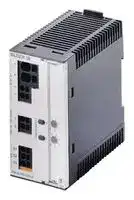
PM-0748-200-0
ELECTRONIC CIRCUIT BREAKER, 48VDC, 10A
⚠️ Reference pricing provided. In case of supply shortages, we will connect you with our trusted procurement partners to ensure your project's continuity.
- Manufacturer: BLOCK
- Product type: Electronic Circuit Breakers
- ; ELECTRONIC CIRCUIT BREAKER, 48VDC, 10A; Product Range:Economy Smart Series; Current Rating:20A; No. of Poles:-; Supply Voltage:48VDC; Circuit Breaker Mounting:DIN Rail; Load Curre
- SVHC: No SVHC (14-Jun-2023)
- Trip Time: 500ms
- No. of Poles: -
- Product Range: Economy Smart Series
- Current Rating: 20A
- Supply Voltage: 48VDC
- Load Current Max: 10A
- Circuit Breaker Mounting: DIN Rail
| Delivery and price | |
|---|---|
| Units per pack | 1 |
| Price | 153.21 € |
| Current stock | 10+ |
| Lead time | 30 days |
Datasheet

## ENG Manual **Electronic Circuit Breakers** ~~———._____—C'|:«=3BLOCGK:~~ 2.01-08/15 **ECONOMY SMART Electronic Circuit Breaker** _**ECONOMY SMART**_

- Number of available output channels: 2 / 4 / 8

- Adjustable rated current for each channel

- High capacitive loads start up reliably

- The channels switch on sequentially and loaddependent

- Dual-line status query and remote switching of the outputs

- Expanded remote- transfer of input voltage and set rated currents

-

Group signal contact for easy remote diagnosis

-

   - Push-in-direct connection technology

-

   - LED signaling and on/off/reset button for each channel

-

- Made in Germany

## **Description**

Circuit breakers with thermomagnetic characteristics from the ECONOMY SMART series present an economical alternative to conventional miniature circuit breakers. They guarantee safe tripping, even under high line resistances, and are optimal for device and series machine manufacturing.

The electronic circuit breaker distributes the load current to multiple junctions and reliably monitors them for overload and short circuit. The electronics tolerates short-term current spikes, for example, resulting from a high starting current; it de-energizes junctions with long overloads. This is ensured on the high-resistance lines themselves and in the case of “creeping” short circuits.  The rated current can be individually adjusted for each output using the selector switch. If the rated current is exceeded, the output automatically switches off after a defined tripping time and can be switched back on after a short waiting period (thermal rebound) with a button or remote reset. The button also manually switches the output. A multicolored LED displays the output status.

## **Approvals**

Page **1** of **12**

ENG Manual 2.01-08/15

**Electronic Circuit Breakers ECONOMY SMART**

## **Contents**

Product overview ............................................................................................... 2 Safety notices ................................................................................................... 3 Proper use ........................................................................................................ 3 Installation ....................................................................................................... 3 Connection ....................................................................................................... 3 Operating and display elements ........................................................................... 4 Tripping characteristic ........................................................................................ 4 Charging of capacitive loads ................................................................................ 5 Operational statuses, signaling, reactions ............................................................. 6 Switch-on delays for individual channels ............................................................... 6 “ON/OFF and reset” buttons ................................................................................ 6 Signaling and control contacts S1/S2/S3 ............................................................... 7 Functionality of the 2-wire communication via S1/S2 .............................................. 7 Details on signal input S1 (ON/OFF/RESET) ........................................................... 9 Details on signal input S2 (status of the outputs) .................................................. 11 Details on signal input S3 (∑ for tripped outputs and device defect) ........................ 12 Dimensions ...................................................................................................... 12

## _**Product overview**_

## ECONOMY SMART

Page **2** of **12**

~~PO~~ ENG Manual **Electronic Circuit Breakers** ~~——_.____—C|:~~ 2.01-08/15 **ECONOMY SMART** ~~| ™BLOCKts~~

## _**Safety notices**_

Please read these warnings and safety notices carefully before operating the device. Installation of the device is reserved for competent and qualified personnel. In the event of malfunctions or damage to the device, switch off the supply voltage immediately and send to the production plant for inspection. The device does not contain any service parts. If an internal fuse is tripped, an internal defect in the device is highly likely. The specified data serve the product description alone and are not understood as warranted characteristics in the legal sense.

## _**Proper use**_

This device is designed for installation in a housing and for use with all electronic devices, such as industrial control systems, office equipment, communication devices, and measuring instruments, for example. Do not use this device in the control systems of aircraft, trains, or nuclear facilities where malfunction may result in severe injury or death.

## _**Installation**_

Installation should be performed in accordance with local conditions, relevant provisions, national accident prevention regulations and the accepted rules of engineering. This electrical equipment is a component designed for installation in electrical systems or machines and it satisfies the requirements of the Low Voltage Directive (2014/35/EU). The required minimum distance from the adjacent parts must be maintained in order to prevent the cooling system from being impeded!

## _**Connection**_

**==> picture [109 x 8] intentionally omitted <==**

**----- Start of picture text -----**<br>
Functional circuit diagram<br>**----- End of picture text -----**<br>


Page **3** of **12**

ENG Manual 2.01-08/15 ~~es~~

**Electronic Circuit Breakers ECONOMY SMART**

## _**Operating and display elements**_

**Front view with operating and display elements**

## _**Tripping characteristic**_

**==> picture [207 x 222] intentionally omitted <==**

**----- Start of picture text -----**<br>
100<br>10<br>1<br>0,1<br>0,01 HE<br>0 1 2 3 4<br>Multiples of rated current<br>Tripping characteristic<br>Tripping time in seconds<br>**----- End of picture text -----**<br>


The tripping time depends on the extent of the overcurrent. In the event of a short circuit, the defective circuit is reliably shut down within milliseconds. The extent of the short circuit current depends on the current limiting of the feeding power supply as well as the line resistance.

Page **4** of **12**

ENG Manual **Electronic Circuit Breakers** 2.01-08/15 **ECONOMY SMART**

## _**Charging of capacitive loads**_

The electronic circuit breaker enables especially high capacitive loads to be switched on. The following experimentally determined capacities serve as standard values.

|**Line cross-section: 0.75 mm²**|
|---|
|Line length<br>(feed and return<br>line)<br>Inrush capacity<br>[mF] at 22 V input<br>voltage<br>Inrush capacity<br>[mF] at 24 V input<br>voltage<br>Inrush capacity<br>[mF] at 26 V input<br>voltage<br>Inrush capacity<br>[mF] at 28 V input<br>voltage<br>0<br>58<br>48<br>26.6<br>13.3<br>2.5<br>64.8<br>61.5<br>44.8<br>23.3<br>5<br>89.5<br>83.3<br>70<br>58.1<br>10<br>156.1<br>130<br>94.8<br>68.1<br>20<br>222<br>> 620<br>130<br>114.8<br>40<br>> 620<br>> 620<br>> 620<br>> 620<br>~~===~~|
|**Line cross-section: 1.5mm²**|
|Line length<br>(feed and return<br>line)<br>Inrush capacity<br>[mF] at 22 V input<br>voltage<br>Inrush capacity<br>[mF] at 24 V input<br>voltage<br>Inrush capacity<br>[mF] at 26 V input<br>voltage<br>Inrush capacity<br>[mF] at 28 V input<br>voltage<br>0<br>58<br>48<br>26.6<br>13.3<br>2.5<br>76.6<br>70<br>34.8<br>21.5<br>5<br>76.6<br>50<br>40<br>24.8<br>10<br>64.8<br>53.3<br>53.3<br>41.5<br>20<br>83.3<br>81.3<br>71.3<br>109.5<br>40<br>306.6<br>222.8<br>122.8<br>112.8<br>~~===~~|
|**Line cross-section: 2.5mm²**|
|Line length<br>(feed and return<br>line)<br>Inrush capacity<br>[mF] at 22 V input<br>voltage<br>Inrush capacity<br>[mF] at 24 V input<br>voltage<br>Inrush capacity<br>[mF] at 26 V input<br>voltage<br>Inrush capacity<br>[mF] at 28 V input<br>voltage<br>0<br>58<br>48<br>26.6<br>13.3<br>2.5<br>79.9<br>63.3<br>33.3<br>18.1<br>5<br>63.6<br>73.3<br>36.6<br>23.3<br>10<br>70<br>73.3<br>46.6<br>20<br>20<br>73<br>63.3<br>56.6<br>50<br>40<br>100<br>91.5<br>91.5<br>64.8<br>~~=————~~|
|All capacities were determined experimentally under nominal load. The indicated values|
|are standard values. Possible line capacities depend on the installation situation. The|
|feeding power supply must be able to supply the required current without voltage dip of|
|the output voltage to a low 18 V.|


Page **5** of **12**

ENG Manual 2.01-08/15

**Electronic Circuit Breakers ECONOMY SMART**

## _**Operational statuses, signaling, reactions**_

**==> picture [476 x 227] intentionally omitted <==**

**----- Start of picture text -----**<br>
Z  Operational status  Output  LED  Signal output S3  Button is  Signal input S1<br>(group signal)  pressed  (on/off/reset)<br>0  Module initialization  [1)] off  off  0 V   ---  ---<br>ee<br>1  Outputs switched on, function OK  on  green  24 V  Switch off  via bit pattern<br>output  -->switch off output<br>Oe ee Z 3  ee Z 3<br>2  Output current > rated current [2)] on  green  24 V  Switch off  via bit pattern<br>flashing  output  -->switch off output<br>a Z 3  Z 3<br>3  Output is switched off manually  off  red  24 V  Switch on  via bit pattern<br>or via signal input S1  [3)] output  -->switch on output<br>Z 1  Z 1<br>fo<br>4  Output is switched off on the  off  red  0 V  ---   ---<br>basis of an overcurrent  flashing  Z 4  Z 4<br>Thermal rebound active  [4)]<br>a<br>5  Output is switched off on the  off  red +  0 V  Switch on  Long 24 V impulse (>0.5<br>basis of an overcurrent  green  output  s)<br>Thermal rebound is concluded  [5)] flashing  Z 3  --> switch on output<br> Z 1<br>7  Device error (defective fuse  off  red  0 V  ---  ---<br>ee detected)  rapid  Z 7  eee Z 7<br>a flashing<br>1) After initializing the module, switching on the outputs is load-dependent.<br>**----- End of picture text -----**<br>


- 2) The output is switched off automatically according to the tripping characteristic

- 3) The status is saved when switching off the device.

- 4) Transition to operational status Z5 after a waiting period (thermal rebound). The remaining waiting period is saved when switching off the device and it takes effect when switching the device back on. This reliably prevents an overload of the switching elements when switching the device back on immediately.

- 5) The affected output can be switched back on by pressing the button twice or by way of an impulse (> 0.5 s) to signal input S1; transition to operational status Z1.

## _**Switch-on delays for individual channels**_

Switching on the outputs occurs sequentially after achieving a minimum input voltage (switch-on threshold). The switching on of all channels is load-dependent in order to reduce starting current spikes.

Switching on of the channels begins with the lowest channel number to be switched on, typically beginning with channel 1. The next channel is switched on as soon as the rated current in the previous channel falls below the set nominal value or the previous channel has been switched off, however, after 50 ms at the earliest.

## _**“ON/OFF and reset” buttons**_

A button is assigned to each output channel. The actual status is displayed by way of an integrated LED.  The button has two functions depending on the operational status:

- Normal operation

   - If the channel is switched off (button illuminates red continuously), it can be switched on by pressing the button briefly (button illuminates green). Pressing the button again switches the output back off.

- Error mode

   - If the output channel is switched off due to an overcurrent (button flashes red), it can be switched back on (reset).

## _**Note:**_

To switch the output back on, the thermal rebound must first be completed (button flashes green instead of red). After pressing the button, the output

Page **6** of **12**

ENG Manual **Electronic Circuit Breakers** 2.01-08/15 **ECONOMY SMART**

switches off initially (button illuminates red continuously). Pressing the button again switches the output back on. (button illuminates green continuously)

The outputs are switched on by default when delivered.

## _**Signaling and control contacts S1/S2/S3**_

The electronic circuit breaker is equipped with three signaling and control contacts.

Information from the circuit breaker relevant to operation can be read out and any desired output channel can be switched on or off by way of signal contacts S1 (digital input) and S2 (digital output).

A group reset (switching back on) of all tripped outputs (outputs which have not been switched off manually) is also possible by way of signal input S1, provided a 24 V high impulse is fed in for at least 0.5 seconds.

Signal output S3 serves as an active 24 V collective fault message and signals that at least one output has been switched off due to an overcurrent. S3 also signals an internal device defect.

## _**Functionality of the 2-wire communication via S1/S2**_

Using a higher-level control (e.g., PLC), the signal input can be controlled remotely by way of a serial bit pattern at signal input S1. The operating and error statuses, the input voltage supplied to the module and the set rated current for each circuit are provisioned simultaneously by way of signal output S2.

## **Diagnosis options via S1/S2:**

**Short log:** (17-bit data – minimal transmission duration 1.2 seconds) _Operational statuses = on or off via channel Error statuses = overcurrent or tripped via channel_ **Expanded log:** (89-bit data – minimal transmission duration 6.3 seconds) _Actual input voltage Set rated currents via channel Actual current via channel_ _**(applies only to BASIC SMART equipment)**_

Page **7** of **12**

~~Pe~~ ENG Manual **Electronic Circuit Breakers** ~~—.....~~ 2.01-08/15 .——=«<|:s **ECONOMY SMART**

## **Communication sequence via S1/S2:**

- A digital output of the control sends the Manchester coding to the circuit breaker by way of “S1.” The coding determines which output channel should be switched on/off.

- The circuit breaker synchronizes internally according to this and simultaneously sends back the status (on/off and error status) of all channels by way of “S2.” Optionally, in addition to the module input voltage, the momentary flowing current as well as the set current value of each circuit can be queried; see “expanded log.”

- The data sent back by the circuit breaker are only high/low and not Manchestercoded. In order to avoid faulty signaling resulting from program run times or delays of the E/As in a PLC, the data import from the generated auxiliary clock occurs shortly after the edge change (from high to low).

- Once all 17 or 89 bits for the expanded log have been successfully received, the circuit breaker sends an 18- or 90- bit as a stop bit. This takes 1.5 clock cycles. The PLC can send no additional bits during this time.

- If the error status in the circuit breaker changes, for example, after an overcurrent is present on the output, then the circuit breaker generates a cyclical impulse on signal output S2 (500 ms high impulse every 3 seconds). This impulse is sent as long as the PLC has successfully queried the current status by way of a new telegram with Manchester coding.

Coding of the status bits sent by the circuit breaker

|**On/off status**<br>**via channel**|**Error status**<br>**via channel**|**Description**|
|---|---|---|
|0|0|Output channel is switched off manually or via<br>coded pulse pattern to S1|
|0|1|Output channel is switched off on the basis of an<br>overcurrent|
|1|0|Output channel is switched on manually or via<br>codedpulsepattern to S1|
|1|1|Overcurrent (output current > rated current)<br>(Duration of the overcurrent is ≥ 1 second)|


## **Note:**

The on/off status changes sent by a higher-level control are sent back updated by the control with the next telegram. If, for example, the status of output channel 3 is changed in a telegram from “0” to “1,” then the old status “0” is transmitted in the same telegram. The circuit breaker sends the updated status of the output channel only after the next query from the control.

Program examples (function) for the different PLC series are available online for free download on the product page for this device at ECONOMY SMART product page.

Page **8** of **12**

ENG Manual **Electronic Circuit Breakers** 2.01-08/15 **ECONOMY SMART** ~~———— ——s—i—iw—si(é(#iwLSC&@RBBLOEEKSS~~

## _**Details on signal input S1 (ON/OFF/RESET)**_

This 24 V signal input refers to the non-electrically isolated 0 V input of the module. With this input, all outputs switched off by overload are switched back on and specific individual channels can be switched on or off.

## **Reset (switching back on tripped channels)**

By applying a 24 V voltage for longer than 0.5 seconds, all outputs tripped by overload are switched back on sequentially and load-dependent.

## **Remote on/off**

Any of the outputs can be switched on or off simultaneously by way of coded pulse patterns. Specific temporary circuits, such as for example, certain lighting or auxiliary circuits can be switched off as needed.

|**Function**<br>~~a~~|**Action**<br>~~es~~|**Reaction**<br>~~ee~~|**Impulse**<br>~~ee~~|
|---|---|---|---|
|Reset<br>~~a~~|Long<br>impulse<br>>= 500ms<br>~~es~~|**All outputs switched off due to**<br>**overload are switched back on.**<br>_Switching tripped channels back on again is_<br>_only possible after 0 V detection. This_<br>_prevents automatically tripped channels_<br>_from being switched back on again when_<br>_the signal is constant._<br>~~ee~~|Switching all<br>tripped channels on<br>~~ee~~|
|ON/OFF|coded pulse<br>pattern|**Switching untripped outputs on and**<br>**off.**<br>_Tripped outputs cannot be switched on or_<br>_off. They must first be acknowledged with a_<br>_reset impulse._|See the pulse<br>pattern description<br>below|


## **Pulse pattern description**

The pulse pattern consists of 17 or, optionally, 89 bits, which must be sent as a Manchester code (according to IEEE 802.3). The first bit to be transmitted has a value of “0” and serves as a start bit. This is followed by 16 or, optionally, 88 bits of usage data.

The first 8 bits represent the desired on/off status of the individual channels in ascending order. A value of “1” switches on the corresponding channel. A value of “0” switches it off. For the 8 bits to follow, only the three most significant bits are relevant.

- Bit 7 = “1”: the on/off status transmitted in the first 8 bits is imported

- Bit 7 = “0”: the on/off status transmitted in the first 8 bits is ignored

- Bit 6 = “1”: the expanded 89-bit log is used; the circuit breaker transmits additional usage data

- Bit 6 = “0”: the short 17-bit log is used

- Bit 5 = “1”: the rated currents set on the current selector switch and the actual input voltage are transmitted

- Bit 5 = “0”: the actual input voltage and the actual output currents are transmitted for all circuit breakers in the “ **BASIC SMART** ” equipment.

The 6 or, optionally, 78 bits to follow are set to “0” and serve as a clock signal for the signal output “S2.”

Once all 17 or 89 bits have been successfully received, the circuit breaker sends an 18or 90-bit as a stop bit. This takes 1.5 clock cycles. The PLC can send no additional bits during this time. Once the pulse pattern has been sent, S1 and S2 are set to the low level.

## **New pulse patterns to S1 are only permitted after a waiting period of at least 200 ms.**

Page **9** of **12**

ENG Manual 2.01-08/15

**Electronic Circuit Breakers ECONOMY SMART**

## **Standard log (17-bit)**

## **Expanded log (89-bit)**

It starts with the 3rd byte of the log (additional usage data) and includes a total of 9 bytes. These are coded first with the most significant bit (“MSB first”) and have the following meaning:

_Depending on the significance of bit 5 in the 2nd byte, either the set rated currents or the actual output currents (only “_ _**BASIC SMART** ” equipment) are transmitted in addition to the current input voltage._

Input voltage: ((transmitted value)/16 + 16) V Current channel 1:  (transmitted value)/16 A Current channel 2:  (transmitted value)/16 A Current channel 3:  (transmitted value)/16 A Current channel 4:  (transmitted value)/16 A Current channel 5:  (transmitted value)/16 A Current channel 6:  (transmitted value)/16 A Current channel 7:  (transmitted value)/16 A Current channel 8:  (transmitted value)/16 A

Page **10** of **12**

~~Pr~~ ENG Manual **Electronic Circuit Breakers** ~~——..._—sid|s~~ 2.01-08/15 **ECONOMY SMART**

## **Max. jitter for data transmission**

The following absolute jitter is permitted depending on the selected clock cycle:

## _**Details on signal input S2 (status of the outputs)**_

This 24 V signal output refers to the non-electrically isolated 0 V input of the module. This output allows the statuses of all integrated output channels to be queried. The output is short circuit proof; the short circuit current is 25 mA.

## **Coded pulse sequence for status query, generated by the PLC**

If the PLC sends the coded pulse sequence by way of signal input S1, the circuit breaker synchronizes the circuit breaker to the auxiliary clock of the PLC and sends the actual on/off status of the channels in data byte 1 by way of signal output S2. Tripped channels coded in data byte 2.

## **Cyclical impulse after status change generated by the circuit breaker**

If the PLC does not execute a cyclical status query, then the circuit breaker at S2 generates a cyclical impulse, provided the error status changes and is not queried regularly within the next 3 seconds of the status. The internal error status changes by switching off or also as a result of the overcurrent of at least one output. This impulse is sent as long as the PLC has successfully queried the current status by way of a new telegram with Manchester coding.

Therefore, a digital input of the control must query signal contact S2 in order to obtain information about status changes in the circuit breaker. Simultaneously, starting a telegram by way of S1 needs to be prevented programmatically in the control while the circuit breaker is generating an impulse at S2. Analyzing the respective status at S2 prior to starting the dispatch of the telegram or generating a telegram for the status query at least every 3 seconds is recommended.

Page **11** of **12**

~~PO~~ ENG Manual **Electronic Circuit Breakers** ~~=~~ 2.01-08/15 ~~_——C*t:sSC*BLOCKE~~ **ECONOMY SMART**

## _**Details on signal input S3 (∑ for tripped outputs and device defect)**_

This 24 V signal output refers to the non-electrically isolated 0 V input of the module. The group message is realized through an “active high” signal output. If no output has been tripped and no internal device defect has been detected, this signal output is “active high” (+24 V). As soon as at least one output channel has been tripped or a device defect has been detected, the signal output switches to “active low” (0 V). This signal output is short circuit proof and resilient up to max. 20 mA.

## _**Dimensions**_

**Dimensions 8-channel module**

**Dimensions 4/2-channel module**

Page **12** of **12**
Updated at March 27, 2026
About Novapart
Novapart is a B2B electronic component broker specialising in stock shortages and cost reduction. We source hard-to-find parts and identify compliant alternatives across a catalogue of 410,000+ components from 500+ manufacturers.
Learn more →Stock Shortage Specialist
When a component is unavailable, discontinued or has an unacceptable lead time, we tap into our network of vetted European and Asian distributors to source what you need — without compromising on quality or traceability.
Request a quote →Compliant Alternatives
We identify pin-to-pin, electrically equivalent substitutes that meet the same certifications (RoHS, AEC-Q100, REACH) as your original specification — validated against datasheets, not just part numbers. Often at a lower cost.
BOM Analysis service →