
Image not available
Illustrative purposes only

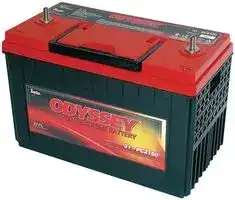
PC2150S
Rechargeable Battery, Thin Plate Pure Lead, Single Cell, 12 V, Lead Acid, 104 Ah, Stud
⚠️ Reference pricing provided. In case of supply shortages, we will connect you with our trusted procurement partners to ensure your project's continuity.
- Manufacturer: ENERSYS
- Product type: Batteries - Rechargeable
- Battery Voltage:12V; Battery Technology:Lead Acid; Battery Capacity:104Ah; Battery Size Code:-; Battery Terminals:Stud; External Diameter:-; External Height:238.8mm; External Width:172.7mm
- Weight: 34.1kg
- Pack Quantity: -
- Product Range: ODYSSEY Series
- External Depth: 330.2mm
- External Width: 172.7mm
- Battery Voltage: 12V
- External Height: 238.8mm
- Battery Capacity: 104Ah
- Battery IEC Code: -
- Battery NEDA Code: -
- Battery Size Code: -
- Battery Terminals: Stud
- Battery Compliance: -
- Battery Technology: Lead Acid
- Battery Type / Size: Lead-Acid
| Delivery and price | |
|---|---|
| Units per pack | 1 |
| Price | 622.67 € |
| Current stock | 10+ |
| Lead time | 30 days |
Datasheet

= ~~—~~ _APPLICATION_

## **Preface to the Sixth Edition**

**The addition of four new members to the ODYSSEY™ family of premium batteries - the PC310, the PC1500 (a true BCI Group 34/78), the PC2150 (a true BCI Group 31 size) and the PC2250 - has necessitated this new edition. Just as in the previous editions of the battery guide, detailed performance data for the new batteries are included in this revision.**

**This edition provides an expanded treatment of the charging requirements for ODYSSEY batteries, including a detailed discussion of a threestep charge profile that will bring back a fully discharged battery in about 6 to 8 hours. Also discussed are design variations among chargers with this profile.**

**This edition also includes updated test data on ODYSSEY batteries.**

|**TABLE OF CONTENTS**||
|---|---|
|**Introduction**|3|
|**Why use ODYSSEY batteries?**|3|
|**Specifications**|4|
|**Pulse discharge capabilities**|5|
|**Extended discharge characteristics**|5|
|**Performance data tables**|6|
|**ODYSSEY storage and deep discharge recovery**|9|
|(A)<br>How do I know the state of charge (SOC) of the battery?|9|
|(B)<br>How long can the battery be stored?|10|
|(C)<br>Can the battery recover from abusive storage conditions?|10|
|(1) German DIN standard test for overdischarge recovery|10|
|(2) High temperature discharged storage test|10|
|**Low temperature performance**|10|
|**Parasitic loads**|11|
|**Shock, impact and vibration testing**<br>(A)<br>MIL S-901C shock, high impact test<br>(B)<br>MIL S-167-1 for mechanical vibrations<br>(C)<br>Ford™ vehicle vibration test<br>(D)<br>Three axis vibration test<br>(E)<br>Caterpillar™ 100-hour vibration test<br>(F)<br>Shock and vibration test per IEC 61373, Sections 8-10|11<br>11<br>11<br>11<br>12<br>12<br>12|
|**Charging ODYSSEY batteries**|12|
|(A)<br>Selecting the right charger for your battery|13|
|(B)<br>Selecting battery type on your charger|14|
|**Rapid charging of ODYSSEY batteries**|14|
|**Concluding remarks**|14|
|**Frequently asked SLI battery questions**|15|


_www.odysseyfactory.com_

_Publication No: US-ODY-AM-001 - April 2006_

**2**

**==> picture [132 x 33] intentionally omitted <==**

## **Introduction**

The ODYSSEY battery ingeniously uses absorbed glass mat (AGM) valve regulated lead acid (VRLA) technology to offer, in one package, the characteristics of two separate batteries. It can deep cycle as well as deliver serious cranking power - it is like an athlete who is both a champion long distance runner and an excellent sprinter. Traditional battery designs allow them to either deep cycle or provide high amperage discharges for applications such as engine starting. The ODYSSEY battery can support applications in either category. ODYSSEY batteries are capable of providing engine cranking pulses of up to 2,250A for 5 seconds at 25ºC (77ºF) as well as deliver 400 charge/discharge cycles to 80% depth of discharge (DOD) when properly charged. A typical starting, lighting and ignition (SLI) battery, for example, is designed to provide short-duration, highamperage pulses; it performs poorly when repeatedly taken down to deep depths of discharge or if they are placed on a continuous trickle charge, such as when they are used to crank a backup generator. A traditional battery resembles either a sprinter or a long distance runner; an ODYSSEY battery will do both - provide short duration high amperage pulses or low rate, long duration drains.

## **Why use ODYSSEY Batteries?**

## **Guaranteed longer service life**

With a 10 to 12-year design life and a 3 to 8-year service life, ODYSSEY batteries save you time and money because you do not have to replace them as often. Unlike other AGM VRLA batteries, the ODYSSEY battery is capable of delivering up to 400 cycles when discharged to 80% DOD and properly charged.

## **Longer storage life**

Unlike conventional batteries that need a recharge every 6 to 12 weeks, a fully charged ODYSSEY battery can be stored for up to 2 years at 25°C (77°F) from a full state of charge. At lower temperatures, storage times will be even longer.

## **Deep discharge recovery**

The ease with which an ODYSSEY battery can recover from a deep discharge is extraordinary. A later section on storage and recharge criteria discusses test data on this important topic.

## **Superior cranking and fast charge capability**

The cranking power of ODYSSEY batteries is double to triple that of equally sized conventional batteries, even when the temperature is as low as -40°C (-40ºF). In addition, with simple constant voltage charging there is no need to limit the inrush current, allowing the battery to be rapidly charged. Please see the section titled _Rapid charging of ODYSSEY batteries_ for more details on this feature.

## **Easy shipping**

The AGM valve-regulated design of the ODYSSEY battery eliminates the need for vent tubes; further, no battery watering is required and there is no fear of acid burns or damage to expensive chrome or paint. Because of the starved electrolyte design, the US Department of Transportation (USDOT) has classified the ODYSSEY battery as a dry battery. Shipping these batteries by express ground or by air is possible.

## **Tough construction**

The rugged construction of the ODYSSEY battery makes it suitable for use in a variety of environments ranging from vacuum to 2 atmospheres (29.4 PSI).

## **Mounting flexibility**

Installing the ODYSSEY battery in any orientation does not affect any performance attribute. There is also no fear of acid spillage. However, inverted installation is not recommended.

## **Superior vibration resistance**

ODYSSEY batteries have passed a variety of rigorous tests that demonstrate their ruggedness and exceptional tolerance of mechanical abuse. Please see the section titled _Shock, impact and vibration testing_ for more details on these tests.

## **Ready out of the box**

ODYSSEY batteries ship from the factory fully charged. If the battery’s open circuit voltage is higher than 12.65V, simply install it in your vehicle and you are ready to go; if below 12.65V boost charge the battery following the instructions in this manual or the owner's manual. For optimum reliability, a boost charge prior to installation is recommended, regardless of the battery’s open circuit voltage (OCV).

_www.odysseyfactory.com_

_Publication No: US-ODY-AM-001 - April 2006_

**3**

## **Specifications**

|**Model (Ah @ 10-hour rate/Ah @ 20-hour rate)**|**Model (Ah @ 10-hour rate/Ah @ 20-hour rate)**|**Model (Ah @ 10-hour rate/Ah @ 20-hour rate)**|**Model (Ah @ 10-hour rate/Ah @ 20-hour rate)**|**Model (Ah @ 10-hour rate/Ah @ 20-hour rate)**|**Model (Ah @ 10-hour rate/Ah @ 20-hour rate)**|**Model (Ah @ 10-hour rate/Ah @ 20-hour rate)**|**Model (Ah @ 10-hour rate/Ah @ 20-hour rate)**|**Model (Ah @ 10-hour rate/Ah @ 20-hour rate)**|**Model (Ah @ 10-hour rate/Ah @ 20-hour rate)**|**Model (Ah @ 10-hour rate/Ah @ 20-hour rate)**|**Model (Ah @ 10-hour rate/Ah @ 20-hour rate)**|
|---|---|---|---|---|---|---|---|---|---|---|---|
|**Feature**|**PC310**<br>**(7/8)**|**PC535**<br>**(13/14.8)**|**PC545**<br>**(12/14)**|**PC625**<br>**(17/18)**|**PC680**<br>**(16/17)**|**PC925**<br>**(27/28)**|**PC1200**<br>**(41/44)**|**PC1500**<br>**(62/68)**|**PC1700**<br>**(65/68)**|**PC2150**<br>**(97/104)**|**PC2250**<br>**(114/126)**|
|**5 sec. pulse**<br>**hot cranking**<br>**amps (PHCA)**|310|535|545|625|680|925|1,200|1,500|1,700|2,150|2,250|
|**CCA @ 0ºF**|100|200|185|265|220|380|550|825|875|1,090|1,225|
|**CA @ 32ºF**|155|265|240|350|300|500|725|1,050|1,175|1,370|1,550|
|**HCA @ 80ºF**|200|300|300|440|370|625|860|1,250|1,325|1,545|1,730|
|**Charge**<br>**voltage**|Float voltage: 13.5V to 13.8V at 25°C (77°F); no current limit<br>Cyclic voltage: 14.4V to 15.0V at 25°C (77°F); no current limit|||||||||||
|**Reserve**<br>**capacity,**<br>**minutes**|9|21|18|27|24|52|78|125|142|200|240|
|**Terminals**|M4 bolt|M6 bolt|M6 bolt|M6 stud|M6 bolt or<br>SAE 3/8” receptacle||M6 bolt<br>or SAE<br>3/8”<br>receptacle|Top<br>SAE 3/8”<br>Side: 3/8” <br>X 16<br> receptacle|M6 bolt<br>SAE 3/8” <br> receptacle<br>or 5/16”<br> SS stud|3/8” stud<br><br>/SAE|Dual<br>SAE/DIN<br>terminal<br>and 3/8”<br>stud|
|**Terminal**<br>**torque, in-lbs.**|8.9|40|50|40|50|60|60|70|60|150-200|100|
|**Length, in.**<br>**(mm.)**|5.43<br>(138.0)|6.70<br>(170.2)|7.00<br>(177.8)|6.70<br>(170.2)|7.27<br>(184.7)|6.64<br>(168.6)|7.87<br>(199.9)|10.85<br>(275.6)|13.02<br>(330.7)|13.00<br>(330.2)|11.26<br>(286.0)|
|**Width, in.**<br>**(mm.)**|3.39<br>(86.0)|3.90<br>(99.1)|3.37<br>(85.6)|3.90<br>(99.1)|3.11<br>(79.0)|7.05<br>(179.0)|6.66<br>(169.1)|6.99<br>(177.5)|6.62<br>(168.2)|6.80<br>(172.7)|10.59<br>(269.0)|
|**Height, in.**<br>**(mm.)**|3.98<br>(101.0)|6.125<br>(155.6)|5.17<br>(131.3)|6.89<br>(175.0)|6.67<br>(169.4)|5.04<br>(128.0)|6.80<br>(172.7)|7.82<br>(198.6)|6.93<br>(176.0)|9.4<br>(238.8)|9.17<br>(233.0)|
|**Weight, lb.**<br>**(kg.)**|5.9<br>(2.7)|12.0<br>(5.4)|12.6<br>(5.7)|13.2<br>(6.0)|15.4<br>(7.0)|26.0<br>(11.8)|38.2<br>(17.4)|53.0<br>(24.0)|60.9<br>(27.6)|75.0<br>(34.1)|86.0<br>(39.0)|
|**Cycle life**<br>**@ 77ºF**|400 cycles to 80% depth of discharge,<br>with correct charge profle|||||||||||
|**Temperature**<br>**range**|-40ºC (ºF) to 45ºC (113ºF) for PC535 & PC625<br>-40ºC (ºF) to 80ºC (176ºF) with metal jacket on all<br>other models, except PC310, PC535 and PC625<br>-40ºC (ºF) to +50ºC (122ºF) for PC310|||||||-40°C (°F) to 80°C (176°F) with metal<br>jacket on all models, except PC2250<br>-30°C (-22°F) to +40°C (104°F) for PC2250||||
|**Resistance @**<br>**1kHz at 77ºF**|27.1m|8.0m|10.0m|7.0m|7.0m|5.0m|4.5m|2.5m|3.5m|2.2m|2.1m|
|**Short circuit**<br>**amps**|455|1,000|1,200|1,800|1,800|2,400|2,600|3,100|3,500|5,000|5,000|


_NOTE: Metal jackets are not available for PC310, PC535, PC625, PC1500, and PC2250_

_www.odysseyfactory.com_

_Publication No: US-ODY-AM-001 - April 2006_

**4**

**==> picture [132 x 33] intentionally omitted <==**

## **Pulse discharge capabilities**

Figure 1 shows the excellent short duration or pulse discharge capabilities of the ODYSSEY family of batteries. Note that successive discharges must be spaced apart to allow the terminals to cool down. Second, the graph reflects the capabilities of fully charged batteries at a temperature of 25°C (77ºF).

Table 1 shows the 5, 10, 20 and 30-second pulse discharge rates for these batteries.

## **Figure 1: Pulse discharge capability**

**==> picture [234 x 164] intentionally omitted <==**

**----- Start of picture text -----**<br>
PC310 PC535 PC545 PC625 PC680 PC925 PC1200<br>PC1500 PC1700 PC2150 PC2250<br>2600 2600<br>2100 2100<br>1600 1600<br>1100 1100<br>600 600<br>100 100<br>5 10 15 20 25 30<br>Tim e in seconds @ 25ºC (77ºF)<br>Current in amps to 7.2V Current in amps to 7.2V<br>**----- End of picture text -----**<br>


## **Extended discharge characteristics**

In addition to its excellent pulse discharge capabilities, the ODYSSEY battery can deliver many deep discharge cycles, yet another area where the ODYSSEY battery outperforms a conventional SLI battery, which can deliver only a few deep discharge cycles.

The following ten graphs show detailed discharge characteristics of the entire ODYSSEY line. The end of discharge voltage in each case is 10.02V per battery or 1.67 volts per cell (VPC). Each graph shows both constant current (CC) and constant power (CP) discharge curves at 25ºC (77ºF). The table below each graph shows the corresponding energy and power densities. The battery run times extend from 2 minutes to 20 hours.

**Table 1: Pulse discharge of ODYSSEY batteries**

||**Pulse**|**discharge in amps**|**to 7.2V @25°C (77°F)**|**to 7.2V @25°C (77°F)**|
|---|---|---|---|---|
|**Battery**|**5 Sec.**|**10 Sec.**|**20 Sec.**|**30 Sec.**|
|PC310|310|250|225|200|
|PC535|535|465|410|380|
|PC545|545|495|420|380|
|PC680|680|595|525|400|
|PC625|625|545|480|450|
|PC925|925|870|765|675|
|PC1200|1,200|1,090|900|825|
|PC1500|1,500|1,280|1,100|975|
|PC1700|1,700|1,540|1,355|1,195|
|PC2150|2,150|1,985|1,750|1,600|
|PC2250|2,250|2,075|1,775|1,675|


_www.odysseyfactory.com_

_Publication No: US-ODY-AM-001 - April 2006_

**5**

**==> picture [486 x 601] intentionally omitted <==**

**----- Start of picture text -----**<br>
PC310 performance data at 25°C, per module Time Watts Amps Capacity Energy ENERGY AND POWER DENSITIES<br>(W) (A) (Ah) (Wh) W/liter Wh/liter W/kg Wh/kg<br>Watts Amps 2 min 738 80.8 2.7 24.6 613.2 20.4 273.3 9.1<br>1000 5 min 473 43.2 3.6 39.4 393.3 32.8 175.3 14.6<br>10 min 312 26.0 4.4 53.1 259.4 44.1 115.6 19.7<br>15 min 236 19.0 4.8 59.0 196.0 49.0 87.4 21.8<br>100 20 min 191 15.0 5.0 62.9 158.4 52.3 70.6 23.3<br>30 min 139 10.8 5.4 69.3 115.1 57.6 51.3 25.7<br>45 min 98 7.6 5.7 73.9 81.8 61.4 36.5 27.4<br>10 1 hr 76 6.0 6.0 76.4 63.5 63.5 28.3 28.3<br>2 hr 41 3.2 6.5 81.0 33.7 67.3 15.0 30.0<br>3 hr 28 2.3 6.8 82.8 22.9 68.8 10.2 30.7<br>4 hr 21 1.8 7.0 83.7 17.4 69.6 7.8 31.0<br>1<br>5 hr 17 1.4 7.2 84.5 14.0 70.2 6.3 31.3<br>8 hr 11 0.9 7.6 86.1 8.9 71.5 4.0 31.9<br>10 hr 9 0.8 7.8 86.8 7.2 72.1 3.2 32.2<br>0.1 20 hr 5 0.4 8.6 90.5 3.8 75.2 1.7 33.5<br>0.01 0.1 1 10 100<br>Hours to 10.02V @ 25ºC  (77°F)<br>PC535 performance data at 25°C, per 12V module Time Watts Amps Capacity Energy ENERGY AND POWER DENSITIES<br>(W) (A) (Ah) (Wh) W/liter Wh/liter W/kg Wh/kg<br>Watts Amps<br>10000 2 min 1182 112.0 3.40 35.5 450.7 13.5 218.9 6.6<br>5 min 786 71.9 5.75 62.9 299.7 24.0 145.6 11.6<br>10 min 517.2 46.3 7.90 87.9 197.2 33.5 98.8 16.3<br>1000 15 min 390.6 34.5 8.60 97.65 148.9 37.2 72.3 18.1<br>20 min 316.2 27.7 9.10 104.35 120.6 39.8 58.6 19.3<br>30 min 230.4 20.0 10.0 115.2 87.85 43.9 42.7 21.3<br>100<br>45 min 165 14.2 10.65 123.75 62.9 47.2 30.6 22.9<br>1 hr 129 11.0 11.0 129.0 49.2 49.2 23.9 23.9<br>10 2 hr 70.2 5.9 11.8 140.4 26.8 53.5 13.0 26.0<br>3 hr 48.5 4.1 12.3 145.4 18.5 55.5 9.0 26.9<br>4 hr 37.3 3.1 12.4 149.3 14.2 56.9 6.9 27.6<br>1 5 hr 30.5 2.5 12.5 152.4 11.6 58.1 5.6 28.2<br>8 hr 19.9 1.7 13.6 159.4 7.6 60.8 3.7 29.5<br>0.1 10 hr 16.3 1.3 13.0 163.2 6.2 62.2 3.0 30.2<br>0.01 0.1 1 10 100 20 hr 9 0.74 14.8 178.8 3.4 68.2 1.7 33.1<br>Hours to 10.02V at 25ºC (77ºF)<br>PC545 performance data at 25°C, per 12V module Time Watts Amps Capacity Energy ENERGY AND POWER DENSITIES<br>(W) (A) (Ah) (Wh) W/liter Wh/liter W/kg Wh/kg<br>Watts Amps<br>10000 2 min 1361 128.1 4.3 45.3 680.8 22.7 238.7 8.0<br>5 min 648 64.4 5.4 54.0 324.2 27.0 113.7 9.5<br>10 min 415 39.6 6.7 70.6 207.75 35.3 72.8 12.4<br>1000 15 min 313 29.2 7.3 78.2 156.4 39.1 54.8 13.7<br>20 min 254 23.5 7.8 83.8 127.0 41.9 44.5 14.7<br>30 min 187 16.9 8.5 93.3 93.4 46.7 32.7 16.4<br>100<br>45 min 136 12.2 9.2 101.7 67.9 50.9 23.8 17.8<br>1 hr 107 9.6 9.6 107.4 53.7 53.7 18.8 18.8<br>10 2 hr 60 5.3 10.6 120.0 30.0 60.0 10.5 21.1<br>3 hr 42 3.7 11.1 126.0 21.0 63.1 7.4 22.1<br>4 hr 32 2.9 11.6 129.6 16.2 64.9 5.7 22.7<br>1 5 hr 26 2.3 11.5 132.0 13.2 66.1 4.6 23.2<br>8 hr 17 1.5 12.0 134.4 8.4 67.25 3.0 23.6<br>0.1 10 hr 14 1.2 12.0 138.0 6.9 69.1 2.4 24.2<br>0.01 0.1 1 10 100 20 hr 7 0.7 14.0 144.0 3.6 72.1 1.3 25.3<br>Hours to 10.02V at 25ºC (77ºF)<br>Watts or amps per PC310<br>Watts or amps per PC535<br>Watts or amps per PC545<br>**----- End of picture text -----**<br>


_www.odysseyfactory.com_

_Publication No: US-ODY-AM-001 - April 2006_

**6**

**==> picture [132 x 33] intentionally omitted <==**

**==> picture [486 x 386] intentionally omitted <==**

**----- Start of picture text -----**<br>
Time Watts Amps Capacity Energy ENERGY AND POWER DENSITIES PC625 performance data at 25°C, per 12V module<br>(W) (A) (Ah) (Wh) W/liter Wh/liter W/kg Wh/kg<br>Watts Amps<br>2 min 1582 154.7 5.20 52.70 536.10 17.90 255.10 8.50<br>10000<br>5 min 986 91.6 7.60 82.20 334.35 27.90 159.10 13.30<br>10 min 635 57.1 9.50 105.90 215.40 35.90 102.50 17.10<br>15 min 478 42.3 10.60 119.40 161.90 40.50 77.0 19.30 1000<br>20 min 385 33.8 11.30 128.40 130.60 43.50 62.10 20.70<br>30 min 281 24.4 12.20 140.70 95.40 47.70 45.40 22.70<br>100<br>45 min 202 17.4 13.05 151.65 68.50 51.40 32.60 24.50<br>1 hr 159 13.6 13.60 159.0 53.90 53.90 25.65 25.65<br>2 hr 87 7.3 14.60 174.0 29.50 59.0 14.0 28.10 10<br>3 hr 61 5.1 15.30 181.80 20.50 61.60 9.80 29.30<br>4 hr 47 3.9 15.60 187.20 15.90 63.45 7.55 30.20<br>5 hr 38 3.2 16.0 192.0 13.0 65.10 6.20 31.0 1<br>8 hr 25 2.1 16.80 201.60 8.50 68.30 4.10 32.50<br>10 hr 20 1.7 17.0 204.0 6.90 69.15 3.30 32.90 0.1<br>20 hr 11 0.9 18.0 216.0 3.70 73.20 1.70 34.80 0.01 0.1 1 10 100<br>Hours to 10.02V at 25ºC (77ºF)<br>Time Watts Amps Capacity Energy ENERGY AND POWER DENSITIES PC680 performance data at 25°C, per 12V module<br>(W) (A) (Ah) (Wh) W/liter Wh/liter W/kg Wh/kg<br>Watts Amps<br>2 min 1486 143.0 4.8 49.5 601.4 20.0 212.3 7.1<br>10000<br>5 min 792 78.8 6.6 66.0 320.5 26.7 113.1 9.4<br>10 min 512 49.3 8.4 87.1 207.3 35.25 73.2 12.4<br>15 min 389 36.7 9.2 97.4 157.6 39.4 55.6 13.9 1000<br>20 min 318 29.6 9.8 104.9 128.7 42.5 45.4 15.0<br>30 min 236 21.6 10.8 118.2 95.7 47.8 33.8 16.9<br>100<br>45 min 173 15.6 11.7 130.1 70.2 52.6 24.8 18.6<br>1 hr 138 12.3 12.3 138.0 55.8 55.8 19.7 19.7<br>2 hr 79 6.9 13.8 157.2 31.8 63.6 11.2 22.5 10<br>3 hr 56 4.8 14.4 166.5 22.5 67.4 7.9 23.8<br>4 hr 43 3.7 14.8 172.8 17.5 69.9 6.2 24.7<br>5 hr 35 3.0 15.0 177.0 14.3 71.6 5.1 25.3 1<br>8 hr 23 2.0 16.0 187.2 9.5 75.75 3.3 26.7<br>10 hr 19 1.6 16.0 192.0 7.8 77.7 2.7 27.4 0.1<br>20 hr 10 0.8 16.0 204.0 4.1 82.6 1.5 29.1 0.01 0.1 1 10 100<br>Hours to 10.02V at 25ºC (77ºF)<br>Watts or amps per PC625<br>Watts or amps per PC680<br>**----- End of picture text -----**<br>


|**Time**|**Watts**|**Amps**|**Capacity**|**Energy**|**ENERGY AND POWER DENSITIES**|**ENERGY AND POWER DENSITIES**|**ENERGY AND POWER DENSITIES**|**ENERGY AND POWER DENSITIES**|
|---|---|---|---|---|---|---|---|---|
||**(W)**|**(A)**|**(Ah)**|**(Wh)**|**W/liter**|**Wh/liter**|**W/kg**|**Wh/kg**|
|2 min|2381|224.8|7.5|79.3|615.8|20.5|201.8|6.7|
|5 min|1446|142.8|11.9|120.5|374.0|31.2|122.5|10.2|
|10 min|954|90.6|15.4|162.2|246.75|42.0|80.9|13.7|
|15 min|726|67.4|16.9|181.5|187.8|46.9|61.5|15.4|
|20 min|592|54.2|17.9|195.2|153.0|50.5|50.1|16.5|
|30 min|436|39.2|19.6|217.8|112.7|56.3|36.9|18.5|
|45 min|316|28.1|21.1|236.7|81.6|61.2|26.75|20.1|
|1 hr|250|21.9|21.9|249.6|64.6|64.6|21.2|21.2|
|2 hr|138|11.9|23.8|276.0|35.7|71.4|11.7|23.4|
|3 hr|96|8.3|24.9|288.0|24.8|74.5|8.1|24.4|
|4 hr|74|6.4|25.6|297.6|19.2|77.0|6.3|25.2|
|5 hr|61|5.2|26.0|303.0|15.7|78.4|5.1|25.7|
|8 hr|40|3.4|27.2|316.8|10.2|81.9|3.4|26.9|
|10 hr|32|2.8|27.5|324.0|8.4|83.8|2.75|27.5|
|20 hr|17|1.5|30.0|348.0|4.5|90.0|1.5|29.5|


**==> picture [211 x 16] intentionally omitted <==**

**----- Start of picture text -----**<br>
PC925 performance data at 25°C, per 12V module<br>**----- End of picture text -----**<br>


**==> picture [205 x 148] intentionally omitted <==**

**----- Start of picture text -----**<br>
Watts Amps<br>10000<br>1000<br>100<br>10<br>1<br>0.01 0.1 1 10 100<br>Hours to 10.02V at 25ºC (77ºF)<br>Watts or amps per PC925<br>**----- End of picture text -----**<br>


_www.odysseyfactory.com_

_Publication No: US-ODY-AM-001 - April 2006_

**7**

|**PC1200 performance data at 25°C, per 12V module**<br>**0.01**<br>**0.1**<br>**1**<br>**10**<br>**100**<br>**Hours to 10.02V at 25ºC (77ºF)**<br>**Watts**<br>**Amps**<br>**Watts or amps per PC1200**<br>**10000**<br>**1000**<br>**100**<br>**10**<br>**1**|**Time**<br>**Watts**<br>**Amps**<br>**Capacity**<br>**Energy**<br>**(W)**<br>**(A)**<br>**(Ah)**<br>**(Wh)**<br>**W/liter**<br>**Wh/liter**<br>**W/kg**<br>**Wh/kg**<br>**ENERGY AND POWER DENSITIES**|
|---|---|
|**0**<br>**Watts or amps per PC1200**<br>**10000**<br>**1000**<br>**100**<br>**10**<br>**1**||
||2 min<br>3580<br>337.9<br>11.3<br>119.2<br>613.0<br>20.4<br>205.8<br>6.9<br> <br><br><br><br><br><br><br><br>|
||5 min<br>1992<br>199.1<br>16.6<br>165.9<br>341.1<br>28.4<br>114.5<br>9.5<br>10 min<br>1338<br>127.9<br>21.7<br>227.5<br>229.1<br>38.9<br>76.9<br>13.1|
||15 min<br>1026<br>96.0<br>24.0<br>256.5<br>175.7<br>43.9<br>59.0<br>14.7<br>20 i<br>840<br>775<br>256<br>2772<br>1438<br>475<br>483<br>159|
||mn<br><br>.<br>.<br>.<br>.<br>.<br>.<br>.<br>30 min<br>624<br>56.6<br>28.3<br>312.0<br>106.8<br>53.4<br>35.9<br>17.9|
||<br><br><br><br><br><br><br><br><br>45 min<br>458<br>40.8<br>30.6<br>343.4<br>78.4<br>58.8<br>26.3<br>19.7<br>1 hr<br>364<br>32.1<br>32.1<br>363.6<br>62.25<br>62.25<br>20.9<br>20.9|
||2 hr<br>203<br>17.7<br>35.4<br>406.8<br>34.8<br>69.7<br>11.7<br>23.4<br>3 hr<br>143<br>12.3<br>36.9<br>428.4<br>24.5<br>73.4<br>8.2<br>24.6<br>4 hr<br>110<br>9.5<br>38.0<br>441.6<br>18.9<br>75.6<br>6.3<br>25.4|
||5 hr<br>91<br>7.7<br>38.5<br>453.0<br>15.5<br>77.6<br>5.2<br>26.0<br>8 hr<br>59<br>5.0<br>40.0<br>475.2<br>10.2<br>81.4<br>3.4<br>27.3|
||10 hr<br>48<br>4.1<br>41.0<br>480.0<br>8.2<br>82.2<br>2.8<br>27.6|
||20 hr<br>25<br>2.2<br>44.0<br>504.0<br>4.3<br>86.3<br>1.5<br>29.0|
|||
|||
||**Time**<br>**Watts**<br>**Amps**<br>**Capacity**<br>**Energy**<br>**(W)**<br>**(A)**<br>**(Ah)**<br>**(Wh)**<br>**W/liter**<br>**Wh/liter**<br>**W/kg**<br>**Wh/kg**<br>**ENERGY AND POWER DENSITIES**|
||2 min<br>5228<br>494.8<br>16.3<br>172.5<br>538.1<br>17.8<br>209.9<br>6.9<br> <br><br><br><br><br><br><br><br>|
||5 min<br>3337<br>304.4<br>25.3<br>277.0<br>343.5<br>28.5<br>134.0<br>11.1<br>10 min<br>2175<br>193.6<br>32.3<br>363.3<br>223.9<br>37.4<br>87.4<br>14.6|
||15 min<br>1644<br>144.5<br>36.1<br>411.0<br>169.2<br>42.3<br>66.0<br>16.5<br>20 min<br>1332<br>1161<br>387<br>4437<br>1372<br>457<br>535<br>178|
||<br><br>.<br>.<br>.<br>.<br>.<br>.<br>.<br>30 min<br>977<br>84.2<br>42.1<br>488.4<br>100.5<br>50.3<br>39.2<br>19.6|
||45 min<br>706<br>60.3<br>45.2<br>529.3<br>72.6<br>54.5<br>28.3<br>21.3<br>1 hr<br>556<br>473<br>473<br>5562<br>573<br>573<br>223<br>223|
||<br><br>.<br>.<br>.<br>.<br>.<br>.<br>.<br>2 hr<br>307<br>25.9<br>51.7<br>615.0<br>31.7<br>63.3<br>12.3<br>24.7|
||3 hr<br>215<br>18.1<br>54.2<br>646.5<br>22.2<br>66.5<br>8.7<br>26.0<br>4 hr<br>167<br>14.0<br>56.0<br>668.4<br>17.2<br>68.8<br>6.7<br>26.8|
||5 hr<br>137<br>11.5<br>57.4<br>685.4<br>14.1<br>70.6<br>5.5<br>27.5<br>8 hr<br>90<br>7.6<br>60.6<br>723.1<br>9.3<br>74.4<br>3.6<br>29.0|
||10 hr<br>74<br>6.2<br>62.3<br>742.5<br>7.6<br>76.4<br>3.0<br>29.8|
||20 hr<br>41<br>3.25<br>65.0<br>814.0<br>4.2<br>83.8<br>1.6<br>32.7|
|||
|||
||**Time**<br>**Watts**<br>**Amps**<br>**Capacity**<br>**Energy**<br>**(W)**<br>**(A)**<br>**(Ah)**<br>**(Wh)**<br>**W/liter**<br>**Wh/liter**<br>**W/kg**<br>**Wh/kg**<br>**ENERGY AND POWER DENSITIES**|
||2 min<br>5942<br>569.8<br>19.0<br>197.9<br>607.0<br>20.2<br>215.3<br>7.2<br> <br><br><br><br><br><br><br><br>|
||5 min<br>3636<br>337.6<br>28.1<br>279.9<br>343.3<br>28.6<br>121.7<br>10.1<br>10 min<br>2411<br>218.5<br>37.2<br>384.5<br>231.1<br>39.3<br>82.0<br>13.9|
||15 min<br>1833<br>163.8<br>41.0<br>433.5<br>177.2<br>44.3<br>62.8<br>15.7<br>20 min<br>1490<br>132.6<br>43.7<br>467.3<br>144.7<br>47.7<br>51.3<br>16.9<br>30 min<br>1091<br>96.0<br>48.0<br>522.0<br>106.7<br>53.3<br>37.8<br>18.9<br> <br><br><br><br><br><br><br><br>|
||45 min<br>786<br>68.6<br>51.4<br>567.0<br>77.2<br>57.9<br>27.4<br>20.5<br>1 hr<br>615<br>53.6<br>53.6<br>594.6<br>60.75<br>60.75<br>21.5<br>21.5<br>2 hr<br>333<br>28.9<br>57.8<br>648.0<br>33.1<br>66.2<br>11.7<br>23.5|
||3 hr<br>229<br>19.9<br>59.6<br>671.4<br>22.9<br>68.6<br>8.1<br>24.3<br>4 hr<br>175<br>15.2<br>61.0<br>684.0<br>17.5<br>69.9<br>6.2<br>24.8|
||5 hr<br>142<br>12.4<br>61.8<br>693.0<br>14.2<br>70.8<br>5.0<br>25.1<br>8 hr<br>90<br>8.0<br>63.6<br>705.6<br>9.0<br>72.1<br>3.2<br>25.6|
||10 hr<br>73<br>6.5<br>64.5<br>714.0<br>7.3<br>72.9<br>2.6<br>25.9|
||20 hr<br>37<br>3.4<br>67.9<br>732.0<br>3.7<br>74.8<br>1.3<br>26.5|
|||


_www.odysseyfactory.com_

_Publication No: US-ODY-AM-001 - April 2006_

**8**

**==> picture [132 x 33] intentionally omitted <==**

**==> picture [486 x 605] intentionally omitted <==**

**----- Start of picture text -----**<br>
Time Watts Amps Capacity Energy ENERGY AND POWER DENSITIES PC2150 performance data at 25°C, per 12V module<br>(W) (A) (Ah) (Wh) W/liter Wh/liter W/kg Wh/kg<br>W a t t s A m p s<br>2 min 7088 680.1 22.4 233.9 520.6 17.2 207.9 6.9 10000<br>5 min 4755 438.1 36.4 394.7 349.2 29.0 139.4 11.6<br>10 min 3193 286.5 47.8 533.2 234.5 39.2 93.6 15.6<br>15 min 2448 216.7 54.2 611.9 179.7 44.9 71.8 17.9<br>20 min 2001 175.6 57.9 660.4 147.0 48.5 58.7 19.4 1000<br>30 min 1482 128.6 64.3 741.2 108.9 54.4 43.5 21.7<br>45 min 1080 92.8 69.6 810.1 79.3 59.5 31.7 23.8<br>1 hr 855 73.0 73.0 855.5 62.8 62.8 25.1 25.1 100<br>2 hr 476 40.2 80.4 952.7 35.0 70.0 14.0 27.9<br>3 hr 334 28.1 84.2 1003.3 24.6 73.7 9.8 29.4<br>4 hr 259 21.7 86.8 1037.4 19.0 76.2 7.6 30.4 10<br>5 hr 213 17.8 88.9 1063.3 15.6 78.1 6.2 31.2<br>8 hr 140 11.7 93.3 1118.4 10.3 82.1 4.1 32.8<br>10 hr 115 9.6 95.5 1145.4 8.4 84.1 3.4 33.6 1<br>20 hr 62 5.2 104.0 1243.2 4.6 91.3 1.8 36.5 0 .0 1 0 .1 1 1 0 1 0 0<br>Hours to 10.02V at 25ºC (77ºF)<br>Time Watts Amps Capacity Energy ENERGY AND POWER DENSITIES PC2250 performance data at 25°C, per 12V module<br>(W) (A) (Ah) (Wh) W/liter Wh/liter W/kg Wh/kg<br>Watts Amps<br>2 min 7090 671.6 22.4 236.1 1143.0 14.75 181.8 6.1 10000<br>5 min 4820 443.8 37.0 401.5 301.2 25.1 123.6 10.3<br>10 min 3291 296.4 50.4 559.5 205.6 35.0 84.4 14.4<br>15 min 2553 227.1 56.8 638.3 159.5 39.9 65.5 16.4<br>20 min 2107 185.8 61.3 695.3 131.7 43.5 54.0 17.8 1000<br>30 min 1583 137.9 69.0 791.5 98.9 49.5 40.6 20.3<br>45 min 1170 100.9 75.7 877.5 73.1 54.8 30.0 22.5<br>1 hr 937 80.2 80.2 937.0 58.6 58.6 24.0 24.0 100<br>2 hr 536 45.2 90.4 1072.0 33.5 67.0 13.7 27.5<br>3 hr 382 32.0 96.0 1146.0 23.9 71.6 9.8 29.4<br>4 hr 299 25.0 100.0 1196.0 18.7 74.7 7.7 30.7 10<br>5 hr 247 20.6 103.0 1235.0 15.4 77.2 6.3 31.7<br>8 hr 165 13.8 110.4 1320.0 10.3 82.5 4.2 33.9<br>10 hr 137 11.4 114.0 1370.0 8.6 85.6 3.5 35.1<br>20 hr 76 6.3 126.0 1520.0 4.75 95.0 2.0 39.0 1 0.01 0.1 1 10 100<br>Hours to 10.02V at 25ºC (77ºF)<br>ODYSSEY storage and deep discharge recovery  Figure 2: Open circuit voltage and state of charge<br>For any rechargeable battery, storage and recharge are 13.0<br>important criteria. This section provides some guidelines 12.84V or higher indicates 100% SOC<br>that will help you get the most from your ODYSSEY 12.8<br>battery.<br>12.6<br>(A) How do I know the state of charge (SOC) of thebattery? 12.4<br>Use Figure 2 to determine the SOC of the ODYSSEY 12.2<br>battery, as long as the battery has not been charged or 12.0<br>discharged for six or more hours. The only tool needed<br>is a good quality digital voltmeter to measure its open 11.8<br>circuit voltage (OCV) [1] . The graph shows that a healthy,<br>fully charged ODYSSEY battery will have an OCV of 11.610 20 30 40 50 60 70 80 90 100<br>12.84V or higher at 25ºC (77ºF) State of Charge (SOC), %<br>Watts or amps per PC2150<br>Watts or amps per PC2250<br>Open circuit voltage (OCV), V<br>**----- End of picture text -----**<br>


> _1 The OCV of a battery is the voltage measured between its positive and negative terminals without the battery connected to an external circuit (load). It is very important to take OCV reading only when the battery has been off charge for at least 6-8 hours, preferably overnight._

_www.odysseyfactory.com_

_Publication No: US-ODY-AM-001 - April 2006_

**9**

## **(B) How long can the battery be stored?**

The graph below shows the shelf life of the ODYSSEY battery at different temperatures. At 25°C (77ºF), these batteries can be stored for up to 2 years. The lower the temperature, the longer the storage time. _Charge the battery before storing it._

The effect of temperature on storage is evident. Roughly, every 10°C (18°F) increase in temperature cuts the storage time in half. Thus, at 35°C (95°F) the battery may be stored for only 1 year before a recharge becomes necessary.

Figure 3 applies only to batteries that are fully charged before storage.

These test results prove that ODYSSEY batteries can recover from abusive storage conditions. Reinforcing this conclusion is the next test, which is even harsher than the DIN standard test, because in this test the battery was stored in a discharged state at a temperature of 50°C (122°F).

## (2) High temperature discharged storage test

Two PC1200 samples were discharged in this test at the 1-hour rate to 9V per module, and then placed in storage at 50°C (122°F) in a _discharged condition_ for 4 weeks.

At the end of 4 weeks, the two batteries were recharged using a constant voltage (CV) charge at 14.7V per battery. As Figure 4 below shows, both samples recovered from this extreme case of abusive storage.

**Figure 3: ODYSSEY storage time at temperatures**

**==> picture [234 x 163] intentionally omitted <==**

**----- Start of picture text -----**<br>
100<br>25C 45C 65C<br>90<br>80<br>70<br>60<br>50<br>40<br>30<br>0 10 20 30 40 50 60 70<br>Open circuit storage time in weeks<br>Percent of 0.05C capacity<br>**----- End of picture text -----**<br>


**Figure 4: Recovery from high temperature discharged storage**

**==> picture [234 x 143] intentionally omitted <==**

**----- Start of picture text -----**<br>
Constant voltage recharge at 14.7V per module<br>36<br>34<br>32<br>30<br>Sample 1 Sample 2<br>28<br>26<br>24 Current limit for cycles 1 & 2 : 0.125C10<br>Current limit for cycles 3 - 16 : 1C10<br>22<br>20<br>0 2 4 6 8 10 12 14 16 18<br>Cycle number<br>Capacity at the 1-hr rate<br>**----- End of picture text -----**<br>


## **Low temperature performance**

## **(C) Can the battery recover from abusive storage conditions?**

Yes, the ODYSSEY battery can recover from extremely deep discharges as the following test results demonstrate.

(1) German DIN standard test for overdischarge recovery

In this test, a PC925 was discharged over 20 hours (0.05C10 rate) to 10.20V. After the discharge[2] a 5Ω resistor was placed across the battery terminals and the battery kept in storage for 28 days.

At the end of the storage period, the battery was charged at 13.5V for only 48 hours. A second 0.05C10 discharge yielded 97% of rated capacity, indicating that a low rate 48-hour charge after such a deep discharge was insufficient; however, the intent of the test is to determine if the battery is recoverable from extremely deep discharges using only a standby float charger. A standard automotive charger at 14.4V would have allowed the battery to recover greater than 97% of its capacity.

Excellent low temperature performance is another feature that sets the ODYSSEY battery apart from the others. Figure 5 below shows that at -30ºC (-22ºF) the battery will deliver as much as 40% of its 15-minute rating.

**Figure 5: ODYSSEY capacity at temperatures**

**==> picture [234 x 171] intentionally omitted <==**

**----- Start of picture text -----**<br>
15 min. rate 1C rate 0.2C rate<br>10<br>1<br>0.1<br>0.01<br>-40 -30 -20 -10 0 10 20 30 40<br>Temperature, C<br>Discharge time, hours<br>**----- End of picture text -----**<br>


> _2 The C10 rate of charge or discharge current in amperes is numerically equal to the rated capacity of a battery in amperehours at the 10-hour rate. Thus, a 26Ah battery at the 10-hour rate, such as the PC925 would have a C10 rate of 2.6A._

_www.odysseyfactory.com_

_Publication No: US-ODY-AM-001 - April 2006_

**10**

**==> picture [132 x 33] intentionally omitted <==**

## **Parasitic loads**

In more and more applications the phenomenon of parasitic loads is becoming a serious problem. Parasitic loads are small currents, typically a few milliamps (mA) that the battery continuously delivers for various reasons. Retaining memories and operating security systems are common examples of parasitic drains on batteries.

Even though the drain is low, the effect of a parasitic load on a long-term basis can be significant when the battery supports it for weeks or even months at a time. An example will make this clear.

In some models of Sea-Doo™ personal watercraft the drain on the battery with the engine switched off and the battery connected varies from 7mA to 18mA, depending on whether or not the lanyard is installed. If the watercraft were equipped with a PC625, it would take 95 days to be fully discharged at the 7mA rate; at the 18mA rate it will lose 100% of its capacity in 37 days.

Because the ODYSSEY battery needs to have at least 30% of its capacity to crank the engine, the maximum number of days that a parasitic load can be tolerated is less than the numbers given above. Table 2 shows the number of days needed to reduce the battery's state of charge (SOC) to 0% and 30% with an 18mA parasitic load. Should the parasitic load on your vehicle be some value other than 18mA, prorate the number of days given in the table If, for example, the load is 10mA, multiply all days in the table by the fraction 10/18 or 0.56. This table assumes that the ODYSSEY battery is fully charged when placed on storage.

## **Table 2: Effect of 18mA parasitic load on storage**

**ODYSSEY PC model 310 535 545 625 680 925 1200 1500 1700 2150 2250**

**Days to 0% SOC**

18 34 32 41 37 69 101 150 157 240 291

**Days to** 13 24 22 29 25 48 71 105 110 168 204 **30% SOC**

## (A) MIL S-901C shock, high impact test

This is a test specified by the US Navy to determine suitability of equipment for installation on warships. A 26Ah battery (equivalent to the PC925 but without the metal jacket) was installed in an UPS system aboard a Navy MHC51-class coastal mine hunter.

The test is designed to simulate the shock generated by a 16" naval gun and a depth charge going off simultaneously. Testing is performed by hitting the UPS, while in operation, with a 2,500 lb. hammer from varying distances. After several such impacts the battery system was load tested.

The 26Ah battery passed the test without metal jackets. Equipping the ODYSSEY batteries with metal jackets will only increase their ability to withstand tough shock and impact situations that may be encountered in automotive applications.

## (B) MIL S-167-1 for mechanical vibrations

ODYSSEY batteries were subjected to three classes of vibration - exploratory vibration, variable frequency and endurance test.

## **Exploratory vibration test**

The UPS unit containing the battery was vibrated from 5Hz to 33Hz at a table vibratory single amplitude of 0.010 ± 0.002 in., in discrete frequency intervals of 1Hz. Vibration at each frequency was maintained for 15 seconds.

## **Variable frequency test**

The UPS unit was vibrated from 5Hz to 33Hz at 1Hz intervals at different amplitudes. At each frequency, the vibration was maintained for 5 minutes.

## **Endurance test**

The test was conducted at 33Hz for two hours in the x and y axes at a table vibratory double amplitude of 0.010 ± 0.002 in. The z-axis endurance test was conducted at 33Hz for two hours at a table vibratory single amplitude of 0.020 ± 0.004 inches.

## (C) Ford™ vehicle vibration test

Table 2 shows how important it is to make sure your battery does not have a parasitic load; if there is a slow drain, connect the battery to a float (trickle) charger to compensate for capacity losses. Alternatively, physically disconnect one of the battery cables to eliminate the small drain.

## **Shock, impact and vibration testing**

The ODYSSEY battery has been subjected to several tests that prove their high resistance to shock and vibration.

Two batteries, equivalent to the PC925 and PC1200, were mounted in a special fixture and tested per the following parameters:

|**Test direction**|**Frequency**|**Acceleration**|**Duration**|
|---|---|---|---|
||**Hz**|**g**|**min.**|
|**Vertical**|10 - 12|3|40|
|**Transverse**|10 - 17|3|40|
|**Horizontal**|15 - 30|3|40|


None of the four batteries showed noticeable failures at the end of the test.

_www.odysseyfactory.com_

_Publication No: US-ODY-AM-001 - April 2006_

**11**

## (D) Three axis vibration test

This test was conducted by an independent test facility. Two batteries, equivalent to the PC925 and PC1200, were mounted in a special fixture and tested in the following manner:

|**Test direction**|**Frequency**|**Acceleration**|**Duration**|
|---|---|---|---|
||**Hz**|**g**|**min.**|
||33|3|2|
|**Vertical**|33|4|2|
||33|6|2|
||33|3|2|
|**Transverse**|33|4|2|
||33|6|2|
||33|3|2|
|**Horizontal**|33|4|2|
||33|6|2|


Once again, none of the four batteries showed any noticeable failures at the end of this test.

## (E) Caterpillar 100-hour vibration test

In this test, a fully charged battery was vibrated at 34±1 Hz and 1.9 mm (0.075”) total amplitude in a vertical direction, corresponding to an acceleration of 4.4g. The test was conducted for a total of 100 hours. The battery is considered to have passed the test if (a) it does not lose any electrolyte, (b) it is able to support a load test and (c) it does not leak when subjected to a pressure test.

The ODYSSEY battery successfully completed this arduous test.

## (F) Shock and vibration test per IEC 61373, Sections 8-10

An independent test laboratory tested an ODYSSEY PC2150 battery for compliance to IEC standard 61373, Category 1, Class B, and Sections 8 through 10. Section 8 calls for a functional random vibration test, Section 9 requires a long-life random vibration test and Section 10 is for a shock test. Table 3 summarizes the test results.

Summarizing based on tests described in this section, there is little doubt about the ability of the ODYSSEY Drycell™ battery to withstand substantial levels of mechanical abuse. This is a very desirable feature in SLI batteries.

**Table 3: Shock and vibration test results per IEC 61373**

|**Test**|**Standard**|**Requirement**|**Result**|
|---|---|---|---|
|**Functional**|IEC 61373, Section 8,|5-150Hz, 0.1grmsvertical, 0.071grmslongitudinal,|Compliant|
|**random vibration**|Category 1, Class B|0.046grmstransverse; 10 minutes in each axis||
|**Long-life random**|IEC 61373, Section 9,|5-150Hz, 0.8grmsvertical, 0.56grmslongitudinal,|Compliant|
|**vibration**|Category 1, Class B|0.36grmstransverse; 5 hours in each axis||
|**Shock**|IEC 61373, Section 10,|30msec. pulses in each axis (3 positive, 3 negative);|Compliant|
||Category 1, Class B|3.06gpeakvertical, 5.1gpeaklongitudinal, 3.06gpeaktransverse||


## **Charging ODYSSEY batteries**

Charging is a key factor in the proper use of a rechargeable battery. Inadequate or improper charging is a common cause of premature failure of rechargeable lead acid batteries. To properly charge your premium ODYSSEY battery, EnerSys has developed a special charge algorithm. It is designed to rapidly and safely charge these batteries. Called the IUU profile (a constant current mode followed by two stages of constant voltage charge), Figure 6 shows it in a graphical format. No manual intervention is necessary with chargers having this profile.

**Figure 6: Recommended three-step charge profile**

**==> picture [223 x 104] intentionally omitted <==**

**----- Start of picture text -----**<br>
Bulk charge 8-hour absorption charge Continuous float charge<br>(RED) (ORANGE) (GREEN)<br>14.7V (2.45 Vpc)<br>13.6V (2.27 Vpc)<br>Charge voltage<br>0.4C10 min<br>Charge current<br>NOTES:<br>Voltage Amps<br>**----- End of picture text -----**<br>


**==> picture [197 x 5] intentionally omitted <==**

**----- Start of picture text -----**<br>
1. Charger LED stays RED in bulk charge phase (DO NOT TAKE BATTERY OFF CHARGE)<br>**----- End of picture text -----**<br>


2. LED changes to ORANGE in absorption charge phase (BATTERY AT 80% STATE OF CHARGE)

3. LED changes to GREEN in float charge phase (BATTERY FULLY CHARGED)

4. Charge voltage is temperature compensated at ±24mV per battery per ºC variation from 25ºC

_www.odysseyfactory.com_

_Publication No: US-ODY-AM-001 - April 2006_

**12**

**==> picture [132 x 33] intentionally omitted <==**

If the charger has a timer, then it can switch from absorption mode to float mode when the current drops to 0.001C10 amps. If the current fails to drop to 0.001C10 amps, then the timer will force the transition to a float charge after no more than 8 hours. As an example, for a PC1200 battery, the threshold current should be 44mA. Another option is to let the battery stay in the absorption phase (14.7V or 2.45 VPC) for a fixed time, such as 6-8 hours, then switch to the continuous float charge. Table 3 shows three charger design variations, all based on the basic three-step profile shown in Figure 6.

**Table 4: Three-step charger design options**

||||**Charge**|**Phase &**|**Feature**||
|---|---|---|---|---|---|---|
|||**Bulk**|**Absorption**|**Timer**|**Trigger**|**Float**|
|||**charge**|**charge**||**current, A**|**charge**|
|**Design**|**1**|Yes|Yes|Yes|0.001C10|Yes|
|**Design**|**2**|Yes|Yes|Yes|No trigger|Yes|
|**Design**|**3**|Yes|Yes|No|0.10C10|Yes|


In Design 1, the charger has a timer and a current threshold that triggers the switch from absorption charge to float charge. Because the charger has a timer override, the charge current is set at a low value. If the charge current does not drop to 0.001C10 amps within 8 hours on absorption charge, then the timer will force the charger to switch to a temperature-compensated float charge.

The charger does not have a current trigger in Design 2. Rather, the timer forces the charger to stay in the absorption phase for a fixed time (8 hours) before allowing it to switch down to a temperaturecompensated float charge.

Because the charger in Design 3 does not have a timer, the threshold current to trigger the switch from the absorption phase to the temperature-compensated float charge phase is kept relatively high. Note that in this design the battery will not be fully charged when the charger switches to the float charge phase. _A minimum of 16-24 hours on float will be required to complete the charge._

Table 5 shows the minimum charge currents for the full range of ODYSSEY batteries. When using a charger with the IUU profile, we suggest the following ratings for your ODYSSEY battery. _Note the charger current in the bulk charge mode must be 0.4C10 or more._ A list of chargers approved by EnerSys for use with ODYSSEY batteries is available at http://www.odysseyfactory.com/odycharg_c.htm.

**Table 5: Battery size and minimum three-step charger current**

|**Charger**|**Recommended ODYSSEY model**|
|---|---|
|**rating, amps**||
|6A|PC310 / PC535 / PC545 / PC625 / PC680|
|10A|PC925 or smaller battery|
|15A|PC1200 or smaller battery|
|25A|PC1500 or smaller battery|
|25A|PC1700 or smaller battery|
|40A|PC2150 or smaller battery|
|50A|PC2250 or smaller battery|


Small, portable automotive and powersport chargers may also be used to charge your ODYSSEY battery. These chargers are generally designed to bring a discharged battery to a state of charge (SOC) that is high enough to crank an engine. Once the engine is successfully cranked its alternator should fully charge the battery. It is important to keep in mind the design limitations of these small chargers when using them.

Another class of chargers is designed specifically to maintain a battery in a high SOC. These chargers, normally in the[3] /4 amp to 1[1] /2 amp range, are not big enough to charge a deeply discharged ODYSSEY battery. They must only be used either to continuously compensate for parasitic losses or to maintain a trickle charge on a stored battery, as long as the correct voltages are applied. It is very important, therefore, to ensure that the ODYSSEY battery is fully charged before this type of charger is connected to it.

## (A) Selecting the right charger for your battery

Qualifying portable automotive and powersport chargers for your ODYSSEY battery is a simple two-step process.

Step 1 Charger output voltage

Determining the charger output voltage is the most important step in the charger qualification process. _If the voltage output from the charger is less than 14.2V or more than 15V for a 12V battery, then do not use the charger_ . For 24V battery systems, the charger output voltage should be between 28.4V and 30V. If the charger output voltage falls within these voltage limits when the battery approaches a fully charged state, proceed to Step 2, otherwise pick another charger.

Step 2 Charger type - automatic or manual

The two broad types of small, portable chargers available today are classified as either automatic or manual. Automatic chargers can be further classified as those that charge the battery up to a certain voltage and then shut off and those that charge the battery up to a certain voltage and then switch to a lower float (trickle) voltage.

_www.odysseyfactory.com_

_Publication No: US-ODY-AM-001 - April 2006_

**13**

An example of the first type of automatic charger is one that charges a battery up to 14.7V, then immediately shuts off. An example of the second type of automatic charger would bring the battery up to 14.7V, then switches to a float (trickle) voltage of 13.6V; it will stay at that level indefinitely. The second type of automatic charger is preferred, because the first type of charger will undercharge the battery.

A manual charger typically puts out either a single voltage or single current level continuously and must be switched off manually to prevent battery overcharge. _Should you choose to use a manual charger with your ODYSSEY battery, do not exceed charge times suggested in Table 6 below. It is extremely important to ensure the charge voltage does not exceed 15V_ .

## (B) Selecting battery type on your charger

Although it is not possible to cover every type of battery charger available today, this section gives the ODYSSEY battery user some general charger usage guidelines to follow, _after the charger has been qualified for use with this battery._

In general, do not use either the gel cell or maintenance free setting, if provided on your charger. Choose the deep cycle or AGM option, should there be one on your charger. Table 6 below gives suggested charge times based on charger currents. _To achieve maximum life from your ODYSSEY battery after completing the charge time in Table 6, we recommend that you switch your charger to the 2A trickle charge position and leave the battery connected to the charger for an additional 6-8 hours. The trickle charge voltage should be 13.5V to 13.8V._

**Table 6: Suggested charge times**

||**Charge time for 100% discharged battery**|**Charge time for 100% discharged battery**|
|---|---|---|
|**Model**|**10A charger**|**20A charger**|
|PC310|1 hr.|30 min.|
|PC535|11/2 hr.|45 min.|
|PC545|11/2 hr.|45 min.|
|PC625|2 hr.|1 hr.|
|PC680|2 hr.|1 hr.|
|PC925<br>PC1200|21/2 hr.<br>4 hr.|11/4 hr.<br>2 hr.|
|PC1500|5 hr.|21/2 hr.|
|PC1700|7 hr.|31/2 hr.|
|PC2150|9 hr.|41/2 hr.|
|PC2250|11 hr.|51/2 hr.|


The charge times recommended in Table 6 assume that the ODYSSEY battery is fully discharged and these charge times will only achieve a 90% state of charge. For partially discharged batteries, the charge times should be appropriately reduced. The graph in Figure 2, showing

OCV and SOC, must be used to determine the battery's SOC. The battery should be trickle charged (2A setting) after high rate charging, regardless of its initial SOC.

## **Rapid charging of ODYSSEY batteries**

All ODYSSEY batteries can be quickly charged. The graph below shows their exceptional fast charge characteristics at a constant 14.7V for three levels of inrush current. These current levels are similar to the output currents of modern automotive alternators. Table 7 and Figure 7 show the capacity returned as a function of the magnitude of the inrush[3] current.

Standard internal combustion engine alternators with an output voltage of 14.2V can also charge these batteries. The inrush current does not need to be limited under constant voltage charge. However, because the typical alternator voltage is only 14.2V instead of 14.7V, the charge times will be longer than those shown in Table 6.

**Table 7: Fast charge capability**

||**Capacity**||**Inrush current magnitude**|**Inrush current magnitude**|
|---|---|---|---|---|
||**returned**|**0.8C10**|**1.6C10**|**3.1C10**|
||60%|44 min.|20 min.|10 min.|
||80%<br>100%|57 min.<br>90 min.|28 min.<br>50 min.|14 min.<br>30 min.|


**Figure 7: Quick charging ODYSSEY batteries**

**==> picture [234 x 124] intentionally omitted <==**

Table 7 shows that with a 0.8C10 inrush current, a 100% discharged battery can have 80% of its capacity returned in 57 minutes; doubling the inrush to 1.6C10 cuts the time taken to reach 80% capacity to only 28 minutes.

## **Concluding remarks**

We believe that there is no other sealed-lead acid battery currently available commercially that can match the ODYSSEY battery for sheer performance and reliability. We hope that the preceding material will help the reader arrive at the same conclusion.

> _3 Inrush is defined in terms of the rated capacity (C10) of the battery. A 0.8C10 inrush on a 100Ah battery is 80A._

_www.odysseyfactory.com_

_Publication No: US-ODY-AM-001 - April 2006_

**14**

**==> picture [132 x 33] intentionally omitted <==**

## **Frequently asked SLI battery questions**

## **What is the CCA rating?**

_The cold cranking ampere (CCA) rating refers to the number of amperes a battery can deliver for 30 seconds at a temperature of -18°C (0°F) before the voltage drops to 1.20 volts per cell, or 7.20 volts for a 12V battery. A 12V battery that has a rating of 550 CCA means that the battery will provide 550 amps for 30 seconds at -18°C (0°F) before the voltage falls to 7.20V._

## **What is the MCA rating?**

_The marine cranking ampere (MCA) rating refers to the number of amperes a battery can deliver for 30 seconds at a temperature of 0°C (32°F) until the battery voltage drops to 7.20 volts for a 12V battery. A 12V battery that has a MCA rating of 725 MCA means that the battery will give 725 amperes for 30 seconds at 0°C (32°F) before the voltage falls to 7.20V._

_The MCA is sometimes called the cranking amperes or CA._

## **Is the ODYSSEY a dry battery?**

_Because the ODYSSEY battery has no free acid inside, it is exempted from the requirements of 49 CFR § 173.159 of the US Department of Transportation (USDOT). The battery also enjoys a “nonspillable” classification and falls under the International Air Transport Association (IATA) “unrestricted” air shipment category. These batteries may be shipped completely worry-free. Supporting documentation is available._

## **What is impedance?**

_The impedance of a battery is a measure of how easily it can be discharged. The lower the impedance the easier it is to discharge the battery. The impedance of the ODYSSEY battery is considerably less than that of a conventional SLI battery, so its high rate discharge capability is significantly higher than that of a conventional SLI battery._

## **What is the short-circuit current of these batteries?**

_As mentioned before, this battery has very low impedance, meaning that the short circuit current is very high. For a PC925 battery, the short circuit current can be as high as 2,500 amperes._

## **What is a HCA rating?**

_The abbreviation HCA stands for hot cranking amps. It is the same as MCA, CA or CCA, except that the temperature at which the test is conducted is 26.7°C (80°F )._

## **What is the PHCA rating?**

_Unlike CCA and MCA the pulse hot cranking amp (PHCA) rating does not have an “official” definition; however, we believe that for true SLI purposes, a 30-second discharge is unrealistic. The PHCA, a short duration (about 3-5 seconds) high rate discharge, is more realistic. Because the discharge is for such a short time, it is more like a pulse._

## **Are these gel cells?**

_No, the ODYSSEY is NOT a gel cell. It is an absorbed electrolyte type battery, meaning there is no free acid inside the battery; all the acid is kept absorbed in the glass mat separators. These separators serve to keep the positive and negative plates apart._

## **What is the difference between gel cell and AGM?**

_The key difference between the gel cell and the absorbed glass mat (AGM) is that in the AGM cell all the electrolyte is in the separator, whereas in the gel cell the acid is in the cells in a gel form. If the ODYSSEY battery were to split open, there would be no acid spillage! That is why we call the ODYSSEY a Drycell™ battery_

## **What is the Ah rating?**

_The ampere-hour (Ah) rating defines the capacity of a battery. A battery rated at 100Ah at the 10-hour rate of discharge will deliver 10A for 10 hours before the terminal voltage drops to a standard value such as 10.02 volts for a 12V battery. The PC1200 battery, rated at 40Ah will deliver 4A for 10 hours._

## **What is reserve capacity rating?**

_The reserve capacity of a battery is the number of minutes it can support a 25-ampere load at 27°C (80°F) before its voltage drops to 10.50 volts for a 12V battery. A 12V battery with a reserve capacity rating of 100 will deliver 25 amps for 100 minutes at 80°F before its voltage drops to 10.5V._

## **Do I ruin the battery if I accidentally drop it?**

_Not necessarily, but it is possible to damage the internal connections sufficiently to damage the battery._

## **Does mishandling the battery void the warranty?**

_Our warranty applies only to manufacturing defects and workmanship issues; the policy does not cover damages suffered due to product mishandling._

## **What is so special about thin plate pure lead technology? Is it a new technology?**

_The answer lies in the very high purity (99.99%) of our raw lead materials, making our product very special. The technology is not new; the sealed lead recombinant technology was invented and patented by us back in 1973._

## **Why don't you have to winterize your batteries? What's so special about them?**

_In general, winterizing refers to a special maintenance procedure conducted on an automotive engine to ensure its reliability during the winter season. The procedure essentially checks the engine's charging system; in addition, the battery is load tested according to a specific method defined by the Battery Council International (BCI). Although ODYSSEY batteries do not specifically require this test to be conducted on them, the final decision whether or not to conduct this test is left to the user's discretion._

## **Are these Ni-Cd batteries?**

## **Why doesn't somebody make these in Ni-Cd? Wouldn't they charge faster as a Ni-Cd?**

_No, the ODYSSEY is NOT a Ni-Cd battery. It is a valve regulated lead acid (VRLA) battery. In general, Ni-Cd batteries are much more expensive to manufacture and recycle, so they are less cost effective than a lead acid product._

_A Ni-Cd battery would charge faster than a conventional lead acid battery; however, the ODYSSEY is NOT a conventional battery and its charge characteristics are somewhat similar to nickel cadmium batteries. In fact, with a powerful enough charger, it is possible to bring ODYSSEY batteries to better than 95% state of charge in less than 20 minutes! That is very comparable to the fast charge capabilities of a nickel cadmium product._

_www.odysseyfactory.com_

_Publication No: US-ODY-AM-001 - April 2006_

**15**

Distributed by: Printed in USA Ford is the property of Ford Motor Company Corporation Delaware. Sea-Doo is the property of Bombardier Recreational Products, Inc. Caterpillar is the property of Caterpillar, Inc.

## **EnerSys**

## **Regional Sales**

P.O. Box 14145 **EnerSys Energy Products Inc.** Reading, PA 19612-4145, USA 617 North Ridgeview Drive, Tel: +1-610-208-1991 Warrensburg, +1-800-538-3627 MO 64093-9301, USA Fax: +1-610-372-8613 Tel: +1-660-429-2165 Fax: +1-660-429-1758

## **Website: www.odysseyfactory.com**

**EnerSys Limited** Rake Lane, Clifton Junction, Manchester  M27 8LR UK Email: odyssey.sales@uk.enersys.com Tel: +44 (0)161 727 3951 Fax: +44 (0)161 727 3949

**EnerSys Australia Pty Ltd** 7 Walker Place, Wetherill Park, NSW, Australia 2164 Tel: + 61 (0) 29756 1870 Fax: + 61 (0) 29757 4537 Toll-free: 1-800-550-153

© 2006 EnerSys. All rights reserved.  Trademarks and logos are the property of EnerSys and its affiliates unless otherwise noted.
Updated at June 4, 2026
About Novapart
Novapart is a B2B electronic component broker specialising in stock shortages and cost reduction. We source hard-to-find parts and identify compliant alternatives across a catalogue of 410,000+ components from 500+ manufacturers.
Learn more →Stock Shortage Specialist
When a component is unavailable, discontinued or has an unacceptable lead time, we tap into our network of vetted European and Asian distributors to source what you need — without compromising on quality or traceability.
Request a quote →Compliant Alternatives
We identify pin-to-pin, electrically equivalent substitutes that meet the same certifications (RoHS, AEC-Q100, REACH) as your original specification — validated against datasheets, not just part numbers. Often at a lower cost.
BOM Analysis service →