
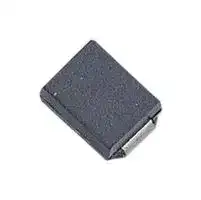


NSVC2030JBT3G
LED Driver, AC / DC, 30mA, -55 to 175 °C, 1 Output, 120V, AEC-Q101, DO-214AA (SMB)-2
- Manufacturer: ONSEMI
- Product type: AC / DC LED Driver ICs
- MSL: MSL 1 - Unlimited
- SVHC: Lead (25-Jun-2025)
- Topology: Constant Current, Linear
- IC Mounting: Surface Mount
- No. of Pins: 2Pins
- Product Range: -
- Qualification: AEC-Q101
- No. of Outputs: 1Outputs
- Device Topology: Constant Current, Linear
- LED Driver Type: -
- Driver Case Style: DO-214AA (SMB)
- IC Case / Package: DO-214AA (SMB)
- Input Voltage Max: 120V
- Input Voltage Min: -
- Output Current Max: 34.5mA
- Output Voltage Max: -
- Switching Frequency: -
- Switching Frequency Typ: -
- Operating Temperature Max: 175°C
- Operating Temperature Min: -55°C
- Automotive Qualification Standard: AEC-Q101
| Delivery and price | |
|---|---|
| Units per pack | 2500 |
| Price | 0.151 € |
| Current stock | 10+ |
| Lead time | 30 days |

**Share Feedback DATA SHEET** Your Opinion Matters **www.onsemi.com** ~~ee~~ ## Constant Current Regulator & LED Driver for A/C Off-line Applications ## **120 V, 30 mA 15%, 3 W Package** NSIC2030JB The linear constant current regulator (CCR) is a simple, economical and robust device designed to provide a cost−effective solution for regulating current in LEDs (similar to Constant Current Diode, CCD). The CCR is based on Self−Biased Transistor (SBT) technology and regulates current over a wide voltage range. It is designed with a negative temperature coefficient to protect LEDs from thermal runaway at extreme voltages and currents. The CCR turns on immediately and is at 35% of regulation with only 0.5 V Vak. It requires no external components allowing it to be designed as a high or low−side regulator. The 120 V anode−cathode voltage rating is designed to withstand the high peak voltage incurred in A/C offline applications. The high anode−cathode voltage rating withstands surges common in Automotive, Industrial and Commercial Signage applications. ## **Features** - Robust Power Package: 3 W - Wide Operating Voltage Range - Immediate Turn-On - Voltage Surge Suppressing − Protecting LEDs - UL94−V0 Certified - SBT (Self−Biased Transistor) Technology - Negative Temperature Coefficient - Also available in 50 mA (NSIC2050JBT3G) and 20 mA (NSIC2020JBT3G) - NSV Prefix for Automotive and Other Applications Requiring Unique Site and Control Change Requirements; AEC−Q101 Qualified and PPAP Capable - These Devices are Pb−Free, Halogen Free/BFR Free and are RoHS Compliant ## **Typical Applications and Reference/Design Documents** - Automobile: Chevron Side Mirror Markers, Cluster, Displays & Instruments Backlighting, CHMSL, Map Light ## **I = 30 mA reg(SS) @ Vak = 7.5 V** **==> picture [115 x 294] intentionally omitted <==** **----- Start of picture text -----**<br> Anode 2<br>Cathode 1<br>1<br><7<br>2<br>SMB<br>CASE 403A<br>MARKING DIAGRAM<br>AYWW<br>1 2030J 2<br>| |<br>2030J = Specific Device Code<br>A = Assembly Location<br>Y = Year<br>WW = Work Week<br>= Pb−Free Package<br>**----- End of picture text -----**<br> (Note: Microdot may be in either location) ## **ORDERING INFORMATION** |**Device**|**Package**|**Shipping**†| |---|---|---| |NSIC2030JBT3G|SMB<br>(Pb−Free)|2500 / Tape & Reel| |NSVC2030JBT3G|SMB<br>(Pb−Free)|2500 / Tape & Reel| - †For information on tape and reel specifications, including part orientation and tape sizes, please refer to our Tape and Reel Packaging Specifications Brochure, BRD8011/D. - AC Lighting Panels, Display Signage, Decorative Lighting, Channel Lettering - Application Note AND8349/D – Automotive CHMSL - Application Notes AND8391/D, AND9008/D − Power Dissipation Considerations - Application Note AND8433/D – A/C Application - Application Note AND8492/D – A/C Capacitive Drop Design - Application Note AND9098/D − Protecting a CCR from ISO 7637−2 Pulse 2A and Reverse Pulses - Design Note DN05013 – A/C Design - Design Note DN06065 – A/C Design with PFC Publication Order Number: **NSIC2030JB/D** **1** Semiconductor Components Industries, LLC, 2014 **May, 2024 − Rev. 2** **NSIC2030JB** **MAXIMUM RATINGS** (TA = 25C unless otherwise noted) |**MAXIMUM RATINGS**(TA = 25C unless otherwise noted)A = 25C unless otherwise noted)= 25C unless otherwise noted)C unless otherwise noted)C unless otherwise noted)|||| |---|---|---|---| |**Rating**|**Symbol**|**Value**|**Unit**| |Anode−Cathode Voltage|Vak Max|120|V| |Reverse Voltage|VR|500|mV| |Operating Junction and Storage Temperature Range|TJ, Tstg|−55 to +175|C| |ESD Rating:<br>Human Body Model<br>Machine Model|ESD|Class 3A (4000 V)<br>Class C (400 V)|| Stresses exceeding those listed in the Maximum Ratings table may damage the device. If any of these limits are exceeded, device functionality should not be assumed, damage may occur and reliability may be affected. ## **ELECTRICAL CHARACTERISTICS** (TA = 25C unless otherwise noted) |**ELECTRICAL CHARACTERISTICS**(TA = 25C unless otherwise noted)A = 25C unless otherwise noted)= 25C unless otherwise noted)C unless otherwise noted)C unless otherwise noted)|||||| |---|---|---|---|---|---| |**Characteristic**|**Symbol**|**Min**|**Typ**|**Max**|**Unit**| |Steady State Current @ Vak = 7.5 V (Note 1)|Ireg(SS)|25.5|30|34.5|mA| |Voltage Overhead (Note 2)|Voverhead||1.8||V| |Pulse Current @ Vak = 7.5 V (Note 3)|Ireg(P)|27.0|32.8|38.2|mA| Product parametric performance is indicated in the Electrical Characteristics for the listed test conditions, unless otherwise noted. Product performance may not be indicated by the Electrical Characteristics if operated under different conditions. 1. Ireg(SS) steady state is the voltage (Vak) applied for a time duration 80 sec, using 100 mm[2] , 1 oz. Cu (or equivalent), in still air. 2. Voverhead = Vin − VLEDs. Voverhead is typical value for 85% Ireg(SS). 3. Ireg(P) non−repetitive pulse test. Pulse width t 360 sec. u **Figure 1. CCR Voltage−Current Characteristic** **www.onsemi.com** **Share Feedback** Your Opinion Matters **2** **NSIC2030JB** **THERMAL CHARACTERISTICS** |**THERMAL CHARACTERISTICS**|||| |---|---|---|---| |**Characteristic**<br>~~a~~|**Symbol**<br>~~a~~|**Max**<br>~~a~~|**Unit**<br>~~a~~| |Total Device Dissipation (Note 4) TA= 25C<br>Derate above 25C<br>~~ee~~|PD<br>~~ee~~<br>~~ee~~|1210<br>8.0<br>~~ee~~<br>~~oe~~|mW<br>mW/C<br>~~ee~~| |Thermal Resistance, Junction−to−Ambient (Note 4)<br>~~ee~~|RθJA<br>~~ee~~<br>~~ee~~|124<br>~~ee~~<br>~~oe~~|C/W<br>~~ee~~| |Thermal Reference, Junction−to−Tab (Note 4)<br>~~ee~~|RψJL<br>~~ee~~<br>~~ee~~<br>~~ee~~|17.5<br>~~ee~~<br>~~oe~~<br>~~ee~~|C/W<br>~~ee~~| |Total Device Dissipation (Note 5) TA= 25C<br>Derate above 25C<br>~~ee~~|PD<br>~~ee ~~<br>~~ee~~<br>~~ee~~|1282<br>8.5<br> ~~oe~~<br>~~ee~~<br>~~ee~~|mW<br>mW/C<br>~~ee~~| |Thermal Resistance, Junction−to−Ambient (Note 5)<br>~~oh~~|RθJA<br>~~ee~~<br>~~oh~~|117<br>~~ee~~<br>~~oh~~|C/W<br>~~oh~~| |Thermal Reference, Junction−to−Tab (Note 5)<br>~~oh~~|RψJL<br>~~oh~~|18.2<br>~~oh~~|C/W<br>~~oh~~| |Total Device Dissipation (Note 6) TA= 25C<br>Derate above 25C<br>~~ee~~|PD<br>~~ee~~<br>~~ee~~|1667<br>11.1<br>~~ee~~<br>~~ee Se~~|mW<br>mW/C<br>~~ee~~<br>~~Se~~| |Thermal Resistance, Junction−to−Ambient (Note 6)<br>~~ee~~|RθJA<br>~~ee~~<br>~~ee~~|90<br>~~ee~~<br>~~ee Se~~|C/W<br>~~ee~~<br>~~Se~~| |Thermal Reference, Junction−to−Tab (Note 6)<br>~~ee~~|RψJL<br>~~ee~~<br>~~ee~~|16.4<br>~~ee~~<br>~~ee Se~~|C/W<br>~~ee~~<br>~~Se~~| |Total Device Dissipation (Note 7) TA= 25C<br>Derate above 25C<br>~~ee~~|PD<br>~~ee~~<br>~~ee~~<br>~~ee~~|1765<br>11.8<br>~~ee Se~~<br>~~ee~~<br>~~ee~~|mW<br>mW/C<br>~~Se~~<br>~~ee~~| |Thermal Resistance, Junction−to−Ambient (Note 7)<br>~~ee~~|RθJA<br>~~ee~~<br>~~ee~~|85<br>~~ee~~<br>~~ee~~|C/W<br>~~ee~~| |Thermal Reference, Junction−to−Tab (Note 7)<br>~~ee~~|RψJL<br>~~ee~~<br>~~ee~~<br>~~ee~~|16.7<br>~~ee~~<br>~~ee~~<br>~~ee~~|C/W<br>~~ee~~| |Total Device Dissipation (Note 8) TA= 25C<br>Derate above 25C<br>~~ee~~|PD<br>~~ee~~<br>~~ee~~<br>~~ee~~<br>~~ee~~|1948<br>13<br>~~ee~~<br>~~ee~~<br>~~ee~~<br>~~ee Se~~|mW<br>mW/C<br>~~ee~~<br>~~ee Se~~| |Thermal Resistance, Junction−to−Ambient (Note 8)<br>~~ee~~|RθJA<br>~~ee~~<br>~~ee~~<br>~~ee~~|77<br>~~ee~~<br>~~ee~~<br>~~ee Se~~|C/W<br>~~ee~~<br>~~ee Se~~| |Thermal Reference, Junction−to−Tab (Note 8)<br>~~ee~~|RψJL<br>~~ee~~<br>~~ee~~<br>~~se~~|15.5<br>~~ee~~<br>~~ee Se~~<br>~~se~~|C/W<br>~~ee~~<br>~~ee Se~~| |Total Device Dissipation (Note 9) TA= 25C<br>Derate above 25C<br>~~a~~|PD<br>~~ee ~~<br>~~a~~<br>~~se~~<br>~~ee~~|2055<br>12.7<br> ~~ee Se~~<br>~~a~~<br>~~se~~<br>~~ee~~|mW<br>mW/C<br>~~ee Se~~<br>~~a~~| |Thermal Resistance, Junction−to−Ambient (Note 9)<br>~~ee~~|RθJA<br>~~se~~<br>~~ee~~<br>~~ee~~|73<br>~~se~~<br>~~ee~~<br>~~ee~~|C/W<br>~~ee~~| |Thermal Reference, Junction−to−Tab (Note 9)<br>~~ee~~|RψJL<br>~~ee~~<br>~~ee~~|15.6<br>~~ee~~<br>~~ee~~|C/W<br>~~ee~~| |Total Device Dissipation (Note 10) TA= 25C<br>Derate above 25C<br>~~ee~~|PD<br>~~ee~~<br>~~ee~~<br>~~ee~~|2149<br>14.3<br>~~ee~~<br>~~ee~~<br>~~ee Se~~|mW<br>mW/C<br>~~ee~~<br>~~Se~~| |Thermal Resistance, Junction−to−Ambient (Note 10)<br>~~ee~~|RθJA<br>~~ee~~<br>~~ee~~|69.8<br>~~ee~~<br>~~ee Se~~|C/W<br>~~ee~~<br>~~Se~~| |Thermal Reference, Junction−to−Tab (Note 10)<br>~~ee~~|RψJL<br>~~ee~~<br>~~ee~~|14.8<br>~~ee~~<br>~~ee Se~~|C/W<br>~~ee~~<br>~~Se~~| |Total Device Dissipation (Note 11) TA= 25C<br>Derate above 25C<br>~~ee~~|PD<br>~~ee~~<br>~~ee~~<br>~~ee~~|2269<br>15.1<br>~~ee Se~~<br>~~ee~~<br>~~ee~~|mW<br>mW/C<br>~~Se~~<br>~~ee~~| |Thermal Resistance, Junction−to−Ambient (Note 11)<br>~~ee~~|RθJA<br>~~ee~~<br>~~ee~~|66.1<br>~~ee~~<br>~~ee~~|C/W<br>~~ee~~| |Thermal Reference, Junction−to−Tab (Note 11)<br>~~ee~~|RψJL<br>~~ee~~<br>~~ee~~<br>~~ee~~|14.8<br>~~ee~~<br>~~ee~~<br>~~ee~~|C/W<br>~~ee~~| |Total Device Dissipation (Note 12) TA= 25C<br>Derate above 25C<br>~~ee~~|PD<br>~~ee~~<br>~~ee~~<br>~~ee~~<br>~~ee~~|2609<br>17.4<br>~~ee~~<br>~~ee~~<br>~~ee~~<br>~~ee~~|mW<br>mW/C<br>~~ee~~| |Thermal Resistance, Junction−to−Ambient (Note 12)<br>~~ee~~|RθJA<br>~~ee~~<br>~~ee~~<br>~~ee~~|57.5<br>~~ee~~<br>~~ee~~<br>~~ee~~|C/W<br>~~ee~~| |Thermal Reference, Junction−to−Tab (Note 12)<br>~~ee~~|RψJL<br>~~ee~~<br>~~ee~~<br>~~ee~~|13.9<br>~~ee~~<br>~~ee~~<br>~~ee~~|C/W<br>~~ee~~| |Total Device Dissipation (Note 13) TA= 25C<br>Derate above 25C<br>~~ee~~|PD<br>~~ee~~<br>~~ee~~<br>~~ee~~|2500<br>16.7<br>~~ee~~<br>~~ee~~<br>~~ee~~|mW<br>mW/C<br>~~ee~~| |Thermal Resistance, Junction−to−Ambient (Note 13)<br>~~i~~|RθJA<br>~~ee~~<br>~~i~~|60<br>~~ee~~<br>~~i~~|C/W<br>~~i~~| |Thermal Reference, Junction−to−Tab (Note 13)<br>~~i~~|RψJL<br>~~i~~|16<br>~~i~~|C/W<br>~~i~~| |Total Device Dissipation (Note 14) TA= 25C<br>Derate above 25C<br>~~ee~~|PD<br>~~ee~~|3000<br>20<br>~~ee~~|mW<br>mW/C<br>~~ee~~| |Thermal Resistance, Junction−to−Ambient (Note 14)<br>~~es~~|RθJA<br>~~es~~|50<br>~~es~~|C/W<br>~~es~~| |Thermal Reference, Junction−to−Tab(Note 14)<br>~~es~~|RψJL<br>~~es~~|16<br>~~es~~|C/W<br>~~es~~| 4. 100 mm[2] , 1 oz. Cu, still air. 5. 100 mm[2] , 2 oz. Cu, still air. 6. 300 mm[2] , 1 oz. Cu, still air. 7. 300 mm[2] , 2 oz. Cu, still air. 8. 500 mm[2] , 1 oz. Cu, still air. 9. 500 mm[2] , 2 oz. Cu, still air. 10.700 mm[2] , 1 oz. Cu, still air. 11. 700 mm[2] , 2 oz. Cu, still air. 12.1000 mm[2] , 3 oz. Cu, still air. 13.400 mm[2] , PCB is DENKA K1, 1.5 mm Al, 2kV Thermally conductive dielectric, 2 oz. Cu, or equivalent, still air. 14.900 mm[2] , PCB is DENKA K1, 1.5 mm Al, 2kV Thermally conductive dielectric, 2 oz. Cu, or equivalent, still air. **www.onsemi.com 3** ~~OS~~ **Share Feedback** Your Opinion Matters **NSIC2030JB** ## **TYPICAL PERFORMANCE CURVES** (Minimum FR−4 @ 100 mm[2] , 1 oz. Copper Trace, Still Air) **==> picture [492 x 600] intentionally omitted <==** **----- Start of picture text -----**<br> 45 36<br>TA = −55C TA = 25C<br>40 T o 34 Fe<br>35 −0.123 mA/C<br>TA = 25C 32<br>30 At ft TA = 85C −0.080 mA/ ee C Lt 30 PtPi | pee | pee TTEEL | LdLL<br>25 −0.071 mA/C<br>28<br>1520 AEEEa= TA = 125TA = 150C C TJ(max)limit 175 eee , maximum die temperatureC (100 mm == [2] , 1 oz Cu) ee 2624 eSCE<br>10 Wo Hit tt tT | | tT yy yd<br>5 22<br>Wo T EE EEE EE<br>DC Test Steady State, Still Air Non−Repetitive Pulse Test<br>0 ABERGG Gee ee 20 eee<br>0 1 2 3 4 5 6 7 8 9 10 11 12 13 14 15 1 2 3 4 5 6 7 8 9 10 11 12 13 14 15<br>Vak, ANODE−CATHODE VOLTAGE (V) Vak, ANODE−CATHODE VOLTAGE (V)<br>Figure 2. Steady State Current (Ireg(SS)) vs. Figure 3. Pulse Current (Ireg(P)) vs.<br>Anode−Cathode Voltage (Vak) Anode−Cathode Voltage (Vak)<br>35 33.0<br>3433 Vak @ 7.5 VTA = 25C “TELE 32.5 Vak @ 7.5 VTA = 25C<br>32 FEEoe 32.0 E E<br>31 Oa|EE AT ee<br>30 to 31.5<br>et tT 31.0 INE<br>2829 aHOOPLE ELLE 30.5 aN|<br>27<br>30.0<br>26 e e<br>25 PTC ELLELLEL 29.5 P| | | tf ft ff<br>27 28 29 30 31 32 33 34 35 36 37 38 39 0 10 20 30 40 50 60 70 80<br>Ireg(P), PULSE CURRENT (mA) TIME (s)<br>Figure 4. Steady State Current vs. Pulse Figure 5. Current Regulation vs. Time<br>Current Testing<br>3000 4500<br>500 mm [2] /2 oz FR−4 Board DENKA K1, 900 mm [2] /2 oz<br>4000<br>2500 PS 500 mm [2] /1 oz 3500 Ww FR−4, 1000 mm [2] /3 oz | |<br>300 mm [2] /2 oz<br>2000 SN 3000 a DENKA K1, 400 mm [2] /2 oz<br>2500<br>1500 ee NN RSS<br>2000<br>1000 300 mm [2] /1 oz 1500 FR−4, 700 mm [2] /2 oz<br>500 RSS 100 mm [2] /2 oz 1000 FR−4, 700 mm (OSA [2] /1 oz<br>100 mm [2] /1 oz 500<br>0 ee JSee 0 SS<br>−40 −20 0 20 40 60 80 100 120 −40 −20 0 20 40 60 80 100 120<br>TA, AMBIENT TEMPERATURE (C) TA, AMBIENT TEMPERATURE (C)<br>, PULSE CURRENT (mA)<br>, STEADY STATE CURRENT (mA)Ireg(SS) Ireg(P)<br>, STEADY STATE CURRENT (mA)<br>, REGULATION CURRENT (mA)<br>Ireg<br>Ireg(SS)<br>, POWER DISSIPATION (mW)D POWER DISSIPATION (mW)<br>P<br>**----- End of picture text -----**<br> **Figure 6. Power Dissipation vs. Ambient Temperature @ TJ = 175 C: Small Footprint** **Figure 7. Power Dissipation vs. Ambient Temperature @ TJ = 175 C: Large Footprint** **www.onsemi.comonsemi.com 4** ~~—_———~~ **www.onsemi.comonsemi.com** **Share Feedback** Your Opinion Matters **NSIC2030JB** ## **APPLICATIONS INFORMATION** The CCR is a self biased transistor designed to regulate the current through itself and any devices in series with it. The device has a slight negative temperature coefficient, as shown in Figure 2 – Tri Temp. (i.e. if the temperature increases the current will decrease). This negative temperature coefficient will protect the LEDS by reducing the current as temperature rises. The CCR turns on immediately and is typically at 20% of regulation with only 0.5 V across it. The device is capable of handling voltage for short durations of up to 120 V so long as the die temperature does not exceed 175 C. The determination will depend on the thermal pad it is mounted on, the ambient temperature, the pulse duration, pulse shape and repetition. ## **AC Applications** The CCR is a DC device; however, it can be used with full wave rectified AC as shown in application notes AND8433/D and AND8492/D and design notes DN05013/D and DN06065/D. Figure 8 shows the basic circuit configuration. **Figure 8. Basic AC Application** ## **Single LED String** The CCR can be placed in series with LEDs as a High Side or a Low Side Driver. The number of the LEDs can vary from one to an unlimited number. The designer needs to calculate the maximum voltage across the CCR by taking the maximum input voltage less the voltage across the LED string (Figures 9 and 10). **Figure 10.** **Figure 9.** **www.onsemi.com** **Share Feedback** Your Opinion Matters **5** **NSIC2030JB** ## **Higher Current LED Strings** Two or more fixed current CCRs can be connected in parallel. The current through them is additive (Figure 11). ## **Dimming using PWM** The dimming of an LED string can be easily achieved by placing a BJT in series with the CCR (Figure 13). **Figure 13.** **Figure 11.** ## **Other Currents** The adjustable CCR can be placed in parallel with any other CCR to obtain a desired current. The adjustable CCR provides the ability to adjust the current as LED efficiency increases to obtain the same light output (Figure 12). The method of pulsing the current through the LEDs is known as Pulse Width Modulation (PWM) and has become the preferred method of changing the light level. LEDs being a silicon device, turn on and off rapidly in response to the current through them being turned on and off. The switching time is in the order of 100 nanoseconds, this equates to a maximum frequency of 10 Mhz, and applications will typically operate from a 100 Hz to 100 kHz. Below 100 Hz the human eye will detect a flicker from the light emitted from the LEDs. Between 500 Hz and 20 kHz the circuit may generate audible sound. Dimming is achieved by turning the LEDs on and off for a portion of a single cycle. This on/off cycle is called the Duty cycle (D) and is expressed by the amount of time the LEDs are on (Ton) divided by the total time of an on/off cycle (Ts) (Figure 14). **Figure 14.** **Figure 12.** **www.onsemi.com** **Share Feedback** Your Opinion Matters **6** **NSIC2030JB** The current through the LEDs is constant during the period they are turned on resulting in the light being consistent with no shift in chromaticity (color). The brightness is in proportion to the percentage of time that the LEDs are turned on. Figure 15 is a typical response of Luminance vs Duty Cycle. **==> picture [236 x 169] intentionally omitted <==** **----- Start of picture text -----**<br> 6000<br>5000 CTT<br>4000 COC<br>3000 COC eer<br>2000 COT<br>Lux<br>1000<br>Linear<br>eS<br>0 Pere<br>0 10 20 30 40 50 60 70 80 90 100<br>DUTY CYCLE (%)<br>ILLUMINANCE (lx)<br>**----- End of picture text -----**<br> **Figure 15. Luminous Emmitance vs. Duty Cycle** ## **Reducing EMI** Designers creating circuits switching medium to high currents need to be concerned about Electromagnetic Interference (EMI). The LEDs and the CCR switch extremely fast, less than 100 nanoseconds. To help eliminate EMI, a capacitor can be added to the circuit across R2. (Figure 13) This will cause the slope on the rising and falling edge on the current through the circuit to be extended. The slope of the CCR on/off current can be controlled by the values of R1 and C1. The selected delay / slope will impact the frequency that is selected to operate the dimming circuit. The longer the delay, the lower the frequency will be. The delay time should not be less than a 10:1 ratio of the minimum on time. The frequency is also impacted by the resolution and dimming steps that are required. With a delay of 1.5 microseconds on the rise and the fall edges, the minimum on time would be 30 microseconds. If the design called for a resolution of 100 dimming steps, then a total duty cycle time (Ts) of 3 milliseconds or a frequency of 333 Hz will be required. ## **Thermal Considerations** As power in the CCR increases, it might become necessary to provide some thermal relief. The maximum power dissipation supported by the device is dependent upon board design and layout. Mounting pad configuration on the PCB, the board material, and the ambient temperature affect the rate of junction temperature rise for the part. When the device has good thermal conductivity through the PCB, the junction temperature will be relatively low with high power applications. The maximum dissipation the device can handle is given by: **==> picture [91 x 24] intentionally omitted <==** Referring to the thermal table on page 3 the appropriate R 0 JA for the circuit board can be selected. **www.onsemi.com** **Share Feedback** Your Opinion Matters **7** MECHANICAL CASE OUTLINE **PACKAGE DIMENSIONS** **SMB** CASE 403A−03 ISSUE J **SCALE 1:1 SCALE 1:1 Polarity Band Non−Polarity Band** DATE 19 JUL 2012 **==> picture [266 x 184] intentionally omitted <==** **----- Start of picture text -----**<br> HE<br>E<br>b D<br>POLARITY INDICATOR<br>OPTIONAL AS NEEDED<br>A<br>A1<br>L L1 c<br>**----- End of picture text -----**<br> ## **SOLDERING FOOTPRINT*** **==> picture [234 x 133] intentionally omitted <==** **----- Start of picture text -----**<br> 2.261<br>0.089<br>2.743<br>0.108<br>2.159<br>0.085<br>SCALE 8:1<br>� inches [mm] �<br>**----- End of picture text -----**<br> NOTES: 1. DIMENSIONING AND TOLERANCING PER ANSI Y14.5M, 1982. 2. CONTROLLING DIMENSION: INCH. 3. DIMENSION b SHALL BE MEASURED WITHIN DIMENSION L1. |**DIM**|**MILLIMETERS**|**MILLIMETERS**|**MILLIMETERS**|**INCHES**|**INCHES**|**INCHES**| |---|---|---|---|---|---|---| ||**MIN**|**NOM**|**MAX**|**MIN**|**NOM**|**MAX**| |**A**|1.95|2.30|2.47|0.077|0.091|0.097| |**A1**|0.05|0.10|0.20|0.002|0.004|0.008| |**b**|1.96|2.03|2.20|0.077|0.080|0.087| |**c**|015|023|031|0006|0009|0012| |**D**|.<br>3.30|.<br>3.56|.<br>3.95|.<br>0.130|.<br>0.140|.<br>0.156| |**E**|4.06|4.32|4.60|0.160|0.170|0.181| |**HE**|5.21|5.44|5.60|0.205|0.214|0.220| |**L**|0.76|1.02|1.60|0.030|0.040|0.063| |**L1**|0.51 REF|||0.020 REF||| ## **GENERIC MARKING DIAGRAM*** **==> picture [159 x 135] intentionally omitted <==** **----- Start of picture text -----**<br> AYWW AYWW<br>XXXXX � XXXXX �<br>� �<br>Polarity Band Non−Polarity Band<br>XXXXX = Specific Device Code<br>A = Assembly Location<br>Y = Year<br>WW = Work Week<br>� = Pb−Free Package<br>(Note: Microdot may be in either location)<br>**----- End of picture text -----**<br> - *This information is generic. Please refer to device data sheet for actual part marking. Pb−Free indicator, “G” or microdot “ � ”, may or may not be present. Some products may not follow the Generic Marking. - *For additional information on our Pb−Free strategy and soldering details, please download the **onsemi** Soldering and Mounting Techniques Reference Manual, SOLDERRM/D. |**DOCUMENT NUMBER:**|**98ASB42669B**| |---|---| |**DESCRIPTION:**|**SMB**| Electronic versions are uncontrolled except when accessed directly from the Document Repository. Printed versions are uncontrolled except when stamped “CONTROLLED COPY” in red. **PAGE 1 OF 1** **onsemi** and are trademarks of Semiconductor Components Industries, LLC dba **onsemi** or its subsidiaries in the United States and/or other countries. **onsemi** reserves the right to make changes without further notice to any products herein. **onsemi** makes no warranty, representation or guarantee regarding the suitability of its products for any particular purpose, nor does **onsemi** assume any liability arising out of the application or use of any product or circuit, and specifically disclaims any and all liability, including without limitation special, consequential or incidental damages. **onsemi** does not convey any license under its patent rights nor the rights of others. www.onsemi.com © Semiconductor Components Industries, LLC, 2019 **onsemi** , , and other names, marks, and brands are registered and/or common law trademarks of Semiconductor Components Industries, LLC dba “ **onsemi** ” or its affiliates and/or subsidiaries in the United States and/or other countries. **onsemi** owns the rights to a number of patents, trademarks, copyrights, trade secrets, and other intellectual property. A listing of **onsemi** ’s product/patent coverage may be accessed at www.onsemi.com/site/pdf/Patent−Marking.pdf. **onsemi** reserves the right to make changes at any time to any products or information herein, without notice. The information herein is provided “as−is” and **onsemi** makes no warranty, representation or guarantee regarding the accuracy of the information, product features, availability, functionality, or suitability of its products for any particular purpose, nor does **onsemi** assume any liability arising out of the application or use of any product or circuit, and specifically disclaims any and all liability, including without limitation special, consequential or incidental damages. Buyer is responsible for its products and applications using **onsemi** products, including compliance with all laws, regulations and safety requirements or standards, regardless of any support or applications information provided by **onsemi** . “Typical” parameters which may be provided in **onsemi** data sheets and/or specifications can and do vary in different applications and actual performance may vary over time. All operating parameters, including “Typicals” must be validated for each customer application by customer’s technical experts. **onsemi** does not convey any license under any of its intellectual property rights nor the rights of others. **onsemi** products are not designed, intended, or authorized for use as a critical component in life support systems or any FDA Class 3 medical devices or medical devices with a same or similar classification in a foreign jurisdiction or any devices intended for implantation in the human body. Should Buyer purchase or use **onsemi** products for any such unintended or unauthorized application, Buyer shall indemnify and hold **onsemi** and its officers, employees, subsidiaries, affiliates, and distributors harmless against all claims, costs, damages, and expenses, and reasonable attorney fees arising out of, directly or indirectly, any claim of personal injury or death associated with such unintended or unauthorized use, even if such claim alleges that **onsemi** was negligent regarding the design or manufacture of the part. **onsemi** is an Equal Opportunity/Affirmative Action Employer. This literature is subject to all applicable copyright laws and is not for resale in any manner. ## **ADDITIONAL INFORMATION** **TECHNICAL PUBLICATIONS** : **ONLINE SUPPORT** : www.onsemi.com/support **Technical Library:** www.onsemi.com/design/resources/technical−documentation **For additional information, please contact your local Sales Representative at onsemi Website:** www.onsemi.com www.onsemi.com/support/sales **==> picture [232 x 43] intentionally omitted <==**
Updated at April 15, 2026
onsemi is a premier global supplier of intelligent power and sensing technologies, driving disruptive innovations across the automotive, industrial, and cloud infrastructure markets. Recognized for their commitment to sustainability and reliable supply chains, the company accelerates advancements in vehicle electrification, industrial automation, and 5G networks by solving the industry's most complex design challenges. At the core of their portfolio is an industry-leading selection of discrete semiconductors. This extensive range features thousands of high-performance bipolar transistors, single and dual MOSFETs, and a comprehensive array of diodes, including Zener, Schottky, and fast-recovery rectifiers. Engineered for superior thermal performance and energy efficiency, these foundational components are critical for demanding power conversion, switching, and signal conditioning applications. Beyond essential discretes, onsemi provides a robust suite of advanced power management and circuit protection solutions. Their lineup includes intelligent power modules, single IGBTs, and transient voltage suppression (TVS) diodes designed to safeguard sensitive circuitry. Complimented by integrated passive filters, AC/DC LED driver ICs, and specialized sub-2.4GHz RF transceivers, onsemi equips engineers with the scalable, high-quality technologies needed to build a cleaner, smarter, and more connected world.
About Novapart
Novapart is a B2B electronic component broker specialising in stock shortages and cost reduction. We source hard-to-find parts and identify compliant alternatives across a catalogue of 410,000+ components from 500+ manufacturers.
Learn more →Stock Shortage Specialist
When a component is unavailable, discontinued or has an unacceptable lead time, we tap into our network of vetted European and Asian distributors to source what you need — without compromising on quality or traceability.
Request a quote →Compliant Alternatives
We identify pin-to-pin, electrically equivalent substitutes that meet the same certifications (RoHS, AEC-Q100, REACH) as your original specification — validated against datasheets, not just part numbers. Often at a lower cost.
BOM Analysis service →