
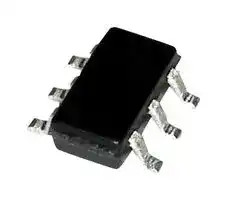


NCL30288BSNT1G
LED Driver, 1 Output, Buck-Boost, Flyback, SEPIC, 9.4 V to 26 V in, 150 kHz switch, 3 A out, TSOP-6
- Manufacturer: ONSEMI
- Product type: AC / DC LED Driver ICs
- Device Topology:Buck-Boost, Flyback, SEPIC; Input Voltage Min:9.4V; Input Voltage Max:26V; Output Voltage Max:-; Output Current Max:3A; Switching Frequency:150kHz; No. of Outputs:1Outputs;
- MSL: MSL 3 - 168 hours
- SVHC: No SVHC (14-Jun-2023)
- Topology: Buck-Boost, Flyback, SEPIC
- IC Mounting: Surface Mount
- No. of Pins: 6Pins
- Product Range: -
- Qualification: -
- No. of Outputs: 1Outputs
- Device Topology: Buck-Boost, Flyback, SEPIC
- LED Driver Type: Isolated, Non Isolated
- Driver Case Style: TSOP
- IC Case / Package: TSOP
- Input Voltage Max: 26V
- Input Voltage Min: 9.4V
- Output Current Max: 3A
- Output Voltage Max: -
- Switching Frequency: 150kHz
- Switching Frequency Typ: 150kHz
- Operating Temperature Max: 125°C
- Operating Temperature Min: -40°C
- Automotive Qualification Standard: -
| Delivery and price | |
|---|---|
| Units per pack | 45000 |
| Price | 0.182 € |
| Current stock | 10+ |
| Lead time | 30 days |

## NCL30288

## _Product Preview_

## Power Factor Corrected Quasi-Resonant Primary Side Current-Mode Controller for LED Lighting

The NCL30288 is a compact driver for power−factor corrected flyback and non−isolated buck−boost and SEPIC converters. The controller operates in a quasi−resonant mode to provide optimal efficiency, and embeds a proprietary control method which allows the LED current to be tightly regulated from the primary side, thus eliminating the need for a secondary−side feedback circuitry and for an optocoupler.

Housed in a TSOP−6 package, the device is highly integrated with a minimum number of external components. A robust suite of safety protection is built in to simplify the design. This device is specifically intended for very compact space efficient designs.

## **Features**

- Quasi−resonant Peak Current−mode Control Operation

- Constant Current Control with Primary Side Feedback

- Tight LED Constant Current Regulation of ±2% typical

- Near−Unity Power Factor (>0.95 typically)

- Optimized for Line Wide−range Applications

- Line Feedforward for Enhanced Regulation Accuracy

## **www.onsemi.com**

1 **TSOP−6 CASE 318G−02**

## **MARKING DIAGRAM**

||2T3AYW|2T3AYW|2T3AYW|2T3AYW|||
|---|---|---|---|---|---|---|
||1<br>UU||||||
|2T3|= Specific Device Code||= Specific Device Code||||
|A|=Assembly Location||||||
|Y|= Year||||||
|W|= Work Week||||||
||= Pb−Free Package||||||
|(Note: Microdot may be in either location)|||||||


- Low Start−up Current (10 A typ.)

- Wide VCC Range

## **PIN CONNECTIONS**

- 300 mA / 500 mA Totem Pole Driver with 12 V Gate Clamp

- Robust Protection Features

   - ♦ OVP on VCC

   - ♦ Programmable Over Voltage / LED Open Circuit Protection

|CS/ZCD|||1|6|||DRV|
|---|---|---|---|---|---|---|---|
|GND<br>COMP|||2<br>3|5<br>4|||VCC<br>VS|


   - ♦ Cycle by cycle peak current limit

   - ♦ Winding Short Circuit Protection

   - ♦ Secondary Diode Short Protection

   - ♦ Output Short Circuit Protection

   - ♦ Thermal Shutdown

   - ♦ VCC Undervoltage Lockout

   - ♦ Brown−Out Detection

- Pb−Free, Halide−Free MSL1 Product

## **Typical Application**

- Integral LED Bulbs and Tubes

## **ORDERING INFORMATION**

|**Device**|**Package**|**Shipping**†|
|---|---|---|
|NCL30288BSNT1G|TSOP−6<br>(Pb−Free/<br>Halide Free)|3000 / Reel|


†For information on tape and reel specifications, including part orientation and tape sizes, please refer to our Tape and Reel Packaging Specification Brochure, BRD8011/D.

- LED Light Engines

- LED Drivers / Power Supplies

This document contains information on a product under development. ON Semiconductor reserves the right to change or discontinue this product without notice.

Publication Order Number: **NCL30288/D**

**1**

© Semiconductor Components Industries, LLC, 2016 **November, 2016 − Rev. P1**

**NCL30288**

## **TYPICAL APPLICATION SCHEMATIC**

**==> picture [254 x 210] intentionally omitted <==**

**----- Start of picture text -----**<br>
.<br>.<br>.<br>Aux<br>NCL30288<br>CS/ZCD DRV<br>1 6<br>GND 2 5 VCC<br>COMP 3 4 VS<br>Rsense<br>**----- End of picture text -----**<br>


**Figure 1. Typical Application Schematic in a Flyback Converter**

**==> picture [261 x 182] intentionally omitted <==**

**----- Start of picture text -----**<br>
.<br>.<br>Aux<br>NCL30288<br>CS/ZCD DRV<br>1 6<br>GND 2 5 VCC<br>COMP 3 4 VS<br>Rsense<br>**----- End of picture text -----**<br>


**Figure 2. Typical Application Schematic in a Buck−Boost Converter**

**www.onsemi.com**

**2**

**NCL30288**

## **Table 1. PIN FUNCTION DESCRIPTION**

|**Pin #**|**Pin Name**|**Function**|**Pin Description**|
|---|---|---|---|
|1|CS/ZCD|Current Sense and Zero<br>Current Detection|This multi−function pin is designed to monitor the primary peak current for protection<br>and output current control and the auxiliary winding voltage for zero current detection|
|2|GND||Controller ground pin|
|3|COMP|Filtering Capacitor|This pin receives a filtering capacitor for power factor correction. Typical values<br>ranges from 0.47 −  4.70�F|
|4|VS|Input Voltage Sensing|This pin observes the input voltage rail and protects the LED driver in case of too low<br>mains conditions (brown−out). This pin also observes the input voltage rail for:<br>− Power Factor Correction<br>− Line Range Detection|
|5|VCC|IC Supply Pin|This pin is the positive supply of the IC. The circuit starts to operate when_VCC_<br>exceeds 18 V and turns off when_VCC_goes below 8.8 V (typical values). After<br>start−up, the operating range is 9.4 V up to 25.5 V (_VCC_(_OVP_)minimum level).|
|6|DRV|Driver Output|The driver’s output to an external MOSFET|


**www.onsemi.com**

**3**

**NCL30288**

## **INTERNAL CIRCUIT ARCHITECTURE**

**==> picture [428 x 417] intentionally omitted <==**

**----- Start of picture text -----**<br>
Enable STOP VDD VREF<br>Aux_SCP OFF<br>ZCD VCC<br>Over Voltage Fault UVLO VCC Management<br>Protection Management Latch<br>Internal<br>Thermal VCC_max VCC Over Voltage<br>Shutdown Protection<br>WOD_SCP<br>BO_NOK<br>DRV FF_mode<br>VCC<br>Zero Crossing Detection Logic<br>Clamp<br>(ZCD Blanking, Time−Out, ...) Circuit<br>Aux. Winding Short Circuit Prot. Aux_SCP S DRV<br>Q<br>CS_ok<br>DRV VVS Q<br>R<br>Line<br>feed−forward STOP VVS VREF<br>VTF<br>CS/ZCD Leading Power Factor and CS_reset<br>Edge Constant−Current Maximum<br>Blanking Control on time<br>Ipkmax STOP<br>t<br>Max. Peak Ipkmax on,max COMP<br>Current<br>Limit<br>CS Short CS_ok VVS<br>Protection BO_NOK VS<br>Brown−Out<br>UVLO t on,max<br>Winding and<br>Output Diode WOD_SCP GND<br>Short Circuit<br>Protection<br>**----- End of picture text -----**<br>


**Figure 3. Internal Circuit Architecture**

**www.onsemi.com**

**4**

**NCL30288**

## **Table 2. MAXIMUM RATINGS TABLE**

|**Symbol**|**Rating**|**Value**|**Units**|
|---|---|---|---|
|VCC(MAX)<br>ICC(MAX)|Maximum Power Supply voltage, VCCpin, continuous voltage<br>Maximum current for VCCpin|−0.3 to 30<br>Internally limited|V<br>mA|
|VDRV(MAX)<br>IDRV(MAX)|Maximum driver pin voltage, DRV pin, continuous voltage<br>Maximum current for DRV pin|−0.3, VDRV(Note 1)<br>−300, +500|V<br>mA|
|VMAX<br>IMAX|Maximum voltage on low power pins (except DRV and VCCpins)<br>Current range for low power pins (except DRV and VCCpins)|−0.3, 5.5 (Notes 2 and 5)<br>−2, +5|V<br>mA|
|RθJ−A|Thermal Resistance Junction−to−Air|360|°C/W|
|TJ(MAX)|Maximum Junction Temperature|150|°C|
||Operating Temperature Range|−40 to +125|°C|
||Storage Temperature Range|−60 to +150|°C|
||ESD Capability, Human Body Model (HBM) (Note 3)|3.5|kV|
||ESD Capability, Machine Model (MM) (Note 3)|250|V|


Stresses exceeding those listed in the Maximum Ratings table may damage the device. If any of these limits are exceeded, device functionality should not be assumed, damage may occur and reliability may be affected.

1. VDRV is the DRV clamp voltage VDRV(high) when VCC is higher than VDRV(high). VDRV is VCC otherwise.

2. This level is low enough to guarantee not to exceed the internal ESD diode and 5.5 V ZENER diode. More positive and negative voltages can be applied if the pin current stays within the −2 mA / 5 mA range.

3. This device contains ESD protection and exceeds the following tests: Human Body Model 3500 V per JEDEC Standard JESD22−A114E, Machine Model Method 250 V per JEDEC Standard JESD22−A115B.

4. This device contains latch−up protection and exceeds 100 mA per JEDEC Standard JESD78.

5. Recommended maximum VS voltage for optimal operation is 4 V.

**www.onsemi.com**

**5**

**NCL30288**

## **Table 3. ELECTRICAL CHARACTERISTICS**

(Unless otherwise noted: For typical values TJ = 25 ° C, VCC = 12 V, VCS/ZCD = 0 V For min/max values TJ = −40 ° C to +125 ° C, Max TJ = 150 ° C, VCC = 12 V)

|(Unless otherwise noted: For typical values TJ= 25°C<br>For min/max values TJ= −40°C to +125°C, Max TJ=|, VCC= 12 V, VCS/ZCD= 0 V<br>150°C, VCC= 12 V)||||||
|---|---|---|---|---|---|---|
|**Description**|**Test Condition**|**Symbol**|**Min**|**Typ**|**Max**|**Unit**|
|**Startup and Supply Circuits**|||||||
|Supply Voltage<br>Startup Threshold<br>Minimum Operating Voltage<br>Hysteresis VCC(on)– VCC(off)<br>Internal logic reset|VCCincreasing<br>VCCdecreasing<br>VCCdecreasing<br>VCCdecreasing|VCC(on)<br>VCC(off)<br>VCC(HYS)<br>VCC(reset)|16.0<br>8.2<br>8.0<br>4.0|18.0<br>8.8<br>−<br>4.8|20.0<br>9.4<br>−<br>6.0|V|
|Threshold for VCCOver Voltage Protection||VCC(OVP)|25.5|26.8|28.5|V|
|VCC(off)noise filter<br>VCC(reset)noise filter||tVCC(off)<br>tVCC(reset)|−<br>−|5<br>20|−<br>−|�s|
|Startup current|VCC=15.9 V|ICC(start)|−|13|30|�A|
|Startup current in fault mode||ICC(sFault)|−|58|75|�A|
|Supply Current<br>Device Disabled / Fault<br>Device Enabled / No output load on pin 5<br>Device Switching|VCC> VCC(off)<br>Fsw= 65 kHz<br>CDRV= 470 pF, Fsw= 65 kHz|ICC1<br>ICC2<br>ICC3|1.15<br>–<br>−|1.34<br>2.0<br>2.5|1.55<br>3.5<br>4.0|mA|
|**Current Sense**|||||||
|Maximum Internal current limit||VILIM|0.94|0.99|1.04|V|
|Leading Edge Blanking Duration for Current<br>Sensing||tLEB|220|275|340|ns|
|Propagation delay from current detection to gate<br>off−state||tILIM|−|100|150|ns|
|Maximum on−time||ton(MAX)|26|36|46|�s|
|Threshold for immediate fault protection activation||VCS(stop)|1.35|1.50|1.65|V|
|Leading Edge Blanking Duration for VCS(stop)<br>(Note 1)||tBCS|−|175|−|ns|
|Current source for CS to GND short detection||ICS(short)|420|520|620|�A|
|Current sense threshold for CS to GND short<br>detection|VCSrising|VCS(low)|30|90|150|mV|
|**Gate Drive**|||||||
|Drive Resistance<br>DRV Sink<br>DRV Source||RSNK<br>RSRC|−<br>−|13<br>30|−<br>−|�|
|Drive current capability<br>DRV Sink (Note GBD)<br>DRV Source (Note GBD)||ISNK<br>ISRC|−<br>−|500<br>300|−<br>−|mA|
|Rise Time (10 % to 90 %)|CDRV= 470 pF|tr|–|40|−|ns|
|Fall Time (90 % to 10 %)|CDRV= 470 pF|tf|–|30|−|ns|
|DRV Low Voltage|VCC= VCC(off)+0.2 V<br>CDRV= 470 pF, RDRV=33 k�|VDRV(low)|8|–|−|V|
|DRV High Voltage|VCC= VCC(MAX)<br>CDRV= 470 pF, RDRV=33 k�|VDRV(high)|10|12|14|V|
|**Zero Voltage Detection Circuit**|||||||
|Upper ZCD threshold voltage|VZCDrising|VZCD(rising)|−|90|150|mV|
|Lower ZCD threshold voltage|VZCDfalling|VZCD(falling)|35|55|−|mV|
|ZCD hysteresis||VZCD(HYS)|15|−|−|mV|


**www.onsemi.com**

**6**

**NCL30288**

## **Table 3. ELECTRICAL CHARACTERISTICS**

(Unless otherwise noted: For typical values TJ = 25 ° C, VCC = 12 V, VCS/ZCD = 0 V For min/max values TJ = −40 ° C to +125 ° C, Max TJ = 150 ° C, VCC = 12 V)

|(Unless otherwise noted: For typical values TJ= 25°C<br>For min/max values TJ= −40°C to +125°C, Max TJ=|, VCC= 12 V, VCS/ZCD= 0 V<br>150°C, VCC= 12 V)||||||
|---|---|---|---|---|---|---|
|**Description**|**Test Condition**|**Symbol**|**Min**|**Typ**|**Max**|**Unit**|
|Propagation Delay from valley detection to DRV<br>high|VZCDdecreasing|tDEM|−|200|300|ns|
|Blanking delay after on−time (normal operation)||tZCD(blank1)|1.12|1.50|1.88|�s|
|Blanking delay after on−time (startup phase)||tZCD(blank2)|2.24|3.00|3.76|�s|
|Timeout after last DEMAG transition||tTIMO|6.0|7.3|9.0|�s|
|Time for which the CS/ZCD pin is grounded when<br>the DRV turns low|DRV falling|T1|200|325|450|ns|
|Watch Dog Timer (restart timer in the absence of<br>demagnetization signal like for instance in startup<br>or short circuit conditions)||tWDG|40|55|70|�s|
|Pulling−down resistor|VZCD= VZCD(falling)|RZCD(pd)||200||k�|
|**Constant Current and Power Factor Control**|||||||
|Reference Voltage at Tj= 25°C||VREF|195|200|205|mV|
|Reference Voltage at Tj= 25°C to 100°C||VREF|192.5|200.0|207.5|mV|
|Reference Voltage at Tj= −20°C to 125°C||VREF|190|200|210|mV|
|Reference Voltage Tj= −40°C to 125°C||VREF|187.5|200.0|212.5|mV|
|Vcontrolto current setpoint division ratio||Vratio|−|4|−|−|
|Error amplifier gain|VREFX=VREF|GEA|44|54|64|�S|
|Error amplifier current capability|VREFX=VREF|IEA||±60||�A|
|COMP Pin Start−up Current Source|COMP pin grounded|IEA_STUP||125||�A|
|**Line Feed Forward**|||||||
|VVSto ICS(offset)conversion ratio||KLFF|9.8|10.9|11.8|�S|
|Line feed−forward current on CS pin|DRV high, VVS= 2 V|ILFF|19.5|22.0|24.5|�A|
|Offset current maximum value|VVS> 5 V|Ioffset(MAX)|44|53|64|�A|
|**Line Range Detection**|||||||
|Threshold for high−line range (HL) detection|VVSrising|VHL|1.9|2.0|2.1|V|
|Threshold for low−line range (LL) detection|VVSfalling|VLL|1.8|1.9|2.0|V|
|Blanking time for line range detection||tHL(blank)|15|25|35|ms|
|**Fault Protection**|||||||
|Thermal Shutdown (Note 2)|FSW= 65 kHz|TSHDN|130|150|170|°C|
|Thermal Shutdown Hysteresis||TSHDN(HYS)|−|50|−|°C|
|Threshold voltage for output short circuit or aux.<br>winding short circuit detection||VZCD(short)|0.94|0.99|1.04|V|
|Short circuit detection Timer|VZCD< VZCD(short)|tOVLD|70|90|110|ms|
|Auto−recovery timer duration||trecovery|3|4|5|s|
|CS/ZCD OVP Threshold||VOVP2|4.32|4.50|4.68|V|
|Brown−Out ON level (IC start pulsing)|VSrising|VBO(on)|0.95|1.00|1.05|V|
|Brown−Out OFF level (IC shuts down)|VSfalling|VBO(off)|0.85|0.90|0.95|V|
|BO comparators delay||tBO(delay)||30||�s|
|Brown−Out blanking time||tBO(blank)|15|25|35|ms|
|VSpin Pulling−down Current|VS= VBO(on)|IBO(bias)|50|250|450|nA|


1. The CS/ZCD pin is grounded for the tBCS duration

2. Guaranteed by Design

**www.onsemi.com**

**7**

**NCL30288**

## **APPLICATION INFORMATION**

The NCL30288 is designed to control flyback−, buck−boost− and SEPIC−based LED drivers. A proprietary circuitry ensures accurate primary−side regulation of the output current (without the need for a secondary−side feedback) and near−unity power factor correction. The circuit contains a suite of powerful protections to ensure a robust LED driver design without the need for extra components or overdesign.

- Quasi−Resonance Current−Mode Operation: implementing quasi−resonance operation in peak current−mode control, the NCL30288 optimizes the efficiency by switching in the valley of the MOSFET drain−source voltage in low−line conditions. When in high line, the circuit skips one valley to lower the switching frequency.

- Primary Side Constant Current Control with Power Factor Correction: proprietary circuitry allows the LED driver to achieve both near−unity power factor correction and accurate regulation of the output current without requiring any secondary−side feedback (no optocoupler needed). A power factor as high as 0.99 and an output current deviation below ±2% are typically obtained.

- Main protection features:

   - ♦ Programmable Over−Voltage Protection (OVP2): The CS/ZCD pin provides a programmable OVP protection. Adjust the external ZCD resistors divider or add a Zener diode to adjust the protection threshold: if the CS/ZCD pin voltage exceeds 4.5 V (during the demagnetization time) for 4 consecutive

switching cycles, the controller stops operating for the 4−s auto−recovery delay.

- ♦ Cycle−by−cycle peak current limit:

   - when the current sense voltage exceeds the internal threshold VILIM, the MOSFET is immediately turned off (cycle by cycle current limitation).

- ♦ Winding or Output Diode Short−Circuit Protection (WODSCP): an additional comparator senses the CS signal and stops the controller if it exceeds 150% x VILIM for 4 consecutive cycles. This feature can protect the converter if a winding is shorted or if the output diode is shorted or simply if the transformer saturates.

- ♦ Auxiliary Short−circuit protection (AUX_SCP): If the ZCD pin voltage remains low for a 90 ms time interval, the controller detects that the output or the ZCD pin is grounded and hence, stops pulsating until a 4 s time has elapsed.

- ♦ Open LED protection:

   - if the LED string is open, the output voltage will rise and lead the programmable over−voltage protection (OVP2) or the VCC OVP to trip (VCC OVP trips when the VCC pin voltage exceeds the VCC(OVP) threshold – 26.8 V typically). In such a case, the controller shuts down and waits 4 seconds before restarting switching operation.

- ♦ Floating or Short Pin Detection: the circuit can detect most of these situations which helps pass safety tests.

**www.onsemi.com**

**8**

**NCL30288**

## **Constant Current Control**

The NCL30288 embeds an analog/digital block to control the power factor and regulate the output current by monitoring the ZCD, VS and CS pin voltages (signals ZCD,

VS and VCS of Figure 4). This circuitry generates the current setpoint (VCONTROL) and compares it to the current sense signal (VCS) to dictate the MOSFET turning off event when VCS exceeds VCONTROL.

**==> picture [353 x 137] intentionally omitted <==**

**----- Start of picture text -----**<br>
ZCD STOP VVS VREFX<br>VCS Power Factor and PWM Latch reset<br>Constant−Current<br>Control<br>COMP<br>C1<br>**----- End of picture text -----**<br>


**Figure 4. Power Factor and Constant−Current Control**

As illustrated in Figure 4, the VS pin provides the sinusoidal reference necessary for shaping the input current. The obtained current reference is further modulated so that when averaged over a half−line period, it is equal to the output current reference (VREFX). This averaging process is made by an internal Operational Trans−conductance Amplifier (OTA) and the capacitor connected to the COMP pin (C1 of Figure 4). Typical COMP capacitance is 1 �F and should not be less than 470 nF to ensure stability. The COMP ripple does not affect the power factor performance as the circuit digitally eliminates it when generating the current setpoint.

If the VS pin properly conveys the sinusoidal shape, power factor will be close to unity and the Total Harmonic Distortion (THD) will be low.  In any case, the output current will be well regulated following the equation below:

**==> picture [202 x 22] intentionally omitted <==**

Where:

- NPS is the secondary to primary transformer turns NPS = NS / NP

- Rsense is the current sense resistor (see Figure 1).

- VREF is the output current internal reference (200 mV).

Whenever a major fault is detected which forces the auto−recovery mode, the COMP pin is grounded for the 4−s interruption. This is also the case if one of these situations is detected: brown−out, UVLO, TSD fault. This ensures a clean start−up when the circuit resumes operation.

## **Start−up Sequence**

Generally an LED lamp is expected to emit light in < 1 s and typically within 500 ms. The start−up phase consists of the time to charge the VCC capacitor, to begin switching and the time to charge the output capacitor until sufficient current flows into the LED string. To speed−up this phase, the following characteristics define the start−up sequence:

- The COMP pin is grounded when the circuit is off. The average COMP voltage needs to exceed the VS pin peak value to have the LED current properly regulated (whatever the current target is). To speed−up the COMP capacitance charge and shorten the start−up phase, an internal 80 �A current source adds to the OTA sourced current (60 �A max typically) to charge up the COMP capacitance. The 80 �A current source remains on until the OTA starts to sink current as a result of the COMP pin voltage sufficient rise. At that moment, the COMP pin being near its steady−state value, only the OTA drives the COMP pin.

- If the load is shorted, the circuit will operate in hiccup mode with VCC oscillating between VCC(off) and VCC(on) until the Auxiliary Short Circuit Protection, AUX_SCP, forces the 4 s auto−recovery delay to reduce the operation duty−ratio (AUX_SCP trips if the ZCD pin voltage does not exceed 1 V within a 90 ms active period of time thus indicating a short to ground of the ZCD pin or an excessive load preventing the output voltage from rising). Figure 5 illustrates a start−up sequence with the output shorted to ground.

**www.onsemi.com**

**9**

**NCL30288**

**Figure 5. Start−up Sequence in a Load Short−circuit Situation**

## **Zero Crossing Detection Block**

The CS/ZCD pin detects when the drain−source voltage of the power MOSFET reaches a valley by crossing down the 55 mV internal threshold and initiates a new DRV pulse at that moment. At startup and in overload conditions, the ZCD comparator may not be able to detect the demagnetization signal. To allow a new DRV pulse to occur, the NCL30288 features a watchdog timer which initiates a DRV pulse if the CS/ZCD pin voltage does not trig the ZCD comparator for the watchdog time. The watchdog duration is typically 55 s at low line. It increases to 62 s when the Wu Wu line range is detected (see next section).

As detailed in next section, the NCL30288 operates in QR mode at low line and at valley 2 in high−line conditions. If the auxiliary winding free oscillations are extremely damped, the ZCD comparator may not be able to detect the second valley as necessary at high line. To overcome this high−line situation, the NCL30288 features a time−out circuit to initiate a DRV pulse if once the demagnetization is detected, the CS/ZCD pin voltage stays below the ZCD comparator internal threshold for about 7.3 s. Hence, the Wu time−out acts as a substitute clock for valley−2 detection.

In other words:

- The timeout timer initiates a DRV pulse at high line if valley 1 is detected but valley 2 cannot be detected.

- The watchdog timer prevents the circuit from keeping permanently off if no demagnetization signal can be detected (e.g. at startup).

operation recovery after a fault), the ZCD blanking time is tZCD(blank2) (3 s typically) and keeps this value until the Wu ZCD signal is high enough to be detected by the ZCD comparator (higher than VZCD(rising), 90 mV typically). At that moment, the ZCD blanking time recovers its nominal level (tZCD(blank1) =1.5 s, typically). Wu

If the ZCD pin or the auxiliary winding happen to be shorted, the watchdog function would normally make the controller keep switching and hence lead to improper LED current regulation. The “AUX_SCP” protection prevents such a stressful operation: a timer starts counting which is only reset when the ZCD voltage exceeds the VZCD(short) threshold (1 V typically). If this timer reaches 90 ms (no ZCD voltage pulse having exceeded VZCD(short) for this time period), the controller detects a fault and stops operation for 4 seconds.

The CS/ZCD pin is grounded for 325 ns (time T1 of the parametric table) when the drive turns low. This prevents a possible CS residual voltage to be taken into account by the ZCD comparator, which could otherwise occur in particular if a filtering capacitor was added to the pin. Similarly, the CS/ZCD pin is “reset” when the drive turns high. Practically, the pin is grounded for the 175 ns tBCS time (Leading Edge Blanking Duration for VCS(stop)) to in this case, avoid that a _VAUX_ remaining voltage alters the current sense block operation.

**For an optimal operation, the maximum ZCD level should be maintained below 5 V to stay safely below the built in clamping voltage of the pin.**

Whenever the controller enters operation (cold startup, restart after a failure to startup at the first attempt or

**www.onsemi.com**

**10**

**NCL30288**

## **Line Range Detection**

As sketched in Figure 6, this circuit detects the low−line range if the VS pin remains below the VLL threshold (1.9 V typical) for more than the 25 ms blanking time. The high−line range is detected (“HL” of Figure 6 is high) as

soon as the VS pin voltage exceeds VHL (2.0 V typical). These levels roughly correspond to 152 V rms and 160 V rms line voltages if the external resistors divider applied to the VS pin is designed to provide a 1 V peak value at 80 V rms.

**==> picture [447 x 147] intentionally omitted <==**

**----- Start of picture text -----**<br>
Input Voltage<br>Rail<br>VS reset<br>+ 25 ms LL HL<br>− blanking time<br>VHL if HL is low<br>VLL if HL is high<br>**----- End of picture text -----**<br>


**Figure 6. Line  Range Detection Circuitry**

In the low−line range, conduction losses are generally dominant. Adding a dead−time would further increase these losses by forcing increased switching current. In high−line conditions, switching losses generally are the most critical. It is thus efficient to skip one valley to lower the switching frequency. Hence, under normal operation, the NCL30288

optimizes the efficiency over the line range by turning on the MOSFET at the first valley in low−line conditions and at the second valley in the high−line case. This is illustrated by Figure 7 that sketches the MOSFET Drain−source voltage in both cases.

**==> picture [155 x 76] intentionally omitted <==**

**==> picture [66 x 47] intentionally omitted <==**

**Figure 7. Quasi−resonant Mode in Low Line (left), Turn on at Valley 2 when in High Line (right)**

In addition, the gain of the current control block is divided by two when the high−line range is detected. This allows for an optimal resolution of the output current over the line range.

## **Line Feedforward**

The NCL30288 computes the current setpoint ( _Vcontrol_ ) for power factor correction and proper regulation of the LED

current. Now, the MOSFET cannot turn off at the very moment when the current−sense voltage exceeds _Vcontrol_ . There actually exists a propagation delay for which the primary current keeps rising. As a result, the primary current does not exactly peak to the expected ( _Vcontrol_ / _RSENSE_ ) value but to a higher level. The NCL30288 features the line feedforward function to compensate for this effect.

**www.onsemi.com**

**11**

**NCL30288**

**==> picture [391 x 197] intentionally omitted <==**

**----- Start of picture text -----**<br>
Input Voltage<br>Rail<br>VS VDD<br>ILFF CS/ZCD RCS<br>RSENSE<br>DRV<br>NCL30288<br>. Auxiliary<br>winding<br>**----- End of picture text -----**<br>


**Figure 8. Line Feed−Forward Schematic**

As illustrated by Figure 8, the input voltage is sensed by the _VS_ pin and converted into a current ( _ILFF_ ) which is sourced by the CS/ZCD pin during the MOSFET on−time. An external resistor ( _RCS_ ) being placed between the MOSFET current sense resistor ( _RSENSE_ ) and the CS pin, this current produces a voltage offset proportional to the input voltage which is added to the CS signal. This effectively compensates for the over−currents caused by the switching delays. For optimal output current accuracy over the line range, _RCS_ must thus be optimized as a function of the application switching delays.

## **Protections**

The circuit incorporates a large variety of protections to make the LED driver very rugged. Among them, we can list:

- Output Short Circuit Situation

   - An overload fault is detected if the CS/ZCD pin voltage remains below VZCD(short) for 90 ms. The signal is compared to VZCD(short) during the off time after the ZCD blanking time is elapsed. In such a situation, the circuit stops generating pulses until the 4 s delay auto−recovery time has elapsed.

- Winding or Output Diode Short Circuit Protection(WODSCP)

   - If a transformer winding happens to be shorted, the primary inductance will collapse leading the current to ramp up in a very abrupt manner. The VILIM comparator (current limitation threshold) will trip to open the MOSFET and eventually stop the current rise. However, because of the abnormally steep slope of the current, internal propagation delays and the MOSFET turn−off time will make possible the current rise up to 50% or more of the nominal maximum value set by VILIM. As illustrated in Figure 9, the circuit uses this current overshoot to detect a winding short circuit. The leading edge blanking (LEB) time for short circuit protection is significantly shorter than the LEB time for cycle−by−cycle protection (LEB2 lasts for _TBCS_ – 175 ns typically – while LEB1 lasts for _TLEB_ – 275 ns typically).  Practically, if four consecutive switching periods lead the CS pin voltage to exceed VCS(stop) (VCS(stop)=150% *VILIM), the controller enters auto−recovery mode (4 s operation interruption between active bursts). Similarly, this function can also protect the power supply if the output diode is shorted or if the transformer simply saturates.

**www.onsemi.com**

**12**

**NCL30288**

**==> picture [437 x 225] intentionally omitted <==**

**----- Start of picture text -----**<br>
S<br>Q DRV<br>Q<br>CS R<br>LEB1 + PWMreset<br>V            / 4control −<br>+ Ipkmax STOP<br>−<br>UVLO<br>VILIMIT BONOK<br>TSD<br>OVP2<br>LEB2 + WOD_SCP 4−pulse<br>− counter S OFF<br>V AUX_SCP Q<br>CS(stop)<br>VCC(ovp) Q<br>R<br>4−s auto−recovery timer<br>**----- End of picture text -----**<br>


**Figure 9. Winding Short Circuit Protection, Max. Peak Current Limit Circuits**

- VCC Over Voltage Protection

   - The circuit stops generating pulses if VCC exceeds VCC(OVP) and enters auto−recovery mode. This feature protects the circuit if the output LED string happens to open or is disconnected.

- Programmable Over Voltage Protection (OVP2) The ZCD signal is compared to an internal 4.5 V threshold. If _VZCD_ exceeds this threshold for more than 1 �s (after the ZCD blanking time), an OVP event is detected. If this happens for 4 consecutive switching cycles, an OVP fault is detected and the system enters auto−recovery mode.

- Cycle−by−Cycle Current Limit

When the current sense voltage exceeds the internal threshold VILIM, the MOSFET is turned off for the rest of the switching cycle.

- Brown−Out Protection

The NCL30288 prevents operation when the line voltage is too low for proper operation. As sketched in Figure 10, the circuit detects a brown−out situation (BONOK is high) if the VS pin remains below the VBO(off) threshold (0.9 V typical) for more than the 25 ms blanking time. In this case, the controller stops operating. Operation resumes as soon as the VS pin voltage exceeds VBO(on) (1.0 V typical) and VCC is higher than VCC(on). To ease recovery, the circuit overrides the VCC normal sequence (no need for VCC cycling down below VCC(off)). Instead, its consumption immediately reduces to ICC(start) so that VCC rapidly charges up to VCC(on). Once done, the circuit re−starts operating.

**==> picture [374 x 139] intentionally omitted <==**

**----- Start of picture text -----**<br>
Input Voltage<br>Rail<br>VS reset<br>+ 25 ms BONOK<br>− blanking time<br>VBO(on) if BONOK is high<br>VBO(off) if BONOK is low<br>**----- End of picture text -----**<br>


**Figure 10. Brown−out Protection Circuit**

**www.onsemi.com**

**13**

**NCL30288**

- Die Over Temperature (TSD)

The circuit stops operating if the junction temperature (TJ) exceeds 150°C typically. The controller remains off until TJ goes below nearly 100°C.

- Pin connection faults

The circuit addresses most pin connection fault cases. In particular, the circuit detects the CS pin short to ground situations by sensing the CS/ZCD pin impedance every time it starts−up and after DRV pulses

are terminated by the 36 �s maximum on−time. If the measured impedance does not exceed 170 � typically, the circuit stops operating. In practice, it is recommended to place a minimum of 500 � in series between the CS pin and the current sense resistor to take into account possible parametric deviations.

More generally, pin incorrect connection situations (open, grounded, shorted to adjacent pin) are covered by ANDxxxx.

**www.onsemi.com**

**14**

**NCL30288**

## **PACKAGE OUTLINE**

**TSOP−6**

CASE 318G−02 ISSUE V

- NOTES: 1. DIMENSIONING AND TOLERANCING PER ASME Y14.5M, 1994. 2. CONTROLLING DIMENSION: MILLIMETERS.

**==> picture [470 x 326] intentionally omitted <==**

**----- Start of picture text -----**<br>
D 1. DIMENSIONING AND TOLERANCING PER ASME Y14.5M, 1994.<br>H 2. CONTROLLING DIMENSION: MILLIMETERS.<br>3. MAXIMUM LEAD THICKNESS INCLUDES LEAD FINISH. MINIMUM<br>LEAD THICKNESS IS THE MINIMUM THICKNESS OF BASE MATERIAL.<br>6 5 4 L2 4. DIMENSIONS D AND E1 DO NOT INCLUDE MOLD FLASH,<br>GAUGE PROTRUSIONS, OR GATE BURRS. MOLD FLASH, PROTRUSIONS, OR<br>E1 ÉÉ E PLANE GATE BURRS SHALL NOT EXCEED 0.15 PER SIDE. DIMENSIONS D<br>AND E1 ARE DETERMINED AT DATUM H.<br>ÉÉ 1 2 3 5. PIN ONE INDICATOR MUST BE LOCATED IN THE INDICATED ZONE.<br>L<br>NOTE 5 b M C PLANESEATING DIM MIN MILLIMETERSNOM MAX<br>DETAIL Z A 0.90 1.00 1.10<br>e A1 0.01 0.06 0.10<br>Cain: ==— b 0.25 0.38 0.50<br>c 0.10 0.18 0.26<br>D 2.90 3.00 3.10<br>A c E 2.50 2.75 3.00<br>0.05 E1 1.30 1.50 1.70<br>e 0.85 0.95 1.05<br>L 0.20 0.40 0.60<br>aa A1<br>DETAIL Z L2 0.25 BSC<br>M −<br>ae ====<br>RECOMMENDED 0° 1 0°<br>SOLDERING FOOTPRINT*<br>6X<br>oe 0.60<br>P O U U<br>3.20 6X<br>0.95<br>L om a n<br>0.95<br>PITCH<br>DIMENSIONS: MILLIMETERS<br>**----- End of picture text -----**<br>


*For additional information on our Pb−Free strategy and soldering details, please download the ON Semiconductor Soldering and Mounting Techniques Reference Manual, SOLDERRM/D.

ON Semiconductor and      are trademarks of Semiconductor Components Industries, LLC dba ON Semiconductor or its subsidiaries in the United States and/or other countries. ON Semiconductor owns the rights to a number of patents, trademarks, copyrights, trade secrets, and other intellectual property. A listing of ON Semiconductor’s product/patent coverage may be accessed at www.onsemi.com/site/pdf/Patent−Marking.pdf. ON Semiconductor reserves the right to make changes without further notice to any products herein. ON Semiconductor makes no warranty, representation or guarantee regarding the suitability of its products for any particular purpose, nor does ON Semiconductor assume any liability arising out of the application or use of any product or circuit, and specifically disclaims any and all liability, including without limitation special, consequential or incidental damages. Buyer is responsible for its products and applications using ON Semiconductor products, including compliance with all laws, regulations and safety requirements or standards, regardless of any support or applications information provided by ON Semiconductor. “Typical” parameters which may be provided in ON Semiconductor data sheets and/or specifications can and do vary in different applications and actual performance may vary over time. All operating parameters, including “Typicals” must be validated for each customer application by customer’s technical experts. ON Semiconductor does not convey any license under its patent rights nor the rights of others. ON Semiconductor products are not designed, intended, or authorized for use as a critical component in life support systems or any FDA Class 3 medical devices or medical devices with a same or similar classification in a foreign jurisdiction or any devices intended for implantation in the human body. Should Buyer purchase or use ON Semiconductor products for any such unintended or unauthorized application, Buyer shall indemnify and hold ON Semiconductor and its officers, employees, subsidiaries, affiliates, and distributors harmless against all claims, costs, damages, and expenses, and reasonable attorney fees arising out of, directly or indirectly, any claim of personal injury or death associated with such unintended or unauthorized use, even if such claim alleges that ON Semiconductor was negligent regarding the design or manufacture of the part. ON Semiconductor is an Equal Opportunity/Affirmative Action Employer. This literature is subject to all applicable copyright laws and is not for resale in any manner.

## **PUBLICATION ORDERING INFORMATION**

**LITERATURE FULFILLMENT** : **N. American Technical Support** : 800−282−9855 Toll Free **ON Semiconductor Website** : **www.onsemi.com** Literature Distribution Center for ON Semiconductor USA/Canada 19521 E. 32nd Pkwy, Aurora, Colorado 80011 USA **Europe, Middle East and Africa Technical Support: Order Literature** : http://www.onsemi.com/orderlit **Phone** : 303−675−2175 or 800−344−3860 Toll Free USA/Canada Phone: 421 33 790 2910 **Fax** : 303−675−2176 or 800−344−3867 Toll Free USA/Canada **Japan Customer Focus Center** For additional information, please contact your local **Email** : orderlit@onsemi.com Phone: 81−3−5817−1050 Sales Representative

## **LITERATURE FULFILLMENT** :

◊

**www.onsemi.com**

**15**

**NCL30288/D**
Updated at April 15, 2026
onsemi is a premier global supplier of intelligent power and sensing technologies, driving disruptive innovations across the automotive, industrial, and cloud infrastructure markets. Recognized for their commitment to sustainability and reliable supply chains, the company accelerates advancements in vehicle electrification, industrial automation, and 5G networks by solving the industry's most complex design challenges. At the core of their portfolio is an industry-leading selection of discrete semiconductors. This extensive range features thousands of high-performance bipolar transistors, single and dual MOSFETs, and a comprehensive array of diodes, including Zener, Schottky, and fast-recovery rectifiers. Engineered for superior thermal performance and energy efficiency, these foundational components are critical for demanding power conversion, switching, and signal conditioning applications. Beyond essential discretes, onsemi provides a robust suite of advanced power management and circuit protection solutions. Their lineup includes intelligent power modules, single IGBTs, and transient voltage suppression (TVS) diodes designed to safeguard sensitive circuitry. Complimented by integrated passive filters, AC/DC LED driver ICs, and specialized sub-2.4GHz RF transceivers, onsemi equips engineers with the scalable, high-quality technologies needed to build a cleaner, smarter, and more connected world.
About Novapart
Novapart is a B2B electronic component broker specialising in stock shortages and cost reduction. We source hard-to-find parts and identify compliant alternatives across a catalogue of 410,000+ components from 500+ manufacturers.
Learn more →Stock Shortage Specialist
When a component is unavailable, discontinued or has an unacceptable lead time, we tap into our network of vetted European and Asian distributors to source what you need — without compromising on quality or traceability.
Request a quote →Compliant Alternatives
We identify pin-to-pin, electrically equivalent substitutes that meet the same certifications (RoHS, AEC-Q100, REACH) as your original specification — validated against datasheets, not just part numbers. Often at a lower cost.
BOM Analysis service →