
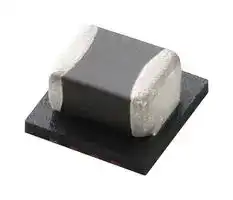
Image not available
Illustrative purposes only

MYRGC075050P31RA
Non Isolated POL DC/DC Converter, ITE, Industrial & Household, Step Down, Module, 1 V, 15 V
⚠️ Reference pricing provided. In case of supply shortages, we will connect you with our trusted procurement partners to ensure your project's continuity.
- Manufacturer: MURATA POWER SOLUTIONS
- Product type: DC / DC Non Isolated Board Mount Converters - Adjustable Output
- SVHC: No SVHC (07-Jul-2017)
- Depth: 3mm
- Width: 3mm
- Height: 1.7mm
- Product Range: PicoBK MYRGC Series
- Output Power Max: -
- Output Current Max: 500mA
- Output Voltage Max: 15V
- Output Voltage Min: 1V
- Input Voltage DC Max: 18V
- Input Voltage DC Min: 3V
- DC / DC Converter Type: Step Down, Module
- Power Supply Applications: ITE, Industrial & Household
- DC / DC Converter Output Type: Adjustable
| Delivery and price | |
|---|---|
| Units per pack | 100 |
| Price | 1.26 € |
| Current stock | 10+ |
| Lead time | 30 days |
Datasheet

**“PicoBK™” MYRGC series**
## 0.5A Inductor Built-in Step-down DC/DC Converter
## `■` GENERAL DESCRIPTION
The MYRGC series is a 18V operation synchronous step-down
DC/DC converter ICs with a built-in high-side / low-sidedriver transistor. The MYRGC series has operating voltage range of 3.0V `~` 18.0V and it can support 0.5A as an outputcurrent with high-efficiency.
Compatible with Low ESR capacitors such as ceramic capacitors for the load capacitor (CL).
- 0.75V reference voltage source is incorporated in the IC,
and the output voltage can be set to a value from 1.0V to 15.0V using external resistors (RFB1, RFB2).
1.2MHz can be selected for the switching frequency. In PWM/PFM automatic switchover control, IC can change the control method between PWM and PFM based on the output current requirement and as a result IC can achieve high efficiency over the full load range.
MYRGC has a fixed internal soft start time which is 1.0ms (TYP.), additionally the time can be extended by using an external resistor and capacitor.
## ■APPLICATIONS
●Hot water supply system
- ●Recorders,Camcorders
- ●Refrigerators,Air-conditioners
- ●Low Power Systems
## `■` FEATURES
Input Voltage Range : 3.0 `~` 18V `(` Absolute Max 20V `)` Output Voltage Range : 1.0~15.0V (FB Voltage=0.75V±1.5%) Switching Frequency : 1.2MHz Output Current : 0.5A ControlMethods : PWM control (MYRGC075050P/Q)
PWM/PFM Automatic (MYRGC075050R/S)
Efficiency 85%@12V→5V, 1mA
Soft-start Time : Adjustable by RC ProtectionCircuits : Over Current Protection
Integral Latch Method (MYRGC075050P/R) Automatic Recovery (MYRGC075050Q/S) Thermal Shutdown
Environmentally Friendly : EU RoHS Compliant, Pb Free Halogen Free
## `■` TYPICAL APPLICATION CIRCUIT
## `■` TYPICAL PERFORMANCE
## CHARACTERISTICS
MYRGC VIN=12V, VOUT=5.0V
**==> picture [453 x 191] intentionally omitted <==**
**----- Start of picture text -----**<br>
100<br>80 pam<br>RPG<br>Lx L1 PG 60 ff<br>VEN/SS EN/SS L2 VOUT<br>VIN VIN PG CFB RFB1 po CL 40<br>FB<br>CIN1 CIN2 PGND AGND RFB2 20 MYRG C075050P/Q<br>MYRGC075050R/S<br>0 2<br>0.1 1 10 100 1000<br>Output Current : IOUT[mA]<br>Efficiency : EFFI [%]<br>**----- End of picture text -----**<br>
Export Control Code : X0863, Document D90DH - 00054
MYRGC series A01 Page 1 of 27
**“PicoBK™” MYRGC series**
## 0.5A Inductor Built-in Step-down DC/DC Converter
## `■` BLOCK DIAGRAM
**==> picture [56 x 7] intentionally omitted <==**
**----- Start of picture text -----**<br>
MYRGC Series<br>**----- End of picture text -----**<br>
**==> picture [406 x 394] intentionally omitted <==**
**----- Start of picture text -----**<br>
L2 L1<br>Inductor<br>I I<br>VIN x]<br>Local<br>Reg<br>AGND<br>Each<br>Circuit<br>Gate<br>UVLO CLAMP<br>Current<br>SENSE<br>Thermal Operation Each<br>Shutdown Enable Circuit<br>CE<br>EN/SS Controller<br>Logic<br>Vre f Current Current Current<br>Soft Start Feed Limit Limit<br>Back PFM<br>High<br>Side<br>Buffer<br>C) C) Ic PWM/PFM | A<br>FB Controller Lx<br>Logic Low<br>Error PWM Side<br>Amp. Comparator Buffer<br>Ramp Wave Generator OSC<br>| | X PGND<br>PG =x<br>= < A<br>Power-Good<br>Comparator<br>**----- End of picture text -----**<br>
The MYRGC075050P/Q series is fixed to PWM control.
The MYRGC075050R/S series is PWM / PFM automatic switching control. Diodes inside the circuit are an ESD protection diodes and a parasitic diodes.
MYRGC series A01 Page 2 of 27
**“PicoBK™” MYRGC series**
## 0.5A Inductor Built-in Step-down DC/DC Converter
## ■PIN CONFIGURATION
**==> picture [84 x 35] intentionally omitted <==**
**----- Start of picture text -----**<br>
10 L2<br>(BOTTOM VIEW)<br>(BOTTOM VIEW)<br>**----- End of picture text -----**<br>
- The dissipation pad for this package should be solder-plated in recommended mount pattern and metal masking so as to enhance mounting strength and heat release. If the pad needs to be connected to other pins, it should be connected to the GND (No. 2 and No.3) pin.
MYRGC series A01 Page 3 of 27
**“PicoBK™” MYRGC series**
## 0.5A Inductor Built-in Step-down DC/DC Converter
## `■` PINASSIGNMENT
**==> picture [275 x 146] intentionally omitted <==**
**----- Start of picture text -----**<br>
||||
|---|---|---|
|PINNUMBER|PINNAME|FUNCTION|
|1|Lx|SwitchingOutput|
|2|PGND|Power Ground|
|3|AGND|Analog Ground|
|4|FB|Output Voltage Sense|
|5|PG|Power-good Output|
|6|EN/SS|EnableSoft-start|
|7|NC|No Connection|
|8|VIN|Power Input|
|9|L1|InductorElectrodes|
|10|L2|InductorElectrodes|
**----- End of picture text -----**<br>
* This 7-pin NC terminal is not connected to an IC chip.
## ■FUNCTION CHART
**==> picture [214 x 50] intentionally omitted <==**
**----- Start of picture text -----**<br>
||||
|---|---|---|
|PINNAME|SIGNAL|STATUS|
|L|Stand-by|
|EN/SS|H|Active|
|OPEN|Undefined State|[(*1)]|
**----- End of picture text -----**<br>
(*1) Please do not leave the EN/SS pin open. Each should have a certain voltage
## ■ABSOLUTE MAXIMUM RATINGS
Ta=25℃
**==> picture [370 x 156] intentionally omitted <==**
**----- Start of picture text -----**<br>
|||||||
|---|---|---|---|---|---|
|PARAMETER|SYMBOL|RATINGS|UNITS|
|VIN Pin Voltage|VIN|-0.3 ~|+20|V|
|EN/SS Pin Voltage|VEN/SS|-0.3 ~|+20|V|
|FB Pin Voltage|VFB|-0.3 ~|+6.2|V|
|PG Pin Voltage|VPG|-0.3 ~|+6.2|V|
|PG Pin Current|IPG|8|mA|
|Lx Pin Voltage|VLx|-0.3 ~|VIN+0.3 or +20|[(*1)]|V|
|Lx Pin Current|ILx|1800|mA|
|Power Dissipation|Pd|1950(JEDECboard)|[(*2)]|mW|
|Operating Ambient Temperature|Topr|-40 ~|+105|℃|
|Storage Temperature|Tstg|-55 ~|+125|℃|
**----- End of picture text -----**<br>
- All voltages are described based on the GND (AGND、PGND) pin.
> (*1) The maximum value should be either VIN+0.3 or 20 in the lowest.
- (*2) The power dissipation figure shown is PCB mounted and is for reference only. Please see the power dissipation page for the mounting condition.
MYRGC series A01 Page 4 of 27
## **“PicoBK™” MYRGC series**
## 0.5A Inductor Built-in Step-down DC/DC Converter
## ■ELECTRICAL CHARACTERISTICS
|PARAMETER|SYMBOL|CONDITIONS|MIN.|TYP.|MAX.|UNIT|CIRCUI<br>T|
|---|---|---|---|---|---|---|---|
|FB Voltage|VFB|VFB=0.739V→0.761V,<br>VFBVoltage when Lx pin oscillates|0.739|0.750|0.761|V|②|
|Output Voltage Setting<br>Range(*1)|VOUTSET|-|1|-|15|V|-|
|Operating Voltage Range|VIN|-|3|-|18|V|-|
|UVLO Detect Voltage|VUVLO1|VIN:2.8V→2.6V, VFB=0.675V,<br>VINVoltage when Lx pin voltage changes from<br>"H" level to "L" level|2.60|2.70|2.80|V|②|
|UVLO Release Voltage|VUVLO2|VIN:2.7V→2.9V、VFB=0.675V,<br>VINVoltage when Lx pin voltage changes from<br>"L" level to "H" level|2.70|2.80|2.90|V|②|
|Quiescent Current|Iq|VFB=0.825V|-|12.5|17.5|μA|④|
|Stand-byCurrent<br>~~ee~~|ISTB<br>~~ee~~|VEN/SS=0V<br>~~GG~~|-<br>~~GG~~|1.65<br>~~GG~~|2.5<br>~~GG~~|μA|⑤|
|Oscillation Frequency|fOSC|Connected to external components, IOUT=100mA|1098|1200|1302|kHz|①|
|Minimum Duty Cycle<br>~~GG~~|DMIN<br>~~GG~~|VFB=0.825V<br>~~GG~~|-<br>~~GG~~|-<br>~~GG~~|0<br>~~GG~~|%<br>~~GG~~|②<br>~~GG~~|
|Maximum Duty Cycle<br>~~GG~~<br>~~pO~~|DMAX<br>~~GG~~|VFB=0.675V<br>~~GG~~|100<br>~~GG~~|-<br>~~GG~~|-<br>~~GG~~|%<br>~~GG~~|②<br>~~GG~~|
|Lx SW "H" On Resistance<br>~~pO~~|RLxH|VFB=0.675V, ILX=200mA|-|0.99|1.14|Ω|②|
|Lx SW "L" On Resistance<br>~~pO~~<br>~~GGG~~|RLxL<br>~~GGG~~|VFB=0.825V, ILX=200mA<br>~~GGG~~|-<br>~~GGG~~|0.73(*2)<br>~~GGG~~|-<br>~~GGG~~|Ω<br>~~GGG~~|②<br>~~GGG~~|
|PFM Switch Current<br>~~pf~~|IPFM<br>~~pf~~|Connected to external components, IOUT=1mA<br>~~pf~~|-<br>~~pf~~|320<br>~~pf~~|-<br>~~pf~~|mA<br>~~pf~~|①<br>~~pf~~|
|High side Current Limit (*3)<br>~~a~~|ILIMH<br>~~GG~~|VFB=0.675V<br>~~GG~~|920<br>~~GG~~|1100<br>~~GG~~|-<br>~~GG~~|mA<br>~~GG~~|②<br>~~GG~~|
|LatchTime<br>~~a ~~|tLAT<br> ~~GG~~|Type A only, Connected to external components, VFB=0V<br>~~GG~~|0.5<br>~~GG~~|1.0<br>~~GG~~|1.7<br>~~GG~~|ms<br>~~GG~~|⑥<br>~~GG~~|
|Internal Soft-Start Time|tSS1|VEN/SS=0V→12V, VFB=0.675V, Time until Lx pin oscillates|0.5|1.0|1.7|ms|②|
|External Soft-Start Time|tSS2|VEN/SS=0V→12V, VFB=0.675V, RSS=430KΩ, CSS=0.47μF<br>Time until Lx pin oscillates|17|26|35|ms|③|
|PG Detect Voltage|VPGDET|VFB=0.712V→0.638V, RPG:100kΩ pull-up to 5V,<br>VFBVoltage when PG pin voltage changes from<br>"H" level to "L" level|0.638|0.675|0.712|V|②|
|PG Output Voltage|VPG|VFB=0.6V, IPG=1mA|AGND|-|0.3|V|②|
|Efficiency (*4)|EFFI|Connected to external components, VOUT=5V, IOUT=1mA|-|82(2)|-|%|①|
|FB Voltage<br>Temperature Characteristics|∆VFB/<br>(∆Topr・VFB)|-40℃≦Topr≦105℃|-|±100|-|ppm<br>/℃|②|
|FB ‘H’Current<br>~~a~~|IFBH<br>~~GG~~|VIN=VEN/SS=18V、VFB=3.0V<br>~~GG~~|-0.1<br>~~GG~~|-<br>~~GG~~|0.1<br>~~GG~~|μA<br>~~GG~~|④<br>~~GG~~|
|FB ‘L’ Current<br>~~a ~~<br>~~pf~~<br>~~pO~~|IFBL<br> ~~GG~~<br>~~pf~~|VIN=VEN/SS=18V、VFB=0V<br>~~GG~~<br>~~pf~~|-0.1<br>~~GG~~<br>~~pf~~|-<br>~~GG~~<br>~~pf~~|0.1<br>~~GG~~<br>~~pf~~|μA<br>~~GG~~<br>~~pf~~|④<br>~~GG~~<br>~~pf~~|
|EN/SS ‘H’ Current<br>~~pO~~|IEN/SSH|VIN=VEN/SS=18V、VFB=0.825V|-|0.1|0.3|μA|④|
|EN/SS ‘L’ Current<br>~~pO~~|IEN/SSL|VIN=18V、VEN/SS=0V、VFB=0.825V|-0.1|-|0.1|μA|④|
|EN/SS ‘H’Voltage|VEN/SSH|VEN/SS=0.3V→2.5V、VFB=0.71V,<br>VEN/SSVoltage when Lx pin voltage changes from<br>"L" level to "H"|2.5|-|18.0|V|②|
|EN/SS ‘L’Voltage|VEN/SSL|VEN/SS=2.5V→0.3V, VFB=0.71V,<br>VEN/SSVoltage when Lx pin voltage changes from<br>"H" level to "L"|AGND|-|0.3|V|②|
|Thermal Shutdown<br>Temperature|TTSD|JunctionTemperature|-|150|-|℃|-|
|Hysteresis Width|THYS|JunctionTemperature|-|25|-|℃|-|
|Inductance<br>~~a~~|L<br>~~GO~~|Test Freq.=1MHz<br>~~GO~~|-<br>~~GO~~|4.3<br>~~GO~~|-<br>~~GO~~|μH<br>~~GO~~|-<br>~~GO~~|
|Inductor Rated Current<br>~~a ~~<br>~~pe~~|IDC<br> ~~GO~~<br>~~pe~~|∆T=+40℃<br>~~GO~~<br>~~pe~~|-<br>~~GO~~<br>~~pe~~|1200<br>~~GO~~<br>~~pe~~|-<br>~~GO~~<br>~~pe~~|mA<br>~~GO~~<br>~~pe~~|-<br>~~GO~~<br>~~pe~~|
Test Condition: Unless otherwise stated, VIN=12V, VEN/SS=12V
- (*1): Please use within the range of VOUT/VIN `≧` 0.14
- (*2): Design reference value. This parameter is provided only for reference.
- (*3): Current limit denotes the level of detection at peak of coil current.
- (*4): EFFI = {(output voltage) x (output current)} / {(input voltage) x (input current)} x 100
MYRGC series A01 Page 5 of 27
**“PicoBK™” MYRGC series**
## 0.5A Inductor Built-in Step-down DC/DC Converter
## ■TEST CIRCUITS
Circuit No. `①`
**==> picture [365 x 341] intentionally omitted <==**
**----- Start of picture text -----**<br>
VIN<br>A L2<br>(_) roenns Probe<br>EN/SS<br>L1 L:4.7μH<br>V “ L VOUT<br>( -) 2.2uF Lx oo<br>V<br>CFB RFB1 A<br>O PG FB [es 10uF 10uF 2<br>V<br>AGND PGND RFB2 CO dd)<br>|<br>②<br>Probe<br>|<br>VIN<br>L2<br>@ V EN/SS co Probe<br>L1 oot<br>ra<br>2.2uF V 100kΩ Lx<br>C) © &) PG °<br>FB<br>A V A<br>pl V @® AGND J PGND 9 V O 1.2kΩ LOW)<br>1<br>a Probe<br>**----- End of picture text -----**<br>
Circuit No. `②`
Circuit No.③
**==> picture [313 x 143] intentionally omitted <==**
**----- Start of picture text -----**<br>
Probe<br>VIN<br>L2<br>430kΩ cccct Probe<br>EN/SS<br>L1 pot<br>a<br>2.2uF Lx<br>V<br>© @ V 0.47uF<br>PG FB<br>V<br>AGND PGND V 1.2kΩ<br>9 i<br>**----- End of picture text -----**<br>
MYRGC series A01 Page 6 of 27
**“PicoBK™” MYRGC series**
## 0.5A Inductor Built-in Step-down DC/DC Converter
## ■TEST CIRCUITS
Circuit No.④
**==> picture [389 x 564] intentionally omitted <==**
**----- Start of picture text -----**<br>
VIN<br>L2<br>(-) A EN/SS<br>L1<br>(-) A<br>Lx<br>V V<br>©) e<br>PG FB<br>A<br>AGND PGND V<br>ia I ¢ (~ )<br>Circuit No.⑤<br>VIN<br>L2<br>A EN/SS<br>L1<br>Lx<br>V<br>PG<br>FB<br>V<br>AGND PGND<br>Circuit No.⑥<br>VIN<br>L2<br>cccctt Probe<br>EN/SS L=4.7μH<br>L1<br>L<br>V ov<br>Lx<br>2.2uF V CFB RFB1<br>PG FB 10uF 10uF<br>V<br>AGND PGND RFB2<br>Hal Fi I e<br>Circuit No.⑦<br>{____4 Probe<br>VIN vA<br>(~) A L2<br>EN/SS<br>L1<br>@ V 2.2uF Lx || VOUT<br>V<br>CFB RFB1 A<br>O @<br>PG FB 10uF 10uF<br>V<br>AGND PGND RFB2 OC 4)<br>**----- End of picture text -----**<br>
MYRGC series A01 Page 7 of 27
**“PicoBK™” MYRGC series**
## 0.5A Inductor Built-in Step-down DC/DC Converter
## ■TYPICAL APPLICATION CIRCUIT
**==> picture [243 x 89] intentionally omitted <==**
**----- Start of picture text -----**<br>
RPG<br>Lx L1 PG<br>VEN/SS EN/SS L2 VOUT<br>PG CL<br>VIN VIN CFB RFB1<br>FB<br>CIN1 CIN2 PGND AGND<br>RFB2<br>**----- End of picture text -----**<br>
*Coil is dedicated to this product. Please do not use it for purposes other than this product.
## `【` Typical example `】`
||VALUE|
|---|---|
|CIN1|25V/4.7μF|
|CIN2|25V/0.01μF|
|CL|10V/10μF|
||25V/10μF|
||10V/22μF|
||25V/22μF|
*When under the condition of the voltage difference between input voltage and output voltage is low, please use 125 `℃` product, which has small capacity drop.
## `【` Typical example `】`
|VOUT|RFB1|RFB2|CFB<br>(CL=20μF)|CFB<br>(CL=10μF)|
|---|---|---|---|---|
|1.2V|180kΩ|300kΩ|56pF|39pF|
|1.5V|220kΩ|220kΩ|47pF|33pF|
|1.8V|180kΩ|130kΩ|56pF|39pF|
|2.5V|560kΩ|240kΩ|15pF|12pF|
|3.0V|390kΩ|130kΩ|27pF|18pF|
|3.3V|510kΩ|150kΩ|22pF|15pF|
|5.0V|680kΩ|120kΩ|18pF|10pF|
|7.5V|270kΩ|30kΩ|39pF|27pF|
|10.0V|160kΩ|13kΩ|68pF|47pF|
|12.0V|360kΩ|24kΩ|33pF|22pF|
> ・About RPG The PG pin is an Nch open drain output, therefore a pull-up resistance (approx. 100kΩ) must be connected to the PG pin. When not using power good function connect the PG pin to GND or open it for use.
MYRGC series A01 Page 8 of 27
**“PicoBK™” MYRGC series**
## 0.5A Inductor Built-in Step-down DC/DC Converter
## ■TYPICAL APPLICATION CIRCUIT(Continued)
<Output voltagesetting>
The output voltage can be set by adding an external dividing resistor. The output voltage is determined by the equation below based on the values of RFB1 and RFB2.
VOUT=VFB× (RFB1+RFB2)/RFB2 With RFB1+RFB2 `≦` 1MΩ
## <CFBsetting>
Adjust the value of the phase compensation speed-up capacitor CFB using the equation below.
1 _CFB_ 2 _fzfb_ _R FB_ 1
A target value for fzfb of optimum is below.
1 _fzfb_ ~~__~~ 2 _CL_ _L_
- `【` SettingExample `】`
When CL is 10μF, fzfb=24kHz When CL is 20μF, fzfb=17kHz
- `【` SettingExample `】`
To set output voltage to 5V with fosc=1.2MHz, CL=20μF, L=4.3μH
When RFB1=680kΩ, RFB2=120kΩ, VOUT=0.75V× (680kΩ+120kΩ) / 120kΩ=5.0V And fzfb is set to a target of 17kHz using the above equation,
CFB=1/(2× `π` ×17kHz×680kΩ)=13.8pF
- The setting range for the output voltage is 1.0V to 15.0V. The condition VOUT/VIN `≧` 0.14 must be satisfied.
<Soft-start TimeSetting>
The soft-start time can be adjusted by adding a capacitor and a resistor to the EN/SS pin. Soft-start time (tss2) is approximated by the equation below according to values of VEN/SS, RSS, and CSS.
tss2=Css×Rss× (-ln ((VEN/SS-1.45)/VEN/SS)) )
## `【` SettingExample `】`
When CSS=0.47μF, RSS=430kΩ and VEN/SS=12V, tSS2=0.47x10[-6 ] x 430 x 10[3 ] x (-ln ((12-1.45)/12)) =26ms (Approx.)
*The soft-start time is the time from the start of VEN/SS until the output voltage reaches 90% of the set voltage. If the EN/SS pin voltage rises steeply without connecting CSS and RSS (RSS=0Ω), Output rises with taking the soft-start time of tss1=1.0ms (TYP.) which is fixed internally.
**==> picture [430 x 107] intentionally omitted <==**
**----- Start of picture text -----**<br>
RSS VEN/SS !| !<br>EN/SS<br>J<br>VEN/SS CSS ~------4--+ 2eee 90 % of setting voltage<br>ii |<br>se |<br>VOUT<br>t J 1<br>pa! tSS1 a !|<br>tSS2<br>**----- End of picture text -----**<br>
MYRGC series A01 Page 9 of 27
**“PicoBK™” MYRGC series**
## 0.5A Inductor Built-in Step-down DC/DC Converter
## `■` OPERATIONAL EXPLANATION (Continued)
The MYRGC series consists internally of a reference voltage supply with soft-start function, error amp, PWM comparator, ramp wave circuit, oscillator (OSC) circuit, phase compensation (Current feedback) circuit, current limiting circuit, current limit PFM circuit, High-side driver Tr., Low-side driver Tr., buffer drive circuit, internal power supply (LocalReg) circuit, under-voltage lockout (UVLO) circuit, gate clamp (CLAMP) circuit, thermal shutdown (TSD) circuit, power good comparator, control block and other elements.
The voltage feedback from the FB pin is compared to the internal reference voltage by the error amp, the output from the error amp is phase compensated, and the signal is input to the PWM comparator to determine the ON time of switching during PWM operation. The output signal from the error amp is compared to the ramp wave by the PWM comparator, and the output is sent to the buffer drive circuit and output from the Lx pin as the duty width of switching. This operation is performed continuously to stabilize the output voltage.
The driver transistor current is monitored at each switching by the phase compensation (Current feedback) circuit, and the output signal from the error amp is modulated as a multi-feedback signal. This allows a stable feedback system to be obtained even when a low ESR capacitor such as a ceramic capacitor is used, and this stabilizes the output voltage.
**==> picture [59 x 7] intentionally omitted <==**
**----- Start of picture text -----**<br>
MYRGC Series<br>**----- End of picture text -----**<br>
**==> picture [348 x 338] intentionally omitted <==**
**----- Start of picture text -----**<br>
L2 L1<br>Inductor<br>VIN xt<br>Local<br>Reg<br>AGND<br>Each<br>Circuit<br>UVLO CLAMPGate<br>Current<br>SENSE<br>. ShutdownThermal Operation Enable CircuitEach 7 |<br>CE<br>EN/SS Controller<br>Logic<br>Vre f Current Current Curren t<br>Soft Start Feed Limit Limit<br>Back PFM<br>High<br>Side<br>Buffer<br>PWM/PFM<br>FB Controller Lx<br>er Error PWM _ Logic SideLow<br>Amp. Comparator Buffer<br>RampWave Generator OSC<br>a | 4 PGND<br>PG Xt<br>= <<br>Power-Good<br>Comparator<br>**----- End of picture text -----**<br>
*Diodes inside the circuit are an ESD protection diodes and a parasitic.
MYRGC series A01 Page 10 of 27
**“PicoBK™” MYRGC series**
## 0.5A Inductor Built-in Step-down DC/DC Converter
## `■` OPERATIONAL EXPLANATION (Continued)
## <Reference voltage source>
The reference voltage source provides the reference voltage to ensure stable output voltage of the DC/DC converter.
## <Oscillatorcircuit>
The ramp wave circuit determines switching frequency. The frequency is fixed internally 1.2MHz. Clock pulses generated in this circuit are used to produce ramp waveforms needed for PWM operation.
## <Error amplifier>
The error amplifier is designed to monitor output voltage. The amplifier compares the reference voltage with the feedback voltage divided by the internal voltage divider, RFB1 and RFB2. When a voltage is lower than the reference voltage, then the voltage is fed back, the output voltage of the error amplifier increases. The error amplifier output is fixed internally to deliver an optimized signal to the mixer.
## <Currentlimiting>
The current limiting circuit of the MYRGC series monitors the current that flows through the High-side driver transistor and Lowside driver transistor, and when over-current is detected, the current limiting function activates.
## `①` Low-side driver Tr. current limiting
The current in the Low-side driver Tr. is detected to equivalently monitor the bottom value of the coil current. The Low-side driver Tr. current limiting function prohibits the High-side driver Tr. from turning on in an over-current state where the bottom value of the coil current is higher than the Low-side driver Tr. current limit value ILIML. Control to lower the switching frequency fOSC is also performed. When the over-current state is released, normal operation resumes.
## `②` High-side driver Tr. current limiting
The current in the High-side driver Tr. is detected to equivalently monitor the peak value of the coil current. The High-side driver Tr. current limiting function forcibly turns off the High-side driver Tr. when the peak value of the coil current reaches the High-side driver current limit value ILIMH. ILIML < ILIMH is set inside the IC, and therefore the Low-side driver Tr. current limiting function of ① above also detects the over-current state at this time. When the over-current state is released, normal operation resumes.
## `③` Over-current latch (TypeP / Type R)
Type P / Type R turns off the High-side and Low-side driver Tr. when state ① or ② continues for 1.0ms (TYP.). The Lx pin is latchstopped at the GND level (0V).
The latch-stopped state only stops the pulse output from the Lx pin; the internal circuitry of the IC continues to operate. To restart after latch-stopping, Llevel and then H level must be input into the EN/SS pin, or VIN pin re-input must be performed (after lowering the voltage below the UVLO detection voltage) to resume operation by soft start.
The over-current latch function may occasionally be released from the current limit detection state by the effects of ambient noise, and it may also happen that the latch time becomes longer or latching does not take place due to board conditions. For this reason, place the input capacitor as close as possible to the IC.
Type Q / Type S is an automatic recovery type that performs the operation of ① or ② until the over-current state is released.
Low side driver Tr. current limit value ILIML=0.7A (Designed value) High-side driver Tr. current limit value ILIMH=1.1A(TYP.)
**==> picture [418 x 192] intentionally omitted <==**
**----- Start of picture text -----**<br>
bg 1.0ms(TYP.)<br>ILIMH=1.1A(TYP.)<br>ILIML=0.7A(Designed value)<br>ILX<br>0A<br>VLX<br>VOUT<br>0V<br>VEN/SS<br>0V<br>< Current limiting timing chart ><br>**----- End of picture text -----**<br>
MYRGC series A01 Page 11 of 27
**“PicoBK™” MYRGC series**
## 0.5A Inductor Built-in Step-down DC/DC Converter
## ■OPERATIONAL EXPLANATION (Continued)
## <Soft-startfunction>
The reference voltage applied to the error amplifier is restricted by the start-up voltage of the EN/SS pin. This ensures that the error amplifier operates with its two inputs in balance, thereby preventing ON-time signal from becoming longer than necessary. Therefore, start-up time of the EN/SS pin becomes the set-time of soft-start. The soft-start time can be adjusted by adding a capacitor and a resistor to the EN/SS pin.
If the EN/SS pin voltage rises steeply without connecting CSS and RSS (RSS=0Ω), Output rises with taking the soft-start time of tss1=1.0ms (TYP.) which is fixed internally.
The soft-start function operates when the voltage at the EN/SS pin is between 0.3V to 2.5V. If the voltage at the EN/SS pindoes not start from 0V but from a middle level voltage when the power is switched on, the soft-start function will become ineffective and the possibilities of large inrush currents and ripple voltages occurring will be increased.
## <Thermal shutdown>
The thermal shutdown (TSD) as an over current limit is built in the MYRGC series.
When the junction temperature reaches the detection temperature, the driver transistor is forcibly turned off. When the junction temperature falls to the release temperature while in the output stop state, restart takes place by soft-start.
## <UVLO>
When the VIN pin voltage falls below 2.7V (TYP.), the driver transistor is forcibly turned off to prevent false pulse output due to instable operation of the internal circuits. When the VIN pin voltage rises above 2.8V (TYP.), the UVLO function is released, the soft-start function activates, and output start operation begins. Stopping by UVLO is not shutdown; only pulse output is stopped and the internal circuits continue to operate.
## <Power good>
The output state can be monitored using the power good function.
When the FB voltage drops below 90% (TYP.), the PG pin outputs an "L" signal.
The PG pin is an Nch open drain output, therefore a pull-up resistance (approx. 100kΩ) must be connected to the PG pin. When not using power good function connect the PG pin to GND or open it for use.
MYRGC series A01 Page 12 of 27
## **“PicoBK™” MYRGC series**
## 0.5A Inductor Built-in Step-down DC/DC Converter
## ■NOTE ON USE(Continued)
1)For the phenomenon of temporal and transitional voltage decrease or voltage increase, the IC may be damaged or deteriorated if IC is used beyond the absolute MAX. specifications.
2) Make sure that the absolute maximum ratings of the external components and of this IC are not exceeded.
3)The DC/DC converter characteristics depend greatly on the externally connected components as well as on the characteristics of this IC, so refer to the specifications and standard circuit examples of each component when carefully considering which components to select. Be especially careful of the capacitor characteristics and use B characteristics (JIS standard) or X7R, X5R (EIA standard) ceramic capacitors.
The capacitance decrease caused by the bias voltage may become remarkable depending on the external size of the capacitor.
4) If there is a large dropout voltage, then there might be pulse-skip during light loads even with PWM control.
5)The DC/DC converter of this IC uses a current-limiting circuit to monitor the coil peak current. If the potential dropout voltage is large or the load current is large, the peak current will increase, which makes it easier for current limitation to be applied which in turn could cause the operation to become unstable.
- 6) If there is a large dropout voltage, a circuit delay could create the ramp-up of coil current with staircase waveform exceeding the current limit.
7)The ripple voltage could be increased when switching from discontinuous conduction mode to Continuous conduction mode. Please evaluate IC well on customer’s PCB.
8) The operation of becomes unstable below the minimum operating voltage.
- 9) If the voltage at the EN/SS Pin does not start from 0V but it is at the midpoint potential when the power is switched on, the soft start function may not work properly and it may cause the larger inrush current and bigger ripple voltages.
10)The effects of ambient noise and the state of the circuit board may cause release from the current limiting state, and The latch time may lengthen or latch operation may not take place. Please evaluate IC well on customer’s PCB.
MYRGC series A01 Page 13 of 27
**“PicoBK™” MYRGC series**
## 0.5A Inductor Built-in Step-down DC/DC Converter
## ■NOTE ON USE
11) Instructions of pattern layouts
- (1) The operation may become unstable due to noise and/or phase lag from the output current when the wire impedance is high, please place the input capacitor(CIN) and the output capacitor (CL) as close to the IC as possible.
- (2) In order to stabilize VIN voltage level, we recommend that a by-pass capacitor (CIN) be connected as close as possible to the VIN and PGND pins.
- (3) Please mount each external component as close to the IC as possible.
- (4) Wire external components as close to the IC as possible and use thick, short connecting traces to reduce the circuit impedance.
- (5) Make sure that the GND traces are as thick as possible, as variations in ground potential caused by high ground currents at the time of switching may result in instability of the IC.
- (6) Please note that internal driver transistors bring on heat because of the load current and ON resistance of High-side driver transistor,Low-side driver transistor.
< Reference Pattern Layout >
< Topview> < Bottom side top view >
- 12) MURATA places an importance on improving our products and their reliability. We request that users incorporate failsafe designs and post-aging protection treatment when using MURATA products in their systems.
## ■About the appearance (coil part)
- (1) Coils are compliant with general surface mount type chip coil (inductor) specifications and may have scratches, flux contamination and the like.
- (2) This product has a coil which is soldered on top of the package. There is no problem with normal board mounting reflow. If the excessive shock is provided during reflow, there is a possibility to cause the coil misaligned or have the coil fell off. Please be careful not to provide excessive shock to the PCB during the board mounting reflow.
MYRGC series A01 Page 14 of 27
## **“PicoBK™” MYRGC series**
## 0.5A Inductor Built-in Step-down DC/DC Converter
## ■TYPICAL PERFORMANCE CHARACTERISTICS
(1) Output Voltage vs. Output Current
**==> picture [191 x 390] intentionally omitted <==**
**----- Start of picture text -----**<br>
MYRGC075050P/Q (VOUT=3.3V)<br>3.6<br>Vin=5.0V<br>Vin=8.0V<br>3.5<br>Vin=12.0V<br>Vin=15.0V<br>3.4<br>Vin=18.0V<br>3.3<br>3.2<br>3.1<br>3.0<br>0.1 1 10 100 1000<br>Output Current :IOUT [mA]<br>MYRGC075050P/Q (VOUT=5.0V)<br>5.3<br>Vin=8.0V<br>Vin=12.0V<br>5.2<br>Vin=15.0V<br>Vin=18.0V<br>5.1<br>5.0<br>4.9<br>4.8<br>4.7<br>0.1 1 10 100 1000<br>Output Current :IOUT [mA]<br> [V]<br>OUT<br>: V<br>Output Voltage<br> [V]<br>OUT<br>Output Voltage : V<br>**----- End of picture text -----**<br>
**==> picture [193 x 391] intentionally omitted <==**
**----- Start of picture text -----**<br>
MYRGC075050R/S (VOUT=3.3V)<br>3.6<br>Vin=5.0V<br>Vin=8.0V<br>3.5<br>Vin=12.0V<br>Vin=15.0V<br>3.4<br>Vin=18.0V<br>3.3<br>3.2<br>3.1<br>3.0<br>0.1 1 10 100 1000<br>Output Current : IOUT[mA]<br>MYRGC075050R/S (VOUT=5.0V)<br>5.3<br>Vin=8.0V<br>Vin=12.0V<br>5.2<br>Vin=15.0V<br>Vin=18.0V<br>5.1<br>5.0<br>4.9<br>4.8<br>4.7<br>0.1 1 10 100 1000<br>Output Current : IOUT[mA]<br> [V]<br>OUT<br>Output Voltage : V<br> [V]<br>OUT<br>Output Voltage : V<br>**----- End of picture text -----**<br>
MYRGC series A01 Page 15 of 27
## **“PicoBK™” MYRGC series** ~~———s—s—“SOSs—~——C~~
## 0.5A Inductor Built-in Step-down DC/DC Converter
## ■TYPICAL PERFORMANCE CHARACTERISTICS
(2) Efficiency vs. Output Current
**==> picture [412 x 393] intentionally omitted <==**
**----- Start of picture text -----**<br>
MYRGC075050P/Q (VOUT=3.3V) MYRGC075050R/S (VOUT=3.3V)<br>100 100<br>80 80<br>Ty) Ze<br>60 60<br>40 40<br>Fo Vin=5.0V FO Vin=5.0V<br>Vin=8.0V Vin=8.0V<br>20 Vin=12.0V 20 Vin=12.0V<br>Vin=15.0V Vin=15.0V<br>Vin=18.0V Vin=18.0V<br>0 Zane 0<br>Sin | [|]<br>0.1 1 10 100 1000 0.1 1 10 100 1000<br>Output Current : IOUT[mA] Output Current : IOUT [mA]<br>MYRGC075050P/Q (VOUT=5.0V) MYRGC075050R/S (VOUT=5.0V)<br>100 100<br>80 80<br>Tes) « 60<br>60 60<br>Gf BES<br>40 40 E<br>IFO [|] F OO<br>Vin=8.0V Vin=8.0V<br>Vin=12.0V Vin=12.0V<br>20 20<br>Vin=15.0V Vin=15.0V<br>Vin=18.0V Vin=18.0V<br>0 vera e eeee 0<br>ian | |<br>0.1 1 10 100 1000 0.1 1 10 100 1000<br>Output Current : IOUT[mA] Output Current : IOUT [mA]<br>Efficiency : EFFI [%] Efficiency : EFFI [%]<br>Efficiency : EFFI [%] Efficiency : EFFI [%]<br>**----- End of picture text -----**<br>
MYRGC series A01 Page 16 of 27
## **“PicoBK™” MYRGC series**
## 0.5A Inductor Built-in Step-down DC/DC Converter
## ■TYPICAL PERFORMANCE CHARACTERISTICS
(3) Ripple Voltage vs. Output Current
**==> picture [191 x 390] intentionally omitted <==**
**----- Start of picture text -----**<br>
MYRGC075050P/Q (VOUT=3.3V)<br>100<br>Vin=5.0V<br>Vin=8.0V<br>80 Vin=12.0V<br>Vin=15.0V<br>Vin=18.0V<br>60<br>40<br>20<br>0 ll<br>0.1 1 10 100 1000<br>Output Current : IOUT [mA]<br>MYRGC075050P/Q (VOUT=5.0V)<br>100<br>Vin=8.0V<br>Vin=12.0V<br>80<br>Vin=15.0V<br>Vin=18.0V<br>60<br>40<br>20<br>pT<br>S ee<br>0 all<br>0.1 1 10 100 1000<br>Output Current : IOUT [mA]<br>Ripple Voltage : Vr [mV]<br>Ripple Voltage : Vr [mV]<br>**----- End of picture text -----**<br>
**==> picture [193 x 389] intentionally omitted <==**
**----- Start of picture text -----**<br>
MYRGC075050R/S (VOUT=3.3V)<br>100<br>Vin=5.0V<br>Vin=8.0V<br>80 Vin=12.0V<br>Vin=15.0V<br>Vin=18.0V<br>60<br>40<br>20<br>0<br>0.1 1 10 100 1000<br>Output Current : IOUT [mA]<br>MYRGC075050R/S (VOUT=5.0V)<br>100<br>Vin=8.0V<br>Vin=12.0V<br>80<br>Vin=15.0V<br>Vin=18.0V<br>60<br>40<br>20<br>Nb<br>0 =<br>0.1 1 10 100 1000<br>Output Current : IOUT [mA]<br>Ripple Voltage : Vr [mV]<br>Ripple Voltage : Vr [mV]<br>**----- End of picture text -----**<br>
MYRGC series A01 Page 17 of 27
## **“PicoBK™” MYRGC series**
## 0.5A Inductor Built-in Step-down DC/DC Converter
## ■TYPICAL PERFORMANCE CHARACTERISTICS
- (4) Output Voltage vs. Ambient Temperature
**==> picture [145 x 9] intentionally omitted <==**
**----- Start of picture text -----**<br>
MYRGC075050P/Q (VOUT=3.3V, IOUT=100mA)<br>**----- End of picture text -----**<br>
**==> picture [145 x 9] intentionally omitted <==**
**----- Start of picture text -----**<br>
MYRGC075050P/Q (VOUT=3.3V, IOUT=300mA)<br>**----- End of picture text -----**<br>
> MYRGC075050P/Q (VOUT=3.3V, IOUT=500mA)
> MYRGC075050P/Q (VOUT=5.0V, IOUT=100mA)
> MYRGC075050P/Q (VOUT=5.0V, IOUT=300mA)
MYRGC series A01 Page 18 of 27
## **“PicoBK™” MYRGC series**
## 0.5A Inductor Built-in Step-down DC/DC Converter
## ■TYPICAL PERFORMANCE CHARACTERISTICS
(4) Output Voltage vs. Ambient Temperature
**==> picture [190 x 395] intentionally omitted <==**
**----- Start of picture text -----**<br>
MYRGC075050P/Q (VOUT=5.0V, IOUT=500mA)<br>5.2<br>Vin=8.0V<br>Vin=12.0<br>5.1 V<br>5.0<br>|_| ~~<br>4.9 ia.<br>IOUT=500mA<br>4.8<br>-50 -25 0 25 50 75 100 125<br>Ambient Temperature : Ta (℃)<br>(5) Switching Frequency vs. AmbientTemperature<br>MYRGC075050P/Q (VOUT=3.3V, IOUT=100mA)<br>1.60<br>Vin=5.0V<br>1.50<br>Vin=8.0V<br>1.40 Vin=12.0V<br>1.30<br>1.20<br>1.10<br>rT | | tl<br>1.00<br>0.90 IOUT=100mA<br>0.80<br>-50 -25 0 25 50 75 100 125<br>Ambient Temperature : Ta (℃)<br> (V)<br>OUT<br>Output Voltage : V<br>Switching Frequency : fosc (MHz)<br>**----- End of picture text -----**<br>
## (5) Switching Frequency vs. AmbientTemperature
**==> picture [189 x 183] intentionally omitted <==**
**----- Start of picture text -----**<br>
MYRGC075050P/Q (VOUT=3.3V, IOUT=300mA)<br>1.60<br>Vin=5.0V<br>1.50<br>Vin=8.0V<br>1.40 Vin=12.0V<br>1.30<br>1.20<br>1.10<br>pe TT |<br>1.00<br>0.90 IOUT=300mA<br>0.80<br>-50 -25 0 25 50 75 100 125<br>Ambient Temperature : Ta (℃)<br>Switching Frequency : fosc (MHz)<br>**----- End of picture text -----**<br>
**==> picture [191 x 181] intentionally omitted <==**
**----- Start of picture text -----**<br>
MYRGC075050P/Q(VOUT=3.3V, IOUT=500mA)<br>1.6<br>Vin=5.0V<br>1.5<br>Vin=8.0V<br>1.4 Vin=12.0V<br>1.3<br>| ft<br>1.2<br>1.1<br>1.0<br>0.9 IOUT=500mA<br>0.8<br>-50 -25 0 25 50 75 100 125<br>Ambient Temperature : Ta (℃)<br>Switching Frequency : fosc (MHz)<br>**----- End of picture text -----**<br>
MYRGC series A01 Page 19 of 27
## **“PicoBK™” MYRGC series**
## 0.5A Inductor Built-in Step-down DC/DC Converter
## ■TYPICAL PERFORMANCE CHARACTERISTICS
(5) Switching Frequency vs. AmbientTemperature
**==> picture [190 x 183] intentionally omitted <==**
**----- Start of picture text -----**<br>
MYRGC075050P/Q (VOUT=5.0V, IOUT=100mA)<br>1.60<br>Vin=8.0V<br>1.50<br>1.40 Vin=12.0V<br>1.30<br>1.20 CeCe<br>1.10 > ———— a<br>1.00<br>0.90 IOUT=100mA<br>0.80<br>-50 -25 0 25 50 75 100 125<br>Ambient Temperature : Ta (℃)<br>Switching Frequency : fosc (MHz)<br>**----- End of picture text -----**<br>
**==> picture [189 x 183] intentionally omitted <==**
**----- Start of picture text -----**<br>
MYRGC075050P/Q (VOUT=5.0V, IOUT=300mA)<br>1.60<br>Vin=8.0V<br>1.50<br>1.40 Vin=12.0V<br>1.30<br>1.20 WCC<br>1.10 aan<br>1.00<br>0.90 IOUT=300mA<br>0.80<br>-50 -25 0 25 50 75 100 125<br>Ambient Temperature : Ta (℃)<br>Switching Frequency : fosc (MHz)<br>**----- End of picture text -----**<br>
**==> picture [190 x 182] intentionally omitted <==**
**----- Start of picture text -----**<br>
MYRGC075050P/Q (VOUT=5.0V, IOUT=500mA)<br>1.6<br>Vin=8.0V<br>1.5<br>Vin=12.0V<br>1.4<br>1.3<br>1.2<br>7aase=5<br>1.1<br>1.0<br>0.9 IOUT=500mA<br>0.8<br>-50 -25 0 25 50 75 100 125<br>Ambient Temperature : Ta (℃)<br>Switching Frequency : fosc (MHz)<br>**----- End of picture text -----**<br>
MYRGC series A01 Page 20 of 27
## **“PicoBK™” MYRGC series**
## 0.5A Inductor Built-in Step-down DC/DC Converter
## ■TYPICAL PERFORMANCE CHARACTERISTICS
## (6) FB Voltage vs. Ambient Temperature
**==> picture [189 x 613] intentionally omitted <==**
**----- Start of picture text -----**<br>
MYRGC (VIN=12V)<br>0.77<br>Vin=12.0V<br>0.76<br>0.75<br>0.74<br>0.73<br>-50 -25 0 25 50 75 100 125<br>Ambient Temperature : Ta (℃)<br>(8) Stand-by Current vs. AmbientTemperature<br>MYRGC (VIN=12V)<br>4.0<br>3.0<br>2.0<br>1.0<br>0.0<br>-50 -25 0 25 50 75 100 125<br>Ambient Temperature : Ta (℃)<br>(10) Internal Soft-Start Time vs. AmbientTemperature<br>MYRGC (VIN=12V)<br>2.0<br>1.5<br>1.0<br>0.5<br>0.0<br>-50 -25 0 25 50 75 100 125<br>Ambient Temperature : Ta (℃)<br> (V)<br>FB<br>FB Voltage : V<br> (μA)<br>STB<br>Stand-by Current : I<br>(ms)<br>SS1<br>Internal Soft-Start Time : T<br>**----- End of picture text -----**<br>
- (8) Stand-by Current vs. AmbientTemperature
- (10) Internal Soft-Start Time vs. AmbientTemperature
- (7) UVLO Voltage vs. Ambient Temperature
**==> picture [190 x 612] intentionally omitted <==**
**----- Start of picture text -----**<br>
MYRGC<br>3.00<br>UVLO1(DetectVoltage)<br>UVLO2(ReleaseVoltage)<br>2.90<br>2.80<br>2.70<br>2.60<br>2.50<br>-50 -25 0 25 50 75 100 125<br>Ambient Temperature : Ta (℃)<br>(9) Lx SW On Resistance vs. AmbientTemperature<br>MYRGC (VIN=12V)<br>2.0<br>High side SW<br>Low side SW<br>1.5<br>1.0<br>0.5<br>0.0<br>-50 -25 0 25 50 75 100 125<br>Ambient Temperature : Ta (℃)<br>(11) External Soft-Start Time vs. Ambient Temperature<br>MYRGC (VIN=12V, RSS=430kΩ, CSS=0.47μF)<br>35<br>30<br>25<br>20<br>15<br>-50 -25 0 25 50 75 100 125<br>Ambient Temperature : Ta (℃)<br> (V)<br>UVLO2<br>,V<br>UVLO1<br>UVLO Voltage : V<br> (Ω)<br>ON<br>Lx SW On Resistance : R<br>(ms)<br>SS2<br>External Soft-Start Time : T<br>**----- End of picture text -----**<br>
- (9) Lx SW On Resistance vs. AmbientTemperature
- (11) External Soft-Start Time vs. Ambient Temperature
MYRGC series A01 Page 21 of 27
## **“PicoBK™” MYRGC series**
## 0.5A Inductor Built-in Step-down DC/DC Converter
## ■TYPICAL PERFORMANCE CHARACTERISTICS
- (12) EN/SS Voltage vs. AmbientTemperature
**==> picture [61 x 8] intentionally omitted <==**
**----- Start of picture text -----**<br>
MYRGC (VIN=12V)<br>**----- End of picture text -----**<br>
**==> picture [172 x 33] intentionally omitted <==**
**----- Start of picture text -----**<br>
(13) PFM Current vs. AmbientTemperature<br>MYRGC075050P/Q(VIN=12V,VOUT=5V)<br>L=4.3μH, CIN=4.7μF, CL=22μF<br>**----- End of picture text -----**<br>
- (14) PG Detect Voltage vs. Ambient Temperature
**==> picture [190 x 181] intentionally omitted <==**
**----- Start of picture text -----**<br>
MYRGC (VIN=12V)<br>0.75<br>0.70<br>0.65<br>0.60<br>-50 -25 0 25 50 75 100 125<br>Ambient Temperature : Ta (℃)<br> (V)<br>PGDET<br>PG Detect Voltage : V<br>**----- End of picture text -----**<br>
- (15) PG Output Voltage vs. AmbientTemperature
**==> picture [190 x 181] intentionally omitted <==**
**----- Start of picture text -----**<br>
MYRGC (VIN=12V, IPG=1mA)<br>0.4<br>0.3<br>0.2<br>0.1<br>0.0<br>-50 -25 0 25 50 75 100 125<br>Ambient Temperature : Ta (℃)<br> (V)<br>PG<br>PG Output Voltage : V<br>**----- End of picture text -----**<br>
MYRGC series A01 Page 22 of 27
**“PicoBK™” MYRGC series**
## 0.5A Inductor Built-in Step-down DC/DC Converter
## ■TYPICAL PERFORMANCE CHARACTERISTICS
(16) Load Transient Response
**==> picture [199 x 131] intentionally omitted <==**
**----- Start of picture text -----**<br>
MYRGC075050P/Q (VIN=12V, VOUT=5V, IOUT=1mA → 300mA)<br>VOUT : 200mV/div<br>ro r |_|<br>|<br>IOUT=1mA→300mA<br>50μs/div<br>**----- End of picture text -----**<br>
**==> picture [210 x 131] intentionally omitted <==**
**----- Start of picture text -----**<br>
MYRGC075050P/Q (VIN=12V, VOUT=5V,IOUT=300mA → 1mA)<br>VOUT : 200mV/div<br>Se eee<br>IOUT=300mA→1mA<br>500μs/div<br>**----- End of picture text -----**<br>
MYRGC075050R/S (VIN=12V, VOUT=5V, IOUT=1mA `→` 300mA)
MYRGC075050R/S (VIN=12V, VOUT=5V, IOUT=300mA `→` 1mA)
**==> picture [338 x 107] intentionally omitted <==**
**----- Start of picture text -----**<br>
VOUT : 200mV/div VOUT : 200mV/div<br>IOUT=300mA→1mA<br>a a<br>IOUT=1mA→300mA<br>| | 50μs/div i ap | 500μs/div<br>**----- End of picture text -----**<br>
MYRGC series A01 Page 23 of 27
**“PicoBK™” MYRGC series**
## 0.5A Inductor Built-in Step-down DC/DC Converter ■PACKAGING INFORMATION
**==> picture [457 x 604] intentionally omitted <==**
**----- Start of picture text -----**<br>
3.0±0.07<br>(2.5)<br>Ea 1pin INDENT<br>TILT<br>(2.22)<br>(1.34) (0.25)<br>1 2 3 4<br>a Hl Higil<br>|<br>Ooo<br>8 7 6 5<br>(0.75) (0.5) (0.38) (0.2)<br>0.25±0.05<br>i) LIE<br>● Reference Pattern Layout (unit:mm) ● Reference Metal Mask Design (unit:mm)<br>0.25 0.25<br>iY)<br>1.14<br>0.4<br>1.34<br>aeze |oath<br>0.38 0.38<br>0.5 0.5<br>A n ny I o n<br>2.6 2.6<br>(2.0)<br>3.0±0.07<br>MAX<br>(1.2) MAX<br>0.46 1.7<br>0.4±0.07<br>(1.6) (1.25)<br>1.6<br>3.6 2.2 1.25 3.6 2.2 1.25 1.4<br>0.7 0.7<br>**----- End of picture text -----**<br>
MYRGC series A01 Page 24 of 27
**“PicoBK™” MYRGC series**
## 0.5A Inductor Built-in Step-down DC/DC Converter
## ■PACKAGING INFORMATION
## **1.Power Dissipation (JEDEC board)**
Power dissipation data for this packaging is shown in this page. The value of power dissipation varies with the mount board conditions. Please use this data as one of reference data taken in the described condition.
1.Measurement Condition (Reference data) Condition : Mount on a board Ambient : Natural convection Soldering : Lead (Pb) free Board : The board using 4 copper layer. (76.2mm x 114.3mm・・・Area: about 8700mm[2] ) 1[st] layer : No copper foil (Signal layer) 2[nd] layer : 70mm x 70mm_Conected to heat-sink. 3[rd] layer : 70mm x 70mm_Conected to heat-sink. 4[th] layer : No copper foil (Signal layer) Material : Glass Epoxy(FR-4) Thickness : 1.6mm Through-hole : 0.2mm x 60pcs
MYRGC series A01 Page 25 of 27
**“PicoBK™” MYRGC series**
## 0.5A Inductor Built-in Step-down DC/DC Converter
## `■` MARKING RULE
## ①,②,③ represents products series
|SYMBOL|SYMBOL|SYMBOL|Switching<br>Frequency|PRODUCT|
|---|---|---|---|---|
|①|②|③|||
|1|1|B|1|MYRGC075050P31RA|
|1|1|E|1|MYRGC075050Q31RA|
|1|1|K|1|MYRGC075050R31RA|
|1|1|N|1|MYRGC075050S31RA|
## ④,⑤ represents production lot number
01~09, 0A~0Z,11~9Z,A1~A9,AA~AZ, B1~ZZ in order. (G, I, J, O, Q, W excluded)
* No character inversion used.
**==> picture [48 x 98] intentionally omitted <==**
**----- Start of picture text -----**<br>
8 7 6 5<br>①②③<br>④⑤<br>1 2 3 4<br>**----- End of picture text -----**<br>
MYRGC series A01 Page 26 of 27
**“PicoBK™” MYRGC series**
## 0.5A Inductor Built-in Step-down DC/DC Converter
1. The product and product specifications contained herein are subject to change without notice to improve performance characteristics. Consult us, or our representatives before use, to confirm that the information in this datasheet is up to date.
2. The information in this datasheet is intended to illustrate the operation and characteristics of our products. We neither make warranties or representations with respect to the accuracy or completeness of the information contained in this datasheet nor grant any license to any intellectual property rights of ours or any third party concerning with the information in this datasheet.
3. Applicable export control laws and regulations should be complied and the procedures required by such laws and regulations should also be followed, when the product or any information contained in this datasheet is exported.
4. The product is neither intended nor warranted for use in equipment of systems which require extremely high levels of quality and/or reliability and/or a malfunction or failure which may cause loss of human life, bodily injury, serious property damage including but not limited to devices or equipment used in 1) nuclear facilities, 2) aerospace industry, 3) medical facilities, 4) automobile industry and other transportation industry and 5) safety devices and safety equipment to control combustions and explosions. Do not use the product for the above use unless agreed by us in writing in advance.
5. Although we make continuous efforts to improve the quality and reliability of our products; nevertheless Semiconductors are likely to fail with a certain probability. So in order to prevent personal injury and/or property damage resulting from such failure, customers are required to incorporate adequate safety measures in their designs, such as system fail safes, redundancy and fire prevention features.
6. Our products are not designed to be Radiation-resistant.
7. Please use the product listed in this datasheet within the specified ranges.
8. We assume no responsibility for damage or loss due to abnormal use.
9. All rights reserved. No part of this datasheet may be copied or reproduced unless agreed by Murata Semiconductor Ltd in writing in advance.
Murata Manufacturing Co., Ltd.
MYRGC series A01 Page 27 of 27
Updated at April 10, 2026
About Novapart
Novapart is a B2B electronic component broker specialising in stock shortages and cost reduction. We source hard-to-find parts and identify compliant alternatives across a catalogue of 410,000+ components from 500+ manufacturers.
Learn more →Stock Shortage Specialist
When a component is unavailable, discontinued or has an unacceptable lead time, we tap into our network of vetted European and Asian distributors to source what you need — without compromising on quality or traceability.
Request a quote →Compliant Alternatives
We identify pin-to-pin, electrically equivalent substitutes that meet the same certifications (RoHS, AEC-Q100, REACH) as your original specification — validated against datasheets, not just part numbers. Often at a lower cost.
BOM Analysis service →