
Image not available
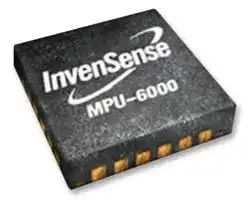
Illustrative purposes only

MPU-6050
MEMS Module, MotionTracking Series, 3-Axis Gyroscope/Accelerometer, ±16g, 2.375 V to 3.46 V, QFN-24
⚠️ Reference pricing provided. In case of supply shortages, we will connect you with our trusted procurement partners to ensure your project's continuity.
- Manufacturer: TDK INVENSENSE
- Product type: MEMS Modules
- MEMS Module Function:Tri-Axis Gyroscope, Tri-Axis Accelerometer; Supply Voltage Min:2.5V; Supply Voltage Max:3.6V; Sensor Cas; Available until stocks are exhausted Alternative available
- MSL: MSL 3 - 168 hours
- SVHC: No SVHC (17-Jan-2023)
- No. of Pins: 24Pins
- Sensor Type: Accelerometer, Gyroscope
- Sensing Axis: X, Y, Z
- Product Range: -
- Output Interface: I2C, SPI
- Sensor Case Style: QFN
- Supply Voltage Max: 3.6V
- Supply Voltage Min: 2.5V
- MEMS Module Function: Tri-Axis Gyroscope, Tri-Axis Accelerometer
- Sensor Case / Package: QFN
- Operating Temperature Max: 85°C
- Operating Temperature Min: -40°C
- Sensing Range - Gyroscope: ± 250°/s, ± 500°/s, ± 1000°/s, ± 2000°/s
- Temperature Sensing Range: -
- Sensing Range - Accelerometer: ± 2g, ± 4g, ± 8g, ± 16g
| Delivery and price | |
|---|---|
| Units per pack | 100 |
| Price | 4.69 € |
| Current stock | 10+ |
| Lead time | 30 days |
Datasheet

**InvenSense Inc.** Document Number: PS-MPU-6000A-00 1197 Borregas Ave, Sunnyvale, CA 94089 U.S.A. Revision: 3.4 Tel: +1 (408) 988-7339 Fax: +1 (408) 988-8104 Release Date: 08/19/2013 Website: www.invensense.com ## **MPU-6000 and MPU-6050 Product Specification Revision 3.4** 1 of 52 ## **MPU-6000/MPU-6050 Product Specification** Document Number: PS-MPU-6000A-00 Revision: 3.4 Release Date: 08/19/2013 |**CONTENTS**|**CONTENTS**|**CONTENTS**| |---|---|---| |**1**|**REVISION HISTORY ................................................................................................................................... 5**|| |**2**|**PURPOSE AND SCOPE ............................................................................................................................. 6**|| |**3**|**PRODUCT OVERVIEW ............................................................................................................................... 7**|| ||3.1|MPU-60X0 OVERVIEW........................................................................................................................ 7| |**4**|**APPLICATIONS ........................................................................................................................................... 9**|| |**5**|**FEATURES ................................................................................................................................................ 10**|| ||5.1|GYROSCOPEFEATURES..................................................................................................................... 10| ||5.2|ACCELEROMETERFEATURES............................................................................................................. 10| ||5.3|ADDITIONALFEATURES...................................................................................................................... 10| ||5.4|MOTIONPROCESSING......................................................................................................................... 11| ||5.5|CLOCKING......................................................................................................................................... 11| |**6**|**ELECTRICAL CHARACTERISTICS ......................................................................................................... 12**|| ||6.1|GYROSCOPESPECIFICATIONS............................................................................................................ 12| ||6.2|ACCELEROMETERSPECIFICATIONS..................................................................................................... 13| ||6.3|ELECTRICAL ANDOTHERCOMMONSPECIFICATIONS............................................................................ 14| ||6.4|ELECTRICALSPECIFICATIONS, CONTINUED......................................................................................... 15| ||6.5|ELECTRICALSPECIFICATIONS, CONTINUED......................................................................................... 16| ||6.6|ELECTRICALSPECIFICATIONS, CONTINUED......................................................................................... 17| ||6.7|I2C TIMINGCHARACTERIZATION.......................................................................................................... 18| ||6.8|SPI TIMINGCHARACTERIZATION(MPU-6000ONLY) ........................................................................... 19| ||6.9|ABSOLUTEMAXIMUMRATINGS........................................................................................................... 20| |**7**|**APPLICATIONS INFORMATION .............................................................................................................. 21**|| ||7.1|PINOUT ANDSIGNALDESCRIPTION.................................................................................................... 21| ||7.2|TYPICALOPERATINGCIRCUIT............................................................................................................. 22| ||7.3|BILL OFMATERIALS FOREXTERNALCOMPONENTS.............................................................................. 22| ||7.4|RECOMMENDEDPOWER-ONPROCEDURE........................................................................................... 23| ||7.5|BLOCKDIAGRAM............................................................................................................................... 24| ||7.6|OVERVIEW........................................................................................................................................ 24| ||7.7|THREE-AXISMEMS GYROSCOPE WITH16-BITADCS ANDSIGNALCONDITIONING................................ 25| ||7.8|THREE-AXISMEMS ACCELEROMETER WITH16-BITADCS ANDSIGNALCONDITIONING........................ 25| ||7.9|DIGITALMOTIONPROCESSOR............................................................................................................ 25| ||7.10|PRIMARYI2CANDSPI SERIALCOMMUNICATIONSINTERFACES............................................................ 25| ||7.11|AUXILIARYI2C SERIALINTERFACE...................................................................................................... 26| 2 of 52 |||re| |---|---|---| |||Document Number: PS-MPU-6000A-00<br>re| |||**MPU-6000/MPU-6050 Product Specification**<br>Revision: 3.4<br>Release Date: 08/19/2013| ||7.12|SELF-TEST........................................................................................................................................ 27| ||7.13|MPU-60X0 SOLUTION FOR9-AXISSENSORFUSIONUSINGI2C INTERFACE.......................................... 28| ||7.14|MPU-6000 USINGSPI INTERFACE..................................................................................................... 29| ||7.15|INTERNALCLOCKGENERATION.......................................................................................................... 30| ||7.16|SENSORDATAREGISTERS................................................................................................................. 30| ||7.17|FIFO ................................................................................................................................................ 30| ||7.18|INTERRUPTS...................................................................................................................................... 30| ||7.19|DIGITAL-OUTPUTTEMPERATURESENSOR.......................................................................................... 31| ||7.20|BIAS ANDLDO .................................................................................................................................. 31| ||7.21|CHARGEPUMP.................................................................................................................................. 31| |**8**|**PROGRAMMABLE INTERRUPTS ............................................................................................................ 32**|| |**9**|**DIGITAL INTERFACE ............................................................................................................................... 33**|| ||9.1|I2CANDSPI (MPU-6000ONLY) SERIALINTERFACES.......................................................................... 33| ||9.2|I2C INTERFACE.................................................................................................................................. 33| ||9.3|I2C COMMUNICATIONSPROTOCOL...................................................................................................... 33| ||9.4|I2C TERMS........................................................................................................................................ 36| ||9.5|SPI INTERFACE(MPU-6000ONLY) .................................................................................................... 37| |**10**|**SERIAL INTERFACE CONSIDERATIONS (MPU-6050) .......................................................................... 38**|| ||10.1|MPU-6050 SUPPORTEDINTERFACES................................................................................................. 38| ||10.2|LOGICLEVELS................................................................................................................................... 38| ||10.3|LOGICLEVELSDIAGRAM FORAUX__VDDIO_ = 0 .................................................................................. 39| |**11**|**ASSEMBLY ............................................................................................................................................... 40**|| ||11.1|ORIENTATION OFAXES...................................................................................................................... 40| ||11.2|PACKAGEDIMENSIONS...................................................................................................................... 41| ||11.3|PCB DESIGNGUIDELINES.................................................................................................................. 42| ||11.4|ASSEMBLYPRECAUTIONS.................................................................................................................. 43| ||11.5|STORAGESPECIFICATIONS................................................................................................................. 46| ||11.6|PACKAGEMARKINGSPECIFICATION.................................................................................................... 46| ||11.7|TAPE& REELSPECIFICATION............................................................................................................. 47| ||11.8|LABEL............................................................................................................................................... 48| ||11.9|PACKAGING....................................................................................................................................... 49| ||11.10|REPRESENTATIVESHIPPINGCARTONLABEL................................................................................... 50| |**12**|**RELIABILITY ............................................................................................................................................. 51**|| ||12.1|QUALIFICATIONTESTPOLICY............................................................................................................. 51| 3 of 52 |||re| |---|---|---| |||Document Number: PS-MPU-6000A-00<br>re| |||**MPU-6000/MPU-6050 Product Specification**<br>Revision: 3.4<br>Release Date: 08/19/2013| ||12.2|QUALIFICATIONTESTPLAN................................................................................................................ 51| |**13**|**ENVIRONMENTAL COMPLIANCE ........................................................................................................... 52**|| 4 of 52 **MPU-6000/MPU-6050 Product Specification** Document Number: PS-MPU-6000A-00 Revision: 3.4 Release Date: 08/19/2013 ## **1 Revision History** |**Revision**<br>**Date**|**Revision**|**Description**| |---|---|---| |11/24/2010|1.0|Initial Release| |05/19/2011|2.0|For Rev C parts. Clarified wording in sections (3.2, 5.1, 5.2, 6.1-6.4, 6.6, 6.9, 7,<br>7.1-7.6, 7.11, 7.12, 7.14, 8, 8.2-8.4, 10.3, 10.4, 11, 12.2)| |07/28/2011|2.1|Edited supply current numbers for different modes (section 6.4)| |08/05/2011|2.2|Unit of measure for accelerometer sensitivity changed from LSB/m_g_to LSB/_g_| |10/12/2011|2.3|Updated accelerometer self test specifications in Table 6.2. Updated package<br>dimensions (section 11.2). Updated PCB design guidelines (section 11.3)| |10/18/2011|3.0|For Rev D parts. Updated accelerometer specifications in Table 6.2. Updated<br>accelerometer specification note (sections 8.2, 8.3, & 8.4). Updated qualification<br>test plan (section 12.2).| |10/24/2011|3.1|Edits for clarity<br>Changed operating voltage range to 2.375V-3.46V<br>Added accelerometer Intelligence Function increment value of 1m_g_/LSB<br>(Section 6.2)<br>Updated absolute maximum rating for acceleration (any axis, unpowered) from<br>0.3ms to 0.2ms (Section 6.9)<br>Modified absolute maximum rating for Latch-up to Level A and ±100mA (Section<br>6.9,12.2)| |11/16/2011|3.2|**Updated self-test response specifications for Revision D parts dated with**<br>**date code 1147 (YYWW) or later.**<br>Edits for clarity<br>Added Gyro self-test (sections 5.1, 6.1, 7.6, 7.12)<br>Added Min/Max limits to Accel self-test response (section 6.2)<br>Updated Accelerometer low power mode operating currents (Section 6.3)<br>Added gyro self test to block diagram (section 7.5)<br>Updatedpackaginglabels and descriptions(sections 11.8 & 11.9)| |5/16/2012|3.3|Updated Gyro and Accelerometer self test information (sections 6.1, 6.2, 7.12)<br>Updated latch-up information (Section 6.9)<br>Updated programmable interrupts information (Section 8)<br>Changed shipment information from maximum of 3 reels (15K units) per shipper<br>box to 5 reels (25K units) per shipper box (Section 11.7)<br>Updated packing shipping and label information (Sections 11.8, 11.9)<br>Updated reliability references (Section 12.2)| |8/19/2013|3.4|Updates section 4| 5 of 52 **MPU-6000/MPU-6050 Product Specification** Document Number: PS-MPU-6000A-00 Revision: 3.4 Release Date: 08/19/2013 ## **2 Purpose and Scope** This product specification provides advanced information regarding the electrical specification and design related information for the MPU-6000™ and MPU-6050™ MotionTracking™ devices, collectively called the MPU-60X0™ or MPU™. Electrical characteristics are based upon design analysis and simulation results only. Specifications are subject to change without notice. Final specifications will be updated based upon characterization of production silicon. For references to register map and descriptions of individual registers, please refer to the MPU-6000/MPU-6050 Register Map and Register Descriptions document. **The self-test response specifications provided in this document pertain to Revision D parts with date codes of 1147 (YYWW) or later.** Please see Section 11.6 for package marking description details. 6 of 52 **MPU-6000/MPU-6050 Product Specification** Document Number: PS-MPU-6000A-00 Revision: 3.4 Release Date: 08/19/2013 ## **3 Product Overview** ## **3.1 MPU-60X0 Overview** MotionInterface™ is becoming a “must-have” function being adopted by smartphone and tablet manufacturers due to the enormous value it adds to the end user experience. In smartphones, it finds use in applications such as gesture commands for applications and phone control, enhanced gaming, augmented reality, panoramic photo capture and viewing, and pedestrian and vehicle navigation. With its ability to precisely and accurately track user motions, MotionTracking technology can convert handsets and tablets into powerful 3D intelligent devices that can be used in applications ranging from health and fitness monitoring to location-based services. Key requirements for MotionInterface enabled devices are small package size, low power consumption, high accuracy and repeatability, high shock tolerance, and application specific performance programmability – all at a low consumer price point. The MPU-60X0 is the world’s first integrated 6-axis MotionTracking device that combines a 3-axis gyroscope, 3-axis accelerometer, and a Digital Motion Processor™ (DMP) all in a small 4x4x0.9mm package. With its dedicated I[2] C sensor bus, it directly accepts inputs from an external 3-axis compass to provide a complete 9-axis MotionFusion™ output. The MPU-60X0 MotionTracking device, with its 6-axis integration, on-board MotionFusion™, and run-time calibration firmware, enables manufacturers to eliminate the costly and complex selection, qualification, and system level integration of discrete devices, guaranteeing optimal motion performance for consumers. The MPU-60X0 is also designed to interface with multiple noninertial digital sensors, such as pressure sensors, on its auxiliary I[2] C port. The MPU-60X0 is footprint compatible with the MPU-30X0 family. The MPU-60X0 features three 16-bit analog-to-digital converters (ADCs) for digitizing the gyroscope outputs and three 16-bit ADCs for digitizing the accelerometer outputs. For precision tracking of both fast and slow motions, the parts feature a user-programmable gyroscope full-scale range of ±250, ±500, ±1000, and ±2000°/sec (dps) and a user-programmable accelerometer full-scale range of ±2 _g_ , ±4 _g_ , ±8 _g_ , and ±16 _g_ . An on-chip 1024 Byte FIFO buffer helps lower system power consumption by allowing the system processor to read the sensor data in bursts and then enter a low-power mode as the MPU collects more data. With all the necessary on-chip processing and sensor components required to support many motion-based use cases, the MPU-60X0 uniquely enables low-power MotionInterface applications in portable applications with reduced processing requirements for the system processor. By providing an integrated MotionFusion output, the DMP in the MPU-60X0 offloads the intensive MotionProcessing computation requirements from the system processor, minimizing the need for frequent polling of the motion sensor output. Communication with all registers of the device is performed using either I[2] C at 400kHz or SPI at 1MHz (MPU-6000 only). For applications requiring faster communications, the sensor and interrupt registers may be read using SPI at 20MHz (MPU-6000 only). Additional features include an embedded temperature sensor and an on-chip oscillator with ±1% variation over the operating temperature range. By leveraging its patented and volume-proven Nasiri-Fabrication platform, which integrates MEMS wafers with companion CMOS electronics through wafer-level bonding, InvenSense has driven the MPU-60X0 package size down to a revolutionary footprint of 4x4x0.9mm (QFN), while providing the highest performance, lowest noise, and the lowest cost semiconductor packaging required for handheld consumer electronic devices. The part features a robust 10,000 _g_ shock tolerance, and has programmable low-pass filters for the gyroscopes, accelerometers, and the on-chip temperature sensor. For power supply flexibility, the MPU-60X0 operates from VDD power supply voltage range of 2.375V-3.46V. Additionally, the MPU-6050 provides a VLOGIC reference pin (in addition to its analog supply pin: VDD), which sets the logic levels of its I[2] C interface. The VLOGIC voltage may be 1.8V±5% or VDD. The MPU-6000 and MPU-6050 are identical, except that the MPU-6050 supports the I[2] C serial interface only, and has a separate VLOGIC reference pin. The MPU-6000 supports both I[2] C and SPI interfaces and has a single supply pin, VDD, which is both the device’s logic reference supply and the analog supply for the part. The table below outlines these differences: 7 of 52 ## **MPU-6000/MPU-6050 Product Specification** Document Number: PS-MPU-6000A-00 Revision: 3.4 Release Date: 08/19/2013 ## **Primary Differences between MPU-6000 and MPU-6050** |**Part / Item**|**MPU-6000**|**MPU-6050**| |---|---|---| |**VDD**|2.375V-3.46V|2.375V-3.46V| |**VLOGIC**|n/a|1.71V to VDD| |**Serial Interfaces Supported**|I2C,SPI|I2C| |**Pin 8**|/CS|VLOGIC| |**Pin 9**|AD0/SDO|AD0| |**Pin 23**|SCL/SCLK|SCL| |**Pin 24**|SDA/SDI|SDA| 8 of 52 Document Number: PS-MPU-6000A-00 Revision: 3.4 Release Date: 08/19/2013 **MPU-6000/MPU-6050 Product Specification** ## **4 Applications** - _BlurFree_ ™ technology (for Video/Still Image Stabilization) - _AirSign_ ™ technology (for Security/Authentication) - _TouchAnywhere_ ™ technology (for “no touch” UI Application Control/Navigation) - _MotionCommand_ ™ technology (for Gesture Short-cuts) - Motion-enabled game and application framework - InstantGesture™ iG™ gesture recognition - Location based services, points of interest, and dead reckoning - Handset and portable gaming - Motion-based game controllers - 3D remote controls for Internet connected DTVs and set top boxes, 3D mice - Wearable sensors for health, fitness and sports - Toys 9 of 52 Document Number: PS-MPU-6000A-00 Revision: 3.4 Release Date: 08/19/2013 **MPU-6000/MPU-6050 Product Specification** ## **5 Features** ## **5.1 Gyroscope Features** The triple-axis MEMS gyroscope in the MPU-60X0 includes a wide range of features: - Digital-output X-, Y-, and Z-Axis angular rate sensors (gyroscopes) with a user-programmable fullscale range of ±250, ±500, ±1000, and ±2000°/sec - External sync signal connected to the FSYNC pin supports image, video and GPS synchronization - Integrated 16-bit ADCs enable simultaneous sampling of gyros - Enhanced bias and sensitivity temperature stability reduces the need for user calibration - Improved low-frequency noise performance - Digitally-programmable low-pass filter - Gyroscope operating current: 3.6mA - Standby current: 5µA - Factory calibrated sensitivity scale factor - User self-test ## **5.2 Accelerometer Features** The triple-axis MEMS accelerometer in MPU-60X0 includes a wide range of features: - Digital-output triple-axis accelerometer with a programmable full scale range of ±2 _g_ , ±4 _g_ , ±8 _g_ and ±16 _g_ - Integrated 16-bit ADCs enable simultaneous sampling of accelerometers while requiring no external multiplexer - Accelerometer normal operating current: 500µA - Low power accelerometer mode current: 10µA at 1.25Hz, 20µA at 5Hz, 60µA at 20Hz, 110µA at 40Hz - Orientation detection and signaling - Tap detection - User-programmable interrupts - High-G interrupt - User self-test ## **5.3 Additional Features** The MPU-60X0 includes the following additional features: - 9-Axis MotionFusion by the on-chip Digital Motion Processor (DMP) - Auxiliary master I[2] C bus for reading data from external sensors (e.g., magnetometer) - 3.9mA operating current when all 6 motion sensing axes and the DMP are enabled - VDD supply voltage range of 2.375V-3.46V - Flexible VLOGIC reference voltage supports multiple I[2] C interface voltages (MPU-6050 only) - Smallest and thinnest QFN package for portable devices: 4x4x0.9mm - Minimal cross-axis sensitivity between the accelerometer and gyroscope axes - 1024 byte FIFO buffer reduces power consumption by allowing host processor to read the data in bursts and then go into a low-power mode as the MPU collects more data - Digital-output temperature sensor - User-programmable digital filters for gyroscope, accelerometer, and temp sensor - 10,000 _g_ shock tolerant - 400kHz Fast Mode I[2] C for communicating with all registers - 1MHz SPI serial interface for communicating with all registers (MPU-6000 only) - 20MHz SPI serial interface for reading sensor and interrupt registers (MPU-6000 only) 10 of 52 **MPU-6000/MPU-6050 Product Specification** Document Number: PS-MPU-6000A-00 Revision: 3.4 Release Date: 08/19/2013 - MEMS structure hermetically sealed and bonded at wafer level - RoHS and Green compliant ## **5.4 MotionProcessing** - Internal Digital Motion Processing™ (DMP™) engine supports 3D MotionProcessing and gesture recognition algorithms - The MPU-60X0 collects gyroscope and accelerometer data while synchronizing data sampling at a user defined rate. The total dataset obtained by the MPU-60X0 includes 3-Axis gyroscope data, 3- Axis accelerometer data, and temperature data. The MPU’s calculated output to the system processor can also include heading data from a digital 3-axis third party magnetometer. - The FIFO buffers the complete data set, reducing timing requirements on the system processor by allowing the processor burst read the FIFO data. After burst reading the FIFO data, the system processor can save power by entering a low-power sleep mode while the MPU collects more data. - Programmable interrupt supports features such as gesture recognition, panning, zooming, scrolling, tap detection, and shake detection - Digitally-programmable low-pass filters - Low-power pedometer functionality allows the host processor to sleep while the DMP maintains the step count. ## **5.5 Clocking** - On-chip timing generator ±1% frequency variation over full temperature range - Optional external clock inputs of 32.768kHz or 19.2MHz 11 of 52 Document Number: PS-MPU-6000A-00 Revision: 3.4 Release Date: 08/19/2013 ## **MPU-6000/MPU-6050 Product Specification** ## **6 Electrical Characteristics** ## **6.1 Gyroscope Specifications** VDD = 2.375V-3.46V, VLOGIC (MPU-6050 only) = 1.8V±5% or VDD, TA = 25°C |**PARAMETER**|**CONDITIONS**|**MIN**|**TYP**|**MAX**|**UNITS**|**NOTES**| |---|---|---|---|---|---|---| |**GYROSCOPE SENSITIVITY**<br>Full-Scale Range<br>Gyroscope ADC Word Length<br>Sensitivity Scale Factor<br>Sensitivity Scale Factor Tolerance<br>Sensitivity Scale Factor Variation Over<br>Temperature<br>Nonlinearity<br>Cross-Axis Sensitivity|FS_SEL=0<br>FS_SEL=1<br>FS_SEL=2<br>FS_SEL=3<br>FS_SEL=0<br>FS_SEL=1<br>FS_SEL=2<br>FS_SEL=3<br>25°C<br>Best fit straight line; 25°C|-3|±250<br>±500<br>±1000<br>±2000<br>16<br>131<br>65.5<br>32.8<br>16.4<br>±2<br>0.2<br>±2|+3|º/s<br>º/s<br>º/s<br>º/s<br>bits<br>LSB/(º/s)<br>LSB/(º/s)<br>LSB/(º/s)<br>LSB/(º/s)<br>%<br>%<br>%<br>%|| |**GYROSCOPE ZERO-RATE OUTPUT (ZRO)**<br>Initial ZRO Tolerance<br>ZRO Variation Over Temperature<br>Power-Supply Sensitivity (1-10Hz)<br>Power-Supply Sensitivity (10 - 250Hz)<br>Power-Supply Sensitivity (250Hz - 100kHz)<br>Linear Acceleration Sensitivity|25°C<br>-40°C to +85°C<br>Sine wave, 100mVpp; VDD=2.5V<br>Sine wave, 100mVpp; VDD=2.5V<br>Sine wave, 100mVpp; VDD=2.5V<br>Static||±20<br>±20<br>0.2<br>0.2<br>4<br>0.1||º/s<br>º/s<br>º/s<br>º/s<br>º/s<br>º/s/_g_|| |**SELF-TEST RESPONSE**<br>Relative<br>~~a~~|Change from factory trim<br>~~a~~|-14<br>~~a~~|~~a~~|14<br>~~a~~|%<br>~~a~~|1<br>~~a~~| |**GYROSCOPE NOISE PERFORMANCE**<br>Total RMS Noise<br>Low-frequency RMS noise<br>Rate Noise Spectral Density<br>~~a~~|**FS_SEL=0**<br>DLPFCFG=2 (100Hz)<br>Bandwidth 1Hz to10Hz<br>At 10Hz<br>~~a~~|~~a~~|0.05<br>0.033<br>0.005<br>~~a~~|~~a~~|º/s-rms<br>º/s-rms<br>º/s/√Hz<br>~~a~~|~~a~~| |**GYROSCOPE MECHANICAL**<br>**FREQUENCIES**<br>X-Axis<br>Y-Axis<br>Z-Axis<br>~~a~~|~~a~~|30<br>27<br>24<br>~~a~~|33<br>30<br>27<br>~~a~~|36<br>33<br>30<br>~~a~~|kHz<br>kHz<br>kHz<br>~~a~~|~~a~~| |**LOW PASS FILTER RESPONSE**<br>~~ee~~<br>~~PR~~|Programmable Range<br>~~ee~~|5<br>~~ee~~|~~ee~~|256<br>~~ee~~|Hz<br>~~ee~~|~~ee~~| |**OUTPUT DATA RATE**<br>~~PR~~|Programmable|4||8,000|Hz|| |**GYROSCOPE START-UP TIME**<br>ZRO Settling (frompower-on)<br>~~PR~~<br>~~ee~~|**DLPFCFG=0**<br>to ±1º/s of Final<br>~~ee~~|~~ee~~|30<br>~~ee~~|~~ee~~|ms<br>~~ee~~|~~ee~~| 12 of 52 Document Number: PS-MPU-6000A-00 Revision: 3.4 Release Date: 08/19/2013 ## **MPU-6000/MPU-6050 Product Specification** ## **6.2 Accelerometer Specifications** ## VDD = 2.375V-3.46V, VLOGIC (MPU-6050 only) = 1.8V±5% or VDD, TA = 25°C |**PARAMETER**|**CONDITIONS**|**MIN**|**TYP**|**MAX**|**UNITS**|**NOTES**| |---|---|---|---|---|---|---| |**ACCELEROMETER SENSITIVITY**<br>Full-Scale Range<br>ADC Word Length<br>Sensitivity Scale Factor<br>Initial Calibration Tolerance<br>Sensitivity Change vs. Temperature<br>Nonlinearity<br>Cross-Axis Sensitivity|AFS_SEL=0<br>AFS_SEL=1<br>AFS_SEL=2<br>AFS_SEL=3<br>Output in two’s complement format<br>AFS_SEL=0<br>AFS_SEL=1<br>AFS_SEL=2<br>AFS_SEL=3<br>AFS_SEL=0, -40°C to +85°C<br>Best Fit Straight Line||±2<br>±4<br>±8<br>±16<br>16<br>16,384<br>8,192<br>4,096<br>2,048<br>±3<br>±0.02<br>0.5<br>±2||_g_<br>_g_<br>_g_<br>_g_<br>bits<br>LSB/_g_<br>LSB/_g_<br>LSB/_g_<br>LSB/_g_<br>%<br>%/°C<br>%<br>%|| |**ZERO-G OUTPUT**<br>Initial Calibration Tolerance<br>Zero-G Level Change vs. Temperature|X and Y axes<br>Z axis<br>X and Y axes, 0°C to +70°C<br>Z axis,0°C to +70°C||±50<br>±80<br>±35<br>±60||m_g_<br>m_g_<br>m_g_|1| |**SELF TEST RESPONSE**<br>Relative<br>~~Ps~~|Change from factorytrim<br>~~Ps~~|-14<br>~~Ps~~|~~Ps~~|14<br>~~Ps~~|%<br>~~Ps~~|2<br>~~Ps~~| |**NOISE PERFORMANCE**<br>Power Spectral Density<br>~~Ps~~<br>~~es~~<br>~~ee~~|@10Hz,AFS_SEL=0 & ODR=1kHz<br>~~Ps~~<br>~~es~~<br>~~ee~~|~~Ps~~<br>~~es~~|400<br>~~Ps~~<br>~~es~~|~~Ps~~<br>~~es~~|_g_/√Hz<br>~~Ps~~<br>~~es~~|~~Ps~~<br>~~es~~| |**LOW PASS FILTER RESPONSE**<br>~~ee~~|Programmable Range<br>~~ee~~|5||260|Hz|| |**OUTPUT DATA RATE**<br>~~ee ~~<br>~~Rs~~|Programmable Range<br> ~~ee~~<br>~~Rs~~|4<br>~~Rs~~|~~Rs~~|1,000<br>~~Rs~~|Hz<br>~~Rs~~|~~Rs~~| |**INTELLIGENCE FUNCTION**<br>**INCREMENT**<br>~~Rs~~<br>~~ee~~|~~Rs~~<br>~~ee~~|~~Rs~~<br>~~ee~~|32<br>~~Rs~~<br>~~ee~~|~~Rs~~<br>~~ee~~|m_g_/LSB<br>~~Rs~~<br>~~ee~~|~~Rs~~<br>~~ee~~| 1. Typical zero-g initial calibration tolerance value after MSL3 preconditioning _2._ Please refer to the following document for further information on Self-Test: _MPU-6000/MPU-6050 Register Map and Descriptions_ 13 of 52 ## **MPU-6000/MPU-6050 Product Specification** Document Number: PS-MPU-6000A-00 Revision: 3.4 Release Date: 08/19/2013 |**PARAMETER**<br>~~PFT~~|**CONDITIONS**<br>~~PFT~~|**MIN**<br>~~PFT~~|**TYP**<br>~~PFT~~|**MAX**<br>~~PFT~~|**Units**<br>~~PFT~~|**Notes**<br>~~PFT~~| |---|---|---|---|---|---|---| |**TEMPERATURE SENSOR**<br>Range<br>Sensitivity<br>Temperature Offset<br>Linearity<br>~~PFT~~|Untrimmed<br>35oC<br>Best fit straight line (-40°C to<br>+85°C)<br>~~PFT~~|~~PFT~~|-40 to +85<br>340<br>-521<br>±1<br>~~PFT~~|~~PFT~~|°C<br>LSB/ºC<br>LSB<br>°C<br>~~PFT~~|~~PFT~~| |**VDD POWER SUPPLY**<br>OperatingVoltages||2.375||3.46|V|| |Normal Operating Current|Gyroscope + Accelerometer + DMP||3.9||mA|| ||Gyroscope + Accelerometer<br>(DMP disabled)||3.8||mA|| ||Gyroscope + DMP<br>(Accelerometer disabled)||3.7||mA|| ||Gyroscope only<br>(DMP & Accelerometer disabled)||3.6||mA|| ||Accelerometer only<br>(DMP & Gyroscope disabled)||500||µA|| |Accelerometer Low Power Mode<br>Current|1.25 Hz update rate||10||µA|| ||5 Hz update rate||20||µA|| ||20 Hz update rate||70||µA|| ||40 Hz update rate||140||µA|| |Full-Chip Idle Mode Supply Current<br>Power Supply Ramp Rate|Monotonic ramp. Ramp rate is 10%<br>to 90% of the final value||5|100|µA<br>ms|| |**VLOGIC REFERENCE VOLTAGE**<br>Voltage Range<br>Power Supply Ramp Rate<br>Normal OperatingCurrent|MPU-6050 only<br>VLOGIC must be≤VDD at all times<br>Monotonic ramp. Ramp rate is 10%<br>to 90% of the final value|1.71|100|VDD<br>3|V<br>ms<br>µA|| |**TEMPERATURE RANGE**<br>Specified Temperature Range|Performance parameters are not<br>applicable beyond Specified<br>Temperature Range|-40||+85|°C|| 14 of 52 ## **MPU-6000/MPU-6050 Product Specification** Document Number: PS-MPU-6000A-00 Revision: 3.4 Release Date: 08/19/2013 ## **6.4 Electrical Specifications, Continued** VDD = 2.375V-3.46V, VLOGIC (MPU-6050 only) = 1.8V±5% or VDD, TA = 25°C |**PARAMETER**|**CONDITIONS**|**MIN**|**TYP**|**MAX**|**Units**|**Notes**| |---|---|---|---|---|---|---| |**SERIAL INTERFACE**<br>SPI Operating Frequency, All<br>Registers Read/Write<br>SPI Operating Frequency, Sensor<br>and Interrupt Registers Read Only<br>I2C Operating Frequency|MPU-6000 only, Low Speed<br>Characterization<br>MPU-6000 only, High Speed<br>Characterization<br>MPU-6000 only<br>All registers, Fast-mode<br>All registers,Standard-mode||100 ±10%<br>1 ±10%<br>20 ±10%|400<br>100|kHz<br>MHz<br>MHz<br>kHz<br>kHz|| |**I2C ADDRESS**|AD0 = 0<br>AD0 = 1||1101000<br>1101001|||| |**DIGITAL INPUTS (SDI/SDA, AD0,**<br>**SCLK/SCL, FSYNC, /CS, CLKIN)**<br>VIH, High Level Input Voltage<br>VIL, Low Level Input Voltage<br>CI, Input Capacitance|MPU-6000<br>MPU-6050<br>MPU-6000<br>MPU-6050|0.7*VDD<br>0.7*VLOGIC|< 5|0.3*VDD<br>0.3*VLOGIC|V<br>V<br>V<br>V<br>pF|| |**DIGITAL OUTPUT (SDO, INT)**<br>VOH, High Level Output Voltage<br>VOL1, LOW-Level Output Voltage<br>VOL.INT1, INT Low-Level Output<br>Voltage<br>Output Leakage Current<br>tINT, INT Pulse Width|RLOAD=1MΩ; MPU-6000<br>RLOAD=1MΩ; MPU-6050<br>RLOAD=1MΩ; MPU-6000<br>RLOAD=1MΩ; MPU-6050<br>OPEN=1, 0.3mA sink<br>Current<br>OPEN=1<br>LATCH_INT_EN=0|0.9*VDD<br>0.9*VLOGIC|100<br>50|0.1*VDD<br>0.1*VLOGIC<br>0.1|V<br>V<br>V<br>V<br>V<br>nA<br>µs|| 15 of 52 Document Number: PS-MPU-6000A-00 Revision: 3.4 Release Date: 08/19/2013 ## **MPU-6000/MPU-6050 Product Specification** ## **6.5 Electrical Specifications, Continued** Typical Operating Circuit of Section 7.2, VDD = 2.375V-3.46V, VLOGIC (MPU-6050 only) = 1.8V±5% or VDD, TA = 25°C |**Parameters**|**Conditions**|**Typical**|**Units**|**Notes**| |---|---|---|---|---| |**Primary I2C I/O (SCL, SDA)**<br>VIL, LOW-Level Input Voltage<br>VIH, HIGH-Level Input Voltage<br>Vhys, Hysteresis<br>VIL, LOW Level Input Voltage<br>VIH, HIGH-Level Input Voltage<br>Vhys, Hysteresis<br>VOL1, LOW-Level Output Voltage<br>IOL, LOW-Level Output Current<br>Output Leakage Current<br>tof, Output Fall Time from VIHmaxto VILmax<br>CI, Capacitance for Each I/Opin|MPU-6000<br>MPU-6000<br>MPU-6000<br>MPU-6050<br>MPU-6050<br>MPU-6050<br>3mA sink current<br>VOL= 0.4V<br>VOL= 0.6V<br>Cbbus capacitance in pF|-0.5 to 0.3*VDD<br>0.7*VDD to VDD + 0.5V<br>0.1*VDD<br>-0.5V to 0.3*VLOGIC<br>0.7*VLOGIC to VLOGIC + 0.5V<br>0.1*VLOGIC<br>0 to 0.4<br>3<br>5<br>100<br>20+0.1Cbto 250<br>< 10|V<br>V<br>V<br>V<br>V<br>V<br>V<br>mA<br>mA<br>nA<br>ns<br>pF|| |**Auxiliary I2C I/O (AUX_CL, AUX_DA)**<br>VIL, LOW-Level Input Voltage<br>VIH, HIGH-Level Input Voltage<br>Vhys, Hysteresis<br>VOL1, LOW-Level Output Voltage<br>VOL3, LOW-Level Output Voltage<br>IOL, LOW-Level Output Current<br>Output Leakage Current<br>tof, Output Fall Time from VIHmaxto VILmax<br>CI, Capacitance for Each I/Opin|**MPU-6050:****_AUX_VDDIO_=0**<br>VLOGIC > 2V; 1mA sink current<br>VLOGIC < 2V; 1mA sink current<br>VOL= 0.4V<br>VOL= 0.6V<br>Cbbus capacitance in pF|-0.5V to 0.3*VLOGIC<br>0.7*VLOGIC to<br>VLOGIC + 0.5V<br>0.1*VLOGIC<br>0 to 0.4<br>0 to 0.2*VLOGIC<br>1<br>1<br>100<br>20+0.1Cbto 250<br>< 10|V<br>V<br>V<br>V<br>V<br>mA<br>mA<br>nA<br>ns<br>pF|| 16 of 52 Document Number: PS-MPU-6000A-00 Revision: 3.4 Release Date: 08/19/2013 ## **MPU-6000/MPU-6050 Product Specification** **6.6 Electrical Specifications, Continued** Typical Operating Circuit of Section 7.2, VDD = 2.375V-3.46V, VLOGIC (MPU-6050 only) = 1.8V±5% or VDD, TA = 25°C |**Parameters**|**Conditions**|**Min**|**Typical**|**Max**|**Units**|**Notes**| |---|---|---|---|---|---|---| |**INTERNAL CLOCK SOURCE**<br>Gyroscope Sample Rate, Fast<br>Gyroscope Sample Rate, Slow<br>Accelerometer Sample Rate<br>Clock Frequency Initial Tolerance<br>Frequency Variation over Temperature<br>PLL Settling Time|**CLK_SEL=0,1,2,3**<br>DLPFCFG=0<br>SAMPLERATEDIV = 0<br>DLPFCFG=1,2,3,4,5, or 6<br>SAMPLERATEDIV = 0<br>CLK_SEL=0, 25°C<br>CLK_SEL=1,2,3; 25°C<br>CLK_SEL=0<br>CLK_SEL=1,2,3<br>CLK_SEL=1,2,3|-5<br>-1|8<br>1<br>1<br>-15 to +10<br>±1<br>1|+5<br>+1<br>10|kHz<br>kHz<br>kHz<br>%<br>%<br>%<br>%<br>ms|| |**EXTERNAL 32.768kHz CLOCK**<br>External Clock Frequency<br>External Clock Allowable Jitter<br>Gyroscope Sample Rate, Fast<br>Gyroscope Sample Rate, Slow<br>Accelerometer Sample Rate<br>PLL Settling Time|**CLK_SEL=4**<br>Cycle-to-cycle rms<br>DLPFCFG=0<br>SAMPLERATEDIV = 0<br>DLPFCFG=1,2,3,4,5, or 6<br>SAMPLERATEDIV = 0||32.768<br>1 to 2<br>8.192<br>1.024<br>1.024<br>1|10|kHz<br>µs<br>kHz<br>kHz<br>kHz<br>ms|| |**EXTERNAL 19.2MHz CLOCK**<br>External Clock Frequency<br>Gyroscope Sample Rate<br>Gyroscope Sample Rate, Fast Mode<br>Gyroscope Sample Rate, Slow Mode<br>Accelerometer Sample Rate<br>PLL Settling Time|**CLK_SEL=5**<br> <br>Full programmable range<br>DLPFCFG=0<br>SAMPLERATEDIV = 0<br>DLPFCFG=1,2,3,4,5, or 6<br>SAMPLERATEDIV = 0|3.9|19.2<br>8<br>1<br>1<br>1|8000<br>10|MHz<br>Hz<br>kHz<br>kHz<br>kHz<br>ms|| 17 of 52 ## **MPU-6000/MPU-6050 Product Specification** Document Number: PS-MPU-6000A-00 Revision: 3.4 Release Date: 08/19/2013 ## **6.7 I[2] C Timing Characterization** Typical Operating Circuit of Section 7.2, VDD = 2.375V-3.46V, VLOGIC (MPU-6050 only) = 1.8V±5% or VDD, TA = 25°C |**Parameters**|**Conditions**|**Min**|**Typical**|**Max**|**Units**|**Notes**| |---|---|---|---|---|---|---| |**I2C TIMING**<br>fSCL, SCL Clock Frequency<br>tHD.STA, (Repeated) START Condition Hold<br>Time<br>tLOW, SCL Low Period<br>tHIGH, SCL High Period<br>tSU.STA, Repeated START Condition Setup<br>Time<br>tHD.DAT, SDA Data Hold Time<br>tSU.DAT, SDA Data Setup Time<br>tr, SDA and SCL Rise Time<br>tf, SDA and SCL Fall Time<br>tSU.STO, STOP Condition Setup Time<br>tBUF, Bus Free Time Between STOP and<br>START Condition<br>Cb, Capacitive Load for each Bus Line<br>tVD.DAT, Data Valid Time<br>tVD.ACK, Data Valid Acknowledge Time<br>|**I2C FAST-MODE**<br>Cbbus cap. from 10 to 400pF<br>Cbbus cap. from 10 to 400pF<br>|0.6<br>1.3<br>0.6<br>0.6<br>0<br>100<br>20+0.1Cb<br>20+0.1Cb<br>0.6<br>1.3<br>~~2~~|< 400<br>|400<br>300<br>300<br>0.9<br>0.9|kHz<br>µs<br>µs<br>µs<br>µs<br>µs<br>ns<br>ns<br>ns<br>µs<br>µs<br>pF<br>µs<br>µs|| **Note:** Timing Characteristics apply to both Primary and Auxiliary I ~~[2]~~ C Bus **I[2] C Bus Timing Diagram** 18 of 52 ## **MPU-6000/MPU-6050 Product Specification** Document Number: PS-MPU-6000A-00 Revision: 3.4 Release Date: 08/19/2013 ## **6.8 SPI Timing Characterization (MPU-6000 only)** Typical Operating Circuit of Section 7.2, VDD = 2.375V-3.46V, VLOGIC (MPU-6050 only) = 1.8V±5% or VDD,TA = 25°C, unless otherwise noted. |**Parameters**|**Conditions**|**Min**|**Typical**|**Max**|**Units**|**Notes**| |---|---|---|---|---|---|---| |**SPI TIMING**<br>fSCLK, SCLK Clock Frequency<br>tLOW, SCLK Low Period<br>tHIGH, SCLK High Period<br>tSU.CS, CS Setup Time<br>tHD.CS, CS Hold Time<br>tSU.SDI, SDI Setup Time<br>tHD.SDI, SDI Hold Time<br>tVD.SDO, SDO Valid Time<br>tHD.SDO, SDO Hold Time<br>tDIS.SDO, SDO Output Disable Time|Cload= 20pF<br>Cload= 20pF|400<br>400<br>8<br>500<br>11<br>7<br>4||1<br>100<br>10|MHz<br>ns<br>ns<br>ns<br>ns<br>ns<br>ns<br>ns<br>ns<br>ns|| **SPI Bus Timing Diagram** 19 of 52 **MPU-6000/MPU-6050 Product Specification** Document Number: PS-MPU-6000A-00 Revision: 3.4 Release Date: 08/19/2013 ## **6.9 Absolute Maximum Ratings** Stress above those listed as “Absolute Maximum Ratings” may cause permanent damage to the device. These are stress ratings only and functional operation of the device at these conditions is not implied. Exposure to the absolute maximum ratings conditions for extended periods may affect device reliability. |**Parameter**|**Rating**| |---|---| |Supply Voltage, VDD|-0.5V to +6V| |VLOGIC Input Voltage Level (MPU-6050)|-0.5V to VDD + 0.5V| |REGOUT|-0.5V to 2V| |Input Voltage Level (CLKIN, AUX_DA, AD0, FSYNC, INT,<br>SCL, SDA)|-0.5V to VDD + 0.5V| |CPOUT (2.5V ≤ VDD ≤ 3.6V )|-0.5V to 30V| |Acceleration (Any Axis, unpowered)|10,000g for 0.2ms| |Operating Temperature Range|-40°C to +105°C| |Storage Temperature Range|-40°C to +125°C| |Electrostatic Discharge (ESD) Protection|2kV (HBM);<br>250V (MM)| |Latch-up|JEDEC Class II (2),125°C<br>±100mA| 20 of 52 ## **MPU-6000/MPU-6050 Product Specification** Document Number: PS-MPU-6000A-00 Revision: 3.4 Release Date: 08/19/2013 ## **7 Applications Information** |**Pin Number**<br>~~ET~~|**MPU-**<br>**6000**<br>~~ET~~|**MPU-**<br>**6050**|**Pin Name**<br>~~EE~~|**Pin Description**| |---|---|---|---|---| |1<br>~~ET~~<br>~~a~~|Y<br>~~ET~~|Y|CLKIN<br>~~EE~~|Optional external reference clock input. Connect to GND if unused.| |6<br>~~a~~|Y|Y|AUX_DA|I2C master serial data,for connectingto external sensors| |7<br>~~a~~|Y|Y|AUX_CL|I2C Master serial clock,for connectingto external sensors| |8<br>~~a~~|Y<br>~~a~~|~~a~~|/CS|SPI chipselect(0=SPI mode)| |8<br>~~a~~||Y|VLOGIC|Digital I/O supplyvoltage| |9<br>~~a~~|Y||AD0 / SDO|I2C Slave Address LSB(AD0);SPI serial data output(SDO)| |9<br>~~a~~|~~a~~|Y<br>~~a~~|AD0|I2C Slave Address LSB(AD0)| |10<br>~~a~~|Y<br>~~aa~~|Y<br>~~a~~|REGOUT|Regulator filter capacitor connection| |11<br>~~a~~<br>~~a~~<br>|Y<br>~~aa~~<br>~~a~~<br>~~a~~|Y<br>~~a~~<br>|FSYNC<br>|Frame synchronization digital input. Connect to GND if unused.<br>| |12<br>~~a~~|Y<br>~~a~~|Y<br>~~a~~|INT<br>~~a~~|Interrupt digital output(totempole or open-drain)<br>~~a~~| |13<br>~~a~~<br>~~a~~|Y<br>~~a~~<br>~~a~~|Y<br>~~a~~<br>~~a~~|VDD<br>~~a~~<br>~~a~~|Power supplyvoltage and Digital I/O supplyvoltage<br>~~a~~<br>~~a~~| |18<br>~~a~~<br>~~a~~<br>|Y<br>~~a~~<br>~~a~~<br>~~a~~|Y<br>~~a~~<br>~~a~~<br>|GND<br>~~a~~<br>~~a~~<br>|Power supply ground<br>~~a~~<br>~~a~~<br>| |19, 21<br>~~a~~|Y<br>~~a~~|Y<br>~~a~~|RESV<br>~~a~~|Reserved. Do not connect.<br>~~a~~| |20<br>~~a~~<br>~~a~~|Y<br>~~a~~<br>~~a~~|Y<br>~~a~~<br>~~a~~|CPOUT<br>~~a~~<br>~~a~~|Chargepumpcapacitor connection<br>~~a~~<br>~~a~~| |22<br>~~a~~<br>~~a~~|Y<br>~~a~~<br>~~a~~|Y<br>~~a~~<br>~~a~~|RESV<br>~~a~~<br>~~a~~|Reserved. Do not connect.<br>~~a~~<br>~~a~~| |23<br>~~a~~<br>~~a~~|Y<br>~~a~~<br>~~a~~|~~a~~<br>~~a~~|SCL / SCLK<br>~~a~~<br>~~a~~|I2C serial clock(SCL); SPI serial clock(SCLK)<br>~~a~~<br>~~a~~| |23<br>~~a~~<br>~~a~~|~~a~~<br>~~a~~|Y<br>~~a~~<br>~~a~~|SCL<br>~~a~~<br>~~a~~|I2C serial clock(SCL)<br>~~a~~<br>~~a~~| |24<br>~~a~~<br>~~a~~|Y<br>~~a~~<br>~~a~~|~~a~~<br>~~a~~|SDA / SDI<br>~~a~~<br>~~a~~|I2C serial data(SDA); SPI serial data input(SDI)<br>~~a~~<br>~~a~~| |24<br>~~a~~|~~a~~|Y<br>~~a~~|SDA<br>~~a~~|I2C serial data(SDA)<br>~~a~~| |2, 3, 4, 5, 14,<br>15, 16, 17<br>~~a~~<br>~~a~~|Y<br>~~a~~<br>~~a~~<br>a|Y<br>~~a~~<br>~~a~~|NC<br>~~a~~<br>~~a~~|Not internally connected. May be used for PCB trace routing.<br>~~a~~<br>~~a~~| **==> picture [490 x 226] intentionally omitted <==** **----- Start of picture text -----**<br> Top View Top View<br>24 23 22 21 20 19 24 23 22 21 20 19 +Z<br>CLKIN 1 18 GND CLKIN 1 18 GND<br>+Z +Y<br>NC 2 17 NC NC 2 17 NC<br>NC 3 16 NC NC 3 16 NC +Y<br>MPU-6000 MPU-6050<br>NC 4 15 NC NC 4 15 NC<br>NC 5 14 NC NC 5 14 NC +X +X<br>AUX_DA 6 13 VDD AUX_DA 6 13 VDD<br>7 8 9 10 11 12 7 8 9 10 11 12<br>QFN Package QFN Package Orientation of Axes of Sensitivity and<br>24-pin, 4mm x 4mm x 0.9mm 24-pin, 4mm x 4mm x 0.9mm Polarity of Rotation<br> MPU-6000<br>MPU-6050<br>SDA/SDI SCL/SCLK RESV RESV CPOUT RESV SDA SCL RESV RESV CPOUT RESV<br>AUX_CL /CS AD0/SDO REGOUT FSYNC INT AUX_CL VLOGIC AD0 REGOUT FSYNC INT<br>**----- End of picture text -----**<br> 21 of 52 ## **MPU-6000/MPU-6050 Product Specification** Document Number: PS-MPU-6000A-00 Revision: 3.4 Release Date: 08/19/2013 ## **7.2 Typical Operating Circuit** **==> picture [440 x 208] intentionally omitted <==** **----- Start of picture text -----**<br> GND GND<br>L C3 L C3<br>2.2nF 2.2nF<br>24 23 22 21 20 19 24 23 22 21 20 19<br>CLKIN 1 18 CLKIN 1 18<br>2 17 2 17<br>GND GND<br>3 16 3 16<br>MPU-6000 MPU-6050<br>4 15 4 15<br>VDD VDD<br>5 14 5 14<br>AUX_DA 6 13 AUX_DA 6 13<br>7 8 9 10 11 12 C2 7 8 9 10 11 12 C2<br>0.1 µ F 0.1 µ F<br>AUX_CL AUX_CL<br>GND GND<br>C1 VLOGIC C1<br>0.1 µ F 0.1 µ F<br>cl. ime C4<br>10nF<br>tL GND r GND t OL GND<br>SDA / SDI SCL / SCLK SDA SCL<br>/CS INT INT<br>AD0 / SDO FSYNC AD0 FSYNC<br>**----- End of picture text -----**<br> ## **Typical Operating Circuits** ## **7.3 Bill of Materials for External Components** |**Component**|**Label**|**Specification**|**Quantity**| |---|---|---|---| |Regulator Filter Capacitor(Pin 10)|C1|Ceramic, X7R, 0.1µF ±10%, 2V|1| |VDD Bypass Capacitor(Pin 13)|C2|Ceramic, X7R, 0.1µF ±10%, 4V|1| |Charge PumpCapacitor(Pin 20)|C3|Ceramic, X7R, 2.2nF ±10%, 50V|1| |VLOGIC Bypass Capacitor(Pin 8)|C4*|Ceramic, X7R, 10nF ±10%, 4V|1| - MPU-6050 Only. 22 of 52 ## **MPU-6000/MPU-6050 Product Specification** Document Number: PS-MPU-6000A-00 Revision: 3.4 Release Date: 08/19/2013 ## **7.4 Recommended Power-on Procedure** **==> picture [173 x 247] intentionally omitted <==** **----- Start of picture text -----**<br> TVDDR<br>90%<br>1 0%<br>VDD<br>TVLGR<br>90%<br>10%<br>VLOGIC<br>TVLG - VDD<br>All Voltages at 0V<br>**----- End of picture text -----**<br> ## **Power-Up Sequencing** 1. VLOGIC amplitude must always be ≤VDD amplitude 2. TVDDR is VDD rise time: Time for VDD to rise from 10% to 90% of its final value 3. TVDDR is ≤100ms 4. TVLGR is VLOGIC rise time: Time for VLOGIC to rise from 10% to 90% of its final value 5. TVLGR is ≤3ms 6. TVLG-VDD is the delay from the start of VDD ramp to the start of VLOGIC rise 7. TVLG-VDD is ≥ 0 8. VDD and VLOGIC must be monotonic ramps 23 of 52 ## **MPU-6000/MPU-6050 Product Specification** Document Number: PS-MPU-6000A-00 Revision: 3.4 Release Date: 08/19/2013 ## **7.5 Block Diagram** **==> picture [464 x 357] intentionally omitted <==** **----- Start of picture text -----**<br> 1<br>CLKIN<br>22 CLOCK Clock MPU-60X0<br>CLKOUT<br>Self<br>test X Accel ADC Interrupt 12 INT<br>=o || i Status ‘4<br>Register<br>8<br>(/CS)<br>Self test Y Accel ADC Slave I2C and 9 AD0 / (SDO)<br>FIFO SPI Serial 23<br>Interface SCL / (SCLK)<br>24<br>SDA / (SDI)<br>a: Self test Z Accel ADC = Config<br>mh) Registers<br>Self Master I2C Serial Interface Serial 7 AUX_CL<br>test X Gyro AD C Interface Bypass 6<br>Sensor Mux AUX_DA<br>Registers<br>11<br>Self FSYNC<br>[ test O2 Y Gyro 4 ADC |= es<br>Factory<br>Calibration<br>C T L IH — Digital Motion ]<br>Processor<br>Self<br>test Z Gyro AD C (DMP)<br>S o h o. -<br>Temp Sensor ADC<br>| [P] [L]<br>Charge Bias & LDO<br>Pump<br>20 13 18 10 8<br>CPOUT VDD GND REGOUT [VLOGIC]<br>Note: Pin names in round brackets ( ) apply only to MPU-6000<br>Pin names in square brackets [ ] apply only to MPU-6050<br>Signal Conditioning<br>**----- End of picture text -----**<br> ## **7.6 Overview** The MPU-60X0 is comprised of the following key blocks and functions: - Three-axis MEMS rate gyroscope sensor with 16-bit ADCs and signal conditioning - Three-axis MEMS accelerometer sensor with 16-bit ADCs and signal conditioning - Digital Motion Processor (DMP) engine - Primary I[2] C and SPI (MPU-6000 only) serial communications interfaces - Auxiliary I[2] C serial interface for 3[rd] party magnetometer & other sensors - Clocking - Sensor Data Registers - FIFO - Interrupts - Digital-Output Temperature Sensor - Gyroscope & Accelerometer Self-test - Bias and LDO - Charge Pump 24 of 52 **MPU-6000/MPU-6050 Product Specification** Document Number: PS-MPU-6000A-00 Revision: 3.4 Release Date: 08/19/2013 ## **7.7 Three-Axis MEMS Gyroscope with 16-bit ADCs and Signal Conditioning** The MPU-60X0 consists of three independent vibratory MEMS rate gyroscopes, which detect rotation about the X-, Y-, and Z- Axes. When the gyros are rotated about any of the sense axes, the Coriolis Effect causes a vibration that is detected by a capacitive pickoff. The resulting signal is amplified, demodulated, and filtered to produce a voltage that is proportional to the angular rate. This voltage is digitized using individual on-chip 16-bit Analog-to-Digital Converters (ADCs) to sample each axis. The full-scale range of the gyro sensors may be digitally programmed to ±250, ±500, ±1000, or ±2000 degrees per second (dps). The ADC sample rate is programmable from 8,000 samples per second, down to 3.9 samples per second, and user-selectable low-pass filters enable a wide range of cut-off frequencies. ## **7.8 Three-Axis MEMS Accelerometer with 16-bit ADCs and Signal Conditioning** The MPU-60X0’s 3-Axis accelerometer uses separate proof masses for each axis. Acceleration along a particular axis induces displacement on the corresponding proof mass, and capacitive sensors detect the displacement differentially. The MPU-60X0’s architecture reduces the accelerometers’ susceptibility to fabrication variations as well as to thermal drift. When the device is placed on a flat surface, it will measure 0 _g_ on the X- and Y-axes and +1 _g_ on the Z-axis. The accelerometers’ scale factor is calibrated at the factory and is nominally independent of supply voltage. Each sensor has a dedicated sigma-delta ADC for providing digital outputs. The full scale range of the digital output can be adjusted to ±2 _g_ , ±4 _g_ , ±8 _g_ , or ±16 _g_ . ## **7.9 Digital Motion Processor** The embedded Digital Motion Processor (DMP) is located within the MPU-60X0 and offloads computation of motion processing algorithms from the host processor. The DMP acquires data from accelerometers, gyroscopes, and additional 3[rd] party sensors such as magnetometers, and processes the data. The resulting data can be read from the DMP’s registers, or can be buffered in a FIFO. The DMP has access to one of the MPU’s external pins, which can be used for generating interrupts. The purpose of the DMP is to offload both timing requirements and processing power from the host processor. Typically, motion processing algorithms should be run at a high rate, often around 200Hz, in order to provide accurate results with low latency. This is required even if the application updates at a much lower rate; for example, a low power user interface may update as slowly as 5Hz, but the motion processing should still run at 200Hz. The DMP can be used as a tool in order to minimize power, simplify timing, simplify the software architecture, and save valuable MIPS on the host processor for use in the application. ## **7.10 Primary I[2] C and SPI Serial Communications Interfaces** The MPU-60X0 communicates to a system processor using either a SPI (MPU-6000 only) or an I[2] C serial interface. The MPU-60X0 always acts as a slave when communicating to the system processor. The LSB of the of the I[2] C slave address is set by pin 9 (AD0). The logic levels for communications between the MPU-60X0 and its master are as follows: - MPU-6000: The logic level for communications with the master is set by the voltage on VDD - MPU-6050: The logic level for communications with the master is set by the voltage on VLOGIC For further information regarding the logic levels of the MPU-6050, please refer to Section 10. 25 of 52 Document Number: PS-MPU-6000A-00 Revision: 3.4 Release Date: 08/19/2013 **MPU-6000/MPU-6050 Product Specification** ## **7.11 Auxiliary I[2] C Serial Interface** The MPU-60X0 has an auxiliary I[2] C bus for communicating to an off-chip 3-Axis digital output magnetometer or other sensors. This bus has two operating modes: - I[2] C Master Mode: The MPU-60X0 acts as a master to any external sensors connected to the auxiliary I[2] C bus - Pass-Through Mode: The MPU-60X0 directly connects the primary and auxiliary I[2] C buses together, allowing the system processor to directly communicate with any external sensors. ## **Auxiliary I[2] C Bus Modes of Operation:** - I[2] C Master Mode: Allows the MPU-60X0 to directly access the data registers of external digital sensors, such as a magnetometer. In this mode, the MPU-60X0 directly obtains data from auxiliary sensors, allowing the on-chip DMP to generate sensor fusion data without intervention from the system applications processor. For example, In I[2] C Master mode, the MPU-60X0 can be configured to perform burst reads, returning the following data from a magnetometer: - X magnetometer data (2 bytes) - Y magnetometer data (2 bytes) - Z magnetometer data (2 bytes) The I[2] C Master can be configured to read up to 24 bytes from up to 4 auxiliary sensors. A fifth sensor can be configured to work single byte read/write mode. - Pass-Through Mode: Allows an external system processor to act as master and directly communicate to the external sensors connected to the auxiliary I[2] C bus pins (AUX_DA and AUX_CL). In this mode, the auxiliary I[2] C bus control logic (3[rd] party sensor interface block) of the MPU-60X0 is disabled, and the auxiliary I[2] C pins AUX_DA and AUX_CL (Pins 6 and 7) are connected to the main I[2] C bus (Pins 23 and 24) through analog switches. Pass-Through Mode is useful for configuring the external sensors, or for keeping the MPU-60X0 in a low-power mode when only the external sensors are used. In Pass-Through Mode the system processor can still access MPU-60X0 data through the I[2] C interface. ## **Auxiliary I[2] C Bus IO Logic Levels** - MPU-6000: The logic level of the auxiliary I[2] C bus is VDD - MPU-6050: The logic level of the auxiliary I[2] C bus can be programmed to be either VDD or VLOGIC For further information regarding the MPU-6050’s logic levels, please refer to Section 10.2. 26 of 52 Document Number: PS-MPU-6000A-00 Revision: 3.4 Release Date: 08/19/2013 **MPU-6000/MPU-6050 Product Specification** ## **7.12 Self-Test** Please refer to the MPU-6000/MPU-6050 Register Map and Register Descriptions document for more details on self test. Self-test allows for the testing of the mechanical and electrical portions of the sensors. The self-test for each measurement axis can be activated by means of the gyroscope and accelerometer self-test registers (registers 13 to 16). When self-test is activated, the electronics cause the sensors to be actuated and produce an output signal. The output signal is used to observe the self-test response. The self-test response is defined as follows: Self-test response = Sensor output with self-test enabled – Sensor output without self-test enabled The self-test response for each accelerometer axis is defined in the accelerometer specification table (Section 6.2), while that for each gyroscope axis is defined in the gyroscope specification table (Section 6.1). When the value of the self-test response is within the min/max limits of the product specification, the part has passed self test. When the self-test response exceeds the min/max values, the part is deemed to have failed self-test. Code for operating self test code is included within the MotionApps software provided by InvenSense. 27 of 52 Document Number: PS-MPU-6000A-00 **MPU-6000/MPU-6050 Product Specification** Revision: 3.4 Release Date: 08/19/2013 ~~mel~~ **7.13 MPU-60X0 Solution for 9-axis Sensor Fusion Using I[2] C Interface** In the figure below, the system processor is an I[2] C master to the MPU-60X0. In addition, the MPU-60X0 is an I[2] C master to the optional external compass sensor. The MPU-60X0 has limited capabilities as an I[2] C Master, and depends on the system processor to manage the initial configuration of any auxiliary sensors. The MPU-60X0 has an interface bypass multiplexer, which connects the system processor I[2] C bus pins 23 and 24 (SDA and SCL) directly to the auxiliary sensor I[2] C bus pins 6 and 7 (AUX_DA and AUX_CL). Once the auxiliary sensors have been configured by the system processor, the interface bypass multiplexer should be disabled so that the MPU-60X0 auxiliary I[2] C master can take control of the sensor I[2] C bus and gather data from the auxiliary sensors. For further information regarding I[2] C master control, please refer to Section 10. **==> picture [447 x 339] intentionally omitted <==** **----- Start of picture text -----**<br> I2C Processor Bus: for reading all<br>Interrupt 12 sensor data from MPU and for<br>Status INT<br>configuring external sensors (i.e.<br>Register<br>compass in this example)<br>8 /CS<br>VDD<br>MPU-60X0 9 AD0/SDO<br>Slave I2C VDD or GND<br>or SPI 23 SCL/SCLK SCL<br>Serial System<br>Interface 24 SDA/SDI SDA Processor<br>FIFO<br>— le Sensor I2C Bus: for<br>configuring and reading<br>Config from external sensors<br>= Register<br>Optional<br>Sensor Master ISensor 2C Interface L 7 AUX_CL SCL<br>Register Serial Bypass Compass<br>Interface Mux 6 AUX_DA SDA<br>Factory<br>Calibration<br>Digital<br>Motion<br>Processor<br>(DMP)<br>- Interface bypass mux allows<br>direct configuration of<br>compass by system processor<br>Bias & LDO<br>a<br>13 18 10<br>a a<br>VDD GND REGOUT<br>**----- End of picture text -----**<br> 28 of 52 Document Number: PS-MPU-6000A-00 **MPU-6000/MPU-6050 Product Specification** Revision: 3.4 Release Date: 08/19/2013 ~~ee~~ ## **7.14 MPU-6000 Using SPI Interface** In the figure below, the system processor is an SPI master to the MPU-6000. Pins 8, 9, 23, and 24 are used to support the /CS, SDO, SCLK, and SDI signals for SPI communications. Because these SPI pins are shared with the I[2] C slave pins (9, 23 and 24), the system processor cannot access the auxiliary I[2] C bus through the interface bypass multiplexer, which connects the processor I[2] C interface pins to the sensor I[2] C interface pins. Since the MPU-6000 has limited capabilities as an I[2] C Master, and depends on the system processor to manage the initial configuration of any auxiliary sensors, another method must be used for programming the sensors on the auxiliary sensor I[2] C bus pins 6 and 7 (AUX_DA and AUX_CL). When using SPI communications between the MPU-6000 and the system processor, configuration of devices on the auxiliary I[2] C sensor bus can be achieved by using I[2] C Slaves 0-4 to perform read and write transactions on any device and register on the auxiliary I[2] C bus. The I[2] C Slave 4 interface can be used to perform only single byte read and write transactions. Once the external sensors have been configured, the MPU-6000 can perform single or multi-byte reads using the sensor I[2] C bus. The read results from the Slave 0-3 controllers can be written to the FIFO buffer as well as to the external sensor registers. For further information regarding the control of the MPU-60X0’s auxiliary I[2] C interface, please refer to the MPU-6000/MPU-6050 Register Map and Register Descriptions document. **==> picture [432 x 352] intentionally omitted <==** **----- Start of picture text -----**<br> Processor SPI Bus: for reading all<br>data from MPU and for configuring<br>MPU and external sensors<br>Interrupt 12<br>Status INT<br>Register<br>8 /CS /CS<br>MPU-6000<br>9 AD0/SDO SDI<br>Slave I [2] C e e System<br>= or SPI 23 [—] SCL/SCLK SCLK Processor<br>Serial<br>Interface 24 SDA/SDI SDO<br>FIFO ee<br>" | ee Sensor I [2] C Bus: for ee<br>configuring and<br>Config reading data from<br>Register external sensors<br>Optional<br>a Sensor H Master ISensor [2] C Interface iil 7 AUX_CL SCL<br>Register Serial Bypass Compass<br>Interface Mux 6 AUX_DA SDA<br>Hh _<br>Factory<br>Calibration<br>Digital<br>Motion<br>Processor<br>(DMP) I [2] C Master performs<br>~ ‘fi read and write<br>transactions on<br>Sensor I [2] C bus.<br>Bias & LDO<br>[|<br>13 18 10<br>a<br>VDD GND REGOUT<br>**----- End of picture text -----**<br> 29 of 52 Document Number: PS-MPU-6000A-00 Revision: 3.4 Release Date: 08/19/2013 **MPU-6000/MPU-6050 Product Specification** ## **7.15 Internal Clock Generation** The MPU-60X0 has a flexible clocking scheme, allowing a variety of internal or external clock sources to be used for the internal synchronous circuitry. This synchronous circuitry includes the signal conditioning and ADCs, the DMP, and various control circuits and registers. An on-chip PLL provides flexibility in the allowable inputs for generating this clock. Allowable internal sources for generating the internal clock are: - An internal relaxation oscillator - Any of the X, Y, or Z gyros (MEMS oscillators with a variation of ±1% over temperature) Allowable external clocking sources are: - 32.768kHz square wave - 19.2MHz square wave Selection of the source for generating the internal synchronous clock depends on the availability of external sources and the requirements for power consumption and clock accuracy. These requirements will most likely vary by mode of operation. For example, in one mode, where the biggest concern is power consumption, the user may wish to operate the Digital Motion Processor of the MPU-60X0 to process accelerometer data, while keeping the gyros off. In this case, the internal relaxation oscillator is a good clock choice. However, in another mode, where the gyros are active, selecting the gyros as the clock source provides for a more accurate clock source. Clock accuracy is important, since timing errors directly affect the distance and angle calculations performed by the Digital Motion Processor (and by extension, by any processor). There are also start-up conditions to consider. When the MPU-60X0 first starts up, the device uses its internal clock until programmed to operate from another source. This allows the user, for example, to wait for the MEMS oscillators to stabilize before they are selected as the clock source. ## **7.16 Sensor Data Registers** The sensor data registers contain the latest gyro, accelerometer, auxiliary sensor, and temperature measurement data. They are read-only registers, and are accessed via the serial interface. Data from these registers may be read anytime. However, the interrupt function may be used to determine when new data is available. For a table of interrupt sources please refer to Section 8. ## **7.17 FIFO** The MPU-60X0 contains a 1024-byte FIFO register that is accessible via the Serial Interface. The FIFO configuration register determines which data is written into the FIFO. Possible choices include gyro data, accelerometer data, temperature readings, auxiliary sensor readings, and FSYNC input. A FIFO counter keeps track of how many bytes of valid data are contained in the FIFO. The FIFO register supports burst reads. The interrupt function may be used to determine when new data is available. For further information regarding the FIFO, please refer to the MPU-6000/MPU-6050 Register Map and Register Descriptions document. ## **7.18 Interrupts** Interrupt functionality is configured via the Interrupt Configuration register. Items that are configurable include the INT pin configuration, the interrupt latching and clearing method, and triggers for the interrupt. Items that can trigger an interrupt are (1) Clock generator locked to new reference oscillator (used when switching clock 30 of 52 **MPU-6000/MPU-6050 Product Specification** Document Number: PS-MPU-6000A-00 Revision: 3.4 Release Date: 08/19/2013 sources); (2) new data is available to be read (from the FIFO and Data registers); (3) accelerometer event interrupts; and (4) the MPU-60X0 did not receive an acknowledge from an auxiliary sensor on the secondary I[2] C bus. The interrupt status can be read from the Interrupt Status register. For further information regarding interrupts, please refer to the MPU-60X0 Register Map and Register Descriptions document. For information regarding the MPU-60X0’s accelerometer event interrupts, please refer to Section 8. ## **7.19 Digital-Output Temperature Sensor** An on-chip temperature sensor and ADC are used to measure the MPU-60X0 die temperature. The readings from the ADC can be read from the FIFO or the Sensor Data registers. ## **7.20 Bias and LDO** The bias and LDO section generates the internal supply and the reference voltages and currents required by the MPU-60X0. Its two inputs are an unregulated VDD of 2.375 to 3.46V and a VLOGIC logic reference supply voltage of 1.71V to VDD (MPU-6050 only). The LDO output is bypassed by a capacitor at REGOUT. For further details on the capacitor, please refer to the Bill of Materials for External Components (Section 7.3). ## **7.21 Charge Pump** An on-board charge pump generates the high voltage required for the MEMS oscillators. Its output is bypassed by a capacitor at CPOUT. For further details on the capacitor, please refer to the Bill of Materials for External Components (Section 7.3). 31 of 52 **MPU-6000/MPU-6050 Product Specification** Document Number: PS-MPU-6000A-00 Revision: 3.4 Release Date: 08/19/2013 ## **8 Programmable Interrupts** The MPU-60X0 has a programmable interrupt system which can generate an interrupt signal on the INT pin. Status flags indicate the source of an interrupt. Interrupt sources may be enabled and disabled individually. ## **Table of Interrupt Sources** |**Interrupt Name**|**Module**| |---|---| |FIFO Overflow|FIFO| |Data Ready|Sensor Registers| |I2C Master errors: Lost Arbitration, NACKs|I2C Master| |I2C Slave 4|I2C Master| For information regarding the interrupt enable/disable registers and flag registers, please refer to the MPU6000/MPU-6050 Register Map and Register Descriptions document. Some interrupt sources are explained below. 32 of 52 Document Number: PS-MPU-6000A-00 Revision: 3.4 Release Date: 08/19/2013 **MPU-6000/MPU-6050 Product Specification** ## **9 Digital Interface** ## **9.1 I[2] C and SPI (MPU-6000 only) Serial Interfaces** The internal registers and memory of the MPU-6000/MPU-6050 can be accessed using either I[2] C at 400 kHz or SPI at 1MHz (MPU-6000 only). SPI operates in four-wire mode. ## **Serial Interface** |**Pin Number**|**MPU-6000**|**MPU-6050**|**Pin Name**|**Pin Description**| |---|---|---|---|---| |8|Y||/CS|SPI chip select (0=SPI enable)| |8||Y|VLOGIC|Digital I/O supply voltage. VLOGIC must be ≤ VDD at all times.| |9|Y||AD0 / SDO|I2C Slave Address LSB (AD0); SPI serial data output (SDO)| |9||Y|AD0|I2C Slave Address LSB| |23|Y||SCL / SCLK|I2C serial clock (SCL); SPI serial clock (SCLK)| |23||Y|SCL|I2C serial clock| |24|Y||SDA / SDI|I2C serial data (SDA); SPI serial data input (SDI)| |24||Y|SDA|I2C serial data| ## **Note:** To prevent switching into I[2] C mode when using SPI (MPU-6000), the I[2] C interface should be disabled by setting the _I2C_IF_DIS_ configuration bit. Setting this bit should be performed immediately after waiting for the time specified by the “Start-Up Time for Register Read/Write” in Section 6.3. For further information regarding the _I2C_IF_DIS_ bit, please refer to the MPU-6000/MPU-6050 Register Map and Register Descriptions document. ## **9.2 I[2] C Interface** I[2] C is a two-wire interface comprised of the signals serial data (SDA) and serial clock (SCL). In general, the lines are open-drain and bi-directional. In a generalized I[2] C interface implementation, attached devices can be a master or a slave. The master device puts the slave address on the bus, and the slave device with the matching address acknowledges the master. The MPU-60X0 always operates as a slave device when communicating to the system processor, which thus acts as the master. SDA and SCL lines typically need pull-up resistors to VDD. The maximum bus speed is 400 kHz. The slave address of the MPU-60X0 is b110100X which is 7 bits long. The LSB bit of the 7 bit address is determined by the logic level on pin AD0. This allows two MPU-60X0s to be connected to the same I[2] C bus. When used in this configuration, the address of the one of the devices should be b1101000 (pin AD0 is logic low) and the address of the other should be b1101001 (pin AD0 is logic high). ## **9.3 I[2] C Communications Protocol** ## _START (S) and STOP (P) Conditions_ Communication on the I[2] C bus starts when the master puts the START condition (S) on the bus, which is defined as a HIGH-to-LOW transition of the SDA line while SCL line is HIGH (see figure below). The bus is considered to be busy until the master puts a STOP condition (P) on the bus, which is defined as a LOW to HIGH transition on the SDA line while SCL is HIGH (see figure below). 33 of 52 Document Number: PS-MPU-6000A-00 **MPU-6000/MPU-6050 Product Specification** Revision: 3.4 Release Date: 08/19/2013 Additionally, the bus remains busy if a repeated START (Sr) is generated instead of a STOP condition. **==> picture [364 x 84] intentionally omitted <==** **----- Start of picture text -----**<br> SDA<br>SCL<br>S P<br>START condition STOP condition<br>**----- End of picture text -----**<br> **START and STOP Conditions** ## _Data Format / Acknowledge_ I[2] C data bytes are defined to be 8-bits long. There is no restriction to the number of bytes transmitted per data transfer. Each byte transferred must be followed by an acknowledge (ACK) signal. The clock for the acknowledge signal is generated by the master, while the receiver generates the actual acknowledge signal by pulling down SDA and holding it low during the HIGH portion of the acknowledge clock pulse. If a slave is busy and cannot transmit or receive another byte of data until some other task has been performed, it can hold SCL LOW, thus forcing the master into a wait state. Normal data transfer resumes when the slave is ready, and releases the clock line (refer to the following figure). **==> picture [418 x 143] intentionally omitted <==** **----- Start of picture text -----**<br> DATA OUTPUT BY<br>TRANSMITTER (SDA)<br>XXX<br>not acknowledge<br>DATA OUTPUT BY<br>RECEIVER (SDA)<br>ns<br>acknowledge<br>7<br>SCL FROM<br>1 2 8 9<br>MASTER<br>clock pulse for<br>START acknowledgement<br>condition<br>**----- End of picture text -----**<br> **Acknowledge on the I[2] C Bus** 34 of 52 **MPU-6000/MPU-6050 Product Specification** Document Number: PS-MPU-6000A-00 Revision: 3.4 Release Date: 08/19/2013 ## _Communications_ After beginning communications with the START condition (S), the master sends a 7-bit slave address followed by an 8[th] bit, the read/write bit. The read/write bit indicates whether the master is receiving data from or is writing to the slave device. Then, the master releases the SDA line and waits for the acknowledge signal (ACK) from the slave device. Each byte transferred must be followed by an acknowledge bit. To acknowledge, the slave device pulls the SDA line LOW and keeps it LOW for the high period of the SCL line. Data transmission is always terminated by the master with a STOP condition (P), thus freeing the communications line. However, the master can generate a repeated START condition (Sr), and address another slave without first generating a STOP condition (P). A LOW to HIGH transition on the SDA line while SCL is HIGH defines the stop condition. All SDA changes should take place when SCL is low, with the exception of start and stop conditions. **==> picture [398 x 135] intentionally omitted <==** **----- Start of picture text -----**<br> SDA<br>SCL 1 – 7 8 9 1 – 7 8 9 1 – 7 8 9<br>S P<br>START ADDRESS R/W ACK DATA ACK DATA ACK STOP<br>condition condition<br>Complete I [2] C Data Transfer<br>**----- End of picture text -----**<br> To write the internal MPU-60X0 registers, the master transmits the start condition (S), followed by the I[2] C address and the write bit (0). At the 9[th] clock cycle (when the clock is high), the MPU-60X0 acknowledges the transfer. Then the master puts the register address (RA) on the bus. After the MPU-60X0 acknowledges the reception of the register address, the master puts the register data onto the bus. This is followed by the ACK signal, and data transfer may be concluded by the stop condition (P). To write multiple bytes after the last ACK signal, the master can continue outputting data rather than transmitting a stop signal. In this case, the MPU-60X0 automatically increments the register address and loads the data to the appropriate register. The following figures show single and two-byte write sequences. _Single-Byte Write Sequence_ - Master S AD+W RA DATA P Slave ACK ACK ACK - ~~AEF~~ - _Burst Write Sequence_ Master S AD+W RA DATA DATA P Slave ACK ACK ACK ACK - ~~AEE FFF~~ 35 of 52 Document Number: PS-MPU-6000A-00 **MPU-6000/MPU-6050 Product Specification** Revision: 3.4 Release Date: 08/19/2013 ~~ee~~ To read the internal MPU-60X0 registers, the master sends a start condition, followed by the I[2] C address and a write bit, and then the register address that is going to be read. Upon receiving the ACK signal from the MPU-60X0, the master transmits a start signal followed by the slave address and read bit. As a result, the MPU-60X0 sends an ACK signal and the data. The communication ends with a not acknowledge (NACK) signal and a stop bit from master. The NACK condition is defined such that the SDA line remains high at the 9[th] clock cycle. The following figures show single and two-byte read sequences. ## _Single-Byte Read Sequence_ |Master|S|AD+W||RA||S AD+R|S AD+R|||NACK|P| |---|---|---|---|---|---|---|---|---|---|---|---| |Slave|||ACK||ACK|||ACK|DATA||| _Burst Read Sequence_ |Master|S|AD+W||RA||S|AD+R|||ACK||NACK P|NACK P| |---|---|---|---|---|---|---|---|---|---|---|---|---|---| |Slave|||ACK||ACK|||ACK|DATA||DATA||| ## **9.4 I[2] C Terms** |**Signal**|**Description**| |---|---| |S|Start Condition: SDAgoes from high to low while SCL is high| |AD|Slave I2C address| |W|Write bit(0)| |R|Read bit(1)| |ACK|Acknowledge: SDA line is low while the SCL line is high at the<br>9thclock cycle| |NACK|Not-Acknowledge: SDA line stays high at the 9thclock cycle| |RA|MPU-60X0 internal register address| |DATA|Transmit or received data| |P|Stopcondition: SDAgoingfrom low to high while SCL is high| 36 of 52 **==> picture [488 x 45] intentionally omitted <==** **----- Start of picture text -----**<br> Document Number: PS-MPU-6000A-00<br>MPU-6000/MPU-6050 Product Specification Revision: 3.4<br>Release Date: 08/19/2013<br>ee<br>**----- End of picture text -----**<br> ## **9.5 SPI Interface (MPU-6000 only)** SPI is a 4-wire synchronous serial interface that uses two control lines and two data lines. The MPU-6000 always operates as a Slave device during standard Master-Slave SPI operation. With respect to the Master, the Serial Clock output (SCLK), the Serial Data Output (SDO) and the Serial Data Input (SDI) are shared among the Slave devices. Each SPI slave device requires its own Chip Select (/CS) line from the master. /CS goes low (active) at the start of transmission and goes back high (inactive) at the end. Only one /CS line is active at a time, ensuring that only one slave is selected at any given time. The /CS lines of the nonselected slave devices are held high, causing their SDO lines to remain in a high-impedance (high-z) state so that they do not interfere with any active devices. ## _SPI Operational Features_ 1. Data is delivered MSB first and LSB last 2. Data is latched on the rising edge of SCLK 3. Data should be transitioned on the falling edge of SCLK 4. The maximum frequency of SCLK is 1MHz 5. SPI read and write operations are completed in 16 or more clock cycles (two or more bytes). The first byte contains the SPI Address, and the following byte(s) contain(s) the SPI data. The first bit of the first byte contains the Read/Write bit and indicates the Read (1) or Write (0) operation. The following 7 bits contain the Register Address. In cases of multiple-byte Read/Writes, data is two or more bytes: ## _SPI Address format_ |**MSB**|||||||**LSB**| |---|---|---|---|---|---|---|---| |R/W|A6|A5|A4|A3|A2|A1|A0| |_SPI Data format_|||||||| |**MSB**|||||||**LSB**| |D7|D6|D5|D4|D3|D2|D1|D0| ## _SPI Data format_ 6. Supports Single or Burst Read/Writes. **==> picture [179 x 119] intentionally omitted <==** **----- Start of picture text -----**<br> SCLK<br>SDI<br>SPI Master SDO SPI Slave 1<br>/CS1 /CS<br>/CS2<br>SCLK<br>SDI<br>SDO<br>SPI Slave 2<br>/CS<br>**----- End of picture text -----**<br> **Typical SPI Master / Slave Configuration** 37 of 52 Document Number: PS-MPU-6000A-00 Revision: 3.4 Release Date: 08/19/2013 **MPU-6000/MPU-6050 Product Specification** ## **10 Serial Interface Considerations (MPU-6050)** ## **10.1 MPU-6050 Supported Interfaces** The MPU-6050 supports I[2] C communications on both its primary (microprocessor) serial interface and its auxiliary interface. ## **10.2 Logic Levels** The MPU-6050’s I/O logic levels are set to be VLOGIC, as shown in the table below. AUX_VDDIO must be set to 0. ## **I/O Logic Levels vs.** _**AUX_VDDIO**_ |**_AUX_VDDIO_**|**MICROPROCESSOR LOGIC LEVELS**<br>(Pins: SDA, SCL, AD0, CLKIN, INT)|**AUXILLARY LOGIC LEVELS**<br>(Pins: AUX_DA, AUX_CL)| |---|---|---| |0|VLOGIC|VLOGIC| Note: The power-on-reset value for _AUX_VDDIO_ is 0. When _AUX_VDDIO_ is set to 0 (its power-on-reset value), VLOGIC is the power supply voltage for both the microprocessor system bus and the auxiliary I[2] C bus, as shown in the figure of Section 10.3. 38 of 52 ## **MPU-6000/MPU-6050 Product Specification** Document Number: PS-MPU-6000A-00 Revision: 3.4 Release Date: 08/19/2013 ## **10.3 Logic Levels Diagram for AUX** _**_VDDIO**_ **= 0** The figure below depicts a sample circuit with a third party magnetometer attached to the auxiliary I[2] C bus. It shows logic levels and voltage connections for _AUX_VDDIO_ = 0. Note: Actual configuration will depend on the auxiliary sensors used. **==> picture [471 x 263] intentionally omitted <==** **----- Start of picture text -----**<br> VLOGIC<br>VDD_IO<br>(0V - VLOGIC) SYSTEM BUS<br>VDD Ban Processor IOSystem<br>VLOGIC<br>uuu<br>(0V - VLOGIC)<br>VDD INT<br>VLOGIC<br>(0V - VLOGIC)<br>SDA<br>(0V - VLOGIC)<br>CLKIN (0V - VLOGIC)<br>SCL<br>(0V - VLOGIC)<br>FSYNC<br>VLOGIC<br>MPU-6050<br>VDD_IO<br>VLOGIC rd<br>3 Party (0V, VLOGIC)<br>Magnetometer CS<br>(0V - VLOGIC) (0V - VLOGIC)<br>AUX_DA SDA INT 1<br>(0V, VLOGIC) AD0 AUX_CL (0V - VLOGIC) SCL INT 2 (0V - VLOGIC)<br>(0V, VLOGIC)<br>7 SA0 TZ<br>**----- End of picture text -----**<br> ## **I/O Levels and Connections for** _**AUX_VDDIO**_ **= 0** ## **Notes:** 1. AUX_VDDIO determines the IO voltage levels of AUX_DA and AUX_CL - (0 = set output levels relative to VLOGIC) 2. All other MPU-6050 logic IOs are referenced to VLOGIC. 39 of 52 Document Number: PS-MPU-6000A-00 Revision: 3.4 Release Date: 08/19/2013 **MPU-6000/MPU-6050 Product Specification** ## **11 Assembly** This section provides general guidelines for assembling InvenSense Micro Electro-Mechanical Systems (MEMS) gyros packaged in Quad Flat No leads package (QFN) surface mount integrated circuits. ## **11.1 Orientation of Axes** The diagram below shows the orientation of the axes of sensitivity and the polarity of rotation. Note the pin 1 identifier (•) in the figure. **==> picture [109 x 87] intentionally omitted <==** **----- Start of picture text -----**<br> +Z +Y<br>+Y<br>+X +X<br> MPU-6000<br>MPU-6050<br>**----- End of picture text -----**<br> ## **Orientation of Axes of Sensitivity and Polarity of Rotation** 40 of 52 ## **MPU-6000/MPU-6050 Product Specification** Document Number: PS-MPU-6000A-00 Revision: 3.4 Release Date: 08/19/2013 ## **11.2 Package Dimensions** 24 Lead QFN (4x4x0.9) mm NiPdAu Lead-frame finish **==> picture [483 x 262] intentionally omitted <==** **----- Start of picture text -----**<br> 24 19 c L<br>1<br>18<br>oa PIN 1 IDENTIFIER IS A LASER Fj ai e ‘ ooo<br>MARKED FEATURE ON TOP<br>CO.3<br>f<br>E E2 B- r |O E==<br>e<br>b<br>13<br>6 L1 ‘ T a n gi ng n |<br>A1<br>7 D 12<br>D2<br>A<br>J _t - nt<br>On 4 corners -<br>lead dimensions<br>/_S<br>| U s t<br>s<br>**----- End of picture text -----**<br> |SYMBOLS|DIMENSIONS IN MILLIMETERS|DIMENSIONS IN MILLIMETERS|DIMENSIONS IN MILLIMETERS| |---|---|---|---| ||MIN|NOM|MAX| |A<br>~~es~~|0.85<br>~~es~~|0.90<br>~~ee~~|0.95| |A1<br>~~es~~<br>~~es~~|0.00<br>~~es~~<br>~~es a~~|0.02<br>~~ee~~<br>~~a~~|0.05| |b<br>~~es ~~<br>~~es~~<br>~~es~~|0.18<br> ~~es ~~<br>~~es a~~<br>~~ee~~|0.25<br> ~~ee~~<br>~~a~~<br>~~ee~~|0.30<br>~~ee~~| |c<br>~~es ~~<br>~~es~~<br>~~rs~~|---<br> ~~es a~~<br>~~ee~~|0.20 REF<br>~~a~~<br>~~ee~~|---<br>~~ee~~| |D<br>~~es~~<br>~~rs~~<br>~~es~~|3.90<br>~~ee~~<br>~~es~~|4.00<br>~~ee~~|4.10<br>~~ee~~| |D2<br>~~rs~~<br>~~es~~<br>~~es~~|2.65<br>~~es~~|2.70|2.75| |E<br>~~es ~~<br>~~es~~<br>~~es~~|3.90<br> ~~es~~<br>~~es~~|4.00<br>~~ee~~|4.10| |E2<br>~~es~~<br>~~es~~|2.55<br>~~es~~|2.60<br>~~ee~~|2.65| |e<br>~~es ~~<br>~~J~~<br>~~es~~|---<br> ~~es ~~<br>~~J~~<br>~~a~~|0.50<br> ~~ee~~<br>~~J~~<br>~~a~~|---<br>~~J~~| |f(e-b)<br>~~es~~|---<br>~~a~~|0.25<br>~~a~~|---| |K<br>~~es ~~<br>~~J~~|0.25<br> ~~a~~<br>~~J~~|0.30<br>~~a~~<br>~~J~~|0.35<br>~~J~~| |L<br>~~J~~<br>~~es~~|0.30<br>~~J~~<br>~~es a~~|0.35<br>~~J~~<br>~~a~~|0.40<br>~~J~~| |L1<br>~~es~~|0.35<br>~~es a~~|0.40<br>~~a~~<br>~~ee~~|0.45| |s<br>~~es ~~<br>~~ss~~|0.05<br> ~~es a~~<br>~~ss~~|---<br>~~a~~<br>~~ss~~<br>~~ee~~|0.15<br>~~ss~~| 41 of 52 **MPU-6000/MPU-6050 Product Specification** Document Number: PS-MPU-6000A-00 Revision: 3.4 Release Date: 08/19/2013 ## **11.3 PCB Design Guidelines** The Pad Diagram using a JEDEC type extension with solder rising on the outer edge is shown below. The Pad Dimensions Table shows pad sizing (mean dimensions) recommended for the MPU-60X0 product. JEDEC type extension with solder rising on outer edge **==> picture [316 x 244] intentionally omitted <==** **----- Start of picture text -----**<br> PCB Layout Diagram<br>SYMBOLS DIMENSIONS IN MILLIMETERS NOM<br>T_T J J J<br>LLrrr—‘OCSC(C(CS Nominal Package I/O Pad Dimensions<br>rTOTTTOOCSCY'. e Pad Pitch 0.50<br>a b Pad Width 0.25<br>a L Pad Length 0.35<br>a L1 Pad Length 0.40<br>a D Package Width 4.00<br>a E Package Length 4.00<br>a D2 Exposed Pad Width 2.70<br>a E2 Exposed Pad Length 2.60<br>I/O Land Design Dimensions (Guidelines )<br>(a<br>a D3 I/O Pad Extent Width 4.80<br>a E3 I/O Pad Extent Length 4.80<br>a c Land Width 0.35<br>a Tout Outward Extension 0.40<br>a Tin Inward Extension 0.05<br>a L2 Land Length 0.80<br>a L3 Land Length 0.85<br>PCB Dimensions Table (for PCB Lay-out Diagram)<br>**----- End of picture text -----**<br> 42 of 52 **MPU-6000/MPU-6050 Product Specification** Document Number: PS-MPU-6000A-00 Revision: 3.4 Release Date: 08/19/2013 ## **11.4 Assembly Precautions** ## **11.4.1 Gyroscope Surface Mount Guidelines** InvenSense MEMS Gyros sense rate of rotation. In addition, gyroscopes sense mechanical stress coming from the printed circuit board (PCB). This PCB stress can be minimized by adhering to certain design rules: When using MEMS gyroscope components in plastic packages, PCB mounting and assembly can cause package stress. This package stress in turn can affect the output offset and its value over a wide range of temperatures. This stress is caused by the mismatch between the Coefficient of Linear Thermal Expansion (CTE) of the package material and the PCB. Care must be taken to avoid package stress due to mounting. Traces connected to pads should be as symmetric as possible. Maximizing symmetry and balance for pad connection will help component self alignment and will lead to better control of solder paste reduction after reflow. Any material used in the surface mount assembly process of the MEMS gyroscope should be free of restricted RoHS elements or compounds. Pb-free solders should be used for assembly. ## **11.4.2 Exposed Die Pad Precautions** The MPU-60X0 has very low active and standby current consumption. The exposed die pad is not required for heat sinking, and should not be soldered to the PCB. Failure to adhere to this rule can induce performance changes due to package thermo-mechanical stress. There is no electrical connection between the pad and the CMOS. ## **11.4.3 Trace Routing** Routing traces or vias under the gyro package such that they run under the exposed die pad is prohibited. Routed active signals may harmonically couple with the gyro MEMS devices, compromising gyro response. These devices are designed with the drive frequencies as follows: X = 33±3Khz, Y = 30±3Khz, and Z=27±3Khz. To avoid harmonic coupling don’t route active signals in non-shielded signal planes directly below, or above the gyro package. Note: For best performance, design a ground plane under the e-pad to reduce PCB signal noise from the board on which the gyro device is mounted. If the gyro device is stacked under an adjacent PCB board, design a ground plane directly above the gyro device to shield active signals from the adjacent PCB board. ## **11.4.4 Component Placement** Do not place large insertion components such as keyboard or similar buttons, connectors, or shielding boxes at a distance of less than 6 mm from the MEMS gyro. Maintain generally accepted industry design practices for component placement near the MPU-60X0 to prevent noise coupling and thermo-mechanical stress. ## **11.4.5 PCB Mounting and Cross-Axis Sensitivity** Orientation errors of the gyroscope and accelerometer mounted to the printed circuit board can cause crossaxis sensitivity in which one gyro or accel responds to rotation or acceleration about another axis, respectively. For example, the X-axis gyroscope may respond to rotation about the Y or Z axes. The orientation mounting errors are illustrated in the figure below. 43 of 52 **MPU-6000/MPU-6050 Product Specification** Document Number: PS-MPU-6000A-00 Revision: 3.4 Release Date: 08/19/2013 **==> picture [151 x 120] intentionally omitted <==** **----- Start of picture text -----**<br> Z<br>Φ<br>Y<br>Θ X<br>t y<br> MPU-6000<br>MPU-6050<br>**----- End of picture text -----**<br> **Package Gyro & Accel Axes ( ) Relative to PCB Axes ( ) with Orientation Errors (Θ and Φ)** The table below shows the cross-axis sensitivity as a percentage of the gyroscope or accelerometer’s sensitivity for a given orientation error, respectively. ## **Cross-Axis Sensitivity vs. Orientation Error** |**Orientation Error**<br> **(θ or Φ)**|**Cross-Axis Sensitivity**<br>**(sinθ or sinΦ)**| |---|---| |0º|0%| |0.5º|0.87%| |1º|1.75%| The specifications for cross-axis sensitivity in Section 6.1 and Section 6.2 include the effect of the die orientation error with respect to the package. ## **11.4.6 MEMS Handling Instructions** MEMS (Micro Electro-Mechanical Systems) are a time-proven, robust technology used in hundreds of millions of consumer, automotive and industrial products. MEMS devices consist of microscopic moving mechanical structures. They differ from conventional IC products, even though they can be found in similar packages. Therefore, MEMS devices require different handling precautions than conventional ICs prior to mounting onto printed circuit boards (PCBs). The MPU-60X0 has been qualified to a shock tolerance of 10,000 _g_ . InvenSense packages its gyroscopes as it deems proper for protection against normal handling and shipping. It recommends the following handling precautions to prevent potential damage. - Do not drop individually packaged gyroscopes, or trays of gyroscopes onto hard surfaces. Components placed in trays could be subject to _g_ -forces in excess of 10,000 _g_ if dropped. - Printed circuit boards that incorporate mounted gyroscopes should not be separated by manually snapping apart. This could also create _g_ -forces in excess of 10,000 _g._ - Do not clean MEMS gyroscopes in ultrasonic baths. Ultrasonic baths can induce MEMS damage if the bath energy causes excessive drive motion through resonant frequency coupling. ## **11.4.7 ESD Considerations** Establish and use ESD-safe handling precautions when unpacking and handling ESD-sensitive devices. 44 of 52 Document Number: PS-MPU-6000A-00 Revision: 3.4 Release Date: 08/19/2013 **MPU-6000/MPU-6050 Product Specification** - Store ESD sensitive devices in ESD safe containers until ready for use. The Tape-and-Reel moisturesealed bag is an ESD approved barrier. The best practice is to keep the units in the original moisture sealed bags until ready for assembly. Restrict all device handling to ESD protected work areas that measure less than 200V static charge. Ensure that all workstations and personnel are properly grounded to prevent ESD. ## **11.4.8 Reflow Specification** **Qualification Reflow:** The MPU-60X0 was qualified in accordance with IPC/JEDEC J-STD-020D.1. This standard classifies proper packaging, storage and handling in order to avoid subsequent thermal and mechanical damage during the solder reflow attachment phase of PCB assembly. The qualification preconditioning process specifies a sequence consisting of a bake cycle, a moisture soak cycle (in a temperature humidity oven), and three consecutive solder reflow cycles, followed by functional device testing. The peak solder reflow classification temperature requirement for package qualification is (260 +5/-0°C) for lead-free soldering of components measuring less than 1.6 mm in thickness. The qualification profile and a table explaining the set-points are shown below: **==> picture [402 x 184] intentionally omitted <==** **----- Start of picture text -----**<br> SOLDER REFLOW PROFILE FOR QUALIFICATION<br>LEAD-FREE IR/CONVECTION<br>O F<br>TTPmaxPmin I E Qe 0 G<br>TLiquidus D 10-30sec H<br>Tsmax ga C bat Liquidus60-120sec SR<br>Tsmin B T( < 3ramp-up C/sec) Tramp-down *XQ, I<br>ing Preheat XK ( < 4 N C/sec)<br>60-120sec<br>Troom-Pmax<br>A (< 480sec)<br>Time [Seconds]<br>Temperature [°C]<br>**----- End of picture text -----**<br> 45 of 52 |**MPU-6000/MPU-6050 Product Specification**|**MPU-6000/MPU-6050 Product Specification**|**MPU-6000/MPU-6050 Product Specification**| |---|---|---| Document Number: PS-MPU-6000A-00 Revision: 3.4 Release Date: 08/19/2013 **==> picture [401 x 169] intentionally omitted <==** **----- Start of picture text -----**<br> Temperature Set Points Corresponding to Reflow Profile Above<br>CONSTRAINTS<br>Step Setting<br>[| po Temp (°C) Time _ (sec) Max. Rate (°C/sec)<br>A A Troom ( 25<br>a B TSmin ( 150<br>C TSmax 200 60 < tBC < 120<br>eS D TLiquidus 217 r(TLiquidus-TPmax) < 3<br>eS<br>E TPmin [255°C, 260°C] 255 r(TLiquidus-TPmax) < 3<br>Os<br>F TPmax [ 260°C, 265°C] 260 tAF < 480 r(TLiquidus-TPmax) < 3<br>es G TPmin [255°C, 260°C] 255 10< tEG < 30 r(TPmax-TLiquidus) < 4<br>es<br>pp H TLiquidus 217 60 < tDH < 120<br>SC I Troom 25<br>Notes: Customers must never exceed the Classification temperature (TPmax = 260°C).<br>All temperatures refer to the topside of the QFN package, as measured on the package body surface.<br>**----- End of picture text -----**<br> **Production Reflow:** Check the recommendations of your solder manufacturer. For optimum results, use lead-free solders that have lower specified temperature profiles (Tpmax ~ 235°C). Also use lower ramp-up and ramp-down rates than those used in the qualification profile. Never exceed the maximum conditions that we used for qualification, as these represent the maximum tolerable ratings for the device. ## **11.5 Storage Specifications** The storage specification of the MPU-60X0 conforms to IPC/JEDEC J-STD-020D.1 Moisture Sensitivity Level (MSL) 3. |**11.5 Storage Specifications**<br>The storage specification of the MPU-60X0 conforms to IPC/JEDEC J-STD-020D.1 Moisture Sensitivity<br>Level (MSL) 3.|The storage specification of the MPU-60X0 conforms to IPC/JEDEC J-STD-020D.1 Moisture Sensitivity| |---|---| |Calculated shelf-life in moisture-sealed bag|12 months -- Storage conditions: <40°C and <90% RH| |After opening moisture-sealed bag|168 hours -- Storage conditions: ambient ≤30°C at 60%RH| ## **11.6 Package Marking Specification** **==> picture [352 x 150] intentionally omitted <==** **----- Start of picture text -----**<br> TOP VIEW TOP VIEW<br>INVENSENSE INVENSENSE<br>Part number MPU6000 MPU6050<br>Lot traceability code X X X X X X-X X X X X X X X-X X<br>X X Y Y W W X X X Y Y W W X<br>Foundry code Rev Code<br>Y Y = Year Code<br>Package Vendor Code<br>W W = Work Week<br>**----- End of picture text -----**<br> ## **Package Marking Specification** 46 of 52 ## Document Number: PS-MPU-6000A-00 **MPU-6000/MPU-6050 Product Specification** Revision: 3.4 Release Date: 08/19/2013 ~~| menses?|~~ **11.7 Tape & Reel Specification** **==> picture [84 x 10] intentionally omitted <==** **----- Start of picture text -----**<br> Tape Dimensions<br>**----- End of picture text -----**<br> **==> picture [105 x 11] intentionally omitted <==** **----- Start of picture text -----**<br> Reel Outline Drawing<br>**----- End of picture text -----**<br> ## **Reel Dimensions and Package Size** |**PACKAGE**<br>**SIZE**|**REEL (mm)**|**REEL (mm)**|**REEL (mm)**|**REEL (mm)**| |---|---|---|---|---| ||**L**|**V**|**W**|**Z**| |**4x4**|**330**|**102**|**12.8**|**2.3**| 47 of 52 **==> picture [377 x 48] intentionally omitted <==** **----- Start of picture text -----**<br> Document Number: PS-MPU-6000A-00<br>MPU-6000/MPU-6050 Product Specification Revision: 3.4<br>Release Date: 08/19/2013<br>Seoe<br>**----- End of picture text -----**<br> **==> picture [117 x 13] intentionally omitted <==** **----- Start of picture text -----**<br> Package Orientation<br>**----- End of picture text -----**<br> **==> picture [218 x 207] intentionally omitted <==** **----- Start of picture text -----**<br> User Direction<br> of Feed<br>€\\<br>8<br>S<br>a<br>e<br>Reel ZA ‘)~ :<br>\ a are:<br>Label<br>Inve LOT n 1 S (1T ens ):Q 2R e 784 -F1 PO :D/H UCBD(D)/C:(D111 ): 8110 7 PbR-fE ELr eQT YeQT YQ(Q) T Y(Q):QC:(300Q)ST500: 0200 0 A 0M P:<br>Ree l Date:18 /05 /11<br>D E VICELO(1P) T 2:M(1 P U-T ):605Q3V 0215 -G 1<br>cate g or y ( e4) HF<br>**----- End of picture text -----**<br> **==> picture [134 x 77] intentionally omitted <==** **----- Start of picture text -----**<br> Pin 1<br>INVENSENSE INVENSENSE<br>“><br>**----- End of picture text -----**<br> **==> picture [103 x 119] intentionally omitted <==** **----- Start of picture text -----**<br> Cover Tape<br>(Anti-Static)<br>Carrier Tape<br>(Anti-Static)<br>Terminal Tape<br>**----- End of picture text -----**<br> ## **Tape and Reel Specification** ## **Reel Specifications** |**Quantity Per Reel**|**5,000**| |---|---| |**Reels per Box**|**1**| |**Boxes Per Carton (max)**|**5**| |**Pcs/Carton (max)**|**25,000**| ## **11.8 Label** **==> picture [62 x 8] intentionally omitted <==** **----- Start of picture text -----**<br> Barcode Label<br>**----- End of picture text -----**<br> **==> picture [108 x 9] intentionally omitted <==** **----- Start of picture text -----**<br> Location of Label on Reel<br>**----- End of picture text -----**<br> 48 of 52 **MPU-6000/MPU-6050 Product Specification** Document Number: PS-MPU-6000A-00 Revision: 3.4 Release Date: 08/19/2013 ## **11.9 Packaging** **REEL – with Barcode & Caution labels** **Vacuum-Sealed Moisture Barrier Bag with ESD, MSL3, Caution, and Barcode Labels** **MSL3 Label** **Caution Label** **ESD Label** **Inner Bubble Wrap** **Pizza Box** =o **Pizza Boxes Placed in FoamOuter Shipper Label Lined Shipper Box** 49 of 52 Document Number: PS-MPU-6000A-00 Revision: 3.4 Release Date: 08/19/2013 **MPU-6000/MPU-6050 Product Specification** ## **11.10 Representative Shipping Carton Label** 50 of 52 Document Number: PS-MPU-6000A-00 **MPU-6000/MPU-6050 Product Specification** Revision: 3.4 Release Date: 08/19/2013 ~~ee~~ ## **12 Reliability** ## **12.1 Qualification Test Policy** InvenSense’s products complete a Qualification Test Plan before being released to production. The Qualification Test Plan for the MPU-60X0 followed the JESD47I Standards, “Stress-Test-Driven Qualification of Integrated Circuits,” with the individual tests described below. ## **12.2 Qualification Test Plan** ## **Accelerated Life Tests** |**TEST**|**Method/Condition**|**Lot**<br>**Quantity**|**Sample /**<br>**Lot**|**Acc /**<br>**Reject**<br>**Criteria**| |---|---|---|---|---| |(HTOL/LFR)<br>High Temperature Operating Life|JEDEC<br>JESD22-A108D,<br>Dynamic,<br>3.63V<br>biased,<br>Tj>125°C [read-points 168, 500, 1000 hours]|3|77|(0/1)| |(HAST)<br>Highly Accelerated Stress Test(1)|JEDEC JESD22-A118A<br>Condition A, 130°C, 85%RH, 33.3 psia. unbiased, [read-<br>point 96 hours]|3|77|(0/1)| |(HTS)<br>High Temperature Storage Life|JEDEC JESD22-A103D, Cond. A, 125°C Non-Bias Bake<br>[read-points 168, 500, 1000 hours]|3|77|(0/1)| ## **Device Component Level Tests** |**TEST**|**Method/Condition**|**Lot**<br>**Quantity**|**Sample /**<br>**Lot**|**Acc /**<br>**Reject**<br>**Criteria**| |---|---|---|---|---| |(ESD-HBM)<br>ESD-Human Body Model|JEDEC JS-001-2012, (2KV)|1|3|(0/1)| |(ESD-MM)<br>ESD-Machine Model|JEDEC JESD22-A115C, (250V)|1|3|(0/1)| |(LU)<br>Latch Up|JEDEC JESD-78D Class II (2), 125°C; ±100mA|1|6|(0/1)| |(MS)<br>Mechanical Shock|JEDEC JESD22-B104C, Mil-Std-883,<br>Method 2002.5, Cond. E, 10,000_g’s_, 0.2ms,<br>±X, Y, Z – 6 directions, 5 times/direction|3|5|(0/1)| |(VIB)<br>Vibration|JEDEC JESD22-B103B, Variable Frequency (random),<br>Cond. B, 5-500Hz,<br>X, Y, Z – 4 times/direction|3|5|(0/1)| |(TC)<br>Temperature Cycling(1)|JEDEC JESD22-A104D<br>Condition G [-40°C to +125°C],<br>Soak Mode 2[5’], 1000 cycles|3|77|(0/1)| ## **Board Level Tests** |**TEST**|**Method/Condition**|**Lot**<br>**Quantity**|**Sample /**<br>**Lot**|**Acc /**<br>**Reject**<br>**Criteria**| |---|---|---|---|---| |(BMS)<br>Board Mechanical Shock|JEDEC JESD22-B104C,Mil-Std-883,<br>Method 2002.5, Cond. E, 10000_g’s_, 0.2ms,<br>+-X, Y, Z – 6 directions, 5 times/direction|1|5|(0/1)| |(BTC)<br>Board<br>Temperature Cycling (1)|JEDEC JESD22-A104D<br>Condition G [ -40°C to +125°C],<br>Soak mode 2[5’], 1000 cycles|1|40|(0/1)| (1) Tests are preceded by MSL3 Preconditioning in accordance with JEDEC JESD22-A113F 51 of 52 ## **MPU-6000/MPU-6050 Product Specification** Document Number: PS-MPU-6000A-00 Revision: 3.4 Release Date: 08/19/2013 ## **13 Environmental Compliance** ## The MPU-6000/MPU-6050 is RoHS and Green compliant. The MPU-6000/MPU-6050 is in full environmental compliance as evidenced in report HS-MPU-6000, Materials Declaration Data Sheet. ## **Environmental Declaration Disclaimer:** InvenSense believes this environmental information to be correct but cannot guarantee accuracy or completeness. Conformity documents for the above component constitutes are on file. InvenSense subcontracts manufacturing and the information contained herein is based on data received from vendors and suppliers, which has not been validated by InvenSense. This information furnished by InvenSense is believed to be accurate and reliable. However, no responsibility is assumed by InvenSense for its use, or for any infringements of patents or other rights of third parties that may result from its use. Specifications are subject to change without notice. InvenSense reserves the right to make changes to this product, including its circuits and software, in order to improve its design and/or performance, without prior notice. InvenSense makes no warranties, neither expressed nor implied, regarding the information and specifications contained in this document. InvenSense assumes no responsibility for any claims or damages arising from information contained in this document, or from the use of products and services detailed therein. This includes, but is not limited to, claims or damages based on the infringement of patents, copyrights, mask work and/or other intellectual property rights. Certain intellectual property owned by InvenSense and described in this document is patent protected. No license is granted by implication or otherwise under any patent or patent rights of InvenSense. This publication supersedes and replaces all information previously supplied. Trademarks that are registered trademarks are the property of their respective companies. InvenSense sensors should not be used or sold in the development, storage, production or utilization of any conventional or mass-destructive weapons or for any other weapons or life threatening applications, as well as in any other life critical applications such as medical equipment, transportation, aerospace and nuclear instruments, undersea equipment, power plant equipment, disaster prevention and crime prevention equipment. InvenSense® is a registered trademark of InvenSense, Inc. MPU[TM] , MPU-6000[TM] , MPU-6050[TM] , MPU-60X0[TM] , Digital Motion Processor[™] , DMP[ ™] , Motion Processing Unit™, MotionFusion™, MotionInterface™, MotionTracking™, and MotionApps™ are trademarks of InvenSense, Inc. ©2013 InvenSense, Inc. All rights reserved. 52 of 52
Updated at April 17, 2026
About Novapart
Novapart is a B2B electronic component broker specialising in stock shortages and cost reduction. We source hard-to-find parts and identify compliant alternatives across a catalogue of 410,000+ components from 500+ manufacturers.
Learn more →Stock Shortage Specialist
When a component is unavailable, discontinued or has an unacceptable lead time, we tap into our network of vetted European and Asian distributors to source what you need — without compromising on quality or traceability.
Request a quote →Compliant Alternatives
We identify pin-to-pin, electrically equivalent substitutes that meet the same certifications (RoHS, AEC-Q100, REACH) as your original specification — validated against datasheets, not just part numbers. Often at a lower cost.
BOM Analysis service →