
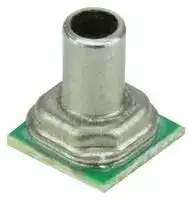


MPRLS0015PG0000SA
Pressure Sensor, 15 psi, SPI, Gauge, 3.3 VDC, Tube, 43.8 nA
- Manufacturer: HONEYWELL
- Product type: Pressure Transducers
- Port Style: Tube
- Product Range: MPR Series
- Sensor Output: SPI
- Supply Current: 0.0438µA
- Voltage Rating: 3.3VDC
- Operating Pressure Max: 15psi
- Pressure Measurement Type: Gauge
| Delivery and price | |
|---|---|
| Units per pack | 50 |
| Price | 8.84 € |
| Current stock | 500+ |
| Lead time | 7 days |

_32332628 Issue H_

## MPR SERIES

## **MicroPressure Board Mount Pressure Sensors Compact, High Accuracy, Compensated/Amplified**

## DESCRIPTION

The MPR Series is a very small piezoresistive silicon pressure sensor offering a digital output for reading pressure over the specified full scale pressure span and temperature range. It is calibrated and compensated over a specific temperature range for sensor offset, sensitivity, temperature effects, and non-linearity using an on-board Application Specific Integrated Circuit (ASIC). This product is designed to meet the requirements of higher volume medical (consumer and non-consumer) devices, commercial appliance, and industrial/HVAC applications.

## DIFFERENTIATION

- Application-specific design addresses various application needs and challenges.

- Digital output: Plug and play feature enables ease of implementation and system level connectivity.

- Total Error Band: Provides a more comprehensive  measurement of performance over the compensated temperature range, which minimizes testing and calibrating every sensor, thereby potentially reducing manufacturing cost; improves sensor accuracy and offers ease of sensor interchangeability due to minimal partto-part variation. (See Figure 1.)

## VALUE TO CUSTOMERS

- Very small form factor: Enables

- portability by addressing weight, size, and space restrictions; occupies less area on the PCB.

- Wide pressure ranges simplify use.

- Enhances performance: Output accelerates performance through reduced conversion requirements and direct interface to microprocessors.

- Value solution: Cost-effective, higher volume solution with configurable options.

- Meets IPC/JEDEC J-STD-020D.1 Moisture Sensitivity Level 1 requirements: Allows avoidance of thermal and mechanical damage during solder reflow attachment and/ or repair that lesser rated sensors may incur; allows long floor life when stored as specified (simplifying storage and reducing scrap); eliminates lengthy bakes prior to reflow, and allows for lean manufacturing due to stability and usability shortly after reflow.

- Meets food safety certification for North America, Europe and Asia (see Table 2).

## POTENTIAL APPLICATIONS

- Consumer medical: Non-invasive

- blood pressure monitoring,  negativepressure wound therapy, breast pumps, mobile oxygen concentrators, airflow monitors, CPAP water tanks, and medical wearables

- Non-consumer medical: Invasive blood pressure monitors, ambulatory blood pressure measurement

- Industrial: Air braking systems, gas and water meters

- Consumer: Coffee machines, humidifiers, air beds, washing machines, dishwashers

## FEATURES

- 5 mm x 5 mm [0.20 in x 0.20 in] package footprint

- Calibrated and compensated

- 60 mbar to 2.5 bar | 6 kPa to 250 kPa |

- 1 psi to 30 psi

- 24-bit digital I[2] C or SPI-compatible output

- IoT (Internet of Things) ready interface

- Stainless steel pressure port

- Compatible with a variety of liquid media

- Absolute and gage pressure types

- Total Error Band after customer autozero: As low as ±1.25 %FSS

- Compensated temperature range: 0ºC to 50ºC [32ºF to 122ºF]

- REACH and RoHS compliant

- Meets IPC/JEDEC J-STD-020D.1 Moisture Sensitivity Level 1

- Select sensors available on breakout board for easy evaluation and testing

- Ultra-low power consumption (as low as 0.01 mW typ. average power, 1 Hz measurement frequency)

- Sensor materials have been tested and certified for these food safety standards:

- NSF-169

- BPA Free

- LFGB

**The MPR Series joins an extensive line of board mount pressure sensors for potential use in medical, industrial, and consumer applications. To view the entire product portfolio, click here.**

## MICROPRESSURE BOARD MOUNT PRESSURE SENSORS, MPR SERIES

## Table of Contents

|Table of Contents|Table of Contents|
|---|---|
|General Specifcations                                                                                                                                                                                                     3-4||
|Power Consumption and Standby Mode                                                                                                                                                                 5-6||
|Product Nomenclature and Order Guide 7||
|Pressure Port/Range/Reference Availability 8||
|**Pressure Range Specifcations:**||
||60 mbar to 2.5 bar  . . . . . . . . . . . . . . . . . . . . . . . . . . . . . . . . . . . . . . . . . . . . . . . . . . . . . . . . . . . . . . . . . . . . . . . . . . . . . . . . . . . . . . . . . . . . . . . . . . . . . . . . . . . . . . .9|
||6 kPa to 250 kPa  . . . . . . . . . . . . . . . . . . . . . . . . . . . . . . . . . . . . . . . . . . . . . . . . . . . . . . . . . . . . . . . . . . . . . . . . . . . . . . . . . . . . . . . . . . . . . . . . . . . . . . . . . . . . . . 10|
||1 psi to 30 psi  . . . . . . . . . . . . . . . . . . . . . . . . . . . . . . . . . . . . . . . . . . . . . . . . . . . . . . . . . . . . . . . . . . . . . . . . . . . . . . . . . . . . . . . . . . . . . . . . . . . . . . . . . . . . . . . . . . 11|
||0 mmHg to 300 mmHg . . . . . . . . . . . . . . . . . . . . . . . . . . . . . . . . . . . . . . . . . . . . . . . . . . . . . . . . . . . . . . . . . . . . . . . . . . . . . . . . . . . . . . . . . . . . . . . . . . . . . . . . 11|
|1 0|GENERAL INFORMATION                                                                                                                                                                                   12|
|2 0|PINOUT AND FUNCTIONALITY                                                                                                                                                                       12|
|3 0|START-UP TIMING                                                                                                                                                                                                  12|
|4 0|POWER SUPPLY REQUIREMENT                                                                                                                                                                     12|
|5 0|REFERENCE CIRCUIT DESIGN                                                                                                                                                                         13|
||5.1 I2C and SPI Circuit Diagrams  . . . . . . . . . . . . . . . . . . . . . . . . . . . . . . . . . . . . . . . . . . . . . . . . . . . . . . . . . . . . . . . . . . . . . . . . . . . . . . . . . . . . . . . . . . . . . 13|
||5.2 Bypass Capacitor Use . . . . . . . . . . . . . . . . . . . . . . . . . . . . . . . . . . . . . . . . . . . . . . . . . . . . . . . . . . . . . . . . . . . . . . . . . . . . . . . . . . . . . . . . . . . . . . . . . . . . 13|
|6 0|I2C COMMUNICATIONS|
||6.1 I2C Bus Confguration  . . . . . . . . . . . . . . . . . . . . . . . . . . . . . . . . . . . . . . . . . . . . . . . . . . . . . . . . . . . . . . . . . . . . . . . . . . . . . . . . . . . . . . . . . . . . . . . . . . . . . 14|
||6.2 I2C Data Transfer . . . . . . . . . . . . . . . . . . . . . . . . . . . . . . . . . . . . . . . . . . . . . . . . . . . . . . . . . . . . . . . . . . . . . . . . . . . . . . . . . . . . . . . . . . . . . . . . . . . . . . . . . 14|
||6.3 I2C Sensor Address . . . . . . . . . . . . . . . . . . . . . . . . . . . . . . . . . . . . . . . . . . . . . . . . . . . . . . . . . . . . . . . . . . . . . . . . . . . . . . . . . . . . . . . . . . . . . . . . . . . . . . . . 14|
||6.4 I2C Pressure Reading . . . . . . . . . . . . . . . . . . . . . . . . . . . . . . . . . . . . . . . . . . . . . . . . . . . . . . . . . . . . . . . . . . . . . . . . . . . . . . . . . . . . . . . . . . . . . . . . . . . . . . 15|
||6.5 I2C Status Byte . . . . . . . . . . . . . . . . . . . . . . . . . . . . . . . . . . . . . . . . . . . . . . . . . . . . . . . . . . . . . . . . . . . . . . . . . . . . . . . . . . . . . . . . . . . . . . . . . . . . . . . . . . . . 15|
||6.6 I2C Communications . . . . . . . . . . . . . . . . . . . . . . . . . . . . . . . . . . . . . . . . . . . . . . . . . . . . . . . . . . . . . . . . . . . . . . . . . . . . . . . . . . . . . . . . . . . . . . . . . . . . . . 15|
||6.6.1 Output Measurement Command . . . . . . . . . . . . . . . . . . . . . . . . . . . . . . . . . . . . . . . . . . . . . . . . . . . . . . . . . . . . . . . . . . . . . . . . . . . . . . . . . . 15|
||6.6.2 I2C Sensor Address of 0x18 . . . . . . . . . . . . . . . . . . . . . . . . . . . . . . . . . . . . . . . . . . . . . . . . . . . . . . . . . . . . . . . . . . . . . . . . . . . . . . . . . . . . . . . . 16|
||6.7 I2C Timing and Level Parameters  . . . . . . . . . . . . . . . . . . . . . . . . . . . . . . . . . . . . . . . . . . . . . . . . . . . . . . . . . . . . . . . . . . . . . . . . . . . . . . . . . . . . . . . . . 16|
|7 0|SPI COMMUNICATIONS|
||7.1 SPI Defnition  . . . . . . . . . . . . . . . . . . . . . . . . . . . . . . . . . . . . . . . . . . . . . . . . . . . . . . . . . . . . . . . . . . . . . . . . . . . . . . . . . . . . . . . . . . . . . . . . . . . . . . . . . . . . . .17|
||7.2 SPI Data Transfer . . . . . . . . . . . . . . . . . . . . . . . . . . . . . . . . . . . . . . . . . . . . . . . . . . . . . . . . . . . . . . . . . . . . . . . . . . . . . . . . . . . . . . . . . . . . . . . . . . . . . . . . . .17|
||7.3 SPI Pressure Reading . . . . . . . . . . . . . . . . . . . . . . . . . . . . . . . . . . . . . . . . . . . . . . . . . . . . . . . . . . . . . . . . . . . . . . . . . . . . . . . . . . . . . . . . . . . . . . . . . . . . . .17|
||7.4 SPI Status Byte . . . . . . . . . . . . . . . . . . . . . . . . . . . . . . . . . . . . . . . . . . . . . . . . . . . . . . . . . . . . . . . . . . . . . . . . . . . . . . . . . . . . . . . . . . . . . . . . . . . . . . . . . . . . 18|
||7.5 SPI Communications  . . . . . . . . . . . . . . . . . . . . . . . . . . . . . . . . . . . . . . . . . . . . . . . . . . . . . . . . . . . . . . . . . . . . . . . . . . . . . . . . . . . . . . . . . . . . . . . . . . . . . 18|
||7.6 SPI Timing and Level Parameters  . . . . . . . . . . . . . . . . . . . . . . . . . . . . . . . . . . . . . . . . . . . . . . . . . . . . . . . . . . . . . . . . . . . . . . . . . . . . . . . . . . . . . . . . 18|
|8 0|MPR SERIES DIGITAL OUTPUT PRESSURE CALCULATION                                                                                                               19|
|Long|Port Dimensions and Recommended PCB Pad Layout                                                                                                                           20|
|Short Port Dimensions and Recommended PCB Pad Layout                                                                                                                           21||
|Tape and Reel Dimensions                                                                                                                                                                                                22||
|Refowable Protective Silicone Cap                                                                                                                                                                              23||
|Refowable Protective Silicone Cap Removal                                                                                                                                                          23||
|Recommended Tubing                                                                                                                                                                                                       23||
|Recommended O-Rings                                                                                                                                                                                                  23||
|Additional Information                                                                                                                                                                                                 back||


2 sensing.honeywell.com

## MICROPRESSURE BOARD MOUNT PRESSURE SENSORS, MPR SERIES

## FIGURE 1 . TEB COMPONENTS FOR THE MPR SERIES

Total Error Band (TEB) is a single specification that includes the major sources of sensor error. TEB should not be confused with accuracy, which is actually a component of TEB. TEB is the worst error that the sensor could experience.

Honeywell uses the TEB specification in its datasheet because it is the most comprehensive measurement of a sensor’s true accuracy. Honeywell also provides the accuracy specification in order to provide a common comparison with competitors’ literature that does not use the TEB specification.

Many competitors do not use TEB—they simply specify the accuracy of their device. Their accuracy specification, however, may exclude certain parameters. On their datasheet, the errors are listed individually. When combined, the total error (or what would be TEB) could be significant.

## **Sources of Error**

|**Sources of Error**||
|---|---|
|Offset|Total<br>Error<br>Band<br>**Accuracy**<br>**BFSL**|
|Full Scale Span||
|Pressure Non-Linearity||
|Pressure Hysteresis||
|Pressure Non-Repeatability||
|Thermal Effect on Offset||
|Thermal Effect on Span||
|Thermal Hysteresis||


TABLE 1. ABSOLUTE MAXIMUM RATINGS[1]

**==> picture [542 x 110] intentionally omitted <==**

**----- Start of picture text -----**<br>
CHARACTERISTIC MIN . MAX . UNIT<br>Supply voltage (Vsupply) -0.3 3.6 Vdc<br>Voltage on any pin -0.3 Vsupply + 0.3 V<br>ESD susceptibility (human body model) — 4 kV<br>Storage temperature -40 [-40] 85 [185] °C [°F]<br>Soldering peak reflow temperature and time 15 s max. at 250°C [482°F]<br>**----- End of picture text -----**<br>


1Absolute maximum ratings are the extreme limits the device will withstand without damage.

## TABLE 2. ENVIRONMENTAL SPECIFICATIONS

**==> picture [542 x 135] intentionally omitted <==**

**----- Start of picture text -----**<br>
CHARACTERISTIC PARAMETER<br>Humidity:<br>   external surfaces 0 %RH to 95 %RH, non-condensing<br>   internal surfaces 0 %RH to 100 %RH, condensing<br>Vibration 10 g, 10 Hz to 2 kHz<br>Shock 50 g, 6 ms duration<br>Solder reflow J-STD-020-D.1 Moisture Sensitivity Level 1 (unlimited shelf life when stored at <30°C/85 %RH)<br>Certification (food grade<br>NSF-169, BPA Free, LFGB<br>gel coating option)<br>**----- End of picture text -----**<br>


## TABLE 3. WETTED MATERIALS

**==> picture [542 x 91] intentionally omitted <==**

**----- Start of picture text -----**<br>
COMPONENT MATERAL<br>Port 304 stainless steel<br>Adhesives epoxy<br>Electronic components silicon, glass, gold, aluminum<br>Metal gel ring  304 stainless steel<br>**----- End of picture text -----**<br>


Sensing and Internet of Things 3

## MICROPRESSURE BOARD MOUNT PRESSURE SENSORS, MPR SERIES

|TABLE 4. SENSOR PRESSURE TYPES|TABLE 4. SENSOR PRESSURE TYPES|
|---|---|
|PRESSURE TYPE|DESCRIPTION|
|Absolute|Output is proportional to the difference between applied pressure and a built-in vacuum reference.|
|Gage|Output is proportional to the difference between applied pressure and atmospheric (ambient) pressure.|


## TABLE 5. OPERATING SPECIFICATIONS

**==> picture [542 x 297] intentionally omitted <==**

**----- Start of picture text -----**<br>
CHARACTERISTIC MIN .  TYP . MAX . UNIT<br>Supply voltage (Vsupply): [1] 1.8 3.3 3.6 Vdc<br>Current consumption:<br>   I [2] C sleep/standby mode  3.0 33.8 211 nA<br>   SPI sleep/standby mode 13.0 43.8 221.0 nA<br>Power consumption  — 10 — mW<br>Operating temperature range [2] -40 [-40] — 85 [185] °C [°F]<br>Compensated temperature range [3] 0 [32] — 50 [122] °C [°F]<br>Startup time (power up to data ready) — — 2.5 ms<br>Data rate (assumes command AAHEX) 161 204 — samples per second<br>I [2] C/SPI voltage level:<br>   low — — 20 %Vsupply<br>   high 80 — —<br>Pull up on MISO, SCLK, SS, MOSI 1 — — kOhm<br>Accuracy [4] — — ±0.25 %FSS BFSL [5]<br>Resolution:<br>   transfer function A 14.0 — —<br>bits<br>   transfer function B 13.5 — —<br>   transfer function C 14.0 — —<br>**----- End of picture text -----**<br>


1The sensor is not reverse polarity protected. Incorrect application of supply voltage or ground to the wrong pin may cause electrical failure.

> 2 **Operating temperature range:** The temperature range over which the sensor will produce an output proportional to pressure.

> 3 **Compensated temperature range:** The temperature range over which the sensor will produce an output proportional to pressure within the specified performance limits (Total Error Band).

> 4 **Accuracy:** The maximum deviation in output from a Best Fit Straight Line (BFSL) fitted to the output measured over the pressure range. Includes all errors due to pressure non-linearity, pressure hysteresis, and non-repeatability.

> 5 **Full Scale Span (FSS):** The algebraic difference between the output signal measured at the maximum (Pmax.) and minimum

(Pmin.) limits of the pressure range. (See Figure 4 for pressure ranges.)

4 sensing.honeywell.com

## MICROPRESSURE BOARD MOUNT PRESSURE SENSORS, MPR SERIES

## POWER CONSUMPTION AND STANDBY MODE

The sensor is normally in Standby Mode and is only turned on in response to a user command, thus minimizing power consumption. Upon receiving the user command, the sensor wakes up from Standby Mode, runs a measurement in Active State, and automatically returns to Standby Mode, awaiting the next command. The resulting sensor power consumption is a function of the sampling rate (samples per second) as shown in Tables 6 and 7 and Figures 2 and 3.

TABLE 6. AVERAGE POWER CONSUMPTION AT 1.8 VSUPPLY (ASSUMES COMMAND AAHEX)

**==> picture [542 x 429] intentionally omitted <==**

**----- Start of picture text -----**<br>
SAMPLING<br>AVERAGE POWER ACTIVE TIME ACTIVE POWER IDLE TIME IDLE POWER<br>RATE<br>(mW) (ms) (mW) (ms) (mW)<br>(samples per second)<br>Minimum Average Power<br>1 0.0068 3.625 1.884 996.375 0.0000054<br>2 0.0137 7.25 1.884 992.75 0.0000054<br>5 0.0341 18.125 1.884 981.875 0.0000054<br>10 0.0683 36.25 1.884 963.75 0.0000054<br>20 0.1366 72.5 1.884 963.75 0.0000054<br>50 0.3414 181.25 1.884 818.75 0.0000054<br>100 0.6829 362.5 1.884 637.5 0.0000054<br>160 1.0926 580 1.884 420 0.0000054<br>Typical Average Power<br>1 0.0094 4.157 2.248 995.843 0.00006084<br>2 0.0187 8.314 2.248 991.686 0.00006084<br>5 0.0468 20.785 2.248 979.215 0.00006084<br>10 0.0935 41.57 2.248 958.43 0.00006084<br>20 0.1870 83.14 2.248 916.86 0.00006084<br>50 0.4673 207.85 2.248 792.15 0.00006084<br>100 0.9345 415.7 2.248 584.3 0.00006084<br>160 1.4592 665.12 2.248 334.88 0.00006084<br>Maximum Average Power<br>1 0.0129 4.839 2.588 995.161 0.0003798<br>2 0.0254 9.678 2.588 990.322 0.0003798<br>5 0.0630 24.195 2.588 975.805 0.0003798<br>10 0.1256 48.39 2.588 951.61 0.0003798<br>20 0.2508 96.78 2.588 903.22 0.0003798<br>50 0.6264 241.95 2.588 758.05 0.0003798<br>100 1.2524 483.9 2.588 516.1 0.0003798<br>160 2.0036 774.24 2.588 225.76 0.0003798<br>**----- End of picture text -----**<br>


FIGURE 2 . AVERAGE POWER CONSUMPTION VS SAMPLING RATE AT 1 .8 VSUPPLY

**==> picture [358 x 147] intentionally omitted <==**

**----- Start of picture text -----**<br>
2.75<br>2.50<br>2.25<br>2.00 Maximum average power (mW)<br>1.75<br>1.50 Typical average power (mW)<br>1.25<br>1.00 Minimum average power (mW)<br>0.75<br>0.50<br>0.25<br>0.00<br>0 10 20 30 40 50 60 70 80 90 100 110 120 130 140 150 160<br>Sampling Rate (samples per second)<br>Average Power Consumption (mW)<br>**----- End of picture text -----**<br>


5

Sensing and Internet of Things

MICROPRESSURE BOARD MOUNT PRESSURE SENSORS, MPR SERIES

TABLE 7. AVERAGE POWER CONSUMPTION AT 3.3 VSUPPLY (ASSUMES COMMAND AAHEX)

**==> picture [542 x 428] intentionally omitted <==**

**----- Start of picture text -----**<br>
SAMPLING<br>AVERAGE POWER ACTIVE TIME ACTIVE POWER IDLE TIME IDLE POWER<br>RATE<br>(mW) (ms) (mW) (ms) (mW)<br>(Samples per second)<br>Minimum Average Power<br>1 0.0114 3.625 3.134 996.375 0.0000099<br>2 0.0227 7.25 3.134 992.75 0.0000099<br>5 0.0568 18.125 3.134 981.875 0.0000099<br>10 0.1136 36.25 3.134 963.75 0.0000099<br>20 0.2272 72.5 3.134 963.75 0.0000099<br>50 0.5680 181.25 3.134 818.75 0.0000099<br>100 1.1361 362.5 3.134 637.5 0.0000099<br>160 1.8177 580 3.134 420 0.0000099<br>Typical Average Power<br>1 0.0156 4.157 3.729 995.843 0.00011154<br>2 0.0311 8.314 3.729 991.686 0.00011154<br>5 0.0776 20.785 3.729 979.215 0.00011154<br>10 0.1551 41.57 3.729 958.43 0.00011154<br>20 0.3101 83.14 3.729 916.86 0.00011154<br>50 0.7751 207.85 3.729 792.15 0.00011154<br>100 1.5501 415.7 3.729 584.3 0.00011154<br>160 2.4800 665.12 3.729 334.88 0.00011154<br>Maximum Average Power<br>1 0.0214 4.839 4.275 995.161 0.0006963<br>2 0.0421 9.678 4.275 990.322 0.0006963<br>5 0.1041 24.195 4.275 975.805 0.0006963<br>10 0.2075 48.39 4.275 951.61 0.0006963<br>20 0.4144 96.78 4.275 903.22 0.0006963<br>50 1.0349 241.95 4.275 758.05 0.0006963<br>100 2.0692 483.9 4.275 516.1 0.0006963<br>160 3.3103 774.24 4.275 225.76 0.0006963<br>**----- End of picture text -----**<br>


FIGURE 3 . AVERAGE POWER CONSUMPTION VS SAMPLING RATE AT 3 .3 VSUPPLY

**==> picture [360 x 210] intentionally omitted <==**

**----- Start of picture text -----**<br>
4.25<br>4.00<br>3.75<br>3.50<br>3.25 Maximum average power (mW)<br>3.00<br>2.75<br>2.50 Typical average power (mW)<br>2.25<br>2.00<br>1.75 Minimum average power (mW)<br>1.50<br>1.25<br>1.00<br>0.75<br>0.50<br>0.25<br>0.00<br>0 10 20 30 40 50 60 70 80 90 100 110 120 130 140 150 160<br>Sampling Rate (samples per second)<br>Average Power Consumption (mW)<br>**----- End of picture text -----**<br>


6 sensing.honeywell.com

## MICROPRESSURE BOARD MOUNT PRESSURE SENSORS, MPR SERIES

## FIGURE 4 . PRODUCT NOMENCLATURE AND ORDER GUIDE

For example, MPRLS0025PA00001A defines an MPR Series pressure sensor, long port, silicone gel, 0 psi to 25 psi absolute pressure range, I[2] C[, ] address 0x18, 10% to 90% of 2[24] counts transfer function, no breakout board.

## M P R    L    S    0 0 2 5 P A    0 0 0 0    1    A[2]

**==> picture [539 x 363] intentionally omitted <==**

**----- Start of picture text -----**<br>
|||||||||||
|---|---|---|---|---|---|---|---|---|---|
|Product Series|
|Transfer Function|
|MPR|
|A|[10% to 90% of 2][24][ counts]|
|Pressure Port|B|[2.5% to 22.5% of 2][24][ counts]|
|C|[20% to 80% of 2][24][ counts]|
|>|||
|L|Long|(|2|[2]|
|R\|Nim|ie>|
|Output Type|
|S|SPI|4|I|[2]|C, Address 0x48|
|S|Short|0|I|[2]|C, Address 0x08|5|I|[2]|C, Address 0x58|
|1|I|[2]|C, Address 0x18|6|I|[2]|C, Address 0x68|
|2|I|[2]|C, Address 0x28|7|I|[2]|C, Address 0x78|
|Gel|
|3|I|[2]|C, Address 0x38|
|SS|Silicone|
|F|Food grade|
|Low Pressure|
|0000|
|Pressure Range, Unit and Reference|[1]|
|Absolute|Absolute|Absolute|
|0001BA  0 bar to 1 bar|0100KA    0 kPa to 100 kPa|0015PA|0 psi to 15 psi|
|01.6BA|0 bar to 1.6 bar|0160KA    0 kPa to 160 kPa|0025PA|0 psi to 25 psi|
|02.5BA|0 bar to 2.5 bar|0250KA|0 kPa to 250 kPa|0030PA|0 psi to 30 psi|
|Gage|Gage|Gage|Gage|
|0060MG|0 mbar to 60 mbar|0006KG|0 kPa to 6 kPa|0001PG|0 psi to 1 psi|0300YG|0 mmHg to 300 mmHg|
|0100MG|0 mbar to 100 mbar|0010KG|0 kPa to 10 kPa|0005PG|0 psi to 5 psi|
|0160MG|0 mbar to 160 mbar|0016KG|0 kPa to 16 kPa|0015PG|0 psi to 15 psi|
|0250MG|0 mbar to 250 mbar|0025KG|0 kPa to 25 kPa|0030PG|0 psi to 30 psi|
|0400MG|0 bar to 400 mbar|0040KG|0 kPa to 40 kPa|
|0600MG|0 bar to 600 mbar|0060KG|0 kPa to 60 kPa|N|inH20|
|0001BG|0 bar to 1 bar|0100KG|0 kPa to 100 kPa|G|MPa|Other calibration|
|units may be|
|01.6BG|0 bar to 1.6 bar|0160KG|0 kPa to 160 kPa|H|HPa|specified.|
|02.5BG|0 bar to 2.5 bar|0250KG|0 kPa to 250 kPa|C|cmH20|

**----- End of picture text -----**<br>


1 Custom pressure ranges are available. Contact Honeywell Customer Service for more information.

2 See Table 9 for available catalog listings.

## MPR Series Sensor Mounted on a Breakout Board

MPR Series with long port MPR Series with short port mounted on a breakout board. mounted on a breakout board.

Breakout boards, designed for use with the Honeywell SEK002 Sensor Evaluation Kit, are available with the sensor already mounted.

## TABLE 8. ORDER GUIDE FOR MPR SERIES SENSOR ON BREAKOUT BOARD

CATALOG LISTING DESCRIPTION

MPRLS0025PA00001AB Breakout board with 0 psi to 25 psi absolute sensor, long port, with gel, I[2] C = 0x18, transfer function A MPRLS0015PA0000SAB Breakout board with 0 psi to 15 psi absolute sensor, long port, with gel, SPI, transfer function A MPRLS0300YG00001BB Breakout board with 0 mmHg to 300 mmHg gage sensor, long port, with gel, I[2] C = 0x18, transfer function B MPRSS0001PG00001CB Breakout board with 0 psi to 1 psi gage sensor, short port, with gel, I[2] C = 0x18, transfer function C

7

Sensing and Internet of Things

## MICROPRESSURE BOARD MOUNT PRESSURE SENSORS, MPR SERIES

FIGURE 4 . PRODUCT NOMENCLATURETABLE 9. AVAILABLE CONFIGURATIONS

**==> picture [542 x 510] intentionally omitted <==**

**----- Start of picture text -----**<br>
ORDER  TRANSFER<br>PRESSURE RANGE PRESSURE PORT GEL<br>CODE FUNCTION<br>Absolute<br>0001BA 0 to 1 bar long silicone A, B<br>01.6BA 0 to 1.6 bar long silicone A, B<br>02.5BA 0 to 2.5 bar long silicone A, B<br>0100KA 0 to 100 kPa long silicone A, B<br>0160KA 0 to 160 kPa long silicone A, B<br>0250KA 0 to 250 kPa long silicone A, B<br>0015PA 0 to 15 psi long silicone A, B<br>0025PA 0 to 25 psi long silicone A, B<br>0030PA 0 to 30 psi long silicone A, B<br>Gage<br>0060MG 0 to 60 mbar long, short silicone, food grade C<br>0100MG 0 to 100 mbar long, short silicone, food grade C<br>0160MG 0 to 160 mbar long, short silicone, food grade C<br>0250MG 0 to 250 mbar long, short silicone, food grade C<br>0400MG 0 to 400 mbar long silicone A, B<br>0600MG 0 to 600 mbar long silicone A, B<br>0001BG 0 to 1 bar long silicone A, B<br>01.6BG 0 to 1.6 bar long silicone A, B<br>02.5BG 0 to 2.5 bar long silicone A, B<br>0006KG 0 to 6 kPa long, short silicone, food grade C<br>0010KG 0 to 10 kPa long, short silicone, food grade C<br>0016KG 0 to 16 kPa long, short silicone, food grade C<br>0025KG 0 to 25 kPa long, short silicone, food grade C<br>0040KG 0 to 40 kPa long silicone A, B<br>0060KG 0 to 60 kPa long silicone A, B<br>0100KG 0 to 100 kPa long silicone A, B<br>0160KG 0 to 160 kPa long silicone A, B<br>0250KG 0 to 250 kPa long silicone A, B<br>0001PG 0 to 1 psi long, short ssilicone, food grade C<br>0005PG 0 to 5 psi long silicone A, B<br>0015PG 0 to 15 psi long silicone A, B<br>0030PG 0 to 30 psi long silicone A, B<br>0300YG 0 to 300 mmHg long silicone B<br>**----- End of picture text -----**<br>


8 sensing.honeywell.com

## MICROPRESSURE BOARD MOUNT PRESSURE SENSORS, MPR SERIES

## TABLE 10. PRESSURE RANGE SPECIFICATIONS FOR 60 MBAR TO 2.5 BAR

**==> picture [542 x 312] intentionally omitted <==**

**----- Start of picture text -----**<br>
PRESSURE RANGE TOTAL ERROR  TOTAL<br>PRESSURE<br>BAND AFTER  ERROR<br>RANGE OVER BURST  TRANSFER<br>UNIT CUSTOMER  BAND,<br>FIGURE 4 .)(SEE PMIN . PMAX . PRESSURE [1] PRESSURE [2] AUTO-ZERO [3] TYPICAL  FUNCTION<br>(%FSS) (%FSS)<br>Absolute<br>0001BA 0 1 bar 4 8 ±1.5 [4] ±1.5 A, B<br>01.6BA 0 1.6 bar 4 8 ±1.5 [4] ±1.5 A, B<br>02.5BA 0 2.5 bar 4 8 ±1.5 [4] ±1.5 A, B<br>Gage<br>0060MG 0 60 mbar 350 700 ±1.25 ±2.5 C<br>0100MG 0 100 mbar 350 700 ±1.25 ±2.5 C<br>0160MG 0 160 mbar 350 700 ±1.25 ±2.5 C<br>0250MG 0 250 mbar 350 700 ±1.25 ±2.5 C<br>0400MG 0 400 mbar 4000 8000 ±2.0 ±2.5 A, B<br>0600MG 0 600 mbar 4000 8000 ±2.0 ±2.5 A, B<br>0001BG 0 1 bar 4 8 ±1.5 ±2.5 A, B<br>01.6BG 0 1.6 bar 4 8 ±1.5 ±2.5 A, B<br>02.5BG 0 2.5 bar 4 8 ±1.5 ±2.5 A, B<br>**----- End of picture text -----**<br>


> 1 **Overpressure:** The maximum pressure which may safely be applied to the product for it to remain in specification once pressure is returned to the operating pressure range. Exposure to higher pressures may cause permanent damage to the product. Unless otherwise specified this applies to all available pressure ports at any temperature with the operating temperature range. The customer’s pressure connection system (tubing or O-rings) must be specified to be equal to, or greater than, the rated overpressure limit. Due to the possibility of light sensitivity, opaque tubing is recommended.

> 2 **Burst Pressure:** The maximum pressure that may be applied to any port of the product without causing escape of pressure media. Product should not be expected to function after exposure to any pressure beyond the burst pressure.

> 3 **Total Error Band after Customer Auto-Zero:** The maximum deviation from the ideal transfer function over the entire compensated pressure range for a minimum of 24 hours after an auto-zero operation. Includes all errors due to full scale span, pressure non-linearity, pressure hysteresis, and thermal effect on span. Low pressure MPR sensors may exhibit offset shifts after reflow solder. See Technical Note “Auto-Zero Calibration Technique for Pressure Sensors” (008326-1-EN) if this shift is significant in a particular application.

4 Because atmospheric pressure is continually changing, autozeroing an absolute pressure sensor requires a reference standard. If the actual absolute pressure is important in an application (such as for a barometer), an external precision reference is needed to set the offset to the correct current value of atmospheric pressure. In applications where the difference between multiple absolute sensors is important, any reference may be used (such as one of the other absolute pressure sensors in a system, or even an arbitrary pressure like 14.7 psia), as long as it is consistent and repeatable.

Sensing and Internet of Things 9

## MICROPRESSURE BOARD MOUNT PRESSURE SENSORS, MPR SERIES

**==> picture [542 x 328] intentionally omitted <==**

**----- Start of picture text -----**<br>
TABLE 11. PRESSURE RANGE SPECIFICATIONS FOR 6 KPA TO 250 KPA<br>PRESSURE RANGE TOTAL ERROR  TOTAL<br>PRESSURE<br>BAND AFTER  ERROR<br>RANGE OVER BURST TRANSFER<br>UNIT CUSTOMER  BAND,<br>FIGURE 4 .)(SEE  PMIN . PMAX . PRESSURE [1] PRESSURE [2] AUTO-ZERO [3] TYPICAL  FUNCTION<br>(%FSS) (%FSS)<br>Absolute<br>0100KA 0 100 kPa 400 800 ±1.5 [4] ±1.5 A, B<br>0160KA 0 160 kPa 400 800 ±1.5 [4] ±1.5 A, B<br>0250KA 0 250 kPa 400 800 ±1.5 [4] ±1.5 A, B<br>Gage<br>0006KG 0 6 kPa 35 70 ±1.25 ±2.5 C<br>0010KG 0 10 kPa 35 70 ±1.25 ±2.5 C<br>0016KG 0 16 kPa 35 70 ±1.25 ±2.5 C<br>0025KG 0 25 kPa 35 70 ±1.25 ±2.5 C<br>0040KG 0 40 kPa 400 800 ±2.0 ±2.5 A, B<br>0060KG 0 60 kPa 400 800 ±2.0 ±2.5 A, B<br>0100KG 0 100 kPa 400 800 ±1.5 ±2.5 A, B<br>0160KG 0 160 kPa 400 800 ±1.5 ±2.5 A, B<br>0250KG 0 250 kPa 400 800 ±1.5 ±2.5 A, B<br>**----- End of picture text -----**<br>


> 1 **Overpressure:** The maximum pressure which may safely be applied to the product for it to remain in specification once pressure is returned to the operating pressure range. Exposure to higher pressures may cause permanent damage to the product. Unless otherwise specified this applies to all available pressure ports at any temperature with the operating temperature range. The customer’s pressure connection system (tubing or O-rings) must be specified to be equal to, or greater than, the rated overpressure limit. Due to the possibility of light sensitivity, opaque tubing is recommended.

- 2 **Burst Pressure:** The maximum pressure that may be applied to any port of the product without causing escape of pressure media. Product should not be expected to function after exposure to any pressure beyond the burst pressure.

> 3 **Total Error Band after Customer Auto-Zero:** The maximum deviation from the ideal transfer function over the entire

compensated pressure range for a minimum of 24 hours after an auto-zero operation. Includes all errors due to full scale span, pressure non-linearity, pressure hysteresis, and thermal effect on span. Low pressure MPR sensors may exhibit offset shifts after reflow solder. See Technical Note “Auto-Zero Calibration Technique for Pressure Sensors” (008326-1-EN) if this shift is significant in a particular application.

4 Because atmospheric pressure is continually changing, autozeroing an absolute pressure sensor requires a reference standard. If the actual absolute pressure is important in an application (such as for a barometer), an external precision reference is needed to set the offset to the correct current value of atmospheric pressure. In applications where the difference between multiple absolute sensors is important, any reference may be used (such as one of the other absolute pressure sensors in a system, or even an arbitrary pressure like 14.7 psia), as long as it is consistent and repeatable.

10 sensing.honeywell.com

## MICROPRESSURE BOARD MOUNT PRESSURE SENSORS, MPR SERIES

## TABLE 12. PRESSURE RANGE SPECIFICATIONS FOR 1 PSI TO 30 PSI

**==> picture [541 x 223] intentionally omitted <==**

**----- Start of picture text -----**<br>
PRESSURE RANGE TOTAL ERROR  TOTAL<br>PRESSURE<br>BAND AFTER  ERROR<br>RANGE OVER BURST TRANSFER<br>UNIT CUSTOMER  BAND,<br>(SEE P P PRESSURE [1] PRESSURE [2] FUNCTION<br>MIN . MAX . AUTO-ZERO [3] TYPICAL<br>FIGURE 4 .)<br>(%FSS) (%FSS)<br>Absolute<br>0015PA 0 15 psi 60 120 ±1.5 [4] ±1.5 A, B<br>0025PA 0 25 psi 60 120 ±1.5 [4] ±1.5 A, B<br>0030PA 0 30 psi 60 120 ±1.5 [4] ±1.5 A, B<br>Gage<br>0001PG 0 1 psi 5 10 ±1.25 ±2.5 C<br>0005PG 0 5 psi 60 120 ±2.0 ±2.5 A, B<br>0015PG 0 15 psi 60 120 ±1.5 ±2.5 A, B<br>0030PG 0 30 psi 60 120 ±1.5 ±2.5 A, B<br>**----- End of picture text -----**<br>


> 1 **Overpressure:** The maximum pressure which may safely be applied to the product for it to remain in specification once pressure is returned to the operating pressure range. Exposure to higher pressures may cause permanent damage to the product. Unless otherwise specified this applies to all available pressure ports at any temperature with the operating temperature range. The customer’s pressure connection system (tubing or O-rings) must be specified to be equal to, or greater than, the rated overpressure limit. Due to the possibility of light sensitivity, opaque tubing is recommended.

> 2 **Burst Pressure:** The maximum pressure that may be applied to any port of the product without causing escape of pressure media. Product should not be expected to function after exposure to any pressure beyond the burst pressure.

> 3 **Total Error Band after Customer Auto-Zero:** The maximum deviation from the ideal transfer function over the entire

compensated pressure range for a minimum of 24 hours after an auto-zero operation. Includes all errors due to full scale span, pressure non-linearity, pressure hysteresis, and thermal effect on span. Low pressure MPR sensors may exhibit offset shifts after reflow solder. See Technical Note “Auto-Zero Calibration Technique for Pressure Sensors” (008326-1-EN) if this shift is significant in a particular application.

4 Because atmospheric pressure is continually changing, autozeroing an absolute pressure sensor requires a reference standard. If the actual absolute pressure is important in an application (such as for a barometer), an external precision reference is needed to set the offset to the correct current value of atmospheric pressure. In applications where the difference between multiple absolute sensors is important, any reference may be used (such as one of the other absolute pressure sensors in a system, or even an arbitrary pressure like 14.7 psia), as long as it is consistent and repeatable.

TABLE 13. PRESSURE RANGE SPECIFICATIONS FOR 0 MMHG TO 300 MMHG

**==> picture [542 x 98] intentionally omitted <==**

**----- Start of picture text -----**<br>
PRESSURE  PRESSURE RANGE UNIT OVER BURST TOTAL ERROR  TOTAL  TRANSFER<br>RANGE PRESSURE [1] PRESSURE [2] BAND AFTER  ERROR  FUNCTION<br>(SEE  CUSTOMER  BAND,<br>P P<br>FIGURE 3 .) MIN . MAX . AUTO-ZERO [3] TYPICAL<br>(%FSS) (%FSS)<br>Gage<br>0300YG 0 300 mmHg 3100 6200 ±2.0 ±2.5 B<br>**----- End of picture text -----**<br>


> 1 **Overpressure:** The maximum pressure which may safely be applied to the product for it to remain in specification once pressure is returned to the operating pressure range. Exposure to higher pressures may cause permanent damage to the product. Unless otherwise specified this applies to all available pressure ports at any temperature with the operating temperature range. The customer’s pressure connection system (tubing or O-rings) must be specified to be equal to, or greater than, the rated overpressure limit. Due to the possibility of light sensitivity, opaque tubing is recommended.

> 2 **Burst Pressure:** The maximum pressure that may be applied to any port of the product without causing escape of pressure media. Product should not be expected to function after exposure to any pressure beyond the burst pressure.

> 3 **Total Error Band after Customer Auto-Zero:** The maximum deviation from the ideal transfer function over the entire compensated pressure range for a minimum of 24 hours after an auto-zero operation. Includes all errors due to full scale span, pressure non-linearity, pressure hysteresis, and thermal effect on span. Low pressure MPR sensors may exhibit offset shifts after reflow solder. See Technical Note “Auto-Zero Calibration Technique for Pressure Sensors” (008326-1-EN) if this shift is significant in a particular application.

Sensing and Internet of Things 11

## MICROPRESSURE BOARD MOUNT PRESSURE SENSORS, MPR SERIES

## 1 .0 GENERAL INFORMATION

Please see pages 20-23 for product dimensions, pinouts, tape and reel dimensions, Recommended Pick and Place Geometry, and recommended tubing.

## 2 .0 PINOUT AND FUNCTIONALITY (SEE TABLE 14 .)

## TABLE 14. PINOUT AND FUNCTIONALITY

**==> picture [542 x 425] intentionally omitted <==**

**----- Start of picture text -----**<br>
9 8 7<br>10 6<br>11 5<br>Gage reference hole (gage option only)<br>12 4<br>Do not block, keep free of contamination<br>2 3<br>PAD<br>NAME DESCRIPTION<br>NUMBER<br>1 SS Sensor Select: Chip select for SPI sensor<br>2 MOSI/SDA Master Out Sensor In: Data in for SPI sensor; data in/out for I²C sensor<br>3 SCLK/SCL Clock input for SPI and I²C sensor<br>4 VO+ VOUT+ pin in piezoresistive Wheatstone Bridge: Anti-aliasing filter can be connected between VO+ and  VO-<br>5 NC No connection<br>6 VO- VOUT- pin in piezoresistive Wheatstone Bridge: Anti-aliasing filter can be connected between VO- and VO+<br>7 MISO Master In Sensor Out: Data output for SPI sensor<br>End-of-conversion indicator: This pin is set high when a measurement and calculation have been<br>8 EOC<br>completed and the data is ready to be clocked out<br>Reset: This pin can be connected and used to control safe resetting of the sensor. RES is active-low;<br>9 RES<br>a VDD-VSS-VDD transition at the RES pin leads to a complete sensor reset<br>10 VSS Ground reference voltage signal<br>11 NC No connection<br>12 VDD Positive supply voltage<br>**----- End of picture text -----**<br>


## 3 .0 START-UP TIMING

On power-up, the MPR Series sensor is able to receive the first command after 1 ms from when the VDD supply is within operating specifications. The MPR Series sensor can begin the first measurement after 2.5 ms from when the VDD supply is operational. Alternatively, instead of a power-on reset, a reset and new power-up sequence can be triggered by an IC-reset signal (high low) at the RES pin.

## 4 .0 POWER SUPPLY REQUIREMENT

Verify that system power to the sensor meets the VDD rising slope requirement (minimum VDD rising slope is at least 10 V/ms). If not, use the RES pin to bring the sensor out of reset once the system power has stabilized.

12 sensing.honeywell.com

## MICROPRESSURE BOARD MOUNT PRESSURE SENSORS, MPR SERIES

## 5 .0 REFERENCE CIRCUIT DESIGN

## 5 .1 I[2] C AND SPI CIRCUIT DIAGRAMS (SEE FIGURES 5 AND 6 .)

FIGURE 5 . I[2] C CIRCUIT DIAGRAM

**==> picture [367 x 207] intentionally omitted <==**

**----- Start of picture text -----**<br>
VCC<br>0.1 µF<br>12<br>10  10<br>kOhm kOhm VDD Optional<br>GND MPR Series Sensor<br>VO- 6 1 nF<br>NC 1 SS VO+ 4 Optional<br>2 MOSI/SDA NC 11<br>µ C 3 SCL/SCLK EOC 8 To µC Optional<br>NC 7 MISO NC 5<br>RES 9 From µC Optional<br>VSS<br>10<br>GND<br>**----- End of picture text -----**<br>


FIGURE 6 . SPI CIRCUIT DIAGRAM

**==> picture [367 x 208] intentionally omitted <==**

**----- Start of picture text -----**<br>
VCC<br>0.1 µF<br>12<br>VDD Optional<br>GND MPR Series Sensor<br>VO- 6 1 nF<br>1 SS VO+ 4 Optional<br>2 MOSI/SDA NC 11<br>µ C 3 SCL/SCLK EOC 8 To µC Optional<br>7 MISO NC 5<br>RES 9 From µC Optional<br>VSS<br>10<br>GND<br>**----- End of picture text -----**<br>


## 5 .2 BYPASS CAPACITOR USE

## NOTICE

Ensure bypass capacitors are integrated into the end user design to ensure output noise suppression.

Sensing and Internet of Things 13

## MICROPRESSURE BOARD MOUNT PRESSURE SENSORS, MPR SERIES

## 6 .0 I[2] C COMMUNICATIONS

## 6 .1 I[2] C BUS CONFIGURATION (SEE FIGURE 7 .)

The I[2] C bus is a simple, serial 8-bit oriented computer bus for efficient I[2] C (Inter-IC) control. It provides good support for communication between different ICs across short circuit-board distances, such as interfacing microcontrollers with various low speed peripheral devices. For detailed specifications of the I[2] C protocol, see Rev. 6 (April 2014) of the I[2] C Bus Specification (source: NXP Semiconductor at https://www.nxp.com/docs/en/user-guide/UM10204.pdf).

Each device connected to the bus is software addressable by a unique address and a simple Master/Sensor relationship that exists at all times. The output stages of devices connected to the bus are designed around an open collector architecture. Because of this, pull-up resistors to +VDD must be provided on the bus. Both SDA and SCL are bidirectional lines, and it is important to system performance to match the capacitive loads on both lines. In addition, in accordance with the I[2] C specification, the maximum allowable capacitance on either line is 400 pF to ensure reliable edge transitions at 400 kHz clock speeds.

When the bus is free, both lines are pulled up to +VDD. Data on the I[2] C bus can be transferred at a rate up to 100 kbit/s in the standard-mode, or up to 400 kbit/s in the fast-mode.

FIGURE 7 . I[2] C BUS CONFIGURATION

**==> picture [342 x 114] intentionally omitted <==**

**----- Start of picture text -----**<br>
+VDD<br>Master Pull-up resistors Rp Rp<br>(Serial Clock Line)<br>SCL<br>(Serial Data Line)<br>SDA<br>Sensor 1 Sensor 2 Sensor 3<br>**----- End of picture text -----**<br>


## 6 .2 I[2] C DATA TRANSFER

The MPR Series I[2] C Sensors will only respond to requests from a Master device. Following the address and read bit from the Master, the MPR Series Sensors are designed to output up to 4 bytes of data. The first data byte is the Status Byte (8-bit) and the second to fourth bytes are the compensated pressure output (24-bit).

## 6 .3 I[2] C SENSOR ADDRESS

Each MPR Series I[2] C Sensor is referenced on the bus by a 7-bit sensor address. The default address for the MPR Series is 24 (0x18). Other available standard addresses are: 08 (0x08), 40 (0x28), 56 (0x38), 72 (0x48), 88 (0x58), 104 (0x68), 120 (0x78). (Other custom values are available. Please contact Honeywell Customer Service with questions regarding custom Sensor addresses.)

## 6 .4 I[2] C PRESSURE READING

To read out a compensated pressure reading, the Master generates a START condition and sends the Sensor address followed by a read bit (1). After the Sensor generates an acknowledge, it will transmit up to 4 bytes of data. The first data byte is the Status Byte (8-bit) and the second to fourth bytes are the compensated pressure output (24-bit). The Master must acknowledge the receipt of each byte, and can terminate the communication by sending a Not Acknowledge (NACK) bit followed by a Stop bit after receiving the required bytes of data.

14 sensing.honeywell.com

## MICROPRESSURE BOARD MOUNT PRESSURE SENSORS, MPR SERIES

## 6 .5 I[2] C STATUS BYTE (SEE TABLE 15 .)

TABLE 15. I[2] C STATUS BYTE EXPLANATION

**==> picture [542 x 209] intentionally omitted <==**

**----- Start of picture text -----**<br>
BIT (MEANING) STATUS COMMENT<br>7  always 0 —<br>1 = device is powered Needed for the SPI Mode where the Master reads all zeroes<br>6 (Power indication)<br>0 = device is not powered if the device is not powered or in power-on reset (POR).<br>Indicates that the data for the last command is not yet<br>5 (Busy flag) 1 = device is busy available. No new commands are processed if the device is<br>busy.<br>4 always 0 —<br>3 always 0 —<br>Indicates whether the checksum-based integrity check<br>0 = integrity test passed<br>2 (Memory integrity/error flag) passed or failed; the memory error status bit is calculated<br>1 = integrity test failed<br>only during the power-up sequence.<br>1 always 0 —<br>1 = internal math saturation has<br>0 (Math saturation) —<br>occurred<br>**----- End of picture text -----**<br>


## 6 .6 I[2] C COMMUNICATIONS

## 6 .6 .1 I[2] C Output Measurement Command

To communicate with the MPR Series I[2] C output sensor using an Output Measurement Command of “0xAA”, followed by “0x00” “0x00”, follow the steps shown in Table 16. This command will cause the device to exit Standby Mode and enter Operating Mode. At the conclusion of the measurement cycle, the device will automatically re-enter Standby Mode.

## TABLE 16. I[2] C OUTPUT MEASUREMENT COMMAND

**==> picture [541 x 224] intentionally omitted <==**

**----- Start of picture text -----**<br>
STEP ACTION NOTES<br>S SensorAddr 0 A Command A CmdData A CmdData A P Master to Sensor<br><15:8> <7:0><br>1<br>7-bit<br>Sensor to Master<br>Write bit<br>Option 1: Wait until the busy flag in  Option 2: Wait for at  Option 3: Wait for the  S Start condition<br>the Status Byte clears. least 5 ms for the data  EOC indicator.<br>conversion to occur.    P Stop condition<br>2 S SensorAddr 1 A Status N P<br>7-bit A Acknowledge<br>Read bit<br>N Not acknowledge<br>To read the 24-bit pressure output along with the 8-bit Status Byte:<br>SensorDat SensorDat SensorDat<br>S SensorAddr 1 A Status A A A N P<br>3 <23:16> <15:8> <7:0><br>7-bit<br>Read bit<br>**----- End of picture text -----**<br>


Sensing and Internet of Things 15

## MICROPRESSURE BOARD MOUNT PRESSURE SENSORS, MPR SERIES

## 6 .6 .2 I[2] C Sensor Address of 0x18

To communicate with the MPR Series I[2] C output sensor with an I[2] C Sensor Address of 0x18 (hex), follow the steps shown in Table 17.

TABLE 17. I[2] C SENSOR ADDRESS OF 0X18 COMMUNICATIONS

**==> picture [541 x 268] intentionally omitted <==**

**----- Start of picture text -----**<br>
STEP ACTION NOTES<br>0x18 0 Master to Sensor<br>CmdData CmdData<br>S SensorAddr 0 A Command A A A P<br>1  <15:8> <7:0><br>Sensor to Master<br>0x30 0xAA 0x00 0x00<br>Write bit S Start condition<br>Option 1: Wait until the busy flag in  Option 2: Wait for at  Option 3: Wait for the<br>the Status Byte clears. least 5 ms for the data  EOC indicator. P Stop condition<br>conversion to occur.<br>0x18 1 A Acknowledge<br>2<br>S SensorAddr 1 A Status N P<br>N Not acknowledge<br>0x31<br>Read bit<br>To read the 24-bit pressure output along with the 8-bit Status Byte:<br>0x18 1<br>3 S SensorAddr 1 A Status A SensorDat A SensorDat A SensorDat N P<br><23:16> <15:8> <7:0><br>0x31<br>Read bit<br>**----- End of picture text -----**<br>


6 .7 I[2] C TIMING AND LEVEL PARAMETERS (SEE TABLE 18 .)

TABLE 18. I[2] C BUS TIMING DIAGRAM AND PARAMETERS

**==> picture [542 x 295] intentionally omitted <==**

**----- Start of picture text -----**<br>
SDA<br>tLOW tSUDAT tHDSTA tBUS<br>SCL<br>tHDSTA tHDDAT tHIGH tSUSTA tSUSTO<br>CHARACTERISTIC ABBREVIATION MIN . TYP . MAX . UNIT<br>SCLK clock frequency fSCL 100 — 400 kHz<br>Start condition hold time relative to SCL edge tHDSTA 0.1 — — μ s<br>Minimum SCLK clock low width [1] tLOW 0.6 — — μ s<br>Minimum SCLK clock high width [1] tHIGH 0.6 — — μ s<br>Start condition setup time relative to SCL edge tSUSTA 0.1 — — μ s<br>Data hold time on SDA relative to SCL edge tHDDAT 0 — — μ s<br>Data setup time on SDA relative to SCL edge tSUDAT 0.1 — — μ s<br>Stop condition setup time on SCL tSUSTO 0.1 — — μ s<br>Bus free time between stop condition and start condition tBUS 2 — — μ s<br>Output level low Outlow — 0 0.2 VDD<br>Output level high Outhigh 0.8 1 — VDD<br>Pull-up resistance on SDA and SCL Rp 1 — 50 kOhm<br>**----- End of picture text -----**<br>


1Combined low and high widths must equal or exceed minimum SCLK period.

16 sensing.honeywell.com

## MICROPRESSURE BOARD MOUNT PRESSURE SENSORS, MPR SERIES

## 7 .0 SPI COMMUNICATIONS

## 7 .1 SPI DEFINITION

The Serial Peripheral Interface (SPI) is a simple bus system for synchronous serial communication between one Master and one or more Sensors. It operates either in full-duplex or half-duplex mode, allowing communication to occur in either both directions simultaneously, or in one direction only. The Master device initiates an information transfer on the bus and generates clock and control signals. Sensors are controlled by the Master through individual Sensor Select (SS) lines and are active only when selected. The MPR Series SPI sensors operate in full-duplex mode only, with data transfer from the Sensor to the Master. This data transmission uses four, unidirectional bus lines. The Master controls SCLK, MOSI and SS; the Sensor controls MISO. (See Figure 8.)

FIGURE 8 . SPI BUS CONFIGURATION

**==> picture [300 x 175] intentionally omitted <==**

**----- Start of picture text -----**<br>
SCLK<br>SCLK<br>Data Transmission Lines MOSI<br>SCLK: Signal Clock MISO MOSI Sensor 1<br>MOSI: Master Out/Sensor In Master MISO<br>MISO: Master In/Sensor Out SS1<br>SS: Sensor Select  SS<br>SS2<br>SS3 SCLK<br>MOSI<br>Sensor 2<br>MISO<br>SS<br>SCLK<br>MOSI<br>Sensor 3<br>MISO<br>SS<br>**----- End of picture text -----**<br>


## 7 .2 SPI DATA TRANSFER

Start communication with the MPR Series SPI sensors by de-asserting the Sensor Select (SS) line. At this point, the sensor is no longer idle, and will begin sending data once a clock is received. MPR Series SPI sensors are configured for SPI operation in mode 0 (clock polarity is 0 and clock phase is 0). (See Figure 9.)

FIGURE 9 . EXAMPLE OF 1 BYTE SPI DATA TRANSFER

**==> picture [316 x 114] intentionally omitted <==**

**----- Start of picture text -----**<br>
SCLK<br>MOSI MSB Bit6 Bit5 Bit4 Bit3 Bit2 Bit1 LSB<br>MISO MSB Bit6 Bit5 Bit4 Bit3 Bit2 Bit1 LSB<br>SS<br>**----- End of picture text -----**<br>


Once the clocking begins, the MPR Series SPI sensor is designed to output up to 4 bytes of data. The first data byte is the Status Byte (8-bit) and the second to fourth bytes are the compensated pressure output (24-bit).

## 7 .3 SPI PRESSURE READING

To read out a compensated pressure reading, the Master generates the necessary clock signal after activating the sensor with the Sensor Select (SS) line. The sensor will transmit up to 4 bytes of data. The first data byte is the Status Byte (8-bit) and the second to fourth bytes are the compensated pressure output (24-bit). The Master can terminate the communication by stopping the clock and deactivating the SS line.

Sensing and Internet of Things 17

## MICROPRESSURE BOARD MOUNT PRESSURE SENSORS, MPR SERIES

## 7 .4 SPI STATUS BYTE

The SPI status byte contains the bits shown in Table 19.

## 7 .5 SPI COMMUNICATION

To communicate with the MPR Series SPI output sensor using an Output Measurement Command of “0xAA”, followed by “0x00” “0x00”, follow the steps shown in Table 19. This command will cause the device to exit Standby Mode and enter Operating Mode. At the conclusion of the measurement cycle, the device will automatically re-enter Standby Mode.

## TABLE 19. SPI OUTPUT MEASUREMENT COMMAND

**==> picture [542 x 278] intentionally omitted <==**

**----- Start of picture text -----**<br>
STEP ACTION NOTES<br>The data on MISO depend on the preceding command. Discard the data on the MISO line.<br>Master to Sensor<br>0xAA 0x00 0x00<br>1  MOSI  other thanCommand CmdData CmdData Sensor to Master<br> NOP <15:8> <7:0><br>MISO Status Data Data<br>•   NOP Command is<br>Option 1: Wait until the  Option 2: Wait for at least  Option 3: Wait for the EOC<br>“0xF0”.<br>busy flag in the Status Byte   5 ms for the data conversion  indicator.<br>clears. to occur.<br>0xF0<br>2<br>MOSI Command<br> = NOP<br>MISO Status<br>To read the 24-bit pressure output along with the 8-bit Status Byte:<br>0xF0 0x00 0x00 0x00<br>Command<br>3 MOSI  = NOP 00Hex 00Hex 00Hex<br>SensorDat SensorDat SensorDat<br>MISO Status<br><24:16> <15:8> <7:0><br>**----- End of picture text -----**<br>


7 .6 SPI TIMING AND LEVEL PARAMETERS (SEE TABLE 20 .)

## TABLE 20. SPI BUS TIMING DIAGRAM AND PARAMETERS

**==> picture [542 x 252] intentionally omitted <==**

**----- Start of picture text -----**<br>
tHDSS tHIGH tLOW<br>SCLK<br>MOSI/MISO HiZ HiZ<br>tCLKD tCLKD tSUSS<br>SS<br>tBUS<br>CHARACTERISTIC ABBREVIATION MIN . TYP . MAX . UNIT<br>SCLK clock frequency fSCL 50 — 800 kHz<br>SS drop to first clock edge tHDSS 2.5 — — μ s<br>Minimum SCLK clock low width [1] tLOW 0.6 — — μ s<br>Minimum SCLK clock high width [1] tHIGH 0.6 — — μ s<br>Clock edge to data transition tCLKD 0 — — μ s<br>Rise of SS relative to last clock edge tSUSS 0.1 — — μ s<br>Bus free time between rise and fall of SS tBUS 2 — — μ s<br>Output level low Outlow — 0 0.2 VDD<br>Output level high Outhigh 0.8 1 — VDD<br>**----- End of picture text -----**<br>


1Combined low and high widths must equal or exceed minimum SCLK period.

18 sensing.honeywell.com

## MICROPRESSURE BOARD MOUNT PRESSURE SENSORS, MPR SERIES

## 8 .0 MPR SERIES SENSOR OUTPUT PRESSURE CALCULATION

The MPR Series sensor output can be expressed by the transfer function of the device as shown in Equation 1:

## Equation 1: Pressure Sensor Transfer Function

Outputmax. - Outputmin. Output = * (Pressure - Pmin.) + Outputmin. Pmax. - Pmin.

Rearranging this equation to solve for Pressure, we get Equation 2:

## Equation 2: Pressure Output Function

(Output - Outputmin.) * (Pmax.- Pmin.) Pressure = + Pmin. Outputmax. - Outputmin.

Where:

Outputmax. = output at maximum pressure [counts] Outputmin. = output at minimum pressure [counts] Pmax. = maximum value of pressure range [bar, psi, kPa, etc.] Pmin. = minimum value of pressure range [bar, psi, kPa, etc.] Pressure = pressure reading [bar, psi, kPa, etc.] Output = digital pressure reading [counts]

Example: Calculate the pressure for a -1 psi to 1 psi gage sensor with a 10% to 90% calibration, and a pressure output of 14260634 (decimal) counts:

Outputmax. = 15099494 counts (90% of 2[24] counts or 0xE66666) Outputmin. = 1677722 counts (10% of 2[24] counts or 0x19999A) Pmax. = 1 psi Pmin. = -1 psi

Pressure = pressure in psi

Output = 14260634 counts

**==> picture [266 x 118] intentionally omitted <==**

**----- Start of picture text -----**<br>
(14260634-1677722) * (1 - ( - 1))<br>Pressure =    + (-1)<br>15099494 - 1677722<br>25165824<br>Pressure =  + (-1)<br>13421772<br>Pressure = 0.875 psi<br>**----- End of picture text -----**<br>


Sensing and Internet of Things 19

## MICROPRESSURE BOARD MOUNT PRESSURE SENSORS, MPR SERIES

FIGURE 10 . LONG PORT AND RECOMMENDED PCB PAD LAYOUT DIMENSIONS (FOR REFERENCE ONLY: MM [IN] .)

## Sensor

**==> picture [526 x 285] intentionally omitted <==**

Recommended PCB pad layout

**==> picture [388 x 175] intentionally omitted <==**

20 sensing.honeywell.com

## MICROPRESSURE BOARD MOUNT PRESSURE SENSORS, MPR SERIES

FIGURE 11 . SHORT PORT  AND RECOMMENDED PCB PAD LAYOUT DIMENSIONS (FOR REFERENCE ONLY: MM [IN] .)

Sensor

## Reflowable protective silicone cap

**==> picture [477 x 160] intentionally omitted <==**

Recommended PCB pad layout

**==> picture [388 x 174] intentionally omitted <==**

Sensing and Internet of Things 21

## MICROPRESSURE BOARD MOUNT PRESSURE SENSORS, MPR SERIES

FIGURE 12 . TAPE AND REEL DIMENSIONS (FOR REFERENCE ONLY: MM .)

Long Port Tape

Short Port Tape

Reel

22 sensing.honeywell.com

## MICROPRESSURE BOARD MOUNT PRESSURE SENSORS, MPR SERIES

## REFLOWABLE PROTECTIVE SILICONE CAP

Every short port MPR Series sensor is shipped with a reflowable protective silicone cap intended to protect the sensor’s protective gel throughout the assembly process (see Figure 11). This cap can withstand lead-free, reflow temperatures and is intended to be removed after the end-user has completed assembly of the MPR sensor to the mating assembly.

## RECOMMENDED TUBING

See Table 21 for recommended tubing information.

## RECOMMENDED O-RINGS

See Figure 13 and Table 22 for O-Ring location, size and recommended part numbers.

## REFLOWABLE PROTECTIVE SILICONE CAP REMOVAL

Removal of the cap may easily be done manually using ESD-safe tweezers; however, if possible, and to eliminate possible sensor protective gel damage, the cap removal process should be done in a semi-automated or automated manner. If the cap must be removed manually, follow this removal process:

- Using ESD-safe tweezers, grasp the silicone cap midway up the straight port and lift the cap up vertically until it is no longer supported by the sensor housing.

- At this point, stop the vertical movement and relieve the grasp of the tweezers.

- Regrasp the cap in the unsupported area and continue the vertical movement until the cap is free and clear of the sensor’s protective gel.

- Ensure that the sensor’s protective gel is not damaged during the cap removal process.

TABLE 21. RECOMMENDED TUBING

|MANUFACTURER|TYPE|PART NUMBER|ID<br>(IN)|OD<br>(IN)|PRESSURE AT 25°C<br>(PSI)|
|---|---|---|---|---|---|
|Frelin-Wade|Fre-Thane® (polyurethane)|1A-156-11|0.093|0.156|210|
|Frelin-Wade|nylon|1A-200-01|0.093|0.125|270|
|NewAge Industries|PVC|1100225|0.094|0.156|42|
|NewAge Industries|silicone|2800315|0.094|0.156|20|


## FIGURE 13 . RECOMMENDED MANIFOLD DESIGN FOR SHORT PORT SENSOR WITH O-RING

## TABLE 22. RECOMMENDED O-RINGS

|ID<br>(MM)|CROSS SECTION (WIDTH)<br>(MM)|SUPPLIER|PART NUMBER|MATERIAL|HARDNESS|
|---|---|---|---|---|---|
|4.00|2.00|McMaster|9262K163|Buna-N|Durometer 70A|
|4.00|2.00|McMaster|1174N421|Buna-N|Durometer 50A|
|4.00|2.00|McMaster|1185N82|Viton® Fluoroelastomer|Durometer 75A|
|4.00|2.00|McMaster|9263K163|Viton® Fluoroelastomer|Durometer 75A|
|4.00|2.00|McMaster|5233T47|Silicone|Durometer 70A|
|4.00|2.00|McMaster|1295N222|Viton® Fluoroelastomer|Durometer 75A|
|4.00|2.00|McMaster|1278N15|Kalrez 4079|Durometer 75A|


Sensing and Internet of Things 23

## ADDITIONAL MATERIALS

The following associated literature is available at sensing.honeywell.com:

- Product range guide

- Application information

- CAD models

- Product images

## FOR MORE INFORMATION

Honeywell Sensing and Internet of Things services its customers through a worldwide network of sales offices and distributors. For application assistance, current specifications, pricing or the nearest Authorized Distributor, visit sensing.honeywell.com or call:

## WARRANTY/REMEDY

Honeywell warrants goods of its manufacture as being free of defective materials and faulty workmanship during the applicable warranty period. Honeywell’s standard product warranty applies unless agreed to otherwise by Honeywell in writing; please refer to your order acknowledgment or consult your local sales office for specific warranty details. If warranted goods are returned to Honeywell during the period of coverage, Honeywell will repair or replace, at its option, without charge those items that Honeywell, in its sole discretion, finds defective. The foregoing is buyer’s sole remedy and is in lieu of all other warranties, expressed or implied, including those of merchantability and fitness for a particular purpose . In no event shall Honeywell be liable for consequential, special, or indirect damages .

While Honeywell may provide application assistance personally, through our literature and the Honeywell web site, it is buyer’s sole responsibility to determine the suitability of the product in the application.

Specifications may change without notice. The information we supply is believed to be accurate and reliable as of this writing. However, Honeywell assumes no responsibility for its use.

## m WARNING PERSONAL INJURY

DO NOT USE these products as safety or emergency stop devices or in any other application where failure of the product could result in personal injury.

Failure to comply with these instructions could result in death or serious injury .

## m WARNING MISUSE OF DOCUMENTATION

- The information presented in this product sheet is for reference only. Do not use this document as a product installation guide.

- • Complete installation, operation, and maintenance information is provided in the instructions supplied with each product.

Failure to comply with these instructions could result in death or serious injury .

USA/Canada +1 302 613 4491 Latin America +1 305 805 8188 Europe +44 1344 238258 Japan +81 (0) 3-6730-7152 Singapore +65 6355 2828 Greater China +86 4006396841

## Honeywell

Sensing and Internet of Things

Fre-Thane[®] is a registered trademark of Freelin-Wade Co. Viton[®] is a registered trademark The Chemours Company.

830 East Arapaho Road Richardson, TX 75081 sensing.honeywell.com

32332628-H-EN  |  H  |  10/20 ©2020 Honeywell International Inc. All rights reserved.
Updated at February 9, 2023
Honeywell is a globally recognized leader in the design and manufacture of advanced sensing and switching solutions. Renowned for engineering components that deliver enhanced precision and ruggedness, Honeywell provides essential technologies for demanding applications across critical healthcare, aerospace, and industrial equipment. With a comprehensive portfolio built to address both basic and complex design challenges, the company stands at the forefront of reliable electronic component manufacturing. The core of our Honeywell offering is an extensive selection of high-performance sensors and transducers. This includes a robust lineup of pressure sensors and transducers engineered for accurate fluid and gas measurement in challenging environments. Furthermore, we provide a wide array of temperature sensors and specialized temperature sensing NTC thermistors designed for stable thermal management, alongside precision current sensors and load cells that deliver critical feedback for control systems. Beyond advanced sensing technology, Honeywell’s expertise extends to essential circuit protection and electromechanical components. Our selection encompasses power relays, thermal magnetic circuit breakers, and standard terminal blocks, ensuring safe and efficient power distribution. Whether integrating core components or sourcing specialized accessories, design engineers can rely on Honeywell for uncompromising quality and operational excellence.
About Novapart
Novapart is a B2B electronic component broker specialising in stock shortages and cost reduction. We source hard-to-find parts and identify compliant alternatives across a catalogue of 410,000+ components from 500+ manufacturers.
Learn more →Stock Shortage Specialist
When a component is unavailable, discontinued or has an unacceptable lead time, we tap into our network of vetted European and Asian distributors to source what you need — without compromising on quality or traceability.
Request a quote →Compliant Alternatives
We identify pin-to-pin, electrically equivalent substitutes that meet the same certifications (RoHS, AEC-Q100, REACH) as your original specification — validated against datasheets, not just part numbers. Often at a lower cost.
BOM Analysis service →