
Image not available
Illustrative purposes only

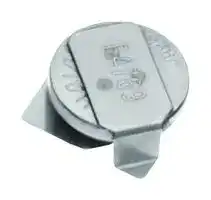
ML414H-IV01E
Rechargeable Battery, 3 V, Lithium, 1 mAh, SMD, 1
⚠️ Reference pricing provided. In case of supply shortages, we will connect you with our trusted procurement partners to ensure your project's continuity.
- Manufacturer: SEIKO INSTRUMENTS
- Product type: Batteries - Rechargeable
- SVHC: No SVHC (07-Nov-2024)
- Weight: 0.07g
- Pack Quantity: 1
- Product Range: ML Series
- Battery Voltage: 3V
- Battery Capacity: 1mAh
- Battery IEC Code: -
- Battery NEDA Code: -
- Battery Size Code: -
- Battery Terminals: SMD
- Battery Compliance: -
- Battery Technology: Lithium
- Battery Type / Size: -
| Delivery and price | |
|---|---|
| Units per pack | 1 |
| Price | 661.33 € |
| Current stock | 10+ |
| Lead time | 30 days |
Datasheet

STDE-B-ML0414H-0AGIV01E-0014-2

# Product Specifications

Type : Reflowable ML Lithium Rechargeable Battery Model : ML414H  IV01E

Approval of Customer This is a ~~"Standard Spec sheet " which is a~~ general Date : documentation for your evaluation. Company Name : Before we will start to supply this part to you, we would like you to ask us the formal Responsible person : version of this spec sheet. We will issue the formal specification sheet for you. (Basically the contents is the same as this one.) Signature : We would like you to put your signature on it to state your approval of the specification, and send it back to us. It will be a kind of contract between you and us

Seller: Seiko Instruments Inc.

Electronic Components Business Unit

Micro-Energy Division Sales Dep. Responsible person: General Manager Shigeo Niwa

Signature:

(Not applicable to submit this specification by e-mail)

P.1/10

STDE-B-ML0414H-0AGIV01E-0014-2

## History of Revision

|No.|Described by|Details of Change|Checked by|Issue Date|
|---|---|---|---|---|
|01|QA Dept<br>R.Ito|Initial Release for Standard specifications<br>No.STDE-B-ML0414-0AGIV01E-0014-1|QA Dep<br>H. Ishikawa|Nov.01.2007|
|02|QA Dept<br>R.Ito|The pocket form of a emboss carrier tape is<br>changed.<br>No. STDE-B-HB0414-0AGV01E-0014-2|QA Dep<br>H. Ishikawa|May.07.2008|


## Manufacturer information

Company name: Seiko Instruments Inc. Electronic Components Business Unit Micro-Energy Division

Address:  45-1, Aza-Matsubara, Kami-ayashi, Aoba-ku, Sendai-shi, Miyagi, Japan, postal code: 989-3124 Responsible person: Quality Assurance Department

Vice President and General Manager

Kazuhiro  Shimizu

Signature: (Not applicable to submit this specification by e-mail) - E-mail address: sii.sendai qa01@sii.co.jp

P.2/10

STDE-B-ML0414H-0AGIV01E-0014-2

## Index

|Contents|Page|
|---|---|
|Cover page|1|
|History of Revision<br>Manufacturer Information|2|
|Index|3|
|1. Application|4|
|2. Model|4|
|3. Chemical System and Structure|4|
|4. Nominal Specifications|4|
|5. Characteristics<br>Electric characteristics<br>Mechanical characteristics<br>Reliability<br>Parameter for Test and Measuring|5|
|6. Measuring Methods|7|
|7. Test Methods|8|
|8. Mounting Conditions|9|
|9. Indications (Markings)|9|
|10. Inspection (Outgoing and Incoming)|10|
|11. Package Specifications|10|
|12. In case of quality trouble|10|
|13. Operation of this Specification|10|


Appendix Leakage Criteria Construction of Battery Battery drawing with tabs Explanation for co-planarity Reflow Profile Drawing of Emboss Carrier Tape Battery position in emboss tape Taping specifications Package specifications (Overseas) Precautions for Your Safety

P.3/10

STDE-B-ML0414H-0AGIV01E-0014-2

## 1. Application

This specification applies to the Reflowable ML Lithium Rechargeable Battery, which is manufactured and supplied by Seiko Instruments Inc. to the customer specified in the cover page of this document.

## 2. Model

Model described in cover.

## 3. Chemical System and Structure

Refer to the document “The construction of battery” attached.

## 4. Nominal Specifications

|||Model|
|---|---|---|
|No.|Characteristics|ML414H|
|4-1|Range of temperature in which it can<br>be operated|From -20°C to 60°C|
|4-2|Recommended range of preservation<br>temperature and humidity|From 10°C to 30°C<br>60%RH or less|
|4-3|Nominal voltage|3V|
|4-4|Chargingvoltage|From 2.7V to 3.1V|
|4-5|Recommended Chargingvoltage|From 3.0V to 3.1V|
|4-6|Nominal capacity: after charging(mAh)<br>From 3.1V to 2.0V|1.0|
|4-7|Standard Discharge Current(mA)|0.005|
|4-8|Nominal dimensions<br>Diameter (mm)<br>Height(mm)|4.8<br>1.4|
|4-9|Standard mass(g)|0.07(without tabs)|
|4-10|Applicable SafetyStandard|UL1642(Not acquired)|


P.4/10

STDE-B-ML0414H-0AGIV01E-0014-2

## 5. Characteristics

- “Initial” means within one month after deliver.

- Attached “Leakage Criteria” is used for the judgment of leakage.

## 5-1. Electric characteristics

||||Model|Test|Measuring|
|---|---|---|---|---|---|
|No.|Characteristics||ML414H|Methods|Methods|
|1|OpenCircuitVoltage (V) at delivery<br>Maximum<br>2.8<br>Minimum<br>2.3|||-|6-4|
|||Maximum|2.8|||
|||Minimum|2.3|||
|2|OpenCircuitVoltage (V) aftercharge<br>Maximum<br>3.1<br>Minimum<br>2.8|||-|6-2 1) 2)<br>6-4|
|||Maximum|3.1|||
|||Minimum|2.8|||
|3|InitialCapacity (mAh)<br>24°C<br>0.8 or more<br>-20°C<br>0.2 or more<br>60°C<br>0.8 or more|||7-2|6-2|
|||24°C|0.8 or more|||
|||-20°C|0.2 or more|||
|||60°C|0.8 or more|||
|4|Initial Internal Impedance (ohm)<br>24°C<br>1500 or less<br>-20°C<br>5000 or less<br>60°C<br>1500 or less|||7-2|6-3|
|||24°C|1500 or less|||
|||-20°C|5000 or less|||
|||60°C|1500 or less|||


## 5-2. Mechanical characteristics

||||Model|Test|Measuring|
|---|---|---|---|---|---|
|No.|Characteristics||ML414H|Methods|Methods|
|1|TabPulling Strength(N): Withthe terminal<br>-<br>Refer to Battery Drawing with tabs<br>attached|||-|6-8|
|||-|Refer to Battery Drawing with tabs<br>attached|||
|2|External Appearance<br>Initial<br>No leakage<br>There<br>must<br>not<br>be<br>foreign<br>body<br>adhesion (over level S2).<br>There is no significant deformation,<br>stain, stricken mark,rust and burr.<br>After Tests<br>There is no significant leakage (over<br>level C1), deformation, stain, stricken<br>mark,rust and burr.||||6-9|
|||Initial|No leakage<br>There<br>must<br>not<br>be<br>foreign<br>body<br>adhesion (over level S2).<br>There is no significant deformation,<br>stain, stricken mark,rust and burr.|-||
|||After Tests|There is no significant leakage (over<br>level C1), deformation, stain, stricken<br>mark,rust and burr.|7-3<br>7-4<br>7-5||
|3|Free fall||Satisfy initial capacity and internal<br>impedance. There is no significant<br>leakage, deformation, stain, stricken<br>mark, rust and burr, which effect battery<br>performance.|7-9|6-2<br>6-3<br>6-9|
|4|Vibration||Satisfy initial capacity and internal<br>impedance. There is no significant<br>leakage, deformation, stain, stricken<br>mark, rust and burr, which effect battery<br>performance.|7-10|6-2<br>6-3<br>6-9|


P.5/10

STDE-B-ML0414H-0AGIV01E-0014-2

## 5-3. Reliability

||||Model|Test|Measuring|
|---|---|---|---|---|---|
|No.|Characteristics||ML414H|Methods|Methods|
|1|High Temperature Storage Characteristics<br>Capacity (mAh)<br>0.68 or more|||7-3|6-2|
|||Capacity (mAh)|0.68 or more|||
|3|<br>Low Temperature Storage Characteristics<br>Capacity (mAh)<br>0.70 or more|||7-4|6-2|
|||Capacity (mAh)|0.70 or more|||
|3|<br>Float Charge Characteristics<br>Capacity (mAh)<br>0.68 or more<br>Internal Impedance<br>(ohm)<br>3000 or more|||7-5|6-2<br>6-3|
|||Capacity (mAh)|0.68 or more|||
|||Internal Impedance<br>(ohm)|<br>3000 or more|||
|4|<br>Over Discharge Characteristics<br>Capacity (mAh)<br>0.68 or more|||7-6|6-2|
|||Capacity (mAh)|0.68 or more|||
|5|<br>Charge /Discharge Cycle Characteristics (Cycles)<br>10%D.O.D.<br>300cycle or more||||6-2|
|||10%D.O.D.|300cycle or more|7-7||
|6|Leakage Resistance||Level S3 (*1) or less<br>(There is no significant leakage<br>whicheffect battery performance.)|<br>7-8|6-9|


## 5-4. Table of Parameter for Test and Measuring

||||Model|Test|Measuring|
|---|---|---|---|---|---|
|No.|Characteristics||ML414H|Methods|Methods|
|1|Capacity<br>Vinit (V)<br>Vc (V)<br>Rp (kohm)<br>Tc (hrs)<br>Rd (kohm)<br>Voff(V)|||-|6-2|
|||Vinit (V)|2.0|||
|||Vc (V)|3.1|||
|||Rp (kohm)|3|||
|||Tc (hrs)|72|||
|||Rd (kohm)|470|||
|||Voff(V)|2.0|||
|2|Float Charge Characteristics<br>Vc (V)<br>3.1<br>Rp (kohm)<br>3|||7-5||
|||Vc (V)|3.1|||
|||Rp (kohm)|3|||
|3|Over Discharge Characteristics<br>Rs (kohm)<br>33|||7-6||
|||Rs (kohm)|33|||
|4|Charge /Discharge Cycle<br>Vc (V)<br>3.1<br>Rp (kohm)<br>3<br>Tcs (hrs)<br>5<br>Rds (kohm)<br>100<br>Tds (hours)<br>4|||7-7||
|||Vc (V)|3.1|||
|||Rp (kohm)|3|||
|||Tcs (hrs)|5|||
|||Rds (kohm)|100|||
|||Tds (hours)|4|||


P.6/10

STDE-B-ML0414H-0AGIV01E-0014-2

## 6. Measuring Methods

## 6-1. General Conditions

The measuring conditions are temperature of 24+/-2 °C, humidity of 65+/-20%Rh and within one month after delivering, if not specified.

## 6-2. Capacity

- 1) Charging: Apply specified voltage (Vc) through the protective resistance (Rp) for specified time (Tc).

- 2) Discharging: Discharging with load resistance (Rd) until the cell voltage reaches the cut off voltage (Voff), the cell voltage (Vi) and time (Ti) should be measured at intervals within one hour.

**==> picture [394 x 50] intentionally omitted <==**

## 4) General Circuit: The circuit, for charging and discharging, is shown as follows.

**==> picture [258 x 111] intentionally omitted <==**

**----- Start of picture text -----**<br>
Discharge<br>Rp<br>Vc<br>+<br>Charge - Vi Rd<br>**----- End of picture text -----**<br>


## 6-3. Internal Impedance

Measure by alternating current method using frequency of 1KHz.

## 6-4. Voltage

Use a direct current voltage meter, which has input impedance of 10Mohm or more and accuracy of +/-0.2% or less.

## 6-5. Current

Use an ammeter with accuracy of +/-0.2% or less.

## 6-6. Resistance

Resistance, which includes resistance of all external circuits, requires accuracy of 2.0% or less.

## 6-7. Size measurement

Use the size measurement instruments with accuracy of 0.01mm or 0.001mm if necessary.

6-8. Terminal pull strength: The direction of the pull is vertical. Use a digital force gauge, which has accuracy of +/-1.0% or less.

## 6-9. Appearance

After Test : Microscope, which has magnification of 10 times.

At delivery : Naked eye

P.7/10

STDE-B-ML0414H-0AGIV01E-0014-2

## 7. Test Methods

## 7-1. General conditions

If not specified, the test conditions are temperature of 24+/-2 °C, humidity of

65+/-20%Rh and The test should be started within one month after delivering.

- 7-2. Temperature Characteristics Test

Measure electrical characteristics after exposing battery to each temperature atmosphere for 2 hours.

Temperature: -20+/-2 °C, +24+/-2 °C, +60+/-2 °C

- 7-3. High Temperature Storage

After Charging at voltage of Vc through protective resistance of Rp for Tc hours, store battery at temperature 60+/-2 °C for 20days.

- 7-4. Low Temperature Storage

After Charging at voltage of Vc through protective resistance of Rp for Tc hours, store battery at temperature of -40+/-2 °C for 96 hours.

- 7-5. Float Charge Characteristics Test

Charge battery at voltage of Vc through protective resistance of Rp at temperature of 24+/-2 °C for 30days.

- 7-6. Over Discharge Characteristics Test

Discharge the battery by discharge resistance of Rs for 30 days.

- 7-7. Charge / Discharge Cycle Characteristics Test

   - Charge : Apply specified voltage (Vc) through protective resistance (Rp) for specified period (Tcs).

Discharge : With load resistance (Rds) for specified period (Tds).

The battery is repeated in the above condition. Its closed circuit voltage is 2.00V or more.

- 7-8. Leakage Resistance (Thermal Shock Test: Air to Air)

Hold battery at -10+/-2 °C for 1 hour then hold it at 60+/-2 °C for 1 hour.

Repeat 100 cycles between above conditions. (Chamber) Not humidity controlled.

- 7-9. Free Fall Test

Drop the battery ten times in an arbitrary direction on the board of the oak of 3cm in thickness from the height of 75cm. The tabs of battery should be cut before test.

## 7-10. Vibration Test

Vibrate the battery in the direction of 3(x, y, z) for 30 minutes by 1000 cycles per minute with amplitude of 2mm. The tabs of battery should be cut before test.

P.8/10

STDE-B-ML0414H-0AGIV01E-0014-2

## 8. Mounting Conditions

8-1. Battery with tabs

- 1) For soldering iron

Use the conditions as follows

||Model|
|---|---|
||ML414H|
|Temperature|260°C or less|
|Soldering time|Within five seconds|


Within above conditions, do not heat battery over 100°C.

Do not solder directly to the battery.

## 2) Dip soldering

It is possible to apply. Do not heat the battery over 100°C

3) Reflow soldering

It is possible to apply.

Refer to “Reflow Profile” attached.

## 8-2. Battery without tabs

Use the spring terminal, which meets the specification as follows. Surface treatment: Nickel plating or Gold plating Contact force: 0.5N or more

## 9. Indications (Markings)

9-1. Dies

Following items are indicated on battery.

Below items can be omitted except item (2).

(1) Model code

- (3) Manufacturer’s name or monogram

(2) Cathode polarity (+)

(4) Country of origin

## 9-2. Date of Manufacturing

Date of Manufacturing is marked on the negative tab or the battery (if possible) and label of each package as.

(Example) M51...manufactured in January 2005

M6Y...manufactured in November 2006 M70...manufactured in October 2007

Abbreviation of month: Jan. (1), Feb. (2).... Sep. (9), Oct. (0), Nov. (Y), Dec. (Z)

**is our own number, and might be omitted.

Method of marking of manufacturing date is laser type.

P.9/10

STDE-B-ML0414H-0AGIV01E-0014-2

## 10. Inspection (Outgoing and Incoming)

## 10-1. Lot composition

Lot must be composed within the same manufacturing conditions.

## 10-2. Outgoing Inspection

Seiko Instruments Inc. shall do outgoing inspection before shipping. The inspection items are as below table. The inspection results shall be submitted by the customer request.

|No|Characteristics|Inspection levels|Frequency|
|---|---|---|---|
|1|Opencircuitvoltage|n=6, c=0|per lot|
|2|Internal Impedance|n=6, c=0|per lot|
|3|Discharge capacity|n=6, c=0|per month|
|4|Leakageresistance|n=10, c=0|per lot|


## 10-3. Incoming Inspection

The customer should do incoming inspection within 30 days from receiving day. If defective products are find out at incoming inspection, the customer immediately should notify to Seiko Instruments Inc. in writing with the defective products for replacement request. When there was no contact from you within 30 days, we shall judge that those were accepted.

## 11. Package Specifications

Examples of the tray or the Emboss tape for wrapping, wrapping specification, and packing specification are shown in the following as our standard.

## 11-1. Wrapping

Refer to “Drawing of Emboss Carrier Tape”, “Battery position in emboss tape” and “Taping specifications”.

## 11-2. Wrapping and packing

Refer to “Package specifications (Overseas)” attached.

## 12. In case of quality trouble

The warranties set forth herein are the only warranties on the products.

The liabilities of Seiko Instruments Inc. in connection with the products under these specifications are expressly limited to the replacement of defective products.

## 13. Operation of this Specification

## 13-1. Agreement

Before these specifications being revised, the agreement, of the customer, seller and manufacturer, is required.

## 13-2. Negotiation

If some accident not specified on these specifications occurs, the customer, seller and manufacturer must negotiate in order to solve the problem faithfully.

P.10/10

## Leakage Criteria

|||||Criteria|
|---|---|---|---|---|
|Grade|||Diagram|Definition|
|S1|||Leakage<br>Leakage|The leakage can not be seen by naked<br>eyes, but can be seen by microscope,<br>which have magnification of 10 to 15.|
||||||
|S2|||Leakage<br>Leakage|The leakage can be seen by naked eyes.<br>The area of leakage is within half of the<br>round and reaching to neither the flat<br>area of the negative can nor the straight<br>area of the positive can.<br>The leakage is not bridged between the<br>negative can and the positive can.|
||||||
|S3|||Leakage<br>Leakage|The area of leakage is from half to all of<br>the round and reaching to neither the flat<br>area of the negative can nor the straight<br>area of the positive can.<br>The leakage is not bridged between the<br>negative can and the positive can.|
||||||
|C1|Leakage<br>Leakage<br>Bridge|||The area of leakage is reaching to either<br>the flat area of the negative can or the<br>straight area of the positive can.<br>The leakage is bridged between the<br>negative can and the positive can.|


|

|

**==> picture [550 x 628] intentionally omitted <==**

**----- Start of picture text -----**<br>
|<br>| GGA Negative electrode | |<br>- | |\OBBARSE Negative electrode can 6vz7/\L—*4 Separator |<br>Nickel plated Stainless stee] ) (LAY UT FT S1g99<br>. Engineering plastic<br>-<br>OS AR Electrolyte<br>. OlF#R Positive electrode (SABIE Oraanic electrolute)<br>|<br>iri Positive electrode can _<br>(Syl TVA<br>:<br>| Nickel plated stainless steel) |<br>FiteNo. ze vas] 30460000-L 000-1<br>Pater<br>rfee<br>HistoryBgge|ETeeDate Et [Reasona ——“ ateoe Bet [31oeMa y .”aon 07 of battery<br>nes |<br>Proved gH Creche RB Drawn BS PSReH |GM MeeeOR<br>SAS oN (ane<br>pet| | eo | am 9S les se no<br>_ Seiko Instruments Inc.<br>**----- End of picture text -----**<br>


—

**==> picture [265 x 32] intentionally omitted <==**

**----- Start of picture text -----**<br>
(NOTES)1. TAB pulling strength : Over 9, 8N(1. Okaf)<br>(SE) [[LSPS][ RRB:]][[ RRB:]] [[9]] [[BN(1.][ Okof)]][[ Okof)]] [[DUE]]<br>**----- End of picture text -----**<br>


**==> picture [557 x 765] intentionally omitted <==**

**----- Start of picture text -----**<br>
| | | £5 .>os (SE) [[LSPS][ RRB:]][[ RRB:]] | [[9]] [[BN(1.][ Okof)]][[ Okof)]] [[DUE]] |<br>Wo ie<br>- =< _f Aw<br>| VNCNX ReconmendableeaePC Board layout  Cee<br>.<br>=<br>tS |<br>a<br>,<br>7 so +01 8 ze<br>nea<br>alse | A Lo A) ol/z g<br>tz Ss 3 501 | 3 Oasa s :<br>a am . . —<br>NS | N olerances 0 : ‘<br>| Hh x ge| Ta |<br>1.24<br>PTFite No 23046 1090-TVOIE-1<br>POPa Patera ses [TAB: SUSSO4-NT -P_H/2<br>a 2~Aum‘Solder(Snplating100%) IW wt<br>rateEU7A-O24]10.Nay. ORE s—C<i‘C™SC*dSCOCNme”~=«(Battteryet May. 07drawing with tabs<br>28 TSR<br>Cal.gazeNo. |ML414H IVOIE<br>mie | a | Pa |S leads [109 IVE<br>[Instruments] [Inc.] | |<br>- [Seiko]<br>**----- End of picture text -----**<br>


**==> picture [583 x 595] intentionally omitted <==**

**----- Start of picture text -----**<br>
Battery negative side based | |<br>sR : a | _<br>¥ py7; +0,06mm eee = .<br>akS|Wa)<br>| “Ceo<br>Fete rime [SAB<br>ater OSU-IVOIECL<br>SE  es |<br>a eeec ee<br>“|HistoryBbae]|ee a ——ham ge ‘Sat e  Bt (eg10 May.oreuon “07 of coplanar{ty|<br>Approved Date Bit | Reason | SSR |<br>EsBE #88| Checked #82 | Drawn S69 |ShemScale R@| sm]—| watsCa l . No. (ML414H IVOLE<br>| EO | ERLeBatts [109 IVOIEC |<br>| ~ Seiko Instruments Inc. |<br>**----- End of picture text -----**<br>


## Reflow Profile

## < Reflow Soldering Conditions >

Reflow Soldering Profile: As per shown in Fig.-1.

The times of repeated reflow soldering must be two times or less . The temperature must be measured at top of the cell.

**==> picture [421 x 234] intentionally omitted <==**

**----- Start of picture text -----**<br>
250<br>200<br>150<br>100 Time above 200 ° C*1<br>50<br>0<br>0 50 100 150 200 250 300<br>Time(seconds)<br>C)<br>°<br>Temperature(<br>**----- End of picture text -----**<br>


Fig.-1: Reflow soldering profile (for reference only)

- *1: Time above 200 ° C must be max. 80seconds.

Total length of profile must be max. 300seconds.

||Model|
|---|---|
|Peak Temperature|ML414H|
|Max.260°C|Applicable(within 5 seconds)|


## < Underfilling Conditions >

Temperature: Max.160 ° C, Time: Max.10 minutes.

**==> picture [558 x 801] intentionally omitted <==**

**----- Start of picture text -----**<br>
(Notes)1.All fillets not specified : R max 0.3<br>. 2. The plan dimension : the bottom of emboss pocket<br>E) LBROBWNI—-FAE3. Accumulation tolerance of holes: 40+0. 2mm(i0 holes)<br>2, ROI WROLE<br>3.ROUM FHWIZSSSTA A LIURARTYeyRMASEFCA+0.KETOUVATHS 2megS.<br>Att} =| _<br>al nt<br>_ |<br>4<br>= LO<br>g+0.1 A /<br>| |<br>get<br>4, Q#0.1 0. 3+0. 05<br>Y VY)<br>| oh Z<br>tn 4<br>|e :<br>: i<br>g. Yl<br>| e LL<br>| g<br>etalEtd (141‘ EN<br>sen A (10:1)<br>Fe8 sae 977 NSTO-DO00-1<br>ratertal sees Polusturen(Natural) if UFO Fao)<br>PEG 0. PR<br>rateaE Bt Ror. 0, 2007<br>a aan] Shag PraulneDt 2tvl?7-7'of embossNS carrier tape<br>Rms = red<br>==x Seiko Instruments=SI)27 trae]Inc.OS 1]Micro-Energy‘watsDru. No. [3177 NGIDivision<br>**----- End of picture text -----**<br>


## Battery position in emboss tape

**==> picture [437 x 561] intentionally omitted <==**

**----- Start of picture text -----**<br>
1. Model<br>ML414H  IV01E<br>2. Capacitor position in emboss tape<br>                Negative side<br>                                 Positive side<br>3. Quantity / reel<br>MAX. 4000 pcs / reel<br>**----- End of picture text -----**<br>


**Seiko Instruments Inc.**

**==> picture [534 x 768] intentionally omitted <==**

**----- Start of picture text -----**<br>
(Notes)There is no part lack in the component section.<br>CE)RRPBAZIK. BERBORNICE<br>Traller_section length : min 160mm<br>KL—-S—tize : 160mm DAE<br>Hub (material: foaming styrene)<br>I\T (48 FSAAFO-IL)<br>ian<br>ao<br>din os oil,<br>afa< Si TTS<br>6. |<br>| Leader section length : min 400mm<br>17,5+0.5 IJN—JHs: 400mm DLE<br>1,640.5 Wien OF) ReelI(material: carton) BORIL)<br>Carrier tape<br>{natérlal:Conduct ive polystyren)<br>(A735 ‘Seite . Drawing direction<br>: BREN IAFLDY) See La<br>—_—_——p<br>eoogogo go 0 0O0O"\0O 90 0O Ooo 0o0 0 00 00 00 00 C00 00000006<br>BHRHRERHREEREBRBOUUUUUUL<br>Component section — Carrier tape sealed<br>F 2 dayals a) with top cover tape<br>SULA erty NARs» AOL<br>Leader section length : min 400mm<br>U—-Jthes : 400mm ht<br>FathpaE04B-019)07.Jun." 04]! J—)LOuUsk, ARE | [Date] No. 2 Btae|09. 131770E1-00000-2 May.* 03<br>a ee = Se [eres specifications<br>RES<br>Rerroves 5 Checked BR Droun Seale ee2m | F—-ED Tite<br>WER | BR | A ae 7 wads [3177 OF 16<br>| Seiko Instruments Inc.<br>**----- End of picture text -----**<br>


,

|

:

|

**==> picture [539 x 778] intentionally omitted <==**

**----- Start of picture text -----**<br>
Drawing direction<br>Hae SS | | |<br>WS J) | F—DU-N<br>Label :Model, quantity<br>J DAIL : roe KS '<br>Max 15reels<br>|<br>Maxl5reels in plastic bag packing<br>a BA DSC —) Rae,<br>Plastic bag | |<br>oR<br>|<br>.<br>=<=Z_<br>| 37harge Jhard carton a<br>co, D—-hYSANIL Bie, MARES, MARE, ES<br>| *<br>Carton label:Model, eamquantity, (UFdelivery OL Resedate, teh ) =<br>fo purchase order number.<br>tt xk<br>summed tare — ! CAUTION(Lithium rechB a ttrg e ablerles inside}etc.<br>. 7 f+LOZ £ Fi eat; ora the ship transportation<br>a |oe | mee<br>, | 355 mass: MAX 15k9 | The above packaging specif {cations are standard.<br>2. Sx ka These specifications vary with the quantity to be supplied.<br>tie. APPRSEPENEEOC. MARDOMEBICKOREDED,<br>TiteE03B-025/8.EQSA-019|24. Aus.’ Apr. 303 sti‘O™SOSOSC;CC*”d*:COCNmeSFRRNRDOASSS | [date] No. zrEtt va~~ |24,[3177008'7-0000-2(PackageApr.”specifications U5  (Domest lc)<br>fereel Be ecied pes Dron Si Leelee TAP2m MER BART)<br>= gees [N/<br>WEE | eR| SIa ge— ee| Batts (3177: DON 7<br>| Seiko Instruments Inc. — |<br>**----- End of picture text -----**<br>


|

**==> picture [534 x 772] intentionally omitted <==**

**----- Start of picture text -----**<br>
Drawing direction<br>SslnlLAa oD<br>A<br>WS 1) ZIDUW<br>Ty<br>Label :Model, quantity<br>Max 15reels<br>Maxt5reels in plastic bag packing<br>Plastic bag RA DAL—/ Sa<br>Po)<br>=Z_<br>=,<br>BRarge |L35hard carton PAR tlite<br>A—-hYPAIL TEs RES D—-RYNo,<br>| FRM (UF OLrene)<br>Carton label:Destination, country of origin,<br>tt Carton number. =<br>Gummed tape | CAUTION(Lithium rechargeable<br>FilLs—TS Batteries inside)etc.<br>aan NE<br>355 mass:MAX 15kg The above packaging specifications are standard.<br>Bs RA idk él.These speciilcations vary with the quantityto be supplied.<br>E0S8-015/07.£038-025/08. Aus.Mav.’ 03SOS  anesaraRARMROARBEir (EAB })  BVRIKRENCEOCFile|9ad a No.tee=|31'77S007-C0000-3Bt _[24, Apr." 03MAROKEIC KORO.<br>EO3A-019|24.Aer.OS] ——sisd~SsNatme~—s*[Pakasge speci f ications (Overseas)<br>Approved 2m ARR (SFT)<br> #8) Checked ##| Draun S62 | ScaleR@ | | Cal.BesNo. 07<br>HEH | BK | Fer ee a ais [3177 S007<br>Seiko Instruments Inc. |<br>**----- End of picture text -----**<br>


## **Precautions for Your Safety**

## **SII Lithium rechargeable batteries (ML, MS, HB, TS) contain flammable organic solvents. For your safety, please follow following prohibitions. !** WARNING!

1. Do not charge by high current or high voltage. Doing so may generate gas inside the battery, resulting swelling, catching fire, and heat generation or bursting.

2. Do not heat, disassemble nor dispose of in fire Doing so damages the insulation materials and may cause catching fire, heat generation, leakage or bursting.

3. Do not solder directly to the battery

If soldering is performed directly to the battery, the battery is heated up, consequently cause leakage, explosion or fire due to overheating from internal short-circuiting.

4. Do not short.

   - If the (+) and (-) come into contact with metal materials, short-circuiting occurs. As a result, catching fire, heat generation, leakage or bursting.

5. Keep batteries out of children’s reach.

   - If leaked liquid is ingested or a battery is swallowed, consult a physician immediately.

6. Do not reverse placement of (+) and (-)

   - If the (+) and (-) side of the battery is reverse inserted, it may cause a short-circuiting or over discharge of the battery on some equipment and it may induce overheating, explosion or fire.

7. Do not discharge by force

If the battery is discharged by direct connection to an external power supply etc., voltage of the battery will decline lower than 0 volts (electrical reversal) and will cause the battery case to expand, overheat, leak, explode or burn.

8. Incase of leakage or a strange-smell; keep away from fire to prevent ignition of any leaked electrolyte.

9. In case of disposal, insulate between (+) and (-) of battery by an insulating

Jumbling batteries or with other metal materials cause short-circuiting. As a result, catching fire, heat generation, leakage or bursting.

**==> picture [232 x 90] intentionally omitted <==**

**----- Start of picture text -----**<br>
Do not jumble batteries<br>Short-circuiting<br>Example of insulation discharge discharge<br>Insulating tape<br>Contacting between batteries cause short-<br>circuiting such as above diagram.<br>**----- End of picture text -----**<br>


## **!** CAUTION!

1. If leaked liquids gets in the eyes, wash them with clean water and consult a physician immediately.

2. Do not use new and used batteries together. Do not use different types of batteries together.

   - It may cause catching fire, heat generation, leakage or bursting.

3. If you connect two or more batteries in series or parallel, please consult us in advance.

   - It may cause bursting or catching fire due to unbalanced load or voltage.

4. Do not use nor leave the batteries in direct sunlight

## nor in high-temperature areas.

It may cause catching fire, heat generation, leakage or bursting.

5. Do not apply strong pressure to the batteries nor handle roughly.

It may cause catching fire, heat generation, leakage or bursting.

6. Avoid contact with water.

   - It may cause heat generation.

7. Keep batteries away from direct sunlight, high temperature and humidity. It may cause heat generation.

## **For prevention the performance of battery**

1. Pay attention to mat or sheet for ESD

Battery with tabs or battery on PCB may short circuit on the mat for ESD. As a result the voltage of cell drops down.

2. Pay attention to soldering by tips

Do no touch the battery by solder chips, in case of soldering another components after equipping battery.

- In basically, keep any high temperature process away from battery.

3. Pay attention to material of jig for pick and place

Use nonconductive material of jig for pick and place of batteries, for short-circuit protect. If short circuit of battery is occurred, the voltage of battery drops down quickly but raise gradually.

4. Pay attention to washing and drying Some detergent or high temperature drying cause deteriorates of battery. If wash batteries, consult us.

## **International Transportation and Disposal**

## **International Air / Marine / Ground Transportation**

Regarding the transport of Lithium battery and Lithium-ion battery, organizations like IATA, ICAO, IMO, DOT have determined transport regulations, based on the United Nations Regulations. The SII Lithium rechargeable batteries can be transported being not subject to the provisions of dangerous goods, if they meet the following requirements.

- (a) **<Lithium content>** The Lithium content is not more than 1g.

(b) **<Safety Certification>** Each battery is of a type proved to meet the requirements of each test in the UN Manual of Tests and Criteria, Part 3, sub-section38.3.

(c) **<Strong packaging>** Batteries are separated so as to prevent short circuits and are packed in strong packaging.

(d) **<Caution Label>** Each package must be marked indicating that it contains lithium batteries and that special procedures should be followed in the event that the package is damaged.

(e) **<Not Restricted Declaration>** Each shipment must be accompanied with a document indicating that the packages contain lithium batteries and that special procedures should be

followed in the event that a package is damaged.

(f) **<Package Drop Test>** Each packages is capable of withstanding a 1.2 m drop test in any orientation without damage to batteries contained.

- (g) **<Weight Limit>** Except in the case of packed with equipment, packages may not exceed 30 kg gross mass.

- (h) **<Transport to U.S.A>** When you transport to U.S.A., emergency contact information must be indicated on the required documents.

## **For further information, please consult with us.**

## **Disposal**

Recent environmental protection concerns have increased globally and waste and recycling are regulated in the world. The current regulations differ in each country, state and local municipality. Please consult local regulations and authorities for recommended disposal of batteries. If you are in question of application or safety of our batteries, please consult your local authorities.

20071101

Seiko Instruments Inc.
Updated at June 4, 2026
About Novapart
Novapart is a B2B electronic component broker specialising in stock shortages and cost reduction. We source hard-to-find parts and identify compliant alternatives across a catalogue of 410,000+ components from 500+ manufacturers.
Learn more →Stock Shortage Specialist
When a component is unavailable, discontinued or has an unacceptable lead time, we tap into our network of vetted European and Asian distributors to source what you need — without compromising on quality or traceability.
Request a quote →Compliant Alternatives
We identify pin-to-pin, electrically equivalent substitutes that meet the same certifications (RoHS, AEC-Q100, REACH) as your original specification — validated against datasheets, not just part numbers. Often at a lower cost.
BOM Analysis service →