
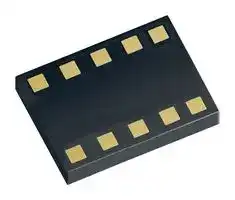


MAXM17225AMB+
DC/DC POL Converter, Adjustable, Boost, 0.4 V to 5.5 V in, 1.8 V to 5 V/0.2A out, eMGA-10
- Manufacturer: ANALOG DEVICES
- Product type: DC / DC Non Isolated Board Mount Converters - Adjustable Output
- Available until stocks are exhausted
- MSL: MSL 3 - 168 hours
- SVHC: No SVHC (21-Jan-2025)
- Depth: 2.1mm
- Width: 2.6mm
- Height: -
- Topology: Boost (Step Up)
- No. of Pins: 10Pins
- Product Range: MAXM17225 Series
- No. of Outputs: 1 Output
- Output Current: 200mA
- Output Power Max: -
- Input Voltage Max: 5.5V
- Input Voltage Min: 400mV
- Output Current Max: 300mA
- Output Voltage Max: 5V
- Output Voltage Min: 1.8V
- Input Voltage DC Max: 5.5V
- Input Voltage DC Min: 400mV
- DC / DC Converter Type: eMGA-10, Module
- DC / DC Converter IC Case: eMGA
- Operating Temperature Max: 125°C
- Power Supply Applications: Medical
- DC / DC Converter Output Type: Adjustable
| Delivery and price | |
|---|---|
| Units per pack | 500 |
| Price | 2.46 € |
| Current stock | 10+ |
| Lead time | 30 days |

**==> picture [176 x 34] intentionally omitted <==**

**==> picture [171 x 12] intentionally omitted <==**

**----- Start of picture text -----**<br>
Evaluation Kit  Design  Tools  Support<br>Available Resources and Models<br>**----- End of picture text -----**<br>


_Click here to ask an associate for production status of specific part numbers._

## **Tiny, 0.4V to 5.5V Input, 300nA IQ, nanoPower Boost Module with True Shutdown**

## **MAXM17225**

## **Product Highlights**

- Extends Battery Life

   - 300nA Ultra-Low Quiescent Current

   - 0.5nA Shutdown Current

   - 95% Peak Efficiency

   - True Shutdown

      - Output Disconnects from Input

      - Zero Forward/Reverse Current from VIN,VOUT

- Easy to use–Addresses Popular Operation

   - VIN: 5.5V Down to 0.4V

   - Minimum Startup Voltage of 0.88V

   - Single Resistor-Adjustable VOUT from 1.8V to 5V

   - VOUT Selection Resolution: In 100mV Steps

## **Simplified Application Diagram**

**==> picture [202 x 131] intentionally omitted <==**

**----- Start of picture text -----**<br>
INPUT  OUTPUT ADJUSTABLE<br>(0.4V TO 5.5V) LX (1.8V TO 5V)<br>IN OUT<br>IN OUT<br>CIN  COUT<br>10µF 10µF<br>INS<br>MAXM17225<br>EN RSEL<br> GND<br>RSEL<br>**----- End of picture text -----**<br>


   - 1A Peak Inductor Current Limit

- Robust Performance Features Include

   - Internal Current Limit

   - Integrated Soft-Start

   - PFM Control Scheme for Higher Efficiency at Light Load Operation.

- Reduced Size and Increased Reliability

   - 2.1mm x 2.6mm, 10-Lead eMGA Package

   - Operating Temperature Range -40°C to +125°C

## **Key Applications**

- Health Monitoring and Fitness Devices

- Ultra-Low-Power IoT Modules

- Bluetooth[®] LE Devices

- Wearables

- Portable Point-Of-Sale (POS) Terminals

- USB On-The-Go Adapter Modules, USB Charging

- Supercapacitor Backup for RTC/Alarm Buzzers

- Single or Dual Cell Alkaline Battery Products

_Bluetooth is a registered trademark of Bluetooth SIG, Inc._

## **Pin Description**

**==> picture [206 x 254] intentionally omitted <==**

**----- Start of picture text -----**<br>
TOP VIEW<br>IN 1 10 EN<br>IN 2 9 OUT<br>INS 3 MAXM17225 8 OUT<br>RSEL 4 7 GND<br>LX 5 6 GND<br>**----- End of picture text -----**<br>


_**Ordering Information appears at end of data sheet.**_

_19-101160; Rev 0; 7/21_

Tiny, 0.4V to 5.5V Input, 300nA IQ, nanoPower Boost Module with True Shutdown

MAXM17225

## **Absolute Maximum Ratings**

|**Absolute Maximum Ratings**||
|---|---|
|IN, INS, EN, OUT, RSELto GND .......................... -0.3V to +6V|Operating Temperature Range ........................ -40˚C to +125˚C|
|LX to GND ................................................ -0.3V to VOUT+0.3V|Maximum Junction Temperature ................................... +150˚C|
|Continuous Power Dissipation (TA= +70°C) .............................|Storage Temperature Range ........................... -65˚C to +150˚C|
|eMGA (derate 9.72 mW/°C above 70°C) ................. 777.91mW|Lead Temperature (soldering, 10 seconds) .................. +300˚C|
||Soldering Temperature (reflow) ..................................... +260˚C|


**Note 1:** LX pin has internal clamps to GND and OUT. These diodes may be forward biased during switching transitions.

_Stresses beyond those listed under “Absolute Maximum Ratings” may cause permanent damage to the device. These are stress ratings only, and functional operation of the device at these or any other conditions beyond those indicated in the operational sections of the specifications is not implied. Exposure to absolute maximum rating conditions for extended periods may affect device reliability._

## **Package Information**

## **10 eMGA**

|**Package Information**<br>**10 eMGA**||
|---|---|
|Package Code|M102A2+3|
|Outline Number|_21-100245*_|
|LandPattern Number|_90-100084*_|
|**Thermal Resistance, Four Layer Board:**||
|Junction to Ambient(θJA)|102.84 ºC/W|
|Junction to Case Thermal Resistance(θJC)|15.04 ºC/W|


*For the latest package outline information and land patterns (footprints), go to _www.maximintegrated.com/packages._ Note that a “+”, “#”, or “-” in the package code indicates RoHS status only. Package drawings may show a different suffix character, but the drawing pertains to the package regardless of RoHS status.

Package thermal resistances were obtained using the method described in JEDEC specification JESD51-7, using a four-layer board. For detailed information on package thermal considerations, refer to _www.maximintegrated.com/thermal-tutorial_ .

## **Electrical Characteristics**

(VIN = VINS = 1.8V, VOUT = 3.3V, TA = -40°C to +125°C, CIN = 1x10µF, COUT = 1x10µF, unless otherwise specified. See _Note 2_ . )

|**PARAMETER**|**SYMBOL**|**CONDITIONS**|**CONDITIONS**|**MIN**<br>**TYP**<br>**MAX**|**UNITS**|
|---|---|---|---|---|---|
|Minimum Input Voltage|VIN_MIN|Runs from output after startup, IOUT=<br>1mA, VEN_EXTERNAL > 600mV||400|mV|
|Input Voltage Range|VIN|Guaranteed by LX max On-time||0.4<br>5.5|V|
|Minimum Startup Input<br>Voltage|VIN_STARTUP|RL≥ 3kΩ, Typical Operating Circuit, TA =<br>25°C||0.88<br>0.95|V|
|Output Voltage Range|VOUT|See _R_~~_S_~~_EL Selection Table_.For VIN<<br>VOUTtarget. _Note 3_||1.8<br>5|V|
|Output Accuracy, LPM|ACCLPM|VOUTfalling when LX switching<br>frequency is > 1MHz. _Note 4_||-1.5<br>1.5|%|
|Output Accuracy,<br>Ultra-Low-Power Mode|ACCULPM|VOUTfalling when LX switching<br>frequency is > 1kHz. _Note 5_||1<br>2.5<br>4|%|
|Output Current|IOUT|VIN = 1.8V, VOUT = 3.3V<br>See IOUTvs. VINcurves in TOC section||200|mA|
|Efficiency|η|VIN= 1.8V, VOUT= 3.3V, IOUT= 100μA||95|%|
|||VIN= 1.8V, VOUT= 3.3V, IOUT= 50mA||93||
|Quiescent Supply<br>Current into OUT|IQ_OUT|EN = Open after<br>startup. Not|TA = 25°C|300<br>600|nA|
||||TA= -40°C to 85°C|470<br>900||


www.maximintegrated.com

Maxim Integrated | 2

Tiny, 0.4V to 5.5V Input, 300nA IQ, nanoPower Boost Module with True Shutdown

MAXM17225

(VIN = VINS = 1.8V, VOUT = 3.3V, TA = -40°C to +125°C, CIN = 1x10µF, COUT = 1x10µF, unless otherwise specified. See _Note 2_ . )

|**PARAMETER**|**SYMBOL**|**CONDITIONS**|**CONDITIONS**|**MIN**<br>**TYP**<br>**MAX**|**UNITS**|
|---|---|---|---|---|---|
|||switching, VOUT=<br>104% of VOUT<br>target|TA= -40ºC to<br>125ºC|1000<br>2000||
|Quiescent Supply<br>Current into IN|IQ_IN|TA = 25°C||0.1|nA|
|Total Quiescent Supply<br>Current into IN, LX, EN|IQ_IN_TOTAL|EN = Open after startup. Not switching,<br>VOUT = 104% of VOUT target. Total<br>current includes IN, LX, and EN. TA =<br>25°C||0.5<br>100|nA|
|Shutdown Current into<br>IN|ISD_IN|VOUT= VEN= 0V, TA= +25°C, RL= 3kΩ||0.1|nA|
|Total Shutdown Current<br>into IN, LX|ISD_TOTAL|VEN= VIN= VLX= 3V, includes LX and<br>IN leakage, TA= +25°C, RL= 3kΩ||0.5<br>100|nA|
|Inductor Peak Current<br>Limit|IPEAK|_Note 6_||0.8<br>1<br>1.2|A|
|LX Maximum Duty<br>Cycle|DC|_Note 7_||70<br>75|%|
|LX Maximum On-Time|tON|_Note 7_|VOUT= 1.8 V|280<br>365<br>450|ns|
||||VOUT= 3 V|270<br>300<br>330||
|LX Minimum Off-Time|tOFF|_Note 7_|VOUT= 1.8V|90<br>120<br>150|ns|
||||VOUT= 3 V|80<br>100<br>120||
|N-Channel On-<br>Resistance|LS_RDS(ON)|VOUT= 3.3V||31<br>70|mΩ|
|P-Channel On-<br>Resistance|HS_RDS(ON)|VOUT= 3.3V||75<br>150|mΩ|
|Synchronous rectifier<br>Zero Crossing as a<br>percent of Peak Current<br>Limit|IZX|VOUT= 3.3V,<br>_Note 8_||2.5<br>5<br>7.5|%|
|Enable Voltage<br>Threshold|VIL|When LX switching stops, EN falling, TA<br>= -40°C to +85°C||250<br>500|mV|
|||When LX switching stops, EN falling, TA<br>= -40°C to +125°C||150||
||VIH|EN rising, TA = -40°C to +85°C||600<br>850||
|||EN rising, TA = -40°C to +125°C||900||
|Enable Input Leakage|IEN_LK|VEN= 5.5V, TA= +25°C||0.1|nA|
|||VEN= 0V, TA= +25°C||0.1||
|Required Select<br>Resistor Accuracy|RSEL_ACC|Use the nearest ±1% resistor from _R_~~_S_~~_EL_<br>_Selection Table_.||-1<br>1|%|
|Select Resistor<br>Detection Time|tRSEL|VOUT= 1.8V, CRSEL< 2pF, _Note 9_||360<br>600<br>1320|µs|


**Note 2:** Limits are 100% production tested at TA = +25°C. Limits over the operating temperature range and supply voltage range are guaranteed by design and correlation using Statistical Quality Control (SQC) methods.

www.maximintegrated.com

Maxim Integrated | 3

Tiny, 0.4V to 5.5V Input, 300nA IQ, nanoPower Boost Module with True Shutdown

MAXM17225

- **Note 3:** Guaranteed by the required select resistor accuracy parameter.

- **Note 4:** Output accuracy, low-power mode is the regulation accuracy window expected when IOUT > IOUT_TRANSITION. See _PFM Control Scheme_ and VOUT_ERROR vs ILOAD TOC for more details. This accuracy does not include load, line, or ripple.

- **Note 5:** Output accuracy, ultra-low-power mode is the regulation accuracy window expected when IOUT < IOUT_TRANSITION. See _PFM Control Scheme_ and VOUT_ERROR vs ILOAD TOC for more details. This accuracy does not include load, line, ripple.

- **Note 6:** The maximum current limit parameter accounts for 5% of overcurrent due to propagation delays. This is a static measurement.

- **Note 7:** Guaranteed by measuring LX frequency and duty cycle.

- **Note 8:** This is a static measurement.

- **Note 9:** This is the time required to determine RSEL value. This time adds to the startup time. See _Output Voltage Selection_ .

## **Typical Application Circuit**

**==> picture [251 x 162] intentionally omitted <==**

**----- Start of picture text -----**<br>
INPUT  OUTPUT<br>1.8V 3.3V, 100mA<br>LX<br>IN OUT<br>IN OUT<br>CIN  COUT<br>10µF 10µF<br>INS<br>MAXM17225<br>EN RSEL<br>GND<br>80.6k<br>**----- End of picture text -----**<br>


www.maximintegrated.com

Maxim Integrated | 4

MAXM17225

## Tiny, 0.4V to 5.5V Input, 300nA IQ, nanoPower Boost Module with True Shutdown

## **Typical Operating Characteristics**

(MAXM17225AMB+T, VIN = VINS = 1.5V, VOUT = 3.3V, L = 1.0µH (integrated), CIN = 1x10µF, COUT = 1x10µF, TA = 25°C unless otherwise specified.)

**==> picture [416 x 233] intentionally omitted <==**

**----- Start of picture text -----**<br>
°<br>°<br>TEMPERATURE( C) TEMPERATURE( C) INPUT VOLTAGE (V)<br>STEADY STATE EFFICIENCY vs. LOAD CURRENT REGULATION vs. LOAD CURRENT<br> vs. INPUT VOLTAGE (Vour = 1.8V) toc05 (Vout = 1.8V) toc06<br>3<br>tocd4 “ToL | Bi ees a<br>earl SU E<br>A @ LINN<br>C) = val<br>Beppe wee Ver | EL MRSAII<br>/ T As tie CUNT aT<br>AN65 NT If 2 ST ae INI<br>60 AANA 3 B A N A<br>26 32 38 44 5 1 10 100 1K 10K 100K 1M 1 10 100 1K 10K 100K<br> VOLTAGE (V) LOAD CURRENT (yA) LOAD CURRENT (yA)<br>our = 2 toc07 toc08 toc09<br>**----- End of picture text -----**<br>


www.maximintegrated.com

Maxim Integrated | 5

MAXM17225

## Tiny, 0.4V to 5.5V Input, 300nA IQ, nanoPower Boost Module with True Shutdown

**==> picture [344 x 405] intentionally omitted <==**

**----- Start of picture text -----**<br>
toc10 toc11 toc12<br>——<br>}<br>lon lene Somaya<br>be —<br>1M Vin= 1.5V, Vout= 3.3V, Vin= 1.5V, Vour= 3.3V,<br>lour= OmA - 100mA - OmA, lour= 50mA - 100mA- 50mA,<br>100us/div 100us/div<br>ULTRA LIGHT LOAD<br>toc13 eeSHUTDOWN toc14 SWITCHING- WAVEFORM toc15<br>1Vidiv Vin | [tvidiv] jai<br>1Vidiv Ven 1Vidiv tha,<br> aeceeainetntiieimpntetinanisien . y VW<br>Vix Lit!<br>1Vidiv \<br>Vin= 1.5V, Vout = 33V,our=100mA, Vin= 1.5V, Vour= 3.3V, lour= 1HA<br>Vext_en= 1V; 400ys/div 400ns/div<br>`<br>toc18<br>toc16 SWITCHING WAVEFORM toc17 LINE TRANSIENT<br>**----- End of picture text -----**<br>


www.maximintegrated.com

Maxim Integrated | 6

Tiny, 0.4V to 5.5V Input, 300nA IQ, nanoPower Boost Module with True Shutdown

MAXM17225

## **Pin Configurations**

**==> picture [224 x 251] intentionally omitted <==**

**----- Start of picture text -----**<br>
TOP VIEW<br>IN 1 10 EN<br>IN 2 9 OUT<br>INS 3 MAXM17225 8 OUT<br>RSEL 4 7 GND<br>LX 5 6 GND<br>**----- End of picture text -----**<br>


## **Pin Descriptions**

|**PIN**|**NAME**|**FUNCTION**|
|---|---|---|
|1, 2|IN|Module Supply Input Pins. Connect a 10µF ceramic capacitor from IN to GND.|
|3|INS|Input Sense Pin. Connect this pin directly to the Input Capacitor node.|
|4|RSEL|Output Voltage Select Input. Connect a resistor from RSELto GND to program the output voltage based<br>on the MAXM17225 _RSEL Selection Table_.|
|5|LX|Switching Node Pin. Must be left floating; used by factory for testing only.|
|6, 7|GND|Ground Pins.|
|8, 9|OUT|Output Voltage Pins. Connect a 10µF ceramic capacitor from OUT to GND.|
|10|EN|Enable Input. Force this pin high to enable the boost module. Force this pin low to disable the part and<br>enter shutdown.|


www.maximintegrated.com

Maxim Integrated | 7

Tiny, 0.4V to 5.5V Input, 300nA IQ, nanoPower Boost Module with True Shutdown

MAXM17225

## **Simplified Block Diagram**

**==> picture [503 x 415] intentionally omitted <==**

**----- Start of picture text -----**<br>
MAXM17225 LX<br>IN 1µH<br>TRUE SHUTDOWN<br>INS<br>STARTUP<br>OUT<br>CIN<br>10µF<br>COUT<br>10µF<br>CURRENT SENSE MODULATOR<br>REFERENCE<br>EN<br>OUTPUT VOLTAGE<br>SELECTOR<br>RSEL<br>RSEL<br>GND<br>**----- End of picture text -----**<br>


www.maximintegrated.com

Maxim Integrated | 8

Tiny, 0.4V to 5.5V Input, 300nA IQ, nanoPower Boost Module with True Shutdown

MAXM17225

## **Detailed Description**

The MAXM17225 is a nanoPower, ultra-low-IQ (300nA) boost module offered in a tiny eMGA package. The IC is guaranteed to startup with voltages as low as 0.88V and post startup, the input voltage VIN can go down to 0.4V making it ideal for battery-operated devices that undergo voltage discharge over time. Its ultra-low quiescent current of 300nA prolongs battery life and extends product lifetime as well. The IC accepts input voltage from 0.4V to 5.5V and boosts it up to programmable output voltages from 1.8V to 5V. The output voltage is set using a single external resistor (RSEL). The product has a maximum efficiency of 95%. The module is well suited for a host of applications like battery-operated devices, portable electronics where step-up conversion is needed in space constrained enclosures while demanding high efficiency. A true shutdown disconnects the input from the output, conserving battery life. The IC has an integrated 1µH inductor chosen for optimized operation, stability, and efficiency. Guaranteed Boost VOUT regulation for 250mV separation between input and output voltages while driving heavy loads. A single external selectable resistor (RSEL) for VOUT setting reduces quiescent current consumption in comparison with a conventional resistor feedback divider string. The MAXM17225 has a fixed maximum 300ns switch turn-on time and peak inductor current limit of 1A. The IC auto-transitions between the ULPM, LPM, and HP operating modes based on load current, enabling better system transient response and efficiency. All these powerful features are packed in a tiny 10-lead eMGA package offering the end designer an efficient tool to design products.

## **Integrated Inductor**

A 1μH integrated inductor is used in MAXM17225 boost module. The chosen inductor (Murata part# DFE201610E-1R0M = P2), offers optimized stability across the product operation range.

## **True Shutdown**

The MAXM17225’s true shutdown feature has the following advantages:

- Eliminates the body diode conduction of high-side P-channel MOSFET synchronous rectifier.

- Draws zero current in forward/reverse direction from IN/OUT.

- VOUT can be pulled high without bootstrapping into VIN source.

## **Output Voltage Selection**

The MAXM17225 has a unique single-resistor output selection method known as RSEL. At startup, the MAXM17225 uses up to 200μA only during the select resistor detection time, typically for 600μs, to read the RSEL value. RSEL has many benefits, which include lower cost and smaller size, and only one resistor is needed versus the two-resistor string in conventional resistor divider feedback connections. Another benefit is RSEL allows customers to stock just one part in their inventory system and use it in multiple projects with different output voltages just by changing a single standard 1% resistor. Lastly, RSEL eliminates wasting current continuously through feedback resistors for ultralow-power batteryoperated products. Select the RSEL resistor value for the desired output voltage as shown in the _R_ ~~_S_~~ _EL Selection Table_ .

## **RSEL Selection Table**

The MAXM17225 includes an RSEL pin to configure the output voltage. Resistors with a tolerance of 1% (or better) should be chosen. See Output Voltage vs. corresponding RSEL resistor table below.

|**VOUT (V)**|**NOMINAL RESISTANCE RSEL (kΩ) - 1%**|
|---|---|
|1.8|OPEN|
|1.9|909|
|2.0|768|
|2.1|634|
|2.2|536|
|2.3|453|
|2.4|383|
|2.5|324|


www.maximintegrated.com

Maxim Integrated | 9

Tiny, 0.4V to 5.5V Input, 300nA IQ, nanoPower Boost Module with True Shutdown

MAXM17225

|**VOUT (V)**|**NOMINAL RESISTANCE RSEL (kΩ) - 1%**|
|---|---|
|2.6|267|
|2.7|226|
|2.8|191|
|2.9|162|
|3.0|133|
|3.1|113|
|3.2|95.3|
|3.3|80.6|
|3.4|66.5|
|3.5|56.2|
|3.6|47.5|
|3.7|40.2|
|3.8|34|
|3.9|28|
|4.0|23.7|
|4.1|20|
|4.2|16.9|
|4.3|14|
|4.4|11.8|
|4.5|10|
|4.6|8.45|
|4.7|7.15|
|4.8|5.9|
|4.9|4.99|
|5.0|SHORT TO GND|


## **PFM Control Scheme**

The MAXM17225 utilizes a fixed on-time, current-limited, pulse-frequency-modulation (PFM) control scheme that allows ultra-low quiescent current and high efficiency over a wide output current range. The inductor current is limited by the 1A peak current limit or by the 300ns switch maximum on-time. During each switch ON cycle, either the maximum on-time or the maximum current limit is reached before the off-time of the cycle begins. The MAXM17225 PFM control scheme allows for both continuous-conduction mode (CCM) or discontinuous-conduction mode (DCM). When the error comparator senses that the output voltage has fallen below the regulation threshold, another cycle begins. See the _MAXM17225 Simplified Block Diagram_ .

To increase efficiency, MAXM17225 incorporates a unique PFM control scheme wherein the converter auto-transitions into different operating modes based on load current to be delivered. Ultra-low-power mode (ULPM) for very light load currents of order of a few µAs. In ULPM, the output voltage, by design, is over-regulated to 2.5% higher than target VOUT so that it can more easily weather a future large load transient. In this mode, the converter switches at a rate of 17.5µs. As load current demand rises to a 0.1-10’s of mAs (mode-transition is again VIN and VOUT separation, load current dependent), the converter switches into LPM (low-power mode) wherein the converter always switches faster than 17.5µs. Finally for high currents of the order of a few 10’s to 100’s of mA the converter operates in high-power mode (continuousconduction mode).

www.maximintegrated.com

Maxim Integrated | 10

Tiny, 0.4V to 5.5V Input, 300nA IQ, nanoPower Boost Module with True Shutdown

MAXM17225

_Figure 1_ and _Figure 2_ show typical waveforms while in each mode. ULPM is used when the system is in standby or an ultra-low-power state. LPM and HPM are useful for sensitive sensor measurements or during wireless communications for medium output currents and large output currents, respectively. The user can calculate the value of the load current where ULPM transitions to LPM using the equation below. For example, for VIN = 1.5V, VOUT = 3V, and L = 1µH, the ULPM to LPM transition current happens at approximately 3.28mA. The MAXM17225 enters HPM when the inductor current transitions from DCM to CCM.

IOUT_ TRANSITION = (300ns x 300ns / 2L) x [ VIN /{(VOUT/VIN)-1}] x (Ƞ/17.5µs)

= (300ns x 300ns / 2 x 1µH) x [1.5V/{(3V/1.5V)-1}] x (0.85/17.5µs) = 3.28mA

**==> picture [413 x 203] intentionally omitted <==**

**----- Start of picture text -----**<br>
VOUT<br>ULTRA-LOW-POWER MODE (ULPM): LIGHT LOADS<br>DCM<br>VOUT TARGET + 2.5%<br>LOW-POWER MODE (LPM): MEDIUM LOADS<br>DCM<br>     VOUT TARGET<br>17.5us 5us<br>CCM<br>   VOUT TARGET - LOAD REG<br>LOAD DEPENDENT<br>750ns<br>HIGH-POWER MODE (HPM): HEAVY LOADS<br>TIME<br>**----- End of picture text -----**<br>


_Figure 1. ULPM, LPM, and HPM waveforms_

**==> picture [401 x 197] intentionally omitted <==**

**----- Start of picture text -----**<br>
VOUT<br>ULTRA-LOW-POWER MODE (ULPM): LIGHT LOADS<br>DCM<br>100ms<br>VOUT TARGET + 2.5%<br>LOW-POWER MODE (LPM): MEDIUM LOADS<br>17.5us<br>DCM<br>                     VOUT TARGET<br>7us<br>CCM<br>                   VOUT TARGET - LOAD REG<br>650ns<br>LOAD DEPENDENT<br>HIGH-POWER MODE (HPM): HEAVY LOADS<br>**----- End of picture text -----**<br>


**==> picture [10 x 4] intentionally omitted <==**

**----- Start of picture text -----**<br>
TIME<br>**----- End of picture text -----**<br>


_Figure 2. ULPM, LPM, and HPM waveforms_

www.maximintegrated.com

Maxim Integrated | 11

Tiny, 0.4V to 5.5V Input, 300nA IQ, nanoPower Boost Module with True Shutdown

MAXM17225

## **VIN > VOUT, VIN ≈ VOUT  Operation**

If the input voltage (VIN) is greater than the output voltage (VOUT) by a diode drop (VDIODE varies from ~0.2V at light load to ~0.7V at heavy load), then the output voltage is clamped to a diode drop below the input voltage (i.e., VOUT = VIN - VDIODE). When the input voltage is closer to the output voltage target (i.e., VOUT TARGET + VDIODE > VIN > VOUT TARGET), the MAXM17225 operates like a buck converter with higher output voltage ripple.

In boost mode, if VIN and VOUT separation is 250mV or lesser, it is suggested to have a higher output capacitance than the recommended 1x10µF to reduce the output voltage ripple. The exact capacitance value depends on the application need and acceptable voltage ripple in the application. In most cases, 2x10µF will be more than sufficient.

## **Soft-Start**

The MAXM17225 initiates a controlled soft-start in the event that a supply voltage is reapplied at a high dV/dt rate, a typical example is during the installation of a fresh battery. While in regulation, if VIN steps abruptly above VOUT for more than 1V (typ), the device resets. The output voltage droop, in this case, will be a function of the load current, output capacitance, and time required for soft-start to complete, which is 1.5ms (typ). The IC has 3 slew rate routines, which the internal advanced algorithm auto-chooses based on the converter state, those are linear ramp of VOUT with time called linear slew up, the second one is open loop low voltage oscillation (this is uncontrolled), and the last one is the linear slewing where the synchronous rectifier acts as a current source controlling the ramp up.

## **Applications Information**

## **Input Capacitor**

The input capacitor (CIN) reduces the peak current drawn from battery or input power source and reduces the switching noise in the module. The impedance of CIN at the switching frequency should be very low. Ceramic capacitors are recommended for their small size and low ESR. For most applications, use a 10µF ceramic capacitor with X7R temperature characteristics, making it suitable for 125°C module operation. While choosing capacitor dielectric other than X7R, keep a check on % capacitance change across temperature. It is also recommended to check the DC bias curves to determine the minimum effective capacitance at the application voltage for the rated capacitance value chosen. X5R capacitor can also be used if the worst-case capacitor surface temperature in the product at worst-case operating temperature is well below 85°C.

## **Output Capacitor**

The output capacitor (COUT) is required to keep the output voltage ripple small and to ensure loop stability. COUT must have low impedance at the switching frequency. Ceramic capacitors are recommended due to their small size and low ESR. Make sure the capacitor does not degrade its capacitance significantly over temperature and DC bias. Capacitors with X7R temperature characteristics typically perform well. X5R can also be chosen if the worst-case capacitor surface temperature is well below 85°C. For most applications, it is recommended to use a 10µF X7R ceramic output capacitor.

## **Enable Input**

The MAXM17225 has a separate enable pin to enable/disable the device. The typical falling voltage threshold for enable is 0.5V, and likewise, the rising voltage threshold at device startup is 0.6V at room temp. When EN and IN are tied together, the enable threshold of the device can interfere with product operation as VIN drops below 550mV, preventing the device from reaching its minimum specification (i.e., VIN_MIN) of 400mV. In such cases, it is recommended to use an external enable, independent of VIN and external VEN level must be higher than device VEN threshold to ensure the device operates as low as 400mV VIN, post startup.

## **RSEL Considerations**

The single RSEL external resistor used for VOUT selection needs some considerations. The trace parasitic capacitance from RSEL pin to external resistor should be less than 2pF to facilitate an accurate resistance read at device startup. The typical resistor read time is 600µs at device startup, and this happens only once. A minimum of 1.8V at VOUT is needed for internal ADC to accurately read the resistance value and configure the VOUT.

www.maximintegrated.com

Maxim Integrated | 12

Tiny, 0.4V to 5.5V Input, 300nA IQ, nanoPower Boost Module with True Shutdown

MAXM17225

## **PCB Layout Considerations**

Use large PCB copper areas for high current paths, including VIN, GND, and VOUT. The connection from the bottom of the output capacitor and the ground pin of the device must be extremely short, as should be that of the input capacitor. Keep the main power path from IN, OUT and GND, as tight and as short as possible. Connect the INS (Input Sense) pin directly to the input capacitor with a short trace. Bring out test points for IN, OUT for easy probing and debugging. Refer to the MAXM17225 EV kit datasheet for suggestive PCB layout.

## **Ordering Information**

|**PART NUMBER**|**TEMPERATURE RANGE**|**PIN PACKAGE**|**FEATURES**|
|---|---|---|---|
|MAXM17225AMB+T|-40°C to +125°C|10-lead eMGA package<br>(2.1mm x 2.6mm,0.5mmpitch)|1.8V to 5V resistor-selectable<br>output voltage usingRSEL pin|


_+ Denotes a lead (Pb)-free/RoHS-compliant package._

_T = Tape and reel._

www.maximintegrated.com

Maxim Integrated | 13

Tiny, 0.4V to 5.5V Input, 300nA IQ, nanoPower Boost Module with True Shutdown

MAXM17225

## **Revision History**

|**Revision**|**History**|||
|---|---|---|---|
|**REVISION**<br>**NUMBER**|**REVISION**<br>**DATE**|**DESCRIPTION**|**PAGES**<br>**CHANGED**|
|0|7/21|Market Intro Release|—|


For pricing, delivery, and ordering information, please visit Maxim Integrated’s online storefront at https://www.maximintegrated.com/en/storefront/storefront.html.

_Maxim Integrated cannot assume responsibility for use of any circuitry other than circuitry entirely embodied in a Maxim Integrated product. No circuit patent licenses are implied. Maxim Integrated reserves the right to change the circuitry and specifications without notice at any time. The parametric values (min and max limits) shown in the Electrical Characteristics table are guaranteed. Other parametric values quoted in this data sheet are provided for guidance._

© 2021 Maxim Integrated Products, Inc.

Maxim Integrated and the Maxim Integrated logo are trademarks of Maxim Integrated Products, Inc.
Updated at April 10, 2026
Since its inception in 1965, Analog Devices has established itself as a global leader in the design and manufacturing of high-performance analog, mixed-signal, and digital signal processing (DSP) integrated circuits. The company is renowned for solving complex engineering challenges by providing critical technologies that seamlessly convert real-world phenomena into precise electrical signals for the industrial, automotive, communications, and consumer markets. Within its extensive portfolio, Analog Devices provides highly reliable clock, timing, and frequency management solutions, featuring a comprehensive array of precision timers, oscillators, and pulse generators. Complementing this core lineup is a robust offering of driver and interface ICs, particularly high-performance I/O expanders that enable seamless connectivity and streamline complex electronic system architectures. Beyond these foundational integrated circuits, Analog Devices leads the industry in sensor innovation, delivering advanced MEMS accelerometers and integrated MEMS modules designed for exceptional precision in motion sensing. To support complete hardware designs, the company's specialized offerings also encompass discrete bipolar transistors, sub-2.4GHz RF transceivers, temperature-compensated oscillators, and dedicated power management components such as DC/DC converters and LED driver ICs.
About Novapart
Novapart is a B2B electronic component broker specialising in stock shortages and cost reduction. We source hard-to-find parts and identify compliant alternatives across a catalogue of 410,000+ components from 500+ manufacturers.
Learn more →Stock Shortage Specialist
When a component is unavailable, discontinued or has an unacceptable lead time, we tap into our network of vetted European and Asian distributors to source what you need — without compromising on quality or traceability.
Request a quote →Compliant Alternatives
We identify pin-to-pin, electrically equivalent substitutes that meet the same certifications (RoHS, AEC-Q100, REACH) as your original specification — validated against datasheets, not just part numbers. Often at a lower cost.
BOM Analysis service →