
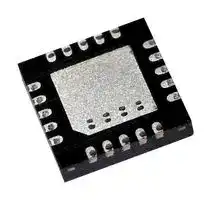


MAX7036GTP/V+
RF Transceiver, 450MHz to 300MHz, ASK, OOK, 66Kbps, 109dBm Sensitivity, 3V to 5.5V, TQFN-20
- Manufacturer: ANALOG DEVICES
- Product type: RF Transceivers - Sub 2.4GHz ISM Band
- Data Rate: 66Kbps
- No. of Pins: 20Pins
- Frequency Max: 300MHz
- Frequency Min: 450MHz
- Sensitivity dBm: 109dBm
- RF IC Case Style: TQFN
- Receiving Current: 5.5mA
- RF / IF Modulation: ASK, OOK
- Supply Voltage Max: 5.5V
- Supply Voltage Min: 3V
- Operating Temperature Max: 105°C
- Operating Temperature Min: -40°C
- RF Transceiver Applications: Low-Cost RKE, Garage Door Openers, Remote Controls, Home Automation, Sensor N/W, Security Systems
| Delivery and price | |
|---|---|
| Units per pack | 300 |
| Price | 1.06 € |
| Current stock | 200+ |
| Lead time | 7 days |

**==> picture [507 x 69] intentionally omitted <==**

**----- Start of picture text -----**<br>
19-4386; Rev 1; 8/10<br>300MHz to 450MHz ASK Receiver<br>with Internal IF Filter<br>EVALUATION KIT<br>AVAILABLE<br>**----- End of picture text -----**<br>


## _**General Description**_

The MAX7036 low-cost receiver is designed to receive amplitude-shift-keyed (ASK) and on-off-keyed (OOK) data in the 300MHz to 450MHz frequency range. The receiver has an RF input signal range of -109dBm to 0dBm.

The MAX7036 requires few external components and has a power-down pin to put it in a low-current sleep mode, making it ideal for cost- and power-sensitive applications. The low-noise amplifier (LNA), phaselocked loop (PLL), mixer, IF filter, received-signalstrength indicator (RSSI), and baseband sections are all on-chip. The MAX7036 uses a very-low intermediate frequency (VLIF) architecture. The MAX7036 integrates the IF filter on-chip and therefore eliminates an external ceramic filter, reducing the bill-of-materials cost. The device also contains an on-chip automatic gain control (AGC) that reduces the LNA gain by 30dB when the input signal power is large. The MAX7036 operates from either a 5V or a 3.3V power supply and draws 5.5mA (typ) of current.

The MAX7036 is available in a 20-pin thin QFN package with an exposed pad and is specified over the AEC-Q100 Level 2 (-40°C to +105°C) temperature range.

## _**Applications**_

Low-Cost RKE

Garage Door Openers Remote Controls Home Automation Sensor Networks Security Systems

## _**Features**_

- **ASK/OOK Modulation**

- **< 250µs Enable Turn-On Time**

- **On-Chip PLL, VCO, Mixer, IF, Baseband**

- **Low IF (200kHz Nominal)**

- **5.5mA DC Current**

- **1µA Standby Current**

- **3.3V/5V Operation**

- **Small 20-Pin Thin QFN Package with an Exposed Pad**

## _**Ordering Information**_

**PART TEMP RANGE PIN-PACKAGE** MAX7036GTP/V+ -40°C to +105°C 20 Thin QFN-EP*

/Vdenotes an automotive qualified part.

+Denotes a lead(Pb)-free/RoHS-compliant package.

- *EP = Exposed pad.

## _**Pin Configuration**_

**==> picture [241 x 232] intentionally omitted <==**

**----- Start of picture text -----**<br>
TOP VIEW<br>15 14 13 12 11<br>DSP 16 10 IFC1<br>DSN 17 9 IFC2<br>PDOUT 18 MAX7036 8 MIXIN1<br>VDD 19 7 MIXIN2<br>DATAOUT 20 EP 6 LNAOUT<br>+<br>1 2 3 4 5<br>THIN QFN<br>5mm x 5mm<br>DFFB OPP DCOC DVDD IFC3<br>ENABLE XTAL2 XTAL1 AVDD LNAIN<br>**----- End of picture text -----**<br>


**________________________________________________________________ Maxim Integrated Products 1**

**For pricing, delivery, and ordering information, please contact Maxim Direct at 1-888-629-4642, or visit Maxim’s website at www.maxim-ic.com.**

## _**300MHz to 450MHz ASK Receiver with Internal IF Filter**_

## **ABSOLUTE MAXIMUM RATINGS**

|VDDto GND...........................................................-0.3V to +6.0V<br>AVDD to GND........................................................-0.3V to +4.0V<br>DVDD to GND........................................................-0.3V to +4.0V<br>ENABLE to GND.........................................-0.3V to (VDD+ 0.3V)<br>LNAIN to GND.......................................................-0.3V to +1.2V<br>All Other Pins to GND.............................-0.3V to (VDVDD+ 0.3V)<br>Continuous Power Dissipation (TA= +70°C)<br>20-Pin TQFN (derate 20.8mW/°C above +70°C) ....1666.7mW|Junction-to-Case Thermal Resistance (θJC) (Note 1)<br>20-Pin TQFN...................................................................2°C/W<br>Junction-to-Ambient Thermal Resistance (θJA) (Note 1)<br>20-Pin TQFN.................................................................48°C/W<br>Operating Temperature Range .........................-40°C to +105°C<br>Junction Temperature......................................................+150°C<br>Storage Temperature Range .............................-65°C to +150°C<br>Lead Temperature (soldering, 10s) .................................+300°C<br>Soldering Temperature (reflow) .......................................+260°C|
|---|---|


**Note 1:** Package thermal resistances were obtained using the method described in JEDEC specification JESD51-7, using a singlelayer board. For detailed information on package thermal considerations, go to **www.maxim-ic.com/thermal-tutorial** .

Stresses beyond those listed under “Absolute Maximum Ratings” may cause permanent damage to the device. These are stress ratings only, and functional operation of the device at these or any other conditions beyond those indicated in the operational sections of the specifications is not implied. Exposure to absolute maximum rating conditions for extended periods may affect device reliability.

## **3.3V DC ELECTRICAL CHARACTERISTICS**

(Typical Application Circuit, 50Ω system impedance, VAVDD = VDVDD = VDD = 3.0V to 3.6V, fRF = 300MHz to 450MHz, TA = -40°C to +105°C, unless otherwise noted. Typical values are at VAVDD = VDVDD = VDD = 3.3V, TA = +25°C, unless otherwise noted.) (100% tested at TA = +105°C.)

**==> picture [502 x 201] intentionally omitted <==**

**----- Start of picture text -----**<br>
PARAMETER SYMBOL CONDITIONS MIN TYP MAX UNITS<br>Supply Voltage VDD VAVDD = VDVDD = VDD 3.0 3.3 3.6 V<br>fRF = 315MHz 5.3 6.7<br>mA<br>fRF = 433MHz 5.8 7.3<br>Supply Current IIN TA < +105°C<br>Deep-sleep mode,<br>1 2.7 μA<br>VENABLE = 0V<br>DIGITAL INPUT (ENABLE)<br>VDD -<br>Input High Voltage VIH VAVDD = VDVDD = VDD V<br>0.4<br>Input Low Voltage VIL VAVDD = VDVDD = VDD 0.4 V<br>Input Current IENABLE 0 ≤ VENABLE ≤ VDD 20 μA<br>DIGITAL OUTPUT (DATAOUT)<br>Output Low Voltage VOL ISINK = 100μA 0.4 V<br>VDD -<br>Output High Voltage VOH ISOURCE = 100μA V<br>0.4<br>**----- End of picture text -----**<br>


**2**

**_______________________________________________________________________________________**

## _**300MHz to 450MHz ASK Receiver with Internal IF Filter**_

## **5.0V DC ELECTRICAL CHARACTERISTICS**

(Typical Application Circuit, 50Ω system impedance, VDD = 4.5V to 5.5V, fRF = 300MHz to 450MHz, TA = -40°C to +105°C, unless otherwise noted. Typical values are at VDD = 5.0V, TA = +25°C, unless otherwise noted.) (100% tested at TA = +105°C.)

**==> picture [502 x 203] intentionally omitted <==**

**----- Start of picture text -----**<br>
PARAMETER SYMBOL CONDITIONS MIN TYP MAX UNITS<br>Supply Voltage VDD 4.5 5.0 5.5 V<br>fRF = 315MHz 5.4 6.8<br>mA<br>fRF = 433MHz 5.9 7.4<br>Supply Current IIN TA < +105°C<br>Deep-sleep mode,<br>1 3.4 μA<br>VENABLE = 0V<br>DIGITAL INPUT (ENABLE)<br>VDD -<br>Input High Voltage VIH VAVDD = VDVDD V<br>0.4<br>Input Low Voltage VIL VAVDD = VDVDD 0.4 V<br>Input Current IENABLE 0 ≤ VENABLE ≤ VDD 20 μA<br>DIGITAL OUTPUT (DATAOUT)<br>Output Low Voltage VOL ISINK = 100μA 0.4 V<br>VDD -<br>Output High Voltage VOH ISOURCE = 100μA V<br>0.4<br>**----- End of picture text -----**<br>


## **AC ELECTRICAL CHARACTERISTICS**

(Typical Application Circuit, 50Ω system impedance, VAVDD = VDVDD = VDD = 3.0V to 3.6V, fRF = 300MHz to 450MHz, TA = -40°C to +105°C, unless otherwise noted. Typical values are at VAVDD = VDVDD = VDD = 3.3V, TA = +25°C, fRF = 315MHz, unless otherwise noted.) (100% tested at TA = +105°C.)

**==> picture [502 x 163] intentionally omitted <==**

**----- Start of picture text -----**<br>
PARAMETER SYMBOL CONDITIONS MIN TYP MAX UNITS<br>Receiver Input Frequency Range fRF 300 450 MHz<br>Maximum Receiver Input Level PRFIN 0 dBm<br>fRF = 315MHz -109<br>Sensitivity (Note 2) dBm<br>fRF = 433MHz -107<br>Time for valid RSSI Enable power on 250 μs<br>output, does not (VDD > 3.0V)<br>Power-On Time tON<br>include baseband<br>filter settling VDD power on 1 ms<br>AGC Hysteresis 5 dB<br>AGC Low Gain-to-High Gain<br>13 ms<br>Switching Time<br>**----- End of picture text -----**<br>


**3**

**_______________________________________________________________________________________**

## _**300MHz to 450MHz ASK Receiver with Internal IF Filter**_

## **AC ELECTRICAL CHARACTERISTICS (continued)**

(Typical Application Circuit, 50Ω system impedance, VAVDD = VDVDD = VDD = 3.0V to 3.6V, fRF = 300MHz to 450MHz, TA = -40°C to +105°C, unless otherwise noted. Typical values are at VAVDD = VDVDD = VDD = 3.3V, TA = +25°C, fRF = 315MHz, unless otherwise noted.) (100% tested at TA = +105°C.)

**==> picture [502 x 351] intentionally omitted <==**

**----- Start of picture text -----**<br>
PARAMETER SYMBOL CONDITIONS MIN TYP MAX UNITS<br>LNA/MIXER<br>0.4 -<br>fRF = 315MHz<br>j5.6<br>LNA Input Impedance ZINLNA Normalized to 50Ω Ω<br>0.4 -<br>fRF = 433MHz<br>j4.0<br>LO Signal Feedthrough to<br>-75 dBm<br>Antenna<br>Voltage Gain Reduction Low-gain mode, AGC enabled 29 dB<br>High-gain LNA mode 55<br>LNA/Mixer Voltage Gain dB<br>Low-gain LNA mode 26<br>Set by capacitors on IFC1 and IFC2 (see<br>3dB Cutoff Frequency BWIF 400 kHz<br>the  Typical Application Circuit )<br>RSSI Linearity ±0.5 dB<br>RSSI Dynamic Range Includes AGC 80 dB<br>PRFIN < -120dBm 1.34<br>RSSI Level V<br>PRFIN > 0dBm, AGC enabled 2.35<br>Intermediate Frequency fIF 200 kHz<br>Maximum Data-Filter Bandwidth BWDF 50 kHz<br>Maximum Data-Slicer Bandwidth BWDS 100 kHz<br>Maximum Peak Detector<br>50 kHz<br>Bandwidth<br>Manchester coded 33<br>Maximum Data Rate kbps<br>Nonreturn to zero (NRZ) 66<br>Crystal Frequency fXTAL 9.36 14.06 MHz<br>Crystal Load Capacitance CLOAD 10 pF<br>**----- End of picture text -----**<br>


**Note 2:** BER = 2 x 10[-3] , Manchester coded, data rate = 4kbps. IF bandwidth = 400kHz.

**4**

**_______________________________________________________________________________________**

## _**300MHz to 450MHz ASK Receiver with Internal IF Filter**_

_**Typical Operating Characteristics**_ (Typical Application Circuit, VAVDD = VDD = VDVDD = 3.3V, fRF = 315MHz, TA = +25°C, unless otherwise noted.)

**==> picture [492 x 528] intentionally omitted <==**

**----- Start of picture text -----**<br>
SUPPLY CURRENT vs. SUPPLY VOLTAGE SUPPLY CURRENT vs. SUPPLY VOLTAGE<br>(3.3V OPERATION) (5.0V OPERATION) SUPPLY CURRENT vs. RF FREQUENCY<br>5.5 5.45 7.0<br>VAVDD = VDVDD = VDD 5.0V APPLICATION CIRCUIT PRF = -80dBm<br>5.40<br>5.4 ee 6.5<br>5.35 TA = +105°C<br>5.3 5.30 TA = +85°C 6.0 TA = +85°C<br>5.2 Be —_ TA = +105°C TA = +85°C | | ee 5.25 eee ee 5.5 TA = +105°C ZF<br>5.1 en 5.20 eee TA = +25° z s<br>5.0 TA = +25°C 5.15 5.0<br>4.9 ao 5.10 T A  = -40°C 4.5 aa TA = +25° TA = -40 = °C oo<br>S e 5.05 RO eee<br>TA = -40°C<br>4.8 e T 68 ee 5.00 HHeee OV  ‘V FL 4.0 ep |<br>3.0 3.1 3.2 3.3 3.4 3.5 3.6 4.5 4.7 4.9 5.1 5.3 5.5 250 300 350 400 450 500<br>SUPPLY VOLTAGE (V) SUPPLY VOLTAGE (V) RF FREQUENCY (MHz)<br>BIT ERROR RATE vs. PEAK RF<br>INPUT POWER SENSITIVITY vs. TEMPERATURE RSSI vs. INPUT POWER<br>100 -106.0 2.4<br>fRF = 433MHz -106.5 DATA RATE = 4kbpsBER = 0.2% fRF = 433MHz<br>10 -107.0 MANCHESTER 2.2 fIF = 200kHz<br>—S\ Dan i<br>e e fRF = 315MHz  ae -107.5 PT ee 2.0 z t =<br>1 P IN ] E z vimAn<br>-108.0<br>1.8<br>0.1 an e -108.5 ie fRF = 433MHz ee fRF = 315MHz ee||<br>-109.0 1.6<br>-109.5 —|<br>0.01<br>1.4<br>-110.0<br>aS eT] CU<br>0.001 e e -110.5 1.2<br>-125 -120 -115 -110 -105 -40 -15 10 35 60 85 105 -120 -100 -80 -60 -40 -20 0<br>PEAK RF INPUT POWER (dBm) TEMPERATURE (°C) INPUT POWER (dBm)<br>LNA/MIXER VOLTAGE GAIN S11 SMITH CHART PLOT OF RFIN S11 SMITH CHART PLOT OF RFIN<br>vs. IF FREQUENCY (315MHz CIRCUIT) (433MHz CIRCUIT)<br>60<br>PRF = -71dBm<br>58<br>fRF = 433.92MHz<br>56<br>54<br>52<br>50<br>48 S11 = 7.9729Ω - j0.6085Ω S11 = 6.5175Ω - j5.5849Ω<br>46 at fRF = 315MHz at fRF = 433MHz<br>44<br>42<br>40 | | hv UT CT “_ ” ee ee<br>0 200 400 600 800 1000<br>IF FREQUENCY (kHz)<br>MAX7036 toc01 MAX7036 toc02 MAX7036 toc03<br>SUPPLY CURRENT (mA) SUPPLY CURRENT (mA) SUPPLY CURRENT (mA)<br>MAX7036 toc04 MAX7036 toc05 MAX7036 toc06<br>RSSI (V)<br>BIT ERROR RATE (%) SENSITIVITY (dBm)<br>MAX7036 toc07 MAX7036 toc08 MAX7036 toc09<br>LNA/MIXER VOLTAGE GAIN (dB)<br>**----- End of picture text -----**<br>


**5**

**_______________________________________________________________________________________**

## _**300MHz to 450MHz ASK Receiver with Internal IF Filter**_

## _**Typical Operating Characteristics (continued)**_

(Typical Application Circuit, VAVDD = VDD = VDVDD = 3.3V, fRF = 315MHz, TA = +25°C, unless otherwise noted.)

**==> picture [494 x 170] intentionally omitted <==**

**----- Start of picture text -----**<br>
REGULATOR VOLTAGE PHASE NOISE  PHASE NOISE<br>vs. REGULATOR CURRENT vs. OFFSET FREQUENCY vs. OFFSET FREQUENCY<br>3.15 -50 -50<br>VDD = 5V, +5V CIRCUIT fRF = 315MHz fRF = 433MHz<br>-60 -60<br>-70 -70<br>3.10<br>TA = +105°C -80 -80<br>TA = +85°C TA = +25°C -90 -90<br>3.05 TA = -40°C<br>-100 -100<br>-110 -110<br>3.00 -120 -120<br>0 5 10 15 20 25 0.01 0.1 1 10 100 1000 10,000 0.01 0.1 1 10 100 1000 10,000<br>REGULATOR CURRENT (mA) OFFSET FREQUENCY (kHz) OFFSET FREQUENCY (kHz)<br>MAX7036 toc10 MAX7036 toc11 MAX7036 toc12<br>REGULATOR VOLTAGE (V) PHASE NOISE (dBc/Hz) PHASE NOISE (dBc/Hz)<br>**----- End of picture text -----**<br>


## _**Pin Description**_

**==> picture [502 x 324] intentionally omitted <==**

**----- Start of picture text -----**<br>
PIN NAME FUNCTION<br>1 ENABLE Enable Input. Internally pulled down to ground. Set VENABLE = VDD for normal operation.<br>Crystal Input 2. Connect an external crystal from XTAL2 to XTAL1. Bypass to GND if XTAL1 is driven<br>2 XTAL2<br>from an AC-coupled external reference (see the  Crystal Oscillator   section).<br>Crystal Input 1. Connect an external crystal from XTAL2 to XTAL1. Can also be driven with an AC-<br>3 XTAL1<br>coupled external reference oscillator (see the  Crystal Oscillator   section).<br>Positive Analog Supply Voltage. Connect to DVDD. Bypass to GND with a 0.1μF capacitor as close as<br>4 AVDD possible to the device (see the  Typical Application Circuit ). For 5.0V operation, AVDD is internally<br>connected to an on-chip 3.2V LDO regulator. For 3.3V operation, connect AVDD to VDD.<br>5 LNAIN Low-Noise Amplifier Input. Must be AC-coupled (see the  Low-Noise Amplifier  section).<br>Low-Noise Amplifier Output. Must be connected to AVDD through a parallel LC tank circuit. AC-<br>6 LNAOUT<br>couple to MIXIN2 (see the  Low-Noise Amplifier  section).<br>2nd Differential Mixer Input. Connect to the LNAOUT side of the LC tank filter through a 100pF<br>7 MIXIN2<br>capacitor (see the  Typical Application Circuit ).<br>1st Differential Mixer Input. Connect to the AVDD side of the LC tank filter through a 100pF capacitor<br>8 MIXIN1<br>(see the  Typical Application Circuit ).<br>IF Fi l ter C ap aci tor C onnecti on 2. Thi s i s for the S al l en- Key IF fi l ter . C onnect a cap aci tor fr om IFC 2 to GN D .<br>9 IFC2<br>The val ue of the cap aci tor i s d eter m i ned b y the IF fi l ter b and w i d th ( see the  Typical Application Circuit ) .<br>IF Fi l ter C ap aci tor C onnecti on 1. Thi s i s for the S al l en- Key IF fi l ter . C onnect a cap aci tor fr om IFC 1 to IFC 3.<br>10 IFC1<br>The val ue of the cap aci tor i s d eter m i ned b y the IF fi l ter b and w i d th ( see the  Typical Application Circuit ) .<br>IF Fi l ter C ap aci tor C onnecti on 3. Thi s i s for the S al l en- Key IF fi l ter . C onnect a cap aci tor fr om IFC 3 to IFC 1.<br>11 IFC3<br>The val ue of the cap aci tor i s d eter m i ned b y the IF fi l ter b and w i d th ( see the  Typical Application Circuit ) .<br>Positive Digital Supply Voltage Input. Connect to AVDD. Bypass to GND with a 0.01μF capacitor as<br>12 DVDD<br>close as possible to the device (see the  Typical Application Circuit ).<br>**----- End of picture text -----**<br>


**6**

**_______________________________________________________________________________________**

## _**300MHz to 450MHz ASK Receiver with Internal IF Filter**_

|||**_Pin Description (continued)_**|
|---|---|---|
|||**_Pin Description (continued)_**|
||||
|**PIN**|**NAME**|**FUNCTION**|
|13|DCOC|DC Offset Capacitor Connection. This is for the RSSI amplifier. Connect a 1μF capacitor from this pin<br>to ground (see the_Typical Application Circuit_).|
|14|OPP|Noninverting Op-Amp Input. This is for the Sallen-Key data filter. Connect a capacitor from this pin to<br>GND. The value of the capacitor is determined by the data-filter bandwidth.|
|15|DFFB|Data-Filter Feedback Input. Input for the feedback of the Sallen-Key data filter. Connect a capacitor<br>from this pin to DSP. The value of the capacitor is determined by the data-filter bandwidth.|
|16|DSP|Positive Data-Slicer Input. Connect a capacitor from this pin to DFFB. The value of the capacitor is<br>determined by the data-filter bandwidth.|
|17|DSN|Negative Data-Slicer Input|
|18|PDOUT|Peak-Detector Output|
|19|VDD|Power-Supply Voltage Input. For 5.0V operation, VDDis the input to an on-chip voltage regulator<br>whose 3.2V output drives AVDD. Bypass to ground with a 0.1μF capacitor as close as possible to the<br>device (see the_Typical Application Circuit_).|
|20|DATAOUT|Digital Baseband Data Output|
|—|EP|Exposed Pad. Internally connected to ground. Connect to a large ground plane using multiple vias to<br>maximize thermal and electrical performance.|
||||


## _**Functional Diagram**_

**==> picture [433 x 252] intentionally omitted <==**

**----- Start of picture text -----**<br>
DATAOUT DSN PDOUT DSP OPP DFFB<br>20 17 18 16 14 15<br>XTAL1 3<br>PEAK<br>DETECTOR<br>MAX7036<br>PLL<br>XTAL2 2<br>ENABLE 1 So eth<br>VDD 19<br>EP*<br>3.2V ∑<br>REGULATOR<br>AVDD 4 AGC<br>DVDD 12 REF<br>∑<br>LNAIN 5 — “Tl REF<br>6 8 7 10 9 11 13<br>LNAOUT MIXIN2 IFC1 IFC2 IFC3 DCOC<br>MIXIN1<br>*EXPOSED PAD.<br>CONNECT TO GND.<br>**----- End of picture text -----**<br>


**7**

**_______________________________________________________________________________________**

## _**300MHz to 450MHz ASK Receiver with Internal IF Filter**_

## _**Detailed Description**_

The MAX7036 CMOS RF receiver, and a few external components, provide the complete receiver chain from the antenna to the digital output data. Depending on signal power and component selection, data rates as high as 33kbps Manchester (66kbps NRZ) can be achieved.

The MAX7036 is designed to receive binary ASK/OOK data modulated in the 300MHz to 450MHz frequency range. ASK modulation uses a difference in amplitude of the carrier to represent digital data.

## _**Voltage Regulator**_

For operation with a single 3.0V to 3.6V supply voltage, connect AVDD, DVDD, and VDD to the supply voltage. For operation with a single 4.5V to 5.5V supply voltage, connect VDD to the supply voltage. An on-chip voltage regulator drives the AVDD pin to approximately 3.2V. For proper operation, connect DVDD and AVDD together. Bypass VDD and AVDD to GND with 0.1μF capacitors placed as close as possible to the device. Bypass DVDD to GND with a 0.01μF capacitor (see the Typical Application Circuit).

## _**Low-Noise Amplifier**_

The LNA is an nMOS cascode amplifier. The LNA and mixer have a combined 55dB voltage gain. The gain and noise figures are dependent on both the antennamatching network at the LNA input and the LC tank network between the LNA output and the mixer inputs.

L2 and C1 comprise the LC tank filter connected to LNAOUT (see the Typical Application Circuit). L2 also serves as a bias inductor to LNAOUT. Bypass the power-supply side of L2 to GND with a capacitor that provides a low-impedance path at the RF carrier frequency (e.g., 220pF). Select L2 and C1 to resonate at the desired RF input frequency. The resonant frequency is given by:

**==> picture [228 x 34] intentionally omitted <==**

where LTOTAL = L2 + LPARASITICS and CTOTAL = C1 + CPARASITICS.

LPARASITICS and CPARASITICS include inductance and capacitance of the PCB traces, package pins, mixer input impedance, LNA output impedance, etc. At high frequencies, these parasitics can have a dramatic effect on the tank filter center frequency and must not be ignored. The total parasitic capacitance is generally 4pF to 6pF. Adjust L2 and C1 accordingly to achieve the desired tank center frequency.

## _**Automatic Gain Control (AGC)**_

The AGC circuit monitors the RSSI output. The AGC switches to its low-gain state when the RSSI output reaches 2.2V. The AGC gain reduction is typically 29dB, corresponding to an RSSI voltage drop of 435mV. The LNA resumes high-gain mode when the RSSI level drops back below 1.67V for 13ms for 315MHz and 10ms for 433MHz operation. The AGC has a hysteresis of 5dB. With this AGC function, the MAX7036 can reliably produce an ASK output for RF input levels up to 0dBm, with modulation depth of 30dB.

## _**Mixer**_

The mixer cell is a double-balanced mixer that performs a downconversion of the RF input to a typical IF of 200kHz from either a high-side or a low-side injected LO. The mixer output drives the input of the on-chip IF filter.

## _**Phase-Locked Loop (PLL)**_

The PLL block contains a phase detector, charge pump, integrated loop filter, VCO, asynchronous clock dividers, and crystal-oscillator driver. Besides the crystal, this PLL does not require any external components. The VCO generates the LO. The relationship between the RF, IF, and crystal reference frequencies is given by:

**==> picture [225 x 31] intentionally omitted <==**

where fLO = fRF ± fIF

## _**Received-Signal-Strength Indicator (RSSI)**_

The RSSI circuit provides a DC output proportional to the logarithm of the input power level. RSSI output voltage has a slope of about 14.5mV/dB (of input power).The RSSI monotonic dynamic range exceeds 80dB. This includes the 30dB of AGC.

## _**Applications Information**_

## _**Crystal Oscillator**_

The crystal (XTAL) oscillator in the MAX7036 is designed to present a capacitance of approximately 4pF between XTAL1 and XTAL2. In most cases, this corresponds to a 6pF load capacitance applied to the external crystal when typical PCB parasitics are added. The MAX7036 is designed to operate with a typical 10pF load capacitance crystal. **It is very important to use a crystal with a load capacitance equal to the capacitance of the MAX7036 crystal oscillator plus PCB parasitics.** If a crystal designed to oscillate with a different load capacitance is used, the crystal is pulled away from its stated operating frequency, introducing

**8**

**_______________________________________________________________________________________**

## _**300MHz to 450MHz ASK Receiver with Internal IF Filter**_

an error in the reference frequency. A crystal designed to operate at a higher load capacitance than the value specified for the oscillator is always pulled higher in frequency. Adding capacitance to increase the load capacitance on the crystal increases the start-up time and may prevent oscillation altogether.

In actuality, the oscillator pulls every crystal. The crystal’s natural frequency is really below its specified frequency, but when loaded with the specified load capacitance, the crystal is pulled and oscillates at its specified frequency. This pulling is already accounted for in the specification of the load capacitance.

Additional pulling can be calculated if the electrical parameters of the crystal are known. The frequency pulling is given by:

**==> picture [211 x 31] intentionally omitted <==**

Because the stray shunt capacitance at each of the pins (IFC1 and IFC2) on a typical PCB is approximately 2pF, choose the value of the external capacitors to be approximately 2pF lower than the desired total capacitance. Therefore, the practical values for C9 and C10 are 22pF and 10pF, respectively.

**==> picture [130 x 89] intentionally omitted <==**

**----- Start of picture text -----**<br>
MAX7036<br>22kΩ 22kΩ<br>10 9 11<br>IFC1 IFC2 IFC3<br>C10<br>7<br>C9<br>**----- End of picture text -----**<br>


where:

fp is the amount the crystal frequency is pulled in ppm.

CM is the motional capacitance of the crystal.

CCASE is the case capacitance.

CSPEC is the specified load capacitance.

CLOAD is the actual load capacitance.

When the crystal is loaded, as specified (i.e., CLOAD = CSPEC), the frequency pulling equals zero.

It is possible to use an external reference oscillator in place of a crystal to drive the VCO. AC-couple the external oscillator to XTAL1 with a 1000pF capacitor. Drive XTAL1 with a signal level of approximately -10dBm. ACcouple XTAL2 to ground with a 1000pF capacitor.

## _**IF Filter**_

The IF filter is a 2nd-order Butterworth lowpass filter preceded by a low-frequency DC block. The lowpass filter is implemented as a Sallen-Key filter using an internal op amp and two on-chip 22kΩ resistors. The pole locations are set by the combination of the on-chip resistors and two external capacitors (C9 and C10, Figure 1). The values of these two capacitors for a 3dB cutoff frequency of 400kHz are given below:

**==> picture [229 x 47] intentionally omitted <==**

Figure 1. Sallen-Key Lowpass IF Filter

## _**Data Filter**_

The data filter is implemented as a 2nd-order lowpass Sallen-Key filter. The pole locations are set by the combination of two on-chip resistors and two external capacitors. Adjusting the value of the external capacitors changes the corner frequency to optimize for different data rates. Set the corner frequency to approximately 1.5 times the fastest Manchester expected data rate from the transmitter. Keeping the corner frequency near the data rate rejects any noise at higher frequencies, resulting in an increase in receiver sensitivity.

The configuration shown in Figure 2 can create a Butterworth or Bessel response. The Butterworth filter offers a very flat amplitude response in the passband and a rolloff rate of 40dB/decade for the two-pole filter. The Bessel filter has a linear phase response, which works with the coefficients in Table 1.

**==> picture [87 x 70] intentionally omitted <==**

where fC is the desired corner frequency.

**9**

**_______________________________________________________________________________________**

## _**300MHz to 450MHz ASK Receiver with Internal IF Filter**_

For example, to choose a Butterworth filter response with a corner frequency of 6kHz:

**==> picture [231 x 68] intentionally omitted <==**

Choosing standard capacitor values changes C5 to 390pF and C6 to 180pF, as shown in the Typical Application Circuit.

## **Table 1. Coefficients to Calculate C5 and C6**

**==> picture [241 x 44] intentionally omitted <==**

**----- Start of picture text -----**<br>
FILTER TYPE a b<br>Butterworth (Q = 0.707) 1.414 1.000<br>Bessel (Q = 0.577) 1.3617 0.618<br>**----- End of picture text -----**<br>


**==> picture [241 x 175] intentionally omitted <==**

**----- Start of picture text -----**<br>
MAX7036<br>RSSI<br>RDF2 RDF1<br>100kΩ 100kΩ<br>16 14 15<br>DSP OPP DFFB<br>C6 C5<br>**----- End of picture text -----**<br>


Figure 2. Sallen-Key Lowpass Data Filter

## _**Data Slicer**_

The data slicer takes the analog output of the data filter and converts it to a digital signal. This is achieved by using a comparator and comparing the analog input to a threshold voltage. One input is supplied by the datafilter output. Both comparator inputs are accessible off chip to allow for different methods of generating the slicing threshold, which is applied to the second comparator input.

The suggested data-slicer configuration uses a resistor (R1) connected between DSN and DSP with a capacitor (C4) from DSN to GND (Figure 3). This configuration averages the analog output of the filter and sets the threshold to approximately 50% of that amplitude. With this configuration, the threshold automatically adjusts as the analog signal varies, minimizing the possibility for errors in the digital data. The values of R1 and C4 affect how fast the threshold tracks to the analog amplitude. Be sure to keep the corner frequency of the RC circuit much lower than the lowest expected data rate.

**==> picture [241 x 173] intentionally omitted <==**

**----- Start of picture text -----**<br>
MAX7036<br>DATA<br>FILTER<br>DATA<br>SLICER<br>20 17 16<br>DSN DSP<br>R1<br>DATAOUT<br>C4<br>**----- End of picture text -----**<br>


Figure 3. Generating Data-Slicer Threshold

Note that a long string of zeros or ones can cause the threshold to drift. This configuration works best if a coding scheme (e.g., Manchester coding, which has an equal number of zeros and ones) is used.

## _**Peak Detector**_

The peak-detector output (PDOUT), in conjunction with an external RC filter, creates a DC output voltage equal to the peak value of the data signal. The resistor provides a path for the capacitor to discharge, allowing the peak detector to dynamically follow peak changes of the data-filter output voltage. The peak detector can be used for at least two functions. First, it can serve as an RSSI for ASK modulation. Second, it can be used for faster data-slicer response by adding it to the threshold pin (DSN) on the data-slicer comparator (Figure 4). The two capacitors in this circuit should be equal, and the peak detector resistor should be approximately 10

**10**

**______________________________________________________________________________________**

## _**300MHz to 450MHz ASK Receiver with Internal IF Filter**_

times larger than the resistor in the RC smoothing circuit between DSP and DSN. This circuit will provide an instantaneous jump of one-half of the DSP increase from “no signal” voltage to peak voltage, which then decays with the same time constant as that of the threshold build-up from the RC smoothing circuit. The DC slicing voltage at DSN is slightly higher (by the ratio of the two resistors in the circuit) than it would be without the speed-up circuit. **Always provide a capacitive path from the PDOUT pin to ground when using the peak-detector output.**

**==> picture [241 x 173] intentionally omitted <==**

**----- Start of picture text -----**<br>
DATA<br>FILTER<br>MAX7036<br>DATA<br>SLICER<br>20 17 16 18<br>DSN DSP PDOUT<br>R1<br>DATAOUT<br>C4<br>**----- End of picture text -----**<br>


Figure 4. Using PDOUT for Faster Startup

## _**Layout Considerations**_

A properly designed PCB is an essential part of any RF/microwave circuit. On high-frequency inputs and outputs, use controlled-impedance lines and keep them as short as possible to minimize losses and radiation. At high frequencies, trace lengths that are λ/10 or longer act as antennas.

Keeping the traces short also reduces parasitic inductance. Generally, 1in of a PCB trace adds about 20nH of parasitic inductance. The parasitic inductance can have a dramatic effect on the effective inductance of a passive component. For example, a 0.5in trace connecting a 100nH inductor adds an extra 10nH of inductance or 10%.

To reduce the parasitic inductance, use wider traces and a solid ground or power plane below the signal traces. Also, use low-inductance connections to ground on all GND pins, and place decoupling capacitors close to all power-supply connections.

**Table 2. Component Values**

**==> picture [241 x 283] intentionally omitted <==**

**----- Start of picture text -----**<br>
COMPONENT fRF = 315MHz fRF = 433.92MHz<br>C1 4.7pF 2.7pF<br>C2 100pF 100pF<br>C3 100pF 100pF<br>C4 0.1μF 0.1μF<br>C5 390pF 390pF<br>C6 180pF 180pF<br>C7 1μF 1μF<br>C8 0.01μF 0.01μF<br>C9 22pF 22pF<br>C10 10pF 10pF<br>C11 0.1μF 0.1μF<br>C12 220pF 220pF<br>C13 10pF 10pF<br>C14 10pF 10pF<br>C15 100pF 100pF<br>C16 0.1μF 0.1μF<br>L1 100nH 47nH<br>L2 27nH 15nH<br>R1 22kΩ 22kΩ<br>Y1 9.8375MHz 13.55375MHz<br>**----- End of picture text -----**<br>


**11**

**______________________________________________________________________________________**

## _**300MHz to 450MHz ASK Receiver with Internal IF Filter**_

## _**Typical Application Circuit**_

**==> picture [458 x 451] intentionally omitted <==**

**----- Start of picture text -----**<br>
IF VSUP IS THEN V3V IS<br>3.0V TO 3.6V TIED TO VSUP<br>R2 C17<br>CREATED BY LDO,<br>V3V 4.5V TO 5.5V AVAILABLE AT VSUP<br>AVDD (PIN 4)<br>R1<br>(SEE TABLE ABOVE)<br>C11 C4<br>C5<br>DATAOUT VDD PDOUT DSN DSP<br>[| > ENABLE DFFB<br>XTAL2 OPP<br>C13 Y1 C6<br>C14<br>I Cc] MAXIM _<br>MAX7036<br>XTAL1 DCOC<br>~ t L C7<br>AVDD DVDD<br>C16<br>C8<br>L1 C15<br>LNAIN IFC3<br>LNAOUT MIXIN2 MIXIN1 IFC2 IFC1<br>C9<br>C3 C2 C10<br>C1 L2<br>al<br>C12<br>-<br>Chip Information<br>PROCESS: CMOS For the latest package outline information and land patterns, go<br>**----- End of picture text -----**<br>


## _**Package Information**_

For the latest package outline information and land patterns, go to **www.maxim-ic.com/packages** . Note that a “+”, “#”, or “-” in the package code indicates RoHS status only. Package drawings may show a different suffix character, but the drawing pertains to the package regardless of RoHS status.

|**PACKAGE**<br>**TYPE**|**PACKAGE**<br>**CODE**|**OUTLINE NO.**<br>**PATTERN NO.**|**LAND**<br>**PATTERN NO.**|
|---|---|---|---|
|20 Thin QFN-EP|T2055+3|**21-0140**|**90-0008**|


**12**

**______________________________________________________________________________________**

## _**300MHz to 450MHz ASK Receiver with Internal IF Filter**_

## _**Revision History**_

**==> picture [502 x 81] intentionally omitted <==**

**----- Start of picture text -----**<br>
REVISION REVISION PAGES<br>DESCRIPTION<br>NUMBER DATE CHANGED<br>0 3/09 Initial release —<br>Updated  Absolute Maximum Ratings , TOCs 5, 11, and 12,  Pin Description ,<br>1 8/10 Phase-Locked Loop (PLL)  and  Crystal Oscillator  sections, and  Typical 2, 5, 6, 8, 9, 12<br>Application Circuit<br>**----- End of picture text -----**<br>


Maxim cannot assume responsibility for use of any circuitry other than circuitry entirely embodied in a Maxim product. No circuit patent licenses are implied. Maxim reserves the right to change the circuitry and specifications without notice at any time.

_**Maxim Integrated Products, 120 San Gabriel Drive, Sunnyvale, CA  94086 408-737-7600 ____________________**_ **13**

© 2010 Maxim Integrated Products

Maxim is a registered trademark of Maxim Integrated Products, Inc.
Updated at February 9, 2023
Since its inception in 1965, Analog Devices has established itself as a global leader in the design and manufacturing of high-performance analog, mixed-signal, and digital signal processing (DSP) integrated circuits. The company is renowned for solving complex engineering challenges by providing critical technologies that seamlessly convert real-world phenomena into precise electrical signals for the industrial, automotive, communications, and consumer markets. Within its extensive portfolio, Analog Devices provides highly reliable clock, timing, and frequency management solutions, featuring a comprehensive array of precision timers, oscillators, and pulse generators. Complementing this core lineup is a robust offering of driver and interface ICs, particularly high-performance I/O expanders that enable seamless connectivity and streamline complex electronic system architectures. Beyond these foundational integrated circuits, Analog Devices leads the industry in sensor innovation, delivering advanced MEMS accelerometers and integrated MEMS modules designed for exceptional precision in motion sensing. To support complete hardware designs, the company's specialized offerings also encompass discrete bipolar transistors, sub-2.4GHz RF transceivers, temperature-compensated oscillators, and dedicated power management components such as DC/DC converters and LED driver ICs.
About Novapart
Novapart is a B2B electronic component broker specialising in stock shortages and cost reduction. We source hard-to-find parts and identify compliant alternatives across a catalogue of 410,000+ components from 500+ manufacturers.
Learn more →Stock Shortage Specialist
When a component is unavailable, discontinued or has an unacceptable lead time, we tap into our network of vetted European and Asian distributors to source what you need — without compromising on quality or traceability.
Request a quote →Compliant Alternatives
We identify pin-to-pin, electrically equivalent substitutes that meet the same certifications (RoHS, AEC-Q100, REACH) as your original specification — validated against datasheets, not just part numbers. Often at a lower cost.
BOM Analysis service →