
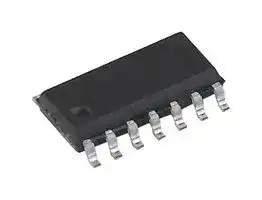


LV5012MD-AH
Led Driver, 1 Output, Boost, Buck, Flyback, 8.5V-24V in, 70kHz switch, 220V/1A out, WSOIC-14
- Manufacturer: ONSEMI
- Product type: AC / DC LED Driver ICs
- Device Topology:Boost, Buck, Flyback; Input Voltage Min:8.5V; Input Voltage Max:24V; Output Voltage Max:220V; Output Current Max:1A; Switching Frequency:70kHz; No. of Outputs:1Ou
- MSL: MSL 3 - 168 hours
- SVHC: No SVHC (15-Jan-2019)
- Topology: Boost, Buck, Flyback
- IC Mounting: Surface Mount
- No. of Pins: 14Pins
- Product Range: -
- Qualification: -
- No. of Outputs: 1Outputs
- Device Topology: Boost, Buck, Flyback
- LED Driver Type: Isolated, Non Isolated
- Driver Case Style: WSOIC
- IC Case / Package: WSOIC
- Input Voltage Max: 24V
- Input Voltage Min: 8.5V
- Output Current Max: 1A
- Output Voltage Max: 220V
- Switching Frequency: 70kHz
- Switching Frequency Typ: 70kHz
- Operating Temperature Max: 125°C
- Operating Temperature Min: -30°C
- Automotive Qualification Standard: -
| Delivery and price | |
|---|---|
| Units per pack | 1 |
| Price | 0.365 € |
| Current stock | 10+ |
| Lead time | 30 days |

Ordering number : ENA2186A ## **LV5012MD** ## **Bi-CMOS LSI** ## **LED Driver IC** http://onsemi.com ## **Overview** LV5012MD is a High Voltage LED drive controller which drives LED current with external MOS FET. LV5012MD is realized a simple LED circuit with a few external parts and reduce circuit board space. It corresponds to various dimming controls including the TRIAC dimming control without flickering. LV5012MD is realized high efficiency due to low operation current. ## **Function** - High Voltage LED Controller - Various Dimming Control - TRIAC & Analog Input & PWM Input - Fixed Switching Frequency [70 kHz] - Multiple Internal Reference Voltage - -Auto Level Control Output & 0.45V & 0.1V - Short Protection Circuit – [latch off] - Over Voltage Protection – [auto recovery circuit] MFP14S(225mil) - 2Staged Thermal Protection– [auto recovery circuit] - External Thermal Protection Adopted - Built-in TRIAC Stabilized function. ## **ORDERING INFORMATION** See detailed ordering and shipping information on page 16 of this data sheet. Semiconductor Components Industries, LLC, 2013 **October, 2013** O2313HK 20131009-S00002/51513HK No.A2186- 1/16 **LV5012MD** ## **Specifications** ## **Maximum Ratings** at Ta = 25 C |**Maximum Ratings **at Ta = 25|C|||| |---|---|---|---|---| |Parameter|Symbol|Conditions|Ratings|unit| |High Voltage Input|HV_abs||0.3 to 500|V| |VIN pin|VINmax||0.3 to 40|V| |ENB, CS, ACS, REF_OUT,<br>ALC_C,REF_IN|||0.3 to 7|V| |OUT Pin|Vout_abs||0.3 to 40|V| |DML Pin OFF|VDL_OFF_abs|ACS=2.0V|500|V| |DML Pin ON|VDL_ON_abs|ACS=0.7V, TRC=1.0V|55|V| |Allowable power dissipation|Pd max|With specified board *1|0.95|W| |Junction temperature|Tj||150|C| |Operating Junction temperature|Topj||30 to +125|C| |Storage temperature|Tstg||40 to +150|C| *1: Specified board = 64mm×24mm×1.2mm, glass epoxy board Caution 1) Absolute maximum ratings represent the values which cannot be exceeded for any length of time. Caution 2) Even when the device is used within the range of absolute maximum ratings, as a result of continuous usage under high temperature, high current, high voltage, or drastic temperature change, the reliability of the IC may be degraded. Please contact us for the further details. Stresses exceeding Maximum Ratings may damage the device. Maximum Ratings are stress ratings only. Functional operation above the Recommended Operating Conditions is not implied. Extended exposure to stresses above the Recommended Operating Conditions may affect device reliability. ## **Recommended Operating Conditions** at Ta = 25 C |**Recommended Oper**|**ating Condi**|**tions** at Ta = 25C||| |---|---|---|---|---| |Parameter|Symbol|Conditions|Ratings|unit| |Input voltage|VIN||8.5 to 24|V| ## **Electrical Characteristics** at Ta = 25 C, VIN = 12V, unless otherwise specified. |Parameter|Symbol|Conditions||Ratings||unit| |---|---|---|---|---|---|---| ||||min|typ|max|| |**Reference Voltage block**||||||| |Built-in Reference Voltage|VREF|||0.45||V| |FET Turn-Off CS Voltage|VCS|ACS=2.0V<br>REF_IN=3V,<br>ALC_C=0V||0.45||V| |VIN Regulation of CS Voltage|VCS_LN|VIN=8.5 to 24V,<br>REF_IN=3V<br>ACS=2.0V,ALC_C=0V||±0.5||%| |REF_IN Input Range|REFIN_RNG||0||3.2|V| |Minimum ALC_C Voltage|MIN_ALC_C|||0.5||V| |TRC pin voltage of operation start|TRC_STR|||0.1||V| |TRC pin voltage of operation stop|TRC_STP|||0.05||V| |**Under Voltage Lockout**||||||| |Operation Start Input Voltage|UVLOON||8|9|10|V| |Operation Stop Input Voltage|UVLOOFF||6.3|7.3|8.3|V| |Hysteresis Voltage|UVLOH|||1.7||V| |**Oscillation**||||||| |Frequency|FOSC||61|70|79|kHz| |Maximum Duty|MAXDuty|||70||%| |**Comparator**||||||| |Input current|IIOCS|CS=0V||160||nA| |Duty ON detection voltage|VDTYON|CS=0V, REF_IN=3V||1.7||V| |Duty OFF detection voltage|VDTYOFF|CS=0V, REF_IN=3V||1.3||V| No.A2186-2/16 ## **LV5012MD** |**LV5012MD**|**LV5012MD**|**LV5012MD**|**LV5012MD**|**LV5012MD**|**LV5012MD**|**LV5012MD**| |---|---|---|---|---|---|---| |||||||| |**Thermal protection Circuit**||||||| |1<br>ststage thermal protection|OTP|*Design guarantee||140||C| |1<br>~~st~~stage hysteresis<br>[1<br>st stage tonormaloperation]|OTP|*Design guarantee||12||C| |Reference voltage at 1<br>ststage|REFOTP|*Design guarantee||0.1||V| |Thermal shutdown Temperature|TSD|*Design guarantee||155||C| |Thermal shutdown hysteresis|TSD|*Design guarantee||12||C| |**Drive Circuit**||||||| |OUT sink current|IOI|VIN=12V,CS=3V,<br>OUT=2V|500|1000||mA| |OUT source current1<br>(First step driving current)|IOO1|VIN=12V,CS=0V,<br>OUT=6V||50||mA| |OUT source current2<br>(Second step driving current)|IOO2|VIN=12V,CS=0V,<br>OUT=6V||200||mA| |**Switching Stop Function**||||||| |Switching stop ENB Voltage|ENBSP||1.9|2.0|2.1|V| |Switching start ENB Voltage|ENBST||1.7|1.8|1.9|V| |ENB Hysteresis Voltage|ENBHY|||0.2||V| |**TRIAC Stabilization Circuit**||||||| |Threshold of DML Load<br>(Threshold of Bleeder)|VACS|Load Operation of the<br>DML pin is started,<br>when ACS pin is less<br>than this value.||0.85||V| |DML Load current|IDML|DML=40V, ACS=0.7V|20|||mA| |**Reference Out Circuit**||||||| |REF_OUT Voltage|REF_OUT|VIN=12V,<br>IREF_OUT=0.5mA|2.8|3.0|3.2|V| |REF_OUT Load|IREF_OUT|VIN=12V|||1|mA| |**Startup circuit**||||||| |Startup OUTPUT Voltage|VIN_OUT|ACS=2.0V,|11|12|13|V| |Static startup current|IHV|ACS=2.0V,<br>OUT=OPEN,<br>CS=0.6V||1||mA| |Leak current of Startup circuit|IHV2|HV=100V, VIN=15V||20||A| |**VIN current**||||||| |UVLO mode VIN current|ICCOFF|VIN=7V||100||A| |LOW TRIAC Duty Current|ICCLTR|TRC=0V||250||A| |Normal mode VIN current|IVIN|ACS=2.0V,<br>REF_IN=3V,<br>ALC_C=0V, CS=0.6V,<br>OUT=OPEN||1||mA| |**VIN Over Voltage protection (OVP) Circuit**||||||| |VIN Over Voltage protection Voltage|VINOVP||24|27|30|V| |VIN Current at OVP|IINOVP|VIN=30V||10||mA| |**CS pin abnormal sensing Circuit**||||||| |Abnormal sensing Voltage|CSOCP||1.7|1.9|2.1|V| No.A2186-3/16 **LV5012MD** ## **Block Diagram** **==> picture [481 x 410] intentionally omitted <==** **----- Start of picture text -----**<br> DML ©<br>HV .<br>Built-in HV<br>REGULATOR<br>VIN o—<br>Built-in<br>REGULATOR<br>TSD UVLO OVP<br>REF_OUT e 3.0V ee<br>0.85V REFERENCE<br>0.45V VOLTAGE<br>0.1V OSCILLATOR<br>70kHz<br>CS | + — S Q = CONTROL<br>R LOGIC<br>REF_IN -- Current Limit ~ OUT<br>Comparater<br>— ai e<br>Short Protection<br>Circuit 1.7V 1.0V<br>-<br>1.3V<br>p L<br>+<br>AC_Duty sense<br>ACS — - > Comparator ><br>OUT2<br>+<br>AC_Voltage sense<br>Comparator<br>0.1V SD or Normal<br>-<br>-p Auto Level +— 0.05<br>Control function<br>+<br>ENB<br>Ler<br>eee 4<br>ALC_C TRC GND<br>**----- End of picture text -----**<br> ## **Pin Assignment** No.A2186-4/16 **LV5012MD** ## **Pin Function** |No|Pin Symbol|Pin description| |---|---|---| |1|HV|Please connect about 10kbetween this pin and the rectified AC voltage. Thereby HV regulator for IC<br>startups operates.| |2|DML|This pin is Drain of internal bleeder MOSFET.<br>This pin is used in TRIAC dimming applications for TRIAC stabilization. Please connect the resistor ”Rbl”<br>between this pin and the rectified AC voltage. If ACS pin is below 0.85V, the internal bleeder MOS is<br>turned on and bleeder current flows. Please set ”Rbl” so that the voltage of DML pin does not exceed 55V<br>when the bleeder MOS is turned on.<br>[If this function not used, do not connect.]| |3|NC|No connect pin| |4|GND|GND pin.| |5|ENB|Switching Operation ON/OFF pin. If the input of this pin is above 2V, OUT pin is fixed Low. If the input of<br>this pin is below 1.8V, normal operation is started.<br>Connect it to GND when unused.| |6|ACS|This pin senses the rectified AC voltage for TRIAC dimming.<br>If the voltage of this pin is below 0.85V, the internal bleeder MOS is turned on and bleeder current flows.<br>If the voltage of this pin is above 1.7V, LV5012MD recognizes “TRIAC ON”. If the voltage of this pin is<br>below 1.3V, LV5012MD recognizes “TRIAC OFF”.<br>[If this function not used, please connect to REF_OUT pin.]| |7|REF_OUT|Reference Voltage (3.0V) output pin.| |8|ALC_C|This pin is used for Auto Level Control (ALC) function. Please connect a capacitor of about 0.1F to GND.<br>TherebyALC_Cpin can output the smoothingvalue of REF_INpin voltage.| |9|TRC|Please connect a capacitor about 1F to GND, and a resistor about 4.7Mto VIN.<br>If this pin is below 0.05V, the operation is stopped and VIN current is less than 250A (typ). If this pin is<br>above 0.1V,the operation is started.| |10|REF_IN|Thispin senses the rectified AC voltage for the ALC function.| |11|CS|Current sense pin.<br>When CS pin voltage exceeds the reference, the power MOSFET is turned off. (The details of the<br>reference are described in following “Functional description”.)<br>If this pin voltage exceeds 1.9V, LV5012MD stops switching.| |12|VIN|Power supply pin.<br>Operation : VIN > UVLOON(9V)<br>Stop : VIN < UVLOOFF(7.3V)<br>Switching Stop : VIN > VINOVP(27V)<br>Pull down to GND : VIN > 28V| |13|GND|GND pin.| |14|OUT|The external power MOSFET is driven by this pin. Please connect to MOSFET gate.| No.A2186-5/16 **LV5012MD** ## **Sample Application Circuit** Non-Isolation dimmable configuration **==> picture [331 x 220] intentionally omitted <==** **----- Start of picture text -----**<br> AC<br>LED-<br>LED+<br>LV5012MD<br>1 HV OUT 14<br>2 13<br>DML GND<br>3 12<br>NC VIN<br>4 11<br>GND CS<br>5 10<br>ENB REF_IN<br>6 9<br>ACS TRC<br>7 8<br>REF_OUT ALC_C<br>**----- End of picture text -----**<br> ## Isolation dimmable configuration **==> picture [415 x 219] intentionally omitted <==** **----- Start of picture text -----**<br> AC<br>LED+<br>LV5012MD<br>1 HV OUT 14<br>2 DML GND 13 LED-<br>3 12<br>NC VIN<br>4 11<br>GND CS<br>5 10<br>ENB REF_IN<br>6 9<br>ACS TRC<br>7 8<br>REF_OUT ALC_C<br>**----- End of picture text -----**<br> No.A2186-6/16 **LV5012MD** **Package Dimensions** unit : mm **==> picture [267 x 43] intentionally omitted <==** **----- Start of picture text -----**<br> SOIC14 W / MFP14S (225 mil)<br>CASE 751CB<br>ISSUE O<br>DATE 29 FEB 2012<br>**----- End of picture text -----**<br> **==> picture [394 x 232] intentionally omitted <==** **----- Start of picture text -----**<br> Pd max -Ta<br>1.0 Specified board:<br>64mm×24mm×1.2mm,<br>glass epoxy board<br>0.8<br>0.6<br>0.4<br>0.2<br>0.0<br>‐30 0 30 60 90 120 150<br>Ambient temperature, Ta - C<br>Allowable power dissipation. Pdmax - W<br>**----- End of picture text -----**<br> No.A2186-7/16 **LV5012MD** **==> picture [206 x 724] intentionally omitted <==** **----- Start of picture text -----**<br> TRC_STR – Ta<br>0.11<br>0.10<br>0.09<br>0.08<br>0.07<br>--50 0 50 100 150<br>Ambient temperature, Ta -- °C<br>UVLOON – Ta<br>10.0<br>9.5<br>9.0<br>8.5<br>8.0<br>--50 0 50 100 150<br>Ambient temperature, Ta -- °C<br>UVLOH – Ta<br>1.80<br>1.75<br>1.70<br>1.65<br>1.60<br>--50 0 50 100 150<br>Ambient temperature, Ta -- °C<br>FOSC – Ta<br>80<br>75<br>70<br>65<br>60<br>--50 0 50 100 150<br>Ambient temperature, Ta -- °C<br>TRC pin voltage of operation start, TRC_STR -- V<br>Operation start input voltage, UVLOON -- V<br>Hysteresis voltage, UVLOH -- V<br>Frequency, FOSC -- kHz<br>**----- End of picture text -----**<br> **==> picture [206 x 724] intentionally omitted <==** **----- Start of picture text -----**<br> TRC_STP – Ta<br>0.08<br>0.07<br>0.06<br>0.05<br>0.04<br>0.03<br>--50 0 50 100 150<br>Ambient temperature, Ta -- °C<br>UVLOOFF – Ta<br>8.5<br>8.0<br>7.5<br>7.0<br>6.5<br>--50 0 50 100 150<br>Ambient temperature, Ta -- °C<br>MAXDuty – Ta<br>80<br>75<br>70<br>65<br>60<br>--50 0 50 100 150<br>Ambient temperature, Ta -- °C<br>TRC pin voltage of operation stop, TRC_STP -- V<br>Operation stop input voltage, UVLOOFF -- V<br>Maximum duty, MAXDuty -- %<br>**----- End of picture text -----**<br> No.A2186-8/16 **LV5012MD** **==> picture [448 x 723] intentionally omitted <==** **----- Start of picture text -----**<br> VDTYON – Ta VDTYOFF – Ta<br>1.80 1.40<br>1.75 1.35<br>1.70 1.30<br>1.65 1.25<br>1.60 1.20<br>--50 0 50 100 150 --50 0 50 100 150<br>Ambient temperature, Ta -- °C Ambient temperature, Ta -- °C<br>ENBSP – Ta ENBST – Ta<br>2.10 1.90<br>2.05 1.85<br>2.00 1.80<br>1.95 1.75<br>1.90 1.70<br>--50 0 50 100 150 --50 0 50 100 150<br>Ambient temperature, Ta -- °C Ambient temperature, Ta -- °C<br>ENBHY – Ta REF_OUT – Ta<br>0.25 3.2<br>3.1<br>0.20<br>3.0<br>0.15<br>2.9<br>0.10 2.8<br>--50 0 50 100 150 --50 0 50 100 150<br>Ambient temperature, Ta -- °C Ambient temperature, Ta -- °C<br>VACS – Ta IDML – Ta<br>0.95 100<br>90<br>0.90 80<br>70<br>0.85 60<br>50<br>0.80 40<br>30<br>0.75 20<br>--50 0 50 100 150 --50 0 50 100 150<br>Ambient temperature, Ta -- °C Ambient temperature, Ta -- °C<br>Duty ON detection voltage, VDTYON -- V Duty OFF detection voltage, VDTYOFF -- V<br>Switching stop ENB voltage, ENBSP -- V Switching start ENB voltage, ENBST -- V<br>REF_OUT voltage, REF_OUT -- V<br>ENB hysteresis voltage, ENBHY -- V<br>DML load current, IDML -- mA<br>Threshold of DML load, VACS -- V<br>**----- End of picture text -----**<br> No.A2186-9/16 **LV5012MD** **==> picture [448 x 723] intentionally omitted <==** **----- Start of picture text -----**<br> VIN_OUT – Ta IHV – Ta<br>13.0 1.8<br>1.6<br>12.5<br>1.4<br>1.2<br>12.0<br>1.0<br>0.8<br>11.5<br>0.6<br>11.0 0.4<br>--50 0 50 100 150 --50 0 50 100 150<br>Ambient temperature, Ta -- °C Ambient temperature, Ta -- °C<br>ICCOFF – Ta ICCLTR – Ta<br>140 350<br>120<br>300<br>100<br>250<br>80<br>200<br>60<br>40 150<br>--50 0 50 100 150 --50 0 50 100 150<br>Ambient temperature, Ta -- °C Ambient temperature, Ta -- °C<br>IVIN – Ta VINOVP – Ta<br>1.8 30<br>1.6<br>29<br>1.4<br>28<br>1.2<br>27<br>1.0<br>26<br>0.8<br>25<br>0.6<br>0.4 24<br>--50 0 50 100 150 --50 0 50 100 150<br>Ambient temperature, Ta -- °C Ambient temperature, Ta -- °C<br>CSOCP – Ta<br>2.2<br>2.1<br>2.0<br>1.9<br>1.8<br>1.7<br>1.6<br>--50 0 50 100 150<br>Ambient temperature, Ta -- °C<br>Static startup current, IHV -- mA<br>Startup OUTPUT voltage, VIN_OUT -- V<br>A A<br>μ μ<br>UVLO mode VIN current, ICCOFF -- LOW TRIAC duty current, ICCLTR --<br>Normal mode VIN current, IVIN -- mA<br>VIN over voltage protection voltage, VINOVP -- V<br>Abnormal sensing voltage, CSOCP -- V<br>**----- End of picture text -----**<br> No.A2186-10/16 **LV5012MD** ## **Functional description** LV5012MD is an LED driver IC that operates directly from the rectified AC voltage. LV5012MD controls brightness of the LED by controlling a peak current of the MOSFET. ## **1. Start up function** LV5012MD has a high voltage regulator built-in for self-supplying from the rectified AC voltage. It outputs 12V, and thereby the circuit in the IC starts. Please connect about 10kΩ between HV pin and the rectified AC voltage to operate HV regulator normally. ## **2. Peak current control** LV5012MD detects the current of external MOSFET as shown in the following diagram. The current that flows into MOSFET is a triangular wave shown in the diagram. The current peak value is determined by the relationship between the internal reference level and CS voltage. This relationship makes Power Factor Correction (PFC). CS voltage is used by internal comparator to compare to the reference level. And OUT pin outputs the signal for MOSFET control. LV5012MD controls the peak value of MOSFET current. Here, the reference level is lower value of either “ALC_out” or “VREF(0.45V)”. ( “ALC_out” is described in “3. Auto Level Control function”.) **==> picture [249 x 163] intentionally omitted <==** **----- Start of picture text -----**<br> Rectified<br>AC voltage ws<br>FET<br>ALC_out current Reference<br>VREF 0.5Vtyp Le. _ f ;<br>(0.45Vtyp) a ><br>q SS ; T<br>ON<br>OUT<br>(FET Gate) OFF<br>Ton Toff<br>Reference<br>Reference=ALC_out =0.45V Reference=ALC_out<br>**----- End of picture text -----**<br> R1,R2 : External resistor for REF_IN pin setting Rcs : External resistor for current sense M1 : External Power MOSFET The peak value of MOSFET current (Ipk) is determined by : > In the case of “ALC_out < VREF(0.45V)” _Ipk_ _ALC_ out Rcs_ .045 _V_ > In the case of “ALC_out > VREF(0.45V)” _Ipk_ _Rcs_ No.A2186-11/16 **LV5012MD** ## **3. Auto Level Control (ALC) function** Auto Level Control (ALC) function makes the sine wave reference voltage which doesn’t depend on AC voltage. This function realizes both lower total harmonic distortion and good line regulation. ALC function is realized by calculation shown in the following diagram. Sine wave is inputted into REF_IN pin. And ALC_C pin is the smoothing value of REF_IN pin voltage. The ALC_C pin voltage is compared with internal reference 0.5V by the “Larger Selection”. If the value of ALC_C pin voltage is more than 0.5V, the “Larger Selection” outputs ALC_C voltage, otherwise outputs 0.5V. And the “Divider” divides the value of REF_IN pin voltage by the “Larger Selection” output. If the “Larger Selection” output is ALC_C voltage, the output of “Divider” is AC voltage-independent sine wave. The “Multiplier” adjusts amplitude to 0.5Vpeak sine wave. **==> picture [173 x 160] intentionally omitted <==** **----- Start of picture text -----**<br> Rectified AC<br>REF_IN<br>ALC_C<br>(oN<br>T<br>0.5V(constant)<br>ALC_out<br>T<br>**----- End of picture text -----**<br> ## R1, R2 setting Please set R1, R2 so that the voltage peak of the REF_IN pin is around 1.1V to 1.9V. e.g. Vac=230V → R1=680kΩ, R2=2.7kΩ REF_IN peak = (230V×√¯2) ×2.7k / (680k+2.7k) = 1.286V ## C1 setting Please connect capacitor of about 0.1uF to an ALC_C pin. ## **4. Function for TRIAC dimming applications** LV5012MD contains the function for TRIAC dimming. This function is operated by setting ACS pin and DML pin. ## **4-1. TRIAC ON/OFF detection function** If ACS pin voltage is above 1.7V (internal fixed voltage), LV5012MD recognize “TRIAC ON”. If ACS pin voltage is below 1.3V (internal fixed voltage), LV5012MD recognize “TRIAC OFF”. The peak value of MOSFET current is controlled by the following reference voltage level. - During TRIAC ON (ACS > 1.7V) The reference voltage level is lower value of either “ALC_out” or “VREF(0.45V)”. - During TRIAC OFF (ACS < 1.3V) The reference voltage level is internal fixed 0.1V. ## **4-2. Bleeder current circuit** When ACS pin voltage is below 0.85V (internal fixed voltage), the built-in MOSFET for breeder current is turned on and the bleeder current flows. No.A2186-12/16 **LV5012MD** ## **The following shows a diagram of TRIAC Dimming.** > R1,R2 : External resistor for REF_IN pin setting Bleeder MOS gate R3,R4 : External resistor for ACS pin setting Rbl : External resistor for bleeder current Rcs : External resistor for current sense Rbl : External resistor for bleeder current M1 : External Power MOSFET M2 : Internal MOSFET for bleeder current **==> picture [230 x 289] intentionally omitted <==** **----- Start of picture text -----**<br> Rectified<br>AC voltageRectified oaae TRIAC OUT a.<br>Me<br>a“ ACS<br>a —<br>a“ en<br>1.7V<br>can/ a 1.3V<br>0.85 V<br>ZMe cee P T<br>TRIAC ON TRIAC OFF<br>ALC_out<br>FET<br>ee: current<br>VREF<br>(0.45Vtyp)<br>“ o \<br>“ o "<br>Reference<br>0.1 V<br>a“ | I T<br>ee <<br>TRIAC OFF —_ 1?4—S TRIAC<br>TRIAC ON OFF<br>Bleeder MOS gate<br>Bleeder MOS ON s t ------------------------- » Bleeder<br>Bleeder MOS OFF MOS ON<br>**----- End of picture text -----**<br> The peak value of MOSFET current (Ipk) is determined below During TRIAC ON (ACS > 1.7V) > In the case of “ALC_out < VREF(0.45V)” → _Ipk_ _ALC_ out Rcs_ .045 _V_ > In the case of “ALC_out > VREF(0.45V)” → _Ipk_ _Rcs_ During TRIAC OFF (ACS< 1.3V) 1.0 _V_ _Ipk Rcs_ The TRIAC ON threshold of the rectified AC is determined below. _R_ 3 _R_ 4 Vac_triac on = 7.1 _V R_ 4 The TRIAC OFF threshold of the rectified AC is determined below. _R_ 3 _R_ 4 Vac_triac off = 3.1 _V R_ 4 The Bleeder operation threshold of the rectified AC is determined below. **==> picture [139 x 22] intentionally omitted <==** Please set R3, R4 on the basis of these expressions according to TRIAC dimmer. **==> picture [479 x 37] intentionally omitted <==** No.A2186-13/16 **LV5012MD** ## **5. Protection function** ||tilte|Outline|monitorpoint| |---|---|---|---| |1|UVLO|Under Voltage Lock Out|VIN voltage| |2|OCP|Over Current Protection|CS voltage| |3|OVP|Over Voltage Protection|VIN voltage| |4|OTP|Over Temperature Protection|PN Junction temperature| ## **5-1. UVLO(Under Voltage Lock Out)** If VIN voltage is 7.3V or lower, then UVLO operates and the IC stops. When UVLO operates, the power supply current of the IC is about 80uA or lower. If VIN voltage is 9V or higher, then the IC starts switching operation. **==> picture [230 x 136] intentionally omitted <==** **----- Start of picture text -----**<br> VIN<br>voltage<br>VIN<br>voltage<br>UVLOON<br>(9Vtyp)<br>UVLOOFF<br>(7.3Vtyp)<br>time<br>Output stage<br>on off on<br>**----- End of picture text -----**<br> ## **5-2. OCP(Over Current Protection)** CS pin is used to sense current in primary winding of transformer via external MOSFET. This provides an additional level of protection in the event of a fault. If the voltage of the CS pin exceeds VCSOCP(1.9V typ.)(A), the internal comparator will detect the event and turn off the MOSFET. The peak switch current is calculated Iocp(peak) [A] = VCSOCP[V] / Rcs[ ] The VIN pin is pulled down to fixed level, keeping the controller latched off. The latch reset occurs when the user disconnects LED from VAC and lets the VIN falls below the VIN reset voltage,UVLOOFF(7.3V typ.)(B). Switching restarts when VIN rises UVLOON(9V typ.)(C). **==> picture [236 x 152] intentionally omitted <==** **----- Start of picture text -----**<br> CS<br>voltage A C<br>VCSOCP(1.9Vtyp)<br>time<br>VIN<br>voltage<br>B<br>UVLOON(9Vtyp)<br>UVLOFF(7.3Vtyp)<br>time<br>Output stage<br>on off on<br>**----- End of picture text -----**<br> No.A2186-14/16 **LV5012MD** ## **5-3. OVP(Over Voltage Protection)** If the voltage of VIN pin is higher than the internal reference voltage VINOVP(27V typ.), switching operation is stopped. The stopping operation is kept until the voltage of VIN is lower than VINOVP(27V typ.). If the voltage of VIN pin is lower than VINOVP(27V typ.), the switching operation is restated. Please see OVP waveform chart. ## **5-4. OTP(Over thermal protection)** LV5012MD has the gradually thermal protection system. If the junction temperature exceeds 140 degrees Celsius, 1[st] stage protection mode is started. At 1[st] stage protection mode, the internal reference level compared with CS pin voltage is set to 0.1V. And the LED current is restricted to low values (approximately 5%). If the junction temperature exceeds 155 degrees Celsius, the switching operation and startup circuit are stopped. Please see OTP waveform chart. **==> picture [409 x 220] intentionally omitted <==** **----- Start of picture text -----**<br> 155°C<br>143°C<br>140°C<br>IC<br>Junction<br>Temperature<br>128°C<br>Time<br>100%<br>LED<br>Current<br>Approximately 5%<br>Time<br>Normal Normal Normal<br>Condition Condition Condition<br>1 [st] Stage Thermal<br>Thermal Shut<br>Protection Down<br>**----- End of picture text -----**<br> No.A2186-15/16 **LV5012MD** ## **6. PWM dimming function** ENB pin is used for PWM dimming. LED current is adjusted according to PWM pulse duty of ENB input. When PWM pulse is High(2V to 5V), the IC stops switching operation. When PWM pulse is Low(below 0.6V), the IC restarts switching. Please see the waveform chart of PWM dimming. **==> picture [433 x 312] intentionally omitted <==** **----- Start of picture text -----**<br> a the outline of PWM dimming using ENB pin<br>LED LED current vs ENB duty (outline)<br>current<br>ENB<br>max<br>[note]<br>ENB input voltage is,<br> above 2V – output OFF<br>below 0.6V – output ON<br>0 ENB Duty (High side)[%]<br>0[%] 100[%]<br>AC<br>H ENB output sage<br>ENB L ON<br>L H OFF<br>OUT<br>(FET gate)<br>ENB<br>OUT<br>(FET gate)<br>FET current<br>(CS voltage)<br>**----- End of picture text -----**<br> ## **ORDERING INFORMATION** |Device|Package|Shipping (Qty/ Packing)| |---|---|---| |LV5012MD-AH|MFP14S(225mil)<br>(Pb-Free / Halogen Free)|1000 / Tape & Reel| ON Semiconductor and the ON logo are registered trademarks of Semiconductor Components Industries, LLC (SCILLC). SCILLC owns the rights to a number of patents, trademarks, copyrights, trade secrets, and other intellectual property. A listing of SCILLC’s product/patent coverage may be accessed at www.onsemi.com/site/pdf/Patent-Marking.pdf. SCILLC reserves the right to make changes without further notice to any products herein. SCILLC makes no warranty, representation or guarantee regarding the suitabilityof its products for any particular purpose, nor does SCILLC assume any liability arising out of the application or use of any product or circuit, and specifically disclaims any and all liability, including without limitation special, consequential or incidental damages. “Typical” parameters which may be provided in SCILLC data sheets and/or specifications can and do vary in different applications and actual performance may vary over time. All operating parameters, including “Typicals” must be validated for each customer application by customer’s technical experts. SCILLC does not convey any license under its patent rights nor the rights of others. SCILLC products are not designed, intended, or authorized for use as components in systems intended for surgical implant into the body, or other applications intended to support or sustain life, or for any other application in which the failure of the SCILLC product could create a situation where personal injury or death may occur. Should Buyer purchase or use SCILLC products for any such unintended or unauthorized application, Buyer shall indemnify and hold SCILLC and its officers, employees, subsidiaries, affiliates, and distributors harmless against all claims, costs, damages, and expenses, and reasonable attorney fees arising out of, directly or indirectly, any claim of personal injury or death associated with such unintended or unauthorized use, even if such claim alleges that SCILLC was negligent regarding the design or manufacture of the part. SCILLC is an Equal Opportunity/Affirmative Action Employer. This literature is subject to all applicable copyright laws and is not for resale in any manner. PS No.A2186-16/16
Updated at April 15, 2026
onsemi is a premier global supplier of intelligent power and sensing technologies, driving disruptive innovations across the automotive, industrial, and cloud infrastructure markets. Recognized for their commitment to sustainability and reliable supply chains, the company accelerates advancements in vehicle electrification, industrial automation, and 5G networks by solving the industry's most complex design challenges. At the core of their portfolio is an industry-leading selection of discrete semiconductors. This extensive range features thousands of high-performance bipolar transistors, single and dual MOSFETs, and a comprehensive array of diodes, including Zener, Schottky, and fast-recovery rectifiers. Engineered for superior thermal performance and energy efficiency, these foundational components are critical for demanding power conversion, switching, and signal conditioning applications. Beyond essential discretes, onsemi provides a robust suite of advanced power management and circuit protection solutions. Their lineup includes intelligent power modules, single IGBTs, and transient voltage suppression (TVS) diodes designed to safeguard sensitive circuitry. Complimented by integrated passive filters, AC/DC LED driver ICs, and specialized sub-2.4GHz RF transceivers, onsemi equips engineers with the scalable, high-quality technologies needed to build a cleaner, smarter, and more connected world.
About Novapart
Novapart is a B2B electronic component broker specialising in stock shortages and cost reduction. We source hard-to-find parts and identify compliant alternatives across a catalogue of 410,000+ components from 500+ manufacturers.
Learn more →Stock Shortage Specialist
When a component is unavailable, discontinued or has an unacceptable lead time, we tap into our network of vetted European and Asian distributors to source what you need — without compromising on quality or traceability.
Request a quote →Compliant Alternatives
We identify pin-to-pin, electrically equivalent substitutes that meet the same certifications (RoHS, AEC-Q100, REACH) as your original specification — validated against datasheets, not just part numbers. Often at a lower cost.
BOM Analysis service →