
Image not available
Illustrative purposes only

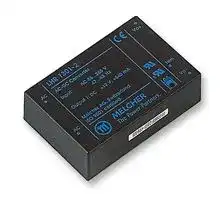
LGR2320-2
AC/DC PCB Mount Power Supply (PSU), 2 Output, 25 W, 12 VDC, 1 A, -15 VDC
⚠️ Reference pricing provided. In case of supply shortages, we will connect you with our trusted procurement partners to ensure your project's continuity.
- Manufacturer: MELCHER
- Product type: AC / DC PCB Mount Power Supplies
- No. of Outputs: 2 Output
- Input Voltage VAC: 85V AC to 265V AC
- Output Current - Output 3: 1A
- Output Voltage - Output 1: 12VDC
- Output Voltage - Output 2: -15VDC
| Delivery and price | |
|---|---|
| Units per pack | 1 |
| Price | 35.06 € |
| Current stock | 10+ |
| Lead time | 30 days |
Datasheet

_AC-DC Converters <40 Watt_

_HR/GR Series_

_Benign Environment_

## **10 and 25 Watt AC-DC Converters**

- **Single and dual output** • Universal AC input • Class II equipment (double insulation) • 3000 V AC input to output electric strength test • High efficiency up to 86% • Short circuit protection • High level of electromagnetic compatibility |

- High level of electromagnetic compatibility

## **HR Series GR Series**

## Safety according to IEC/EN 60950

**==> picture [57 x 21] intentionally omitted <==**

**----- Start of picture text -----**<br>
LGA<br>IA] Adis<br>**----- End of picture text -----**<br>


**==> picture [108 x 35] intentionally omitted <==**

**----- Start of picture text -----**<br>
22.8 32.6<br>76.2 0.9" 88.9 1.28"<br>3" 50.8 3.5" 63.5<br>2" 2.5"<br>LHR LGR<br>**----- End of picture text -----**<br>


## **Summary**

The HR/GR series of flyback switching power modules consists of single and dual output AC-DC converters. Fully encapsulated case, compact size and high reliability make the HR/GR series an excellent choice when a print mountable AC-DC converter in space critical applications is required. The universal input range and a built-in input Pi-Filter allows flexible operation in a wide variety of electronic

equipment. Fine output voltage trimming is achieved by an additional trim pin. Safety approvals and EMC fully comply with world wide requirements.

## **Key applications**

Typical applications include, but are not limited to factory automation, off-site test and measurement, and communications equipment.

## **Type Survey and Key Data**

Table 1: Type survey

|**Output 1**<br>Uo nom<br>Io nom<br>[V DC]<br>[mA]|**Output 1**<br>Uo nom<br>Io nom<br>[V DC]<br>[mA]|**Output 2**<br>Uo nom<br>Io nom<br>[V DC]<br>[mA]|**Output 2**<br>Uo nom<br>Io nom<br>[V DC]<br>[mA]|**Output power**<br>TA= 50°C<br>Po max[W]|**Input voltage**<br>**range**<br>Ui min...Ui max|**Efficiency**1<br>_h_typ<br>[%]|**Type designation**|
|---|---|---|---|---|---|---|---|
|3.3<br>3.3|3000<br>7000|-<br>-|-<br>-|10<br>23|85...265 V AC<br>47...400 Hz<br>110...330 V DC|73<br>75|LHR 1101-2<br>LGR 1101-2|
|5<br>5|2000<br>5000|-<br>-|-<br>-|10<br>25||73<br>76|LHR 1001-2<br>LGR 1001-2|
|12<br>12|840<br>2100|-<br>-|-<br>-|10<br>25||75<br>78|LHR 1301-2<br>LGR 1301-2|
|15<br>15|670<br>1700|-<br>-|-<br>-|10<br>25||75<br>80|LHR 1501-2<br>LGR 1501-2|
|24<br>24|420<br>1000|-<br>-|-<br>-|10<br>25||77<br>77|LHR 1601-2<br>LGR 1601-2|
|+5<br>+5|1000<br>2500|+12<br>+12|420<br>1000|10<br>24.5||73<br>78|LHR 2020-2<br>LGR 2020-2|
|+12<br>+12|420<br>1000|–12<br>–12|420<br>1000|10<br>25||77<br>78|LHR 2320-2<br>LGR 2320-2|
|+15<br>+15|335<br>800|–15<br>–15|335<br>800|10<br>25||77<br>78|LHR 2540-2<br>LGR 2540-2|


1Efficiency at Ui rated and Io nom.

## **Table of Contents**

## Page

Summary.......................................................................... 1 Type Survey and Key Data.............................................. 1 Type Key .......................................................................... 2 Functional Description ..................................................... 2 Electrical Input Data ........................................................ 3 Electrical Output Data...................................................... 3

Page Auxiliary Functions .......................................................... 6 Electromagnetic Compatibility (EMC) ............................. 7 Immunity to Environmental Conditions ........................... 8 Mechanical Data .............................................................. 8 Safety and Installation Instructions ................................. 9

Edition 5/11.99 1/10

_HR/GR Series_

_AC-DC Converters <40 Watt_

_Benign Environment_

## **Type Key**

**Type Key** Series 10 W.......................................................... LHR 25 W.......................................................... LGR Number of outputs ....................................................... 1, 2 Output 1 3.3 V DC ......................................................... 1 5 V DC ......................................................... 0 12 V DC ......................................................... 3 15 V DC ......................................................... 5 24 V DC ......................................................... 6 Output 2 12 V DC ....................................................... 20 15 V DC ....................................................... 40 Ambient temperature range TA: –10...50 ° C..................................................... -2

LHR   1 3 01 -2

Example: LHR 1301-2 = AC-DC converter providing 12 V/840 mA, 10 W output

## **Functional Description**

**==> picture [273 x 335] intentionally omitted <==**

**----- Start of picture text -----**<br>
03004<br>L Vo+<br>Sensing<br>N Vo–<br>Control Control<br>Trim<br>circuit circuit<br>03080<br>L Vo+/Vo1+<br>Sensing<br>Com<br>N Vo–/Vo2+<br>Control Control<br>circuit circuit<br>Line filter<br>Switching device Rectifier and filter<br>Line filter<br>Switching device Rectifier and filter<br>**----- End of picture text -----**<br>


Fig. 1 Block diagram LHR, LGR with single output

Fig. 2 Block diagram LHR, LGR with dual output

Edition 5/11.99 2/10

_AC-DC Converters <40 Watt_

_HR/GR Series_

_Benign Environment_

## **Electrical Input Data**

General Condition: TA = 25 ° C unless otherwise specified

## Table 2: Input data

|Characteristics|Characteristics|**LHR**|**LGR**|Unit|
|---|---|---|---|---|
|Ui rated|Rated input voltages|100/230|100/230|V AC|
|Ui|Input voltage range|85...265|85...265||
|||110...330|110...330|V DC|
|fi|Line frequency|47...63|47...63|Hz|
|Ii max|Input current at 100/230 V AC1|0.3/0.2|0.6/0.4|A|
|linr max|Inrush current|25|30||


> 1 At Io nom.

## **Electrical Output Data**

General Condition:

- TA = 25 ° C unless otherwise specified.

- Trim input not connected.

## Table 3a: Output data for single output units

|**Output**|**Output**|**Output**|**LHR 1101-2**|**LHR 1001-2**|**LHR 1301-2**|Unit|
|---|---|---|---|---|---|---|
|Characteristics||Conditions|min<br>typ<br>max|min<br>typ<br>max|min<br>typ<br>max||
|Uo|Output voltage|Ui rated, Io nom|3.3|4.9<br>5<br>5.1|11.76<br>12<br>12.24|V|
|Uo adj|Adjustable voltage range||±10|±10|±10|%|
|Io nom|Nominal output current|Ui min...Ui max|3000|2000|840|mA|
|uo|Output voltage noise<br>(BW = 20 MHz)|Ui rated<br>Io nom|100<br>150|100<br>150|100<br>150|mVpp|
|_D_Uo U|Static line regulation|Ui min...Ui max<br>Io nom|±1|±1|±1|%|
|_D_Uo I|Static load regulation|Ui rated<br>Io= 0↔Io nom|±2|±2|±2||
|tr|Transient recovery time|Io= 1↔0.5 Io nom|500|500|500|µs|
|th typ|Hold-uptime|110/230 V|10/80|10/80|10/80|ms|
|_a_Uo|Temperature coefficient|Ui rated, Io nom|±0.05|±0.05|±0.05|%/K|
|fs|Switching frequency||90<br>110|90<br>110|90<br>110|kHz|


## Table 3b: Output data for single output units

|**Output**|**Output**|**Output**|**LHR 1501-2**|**LHR 1601-2**|Unit|
|---|---|---|---|---|---|
|Characteristics||Conditions|min<br>typ<br>max|min<br>typ<br>max||
|Uo|Output voltage|Ui rated, Io nom|14.7<br>15<br>15.3|23.52<br>24<br>24.48|V|
|Uo adj|Adjustable voltage range||±10|±10|%|
|Io nom|Nominal output current|Ui min...Ui max|670|420|mA|
|uo|Output voltage noise<br>(BW = 20 MHz)|Ui rated<br>Io nom|100<br>150|100<br>150|mVpp|
|_D_Uo U|Static line regulation|Ui min...Ui max<br>Io nom|±1|±1|%|
|_D_Uo I|Static load regulation|Ui rated<br>Io= 0↔Io nom|±2|±2||
|tr|Transient recovery time|Io= 1↔0.5 Io nom|500|500|µs|
|th typ|Hold-up time|110/230 V|10/80|10/80|ms|
|_a_Uo|Temperature coefficient|Ui rated, Io nom|±0.05|±0.05|%/K|
|fs|Switching frequency||90<br>110|90<br>110|kHz|


Edition 5/11.99

3/10

_HR/GR Series_

_AC-DC Converters <40 Watt_

_Benign Environment_

Table 3c: Output data for single output units

|**Output**|**Output**|**Output**|**LGR 1101-2**|**LGR 1001-2**|**LGR 1301-2**|Unit|
|---|---|---|---|---|---|---|
|Characteristics||Conditions|min<br>typ<br>max|min<br>typ<br>max|min<br>typ<br>max||
|Uo|Output voltage|Ui rated, Io nom|3.3|4.9<br>5<br>5.1|11.76<br>12<br>12.24|V|
|Uo adj|Adjustable voltage range||±10|±10|±10|%|
|Io nom|Nominal output current|Ui min...Ui max|7000|5000|2100|mA|
|uo|Output voltage noise<br>(BW = 20 MHz)|Ui rated<br>Io nom|100<br>150|100<br>150|100<br>240|mVpp|
|_D_Uo U|Static line regulation|Ui min...Ui max<br>Io nom|±1|±1|±1|%|
|_D_Uo I|Static load regulation|Ui rated<br>Io= 0↔Io nom|±2|±2|±2||
|tr|Transient recovery time|Io= 1↔0.5 Io nom|500|500|500|µs|
|th typ|Hold-uptime|110/230 V|15/90|15/90|15/90|ms|
|_a_Uo|Temperature coefficient|Ui rated, Io nom|±0.05|±0.05|±0.05|%/K|
|fs|Switching frequency||80<br>120|80<br>120|80<br>120|kHz|


## Table 3d: Output data for single output units

|**Output**|**Output**|**Output**|**LGR 1501-2**|**LGR 1601-2**|Unit|
|---|---|---|---|---|---|
|Characteristics||Conditions|min<br>typ<br>max|min<br>typ<br>max||
|Uo|Output voltage|Ui rated, Io nom|14.7<br>15<br>15.3|23.52<br>24<br>24.48|V|
|Uo adj|Adjustable voltage range||±10|±10|%|
|Io nom|Nominal output current|Ui min...Ui max|1700|1000|mA|
|uo|Output voltage noise<br>(BW = 20 MHz)|Ui rated<br>Io nom|150<br>300|150<br>300|mVpp|
|_D_Uo U|Static line regulation|Ui min...Ui max<br>Io nom|±1|±1|%|
|_D_Uo I|Static load regulation|Ui rated<br>Io= 0↔Io nom|±2|±2||
|tr|Transient recovery time|Io= 1↔0.5 Io nom|500|500|µs|
|th typ|Hold-up time|110/230 V|15/90|15/90|ms|
|_a_Uo|Temperature coefficient|Ui rated, Io nom|±0.05|±0.05|%/K|
|fs|Switching frequency||80<br>120|80<br>120|kHz|


## Table 3e: Output data for dual output units

|**Output**|**Output**|**Output**|**LHR 2020-2**|**LHR 2020-2**|**LHR 2320-2**|**LHR 2320-2**|Unit|
|---|---|---|---|---|---|---|---|
|Characteristics||Conditions|Output 1<br>min<br>typ max|Output 2<br>min<br>typ max|Output 1<br>min<br>typ max|Output 2<br>min<br>typ max||
|Uo|Output voltage|Ui rated, Io nom|4.9<br>5<br>5.1|11.76 12 12.24|11.76 12 12.24|-11.76 -12 -12.24|V|
|Io nom|Nominal output current|Ui min...Ui max|1000|420|420|420|mA|
|uo|Output voltage noise<br>(BW = 20 MHz)|Ui rated<br>Io nom|120 240|120 240|120 240|120 240|mVpp|
|_D_Uo U|Static line regulation|Ui min...Ui max<br>Io nom|±1|±1|±1|±1|%|
|_D_Uo I|Static load regulation|Ui rated<br>Io= 0.2↔Io nom|±2|±2|±2|±2||
|tr|Transient recovery time|Io= 1↔0.5 Io nom|500|500|500|500|µs|
|th typ|Hold-up time|110/230 V|10/80||10/80||ms|
|_a_Uo|Temperature coefficient|Ui rated, Io nom|±0.05|±0.05|±0.05|±0.05|%/K|
|fs|Switching frequency||90<br>110|90<br>110|90<br>110|90<br>110|kHz|


Edition 5/11.99

4/10

_AC-DC Converters <40 Watt_

_HR/GR Series_

_Benign Environment_

## Table 3f: Output data for dual output units

|**Output**|**Output**|**Output**|**LHR 2540-2**|**LHR 2540-2**|Unit|
|---|---|---|---|---|---|
|Characteristics||Conditions|Output 1<br>min<br>typ max|Output 2<br>min<br>typ max||
|Uo|Output voltage|Ui rated, Io nom|14.7 15 15.3|-14.7 -15 -15.3|V|
|Io nom|Nominal output current|Ui min...Ui max|335|335|mA|
|uo|Output voltage noise<br>(BW = 20 MHz)|Ui rated<br>Io nom|120 240|120 240|mVpp|
|_D_Uo U|Static line regulation|Ui min...Ui max<br>Io nom|±1|±1|%|
|_D_Uo I|Static load regulation|Ui rated<br>Io= 0.2↔Io nom|±2|±2||
|tr|Transient recovery time|Io= 1↔0.5 Io nom|500|500|µs|
|th typ|Hold-up time|110/230 V|10/80||ms|
|_a_Uo|Temperature coefficient|Ui rated, Io nom|±0.05|±0.05|%/K|
|fs|Switching frequency||90<br>110|90<br>110|kHz|


## Table 3g: Output data for dual output units

|**Output**|||||**LGR**|**2020-2**|**2020-2**|||||**LGR**|**2320-2**|**2320-2**||||
|---|---|---|---|---|---|---|---|---|---|---|---|---|---|---|---|---|---|
|Characteristics||Conditions|Output||1||Output||2|Output||1||Output||2||
||||min|typ|max||min|typ|max|min|typ|max||min|typ|max|Unit|
|Uo|Output voltage|Ui rated, Io nom|4.9|5|5.1||11.76 12 12.24|||11.76 12 12.24||||-11.76 -12 -12.24|||V|
|Io nom|Nominal output current|Ui min...Ui max||2500||||1000|||1000||||1000||mA|
|uo|Output voltage noise|Ui rated||100|150|||120|240||120|240|||120|240|mVpp|
||(BW = 20 MHz)|Io nom||||||||||||||||
|_D_Uo U|Static line regulation|Ui min...Ui max|||±1||||±1|||±1||||±1|%|
|||Io nom||||||||||||||||
|_D_Uo I|Static load regulation|Ui rated|||±2||||±2|||±2||||±2||
|||Io= 0.2↔Io nom||||||||||||||||
|tr|Transient recovery time|Io= 1↔0.5 Io nom|||500||||500|||500||||500|µs|
|th typ|Hold-up time|110/230 V||15/90|||||||15/90||||||ms|
|_a_Uo|Temperature coefficient|Ui rated, Io nom||±0.05||||±0.05|||±0.05||||±0.05||%/K|
|fs|Switching frequency||80||120||80||120|80||120||80||120|kHz|


## Table 3h: Output data for dual output units

|**Output**|||||**LGR**|**2540-2**|**2540-2**||||
|---|---|---|---|---|---|---|---|---|---|---|
|Characteristics||Conditions|Output||1||Output||2||
||||min|typ|max||min|typ|max|Units|
|Uo|Output voltage|Ui rated, Io nom|14.7|15|15.3||-14.7 -15 -15.3|||V|
|Io nom|Nominal output current|Ui min...Ui max||800||||800||mA|
|uo|Output voltage noise|Ui rated||150|300|||150|300|mVpp|
||(BW = 20 MHz)|Io nom|||||||||
|_D_Uo U|Static line regulation|Ui min...Ui max|||±1||||±1|%|
|||Io nom|||||||||
|_D_Uo I|Static load regulation|Ui rated|||±2||||±2||
|||Io= 0.2↔Io nom|||||||||
|tr|Transient recovery time|Io= 1↔0.5 Io nom|||500||||500|µs|
|th typ|Hold-up time|110/230 V||15/90||||||ms|
|_a_Uo|Temperature coefficient|Ui rated, Io nom||±0.05||||±0.05||%/K|
|fs|Switching frequency||80||120||80||120|kHz|


Edition 5/11.99 5/10

_HR/GR Series_

_AC-DC Converters <40 Watt_

_Benign Environment_

## **Thermal Considerations**

If an AC-DC converter, mounted on a PCB, is located in free, quasi-stationary air (convection cooling) at the indicated maximum ambient temperature TA max (see: table Temperature specifications) and is operated at its nominal input voltage and output power, the temperature measured at the Measuring point of case temperature TC (see: Mechanical Data) will approach the indicated value TC max after the warm-up phase. However, the relationship between TA and TC depends heavily on the conditions of operation and integration into a system. The thermal conditions are influenced by input voltage, output current, airflow, temperature of surrounding components and surfaces and the properties of the printed circuit board. TA max is therefore, contrary to TC max, an indicative value only.

The relation between the maximum allowed output power Po allowed and the temperature TA of the surrounding air is given in fig.: Maximum allowed output power vs. ambient temperature. The rates apply if the AC-DC converter is located in free, quasi-stationary air (convection cooling).

**Note:** Sufficient forced cooling or an additional heat sink allows TA to be higher than the value given in the table if TC max according to the table is not exceeded.

**Caution:** The installer must ensure that under all operating conditions TC remains within the limits stated in the table: Temperature specifications.

**==> picture [233 x 146] intentionally omitted <==**

**----- Start of picture text -----**<br>
P o allowed/ P o nom<br>1.0<br>0.6<br>0.5<br>0 T A<br>–10 0 10 20 30 40 50 60 70 [ ° C]<br>05017<br>**----- End of picture text -----**<br>


Fig. 3

Maximum allowed output power vs. ambient temperature.

## **Auxiliary Functions**

## **Output Voltage Adjustment**

The output voltage may be adjusted within ± 10% of Uo nom by means of an external potentiometer or fixed resistor (for samples see table). If the output voltage setting should be excessively high, the overvoltage protection circuit may shut-down the output.

**==> picture [197 x 88] intentionally omitted <==**

**----- Start of picture text -----**<br>
Vo+ Vo+ 05018<br>Rext 2<br>Trim Trim<br>Rext 1<br>Vo– Vo–<br>**----- End of picture text -----**<br>


Table 4: Typical resistor values for various output voltage adjustment settings.

|**Type**|**Rext 1**|**Rext 1**|**Rext 2**|**Rext 2**|
|---|---|---|---|---|
||Uo nom+ 5%|Uo nom+ 10%|Uo nom– 5%|Uo nom–10%|
|LHR 1001-2|5.2 kΩ|1 kΩ|4.6 kΩ|100Ω|
|LHR 1301-2|8.2 kΩ|390Ω|49 kΩ|18.9 kΩ|
|LHR 1501-2|26 kΩ|9.9 kΩ|148 kΩ|66.3 kΩ|
|LHR 1601-2|10 kΩ|820Ω|140 kΩ|61 kΩ|
|LGR 1001-2|5.2 kΩ|1 kΩ|4.6 kΩ|100Ω|
|LGR 1301-2|8.2 kΩ|490Ω|48.3 kΩ|18.9 kΩ|
|LGR 1501-2|18 kΩ|1.7 kΩ|141 kΩ|58 kΩ|


Fig. 4

Output voltage adjustment for single output types

## **Outputs Connected in Series**

Two or more units supplying the same or different output voltages may be connected in series. The value of the maximum output current to be taken is defined by that unit providing the lowest current limiting value. It should be assured that the outputs do not feed backwards into each other caused by their different rise/fall times at switch-on/ off cycles by adding reverse polarity diodes across each output.

## **Output Overload Protection**

An overload protection is provided by a current limiting device using a foldback characteristic. After removal of overload or short circuit the unit will resume normal operation automatically.

## **Protection Scheme**

The LHR and LGR series is continuously short circuit protected by means of input power limitation. The unit will not be damaged if started up into a short circuit. After removal of the short circuit, it will resume normal operation.

The LHR and LGR series is also no-load proof, meaning that the regulation is still effective with no load and the output  voltage does not rise. However, due to component tolerances, oscillation could occur and ripple and noise can be outside of specified values. If the converter is used in senitive electronic circuits with no-load conditions, it is recommended to pre-load the outputs of dual output models with at least 20% of the specified nominal load.

Edition 5/11.99 6/10

_AC-DC Converters <40 Watt_

_HR/GR Series_

_Benign Environment_

## **Electromagnetic Compatibility (EMC)**

## **Immunity**

A metal oxide VDR together with an external input fuse and the internal input filter form an effective protection against high input transient voltages which typically occur

in most installations, but especially in mobile applications. The HR/GR-series has been successfully tested to the following specifications:

Table 5: Immunity type tests

|**Phenomenon**|**Standard**|**Class**|**Coupling**|**Value**|**Waveform**|**Source**||**Test**|||**In**<br>**Per-Level**|**In**<br>**Per-Level**|**mode**|
|---|---|---|---|---|---|---|---|---|---|---|---|---|---|
||||3|**applied**||**Imped.**||**procedure**||**oper. form.**1||||
|Electrostatic|IEC/EN|4|air discharge|15  kVp|1/50 ns|330Ω10||positive and|yes||Adischarge||61400-4-2<br>to case<br>10 negativedischargesElectrical fast<br>IEC/EN<br>3<br>direct coupling<br>2400 V|
|||||p|bursts of 5/50 ns|50Ω1 min positive|||yes||Atransient/burst||61400-4-4<br>+i/–i<br>5 kHz over<br>1 min negative15 ms; burst<br>transients perperiod: 300 ms<br>coupling modeSurge<br>IEC/EN<br>3<br>+i/–i<br>2400 V|
|||||p|1.2/50µs2<br> Ω5 pos. and 5 neg.|||yes|||2<br>A61400-4-5surges percoupling mode|||


1 Normal operation, no deviation from specifications

> 2 No load

> 3 i = input, o = output

## **Emission**

Internal input filtering keeps the conducted noise of the units within the frequency range of 10 kHz to 30 MHz be-

low  level B according to EN 55011 and EN 55022 standards (CISPR 11/22 respectively).

**==> picture [255 x 195] intentionally omitted <==**

**----- Start of picture text -----**<br>
u [dB µ V]<br>90 07006<br>80<br>A<br>70<br>B<br>60<br>50<br>40<br>30<br>20<br>10<br>0 f<br>[MHz]0.4207005 451 [MHz]<br>0.41 0.02 0. 0.51  2 510 20 30<br>**----- End of picture text -----**<br>


**==> picture [212 x 205] intentionally omitted <==**

**----- Start of picture text -----**<br>
u<br>9080706050403020100<br>A<br>B<br>Fig. 5<br>410.051<br>0. 0.51 25102030<br>**----- End of picture text -----**<br>


**==> picture [25 x 10] intentionally omitted <==**

**----- Start of picture text -----**<br>
Fig. 6<br>**----- End of picture text -----**<br>


Typical disturbance voltage (quasi-peak) at the input according to CISPR 11/22 and EN 55011/22, measured at Ui nom and Io nom. e.g. LHR 2540-2, Ui = 230 V AC.

Typical disturbance voltage (quasi-peak) at the input according to CISPR 11/22 and EN 55011/22, measured at Ui nom and Io nom. e.g. LHR 2020-2, Ui = 230 V AC.

**==> picture [1 x 1] intentionally omitted <==**

**----- Start of picture text -----**<br>
f<br>**----- End of picture text -----**<br>


Edition 5/11.99 7/10

_HR/GR Series_

_AC-DC Converters <40 Watt_

_Benign Environment_

## **Immunity to Environmental Conditions**

## Table 6: Mechanical stress

|**Test method**|**Test conditions**|**Status**|
|---|---|---|
|Damp heat<br>steady state|Temperature:<br>40 ±2 °C<br>Relative humidity:<br>93+2/–3%<br>Duration:<br>21 days|Operating|
|Shock (half-sinusoidal)|Acceleration amplitude:<br>20 gn= 196.2 m/s2|Operating|
|Vibration (sinusoidal)|Acceleration amplitude:<br>0.14 mm (10...60 Hz)<br>2 gn= 19.6 m/s2(60...150 Hz)<br>Frequency (1 Oct/min):<br>10...150 Hz<br>Test duration:<br>4 h (1.3 h each axis)|Operating|


## Table 7: Temperature specifications

|**Characterisitcs**|**Characterisitcs**|**Conditions**|**min**<br>**max**|**Unit**|
|---|---|---|---|---|
|TA|Ambient temperature|Operational1|–10<br>50|°C|
|TC|Case temperature||–10<br>80||
|TS|Storage temperature|Non operational|–40<br>85||


> 1 See Termal Consideration.

## Table 8: MTBF Values

|**MTBF**|**Type**|**Ground benign**<br>TC= 30°C|**Ground fixed**<br>TC= 40°C<br>TC= 70°C|**Ground fixed**<br>TC= 40°C<br>TC= 70°C|**Ground mobile**<br>TC= 45°C|
|---|---|---|---|---|---|
|According to MIL-HDBK-217F, notice 2|LHR|7'180'000 h|863'000 h|340'000 h|363'000 h|
||LGR|5'660'000 h|707'000 h|291'000 h|303'000 h|


**==> picture [42 x 40] intentionally omitted <==**

**----- Start of picture text -----**<br>
European<br>Projection<br>**----- End of picture text -----**<br>


## **Mechanical Data**

Dimensions in mm. Tolerance ± 0.3 mm unless otherwise indicated.

**==> picture [196 x 211] intentionally omitted <==**

**----- Start of picture text -----**<br>
40.6<br>7.6<br>5 6 3<br>4<br>Ø 1.0<br>max. 8 Ø 3  ×  8<br>1 2<br>4.5 22.8 [±] [0.2] 25.4<br>50.8<br>Measuring point of<br>case temperature TC<br>09005<br>10.1<br>47.4<br>76.2 66<br>**----- End of picture text -----**<br>


**==> picture [234 x 231] intentionally omitted <==**

**----- Start of picture text -----**<br>
09006<br>5 4 3<br>Ø 1.0<br>Ø 3  ×  8<br>max. 8 Ø 3  ×  8<br>1 2<br>5 32.6 55.9<br>63.5<br>Measuring point of<br>case temperature TC<br>Fig. 8<br>LGR, weight 310g<br>22.6<br>88.9 81.2<br>23.6<br>**----- End of picture text -----**<br>


**==> picture [75 x 20] intentionally omitted <==**

**----- Start of picture text -----**<br>
Fig. 7<br>LHR, weight 160g<br>**----- End of picture text -----**<br>


Edition 5/11.99 8/10

_AC-DC Converters <40 Watt_

_HR/GR Series_

_Benign Environment_

## **Safety and Installation Instructions**

## **Connector pin Allocation**

The connector pin allocation table defines the electrical potentials of the AC-DC converters. For mechanical positions of pins see: Mechanical Data.

Table 9: Connector pin allocation and designation

|**Pin**<br>**no.**|**Electrical**<br>**determination**|**LHR**<br>**Single**<br>**Dual**|**LHR**<br>**Single**<br>**Dual**|**LGR**<br>**Single**<br>**Dual**<br>**Dual**<br>**+/–**<br>**+/+**|**LGR**<br>**Single**<br>**Dual**<br>**Dual**<br>**+/–**<br>**+/+**|**LGR**<br>**Single**<br>**Dual**<br>**Dual**<br>**+/–**<br>**+/+**|
|---|---|---|---|---|---|---|
|1|Input voltage|L|L|L|L|L|
|2|Input voltage|N|N|N|N|N|
|3|Output voltage<br>(positive)|Vo+|Vo+|Vo+|Vo+|Vo1+|
|4|Output voltage<br>(return potential)|-|-|Vo–|-|-|
||Output voltage<br>(common return)|-|-|-|Com|Com|
||Control input|Trim|-|-|-|-|
|5|Output voltage<br>(negative or<br>positive)|-|Vo–|-|Vo–|Vo2+|
||Output voltage<br>(return potential)|Vo–|-|-|-|-|
||Control input|-|-|Trim|-|-|
|6|Output voltage|n.c.|Com|-|-|-|


## **Installation Instructions**

The LHR and LGR-families of DC-DC converters are components, intended exclusively for inclusion within other equipment by an industrial assembly operation or by professional installers. Installation must strictly follow the national safety regulations in compliance with the enclosure, mounting, creepage, clearance, casualty, markings and segregation requirements of the end-use application. See also: Technical Information: Installation and Application.

Connection to the system shall be made via a printed circuit board according to Connector pin allocation and Mechanical Data. Check for hazardous voltages before altering any connections.

Ensure that a unit failure (e.g. by an internal short-circuit) does not result in a hazardous condition. See also: Safety of operator accessible output circuit.

To prevent excessive current flowing through the input supply lines in case of a short-circuit across the converter input, an external fuse suitable for the application and in compliance with the local requirements should be installed in the wiring to one or both input pins (no. 1 and/or no. 2). We recommend a slow-blow fuse T1.25A for LHR types, T2.0A for LGR types.

## **Cleaning Agents**

In order to avoid possible damage, any penetration of liquids (e.g. cleaning fluids) is to be prevented, since the power supplies are not hermetically sealed.

## **Standards and approvals**

LHR and LGR AC-DC converters correspond to class II equipment. All types are UL recognized according to UL 1950, UL recognized for Canada to CAN/CSA C22.2 No. 950-95 and LGA approved to IEC/EN 60950 standards.

The units have been evaluated for:

- Building in

- Double or reinforced insulation between input and output, based on 250 V AC

- Operational insulation between the outputs (common return)

- The use in a pollution degree 2 environment

- Connecting the input to a primary circuit with a maximum transient rating of 2500 V (overvoltage category III based on a 110 V primary circuit, overvoltage category II based on a 230 V primary circuit).

The AC-DC converters are subject to manufacturing surveillance in accordance with the above mentioned UL, CSA, EN and with ISO 9001 standards.

## **Isolation**

The electric strength test is performed as a factory test in accordance with IEC/EN 60950 and UL 1950 and should not be repeated in the field. Melcher will not honour any guarantee/warranty claims resulting from electric strength field tests.

Table 10: Isolation

|Characteristic||Input to<br>output|Unit|
|---|---|---|---|
|Electric strength<br>test voltage|Required according to<br>IEC/EN 60950|3.0<br>4.2|kVrms|
||||kV DC|
||Actual factory test 2 s|3.0|kVrms|
|Typical coupling<br>capacitance|LHR|≈2.4|nF|
||LGR|≈5.0||
|Insulation resistance at 500 V DC||>300|MΩ|


- 1 For creepage distances and clearances refer to Technical Information: Safety.

## **Protection Degree**

Condition: Mounted on a PCB. IP 40: All units.

**Important:** Do not open the modules, or guarantee will be invalidated.

Make sure that there is sufficient air flow available for convection cooling. This should be verified by measuring the case temperature when the unit is installed and operated in the end-use application. The maximum specified case temperature TC max shall not be exceeded. See also: Thermal Considerations.

Edition 5/11.99 9/10

_HR/GR Series_

_AC-DC Converters <40 Watt_

_Benign Environment_

## **Leakage Current in AC-DC operation**

Leakage currents flow due to internal leakage capacitance and RFI suppression Y-capacitors. The current values are proportional to the mains voltage and nearly proportional to the mains frequency and are specified at an input voltage of 230 V (50 Hz).

Under test conditions, the leakage current flows through a measuring instrument (MI) as described in fig.: Measuring instrument (MI) for earth leakage current tests according to IEC/EN 60950 which takes into account earth impedance and sensitivity of a person touching unearthed accessible parts. The current value is calculated by dividing the measured voltage by 500 Ω . If inputs and outputs of LHR/LGR-units are connected in parallel, their individual leakage currents are added.

**==> picture [212 x 83] intentionally omitted <==**

**----- Start of picture text -----**<br>
L 10040<br>Vo+<br>N<br>Vo–<br>MI for output<br>leakage current<br>**----- End of picture text -----**<br>


Fig. 10

**==> picture [211 x 137] intentionally omitted <==**

**----- Start of picture text -----**<br>
MI 1500  Ω<br>500  Ω<br>10 k Ω 220 nF<br>22 nF<br>V<br>10061<br>**----- End of picture text -----**<br>


Fig. 9

Measuring instrument (MI) for earth leakage current tests according to IEC/EN 60950.

Table 11: Leakage currents

|Characteristic||**LHR**|**LGR**|Unit|
|---|---|---|---|---|
|Output<br>leakage current|Permissible according<br>to IEC/EN 60950|0.25|0.25|mA|
||Typical value<br>at 230 V, 50 Hz|0.14|0.24||


Test set-up for class II equipment.

## **Safety of operator accessible output circuit**

If the output circuit of an AC-DC converter is operator accessible, it shall be an SELV circuit according to the IEC/ EN 60950 related safety standards.

The following table shows a possible installation configuration, compliance with which causes the output circuit of the AC-DC converter to be an SELV circuit according to

IEC/EN 60950 up to a configured output voltage (sum of nominal voltages if in series or +/– configuration) of 36 V. However, it is the sole responsibility of the installer to assure the compliance with the relevant and applicable safety regulations. More information is given in: Technical Information: Safety.

Table 12: Safety concept leading to an SELV output circuit

|Conditions|AC-DC converter|Installation|Result|
|---|---|---|---|
|Supply voltage|Grade of isolation between input<br>and output, provided by the AC-DC<br>converter|Measures to achieve the resulting<br>safety status of the output circuit|Safety status of the AC-DC converter<br>output circuit|
|Mains≤250 V AC|Double or reinforced|Installation according to the<br>applicable standards|SELV circuit|


|Mains<br>~<br>~|Fuse||SELV<br>+<br>–<br>10041|
|---|---|---|---|
||Fuse|AC-DC<br>con-<br>verter|SE|
|||||


Fig. 11 Schematic safety concept Use fuse(s) as per: Installation Instructions.

Edition 5/11.99 10/10
Updated at February 9, 2023
About Novapart
Novapart is a B2B electronic component broker specialising in stock shortages and cost reduction. We source hard-to-find parts and identify compliant alternatives across a catalogue of 410,000+ components from 500+ manufacturers.
Learn more →Stock Shortage Specialist
When a component is unavailable, discontinued or has an unacceptable lead time, we tap into our network of vetted European and Asian distributors to source what you need — without compromising on quality or traceability.
Request a quote →Compliant Alternatives
We identify pin-to-pin, electrically equivalent substitutes that meet the same certifications (RoHS, AEC-Q100, REACH) as your original specification — validated against datasheets, not just part numbers. Often at a lower cost.
BOM Analysis service →