
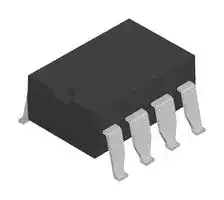


LCC120S
Solid State Relay, SPDT, 170 mA, Surface Mount, Gull Wing
- Manufacturer: LITTELFUSE
- Product type:
- SVHC: To Be Advised
- Load Current: 170mA
- Product Range: -
- Relay Mounting: Surface Mount
- Switching Mode: -
- Relay Terminals: Gull Wing
- Control Voltage Max: -
- Control Voltage Min: -
- Contact Configuration: SPDT
- Operating Voltage Max: -
- Operating Voltage Min: -
| Delivery and price | |
|---|---|
| Units per pack | 50 |
| Price | 5.36 € |
| Current stock | 10+ |
| Lead time | 30 days |

**LCC120 250V, 170mA 1-Form-C Relay** INTEGRATED CIRCUITS DIVISION **Parameters Ratings Units** Blocking Voltage 250 VP Load Current 170 mArms / mADC On-Resistance (max) 20 ~~——~~ ## **Features** - 3750Vrms Input/Output Isolation - 1-Form-C Solid State Relay - Low Drive Power Requirements ## **Description** LCC120P is a 250V, 170mA, 20 1-Form-C relay. It is ideal for applications focused on peak load current handling capablilities. This device is perfect for applications where a signal needs to be switched between two different lines. The small 8-lead package makes it an ideal space-saving replacement for a 1-Form-C electromechanical relay (EMR). - Greater Reliability than Electromechanical Relays - FCC Compatible - VDE Compatible - No EMI/RFI Generation - Small 8-pin Package - Flammability Rating UL 94 V-0 ## **Approvals** - UL Recognized Component: File E76270 - CSA Certified Component: Certificate 1175739 - TUV EN 62368-1: Certificate # B 082667 0008 - Surface Mount Tape & Reel Version Available ## **Ordering Information** ## **Applications** - Telecommunications - Telecom Switching - Tip/Ring Circuits - Modem Switching (Laptop, Notebook, Pocket Size) **Part # Description** LCC120 8-Pin DIP (50/Tube) LCC120S 8-Pin Surface Mount (50/Tube) LCC120STR 8-Pin Surfact Mount Tape & Reel (1000/Reel) ~~—_~~ - Hook Switch - Dial Pulsing - Ground Start - Ringing Injection - Instrumentation - Multiplexers - Data Acquisition - Electronic Switching - I/O Subsystems ## **Pin Configuration** **==> picture [201 x 72] intentionally omitted <==** **----- Start of picture text -----**<br> 1 8<br>Do Not Use<br>Normally Closed Pole<br>2 7<br>+ Control<br>3 6<br>– Control<br>Normally Open Pole<br>4 5<br>Do Not Use<br>**----- End of picture text -----**<br> - Meters (Watt-Hour, Water, Gas) - Medical Equipment—Patient/Equipment Isolation - Security - Industrial Controls ## **Switching Characteristics for a Form-C Device** **==> picture [126 x 75] intentionally omitted <==** **----- Start of picture text -----**<br> IF<br>90%<br>Form-A ILOAD 10%<br>t on t off<br>Form-B ILOAD 90%<br>10%<br>t off t on<br>**----- End of picture text -----**<br> **1** DS-LCC120-R11 **www.ixysic.com** **LCC120** INTEGRATED CIRCUITS DIVISION ## **Absolute Maximum Ratings @ 25ºC** |**Parameter**|**Min**|**Max**|**Unit**| |---|---|---|---| |Blocking Voltage|-|250|VP| |Reverse Input Voltage|-|5|V| |Input control Current<br>Peak (10ms)|-<br>-|50|mA| |||1|A| |Input Power Dissipation1|-|150|mW| |Total Power Dissipation2|-|800|mW| |Isolation Voltage, Input to Output|3750|-|Vrms| |Operating Temperature, Ambient|-40|+85|ºC| |Storage Temperature|-40|+125|ºC| _Absolute Maximum Ratings are stress ratings. Stresses in excess of these ratings can cause permanent damage to the device. Functional operation of the device at conditions beyond those indicated in the operational sections of this data sheet is not implied._ _Typical values are characteristic of the device at +25°C, and are the result of engineering evaluations. They are provided for information purposes only, and are not part of the manufacturing testing requirements._ 1 Derate linearly 1.33mW / ºC. 2 Derate output power linearly 6.67mW / ºC. ## **Electrical Characteristics @ 25ºC** |**Parameter**|**Conditions**|**Symbol**|**Min**|**Typ**|**Max**|**Units**| |---|---|---|---|---|---|---| |**Output Characteristics**<br>~~Pp~~||||||| |Blocking Voltage<br>~~Pp~~|IL=1A<br>|VDRM<br>|250<br>|-<br>|-<br>|VP<br>| |Load Current<br>Continuous<br>Peak<br>~~Pp~~|-<br>|IL<br>|-<br>|-<br>|170<br>|mArms/ mADC<br>| ||t=10ms<br>|ILPK<br>|-<br>|-<br>|±400<br>|mAP<br>| |On-Resistance1<br>~~Pp~~|IL=170mA<br>|RON<br>|-<br>|16<br>|20<br>|<br>| |Off-State Leakage Current<br>~~Ppa~~|VL=250VP<br>~~a~~|ILEAK<br>~~a~~|-<br>~~a~~|-<br>~~a~~|1<br>~~a~~|µA<br>~~a~~| |Switching Speeds<br>Turn-On<br>Turn-Off<br>~~a~~|IF=10mA, VL=10V<br>~~a~~|ton<br>~~a~~|-<br>~~a~~|-<br>~~a~~|5<br>~~a~~|ms<br>~~a~~| |||toff<br>~~a~~|-<br>~~a~~|-<br>~~a~~|5<br>~~a~~|| |Output Capacitance<br>~~a~~|VL=50V, f=1MHz<br>~~a~~|COUT<br>~~a~~|-<br>~~a~~|50<br>~~a~~|-<br>~~a~~|pF<br>~~a~~| |**Input Characteristics**||||||| |Input Control Current to Activate|IL=170mA|IF|-|-|10|mA| |Input Control Current to Deactivate|-|IF|0.4|0.7|-|mA| |Input Voltage Drop|IF=10mA|VF|0.9|1.42|1.56|V| |Reverse Input Current|VR=5V|IR|-|-|10|A| |**Common Characteristics**||||||| |Capacitance, Input to Output|VIO=0V, f=1MHz|CIO|-|3|-|pF| 1 Measurement taken within 1 second of on-time. R11 **www.ixysic.com** **2** **LCC120** INTEGRATED CIRCUITS DIVISION ## **COMMON PERFORMANCE DATA*** **==> picture [493 x 272] intentionally omitted <==** **----- Start of picture text -----**<br> Typical LED Forward Voltage Drop Typical LED Forward Voltage Drop Typical Leakage vs. Temperature<br>(N=50, IF=10mA) vs. Temperature Measured across Pins 5&6 or 7&8<br>30 1.8 0.016<br>1.7 0.014<br>25 ET Ip! 11 ee<br>1.6 0.012<br>20 | 1.5 a IIFF=10mA=5mA 0.010<br>15 1.4 I F =2mA 0.008<br>10 Bie| aia 1.3 PSS2S 3 0.006 a ea<br>1.2 0.004<br>5 | 1.1 ee 0.002<br>0 [ni: | 1.0 Ft 0 e e ee ee<br>1.416 1.418 1.420 1.422 1.424 -50 -25 0 25 50 75 100 -40 -20 0 20 40 60 80 100<br>LED Forward Voltage Drop (V) Temperature (ºC) Temperature (ºC)<br>Energy Rating Curve<br>1.2<br>1.0<br>SE a<br>0.8 Aea a<br>0.6<br>ATS<br>0.4 au<br>0.2 me ANN aa ee a<br>0 F ANN IAIN TENA CU TT<br>10 s 100 s 1ms 10ms 100ms 1s 10s 100s<br>Time<br>A)<br>Leakage (<br>Device Count (N)<br>LED Forward Voltage Drop (V)<br>Load Current (A)<br>**----- End of picture text -----**<br> ## **FORM-A RELAY PERFORMANCE DATA*** **==> picture [314 x 280] intentionally omitted <==** **----- Start of picture text -----**<br> Form-A Form-A<br>Typical Turn-On Time Typical Turn-Off Time<br>(N=50, IF=10mA, IL=170mADC) (N=50, IF=10mA, IL=170mADC)<br>25 25<br>20 20<br>15 15 oes<br>10 10 | in|<br>5 5<br>miiil<br>0 0 | ERR<br>0.75 1.05 1.35 1.65 1.95 2.25 0.23 0.32 0.41 0.50 0.59 0.68<br>Turn-On Time (ms) Turn-Off Time (ms)<br>Form-A Form-A<br>Typical IF for Switch Operation Typical IF for Switch Dropout<br>(N=50, IL=170mADC) (N=50, IL=170mADC)<br>25 25<br>20 | | ime | 20<br>15 7253 ee 15<br>10 10<br>70 | fee<br>5 5<br>| i |<br>0 a, | |) 0<br>1.05 1.75 2.45 3.15 3.85 4.55 5.25 1.05 1.75 2.45 3.15 3.85 4.55 5.25<br>LED Current (mA) LED Current (mA)<br>Device Count (N) Device Count (N)<br>Device Count (N) Device Count (N)<br>**----- End of picture text -----**<br> **==> picture [147 x 132] intentionally omitted <==** **----- Start of picture text -----**<br> Form-A<br>Typical On-Resistance Distribution<br>(N=50, IF=10mA, IL=170mADC)<br>35<br>3025 EEE<br>LLL LLL<br>20<br>15 F2ELL,<br>10<br>5 | | | | oe<br>0 ns [6b6e6sFfeshmhe]<br>8.5 8.8 9.1 9.4 9.7 10.0 10.3<br>On-Resistance ( )<br>Device Count (N)<br>**----- End of picture text -----**<br> **Form-A Typical Blocking Voltage Distribution (N=50)** **==> picture [145 x 108] intentionally omitted <==** **----- Start of picture text -----**<br> 35<br>30<br>25 FLLfpLLLL pa<br>20 FELL,<br>15<br>10 eT<br>5 |<br>0 aaans0b6b666s6Fs6smh<br>330 340 350 360 370 380 390<br>Blocking Voltage (VP)<br>Device Count (N)<br>**----- End of picture text -----**<br> *Unless otherwise noted, data presented in these graphs is typical of device operation at 25ºC. **www.ixysic.com** R11 **3** al INTEGRATED CIRCUITS DIVISION **LCC120** ~~iss~~ ## **FORM-A RELAY PERFORMANCE DATA*** **==> picture [496 x 584] intentionally omitted <==** **----- Start of picture text -----**<br> Form-A Form-A Form-A<br>Typical Turn-On Time Typical IF for Switch Operation Typical Turn-On Time<br>vs. LED Forward Current vs. Temperature vs. Temperature<br>1.0 (IL=170mADC) 6 (IL=170mADC) 1.2 (IL=170mADC)<br>0.9 Zee IF=10mA<br>5 1.0 IF=15mA<br>0.8 IF=20mA<br>0.7 ZSSR 4 ep4 0.8 NeSho<br>0.6 SEEEEEEeeE) = 3 LEE 0.6 EN ee<br>0.5<br>PCREPPPer 2 eee) ae 0.4 TT<br>0.4<br>0.3 SOZANE 1 0.2 ——<br>0.2 PEC SSSSSSSS —s 0 (as 0 EEL<br>0 5 10 15 20 25 30 35 40 45 50 -40 -20 0 20 40 60 80 100 -40 -20 0 20 40 60 80 100<br>LED Forward Current (mA) Temperature (ºC) Temperature (ºC)<br>Form-A Form-A Form-A<br>Typical Turn-Off Time Typical IF for Switch Dropout Typical Turn-Off Time<br>vs. LED Forward Current vs. Temperature vs. Temperature<br>0.25 (IL=170mADC) 6 (IL=170mADC) 0.8 (IF=10mA, IL=170mADC)<br>0.7<br>0.20 5<br>Se 0.6<br>4<br>0.15 PLETE, a 0.5 eee<br>3 Fe | | cT ere 0.4 FT NE<br>0.10 TEE CUE ee 0.3 eee<br>2 Soar eS<br>0.2<br>0.05 a 1<br>0.1<br>0 FLEE LLL 0 FELLELLE | 0 oI Ed<br>0 5 10 15 20 25 30 35 40 45 50 -40 -20 0 20 40 60 80 100 -40 -20 0 20 40 60 80 100<br>LED Forward Current (mA) Temperature (ºC) Temperature (ºC)<br>Form-A<br>Typical On-Resistance Form-A Form-A<br>vs. Temperature Typical Load Current vs. Load Voltage Maximum Load Current<br>12 (IF=10mA, IL=170mADC) 150 (IF=10mA) 250 vs. Temperature<br>10 TT LL LE 100 200 SST TLL<br>8 50<br>a 150 SS<br>6 0<br>PT LLL, 100 ASS<br>4 FELL ELELL -50<br>2 FLL ELELL -100 50 PLETE ETT<br>0 -LLELELL, -150 0 FLEE LE<br>-40 -20 0 20 40 60 80 100 -3 -2 -1 0 1 2 3 -40 -20 0 20 40 60 80 100 120<br>Temperature (ºC) Load Voltage (V) Temperature (ºC)<br>Form-A<br>Typical Blocking Voltage<br>vs. Temperature<br>350<br>345 7<br>340 ee aeae<br>335 eee<br>330 Fo | [er | fl lhUdt CU<br>325 Fo [ay | |tlh<br>320 Fo | | [| [ | |<br>315 -— | | | [| [ [|<br>310 ee ee ee ee<br>305 e n ee ee ee ee eee<br>-40 -20 0 20 40 60 80 100<br>Temperature (ºC)<br>IIIFFF=30mA=20mA=10mA<br>Turn-On Time (ms) LED Current (mA) Turn-On Time (ms)<br>Turn-Off Time (ms) LED Current (mA) Turn-Off Time (ms)<br>)<br>On-Resistance ( Load Current (mA) Load Current (mA)<br>)P<br>Blocking Voltage (V<br>**----- End of picture text -----**<br> *Unless otherwise noted, data presented in these graphs is typical of device operation at 25ºC. R11 **www.ixysic.com** **4** call INTEGRATED CIRCUITS DIVISION **LCC120** ~~a~~ ## **FORM-B RELAY PERFORMANCE DATA*** **==> picture [497 x 576] intentionally omitted <==** **----- Start of picture text -----**<br> Form-B Form-B Form-B<br>Typical Turn-On Time Typical Turn-Off Time Typical On-Resistance Distribution<br>(N=50, IF=10mA, IL=170mADC) (N=50, IF=10mA, IL=170mADC) (N=50, IF=0mA, IL=170mADC)<br>302520151050 m——EEae2|“_id!lh—LLLLLe | 302520151050 302520151050 |”nFnet Z666s§$s5375hLl LDLLLLL,||iane-2<br>0.25 0.35 0.45 0.55 0.65 0.75 0.6 1.0 1.4 1.8 2.2 2.6 9.3 10.2 11.1 12.0 12.9 13.8 14.7<br>Turn-On Time (ms) Turn-Off Time (ms) On-Resistance ( )<br>Form-B Form-B Form-B<br>Typical IF for Switch Operation Typical IF for Switch Dropout Typical Blocking Voltage Distribution<br>(N=50, IL=170mADC) (N=50, IL=170mADC) (N=50, IF=10mA)<br>30 25 30<br>25 FLDLCLLLL, 20 25 FLDLLLLL,<br>20 FEEEELL, 20 ee<br>15 2 15 15 2)<br>10<br>10 2a | 10 | =<br>5 | | = 5 5 a”)<br>0 Ee 0 0 n z h066§$s5/L. |) =<br>1.2 2.0 2.8 3.6 4.4 5.2 6.0 1.05 1.75 2.45 3.15 3.85 4.55 5.25 263 280 297 314 331 348 365<br>LED Current (mA) LED Current (mA) Blocking Voltage (VP)<br>Form-B Form-B Form-B<br>Typical Turn-On Time Typical IF for Switch Operation Typical Turn-On Time<br>vs.LED Forward Current vs. Temperature vs. Temperature<br>0.45 (IL=170mADC) 6 (IL=170mADC) 0.40 (IF=10mA, IL=170mADC)<br>0.35<br>5<br>0.40 Plea tT ELFEN 0.30<br>4<br>0.35 0.25<br>CEE) 3 ECE ee 0.20 BREE EE<br>0.30 PETTITT TTT) 2 ee 0.15 Sees<br>0.10<br>0.25 PLETE 1 Py Too 0.05 AS<br>0.20 ERR 0 FELL SL SL | 0 TIEFd<br>0 5 10 15 20 25 30 35 40 45 50 -40 -20 0 20 40 60 80 100 -40 -20 0 20 40 60 80 100<br>LED Forward Current (mA) Temperature (ºC) Temperature (ºC)<br>Form-B Form-B Form-B<br>Typical Turn-Off Time Typical IF for Switch Dropout Typical Turn-Off Time<br>vs. LED Forward Current vs. Temperature vs. Temperature<br>1.6 (IL=170mADC) 6 (IL=170mADC) 2.5 (IL=170mADC)<br>1.4 TTTEEL ES C 5 EEE 2.0 IIFF=10mA=15mA (<br>1.2 4 IF=20mA<br>FFPPPeeeeeen CO 1.5 NM LUA<br>1.0 3<br>POPP eR 1.0 REET<br>0.8 2<br>PCREEEEPE) eee 0.5 SS<br>0.6 FOOMEELEE (Gs C 1 TE (sO LELELINEE TT<br>0.4 PCEISEEEERR 0 6 hUrPPrereeee (a+$§eC EEE 0<br>0 5 10 15 20 25 30 35 40 45 50 -40 -20 0 20 40 60 80 100 -40 -20 0 20 40 60 80 100<br>LED Forward Current (mA) Temperature (ºC) Temperature (ºC)<br>Device Count (N) Device Count (N) Device Count (N)<br>Device Count (N) Device Count (N) Device Count (N)<br>Turn-On Time (ms) LED Current (mA) Turn-On Time (ms)<br>Turn-Off Time (ms) LED Current (mA) Turn-Off Time (ms)<br>**----- End of picture text -----**<br> *Unless otherwise noted, data presented in these graphs is typical of device operation at 25ºC. **www.ixysic.com** R11 **5** call INTEGRATED CIRCUITS DIVISION **LCC120** ~~a~~ ## **FORM-B RELAY PERFORMANCE DATA*** **==> picture [494 x 288] intentionally omitted <==** **----- Start of picture text -----**<br> Form-B Form B<br>Typical On-Resistance Form-B Maximum Load Current<br>vs. Temperature Typical Load Current vs. Load Voltage vs. Temperature<br>60 (IF=0mA, IL=170mADC) 150 (IF=0mA) 250 (IF=0mA)<br>50 TTTTIILD) 100 6p) COU 200 RT<br>40 50<br>eet tT tt tt PLTeT tte 150 PAT<br>30 0<br>100<br>20 ToOELLE) -50 oe ~~<br>100 TPLEELLerret 8 -100-150 O ef emeeeeoobbooo) e«=o t 500 LLLCLLELLLE<br>-40 -20 0 20 40 60 80 100 -4 -3 -2 -1 0 1 2 3 4 -40 -20 0 20 40 60 80 100 120<br>Temperature (ºC) Load Voltage (V) Temperature (ºC)<br>Form-B<br>Typical Blocking Voltage<br>vs. Temperature<br>(IF=10mA)<br>320<br>310300290280270260 FolFoot7m2| ULE| |[| UdTTE[|eaeCUE|aa| |<br>250 FooT hf hE hE rT<br>240 Fo T E T<br>-40 -20 0 20 40 60 80 100<br>Temperature (ºC)<br>)<br>On-Resistance ( Load Current (mA) Load Current (mA)<br>)P<br>Blocking Voltage (V<br>**----- End of picture text -----**<br> *Unless otherwise noted, data presented in these graphs is typical of device operation at 25ºC. R11 **www.ixysic.com** **6** **LCC120** INTEGRATED CIRCUITS DIVISION ## **Manufacturing Information** ## **Moisture Sensitivity** All plastic encapsulated semiconductor packages are susceptible to moisture ingression. IXYS Integrated Circuits classifies its plastic encapsulated devices for moisture sensitivity according to the latest version of %) the joint industry standard, **IPC/JEDEC J-STD-020** , in force at the time of product evaluation. We test all of our products to the maximum conditions set forth in the standard, and guarantee proper operation of our devices when handled according to the limitations and information in that standard as well as to any limitations set forth in the information or standards referenced below. Failure to adhere to the warnings or limitations as established by the listed specifications could result in reduced product performance, reduction of operable life, and/or reduction of overall reliability. This product carries a **Moisture Sensitivity Level (MSL)** classification as shown below, and should be handled according to the requirements of the latest version of the joint industry standard **IPC/JEDEC J-STD-033** . **Device Moisture Sensitivity Level (MSL) Classifi cation** LCC120S MSL 1 ~~———————————~~ ## **ESD Sensitivity** This product is ESD Sensitive, and should be handled according to the industry standard **JESD-625** . ## **Soldering Profile** Provided in the table below is the **IPC/JEDEC J-STD-020** Classification Temperature (TC) and the maximum total dwell time (tP) in all reflow processes that the body temperature of these surface mount devices may be (TC - 5)°C or greater. The device’s body temperature must not exceed the Classification Temperature at any time during reflow soldering processes. |**Device**<br>~~——~~|**Classifi cation Temperature (Tc)**<br>~~——~~|**Dwell Time (tP)**<br>~~——~~|**Max Refl ow Cycles**<br>~~——~~| |---|---|---|---| |LCC110S<br>~~——~~|250ºC<br>~~——~~|30 seconds<br>~~——~~|3<br>~~——~~| For through-hole devices, the maximum pin temperature and maximum dwell time through all solder waves is provided in the table below. Dwell time is the interval beginning when the pins are initially immersed into the solder wave until they exit the solder wave. For multiple waves, the dwell time is from entering the first wave until exiting the last wave. During this time, pin temperatures must not exceed the maximum temperature given in the table below. Body temperature of the device must not exceed the limit shown in the table below at any time during the soldering process. **Device Maximum Pin Temperature Maximum Body Temperature Maximum Dwell Time Wave Cycles** LCC120 260ºC 250ºC 10 seconds* 1 ~~—————————~~ *Total cumulative duration of all waves. ## **Board Wash** IXYS Integrated Circuits recommends the use of no-clean flux formulations. Board washing to reduce or remove flux residue following the solder reflow process is acceptable provided proper precautions are taken to prevent damage to the device. These precautions include but are not limited to: using a low pressure wash and providing a follow up bake cycle sufficient to remove any moisture trapped within the device due to the washing process. Due to the variability of the wash parameters used to clean the board, determination of the bake temperature and duration necessary to remove the moisture trapped within the package is the responsibility of the user (assembler). Cleaning or drying methods that employ ultrasonic energy may damage the device and should not be used. Additionally, the device must not be exposed to halide flux or solvents. **www.ixysic.com** R11 **7** **LCC120** INTEGRATED CIRCUITS DIVISION ## **Mechanical Dimensions** ## **LCC120** 9.652 ± 0.381 7.620 ± 0.254 **PCB Hole Pattern** 2.540 ± 0.127 (0.380 ± 0.015) (0.300 ± 0.010) (0.100 ± 0.005) 8-0.762 DIA. 2.540 ± 0.127 ~~ll~~ (8-0.030 DIA.) (0.100 ± 0.005) 9.144 ± 0.508 (0.250 ± 0.005)6.350 ± 0.127 7 (0.360 ± 0.020) | y ~~[~~ ; Pin 1 3.302 ± 0.051 0.457 ± 0.076 (0.130 ± 0.002) (0.018 ± 0.003) 7.239 TYP. 7.620 ± 0.127 (0.285) (0.300 ± 0.005) 7.620 ± 0.127 ~~oe~~ 4.064 TYP(0.160) ~~i.~~ 0.254 ± 0.0127 ~~uj~~ (0.300 ± 0.005) (0.010 ± 0.0005) Dimensions mm 0.813 ± 0.102 (inches) ~~I‘~~ (0.032 ± 0.004) iim - 9.652 ± 0.381 **PCB Land Pattern** (0.100 ± 0.005)2.540 ± 0.127 (0.380 ± 0.015) (0.130 ± 0.002)3.302 ± 0.051 (0.025 ± 0.005)0.635 ± 0.127 (0.10)2.54 6.350 ± 0.127 ~~LL~~ 9.525 ± 0.254 ~~Fo~~ (0.250 ± 0.005) (0.375 ± 0.010) 1.65 8.90 7.620 ± 0.254 (0.0649) (0.3503) Pin 1 (0.300 ± 0.010) 0.457 ± 0.076 0.254 ± 0.0127 ~~oon~~ (0.018 ± 0.003) ~~if~~ (0.010 ± 0.0005) ~~fo~~ 0.65 v0 ~~-F~~ (0.0255) 4.445 ± 0.127 (0.175 ± 0.005) Dimensions 0.813 ± 0.102 mm ~~7L~~ (0.032 ± 0.004) (inches) 2.0 (0.08) 4.0 (0.16) 330.2 DIA. (13.00 DIA.) 7.5 (0.30) Top Cover Tape Thickness Bo=10.30 0.102 MAX. (0.406) (0.004 MAX.) 16.0±0.3 (0.63±0.012) / Ao=10.30 P1=12.00 K0 =4.90 (0.406) (0.472) (0.193) Dimensions K1 =4.20 User Direction of Feed mm (0.165) (inches) Embossed Carrier **NOTES:** y ~~f~~ 1. Dimensions carry tolerances of EIA Standard 481-2 ~~; a~~ a 2. Tape complies with all “Notes” for constant dimensions listed on page 5 of EIA-481-2 Embossment 3. Controlling dimension: mm ## **LCC120S** **LCC120STR Tape & Reel** ## **For additional information please visit our website at: https://www.ixysic.com** **Disclaimer Notice - Information furnished is believed to be accurate and reliable. However, users should independently evaluate the suitability of and test each product selected for their own applications. Littelfuse products are not designed for, and may not be used in, all applications. Read complete Disclaimer Notice at https://www.littelfuse.com/disclaimer-electronics.** Specification: DS-LCC120-R11 ©Copyright 2021, Littelfuse, Inc. OptoMOS[®] is a registered trademark of IXYS Integrated Circuits All rights reserved. Printed in USA. 11/4/2021 **8**
Updated at June 10, 2026
Founded in 1927 and headquartered in Chicago, Illinois, Littelfuse is a premier global manufacturer of circuit protection, power control, and sensing technologies. Widely recognized for pioneering the first small, fast-acting protective fuse, the company has grown into an industry leader whose highly reliable components are essential to modern industrial, transportation, and consumer electronics applications worldwide. At the core of the Littelfuse portfolio is an expansive and industry-leading range of circuit protection solutions. This encompasses a massive selection of traditional fuses, fuse holders, and resettable PTC thermistor fuses designed to safely interrupt overcurrent conditions. To defend against electrical overstress, Littelfuse also provides advanced transient voltage suppression (TVS) technologies, including thousands of specialized TVS diodes, TVS varistors, and gas discharge tubes (GDTs) that ensure robust defense against voltage spikes and environmental hazards. Beyond its foundational protection components, Littelfuse manufactures a diverse array of discrete semiconductors, sensors, and switching devices. Engineers rely on their high-performance thyristors, including TRIACs and SCRs, alongside power-efficient Schottky diodes and MOSFETs for demanding power control applications. Complemented by precision proximity sensors and highly reliable reed and solid-state relays, Littelfuse delivers the critical building blocks required for secure, efficient, and complete system design.
About Novapart
Novapart is a B2B electronic component broker specialising in stock shortages and cost reduction. We source hard-to-find parts and identify compliant alternatives across a catalogue of 410,000+ components from 500+ manufacturers.
Learn more →Stock Shortage Specialist
When a component is unavailable, discontinued or has an unacceptable lead time, we tap into our network of vetted European and Asian distributors to source what you need — without compromising on quality or traceability.
Request a quote →Compliant Alternatives
We identify pin-to-pin, electrically equivalent substitutes that meet the same certifications (RoHS, AEC-Q100, REACH) as your original specification — validated against datasheets, not just part numbers. Often at a lower cost.
BOM Analysis service →