
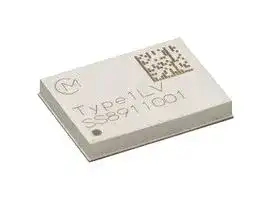


LBEE59B1LV-278
WIFI+BT RF MODULE, RADIO CERTIFIED
- Manufacturer: MURATA
- Product type:
- SVHC: No SVHC (04-Feb-2026)
- Frequency RF: 5GHz
- Product Range: -
- Module Interface: I2S, SDIO, UART
- Module Applications: Wireless Connectivity
| Delivery and price | |
|---|---|
| Units per pack | 2000 |
| Price | 8.4 € |
| Current stock | 10+ |
| Lead time | 30 days |

Preliminary Specification Number : SP-9B1LV-J
**==> picture [122 x 42] intentionally omitted <==**
## **W-LAN+Bluetooth Combo Module Data Sheet**
# **Cypress Chipset CYW43012 - for 802.11a/b/g/n,11ac friendly + Bluetooth 5.0**
## **- Tentative P/N :LBEE59B1LV TEMP**
Preliminary < Specification may be changed by Murata without notice > Murata Manufacturing Co., Ltd.
Preliminary Specification Number : SP-9B1LV-J 1 / 57
**==> picture [123 x 43] intentionally omitted <==**
## **The revision history of the product specification**
|RevisedNo.|RevisedDate|Note|
|---|---|---|
|-|2017.07.07|FirstIssue|
|A|2017.10.02|P4. Updated Block Diagram<br>P6,8.UpdatedPin Layout|
|B|2017.10.10|Cover. Added 11ac-friendly<br>P4. Added11ac-friendly onScope|
|C|2018.04.04|P35. AddedReference circuit|
|D|2018.06.01|P10. Updated Supply voltage condition<br>P25-31.UpdatedDC/RFcharacteristics|
|E|2018.08.02|P4. Updated Wright/MSL information<br>P31-32. Updated BT output power spec<br>P34 Updated Reference schematic(Added (*5))<br>P35AddedTape andReelpackinginformation|
|F|2018.10.25|P4. Added “MAC/BD address are embedded<br>P5. Updated Marking information<br>P10. Updated VDDIO_SFL spec(8.OPERATING CONDITION)<br>P13. Added digital I/OrequirementsBT/WL_REG_ON|
|G|2018.12.28|P33. RevisedReference circuit|
|H|2019.03.26|P5. Corrected Demotions(Added a5,c5)|
|I|2019.04.24|P40.Updated18.PRECONDITION TO USEOUR PRODUCTS|
|J|2019.07.05|P5. Added Certification information<br>Appendix : Added User manual forJapancertification|
Preliminary < Specification may be changed by Murata without notice > Murata Manufacturing Co., Ltd.
Preliminary Specification Number : SP-9B1LV-J 2 / 57
**==> picture [123 x 43] intentionally omitted <==**
## **TABLE OF CONTENTS**
|1.<br>SCOPE ..................................................................................................................................................... 4|
|---|
|2.<br>KEY FEATURE ...................................................................................................................................... 4|
|3.<br>Part Number ........................................................................................................................................... 4|
|4.<br>RoHS Compliance ................................................................................................................................... 4|
|5.<br>Block Diagram ........................................................................................................................................ 4|
|6.<br>Certification Information ....................................................................................................................... 5|
|6.1.<br>Radio Certification ................................................................................................................... 5|
|USA ...................................................................................................................................................... 5|
|Canada ................................................................................................................................................. 5|
|Europe .................................................................................................................................................. 5|
|Japan .................................................................................................................................................... 5|
|6.2.<br>Bluetooth®Qualification .......................................................................................................... 5|
|7.<br>DIMENSIONS, MARKING AND TERMINAL CONFIGURATIONS ................................................. 6|
|7.1.<br>Dimensions ............................................................................................................................... 6|
|7.2.<br>Pin Layout ................................................................................................................................. 7|
|7.3.<br>Module PIN Descriptions ......................................................................................................... 8|
|8.<br>ABSOLUTE MAXIMUM RATINGS*2).................................................................................................. 11|
|9.<br>OPERATING CONDITION*3)............................................................................................................... 11|
|10.<br>External LPO Signal Requirement................................................................................................... 11|
|11.<br>POWER ON SEQUENCE ................................................................................................................ 12|
|11.1.<br>Power On Sequence for WLAN ON and BT ON ............................................................... 12|
|11.2.<br>Power On Sequence for WLAN ON and BT Off ............................................................... 12|
|11.3.<br>Power On Sequence for WLAN OFF and BT ON ............................................................. 13|
|11.4.<br>Power On Sequence for WLAN OFF and BT OFF ........................................................... 13|
|12.<br>Digital I/O Requirements ................................................................................................................. 14|
|13.<br>INTERFACE TIMING AND AC CHARACTERISTICS ................................................................. 15|
|13.1.<br>Bluetooth UART Timing .................................................................................................... 15|
|13.2.<br>Bluetooth PCM Interface Timing ...................................................................................... 15|
|13.2.1.<br>Short Frame Sync, Master Mode ............................................................................... 15|
|13.2.2.<br>Short Frame Sync, Slave Mode .................................................................................. 16|
|13.2.3.<br>Long Frame Sync, Master Mode ................................................................................ 16|
|13.2.4.<br>Long Frame Sync, Slave Mode ................................................................................... 17|
|13.2.5.<br>Short Frame Sync, Burst Mode .................................................................................. 17|
|13.2.6.<br>Long Frame Sync, Burst Mode ................................................................................... 18|
|13.3.<br>I2S Timing ........................................................................................................................... 19|
|13.3.1.<br>I2S Transmitter Timing ............................................................................................... 20|
|13.3.2.<br>I2S Receiver Timing ..................................................................................................... 20|
|13.4.<br>SDIO Timing ....................................................................................................................... 21|
|13.4.1.<br>SDIO Default Mode Timing ........................................................................................ 21|
|13.4.2.<br>SDIO High-Speed Mode Timing ................................................................................. 22|
|13.4.3.<br>SDIO BUS Timing Specifications in SDR Modes ..................................................... 23|
|14.<br>DC / RF Characteristics.................................................................................................................... 25|
|14.1.<br>DC/RF Characteristics for IEEE802.11b - 2.4GHz .......................................................... 25|
|14.2.<br>DC/RF Characteristics for IEEE802.11g - 2.4GHz .......................................................... 26|
|14.3.<br>DC/RF Characteristics for IEEE802.11n – 2.4GHz ......................................................... 27|
|14.4.<br>DC/RF Characteristics for IEEE802.11a - 5GHz ............................................................. 28|
|14.5.<br>DC/RF Characteristics for IEEE802.11n(HT20) - 5GHz ................................................. 29|
|14.6.<br>DC/RF Characteristics for IEEE802.11ac(VHT20) - 5GHz ............................................. 30|
|14.7.<br>DC/RF Characteristics for Bluetooth ................................................................................ 31|
|14.8.<br>DC/RF Characteristics for Bluetooth (LE) ........................................................................ 32|
|15.<br>LAND PATTERN (TOP VIEW) ........................................................................................................ 33|
|16.<br>REFERENCE CIRCUIT ................................................................................................................... 34|
|17.<br>TAPE AND REEL PACKING ........................................................................................................... 35|
|18.<br>NOTICE ............................................................................................................................................. 38|
|18.1.<br>Storage Conditions: ............................................................................................................ 38|
Preliminary
< Specification may be changed by Murata without notice > Murata Manufacturing Co., Ltd.
|18.2.|<br> Preliminary Specification Number : SP-9B1LV-J<br>3 / 57<br>Handling Conditions: ......................................................................................................... 38|
|---|---|
|18.3.|Standard PCB Design (Land Pattern and Dimensions): ................................................. 38|
|18.4.|Notice for Chip Placer: ....................................................................................................... 38|
|18.5.|Soldering Conditions: ......................................................................................................... 39|
|18.6.|Cleaning: ............................................................................................................................. 39|
|18.7.|Operational Environment Conditions: .............................................................................. 39|
|18.8.|Input Power Capacity: ........................................................................................................ 40|
|19.<br>PRECONDITION TO USE OUR PRODUCTS ............................................................................... 41||
Please be aware that an important notice concerning availability, standard warranty and use in critical applications of Murata products and disclaimers thereto appears at the end of this specification sheet.
Preliminary < Specification may be changed by Murata without notice > Murata Manufacturing Co., Ltd.
Preliminary Specification Number : SP-9B1LV-J 4 / 57
**==> picture [123 x 43] intentionally omitted <==**
## **1. SCOPE**
*1)
This specification is applied to the IEEE802.11a/b/g/n,IEEE802.11ac-friendly W-LAN + Bluetooth 5.0 combo module.
*1)IEEE 802.11ac full-compliance requires support for 40 MHz and 80 MHz channel bandwidths. CYW43012 only supports 20 MHz channel bandwidth however it supports 802.11ac’s 256-QAM for the 20 MHz channels in the 5GHz band enabling it to offer higher throughput and lower energy per bit than 802.11n only products.
## **2. KEY FEATURE**
- Cypress CYW43012 inside
- *1)
- - Compliant with IEEE802.11a/b/g/n, 11ac-friendly
- Compliant with Bluetooth specification v5.0
- SDIO interface for W-LAN
- Interface support for Bluetooth is Host Controller Interface (HCI)
- Surface mount type 10.0 x 7.2 mm (Typical), H = 1.4 mm (Max)
- MAC/BD address are embedded
- Weight : 0.23g
- MSL : 3
## **3. Part Number**
|**Part Number**||
|---|---|
|OrderingPartNumber<br>LBEE59B1LV-TEMP<br>LBEE59B1LV-TEMP-D|Description|
||Incase ofsample order|
||EVK|
## **4. RoHS Compliance**
This module is compliant with the RoHS directive.
## **5. Block Diagram**
**==> picture [388 x 312] intentionally omitted <==**
**----- Start of picture text -----**<br>
Ref Clock<br>LC network 37.4MHz<br>For DCDC<br>Sleep Clock<br>CYW43012<br>5G Tx<br>DIPLEX<br>VBAT<br>5G Rx<br>2.4G Tx(WLAN) VDDIO<br>2.4G Rx(WLAN)<br>SDIO<br>UART<br>BPF<br>BT: Tx<br>BT: Rx<br>**----- End of picture text -----**<br>
Preliminary
- < Specification may be changed by Murata without notice > Murata Manufacturing Co., Ltd.
Preliminary Specification Number : SP-9B1LV-J 5 / 57
## **6. Certification Information**
## **6.1. Radio Certification**
## **USA**
FCC ID : VPYLBEE59B1LV Country Code: US/0 *Please follow user/installation manual of Appendix
## **Canada**
IC : 772C-LBEE59B1LV
Country Code: CA/0 *Please follow user/installation manual of Appendix
## **Europe**
EN300328/301893 v2.1.1, EN300440 v2.2.1 conducted test report is prepared. Country Code: DE/0
## **Japan**
Japanese type certification is prepared. 001-P01338
Country Code: JP/0 *Please follow manual of Appendix
The each country code are defined by Murata Blob file. Murata prepared 4 kinds of Blob files.
- STA/Indoor: US/CA/DE/JP
- STA/Outdoor: US/CA/DE/JP
- AP/Indoor: US/CA/DE/JP
- AP/Outdoor :US/CA/DE
Please ask your contact person from Murata.
## **6.2. Bluetooth[®] Qualification**
QDID: 125836
Preliminary < Specification may be changed by Murata without notice > Murata Manufacturing Co., Ltd.
Preliminary Specification Number : SP-9B1LV-J 6 / 57
## **7. DIMENSIONS, MARKING AND TERMINAL CONFIGURATIONS 7.1. Dimensions**
**==> picture [475 x 209] intentionally omitted <==**
**----- Start of picture text -----**<br>
<TOP VIEW> <BOTTOM VIEW><br>L<br>B<br>b3 e4 a3 e5 e6 c5 e7 c3 c2<br>(30) (48)<br>C<br>(29) (77) (89) (49) e8<br>c4<br>e 9<br>W Type1LV e3 (76) (100) (101) (102) (103) (90) e10a4<br>(99) (106) (105) (104) e11<br>a5<br>012345678 a2 (72) (98) (97) (96) (95) (94) e12<br>D (20) (71) (59) (58)<br>e2<br>c1<br>b2<br>conformal shieldConformal shield (19) (1)<br>A a1 e1 b1<br> <SIDE VIEW><br>**----- End of picture text -----**<br>
T ~~[~~ ot
Conformal shield
(unit : mm)
|Mark|Dimensions|Mark|Dimensions|Mark|Dimensions|
|---|---|---|---|---|---|
|L|10.0+/-0.2|W|7.2 +/-0.2|T|1.4max|
|a1|0.25+/-0.1|a2|0.25+/-0.1|a3|0.25+/-0.1|
|a4|0.25+/-0.1|a5|0.25+/-0.1|b1|0.375+/-0.2|
|b2|0.30 +/-0.2|b3|0.30 +/-0.2|c1|0.55 +/-0.1|
|c2<br>~~SSS~~|0.55 +/-0.1<br>~~SSS~~|c3|0.55 +/-0.1<br>~~===~~|c4<br>~~===~~|0.55 +/-0.1<br>~~===—~~|
|c5<br>~~SSS~~|0.55+/-0.1<br>~~SSS~~|e1|0.25+/-0.1<br>~~===~~|e2<br>~~===~~|0.375+/-0.1<br>~~===—~~|
|e3<br>~~SSS~~|0.25+/-0.1<br>~~SSS~~|e4|1.025+/-0.1<br>~~===~~|e5<br>~~===~~|0.25 +/-0.1<br>~~===—~~|
|e6<br>~~SSS~~|0.25+/-0.1<br>~~SSS~~|e7|1.100+/-0.1<br>~~===~~|e8<br>~~===~~|0.825+/-0.1<br>~~===—~~|
|e9<br>~~SSS~~|0.25 +/-0.1<br>~~SSS~~|e10|0.25 +/-0.1<br>~~===~~|e11<br>~~===~~|0.25 +/-0.1<br>~~===—~~|
## **Structure**
**==> picture [267 x 113] intentionally omitted <==**
**----- Start of picture text -----**<br>
SPDT<br>SMD Dip SP3T CYW43012 Resin<br>Mold<br>Shield<br>eal<br>PWB<br>Substrate<br>**----- End of picture text -----**<br>
Preliminary < Specification may be changed by Murata without notice > Murata Manufacturing Co., Ltd.
Preliminary Specification Number : SP-9B1LV-J 7 / 57
**==> picture [123 x 43] intentionally omitted <==**
## **7.2. Pin Layout**
## **Top View**
(30)
**==> picture [402 x 288] intentionally omitted <==**
**----- Start of picture text -----**<br>
(48)<br>(49) (89) (77)<br>(90)<br>(76)<br>(103) (102) (101) (100)<br>(104) (105) (106) (99)<br>(95) (96) (97) (98)<br>(94) (72)<br>(58) (59) (71)<br>**----- End of picture text -----**<br>
(1)
(19)
|N|Pi|N|Pi|N|Pi|N|Pi|
|---|---|---|---|---|---|---|---|
|o.|n name|o.|n name|o.|n name|o.|n name|
|1|GND|25|SDIO_DATA_3|49|BT_RF_OUT|73|GND|
|2|GND|26|SDIO_CMD|50|GND|74|SFL_IO0|
|3|GND|27|GND|51|BT_RF_IN|75|SFL_IO3|
|4|VDDIO_SFL|28|VDDOUT_VDDIO|52|GND|76|SFL_IO2|
|5|BT_HOST_WAKE|29|BT_DEV_WAKE|53|GND|77|SFL_CLK|
|6|GND|30|GND|54|RF_SW_CTRL_6|78|SFL_IO1|
|7|WL_HOST_WAKE|31|BT_UART_TXD|55|RF_SW_CTRL_10|79|SFL_CS|
|8|WL_DEV_WAKE|32|BT_UART_RXD|56|RF_SW_CTRL_5|80|EXT_LPO|
|9|BT_REG_ON|33|BT_UART_RTS|57|GND|81|CLK_REQ|
|10|WL_REG_ON|34|BT_UART_CTS|58|ANT0|82|BT_PCM_OUT|
|11|GND|35|VDDIO|59|GND|83|BT_PCM_SYNC|
|12|VOUT_3P3|36|GND|60|GND|84|BT_PCM_IN|
|13|VBAT|37|P9|61|WL_GPIO_15|85|BT_PCM_CLK|
|14|VBAT|38|P11|62|WL_UART_TX|86|BT_I2S_WS|
|15|GND|39|P13|63|WL_UART_RX|87|BT_I2S_CLK|
|16|RF_SW_CTRL_8|40|P5|64|WL_GPIO_14|88|BT_I2S_DI|
|17|RF_SW_CTRL_12|41|P6|65|GND|89|BT_I2S_DO|
|18|RF_SW_CTRL_11|42|P8|66|JTAG_TDO|90|BT_GPIO_2|
|19|GND|43|P7|67|JTAG_TDI|91|BT_GPIO_5|
|20|GND|44|P12|68|JTAG_TMS_SWD|92|BT_GPIO_4|
|21|SDIO_DATA_2|45|P0|69|JTAG_TCK_SWD|93|BT_GPIO_3|
|22|SDIO_DATA_1|46|P1|70|JTAG_SEL|94-106|GND|
|23|SDIO_DATA_0|47|GND|71|JTAG_TRS|-|-|
|24|SDIO_CLK|48|GND|72|GND|-|-|
Preliminary
< Specification may be changed by Murata without notice > Murata Manufacturing Co., Ltd.
Preliminary Specification Number : SP-9B1LV-J 8 / 57
**==> picture [123 x 43] intentionally omitted <==**
## **7.3. Module PIN Descriptions**
|No.|Pin name|Type|Connection to<br>|Description|
|---|---|---|---|---|
||||IC pin name||
|1|GND|-|GND|Ground|
|2|GND|-|GND|Ground|
|3|GND|-|GND|Ground|
|4|VDDIO_SFL|I|VDDIO_SFL|DC supply voltage for SFLASH I/O|
|5|BT_HOST_WAKE|O|BT_HOST_WAKE|Bluetooth host wake|
|6|GND|-|GND|Ground|
|7|WL_HOST_WAKE|I/O|GPIO_0|WL_HOST_WAKE|
|8|WL_DEV_WAKE|I/O|GPIO_1|WL_DEV_WAKE|
|9|BT_REG_ON|I|BT_REG_ON|Used by the PMU to power-up or power-down<br>the internal regulators used by the Bluetooth<br>section|
|10|WL_REG_ON|I|WL_REG_ON|Used by the PMU to power up or power down<br>the internal regulators used by the WLAN<br>section|
|11|GND|-|GND|Ground|
|12|VOUT_3P3|O|VDDOUT_RF3P3<br>VDDIO_RF1|Output of 3.3V RF LDO|
|13|VBAT|I|SR_VDDBAT5<br>LDO_VDDBAT5<br>WRF_GENTRAL_VDD_V5P0<br>WRF_TX_VDD_V5P0<br>ET_LINREG_VDD_V5P0<br>ET_SWREG_VDD_V5P0|Power supply|
|14|VBAT||||
|15|GND|-|GND|Ground|
|16|RF_SW_CTRL_8|O|RF_SW_CTRL_8|Programmable RF switch-control lines|
|17|RF_SW_CTRL_12|O|RF_SW_CTRL_12|Programmable RF switch-control lines|
|18|RF_SW_CTRL_11|O|RF_SW_CTRL_11|Programmable RF switch-control lines|
|19|GND|-|GND|Ground|
|20|GND|-|GND|Ground|
|21|SDIO_DATA_2|I/O|SDIO_DATA_2|SDIO data line 2|
|22|SDIO_DATA_1|I/O|SDIO_DATA_1|SDIO data line 1|
|23|SDIO_DATA_0|I/O|SDIO_DATA_0|SDIO data line 0|
|24|SDIO_CLK|I|SDIO_CLK|SDIO clock|
|25|SDIO_DATA_3|I/O|SDIO_DATA_3|SDIO data line 3|
|26|SDIO_CMD|I/O|SDIO_CMD|SDIO command line|
|27|GND|-|GND|Ground|
|28|VDDOUT_VDDIO|O|VDDOUT_VDDIO<br>OTP_VDD1P8<br>VDDP_RF1<br>VDDP_SFL|output for 1.8V power switch|
|29|BT_DEV_WAKE|I|BT_DEV_WAKE|Bluetooth device wake|
|30|GND|-|GND|Ground|
|31|BT_UART_TXD|O|BT_UART_TXD|UART serial output|
|32|BT_UART_RXD|I|BT_UART_RXD|UART serial input|
|33|BT_UART_RTS|O|BT_UART_RTS_N|UART request-to-send|
|34|BT_UART_CTS|I|BT_UART_CTS_N|UART clear-to-send|
Preliminary < Specification may be changed by Murata without notice > Murata Manufacturing Co., Ltd.
Preliminary Specification Number : SP-9B1LV-J 9 / 57
**==> picture [123 x 43] intentionally omitted <==**
|N|Pi|T|Connection to|Dii|
|---|---|---|---|---|
|o.|n name|ype|ICpin name|escrpton|
|35|VDDIO|I|VDDIO<br>PMU_VDDIOA<br>PMU_VDDIOP<br>STRAP_OFF_1P8<br>VDD18_FLL<br>BT_VDDO<br>BT_VDDO_HIB<br>PAD_ADC_AVDDC|Power supply|
|36|GND|-|GND|Ground|
|37|P9|I/O|P9|Programmable LHL/HIB pads|
|38|P11|I/O|P11|Programmable LHL/HIB pads|
|39|P13|I/O|P13|Programmable LHL/HIB pads|
|40|P5|I/O|P5|Programmable LHL/HIB pads|
|41|P6|I/O|P6|ProgrammableLHL/HIBpads|
|42|P8|I/O|P8|Programmable LHL/HIB pads|
|43|P7|I/O|P7|Programmable LHL/HIB pads|
|44|P12|I/O|P12|Programmable LHL/HIB pads|
|45|P0|I/O|P0|Programmable LHL/HIB pads|
|46|P1|I/O|P1|ProgrammableLHL/HIBpads|
|47|GND|-|GND|Ground|
|48|GND|-|GND|Ground|
|49|BT_RF_OUT|I/O||Bluetooth Antenna|
|50|GND|-|GND|Ground|
|51|BT_RF_IN|I/O|(SP3T)|BT/WiFi one antenna: Routed to BT_RF_OUT<br>Separate BT/WiFi antenna: connect to 50ohm<br>terminal.|
|52|GND|-|GND|Ground|
|53|GND|-|GND|Ground|
|54|RF_SW_CTRL_6|O|RF_SW_CTRL_6|NC|
|55|RF_SW_CTRL_10|O|RF_SW_CTRL_10|Programmable RF switch-control lines|
|56|RF_SW_CTRL_5|O|RF_SW_CTRL_5|NC|
|57|GND|-|GND|Ground|
|58|ANT0|I/O|||
|59|GND|-|GND|Ground|
|60|GND|-|GND|Ground|
|61|WL_GPIO_15|I/O|GPIO_15|Programmable GPIO lines|
|62|WL_UART_TX|I/O|GPIO_13|This pin can programmed by S/W to be a<br>GPIO, or Debug UART|
|63|WL_UART_RX|I/O|GPIO_12|This pin can programmed by S/W to be a<br>GPIO, or Debug UART|
|64|WL_GPIO_14|I/O|GPIO_14|Programmable GPIO lines|
|65|GND|-|GND|Ground|
|66|JTAG_TDO|I/O|GPIO_5|Programmable GPIO lines,<br>or JTAG_TDO(Pull-High JTAG SEL)|
|67|JTAG_TDI|I/O|GPIO_4|Programmable GPIO lines,<br>or JTAG_TDI(Pull-High JTAG SEL)|
|68|JTAG_TMS_SWD|I/O|GPIO_3|Programmable GPIO lines,<br>or JTAG_TMS_SWD(Pull-High JTAG SEL)|
|69|JTAG_TCK_SWD|I/O|GPIO_2|Programmable GPIO lines,<br>or JTAG_TCK_SWD(Pull-High JTAG SEL)|
|70|JTAG_SEL|I|JTAG_SEL|JTAG select, pull-high to select the JTAG<br>interface|
|71|JTAG_TRS|I/O|GPIO_6|Programmable GPIO lines,<br>or JTAG_TRS(Pull-High JTAG SEL)|
|72|GND|-|GND|Ground|
|73|GND|-|GND|Ground|
|74|SFL_IO0|I/O|SFL_IO0|SFLASHdataline 0|
|75|SFL_IO3|I/O|SFL_IO3|SFLASHdataline 3|
|76|SFL_IO2|I/O|SFL_IO2|SFLASHdataline2|
|77|SFL_CLK|O|SFL_CLK|SFLASHclock|
|78|SFL_IO1|I/O|SFL_IO1|SFLASHdataline1|
|79|SFL_CS|O|SFL_CS|SFLASHchip select|
Preliminary
< Specification may be changed by Murata without notice > Murata Manufacturing Co., Ltd.
Preliminary Specification Number : SP-9B1LV-J 10 / 57
**==> picture [123 x 43] intentionally omitted <==**
|No.|Pin name|Type|Connection to<br>IC pin name|Description|
|---|---|---|---|---|
|81|CLK_REQ|I/O|CLK_REQ|Reference clock request|
|82|BT_PCM_OUT|O|BT_PCM_OUT|PCMdata output|
|83|BT_PCM_SYNC|I/O|BT_PCM_SYNC|PCM sync, can be master (output)<br>or slave (input)|
|84|BT_PCM_IN|I|BT_PCM_IN|PCMdatainput|
|85|BT_PCM_CLK|I/O|BT_PCM_CLK|PCM clock, can be master (output)<br>or slave (input)|
|86|BT_I2S_WS|I/O|BT_I2S_WS|I2S serial word select|
|87|BT_I2S_CLK|I/O|BT_I2S_CLK|I2S serialclock|
|88|BT_I2S_DI|I|BT_I2S_DI|I2S serialdatainput|
|89|BT_I2S_DO|O|BT_I2S_DO|I2S serialdata output|
|90|BT_GPIO_2|I/O|BT_GPIO_2|Bluetoothgeneral-purposeI/Os|
|91|BT_GPIO_5|I/O|BT_GPIO_5|Bluetoothgeneral-purposeI/Os|
|92|BT_GPIO_4|I/O|BT_GPIO_4|Bluetoothgeneral-purposeI/Os|
|93|BT_GPIO_3|I/O|BT_GPIO_3|Bluetoothgeneral-purposeI/Os|
|94-106|GND|-|GND|Ground|
Preliminary < Specification may be changed by Murata without notice > Murata Manufacturing Co., Ltd.
Preliminary Specification Number : SP-9B1LV-J 11 / 57
**==> picture [123 x 43] intentionally omitted <==**
## **8. ABSOLUTE MAXIMUM RATINGS[*2)]**
|Parameter|Parameter|min.|max.|Unit|
|---|---|---|---|---|
|StorageTemperature||-40|85|deg.C|
|Supply Voltage|VBAT<br>VDDIO<br>VDDIO_SFL|-0.5|5.0|V|
|||-0.5|2.2|V|
|||-0.5|4.1|V|
*2) Stresses in excess of the absolute ratings may cause permanent damage. Functional operation is not implied under these conditions. Exposure to absolute ratings for extended periods of time may adversely affect reliability. No damage assuming only one parameter is set at limit at a time with all other parameters are set within operating condition.
## **9. OPERATING CONDITION[*3)]**
|Parameter|Parameter|min.|typ.|max.|unit|
|---|---|---|---|---|---|
|OperatingTemperature||-20|25|+70|deg.C|
|Supply Voltage|VBAT|3.2|-|4.4|V|
||VDDIO|1.62|1.8|1.98|V|
||VDDIO_SFL|1.62/2.97|1.8/3.3|1.98/3.46|V|
*3) Functionality is guaranteed but the specifications require the derating at over-temperatures, over-voltage condition.
## **10. External LPO Signal Requirement**
|Parameter|External LPO Clock|Unit|
|---|---|---|
|Nominal inputfrequency|32.768|kHz|
|Frequency accuracy|+/-250|ppm|
|Duty cycle|30-70|%|
|Input signalamplitude|500– 1800|mVp-p|
|Signaltype|Square-wave orsine-wave|-|
|Inputimpedance*4)|> 100k|ohm|
*4) When power is applied or switch off
Preliminary < Specification may be changed by Murata without notice > Murata Manufacturing Co., Ltd.
Preliminary Specification Number : SP-9B1LV-J 12 / 57
**==> picture [123 x 43] intentionally omitted <==**
## **11. POWER ON SEQUENCE**
-VBAT should not rise 10%-90%faster than 40 microsecond.
-VBAT should be up before or at the same time as VDDIO. VDDIO should NOT be present first or be held high before VBAT is high.
## **11.1. Power On Sequence for WLAN ON and BT ON**
**==> picture [434 x 169] intentionally omitted <==**
**----- Start of picture text -----**<br>
32.768kHz Sleep Clock<br>VBAT 90% of VH<br>VDDIOVDDIO<br>~2 Sleep cycle<br>WL_REG_ON<br>BT_REG_ON<br>**----- End of picture text -----**<br>
## **11.2. Power On Sequence for WLAN ON and BT Off**
**==> picture [480 x 195] intentionally omitted <==**
**----- Start of picture text -----**<br>
32.768kHz Sleep Clock<br>VBAT 90% of VH<br>VDDIOVDDIO<br>~2 Sleep cycle<br>WL_REG_ON<br>BT_REG_ON<br>**----- End of picture text -----**<br>
Preliminary < Specification may be changed by Murata without notice > Murata Manufacturing Co., Ltd.
Preliminary Specification Number : SP-9B1LV-J 13 / 57
**==> picture [123 x 43] intentionally omitted <==**
## **11.3. Power On Sequence for WLAN OFF and BT ON**
|2.768kHz Sleep Clock<br>BAT<br>DDIO<br>L_REG_ON<br>T_REG_ON<br>VDDIO|||90% of VH<br>~2 Sleep cycle|
|---|---|---|---|
|||||
||||~2 Sleep cycle|
|||||
|||||
## **11.4. Power On Sequence for WLAN OFF and BT OFF**
|2.768kHz Sleep Clock<br>BAT<br>DDIO<br>L_REG_ON<br>T_REG_ON<br>VDDIO||||
|---|---|---|---|
|||||
|||||
|||||
Preliminary < Specification may be changed by Murata without notice > Murata Manufacturing Co., Ltd.
Preliminary Specification Number : SP-9B1LV-J 14 / 57
**==> picture [123 x 43] intentionally omitted <==**
## **12. Digital I/O Requirements**
|Digital I/O Pins|Sym|min.|typ.|max.|unit|
|---|---|---|---|---|---|
|For VDDIO=1.8V:||||||
|Input high voltage|VIH|0.65xVDDIO|-|-|V|
|Input low voltage|VIL|-|-|0.35xVDDIO|V|
|Output high voltage@2mA|VOH|VDDIO-0.45|-|-|V|
|Output low voltage@2mA|VOL|-|-|0.45|V|
|BT/WL_REG_ON|Sym|min.|typ.|max.|unit|
|---|---|---|---|---|---|
|Input high voltage|VIH|1|-|4.4|V|
|Input low voltage|VIL|VSS|-|0.3|V|
|Pull-down resistance(internal)|RPD|-|50|-|k|
|Leakage discharged Current|ILEAK_DIS|-|28|-|nA|
|REG OFF time|TREG_OFF|2|-|-|ms|
Preliminary < Specification may be changed by Murata without notice > Murata Manufacturing Co., Ltd.
Preliminary Specification Number : SP-9B1LV-J 15 / 57
## **13. INTERFACE TIMING AND AC CHARACTERISTICS**
## **13.1. Bluetooth UART Timing**
**==> picture [471 x 128] intentionally omitted <==**
**----- Start of picture text -----**<br>
BT_UART_CTS_N<br>2 Midpoint of STOP bit<br>BT_UART_TXD<br>1<br>eS<br>Midpoint of STOP bit<br>BT_UART_RXD<br>3<br>BT_UART_RTS_N<br>**----- End of picture text -----**<br>
|ce<br>Description|Min|Typ|Max|Unit|
|---|---|---|---|---|
|Delaytime, UART_CTS low to UART_TXD valid|-|-|1.5|Bit periods|
|Setuptime, UART_CTS high before midpoint of stopbit|-|-|0.5|Bit periods|
|Delaytime, midpoint of stopbit to UART_RTS high|-|-|0.5|Bit periods|
## **13.2. Bluetooth PCM Interface Timing**
## **13.2.1. Short Frame Sync, Master Mode**
|BT_PCM_CLK<br>BT_PCM_CLK|BT_PCM_CLK<br>BT_PCM_CLK|
|---|---|
||t<br>I|
|BT_PCM_SYNC<br>BT_PCM_SYNC<br>a<br>es<br>ee ee<br>i<br>|<br>4—E+||
|BT_PCM_OUT<br>BT_PCM_OUT<br>1M<br>xa<br>x<br>| HIGHIMPEDANCE||
||.<br>!<br>I|
|BT_PCM_IN<br>BT_PCM_IN||
||Reference<br>Description<br>Min<br>Typ<br>Max<br>Unit<br>~~a ee~~|
||1<br>PCM bit clock frequency<br>-<br>-<br>12<br>MHz<br>2<br>PCM bit clock High<br>41<br>-<br>-<br>ns<br>3<br>PCM bit clock Low<br>41<br>-<br>-<br>ns<br>4<br>BT_PCM_SYNC delay<br>0<br>-<br>25<br>ns<br>5<br>BT_PCM_OUT delay<br>0<br>-<br>25<br>ns<br>6<br>BT_PCM_IN setup<br>8<br>-<br>-<br>ns<br>7<br>BT_PCM_IN hold<br>8<br>-<br>-<br>ns<br>8<br>Delay from rising edge of BT_PCM_CLK during last bit period to<br>0<br>-<br>25<br>ns<br>~~eG~~<br>~~es~~<br>~~eeeG~~<br>~~es~~<br>~~eeeG~~<br>~~eeeG~~<br>~~es~~|
||BT_PCM_OUTbecominghigh impedance|
Preliminary < Specification may be changed by Murata without notice > Murata Manufacturing Co., Ltd.
Preliminary Specification Number : SP-9B1LV-J 16 / 57
## **13.2.2. Short Frame Sync, Slave Mode**
**==> picture [67 x 122] intentionally omitted <==**
**----- Start of picture text -----**<br>
BT_PCM_CLKBT_PCM_CLK<br>BT_PCM_SYNC<br>BT_PCM_SYNC<br>BT_PCM_OUTBT_PCM_OUT<br>BT_PCM_IN<br>BT_PCM_IN<br>**----- End of picture text -----**<br>
|Reference<br>Description<br>~~a~~|Min<br>~~a~~|Typ<br>~~a~~|Max<br>~~a~~|Unit<br>~~a~~|
|---|---|---|---|---|
|PCM bit clock frequency<br>~~a~~<br>~~a~~|-<br>~~a~~<br>~~a~~|-<br>~~a~~<br>~~a~~|12<br>~~a~~<br>~~a~~|MHz<br>~~a~~<br>~~a~~|
|PCM bit clock High<br>~~GO~~|41<br>~~GO~~|-<br>~~GO~~|-<br>~~GO~~|ns<br>~~GO~~|
|PCM bit clock Low<br>~~GO~~<br>~~GC~~|41<br>~~GO~~<br>~~GC~~|-<br>~~GO~~<br>~~GC~~|-<br>~~GO~~<br>~~GC~~|ns<br>~~GO~~<br>~~GC~~|
|BT_PCM_SYNC setup<br>~~GC~~<br>~~CG~~|8<br>~~GC~~<br>~~CG~~|-<br>~~GC~~<br>~~CG~~|-<br>~~GC~~<br>~~CG~~|ns<br>~~GC~~<br>~~CG~~|
|BT_PCM_SYNC hold<br>~~GO~~|8<br>~~GO~~|-<br>~~GO~~|-<br>~~GO~~|ns<br>~~GO~~|
|BT_PCM_OUT delay<br>~~GO~~<br>~~CG~~|0<br>~~GO~~<br>~~CG~~|-<br>~~GO~~<br>~~CG~~|25<br>~~GO~~<br>~~CG~~|ns<br>~~GO~~<br>~~CG~~|
|BT_PCM_IN setup<br>|8<br>|-<br>|-<br>|ns<br>|
|BT_PCM_IN hold<br>~~GO~~|8<br>~~GO~~|-<br>~~GO~~|-<br>~~GO~~|ns<br>~~GO~~|
|Delay from rising edge of BT_PCM_CLK during last bit period to<br>BT_PCM_OUT becoming high impedance<br>~~GO~~|0<br>~~GO~~|-<br>~~GO~~|25<br>~~GO~~|ns<br>~~GO~~|
## **13.2.3. Long Frame Sync, Master Mode**
BT_PCM_CLK BT_PCM_CLK BT_PCM_SYNC BT_PCM_SYNC BT_PCM_OUT BT_PCM_OUT BT_PCM_INBT_PCM_IN
|Reference<br>Description<br>~~Pf~~|Min<br>~~Pf~~|Typ<br>~~Pf~~|Max<br>~~Pf~~|Unit<br>~~Pf~~|
|---|---|---|---|---|
|PCM bit clock frequency<br>|-<br>|-<br>|12<br>|MHz<br>|
|PCM bit clock High<br>~~eG~~|41<br>~~eG~~|-<br>~~eG~~|-<br>~~eG~~|ns<br>~~eG~~|
|PCM bit clock Low<br>~~GC~~|41<br>~~GC~~|-<br>~~GC~~|-<br>~~GC~~|ns<br>~~GC~~|
|BT_PCM_SYNC delay|0|-|25|ns|
|BT_PCM_OUT delay<br>~~eG~~|0<br>~~eG~~|-<br>~~eG~~|25<br>~~eG~~|ns<br>~~eG~~|
|BT_PCM_IN setup|8|-|-|ns|
|BT_PCM_IN hold|8|-|-|ns|
|Delay from rising edge of BT_PCM_CLK during last bit period to<br>BT_PCM_OUTbecominghigh impedance|0|-|25|ns|
Preliminary < Specification may be changed by Murata without notice > Murata Manufacturing Co., Ltd.
Preliminary Specification Number : SP-9B1LV-J 17 / 57
## **13.2.4. Long Frame Sync, Slave Mode**
BT_PCM_CLK BT_PCM_SYNC BT_PCM_OUT BT_PCM_IN
|Reference<br>Description<br>~~a~~<br>~~eea~~<br>|Min<br>~~a~~<br>~~a~~<br>~~QO~~<br>|Typ<br>~~a~~<br>~~a~~<br>~~QO~~<br>|Max<br>~~a~~<br>~~a~~<br>~~QO~~<br>|Unit<br>~~a~~<br>~~a~~<br>|
|---|---|---|---|---|
|PCM bit clock frequency<br>~~a~~<br>~~eea~~<br>|-<br>~~a~~<br>~~a~~<br>~~QO~~<br>|-<br>~~a~~<br>~~a~~<br>~~QO~~<br>|12<br>~~a~~<br>~~a~~<br>~~QO~~<br>|MHz<br>~~a~~<br>~~a~~<br>|
|PCM bit clock High<br>~~eea~~<br>|41<br>~~a~~<br>~~QO~~<br>|-<br>~~a~~<br>~~QO~~<br>|-<br>~~a~~<br>~~QO~~<br>|ns<br>~~a~~<br>|
|PCM bit clock Low<br>~~a~~<br>~~eea~~|41<br>~~QO~~<br>~~a~~<br>~~a~~<br>~~GO~~|-<br>~~QO~~<br>~~a~~<br>~~a~~<br>~~GO~~|-<br>~~QO~~<br>~~a~~<br>~~a~~<br>~~GO~~|ns<br>~~a~~<br>~~a~~|
|BT_PCM_SYNC setup<br>~~a~~<br>~~eea~~|8<br>~~a~~<br>~~a~~<br>~~GO~~|-<br>~~a~~<br>~~a~~<br>~~GO~~|-<br>~~a~~<br>~~a~~<br>~~GO~~|ns<br>~~a~~<br>~~a~~|
|BT_PCM_SYNC hold<br>~~eea~~<br>~~eea~~<br>~~ee~~|8<br>~~a~~<br>~~GO~~<br>~~a~~<br>~~GO~~<br>|-<br>~~a~~<br>~~GO~~<br>~~a~~<br>~~GO~~<br>|-<br>~~a~~<br>~~GO~~<br>~~a~~<br>~~GO~~<br>|ns<br>~~a~~<br>~~a~~<br>|
|BT_PCM_OUT delay<br>~~eea~~<br>~~ee~~|0<br>~~GO~~<br>~~a~~<br>~~GO~~<br>|-<br>~~GO~~<br>~~a~~<br>~~GO~~<br>|25<br>~~GO~~<br>~~a~~<br>~~GO~~<br>|ns<br>~~a~~<br>|
|BT_PCM_IN setup<br>~~eea~~<br>~~eeeG~~|8<br>~~a~~<br>~~GO~~<br>~~eG~~|-<br>~~a~~<br>~~GO~~<br>~~eG~~|-<br>~~a~~<br>~~GO~~<br>~~eG~~|ns<br>~~a~~<br>~~eG~~|
|BT_PCM_IN hold<br>~~ee~~|8<br>~~GO~~<br>|-<br>~~GO~~<br>|-<br>~~GO~~<br>|ns<br>|
|Delay from rising edge of BT_PCM_CLK during last bit period to<br>BT_PCM_OUTbecominghigh impedance|0|-|25|ns|
## **13.2.5. Short Frame Sync, Burst Mode**
BT_PCM_CLK BT_PCM_SYNC
BT_PCM_IN
~~I~~ Reference ~~a~~ Description Min Typ Max Unit ~~ee~~ 1 ~~**a**~~ PCM bit clock frequency - - 24 MHz ~~i~~ 2 PCM bit clock Low 20.8 ~~GO~~ - - ns ~~a~~ 3 ~~a~~ PCM bit clock High 20.8 - - ns ~~a~~ 4 BT_PCM_SYNC setup 8 - - ns ~~a~~ 5 ~~a~~ BT_PCM_SYNC hold 8 - - ns ~~a~~ 6 BT_PCM_IN setup 8 - - ns ~~a~~ 7 ~~a~~ BT_PCM_IN hold 8 - - ns
Preliminary < Specification may be changed by Murata without notice > Murata Manufacturing Co., Ltd.
Preliminary Specification Number : SP-9B1LV-J 18 / 57
## **13.2.6. Long Frame Sync, Burst Mode**
**==> picture [55 x 92] intentionally omitted <==**
**----- Start of picture text -----**<br>
BT_PCM_CLK<br>BT_PCM_SYNC<br>BT_PCM_IN<br>**----- End of picture text -----**<br>
|Reference<br>Description<br>~~a~~<br>~~es~~|Min<br>~~a~~|Typ<br>~~a~~|Max<br>~~a~~|Unit<br>~~a~~|
|---|---|---|---|---|
|PCM bit clock frequency<br>~~a~~<br>~~es~~<br>~~ee~~|-<br>~~a~~|-<br>~~a~~|24<br>~~a~~|MHz<br>~~a~~|
|PCM bit clock Low<br>~~es~~<br>~~ee~~<br>~~re~~|20.8<br>|-<br>|-<br>|ns<br>|
|PCM bit clock High<br>~~ee~~<br>~~re~~|20.8<br>|-<br>|-<br>|ns<br>|
|BT_PCM_SYNC setup<br>~~reee~~<br>~~ee~~|8<br>~~ee~~<br>|-<br>~~ee~~<br>|-<br>~~ee~~<br>|ns<br>~~ee~~<br>|
|BT_PCM_SYNC hold<br>~~ee~~|8<br>|-<br>|-<br>|ns<br>|
|BT_PCM_IN setup<br>~~eeee~~|8<br>~~ee~~|-<br>~~ee~~|-<br>~~ee~~|ns<br>~~ee~~|
|BT_PCM_IN hold|8|-|-|ns|
Preliminary < Specification may be changed by Murata without notice > Murata Manufacturing Co., Ltd.
Preliminary Specification Number : SP-9B1LV-J 19 / 57
**==> picture [123 x 43] intentionally omitted <==**
## **13.3. I[2] S Timing**
||**Transmitter **|**Transmitter **|**Transmitter **|**Transmitter **|**Receiver **|**Receiver **|**Receiver **|**Receiver **||
|---|---|---|---|---|---|---|---|---|---|
||**Lower Limit**||**Upper Limit**||**Lower Limit**||**Upper Limit**|||
||**Min**|**Max **|**Min**|**Max **|**Min**|**Max **|**Min**|**Max **|**Notes**|
|Clock PeriodT|Ttr|-|-|-|Ttr|-|-|-|a|
|**Master Mode: Clock generated by transmitter or receiver **||||||||||
|HIGH tHC|0.35Ttr|-|-|-|0.35Ttr|-|-|-|b|
|LOWtLC|0.35Ttr|-|-|-|0.35Ttr|-|-|-|b|
|**Slave Mode: Clock accepted by transmitter or receiver **||||||||||
|HIGH hTC|-|0.35Ttr|-|-|-|0.35Ttr|-|-|c|
|LOWtLC|-|0.35Ttr|-|-|-|0.35Ttr|-|-|c|
|Rise time tRC|-|-|0.15Ttr|-|-|-|-|-|d|
|**Transmitter **||||||||||
|Delay tdtr|-|-|-|0.8T|-|-|-|-|e|
|Hold time thtr|0|-|-|-|-|-|-|-|d|
|**Receiver**||||||||||
|Setup time tsr|-|-|-|-|-|0.2Tr|-|-|f|
|Hold time thr|-|-|-|-|-|0|-|-|f|
- a. The system clock period T must be greater than Ttr and Tr because both the transmitter and receiver have to be able to handle the data transfer rate.
- b. At all data rates in master mode, the transmitter or receiver generates a clock signal with a fixed mark/space ratio. For this reason, tHC and tLC are specified with respect to T.
- c. In slave mode, the transmitter and receiver need a clock signal with minimum HIGH and LOW periods so that they can detect the signal. So long as the minimum periods are greater than 0.35Tr, any clock that meets the requirements can be used.
- d. Because the delay(tdtr) and the maximum transmitter speed (defined by Ttr) are related, a fast transmitter driven by a slow clock edge can result in tdtr not exceeding tRC which means thtr becomes zero or negative. Therefore, the transmitter has to guarantee that thtr is greater than or equal to zero, so long as the clock rise-time tRC is not more than tRCmax, where tRCmax is not less than 0.15Ttr.
- e. To allow data to be clocked out on a falling edge, the delay is specified with respect to the rising edge of the clock signal and T, always giving the receiver sufficient setup time.
- f. The data setup and hold time must not be less than the specified receiver setup and hold time.
Preliminary < Specification may be changed by Murata without notice > Murata Manufacturing Co., Ltd.
Preliminary Specification Number : SP-9B1LV-J 20 / 57
## **13.3.1. I[2] S Transmitter Timing**
## **13.3.2. I[2] S Receiver Timing**
Preliminary < Specification may be changed by Murata without notice > Murata Manufacturing Co., Ltd.
Preliminary Specification Number : SP-9B1LV-J 21 / 57
**==> picture [123 x 43] intentionally omitted <==**
## **13.4. SDIO Timing**
## **13.4.1. SDIO Default Mode Timing**
**==> picture [240 x 136] intentionally omitted <==**
**----- Start of picture text -----**<br>
fPP<br>tWL tWH<br>SDIO_ CLK<br>tTH L tTLH<br>tISU tIH<br>Input<br>Output<br>tODLY tODLY<br>(max) (min)<br>**----- End of picture text -----**<br>
|tODLY<br>(min)<br>tODLY<br>(max)|tODLY<br>(min)<br>tODLY<br>(max)|tODLY<br>(min)<br>tODLY<br>(max)||||
|---|---|---|---|---|---|
|SDIOBusTiming(a) parameters (defaultMode)||||||
|Parameter|Symbol|Min|Typ|Max|Unit|
|SDIO CLK(All values arereferred tominimum VIHandmaximum VIL(b)||||||
|Frequency-Data Transfer Mode|fPP|0|-|25|MHz|
|Frequency-Identification Mode|fOD|0|-|400|kHz|
|Clock Low Time|tWL|10|-|-|ns|
|Clock High Time|tWH|10|-|-|ns|
|Clock Rise Time|tTLH|-|-|10|ns|
|Clock low Time|tTHL|-|-|10|ns|
|Inputs:CMD,DAT(referenced to CLK)||||||
|Input SetupTime|tISU|5|-|-|ns|
|Input Hold Time|tIH|5|-|-|ns|
|Outputs:CMD,DAT(referenced to CLK)||||||
|Output Delaytime-Data Transfer Mode|tODLY|0|-|14|ns|
|Output Delaytime-Identification Mode|tODLY|0|-|50|ns|
(a). Timing is based on CL < 40pF load on CMD and Data.
(b). Min (Vih) = 0.7*VDDIO and max (Vil) = 0.2*VDDIO.
Preliminary < Specification may be changed by Murata without notice > Murata Manufacturing Co., Ltd.
Preliminary Specification Number : SP-9B1LV-J 22 / 57
**==> picture [123 x 43] intentionally omitted <==**
## **13.4.2. SDIO High-Speed Mode Timing**
**==> picture [243 x 153] intentionally omitted <==**
**----- Start of picture text -----**<br>
fPP<br>50% VDD tWL tWH<br>SDIO_ CLK<br>tTHL tTLH<br>tISU tIH<br>Input<br>Output<br>tODLY tOH<br>**----- End of picture text -----**<br>
|SDIOBusTiming(a) parameters (High-SpeedMode)|SDIOBusTiming(a) parameters (High-SpeedMode)|SDIOBusTiming(a) parameters (High-SpeedMode)||||
|---|---|---|---|---|---|
|Parameter|Symbol|Min|Typ|Max|Unit|
|SDIO CLK(All values arereferred tominimum VIHandmaximum VIL(b)||||||
|Frequency-Data Transfer Mode|fPP|0|-|50|MHz|
|Frequency-Identification Mode|fOD|0|-|400|kHz|
|Clock Low Time|tWL|7|-|-|ns|
|Clock High Time|tWH|7|-|-|ns|
|Clock Rise Time|tTLH|-|-|3|ns|
|Clock low Time|tTHL|-|-|3|ns|
|Inputs:CMD,DAT(referenced to CLK)||||||
|Input SetupTime|tISU|6|-|-|ns|
|Input Hold Time|tIH|2|-|-|ns|
|Outputs:CMD,DAT(referenced to CLK)||||||
|Output Delaytime-Data Transfer Mode|tODLY|-|-|14|ns|
|Output Hold time|tOH|2.5|-|-|ns|
|Total System Capacitance(each line)|CL|-|-|40|pF|
(a). Timing is based on CL < 40pF load on CMD and Data.
(b). Min (Vih) = 0.7*VDDIO and max (Vil) = 0.2*VDDIO
Preliminary < Specification may be changed by Murata without notice > Murata Manufacturing Co., Ltd.
Preliminary Specification Number : SP-9B1LV-J 23 / 57
**==> picture [123 x 43] intentionally omitted <==**
## **13.4.3. SDIO BUS Timing Specifications in SDR Modes**
## **Clock Timing**
**==> picture [360 x 104] intentionally omitted <==**
**----- Start of picture text -----**<br>
tCLK<br>SDIO_CLK<br>tCR tCF tCR<br>**----- End of picture text -----**<br>
## SDIO Bus Clock Timing Parameters (SDR Modes)
|Parameter|Symbol|Min|Max|Unit|Comments|
|---|---|---|---|---|---|
|-<br> <br> <br> <br>-|tCLK<br> <br> <br> <br>tCR,tCF|40|-|ns|SDR12 mode|
|||20|-|ns|SDR25 mode|
|||-<br>|0.2 x<br>tCLK|ns|tCR,tCF<2.00ns(max)@100MHz,cCARD=10pF|
|Clock duty<br>cycle|-<br>|30<br>|70<br>|%<br>|-<br>|
## **Card Input Timing**
SDIO_CLK
**==> picture [81 x 96] intentionally omitted <==**
**----- Start of picture text -----**<br>
tIS tIH<br>**----- End of picture text -----**<br>
CMD input DAT[3:0] input
## SDIO Bus Input Timing Parameters ( SDR Modes)
|Symbol|Min|Max|Unit|Comments|
|---|---|---|---|---|
|SDR50 Mode|||||
|tIS|3.0|-|ns|cCARD = 10pF,VCT = 0.975V|
|tIH|0.8|-|ns|cCARD = 5pF,VCT = 0.975V|
Preliminary < Specification may be changed by Murata without notice > Murata Manufacturing Co., Ltd.
Preliminary Specification Number : SP-9B1LV-J 24 / 57
**==> picture [123 x 43] intentionally omitted <==**
## **Card Output Timing**
SDIO Bus Output Timing (SDR Modes up to 50MHz)
**==> picture [462 x 157] intentionally omitted <==**
**----- Start of picture text -----**<br>
tCLK<br>SDIO_CLK<br>tODLY tOH<br>CMD input<br>DAT[3:0] input<br>**----- End of picture text -----**<br>
|SDIO Bus Output TimingParameters(SDR Modes upto 50MHz)|SDIO Bus Output TimingParameters(SDR Modes upto 50MHz)|SDIO Bus Output TimingParameters(SDR Modes upto 50MHz)|SDIO Bus Output TimingParameters(SDR Modes upto 50MHz)|SDIO Bus Output TimingParameters(SDR Modes upto 50MHz)|
|---|---|---|---|---|
|Symbol|Min|Max|Unit|Comments|
|ODLY|-|14.0|ns|tCLK≧20ns CL = 40pF usingfor SDR12,SDR25|
|OH|1.5|-|ns|Hold time at the tODLY(min)CL = 15pF|
Preliminary < Specification may be changed by Murata without notice > Murata Manufacturing Co., Ltd.
Preliminary Specification Number : SP-9B1LV-J 25 / 57
**==> picture [123 x 43] intentionally omitted <==**
## **14. DC / RF Characteristics**
## **14.1. DC/RF Characteristics for IEEE802.11b - 2.4GHz**
|Specification|IEEE802.11b|
|---|---|
|Mode|DSSS / CCK|
|Channel Frequency|2412 - 2472MHz|
|Data rate|1,2,5.5,11Mbps|
Conditions : 25deg.C, VBAT=3.3V, VDDIO= 1.8V, Output power setting=17dBm, 11Mbps mode unless otherwise specified.
|Items|Contents|Contents|Contents||
|---|---|---|---|---|
|- DC Characteristics -|min.|typ.|max.|unit|
|1. DC current|||||
|1) Tx mode (1024byte, 20usec interval)<br>*5)|-|200|-|mA|
|2)Rx mode|-|20|-|mA|
|- Tx Characteristics *5)-|min.|typ.|max.|unit|
|2.OutputPower|15|17|19|dBm|
|3.Spectrum Mask margin|||||
|1) 1st side lobes(-30dBr)|0|-|-|dB|
|2)2nd sidelobes(-50dBr)|0|-|-|dB|
|4. Power-onandPower-down ramp|-||2.0|μsec|
|5. RFCarrierSuppression|15|-|-|dB|
|6. Modulation Accuracy (EVM)|-|-|35|%|
|7.Frequency tolerance|-20||20|ppm|
|8.Out band SpuriousEmissions|||||
|1) 30-1000MHz|-|-|-36|dBm|
|2)1000-12750MHz|-|-|-30|dBm|
|3)1800-1900MHz|||-47|dBm|
|4) 5150-5300MHz|-|-|-47|dBm|
|- RxCharacteristics-|min.|typ.|max.|unit|
|9. Minimum Input Level Sensitivity|-|-|-76|dBm|
|10. Adjacent Channel Rejection<br> (FER<8%)|35|-|-|dB|
*5): Defined when output power setting is 17dBm at Murata module antenna pad
Preliminary < Specification may be changed by Murata without notice > Murata Manufacturing Co., Ltd.
Preliminary Specification Number : SP-9B1LV-J 26 / 57
**==> picture [123 x 43] intentionally omitted <==**
## **14.2. DC/RF Characteristics for IEEE802.11g - 2.4GHz**
|Specification|IEEE802.11g|
|---|---|
|Mode|OFDM|
|Channel Frequency|2412 - 2472MHz|
|Data rate|6,9,12,18,24,36,48,54Mbps|
Conditions : 25deg.C, VBAT=3.3V, VDDIO= 1.8V, Output power setting=14dBm, 54Mbps mode unless otherwise specified.
|Items|Contents|Contents|Contents||
|---|---|---|---|---|
|- DC Characteristics -|min.|typ.|max.|unit|
|1. DC current|||||
|1) Tx mode (1024byte, 20usec interval)<br>*6)|-|150|-|mA|
|2)Rx mode|-|20|-|mA|
|- TxCharacteristics*6)-|min.|typ.|max.|unit|
|2.OutputPower|12|14|16|dBm|
|3.Spectrum Mask margin|||||
|1) 9MHzto11MHz(0~ -20dBr)|0|-|-|dB|
|2)11MHzto20MHz(-20~ -28dBr)|0|-|-|dB|
|3)20MHzto 30MHz(-28~ -40dBr)|0|-|-|dB|
|4) 30MHzto 33MHz(-40dBr)|0|-|-|dB|
|4.Constellation Error(EVM)|-|-|-25|dB|
|5.Frequency tolerance|-20||20|ppm|
|6.Out band SpuriousEmissions|||||
|1) 30-1000MHz|-|-|-36|dBm|
|2)1000-12750MHz|-|-|-30|dBm|
|3)1800-1900MHz|||-47|dBm|
|4)5150-5300MHz|-|-|-47|dBm|
|- Rx Characteristics -|min.|typ.|max.|unit|
|7. Minimum InputLevelSensitivity|-|-|-65|dBm|
|8. Adjacent Channel Rejection<br> (PER<10%)|-1|-|-|dB|
*6): Defined when output power setting is 14dBm at Murata module antenna pad
Preliminary < Specification may be changed by Murata without notice > Murata Manufacturing Co., Ltd.
Preliminary Specification Number : SP-9B1LV-J 27 / 57
**==> picture [123 x 43] intentionally omitted <==**
## **14.3. DC/RF Characteristics for IEEE802.11n – 2.4GHz**
|Specification|IEEE802.11n|
|---|---|
|Mode|OFDM|
|Channel Frequency|2412 - 2472MHz|
|Data rate|6.5,13,19.5,26,39,52,58.5,65Mbps|
Conditions : 25deg.C, VBAT=3.3V, VDDIO= 1.8V, Output power setting=13dBm, MCS7 unless otherwise specified.
|- DC Characteristics-|min.|typ.|max.|unit|
|---|---|---|---|---|
|1. DC current|||||
|1) Tx mode (1024byte, 20usec interval)<br>*7)|-|140|-|mA|
|2)Rx mode|-|20|-|mA|
|- TxCharacteristics*7)-|min.|typ.|max.|unit|
|2.OutputPower|11|13|15|dBm|
|3.Spectrum Mask|||||
|1) 9MHzto11MHz(0~ -20dBr)|0|-|-|dB|
|2)11MHzto20MHz(-20~ -28dBr)|0|-|-|dB|
|3)20MHzto 30MHz(-28~ -45dBr)|0|-|-|dB|
|4) 30MHzto 33MHz(-45dBr)|0|-|-|dB|
|4.Constellation Error(EVM)|-|-|-27|dB|
|5.Frequency tolerance|-20||20|ppm|
|6. Out band Spurious Emissions|||||
|1) 30-1000MHz|-|-|-36|dBm|
|2)1000-12750MHz|-|-|-30|dBm|
|3)1800-1900MHz|||-47|dBm|
|4)5150-5300MHz|-|-|-47|dBm|
|- Rx Characteristics -|min.|typ.|max.|unit|
|6. Minimum InputLevelSensitivity|-|-|-64|dBm|
|7. Adjacent Channel Rejection<br> (PER<10%)|-2|-|-|dB|
*7): Defined when output power setting is 13dBm at Murata module antenna pad
Preliminary < Specification may be changed by Murata without notice > Murata Manufacturing Co., Ltd.
Preliminary Specification Number : SP-9B1LV-J 28 / 57
**==> picture [123 x 43] intentionally omitted <==**
## **14.4. DC/RF Characteristics for IEEE802.11a - 5GHz**
|Specification|IEEE802.11a|
|---|---|
|Mode|OFDM|
|Channel Frequency|5180-5825MHz|
|Data rate|6,9,12,18,24,36,48,54Mbps|
Conditions : 25deg.C, VBAT=3.3V, VDDIO= 1.8V, Output power setting=13dBm, 54Mbps unless otherwise specified.
|- DC Characteristics-|min.|typ.|max.|unit|
|---|---|---|---|---|
|1. DC current|||||
|1) Tx mode (1024byte, 20usec interval)<br>*8)|-|230|-|mA|
|2)Rx mode|-|20|-|mA|
|- TxCharacteristics*8)-|min.|typ.|max.|unit|
|2.OutputPower|11|13|15|dBm|
|3.Spectrum Mask|||||
|1) 9MHzto11MHz(0~ -20dBr)|0|-|-|dB|
|2)11MHzto20MHz(-20~ -28dBr)|0|-|-|dB|
|3)20MHzto 30MHz(-28~ -40dBr)|0|-|-|dB|
|4) 30MHzto 33MHz(-40dBr)|0|-|-|dB|
|4.Constellation Error(EVM)|-|-|-25|dB|
|5.Frequencytolerance|-20||20|ppm|
|- Rx Characteristics -|min.|typ.|max.|unit|
|6. Minimum InputLevelSensitivity|-|-|-65|dBm|
|7. Adjacent Channel Rejection<br> (PER<10%)|-1|-|-|dB|
*8): Defined when output power setting is 13dBm at Murata module antenna pad
Preliminary < Specification may be changed by Murata without notice > Murata Manufacturing Co., Ltd.
Preliminary Specification Number : SP-9B1LV-J 29 / 57
**==> picture [123 x 43] intentionally omitted <==**
## **14.5. DC/RF Characteristics for IEEE802.11n(HT20) - 5GHz**
|Specification|IEEE802.11n|
|---|---|
|Mode|OFDM|
|Channel Frequency|5180-5825MHz|
|Data rate|6.5,13,19.5,26,39,52,58.5,65Mbps|
Conditions : 25deg.C, VBAT=3.3V, VDDIO= 1.8V, Output power setting=12dBm, MCS7 unless otherwise specified.
|- DC Characteristics -|min.|typ.|max.|unit|
|---|---|---|---|---|
|1. DC current|||||
|1) Tx mode (1024byte, 20usec interval)<br>*9)|-|210|-|mA|
|2)Rx mode|-|20|-|mA|
|- Tx Characteristics*9)-|min.|typ.|max.|unit|
|2.OutputPower|10|12|14|dBm|
|3.Spectrum Mask margin|||||
|1) 9MHzto11MHz(0~ -20dBr)|0|-|-|dB|
|2)11MHzto20MHz(-20~ -28dBr)|0|-|-|dB|
|3)20MHzto 30MHz(-28~ -45dBr)|0|-|-|dB|
|4) 30MHzto 33MHz(-45dBr)|0|-|-|dB|
|4.Constellation Error(EVM)|-|-|-27|dB|
|5.Frequency tolerance|-20||20|ppm|
|- RxCharacteristics-|min.|typ.|max.|unit|
|6. Minimum InputLevelSensitivity|-|-|-64|dBm|
|7. Adjacent Channel Rejection<br> (PER<10%)|-2|-|-|dB|
*9): Defined when output power setting is 12dBm at Murata module antenna pad
Preliminary < Specification may be changed by Murata without notice > Murata Manufacturing Co., Ltd.
Preliminary Specification Number : SP-9B1LV-J 30 / 57
**==> picture [123 x 43] intentionally omitted <==**
## **14.6. DC/RF Characteristics for IEEE802.11ac(VHT20) - 5GHz**
|Specification|IEEE802.11ac|
|---|---|
|Mode|OFDM|
|Channel Frequency|5180-5825MHz|
|Data rate|6.5,13,19.5,26,39,52,58.5,65,78Mbps|
Conditions : 25deg.C, VBAT=3.3V, VDDIO= 1.8V,
Output power setting=10dBm, MCS8 unless otherwise specified.
|- DC Characteristics -|min.|typ.|max.|unit|
|---|---|---|---|---|
|1. DC current|||||
|1) Tx mode (1024byte, 20usec interval)<br>*10)|-|190|-|mA|
|2)Rx mode|-|20|-|mA|
|- Tx Characteristics*10)-|min.|typ.|max.|unit|
|2.OutputPower|8|10|12|dBm|
|3.Spectrum Mask margin|||||
|1) 9MHzto11MHz(0~ -20dBr)|0|-|-|dB|
|2)11MHzto20MHz(-20~ -28dBr)|0|-|-|dB|
|3)20MHzto 30MHz(-28~ -45dBr)|0|-|-|dB|
|4) 30MHzto 33MHz(-45dBr)|0|-|-|dB|
|4.Constellation Error(EVM)|-|-|-32|dB|
|5.Frequency tolerance|-20||20|ppm|
|- RxCharacteristics-|min.|typ.|max.|unit|
|6. Minimum InputLevelSensitivity|-|-|-59|dBm|
|7. Adjacent Channel Rejection<br> (PER<10%)|-7|-|-|dB|
*10): Defined when output power setting is 10dBm at Murata module antenna pad
Preliminary < Specification may be changed by Murata without notice > Murata Manufacturing Co., Ltd.
Preliminary Specification Number : SP-9B1LV-J 31 / 57
**==> picture [123 x 43] intentionally omitted <==**
## **14.7. DC/RF Characteristics for Bluetooth**
|Conditions :25deg.C, VBAT=3.3V, VDDIO=1.8V|Conditions :25deg.C, VBAT=3.3V, VDDIO=1.8V|Conditions :25deg.C, VBAT=3.3V, VDDIO=1.8V|Conditions :25deg.C, VBAT=3.3V, VDDIO=1.8V||
|---|---|---|---|---|
|**Items**|**Contents**||||
|Bluetoothspecification(powerclass)|Version5.0+ EDR(Class1)||||
|Channel frequency (spacing)|2402to2480MHz(1MHz)||||
|Current Consumption|Min.|Typ.|Max.|unit|
|(a)Tx=Rx=DH5 (fully occupied)|-|25|-|mA|
|(b)Tx=Rx=2DH5 (fully occupied)|-|22|-|mA|
|(c)Tx=Rx=3DH5 (fully occupied)|-|22|-|mA|
|Transmitter|Min.|Typ.|Max.|Unit|
|OutputPower@DH5|6|-|13|dBm|
|Frequencyrange|2400|-|2483.5|MHz|
|20dB bandwidth|-||1|MHz|
|Adjacent Channel Power*11)|||||
|(a) [M-N]=2|-|-|-20|dBm|
|(b) [M-N]≥3|-|-|-40|dBm|
|Modulation characteristics|||||
|(a)Modulation Δf1avg|140|-|175|kHz|
|(b)Modulation Δf2max|115||-|kHz|
|(c)Modulation Δf2avg /Δf1avg|0.8|-|-||
|Carrier FrequencyDrift|||||
|(a) 1slot|-25|-|25|kHz|
|(b) 3slot / 5slot|-40|-|40|kHz|
|(c)Maximumdriftrate||-|20|kHz/50us|
|EDR RelativePower|-4|-|1|dB|
|EDR Carrier Frequency Stability and<br>Modulation Accuracy|||||
|(a) ωi|-75|-|75|kHz|
|(b) ωi+ωo|-75|-|75|kHz|
|(c) ωo|-10|-|10|kHz|
|(d)RMSDEVM(DQPSK)|-|-|20|%|
|(e)Peak DEVM(DQPSK)|-|-|35|%|
|(f) 99%DEVM(DQPSK)|-|-|30|%|
|(g)RMSDEVM(8DPSK)|-|-|13|%|
|(h) Peak DEVM (8DPSK)|-|-|25|%|
|(i) 99%DEVM(8DPSK)|-|-|20|%|
|SpuriousEmissions|||||
|(a)10MHz≦f<2387MHz|-|-|-36|dBm|
|(b)2387MHz≦f<2400MHz|-|-|-30|dBm|
|(c)2483.5MHz<f≦2496.5MHz|||-47|dBm|
|(d)2496.5MHz<f≦8GHz|-|-|-47|dBm|
|Receiver|Min.|Typ.|Max.|unit|
|BDRSensitivity (BER<0.1%)|-|-|-80|dBm|
|EDRSensitivity (BER<0.007%)@8DPSK|-|-|-77|dBm|
|C/I Performance (BER<0.1%) *12)|||||
|(a) co-channel|-|-|11|dB|
|(b)1MHz|-|-|0|dB|
|(c)2MHz|-|-|-30|dB|
|(d) 3MHz|-|-|-40|dB|
|(e)image (+4MHz)|-|-|-9|dB|
|(f) image +/-1MHz|-|-|-20|dB|
|Maximum InputLevel(BER<0.1%)|-20|-|-|dBm|
*11): Up to three spurious responses within Bluetooth limits are allowed.
*12): Up to five spurious responses within Bluetooth limits are allowed.
Preliminary < Specification may be changed by Murata without notice > Murata Manufacturing Co., Ltd.
Preliminary Specification Number : SP-9B1LV-J 32 / 57
**==> picture [123 x 43] intentionally omitted <==**
## **14.8. DC/RF Characteristics for Bluetooth (LE)**
|Conditions: 25deg.C,VBAT=3.3V,VDDIO= 1.8V|Conditions: 25deg.C,VBAT=3.3V,VDDIO= 1.8V||
|---|---|---|
||**Items**|**Contents**|
||Bluetoothspecification(powerclass)|Version5.0(LE)|
|Conditions: 25deg.C,VBAT=3.3V,VDDIO= 1.8V|Conditions: 25deg.C,VBAT=3.3V,VDDIO= 1.8V|Conditions: 25deg.C,VBAT=3.3V,VDDIO= 1.8V|Conditions: 25deg.C,VBAT=3.3V,VDDIO= 1.8V|Conditions: 25deg.C,VBAT=3.3V,VDDIO= 1.8V|
|---|---|---|---|---|
|**Items**|**Contents**||||
|Bluetoothspecification(powerclass)|Version5.0(LE)||||
|Channel frequency (spacing)|2402to2480MHz(2MHz)||||
|Numberof RFChannel||40|||
|**Item / Condition **|**Min.**|**Typ. **|**Max.**|**Unit**|
|Center Frequency|2402|-|2480|MHz|
|ChannelSpacing|-|2|-|MHz|
|Numberof RFchannel|-|40|-|-|
|Output power|2|-|9|dBm|
|Modulation Characteristics|||||
|1)Δf1avg|225|-|275|kHz|
|2)Δf2max (at 99.9%)|185|-|-|kHz|
|3)Δf2avg/ Δf1avg|0.8|-|-|-|
|Carrier frequencyoffset and drift|||||
|1)Frequency offset|-|-|150|kHz|
|2)Frequency drift|-|-|50|kHz|
|3) Drift rate|-|-|20|kHz|
|Receiversensitivity (PER <30.8%)|-|-|-70|dBm|
|Maximum input signal level(PER <30.8%)|-10|-|-|dBm|
|PER ReportIntegrity (-30dBm input)|50|-|65.4|%|
Preliminary < Specification may be changed by Murata without notice > Murata Manufacturing Co., Ltd.
Preliminary Specification Number : SP-9B1LV-J 33 / 57
## **15. LAND PATTERN (TOP VIEW)**
- To avoid the short-circuit between the side shielding and a solder on the module land after the reflow, please locate the module land away from module outline as above figure.
Preliminary < Specification may be changed by Murata without notice > Murata Manufacturing Co., Ltd.
Preliminary Specification Number : SP-9B1LV-J 34 / 57
**==> picture [123 x 43] intentionally omitted <==**
## **16. REFERENCE CIRCUIT**
**==> picture [602 x 456] intentionally omitted <==**
**----- Start of picture text -----**<br>
A B C D E F G H<br>1 (*1) Pull-ups in the 10kOhm to 100kOhm range are required on the four DATA lines and the CMD line. 1<br>This requirement must be met during all operating states either through the use of external pull-up<br>resistors or through proper programming of the SDIO host's internal pull-ups.<br>GND GND (*2) Put matching component's land near the ANT terminals.<br>(*3) JTAG enable : 10kohm PU<br> JTAG disable : 10kohm PD<br>1 GND(1) GND(103) 103 RF line : Single antenna<br>2 GND(2) GND(102) 102 ANT :WLAN/BT<br>2 VDDIO_SFL connect to VDDOUT_VDDIOVDDOUT_VDDIO 34 GND(3)VDDIO_SFL GND(101) 101 GND (*2) 2<br>BT_HOST_WAKE 5 BT_HOST_WAKE BT_I2S_DO 89 BT_I2S_DO ANT0<br>0.1uF WL_HOST_WAKE 67 GND(6)WL_HOST_WAKE BT_I2S_CLKBT_I2S_DI 8887 BT_I2S_DIBT_I2S_CLK<br>WL_DEV_WAKE 8 WL_DEV_WAKE BT_I2S_WS 86 BT_I2S_WS<br>GND BT_REG_ON 9 BT_REG_ON BT_PCM_CLK 85 BT_PCM_CLK<br>WL_REG_ON 10 WL_REG_ON BT_PCM_IN 84 BT_PCM_IN<br>11 GND(11) BT_PCM_SYNC 83 BT_PCM_SYNC BT_RF_OUT<br>VBAT GND 12 VOUT_3P3 BT_PCM_OUT 82 BT_PCM_OUT<br>3 1314 VBAT(13)VBAT(14) CLK_REQEXT_LPO 8180 CLK_REQ BT_RF_IN 3<br>15 GND(15) SFL_CS 79<br>0.1uF 4.7uF RF_SW_CTRL_12RF_SW_CTRL_8 1617 RF_SW_CTRL_8RF_SW_CTRL_12 SFL_CLKSFL_IO1 7877 32.768kHz<br>RF_SW_CTRL_11 18 RF_SW_CTRL_11 LBEE59B1LV<br>GND GND 19 GND(19) (Type1LV) GND(48) 48 RF line : Separate antenna<br>GND(47) 47 ANT :WLAN<br>59 GND(59) P1 46 P1 (*2)<br>60 GND(60) P0 45 P0 ANT0<br>4 WL_UART_TXWL_GPIO_15 6162 WL_GPIO_15WL_UART_TX P12P7 4443 P7P12 4<br>WL_UART_RX 63 WL_UART_RX P8 42 P8<br>65 GND(65) P6 41 P6<br>JTAG_TDO 66 JTAG_TDO P5 40 P5 ANT :BT<br>JTAG_TDI 67 JTAG_TDI P13 39 P13 (*2)<br>JTAG_TMS_SWD 68 JTAG_TMS_SWD P11 38 P11 VDDIO BT_RF_OUT<br>JTAG_TCK_SWD 69 JTAG_TCK_SWD P9 37 P9<br>JTAG_SEL 70 JTAG_SEL GND(36) 36<br>(*3) JTAG_TRS 71 JTAG_TRS VDDIO 35<br>5 9596 GND(95)GND(96) BT_UART_RXDBT_UART_CTSBT_UART_RTS 343332 BT_UART_RXDBT_UART_CTSBT_UART_RTS 0.1uF BT_RF_IN 5<br>97 GND(97) BT_UART_TXD 31 BT_UART_TXD<br>GND GND(30) 30 GND GND<br>GND<br>6 GND 6<br>(*1)<br>A B C D E F G H<br>BT_GPIO_3 BT_GPIO_4 BT_GPIO_5 BT_GPIO_2 ANT0 RF_SW_CTRL_5 RF_SW_CTRL_10 RF_SW_CTRL_6 BT_RF_IN BT_RF_OUT<br>106 105 104 94 93 92 91 90 58 57 56 55 54 53 52 51 50 49<br>GND(106) GND(105) GND(104) GND(94) BT_GPIO_3 BT_GPIO_4 BT_GPIO_5 BT_GPIO_2 ANT0 GND(57) RF_SW_CTRL_5 RF_SW_CTRL_10 RF_SW_CTRL_6 GND(53) GND(52) BT_RF_IN GND(50) BT_RF_OUT<br>GND(20) SDIO_DATA_2 SDIO_DATA_1 SDIO_DATA_0 SDIO_CLK SDIO_DATA_3 SDIO_CMD GND(27) VDDOUT_VDDIO BT_DEV_WAKE GND(72) GND(73) SFL_IO0 SFL_IO3 SFL_IO2 GND(98) GND(99) GND(100)<br>20 21 22 23 24 25 26 27 28 29 72 73 74 75 76 98 99 100<br>SDIO_DATA_2 SDIO_DATA_1 SDIO_DATA_0 SDIO_CLK SDIO_DATA_3 SDIO_CMD VDDOUT_VDDIO BT_DEV_WAKE<br>**----- End of picture text -----**<br>
Preliminary
< Specification may be changed by Murata without notice > Murata Manufacturing Co., Ltd.
Preliminary Specification Number : SP-9B1LV-J 35 / 57
**==> picture [123 x 43] intentionally omitted <==**
## **17. TAPE AND REEL PACKING**
## (1) Dimensions of Tape (Plastic tape)
**==> picture [432 x 552] intentionally omitted <==**
**----- Start of picture text -----**<br>
2.0±0.1<br>4.0±0.1 1.5+0.1/-0.0 0.30±0.05<br> 2.0+0.1/-0.0 16.0±0.1 7.6±0.05<br>Feeding direction 1.55 ±0.05<br>Dimensions of Reel<br>25.4±1.0<br>2.0±0.5<br>13.0±0.2<br>30.4 max.<br>1.75±0.10<br>11.5±0.1<br>10.5±0.05<br>24.0+0.3/-0.1<br>100 330<br> <br>**----- End of picture text -----**<br>
## (2) Dimensions of Reel
Preliminary < Specification may be changed by Murata without notice > Murata Manufacturing Co., Ltd.
Preliminary Specification Number : SP-9B1LV-J 36 / 57
**==> picture [123 x 43] intentionally omitted <==**
## (3) Taping Diagrams
- [1] Feeding Hole : As specified in (1) [2] Hole for chip : As specified in (1) [3] Cover tape : 62 um in thickness
**==> picture [386 x 347] intentionally omitted <==**
**----- Start of picture text -----**<br>
[3]<br>[1]<br>[2]<br>[3]<br>[4]<br>Feeding Hole<br>Feeding Direction<br>Pin 1 Marking<br>Chip<br>**----- End of picture text -----**<br>
- [4] Base tape : As specified in (1)
**==> picture [45 x 120] intentionally omitted <==**
- (4) Leader and Tail tape
Feeding direction
**==> picture [443 x 40] intentionally omitted <==**
**----- Start of picture text -----**<br>
Tail tape Components No components Leader tape<br>(No components) (Cover tape alone)<br>40 to 200mm 150mm min. 250mm min.<br>**----- End of picture text -----**<br>
Preliminary
< Specification may be changed by Murata without notice > Murata Manufacturing Co., Ltd.
Preliminary Specification Number : SP-9B1LV-J 37 / 57
- (5) The tape for chips are wound clockwise, the feeding holes to the right side as the tape is pulled toward the user.
- (6) The cover tape and base tape are not adhered at no components area for 250mm min.
- (7) Tear off strength against pulling of cover tape: 5N min.
- (8) Packaging unit : 1000pcs./ reel
- (9) material - Base tape : Plastic Real : Plastic
Cover tape, cavity tape and reel are made the anti-static processing.
- (10) Peeling of force: 1.1N max. in the direction of peeling as shown below.
**==> picture [319 x 390] intentionally omitted <==**
**----- Start of picture text -----**<br>
1.1 N max.<br>165 to 180 °<br>Cover tape<br>PF<br>| CL<br>Base tape<br>Label<br>表示ラべル<br>Desiccant<br>乾燥剤<br>Humidity<br>湿度<br>Indicator インジケ-タ<br>SS<br>XA feea d C<br>| | =<br>a<br>表示ラベル Label<br>Anti-humidity 防湿梱包袋<br>Plastic Bag<br>**----- End of picture text -----**<br>
- (11) PACKAGE (Humidity proof packing)
Tape and reel must be sealed with the anti-humidity plastic bag. The bag contains the desiccant and the humidity indicator.
Preliminary < Specification may be changed by Murata without notice > Murata Manufacturing Co., Ltd.
Preliminary Specification Number : SP-9B1LV-J 38 / 57
**==> picture [123 x 43] intentionally omitted <==**
## **18. NOTICE**
## **18.1. Storage Conditions:**
Please use this product within 6month after receipt.
- The product shall be stored without opening the packing under the ambient temperature from 5 to 35deg.C and humidity from 20 to 70%RH.
(Packing materials, in particular, may be deformed at the temperature over 40deg.C.)
- The product left more than 6months after reception, it needs to be confirmed the solderbility before used.
- The product shall be stored in non corrosive gas (Cl2, NH3, SO2, Nox, etc.).
- Any excess mechanical shock including, but not limited to, sticking the packing materials by sharp object and dropping the product, shall not be applied in order not to damage the packing materials.
This product is applicable to MSL3 (Based on JEDEC Standard J-STD-020)
- After the packing opened, the product shall be stored at <30deg.C / <60%RH and the product shall be used within 168hours.
- When the color of the indicator in the packing changed, the product shall be baked before soldering.
Baking condition: 125+5/-0deg.C, 24hours, 1time
The products shall be baked on the heat-resistant tray because the material (Base Tape, Reel Tape and Cover Tape) are not heat-resistant.
## **18.2. Handling Conditions:**
Be careful in handling or transporting products because excessive stress or mechanical shock may break products.
Handle with care if products may have cracks or damages on their terminals, the characteristics of products may change. Do not touch products with bear hands that may result in poor solder ability and destroy by static electrical charge.
## **18.3. Standard PCB Design (Land Pattern and Dimensions):**
All the ground terminals should be connected to the ground patterns. Furthermore, the ground pattern should be provided between IN and OUT terminals. Please refer to the specifications for the standard land dimensions.
The recommended land pattern and dimensions is as Murata's standard. The characteristics of products may vary depending on the pattern drawing method, grounding method, land dimensions, land forming method of the NC terminals and the PCB material and thickness. Therefore, be sure to verify the characteristics in the actual set. When using non-standard lands, contact Murata beforehand.
## **18.4. Notice for Chip Placer:**
When placing products on the PCB, products may be stressed and broken by uneven forces from a worn-out chucking locating claw or a suction nozzle. To prevent products from damages, be sure to follow the specifications for the maintenance of the chip placer being used. For the positioning of products on the PCB, be aware that mechanical chucking may damage products.
Preliminary < Specification may be changed by Murata without notice > Murata Manufacturing Co., Ltd.
Preliminary Specification Number : SP-9B1LV-J 39 / 57
**==> picture [123 x 43] intentionally omitted <==**
## **18.5. Soldering Conditions:**
The recommendation conditions of soldering are as in the following figure.
Soldering must be carried out by the above mentioned conditions to prevent products from damage. Set up the highest temperature of reflow within 260 °C. Contact Murata before use if concerning other soldering conditions.
**==> picture [356 x 247] intentionally omitted <==**
**----- Start of picture text -----**<br>
Reflow soldering standard conditions (Example)<br>Within 10s<br>250 deg.C<br>Tpeak-5deg.C<br>220 deg.C<br>Cooling down<br>180 deg.C Slowly<br>150 deg.C<br>Pre-heating<br>Within 120s<br>time(s)<br>Within 60s<br>**----- End of picture text -----**<br>
Please use the reflow within 2 times.
Use rosin type flux or weakly active flux with a chlorine content of 0.2 wt % or less.
## **18.6. Cleaning:**
Since this Product is Moisture Sensitive, any cleaning is not recommended. If any cleaning process is done the customer is responsible for any issues or failures caused by the cleaning process.
## **18.7. Operational Environment Conditions:**
Products are designed to work for electronic products under normal environmental conditions (ambient temperature, humidity and pressure). Therefore, products have no problems to be used under the similar conditions to the above-mentioned. However, if products are used under the following circumstances, it may damage products and leakage of electricity and abnormal temperature may occur.
- In an atmosphere containing corrosive gas ( Cl2, NH3, SOx, NOx etc.).
- In an atmosphere containing combustible and volatile gases.
- Dusty place.
- Direct sunlight place.
- Water splashing place.
- Humid place where water condenses.
- Freezing place.
If there are possibilities for products to be used under the preceding clause, consult with Murata before actual use.
As it might be a cause of degradation or destruction to apply static electricity to products, do not apply static electricity or excessive voltage while assembling and measuring.
Preliminary < Specification may be changed by Murata without notice > Murata Manufacturing Co., Ltd.
Preliminary Specification Number : SP-9B1LV-J 40 / 57
**==> picture [123 x 43] intentionally omitted <==**
## **18.8. Input Power Capacity:**
Products shall be used in the input power capacity as specified in this specifications. Inform Murata beforehand, in case that the components are used beyond such input power capacity range.
Preliminary < Specification may be changed by Murata without notice > Murata Manufacturing Co., Ltd.
Preliminary Specification Number : SP-9B1LV-J 41 / 57
**==> picture [123 x 43] intentionally omitted <==**
## **19. PRECONDITION TO USE OUR PRODUCTS**
## PLEASE READ THIS NOTICE BEFORE USING OUR PRODUCTS.
Please make sure that your product has been evaluated and confirmed from the aspect of the fitness for the specifications of our product when our product is mounted to your product.
All the items and parameters in this product specification/datasheet/catalog have been prescribed on the premise that our product is used for the purpose, under the condition and in the environment specified in this specification. You are requested not to use our product deviating from the condition and the environment specified in this specification.
Please note that the only warranty that we provide regarding the products is its conformance to the specifications provided herein. Accordingly, we shall not be responsible for any defects in products or equipment incorporating such products, which are caused under the conditions other than those specified in this specification.
WE HEREBY DISCLAIMS ALL OTHER WARRANTIES REGARDING THE PRODUCTS, EXPRESS OR IMPLIED, INCLUDING WITHOUT LIMITATION ANY WARRANTY OF FITNESS FOR A PARTICULAR PURPOSE, THAT THEY ARE DEFECT-FREE, OR AGAINST INFRINGEMENT OF INTELLECTUAL PROPERTY RIGHTS.
You agree that you will use any and all software or program code (including but not limited to hcd, firmware, nvram, and blob) we may provide or to be embedded into our product (“Software”) provided that you use the Software bundled with our product. YOU AGREE THAT THE SOFTWARE SHALL BE PROVIDED TO YOU “AS- IS” BASIS, MURATA MAKES NO REPRESENTATIONS OR WARRANTIES THAT THE SOFTWARE IS ERROR-FREE OR WILL OPERATE WITHOUT INTERRUPTION. AND MORE, MURATA MAKES NO REPRESENTATIONS OR WARRANTIES OF ANY KIND WHETHER EXPRESS OR IMPLIED WITH RESPECT TO THE SOFTWARE. MURATA EXPRESSLY DISCLAIM ANY AND ALL WARRANTIES OR CONDITIONS OF MERCHANTABILITY, FITNESS FOR A PARTICULAR PURPOSE NOR THE WARRANTY OF TITLE OR NON-INFRINGEMENT OF INTELLECTUAL PROPERTY RIGHTS.
You shall indemnify and hold harmless us, our affiliates and our licensor from and against any and all claims, costs, expenses and liabilities (including attorney’s fees), which arise in connection with the using the Software.
The product shall not be used in any application listed below which requires especially high reliability for the prevention of such defect as may directly cause damage to the third party's life, body or property. You acknowledge and agree that, if you use our products in such applications, we will not be responsible for any failure to meet such requirements. Furthermore, YOU AGREE TO INDEMNIFY AND DEFEND US AND OUR AFFILIATES AGAINST ALL CLAIMS, DAMAGES, COSTS, AND EXPENSES THAT MAY BE INCURRED, INCLUDING WITHOUT LIMITATION, ATTORNEY FEES AND COSTS, DUE TO THE USE OF OUR PRODUCTS AND THE SOFTWARE IN SUCH APPLICATIONS. - Aircraft equipment. - Aerospace equipment - Undersea equipment. - Power plant control equipment - Medical equipment. - Transportation equipment (vehicles, trains, ships, elevator, etc.).
- Traffic signal equipment. - Disaster prevention / crime prevention equipment. -Burning / explosion control equipment - Application of similar complexity and/ or reliability requirements to the applications listed in the above. We expressly prohibit you from analyzing, breaking, reverse-engineering, remodeling altering, and reproducing our product. Our product cannot be used for the product which is prohibited from being manufactured, used, and sold by the regulations and laws in the world. We do not warrant or represent that any license, either express or implied, is granted under any our patent right, copyright, mask work right, or our other intellectual property right relating to any combination, machine, or process in which our products or services are used. Information provided by us regarding third-party products or services does not constitute a license from us to use such products or services or a warranty or endorsement thereof. Use of such information may require a license from a third party under the patents or other intellectual property of the third party, or a license from us under our patents or other intellectual property.
Please do not use our products, our technical information and other data provided by us for the purpose of developing of mass-destruction weapons and the purpose of military use.
Moreover, you must comply with "foreign exchange and foreign trade law", the "U.S. export administration regulations", etc. Please note that we may discontinue the manufacture of our products, due to reasons such as end of supply of materials and/or components from our suppliers.
By signing on specification sheet or approval sheet, you acknowledge that you are the legal representative for your company and that you understand and accept the validity of the contents herein. When you are not able to return the signed version of specification sheet or approval sheet within 30 days from receiving date of specification sheet or approval sheet, it shall be deemed to be your consent on the content of specification sheet or approval sheet. Customer acknowledges that engineering samples may deviate from specifications and may contain defects due to their development status. We reject any liability or product warranty for engineering samples. In particular we disclaim liability for damages caused by - the use of the engineering sample other than for evaluation purposes, particularly the installation or integration in the product to be sold by you, -deviation or lapse in function of engineering sample, -improper use of engineering samples.
We disclaim any liability for consequential and incidental damages. If you can’t agree the above contents, you should inquire our sales.
Preliminary < Specification may be changed by Murata without notice > Murata Manufacturing Co., Ltd.
Preliminary Specification Number : SP-9B1LV-J 42 / 57
**==> picture [123 x 43] intentionally omitted <==**
## APPENDIX
Preliminary < Specification may be changed by Murata without notice > Murata Manufacturing Co., Ltd.
Preliminary Specification Number : SP-9B1LV-J 43 / 57
**==> picture [123 x 43] intentionally omitted <==**
Annex A
Certification
For FCC Model Name: Type1LV FCC ID: VPYLBEE59B1LV
This device complies with part 15 of the FCC Rules. Operation is subject to the following two conditions: (1) This device maynot cause harmful interference, and (2) this device must accept any interference received, including interference that may cause undesired operation.
Since this module is not sold to general end users directly, there is no user manual of module. For the details about this module, please refer to the specification sheet of module.
This module should be installed in the host device according to the interface specification (installation procedure).
●The following information must be indicated on the host device of this module. Contains Transmitter Module FCC ID:VPYLBEE59B1LV
Or
Contains FCC ID: VPYLBEE59B1LV
This device complies with part 15 of the FCC Rules. Operation is subject to the following two conditions: (1) This device maynot cause harmful interference, and (2) this device must accept any interference received, including interference that may cause undesired operation.
*If it can not be described on the host product, it must be listed on both the host product manual and on the host product package or removable label.
●The following statements must be described on the user manual of the host device of this module;
FCC CAUTION Changes or modifications not expressly approved by the party responsible for compliance could void the user’s authority to operate the equipment. Compliance with FCC requirement 15.407(c)
Data transmission is always initiated by software, which is the passed down through the MAC, through the digital and analog baseband, and finally to the RF chip. Several special packets are initiated by the MAC. These are the only ways the digital baseband portion will turn on the RF transmitter, which it then turns off at the end of the packet. Therefore, the transmitter will be on only while one of the aforementioned packets is being transmitted. In other words, this device automatically discontinue transmission in case of either absence of information to transmit or operational failure.
Frequency Tolerance: ±20 ppm
This transmitter must not be co-located or operated in conjunction with any other antenna or transmitter.
●When installing it in a mobile equipment. Please describe the following warning to the manual. If mobile equipment use only BT/BLE or low power Wi-Fi.
This equipment complies with FCC radiation exposure limits set forth for an uncontrolled environment and meets the FCC radio frequency (RF) Exposure Guidelines. This equipment should be installed and operated keeping the radiator at least 20cm or more away from person’s body.
## In the case of conditions other than the above
This equipment complies with FCC/IC radiation exposure limits set forth for an uncontrolled environment and meets the FCC radio frequency (RF) Exposure Guidelines and RSS-102 of the IC radio frequency (RF) Exposure rules. This equipment should be installed and operated keeping the radiator at least 20cm or more away from person’s body.
●When installing it in a portable equipment. Please describe the following warning to the manual.
Preliminary < Specification may be changed by Murata without notice > Murata Manufacturing Co., Ltd.
Preliminary Specification Number : SP-9B1LV-J 44 / 57
**==> picture [123 x 43] intentionally omitted <==**
The available scientific evidence does not show that any health problems are associated with using low power wireless devices. There is no proof, however, that these low power wireless devices are absolutely safe. Low power Wireless devices emit low levels of radio frequency energy (RF) in the microwave range while being used. Whereas high levels of RF can produce health effects (by heating tissue), exposure of low-level RF that does not produce heating effects causes no known adverse health effects. Many studies of low-level RF exposures have not found any biological effects. Some studies have suggested that some biological effects might occur, but such findings have not been confirmed by additional research. LBEE59B1LV has been tested and found to comply with FCC radiation exposure limits set forth for an uncontrolled environment and meets the FCC radio frequency (RF) Exposure Guidelines.
It is necessary to take a SAR test with your set mounting this module .
Class II permissive change application is necessary using the SAR report. Please contact Murata.
## Note)
Portable equipment : Equipment for which the spaces between human body and antenna are used within 20cm.
Mobile equipment : Equipment used at position in which the spaces between human body and antenna exceeded 20cm.
## ●Antenna
Please refer to the ‘Certified Antenna information’ document supplied by Murata or please contact Murata for the detail designation of how to design the Antenna trace.
## ●Installation procedure Supply Voltage
||||Min.|Typ.|Max.||unit|
|---|---|---|---|---|---|---|---|
|Supply<br>Voltage|VBAT||3.1|3.3|3.5||V|
||VIO|||1.8 or3.3|||V|
|*VIO don’t influence the RF characteristic.<br>RF Power<br>2.4GHz WLAN||||||||
|mode||Rate||Channel||MAXIMUM TUNE UP<br>TOLERANCE[dBm]||
|IEEE802.11b||All Rate||1 - 11||19||
|IEEE 802.11g||6/9Mbps||1 - 11||19||
|||12/18/24 Mbps||1 - 11||18||
|||36/48Mbps||1 - 11||17||
|||54 Mbps||1 - 11||16||
|IEEE 802 11n(HT20)||MCS0- 2||1 – 11||19||
|||MCS3||1 – 11||18||
|||MCS4 –5||1 – 11||17||
|||MCS6||1 – 11||16||
|||MCS7||1 - 11||15||
|2.4GHz BT/LE||||||||
|mode||||MAXIMUM TUNEUP TOLERANCE[dBm]||||
|BR||||13||||
|EDR||||9||||
|LE||||9||||
|LE(2M)||||9||||
Preliminary < Specification may be changed by Murata without notice > Murata Manufacturing Co., Ltd.
Preliminary Specification Number : SP-9B1LV-J 45 / 57
**==> picture [123 x 43] intentionally omitted <==**
## 5GHz WLAN
|5GHz WLAN|||||
|---|---|---|---|---|
|Mode|Rate||Channel|MAXIMUM TUNE UP<br>TOLERANCE[dBm]|
|IEEE 802.11a|6/9/12/18 Mbps||(W52/W53) 36–64|18|
||||(W56)100– 144|18|
||||(w58)149- 165|18|
||24/36 Mbps||(W52/W53) 36–64|17|
||||(W56)100– 144|17|
||||(W58)149- 165|17|
||48 Mbps||(W52/W53) 36–64|16|
||||(W56)100– 144|16|
||||(W58)149– 165|16|
||54 Mbps||(W52/W53) 36–64|15|
||||(W56)100– 144|15|
||||(W58)149- 165|15|
||||||
|Mode|Rate||Channel|MAXMUM TUNE UP<br>TOLERANCE[dBm]|
|IEEE 802.11n(HT20)|MCS0 – 2||(W52/W53) 36–64|18|
||||(W56)100- 144|18|
||||(W58)149– 165|18|
||MCS3 – 4||(W52/W53) 36–64|17|
||||(W56)100- 144|17|
||||(W58)149– 165|17|
||MCS5||(W52/W53) 36–64|16|
||||(W56)100- 144|16|
||||(W58)149– 165|16|
||MCS6||(W52/W53) 36–64|15|
||||(W56)100- 144|15|
||||(W58)149– 165|15|
||MCS7||(W52/W53) 36–64|14|
||||(W56)100- 144|14|
||||(W58)149– 165|14|
||||||
|mode|Rate|Channel||MAXIMUM TUNE UP<br>TOLERANCE[dBm]|
|IEEE<br>802.11ac(VHT20)|MCS0 -2|(W52/W53) 36–64||18|
|||(W56) 100-144||18|
|||(W58) 149-165||18|
||MCS3 – 4|(W52/W53) 36–64||17|
|||(W56)100- 144||17|
|||(W58)149- 165||17|
||MCS5|(W52/W53) 36–64||16|
|||(W56)100- 144||16|
|||(W58)149- 165||16|
||MCS6|(W52/W53) 36–64||15|
|||(W56)100- 144||15|
|||(W58)149- 165||15|
||MCS7|(W52/W53) 36–64||14|
|||(W56)100- 144||14|
|||(W58)149- 165||14|
||MCS8|(W52/W53) 36–64||12|
|||(W56)100- 144||12|
|||(W58)149- 165||12|
Preliminary < Specification may be changed by Murata without notice > Murata Manufacturing Co., Ltd.
Preliminary Specification Number : SP-9B1LV-J 46 / 57
**==> picture [123 x 43] intentionally omitted <==**
## Frequency of operation
|Frequency of|operation||||
|---|---|---|---|---|
|Frequency of|operation||Scan|Ad-hocmode|
|2.4GHz<br>1|1/b/g/n(HT20)|2412 - 2462MHz|Active/Passive|Yes|
|W52<br>1|1a/n/ac((V)HT20)|5180-5240MHz|Active/Passive|Yes|
|W53<br>1|1a/n/ac((V)HT20)|5260-5320MHz|Passive|No|
|W56<br>1|1a/n/ac((V)HT20)|5500-5720MHz|Passive|No|
|W58<br>1|1a/n/ac((V)HT20)|5745-5825MHz|Active/Passive|Yes|
* End users can not modify the software because F/W & driver are installed in device.
Compliance with FCC requirement 15.407(c)
Data transmission is always initiated by software, which is the passed down through the MAC, through the digital and analog baseband, and finally to the RF chip. Several special packets are initiated by the MAC. These are the only ways the digital baseband portion will turn on the RF transmitter, which it then turns off at the end of the packet. Therefore, the transmitter will be on only while one of the aforementioned packets is being transmitted. In other words, this device automatically discontinue transmission in case of either absence of information to transmit or operational failure. Frequency Tolerance: ± 20ppm
Preliminary < Specification may be changed by Murata without notice > Murata Manufacturing Co., Ltd.
Preliminary Specification Number : SP-9B1LV-J 47 / 57
**==> picture [123 x 43] intentionally omitted <==**
For ISED PMN: Type1LV HVIN: Type1LV IC Number:772C-LBEE59B1LV
Since this module is not sold to general end users directly, there is no user manual of module. For the details about this module, please refer to the specification sheet of module.
This module should be installed in the host device according to the interface specification (installation procedure).
●The following information must be indicated on the host device of this module. Contains IC: 772C-LBEE59B1LV
●The following statements must be described on the user manual of the host device of this module;
This device complies with Industry Canada’s applicable licence-exempt RSSs. Operation is subject to the following two conditions:
(1) This device may not cause interference; and
(2) This device must accept any interference, including interference that may cause undesired operation of the device.
Le présentappareilestconformeaux CNR d’IndustrieCanada applicablesaux appareilsradio exempts de licence. L’exploitationestautoriséeaux deuxconditions suivantes:
1) l’appareilne doitpas produirede brouillage; 2) l’utilisateurde l’appareildoitaccepter tout brouillageradioélectriquesubi, mêmesile brouillageestsusceptible d’encompromettrele fonctionnement.
*If it is difficult to describe this statement on the host product due to the size, please describe in the User's manual.
●In case of the final product which can be carried around to outdoor.
The following indication is necessary to the final product.
When the AP function is used in W52;
At the time of a channel setting of W52, please indicate “for indoor use only”. During connecting, please show the channel number which connects.
And please indicate that the end user may find out "for indoor use only channel".
When the STA function is used in channel 52, at the time of the channel 52 setting, please indicate “for indoor use only channel”.
During connecting, please show the channel number which connects.
And please indicate that the end user may find out "for indoor use only channel".
●If the antenna of the end product is removed, please describe the follow warning on the manual of the end product which contains this module.
This radio transmitter (IC Number: 772C-LBEE59B1LV) identify the device by certification number or model number if Category II) has been approved by Industry Canada to operate with the antenna types listed below with the maximum permissible gain indicated. Antenna types not included in this list, having a gain greater than the maximum gain indicated for that type, are strictly prohibited for use with this device. : 2.4GHz Monopole Gain: +0.9 dBi : 5GHz Monopole Gain: +2.0 dBi Le présentémetteurradio (IC Number: 772C-LBEE59B1LV) a étéapprouvépar IndustrieCanada pour fonctionneravec les types d'antenneénumérésci-dessouset ayantun gain admissible maximal. Les types d'antennenon inclusdanscetteliste, et dontle gain estsupérieurau gain maximal indiqué, sontstrictementinterditspour l'exploitationde l'émetteur. Type d’antenne : 2.4GHz Monopole Gain: +0.9 dBi : 5GHz Monopole Gain: +2.0 dBi
Preliminary < Specification may be changed by Murata without notice > Murata Manufacturing Co., Ltd.
Preliminary Specification Number : SP-9B1LV-J 48 / 57
**==> picture [123 x 43] intentionally omitted <==**
●If the final product use the following frequency, please note that there is a limit. for indoor use only(5150-5250MHz bandand channel 52) Pour usage intérieurseulement(5150-5250MHz band and channel 52)
High-power radars are allocated as primary users (i.e. priority users) of the bands 5250-5350 MHz and 5650-5850 MHz and that these radars could cause interference and/or damage to LE-LAN devices.
Les radars de haute puissance sont désignés utilisateurs principaux (c.-à-d., qu'ils ont la priorité) pour les bandes 5250-5350 MHz et 5650-5850 MHz, et ces radars pourraient causer du brouillage et/ou des dommages aux dispositifsLAN-EL..
●The following statements must be described on the user manual of the host device of this module;
Data transmission is always initiated by software, which is the passed down through the MAC, through the digital and analog baseband, and finally to the RF chip. Several special packets are initiated by the MAC. These are the only ways the digital baseband portion will turn on the RF transmitter, which it then turns off at the end of the packet. Therefore, the transmitter will be on only while one of the aforementioned packets is being transmitted. In other words, this device automatically discontinue transmission in case of either absence of information to transmit or operational failure.
La transmission des données est toujours initiée par le logiciel, puis les données sont transmises par l'intermédiaire du MAC, par la bande de base numérique et analogique et, enfin, à la puce RF. Plusieurs paquets spéciaux sont initiés par le MAC. Ce sont les seuls moyens pour qu'une partie de la bande de base numérique active l'émetteur RF, puis désactive celui-ci à la fin du paquet. En conséquence, l'émetteur reste uniquement activé lors de la transmission d'un des paquets susmentionnés. En d'autres termes, ce dispositif interrompt automatiquement toute transmission en cas d'absence d'information à transmettre ou de défaillance.
*If it is difficult to describe this statement on the host product due to the size, please describe in the User's manual.
●When installing it in a mobile equipment. Please describe the following warning to the manual. This equipment complies with IC radiation exposure limits set forth for an uncontrolled environment and meets RSS-102 of the IC radio frequency (RF) Exposure rules. This equipment should be installed and operated keeping the radiator at least 20cm or more away from person’s body.
Cetéquipementestconformeaux limitesd’expositionaux rayonnementsénoncéespour un environnementnon contrôléet respecteles règlesd’expositionaux fréquencesradioélectriques(RF) CNR-102 de l’IC. Cetéquipementdoitêtreinstalléet utiliséengardantunedistance de 20 cm ouplus entre le radiateuret le corps humain.
## ●When installing it in a portable equipment.
It is necessary to take a SAR test with your set mounting this module. Class II permissive change application is necessary using the SAR report. Please contact Murata.
## Note)
Portable equipment : Equipment for which the spaces between human body and antenna are used within 20cm.
Mobile equipment : Equipment used at position in which the spaces between human body and antenna exceeded 20cm.
## ●Antenna
Please refer to the ‘Certification Antenna information’ document supplied by Murata
or please contact Murata for the detail designation of how to design the Antenna trace.
●Installation procedure Supply Voltage
|||Min.|Typ.|Max.|unit|
|---|---|---|---|---|---|
|Supply<br>Voltage|VBAT|3.1|3.3|3.5|V|
||VDDIO||1.8 or3.3||V|
*VDDIO don’t influence the RF characteristic.
Preliminary
< Specification may be changed by Murata without notice > Murata Manufacturing Co., Ltd.
Preliminary Specification Number : SP-9B1LV-J 49 / 57
**==> picture [123 x 43] intentionally omitted <==**
RF Power
2.4GHz WLAN
|RF Power<br>2.4GHz WLAN||||
|---|---|---|---|
|mode|Rate|Channel|MAXIMUM TUNE UP<br>TOLERANCE[dBm]|
|IEEE802.11b|All Rate|1 - 11|19|
|IEEE 802.11g|6/9Mbps|1 - 11|19|
||12/18/24 Mbps|1 - 11|18|
||36/48Mbps|1 - 11|17|
||54 Mbps|1 - 11|16|
|IEEE 802 11n(HT20)|MCS0- 2|1 – 11|19|
||MCS3|1 – 11|18|
||MCS4 –5|1 – 11|17|
||MCS6|1 – 11|16|
||MCS7|1 - 11|15|
|*Both indoor and outdoor can be used.<br>2.4GHz BT/LE||||
|mode||MAXIMUM TUNEUP TOLERANCE[dBm]||
|BR||13||
|EDR||9||
|LE||9||
|LE(2M)||9||
*Both indoor and outdoor can be used.
## 5GHz WLAN
|5GHz WLAN||||
|---|---|---|---|
|mode|Rate|Channel|MAXIMUM TUNE UP<br>TOLERANCE[dBm]|
|IEEE 802.11a|6/9/12/18 Mbps|(W52/W53) 36–64|18|
|||(W56)100– 144|18|
|||(w58)149- 165|18|
||24/36 Mbps|(W52/W53) 36–64|17|
|||(W56)100– 144|17|
|||(W58)149- 165|17|
||48 Mbps|(W52/W53) 36–64|16|
|||(W56)100– 144|16|
|||(W58)149– 165|16|
||54 Mbps|(W52/W53) 36–64|15|
|||(W56)100– 144|15|
|||(W58)149- 165|15|
*At the time of indoor use.
Preliminary < Specification may be changed by Murata without notice > Murata Manufacturing Co., Ltd.
Preliminary Specification Number : SP-9B1LV-J 50 / 57
**==> picture [123 x 43] intentionally omitted <==**
|mode|Rate|Channel|MAXIMUM TUNE UP<br>TOLERANCE[dBm]|
|---|---|---|---|
|IEEE 802.11a|6/9/12/18 Mbps|(W52) 36– 48|N/A|
|||(W53) 52|N/A|
|||(W53) 56–64|18|
|||(W56)100– 144|18|
|||(W58)149- 165|18|
||24/36 Mbps|(W52) 36– 48|N/A|
|||(W53) 52|N/A|
|||(W53) 56–64|17|
|||(W56)100– 144|17|
|||(W58)149- 165|17|
||48 Mbps|(W52) 36– 48|N/A|
|||(W53) 52|N/A|
|||(W53) 56–64|16|
|||(W56)100– 144|16|
|||(W58)149- 165|16|
||54 Mbps|(W52) 36– 48|N/A|
|||(W53) 52|N/A|
|||(W53) 56–64|15|
|||(W56)100– 144|15|
|||(W58)149- 165|15|
*At the time of outdoor use.
|mode|Rate|Channel|MAXMUM TUNE UP<br>TOLERANCE[dBm]|
|---|---|---|---|
|IEEE 802.11n(HT20)|MCS0 – 2|(W52/W53) 36–64|18|
|||(W56)100- 144|18|
|||(W58)149– 165|18|
||MCS3 – 4|(W52/W53) 36–64|17|
|||(W56)100- 144|17|
|||(W58)149– 165|17|
||MCS5|(W52/W53) 36–64|16|
|||(W56)100- 144|16|
|||(W58)149– 165|16|
||MCS6|(W52/W53) 36–64|15|
|||(W56)100- 144|15|
|||(W58)149– 165|15|
||MCS7|(W52/W53) 36–64|14|
|||(W56) 100-144|14|
|||(W58)149– 165|14|
*At the time of indoor use.
Preliminary < Specification may be changed by Murata without notice > Murata Manufacturing Co., Ltd.
Preliminary Specification Number : SP-9B1LV-J 51 / 57
**==> picture [123 x 43] intentionally omitted <==**
|mode|Rate|Channel|MAXMUM TUNE UP<br>TOLERANCE[dBm]|
|---|---|---|---|
|IEEE 802.11n(HT20)|MCS0 – 2|(W52) 36– 48|N/A|
|||(W53) 52|N/A|
|||(W53) 56–64|18|
|||(W56)100– 144|18|
|||(W58)149- 165|18|
||MCS3 – 4|(W52) 36– 48|N/A|
|||(W53) 52|N/A|
|||(W53) 56–64|17|
|||(W56)100– 144|17|
|||(W58)149- 165|17|
||MCS5|(W52) 36– 48|N/A|
|||(W53) 52|N/A|
|||(W53) 56–64|16|
|||(W56)100– 144|16|
|||(W58)149- 165|16|
||MCS6|(W52) 36– 48|N/A|
|||(W53) 52|N/A|
|||(W53) 56–64|15|
|||(W56)100– 144|15|
|||(W58)149- 165|15|
||MCS7|(W52) 36– 48|N/A|
|||(W53) 52|N/A|
|||(W53) 56–64|14|
|||(W56)100– 144|14|
|||(W58)149- 165|14|
*At the time of outdoor use.
|mode|Rate|Channel|MAXIMUM TUNE UP<br>TOLERANCE[dBm]|
|---|---|---|---|
|IEEE<br>802.11ac(VHT20)|MCS0 -2|(W52/W53) 36–64|18|
|||(W56)100– 116,132 - 144|18|
|||(W58)149- 165|18|
||MCS3 – 4|(W52/W53) 36–64|17|
|||(W56)100– 116,132 - 144|17|
|||(W58)149- 165|17|
||MCS5|(W52/W53) 36–64|16|
|||(W56)100– 116,132 - 144|16|
|||(W58) 149-165|16|
||MCS6|(W52/W53) 36–64|15|
|||(W56) 100–116, 132-144|15|
|||(W58) 149-165|15|
||MCS7|(W52/W53) 36–64|14|
|||(W56) 100–116, 132-144|14|
|||(W58) 149-165|14|
||MCS8|(W52/W53) 36–64|12|
|||(W56) 100–116, 132-144|12|
|||(W58)149- 165|12|
*At the time of indoor use.
Preliminary < Specification may be changed by Murata without notice > Murata Manufacturing Co., Ltd.
Preliminary Specification Number : SP-9B1LV-J 52 / 57
**==> picture [123 x 43] intentionally omitted <==**
|mode|Rate|Channel|MAXIMUM TUNE UP<br>TOLERANCE[dBm]|
|---|---|---|---|
|IEEE<br>802.11ac(VHT20)|MCS0 – 2|(W52) 36– 48|N/A|
|||(W53) 52|N/A|
|||(W53) 56–64|18|
|||(W56)100– 116,132 - 144|18|
|||(W58)149- 165|18|
||MCS3 - 4|(W52) 36– 48|N/A|
|||(W53) 52|N/A|
|||(W53) 56–64|17|
|||(W56)100– 116,132 - 144|17|
|||(W58)149- 165|17|
||MCS5|(W52) 36– 48|N/A|
|||(W53) 52|N/A|
|||(W53) 56–64|16|
|||(W56)100– 116,132 - 144|16|
|||(W58)149- 165|16|
||MCS6|(W52) 36– 48|N/A|
|||(W53) 52|N/A|
|||(W53) 56–64|15|
|||(W56)100– 116,132 - 144|15|
|||(W58)149- 165|15|
||MCS7|(W52) 36– 48|N/A|
|||(W53) 52|N/A|
|||(W53) 56–64|14|
|||(W56)100– 116,132 - 144|14|
|||(W58)149- 165|14|
||MCS8|(W52) 36– 48|N/A|
|||(W53) 52|N/A|
|||(W53) 56–64|12|
|||(W56)100– 116,132 - 144|12|
|||(W58)149- 165|12|
*At the time of outdoor use.
## Frequency of operation
|Frequency of|operation||||
|---|---|---|---|---|
|Frequency of|operation||Scan|Ad-hocmode|
|2.4GHz<br>1|1/b/g/n(HT20)|2412 - 2462MHz|Active/Passive|Yes|
|W52<br>1|1a/n/ac((V)HT20)|5180-5240MHz|Active/Passive|Yes|
|W53<br>1|1a/n/ac((V)HT20)|5260-5320MHz|Passive|No|
|W56<br>1|1a/n/ac((V)HT20)|5500-5720MHz|Passive|No|
|W58<br>1|1a/n/ac((V)HT20)|5745-5825MHz|Active/Passive|Yes|
* End users can not modify the software because F/W & driver are installed in device.
Compliance with IC requirement RSS-210 A9.4.4
Data transmission is always initiated by software, which is the passed down through the MAC, through the digital and analog baseband, and finally to the RF chip. Several special packets are initiated by the MAC. These are the only ways the digital baseband portion will turn on the RF transmitter, which it then turns off at the end of the packet. Therefore, the transmitter will be on only while one of the aforementioned packets is being transmitted. In other words, this device automatically discontinue transmission in case of either absence of information to transmit or operational failure.
Conformité à la norme CNR-210 A9.4.4
La transmission des données est toujours initiée par le logiciel, puis les données sont transmises par l'intermédiaire du MAC, par la bande de base numérique et analogique et, enfin, à la puce RF. Plusieurs paquets spéciaux sont initiés par le MAC. Ce sont les seuls moyens pour qu'une partie de la bande de base numérique active l'émetteur RF, puis désactive celui-ci à la fin du paquet. En conséquence, l'émetteur reste uniquement activé lors de la transmission d'un des paquets susmentionnés. En d'autres termes, ce dispositif interrompt automatiquement toute transmission en cas d'absence d'information à transmettre ou de défaillance.
Preliminary < Specification may be changed by Murata without notice > Murata Manufacturing Co., Ltd.
Preliminary Specification Number : SP-9B1LV-J 53 / 57
For Japan
Application Model Name: Type1LV Certification Number: 001-P01338
|特定無線設備の種別<br>Classification<br>of<br>Specified<br>Radio<br>Equipment|証明規則第2条第1項第19号の無線設備<br>2.4GHz帯高度化省電力データ通信システム<br>Radio equipmentfor Article2-1-19 ofCertificationOrdinance|
|---|---|
||証明規則第2条第1項第19号の3の無線設備<br>5GHz帯小電力データ通信システム(Ⅰ)<br>Radio equipmentfor Article2-1-19-3 ofCertificationOrdinance|
||証明規則第2条第1項第19号の3の2の無線設備<br>5GHz帯小電力データ通信システム(Ⅱ)<br>Radio equipmentfor Article2-1-19-3-2ofCertificationOrdinance|
Preliminary < Specification may be changed by Murata without notice > Murata Manufacturing Co., Ltd.
Preliminary Specification Number : SP-9B1LV-J 54 / 57
Annex B
## Certified Antenna information
|AntennaModel Name|Type1LV-Antenna|
|---|---|
|Antenna type|Monopole patternantenna|
|Antennamanufacture|MurataManufacturing Co.,Ltd.|
|Antenna gain|+0.9 dBi@2.4GHz<br>+2.0dBi@5GHz|
|Frequency|2400-2483.5MHz, 5150-5850MHz|
Preliminary < Specification may be changed by Murata without notice > Murata Manufacturing Co., Ltd.
Preliminary Specification Number : SP-9B1LV-J 55 / 57
Preliminary
< Specification may be changed by Murata without notice > Murata Manufacturing Co., Ltd.
Preliminary Specification Number : SP-9B1LV-J 56 / 57
@2442MHz
@5500MHz
`■` Please perform the antenna design that above certified antenna specifications of the antenna. About the signal line between an antenna and a module It is a 50-ohm line design.
Fine tuning of return loss etc. can be performed using a matching network.
However, it is required to check "Class1 change" and "Class2 change" which the authorities define then. The concrete contents of a check are the following three points.
- 1) It is the same type as the antenna type of antenna specifications.
- 2) An antenna gain is lower than a gain given in antenna specifications.
- 3) The emission level is not getting worse.
-50ohm line ( microstrip line length) 50-ohm line length We test it at 23.8mm as a representative
Preliminary < Specification may be changed by Murata without notice > Murata Manufacturing Co., Ltd.
Preliminary Specification Number : SP-9B1LV-J 57 / 57
Preliminary < Specification may be changed by Murata without notice > Murata Manufacturing Co., Ltd.
Updated at March 31, 2026
Established in Kyoto in 1944, Murata has grown into a global leader in the design and manufacture of advanced electronic components, specializing in ceramic passive components, wireless connectivity modules, and power conversion technologies. Renowned for its foundational work in materials science and process innovation, Murata delivers solutions that drive the evolution of modern electronics across telecommunications, mobility, industrial, and healthcare applications. This extensive portfolio is anchored by a broad selection of high-performance passive components, heavily focused on inductive solutions. Engineers can choose from hundreds of specialized RF inductors and power inductors engineered for exceptional reliability, efficiency, and miniaturization. The range also features robust EMC and RFI suppression solutions, highlighted by industry-leading common mode chokes and power line filters designed to ensure signal integrity and strict regulatory compliance in demanding circuit environments. Beyond inductive and filtering components, the offering encompasses a comprehensive array of critical circuit protection, timing, and power devices. Murata's precision NTC and PTC thermistors provide essential temperature sensing and thermal management, while its robust lineup of ceramic resonators and quartz crystals ensures highly accurate frequency control. Supported by premium non-rechargeable batteries, polymer capacitors, and advanced sensing transducers, Murata equips designers with the versatile building blocks required for next-generation technological development.
About Novapart
Novapart is a B2B electronic component broker specialising in stock shortages and cost reduction. We source hard-to-find parts and identify compliant alternatives across a catalogue of 410,000+ components from 500+ manufacturers.
Learn more →Stock Shortage Specialist
When a component is unavailable, discontinued or has an unacceptable lead time, we tap into our network of vetted European and Asian distributors to source what you need — without compromising on quality or traceability.
Request a quote →Compliant Alternatives
We identify pin-to-pin, electrically equivalent substitutes that meet the same certifications (RoHS, AEC-Q100, REACH) as your original specification — validated against datasheets, not just part numbers. Often at a lower cost.
BOM Analysis service →