
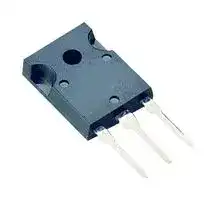


IRGP50B60PD1PBF
IGBT, 75 A, 2.35 V, 390 W, 600 V, TO-247AC, 3 Pins
- Manufacturer: INFINEON
- Product type: Single IGBTs
- No. of Pins: 3Pins
- Power Dissipation: 390W
- Transistor Mounting: Through Hole
- Transistor Case Style: TO-247AC
- Operating Temperature Max: 150°C
- Continuous Collector Current: 75A
- Collector Emitter Voltage Max: 600V
- Collector Emitter Saturation Voltage: 2.35V
| Delivery and price | |
|---|---|
| Units per pack | 250 |
| Price | 3.04 € |
| Current stock | 10+ |
| Lead time | 30 days |

## **SMPS IGBT**

## IRGP50B60PD1PbF

## WARP2 SERIES IGBT WITH ULTRAFAST SOFT RECOVERY DIODE

## **Applications**

- Telecom and Server SMPS

- PFC and ZVS SMPS Circuits

- Uninterruptable Power Supplies

- Consumer Electronics Power Supplies

- Lead-Free

## **Features**

- NPT Technology, Positive Temperature Coefficient

**==> picture [80 x 115] intentionally omitted <==**

**----- Start of picture text -----**<br>
C<br>G<br>E<br>n-channel<br>**----- End of picture text -----**<br>


VCES = 600V VCE(on) typ. = 2.00V @ VGE = 15V IC = 33A

## **Equivalent MOSFET Parameters**

RCE(on) typ. = 61mΩ ID (FET equivalent) = 50A

- Lower VCE(SAT)

- Lower Parasitic Capacitances

- Minimal Tail Current

- HEXFRED Ultra Fast Soft-Recovery Co-Pack Diode

- Tighter Distribution of Parameters

- Higher Reliability

## **Benefits**

- Parallel Operation for Higher Current Applications

- Lower Conduction Losses and Switching Losses

**==> picture [56 x 51] intentionally omitted <==**

**----- Start of picture text -----**<br>
E<br>C<br>G<br>TO-247AC<br>**----- End of picture text -----**<br>


- Higher Switching Frequency up to 150kHz

**Absolute Maximum Ratings**

||**Parameter**|**Max.**|**Units**|
|---|---|---|---|
|VCES|Collector-to-Emitter Voltage<br>~~a~~<br>~~—~~|600<br>~~a~~<br>~~—~~|V<br>~~a~~|
|IC@ TC =25°C|ContinuousCollectorCurrent<br>~~a~~<br>~~—~~<br>~~=~~|75<br>~~a~~<br>~~—~~<br>~~=~~|A<br>~~a~~<br>~~=~~<br>|
|IC@ TC =100°C|Continuous Collector Current<br>~~—~~<br>~~=~~|45<br>~~—~~<br>~~=~~||
|ICM|PulseCollectorCurrent(Ref. Fig.C.T.4)<br>~~=~~<br>~~oo~~|150<br>~~=~~<br>~~oo~~||
|ILM|Clamped Inductive Load  Current<br>~~=~~<br>~~a~~|150<br>~~=~~<br>~~a~~||
|IF@ TC =25°C|DiodeContinous ForwardCurrent<br>~~=~~<br>~~a~~|40<br>~~=~~<br>~~a~~||
|IF@ TC =100°C<br>~~a~~|Diode Continous Forward Current<br>~~=~~<br>~~a~~<br>~~a~~|15<br>~~=~~<br>~~a~~<br>||
|IFRM<br>~~a~~|Maximum Repetitive Forward Current<br>~~=~~<br>~~a~~|60<br>~~=~~<br>||
|VGE<br>~~a~~|Gate-to-Emitter Voltage<br>~~=~~<br>~~aee~~|±20<br>~~=~~<br>~~ee~~|V<br>~~=~~<br>~~ee~~|
|PD@ TC =25°C<br>|Maximum Power Dissipation<br>~~ee~~<br>~~i~~|390<br>~~ee~~<br>~~SW~~<br>~~i~~|W<br>~~ee~~<br>~~i~~|
|PD@ TC =100°C|Maximum Power Dissipation<br>~~i~~<br>~~ee~~|156<br>~~i~~||
|TJ<br>TSTG|Operating Junction and<br>Storage Temperature Range<br>~~ee~~|-55 to +150|°C|
||SolderingTemperature for 10sec.<br>~~ee~~|300 (0.063in.(1.6mm)from case)||
||MountingTorque,6-32 or M3 Screw<br>~~ee~~<br>~~a~~|10 lbf·in(1.1 N·m)||


www.irf.com

1

7/25/08

## IRGP50B60PD1PbF

## **Electrical Characteristics @ TJ = 25°C (unless otherwise specified)**

|~~a~~|**Parameter**<br>~~a~~|**Min.**<br>|**Typ.**<br>|**Max. **<br>|**Units**|**Conditions**|**Ref.Fig**|
|---|---|---|---|---|---|---|---|
|Qg<br>~~a~~|Total Gate Charge(turn-on)<br>~~a~~|—<br>|205<br>|308<br>|nC|IC= 33A<br>VCC= 400V<br>VGE= 15V|17<br>CT1|
|Qgc<br>~~a~~|Gate-to-Collector Charge(turn-on)<br>~~aa~~|—<br>~~a~~|70<br>~~a~~|105<br>~~a~~||||
|Qge|Gate-to-Emitter Charge(turn-on)<br>~~a~~|—<br>~~a~~|30<br>~~a~~|45<br>~~a~~||||
|Eon<br>~~a~~|Turn-On SwitchingLoss<br>~~a~~<br>~~r—~~<br>~~a~~|—<br>~~a~~<br>~~r—~~|255<br>~~a~~<br>~~r—~~|305<br>~~a~~<br>~~r—~~|µJ|IC= 33A, VCC= 390V<br>VGE= +15V, RG= 3.3Ω, L = 200µH<br>TJ = 25°C<br>~~®~~|CT3|
|Eoff<br>~~aa~~|Turn-Off SwitchingLoss<br>~~aa~~|—|375|445||||
|Etotal<br>~~aa~~<br>~~a~~|Total SwitchingLoss<br>~~aa~~<br>~~a~~|—<br>|630<br>|750<br>||||
|td(on)<br>~~a~~<br>~~a~~|Turn-On delaytime<br>~~a~~<br>~~a~~|—<br>|30<br>|40<br>|I<br>ns|IC= 33A, VCC= 390V<br>VGE= +15V, RG= 3.3Ω, L = 200µH<br>TJ= 25°C<br>~~®~~<br>co)|CT3|
|tr<br>~~a~~<br>~~PC~~|Rise time<br>~~aa~~<br>~~PC~~<br>~~—“(CsOOOTTTTTT.TC“(‘(‘®SSC*SS:SC~~|—<br>~~a~~<br>~~—“(CsOOOTTTTTT.TC“(‘(‘®SSC*SS:SC‘EST~~|10<br>~~a~~<br>~~‘EST~~|15<br>~~a~~<br>~~‘EST~~||||
|td(off)<br>~~PC~~|Turn-Off delaytime<br>~~PC~~<br>~~—“(CsOOOTTTTTT.TC“(‘(‘®SSC*SS:SC~~|—<br>~~—“(CsOOOTTTTTT.TC“(‘(‘®SSC*SS:SC‘EST~~|130<br>~~‘EST~~|150<br>~~‘EST~~||||
|tf<br>~~PC~~<br>~~PC~~|Fall time<br>~~PC~~<br>~~—“(CsOOOTTTTTT.TC“(‘(‘®SSC*SS:SC~~<br>~~a~~<br>~~PC~~<br>~~—“(CsOOOTTTTTT.TC“(‘(‘®SSC*SS:SC~~|—<br>~~—“(CsOOOTTTTTT.TC“(‘(‘®SSC*SS:SC‘EST~~<br>~~a~~<br>~~—“(CsOOOTTTTTT.TC“(‘(‘®SSC*SS:SC‘EST~~|11<br>~~‘EST~~<br>~~a~~<br>~~‘EST~~|15<br>~~‘EST~~<br>~~a~~<br>~~‘EST~~||||
|Eon<br>~~PC~~|Turn-On SwitchingLoss<br>~~PC~~<br>~~—“(CsOOOTTTTTT.TC“(‘(‘®SSC*SS:SC~~|—<br>~~—“(CsOOOTTTTTT.TC“(‘(‘®SSC*SS:SC‘EST~~|580<br>~~‘EST~~|700<br>~~‘EST~~|I<br>µJ|IC= 33A, VCC= 390V<br>VGE= +15V, RG= 3.3Ω, L = 200µH<br>TJ= 125°C<br>®|CT3<br>11,13<br>WF1,WF2|
|Eoff<br>~~PC~~|Turn-Off SwitchingLoss<br>~~PC~~<br>~~—“(CsOOOTTTTTT.TC“(‘(‘®SSC*SS:SC~~<br>~~a~~|—<br>~~—“(CsOOOTTTTTT.TC“(‘(‘®SSC*SS:SC‘EST~~<br>~~a~~|480<br>~~‘EST~~<br>~~a~~|550<br>~~‘EST~~<br>~~a~~||||
|Etotal|Total SwitchingLoss<br>~~a~~|—<br>~~a~~|1060<br>~~a~~|1250<br>~~a~~||||
|td(on)<br>~~PC~~|Turn-On delaytime<br>~~a~~<br>~~rrrrr—S~~<br>~~PC~~<br>~~—“(CsOOOTTTTTT.TC“(‘(‘®SSC*SS:SC~~|—<br>~~a~~<br>~~rrrrr—S~~<br>~~—“(CsOOOTTTTTT.TC“(‘(‘®SSC*SS:SC‘EST~~|26<br>~~a~~<br>~~rrrrr—S~~<br>~~‘EST~~|35<br>~~a~~<br>~~rrrrr—S~~<br>~~‘EST~~|I<br>ns|IC= 33A, VCC= 390V<br>VGE= +15V, RG= 3.3Ω, L = 200µH<br>TJ= 125°C<br>®|CT3<br>12,14<br>WF1,WF2|
|tr<br>~~PC~~<br>~~a~~|Rise time<br>~~PC~~<br>~~—“(CsOOOTTTTTT.TC“(‘(‘®SSC*SS:SC~~<br>~~a~~|—<br>~~—“(CsOOOTTTTTT.TC“(‘(‘®SSC*SS:SC‘EST~~|13<br>~~‘EST~~|20<br>~~‘EST~~||||
|td(off)<br>~~PC~~<br>~~a~~<br>~~a~~|Turn-Off delaytime<br>~~PC~~<br>~~—“(CsOOOTTTTTT.TC“(‘(‘®SSC*SS:SC~~<br>~~a~~<br>~~a~~|—<br>~~—“(CsOOOTTTTTT.TC“(‘(‘®SSC*SS:SC‘EST~~<br>|146<br>~~‘EST~~<br>|165<br>~~‘EST~~<br>||||
|tf<br>~~a~~<br>~~a~~|Fall time<br>~~a~~<br>~~a~~|—<br>|15<br>|20<br>||||
|Cies<br>~~a~~<br>~~a~~|Input Capacitance<br>~~aa~~<br>~~a~~|—<br>~~a~~<br>|3648<br>~~a~~<br>|—<br>~~a~~<br>|pF|VGE= 0V<br>VCC= 30V<br>f = 1Mhz<br>~~P|~~|16<br>~~P|~~|
|Coes<br>~~a~~|Output Capacitance<br>~~a~~|—<br>|322<br>|—<br>||||
|Cres<br>~~a~~<br>~~a~~|Reverse Transfer Capacitance<br>~~aa~~<br>~~a~~|—<br>~~a~~|56<br>~~a~~|—<br>~~a~~||||
|Coeseff.<br>~~a~~|Effective Output Capacitance (Time Related)<br>~~a~~|—|215|—||VGE= 0V, VCE= 0V to 480V<br>~~P|~~|15<br>~~P|~~|
|Coeseff.(ER)<br>~~a~~|Effective Output Capacitance (Energy Related)<br>~~a~~<br>~~Ke~~|—<br>~~Ke~~|163<br>~~Ke~~|—<br>~~Ke~~||||
|RBSOA<br>~~a~~|Reverse Bias Safe Operating Area<br>~~a~~<br>~~Ke~~<br>~~et~~|FULL SQUARE<br>~~Ke~~<br>~~et~~|||~~et~~|TJ= 150°C, IC= 150A<br>VCC= 480V, Vp =600V<br>Rg= 22Ω, VGE= +15V to 0V<br>~~P|~~<br>~~et~~|3<br>CT2<br>~~P|~~<br>~~et~~|
|trr|Diode Reverse Recovery Time<br>~~et~~|—<br>~~et~~|42<br>~~et~~|60<br>~~et~~|ns<br>~~et~~|TJ= 25°C<br>IF= 15A, VR= 200V,<br>TJ= 125°C<br>di/dt = 200A/µs<br>~~et~~|19<br>~~et~~|
|||—<br>~~et~~|74<br>~~et~~|120<br>~~et~~||||
|Qrr|Diode Reverse Recovery Charge<br>~~et~~<br>~~ee~~|—<br>~~et~~<br>~~ee~~|80<br>~~et~~<br>~~ee~~|180<br>~~et~~<br>~~ee~~|nC<br>~~et~~<br>~~ee~~|TJ= 25°C<br>IF= 15A, VR= 200V,<br>TJ= 125°C<br>di/dt = 200A/µs<br>~~et~~<br>~~ee~~|21<br>~~et~~<br>~~ee~~|
|||—<br>~~ee~~|220<br>~~ee~~<br>~~TT~~|600<br>~~ee~~<br>~~TT~~||||
|Irr|Peak Reverse Recovery Current<br>~~ee~~|—<br>~~ee~~|4.0<br>~~ee~~|6.0<br>~~ee~~|A<br>~~ee~~|TJ= 25°C<br>IF= 15A, VR= 200V,<br>TJ= 125°C<br>di/dt = 200A/µs<br>~~ee~~|19,20,21,22<br>CT5<br>~~ee~~|
|||—<br>~~ee~~|6.5<br>~~ee~~<br>~~PT~~|10<br>~~ee~~<br>~~PT~~||||


Notes:

® RCE(on) typ. = equivalent on-resistance = VCE(on) typ./ IC, where VCE(on) typ.= 2.00V and IC =33A. ID (FET Equivalent) is the equivalent MOSFET ID rating @ 25°C for applications up to 150kHz. These are provided for comparison purposes (only) with equivalent MOSFET solutions. oO) VCC = 80% (VCES), VGE = 15V, L = 28 µH, RG = 22 Ω.

Pulse width limited by max. junction temperature.

Energy losses include "tail" and diode reverse recovery, Data generated with use of Diode 30ETH06.

Coes eff. is a fixed capacitance that gives the same charging time as Coes while VCE is rising from 0 to 80% VCES.

Coes eff.(ER) is a fixed capacitance that stores the same energy as Coes while VCE is rising from 0 to 80% VCES.

www.irf.com

2

IRGP50B60PD1PbF

**==> picture [208 x 192] intentionally omitted <==**

**----- Start of picture text -----**<br>
90<br>80 tet | | of Tf<br>70 oe a<br>60<br>50 Pt  eNeeee<br>40 Pt P T t| KEIN Tf<br>30 aeeeNee<br>20 Pt<br>10 Pt tt tt Kt<br>0 P| tT| |EttT || INEK<br>0 20 40 60 80 100 120 140 160<br> TC (°C)<br>IC (A)<br>**----- End of picture text -----**<br>


**Fig. 1** - Maximum DC Collector Current vs. Case Temperature

**==> picture [207 x 191] intentionally omitted <==**

**----- Start of picture text -----**<br>
1000<br>100 Saati Seer<br>See ect<br>10 ee el<br>ee<br>1 S| TE ET<br>10 100 1000<br>VCE (V)<br>IC A)<br>**----- End of picture text -----**<br>


**Fig. 3** - Reverse Bias SOA TJ = 150°C; VGE =15V

**==> picture [206 x 196] intentionally omitted <==**

**----- Start of picture text -----**<br>
200<br>180 VGE = 15V D/A<br>VGE = 12V<br>160 N/E<br>VGE = 10V<br>140 VGE = 8.0V MATT<br>VGE = 6.0V<br>120<br>100 PT | | |<br>80 P| LTA]| LALANAE |<br>60 aw 4GRNeee<br>40 PL IAAT TT AE<br>20 | | AR<br>0 TY! | | i] ttt<br>0 1 2 3 4 5 6 7 8 9 10<br> VCE (V)<br>ICE (A)<br>**----- End of picture text -----**<br>


**Fig. 5** - Typ. IGBT Output Characteristics TJ = 25°C; tp = 80µs

**==> picture [208 x 191] intentionally omitted <==**

**----- Start of picture text -----**<br>
450<br>400 Pt tT | ct | tt<br>350 P INE| EE<br>300<br>250 SeNEEeee<br>200 aeNPtP E eeeN<br>150 Pt |TIN|<br>100 Ef<br>50 aeeeeNee<br>0 SeenP| Ett EEK<br>0 20 40 60 80 100 120 140 160<br> TC (°C)<br>Ptot (W)<br>**----- End of picture text -----**<br>


**Fig. 2** - Power  Dissipation vs. Case Temperature

**==> picture [205 x 192] intentionally omitted <==**

**----- Start of picture text -----**<br>
200<br>VGE = 15V<br>180<br>VGE = 12V<br>160 VGE = 10V<br>VGE = 8.0V<br>140 VGE = 6.0V y e<br>120<br>100<br>8060 POONPOC<br>EN TE<br>40<br>20<br>PIAL NG<br>0 T-ALLTTT Tl<br>0 1 2 3 4 5 6 7 8 9 10<br> VCE (V)<br>ICE (A)<br>**----- End of picture text -----**<br>


**Fig. 4** - Typ. IGBT Output Characteristics TJ = -40°C; tp = 80µs

**==> picture [205 x 196] intentionally omitted <==**

**----- Start of picture text -----**<br>
200<br>180 VGE = 15V Pt |IAL<br>VGE = 12V<br>160<br>VGE = 10V AL LY<br>140 VGE = 8.0V<br>MAY<br>VGE = 6.0V<br>120<br>100 ‘(Ny Zann<br>80 FP t || tT| NxAL LtTT<br>60 San ARNE<br>40 | | | Zee<br>20 | iA] | Ett<br>0 PAT Tt<br>0 1 2 3 4 5 6 7 8 9 10<br> VCE (V)<br>ICE (A)<br>**----- End of picture text -----**<br>


**Fig. 6** - Typ. IGBT Output Characteristics TJ = 125°C; tp = 80µs

www.irf.com

3

IRGP50B60PD1PbF

**==> picture [209 x 192] intentionally omitted <==**

**----- Start of picture text -----**<br>
900<br>800 TJ = 25°C<br>— wa<br>T = 125°C<br>700 J<br>rN ae<br>600<br>or<br>500<br>an 7a<br>400 n/a<br>300<br>n/a<br>200 TJ = 125°C<br>100 - f- A}— TJ = 25°C<br>=A<br>0<br>0 5 10 15 20<br> VGE (V)<br>ICE (A)<br>**----- End of picture text -----**<br>


**Fig. 7** - Typ. Transfer Characteristics VCE = 50V; tp = 10µs

**==> picture [199 x 191] intentionally omitted <==**

**----- Start of picture text -----**<br>
10<br>9<br>ae<br>8<br>ae<br>7<br>ee ICE = 15A<br>6<br>i ICE = 33A<br>5 I= ICE = 50A<br>4<br>IE<br>3<br>2 | |<br>|———— — s<br>1<br>0 5 10 15 20<br> VGE (V)<br>VCE (V)<br>**----- End of picture text -----**<br>


**Fig. 8** - Typical VCE vs. VGE TJ = 25°C

**==> picture [468 x 431] intentionally omitted <==**

**----- Start of picture text -----**<br>
10 100<br>9<br>8<br>7<br>ICE = 15A<br>6<br>ICE = 33A 10<br>5 ICE = 50A<br>T  = 150°CJ<br>4 T  = 125°CJ<br>3 T  =   25°CJ<br>2<br>EES fA ft<br>1 1<br>0.8 1.2 1.6 2.0 2.4<br>ell Veennnee<br>0 5 10 15 20  Forward Voltage Drop - V      (V)FM<br> VGE (V)<br>Fig. 9  - Typical VCE vs. VGECE vs. VGEvs. VGEGE Fig. 10  - Typ. Diode Forward Characteristics<br>TJ = 125°CJ = 125°C = 125°C  tp = 80µs<br>1200 1000<br>1000<br>800 TT] 6<br>EON tdOFF<br>600 100<br>EOFF<br>400 O ffAnn —= ==e—-<br>PP tF PF [by]<br>200 tdON<br>A T e e<br>tR<br>0 10<br>pt Et p r<br>0 10 20 30 40 50 60 0 10 20 30 40 50 60<br> IC (A) IC (A)<br>F<br>Instantaneous Forward Current - I    (A)<br>Swiching Time (ns)<br>VCE (V)<br>Energy (µJ)<br>**----- End of picture text -----**<br>


**==> picture [424 x 23] intentionally omitted <==**

**----- Start of picture text -----**<br>
Fig. 9  - Typical VCE vs. VGECE vs. VGEvs. VGEGE Fig. 10  - Typ. Diode Forward Characteristics<br>TJ = 125°CJ = 125°C = 125°C  tp = 80µs<br>**----- End of picture text -----**<br>


**Fig. 11** - Typ. Energy Loss vs. IC TJ = 125°C; L = 200µH; VCE = 390V, RG = 3.3Ω; VGE = 15V. Diode clamp used: 30ETH06 (See C.T.3)

**Fig. 12** - Typ. Switching Time vs. IC TJ = 125°C; L = 200µH; VCE = 390V, RG = 3.3Ω; VGE = 15V. Diode clamp used: 30ETH06 (See C.T.3)

www.irf.com

4

IRGP50B60PD1PbF

**==> picture [206 x 191] intentionally omitted <==**

**----- Start of picture text -----**<br>
1000<br>900<br>Soi<br>800<br>EON<br>700<br>a tt<br>600 EOFF<br>e va r<br>500<br>7<br>400<br>300<br>0 5 10 15 20 25<br>RG (Ω)<br>Energy (µJ)<br>**----- End of picture text -----**<br>


**Fig. 13** - Typ. Energy Loss vs. RG TJ = 125°C; L = 200µH; VCE = 390V, ICE = 33A; VGE = 15V Diode clamp used: 30ETH06 (See C.T.3)

**==> picture [216 x 192] intentionally omitted <==**

**----- Start of picture text -----**<br>
40<br>30 Sanaa<br>20 Wa<br>10<br>LZ<br>penne<br>0 ea<br>0 100 200 300 400 500 600 700<br>VCE (V)<br>Eoes (µJ)<br>**----- End of picture text -----**<br>


**Fig. 15** - Typ. Output Capacitance Stored Energy vs. VCE

**==> picture [201 x 191] intentionally omitted <==**

**----- Start of picture text -----**<br>
16<br>14 PP<br>12 pp 400V<br>10 | | | ¥<br>8 | |Tf,<br>6 | | Y | || |<br>4 sf]<br>2 fy | || |||<br>po;<br>0 | |<br>0 50 100 150 200 250<br>Q G, Total Gate Charge (nC)<br>VGE (V)<br>**----- End of picture text -----**<br>


**Fig. 17** - Typical Gate Charge vs. VGE ICE = 33A

**==> picture [201 x 191] intentionally omitted <==**

**----- Start of picture text -----**<br>
1000 ee<br>tdOFF<br>L a<br>100<br>S = tdON —=——SS<br>tF<br>tR<br>10<br>0 5 10 15 20 25<br>RG (Ω)<br>Swiching Time (ns)<br>**----- End of picture text -----**<br>


**Fig. 14** - Typ. Switching Time vs. RG TJ = 125°C; L = 200µH; VCE = 390V, ICE = 33A; VGE = 15V Diode clamp used: 30ETH06 (See C.T.3)

**==> picture [206 x 429] intentionally omitted <==**

**----- Start of picture text -----**<br>
10000<br>Cies<br>—|1 {1—<br>——<br>1000<br>Coes<br>ee es ee<br>100<br>Cres<br>SS SS<br>=<br>10 es ee ee<br>0 20 40 60 80 100<br>VCE (V)<br>Fig. 16 - Typ. Capacitance vs. VCE<br> VGE= 0V; f = 1MHz<br>1.4<br>1.2<br>1.0<br>0.8<br>-50 0 50 100 150 200<br>TJ (°C)<br>Normalized VCE(on) (V)<br>Capacitance (pF)<br>**----- End of picture text -----**<br>


**Fig. 18** - Normalized Typ. VCE(on) vs. Junction Temperature IC = 33A, VGE= 15V

www.irf.com

5

## IRGP50B60PD1PbF

**==> picture [484 x 534] intentionally omitted <==**

**----- Start of picture text -----**<br>
100 CTT 100 a<br>V  = 200VR V  = 200VR<br>T  = 125°CJ T  = 125°CJ<br>T  = 25°CJ T  = 25°CJ<br>80 pnLttLST LSetI re<br>I   = 30AF<br>I   = 30AF i eu<br>ee ee I   = 15AF<br>60 Po 10 es<br>I   = 15AF<br>wai LZ) an|__| V a s ; E ener IDaes E  AO<br>40 er— —_ | gAe O I   = 5.0AF maeaeee<br>I   = 5.0AF<br>n nn<br>——— es : L E<br>20 PS ot 1 lil<br>100 1000 100 1000<br>di  /dt - (A/µs)f<br>di  /dt - (A/µs)f<br>Fig. 19 - Typical Reverse Recovery vs. di/dt Fig. 20 - Typical Recovery Current vs. di,/dt<br>800 1000<br>en V  = 200VT  = 125°CT  = 25°CRJJ nel ee,|| V  = 200VT  = 125°CT  = 25°CRJJ mere,ae 4/4<br>600<br>I   = 30AF<br>ee” A<br>P| pie ny I   = 5.0AF a) enn<br>400<br>I   = 15AF Laatyy A I   = 15AF i, Yf<br>e ae LY,<br>I   = 5.0AF I   = 30AF<br>oa aape y,<br>200<br>ST<br>0 100<br>100 1000 100 1000<br>di  /dt - (A/µs)f di  /dt - (A/µs)f<br>rr<br>t    -  (ns) I         - (A)IRRM<br>RR<br>Q       -  (nC)<br>di(rec)M/dt  -  (A/µs)<br>**----- End of picture text -----**<br>


www.irf.com

6

IRGP50B60PD1PbF

**==> picture [437 x 438] intentionally omitted <==**

**----- Start of picture text -----**<br>
1<br>D = 0.50<br>ee S Sell<br>0.1 ae 2 a er em<br>0 .2 0<br>0.1 0<br>|_| 0.05 A R1 R1 R2 R2 Ri (°C/W)    ILE  τ tL i (sec)<br>0.01 S S 0.01 EA τJ τ p J epe τCτ 0.157       0.000346 :<br>a 0.02 τ1τ1 τ2τ2 0.163       4.28<br>a | Ci= τi/Ri a i<br>SINGLE PULSE Ci i/Ri<br>0.001 2 0 ee eee | ul<br>( THERMAL RESPONSE ) Notes:<br>P AA | EEEAHF =<br>PEE EI 1. Duty Factor D = t1/t2 aaulll<br>a a | ee 2. Peak Tj = P dm x Zthjc + Tc tl<br>a a | Il<br>0.0001<br>1E-006 1E-005 0.0001 0.001 0.01 0.1 1 10<br>t1 , Rectangular Pulse Duration (sec)<br>Fig 23.   Maximum Transient Thermal Impedance, Junction-to-Case (IGBT)<br>10<br>eta | een On aA TA ee TA e e | oe | Se<br>1 D = 0.50<br>0 .20<br>0.10<br>0.1 — 0.050.020.01 STA e theTceek τJ τJτ1τ | 1 R1 R1 τ2 τR22 R2 Rτ33Rτ33 τ | CτRi (°C/W)   0.363      0.0001120.864      0.001184 τi (sec) ||<br>0P7 ee ee eee 4<br>Ci= τi/Ri 0.473      0.032264<br>0.01 Ci i/Ri<br>Notes:<br>SINGLE PULSE<br>1. Duty Factor D = t1/t2<br>( THERMAL RESPONSE )<br>| | eel 2. Peak Tj = P dm x Zthjc + Tc HH<br>a a el |<br>0.001<br>1E-006 1E-005 0.0001 0.001 0.01 0.1 1<br>t1 , Rectangular Pulse Duration (sec)<br>Thermal Response ( Z  thJC )<br>Thermal Response ( Z  thJC )<br>**----- End of picture text -----**<br>


**Fig. 24.** Maximum Transient Thermal Impedance, Junction-to-Case (DIODE)

www.irf.com

7

IRGP50B60PD1PbF

**==> picture [436 x 92] intentionally omitted <==**

**----- Start of picture text -----**<br>
L<br>L<br>VCC<br>DUT 80 V DUT<br>0 480V<br>1K Rg<br>**----- End of picture text -----**<br>


**Fig.C.T.1** - Gate Charge Circuit (turn-off)

**Fig.C.T.2** - RBSOA Circuit

**==> picture [448 x 96] intentionally omitted <==**

**----- Start of picture text -----**<br>
VCC<br>PFC diode L R =<br>ICM<br>DUT /<br>VCC<br>DRIVER DUT VCC<br>Rg<br>Rg<br>**----- End of picture text -----**<br>


**Fig.C.T.3** - Switching Loss Circuit

**Fig.C.T.4** - Resistive Load Circuit

## REVERSE RECOVERY CIRCUIT

**==> picture [105 x 100] intentionally omitted <==**

**----- Start of picture text -----**<br>
V    = 200VR<br>0.01 Ω<br>L = 70µH<br>D.U.T.<br>D<br>  dif/dt<br>ADJUST G IRFP250<br>S<br>**----- End of picture text -----**<br>


**Fig. C.T.5** - Reverse Recovery Parameter Test Circuit

www.irf.com

8

IRGP50B60PD1PbF

**==> picture [201 x 233] intentionally omitted <==**

**----- Start of picture text -----**<br>
600 60<br>550<br>500 50<br>450<br>400 tf a, YW 40<br>350<br>300 oN 90% ICE 30<br>250<br>200 20<br>150 5% VCE<br>100 10<br>50 a) “4 eee 5% ICE<br>0 aT0.v 0<br>-50 es pe Eoff  0 aao e<br>-100 -10<br>-0.20 0.00 0.20 0.40<br>Time (µs)<br> (V)  (A)<br>VCE ICE<br>**----- End of picture text -----**<br>


**Fig. WF1** - Typ. Turn-off Loss Waveform @ TJ = 25°C using Fig. CT.3

**==> picture [202 x 234] intentionally omitted <==**

**----- Start of picture text -----**<br>
450 90<br>400 80<br>350 90% I CE 70<br>300 tr » | TEST CURRENT 60<br>250 50<br>y<br>200 40<br>150 30<br>5% V CE<br>100 20<br>10% ICE<br>50 Nd? 10<br>0 ' I 1 PY n Eon Loss O Ow iO W_ ah 0<br>-50 -10<br>-0.10 0.00 0.10 0.20<br>Time(µs)<br> (V)  (A)<br>VCE ICE<br>**----- End of picture text -----**<br>


**Fig. WF2** - Typ. Turn-on Loss Waveform @ TJ = 25°C using Fig. CT.3

**==> picture [274 x 140] intentionally omitted <==**

**----- Start of picture text -----**<br>
3<br>IF trr<br>ta tb<br>0<br>:H<br>: :: y“4 4<br>Q rr<br>Po:i}: O 2 I RRM / ’“ 0.5 I RRM<br>H:2<br>:‘ ¢ di(rec)M/dt 5<br>0.75 IRRM<br>a —<br>1 di  /dtf<br>**----- End of picture text -----**<br>


**Fig. WF3** - Reverse Recovery Waveform and Definitions

www.irf.com

9

## IRGP50B60PD1PbF

## **TO-247AC Package Outline**

Dimensions are shown in milimeters (inches)

## **TO-247AC Part Marking Information**

## **TO-247AC package is not recommended for Surface Mount Application.**

Data and specifications subject to change without notice. This product has been designed and qualified for Industrial market. Qualification Standards can be found on IR’s Web site.

**IR WORLD HEADQUARTERS:** 233 Kansas St., El Segundo, California 90245, USA Tel: (310) 252-7105 TAC Fax: (310) 252-7903 Visit us at www.irf.com for sales contact information **.** 07/2008

www.irf.com

10
Updated at February 9, 2023
Infineon Technologies is a globally recognized leader in semiconductor solutions, renowned for driving innovation in power management, energy efficiency, and modern mobility. With a strong legacy of engineering excellence, the company provides highly reliable components designed to meet the rigorous demands of industrial, automotive, and advanced commercial applications. The core of our Infineon portfolio is centered on their industry-leading discrete semiconductors. We offer an extensive selection of single and dual MOSFETs, alongside a robust range of single IGBTs and advanced IGBT modules. These flagship power transistors are essential for high-efficiency power conversion and motor control, providing engineers with superior thermal performance and minimized switching losses. Beyond advanced field-effect transistors, the selection includes a comprehensive array of diodes and rectifiers, heavily featuring Schottky diodes, as well as fast-recovery and RF/PIN diodes. This power foundation is further supported by bipolar transistors, intelligent power modules, and thyristor SCR modules, delivering the critical building blocks required for complex power system designs. To support broader system integration, the portfolio also encompasses specialized solutions such as solid-state relays, AC/DC LED driver ICs, and Bluetooth communications modules. From high-power industrial rectifiers to wireless connectivity adapters, Infineon equips designers with the precision components needed to build efficient, scalable, and fully connected electronic systems.
About Novapart
Novapart is a B2B electronic component broker specialising in stock shortages and cost reduction. We source hard-to-find parts and identify compliant alternatives across a catalogue of 410,000+ components from 500+ manufacturers.
Learn more →Stock Shortage Specialist
When a component is unavailable, discontinued or has an unacceptable lead time, we tap into our network of vetted European and Asian distributors to source what you need — without compromising on quality or traceability.
Request a quote →Compliant Alternatives
We identify pin-to-pin, electrically equivalent substitutes that meet the same certifications (RoHS, AEC-Q100, REACH) as your original specification — validated against datasheets, not just part numbers. Often at a lower cost.
BOM Analysis service →