
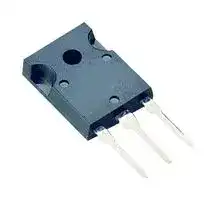


IRGP4740DPBF
IGBT, 60 A, 1.7 V, 250 W, 650 V, TO-247AC, 3 Pins
- Manufacturer: INFINEON
- Product type: Single IGBTs
- No. of Pins: 3Pins
- Power Dissipation: 250W
- Transistor Mounting: Through Hole
- Transistor Case Style: TO-247AC
- Operating Temperature Max: 175°C
- Continuous Collector Current: 60A
- Collector Emitter Voltage Max: 650V
- Collector Emitter Saturation Voltage: 1.7V
| Delivery and price | |
|---|---|
| Units per pack | 1 |
| Price | 2.13 € |
| Current stock | 10+ |
| Lead time | 30 days |

IRGP4740DPbF IRGP4740D-EPbF
VCES = 650V IC = 40A, TC =100°C tSC ≥ 5.5µs, TJ(max) = 175°C VCE(ON) typ. = 1.7V @ IC = 24A
## **Applications**
- Industrial Motor Drive
- UPS
- Solar Inverters
## _**Insulated Gate Bipolar Transistor with Ultrafast Soft Recovery Diode**_
**==> picture [306 x 133] intentionally omitted <==**
**----- Start of picture text -----**<br>
C<br>E<br>E<br>G C<br>G<br>G [C ]<br>E<br>IRGP4740DPbF IRGP4740D-EPbF<br>n-channel<br>TO-247AC TO-247AD<br>G C E<br>Gate Collector Emitter<br>**----- End of picture text -----**<br>
- Welding
## **Features**
## **Benefits**
Low VCE(ON) and Switching Losses High Efficiency in a Wide Range of Applications ~~PR~~ 5.5µs Short Circuit SOA Rugged Transient Performance Square RBSOA ~~I~~ Maximum Junction Temperature 175°C Increased Reliability Positive VCE (ON) Temperature Coefficient Excellent Current Sharing in Parallel Operation ~~a I~~ Lead-Free, RoHs compliant Environmentally friendly
|~~a~~<br>~~Pe~~|**Parameter**<br>~~a~~|**Max.**<br>~~a~~<br>~~|~~|**Units**<br>~~a~~<br>~~|~~|
|---|---|---|---|
|VCES<br>~~a~~<br>~~Pe~~|Collector-to-Emitter Voltage<br>~~a~~|650<br>~~a~~<br>~~|~~|V<br>~~a~~<br>~~|~~|
|IC@ TC =25°C<br>~~a~~<br>~~=~~|Continuous Collector Current<br>~~a~~<br>~~=~~|60<br>~~=~~|A<br>~~=~~<br>~~eee~~|
|IC @TC= 100°C<br>~~I~~<br>~~=~~|Continuous Collector Current<br>~~I~~<br>~~=~~|40<br>~~=~~||
|ICM<br>~~eee~~<br>~~=~~|Pulse Collector Current, VGE=15V<br>~~eee~~<br>~~=~~|72<br>~~eee~~<br>~~=~~||
|ILM<br>~~eee~~<br>~~TO~~<br>~~=~~|Clamped Inductive Load Current, VGE=20V<br>~~eee~~<br>~~TO~~<br>~~=~~|96<br>~~eee~~<br><br>~~=~~||
|IF @TC= 25°C<br>~~TO~~<br>~~=~~|Diode Continuous Forward Current<br>~~TOeee~~<br>~~=~~|45<br>~~eee~~<br>~~=~~||
|IF @TC= 100°C<br>~~TO~~<br>~~=~~|Diode Continuous Forward Current<br>~~TO~~<br>~~=~~|27<br><br>~~=~~||
|IFM<br>~~=~~<br>~~TF~~|Diode Maximum Forward Current<br>~~=~~<br>~~eee~~|96<br>~~=~~<br>~~eee~~||
|VGE<br>~~TF~~<br>~~_2_~~|Continuous Gate-to-Emitter Voltage<br>~~eee~~<br>~~_2_~~<br>~~+~~|±20<br>~~eee~~<br>~~+~~|V<br>~~eee~~|
|PD @TC= 25°C<br>~~TF~~<br>~~_2_~~<br>~~TO~~|Maximum Power Dissipation<br>~~eee~~<br>~~_2_~~<br>~~+~~<br>~~TO~~|250<br>~~eee~~<br>~~+~~<br>|W<br>~~eee~~|
|PD @TC= 100°C<br>~~_2_~~<br>~~TO~~|Maximum Power Dissipation<br>~~_2_~~<br>~~+~~<br>~~TOeee~~|125<br>~~+~~<br>~~eee~~||
|TJ<br>TSTG<br>~~_2_~~<br>~~TO~~<br>~~a~~|Operating Junction and<br>Storage Temperature Range<br>~~_2_~~<br>~~+~~<br>~~TO~~<br>~~Re~~|-40 to +175<br>~~+~~<br>|C|
|~~a~~<br>~~es~~|Soldering Temperature, for 10 sec.<br>~~Re~~|300 (0.063 in. (1.6mm) from case)||
|~~a~~<br>~~es~~|Mounting Torque, 6-32 or M3 Screw<br>~~Re~~|10 lbf·in (1.1 N·m)||
## **Thermal Resistance**
||**Parameter**|**Min.**|**Typ.**|**Max.**|**Units**|
|---|---|---|---|---|---|
|RθJC(IGBT)|Thermal Resistance Junction-to-Case-(each IGBT) |–––|–––|0.6|°C/W|
|RθJC(Diode)|Thermal Resistance Junction-to-Case-(each Diode) |–––|–––|1.6||
|RθCS|Thermal Resistance,Case-to-Sink(flat, greased surface)|–––|0.24|–––||
|RθJA|Thermal Resistance,Junction-to-Ambient(typical socket mount)|–––|–––|40||
1 www.irf.com ~~a~~
Submit Datasheet Feedback November 13, 2014 ~~_~~
1 www.irf.com © 2014 International Rectifier
~~IGR~~
IRGP4740DPbF/IRGP4740D-EPbF ~~(nnn~~
## **Electrical Characteristics @ TJ = 25°C (unless otherwise specified)**
|~~ee~~|**Parameter**<br>~~ee~~|**Min.**<br>~~ee~~<br>~~ees~~|**Typ. **<br>~~ee~~<br>~~ees~~|**Max****Units**<br>~~ee~~<br>~~ee~~|**Units**<br>~~ee~~<br>~~ee~~|**Conditions**<br>~~ee~~|
|---|---|---|---|---|---|---|
|Qg<br>~~ee~~<br>~~es~~|Total Gate Charge (turn-on)<br>~~ee~~<br>~~es~~|—<br>~~ee~~<br>~~es~~<br>~~ees~~|47<br>~~ee~~<br>~~es~~<br>~~ees~~|70<br>~~ee~~<br>~~es~~<br>~~ee~~|nC<br>~~ee~~<br>~~es~~<br>~~ee~~<br>~~———~~|IC= 24A<br>VGE= 15V<br>VCC= 400V<br>~~ee~~<br>~~es~~|
|g<br>Qge<br>~~es~~|Gate-to-Emitter Charge (turn-on)<br>~~es~~|—<br>~~es~~<br>~~ees~~|15<br>~~es~~<br>~~ees~~|23<br>~~es~~<br>~~ee~~|||
|ge<br>Qgc<br>~~es~~<br>~~———~~|Gate-to-Collector Charge (turn-on)<br>~~es~~<br>~~———~~|—<br>~~es~~<br>~~ees~~<br>~~———~~|20<br>~~es~~<br>~~ees~~<br>~~———~~|30<br>~~es~~<br>~~ee~~<br>~~———~~|||
|gc<br>Eon<br>~~———~~<br>~~es~~|Turn-On Switching Loss<br>~~———~~<br>~~I~~|—<br>~~ees~~<br>~~———~~<br>~~I~~<br>~~I~~|520<br>~~ees ~~<br>~~———~~<br>~~I~~|740<br> ~~ee~~<br>~~———~~<br>~~I~~|µJ <br>~~ee~~<br>~~———~~<br>~~ie~~|IC= 24A, VCC= 400V, VGE=15V<br>RG= 10Ω, L = 0.40µH, TJ= 25°C<br>Energy losses include tail & diode<br>reverse recovery|
|Eoff<br>~~———~~<br>~~es~~|Turn-OffSwitchingLoss<br>~~———~~<br>~~I~~|—<br>~~———~~<br>~~I~~<br>~~I~~|240<br>~~———~~<br>~~I~~|350<br>~~———~~<br>~~I~~|||
|Etotal<br>~~———~~<br>~~es~~|Total SwitchingLoss<br>~~———~~<br>~~I~~|—<br>~~———~~<br>~~I~~<br>~~I~~|760<br>~~———~~<br>~~I~~<br>~~ie~~|1090<br>~~———~~<br>~~I~~<br>~~ie~~|||
|td(on)<br>~~ee~~<br>~~———————~~|Turn-On delay time<br>~~———————~~|—<br>~~———————~~|24<br>~~———————~~<br>~~ie~~|40<br>~~———————~~<br>~~ie~~|ns<br>~~———————~~<br>~~ie~~||
|d(on)<br>tr<br>~~ee~~<br>~~———————~~|Rise time<br>~~———————~~|—<br>~~———————~~|27<br>~~———————~~<br>~~ie~~|45<br>~~———————~~<br>~~ie~~|||
|td(off)<br>~~ee~~<br>~~———————~~|Turn-Off delay time<br>~~———————~~|—<br>~~———————~~|73<br>~~———————~~<br>~~ie~~|90<br>~~———————~~<br>~~ie~~|||
|d(off)<br>tf<br>~~———————~~|Fall time<br>~~———————~~|—<br>~~———————~~|23<br>~~———————~~<br>~~ie~~|40<br>~~———————~~<br>~~ie~~|||
|Eon<br>~~es~~|Turn-On Switching Loss<br>|—<br>~~===~~<br>|1120<br>~~ie~~<br>~~===~~<br>|—<br>~~ie~~<br>~~=== ne~~<br>|µJ<br>~~ie~~<br>~~ne~~|IC= 24A, VCC= 400V, VGE=15V<br>RG= 10Ω, L = 0.40µH, TJ= 175°C<br>Energy losses include tail & diode<br>reverse recovery<br>~~ne~~|
|Eoff<br>~~es~~|Turn-Off SwitchingLoss<br>|—<br>~~===~~<br>|475<br>~~===~~<br>|—<br>~~=== ne~~<br>|||
|Etotal<br>~~es~~<br>~~es~~|Total SwitchingLoss<br>~~es~~<br>|—<br>~~===~~<br>~~es~~<br>|1595<br>~~===~~<br>~~es~~<br>|—<br>~~=== ne~~<br>~~es~~<br>|||
|td(on)<br>~~es~~<br>~~es~~<br>~~rs~~|Turn-On delaytime<br>~~es~~<br>~~es~~|—<br>~~===~~<br>~~es~~<br>~~es~~|22<br>~~===~~<br>~~es~~<br>~~es~~|—<br>~~=== ne~~<br>~~es~~<br>~~es~~|ns<br>~~ne~~||
|tr<br>~~es~~<br>~~es~~<br>~~rs~~|Rise time<br>~~es~~<br>~~es~~|—<br>~~===~~<br>~~es~~<br>~~es~~|28<br>~~===~~<br>~~es~~<br>~~es~~|—<br>~~=== ne~~<br>~~es~~<br>~~es~~|||
|td(off)<br>~~es~~<br><br>~~rs~~<br>~~SS~~<br>~~—_—~~|Turn-Off delaytime<br><br>~~es~~<br>~~SS~~|—<br>~~===~~<br><br>~~es~~<br>~~SS~~|88<br>~~===~~<br><br>~~es~~|—<br>~~=== ne~~<br><br>~~es~~|||
|tf<br>~~es~~<br>~~—_—~~|Fall time<br>|—<br>~~===~~<br>|74<br>~~===~~<br>|—<br>~~=== ne~~<br>|||
|Cies<br>~~—_—=~~|Input Capacitance|—|1550|—<br>~~+~~|pF<br>~~+~~<br>~~t~~|VGE= 0V<br>VCC= 30V<br>f = 1.0MHz<br>~~+~~<br>~~——~~|
|Coes<br>~~—_—=~~|Output Capacitance|—|124|—<br>~~+~~|||
|Cres<br>~~=~~<br>~~$f~~|Reverse Transfer Capacitance<br>~~$f~~|—<br>~~$f~~|43<br>~~$f~~|—<br>~~+~~|||
|RBSOA<br>~~=~~<br>~~$f~~|Reverse Bias Safe Operating Area<br>~~$f~~|FULL SQUARE<br>~~+~~<br>~~$f~~|||~~+~~<br>~~t~~|TJ= 175°C, IC= 96A<br>VCC= 520V, Vp ≤ 650V<br>VGE= +20V to 0V<br>~~+~~<br>~~——~~|
|SCSOA<br>~~$f~~|Short Circuit Safe Operating Area<br>~~$f~~|5.5<br>~~$f~~|—<br>~~$f~~|—|µs <br>~~t~~|TJ= 150°C,VCC= 400V, Vp ≤ 650V<br>VGE= +15V to 0V<br>~~——~~|
|Erec<br>~~$f~~<br>~~—~~|Reverse RecoveryEnergyof the Diode<br>~~$f~~<br>~~ee~~|—<br>~~$f~~<br>~~ee~~|292<br>~~$f~~<br>~~ee~~|—<br>~~ee~~|µJ<br>~~t~~<br>~~ee~~|TJ= 175°C<br>VCC= 400V, IF= 24A<br>VGE= 15V,Rg= 10Ω<br> ~~——~~<br>~~ee~~|
|trr<br>~~$f~~<br>~~—~~|Diode Reverse RecoveryTime<br>~~$f~~<br>~~ee~~|—<br>~~$f~~<br>~~ee~~|170<br>~~$f~~<br>~~ee~~|—<br>~~ee~~|ns<br>~~t ~~<br>~~ee~~||
|Irr<br>~~—~~|Peak Reverse RecoveryCurrent<br>~~ee~~|—<br>~~ee~~|17<br>~~ee~~|—<br>~~ee~~|A<br>~~ee~~||
- VCC = 80% (VCES), VGE = 20V.
- R θ is measured at TJ of approximately 90°C.
- Refer to AN-1086 for guidelines for measuring V(BR)CES safely.
- Maximum limits are based on statistical sample size characterization.
- Pulse width limited by max. junction temperature.
Values influenced by parasitic L and C in measurement.
2 www.irf.com © 2014 International Rectifier Submit Datasheet Feedback November 13, 2014 ~~C—O~~
~~I6aR~~
IRGP4740DPbF/IRGP4740D-EPbF ~~[CF~~
**==> picture [481 x 671] intentionally omitted <==**
**----- Start of picture text -----**<br>
60<br>For both:<br>Duty cycle : 50%<br>Tj = 175°C<br>50<br>Tcase = 100°C<br>CT etl Gate drive as specified fill<br>Power Dissipation = 108.7W<br>40<br>a |<br>Square Wave:<br>VCC<br>30<br>I WMTTY<br>i ANS TTT<br>20<br>Diode as specified<br>$e eS<br>aee!<br>10<br>0.1 1 10 100<br>f , Frequency ( kHz )<br>Fig. 1 - Typical Load Current vs. Frequency<br> (Load Current = IRMS of fundamental)<br>60 250<br>50 BNE<br>40 PEN EL 200<br>150<br>30<br>PT [EN]<br>100<br>20 SeeENE<br>50<br>10<br>PEt LEN<br>0 pt} 0<br>i tA<br>25 50 75 100 125 150 175 25 50 75 100 125 150 175<br> TC (°C) TC (°C)<br>Fig. 2 - Maximum DC Collector Current vs. Fig. 3 - Power Dissipation vs.<br>Case Temperature Case Temperature<br>1000 1000<br>100 aa<br>1 00<br>10µsec<br>10<br>AS] 100µsec<br>10<br>1 1msec<br>Tc = 25°C<br>Tj = 175°C DC<br>Single Pulse<br>Ee:eave<br>0.1 1<br>1 10 100 1000 10000 10 100 1000<br>VCE (V) VCE (V)<br>IC (A)<br>Ptot (W)<br>IC (A) IC (A)<br>Load Current ( A )<br>**----- End of picture text -----**<br>
**Fig. 2** - Maximum DC Collector Current vs. Case Temperature
**==> picture [204 x 194] intentionally omitted <==**
**----- Start of picture text -----**<br>
1000<br>1 00<br>10<br>1<br>10 100 1000<br>VCE (V)<br>IC (A)<br>**----- End of picture text -----**<br>
**Fig. 4** - Forward SOA TC = 25°C; TJ ≤ 175°C; VGE = 15V
**Fig. 5** - Reverse Bias SOA
TJ = 175°C; VGE = 20V
3 www.irf.com © 2014 International Rectifier ~~IP~~
Submit Datasheet Feedback November 13, 2014 ~~ee~~
~~I6aR~~
IRGP4740DPbF/IRGP4740D-EPbF ~~[CF~~
**==> picture [198 x 193] intentionally omitted <==**
**----- Start of picture text -----**<br>
100<br>80<br>ify |<br>60<br>VGE = 18V<br>TIRE VGE = 15V<br>40 V GE = 12V<br>VGE = 10V<br>VGE = 8.0V<br>20 SS<br>Tava<br>0 SVL<br>0 2 4 6 8 10<br> VCE (V)<br>ICE (A)<br>**----- End of picture text -----**<br>
**Fig. 6** - Typ. IGBT Output Characteristics TJ = -40°C; tp = 20µs
**==> picture [199 x 193] intentionally omitted <==**
**----- Start of picture text -----**<br>
100<br>VGE = 18V<br>VGE = 15V<br>80 W VGE = 12V AL<br>VGE = 10V<br>60 VGE = 8.0V<br>40 aan<br>20 N-T<br>0 yana=<br>0 2 4 6 8 10<br> VCE (V)<br>ICE (A)<br>**----- End of picture text -----**<br>
**Fig. 8** - Typ. IGBT Output Characteristics TJ = 175°C; tp = 20µs
**==> picture [195 x 193] intentionally omitted <==**
**----- Start of picture text -----**<br>
12<br>10<br>ICE = 12A<br>8 TE] I CE = 24A<br>ICE = 48A<br>6 TE<br>4 |<br>2<br>|<br>0<br>5 10 15 20<br> VGE (V)<br>VCE (V)<br>**----- End of picture text -----**<br>
**Fig. 10** - Typical VCE vs. VGE TJ = -40°C
**==> picture [198 x 193] intentionally omitted <==**
**----- Start of picture text -----**<br>
100<br>VGE = 18V<br>VGE = 15V<br>80 HE V GE = 12V<br>VGE = 10V<br>VGE = 8.0V<br>60<br>A<br>40<br>2/7a0<br>20<br>ff ALI |<br>0 LEA| |<br>0 2 4 6 8 10<br> VCE (V)<br>ICE (A)<br>**----- End of picture text -----**<br>
**Fig. 7** - Typ. IGBT Output Characteristics TJ = 25°C; tp = 20µs
**==> picture [193 x 193] intentionally omitted <==**
**----- Start of picture text -----**<br>
100<br>80 ae)<br>60<br>40 n/a -40°C<br>25°C<br>175°C<br>20 e/a<br>DAA<br>0<br>0 1 2 3<br> VF (V)<br>IF (A)<br>**----- End of picture text -----**<br>
**Fig. 9** - Typ. Diode Forward Voltage Drop Characteristics
**==> picture [195 x 230] intentionally omitted <==**
**----- Start of picture text -----**<br>
12<br>10<br>ICE = 12A<br>8 AES I CE = 24A<br>ICE = 48A<br>6 rE<br>4 Pitt<br>2<br>no<br>0 |<br>5 10 15 20<br> VGE (V)<br>Fig. 11 - Typical VCE vs. VGE<br>TJ = 25°C<br>VCE (V)<br>**----- End of picture text -----**<br>
4 www.irf.com © 2014 International Rectifier ~~IP~~
Submit Datasheet Feedback November 13, 2014 ~~ee~~
~~I6aR~~
**==> picture [542 x 740] intentionally omitted <==**
**----- Start of picture text -----**<br>
IRGP4740DPbF/IRGP4740D-EPbF<br>[CF<br>12 100<br>10<br>ety | 80 |<br>ICE = 12A<br>8 ICE = 24A<br>ICE = 48A 60<br>6 te | Ls<br>40<br>4 | FO<br>TJ = 25°C<br>2 (te 20 TJ = 175 ° C f<br>0 = 0 an<br>5 10 15 20 4 6 8 10 12 14<br> VGE (V) VGE (V)<br>Fig. 12 - Typical VCE vs. VGE Fig. 13 - Typ. Transfer Characteristics<br>TJ = 175°C VCE = 50V; tp = 20µs<br>3000 1000<br>2500<br>td OFF<br>2000 100<br>tF<br>1500<br>EON td ON<br>1000 10<br>tR<br>500 E OFF<br>0 1 ELLE<br>Zo ae<br>0 10 20 30 40 50 0 10 20 30 40 50<br>IC (A) IC (A)<br>Fig. 14 - Typ. Energy Loss vs. IC Fig. 15 - Typ. Switching Time vs. IC<br>J = 175°C; L = 0.40mH; VCE = 400V, RG = 10 = 175°C; L = 0.40mH; VCE = 400V, RG = 10CE = 400V, RG = 10= 400V, RG = 10G = 10 = 10 Ω ; VGE = 15V GE = 15V = 15V TJ = 175°C; L = 0.40mH; VCE = 400V, RG = 10J = 175°C; L = 0.40mH; VCE = 400V, RG = 10 = 175°C; L = 0.40mH; VCE = 400V, RG = 10CE = 400V, RG = 10 = 400V, RG = 10G = 10 = 10 Ω ; VGE = 15V GE = 15V = 15V<br>2400 1000<br>2000<br>1600 E ON<br>tdOFF<br>1200 100<br>Ler<br>EOFF tF<br>800<br>tR<br>400<br>tdON<br>0 << 10 EeeTLLEES<br>0 20 40 60 80 100 0 20 40 60 80 100<br>Rg ( Ω ) RG ( Ω )<br>Fig. 16 - Typ. Energy Loss vs. RG Fig. 17 - Typ. Switching Time vs. RGG<br>TJ = 175°C; L = 0.40mH; VCE = 400V, ICE = 24A; VGE = 15V TJ = 175°C; L = 0.40mH; VCE = 400V, ICE = 24A; VGE = 15V J = 175°C; L = 0.40mH; VCE = 400V, ICE = 24A; VGE = 15V = 175°C; L = 0.40mH; VCE = 400V, ICE = 24A; VGE = 15V CE = 400V, ICE = 24A; VGE = 15V = 400V, ICE = 24A; VGE = 15V CE = 24A; VGE = 15V = 24A; VGE = 15V GE = 15V = 15V<br>Energy (µJ)<br>VCE (V) ICE (A)<br>Swiching Time (ns)<br>Swiching Time (ns)<br>Energy (µJ)<br>**----- End of picture text -----**<br>
TJ = 175°C; L = 0.40mH; VCE = 400V, RG = 10 = 175°C; L = 0.40mH; VCE = 400V, RG = 10CE = 400V, RG = 10= 400V, RG = 10G = 10 = 10 Ω ; VGE = 15V GE = 15V = 15V
TJ = 175°C; L = 0.40mH; VCE = 400V, RG = 10J = 175°C; L = 0.40mH; VCE = 400V, RG = 10 = 175°C; L = 0.40mH; VCE = 400V, RG = 10CE = 400V, RG = 10 = 400V, RG = 10G = 10 = 10 Ω ; VGE = 15V GE = 15V = 15V
**Fig. 17** - Typ. Switching Time vs. RGG TJ = 175°C; L = 0.40mH; VCE = 400V, ICE = 24A; VGE = 15V J = 175°C; L = 0.40mH; VCE = 400V, ICE = 24A; VGE = 15V = 175°C; L = 0.40mH; VCE = 400V, ICE = 24A; VGE = 15V CE = 400V, ICE = 24A; VGE = 15V = 400V, ICE = 24A; VGE = 15V CE = 24A; VGE = 15V = 24A; VGE = 15V GE = 15V = 15V
5 www.irf.com © 2014 International Rectifier ~~IP~~
Submit Datasheet Feedback November 13, 2014 ~~ee~~
~~TOR~~
## IRGP4740DPbF/IRGP4740D-EPbF ~~ne~~
**==> picture [201 x 195] intentionally omitted <==**
**----- Start of picture text -----**<br>
17<br>16<br>15<br>14<br>13<br>12<br>11<br>10<br>0 20 40 60 80 100<br>RG ( Ω)<br>IRR (A)<br>**----- End of picture text -----**<br>
**==> picture [488 x 703] intentionally omitted <==**
**----- Start of picture text -----**<br>
17 17<br>16 R G = 10 Ω 16<br>15 eECEOREL 15<br>RG = 22 Ω<br>14 CHP 14<br>13 TAR RG = 47 Ω SSE 13<br>12 TEE 12<br>11 RG = 100 Ω 11<br>Speennn8HERE<br>10 10<br>10 15 20 25 30 35 40 45 50 0 20 40 60 80 100<br>IF (A) RG ( Ω)<br>Fig. 18 - Typ. Diode IRR vs. IF Fig. 19 - Typ. Diode IRR vs. RG<br> TJ = 175°C TJ = 175°C<br>17 2.5<br>48A<br>16<br>15 BO 2.0 22 Ω 10 Ω<br>14<br>47 Ω<br>24A<br>P| VY {| {| l Le<br>13<br>WET 1.5 100 Ω fF<br>12<br>12A<br>11<br>SAE =<br>10 A 1.0 po<br>0 200 400 600 800 1000 0 200 400 600 800 1000<br>diF /dt (A/µs) diF /dt (A/µs)<br>Fig. 20 - Typ. Diode IRR vs. diF/dt Fig. 21 - Typ. Diode QRR vs. diF/dt<br>VCC = 400V; VGE = 15V; IF = 24A; TJ = 175°C VCC = 400V; VGE = 15V; TJ = 175°C<br>400 21<br>18 T sc I sc<br>300<br>15<br>THE<br>200 | RG = 10 Ω eee 12<br>RG = 22 Ω<br>9<br>RG = 47 Ω<br>100<br>RG = 100 Ω 6<br>0 aati 3<br>0 10 20 30 40 50 8 10 12 14 16 18<br>IF (A) VGE (V)<br>Fig. 22 - Typ. Diode ERR vs. IF Fig. 23 - VGE vs. Short Circuit Time<br>TJ = 175°C VCC = 400V; TC = 150°C<br>IRR (A) IRR (A)<br>IRR (A) QRR (µC)<br>Energy (µJ) Time (µs)<br>**----- End of picture text -----**<br>
**==> picture [233 x 193] intentionally omitted <==**
**----- Start of picture text -----**<br>
21 140<br>18 T sc I sc 120<br>15 100<br>12 80<br>9 60<br>6 40<br>3 20<br>8 10 12 14 16 18<br>VGE (V)<br>Time (µs) Current (A)<br>**----- End of picture text -----**<br>
6 www.irf.com © 2014 International Rectifier ~~IP~~
Submit Datasheet Feedback November 13, 2014 ~~ee~~
I¢aR
IRGP4740DPbF/IRGP4740D-EPbF
**==> picture [483 x 688] intentionally omitted <==**
**----- Start of picture text -----**<br>
10000 16<br>14 VCES = 400V<br>Cies VCES = 300V<br>12 || y_|<br>fe Pf oy<br>1000<br>10<br>8<br>100 ; Coes 6 a<br>4 AEE<br>\ SF =<br>Cres<br>2<br>10 NECPe ee 0 AVor—<br>0 100 200 300 400 500 600 0 10 20 30 40 50<br>VCE (V) Q G, Total Gate Charge (nC)<br>Fig. 24 - Typ. Capacitance vs. VCE Fig. 25 - Typical Gate Charge vs. VGE<br> VGE= 0V; f = 1MHz ICE = 24A<br>1<br>D = 0.50<br>0.1 EEE 0.20 aeitalenillintiil Ri (°C/W) τ i (sec)<br>0.10 Silico, R 1R1 R 2R2 R 3R3 R 4 R 4 es 0.014255 0.000015<br>0.05 τ J τ J τ 1 τ 1 τ 2 τ 2 τ 3 τ 3 τ 4 τ 4 τ C τ C 0.163283 0.000127<br>0.02 Tee} | 0.257883 0.003125<br>0.01 geal Ci Ci= = PE τ i / τ Ri i / Ri<br>0.01 0.164579 0.019104<br>Notes:<br>SINGLE PULSE<br>1. Duty Factor D = t1/t2<br>( THERMAL RESPONSE )<br>2. Peak Tj = P dm x Zthjc + Tc<br>yal ctl<br>0.001<br>1E-006 1E-005 0.0001 0.001 0.01 0.1 1<br>t1 , Rectangular Pulse Duration (sec)<br>Fig. 26 - Maximum Transient Thermal Impedance, Junction-to-Case (IGBT)<br>10<br>1 D = 0.50<br>0.20<br>Ri (°C/W) τ i (sec)<br>0.1 0.020.050.10 TC τ J τ J τ 1 τ 1 R1 R1 τ 2 τ R22 R2 R τ 33 R τ 3 3 τ R4 τ 4R4 4 τ C τ C a 0.026766 0.573978 0.655762 0.000026 0.000561 0.005131 al<br>0.01 Ci= Ci= τ i / τ Ri i / Ri<br>0.01 puinerees pp ORE -—- 0.344981 0.039505<br>Notes:<br>SINGLE PULSE 1. Duty Factor D = t1/t2<br>eel ( THERMAL RESPONSE ) 2. Peak Tj = P dm x Zthjc + Tc —<br>0.001 Beis RTO BL<br>1E-006 1E-005 0.0001 0.001 0.01 0.1 1<br>t1 , Rectangular Pulse Duration (sec)<br>VGE, Gate-to-Emitter Voltage (V)<br>Capacitance (pF)<br>Thermal Response ( Z thJC )<br>Thermal Response ( Z thJC )<br>**----- End of picture text -----**<br>
**Fig. 27 -** Maximum Transient Thermal Impedance, Junction-to-Case (DIODE)
7 www.irf.com © 2014 International Rectifier
Submit Datasheet Feedback November 13, 2014
IRGP4740DPbF/IRGP4740D-EPbF
**==> picture [264 x 58] intentionally omitted <==**
**----- Start of picture text -----**<br>
L<br>DUT VCC<br>0<br>1K<br>**----- End of picture text -----**<br>
**==> picture [202 x 106] intentionally omitted <==**
**----- Start of picture text -----**<br>
L<br>80 V +<br>- DUT VCC<br>Rg<br>**----- End of picture text -----**<br>
**Fig.C.T.1** - Gate Charge Circuit (turn-off)
**Fig.C.T.2** - RBSOA Circuit
**==> picture [515 x 486] intentionally omitted <==**
**----- Start of picture text -----**<br>
diode clamp /<br>DUT<br>4X L<br>DC VCC<br>-5V<br>DUT DUT / VCC<br>DRIVER<br>Rg<br>RSH<br>Fig.C.T.3 - S.C. SOA Circuit Fig.C.T.4 - Switching Loss Circuit<br>C force<br>R = [VCC]<br>ICM<br>100K<br>D1 22K<br>C sense<br>VCC<br>DUT DUT<br>G force 0.0075µF<br>Rg<br>E sense<br>fib<br>E force<br>Fig.C.T.5 - Resistive Load Circuit Fig.C.T.6 - BVCES Filter Circuit<br>8 www.irf.com © 2014 International Rectifier Submit Datasheet Feedback November 13, 2014<br>**----- End of picture text -----**<br>
Submit Datasheet Feedback November 13, 2014
~~LR~~
IRGP4740DPbF/IRGP4740D-EPbF ~~#£4x45zZzZ»»_ 777~~
**==> picture [503 x 614] intentionally omitted <==**
**----- Start of picture text -----**<br>
600 60 600 60<br>tf tr<br>500 50 500 50<br>400 40 400 40<br>TEST<br>CURRENT<br>300 ieee 30 300 | 30<br>90% ICE<br>200 20 200 20<br>10% VCE 90% ICE<br>100 10 100 10<br>oe 10% ICE He 10%ICE 10% VCE<br>0 0 0 0<br>Eoff Loss Eon Loss<br>-100 -10 -100 -10<br>-0.3 -0.05 0.2 0.45 0.7 -0.5 0 0.5 1<br>time(µs) time (µs)<br>Fig. WF1 - Typ. Turn-off Loss Waveform Fig. WF2 - Typ. Turn-on Loss Waveform<br>@ TJ = 175°C using Fig. CT.4 @ TJ = 175°C using Fig. CT.4<br>40 600 150<br>ICE<br>QRR<br>30 500 125<br>VCE<br>20 sy tRR 400 100<br>10 hE 300 75<br>0 ft te 200 50<br>Peak<br>-10 IRR or, 100 25<br>-20 Li 0 0<br>-30 a -100 -25<br>-0.15 0.00 0.15 0.30 -5.0 0.0 5.0 10.0<br>time (µs)<br>time (µs)<br> (V) (A) (V) (A)<br>VCE ICE VCE ICE<br> (A)<br>IF<br>Vce (V)<br>**----- End of picture text -----**<br>
**==> picture [231 x 257] intentionally omitted <==**
**----- Start of picture text -----**<br>
600 150<br>ICE<br>500 125<br>VCE<br>400 100<br>300 75<br>200 50<br>100 25<br>0 0<br>-100 -25<br>-5.0 0.0 5.0 10.0<br>time (µs)<br>Ice (A)<br>Vce (V)<br>**----- End of picture text -----**<br>
**Fig. WF3** - Typ. Diode Recovery Waveform @ TJ = 175°C using Fig. CT.4
**Fig. WF4** - Typ. S.C. Waveform
@ TJ = 150°C using Fig. CT.3
9 www.irf.com © 2014 International Rectifier ~~a~~
Submit Datasheet Feedback November 13, 2014 ~~TT~~
~~I6aR~~
IRGP4740DPbF/IRGP4740D-EPbF ~~[CF~~
## TO-247AC Package Outline
Dimensions are shown in millimeters (inches)
## TO-247AC Part Marking Information
Notes: This part marking information applies to devices produced after 02/26/2001
**==> picture [454 x 98] intentionally omitted <==**
**----- Start of picture text -----**<br>
EXAMPLE: THIS IS AN IRFPE30<br>WITH ASSEMBLY PART NUMBER<br>LOT CODE 5657 INTERNATIONAL<br>ASSEMBLED ON WW 35, 2001 RECTIFIER IRFPE30<br>LOGO Po 135H d<br>IN THE ASSEMBLY LINE "H"<br>_ —- 56 57<br>DATE CODE<br>ASSEMBLY YEAR 1 = 2001<br>Note: "P" in assembly line position<br>LOT CODE WEEK 35<br>indicates "Lead-Free"<br>LINE H<br>**----- End of picture text -----**<br>
TO-247AC package is not recommended for Surface Mount Application.
Note: For the most current drawing please refer to IR website at http://www.irf.com/package/
10 www.irf.com ~~Zz~~
10 www.irf.com © 2014 International Rectifier
Submit Datasheet Feedback November 13, 2014
IRGP4740DPbF/IRGP4740D-EPbF ~~[CF~~
## ~~ItaR~~
## TO-247AD Package Outline
Dimensions are shown in millimeters (inches)
## TO-247AD Part Marking Information
**==> picture [399 x 90] intentionally omitted <==**
**----- Start of picture text -----**<br>
E X A M P L E : T H IS IS A N IR G P 3 0 B 1 2 0 K D -E<br>W IT H A S S E M B L Y P A R T N U M B E R<br>L O T C O D E 5 6 5 7 IN T E R N A T IO N A L dog<br>A S S E M B L E D O N W W 3 5 , 2 0 0 0 R E C T IF IE R<br>L O G O IRGP30B1IeaR 20KD 0 3 5 H -E |<br>IN T H E A S S E M B L Y L IN E "H "<br>5 6 5 7<br>D A T E C O D E<br>A S S E M B L Y YE A R 0 = 2 0 0 0<br>N o te : "P " in a s s e m b ly lin e p o s itio n<br>L O T C O D E W E E K 3 5<br>in d ic a te s "L e a d -F re e "<br>L IN E H<br>**----- End of picture text -----**<br>
TO-247AD package is not recommended for Surface Mount Application.
Note: For the most current drawing please refer to IR website at http://www.irf.com/package/
www.irf.com © 2014 International Rectifier
Submit Datasheet Feedback November 13, 2014
11
~~I6aR~~
IRGP4740DPbF/IRGP4740D-EPbF ~~[CF~~
## **Qualification Information[† ]**
|**Qualification Information[† ]**|||
|---|---|---|
|**Qualification Level**|Industrial<br>(per JEDEC JESD47F)††||
|**Moisture Sensitivity Level**|TO-247AC|N/A|
||TO-247AD|N/A|
|**RoHS Compliant**|Yes||
- Qualification standards can be found at International Rectifier’s web site: http://www.irf.com/product-info/reliability/
- †† Applicable version of JEDEC standard at the time of product release.
## **Revision History**
|**Revision History**|**Revision History**|
|---|---|
|**Date**|**Comments**|
|11/13/2014|•Added IFMDiode Maximum Forward Current = 96A with the noteon page 1.<br>•Removed notefrom switchinglosses test condition onpage 2.|
**IR WORLD HEADQUARTERS:** 101 N. Sepulveda Blvd., El Segundo, California 90245, USA To contact International Rectifier, please visit http://www.irf.com/whoto-call/
12 www.irf.com ~~Ls~~
~~_~~
12 www.irf.com © 2014 International Rectifier
Submit Datasheet Feedback November 13, 2014
Updated at February 9, 2023
Infineon Technologies is a globally recognized leader in semiconductor solutions, renowned for driving innovation in power management, energy efficiency, and modern mobility. With a strong legacy of engineering excellence, the company provides highly reliable components designed to meet the rigorous demands of industrial, automotive, and advanced commercial applications. The core of our Infineon portfolio is centered on their industry-leading discrete semiconductors. We offer an extensive selection of single and dual MOSFETs, alongside a robust range of single IGBTs and advanced IGBT modules. These flagship power transistors are essential for high-efficiency power conversion and motor control, providing engineers with superior thermal performance and minimized switching losses. Beyond advanced field-effect transistors, the selection includes a comprehensive array of diodes and rectifiers, heavily featuring Schottky diodes, as well as fast-recovery and RF/PIN diodes. This power foundation is further supported by bipolar transistors, intelligent power modules, and thyristor SCR modules, delivering the critical building blocks required for complex power system designs. To support broader system integration, the portfolio also encompasses specialized solutions such as solid-state relays, AC/DC LED driver ICs, and Bluetooth communications modules. From high-power industrial rectifiers to wireless connectivity adapters, Infineon equips designers with the precision components needed to build efficient, scalable, and fully connected electronic systems.
About Novapart
Novapart is a B2B electronic component broker specialising in stock shortages and cost reduction. We source hard-to-find parts and identify compliant alternatives across a catalogue of 410,000+ components from 500+ manufacturers.
Learn more →Stock Shortage Specialist
When a component is unavailable, discontinued or has an unacceptable lead time, we tap into our network of vetted European and Asian distributors to source what you need — without compromising on quality or traceability.
Request a quote →Compliant Alternatives
We identify pin-to-pin, electrically equivalent substitutes that meet the same certifications (RoHS, AEC-Q100, REACH) as your original specification — validated against datasheets, not just part numbers. Often at a lower cost.
BOM Analysis service →