
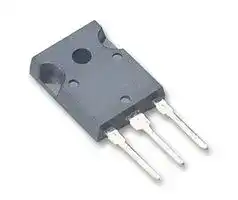


IRG4PSC71UDPBF
IGBT, 85 A, 1.95 V, 350 W, 600 V, TO-274AA, 3 Pins
- Manufacturer: INFINEON
- Product type: Single IGBTs
- No. of Pins: 3Pins
- Product Range: IRG4
- Power Dissipation: 350W
- Transistor Mounting: Through Hole
- Transistor Case Style: TO-274AA
- Operating Temperature Max: 150°C
- Continuous Collector Current: 85A
- Collector Emitter Voltage Max: 600V
- Collector Emitter Saturation Voltage: 1.95V
| Delivery and price | |
|---|---|
| Units per pack | 250 |
| Price | 6.51 € |
| Current stock | 10+ |
| Lead time | 30 days |

## PD - 91682A

## IRG4PSC71UD

## UltraFast CoPack IGBT

INSULATED GATE BIPOLAR TRANSISTOR WITH ULTRAFAST SOFT RECOVERY DIODE

**==> picture [190 x 96] intentionally omitted <==**

**----- Start of picture text -----**<br>
C<br>VCES = 600V<br>V  = 1.67V<br>CE(on) typ.<br>G<br>@VGE = 15V, IC = 60A<br>E<br>n-channel<br>**----- End of picture text -----**<br>


## **Features**

- Generation 4 IGBT design provides tighter parameter distribution and higher efficiency (minimum switching and conduction losses) than prior generations

- IGBT co-packaged with HEXFRED ultrafast, ultrasoft recovery anti-parallel diodes for use in bridge configurations

- Industry-benchmark Super-247 package with higher power handling capability compared to same footprint TO-247

- Creepage distance increased to 5.35mm

## **Benefits**

- Generation 4 IGBT's offer highest efficiencies

- available

- Maximum power density, twice the power handling of TO-247, less space than TO-264

- IGBTs optimized for specific application conditions

- HEXFRED diodes optimized for performance with IGBTs

**SUPER - 247**

|•  Cost and space saving in designs that require|**SUPER - 247**||
|---|---|---|
|multiple, paralleled IGBTs|||
|**Absolute Maximum Ratings**|||
|**Parameter**<br>**Max.**<br>**Units**<br>VCES<br>Collector-to-Emitter Voltage<br>600<br>V<br>IC@ TC= 25°C<br>Continuous Collector Current<br>85<br>IC@ TC= 100°C<br>Continuous Collector Current<br>60<br>ICM<br>Pulsed Collector Current<br>200<br>A<br>ILM<br>Clamped Inductive Load Current<br>200<br>IF@ TC= 100°C<br>Diode Continuous Forward Current<br>60<br>IFM<br>Diode Maximum Forward Current<br>350<br>VGE<br>Gate-to-Emitter Voltage<br>± 20<br>V<br>PD@ TC= 25°C<br>Maximum Power Dissipation<br>350<br>PD@ TC= 100°C<br>Maximum Power Dissipation<br>140<br>TJ<br>Operating Junction and<br>-55  to +150<br>TSTG<br>Storage Temperature Range<br>°C<br>Soldering Temperature, for 10 sec.<br>300 (0.063 in. (1.6mm) from case)<br>W<br>**Thermal Resistance\ Mechanical**<br>er<br>ee<br>ee<br>Se<br>PO<br>Po<br>pO<br>——— =<br>—<br>PO<br>es<br>PO<br>ne<br>ff|||
|**Parameter**|**Min.**<br>**Typ.**<br>**Max.**|**Units**|
|RθJC<br>Junction-to-Case - IGBT|–––<br>–––<br>0.36||
|RθJC<br>Junction-to-Case - Diode|–––<br>–––<br>0.69|°C/W|
|RθCS<br>Case-to-Sink, flat, greased surface|–––<br>0.24<br>–––||
|RθJA<br>Junction-to-Ambient, typical socket mount|–––<br>–––<br>38||
|Recommended ClipForce|20.0(2.0)<br>–––<br>–––|N(kgf)|
|Weight|–––<br>6 (0.21)<br>–––|g (oz)|


www.irf.com 1

5/12/99

## **IRG4PSC71UD**

## **Electrical Characteristics @ TJ = 25°C (unless otherwise specified)**

|**Parameter**<br>~~ee~~<br>~~a~~|**Parameter**<br>~~es~~<br>|**Min. **<br>~~es~~<br>~~es~~<br>|**Typ. **<br>~~es~~<br>~~ee~~<br>|**Max.**<br>~~es~~<br>|**Units**<br>~~es~~|**Conditions**|**Conditions**|
|---|---|---|---|---|---|---|---|
|Qg<br>~~ee~~<br>~~a~~|Total Gate Charge(turn-on)<br>~~es~~<br>|–––<br>~~es~~<br>~~es~~<br>|340<br>~~es~~<br>~~ee~~<br>|520<br>~~es~~<br>|nC<br>~~es~~|IC= 60A<br>VCC= 400V<br>See Fig. 8<br>VGE= 15V||
|Qge<br>~~aa~~|Gate - Emitter Charge(turn-on)<br>~~es~~|–––<br>~~es ~~<br>~~es~~|44<br> ~~ee~~<br>~~es~~|66<br>~~es~~||||
|Qgc<br>~~a~~<br>~~ee~~<br>~~a~~|Gate - Collector Charge(turn-on)<br>~~ee~~|–––<br>~~ee~~<br>~~ee~~|160<br>~~ee~~|240<br>~~ee~~||||
|td(on)<br>~~a~~<br>~~ee~~<br>~~a~~|Turn-On DelayTime<br>~~ee~~|–––<br>~~ee~~<br>~~ee~~|90<br>~~ee~~|–––<br>~~ee~~|ns|TJ= 25°C<br>IC= 60A, VCC= 480V<br>VGE= 15V, RG= 5.0Ω<br>Energy losses include "tail" and<br>diode reverse recovery.<br>See Fig. 9, 10, 11, 18||
|tr<br>~~ee~~<br>~~a~~|Rise Time<br>~~ee~~|–––<br>~~ee~~<br>~~ee~~|94<br>~~ee~~|–––<br>~~ee~~||||
|td(off)<br>~~a~~<br>~~a~~|Turn-Off DelayTime<br>~~es~~|–––<br>~~ee~~<br>~~es~~|245<br>~~es~~|368<br>~~es~~||||
|tf<br>~~a~~<br>~~ee~~<br>~~a~~|Fall Time<br>~~ee~~|–––<br>~~ee~~<br>~~ee~~|110<br>~~ee~~|167<br>~~ee~~||||
|Eon<br>~~a~~<br>~~ee~~<br>~~a~~|Turn-On SwitchingLoss<br>~~ee~~|–––<br>~~ee~~<br>~~ee~~|3.26<br>~~ee~~|–––<br>~~ee~~|mJ|||
|Eoff<br>~~ee~~<br>~~a~~<br>~~RR~~|Turn-Off SwitchingLoss<br>~~ee~~<br>|–––<br>~~ee~~<br>~~ee~~<br>~~ee~~<br>|2.27<br>~~ee~~<br>|–––<br>~~ee~~<br>||||
|Ets<br>~~a~~<br>~~a~~<br>~~RR~~|Total SwitchingLoss<br>~~ee~~<br>|–––<br>~~ee~~<br>~~ee~~<br>~~ee~~<br>|5.53<br>~~ee~~<br>|7.2<br>~~ee~~<br>||||
|td(on)<br>~~RR~~<br>~~es~~|Turn-On DelayTime<br>|–––<br>~~ee~~<br><br>~~ee~~|91<br>|–––<br>|ns<br>|TJ= 150°C,     See Fig. 9, 10, 11, 18<br>IC= 60A, VCC= 480V<br>VGE= 15V, RG= 5.0Ω<br>Energy losses include "tail" and<br>diode reverse recovery.<br>||
|tr<br>~~RRa~~<br>~~es~~|Rise Time<br>~~ee~~|–––<br>~~ee~~<br>~~ee~~<br>~~ee~~|88<br>~~ee~~|–––<br>~~ee~~||||
|td(off)<br>~~es~~<br>~~PR~~|Turn-Off DelayTime<br>|–––<br>~~ee~~<br>~~ee~~<br>|353<br>|–––<br>||||
|tf<br>~~es~~<br>~~a~~<br>~~PR~~|Fall Time<br>~~ee~~<br>|–––<br>~~ee~~<br>~~ee~~<br>~~ee~~<br>|150<br>~~ee~~<br>|–––<br>~~ee~~<br>||||
|Ets<br>~~PR~~<br>~~a~~|Total SwitchingLoss<br><br>|–––<br>~~ee~~<br><br>~~Gn~~<br>|7.1<br><br>~~se~~<br>|–––<br><br>~~se~~<br>|mJ<br>|||
|LE<br>~~PRa~~<br>~~a~~|Internal Emitter Inductance<br>~~es~~<br>|–––<br>~~ee~~<br>~~es~~<br>~~Gn~~<br>|13<br>~~es~~<br>~~se~~<br>|–––<br>~~es~~<br>~~se~~<br>|nH<br>~~es~~|Measured 5mm frompackage<br>~~es~~||
|Cies<br>~~a~~|Input Capacitance<br>|–––<br>~~Gn~~<br>|7500<br>~~se~~<br>|–––<br>~~se~~<br>|pF<br>|VGE= 0V<br>VCC= 30V<br>See Fig. 7<br>ƒ= 1.0MHz<br>||
|Coes<br>~~aa~~|Output Capacitance<br>~~es~~|–––<br>~~Gn ~~<br>~~es~~|720<br> ~~se~~<br>~~es~~|–––<br>~~se~~<br>~~es~~||||
|Cres<br>~~a~~|Reverse Transfer Capacitance<br>|–––<br>|93<br>|–––<br>||||
|trr<br>~~aEE~~|Diode Reverse Recovery Time<br>~~EE~~<br>~~|~~|–––<br>~~EE~~<br>~~|ot~~|82<br>~~EE~~<br>~~ot~~|120<br>~~EE~~|ns<br>~~EE~~<br>~~eee~~|TJ= 25°C    See Fig.<br>TJ= 125°C        14         I<br>~~EE~~|= 125°C        14         IF= 60A<br>= 125°C        15          VR= 200V<br>= 125°C         16       di/dt = 200A/µs|
|||–––<br>~~EE~~<br>~~|ot~~<br>~~eee~~|140<br>~~EE~~<br>~~ot~~<br>~~eee~~|210<br>~~EE~~<br>~~eee~~||||
|Irr<br>~~EE~~<br>~~ee~~|Diode Peak Reverse Recovery Current<br>~~EE~~<br>~~|~~<br>~~ee~~<br>~~|~~|–––<br>~~EE~~<br>~~| ot~~<br>~~ee~~<br>~~eee~~<br>~~|ot~~|8.2<br>~~EE~~<br>~~ot~~<br>~~ee~~<br>~~eee~~<br>~~ot~~|12<br>~~EE~~<br>~~ee~~<br>~~eee~~|A<br>~~EE~~<br>~~ee~~<br>~~eee~~<br>~~eee~~|TJ= 25°C    See Fig.<br>TJ= 125°C        15          V<br>~~EE~~<br>~~ee~~||
|||–––<br>~~ee~~<br>~~eee~~<br>~~|ot~~<br>~~eee~~|13<br>~~ee~~<br>~~eee~~<br>~~ot~~<br>~~eee~~|20<br>~~ee~~<br>~~eee~~<br>~~eee~~||||
|Qrr<br>~~ee~~<br>~~ee~~|Diode Reverse Recovery Charge<br>~~ee~~<br>~~|~~<br>~~ee~~<br>~~|~~|–––<br>~~ee~~<br>~~eee~~<br>~~| ot~~<br>~~ee~~<br>~~eee~~<br>~~|ot~~|364<br>~~ee~~<br>~~eee~~<br>~~ot~~<br>~~ee~~<br>~~eee~~<br>~~ot~~|546<br>~~ee~~<br>~~eee~~<br>~~ee~~<br>~~eee~~|nC<br>~~ee~~<br>~~eee~~<br>~~ee~~<br>~~eee~~<br>~~EL~~|TJ= 25°C     See Fig.<br>TJ= 125°C         16       di/dt = 200A/µs<br>~~ee~~<br>~~ee~~<br>~~EL~~||
|||–––<br>~~ee~~<br>~~eee~~<br>~~|ot~~|1084 <br>~~ee~~<br>~~eee~~<br>~~ot~~|1625<br>~~ee~~<br>~~eee~~<br>~~EL~~||||
|di(rec)M/dt<br>Duringtb<br>~~ee~~<br>~~PP~~|Diode Peak Rate of Fall of Recovery<br>~~ee~~<br>~~|~~<br>~~PP~~|–––<br>~~ee~~<br>~~eee~~<br>~~| ot~~<br>~~PP~~|328<br>~~ee~~<br>~~eee~~<br>~~ot~~<br>~~PP~~|–––<br>~~ee~~<br>~~eee~~<br>~~PP~~<br>~~EL~~|A/µs<br>~~ee~~<br>~~eee~~<br>~~PP~~<br>~~EL~~|TJ= 25°C     See Fig.<br>TJ= 125°C         17<br>~~ee~~<br>~~PP~~<br>~~EL~~||
|||–––<br>~~PP~~<br>~~Ft~~|266<br>~~PP~~<br>~~Ft~~|–––<br>~~PP~~<br>~~EL~~<br>~~Ft~~||||


## **IRG4PSC71UD**

**==> picture [435 x 231] intentionally omitted <==**

**----- Start of picture text -----**<br>
TER Rectifier<br>80<br>For both:<br>Duty cycle: 50%<br>L E T   = 125°CJ<br>60 | L L- T        = 90°Csink H<br>G ate drive as specified<br>Power Dissipation =       W58<br>S q ua re wave :<br>S T L<br>40 60%  of rated<br>         voltage<br>I<br>ak FELLIN]|<br>20<br>Ideal diodes<br>TEEnn<br>0 — EAI | ttt<br>0.1  1  10  100<br>f, Frequency (KHz)<br>LOAD CURRENT (A)<br>**----- End of picture text -----**<br>


**Fig. 1** - Typical Load Current vs. Frequency (Load Current = IRMS of fundamental)

**==> picture [429 x 197] intentionally omitted <==**

**----- Start of picture text -----**<br>
 1000 peeeeeeeee  1000 See<br>fe T  = 25  CJ ° et T  = 150  CJ ° ee eee<br> 100 ee e  100 L LS e<br>OL ee e<br>T  = 150  CJ ° T  = 25  CJ °<br>ALi) A<br> 10  10<br>S e var anneeee<br>seeeeeeeee yr fy yy<br>V      = 15VGE V      = 50VCC<br> 1 oone 80µs PULSE WIDTH  1 PEE e 5µs PULSE WIDTH p<br>1.0 1.5 2.0 2.5 3.0 3.5 5 6 7 8 9 10<br>V     , Collector-to-Emitter Voltage (V)CE V     , Gate-to-Emitter Voltage (V)GE<br>C<br>I   ,  Collector Current (A)<br>C<br>I   ,  Collector-to-Emitter Current (A)<br>Ic , Collector-to-Emitter Current (A)<br>**----- End of picture text -----**<br>


**Fig. 2** - Typical Output Characteristics

**Fig. 3** - Typical Transfer Characteristics

www.irf.com

3

## **IRG4PSC71UD**

**==> picture [432 x 198] intentionally omitted <==**

**----- Start of picture text -----**<br>
100 3.0<br>LIMITED BY PACKAGE V      = 15VGE<br>80 us PULSE WIDTH<br>80<br>I   =       AC 120 a<br>60<br>2.0<br>40 I   =       AC 60<br>P| | AY TE LE<br>nn or t ty I   =       AC 30<br>20<br>V      = 15V GE<br>0 PNee A 1.0 EPEE EERE<br>25 50 75 100 125 150 -60 -40 -20 0 20 40 60 80 100 120 140 160<br>T   , Case Tem perature (°C)C T   , Junction Temperature (  C)J °<br>CE<br>Maximum DC Collector Current (A) V     , Collector-to-Emitter Voltage(V)<br>**----- End of picture text -----**<br>


**Fig. 4** - Maximum Collector Current vs.    Case Temperature

**Fig. 5** - Typical Collector-to-Emitter  Voltage vs. Junction Temperature

**==> picture [441 x 197] intentionally omitted <==**

**----- Start of picture text -----**<br>
1<br>pe ad<br>SEE<br>D = 0.50 SE ee eee atin<br>0.1 EE<br>0.20<br>0.10 PDM<br>0.05 <a Lo t1<br>0.020.01       SINGLE PULSE f? rv t2<br>Notes:<br>(THERM AL RESPONSE)<br>1. Duty factor D =  t   / t 1 2<br>0.01 4 HELL 2. Peak T  = P      x Z         + T                                  J DM thJC C                           A<br>0.0001 0.001 0.01 0.1 1 10 100<br>t  , Rectangular Pulse Duration (sec)1<br>)thJC<br>Thermal Response (Z<br>**----- End of picture text -----**<br>


**Fig. 6** - Maximum IGBT Effective Transient Thermal Impedance, Junction-to-Case

www.irf.com

4

**IRG4PSC71UD**

**==> picture [435 x 465] intentionally omitted <==**

**----- Start of picture text -----**<br>
14000 20<br>VGE = 0V, f = 1MHz VCC = 400V<br>Cies = Cge + Cgc , C      SHORTEDce I C = 60A<br>12000 Cres = Cgc<br>a e Coes = Cce + C e gc e e 16 e e<br>EN<br>10000<br>|S Cies SS~ 12 y,<br>8000<br>6000<br>8<br>Coes<br>F| E | Hj}| try!14 1 |<br>4000<br>N S | |<br>2000 Cres 4<br>= s e] fhNI| Aeyi ft eeft tT eeEd<br>0 e S 0 yV | | | ft fd<br> 1  10  100 0 100 200 300 400<br>V     , Collector-to-Emitter Voltage (V)CE Q   , Total Gate Charge (nC)G<br>Fig. 7 -  Typical Capacitance vs. Fig. 8  - Typical Gate Charge vs.<br>Collector-to-Emitter Voltage Gate-to-Emitter Voltage<br>12.0  100<br>V      = 480VCC R      = 5.0OhmG 5.0Ω<br>T1111 PTT Toto<br>11.0 V      = 15VT      = 25    CJGE ° V      = 15VV      = 480VGECC<br>I       = 60AC ee EL T EL<br>10.09.0 pupaeft] ftee 4eee| annEe Ee an eee I   =       AC oe 120 ee<br> 10<br>8.0 cooper LTT I   =       AC 60<br>| | | | YiZ tt fT ft Se t Oe eee ee t ee ee<br>7.0 ee ee<br>I   =       AC 30<br>coe E E<br>6.0<br>re<br>5.0 Ae EEE  1 TELE LLL ELE<br>0 10 20 30 40 50 -60 -40 -20 0 20 40 60 80 100 120 140 160<br>R    , Gate Resistance GRG,  Gate Resistance ( Ω ) T  , Junction Temperature (  C )J °<br>C, Capacitance (pF)<br>GE<br>V     , Gate-to-Emitter Voltage (V)<br>Total Switching Losses (mJ) Total Switching Losses (mJ)<br>**----- End of picture text -----**<br>


**Fig. 9** - Typical Switching Losses vs. Gate Resistance

**Fig. 10** - Typical Switching Losses vs. Junction Temperature

www.irf.com

5

## **IRG4PSC71UD**

**==> picture [431 x 197] intentionally omitted <==**

**----- Start of picture text -----**<br>
25 R      = 5.0OhmG Ω  1000 V      = 20VGE<br>T      = 150  CJ ° T      = 125  CJ o<br>V      = 480VCC Pi tT tt PE Sarissa:<br>20 V      = 15VGE<br>t/Sayefit |/ fe oaet<br> 100<br>15<br>pti 7A |<br>nan| |tt| ft | VYA|| ft ioe SE)ati |erat meaeB<br>aaa 4a FET<br>10<br>TIT A  10 TT<br>5 ACE ee<br>TT TLE {a eea eee<br>SAFE OPERATING AREA<br>0 FETT EEELL  1 | Il<br>20 40 60 80 100 120  1  10  100  1000<br>I    , Collector Current (A)C V     , Collector-to-Emitter Voltage (V)CE<br>C<br>Total Switching Losses (mJ) I   ,  Collector Current (A)<br>**----- End of picture text -----**<br>


**Fig. 11 -** Typical Switching Losses vs. Collector-to-Emitter Current

**Fig. 12** - Turn-Off SOA

**==> picture [243 x 257] intentionally omitted <==**

**----- Start of picture text -----**<br>
1000<br>———<br>ee a<br>100<br>| fe<br>eeaa, ) /eeee<br>—fT<br>T  =  150°CJ<br>10<br>T  =  125°CJ<br>T  =    25°CJ<br>a/ ee<br>ee| 7 i eeee<br>1 |a<br>0.0 1.0 2.0 3.0<br> F o rwa rd V olta ge  D ro p  - V       (V )FM<br>Instantaneous forward current - I (A)F<br>**----- End of picture text -----**<br>


**Fig. 13** - Maximum Forward Voltage Drop vs. Instantaneous Forward Current

www.irf.com

6

**IRG4PSC71UD**

**==> picture [202 x 234] intentionally omitted <==**

**----- Start of picture text -----**<br>
200<br>V  = 200VR<br>T  = 125°CJ<br>pos T  = 25°CJ<br>160 Ls]<br>ssn ese<br>=<br>“sy Shape eciissseees 2k_l<br>~ ea. _<br>120 SS:<br>Ww =<br>OO =<br>80<br>40<br>I   = 30AF<br>I   = 60AF<br>I   = 120A F<br>0 ena<br>100 1000<br>di  /dt - (A/µs)f<br>trr- (nC)<br>**----- End of picture text -----**<br>


**Fig. 14** - Typical Reverse Recovery vs. dif/dt

**==> picture [204 x 242] intentionally omitted <==**

**----- Start of picture text -----**<br>
4000<br>V   = 200VR<br>T  = 125 °CJ o<br>rs T  = 25°CJ 7)<br>3000<br>I   = 30A F<br>I   = 60AF<br>I   = 120AF<br>2000<br>XX ms<br>aa<br>en WA<br>1000<br>LZ<br>an<br>0 oe<br>100 1000<br>di  /dt - (A /µ s)f<br>Qrr- (nC)<br>**----- End of picture text -----**<br>


**Fig. 16** - Typical Stored Charge vs. dif/dt www.irf.com

**==> picture [226 x 518] intentionally omitted <==**

**----- Start of picture text -----**<br>
100<br>V  = 200VR<br>T  = 125°CJ<br>f=i T  = 25°CJ CnFEE eee<br>fsa<br>po ossget see<br>5 oeeses<br>oo eA<br>10<br>ee<br>ge F I   = 30AF<br>I   = 60AF<br>I   = 120AF<br>1 ail<br>100 1000<br>di  /dt - (A/µs)f<br>Fig. 15  - Typical Recovery Current vs. dif/dt<br>10000<br>V  = 200VR<br>T  = 125°CJ<br>T  = 25°CJ<br>Ca<br>I   = 120AF<br>1000<br>= ae<br>I   = 60AF<br>eee ee I   = 30AF e<br>LC EA ie<br>CLL<br>7<br>100 TH<br>100 1000<br>di  /dt - (A/µs)f<br>Irr- ( A)<br>di (rec) M/dt- (A /µs)<br>**----- End of picture text -----**<br>


**Fig. 17** - Typical di(rec)M/dt vs. dif/dt

7

## **IRG4PSC71UD**

**==> picture [145 x 71] intentionally omitted <==**

**----- Start of picture text -----**<br>
Same type<br>device as<br>D.U.T.<br>80% 430µF<br>of Vce D.U.T.<br>**----- End of picture text -----**<br>


**Fig. 18a** - Test Circuit for Measurement of ILM, Eon, Eoff(diode), trr, Qrr, Irr, td(on), tr, td(off), tf

**==> picture [192 x 195] intentionally omitted <==**

**----- Start of picture text -----**<br>
90%  Vge<br>+Vge<br>Vce<br>90%  Ic<br>10% Vce<br>Ic<br>Ic<br>5% Ic<br>td(off) tf<br>t1+5µS<br>Eoff =  VV ce  ic dt Ic dt<br>t1<br>t1 t2<br>∫<br>**----- End of picture text -----**<br>


**Fig. 18b** - Test Waveforms for Circuit of Fig. 18a, Defining Eoff, td(off), tf

**==> picture [188 x 163] intentionally omitted <==**

**----- Start of picture text -----**<br>
GATE VO LTAG E D.U.T.<br>10%  +Vg<br>+Vg<br>DUT VO LTAGE<br>Vce<br>AND CURRENT<br>10%  Ic<br>Vcc 90% Ic Ipk<br>Ic<br>5%  Vce<br>td(on) tr<br>t2<br>Eon = V ce ie dtce Ic dt<br>t1<br>t1 t2<br>∫<br>**----- End of picture text -----**<br>


**==> picture [177 x 191] intentionally omitted <==**

**----- Start of picture text -----**<br>
trr<br>trr<br>Ic Q rr =  Ic dt id dt<br>tx<br>tx<br>10%  Irr<br>10%  Vcc<br>Vcc<br>Vpk<br>Irr<br>DIODE RECOVERY<br>W AVEFORMS<br>t4<br>Erec = Vd id dtVc Ic dt<br>t3<br>DIO DE REVERSE<br>RECOVERY ENERG Y<br>t3 t4<br>∫<br>∫<br>**----- End of picture text -----**<br>


**Fig. 18c** - Test Waveforms for Circuit of  Fig. 18a, Defining Eon, td(on), tr

8

**Fig. 18d** - Test Waveforms for Circuit of  Fig. 18a, Defining Erec, trr, Qrr, Irr

www.irf.com

## **IRG4PSC71UD**

**==> picture [189 x 175] intentionally omitted <==**

**----- Start of picture text -----**<br>
Vg GATE SIG NAL<br>DEVICE UNDER TEST<br>CURRENT D.U.T.<br>VOLTAGE IN D.U.T.<br>CURRENT IN D1<br>t0 t1 t2<br>**----- End of picture text -----**<br>


Figure 18e. Macro Waveforms for Figure 18a's Test Circuit

**==> picture [418 x 52] intentionally omitted <==**

**----- Start of picture text -----**<br>
1000VL V *c D.U.T. 0 - 480V RL= 4 X I480VC @25°C<br>50V<br>6000µF<br> 100V<br>**----- End of picture text -----**<br>


Figure 19. Clamped Inductive Load Test Circuit

Figure 20. Pulsed Collector Current Test Circuit

www.irf.com

9

## **IRG4PSC71UD**

## Notes:

Repetitive rating: VGE=20V; pulse width limited by maximum junction temperature (figure 20)

VCC=80%(VCES), VGE=20V, L=10µH, RG= 5.0Ω (figure 19)

Pulse width ≤ 80µs; duty factor ≤ 0.1%

Pulse width 5.0µs, single shot

Current limited by the package, (Die current = 100A)

## **Case Outline and Dimensions — Super-247**

Dimensions are shown in millimeters

**WORLD HEADQUARTERS:** 233 Kansas St., El Segundo, California 90245, Tel: (310) 322 3331 **IR GREAT BRITAIN:** Hurst Green, Oxted, Surrey RH8 9BB, UK Tel: ++ 44 1883 732020 **IR CANADA:** 15 Lincoln Court, Brampton, Ontario L6T3Z2, Tel: (905) 453 2200 **IR GERMANY:** Saalburgstrasse 157, 61350 Bad Homburg Tel: ++ 49 6172 96590 **IR ITALY:** Via Liguria 49, 10071 Borgaro, Torino Tel: ++ 39 11 451 0111 **IR FAR EAST:** K&H Bldg., 2F, 30-4 Nishi-Ikebukuro 3-Chome, Toshima-Ku, Tokyo Japan 171 Tel: 81 3 3983 0086 **IR SOUTHEAST ASIA:** 1 Kim Seng Promenade, Great World City West Tower, 13-11, Singapore 237994 Tel: ++ 65  838 4630 **IR TAIWAN:** 16 Fl. Suite D. 207, Sec. 2, Tun Haw South Road, Taipei, 10673, Taiwan Tel: 886-2-2377-9936 http://www.irf.com/        Data and specifications subject to change without notice.         5/99

www.irf.com

10
Updated at February 9, 2023
Infineon Technologies is a globally recognized leader in semiconductor solutions, renowned for driving innovation in power management, energy efficiency, and modern mobility. With a strong legacy of engineering excellence, the company provides highly reliable components designed to meet the rigorous demands of industrial, automotive, and advanced commercial applications. The core of our Infineon portfolio is centered on their industry-leading discrete semiconductors. We offer an extensive selection of single and dual MOSFETs, alongside a robust range of single IGBTs and advanced IGBT modules. These flagship power transistors are essential for high-efficiency power conversion and motor control, providing engineers with superior thermal performance and minimized switching losses. Beyond advanced field-effect transistors, the selection includes a comprehensive array of diodes and rectifiers, heavily featuring Schottky diodes, as well as fast-recovery and RF/PIN diodes. This power foundation is further supported by bipolar transistors, intelligent power modules, and thyristor SCR modules, delivering the critical building blocks required for complex power system designs. To support broader system integration, the portfolio also encompasses specialized solutions such as solid-state relays, AC/DC LED driver ICs, and Bluetooth communications modules. From high-power industrial rectifiers to wireless connectivity adapters, Infineon equips designers with the precision components needed to build efficient, scalable, and fully connected electronic systems.
About Novapart
Novapart is a B2B electronic component broker specialising in stock shortages and cost reduction. We source hard-to-find parts and identify compliant alternatives across a catalogue of 410,000+ components from 500+ manufacturers.
Learn more →Stock Shortage Specialist
When a component is unavailable, discontinued or has an unacceptable lead time, we tap into our network of vetted European and Asian distributors to source what you need — without compromising on quality or traceability.
Request a quote →Compliant Alternatives
We identify pin-to-pin, electrically equivalent substitutes that meet the same certifications (RoHS, AEC-Q100, REACH) as your original specification — validated against datasheets, not just part numbers. Often at a lower cost.
BOM Analysis service →