
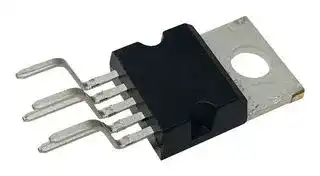


IRFI4020H-117PXKMA1
Dual MOSFET, N Channel, 200 V, 200 V, 9.1 A, 9.1 A, 0.08 ohm
- Manufacturer: INFINEON
- Product type: Dual MOSFETs
- SVHC: No SVHC (21-Jan-2025)
- No. of Pins: 5Pins
- Channel Type: N Channel
- Product Range: -
- Qualification: -
- Transistor Case Style: TO-220FP
- Operating Temperature Max: 150°C
- Power Dissipation N Channel: 21W
- Power Dissipation P Channel: 21W
- Drain Source Voltage Vds N Channel: 200V
- Drain Source Voltage Vds P Channel: 200V
- Continuous Drain Current Id N Channel: 9.1A
- Continuous Drain Current Id P Channel: 9.1A
- Drain Source On State Resistance N Channel: 0.08ohm
- Drain Source On State Resistance P Channel: 0.08ohm
| Delivery and price | |
|---|---|
| Units per pack | 1000 |
| Price | 1.15 € |
| Current stock | 10+ |
| Lead time | 30 days |

## IRFI4020H-117P

## **Features**

Integrated half-bridge package Reduces the part count by half Facilitates better PCB layout Key parameters optimized for Class-D audio amplifier applications Low RDS(ON) for improved efficiency Low Qg and Qsw for better THD and improved efficiency

Low Qrr for better THD and lower EMI Can delivery up to 300W per channel into 8Ω load in half-bridge configuration amplifier Lead-free package

|**Key Parameters**<br>~~>~~<br>~~|~~|**Key Parameters**<br>~~>~~<br>~~|~~|**Key Parameters**<br>~~>~~<br>~~|~~|**Key Parameters**<br>~~>~~<br>~~|~~|**Key Parameters**<br>~~>~~<br>~~|~~|
|---|---|---|---|---|
||VDS|||200<br>V|
||RDS(ON)typ. @ 10V|||80<br>m<br>~~OT~~|
||Qgtyp.|||19<br>nC<br>~~es~~|
||Qswtyp.|||6.8<br>nC<br>~~ee~~|
||RG(int)typ.|||3.0<br>Ω<br>~~es~~|
||TJmax<br>~~:~~|~~:~~|~~:~~|150<br>°C<br>TO-220 Full-Pak 5 PIN<br>~~es:~~|
||**G1, G2**||**D1, D2**<br>**S1, S2**||
||Gate||Drain<br>Source||


## **Description**

This Digital Audio MosFET Half-Bridge is specifically designed for Class D audio amplifier applications. It consists of two power MosFET switches connected in half-bridge configuration. The latest process is used to achieve low on-resistance per silicon area. Furthermore, Gate charge, body-diode reverse recovery, and internal Gate resistance are optimized to improve key Class D audio amplifier performance factors such as efficiency, THD and EMI. These combine to make this Half-Bridge a highly efficient, robust and reliable device for Class D audio amplifier applications.

## ~~>~~ **Absolute Maximum Ratings**

|~~>~~|**Parameter**<br>~~>~~|**Max.**<br>~~>~~|**Units**<br>~~>~~|
|---|---|---|---|
|VDS|Drain-to-Source Voltage<br>~~a~~|200<br>~~a~~|V<br>~~a~~<br>~~ee~~|
|VGS|Gate-to-Source Voltage<br>~~a~~<br>~~a~~<br>~~es~~|±20<br>~~a~~<br>~~a~~<br>~~ee~~||
|ID@ TC= 25°C|Continuous Drain Current, VGS@ 10V<br>~~a~~<br>~~a~~<br>~~a~~<br>~~es~~|9.1<br>~~a~~<br>~~a~~<br>~~a~~<br>~~ee~~|A<br>~~a~~<br>~~ee~~|
|ID@ TC= 100°C|Continuous Drain Current, VGS@ 10V<br>~~a~~<br>~~es~~|5.7<br>~~a~~<br>~~ee~~||
|IDM<br>~~a~~|Pulsed Drain Current<br>~~es~~<br>~~a~~|36<br>~~ee~~||
|PD@TC= 25°C<br>~~a~~|Power Dissipation<br>~~es~~<br>~~a~~<br>~~a~~|21<br>~~ee~~<br>~~a~~|W<br>~~ee~~<br>~~I~~|
|PD@TC= 100°C<br>~~a~~|Power Dissipation<br>~~a~~|8.5<br>~~I~~||
|~~a~~|Linear DeratingFactor<br>~~a~~<br>~~I~~|0.17<br>~~I~~<br>~~I~~|W/°C<br>~~I~~<br>~~I~~|
|EAS|Single Pulse Avalanche Energy<br>~~I~~|130<br>~~I~~<br>~~I~~|mJ<br>~~I~~<br>~~I~~|
|TJ<br>TSTG|Operating Junction and<br>Storage Temperature Range|-55  to + 150|°C|
|~~>~~|Soldering Temperature, for 10 seconds<br>(1.6mm from case)<br>~~>~~|300<br>~~CC~~||
|~~>~~|Mountingtorque,6-32 or M3 screw<br>~~I~~<br>~~>~~|10lb n(1.1N m)<br>~~I~~<br>~~CC~~|~~I~~|


www.irf.com

1

08/22/06

## **Electrical Characteristics @ TJ = 25°C (unless otherwise specified)**

||**Parameter**|**Min.**|**Typ.**|**Max. **|**Units**|**Conditions**|
|---|---|---|---|---|---|---|
|BVDSS|Drain-to-Source Breakdown Voltage<br>~~a~~|200|–––<br>~~QO~~|–––<br>~~QO~~|V<br>~~QO~~|VGS= 0V, ID= 250µA|
|∆ΒVDSS/∆TJ|Breakdown Voltage Temp. Coefficient<br>~~es~~|–––<br>~~es~~|24<br>~~es~~<br>~~QO~~|–––<br>~~es~~<br>~~QO~~|mV/°C<br>~~es~~<br>~~QO~~|Reference to 25°C, ID= 1mA<br>~~es~~|
|RDS(on)|Static Drain-to-Source On-Resistance<br>~~ee~~|–––<br>~~ee~~|80<br>~~QO~~<br>~~ee~~|100<br>~~QO~~<br>~~ee~~|mΩ<br>~~QO~~<br>~~ee~~|VGS= 10V, ID= 5.5A<br>~~ee~~|
|VGS(th)|Gate Threshold Voltage<br>~~**e**~~|3.0<br>~~**e**~~|–––<br>~~**e**e~~|4.9<br>~~e~~|V<br>~~e~~|VDS= VGS, ID= 100µA<br>~~e~~|
|∆VGS(th)/∆TJ|Gate Threshold Voltage Coefficient<br>~~**e**~~<br>~~s~~|–––<br>~~**e**~~<br>~~s~~|-12<br>~~**e**e~~<br>~~s~~|–––<br>~~e~~<br>~~s~~|mV/°C<br>~~e~~<br>~~s~~||
|IDSS|Drain-to-Source Leakage Current<br>~~a~~|–––<br>~~a~~|–––<br>~~a~~|20<br>~~a~~|µA<br>~~a~~|VDS= 200V, VGS= 0V<br>~~a~~|
|||–––<br>~~a~~|–––<br>~~a~~<br>~~PT~~|250<br>~~a~~<br>~~PT~~||VDS= 200V, VGS= 0V, TJ= 125°C<br>~~a~~|
|IGSS|Gate-to-Source Forward Leakage<br>~~—————~~|–––<br>~~—————~~|–––<br>~~—————~~<br>~~a~~|100<br>~~—————~~|nA<br>~~—————~~<br>~~sO~~|VGS= 20V<br>~~—————~~|
||Gate-to-Source Reverse Leakage<br>~~—————~~|–––<br>~~—————~~<br>~~a~~<br>~~Gn~~|–––<br>~~—————~~<br>~~a~~<br>~~a~~<br>~~Gn~~|-100<br>~~—————~~<br>~~a~~<br>~~sO~~||VGS= -20V<br>~~—————~~|
|gfs|Forward Transconductance<br>~~es~~|11<br>~~es~~<br>~~Gn~~|–––<br>~~a~~<br>~~es~~<br>~~Gn~~|–––<br>~~es~~<br>~~sO~~|S<br>~~es~~<br>~~sO~~|VDS= 50V, ID= 5.5A<br>~~es~~|
|Qg|Total Gate Charge<br>~~es~~|–––<br>~~Gn~~<br>~~es~~<br>~~ee~~|19<br>~~Gn ~~<br>~~es~~|29<br> ~~sO~~<br>~~es~~|nC<br>~~sO~~|See Fig. 6 and 15<br>VGS= 10V<br>ID= 5.5A<br>VDS= 100V|
|Qgs1|Pre-Vth Gate-to-Source Charge<br>~~es~~|–––<br>~~es~~<br>~~ee~~|4.9<br>~~es~~|–––<br>~~es~~|||
|Qgs2|Post-Vth Gate-to-Source Charge<br>~~es~~|–––<br>~~ee~~<br>~~es~~<br>~~ee~~|0.95<br>~~es~~<br>~~ee~~|–––<br>~~es~~|||
|Qgd|Gate-to-Drain Charge<br>~~ee~~|–––<br>~~ee~~<br>~~ee~~|5.8<br>~~ee~~<br>~~ee~~|–––<br>~~ee~~|||
|Qgodr|Gate Charge Overdrive<br>~~ee~~|–––<br>~~ee ~~<br>~~ee~~<br>~~ee~~|7.4<br> ~~ee~~<br>~~ee~~<br>~~ee~~|–––<br>~~ee~~|||
|Qsw|Switch Charge (Qgs2+ Qgd)<br>~~ee~~|–––<br>~~ee~~<br>~~ee~~|6.8<br>~~ee~~<br>~~ee~~|–––<br>~~ee~~|||
|RG(int)|Internal Gate Resistance<br>~~eG~~<br>~~es~~|–––<br>~~ee ~~<br>~~eG~~<br>~~ee~~|3.0<br> ~~ee~~<br>~~eG~~<br>~~ee~~|–––<br>~~eG~~|Ω<br>~~eG~~|~~eG~~<br>@|
|td(on)|Turn-On DelayTime<br>~~eG~~<br>~~es~~|–––<br>~~eG~~<br>~~ee~~|8.4<br>~~eG~~<br>~~ee~~|–––<br>~~eG~~|ns<br>~~eG~~|RG= 2.4Ω<br>VDD= 100V, VGS= 10V<br>ID= 5.5A<br>~~eG~~<br>@|
|tr|Rise Time<br>~~es ~~<br>~~ee~~|–––<br> ~~ee ~~<br>~~ee~~<br>~~ee~~|8.0<br> ~~ee~~<br>~~ee~~<br>~~ee~~|–––<br>~~ee~~|||
|td(off)|Turn-Off DelayTime<br>~~ee~~|–––<br>~~ee~~<br>~~ee~~|18<br>~~ee~~<br>~~ee~~|–––<br>~~ee~~|||
|tf|Fall Time<br>~~ee~~|–––<br>~~ee ~~<br>~~ee~~<br>~~ee~~|4.0<br> ~~ee~~<br>~~ee~~<br>~~ee~~|–––<br>~~ee~~|||
|Ciss|Input Capacitance<br>~~ee~~<br>~~es~~|–––<br>~~ee~~<br>~~es~~<br>~~ee~~|1240<br>~~ee~~<br>~~es~~<br>~~ee~~|–––<br>~~ee~~<br>~~es~~|pF<br>~~44>~~|VGS= 0V<br>VDS= 25V<br>ƒ= 1.0MHz,          See Fig.5|
|Coss|Output Capacitance<br>~~ee~~|–––<br>~~ee ~~<br>~~ee~~<br>~~ee~~|130<br> ~~ee~~<br>~~ee~~<br>~~ee~~|–––<br>~~ee~~|||
|Crss|Reverse Transfer Capacitance<br>~~ee~~|–––<br>~~ee~~<br>~~ee~~|28<br>~~ee~~<br>~~ee~~|–––<br>~~ee~~|||
|Cosseff.|Effective Output Capacitance<br>~~ee~~<br>~~——+~~|–––<br>~~ee ~~<br>~~ee~~<br>~~——+~~|110<br> ~~ee~~<br>~~ee~~<br>~~44>~~|–––<br>~~ee~~<br>~~44>~~||VGS= 0V, VDS= 0V to 160V<br>~~44>~~<br>~~8~~|
|LD|Internal Drain Inductance<br>~~——+~~|–––<br>~~——+~~|4.5<br>~~44>~~|–––<br>~~44>~~|nH<br>~~44>~~|S<br>D<br>G<br>Between  lead,<br>6mm (0.25in.)<br>from package<br>and center of die contact<br>~~44>~~<br>~~8~~|
|LS|Internal Source Inductance<br>~~——+~~|–––<br>~~——+~~|7.5<br>~~44>~~|–––<br>~~44>~~|||


Repetitive rating;  pulse width limited by max. junction temperature.

> Starting TJ = 25°C, L = 8.6mH, RG = 25Ω, IAS = 5.5A.

> Pulse width ≤ 400µs; duty cycle ≤ 2%.

> Rθ is measured at

> Specifications refer to single MosFET.

www.irf.com

2

**==> picture [211 x 201] intentionally omitted <==**

**----- Start of picture text -----**<br>
100<br>VGS<br>TOP           15V<br>12V<br>10V<br>9.0V<br>8.0V<br>7.0V<br>aT<br>BOTTOM 6.0V<br>AC<br>10<br>6.0V<br>Y AAA PP<br>≤60µs PULSE WIDTH<br>Tj = 25°C<br>1 7 Hii<br>0.1 1 10 100<br>VDS, Drain-to-Source Voltage (V)<br>ID, Drain-to-Source Current (A)<br>**----- End of picture text -----**<br>


**Fig 1.** Typical Output Characteristics

**==> picture [204 x 184] intentionally omitted <==**

**----- Start of picture text -----**<br>
100<br>— VDS = 50V ————<br>≤60µs PULSE WIDTH<br>a<br>T = 150°C<br>10 J<br>4 an<br>Ee ey ey Ae<br>T = 25°C<br>J<br>1 A ae<br>| Ee ey ee ey es ee<br>0.1 ee ee ee<br>3 4 5 6 7<br>ID, Drain-to-Source Current (A)<br>**----- End of picture text -----**<br>


**==> picture [120 x 10] intentionally omitted <==**

**----- Start of picture text -----**<br>
VGS, Gate-to-Source Voltage (V)<br>**----- End of picture text -----**<br>


**Fig 3.** Typical Transfer Characteristics

**==> picture [218 x 201] intentionally omitted <==**

**----- Start of picture text -----**<br>
10000<br>VGS   = 0V,       f = 1 MHZ<br>Ciss   = C gs + Cgd,  C ds SHORTED<br>C  = C<br>rss   gd<br>Coss   = Cds + Cgd<br>1000 a Ciss<br>z i<br>B N<br>Coss<br>100 S OTA LUTTE TTT<br>P SST SUITE Th<br>10 EeT E Crss CIEtl CET|<br>1 10 100 1000<br>VDS, Drain-to-Source Voltage (V)<br>C, Capacitance (pF)<br>**----- End of picture text -----**<br>


**Fig 5.** Typical Capacitance vs.Drain-to-Source Voltage

**==> picture [222 x 431] intentionally omitted <==**

**----- Start of picture text -----**<br>
100<br>VGS<br>TOP           15V<br>12V<br>10V<br>9.0V<br>8.0V 6.0V<br>7.0V<br>10 B OTTOM 6.0V Sr a<br>ya<br>1<br>7 Ht<br>≤60µs PULSE WIDTH<br>Tj = 150°C<br>0.1 u ll anil<br>0.1 1 10 100<br>VDS, Drain-to-Source Voltage (V)<br>Fig 2.   Typical Output Characteristics<br>3.0<br>ID = 5.5A Pt tt<br>V = 10V<br>2.5 GS  Pte te tT<br>tt<br>2.0 A REA<br>1.5 VA<br>1.0 E AE<br>0.5 P a | PT<br>0.0 E EE EEE<br>-60 -40 -20 0 20 40 60 80 100 120 140 160<br>TJ , Junction Temperature (°C)<br>ID, Drain-to-Source Current (A)<br>RDS(on) , Drain-to-Source On Resistance                        (Normalized)<br>**----- End of picture text -----**<br>


**Fig 4.** Normalized On-Resistance vs. Temperature

**==> picture [212 x 201] intentionally omitted <==**

**----- Start of picture text -----**<br>
12.0<br>ID= 5.5A<br>10.0<br>VDS= 160V<br>VDS= 100V<br>8.0 = VDS= 40V Vi<br>Yi<br>V/<br>6.0<br>4.0 e n<br>J<br>2.00.0 ZY) | fof.<br>0 5 10 15 20 25<br> QG,  Total Gate Charge (nC)<br>VGS, Gate-to-Source Voltage (V)<br>**----- End of picture text -----**<br>


**Fig 6.** Typical Gate Charge vs.Gate-to-Source Voltage

www.irf.com

3

**==> picture [215 x 426] intentionally omitted <==**

**----- Start of picture text -----**<br>
100<br>TJ = 150°C<br>10<br>TJ = 25°C<br>1<br>0.1 a a VGS = 0V<br>0.2 0.4 0.6 0.8 1.0 1.2<br>VSD, Source-to-Drain Voltage (V)<br>Fig 7.   Typical Source-Drain Diode Forward Voltage<br>10<br>Ta _T<br>8<br>e e ee<br>6 N o<br>4 f f oN<br>+ --+<br>2 e e ee ee<br>P F<br>PEN<br>0 EN<br>25 50 75 100 125 150<br> TJ , Junction Temperature (°C)<br>ISD, Reverse Drain Current (A)<br>ID,  Drain Current (A)<br>**----- End of picture text -----**<br>


**Fig 7.** Typical Source-Drain Diode Forward Voltage

**Fig 9.** Maximum Drain Current vs. Junction Temperature

**==> picture [218 x 426] intentionally omitted <==**

**----- Start of picture text -----**<br>
1000<br>OPERATION IN THIS AREA<br>100 LIMITED BY R DS(on)<br>10<br>1 100µsec<br>0.1<br>1msec<br>0.01<br>10msec<br>Tc = 25°C<br>0.001 Tj = 150°C DC<br>0.0001 Single Pulse ee ameiiiinms mamaria<br>1 10 100 1000<br>VDS, Drain-to-Source Voltage (V)<br>Fig 8.   Maximum Safe Operating Area<br>5.0<br>4.5 E NSREEEEE<br>4.0 P y NL Ey<br>IN<br>ID = 100µA<br>3.5<br>li NILE—<br>3.0<br>T TT TINE<br>S ERN<br>2.5<br>\<br>2.0 TELL LEER<br>-75 -50 -25 0 25 50 75 100 125 150<br>TJ , Temperature ( °C )<br>ID,  Drain-to-Source Current (A)<br>VGS(th), Gate Threshold Voltage (V)<br>**----- End of picture text -----**<br>


**Fig 10.** Threshold Voltage vs. Temperature

**==> picture [441 x 205] intentionally omitted <==**

**----- Start of picture text -----**<br>
10<br>D = 0.50<br>0.20<br>1<br>0.10<br>0.05<br>Pp 0.02 Co At | fT R1 R1 R2 R2 R3R3 Ri (°C/W)    LAM  τi (sec)<br>0.1 0.01 τJ τJ τCτ 1.108       0.001041<br>τ1τ1 τ2 τ2 τ3τ3 2.172       0.148518<br>Ci= τi/Ri 2.621       2.010100<br>0.01 Ci i/Ri<br>SINGLE PULSE<br>( THERMAL RESPONSE ) Notes:<br>1. Duty Factor D = t1/t2<br>0.001 Pa en ee 2. Peak Tj = P dm x Zthjc + Tc lil<br>1E-006 1E-005 0.0001 0.001 0.01 0.1 1 10 100<br>t1 , Rectangular Pulse Duration (sec)<br>Thermal Response ( Z thJC )<br>**----- End of picture text -----**<br>


**Fig 11.** Maximum Effective Transient Thermal Impedance, Junction-to-Case

www.irf.com

4

**==> picture [205 x 183] intentionally omitted <==**

**----- Start of picture text -----**<br>
300<br>275 I D  = 5.5A<br>TEE 1<br>250<br>225<br>200 a T J  = 125°C<br>175<br>150<br>See<br>|<br>125<br>T = 25°C<br>100 J<br>75 SEES<br>50 ee<br>5 6 7 8 9 10<br>) Ω<br>RDS(on),  Drain-to -Source On Resistance (m<br>**----- End of picture text -----**<br>


VGS, Gate -to -Source Voltage  (V)

**Fig 12.** On-Resistance vs. Gate Voltage

**==> picture [150 x 98] intentionally omitted <==**

**----- Start of picture text -----**<br>
15V<br>VDS L DRIVER<br>RG D.U.T +<br>- [V][DD]<br>IAS<br>20VVGS<br>: tt tp 0.01Ω<br>**----- End of picture text -----**<br>


**Fig 13b.** Unclamped Inductive Test Circuit

**==> picture [135 x 108] intentionally omitted <==**

**----- Start of picture text -----**<br>
LD<br>VDS<br>oo<br>+<br>VDD -<br>D.U.T<br>VGS<br>a Pulse Width < 1µs<br>Duty Factor < 0.1%<br>**----- End of picture text -----**<br>


**Fig 14a.** Switching Time Test Circuit

**==> picture [186 x 42] intentionally omitted <==**

**----- Start of picture text -----**<br>
L<br>VCC<br>DUT<br>0<br>1K<br>**----- End of picture text -----**<br>


**Fig 15a.** Gate Charge Test Circuit

**==> picture [210 x 201] intentionally omitted <==**

**----- Start of picture text -----**<br>
600<br>ID<br>TOP         0.91A<br>500 i t<br>1.1A<br>BOTTOM 5.5A<br>400<br>N EaE<br>300<br>A t<br>200 I N<br>100<br>S o<br>|| CSS<br>0<br>25 50 75 100 125 150<br>Starting TJ , Junction Temperature (°C)<br>EAS , Single Pulse Avalanche Energy (mJ)<br>**----- End of picture text -----**<br>


**Fig 13a.** Maximum Avalanche Energy vs. Drain Current

**==> picture [172 x 257] intentionally omitted <==**

**----- Start of picture text -----**<br>
V(BR)DSS<br><< tp ><br>/<br>/ \<br>/<br>IAS<br>Fig 13c.   Unclamped Inductive Waveforms<br>V<br>DS<br>90% —<br>10%<br>V<br>GS<br>oe<br>td(on) tr td(off) tf<br>**----- End of picture text -----**<br>


**Fig 13c.** Unclamped Inductive Waveforms

**Fig 14b.** Switching Time Waveforms

**==> picture [162 x 132] intentionally omitted <==**

**----- Start of picture text -----**<br>
Id<br>Vds<br>Vgs<br>Vgs(th)<br>Qgs1 Qgs2 Qgd Qgodr<br>**----- End of picture text -----**<br>


**Fig 15b** Gate Charge Waveform

www.irf.com

5

TO-220 Full-Pak 5-Pin Package Outline, Lead-Form Option 117 (Dimensions are shown in millimeters (inches))

## TO-220 Full-Pak 5-Pin Part Marking Information

Data and specifications subject to change without notice. This product has been designed  for the Consumer market. Qualification Standards can be found on IR’s Web site.

**IR WORLD HEADQUARTERS:** 233 Kansas St., El Segundo, California 90245, USA Tel: (310) 252-7105 TAC Fax: (310) 252-7903 Visit us at www.irf.com for sales contact information **.** 08/2006

www.irf.com

6

Note:  For the most current drawings please refer to the IR website at: http://www.irf.com/package/
Updated at June 9, 2026
Infineon Technologies is a globally recognized leader in semiconductor solutions, renowned for driving innovation in power management, energy efficiency, and modern mobility. With a strong legacy of engineering excellence, the company provides highly reliable components designed to meet the rigorous demands of industrial, automotive, and advanced commercial applications. The core of our Infineon portfolio is centered on their industry-leading discrete semiconductors. We offer an extensive selection of single and dual MOSFETs, alongside a robust range of single IGBTs and advanced IGBT modules. These flagship power transistors are essential for high-efficiency power conversion and motor control, providing engineers with superior thermal performance and minimized switching losses. Beyond advanced field-effect transistors, the selection includes a comprehensive array of diodes and rectifiers, heavily featuring Schottky diodes, as well as fast-recovery and RF/PIN diodes. This power foundation is further supported by bipolar transistors, intelligent power modules, and thyristor SCR modules, delivering the critical building blocks required for complex power system designs. To support broader system integration, the portfolio also encompasses specialized solutions such as solid-state relays, AC/DC LED driver ICs, and Bluetooth communications modules. From high-power industrial rectifiers to wireless connectivity adapters, Infineon equips designers with the precision components needed to build efficient, scalable, and fully connected electronic systems.
About Novapart
Novapart is a B2B electronic component broker specialising in stock shortages and cost reduction. We source hard-to-find parts and identify compliant alternatives across a catalogue of 410,000+ components from 500+ manufacturers.
Learn more →Stock Shortage Specialist
When a component is unavailable, discontinued or has an unacceptable lead time, we tap into our network of vetted European and Asian distributors to source what you need — without compromising on quality or traceability.
Request a quote →Compliant Alternatives
We identify pin-to-pin, electrically equivalent substitutes that meet the same certifications (RoHS, AEC-Q100, REACH) as your original specification — validated against datasheets, not just part numbers. Often at a lower cost.
BOM Analysis service →