
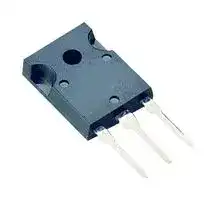


IKW50N65WR5XKSA1
IGBT, 80 A, 1.4 V, 282 W, 650 V, TO-247, 3 Pins
- Manufacturer: INFINEON
- Product type: Single IGBTs
- SVHC: No SVHC (25-Jun-2025)
- No. of Pins: 3Pins
- Product Range: TRENCHSTOP 5
- Power Dissipation: 282W
- Transistor Mounting: Through Hole
- Transistor Case Style: TO-247
- Operating Temperature Max: 175°C
- Continuous Collector Current: 80A
- Collector Emitter Voltage Max: 650V
- Collector Emitter Saturation Voltage: 1.4V
| Delivery and price | |
|---|---|
| Units per pack | 1000 |
| Price | 1.18 € |
| Current stock | 200+ |
| Lead time | 30 days |

# IKW50N65WR5

IKW50N65WR5

**==> picture [469 x 254] intentionally omitted <==**

**----- Start of picture text -----**<br>
Features: C<br>¢ Powerful monolithic diode optimized for ZCS applications<br>* TRENCHSTOP_ 5 technology applications offers:<br>- high ruggedness, temperature stable behavior<br>- very low V CEsat and low E off<br>G<br>- easy parallel switching capability due to positive<br>E<br>temperature coefficient in V CEsat<br>« Low EMI<br>¢ Low electrical parameters depending (dependence) on<br>temperature<br>* Qualified according to JESD-022 for target applications =<br>¢ Pb-free lead plating; ROHS compliant fale<br>« Complete product spectrum and PSpice Models: ro heap<br>http://www.infineon.com/igbt/<br>Applications:<br>y<br>* Welding<br>* PFC<br>¢ ZCS - converters<br>G<br>C<br>E<br>**----- End of picture text -----**<br>


|**Type**|**_V_CE**|**_I_C**|**_V_CEsat** **_T_vj=25°C**|**_T_vjmax**|**Marking**|**Package**|
|---|---|---|---|---|---|---|
|IKW50N65WR5|650V|50A|1.4V|175°C|K50EWR5|PG-TO247-3|


2

IKW50N65WR5

**==> picture [146 x 65] intentionally omitted <==**

## Reverse�Conducting�Series

## **Table�of�Contents**

Description   . . . . . . . . . . . . . . . . . . . . . . . . . . . . . . . . . . . . . . . . . . . . . . . . . . . . . . . . . . . . . . . . . . . . . . . . 2 Table of Contents   . . . . . . . . . . . . . . . . . . . . . . . . . . . . . . . . . . . . . . . . . . . . . . . . . . . . . . . . . . . . . . . . . . . 3 Maximum Ratings  . . . . . . . . . . . . . . . . . . . . . . . . . . . . . . . . . . . . . . . . . . . . . . . . . . . . . . . . . . . . . . . . . . . 4 Thermal Resistance   . . . . . . . . . . . . . . . . . . . . . . . . . . . . . . . . . . . . . . . . . . . . . . . . . . . . . . . . . . . . . . . . . 4 Electrical Characteristics  . . . . . . . . . . . . . . . . . . . . . . . . . . . . . . . . . . . . . . . . . . . . . . . . . . . . . . . . . . . . . . 5 Electrical Characteristics Diagrams   . . . . . . . . . . . . . . . . . . . . . . . . . . . . . . . . . . . . . . . . . . . . . . . . . . . . . 7 Package Drawing   . . . . . . . . . . . . . . . . . . . . . . . . . . . . . . . . . . . . . . . . . . . . . . . . . . . . . . . . . . . . . . . . . . .13 Testing Conditions   . . . . . . . . . . . . . . . . . . . . . . . . . . . . . . . . . . . . . . . . . . . . . . . . . . . . . . . . . . . . . . . . . .14 Revision History   . . . . . . . . . . . . . . . . . . . . . . . . . . . . . . . . . . . . . . . . . . . . . . . . . . . . . . . . . . . . . . . . . . . .15 Disclaimer  . . . . . . . . . . . . . . . . . . . . . . . . . . . . . . . . . . . . . . . . . . . . . . . . . . . . . . . . . . . . . . . . . . . . . . . . .15

3

Rev.�2.1,��2015-12-10

IKW50N65WR5

Reverse�Conducting�Series

**==> picture [146 x 65] intentionally omitted <==**

## **Maximum�Ratings**

**For�optimum�lifetime�and�reliability,�Infineon�recommends�operating�conditions�that�do�not�exceed�80%�of�the�maximum�ratings�stated�in�this�datasheet.**

|**Parameter**|**Symbol**||**Value**|**Unit**|
|---|---|---|---|---|
|Collector-emittervoltage,_T_vj≥25°C|_V_CE||650|V|
|DCcollectorcurrent,limitedby_T_vjmax<br>_T_C=25°Cvaluelimitedbybondwire<br>_T_C=130°C|_I_C||80.0<br>50.0|A|
|Pulsedcollectorcurrent,_t_plimitedby_T_vjmax|_I_Cpuls||150.0|A|
|Turn off safe operating area<br>_V_CE≤650V,_T_vj≤175°C,_t_p=1µs|-||150.0|A|
|Diodeforwardcurrent,limitedby_T_vjmax<br>_T_C=25°Cvaluelimitedbybondwire<br>_T_C=100°C|_I_F||37.0<br>22.0|A|
|Diodepulsedcurrent,_t_plimitedby_T_vjmax|_I_Fpuls||150.0|A|
|Gate-emitter voltage|_V_GE||±20|V|
|Powerdissipation_T_C=25°C<br>Powerdissipation_T_C=130°C|_P_tot||282.0<br>141.0|W|
|Operating junction temperature|_T_vj|-40...+175||°C|
|Storage temperature|_T_stg|-55...+150||°C|
|Soldering temperature,<br>wave soldering1.6mm(0.063in.)from case for 10s|||260|°C|
|Mounting torque, M3 screw<br>Maximum of mounting processes: 3|_M_||0.6|Nm|


## **Thermal�Resistance**

|**ThermalResistance**||||||
|---|---|---|---|---|---|
|**Parameter**|**Symbol **|**Conditions**|**Max.Value**||**Unit**|
|**Characteristic**||||||
|IGBT thermal resistance,<br>junction - case|_R_th(j-c)|||0.53|K/W|
|Diode thermal resistance,<br>junction - case|_R_th(j-c)|||2.29|K/W|
|Thermal resistance<br>junction - ambient|_R_th(j-a)|||40|K/W|


Rev.�2.1,��2015-12-10

4

IKW50N65WR5

**==> picture [146 x 65] intentionally omitted <==**

## Reverse�Conducting�Series

## **Electrical�Characteristic,�at�** _**T**_ **vj�=�25°C,�unless�otherwise�specified**

|**Parameter**|**Symbol **|**Conditions**||**Value**||**Unit**|
|---|---|---|---|---|---|---|
||||**min.**|**typ.**|**max.**||
|**StaticCharacteristic**|||||||
|Collector-emitter breakdown voltage|_V_(BR)CES|_V_GE=0V,_I_C=0.20mA|650|-|-|V|
|Collector-emitter saturation voltage|_V_CEsat|_V_GE=15.0V,_I_C=50.0A<br>_T_vj=25°C<br>_T_vj=175°C|-<br>-|1.40<br>1.65|1.80<br>-|V|
|Diode forward voltage|_V_F|_V_GE=0V,_I_F=25.0A<br>_T_vj=25°C<br>_T_vj=175°C|-<br>-|1.40<br>1.50|1.90<br>-|V|
|Gate-emitter threshold voltage|_V_GE(th)|_I_C=0.50mA,_V_CE=_V_GE|3.2|4.0|4.8|V|
|Zero gate voltage collector current|_I_CES|_V_CE=650V,_V_GE=0V<br>_T_vj=25°C<br>_T_vj=175°C|-<br>-|-<br>-|40<br>-|µA|
|Gate-emitter leakage current|_I_GES|_V_CE=0V,_V_GE=20V|-|-|100|nA|
|Transconductance|_g_fs|_V_CE=20V,_I_C=50.0A|-|65.0|-|S|
|Integratedgate resistor|_r_G|||none||Ω|


## **Electrical�Characteristic,�at�** _**T**_ **vj�=�25°C,�unless�otherwise�specified**

|**Parameter**|**Symbol **|**Conditions**||**Value**||**Unit**|
|---|---|---|---|---|---|---|
||||**min.**|**typ.**|**max.**||
|**DynamicCharacteristic**|||||||
|Input capacitance|_C_ies|_V_CE=25V,_V_GE=0V,f=1MHz|-|6140|-|pF|
|Output capacitance|_C_oes||-|55|-||
|Reverse transfer capacitance|_C_res||-|23|-||
|Gate charge|_Q_G|_V_CC=520V,_I_C=50.0A,<br>_V_GE=15V|-|230.0|-|nC|
|Internal emitter inductance<br>measured 5mm (0.197 in.) from<br>case|_L_E||-|13.0|-|nH|


## **Switching�Characteristic,�Inductive�Load**

|**Parameter**|**Symbol **|**Conditions**||**Value**||**Unit**|
|---|---|---|---|---|---|---|
||||**min.**|**typ.**|**max.**||
|**IGBTCharacteristic,at****_T_vj=25°C**|||||||
|Turn-on delaytime|_t_d(on)|_T_vj=25°C,<br>_V_CC=400V,_I_C=25.0A,<br>_V_GE=0.0/15.0V,<br>_R_G(on)=16.0Ω,_R_G(off)=16.0Ω,<br>_L_σ=45nH,_C_σ=32pF<br>_L_σ,_C_σfromFig.E<br>Energy losses include “tail” and<br>diode reverse recovery.|-|45|-|ns|
|Rise time|_t_r||-|17|-|ns|
|Turn-off delaytime|_t_d(off)||-|417|-|ns|
|Fall time|_t_f||-|16|-|ns|
|Turn-on energy|_E_on||-|0.84|-|mJ|
|Turn-off energy|_E_off||-|0.22|-|mJ|
|Total switchingenergy|_E_ts||-|1.06|-|mJ|


Rev.�2.1,��2015-12-10

5

IKW50N65WR5

**==> picture [146 x 65] intentionally omitted <==**

## Reverse�Conducting�Series

## **Diode�Characteristic,�at�** _**T**_ **vj�=�25°C**

|**DiodeCharacteristic,at****_T_vj=25°C**|||||||
|---|---|---|---|---|---|---|
|Diode reverse recoverytime|_t_rr|_T_vj=25°C,<br>_V_R=400V,<br>_I_F=25.0A,<br>_di_F_/dt_=900A/µs|-|110|-|ns|
|Diode reverse recoverycharge|_Q_rr||-|1.80|-|µC|
|Diodepeak reverse recoverycurrent|_I_rrm||-|29.0|-|A|
|Diode peak rate of fall of reverse<br>recoverycurrentduring_t_b|_di_rr_/dt_||-|-600|-|A/µs|


## **Switching�Characteristic,�Inductive�Load**

|**Parameter**|**Symbol **|**Conditions**||**Value**||**Unit**|
|---|---|---|---|---|---|---|
||||**min.**|**typ.**|**max.**||
|**IGBTCharacteristic,at****_T_vj=175°C**|||||||
|Turn-on delaytime|_t_d(on)|_T_vj=175°C,<br>_V_CC=400V,_I_C=25.0A,<br>_V_GE=0.0/15.0V,<br>_R_G(on)=16.0Ω,_R_G(off)=16.0Ω,<br>_L_σ=45nH,_C_σ=32pF<br>_L_σ,_C_σfromFig.E<br>Energy losses include “tail” and<br>diode reverse recovery.|-|43|-|ns|
|Rise time|_t_r||-|19|-|ns|
|Turn-off delaytime|_t_d(off)||-|496|-|ns|
|Fall time|_t_f||-|11|-|ns|
|Turn-on energy|_E_on||-|1.04|-|mJ|
|Turn-off energy|_E_off||-|0.32|-|mJ|
|Total switchingenergy|_E_ts||-|1.36|-|mJ|


**Diode�Characteristic,�at�** _**T**_ **vj�=�175°C**

|Diode reverse recoverytime|_t_rr|_T_vj=175°C,<br>_V_R=400V,<br>_I_F=25.0A,<br>_di_F_/dt_=900A/µs|-|145|-|ns|
|---|---|---|---|---|---|---|
|Diode reverse recoverycharge|_Q_rr||-|3.50|-|µC|
|Diodepeak reverse recoverycurrent|_I_rrm||-|39.0|-|A|
|Diode peak rate of fall of reverse<br>recoverycurrentduring_t_b|_di_rr_/dt_||-|-1200|-|A/µs|


6

Rev.�2.1,��2015-12-10

IKW50N65WR5

**==> picture [474 x 302] intentionally omitted <==**

**----- Start of picture text -----**<br>
100 P) ieeeHl 280<br>| 240<br>not for linear use<br>— Fle ay \<br>200<br>= | PU T T TTT = \<br>10<br>COMIC Zz 160 FT<br>xaa2<br>o<br>120<br>2 ell 0 \<br>¢ 1 a ee ll in \<br>80<br>CE Comer é | | |NT<br>e CMe ll 40 Pf6 |Pt|CNIN\<br>0.1 0<br>1 10 100 1000 25 50 75 100 125 150 175<br>V CE , COLLECTOR-EMITTER VOLTAGE [V] T C , CASE TEMPERATURE [°C]<br>Figure 1. Forward bias safe operating area Figure 2. Power dissipation as a function of case<br>( D =0, T C =25°C, T vj 175°C, V GE =15V, t p=1µs) temperature<br>I C P tot<br>**----- End of picture text -----**<br>


> Figure 2. Power **temperature** ( _T_ vj ≤ 175°C)

**==> picture [472 x 312] intentionally omitted <==**

**----- Start of picture text -----**<br>
90 150<br>VGE = 20V<br>140<br>80 To) Ere 17V<br>130<br>\ | oo<br>15V<br>120<br>70 P N ee<br>110 13V<br>ef 60 N e 100 11V eae<br>: e | ede<br>90 9V<br>Pp NC eee<br>50<br>3 =e 80 ee 8V ee ||<br>40 ) 70 7V<br>s | i\ ys Foes<br>60<br>6V<br>eee Seese: ace<br>Z| 30 \ af 50 ffs<br>® 40 EEPSgeeee<br>A |<br>20<br>30<br>ee 20 ee) See<br>10<br>I<br>10<br>max. current limited by bondwire<br>ExT eeeiAn A e<br>0 0<br>——— | EAP<br>25 50 75 100 125 150 175 0.0 0.3 0.6 0.9 1.2 1.5 1.8 2.1 2.4 2.7 3.0<br>T C , CASE TEMPERATURE [°C] V CE , COLLECTOR-EMITTER VOLTAGE [V]<br>Figure 3. Collector current as a function of case Figure 4. Typical output characteristic<br>temperature ( T vj=25°C)<br>( V GE ≥ 15V, T vj ≤ 175°C)<br>I C I C<br>**----- End of picture text -----**<br>


7

IKW50N65WR5

**==> picture [474 x 623] intentionally omitted <==**

**----- Start of picture text -----**<br>
150 150<br>VGE = 20V 140 T vj<br>135 17V Die | —-es T vj =<br>130<br>15V<br>120 120<br>z 13V SSS. 110 F R ESH<br>105<br>:é 11V HEAHN AN 2 100 Ea<br>90 9V Mi 90<br>é yy, | 3oe<br>8V 80<br>e/a eee<br>75<br>7V 70<br>: Sy e fff<br>60 60<br>6V<br>Sane Geet 50 feeeeer<br>45 5V<br>EWSans S==t o ce<br>40<br>PN Jann Si<br>30 30<br>Ze eeee<br>20<br>15<br>POJN A EEE<br>10<br>| Afoi NTRO<br>0 0<br>0.0 0.5 1.0 1.5 2.0 2.5 3.0 3.5 0 1 2 3 4 5 6 7 8<br>V CE , COLLECTOR-EMITTER VOLTAGE [V] V GE , GATE-EMITTER VOLTAGE [V]<br>Figure 5. Typical output characteristic Figure 6. Typical transfer characteristic<br>( T vj=175°C) ( V CE=20V)<br>2.00 Lt 1000 a Seee<br>IC = 5A<br>IC = 10A<br>Ss= 1.75 IC = 25A a seee<br>ee e eee td(off) eeeeee<br>1.50<br>tf<br>td(on)<br>100 tr<br>p p s E EL<br>1.25<br>S SS S<br>o = a ee ee<br>an 1.00<br>0.75<br>oe eee<br>© = 10 ee ee ee ee<br>4 n a ee<br>e) 0.50 a a<br>i  ——— 0.25<br>0.00 1<br>0 PP 25  it 50 75 100 125 Ty 150 175 0 CE 20 40 60 80 100<br>T vj , JUNCTION TEMPERATURE [°C] I C , COLLECTOR CURRENT [A]<br>I C I C<br>t<br>CEsat<br>V<br>**----- End of picture text -----**<br>


Figure 7. Typical a function ( _V_ GE=15V)

Figure 8.

(inductive load, _T_ vj =175°C, _V_ CE=400V, _V_ GE =0/15V, _R_ G(on)=16 Ω , _R_ G(off)=16 Ω , test circuit in Figure E)

8

IKW50N65WR5

**==> picture [474 x 620] intentionally omitted <==**

**----- Start of picture text -----**<br>
td(off) td(off)<br>tf 1000 tf<br>E td(on) PS F td(on) EL<br>1000<br>H tr 1 tr a a<br>— [a]<br>a a a — — ———————<br>a a ee ee es<br>A a a CO<br>op) op)<br>100<br>i 100  ———_—————<br>- |<br>9 oea ee PP ee |}a ees eens ees ee<br>z I ora ee Lovo ccnavafeccsecsene fpeveveeeeecfoseeeeoeedpereseseseefereseseen<br>a es=<br>n_n<br>10<br>10<br>a ee0<br>aa ee ee ee es<br>1 1<br>10 20 30 40 50 60 70 80 25 50 75 100 125 150 175<br>R G , GATE RESISTANCE [ Ω ] T vj , JUNCTION TEMPERATURE [°C]<br>Figure 9. Typical switching times as a function of gate Figure 10. Typical switching times as a function of<br>resistance junction temperature<br>(inductive load, T vj =175°C, V CE=400V, (inductive load, V CE =400V, V GE=0/15V,<br>V GE =150/V, I C =50A, dynamic test circuit in I C =50A, R G(on)=16 Ω , R G(off)=16 Ω , dynamic<br>Figure E) test circuit in Figure E)<br>6.0 8.00<br>typ. Eoff<br>5.5 min. 7.20 Eon<br>max. Ets<br>- EI LLLL) FLLLL<br>Ww /<br>ye 5.0 fe 6.40 Ee<br>F ae . = /<br>4.5 5.60<br>a SSL 7)<br>a ~~ 2) 7<br>fe)= 4.0 [| [-——_|] >> ~ io}a 4.80 f‘<br>I 3.5 4.00<br>e<br>~~<br>i 3.0 foe Le 3.20<br>E | ~~ hw oS)= a a 7 4<br>Se 2.5 ee ee 2.40 eeeee<br>ui = F 2 4<br>Ww ~N = / Z<br>= ~ a 7 a<br>& 2.0 ~N . 1.60 oo AZ 2<br>ie ee<br>1.5 ee 0.80 “Oy a i> ma<br>i elLo<br>1.0 0.00<br>0 25 50 75 100 125 150 0 20 40 60 80 100<br>T vj , JUNCTION TEMPERATURE [°C] I C , COLLECTOR CURRENT [A]<br>t t<br>E<br>GE(th)<br>V<br>**----- End of picture text -----**<br>


Figure 11. Gate-emitter of junction ( _I_ C=0.5mA)

Figure 12.

(inductive load, _T_ vj =175°C, _V_ CE=400V, _V_ GE =0/15V, _R_ G(on)=16 Ω , _R_ G(off)=16 Ω , dynamic test circuit in Figu

9

IKW50N65WR5

**==> picture [474 x 276] intentionally omitted <==**

**----- Start of picture text -----**<br>
7 3.5<br>Eoff Eoff<br>Eon Eon<br>Ets Ets<br>6 3.0<br>o 5 | | | de og 2.5<br>GB fo |<br>ee> 4 ee> 2.0 |— — --<br>O “7 O ee eee ee<br>cn 3 a ed 1.5<br>2SE 2 | [pea] [Tt| | ||] 82 1.0<br>* ptelL E Et<br>1 Pop TT 0.5 oeee<br>0 0.0<br>10 20 30 40 50 60 70 80 25 50 75 100 125 150 175<br>R G , GATE RESISTANCE [ Ω ] T vj , JUNCTION TEMPERATURE [°C]<br>E E<br>**----- End of picture text -----**<br>


Figure 13.

**==> picture [151 x 28] intentionally omitted <==**

**----- Start of picture text -----**<br>
(inductive load, T vj =175°C, V CE=400V,<br>V GE =0/15V, I C =50A, dynamic test<br>Figure E)<br>**----- End of picture text -----**<br>


Figure 14.

(inductive load, _V_ CE =400V, _V_ GE=0/15V, _I_ C =50A, _R_ G(on)=16 Ω , _R_ G(off)=16 Ω , test circuit in Figure E)

**==> picture [471 x 275] intentionally omitted <==**

**----- Start of picture text -----**<br>
20 1E+4<br>V CC<br>V CC<br>18 [=_- —_—_= a 520V ) | fF a ===> A aee eeee<br>YZ ee ee ee<br>a 0 a De<br>16<br>Cies<br>4 Coes<br>14 Cres<br>eT) A E R<br>1000<br>< | a<br>_ pf a {_ |<br>ro) 12 — p y<br>> WwO a eea a a<br>10<br>WWG80 J, 480080 e 6 Fecos--s--s=<br>e COA Ree<br>8<br>= - ‘ ™N<br>100<br>PT A ® AN<br>3 6 4 S————<br>Tf 4 | ) BSE SSS<br>2 2 a ee ee<br>0 10<br>0 50 100 150 200 250 300 350 0 3 6 9 12 15 18 21 24 27 30<br>Q G , GATE CHARGE [nC] V CE , COLLECTOR-EMITTER VOLTAGE [V]<br>C<br>GE<br>V<br>**----- End of picture text -----**<br>


Figure 15. Typical ( _I_ C=50A)

Figure 16.

( _V_ GE

10

IKW50N65WR5

**==> picture [481 x 260] intentionally omitted <==**

**----- Start of picture text -----**<br>
_= eneCUCUY ae = Tae \A<br>= i ee TLRR D = 0.5 Tl iT)§ 1 or AT D = 0.5 |<br>iWS if BoE eSOZ<br>0.2 0.2<br>S TI eg S I<br>0.1 0.1<br>uw Wis 5 PEbee ep TTT ET<br>0.05 0.05<br>2 Wa ig in ean7 / (|e |<br>0.1 0.02 0.02<br>a LA 2 COMI mer<br>Sal= YTEH TTT TTTornareeA4 0.01 aiocHHI == pa WA LL 7 oy 0.01 | THIN<br>single pulse single pulse<br>IF i.bt!L_Aoi)YIaaaZL I VWA S|<br>0.1<br>i ZS oA tl<br>LuZ PLT | Zeay AaLi LTT LUI a Ser Sbatab ee<br>D Lu Z 7 Se<br>— IZ : —-<br>2 LAA| LAW eer || 2ra 6 SeeHe} r |_ _ | ff<br>BP 2 Cee GG<br>i: 1 2 3 4 i: 1 2 3 4 5<br>ri[K/W]: 0.1509923 0.1847515 0.1958118 6.0E-3 ri[K/W]: 0.7038717 1.0081 0.3567227 0.2177746 8.5E-3<br>| Wo τ i[s]: 2.0E-4 3.3E-3 “Tm 0.0146925 foo 0.2126033 L IE τ i[s]: 1.4E-4 LIN, 3.7E-4 3.4E-3 Feito 0.01523878 0.2085516<br>|| | 7/ACUI | A LU ||<br>0.01 0.01<br>1E-6 1E-5 1E-4 0.001 0.01 0.1 1E-6 1E-5 1E-4 0.001 0.01<br>t p , PULSE WIDTH [s] t p , PULSE WIDTH [s]<br>c)th(j- c)th(j-<br>Z Z<br>**----- End of picture text -----**<br>


> Figure 17. IGBT function ( _D_ = _t_ p/T)

Figure 18.

( _D_ = _t_ p/T)

**==> picture [476 x 275] intentionally omitted <==**

**----- Start of picture text -----**<br>
250 Ld 5.0 Ld<br>T vj I F T vj I F<br>T vj =175°C, I F =25A 4.5 _-- T vj =175°C, I F =25A<br>ERxsl|<br>225<br>_-- | |] Ee<br>fi 4.0 =<br>200<br>= eT y yy fs +E<br>3.5<br>PN] | 3 an<br>175<br>i \ a 3.0 es<br>BON<br>150 2.5<br>ag sn Ww<br>2.0<br>PrN =<br>125<br>1.5<br>PE OSES ||P R<br>ra 100 ™ in<br>1.0<br>i ee<br>75<br>0.5<br>50 0.0<br>500 700 900 1100 1300 1500 500 700 900 1100 1300 1500<br>dI F /dt , DIODE CURRENT SLOPE [A/us] dI F /dt , DIODE CURRENT SLOPE [A/us]<br>t rr<br>rr<br>Q<br>**----- End of picture text -----**<br>


Figure 19. Typical of diode ( _V_ R=400V)

Figure 20.

( _V_ R=400V)

11

IKW50N65WR5

**==> picture [476 x 275] intentionally omitted <==**

**----- Start of picture text -----**<br>
60 | 0 |<br>T vj I F T vj I F<br>—- T vj =175°C, I F =25A -200 —- T vj =175°C, I F =25A<br>x 50 7 Sie] -400<br>Zz LL<br>5 : NPSL<br>-600<br>40<br>-800<br>> =<br>30 -1000<br>an a et ee ee<br>ee 4 an : \<br>eae ee<br>-1200<br>: ee<br>20<br>Pf NA<br>-1400<br>ff O \ \<br>-1600<br>10<br>-1800<br>Fes N\<br>\<br>0 -2000<br>Fa [Of] es es e e<br>500 700 900 1100 1300 1500 500 700 900 1100 1300 1500<br>dI F /dt , DIODE CURRENT SLOPE [A/us] dI F /dt , DIODE CURRENT SLOPE [A/us]<br>I rr<br>I rr<br>/dt<br>rr<br>dI<br>**----- End of picture text -----**<br>


Figure 21. Typical function ( _V_ R=400V)

Figure 22.

( _V_ R=400V)

**==> picture [474 x 276] intentionally omitted <==**

**----- Start of picture text -----**<br>
150 Ld 2.50<br>T vj I F<br>135 E—- T vj =175°C sl] ——E I F s = 25A<br>2.25 I F<br>120<br>eH FE<br>2.00<br>< Pit A =<br>x= 105 / S _=-<br>pe 7 im lee<br>1.75<br>{i<br>90 = f=<br>w yy 8 a<br>a)<br>et ye eys fF<br>o 75 a 1.50<br>Q 7 a __j-—-<br>60<br>=efx We yeed 1.25 peepe<br>ef |<br>45<br>1.00<br>30<br>ee ae 0.75 TTT? ft<br>TIA<br>15<br>PIy7<br>0 0.50<br>tT Ty} LEE<br>0.0 0.5 1.0 1.5 2.0 2.5 3.0 3.5 4.0 25 50 75 100 125 150 175<br>V F , FORWARD VOLTAGE [V] T vj , JUNCTION TEMPERATURE [°C]<br>I F V F<br>**----- End of picture text -----**<br>


Figure 23.

Figure 24.

12

IKW50N65WR5

Reverse�Conducting�Series

**==> picture [146 x 65] intentionally omitted <==**

## **Package Drawing PG-TO247-3**

13

Rev.�2.1,��2015-12-10

IKW50N65WR5

Reverse�Conducting�Series

**==> picture [146 x 65] intentionally omitted <==**

## **Testing Conditions**

**==> picture [252 x 588] intentionally omitted <==**

**----- Start of picture text -----**<br>
V GE (t)<br>90%  V GE<br>10%  V GE t<br>I C (t)<br>90%  I C 90%  I C<br>10%  I C 10%  I C<br>t<br>V CE (t)<br>t<br>t d(off) t f t d(on) t r<br>Figure A.<br>V GE (t)<br>90%  V GE<br>10%  V GE<br>t<br>I C (t)<br>2%  I C t<br>V CE (t)<br>t 2 t 4<br>E off  [=] V CE x I C x d t E on  [=] V CE x I C x d t<br>t 1 t 3 2%  V CE<br>t<br>t 1 t 2 t 3 t 4<br>Figure B.<br>**----- End of picture text -----**<br>


**==> picture [153 x 99] intentionally omitted <==**

**----- Start of picture text -----**<br>
I,V<br>dI F /dt Qt rrrr== Qt aa++ tQ b b<br>a b<br>Q a Q b<br>dI<br>**----- End of picture text -----**<br>


Figure C. **Definition of diode switching characteristics**

**==> picture [7 x 7] intentionally omitted <==**

**----- Start of picture text -----**<br>
t<br>**----- End of picture text -----**<br>


**==> picture [169 x 63] intentionally omitted <==**

Figure D.

**==> picture [7 x 4] intentionally omitted <==**

**----- Start of picture text -----**<br>
CC<br>**----- End of picture text -----**<br>


Figure E. **Dynamic test circuit** Parasitic inductance Ls, parasitic capacitor Cs, relief capacitor C ,r (only for ZVT switching)

14

Rev.�2.1,��2015-12-10

IKW50N65WR5

## IKW50N65WR5

## Previous Revision

|Revision|Date|Subjects(major changes since last revision)|
|---|---|---|
|1.1|2014-12-05|Preliminarydata sheet|
|1.2|2015-03-27|New dynamicparameters andgraphs|
|1.3|2015-05-13|-|
|2.1|2015-12-10|Final data sheet|


## party.

## **Warnings**

15
Updated at June 9, 2026
Infineon Technologies is a globally recognized leader in semiconductor solutions, renowned for driving innovation in power management, energy efficiency, and modern mobility. With a strong legacy of engineering excellence, the company provides highly reliable components designed to meet the rigorous demands of industrial, automotive, and advanced commercial applications. The core of our Infineon portfolio is centered on their industry-leading discrete semiconductors. We offer an extensive selection of single and dual MOSFETs, alongside a robust range of single IGBTs and advanced IGBT modules. These flagship power transistors are essential for high-efficiency power conversion and motor control, providing engineers with superior thermal performance and minimized switching losses. Beyond advanced field-effect transistors, the selection includes a comprehensive array of diodes and rectifiers, heavily featuring Schottky diodes, as well as fast-recovery and RF/PIN diodes. This power foundation is further supported by bipolar transistors, intelligent power modules, and thyristor SCR modules, delivering the critical building blocks required for complex power system designs. To support broader system integration, the portfolio also encompasses specialized solutions such as solid-state relays, AC/DC LED driver ICs, and Bluetooth communications modules. From high-power industrial rectifiers to wireless connectivity adapters, Infineon equips designers with the precision components needed to build efficient, scalable, and fully connected electronic systems.
About Novapart
Novapart is a B2B electronic component broker specialising in stock shortages and cost reduction. We source hard-to-find parts and identify compliant alternatives across a catalogue of 410,000+ components from 500+ manufacturers.
Learn more →Stock Shortage Specialist
When a component is unavailable, discontinued or has an unacceptable lead time, we tap into our network of vetted European and Asian distributors to source what you need — without compromising on quality or traceability.
Request a quote →Compliant Alternatives
We identify pin-to-pin, electrically equivalent substitutes that meet the same certifications (RoHS, AEC-Q100, REACH) as your original specification — validated against datasheets, not just part numbers. Often at a lower cost.
BOM Analysis service →