
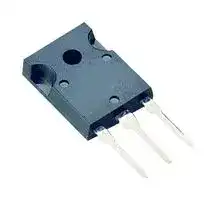


IGW40N65F5FKSA1
IGBT, 40 A, 1.6 V, 255 W, 650 V, TO-247, 3 Pins
- Manufacturer: INFINEON
- Product type: Single IGBTs
- DC Collector Current:40A; Collector Emitter Saturation Voltage Vce(on):1.6V; Power Dissipation Pd:255W; Collector Emitter Voltage V(br)ceo:650V; Transistor Case Style:TO-247; No. of Pins:3Pins;
- MSL: -
- SVHC: No SVHC (25-Jun-2025)
- No. of Pins: 3Pins
- Product Range: TRENCHSTOP 5
- Power Dissipation: 255W
- Transistor Mounting: Through Hole
- Transistor Case Style: TO-247
- Operating Temperature Max: 175°C
- Continuous Collector Current: 40A
- Collector Emitter Voltage Max: 650V
- Collector Emitter Saturation Voltage: 1.6V
| Delivery and price | |
|---|---|
| Units per pack | 1000 |
| Price | 1.47 € |
| Current stock | 50+ |
| Lead time | 30 days |

## IGBT

High speed 5 FAST IGBT in TRENCHSTOP _5 TM technology

**==> picture [468 x 179] intentionally omitted <==**

**----- Start of picture text -----**<br>
High speed 5 FAST IGBT in TRENCHSTOP TM __ 5 technology<br>Features and Benefits: C<br>High speed F5 technology offering<br>* Best-in-Class efficiency in hard switching and resonant<br>topologies<br>¢ 650V breakdown voltage<br>* Low gate charge Q G G<br>* Ideal fit with SIC Schottky Diode in boost converters E<br>* Maximum junction temperature 175°C<br>* Qualified according to JEDEC for target applications 2<br>**« Pb-freeComplete leadproductplating;spectrumROHS compliantand PSpice Models: a ay<br>http://www.infineon.com/igbt/ 1 2 3<br>**----- End of picture text -----**<br>


|**Type**|**_V_CE**|**_I_C**|**_V_CEsat** **_T_vj=25°C**|**_T_vjmax**|**Marking**|**Package**|
|---|---|---|---|---|---|---|
|IGP40N65F5|650V|40A|1.6V|175°C|G40EF5|PG-TO220-3|
|IGW40N65F5|650V|40A|1.6V|175°C|G40EF5|PG-TO247-3|


2

**==> picture [146 x 65] intentionally omitted <==**

## IGP40N65F5,�IGW40N65F5

High�speed�switching�series�fifth�generation

## **Table�of�Contents**

Description   . . . . . . . . . . . . . . . . . . . . . . . . . . . . . . . . . . . . . . . . . . . . . . . . . . . . . . . . . . . . . . . . . . . . . . . . 2 Table of Contents   . . . . . . . . . . . . . . . . . . . . . . . . . . . . . . . . . . . . . . . . . . . . . . . . . . . . . . . . . . . . . . . . . . . 3 Maximum Ratings  . . . . . . . . . . . . . . . . . . . . . . . . . . . . . . . . . . . . . . . . . . . . . . . . . . . . . . . . . . . . . . . . . . . 4 Thermal Resistance   . . . . . . . . . . . . . . . . . . . . . . . . . . . . . . . . . . . . . . . . . . . . . . . . . . . . . . . . . . . . . . . . . 4 Electrical Characteristics  . . . . . . . . . . . . . . . . . . . . . . . . . . . . . . . . . . . . . . . . . . . . . . . . . . . . . . . . . . . . . . 4 Electrical Characteristics Diagrams   . . . . . . . . . . . . . . . . . . . . . . . . . . . . . . . . . . . . . . . . . . . . . . . . . . . . . 7 Package Drawing PG-TO220-3   . . . . . . . . . . . . . . . . . . . . . . . . . . . . . . . . . . . . . . . . . . . . . . . . . . . . . . . .12 Package Drawing PG-TO247-3   . . . . . . . . . . . . . . . . . . . . . . . . . . . . . . . . . . . . . . . . . . . . . . . . . . . . . . . .13 Testing Conditions   . . . . . . . . . . . . . . . . . . . . . . . . . . . . . . . . . . . . . . . . . . . . . . . . . . . . . . . . . . . . . . . . . .14 Revision History   . . . . . . . . . . . . . . . . . . . . . . . . . . . . . . . . . . . . . . . . . . . . . . . . . . . . . . . . . . . . . . . . . . . .15 Disclaimer  . . . . . . . . . . . . . . . . . . . . . . . . . . . . . . . . . . . . . . . . . . . . . . . . . . . . . . . . . . . . . . . . . . . . . . . . .15

3

Rev.�1.3,��2014-12-04

**==> picture [146 x 65] intentionally omitted <==**

## IGP40N65F5,�IGW40N65F5

## High�speed�switching�series�fifth�generation

## **Maximum�Ratings**

**For�optimum�lifetime�and�reliability,�Infineon�recommends�operating�conditions�that�do�not�exceed�80%�of�the�maximum�ratings�stated�in�this�datasheet.**

|**Parameter**|**Symbol**||**Value**|**Unit**|
|---|---|---|---|---|
|Collector-emittervoltage,_T_vj≥25°C|_V_CE||650|V|
|DCcollectorcurrent,limitedby_T_vjmax<br>_T_C=25°C<br>_T_C=100°C|_I_C||74.0<br>46.0|A|
|Pulsedcollectorcurrent,_t_plimitedby_T_vjmax|_I_Cpuls||120.0|A|
|Turn off safe operating area<br>_V_CE≤650V,_T_vj≤175°C,_t_p=1µs|-||120.0|A|
|Gate-emitter voltage<br>TransientGate-emittervoltage(_t_p≤10µs,D<0.010)|_V_GE||±20<br>±30|V|
|Powerdissipation_T_C=25°C<br>Powerdissipation_T_C=100°C|_P_tot||250.0<br>125.0|W|
|Operating junction temperature|_T_vj|-40...+175||°C|
|Storage temperature|_T_stg|-55...+150||°C|
|Soldering temperature,<br>wave soldering 1.6mm (0.063in.) from case for 10s|PG-TO220-3<br>PG-TO247-3||260<br>260|°C|
|Mounting torque, M3 screw<br>Maximum of mounting processes: 3|_M_||0.6|Nm|


## **Thermal�Resistance**

|**ThermalResistance**||||||
|---|---|---|---|---|---|
|**Parameter**|**Symbol **|**Conditions**|**Max.Value**||**Unit**|
|**Characteristic**||||||
|IGBT thermal resistance,<br>junction - case|_R_th(j-c)|||0.60|K/W|
|Thermal resistance<br>junction - ambient|_R_th(j-a)|PG-TO220-3<br>PG-TO247-3||62<br>40|K/W|


## **Electrical�Characteristic,�at�** _**T**_ **vj�=�25°C,�unless�otherwise�specified**

|**Parameter**|**Symbol **|**Conditions**||**Value**||**Unit**|
|---|---|---|---|---|---|---|
||||**min.**|**typ.**|**max.**||
|**StaticCharacteristic**|||||||
|Collector-emitter breakdown voltage|_V_(BR)CES|_V_GE=0V,_I_C=0.20mA|650|-|-|V|
|Collector-emitter saturation voltage|_V_CEsat|_V_GE=15.0V,_I_C=40.0A<br>_T_vj=25°C<br>_T_vj=125°C<br>_T_vj=175°C|-<br>-<br>-|1.60<br>1.80<br>1.90|2.10<br>-<br>-|V|
|Gate-emitter threshold voltage|_V_GE(th)|_I_C=0.40mA,_V_CE=_V_GE|3.2|4.0|4.8|V|
|Zero gate voltage collector current|_I_CES|_V_CE=650V,_V_GE=0V<br>_T_vj=25°C<br>_T_vj=175°C|-<br>-|-<br>-|40.0<br>2000.0|µA|
|Gate-emitter leakage current|_I_GES|_V_CE=0V,_V_GE=20V|-|-|100|nA|
|Transconductance|_g_fs|_V_CE=20V,_I_C=40.0A|-|50.0|-|S|


Rev.�1.3,��2014-12-04

4

IGP40N65F5,�IGW40N65F5

**==> picture [146 x 65] intentionally omitted <==**

## High�speed�switching�series�fifth�generation

## **Electrical�Characteristic,�at�** _**T**_ **vj�=�25°C,�unless�otherwise�specified**

|**Parameter**|**Symbol **|**Conditions**||**Value**||**Unit**|
|---|---|---|---|---|---|---|
||||**min.**|**typ.**|**max.**||
|**DynamicCharacteristic**|||||||
|Input capacitance|_C_ies|_V_CE=25V,_V_GE=0V,f=1MHz|-|2500|-|pF|
|Output capacitance|_C_oes||-|40|-||
|Reverse transfer capacitance|_C_res||-|9|-||
|Gate charge|_Q_G|_V_CC=520V,_I_C=40.0A,<br>_V_GE=15V|-|95.0|-|nC|
|Internal emitter inductance<br>measured 5mm (0.197 in.) from<br>case|_L_E|PG-TO220-3<br>PG-TO247-3|-|7.0<br>13.0|-|nH|


## **Switching�Characteristic,�Inductive�Load**

|**Parameter**|**Symbol **|**Conditions**||**Value**||**Unit**|
|---|---|---|---|---|---|---|
||||**min.**|**typ.**|**max.**||
|**IGBTCharacteristic,at****_T_vj=25°C**|||||||
|Turn-on delaytime|_t_d(on)|_T_vj=25°C,<br>_V_CC=400V,_I_C=20.0A,<br>_V_GE=0.0/15.0V,<br>_R_G(on)=15.0Ω,_R_G(off)=15.0Ω,<br>_L_σ=30nH,_C_σ=30pF<br>_L_σ,_C_σfromFig.E<br>Energy losses include “tail” and<br>diode reverse recovery.|-|19|-|ns|
|Rise time|_t_r||-|13|-|ns|
|Turn-off delaytime|_t_d(off)||-|160|-|ns|
|Fall time|_t_f||-|16|-|ns|
|Turn-on energy|_E_on||-|0.36|-|mJ|
|Turn-off energy|_E_off||-|0.10|-|mJ|
|Total switchingenergy|_E_ts||-|0.46|-|mJ|
||||||||
|Turn-on delaytime|_t_d(on)|_T_vj=25°C,<br>_V_CC=400V,_I_C=5.0A,<br>_V_GE=0.0/15.0V,<br>_R_G(on)=15.0Ω,_R_G(off)=15.0Ω,<br>_L_σ=30nH,_C_σ=30pF<br>_L_σ,_C_σfromFig.E<br>Energy losses include “tail” and<br>diode reverse recovery.|-|20|-|ns|
|Rise time|_t_r||-|4|-|ns|
|Turn-off delaytime|_t_d(off)||-|175|-|ns|
|Fall time|_t_f||-|10|-|ns|
|Turn-on energy|_E_on||-|0.07|-|mJ|
|Turn-off energy|_E_off||-|0.03|-|mJ|
|Total switchingenergy|_E_ts||-|0.10|-|mJ|


Rev.�1.3,��2014-12-04

5

IGP40N65F5,�IGW40N65F5

**==> picture [146 x 65] intentionally omitted <==**

## High�speed�switching�series�fifth�generation

## **Switching�Characteristic,�Inductive�Load**

|**Parameter**|**Symbol **|**Conditions**||**Value**||**Unit**|
|---|---|---|---|---|---|---|
||||**min.**|**typ.**|**max.**||
|**IGBTCharacteristic,at****_T_vj=150°C**|||||||
|Turn-on delaytime|_t_d(on)|_T_vj=150°C,<br>_V_CC=400V,_I_C=20.0A,<br>_V_GE=0.0/15.0V,<br>_R_G(on)=15.0Ω,_R_G(off)=15.0Ω,<br>_L_σ=30nH,_C_σ=30pF<br>_L_σ,_C_σfromFig.E<br>Energy losses include “tail” and<br>diode reverse recovery.|-|20|-|ns|
|Rise time|_t_r||-|14|-|ns|
|Turn-off delaytime|_t_d(off)||-|185|-|ns|
|Fall time|_t_f||-|15|-|ns|
|Turn-on energy|_E_on||-|0.50|-|mJ|
|Turn-off energy|_E_off||-|0.16|-|mJ|
|Total switchingenergy|_E_ts||-|0.66|-|mJ|
||||||||
|Turn-on delaytime|_t_d(on)|_T_vj=150°C,<br>_V_CC=400V,_I_C=5.0A,<br>_V_GE=0.0/15.0V,<br>_R_G(on)=15.0Ω,_R_G(off)=15.0Ω,<br>_L_σ=30nH,_C_σ=30pF<br>_L_σ,_C_σfromFig.E<br>Energy losses include “tail” and<br>diode reverse recovery.|-|18|-|ns|
|Rise time|_t_r||-|5|-|ns|
|Turn-off delaytime|_t_d(off)||-|220|-|ns|
|Fall time|_t_f||-|12|-|ns|
|Turn-on energy|_E_on||-|0.14|-|mJ|
|Turn-off energy|_E_off||-|0.05|-|mJ|
|Total switchingenergy|_E_ts||-|0.19|-|mJ|


6

Rev.�1.3,��2014-12-04

**==> picture [474 x 659] intentionally omitted <==**

**----- Start of picture text -----**<br>
275<br>100 US 250 Le<br>_ PAS are 225200 rN TT TF<br>< aeaa ee<br>175<br>| 10 SF MBNIINSCADCee tp=1µs  EL ISICRSENTIII 2 ee ee<br>Se i s 150 |}N<br>10µs<br>a PPT ear es ST ) 125 Pf ENG}<br>50µs<br>O a a<br>100µs 100<br>p Pode eK<br>6 1 200µs ee NT<br>75<br>500µs<br>See CN<br>50<br>Po DC \<br>25<br>0.1 0<br>1 tt oa 10 100 1000 25 50 75 100 125 150 175<br>V CE , COLLECTOR-EMITTER VOLTAGE [V] T C , CASE TEMPERATURE [°C]<br>Figure 1. Forward bias safe operating area Figure 2. Power dissipation as a function of case<br>( D =0, T C =25°C, T vj 175°C; V GE=15V. temperature<br>Recommended use at V GE ≥ 7.5V) ( T vj ≤ 175°C)<br>80 120<br>70 TTILLL] AAPG<br>100<br>VGE=20V<br>60<br>~ PS)tN . AfiLe 18V<br>80<br>LONE Rae 15V<br>50<br>12V<br>BNE 40 \ 8 60 EB [eee] 10V Vy<br>8V<br>PCCCACTTE 30 A eg<br>7V<br>40<br>6V<br>BN 8 ope<br>20<br>° fe AW<br>5V<br>20<br>po<br>10<br>AY BR<br>PE) GSS<br>0 0 | AT NT TT<br>25 50 75 100 125 150 175 0 1 2 3 4 5<br>T C , CASE TEMPERATURE [°C] V CE , COLLECTOR-EMITTER VOLTAGE [V]<br>Figure 3. Collector current as a function of case Figure 4. Typical output characteristic<br>temperature ( T vj=25°C)<br>( V GE ≥ 15V, T vj ≤ 175°C)<br>I C P tot<br>I C I C<br>**----- End of picture text -----**<br>


7

**==> picture [474 x 623] intentionally omitted <==**

**----- Start of picture text -----**<br>
120 120<br>Tj=25°C<br>Tj=150°C<br>Ty EaCOTe<br>100 100<br>R20) (ee ee e ee<br>VGE=20V<br>2 eee. 18V<br>80 80<br>eee) 15V<br>PC tee 12V ae  bEee ee<br>ed) 60 10V SAREE 60 eee<br>8V<br>i ee<br>7V<br>4 40 e/a 40<br>S | 6V Lipset tts | ie<br>LAA PS EL<br>5V<br>20 20<br>NWN a<br>pLYeerosEd<br>EVANS eee<br>0 0<br>0 1 2 3 4 5 4.5 5.0 5.5 6.0 6.5 7.0 7.5 8.0 8.5<br>V CE , COLLECTOR-EMITTER VOLTAGE [V] V GE , GATE-EMITTER VOLTAGE [V]<br>Figure 5. Typical output characteristic Figure 6. Typical transfer characteristic<br>( T vj=150°C) ( V CE=20V)<br>2.50 1000<br>IC=10A td(off)<br>IC=20A tf<br>= 2.25 e IC=40A e I td(on) a ee ee<br>tr<br>Ss ee<br>pt ) | p o<br>2.00<br>100<br>PLES): 22Eee<br>1.75<br>bu - ase<br>peer= 1.50 UEoO esee ee ee ee ee<br>POLST), Ep<br>1.25<br>° ee ae<br>a 10<br>ee 1.00<br>O a es ee ee<br>ooo ——————<br>0.75<br>PPP) eee<br>0.50 1<br>0 25 50 75 100 125 150 175 0 20 40 60 80 100 120<br>T vj , JUNCTION TEMPERATURE [°C] I C , COLLECTOR CURRENT [A]<br>I C I C<br>t<br>CEsat<br>V<br>**----- End of picture text -----**<br>


Figure 7. Typical a function ( _V_ GE=15V)

Figure 8.

(inductive load, _T_ vj =150°C, _V_ CE=400V, _V_ GE =15/0V, _r_ G=15 Ω , Dynamic test Figure E)

8

**==> picture [489 x 331] intentionally omitted <==**

**----- Start of picture text -----**<br>
1000 a SS ES ES eS 1000 a a<br>1 t td(off) a he a t td(off) a<br>| tf tf<br>td(on) td(on)<br>tr tr<br>fs | i ee ee eee eee | fe a A ee ee<br>| o e rea| | eee| po| eeee ee<br>e 100 kell 100<br>o | Tite L i]|<br>uw= e a eeeeeeec ee esosee ccaee oGe)= aesa ess e e eeee ee<br>F a a ee ee ee a eeee<br>O a ee ee ee a ee<br>= ceco<br>E=” 10 a a aUo ssvi’ ‘ ee Ee = ” 10 a7 rte es<br>——  — ee<br>po a ee<br>po PP a eeee<br>P T a a<br>1 1<br>5 15 25 35 45 55 65 75 85 25 50 75 100 125 150 175<br>r G , GATE RESISTOR [ Ω ] T vj , JUNCTION TEMPERATURE [°C]<br>Figure 9. Typical switching times as a function of gate Figure 10. Typical switching times as a function of<br>resistor junction temperature<br>(inductive load, T vj =150°C, V CE=400V, (inductive load, V CE =400V, V GE=15/0V,<br>V GE =15/0V, I C =20A,Dynamic test circuit in I C =20A, r G=15 ,Dynamic test circuit in<br>Figure E) Figure E)<br>t t<br>**----- End of picture text -----**<br>


**==> picture [474 x 276] intentionally omitted <==**

**----- Start of picture text -----**<br>
5.5 8<br>typ. Eoff<br>min. Eon<br>7Ww 5.0 iE max. |) | | 7 a, Ets<br>4.5<br>PA f s ee£ F e<br>6<br>oe<br>4.0<br>5<br>3.5<br>4<br>3.0<br>a _— —~_ m7 a a<br>= . = 3 7 7<br>S 2.5 ~O Tr ao , va<br>2<br>xt 2.0 ~S ep) a 7<br>ee 1 ee<br>1.5<br>1.0 0<br>0 25 50 75 100 125 150 0 20 40 60 80 100 120<br>T vj , JUNCTION TEMPERATURE [°C] I C , COLLECTOR CURRENT [A]<br>E<br>GE(th)<br>V<br>**----- End of picture text -----**<br>


Figure 11. Gate-emitter of junction ( _I_ C=0.4mA)

Figure 12.

(inductive load, _T_ vj =150°C, _V_ CE=400V, _V_ GE =15/0V, _r_ G=15 Ω ,Dynamic test Figure E)

9

**==> picture [230 x 331] intentionally omitted <==**

**----- Start of picture text -----**<br>
1.6<br>Eoff<br>Eon<br>1.4 Ets<br>a] 1.2<br>ep) “<br>e) 1.0 “<br>— ”<br>ow cece<br>im 0.8 > =<br>Zz je a<br>Ww ae oa<br>Zz 0.6 a =<br>= , pea<br>0.4<br>Se<br>0.2<br>PTT<br>0.0<br>ET ity}<br>5 15 25 35 45 55 65 75 85<br>r G , GATE RESISTOR [ Ω ]<br>Figure 13. Typical switching energy losses as a<br>function of gate resistor<br>(inductive load, T vj =150°C, V CE=400V,<br>V GE =15/0V, I C =20A, Dynamic test circuit in<br>Figure E)<br>E<br>**----- End of picture text -----**<br>


**==> picture [233 x 331] intentionally omitted <==**

**----- Start of picture text -----**<br>
0.8<br>Eoff<br>Eon<br>0.7 Ets<br>e e<br>0.6<br>n<br>e) 0.5 =<br>— weer<br>wv --<br>uw 0.4<br>Zz wece<br>Ww -<br>Zz 0.3<br>=<br>0.2<br>Le<br>0.1<br>0.0<br>LET<br>25 50 75 100 125 150 175<br>T vj , JUNCTION TEMPERATURE [°C]<br>Figure 14. Typical switching energy losses as a<br>function of junction temperature<br>(inductive load, V CE =400V, V GE=15/0V,<br>I C =20A, r G=15 ,Dynamic test circuit in<br>Figure E)<br>E<br>**----- End of picture text -----**<br>


**==> picture [474 x 312] intentionally omitted <==**

**----- Start of picture text -----**<br>
1.0 16<br>Eoff 130V<br>0.9 Eon 520V<br>e 0.8 Ets ee 14 ;<br>12<br>e f oe<br>0.7<br>a | mm<br>ep) a E<br>fe}a> 0.6 a 5 7” fo)F> 10 / ’ ,<br>:<br>0.5 8<br>ffpf-* a= K| ey<br>0.4<br>pee a 6 Pp<br>poeO aa a<x ee r<br>— 0.3 se Oo<br>4<br>a -<br>Bb<br>0.2<br>2<br>0.1<br>Fe<br>0.0 0<br>200 250 300 350 400 450 500 0 20 40 60 80 100<br>V CE , COLLECTOR-EMITTER VOLTAGE [V] Q GE , GATE CHARGE [nC]<br>Figure 15. Typical switching energy losses as a Figure 16. Typical gate charge<br>function of collector emitter voltage ( I C=40A)<br>(inductive load, T vj =150°C, V GE=15/0V,<br>GE<br>V<br>E<br>**----- End of picture text -----**<br>


_I_ C =20A, _r_ G=15 Figure E)

10

**==> picture [469 x 312] intentionally omitted <==**

**----- Start of picture text -----**<br>
1E+4 1<br>t SE Cies  —————— a ee ee EF SIE Sc<br>Coes<br>1 a ee ee FCCC CCL<br>Cres<br>\ a ee ee e e = A ca<br>a tteee | lll<br>D=0.5<br>a eal<br>1000<br>0.2<br>_—_———— a |<br>Cc | 0.1 TM Lez 0.1 mill<br>wea, SS Se)n FHoeEP ee Het<br>0.05<br>O R OTO Ss Ee<br>0.02<br>Z a  a A a mm ie # oe a a<br>< 100 RNS ff z 0229/20ce 0.01<br>a e e OP single pulse<br>a ——— ee” NeeT ll<br>SOa a Dvaenee<br>- ee 0.01<br>— ee ee =n e e elttte PCmal<br>z TT)LT TA TT a ie ™* Rcael!gil!<br>10 =Sees AACA “|<br>——_————— en iar AIM LUTE LTTE Tene, contetRe il<br>a UECRATE<br>a i: 1 2 3 CE 4 TUT<br>ri[K/W]: 0.08245484 0.144197 0.2151774 0.1581708<br>τ i[s]: 7.3E-5 7.0E-4 0.01235548 0.08020881<br>ee e e ee ee td fo<br>e |<br>1 0.001<br>0 5 10 15 20 25 30 1E-6 1E-5 1E-4 0.001 0.01 0.1 1<br>V CE , COLLECTOR-EMITTER VOLTAGE [V] t p , PULSE WIDTH [s]<br>Figure 17. Typical capacitance as a function of Figure 18. IGBT transient thermal resistance<br>collector-emitter voltage ( D = t p/T)<br>( V GE =0V, f=1MHz)<br>C<br>c)th(j-<br>Z<br>**----- End of picture text -----**<br>


11

IGP40N65F5,�IGW40N65F5

**==> picture [146 x 65] intentionally omitted <==**

High�speed�switching�series�fifth�generation

## PG-TO220-3

12

Rev.�1.3,��2014-12-04

IGP40N65F5,�IGW40N65F5

**==> picture [146 x 65] intentionally omitted <==**

High�speed�switching�series�fifth�generation

## PG-TO247-3

13

Rev.�1.3,��2014-12-04

**==> picture [146 x 65] intentionally omitted <==**

## IGP40N65F5,�IGW40N65F5

High�speed�switching�series�fifth�generation

**==> picture [482 x 316] intentionally omitted <==**

**----- Start of picture text -----**<br>
v GE (t) I,V<br>90%  V GE<br>dI F /dt a b<br>10%  V GE t a b<br>I C (t)<br>dI<br>90%  I C 90%  I C<br>10%  I C 10%  I C t Figure C.  Definition of diode switching<br>characteristics<br>v CE (t)<br>t<br>t<br>t d(off) t f t d(on) t r<br>Figure A.<br>v GE (t)<br>**----- End of picture text -----**<br>


**==> picture [253 x 286] intentionally omitted <==**

**----- Start of picture text -----**<br>
v GE (t)<br>90%  V GE<br>10%  V GE<br>t<br>I C (t)<br>2%  I C t<br>v CE (t)<br>t 2 t 4<br>E off  [=] V CE x I C x d t E on  [=] V CE x I C x d t<br>t 1 t 3 2%  V CE t<br>t 1 t 2 t 3 t 4<br>Figure B.<br>**----- End of picture text -----**<br>


Figure D.

**==> picture [122 x 111] intentionally omitted <==**

**==> picture [10 x 8] intentionally omitted <==**

**----- Start of picture text -----**<br>
CC<br>**----- End of picture text -----**<br>


Figure E. **Dynamic test circuit** Parasitic inductance Ls, parasitic capacitor Ls, relief capacitor C ,r (only for ZVT switching)

14

Rev.�1.3,��2014-12-04

**==> picture [146 x 65] intentionally omitted <==**

## IGP40N65F5, IGW40N65F5

## High speed switching series fifth generation

## Revision History

IGP40N65F5, IGW40N65F5

Revision: 2014-12-04, Rev. 1.3

## Previous Revision

|Revision|Date|Subjects(major changes since last revision)|
|---|---|---|
|1.1|2012-11-09|Preliminarydata sheet|
|1.2|2013-12-16|New MarkingPattern|
|1.3|2014-12-04|Minor changes Fig.1 and Fig.14|


## We Listen to Your Comments

Any information within this document that you feel is wrong, unclear or missing at all? Your feedback will help us to continuously improve the quality of this document. Please send your proposal (including a reference to this document) to: erratum@infineon.com

Published by Infineon Technologies AG 81726 Munich, Germany 81726 München, Germany © 2014 Infineon Technologies AG All Rights Reserved.

## Legal Disclaimer

The information given in this document shall in no event be regarded as a guarantee of conditions or characteristics. With respect to any examples or hints given herein, any typical values stated herein and/or any information regarding the application of the device, Infineon Technologies hereby disclaims any and all warranties and liabilities of any kind, including without limitation, warranties of non-infringement of intellectual property rights of any third party.

## Information

For further information on technology, delivery terms and conditions and prices, please contact the nearest Infineon Technologies Office (www.infineon.com).

## Warnings

Due to technical requirements, components may contain dangerous substances. For information on the types in question, please contact the nearest Infineon Technologies Office.

The Infineon Technologies component described in this Data Sheet may be used in life-support devices or systems and/or automotive, aviation and aerospace applications or systems only with the express written approval of Infineon Technologies, if a failure of such components can reasonably be expected to cause the failure of that life-support, automotive, aviation and aerospace device or system or to affect the safety or effectiveness of that device or system. Life support devices or systems are intended to be implanted in the human body or to support and/or maintain and sustain and/or protect human life. If they fail, it is reasonable to assume that the health of the user or other persons may be endangered.

Rev. 1.3,  2014-12-04

15
Updated at June 9, 2026
Infineon Technologies is a globally recognized leader in semiconductor solutions, renowned for driving innovation in power management, energy efficiency, and modern mobility. With a strong legacy of engineering excellence, the company provides highly reliable components designed to meet the rigorous demands of industrial, automotive, and advanced commercial applications. The core of our Infineon portfolio is centered on their industry-leading discrete semiconductors. We offer an extensive selection of single and dual MOSFETs, alongside a robust range of single IGBTs and advanced IGBT modules. These flagship power transistors are essential for high-efficiency power conversion and motor control, providing engineers with superior thermal performance and minimized switching losses. Beyond advanced field-effect transistors, the selection includes a comprehensive array of diodes and rectifiers, heavily featuring Schottky diodes, as well as fast-recovery and RF/PIN diodes. This power foundation is further supported by bipolar transistors, intelligent power modules, and thyristor SCR modules, delivering the critical building blocks required for complex power system designs. To support broader system integration, the portfolio also encompasses specialized solutions such as solid-state relays, AC/DC LED driver ICs, and Bluetooth communications modules. From high-power industrial rectifiers to wireless connectivity adapters, Infineon equips designers with the precision components needed to build efficient, scalable, and fully connected electronic systems.
About Novapart
Novapart is a B2B electronic component broker specialising in stock shortages and cost reduction. We source hard-to-find parts and identify compliant alternatives across a catalogue of 410,000+ components from 500+ manufacturers.
Learn more →Stock Shortage Specialist
When a component is unavailable, discontinued or has an unacceptable lead time, we tap into our network of vetted European and Asian distributors to source what you need — without compromising on quality or traceability.
Request a quote →Compliant Alternatives
We identify pin-to-pin, electrically equivalent substitutes that meet the same certifications (RoHS, AEC-Q100, REACH) as your original specification — validated against datasheets, not just part numbers. Often at a lower cost.
BOM Analysis service →