
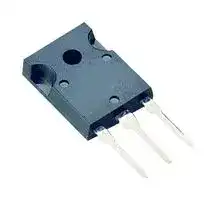


IGW20N60H3FKSA1
IGBT, 40 A, 1.95 V, 170 W, 600 V, TO-247, 3 Pins
- Manufacturer: INFINEON
- Product type: Single IGBTs
- SVHC: No SVHC (25-Jun-2025)
- No. of Pins: 3Pins
- Product Range: TRENCHSTOP Gen III
- Power Dissipation: 170W
- Transistor Mounting: Through Hole
- Transistor Case Style: TO-247
- Operating Temperature Max: 175°C
- Continuous Collector Current: 40A
- Collector Emitter Voltage Max: 600V
- Collector Emitter Saturation Voltage: 1.95V
| Delivery and price | |
|---|---|
| Units per pack | 1000 |
| Price | 1.02 € |
| Current stock | 25+ |
| Lead time | 30 days |

## IGBT

IGW20N60H3

## IGW20N60H3

**Features:** TRENCHSTOP[TM] * very low V CEsat

http://www.infineon.com/igbt/ **Applications:**

**==> picture [116 x 220] intentionally omitted <==**

**----- Start of picture text -----**<br>
C<br>G<br>E<br>_*<br>es<br>y =<br>7<br>G<br>C<br>E<br>**----- End of picture text -----**<br>


|**Type**|**_V_CE**|**_I_C**|**_V_CEsat** **_T_vj=25°C**|**_T_vjmax**|**Marking**|**Package**|
|---|---|---|---|---|---|---|
|IGW20N60H3|600V|20A|1.95V|175°C|G20H603|PG-TO247-3|


2

IGW20N60H3

**==> picture [146 x 65] intentionally omitted <==**

## High�speed�switching�series�third�generation

## **Table�of�Contents**

Description   . . . . . . . . . . . . . . . . . . . . . . . . . . . . . . . . . . . . . . . . . . . . . . . . . . . . . . . . . . . . . . . . . . . . . . . . 2 Table of Contents   . . . . . . . . . . . . . . . . . . . . . . . . . . . . . . . . . . . . . . . . . . . . . . . . . . . . . . . . . . . . . . . . . . . 3 Maximum ratings  . . . . . . . . . . . . . . . . . . . . . . . . . . . . . . . . . . . . . . . . . . . . . . . . . . . . . . . . . . . . . . . . . . . . 4 Thermal Resistance   . . . . . . . . . . . . . . . . . . . . . . . . . . . . . . . . . . . . . . . . . . . . . . . . . . . . . . . . . . . . . . . . . 4 Electrical Characteristics  . . . . . . . . . . . . . . . . . . . . . . . . . . . . . . . . . . . . . . . . . . . . . . . . . . . . . . . . . . . . . . 4 Electrical Characteristics diagrams  . . . . . . . . . . . . . . . . . . . . . . . . . . . . . . . . . . . . . . . . . . . . . . . . . . . . . . 6 Package Drawing   . . . . . . . . . . . . . . . . . . . . . . . . . . . . . . . . . . . . . . . . . . . . . . . . . . . . . . . . . . . . . . . . . . .12 Testing Conditions   . . . . . . . . . . . . . . . . . . . . . . . . . . . . . . . . . . . . . . . . . . . . . . . . . . . . . . . . . . . . . . . . . .13 Revision History   . . . . . . . . . . . . . . . . . . . . . . . . . . . . . . . . . . . . . . . . . . . . . . . . . . . . . . . . . . . . . . . . . . . .14 Disclaimer  . . . . . . . . . . . . . . . . . . . . . . . . . . . . . . . . . . . . . . . . . . . . . . . . . . . . . . . . . . . . . . . . . . . . . . . . .14

3

Rev.�2.2,��2014-03-11

IGW20N60H3

**==> picture [146 x 65] intentionally omitted <==**

## High�speed�switching�series�third�generation

## **Maximum�ratings**

|**Maximumratings**|||||
|---|---|---|---|---|
|**Parameter**|**Symbol**||**Value**|**Unit**|
|Collector-emittervoltage,_T_vj≥25°C|_V_CE||600|V|
|DCcollectorcurrent,limitedby_T_vjmax<br>_T_C=25°C<br>_T_C=100°C|_I_C||40.0<br>20.0|A|
|Pulsedcollectorcurrent,_t_plimitedby_T_vjmax|_I_Cpuls||80.0|A|
|Turn off safe operating area<br>_V_CE≤600V,_T_vj≤175°C,_t_p=1µs|-||80.0|A|
|Gate-emitter voltage|_V_GE||±20|V|
|Short circuit withstand time<br>_V_GE=15.0V,_V_CC≤400V<br>Allowed number of short circuits < 1000<br>Time between short circuits:≥1.0s<br>_T_vj=150°C|_t_SC||5|µs|
|Powerdissipation_T_C=25°C<br>Powerdissipation_T_C=100°C|_P_tot||170.0<br>85.0|W|
|Operating junction temperature|_T_vj|-40...+175||°C|
|Storage temperature|_T_stg|-55...+150||°C|
|Soldering temperature,<br>wave soldering1.6 mm(0.063 in.)from case for 10s|||260|°C|
|Mounting torque, M3 screw<br>Maximum of mounting processes: 3|_M_||0.6|Nm|


## **Thermal�Resistance**

|**ThermalResistance**||||||
|---|---|---|---|---|---|
|**Parameter**|**Symbol **|**Conditions**|**Max.Value**||**Unit**|
|**Characteristic**||||||
|IGBT thermal resistance,<br>junction - case|_R_th(j-c)|||0.88|K/W|
|Thermal resistance<br>junction - ambient|_R_th(j-a)|||40|K/W|


## **Electrical�Characteristic,�at�** _**T**_ **vj�=�25°C,�unless�otherwise�specified**

|**Parameter**|**Symbol **|**Conditions**||**Value**||**Unit**|
|---|---|---|---|---|---|---|
||||**min.**|**typ.**|**max.**||
|**StaticCharacteristic**|||||||
|Collector-emitter breakdown voltage|_V_(BR)CES|_V_GE=0V,_I_C=2.00mA|600|-|-|V|
|Collector-emitter saturation voltage|_V_CEsat|_V_GE=15.0V,_I_C=20.0A<br>_T_vj=25°C<br>_T_vj=125°C<br>_T_vj=175°C|-<br>-<br>-|1.95<br>2.30<br>2.50|2.40<br>-<br>-|V|
|Gate-emitter threshold voltage|_V_GE(th)|_I_C=0.29mA,_V_CE=_V_GE|4.1|5.1|5.7|V|
|Zero gate voltage collector current|_I_CES|_V_CE=600V,_V_GE=0V<br>_T_vj=25°C<br>_T_vj=175°C|-<br>-|-<br>-|40.0<br>1500.0|µA|
|Gate-emitter leakage current|_I_GES|_V_CE=0V,_V_GE=20V|-|-|100|nA|
|Transconductance|_g_fs|_V_CE=20V,_I_C=20.0A|-|10.9|-|S|


Rev.�2.2,��2014-03-11

4

IGW20N60H3

**==> picture [146 x 65] intentionally omitted <==**

## High�speed�switching�series�third�generation

## **Electrical�Characteristic,�at�** _**T**_ **vj�=�25°C,�unless�otherwise�specified**

|**Parameter**|**Symbol **|**Conditions**||**Value**||**Unit**|
|---|---|---|---|---|---|---|
||||**min.**|**typ.**|**max.**||
|**DynamicCharacteristic**|||||||
|Input capacitance|_C_ies|_V_CE=25V,_V_GE=0V,f=1MHz|-|1100|-|pF|
|Output capacitance|_C_oes||-|70|-||
|Reverse transfer capacitance|_C_res||-|32|-||
|Gate charge|_Q_G|_V_CC=480V,_I_C=20.0A,<br>_V_GE=15V|-|120.0|-|nC|
|Internal emitter inductance<br>measured 5mm (0.197 in.) from<br>case|_L_E||-|13.0|-|nH|
|Short circuit collector current<br>Max. 1000 short circuits<br>Time between short circuits:≥1.0s|_I_C(SC)|_V_GE=15.0V,_V_CC≤400V,<br>_t_SC≤5µs<br>_T_vj=150°C|-|120|-|A|


## **Switching�Characteristic,�Inductive�Load**

|**Parameter**|**Symbol **|**Conditions**||**Value**||**Unit**|
|---|---|---|---|---|---|---|
||||**min.**|**typ.**|**max.**||
|**IGBTCharacteristic,at****_T_vj=25°C**|||||||
|Turn-on delaytime|_t_d(on)|_T_vj=25°C,<br>_V_CC=400V,_I_C=20.0A,<br>_V_GE=0.0/15.0V,<br>_r_G=14.6Ω,_L_σ=75nH,<br>_C_σ=30pF<br>_L_σ,_C_σfromFig.E<br>Energy losses include “tail” and<br>diode (IKW20N60H3) reverse<br>recovery.|-|17|-|ns|
|Rise time|_t_r||-|23|-|ns|
|Turn-off delaytime|_t_d(off)||-|194|-|ns|
|Fall time|_t_f||-|11|-|ns|
|Turn-on energy|_E_on||-|0.56|-|mJ|
|Turn-off energy|_E_off||-|0.24|-|mJ|
|Total switchingenergy|_E_ts||-|0.80|-|mJ|


## **Switching�Characteristic,�Inductive�Load**

|**Parameter**|**Symbol **|**Conditions**||**Value**||**Unit**|
|---|---|---|---|---|---|---|
||||**min.**|**typ.**|**max.**||
|**IGBTCharacteristic,at****_T_vj=175°C**|||||||
|Turn-on delaytime|_t_d(on)|_T_vj=175°C,<br>_V_CC=400V,_I_C=20.0A,<br>_V_GE=0.0/15.0V,<br>_r_G=14.6Ω,_L_σ=75nH,<br>_C_σ=30pF<br>_L_σ,_C_σfromFig.E<br>Energy losses include “tail” and<br>diode (IKW20N60H3) reverse<br>recovery.|-|16|-|ns|
|Rise time|_t_r||-|21|-|ns|
|Turn-off delaytime|_t_d(off)||-|227|-|ns|
|Fall time|_t_f||-|14|-|ns|
|Turn-on energy|_E_on||-|0.71|-|mJ|
|Turn-off energy|_E_off||-|0.36|-|mJ|
|Total switchingenergy|_E_ts||-|1.07|-|mJ|


Rev.�2.2,��2014-03-11

5

High speed switching series third generation IGW20N60H3

**==> picture [476 x 622] intentionally omitted <==**

**----- Start of picture text -----**<br>
60 100<br>eatin tT ee Sste eet<br>XN po NN eS TT<br>50 TINIEST<br>N TIN =  FSP te<br>UN ae NS et el<br>tp=1µs<br>S 2h | Nee eC ae Alli<br>5 40 TTSPATI TUTTI é 10 10µs TT Il<br>oeiu a *s. YNST IN \ 5iu — 50µs Eee}oes te\ eea<br>5 y KLAN oe a a ee ON EE<br>8 ye y \ N 5 lz FE} pp dd mi LH<br>30 PTS IM) ¢ Rois 100µs<br>ne TC=80° te<br>S Ae HN A eo | 200µs NT<br>Pt TC=110° DerSe & 0 (ee<br>500µs<br>: 20 TC=80° tee & 1 eR<br>PeA\ eezz DC a Oe ee ee<br>10 TC=110° I —tf} | TTT) STUNSONNY aaa ee|<br>SIAL PENG 0<br>ea Peas om<br>ren e COMM TT = |TV<br>0 0.1<br>VV EE<br>1 10 100 1000 1 10 100 1000<br>f , SWITCHING FREQUENCY [kHz] V CE , COLLECTOR-EMITTER VOLTAGE [V]<br>Figure 1. Collector current as a function of switching Figure 2. Forward bias safe operating area<br>frequency ( D =0, T C =25°C, T j 175°C; V GE=15V)<br>( T j ≤ 175°C, D =0.5, V CE =400V, V GE=15/0V,<br>r G=14,6 Ω )<br>180 40<br>160 Re A<br>140<br>30<br>pL Nit tty PRET Ty<br>bE<br>120<br>> NUE NT<br>Kk<br>»LTEXKETETE< 100 \ E ,<br>2) ao 20<br>Q O<br>BN<br>80<br>Pf pL NI<br>60<br>ep oUN<br>10<br>40<br> NTE AN<br>20<br>0 0<br>25 PPP 50 75  PEN 100 125 150 175 25 LEEP 50 75 100  EN 125 150 175<br>T C , CASE TEMPERATURE [°C] T C , CASE TEMPERATURE [°C]<br>I C I C<br>P tot I C<br>**----- End of picture text -----**<br>


> Figure 3. Power **temperature** ( _T_ j ≤ 175°C)

Figure 4. Collector current as **temperature** ( _V_ GE ≥ 15V, _T_ j ≤ 175°C)

6

IGW20N60H3 High speed switching series third generation

**==> picture [469 x 302] intentionally omitted <==**

**----- Start of picture text -----**<br>
80 80<br>70 VGE=20V WL 70 VGE=20V a<br>yy, yy<br>17V 17V<br>60 60<br>15V 15V<br>aay) be<br>13V 13V<br>50 50<br>a 11V a 11V<br>9V 9V<br>40 40<br>7V 7V<br>30 5V Wa 30 Lee 5V<br>as NEE<br>20 20<br>y<br>10 10<br>0 0<br>0 2 4 6 0 2 4 6 8<br>V CE , COLLECTOR-EMITTER VOLTAGE [V] V CE , COLLECTOR-EMITTER VOLTAGE [V]<br>Figure 5. Typical output characteristic Figure 6. Typical output characteristic<br>( T j=25°C) ( T j=175°C)<br>I C I C<br>**----- End of picture text -----**<br>


**==> picture [474 x 303] intentionally omitted <==**

**----- Start of picture text -----**<br>
70 4.0<br>Tj=25°C IC=10A<br>Tj=175°C IC=20A<br>IC=40A<br>60 El) ys  El<br>3.5<br>=<br>S a e eewe vy<br>50<br>. a teeeaee<br>3.0<br>oe / wv a<br>40<br>oc / = 2.5 7<br>30<br>S /,eV ° 2.0 he<br>; 20 fo)<br>poy § 1.5<br>10<br>=A<br>0 1.0<br>5 IVT 6 7 8 9  TT 10 11 } 12 0 LETT 25 50 75 100 125 150 175<br>V GE , GATE-EMITTER VOLTAGE [V] T j , JUNCTION TEMPERATURE [°C]<br>Figure 7. Typical transfer characteristic Figure 8. Typical collector-emitter saturation voltage<br>( V CE=20V) a function of junction temperature<br>I C<br>CE(sat)<br>V<br>**----- End of picture text -----**<br>


( _V_ GE=15V)

7

~~High speed switching series third generation~~ IGW20N60H3

**==> picture [474 x 659] intentionally omitted <==**

**----- Start of picture text -----**<br>
a 1000 _ td(off)<br>tf<br>td(on)<br>eee eee tr a<br>td(off)<br>100 || tf Z | | | pee tt<br>— a ee td(on) po — ye<br>ee tr e e<br>o a e e ee ee ee 7<br>uw Ne ee ee ee ee ee uw<br>>= {fx | | es] 2<br>100<br>Ee c Ee a ee ee<br>a 10 a a<br>eea ee ee ee e ee<br>a<br>Pot | tt | 7 =<br>Titi<br>1 10<br>l ii | | FF<br>4 8 12 16 20 24 28 32 36 40 5 10 15 20 25 30 35 40 45 50<br>I C , COLLECTOR CURRENT [A] r G , GATE RESISTOR [ Ω ]<br>Figure 9. Typical switching times as a function of Figure 10. Typical switching times as a function of<br>collector current resistor<br>(ind. load, T j =175°C, V CE  =400V, V GE=15/0V, (ind. load, T j =175°C, V CE =400V, V GE=15/0V,<br>r G=14,6 , test circuit in Fig. E) I C =20A, test circuit in Fig. E)<br>6<br>typ.<br>min.<br>max.<br>ee<br>100 = ttd(off)f Totee ee dinOoEN 5 ET<br>t td(on) a O NN<br>tr<br>s i a=| ™<br>o SSS a 5 ~<br>oc ~ -<br>4<br>= 10 [pp i a<br>Yn se = _—<br>- a a x,<br>a = ee 3 N<br>1 2<br>0 25 50 75 100 125 150 175 0 25 50 75 100 125 150 175<br>T j , JUNCTION TEMPERATURE [°C] T j , JUNCTION TEMPERATURE [°C]<br>Figure 11. Typical switching times as a function of Figure 12. Gate-emitter threshold voltage as a<br>junction temperature of junction temperature<br>(ind. load, V CE =400V, V GE =15/0V, I C=20A, ( I C=0.29mA)=0.29mA)<br>t t<br>t<br>GE(th)<br>V<br>**----- End of picture text -----**<br>


_r_ G=14,6

( _I_ C=0.29mA)=0.29mA)

8

IGW20N60H3

**==> picture [481 x 321] intentionally omitted <==**

**----- Start of picture text -----**<br>
3.0 2.00<br>Eoff Eoff<br>Eon Eon<br>Ets 1.75 Ets<br>2.5<br>1.50<br>Ww , Ww uo<br>2.0<br>1.25<br>—! Fa y —! uc 4<br>oO ’ oO “7<br>ow “ ow aa<br>uw 1.5 - uw 1.00 -<br>Z : a Z a“ -°<br>a<br>=r 0.75<br>L<br>1.0<br>E ° 7 LE 0.50 c a ne| —|<br>|<br>Boor 0.5 Lp Fe<br>0.25<br>Lb TL<br>CE [Pe]<br>0.0 0.00<br>4 8 12 16 20 24 28 32 36 40 5 10 15 20 25 30 35 40 45 50<br>I C , COLLECTOR CURRENT [A] r G , GATE RESISTOR [ Ω ]<br>Figure 13. Typical switching energy losses as a Figure 14. Typical switching energy losses as a<br>function of collector current function of gate resistor<br>(ind. load, T j =175°C, V CE =400V, V GE=15/0V, (ind. load, T j =175°C, V CE =400V, V GE=15/0V,<br>r G=14,6 , test circuit in Fig. E) I C =20A, test circuit in Fig. E)<br>E E<br>**----- End of picture text -----**<br>


**==> picture [474 x 321] intentionally omitted <==**

**----- Start of picture text -----**<br>
1.25 1.50<br>Eoff Eoff<br>Eon Eon<br>Ets Ets<br>a a<br>1.25<br>Fz 1.00 Fz a<br>op) op) a“<br>Ww Ww a<br>1.00<br>oO—! 0.75 Oa aoa<br>O O vad<br>om ow -<br>Ww Ww 0.75 : 7<br>Zz Z a -<br>Ww Ww 7 , a<br>2 2<br>0.50<br>Z °<br>Z ; an<br>oO oO 0.50 7 wi<br>n<br>0.25<br>0.25<br>0.00 0.00<br>0 25 50 75 100 125 150 175 200 250 300 350 400 450<br>T j , JUNCTION TEMPERATURE [°C] V CE , COLLECTOR-EMITTER VOLTAGE [V]<br>Figure 15. Typical switching energy losses as a Figure 16. Typical switching energy losses as a<br>function of junction temperature function of collector emitter voltage<br>(ind load, V CE =400V, V GE =15/0V, I C=20A, (ind. load, T j =175°C, V GE =15/0V, I C=20A,<br>r G=14,6 , test circuit in Fig. E) r G=14,6 , test circuit in Fig. E)<br>E E<br>**----- End of picture text -----**<br>


9

IGW20N60H3

**==> picture [471 x 275] intentionally omitted <==**

**----- Start of picture text -----**<br>
16<br>120V<br>480V<br>14<br>7/ 1000 K a R<br>12<br>Ww / / Ce Cies az<br>) J _ a Coes ||<br>Cres<br>< / J ra Fs ee | |<br>3S 10 rT Ls c ee<br>pe {e e fe<br>ui 8 fp | | < a<br>100<br>in & pd<br>uw 6 Oo se<br>= . a<br><x a esel<br>4<br>2<br>0 10<br>0 20 40 60 80 100 120 140 0 10 20 30<br>Q GE , GATE CHARGE [nC] V CE , COLLECTOR-EMITTER VOLTAGE [V]<br>C<br>GE<br>V<br>**----- End of picture text -----**<br>


Figure 17. Typical ( _I_ C=20A)

Figure 18.

( _V_ GE

**==> picture [490 x 312] intentionally omitted <==**

**----- Start of picture text -----**<br>
300 15<br>ee eee<br>: {tii<br>250 12<br>fota | ty ti ee<br>3 F= ~~IN<br>Bite EN<br>200 9<br>5Ww / i ™ ~<br>Pte tiie ye LEEEN EEE<br>E<br>150 6<br>C titi yey EN<br>sO {LY °Kb N<br>G VA © ><br>:e 100 /JS5 3<br>“<br>tttVA tte Ete LEEEEE EE<br>4ERRRRREEE eee<br>50 0<br>10 12 14 16 18 20 10 11 12 13 14 15<br>V GE , GATE-EMITTER VOLTAGE [V] V GE , GATE-EMITTER VOLTAGE [V]<br>Figure 19. Typical short circuit collector current as a Figure 20. Short circuit withstand time as a function of<br>function of gate-emitter voltage gate-emitter voltage<br>( V CE 400V, start at T j=25°C) ( V CE 400V, start at T j 150°C)<br>I C(SC) t SC<br>**----- End of picture text -----**<br>


10

IGW20N60H3 High speed switching series third generation

**==> picture [416 x 302] intentionally omitted <==**

**----- Start of picture text -----**<br>
1<br>TT<br>_ A<br>S TT AS<br>D=0.5<br>y ST ge<br>geZWW 0.1 LOUPe eeWTEE 0.20.10.05<br>= ed dealer ee ee<br>0.02<br>= na<br>=z et eee Secmatill 1II<br>a ee 0.01<br>single pulse<br>us il<br>aa<br>0.01<br>B eana a<br>Z 0 Re Tn<br>< CA on] -- 1<br>& PANT TT TTT IMI<br>- ST OT TT eres cael<br>i: 1 2 3 4<br>ri[K/W]: 0.07041042 0.3070851 0.3198984 0.1871538<br>a τ i[s]: 9.6E-5 6.8E-4 0.01084623 0.06925485 [|]<br>0.001<br>1E-6 1E-5 1E-4 0.001 0.01 0.1 1<br>t p ,PULSE WIDTH [s]<br>Figure 21. IGBT transient thermal impedance<br>( D = t p/T)<br>thJC<br>Z<br>**----- End of picture text -----**<br>


11

IGW20N60H3

**==> picture [146 x 65] intentionally omitted <==**

High�speed�switching�series�third�generation

## PG-TO247-3

12

Rev.�2.2,��2014-03-11

IGW20N60H3

**==> picture [146 x 65] intentionally omitted <==**

## High�speed�switching�series�third�generation

**==> picture [250 x 529] intentionally omitted <==**

**----- Start of picture text -----**<br>
v GE (t)<br>90%  V GE<br>t<br>i C (t)<br>90%  I C 90%  I C<br>10%  I C 10%  I C t<br>v CE (t)<br>t<br>t d(off) t f t d(on) t r<br>v GE (t)<br>90%  V GE<br>10%  V GE t<br>i C (t)<br>2%  I C t<br>v CE (t)<br>2%  V CE t<br>t 1 t 2 t 3 t 4<br>**----- End of picture text -----**<br>


**==> picture [37 x 39] intentionally omitted <==**

**----- Start of picture text -----**<br>
a b<br>a b<br>**----- End of picture text -----**<br>


**==> picture [7 x 7] intentionally omitted <==**

**----- Start of picture text -----**<br>
t<br>**----- End of picture text -----**<br>


**==> picture [167 x 59] intentionally omitted <==**

**==> picture [107 x 109] intentionally omitted <==**

13

Rev.�2.2,��2014-03-11

IGW20N60H3

## IGW20N60H3

|Previous Revision|Previous Revision||
|---|---|---|
|Revision|Date|Subjects(major changes since last revision)|
|1.1|2010-07-26|Preliminarydatasheet|
|2.1|2013-12-09|New value IRmax limit at 175°C|
|2.2|2014-03-11|Max ratings Vce, Tvj ≥25°C|


## **Information**

## **Warnings**

endangered.

14
Updated at June 9, 2026
Infineon Technologies is a globally recognized leader in semiconductor solutions, renowned for driving innovation in power management, energy efficiency, and modern mobility. With a strong legacy of engineering excellence, the company provides highly reliable components designed to meet the rigorous demands of industrial, automotive, and advanced commercial applications. The core of our Infineon portfolio is centered on their industry-leading discrete semiconductors. We offer an extensive selection of single and dual MOSFETs, alongside a robust range of single IGBTs and advanced IGBT modules. These flagship power transistors are essential for high-efficiency power conversion and motor control, providing engineers with superior thermal performance and minimized switching losses. Beyond advanced field-effect transistors, the selection includes a comprehensive array of diodes and rectifiers, heavily featuring Schottky diodes, as well as fast-recovery and RF/PIN diodes. This power foundation is further supported by bipolar transistors, intelligent power modules, and thyristor SCR modules, delivering the critical building blocks required for complex power system designs. To support broader system integration, the portfolio also encompasses specialized solutions such as solid-state relays, AC/DC LED driver ICs, and Bluetooth communications modules. From high-power industrial rectifiers to wireless connectivity adapters, Infineon equips designers with the precision components needed to build efficient, scalable, and fully connected electronic systems.
About Novapart
Novapart is a B2B electronic component broker specialising in stock shortages and cost reduction. We source hard-to-find parts and identify compliant alternatives across a catalogue of 410,000+ components from 500+ manufacturers.
Learn more →Stock Shortage Specialist
When a component is unavailable, discontinued or has an unacceptable lead time, we tap into our network of vetted European and Asian distributors to source what you need — without compromising on quality or traceability.
Request a quote →Compliant Alternatives
We identify pin-to-pin, electrically equivalent substitutes that meet the same certifications (RoHS, AEC-Q100, REACH) as your original specification — validated against datasheets, not just part numbers. Often at a lower cost.
BOM Analysis service →