
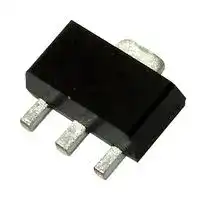


HV9923N8-G
Led Driver, 1 Output, Buck (Step Down), 20V-400V in, 30mA out, TO-243AA-3
- Manufacturer: MICROCHIP
- Product type: AC / DC LED Driver ICs
- Device Topology:Buck (Step Down); Input Voltage Min:85V; Input Voltage Max:264V; Output Voltage Max:-; Output Current Max:30mA; Switching Frequency:-; No. of Outputs:1Outputs; IC Mounting:
- MSL: MSL 1 - Unlimited
- SVHC: No SVHC (04-Feb-2026)
- Topology: Buck
- IC Mounting: Surface Mount
- No. of Pins: 3Pins
- Product Range: -
- Qualification: -
- No. of Outputs: 1Outputs
- Device Topology: Buck
- LED Driver Type: -
- Driver Case Style: TO-243AA
- IC Case / Package: TO-243AA
- Input Voltage Max: 264V
- Input Voltage Min: 85V
- Output Current Max: 30mA
- Output Voltage Max: -
- Switching Frequency: -
- Switching Frequency Typ: -
- Operating Temperature Max: 85°C
- Operating Temperature Min: -40°C
- Automotive Qualification Standard: -
| Delivery and price | |
|---|---|
| Units per pack | 2000 |
| Price | 0.525 € |
| Current stock | 10+ |
| Lead time | 30 days |

## **HV9921/HV9922/HV9923** ## **3-Pin Switch-Mode LED Lamp Driver ICs** ## **Features** - Constant output current: - HV9921 – 20mA - HV9922 – 50mA - HV9923 – 30mA - Universal 85 - 264VAC operation - Fixed off-time buck converter - Internal 475V power MOSFET ## **Applications** - Decorative lighting - Low power lighting fixtures ## **Description** HV9921/HV9922/HV9923 are pulse-width modulated (PWM), high-efficiency, LED driver control ICs. They allow efficient operation of LED strings from voltage sources ranging up to 400VDC. HV9921/22/23 include an internal high voltage switching MOSFET controlled with fixed off-time (TOFF) of approximately 10μs. The LED string is driven at constant current, thus providing constant light output and enhanced reliability. The output current is internally fixed at 20mA for HV9921, 50mA for HV992, and 30mA for HV9923. The peak current control scheme provides good regulation of the output current throughout the universal AC line voltage range of 85 to 264VAC or DC input voltage of 20 to 400V. DS20005311A-page 1 2014 Microchip Technology Inc. **HV9921/HV9922/HV9923** ## **TO OUR VALUED CUSTOMERS** It is our intention to provide our valued customers with the best documentation possible to ensure successful use of your Microchip products. To this end, we will continue to improve our publications to better suit your needs. Our publications will be refined and enhanced as new volumes and updates are introduced. If you have any questions or comments regarding this publication, please contact the Marketing Communications Department via E-mail at **docerrors@microchip.com** . We welcome your feedback. ## **Most Current Data Sheet** To obtain the most up-to-date version of this data sheet, please register at our Worldwide Web site at: ## **http://www.microchip.com** You can determine the version of a data sheet by examining its literature number found on the bottom outside corner of any page. The last character of the literature number is the version number, (e.g., DS30000000A is version A of document DS30000000). ## **Errata** An errata sheet, describing minor operational differences from the data sheet and recommended workarounds, may exist for current devices. As device/documentation issues become known to us, we will publish an errata sheet. The errata will specify the revision of silicon and revision of document to which it applies. To determine if an errata sheet exists for a particular device, please check with one of the following: - Microchip’s Worldwide Web site; **http://www.microchip.com** - Your local Microchip sales office (see last page) When contacting a sales office, please specify which device, revision of silicon and data sheet (include literature number) you are using. ## **Customer Notification System** Register on our web site at **www.microchip.com** to receive the most current information on all of our products. DS20005311A-page 2 2014 Microchip Technology Inc. **HV9921/HV9922/HV9923** ## **PIN DIAGRAM** **==> picture [273 x 196] intentionally omitted <==** **----- Start of picture text -----**<br> 1<br>2<br>3<br>1 2 3<br>TO-243AA TO-92<br>(SOT-89)<br>**----- End of picture text -----**<br> See Table 2-1 for Pin information. ## **TYPICAL APPLICATION CIRCUIT** **==> picture [470 x 263] intentionally omitted <==** **----- Start of picture text -----**<br> LED<br>AC 1<br>-<br>LED<br>n<br>HV9921/22/23<br>3 VDD DRAIN 1<br>GND<br>2<br>**----- End of picture text -----**<br> DS20005311A-page 3 2014 Microchip Technology Inc. **HV9921/HV9922/HV9923** ## **1.0 ELECTRICAL CHARACTERISTICS** ## **ABSOLUTE MAXIMUM RATINGS** Supply Voltage VDD................................-0.3V to +10V Supply Current IDD ..............................................+5mA Operating Ambient temperature ...........-40°C to +85°C Operating Junction Temperature........-40°C to +125°C Storage temperature ..........................-65°C to +150°C Power dissipation @+25°C for TO-92 .............740 mW Power dissipation @+25°C for SOT-89....... 1600 mW* * Mounted on FR4 board, 24mmx25mmx1.57mm **Note** : Stresses above those listed under “Absolute Maximum Ratings” may cause permanent damage to the device. This is a stress rating only and functional operation of the device at those or any other conditions, above those indicated in the operational listings of this specification, is not implied. Exposure to maximum rating conditions for extended periods may affect device reliability. ## **1.1 ELECTRICAL SPECIFICATIONS** **TABLE 1-1: ELECTRICAL CHARACTERISTICS[1]** |**Symbol**|**Parameter**|**Notes**|**Min**|**Typ**|**Max**|**Units **|**Conditions**| |---|---|---|---|---|---|---|---| |**Regulator (VDD)**|||||||| |VDD|VDDRegulator Output|-|-|7.5|-|V|| |VDRAIN|VDRAINSupply Voltage|-|20|-|-|V|| |VUVLO|VDDUnder-voltage Threshold|-|5.0|-|-|V|| |ΔVUVLO|VDDUnder-voltage Lockout Hysteresis|-|-|200|-|mV|| |IDD|Operating Supply Current|-|-|200|350|μA|VDD(EXT)= 8.5V, VDRAIN<br>= 40V| |**Output (DRAIN)**|||||||| |VBR|Breakdown Voltage|2|475|-|-|V|| |RON|ON Resistance|-|-|-|210|Ω|IDRAIN= 20mA (HV9921)<br>IDRAIN= 50mA (HV9922)<br>IDRAIN= 30mA (HV9923)| |CDRAIN|Output Capacitance|3|-|1|5|pF|VDRAIN= 400V| |ISAT|MOSFET Saturation Current|3|100|150|-|mA|| |**Current Sense Comparator**|||||||| |ITHL|Threshold Current - HV9921|2|18.5|-|25.5|mA|| ||Threshold Current - HV9922|2|49|-|63|mA|| ||Threshold Current - HV9923|2|28.2|-|38.2|mA|| |TBLANK|Leading Edge Blanking Delay|2,3|200|300|400|ns|| |TON(MIN)|Minimum ON Time|-|-|-|650|ns|| |**OFF-Time Generator**|||||||| |TOFF|OFF Time|-|8|10.5|13|μS|| - 1 Specifications are TA = 25°C, VDRAIN = 50V unless otherwise noted. - 2 Applies over the full operating ambient temperature range of -40°C < TA < +125°C. - 3 For design guidance only DS20005311A-page 4 2014 Microchip Technology Inc. **HV9921/HV9922/HV9923** ## **THERMAL RESISTANCE** |**THERMAL RESISTANCE**|| |---|---| |**Package**|**θja**| |TO-92|132°C/W| |TO-243AA(SOT-89)|133°C/W| ## **FIGURE 1-1: TYPICAL PERFORMANCE CHARACTERISTICS (TJ= 25°C UNLESS OTHERWISE NOTED)** **==> picture [429 x 448] intentionally omitted <==** **----- Start of picture text -----**<br> 1.10 200<br>180<br>1.05<br>160<br>1.00 140<br>120<br>0.95<br>100<br>80<br>0.90<br>60<br>0.85 40<br>20<br>0.80<br>-40 -15 10 35 60 85 110 0<br>Junction Temperature, °C -40 -15 10 35 60 85 110<br>Junction Temperature (°C)<br>12 1000<br>10<br>8 100<br>6<br>4 10<br>2<br>0-40 -15 10 35 60 85 110 10 10 20 30 40<br>Junction Temperature (°C) DRAIN Voltage (V)<br>180<br>580<br>160 T J = 25 ° C<br>570 TJ = 125°C<br>140<br>560<br>120<br>550<br>100<br>540<br>530 80<br>520 60<br>510 40<br>500 20<br>490 0<br>-40 -15 10 35 60 85 110 0 10 20 30 40<br>Junction Temperature (°C) DRAIN Voltage (V)<br>ON Resistance (μΩ)<br>Normalized Threshold Current<br>OFF Time (μS)<br>DRAIN Capacitance (pF)<br>DRAIN Current (mA)<br>DRAIN Breakdown Voltage (V)<br>**----- End of picture text -----**<br> DS20005311A-page 5 2014 Microchip Technology Inc. **HV9921/HV9922/HV9923** ## **2.0 PIN DESCRIPTION** See Pin Diagram on page 3 for the figures. ## **TABLE 2-1: PIN DESCRIPTION** |**Pin #**|**Name**|**Description**| |---|---|---| |1|Drain|Drain terminal of the output switching MOSFET and a linear regulator input| |2|GND|Common connection for all circuits| |3|VDD|Power Supply pin for all control circuits. By pass this pin with a 0.1 μF low-impedance<br>capacitor| ## **3.0 FUNCTIONAL DESCRIPTION** ## **4.1 Selecting L1 and D1** The HV9921/22/23 are PWM peak current controllers designed to control a buck converter topology in continuous conduction mode (CCM). The output current is internally preset at 20mA for HV9921, 50mA for HV992, and 30mA for HV9923. When the input voltage of 20 to 400V appears at the DRAIN pin, the internal high-voltage linear regulator seeks to maintain a voltage of 7.5VDC at the VDD pin. Until this voltage exceeds the internally programmed under-voltage threshold, the output switching MOSFET is non-conductive. When the threshold is exceeded, the MOSFET turns on. The input current begins to flow into the DRAIN pin. Hysteresis is provided in the undervoltage comparator to prevent oscillation. When the input current exceeds the internal preset level, a current sense comparator resets an RS flipflop, and the MOSFET turns off. At the same time, a one-shot circuit is activated that determines the duration of the off-state (10.5μs typical). As soon as this time is over, the flip-flop sets again. The new switching cycle begins. A “blanking” delay of 300ns is provided that prevents false triggering of the current sense comparator due to the leading edge spike caused by circuit parasitics. ## **4.0 APPLICATION INFORMATION** HV9921/22/23 are low-cost off-line buck converter ICs specifically designed for driving multi-LED strings. They can be operated from either universal AC line range of 85 to 264VAC, or 20 to 400VDC, and drive up to tens of high-brightness LEDs. All LEDs can be run in series, and the HV9921/22/23 regulate at constant current, yielding uniform illumination. HV9921/22/23 are compatible with triac dimmers. The output current is internally fixed at 20mA for HV9921, 50mA for HV9922, and 30mA for HV9923. These parts are available in space saving TO-92 and SOT-89 packages. There is a certain trade-off to be considered between optimal sizing of the output inductor L1 and the tolerated output current ripple. The required value of L1 is inversely proportional to the ripple current ∆IO in it. **==> picture [69 x 27] intentionally omitted <==** VO is the forward voltage of the LED string. TOFF is the off-time of HV9921/22/23. The output current in the LED string (IO) is calculated then as: **==> picture [81 x 18] intentionally omitted <==** where ITH is the current sense comparator threshold. The ripple current introduces a peak-to-average error in the output current setting that needs to be accounted for. Due to the constant off-time control technique used in HV9921/22/23, the ripple current is independent of the input AC or DC line voltage variation. Therefore, the output current will remain unaffected by the varying input voltage. Adding a filter capacitor across the LED string can reduce the output current ripple even further, thus permitting a reduced value of L1. However, keep in mind that the peak-to-average current error is affected by the variation of TOFF. Therefore, the initial output current accuracy might be sacrificed at large ripple current in L1. Another important aspect of designing an LED driver with the HV9921/22/23 is related to certain parasitic elements of the circuit, including distributed coil capacitance of L1, junction capacitance and reverse recovery of the rectifier diode D1, capacitance of the printed circuit board traces CPCB and output capacitance CDRAIN of the controller itself. These parasitic elements affect the efficiency of the switching converter and could potentially cause false triggering of the current sense comparator if not properly managed. Minimizing these parasitics is essential for efficient and reliable operation of the HV9921/22/23. DS20005311A-page 6 2014 Microchip Technology Inc. **HV9921/HV9922/HV9923** Coil capacitance of inductors is typically provided in the manufacturer’s data books either directly or in terms of the self-resonant frequency (SRF). **==> picture [101 x 17] intentionally omitted <==** where L is the inductance value, and CL is the coil capacitance.) Charging and discharging this capacitance every switching cycle causes high-current spikes in the LED string. Therefore, connecting a small capacitor CO (~10nF) is recommended to bypass these spikes. Using an ultra-fast rectifier diode for D1 is recommended to achieve high efficiency and reduce the risk of false triggering of the current sense comparator. Using diodes with shorter reverse recovery time, trr, and lower junction capacitance, CJ, achieves better performance. The reverse voltage rating, VR, of the diode must be greater than the maximum input voltage of the LED lamp. The total parasitic capacitance present at the DRAIN pin of the HV9921/22/23 can be calculated as: **==> picture [111 x 10] intentionally omitted <==** When the switching MOSFET turns on, the capacitance CP is discharged into the DRAIN pin of the IC. The discharge current is limited to about 150mA typically. However, it may become lower at increased junction temperature. The duration of the leading edge current spike can be estimated as: **==> picture [81 x 23] intentionally omitted <==** In order to avoid false triggering of the current sense comparator, CP must be minimized in accordance with the following expression: **==> picture [105 x 23] intentionally omitted <==** where TBLANK(MIN) is the minimum blanking time of 200ns, and VIN(MAX) is the maximum instantaneous input voltage. ## **4.2 Estimating Power Loss** Discharging the parasitic capacitance CP into the DRAIN pin of the HV9921/22/23 is responsible for the bulk of the switching power loss. It can be estimated using the following equation: **==> picture [151 x 23] intentionally omitted <==** where FS is the switching frequency, ISAT is the saturated DRAIN current of the HV9921/22/23. The switching loss is the greatest at the maximum input voltage. The switching frequency is given by the following equation. **==> picture [59 x 22] intentionally omitted <==** When the HV9921/22/23 LED driver is powered from the full-wave rectified AC input, the switching power loss can be estimated as: **==> picture [198 x 20] intentionally omitted <==** VAC is the input AC line voltage. The switching power loss associated with turn-off transitions of the DRAIN pin can be disregarded. Due to the large amount of parasitic capacitance connected to this switching node, the turn-off transition occurs essentially at zero-voltage. Conduction power loss in the HV9921/22/23 can be calculated as: **==> picture [155 x 12] intentionally omitted <==** where D = VO/VIN is the duty ratio, RON is the on-resistance, IDD is the internal linear regulator current. When the LED driver is powered from the full-wave rectified AC line input, the exact equation for calculating the conduction loss is more cumbersome. However, it can be estimated using the following equation: **==> picture [145 x 12] intentionally omitted <==** where VAC is the input AC line voltage. The coefficients KC and Kd can be determined from the minimum duty ratio of the HV9921/22/23. DS20005311A-page 7 2014 Microchip Technology Inc. **HV9921/HV9922/HV9923** ## **FIGURE 4-1: CONDUCTION LOSS COEFFICIENTS KC AND Kd** **==> picture [206 x 188] intentionally omitted <==** **----- Start of picture text -----**<br> 0.7<br>0.6<br>0.5<br>Kd(Dm)<br>0.4<br>Kc(Dm)<br>0.3<br>0.2<br>0.1<br>0 0.1 0.2 0.3 0.4 0.5 0.6 0.7<br>Dm<br>**----- End of picture text -----**<br> Select L1 68mH, I = 30mA. Typical SRF = 170KHz. Calculate the coil capacitance. **==> picture [216 x 23] intentionally omitted <==** ## 4.3.1.2 Step 2. Selecting D1 Usually, the reverse recovery characteristics of ultrafast rectifiers at IF = 20 ~ 50mA are not provided in the manufacturer’s data books. The designer may want to experiment with different diodes to achieve the best result. Select D1 MUR160 with VR = 600V, trr ≈ 20ns (IF = 20mA, IRR = 100mA) and CJ ≈ 8pF (VF > 50V). - 4.3.1.3 Step 3. Calculating total parasitic capacitance - Cp = 5pF + 5pF + 13pF + 8pF = 13pF ## **4.3 EMI Filter** As with all off-line converters, selecting an input filter is critical to obtaining good EMI. A switching side capacitor, albeit of small value, is necessary in order to ensure low impedance to the high frequency switching currents of the converter. As a rule of thumb, this capacitor should be approximately 0.1-0.2 μF/W of LED output power. A recommended input filter is shown in Figure 4-2 for the following design example. ## 4.3.1 DESIGN EXAMPLE The following example designs a HV9921 LED lamp driver meeting the following specifications: ## 4.3.1.4 Step 4. Calculating the leading edge spike duration TSPIKE = -------------------------------------------264V100mA 2 31pF + 20ns 136ns TBLANKMIN - 4.3.1.5 Step 5. Estimating power dissipation in HV9921 at 265VAC ## **Switching power loss:** PSWITCH -----------------------1 **-** 264V 31pF + 2 100mA 20ns 2 10.5s 264V – 41V 131mW - **Input:** Universal AC, 85-265VAC - **Output Current:** 20mA - **Load:** String of 10 LED (LW541C by OSRAM VF = 4.1V max. each) ## **Minimum duty ratio:** **==> picture [85 x 21] intentionally omitted <==** ## 4.3.1.1 Step 1. Calculating L1. ## **Conduction power loss:** The output voltage VO = 10 x VF ≈ 41V (max.). Use this equation assuming a 30% peak-to-peak ripple. **==> picture [103 x 19] intentionally omitted <==** PCOND = 0.25 20mA2 210 + 0.63 200A 264V 55mW ## **Total power dissipation in HV9921:** PTOTAL = 131mW + 55mW = 186mW DS20005311A-page 8 2014 Microchip Technology Inc. **HV9921/HV9922/HV9923** - 4.3.1.6 Step 6. Selecting input capacitor CIN OutputPower = 41V 20mA = 820mW Select CIN ECQ-E4104KF by Panasonic[®] (0.1μF, 400V, Metalized Polyester Film). ## **FIGURE 4-2: UNIVERSAL 85-264VAC LED LAMP DRIVER** **==> picture [467 x 334] intentionally omitted <==** **----- Start of picture text -----**<br> XK D2 A D3 CIN2 LIN CIN CO Vx LED1 - LED12<br>I T ' ~<br>XK D4 DW D5 = ~ y o<br>/\ D1<br>VRD1 HV9921/22/23<br>L1<br>3 VDD<br>AC Line ta I |<br>DRAIN<br>85-265V CDD GND 2 | 1 |<br>O oe F1 fd T 7<br>FIGURE 4-3: TYPICAL EFFICIENCY FIGURE 4-4: SWITCH-OFF TRANSITION<br>82 Ch1:VDRAIN, Ch3: IDRAIN<br>80<br>78 oo )<br>76<br>74<br>72 Eee Obi ZERO VOLTAGE<br>TRANSITION<br>70<br>68<br>66<br>64<br>62<br>75 100 125 150 175 200 225 250 275<br>Input AC Line Voltage (VAC)<br>Efficiency (%)<br>**----- End of picture text -----**<br> DS20005311A-page 9 2014 Microchip Technology Inc. ## **HV9921/HV9922/HV9923** **==> picture [191 x 204] intentionally omitted <==** **----- Start of picture text -----**<br> FIGURE 4-5: TYPICAL EFFICIENCY<br>lek Stop Kj}<br>: uv sO<br>LEADING EDGE SPIKE<br>SWITCH OFF<br>Lapa<br>25mA<br>**----- End of picture text -----**<br> **FIGURE 4-6: SWITCH-OFF TRANSITION Ch1:VDRAIN, Ch3: IDRAIN** ## **FIGURE 4-7: FUNCTIONAL BLOCK DIAGRAM** **==> picture [226 x 144] intentionally omitted <==** **----- Start of picture text -----**<br> GND VDD DRAIN<br>TOFF = 10.5μs Regulator 7.5V<br>REF S Q<br>-<br>R Q<br>+<br>R<br>TBLANK = 300ns<br>**----- End of picture text -----**<br> **==> picture [126 x 9] intentionally omitted <==** **----- Start of picture text -----**<br> HV9921/HV9922/HV9923<br>**----- End of picture text -----**<br> DS20005311A-page 10 2014 Microchip Technology Inc. **HV9921/HV9922/HV9923** ## **5.0 LAYOUT CONSIDERATIONS** For a recommended circuit board layout for the HV9921/22/23, see Figure 5-1. ## **5.4 Thermal Considerations vs. Radiated EMI** ## **5.1 Single Point Grounding** Use a single point ground connection from the input filter capacitor to the area of copper connected to the GND pin. ## **5.2 Bypass Capacitor (CDD)** The VDD pin bypass capacitor CDD should be located as near as possible to the VDD and GND pins. ## **5.3 Switching Loop Areas** The area of the switching loop connecting the input filter capacitor CIN, the diode D1 and the HV9921/22/23 together should be kept as small as possible. The switching loop area connecting the output filter capacitor CO, the inductor L1 and the diode D1 together should be kept as small as possible. The copper area where GND pin is connected acts not only as a single point ground, but also as a heat sink. This area should be maximized for good heat sinking, especially when the SOT-89 package is used. The same applies to the cathode of the free-wheeling diode D1. Both nodes are quiet; therefore, they will not cause radiated RF emission. The switching node copper area connected to the DRAIN pin of the HV9921/22/23, the anode of D1 and the inductor L1 needs to be minimized. A large switching node area can increase high frequency radiated EMI. ## **5.5 Input Filter Layout Considerations** The input circuits of the EMI filter must not be placed in the direct proximity to the inductor L1 in order to avoid magnetic coupling of its leakage fields. This consideration is especially important when unshielded construction of L1 is used. When an axial input EMI filter inductor LIN is selected, it must be positioned orthogonal with respect to L1. The loop area formed by CIN2, LIN and CIN should be minimized. The input lead wires must be twisted together. ## **FIGURE 5-1: RECOMMENDED CIRCUIT BOARD LAYOUT WITH HV9921/22/23** **==> picture [358 x 101] intentionally omitted <==** **----- Start of picture text -----**<br> COMPONENT SIDE VIEW<br>CO<br>VRD1 LIN LED +<br>L1<br>AC Line F1 D1<br>85-264VAC CIN2 CIN LED -<br>D2-5<br>CDD U1<br>**----- End of picture text -----**<br> DS20005311A-page 11 2014 Microchip Technology Inc. **HV9921/HV9922/HV9923** ## **6.0 PACKAGING INFORMATION** ## **6.1 Package Marking Information** **==> picture [233 x 300] intentionally omitted <==** **----- Start of picture text -----**<br> 3-lead TO-243AA* Example<br>(SOT-89)<br>XXXYYWW H21YYWW<br>NNN NNN<br>3-lead TO-92 Example<br>HV9921<br>XXXXXX<br>XXXX e3 N3 [e] 3<br>YWWNNN<br>YWWNNN<br>**----- End of picture text -----**<br> **Legend:** XX...X Product Code or Customer-specific information Y Year code (last digit of calendar year) YY Year code (last 2 digits of calendar year) WW Week code (week of January 1 is week ‘01’) NNN Alphanumeric traceability code e3 Pb-free JEDEC[®] designator for Matte Tin (Sn) ***** This package is Pb-free. The Pb-free JEDEC designator ( ) e3 can be found on the outer packaging for this package. **Note** : In the event the full Microchip part number cannot be marked on one line, it will be carried over to the next line, thus limiting the number of available characters for product code or customer-specific information. Package may or may not include the corporate logo. DS20005311A-page 12 2014 Microchip Technology Inc. **HV9921/HV9922/HV9923** ## **3-Lead TO-243AA (SOT-89) Package Outline (N8)** **==> picture [261 x 158] intentionally omitted <==** **----- Start of picture text -----**<br> D<br>D1 C<br>E H E1<br>1 2 3<br>L<br>b b1 A<br>e<br>e1<br>Top View Side View<br>**----- End of picture text -----**<br> **Note: For the most current package drawings, see the Microchip Packaging Specification at www.microchip.com/packaging.** |**Symbol**|**Symbol**|**A**|**b**|**b1**|**C**|**D**|**D1**|**E**|**E1**|**e**|**e1**|**H**|**L**| |---|---|---|---|---|---|---|---|---|---|---|---|---|---| |Dimensions<br>(mm)|MIN|1.40|0.44|0.36|0.35|4.40|1.62|2.29|2.00**_†_**|1.50<br>BSC|3.00<br>BSC|3.94|0.73**_†_**| ||NOM|-|-|-|-|-|-|-|-|||-|-| ||MAX|1.60|0.56|0.48|0.44|4.60|1.83|2.60|2.29|||4.25|1.20| |_JEDEC Registration TO-243, Variation AA, Issue C, July 1986._<br>**_†_**_This dimension differs from the JEDEC drawing_<br>**_Drawings not to scale_**_._|||||||||||||| DS20005311A-page 13 2014 Microchip Technology Inc. **HV9921/HV9922/HV9923** Note: For the most current package drawings, see the Microchip Packaging Specification at www.microchip.com/packaging. DS20005311A-page 14 2014 Microchip Technology Inc. **HV9921/HV9922/HV9923** ## **APPENDIX A: REVISION HISTORY** ## **Revision A (October 2014)** - Original Release of this Document. DS20005311A-page 15 2014 Microchip Technology Inc. **HV9921/HV9922/HV9923** ## **THE MICROCHIP WEB SITE** Microchip provides online support via our WWW site at www.microchip.com. This web site is used as a means to make files and information easily available to customers. Accessible by using your favorite Internet browser, the web site contains the following information: - **Product Support** – Data sheets and errata, application notes and sample programs, design resources, user’s guides and hardware support documents, latest software releases and archived software - **General Technical Support** – Frequently Asked Questions (FAQ), technical support requests, online discussion groups, Microchip consultant program member listing ## **CUSTOMER SUPPORT** Users of Microchip products can receive assistance through several channels: - Distributor or Representative - Local Sales Office - Field Application Engineer (FAE) - Technical Support Customers should contact their distributor, representative or Field Application Engineer (FAE) for support. Local sales offices are also available to help customers. A listing of sales offices and locations is included in the back of this document. **Technical support is available through the web site at: http://microchip.com/support** - **Business of Microchip** – Product selector and ordering guides, latest Microchip press releases, listing of seminars and events, listings of Microchip sales offices, distributors and factory representatives ## **CUSTOMER CHANGE NOTIFICATION SERVICE** Microchip’s customer notification service helps keep customers current on Microchip products. Subscribers will receive e-mail notification whenever there are changes, updates, revisions or errata related to a specified product family or development tool of interest. To register, access the Microchip web site at www.microchip.com. Under “Support”, click on “Customer Change Notification” and follow the registration instructions. DS20005311A-page 16 2014 Microchip Technology Inc. **HV9921/HV9922/HV9923** ## **PRODUCT IDENTIFICATION SYSTEM** To order or obtain information, e.g., on pricing or delivery, refer to the factory or the listed sales office. |**P**<br>**ART NO.**|**P**<br>**ART NO.**|**XX**<br>**-**|**XX**<br>**-**|**X**<br>**X**<br>**-**|**X**<br>**X**<br>**-**| |---|---|---|---|---|---| ||||||| |**Device**||**Environmental**<br>**Package**<br>**Options**<br>**Reel**|||| |Device:|||HV9921|= 3-Pin Switch-Mode LED Lamp Driver IC,<br>20 mA output current|| ||||HV9922|= 3-Pin Switch-Mode LED Lamp Driver IC,|| |||||50 mA output current|| ||||HV9923|= 3-Pin Switch-Mode LED Lamp Driver IC,|| |||||30 mA output current|| |Package:|||N3|= TO-92|| ||||N8|= TO-243AA (SOT-89)|| |Environmental|||G|= Lead (Pb)-free/ROHS-compliant package|| |Reel:|||(nothing)|= 1000/bag for N3 package, 2000/reel for N8|| ||||package||| **Examples:** a) HV9921N3-G: 20 mA output current, TO-92 package, 1000/ bag b) HV9923N8-G: 30 mA output current, TO-243AA(SOT-89) package, 2000/reel DS20005311A-page 17 2014 Microchip Technology Inc. **Note the following details of the code protection feature on Microchip devices:** - Microchip products meet the specification contained in their particular Microchip Data Sheet. - Microchip believes that its family of products is one of the most secure families of its kind on the market today, when used in the intended manner and under normal conditions. - There are dishonest and possibly illegal methods used to breach the code protection feature. All of these methods, to our knowledge, require using the Microchip products in a manner outside the operating specifications contained in Microchip’s Data Sheets. Most likely, the person doing so is engaged in theft of intellectual property. - Microchip is willing to work with the customer who is concerned about the integrity of their code. - Neither Microchip nor any other semiconductor manufacturer can guarantee the security of their code. Code protection does not mean that we are guaranteeing the product as “unbreakable.” Code protection is constantly evolving. We at Microchip are committed to continuously improving the code protection features of our products. Attempts to break Microchip’s code protection feature may be a violation of the Digital Millennium Copyright Act. If such acts allow unauthorized access to your software or other copyrighted work, you may have a right to sue for relief under that Act. Information contained in this publication regarding device applications and the like is provided only for your convenience and may be superseded by updates. It is your responsibility to ensure that your application meets with your specifications. MICROCHIP MAKES NO REPRESENTATIONS OR WARRANTIES OF ANY KIND WHETHER EXPRESS OR IMPLIED, WRITTEN OR ORAL, STATUTORY OR OTHERWISE, RELATED TO THE INFORMATION, INCLUDING BUT NOT LIMITED TO ITS CONDITION, QUALITY, PERFORMANCE, MERCHANTABILITY OR FITNESS FOR PURPOSE **.** Microchip disclaims all liability arising from this information and its use. Use of Microchip devices in life support and/or safety applications is entirely at the buyer’s risk, and the buyer agrees to defend, indemnify and hold harmless Microchip from any and all damages, claims, suits, or expenses resulting from such use. No licenses are conveyed, implicitly or otherwise, under any Microchip intellectual property rights. ## **Trademarks** The Microchip name and logo, the Microchip logo, dsPIC, FlashFlex, KEELOQ, KEELOQ logo, MPLAB, PIC, PICmicro, PICSTART, PIC[32] logo, rfPIC, SST, SST Logo, SuperFlash and UNI/O are registered trademarks of Microchip Technology Incorporated in the U.S.A. and other countries. FilterLab, Hampshire, HI-TECH C, Linear Active Thermistor, MTP, SEEVAL and The Embedded Control Solutions Company are registered trademarks of Microchip Technology Incorporated in the U.S.A. Silicon Storage Technology is a registered trademark of Microchip Technology Inc. in other countries. Analog-for-the-Digital Age, Application Maestro, BodyCom, chipKIT, chipKIT logo, CodeGuard, dsPICDEM, dsPICDEM.net, dsPICworks, dsSPEAK, ECAN, ECONOMONITOR, FanSense, HI-TIDE, In-Circuit Serial Programming, ICSP, Mindi, MiWi, MPASM, MPF, MPLAB Certified logo, MPLIB, MPLINK, mTouch, Omniscient Code Generation, PICC, PICC-18, PICDEM, PICDEM.net, PICkit, PICtail, REAL ICE, rfLAB, Select Mode, SQI, Serial Quad I/O, Total Endurance, TSHARC, UniWinDriver, WiperLock, ZENA and Z-Scale are trademarks of Microchip Technology Incorporated in the U.S.A. and other countries. SQTP is a service mark of Microchip Technology Incorporated in the U.S.A. GestIC and ULPP are registered trademarks of Microchip Technology Germany II GmbH & Co. KG, a subsidiary of Microchip Technology Inc., in other countries. All other trademarks mentioned herein are property of their respective companies. © 2014, Microchip Technology Incorporated, Printed in the U.S.A., All Rights Reserved. & Printed on recycled paper. ISBN: 978-1-63276-708-0 _Microchip received ISO/TS-16949:2009 certification for its worldwide headquarters, design and wafer fabrication facilities in Chandler and Tempe, Arizona; Gresham, Oregon and design centers in California and India. The Company’s quality system processes and procedures are for its PIC[®] MCUs and dsPIC[®] DSCs, KEELOQ[®] code hopping devices, Serial EEPROMs, microperipherals, nonvolatile memory and analog products. In addition, Microchip’s quality system for the design and manufacture of development systems is ISO 9001:2000 certified._ DS20005311A-page 18 2014 Microchip Technology Inc. ## **Worldwide Sales and Service** ## **AMERICAS** **Corporate Office** 2355 West Chandler Blvd. Chandler, AZ 85224-6199 Tel: 480-792-7200 Fax: 480-792-7277 Technical Support: http://www.microchip.com/ support Web Address: www.microchip.com **Atlanta** Duluth, GA Tel: 678-957-9614 Fax: 678-957-1455 **Austin, TX** Tel: 512-257-3370 **Boston** Westborough, MA Tel: 774-760-0087 Fax: 774-760-0088 **Chicago** Itasca, IL Tel: 630-285-0071 Fax: 630-285-0075 **Cleveland** Independence, OH Tel: 216-447-0464 Fax: 216-447-0643 **Dallas** Addison, TX Tel: 972-818-7423 Fax: 972-818-2924 **Detroit** Novi, MI Tel: 248-848-4000 **Houston, TX** Tel: 281-894-5983 **Indianapolis** Noblesville, IN Tel: 317-773-8323 Fax: 317-773-5453 ## **Los Angeles** Mission Viejo, CA Tel: 949-462-9523 Fax: 949-462-9608 **New York, NY** Tel: 631-435-6000 **San Jose, CA** Tel: 408-735-9110 **Canada - Toronto** Tel: 905-673-0699 Fax: 905-673-6509 ## **ASIA/PACIFIC** **Asia Pacific Office** Suites 3707-14, 37th Floor Tower 6, The Gateway Harbour City, Kowloon Hong Kong Tel: 852-2943-5100 Fax: 852-2401-3431 **Australia - Sydney** Tel: 61-2-9868-6733 Fax: 61-2-9868-6755 **China - Beijing** Tel: 86-10-8569-7000 Fax: 86-10-8528-2104 **China - Chengdu** Tel: 86-28-8665-5511 Fax: 86-28-8665-7889 **China - Chongqing** Tel: 86-23-8980-9588 Fax: 86-23-8980-9500 **China - Hangzhou** Tel: 86-571-8792-8115 Fax: 86-571-8792-8116 **China - Hong Kong SAR** Tel: 852-2943-5100 Fax: 852-2401-3431 **China - Nanjing** Tel: 86-25-8473-2460 Fax: 86-25-8473-2470 **China - Qingdao** Tel: 86-532-8502-7355 Fax: 86-532-8502-7205 **China - Shanghai** Tel: 86-21-5407-5533 Fax: 86-21-5407-5066 **China - Shenyang** Tel: 86-24-2334-2829 Fax: 86-24-2334-2393 **China - Shenzhen** Tel: 86-755-8864-2200 Fax: 86-755-8203-1760 **China - Wuhan** Tel: 86-27-5980-5300 Fax: 86-27-5980-5118 **China - Xian** Tel: 86-29-8833-7252 Fax: 86-29-8833-7256 **China - Xiamen** Tel: 86-592-2388138 Fax: 86-592-2388130 **China - Zhuhai** Tel: 86-756-3210040 Fax: 86-756-3210049 ## **ASIA/PACIFIC** **India - Bangalore** Tel: 91-80-3090-4444 Fax: 91-80-3090-4123 **India - New Delhi** Tel: 91-11-4160-8631 Fax: 91-11-4160-8632 **India - Pune** Tel: 91-20-3019-1500 **Japan - Osaka** Tel: 81-6-6152-7160 Fax: 81-6-6152-9310 **Japan - Tokyo** Tel: 81-3-6880- 3770 Fax: 81-3-6880-3771 **Korea - Daegu** Tel: 82-53-744-4301 Fax: 82-53-744-4302 **Korea - Seoul** Tel: 82-2-554-7200 Fax: 82-2-558-5932 or 82-2-558-5934 **Malaysia - Kuala Lumpur** Tel: 60-3-6201-9857 Fax: 60-3-6201-9859 **Malaysia - Penang** Tel: 60-4-227-8870 Fax: 60-4-227-4068 **Philippines - Manila** Tel: 63-2-634-9065 Fax: 63-2-634-9069 **Singapore** Tel: 65-6334-8870 Fax: 65-6334-8850 **Taiwan - Hsin Chu** Tel: 886-3-5778-366 Fax: 886-3-5770-955 **Taiwan - Kaohsiung** Tel: 886-7-213-7830 **Taiwan - Taipei** Tel: 886-2-2508-8600 Fax: 886-2-2508-0102 **Thailand - Bangkok** Tel: 66-2-694-1351 Fax: 66-2-694-1350 ## **EUROPE** **Austria - Wels** Tel: 43-7242-2244-39 Fax: 43-7242-2244-393 **Denmark - Copenhagen** Tel: 45-4450-2828 Fax: 45-4485-2829 **France - Paris** Tel: 33-1-69-53-63-20 Fax: 33-1-69-30-90-79 **Germany - Dusseldorf** Tel: 49-2129-3766400 **Germany - Munich** Tel: 49-89-627-144-0 Fax: 49-89-627-144-44 **Germany - Pforzheim** Tel: 49-7231-424750 **Italy - Milan** Tel: 39-0331-742611 Fax: 39-0331-466781 **Italy - Venice** Tel: 39-049-7625286 **Netherlands - Drunen** Tel: 31-416-690399 Fax: 31-416-690340 **Poland - Warsaw** Tel: 48-22-3325737 **Spain - Madrid** Tel: 34-91-708-08-90 Fax: 34-91-708-08-91 **Sweden - Stockholm** Tel: 46-8-5090-4654 **UK - Wokingham** Tel: 44-118-921-5800 Fax: 44-118-921-5820 03/25/14 DS20005311A-page 19 2014 Microchip Technology Inc.
Updated at March 10, 2026
Microchip Technology Inc. is a leading global provider of smart, connected, and secure embedded control solutions. Known for enabling engineers to design with confidence, the company delivers a comprehensive product portfolio that reduces total system costs and accelerates time to market across the industrial, automotive, communications, and computing sectors. Our extensive selection of Microchip components highlights the manufacturer's strength in both discrete semiconductors and advanced wireless connectivity. We carry a robust lineup of highly efficient single MOSFETs and Schottky diodes tailored for demanding power management and switching applications. Alongside these essential discretes, engineers can source a wide array of ready-to-use networking modules, prominently featuring Bluetooth and WLAN adapters that streamline the development of modern IoT and connected devices. Rounding out the offering is a diverse range of Microchip integrated circuits and specialized components. This includes versatile I/O expanders for simplified system integration, precision timing solutions such as MEMS oscillators and pulse generators, as well as AC/DC LED driver ICs and sub-2.4GHz RF transceivers. Backed by Microchip's renowned commitment to exceptional quality and reliable performance, these components provide scalable, dependable building blocks for complex electronic designs.
About Novapart
Novapart is a B2B electronic component broker specialising in stock shortages and cost reduction. We source hard-to-find parts and identify compliant alternatives across a catalogue of 410,000+ components from 500+ manufacturers.
Learn more →Stock Shortage Specialist
When a component is unavailable, discontinued or has an unacceptable lead time, we tap into our network of vetted European and Asian distributors to source what you need — without compromising on quality or traceability.
Request a quote →Compliant Alternatives
We identify pin-to-pin, electrically equivalent substitutes that meet the same certifications (RoHS, AEC-Q100, REACH) as your original specification — validated against datasheets, not just part numbers. Often at a lower cost.
BOM Analysis service →