
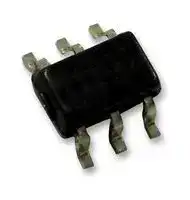


HV98100T-E/CH
LED Driver, 1 Output, Non-Dimmable, 110 Vac in, PFC, 15.5 V to 18.5 V / 5 W to 15 W out, SOT-23-6
- Manufacturer: MICROCHIP
- Product type: AC / DC LED Driver ICs
- Device Topology:Buck-Boost; Input Voltage Min:-; Input Voltage Max:110V; Output Voltage Max:-; Output Current Max:150mA; Switching Frequency:320kHz; No. of Outputs:1Outputs; IC M
- MSL: MSL 1 - Unlimited
- SVHC: No SVHC (04-Feb-2026)
- Topology: Buck-Boost
- IC Mounting: Surface Mount
- No. of Pins: 6Pins
- Product Range: -
- Qualification: -
- No. of Outputs: 1Outputs
- Device Topology: Buck-Boost
- LED Driver Type: -
- Driver Case Style: SOT-23
- IC Case / Package: SOT-23
- Input Voltage Max: 110V
- Input Voltage Min: -
- Output Current Max: 150mA
- Output Voltage Max: -
- Switching Frequency: 320kHz
- Switching Frequency Typ: 320kHz
- Operating Temperature Max: 125°C
- Operating Temperature Min: -40°C
- Automotive Qualification Standard: -
| Delivery and price | |
|---|---|
| Units per pack | 3000 |
| Price | 0.475 € |
| Current stock | 25+ |
| Lead time | 7 days |

## **HV98100/HV98101** ## **Non-Dimmable, Off-Line, LED Driver with Low Total Harmonic Distortions** ## **Features** - Good LED Current Regulation - Better than 5% accuracy - Valley Switching Buck-Boost Converter with Power Factor Correction (PFC) - 0.97 Power Factor (typical) - 5% Total Harmonic Distortion (THD) (typical) - Uses a Standard Off-the-Shelf Inductor - No auxiliary winding required - Single Input Voltage Range - HV98100: 110 VAC ±15% - HV98101: 230 VAC ±15% - Supports 5W-15W Output Power - Space-saving SOT-23-6L Package ## **Applications** - LED Lamps - LED Lighting Fixtures ## **Description** The HV98100/HV98101 LED driver integrated circuit (IC) is an off-line, high-power factor, buck-boost controller targeted at general LED lighting products, such as LED lamps and LED lighting fixtures with a maximum power rating of about 15W. Valley-switching buck-boost converters are preferred in off-line applications since they reduce switching losses. A typical solution is to pair a constant on-time control scheme with valley switching to achieve both a high-power factor and good efficiency. However, this control scheme results in a higher total harmonic distortion, and the actual value is dependent on the input and output voltages. The HV98100/HV98101 uses a unique control scheme to achieve a high-power factor and low THD simultaneously under all line and load conditions, while maximizing efficiency utilizing valley switching. The average LED current is also controlled in a closedloop manner to achieve high LED accuracy. Other unique features of the ICs are the bootstrap of the IC supply voltage from the output, as well as the unique valley-sensing scheme that allows the use of a standard off-the-shelf inductor to minimize the overall system cost. Applications with low-output voltage can be accommodated using a coupled inductor. ## **Package Types** **==> picture [155 x 97] intentionally omitted <==** **----- Start of picture text -----**<br> HV98100/HV98101<br>6-Lead SOT-23<br>IND 1 6 GATE<br>GND 2 5 PVDD<br>COMP 3 4 CS<br>See Table 3-1 for pin description.<br>**----- End of picture text -----**<br> DS20005640A-page 1 2016 Microchip Technology Inc. **HV98100/HV98101** ## **Typical Application Circuit** **==> picture [458 x 675] intentionally omitted <==** **----- Start of picture text -----**<br> DHV RHV<br>PVDD<br>CPVDD<br>MBBT GT HV98100/1<br>COMP<br>RPVDD<br>CS<br>CREC DBBT CCOMP<br>RCS<br>RVD<br>DPVDD LED<br>LBBT DVD CO<br>VAC<br>m a rth<br>Internal Block Diagram<br>OCP I_VO<br>Gate Fault FLT<br>Protection<br>PVDD PVDD<br>I_VO<br>POR<br>VDDon/VDDof f I_VO IND<br>Valley Detect<br>Reg<br>Gate<br>GATE<br>AVDD<br>fsta rt GT_ON<br>Startup Monoshot<br>clock<br>Max Freq POR PVDD<br>Gate Clock<br>Monoshot Vton_ref GATE<br>STRT_UP S Q<br>RESET V_TON [rll]<br>Gate<br>R Q FLT<br>THD GND<br> control Gate OCP_REF<br>COMP - [=] OCP<br>Gate LEB<br>POR CS_REF<br>oat Eee CS<br>DS20005640A-page 2 2016 Microchip Technology Inc. 2016 Microchip Technology Inc.<br>GND IND<br>IN<br>DET_VAL<br>Valley_Det<br>RESET<br>REF GT_R<br>**----- End of picture text -----**<br> 2016 Microchip Technology Inc. 2016 Microchip Technology Inc. **HV98100/HV98101** ## **1.0 ELECTRICAL CHARACTERISTICS** ## **Absolute Maximum Ratings†** |Supply Voltage PVDDto GND .....................................................................................................................-0.3V to +20V| |---| |GATE to GND.................................................................................................................................-0.3V to (PVDD+0.5V)| |CS, COMP, IND to GND...............................................................................................................................-0.3V to 4.5V| |Operating Junction Temperature.............................................................................................................-40°C to +125°C| |Storage Temperature ..............................................................................................................................-65°C to +150°C| |Power Dissipation at +25°C for 6L-SOT-23 .........................................................................................................800<br>mW| |ESD Protection on all pins (HBM)..............................................................................................................................2 kV| |ESD Protection on all pins (MM)...............................................................................................................................175V| * Based on JEDEC JESD51 testing and reporting standards **† Notice:** Stresses above those listed under “Maximum Ratings” may cause permanent damage to the device. This is a stress rating only and functional operation of the device at those or any other conditions above those indicated in the operational sections of this specification is not intended. Exposure to maximum rating conditions for extended periods may affect device reliability. ## **ELECTRICAL CHARACTERISTICS** |**ELECTRICAL CHARACTERISTICS**|**ELECTRICAL CHARACTERISTICS**|**ELECTRICAL CHARACTERISTICS**|**ELECTRICAL CHARACTERISTICS**|**ELECTRICAL CHARACTERISTICS**|**ELECTRICAL CHARACTERISTICS**|**ELECTRICAL CHARACTERISTICS**| |---|---|---|---|---|---|---| |**Electrical Specifications**: Unless otherwise specified, all specifications are for TA= TJ= +25°C, PVDD= 12V. Boldface<br>specifications apply over the full temperature range TA= TJ= -40°C to +125°C.||||||| |**Parameter**|**Symbol**|**Min.**|**Typ.**|**Max.**|**Units**|**Conditions**| |**Power Supply (PVDD)**||||||| |PVDDClamp Voltage|PVDD,clamp|**15.5**|**17**|**18.5**|V|Current into PVDD= 4.0 mA;<br>CGATE= 500<br>pF;<br>fsw= 100<br>kHz;| |VDDStart Voltage|VDD,ON|**14.5**|**16**|**17.5**|V|GATE starts switching| |VDDStop Voltage|VDD,OFF|**6.5**|**8**|**9.5**|V|GATE stops switching| |Current into clamp|IDD,max|—|—|5|mA|**Note**<br>**1**| |Current drawn by IC before start|IDD,Q|—|—|200|μA|Measured at PVDD= 12V<br>after PVDDrises from 0V to<br>12V| |Current drawn by IC during operation|IDD,OP|—|—|4.3|mA|CGATE= 500<br>pF;<br>fsw<br>= 100<br>kHz; COMP<br>= 3V;<br>I_INDSINK<br>= 200<br>μA;<br>I_INDSOURCE= 250<br>μA| |**Gate Driver**||||||| |GATE Driver Sourcing Current|ISOURCE|0.3|—|—|A|**Note**<br>**2**| |Gate Driver Sinking Current|ISINK|0.6|—|—|A|**Note**<br>**2**| |Gate Rise Time (10%-90%)|TRISE|—|—|45|ns|CGATE= 500<br>pF| |Gate Fall Time (10%-90%)|TFALL|—|—|23|ns|CGATE= 500<br>pF| |**Output Current Control**||||||| |Internal Reference Voltage|CSREF|194|204|214|mV|**Note**<br>**2**| |OTA Offset Voltage|VOFFSET|-7.5|—|7.5|mV|**Note**<br>**2**| |Open Loop DC Gain|AV|55|—|—|dB|1VCOMP<br>4V; Output<br>open**Note**<br>**1**| |Small Signal Transconductance|gm|160|230|300|μA/V|1VCOMP4V;**Note**<br>**1**| |Gain Bandwidth Product|GBW|0.16|0.24|—|MHz|CCOMP = 150<br>pF<br>**(Note**<br>**2)**| DS20005640A-page 3 2016 Microchip Technology Inc. ## **HV98100/HV98101** ## **ELECTRICAL CHARACTERISTICS (CONTINUED)** |**ELECTRICAL CHARACTERISTICS (CONTINUED)**|**ELECTRICAL CHARACTERISTICS (CONTINUED)**|**ELECTRICAL CHARACTERISTICS (CONTINUED)**|**ELECTRICAL CHARACTERISTICS (CONTINUED)**|**ELECTRICAL CHARACTERISTICS (CONTINUED)**|**ELECTRICAL CHARACTERISTICS (CONTINUED)**|**ELECTRICAL CHARACTERISTICS (CONTINUED)**| |---|---|---|---|---|---|---| |**Electrical Specifications**: Unless otherwise specified, all specifications are for TA= TJ= +25°C, PVDD= 12V. Boldface<br>specifications apply over the full temperature range TA= TJ= -40°C to +125°C.||||||| |**Parameter**|**Symbol**|**Min.**|**Typ.**|**Max.**|**Units**|**Conditions**| |RONof COMP Reset FET|RCOMP|300|400|500||| |**Internal Clocks**||||||| |Start-up Clock|Fstart|6.25|10|15|kHz|| |Maximum Frequency Limit|Fmax|217|320|480|kHz|**Note**<br>**1**| |**Valley Detect**||||||| |Current into IND pin|IIND|—|—|600|μA|**Note**<br>**2**| |Voltage at IND pin|VIND|3.87|4.3|4.73|V|IIND= 250<br>μA| |Comparator Delay Time|Tdelay|—|—|50|ns|**Note**<br>**2**| |**Control Circuit**||||||| |Internal Timing Constant|KT|—|1.25|—|μs|| |Internal Voltage for Timing|VTref|—|2|—|V|HV98100| |||—|2.5|—|V|HV98101| |GATE On-time|TON|6.83|7.35|7.89|μs|HV98100<br>Ext Clk = 50<br>kHz<br>COMP = 2V| ||TON|6.11|6.7|7.05|μs|HV98101<br>Ext CSlk = 50<br>kHz<br>COMP = 2V| |**Protection**||||||| |Over Voltage Protection Current<br>Threshold|IOVP|350|450|550|μA|GATE<br>= LOW| |Over Current Protection Reference|OCPREF|2.2|2.35|2.5|V|| |Over Current Protection Blanking Time|TBLNKOCP|150|—|250|ns|**Note**<br>**2**| |Detect time for Over Current Protection|TDETOCP|150|—|250|ns|After TBLNKOCP (**Note**<br>**2**)| |Over Current Comparator Delay|OCPDLY|—|50|100|ns|100<br>mV overdrive (**Note**<br>**2**)| |**Note 1:**<br>Obtained by Design and Characterization; not 100% tested in production.<br>**2:**<br>Design Guidance only.||||||| ## **TABLE 1-1: TEMPERATURE SPECIFICATIONS** |**Parameter**|**Symbol**|**Min.**|**Typ.**|**Max.**|**Units**|**Conditions**| |---|---|---|---|---|---|---| |**Temperature Ranges**||||||| |Storage Temperature|TA|-65|—|+150|°C|| |Operating Junction Temperature|TJ|-40|—|+125|°C|| |**Thermal Package Resistance**||||||| |Thermal Resistance, 6L-SOT-23|JA|—|**124**|—|°C/W|| ||JC|—|**74**|—|°C/W|| DS20005640A-page 4 2016 Microchip Technology Inc. **HV98100/HV98101** ## **2.0 TYPICAL OPERATING CURVES** **Note:** The graphs and tables provided following this note are a statistical summary based on a limited number of samples and are provided for informational purposes only. The performance characteristics listed herein are not tested or guaranteed. In some graphs or tables, the data presented may be outside the specified operating range (e.g., outside specified power supply range) and therefore outside the warranted range. **Note:** Unless otherwise indicated, TA = TJ = +25°C, PVDD = 12V. Boldface specifications apply over the full temperature range TA = TJ = -40°C to +125°C. **==> picture [216 x 146] intentionally omitted <==** **----- Start of picture text -----**<br> 16.1<br>16.05<br>16<br>15.95<br>15.9<br>15.85<br>15.8<br>15.75<br>15.7<br>15.65<br>15.6<br>-55 -35 -15 5 25 45 65 85 105 125<br>Temperature (°C)<br> (V)<br>DD,ON<br>V<br>**----- End of picture text -----**<br> _**FIGURE 2-1:** VDD Start Voltage vs. Junction Temperature._ **==> picture [216 x 168] intentionally omitted <==** **----- Start of picture text -----**<br> 8.1<br>8.05<br>8<br>7.95<br>7.9<br>-55 -35 -15 5 25 45 65 85 105 125<br>Temperature (°C)<br>FIGURE 2-2: VDD Stop Voltage vs.<br>Junction Temperature.<br> (V)<br>DD,ON<br>V<br>**----- End of picture text -----**<br> **==> picture [216 x 146] intentionally omitted <==** **----- Start of picture text -----**<br> 201<br>200.5<br>200<br>199.5<br>199<br>-55 -35 -15 5 25 45 65 85 105 125<br>Temperature (°C)<br> (mV)<br>REF<br>CS<br>**----- End of picture text -----**<br> _**FIGURE 2-3:** Internal Reference Voltage vs. Junction Temperature._ **==> picture [218 x 146] intentionally omitted <==** **----- Start of picture text -----**<br> 460<br>455<br>450<br>445<br>440<br>435<br>430<br>-55 -35 -15 5 25 45 65 85 105 125<br>Temperature (°C)<br> (uA)<br>IOVP<br>**----- End of picture text -----**<br> _**FIGURE 2-4:** Over Voltage Protection Current Threshold vs. Junction Temperature._ **==> picture [218 x 168] intentionally omitted <==** **----- Start of picture text -----**<br> 2.4<br>2.39<br>2.38<br>2.37<br>-55 -35 -15 5 25 45 65 85 105 125<br>Temperature (°C)<br>FIGURE 2-5: Over Current Protection<br>Reference vs. Junction Temperature.<br> (V)<br>REF<br>OCP<br>**----- End of picture text -----**<br> **==> picture [218 x 168] intentionally omitted <==** **----- Start of picture text -----**<br> 50<br>45<br>40<br>35<br>30<br>25<br>20<br>15<br>10<br>5<br>0<br>7 7.5 8 8.5 9 9.5 10 10.5 11 11.5 12<br>FSTART (kHz)<br>FIGURE 2-6: Startup Clock Frequency<br>Histogram.<br>% of Units<br>**----- End of picture text -----**<br> DS20005640A-page 5 2016 Microchip Technology Inc. ## **HV98100/HV98101** **==> picture [218 x 146] intentionally omitted <==** **----- Start of picture text -----**<br> 80<br>70<br>60<br>50<br>40<br>30<br>20<br>10<br>0<br>125 135 145 155 165 175 185 195 205<br>IDD,Q (uA)<br>% of Units<br>**----- End of picture text -----**<br> _**FIGURE 2-7:** Quiescent Current Histogram._ **==> picture [218 x 146] intentionally omitted <==** **----- Start of picture text -----**<br> 60<br>50<br>40<br>30<br>20<br>10<br>0<br>90 92 94 96 98 100 102 104 106 108 110<br>Output Current (mA)<br>% of Units<br>**----- End of picture text -----**<br> _**FIGURE 2-8:** Output Current Accuracy in Application._ DS20005640A-page 6 2016 Microchip Technology Inc. **HV98100/HV98101** ## **3.0 PIN DESCRIPTION** The description of the pins are listed in Table 3-1. **TABLE 3-1: PIN DESCRIPTION** |**HV98100/HV98101**<br>**SOT-23**|**Symbol**|**Description**| |---|---|---| |1|IND|Input from LED String Anode for both valley detection and over-voltage protection<br>Pin| |2|GND|Common connection for all circuits Pin| |3|COMP|Loop compensation for stable response Pin| |4|CS|Current sense input for sensing inductor current Pin| |5|PVDD|Supply Voltage for the IC Pin| |6|GATE|Gate driver for driving the external MOSFET Pin| ## **3.1 IND** This pin is used for detecting the valley, as well as for over-voltage protection. The voltage at pin is maintained at approximately 4.3V. When the switching FET is off, current is sourced out of this pin. If this current exceeds 450 μA, then over voltage is detected and the IC shuts down. This current sourced out of the pin is also used to detect the valley, using a patented method. For proper operation, the IND pin should be shielded to prevent mis-triggering due to the large voltage slew rates present in application. A recommended layout is shown in Figure 3-1. ## **3.2 Power Ground Pin (GND)** This is the ground pin of the IC. The VDD capacitor and COMP network should be connected to this pin and the GND pin should be connected to the sense resistor, as shown in the Typical Application Circuit for proper functioning of the IC. Figure 3-2 shows a recommended layout. Red traces in the layout are on the top layer, whereas blue traces on the layout are on the bottom layer. **==> picture [188 x 10] intentionally omitted <==** **----- Start of picture text -----**<br> FIGURE 3-1: Shielding the IND Pin.<br>**----- End of picture text -----**<br> _**FIGURE 3-2:** Connection to the GND Pin._ DS20005640A-page 7 2016 Microchip Technology Inc. ## **HV98100/HV98101** ## **3.3 COMP** This pin is the output of the internal transconductance amplifier. A compensation network connected between COMP and GND pins is used to stabilize the closed loop control of the LED current. ## **3.4 CS** This pin is used to sense the inductor current. The inductor current information is used to derive the output LED current, as well as to protect the inductor from saturation. ## **3.5 PVDD** This pin is the power supply pin for the IC. A minimum of 4.7 μF capacitor needs to be connected between PVDD and GND for stability of the internal shunt regulator. The CPVDD capacitor needs to be placed physically close to the IC to minimize the trace length between the PVDD pin and the capacitor. ## **3.6 GATE** This pin is the gate drive output of the IC and is used to control the switching of the external FET. DS20005640A-page 8 2016 Microchip Technology Inc. **HV98100/HV98101** ## **4.0 FUNCTIONAL DESCRIPTION** ## **4.1 Introduction** The HV98100/HV98101 control ICs provide constant average LED current for LED lamps and fixtures with a single-stage, valley-switching, buck-boost powersupply topology. The IC is targeted at designs at a single-line voltage, such as 110 VAC (HV98100) or 230 VAC (HV98101) and does not support designs for universal input voltage range. ## **4.2 Principle of Operation** The IC adopts a novel control mechanism to vary both on-time and switching period at the same instant over the line cycle in a way that forces the average input current to be proportional to the input voltage, realizing high-power factor and low THD which is independent of the load voltage (VO) (unlike a constant on-time control where the THD is dependent on the LED string voltage). In order to determine the LED current regulation, power balancing is used to maintain the mean programmable LED current (IO) in a closed-loop manner by means of the adaptive VCOMP swing upon the defined input/output voltage variation, as shown in Equation 4-1. ## **EQUATION 4-1:** **==> picture [218 x 52] intentionally omitted <==** Assume a VCOMP variation from 1.2V to 3.8V, an input voltage (VIN,rms) variation of ±15% and the internal timing constant (KT) variation of ±12%. With these assumptions, the maximum variation in the LED string voltage (to maintain constant LED current) cannot exceed ±18% approximately. DS20005640A-page 9 2016 Microchip Technology Inc. **HV98100/HV98101** ## **5.0 APPLICATION INFORMATION** ## **5.1 Introduction** This section describes the operation of the various blocks in the IC. Detailed design information, along with a design example, is provided in **Section 6.0 “Design Example”** . The IC includes an internal VDD clamp circuit. The clamp limits the voltage on the VDD supply pin to the maximum value (PVDD,clamp). If the maximum current supplied through the external resistors minus the current consumption of the IC is lower than the maximum value that the Zener clamp can sustain (IDD,MAX), no external Zener diode is required. ## **5.3 LED Current Regulator** ## **5.2 PVDD Regulator** The supply current is initially fed from the rectified AC input directly via an external start-up resistor (RHV) to peak charge a hold-up capacitor (CPVDD) connected at this pin. Note that a switching diode (DHV) is required in series to prevent the capacitor from discharging when the buck-boost converter FET (MBBT) turns on. As the voltage on the VDD capacitor increases, the IC is held in a Stand-by mode and draws minimum current (200 μA max.). Once the voltage at VDD reaches VDD,ON, the IC turns on and starts switching at an internally fixed switching frequency of 10 kHz, until the valley can be detected. Once the valley is detected, the converter starts working in the normal Valley-Switching mode and tries to regulate the LED current. In this mode, the current drawn by the IC from VDD increases causing the voltage across the VDD capacitor to start dropping (since the current supplied by the external start-up resistor is not sufficient). If the VDD voltage drops below VDD,OFF, the IC enters into Stand-by mode and the process starts again. If the bootstrap from the output capacitor (CO) is available to prevent the VDD voltage from going below VDD,OFF, then the LED driver operates normally. In this way, as shown in Figure 5-1, the PVDD voltage bounces between VDD,ON and VDD,OFF within a hysteresis band for the IC to start GATE switching, until the energy stored in the output capacitor can be partially delivered to PVDD through the bootstrapping resistor-diode network (RPVDD-DPVDD). **==> picture [218 x 188] intentionally omitted <==** **----- Start of picture text -----**<br> VIN<br>0<br>VDDON<br>PVDD<br>VDDOFF<br>0<br>GT<br>0<br>VO<br>0<br>**----- End of picture text -----**<br> The LED current (IO) is sensed directly using an external sense resistor RCS and compared to an internal fixed reference (CSREF). An internal transconductance amplifier is used to close the loop on the LED current with an external compensation capacitor. The LED current can be programmed as in Equation 5-1. ## **EQUATION 5-1:** **==> picture [218 x 41] intentionally omitted <==** ## **5.4 Valley Switching** The driver incorporates valley switching (quasi-resonant switching), a technique for reducing switching loss at the turn-on event of the buck-boost converter FET. Valley detect is accomplished by sensing the current sunk into the IND pin when the GATE is low. The operation is illustrated in Figure 5-2. When the inductor current IL has decreased to zero at t2, the positive LED voltage VL starts to oscillate around the 0V level (with respect to the IC GND), with an amplitude VO. The GATE turns on again when the first lowest level (valley) is detected. **==> picture [218 x 175] intentionally omitted <==** **----- Start of picture text -----**<br> Gate<br>0<br>VL<br>+Vo<br>0 valley<br>-VIN<br>magnetization demagnetization<br>IL,max<br>IL<br>0 Ton Toff 3<br>t0 t1 t2 t00<br>TS<br>**----- End of picture text -----**<br> _**FIGURE 5-2:** Valley Detect Waveforms._ However, in case the valley is not detected (during startup, output short circuit and input voltage zero crossings), a 10 kHz internal clock is used to start the next cycle. _**FIGURE 5-1:** Typical Startup Waveforms._ DS20005640A-page 10 2016 Microchip Technology Inc. **HV98100/HV98101** ## **5.5 Over-Voltage and Short-Circuit Protection** ## 5.5.1 OVER-VOLTAGE PROTECTION Apart from the valley detect, measuring the current sunk into the IND pin when the GATE is low can be used to sense an output over voltage or open circuit. The IND triggering level is IOVP. When the current into the IND pin exceeds IOVP, the gate driver shuts down. The PVDD capacitor starts discharging (since there is no bootstrap and the current through the input start-up resistor is insufficient to charge the capacitor). Once the voltage at PVDD drops to VDD,OFF, the IC goes into a low-current mode and the start-up procedure starts. This process keeps repeating until the over-voltage condition disappears. ## 5.5.2 SHORT-CIRCUIT PROTECTION Output short circuit (or input under voltage) causes the converter to go into Continuous Conduction mode (CCM) by sensing the inductor current when MBBT is on. When the GATE turns on, a leading edge blanking circuit is activated within the IC. The blanking circuit has two functions: 1. Blank the first TBLNKOCP of the GATE on-time. During this time, RCS will detect the leading edge spike, and the edge spike is not allowed to propagate to the comparator since it might cause false triggering of the OCP comparator. 2. Allow the OCP comparator to see the next TDETOCP of the inductor current. Since the converter is assumed to be in Boundary Conduction mode during normal operation, when the GATE turns on, the inductor current will start at zero and start ramping up. The IC compares the second voltage across RCS in the detect window after the GATE turns on and determines if the converter is operating in CCM. **==> picture [218 x 178] intentionally omitted <==** **----- Start of picture text -----**<br> Gate<br>0<br>CS<br>Voltage +Vo<br>0.2Vo<br>0<br>OCP<br>+ve OCP_Ref<br>input<br>0 TDET TDET<br>OCP<br>TBLANK TBLANK<br>0<br>**----- End of picture text -----**<br> _**FIGURE 5-3:** Waveforms During Normal Operation._ **==> picture [218 x 174] intentionally omitted <==** **----- Start of picture text -----**<br> Gate<br>0<br>CS<br>Voltage +Vo<br>0.2Vo<br>0<br>OCP<br>+ve OCP_Ref<br>input<br>0 TDET TDET<br>OCP<br>TBLANK TBLANK<br>0<br>**----- End of picture text -----**<br> _**FIGURE 5-4:** Waveforms During Short Circuit._ If the IC detects four consecutive cycles of CCM, the GATE is turned off and the IC goes through a POR. Typical waveforms are shown in Figures 5-3 and 5-4. DS20005640A-page 11 2016 Microchip Technology Inc. ## **HV98100/HV98101** ## **6.0 DESIGN EXAMPLE** This section describes the procedure to design an HV98100/HV98101 LED driver. The specifications used for this example are: - **Input:** 230 VAC r.m.s ±15%, 50 Hz - **Output Current:** 150 mA - **LED String Voltage:** 88V - 122V ## **6.1 Power stage design** ## 6.1.1 CALCULATING INPUT CURRENT The maximum output power (POmax) can be computed as: ## **EQUATION 6-1:** _=_ _I = 122V_ _150 mA = 18.3W PO_ _max VO_ _max O_ ## **EQUATION 6-4:** ||_TON,max_<br>_TS,max_<br>_-----------------------_|_=_|_1_<br>_1_<br>_2 V IN,min,rms_<br><br>_V O,max_<br>_-----------------------------------------_**_-_**<br>_+_<br>_-----------------------------------------------------_|_=_|_1_<br>_1_<br>_2 195.5V_<br><br>_122V_<br>_----------------------------_**_-_**<br>_+_<br>_--------------------------------------_**_-_**|_=_|_0.31_| |---|---|---|---|---|---|---|---| Combining Equations 6-2, 6-3 and 6-4: ## **EQUATION 6-5:** ||_IL,max,pk_|_=_|_=_|_2 IIN,max,peak_<br>|_2 IIN,max,peak_<br>|_2 IIN,max,peak_<br>|_2 IIN,max,peak_<br>||_TS,max_<br>_TON ,max_<br>_-----------------------_**_-_**| |---|---|---|---|---|---|---|---|---|---| ||_=_|_2_||_156 mA_||_1_<br>_--------_**_-_**|_=_|_1A_|| |||||||_0.31_|||| Assuming a minimum switching frequency of 30 kHz, the inductor value can be computed as: ## **EQUATION 6-6:** Assuming a sinusoidal input current wave-shape, the peak input current at the minimum input voltage and maximum output power can be computed to be: ## **EQUATION 6-2:** **==> picture [218 x 89] intentionally omitted <==** **----- Start of picture text -----**<br> = ---------------------------------------2 PO max - = -------------------------------2 18.3W - = 156 mA<br>IIN , max, pk V IN ,min,rms 195.5V 0.85<br>where:<br>ƞ = the assumed efficiency of the converter<br>**----- End of picture text -----**<br> ## 6.1.2 SELECTING THE INDUCTOR The typical inductor current waveform for a Boundary Conduction mode buck-boost converter is shown in Figure 5-2. Ignoring the dead-time, the peak input current can be expressed as a function of the peak inductor current. ## **EQUATION 6-3:** **==> picture [218 x 43] intentionally omitted <==** **----- Start of picture text -----**<br> IIN , max, peak = 12 [-] [-] IL, max, pk --------------------------TON , maxTS, max<br>**----- End of picture text -----**<br> Since a Boundary Conduction mode converter has the same DC transfer function as a Continuous Conduction mode (CCM) converter, the ratio of the on-time to the switching frequency can be expressed as: **==> picture [218 x 58] intentionally omitted <==** **----- Start of picture text -----**<br> TON,max = 1-----------------------------------------------------+ -----------------------------------------2TS V IN,min,rms max - = 1--------------------------------------+33.33 ----------------------------2 122V 195.5V s -- = 10.2 s<br>V O,max<br>**----- End of picture text -----**<br> ## **EQUATION 6-7:** **==> picture [218 x 66] intentionally omitted <==** **----- Start of picture text -----**<br> LBBT = -----------------------------------------------------------------------2 V IN,min,rms TON,max<br>IL,max,pk<br>= -----------------------------------------------------2 195.5V 10.2 s = 2.79 mH<br>1A<br>**----- End of picture text -----**<br> The inductor peak current has already been computed in Equation 6-5. The r.m.s current can be computed using: ## **EQUATION 6-8:** **==> picture [218 x 115] intentionally omitted <==** **----- Start of picture text -----**<br> KIL = ------------------------------------------------- 2 V IN,min,rms [2] - + 8-------------------------------------------------- 9 2 VIN,min,rms + 16 [-] [-]<br>8 V [2] V O,max<br>O,max<br>= ------------------------------------2 195.5V [2] - + 8----------------------------------- 2 195.5V - + 1<br>9 122V 6 [-] [-]<br>8 122 V [2]<br>= 1.204<br>**----- End of picture text -----**<br> DS20005640A-page 12 2016 Microchip Technology Inc. **HV98100/HV98101** ## **EQUATION 6-9:** _IL,rms = KIL_ _n--------------------------------------------------_ _4_ _2VO,max_ _V IN,min,rms_ _IO = 1.204_ _-------------------------------------------------4_ _122V_ _0.15A 0.85_ _2_ _195.5V_ _= 0.375A_ ## 6.1.3 SELECTING THE SWITCHING FET The voltage rating of the switching FET should be: ## **EQUATION 6-10:** _BV DSS,min = 1.3_ _2_ _V IN,max,rms + VO,max_ _= 1.3_ _2_ _264.5V + 122V_ _= 645V_ A 650V rated switching FET should be chosen for this application. The r.m.s current through the FET is: ## **EQUATION 6-11:** _IQ,rms,max = ------------------------------------------------------4_ _VO,max_ _IO_ _**-**_ _1_ _------------------------------------------------------4_ _2_ _V IN ,min,rms_ _**-**_ _+ 1_ _= n_ _2_ _V IN ,min,rms_ _3[-]_ _**[-]**_ _3_ _VO,max 2[-]_ _**[-]**_ _-------------------------------------------4_ _122V_ _0.15A_ _**-**_ _1_ _4----------------------------------------_ _2_ _195.5V_ _**-**_ _+ 1_ _0.85_ _2_ _195.5_ _3[-]_ _**[-]**_ _3_ _122V 2[-]_ _**[-]**_ _= 217.48 mA_ The Rdson of the FET can be computed assuming a 3% power loss at maximum output power and minimum input voltage. ## **EQUATION 6-12:** **==> picture [214 x 40] intentionally omitted <==** The 1.5 factor in the denominator is used to account for the higher FET resistance in actual operation due to higher junction temperature. ## 6.1.4 SELECTING THE SWITCHING DIODE The voltage rating of the switching diode should match or exceed the voltage rating of the switching FET. A high-speed diode with reverse recovery time in the order of 50 ns should be chosen for this application. The peak, r.m.s and average current through the diode can be computed using the following equations: ## **EQUATION 6-13:** **==> picture [214 x 28] intentionally omitted <==** **----- Start of picture text -----**<br> IDBBT avg = IO = 0.15A<br>**----- End of picture text -----**<br> ## **EQUATION 6-14:** **==> picture [216 x 103] intentionally omitted <==** **----- Start of picture text -----**<br> KID = -----------------------------------------------2 3V INV O minmax rms - 3-------------------------------------------------------- 28 VV OIN maxmin rms + ----------3 4 <br>= ----------------------------2 195.5V - 3---------------------------------------- 2 195.5V - + ----------4 <br>3 122V 8 122V 3 <br>= 0.981<br>**----- End of picture text -----**<br> ## **EQUATION 6-15:** **==> picture [216 x 77] intentionally omitted <==** **----- Start of picture text -----**<br> IDBBT ,max,rms = --------------------------------------------------n 4 2V O,max V IN ,min,rms IO - KID<br>= -------------------------------------------4 122V 0.15A - 0.981= 0.306A<br>0.85 2 195.5V<br>**----- End of picture text -----**<br> ## **EQUATION 6-16:** _IDBBT_ _peak = IL,max, pk = 1.0A_ 6.1.5 CHOOSING THE OUTPUT CAPACITOR The output capacitor is chosen based on the maximum allowable line frequency ripple in the LED current. This can be computed if the desired flicker index is known. **==> picture [218 x 146] intentionally omitted <==** **----- Start of picture text -----**<br> Area 1<br>Avg Light<br>Area 2 Output<br>Time (s)<br>FIGURE 6-1: Flicker Index.<br>Light Output (lm)<br>**----- End of picture text -----**<br> For a given instantaneous light output waveform (shown in Figure 6-1), the flicker index can be computed to be: DS20005640A-page 13 2016 Microchip Technology Inc. **HV98100/HV98101** ## **EQUATION 6-17:** _FI = ------------------------------------------------Area1_ _**-**_ _Area1_ _+_ _Area2_ where: Area1 = the area of the curve above the average Area2 = the area of the curve below the average Assuming that the instantaneous light output is directly proportional to the instantaneous LED current, the flicker index can be computed from the instantaneous LED current waveform shown in Figure 6-1. ## **EQUATION 6-18:** _FI = --------------------_ _IO_ _**-** 2_ _IO_ _IO = 2_ _FI_ _IO = 2_ _0.15_ _0.15A = 0.14A_ The typical LED string dynamic resistance can be computed as: ## **EQUATION 6-19:** _RLED = 0.05_ _----------------------VOIO_ _max = 0.05_ _--------------0.15A122V = 40.67_ The corresponding line frequency peak-to-peak ripple in the output voltage is: ## **EQUATION 6-20:** ## **EQUATION 6-23:** _2 =_ – _I[2] = ICo_ _rms IDBBT_ _max_ _rms O 0.305A[2]_ – _0.15A[2] = 0.265A_ ## 6.1.6 SELECTING THE INPUT CAPACITOR The input capacitor is selected to reduce the input ripple voltage. A simple first-pass selection can be computed as: ## **EQUATION 6-24:** **==> picture [216 x 73] intentionally omitted <==** This capacitor will need to be adjusted in once a prototype is built. A large value will increase the THD where as a low value will affect the EMI performance. ## **6.2 Control Stage Design** ## 6.2.1 SELECTING THE CURRENT SENSE RESISTOR The current sense resistor value is set by the output current. The resistor’s power rating is set by the inductor current. _VO =_ _IO_ _RLED = 0.14A_ _40.67_ _= 5.69V_ ## **EQUATION 6-25:** The output capacitor is usually dominated by the low-frequency ripple component. It can be computed using the following equation: ## **EQUATION 6-21:** **==> picture [216 x 36] intentionally omitted <==** Voltage rating of the output capacitor should be about 20% higher than the maximum output voltage. ## **EQUATION 6-22:** _= 1.2_ _= 1.2_ _122V = 146V VCO V O_ _max_ _RCS = CSREF------------------IO_ _**-** = --------------0.15A0.2V = 1.33_ _2 PRcs = IL_ _rms_ _RCS = 0.375A[2]_ _1.33_ _= 0.187W_ ## 6.2.2 SELECTING THE VALLEY SENSE COMPONENTS The resistor used for detecting the valley is also used for over-voltage protection. Hence, the resistor should be chosen based on the over-voltage setting desired. Assume a 10% headroom over the maximum output voltage to set the minimum over-voltage threshold. Then, the resistor is: The r.m.s current through the output capacitor is: ## **EQUATION 6-26:** _RVD_ = --------------------------------------------------------1.1 _V OIOCP_ _max_ , _min_ – _V IND_ = ------------------------------------------1.1 122350 _V_ _A_ – 4.3 _V_ **-** = 371 _k_ DS20005640A-page 14 2016 Microchip Technology Inc. **HV98100/HV98101** Then maximum output voltage that can occur during over-voltage conditions is: ## **EQUATION 6-27:** _OV Pmax = IOCP max,_ _RVD + V IND = 550_ _A_ _371k_ _+ 4.3V = 208V_ Note that since this is not a continuous operation, the voltage rating of the output capacitor should be chosen to withstand this voltage, but not to operate at this voltage continuously. The diode in series with this resistor should be a 500 μA switching diode with a breakdown voltage of at least 400V (250V for a HV98100 design). ## 6.2.3 SELECTING THE START-UP NETWORK The start-up resistor should be chosen based on the maximum start-up time that is allowable before the GATE starts switching. Note that selecting a shorter start-up time will cause higher losses in the resistor during operation. The start-up time and power loss should be iterated until a reasonable compromise is achieved for both parameters. The minimum capacitor at PVDD required is 4.7 μF. In most cases this capacitor value is sufficient for hold-up. Assuming a 100 ms start-up time (TSTRT), the start-up resistor can be computed as shown in Equation 6-28. ## **EQUATION 6-28:** **==> picture [218 x 89] intentionally omitted <==** **----- Start of picture text -----**<br> RHV = -----------------------------------------------------------------------------CPVDD----------------------------------------------------2 V in min V DD rms ON – V DD+ 200 ON A - = -----------------------------------------------------4.7-----------------------------100ms 2F 195.5V 16V - + – 20016V A -<br>TSTRT<br>= 273k <br>**----- End of picture text -----**<br> The maximum power loss in the resistor occurs at high line and is shown in Equation 6-29. ## **EQUATION 6-29:** _= -----------------------------------------------------------------------------------------------------------------------------------------------------2_ _V in_ _max_ _rms_ _4_ _V O_ _max +_ _2_ _V in_ _max_ _rms_ _PRHV_ _max 2_ _RHV = -------------------------------------------------------------------------------------------------------2_ _264.5V_ _4_ _122V +_ _2_ _264.5V_ _**-**_ _= 0.363W 2_ _273k_ The minimum average current supplied by RHV during operation is shown in Equation 6-30. ## **EQUATION 6-31:** ## **EQUATION 6-30:** _IRHV_ _min_ _avg = 2----------------------------------------------------_ _2_ _V in_ _RHV_ _min_ _rms_ _**-** = -----------------------------------2_ _2_ _195.5V_ _**-**_ _273k_ _= 645_ _A_ _IRPVDD,AVG =_ _[-] 1_ _**[-]**_ _V O-------------------------------RPVDD_ – _PV DD_ _**-**_ _VO-----------------------------------------V_[ˆ] _+INV_[ˆ] _IN_ _sin_ _sin_ _**-**_ _d_ _0_ However, the closed form solution for the integral in Equation 6-31 is very complex. The equation can be simplified using a curve fit solution. The diode in the start-up network (DHV) can be a simple 1N4148. ## 6.2.4 SELECTING BOOTSTRAP COMPONENTS The total current required by the IC during normal operation comes from two sources - Current through RHV - Current through RPVDD The current through RHV resistor has been computed in Equation 6-28. The average current supplied through RPVDD is: ## **EQUATION 6-32:** _IRPVDDAVG = V O-------------------------------_ – _PV DD_ _**-**_ _0.193_ _ln_ _V-----------_[ˆ] _IN_ _+ 0.3801_ _RPVDD_ _V O_ This approximation is valid as long as **==> picture [45 x 28] intentionally omitted <==** DS20005640A-page 15 2016 Microchip Technology Inc. ## **HV98100/HV98101** Assuming we need a total current of about 4 mA during normal operation, the RPVDD resistor can be chosen as: ## **EQUATION 6-33:** ## 6.2.5 CHOOSING THE COMPENSATION CAPACITOR The compensation capacitor serves two functions in a power factor correction circuit: - maintain loop stability _RPVDD =_ ˆ – _---------------------------------------------VO,min_ – _PV DD_ _**-**_ _0.193_ _ln_ _--------------------V IN_ _+ 0.3801_ _IPVDD IRHV_ _VO min,_ _= ----------------------------------------_ _4 mA88V_ –– _64516V_ _A_ _0.193_ _ln_ _----------------------------2_ _88V195.5V_ _**-**_ _+ 0.3801_ _= 12k_ The power dissipated in the RPVDD resistor can be computed as: ## **EQUATION 6-34:** **==> picture [218 x 142] intentionally omitted <==** The average current drawn by the IC is not easy to estimate. It is recommended to start with an assumed higher value for the current consumed by the IC (4 mA-5 mA) and increase RPVDD by trial and error. The bootstrap diode should have a voltage rating of at least 400V (at least 250V for an HV98100 design) and an average current rating of about 5 mA. This should be a switching diode with a very low-junction capacitance (< 10 pF preferable). - reduce third harmonic distortion in the input current. The capacitor can be chosen based on either criteria. For this design example, the capacitor is chosen based on the third harmonic distortion criterion. This criterion leads to a larger compensation capacitor value which also ensures stability in most cases. The second harmonic component of the COMP voltage causes third harmonic distortion in the input current. The criterion used to design the compensation capacitor is that the second harmonic peak-to-peak voltage in COMP voltage is 2% of the DC component of the COMP voltage. Equation 6-35 shows the relation between the input current and the DC component of the COMP voltage. ## **EQUATION 6-35:** _2_ _COMP = 1_ _-------------------------------------V IN_ _rms_ _min_ _-------------------------------------KT_ _**-** IIN_ _rms_ _max 2[-]_ _**[-]** L V TREF_ Substituting values in Equation 6-35: ## **EQUATION 6-36:** _COMP = -----------------------------------------------------------------2_ _2.79mH_ _110 mA_ _2.5V_ _**-** = 3.14V 2_ _195.5V_ _1.25_ _s_ The compensation capacitor can be computed as: ## **EQUATION 6-37:** _CCOMP = ------------------------------------------------------------------2_ _2_ _IO_ _f L_ _RCS_ _V COMPgm = 0.14A_ _1.3_ _230_ _[A] 2-----------------------------------------------------------_ _2_ _50 Hz_ _0.06VV[--]_ _**[-] -** = 1.11_ _F_ **Note:** The design of the EMI filter is beyond the scope of this design example. The design example is intended to provide a first pass design that can be further optimized in hardware. DS20005640A-page 16 2016 Microchip Technology Inc. **HV98100/HV98101** ## **7.0 PACKAGING INFORMATION** ## **7.1 Package Marking Information** 6-Lead, SOT-23 ( **HV98100/HV98101** ) Example **Product Number Code** HV98100T-E/CH S6NN S625 XXNN HV98101T-E/CH S7NN Pl S ~~h~~ o DS20005640A-page 17 2016 Microchip Technology Inc. ## **HV98100/HV98101** **==> picture [380 x 276] intentionally omitted <==** **----- Start of picture text -----**<br> b<br>N LL 4 tr |<br>E<br>E1<br>PIN 1 ID BY al<br>LASER MARK Ty ty LEP<br>1 P E 2 L 3<br>e<br>a e1<br>D<br>A A2 c φ<br>L<br>A1<br>L1<br>**----- End of picture text -----**<br> DS20005640A-page 18 2016 Microchip Technology Inc. **HV98100/HV98101** **Note:** For the most current package drawings, please see the Microchip Packaging Specification located at http://www.microchip.com/packaging **==> picture [118 x 184] intentionally omitted <==** DS20005640A-page 19 2016 Microchip Technology Inc. **HV98100/HV98101** ## **NOTES:** DS20005640A-page 20 2016 Microchip Technology Inc. **HV98100/HV98101** ## **APPENDIX A: REVISION HISTORY** ## **Revision A (October 2016)** - Original Release of this Document. DS20000000A-page 21 2016 Microchip Technology Inc. **HV98100/HV98101** ## **NOTES:** DS20000000A-page 22 2016 Microchip Technology Inc. **HV98100/HV98101** ## **PRODUCT IDENTIFICATION SYSTEM** To order or obtain information, e.g., on pricing or delivery, refer to the factory or the listed sales office. ||**P**<br>**ART NO.**<br>**Device**|**[X](1)**<br>**Tape and Reel**<br>**Option**|**[X](1)**<br>**Tape and Reel**<br>**Option**|**[X](1)**<br>**Tape and Reel**<br>**Option**|**[X](1)**<br>**Tape and Reel**<br>**Option**|**[X](1)**<br>**Tape and Reel**<br>**Option**|**X**<br>**Temperature**<br>**Range**|**X**<br>**Temperature**<br>**Range**|**/XX**<br>**Package**|**/XX**<br>**Package**|**/XX**<br>**Package**||**Examples:**<br>a)<br>HV98100T-E/CH:<br>Tape and Reel,<br>Extended Temperature,<br>6LD SOT-23 package|**Examples:**<br>a)<br>HV98100T-E/CH:<br>Tape and Reel,<br>Extended Temperature,<br>6LD SOT-23 package|**Examples:**<br>a)<br>HV98100T-E/CH:<br>Tape and Reel,<br>Extended Temperature,<br>6LD SOT-23 package| |---|---|---|---|---|---|---|---|---|---|---|---|---|---|---|---| ||||||||||||||b)|HV98101T-E/CH:<br>Tape and Reel,|| ||**Device**:||HV98100=||||Off-line, high-power factor, buck-boost<br>controller||||||||Extended Temperature,<br>6LD SOT-23 package| |||HV98101=|||||Off-line, high-power factor, buck-boost||||||||| ||||||||controller||||||||| ||**Tape and Reel**|T||=||Tape and Reel**(1)**|||||||||| ||**Option:**||||||||||||||| ||**Temperature Range**:||E||=||-40C to+125C(Extended)||||||||| ||||||||||||||**Note **|**1:**|Tape and Reel identifier only appears in the| ||**Package:**|CH|||=||Plastic Small Outline Transistor||||||||catalog part number description. This identi-<br>fier is used for ordering purposes and is not| ||||||||||||||||printed on the device package. Check with| ||||||||||||||||your Microchip Sales Office for package| ||||||||||||||||availability with the Tape and Reel option.| ||||||||||||||||| DS20000000A-page 23 2016 Microchip Technology Inc. **HV98100/HV98101** ## **NOTES:** DS20000000A-page 24 2016 Microchip Technology Inc. **Note the following details of the code protection feature on Microchip devices:** - Microchip products meet the specification contained in their particular Microchip Data Sheet. - Microchip believes that its family of products is one of the most secure families of its kind on the market today, when used in the intended manner and under normal conditions. - There are dishonest and possibly illegal methods used to breach the code protection feature. All of these methods, to our knowledge, require using the Microchip products in a manner outside the operating specifications contained in Microchip’s Data Sheets. Most likely, the person doing so is engaged in theft of intellectual property. - Microchip is willing to work with the customer who is concerned about the integrity of their code. - Neither Microchip nor any other semiconductor manufacturer can guarantee the security of their code. Code protection does not mean that we are guaranteeing the product as “unbreakable.” Code protection is constantly evolving. We at Microchip are committed to continuously improving the code protection features of our products. Attempts to break Microchip’s code protection feature may be a violation of the Digital Millennium Copyright Act. If such acts allow unauthorized access to your software or other copyrighted work, you may have a right to sue for relief under that Act. Information contained in this publication regarding device applications and the like is provided only for your convenience and may be superseded by updates. It is your responsibility to ensure that your application meets with your specifications. MICROCHIP MAKES NO REPRESENTATIONS OR WARRANTIES OF ANY KIND WHETHER EXPRESS OR IMPLIED, WRITTEN OR ORAL, STATUTORY OR OTHERWISE, RELATED TO THE INFORMATION, INCLUDING BUT NOT LIMITED TO ITS CONDITION, QUALITY, PERFORMANCE, MERCHANTABILITY OR FITNESS FOR PURPOSE **.** Microchip disclaims all liability arising from this information and its use. Use of Microchip devices in life support and/or safety applications is entirely at the buyer’s risk, and the buyer agrees to defend, indemnify and hold harmless Microchip from any and all damages, claims, suits, or expenses resulting from such use. No licenses are conveyed, implicitly or otherwise, under any Microchip intellectual property rights unless otherwise stated. ## **Trademarks** The Microchip name and logo, the Microchip logo, AnyRate, dsPIC, FlashFlex, flexPWR, Heldo, JukeBlox, KeeLoq, KeeLoq logo, Kleer, LANCheck, LINK MD, MediaLB, MOST, MOST logo, MPLAB, OptoLyzer, PIC, PICSTART, PIC32 logo, RightTouch, SpyNIC, SST, SST Logo, SuperFlash and UNI/O are registered trademarks of Microchip Technology Incorporated in the U.S.A. and other countries. ClockWorks, The Embedded Control Solutions Company, ETHERSYNCH, Hyper Speed Control, HyperLight Load, IntelliMOS, mTouch, Precision Edge, and QUIET-WIRE are registered trademarks of Microchip Technology Incorporated in the U.S.A. Analog-for-the-Digital Age, Any Capacitor, AnyIn, AnyOut, BodyCom, chipKIT, chipKIT logo, CodeGuard, dsPICDEM, dsPICDEM.net, Dynamic Average Matching, DAM, ECAN, EtherGREEN, In-Circuit Serial Programming, ICSP, Inter-Chip Connectivity, JitterBlocker, KleerNet, KleerNet logo, MiWi, motorBench, MPASM, MPF, MPLAB Certified logo, MPLIB, MPLINK, MultiTRAK, NetDetach, Omniscient Code Generation, PICDEM, PICDEM.net, PICkit, PICtail, PureSilicon, RightTouch logo, REAL ICE, Ripple Blocker, Serial Quad I/O, SQI, SuperSwitcher, SuperSwitcher II, Total Endurance, TSHARC, USBCheck, VariSense, ViewSpan, WiperLock, Wireless DNA, and ZENA are trademarks of Microchip Technology Incorporated in the U.S.A. and other countries. - SQTP is a service mark of Microchip Technology Incorporated in the U.S.A. _Microchip received ISO/TS-16949:2009 certification for its worldwide headquarters, design and wafer fabrication facilities in Chandler and Tempe, Arizona; Gresham, Oregon and design centers in California and India. The Company’s quality system processes and procedures are for its PIC[®] MCUs and dsPIC[®] DSCs, KEELOQ[®] code hopping devices, Serial EEPROMs, microperipherals, nonvolatile memory and analog products. In addition, Microchip’s quality system for the design and manufacture of development systems is ISO 9001:2000 certified._ Silicon Storage Technology is a registered trademark of Microchip Technology Inc. in other countries. GestIC is a registered trademarks of Microchip Technology Germany II GmbH & Co. KG, a subsidiary of Microchip Technology Inc., in other countries. All other trademarks mentioned herein are property of their respective companies. © 2016, Microchip Technology Incorporated, Printed in the U.S.A., All Rights Reserved. ISBN: 978-1-5224-1046-1 DS20000000A-page 25 2016 Microchip Technology Inc. ## **Worldwide Sales and Service** ## **AMERICAS** **Corporate Office** 2355 West Chandler Blvd. Chandler, AZ 85224-6199 Tel: 480-792-7200 Fax: 480-792-7277 Technical Support: http://www.microchip.com/ support Web Address: www.microchip.com **Atlanta** Duluth, GA Tel: 678-957-9614 Fax: 678-957-1455 **Austin, TX** Tel: 512-257-3370 **Boston** Westborough, MA Tel: 774-760-0087 Fax: 774-760-0088 **Chicago** Itasca, IL Tel: 630-285-0071 Fax: 630-285-0075 **Cleveland** Independence, OH Tel: 216-447-0464 Fax: 216-447-0643 **Dallas** Addison, TX Tel: 972-818-7423 Fax: 972-818-2924 **Detroit** Novi, MI Tel: 248-848-4000 **Houston, TX** Tel: 281-894-5983 **Indianapolis** Noblesville, IN Tel: 317-773-8323 Fax: 317-773-5453 **Los Angeles** Mission Viejo, CA Tel: 949-462-9523 Fax: 949-462-9608 **New York, NY** Tel: 631-435-6000 **San Jose, CA** Tel: 408-735-9110 **Canada - Toronto** Tel: 905-695-1980 Fax: 905-695-2078 ## **ASIA/PACIFIC** ## **ASIA/PACIFIC** **Asia Pacific Office** **China - Xiamen** Tel: 86-592-2388138 Fax: 86-592-2388130 Suites 3707-14, 37th Floor Tower 6, The Gateway Harbour City, Kowloon **China - Zhuhai** Tel: 86-756-3210040 Fax: 86-756-3210049 **Hong Kong** Tel: 852-2943-5100 Fax: 852-2401-3431 **India - Bangalore** Tel: 91-80-3090-4444 Fax: 91-80-3090-4123 **Australia - Sydney** Tel: 61-2-9868-6733 Fax: 61-2-9868-6755 **China - Beijing** Tel: 86-10-8569-7000 Fax: 86-10-8528-2104 **China - Chengdu** Tel: 86-28-8665-5511 Fax: 86-28-8665-7889 **India - New Delhi** Tel: 91-11-4160-8631 Fax: 91-11-4160-8632 **India - Pune** Tel: 91-20-3019-1500 **Japan - Osaka** Tel: 81-6-6152-7160 Fax: 81-6-6152-9310 **Japan - Tokyo** Tel: 81-3-6880- 3770 Fax: 81-3-6880-3771 **Korea - Daegu** Tel: 82-53-744-4301 Fax: 82-53-744-4302 **China - Chongqing** Tel: 86-23-8980-9588 Fax: 86-23-8980-9500 **China - Dongguan** Tel: 86-769-8702-9880 **China - Guangzhou** Tel: 86-20-8755-8029 **China - Hangzhou** Tel: 86-571-8792-8115 Fax: 86-571-8792-8116 **Korea - Seoul** Tel: 82-2-554-7200 Fax: 82-2-558-5932 or 82-2-558-5934 **China - Hong Kong SAR** Tel: 852-2943-5100 Fax: 852-2401-3431 **Malaysia - Kuala Lumpur** Tel: 60-3-6201-9857 Fax: 60-3-6201-9859 **Malaysia - Penang** Tel: 60-4-227-8870 Fax: 60-4-227-4068 **China - Nanjing** Tel: 86-25-8473-2460 Fax: 86-25-8473-2470 **China - Qingdao** Tel: 86-532-8502-7355 Fax: 86-532-8502-7205 **Philippines - Manila** Tel: 63-2-634-9065 Fax: 63-2-634-9069 **China - Shanghai** Tel: 86-21-5407-5533 Fax: 86-21-5407-5066 **Singapore** Tel: 65-6334-8870 Fax: 65-6334-8850 **China - Shenyang** Tel: 86-24-2334-2829 Fax: 86-24-2334-2393 **Taiwan - Hsin Chu** Tel: 886-3-5778-366 Fax: 886-3-5770-955 **Taiwan - Kaohsiung** Tel: 886-7-213-7828 **China - Shenzhen** Tel: 86-755-8864-2200 Fax: 86-755-8203-1760 **China - Wuhan** Tel: 86-27-5980-5300 Fax: 86-27-5980-5118 **Taiwan - Taipei** Tel: 886-2-2508-8600 Fax: 886-2-2508-0102 **China - Xian Thailand - Bangkok** Tel: 86-29-8833-7252 Tel: 66-2-694-1351 Fax: 86-29-8833-7256 Fax: 66-2-694-1350 **Thailand - Bangkok** Tel: 66-2-694-1351 ## **EUROPE** **Austria - Wels** Tel: 43-7242-2244-39 Fax: 43-7242-2244-393 **Denmark - Copenhagen** Tel: 45-4450-2828 Fax: 45-4485-2829 **France - Paris** Tel: 33-1-69-53-63-20 Fax: 33-1-69-30-90-79 **Germany - Dusseldorf** Tel: 49-2129-3766400 **Germany - Karlsruhe** Tel: 49-721-625370 **Germany - Munich** Tel: 49-89-627-144-0 Fax: 49-89-627-144-44 **Italy - Milan** Tel: 39-0331-742611 Fax: 39-0331-466781 **Italy - Venice** Tel: 39-049-7625286 **Netherlands - Drunen** Tel: 31-416-690399 Fax: 31-416-690340 **Poland - Warsaw** Tel: 48-22-3325737 **Spain - Madrid** Tel: 34-91-708-08-90 Fax: 34-91-708-08-91 **Sweden - Stockholm** Tel: 46-8-5090-4654 **UK - Wokingham** Tel: 44-118-921-5800 Fax: 44-118-921-5820 06/23/16 DS20000000A-page 26 2016 Microchip Technology Inc.
Updated at March 10, 2026
Microchip Technology Inc. is a leading global provider of smart, connected, and secure embedded control solutions. Known for enabling engineers to design with confidence, the company delivers a comprehensive product portfolio that reduces total system costs and accelerates time to market across the industrial, automotive, communications, and computing sectors. Our extensive selection of Microchip components highlights the manufacturer's strength in both discrete semiconductors and advanced wireless connectivity. We carry a robust lineup of highly efficient single MOSFETs and Schottky diodes tailored for demanding power management and switching applications. Alongside these essential discretes, engineers can source a wide array of ready-to-use networking modules, prominently featuring Bluetooth and WLAN adapters that streamline the development of modern IoT and connected devices. Rounding out the offering is a diverse range of Microchip integrated circuits and specialized components. This includes versatile I/O expanders for simplified system integration, precision timing solutions such as MEMS oscillators and pulse generators, as well as AC/DC LED driver ICs and sub-2.4GHz RF transceivers. Backed by Microchip's renowned commitment to exceptional quality and reliable performance, these components provide scalable, dependable building blocks for complex electronic designs.
About Novapart
Novapart is a B2B electronic component broker specialising in stock shortages and cost reduction. We source hard-to-find parts and identify compliant alternatives across a catalogue of 410,000+ components from 500+ manufacturers.
Learn more →Stock Shortage Specialist
When a component is unavailable, discontinued or has an unacceptable lead time, we tap into our network of vetted European and Asian distributors to source what you need — without compromising on quality or traceability.
Request a quote →Compliant Alternatives
We identify pin-to-pin, electrically equivalent substitutes that meet the same certifications (RoHS, AEC-Q100, REACH) as your original specification — validated against datasheets, not just part numbers. Often at a lower cost.
BOM Analysis service →