
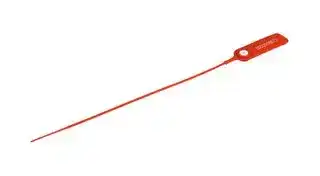


HR9Z-ES
SEALING STRIP, PRINTED W/10 DIGIT NUMBER
- Manufacturer: IDEC
- Product type: Controller Accessories
- Current Rating:-; Product Range:- 36AJ7883
- Product Range: -
- Current Rating: -
| Delivery and price | |
|---|---|
| Units per pack | 25 |
| Price | 25.15 € |
| Current stock | 10+ |
| Lead time | 30 days |

Safety Relay Modules HR6S
## Safety Relay Modules
Improve productivity with predictive maintenance of safety systems
## Safet Rela Modules for IoT y y
The basis of a functional safety system is to use diagnosis to detect failures.
Redundant control systems, for example, maintain safety by detecting the occurrence of a single failure, and at the same time give user the opportunity to replace parts. This concept, which was introduced through international standards in 1999, has adopted throughout the world the idea of safety by control based on safety relay modules. * S
With the recent progress of IT technology, IoT is being promoted at factories around the world for the purpose of optimizing productivity. The optimal allocation of resources and predictive maintenance are important in such factories. However, predictive maintenance for safety systems that directly influence machine operation is especially important, and is indispensable for achieving both productivity and safety.
The HR6S safety relay module has advanced diagnostic functions, and can output the results. The diagnostic function, which is backed by international standards, monitors the safety relay module and the devices that are connected to it, and contributes to predictive maintenance for the safety system.
, a you a@eea eS ‘ee a. Oe Se | =) ee a) e' Phe| ‘1i “A—= i, ry=="4 | ‘ t | ° 7 a.\if : ‘| Wl iE 7 — = al | _ ae — — a ‘ lle : ny = 4 a ie chs ‘ —_ wage = _ soe=f Pe eee es - i aol | | ae a oo— es amA % J - =.= it ' esi “ an eat = a; > = ee : rt) i a ait . = de F RS *5 ' —— —_Sania =“@.= i Laet RS ByBoe =7 f [= = **—** — —etara4 aeeeeo_ == —————_= oa ae ~ Be rt. - — 5 i 3 Ss ‘, f ae te . ———— t. hee 2s 2 Sie ae soe ae ey <p» sos ee ——— fs
HR6S SAFETY RELAY MODULE
## Connect to Various Input Devices
Dials are used to select input devices and start functions to enable safety measures for a wide variety of machines and allows standardization of the relay module.
## Setting a start function
Select from 8 types of start functions without changing the wiring. Automatic and manual operation can be selected as well as "startup test", which requires monitoring, cross-circuit detection, and pre-start inspection.
(For details, see page 28.)
## S ~~e~~ tting a ~~n a~~ pplicatio ~~n fun~~ ction
Set up to 7 types of input devices, such as emergency stop switches, interlock switches, light curtains, RFID devices, magnet switches, proximity switches, two-hand control switches, and pressure-sensitive switches.
4
## HR6S
S A F E T Y R E L A Y M O D U L E
## Protection
A sealing strip to secure the protective cover is included, preventing the dials from inadvertent adjustment or settings from being changed.
P R O T E C T I V E C O V E R
## Output Expansion
Outputs can be expanded (excluding HR6S-AB). No wiring is required, because expansions are connected via the connector on the side of the unit.
O U T P U T E X P A N S I O N
(Example for HR6S-AK)
5
When an error occurs, its location is indicated, allowing maintenance to be performed immediately. t : : ) cs - i
**==> picture [126 x 35] intentionally omitted <==**
**----- Start of picture text -----**<br>
©| iy PoweR (>)<br>Flash<br>3 * ERROR Sola |<br>**----- End of picture text -----**<br>
**==> picture [66 x 24] intentionally omitted <==**
**----- Start of picture text -----**<br>
| — S12<br>Flash<br>**----- End of picture text -----**<br>
0.9 and a magnification from 1x to 1000x, time limit can be set \ in the range of 0 to 900 seconds. ° Also, the external input can be used to cancel the off-delay and Ti Sh immediately cut off the output. Expanded (*1) output can be set
S A F E T Y R E L A Y M O D U L E
## HR6S
|Safety Relay Module<br>HR6S-AB<br>(page8)<br>HR6S-AF<br>(page10)<br>HR6S-AK<br>(page12)<br>Available in February 2021<br>HR6S-AT<br>(page14)<br>Available in February 2021<br>HR6S-S<br>(page17)<br>HR6S-DN<br>(page20)|Safety Relay Module<br>HR6S-AB<br>(page8)<br>HR6S-AF<br>(page10)<br>HR6S-AK<br>(page12)<br>Available in February 2021<br>HR6S-AT<br>(page14)<br>Available in February 2021<br>HR6S-S<br>(page17)<br>HR6S-DN<br>(page20)|Safety Relay Module<br>HR6S-AB<br>(page8)<br>HR6S-AF<br>(page10)<br>HR6S-AK<br>(page12)<br>Available in February 2021<br>HR6S-AT<br>(page14)<br>Available in February 2021<br>HR6S-S<br>(page17)<br>HR6S-DN<br>(page20)|Safety Relay Module<br>HR6S-AB<br>(page8)<br>HR6S-AF<br>(page10)<br>HR6S-AK<br>(page12)<br>Available in February 2021<br>HR6S-AT<br>(page14)<br>Available in February 2021<br>HR6S-S<br>(page17)<br>HR6S-DN<br>(page20)|Safety Relay Module<br>HR6S-AB<br>(page8)<br>HR6S-AF<br>(page10)<br>HR6S-AK<br>(page12)<br>Available in February 2021<br>HR6S-AT<br>(page14)<br>Available in February 2021<br>HR6S-S<br>(page17)<br>HR6S-DN<br>(page20)|Safety Relay Module<br>HR6S-AB<br>(page8)<br>HR6S-AF<br>(page10)<br>HR6S-AK<br>(page12)<br>Available in February 2021<br>HR6S-AT<br>(page14)<br>Available in February 2021<br>HR6S-S<br>(page17)<br>HR6S-DN<br>(page20)|Expansion<br>Module|Category 2 Safety Relay Module|Category 2 Safety Relay Module|Category 2 Safety Relay Module|
|---|---|---|---|---|---|---|---|---|---|
||HR6S-AF<br>(page10)|HR6S-AK<br>(page12)<br>Available in February 2021|HR6S-AT<br>(page14)<br>Available in February 2021|HR6S-S<br>(page17)|HR6S-DN<br>(page20)|HR6S-EP<br>(page23)|HR5S-C2S|HR5S-C2B|HR5S-C2D|
|Maximum PL (*1)<br>c|e|e|e|e|e|e|c|d|d|
|Safety category (*1)<br>1|3, 4|3, 4|3, 4|3, 4|3, 4|3, 4|2|2|2|
|Delay (sec)<br>Emergenc~~y s~~top switch<br>√√<br>Electrical switch<br>√√<br>~~p|~~<br>~~LS~~|√√<br>√√<br>~~|~~<br>~~|~~|√<br>√<br>~~|~~|0, 0.1, 0.2,<br>0.3 ... 900<br>√√<br>√√<br>~~}~~|√<br>√<br>~~ft~~|√<br>√<br>~~ft~~|0, 0.1, 0.2,<br>0.3 ... 900<br>~~ft~~|√<br>√<br>~~ft~~|√<br>√<br>~~ft~~|0.25 to 4 (*5)<br>√<br>√|
|Electrical switch<br>√√<br>Cod~~ed~~magnetic switch<br>(m~~agn~~etic type)<br>√√<br>Proximity sensor<br>√√<br>R~~FI~~D senso~~r~~<br>√√<br>ESPE<br>~~√~~√<br>Pre~~ssu~~re-sensitive<br>~~p |~~<br>~~LS~~<br>~~p~~<br>~~|~~|√√<br>√√<br>√√<br>√√<br>√√<br>~~|~~<br>~~|~~<br>~~|~~<br>~~|~~|√<br>√<br>√<br>√<br>√<br>~~|~~<br>~~|~~|√√<br>√√<br>√√<br>√√<br>√√<br>~~}~~<br>~~ff}~~|√<br>√<br>√<br>√<br>√<br>~~ft~~<br>~~ff}~~|√<br>√<br>√<br>√<br>√<br>~~ft~~<br>~~ff}~~|~~ft~~|√<br>~~ft~~|√<br>√<br>~~ft~~|√<br>√|
|Pre~~ssu~~re-sensitive<br>switc~~h~~<br>Two-hand control switch<br>√√<br>IIIA<br>Parallel input for inputdevi~~ce~~<br>1 system<br>Inst~~ant~~aneous<br>1C (SPDT)<br>Delay<br>~~p~~<br>~~|~~<br>~~eeEE~~<br>~~Pp~~|<br>~~a~~|1 system<br>3NO<br>~~|~~<br>~~|~~<br>~~EE~~<br>||√√<br>1 system<br>2NO-1NC<br>~~|~~<br>~~EE~~<br>||√√<br>1 system<br>3NO<br>3NO-1NC<br>~~ff}~~<br>~~EE~~<br>~~ff}~~|√√<br>IIIA, IIIC<br>2 systems<br>2NO<br>~~ff}~~<br>~~EE~~<br>~~ff}~~|6 systems<br>3NO-1NC<br>~~ff}~~<br>~~EE~~<br>~~ff}~~|1 system<br>4NO-2NC<br>(*3)<br>~~EE~~|1 system<br>2NO<br>~~EE~~|1 system<br>2NO<br>~~EE~~|1 system<br>(*4)<br>1NO|
|Output expansion<br>All diagnostic results<br>(For details,seepage29.)<br>√<br>~~Pp~~ |<br>~~a~~<br>~~OO~~|√<br>√<br>|<br>~~OO~~|√<br>√<br>| <br>~~OO OC~~|√<br>√<br> ~~ff}~~<br>~~OC~~|√<br>√<br>~~ff}~~<br>~~OC~~|√<br>√<br>~~ff}~~<br>~~OC~~|~~OC~~|~~OC~~|~~OC~~||
|Safety-related output<br>monitor|||√|||||||
|Failure detection output|||||||√|√|√|
|Number of LEDs<br>6|6|6|8|8|16|3|2|2|3|
- First, determine the PLr and category of the safety system.
- *1: NC contacts are compatible with category 1 and PLc.
- *2: Although both "√" and "√√" can be connected, models indicated with "√√" is recommended for use. When inputting multiple input devices in parallel, select either HR6S-S or HR6S-DN.
- *3: When connecting toHR6S-AT, use the selector to select instantaneous or delay.
- *4: Non-safety-related instantaneous output available.
- *5: 5 types - 0.25 s, 0.5 s, 1 s, 2 s, and 4 s.
## Performance level of facilities and applicable models
- When defining the performance level of machines, a risk assessment must be performed for each machine.
**==> picture [408 x 120] intentionally omitted <==**
**----- Start of picture text -----**<br>
a<br>HR6S-AB<br>b<br>CAT1<br>c<br>HR6S Series<br>d (excluding HR6S-AB)<br>HR5S CAT2 CAT3, 4<br>e<br>Mounter<br>PLr Semiconductor<br>Packaging machines Food machines machines<br>Industrial robots Machine tools Injection molding manufacturing equipment<br>Press machines<br>**----- End of picture text -----**<br>
Production equipment
7
## HR6S-AB Safety Relay Module
## PLc achieved with Category 1 configuration
- With a variety of common input devices, the HR6S-AB can monitor twohand control devices (IIIA) that are required to comply with ISO 13851.
- Suitable for use as a self-holding circuit for selecting a wide variety of start functions for low-risk machines.
- Output cannot be expanded using expansion modules.
## HR6S-AB
Package Quantity: 1
**==> picture [211 x 40] intentionally omitted <==**
**----- Start of picture text -----**<br>
||||
|---|---|---|
|Terminal|Part No.|Supply Voltage|
|Push-in terminal|HR6S-AB1C|24V AC/DC|
|Screw terminal|HR6S-AB1P|24V AC/DC|
**----- End of picture text -----**<br>
**==> picture [139 x 16] intentionally omitted <==**
**----- Start of picture text -----**<br>
TÜV NORD SystemsGmbH & Co.KG • See website for details on approvals<br>HRS6aSfe*-t1y43A5.pIMp.1r3o50v0ed5/20 and standards.<br>**----- End of picture text -----**<br>
- One sealing strip (see page 26) is included with each product.
## Overview of Application Functions
**==> picture [494 x 475] intentionally omitted <==**
**----- Start of picture text -----**<br>
|||||
|---|---|---|---|
|Monitoring of Emergency|Monitoring of two-hand|Monitoring of proximity|Monitoring of RFID|
|Stop circuits as per ISO|control devices, type III A|switches|sensors|
|13850 and IEC 60204-1,|as per ISO 13851|
|stop category 0|a|6|
|Monitoring of guards as|
|Monitoring of guards as|Monitoring of electro-sensitive|
|per ISO 14119/14120|
|per ISO 14119/14120|protective equipment such as|
|with coded magnetic|
|with interlock switches|type 4 light curtains as per|
|switches|
|w|IEC 61496-1|
|Safety-Related Outputs|Data Functional Safety|
|Number of relay contacts, changeover (Normally Closed to|Safety-related outputs are|
|1|
|Normally Open), instantaneous|Defined safe state|de-energized|
|Maximum short circuit current IK|1 kA|Normally Open: open|
|Normally Closed: closed|
|Maximum continuous current, Normally Open relay contacts|3 A|
|Maximum continuous current, Normally Closed relay contacts|3 A|Maximum Performance Level (PL), Category|PLc, Category 1|
|(as per ISO 13849-1:2015)|
|Maximum total thermal current ∑ITHERM|3 A|
|Minimum current|10 mA|Maximum Safety Integrity Level (SIL)|
|1|
|Utilization category as per UL 60947-5-1|D300 and R300|(as per IEC 61508-1:2010)|
|AC-1: 250 V|Safety Integrity Level Claim Limit (SILCL)|
|AC-15: 250 V|(as per IEC 62061:2005+AMD1:2012|1|
|Utilization category as per IEC 60947-4-1 and IEC 60947-5-1|DC-1: 24 V|+AMD2:2015)|
|DC-13: 24 V|Type (as per IEC 61508-2)|B|
|Hardware Fault Tolerance|
|AC-1: 5 A|0|
|AC-15: 3 A|(HFT) (as per IEC 61508 and IEC 62061)|
|Maximum current, normally open relay contacts|
|DC-1: 5 A|Stop Category for Emergency Stops|
|0|
|DC-13: 2 A|(as per ISO 13850 and IEC 60204-1)|
|AC-1: 3 A|Lifetime in years at an ambient temperature of 55 °C (131 °F)|20|
|AC-15: 1 A|Safe Failure Fraction (SFF)|
|Maximum current, normally closed relay contacts|>60 %|
|DC-1: 3 A|(as per IEC 61508 and IEC 62061)|
|DC-13: 1 A|Probability of Dangerous Failure per hour (PFHD) in 1/h|1175.6 x 10-9|
|External fusing|6 A, category gG|(as per IEC 61508 and ISO 13849-1)|
|Mean Time To Dangerous Failure (MTTFD) in years|91|
|Additional Non-Safety-Related Outputs|(as per ISO 13849-1)|
|Output voltage|24V DC|Average Diagnostic Coverage (DCavg)|—|
|(none as per ISO 13849-1)|
|Maximum current|20 mA|
|=|Maximum number of cycles|DC-13|24V DC 2 A: 50000|
|over lifetime|AC-15|250V AC 3 A: 50000|
|5|
|Synchronization Times|
|The synchronization times for the synchronization of safety-related|
|inputs depend on the application function. (See page 9 Function Mode|
|Selector and Input Device Connection Example.)|
|For other specifications (common to all models), see page 25.|
|OO|
**----- End of picture text -----**<br>
8
HR6S Safety Relay Module
## HR6S-AB
## Wiring
**==> picture [261 x 180] intentionally omitted <==**
**----- Start of picture text -----**<br>
L1( [+] )<br>S1 S2 F1<br>A1 A2 S11 S12 S13 Y1 Y2 11<br>Ld] O O- O- O O O-<br>AC/DC DC+ CH+ CH+ DC+ CH+<br>DC Input Start<br>K1<br>Power<br>supply B2( O- *1) Z1 O- (*1) 12 O- 14 O- K2 | |<br>K2<br>N ( [-] )<br>PLC<br>M<br>UL<br>**----- End of picture text -----**<br>
|Designation|Explanation|
|---|---|
|B2|Common referencepotential terminal|
|Z1|Pulsed output for diagnostics,not safety-related|
|S1|Emergencystopswitch|
|S2|Start switch|
|K2|Contactor|
|M|Motor|
|F1|Fuse|
*1) For B2 and Z1, see HR6S-AF.
## Function Mode Selector and Input Device Connection Example
**==> picture [479 x 397] intentionally omitted <==**
**----- Start of picture text -----**<br>
Dial 1 Dial 2<br>Synchronous monitoring: No Synchronous monitoring: 0.5 s<br>Dynamization: Yes Dynamization: Yes<br>Signal interlock monitoring: No Signal interlock monitoring: No<br>Emergency stop switches Interlock switch Two-hand control switch<br>(IIIA)<br>L s a | a [|]<br>Safety fence<br>KXRRRNeatececarececareceneeecenenlXKRKOKREG S1<br>NearececarececarececerecenenlPRRearececarececaceeeneeeeeneee,Nearececarececececererecenenlanececarececeeececeeeeeceee,PRR]RRR]anecececececteececteececeee,RRE REE q-f---<br>S2<br>qt. QR<br>S11 S12 S13<br>DC+ CH+ CH+ S11 O S12 e) S13 O<br>DC+ CH+ CH+<br>S11 | S12 S13 q-fe--<br>DC+ CH+ CH+<br>Dial 3 Dial 4 Dial 5 Dial 6<br>Synchronous monitoring: 0.5 s Synchronous monitoring: 2.2 s Synchronous monitoring: No Synchronous monitoring: 0.5 s<br>Dynamization: Yes Dynamization: Yes Dynamization: No Dynamization: No<br>Signal interlock monitoring: No Signal interlock monitoring: No Signal interlock monitoring: No Signal interlock monitoring: Yes<br>Coded magnetic switch (*2) _ 1 PNP output Ir ie 2 OSSD<br>(1NO, 1NC) device 7 Output device<br>ml I 4<br>+ - 24 V<br>p--——-t----+--4| S1 i PNP<br>|V N<br>| i<br>ESPE<br>||<br>a en 0 V OSSD OSSD<br>O O O<br>O O O S11 S12 S13<br>S11 S12 S13 DC+ CH+ CH+ S11 S12 S13<br>DC+ CH+ CH+ DC+ CH+ CH+<br>**----- End of picture text -----**<br>
*2: Connection examples for coded magnetic switches such as HS7A (IDEC) are also included on the instruction sheet, but certifications are not available. Note: Status of contacts in the diagram: The status of the control switch is when it is not operated. The status of the door interlock is when the door is closed.
9
HR6S-AF Safety Relay Module
## Standard module for building safety systems
- Protects both the operator and the machine by immediately stopping dangerous movements when instructed to stop by the operator or when a failure in the safety circuit is detected.
- The most basic module for building a safety system.
**==> picture [232 x 46] intentionally omitted <==**
**----- Start of picture text -----**<br>
• See website for details on approvals<br>TÜV NORD SystemsGmbH & Co.KG and standards.<br>2ce@G<br>HR6S-AF<br>HRS6aSfe*-t1y43A5.pIMp.1r3o50v0ed5/20<br>**----- End of picture text -----**<br>
Package Quantity: 1
Output expansion possible
|Terminal|Part No.|Supply Voltage|
|---|---|---|
|Push-in terminal|HR6S-AF1C|24V AC/DC|
|Screw terminal|HR6S-AF1P|24V AC/DC|
- One sealing strip (see page 26) is included with each product.
## Overview of Application Functions
Monitoring of Emergency Monitoring of guards as Stop circuits as per ISO per ISO 14119/14120 13850 and IEC 60204-1, with coded magnetic stop category 0 ~~=~~ switches Monitoring of guards as Monitoring of proximity per ISO 14119/14120 switches with interlock switches
Monitoring of electro-sensitive protective equipment such as type 4 light curtains as per IEC 61496-1
Monitoring of RFID sensors
## Safety-Related Outputs
|Number of relay contacts, Normally Open, instantaneous|3|
|---|---|
|Maximum short circuit current IK|1 kA|
|Maximum continuous current, Normally Open relay contacts|6 A|
|Maximum total thermal current ∑ITHERM|12 A|
|Minimum current|10 mA|
|Utilization category as per UL 60947-5-1|B300 and R300|
|Utilization category as per IEC 60947-4-1 and IEC 60947-5-1|AC-1: 250 V<br>AC-15: 250 V<br>DC-1: 24 V<br>DC-13: 24 V|
|Maximum current, normally open relay contacts|AC-1: 5 A<br>AC-15: 3 A<br>DC-1: 5 A<br>DC-13: 3 A|
|External fusing|10 A, category gG|
Additional Non-Safety-Related Outputs Output voltage 24V DC Maximum current 20 mA ~~ee~~
## Synchronization Times
The synchronization times for the synchronization of safety-related inputs depend on the application function. (See page 11 Function Mode Selector and Input Device Connection Example.)
## Data Functional Safety
|Defined safe state|Defined safe state|Safety-related outputs are<br>de-energized<br>open|
|---|---|---|
|Maximum Performance Level (PL), Category<br>(as per ISO 13849-1:2015)||PL e, Category 4|
|Maximum Safety Integrity Level (SIL)<br>(as per IEC 61508-1:2010)||Normally Open: 3|
|Safety Integrity Level Claim Limit (SILCL)<br>(as per IEC 62061:2005+AMD1:2012<br>+AMD2:2015)||Normally Open: 3|
|Type (as per IEC 61508-2)||B|
|Hardware Fault Tolerance<br>(HFT) (as per IEC 61508 and IEC 62061)||1|
|Stop Category for Emergency Stops<br>(as per ISO 13850 and IEC 60204-1)||0|
|Lifetime in years at an ambient temperature of 55 °C (131 °F)||20|
|Safe Failure Fraction (SFF)<br>(as per IEC 61508 and IEC 62061)||<99 %|
|Probability of Dangerous Failure per hour (PFHD) in 1/h<br>(as per IEC 61508 and ISO 13849-1)||1.13 x 10⁻⁹|
|Mean Time To Dangerous Failure (MTTFD) in years<br>(as per ISO 13849-1)||2,000|
|Average Diagnostic Coverage (DCavg)<br>(as per ISO 13849-1)||≥99 %|
|Maximum number of cycles<br>over lifetime|DC-13|24V DC 1 A: 1,200,000|
|||24V DC 3 A: 180,000|
||AC-1|250V AC 4 A: 180,000|
||AC-15|250V AC 1 A: 70,000|
|||250V AC 5 A: 39,000|
For other specifications (common to all models), see page 25. [| t~“‘;‘CSCSsC‘*z
10
HR6S Safety Relay Module
## HR6S-AF
## Wiring
**==> picture [472 x 196] intentionally omitted <==**
**----- Start of picture text -----**<br>
L1( [+] )<br>K 3 S2<br>ee'I\ i en S1 esge ESC a7 fl re K L 4 oO Ee F1 F2 DesiEXTgnation Connector for oExptional explanationpansion module<br>'<br>\\I r--O A1 A2 O S11 O S12 O Y1 O Y2 O 13 23 33 1 S1 Emergency stop switch<br>1i11 ' 1 i i i AC/DC DC+ CH+ DC+ CH+ [i] ! S2 Start switch<br>'1 iii Input Start K3, K4 Contactor<br>ryH i DC i K1 —-\_--\ K3 ---\---\---4 M Motor<br>i | 1 i 1111\ | i! i !!11 Power supply ! 1H|H1111 DC+InputCH+ K2 --}---j---.---- K4 ---}---4---4 F1PLC, F2 ProFusegrammable controller<br>1 i ' |<br>1 ii baa ' a 7 i<br>\ S21 S22 B2 Z1 14 24 34<br>\1'\ S1 K3 K4 M<br>N( [-] ) \ —|aa<br>PLC<br>Input1<br>COM(0V)<br>EXT<br>)<br>0V<br>(<br>)<br>Semiconductor pulse output (DC24V<br>Common reference potential<br>**----- End of picture text -----**<br>
## Function Mode Selector and Input Device Connection Example
**==> picture [486 x 340] intentionally omitted <==**
**----- Start of picture text -----**<br>
Dial 1 Dial 2 Dial 3<br>Synchronous monitoring: No Synchronous monitoring: 2 s / 4 s (S12 first / S22 first) Synchronous monitoring: 0.5 s<br>Dynamization: Yes Dynamization: Yes Dynamization: Yes<br>Signal interlock monitoring: Yes Signal interlock monitoring: Yes Signal interlock monitoring: No<br>Emergency stop Electrical switch Coded magnetic<br>switches switch<br>(2 NO) (*1)<br>Interlock switch Coded magnetic switch Proximity switch<br>(1 NO, 1 NC) (1 NO, 1 NC) (*1) (1 NO, 1 NC)<br>Safety fence<br>PRRRRRRRRREREREYieetacenacaceeaconecaconeeacel esateceeateconatecenanecenet esesesetetatatatataceeeees|RR]essesetetetatatatataneeeses|eseeeeeetetatatatataneeece| rT| —— V Y - N 7| —— a<br>ni oe i astacenataceeaconeenconeencelRRL, | rr _ | rT| Ve 7|<br>S11 1e) S12 1e) S21 o) S22 oO L. | i Le. |Lo 4 I|Lo C “WV --------- ee ‘|4|<br>| DC+ CH+ | DC+ CH+ S11 if S12 if S21 if S22 i S11 ° S12 ° S21 ° S22 °<br>DC+ CH+ DC+ CH+ DC+ CH+ DC+ CH+ S11 S12 S21 S22<br>| | | [| DC+ I CH+ ! DC+ I CH+ L<br>Dial 4 Dial 5 Dial 6<br>Synchronous monitoring: No Synchronous monitoring: 0.5 s Synchronous monitoring: 0.5 s<br>Dynamization: No Dynamization: No Dynamization: No<br>Signal interlock monitoring: Yes Signal interlock monitoring: Yes Signal interlock monitoring: Yes<br>1 PNP × 2 |pf “CyVAI| = 2 OSSD<br>1 W a ml<br>24 V<br>+ - + -<br>PNP PNP<br>A A ESPE<br>0 V OSSD OSSD<br>S11 S12 S21 S22 S11 S12 S21 S22<br>DC+ CH+ DC+ CH+ DC+ CH+ DC+ CH+<br>**----- End of picture text -----**<br>
*1: Connection examples for coded magnetic switches such as HS7A (IDEC) are also included on the instruction sheet, but certifications are not available. Note: Status of contacts in the diagram: The status of the control switch is when it is not operated. The status of the door interlock is when the door is closed.
11
## HR6S-AK Safety Relay Module
## Connects to pressure-sensitive switches such as mat switches
• Protects both the operator and the machine by immediately stopping dangerous movements when instructed to stop by the operator or or when a failure in the safety circuit is detected. • Connects to pressure-sensitive switches such as mat switches or edge switches. • NC contact is availalabe for output. TÜV NORD SystemsGmbH & Co.KG • See website for details on approvals and standards. HR6S-AK Package Quantity: 1 Terminal Part No. Supply Voltage ~~8ce OG~~ .I
HR6S-AK Package Quantity: 1
|Terminal<br>~~8ce OG OG~~|Part No.<br>~~8ce OG OG~~|Supply Voltage|
|---|---|---|
|Push-in terminal<br>~~8ce OG OG~~|HR6S-AK1C<br>~~8ce OG OG~~|24V AC/DC|
|Screw terminal|HR6S-AK1P|24V AC/DC|
Output expansion possible
*Available in February 2021.
• - One sealing strip (see page 26) is included with each product.
## Overview of Application Functions
Monitoring of Emergency Monitoring of guards as Monitoring of electro-sensitive Monitoring of pressureStop circuits as per ISO per ISO 14119/14120 protective equipment such as sensitive 4-wire 13850 and IEC 60204-1, with coded magnetic type 4 light curtains as per IEC protective devices stop category 0 LJ switches 61496-1 such as mats or edges as per ISO 13856 Monitoring of guards as Monitoring of proximity Monitoring of RFID per ISO 14119/14120 switches sensors with interlock switches ~~ma~~ l ia Safety-Related Outputs Data Functional Safety Number of relay contacts, Normally Open, instantaneous 2 Safety-related outputs are deNumber of relay contacts, Normally Closed, instantaneous 1 Defined safe state energized Normally Open: open Maximum short circuit current IK 1 kA Normally Closed: closed Maximum continuous current, Normally Open relay contacts 6 A Maximum Performance Level (PL), Category Normally Open: PL e, Category 4 Maximum continuous current, Normally Closed relay contacts 3 A (as per ISO 13849-1:2015) Normally Closed: PLc, Category 1 Maximum total thermal current ∑ITHERM 12 A Maximum Safety Integrity Level (SIL) Normally Open: 3 Minimum current 10 mA (as per IEC 61508-1:2010) Normally Closed: 1 B300 and R300 for Safety Integrity Level Claim Limit (SILCL) Normally Open: 3 (as per IEC 62061:2005+AMD1:2012+AMD2:2015) Normally Closed: 1 Normally Open contacts Utilization category as per UL 60947-5-1 D300 and R300 for Type (as per IEC 61508-2) B Normally Closed contacts Hardware Fault Tolerance AC-1: 250 V (HFT) (as per IEC 61508 and IEC 62061) 1 AC-15: 250 V Utilization category as per IEC 60947-4-1 and IEC 60947-5-1 DC-1: 24 V Stop Category for Emergency Stops 0 DC-13: 24 V (as per ISO 13850 and IEC 60204-1) AC-1: 5 A Lifetime in years at an ambient temperature of 55 °C 20 AC-15: 3 A (131 °F) Maximum current, normally open relay contacts DC-1: 5 A Safe Failure Fraction (SFF) DC-13: 3 A (as per IEC 61508 and IEC 62061) >99 % AC-1: 3 A Maximum current, normally closed relay contacts AC-15: 1 ADC-1: 3 A (as per IEC 61508 and ISO 13849-1)Probability of Dangerous Failure per hour (PFHD) in 1/h 1.13 x 10[-9] DC-13: 1 A10 A, category gG, for (as per ISO 13849-1)Mean Time To Dangerous Failure (MTTFD) in years 2,000 Normally Open External fusing 4 A, category gG, for Average Diagnostic Coverage (DCavg) ≥99 % Normally Closed (as per ISO 13849-1) 24V DC 1 A: 1,200,000 DC-13 Additional Non-Safety-Related Outputs 24V DC 3 A: 180,000 Output voltage 24V DC Maximum number of cyclesover lifetime AC-1 250V AC 4 A: 180,000 Maximum current 20 mA 250V AC 1 A: 70,000 AC-15 250V AC 5 A: 39,000 ~~=-~~ Synchronization Times The synchronization times for the synchronization of safety-related inputs depend on the application function. (See page 13 Function Mode For other specifications (common to all models), see page 25.25.. Selector and Input Device Connection Example.) t~“‘;‘CSCSsC‘*z
Monitoring of electro-sensitive Monitoring of pressureprotective equipment such as sensitive 4-wire type 4 light curtains as per IEC protective devices 61496-1 such as mats or edges as per ISO 13856
For other specifications (common to all models), see page 25.25.. [| t~“‘;‘CSCSsC‘*z
12
HR6S Safety Relay Module
## HR6S-AK
**==> picture [490 x 203] intentionally omitted <==**
**----- Start of picture text -----**<br>
Wiring L1( [+] ) Designation Explanation<br>poo----f+-----------f----}-'i\ 11' A1 A2 S11 S1S12 OF ESC F-, i Y1KK | is 34 6 Y2S2 ES F113 F223 31 EXTS1S2 Connector for optional expansion moduleEmerStart switchgency stop switch<br>Irole \1 I if r-Oi i AC/DC ee DC+ © ps CH+ © ee DC+ © pt CH+ © i © mes © cera Oar 1 | |i K3PLC, K4 ContactorProgrammable controller<br>drfritf1iIrirytii|| DC | !11' | Input Start K1K2 --\---\___-_\\ K3K4 ---\---\___1---}---4---4 *1:The application function sets the negative F1, F2 Fuse<br>11 |}|| Power ''' Input (*1) safe-related input according to the input<br>ryfl ii supply !f' i DC+(-) CH+(-) I ! device.<br>' ! ! ba“Trt -O OOOOa Ort |<br>'' S21 S22 B2 Z1 14 24 32 M<br>11 S1 K3 K4<br>N( [-] )<br>PLC<br>Input1<br>COM(0V)<br>EXT<br>)<br>0V<br>(<br>)<br>DC24V<br>Semiconductor pulse output (<br>Common reference potential<br>**----- End of picture text -----**<br>
## Function Mode Selector and Input Device Connection Example
**==> picture [478 x 453] intentionally omitted <==**
**----- Start of picture text -----**<br>
Dial 1 Dial 2 Dial 3<br>Synchronous monitoring: No Synchronous monitoring: 2 s / 4 s (S12 first / S22 first) Synchronous monitoring: 0.5 s<br>Dynamization: Yes Dynamization: Yes Dynamization: Yes<br>Signal interlock monitoring: Yes Signal interlock monitoring: Yes Signal interlock monitoring: No<br>Emergency stop Interlock switch Coded magnetic<br>switches switch<br>(2 NO) (*2) Interlock switch Coded magnetic switch Proximity switch<br>(1 NO, 1 NC) (1 NO, 1 NC) (*2) (1 NO, 1 NC)<br>Safety fence<br>Serannerernerer<br>IBascomeotetetatacotetecatacetenecs r 7<br>ReisoecmeneeneyBo RRS Li - Vs<br>qt a i S LL| — =| |eeL( >—- ~--------ee |l<br>S11DC+ ° S12CH+ o S21DC+ o S22CH+ o S11 b S12 é S21 b S22 6 S11DC+ [e) S12CH+ fo) S21DC+ oO S22CH+ [e) S11 6 S12 6 S21 > S22 0<br>DC+ CH+ DC+ CH+ DC+ CH+ DC+ CH+<br>Dial 4 Dial 6 Dial 5 Dial 7<br>Synchronous monitoring: No Synchronous monitoring: 0.5 s Synchronous monitoring: No Synchronous monitoring: 0.5 s<br>Dynamization: No Dynamization: No Dynamization: No Dynamization: No<br>Signal interlock monitoring: Yes Signal interlock monitoring: Yes Signal interlock monitoring: Yes Signal interlock monitoring: Yes<br>2 PNP 1 PNP + 1 NPN<br>+ - + - + - + -<br>PNP A PNP A PNP A NPN A<br>S11 S12 S21 S22 S11 S12 S21 S22<br>DC+ CH+ DC+ CH+ DC+ CH+ DC- CH-<br>Dial 8 Dial 9 Dial 10<br>Synchronous monitoring: No Synchronous monitoring: No Synchronous monitoring: 0.5 s<br>Dynamization: No Dynamization: No Dynamization: No<br>Signal interlock monitoring: Yes Signal interlock monitoring: Yes Signal interlock monitoring: Yes<br><N.Sa”>| Pressure-sensitive switch A—eIJ -Z2 2 OSSD<br>24 V<br>ESPE<br>S11 S12 S21 S22 0 V OSSD OSSD<br>DC+ CH+ DC- CH-<br>S11 S12 S21 S22<br>DC+ CH+ DC+ CH+<br>as<br>**----- End of picture text -----**<br>
*2: Connection examples for coded magnetic switches such as HS7A (IDEC) are also included on the instruction sheet, but certifications are not available.
13
## HR6S-AT Safety Relay Module
## Equipped with time delay output for Stop Category 0 and Stop Category 1
- Protects both the operator and the machine by immediately stopping dangerous movements (stop category 0) when instructed to stop by the operator or or when a failure in the safety circuit is detected. Also, the safety module is equipped with a stop category 1 delay output, which allows the motor to stop after deceleration.
**==> picture [54 x 18] intentionally omitted <==**
**----- Start of picture text -----**<br>
Output expansion<br>possible<br>**----- End of picture text -----**<br>
- The selector on the front can be used to set the delay time to a value from 0.1 seconds to 15 minutes. (Can also be set to 0 seconds.)
- The delay output can be canceled by the S21-S22 or S31-S32 terminal (vacant terminal), and the delay output is immediately cut off when canceled.
*Available in February 2021.
## HR6S-AT
Package Quantity: 1
|Terminal|Part No.|Supply Voltage|
|---|---|---|
|Push-in terminal|HR6S-AT1C<br>24V AC/DC|24V AC/DC|
|Screw terminal|HR6S-AT1P<br>24V AC/DC|24V AC/DC|
**==> picture [139 x 16] intentionally omitted <==**
**----- Start of picture text -----**<br>
TÜV NORD SystemsGmbH & Co.KG • See website for details on approvals<br>HRS6aSfe*-t1y43A5.pIMp.1r3o50v0ed5/20 and standards.<br>**----- End of picture text -----**<br>
- -One sealing strip (see page 26) is included with each product.
## Overview of Application Functions
Monitoring of Emergency Monitoring of guards as Monitoring of electro-sensitive Monitoring of pressureStop circuits as per ISO per ISO 14119/14120 protective equipment such as sensitive 4-wire 13850 and IEC 60204-1, with coded magnetic type 4 light curtains as per protective devices such stop category 0, 1 switches IEC 61496-1 as mats or edges as per ISO 13856 Monitoring of guards as Monitoring of proximity Monitoring of RFID per ISO 14119/14120 switches sensors with interlock switches ‘ Safety-Related Outputs Delay Times for Delay Function of Safety-Related Outputs Number of relay contacts, Normally Open, instantaneous 3 0 s, 0.1 s, 0.2 s, 0.3 s, 0.4 s, 0.5 s, 0.6 s, 0.7 s, Number of relay contacts, Normally Open, delayed 3 0.8 s, 0.9 s, 1 s, 2 s, 3 s, 4 s, 5 s, 6 s, 7 s, 8 s, Number of relay contacts, Normally Closed, delayed 1 Possible values 9 s, 10 s, 20 s, 30 s, 40 s, 50 s, 60 s, 70 s, 80 s, Maximum short circuit current IK 1 kA 90 s, 100 s, 200 s, 300 s, 400 s, 500 s, 600 s, 700 s, 800 s, 900 s Maximum continuous current, Normally Open relay contacts 6 A Maximum continuous current, Normally Closed relay contacts 3 A Maximum total thermal current ∑ITHERM 12 A Minimum current 10 mA Additional Non-Safety-Related Outputs B300 and R300 for Normally Open contacts Output voltage 24V DC Utilization category as per UL 60947-5-1 D300 and R300 for Normally Maximum current 20 mA ~~ee~~ Closed contacts AC-1: 250 V Utilization category as per IEC 60947-4-1 and AC-15: 250 V IEC 60947-5-1 DC-1: 24 V Synchronization Times DC-13: 24 V The synchronization times for the synchronization of safety-related AC-1: 5 A inputs depend on the application function. (See page 16 Function Mode 16 Function Mode Function Mode AC-15: 3 A Selector and Input Device Connection Example.) Maximum current, normally open relay contacts DC-1: 5 A DC-13: 3 A AC-1: 3 A AC-15: 1 A Maximum current, normally closed relay contacts DC-1: 3 A DC-13: 1 A 10 A, category gG, for Normally Open External fusing 4 A, category gG, for Normally Closed For other specifications (common to all models), see page 25. ~~_—~~ 14
The synchronization times for the synchronization of safety-related inputs depend on the application function. (See page 16 Function Mode 16 Function Mode Function Mode Selector and Input Device Connection Example.)
HR6S Safety Relay Module
## HR6S-AT
## Data Functional Safety
|Defned safe state|Defned safe state|Safety-related outputs are de-energized<br>Normally Open: open<br>Normally Closed: closed|
|---|---|---|
|Maximum Performance Level (PL), Category (as per<br>ISO 13849-1:2015)||Normally Open: PLe, Category 4<br>Normally Closed: PLc, Category 1|
|Maximum Safety Integrity Level (SIL)<br>(as per IEC 61508-1:2010)||Normally Open: 3<br>Normally Closed: 1|
|Safety Integrity Level Claim Limit (SILCL)<br>(as per IEC 62061:2005+AMD1:2012+<br>AMD2:2015)||Normally Open: 3<br>Normally Closed: 1|
|Type(asper IEC 61508-2)||B|
|Hardware Fault Tolerance (HFT) (as per IEC 61508<br>and IEC 62061)||1|
|Stop Category for Emergency Stops<br>(as per ISO 13850 and IEC 60204-1)||0 or 1|
|Lifetime in years at an ambient temperature of 55 °C (131 °F)||20|
|Safe Failure Fraction (SFF)<br>(as per IEC 61508 and IEC 62061)||>99 %|
|Probability of Dangerous Failure per hour (PFHD) in 1/h<br>(as per IEC 61508 and ISO 13849-1)||0.94 × 10⁻⁹for Stop Category 0<br>0.95 × 10⁻⁹for Stop Category 1|
|Mean Time To Dangerous Failure (MTTFD) in years<br>(as per ISO 13849-1)||2,400 for Stop Category 0<br>2,300 for Stop Category 1|
|Average Diagnostic Coverage (DCavg)<br>(as per ISO 13849-1)||≥99 %|
|Maximum number of cycles<br>over lifetime|DC-13|24V DC 1 A: 1200000 with Stop Category 0|
|||24V DC 1 A: 1200000 with Stop Category 1|
|||24V DC 3 A: 180000 with Stop Category 0|
|||24V DC 3 A: 275000 with Stop Category 1|
||AC-1|250V AC 4 A: 180000 with Stop Category 0|
|||250 VAC 4 A: 90000 with Stop Category 1|
||AC-15|250V AC 1 A: 70000 with Stop Category 0|
|||250V AC 1 A: 90000 with Stop Category 1|
|||250V AC 3 A: 39000 with Stop Category 0|
|||250V AC 3 A: 60000 with Stop Category 1|
For other specifications (common to all models), see page 25.
## Wiring Example
**==> picture [335 x 189] intentionally omitted <==**
**----- Start of picture text -----**<br>
L1 ( [+] )<br>K5<br>S2 F1 F2 F3<br>S1 K6<br>ESC<br>A1 A2 S11 S12 Y1 Y2 Z1(*) 13 23 33 47 57 67 75<br>AC/DC DC+ CH+ DC+ CH+ K1<br>DC Input Start K2<br>K3<br>Power Input (*1) Input (*1)<br>supply<br>DC+ CH+ DC- CH- K4<br>B2* S21 S22 S31 S32 Z2 14 24 34 48 58 68 76<br>S1 (*2) (*3) K5 K6<br>S3<br>N( [-] )<br>Motor<br>controller<br>Operation command<br>EXT<br>**----- End of picture text -----**<br>
- *3: Connection to additional non-safety-related outputs
**==> picture [260 x 71] intentionally omitted <==**
**----- Start of picture text -----**<br>
K5<br>HR6S-AT1※ PLC<br>Z1 Semiconductor pulse output Input1 K6<br>(DC24V)<br>Z2 Semiconductor binary output Input2<br>(DC24V)<br>B2 Common reference potential COM(0V)<br>(0V) M<br>**----- End of picture text -----**<br>
**==> picture [140 x 21] intentionally omitted <==**
**----- Start of picture text -----**<br>
Designation Explanation<br>Connector for optional<br>**----- End of picture text -----**<br>
|Designation|Explanation<br>|
|---|---|
|EXT|Connector for optional<br>|
||expansion module|
|S1|Emergencystopswitch|
|S2|Start switch|
|S3|Off-delaycancel switch|
|K3,K4|Contactor|
|PLC<br>|Programmable controller<br>|
- *1: Inputs that are not used for safety device inputs can be used to cancel the delay function for safety-related outputs.
- *2:Turns off while a safety-related output is on or when an error is detected.
15
HR6S Safety Relay Module
## HR6S-AT
## Function Mode Selector and Input Device Connection Example
**==> picture [484 x 494] intentionally omitted <==**
**----- Start of picture text -----**<br>
Dial 1 Dial 2 Dial 3<br>Synchronous monitoring: No Synchronous monitoring: 2 s / 4 s (S12 first / S22 first) Synchronous monitoring: 0.5 s<br>Dynamization: Yes Dynamization: Yes Dynamization: Yes<br>Signal interlock monitoring: Yes Signal interlock monitoring: Yes Signal interlock monitoring: No<br>Emergency stop Interlock switch Coded magnetic switch<br>switches (2 NO) (*2)<br>Interlock switch Coded magnetic switch Proximity switch<br>(1 NO, 1 NC) (2 NO, 1 NC) (*1) (1 NO, 1 NC)<br>Safety fence<br>KXXXRRSSESOVSKY<br>acacegenenecececececececece!BSRROKKRRRacacegecerecacacececerecece:RRRQKKK || r' V e8 q| ——— a<br>KRRRKXKKKRE KKK | r q<br>- S Nscanatecsceconannsesseeeet [RRRRRRRRRRRRY] | i{ >—- | | vV yy |<br>qt — 0 eo 4 ie -V---------) |!<br>| I |<br>b b b u U beef<br>S11 S12 S21 S22 ) 0 ) o<br>DC+ CH+ DC+ CH+ S11 S12 S21 S22 S11DC+ S12CH+ S21DC+ S22CH+<br>DC+ CH+ DC+ CH+ S11 S12 S21 S22<br>DC+ CH+ DC+ CH+<br>Dial 4 Dial 6 Dial 5 Dial 7<br>Synchronous monitoring: No Synchronous monitoring: 0.5 s Synchronous monitoring: No Synchronous monitoring: 0.5 s<br>Dynamization: No Dynamization: No Dynamization: No Dynamization: No<br>Signal interlock monitoring: Yes Signal interlock monitoring: Yes Signal interlock monitoring: Yes Signal interlock monitoring: Yes<br>2 PNP 1 PNP + 1 NPN<br>+ - + - + - + -<br>PNP A PNP A PNP A NPN A<br>S11 S12 S21 S22 S11 S12 S31 S32<br>DC+ CH+ DC+ CH+ DC+ CH+ DC- CH-<br>Dial 8 Dial 9 Dial 10<br>Synchronous monitoring: No Synchronous monitoring: No Synchronous monitoring: 0.5 s<br>Dynamization: No Dynamization: No Dynamization: No<br>Signal interlock monitoring: Yes Signal interlock monitoring: Yes Signal interlock monitoring: Yes<br>Pressure-sensitive 2 OSSD<br>‘4 | | a<br>Cahm» < \d switch 1Ty ) | ml<br>24 V<br>ESPE<br>0 V OSSD OSSD<br>S11 S12 S31 S32 S11 S12 S21 S22<br>DC+ CH+ DC- CH- = DC+ CH+ = DC+ CH+<br>**----- End of picture text -----**<br>
*2: Connection examples for coded magnetic switches such as HS7A (IDEC) are also included on the instruction sheet, but certifications are not available. Also, for 2NO, use dial 1 or 2.
Note: Status of contacts in the diagram: The status of the control switch is when it is not operated. The status of the door interlock is when the door is closed.
16
## **HR6S-** ABS Safety Relay ModuleSafety Module
## Monitoring of two hand control devices (IIIA or IIIC)
- Monitors two-hand control devices (IIIA or IIIC) that are required to comply with International Standard ISO 13851.
- IIIC can monitor two-hand pushbuttons for synchronization within 0.5 seconds.
- If one of the two buttons is released during operation, the control sequence is canceled.
**==> picture [54 x 18] intentionally omitted <==**
**----- Start of picture text -----**<br>
Output expansion<br>possible<br>**----- End of picture text -----**<br>
- Connects up to two input devices in parallel (except for two-hand control devices (IIIC)). (Outputs are enabled when all inputs are enabled.)
HR6S-S Package Quantity: 1 Terminal Part No. Supply Voltage TÜV NORD SystemsGmbH & Co.KGGmbH & Co.KG Push-in terminal HR6S-S1C 24V AC/DC Screw terminal HR6S-S1P 24V AC/DC ~~————~~ foe .IpIMp.1r3o50v0ed5/20
**==> picture [139 x 17] intentionally omitted <==**
**----- Start of picture text -----**<br>
TÜV NORD SystemsGmbH & Co.KGGmbH & Co.KG • See website for details on approvals<br>HRS6aSfe*-t1y43A5.IpIMp.1r3o50v0ed5/20 and standards.<br>**----- End of picture text -----**<br>
• - One sealing strip (see page 26) is included with each product.
## Overview of Application Functions
Monitoring of Emergency Monitoring of two-hand Monitoring of proximity Monitoring of RFID Stop circuits as per ISO control devices, switches sensors 13850 and IEC 60204-1, type III C stop category 0 as per ISO 13851 ~~et “~~ Monitoring of guards as Monitoring of guards as Monitoring of electroper ISO 14119/14120 per ISO 14119/14120 sensitive protective with interlock switches with coded magnetic equipment such as type switches 4 light curtains as per IEC 61496-1 Safety-Related Outputs Data Functional Safety Number of relay contacts, Normally Open, instantaneous 2 Safety-related outputs are deMaximum short circuit current IK 1 kA Defined safe state energized Normally Open: open Maximum continuous current, Normally Open relay contacts 6 A Maximum Performance Level (PL), Category (as per ISO Maximum total thermal current ∑ITHERM 12 A 13849-1:2015) Normally Open: PLe, Category 4 Minimum current 10 mA Maximum Safety Integrity Level (SIL) Utilization category as per UL 60947-5-1 B300 and R300 Normally Open: 3 (as per IEC 61508-1:2010) AC-1: 250 V Safety Integrity Level Claim Limit (SILCL) AC-15: 250 V Utilization category as per IEC 60947-4-1 and IEC 60947-5-1 (as per IEC 62061:2005+AMD1: Normally Open: 3 DC-1: 24 V 2012+AMD2:2015) DC-13: 24 V Type (as per IEC 61508-2) B AC-1: 5 A Hardware Fault Tolerance (HFT) AC-15: 3 A 1 Maximum current, normally open relay contacts (as per IEC 61508 and IEC 62061) DC-1: 5 A DC-13: 3 A Stop Category for Emergency Stops 0 (as per ISO 13850 and IEC 60204-1) External fusing 10 A, category gG Lifetime in years at an ambient temperature of 55 °C (131 °F) 20 Safe Failure Fraction (SFF) Additional Non-Safety-Related Outputs (as per IEC 61508 and IEC 62061) >99 % Output voltage 24V DC Probability of Dangerous Failure per hour (PFHD) in 1/h 1.13 × 10[-9] Maximum current 20 mA (as per IEC 61508 and ISO 13849-1) Mean Time To Dangerous Failure (MTTFD) in years 2,000 Synchronization Times (as per ISO 13849-1) The synchronization times for the synchronization of safety-related Average Diagnostic Coverage (DCavg) ≥99 % (as per ISO 13849-1) inputs depend on the application function. (See page 18 to 19 Function Mode Selector and Input Device Connection Example.) DC-13 24V DC 1 A: 1200000 24V DC 3 A: 180000 Maximum number of cycles over lifetime AC-1 250V AC 4 A: 180000 250V AC 1 A: 70000 AC-15 For other specifications (common to all models), see page 25. 250V AC 5 A: 39000 ~~[tc~~ t—“‘;‘CSCSCSsC*z ~~.~~ 17
HR6S Safety Relay Module
## HR6S-S
## Wiring Example
**==> picture [441 x 212] intentionally omitted <==**
**----- Start of picture text -----**<br>
L1( [+] ) Designation Explanation<br>rs ! || S1 WHHS7A-DM V BN+ |N ! ii KK 34 S3 EA F1 F2 EXT Connector for optional expansion module<br>|IKp|ae y----f BK ne BU ioFtok © ESC S1S3, S2 Non-contact interlock switchStart switch<br>A1 A2 S11 S12 S13 Y1 Y2 13 23<br>r-O | Qa 0 00! K3, K4 Contactor<br>AC/DC DC+ CH+ CH+ DC+ CH+ PLC Programmable controller<br>i|ii| WA DC | '| Input Start K1 -\---\_- ! F1, F2 Fuse<br>} ii 1<br>i! i i! i !! Power supply H11 [1] 11 | i! DC+ InputCH+ CH+ K2 -\_---\__ i |<br>!aSnnenney S21 ©anneal S22 [ee] © inner S23 na n B2 a Z1 a 14 Oe 24 Orca |<br>H BK BU |<br>N( [-] ) IH|||iff S2 E HS7ADMWH ----f - AS BN+ |i||ii K3 K4 K3K4 ---\_--\___1onen Sieiens See<br>PLC<br>Input1<br>COM(0V) M<br>EXT<br>)<br>0V<br>(<br>)<br>Semiconductor pulse output (DC24V<br>Common reference potential<br>**----- End of picture text -----**<br>
## Function Mode Selector and Input Device Connection Example
**==> picture [426 x 366] intentionally omitted <==**
**----- Start of picture text -----**<br>
Dial 1 Dial 2 Dial 3<br>Synchronous monitoring: No Synchronous monitoring: 2 s / 4 s (S12 first / S22 first) Synchronous monitoring: 0.5 s<br>Dynamization: Yes Dynamization: Yes Dynamization: Yes<br>Signal interlock monitoring: Yes Signal interlock monitoring: Yes Signal interlock monitoring: No<br>Emergency stop switches Interlock switch Two-hand control switch (IIIA)<br>a a = —<br>安全柵 安全柵<br>S1 qe a Res seeesenetatananataneesetee| acacenenececacacenesececacen acacenenececacacenerececacenRROROKKacenecacenecaconecacenecacen'BERRRERKKKRRKYessssatatatatetetstststetyRRR KK | ess PER]seeetatatanasaearereseees|BROKEBRKRCRBRRRORpasegacanecacanececanececaceelBesestatatatatatetststst,E RKRRRRRYKKK)LK]| S1 a<br>S2 T L L L S2<br>qs —----- —--<br>S11 O S12 fo) S13 fe) S21 O S22 fo) S23 fe) eses———ee es Se |<br>DC+ CH+ CH+ DC+ CH+ CH+ S11 S12 S13 S21 S22 S23 S11 S12 S13<br>fe fF DC+ i CH+ tf CH+ DC+ i CH+ TY CH+ DC+ i CH+ i CH+ i<br>Dial 4 Dial 5<br>Synchronous monitoring: 0.5 s Synchronous monitoring: 0.5 s<br>Dynamization: Yes Dynamization: Yes<br>Signal interlock monitoring: Yes Signal interlock monitoring: No<br>Two-hand control switch (IIIC)<br>—— sa)<br>Interlock switch Coded magnetic switch Proximity switch<br>(1 NO, 1 NC) (1 NO, 1 NC) (*1) (1 NO, 1 NC)<br>TT ! ~~ ~~ T TT a 7 T<br>i v sN | !| v sNI|<br>|iC rn ii iiC rr ii<br>S1 S2 | i i |<br>-- -—— a —— —s a —— — -— 4<br>S11 O S12 fe) S13 fe) S21 O S22 fe) S23 O S11 f) S12 fe) S13 fo) S21 fe) S22 fo) S23 fo)<br>DC+ CH+ CH+ DC+ CH+ CH+ DC+ CH+ CH+ DC+ CH+ CH+<br>**----- End of picture text -----**<br>
*1: Connection examples for coded magnetic switches such as HS7A (IDEC) are also included on the instruction sheet, but certifications are not available.
18
HR6S Safety Relay Module
Dial 7 Dial 8 Dial 9 Dial 10 Synchronous monitoring: No Synchronous monitoring: 0.5 s Synchronous monitoring: No Synchronous monitoring: 0.5 s Dynamization: No Dynamization: No Dynamization: No Dynamization: No Signal interlock monitoring: Yes Signal interlock monitoring: Yes Signal interlock monitoring: Yes Signal interlock monitoring: Yes 2 PNP × 2 2 OSSD × 2 ~~_.~~ + - + - 24 V ~~le~~ 24 V PNP PNP + - + - ESPE ESPE PNP PNP 0 V OSSD OSSD 0 V OSSD OSSD S11 S12 S13 S21 S22 S23 S11 S12 S13 S21 S22 S23 DC+ CH+ CH+ DC+ CH+ CH+ DC+ CH+ CH+ DC+ CH+ CH+ ~~oe~~ | ~~2a~~
19 ~~ee~~
## **HR6S-** ABDN Module **Safety** Relay Module
## Up to 6 safety-related inputs can be connected
- Protects both the operator and the machine by immediately stopping dangerous movements when instructed to stop by the operator or or when a failure in the safety circuit is detected.
- Connects up to 6 input devices in parallel. (Outputs are enabled when all inputs are enabled.)
**==> picture [54 x 18] intentionally omitted <==**
**----- Start of picture text -----**<br>
Output expansion<br>possible<br>**----- End of picture text -----**<br>
## HR6S-DN
Package Quantity: 1
|Terminal|Part No.|Supply Voltage|
|---|---|---|
|Push-in terminal|HR6S-DN1C|24V AC/DC|
|Screw terminal|HR6S-DN1P|24V AC/DC|
- - One sealing strip (see page 26) is included with each product.
**==> picture [139 x 17] intentionally omitted <==**
**----- Start of picture text -----**<br>
TÜV NORD SystemsGmbH & Co.KG • See website for details on approvals<br>HRS6aSfe*-t1y43A5.pIMp.1r3o50v0ed5/20 and standards.<br>**----- End of picture text -----**<br>
## Overview of Application Functions
Monitoring of Emergency Monitoring of guards as Monitoring of electro-sensitive Stop circuits as per ISO per ISO 14119/14120 protective equipment such as 13850 and IEC 60204-1, with coded magnetic type 4 light curtains as per stop category 0 switches IEC 61496-1 Monitoring of guards as Monitoring of proximity Monitoring of RFID per ISO 14119/14120 switches sensors with interlock switches ~~*~~ Safety-Related Outputs Data Functional Safety Number of relay contacts, Normally Open, instantaneous 3 Safety-related outputs are de-energized Number of relay contacts, Normally Closed, instantaneous 1 Defined safe state Normally Open: open Maximum short circuit current IK 1 kA Normally Closed: closed Maximum continuous current, Normally Open relay contacts 6 A Maximum Performance Level (PL), Category Normally Open: PLe, Category 4 Maximum continuous current, Normally Closed relay contacts 3 A (as per ISO 13849-1:2015) Normally Closed: PLc, Category 1 Maximum total thermal current ∑IMinimum current THERM 12 A10 mA Maximum Safety Integrity Level (SIL)(as per IEC 61508-1:2010) Normally Open: 3 Normally Closed: 1 B300 and R300 for Normally Safety Integrity Level Claim Limit (SILCL) Normally Open: 3 Open contacts (as per IEC 62061:2005+AMD1:2012+ Utilization category as per UL 60947-5-1 Normally Closed: 1 D300 and R300 for Normally AMD2:2015) Closed contacts Type (as per IEC 61508-2) B AC-1: 250 V Hardware Fault Tolerance (HFT) (as per IEC 61508 and AC-15: 250 V 1 Utilization category as per IEC 60947-4-1 and IEC 60947-5-1 IEC 62061) DC-1: 24 V DC-13: 24 V Stop Category for Emergency Stops 0 ~~i~~ AC-1: 5 A (as per ISO 13850 and IEC 60204-1) AC-15: 3 A Maximum current, normally open relay contacts Lifetime in years at an ambient temperature of 55 °C (131 °F) 20 DC-1: 5 A DC-13: 3 A Safe Failure Fraction (SFF) >99 % AC-1: 3 A (as per IEC 61508 and IEC 62061) Maximum current, normally closed relay contacts AC-15: 1 A Probability of Dangerous Failure per hour (PFHD) in 1/h 0.88 × 10[-9] DC-1: 3 A (as per IEC 61508 and ISO 13849-1) DC-13: 1 A 10 A, category gG, for Mean Time To Dangerous Failure (MTTFD) in years 2,500 (as per ISO 13849-1) Normally Open External fusing 4 A, category gG, for Normally Average Diagnostic Coverage (DCavg) ≥99 % Closed (as per ISO 13849-1) 24V DC 1 A: 1200000 Additional Non-Safety-Related Outputs DC-13 24V DC 3 A: 275000 Maximum number of cycles Output voltage 24V DC over lifetime AC-1 250V AC 4 A: 90000 Maximum current 20 mA 250V AC 1 A: 90000 AC-15 250V AC 5 A: 60000 ~~= —~~ Synchronization Times The synchronization times for the synchronization of safety-related inputs depend on the application function. (See page 21 to 22 Function For other specifications (common to all models), see page 25.25.. Mode Selector and Input Device Connection Example.)[[ t—“(t;is‘C;tsC*sz]]
For other specifications (common to all models), see page 25.25.. [[[ t—“(t;is‘C;tsC*sz]]
20
HR6S Safety Relay Module
## HR6S-DN ~~MO~~
## Wiring Example
**==> picture [471 x 213] intentionally omitted <==**
**----- Start of picture text -----**<br>
L1( [+] ) Designation Explanation<br>S1 HS7A-DMWH BN+ S3 HS7A-DMWH BN+ S5 HS7A-DMWH BN+ K3K4 S7 F1 F2 EXT Connector for optional expansion module<br>S1 to S6 Non-contact interlock switch<br>ESC<br>BK BU BK BU BK BU S3 Start switch<br>A1 A2 S11 S12 S13 S31 S32 S33 S51 S52 S53 Y1 Y2 13 23 33 41 K3, K4 Contactor<br>= oe ee ee<br>AC/DC DC+ CH+ CH+ DC+ CH+ CH+ DC+ CH+ CH+ DC+ CH+ PLC Programmable controller<br>Input Input Input Start F1, F2 Fuse<br>DC K1<br>K2<br>Power Input Input Input<br>supply<br>DC+ CH+ CH+ DC+ CH+ CH+ DC+ CH+ CH+<br>S21 S22 S23 S41 S42 S43 S61 S62 S63 B2 Z1 14 24 34 42<br>BK BU BK BU BK BU<br>K3<br>HS7A- HS7A- HS7A-<br>DM DM DM K3 K4<br>K4<br>N( [-] ) S2 WH BN+ S4 WH BN+ S6 WH BN+<br>PLC<br>Input1<br>M<br>COM(0V)<br>EXT<br>)<br>0V<br>(<br>)<br>Semiconductor pulse output (DC24V<br>Common reference potential<br>**----- End of picture text -----**<br>
## Function Mode Selector and Input Device Connection Example
**==> picture [468 x 329] intentionally omitted <==**
**----- Start of picture text -----**<br>
Dial 1 Dial 2<br>Synchronous monitoring: No Synchronous monitoring: 2 s / 4 s (S12 first / S22 first)<br>Dynamization: Yes Dynamization: Yes<br>Signal interlock monitoring: Yes Signal interlock monitoring: Yes<br>Emergency stop switches × 6 Interlock switches × 6<br>— Bp B — bp D — Bp F<br>A C E<br>S11 S12 S13 S21 S22 S23 S31 S32 S33 S41 S42 S43 S51 S52 S53 S61 S62 S63<br>DC+ CH+ CH+ DC+ CH+ CH+ DC+ CH+ CH+ DC+ CH+ CH+ DC+ CH+ CH+ DC+ CH+ CH+<br>Dial 3 Dial 4<br>Synchronous monitoring: 0.5 s Synchronization: 2.2 s<br>Dynamization: Yes Dynamization: Yes<br>Signal interlock monitoring: No Signal interlock monitoring: No<br>Interlock switches × 6 Proximity switches × 6 Coded magnetic switches × 6<br>(1 NC, 1 NO) (1 NC, 1 NO) (1 NC, 1 NO) (*1)<br>S11 S12 S13 S21 S22 S23 S31 S32 S33 S41 S42 S43 S51 S52 S53 S61 S62 S63<br>DC+ CH+ CH+ DC+ CH+ CH+ DC+ CH+ CH+ DC+ CH+ CH+ DC+ CH+ CH+ DC+ CH+ CH+<br>**----- End of picture text -----**<br>
*1: Connection examples for coded magnetic switches such as HS7A (IDEC) are also included on the instruction sheet, but certifications are not available. Note: Status of contacts in the diagram: The status of the control switch is when it is not operated. The status of the door interlock is when the door is closed.
21
HR6S Safety Relay Module
## HR6S-DN ~~hee~~
**==> picture [491 x 163] intentionally omitted <==**
**----- Start of picture text -----**<br>
Dial 5 Dial 6<br>Synchronous monitoring: No Synchronization: 0.5 s<br>Dynamization: No Dynamization: No<br>Signal interlock monitoring: Yes Signal interlock monitoring: Yes<br>2 PNP × 6<br>+ - + - + - + - + - + -<br>PNP PNP PNP PNP PNP PNP<br>+ - + - + - + - + - + -<br>PNP PNP PNP PNP PNP PNP<br>—<br>S11 S12 S13 S21 S22 S23 S31 S32 S33 S41 S42 S43 | S51 S52 S53 S61 S62 S63<br>DC+ CH+ CH+ DC+ CH+ CH+ DC+ CH+ CH+ DC+ CH+ CH+ DC+ CH+ CH+ DC+ CH+ CH+<br>**----- End of picture text -----**<br>
**==> picture [483 x 159] intentionally omitted <==**
**----- Start of picture text -----**<br>
Dial 7 Dial 8<br>Synchronous monitoring: No Synchronization: 0.5 s<br>Dynamization: No Dynamization: No<br>Signal interlock monitoring: Yes Signal interlock monitoring: Yes<br> 2 OSSD × 6<br>|<br>24 V 24 V 24 V 24 V 24 V 24 V<br>ESPE ESPE ESPE ESPE ESPE ESPE<br>0 V OSSD OSSD 0 V OSSD OSSD 0 V OSSD OSSD 0 V OSSD OSSD 0 V OSSD OSSD 0 V OSSD OSSD<br>S11 S12 S13 S21 S22 S23 S31 S32 S33 S41 S42 S43 S51 S52 S53 S61 S62 S63<br>DC+ CH+ CH+ DC+ CH+ CH+ DC+ CH+ CH+ DC+ CH+ CH+ DC+ CH+ CH+ DC+ CH+ CH+<br>**----- End of picture text -----**<br>
22 ~~pe~~
## **HR6S-** ABEP Expansion ModuleSafety Module es
## Module for Extending Safety-Related Outputs
- 4 NO + 2 NC outputs can be added with the HR6S-EP.
- When connected to the HR6S-AT, you can use the HR6S-AT selector to select either instantaneous output or the delayed output.
**==> picture [139 x 17] intentionally omitted <==**
**----- Start of picture text -----**<br>
TÜV NORD SystemsGmbH & Co.KG • See website for details on approvals<br>HRS6aSfe*-t1y43A5.pIMp.1r3o50v0ed5/20 and standards.<br>**----- End of picture text -----**<br>
## HR6S-EP
Package Quantity: 1
|Terminal|Part No.|Supply Voltage|
|---|---|---|
|Push-in terminal|HR6S-EP1C|24V AC/DC|
|Screw terminal|HR6S-EP1P|24V AC/DC|
*Not applicable to HR6S-AB
- - One sealing strip (see page 26) is included with each product.
## Safety-Related Outputs
|Number of relay contacts, Normally Open (*1)|4|
|---|---|
|Number of relay contacts, Normally Closed (*1)|2|
|Maximum short circuit current IK|1 kA|
|Maximum continuous current, Normally Open relay contacts|6 A|
|Maximum continuous current, Normally Closed relay contacts|3 A|
|Maximum total thermal current ∑ITHERM|12 A|
|Minimum current|10 mA|
|Utilization category as per UL 60947-5-1|B300 and R300 for Normally<br>Open contacts<br>D300 and R300 for Normally<br>Closed contacts|
|Utilization category as per IEC 60947-4-1 and IEC 60947-5-1|AC-1: 250 V<br>AC-15: 250 V<br>DC-1: 24 V<br>DC-13: 24 V|
|Maximum current, normally open relay contacts|AC-1: 5 A<br>AC-15: 3 A<br>DC-1: 5 A<br>DC-13: 3 A|
|Maximum current, normally closed relay contacts|AC-1: 3 A<br>AC-15: 1 A<br>DC-1: 3 A<br>DC-13: 1 A|
|External fusing|10 A, category gG, for Normally Open<br>4 A, category gG, for Normally Closed|
*1: Depending on the configuration of the base safety module, the relay contacts can be used as instantaneous or delayed relay contacts.
## Additional Non-Safety-Related Outputs
|Output voltage|24V DC|
|---|---|
|Maximum current|20 mA|
## Data Functional Safety
|Defined safe state|Defined safe state|Safety-related outputs are de-energized<br>Normally Open: open<br>Normally Closed: closed|
|---|---|---|
|Maximum Performance Level (PL), Category<br>(as per ISO 13849-1:2015)||Normally Open: PLe, Category 4<br>Normally Closed: PLc, Category 1|
|Maximum Safety Integrity Level (SIL)<br>(as per IEC 61508-1:2010)||Normally Open: 3<br>Normally Closed: 1|
|Safety Integrity Level Claim Limit (SILCL)<br>(as per IEC 62061:2005+AMD1:2012+<br>AMD2:2015)||Normally Open: 3<br>Normally Closed: 1|
|Type (as per IEC 61508-2)||A|
|Hardware Fault Tolerance (HFT)<br>(as per IEC 61508 and IEC 62061)||1|
|Stop Category for Emergency Stops<br>(as per ISO 13850 and IEC 60204-1)||0 or 1, depends on base safety<br>module|
|Lifetime in years at an ambient temperature of 55 °C (131 °F)||20|
|Safe Failure Fraction (SFF)<br>(as per IEC 61508 and IEC 62061)||>99 %|
|Probability of Dangerous Failure per hour (PFHD) in 1/h<br>(as per IEC 61508 and ISO 13849-1)||0.97 × 10⁻⁹|
|Mean Time To Dangerous Failure (MTTFD) in years<br>(as per ISO 13849-1)||2,300|
|Average Diagnostic Coverage (DCavg)<br>(as per ISO 13849-1)||≥99 %|
|Maximum number of cycles<br>over lifetime|DC-13|24V DC 1 A: 1200000|
|||24V DC 3 A: 275000|
||AC-1|250V AC 4 A: 90000|
||AC-15|250V AC 1 A: 90000|
|||250 VAC 5 A: 60000|
For other specifications (common to all models), see page 25.
23
HR6S Safety Relay Module
## HR6S-EP
## Wiring Example (When connecting to HR6S-AF)
**==> picture [363 x 291] intentionally omitted <==**
**----- Start of picture text -----**<br>
L1( [+] )<br>N( [-] )<br>K 3 S2<br>K 4<br>K 5<br>S1 K 6 F1 F2 F3 F4<br>ESC<br>A1 A2 S11 S12 Y1 Y2 13 23 33 A1 A2 13 23 33 43 51 61<br>AC/DC DC+ CH+ DC+ CH+ AC/DC<br>Input Start<br>DC K1 DC K1<br>K2 K2<br>Power Input Power<br>supply supply<br>DC+ CH+<br>HR6S-AF1* S21 S22 B2 Z1 14 24 34 HR6S-EP1* 14 24 34 44 52 62<br>K3 K4 K5 K6<br>S1<br>PLC<br>入力1<br>K3 K5<br>COM(0V)<br>K4 K6<br>M1 M2<br>)<br>0V<br>(<br>)<br>DC24V<br>Semiconductor pulse output (<br>Common reference potential<br>**----- End of picture text -----**<br>
**==> picture [140 x 22] intentionally omitted <==**
**----- Start of picture text -----**<br>
Designation Explanation<br>S1 Emergency stop switch<br>**----- End of picture text -----**<br>
|Designation|Explanation|
|---|---|
|S1|Emergencystopswitch|
|S2|Start switch|
|K3 to K6|Contactor|
|PLC|Programmable controller|
|F1 to F4|Fuse|
24
HR6S Safety Relay Module
## Common Specifications
## Applicable Standards
IEC 61508:2010 IEC 62061:2015 ISO 13849-1:2015 IEC 60947-5-1:2016 Applicable Standards IEC 60947-1:2007 UL60947-5-1 CAN/CSA C22.2 No. 60947-5-1 GB/T14048.5-2017
## Environmental Characteristics for Operation
|Maximum installation altitude above mean<br>sea level|<br>2,000 m|
|---|---|
|Installation required in control cabinet/<br>enclosure with degree of protection|IP54|
The device complies with class 3K5 and special class 3Z11 as per IEC 60721-3-3 (climatic conditions):
|60721-3-3(climatic conditions):|60721-3-3(climatic conditions):||
|---|---|---|
|Ambient temperature||-25 to +55 °C (no freezing)|
||HR6S-DN|24 VAC: -25 to +50 °C (no freezing)<br>24V DC: -25 to +55 °C (no freezing)|
|Temperature variation rate||0.5 °C/min|
|Ambient humidity||5 to 95 % relative humidity (no condensation)|
The device complies with class 3M4 as per IEC 60721-3-3 (mechanical conditions):
|conditions):||
|---|---|
|Vibration, sinusoidal, displacement amplitude<br>2to9 Hz|3 mm|
|Vibration, sinusoidal, acceleration amplitude<br>9to200 Hz|10 m/s2|
|Shock, shock pulse shape: half-sine,<br>peak acceleration|100 m/s2|
The device complies with the following vibration and shock values as per IEC 60947-1:
Vibration, sinusoidal, displacement 1 mm amplitude 2 to 13 Hz Vibration, sinusoidal, acceleration amplitude 7 m/s[2] 13.2 to 100 Hz Shock, shock pulse shape: half-sine, 150 m/s[2] peak acceleration
## Environmental Characteristics for Storage
The device complies with class 1K5 as per IEC 60721-3-1 (climatic conditions):
|conditions):||
|---|---|
|Ambient temperature|-40 to 70 °C, no freezing|
|Ambient humidity|10 to 100 % relative humidity,<br>no condensation|
The device complies with class 2M2 as per IEC 60721-3-2 (mechanical conditions):
Vibration, sinusoidal, 1.5 mm displacement amplitude 2 to 9 Hz Vibration, sinusoidal, 5 m/s[2] acceleration amplitude 9 to 200 Hz Shock, shock response spectrum type L, 40 m/s[2] peak acceleration
## Electrical Data
|Supply voltage||24V AC -15 to 10 % 50 to 60 Hz<br>24V DC -20 to 20 %|
|---|---|---|
|Nominal input<br>power|HR6S-AB / EP|3.5 VA (24V AC), 1.5 W (24V DC)|
||HR6S-AF / AK|5 VA (24V AC), 2 W (24V DC)|
||HR6S-AT|6.5 VA (24V AC), 3 W (24V DC)|
||HR6S-DN|10.5 VA (24V AC), 4.5W (24V DC)|
|Overvoltage category||II|
|Pollution degree||2|
|Insulation voltage||300 V|
|Impulse withstand voltage||4 kV|
|Conducted and radiated emissions<br>as per IEC CISPR 11||Group 1 / Class B|
|Usage in environment as per IEC/UL<br>60947-1||Environment B|
## Wire Cross Sections, Stripping Lengths, and Tightening Torques
|TighteningTorques|TighteningTorques||
|---|---|---|
|Stripping length for Push-in terminals||12 mm|
|Stripping length for screw terminals||7 to 8 mm|
|Wire cross section|Single wire without wire ferrule (*1)|0.2 to 2.5 mm2(24 to 12 AWG)|
||Single wire with wire ferrule|0.25 to 2.5 mm2(24 to 12 AWG)|
||Two wires without wire ferrule (*1)|0.2 to 1.5 mm2(24 to 16 AWG)|
||Two wires with uninsulated wire ferrule|0.25 to 1 mm2(24 to 18 AWG)|
||Two wires with insulated wire ferrule|0.5 to 1.5 mm2(20 to 16 AWG)|
|Tightening torque for screw terminals||0.5to0.6 N m|
|*1: Stranded or solid<br>TimingData|||
|Maximum response time to request at<br>safety-related input||20 ms|
|Maximum response time after power<br>outage AC||140 ms (HR6S-EP)<br>200 ms|
|Maximum response time after power<br>outage DC||100 ms (HR6S-EP)<br>120 ms<br>140 ms (HR6S-DN / AT)|
|Recovery time after request at safety-related<br>input||200 ms|
|Switch on delay after<br>power on and automatic start||2500 ms<br>3000 ms (HR6S-DN)|
|Delay after activation of safety-related<br>input or valid start condition||100 ms|
|Delay after power on and monitored start||2500 ms<br>3000 ms (HR6S-DN)|
|Minimum duration of start pulse<br>for monitored start||80 ms|
|Debounce time, standard||2.5 ms|
|Debounce time, with OSSD||4 ms|
|Signal interlock monitoring time||200 ms|
## Dynamization of Safety-Related Inputs and Start Input (except HR6S-EP)
|(except HR6S-EP)||
|---|---|
|Test pulse duration (safety-related input<br>must be activated for longer than duration<br>of test pulse)|<br>2 ms|
|Test pulse interval|500 ms<br>1000 ms (HR6S-DN)|
|Maximum delay of test pulse|40 ms|
|Test pulse phase shift|At least 70 ms|
25
HR6S Safety Relay Module
|Name / Appearance<br>~~Ea~~|Part No.<br>|Package Quantity<br>|Remarks<br>|
|---|---|---|---|
|Coding bits<br>~~Ea~~|HR9Z-EC<br>|30<br>|Red plastic parts mounts on the four grooves on the terminal block, and yellow<br>resin parts mounts in the grooves in the same position on the main unit.<br>The terminal block cannot be inserted if the plastic parts collide with each other,<br>so by changing the mounting position for each terminal, insertion into the wrong<br>position is prevented.<br>|
|Sealing strips<br>~~EaLD~~|HR9Z-ES<br>~~LD~~|10<br>~~LD~~|1 sealing strip is included.<br>Used to lock the front transparent cover to prevent dial setting<br>changes.<br>Printed with a 10 digit serial number for management purposes<br>~~LD~~|
|Name / Appearance|Part No.|OrderingNo.|Package Quantity|Remarks|
|---|---|---|---|---|
|DIN 35 mm rails|BAA1000|BAA1000PN10|10|Aluminum<br>Length: 1000 mm<br>Weight (approx.): 200 g|
|End clips|BNL6|BNL6PN10|10|Metal (zinc-plated steel)<br>Weight (approx.): 15 g<br>Compatible rails:BAA1000|
26
HR6S Safety Relay Module
## Dimensions
**==> picture [96 x 12] intentionally omitted <==**
**----- Start of picture text -----**<br>
(Dimensions in mm.)<br>**----- End of picture text -----**<br>
**==> picture [284 x 9] intentionally omitted <==**
**----- Start of picture text -----**<br>
HR6S-AF, HR6S-AK, HR6S-S HR6S-AT<br>**----- End of picture text -----**<br>
**==> picture [191 x 135] intentionally omitted <==**
**----- Start of picture text -----**<br>
117<br>45<br>EXT<br>a<br>99<br>a<br>**----- End of picture text -----**<br>
**==> picture [477 x 336] intentionally omitted <==**
**----- Start of picture text -----**<br>
117<br>22.5 45<br>EXT EXT<br>Weight: 200 g Weight: 350 g<br>HR6S-AB HR6S-DN<br>117 117<br>22.5 45<br>EXT<br>Weight: 200 g Weight: 350 g<br>a a<br>99 99<br>a a<br>a a<br>99 99<br>a a<br>**----- End of picture text -----**<br>
**==> picture [32 x 7] intentionally omitted <==**
**----- Start of picture text -----**<br>
HR6S-EP<br>**----- End of picture text -----**<br>
**==> picture [194 x 154] intentionally omitted <==**
**----- Start of picture text -----**<br>
117<br>22.5<br>MOD<br>Weight: 200 g<br>a<br>99<br>a<br>**----- End of picture text -----**<br>
|Designation|Explanation|
|---|---|
||Push-in terminal: 10 mm|
|a|Screw terminal: 5 mm|
|EXT|Connector for output expansion module(side)|
|MOD|Connector for base safetymodule|
• The maximum dimensions when the front transparent cover is opened are 154 mm in height and 202 mm in depth.
27
HR6S Safety Relay Module
## LED Display (Example for HR6S-AT)
**==> picture [495 x 22] intentionally omitted <==**
**----- Start of picture text -----**<br>
LED State Explanation LED State Explanation<br> Power supply on ERROR <br>**----- End of picture text -----**<br>
|LED|State|Explanation|Explanation|LED|State|Explanation|
|---|---|---|---|---|---|---|
|POWER||Power supplyon||ERROR|||
|||Nopower supply||Snn (*2)<br>Snn(*2)|<br><br><br>|Cross circuit detected at safety-related input|
|Snn||Safety-related input activated|||||
|||Safety-related input deactivated||ERROR<br>START|<br><br>|Cross circuit detected at Start input|
|START||Valid start condition|||||
|||No valid start condition||ERROR<br>STATEn(*3)|<br><br>|Error detected at safety-related output|
||<br>|Waitingfor valid start condition|||||
|STATEn (*3)||Normallyopen safety-related outputs activated||ERROR<br>START<br>STATEn(*3)|<br><br><br><br>|Error detected at safety-related output of<br>expansion module|
|||Normally open safety-related outputs<br>deactivated|||||
|ERROR<br>Snn (*1)<br>Snn(*1)|<br><br><br><br><br>|Synchronization time alert<br>Other LEDs retain normal behavior||LEDs||All LEDs light up during power-up for<br>diagnostsicspurposes.|
|||||<br>: LED solid on<br><br>: LED off<br> : LED fashing<br>*1: Snn: n = number off LED of affected input, LEDs fashing alternatingly<br>*2: Snn: n = number off LED of affected input, LEDs fashing synchronously<br>*3: STATEn: n = 1 = Instantaneous<br>n = 2 = Delay<br>*4: LEDs: All LEDs except POWER<br>* For details, refer to the instruction sheet.|||
|ERROR<br>Snn (*2)<br>Snn(*2)|<br><br><br><br><br>|Interlock alert<br>Other LEDs retain normal behavior|||||
|ERROR<br>LEDs(*4)|<br><br>|General error detected<br>Module in defned safe state|||||
|ERROR<br>LEDs(*4)|<br>|Confguration error detected|||||
|ERROR<br>POWER|<br><br>|Power supply error detected|||||
## Start Function Selector (Common to All Types)
|Selector<br>Position|Start Function|Startup Test (*3)|Dynamization (*8)|*5) Automatic start when short-circuit occurs.<br>*6) Falling edge. The safety-related input must be activated for a<br>period of at least 80 ms.<br>*7) Startup test: The safety-related input must be disabled and then<br>re-enabled before the safety-related output can be<br>turned on. Normally, it is used to monitor guards.<br>Even if the automatic start mode is selected, the<br>guard must be opened and closed once after turning<br>on the power.<br>*8) HR6S checks the pulse of Y1 to detect short-circuit between<br>other input wires and power supply wires so when 24V signals|
|---|---|---|---|---|
|1|Manual/automatic start (*5)|No|Yes||
|2|Manual/automatic start (*5)|Yes|Yes||
|3|Monitored start (*6)|No|Yes||
|4|Monitored start (*2)|Yes|Yes||
|5|Manual/automatic start (*1)|No|No||
|6|Manual/automatic start (*1)|Yes|No||
|7|Monitored start (*2)|No|No||
|8|Monitored start (*2)|Yes|No||
- *8) HR6S checks the pulse of Y1 to detect short-circuit between other input wires and power supply wires, so when 24V signals are input to Y2 from PLCs, select start mode when dynamization is "No".
## Status Monitor by Diagnosis (Example for HR6S-AT)
## Explanation of Status Output
The HR6S diagnoses and monitors connected devices, and can output the results to the Tr output (not safety-related). The status monitor outputs a pulse signal instead of I/O.
The length of the diagnostic bit sequence output from status output Z1 is 2 s. The configuration is a 10-bit signal where each bit is 200 ms. The first 4 bits (0010) are the start codes that represent the start of the bit sequence. The next 6 bits are a diagnostics code that indicates the status of the HR6S.
The cycle time (scan time) of the task that executes the program must be 50 ms or less for the bit sequence to be detected correctly. A ladder program for decoding by PLC is provided. (For IDEC FC6A PLC)
**==> picture [282 x 93] intentionally omitted <==**
**----- Start of picture text -----**<br>
24V<br>Z1 output<br>0V<br>0 0 1 0 1 1 0 1 1 1 0 0 1 0 1 1 0 1 1 1<br>800ms (4bit) 1,200ms (6bit)<br>Start code Diagnostics code<br>**----- End of picture text -----**<br>
Note 1: If the status of the HR6S changes during the output of the bit sequence, it will be sent in the next sequence. Therefore, the maximum delay in status output for a change of status is 4 s.
However, if the running bit sequence does not last until the next sequence starts (if status changes occur within 2 s), it will not be sent in the next sequence.
Note 2: Turning off the power connected to the HR6S safety module can cause the ladder program to detect incorrect status information.
28
HR6S Safety Relay Module
## Diagnostics Codes
**==> picture [496 x 493] intentionally omitted <==**
**----- Start of picture text -----**<br>
Bit sequence Description Correctives Type (*1)<br>Verify correct wiring.<br>0010101101 Supply voltage out of tolerance. E<br>Use a suitable power supply.<br>Verify correct wiring.<br>0010000011 General error detected. Perform a power cycle. E<br>If the error persists, replace the device.<br>Configuration error detected with the expansion Verify correct wiring.<br>0010000110 module. The position of at least one of the selectors Turn on the power to this product and the connected expansion module again. E<br>has been modified during operation. If the error persists, replace the expansion module.<br>Verify that the position of the selectors is appropriate for the application to be<br>Synchronization alert.<br>implemented.<br>0010000111 Both synchronized safety-related inputs have been E<br>Perform a power cycle.<br>activated, but not within the synchronization time.<br>If the error persists, replace the device.<br>Verify correct wiring.<br>Verify that the sensor/device providing the input signal is suitable for cross circuit<br>detection by means of dynamization. If it is not, use an application function without<br>0010001100 Cross circuit detected at input terminal S12. E<br>dynamization or a sensor/device suitable for dynamization.<br>Verify correct operation of sensor/device providing the input signal.<br>Perform a power cycle.<br>Verify correct wiring.<br>Verify that the sensor/device providing the input signal is suitable for cross circuit<br>detection by means of dynamization. If it is not, use an application function without<br>0010001111 Cross circuit detected at input terminal S22. E<br>dynamization or a sensor/device suitable for dynamization.<br>Verify correct operation of sensor/device providing the input signal.<br>Perform a power cycle.<br>Verify correct wiring.<br>Verify that the sensor/device providing the input signal is suitable for cross circuit<br>detection by means of dynamization. If it is not, use an application function without<br>0010011000 Cross circuit detected at input terminal S32. E<br>dynamization or a sensor/device suitable for dynamization.<br>Verify correct operation of sensor/device providing the input signal.<br>Perform a power cycle.<br>Verify correct wiring.<br>Verify that the sensor/device providing the input signal is suitable for cross circuit<br>A cross circuit has been detected at the start detection by means of dynamization. If it is not, use an application function without<br>0010110000 E<br>input. dynamization or a sensor/device suitable for dynamization.<br>Verify correct operation of sensor/device providing the input signal.<br>Perform a power cycle.<br>Verify correct wiring.<br>Verify that the sensor/device providing the input signal is suitable for cross circuit<br>A cross circuit has been detected at the input detection by means of dynamization. If it is not, use an application function without<br>0010100011 E<br>used for the delay cancel function. dynamization or a sensor/device suitable for dynamization.<br>Verify correct operation of sensor/device providing the input signal.<br>Perform a power cycle.<br>Synchronization alert. One of the synchronized<br>Please restore the input state and try again.<br>0010110011 safety-related inputs is still deactivated, but the A<br>Verify correct operation of sensor/device providing the input signal.<br>synchronization time has already elapsed.<br>Synchronization alert. Both synchronized safety-<br>Please restore the input state and try again.<br>0010100111 related inputs have been activated, but not within A<br>Verify correct operation of sensor/device providing the input signal.<br>the synchronization time.<br>**----- End of picture text -----**<br>
*1) Message type: E = Error detected, A = Alert
**==> picture [496 x 169] intentionally omitted <==**
**----- Start of picture text -----**<br>
Bit sequence Description Type (*2)<br>0010110110 Instantaneous safety-related outputs are deactivated, and delay safety-related outputs remain activated. S<br>0010110111 Both safety-related inputs and safety-related outputs are deactivated. S<br>Waiting for the state of input S12 to change.<br>0010110101 S<br>If this setting is by antivalent input, waits for the state of inputs S12 and S13 to change.<br>Waiting for the state of input S22 to change.<br>0010111100 S<br>If this setting is by antivalent input, waits for the state of inputs S22 and S23 to change.<br>Waiting for the state of input S32 to change.<br>0010111111 S<br>If this setting is by antivalent input, waits for the state of inputs S32 and S33 to change.<br>0010101011 Waiting for startup test. S<br>0010101010 Waiting for rising edge for automatic/manual start or monitored start. S<br>0010101110 Valid start condition. Waiting for the falling edge for a monitored start. S<br>0010101111 The operating status of this product is "Operating: Output is on", and safety-related outputs are activated. S<br>**----- End of picture text -----**<br>
- *2) Message type: S = Status information
29
HR6S Safety Relay Module
## Safety Systems
- Perform operations, adjustments, and maintenance according to the standards applicable to the electric machine.
- For input devices and output devices for safety control that are connected to this product, use products that comply with the standards that are required to meet the requirements for ISO13849-1 safety systems.
- The wiring diagrams shown in this catalog are only examples. To ensure that your safety system meets a suitable performance level, please conduct a risk assessment and consult with a third-party certification body.
## Safety Precautions
- Do not disassemble, repair, or modify the product. This may cause impairment of the safe operability of the safety relay module.
- This product is not intended for use in applications that require a high degree of safety and reliability, such as nuclear power, railways, aviation, and passenger equipment. Do not use this product for such applications.
- Turn off the power to the product before starting installation, removing, wiring, maintenance, or inspection of the safety relay module. Failure to turn power off may cause electric shocks or fire hazard.
- Be sure to read the instructions attached to the product or website and use under the appropriate environment. Insufficient installation may lead to damage or failure.
- Make sure to take measures to prevent electric shock due to insulation damage between outputs.
- Use within the specified voltage. Do not use a power supply that produce high ripple voltage or abnormal voltage.
- Use a power supply that meets following required specifications;
- Complies with SELV or PELV circuit specified by IEC 60364-4-41.
- Has the functionality of the control voltage and current of class 2 circuit, as defined in UL508.
- Check the safety function of the product periodically, turn OFF the signal to the safety input (e.g. at least once a year) and make sure the safety outputs turn OFF.
- The product is designed for installation within an enclosure. Do not install the product outside an enclosure. Install the product in an enclosure rated IP54 or higher.
- Install the product in environments described in this instruction sheet. If the safety relay module is used in places where the product is subjected to high temperature, high humidity, condensation, corrosive gases, excessive vibrations, and excessive shocks then electric shocks, fire hazard, or malfunction may result.
- Removal procedure
- (1) Use a screwdriver to release the clip on the DIN rail.
**==> picture [53 x 71] intentionally omitted <==**
- (2) Pull the bottom of the product away from the DIN rail, and then lift the product upward to remove it from the DIN rail. 2 1
## Mounting with screws
- Installation procedure
- (1) Push the included fastener into the gro ~~o~~ ve on the product.
- (2) Make holes in the surface of the panel ~~w~~ here the product will be mounted.
- (3) Use the specified screws and ISO 7093 compliant M4 washers to mount the product on the installation surface.
**==> picture [243 x 120] intentionally omitted <==**
**----- Start of picture text -----**<br>
M4 × 12/16 M4<br>11.25 2 × ø4.30<br>(ISO 7093)<br>113.00<br>**----- End of picture text -----**<br>
(Dimensions in mm.)
- Environment for using the product is "Pollution degree 2". Use the safety relay module under pollution degree 2 environment.
- When disposing the product, follow the laws and regulations of the country where it is disposed.
## Installation/Removal
DIN Rails (BAA1000 (Sold separately: See page 26.))
HR6S can be mounted on the below DIN rails that comply with IEC 60715. 35 x 15 mm, 35 x 7.5 mm
## • Installation procedure
**==> picture [234 x 90] intentionally omitted <==**
**----- Start of picture text -----**<br>
(1) Tilt the product slightly and hook on 1<br>to the DIN rail.<br>(2) Push the bottom of the product<br>towards the DIN rail.<br>(3) Push until the product is securely<br>attached to the clip on the DIN rail.<br>2<br>3<br>**----- End of picture text -----**<br>
## Opening the Transparent Cover
Press in the hook (indicated by the arrow) with fingernaisa, a ~~nd~~ then li ~~ft~~ the tran ~~s~~ parent cover.
30
HR6S Safety Relay Module
## ~~Oe~~ Safety Precautions
## Wiring Procedure
Insert
- (1) Insert the solid wire or stranded wire with ferrule into the terminal entrance.
- (2) After wiring, tug lightly to make sure that the wire is properly connected.
- When inserting stranded wires directly, make sure that the pusher in pressed down and there are no loose wires.
Remove
- (1) Press the pusher using a flat screwdriver.
- (2) Remove the wire by pressing the pusher.
- For details on wire cross sections, striping lengths, and tightening torques, see page 25.
## Category 2 Safety Relay Module HR5S
## Safety measures for low risk machines Category 2 Safety Relay Module
## Introducing a safety system for low risk machines
Designing a category 2 system has been difficult and only a redundant system (category 3) could be used to protect machines against relatively minor hazards.
However, with the HR5S safety relay module, designing a category 2 system is easy and enables cost reduction and saves maintenance time.
See IDEC website for more details.
## Performance of Category 2 system
System that eliminates short-circuit fault detection when wiring System with off-delay control system from an input device
**==> picture [445 x 60] intentionally omitted <==**
**----- Start of picture text -----**<br>
HR1S-AF HR5S-C2S HR1S-ATE HR5S-C2D<br>Total width Total width<br>41% [DOWN] 52% [DOWN]<br>Cost Cost<br>45% [DOWN] 39% [DOWN]<br>**----- End of picture text -----**<br>
31 ~~a~~
HR6S Safety Relay Module
## Ordering Terms and Conditions
## Thank you for using IDEC Products.
By purchasing products listed in our catalogs, datasheets, and the like (hereinafter referred to as “Catalogs”) you agree to be bound by these terms and conditions. Please read and agree to the terms and conditions before placing your order.
## 1. Notes on contents of Catalogs
- (1) Rated values, performance values, and specification values of IDEC products listed in this Catalog are values acquired under respective conditions in independent testing, and do not guarantee values gained in combined conditions.
- Also, durability varies depending on the usage environment and usage conditions.
- (2) Reference data and reference values listed in Catalogs are for reference purposes only, and do not guarantee that the product will always operate appropriately in that range.
- (3) The specifications / appearance and accessories of IDEC products listed in Catalogs are subject to change or termination of sales without notice, for improvement or other reasons.
- (4) The content of Catalogs is subject to change without notice.
## 2. Note on applications
- (1) If using IDEC products in combination with other products, confirm the applicable laws / regulations and standards.
- Also, confirm that IDEC products are compatible with your systems, machines, devices, and the like by using under the actual conditions. IDEC shall bear no liability whatsoever regarding the compatibility with IDEC products.
- (2) The usage examples and application examples listed in Catalogs are for reference purposes only. Therefore, when introducing a product, confirm the performance and safety of the instruments, devices, and the like before use. Furthermore, regarding these examples, IDEC does not grant license to use IDEC products to you, and IDEC offers no warranties regarding the ownership of intellectual property rights or non-infringement upon the intellectual property rights of third parties.
- (3) When using IDEC products, be cautious when implementing the following. i. Use of IDEC products with sufficient allowance for rating and performance
- ii. Safety design, including redundant design and malfunction prevention design that prevents other danger and damage even in the event that an IDEC product fails
- iii. Wiring and installation that ensures the IDEC product used in your system, machine, device, or the like can perform and function according to its specifications
- (4) Continuing to use an IDEC product even after the performance has deteriorated can result in abnormal heat, smoke, fires, and the like due to insulation deterioration or the like. Perform periodic maintenance for IDEC products and the systems, machines, devices, and the like in which they are used.
- (5) IDEC products are developed and manufactured as general-purpose products for general industrial products. They are not intended for use in the following applications, and in the event that you use an IDEC product for these applications, unless otherwise agreed upon between you and IDEC, IDEC shall provide no guarantees whatsoever regarding IDEC products.
- i. Use in applications that require a high degree of safety, including nuclear power control equipment, transportation equipment (railroads / airplanes / ships / vehicles / vehicle instruments, etc.), equipment for use in outer space, elevating equipment, medical instruments, safety devices, or any other equipment, instruments, or the like that could endanger life or human health
## 3. Inspections
We ask that you implement inspections for IDEC products you purchase without delay, as well as thoroughly keep in mind management/maintenance regarding handling of the product before and during the inspection.
## 4. Warranty
- (1) Warranty period
The warranty period for IDEC products shall be one (1) year after purchase or delivery to the specified location. However, this shall not apply in cases where there is a different specification in the Catalogs or there is another agreement in place between you and IDEC.
- (2) Warranty scope
Should a failure occur in an IDEC product during the above warranty period for reasons attributable to IDEC, then IDEC shall replace or repair that product, free of charge, at the purchase location / delivery location of the product, or an IDEC service base. However, failures caused by the following reasons shall be deemed outside the scope of this warranty.
- i. The product was handled or used deviating from the conditions / environment listed in the Catalogs
- ii. The failure was caused by reasons other than an IDEC product
- iii. Modification or repair was performed by a party other than IDEC
- iv. The failure was caused by a software program of a party other than IDEC v. The product was used outside of its original purpose
- vi. Replacement of maintenance parts, installation of accessories, or the like was not performed properly in accordance with the user’s manual and Catalogs
- vii. The failure could not have been predicted with the scientific and technical standards at the time when the product was shipped from IDEC.
- viii. The failure was due to other causes not attributable to IDEC (including cases of force majeure such as natural disasters and other disasters)
- Furthermore, the warranty described here refers to a warranty on the IDEC product as a unit, and damages induced by the failure of an IDEC product are excluded from this warranty.
## 5. Limitation of liability
The warranty listed in this Agreement is the full and complete warranty for IDEC products, and IDEC shall bear no liability whatsoever regarding special damages, indirect damages, incidental damages, or passive damages that occurred due to an IDEC product.
## 6. Service scope
The prices of IDEC products do not include the cost of services, such as dispatching technicians. Therefore, separate fees are required in the following cases.
- (1) Instructions for installation / adjustment and accompaniment at test operation (including creating application software and testing operation, etc.)
- (2) Maintenance inspections, adjustments, and repairs
- (3) Technical instructions and technical training
- (4) Product tests or inspections specified by you
The above content assumes transactions and usage within your region. Please consult with an IDEC sales representative regarding transactions and usage outside of your region. Also, IDEC provides no guarantees whatsoever regarding IDEC products sold outside your region.
- ii. Use in applications that require a high degree of reliability, such as provision systems for gas / waterworks / electricity, etc., systems that operate continuously for 24 hours, and settlement systems
- iii. Use in applications where the product may be handled or used deviating from the specifications or conditions / environment listed in the Catalogs, such as equipment used outdoors or applications in environments subject to chemical pollution or electromagnetic interference If you would like to use IDEC products in the above applications, be sure to consult with an IDEC sales representative.
##
## **www.idec.com**
6-64, Nishi-Miyahara-2-Chome, Yodogawa-ku, Osaka 532-0004, Japan
**USA** IDEC Corporation Tel: +1-408-747-0550 opencontact@idec.com **Germany** APEM GmbH Tel: +49-40-25 30 54-0 service@eu.idec.com **Singapore** IDEC Izumi Asia Pte. Ltd. Tel: +65-6746-1155 info@sg.idec.com **Thailand** IDEC Asia (Thailand) Co., Ltd Tel: +66-2-392-9765 sales@th.idec.com **Australia** IDEC Australia Pty. Ltd. Tel: +61-3-8523-5900 sales@au.idec.com **India** IDEC Controls India Private Limited Tel: +91-80679-35328 info_india@idec.com
**Taiwan** IDEC Taiwan Corporation Tel: +886-2-2577-6938 service@tw.idec.com **Hong Kong** IDEC Izumi (H.K.) Co., Ltd. Tel: +852-2803-8989 info@hk.idec.com **China** IDEC (Shanghai) Corporation Tel: +86-21-6135-1515 idec@cn.idec.com Beijing Branch Tel: +86-10-6581-6131 idec@cn.idec.com Guangzhou Branch Tel: +86-20-8362-2394 idec@cn.idec.com **Japan** IDEC Corporation Tel: +81-6-6398-2527 jp_marketing@idec.com
**==> picture [96 x 33] intentionally omitted <==**
Specifications and other descriptions in this brochure are subject to change without notice. Information in this brochure is current as of January, 2021. 2021 IDEC Corporation, All Rights Reserved.
EP1744-2
Updated at April 10, 2026
Founded in 1945, IDEC is a globally recognized leader in industrial automation, machine safety, and control products. Renowned for pioneering innovations in Human-Machine Interface (HMI) systems, the company is dedicated to creating a safe and efficient harmony between advanced workplace technology and human operators. At the core of IDEC’s extensive portfolio is a comprehensive selection of high-performance relays designed for demanding industrial environments. This includes a broad range of electromechanical power relays, solid-state relays, contactors, and critical safety relays, supported by a wide array of specialized relay accessories to ensure reliable and efficient switching. Beyond switching components, IDEC provides complete solutions for modern control panels and automated systems. Their robust engineering extends to advanced panel displays and instrumentation, precision light sensors, and dependable AC/DC power converters. With additional offerings in industrial switches, visual signaling units, and DIN rail terminal blocks, IDEC equips engineers with the high-quality components required to build secure, next-generation automation infrastructure.
About Novapart
Novapart is a B2B electronic component broker specialising in stock shortages and cost reduction. We source hard-to-find parts and identify compliant alternatives across a catalogue of 410,000+ components from 500+ manufacturers.
Learn more →Stock Shortage Specialist
When a component is unavailable, discontinued or has an unacceptable lead time, we tap into our network of vetted European and Asian distributors to source what you need — without compromising on quality or traceability.
Request a quote →Compliant Alternatives
We identify pin-to-pin, electrically equivalent substitutes that meet the same certifications (RoHS, AEC-Q100, REACH) as your original specification — validated against datasheets, not just part numbers. Often at a lower cost.
BOM Analysis service →