
Image not available
Illustrative purposes only


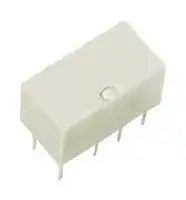
HFKC-T/012-2ZT
Automotive Relay, 12 VDC, 30 A, DPDT, Through Hole, PC Pin, HFKC Series
⚠️ Reference pricing provided. In case of supply shortages, we will connect you with our trusted procurement partners to ensure your project's continuity.
- Manufacturer: HONGFA
- Product type: Automotive Relays
- SVHC: No SVHC (04-Feb-2026)
- Coil Voltage: 12VDC
- Product Range: HFKC Series
- Relay Mounting: Through Hole
- Coil Resistance: 254ohm
- Contact Current: 30A
- Relay Terminals: PC Pin
- Contact Material: Silver Tin Oxide
- Contact Configuration: DPDT
- Contact Voltage DC Nom: 16V
| Delivery and price | |
|---|---|
| Units per pack | 50 |
| Price | 2.28 € |
| Current stock | 10+ |
| Lead time | 30 days |
Datasheet

**AUTOMOTIVE RELAY**

## **HFKC/HFKC-T**

## **Features**

- Subminiature automotive relay

- The weight is only 4g for single relay

- Extended temp. range up to 125

## **Typical  Applications**

Central door lock, Anti-theft lock, Power doors & windows, Lighting, flashlight & indicator lamp control, Wiper control Instrument control, Rear window and seat heating control

- The reflow soldering version (open vent hole) available (HFKC-T)

- RoHS & ELV compliant

## **CHARACTERISTICS**

|Contact arrangement|Typ.: 50mV (at 10A)<br>Max.: 250mV (at 10A)<br>1A, 1C<br>Typ.: 2ms<br>Max.: 10ms<br>NO: 30A (at 23<br>, 1h)<br>NC: 25A (at 23<br>, 1h)<br>30A<br>16VDC<br>1A 12VDC<br>See "CONTACT DATA"<br>1x10⁷OPS(300OPS/min)<br>100M<br>(at 500VDC)<br>500VAC<br>Typ.: 4ms (at nomi. vol.)<br>Max.: 10ms (at nomi. vol.)<br>‘Cc<br>°C<br>Q|
|---|---|
|Voltage drop (initial)1)||
|Max. continuous current2)||
|Max. switching current3)||
|Max. switching voltage||
|Min. contact load4)||
|Electrical endurance||
|Mechanical endurance||
|Initial insulation resistance||
|Withstand voltage5)||
|Operate time||
|Release time6)||
|Ambient temperature|-40<br>to 125<br>Cc<br>‘Cc|
|Vibration resistance 7)|10Hz to 500Hz  58.8m/s2|


Shock resistance[7)] 294m/s[2] Termination PCB[8)] Construction Plastic sealed, Flux proofed Unit weight 4g

- 1) Equivalent to the max. initial contact resistance is 100m Q (at 1A 6VDC).

- 2) Test under the following conditions:

- a. For NO contacts, measured when 100% rated voltage is applied to the coil; For NC contacts, measured when applying zero voltage on coil.

- b. The relay is mounted on the PCB,The PCB board is a double layer board. The thickness of  the copper foil is 4oz (140µm),the width of copper foil is 3.76x(1 ± 5%)mm, the length of the copper foil is (50 ± 1)mm, and the Tg value of the PCB is 150 ‘Cc .

- c. The installation spacing  between relay samples is 100mm.

- d.It varies by connection conditions. Additionally, reliable performance under repeated power-on cannot be guaranteed. Verify based on actual operating conditions during use.

- 3) At 23 Cc ,  No contacts, measured in a 13.5VDC resistive circuit with an on-off cycle of 1.5s on : 1.5s off (100 cycles).

- 4) Lower limit target for on-off operation at low load. This value varies by on-off frequency, environmental conditions and expected reliability level; verify with actual load during use .

- 5) 1min, leakage current less than 1mA.

- 6) The value is measured when voltage drops suddenly from nominal voltage to 0 VDC and coil is not paralleled with suppression circuit.

- 7) When energized, opening time of NO contacts shall not exceed 100µs, when non-energized, opening time of NC contacts shall not exceed 100µs, meantime, NO contacts shall not be closed.

- 8) Since it is an environmental friendly product, please select lead-free solder when welding. The recommended soldering temperature and time is (260 + 3) °C , (5 + 0.5)s.

## **CONTACT DATA**[5)]

|Load voltage<br>13.5VDC|Load type<br>Resistive<br>Make<br>Break|Load type<br>Resistive<br>Make<br>Break|Load current  A|Load current  A|On/Off ratio|On/Off ratio|Electrical<br>endurance<br>OPS|Contact material|Load wiring<br>diagram4)|
|---|---|---|---|---|---|---|---|---|---|
||||1C||On<br>s|Off<br>s||||
||||NO|NC||||||
|||Make|20|—|1|5|3×10⁵|AgSnO2|See<br>diagram 1|
|||Break|20|—||||||
||Wiper<br>L=1.0mH|Make|251)|—|0.2|2|3×10⁵|AgSnO2|See<br>diagram 2|
|||Break|5|—|1.8|||||
||Motor locked<br>L=0.77mH|Make|20|—|0.2|2|1×10⁵|AgSnO2|See<br>diagram 3|
|||Break|20|—||||||


## HONGFA RELAY

ISO9001, IATF16949 , ISO14001, ISO45001, IECQ QC 080000, ISO/IEC 27001 CERTIFIED 2025  Rev. 2.00

28

**==> picture [456 x 43] intentionally omitted <==**

**----- Start of picture text -----**<br>
Load current  A On/Off ratio Electrical<br>Load wiring<br>Load voltage Load type 1A On Off enduranceOPS Contact material diagram  [4)]<br>s s<br>**----- End of picture text -----**<br>


|Load voltage|Load type|Load type|Load current  A|On/Off ratio|On/Off ratio|Electrical<br>endurance<br>OPS|Contact material|Load wiring<br>diagram4)|
|---|---|---|---|---|---|---|---|---|
||||1A|On<br>s|Off<br>s||||
||||||||||
|13.5VDC|Resistive|Make|20|1|5|3×10⁵|AgSnO2|See<br>diagram 4|
|||Break|20||||||
||Flasher3)|Make|3×21W|0.365|0.365|2×10⁶|Special<br>AgSnO2|See<br>diagram 5|
|||Break|||||||
||Lamp|Make|402)|2|2|1×10⁵|AgSnO2|See<br>diagram 6|
|||Break|10||||||


- 1)  Corresponds to the peak inrush current on initial actuation (motor).

- 2)  Corresponds to the peak inrush current on initial actuation (cold filament).

- 3)  When it is utilized in flasher, a special AgSnO2 contact material should be used and the customer special code should be (170) as a suffix. Please connect by the polarity according to the diagrams below.

- 4)  The load wiring diagrams are listed below:

**==> picture [441 x 78] intentionally omitted <==**

**----- Start of picture text -----**<br>
3 RL-1<br>4 3 4 4 4 4<br>4<br>5<br>5 3 5 M Motor 5 5 5<br>M Motor 3<br>R Resistive 4 R Resistive Flasher Lamp<br>5 RL-2<br>diagram 1 diagram 2 diagram 3 diagram 4 diagram 5 diagram 6<br>**----- End of picture text -----**<br>


- 5)  When the load voltage is at 24VDC or higher, or the applications conditions are different from the table above, please submit the detailed application conditions to Hongfa to get more support.

## **COIL DATA**

**==> picture [454 x 328] intentionally omitted <==**

**----- Start of picture text -----**<br>
Pick-up voltage Drop-out voltage Coil resistance Power consumption<br>Nominal voltage  [1)] max.VDC VDCmin. x(1 10%) W<br>VDC<br>23 85 125 23 85 125 23 23<br>6 3.5 4.4 5.0 0.8 1.0 1.1 63 0.57<br>10 5.7 7.1 8.1 1.25 1.5 1.7 181 0.55<br>12 6.9 8.6 9.9 1.5 1.8 2.1 254 0.57<br>12 6.9 8.6 9.9 1.5 1.8 2.1 181 0.8<br>1) When requiring some other nominal voltage, special order allowed.<br>ORDERING INFORMATION<br>HFKC  / 012 -Z S P T (XXX)<br>HFKC :  Standard<br>Type<br>HFKC-T : Reflow soldering version [1)]<br>Coil voltage 006 : 6VDC      010 : 10VDC      012 : 12VDC<br>Contact arrangement H : 1 Form A        Z : 1 Form C<br>Construction S :  Plastic sealed (HFKC) [2)] Nil : Flux proofed(HFKC-T)<br>Coil power P : 0.8W (Only for 12VDC type)      Nil : See "COIL DATA"<br>Contact material T : AgSnO2<br>Special code [3)] XXX:  Customer special requirement            Nil:  Standard<br>**----- End of picture text -----**<br>


**Notes:** 1) The structure of HFKC-T is only flux proof, the open vent hole is on the top of the relay.

- 2) Contact us for suitable soldering conditions and product specifications if post-soldering cleaning or surface treatment is required after the relays are soldered onto the PCB.

- 3)The customer special requirement express as special code after evaluating by Hongfa. e.g. (170) stands for flasher load.The performance parameters of products with characteristic numbers shall be subject to the specific specifications provided by Hongfa.

29

**OUTLINE DIMENSIONS, WIRING DIAGRAM AND PC BOARD LAYOUT**

Unit: mm

1 Form C

## Outline Dimensions

**==> picture [318 x 294] intentionally omitted <==**

**----- Start of picture text -----**<br>
8.5 1 +0.2- 0.1 0.5 A B<br>B 7.5<br>C 0.5 1 +0.2- 0.1 0.5 A C<br>0.5 A C 2x0.6 +0.2- 0.1<br>0.5 A B 2x1.2 +0.2- 0.1<br>2xØ0.5 ± 0.1<br>0.5 A B C<br>1.5<br>12.9 ± 0.3<br>12 ± 0.3<br>0.95 ± 0.2<br>A<br>**----- End of picture text -----**<br>


Remark: ***** The additional tin top is max. 1mm.

## PCB Layout (Bottom view)

## Wiring Diagram (Bottom view)

**==> picture [176 x 147] intentionally omitted <==**

**----- Start of picture text -----**<br>
8.5   0.1<br>7.5   0.1<br>0.5   0.1 Ø1.9 +0.2  0<br>2xØ1.8 +0.2  0<br>2xØ1+0.2  0<br>(1.5)<br>**----- End of picture text -----**<br>


**==> picture [79 x 88] intentionally omitted <==**

**----- Start of picture text -----**<br>
3 4<br>5 1<br>2<br>**----- End of picture text -----**<br>


30

Unit: mm

## **OUTLINE DIMENSIONS, WIRING DIAGRAM AND PC BOARD LAYOUT**

1 Form A

## Outline Dimensions

**==> picture [312 x 294] intentionally omitted <==**

**----- Start of picture text -----**<br>
8.5 1 +0.2- 0.1 0.5 A B<br>B<br>7.5<br>C 0.5 1 +0.2- 0.1 0.5 A C<br>0.5 A C 0.6 +0.2- 0.1<br>0.5 A B 1.2 +0.2- 0.1<br>2xØ0.5 ± 0.1<br>0.5 A B C<br>1.5<br>12.9 ± 0.3<br>12 ± 0.3<br>0.95 ± 0.2<br>A<br>**----- End of picture text -----**<br>


Remark: ***** The additional tin top is max. 1mm.

## PCB Layout (Bottom view)

## Wiring Diagram (Bottom view)

**==> picture [158 x 141] intentionally omitted <==**

**----- Start of picture text -----**<br>
8.5 ± 0.1<br>7.5 ± 0.1<br>0.5 ± 0.1 Ø1.9 +0.2  0<br>Ø1.8 +0.2  0<br>2xØ1+0.2  0<br>(1.5)<br>**----- End of picture text -----**<br>


**==> picture [79 x 89] intentionally omitted <==**

**----- Start of picture text -----**<br>
4<br>5<br>1<br>2<br>**----- End of picture text -----**<br>


31

## (Bottom view) **CHARACTERISTIC CURVES**

## 1. Coil operating voltage range

**==> picture [175 x 169] intentionally omitted <==**

**----- Start of picture text -----**<br>
280<br>260<br>240<br>220 Umax.<br>200<br>180<br>160<br>140<br>120 Upick-up (after pre-energization<br>100               under Unomi.)<br>80<br>60<br>40 Upick-up (initial)<br>20<br>0<br>-40 -20 0 20 40 60 80 100 105<br>Ambient temperature ( )<br>**----- End of picture text -----**<br>


- 1)  There should be no contact load applied when maximum continuous operation voltage is applied on coil.

- 2) The operating voltage is connected with coil preenergized time and voltage. After pre-energized, the operating voltage will increase.

- 3)  The maximum allowable coil temperature is 180 . For the coil temperature rise which is measured by resistance is average value, we recommend the coil temperature should be below 170 under the different application ambient, different coil voltage and different load etc.

- 4)  If the actual operating coil voltage is out of the specified range, please contact Hongfa for further details.

## 2. Reflow soldering, temperature on PCB board.

(Recommended soldering temperature, only for reflow soldering version)

**==> picture [232 x 151] intentionally omitted <==**

**----- Start of picture text -----**<br>
Temperature<br>( )<br>Soldering<br>max.250<br>230<br>180<br>Preheating<br>150<br>30max Time(s)<br>120max<br>**----- End of picture text -----**<br>


## Disclaimer

The specification is for reference only. See to "Terminology and Guidelines" for more information. Specifications subject to change without notice. In case there is specific criterion (such as mission profile, technical specification, PPAP etc.) checked and agreed by and between customer and Hongfa, this specific criterion should be taken as standard regarding any requirement on Hongfa product. We could not evaluate all the performance and all the parameters for every possible application. Thus the user should be in a right position to choose the suitable product for their own application. If there is any query, please contact Hongfa for the technical service. However, it is the user’s responsibility to determine which product should be used only.

> ©  xiamen Hongfa Electroacoustic Co., Ltd.  All rights of Hongfa are reserved.

32
Updated at June 9, 2026
About Novapart
Novapart is a B2B electronic component broker specialising in stock shortages and cost reduction. We source hard-to-find parts and identify compliant alternatives across a catalogue of 410,000+ components from 500+ manufacturers.
Learn more →Stock Shortage Specialist
When a component is unavailable, discontinued or has an unacceptable lead time, we tap into our network of vetted European and Asian distributors to source what you need — without compromising on quality or traceability.
Request a quote →Compliant Alternatives
We identify pin-to-pin, electrically equivalent substitutes that meet the same certifications (RoHS, AEC-Q100, REACH) as your original specification — validated against datasheets, not just part numbers. Often at a lower cost.
BOM Analysis service →