
Image not available
Illustrative purposes only

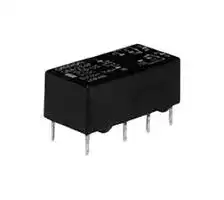
G6A-274P-ST15-US-DC1.5
Signal Relay, 1.5 VDC, DPDT, 2 A, G6A Series, Through Hole, Non Latching
⚠️ Reference pricing provided. In case of supply shortages, we will connect you with our trusted procurement partners to ensure your project's continuity.
- Manufacturer: OMRON / PARTNER STOCK
- Product type: Signal Relays
- SVHC: To Be Advised
- Coil Type: Non Latching
- Coil Voltage: 1.5VDC
- Product Range: G6A Series
- Relay Mounting: Through Hole
- Coil Resistance: 15ohm
- Contact Current: 2A
- Relay Terminals: PC Pin
- Contact Material: Silver Gold
- Contact Voltage VAC: -
- Contact Voltage VDC: 30V
- Contact Configuration: DPDT
| Delivery and price | |
|---|---|
| Units per pack | 36 |
| Price | 7.53 € |
| Current stock | 10+ |
| Lead time | 30 days |
Datasheet

G6A Low Signal Relay

**G 6 A**

## **World's Standard Model G6A!**

- **Resistant to electromagnetic interference, enables high-density mounting.**

- **Impulse withstand voltage of 1,500V meets FCC requirements.**

- **Gold-clad twin-contacts provide short contact bounce in addition to its high contact reliability.**

- **A variety of products that cover a wide range of use.**

## **RoHS Compliant**

## ■ **Model Number Legend**

- G6A @ - @@@@ - @ - @ **5. Terminal Shape** 1 2 3 4 5 6 7 P: PCB Terminals

   **6. Classification**

**1. Relay Function**

None : Standard ST : Stand-off 0.64 mm

None : Single-side stable U : Single-winding latching K : Double-winding latching

15 : High-sensitivity (150 mW)

   - 40 : Low-sensitivity (Single-side Stable: 400 mW Double-winding Latching: 360 mW)

**2. Contact Form**

- 2: DPDT (2c)

   **7. Approved Standards**

**3. Contact Type**

   - None : Standard US : UL/C-UL

- 7: Bifurcated crossbar Ag (Au-Alloy)

**4. Protective Structure**

## ■ **Application Examples**

   - Telecommunication equipment

   - Security equipment

   - Test & measurement equipment

- 4: Fully sealed

## ■ **Ordering Information**

## ● **UL/C-UL Certified Models**

|Relay Function|Classification|Contact form|Model|Rated coil voltage (VDC)|Minimum packing unit|
|---|---|---|---|---|---|
|Single-side Stable<br>Type|Standard|DPDT (2c)|**G6A-274P-ST-US**|3, 4.5, 5, 6, 9, 12, 24|25 pcs/tube|
|||||48||
||Low-sensitivity||**G6A-274P-ST40-US**|3, 5, 6, 9, 12, 24||
|||||48||
||High-sensitivity||**G6A-274P-ST15-US**|3, 5, 6, 9, 12, 24||
|||||48||
|Single-winding<br>Latching Type|Standard||**G6AU-274P-ST-US**|3, 4.5, 5, 6, 9, 12, 24||
|||||48||
|Double-winding<br>Latching Type|Standard||**G6AK-274P-ST-US**|3, 4.5, 5, 6, 9, 12, 24||
|||||48||
||Low-sensitivity||**G6AK-274P-ST40-US**|3, 5, 6, 9, 12, 24||
|||||48||


Note: When ordering, add the rated coil voltage to the model number. Example: G6A-274P-ST-US DC3

~~“Te~~ Rated coil voltage However, the notation of the coil voltage on the product case as well as on the packing will be marked as @@ VDC.

**1**

G6A

**Low Signal Relay**

**G 6 A**

## ■ **Ratings**

## ● **Coil: Single-side Stable (Standard Models)**

|Contact form|Rated voltage|Rated current<br>(mA)|Coil resistance<br>(Ω)|Must operate voltage<br>(V)|Must release voltage<br>(V)|Max. voltage<br>(V)|Power consumption<br>(mW)|
|---|---|---|---|---|---|---|---|
|||||% of rated voltage||||
|DPDT (2c)|3 VDC|66.7|45|70% max.|10% min.|200%<br>(at 23°C)|Approx. 200|
||4.5 VDC|44.6|101|||||
||5 VDC|40.0|125|||||
||6 VDC|33.3|180|||||
||9 VDC|22.2|405|||||
||12 VDC|16.7|720|||||
||24 VDC|8.3|2,880|||||
||48 VDC|4.9|9,750||||Approx. 235|


Note1. The rated current and coil resistance are measured at a coil temperature of 23°C with a tolerance of ±10%.

2. Operating characteristics are measured at a coil temperature of 23°C.

3. The maximum voltage is the highest voltage that can be imposed on the relay coil.

## ● **Coil: Single-side Stable (Low-sensitivity Models)**

|Contact form|Rated voltage|Rated current<br>(mA)|Coil resistance<br>(Ω)|Must operate voltage<br>(V)|Must release voltage<br>(V)|Max. voltage<br>(V)|Power consumption<br>(mW)|
|---|---|---|---|---|---|---|---|
|||||% of rated voltage||||
|DPDT (2c)|3 VDC|133.3|22.5|70% max.|10% min.|150%<br>(at 23°C)|Approx. 400|
||5 VDC|80|62.5|||||
||6 VDC|66.7|90|||||
||9 VDC|44.3|203|||||
||12 VDC|33.3|360|||||
||24 VDC|16.7|1,440|||||
||48 VDC|8.3|5,760|||||


Note1. The rated current and coil resistance are measured at a coil temperature of 23°C with a tolerance of ±10%.

2. Operating characteristics are measured at a coil temperature of 23°C.

3. The maximum voltage is the highest voltage that can be imposed on the relay coil.

## ● **Coil: Single-side Stable (High-sensitivity Models)**

|Contact form|Rated voltage|Rated current<br>(mA)|Coil resistance<br>(Ω)|Must operate voltage<br>(V)|Must release voltage<br>(V)|Max. voltage<br>(V)|Power consumption<br>(mW)|
|---|---|---|---|---|---|---|---|
|||||% of rated voltage||||
|DPDT (2c)|3 VDC|50|60|80% max.|10% min.|200%<br>(at 23°C)|Approx. 150|
||4.5 VDC|33.3|135|||||
||5 VDC|30|167|||||
||6 VDC|25|240|||||
||9 VDC|16.7|540|||||
||12 VDC|12.5|960|||||
||24 VDC|6.3|3,840|||||
||48 VDC|3.2|15,000|||||


Note1. The rated current and coil resistance are measured at a coil temperature of 23°C with a tolerance of ±10%.

2. Operating characteristics are measured at a coil temperature of 23°C.

3. The maximum voltage is the highest voltage that can be imposed on the relay coil.

## ● **Coil: Single-winding Latching**

|Contact form|Rated voltage|Rated current<br>(mA)|Coil resistance<br>(Ω)|Set voltage (V)|Reset voltage (V)|Max. voltage (V)|Power consumption<br>(mW)|
|---|---|---|---|---|---|---|---|
|||||% of rated voltage||||
|DPDT (2c)|3 VDC|33.7|89|70% max.|70% max.|200%<br>(at 23°C)|Approx. 100|
||5 VDC|20|250|||||
||6 VDC|16.7|360|||||
||9 VDC|11.1|810|||||
||12 VDC|8.3|1,440|||||
||24 VDC|4.2|5,760|||||
||48 VDC|2.5|19,000||||Approx. 120|


Note1. The rated current and coil resistance are measured at a coil temperature of 23°C with a tolerance of ±10%.

2. Operating characteristics are measured at a coil temperature of 23°C.

3. The maximum voltage is the highest voltage that can be imposed on the relay coil.

**2**

G6A

**Low Signal Relay**

**G 6 A**

## ● **Coil: Double-winding Latching (Standard Models)**

|Contact form|Rated voltage|Rated current<br>(mA)|Coil resistance<br>(Ω)|Set voltage (V)|Reset voltage (V)|Max. voltage (V)|Power consumption<br>(mW)|
|---|---|---|---|---|---|---|---|
|||||% of rated voltage||||
|DPDT (2c)|3 VDC|66.7|45|70% max.|70% max.|200%<br>(at 23°C)|Approx. 200|
||4.5 VDC|40.2|112||||Approx. 180|
||5 VDC|36|139|||||
||6 VDC|30|200|||||
||9 VDC|20|450|||||
||12 VDC|15|800|||||
||24 VDC|7.5|3,200|||||
||48 VDC|4.2|11,520||||Approx. 200|


Note1. The rated current and coil resistance are measured at a coil temperature of 23°C with a tolerance of ±10%.

2. Operating characteristics are measured at a coil temperature of 23°C.

3. The maximum voltage is the highest voltage that can be imposed on the relay coil.

## ● **Coil: Double-winding Latching (Low-sensitivity Models)**

|Contact form|Rated voltage|Rated current<br>(mA)|Coil resistance<br>(Ω)|Set voltage (V)|Reset voltage (V)|Max. voltage (V)|Power consumption<br>(mW)|
|---|---|---|---|---|---|---|---|
|||||% of rated voltage||||
|DPDT (2c)|3 VDC|120|25|70% max.|70% max.|150%<br>(at 23°C)|Approx. 360|
||4.5 VDC|79.9|56.3|||||
||5 VDC|72.5|69|||||
||6 VDC|60|100|||||
||9 VDC|40|225|||||
||12 VDC|30|400|||||
||24 VDC|15|1,600|||||
||48 VDC|7.5|6,400|||||


Note1. The rated current and coil resistance are measured at a coil temperature of 23°C with a tolerance of ±10%.

2. Operating characteristics are measured at a coil temperature of 23°C.

3. The maximum voltage is the highest voltage that can be imposed on the relay coil.

## ● **Contacts**

|Load<br>Item|Resistive load|Inductive load<br>cosφ= 0.4;<br>L/R = 7 ms<br>(<br>)|
|---|---|---|
|Contact type|Bifurcated crossbar||
|Contact material|Ag (Au-Alloy) contact||
|Rated load|0.5 A at 125 VAC;<br>2 A at 30 VDC|0.3 A at 125 VAC;<br>1 A at 30 VDC|
|Rated carry current|3 A||
|Max. switching voltage|250 VAC, 220 VDC||
|Max. switching current|2 A|1 A|


**3**

G6A

**Low Signal Relay**

**G 6 A**

## ■ **Characteristics**

|Item<br>Classification|Item<br>Classification|Item<br>Classification|Single-side Stable|Single-winding Latching|Double-winding Latching|
|---|---|---|---|---|---|
|Contact resistance *1|||50 mΩmax.|||
|Operate (set) time|||5 ms max.|5 ms max.||
|Release (reset) time|||3 ms max.|5 ms max.||
|Min. set/reset signal width|||−|10 ms||
|Insulation resistance *2|||1,000 MΩmin. (at 500 VDC); except for set-reset|||
|Dielectric<br>strength|Between coil and contacts||1,000 VAC, 50/60 Hz for 1 min|||
||Between contacts of the<br>same polarity||1,000 VAC, 50/60 Hz for 1 min|||
||Between contacts of<br>different polarity||1,000 VAC, 50/60 Hz for 1 min|||
||Between set and reset<br>coils||−|−|250 VAC, 50/60 Hz for 1 min|
|Impulse|withstand voltage||1,500 V (10×160μs) (conforms to FCC Part 68)|||
|Vibration<br>resistance||Destruction|10 to 55 to 10 Hz, 2.5 mm single amplitude (5 mm double amplitude)|||
|||Malfunction|10 to 55 to 10 Hz, 1.65 mm single amplitude (3.3 mm double amplitude)|||
|Shock<br>resistance||Destruction|1,000 m/s2|||
|||Malfunction|500 m/s2|300 m/s2||
|Durability||Mechanical|100,000,000 operations min. (at 36,000 operations/hr)|||
|||Electrical|500,000 operations min. (at 1,800 operations/hr)|||
|Failure rate (P level) *3|||10μA at 10 m VDC|||
|Ambient operating temperature|||-40°C to 70°C (with no icing or no condenstion)|||
|Ambient operating humidity|||5% to 85%|||
|Weight|||Approx. 3.5 g|||


Note: The data shown above are initial values.

*1. The contact resistance was measured with 10 mA at 1 VDC with a voltage drop method.

*2. The insulation resistance was measured with a 500 VDC megohmmeter applied to the same parts as those used for checking the dielectric strength (except between the set and reset coil).

*3. This value was measured at a switching frequency of 60 operations/min and the criterion of contact resistance is 50 Ω . This value may vary, depending on switching frequency, operating conditions, expected reliability level of the relay, etc. It is always recommended to double-check relay suitability under actual load conditions.

**4**

G6A

**Low Signal Relay**

**G 6 A**

## ■ **Engineering Data**

## ● **Maximum Switching Power**

## ● **Durability**

**==> picture [344 x 599] intentionally omitted <==**

**----- Start of picture text -----**<br>
5.0 10,000<br>5,000<br>DC inductive<br>3,000<br>(L/R = 7 ms)<br>DC resistive<br>2.0 1,000<br>AC resistive 500 30 VDC, resistive<br>300<br>1.0<br>100<br>0.5 50<br>30<br>AC inductive 10 125 VAC, resistive 30 VDC, inductive<br>0.2 (cosφ = 0.4) 5<br>3 125 VAC, inductive<br>0 20  50  100  200  500 0  0.2  0.4 0.6 0.8  1.0 1.2  1.4 1.6 1.8 2.0<br>Switching voltage (V) Switching current (A)<br>Ambient Temperature vs. Maximum  ● Ambient Temperature vs. Must<br>Coil Voltage Operate or Must Release Voltage<br>250 100<br>Sample: G6A-274P<br>100, 150, 200 mW Number of Relays: 10 pcs<br>200 80<br>max.<br>X<br>150 60<br>min.<br>110 max.<br>100 40<br>360, 400 mW<br>X<br>min.<br>50 20<br>Must operate voltage<br>0 0 Must release voltage<br> -40  20  30  40  50  60  70  80  90 100 -60  -40  -20  0  20  40  60  80  100 120<br>Ambient temperature (°C) Ambient temperature (°C)<br>Note: “Maximum voltage” is the maximum<br>voltage that can be applied to the Relay<br>coil.<br>Shock Malfunction<br>G6A-274P G6AK-274P<br>Y Y<br>1,000 1,000<br>800 800<br>1,000X 600 1,000Z 1,000X 600 1,000Z<br>400 400<br>200 200<br>200 200<br>400 400<br>1,000Z' 600 1,000X' 1,000Z' 600 1,000X'<br>800 800<br>Shock direction De-energized<br>Y X X'Z 1,000 Y' Unit: m/sEnergized [2] YShock directionX X'Z 1,000 Y' Unit: m/s [2]<br>Y' Z'<br>Sample: G6A-274P 5 VDC  Z' Sample: G6AK-274P 5 VDC<br>Number of Relays: 10 pcs Y' Number of Relays: 10 pcs<br>Switching current (A) Durability (x104 operations)<br>Maximum coil voltage (%) On the basis of rated voltage (%)<br>**----- End of picture text -----**<br>


## ● **Ambient Temperature vs. Maximum Coil Voltage**

Note: “Maximum voltage” is the maximum voltage that can be applied to the Relay coil.

## ● **Shock Malfunction G6A-274P**

Test Conditions: Shock is applied in ±X, ±Y, and ±Z directions three times each with and without energizing the Relays to check the number of contact malfunctions.

**5**

G6A

**Low Signal Relay**

## ● **Electrical Durability Test** *1

## ● **Contact Reliability Test** *1, *2

**==> picture [336 x 158] intentionally omitted <==**

**----- Start of picture text -----**<br>
80 1,000<br>70 Must operate voltage max. Sample: G6A-274P  5 VDC Number of Relays: 10 pcs NO contact<br>60 500 Test conditions: Load 10 m VDC   NC contact<br>50 min. Switchin10 mA (Resistive load)g frequency:<br>300 7,200 operations/h<br>40<br>Must release voltage<br>30 max.<br>20 Sample: G6A-274P min. 100<br>10 Number of Relays: 10 pcs<br>1007050 T Switchin est con g d  fre ition q s uenc : 125 y: 1,800 o  VAC 0.5 p  A  erations/h (Res max.max. istive load) 5030 max. max.<br>30 NO contact  NC contact min. min.<br>min. min.<br>10<br>1 3 5 10 30 50 100 500 0  3 5  10  30 50 100  300  1,000 3,000<br>Operating frequency (×10 [4]  operations) Operating frequency (×10 [4]  operations)<br>On the basis of rated voltage (%) Contact resistance (mW)<br>Contact resistance (mW)<br>**----- End of picture text -----**<br>


- *1. The tests were conducted at an ambient temperature of 23ºC.

*2. The contact resistance data are periodically measured reference values and are not values from each monitoring operation. Contact resistance values will vary according to the switching frequency and operating environment, so be sure to check operation under the actual operating conditions before use.

**==> picture [536 x 393] intentionally omitted <==**

**----- Start of picture text -----**<br>
● Mutual Magnetic Interference<br>G6A-274P G6A-274P<br>Must operate voltage Must operate voltage<br>Must release voltage Must release voltage<br>G 2.54 mm +10 Initial stage Test +10 Initial stage Test<br>6<br>A +5 +5<br>X<br>0 X 0<br>X 2.54 mm X<br>−5 −5<br>Sample −10 Average value −10 Average value<br>Sample<br>Initial stage Test Initial stage Test<br>+10 +10<br>+5 X +5<br>0 X 0 X<br>X<br>−5 −5<br>Sample −10 Average value Sample −10 Average value<br>● External Magnetic Interference<br>G6AK-274P (Average value) G6AK-274P (Average value) G6AK-274P (Average value)<br>+20 +20 +20<br>Set voltage Sample: G6AK-274P 5 VDC Sample: G6AK-274P 5 VDC<br>N S Reset voltage Number of Relays: 10 pcs N S Number of Relays: 10 pcs N S<br>+10 +10 +10<br>0 0 0<br>−10 −10 −10<br>S N S N S et voltage S N Set voltage<br>Sample: G6AK-274P 5 VDC R eset voltage Reset voltage<br>−20 Number of Relays: 10 pcs −20 −20<br>−4,000  −2,400  −800 0 800  2,400  4,000 −4,000  −2,400  −800 0 800  2,400  4,000 −4,000  −2,400  −800 0 800  2,400  4,000<br>−3,200  −1,600  1,600  3,200 −3,200  −1,600  1,600  3,200 −3,200  −1,600  1,600  3,200<br>External magnetic field (A/m) External magnetic field (A/m) External magnetic field (A/m)<br>De- energized<br>De- energized De- energized<br>Change rate on the basis of initial value (%) Change rate on the basis of initial value (%)<br>Energized<br>Energized Energized<br>Change rate on the basis of initial value (%) Change rate on the basis of initial value (%)<br>Rate of variability (%) Rate of variability (%) Rate of variability (%)<br>**----- End of picture text -----**<br>


**6**

G6A

**Low Signal Relay**

**G 6 A**

## ● **Time distribution of Operating and Release/Set and Reset** *1 **G6A-274P G6AK-274P**

**==> picture [507 x 695] intentionally omitted <==**

**----- Start of picture text -----**<br>
100 60 Sample: G6AK-274P 5 VDC<br>Sample: G6A-274P 5 VDC Must operate time Number of Relays: 50 pcs<br>Number of Relays: 50 pcs<br>Must release time Set time<br>80<br>Reset time<br>40<br>60<br>40<br>20<br>20<br>0<br>0 1  2  3  4 1  2  3  4<br>Time (ms) Time (ms)<br>● Bounce Time distribution of Operating and Release/Set and Reset  *1<br>G6A-274P G6AK-274P<br>60 80<br>Sample: G6A-274P 5 VDC Sample: G6AK-274P 5 VDC<br>Number of Relays: 50 pcs Number of Relays: 50 pcs<br>Operating bounce time Set bounce time<br>Release bounce time 60 Reset bounce time<br>40<br>40<br>20<br>20<br>0 0.5  1.0  1.5 0  0.5  1.0<br>Time (ms) Time (ms)<br>● High-frequency Characteristics<br>• Measurement Conditions<br>G6A-274P<br>HR 8505A RF HR 8501<br>Network analyzer  8501AHP  RA Transmissionreflectiontest-set 50Ω<br>Storage Terminator<br>normalizer B<br>Terminals which were not being measured were terminated with 50 Ω.<br>Measuring impedance: 50 Ω<br>Note: The high-frequency characteristics data were measured using a dedicated circuit board and actual values will vary depending on the usage conditions. Check<br>the characteristics of the actual equipment being used.<br>● High-frequency Characteristics  ● High-frequency Characteristics  ● High-frequency Characteristics<br>(Isolation)  *1, *2 (Insertion Loss)  *1, *2 (Return Loss, V.SWR)  *1, *2<br>(Average value (initial)) (Average value (initial)) (Average value (initial))<br>0 0 0<br>Sample: G6A-274P Sample: G6A-274P<br>Number of Relays: 10 pcs Number of Relays: 10 pcs<br>20 5<br>0.5 Return loss<br>40 10<br>60 15 2.0<br>1.0<br>80 20 1.5<br>Sample: G6A-274P V.SWR<br>Number of Relays: 10 pcs<br>100 1.5 25 1.0<br> 0  20  40  60  80  100  0  100  200  300  400  500  600  0  200  400  600  800  1,000<br>Frequency (MHz) Frequency (MHz) Frequency (MHz)<br>*1. The tests were conducted at an ambient temperature of 23°C.<br>Number of contacts Number of contacts<br>Number of contacts Number of contacts<br>Isolation (dB) Insertion loss (dB) Return loss (dB)<br>V.SWR<br>**----- End of picture text -----**<br>


Note: The high-frequency characteristics data were measured using a dedicated circuit board and actual values will vary depending on the usage conditions. Check the characteristics of the actual equipment being used.

- *2. High-frequency characteristics depend on the PCB to which the Relay is mounted. Always check these characteristics, including durability, in the actual machine before use.

**7**

G6A

**Low Signal Relay**

## ■ **Dimensions**

**Single-side stable G6A-274P-ST-US G6A-274P-ST40-US G6A-274P-ST15-US**

**==> picture [152 x 88] intentionally omitted <==**

**----- Start of picture text -----**<br>
10.1max.<br>20.2max. (9.9)*<br>(20)*<br>0.64 8.4max.<br>(8.2)*<br>3.16<br>0.3<br>0.6 7 .62<br>* Average value<br>Note: Each value has a tolerance of ±0.3 mm.<br>**----- End of picture text -----**<br>


**==> picture [228 x 122] intentionally omitted <==**

**----- Start of picture text -----**<br>
PCB Mounting Holes Terminal Arrangement/<br>(BOTTOM VIEW) Internal Connections<br>Tolerance: ±0.1 (BOTTOM VIEW)<br>2.54 Eight, 1.0-dia. holes<br>2.54 (1.2) +<br>1 4 6 8<br>7.62<br>16 − 13 11 9<br>5.08 5.08 (1.2) Note: Check carefully the<br>(1.2) 7 .62 (1.2) coil polarity of the<br>Note: Orientation marks are indicated as follows: Relay.<br>**----- End of picture text -----**<br>


## **Single-winding latching G6AU-274P-ST-US**

**==> picture [512 x 275] intentionally omitted <==**

**----- Start of picture text -----**<br>
PCB Mounting Holes Terminal Arrangement/<br>G6AU-274P-ST-US (BOTTOM VIEW) Internal Connections<br>Tolerance: ±0.1 (BOTTOM VIEW)<br>10.1max. 2.54 Eight, 1.0-dia. holes<br>20.2max.. (9.9)*9.9)*)* 2.54 (1.2)<br>(20)*<br>1 + 4 6 8<br>0.64 8.4max. 7.62 S R<br>(8.2)*<br>3.16 16 − − 13 11 9<br>(1.2)<br>0.3 (1.2) 7 .62 5.08 5.08 (1.2) Note: Check carefully the<br>0.6 7 .620.3 coil polarity of the<br>* Average value Note: Orientation marks are indicated as follows: Relay.<br>Note: Each value has a tolerance of ±0.3 mm.<br>Double-winding latching PCB Mounting Holes Terminal Arrangement/<br>G6AK-274P-ST-US (BOTTOM VIEW) Internal Connections<br>G6AK-274P-ST40-US Tolerance: ±0.1 (BOTTOM VIEW)<br>10.1max. 2.54 Ten, 1.0-dia. holes<br>20.2max. (9.9)* 2.54 (1.2)<br>(20)* + +<br>1 2 4 6 8<br>0.64 8.4max. 7.62<br>(8.2)* S R<br>3.16 16 − −15 13 11 9<br>(1.2)<br>0.3 (1.2) 5.08 5.08 5.08 (1.2) Note: Check carefully the<br>0.6 7 .62 2.54 coil polarity of the<br>* Average value Note: Orientation marks are indicated as follows: Relay.<br>−<br>+<br>**----- End of picture text -----**<br>


**==> picture [290 x 91] intentionally omitted <==**

**----- Start of picture text -----**<br>
10.1max.<br>*<br>20.2max.. (9.9)*9.9)*)*<br>(20)*<br>0.64 8.4max.<br>(8.2)*<br>G 3.16<br>6<br>A 0.6 7 .620.3<br>* Average value<br>Note: Each value has a tolerance of ±0.3 mm.<br>**----- End of picture text -----**<br>


Note: Each value has a tolerance of ±0.3 mm.

**8**

G6A

**Low Signal Relay**

## ■ **Approved Standards**

To order the model that is certified for the UL/C-UL standards, add “-US” to the end of the model number.

|**UL/C-UL Recognized.**<br> (File No.E41515)|**UL/C-UL Recognized.**<br> (File No.E41515)|**UL/C-UL Recognized.**<br> (File No.E41515)|**UL/C-UL Recognized.**<br> (File No.E41515)|**UL/C-UL Recognized.**<br> (File No.E41515)|**UL/C-UL Recognized.**<br> (File No.E41515)|
|---|---|---|---|---|---|
|Classification|Contact<br>form|Coil ratings|Model|Contact ratings|Number of<br>test<br>operations|
|Single-side<br>stable|DPDT<br>(2c)|3 to 48 VDC|**G6A-274P-ST-US**|0.6 A, 125 VAC at 40°C<br>2 A, 30 VAC at 40°C<br>0.6 A, 110 VAC at 40°C|6,000|
|Latching|||**G6AK-274P-ST-US**<br>**G6AU-274P-ST-US**|||
|Low-sensitivity|||**G6A(K)-274P-ST40-US**|||
|High-sensitivity|||**G6A-274P-ST15-US**|||


## ■ **Precautions**

- **Please refer to “PCB Relays Common Precautions” for correct use.**

## **Correct Use**

## ● **Long-term Continuously ON Contacts**

Using the Relay in a circuit where the Relay will be ON continuously for long periods (without switching) can lead to unstable contacts because the heat generated by the coil itself will affect the insulation, causing a film to develop on the contact surfaces. We recommend using a latching relay (magnetic-holding relay) in this kind of circuit. If a single-side stable model must be used in this kind of circuit, we recommend using a fail-safe circuit design that provides protection against contact failure or coil burnout.

## ● **Relay Handling**

When washing the product after soldering the Relay to a PCB, use a water-based solvent or alcohol-based solvent, and keep the solvent temperature to less than 40°C. Do not put the Relay in a cold cleaning bath immediately after soldering.

## ● **Double-switching load in two poles**

Double-switching in two poles as shown in the figure below, one pole and two pole interval may become MBB (Make Before Break) mechanically according to the timing of the point of **G 6** contact switching (By the short-circuit mode), and the **A** malfunction might be caused.

In such a circuit, direct electric switching should be avoided, and concern for contact to be carried after the contact of Relay absolutely switches in condition of no load.

**==> picture [90 x 61] intentionally omitted <==**

**----- Start of picture text -----**<br>
+<br>Load<br>Contacts<br>−<br>**----- End of picture text -----**<br>


- Application examples provided in this document are for reference only. In actual applications, confirm equipment functions and safety before using the product.

> • Consult your OMRON representative before using the product under conditions which are not described in the manual or applying the product to nuclear control systems, railroad systems, aviation systems, vehicles, combustion systems, medical equipment, amusement machines, safety equipment, and other systems or equipment that may have a serious influence on lives and property if used improperly. Make sure that the ratings and performance characteristics of the product provide a margin of safety for the system or equipment, and be sure to provide the system or equipment with double safety mechanisms.

**Note: Do not use this document to operate the Unit.**

**OMRON Corporation Electronic and Mechanical Components Company**

**Contact:  www.omron.com/ecb**

**Cat. No. K020-E1-15** 0118(0207)(O)

**9**
Updated at June 10, 2026
About Novapart
Novapart is a B2B electronic component broker specialising in stock shortages and cost reduction. We source hard-to-find parts and identify compliant alternatives across a catalogue of 410,000+ components from 500+ manufacturers.
Learn more →Stock Shortage Specialist
When a component is unavailable, discontinued or has an unacceptable lead time, we tap into our network of vetted European and Asian distributors to source what you need — without compromising on quality or traceability.
Request a quote →Compliant Alternatives
We identify pin-to-pin, electrically equivalent substitutes that meet the same certifications (RoHS, AEC-Q100, REACH) as your original specification — validated against datasheets, not just part numbers. Often at a lower cost.
BOM Analysis service →