
Image not available
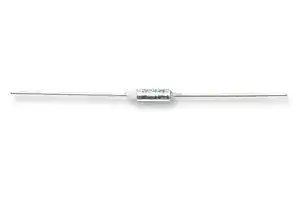
Illustrative purposes only

G5A01229C
Fuse, Thermal Cutoff, MICROTEMP G5 Series, 16 A, 250 V, 229 °C, Axial Leaded, 200 °C
⚠️ Reference pricing provided. In case of supply shortages, we will connect you with our trusted procurement partners to ensure your project's continuity.
- Manufacturer: THERMODISC
- Product type: Thermal Fuses
- SVHC: No SVHC (21-Jan-2025)
- Fuse Current: 16A
- Product Range: MICROTEMP G5 Series
- Fuse Terminals: Axial Leaded
- Voltage Rating VAC: 250V
- Holding Temperature: 200°C
- Functioning Temperature: 229°C
| Delivery and price | |
|---|---|
| Units per pack | 1 |
| Price | 1.55 € |
| Current stock | 10+ |
| Lead time | 30 days |
Datasheet

## **TCO Series** _**Standard Styles**_

## **Reliable**

**Global Ratings**

**One Shot Operation**

## **Upper Limit Temperature Protection**

MICROTEMP[®] thermal cutoffs from Therm-O-Disc offer an accurate, reliable solution to upper limit protection. Known as a thermal fuse or TCO, the MICROTEMP[®] thermal cutoff provides protection against overheating by interrupting an electrical circuit when operating temperatures exceed the rated temperature of the cutoff.

## **Operating Principle of the MICROTEMP[®] TCO**

The active trigger mechanism of the thermal cutoff is an exclusively formulated, electrically nonconductive pellet. Under normal operating temperatures, the solid pellet holds spring-loaded contacts closed (see figure 1).

## G4 SERIES MICROTEMP[®] TCO CLOSED CIRCUIT

When a predetermined temperature is reached, the pellet melts, allowing the barrel spring to relax. The trip spring then slides the contact away from the lead and the circuit is opened (see figure 2).

## G4 SERIES MICROTEMP[®] TCO OPEN CIRCUIT

## **MICROTEMP[®] Features**

- One shot operation cuts off electrical power.

- Current interrupt capacity up to 16 amps @ 250VAC (25 amps @ 125VAC).

- Low resistance

- Compact size

Grey area shows current patch Figure 1

Grey are shows current patch Figure 2

Once a MICROTEMP[®] thermal cutoff opens a circuit, the TCO needs to be replaced. This replacement procedure must include correction of the fault condition before the product is operated again.

**New Applications The MICROTEMP[®] Thermal Cutoff** The calibration selection **Series** will be affected by application variables such as l[2] R selfMICROTEMP[[®]] heating of the TCO, heat are available in a range of transfer through insulation temperatures and electrical and heat dissipation due to ratings to meet your applicaheat sinking and air flow. Refer to **Technical** tion requirements.

## **Temperature Ratings**

MICROTEMP[®] thermal cutoffs are available in a wide range of opening temperatures, providing designers with a high degree of design flexibility. Determining the correct TCO temperature calibration requires significant application testing.

MICROTEMP[[®]] thermal cutoffs are available in a range of temperatures and electrical ratings to meet your application requirements.

**G4 Series** – Rated for continuous operating currents up to 10 amps at 250 VAC (15 amps at 120 VAC), the G4 Series MICROTEMP[®] TCO is the industry standard for over temperature protection. The G4 Series is applied to millions of appliances and personal care products each year, providing reliable backup protection for temperature controlling thermostats and other over-temperature conditions. The G4 Series is also widely applied in office machines, portable heaters and industrial equipment as a thermal safeguard.

**Bulletin TCO-A “application and installation of MICROTEMP[®] Thermal Cutoffs,”** for important information.

|**THERMAL CUTOFF CONSTRUCTIONS**|**THERMAL CUTOFF CONSTRUCTIONS**|**THERMAL CUTOFF CONSTRUCTIONS**|**THERMAL CUTOFF CONSTRUCTIONS**|**THERMAL CUTOFF CONSTRUCTIONS**|**THERMAL CUTOFF CONSTRUCTIONS**|**THERMAL CUTOFF CONSTRUCTIONS**|
|---|---|---|---|---|---|---|
|G4 Series||G5 Series||G7 Series||Calibration|
|Standard<br>Style|Product<br>Type|Standard<br>Style|Product<br>Type|Standard<br>Style|Product<br>Type|Open Temp<br>(+0/-5°C)|
|620566|G4A01072C|481327|G5A01072C|||72°C|
|620673|G4A01077C|481328|G5A01077C|620676|G7F01077C|77°C|
|620568|G4A01084C|481361|G5A01084C|620677|G7F01084C|84°C|
|620674|G4A01093C|481362|G5A01093C|620678|G7F01093C|93°C|
|620569|G4A01098C|481379|G5A01098C|620679|G7F01098C|98°C|
|620570|G4A01104C|481380|G5A01104C|||104°C|
|620571|G4A01110C|481363|G5A01110C|620680|G7F01110C|110°C|
|620572|G4A01117C|481329|G5A01117C|620681|G7F01117C|117°C|
|620573|G4A01121C|481330|G5A01121C|620682|G7F01121C|121°C|
|620574|G4A01128C|481381|G5A01128C|620683|G7F01128C|128°C|
|620661|G4A01144C|481365|G5A01144C|620684|G7F01144C|144°C|
|620600|G4A01152C|481382|G5A01152C|620685|G7F01152C|152°C|
|620599|G4A01167C|481383|G5A01167C|620686|G7F01167C|167°C|
|620576|G4A01184C|481386|G5A01184C|620687|G7F01184C|184°C|
|620577|G4A01192C|481331|G5A01192C|||192°C|
|620578|G4A01216C|481387|G5A01216C|||216°C|
|620671|G4A01229C|481388|G5A01229C|||229°C|
|620580|G4A01240C|481364|G5A01240C|||240°C|


**G5 Series** – Designed for high current applications, the G5 Series MICROTEMP[®] TCO is rated for operating currents up to 16 amps at 250 VAC (25 amps at 120 VAC). Similar in appearance to the G4 Series, the G5 Series has a different internal construction capable of interrupting higher currents. G5 Series TCOs are found in electric heaters and other higher current devices requiring over-temperature protection.

## **MICROTEMP[®] TCO STANDARD DIMENSIONS**

**G7 Series** – The G7 Series MICROTEMP[®] TCO is designed to satisfy applications requiring lower current interrupt capability. The G7 Series thermal cutoff is approximately 30% smaller than the G4 and G5 Series and can satisfy the smaller size requirements of transformers, motors and electronic circuit applications.

|**STANDA**|**D DIMENSIONS**|**_G4 and G5 Series_**|**_G7 Series_**|
|---|---|---|---|
|Long Lead<br>(01)|A Overall Length ± 12 (±3.0)<br>B Epoxy Lead Length (Reference)<br>C Case Lead Length ± .06 (± 1.5)|3.26" (82.8mm)<br>1.30" (33.0mm)<br>1.38" (34.9mm)|3.26" (82.8mm)<br>1.50" (38.1mm)<br>1.38" (34.9mm)|
|Lead Material<br>and Diameter|D Case Lead Diameter<br>D Case Lead Material<br>E Epoxy Lead Diameter<br>E EpoxyLead Material|.040" (1.0mm)<br>Tin Plated Copper<br>.040" (1.0mm)<br>Silver Plated Copper|.023" (.57mm)<br>Tin Plated Copper<br>.023" (.57mm)<br>Silver Plated Copper|
|Case<br>Dimensions|F Case Length (Reference)<br>G Case Diameter (Reference)|.58" (14.7mm)<br>.158" (4.0mm)|.38" (9.6mm)<br>.118" (3.0mm)|


## **MICROTEMP[®] Thermal Cutoffs: INTRODUCTION**

## _**Upper Limit Temperature Protection**_

MICROTEMP[® ] thermal cutoffs from Therm-O-Disc offer an accurate, reliable solution to the need for upper limit temperature protection. Known as a thermal fuse, thermal link, or TCO, the MICROTEMP[®] thermal cutoff provides protection against overheating by interrupting an electrical circuit when operating temperatures exceed the rated temperature of the cutoff.

MICROTEMP[®] Features:

- One-shot operation cuts off electrical power

- Current interrupt capacity up to 25 amps @ 250VAC

- Low resistance

- Compact size

## _**Operating Principle of the MICROTEMP[®] TCO**_

The active trigger mechanism of the thermal cutoff is an exclusively formulated, electrically nonconductive pellet. Under normal operating temperatures, the solid pellet holds spring-loaded contacts closed.

When a predetermined temperature is reached, the pellet melts, allowing the compression spring to relax. The trip spring then slides the contact away from the lead and the circuit is opened _(see figures 1 and 2)_ .

After a MICROTEMP[®] thermal cutoff opens a circuit, the TCO needs to be replaced. This replacement procedure must include correction of the fault condition before the product is operated again.

135

## **MICROTEMP[®] G4, G6 & G7 Series TCO**

**==> picture [480 x 282] intentionally omitted <==**

**----- Start of picture text -----**<br>
Before Operation After Operation<br>CASE AND LEAD CASE AND LEAD<br>ASSEMBLY ASSEMBLY<br>THERMAL<br>PELLET<br>COMPRESSION DISCS<br>DISCS SPRING<br>COMPRESSION<br>SPRING<br>STAR CONTACT<br>TRIP SPRING<br>STAR CONTACT<br>TRIP SPRING<br>CERAMIC CERAMIC<br>BUSHING BUSHING<br>ISOLATED ISOLATED<br>EPOXY LEAD EPOXY LEAD<br>SEAL SEAL<br>Grey area shows Grey area shows opened or<br>current path broken current path<br>**----- End of picture text -----**<br>


Figure 1

## **MICROTEMP[®] G5 & G8 Series TCO**

**==> picture [480 x 294] intentionally omitted <==**

**----- Start of picture text -----**<br>
Before Operation After Operation<br>CASE AND LEAD<br>CASE AND LEAD<br>THERMAL ASSEMBLY ASSEMBLY<br>PELLET<br>DISCS<br>COMPRESSION<br>SPRING<br>COMPRESSION DISCS<br>SPRING<br>STAR CONTACT<br>STAR CONTACT TRIP SPRING<br>TRIP SPRING<br>FLOATING<br>FLOATING CONTACT<br>CONTACT CERAMIC<br>CERAMIC BUSHING<br>BUSHING ISOLATED LEAD ISOLATED LEAD<br>EPOXY<br>EPOXY<br>SEAL<br>SEAL<br>Grey area shows Grey area shows opened or<br>current path broken current path<br>**----- End of picture text -----**<br>


Figure 2

136

## **MICROTEMP[®] Thermal Cutoffs: TYPES & SPECIFICATIONS**

MICROTEMP[®] thermal cutoffs are available in a range of temperatures and electrical ratings to meet application requirements _(see figure 3)_ . There are five primary types of thermal cutoffs available. Standard dimensions of each TCO series are shown in figure 4.

## _**G4 Series**_

Rated for continuous operating currents up to 10 amps @ 250VAC (15 amps @ 120VAC), the G4 series MICROTEMP[®] TCO is the industry standard for over-temperature protection. The G4 series is applied to millions of appliances and personal care products each year, providing reliable back-up protection for temperature controlling thermostats and other over-temperature conditions. The G4 series is also widely applied in office machines, portable heaters and industrial equipment as a thermal safeguard.

## _**G5 Series**_

Designed for higher current applications, the G5 series MICROTEMP[®] TCO is rated for operating currents up to 16 amps @ 250VAC (20 amps @ 250VAC and 25 amps @ 120VAC at UL/CSA). Similar in appearance to the G4 series, the G5 series has a different internal construction designed for interrupting higher currents.

## _**G6 Series**_

The G6 series MICROTEMP[®] TCO can be utilized in applications where a higher maximum-overshoot temperature rating is not required, yet it is rated for operating currents up to 16 amps @ 250VAC. It is the same physical size as the G4, G5 and G8 series TCOs.

## _**G7 Series**_

The G7 series MICROTEMP[®] TCO is designed to satisfy applications requiring miniaturized components that do not need maximum current interrupt capability. The G7 is just 2/3 the size of the G4 and G5, and with a current interrupting capability of 5 amps @ 250VAC, it is capable of meeting the requirements of transformers, motors, battery packs and electronic circuit applications.

## _**G8 Series**_

Designed for very high-current applications such as major appliances and high-wattage electric heat packages, the G8 series MICROTEMP[®] TCO is rated for operating currents up to 25 amps @ 250VAC. More economical than electromechanical bimetal-type one shot devices, it can be utilized in applications where its small size is an advantage in terms of mounting (it’s the same physical size as the G4, G5 and G6 series TCOs) and thermal response.

137

## **MICROTEMP[®] TCO Operating Temperature Summary**

||Max.<br>Open<br>Temp<br>Tf°C|Holding<br>Temp<br>Th<br>°C|~~Maximm Overshoot Temeratre~~|~~Maximm Overshoot Temeratre~~|~~Maximm Overshoot Temeratre~~|~~Maximm Overshoot Temeratre~~|~~Maximm Overshoot Temeratre~~|~~Maximm Overshoot Temeratre~~|~~Maximm Overshoot Temeratre~~|TM – Maximum overshoot<br>temperature: temperature<br>up to which TCO will not<br>change status<br>TF – Functioning open<br>temperature<br>tolerance: +0, -5°C<br>TH – Holding temperature:<br>Maximum continuous<br>exposure temperature<br>C.T.I. – Comparative tracking<br>index (all primary thermal<br>cutoffs): 250VAC<br>NOTE: G4, G5, G6,G7 and G8<br>series TCOs with TF≥184°C<br>comply with UL conductive<br>heat aging (CHAT)<br>requirements.|
|---|---|---|---|---|---|---|---|---|---|---|
||||~~u  pu~~<br>Tm°C<br>Tm°C<br>Tm°C<br>Tm°C<br>Tm°C<br>Tm°C<br>Tm°C<br>G4 Series<br>G5 Series<br>G6 Series<br>G7 Series<br>G8 Series<br>R9 Series<br>R7 Series||||||||
||||||||||||
||~~072~~<br>077<br>|~~47~~<br>52<br>|~~100~~<br>125<br>|~~175~~<br>200<br>|~~100~~<br>125<br>|~~—~~<br>125<br>|~~175~~<br>200<br>|~~100~~<br>125<br>|~~—~~<br>125<br>||
||~~084~~<br>093<br>|~~59~~<br>68<br>|~~125~~<br>140<br>|~~200~~<br>215<br>|~~125~~<br>—<br>|~~125~~<br>140<br>|~~200~~<br>215<br>|~~125~~<br>140<br>|~~125~~<br>140<br>||
||~~098~~<br>104<br>|~~73~~<br>79<br>|~~140~~<br>150<br>|~~215~~<br>225<br>|~~140~~<br>150|~~140~~<br>—<br>|~~215~~<br>225<br>|~~140~~<br>150<br>|~~140~~<br>—<br>||
||~~110~~<br>117<br>|~~85~~<br>92<br>|~~150~~<br>160<br>|~~225~~<br>235<br>|~~—~~<br>160<br>|~~140~~<br>140<br>|~~225~~<br>235<br>|~~150~~<br>160<br>|~~140~~<br>140<br>||
||~~121~~<br>128<br>|~~96~~<br>103<br>|~~160~~<br>160<br>|~~235~~<br>235<br>|~~160~~<br>160<br>|~~150~~<br>150<br>|~~235~~<br>235<br>|~~160~~<br>160<br>|~~150~~<br>150<br>||
||~~144~~<br>152<br>|~~119~~<br>127<br>|~~175~~<br>175<br>|~~250~~<br>250<br>|~~175~~<br>175|~~175~~<br>175<br>|~~250~~<br>—<br>|~~175~~<br>175<br>|~~175~~<br>175<br>||
||~~167~~<br>184<br>|~~142~~<br>159<br>|~~210~~<br>210<br>|~~285~~<br>350<br>|~~—~~<br>210<br>|~~200~~<br>200|~~285~~<br>350<br>|~~210~~<br>210<br>|~~200~~<br>200<br>||
||~~192~~<br>216<br>|~~167~~<br>191<br>|~~210~~<br>375<br>|~~350~~<br>375<br>|~~210~~<br>—<br>|~~—~~<br>—|~~350~~<br>—<br>|~~210~~<br>375<br>|~~200~~<br>—||
||~~229~~<br>240|~~200~~<br>200|~~375~~<br>375|~~375~~<br>375|~~375~~<br>375|~~—~~<br>—|~~375~~<br>375|~~375~~<br>375|~~—~~<br>—||


## **Electrical Rating Summary**

||Agency|~~Maximm Overshoot Temeratre~~|~~Maximm Overshoot Temeratre~~|~~Maximm Overshoot Temeratre~~|~~Maximm Overshoot Temeratre~~|~~Maximm Overshoot Temeratre~~|~~Maximm Overshoot Temeratre~~|~~Maximm Overshoot Temeratre~~|~~Maximm Overshoot Temeratre~~|~~Maximm Overshoot Temeratre~~||
|---|---|---|---|---|---|---|---|---|---|---|---|
|||~~u  pu~~<br>G4 Series<br>G5 Series<br>G6 Series<br>G7 Series<br>G8 Series<br>R9 Series<br>R7 Series||||||||||
|||Resistive|Inductive|Resistive|Resistive|Resistive|Inductive|Resistive|Resistive|Resistive||
||UL/CSA|10A/250VAC <br>|8A/250VAC<br>|16A/250VAC<br>|16A/250VAC|5A/250VAC <br>|4.5A/250VAC <br>|25A/250VAC|—|—||
||IEC<br>|~~15A/120VAC ~~<br>10A/250VAC <br>15A/120VAC <br>|~~14A/120VAC~~<br> 8A/250VAC<br> 14A/120VAC|~~25A/120VAC~~<br>21A/240VAC<br>16A/250VAC<br>|16A/250VAC<br>|~~5A/24VDC~~<br>5A/250VAC <br>5A/250VAC|~~4.5A/120VAC~~<br> 4.5A/250VAC <br>4.5A/120VAC|25A/250VAC|—<br>|—<br>7A/250VAC||
||~~METI~~|~~10A/250VAC~~|~~—~~|~~15A/250VAC~~|~~15A/250VAC~~|5A/24VDC|~~—~~|~~—~~|~~15A/250VAC~~|7A/24VDC||


Figure 3

## **MICROTEMP[®] TCO Standard Dimensions**

||Figure 3|Figure 3|Figure 3|Figure 3|Figure 3|
|---|---|---|---|---|---|
||**MICROTEMP® TCO**<br>**Standard Dimensions**|||||
||~~`~~<br>~~h ll~~<br> <br>|||||
||~~Dimensions – Inces (miimeters)~~<br>Standard<br>A<br>Overall Length ± .12 (±3.0)<br>Leads<br>B<br>Epoxy Lead Length (Reference)<br>C<br>Case Lead Length ± .06 (± 1.5)<br>A<br>Overall Length ± .12 (±3.0)<br>~~L Ld~~<br>~~B~~<br>~~E Ld Lth Rf~~||~~G4, G5, G6 & G8 Series~~<br>2.51 (63.8)<br>0.55 (14.0)<br>1.38 (34.9)<br>3.26 (82.8)<br>~~130 330~~|~~G7 Series~~<br>N/A<br>N/A<br>N/A<br>3.26 (82.8)<br>~~150 381~~||
||~~ong eas~~<br>Lead Material<br>and Diameter<br>Case|~~poxy ea eng (eerence)~~<br>C<br>Case Lead Length ± .06 (± 1.5)<br>D<br>Case Lead Diameter<br>D<br>Case Lead Material<br>E<br>Epoxy Lead Diameter<br>E<br>Epoxy Lead Material<br>F<br>Case Length(Reference)|~~. (.)~~<br>1.38 (34.9)<br>.040 (1.0)<br>Tin-Plated Copper<br>.040 (1.0)<br>Silver-Plated Copper<br>.58(14.7)|~~. (.)~~<br>1.38 (34.9)<br>.023 (.57)<br>Tin-Plated Copper<br>.023 (.57)<br>Silver-Plated Copper<br>.38(9.6)||
||Dimensions|G<br>Case Diameter (Reference)|.158 (4.0)|.118 (3.0)||


Figure 4

138

## _**Lead Configurations**_

The MICROTEMP[®] TCO can be furnished with virtually any lead configuration specified for an application. Lead curls are available to match most sizes of screws along with varying lead lengths and lead forms.

All types of terminations, such as quick connects, ring terminals and blade terminals, are available at additional cost. In addition, tape and reel packaging can be specified to meet high volume requirements.

## _**Temperature Ratings**_

MICROTEMP[®] thermal cutoffs are available in a wide range of opening temperatures, providing designers a high degree of flexibility _(see figure 3)_ . Determining the correct TCO temperature calibration requires significant application testing.

The proper calibration will be affected by application variables such as I[2] R self heating of the TCO, heat transfer through insulation and heat dissipation due to heat sinking and air flow. Thermocoupled “dummy” TCOs, that match the physical and electrical characteristics of a functional TCO, are available to help evaluate application specific variables.

For more information on testing and installing MICROTEMP[®] TCOs, please review the MICROTEMP[®] thermal cutoff technical information section beginning on page 143.

## _**Direct Current (DC) Applications**_

MICROTEMP[®] thermal cutoffs do not have published electrical ratings for direct current (DC) applications. Current interruption capacity in DC circuits is highly application sensitive.

Therm-O-Disc recommends thorough testing of DC electrical applications using the testing guidelines in Therm-O-Disc’s MICROTEMP[®] thermal cutoff technical information section.

## _**Samples and Quotations**_

MICROTEMP[®] TCO samples and thermocoupled “dummies” are readily available for determining the correct response and desired performance in an application. For more information on MICROTEMP[®] TCOs, call a Therm-O-Disc sales engineer at 419-525-8300.

140

## _**Lead Cutting**_

**Minimum Dimensions** Inches (millimeters)

|~~****~~|~~**Dimension A**~~|~~**Dimension B**~~|~~**Dimension C**~~|
|---|---|---|---|
||0.95 (24.2)|0.22 (5.6)|0.73 (18.6)|


DIM. A DIM. C DIM. B Py

## _**Tape and Reel Packaging**_

**Dimensions –** Inches (millimeters)

|~~**Dim. A**~~|~~**Dim. B**~~|~~**Dim. C**~~|~~**Dim. D**~~|~~**Dim. E**~~|~~**Dim. F**~~|
|---|---|---|---|---|---|
|~~**Dim. A**~~<br>GXAA0900TTTC<br>1.66 (42.1)<br>~~G7FA0900TTTC~~<br>~~1.66 (42.1)~~|~~**Dim. B**~~<br>2.80 (71.1)<br>~~2.80 (71.1)~~|~~**Dim. C**~~<br>1.38 (35.1)<br>~~1.38 (35.1)~~|~~**Dim. D**~~<br>3.26 (82.8)<br>~~3.26 (82.8)~~|~~**Dim. E**~~<br>3.60 (91.4)<br>~~3.60 (91.4)~~|~~**Dim. F**~~<br>0.200 (5.1)<br>~~0.197 (5.0)~~|
|~~G7FA0900TTTC~~<br>~~1.66 (42.1)~~|~~2.80 (71.1)~~|~~1.38 (35.1)~~|~~3.26 (82.8)~~|~~3.60 (91.4)~~|~~0.197 (5.0)~~|


**==> picture [491 x 192] intentionally omitted <==**

**----- Start of picture text -----**<br>
0.031(0.8) F<br>DIM. E<br>F 0.060(1.5)<br>REF.<br>DIM. A Ø 1.25(3.2) REF.<br>Ø 0.551(14.0)<br>DIM. B DIM. D TAPING CORRUGATION<br>THIS SIDE<br>WU 7 (PP<br>DIM. C<br>SPOOL ROTATION<br>HI 3<br>REF.<br>Ø 0.026(0.7)<br>DIM. F NOT TO SCALE<br>(PITCH MEASURED AT TAPE ON MICROTEMP SIDE)<br>TCO ORIENTATION<br>**----- End of picture text -----**<br>


141

## **Product Nomenclature**

**==> picture [347 x 115] intentionally omitted <==**

**----- Start of picture text -----**<br>
MICROTEMP [®] TCO<br>G     Z     X     XX     TTTC<br>TTTC  – Maximum<br>open temperature in °C<br>G  – Rating type XX  – Modification of basic TCO<br>(G – Global, Y – Non Agency, R – Regional) (Plating, lead material,<br>lead length, stenciling)<br>Z  – Internal construction X  – Case material and lead wire<br>(4, 5, 6, 7, 8, 9) (A, C, D, E, F)<br>**----- End of picture text -----**<br>


## _**MICROTEMP[®] TCO Packages**_

**==> picture [368 x 101] intentionally omitted <==**

**----- Start of picture text -----**<br>
G     Z     X     X     XX     RR     TTTC<br>TTTC  – Maximum<br>open temperature in °C<br>G  – Rating type RR  – Assembly modifications<br>(G – Global,  Y-Non Agency) (Plating, terminal bend, stenciling)<br>Z  – Internal construction XX  – Specific package construction<br>(4, 5, 6, 7, 8, 9) (00-99)<br>X  – Case material and lead wire X  – General packages TCO type<br>(A, C, D, F) (Configuration, potted, mounting base, etc.)<br>**----- End of picture text -----**<br>


Figure 7

_**As shown in figure 7, Therm-O-Disc MICROTEMP[®] TCOs follow a consistent product nomenclature that identifies the basic product type, lead wire size, special features and packaging options. For example, a standard G4 series TCO calibrated to open at 192°C would have a part number G4A00192C.**_

## **MICROTEMP[®] TCO Product Markings**

## **Primary TCOs**

XXXXXXXX Special customer identification (when required, up to 9 characters) MICROTEMP[®] Registered trademark P ZZZZZ (P) Manufacturing plant; (ZZZZZ) Date code G Z X XX Part number _(see figure 7)_ TF TTTC ( ) Underwriters Labs logo; (TF TTTC) Maximum open temperature °C

## **Secondary Packages**

XXXXXXXXX Special customer identification (when required, up to 9 characters) MICROTEMP[®] Registered trademark (may be T-O-D) G Z X X XX RR Part number _(see figure 7)_ TF TTTC P ZZ (TFF TTTC) Maximum open temperature °C;

- (TFF TTTC) Maximum open temperature °C;

(P) Manufacturing plant location; (ZZ) Manufacture date code; ( ) Underwriters Labs logo

142

## **MICROTEMP[®] Thermal Cutoffs: TECHNICAL DATA**

MICROTEMP[®] thermal cutoffs, available in a variety of standard and custom configurations, provide reliable one-shot, over-temperature protection in a wide range of applications. Performance can be affected by installation method and proper location of the thermal cutoff. Both application and installation are important in the overall performance of the product, and thorough testing is necessary for both AC and DC applications. The following guidelines will answer most questions concerning these two subjects.

## _**Application of Thermal Cutoffs**_

A thermal measurement procedure that utilizes a “dummy” thermal cutoff can assist in determining the appropriate calibration temperature and design location of MICROTEMP[®] thermal cutoffs. The dummy matches the electrical characteristics of the thermal cutoff but does not have thermally responsive parts. The dummy is supplied with a thermocouple attached to the case of the thermal cutoff _(see figure 8)_ .

Figure 8 _**View of required thermocouple attachment before soldering**_

Dummy cutoffs can be supplied with Type J, Type T or Type K thermocouples. Other thermocouple types can usually be supplied upon request at a nominal charge.

## _**Location**_

Sufficient time and effort must be used to determine the proper and most desirable location for a thermal cutoff. The employment of infrared thermography, or a sufficient number of thermocouples to identify the highest temperature areas in the product requiring protection during fault conditions, should be considered.

143

## _**Calibration Temperature**_

It is necessary to select a thermal cutoff rating above the maximum temperature experienced during normal operation, including expected short-term temperature overshoots. The temperatures experienced by the thermal cutoff during normal operation will determine the life expectancy for the thermal cutoff. If the thermal cutoff rating is too close to the temperature experienced during normal operation (including overshoot temperatures after opening of a thermostat, etc.), the probability of a nuisance trip increases.

Nuisance trips are caused by pellet shrinkage due to repeated operation at temperatures near but below calibration temperature, or excessive thermal gradients across the case of the TCO and its leads (see “Thermal Gradients”). More information on nuisance tripping due to pellet aging is available in U.L. Standard 1020, under the section on Thermal Element Stability Test. Therm-O-Disc has compiled standard life curves by subjecting MICROTEMP[®] thermal cutoffs to very controlled temperatures for extended time periods under ideal laboratory conditions. Therefore, these standard life curves should be used only as a guideline.

Comparison of measured temperatures to MICROTEMP[®] thermal cutoff standard life curves should not replace customer life testing using functional thermal cutoffs for the particular application. The design engineer must make the trade-off between response and life of the TCO based on product requirements. It is important to remember that temperatures experienced in actual application will vary from unit to unit.

## _**Test Procedure**_

Install the dummy cutoff in the electrical circuit to be opened in the event of a fault condition. Position it in the area that has been selected to be protected within the product based on prior determinations of the maximum permissible temperatures to be allowed. The dummy cutoff should be installed using the same mounting and electrical connection that will be used for functional TCOs in production. Connect the thermocouple leads to a digital temperature measuring device to record temperatures. The product to be protected can now be operated, and the normal operating temperature monitored. Note that the thermal cutoff dummy is not a functional TCO and therefore will not open the circuit in the test setup.

144

TEMPERATURE OR VOLTAGE MEASURING DEVICE

THERMOCOUPLE CONNECTNG CONDUIT WIRE \ THERMAL CUTOFF "DUMMY" TERMINAL OR SPLICE NK | ELECTRICAL INSULATOR Figure 9 Figure 9 illustrates a typical installation of a thermocoupled cutoff. Note that the body of the thermal cutoff is at the same potential as the connecting circuit; therefore, it must be electrically isolated from the surface against which the cutoff is mounted. Also note that the thermocouple wire is at the same potential as the connecting circuit.

_**CAUTION . . . To avoid a false reading of the unit under test, thermocouple wires must not make contact with each other except at the temperature sensing junction.**_

_**CAUTION . . . Ensure that the thermocouple wire insulation will provide isolation against shortcircuiting and shock hazards.**_

_**CAUTION . . . The terminal of the temperature measuring instrument, to which the thermocouple is attached, will be at the same potential as the connecting circuit wire. This instrument must be electrically isolated and considerable caution must be exercised in its use, since one of the thermocouple terminals is frequently grounded to the instrument chassis.**_

Before using measuring equipment powered directly from standard line voltages, check operation manuals. Be sure line voltages impressed on the thermocouple wires by the dummy cutoffs will not cause damage to the instrument.

The more closely the actual operating and ambient conditions can be simulated during test, the more valid the test results will be. These tests are necessary to empirically include the variable factors that need to be considered to select the properly rated thermal cutoffs. These factors include, but are not limited to, the heating effect of the current through the cutoff, adjoining

145

terminals and leads, heating or cooling effect of the terminals and external leads, rate of temperature rise, air flow, shock, vibration and other environmental and operating conditions unique to the application.

The product and application being tested will determine the number of cycles that must be run to determine the maximum “normal” operating temperature. “Overshoot” temperatures should be included in the determination of the maximum “normal” operating temperature. The overshoot temperature is often considerably higher than the temperature reached at the moment the thermostat opens. The conclusion of these tests will provide the maximum “normal” operating temperature at the thermal cutoff (at maximum anticipated voltage, ambient temperature, etc). The overshoot temperature seen by the thermal cutoff after the thermal cutoff opens in the application must also be carefully examined.

Manufacturing tolerances and variations should be carefully considered, and a sufficient number of units evaluated, to provide a statistical basis on which to determine the operating overshoot temperatures.

After obtaining the above information, test the product under fault conditions and monitor to determine that desired fault condition temperatures are not exceeded.

Where there are a variety of fault conditions, (e.g., short-circuited thermostats and transformer secondaries, locked motor rotors and solenoids, high ambient temperatures, restricted or blocked airflow, etc.), consideration should be given to multiple fault conditions which could occur simultaneously during the lifetime of the product, and to faults which may cause localized overheating in areas away from the TCO.

When the fault conditions have been set up, note the temperature of the dummy cutoff when the maximum desired temperature limit is reached. At this point the circuit is manually interrupted. This test should be run several times, in several different units. In some applications, it will not be possible to “save” the tested item from damage, but only prevent the product from creating an external fire or electrical hazard. Damaged products should not be retested, since the results may not be the same as with undamaged units. The MICROTEMP[®] thermal cutoff ratings selected should be equal to or less than the temperature recorded at the dummy thermal cutoffs at the time the maximum desired temperature is reached.

_**CAUTION . . . Excessive overshoot temperatures after the opening of the thermal cutoff may cause dielectric breakdown of the thermal cutoff and allow reconduction to occur. Functional thermal cutoffs should be tested to verify proper operation of the thermal cutoffs in the application (see figure 3).**_

146

Substitute actual thermal cutoffs in a sufficient number of finished products and re-run the tests to obtain statistical verification of the results. For multiple TCO applications, test functional thermal cutoffs under fault conditions so that the product overheats and each thermal cutoff is independently called upon to interrupt the flow of current. Each thermal cutoff should open the circuit independently of any other over-temperature limit controls, with product damage not exceeding an acceptable level. This test should be run using the maximum voltage and current; the thermal cutoff will be expected to interrupt and hold open.

## _**Installation of Thermal Cutoffs**_

The performance of a MICROTEMP[®] thermal cutoff can be affected by installation methods such as soldering, welding, splicing, lead bending, insulation, clamping and mounting. Certain precautions should be taken during installation to ensure that the MICROTEMP[®] thermal cutoff is not damaged, which may cause it to not operate in its intended manner. Likewise, care should be taken during installation to ensure that the TCO in every unit experiences the expected temperature range environment previously determined during the calibration temperature selection. The following guidelines should be used to minimize undesirable conditions that can result from improper installation practices.

## _**Soldering Leads**_

Thermal cutoff leads should be heat sinked during the soldering operation _(see figure 10)_ . If excessive heat is conducted by the leads into the thermal cutoff, it can shorten the life of the TCO. In addition, excessive lead temperatures can damage the epoxy and possibly result in the TCO failing to open. More heat sinking is necessary for thermal cutoffs with low temperature ratings.

**==> picture [265 x 75] intentionally omitted <==**

**----- Start of picture text -----**<br>
HEAT SINK HERE<br>SOLDER SOLDER<br>**----- End of picture text -----**<br>


Figure 10

147

Test samples should be x-rayed before and after the soldering operation. The size of the chemical pellet should be measured with an optical comparator or a toolmaker’s microscope to verify that no shrinkage has occurred during the soldering operation _(see figure 11)_ . The epoxy seal should retain its size and shape and not discolor. If the chemical pellet or the epoxy have changed size as a result of the soldering operation more heat sinking is required.

**==> picture [255 x 130] intentionally omitted <==**

**----- Start of picture text -----**<br>
BARREL<br>EPOXY SEAL SPRING<br>THERMAL PELLET<br>(OWEN AAI KAS2<br>ISOLATED<br>LEAD eeSRS LLIXLILLLLLLLLLLLNN LLL LIA LLL.y [1),]<br>CASE &<br>TRIP<br>LEAD ASSEMBLY<br>SPRING<br>Figure 11<br>**----- End of picture text -----**<br>


## _**Welding Leads**_

The thermal cutoff leads may also need to be heat sinked during a welding operation _(see figure 12)_ . The same precautions and tests described in the soldering section should also be followed for welded leads.

**==> picture [65 x 111] intentionally omitted <==**

**----- Start of picture text -----**<br>
HEAT SINK HERE<br>WELD POINTS<br>Figure 12<br>**----- End of picture text -----**<br>


To avoid damaging or welding internal parts, care should be taken that none of the welding current is conducted through the TCO. A welding current of hundreds of amperes can weld the internal parts together, resulting in the TCO failing to open.

TCO leads must be supported during the weld operation to prevent breaking the thermal cutoff epoxy seal.

148

## _**Splices & Terminals**_

Insecure splices and terminations may produce high resistance junctions which can cause self heating (I[2] R) as power is dissipated across these junctions during product operation.

Heat from these hot spots can flow down the thermal cutoff leads and increase the temperature of the thermal cutoff _(see figure 13)_ . Nuisance openings of the thermal cutoffs or degradation of the epoxy seal can occur as a result of the heat generated by high resistance junctions. The splice or termination junction may initially measure low resistance, but can change to a much higher resistance after several temperature cycles. It is generally better to splice MICROTEMP[®] thermal cutoff leads to stranded lead wires rather than solid wires as the stranded wire may be crimped tighter and maintain better electrical contact during temperature cycling.

**==> picture [377 x 174] intentionally omitted <==**

**----- Start of picture text -----**<br>
NUT<br>(I Zo1)<br>SPLICE HEAT FLOW HEAT FLOW<br>LOCK<br>WASHER<br>=) ae OD<br>SPLICE SPLICE yom BOLT<br>TERMINATION<br>Figure 13<br>**----- End of picture text -----**<br>


The temperature capabilities of the splice and/or termination should be considered. For example, solder back-up should be considered for splices of terminations in applications cycled at temperatures exceeding 150°C.

## _**Bending Leads**_

When configuring leads, special care must be exercised in supporting the leads at each end near the body of the thermal cutoff so that the case will not be distorted or the epoxy will not be cracked or broken. At least 0.125” (3mm) should be maintained between the epoxy seal and any lead bends _(see figure 14)_ .

149

**==> picture [538 x 216] intentionally omitted <==**

**----- Start of picture text -----**<br>
* NUT<br>———-__ fe <__--<br>HEAT FLOW HEAT FLOW<br>C_ J aes= bee LOCK<br>SPLICE SPLICE BOLT<br>TERMINATION SPLICE =a<br>as a low resistance but after being exposed to several termination should be considered. For example,<br>temperature cycles can change to a much higher we suggest brass splices or terminations used at<br>resistance. temperatures exceeding 150° C (302°F) should also<br>The temperature capabilities of the splice and/or be soldered or welded.<br>**----- End of picture text -----**<br>


**==> picture [519 x 4] intentionally omitted <==**

**----- Start of picture text -----**<br>
eee<br>**----- End of picture text -----**<br>


## D. BENDING LEADS

When configuring the leads, special care is to be exercised in supporting the lead near the body of the

thermal cutoff per recommendation so that the epoxy will not be broken.

## E. POSITIONING OF THERMAL CUTOFFS

The time required for a thermal cutoff to open depends MICROTEMP® is positioned properly. (Referto the upon its distance from or contact with the source of bulletin # MD-127 for application using a heat. To insure that the MICROTEMP® will perform as thermocoupled “dummy” as a suggested application intended, care must be taken that each method.)

## Se

## F. THERMAL CUTOFF ISOLATED LEAD

Whena thermal cutoff is connected in certain this heat flow by attaching the isolated lead (epoxy applications, a certain amount of heat is transmitted to end) rather than the case lead to the heat source. the body of the thermal cutoff through the connecting Caution is advised to be sure that the temperature is lead. It is sometimes advantageous to minimize the not so high that it will burn the epoxy. (Temperatures temperature increase of the thermal cutoff body from in excess of 267°C.)

ee G. TEMPERATURE LIMITS Because of the temperature limits normal to epoxy, no NOTE: ne fofowing conditions may cause the tco shall be subjected to continuous normal 1 5 co onto “1 to open. temperature exceeding 205°C. Higher continuous 2 6B IS oon of the ane, temperatures will cause the epoxy seal to weaken and 3 re INg OF crac ng ine epoxy seal. ultimately fail. Underwriters Laboratories recognition of - lated head int the leads which could force the our product limits its continuous use to 205° C as well. isolated lead into the case.

ee The performance of a thermal cutoff can be affected which may cause it to not operate in its intended by installation. Methods of installation such as manner. The following guidelines should be used to soldering, welding, splicing and lead bending all minimize undesirable conditions that can result from require that certain precautions be taken to insure that improper installation practices. the MICROTEMP® thermal cutoff is not damaged,

## eeO

## A. SOLDERING LEADS

. SOLDER-

**==> picture [66 x 48] intentionally omitted <==**

**----- Start of picture text -----**<br>
\ SOLDER<br>**----- End of picture text -----**<br>


1. Thermal cutoff leads should be heat sunk during dimensions is an indication that more heat sinking is the soldering operation. The lower the thermal cutoff required. Excessive heat conducted by the leads temperature rating, the more heat sinking is required. could foreshorten the life of the tco (premature To insure proper heat sinking, test samples should be opening) or burn the epoxy (temperatures of 267°C or x-rayed before and after the soldering operation. more) which could result in the tco failing to open. Reduction of the sensing element thermal pellet (F.T.O.) a B. WELDING LEADS Le ~ _ NN ‘H +, WELD POINTS 1. Asin “soldering” mentioned previously, and for through the tco. Welding current of hundreds of the same same reason, excessive heat from resistance amperes can weld the internal parts together resulting welding should not be conducted be conducted conducted to the body the body body of the the in an “F.T.O.” thermal cutoff. 3. Leads require support to prevent breaking the 2. To avoid avoid welding internal parts, care should be thermal cutoff epoxy during a weld operation.

## a

1. Asin “soldering” mentioned previously, and for the same same reason, excessive heat from resistance welding should not be conducted be conducted conducted to the body the body body of the the thermal cutoff. 2. To avoid avoid welding internal parts, care should be taken that none of the welding current is conducted

## a

## C. SPLICES & TERMINATIONS

Insecure splices and terminations may produce high increasing the temperature of the thermal cutoff. resistance junctions which can cause heat (|?R), Nuisance openings of thermal cutoffs and with certain resulting from the power dissipated across these mounting conditions epoxy burn can occur as a result junctions during product operation. Heat from these of the heat generated by high resistance junctions. hot spots flows down the thermal cutoff leads The splice or termination junction can initially measure

Datasheet on G4 thermal fuses.

The epoxy colours used are ,marked on the drawing —please note in the case of “white” it covers 8 different temperatures so cannot be used exclusively to identify the temperatures - but for others it may be helpful to mark on the customer drawing

| Fazie—o1t o95101 01434] TAN | 072C |99530, 09527] 3% WHITE + 1% BROWN| | 5ae:g203 | 90510 | 91434 [DARK GREEN] o98c | 99528 [4% GREEN 1 7448-05 yo0510 | 91434 [DARK BLUE] 1100 | 99537 | 4% BLUE 54416208 1995101 91434] Buack | 117¢ | 99526 | 4% BLACK | |. °74478-07 | 99510 | 91434. | | 744°B—08 [99510 |.91434. | RED [1440 | 09552 | |-Fe45a—09 | 99510 | 91434 [UGHT GRAY ["152c [99526, 99527) 1% BLACK + 2% WHITE | [7448-10 [99510] 91454]UME | 167¢ 199533, 99551] 4% YELLOW + 1% BLUE ‘FyaaiB=12 | 86510 | 91434 | UGHT PINK | 216C [e9832, 99527] 1/2% ucHT RED + 4% WHITE ‘[yae8-13 1 99510 [91434| Whine (NOTE 3] 99527] WHITEae es Se ee Re Te NOTES: 1. FOR BASIC EPOXY SPECIFICATIONS, SEE MS-58. | 2. FOR MIXING PROCEDURES, SEE TCQ—-106 PRODUCT SPECIFICATION. 3. RATINGS 084, 091, 093, 104, 121, 184, 229, & 240 HAVE WHITE a EPOXY P/N. 74416-15, | | 4. CATALYST P/N. 98897 IS ANAPPROVED ALTERNATE MATERIAL | Neorg | O91 NO Lonaet MDuced : A 229 |S GaING CHANGED "TO OfANGS (eamPewn) Cot (eamPewn) Cot Cot

**==> picture [572 x 261] intentionally omitted <==**

**----- Start of picture text -----**<br>
| Neorg | O91 NO Lonaet MDuced<br>: A 229 |S GaING CHANGED<br>"TO OfANGS (eamPewn) Cot (eamPewn) Cot Cot<br>FB—70{ TOLERANCES APPLY<br>UNLESS OTHERWISE SPECIFIED<br>Red MANSFIELD, OHIO iy Say eee<br>: | ba KMS "WBE EPOXY =<br>ge oii, |<br>Zon oe _<br>| B26 JA-t? q9 A 8557<br>**----- End of picture text -----**<br>


**==> picture [166 x 116] intentionally omitted <==**

**----- Start of picture text -----**<br>
.09 MIN. .70 MIN. (17.8 mm)<br>(2.3 mm)<br>.04 MIN. RAD.<br>(1.0 mm)<br>Figure 14<br>**----- End of picture text -----**<br>


_Dimensions are shown in inches (millimeters)._

## _**Thermal Gradients**_

Ideal TCO placement subjects the entire TCO case, leads, epoxy seal and internal components to a uniform temperature environment.

Care should be exercised in the placement of the TCO to minimize thermal gradients across the TCO body. In certain applications, the TCO can be mounted in a position where heat is conducted to the body of the TCO through one of the leads, resulting in thermal gradients across the TCO. Over time, the TCO life can be reduced by thermal gradients if the isolated (epoxy) lead is at a consistently lower temperature than the case lead. Long term testing is recommended in determining whether these conditions exist in the application.

To minimize the effects of thermal gradients and the temperature increase of the TCO body from this heat flow, attach the isolated (epoxy) lead, rather than the case lead, to the heat source.

TCO dummies can be supplied with thermocouples on both ends to facilitate gradient evaluations.

## _**Temperature Limits**_

The temperatures experienced during normal operation, including expected temperature overshoots, will determine the life expectancy of the TCO. Nuisance trips can result if the thermal cutoff rating is too close to the temperatures experienced during normal operation. Thermal cutoffs of any temperature rating should not be subjected to continuous normal temperatures in excess of 200°C. Additionally, overshoot temperatures after the opening of the thermal cutoff should be minimized to avoid dielectric breakdown and reconduction of the thermal cutoff.

150

_**CAUTION . . . The thermal cutoff may fail to open the electrical circuit under certain conditions. Distortion of the case, breaking or cracking the seal, exposing the epoxy seal to cleaning solvents, compression of the leads and current surges that exceed the operating specifications of the thermal cutoff may cause the thermal cutoff not to open. In addition, pellet shrinkage due to thermal aging under some circumstances may also result in failure to open. Finally, a very low rate of temperature rise may produce conditions that may also result in failure to open. Care must be taken to avoid any mishandling or misapplication of the thermal cutoff.**_

_**CAUTION . . . Although TCOs are highly reliable devices, a TCO may fail to open in operation for one or more of the reasons set forth above. These conditions must be taken into account by the product design engineer in determining the level of reliability needed for the application. If failure of the TCO to open could result in personal injury or property damage, the product design engineer may want to consider using one or more redundant TCOs of different ratings to achieve the desired level of reliability. A number of consumer product design engineers have incorporated redundant TCOs of different ratings in their designs for this reason.**_

## _**Definition of Terms**_

## **Maximum Open Temperature or Rated Functioning Temperature (T[f] , T[F] ):**

The maximum temperature at which the thermal cutoff changes its state of conductivity to open circuit with detection current as the only load. The rated functioning temperature is measured during a temperature rise of approximately 0.5°C per minute.

## **Holding Temperature (T[h] , T[H] ):**

The maximum temperature at which, when applying the rated current to the thermal cutoff, the state of conductivity will not change during a period of one week.

## **Maximum Overshoot Temperature or Maximum Temperature Limit (T[m] , T[M] ):**

The maximum temperature at which the thermal cutoff, having changed its state of conductivity, can be maintained for a specified period of time, during which its mechanical and electrical properties will not be impaired.

## **Rated Voltage:**

The maximum voltage that can be applied to the circuit in which the thermal cutoff is used.

## **Rated Current:**

The maximum current that the thermal cutoff is rated to interrupt at the rated voltage.

151

## _**Agency Recognition**_

MICROTEMP[®] thermal cutoffs are recognized by the following major agencies:

**==> picture [417 x 117] intentionally omitted <==**

**----- Start of picture text -----**<br>
PS<br>E<br>UL ol BEAB  OG METI CSA es VDE<br>Underwriters British Ministry of Canadian Varband<br>Laboratories Inc. Electrotechnical Economy, Trade Standards Association Deutscher<br>(USA) Approvals Board and Industry of Electrotechniker e.V.<br>Japan (F. R. G.)<br>**----- End of picture text -----**<br>


MICROTEMP[®] thermal cutoffs are recognized by the major approval agencies throughout the world for AC circuit applications (they do not have recognition for DC circuit applications). These agency electrical ratings can be used as a guideline when evaluating specific thermal cutoff applications. However, the electrical and thermal conditions to which the thermal cutoff may be exposed in an application may differ significantly from agency test conditions. Accordingly, customers should not rely solely on agency ratings but rather must perform adequate testing on the particular application to confirm that the TCO selected is appropriate for that application and will operate as intended.

## _**Important Notice**_

Users must determine the suitability of the control for their application, including the level of reliability required, and are solely responsible for the function of the end-use product.

These controls contain exposed electrical components and are not intended to withstand exposure to water or other environmental contaminants which can compromise insulating components. Such exposure may result in insulation breakdown and accompanying localized electrical heating.

A control may remain permanently closed or open as a result of exposure to excessive mechanical, electrical, thermal or environmental conditions or at normal end-of-life. If failure of the control to operate could result in personal injury or property damage, the user should incorporate supplemental system control features to achieve the desired level of reliability and safety. For example, backup controls have been incorporated in a number of applications for this reason.

152
Updated at April 22, 2026
About Novapart
Novapart is a B2B electronic component broker specialising in stock shortages and cost reduction. We source hard-to-find parts and identify compliant alternatives across a catalogue of 410,000+ components from 500+ manufacturers.
Learn more →Stock Shortage Specialist
When a component is unavailable, discontinued or has an unacceptable lead time, we tap into our network of vetted European and Asian distributors to source what you need — without compromising on quality or traceability.
Request a quote →Compliant Alternatives
We identify pin-to-pin, electrically equivalent substitutes that meet the same certifications (RoHS, AEC-Q100, REACH) as your original specification — validated against datasheets, not just part numbers. Often at a lower cost.
BOM Analysis service →