
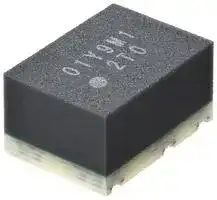
Image not available
Illustrative purposes only

G3VM-101MT(TR01)
MOSFET RELAY, 0.55A, 500V, SMD
⚠️ Reference pricing provided. In case of supply shortages, we will connect you with our trusted procurement partners to ensure your project's continuity.
- Manufacturer: OMRON ELECTRONIC COMPONENTS
- Product type: MOSFET Solid State Relays
- Contact Form:SPST-NO (1 Form A); Load Type:AC / DC; Load Voltage Max:100V; Load Current:550mA; MOSFET Relay Package Style:Module; Relay Mounting:Surface Mount; Relay Te 60AJ0531
- Load Type: AC / DC
- Contact Form: SPST-NO (1 Form A)
- Load Current: 550mA
- Product Range: G3VM Series
- Relay Mounting: Surface Mount
- Relay Terminals: Solder
- Load Voltage Max: 100V
- Isolation Voltage: 500V
- I/O Capacitance Typ: 1pF
- On State Resistance Max: 1.5ohm
- MOSFET Relay Package Style: Module
- Off State Leakage Current Max: 1pA
| Delivery and price | |
|---|---|
| Units per pack | 1 |
| Price | 25.56 € |
| Current stock | 10+ |
| Lead time | 30 days |
Datasheet

## G3VM-@MT **MOS FET Relay Module**
## **1 pA max. leakage current* contributes to high device reliability**
- **Equipped with a T-switch function to achieve fA-level minimal leakage current and contributes to measurement performance equivalent to conventional reed relays**
- **Contact form: 1a (SPST-NO) + T-switch function**
- **Contributes to reduction of the mounting space on the printed circuit board with a small package**
* VOFF = 20 V, 50 V, 80 V
- ~~Lo~~ **RoHS Compliant**
> **Mo** ■ **Application Example d u • Semiconductor test equipment l**
> **e** ■ **Package (Unit: mm)** ■ **Model Number Legend G 3 G3VM-** @ @ @ @ **V** 5±0.1 >~ ~~—-——~~ **1 2 3 4 M I** 2.7±0.2 **1. Load voltage 2. Contact form 3. Package 4. Special function** @ 2: 20 V 1: 1a (SPST-NO) M: MOS FET T: T switch function **M** 6: 60 V **Note:** See Device Relay **T** <SIwes Function Modes Module 3.75±0.1 a A 10: 100 V on page 5.
## ■ **Ordering Information**
|**Package**|**Contact form**|**Terminals**|**Load voltage**<br>**(peak value)***|**Continuous load current**<br>**(peak value)***|**Continuous load current**<br>**(peak value)***|Tape cut packaging|Tape cut packaging|**Tape packaging**|**Tape packaging**|
|---|---|---|---|---|---|---|---|---|---|
|||||**Main**|**Sub**|**Model**|**Minimum**<br>**package**<br>**quantity**|**Model**|**Minimum**<br>**package**<br>**quantity**|
|Module|1a<br>(SPST-NO)|Surface-<br>mounting<br>Terminals|20 V|200 mA||G3VM-21MT|1 pc.|G3VM-21MT (TR01)|100 pcs.|
||||60 V|800 mA|400 mA|G3VM-61MT||G3VM-61MT (TR01)||
||||100 V|550 mA||G3VM-101MT||G3VM-101MT (TR01)||
**Note: 1.** To order tape packaging for relays with surface-mounting terminals, add "(TR01)" to the end of the model number. Tape-cut packaging is packaged without humidity resistance. Use manual soldering to mount them.
**Note: 2.** 500 pcs./reel packing is also available. Please contact your OMRON sales representative.
- The AC peak and DC values are given for the load voltage and continuous load current.
## **Absolute Maximum Rating (Ta = 25°C)**
**==> picture [511 x 183] intentionally omitted <==**
**----- Start of picture text -----**<br>
(OO Item Symbol G3VM-21MT G3VM-61MT G3VM-101MT Unit Measurement conditions<br>es LED forward current for main control a IF Main a 30 mA<br>es LED forward current for sub control Ns IF Sub 30 mA<br>Input es LED forward current reduction rate Ns ∆ IF/°C -0.3 mA/°C Ta ≥ 25°C<br>es LED reverse voltage Ns VR 5 V<br>es Junction temperature Ns Tj 125 °C<br>es Load voltage (AC peak/DC) Ns VOFF 20 60 100 V<br>Continuous load current IO Main 800<br>200 550 mA<br>a (ACpeak/DC) IO Sub 400<br>Output [Se ∆ IO Main/°C ee[| -8 |ee<br>ON current reduction rate -2 -5.5 mA/°C Ta ≥ 25°C<br>∆ IO Sub/°C -4<br>a<br>es Pulse ON current [SsSe IOP 600 ee[| 2400 1650 mA t=100 ms, Duty=1/10<br>es Junction temperature Tj 125 °C<br>a Dielectric strength between I/O * Ns VI-O 500 Vrms AC for 1 min<br>Ambient operating temperature Ta -40 to 110 °C<br>With no icing or condensation<br>Jee Ambient storage temperature Tstg -40 to 125 °C<br>A Soldering temperature - 260 °C 10 s<br>**----- End of picture text -----**<br>
- **Note:** The product structure is sensitive to static electricity. When handling it, be sure to take measures against static electricity for the workbench, workers, soldering iron, and soldered mounted devices.
- The dielectric strength between the input and output was checked by applying voltage between all pins as a group on the input (LED) side and all pins as a group on the output side (MOSFET).
**1**
G3VM-@MT
**MOS FET Relay Module**
**M o d u l e**
**G 3 V M I** @ **M T**
## ■ **Electrical Characteristics (Ta=25°C)**
|**Item**||**Symbol**|**Symbol**|**G3VM-21MT**|**G3VM-61MT**|**G3VM-101MT**|**Unit**|**Measurement conditions**|
|---|---|---|---|---|---|---|---|---|
|**Input**|**LED forward voltage**<br>**for main control**<br>**LED forward voltage**<br>**for sub control**<br>**Capacitance between**<br>**main control terminals**<br>**Capacitance between**<br>**sub control terminals**<br>**Trigger LED forward**<br>**current**<br>**Release LED forward**<br>**current**|**VF Main**|**Minimum**|2.2|||V|IF Main=10 mA|
||||**Typical**|2.54|2.42||||
||||**Maximum**|2.8|||||
|||**VF Sub**|**Minimum**|1.1||||IF Sub=10 mA|
||||**Typical**|1.27|1.21||||
||||**Maximum**|1.4|||||
|||**CT Main**|**Typical**|15|||pF|V=0, f=1 MHz|
|||**CT Sub**|**Typical**|30|||||
|||**IFT Main/Sub**|**Maximum**|3|||mA|IO=100 mA|
|||**IFC Main/Sub**|**Minimum**|0.1||||IOFF=10 uA|
|**Output**|**Maximum resistance**<br>**with output ON**<br>**Current leakage when**<br>**the main line is open and**<br>**sub line is close*1**<br>**Capacitance between**<br>**terminals**|**RON Main**|**Typical**|8|0.4|0.8|Ω|IF Main=5 mA, t<1 s<br>IO Main=Continuous load current<br>rated value|
||||**Maximum**|12|0.8|1.5|||
|||**ILEAK**|**Maximum**|1|||pA|G3VM-21MT: VDD=20 V<br>G3VM-61MT: VDD=50 V<br>G3VM-101MT: VDD=80 V<br> *1|
|||**COFF**|**Typical**|0.6|38|23|pF|V=0, f=1 MHz|
||||**Maximum**|1|-||||
|**Capacitance between I/O terminals**||**CI-O**|**Typical**|1|||||
|**Insulation resistance**<br>**between I/O terminals**||**RI-O**|**Minimum**|1000|||MΩ|VI-O=500 VDC, RoH≤60%|
||||**Typical**|108|||||
|**Main line Turn-ON time**||**tON Main**|**Typical**|-|0.75|0.6|ms|G3VM-21MT: VDD=10V,<br>G3VM-61MT/101MT: VDD=20V,<br>IF Main=5 mA, RL=200Ω<br>*2|
||||**Maximum**|0.3|2.5||||
|**Main line Turn-OFF time**||**tOFF Main**|**Typical**|-|0.04||||
||||**Maximum**|0.3|0.5||||
|**Sub line Turn-ON time**||**tON Sub**|**Typical**|-|0.2|0.6||G3VM-21MT: VDD=10V,<br>G3VM-61MT/101MT: VDD=20V,<br>IF Main=5 mA, IF Sub=5 mA,<br>RL=200Ω<br>*3|
||||**Maximum**|0.3|1|2.5|||
|**Sub line Turn-OFF time**||**tOFF Sub**|**Typical**|-|0.04||||
||||**Maximum**|0.3|0.5||||
- *1. ILEAK measurement condition
**==> picture [330 x 135] intentionally omitted <==**
**----- Start of picture text -----**<br>
VDD<br>x1<br>VDD Force Guard<br>A A<br>6 5 4 6 5 4<br>MOS FET MOS FET MOS FET MOS FET MOS FET MOS FET<br>RELAY C RELAY B RELAY A RELAY C RELAY B RELAY A<br>OR<br>1 2 3 1 2 3<br>I F I F<br>**----- End of picture text -----**<br>
- *2. Turn-ON and Turn-OFF Times (Main line)
**==> picture [231 x 136] intentionally omitted <==**
**----- Start of picture text -----**<br>
VOUT VDD<br>6 5 4<br>MOS FET RELAY C MOS FET RELAY B MOS FET RELAY A IF<br>1 2 3 VOUT 10% 90%<br>t ON t OFF<br>I F<br>**----- End of picture text -----**<br>
*3. Turn-ON and Turn-OFF Times (Sub line)
**==> picture [230 x 136] intentionally omitted <==**
**----- Start of picture text -----**<br>
VOUT VDD<br>IF3<br>6 5 4<br>MOS FET RELAY C MOS FET RELAY B MOS FET RELAY A IF2<br>VOUT 10% 90%<br>1 2 3<br>t ON t OFF<br>I F2 I F3<br>**----- End of picture text -----**<br>
**2**
G3VM-@MT
**MOS FET Relay Module**
**M** ■ **Engineering Datagineering Dataineering Datag Data Data o d** **LED forward current vs. u Ambient temperature l e** IF - TaF - Ta - Taa (Maximum value) 35 **G 3** 30 **V M** 25 **I** 20 @ **M** 15 **T**
## ■ **Recommended Operating Conditions**
For usage with high reliability, Recommended Operation Conditions is are measures that take into account the derating of Absolute Maximum Ratings and Electrical Characteristics.
Each item on this list is an independent condition, so it is not simultaneously satisfying conditions.
**==> picture [512 x 665] intentionally omitted <==**
**----- Start of picture text -----**<br>
Item Symbol G3VM-21MT G3VM-61MT G3VM-101MT Unit<br>Load voltage (AC peak/DC) VDD Maximum 16 48 80 V<br>Minimum 5<br>Operating LED forward current IF Typical 7.5<br>Maximum 20 mA<br>IO Main 800<br>Continuous load current (AC peak/DC) Maximum 200 550<br>IO Sub 400<br>Minimum -20<br>Ambient operating temperature Ta °C<br>Maximum 85<br>■ Engineering Datagineering Dataineering Datag Data Data<br> LED forward current vs. Continuous load current vs.<br>Ambient temperature Ambient temperature<br>IF - TaF - Ta - Taa IO - Ta<br>(Maximum value) (Maximum value)<br>35 900<br>Note: G3VM-61MT<br>800 Io differs between<br>30 G3VM-61MT Main and Sub<br>700 (Main)<br>25<br>600<br>20 500 G3VM-101MT<br>15 400<br>G3VM-61MT<br>300 (Sub)<br>10<br>200<br>G3VM-21MT<br>5 100<br>0 0<br>-40 -20 0 20 40 60 80 100 120 -40 -20 0 20 40 60 80 100 120<br>Ambient temperature Ta (°C) Ambient temperature Ta (°C)<br> LED forward current vs. LED forward voltage<br>G3VM-21MT G3VM-61MT G3VM-101MT<br>IF - VF IF - VF IF - VF<br>100 (Average value) 100 (Average value) 100 (Average value)<br>Ta=25 ° C Ta=25 ° C Ta=25 ° C<br>Sub Main Sub Main Sub Main<br>10 10 10<br>1 1 1<br>0.1 0.1 0.1<br>1.0 1.5 2.0 2.5 1.0 1.5 2.0 2.5 1.0 1.5 2.0 2.5<br>LED forward voltage VF (V) LED forward voltage VF (V) LED forward voltage VF (V)<br> Continuous load current vs. On-state resistance vs. Ambient temperature<br>On-state voltage G3VM-21MT G3VM-61MT/101MT<br>IO - VON RON - Ta RON - Ta<br>(Average value) (Average value) (Average value)<br>1 20 1.4<br>G3VM-61MT<br>0.6 Ta=25°C IF=5 mA, t<1 s Io IF MainMain=5mA, t<1s =200 mA 1.2 G3VM Io Main -101MT =800mA<br>15 Io Main=550mA<br>1<br>G3VM-101MT IF Main=5mA, t<1s<br>0.2 G3VM-21MT 0.8<br>10 G3VM-101MT<br>0.6<br>-0.2<br>0.4<br>G3VM-61MT 5<br>-0.6 G3VM-61MT<br>0.2<br>-1 0 0<br>-1.8 -1.4 -1.0 -0.6 -0.2 0.2 0.6 1.0 1.4 1.8 -40 -20 0 20 40 60 80 100 120 -40 -20 0 20 40 60 80 100 120<br>On-state voltage VON (V) Ambient temperature Ta (°C) Ambient temperature Ta (°C)<br> (mA)F (mA)O<br>LED forward current I Continuous load current I<br> (mA)LED forward current IF (mA)LED forward current IF (mA)LED forward current IF<br>)� )�<br> ( (<br> (mA)<br>O ON ON<br>Continuous load current I On-state resistance R On-state resistance R<br>**----- End of picture text -----**<br>
**3**
G3VM-@MT
**MOS FET Relay Module**
## **Trigger LED forward current vs. Ambient temperature**
**==> picture [321 x 145] intentionally omitted <==**
**----- Start of picture text -----**<br>
IFT - Ta (Average value) IFT - Ta (Average value)<br>1.6 1.6<br>1.4 IO=100 mA, t<1 s Main 1.4 IO=100 mA, t<1 s Sub<br>1.2 G3VM-101MT 1.2<br>1 1<br>G3VM-101MT<br>0.8 G3VM-21MT 0.8<br>0.6 0.6<br>G3VM-61MT G3VM-21MT<br>0.4 0.4<br>0.2 0.2 G3VM-61MT<br>0 0<br>-40 -20 0 20 40 60 80 100 120 -40 -20 0 20 40 60 80 100 120<br>Ambient temperature Ta (°C) Ambient temperature Ta (°C)<br> (mA) (mA)<br>FT FT<br>Trigger LED forward current I Trigger LED forward current I<br>**----- End of picture text -----**<br>
## **Turn ON, Turn OFF time vs. LED forward current**
## **Current leakage vs. Load voltage**
**==> picture [201 x 149] intentionally omitted <==**
**----- Start of picture text -----**<br>
ILEAK - VOFF M<br>0.1 (Average value) o<br>Ta=25°C d<br>0.09<br>u<br>0.08 l<br>0.07 e<br>0.06 G3VM-21MT G<br>0.05 G3VM-101MT 3<br>0.04 V<br>0.03 G3VM-61MT M<br>0.02 I<br>@<br>0.01 M<br>0 T<br>0 20 40 60 80 100<br>Load voltage VOFF (V)<br> (pA)<br>LEAK<br>Current leakage I<br>**----- End of picture text -----**<br>
**==> picture [320 x 149] intentionally omitted <==**
**----- Start of picture text -----**<br>
tON, tOFF - IF tON, tOFF - IF<br>10 (Average value) 10 (Average value)<br>VDD=10 V (G3VM-21MT) VDD=10 V (G3VM-21MT)<br>VDD=20 V (G3VM-61MT/101MT) Main VDD=20 V (G3VM-61MT/101MT) Sub<br>RL = 200 � Ta=25°C RL = 200 � Ta=25°C<br>1 1<br>G3VM-21MT G3VM-101MT<br>tON G3VM-21MT<br>tON<br>0.1 0.1<br>tOFF G3VM-61MT tOFF<br>G3VM-101MT G3VM-61MT<br>0.01 0.01<br>1 10 100 1 10 100<br>LED forward current IF (mA) LED forward current IF (mA)<br> (ms) (ms)<br>OFF OFF<br>, t , t<br>ON ON<br>Turn ON, Turn OFF time t Turn ON, Turn OFF time t<br>**----- End of picture text -----**<br>
## **Turn ON, Turn OFF time vs. Ambient temperature**
## **Current leakage vs. Ambient temperature**
**==> picture [503 x 334] intentionally omitted <==**
**----- Start of picture text -----**<br>
10 tON, tOFF - Ta (Average value) 10 tON, tOFF - Ta (Average value) 10 ILEAK - Ta (Average value)<br>VDD=10 V (G3VM-21MT) VDD=10 V (G3VM-21MT) VVOFF OFF = 20 V (G3VM-21MT)=20V<br>VDD=20 V (G3VM-61MT/101MT) Main VDD=20 V (G3VM-61MT/101MT) Sub VOFF= 50 V (G3VM-61MT)<br>R L = 200 � I F = 5 mA RL = 200 � IF = 5 mA VOFF= 80 V (G3VM-101MT)<br>1 1 G3VM-101MT 1 G3VM-101MT<br>G3VM-61MT tON<br>G3VM-61MT tON G3VM-21MT<br>0.1 0.1 0.1<br>G3VM-21MT<br>G3VM-61MT<br>G3VM-101MT t OFF G3VM-21MT tOFF<br>0.01 0.01 0.01<br>-40 -20 0 20 40 60 80 100 120 -40 -20 0 20 40 60 80 100 120 -40 -20 0 20 40 60 80 100 120<br>Ambient temperature Ta (°C) Ambient temperature Ta (°C) Ambient temperature Ta (°C)<br> Output terminal capacitance vs. High-frequency Characteristics High-frequency Characteristics<br>Load voltage (Isolation) * 1, * 2 (Insertion Loss) * 1, * 2<br>G3VM-21MT G3VM-21MT<br>COFF - VOFF<br>1.1 (Average value) 0 (Average value) 0 (Average value)<br>1.0 G3VM-21MT Ta=25 ° C -1<br>0.9 G3VM-61MT -10 -2<br>0.8<br>-3<br>0.7 -20<br>-4<br>0.6 G3VM-101MT<br>-30 -5<br>0.5<br>0.4 -6<br>-40<br>0.3 -7<br>0.2 -8<br>-50<br>0.1 -9<br>0 -60 -10<br>0 5 10 15 20 25 30 35 40 0.0001 0.001 0.01 0.1 1 0.0001 0.001 0.01 0.1 1<br>Load voltage VOFF (V) Frequency (GHz) Frequency (GHz)<br> (ms) (ms) (pA)<br>OFF OFF LEAK<br>, t , t<br>ON ON<br>Current leakage I<br>Turn ON, Turn OFF time t Turn ON, Turn OFF time t<br>(0V)<br>OFF<br>/C<br>OFF<br>Isolation (dB) Insertion Loss (dB)<br>Output terminal capacitance C<br>**----- End of picture text -----**<br>
## **Output terminal capacitance vs. Load voltage**
- *1. Ambient temperature condition: 25°C
- *2. The high-frequency characteristics depend on the mounting board. Be sure to check operation in actual equipment before use.
**4**
G3VM-@MT
**MOS FET Relay Module**
## ■ **Connection Example 1**
## ● **Device Functional Modes** *
|**Circuit**|**Control**|**MOS FET RELAY**<br>**A, C (Main line)**|**MOS FET RELAY**<br>**B (Sub line)**|
|---|---|---|---|
|ON|H|ON|OFF|
|OFF|L|OFF|ON|
|-|X|OFF|OFF|
- H: Optional setting, L: 0 V, X: don't care
## ● **Timing Diagram**
**==> picture [216 x 118] intentionally omitted <==**
**----- Start of picture text -----**<br>
+<br>Control<br>0V<br>ON<br>MOS FET<br>RELAY A, C tON tOFF tON tOFF<br>OFF<br>ON<br>MOS FET tON tOFF tON<br>RELAY B OFF<br>**----- End of picture text -----**<br>
- Both MOS FET relay A, C and MOS FET relay B may be ON at the same time. This products is recommended to use with dry switching (No Load & No Source when switching) to prevent short circuiting.
**==> picture [195 x 137] intentionally omitted <==**
**----- Start of picture text -----**<br>
M<br>o ● Measurement Circuit<br>d Driver signal,<br>u DC source etc. DUT<br>l 6 5 4<br>e<br>MOS FET MOS FET MOS FET<br>G RELAY C RELAY B RELAY A<br>3<br>V<br>M<br>I 1 2 3<br>@ Currentcontrol Currentcontrol<br>M resistance resistance<br>T +Vcc<br>**----- End of picture text -----**<br>
**==> picture [129 x 8] intentionally omitted <==**
**----- Start of picture text -----**<br>
Note: Above image are pin numbers 1-6.<br>**----- End of picture text -----**<br>
## ■ **Connection Example 2**
## ● **Device Functional Modes** *
|**IF Main**|**IF Sub**|**MOS FET RELAY**<br>**A, C (Main line)**|**MOS FET RELAY**<br>**B (Sub line)**|
|---|---|---|---|
|H|L|ON|OFF|
|L|H|OFF|ON|
|L|L|OFF|OFF|
## ● **Timing Diagram**
**==> picture [226 x 134] intentionally omitted <==**
**----- Start of picture text -----**<br>
IF Main<br>IF Sub<br>ON<br>MOS FET<br>RELAY A, C tON tOFF tON tOFF<br>OFF<br>ON<br>MOS FETRELAY B OFF tON tOFF tON tOFF<br>**----- End of picture text -----**<br>
- Both MOS FET relay A, C and MOS FET relay B may be ON at the same time. For that reason, even if pins 4, 5 and 6 are all connected, please design the circuit so that equipment damage does not occur.
## ● **Measurement Circuit**
**==> picture [356 x 121] intentionally omitted <==**
**----- Start of picture text -----**<br>
Driver signal, DC source etc. DUT DC source etc. x1 Guard DUT<br>6 5 4 6 5 4<br>MOS FET MOS FET MOS FET MOS FET MOS FET MOS FET<br>RELAY C RELAY B RELAY A RELAY C RELAY B RELAY A<br>OR<br>1 2 3 1 2 3<br>IF Sub IF Main IF Sub IF Main<br>**----- End of picture text -----**<br>
**5**
G3VM-@MT
**MOS FET Relay Module**
**M o Actual Mounting Pad Dimensions d u** (Recommended Value, Top view) **l** ~~2.4 1.6~~ **e** 6-1 **G 3** 6-0.7 **V** 2.1 **M I** @ **M T** Unless otherwise specified, the dimensional tolerance is ± 0.1 mm.
## ■ **Appearance / Terminal Arrangement / Internal Connections**
## ● **Appearance**
**==> picture [230 x 73] intentionally omitted <==**
**----- Start of picture text -----**<br>
6 5 4<br>* Actual model name marking<br>for each model<br>0299M1 Lot No.<br>Pin 1 2TO Model name * G3VM-21MT Model Marking 2T0<br>mark<br>1 2 3 G3VM-61MT 6T0<br>G3VM-101MT AT0<br>**----- End of picture text -----**<br>
**==> picture [243 x 10] intentionally omitted <==**
**----- Start of picture text -----**<br>
● Terminal Arrangement/Internal Connections (Top view)<br>**----- End of picture text -----**<br>
**==> picture [178 x 84] intentionally omitted <==**
**----- Start of picture text -----**<br>
6 5 4<br>1 2 3<br>**----- End of picture text -----**<br>
**Note 1.** The actual product is marked differently from the image shown here. **Note 2.** "G3VM" does not appear in the model number on the relay.
## ■ **Dimensions**
Please visit our website, which is noted on the last page.
(Unit: mm)
## **Surface-Mounting Terminals**
**==> picture [262 x 192] intentionally omitted <==**
**----- Start of picture text -----**<br>
Weight: 0.11 g<br>5±0.1 3.75±0.1<br>2.7±0.2<br>1.6±0.1<br>2.4±0.1<br>6-0.55±0.1<br>1 2 3<br>6-0.85±0.1<br>(0.23) (0.23)<br>6 5 4<br>**----- End of picture text -----**<br>
**Note:** The actual product is marked differently from the image shown here.
**6**
G3VM-@MT
**MOS FET Relay Module**
1. Do not apply overvoltages or overcurrents to the input or output **M** circuits of the product. **o** The product may fail or ignite. **d** 2. Perform soldering and wiring correctly according to specified **u** soldering conditions. **l** Using a product with incomplete soldering may cause overheating **e** when power is applied, possibly resulting in burning. **G 3 Precautions for Correct Use V M** ● **Derating I** You must consider derating to achieve the required system @ **M** reliability.
## ■ **Safety Precautions**
## **WARNING**
**Always turn OFF the power supply before wiring a relay.**
**Not doing so may cause electrical shock.**
## ● **Typical Product Driving Circuit Examples**
The LED input side of the MOS FET is driven by current. If applying a voltage, add resistance in series with the circuit, so the specified current is applied.
This resistance is referred as "LED current limiting resistance."
## **C-MOS**
**Do not touch the current-carrying parts of the pin section of a product while the power is being supplied.**
**An electrical shock may occur.**
## **Precautions for Safe Use**
Using a product with incomplete soldering may cause overheating
- **T** To use a product with high reliability, consider derating the maximum ratings and recommended operating conditions, and allow sufficient leeway in designs based on testing operation in the actual application under the actual operating conditions whenever possible.
- (1) Maximum Ratings
- The maximum ratings must never be exceeded even instantaneously. This applies individually to each of the ratings. If any of the maximum ratings is exceeded, the internal parts of the product may deteriorate or the chip may be destroyed. To ensure high reliability in using a product, sufficiently derate the maximum voltage, current, and temperature ratings when designing the application.
- (2) Recommended Operating Conditions
- The recommended operating conditions are to ensure that the product turns ON and OFF reliably.
- To ensure high reliability in using a product, consider the recommended operating conditions when you design the application.
- (3) Fail-Safe Design
- We recommend that you implement fail-safe measures in the design of the application if the failure of, deterioration of characteristics in, or functional errors in the product will have a serious affect on the safe operation of the system.
## ● **Countermeasures for static electricity**
There is a risk of damage to internal elements and impairment of functionality if static electricity is discharged to the pins due to product handling or otherwise.
Reduce the generation of static electricity as much as possible, and implement appropriate measures to prevent charge accumulation near the product.
**==> picture [202 x 398] intentionally omitted <==**
**----- Start of picture text -----**<br>
at MAIN ON/SUB OFF<br>C-MOS<br>+Vcc<br>1 6 L<br>VF 2 5<br>R1 3 4<br>VIN VOL/OH<br>at MAIN OFF/SUB ON<br>C-MOS<br>+Vcc<br>1 6 L<br>VF<br>2 5 Leak pass<br>R1 3 4<br>VIN VOL/OH<br>Transistor<br>at MAIN ON/SUB OFF<br>+Vcc<br>1 6 L<br>10 to 100 k(bleeder resistor)Ω VF 2 5<br>R1 3 4<br>VOL/OH<br>VIN<br>at MAIN OFF/SUB ON<br>+Vcc<br>1 6 L<br>10 to 100 k(bleeder resistor)Ω R1 VF 2 5 Leak pass<br>3 4<br>VOL/OH<br>VIN<br>**----- End of picture text -----**<br>
- To ensure that the product operates correctly, use the following formula to calculate the limiting resistance, and design the circuit accordingly.
- VCC − VOL − VF(ON)
- R1 =
IF
- **Note:** To set the value of IF(ON), check the trigger LED current and recommended operation LED forward current indicated in the catalogue for each model, and set a high value with leeway.
- To ensure that the product resets reliably, calculate the reset voltage using the formula below, and control so that the voltage is lower than this value.
- VF(OFF)=VCC − IF(OFF)R1 − VOH
- **Note:** For the IF(OFF) value, set a value that is lower with leeway than the reset LED forward current indicated for each model in the catalogue.
- If the drive transistor has a large leakage current that may cause malfunctioning, add a bleeder resistance.
**7**
G3VM-@MT
**MOS FET Relay Module**
Ultrasonic wave output: 300 W max. (0.25 W/cm[2] max.) Cleaning time: 30 s max. **M** Also, suspend the products in the cleaning solution so that the **o d** product and PCB do not come into direct contact with the ultra- **u** sonic transducer. **l e** Dry thoroughly after washing so that there is no residue of washing liquid. **G 3 V Solder Mounting M** Perform solder mounting under the following recommended **I** @ conditions to prevent the temperature of the MOS FET Relays **M T**
- **Protection from Surge Voltage on the Input Pins**
- If any reversed surge voltage is imposed on the input pins, insert a diode in parallel with the input pins as shown in the following circuit diagram and do not impose a reversed voltage of 3 V or higher.
## **Surge Voltage Protection Circuit Example**
**==> picture [232 x 50] intentionally omitted <==**
**----- Start of picture text -----**<br>
Main Sub<br>1 6 1 6<br>2 5 2 5<br>3 4 3 4<br>**----- End of picture text -----**<br>
- **Protection from Spike Voltage on the Output Pins**
- If there is an inductive load or other condition that will cause overvoltage that exceeds the absolute maximum rating between the output pins, connect a protective circuit to limit the overvoltage.
- (3) During water washing, do not scrub the marks on the surface of the product with a brush or your hand while there is cleaning liquid on the product. The marks may come off.
- (4) Clean the flux from the products with the chemical action of the solvent for submersed cleaning, shower cleaning, or steam cleaning. To minimize the effect on the products, do not place the product in the solvent or steam for more than 1 minute at a temperature of 50°C.
- (5) If you use ultrasonic cleaning, keep the time short. If the cleaning time is too long, the sealing characteristics of the molded resin and frame materials may deteriorate.
- The recommended basic conditions are given below. Recommended Conditions for Ultrasonic Cleaning: Frequency: 27 to 29 kHz
## **Spike Voltage Protection Circuit Example**
**==> picture [109 x 143] intentionally omitted <==**
**----- Start of picture text -----**<br>
1 6<br>2 5<br>3 4<br>1 6<br>2 5<br>3 4<br>1 6<br>2 5<br>3 4<br>**----- End of picture text -----**<br>
## ● **Load Connection**
- (1) Do not short-circuit the input and output pins while the product is operating or it may malfunction.
- (2) Do not connect the input and output in reverse.
- (3) Do not construct a circuit so that overcurrent and burning occur if the 4, 5 and 6 pins are short-circuited.
## ● **Transportation**
- (1) When transportation and installing the product, do not drop the product or subject it to abnormal vibration or shock. It may cause deterioration of product characteristics, malfunction or failure.
- (2) Avoid transportation in the following conditions as it may cause failure or deterioration of characteristics.
- Circumstance subject to water or oil.
- Circumstance subject to high temperature or high humidity.
- Circumstance where the temperature changes radically and condensation occurs.
- State the product is not packed.
## ● **Cleaning Flux from the Products**
- (1) Clean flux from the product so that there will be no residue of reactive ions, such as sodium or chlorine.
- Some organic solvents will react with water to produce hydrogen chloride or other corrosive gases, which may cause deterioration of the products.
- (2) When washing off the flux with water, make sure that there will be no residue of reactive ions, particularly sodium or chlorine.
- (6) Dry thoroughly after washing so that there is no residue of washing liquid.
## ● **Solder Mounting**
Perform solder mounting under the following recommended conditions to prevent the temperature of the MOS FET Relays from rising.
## **(Lead-free solder) SnAgCu recommended profile**
**==> picture [207 x 127] intentionally omitted <==**
**----- Start of picture text -----**<br>
250°C PEAK<br>245<br>3°C/s 6°C/s<br>217<br>200<br>150<br>25<br>60 to 120 30 MAX<br>Reflow repititions: Up to twice 60 to 150<br>Time (s)<br>)<br>(°C<br>Surface Temperature of Package<br>**----- End of picture text -----**<br>
- **Note 1.** We recommend that you verify the suitability of solder mounting under actual conditions.
- **Note 2.** When product is ordered with (TR01), tape package product is delivered in moisture-proof packaging. If ordered without (TR01), tape-cut product is delivered in non moisture-proof packaging. Mount a tape cut product by manual soldering. Tape cut products absorb moisture because a non moisture-proof package is used. Risk of package cracking or other damage due to thermal stress if reflow soldering is performed.
## **Manual Soldering** (Once Only)
Perform manual soldering at 260°C for 10 s or less.
## ● **Storage Conditions**
- (1) Store the products where they will not be subjected to water leaks or direct sunlight.
- (2) When transporting or storing the product, observe all precautions on the packaging boxes.
- (3) Keep the storage location at normal temperature, normal humidity, and normal pressure. Guidelines for the temperature and humidity are 5 to 35°C and a relative humidity of 45% to 75%.
- (4) Do not store the product in locations that are subject to corrosive gases, such as hydrogen sulfide gas, or to salt spray, and do not store them where there is visually apparent dust, iron powder or dirt.
**8**
**MOS FET Relay Module**
## G3VM-@MT
- (5) Store the product in a location that has a relatively stable temperature. Radical changes in temperature during storage will cause condensation, which may oxidize or corrode the leads and interfere with solder wetting.
- (6) If you remove products from the packages and then store them again, use storage containers that have measures to prevent static electricity.
- (7) Do not under any circumstances apply any force to the products that would deform or alter them in any way.
- (8) This product is warranted for one year from the date of purchase or the date of delivery to the specified location. If the products are stored for more than about one year under normal conditions, we recommend that you confirm solderability before you use the products.
**M** ● **Usage Conditions o <Mounting> d** Do not install the product with oil or metal powder. **u l** This may cause insulation deterioration. **e <Temperature>**
- **G** The electrical characteristics of the products are limited by the **3** application temperature.
- **V M** If you use them at temperatures outside of the operating **I** temperature range, the electrical characteristics of the products
- @ will not be achieved and the products may deteriorate. For that
- **M**
- **T** reason, you must determine the temperature characteristics in advance and apply derating* to the design of the application. (*Derating reduces stress.) Consider derating in the operating temperature conditions and apply the recommended operating temperature as a guideline.
## **<Humidity>**
To ensure long-term reliability, consider derating the operating humidity conditions and operate within the following humidity range.
When operating in a high-humidity environment, moisture intrusion may cause deterioration or failure of the internal semiconductor elements. Also, in systems with high signal source impedance, leakage current between the board and product reeds can cause a malfunction.
## **<Replace>**
- Be sure to turn off the power when replacing parts. There is a risk of electric shock.
## **<Disposal>**
- This product uses compound semiconductors containing GaAs (gallium arsenide). Do not destroy, cut, crush or chemically decompose the product as the powder and vapor generated are harmful to the human body.
## ● **Considerations when handling Products**
## **<Moisture proof package, MSL5>**
Surface mount products may have a crack when thermal stress is applied during surface mount assembly after they absorb atmospheric moisture. Therefore, please observe the following precautions.
- (1) This moisture proof bag may be stored unopened within 12 months at the following conditions. Temperature: 5°C to 30°C Humidity: 90% (Max.)
- (2) After opening the moisture proof bag, the devices should be assembled within 48 hours in an environment of 5°C to 30°C / 60%RH or below.
- (3) If upon opening, the moisture indicator card shows humidity 30% or above (Color of indication changes to pink) or the expiration date has passed, the devices should be baked in taping with reel. After baking, use the baked devices within 48 hours, but perform baking only once. Baking conditions: 120±5°C. For 72 hours.
- Expiration date: 12 months from sealing date, which is imprinted on the label affixed.
- (4) Repeated baking can cause the peeling strength of the taping to change, then leads to trouble in mounting. Furthermore, prevent the devices from being destructed against static electricity for baking of it.
- (5) If the packing material of laminate would be broken the hermeticity would deteriorate. Therefore, do not throw or drop the packed devices.
- (6) Tape-cut products are packaged without humidity resistance. Use manual soldering to mount them. (MSL not supported)
When operating in a low-humidity environment, suppress the generation of static electricity as much as possible and take appropriate measures to prevent static electricity buildup around the product.
Static electricity discharge may damage the semiconductors inside the element and prevent normal operation.
**==> picture [151 x 152] intentionally omitted <==**
**----- Start of picture text -----**<br>
80<br>35°C/70%<br>70<br>60<br>50<br>40<br>Allowable range<br>30<br>85°C/7%<br>20<br>10<br>0<br>-30 -20 -10 0 10 20 30 40 50 60 70 80 90 100<br>Temperature Ta (°C)<br>Note: No icing or condensation within<br>the operating temperature range.<br>Relative humidity (%)<br>**----- End of picture text -----**<br>
**9**
G3VM-@MT
**MOS FET Relay Module**
**M o d u l e G 3 V M I** @ **M T**
Please check each region's Terms & Conditions by region website.
## **OMRON Corporation Electronic and Mechanical Components Company**
## **Regional Contact**
**Americas Europe** https://www.components.omron.com/ http://components.omron.eu/ **Asia-Pacific China** https://ecb.omron.com.sg/ https://www.ecb.omron.com.cn/ **Korea Japan** https://www.omron-ecb.co.kr/ https://www.omron.co.jp/ecb/
© OMRON Corporation 2019-2021 All Rights Reserved. In the interest of product improvement, specifications are subject to change without notice.
**Cat. No. K317-E1-02** 0521(1119)
**10**
Updated at April 28, 2026
About Novapart
Novapart is a B2B electronic component broker specialising in stock shortages and cost reduction. We source hard-to-find parts and identify compliant alternatives across a catalogue of 540,000+ components from 500+ manufacturers.
Learn more →Stock Shortage Specialist
When a component is unavailable, discontinued or has an unacceptable lead time, we tap into our network of vetted European and Asian distributors to source what you need — without compromising on quality or traceability.
Request a quote →Compliant Alternatives
We identify pin-to-pin, electrically equivalent substitutes that meet the same certifications (RoHS, AEC-Q100, REACH) as your original specification — validated against datasheets, not just part numbers. Often at a lower cost.
BOM Analysis service →