
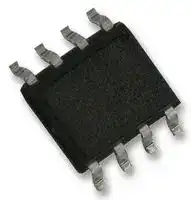


FDS3992
Dual MOSFET, N Channel, 100 V, 4.5 A, 0.054 ohm
- Manufacturer: ONSEMI
- Product type: Dual MOSFETs
- Transistor Polarity:Dual N Channel; Continuous Drain Current Id:4.5A; Drain Source Voltage Vds:100V; On Resistance Rds(on):0.054ohm; Rds(on) Test Voltage Vgs:10V; Threshold Voltage Vgs:4V; Power Dissipat
- MSL: MSL 3 - 168 hours
- SVHC: No SVHC (25-Jun-2025)
- No. of Pins: 8Pins
- Channel Type: N Channel
- Product Range: -
- Qualification: -
- Transistor Case Style: SOIC
- Operating Temperature Max: 150°C
- Power Dissipation N Channel: 2.5W
- Power Dissipation P Channel: -
- Drain Source Voltage Vds N Channel: 100V
- Drain Source Voltage Vds P Channel: -
- Continuous Drain Current Id N Channel: 4.5A
- Continuous Drain Current Id P Channel: -
- Drain Source On State Resistance N Channel: 0.054ohm
- Drain Source On State Resistance P Channel: -
| Delivery and price | |
|---|---|
| Units per pack | 5000 |
| Price | 0.507 € |
| Current stock | 1000+ |
| Lead time | 30 days |

## **Is Now Part of**

**To learn more about ON Semiconductor, please visit our website at www.onsemi.com**

ON Semiconductor and the ON Semiconductor logo are trademarks of Semiconductor Components Industries, LLC dba ON Semiconductor or its subsidiaries in the United States and/or other countries. ON Semiconductor owns the rights to a number of patents, trademarks, copyrights, trade secrets, and other intellectual property. A listing of ON Semiconductor’s product/patent coverage may be accessed at www.onsemi.com/site/pdf/Patent-Marking.pdf. ON Semiconductor reserves the right to make changes without further notice to any products herein. ON Semiconductor makes no warranty, representation or guarantee regarding the suitability of its products for any particular purpose, nor does ON Semiconductor assume any liability arising out of the application or use of any product or circuit, and specifically disclaims any and all liability, including without limitation special, consequential or incidental damages. Buyer is responsible for its products and applications using ON Semiconductor products, including compliance with all laws, regulations and safety requirements or standards, regardless of any support or applications information provided by ON Semiconductor. “Typical” parameters which may be provided in ON Semiconductor data sheets and/or specifications can and do vary in different applications and actual performance may vary over time. All operating parameters, including “Typicals” must be validated for each customer application by customer’s technical experts. ON Semiconductor does not convey any license under its patent rights nor the rights of others. ON Semiconductor products are not designed, intended, or authorized for use as a critical component in life support systems or any FDA Class 3 medical devices or medical devices with a same or similar classification in a foreign jurisdiction or any devices intended for implantation in the human body. Should Buyer purchase or use ON Semiconductor products for any such unintended or unauthorized application, Buyer shall indemnify and hold ON Semiconductor and its officers, employees, subsidiaries, affiliates, and distributors harmless against all claims, costs, damages, and expenses, and reasonable attorney fees arising out of, directly or indirectly, any claim of personal injury or death associated with such unintended or unauthorized use, even if such claim alleges that ON Semiconductor was negligent regarding the design or manufacture of the part. ON Semiconductor is an Equal Opportunity/Affirmative Action Employer. This literature is subject to all applicable copyright laws and is not for resale in any manner.

**April 2013**

## **FDS3992**

## **Dual N-Channel PowerTrench**[®] **MOSFET**

## **100V, 4.5A, 62m** Ω

## **Features**

- rDS(ON) = 54mΩ (Typ.), VGS = 10V, ID = 4.5A

- • Qg(tot) = 11nC (Typ.), VGS = 10V

- Low Miller Charge

## **Applications**

   - DC/DC converters and Off-Line UPS

   - Distributed Power Architectures and VRMs

   - Primary Switch for 24V and 48V Systems

- Low QRR Body Diode

   - High Voltage Synchronous Rectifier

- Optimized efficiency at high frequencies

- Direct Injection / Diesel Injection Systems

**==> picture [373 x 146] intentionally omitted <==**

**----- Start of picture text -----**<br>
• UIS Capability (Single Pulse and Repetitive Pulse)<br>• 42V Automotive Load Control<br>Formerly developmental type 82745 • Electronic Valve Train Systems<br>ee<br>Branding Dash (1)<br>y (2) I<br>5 1<br>1 ; (3)<br>2 ® > 1<br>3 (4)<br>4 !<br>SO-8 !<br>**----- End of picture text -----**<br>


**(1) (8) (2)** ~~I~~ **(7)** ~~1~~ **(3) (6)** 1 1 **(4) (5)**

**MOSFET Maximum Ratings** TA = 25°C unless otherwise noted

|**Symbol**|**Parameter**||**Ratings**|**Ratings**||**Units**|
|---|---|---|---|---|---|---|
|VDSS|Drain to Source Voltage||100|||V|
|VGS|Gate to Source Voltage||±20|||V|
||Drain Current||||||
|ID|Continuous(TA= 25oC, VGS= 10V, RθJA= 50oC/W)<br>Continuous(TA= 100oC, VGS= 10V, RθJA= 50oC/W)||4.5<br>2.8|||A<br>A|
||Pulsed||Figure 4|||A|
|EAS|Single Pulse Avalanche Energy (Note 1)||167|||mJ|
|PD|Total Package Power Dissipation<br>Derate above 25oC||2.5<br>20|||W<br>mW/oC|
|TJ, TSTG|Operatingand Storage Temperature||-55 to 150|||oC|
|**Thermal Characteristics**|**Thermal Characteristics**||||||
|RθJA|Thermal Resistance, Junction to Ambient at 10 seconds(Note 3)||50|||oC/W|
|RθJA|Thermal Resistance, Junction to Ambient at 1000 seconds(Note 3)||85|||oC/W|
|RθJC|Thermal Resistance, Junction to Case(Note 2)||25|||oC/W|
|**Package Marking and Ordering Information**|**Package Marking and Ordering Information**||||||
|**Device Marking**<br>**Device**<br>**Package**||**Reel Size**|**Tape Width**||**Quantity**||
|FDS3992<br>FDS3992<br>SO-8||13’’|12mm||2500 units|2500 units|


©2004 Fairchild Semiconductor Corporation

FDS3992 Rev. C

|**Electrical Characteristics**TA= 25°C unless otherwise noted|**Electrical Characteristics**TA= 25°C unless otherwise noted|**Electrical Characteristics**TA= 25°C unless otherwise noted|**Electrical Characteristics**TA= 25°C unless otherwise noted|||||
|---|---|---|---|---|---|---|---|
|**Symbol**|**Parameter**|**Test Conditions**||**Min**|**Typ**|**Max**|**Units**|
|**Off Characteristics**||||||||
|BVDSS|Drain to Source Breakdown Voltage|ID= 250µA, VGS|= 0V|100|-|-|V|
|IDSS|Zero Gate Voltage Drain Current|VDS= 80V<br>VGS= 0V||-|-|1|µA|
||||TC = 150oC|-|-|250||
|IGSS|Gate to Source Leakage Current|VGS=±20V||-|-|±100|nA|
|**On Characteristics**||||||||
|VGS(TH)|Gate to Source Threshold Voltage|VGS= VDS, ID= 250µA||2|-|4|V|
|rDS(ON)|Drain to Source On Resistance|ID= 4.5A, VGS = 10V||-|0.054|0.062|Ω|
|||ID= 2A, VGS= 6V||-|0.072|0.108||
|||ID=  4.5A, VGS=  10V,<br>TC = 150oC||-|0.107|0.123||
|**Dynamic Characteristics**||||||||
|CISS|Input Capacitance|VDS= 25V, VGS= 0V,<br>f = 1MHz||-|750|-|pF|
|COSS|Output Capacitance|||-|118|-|pF|
|CRSS|Reverse Transfer Capacitance|||-|27|-|pF|
|Qg(TOT)|Total Gate Charge at 10V|VGS= 0V to 10V||-|11|15|nC|
|Qg(TH)|Threshold Gate Charge|VGS= 0V to 2V||-|1.4|1.9|nC|
|Qgs|Gate to Source Gate Charge|||-|3.5|-|nC|
|Qgs2|Gate Charge Threshold to Plateau|||-|2.1|-|nC|
|Qgd|Gate to Drain “Miller” Charge|||-|2.8|-|nC|
|**Switching Characteristics**(VGS= 10V)||||||||
|tON|Turn-On Time|VDD= 50V, ID= 4.5A<br>VGS= 10V, RGS= 27Ω||-|-|47|ns|
|td(ON)|Turn-On Delay Time|||-|8|-|ns|
|tr|Rise Time|||-|23|-|ns|
|td(OFF)|Turn-Off Delay Time|||-|28|-|ns|
|tf|Fall Time|||-|26|-|ns|
|tOFF|Turn-Off Time|||-|-|81|ns|
|**Drain-Source Diode Characteristics**||||||||
|VSD|Source to Drain Diode Voltage|ISD= 4.5A||-|-|1.25|V|
|||ISD= 2A||-|-|1.0|V|
|trr|Reverse RecoveryTime|ISD= 4.5A, dISD/dt= 100A/µs||-|-|48|ns|
|QRR|Reverse RecoveryCharge|ISD= 4.5A, dISD/dt= 100A/µs||-|-|65|nC|


**Notes:**

- **1:** EAS of 167mJ is based on starting T J = 25°C, L = 37mH, IAS = 3A. 100% test at L = 1mH, I     = 10.3A.AS **2:** RθJA is the sum of the junction-to-case and case-to-ambient thermal resistance where the case thermal reference is defined as the solder mounting surface of the drain pins.  RθJC is guaranteed by design while RθCA  is determined by the user’s board design.

- **3:** RθJA is measured with 1.0 in[2] copper on FR-4 board

©2004 Fairchild Semiconductor Corporation

FDS3992 Rev. C

**Typical Characteristics** TA = 25°C unless otherwise noted

**==> picture [429 x 570] intentionally omitted <==**

**----- Start of picture text -----**<br>
1.2 5<br>VGS = 10V<br>1.0<br>4<br>0.8<br>3<br>0.6<br>2<br>0.4<br>1<br>0.2<br>0<br>0<br>0 25 50 75 100 125 150 25 50 75 100 125 150<br>TA, AMBIENT TEMPERATURE ( [o] C) TA, AMBIENT TEMPERATURE ( [o] C)<br>Figure 1.  Normalized Power Dissipation vs  Figure 2.  Maximum Continuous Drain Current vs<br>Ambient Temperature Ambient Temperature<br>2<br>DUTY CYCLE - DESCENDING ORDER<br>1 0.5<br>0.2 R θ JA=50 [o] C/W<br>0.1<br>0.05<br>0.02<br>0.01<br>0.1<br>PDM<br>0.01 t1<br>SINGLE PULSE t 2<br>NOTES:<br>DUTY FACTOR: D = t 1 /t 2<br>PEAK TJ = PDM x Z θ JA x R θ JA + TA<br>0.001<br>10 [-5] 10 [-4] 10 [-3] 10 [-2] 10 [-1] 10 [0] 10 [1] 10 [2] 10 [3]<br>t, RECTANGULAR PULSE DURATION (s)<br>Figure 3.  Normalized Maximum Transient Thermal Impedance<br>200<br>TRANSCONDUCTANCE TA = 25 [o] C<br>MAY LIMIT CURRENT<br>100 IN THIS REGION FOR TEMPERATURES<br>ABOVE 25 [o] C DERATE PEAK<br>CURRENT AS FOLLOWS:<br>V GS  = 10V I = I 25  150 - TC<br>125<br>10<br>1<br>10 [-5] 10 [-4] 10 [-3] 10 [-2] 10 [-1] 10 [0] 10 [1] 10 [2] 10 [3]<br>t, PULSE WIDTH (s)<br>Figure 4.  Peak Current Capability<br>, DRAIN CURRENT (A)<br>ID<br>POWER DISSIPATION MULTIPLIER<br>, NORMALIZED<br>ZJA θ<br>THERMAL IMPEDANCE<br>, PEAK CURRENT (A)<br>IDM<br>**----- End of picture text -----**<br>


©2004 Fairchild Semiconductor Corporation

FDS3992 Rev. C

## **Typical Characteristics** TA = 25°C unless otherwise noted

**==> picture [426 x 587] intentionally omitted <==**

**----- Start of picture text -----**<br>
200 7<br>100<br>10 µ s<br>STARTING TJ = 25 [o] C<br>10<br>100 µ s STARTING TJ = 150 [o] C<br>1<br>1 1ms<br>OPERATION IN THIS<br>AREA MAY BE 10ms<br>LIMITED BY rDS(ON) 100ms<br>0.1<br>SINGLE PULSE If R = 0<br>TJ = MAX RATED tAV = (L)(IAS)/(1.3*RATED BVDSS - VDD)<br>T C  = 25 [o] C 1s If R tAV =   ≠  0 (L/R)ln[(IAS*R)/(1.3*RATED BVDSS - VDD) +1]<br>0.01 0.1<br>0.1 1 10 100 300 0.01 0.1 1 10 100<br>VDS, DRAIN TO SOURCE VOLTAGE (V) tAV, TIME IN AVALANCHE (ms)<br>Figure 5.  Forward Bias Safe Operating Area NOTE: Refer to Fairchild Application Notes AN7514 and AN7515<br>Figure 6.  Unclamped Inductive Switching<br>Capability<br>30 30<br>DUTY CYCLE = 0.5% MAXPULSE DURATION = 80 µ s  TA = 25 [o] C VGS = 10V<br>25 VDD = 15V 25<br>20 20<br>VGS = 7V<br>15 15<br> TJ = 150 [o] C VGS = 6V<br>10  TJ = 25 [o] C 10 VGS = 5V<br> TJ = -55 [o] C<br>5 5<br>PULSE DURATION = 80 µ s<br>DUTY CYCLE = 0.5% MAX<br>0 0<br>3.5 4.0 4.5 5.0 5.5 6.0 6.5 0 0.5 1.0 1.5 2.0<br>VGS, GATE TO SOURCE VOLTAGE (V) VDS, DRAIN TO SOURCE VOLTAGE (V)<br>Figure 7.  Transfer Characteristics Figure 8.  Saturation Characteristics<br>80 2.5<br>PULSE DURATION = 80 µ s<br>VGS = 6V DUTY CYCLE = 0.5% MAX<br>75<br>2.0<br>70<br>65 1.5<br>PULSE DURATION = 80 µ s<br>DUTY CYCLE = 0.5% MAX<br>60<br>1.0<br>VGS = 10V<br>55<br>VGS = 10V, ID = 4.5A<br>50 0.5<br>1.0 1.5 2.0 2.5 3.0 3.5 4.0 4.5 -80 -40 0 40 80 120 160<br>ID, DRAIN CURRENT (A) TJ, JUNCTION TEMPERATURE ( [o] C)<br>Figure 9.  Drain to Source On Resistance vs Drain  Figure 10.  Normalized Drain to Source On<br>Current Resistance vs Junction Temperature<br>, DRAIN CURRENT (A)<br>ID , AVALANCHE CURRENT (A)<br>IAS<br>, DRAIN CURRENT (A)ID , DRAIN CURRENT (A)ID<br>) Ω<br>ON RESISTANCE<br>NORMALIZED DRAIN TO SOURCE<br>DRAIN TO SOURCE ON RESISTANCE (m<br>**----- End of picture text -----**<br>


**Figure 9.  Drain to Source On Resistance vs Drain Current**

©2004 Fairchild Semiconductor Corporation

FDS3992 Rev. C

**Typical Characteristics** TA = 25°C unless otherwise noted

**==> picture [426 x 358] intentionally omitted <==**

**----- Start of picture text -----**<br>
1.2 1.2<br>VGS = VDS, ID = 250 µ A  ID = 250 µ A<br>1.0 1.1<br>0.8 1.0<br>0.6 0.9<br>-80 -40 0 40 80 120 160 -80 -40 0 40 80 120 160<br>TJ, JUNCTION TEMPERATURE ( [o] C) TJ, JUNCTION TEMPERATURE ( [o] C)<br>Figure 11.  Normalized Gate Threshold Voltage vs  Figure 12.  Normalized Drain to Source<br>Junction Temperature Breakdown Voltage vs Junction Temperature<br>2000 10<br>CISS  =  CGS + CGD VDD = 50V<br>1000<br>8<br>C OSS  ≅  C DS  + C GD<br>6<br>100 CRSS  =  CGD<br>4<br>2 WAVEFORMS IN<br>DESCENDING ORDER:<br>VGS = 0V, f = 1MHz IIDD = 4.5A = 2A<br>10<br>0<br>0.1 1 10 100 0 2 4 6 8 10 12<br>VDS, DRAIN TO SOURCE VOLTAGE (V) Qg, GATE CHARGE (nC)<br>NORMALIZED GATE BREAKDOWN VOLTAGE<br>THRESHOLD VOLTAGE<br>NORMALIZED DRAIN TO SOURCE<br>C, CAPACITANCE (pF)<br>, GATE TO SOURCE VOLTAGE (V)<br>GS<br>V<br>**----- End of picture text -----**<br>


**Figure 11.  Normalized Gate Threshold Voltage vs Junction Temperature**

**Figure 13.  Capacitance vs Drain to Source Figure 14.  Gate Charge Waveforms for Constant Voltage Gate Currents**

©2004 Fairchild Semiconductor Corporation

FDS3992 Rev. C

## **Test Circuits and Waveforms**

**==> picture [420 x 139] intentionally omitted <==**

**----- Start of picture text -----**<br>
VDS BVDSS<br>tP<br>L VDS<br>IAS<br>VARY tP TO OBTAIN + VDD<br>REQUIRED PEAK IAS RG VDD<br>VGS -<br>DUT<br>tP<br>0V IAS 0<br>0.01 Ω<br>tAV<br>**----- End of picture text -----**<br>


**Figure 15.  Unclamped Energy Test Circuit**

**Figure 16.  Unclamped Energy Waveforms**

**==> picture [183 x 133] intentionally omitted <==**

**----- Start of picture text -----**<br>
VDS<br>L<br>VGS +<br>VDD<br>-<br>DUT<br>Ig(REF)<br>**----- End of picture text -----**<br>


**==> picture [198 x 139] intentionally omitted <==**

**----- Start of picture text -----**<br>
VDD Qg(TOT)<br>VDS<br>VGS = 10V<br>VGS<br>VGS = 2V<br>0 Qgs2<br>Qg(TH)<br>Qgs Qgd<br>Ig(REF)<br>0<br>**----- End of picture text -----**<br>


**Figure 17.  Gate Charge Test Circuit**

**Figure 18.  Gate Charge Waveforms**

**==> picture [420 x 140] intentionally omitted <==**

**----- Start of picture text -----**<br>
VDS tON tOFF<br>td(ON) td(OFF)<br>RL tr tf<br>VDS<br>90% 90%<br>VGS +<br>VDD 10% 10%<br>- 0<br>DUT 90%<br>RGS<br>VGS 50% 50%<br>PULSE WIDTH<br>VGS 0 10%<br>**----- End of picture text -----**<br>


**Figure 19.  Switching Time Test Circuit**

**Figure 20.  Switching Time Waveforms**

©2004 Fairchild Semiconductor Corporation

FDS3992 Rev. C

## _**Thermal Resistance vs. Mounting Pad Area**_

The maximum rated junction temperature, TJM, and the thermal resistance of the heat dissipating path determines the maximum allowable device power dissipation, PDM, in an application. Therefore the application’s ambient temperature, TA ([o] C), and thermal resistance RθJA ([o] C/W) must be reviewed to ensure that TJM is never exceeded. Equation 1 mathematically represents the relationship and serves as the basis for establishing the rating of the part.

**==> picture [189 x 22] intentionally omitted <==**

In using surface mount devices such as the SO8 package, the environment in which it is applied will have a significant influence on the part’s current and maximum power dissipation ratings. Precise determination of PDM is complex and influenced by many factors:

1. Mounting pad area onto which the device is attached and whether there is copper on one side or both sides of the board.

2. The number of copper layers and the thickness of the board.

3. The use of external heat sinks.

maximum transient thermal impedance curve.

Thermal resistances corresponding to other copper areas can be obtained from Figure 21 or by calculation using Equation 2.  The area, in square inches is the top copper area including the gate and source pads.

**==> picture [189 x 18] intentionally omitted <==**

The transient thermal impedance (ZθJA) is also effected by varied top copper board area. Figure 22 shows the effect of copper pad area on single pulse transient thermal impedance. Each trace represents a copper pad area in square inches corresponding to the descending list in the graph. Spice and SABER thermal models are provided for each of the listed pad areas.

Copper pad area has no perceivable effect on transient thermal impedance for pulse widths less than 100ms. For pulse widths less than 100ms the transient thermal impedance is determined by the die and package. Therefore, CTHERM1 through CTHERM5 and RTHERM1 through RTHERM5 remain constant for each of the thermal models. A listing of the model component values is available in Table 1.

4. The use of thermal vias.

5. Air flow and board orientation.

6. For non steady state applications, the pulse width, the duty cycle and the transient thermal response of the part, the board and the environment they are in.

Fairchild provides thermal information to assist the designer’s preliminary application evaluation. Figure 21 defines the RθJA for the device as a function of the top copper (component side) area. This is for a horizontally positioned FR-4 board with 1oz copper after 1000 seconds of steady state power with no air flow. This graph provides the necessary information for calculation of the steady state junction temperature or power dissipation. Pulse applications can be evaluated using the Fairchild device Spice thermal model or manually utilizing the normalized

**==> picture [191 x 150] intentionally omitted <==**

**----- Start of picture text -----**<br>
200<br>R θ JA = 64 + 26/(0.23+Area)<br>150<br>100<br>50<br>0.001 0.01 0.1 1 10<br>AREA, TOP COPPER AREA (in [2] )<br>Figure 21.  Thermal Resistance vs Mounting<br>Pad Area<br>oC/W)( RJA  θ<br>**----- End of picture text -----**<br>


**==> picture [399 x 132] intentionally omitted <==**

**----- Start of picture text -----**<br>
150<br>COPPER BOARD AREA - DESCENDING ORDER<br>0.04 in [2]<br>120 0.28 in [2]<br>0.52 in [2]<br>0.76 in [2]<br>90 1.00 in [2]<br>60<br>30<br>0<br>10 [-1] 10 [0] 10 [1] 10 [2] 10 [3]<br>t, RECTANGULAR PULSE DURATION (s)<br>oC/W)<br>, THERMAL<br>ZJA θ<br>MPEDANCE (I<br>**----- End of picture text -----**<br>


**Figure 22.  Thermal Impedance vs Mounting Pad Area**

©2004 Fairchild Semiconductor Corporation

FDS3992 Rev. C

## _**PSPICE Electrical Model**_

.SUBCKT FDS3992 2 1 3 ; rev Aug 2002 Ca 12 8 2.3e-10 Cb 15 14 3.5e-10 Cin 6 8 7.47e-10

**==> picture [320 x 258] intentionally omitted <==**

**----- Start of picture text -----**<br>
LDRAIN<br>DPLCAP 5 DRAIN<br>2<br>10<br>RLDRAIN<br>RSLC1<br>51 DBREAK<br>RSLC2<br>515 ESLC 11<br>ESG +- 68 EVTHRES RDRAIN50 16 EBREAK +-1718 DBODY<br>LGATE EVTEMP + 198 - 21 MWEAK<br>GATE RGATE + 18 - 6<br>1 9 20 22 MMED<br>RLGATE MSTRO<br>LSOURCE<br>CIN 8 7 SOURCE3<br>RSOURCE<br>RLSOURCE<br>S1A S2A<br>12 13 14 15 17 RBREAK 18<br>8 13<br>S1B S2B RVTEMP<br>CA 13+ CB+ 14 IT -19<br>EGS 68 EDS 58 + VBAT<br>- - 8<br>22<br>RVTHRES<br>+<br>-<br>**----- End of picture text -----**<br>


Dbody 7 5 DbodyMOD Dbreak 5 11 DbreakMOD Dplcap 10 5 DplcapMOD

Ebreak 11 7 17 18 108 Eds 14 8 5 8 1 Egs 13 8 6 8 1 Esg 6 10 6 8 1 Evthres 6 21 19 8 1 Evtemp 20 6 18 22 1

It 8 17 1

Lgate 1 9 5.61e-9 Ldrain 2 5 1e-9 Lsource 3 7 1.98e-9

RLgate 1 9 56.1 RLdrain 2 5 10 RLsource 3 7 19.8

Mmed 16 6 8 8 MmedMOD Mstro 16 6 8 8 MstroMOD Mweak 16 21 8 8 MweakMOD

Rbreak 17 18 RbreakMOD 1 Rdrain 50 16 RdrainMOD 25.e-3 Rgate 9 20 3.7 RSLC1 5 51 RSLCMOD 1e-6 RSLC2 5 50 1e3 Rsource 8 7 RsourceMOD 20e-3 Rvthres 22 8 Rvthresmod 1 Rvtemp 18 19 RvtempMOD 1 S1a 6 12 13 8 S1AMOD S1b 13 12 13 8 S1BMOD S2a 6 15 14 13 S2AMOD S2b 13 15 14 13 S2BMOD

Vbat 22 19 DC 1

ESLC 51 50  VALUE={(V(5,51)/ABS(V(5,51)))*(PWR(V(5,51)/(1e-6*45),2.5))}

.MODEL DbodyMOD D (IS=2.4E-12 N=1.04 RS=13e-3 TRS1=2.1e-3 TRS2=4.7e-7 + CJO=5.5e-10 M=0.57 TT=3.25e-8 XTI=4.6) .MODEL DbreakMOD D (RS=1.6 TRS1=2.4e-3 TRS2=-1e-5) .MODEL DplcapMOD D (CJO=1.6e-10 IS=1e-30 N=10 M=0.54)

.MODEL MmedMOD NMOS (VTO=3.8 KP=2 IS=1e-30 N=10 TOX=1 L=1u W=1u RG=3.7) .MODEL MstroMOD NMOS (VTO=4.35 KP=28 IS=1e-30 N=10 TOX=1 L=1u W=1u) .MODEL MweakMOD NMOS (VTO=3.26 KP=0.04 IS=1e-30 N=10 TOX=1 L=1u W=1u RG=37 RS=0.1)

.MODEL RbreakMOD RES (TC1=1.1e-3 TC2=-1e-8) .MODEL RdrainMOD RES (TC1=1.15e-2 TC2=2.8e-5) .MODEL RSLCMOD RES (TC1=3.3e-3 TC2=1e-6) .MODEL RsourceMOD RES (TC1=1e-3 TC2=1e-6) .MODEL RvthresMOD RES (TC1=-4.8e-3 TC2=-1.1e-5) .MODEL RvtempMOD RES (TC1=-3e-3 TC2=1.5e-6)

.MODEL S1AMOD VSWITCH (RON=1e-5 ROFF=0.1 VON=-3 VOFF=-2) .MODEL S1BMOD VSWITCH (RON=1e-5 ROFF=0.1 VON=-2 VOFF=-3) .MODEL S2AMOD VSWITCH (RON=1e-5 ROFF=0.1 VON=-1.5 VOFF=1) .MODEL S2BMOD VSWITCH (RON=1e-5 ROFF=0.1 VON=1 VOFF=-1.5)

.ENDS

Note: For further discussion of the PSPICE model, consult **A New PSPICE Sub-Circuit for the Power MOSFET Featuring Global Temperature Options** ; IEEE Power Electronics Specialist Conference Records, 1991, written by William J. Hepp and C. Frank Wheatley.

©2004 Fairchild Semiconductor Corporation

FDS3992 Rev. C

## _**SABER Electrical Model**_

REV Aug 2002 template FDS3992 n2,n1,n3 electrical n2,n1,n3 { var i iscl

dp..model dbodymod =  (isl=2.4e-12,nl=1.04,rs=13e-3,trs1=2.1e-3,trs2=4.7e-7,cjo=5.5e-10,m=0.57,tt=3.25e-8,xti=4.6) dp..model dbreakmod = (rs=1.6,trs1=2.4e-3,trs2=-1.0e-5)

dp..model dplcapmod =  (cjo=1.6e-10,isl=10e-30,nl=10,m=0.54) m..model mmedmod = (type=_n,vto=3.8,kp=2.0,is=1e-30, tox=1)

m..model mstrongmod = (type=_n,vto=4.35,kp=28,is=1e-30, tox=1) m..model mweakmod = (type=_n,vto=3.26,kp=0.04,is=1e-30, tox=1,rs=0.1) sw_vcsp..model s1amod =  (ron=1e-5,roff=0.1,von=-3.0,voff=-2.0) sw_vcsp..model s1bmod =  (ron=1e-5,roff=0.1,von=-2.0,voff=-3.0) sw_vcsp..model s2amod =  (ron=1e-5,roff=0.1,von=-1.5,voff=1.0) sw_vcsp..model s2bmod =  (ron=1e-5,roff=0.1,von=1.0,voff=-1.5) **10** c.ca n12 n8 = 2.3e-10 c.cb n15 n14 = 3.5e-10 c.cin n6 n8 = 7.47e-10 **RSLC2**

**==> picture [433 x 257] intentionally omitted <==**

**----- Start of picture text -----**<br>
LDRAIN<br>sw_vcsp..model s1bmod =  (ron=1e-5,roff=0.1,von=-2.0,voff=-3.0) DPLCAP 5 DRAIN<br>sw_vcsp..model s2amod =  (ron=1e-5,roff=0.1,von=-1.5,voff=1.0) 2<br>sw_vcsp..model s2bmod =  (ron=1e-5,roff=0.1,von=1.0,voff=-1.5) 10 RLDRAIN<br>c.ca n12 n8 = 2.3e-10 RSLC1<br>c.cb n15 n14 = 3.5e-10 51<br>c.cin n6 n8 = 7.47e-10 RSLC2<br>ISCL<br>dp.dbody n7 n5 = model=dbodymoddp.dbreak n5 n11 = model=dbreakmod - 50 DBREAK<br>6 RDRAIN<br>dp.dplcap n10 n5 = model=dplcapmod ESG + 8 EVTHRES 16 11 DBODY<br>spe.ebreak n11 n7 n17 n18 = 108spe.eds n14 n8 n5 n8 = 1spe.egs n13 n8 n6 n8 = 1spe.esg n6 n10 n6 n8 = 1spe.evthres n6 n21 n19 n8 = 1spe.evtemp n20 n6 n18 n22 = 1 GATE1 RLGATELGATE 9RGATE20EVTEMP+ 1822 - 6 + 198 CIN- MSTRO21 8 MMED MWEAKEBREAK+-1718 7 LSOURCE SOURCE3<br>i.it n8 n17 = 1 RSOURCE<br>RLSOURCE<br>S1A S2A<br>l.lgate n1 n9 = 5.61e-9l.ldrain n2 n5 = 1e-9 12 13 14 15 17 RBREAK 18<br>8 13<br>l.lsource n3 n7 = 1.98e-9<br>S1B S2B RVTEMP<br>res.rlgate n1 n9 = 56.1res.rldrain n2 n5 = 10 CA 13+ CB+ 14 IT -19<br>res.rlsource n3 n7 = 19.8 EGS 68 EDS 58 + VBAT<br>m.mmed n16 n6 n8 n8 = model=mmedmod, l=1u, w=1u - - 8 22<br>m.mstrong n16 n6 n8 n8 = model=mstrongmod, l=1u, w=1u  RVTHRES<br>**----- End of picture text -----**<br>


m.mmed n16 n6 n8 n8 = model=mmedmod, l=1u, w=1u m.mstrong n16 n6 n8 n8 = model=mstrongmod, l=1u, w=1u m.mweak n16 n21 n8 n8 = model=mweakmod, l=1u, w=1u

res.rbreak n17 n18  = 1, tc1=1.1e-3,tc2=-1e-8 res.rdrain n50 n16  = 25e-3, tc1=1.15e-2,tc2=2.8e-5 res.rgate n9 n20 = 3.7 res.rslc1 n5 n51  = 1e-6, tc1=3.3e-3,tc2=1e-6 res.rslc2 n5 n50 = 1e3 res.rsource n8 n7  = 20e-3, tc1=1e-3,tc2=1e-6 res.rvthres n22 n8  = 1, tc1=-4.8e-3,tc2=-1.1e-5 res.rvtemp n18 n19  = 1, tc1=-3e-3,tc2=1.5e-6 sw_vcsp.s1a n6 n12 n13 n8 = model=s1amod sw_vcsp.s1b n13 n12 n13 n8 = model=s1bmod sw_vcsp.s2a n6 n15 n14 n13 = model=s2amod sw_vcsp.s2b n13 n15 n14 n13 = model=s2bmod

v.vbat n22 n19 = dc=1 equations { i (n51->n50) +=iscl iscl: v(n51,n50) = ((v(n5,n51)/(1e-9+abs(v(n5,n51))))*((abs(v(n5,n51)*1e6/45))** 2.5)) }

©2004 Fairchild Semiconductor Corporation

FDS3992 Rev. C

||**_SPICE Thermal Model_**<br>REV Aug 2002<br>FDS3992<br>Copper Area =1.0 in2<br>CTHERM1 TH 8 4e-4<br>CTHERM2 8 7 5e-3<br>CTHERM3 7 6 6e-2<br>CTHERM4 6 5 9e-2<br>CTHERM5 5 4 3e-1<br>CTHERM6 4 3 4e-1<br>CTHERM7 3 2 9e-1<br>CTHERM8 2 TL 2<br>RTHERM1 TH 8 5e-1<br>RTHERM2 8 7 6e-1<br>RTHERM3 7 6 4<br>RTHERM4 6 5 5<br>RTHERM5 5 4 8<br>RTHERM6 4 3 9<br>RTHERM7 3 2 15<br>RTHERM8 2 TL 23<br>**_SABER Thermal Model_**<br>Copper Area = 1.0 in2<br>template thermal_model th tl<br>thermal_c th, tl<br>{<br>CTHERM1 TH 8 4e-4<br>CTHERM2 8 7 5e-3<br>CTHERM3 7 6 6e-2<br>CTHERM4 6 5 9e-2<br>CTHERM5 5 4 3e-1<br>CTHERM6 4 3 4e-1<br>CTHERM7 3 2 9e-1<br>CTHERM8 2 TL 2<br>RTHERM1 TH 8 5e-1<br>RTHERM2 8 7 6e-1<br>RTHERM3 7 6 4<br>RTHERM4 6 5 5<br>RTHERM5 5 4 8<br>RTHERM6 4 3 9<br>RTHERM7 3 2 15<br>RTHERM8 2 TL 23<br>}<br>**RTHERM6**<br>**RTHERM8**<br>**RTHERM7**<br>**RTHERM5**<br>**RTHERM4**<br>**RTHERM3**<br>**RTHERM2**<br>**RTHERM1**<br>**TABLE 1. THERMAL MODELS**|**_SPICE Thermal Model_**<br>REV Aug 2002<br>FDS3992<br>Copper Area =1.0 in2<br>CTHERM1 TH 8 4e-4<br>CTHERM2 8 7 5e-3<br>CTHERM3 7 6 6e-2<br>CTHERM4 6 5 9e-2<br>CTHERM5 5 4 3e-1<br>CTHERM6 4 3 4e-1<br>CTHERM7 3 2 9e-1<br>CTHERM8 2 TL 2<br>RTHERM1 TH 8 5e-1<br>RTHERM2 8 7 6e-1<br>RTHERM3 7 6 4<br>RTHERM4 6 5 5<br>RTHERM5 5 4 8<br>RTHERM6 4 3 9<br>RTHERM7 3 2 15<br>RTHERM8 2 TL 23<br>**_SABER Thermal Model_**<br>Copper Area = 1.0 in2<br>template thermal_model th tl<br>thermal_c th, tl<br>{<br>CTHERM1 TH 8 4e-4<br>CTHERM2 8 7 5e-3<br>CTHERM3 7 6 6e-2<br>CTHERM4 6 5 9e-2<br>CTHERM5 5 4 3e-1<br>CTHERM6 4 3 4e-1<br>CTHERM7 3 2 9e-1<br>CTHERM8 2 TL 2<br>RTHERM1 TH 8 5e-1<br>RTHERM2 8 7 6e-1<br>RTHERM3 7 6 4<br>RTHERM4 6 5 5<br>RTHERM5 5 4 8<br>RTHERM6 4 3 9<br>RTHERM7 3 2 15<br>RTHERM8 2 TL 23<br>}<br>**RTHERM6**<br>**RTHERM8**<br>**RTHERM7**<br>**RTHERM5**<br>**RTHERM4**<br>**RTHERM3**<br>**RTHERM2**<br>**RTHERM1**<br>**TABLE 1. THERMAL MODELS**|**_SPICE Thermal Model_**<br>REV Aug 2002<br>FDS3992<br>Copper Area =1.0 in2<br>CTHERM1 TH 8 4e-4<br>CTHERM2 8 7 5e-3<br>CTHERM3 7 6 6e-2<br>CTHERM4 6 5 9e-2<br>CTHERM5 5 4 3e-1<br>CTHERM6 4 3 4e-1<br>CTHERM7 3 2 9e-1<br>CTHERM8 2 TL 2<br>RTHERM1 TH 8 5e-1<br>RTHERM2 8 7 6e-1<br>RTHERM3 7 6 4<br>RTHERM4 6 5 5<br>RTHERM5 5 4 8<br>RTHERM6 4 3 9<br>RTHERM7 3 2 15<br>RTHERM8 2 TL 23<br>**_SABER Thermal Model_**<br>Copper Area = 1.0 in2<br>template thermal_model th tl<br>thermal_c th, tl<br>{<br>CTHERM1 TH 8 4e-4<br>CTHERM2 8 7 5e-3<br>CTHERM3 7 6 6e-2<br>CTHERM4 6 5 9e-2<br>CTHERM5 5 4 3e-1<br>CTHERM6 4 3 4e-1<br>CTHERM7 3 2 9e-1<br>CTHERM8 2 TL 2<br>RTHERM1 TH 8 5e-1<br>RTHERM2 8 7 6e-1<br>RTHERM3 7 6 4<br>RTHERM4 6 5 5<br>RTHERM5 5 4 8<br>RTHERM6 4 3 9<br>RTHERM7 3 2 15<br>RTHERM8 2 TL 23<br>}<br>**RTHERM6**<br>**RTHERM8**<br>**RTHERM7**<br>**RTHERM5**<br>**RTHERM4**<br>**RTHERM3**<br>**RTHERM2**<br>**RTHERM1**<br>**TABLE 1. THERMAL MODELS**|**_SPICE Thermal Model_**<br>REV Aug 2002<br>FDS3992<br>Copper Area =1.0 in2<br>CTHERM1 TH 8 4e-4<br>CTHERM2 8 7 5e-3<br>CTHERM3 7 6 6e-2<br>CTHERM4 6 5 9e-2<br>CTHERM5 5 4 3e-1<br>CTHERM6 4 3 4e-1<br>CTHERM7 3 2 9e-1<br>CTHERM8 2 TL 2<br>RTHERM1 TH 8 5e-1<br>RTHERM2 8 7 6e-1<br>RTHERM3 7 6 4<br>RTHERM4 6 5 5<br>RTHERM5 5 4 8<br>RTHERM6 4 3 9<br>RTHERM7 3 2 15<br>RTHERM8 2 TL 23<br>**_SABER Thermal Model_**<br>Copper Area = 1.0 in2<br>template thermal_model th tl<br>thermal_c th, tl<br>{<br>CTHERM1 TH 8 4e-4<br>CTHERM2 8 7 5e-3<br>CTHERM3 7 6 6e-2<br>CTHERM4 6 5 9e-2<br>CTHERM5 5 4 3e-1<br>CTHERM6 4 3 4e-1<br>CTHERM7 3 2 9e-1<br>CTHERM8 2 TL 2<br>RTHERM1 TH 8 5e-1<br>RTHERM2 8 7 6e-1<br>RTHERM3 7 6 4<br>RTHERM4 6 5 5<br>RTHERM5 5 4 8<br>RTHERM6 4 3 9<br>RTHERM7 3 2 15<br>RTHERM8 2 TL 23<br>}<br>**RTHERM6**<br>**RTHERM8**<br>**RTHERM7**<br>**RTHERM5**<br>**RTHERM4**<br>**RTHERM3**<br>**RTHERM2**<br>**RTHERM1**<br>**TABLE 1. THERMAL MODELS**|**_SPICE Thermal Model_**<br>REV Aug 2002<br>FDS3992<br>Copper Area =1.0 in2<br>CTHERM1 TH 8 4e-4<br>CTHERM2 8 7 5e-3<br>CTHERM3 7 6 6e-2<br>CTHERM4 6 5 9e-2<br>CTHERM5 5 4 3e-1<br>CTHERM6 4 3 4e-1<br>CTHERM7 3 2 9e-1<br>CTHERM8 2 TL 2<br>RTHERM1 TH 8 5e-1<br>RTHERM2 8 7 6e-1<br>RTHERM3 7 6 4<br>RTHERM4 6 5 5<br>RTHERM5 5 4 8<br>RTHERM6 4 3 9<br>RTHERM7 3 2 15<br>RTHERM8 2 TL 23<br>**_SABER Thermal Model_**<br>Copper Area = 1.0 in2<br>template thermal_model th tl<br>thermal_c th, tl<br>{<br>CTHERM1 TH 8 4e-4<br>CTHERM2 8 7 5e-3<br>CTHERM3 7 6 6e-2<br>CTHERM4 6 5 9e-2<br>CTHERM5 5 4 3e-1<br>CTHERM6 4 3 4e-1<br>CTHERM7 3 2 9e-1<br>CTHERM8 2 TL 2<br>RTHERM1 TH 8 5e-1<br>RTHERM2 8 7 6e-1<br>RTHERM3 7 6 4<br>RTHERM4 6 5 5<br>RTHERM5 5 4 8<br>RTHERM6 4 3 9<br>RTHERM7 3 2 15<br>RTHERM8 2 TL 23<br>}<br>**RTHERM6**<br>**RTHERM8**<br>**RTHERM7**<br>**RTHERM5**<br>**RTHERM4**<br>**RTHERM3**<br>**RTHERM2**<br>**RTHERM1**<br>**TABLE 1. THERMAL MODELS**|**CTHERM4**<br>**CTHERM6**<br>**CTHERM5**<br>**CTHERM3**<br>**CTHERM2**<br>**CTHERM1**<br>**tl**<br>**2**<br>**3**<br>**4**<br>**5**<br>**6**<br>**7**<br>**JUNCTION**<br>**CASE**<br>**8**<br>**th**<br>**CTHERM7**<br>**CTHERM8**<br>**0.76 in2**<br>**1.0 in2**<br>4.0e-1<br>4.0e-1<br>9.0e-1<br>9.0e-1<br>2.0<br>2.0<br>10<br>9<br>16<br>15<br>28<br>23|**CTHERM4**<br>**CTHERM6**<br>**CTHERM5**<br>**CTHERM3**<br>**CTHERM2**<br>**CTHERM1**<br>**tl**<br>**2**<br>**3**<br>**4**<br>**5**<br>**6**<br>**7**<br>**JUNCTION**<br>**CASE**<br>**8**<br>**th**<br>**CTHERM7**<br>**CTHERM8**<br>**0.76 in2**<br>**1.0 in2**<br>4.0e-1<br>4.0e-1<br>9.0e-1<br>9.0e-1<br>2.0<br>2.0<br>10<br>9<br>16<br>15<br>28<br>23|**FDS3992**|
|---|---|---|---|---|---|---|---|---|
||**COMPONANT**|**0.04 in2**|**0.28 in2**|**0.52 in2**||**0.76 in2**|**1.0 in2**||
||CTHERM6|3.2e-1|3.5e-1|4.0e-1||4.0e-1|4.0e-1||
||CTHERM7|8.5e-1|9.0e-1|9.0e-1||9.0e-1|9.0e-1||
||CTHERM8|0.3|1.8|2.0||2.0|2.0||
||RTHERM6|24|18|12||10|9||
||RTHERM7|36|21|18||16|15||
||RTHERM8|53|37|30||28|23||
||||||||||


©2004 Fairchild Semiconductor Corporation

FDS3992 Rev. C

## **TRADEMARKS**

The following includes registered and unregistered trademarks and service marks, owned by Fairchild Semiconductor and/or its global subsidiaries, and is not intended to be an exhaustive list of all such trademarks.

|2Cool™|FPS™||Sync-Lock™|
|---|---|---|---|
|AccuPower™<br>AX-CAP®*<br>BitSiC™<br>Build it Now™<br>CorePLUS™<br>CorePOWER™<br>_CROSSVOLT_™<br>CTL™<br>Current Transfer Logic™<br>DEUXPEED®<br>Dual Cool™<br>EcoSPARK®<br>EfficentMax™<br>ESBC™<br>Fairchild®<br>Fairchild Semiconductor®<br>FACT Quiet Series™<br>FACT®<br>FAST®<br>FastvCore™<br>FETBench™<br>®<br>~~F~~|F-PFS™<br>FRFET®<br>Global Power ResourceSM<br>Green Bridge™<br>Green FPS™<br>Green FPS™ e-Series™<br>G_max_™<br>GTO™<br>IntelliMAX™<br>ISOPLANAR™<br>Marking Small Speakers Sound Louder<br>and Better™<br>MegaBuck™<br>MICROCOUPLER™<br>MicroFET™<br>MicroPak™<br>MicroPak2™<br>MillerDrive™<br>MotionMax™<br>mWSaver™<br>OptoHiT™<br>OPTOLOGIC®<br>OPTOPLANAR®|PowerTrench®<br>PowerXS™<br>Programmable Active Droop™<br>QFET®<br>QS™<br>Quiet Series™<br>RapidConfigure™<br>Saving our world, 1mW/W/kW at a time™<br>SignalWise™<br>SmartMax™<br>SMART START™<br>Solutions for Your Success™<br>SPM®<br>STEALTH™<br>SuperFET®<br>SuperSOT™-3<br>SuperSOT™-6<br>SuperSOT™-8<br>SupreMOS®<br>SyncFET™<br>™<br>tm®<br>©)|®*<br>TinyBoost™<br>TinyBuck™<br>TinyCalc™<br>TinyLogic®<br>TINYOPTO™<br>TinyPower™<br>TinyPWM™<br>TinyWire™<br>TranSiC®<br>TriFault Detect™<br>TRUECURRENT®*<br>SerDes™<br>UHC®<br>Ultra FRFET™<br>UniFET™<br>VCX™<br>VisualMax™<br>VoltagePlus™<br>XS™<br>resyste<br>GENERAL<br>144...|


*Trademarks of System General Corporation, used under license by Fairchild Semiconductor.

## **DISCLAIMER**

FAIRCHILD SEMICONDUCTOR RESERVES THE RIGHT TO MAKE CHANGES WITHOUT FURTHER NOTICE TO ANY PRODUCTS HEREIN TO IMPROVE RELIABILITY, FUNCTION, OR DESIGN. FAIRCHILD DOES NOT ASSUME ANY LIABILITY ARISING OUT OF THE APPLICATION OR USE OF ANY PRODUCT OR CIRCUIT DESCRIBED HEREIN; NEITHER DOES IT CONVEY ANY LICENSE UNDER ITS PATENT RIGHTS, NOR THE RIGHTS OF OTHERS. THESE SPECIFICATIONS DO NOT EXPAND THE TERMS OF FAIRCHILD’S WORLDWIDE TERMS AND CONDITIONS, SPECIFICALLY THE WARRANTY THEREIN, WHICH COVERS THESE PRODUCTS.

## **LIFE SUPPORT POLICY**

FAIRCHILD’S PRODUCTS ARE NOT AUTHORIZED FOR USE AS CRITICAL COMPONENTS IN LIFE SUPPORT DEVICES OR SYSTEMS WITHOUT THE EXPRESS WRITTEN APPROVAL OF FAIRCHILD SEMICONDUCTOR CORPORATION. As used here in:

1. Life support devices or systems are devices or systems which, (a) are 2. A critical component in any component of a life support, device, or intended for surgical implant into the body or (b) support or sustain life, system whose failure to perform can be reasonably expected to cause and (c) whose failure to perform when properly used in accordance with the failure of the life support device or system, or to affect its safety or instructions for use provided in the labeling, can be reasonably effectiveness. expected to result in a significant injury of the user.

## **ANTI-COUNTERFEITING POLICY**

Fairchild Semiconductor Corporation’s Anti-Counterfeiting Policy. Fairchild’s Anti-Counterfeiting Policy is also stated on our external website, www.Fairchildsemi.com, under Sales Support.

Counterfeiting of semiconductor parts is a growing problem in the industry. All manufactures of semiconductor products are experiencing counterfeiting of their parts. Customers who inadvertently purchase counterfeit parts experience many problems such as loss of brand reputation, substandard performance, failed application, and increased cost of production and manufacturing delays. Fairchild is taking strong measures to protect ourselves and our customers from the proliferation of counterfeit parts. Fairchild strongly encourages customers to purchase Fairchild parts either directly from Fairchild or from Authorized Fairchild Distributors who are listed by country on our web page cited above. Products customers buy either from Fairchild directly or from Authorized Fairchild Distributors are genuine parts, have full traceability, meet Fairchild’s quality standards for handing and storage and provide access to Fairchild’s full range of up-to-date technical and product information. Fairchild and our Authorized Distributors will stand behind all warranties and will appropriately address and warranty issues that may arise. Fairchild will not provide any warranty coverage or other assistance for parts bought from Unauthorized Sources. Fairchild is committed to combat this global problem and encourage our customers to do their part in stopping this practice by buying direct or from authorized distributors.

## **PRODUCT STATUS DEFINITIONS Definition of Terms**

|**Definition of Terms**|||
|---|---|---|
|**Datasheet Identification**|**Product Status**|**Definition**|
|Advance Information|Formative / In Design|Datasheet contains the design specifications for product development. Specifications<br>may change in any manner without notice.|
|Preliminary|First Production|Datasheet contains preliminary data; supplementary data will be published at a later<br>date. Fairchild Semiconductor reserves the right to make changes at any time without<br>notice to improve design.|
|No Identification Needed|Full Production|Datasheet contains final specifications. Fairchild Semiconductor reserves the right to<br>make changes at any time without notice to improve the design.|
|Obsolete|Not In Production|Datasheet contains specifications on a product that is discontinued by Fairchild<br>Semiconductor. The datasheet is for reference information only.|


Rev. I64

ON Semiconductor and      are trademarks of Semiconductor Components Industries, LLC dba ON Semiconductor or its subsidiaries in the United States and/or other countries. ON Semiconductor owns the rights to a number of patents, trademarks, copyrights, trade secrets, and other intellectual property. A listing of ON Semiconductor’s product/patent coverage may be accessed at www.onsemi.com/site/pdf/Patent−Marking.pdf. ON Semiconductor reserves the right to make changes without further notice to any products herein. ON Semiconductor makes no warranty, representation or guarantee regarding the suitability of its products for any particular purpose, nor does ON Semiconductor assume any liability arising out of the application or use of any product or circuit, and specifically disclaims any and all liability, including without limitation special, consequential or incidental damages. Buyer is responsible for its products and applications using ON Semiconductor products, including compliance with all laws, regulations and safety requirements or standards, regardless of any support or applications information provided by ON Semiconductor. “Typical” parameters which may be provided in ON Semiconductor data sheets and/or specifications can and do vary in different applications and actual performance may vary over time. All operating parameters, including “Typicals” must be validated for each customer application by customer’s technical experts. ON Semiconductor does not convey any license under its patent rights nor the rights of others. ON Semiconductor products are not designed, intended, or authorized for use as a critical component in life support systems or any FDA Class 3 medical devices or medical devices with a same or similar classification in a foreign jurisdiction or any devices intended for implantation in the human body. Should Buyer purchase or use ON Semiconductor products for any such unintended or unauthorized application, Buyer shall indemnify and hold ON Semiconductor and its officers, employees, subsidiaries, affiliates, and distributors harmless against all claims, costs, damages, and expenses, and reasonable attorney fees arising out of, directly or indirectly, any claim of personal injury or death associated with such unintended or unauthorized use, even if such claim alleges that ON Semiconductor was negligent regarding the design or manufacture of the part. ON Semiconductor is an Equal Opportunity/Affirmative Action Employer. This literature is subject to all applicable copyright laws and is not for resale in any manner.

## **PUBLICATION ORDERING INFORMATION**

**N. American Technical Support** : 800−282−9855 Toll Free **ON Semiconductor Website** : **www.onsemi.com** USA/Canada

## **LITERATURE FULFILLMENT** :

Literature Distribution Center for ON Semiconductor

**Order Literature** : http://www.onsemi.com/orderlit For additional information, please contact your local Sales Representative

19521 E. 32nd Pkwy, Aurora, Colorado 80011 USA **Europe, Middle East and Africa Technical Support: Phone** : 303−675−2175 or 800−344−3860 Toll Free USA/Canada Phone: 421 33 790 2910 **Fax** : 303−675−2176 or 800−344−3867 Toll Free USA/Canada **Japan Customer Focus Center Email** : orderlit@onsemi.com Phone: 81−3−5817−1050

© Semiconductor Components Industries, LLC

www.onsemi.com

**www.onsemi.com**

**1**
Updated at June 9, 2026
onsemi is a premier global supplier of intelligent power and sensing technologies, driving disruptive innovations across the automotive, industrial, and cloud infrastructure markets. Recognized for their commitment to sustainability and reliable supply chains, the company accelerates advancements in vehicle electrification, industrial automation, and 5G networks by solving the industry's most complex design challenges. At the core of their portfolio is an industry-leading selection of discrete semiconductors. This extensive range features thousands of high-performance bipolar transistors, single and dual MOSFETs, and a comprehensive array of diodes, including Zener, Schottky, and fast-recovery rectifiers. Engineered for superior thermal performance and energy efficiency, these foundational components are critical for demanding power conversion, switching, and signal conditioning applications. Beyond essential discretes, onsemi provides a robust suite of advanced power management and circuit protection solutions. Their lineup includes intelligent power modules, single IGBTs, and transient voltage suppression (TVS) diodes designed to safeguard sensitive circuitry. Complimented by integrated passive filters, AC/DC LED driver ICs, and specialized sub-2.4GHz RF transceivers, onsemi equips engineers with the scalable, high-quality technologies needed to build a cleaner, smarter, and more connected world.
About Novapart
Novapart is a B2B electronic component broker specialising in stock shortages and cost reduction. We source hard-to-find parts and identify compliant alternatives across a catalogue of 410,000+ components from 500+ manufacturers.
Learn more →Stock Shortage Specialist
When a component is unavailable, discontinued or has an unacceptable lead time, we tap into our network of vetted European and Asian distributors to source what you need — without compromising on quality or traceability.
Request a quote →Compliant Alternatives
We identify pin-to-pin, electrically equivalent substitutes that meet the same certifications (RoHS, AEC-Q100, REACH) as your original specification — validated against datasheets, not just part numbers. Often at a lower cost.
BOM Analysis service →