
Image not available
Illustrative purposes only

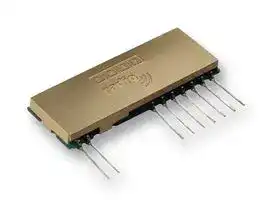
ERA400TRS
Easy Radio RF Transceiver Module, 433 Mhz
⚠️ Reference pricing provided. In case of supply shortages, we will connect you with our trusted procurement partners to ensure your project's continuity.
- Manufacturer: LPRS
- Product type: RF Transceivers - Sub 2.4GHz ISM Band
- Data Rate Max: 115.2Kbps
- Frequency Max: 433MHz
- RF Modulation: ASK, FSK
- Supply Current: 32mA
- Transmit Power: 10mW
- Sensitivity dBm: -107dBm
- Supply Voltage Max: 5V
- Supply Voltage Min: 3.3V
- RF Transceiver Applications: Industrial & Lighting Control, Wireless Sensor Network
| Delivery and price | |
|---|---|
| Units per pack | 50 |
| Price | 41.37 € |
| Current stock | 50+ |
| Lead time | 7 days |
Datasheet

## **Low Power Radio Solutions Ltd**

## **Data Sheet** Data Sheet

## **easyRadio Advanced ISM radio modules**

## **Modules Included:**

**ERA400TRS**

**ERA900TRS ERA400TS ERA900TS**

**Datasheet Revision 3.4   April**

**Copyright LPRS 2011 .**

**Page 1 of 20**

## **Contents**

Changes to this document ................................................................................. 4 Terms and Conditions of Use ............................................................................... 4 Introduction to easyRadio Advanced ........................................................................ 5 New features: ............................................................................................... 5 Basic Specifications ........................................................................................ 5 ERA400TRS/ERA900TRS Transceiver Description .......................................................... 6 Easy-Radio Transceiver Block Diagram ................................................................... 6 Physical Dimensions ........................................................................................ 7 Pin Description (RAW RF Data mode) .................................................................... 8 ERAx00TS Transmitter ...................................................................................... 9 Block Diagram ............................................................................................... 9 Physical Dimensions ........................................................................................ 9 Pin Description .............................................................................................. 9 Application & Operation ERx00TRS-03 ..................................................................... 10 Typical System Block Diagram ............................................................................ 10 Timing Specifications – Applies to all EasyRadio Advanced Modules. ............................... 10 Absolute Maximum Ratings ERA400TRS & ERA900TRS.................................................... 11 Performance Data: ERAxxxTRS Supply +5.0 Volt ± 5%, Temperature 20° C ........................ 11 ERA400TRS Channel Frequencies vs Bandwidth Settings ................................................ 12 easyRadio Configuration Command Set .................................................................... 13 RS232 Communication Settings ........................................................................... 13 RF POWER Settings ......................................................................................... 13 RF Channel Settings ........................................................................................ 14 Bandwidth ................................................................................................... 14 Band Plan .................................................................................................... 14 MISCELLANEOUS COMMANDS .............................................................................. 14 TEST MODES ................................................................................................. 15 RAW Data Mode (TRS Only at time of print) ............................................................... 16 Notes: ........................................................................................................... 17 RSSI ........................................................................................................... 17 PCB Layout .................................................................................................. 17 Power Supply ................................................................................................ 18 Antennas ..................................................................................................... 18 Product Order Codes .......................................................................................... 18 easyRadio Advanced Module Firmware Version ........................................................... 19

**Datasheet Revision 3.4   April**

**Copyright LPRS 2011 .**

**Page 2 of 20**

Document History ............................................................................................. 19 Copyright ....................................................................................................... 19 Disclaimer ...................................................................................................... 19 CONTACT INFORMATION ...................................................................................... 20

**Datasheet Revision 3.4   April**

**Copyright LPRS 2011 .**

**Page 3 of 20**

## **Changes to this document**

This data sheet has been updated to reflect firmware changes throughout the range of modules. Specific alterations are recorded in the documentation history later in the document.

## **Terms and Conditions of Use**

_Low Power Radio Solutions Ltd_ has an on-going policy to improve the performance and reliability of their products; we therefore reserve the right to make changes without notice. The information contained in this data sheet is believed to be accurate however we do not assume any responsibility for errors or any liability arising from the application or use of any product or circuit described herein. This data sheet neither states nor implies warranty of any kind, including fitness for any particular application.

easyRadio modules are a component part of an end system product and should be treated as such. Testing to fitness is the sole responsibility of the manufacturer of the device into which easyRadio products are fitted, and is expected BEFORE deployment into the field.

**Any liability from defect or malfunction is limited to the replacement of product ONLY, and does not include labour or other incurred corrective expenses.**

## **Using or continuing to use these devices hereby binds the user to these terms.**

**Datasheet Revision 3.4   April**

**Copyright LPRS 2011 .**

**Page 4 of 20**

## **Introduction to easyRadio Advanced**

## **New features:**

- A new digital RSSI (Received Signal Strength Indication) now reduces the requirement for the host to handle A-D measurement and can be called via a simple command for either the current RSSI level or the signal strength of the last received data packet. This value can also be delivered as the first BYTE in the delivered packet.

easyRadio Advanced (ERA) modules extend on the simplicity of previous easyRadio(02) modules by incorporating truly innovative features, including the ability to change bandwidth of the radio from 19.2KHz down to 12.5KHz, which means narrowband performance on a wide-band budget.

Internal temperature measurement ensures less than 1.5KHz frequency drift from ambient 20°C, over a range of -40°C to +85°C, as well as providing a usable thermometer for the connected application accurate to within 1°C. Modes of transmission include an enhanced easyRadio protocol with 16-bit encryption and anticross talk software, plus raw data modes where users can now use self-coding system which can be set to interface to any other raw data module on ISM bands in both FSK (FM) and ASK (AM) modulation.

With the addition of three (total 4) separate data buffers, data throughput has been massively improved by around 25%*.

- Temporary channel/power level selection: This new command allows the user to scan other channels without storing the settings in internal EEPROM, therefore not reducing the life of the EEPROM through repetitive modification.

- Free flash firmware upgrades. Using the tools from LPRS, new updates/features can be quickly programmed making a truly future proof solution. Custom firmware can also be used (Contact LPRS for details)

- Back compatibility with 02 modules.

- Temperature compensation plus crystal controlled synthesiser for frequency accuracy less than +/- 1KHz over full temperature range

- Temperature sensor usable by host

## **Basic Specifications**

- High sensitivity receiver

   - -107dBm @ 19.2 Kbps

   - `o` -112dBm @ 4.8 Kbps `o` -117dBm @ 2.4 Kbps

- Current

`o` Receiver: 21mA (Max) `o` Transmitter: 32mA (Max)

- User Programmable: Frequency (Up to 132 channels) Bandwidth (Down to 12.5KHz) RS232 Data Rate Output Power (Up to 10dBm) 10mW @ 434MHz 5mW @ 869.85MHz

**Datasheet Revision 3.4   April**

**Page 5 of 20   Copyright LPRS 201Copyright LPRS 2011 .**

**Page 5 of 20**

## **ERA400TRS/ERA900TRS Transceiver Description**

The easyRadio Transceiver is a complete sub-system that combines a high performance very low power RF transceiver, a microcontroller and a voltage regulator:

## **easyRadio Transceiver Block Diagram**

**==> picture [386 x 161] intentionally omitted <==**

**----- Start of picture text -----**<br>
3.3v<br>< ~ q Vcc (Pin 8)<br>Regulator<br>Vv<br>RFIC<br><>| Carrier Detect (Pin 3)<br>a BUSY (Pin 4)<br>| Serial Data Out (Pin 5)<br>Temperature<br><><br>Sensor<br>~< q Serial Data In (Pin 6)<br>EEPROM < > ~ q Ready (Pin 7)<br>Ground (Pins 2 & 9)<br>μ Processor<br>**----- End of picture text -----**<br>


The Serial Data Input and Serial Data Output operate at the standard 19,200 Baud and the two handshake lines provide optional flow control to and from the host. The easyRadio Transceiver can accept and transmit up to 180 bytes of data, which it buffers internally before transmitting in an efficient over-air code format.

Any other easyRadio Transceiver within range and on the same channel that „hears‟ the transmission will decode the message and place the recovered data within a receive buffer that can then be downloaded to the receiving host for processing and interpretation. Radio transmission and reception is bi-directional (half duplex) i.e. transmit OR receive but not simultaneously.

Increased internal buffers however, allow the user to upload while a download is in progress giving an appearance of fully duplex data flow.

**Datasheet Revision 3.4   April**

**Page 6 of 20 Page 6 of 20   Copyright LPRS 201Copyright LPRS 2011 .**

## **Physical Dimensions**

**==> picture [259 x 247] intentionally omitted <==**

**----- Start of picture text -----**<br>
4.0 mm<br>38.0 mm<br>"<br>r<br>ERA400TRS<br>ERA900TRS<br>15.24 mm<br>A<br>1  2 3  4  5  6  7  8  9<br>Pin Pitch 2.54mm<br>PCB Hole Size 1.0mm<br>14.0 mm<br>10.0 mm<br>**----- End of picture text -----**<br>


## **Pin Description (easyRadio mode)**

|**Pin No**|**Name**|**Description**|**Notes**|
|---|---|---|---|
|||||
|1|Antenna|50Ω RF input/output.<br>Connect to suitable antenna.||
|2|RF Ground|RF ground. Connect to antenna<br>ground (coaxial cable screen<br>braid) and local ground plane.<br>Internally connected to other<br>Groundpins.||
|3|CD|Carrier Detect||
|4|Busy Output|Digital Output to indicate that<br>transceiver is ready to receive<br>serial data from host.|CTS function|
|5|Serial Data Out|Digital output for received data<br>to host||
|6|Serial Data In|Digital input for serial data to be<br>transmitted|Digital input for serial data to be|
|7|Host Ready Input|Digital Input to indicate that<br>Host is Ready to receive serial<br>data from transceiver|RTS function|
|8|Vcc|Positive supply pin. +2.5 to +5.5<br>Volts. This should be a „clean‟<br>noise free supply with less than<br>25mV of ripple.||
|9|Ground|Connect to supply 0 Volt and<br>groundplane||


**Datasheet Revision 3.4   April**

**Page 7 of 20 Page 7 of 20   Copyright LPRS 201Copyright LPRS 2011 .**

## **Checklist**

1. The module operates internally from an on board 3.3 Volt low drop regulator. The logic levels of the input/output pins are therefore between 0 Volt and 3.3 Volts. (See specifications/performance data).

2. The serial inputs and outputs are intended for connection to a UART or similar low voltage logic device. Do not connect any of the inputs or outputs directly to an RS232 port. The transceiver module may be permanently damaged by the voltages (+/- 12V) present on RS232 signal lines. See Application Circuit (Figure 11) for typical connection to an RS232 port via MAX232 interface IC.

3. The „Host Ready Input‟ should be tied to 0 Volt (Ground) if not used, only when handshaking is enabled.

4. Outputs will drive logic operating at 3.3 Volts and inputs will be correctly driven by logic operating at 5 Volts.

5. Fit 1K resistors in series with data lines if connecting to 5V logic.

## **Pin Description (RAW RF Data mode)**

|**Pin No**|**Name**|**Description**|**Notes**|
|---|---|---|---|
|||||
|1|Antenna|50Ω RF input/output.<br>Connect to suitable<br>antenna.||
|2|RF Ground|RF ground. Connect to<br>antenna ground (coaxial<br>cable screen braid) and<br>local ground plane.<br>Internally connected to<br>other Groundpins.||
|3|CD/Config|Carrier Detect|Carrier Detect/Config<br>mode selectpin|
|4|RX Select|RX mode selectpin|Active Low|
|5|RX Data|Raw RF data output||
|6|TS Data|Raw RF data Input<br>(Toggling this pin<br>modulates the carrier)||
|7|TX Select|Enables the transmitter<br>carrier.|Active Low|
|8|Vcc|Positive supply pin. +2.5<br>to +5.5 Volts. This should<br>be a „clean‟ noise free<br>supply with less than<br>25mV of ripple.||
|9|Ground|Connect to supply 0 Volt<br>andgroundplane||


**Datasheet Revision 3.4   April**

**Page 8 of 20   Copyright LPRS 201Copyright LPRS 2011 .**

**Page 8 of 20**

## **ERAx00TS Transmitter**

**==> picture [280 x 343] intentionally omitted <==**

**----- Start of picture text -----**<br>
3.3v Vcc (Pin 4)<br>Regulator<br>RFIC<br>Transmitter<br>| Serial Data Out (Pin 3)<br>Temperature<br>Sensor Serial Data In (Pin 6)<br>EEPROM<br>Ground (Pins 2 & 5)<br>Block Diagram<br>4.0 mm<br>31.0 mm | |<br>~ « | [a] [l]<br>A<br>ERA400TS<br>ERA900TS<br>v<br>17.78mm<br>1  2 3  4  5  6<br>Pin Pitch 2.54mm<br>PCB Hole Size 1.0mm<br>μ Processor<br>12.0 mm<br>**----- End of picture text -----**<br>


## **Physical Dimensions**

## **Pin Description**

|**Pin N**|**Name**|**Description**|**Notes**|
|---|---|---|---|
|||||
|1|RF Gnd|RF ground. Connect to antenna ground (coaxial cable screen<br>braid)and localgroundplane. Internallyconnected to Pin 5||
|2|RF Out|50Ω RF output. Connect to suitable antenna||
|3|Serial Data Out|RS232 Output for Command use(SDO)||
|4|Vcc|Positive supply pin. +2.5 to +5.5 Volts. This should be a<br>„clean‟ noise free supplywith less than 25mV of ripple||
|5|Gnd|Supply0 Volt and Ground Plane||
|6|TXD|RS232 Transmit Data Digital Input(SDI)||


## Notes:

1. The module operates internally from an on board 3.3 Volt low drop regulator.

2. TXD input will be correctly driven by logic operating at 2.5 - 5 Volts. Input should not be driven by an analogue source.

**Datasheet Revision 3.4   April**

**Page 9 of 20   Copyright LPRS 201Copyright LPRS 2011 .**

**Page 9 of 20**

## **Application & Operation ERx00TRS-03**

The diagram below shows a typical system block diagram comprising hosts (user‟s application) connected to easyRadio Transceivers. The hosts (A & B) will be monitoring (collecting data) and/or controlling (sending data) to some real world application.

**==> picture [371 x 51] intentionally omitted <==**

**----- Start of picture text -----**<br>
Serial Data Output RF Link Serial Data Output<br>Host Serial Data Input Easy-Radio Easy-Radio Serial Data Input Host<br>(A) Busy Transceiver Transceiver Busy (B)<br>(A) (B)<br>Host Ready Host Ready<br>**----- End of picture text -----**<br>


## **Typical System Block Diagram**

The hosts provide serial data input and output lines and two „handshaking‟ lines that control the flow of data to and from the easyRadio Transceivers. The „Busy‟ output line, when active, indicates that the transceiver is undertaking an internal task and is not ready to receive serial data. The „Host Ready‟ input is used to indicate that the host is ready to receive the data held in the buffer of the easyRadio Transceiver.

The host should check before sending data that the „Busy‟ line is not high, as this would indicate that the transceiver is either transmitting or receiving data over the radio link. It should also pull the „Host Ready‟ line low and check that no data appears on the Serial Data Output line.

## **Timing Specifications – Applies to all easyRadio Advanced Modules.**

|Host Serial Input/Output 2400, 4800, 9600, 19200,|Host Serial Input/Output 2400, 4800, 9600, 19200,<br>38400, 31250 (MIDI),<br>76800 & 115200|baud|1|
|---|---|---|---|
|Host Character Format|1 Start, 8 Data, No Parity,<br>1 Stop|Bits|2|
|End of Data Delay|2 x BAUD BYTE Duration|mS|3|
|RF Transmit|Depends on Bandwidth|mS|4|
|Buffer Size|1-180|Bytes|5|


## **Notes**

1. Data is inverted i.e. Start Bit is logic low. The inputs are intended for direct connection to a microcontroller UART or to RS232 inputs and outputs via an RS232 Level translator such as a Maxim MAX232, which invert the logic of the RS232 signals. This allows direct connection to, for example a Microcontroller UART. The data rate is user programmable (Default 19200 baud) and may differ between individual units within a system. (See Application Circuit diagram for logic level to RS232 interface figure 11).

2. 1 start, 8 data, 1 stop = 10 bits @ 104uS/bit = 0.52mS/character at 19200 Baud. (Default)

3. The „End of Data‟ delay is fixed at twice the character time.

4. A fixed package overhead of xx is added to all packets.

5. The buffer size is limited to 180 bytes. Sending more than 180 bytes will cause loss of data.

   - a. CTS pin will go high 2 bytes before the buffer is full. This allows characters already sent to be accepted by the ER module.

**Datasheet Revision 3.4   April**

**Page 10 of 20   Copyright LPRS 201Copyright LPRS 2011 .**

**Page 10 of 20**

## **Absolute Maximum Ratings ERA400TRS & ERA900TRS**

Operating Temperature Range -40° C to +85° C Storage Temperature Range -40° C to +85° C Vcc - 0.3 to + 6 Volts All Other Pins (N.B.) - 0.3 to 3.3 Volts Antenna 50V p-p @ < 10MHz   Must be insulated to prevent damage from ESD

## **Performance Data: ERAxxxTRS Supply +5.0 Volt ± 5%, Temperature 20° C**

|**DC Parameters**<br>~~ee~~|**Pin**<br>~~ee~~|**Min**<br>~~ee~~|**Typical**<br>~~QsQs~~|**Max**<br>~~QsQs~~|**Units**<br>~~QO~~|**Notes**<br>~~QO~~|
|---|---|---|---|---|---|---|
|~~ee ~~<br>~~a~~|~~ee~~|~~ee~~|~~QsQs~~|~~QsQs~~|~~QO~~|~~QO~~|
|Supply Voltage<br>(Vcc)<br>~~a~~|8|2.5|3.3-5.0|5.5|Volts||
|Transmit supply<br>current|8||32|33|mA||
|Receive supply<br>current|8||21||mA||
|SleepMode current|Mode current<br>8||800||µA||
|~~Pe~~<br>~~es~~|~~QO~~||||||
|**Interface Levels**<br>~~ss~~<br>~~es~~|~~ss~~<br>~~ee eG~~|~~ss~~<br>~~eG~~|~~ss~~<br>~~QO~~<br>~~eG~~|~~ss~~<br>~~QO~~<br>~~QO~~|~~ss~~<br>~~QO~~<br>~~QO~~|~~ss~~<br>~~QO~~|
|Data Output Logic 1<br>~~es~~|ic 1<br>~~ee eG~~|~~eG~~|3.1<br>~~QO~~<br>~~eG~~|~~QO~~<br>~~QO~~|Volts<br>~~QO~~<br>~~QO~~|10k load to +Vcc supply<br>~~QO~~|
|Data Output Logic 0<br>~~es~~<br>~~es~~|ic 0<br>~~ee eG~~<br>|~~eG~~<br>|0.1<br>~~QO~~<br>~~eG~~<br>~~eee~~<br>|~~QO~~<br>~~QO ~~<br>~~eee~~|Volts<br>~~QO~~<br> ~~QO~~<br>~~ee~~|10k load to +Vcc supply<br>~~QO~~<br>~~ee~~|
|Logic Output<br>Current<br>~~ee~~<br>~~es~~<br>~~es~~|~~ee~~<br>~~ee eG~~<br>|~~ee~~<br>~~eG~~<br>|~~ee~~<br>~~eee~~<br>~~eG~~<br>|25<br>~~ee~~<br>~~eee~~<br>~~QO~~<br>|mA<br>~~ee~~<br>~~ee~~<br>~~QO~~<br>|~~ee~~<br>~~ee~~<br>~~QO~~<br>|
|Data Input Logic 1<br>~~es~~<br>~~es~~<br>~~es~~|~~ee eG~~<br>~~es~~<br>|2.0<br>~~eG~~<br>~~QC~~<br>|~~eee~~<br>~~eG~~<br>~~QC~~<br>|3.6<br>~~eee~~<br>~~QO~~<br>~~QC~~<br>|Volts<br>~~ee~~<br>~~QO~~<br>~~QC~~<br>|~~ee~~<br>~~QO~~<br>~~QC~~<br>|
|Data Input Logic 0<br>~~es ~~<br>~~es~~<br>~~es re~~<br>~~es~~|~~ee eG~~<br>~~es~~<br>~~re~~<br>|~~eG~~<br>~~QC~~<br>~~Gs~~<br>|~~eee ~~<br>~~eG~~<br>~~QC~~<br>~~GG~~|0.2<br> ~~eee ~~<br>~~QO~~<br>~~QC~~<br>~~GG~~|Volts<br> ~~ee ~~<br>~~QO~~<br>~~QC~~<br>~~GO~~|~~ee~~<br>~~QO~~<br>~~QC~~<br>~~GO~~|
|Input Pull-ups<br> <br>~~es ~~<br>~~es re~~<br>~~es~~|~~ee eG~~<br> ~~es~~<br>~~re~~<br>~~sr~~|~~eG~~<br>~~QC~~<br>~~Gs~~<br>~~sr~~|100<br>~~eG~~<br>~~QC~~<br>~~GG~~<br>~~QC~~|~~QO ~~<br>~~QC~~<br>~~GG~~<br>~~QC~~|KΩ<br> ~~QO~~<br>~~QC~~<br>~~GO~~<br>~~QC~~|1<br>~~QO~~<br>~~QC~~<br>~~GO~~|
|**RF Parameters**<br> <br>~~es re~~<br>~~es~~<br>~~ne~~|**Pin**<br> ~~es~~<br>~~re~~<br>~~sr~~<br>~~ne~~|**Min**<br>~~QC~~<br>~~Gs~~<br>~~sr~~<br>~~ne~~|**Typical**<br>~~QC~~<br>~~GG~~<br>~~QC~~|**Max**<br>~~QC~~<br>~~GG~~<br>~~QC~~<br>~~ee~~|**Units**<br>~~QC~~<br>~~GO~~<br>~~QC~~<br>~~ee~~|**Notes**<br>~~QC~~<br>~~GO~~|
|Antenna Impedance<br>~~re~~<br>~~es ~~<br>~~ne~~|edance<br>1<br>~~re~~<br> ~~sr~~<br>~~ne~~|~~Gs~~<br>~~sr~~<br>~~ne~~|50<br>~~GG~~<br>~~QC~~|~~GG ~~<br>~~QC~~<br>~~ee~~|Ohms<br> ~~GO~~<br>~~QC~~<br>~~ee~~|~~GO~~|
|RF Frequency<br>~~ne~~<br>~~TT~~|~~ne~~<br>~~TT~~|402<br>868<br>902<br>~~ne~~<br>~~TTTP~~|434<br>869.85<br>915<br>~~TP~~|470<br>870<br>928<br>~~ee~~<br>~~TPPP~~|MHz<br>MHz<br>MHz<br>~~ee~~<br>~~PP~~|See ER Configuration<br>Command set<br>~~PP~~|
|**Transmitter**<br>~~ne~~<br>~~TT~~|~~ne~~<br>~~TT~~|~~ne~~<br>~~TTTP~~|~~TP~~|~~ee ~~<br>~~TPPP~~|~~ee~~<br>~~PP~~|~~PP~~|
|RF Power Output<br>~~TT~~<br>~~ne~~|1<br>~~TT~~<br>~~ne~~|-5<br>-5<br>~~TTTP~~<br>~~ne~~|+9<br>+5<br>~~TP~~|+10<br>+5<br>~~TPPP~~<br>~~ee~~|dBm<br>(434MHz)<br>dBm<br>(869MHz)<br>~~PP~~<br>~~ee~~|50Ω load<br>Depends on Frequency<br>~~PP~~|
|Frequencyaccuracy<br>~~TT~~<br>~~ne~~|~~TT~~<br>~~ne~~|~~TT TP~~<br>~~ne~~|±2<br>~~TP~~|~~TP PP~~<br>~~ee~~|ppm<br>~~PP~~<br>~~ee~~|Overall<br>~~PP~~|
|FM deviation<br>~~ne~~|~~ne~~|~~ne~~|9.9<br>2.4<br>2.025|~~ee~~|Khz<br>Khz<br>KHz<br>~~ee~~|100KHz Spacing<br>25KHz Spacing<br>12.5KHz Spacing|
|Harmonics/<br>Spurious Emmissions<br>~~ne~~|urious Emmissions<br>~~ne~~|~~ne~~|-47|< -36<br>~~ee ~~|dBm<br> ~~ee~~|Meets EN 300 220-3|
|Over Air Data rate<br>~~ee~~|~~ee~~|1200<br>~~ss~~|19200<br>~~ss~~|38400|bps|Manchester Encoded|
|**Receiver**<br>~~ee~~|~~ee~~|~~ss~~|~~ss~~||||
|Receive Sensitivity<br>~~ee ~~<br>~~es es~~|~~ee~~<br>~~es~~|~~ss~~<br>~~Gs~~|-107<br>-117<br>~~ss~~<br>~~Gs~~|~~(QD~~|dBm<br>dBm<br>~~(QD~~|At 100KHz Channel Spacing<br>At 12.5KHz Channel Spacing<br>~~(~~|
|Serial Data Rate<br>~~es es~~|~~es~~|2.4<br>~~Gs~~|19.2<br>~~Gs~~|115.2<br>~~(QD~~|Kbps<br>~~(QD~~|Host interface. 6<br>~~(~~|


**Datasheet Revision 3.4   April**

**Page 11 of 20   Copyright LPRS 201Copyright LPRS 2011 .**

**Page 11 of 20**

|~~ee~~|~~ee~~|~~ee~~|~~QsQs~~|~~QsQs~~|~~QO~~|~~QO~~|
|---|---|---|---|---|---|---|
|**Logic Timing**<br>~~ee ~~<br>~~ft~~|**Pin**<br> ~~ee~~<br>~~ft~~|**Min**<br>~~ee~~|**Typical**<br>~~QsQs~~|**Max**<br>~~QsQs~~|**Units**<br>~~QO~~|**Notes**<br>~~QO~~|
|Initial Power Up<br>Time<br>~~ft~~<br>~~es~~|~~ft~~|~~GG~~|5<br>~~GG~~|75<br>~~GG~~|mS<br>~~QO~~|2,3<br>~~QO~~|
|~~ft~~<br>~~es~~<br>~~Rs~~|~~ft~~<br>~~es~~|~~GG~~<br>~~QC~~|~~GG~~<br>~~QC~~|~~GG~~<br>~~QC~~|~~QO~~<br>~~QC~~|~~QO~~<br>~~QC~~|
|**Mechanical**<br>~~es~~<br>~~Rs~~<br>~~es~~|~~es~~|~~GG~~<br>~~QC~~<br>~~GG~~|~~GG~~<br>~~QC~~<br>~~GG~~|~~GG ~~<br>~~QC~~<br>~~GG~~|~~QO~~<br>~~QC~~<br>~~QO~~|~~QO~~<br>~~QC~~<br>~~QO~~|
|Size<br>~~Rs~~<br>~~es~~<br>~~Rs~~|~~es~~<br>~~es~~|~~QC~~<br>~~GG~~<br>~~QC~~|38 x 14 x 4<br>~~QC~~<br>~~GG~~<br>~~QC~~|~~QC~~<br>~~GG~~<br>~~QC~~|mm<br>~~QC~~<br>~~QO~~<br>~~QC~~|~~QC~~<br>~~QO~~<br>~~QC~~|
|Pin Pitch<br>~~es~~<br>~~Rs~~<br>~~es~~|~~es~~|~~GG~~<br>~~QC~~<br>~~GG~~|2.54<br>~~GG~~<br>~~QC~~<br>~~GG~~|~~GG ~~<br>~~QC~~<br>~~GG~~|mm<br> ~~QO~~<br>~~QC~~<br>~~(SQ~~|(Standard 0.1 Inches)<br>~~QO~~<br>~~QC~~<br>~~(SQ~~|
|Weight<br>~~Rs~~<br>~~es~~|~~es~~|~~QC~~<br>~~GG~~|3.5<br>~~QC~~<br>~~GG~~|~~QC~~<br>~~GG~~|gms<br>~~QC~~<br>~~(SQ~~|~~QC~~<br>~~(SQ~~|


## **Notes**

1. The „Host Ready Input‟ and the „Serial Data Input‟ have „weak‟ internal pull-ups enabled.

2. When power is first applied to the module the processor retrieves „calibration‟ data for the RF section that compensates for temperature and power supply voltage variations. The transceiver will then be ready to receive (default) or transmit. It would normally be left in this powered state ready to receive data.

3. During power up the Busy Output line goes high and goes low once ready.

## **ERA400TRS Channel Frequencies vs Bandwidth Settings**

Each channel frequency is calculated relative to the channel number, the channel width, and the start frequency of the channel. Three commands control the settings of each of these parameters: Channel command: ER_CMD#Cn - Where n is channel number (See command table) Bandwidth Command: ER_CMD#Bn - Where n is the Channel spacing Band Plan Command: ER_CMD#bn - Where n is the START frequency of the band plan being used

The centre frequency of each channel is calculated using the formula:

_Centre Frequency_ (f) = b + cs + 𝑠 2

Where  b = band plan start frequency

- c = channel number

- s = channel spacing

**Datasheet Revision 3.4   April**

**Page 12 of 20 Page 12 of 20   Copyright LPRS 201Copyright LPRS 2011 .**

## **easyRadio Configuration Command Set**

The programming software sends „Text Commands‟ to the modules and this action can be performed by terminal software or the host‟s Microcontroller using the following list of commands: Note that shaded items are either new **03** commands or changes from **02** modules.

## **RS232 Communication Settings**

|**RS232 Communication Settings**|**RS232 Communication Settings**|**RS232 Communication Settings**|**RS232 Communication Settings**|**RS232 Communication Settings**|**RS232 Communication Settings**|
|---|---|---|---|---|---|
|~~ee~~|~~Ge~~|~~Ge~~||||
|ER_CMD#U1<br>~~ee~~|UART Data Rate<br>~~Ge~~|2400<br>~~Ge~~|2400|||
|ER_CMD#U2<br>~~ee~~|4800<br>~~Ge~~|4800<br>~~Ge~~||||
|ER_CMD#U3|9600|9600||||
|ER_CMD#U4|19200|19200||||
|ER_CMD#U5|38400|38400||||
|ER_CMD#U6|31250|31250||||
|ER_CMD#U7|76800|76800||||
|ER_CMD#U8|115200|115200||||
|||||||
|ER_CMD#U?|Get UART Value||||The module replies<br>echos with the UART<br>value. Eg:<br>ER_CMD#U2<br>No ACK is required.|
|||||||
|||||||
|ER_CMD#A70|PARITY DISABLE|DISABLED BY DEFAULT<br>When enabled data = 1 Start, 8 Data, 1 Parity, 1 Stop||||
|ER_CMD#A71|EVEN PARITY|||||
|ER_CMD#A72|ODD PARITY|||||
|~~ee~~|~~ee~~|~~GO~~|~~GO~~|||
|ER_CMD#A41<br>~~ee~~|FAST ACK Enable<br>~~ee~~|OFF<br>~~GO~~|OFF<br>~~GO~~|(Upper case i)<br>See notes on “FAST ACK”<br>below.||
|ER_CMD#A40|FAST ACK Disable|||||
|||||||
|**RF POWER Settings**||||||
|||**ER400Series**|**ER900 Series**||~~QO~~|
|ER_CMD#P0~9<br>~~GG~~|RF Power Output<br>~~GG~~|~~GG~~|~~GG~~||~~GG~~<br>~~QO~~|
|ER_CMD#P?<br>~~GG~~|Get Power Value<br>~~GG~~|~~GG~~|~~GG~~||The module replies<br>with the power<br>value. eg:<br>ER_CMD#P9<br>No ACK is required.<br>~~GG~~<br>~~QO~~|


**Datasheet Revision 3.4   April**

**Page 13 of 20 Page 13 of 20   Copyright LPRS 201Copyright LPRS 2011 .**

## **RF Channel Settings**

|**RF Channel Settings**|**RF Channel Settings**|**RF Channel Settings**|**RF Channel Settings**|**RF Channel Settings**|
|---|---|---|---|---|
|ER_CMD#Cx|Where x = Channel<br>Number in Decimal|||Eg Channel 5:<br>ER_CMD#C5 or<br>ER_CMD#C05 or<br>ER_CMD#C005<br>Uppercase 'C' stores<br>settings in EEPROM|
|ER_CMD#cx|As Upper case C|||Lowercase 'c' does<br>not store in EEPROM|
|ER_CMD#C?|Get Channel Value|||The module replies<br>echoes with the<br>current channel.<br>Eg: ER_CMD#C9<br>No ACK is required.|
||||||
|**Bandwidth**|||||
|ER_CMD#Bx|X = 0<br>1<br>2<br>3<br>6|12.5KHz<br>25KHz<br>50KHz<br>100KHz<br>150KHz|2400bps<br>4800bps<br>9600bps<br>19200bps<br>02 Compatibility|After this command,<br>the Channel number<br>will set to Channel<br>0.|
|**Band Plan**||**ERA400**|**ERA900**||
|ER_CMD#bx|Default = 0<br>1<br>2<br>3|433.1       MHz<br>433.1125 MHz<br>458.5125 MHz<br>433.0       MHz|869.7MHz<br>902MHz<br>863MHz|This setting chooses<br>the start frequency<br>of Channel 0|
||||||
|**MISCELLANEOUS COMMANDS**|||||
|ER_CMD#R0<br>~~GG~~|Reset module(POR)<br>~~GG~~|~~GG~~|~~GG~~|Power reset<br>~~GG~~|
|ER_CMD#A00<br>~~GG~~|DCS OFF (default)<br>~~GG~~|Recommended ON<br>for new designs<br>where back<br>compatibility to<br>older devices is not<br>required<br>~~GG~~|~~GG~~||
|ER_CMD#A01|DCS ON||||
|ER_CMD#A10|Encryption OFF<br>(default)|Encryption algorithm<br>is created and<br>owned solely by<br>LPRS. It uses a 16-bit<br>seed that can be set<br>bythe developer.|Encryption algorithm<br>LPRS. It uses a 16-bit||
|ER_CMD#A11|Encryption ON||||
|ER_CMD#A20|CRC16 OFF|The CRC16 routines<br>are more efficient<br>and secure than the<br>old CRC8. For new|||


**Datasheet Revision 3.4   April**

**Page 14 of 20   Copyright LPRS 201Copyright LPRS 2011 .**

**Page 14 of 20**

|||||applications it is|applications it is|||
|---|---|---|---|---|---|---|---|
|||||recommended.||||
|||||All new Bandwidth||||
|||||settings use CRC16.||||
|||||This setting only||||
|||||applies to 02||||
|||||compatibilitymode.||||
||ER_CMD#A21|CRC16 ON(default)||||||
||ER_CMD#A30/1|Repeater OFF/ON||NOT YET IMPLEMENTED||||
||ER_CMD#A40/1|Fast ACK OFF/ON||||||
||ER_CMD#A50/1|Handshaking OFF/ON||Handshaking OFF/ON||||
||ER_CMD#A70|Parity Disable||||||
||ER_CMD#A71|Parity Even||||||
||ER_CMD#A72|ParityOdd||||||
||ER_CMD#a0/1|RSSI In Packet||When enabled each packet is preceded by the 8 bit RSSI value|||When enabled each packet is preceded by the 8 bit RSSI value|
|||||of the receivedpacket||||
|||||||||
||**TEST MODES**|||||||
|ER_CMD#T0<br>ER_CMD#T1<br>~~es es~~||Upper FSK Carrier<br>Modulated Carrier<br>~~es~~|||||Test Mode 0<br>Test Mode 1|
||||||||With Temperature|
||||||||compensation|
|ER_CMD#T2<br>ER_CMD#T3<br>~~es~~||Lower FSK Carrier<br>Get Firmware|Lower FSK Carrier||||Test Mode 2<br>Returns Firmware|
|||Revision|||||String: eg|
||||||||ERA400TRS V3.6.23|
|ER_CMD#T4<br>RAW Data Test<br>~~Gn~~||||~~GG~~|||Out of CTSpin|
||ER_CMD#T5|Modulated Carrier|Modulated Carrier||||Without|
||||||||Temperature|
||||||||compensation|
||ER_CMD#T7|Temperature Sensor||Temperature Sensor|||Reply example:|
||||||||-15'C or|
||||||||23.7'C|
||ER_CMD#T8|Last Packet RSSI|||||Returns the HEX|
||||||||value of the RSSI|
||||||||register measured on|
||||||||the last valid|
||||||||packet.|
|ER_CMD#T9<br>Current RSSI<br>~~GG~~||||||Live RSSI Value<br>~~GO~~||
||**To successfully send commands do the following:**|**To successfully send commands do the following:**|**To successfully send commands do the following:**|||||
||1. Send Command from host:||e.g.||ER_CMD#U5|(Set UART BAUD to 38400)||


2. In the case of a TRS/RS:

o Wait for echo of command from module. e.g.  ER_CMD#U5 1. Send the ASCII string from the host: ACK

The commands should be sent exactly as shown (case sensitive) with no spaces between characters. The ACK command is sent as three ASCII characters, ACK in sequence. „A‟‟C‟‟K‟ .

**Datasheet Revision 3.4   April**

**Page 15 of 20   Copyright LPRS 201Copyright LPRS 2011 .**

**Page 15 of 20**

## **RAW Data Mode (TRS Only at time of print)**

easyRadio Advanced modules have the added versatility of being used without the proprietary protocols from easyRadio and yet still being used as a multi-channel, multi-bandwidth module.

This allows the user to set precise frequencies to replace other raw data devices on exact frequencies.

Both FSK (FM) and ASK (AM) modes are supported, and with the integration of a configuration mode, AM/FM modes,  power levels, channels and bandwidth settings, can be changed on the fly with a very efficient command structure.

## Enable RAW data mode:

- 1) When in easyRadio mode send the command ER_CMD#L40202

- 2) Perform a power reset with Pin 3 left either floating or held high

## Return to easyRadio mode:

- 1) Hold Pin 3 low while providing power (This will not change the default POR setting)

- 2) Once powered, send the command ER_CMD#L40200. This will reset the default POR setting to easyRadio Mode

||||||||Pin 1|Antenna|
|---|---|---|---|---|---|---|---|---|
||||||||Pin 2|RF Ground|
|ERA400TRS<br>ERA900TRS|||||||Pin 3<br>Pin 4<br>Pin 5|Carrier Detect/Config Mode Pin<br>RX Select (Active Low)<br>RF RX Data Output|
||||||||Pin 6|TX Data Input|
||||||||Pin 7|TX Select (Active Low)|
||||||||Pin 8|VCC|
|1  2||3  4  5  6  7  8  9|3  4  5  6  7  8  9||3  4  5  6  7  8  9||Pin 9|Data Ground|
|**Mode Selection**|**1 = +V, 0 = 0V, x = Don’t Care**||||**x = Don’t Care**||||
|**Pin 3**|**Pin 4**|**Pin 4**||||**Pin 7**|**Mode**||
|x|1|1||||1|Sleep||
|x|0|0||||1|RX Enabled(Output on Pin 5)||
|x|1|1||||0|TX Enabled(Input Modulation on Pin 6)||
|1|0|0||||0|Module aslee|Module asleepbut higher current(Not recommended)|
|0|0|0||||0|Configure mode||


Once in configure mode, Pins 5 & 6 return to functional UART pins at the stored module BAUD rate (default 19200).

The configuration command set ALL setting in one command which is 5 bytes long:

|**BYTE 1**|**BYTE 2**|**BYTE 3**|**BYTE 4**|**BYTE 5**|
|---|---|---|---|---|
|Bandwidth/AM-FM|Band Plan|Channel|Power Level|CSUM|


Each byte uses Hex values in 8-bit format and corresponds to the settings used when selecting parameters in normal ER commands. Bit 7 of BYTE 1 is used to switch between AM/FM modes. 0 = FM, 1 = AM. Therefore, to set an FM channel 10 at 12.5KHz Spacing on Band-plan 0 and power level 9: The configuration word would be: 01 00 0A 09 14 (Note CSUM at BYTE 5)

**Datasheet Revision 3.4   April**

**Page 16 of 20   Copyright LPRS 201Copyright LPRS 2011 .**

**Page 16 of 20**

The module will ALWAYS respond with an ERROR Status Byte:

|**7**|**6**|**5**|**4**|**3**|**2**|**1**|**0**|
|---|---|---|---|---|---|---|---|
|X|X|PLL|BW|BP|C|P|CSUM|


A high in ANY of these positions indicates a failure in the Values used. Bit 5 (PLL) indicates a failure to lock frequency using the settings requested and returns the module to the previously set mode.

Exit Configuration Mode:

Simply return Pin 3 to the High State and once all operations are completed (After delivery of ERROR Status BYTE) the Radio will return to RAW Data Mode with the new settings.

## **Notes:**

## **RSSI**

The Receiver/Transceiver has a built in RSSI (Received Signal Strength Indicator) that provides a digital value relating to the power at the input. This value can be read back using the ER command “ER_CMD#T8” or can be set to deliver the value as the first byte of each packet.

This value will be different, depending on the bandwidth currently in use. The graph below explains how to interpret the values:

## **PCB Layout**

The Ground (0 Volt) pins of the receiver should be connected to a substantial ground plane (large area of PCB copper) connected to 0 Volt. It is suggested that a double sided PCB be used with one layer being the ground plane.

**Datasheet Revision 3.4   April**

**Page 17 of 20 Page 17 of 20   Copyright LPRS 201Copyright LPRS 2011 .**

## **Power Supply**

The supply used to power the receiver should be „clean‟ and free from ripple and noise (<20mV p-p total). It is suggested that 100nF ceramic capacitors be used to de-couple the supply close to the power pins of the receiver. The use of „switch mode‟ power supplies should be avoided as they can generate both conducted and radiated high frequency noise that can be very difficult to eliminate. This noise may considerably reduce the performance of any radio device that is connected or adjacent to the supply.

## **Antennas**

The receiver can be used with the various common types of antenna that match the 50Ω RF Input/Output such as a monopole (whip), helical or PCB/Wire loop antennas.

Monopole antennas are resonant with a length corresponding to one quarter of the electrical wavelength (2/4). They are very easy to implement and can simply be a ‘piece of wire’ or PCB track which at 434MHz should be 16.4cms in length. This should be straight, in „free space‟ (kept well away from all other circuitry) and should be connected directly to the Antenna pin of the receiver. If the antenna is remote it should be connected via a 50Ω coaxial feeder cable or transmission line. A 50Ω transmission line can be constructed on FR4 board material by using a 3mm wide PCB track over a ground plane. This should be kept as short as possible.

Helical antennas are also resonant and generally chosen for their more compact dimensions. They are more difficult to optimise than monopole antennas and are critical with regard to surrounding objects that can easily „de-tune‟ them. They operate most efficiently when there is a substantial ground plane for them to radiate against.

Wire or PCB Loop antennas are the most compact antennas but are less effective than the other types. They are also more difficult to design and must be carefully „tuned‟ for best performance.

The Internet can provide much useful information on the design of Short Range Device (SRD) Antennas.

## **Product Order Codes**

|**Name**|**Description**|**Order Code**|
|---|---|---|
|ERA400TS|UK/European Transmitter Module|ERA400TS|
||on 433 MHz||
|ERA400TRS|UK/European Transceiver Module|ERA400TRS|
||on 433 MHz||
|ERA900TS|Europe/US Transmitter Module|ERA900TS|
||869/915MHZ||
|ERA900TRS|Europe/US Transceiver Module|ERA900TRS|
||869/915MHZ||


Please contact the sales office for availability and other variants of the standard product. The software interface can be customised to specific requirements for high volume applications.

**Datasheet Revision 3.4   April**

**Page 18 of 20 Page 18 of 20   Copyright LPRS 201Copyright LPRS 2011 .**

## **easyRadio Advanced Module Firmware Version**

|**Version**|**Date**|**Revision**|**Known Issues**|
|---|---|---|---|
|3.6.9|January2010|Initial Release|None at time ofprint.|
|3.6.17|October 2010|Improved Calibration.|roved Calibration.|
|3.6.23|March 2011|Numerous feature|RS232 Parity not yet working.|
|||additions||


## **Document History**

|**Issue**|**Date**|**Revision**|
|---|---|---|
|3.1|January 2010|First Provisional Datasheet for „03‟|
|||series modules|
|3.4|April 2011|Module rebranded as ERA.|
|||Numerous corrections/additions|


## **Copyright**

The information contained in this data sheet is the property of Low Power Radio Solutions Ltd and copyright is vested in them with all rights reserved. Under copyright law this documentation may not be copied, photocopied, reproduced, translated or reduced to any electronic medium or machine readable form in whole or in part without the written consent of Low Power Radio Solutions Ltd. The circuitry and design of the modules are also protected by copyright law.

## **Disclaimer**

_Low Power Radio Solutions Ltd_ has an on going policy to improve the performance and reliability of their products; we therefore reserve the right to make changes without notice. The information contained in this data sheet is believed to be accurate however we do not assume any responsibility for errors or any liability arising from the application or use of any product or circuit described herein. This data sheet neither states nor implies warranty of any kind, including fitness for any particular application.

easyRadio modules are a component part of an end system product and should be treated as such. Testing to fitness is the sole responsibility of the manufacturer of the device into which easyRadio products are fitted, as is also the deployment into the field.

**Any liability from defect or malfunction is limited to the replacement of product ONLY, and does not include labour or other incurred corrective expenses.**

**Datasheet Revision 3.4   April**

**Page 19 of 20 Page 19 of 20   Copyright LPRS 201Copyright LPRS 2011 .**

## **Using or continuing to use these devices hereby binds the user to these terms.**

## **CONTACT INFORMATION**

For further information or technical assistance please contact: **Low Power Radio Solutions Ltd** Two Rivers Industrial Estate Station Lane Witney Oxon OX28 4BH England Tel: +44 (0)1993 709418 Fax: +44 (0)1993 708575 Web: http://www.lprs.co.uk Email: info@lprs.co.uk

**Datasheet Revision 3.4   April**

**Page 20 of 20 Page 20 of 20   Copyright LPRS 201Copyright LPRS 2011 .**
Updated at February 9, 2023
About Novapart
Novapart is a B2B electronic component broker specialising in stock shortages and cost reduction. We source hard-to-find parts and identify compliant alternatives across a catalogue of 420,000+ components from 500+ manufacturers.
Learn more →Stock Shortage Specialist
When a component is unavailable, discontinued or has an unacceptable lead time, we tap into our network of vetted European and Asian distributors to source what you need — without compromising on quality or traceability.
Request a quote →Compliant Alternatives
We identify pin-to-pin, electrically equivalent substitutes that meet the same certifications (RoHS, AEC-Q100, REACH) as your original specification — validated against datasheets, not just part numbers. Often at a lower cost.
BOM Analysis service →