
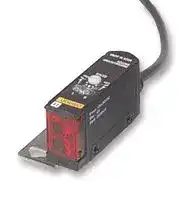


E3SAD11
Photoelectric Sensor, E3S-A Series, Built In Amplifier, Diffuse, 200 mm, NPN, 10 V to 30 V
- Manufacturer: OMRON INDUSTRIAL AUTOMATION
- Product type:
- Sensing Range Max:200mm; Sensing Method:Diffuse; Sensor Output:NPN; Connection Method:Cable; Supply Voltage DC Min:10V; Supply Voltage DC Max:30V; Current Consumption:30mA; External Depth:40mm;
- Product Range: E3S-A Series
- Sensing Method: Diffuse
- Connection Method: Cable
- Sensor Output Type: NPN
- Sensing Distance Max: 200mm
- Supply Voltage DC Min: 10V
- Operating Temperature Max: 55°C
- Operating Temperature Min: -25°C
| Delivery and price | |
|---|---|
| Units per pack | 1 |
| Price | 148.43 € |
| Current stock | 10+ |
| Lead time | 30 days |

**Built-in Amplifier Photoelectric Sensor (Medium Size) E3S-A**

Be sure to read _Safety Precautions_ on page 10. ~~A~~

## **Ordering Information**

**Built-in Amplifier Photoelectric Sensors**

**==> picture [559 x 516] intentionally omitted <==**

**----- Start of picture text -----**<br>
|||||||||
|---|---|---|---|---|---|---|---|
|Built-in Amplifier Photoelectric Sensors|Ea|Red light|||Infrared light|
|Connection|Model|
|Sensing method|Appearance|Sensing distance|Functions|
|aee|method|NPN output|PNP output|
|---|E3S-AT11|E3S-AT31|
|Horizontal|Pre-wired|Self DiagnosisTimer|DiagnosisExternal Turbo|E3S-AT21|E3S-AT41|
|Connector|
|---|E3S-AT16|E3S-AT36|
|Through-beam|(M12)|
|Sensors|ae|d|8|7 m|---|E3S-AT61|E3S-AT81|
|Vertical|Pre-wired|Timer|Turbo|E3S-AT71|E3S-AT91|
|Self Diagnosis|DiagnosisExternal|
|Connector|
|---|E3S-AT66|E3S-AT86|
|(M12)|
|||ee|ee|
|---|E3S-AR11|E3S-AR31|
|Horizontal|Pre-wired|Self DiagnosisTimer|DiagnosisExternal Turbo|E3S-AR21|E3S-AR41|
|Connector|
|---|E3S-AR16|E3S-AR36|
|Retro-reflective|on}ee|(M12)|||2 m|=|
|Sensors|(100 mm)|---|E3S-AR61|E3S-AR81|
|Vertical|Pre-wired|*1|Timer|Turbo|
|E3S-AR71|E3S-AR91|
|Self Diagnosis|DiagnosisExternal|
|Connector|
|---|E3S-AR66|E3S-AR86|
|pt||(M12)|ee|ee|[=]|a|
|http://www.ia.omron.com/|(c)Copyright OMRON Corporation 2007   All Rights Reserved.|
|1|
|omron|a|

**----- End of picture text -----**<br>


**E3S-A**

|**Sensing method**|**Appearance**|**Connection**<br>**method**|**Sensing distance**|**Sensing distance**|**Sensing distance**|**Sensing distance**|**Sensing distance**|**Functions**|**Model**|**Model**|
|---|---|---|---|---|---|---|---|---|---|---|
||||||||||**NPN output**|**PNP output**|
|Diffuse-reflective<br>Sensors|Horizontal|Pre-wired||||view)||---|**E3S-AD13*2**|**E3S-AD33**|
||||100 m||m (wide|||Timer<br>Self Diagnosis|**E3S-AD23**|**E3S-AD43**|
||||||||||||
||||||mm|||---|**E3S-AD11**|**E3S-AD31**|
||||200|||||Timer<br>Self Diagnosis<br>Turbo|**E3S-AD21**|**E3S-AD41**|
||||||||||||
||||||00 mm|||---<br><br>|**E3S-AD12**|**E3S-AD32**|
||||7|||||Timer<br>Self Diagnosis<br>Turbo|**E3S-AD22**|**E3S-AD42**|
|||Connector<br>(M12)|100 m||m (wide|view)||---|**E3S-AD18**|**E3S-AD38**|
||||200||mm||||**E3S-AD16**|**E3S-AD36**|
|||||7|00 mm||||**E3S-AD17**|**E3S-AD37**|
||Vertical|Pre-wired||||view)||---|**E3S-AD63*2**|**E3S-AD83**|
||||100 m||m (wide|||Timer<br>Self Diagnosis|**E3S-AD73**|**E3S-AD93**|
||||||||||||
||||||mm|||---|**E3S-AD61**|**E3S-AD81**|
||||200|||||Timer<br>Self Diagnosis<br>Turbo|**E3S-AD71**|**E3S-AD91**|
||||||||||||
||||||00 mm|||---|**E3S-AD62**|**E3S-AD82**|
|||||7||||Timer<br>Self Diagnosis|**E3S-AD72**|**E3S-AD92**|
||||||||||||
|||Connector<br>(M12)|100 m||m (wide|view)||---|**E3S-AD68**|**E3S-AD88**|
||||200||mm||||**E3S-AD66**|**E3S-AD86**|
|||||7|00 mm||||**E3S-AD67**|**E3S-AD87**|


*1. Values in brackets are the minimum required distance between the Sensor and Reflector.

- *2. The following models are available with 200-mm sensing distances: E3S-AD14 and E3S-AD64.

## **Accessories (Order Separately) Insert-type Long Slit**

|**Slit width**<br>**S**|**ensing distance**|**Minimum sensing**<br>**object(typical)**|**Model**|**Quantity**|**Remarks**|
|---|---|---|---|---|---|
|0.5 mm×11.1 mm|500 mm|0.2-mm dia.|**E39-S46**|1 of each for Emitter/<br>Receiver (4 Slits total)|Slits can be used with the E3S-<br>AT@@Through-beam<br>Sensor.➜Page 10|
|1 mm×11.1 mm|1.1 m|0.4-mm dia.||||
|2 mm×13.6 mm|2.5 m|0.8-mm dia.||1 of each for Emitter/<br>Receiver(2 Slits total)||


## **Mutual Interference Prevention Filters**

|**Sensing distance**|**Model**|**Quantity**|**Remarks**|
|---|---|---|---|
|2.4 m|**E39-E6**|2 of each for Emitter/Receiver<br>(4 Filters total)|Can be used with the E3S-AT@@Through-beam Sensor.<br>➜Page 11|


## **Reflectors/Other Accessories**

|**Name**|**Sensing distance(typical)**|**Model**|**Quantity**|**Remarks**|
|---|---|---|---|---|
|Reflectors|2 m (100 mm)*<br>(rated value)|**E39-R1**|1|Provided with E3S-AR@@Retro-reflective Sensor.|
|Small Reflectors|1.3 m(100 mm)*|**E39-R3**|1|---|
||600 mm(70 mm) *|**E39-R4**|1|---|
|Tape Reflectors|450 mm(100 mm) *|**E39-RS1**|1|Enables MSR function.|
||700 mm(100 mm) *|**E39-RS2**|1||
||900 mm (100 mm)*|**E39-RS3**|1||
|Optical Axis<br>Confirmation Reflector|---|**E39-R5**|1|Used to check optical axis for the E3S-AT@@<br>Through-beam Sensor.|


Note:  When using any Reflector other than the provided one, use a sensing distance of approximately 0.7 times the typical value as a guide. *Values in brackets are the minimum required distance between the Sensor and Reflector.

**2**

(c)Copyright OMRON Corporation 2007   All Rights Reserved.

http://www.ia.omron.com/

**E3S-A**

## **Mounting Brackets/Other**

|**Appearance**|**Model**|**Quantity**|**Remarks**|
|---|---|---|---|
||**E39-L69**|1|Provided with E3S-A Horizontal Sensors.|
||**E39-L70**|1|Provided with E3S-A Vertical Sensors.|
||**E39-L59**|1|Provided with E3S-A Vertical Pre-wired<br>Sensors.|
||**E39-L81**|1|Provided with E3S-A Vertical Connector<br>Sensors.|
||**E39-L97**|1|Protective Cover for Horizontal Sensors<br>Note: When mounting Sensors with Connectors, the<br>Sensor I/O Connector will come into contact<br>with the Bracket. Mount the Sensor with care.|
||**E39-L98**|1|Protective Cover for Vertical Sensors<br>Note: When mounting Sensors with Connectors, the<br>Sensor I/O Connector will be longer. Mount the<br>Sensor with care.|
||**E39-L60**|1|Close Mounting Plate:<br>Provided with E3S-A Connector Sensors.|


Note: If a Through-beam Model is used, order two Mounting Brackets, one for the Emitter and one for the Receiver.

## **Sensors I/O Connectors**

|**Model**|**Quantity**|**Remarks**|
|---|---|---|
|**E39-G2**|1|Provided withproduct.|


## **Sensors I/O Connectors**

|**Cable**|**Appearance**|**Appearance**|**Cable type**|**Cable type**|**Model**|
|---|---|---|---|---|---|
|Standard|Straight||2 m|3-wire|**XS2F-D421-DC0-A**|
||||5 m||**XS2F-D421-GC0-A**|
||L-shaped||2 m||**XS2F-D422-DC0-A**|
||||5 m||**XS2F-D422-GC0-A**|


**3**

(c)Copyright OMRON Corporation 2007   All Rights Reserved.

http://www.ia.omron.com/

**E3S-A**

## **Ratings and Specifications**

|**Sensing method**|**Sensing method**|**Sensing method**|**Through-beam**<br>**Sensors**|**Retro-reflective**<br>**Sensors**<br>**(with MSR function)**|**Diffuse-reflective Sensors**|**Diffuse-reflective Sensors**|**Diffuse-reflective Sensors**|
|---|---|---|---|---|---|---|---|
|**Item**<br>**Model**|||**E3S-AT11, 16, 21, 31,**<br>**36, 41, 61, 66, 71, 81,**<br>**86, 91**|**E3S-AR11, 16, 21, 31,**<br>**36, 41, 61, 66, 71, 81,**<br>**86, 91**|**E3S-AD13, 18, 23, 33,**<br>**38, 43, 63, 68, 73, 83,**<br>**88, 93**|**E3S-AD11, 16, 21, 31,**<br>**36, 41, 61, 66, 71, 81,**<br>**86, 91**|**E3S-AD12, 17, 22, 32,**<br>**37, 42, 62, 67, 72, 82,**<br>**87, 92**|
|**Sensing distance**|||7 m|2 m (100 mm)*1<br>(When using E39-R1)|100 mm (wide view)<br>(white paper 100×<br>100 mm)|10 to 200 mm<br>(white paper 100×<br>100 mm)|700 mm<br>(white paper 200×<br>200 mm)|
|**Standard sensing object**|||Opaque:<br>10-mm dia. min.|Opaque:<br>75-mm dia. min.|---|||
|**Differential travel**|||---||20% max. of sensing<br>distance|10% max. of sensing<br>distance|20% max. of sensing<br>distance|
|**Directional angle**|||Both Emitter and<br>Receiver: 3°to 15°|3 to 10°|---|||
|**Light source (wavelength)**|||Red LED (700 nm)||Infrared LED (880 nm)|Red LED (700 nm)|Infrared LED (880 nm)|
|**Power supply voltage**|||10 to 30 VDC, including ripple (p-p) 10%|||||
|**Current consumption**|||Both Emitter and<br>Receiver: 20 mA max.<br>(plus approx. 15 mA with<br>turbo function)|30 mA max. (plus<br>approx. 15 mA with<br>turbo function)|35 mA max.|30 mA max. (plus<br>approx. 15 mA with<br>turbo function)|35 mA max.|
|**Control output**|||Load power supply voltage: 30 VDC max., Load current: 100 mA max. (residual voltage: 1 V max.)<br>Open-collector output (NPN or PNP depending on model), Light-ON/Dark-ON selectable|||||
|**Self-diagnostic output (Only**<br>**on Sensors with self-diagnos-**<br>**tic outputs)**|||(Only Sensors with self-diagnostic function) Load power supply voltage: 30 VDC max.,<br>Load current: 50 mA max. (residual voltage: 1 V max.),<br>Open-collector output (NPN or PNP depending on model)|||||
|**External**<br>**diagnostic**<br>**input**<br>**(Only on**<br>**Sensors with**<br>**external**<br>**diagnostic**<br>**outputs)**||**Input**<br>**voltage**|NPN<br>with Emitter OFF: 0 V short-circuit or 1.5 V max.<br>(source current: 1 mA max.)<br>with Emitter ON: Open<br>(leakage current: 0.1 mA max.)<br>PNP<br>with Emitter OFF: +DC short-circuit or−1.5 VDC<br>max. (sink current: 3 mA max.)<br>with Emitter ON: Open<br>(leakage current: 0.1 mA max.)||---|||
|||**Response**<br>**time**|0.5 ms max.|||||
|**Protection circuits**|||Power supply reverse<br>polarity protection,<br>Output short-circuit<br>protection|Power supply reverse polarity protection, Output short-circuit protection, Mutual interference prevention||||
|**Response time**|||Operation or reset: 0.5 ms max.|||||
|**Sensitivity adjustment**|||Two-turn endless adjuster with an indicator|||||
|**Timer function (Only on Sen-**<br>**sors with the timer function)**|||0 to 100 ms OFF-delay variable adjuster|||||
|**Turbo function (Only on Sen-**<br>**sors with the turbo function)**|||Yes (with turbo switch)||||---|
|**Ambient illumination (Receiv-**<br>**er side)**|||Incandescent lamp: 5,000 lx max.<br>Sunlight: 10,000 lx max.|||||
|**Ambient temperature**|||Operating:−25°C to 55°C (with no icing or condensation)<br>Storage:−40°C to 70°C (with no icing or condensation)|||||
|**Ambient humidity**|||Operating: 35% to 85% (with no condensation)<br>Storage: 35% to 95% (with no condensation)|||||
|**Insulation resistance**|||20 MΩmin. at 500 VDC between current-carrying parts and case|||||
|**Dielectric strength**|||1,000 VAC, 50/60 Hz for 1 min. between current-carrying parts and case|||||
|**Vibration resistance**<br>**(destruction)**|||10 to 55 Hz, 1.5-mm double amplitude for 2 hours each in X, Y, and Z directions|||||
|**Shock resistance**<br>**(destruction)**|||Destruction: 500m/s2, 3 times each in X, Y, and Z directions|||||
|**Degree of protection**|||IEC IP67; NEMA: 4X (indoors only)*2|||||
|**Connection method**|||Pre-wired (standard length: 2 m) or M12 connector|||||
|**Weight (packed state)**|||Pre-wired cable:<br>Approx. 150 g<br>Connector: Approx. 70 g|Pre-wired cable:<br>Approx. 110 g<br>Connector: Approx. 60 g|Pre-wired cable: Approx. 90 g<br>Connector: Approx. 50 g|||
|**Material**|**Case**||PBT|||||
||**Lens**||Denatured polyallylate|||||
||**Mounting**<br>**Bracket**||Stainless steel (SUS304)|||||
|**Accessories**|||Mounting bracket (with screws), Sensitivity adjustment driver, Sensitivity adjusting knob, Instruction sheet, Close mounting plate<br>(only for Sensors with connectors), and Reflector (only for Retro-reflective Sensors)|||||


*1. Values in brackets are the minimum required distance between the Sensor and Reflector.

*2. National Electrical Manufacturers Association

**4**

(c)Copyright OMRON Corporation 2007   All Rights Reserved.

http://www.ia.omron.com/

**E3S-A**

**Engineering Data (Typical)**

## **Parallel Sensing Range**

## **Through-beam Sensors E3S-AT@@**

**Through-beam Sensors E3S-AT@@ + E39-S46 (Slit Sold Separately)**

**Through-beam Sensors E3S-AT@@ + E39-E6 (Filter Sold Separately)**

**==> picture [510 x 140] intentionally omitted <==**

**----- Start of picture text -----**<br>
500 200 200<br>Slit width: 2 mm<br>400 Y Y<br>Slit width: 1 mm<br>300<br>100 X 100 X<br>200 Y<br>100<br>X<br>0 0 0<br>2 4 6 8 1 2 3 4 5 6 7 8 1 2 3 4 5 6<br>−100 Distance X (m) Distance X (m) Distance X (m)<br>−200<br>−100 −100<br>−300<br>−400 Slit width: 0.5 mm<br>−500 −200 −200<br>Distance Y (mm) Distance Y (mm) Distance Y (mm)<br>**----- End of picture text -----**<br>


**Parallel Sensing Range**

## **Retro-reflective Sensors**

## **E3S-AR@@ + E39-R1 (with Reflector)**

## **Sensing Range**

## **Diffuse-reflective Sensors**

**E3S-AD@1/AD@2/AD@3/AD@6/AD@7/AD@8**

**==> picture [512 x 349] intentionally omitted <==**

**----- Start of picture text -----**<br>
100 40<br>E39-R1 Reflector Sensing object: white paper<br>80 30 E3S-AD@1/@3/@6/@8: 100 × 100 mm Y<br>   E3S-AD@2/@7: 200 × 200 mm<br>60 X<br>20 E3S-AD@1/@6<br>40 Y<br>10<br>20<br>X<br>0 0<br>0.5 1.0 1.5 2.0 2.5 400 600 800 Distance X (m)<br>−20 Distance X (m) −10 200<br>−40 E3S-AD@2/@7<br>−20<br>−60<br>−80 −30 E3S-AD@3/@8<br>−100 −40<br>Excess Gain vs. Set Distance<br>Through-beam Sensors Retro-reflective Sensors<br>E3S-AT@@ E3S-AR@@ + E39-R1 (with Reflector)<br>500 100 E39-R1 Reflector<br>300<br>50<br>30<br>100<br>50<br>10<br>30<br>5<br>10<br>3<br>5<br>3 Oper-<br>ating 1<br>level<br>Oper-<br>ating 1<br>level 0  3  5  7  10 0 0.2 0.4 0.6 0.8 1 1.2 1.4 1.6 1.8 2 2.2 2.4 2.6<br>Distance (m) Distance (m)<br>Distance Y (mm) Distance Y (mm)<br>Excess gain ratio (times) Excess gain ratio (times)<br>**----- End of picture text -----**<br>


**5**

(c)Copyright OMRON Corporation 2007   All Rights Reserved.

http://www.ia.omron.com/

**E3S-A**

**==> picture [510 x 210] intentionally omitted <==**

**----- Start of picture text -----**<br>
Diffuse-reflective Sensor Diffuse-reflective Sensor Sensing Object Size vs. Sensing<br>Distance<br>E3S-AD@1/AD@2/AD@3/AD@6/AD@7/@1/AD@2/AD@3/AD@6/AD@7/1/AD@2/AD@3/AD@6/AD@7/@2/AD@3/AD@6/AD@7/2/AD@3/AD@6/AD@7/@3/AD@6/AD@7/3/AD@6/AD@7/@6/AD@7/6/AD@7/@7/7/ E3S-AD@1/AD@2/AD@3/AD@6/AD@7/ E3S-AD@1/AD@2/AD@3/AD@6/AD@7/<br>AD@8 (Detection of White Paper)@8 (Detection of White Paper)8 (Detection of White Paper) AD@8 (Detection of Black Paper) AD@8<br>500300 Sensing object: White paperE3S-AD@1/@3/@6/@8: 100 × 100 mm 10050 SensinE3S-ADg ob@1/ject: Black @3/@6/@p8: 100 aper × 100 mm 1.2 Sensing object: white paper<br>   E3S-AD@2/@7: 200 × 200 mm    E3S-AD@2/@7: 200 × 200 mm OFF<br>30 1 ON<br>100 E3S-AD@2/@7<br>50 10 0.8<br>30<br>5<br>E3S-AD@2/@7<br>3 E3S 0.6<br>E3S-AD@2/@7 -AD@1/@6<br>10<br>Oper-<br>5 ating 1 0.4<br>3 E3S level0.5 E3S-AD@1/@6 OFFON<br>-AD @ 1/ @ 6<br>Oper- 0.3 0.2 OFF<br>ating 1 E3S-AD@3/@8 E3S-AD@3/@8 ON<br>level<br>0.50  E3S-AD 0.2  @3/@8 0.4  0.6  0.8  1  1.2 0.10  200  400  600  800 0 50 × 50 100 × 100 200 × 200 300 × 300<br>Distance (m) Distance (mm) Side of object (mm)<br>Excess gain ratio (times) Excess gain ratio (times) Distance (m)<br>**----- End of picture text -----**<br>


## **Diffuse-reflective Sensor**

**E3S-AD@1/AD@2/AD@3/AD@6/AD@7/@1/AD@2/AD@3/AD@6/AD@7/1/AD@2/AD@3/AD@6/AD@7/@2/AD@3/AD@6/AD@7/2/AD@3/AD@6/AD@7/@3/AD@6/AD@7/3/AD@6/AD@7/@6/AD@7/6/AD@7/@7/7/ AD@8 (Detection of White Paper)@8 (Detection of White Paper)8 (Detection of White Paper)**

## **I/O Circuit Diagrams**

## **NPN Output**

**==> picture [514 x 279] intentionally omitted <==**

**----- Start of picture text -----**<br>
Mode<br>Operation<br>Model Timing charts selector Output circuit<br>mode<br>switch<br>E3S-AT11 Incident light Through-beam Receivers, Retro-reflective Sensors, Diffuse-reflective<br>E3S-AT16 Light indicatorNo incident lightON Sensors<br>E3S-AT61 (red) OFF L Side Light Stability 1 Brown<br>E3S-AT66 Light-ON Outputtransistor OFFON (LIGHT ON) (red)indi-cator indicator(green)Photo- (Controloutput) Load<br>Load Operate electricSensor 4 Black (Relay) 10 to<br>E3S-AR11E3S-AR16 (e.g., relay) Reset(Between brown and black) maincircuit ZD 100 mA max. 30 VDC<br>Blue<br>E3S-AR61 3<br>Incident light<br>E3S-AR66<br>No incident light<br>E3S-AD11 Light indicator(red) OFFON D Side Connector Pin Arrangement<br>E3S-AD16E3S-AD61 Dark-ON Outputtransistor OFFON (DARK ON) 2 1 4<br>Load Operate 3<br>E3S-AD66 (e.g., relay) Reset<br>E3S-AD12 (Between brown and black) Note: Pin 2 is not used.<br>E3S-AD17 Through-beam Emitters<br>E3S-AD62 Brown Connector Pin Arrangement<br>E3S-AD67E3S-AD13E3S-AD18 Powerindicator(red) - Photo-electricSensor 1 10 to 30 VDC 2 13 4<br>main<br>E3S-AD63 circuit Blue<br>E3S-AD68 3 Note: Pins 2 and 4 are not used.<br>**----- End of picture text -----**<br>


**6**

(c)Copyright OMRON Corporation 2007   All Rights Reserved.

http://www.ia.omron.com/

**E3S-A**

|**Model**|**Operation**<br>**mode**|**Timing charts**|**Timing charts**|**Timing charts**|**Mode**<br>**selector**<br>**switch**|||||||**Output circuit**|**Output circuit**|**Output circuit**|**Output circuit**|**Output circuit**|**Output circuit**|**Output circuit**|**Output circuit**|
|---|---|---|---|---|---|---|---|---|---|---|---|---|---|---|---|---|---|---|---|
|E3S-AT21<br>E3S-AT71<br>E3S-AD21<br>E3S-AD71<br>E3S-AD22<br>E3S-AD72<br>E3S-AD23<br>E3S-AD73|Light-ON|T<br>T: OFF-delay timer (0 to 100 ms)<br>Incident light<br>No incident light<br>ON<br>OFF<br>ON<br>OFF<br>Operate<br>Reset<br>Light indicator<br>(red)<br>(Between brown and black)<br>Output<br>transistor<br>Load<br>(e.g., relay)|||L Side<br>(LIGHT ON)|Through-beam Receivers<br>Light<br>indica-<br>tor<br>Stability<br>indicator<br>(green)<br>Photo-<br>electric<br>Sensor<br>main<br>circuit<br>(red)||||||, Diffuse-reflective Sensors<br>(Self-diagnostic<br>output)<br>ZD<br>ZD<br>Load<br>(relay)<br>Brown<br>Blue<br>Black<br>(Control<br>output)<br>100 mA max.<br>10 to<br>30 VDC<br>Load<br>(relay)<br>Orange<br>50 mA max.||||||||
||||||||Light<br>indica-<br>tor<br>(red)|Stability<br>indicator<br>(green)<br>Photo-<br>electric<br>Sensor<br>main<br>circuit||||||||||||
|||||||||||||ZD<br>ZD<br>100 mA m<br>50 mA m|||x.||Loa<br>(rel|d<br>ay)||
||||||||||||||ZD<br>ZD<br> <br>50 mA m||<br>ax.|Lo<br>(rel<br>Black<br>(Control<br>output)||||
||Dark-ON|T<br>T: OFF-delay timer (0 to 100 ms)<br>Incident light<br>No incident light<br>ON<br>OFF<br>ON<br>OFF<br>Operate<br>Reset<br>Light indicator<br>(red)<br>(Between brown and black)<br>Output<br>transistor<br>Load<br>(e.g., relay)|||D Side<br>(DARK ON)|||||||||ZD||||||
|||||||||||||||||||||
|||||||||||||||||||||
|||||||||||||||||||||
||---|External<br>diagnostic<br>input<br>Emitter LED<br>Indicator<br>(red)<br>ON<br>OFF<br>ON<br>OFF<br>ON<br>OFF<br>(Between blue and pink)|||---|Through-beam Emitters<br>Power in<br>(red)<br>Phot<br>elec<br>Sen<br>main<br>circu||||||dicator<br>Brow|||0 V<br>(External<br>diagnostic input)<br>n<br>10 to 30 VDC|||||
||||||||||Power in<br>(red)<br>Phot<br>elec<br>Sen<br>main<br>circu|||dicator||||||||
|||||||||||||o-<br>tric<br>sor<br><br>it||Pink||||||
|||||||||||||||||||||
|||||||||||||||||||||
|E3S-AR21<br>E3S-AR71|Light-ON|T<br>T: OFF-delay timer (0 to 100 ms)<br>Incident light<br>No incident light<br>ON<br>OFF<br>ON<br>OFF<br>Operate<br>Reset<br>Light indicator<br>(red)<br>(Between brown and black)<br>Output<br>transistor<br>Load<br>(e.g., relay)|||L Side<br>(LIGHT ON)|Retro-reflective Sensors<br>Light<br>indica-<br>tor<br>Stability<br>indicator<br>(green)<br>Photo-<br>electric<br>Sensor<br>main<br>circuit<br>(red)|||||||||2 K<br>(External<br>diagnostic input)<br>(Self-diagnostic<br>output)<br>Load<br>(relay)<br>Brown<br>Blue<br>Black<br>(Control<br>output)<br>ax.<br>10 to<br>30 VDC<br>Load<br>(relay)<br>Orange<br>ax.<br>Pink|||||
||||||||Light<br>indica-<br>tor<br>(red)|Stability<br>indicator<br>(green)<br>Photo-<br>electric<br>Sensor<br>main<br>circuit||||||||||||
|||||||||||||1<br>ZD<br>100 mA m<br>50 mA m<br>ZD|||ax.||Lo<br>(rel|ad<br>ay)||
||||||||||||||1<br>ZD<br>50 mA m<br>ZD||ax.|Lo<br>(rel<br>Black<br>(Control<br>output)||||
||Dark-ON|T: OFF-delay timer (0<br>Incident light<br>No incident light<br>ON<br>OFF<br>ON<br>OFF<br>Operate<br>Reset<br>Light indicator<br>(red)<br>(Betwee<br>Output<br>transistor<br>Load<br>(e.g., relay)||T<br>to 100 ms)<br>n brown and black)|D Side<br>(DARK ON)|||||||||1<br> <br>ZD|2 K<br><br><br>|||||
|||||||||||||||||||||
|||||||||||||||||||||
|||||||||||||||||Blue||||
|||||T||||||||||||||||
|||||||||||||||||||||
|||||||||||||||||||||


## **Structure of Sensor I/O Connector**

**==> picture [213 x 52] intentionally omitted <==**

**----- Start of picture text -----**<br>
Terminal No.<br>2 12 Brown<br>1 3 3 Blue<br>4 4 Black<br>XS2F-D421-DC0-A<br>**----- End of picture text -----**<br>


|**Classification**<br>|**Wire color**|**Connection Pin No.**|**Application**|
|---|---|---|---|
|For DC|Brown|1|+V|
||---|2|---|
||Blue<br>|3|0 V<br>|
||Black|4|Output|


Note:  Pin No. 2 is not used.

**7**

(c)Copyright OMRON Corporation 2007   All Rights Reserved.

http://www.ia.omron.com/

**E3S-A**

## **PNP Output**

|**Model**|**Operation**<br>**mode**|**Timing charts**|**Timing charts**|**Timing charts**|**Timing charts**|**Timing charts**|**Mode**<br>**selector**<br>**switch**|**Output circuit**|**Output circuit**|**Output circuit**|**Output circuit**|**Output circuit**|**Output circuit**|**Output circuit**|**Output circuit**|**Output circuit**|**Output circuit**|
|---|---|---|---|---|---|---|---|---|---|---|---|---|---|---|---|---|---|
|E3S-AT31<br>E3S-AT36<br>E3S-AT81<br>E3S-AT86<br>E3S-AR31<br>E3S-AR36<br>E3S-AR81<br>E3S-AR86<br>E3S-AD31<br>E3S-AD36<br>E3S-AD81<br>E3S-AD86<br>E3S-AD32<br>E3S-AD37<br>E3S-AD82<br>E3S-AD87<br>E3S-AD33<br>E3S-AD38<br>E3S-AD83<br>E3S-AD88|Light-ON|Incident light<br>No incident light<br>ON<br>OFF<br>ON<br>OFF<br>Operate<br>Reset<br>Light indicator<br>(red)<br>(Between blue and black)<br>Output<br>transistor<br>Load<br>(e.g., relay)|||||L Side<br>(LIGHT ON)<br> <br><br>D Side<br>(DARK ON)|Through-beam Receivers, Retro-reflective Sensors, Diffuse-reflective<br>Sensors<br>**Connector Pin Arrangement**<br>Note:  Pin 2 is not used.<br>1<br>3<br>4<br>Light<br>indica-<br>tor<br>Stability<br>indicator<br>Photo-<br>electric<br>Sensor<br>main<br>circuit<br>ZD<br>Load<br>Brown<br>Blue<br>Black (Control output)<br>(Relay)<br>10 to<br>30 VDC<br>(red)<br>(green)<br>100 mA max.<br>3<br>1<br>2<br>4||||||||||
|||||||||Light<br>indica-<br>tor<br>(red)|Stability<br>indicator<br>Photo-<br>electric<br>Sensor<br>main<br>circuit<br>(green)|||1||||||
|||||||||||||3<br>4<br>ZD||4<br>ZD||Load<br>Blue<br>Black (Control output)<br>(Relay)<br>100 mA max.||
|||||||||||||||||Loa<br>Blue<br>100 mA max.||
||Dark-ON|Incident light<br>No incident light<br>ON<br>OFF<br>ON<br>OFF<br>Operate<br>Reset<br>Light indicator<br>(red)<br>(Between blue and black)<br>Output<br>transistor<br>Load<br>(e.g., relay)||||||||||||||||
|||||||||||||||||||
|||||||||||||||||||
||Through-beam Model Emitters|||Light<br>indica-<br>tor<br>P<br>el<br>S<br>m<br>cir<br>(red)|||1<br>Brown||10 to<br>30 VD|||<br>C<br>**Connector Pin Arrangement**<br>Note:  Pins 2 and 4 are not used.<br>3<br>1<br>2<br>4||||||
||||||Light<br>indica-<br>tor<br>P<br>el<br>S<br>m<br>cir<br>(red)||1|||||||||||
|||||||||Blue||||||||||
|||||||P<br>el<br>S<br>m<br>cir|hoto-<br>ectric<br>ensor<br>ain<br>cuit|||||||||||
|E3S-AT41<br>E3S-AT91<br>E3S-AD41<br>E3S-AD91<br>E3S-AD42<br>E3S-AD92<br>E3S-AD43<br>E3S-AD93|Light ON|T<br>T: OFF-delay timer (0 to 100 ms)<br>Incident light<br>No incident light<br>ON<br>OFF<br>ON<br>OFF<br>Operate<br>Reset<br>Light indicator<br>(red)<br>(Between blue and black)<br>Output<br>transistor<br>Load<br>(e.g., relay)|||||L Side<br>(LIGHT ON)<br> <br>D Side<br>(DARK ON)|Through-beam Receivers, Diffuse-reflective Sensors<br>(Self-diagnostic<br>output)<br>ZD<br>ZD<br>Light<br>indica-<br>tor<br>Stability<br>indicator<br>(green)<br>Photo-<br>electric<br>Sensor<br>main<br>circuit<br>Load<br>(relay)<br>Brown<br>Blue<br>Black<br>(Control<br>output)<br>100 mA max.<br>10 to<br>30 VDC<br>(red)<br>Load<br>(relay)<br>Orange<br>50 mA max.||||||||||
|||||||||Light<br>indica-<br>tor<br>(red)|Stability<br>indicator<br>(green)<br>Photo-|||||||||
||||||||||||||ZD<br>ZD<br>100 mA ma<br>50 mA||max.|(Self-diagnostic<br>output)<br>Load<br>(relay)<br>Black<br>(Control<br>output)<br>Load<br>(relay)<br>Orange||
||Dark ON|T<br>T: OFF-delay timer (0 to 100 ms)<br>Incident light<br>No incident light<br>ON<br>OFF<br>ON<br>OFF<br>Operate<br>Reset<br>Light indicator<br>(red)<br>(Between blue and black)<br>Output<br>transistor<br>Load<br>(e.g., relay)||||||||||||||||
||||||||||||||||x.|Loa<br>(rela<br>Black<br>(Control<br>output)||
|||||||||||||||||Lo<br>(rel|ad<br>ay)|
|||||||||||||||||||
|||||||||||||||||||
||---|External<br>diagnostic<br>input<br>Emitter LED<br>Indicator<br>(red)<br>ON<br>OFF<br>ON<br>OFF<br>ON<br>OFF<br>(|||||---<br>|Through-beam Emitters<br>Power indi<br>(red)<br>Phot<br>elect<br>Sens<br>main<br>circui||||cator<br>Brow|||0 V<br>(External<br>diagnostic input)<br>n<br>e<br>10 to 30 VDC<br>|||
|||||||||||Power indi<br>(red)<br>Phot<br>elect<br>Sens<br>main<br>circui||cator||||||
|||||||||||||o-<br>ric<br>or<br>t||||||
|||||||||||||||Blu<br>Pink||||
|||||||||||||||||||


**8**

(c)Copyright OMRON Corporation 2007   All Rights Reserved.

http://www.ia.omron.com/

**E3S-A**

**==> picture [513 x 203] intentionally omitted <==**

**----- Start of picture text -----**<br>
Mode<br>Operation<br>Model Timing charts selector Output circuit<br>mode<br>switch<br>Incident light  Retro-reflective Sensors<br>No incident light<br>T<br>Light indicator ON<br>(red) OFF L Side Brown<br>Light-ON Output ON<br>transistor OFF (LIGHT ON) Stability<br>E3S-AR41E3S-AR91 Load(e.g., relay)T: OFF-delay timer (0 to 100 ms)Incident lightOperateReset(Between blue and black) Lightindica-tor(red) indicator(green) Photo-electricSensor4.4 K ZD Z50 mA max.D OrangePink(Controloutput)(Self-diagnosticoutput)(Externaldiagnostic input)Load 10 to 30 VDC<br>No incident light maincircuit 100 mA max. Black (relay)<br>Light indicator ON Load<br>Dark-ON (red)Output OFFON T D Side Blue(relay)<br>transistor OFF (DARK ON)<br>Load Operate<br>(e.g., relay) Reset<br>(Between brown and black)<br>T: OFF-delay timer (0 to 100 ms)<br>**----- End of picture text -----**<br>


## **Structure of Sensor I/O Connector**

|2<br>4<br>1<br>3<br>1<br>2<br>3<br>4<br>Ter|minal No.<br>XS2F-D421-DC0-A<br>Brown<br>Blue<br>Black|Note: Pin 2 is not used.<br>**Classification**<br>**Wire color**<br>**Connection Pin No.**<br>**Application**<br>For DC<br>Brown<br>1<br>+V<br>---<br>2<br>---<br>Blue<br>3<br>0 V<br>Black<br>4<br>Output|**Wire color**|**Connection Pin No.**|**Application**|
|---|---|---|---|---|---|
||||Brown|1|+V|
||||---|2|---|
||||Blue|3|0 V|
||||Black|4|Output|


## **Adjustment Methods**

## **Sensitivity Adjustment for Diffuse-reflective Sensors Set to Light ON**

|**Item**|**Sensing condition**|**Sensitivity adjuster**|**Indicators**|**Procedure**|
|---|---|---|---|---|
|1) Position A|Photoelectric<br>Sensor<br>Sensing object<br>Backg-<br>round<br>object|Min.<br>Max.<br>(A)|Stability<br>indicator<br>(green)<br>Light<br>indicator<br>(red)<br>ON→**OFF**<br>OFF→**ON**|Locate a sensing object at the sensing<br>distance, set the sensitivity adjuster to<br>the minimum scale position, and<br>gradually increase sensitivity by turning<br>the sensitivity adjuster clockwise until the<br>incident light indicator (red LED) is ON.<br>Position A is where the indicator has<br>turned ON.|
|2) Position B|Photoelectric<br>Sensor<br>Sensing object<br>Backg-<br>round<br>object|Min.<br>Max.<br>(B)<br>(C)|ON→**OFF**<br>ON→**OFF**<br>Stability<br>indicator<br>(green)<br>Light<br>indicator<br>(red)|Position B is when the sensing object is<br>removed and the sensitivity adjuster is<br>turned clockwise until the incident light<br>indicator (red LED) is ON. Position C is<br>where the adjuster is turned<br>counterclockwise (reducing the<br>sensitivity) from position B until the<br>incident light indicator (red LED) is OFF.<br>When there are no background objects,<br>the maximum sensitivityis position C.|
|3) Setting|---|Min.<br>Max.<br>(C)<br>(A)|**ON**<br>ON→**OFF**<br>Stability<br>indicator<br>(green)<br>Light<br>indicator<br>(red)|Set the sensitivity adjuster to halfway<br>between (A) and (C) (at the optimum<br>sensitivity). Check that the stability<br>indicator (green LED) turns ON<br>according to whether the sensing object<br>is there or not. There is not sufficient<br>margin if it does not turn ON. If this is the<br>case, reconsider the detection method.|


Unlike conventional Photoelectric Sensors, the variation in the sensitivity of E3S-A Photoelectric Sensors is minimal. This means the sensitivity can be adjusted on only a single Photoelectric Sensor, and then the adjusters on the other Photoelectric Sensors can be set to the same scale position. There is no need to adjust the sensitivity of each Photoelectric Sensor individually.

**9**

(c)Copyright OMRON Corporation 2007   All Rights Reserved.

http://www.ia.omron.com/

**E3S-A**

## **Safety Precautions**

## **WARNING**

**This product is not designed or rated for ensuring safety of persons. Do not use it for such purposes.**

## **Precautions for Correct Use**

Do not use the product in atmospheres or environments that exceed product ratings.

## **Mounting**

## **Position of Optical Axis of Through-beam Model**

Unlike conventional through-beam sensors, the E3S-A Through-beam Photoelectric Sensor incorporates 2 lenses. The lens actually in use is the one marked with an arrow indicating the position of the optical axis. When using a Slit, attach it to the lens marked with the arrow.

**==> picture [149 x 72] intentionally omitted <==**

**----- Start of picture text -----**<br>
Unused lens<br>Optical axis indicator arrow<br>**----- End of picture text -----**<br>


Arrow indicating optical axis position Lens actually in use (attach the Slit to this lens)

## **Position of Arrow Indicating Optical Axis**

|**Model**|**Position of lens in use**|
|---|---|
|E3S-A<br>(Vertical Sensors)|Top|
|E3S-A<br>(Horizontal<br>Sensors)|Bottom|


## **Mounting Bracket (Provided)**

The direction of the optical axis coincides with the machine axis of the E3S-A when the mounting screw is inserted into the lock hole of the Mounting Bracket. If the mounting surface and the screw hole are correctly aligned toward the sensing object (or toward the Retroreflector for a Through-beam Sensor), the mechanical axis and optical axis will be aligned when the screw is inserted into the hole. Incident light will be detected, and time-consuming adjustment will not be necessary. (If, however, the mounting surface is not flat, adjustment of the optical axis may still be required.)

Adjust the position of the Sensor so that incident light points at the center. Make sure that the incident light is at a fixed position.

The maximum tightening torque of the screw is 0.53 N.m max.

**==> picture [169 x 53] intentionally omitted <==**

**----- Start of picture text -----**<br>
Base of mounting<br>bracket<br>Optical axis<br>Bracket can move<br>Machine axis in this direction<br>Optical axis lock hole (M3)<br>**----- End of picture text -----**<br>


## ● **Adjustments**

## **E39-S46 Through-beam Slits**

(Accessory, order separately)

Use the rubber attachment with the metal cover if a slit width of 2 mm is required. (A Slit is not required in this case.) Insert the 0.5- or 1-mm Slit between the metal cover and rubber attachment if a slit width of 0.5 or 1 mm is desired. These Slits fit into the rubber attachment.

## **Tightening the Connector**

Manually tighten the connector until the threads have completely disappeared. If tightening is insufficient, the degree of protection may not be maintained, or the connector may become loose when it is subjected to vibration. Using pliers to tighten the connector may damage it.

**==> picture [16 x 5] intentionally omitted <==**

**----- Start of picture text -----**<br>
Screw<br>**----- End of picture text -----**<br>


**==> picture [128 x 34] intentionally omitted <==**

Use the E39-L60 Close Mounting Plate (provided) if the Sensor is mounted using mounting brackets or if it is mounted directly. (Refer to _Dimensions_ .)

**==> picture [201 x 114] intentionally omitted <==**

**----- Start of picture text -----**<br>
2 mm<br>Metal cover<br>Slit (0.5 mm or 1 mm)<br>Rubber attachment<br>13.6 mm<br>Arrow indicating<br>11.1 mm position of optical axis<br>Indented portions<br>E3S-A<br>**----- End of picture text -----**<br>


Apply the Slit to the lens of the Photoelectric Sensor marked with an arrow indicating the position of the optical axis (apply it to the bottom lens of Horizontal Sensors and the top lens of Vertical Sensors).

**10**

(c)Copyright OMRON Corporation 2007   All Rights Reserved.

http://www.ia.omron.com/

**E3S-A**

## **E39-E6 Polarized Mutual Interference Prevention Filters for Through-beam Sensors**

(Accessory, order separately)

- A set of 4 Filters are sold together for two Through-beam Sensors (for 2 each for Emitters and Receivers). Order one for every two sets of Photoelectric Sensors.

- For mounting, refer to the figure of the Through-beam Slits.

**==> picture [235 x 128] intentionally omitted <==**

**----- Start of picture text -----**<br>
Emitter<br>Receiver<br>Up to two units<br>Y = 0 can be attached.<br>Note: The arrows on the Filters can be attached in<br>either direction when two Sensors are<br>mounted next to each other. The Filter<br>attached to an Emitter and to the<br>corresponding Receiver must be the same<br>in direction of polarization or the Sensor will<br>not function.<br>**----- End of picture text -----**<br>


- The arrow printed on the cover indicates the direction of polarization. By attaching the Filters opposite to each other in polarization to the Emitters and the Receivers in rows, mutual interference can be prevented (in any case, the Filter attached to an Emitter and to the corresponding Receiver must be the same in direction of polarization or the Photoelectric Sensor will not function).

## **Operating Mode Selection**

## Turbo **Function (** Turbo **Switch)**

The turbo function is effective with the turbo switch pressed, and the function is reset automatically when released. With the turbo function switched ON, the light spot is visible even at a distance of 200 mm, making it easy to check the sensing position and the angle of the optical axis.

## **Precautions**

- (1)Do not keep the turbo switch pressed for longer than 3 minutes. (It will not break even if it is pressed for an extended period.)

- (2)Pressing the switch may change the timer delay settings. Set the timer after using the turbo function to check the optical axis.

- (3)To press the switch, use a force of 9.8 N max.

**==> picture [137 x 126] intentionally omitted <==**

**----- Start of picture text -----**<br>
The intensity of the<br>red spot will be<br>increased, making<br>visual confirmation<br>much easier.<br>PUSH<br>Sensitivity adjuster<br>The OFF-delay timer adjuster is<br>used as a turbo switch (black).<br>**----- End of picture text -----**<br>


As shown in the following illustration, the E3S-A has an operating mode selector on the panel where the Receiver connector is located.

With this operating mode selector, the E3S-A is in either DarkON or Light-ON mode.

**==> picture [242 x 189] intentionally omitted <==**

**----- Start of picture text -----**<br>
Operating mode switch (black)<br>Light ON<br>Dark ON (ON when light is ON)<br>(ON when light is OFF)<br>D L<br>The default operating mode is shown in the<br>following table.<br>Default switch<br>Sensing method<br>setting<br>Through-beam Sensors<br>Dark-ON<br>Retro-reflective Sensors<br>Diffuse-reflective Sensors Light-ON<br>**----- End of picture text -----**<br>


## **and** Turbo **Switch**

The Emitter of the Through-beam Sensor with the selfdiagnostic feature incorporates a turbo switch. When this switch is ON, the intensity of the red LED light source can be increased to make a brighter spot.

## **Using the E39-R5 Optical Axis Reflector for Throughbeam Sensors**

(Accessory, order Separately)

Use this attachment when the set distance is long and adjustment is mechanically difficult with a sensing object.

**==> picture [189 x 93] intentionally omitted <==**

**----- Start of picture text -----**<br>
E3S-AT@@<br>Eye Receiver<br>E39-R5<br>Optical Axis Confirmation Reflector<br>E3S-AT@@<br>Emitter<br>**----- End of picture text -----**<br>


- Attach the Reflector to the Receiver.

- Look at the Reflector from right behind the Emitter. The Reflector should be bright with red light when the optical beam strikes the Reflector. If the Emitter has a turbo function, the Reflector looks brighter with the function switched ON.

- When the Reflector is removed, the light beam strikes the Receiver.

**11**

(c)Copyright OMRON Corporation 2007   All Rights Reserved.

http://www.ia.omron.com/

**E3S-A**

(Unit: mm)

## **Dimensions**

## **E3S-A Built-in Amplifier Photoelectric Sensor**

**Through-beam Sensors (Horizontal) Pre-wired Sensors**

**==> picture [512 x 601] intentionally omitted <==**

**----- Start of picture text -----**<br>
E3S-AT11/21/31/41   (Receiver) Sensitivity adjuster (white) 4-dia. vinyl-insulated round cable with<br>4 conductors<br>Timer adjuster (black) *1<br>(Conductor cross<br>With Mounting Bracket Attached Light indicator (red) 40 (4) Insulator diameter: section: 0.2 mm [2] ,<br>12.9 7 5.5 1.1 mm),<br>Optical Standard length: 2 m *2<br>axis<br>12.4 12 8.8 dia.<br>28.9 16.9<br>3.1 7.2 Stability indicator (green)<br>Emitter: E3S-AT@@-L *1. Not applicable to Sensors with timer adjusters (E3S-AT11 and E3S-AT31).<br>*2. The E3S-AT11 or E3S-AT31 has three conductors.<br>Receiver: E3S-AT@@-D<br>5<br>10.5 3020 7.2 Stainless steel(SUS304) Lens (7 × 7) Optical axis Operation mode<br>selector switch<br>Optical axis 1.3<br>21<br>8<br>29.2<br>5.5 10.5 20 Two, M3 × 12 screws<br>1.2 10.7 Mounting Holes<br>A* Two, M3 holes<br>Two, M3 × 12 screws<br>*The Mounting Bracket can be attached to side A.<br>20<br>E3S-AT11/31 (Emitter)<br>4-dia. vinyl-insulated<br>round cable with<br>With Mounting Bracket Attached Power indicator (red) 2 conductors (Conductor cross<br>Optical 40 (4) section: 0.2 mmInsulator diameter:  [2] ,<br>axis 1 7.8 1.1 mm),<br>Standard length: 2 m<br>28.9 16.9 12.4 12 8.8 dia.<br>3.1 7.2<br>5 7.2 Stainless steel Lens (7 × 7) Optical axis<br>10.5 20 (SUS304)<br>Optical axis 30<br>1.3<br>21<br>8<br>5.529.2 10.5 20 Two, M3 × 12 screws<br>1.2 10.7<br>4-dia. vinyl-insulated round<br>A* Power indicator (red) Turbo switch cable with 3 conductors<br>*The Mounting Bracket can be attached to side A. Two, M3 × 12 screws 40 (4) (Conductor cross section: 0.2 mm [2] ,<br>1 2.9 12.5 Insulator diameter: 1.1 mm),<br>Standard length: 2 m<br>E3S-AT21/41(Emitter) 12.4 12 8.8 dia.<br>Optical 1 0.5 20<br>axis<br>Mounting Holes<br>28.9 16.9<br>Two, M3 holes<br>3.1 7.2<br>20<br>5<br>7.2<br>20<br>10.5<br>30<br>**----- End of picture text -----**<br>


**12**

(c)Copyright OMRON Corporation 2007   All Rights Reserved.

http://www.ia.omron.com/

**E3S-A**

## **Sensors with Standard Connectors**

**==> picture [512 x 482] intentionally omitted <==**

**----- Start of picture text -----**<br>
E3S-AT16/36 (Receiver)<br>Sensitivity adjuster (white)<br>With Mounting Bracket Attached Light indicator (red) M12 Connector<br>40 (10)<br>Optical 1 2.9 7<br>axis<br>12.4 12<br>28.9 16.9<br>3.1 7.2<br>Stability indicator (green)<br>5<br>10.5 20 7.2 Stainlesssteel Lens (7 × 7) Optical axis Operation modeselector switch<br>35.5 (SUS304)<br>Optical axis 1.3<br>21<br>8<br>29.2 10.5 20<br>5.5 Two, M3 × 12 screws<br>1.2 10.7 Mounting Holes<br>A* Two, M3<br>* The Mounting Bracket can be attached to side A. Two, M3 × 12 screws<br>20<br>E3S-AT16/36 (Emitter)<br>Power indicator (red) M12 Connector<br>40 (10)<br>With Mounting Bracket Attached 1 7.8<br>Optical<br>axis<br>12.4 12<br>28.9 16.9<br>3.1 7.2<br>Lens (7 × 7) Optical axis<br>5<br>7.2 Stainless<br>10.5 20 steel<br>1.3<br>35.5 (SUS304)<br>Optical axis 21<br>8<br>10.5 20<br>29.2 Two, M3 × 12 screws<br>5.5 Mounting Holes<br>1.2 10.7 Two, M3<br>A*<br>*The Mounting Bracket can be attached to side A. Two, M3 × 12 screws 20<br>**----- End of picture text -----**<br>


**13**

(c)Copyright OMRON Corporation 2007   All Rights Reserved.

http://www.ia.omron.com/

**E3S-A**

## **Through-beam Sensors (Vertical) Pre-wired Sensors**

## **E3S-AT61/71/81/91 (Receiver)**

**==> picture [511 x 238] intentionally omitted <==**

**----- Start of picture text -----**<br>
4-dia. vinyl-insulated<br>round cable with<br>4 conductors<br>(Conductor cross<br>With Mounting Bracket Attached Optical axis Lens (7 × 7) 40 Optical axis (4) Insulator diameter: 1.1 mm),section: 0.2 mm [2] ,<br>8.3 Standard length: 2 m<br>1 3.5 *1<br>Optical<br>axis<br>12.4 12 8.8 dia.<br>Stainless<br>28.9 16.9 steel<br>(SUS304)<br>3.1 Stability indicator Light indicator (red)<br>(green) Sensitivity 1 .3<br>adjuster (white) Operation mode<br>5.5 5.4 20 7.2 3.6 Timer adjuster  selector switch<br>20 7 (black) *2<br>47.2 21<br>5.5<br>1 0.5 20<br>Two, M3 × 12 screws<br>*1. The E3S-AT61 or E3S-AT81 has three conductors.<br>29.2 *2. Not applicable to timer adjuster models E3S-AT61 and E3S-AT81.<br>1.2 10.7 Mounting Holes<br>A* Two, M3 holes<br>1 0.5 20 Two, M3 x 12 screws<br>* The Mounting Bracket can be attached to side A. 20<br>**----- End of picture text -----**<br>


**==> picture [95 x 10] intentionally omitted <==**

**----- Start of picture text -----**<br>
E3S-AT61/81 (Emitter)<br>**----- End of picture text -----**<br>


**==> picture [511 x 355] intentionally omitted <==**

**----- Start of picture text -----**<br>
4-dia. vinyl-insulated<br>With Mounting Bracket Attached round cable<br>with 2 conductors<br>Optical axis8.3 Lens (7 × 7) Optical axis (4) (Conductor cross section: 0.2 mmInsulator diameter:  [2] ,<br>Optical 40 1.1 mm),<br>axis 1 3.5 Standard length: 2 m *<br>Stainless<br>28.9 16.9 steel(SUS304) 12.4 12 8.8 dia.<br>3.1<br>5.5 5.4 20 7.2 Power indicator (red) 1 .3<br>20<br>47.2<br>8.5<br>21<br>29.2 1 0.5 20<br>Two, M3 × 12 screws<br>1.2 10.7<br>A*<br>1 0.5 20 Two, M3 × 12 screws<br>* The Mounting Bracket can be attached to side A.<br>E3S-AT71/91 (Emitter)<br>Power indicator (red)<br>3.6 Turbo switch<br>21 12.5<br>29.2<br>1.2 10.7 *The E3S-AT71 of E3S-AT91  Mounting Holes<br>A*  has three conductors.<br>* The Mounting Bracket can be attached to side A. Two, M3 holes<br>20<br>**----- End of picture text -----**<br>


## **E3S-AT71/91 (Emitter)**

**14**

(c)Copyright OMRON Corporation 2007   All Rights Reserved.

http://www.ia.omron.com/

**E3S-A**

## **Connector Sensors**

**==> picture [505 x 236] intentionally omitted <==**

**----- Start of picture text -----**<br>
E3S-AT66/86 (Receiver)<br>With Mounting Bracket Attached<br>Optical axis M12<br>8.3 Lens (7 × 7) Optical axis Connector<br>Optical 40 (10)<br>axis 1 3.5<br>Use these<br>two holes<br>for<br>31.4 19.4 mounting. 12<br>3.1<br>Stability<br>Stainless steel(SUS304) 20 7.2 5.4 indicator(green) LIght indicator (red)Sensitivity 1 .3 Operationmodeselector<br>41.7 3.6 adjuster(white) switch<br>7<br>21<br>29.2<br>1 0.5 20<br>Two, M3 × 12 screws<br>1.2 10.7<br>A* Mounting Holes<br>E39-L60 Close Mounting Plate (provided) 1 0.5 20 Two, M3 × 12 screws Two, M3 holes<br>(Attach the mounting plate or the<br>plug cannot be connected.)<br>* The Mounting Bracket can be attached to side A. 20<br>**----- End of picture text -----**<br>


## **E3S-AT66/86 (Emitter)**

**==> picture [509 x 214] intentionally omitted <==**

**----- Start of picture text -----**<br>
With Mounting Bracket Attached<br>Optical axis Lens (7 × 7) Optical axis M12 Connector<br>8.3 40 (10)<br>1 3.5<br>Optical<br>axis<br>Use these<br>two holes  12<br>for<br>31.4 19.4<br>mounting.<br>3.1<br>Power indicator (red) 1 .3<br>Stainless steel 20 5.4 8.5<br>(SUS304) 7.2<br>41.7 21<br>1 0.5 20<br>Two, M3 × 12 screws<br>29.2<br>Mounting Holes<br>1.2 10.7 Two, M3 holes<br>A*<br>E39-L60 Close Mounting Plate (provided) 1 0.5 20 Two, M3 × 12 screws 20<br>(Attach the mounting plate or the<br>plug cannot be connected.)<br>**----- End of picture text -----**<br>


- The Mounting Bracket can be attached to side A.

**15**

(c)Copyright OMRON Corporation 2007   All Rights Reserved.

http://www.ia.omron.com/

**E3S-A**

## **Retro-reflective Sensors (Horizontal) Pre-wired Sensors**

**==> picture [512 x 279] intentionally omitted <==**

**----- Start of picture text -----**<br>
E3S-AR11/21/31/41<br>Sensitivity adjuster (white)<br>Timer adjuster/<br>Turbo switch (black) *1<br>Turn to adjust the timer:<br>Light indicator (red) push to switch turbo function<br>With Mounting Bracket Attached (4) *2<br>Optical 1 5.2 42.37 5.5 4-dia. vinyl-insulated round cable<br>axis 2 .3 with 5 conductors<br>(Conductor cross<br>28.9 16.9 section: 0.2 mmInsulator diameter:  [2] ,<br>12.4 12 8.8 dia. 1.1 mm),<br>3.1 7.2 Standard length: 2 m *3<br>Stability indicator (green)<br>5<br>7.2 Stainless *1. For E3S-AR21 and E3S-AR41 only.<br>10.5 20 steel *2. 9.7 mm for E3S-AR21 and E3S-AR41.<br>30 (SUS304) *3. The E3S-AR11 or E3S-AR31 has three conductors.<br>Receiver<br>Lens (7 × 14)<br>Optica l Operation mode<br>axis selector switch<br>Optical axis 1.3<br>9 29.2 21<br>11.5<br>1.2 10.7<br>A* Emitter 12.8 20 Two, M3 × 12 screws<br>Two, M3 × 12 screws<br>*The Mounting Bracket can be attached to side A. Mounting Holes<br>Two, M3 holes<br>20<br>**----- End of picture text -----**<br>


## **Sensors with Connectors**

**==> picture [512 x 245] intentionally omitted <==**

**----- Start of picture text -----**<br>
E3S-AR16/36<br>Light indicator (red) Sensitivity adjuster (white)<br>42.3 (10) Connector M12<br>With Mounting Bracket Attached 1 5.2 7<br>2 .3<br>Optical<br>axis<br>12.4 12<br>28.9 16.9<br>3.1 7.2 Stability indicator (green)<br>Receiver<br>5.5 5 20 7.2 Stainlesssteel Lens (7 × 14) Opticalaxis Operation mode<br>30 (SUS304) 1.3 selector switch<br>21<br>11.5<br>Optical axis<br>12.8 20<br>9 29.2 Emitter Two, M3 × 12 screws<br>1.2 10.7 Mounting Holes<br>A* Two, M3 holes<br>*The Mounting Bracket can be attached to side A. Two, M3 × 12 screws<br>20<br>**----- End of picture text -----**<br>


**16**

(c)Copyright OMRON Corporation 2007   All Rights Reserved.

http://www.ia.omron.com/

**E3S-A**

## **Retro-reflective Sensors (Vertical) Pre-wired Sensors**

**==> picture [512 x 287] intentionally omitted <==**

**----- Start of picture text -----**<br>
E3S-AR61/71/81/91<br>4-dia. vinyl-insulated<br>round cable<br>with 5 conductors<br>(Conductor cross<br>With Mounting Bracket Attached Receiver Optical axis section: 0.2 mm [2] ,<br>Lens (5.7 × 10.9) Emitter (4) *2  Insulator diameter:<br>Optical axis4.8 1 7 40 1.1 mm),Standard length: 2 m *3<br>Optical<br>axis<br>12.4 12 8.8 dia.<br>Stainless<br>28.9 16.9 steel<br>(SUS304)<br>3.1 Light indicator<br>Stability indicator (green) (red) 1 .3<br>Sensitivity Operation mode<br>5.5 5.4 20 20 7.2 5.9 adjuster(white) selector switch<br>47.2 7<br>23.3<br>5.5<br>Timer adjuster/ 1 0.5 20<br>Turbo switch (black) *1 Two, M3 × 12 screws<br>31.5 Turn to adjust the timer:<br>push to switch turbo function *1. Available on E3S-AR71 and E3S-AR91 only.<br>*2. 9.7 mm for E3S-AR71 and E3S-AR91.<br>1.2 10.7 *3. The E3S-AR611 or E3S-AR81 has three conductors.<br>A*<br>1 0.5 20 Two, M3 × 12 screws Mounting Holes<br>* The Mounting Bracket can be attached to side A. Two, M3 holes<br>20<br>**----- End of picture text -----**<br>


## **Sensors with Connectors**

**==> picture [508 x 264] intentionally omitted <==**

**----- Start of picture text -----**<br>
E3S-AR66/86<br>With Mounting Bracket Attached Lens (5.7 Receiver× 10.9) Optical axisEmitter M12Connector<br>Optical axis<br>4.8 40 (10 )<br>1 7<br>Optical<br>axis<br>Use these  12<br>two holes<br>31.4 19.4 for<br>mounting.<br>3.1<br>Stability indicator Light indicator (red)<br>(green) 1 .3<br>Stainless steel(SUS304) 20 7.2 5.4 Fourmountingholes 5.9 Sensitivityadjuster(white) Operation modeselector switch<br>41.7 7<br>23.3<br>1 0.5 20<br>31.5 Two,<br>M3 × 12 screws<br>Mounting Holes<br>A* 1.2 10.7 Two, M3 holes<br>E39-L60 Close Mounting Plate (provided) 1 0.5 20 Two, M3 × 12 screws<br>(Attach the mounting plate or the 20<br>plug cannot be connected.)<br>* The Mounting Bracket can be attached to side A.<br>**----- End of picture text -----**<br>


**17**

(c)Copyright OMRON Corporation 2007   All Rights Reserved.

http://www.ia.omron.com/

**E3S-A**

## **Diffuse-reflective Sensors (Horizontal) Pre-wired Sensors**

**==> picture [512 x 287] intentionally omitted <==**

**----- Start of picture text -----**<br>
E3S-AD11/12/13/21/22/23 Sensitivity adjuster (white)<br>-AD31/32/33/41/42/43 Timer adjuster/<br>Turbo switch (black) *1<br>Turn to adjust the timer:<br>push to switch turbo function<br>4-dia. vinyl-insulated<br>Light indicator (red) round cable<br>With Mounting Bracket Attached 405.5 (4) with 4 conductors (Conductor cross section: 0.2 mm [2] ,<br>1 2.9 7 Insulator diameter: 1.1 mm),<br>Optical Standard length: 2 m *2<br>axis<br>12.4 12 8 .8 dia.<br>28.9 16.9<br>Stability indicator (green)<br>3.1 7.2 *1. Timer adjuster: Not available on E3S-AD11, E3S-AD12, E3S-AD13, E3S-AD31,<br>     E3S-AD32 and E3S-AD33.<br>     Turbo switch: Available on E3S-AD21 and E3S-AD41 only.<br>5 7.2 Stainless *2. The E3S-AD11, E3S-AD12, E3S-AD13, E3S-AD31, E3S-AD32, or E3S-AD33 has three conductors.<br>10.5 20 steel<br>30 (SUS304) Lens (7 × 14) Receiver<br>Opticaaxis l Operation mode<br>selector switch<br>1.3<br>21<br>Optical axis 11.5<br>9 29.2<br>10.5 20<br>1.2 10.7 Emitter Two, M3 × 12 screws<br>A* Mounting Holes<br>* The Mounting Bracket can be attached to side A. Two, M3 × 12 screws Two, M3 holes<br>20<br>**----- End of picture text -----**<br>


## **Sensors with Connectors**

## **E3S-AD16/17/18/36/37/38**

**==> picture [230 x 190] intentionally omitted <==**

**----- Start of picture text -----**<br>
With Mounting Bracket Attached<br>Optical<br>axis<br>28.9 16.9<br>3.1 7.2<br>5.5 5<br>7.2 Stainless<br>20 steel<br>30 (SUS304)<br>Optical axis<br>9 29.2<br>1.2 10.7<br>A*<br>* The Mounting Bracket can be attached to side A. Two, M3 × 12 screws<br>**----- End of picture text -----**<br>


**==> picture [227 x 211] intentionally omitted <==**

**----- Start of picture text -----**<br>
Sensitivity adjuster (white)<br>Light indicator (red) M12 Connector<br>40 (10)<br>1 2.9 7<br>12.4 12<br>Stability indicator (green)<br>Lens (7 × 14) Receiver<br>Optical Operation mode<br>axis selector switch<br>1.3<br>21<br>11.5<br>10.5 20<br>Emitter Two, M3 × 12 screws<br>Mounting Holes<br>Two, M3 holes<br>20<br>**----- End of picture text -----**<br>


**18**

(c)Copyright OMRON Corporation 2007   All Rights Reserved.

http://www.ia.omron.com/

**E3S-A**

## **Diffuse-reflective Sensors (Vertical) Pre-wired Sensors**

**==> picture [512 x 301] intentionally omitted <==**

**----- Start of picture text -----**<br>
E3S-AD61/62/63/71/72/73<br>-AD81/82/83/91/92/93 4-dia. vinyl-insulated round cable<br>with 4 conductors<br>Lens (7 Receiver× 14) 40 Optical axisEmitter (4) (Conductor cross section: 0.2 mmInsulator diameter: 1.1 mm), [2] ,<br>With Mounting Bracket Attached 1 7 Standard length: 2 m *1<br>Optical axis<br>4.8<br>12.4 12 8.8 dia.<br>Optical<br>axis<br>Stainless<br>28.9 16.9 steel(SUS304) Stability indicator(green) Light indicator (red)Sensitivity 1 .3<br>3.1 3.6 adjuster Operation mode<br>(white) selector<br>7<br>20 21 5.5<br>20 7.2<br>5.5 5.4<br>47.2<br>Timer adjuster/ 1 0.5 20<br>Turbo switch (black) *2 Two, M3 × 12 screws<br>Turn to adjust the timer:<br>push to switch turbo function<br>*1. E3S-AD61, E3S-AD62, E3S-AD63, E3S-AD81, E3S-AD82, and E3S-AD83 have<br>     three conductors.<br>29.2 *2. Timer adjuster: Not available on E3S-AD61, E3S-AD62, E3S-AD63, E3S-AD81,<br>     E3S-AD82 and E3S-AD83.<br>1.2 10.7      Turbo switch: Available on E3S-AD71 and E3S-AD91 only.<br>A*<br>Mounting Holes<br>1 0.5 20 Two, M3 × 12 screws<br>* The Mounting Bracket can be attached to side A. Two, M3 holes<br>20<br>**----- End of picture text -----**<br>


## **Sensors with Connectors E3S-AD66/67/68/86/87/88**

**==> picture [512 x 301] intentionally omitted <==**

**----- Start of picture text -----**<br>
E3S-AD66/67/68/86/87/88<br>With Mounting Bracket Attached<br>Receiver Optical axis Connector<br>Optical axis Lens (7 × 14) Emitter M12<br>4.8<br>40 (10)<br>Optical 17<br>axis<br>Use these<br>two holes  12<br>31.4 19.4 for<br>mounting.<br>3.1 Stability indicator  Light indicator (red)<br>(green) Sensitivity 1 .3 Operation<br>Stainless steel(SUS304) 20 7.2 5.4 3.6 adjuster(white) modeselector switch<br>7<br>41.7<br>21<br>1 0.5 20<br>Two, M3 × 12 screws<br>29.2 Mounting Holes<br>1.2 10.7 Two, M3 holes<br>A*<br>E39-L60 Close Mounting Plate (provided) 1 0.5 20 Two, M3 × 12 screws 20<br>(Attach the mounting plate or the<br>plug cannot be connected.)<br>* The Mounting Bracket can be attached to side A.<br>**----- End of picture text -----**<br>


**19**

(c)Copyright OMRON Corporation 2007   All Rights Reserved.

http://www.ia.omron.com/

**E3S-A**

## **Accessories (Order Separately)**

**Insert-type Long Slit (For Through-beam Model) E39-S46**

|**39S46**|||||||
|---|---|---|---|---|---|---|
|**-**<br>A|A<br>2|||||11.6<br>A|
||||1.4 1|3.6<br>9|.7||
||||||||
||||||||
|**Name**|**Dimensions A**|**Material**||||**Quantity**|
|Supporter|2 mm|Stainless steel<br>(SUS304)|||One each for Emitter and<br>Receiver (total of 2)||
|Slits|0.5 mm|PVC|||One each for Emitter and<br>Receiver (total of 4)||
||1 mm||||||


**Optical Axis Confirmation Reflector (For Through-beam Model) E39-R5**

**==> picture [249 x 195] intentionally omitted <==**

**----- Start of picture text -----**<br>
15.9<br>Bracket to be attachedto the Emitter panel of 9.7 11.7<br>E3S-A<br>11.6<br>7.9<br>59.9 25 11.2<br>Material:<br>   Reflector: Acryl<br>   Back: ABS<br>40.9<br>7.5<br>**----- End of picture text -----**<br>


**Filters for Mutual Interference Prevention (For Through-beam Model) E39-E6**

**==> picture [203 x 103] intentionally omitted <==**

**----- Start of picture text -----**<br>
11.6 6.8<br>21.4<br>*<br>Material: Stainless steel (SUS304) 2.1<br>*Two of each for the Emitter and<br>Receiver (total of four)<br>**----- End of picture text -----**<br>


**Reflectors Mounting Brackets**

**20**

(c)Copyright OMRON Corporation 2007   All Rights Reserved.

http://www.ia.omron.com/

**Photoelectric Sensors Technical Guide**

## **General Precautions**

**For precautions on individual products, refer to** _**Safety Precautions**_ **in individual product information.**

## **WARNING**

**These Sensors cannot be used in safety devices for presses or other safety devices used to protect human life. These Sensors are designed for use in applications for sensing workpieces and workers that do not affect safety.**

## **Precautions for Safe Use**

To ensure safety, always observe the following precautions.

## ● **Wiring**

**==> picture [512 x 411] intentionally omitted <==**

**----- Start of picture text -----**<br>
Item Typical examples<br>Power Supply Voltage<br>• DC Three-wire NPN Output Sensors<br>Do not use a voltage in<br>excess of the operating<br>voltage range. Brown Load<br>Applying a voltage in excess of the operating voltage  Sensor Black ---<br>range, or applying AC power  Blue<br>(100 VAC or greater) to a DC<br>Sensor may cause explosion<br>or burning.<br>Load Short-circuiting<br>• DC Three-wire NPN Output Sensor<br>Do not short-circuit the load.  • AC Two-wire Sensors<br>Doing so may cause explo-   Example: E3E2<br>sion or burning. Load<br>Brown Load<br>Sensor Black (Load short +- Brown (Load short circuit)<br>Blue  circuit) Sensor<br>Blue<br>Incorrect Wiring • DC Three-wire NPN Output Sensors • DC Three-wire NPN Output Sensors<br>Do not reverse the power<br>supply polarity or otherwise    Example: Incorrect Polarity   Example: Incorrect Polarity Wiring<br>wire incorrectly. Doing so  Load<br>may cause explosion or  Brown Load<br>burning. Sensor Blue Black -+ Sensor Brown Black - Sensor Brown Blue Load +-<br>Blue Black<br>+<br>Connection without a<br>• DC Three-wire NPN Output Sensors • AC 2-wire Sensors<br>load<br>If the power supply is  Brown 12 to   Example: E3E2 etc.<br>connected directly without a  24VDC<br>load, the internal elements<br>may burst or burn. Be sure to  Sensor Brown<br>insert a load when  Black<br>Sensor<br>connecting the power<br>supply. 0V Blue<br>Blue<br>**----- End of picture text -----**<br>


## ● **Operating Environment**

(1) Do not use a Sensor in an environment where there are explosive or inflammable gases.

(2) Do not use the Sensor in environments where the cables may become immersed in oil or other liquids or where liquids may penetrate the Sensor. Doing so may result in damage from burning and fire, particularly if the liquid is flammable.

**C-1**

(c)Copyright OMRON Corporation 2007   All Rights Reserved.

http://www.ia.omron.com/

**Photoelectric Sensors Technical Guide**

## **Precautions for Correct Use**

## ● **Design**

## **Power Reset Time**

The Sensor will be ready to detect within approximately 100 ms after the power is turned ON.

If the Sensor and the load are connected to separate power supplies, turn ON the Sensor power before turning ON the load power. Any exceptions to this rule are indicated in _Safety Precautions_ in individual product information.

## **Turning OFF Power**

An output pulse may be generated when the power is turned OFF. It is recommended that the load or load line power be turned OFF before the Sensor power is turned OFF.

## **Power Supply Types**

An unsmoothed full-wave or half-wave rectifying power supply cannot be used.

## **Mutual Interference**

Mutual interference is a state where an output is unstable because the Sensors are affected by light from the adjacent Sensors. The following measures can be taken to avoid mutual interference.

|**Counter-**<br>**measure**|**Concept**|**Through-beam Sensors**|**Reflective Sensors**|**Reflective Sensors**|
|---|---|---|---|---|
|1|Use a Sensor<br>with the<br>interference<br>prevention<br>function.|If Sensors are mounted in close proximity, use Sensors with the interference prevention function.<br>10 or fewer Sensors: E3X-DA@-S, E3X-MDA, E3C-LDA Fiber Sensors<br>Performance, however, will depend on conditions. Refer to pages E3X-DA-S/E3X-MDA<br>and E3C-LDA.<br>5 or fewer Sensors:<br>E3X-NA Fiber Sensors<br>2 or fewer Sensors:<br>E3T, E3Z, E3ZM, E3ZM-C, E3S-C, E3G-L1/L3, or E3S-C Built-in Amplifier Photoelectric<br>Sensors (except Through-beam Sensors)<br>E3C Photoelectric Sensor with separate amplifier|||
|2|Install an<br>inference<br>prevention<br>filter.|A mutual interference prevention polarizing filter can be<br>installed on only the E3Z-TA to allow close-proximity<br>mounting of up to 2 Sensors.<br>Mutual Interference Prevention Polarizing Filter: E39-E11|---||
|3|Separate<br>Sensors to<br>distance where<br>interference<br>does not occur.|Check the parallel movement distance range in the<br>catalog, verify the set distance between adjacent<br>Sensors, and install the Sensors accordingly at a<br>distance at least 1.5 times the parallel movement<br>distance range.|If the workpieces move from far to near, chattering may<br>occur in the vicinity of the operating point. For this type of<br>application, separate the Sensors by at least 1.5 times the<br>operating range.<br>L<br>1.5×L<br>Sensor<br>Sensor<br>Workpiece<br>Workpiece||
|4|Alternate<br>Emitters and<br>Receivers.|Close mounting of Sensors is possible by alternating<br>the Emitters with the Receivers in a zigzag fashion (up<br>to two Sensors). However, if the workpieces are close<br>to the Photoelectric Sensors, light from the adjacent<br>Emitter may be received and cause the Sensor to<br>change to the incident light state.<br>Emitter<br>Receiver<br>Receiver<br>Emitter<br>Workpiece|---||
|5|Offset the<br>optical axes.|If there is a possibility that light from another Sensor<br>may enter the Receiver, change the position of the<br>Emitter and Receiver, place a light barrier between the<br>Sensors, or take other measures to prevent the light<br>from entering the Receiver.<br>(Light may enter even if the Sensors are separated by<br>more than the sensing distance.)|If Sensors are mounted in opposite each other, slant the<br>Sensors as shown in the following diagram. (This is<br>because the Sensors may affect each other and cause<br>output chattering even if separated by more than the<br>Sensor sensing distance.)<br>Sensor<br>Sensor<br>θ<br>θ||
|6|Adjust the<br>sensitivity.|Lowering the sensitivity will generally help.|||


**C-2**

(c)Copyright OMRON Corporation 2007   All Rights Reserved.

http://www.ia.omron.com/

**Photoelectric Sensors Technical Guide**

## **Noise**

Countermeasures for noise depend on the path of noise entry, frequency components, and wave heights. Typical measures are as given in the following table.

|**Type of noise**|**Noise intrusion path and countermeasure**|**Noise intrusion path and countermeasure**|**Noise intrusion path and countermeasure**|**Noise intrusion path and countermeasure**|**Noise intrusion path and countermeasure**|**Noise intrusion path and countermeasure**||
|---|---|---|---|---|---|---|---|
||**Before countermeasure**|||||**After countermeasure**||
|**Common mode noise**<br>**(inverter noise)**<br>Common noise<br>applied between the<br>mounting board and<br>the +V and 0-V<br>lines, respectively.|Noise enters from the noise source through the frame<br>(metal).<br>IM<br>Sensor<br>Noise<br>+V<br>0V<br>Inverter<br>motor<br>Mounting block<br>(metal)|||||(1) Ground the inverter motor (to 100Ωor less)<br>(2) Ground the noise source and the power supply (0-V<br>side) through a capacitor (film capacitor, 0.22 μF, 630<br>V).<br>(3) Insert an insulator (plastic, rubber, etc.) between the<br>Sensor and the mounting plate (metal).<br>IM<br>Sensor<br>Insert an insulator.<br>Inverter motor<br>+V<br>0V<br>Noise<br>Noise<br>Mounting block<br>(metal)<br>(3)<br>(2)<br>(1)<br>Noise||
|**Radiant noise**<br>Ingress of high-fre-<br>quency electromag-<br>netic waves directly<br>into Sensor, from<br>power line, etc.|Noise propagates through the air from the noise source<br>and directly enters the Sensor.<br>Sensor<br>Noise<br>source<br>+V<br>0V|||||•Insert a shield (copper) plate between the Sensor and<br>the noise source e.g., a switching power supply).<br>•Separate the noise source and the Sensor to a distance<br>where noise does not affect operation.<br>Sensor<br>Shield plate (copper)<br>Noise<br>source<br>+V<br>0V||
|**Power line noise**<br>Ingress of electromag-<br>netic induction from<br>high-voltage wires<br>and switching noise<br>from the switching<br>power supply|Noise enters from the power line.<br>Sensor<br>Noise<br>Noise||||+V<br>0V|•Insert a capacitor (e.g., a film capacitor), noise filter (e.g.,<br>ferrite core or insulated transformer), or varistor in the<br>power line.<br>Sensor<br>Insert a capacitor, etc.<br>Noise<br>+V<br>0V||
|||Sensor||Noise||||
|||||||||


## ● **Wiring**

## **Cable**

Unless otherwise indicated, the maximum length of cable extension is 100 m using wire that is 0.3 mm[2] or greater. Exceptions are indicated in _**Safety Precautions**_ in individual product information.

## **Separation from High Voltage (Wiring Method)**

Do not lay the cables for the Sensor together with high-voltage lines or power lines. Placing them in the same conduit or duct may cause damage or malfunction due to induction interference. As a general rule, wire the Sensor in a separate system, use an independent metal conduit, or use shielded cable.

## **Cable Tensile Strength**

When wiring the cable, do not subject the cable to a tension greater than that indicated in the following table.

|**Cable diameter**|**Tensile strength**|
|---|---|
|Less than 4 mm|30 N max.|
|4 mm orgreater|50 N max.|


Note: Do not subject a shielded cable or coaxial cable to tension.

## **Repeated Bending**

**==> picture [33 x 6] intentionally omitted <==**

**----- Start of picture text -----**<br>
Power line<br>**----- End of picture text -----**<br>


## **Work Required for Unconnected Leads**

Unused leads for self-diagnosis outputs or other special functions should be cut and wrapped with insulating tape to prevent contact with other terminals.

Normally, the Sensor cable should not be bent repeatedly. (For bending-resistant cable, see _**Attachment to Moving Parts**_ on page **C-4** .)

**C-3**

(c)Copyright OMRON Corporation 2007   All Rights Reserved.

http://www.ia.omron.com/

**Photoelectric Sensors Technical Guide**

## **Power Supply**

When using a commercially available switching regulator, ground the FG (frame ground) and G (ground) terminals. If not grounded, switching noise in the power supply may cause malfunction.

## **Example of Connection with S3D2 Sensor Controller**

## **DC Three-wire NPN Output Sensors**

Reverse operation is possible using the signal input switch on the S3D2.

**==> picture [82 x 76] intentionally omitted <==**

**----- Start of picture text -----**<br>
Blue 0 V 7 8 9<br>Black OUT 10 11 12<br>Brown +12 V<br>4 5 6<br>S3D2 1 2 3<br>**----- End of picture text -----**<br>


## ● **Mounting**

## **Attachment to Moving Parts**

To mount the Photoelectric Sensor to a moving part, such as a robot hand, consider using a Sensors that uses a bending-resistant cable (robot cable).

Although the bending repetition tolerance of a standard cable is approximately 13,000 times, robot cable has an excellent bending tolerance of approximately 500,000 times.

## **Cable Bending Destruction Test (Tough Wire Breaking Test)**

With current flowing, bending is repeated to check the number of bends until the current stops.

**==> picture [141 x 187] intentionally omitted <==**

**----- Start of picture text -----**<br>
(2)<br>(1) (3)<br>θ θ<br>R<br>Weight<br>**----- End of picture text -----**<br>


|**Specimen**|**Specimen**|**Standard cable**<br>**VR (H) 3 x18/0.12**|**Robot cable: Strong,**<br>**conductive electrical wire**<br>**2 x 0.15 mm2, shielded**|
|---|---|---|---|
|**Test**||||
|**Description/conditions**|**Bending**<br>**angle (**θ**)**|Left/right 90° each|Left/right 45° each|
||**Bending**<br>**repetitions**|---|60 bends/minute|
||**Weight**|300g|200g|
||**Operation**<br>**per bending**|(1) through (3) in<br>figure once|(1) through (3) in<br>figure once|
||**Bending**<br>**radius of**<br>**support**<br>**points (R)**|5 mm|2.5 mm|
|**Result**||Approx. 13,000 times|Approx. 500,000 times|


The testing conditions of the standard cable and robot cable are different. Refer to the values in the above table to check bend-resistant performance under actual working conditions.

**C-4**

(c)Copyright OMRON Corporation 2007   All Rights Reserved.

http://www.ia.omron.com/

**Photoelectric Sensors Technical Guide**

## ● **Adjustments**

## **Securing Fibers**

The E3X Fiber Unit uses a one-touch locking mechanism. Use the following methods to attach and remove Fiber Units.

## **(1) Attaching Fibers**

Open the protective cover, insert the fiber up to the insertion mark on the side of the Fiber Unit, and then lower the lock lever.

**==> picture [232 x 99] intentionally omitted <==**

**----- Start of picture text -----**<br>
Lock released position<br>Protective cover<br>Lock lever Locked<br>position Insertion<br>position<br>SSA<br>\ Fiber insertion mark <a<br>Fiber<br>9mm<br>**----- End of picture text -----**<br>


## **(2) Removing Fibers**

Open the protective cover, lift up the lock lever, and pull out the fibers.

**==> picture [164 x 24] intentionally omitted <==**

**----- Start of picture text -----**<br>
Lock released Protective cover<br>position<br>Locked position<br>**----- End of picture text -----**<br>


## **Optical Axis Adjustment**

Move the Photoelectric Sensor both vertically and horizontally and set it in the center of the range in which the operation indicator is lit or not lit. For the E3S-C, the optical axis and the mechanical axis are the same, so the optical axis can be easily adjusted by aligning the mechanical axis.

**==> picture [231 x 189] intentionally omitted <==**

**----- Start of picture text -----**<br>
Receiver<br>Incident indicator or Operation indicator<br>ON    OFF<br>Emitter<br>l Optimum value<br>1<br>2 Incident indicator or Operation indicator<br>ON  >   OFF<br>The axis from the center of the lens to the center of<br>the beam for the Emitter and the axis from the<br>center of the lens to the center of the reception area<br>for the Receiver.<br>Mechanical axis: The axis perpendicular to the center of the lens.<br>Emitter Optical axis Optical axis Receiver<br>Mechanical axis<br>Emission beam Reception area<br>**----- End of picture text -----**<br>


Optical axis: The axis from the center of the lens to the center of the beam for the Emitter and the axis from the center of the lens to the center of the reception area for the Receiver.

Mechanical axis: The axis perpendicular to the center of the lens.

Note:1.To maintain the fiber characteristics, make sure that the lock

is released before removing the fibers.

2. Lock and unlock the fibers at an ambient temperature of −10 to 40°C.

**C-5**

(c)Copyright OMRON Corporation 2007   All Rights Reserved.

http://www.ia.omron.com/

**Photoelectric Sensors Technical Guide**

## ● **Operating Environment**

## **Water Resistance**

Do not use in water, in rain, or outside.

## **Ambient Conditions**

Do not use this Sensor in the following locations. Otherwise, it may malfunction or fail.

- (1) Locations exposed to excessive dust and dirt

- (2) Locations exposed to direct sunlight

- (3) Locations with corrosive gas vapors

- (4) Locations where organic solvents may splash onto the Sensor

- (5) Locations subject to vibration or shock

- (6) Locations where there is a possibility of direct contact with water, oil, or chemicals

- (7) Locations with high humidity and where condensation may result

## **Environmentally Resistive Sensors**

The E32-T11F/T12F/T14F/T81F-S/D12F/D82F and E3HQ can be used in locations (3) and (6) above.

## **Optical Fiber Photoelectric Sensors in Explosive Gas Atmospheres**

The Fiber Unit can be installed in the hazardous area, and the Amplifier Unit can be installed in a non-hazardous area.

## **<Reason>**

For explosion or fire due to electrical equipment to occur, both the hazardous atmosphere and a source of ignition must be in the same location. Optical energy does not act as an ignition source, thus there is no danger of explosion or fire. The lens, case, and fiber covering are made of plastic, so this setup cannot be used if there is a possibility of contact with solvents that will corrode or degrade (e.g., cloud) the plastic.

## **<Ignition Source>**

Electrical sparks or high-temperature parts that have sufficient energy to cause explosion in a hazardous atmosphere are called ignition sources.

**==> picture [193 x 93] intentionally omitted <==**

**----- Start of picture text -----**<br>
Hazardous area Non-hazardous area<br>Fiber Unit<br>Amplifier Unit<br>Sensing object<br>**----- End of picture text -----**<br>


## **Influence from External Electrical Fields**

Do not bring a transceiver near the Photoelectric Sensor or its wiring, because this may cause incorrect operation.

## ● **Maintenance and Inspection**

## **Points to Check When the Sensor Does Not Operate**

- If the Sensor does not operate, check the following points.

- (1) Are the wiring and connections correct?

- (2) Are any of the mounting screws loose?

- (3) Are the optical axis and sensitivity adjusted correctly?

- (4) Do the sensing object and the workpiece speed satisfy the ratings and specifications?

- (5) Are any foreign objects, such as debris or dust, adhering to the Emitter lens or Receiver lens?

- (6) Is strong light, such as sunlight (e.g., reflected from a wall), shining on the Receiver?

- (7) Do not attempt to disassemble or repair the Sensor under any circumstances.

- (8) If you determine that the Sensor clearly has a failure, immediately turn OFF the power supply.

## **Lens and Case**

The lens and case of the Photoelectric Sensor are primarily made of plastic. Dirt should be gently wiped off with a dry cloth. Do not use thinner or other organic solvents.

- The case of the E3ZM, E3ZM-C and E3S-C is metal. The lens,

- however, is plastic.

## ● **Accessories**

## **Using a Reflector (E39-R3/R37/RS1/RS2/RS3)**

## **During Application**

- (1) When using adhesive tape on the rear face, apply it after washing away oil and dust with detergent. The Reflector cannot be mounted if there is any oil or dirt remaining.

- (2) Do not press on the E39-RS1/RS2/RS3 with metal or a fingernail.This may weaken performance.

- (3) This Sensor cannot be used in locations where oil or chemicals may splash on the Sensor.

## **M8 and M12 Connectors**

- Be sure to connect or disconnect the connector after turning OFF the Sensor.

- Hold the connector cover to connect or disconnect the connector.

- Secure the connector cover by hand. Do not use pliers, otherwise the connector may be damaged.

- If the connector is not connected securely, the connector may be disconnected by vibration or the proper degree of protection of the Sensor may not be maintained.

## ● **Others**

## **Values Given in Typical Examples**

The data and values given as typical examples are not ratings and performance and do not indicate specified performance. They are rather values from samples taken from production lots, and are provided for reference as guidelines. Typical examples include the minimum sensing object, engineering data, step (height) detection data, and selection list for specifications.

## **Cleaning**

- Keep organic solvents away from the Sensor. Organic solvents will dissolve the surface.

- Use a soft, dry cloth to clean the Sensor.

**C-6**

(c)Copyright OMRON Corporation 2007   All Rights Reserved.

http://www.ia.omron.com/

## **Read and Understand This Catalog**

Please read and understand this catalog before purchasing the products. Please consult your OMRON representative if you have any questions or comments.

## **Warranty and Limitations of Liability**

## **WARRANTY**

OMRON's exclusive warranty is that the products are free from defects in materials and workmanship for a period of one year (or other period if specifi ed) from date of sale by OMRON.

OMRON MAKES NO WARRANTY OR REPRESENTATION, EXPRESS OR IMPLIED, REGARDING NON-INFRINGEMENT, MERCHANTABILITY, OR FITNESS FOR PARTICULAR PURPOSE OF THE PRODUCTS. ANY BUYER OR USER ACKNOWLEDGES THAT THE BUYER OR USER ALONE HAS DETERMINED THAT THE PRODUCTS WILL SUITABLY MEET THE REQUIREMENTS OF THEIR INTENDED USE. OMRON DISCLAIMS ALL OTHER WARRANTIES, EXPRESS OR IMPLIED.

## **LIMITATIONS OF LIABILITY**

OMRON SHALL NOT BE RESPONSIBLE FOR SPECIAL, INDIRECT, OR CONSEQUENTIAL DAMAGES, LOSS OF PROFITS, OR COMMERCIAL LOSS IN ANY WAY CONNECTED WITH THE PRODUCTS, WHETHER SUCH CLAIM IS BASED ON CONTRACT, WARRANTY, NEGLIGENCE, OR STRICT LIABILITY.

In no event shall responsibility of OMRON for any act exceed the individual price of the product on which liability is asserted.

IN NO EVENT SHALL OMRON BE RESPONSIBLE FOR WARRANTY, REPAIR, OR OTHER CLAIMS REGARDING THE PRODUCTS UNLESS OMRON'S ANALYSIS CONFIRMS THAT THE PRODUCTS WERE PROPERLY HANDLED, STORED, INSTALLED, AND MAINTAINED AND NOT SUBJECT TO CONTAMINATION, ABUSE, MISUSE, OR INAPPROPRIATE MODIFICATION OR REPAIR.

## **Application Considerations**

## **SUITABILITY FOR USE**

OMRON shall not be responsible for conformity with any standards, codes, or regulations that apply to the combination of products in the customer's application or use of the product.

At the customer's request, OMRON will provide applicable third party certifi cation documents identifying ratings and limitations of use that apply to the products. This information by itself is not suffi cient for a complete determination of the suitability of the products in combination with the end product, machine, system, or other application or use.

The following are some examples of applications for which particular attention must be given. This is not intended to be an exhaustive list of all possible uses of the products, nor is it intended to imply that the uses listed may be suitable for the products:

- Outdoor use, uses involving potential chemical contamination or electrical interference, or conditions or uses not described in this catalog.

- Nuclear energy control systems, combustion systems, railroad systems, aviation systems, medical equipment, amusement machines, vehicles, safety equipment, and installations subject to separate industry or government regulations.

- Systems, machines, and equipment that could present a risk to life or property.

Please know and observe all prohibitions of use applicable to the products.

NEVER USE THE PRODUCTS FOR AN APPLICATION INVOLVING SERIOUS RISK TO LIFE OR PROPERTY WITHOUT ENSURING THAT THE SYSTEM AS A WHOLE HAS BEEN DESIGNED TO ADDRESS THE RISKS, AND THAT THE OMRON PRODUCT IS PROPERLY RATED AND INSTALLED FOR THE INTENDED USE WITHIN THE OVERALL EQUIPMENT OR SYSTEM.

## **Disclaimers**

## **CHANGE IN SPECIFICATIONS**

Product specifi cations and accessories may be changed at any time based on improvements and other reasons.

It is our practice to change model numbers when published ratings or features are changed, or when signifi cant construction changes are made. However, some specifi cations of the product may be changed without any notice. When in doubt, special model numbers may be assigned to fi x or establish key specifi cations for your application on your request. Please consult with your OMRON representative at any time to confi rm actual specifi cations of purchased product.

## **DIMENSIONS AND WEIGHTS**

Dimensions and weights are nominal and are not to be used for manufacturing purposes, even when tolerances are shown.

## **ERRORS AND OMISSIONS**

The information in this catalog has been carefully checked and is believed to be accurate; however, no responsibility is assumed for clerical, typographical, or proofreading errors, or omissions.

## **PERFORMANCE DATA**

Performance data given in this catalog is provided as a guide for the user in determining suitability and does not constitute a warranty. It may represent the result of OMRON’s test conditions, and the users must correlate it to actual application requirements. Actual performance is subject to the OMRON Warranty and Limitations of Liability.

## **PROGRAMMABLE PRODUCTS**

OMRON shall not be responsible for the user's programming of a programmable product, or any consequence thereof.

## **COPYRIGHT AND COPY PERMISSION**

This catalog shall not be copied for sales or promotions without permission.

This catalog is protected by copyright and is intended solely for use in conjunction with the product. Please notify us before copying or reproducing this catalog in any manner, for any other purpose. If copying or transmitting this catalog to another, please copy or transmit it in its entirety.

In the interest of product improvement, specifications are subject to change without notice.

2007.12

OMRON Corporation

Industrial Automation Company

http://www.ia.omron.com/

(c)Copyright OMRON Corporation 2007   All Rights Reserved.
Updated at April 23, 2026
With a legacy spanning over 80 years, Omron Industrial Automation is a globally recognized leader in the manufacture of advanced industrial control and automation components. Renowned for their reliability and engineering excellence, Omron delivers comprehensive solutions that enhance efficiency, machine safety, and precision across a wide range of manufacturing environments. Our extensive portfolio of Omron products is heavily focused on their industry-leading sensing and switching technologies. We offer a vast selection of sensors, excelling specifically in high-performance proximity sensors, light sensors, and temperature sensors. Complementing this range are robust switching solutions, featuring a deep inventory of power relays, solid-state relays, safety relays, and essential relay accessories designed for demanding operational requirements. Beyond sensing and switching, Omron is highly regarded for its precision automation and process control equipment. Our selection features highly accurate temperature controllers, versatile process controllers, and sophisticated panel displays and instrumentation. To support these fundamental systems, we also supply dependable Omron power supplies, notably AC/DC converters, alongside vital connectivity components like DIN rail terminal blocks to ensure secure, efficient, and complete industrial setups.
About Novapart
Novapart is a B2B electronic component broker specialising in stock shortages and cost reduction. We source hard-to-find parts and identify compliant alternatives across a catalogue of 410,000+ components from 500+ manufacturers.
Learn more →Stock Shortage Specialist
When a component is unavailable, discontinued or has an unacceptable lead time, we tap into our network of vetted European and Asian distributors to source what you need — without compromising on quality or traceability.
Request a quote →Compliant Alternatives
We identify pin-to-pin, electrically equivalent substitutes that meet the same certifications (RoHS, AEC-Q100, REACH) as your original specification — validated against datasheets, not just part numbers. Often at a lower cost.
BOM Analysis service →